


Abstract
Groundwater in uranium mining areas is highly sensitive to pollution by radionuclides and toxic elements, especially under in situ leaching mining, which increases their mobility. This study assesses the radiological and chemical features of water sources in the Chu-Sarysu uranium province (Kazakhstan) by evaluating the annual effective dose (AED) from radionuclide ingestion. In total, 98 water samples from boreholes, wells and rivers were analyzed for total alpha and beta activity, followed by radionuclide and chemical analysis of selected samples. High total alpha activity was detected mainly in groundwater and was associated with radium mobilization. On average, 228Ra constituted between 50% and 60% of the total AED, whereas 226Ra contributed between 35% and 45%, with uranium isotopes contributing less than 5%. The total AED value for the groundwater ranged from 0.14 to 0.52 mSv/year at average water use, but only one borehole sample had 9.07 mSv/year, reflecting a localized anomaly. Additionally, arsenic, manganese, and mercury displayed high spatial variability. These findings underscore radium’s significant role in radiation exposure and emphasize the need for comprehensive monitoring of both radiological and chemical contaminants in groundwater systems.
1. Introduction
Uranium mining activities by in situ leaching (ISL) methods can significantly change groundwater chemistry and enhance the mobilization and migration of radionuclides and toxic elements [1]. The potential migration of mobilized radionuclides beyond the mining zone is a major human health concern due to the use of contaminated water for agricultural and domestic purposes [2]. As a result, internal exposure can occur mainly through ingestion, resulting in increased radiological dose and possible chemical toxicity. Consequently, prolonged consumption of contaminated water can present health concerns due to radiological and chemical contamination, highlighting the importance of evaluating groundwater quality in mining areas.
Historically, Kazakhstan has been one of the world’s largest uranium producers since the 1950s, accounting for 40% of the world’s uranium resources [3]. Kazakhstan’s uranium deposits can be divided into six uranium provinces: Chu-Sarysu, Syrdarya, North Kazakhstan, Caspian, Balkhash and Ili [4]. The Chu–Sarysu province has more explored reserves with the highest concentration of about 60.5% of uranium deposits. In this province, the ISL recovery method has been used since the 1960s and accounts for 50% of uranium production in the world. In the ISL method, uranium is dissolved directly into rock by injecting sulfuric acid into underground ore deposits [5]. Along with uranium, leaching methods can dissolve associated elements such as radium, thorium, arsenic, selenium, and other heavy metals [6]. Furthermore, uranium decay products can be formed during mining operations, increasing overall alpha and beta activity and contaminating groundwater [7]. These contaminants can migrate into nearby aquifers used for drinking water and agricultural purposes, potentially contributing to the annual effective dose (AED) received by local populations [8]. Hydrogeochemical conditions such as pH, oxidation–reduction potential, ionic strength, and major ion composition significantly influence the mobility of radionuclides in groundwater. While radium mobility is often associated with high salinity and sulfate concentrations, uranium is generally more mobile in uraniferous aquifers under oxidizing conditions and in the presence of carbonate complexes. The addition of acidic solutions and modification of groundwater chemistry as part of the ISL project could alter these conditions and improve radioactive transport.
The residents near the Chu-Sarysu uranium province widely use groundwater and surface water for domestic supply, e.g., field irrigation and livestock watering. Consequently, it is important to assess the content of radionuclides in water sources and their possible AED, to evaluate radiological health risk [9]. While screening parameters such as total alpha and beta activity provide an initial assessment, dose-based evaluation using radionuclide-specific ingestion coefficients recommended by the International Commission on Radiological Protection (ICRP) offers a more realistic and health-relevant measure of exposure [10]. AED calculations integrate measured activity concentrations with water consumption rates and dose coefficients, allowing direct comparison with international radiological protection benchmarks and supporting risk-informed decision making [11]. Although radiological consequences become considerable at greater concentrations, chemical toxicity is also the main risk in groundwater.
Previous studies across Kazakhstan have reported high radioactivity levels in several regions: in Ust-Kamenogorsk city, soils are major contributors [12]; between Kazakhstan and Kyrgyzstan border areas, the rivers are contaminated with natural radionuclides and toxic elements [13]; and in the Kurday uranium site, the pit lake and artesian water showed the high concentration of uranium and associated trace metals, namely, As, Mo and Ni [14]. The Irtysh River was polluted by natural—as 40K, 232Th, 226Ra, 210Po, and 238U—and anthropogenic—as 3H, 137Cs, 241Am, 90Sr, and 239+240Pu—radionuclides [15]. Also, people living near the Semipalatinsk nuclear test site showed an increased risk of cardiovascular diseases due to ionizing radiation: in the dose span of 100 to 500 mSv, the death rate increased by 3.14 times [16]. The radiometric assessments of the settlement of Saumalkol near the mothballed Grachevskoye uranium mining facility in northeast Kazakhstan showed the concentration of uranium in the drinking well water increased by eight times [17].
Despite large-scale uranium mining in the Chu-Sarysu province, evaluations of public health risk remain insufficiently studied due to the lack of comprehensive dose–response assessments that would allow for the quantitative determination of the contribution of specific radionuclides and chemical contaminants, particularly radium isotopes in groundwater, to the AED.
This study addresses this gap by hypothesizing that groundwater in areas affected by ISL uranium mining shows high radionuclide levels as a result of the mobilization of uranium-series elements under specific hydrogeochemical conditions. It is also hypothesized that radium isotopes can contribute more significantly to the AED from drinking water than uranium isotopes.
To test this hypothesis, the present study aims to:
- (1)
- Determine the activity concentrations of uranium and radium isotopes in groundwater and surface water;
- (2)
- Compare radionuclide levels among different water sources;
- (3)
- Evaluate the resulting AED from water consumption;
- (4)
- Identify the radionuclides that contribute most significantly to radiation exposure.
This study is novel because it combines radionuclide concentrations and specific dose assessment with hydrogeochemical and heavy metal analysis to assess groundwater quality in the Chu-Sarysu uranium province. It provides new insights into the dominant role of radium isotopes in the AED and connects radiological and chemical risks under migration of radionuclides. Consequently, the study provides a dose-based assessment of groundwater pollution, highlighting the prevalent contribution of radium isotopes to radiological risk.
2. Materials and Methods
2.1. Sample Collection
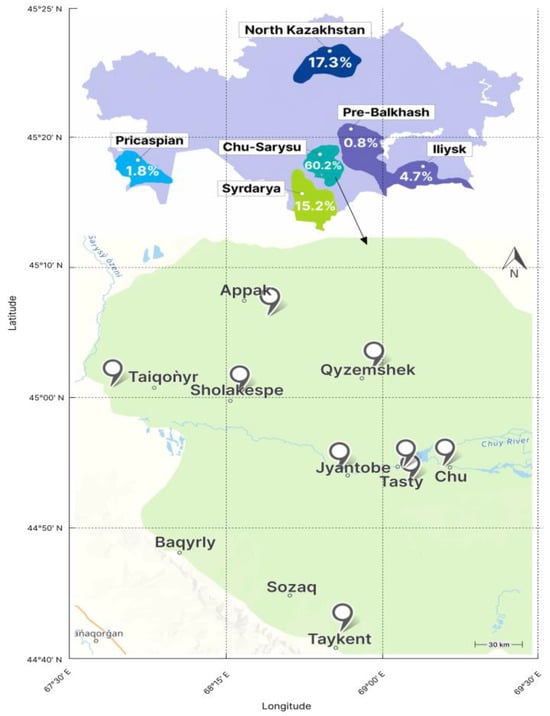
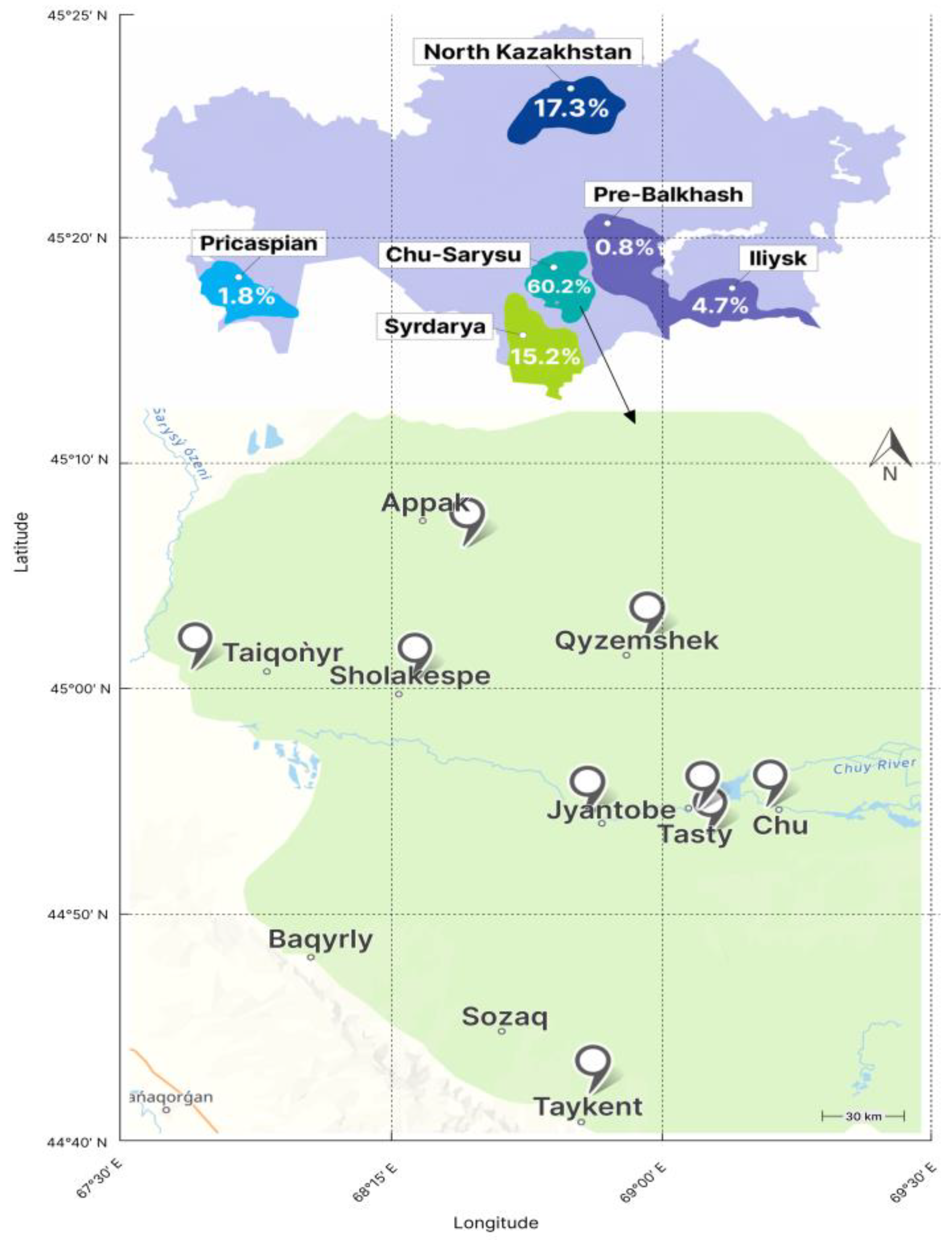
Water samples were collected in populated areas and territories located beyond the buffer zones of the uranium deposits in the Chu-Sarysu uranium province within approximately 44.4–45.4° N and longitudes of 67.3–69.4° E (Figure 1). The Chu-Sarysu uranium mining areas encompass areas adjacent to uranium deposits, namely, Mynkuduk, Inkai, Khorasan, Kanzhugan, Tortkuduk, Budyonnovskoye, Uvanas and other uranium deposits. It also includes populated areas: Appak, Qyzemshek, Taikonyr, Zhuantobe, Chu, Tasty and other settlements. The local climate is sharply continental, with significant annual and daily temperature fluctuations, harsh winters, hot summers, short springs, dry air, and little precipitation from 130 to 140 mm. The average annual air temperature is 8–12 °C. The absolute maximum of the hottest months (June and July) is 43 °C, and the absolute minimum is −26 °C in January. Average air humidity is 56–59%. Sampling locations were selected to include various water sources (boreholes, wells, and rivers) in populated areas and near the mining areas. Hydrogeologically, the deposits of the Chu-Sarysu uranium province represent a complex artesian basin with fractured-porous and fractured-vein groundwater systems. The groundwater, which is typically mineralized and contains dissolved oxygen–nitrogen and nitrogen gases, has elevated levels of trace elements such as As, Cu, Pb, Zn, Co, Ga, Mn, and Fe. These hydrogeochemical characteristics are associated with uranium-bearing geological formations, which host a large number of uranium deposits [18].
Figure 1.
Chu and Sarysu water basins (uranium ore province).
Samples were collected from various water sources, including household water, the Chu and Sarysu rivers, and boreholes. All water samples were collected in 2025 to characterize the current hydrogeochemical and radiological conditions in the study area.
In total, 98 water samples were collected, including 83 groundwater samples (boreholes and wells) and 15 river water samples (Table S1). Total alpha and beta activity were analyzed for the first time in 98 water samples as screening factors. These results allowed us to select samples with high activity levels for additional testing for specific radionuclides, including uranium and radium isotopes. Water samples of at least 5 L were collected in pre-cleaned plastic containers and rinsed with the same water for analysis. To preserve the samples, 0.5–1 mL/L of nitric acid (HNO3) (Honeywell Research Chemicals, Charlotte, NC, USA) was added to a pH of 1–2.
2.2. Measurement of Radioactivity
2.2.1. Total Alpha–Beta Activity
Total alpha and beta activities of water samples were measured after standard radiochemical preparation by previously published procedures [19]. A 1 L aliquot of the water sample was evaporated at 80–90 °C until about 100 mL remained. The residue was treated with acids, dried, and calcined, and the resulting salt was used to prepare a 0.2 g sample, which was distributed across a plate using ethanol. Measurements were conducted using a low-background alpha/beta radiometer (Scientific Production Company “Doza”, Ltd., Moscow, Russia). Total alpha and beta activity were used as screening parameters and were not used in calculating the radiation dose. A measurement duration of 1000 s was used, with each measurement repeated five times.
2.2.2. Volumetric Activity of 226Ra and 228Ra Isotopes
Radium isotopes (228Ra and 226Ra) were determined after radiochemical separation of water samples using coprecipitation with barium sulfate [20]. Following chemical treatment, the resulting precipitate was measured using a low-background alpha/beta radiometer (Scientific Production Company “Doza”, Ltd., Moscow, Russia). Each sample was measured five times, with a counting time of 1000 s. Radium isotope concentrations were calculated based on the measured count rate, detector efficiency, sample volume, and chemical yield. Volumetric activity was determined using the following formula:
where V is the volume of the analyzed water sample (L), and τ is the concentrated yield of radium isotopes after radiochemical treatment (dimensionless). At a confidence level of 95%, the final data were expressed as volumetric measurements with corresponding uncertainty intervals. To accurately calculate the activity of radium isotopes taking into account decay and incorporation, alpha and beta counting were carried out in two measurement cycles (4–5 and 10–12 days after separation).
Aᵢᵛᵒˡ = Aᵢ/(τ·V)
2.2.3. Determination of the Activity of U Isotopes
Uranium isotope activity concentrations (234U and 238U) in water samples were determined using alpha spectrometry [21]. Uranium was extracted from the water samples using a radiochemical preparation method, including coprecipitation with iron hydroxide, followed by purification and electrodeposition on stainless steel disks. The prepared sources were measured using an alpha spectrometer (MultiRad-AS, “SpDec”, Moscow, Russia).
The determination of the activity of uranium isotopes in a control sample with an estimated measurement error. The volumetric activity of uranium isotopes (Ai) was calculated as follows [22]:
where Asi (Bq) is the activity of the uranium isotopes in the sample, and V is the volume of the analyzed water sample expressed in liters (L).
Ai (Bq/L) = Asi/V
2.3. Chemical Analysis of Water Samples
Prior to chemical analysis, the water samples were passed through 0.45 µm PTFE membrane filters. After acidification with ultrapure HNO3 solution and dilution to 10 mL, the filtered samples were heated at 80 °C for 60 min. ICP-MS (Agilent Technologies, Santa Clara, CA, USA) was used to measure heavy metal concentrations via external calibration using multi-element standard solutions. Duplicate analyses and procedural blanks were used to ensure quality control. To determine final concentrations in the original samples, the ICP-MS concentrations were corrected for sample dilution by multiplying the analytical values by the appropriate dilution factor.
2.4. Quality Assurance and Quality Control (QA/QC)
Blanks, certified reference materials, and duplicate analyses were used for quality control. The equipment was calibrated using approved control sources before measuring samples. To assess the reproducibility of measurements, repeat analyses of selected samples were conducted. Relative deviations were often less than 10%, and the background particle count rate was regularly checked to ensure detector stability.
Over a 1000 s counting interval, the minimum detectable activity (MDA) for total alpha, beta, and radium isotopes was approximately 0.05 Bq/L, 0.1 Bq/L, and 0.03–0.05 Bq/L, respectively. For statistical analysis and calculation of the annual effective dose, results below the detection limit were replaced with half of the MDA (MDA/2 = 0.015 Bq/L for 226Ra and 0.025 Bq/L for 228Ra). For uranium isotopes (238U and 234U), the MDA was 0.01 Bq/L. MDA/2 = 0.005 Bq/L was used to replace non-detectable values [23].
Quality control of heavy metal determinations was achieved using blank samples, standard solutions, and approved reference materials. To ensure analytical accuracy, each sample was tested in triplicate using ultrapure water (18.2 MΩ cm). The results are presented as volumetric indicators with corresponding measurement uncertainties at a confidence level of 95%.
2.5. Annual Effective Dose
The annual effective dose associated with drinking water consumption was calculated by using Equation (3) [24]:
where AWC is the annual water consumption (L per year), DC is the dose coefficient (Sv/Bq), AC is the activity concentration (Bq/L), and AED is the annual effective dose (mSv/year). In accordance with WHO and ICRP guidelines, the ingestion dose was estimated using an average daily drinking water intake of 2 L per person per day, which corresponds to an annual consumption of 730 L per year [25,26]. The ICRP recommended ingestion dose coefficients for each radionuclide were used to determine the AED for ingestion administration. The dose coefficients used in this study were 4.5 × 10⁻⁸ Sv/Bq for 238U, 4.9 × 10⁻⁸ Sv/Bq for 234U, 2.8 × 10⁻⁷ Sv/Bq for 226Ra, and 6.9 × 10⁻⁷ Sv/Bq for 228Ra [26]. The dose coefficients used in this study were taken from International Commission on Radiological Protection (ICRP) Publication 72. Although revised factors are provided in later ICRP recommendations, these mainly concern occupational exposures and generally do not lead to significant changes in environmental release scenarios. The differences between them are minor under environmental exposure conditions and have little impact on radiation dose assessment. The total AED was calculated as the sum of individual dose contributions from uranium (238U and 234U) and radium (228Ra and 226Ra) isotopes.
AED = AC × DC × AWC × 1000
3. Results and Discussion
3.1. Evaluation of the Overall Radioactivity Content of Water Samples
The total alpha activity in several samples exceeded WHO screening levels, indicating a potential radiological hazard. This suggests the presence of alpha-emitting radionuclides, likely related to radium mobilization in local hydrogeochemical conditions.
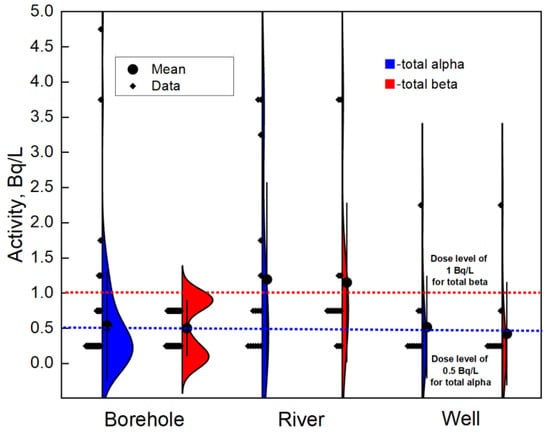
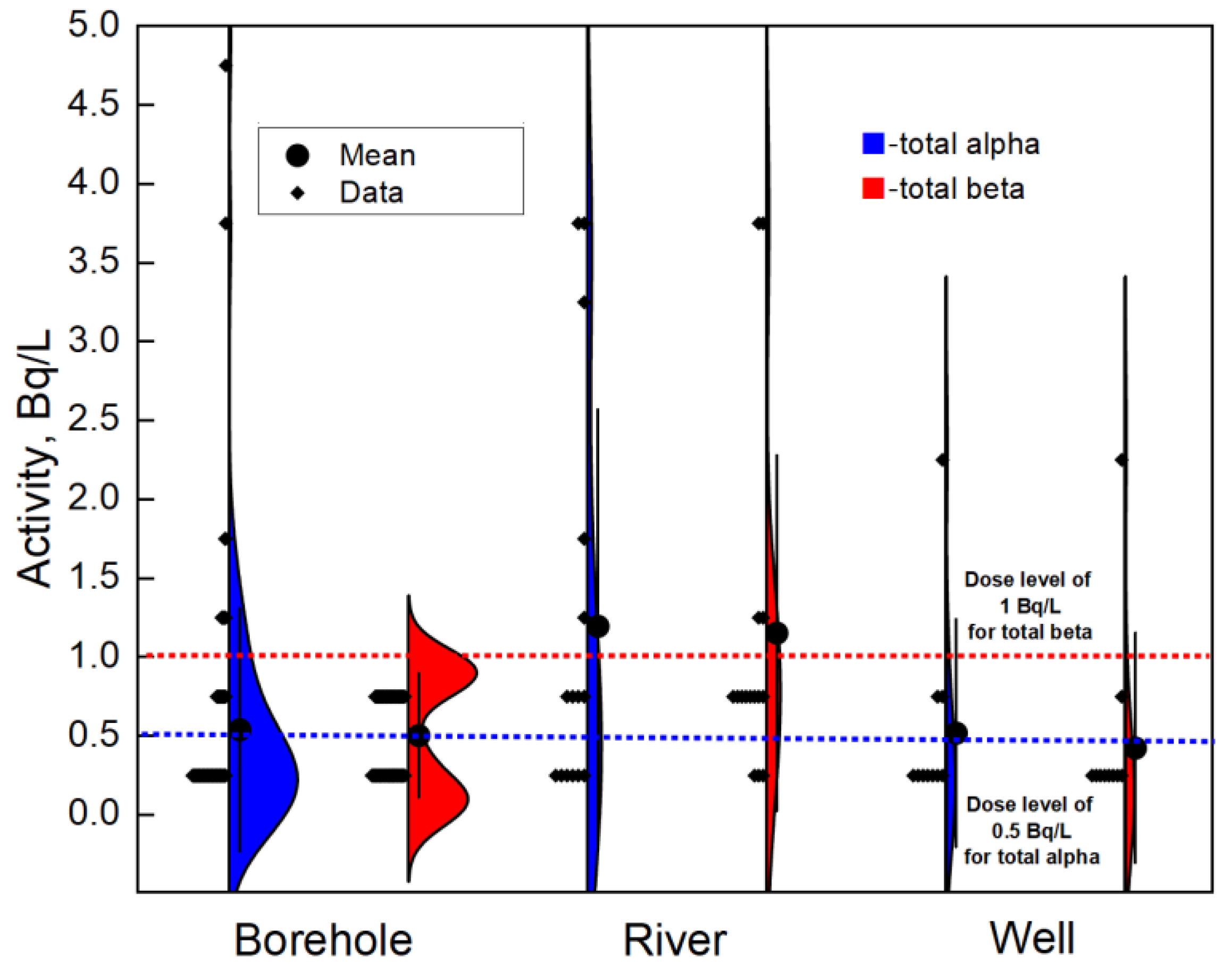
Table 1 shows the total alpha activity and total beta activity of the collected water samples. In all studied water samples, the total alpha activity is of greater radiological concern than the total beta activity, compared to the WHO screening levels of 0.5 Bq/L for alpha activity and 1.0 Bq/L for beta activity. River water shows the greatest variability and excess of acceptable values, with an average alpha activity of 1.2 Bq/L (range 0.03–3.99 Bq/L), often exceeding the established level. The average alpha activity in borehole groundwater is 0.54 Bq/L (0.01–4.9 Bq/L), which is slightly higher than the threshold value, while in well (drinking) water the average value is lower at 0.47 Bq/L (0.02–2.37 Bq/L), which generally corresponds to normal, but with occasionally high emissions indicating local anomalies. Distribution analysis (Figure 2) confirms higher median values and wider interquartile ranges for alpha activity in riverine springs, while in borehole and well waters the median values are lower, but sporadic high values still occur. In contrast, the total beta activity in all types of water remains mostly below the WHO screening level, with averages ranging from 0.2 to 0.91 Bq/L, and only in some river water samples does it approach 1.0 Bq/L or slightly exceed it. However, the total alpha activity represents a slight localized exceedance of recommended screening levels of 0.5 Bq/L.
Table 1.
Statistics of total alpha and beta activity in water samples.
Figure 2.
Screening activities.
According to the quantitative assessment, the WHO screening criterion for total alpha activity (0.5 Bq/L) was exceeded in approximately 36% of groundwater samples and 60% of surface water samples. On the other hand, only one surface water sample (7%) exceeded the screening standard for total beta activity (1.0 Bq/L). These results indicate that alpha activity is the primary cause of exceedances in radiological screening and provide a rationale for sampling for additional testing for specific radionuclides.
3.2. Radium and Uranium Isotopes in Water Samples
Radium isotopes from the uranium decay series were analyzed in groundwater (borehole) and river water samples collected in the study area. Descriptive statistical analysis revealed significant differences in activity and variability between groundwater and surface water (Table S2). The 226Ra concentration in groundwater samples (n = 12) ranged from 0.06 to 44.19 Bq/L, with a median of 0.38 Bq/L and a mean of 4.11 Bq/L. The significant difference between the mean and median values indicates a highly skewed distribution caused by elevated concentrations in one of the samples. The groundwater samples demonstrated significant regional heterogeneity, as evidenced by a standard deviation of 12.63 Bq/L. The Shapiro–Wilk test confirmed a significant deviation from normal distribution (p < 0.001), and statistical analysis revealed strong positive skewness (skewness = 3.46) and high kurtosis (11.96). The presence of localized anomalies with higher radionuclide concentrations is confirmed by this apparent asymmetry, which likely reflects site-specific mobilization processes and heterogeneous hydrogeochemical conditions. This variability suggests that the overall radiation risk may be disproportionately dependent on a small number of high-activity sources.
The activity of 228Ra in groundwater ranged from 0.025 to 0.91 Bq/L, with a median of 0.29 Bq/L and a mean of 0.36 Bq/L. The range of values was moderate, as evidenced by a standard deviation of 0.24 Bq/L. The distribution had kurtosis (1.31) and moderate positive skewness (skewness = 1.01). However, according to the Shapiro–Wilk test, the distribution was not significantly different from normal (p = 0.386).
The concentration and variability of radium activity in river water samples were significantly lower (n = 5). With a mean of 0.258 Bq/L and a median of 0.26 Bq/L, the 226Ra activity concentration ranged from 0.23 to 0.29 Bq/L. With a standard deviation of 0.024 Bq/L, river conditions were very uniform. Normal distribution was confirmed by normality tests (p = 0.899). Relatively stable radioactive concentrations are supported by near-normal distributions and low variability, likely due to dilution and mixing mechanisms in surface water systems.
The river water activity for 228Ra ranged from 0.17 to 0.21 Bq/L, with an average value of 0.186 Bq/L and a median value of 0.18 Bq/L. The standard deviation was 0.015 Bq/L, indicating minor regional heterogeneity. The Shapiro–Wilk test revealed no significant deviations from a normal distribution (p = 0.492), although the distribution had moderate positive skewness (skewness = 1.12) and kurtosis (1.46).
The measured activity was compared with the WHO-2017 recommended drinking water levels of 1.0 Bq/L for 226Ra and 0.1 Bq/L for 228Ra [25]. In total, 13% of borehole samples exceeded the recommended level for 226Ra, but no exceedances were detected in river water. On the other hand, 55% of borehole samples and 25% of river samples had 228Ra levels above the WHO-recommended levels. Table 2 shows the proportion of samples that did not meet WHO recommendations.
Table 2.
Exceedances of WHO guideline values for radium isotopes in water sources.
Compared to river water, groundwater samples generally showed significantly greater fluctuations in concentrations, and sometimes even higher levels of 226Ra. These differences are due to hydrochemical processes, including redox reactions, water–rock interactions, and exposure time. Groundwater, due to its long flow and limited flow conditions, facilitates the mobilization and accumulation of radionuclides. In contrast, surface waters are dominated by dilution, mixing, and oxidizing conditions, which reduce radionuclide concentrations and spatial variability. These differences suggest that while dilution and dynamic mixing processes have a greater influence in surface waters, resulting in lower concentrations and less variability, groundwater systems may promote the accumulation and retention of radionuclides due to longer residence times and stronger water–rock interactions [27].
A comparison of total alpha activity and radium isotope concentrations revealed that elevated alpha activity is closely related to high radium content, particularly 228Ra. This is consistent with the fact that radium isotopes account for the majority of total alpha radiation in the study region. On the other hand, no significant correlation was found between radium concentration and total beta activity, indicating a minor contribution of radium isotopes to beta activity. These data suggest that radium isotopes are the primary cause of the elevated total alpha activity in the studied groundwater.
One of the borehole samples showed a significantly high concentration of 226Ra (44.19 Bq/L), which is clearly an anomaly compared to the other samples. This value indicates a localized radium anomaly, as it significantly exceeds both the average concentration and recommended levels. Since this extreme value has a significant impact on average and maximum estimates of 226Ra in the environment, the median values are considered to be more representative of typical groundwater conditions. It is assumed that the elevated 226Ra concentration is specific to a specific site, rather than to the region as a whole. Although this result likely corresponds to actual measurements, analytical error cannot be completely ruled out. To better understand the cause of this anomaly, further research is needed, including hydrogeochemical analysis of the specific site and repeat sampling.
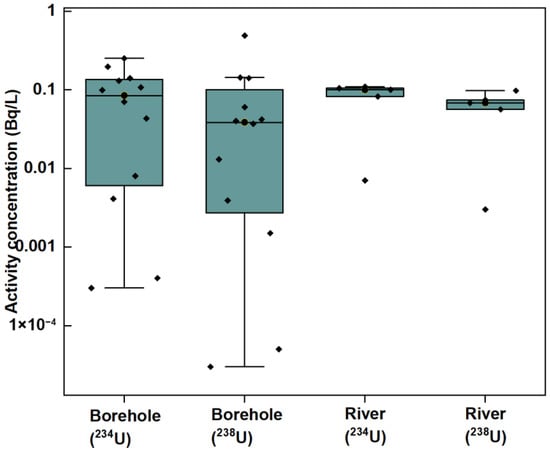
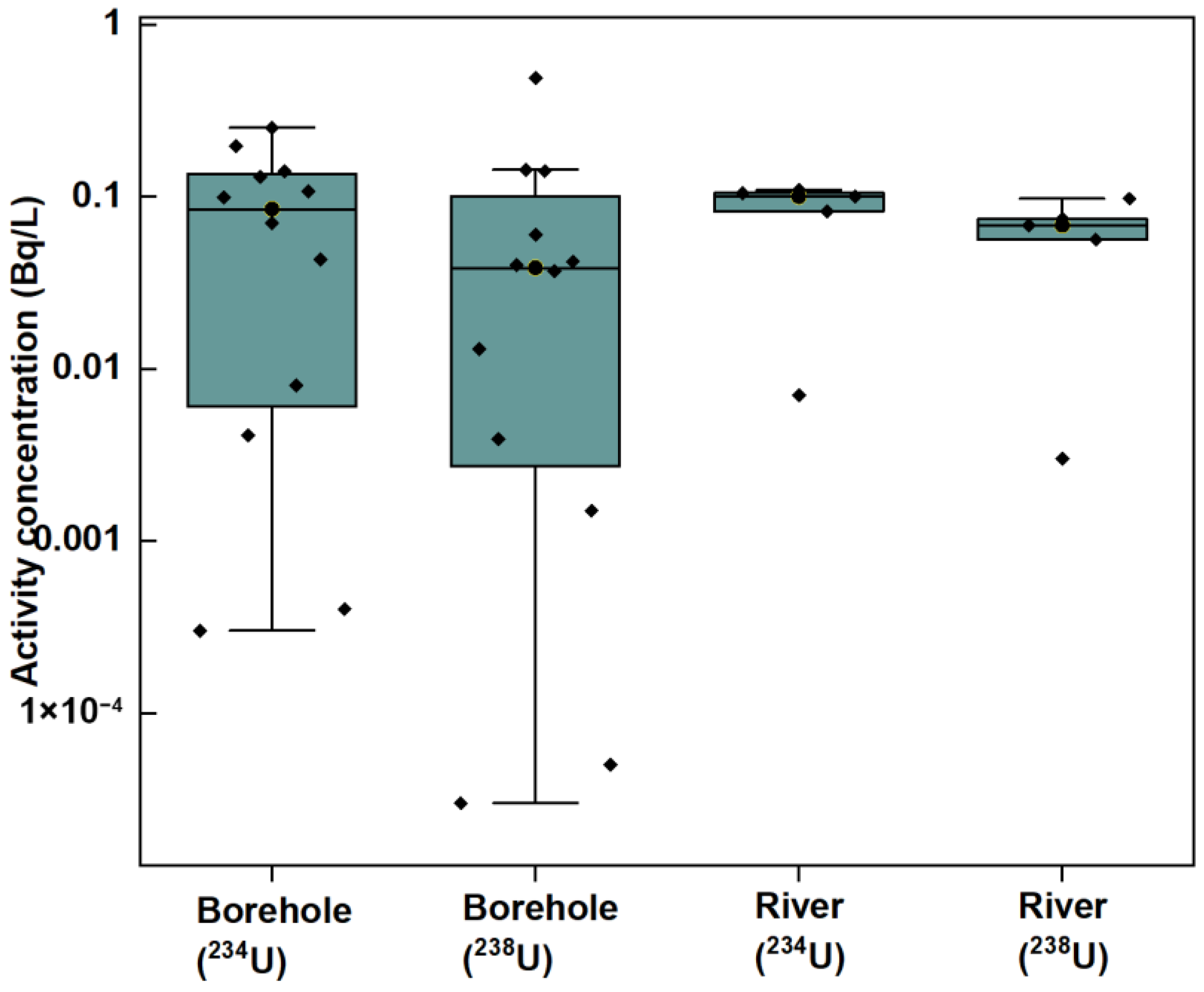
Uranium isotope concentrations in groundwater samples varied significantly across wells. Uranium isotopes were detected in 13 groundwater samples. For statistical analysis, values below the detection limit were converted to half the minimum detectable activity (MDA/2). Uranium isotope concentrations (238U and 234U) were measured in river water samples collected in the study region and in groundwater samples from wells. 238U activity in groundwater ranged from 0.005 to 0.143 Bq/L, with a median of 0.037 Bq/L and an average of 0.042 Bq/L. 234U concentrations ranged from 0.005 to 0.251 Bq/L, with a median of 0.070 Bq/L and an average of 0.082 Bq/L. The results show significant spatial variations between wells, with some samples having higher uranium activity than others. Uranium activity in river water was often lower and varied over a smaller range. While 234U activity ranged from 0.007 to 0.109 Bq/L with an average of 0.081 Bq/L, 238U activity ranged from 0.003 to 0.097 Bq/L with an average of 0.060 Bq/L. 234U content often exceeded that in both groundwater and river water, consistent with the fact that 234U content in groundwater often exceeds that in river water.
According to statistical analysis, the distribution of 234U activity in groundwater was closer to a normal distribution (p = 0.058), while the distribution of 238U activity was closer to a non-normal distribution (p = 0.002 according to the Shapiro–Wilk test). The distribution of 238U activity in river water was normal (p = 0.483), while the distribution of 234U activity was slightly different from normal (p = 0.028). These data indicate that a number of hydrogeochemical conditions influence uranium mobility in surface and groundwater in the study area.
Marked differences in uranium isotope (238U and 234U) activity concentrations were observed in the water samples studied, depending on the water type (Figure 3).
Figure 3.
234U and 238U activity concentrations in borehole and river water samples.
Uranium isotope concentrations in the analyzed water samples were below the WHO drinking water guideline value. In such environments, uranium is usually associated with other radionuclides from the same decay series, such as radium isotopes, which can make a more significant contribution to radiological exposure. In this study, radium isotopes were found to predominate in the estimated AED, while uranium isotopes accounted for only a small fraction of the total dose. Furthermore, groundwater in uranium-containing formations may contain various trace elements, including arsenic, manganese, and mercury, which may pose a chemical toxicity risk. Thus, although uranium concentrations themselves remain below guideline values, the combined presence of radionuclides and toxic elements should be considered when assessing the overall health impacts of groundwater consumption.
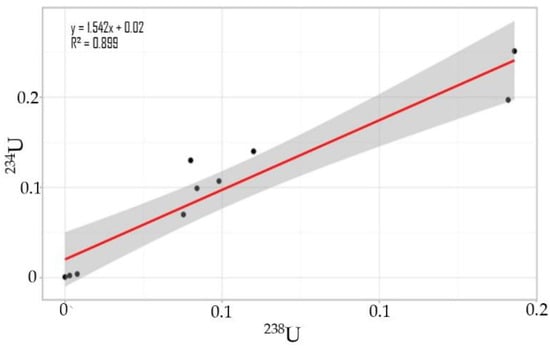
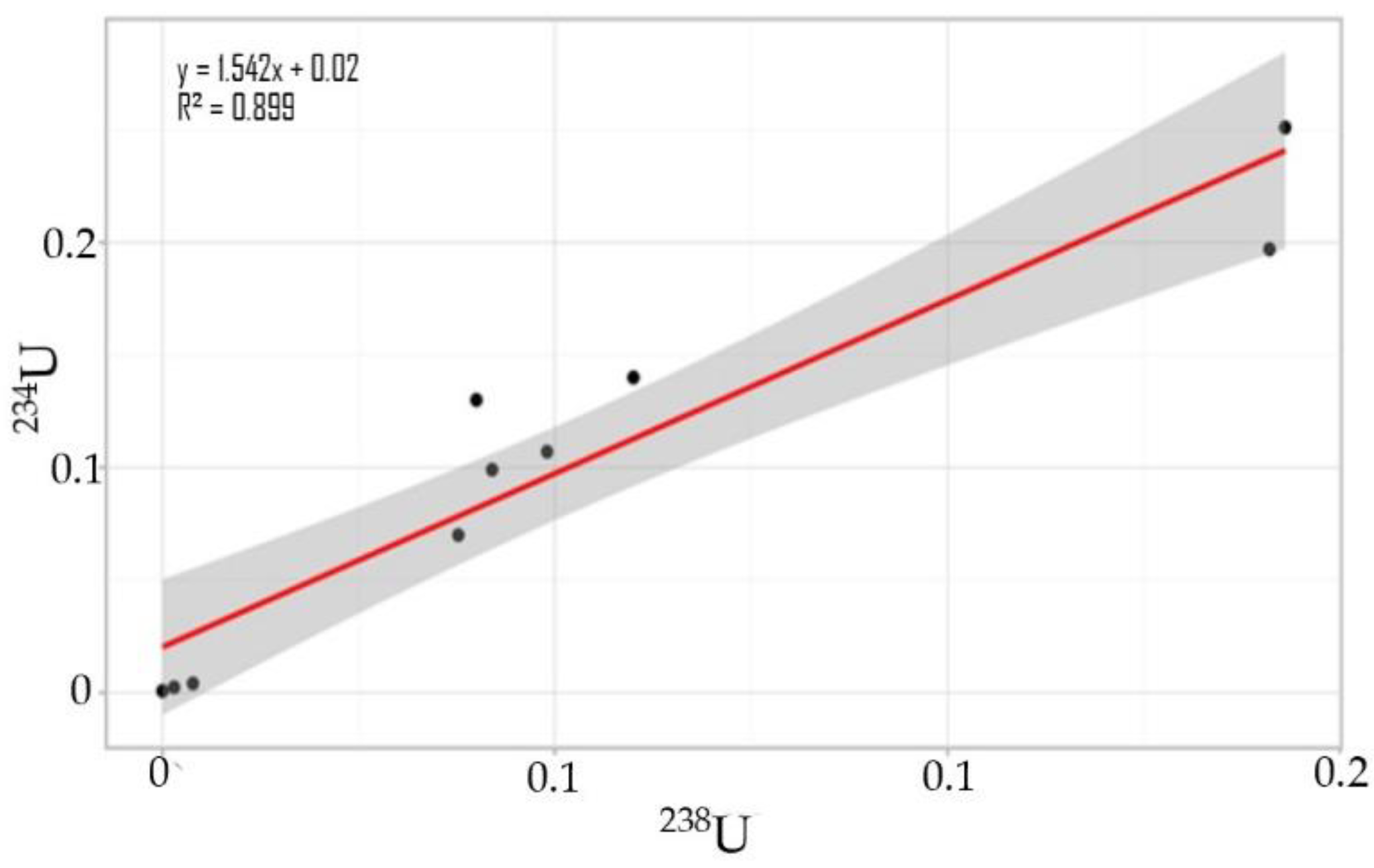
Correlations between uranium isotopes were assessed using correlation analysis (Figure 4).
Figure 4.
Relationship between uranium isotopes in borehole and river water samples. The solid line is the linear regression, dots are the number of results.
A consistent relationship between uranium isotopes in the studied water samples was demonstrated by a significant and statistically significant positive correlation between 234U and 238U (ρ = 0.964, p < 0.001). On the other hand, no statistically significant relationship was found between 238U and 226Ra (ρ = 0.036, p = 0.920), suggesting that uranium and radium behave independently of each other in the aqueous phase.
To assess the behavior of uranium in the studied water samples, the 234U/238U activity ratio (AR) was calculated (Table S5). AR values showed a systematic enrichment of 234U compared to 238U from 1.4 to 3.3 in groundwater (average value = 2.2) and from 1.03 to 2.33 in river water (average value = 1.6). Such imbalances (AR > 1) are often associated with alpha decay and the preferential leaching of 234U from radiation-damaged mineral lattices. Higher AR values in groundwater compared to river water indicate more intense interactions between the water and rocks and longer residence times. These results are consistent with hydrogeochemical mechanisms regulating uranium mobility in uranium-containing aquifers and mining-impacted systems [28,29].
The strong positive correlation between 234U and 238U indicates a common geochemical origin and similar mechanisms of mobilization in groundwater. This relationship is consistent with the dissolution of uranium from host rock minerals under oxidizing conditions, where both isotopes are released simultaneously into the aqueous phase. The slight enrichment in 234U may also reflect preferential leaching due to recoil effects and alpha-decay damage in mineral lattices, which increases its mobility compared to 238U. This finding is consistent with the study objective of identifying the dominant contributors to AED. Overall, the results obtained indicate that groundwater exhibits greater variability and higher concentrations of radionuclides compared to surface water, highlighting its greater importance for impact assessment in the study area. Groundwater in the Chu-Sarysu region exhibits higher variability and radionuclide activity than surface water, due to hydrogeochemical conditions. Radium isotopes predominate in abnormally high doses, while the contribution of uranium is minimal. The presence of localized anomalies and associated toxic elements highlights the need for dose-based and integrated risk assessment approaches for effective groundwater management.
3.3. Heavy Metal Content in Water Samples
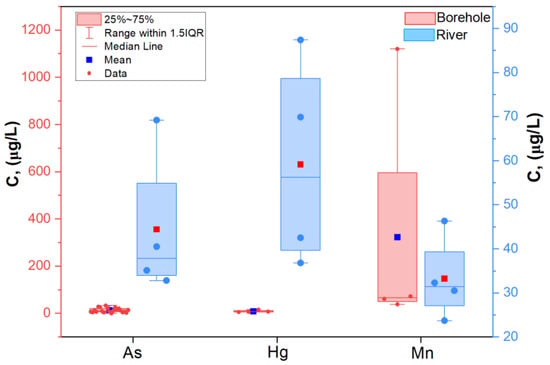
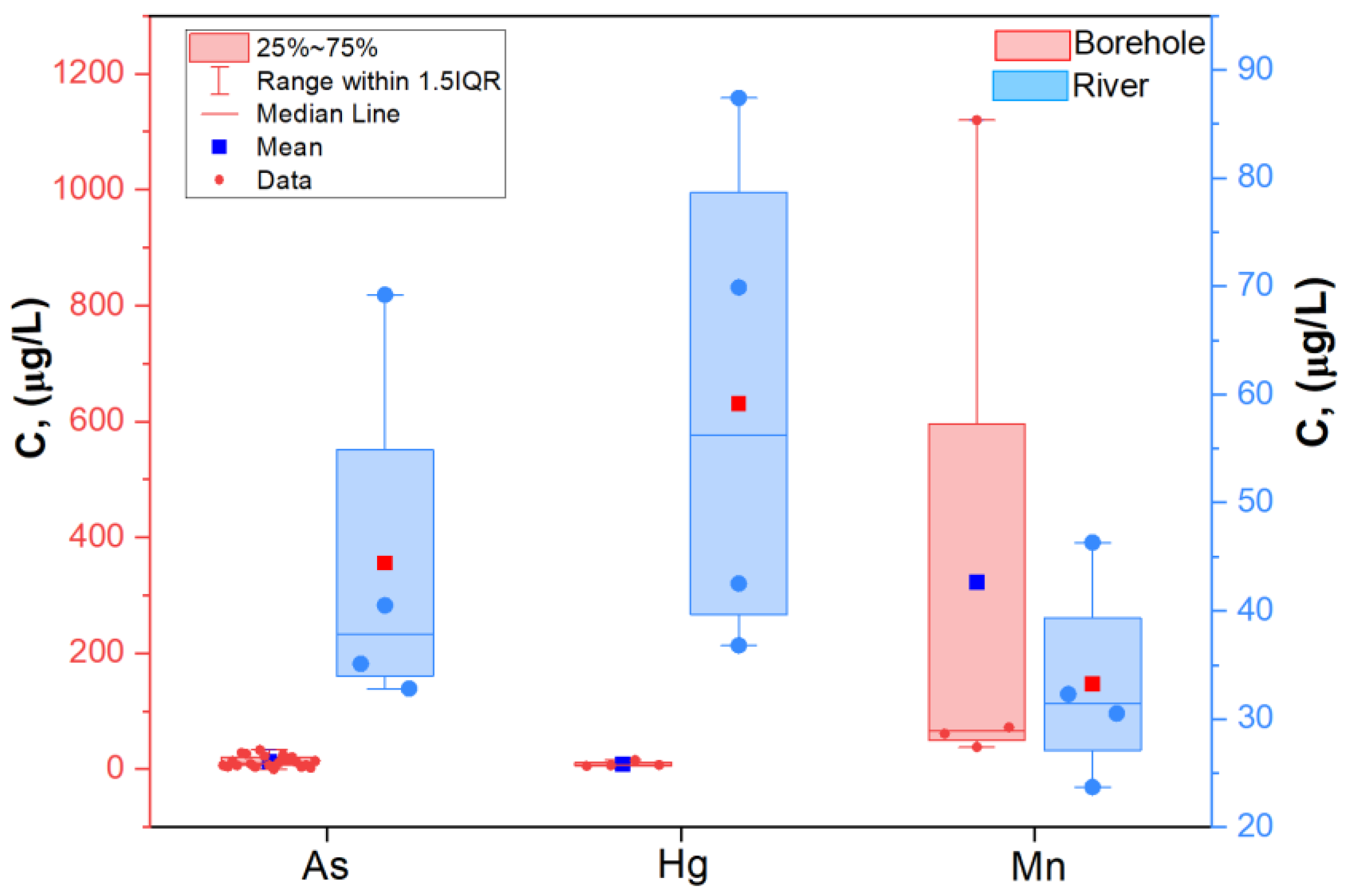
The concentrations of heavy metals in river and borehole water samples are provided in Figure 5 and Tables S3 and S4. These data indicate significant regional diversity in borehole water samples, as well as clear differences between surface and groundwater.
Figure 5.
The distribution of specific heavy metals.
Most of the detected elements, namely Cu, Ni, Li, Mg, V, Rb, and Sr, were at low concentrations or below detection limits in most samples (Tables S3 and S4). As was the most frequently detected hazardous element and was found in both surface and groundwater. About 44% of samples were found to exceed the WHO drinking water guideline value of 10 μg/L, indicating the widespread distribution of As in the study area [25]. Previous studies in the Chu-Sarysu River basin also showed high concentrations of uranium and related trace elements in areas affected by uranium-bearing rocks [30]. Due to the relatively high frequency of exceedances, As can be considered a priority pollutant of groundwater. The presence of As, Mn and Hg in combination with radionuclides highlights the complex chemical composition of groundwater and suggests that both radiological and chemical hazards may coexist in the studied aquatic systems. Although high concentrations of As and other elements in the study area are likely associated with the geochemical characteristics of uranium-bearing formations, the possibility of anthropogenic sources, such as agriculture and livestock farming, cannot be completely ruled out. In addition, as changes in hydrogeochemical circumstances may increase arsenic mobilization, any contributions from ISL mining operations cannot be ruled out. Further research, a detailed land-use analysis and geochemical parameters will be required to distinguish between natural and anthropogenic impacts. The interaction of heavy metals and radionuclides in groundwater is controlled by various hydrogeochemical mechanisms. The behavior of radium is influenced by salinity and sulfate concentration, while the mobility of uranium is primarily controlled by redox conditions and the formation of complexes. On the other hand, elements such as arsenic, manganese, and mercury are significantly influenced by redox reactions, adsorption and desorption processes, and mineral dissolution. The lack of a clear relationship between radionuclides and heavy metals in the studied samples can be explained by differences in geochemical activity. Their coexistence likely indicates similar environmental conditions rather than a direct geochemical relationship.
3.4. Annual Effective Dose (AED)
Table 3 presents the effective dose values for ingestion of radioactive substances detected in water samples. Estimated ingestion doses varied depending on the source and were often higher for borehole water than for river water. Consistent with the more stable radiological conditions typical of surface water, effective dose values were relatively stable and generally lower in river water samples.
Table 3.
Total AED (mSv/year) in selected water samples.
In groundwater samples, radium isotopes showed the largest contribution to the estimated AED. On average, 228Ra accounts for approximately 50–60% of the total AED, while 226Ra accounts for 35–45%. In contrast, the combined contribution of uranium isotopes (238U and 234U) accounts for less than 5% of the total dose. The lower contribution of uranium isotopes to AED is primarily due to lower dose coefficients upon ingestion and differences in geochemical behavior. Uranium tends to form stable aqueous complexes and remains less biologically active, whereas radium, due to its chemical similarity to alkaline earth elements such as calcium, is more readily absorbed by the human body. Furthermore, radium isotopes have significantly higher dose coefficients, which enhance their radiological impact even at moderate concentrations. As a result, radium isotopes dominate the AED contribution, despite the presence of uranium in groundwater.
Similar results were observed in previous studies, in which radium isotopes made a significant contribution to total radiological exposure, accounting for approximately 60% of the AED received from groundwater consumption [31,32]. Although the maximum AED value in one groundwater sample reached 9.07 mSv/year, this value represents an extreme case associated with a localized radium anomaly rather than typical exposure conditions in the region. Most of the analyzed water samples showed significantly lower AED values, typically in the range of approximately 0.14–0.52 mSv/year. These values remain above the WHO reference level of 0.1 mSv/year, but are well below the maximum estimate. Therefore, the reported maximum AED should be interpreted as an upper bound for a specific site and not as an indicator of exposure to the general population. Furthermore, the effective dose values reported here do not take into account possible water treatment, mixing of different water sources, or changes in actual drinking water consumption. Therefore, the calculated AED values represent a conservative estimate based on the assumption of direct groundwater consumption.
Hydrogeochemical conditions such as pH, oxidation–reduction potential, ionic strength, and the composition of major ions significantly influence the mobility of radionuclides in groundwater. While radium mobility is often associated with high salinity and sulfate content, uranium is typically more mobile in uraniferous aquifers under oxidizing conditions, especially in the presence of carbonate complexes. Injecting sulfuric acid into systems with underground salt domes can locally alter the chemical composition of groundwater by increasing sulfate content and lowering pH, which could facilitate radium mobilization through coprecipitation and desorption mechanisms. On the other hand, uranium mobility depends primarily on complexation and redox conditions, which may explain the lack of association between uranium and radium observed in the study. Spatial heterogeneity in hydrogeochemical conditions, such as differences in mineral composition, water–rock interactions, and geochemical evolution pathways, likely accounts for the marked variation in 226Ra concentrations, including isolated cases with high values. Similar hydrogeochemical conditions have been identified in groundwater systems affected by mining [28]. The interpretation of radionuclide mobility data would be significantly improved if comprehensive hydrogeochemical data sets (pH, Eh, major ions) were used in future studies. It should be mentioned that the current study does not take seasonal or temporal variability into consideration because it is based on a single sample campaign. Consequently, a snapshot of the system at the time of sampling is represented by the reported data.
4. Conclusions
This study presents a comprehensive assessment of groundwater contamination in the Chu-Sarysu uranium province by integrating radionuclide analysis with dose-based risk assessment. This study highlights the importance of dose-based assessment compared to concentration-based assessment and provides new insights into the predominant role of radium isotopes in dose formation in groundwater systems affected by ISL. A key finding is that radium isotopes, rather than uranium, dominate the AED, despite the region being characterized by uranium mining. This highlights the importance of considering decay products when assessing radiological risk, as relying solely on uranium concentrations can lead to underestimation of exposure. The predicted AED and alpha activity were mainly influenced by 226Ra. Concentrations of uranium isotopes were somewhat lower, indicating comparable mobilization pathways but a lower radiation dose. Under the conservative water use scenario (730 L/year), the obtained total AED values for the analyzed groundwater samples ranged from 0.16 to 9.07 mSv/year. These values were higher in the collected borehole samples compared to the WHO drinking water reference level (0.1 mSv/year). The results show that radium isotopes (226Ra and 228Ra) are the primary contributors to the total AED, accounting for most of the radiation exposure, whereas uranium isotopes contribute a minor fraction. These findings underscore the importance of dose-based assessment for radiological risk assessment in uranium mining regions. However, only a subset of the samples (10 out of 98 groundwater samples) were subjected to detailed radionuclide analysis, due to their higher total alpha and beta activity. In addition, high arsenic concentrations were detected in about 44% of samples, indicating that chemical and radiological pollutants may coexist in water systems. The results also indicate that groundwater exhibits greater variability and higher radionuclide activity than surface water due to hydrogeochemical conditions that favor the mobilization and accumulation of radionuclides. The identification of localized anomalies highlights the need for site-level assessments, particularly in areas where populations rely on untreated groundwater. Furthermore, the co-occurrence of radionuclide contaminants with toxic elements such as arsenic and manganese highlights the importance of a comprehensive water quality assessment that considers multiple contaminants. Overall, this study expands our understanding of radionuclide behavior in environments affected by shale gas and provides a basis for dose-based risk assessment that can be applied to other uranium mining regions. The findings support the need for prioritized radium monitoring and contribute to the development of more effective groundwater management strategies and public health protection. This study has several limitations that should be addressed. Seasonal and temporal variations in groundwater conditions are not taken into account, as the analysis is based on a single sampling campaign. Furthermore, it is difficult to fully understand the mechanisms regulating radionuclide mobility, as specific hydrogeochemical parameters (such as pH, oxidation–reduction potential, and major ion composition) were not assessed. To better understand the dynamics of groundwater contamination in uranium mining regions, future research should include long-term monitoring, thorough hydrogeochemical characterization, and a comprehensive assessment of both chemical and radiological issues.
Supplementary Materials
The following supporting information can be downloaded at https://www.mdpi.com/article/10.3390/w18090993/s1: Table S1: Sampling information; Table S2: Uranium and radium content; Table S3: Heavy metals in borehole, µg/L; Table S4: Heavy metals in rivers, µg/L; Table S5. 234U/238U activity ratios in water samples.
Author Contributions
Conceptualization, E.M. and A.K.; data curation, R.M.; formal analysis, Y.O., M.H., M.B. and Y.K.; funding acquisition, M.B.; methodology, R.M., P.K., M.A., D.I., N.A. and A.T.; writing—original draft preparation, A.K. and E.M.; investigation, A.K., R.M. and Y.O.; validation, M.B.; writing—review and editing, Y.O., A.K. and E.M. All authors have read and agreed to the published version of the manuscript.
Funding
This research was funded by the Committee of Science of the Ministry of Science and Higher Education of the Republic of Kazakhstan, grant number IRN AP23488056, “Assessment of the radiation situation and development of measures to reduce negative radiation factors on the environment in the Shu-Sarysu uranium province” (2024–2026).
Data Availability Statement
The original contributions presented in this study are included in the article and Supplementary Materials. Further inquiries can be directed to the corresponding author.
Conflicts of Interest
The authors have no relevant conflicts of interest, financial or otherwise, to disclose.
References
- Wang, B.; Luo, Y.; Liu, J.H.; Li, X.; Zheng, Z.H.; Chen, Q.Q.; Li, L.-Y.; Wu, H.; Fan, Q.-R. Ion migration in in-situ leaching (ISL) of uranium: Field trial and reactive transport modelling. J. Hydrol. 2022, 615, 128634. [Google Scholar] [CrossRef] [Scilit]
- Eddy, N.O.; Igwe, O.; Eze, I.S.; Garg, R.; Akpomie, K.; Timothy, C.; Udeokpote, G.; Ucheana, I.; Paktin, H. Environmental and public health risk management, remediation and rehabilitation options for impacts of radionuclide mining. Discov. Sustain. 2025, 6, 209. [Google Scholar] [CrossRef] [Scilit]
- World Nuclear Association. Uranium and Nuclear Power in Kazakhstan; World Nuclear Association: London, UK, 2025. [Google Scholar]
- Bakhtin, M.; Ibrayeva, D.; Kashkinbayev, Y.; Aumalikova, M.; Altaeva, N.; Tazhedinova, A.; Shokabayeva, A.; Kazymbet, P. Environmental monitoring in uranium deposit and indoor radon survey in settlements located near uranium mining area, South Kazakhstan. Atmosphere 2025, 16, 536. [Google Scholar] [CrossRef] [Scilit]
- Li, G.; Yao, J. A review of in situ leaching (ISL) for uranium mining. Mining 2024, 4, 120–148. [Google Scholar] [CrossRef] [Scilit]
- Singhal, B.B.S.; Gupta, R.P. Groundwater contamination. In Applied Hydrogeology of Fractured Rocks, 2nd ed.; Springer: Dordrecht, The Netherlands, 2010; pp. 221–236. [Google Scholar]
- Dinh Chau, N.; Dulinski, M.; Jodlowski, P.; Nowak, J.; Rozanski, K.; Sleziak, M.; Wachniew, P. Natural radioactivity in groundwater—A review. Isot. Environ. Health Stud. 2011, 47, 415–437. [Google Scholar] [CrossRef] [Scilit]
- Sunday, J.S.; Sowunmi, A.A.; Akomolafe, I.R.; Jibiri, N.N. Evaluation of radiological risks from radionuclides in fish and sediment of Eleyele Reservoir, Ibadan, Nigeria. Environ. Health Insights 2025, 19, 11786302251347017. [Google Scholar] [CrossRef] [Scilit]
- Bello, S.; Nasiru, R.; Garba, N.N.; Adeyemo, D.J. Annual effective dose associated with radon, gross alpha and gross beta radioactivity in drinking water from gold mining areas of Shanono and Bagwai, Kano State, Nigeria. Microchem. J. 2020, 154, 104551. [Google Scholar] [CrossRef] [Scilit]
- Pradhan, S.M.; Pathan, M.S.; Palani Selvam, T. Monitoring of external gamma and beta exposures. In Handbook on Radiation Environment, Volume 2: Dose Measurements; Springer Nature: Singapore, 2024; pp. 143–176. [Google Scholar]
- Grabaskas, D.; Chen, B.; Fleming, K.; Afzali, A.; Henneke, D.; Chandran, P.; Chisholm, B.; Kahler, R. Towards Risk-Informed Performance-Based Emergency Planning: Review of Regulation, Guidance, and Methods; Argonne National Laboratory: Lemont, IL, USA, 2023. [Google Scholar]
- Idrisheva, Z.; Ostolska, I.; Skwarek, E.; Daumova, G.; Wiśniewska, M.; Toktaganov, T.; Kozhakhmetov, Y. Evaluation of Long-Term Environmental Impact and Radiological Risks at a Former Thorium and Rare Earth Site in North-Eastern Kazakhstan. Sustainability 2025, 17, 8569. [Google Scholar] [CrossRef] [Scilit]
- Solodukhin, V.P.; Lennik, S.G.; Kabirova, G.M.; Lobanov, P.Y.; Zheltov, D.A.; Bychenko, A.N.; Levashov, M.A. Natural radionuclides and toxic elements in the border areas of rivers flowing into Kazakhstan from Kyrgyzstan. J. Radioanal. Nucl. Chem. 2020, 326, 1477–1489. [Google Scholar] [CrossRef] [Scilit]
- Salbu, B.; Burkitbaev, M.; Strømman, G.; Shishkov, I.; Kayukov, P.; Uralbekov, B.; Rosseland, B.O. Environmental impact assessment of radionuclides and trace elements at the Kurday U mining site, Kazakhstan. J. Environ. Radioact. 2013, 123, 14–27. [Google Scholar] [CrossRef] [Scilit] [PubMed]
- Aidarkhanova, A.; Larionova, N.; Tashekova, A.; Dyussembayeva, M.; Mamyrbayeva, A.; Timonova, L.; Shakenov, Y.; Mulikova, A.; Aidarkhanov, A. Assessment of the radionuclide and chemical composition of the Irtysh River water at the Republic of Kazakhstan territory. RSC Adv. 2024, 14, 26208–26218. [Google Scholar] [CrossRef] [Scilit]
- Dyussupov, A.; Shabdarbayeva, D.; Chaizhunussova, N.; Orekhov, A.; Alibayeva, G.; Baibussinova, A.; Abenova, M.; Massabayeva, M.; Lipikhina, A.; Abdildinova, G.; et al. Long-Term Exposure to Ionizing Radiation from the Semipalatinsk Nuclear Test Site and Risk of Cardiovascular Mortality. Int. J. Environ. Res. Public Health 2025, 22, 1781. [Google Scholar] [CrossRef] [Scilit] [PubMed]
- Subbotin, S.; Krivitskiy, P.; Larionova, N.; Toporova, A.; Kunduzbayeva, A.; Turchenko, D.; Tleukanova, Z.; Aidarkhanova, A. Correction: Assessment of the radiological situation near a mothballed uranium mining facility in North-East Kazakhstan. Sci. Rep. 2025, 15, 32360. [Google Scholar] [CrossRef] [Scilit]
- Kakabayev, A.A.; Sharipova, B.U.; Baranovskaya, N.V.; Rodrigo-Ilarri, J.; Rodrigo-Clavero, M.-E.; Lo Papa, G.; Bazilevskaya, E.A.; Muratbekova, S.; Nurmukhanbetova, N.; Durmekbayeva, S.; et al. Impact of Environmental Conditions on Soil Geochemistry in Southern Kazakhstan. Sustainability 2024, 16, 6361. [Google Scholar] [CrossRef] [Scilit]
- U.S. Environmental Protection Agency. Gross alpha and gross beta radioactivity in drinking water (Method 900.0). In Prescribed Procedures for Measurement of Radioactivity in Drinking Water (EPA 600/4-80-032); U.S. Environmental Protection Agency: Washington, DC, USA, 1980. [Google Scholar]
- International Atomic Energy Agency. A Procedure for the Rapid Determination of 226Ra and 228Ra in Drinking Water by Liquid Scintillation Counting; Analytical Quality in Nuclear Applications Series No. 39; IAEA: Vienna, Austria, 2014. [Google Scholar]
- Federal Ministry for the Environment, Nature Conservation and Nuclear Safety (BMU). Procedures Manual for Monitoring of Radioactive Substances in the Environment and of External Radiation: Procedure for Determining Radionuclides in Wastewater by Alpha Spectrometry (H-α-SPEKT-AWASS-01); BMU: Bonn, Germany, 1992; Available online: https://www.bundesumweltministerium.de/fileadmin/Daten_BMU/Download_PDF/Strahlenschutz/leitstelle_h_alpha_spekt_awass_01_v1992_09_en_01.pdf (accessed on 17 February 2026).
- Republic of Kazakhstan. Methodology for Measuring the Volumetric Activity of Uranium Isotopes (238U, 234U,235U) in Natural (Fresh and Mineralized), Technological and Wastewater Samples by Alpha Spectrometry with Radiochemical Preparation; Measurement methods No. KZ.07.00.03549-2017; Electronic Register of Technical Regulation and Metrology (e-KTRM): Astana, Kazakhstan, 2017. [Google Scholar]
- Ibrayeva, D.; Kairullova, M.; Hosoda, M.; Omori, Y.; Kashkinbayev, Y.; Ilbekova, K.; Bagramova, A.; Shokabayeva, A.; Bakhtin, M. Groundwater Radionuclide Contamination in the Saumalkol Settlement Located near Decommissioned Uranium Mining Sites. Environments 2026, 13, 161. [Google Scholar] [CrossRef] [Scilit]
- Iyakwari, S. Radiotoxicity and groundwater quality for drinking in a multi-layered saline sedimentary terrain of Keana, Central Benue Trough, Nigeria. Afr. Sci. Rep. 2024, 3, 169. [Google Scholar] [CrossRef] [Scilit]
- World Health Organization (WHO). Guidelines for Drinking-Water Quality, 4th ed.; WHO: Geneva, Switzerland, 2017. [Google Scholar]
- International Commission on Radiological Protection (ICRP). Age-Dependent Doses to Members of the Public from Intake of Radionuclides—Part 5; ICRP Publication 72; Pergamon Press: Oxford, UK, 1996. [Google Scholar]
- Girault, F.; Perrier, F.; Przylibski, T.A. Radon-222 and radium-226 occurrence in water: A review. Geol. Soc. Lond. Spec. Publ. 2016, 451, 131–154. [Google Scholar] [CrossRef] [Scilit]
- Huang, X.; Deng, H.; Zheng, C.; Cao, G. Hydrogeochemical signatures and evolution of groundwater impacted by the Bayan Obo tailing pond in northwest China. Sci. Total Environ. 2016, 543, 357–372. [Google Scholar] [CrossRef] [Scilit]
- Huang, X. Uranium isotopic disequilibrium and hydrogeochemical processes in mining-impacted groundwater systems. J. Environ. Radioact. 2026, 294, 107917. [Google Scholar] [CrossRef] [Scilit]
- Severinenko, M.A.; Solodukhin, V.P.; Djenbaev, B.M.; Lennik, S.G.; Zholboldiev, B.T.; Snow, D.D. Occurrence of radionuclides and hazardous elements in the transboundary river basin Kyrgyzstan–Kazakhstan. Water 2023, 15, 1759. [Google Scholar] [CrossRef] [Scilit]
- Abdurabu, W.A.; Saleh, M.A.; Ramli, A.T.; Heryansyah, A. Occurrence of natural radioactivity and corresponding health risk in groundwater with an elevated radiation background in Juban District, Yemen. Environ. Earth Sci. 2016, 75, 1360. [Google Scholar] [CrossRef] [Scilit]
- Alseroury, F.A.; Almeelbi, T.; Khan, A.; Barakata, M.A.; Al-Zahrani, J.H.; Alali, W. Estimation of natural radioactive and heavy metals concentration in underground water. J. Radiat. Res. Appl. Sci. 2019, 11, 373–378. [Google Scholar] [CrossRef] [Scilit]

Disclaimer/Publisher’s Note: The statements, opinions and data contained in all publications are solely those of the individual author(s) and contributor(s) and not of MDPI and/or the editor(s). MDPI and/or the editor(s) disclaim responsibility for any injury to people or property resulting from any ideas, methods, instructions or products referred to in the content. |
© 2026 by the authors. Licensee MDPI, Basel, Switzerland. This article is an open access article distributed under the terms and conditions of the Creative Commons Attribution (CC BY) license.