Article

Seaweed as a Sustainable Adsorbent for the Removal of Vancomycin from Water

by
Erwin Onyekachukwu
1,
Ranjeet Singh
1,
Heather Nesbitt
1,
Svetlana Tretsiakova-McNally
2,
Barry O’Hagan
3 and
Heather M. Coleman
1,*
1
School of Pharmacy and Pharmaceutical Sciences, Ulster University, Coleraine BT52 1SA, UK
2
Belfast School of Architecture and the Built Environment, Ulster University, Belfast BT15 1AP, UK
3
Biomedical Sciences Research Institute, Ulster University, Coleraine BT52 1SA, UK
*
Author to whom correspondence should be addressed.
Water 2026, 18(9), 1037; https://doi.org/10.3390/w18091037
Submission received: 24 March 2026 / Revised: 20 April 2026 / Accepted: 21 April 2026 / Published: 27 April 2026

Abstract

The removal of excessive amounts of antibiotics from water systems is of great benefit due to their adverse effects on the ecosystems, living organisms and the persistent increase in antibiotic resistance cases. This study was focused on the adsorption of vancomycin from a simulated aqueous medium using seaweed, a sustainable and low-cost adsorbent. Also, the work focuses on assessing the influence of surface modification on adsorption behaviour and determining if chemical treatment provides improvements over untreated seaweed. In particular, chemically modified seaweed and raw (non-modified) seaweed were assessed as adsorbents suitable for removing traces of vancomycin from water, as gauged from the results of High-Performance Liquid Chromatography (HPLC). In addition, Scanning Electron Microscopy (SEM), Fourier Transform Infrared spectroscopy (FT-IR) and the pH point of zero charge (pHpzc) were used to measure the surface characteristics of these adsorbents. The degree of antibiotic adsorption was evaluated as a function of different factors, including the pH, adsorbent dosage, contact time, ionic strength and initial concentration of vancomycin. Thermodynamic parameters, such as the enthalpy change (∆H°), the entropy change (∆S°) and the free-energy change (∆G°), were calculated. The FTIR analysis indicates that functional groups, such as carbonyl and hydroxyl groups, were involved in the adsorption process, and their modification influenced adsorption behaviour. It was observed that the adsorption of vancomycin by the modified seaweed was slightly lower (±94%) compared to the level achieved for the raw seaweed (±97%). These figures were obtained with an initial concentration of vancomycin of 25 mg/L, a pH of the aqueous solution of 7.0, an adsorbent dose of 0.2 g and a contact time of 120 min. The results showed that untreated seaweed exhibited slightly higher adsorption efficiency than the treated seaweed, suggesting that chemical modification might not have enhanced adsorption performance. The thermodynamic parameters suggested that the adsorption process was exothermic and that adsorption was favourable for the untreated seaweed and less favourable for the treated seaweed. Regeneration studies showed a decrease in adsorption efficiency over repeated cycles. Although the adsorption capacity is lower than that of advanced nanomaterials, the use of seaweed offers an advantage in terms of low cost, availability and environmental sustainability. The comparable efficiency of the modified and untreated seaweed adsorbent suggests that seaweed adsorbents can be used as viable bio-adsorbents for the decontamination of water.

1. Introduction

Economic advancement, enhanced population increase, agricultural practices and progressive urbanisation have resulted in unrestricted strain on water resources. The release of contaminated wastewater is a major contributor to water quality deterioration, creating an imbalance in ecosystems and posing a threat to human health [1]. Several forms of emerging contaminants of concern have been identified, which include endocrine disruptors, pharmaceuticals, pesticides, microplastics and flame retardants [2]. A myriad of pharmaceutical contaminants have been detected at low concentrations in water, which is of concern due to their potential synergistic impact and bioactive character, which is not well understood [3]. It has been documented that about $996 billion was spent on the prescription of medication in 2017 [4]. A high content of pharmaceuticals in the environment could be linked to their resistance to biodegradation [5].
Antibiotics are pharmaceuticals used in the treatment and prevention of bacterial infections, and have been used in human therapy, livestock farming and aquaculture [6]. Recent studies have reported the presence of multiple forms of antibiotics in water in different regions of the world [7]. Among the antibiotics that have been detected in water bodies are fluoroquinolones, tetracyclines, sulphonamides, macrolides and β-lactams, which reflect their wide use in veterinary and human medicine [8,9]. The surge in the use of antibiotics in recent years poses a risk to humans and the ecosystem [10]. Antibiotics enter the aquatic water bodies via several pathways that include excretion of unmetabolised antibiotic residue from animals and humans, aquaculture, discharge from hospitals and pharmaceutical facilities and improper disposal of unused medication [11]. These contaminants have been detected in surface water, groundwater and wastewater treatment plant effluents [12]. Conventional wastewater treatment plants (WWTPs) are often unable to eliminate antibiotic residue to safe limits, which contributes to their persistence in aquatic bodies [13]. The concentration of antibiotics reported from aquatic bodies ranges from ng/L to µg/L, depending on the location and proximity to the contamination source [14]. About 40–90% of administered antibiotics are passed out as unmetabolised active substances, which enter the ecosystems via untreated discharge of pharmaceutical and domestic effluents [15]. Despite the widespread occurrence of antibiotics, regulatory limits, such as maximum permissible concentration (MPCs), for antibiotics in water have not been properly established in many regions [16]. Also, guideline values and predicted no-effect concentrations (PNECs) have been proposed for some antibiotics to reduce the risk of antimicrobial resistance and ecological toxicity [17]. Most antibiotics are not easily removed from the environment via natural processes such as oxidation or biodegradation. Some of these antibiotics are chemically stable due to the complex nature of their molecular structure, which might make them resistant to environmental transformation and microbial degradation [14]. Exposure of these active antibiotic residues disrupts the microbial ecosystem, improving the survival rate of resistant strains, rendering antibiotics inefficient in the treatment of a variety of infectious diseases [18]. Vancomycin is a glycopeptide antibiotic that is used to treat Gram-positive bacterial infections. In 2017, the World Health Organisation (WHO) released the first list of antibiotic-resistant bacteria, which comprises several bacterial families posing a threat to human health. Also, antibiotic-resistant bacteria (ARB) were grouped into three classes based on the need for new antibiotics: critical, high and medium priority [15,19]. Also, antibiotics may exert toxic effects on aquatic organisms and persist in the environment due to their hydrophilic nature and relatively long shelf life. Conventional treatment methods applied in the wastewater treatment plants (WWTPs) do not remove antibiotics to safe limits. Thus, antibiotic residues are continuously released into the surface waters. Owing to the hydrophilic nature and relatively long shelf life of the antibiotics, they are difficult to eliminate using conventional wastewater treatment methods, which enable the antibiotic residues to persist and aggregate into deleterious levels [20]. Alternative methods, which include biological processes, advanced oxidation processes, sand filtration, sedimentation, catalytic techniques and membrane filtration, have been used. Biological processes are cost-effective but inefficient because antibiotic residues resist microbial degradation. Advanced oxidation processes can achieve high removal efficiencies but require substantial energy input and may produce toxic transformation by-products. Membrane filtration processes, which include reverse osmosis and nanofiltration, are effective but constrained by high operating costs, disposal challenges and membrane fouling. These limitations underline the need for alternative treatment processes that are efficient and sustainable [18,21]. Despite the increase in research into the removal of antibiotic contaminants, there is a need to identify a low-cost, sustainable and effective adsorbent for the removal of antibiotics, such as vancomycin, from water. Limited studies have focused on the adsorption pattern of vancomycin using naturally derived biosorbents.
Adsorption presents a more promising approach for the remediation of antibiotics. In contrast with other methods, adsorption is preferred due to its low cost, simplicity, low energy requirement, sustainability and ability to remove low concentrations of contaminants without generating harmful by-products. Also, the adsorption systems can be readily scaled up [22]. A range of adsorbents have been studied for the removal of antibiotics, which include carbon nanotubes, biochar, metal organic frameworks and agriculturally derived biomass materials [23]. Adsorption capacities vary depending on the adsorbent and antibiotic type, ranging from 4 mg/g to more than 500 mg/g for modified carbon-based adsorbents and nanocomposites [24]. Recent studies have shown that advanced nanomaterials can remove antibiotics substantially better than conventional biosorbents. For example, PET-derived aluminium-based MOFs have been reported for their adsorption of tetracycline and good reusability potential, demonstrating the promise of engineered porous frameworks with high adsorption capacity for antibiotics [25]. Also, graphene-based material has attracted attention, with sulfonated graphene oxide used for the adsorption of levofloxacin, demonstrating a stable adsorbent [26]. Also, hybrid nanomaterial platforms, such as the UiO-66/graphene oxide composite, have been investigated for water treatment because hybridisation can improve dispersion, transport behaviour and interfacial compatibility, demonstrating how material design can improve adsorption performance [27]. However, the recent literature shows that the highest-performing systems are based on engineered nanomaterials, such as MOF, graphene oxide derivatives and hybrid nanocomposites, which can offer high adsorption capacities but may require more complex synthesis and higher material costs [28].
Natural adsorbents have been researched to overcome the challenges of activated carbon used at some WWTPs, which include production costs, regeneration issues and high energy requirements [25]. The development of low-cost, renewable and environmentally friendly adsorbents is important for scalable water treatment applications, especially in regions with limited resources. Biomass-derived adsorbents, such as seaweed, can be used as a sustainable alternative due to their abundance, low processing requirements and potential for reuse [29]. An important factor in evaluating the applicability of adsorbents is their ability to be regenerated and reused without a substantial loss of performance. Regeneration helps to reduce operating costs and minimise waste generation, thereby making the process more sustainable for large-scale water treatment applications [30].
Seaweed is a fast-growing biological resource that is available across the world. Seaweed has been investigated as a potential biosorbent. Seaweed is a bio-sorbent that has a fibre-like structure and contains an amorphous embedding matrix of several polysaccharides. This bio-sorbent also contains highly complex organic compounds across its cell wall and intercellular substance [31]. The brown seaweed (Ascophyllum nodosum) cell wall is composed of three main components: cellulose, guluronic acid and alginic acid, bearing sulphates and carboxyl groups [31]. Seaweed biomass could be used as a low-cost adsorbent to control some water contaminants. Several studies have reported the use of seaweed for the removal of pharmaceuticals, particularly the use of biochar derived from seaweed for the adsorption of antibiotics such as ciprofloxacin, tetracycline, doxycycline and cefradine [1,32,33]. Although seaweed has been reported to be effective in the adsorption of various antibiotics, there are few or no reports on the adsorption of vancomycin using seaweed. This study aims to investigate the application of untreated and chemically modified brown seaweed for vancomycin adsorption from water, with an evaluation of surface properties and adsorption performance. Limited studies have investigated the regeneration and reusability of seaweed adsorbents for antibiotic removal, highlighting the need for further research in this area. Also, there is a need to explore seaweed as an alternative to the activated carbon adopted in industry. There is a need to better understand the adsorption pattern of seaweed adsorbents towards antibiotics like vancomycin, as well as the effect of surface modification on adsorption performance. The use of seaweed as a biosorbent has been reported; most studies have focused on a limited range of antibiotics and have not provided a comparative evaluation of untreated and treated materials in relation to adsorption performance, surface chemistry and reusability. There is a limited understanding of the influence of chemical pretreatment on the adsorption efficiency of seaweed for vancomycin.
This study aimed to evaluate the efficiency of brown seaweed as a low-cost adsorbent for the adsorption of vancomycin from aqueous environments. This study also aimed to assess the regeneration and reusability of the adsorbents to determine their practical applicability for sustainable water treatment. The scientific novelty of this study involves the application of untreated and treated seaweed for vancomycin removal. The contribution of this work lies in the systematic comparison between untreated and treated seaweed for the adsorption of vancomycin, which includes a comparative assessment of their physiochemical properties and adsorption characteristics and an evaluation of operational parameters and reusability. Practically, this study will demonstrate the potential use of seaweed as a low-cost, abundant and environmentally friendly adsorbent for the reduction in antibiotic contamination in water. This study has the following objectives: (i) investigate the influence of chemical pre-treatment of brown seaweed on adsorption capability; (ii) characterise treated and raw seaweed using several techniques and instruments, including Mastersizer, the pH point of zero charge (pHpzc), Fourier Transform Infrared (FT-IR) spectroscopy and Scanning Electron Microscopy; (iii) examine the impact of various factors, such as contact time, initial concentration of vancomycin, the pH of the antibiotic solution, the adsorbent dosage, the ionic strength and temperature on the adsorption process; and (iv) assess the most suitable solvent for regeneration and the reusability potential of the adsorbents.

2. Materials and Methods

2.1. Materials

The seaweed was collected from Portstewart Strand beach in County Londonderry, UK. Vancomycin hydrochloride in powdered form (molecular formula: C66H75Cl2N9O24.HCl, molecular weight: 1485.72 g/mol and 97% purity) was obtained from Sigma Aldrich, London, UK. Sulphuric acid, o-phosphoric acid, ethanol, methanol, acetone, acetonitrile and hydrochloric acid were obtained from VWR chemicals, Lutterworth, UK. The vancomycin stock solution was prepared by dissolving 0.25 g of vancomycin in 5 mL of distilled water, and an aliquot of 2 mL was made up to 1 L with distilled water to give 100 mg/L. A working solution of 25 mg/L was obtained by subsequent dilution.

2.2. Methods

2.2.1. Analytical Method Validation

The analytical method for the determination of vancomycin in aqueous media was based on previous work reported by Rasouli et al. (2024) [34]. The concentration of vancomycin in water was quantified using the High-Performance Liquid Chromatography technique (Shimadzu UFLC, BM-20A model; Shimadzu Corporation, Kyoto, Japan). The isocratic elution of the mobile phase was performed using a Phenomenex Luna C18 reverse-phase column (250 mm length, 5 µm particle size, 4.6 mm internal diameter; Phenomenex, Torrance, CA, USA) for the analysis of the antibiotics. The elution time was 10 min [34]. The relevant parameters for this analytical method are summarised in Table 1. A stock solution of 100 mg/L of vancomycin was prepared, and various working solutions ranging from 5–50 mg/L were made from it.
The calibration line was constructed by plotting the peak height versus concentration. The method precision was assessed by computing the relative standard deviation (%RSD) at the different concentrations assessed within the linearity range. The method accuracy was assessed by spiking the blank water samples with vancomycin at two concentrations and determining the recovery. The limit of detection (LOD) and limit of quantification (LOQ) were determined by the standard deviation of response (σ) and slope of the calibration line (s) according to Equations (1) and (2).
LOD = 3.3 (σ/s)
LOQ = 10 (σ/s)
where σ represents the standard deviation of the response and s represents the slope of the calibration plot.

2.2.2. Preparation of the Seaweed

The seaweed was washed with warm distilled water several times to dislodge all impurities and dried in the oven at 70 °C for 48 h. The dried seaweed was ground into fine particles and sieved into various particle sizes using the vibrating sieve shaker (Retsch AS 200; Retsch GmbH, Haan, Germany). A 180–250 µm particle size was selected for this study because seaweed of this particle size has been reported to be effective in the adsorption process [35,36]. The selected seaweed particle size range was repeatedly washed with distilled water and oven-dried at 70 °C for 24 h to obtain an untreated seaweed sample. For the chemically modified sample, 30 g of seaweed was immersed in 300 mL of 2 M sulphuric acid, and the mixture was continuously stirred using a magnetic stirrer for a period of 24 h. After the acid treatment, the slurry was repeatedly washed with distilled water until a neutral pH was obtained in the filtrate. The treated and washed seaweed was dried in the oven at 70 °C for 24 h to obtain treated seaweed. These samples were used for the adsorption studies.

2.3. Characterisation of Seaweed

2.3.1. Scanning Electron Microscopy

The morphology of the untreated seaweed and treated seaweed was examined by scanning electron microscopy (SEM, FEI QuantaTM 200 ESEM; FEI Company, Hillsboro, OR, USA) at varied magnifications of 6000× and 24,000×.

2.3.2. Particle Size Distribution

The particle size distribution and particle size of the selected particle size range of the seaweed samples were examined using the Malvern Mastersizer 3000 (Malvern Panalytical, Worcestershire, UK). This provided an estimated specific surface area from particle size distribution.

2.3.3. FTIR Analysis

The seaweed samples’ functional groups were determined by the use of Fourier Transform Infrared spectroscopy (FT-IR) (Nicolet iS 10; Thermo Fisher Scientific, Waltham, MA, USA) in Attenuated Total Reflectance (ATR) mode using a Thermo Nicolet Nexus spectrometer (Nicolet, Green Bay, WI, USA). The seaweed samples were dried and ground with a mortar and pestle to ensure uniformity before the samples’ spectra collection. The seaweed samples were positioned in the diamond crystal, and spectra were run (64 scans) at a wavelength range of 4000–600 cm−1 with a resolution of 4 cm−1.

2.3.4. The Point of Zero Charge (pHpzc) Determination

The point of zero charge (pHpzc) was utilised to determine the surface chemistry of the seaweed samples. The pHpzc is the point at which the seaweed samples’ net charge is zero. The pHpzc of the seaweed samples was determined through the pH drift (immersion) procedure, which has been used for evaluating surface charge properties of adsorbents [37], which involved the addition of 0.5 g of seaweed to 50 mL of 0.01 M solution of NaCl in separate conical flasks. The pH of the NaCl solutions was varied from 2 to 12 (pHinitial) and adjusted using 0.1 M NaOH or HCl. The mixtures were allowed to stand for 24 h. The mixture’s final pH (pHfinal) was determined through the use of a JENWAY pH meter (Jenway; Bibby Scientific Ltd, Stone, Staffordshire, UK). The pHpzc of the seaweed adsorbents was determined at the point of intersection of the change in pH (pHfinal − pHinitial) versus the initial pH (pHinitial) plot.
The change in pH (∆pH) was calculated as:
∆pH = pHfinal − pHinitil

2.4. Adsorption Experiments

The batch adsorption process was utilised in the adsorption experiments to determine the effect of various operational parameters on the adsorption process. These included adsorbent dosage (0.1–2.0 g), the pH of antibiotic solution (2.0–10.0), the initial concentration of vancomycin (15–35 mg/L), contact time (0–72 h), temperature (298–318 K) and the ionic strength (0.1–0.5 mol/dm3). The effect of each parameter on the adsorption process was assessed while other parameters were held constant. At the end of each adsorption study, adsorbents were filtered out using a 0.45 µm filter, and the concentration of vancomycin was determined using HPLC. All adsorption experiments were carried out in triplicate. The removal efficiency and adsorption capacity were evaluated using Equations (3) and (4).
Removal   efficiency = C o C t C 0 × 100 %
Adsorption   capacity   ( mg / g ) = C o C t M V
where Co is the initial concentration of vancomycin (mg/L)
  • Ct is the concentration of vancomycin (mg/L) at time t
  • M is the mass of adsorbent (g)
  • V is the volume of vancomycin solution (mL)

2.5. Re-Usability of Adsorbents

The potential of an adsorbent to be reused is essential for adsorption processes, which help to optimise operational costs. In this study, seven solvents were used to determine the best solvent to be used for regeneration. First, 0.2 g of vancomycin-loaded seaweed adsorbents was mixed with 50 mL of each of the solvents (ethanol, methanol, acidified water, acetone, alkaline water, ultrapure water and acetonitrile). The mixtures were shaken for 24 h, filtered, washed to neutral pH and dried at 60 °C for 12 h. To determine the adsorption potential of regenerated adsorbent, 0.1 g of the seaweed adsorbent was used again for the adsorption of vancomycin (initial concentration of 25 mg/mL, 20 °C, pH 6.5). The adsorption duration was 2 h. The removal efficiencies were calculated as per Equation (4) and compared with those of the fresh adsorbents.

2.6. Thermodynamic Analysis

The thermodynamic parameters, which include the standard Gibbs free energy change (ΔG°), enthalpy change (ΔH°) and entropy change (ΔS°), were determined using the Vant’t Hoff approach based on the temperature-dependent adsorption data.
∆G = −RT lnK
lnK e = H R × 1 T + S R
K d = Q e C e
where Kd is the thermodynamic equilibrium constant; T is the temperature of the solution Kelvin (K); Qe is the equilibrium adsorption capacity; Ce is the equilibrium concentration of the adsorbate; R is the universal gas constant (8.3144 J∙mol−1∙K−1) and ∆S° (J∙mol−1∙K−1) and ∆H° (kJ∙mol−1) are the changes in entropy and enthalpy, which are calculated from the intercept and the slope of the graph of lnKd versus 1/T.

2.7. Statistical Analysis

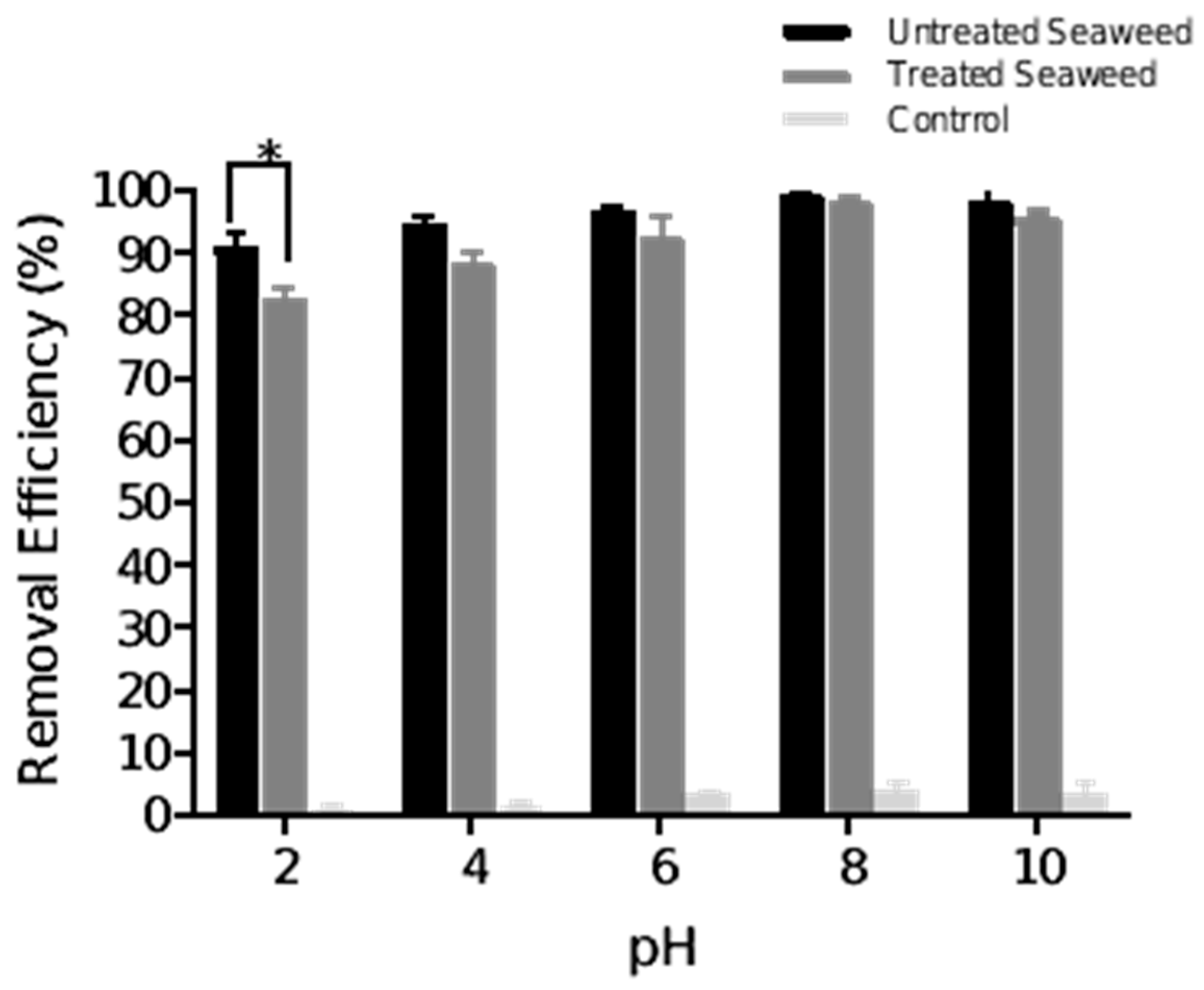
Graph Pad Prism version 8 and Microsoft Excel were used to perform the statistical analysis. Adsorption experimental results were expressed as mean ± standard error of the mean calculated from triplicate experiments. The comparative analysis between the untreated and treated seaweed adsorption results was carried out via one-way ANOVA, followed by the Tukey post hoc test for multiple comparisons. p ˂ 0.05 was taken into account as statistical significance (denoted by *). p-value less than 0.05 (p < 0.05) was considered statistically significant. The p-value indicates the probability of obtaining the observed results if the null hypothesis is true. All statistical analyses were conducted at a 95% confidence level.

3. Results and Discussion

3.1. Analytical Method

The calibration plot for vancomycin was made within a concentration range of 5 to 50 mg/L. A good linear correlation exists between the absorbance and the concentration, with a correlation coefficient (R2) of 0.9994. The precision of the method was expressed as a percentage relative standard deviation (%RSD), which was within the acceptable limit of (˂2.0%), suggesting better reproducibility in the determination of the vancomycin concentration. Table 2 shows that accuracy was expressed as percentage recovery, suggesting that the method is reliable and accurate in determining vancomycin concentration. The limit of detection (LOD) and limit of quantification (LOQ) of the method were 2.316 mg/L and 7.017 mg/L, which correspond with an earlier report on the HPLC vancomycin method [38]. Ghasemiyeh et al. (2020) [39] and Usman and Hempel (2016) [38] reported recoveries in the range of 95–110%, and the %RSD was below 10%, suggesting that the precision of this method is comparable.

3.2. Characterisation of the Seaweed

The particle size of an adsorbent is an essential characteristic that influences adsorption potential. Table 3 shows the particle size distribution of the untreated and treated seaweed, expressed as D values (percentiles). D50 indicates the average particle size, D10 indicates 10% of the particle size and D90 indicates 90% of the particle size. The untreated seaweed D10, D50 and D90 values were 244.67 µm, 430.33 µm and 778.00 µm, respectively, indicating a relatively heterogeneous and coarse particle distribution. Conversely, the treated seaweed samples D10, D50 and D90 values were 114.67 µm, 262.00 µm and 501.67 µm, respectively. These values indicate that the treated seaweed sample has a smaller particle size compared to the Untreated seaweed. This could be attributed to the acid treatment breaking the chemical bonds in the hemicellulose and cellulose and the removal of lignin [32]. The estimated specific surface area values in Table 3 indicate that the treated seaweed had a surface area of 37.50 m2/g compared to the untreated seaweed (15.21 m2/g). The result shows that the treated seaweed had a two-fold increase in surface area, which is in accordance with the smaller particle size. Furthermore, the surface weight mean and volume weight mean of the treated seaweed were 151.33 µm and 287.33 µm, while those of the untreated seaweed were 395 µm and 476 µm. The treated seaweed has a lower value of surface weight mean and volume weight mean, which further indicates the predominance of smaller particle fractions compared to the untreated seaweed, having higher values, confirming the presence of coarse particles. It has been reported that a substance’s surface area depends on its size, and the smaller the particle size, the higher the surface area [40]. Chen et al. (2018) [41] observed that the formation of surface area could be determined via the number of volatiles released and the structure’s turbostratic orientation. The significant enhancement of the surface area indicates that chemical modification might have improved the treated seaweed porosity. However, the improved surface area might not suggest improved adsorption due to modification of surface functional groups, which also might be due to the formation of micropores that are inaccessible [42]. Furthermore, chemical treatment might result in surface functionalisation and pore and structural alterations [43].
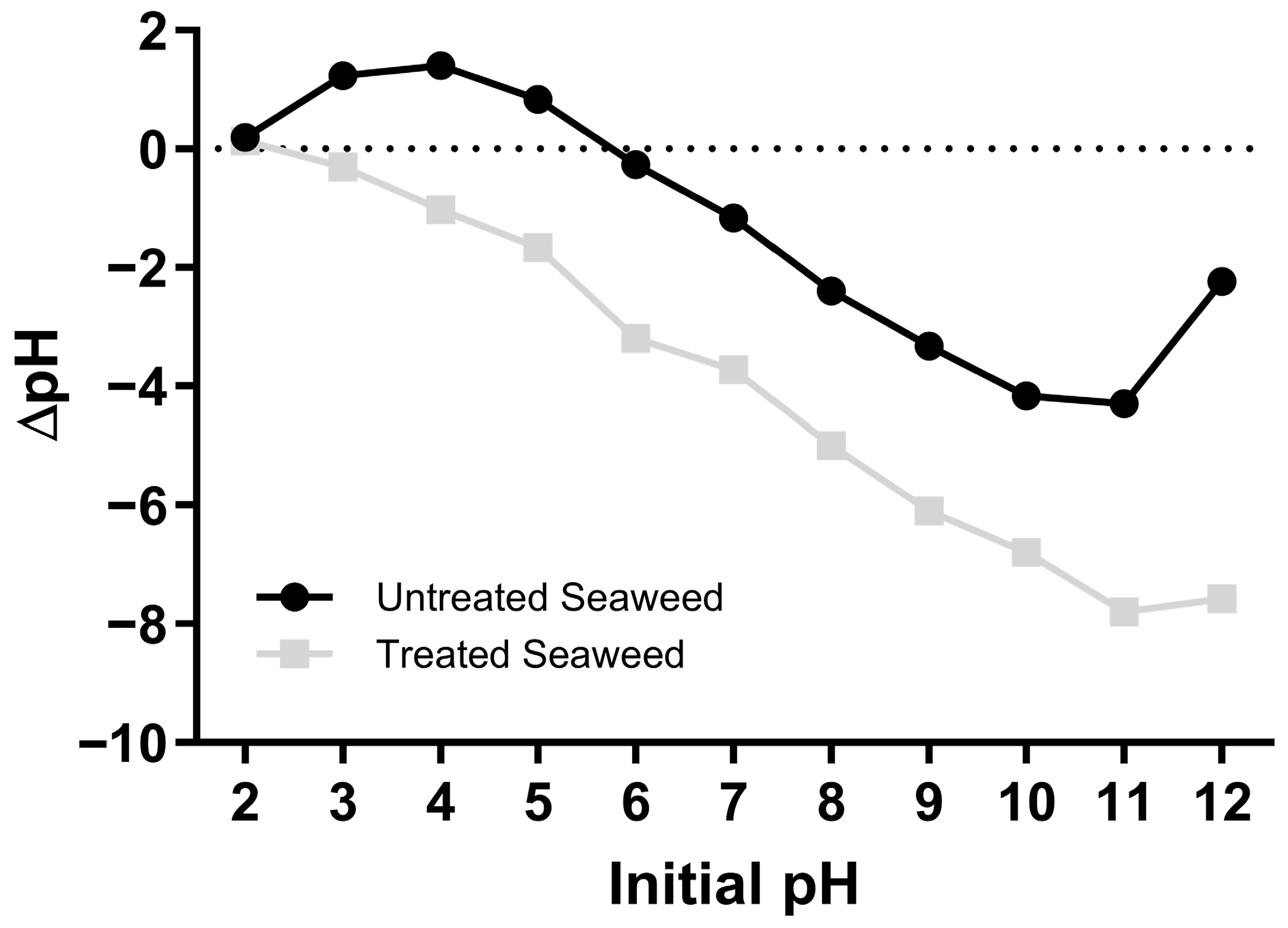
The pH point of zero charge (pHpzc) is the pH at which the adsorbent’s net surface charge is zero. Figure 1 shows that the pHpzc values of the seaweed samples were 5.9 for the untreated seaweed and 2.6 for the treated seaweed. The decrease in the treated seaweed’s pHpzc value could be due to the acid pre-treatment, which protonates the seaweed surface, thereby increasing the surface acidity by introducing more acidic sites, lowering the pHpzc value. Above the untreated seaweed pHpzc value, the adsorbent surface becomes negative due to deprotonation of the surface. This result corroborates the result of Abudu et al. (2025) [44], whereby the pHpzc of treated sawdust was 3.10, and that of raw sawdust was 5.80.
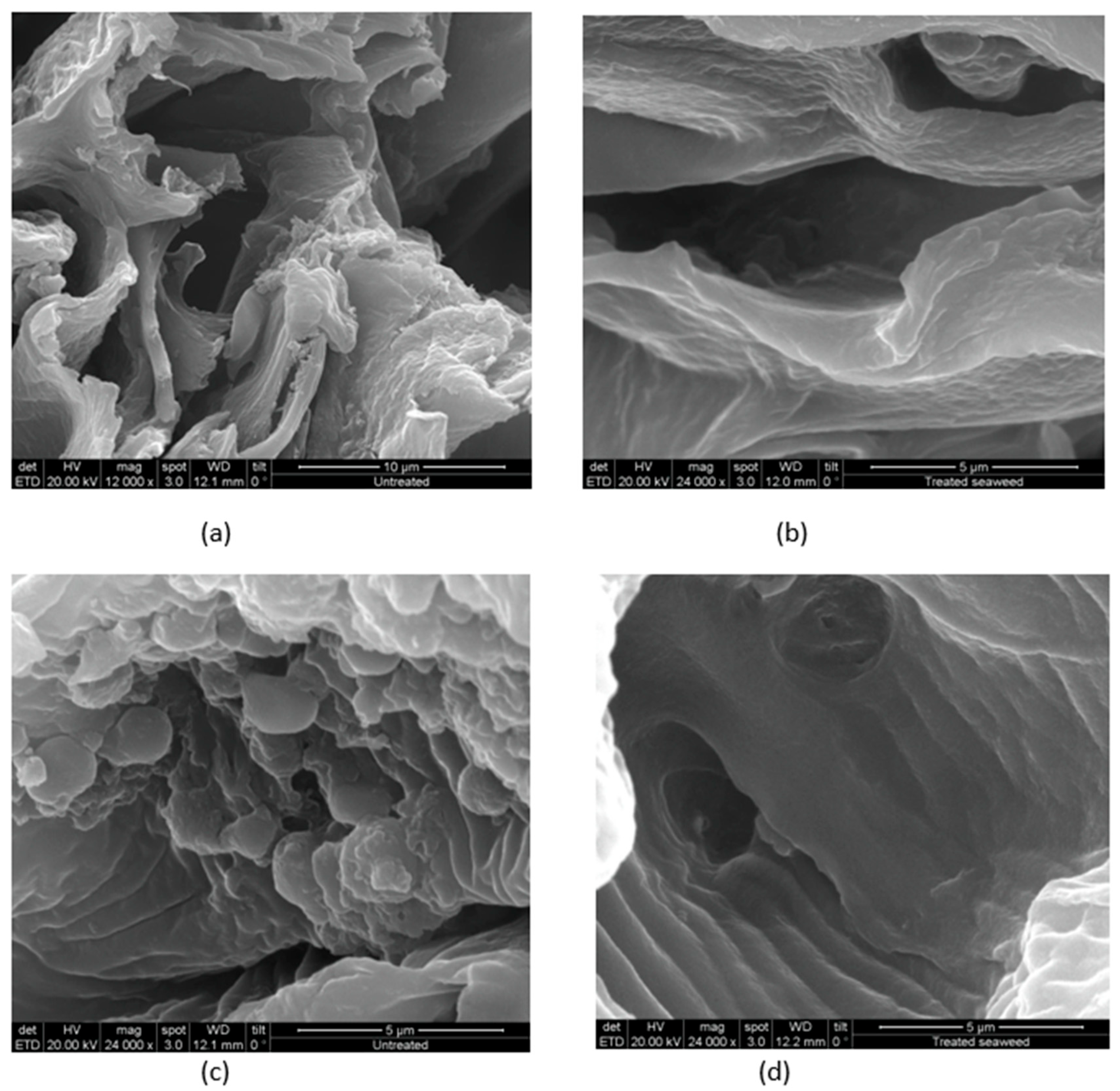
The SEM images presented in Figure 2b show that the treated seaweed surface morphology appeared layered with open pores and visible cavities, which could be loose and smooth, suggesting the effect of acid pre-treatment [45]. Figure 2a shows that the untreated seaweed appeared dense with a compact structure with fewer open pores, which could be tight and rough, suggesting its cellular integrity is still intact. Also, Figure 2c reveals that the untreated seaweed surface appears compact and rough with a coating on its surface, compared to the treated seaweed surface, which appears layered and smooth with visible pores and fewer impurities, as shown in Figure 2d. This could be due to the effect of acid pre-treatment, which might result in partial depolymerisation of fucoidan and hydrocolloid polymers, which can be attributed to the dissolution of hydrogel residues and mucilage globules, which might reduce the number of effective adsorption sites [46]. This study corroborates the report of Saravana et al. (2018) [47], who observed that amorphous polysaccharides, fucoidan and alginate dissolve during chemical treatment.
The Boehm titration was utilised to ascertain the acidic and basic functional groups on the seaweed adsorbent’s surface. The functional groups will provide insight into the surface chemistry of the seaweed adsorbents, which can influence their adsorption behaviour. The acidic functional groups on the seaweed adsorbents include ester (-COOR), carboxylic (-COOH) and phenolic groups (C6H5OH). These oxygen-containing groups are important in describing the hydrophilicity, polarity and ion-exchange potential of the seaweed samples [48]. The result presented in Table 4 shows that the untreated and treated seaweed have the same carboxylic group value (0.82), suggesting that pre-treatment did not reduce the carboxylic groups. Also, the lactonic group value was reduced in the treated seaweed (1.00) compared to the untreated seaweed (1.01). This slight decrease in value could suggest partial conversion of the structure of lactone [22]. The phenolic group values show that the value increased in the treated seaweed (0.50) compared to the untreated seaweed (0.47), suggesting relative cleavage of the quinone structure and an improved surface polarity [49]. The treated seaweed had a slightly higher acidic value of 2.32 than the untreated seaweed acidic group of 2.30, suggesting more available acidic sites on the treated seaweed. The value of the base functional groups reduced in the treated seaweed (0.43) compared to the untreated (1.20). This reduction suggests that pre-treatment might have destroyed the seaweed samples’ basic sites, leading to improved hydrophilic and polar surfaces. The improved hydrophilic and polar surface improves water affinity, which hinders specific and electrostatic interaction, which might diminish adsorption efficiency despite surface modification [50].
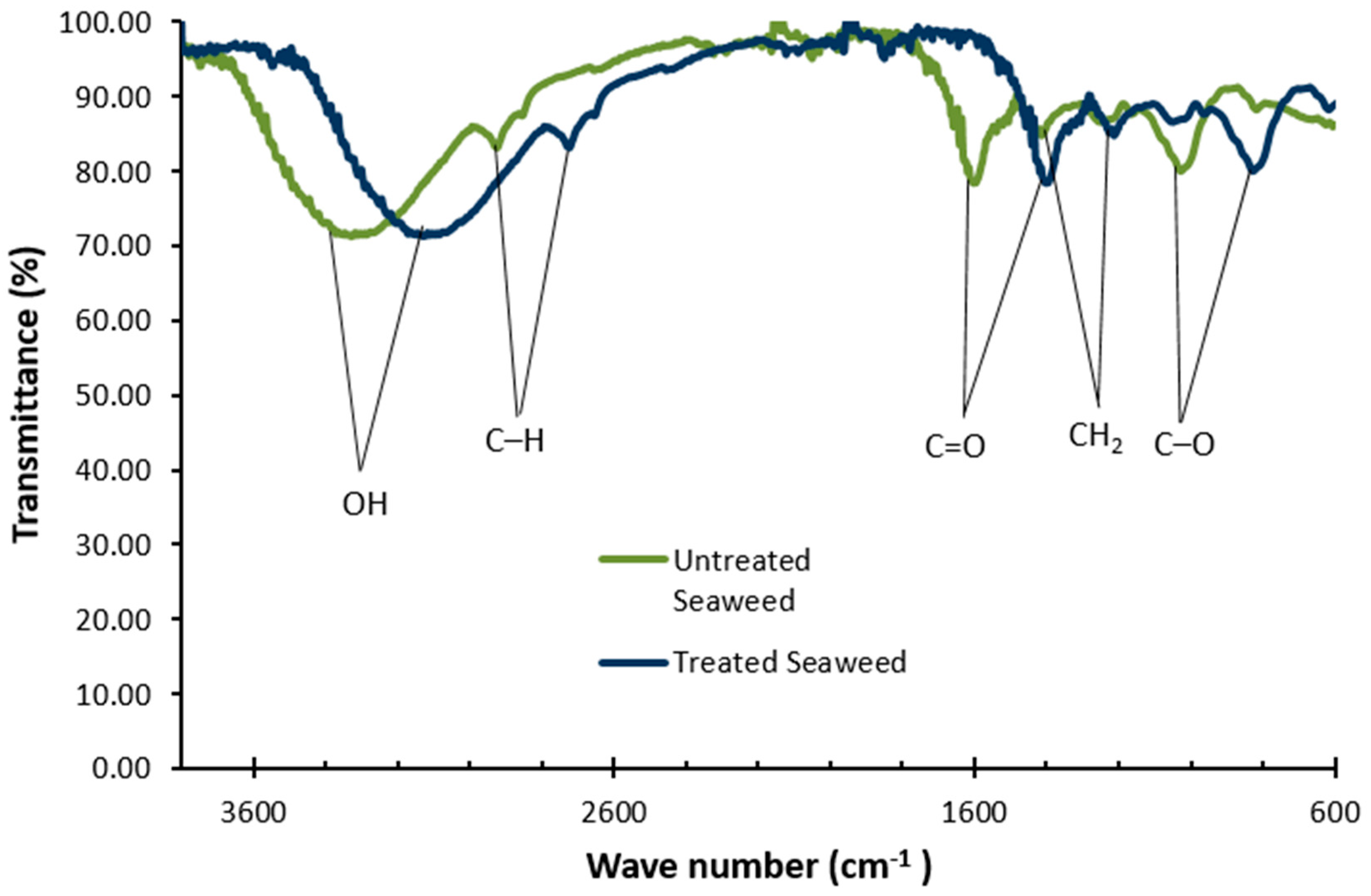
Figure 3 shows the FTIR spectra of the untreated and treated seaweed, which specify the functional groups liable for the adsorption of the antibiotics in water. The FTIR spectra with a broad band at around 3140–3320 cm−1 could be due to the vibrations of O-H and N-H groups of proteins and carbohydrates [51] and vibration of O-H in water [32]. The signal around 2720–2915 cm−1 can be ascribed to symmetric and asymmetric vibration of aliphatic chain C-H groups, with the minimal shift after treatment suggesting that the aliphatic structure was largely preserved [52]. The signal around 1420–1610 cm−1 could be ascribed to ester functional groups from fatty acids and lipids [53], and the -C=O groups of amides associated with proteins and –C=O groups of esters associated with carbohydrate could be due to the ester linkage between the hydroxyl and carboxyl groups of the polysaccharide. The slight shift after treatment suggests an alteration of functional groups associated with the adsorbent active sites [48]. The signal around 1230–1390 cm−1 could correspond to the asymmetric binding of CH2 and CH3 of lipids or proteins and symmetric stretching of carboxylic acids C–O groups, which exhibited slight variation between the untreated and treated seaweed, suggesting structural modification of polysaccharide components [54]. The peak around 840–1030 cm−1 might be due to S = O and C–S–O bond vibration, respectively [55]. The shift in peak position and change in intensity in the treated seaweed could be attributed to the acid pre-treatment, and chemical treatment might have modified the seaweed functional groups, with the alteration of the carbonyl and hydroxyl groups suggesting a change in active site availability [56].

3.3. Vancomycin Adsorption Study

3.3.1. Effect of Contact Time

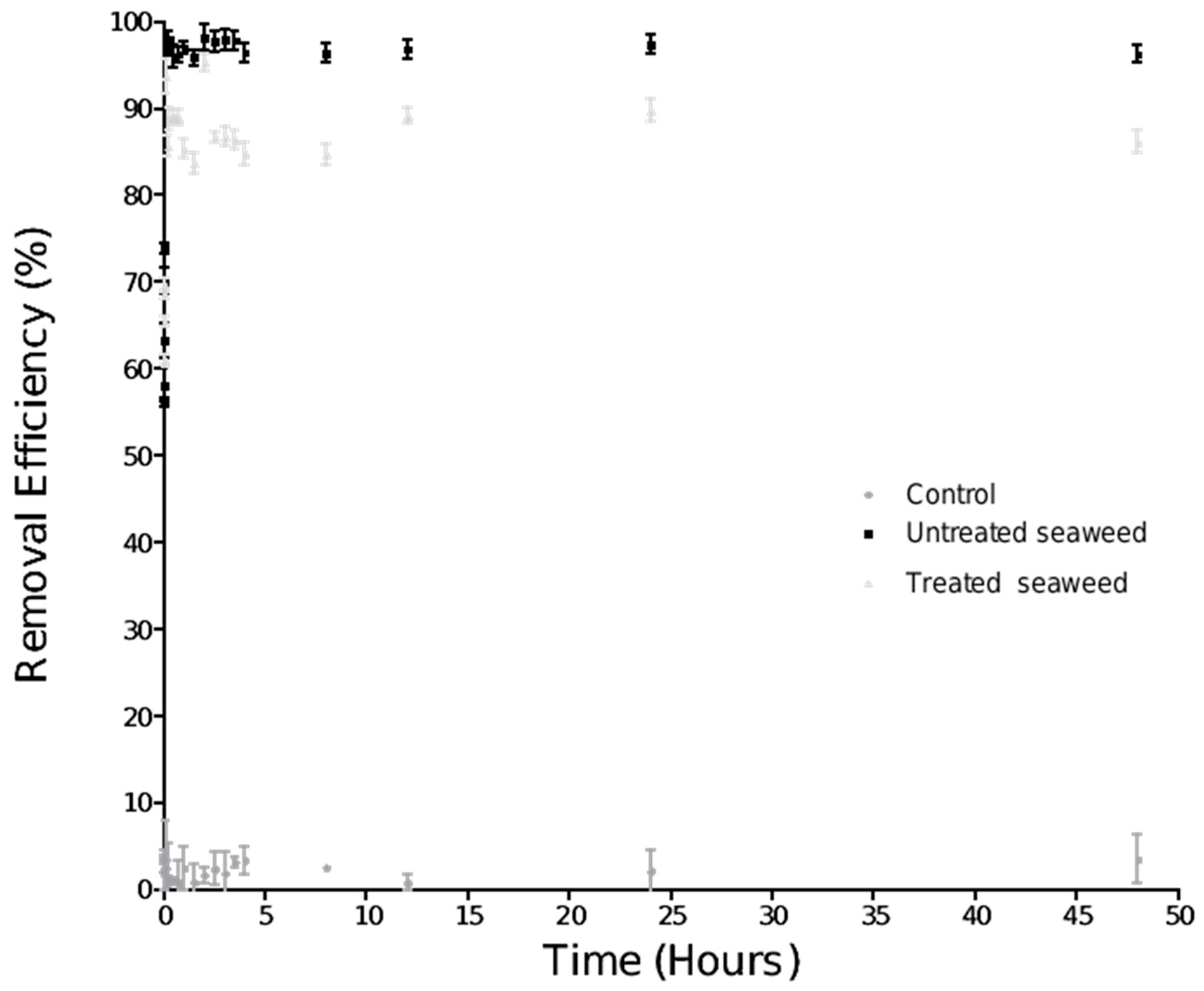
Evaluation of the contact time is necessary to establish the shortest period of time required for the adsorption of the maximum amount of vancomycin from the solution. Figure 4 indicates the influence of contact time on the adsorption of vancomycin with a concentration of 25 mg/L, with varying contact times of 30 s to 48 h. The result shows a rapid increase in the adsorption process for the untreated and treated seaweed within the first 30 min until equilibrium was achieved at about 2 h, with a removal efficiency of 98% for the untreated seaweed and 95% for the treated seaweed, which corresponds to an adsorption capacity of 4.9 for untreated seaweed and 4.8 for treated seaweed. This trend is also reflected in the adsorption capacity (qe), which increased from 3.1 mg/g to 4.8 mg/g for the treated seaweed and from 3.0 mg/g to 4.9 mg/g for the raw seaweed. The adsorption capacities obtained in this study (4.8–4.9 mg/g) are within the range of values reported for biomass-derived adsorbents used in antibiotic removal, which vary depending on material type and experimental conditions [24]. The qe values obtained in this study are within the reported range, suggesting that seaweed-based adsorbents’ performances are comparable to other low-cost materials [12]. The adsorption capacities obtained in this study are compared to those reported for advanced materials used in antibiotic removal. Advanced adsorbents, which include carbon nanotubes (CNTs), graphene oxide (GO)-based materials and metal organic frameworks, have demonstrated higher adsorption capacities, which often exceed 100–500 mg/g, which might be due to their tuneable pore structures and functionalised surfaces [24]. In contrast, the adsorption capacities obtained in this study for the untreated and treated seaweed were 4.9 mg/g and 4.8 mg/g, which are lower than those of advanced nanomaterials but comparable to other low-cost biomass-derived adsorbents. The results of this study suggest that chemical modification of seaweed did not enhance adsorption, suggesting that increased surface area alone might not be sufficient to improve vancomycin adsorption.
The improved adsorption of vancomycin at the initial stage of the process could be due to the availability of abundant vacant adsorbent sites on the adsorbent boundary layer [57]. Furthermore, the adsorption rate of the adsorbent decreases as the adsorption process approaches the saturation level. This could be due to a reduction in the adsorbent vacant sites. Also, vancomycin adsorption could be rendered difficult as a result of solute repulsion between the bulk phase and the solid [4]. Furthermore, beyond the initial phase of the adsorption process (i.e., about 2 h), the surface pores are almost saturated with vancomycin. Also, in the later phase of adsorption, vancomycin molecules had to transverse deeper into the adsorbent micropores, which leads to much resistance [1].
The high removal efficiency of the untreated and treated seaweed could be attributed to the availability of adsorptive sites for the vancomycin molecules. Despite an improvement in seaweed’s surface by chemical treatment, the adsorption capacity did not improve. FTIR analysis suggests that modification might have altered the functional groups available for adsorption. Also, the SEM analysis showed changes in surface morphology after treatment, and the lower adsorption capacity by the treated seaweed might suggest that surface morphology is not a dominant factor, but that surface chemistry plays a more significant role. However, the untreated seaweed had a slightly higher removal efficiency than the treated seaweed, which could be due to a change in the surface chemistry and partial modification of the treated seaweed functional groups due to acid pre-treatment [56]. However, the work of Varas et al. (2025) [42] documented that sulphuric acid pre-treated brown seaweed had reduced adsorption capacity compared to the untreated brown seaweed in the adsorption of organic pollutants. However, Nanaki et al. (2015) [58] suggest that chemical treatment could enhance adsorption potential depending on the nature of the material and treatment conditions.

3.3.2. Effect of Initial Concentration

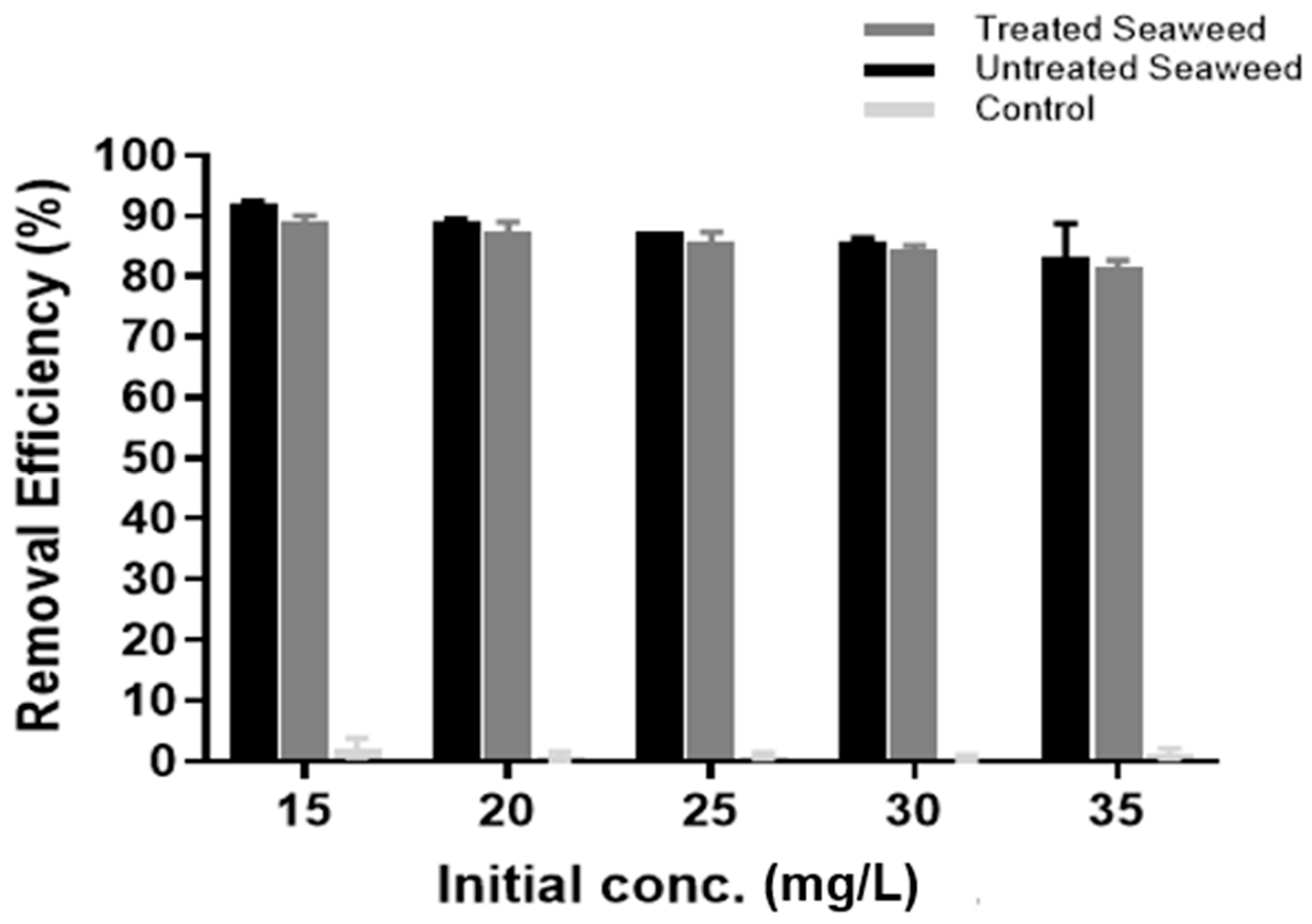
Initial adsorbate concentration is an essential driving force for overcoming mass transfer resistance between the aqueous and solid phases. In this investigation, the removal efficiency of the untreated and treated seaweed was investigated over the concentration range of 15–35 mg/L. The result in Figure 5 shows that as the initial concentration of vancomycin increases from 15 mg/L to 35 mg/L, there is no significant difference in the removal efficiency across the initial concentrations for the untreated and treated seaweed. Also, adsorption efficiency decreases for both the untreated and treated seaweed. Both adsorbents had the highest removal efficiency at 15 mg/L (92% for untreated seaweed and 89% for treated seaweed). However, the control shows negligible vancomycin removal across all concentrations, indicating that adsorption was due to seaweed biomass. Higher adsorption efficiency recorded at lower concentration could be due to larger available active sites relative to the solute molecules [59]. Also, as the concentration improves, these sites become saturated progressively, resulting in competition between the vancomycin molecules and reduced removal efficiency. However, this study resonated with the study of Gashtasbi et al. (2017) [60] on the adsorption of vancomycin using impregnated magnetic activated carbon, in which a sharp decline was reported in vancomycin removal efficiency as the concentration increased from 10 mg/L to 100 mg/L.

3.3.3. Effect of Dose

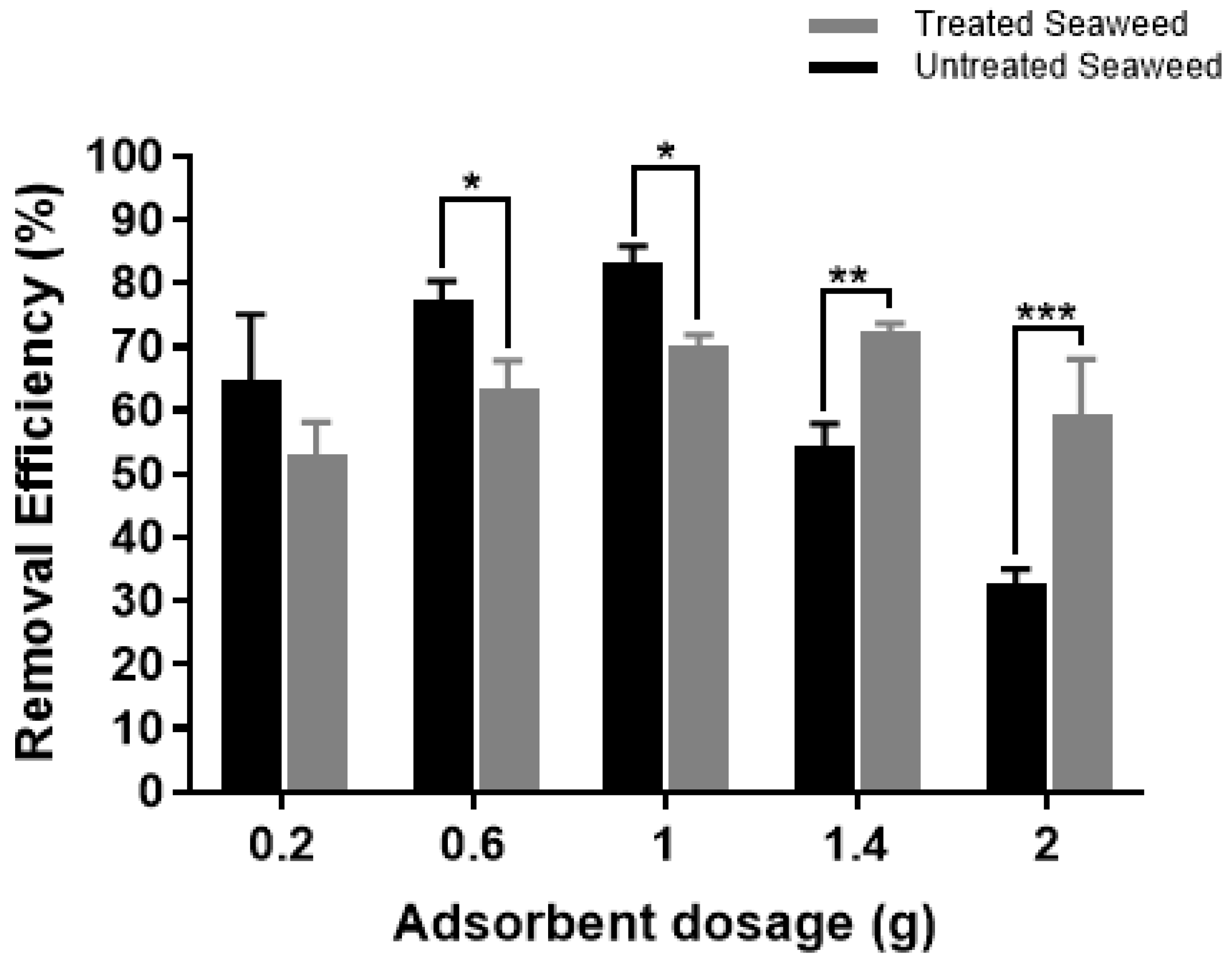
The influence of adsorbent dose on the adsorption of vancomycin using raw and modified seaweed was evaluated with adsorbent doses of 0.2 g to 2.0 g. In this study, as the adsorbent dose increases, the vancomycin removal efficiency also increases until a certain dose, and then adsorption efficiency begins to decline at higher dosage > 1.4 g for the raw seaweed, while the treated seaweed maintained a comparative adsorption efficiency. As observed from the untreated and treated seaweed results in Figure 6, the removal efficiencies improved from 64.92% to 83.33% before being reduced to 32.93% for the untreated seaweed, and for the treated seaweed, the removal efficiency improved from 53.11% to 72.47% before declining to 59.17%. The increase in the removal efficiencies with improved adsorbent dosage could be due to the availability of the adsorbent binding sites [40]. Also, the decrease in the adsorption efficiency of vancomycin at certain adsorbent doses could be attributed to the adsorbent particle cohesive interaction, like agglomeration, which resulted in the decrease in the effective surface area of the adsorbent and improvement in the diffusion path length [9]. Furthermore, other reasons that might explain the decrease in adsorption capacity for the untreated seaweed as the adsorbent dose increases include electrostatic interactions, the availability of solute and interference between binding sites [15]. This result corroborates the work of Khamooshi et al. (2020) [19], who reported a decrease in vancomycin removal as the adsorbent dosage increased from 0.2 g to 1.2 g using a bentonite nanoparticle. Also, this result is consistent with that of Abudu et al. (2025) [44], who reported on the removal of rifampicin using sawdust. Their result showed continuous removal of rifampicin until an optimal dosage, whereby the removal efficiency starts declining beyond that point.

3.3.4. Effect of Ionic Strength

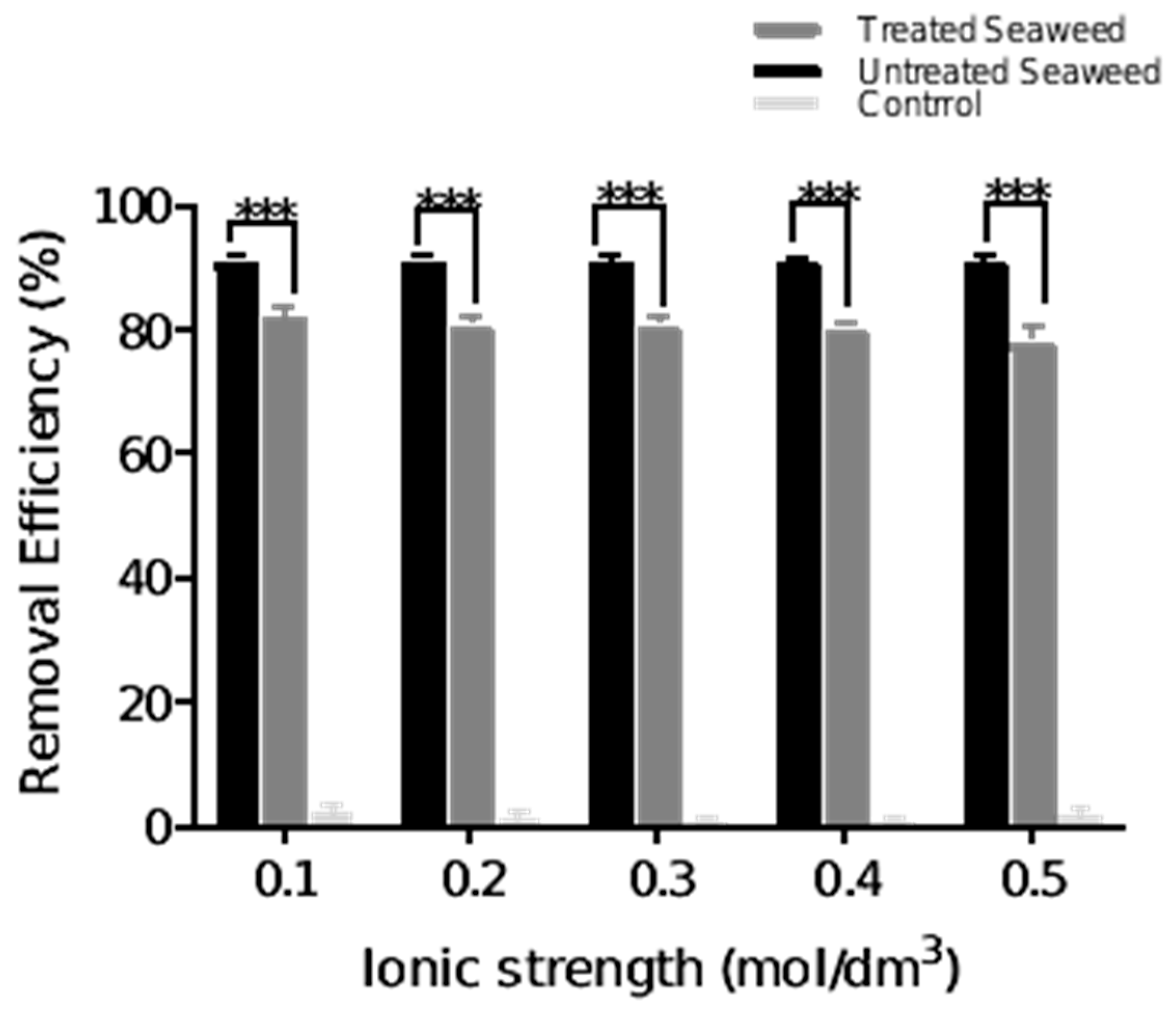
The solution ionic strength is a factor that controls both non-electrostatic and electrostatic interactions between the adsorbent and adsorbate [18]. Sodium chloride was utilised for the evaluation of the effect of ionic strength on the adsorbents. Sodium chloride concentrations of 0.1 mol/dm3 to 0.5 mol/dm3 were examined. The result in Figure 7 suggests that sodium chloride addition had little to no effect on the adsorption efficiency of vancomycin by the seaweed adsorbents. Both adsorbents had relatively high adsorption efficiencies (78.39% to 91.41%). The untreated seaweed had a higher removal efficiency (91.17% to 91.41%) than the treated seaweed (78.39% to 82.34%) across the various sodium chloride concentrations. The control removal efficiency remained negligible, indicating that adsorption was responsible for the removal. The negligible effect of sodium chloride might be related to the effect of electrostatic interactions between the seaweed adsorbent and vancomycin molecules, which could be negligible; thus, the sorption of the sodium cation on the seaweed surface was negligible [61]. This study corroborates the study of Shidi et al. (2023) [62], which reported a negligible effect of sodium chloride on the adsorption of ciprofloxacin. Also, this study corroborates the report of Khorshidi et al. (2023) [63] in which the ionic strength did not significantly influence the adsorption of tetracycline by Mg-AL-LDH/AC nanocomposite [63]. Furthermore, this study corroborates the results of the study by Yu et al. (2014) [64] in which an increase in the NaCl concentration from 0.0 to 0.4 M did not influence the adsorption of tetracycline by carbon nanotubes.

3.3.5. Effect of pH

The influence of solution pH on vancomycin adsorption can be attributed to the combination of pH-dependent vancomycin speciation and surface charge properties of the adsorbents. Both the untreated and treated seaweed adsorbents have similar adsorption patterns across the pH range of pH 2 to pH 10. As seen in Figure 8, the adsorption of vancomycin is enhanced as the pH increases, achieving its highest value at pH 8, followed by a slight decline at pH 10. There was no significant difference between the adsorption levels across the studied pH range. The adsorption pattern could be attributed to the increase in the electrostatic force of attraction between the adsorbent’s surface and vancomycin molecules. This attraction could be due to differences in the charges present on the adsorbate and adsorbents, which is influenced by the adsorbent’s point of zero charge value (pHpzc of the untreated seaweed is 5.9, and that of the treated seaweed is 2.6). Vancomycin contains several ionisable groups with pKa values of 2.18, 7.75, 8.89, 9.59, 10.4 and 12 [65]. At pH less than 2.9, the vancomycin carboxyl, amine and phenolic groups are protonated, which results in vancomycin molecules being cationic and the seaweed adsorbent surfaces being protonated and positively charged. This results in electrostatic repulsion, resulting in lower removal efficiency for both the raw and treated seaweed adsorbents. As the pH increases above this value, the carboxyl group undergoes deprotonation, thereby improving the negative charge [66]. Furthermore, as the pH increases from pH 4 to pH 6, the positive charge on the vancomycin molecules and adsorbents decreases, resulting in reduced electrostatic repulsion and improved adsorption efficiency. At pH 8, vancomycin is zwitterionic, with protonated amine and deprotonated carboxyl groups, and the seaweed adsorbents bear negative charges. The result shows maximum adsorption for both adsorbents due to electrostatic attraction between the vancomycin molecules and seaweed adsorbents. Besides electrostatic attraction, forces such as π–π interactions and hydrogen bonding also contribute to the adsorption process. This aligns with the study of Atugoda et al. (2021) [56], which reported peak adsorption of ciprofloxacin at pH 8 using zeolite-modified seaweed. Above the pKa value of 9.59, the phenolic, carboxyl and amine groups are deprotonated, resulting in an anionic form of vancomycin molecules, and the adsorbent’s surface is negatively charged, which results in reduced adsorption efficiency at pH 10. The untreated seaweed had better adsorption efficiency across the pH range. This could be attributed to their preserved functional groups for multiple sites compared to the treated seaweed, whereby acid treatment might have influenced the polysaccharide integrity and functional group leaching, resulting in reduced adsorption capacity [42].

3.3.6. Effect of Temperature

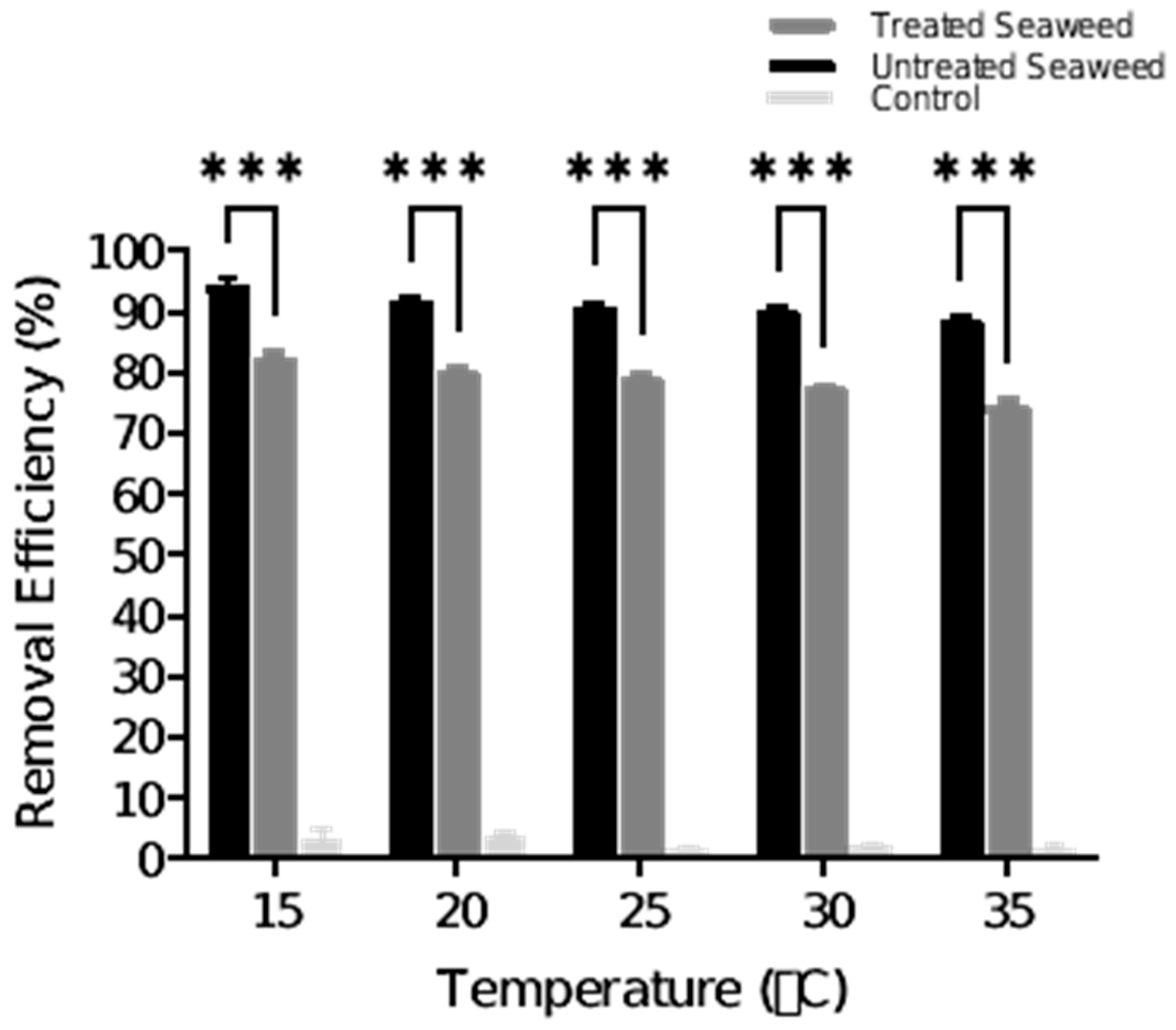
The effect of temperature was analysed to understand the adsorptive pattern of vancomycin on the adsorbent surface. For this study, the impact of temperature on the adsorption of vancomycin was investigated within the temperature range of 25 °C to 35 °C for both adsorbents. The result in Figure 9 indicates that sorption efficiency declined as temperature increased from 25 °C to 35 °C for both adsorbents, and there was no significant difference in the removal efficiency across the various temperatures for both the untreated and treated seaweed, while the control indicated negligible performance (less than 5%), indicating that adsorption performance can be attributed to the adsorbent material.
It was observed that at 25 °C, the untreated seaweed had the highest vancomycin removal efficiency (94.74%), which decreased to 88.79% at 35 °C. Also, the same pattern was observed for the treated seaweed sample, in which an 82.98% removal efficiency was recorded at 15 °C and decreased to 75.14% at 35 °C. This result shows that the adsorption capacity decreases as the temperature increases. The sorption capacity suggests that the adsorption process is exothermic due to the equilibrium uptake of vancomycin, which decreases as the temperature increases [67]. As the temperature improves, there is an attenuation of the interaction between the vancomycin molecules and the adsorbents, which might have resulted in a decline in the adsorption efficiency [68]. The high adsorption efficiency at a lower temperature could be due to intense electrostatic attraction between the adsorbents and the vancomycin molecules. Also, the decrease in adsorption at higher temperatures could be due to the improvement of the desorption process [19].
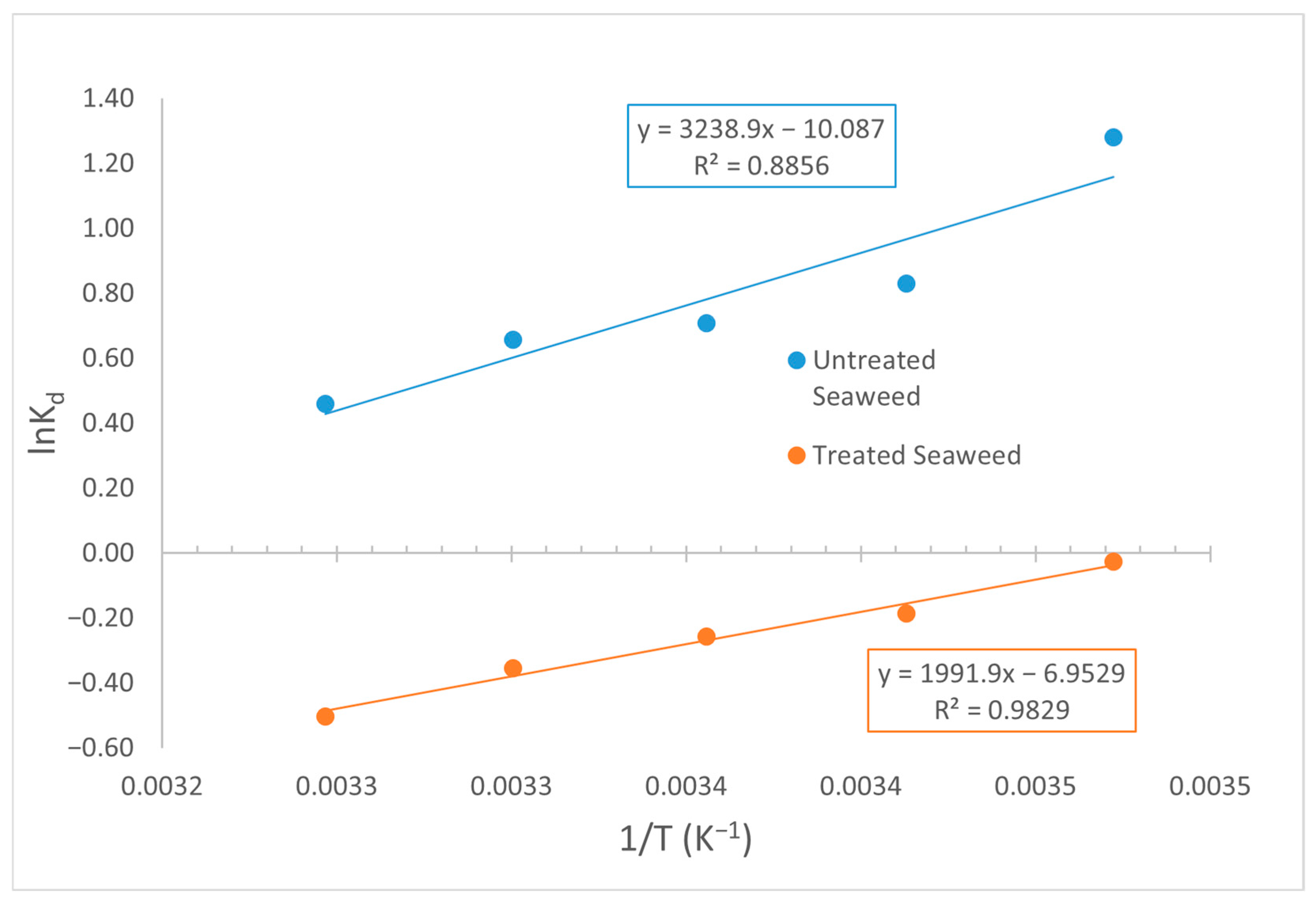
Also, we endeavoured to determine the thermodynamic properties, which will assist in understanding the nature of the adsorption process and the interaction between the seaweed adsorbents and vancomycin [45]. In this study, entropy, free energy and enthalpy were examined to understand the interaction between the vancomycin molecules and the seaweed using the Van’t Hoff Equation (7).
The thermodynamic parameters were analysed to understand the vancomycin adsorption behaviour on the seaweed surface. These parameters will be used to analyse the adsorption process. Table 5 shows the evaluated adsorption process thermodynamic parameters, which include ∆H°, ∆G° and ∆S° values obtained from the slope and intercept of the Van’t Hoff plot (lnKd vs 1/T), as presented in Figure 10. For the untreated seaweed, the negative ∆G° value suggests a thermodynamically favourable adsorption process. For the treated seaweed, positive ∆G° values suggest that adsorption was less favourable. This suggests that acid pretreatment might have altered the surface chemistry, despite the improved surface area, which might have reduced the availability of functional groups for binding vancomycin [53]. The enthalpy value (∆H°) for both the untreated and treated seaweed was −26.93 kJ.mol−1 and −16.56 kJ.mol−1, indicating that the adsorptive process for both sorbents was exothermic. This resonates with the experimental results, which indicate that the adsorption efficiency of vancomycin declines as temperature increases. The low value of ∆H° suggests that the interaction between the seaweed adsorbents and vancomycin could be facilitated via physical adsorption involving hydrogen bonding rather than chemical adsorption [56]. The entropy value (∆S°) for the untreated seaweed was 83.86 J.mol−1.K−1, and that of the treated seaweed was 57.78 J.mol−1.K−1. The positive values of ∆S° indicate the improved randomness in the adsorbate interphase during vancomycin adsorption onto the seaweed adsorbents. The ∆G° value of the untreated seaweed was negative, indicating that the adsorption process was spontaneous, while that of the treated seaweed was slightly positive, suggesting that the adsorption process was non-spontaneous. The report of Atugoda et al. (2021) [56] corroborates this study, in w hich the adsorption of ciprofloxacin by zeolite-modified seaweed was spontaneous. Also, the work of [69] corroborates this study, in which the adsorption of amoxicillin into macroalgae was non-spontaneous. This result suggests that adsorption spontaneity could be influenced by surface functional groups and antibiotic chemistry [5].

3.3.7. Proposed Mechanism of Adsorption

The adsorption efficiency of the seaweed adsorbents depends on their surface and structural properties. The porous and chemical properties of the seaweed samples could suggest that there could be various ways to remove antibiotics. Also, the physical and chemical adsorption features of the seaweed adsorbents have a considerable impact on the adsorption efficacy. In general, adsorption of the antibiotics onto the seaweed samples could be a multi-step procedure involving the transfer of antibiotics from the water to the seaweed samples, diffusion of the external and internal surface and the seaweed pores and the immobilisation of the seaweed active parts [56]. Regarding the combination of characterisation and adsorption performance, vancomycin adsorption on seaweed could be controlled by a combination of hydrogen bonding, electrostatic interaction and possibly surface complexation, which might involve carboxyl and hydroxyl functional groups [70]. Also, the reduction in the treated seaweed’s effectiveness suggests preservation of the functional groups, which might be more important than surface area enhancement in the adsorption process. The FTIR analysis showed the presence of carbonyl and hydroxyl functional groups with changes in peak position and intensity after treatment, which indicates that these functional groups are involved in the adsorption process and might serve as an active site for vancomycin molecule interaction. The influence of pH on the adsorption supports surface functional group involvement. The variation in adsorption capacity with pH suggests that the ionisation state of both the adsorbent and vancomycin influences adsorption behaviour, suggesting that electrostatic interaction contributes to the adsorption mechanism. The treated seaweed did not exhibit improved adsorption, suggesting that adsorption might not be solely controlled by surface area but rather by the availability of the functional groups identified by the FTIR analysis. Adsorption of antibiotics to the surface of the seaweed samples could be appropriate for diverse types of interactions, such as hydrophobic interactions, electrostatic interactions, charge–dipole interactions and π–π interactions [47]. The structure of the antibiotics suggests that functional groups such as -COOH, -OH and -NO2 are seen on the surface of the antibiotics. The adsorption of the antibiotics could be due to -COOH and -OH groups. The adsorption efficiency was substantial at high pH, which could be due to the electrostatic attraction between the negative charge surface of the adsorbents and the vancomycin molecules [56]. Also, the adsorption mechanism could be due to hydrogen attraction and π–π interactions between vancomycin and the seaweed samples. Hydrogen attraction between the N-H and O-H of vancomycin and the seaweed carbonyl group could have occurred during the adsorptive process [43]. Also, hydrophobicity could have been involved in the vancomycin sorption onto the seaweed samples. Improved hydrophobicity suggests a favourable interaction between the molecules of vancomycin and the adsorbent, and the extent of the interaction improves as the adsorbate hydrophobicity rises [19].

3.4. Adsorbent Regeneration and Reusability

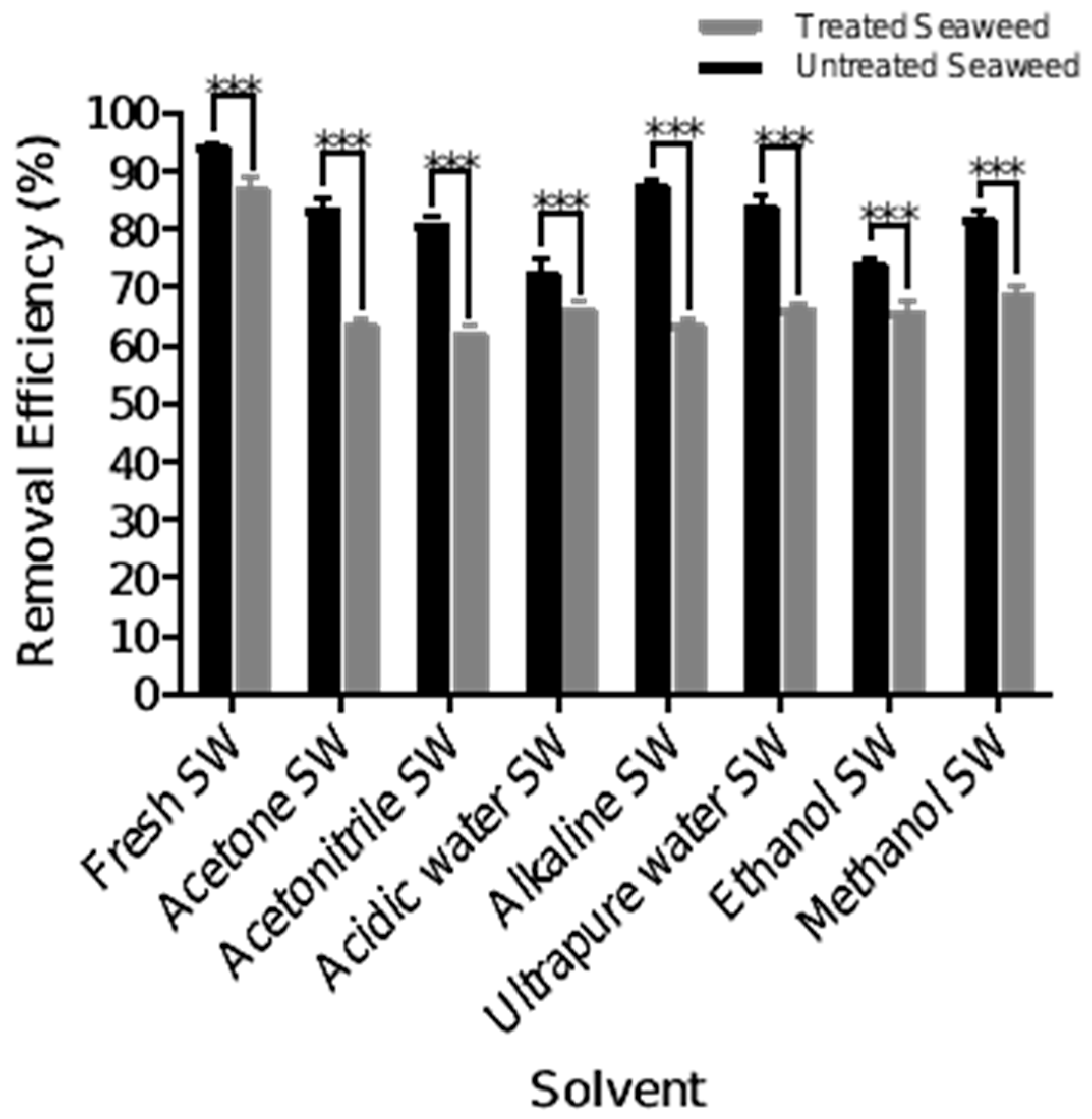
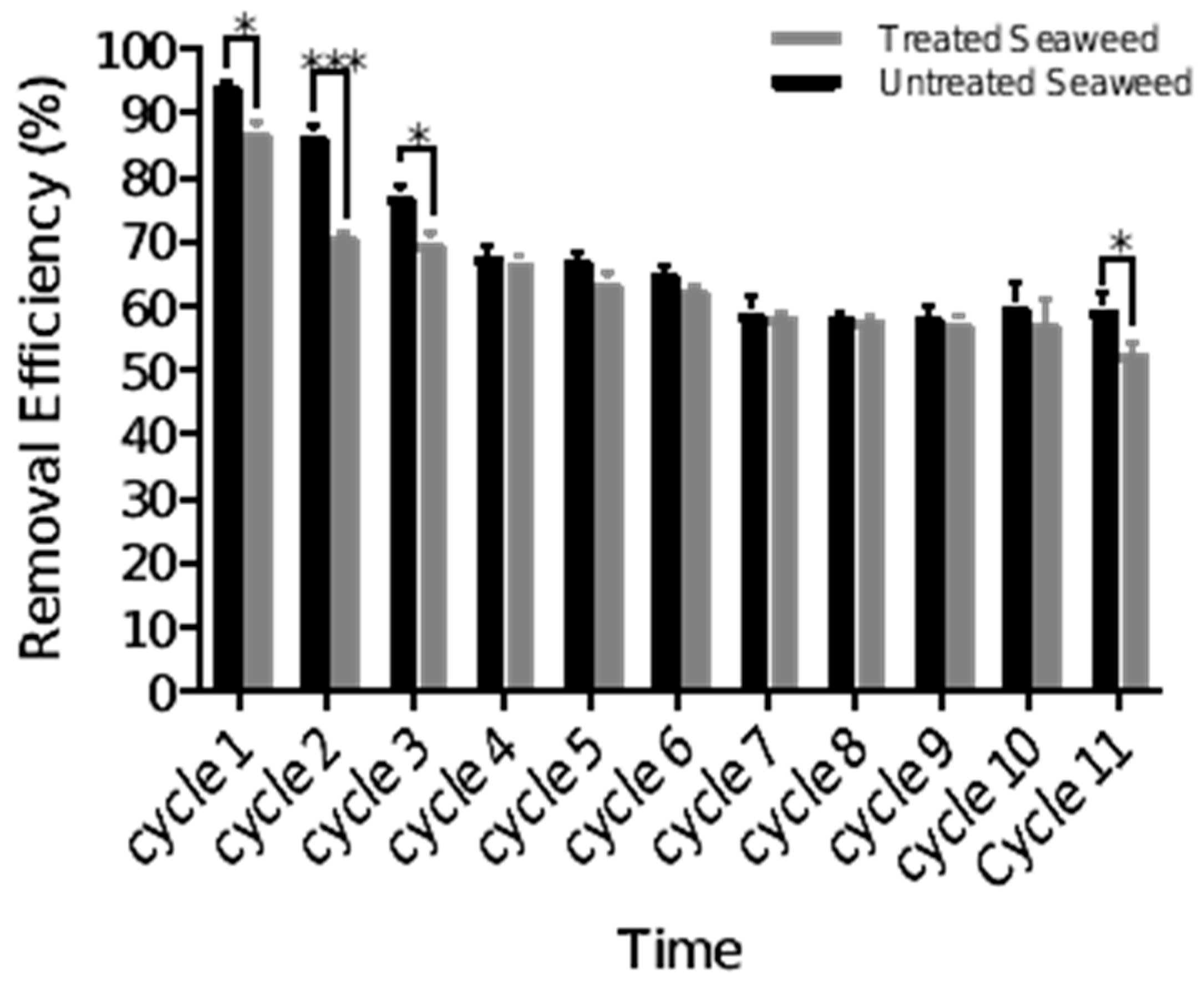
The regeneration potential of the adsorbents was evaluated due to the stringent and economic demand for sustainability. The adsorbents showed a decrease in adsorption efficiency over successive regeneration cycles. Among the regenerating solutions evaluated, alkaline water showed a slightly better regeneration potential for the untreated seaweed sample and methanol for the treated seaweed, while ultrapure water and other solvents have similar removal potential, as shown in Figure 11. This result aligns with the report of Abudu et al. (2025) [44], which stated that the methanol-regenerated adsorbent had a slightly better performance compared to other solvents. Also, Alidadi et al. (2018) [9] reported that the acidified regenerated adsorbent was eco-friendly and cheap. The choice of ultrapure water for the regeneration of the adsorbent was due to its lack of toxicity and its cheap nature. Figure 12 shows the result of the reusability experiment of the seaweed adsorbents for 10 cycles (the first data point represents the initial adsorption cycle before regeneration). The result shows that the removal efficiency of the regenerated untreated seaweed dropped from 87.06% to 58.67%, suggesting a 32.60% loss of adsorption capacity, while that of the treated seaweed decreased from 71.48% to 52.92%, suggesting a 26% loss of adsorption capacity, suggesting the loss of active sites or incomplete desorption of vancomycin. The reduction in the adsorbent efficiency could be due to the filling of the adsorbent’s surface pores with molecules of the adsorbate [71]. This result suggests that seaweed adsorbents retain some adsorption capacity after regeneration, but their performance declines over repeated use. The sustainability of the material can be considered in the context of its low cost, natural abundance and biodegradability.

4. Conclusions

This study evaluated the potential of untreated and chemically modified brown seaweed for the removal of vancomycin from water. The distinctive feature of this work lies in the comparative evaluation of untreated and treated seaweed, which includes their physicochemical characterisation and adsorption performance for vancomycin, which is relatively understudied in adsorption studies. This study evaluation indicates that the untreated and treated seaweed are efficient adsorbents for the decontamination of vancomycin from water. Also, this study demonstrates that chemical modification does not necessarily result in improved adsorption performance despite increased surface area. It was observed that the adsorption potential of both adsorbents was influenced by several variables, which include the pH, dose, initial concentration of antibiotic, temperature and contact time. The equilibrium time for the adsorption of vancomycin onto the seaweed adsorbents was 120 min, with an adsorption efficiency of 97% for the untreated seaweed and 94% for the treated seaweed. The findings indicate that despite increased surface area by chemical modification, it did not significantly improve adsorption performance, suggesting that functional groups on the adsorbent surface are critical in the adsorption mechanism. pH of 8.0 was found to be optimal for the adsorption of vancomycin on untreated and treated seaweed, having an adsorption efficiency of 99% and 98%, which could be attributed to the electrostatic interaction between the seaweed’s surface functional groups and vancomycin molecules. The adsorption capacity values obtained in this study illustrate that seaweed-based adsorbents provide competitive performances compared to other biomass-derived materials, highlighting their potential applicability. The thermodynamic study suggests that the removal of vancomycin by both adsorbents was exothermic in nature, with the results also showing that chemical treatment increased surface area but did not improve adsorption performance or thermodynamic favourability, suggesting that surface chemistry was more important than the surface area in this adsorption process. The ionic strength of 0.1–0.5 M had a negligible effect on vancomycin adsorption. The regenerated seaweed adsorbents were reused 10 times, with ≥55% vancomycin removal achieved. The regeneration studies illustrated that the adsorbents can be reused with acceptable performances, suggesting their potential for repeated use. The results suggest that the seaweed-based materials have potential as low-cost and sustainable materials for the removal of antibiotic contaminants from water. Also, this research demonstrates the value of seaweed waste as an economical adsorbent for the removal of antibiotic residues and other contaminants from water. This finding also contributes to a better understanding of the surface chemistry in adsorption processes and highlights that untreated seaweed might be more effective than chemically modified material for some antibiotics.

Author Contributions

Conceptualisation, E.O., H.N., S.T.-M., R.S. and H.M.C.; writing—original draft preparation, E.O.; formal analysis, R.S., E.O. and H.M.C.; writing—review and editing, H.N., S.T.-M., B.O. and H.M.C.; investigation, R.S., E.O., S.T.-M. and B.O. All authors have read and agreed to the published version of the manuscript.

Funding

This research received no external funding.

Data Availability Statement

The original contributions presented in this study are included in the article. Further inquiries can be directed to the corresponding author.

Acknowledgments

The authors would like to thank the staff of the School of Pharmacy and Pharmaceutical Sciences at Ulster University for their support.

Conflicts of Interest

The authors declare no conflicts of interest.

References

  1. Srivastava, A.; Dave, H.; Prasad, B.; Maurya, D.M.; Kumari, M.; Sillanpää, M.; Prasad, K.S. Low Cost Iron Modified Syzygium cumini L. Wood Biochar for Adsorptive Removal of Ciprofloxacin and Doxycycline Antibiotics from Aqueous Solution. Inorg. Chem. Commun. 2022, 144, 109895. [Google Scholar] [CrossRef]
  2. Dulio, V.; Slobodnik, J. NORMAN—Network of Reference Laboratories, Research Centres and Related Organisations for Monitoring of Emerging Substances. Environ. Sci. Pollut. Res. 2009, 16, 132–135. [Google Scholar] [CrossRef] [PubMed]
  3. Vasquez, M.I.; Lambrianides, A.; Schneider, M.; Kümmerer, K.; Fatta-Kassinos, D. Environmental Side Effects of Pharmaceutical Cocktails: What We Know and What We Should Know. J. Hazard. Mater. 2014, 279, 169–189. [Google Scholar] [CrossRef] [PubMed]
  4. Ciesielczyk, F.; Żółtowska-Aksamitowska, S.; Jankowska, K.; Zembrzuska, J.; Zdarta, J.; Jesionowski, T. The Role of Novel Lignosulfonate-Based Sorbent in a Sorption Mechanism of Active Pharmaceutical Ingredient: Batch Adsorption Tests and Interaction Study. Adsorption 2019, 25, 865–880. [Google Scholar] [CrossRef]
  5. Liu, Y.; Tao, Z.; Lu, H.; Li, S.; Hu, C.; Li, Z. Electrochemical Properties of Roots Determine Antibiotic Adsorption on Roots. Front. Plant Sci. 2023, 14, 930632. [Google Scholar] [CrossRef]
  6. Kovalakova, P.; Cizmas, L.; McDonald, T.J.; Marsalek, B.; Feng, M.; Sharma, V.K. Occurrence and Toxicity of Antibiotics in the Aquatic Environment: A Review. Chemosphere 2020, 251, 126351. [Google Scholar] [CrossRef]
  7. Meng, Y.; Lu, J.; Cheng, Y.; Li, Q.; Wang, H. Lignin-Based Hydrogels: A Review of Preparation, Properties, and Application. Int. J. Biol. Macromol. 2019, 135, 1006–1019. [Google Scholar] [CrossRef]
  8. Silori, R.; Zang, J.; Raval, N.P.; Giri, B.S.; Mahlknecht, J.; Mora, A.; Dueñas-Moreno, J.; Tauseef, S.M.; Kumar, M. Adsorptive Removal of Ciprofloxacin and Sulfamethoxazole from Aqueous Matrices Using Sawdust and Plastic Waste-Derived Biochar: A Sustainable Fight against Antibiotic Resistance. Bioresour. Technol. 2023, 387, 129537. [Google Scholar] [CrossRef]
  9. Alidadi, H.; Dolatabadi, M.; Davoudi, M.; Barjasteh-Askari, F.; Jamali-Behnam, F.; Hosseinzadeh, A. Enhanced Removal of Tetracycline Using Modified Sawdust: Optimization, Isotherm, Kinetics, and Regeneration Studies. Process Saf. Environ. Prot. 2018, 117, 51–60. [Google Scholar] [CrossRef]
  10. Alacabey, İ. Antibiotic Removal from the Aquatic Environment with Activated Carbon Produced from Pumpkin Seeds. Molecules 2022, 27, 1380. [Google Scholar] [CrossRef]
  11. Sim, W.-J.; Lee, J.-W.; Lee, E.-S.; Shin, S.-K.; Hwang, S.-R.; Oh, J.-E. Occurrence and Distribution of Pharmaceuticals in Wastewater from Households, Livestock Farms, Hospitals and Pharmaceutical Manufactures. Chemosphere 2011, 82, 179–186. [Google Scholar] [CrossRef]
  12. De Gisi, S.; Lofrano, G.; Grassi, M.; Notarnicola, M. Characteristics and Adsorption Capacities of Low-Cost Sorbents for Wastewater Treatment: A Review. Sustain. Mater. Technol. 2016, 9, 10–40. [Google Scholar] [CrossRef]
  13. Giebułtowicz, J.; Nałęcz-Jawecki, G.; Harnisz, M.; Kucharski, D.; Korzeniewska, E.; Płaza, G. Environmental Risk and Risk of Resistance Selection Due to Antimicrobials’ Occurrence in Two Polish Wastewater Treatment Plants and Receiving Surface Water. Molecules 2020, 25, 1470. [Google Scholar] [CrossRef] [PubMed]
  14. Sen, U.; Esteves, B.; Aguiar, T.; Pereira, H. Removal of Antibiotics by Biochars: A Critical Review. Appl. Sci. 2023, 13, 11963. [Google Scholar] [CrossRef]
  15. Wu, Y.; Cheng, H.; Pan, D.; Zhang, L.; Li, W.; Song, Y.; Bian, Y.; Jiang, X.; Han, J. Potassium Hydroxide-Modified Algae-Based Biochar for the Removal of Sulfamethoxazole: Sorption Performance and Mechanisms. J. Environ. Manag. 2021, 293, 112912. [Google Scholar] [CrossRef] [PubMed]
  16. Janssen, M.P.M.; Traas, T.P.; Rila, J.P.; Van Vlaardingen, P. RIVM Report 601501020 Guidance for Deriving Dutch Environmental Risk Limits from EU-Risk Assessment Reports of Existing Substances; Rijksinstituut Voor Volksgezondheid en Milieu: Utrecht, The Netherlands, 2004. [Google Scholar]
  17. McGrath, J.A.; Joshua, N.; Bess, A.S.; Parkerton, T.F. Review of Polycyclic Aromatic Hydrocarbons (PAHs) Sediment Quality Guidelines for the Protection of Benthic Life. Integr. Environ. Assess. Manag. 2019, 15, 505–518. [Google Scholar] [CrossRef]
  18. Xue, Y.; Hou, H.; Zhu, S. Adsorption Removal of Reactive Dyes from Aqueous Solution by Modified Basic Oxygen Furnace Slag: Isotherm and Kinetic Study. Chem. Eng. J. 2009, 147, 272–279. [Google Scholar] [CrossRef]
  19. Khamooshi, H.; Dahrazma, B.; Ebrahimi, A.; Davoodi, S. A Batch Study on the Adsorption/Desorption Behavior of Vancomycin on Bentonite Nanoparticles in Aqueous Solutions. Water Sci. Technol. 2020, 82, 2603–2612. [Google Scholar] [CrossRef]
  20. Dong, Z.; Senn, D.B.; Moran, R.E.; Shine, J.P. Prioritizing Environmental Risk of Prescription Pharmaceuticals. Regul. Toxicol. Pharmacol. 2013, 65, 60–67. [Google Scholar] [CrossRef]
  21. Xu, S.; Yang, J.; Marrakchi, F.; Wei, M.; Liu, Y.; Xiao, Y.; Li, C.; Wang, S. Macro- and Micro-Algae-Based Carbon Composite for Pharmaceutical Wastewater Treatment: Batch Adsorption and Mechanism Study. Process Saf. Environ. Prot. 2023, 176, 641–652. [Google Scholar] [CrossRef]
  22. Wang, J.; Li, X.; Li, M.; Sun, H.; Hou, J.; Yang, Y.; Liang, Y.; Qin, P.; Yang, Y.; Wu, Z. Targeted Regulation of Biochar-Strengthened Microorganisms for Effective Removal of Antibiotics from the Environment. Clean Techn. Environ. Policy 2025, 27, 7467–7490. [Google Scholar] [CrossRef]
  23. Sanz-Santos, E.; Álvarez-Montero, A.; Gómez-Avilés, A.; Belver, C.; Bedia, J. Adsorption of Polystyrene Nanoplastics on Sawdust-Based Activated Carbons. J. Water Process Eng. 2025, 69, 106891. [Google Scholar] [CrossRef]
  24. Rajabi, M.; Mahanpoor, K.; Moradi, O. Removal of Dye Molecules from Aqueous Solution by Carbon Nanotubes and Carbon Nanotube Functional Groups: Critical Review. RSC Adv. 2017, 7, 47083–47090. [Google Scholar] [CrossRef]
  25. Shazadi, B.; Bazmi, A.A.; Yasin, M.; Gilani, M.A.; Khan, A.L. Upcycling Waste Polyethylene Terephthalate (PET) Bottles into High-Performance Aluminum Based Metal Organic Frameworks (MOFs) for Sustainable Antibiotic Removal from Water. Results Eng. 2026, 29, 108619. [Google Scholar] [CrossRef]
  26. Shaha, C.K.; Karmaker, S.; Saha, T.K. Efficient Adsorptive Removal of Levofloxacin Using Sulfonated Graphene Oxide: Adsorption Behavior, Kinetics, and Thermodynamics. Heliyon 2024, 10, e40319. [Google Scholar] [CrossRef]
  27. Farooq, M.A.; Ha, N.U.; Muhammad, G.; Naveed, H. Synergistic Control of Permeability and Selectivity in Nanofiltration Membranes through UiO-66/Graphene Oxide Hybrid Fillers. JENMAS 2026, 2, 1–17. [Google Scholar]
  28. Nunes, F.B.; Sassi, R.L.P.; Rhoden, D.S.B.; Salles, T.R.; Ramos, C.G.; Santos, R.C.V.; Viana, A.R.; Silva, L.F.O.; Mohandoss, S.; Ahmad, N.; et al. Adsorption of Amitriptyline from Aqueous Solutions Using Magnetic Graphene-Based Material: Isotherm, Kinetics, and Thermodynamic Study. Colloids Surf. A Physicochem. Eng. Asp. 2024, 701, 134991. [Google Scholar] [CrossRef]
  29. Hamid, I.; Ahmadipour, M.; Ahmed, M.J.; Rizvi, M.A.; Shalla, A.H.; Khanday, W.A. Emerging Antibiotic Pollution and Its Remedy by Waste Based Biochar Adsorbents: A Review. Environ. Sci. Pollut. Res. 2025, 32, 8643–8669. [Google Scholar] [CrossRef] [PubMed]
  30. Chakraborty, V.; Das, P.; Roy, P.K. Graphene Oxide–Coated Pyrolysed Biochar from Waste Sawdust and Its Application for Treatment of Cadmium-Containing Solution: Batch, Fixed-Bed Column, Regeneration, and Mathematical Modelling. Biomass Conv. Bioref. 2023, 13, 867–878. [Google Scholar] [CrossRef]
  31. Maia, G.S.; De Andrade, J.R.; Da Silva, M.G.C.; Vieira, M.G.A. Adsorption of Diclofenac Sodium onto Commercial Organoclay: Kinetic, Equilibrium and Thermodynamic Study. Powder Technol. 2019, 345, 140–150. [Google Scholar] [CrossRef]
  32. Silva, A.; Stawiński, W.; Romacho, J.; Santos, L.H.M.L.M.; Figueiredo, S.A.; Freitas, O.M.; Delerue-Matos, C. Adsorption of Fluoxetine and Venlafaxine onto the Marine Seaweed Bifurcaria bifurcata. Environ. Eng. Sci. 2019, 36, 573–582. [Google Scholar] [CrossRef]
  33. Song, G.; Guo, Y.; Li, G.; Zhao, W.; Yu, Y. Comparison for Adsorption of Tetracycline and Cefradine Using Biochar Derived from Seaweed Sargassum sp. Desalination Water Treat. 2019, 160, 316–324. [Google Scholar] [CrossRef]
  34. Rasouli Sadabad, H.; Coleman, H.M.; Dooley, J.S.G.; Snelling, W.J.; O’Hagan, B.; Ganin, A.Y.; Arnscheidt, J. Desorption of Antibiotics from Granular Activated Carbon during Water Treatment by Adsorption. Environ. Process. 2024, 11, 64. [Google Scholar] [CrossRef]
  35. Jin, S.-R.; Cho, B.-G.; Mun, S.-B.; Kim, S.-J.; Cho, C.-W. Investigation of the Adsorption Affinity of Organic Micropollutants on Seaweed and Its QSAR Study. Environ. Res. 2023, 232, 116349. [Google Scholar] [CrossRef]
  36. Daneshvar, E.; Vazirzadeh, A.; Niazi, A.; Sillanpää, M.; Bhatnagar, A. A Comparative Study of Methylene Blue Biosorption Using Different Modified Brown, Red and Green Macroalgae—Effect of Pretreatment. Chem. Eng. J. 2017, 307, 435–446. [Google Scholar] [CrossRef]
  37. Rivera-Utrilla, J.; Bautista-Toledo, I.; Ferro-García, M.A.; Moreno-Castilla, C. Activated Carbon Surface Modifications by Adsorption of Bacteria and Their Effect on Aqueous Lead Adsorption. J. Chem. Tech. Biotech. 2001, 76, 1209–1215. [Google Scholar] [CrossRef]
  38. Usman, M.; Hempel, G. Development and Validation of an HPLC Method for the Determination of Vancomycin in Human Plasma and Its Comparison with an Immunoassay (PETINIA). SpringerPlus 2016, 5, 124. [Google Scholar] [CrossRef]
  39. Ghasemiyeh, P.; Vazin, A.; Zand, F.; Azadi, A.; Karimzadeh, I.; Mohammadi-Samani, S. A Simple and Validated HPLC Method for Vancomycin Assay in Plasma Samples: The Necessity of TDM Center Development in Southern Iran. Res. Pharma. Sci. 2020, 15, 529. [Google Scholar] [CrossRef]
  40. Peng, X.; Hu, F.; Zhang, T.; Qiu, F.; Dai, H. Amine-Functionalized Magnetic Bamboo-Based Activated Carbon Adsorptive Removal of Ciprofloxacin and Norfloxacin: A Batch and Fixed-Bed Column Study. Bioresour. Technol. 2018, 249, 924–934. [Google Scholar] [CrossRef]
  41. Chen, T.; Luo, L.; Deng, S.; Shi, G.; Zhang, S.; Zhang, Y.; Deng, O.; Wang, L.; Zhang, J.; Wei, L. Sorption of Tetracycline on H3PO4 Modified Biochar Derived from Rice Straw and Swine Manure. Bioresour. Technol. 2018, 267, 431–437. [Google Scholar] [CrossRef] [PubMed]
  42. Varas, M.; Castro-Rojas, J.; Contreras-Porcia, L.; Ureta-Zañartu, M.S.; Blanco, E.; Escalona, N.; Muñoz, E.; Garrido-Ramírez, E. Enhancing the Biosorption Capacity of Macrocystis Pyrifera: Effects of Acid and Alkali Pretreatments on Recalcitrant Organic Pollutants Removal. Int. J. Mol. Sci. 2025, 26, 3307. [Google Scholar] [CrossRef] [PubMed]
  43. Thamarai, P.; Deivayanai, V.C.; Swaminaathan, P.; Karishma, S.; Vickram, A.S.; Yaashikaa, P.R. Experimental Investigation of Cd (II) Ion Adsorption on Surface-Modified Mixed Seaweed Biosorbent: A Study on Analytical Interpretation and Thermodynamics. Environ. Res. 2024, 260, 119670. [Google Scholar] [CrossRef] [PubMed]
  44. Abudu, L.; Bhosale, R.C.; Arnscheidt, J.; Tretsiakova-McNally, S.; O’Hagan, B.; Adeyemi, D.K.; Oluseyi, T.; Adams, L.A.; Coleman, H.M. Tackling Antimicrobial Resistance: A Sustainable Method for the Removal of Antibiotics from Water. Antibiotics 2025, 14, 324. [Google Scholar] [CrossRef]
  45. Alprol, A.E.; Bakr, A.; Al-Saeedi, S.I.; El-Shafei, A.A.; Alotaibi, F.; El-Haron, E.; Alharthi, M.N.; Ashour, M. Applications of Marine Red Seaweed Pterocladia Capillacea Biomass in Removal of Hexavalent Chromium and Crystal Violet Dye from Several Wastewaters. Sci. Rep. 2025, 15, 32428. [Google Scholar] [CrossRef]
  46. Martínez-Meraz, C.; González-Fernández, L.A.; Medellín-Castillo, N.A.; López-Cruz, C.M.; Reyes-Hernández, J.; Castillo-Ramos, V.; Sánchez-Polo, M. Sargassum Biomass-Derived Biochars for Ibuprofen Removal from Water: Adsorption and Kinetics. MRS Adv. 2023, 8, 1377–1384. [Google Scholar] [CrossRef]
  47. Saravana, P.S.; Cho, Y.-N.; Patil, M.P.; Cho, Y.-J.; Kim, G.-D.; Park, Y.B.; Woo, H.-C.; Chun, B.-S. Hydrothermal Degradation of Seaweed Polysaccharide: Characterization and Biological Activities. Food Chem. 2018, 268, 179–187. [Google Scholar] [CrossRef]
  48. Thamarai, P.; Deivayanai, V.C.; Karishma, S.; Saravanan, A.; Yaashikaa, P.R.; Vickram, A.S. Adsorption Strategies in Surface Modification Techniques for Seaweeds in Wastewater Treatment: Exploring Environmental Applications. Rev. Environ. Contam. 2024, 262, 18. [Google Scholar] [CrossRef]
  49. Xu, Y.; Liu, T.; Zhang, Y.; Ge, F.; Steel, R.M.; Sun, L. Advances in Technologies for Pharmaceuticals and Personal Care Products Removal. J. Mater. Chem. A 2017, 5, 12001–12014. [Google Scholar] [CrossRef]
  50. Tuzen, M.; Sarı, A. Biosorption of Selenium from Aqueous Solution by Green Algae (Cladophora Hutchinsiae) Biomass: Equilibrium, Thermodynamic and Kinetic Studies. Chem. Eng. J. 2010, 158, 200–206. [Google Scholar] [CrossRef]
  51. Deng, L.; Su, Y.; Su, H.; Wang, X.; Zhu, X. Sorption and Desorption of Lead (II) from Wastewater by Green Algae Cladophora Fascicularis. J. Hazard. Mater. 2007, 143, 220–225. [Google Scholar] [CrossRef]
  52. Murphy, V.; Hughes, H.; McLoughlin, P. Cu(II) Binding by Dried Biomass of Red, Green and Brown Macroalgae. Water Res. 2007, 41, 731–740. [Google Scholar] [CrossRef]
  53. Giordano, M.; Kansiz, M.; Heraud, P.; Beardall, J.; Wood, B.; McNaughton, D. Fourier Transform Infrared Spectroscopy as a novel Tool to Investigate Changes in Intracellular Macromolecular Pools in the Marine Microalga Chaetoceros muellerii (bacillariophyceae). J. Phycol. 2001, 37, 271–279. [Google Scholar] [CrossRef]
  54. Benning, L.G.; Phoenix, V.R.; Yee, N.; Tobin, M.J. Molecular Characterization of Cyanobacterial Silicification Using Synchrotron Infrared Micro-Spectroscopy. Geochim. Cosmochim. Acta 2004, 68, 729–741. [Google Scholar] [CrossRef]
  55. Fourest, E.; Volesky, B. Contribution of Sulfonate Groups and Alginate to Heavy Metal Biosorption by the Dry Biomass of Sargassum fluitans. Environ. Sci. Technol. 1996, 30, 277–282. [Google Scholar] [CrossRef]
  56. Atugoda, T.; Gunawardane, C.; Ahmad, M.; Vithanage, M. Mechanistic Interaction of Ciprofloxacin on Zeolite Modified Seaweed (Sargassum crassifolium) Derived Biochar: Kinetics, Isotherm and Thermodynamics. Chemosphere 2021, 281, 130676. [Google Scholar] [CrossRef]
  57. Tan, Z.; Zhang, X.; Wang, L.; Gao, B.; Luo, J.; Fang, R.; Zou, W.; Meng, N. Sorption of Tetracycline on H2O2 -Modified Biochar Derived from Rape Stalk. Environ. Pollut. Bioavailab. 2019, 31, 198–207. [Google Scholar] [CrossRef]
  58. Nanaki, S.G.; Kyzas, G.Z.; Tzereme, A.; Papageorgiou, M.; Kostoglou, M.; Bikiaris, D.N.; Lambropoulou, D.A. Synthesis and Characterization of Modified Carrageenan Microparticles for the Removal of Pharmaceuticals from Aqueous Solutions. Colloids Surf. B Biointerfaces 2015, 127, 256–265. [Google Scholar] [CrossRef]
  59. Navarro, A.E.; Lim, H.; Chang, E.; Lee, Y.; Manrique, A.S. Uptake of Sulfa Drugs from Aqueous Solutions by Marine Algae. Sep. Sci. Technol. 2014, 49, 2175–2181. [Google Scholar] [CrossRef]
  60. Gashtasbi, F.; Yengejeh, R.J.; Babaei, A.A. Adsorption of Vancomycin Antibiotic from Aqueous Solution Using an Activated Carbon Impregnated Magnetite Composite. Desalination Water Treat. 2017, 88, 286–297. [Google Scholar] [CrossRef]
  61. Balarak, D.; Mahvi, A.H.; Shim, M.J.; Lee, S.-M. Adsorption of Ciprofloxacin from Aqueous Solution onto Synthesized NiO: Isotherm, Kinetic and Thermodynamic Studies. Desalination Water Treat. 2021, 212, 390–400. [Google Scholar] [CrossRef]
  62. Shi, S.; Fan, Y.; Huang, Y. Facile Low Temperature Hydrothermal Synthesis of Magnetic Mesoporous Carbon Nanocomposite for Adsorption Removal of Ciprofloxacin Antibiotics. Ind. Eng. Chem. Res. 2013, 52, 2604–2612. [Google Scholar] [CrossRef]
  63. Khorshidi, M.; Asadpour, S.; Sarmast, N.; Aramesh-Boroujeni, Z.; Sadegh, N. Enhanced Adsorption Performance of Tetracycline in Aqueous Solutions Using Mg-Al-LDH/AC Nanocomposite. Arab. J. Chem. 2023, 16, 105301. [Google Scholar] [CrossRef]
  64. Yu, F.; Ma, J.; Han, S. Adsorption of Tetracycline from Aqueous Solutions onto Multi-Walled Carbon Nanotubes with Different Oxygen Contents. Sci. Rep. 2014, 4, 5326. [Google Scholar] [CrossRef] [PubMed]
  65. Dehghani, F.; Yousefinejad, S.; Dehghani, M.; Borghei, S.M.; Javid, A.H. Vancomycin Removal Using TiO2—Clinoptilolite/UV in Aqueous Media and Optimisation Using Response Surface Methodology. Int. J. Environ. Anal. Chem. 2024, 104, 4451–4469. [Google Scholar] [CrossRef]
  66. Shahraki, O.; Mohammadi, L. Investigation of Adsorption/Desorption Properties of Vancomycin on Ionic Liquid Modified Magnetic Activated Carbon in Aqueous Solutions and Cytotoxicity Evaluation of Synthesized Nanoparticles. Environ. Sci. Pollut. Res. 2024, 32, 925–935. [Google Scholar] [CrossRef]
  67. Adeoye, A.O.; Quadri, R.O.; Lawal, O.S. Sustainable Remediation of Vancomycin Polluted Water Using Pyrolysis Biochar of Pressed Oil Palm Fruit Fibre. J. Nig. Soc. Phys. Sci. 2025, 7, 2558. [Google Scholar] [CrossRef]
  68. Meena, A.K.; Mishra, G.K.; Rai, P.K.; Rajagopal, C.; Nagar, P.N. Removal of Heavy Metal Ions from Aqueous Solutions Using Carbon Aerogel as an Adsorbent. J. Hazard. Mater. 2005, 122, 161–170. [Google Scholar] [CrossRef]
  69. Kayranli, B. Adsorption of Textile Dyes onto Iron Based Waterworks Sludge from Aqueous Solution; Isotherm, Kinetic and Thermodynamic Study. Chem. Eng. J. 2011, 173, 782–791. [Google Scholar] [CrossRef]
  70. Sharma, V.; Najar, I.N.; Radha, A.; Sharma, S.; Kumar, S.; Singh, D.; Gandhi, S.G.; Kumar, V. Advanced Integrated Eco-Strategies for Effective Antibiotic Waste Management. Biodegradation 2026, 37, 2. [Google Scholar] [CrossRef]
  71. Al-Saeedi, S.I.; Ashour, M.; Alprol, A.E. Adsorption of Toxic Dye Using Red Seaweeds from Synthetic Aqueous Solution and Its Application to Industrial Wastewater Effluents. Front. Mar. Sci. 2023, 10, 1202362. [Google Scholar] [CrossRef]
Figure 1. The values of pHpzc of the untreated and treated seaweed samples.
Water 18 01037 g001
Figure 2. SEM images of untreated and treated seaweed (a) untreated seaweed at 6000×; (b) treated seaweed at 6000×; (c) untreated seaweed at 24,000×; (d) treated seaweed at 24,000×.
Water 18 01037 g002
Figure 3. The FTIR (ATR) spectra of the untreated and treated seaweed adsorbents.
Water 18 01037 g003
Figure 4. The effect of contact time on the removal efficiency of vancomycin from water by untreated and treated seaweed is depicted as mean ± standard error of the mean (Conditions: Co: 25 mg/L, adsorbent dose: 0.2 g, temperature: 293 K, pH: 6.5, agitation speed: 200 rpm).
Water 18 01037 g004
Figure 5. Effect of initial concentration on the removal efficiency of untreated and treated seaweed (mean ± standard error of the mean; (Conditions: Contact time = 120 min, adsorbent dose = 0.2 g, temperature = 293 K, pH = 6.5, agitation speed: 200 rpm).
Water 18 01037 g005
Figure 6. Effect of adsorbent dosage on the removal efficiency of vancomycin by untreated and treated seaweed (mean ± standard error of the mean; * = p < 0.05; ** = p < 0.01; *** = p < 0.001). (Conditions: Co: 25 mg/L, contact time = 120 min, temperature = 293 K, pH: 6.5, agitation speed: 200 rpm).
Water 18 01037 g006
Figure 7. The effect of ionic strength on the removal of vancomycin by untreated and treated seaweed (mean ± standard error of the mean; *** = p < 0.001). (Conditions: Co: 25 mg/L, contact time = 120 min, temperature = 293 K, absorbent dose: 0.2 g, agitation speed: 200 rpm).
Water 18 01037 g007
Figure 8. The effect of pH on the removal efficiency of vancomycin by untreated and treated seaweed (mean ± standard error of the mean; * = p < 0.05). (Conditions: Co 25 mg/L, contact time 120 min, temperature 293 K, adsorbent dose 0.2 g, agitation speed: 200 rpm).
Water 18 01037 g008
Figure 9. The effect of temperature on the removal of vancomycin by untreated and treated seaweed (mean ± standard error of the mean; *** = p < 0.001). (Conditions: Co 25 mg/L, contact time 120 min, pH 6.8, adsorbent dose 0.2 g, agitation speed 200 rpm).
Water 18 01037 g009
Figure 10. The dependence of lnKd on 1/T for vancomycin adsorption by untreated and treated seaweed.
Water 18 01037 g010
Figure 11. Effect of various solvents for the regeneration of untreated and treated seaweed (mean ± standard error of the mean; *** = p < 0.001). (Conditions: Co 25 mg/L, contact time 120 min, adsorbent dose 0.1 g, agitation speed 200 rpm).
Water 18 01037 g011
Figure 12. Reusability cycle by untreated and treated seaweed over 10 regeneration cycles (first point is the initial adsorption) (mean ± standard error of the mean; * = p < 0.05; *** = p < 0.001). (Conditions: Co 25 mg/L, contact time 120 min, temperature 293 K, adsorbent dose 0.1 g, agitation speed 200 rpm).
Water 18 01037 g012
Table 1. Parameters of the HPLC method for vancomycin analysis.
Mobile-Phase Compositionλmax, nmInjection Volume, mLMobile Phase pHFlow Rate mL∙min−1
0.05 M o-phosphoric acid:acetonitrile:methanol (80:15:5, v:v:v)2800.1005.51.00
Table 2. Results for precision (%RSD) and accuracy (%recovery) for the analysis of vancomycin in water.
Concentration, mg/LMean, mg/LStandard Deviation, mg/LRecovery, %RSD, %
15.0015.830.17106.39 ± 0.671.10
Table 3. Particle size distribution of the untreated and treated seaweed.
AdsorbentD × 10 (µm)D × 50 (µm)D × 90 (µm)Estimated Specific Surface Area m2/gVolume—Weight Mean D (4,3), µmSurface—Weight Mean D (3,2) µm
Untreated Seaweed244.67430.33778.0015.21476.00395.00
Treated Seaweed114.67262.00501.6737.50287.33151.33
Table 4. The number of surface functional groups on the untreated and treated seaweed, determined by Boehm analysis.
Functional Group (mmol.g−1)Untreated SeaweedTreated Seaweed
Ester1.011.00
Carboxylic0.820.82
Phenolic0.470.50
Basic1.200.43
Acidic2.302.32
Table 5. Thermodynamic parameters of vancomycin adsorption on the untreated and treated seaweed.
Temperature (K)Untreated Seaweed
∆G° (kJ.mol−1)
Treated Seaweed
∆G °(kJ.mol−1)
288−3.06864∆H° = −26.93 (kJ.mol−1)
∆S° = 83.86 (J.mol−1.K−1)
0.061135∆H° = −16.56 (kJ.mol−1)
∆S° = 57.78 (J.mol−1.K−1)
293−2.024830.452635
298−1.753240.634875
303−1.657610.891229
308−1.178091.288241
Disclaimer/Publisher’s Note: The statements, opinions and data contained in all publications are solely those of the individual author(s) and contributor(s) and not of MDPI and/or the editor(s). MDPI and/or the editor(s) disclaim responsibility for any injury to people or property resulting from any ideas, methods, instructions or products referred to in the content.