1. Introduction
During the operation of large hydropower projects, periodic fluctuations in reservoir water levels and rainfall infiltration jointly modify the hydrodynamic conditions and stress states of reservoir bank slopes [
1,
2]. These processes constitute one of the primary external drivers of reservoir-bank landslide hazards [
3]. Accurate prediction of displacement evolution in reservoir-bank landslides, together with a mechanistic understanding of hydrodynamically driven deformation and failure processes, remains a key scientific challenge in reservoir-area geohazard monitoring, early warning, and risk management. Addressing this challenge is also essential for ensuring the long-term safety and stable operation of large hydropower infrastructures [
4,
5,
6,
7,
8].
Hydrodynamically triggered landslides are characterized by strong nonlinearity, multi-scale dynamics, and multi-factor coupling [
9,
10]. The displacement–time series of such landslides are governed jointly by intrinsic factors (e.g., landslide geometry and the mechanical properties of the sliding zone) and by hydrodynamic forcings (e.g., rainfall, reservoir water-level fluctuations, and groundwater-level variations) [
11,
12]. The resulting strong non-stationarity makes it inherently difficult for a single unified predictive model to simultaneously achieve adequate accuracy and stability [
13].
To address these challenges, data-driven approaches to landslide displacement prediction have gained widespread adoption in recent years [
14]. A common strategy involves coupling signal decomposition with machine learning models to improve predictive performance. Methods such as Empirical Mode Decomposition (EMD) [
15], Variational Mode Decomposition (VMD) [
16], and Ensemble Empirical Mode Decomposition (EEMD) [
17] have been employed to isolate displacement components across different temporal scales, which are subsequently modeled using Long Short-Term Memory (LSTM), support vector regression (SVR), or Transformer architectures [
18,
19,
20]. This decomposition-prediction paradigm has demonstrated notable advantages in reducing the adverse effects of non-stationarity on predictive outcomes [
21,
22].
Nevertheless, several critical limitations persist. Landslide monitoring datasets are generally limited in sample size, and models trained under such conditions frequently exhibit insufficient generalization capacity. In addition, the stability of random component separation and the physical interpretability of decomposed sub-signals remain significant unresolved issues [
23,
24,
25].
Advances in deep learning for time-series analysis have positioned the Transformer architecture as particularly effective for capturing long-range temporal dependencies [
26,
27,
28,
29]. Building on this foundation, integrating Temporal Convolutional Networks (TCN) to enhance multi-scale feature extraction, combined with Efficient Channel Attention (ECA) mechanisms to improve feature selection under small-sample conditions, has emerged as a promising direction for complex temporal prediction. However, most existing studies prioritize predictive performance while paying limited attention to the systematic quantification and physical interpretation of how distinct deformation modes respond to specific hydrodynamic forcing factors. This gap has left many predictive models with a degree of “black-box” opacity that constrains their utility in engineering applications [
30,
31].
Motivated by these considerations, the present study treats hydrodynamic landslide displacement prediction as more than a numerical fitting problem. It is also used as a means of supporting mechanism-oriented interpretation of hydrodynamic factors. A TSD-TET composite framework is developed by integrating time-series signal decomposition with deep learning to address multi-scale deformation prediction and mechanism-oriented analysis under hydrodynamic forcing. The framework decomposes the landslide displacement sequence into physically interpretable trend, periodic, and random components, each predicted separately under constraints imposed by multi-source hydrodynamic factors, thereby enabling the characterization and reconstruction of deformation patterns across distinct temporal scales. The framework further analyzes the driving contributions of rainfall, reservoir water level, and groundwater level to individual displacement components, inverting the progressive-to-abrupt deformation transition mechanism induced by hydrodynamic loading. The Donglingxin landslide in the Sanbanxi Hydropower Station reservoir area, China, is adopted as a case study to evaluate the effectiveness of the framework in multi-scale displacement prediction, small-sample applicability, and hazard mechanism interpretation. The results are expected to provide a scientific basis for refined monitoring, early warning, and risk management of hydrodynamically triggered landslides.
2. Methodology
2.1. Signal Decomposition
Under the combined influence of complex geological and hydrodynamic conditions, landslide displacement–time series typically exhibit pronounced nonlinearity and non-stationarity. These series reflect the superimposed effects of external forcings (including rainfall, reservoir water-level fluctuations, and groundwater-level variations), together with measurement noise and short-term perturbations. To characterize the landslide deformation process across temporal scales and to improve the stability and interpretability of displacement prediction, this study follows established approaches [
32,
33] and decomposes the landslide displacement series into three components: a trend term, a periodic term, and a random term, expressed as:
where
denotes the total displacement time series, and
,
,
represent the trend, periodic, and random displacement components, respectively.
It should be noted that Trend-Seasonal Decomposition (TSD) is not developed in this study, but adopted as an existing physically constrained decomposition method. Its use is motivated by the fact that the cumulative displacement of hydrodynamic landslides can often be reasonably represented as the superposition of a slowly varying trend term, a quasi-periodic response term associated with hydrodynamic forcing, and a short-term random disturbance term.
To ensure mathematical rigor and physical consistency in the decomposition results, the TSD method constructs a composite objective function J that constrains the expected characteristics of each component. The optimal decomposition is obtained by minimizing
J, which is defined as a weighted combination of three sub-objectives: trend smoothness, periodic smoothness, and random roughness:
where
,
,
are the weighting coefficients of the corresponding sub-objectives, and
,
,
denote the smoothness of the trend component, the smoothness of the periodic component, and the roughness of the random component, respectively.
In this study, Equation (2) was solved using a constrained nonlinear optimization procedure. The weighting coefficients for the trend smoothness, periodic smoothness, and random roughness terms were set to 1.0, 0.8, and 0.5, respectively. The optimization variable was defined as the adjustment to an initial moving-average trend estimate, and the terminal equality constraint was imposed to ensure that the sum of the decomposed components at the final time step equaled the original signal. The maximum numbers of function evaluations and iterations were set to 10,000 and 1000, respectively. If optimization failed to converge, a moving-average-based decomposition method was used as a fallback scheme.
Compared with data-adaptive decomposition methods such as EMD and VMD, TSD imposes explicit physical constraints on the expected behavior of the decomposed components. This makes it suitable for displacement series that follow a trend-periodic-random structure and facilitates component interpretability for subsequent deformation mechanism analysis and predictive modeling. A quantitative comparison of TSD, EMD, and VMD for the DLXG05 displacement series is provided in
Section 3.2.
2.2. TET Temporal Prediction Model
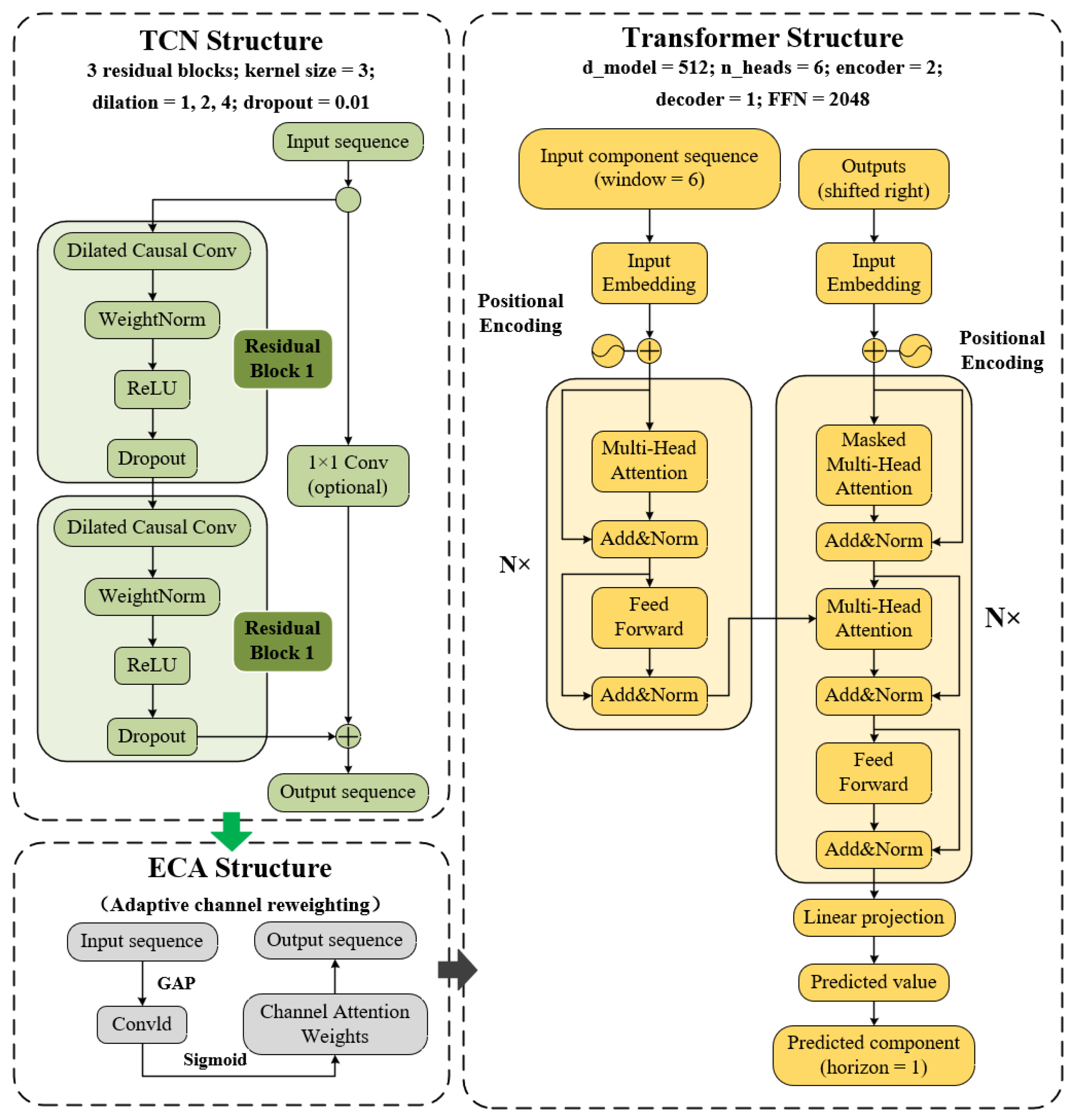
To accommodate the distinctive characteristics of landslide displacement series, including limited sample size, long-range temporal dependencies, and multi-factor coupling, we propose a TET temporal prediction model that comprises a Temporal Convolutional Network (TCN), an Efficient Channel Attention (ECA) module, and a Transformer encoder.
The TCN employs dilated causal convolutions to extract multi-scale temporal features, simultaneously preserving temporal causality and effectively capturing long-range dependencies, while residual connections are incorporated to enhance training stability. The ECA module amplifies the weighting of salient feature channels, thereby improving feature selection capacity under small-sample conditions. The Transformer leverages self-attention mechanisms to perform global modeling over multi-source input features, making it well-suited for characterizing the nonlinear coupling relationships between landslide displacement and hydrodynamic forcing factors. The integration of these three components achieves improved predictive accuracy and generalization capability while maintaining manageable model complexity. The network architecture of the proposed TET model is illustrated in
Figure 1.
For reproducibility, The TET model was implemented with an input window of 6, a prediction horizon of 1, a model dimension of 512, 6 attention heads, 2 encoder layers, and 1 decoder layer. The main training settings included the Adam optimizer, a learning rate of 1 × 10⁻⁴, a batch size of 1, and 10 training epochs.
2.3. Landslide Displacement Prediction Based on the TSD-TET Composite Model
This study integrates the TSD signal decomposition method with the TET temporal prediction model to construct a TSD-TET composite framework for landslide displacement prediction. The overall workflow proceeds as follows.
First, the TSD method is used to decompose the raw landslide displacement series into trend, periodic, and random components. In parallel, hydrodynamic forcing factors (including rainfall and reservoir water level) are decomposed into low- and high-frequency sub-signals. Spearman correlation analysis is then performed to quantify the associations between each displacement component and the decomposed forcing factors, thereby selecting the key driving variables as model inputs.
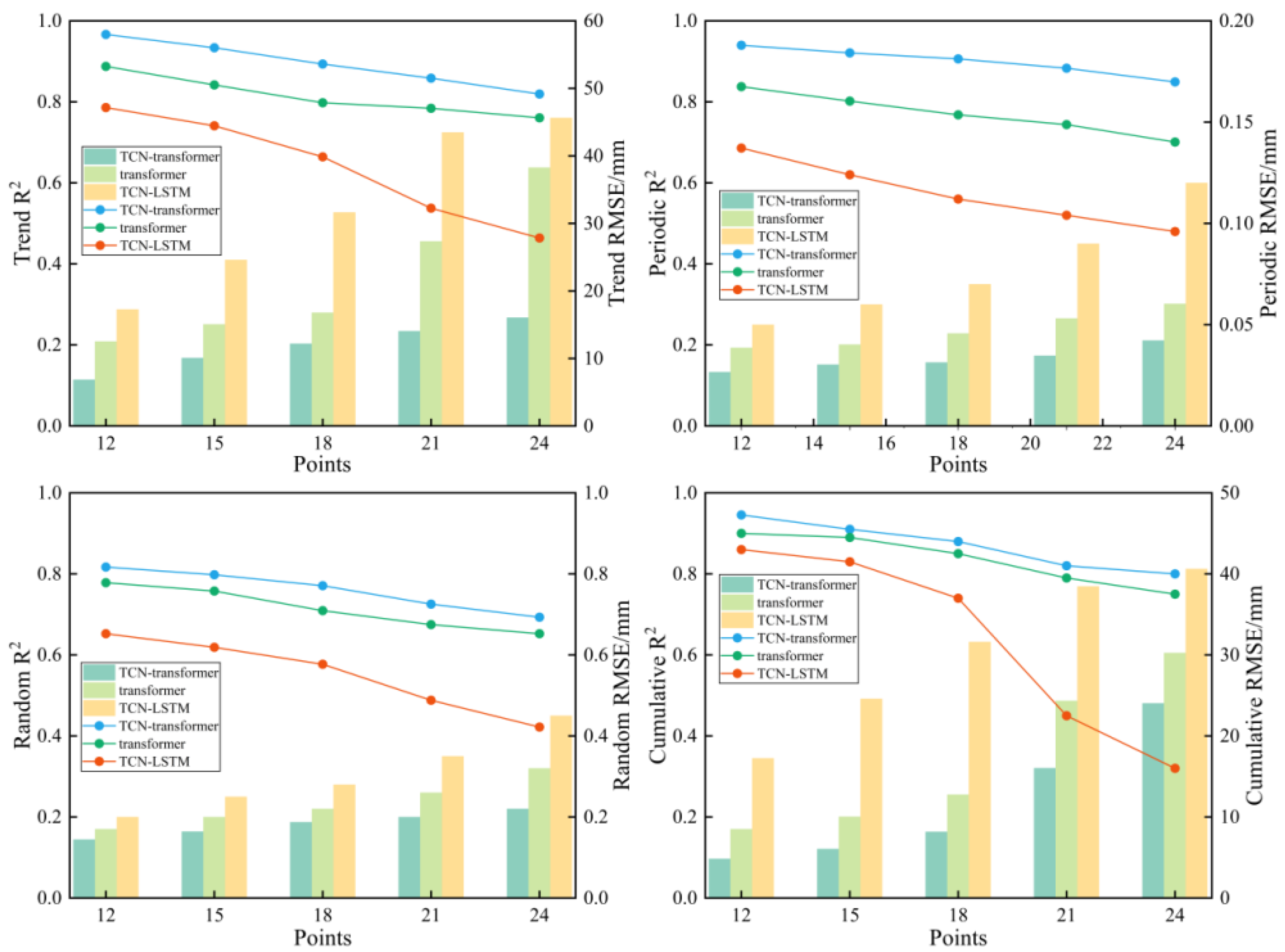
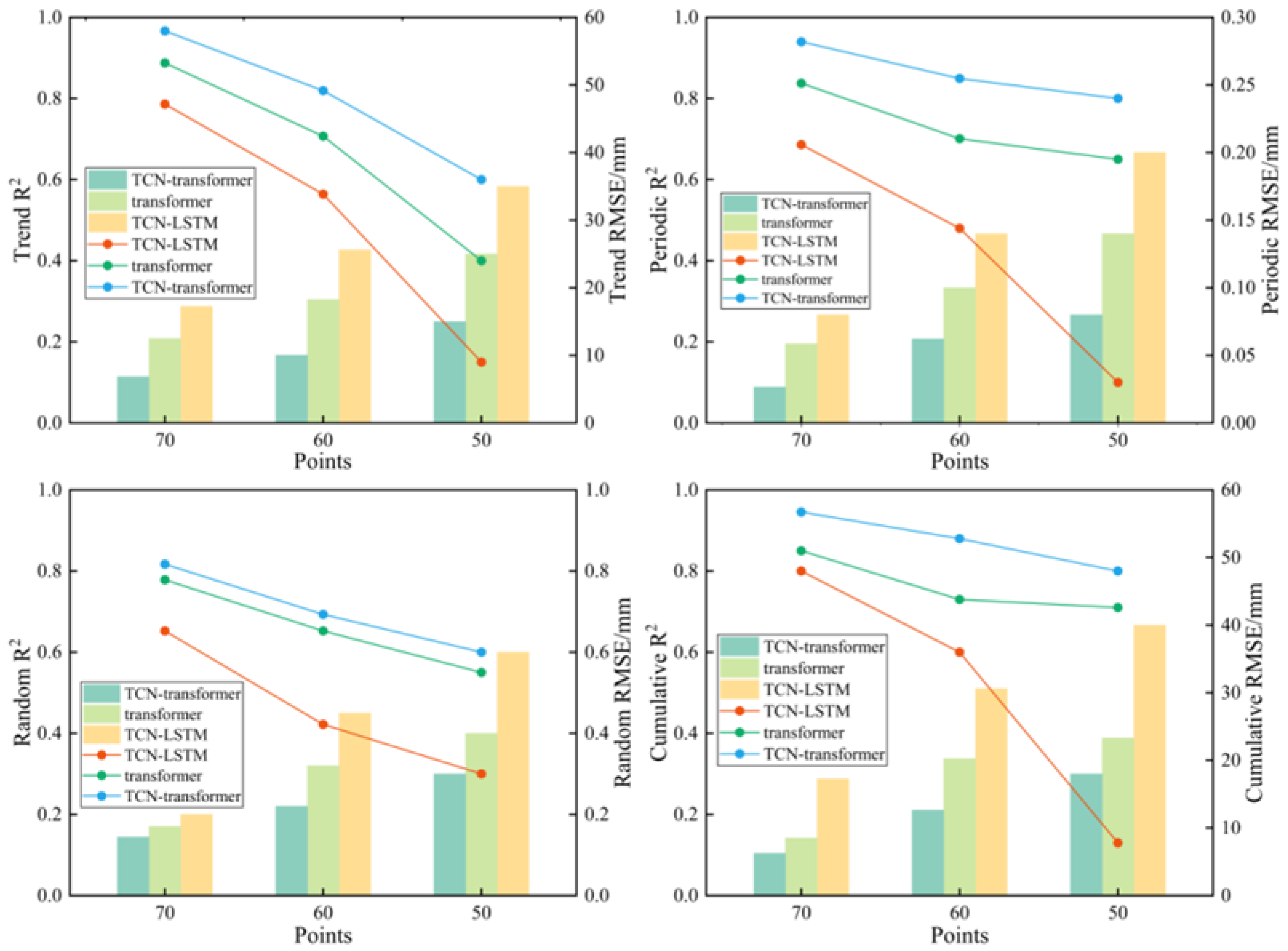
Building on this foundation, dedicated TET prediction models are constructed for each displacement component. Specifically, the trend component is predicted using a single-factor model, while the periodic and random components are each modeled independently using multi-factor configurations. The final cumulative displacement prediction is obtained by superimposing the predicted values of all three components. To evaluate model performance, Transformer and LSTM models are introduced as comparative baselines. Predictive accuracy is assessed using root mean square error (RMSE) and the coefficient of determination (R2) as evaluation metrics, under two experimental settings: long-horizon prediction and small-sample prediction.
3. Case Study
3.1. Engineering Geological Background and Deformation Characteristics
The Donglingxin landslide, located in the reservoir area of the Sanbanxi Hydropower Station in Qiandongnan Miao and Dong Autonomous Prefecture, Guizhou Province, is selected as the study object. The landslide is situated on the right bank of the middle reach of the Qingshui River and represents a typical deep-seated ancient landslide subject to reservoir water level regulation. Its long-term deformation has been governed by the combined action of hydrological cycling and gravitational creep, resulting in pronounced multi-scale deformation characteristics.
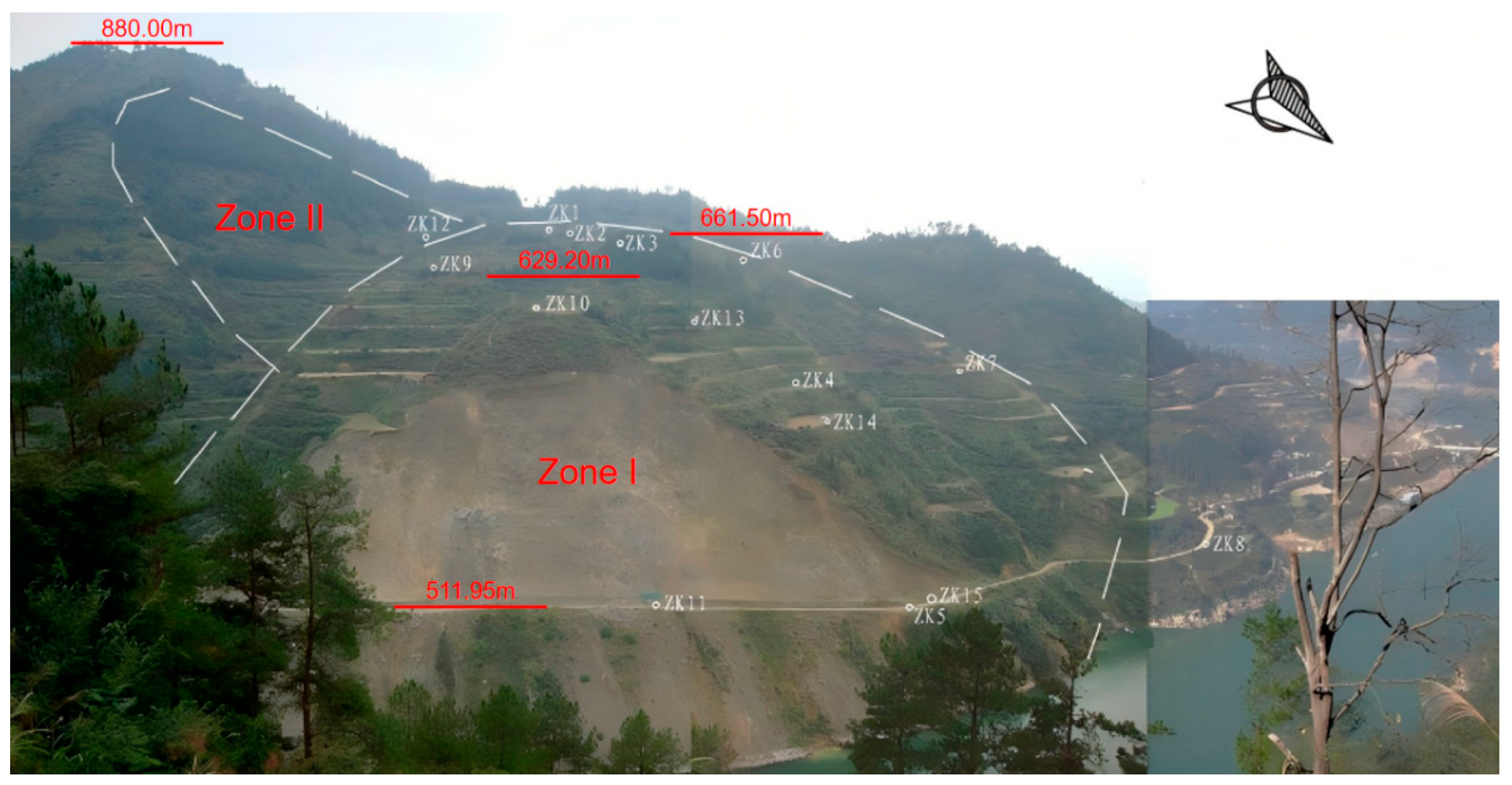
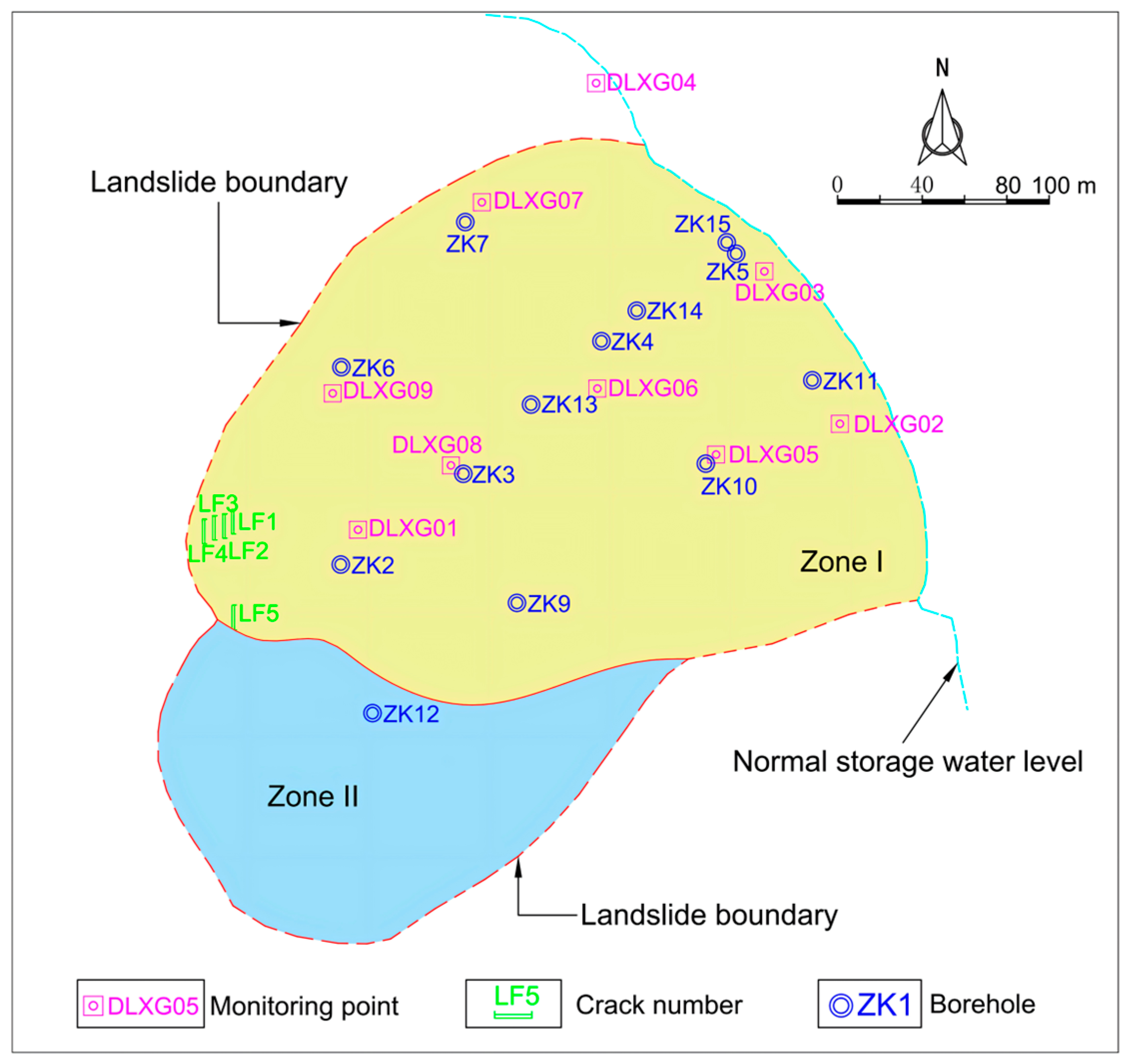
Engineering geological investigations indicate that the landslide is a composite ancient landslide deposit, composed predominantly of strongly to moderately weathered fragmented rock, boulder-gravel mixtures, and silty clay, exhibiting a loose structure with marked spatial heterogeneity. Based on topographic features and deposit architecture, the landslide can be subdivided into two geomorphic units. Zone I constitutes the primary deposit zone, distributed along the bank slope from the paleo-riverbed to an elevation of approximately 700 m. It displays a characteristic amphitheater-shaped morphology, covers an area of approximately 31.5 × 10⁴ m2, and exhibits notable variation in deposit thickness along the slope direction. Zone II forms a secondary deposit zone located on the southern rear-edge slope of the primary deposit body, spanning elevations of 600–825 m, oriented in an N20°E fan-shaped configuration, with an area of approximately 6.8 × 10⁴ m2.
The total area of the landslide body is approximately 38.2 × 10
4 m
2, with an estimated total volume of approximately 2.07 × 10
7 m
3. The deposit exhibits the characteristic morphology of a high-position collapse-slide accumulation landform (
Figure 2). A significant correlation between deposit thickness and topographic configuration reflects a history of multiple sliding episodes and subsequent readjustment, indicating that the deformation evolution of this landslide is distinctly phased and inherits characteristics from earlier failure events.
Since surface cracks were first identified during the flood season of 2007, a multi-parameter long-term monitoring system has been established, encompassing displacement, rainfall, reservoir water level, and groundwater level measurements. Continuous monitoring data spanning October 2009 to December 2016 provide a comprehensive record of the landslide’s deformation response under hydrological disturbance conditions, offering an ideal dataset for multi-scale displacement decomposition, deformation mechanism analysis, and predictive model validation.
3.2. Multi-Scale Decomposition Characteristics of the Landslide Displacement Time Series
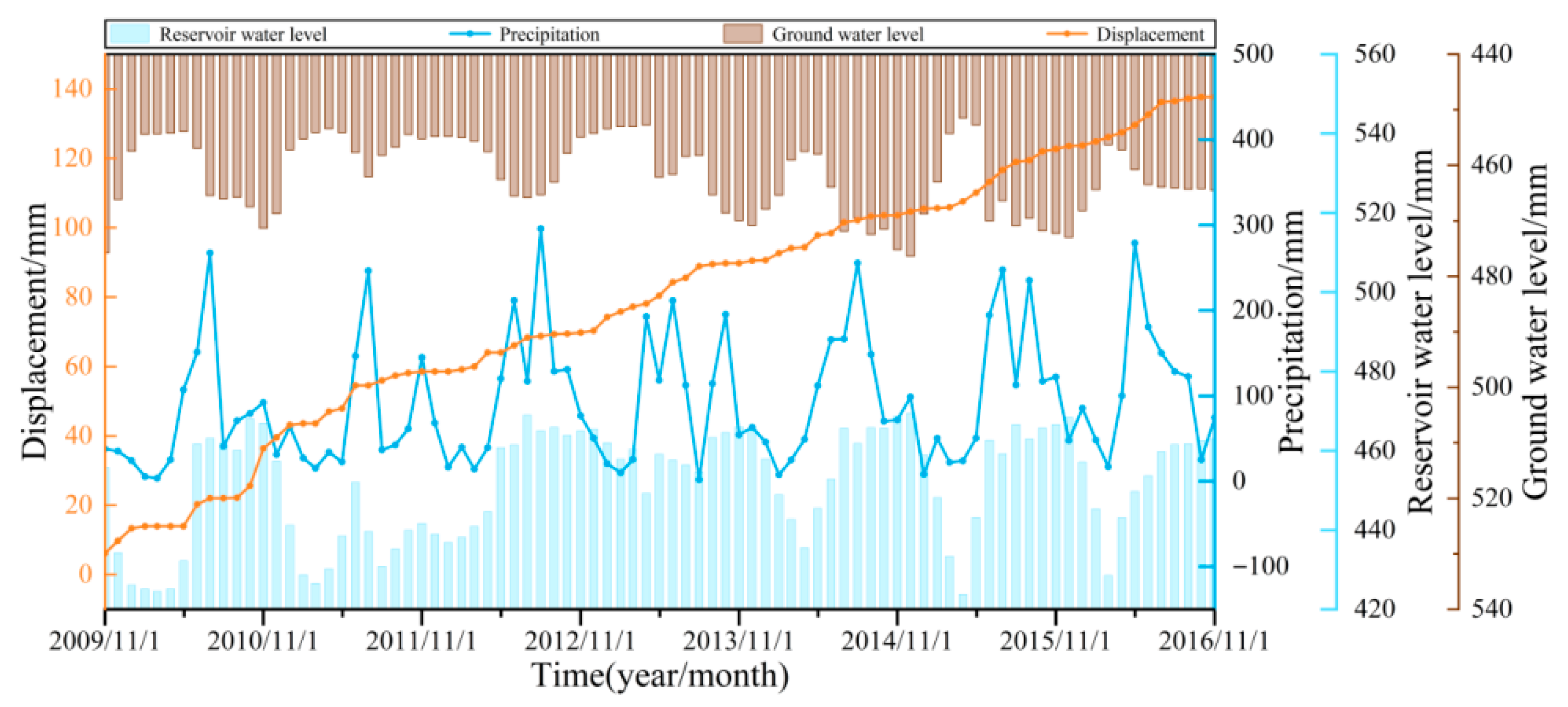
This study utilizes landslide displacement, rainfall, reservoir water level, and groundwater level data recorded at monitoring point DLXG05 from 2009 to 2016 as the research dataset. The location of monitoring point DLXG05 is shown in
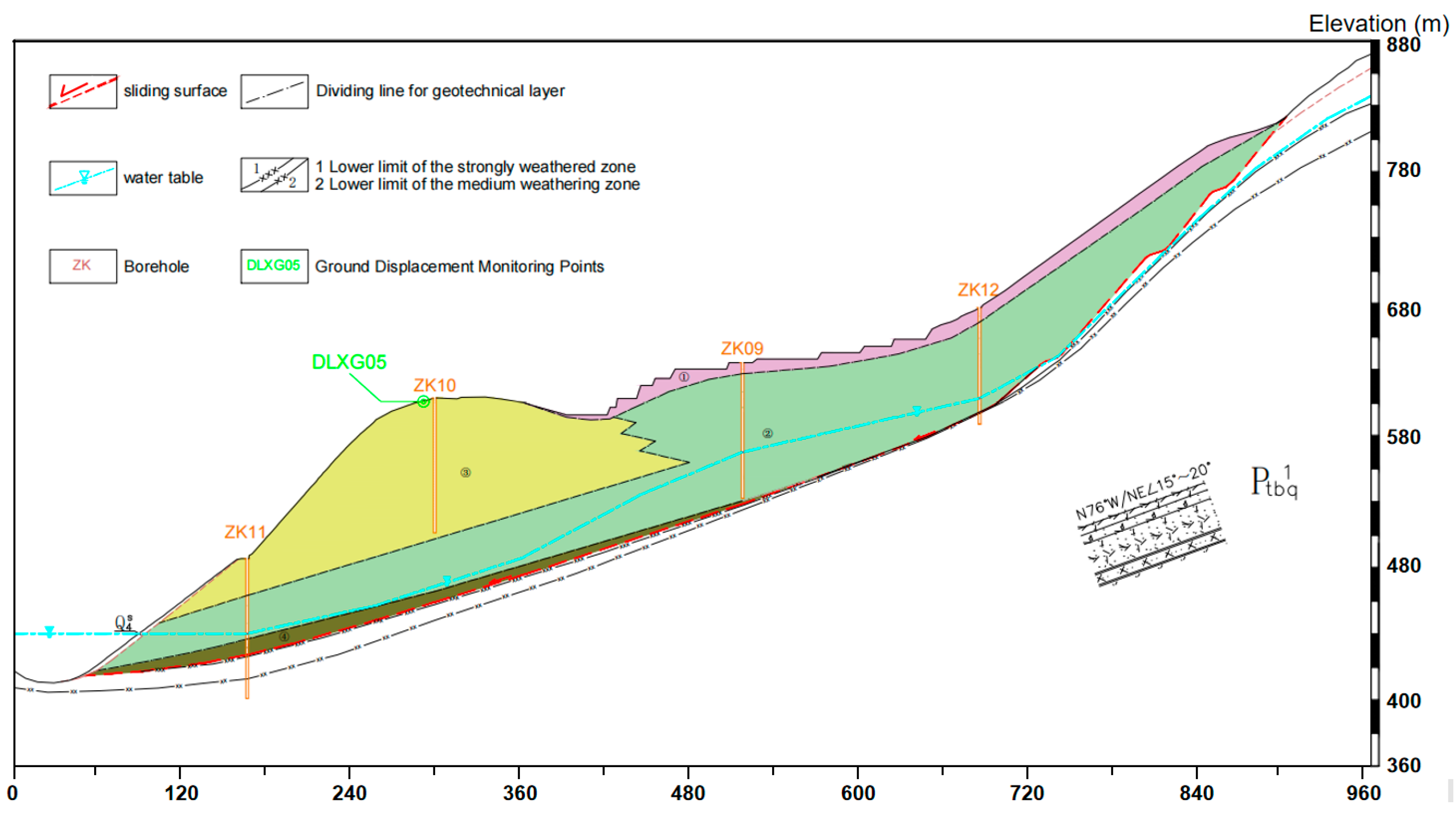
Figure 3, the corresponding cross-sectional profile is presented in
Figure 4, and the raw monitoring data are illustrated in
Figure 5.
Monitoring results indicate that the cumulative displacement curve at DLXG05 exhibits a characteristic step-wise incremental pattern, while the rainfall, reservoir water level, and groundwater level series each display pronounced periodic oscillations. Notable phase differences among these three series in the temporal domain suggest that landslide displacement responds to external hydrodynamic disturbances with significant lag and cumulative amplification effects.
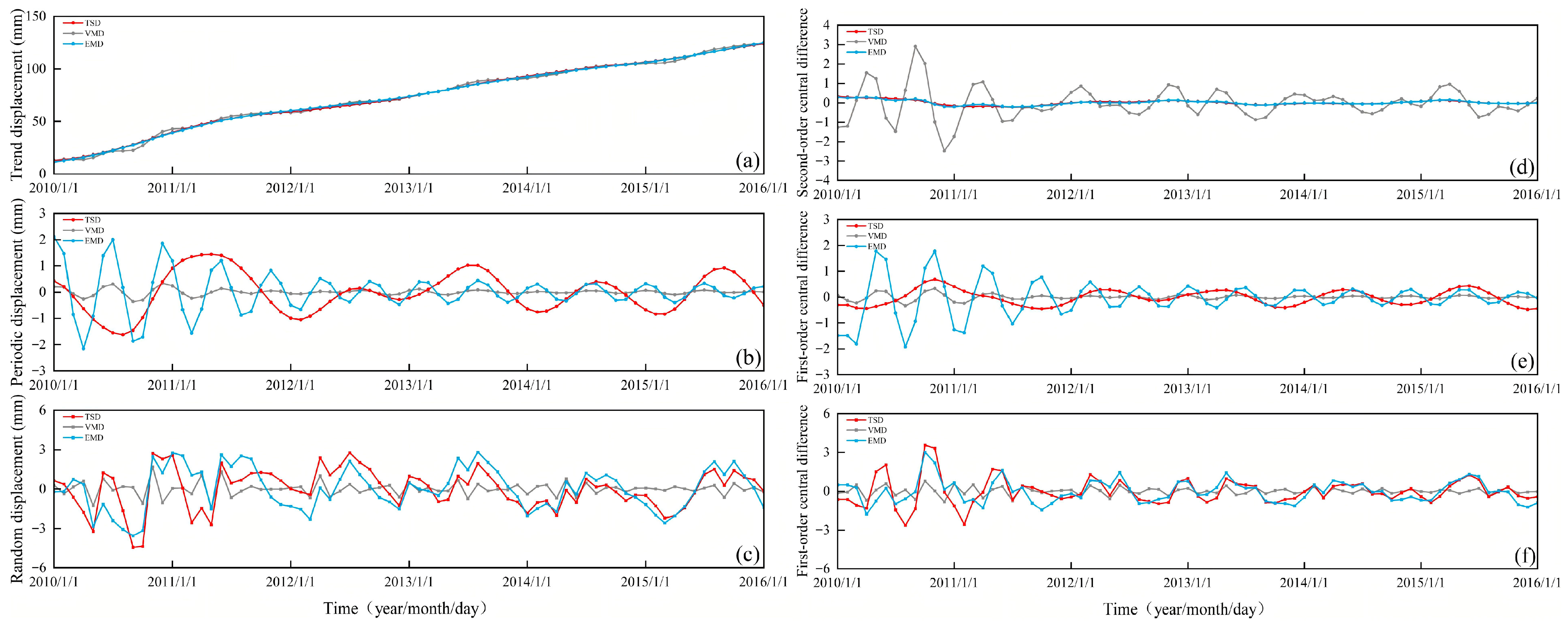
The decomposition results of TSD, EMD, and VMD for the DLXG05 displacement series are shown in
Figure 6. All three methods can separate the original displacement sequence into trend, periodic, and random components, but they exhibit noticeable differences in component smoothness, oscillatory behavior, and residual characteristics. In particular, the trend components obtained by TSD and VMD show broadly similar smoothness characteristics in the second-order difference curves, whereas EMD exhibits relatively larger local fluctuations in some intervals. For the periodic component, the EMD-derived result appears more visually oscillatory, but its dominant period differs more markedly from the hydrological-year cycle considered in this study, indicating that stronger apparent periodicity does not necessarily imply better physical consistency.
To avoid over-reliance on visual inspection, a quantitative comparison was further conducted among TSD, EMD, and VMD, as summarized in
Table 1. To quantitatively assess the applicability of the TSD method for the DLXG05 displacement series, VMD and EMD were adopted as comparative benchmarks for three-component decomposition of the raw displacement series. Four quantitative indicators were used, including the relative reconstruction error (RE), the terminal consistency error (TCE), the trend smoothness index (TSI, based on the second-order difference of the trend component), and the periodic fluctuation index (PFI, based on the first-order difference of the periodic component). In addition, the absolute mean value of the periodic component and the standard deviation of the random component were used to further evaluate the physical consistency of the decomposed components. The comparative results are presented in
Figure 6 and
Table 1.
The results show that all three methods can reconstruct the original displacement series with very small errors, indicating that the overall decomposition reliability is acceptable. In terms of trend smoothness, the TSD-derived trend component does not exhibit the smallest second-order difference amplitude among the three methods. However, the periodic component obtained by TSD shows the lowest fluctuation index, indicating more stable temporal oscillations and fewer irregular local disturbances, especially in the early stage of the monitoring series. In addition, the periodic and random components derived from TSD are characterized by smaller mean bias and lower residual dispersion than those obtained by EMD and VMD, which is beneficial for maintaining the physical interpretability of the trend-periodic-random decomposition structure.
Overall, the quantitative comparison suggests that TSD is not universally superior to EMD or VMD in all evaluation indices. Nevertheless, for the DLXG05 displacement series, it provides a more stable periodic component and a lower-amplitude random residual under the adopted decomposition framework, thereby offering more physically interpretable inputs for subsequent deformation mechanism analysis and predictive modeling.
3.3. Multi-Scale Decomposition and Lag-Related Feature Construction of Hydrodynamic Influencing Factors
Conventional landslide displacement studies have predominantly relied on single time-scale rainfall or reservoir water level indices, which are insufficient to capture the lag response and cumulative effects of landslide deformation under hydrodynamic disturbance. In practice, landslide deformation is not solely determined by the intensity of external forcing, but is also substantially conditioned by the landslide’s own evolutionary state.
Grounded in this understanding, the present study introduces cumulative displacement (D0) together with displacement increments over the preceding one and two months (D1, D2) to characterize the evolving deformation state of the landslide. Simultaneously, multi-scale decomposition is applied to the rainfall, reservoir water level, and groundwater level series. Specifically, cumulative one-month and two-month rainfall totals (R1, R2) are employed to represent the lag and cumulative effects of precipitation, monthly mean reservoir water level and its incremental changes (W0, W1, W2) are used to reflect the regulated dynamics of reservoir water level; and groundwater level together with its temporal increments (G0, G1, G2) are introduced to characterize the time-lagged influence of subsurface hydrodynamic conditions.
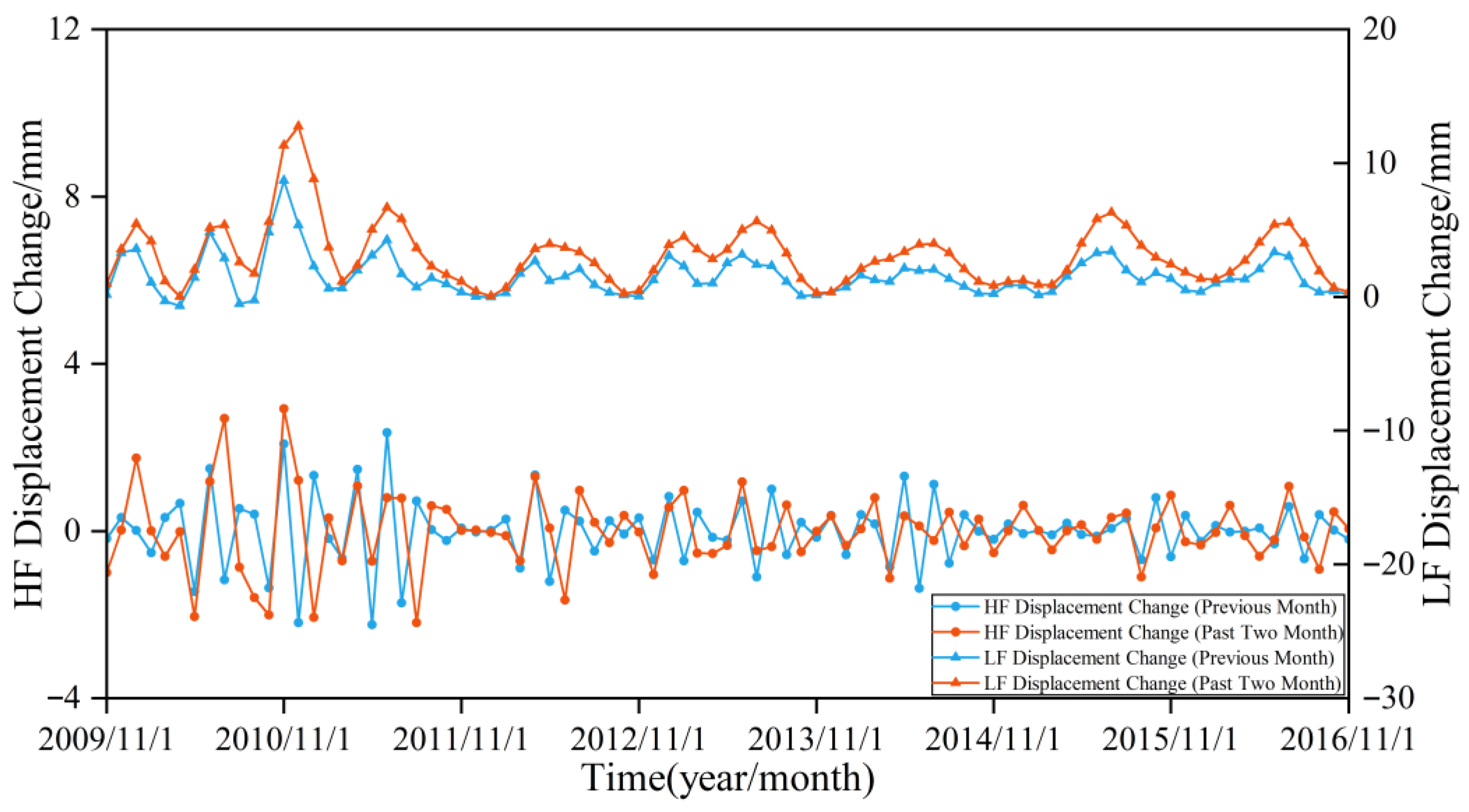
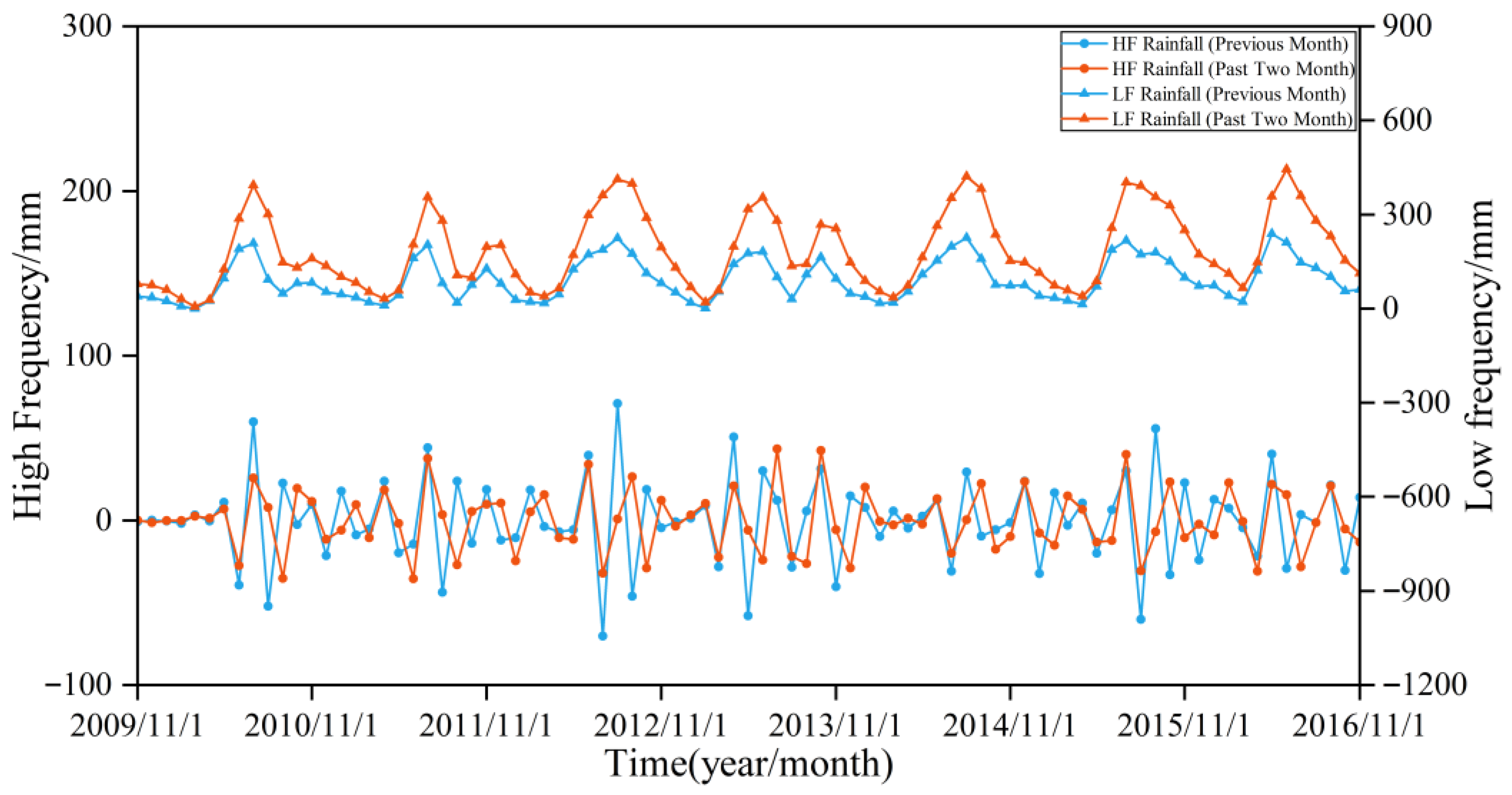
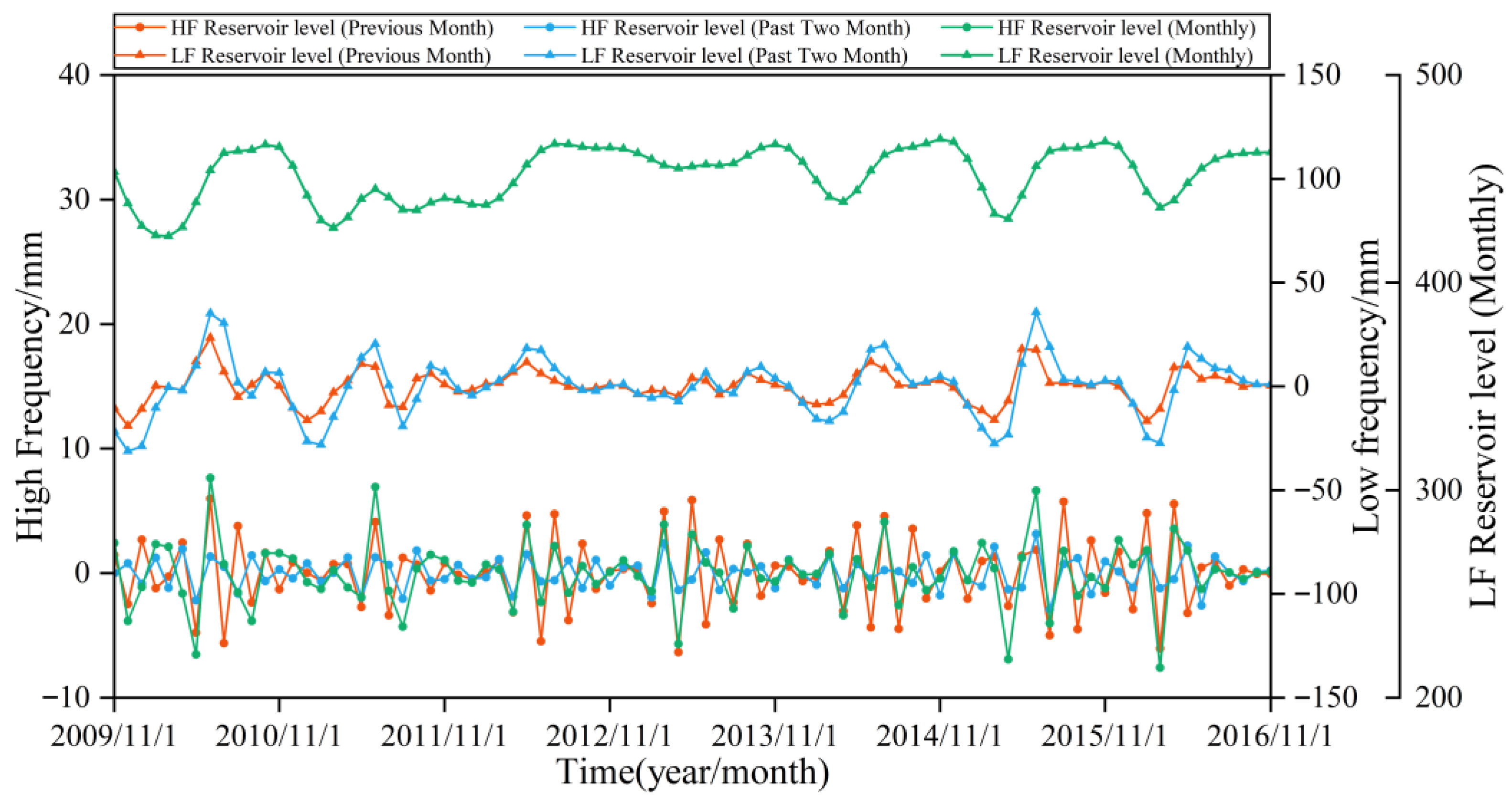
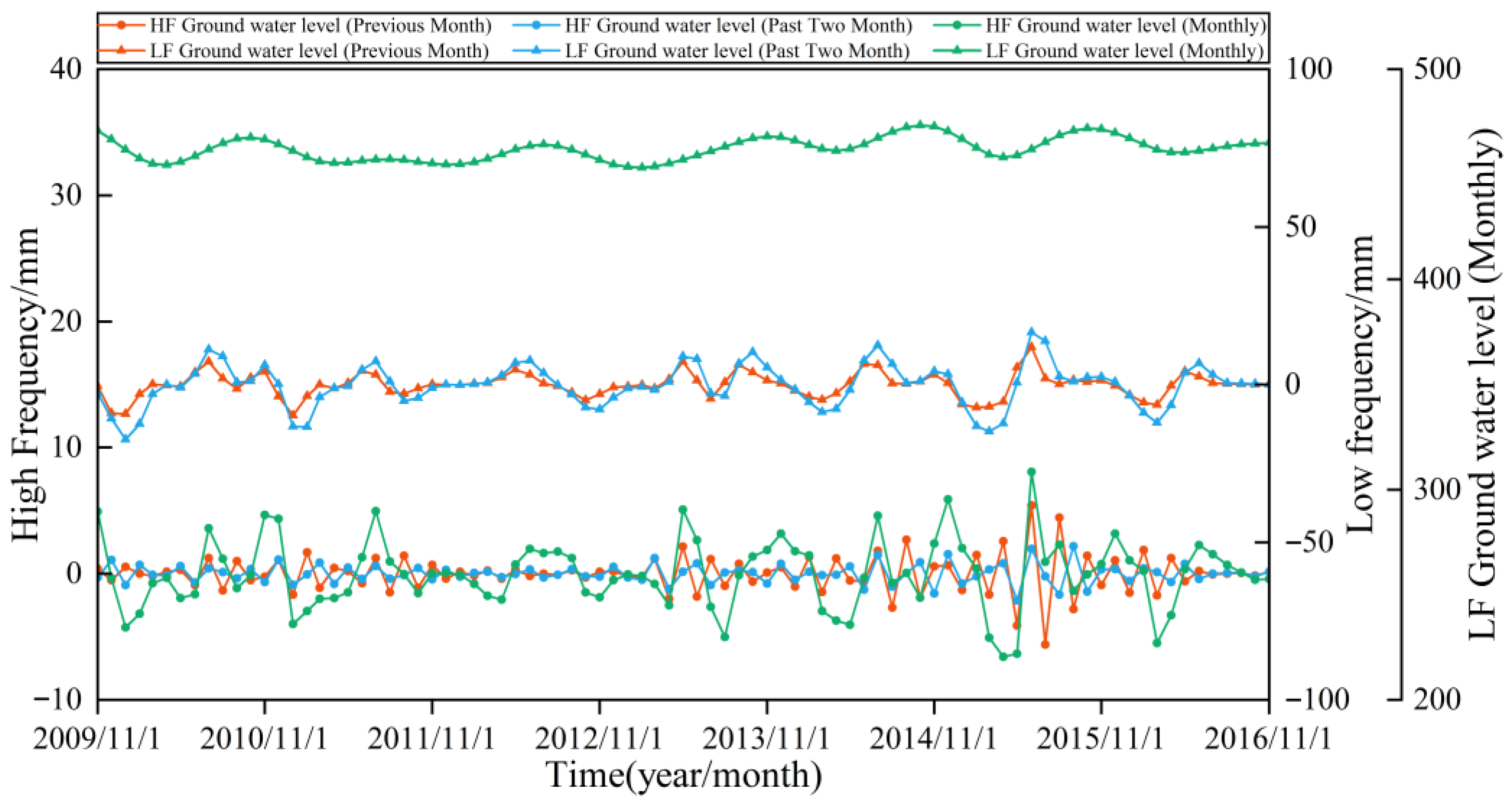
The TSD results for each influencing factor are presented in
Figure 7,
Figure 8,
Figure 9 and
Figure 10. The results reveal that different hydrodynamic factors exhibit broadly consistent evolutionary trends in their low-frequency components, yet display notable differences in phase and amplitude. This pattern reflects the differentiated modulation roles these factors exert on landslide deformation. Such characteristics confirm that the TSD method not only effectively isolates the multi-scale features of hydrodynamic factors, but also provides a basis for constructing lag-related hydrodynamic features for subsequent multi-scale displacement prediction.
3.4. Correlation Analysis Between Landslide Displacement and Influencing Factors and Mechanism-Oriented Interpretation
Prior to constructing landslide displacement prediction models, the systematic selection of influencing factors is important for improving predictive reliability and for providing statistical support for mechanism-oriented interpretation. In this study, Spearman rank correlation analysis is employed to quantify the associations between the displacement components at monitoring point DLXG05 and each candidate influencing factor. The results are summarized in
Table 2. It should be noted that the Spearman correlation analysis is used here to identify statistical associations rather than to establish direct causality. Therefore, the following interpretation should be understood as a mechanism-oriented inference based on correlation patterns, temporal-scale decomposition, and the physical background of hydrodynamically triggered landslide deformation.
The analysis reveals that the periodic displacement component at DLXG05 exhibits the strongest correlation with the second-lag displacement increment (D2), with a correlation coefficient of 0.557, while the random displacement component shows the highest correlation with the first-lag displacement increment (D1), yielding a coefficient of 0.857. These findings indicate that landslide deformation is characterized by pronounced path dependency: the deformation response is strongly conditioned by the pre-existing deformation state, exhibiting a typical self-excitation-lag pattern.
By contrast, the direct correlations between the decomposed displacement components and rainfall-, reservoir water-level-, or groundwater-related variables are generally weaker. This indicates that external hydrodynamic factors may not control deformation through simple instantaneous linear relationships. Instead, their influence is more likely to be cumulative, delayed, and indirectly expressed through the internal hydrodynamic adjustment of the slope. In particular, although the groundwater-related variables do not show strong direct correlations in
Table 2, this does not necessarily imply that groundwater is unimportant to the deformation process. Rather, groundwater may still participate in slope deformation through lagged seepage response and its interaction with rainfall infiltration and reservoir water-level fluctuation.
Taken together, the deformation process of the Donglingxin landslide can be interpreted at three temporal scales. First, the long-term trend deformation is mainly associated with the combined control of geological background conditions and gravitational stress. Second, the periodic deformation is more closely related to cumulative and lag-related hydrodynamic forcing, especially rainfall and reservoir regulation, together with their indirect influence on internal seepage conditions. Third, the random deformation is more likely to reflect short-term disturbances and transient external forcing, such as intense rainfall or abrupt water-level changes, although such interpretations should still be regarded cautiously in the absence of direct causal verification.
3.5. Multi-Component Landslide Displacement Prediction Results
Based on the influencing factor selection outcomes described above, the TSD-TET composite model is constructed to independently model and predict the trend, periodic, and random displacement components, with the individual component predictions subsequently superimposed to yield the final cumulative displacement forecast.
3.5.1. Trend Component Displacement Prediction
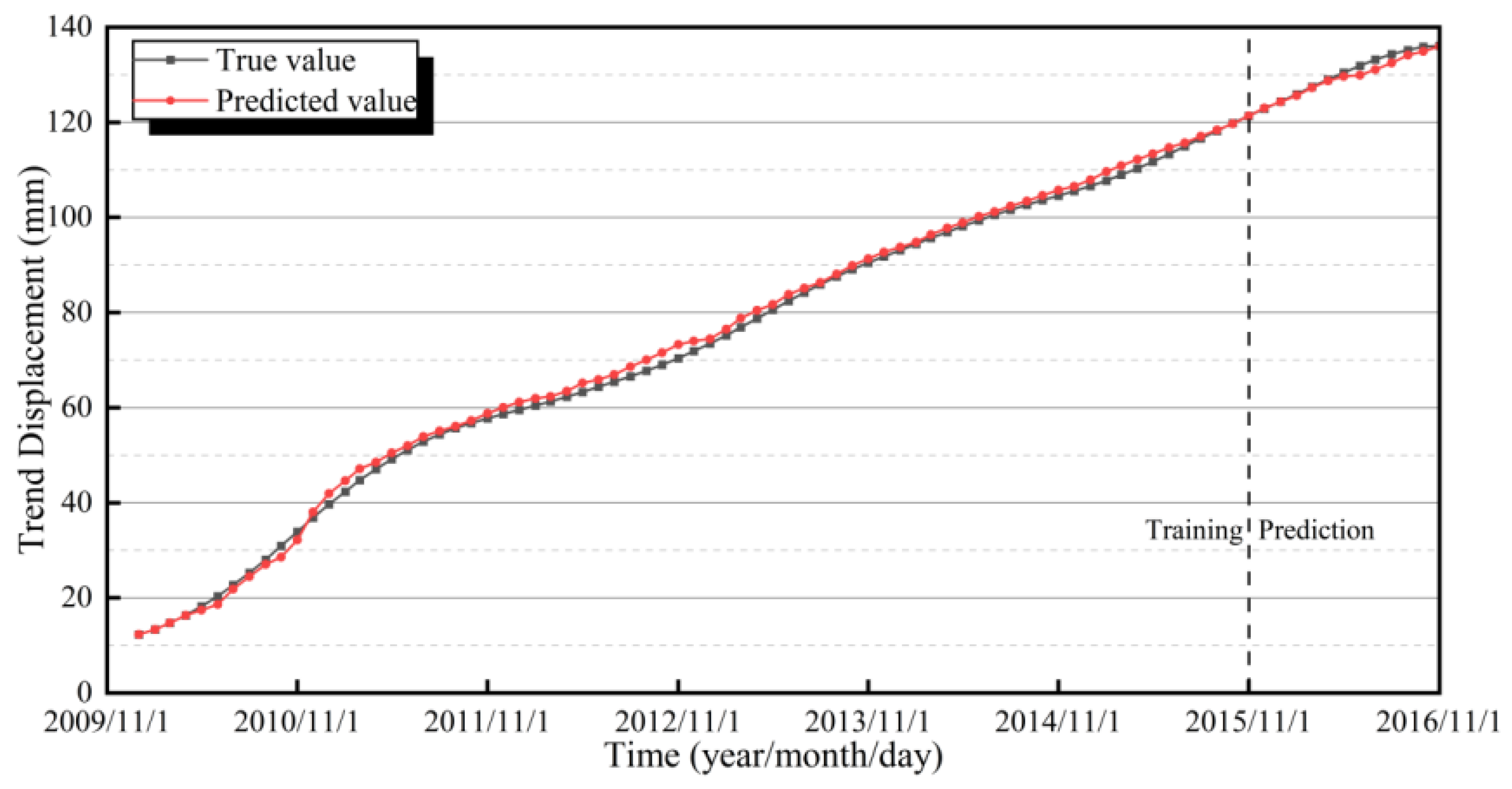
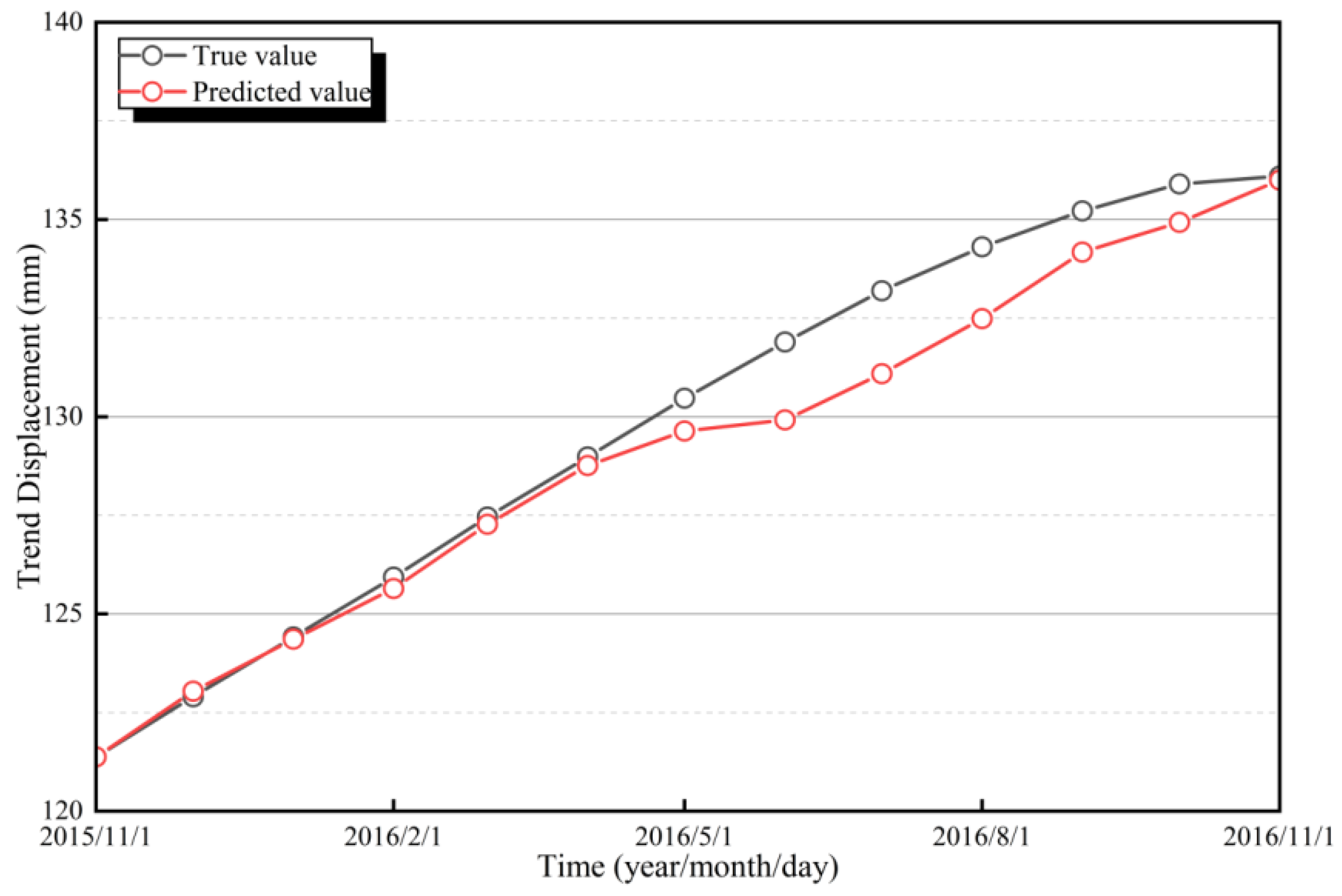
The trend displacement component primarily reflects the long-term evolutionary behavior of the landslide body under the control of gravitational stress and geological structural conditions. A single-factor TET model is employed for prediction, with cumulative displacement and displacement increments over the preceding one to three months adopted as input variables. The prediction results are presented in
Figure 11 and
Figure 12, and the corresponding predictive accuracy metrics are summarized in
Table 3. The model achieves a coefficient of determination of 0.9663 and a root mean square error of 6.845 mm, indicating that the trend displacement component is highly amenable to data-driven prediction.
It should be noted that all RMSE values reported in
Table 3 are expressed in the original physical unit (mm) after inverse transformation. Because the decomposed periodic and stochastic components have much smaller amplitude ranges than the cumulative displacement series, their RMSE values are correspondingly smaller in absolute magnitude. Therefore, the RMSE values of different displacement components should be interpreted together with the scale of the corresponding component rather than being directly compared with that of the cumulative displacement series.
3.5.2. Periodic Component Displacement Prediction
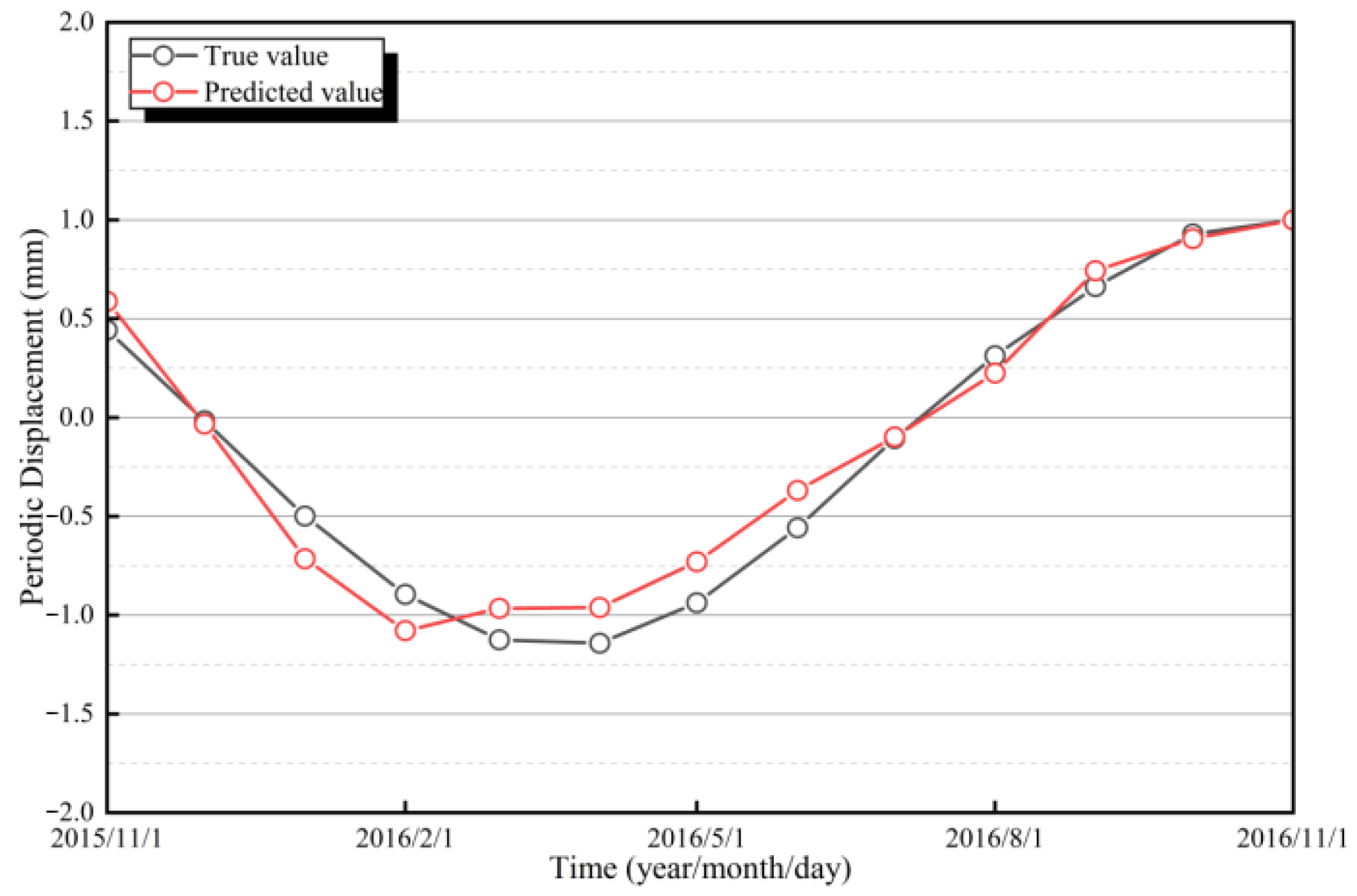
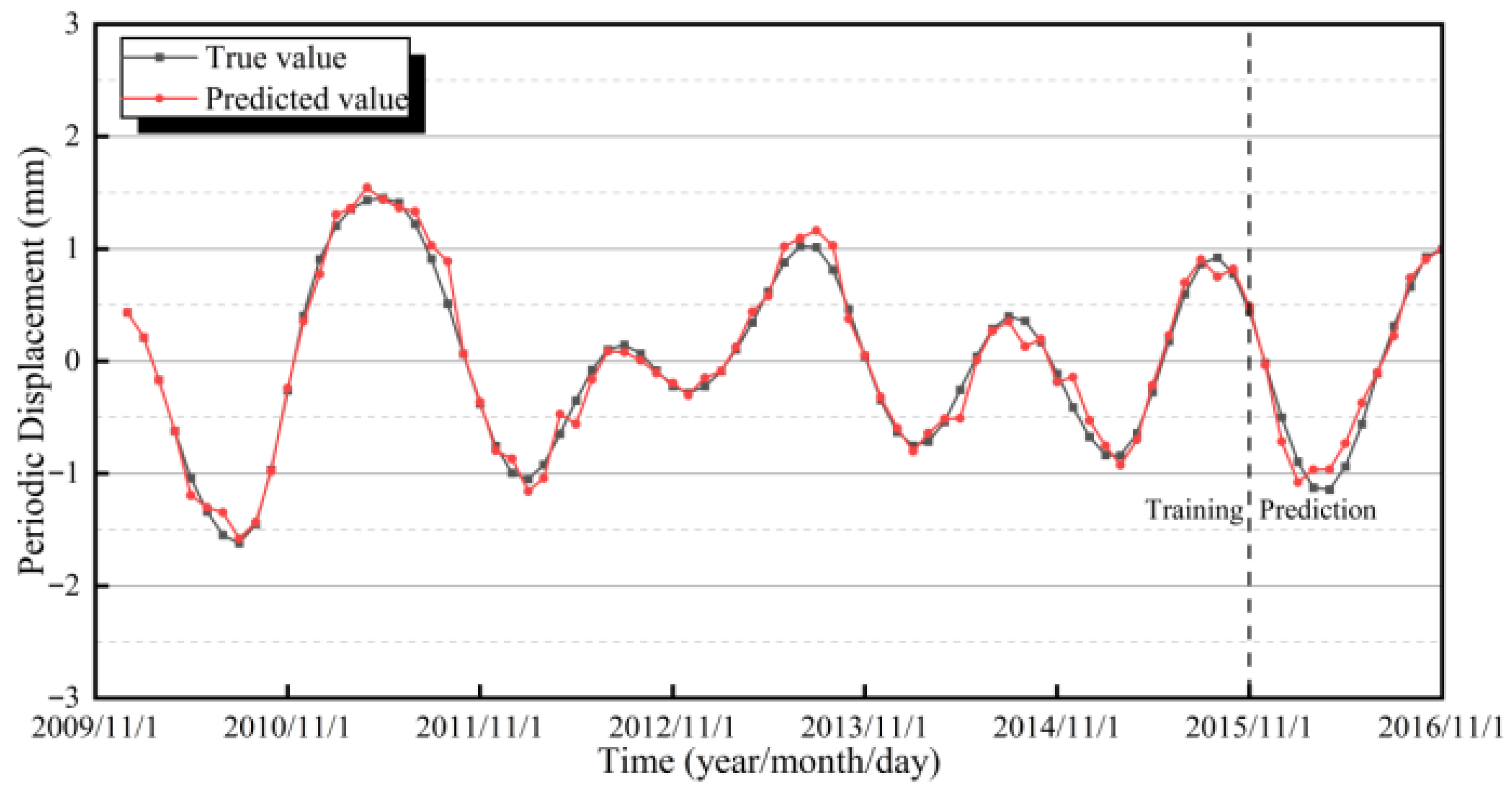
The periodic displacement component is primarily driven by hydrodynamic factors exhibiting pronounced cyclic behavior. Based on the results of the correlation analysis, a multi-factor TET model is constructed for prediction. The prediction results are presented in
Figure 13 and
Figure 14. The model achieves a coefficient of determination of 0.9397 and a root mean square error of 0.0266 mm, demonstrating its capacity to effectively capture the characteristics of periodic deformation.
3.5.3. Random Component Displacement Prediction
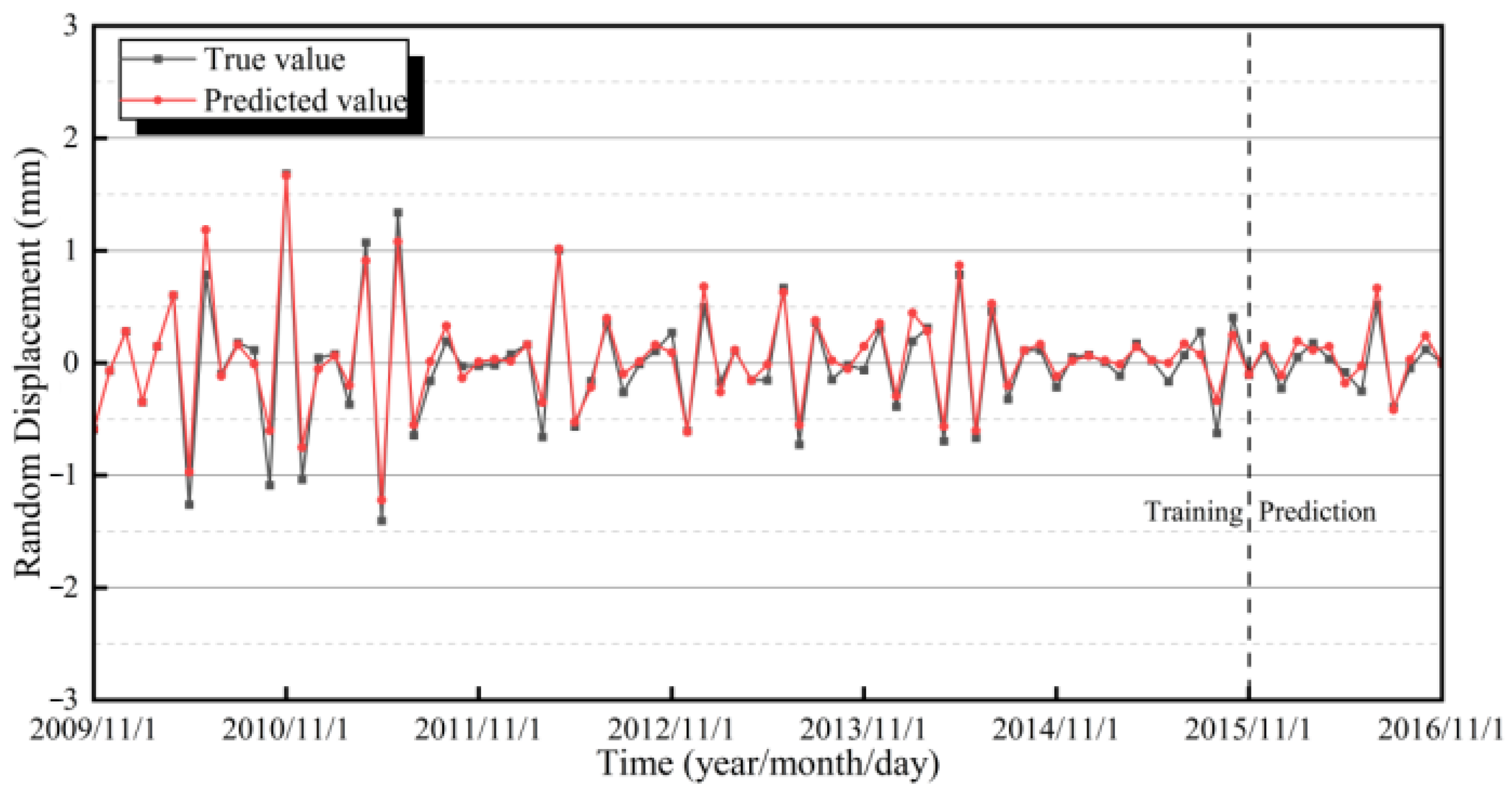
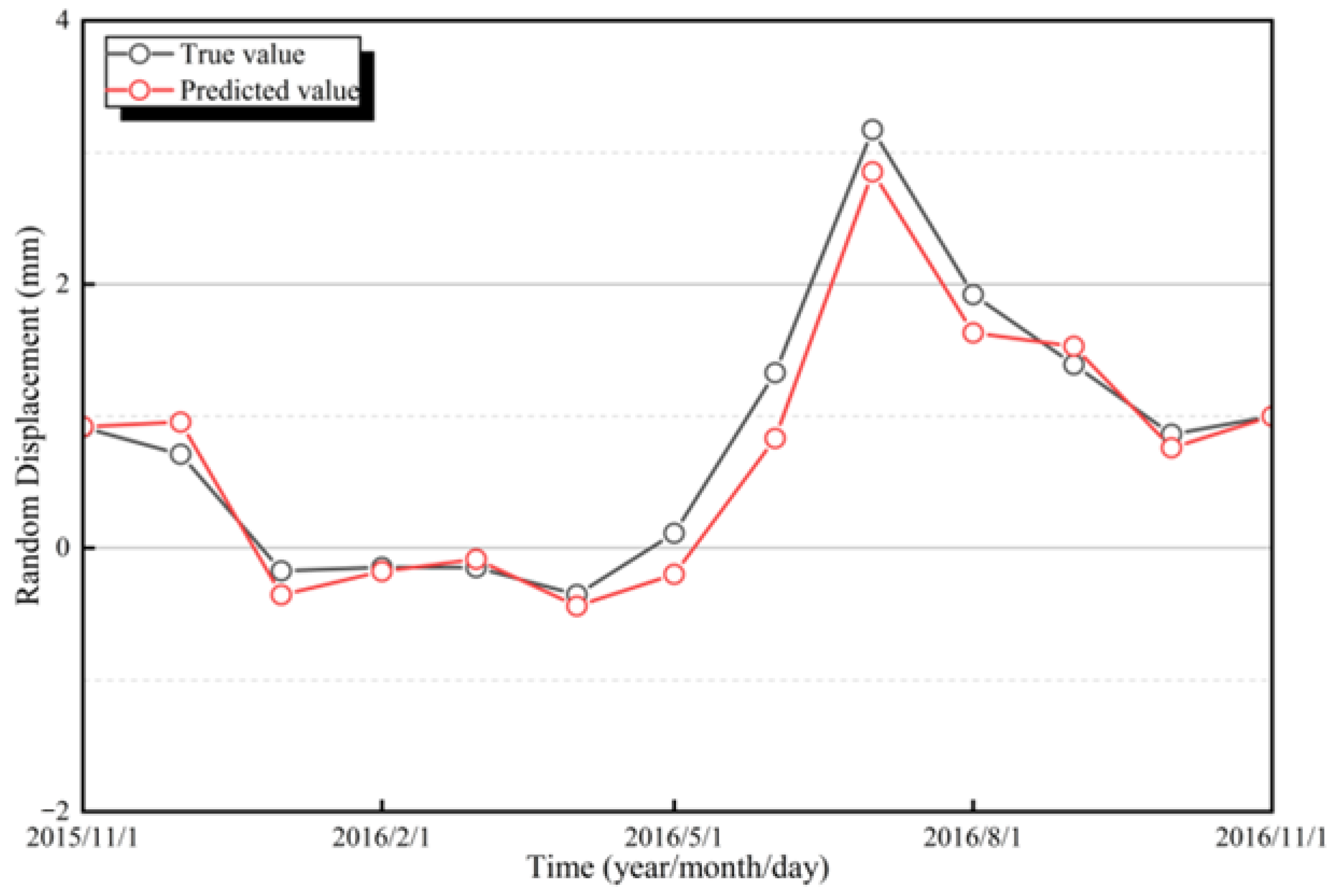
The random displacement component is characterized by pronounced irregularity and is generally the most challenging component to predict. The TSD-TET model is applied for its prediction, with results presented in
Figure 15 and
Figure 16. The model achieves a coefficient of determination of 0.8171, substantially exceeding the threshold of 0.6 commonly reported in comparable studies, demonstrating a clear advantage of the proposed model in isolating and predicting high-frequency disturbance components.
3.5.4. Cumulative Displacement Prediction
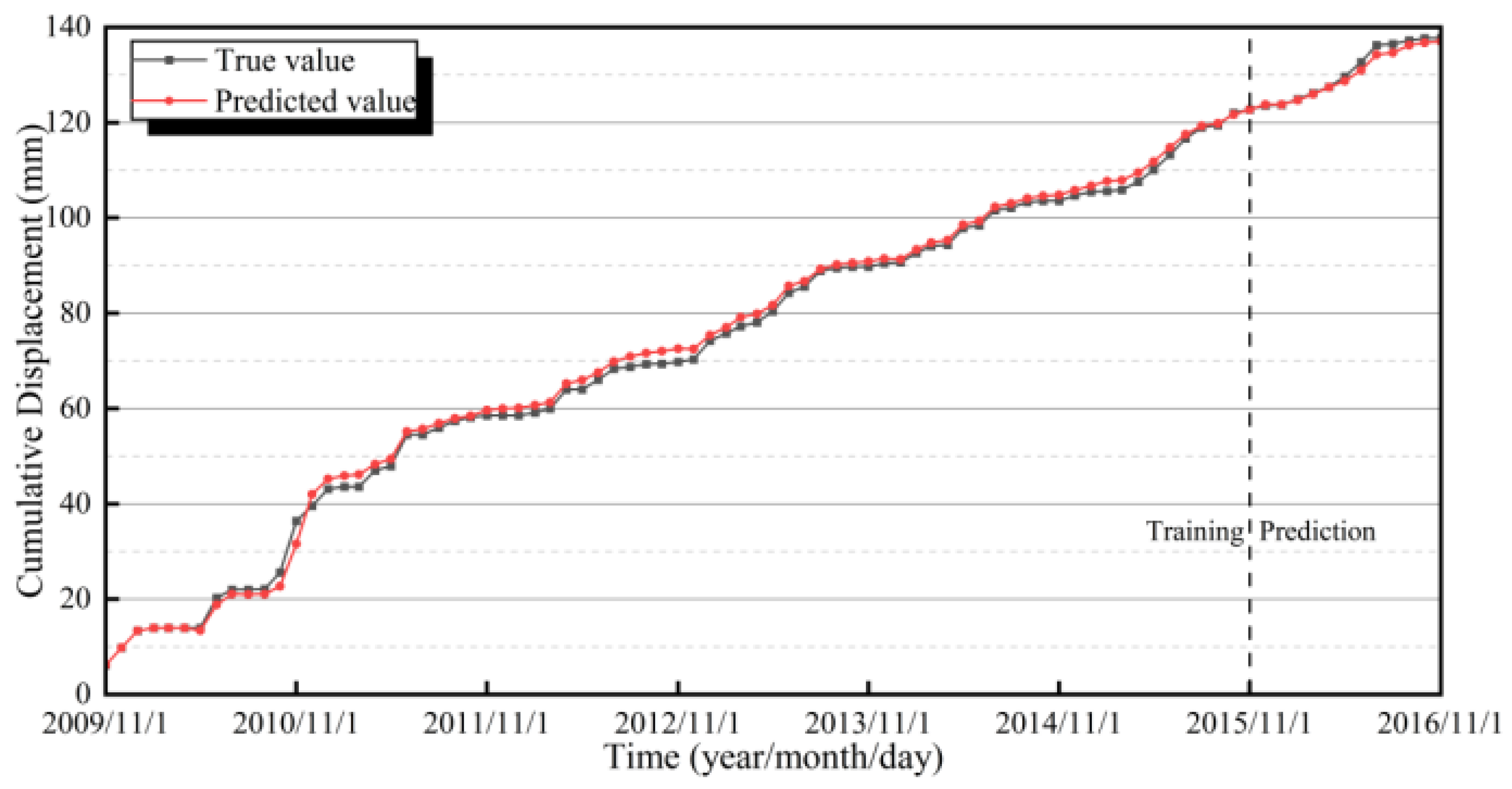
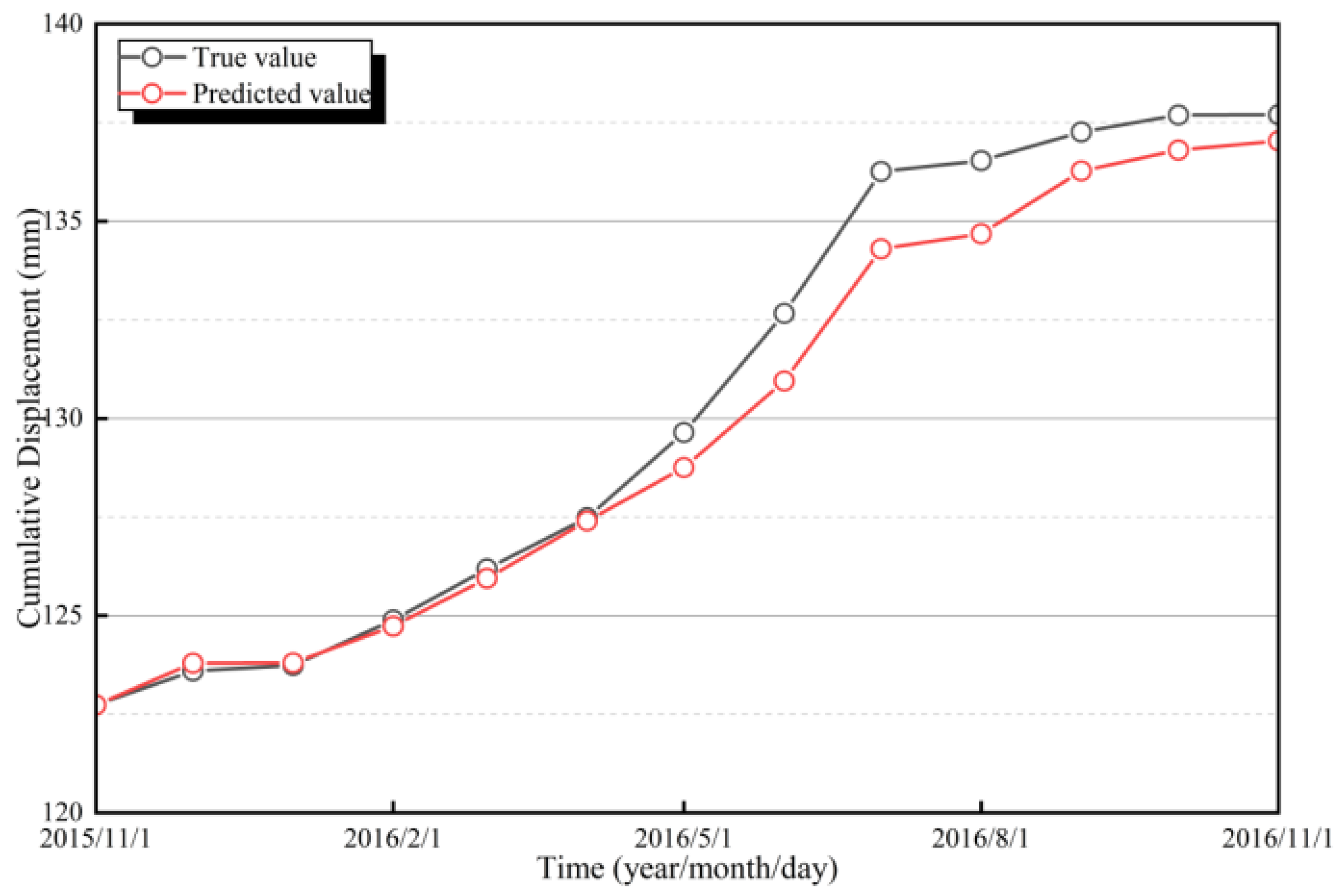
The cumulative displacement predictions are obtained by superimposing the predicted values of all three components, with results presented in
Figure 17 and
Figure 18. The overall model achieves a coefficient of determination of 0.9454 and a root mean square error of 7.1218 mm, with consistently strong fitting performance observed across the training, validation, and test sets, confirming the reliability of the proposed model for practical engineering prediction applications.
3.7. Insights into Landslide Deformation Mechanisms Inferred from Prediction Results
The differential predictive accuracy observed across the three displacement components provides data-driven corroboration for the hierarchical structure of the landslide deformation mechanism. The trend component yields the highest predictive accuracy, indicating that the long-term creep process is governed by stable geological structural conditions and is thus inherently amenable to prediction. The periodic component demonstrates consistent and stable prediction performance, reflecting the regularity with which hydrological cycling modulates landslide deformation. Although the random component retains a degree of inherent uncertainty, its predictive accuracy remains markedly superior to that reported in prior studies, suggesting that the effects of abrupt external disturbances can be partially characterized through multi-scale decomposition and deep feature extraction.
Accordingly, the TSD-TET composite model not only advances the predictive accuracy of landslide displacement estimation, but also offers a degree of insight into the intrinsic dynamic structure governing landslide deformation. This constitutes a novel technical pathway toward the quantitative understanding of complex landslide deformation mechanisms.
It should also be noted that the current benchmark comparison is limited to LSTM and Transformer as representative deep learning baselines. Additional comparisons with traditional machine learning models and existing decomposition-based hybrid models would be valuable for a more comprehensive evaluation and should be explored in future work.
4. Discussion
4.1. Geotechnical Physical Interpretation of Multi-Scale Displacement Components
Based on the TSD results and TET model predictions, the displacement evolution of the Donglingxin landslide can be resolved, from a temporal-scale perspective, into three distinct deformation modes with differing physical significance.
The trend displacement component exhibits a continuous and gradually increasing cumulative pattern, representing the long-term creep deformation of the landslide mass along pre-existing sliding surfaces under gravitational loading. The evolution of this component is closely related to the geometric configuration of the landslide body, the thickness of the landslide deposits, and the morphology of the sliding surface. Therefore, it can be regarded as reflecting the background deformation rate controlled primarily by intrinsic geological conditions.
The periodic displacement component shows a stage-wise oscillatory pattern that is strongly correlated with hydrological processes. This component reflects the periodic modulation of landslide shear strength and deformation rate caused by variations in hydrodynamic conditions, including rainfall infiltration and reservoir water-level fluctuations. Such deformation behavior is typical of reservoir-bank landslides subjected to repeated hydrological cycles and represents a coupled reversible–irreversible deformation response.
The random displacement component is characterized by abrupt and irregular fluctuations that typically occur during periods of intense rainfall or rapid reservoir water-level changes. This component reflects the nonlinear response of the landslide system to short-term hydrodynamic perturbations when the slope approaches a critical stability state. Although the random component contributes only a small proportion to cumulative displacement, it provides important diagnostic information for identifying potential instability and early-stage catastrophic failure.
4.2. Modulation Mechanisms of Hydrodynamic Factors
The correlation analysis results indicate that rainfall, reservoir water level, and groundwater level do not exert immediate or direct control on landslide displacement. Instead, these hydrodynamic factors influence landslide deformation through cumulative and lagged effects that operate across different temporal scales, and their modulation mechanisms vary with the characteristic timescale of deformation.
At medium to long temporal scales, the combined effects of rainfall infiltration and reservoir water-level fluctuations regulate the internal groundwater level and pore-water pressure distribution within the landslide mass. These hydrological processes periodically reduce the shear strength of the sliding zone, thereby controlling the amplitude and phase characteristics of the periodic displacement component. This mechanism reflects the strong influence of seasonal hydrological cycles and represents the dominant driving process governing periodic deformation in reservoir-bank landslides.
At shorter temporal scales, when the landslide body has already experienced a certain degree of cumulative deformation, intense rainfall events or rapid reservoir water-level changes can induce rapid pore-water pressure responses within the slope. Such responses may cause a sudden reduction in local slope stability, leading to abrupt increases in the random displacement component. This process explains the strong correlation observed between random displacement and antecedent displacement increments, indicating that short-term hydrodynamic disturbances can act as triggering factors for transient deformation events when the landslide approaches a critical stability state.
It should be noted that the present study does not explicitly perform hydro-mechanical coupling analysis. Therefore, the above discussion is intended as a mechanism-oriented interpretation based on the observed relationships among hydrodynamic factors, decomposed displacement components, and landslide deformation behavior, rather than as a fully coupled quantitative derivation of pore-water pressure evolution, effective stress variation, and shear-strength reduction. Further work incorporating explicit hydro-mechanical coupling analysis will be necessary to verify and refine the internal transmission mechanism from hydrodynamic forcing to slope deformation.
4.3. Implications for Monitoring and Early Warning
The results of this study suggest that the three displacement components at different temporal scales provide distinct diagnostic information for landslide stability assessment. The trend displacement component reflects the long-term evolutionary state of the landslide and can be used to evaluate the background deformation rate and overall stability condition of the slope. The periodic displacement component is closely related to hydrological forcing processes and therefore provides useful information for identifying stage-specific hazard escalation associated with variations in rainfall and reservoir water-level fluctuations. The random displacement component, although relatively small in magnitude, serves as an important supplementary indicator for detecting transient instability signals and identifying potential precursors of abrupt failure.
These findings indicate that effective monitoring and early warning of reservoir-bank landslides should extend beyond conventional cumulative displacement monitoring. Instead, a multi-scale analytical framework that integrates trend, periodic, and random displacement characteristics should be adopted. Such an approach can improve the sensitivity and reliability of landslide early warning systems. It can also provide a more refined basis for hazard assessment and risk management in hydrodynamically triggered landslides. It should be noted that the present study is validated using a single landslide case (DLXG05) based on monitoring data from 2009 to 2016. Therefore, the current results mainly demonstrate the feasibility and effectiveness of the proposed framework for this representative hydrodynamically influenced landslide case, rather than establishing universal applicability across all landslide types or geological and hydrological settings. Further validation using additional landslide cases under different environmental conditions will be necessary to assess the broader generalizability of the proposed method.
5. Conclusions
To address the strong nonlinearity, pronounced non-stationarity, and limited sample size commonly observed in displacement time series of hydrodynamically triggered landslides, this study established a TSD-TET composite framework that integrates time-series signal decomposition (TSD) with a deep learning prediction model (TET). Through multi-scale signal decomposition and component-wise prediction, the proposed approach extends conventional displacement forecasting from single-value numerical fitting to a structured interpretation of multi-scale deformation processes.
- (1)
The results indicate that landslide displacement can be reasonably decomposed into three distinct deformation modes: trend, periodic, and random components. The trend component mainly reflects long-term creep accumulation controlled by geological structure and gravitational stress. The periodic component corresponds to cyclic deformation responses modulated by hydrological processes, including rainfall and reservoir water-level fluctuations. The random component is more likely to reflect short-term disturbances and transient external forcing.
- (2)
Correlation analysis combined with component-wise prediction results suggests that the influence of external hydrodynamic factors on landslide deformation exhibits strong temporal-scale dependence. Rainfall and reservoir water-level variations mainly drive periodic deformation through cumulative and lagged effects, whereas abrupt hydrodynamic loading tends to be reflected more readily in the random displacement component. In addition, the pre-existing deformation state of the landslide significantly modulates the magnitude of its response, showing a typical self-excitation and lagged-response behavior.
- (3)
The application to the Donglingxin landslide demonstrates that the proposed TSD-TET composite model achieves higher prediction accuracy, improved long-horizon forecasting stability, and better adaptability under limited-sample conditions compared with conventional benchmark models. The differential prediction performance across displacement components also provides a mechanism-oriented perspective for understanding the multi-scale structure of landslide deformation. These results may provide useful support for monitoring, early warning, risk assessment, and hazard mitigation of hydrodynamically triggered landslides.
Owing to its decomposition-guided structure and adaptability under limited-sample conditions, the proposed framework also shows potential for application to other reservoir-bank landslides with similar hydrodynamic monitoring backgrounds, although site-specific validation is still necessary.