


Abstract
Landslide dams, as a special type of earth dams, are characterized by complex geomorphological features and geotechnical properties. The failure of landslide dams induced by seepage should not be overlooked. This study introduces a calculation method for analyzing the slope stability of landslide dams with three different material compositions under seepage conditions. Furthermore, the influence of spatial heterogeneity in particle size on the stability of landslide dam slopes subjected to unsaturated seepage is investigated using the random finite element method combined with Monte Carlo simulation. This paper provides a reference for the reliability evaluation of landslide dams with different material types.
1. Introduction
Landslide dams, a special kind of earth dam, are formed by the rapid deposition of landslides, debris flows, or avalanches and are featured by both complex geomorphological features and geotechnical properties [1,2,3,4,5]. Due to insufficient compaction, the structure is relatively loose, the constituent materials are disorderly, there is a high permeability area composed of large particle skeleton, and the seepage and mechanical stability are poor [1,5,6]. Meanwhile, due to a lack of necessary overflow facilities, the landslide dam is prone to breaching, which may cause serious flooding and pose significant threat to downstream lives, property and infrastructure, which poses a great threat to the downstream public life, property and infrastructure [7,8,9,10,11,12].
Costa and Schuster [1] reported that the longevity for 85% of the landslide dams are less than 1 year by analyzing 73 landslide dams worldwide. They also reported that the main failure modes are water overtopping erosion, seepage failure or slope instability, of which 89% are water overtopping erosion and 10% are seepage failure. Peng and Zhang came to a similar conclusion through their research into 144 cases of landslide and 176 cases of embankment dam failures [13].
Although the failure of landslide dams from seepage is not common, at least three cases wherein a landslide dam actually has failed in this manner are known. In these cases, seepage and erosion caused a landslide and the collapse of the dam, some cases were followed by overtopping and breaching [14,15,16,17]. Moreover, the peak discharge induced by such failure is very high compared with overtopping-induced failures. If the infiltration rate of the landslide dam body is large enough and the strength of the dam body is relatively small, instantaneous slip failure may occur. However, the research on the mechanism of landslide dam failure mainly focuses on the overtopping-induced failure, while an in-depth understanding of landslide dam failure induced by seepage is still lacking [5].
Generally, part of the landslide dam (slope body) lies under water and can be seen as a saturated zone, while the remainder of the slope lies above water level and can be seen as an unsaturated zone [5,18,19,20,21]. It is well known that the water retention ability of soil is greatly affected by the grain size distribution [22,23]. Due to the widely graded material composition of the landslide dam, there are significant differences in water retention ability among landslide dams with different gradation. Moreover, with the upstream water level increasing, both the saturated and unsaturated zone distribution changes, which induces a different variation suction and stress distribution in the slope body of dam [18,19,20,21]. Hence, for the slope stability analysis of landslide dams, a numerical simulation method for unsaturated seepage that considers the influence of material gradation must be established.
It is widely known that the inherent spatial variability of soil material properties cannot be ignored in dam safety analysis. By considering the inherent spatial variability of soil material properties, several previous studies have investigated the reliability analysis of slopes through combining the finite element method and Monte Carlo simulation (MCS) [24]. For instance, Jiang proposed a non-intrusive finite element method accounting for the spatial variabilities of both shear strength parameters and hydraulics simultaneously to analyze the reliability of unsaturated embankment slopes [25]. Ng et al. proposed a highly efficient 3D ks-rotated anisotropy random field simulation method to study the unsaturated soil slope stability under rainfall infiltration [26]. Li studied the influence of the heterogeneity of the hydraulic parameters on the reliability of a high core rockfill dam against seepage failure through the random finite element method by considering the correlation between the hydraulic conductivity field and the critical hydraulic gradient field [27]. These previous works mainly focused on the influence of the spatial variability of soil properties on the reliability of artificially filled dam slope stability. In contrast, research on the reliability of landslide dams against seepage failure is scarce. Given the great difference in material composition and structure characteristics between the landslide dam slope and other slopes, such as the artificially filled dam slopes, the failure mechanism is also obviously different. It is necessary to consider the spatial heterogeneity of particle composition in reliability analysis of landslide dam slopes.
To comprehensively evaluate the dynamic reliability of a landslide dam slope considering the spatial variability of the sand particle size during seepage, this study aims to: (1) introduce a calculation method for the stability analysis of landslide dam slope with three different material compositions under unsaturated seepage; (2) investigate the impact of the spatial heterogeneity of particle size on the stability of a landslide dam slope subjected to unsaturated seepage via Monte Carlo simulation. In particular, three types of landslide dams composed of different material types are taken into account. To the best of the author’s knowledge, previous numerical investigations on seepage-induced failure in landslide dams have largely overlooked three key aspects: the influence of particle size, the effect of particle size distribution heterogeneity, and the reliability assessment of failures induced by seepage or water level fluctuations. Addressing these shortcomings represents the principal novelty of this study. The results of this study provide a reference for a reliability evaluation of landslide dams with different material types.
2. Methodology
Saturated–Unsaturated Seepage Analysis
Seepage flow in a landslide slope is a time-dependent process in which both the unsaturated and saturated zone changes continuously during seepage. Assuming that the soil matrix and pore fluid are incompressible, the governing equation of the seepage process in an unsaturated landslide dam slope can be expressed as [28]:
where ρf is the density of the pore fluid; Cm is the specific moisture capacity; g is the acceleration due to gravity; Se is the effective saturation; p is the pore water pressure; κs is the permeability in the saturation state, which follows the relationship of κs = μk/ρg, where k is the hydraulic conductivity in the saturation state; κr is the relative permeability; μ is the fluid dynamic viscosity; and D is the elevation.
The relationship between the effective saturation Se, volumetric water content θ, and the suction s of landslide dam can be given as [29,30]:
where θr and θs is are the residual volumetric water content and the saturated volumetric water content, respectively, which can be expressed as a function of related index of particle size of soil as follows, respectively [23]:
where se in Equation (2) is the air entry value, which can be expressed as a function of related index of particle size of soil as follows [23]:
where m is the constant of the V-G model, hs,ae is the suction head of the air entry value, d10, d30, and d60 are the particle diameters at 10%, 30%, 60% passing in the sieving test, respectively. n is the porosity of the soil and can be expressed as [23]:
Cu is the coefficient of uniformity and can be expressed as:
Cm in Equation (1) reflect the rate of water content change of the soil with the change in the suction, and can be expressed as:
where α is the inverse of the air entry value and can be expressed as a function of related index of particle size of soil as follows:
where d30 is the particle diameters at 30% passing in the sieving test.
The permeability in the saturation state κs can be expressed as a function of related index of particle size and the porosity of soil as follows [30,31]:
The relative permeability can be expressed as:
Based on the Mohr–Coulomb failure criterion, the mechanical behavior of the unsaturated soil can be expressed as:
where τ is the shear strength of soil, σ′, c and φ′ are the effective normal stress, the effective cohesion, effective friction angle, respectively. It can be seen from Equation (7) that the shear strength of soil depends on the effective normal stress (σ′) through cohesion (c) and the friction angle (φ′), The effective normal stress σ′ can be expressed as [32]:
where ua is the pore air pressure and is equal to 0 at atmospheric pressure, σn is the total normal stress, and σs is suction stress and can be expressed as:
The shear strength of soil at atmospheric pressure can be expressed as:
It is indicated from Equation (14) that the presence of the suction leads to an additional increase in the effective cohesion c with respect to the saturated soil. Hence, in order to estimate the factor of safety (FoS) using the shear strength reduction technique, the same reduction is applied to both strength parameters (c’, tanφ’) until computational convergence is achieved, at which point the corresponding values define the strength parameters at failure (c’fail, tanφ’ fail) for unsaturated soils as follows:
Note that fail denotes the reduced strength parameters that lead to failure.
3. Numerical Study
3.1. Dam Specifications and Available Data
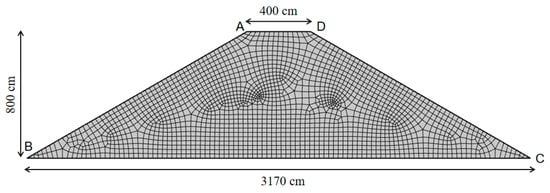
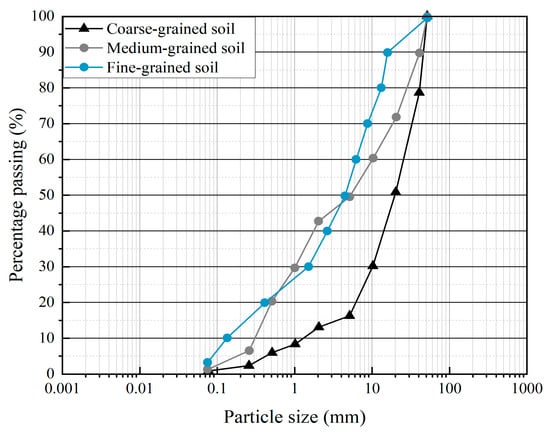
The two-dimensional (2D) landslide dam model employed in this study is based on the work of Peng et al. [33] and comprises a dam with a trapezoidal cross-section. As illustrated in Figure 1, the dam geometry is defined by a base length (streamwise direction) of 3170 cm, a crest length of 400 cm, a height of 800 cm. Both the upstream and downstream slopes are set at 30°. The core geometric proportions of the model (e.g., slope angle and height-to-width ratio) are primarily derived from the physical model test on overtopping failure of a landslide dam conducted by Peng et al. [33]. That test successfully reproduced typical failure modes, providing a reliable experimental basis for the dimensions employed. To better approximate the engineering scale of a medium-sized landslide dam in practice, we uniformly scaled the linear dimensions by a factor of 10 in the numerical model while strictly preserving the original geometric shape and slope configurations. The dam body was discretized into a finite element mesh consisting of 1769 quadrilateral elements, each with four integration points. Numerical analyses were conducted using the finite element software COMSOL Multiphysics 5.6, which facilitates fully coupled thermo-hydro-mechanical simulations of boundary value problems in unsaturated soils.
Figure 1.
D finite element model of the landslide dam slope.
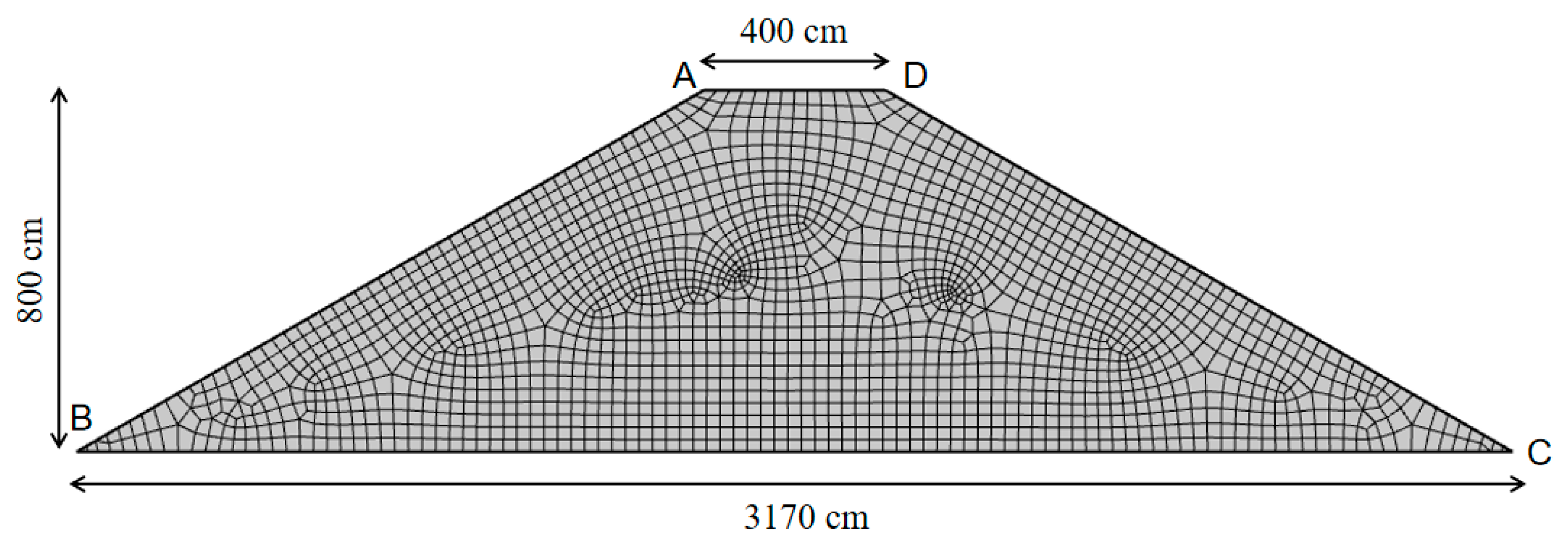
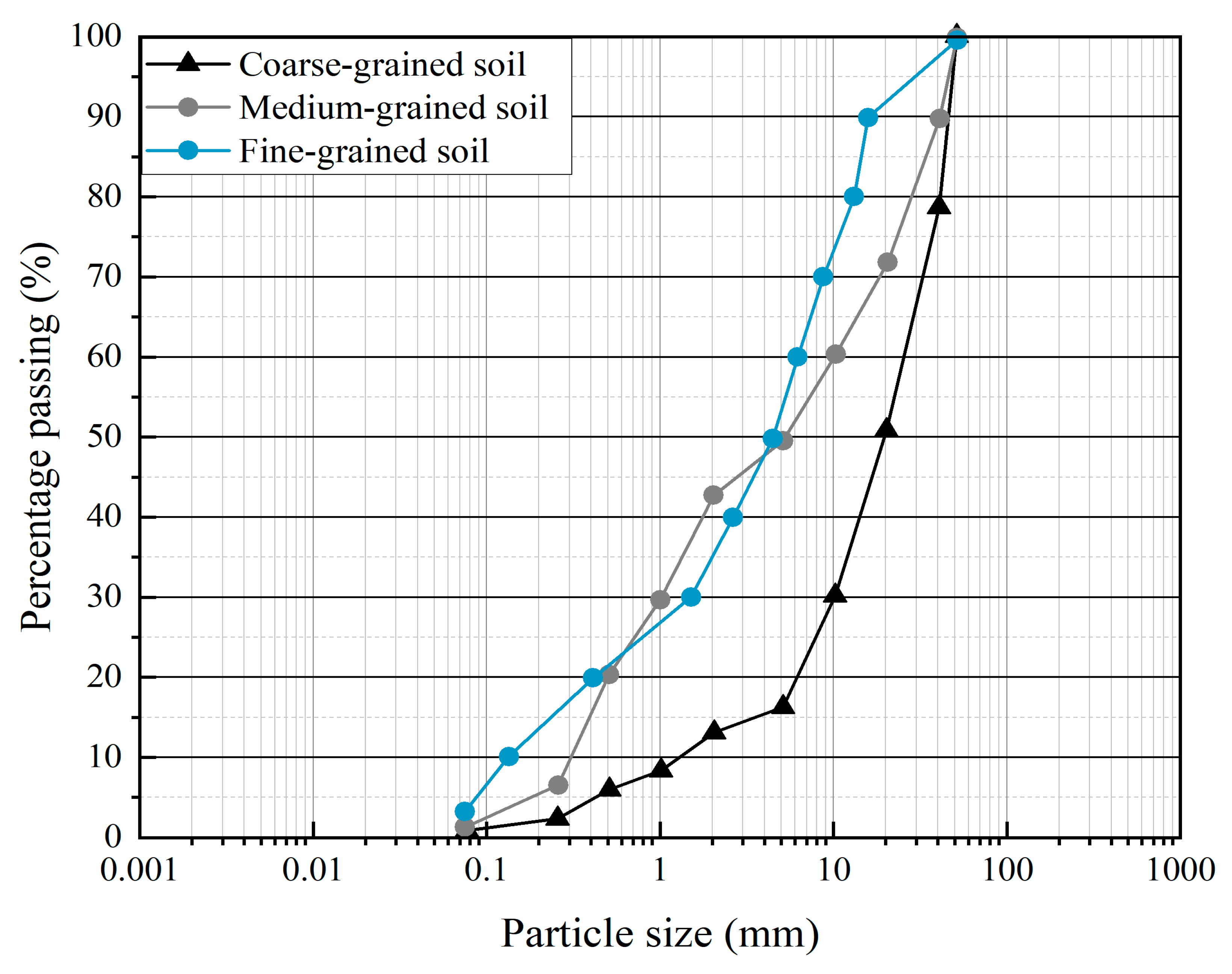
The grain composition of the dam material was derived from three typical grading curves representing landslide dams in the Northern Apennines of Italy [34]. As shown in Figure 2, these curves were obtained by mixing silt, sand, and gravel in varying grain sizes. Based on the classification of dam materials proposed by Zhu et al. [35] and Shen et al. [36], the corresponding materials can be categorized as coarse-grained soil, medium-grained soil, and fine-grained soil according to their dominant particle size. The coarse-grained soil, with a coarse-grained particle content approaching 50%; the medium-grained soil, where the medium-sized particle content exceeded 50%; and the fine-grained soil, characterized by a fine-sized particle content exceeding 50%. The geotechnical properties of the dam materials are summarized in Table 1.
Figure 2.
Grading curves of material composition in landslide dams with three different material compositions.
Table 1.
Geotechnical properties of the dam materials.
3.2. Finite Element Model
In this study, both deterministic analysis and random finite element realization in the Monte Carlo analysis is analyzed in two separate stages: (i) an initial simulation seepage infiltration is performed up to a selected time, either during or after the infiltration, to establish the stress and strain fields and pore water pressure (pw) inside the slope at a particular time; and (ii) the subsequent application of the shear strength reduction technique (SRT) to calculate the factor of safety (FoS) and the area of the sliding mass (As) at that particular time.
In the first stage, a moderate constant upstream water level rising rate of 0.4 m/day over 5 days is simulated by imposing a “seepage” boundary condition on the AB surface (Figure 1). After 5 days of seepage, the upstream water level increased from 5.5 m to 7.5 m. Boundaries BC are assumed to be impermeable both during and after the rising. This implies that as the water level increases and the unsaturated zone changes, suction changes will induce net (or effective) stresses changes. This in turn induces the deformation and porosity changes in the dam, which causes the changes in ks and se. It can be seen from that the new ks and se influence the water seepage flow. Hence, the soil deformations and the unsaturated/saturated flow are truly coupled in the first stage. In this study, five times during the seepage are selected to capture the stresses field and pw field during seepage.
In the second stage, The FoS and As of the selected times are evaluated by performing a separate SRT analysis. In SRT analysis, the stresses, strains and pw at every node calculated during the first stage are imposed as initial conditions of the second stage; moreover, the soil strength is reduced while the pw at every node is maintained fixed during SRT analysis. The shear strength parameters of the landslide dams are then reduced by a reduction factor which is generally considered the same as the FoS of the slope. The FOS is initially set to 1 as usual and subsequently augmented in steps of 0.02 until failure during SRT analysis. Failure criteria are: (i) the loss of global equilibrium of dam which behaves as the “non-convergence” of the solution by iteration computed under a setting tolerance, and (ii) a sudden and significant increase in displacements of the node within the domain of whole dam. Failure occurs when a combination of the above two criteria is true. Details of the failure criteria refers to Le et al. [37].
3.3. Random Field Generation Method and Reliability Index
The spatial variability of soil properties can be characterized by random field theory [38]. Various methods have been developed to generate 1D/2D or multidimensional random fields, such as the local average subdivision method [39], the spectral representation method [40], the Karhunen–Loeve expansion [41] and the modified linear estimation method [42].
The characteristic particle size of soil can be described by d10, d30, and d60, which denote the particle diameters of 10%, 30%, and 60% in the particle grading curve, respectively. Therefore, the spatial variability of particle size in the deposit of the barrier dam can be represented by the spatial variation of d10, d30, and d60. To generate a random field model, three statistical parameters are required including mean (μ), standard deviation (σ) and correlation length (l). The coefficient of variation (COV) is the standard deviation divided by the mean and is commonly used in stochastic analysis. Soil parameters are usually considered as normal or lognormal variables. In this study, the three random variables d10, d30, and d60 are considered to follow lognormal distributions to avoid negative values. Therefore, the values of μlnd and σlnd can be calculated by the following equation:
where σd, μd, and COVd respectively represent the standard deviation, mean and COV of particle size d.
In generating a random field model, the autocorrelation function is generally used to capture the correlation structures of soil properties in space. Herein, a squared exponential correlation function is used to discretize the random field of soil properties, and it can be expressed as:
where τx and τy are the intervals between two different points along the x and y directions. lx and lz denote the correlation lengths in the x and y directions.
The modified linear estimation method is adopted to characterize the spatial variability of particle size because of its high efficiency in generating large random fields [43]. To generate a 2D random field, it is divided into three main steps. Step 1: the two-dimensional space is discretized into meshes with units of spacing; a standard normal random variable with mean 0 and standard deviation 1 is defined at each unit node, thereby generating a leading random field with position vector s. Step 2: The correlation matrix C is solved by Cholesky decomposition, which converts the uncorrelated random vector r into a correlated random vector f, and it is given by:
Then, the leading random field is interpolated to obtain the value of s at any point in the random field interior, and the expression is as follows:
Step 3: By using the mapping relation, the leading random field (with position vector s) is translationally rotated to eliminate the directionality of the unit and introduce the property field with the position vector.
Three independent random fields, d10, d30, and d60, can be generated using the method described above. For the three landslide dams with different material compositions in this study, the coefficient of variation (COV) of d10, d30, and d60 is 0.5. The correlation length is 2 m in the x direction (θx) and 0.5 m in the y direction (θy) [22].
Since the three random variables d10, d30, and d60 follow lognormal distributions, the FOS should also be considered to follow a lognormal distribution. The reliability index β was proposed to evaluate the reliability of the landslide dam against seepage failure and can be expressed as:
where μ(FOS) denotes the mean value and COV(FOS) represents the coefficient of variation of FOS.
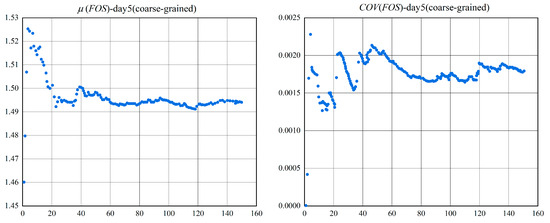
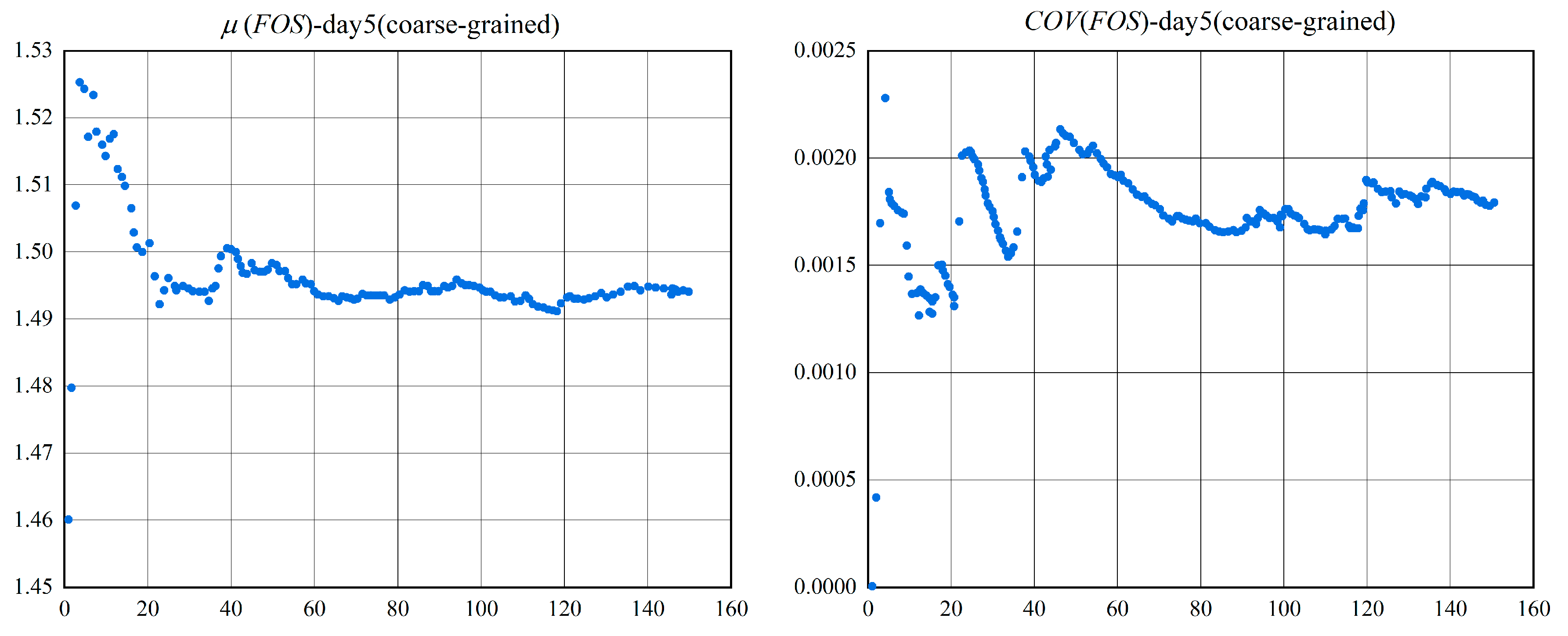
In terms of stochastic seepage analyses, the output responses were obtained through Monte Carlo analysis, which involves 150 finite element calculations in each dam. As shown in Figure 3, the mean and standard deviation of the factor of safety (FOS), μ(FoS), and COV(FoS) were monitored with increasing numbers of simulations to assess convergence. Taking a coarse-grained landslide dam as an example, the FOS values stabilized when the number of simulations reached approximately 100–120, with fluctuations remaining below a preset convergence threshold. The choice of 150 simulations was based on this observation, providing a sufficient margin to ensure statistical stability.
Figure 3.
Convergence of μ(FoS) and COV(FoS) with N (example from Monte Carlo simulation).
Furthermore, in the study by Le et al. (2015) [37]. on the reliability of seepage stability in unsaturated heterogeneous slopes, only 120 Monte Carlo simulations were used, and convergence of the FOS was achieved after as few as 60 simulations. These findings further support the adequacy of the number of simulations selected in this study.
4. Results and Discussion
4.1. Deterministic Analysis
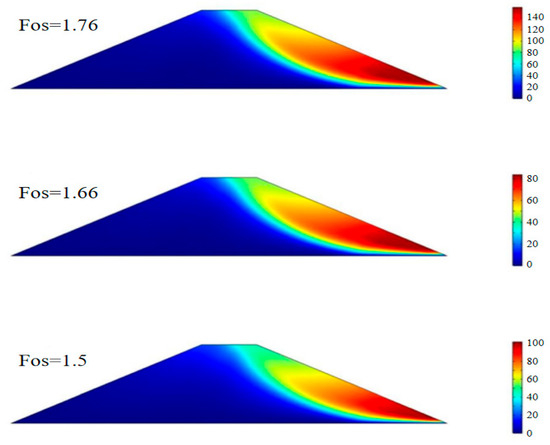
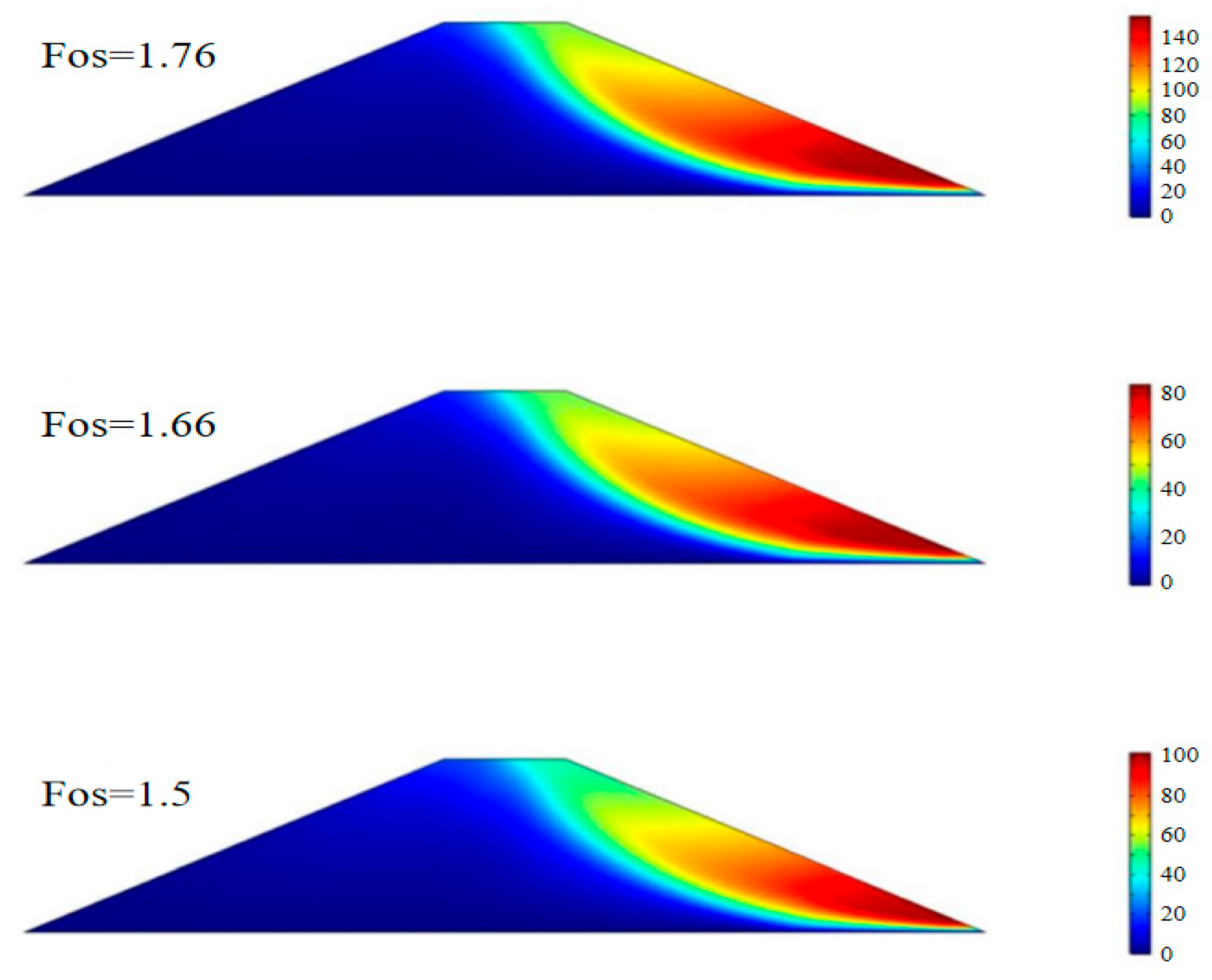
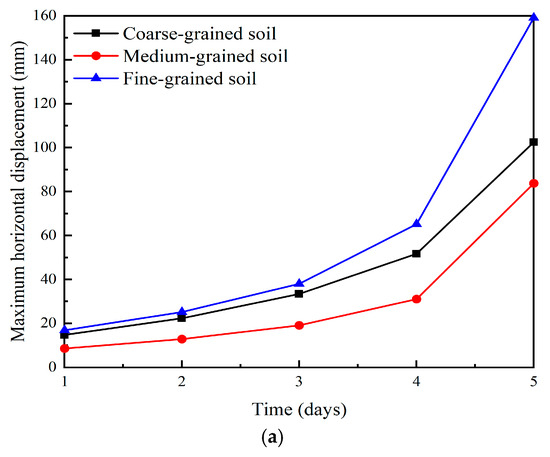
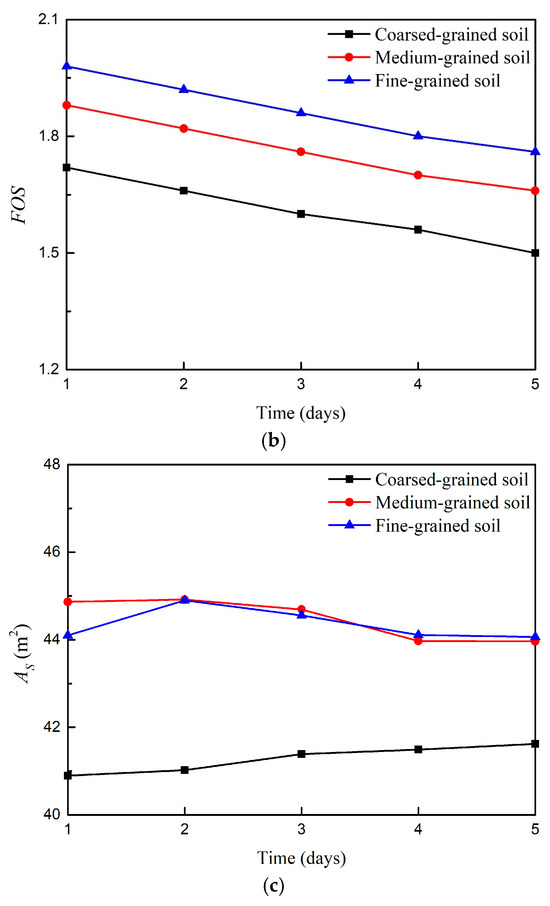
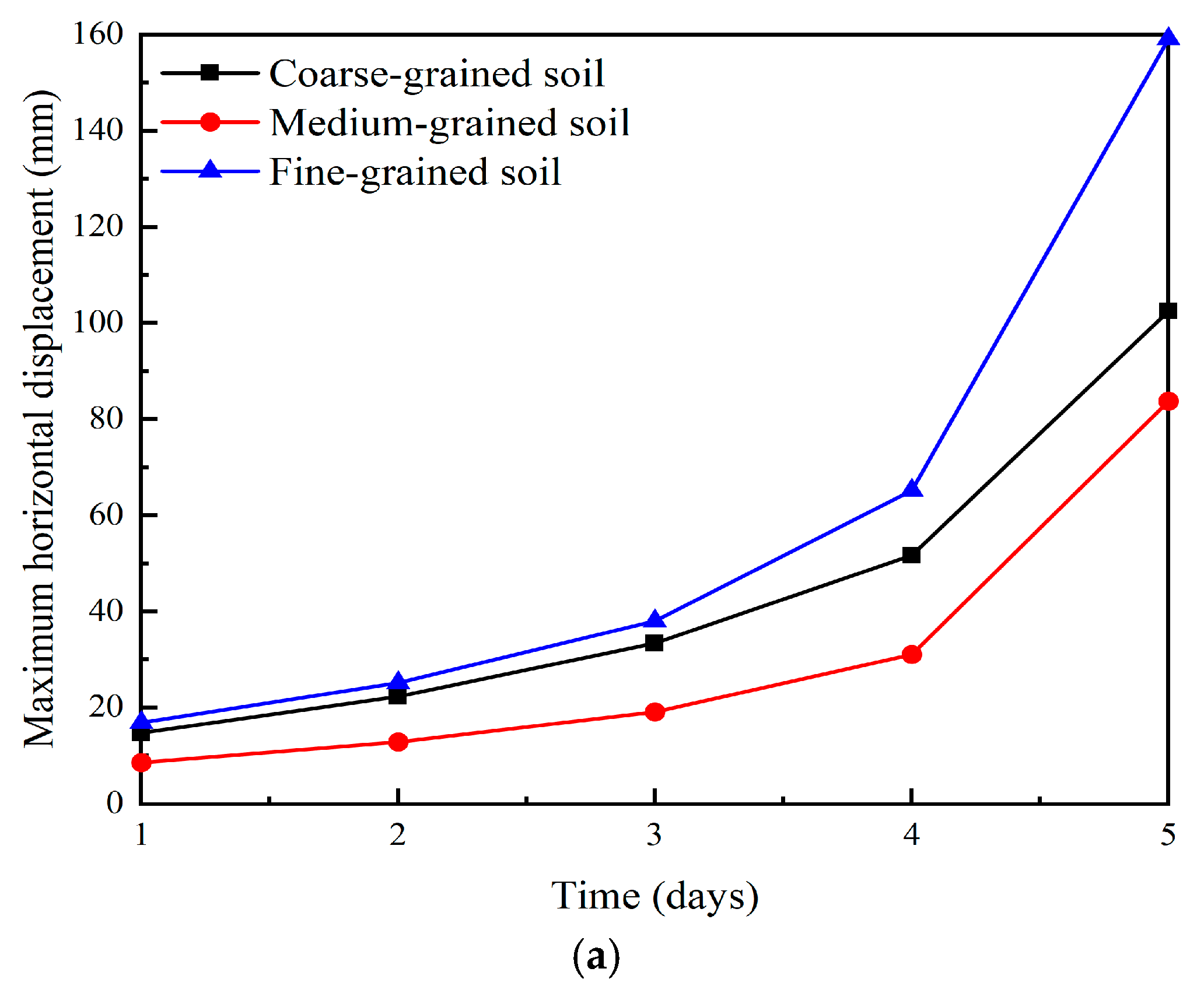
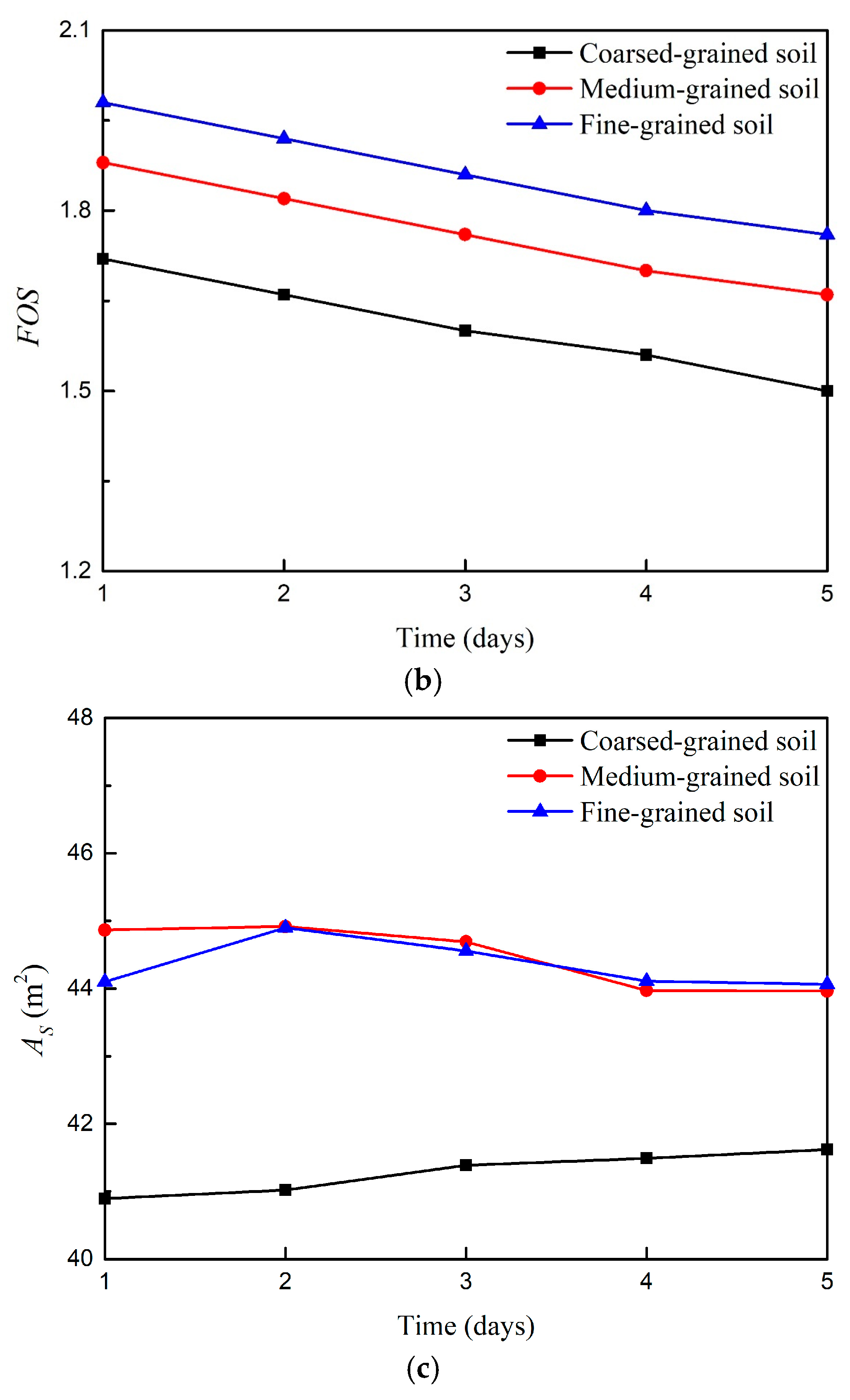
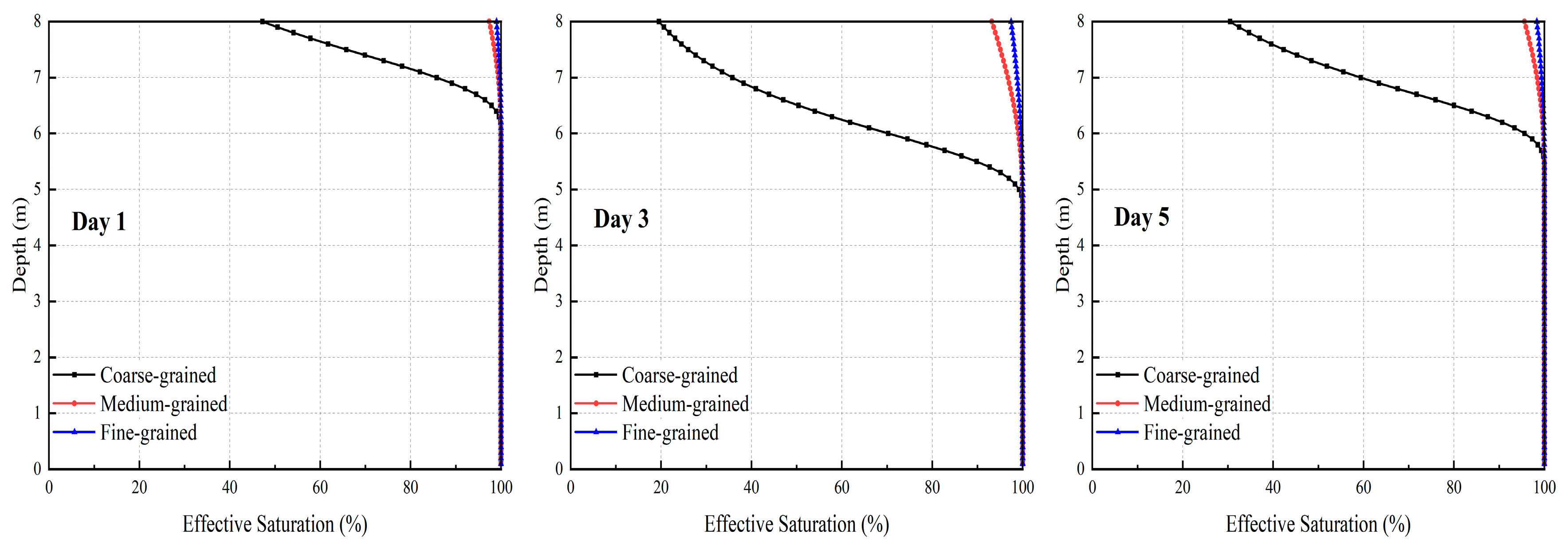
Prior to the stochastic seepage analyses, deterministic seepage analysis of landslide dams should be conducted, which provides important information and is useful for probability analysis. The horizontal displacement contours of the landslide dams with three different material compositions under seepage failure on day 5 can be seen in Figure 4. Compared to medium-grained and coarse-grained landslide dams, the fine-grained landslide dam exhibits larger displacement during seepage failure. To obtain the evolutions of slope displacement over time, the strength reduction method was applied to the slope at different time. The evolution of the maximum horizontal displacement for the three landslide dams with different material compositions is presented in Figure 5a. From the figure, the horizontal displacement associated with slope failure was relatively small in the early stage of seepage, whereas it increased substantially in the later stage. FOS and As of three homogeneous landslide dams during seepage are shown in Figure 5b and Figure 5c, respectively. It can be seen from Figure 5b that as seepage continues, the FoS of all three dams is reduced. Meanwhile, the FoS of the dam decreases with the increase in the grain size. Specifically, the coarse-grained dam exhibits the lowest FoS, whereas the fine-grained dam exhibits the highest FoS. For all three dams, the FoS declines to its minimum value by the end of the five-day seepage period, primarily due to the progressive reduction in the unsaturated zone and the associated loss of matric suction caused by increased saturation. This behavior is closely related to the evolution of saturation and matric suction during seepage. Figure 6 presents the variation of saturation with depth at the horizontal midpoint of the three homogeneous landslide dams. It can be observed that the coarse-grained dam features the largest unsaturated zone, followed by the medium-grained dam, while the fine-grained dam has the smallest unsaturated zone. As seepage duration increases, the unsaturated zones of all three dams gradually diminish. Notably, the fine-grained dam and medium-grained dam maintain a smaller zone than the coarse-grained dam, with saturation levels approaching 100% throughout the seepage process. This results in substantial weakening of the soil across the entire dam body, promoting a deeper failure mechanism compared to that of the coarse-grained dam. Additionally, as shown in Figure 5c, the As of the coarse-grained dam is smaller than that of both the fine-grained and medium-grained dams.
Figure 4.
Horizontal displacement contours (mm) of the landslide dams with three different material compositions under seepage failure on day 5 (from top to bottom: fine-grained, medium-grained, coarse-grained).
Figure 5.
(a) The maximum horizontal displacement, (b) FOS, and (c) As of three homogeneous landslide dams varies with time.
Figure 6.
Saturation profiles along the depth for the three homogeneous landslide dams.
4.2. Stochastic Simulations and Reliability Analysis
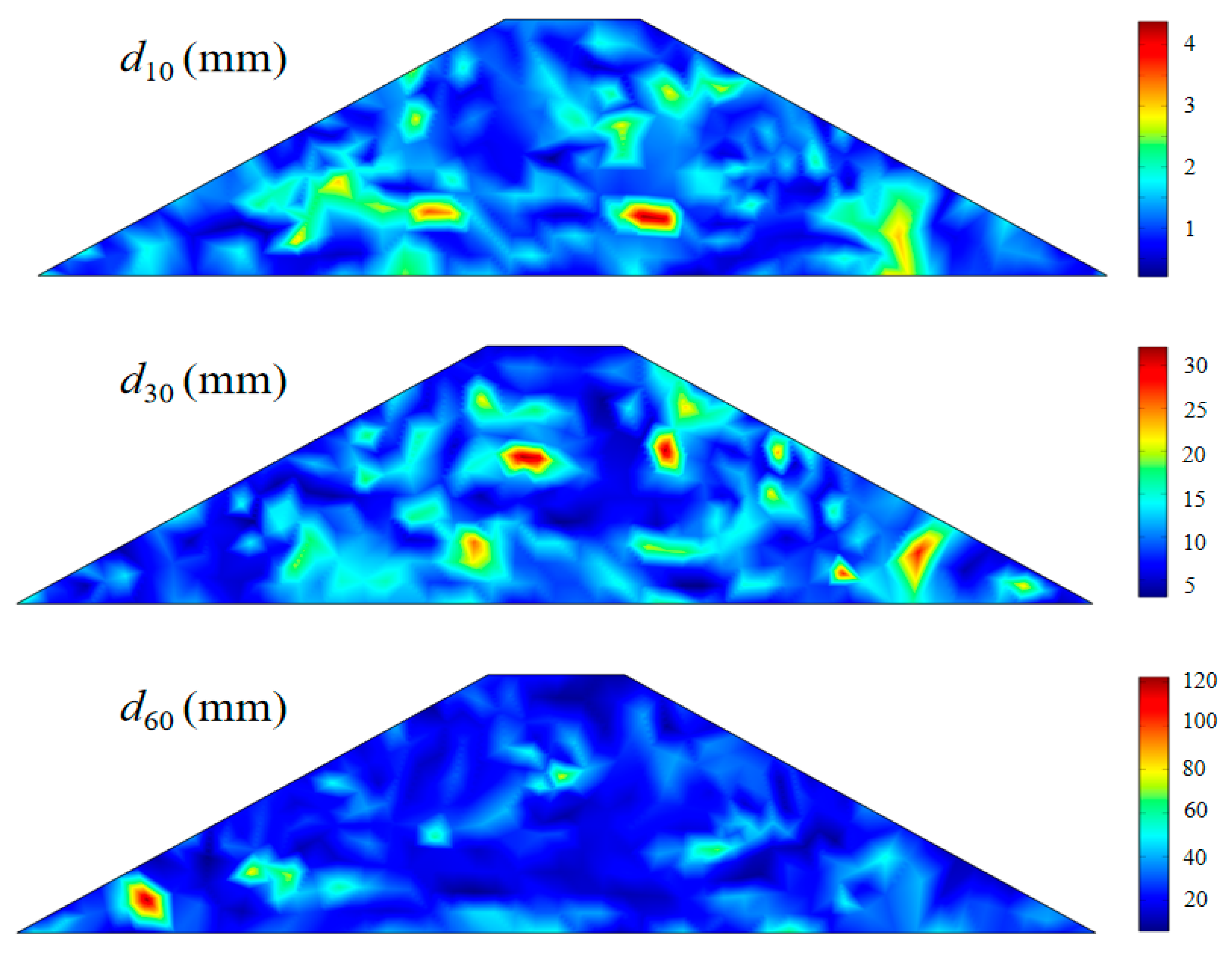
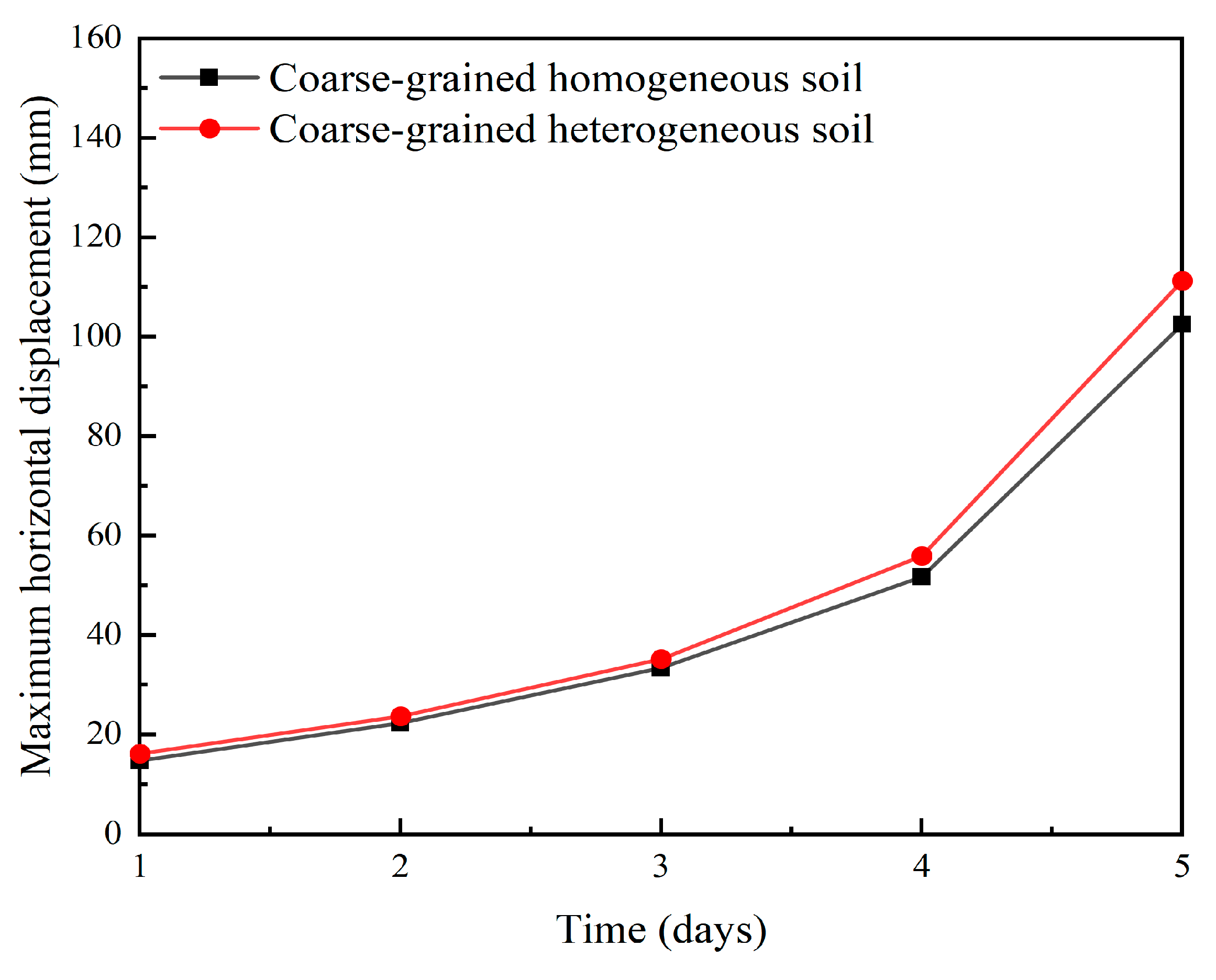
To investigate the influence of particle size distribution heterogeneity on the calculation results, a heterogeneous coarse-grained landslide dam with a factor of safety (FoS) identical to that of the homogeneous coarse-grained dam (both having an FoS of 1.5) was selected for analysis. The distribution contours of the particle size parameters d10, d30, and d60 in the heterogeneous model are shown in Figure 7. This distribution corresponds to a random field of particle size parameters with μ(d10) = 1.3 mm, μ(d30) = 10 mm, μ(d60) = 26 mm, COV(d10) = COV(d30) = COV(d60) = 0.5, and θx = 2 m, θy = 0.5 m. As shown in Figure 8, compared with the homogeneous dam, the heterogeneous dam exhibits a larger maximum displacement under seepage conditions. On day 5, the maximum displacement of the heterogeneous dam is 111 mm, whereas that of the homogeneous dam is 102 mm. This indicates that neglecting particle size distribution heterogeneity would lead to an underestimation of the maximum displacement at slope failure.
Figure 7.
Typical realizations of particle size parameters (d10, d30, d60) the coarse-grained landslide dam.
Figure 8.
The variation in the maximum horizontal displacement for homogeneous and heterogeneous landslide dams.
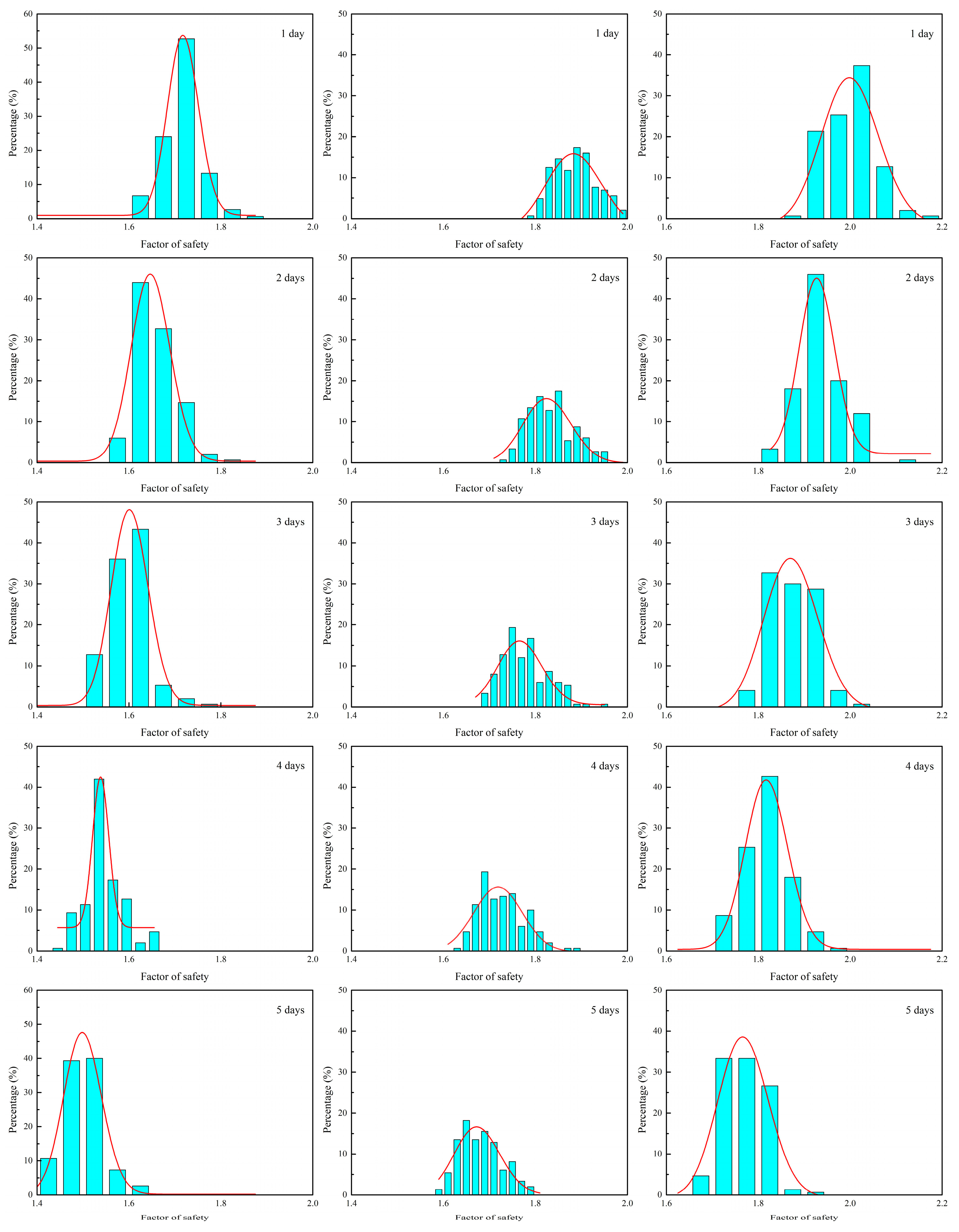
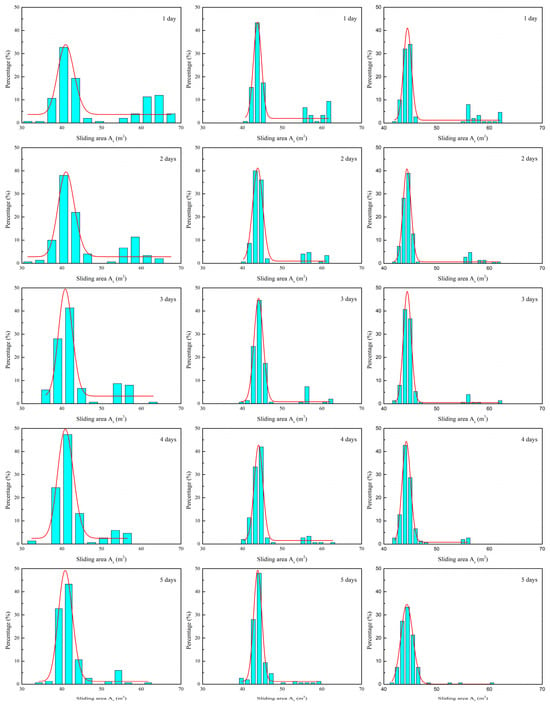
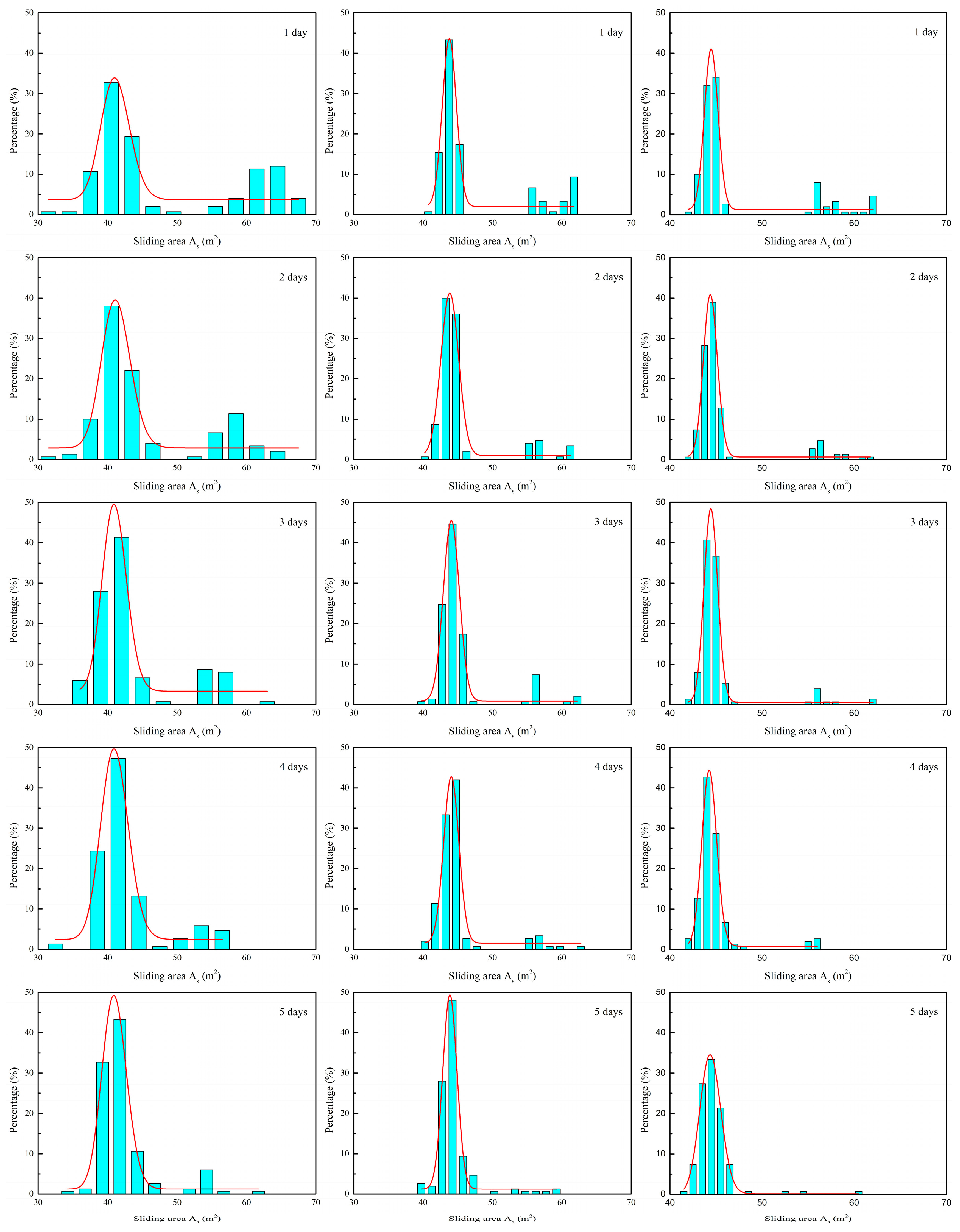
Figure 9 and Figure 10 plot the histogram of the frequency distribution of FoS for the landslide dams with three different material compositions. Several common probability distributions functions (pdf) were used to fit to the frequency histograms of FoS and As; after some comparison, it can be founded that the log-normal function can provide an acceptable and simple representation in most cases.
Figure 9.
Histogram with fitted log-normal distributions (red line) of the frequency distribution of FoS for landslide dams ((left): coarse-grained dam, (middle): medium-grained dam, (right): fine-grained dam).
Figure 10.
Histogram with fitted log-normal distributions (red line) of the frequency distribution of AS for landslide dams ((left): coarse-grained dam, (middle): medium-grained dam, (right): fine-grained dam).
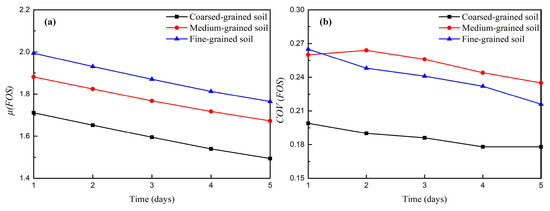
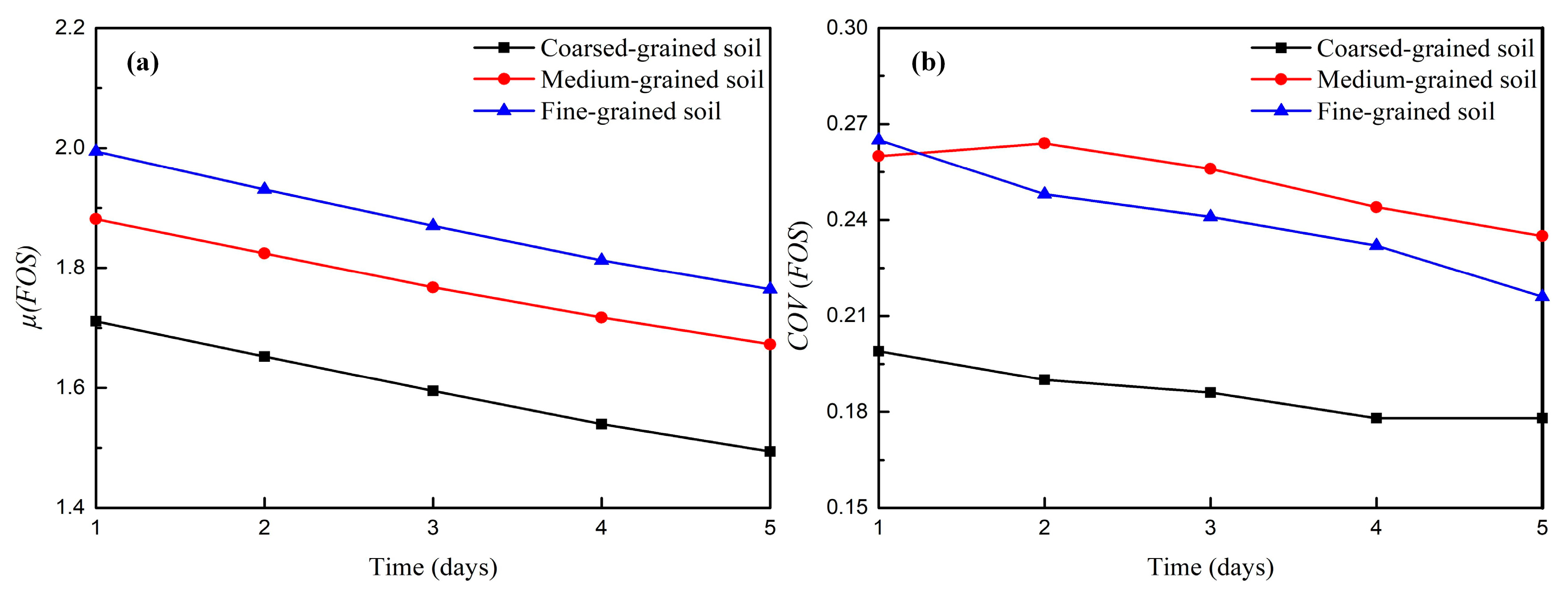
The changes in the mean and coefficient of variation of the factor of safety, μ(FoS) and COV(FoS), over time during seepage follow generally similar patterns for the three landslide dams with different material compositions. These results are shown in Figure 11. Specifically, the coarse-grained dam exhibits the lowest FoS throughout the entire seepage period, while the FoS of the fine-grained dam remains slightly higher than that of the medium-grained dam. Due to the gradual loss of suction in the unsaturated zone as the water table rises during seepage, the FoS of all three dams with different material compositions continuously declines. This is attributed to the fact that coarse-grained soil, characterized by the highest porosity, generally exhibits lower suction, resulting in lower shear strength at failure and consequently the lowest μ(FoS) throughout the seepage process. On the other hand, the coarse-grained soil, owing to its highest porosity, also possesses the fastest seepage infiltration rate and achieves a more uniform distribution of saturation within the dam domain as a result of its highest permeability. This reduces the spatial variability of suction across the dam domain and leads to an increase in the COV(FoS). Meanwhile, it can be observed that the COV(FoS) remains nearly constant from day 4 to day 5, as no further seepage infiltration occurs during this period.
Figure 11.
(a) μ(FoS), and (b) COV(FoS) of landslide dams with three different material compositions.
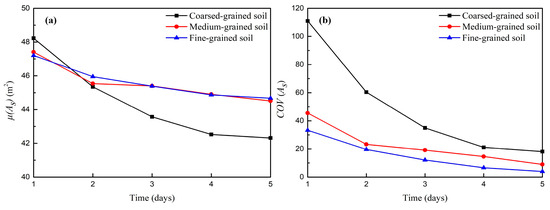
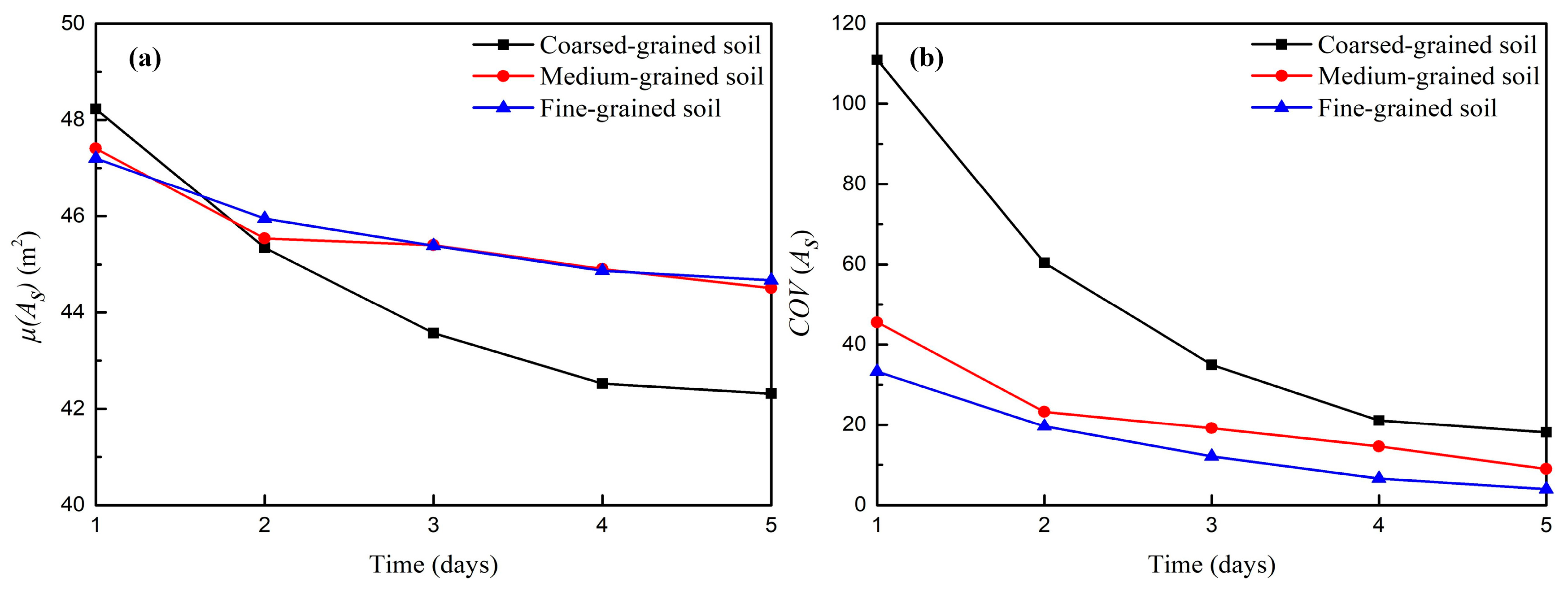
The changes in μ(As) and COV(As) over time during seepage follow generally similar patterns for the three landslide dams with different material compositions, as presented in Figure 12. Both μ(As) and COV(As) decrease sharply at the beginning of seepage, followed by a decrease to a stable value at day 5. μ(As) of all three dams attain their largest values at day 5 since no or little rising of the water table has occurred and the weakest slip surface is deep below the surface. As the seepage continues, the water table continues rising, which induces a decrease in the unsaturated zone. As stated in the previous section, the coarse-grained dam with a lower unsaturated permeability has a lower unsaturated zone shrinking rate of during seepage infiltration, which resulted in a deeper infiltration depth. In such a case, the slip failure tends to happen in the shallow unsaturated soil region near the downstream slope face, leading to smaller values of As and FoS. Meanwhile, the smaller sliding area of the slope leads to a smaller value of COV(As).
Figure 12.
(a) μ(AS), and (b) COV(AS) of landslide dams with three different material compositions.
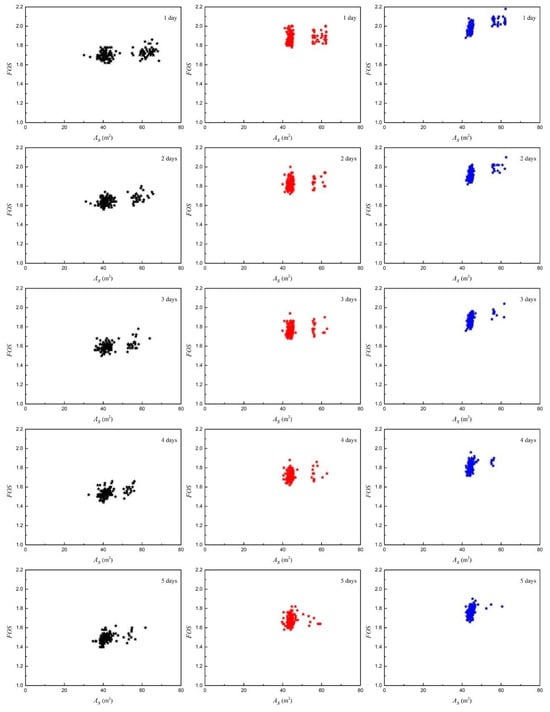
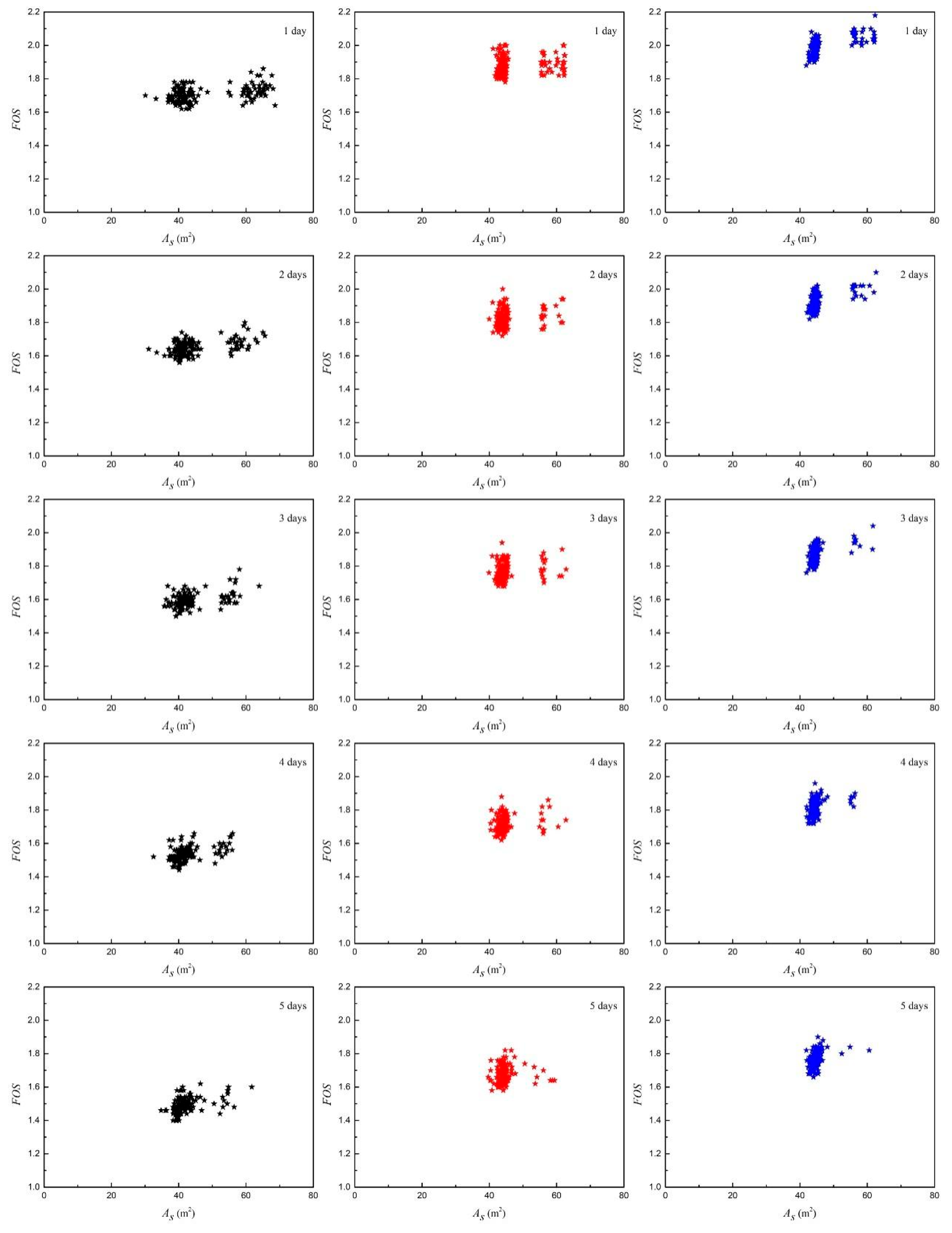
The correlation between the stochastic data of FoS and As is examined in Figure 13. The realizations during seepage are observed to cluster in two concentrated regions. Most realizations fall within the region of low FoS and small As, while a relatively small portion is distributed in the region of high FoS and large As. This trend can be attributed to the fact that the variation in infiltration depth governs the failure mechanism. As seepage continues, infiltration depth becomes shallow, increasing the likelihood of shallow landslides. Hence, there are more realizations distributed mostly in the region of low FoS/small As at the end of the seepage.
Figure 13.
FoS-As distributions for landslide dams with three different material compositions ((left): coarse-grained, (middle): medium-grained, (right): fine-grained).
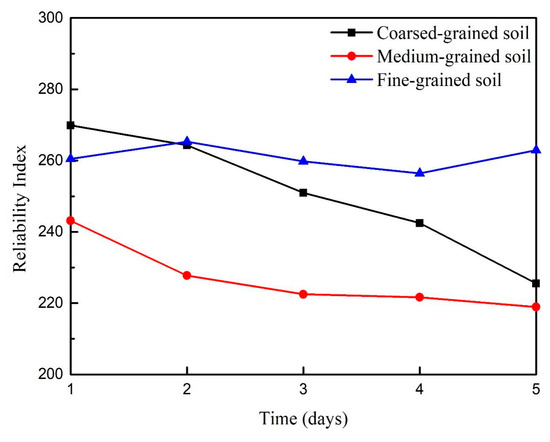
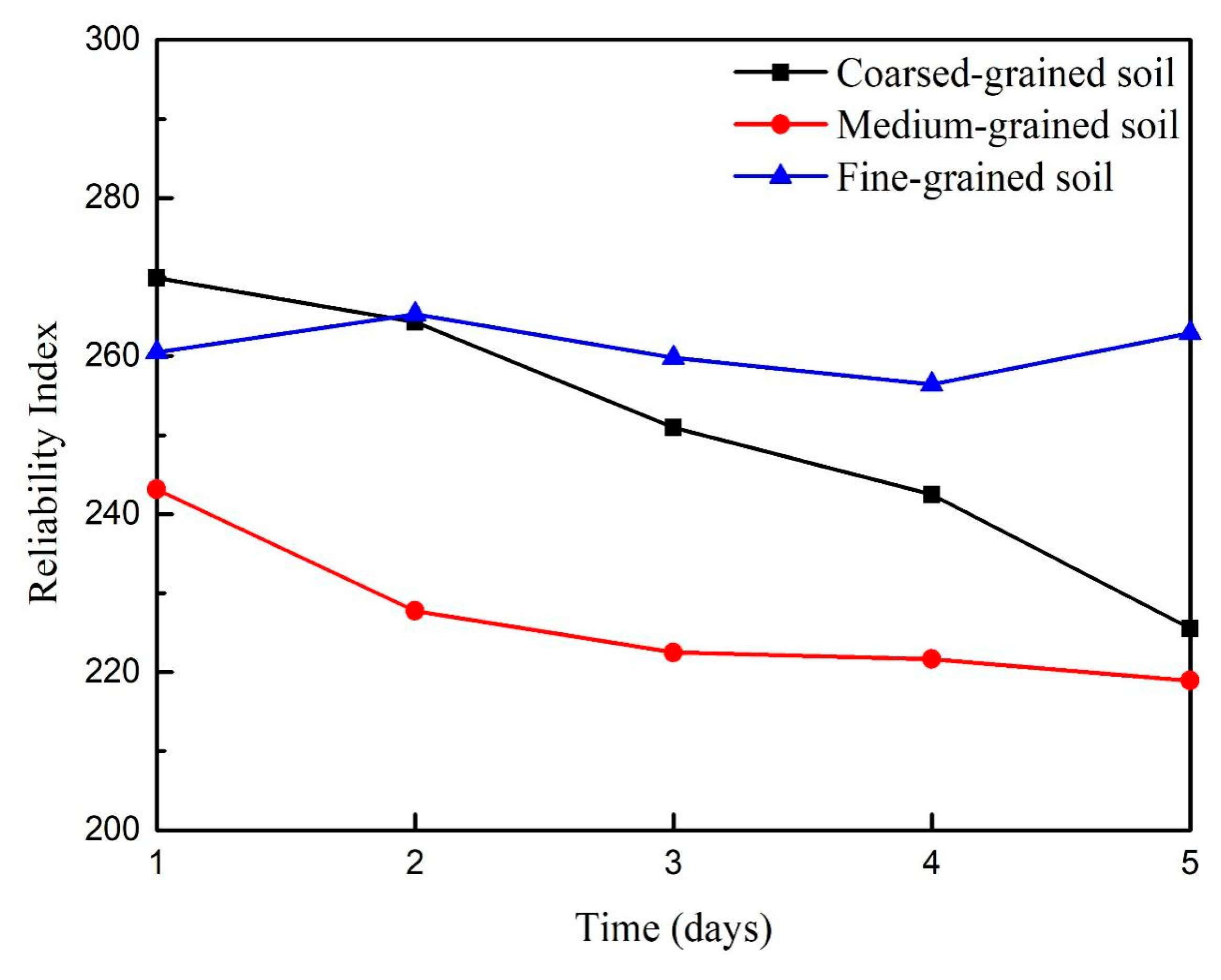
The variation in the reliability index β over time for the three landslide dams with different material compositions is shown in Figure 14. It can be observed that as the seepage time increases, the β value of the fine-grained dam fluctuates to some extent but exhibits no significant overall change. In contrast, the reliability index β of both the coarse-grained and medium-grained dams continuously decreases, with the coarse-grained dam showing a more pronounced decline. Furthermore, the β value of the medium-grained dam remains significantly lower than those of the coarse-grained and fine-grained dams throughout the process. This is primarily because the medium-grained dam has a larger standard deviation and a smaller mean value of the factor of safety (FoS) at the same seepage duration. Therefore, using only the mean FoS to evaluate the slope stability of landslide dams with different material compositions may yield unreasonable results.
Figure 14.
The reliability index versus seepage time for landslide dams with three different material compositions.
4.3. Discussion
This study integrates a specific function that links the hydraulic parameters of unsaturated soils with grain-size characteristics into a standard, widely accepted numerical framework for unsaturated seepage–stress coupling analysis. Furthermore, this study presents a systematic analysis of a landslide dam that accounts for the spatial variability of particle size. Although the absence of one-to-one field data comparison is a recognized limitation, both the adopted function and the unsaturated seepage modeling framework are built on solid theoretical and empirical foundations. It should be noted that the accuracy of seepage failure predictions for a specific site depends significantly on the representativeness of the input grain-size distribution. Therefore, this study can be regarded as a mechanistic analysis framework, with its conclusions offering important insights into the role of grain-size heterogeneity in landslide dam stability and outlining directions for future targeted physical model testing or field monitoring comparisons.
Within this framework, the numerical model is developed based on the two-dimensional plane strain assumption. Although it is capable of capturing key mechanisms, it inevitably involves the following inherent simplifications: (1) dimensional simplification—the model does not represent the actual three-dimensional distribution of seepage and stress fields along the dam axis (Z-direction), nor does it account for potential lateral bypass seepage or localized three-dimensional failure modes; (2) idealization of boundary constraints—the lateral restraint provided by the riverbanks is simplified as a uniform plane strain condition, and the two lateral boundaries of the analyzed cross-section are treated as free surfaces, which does not accurately reflect the spatial variations in real topographic and bank constraints; (3) incomplete characterization of heterogeneity—the adopted two-dimensional random field can only represent spatial variability within the cross-section and cannot describe the correlation structure or parameter variability along the dam axis; and (4) natural landslide dams often contain abundant macropores [5], which can induce preferential flow [44], leading to locally increased pore water pressure and ultimately resulting in dam failure. This process has not been considered in the present study. Future research should introduce a dual-permeability model combined with tracer techniques [45] to investigate this mechanism in greater depth. These simplifications do not compromise the core contribution of this paper, which focuses on the influence mechanism of heterogeneity within the X–Y profile. The conclusions drawn remain valid within this two-dimensional framework. However, caution should be exercised when extrapolating the findings to practical engineering assessments, and future research may employ three-dimensional modeling to further validate and extend the understanding presented herein.
5. Conclusions
This paper establishes a calculation method for the stability of landslide dams under unsaturated unsteady seepage caused by water level fluctuations, taking into account the influence of particle size. Subsequently, the influence of particle size spatial heterogeneity on the stability of landslide dam slopes subjected to unsaturated seepage is investigated using the random finite element method combined with Monte Carlo simulation. Detailed investigations were conducted on the seepage stability of three homogeneous landslide dams with different particle sizes. The main conclusions are as follows:
- Research on the seepage stability of homogeneous landslide dams with different mean particle sizes reveals that during the seepage process, the coarse-grained dam exhibits the lowest stability and the smallest slip area, whereas the fine-grained dam demonstrates the highest stability and the largest slip area.
- Using the random finite element method combined with the Monte Carlo method, the influence of grain size heterogeneity on the seepage failure reliability of the three landslide dams was systematically investigated. The results indicate that as the particle size increases, the mean value of the factor of safety for the dams increases, while its variance first increases and then decreases. Furthermore, the mean value of the slip area increases with a decrease in its variance, and the mean displacement also increases with a decrease in its variance.
- As the seepage time increases, the β value of the fine-grained dam fluctuates to some extent but exhibits no significant overall change. In contrast, the reliability index β of both the coarse-grained and medium-grained dams continuously decreases, with the coarse-grained dam showing a more pronounced decline. Furthermore, the β value of the medium-grained dam remains significantly lower than those of the coarse-grained and fine-grained dams throughout the process.
Author Contributions
Conceptualization, Z.Z.; Methodology, Z.Z.; Software, Z.Z. and Y.L.; Validation, H.Z.; Formal analysis, Z.Z. and H.Z.; Investigation, H.Z. and Y.L.; Resources, N.H.; Data curation, H.Z.; Writing—original draft, Z.Z. and H.Z.; Writing—review & editing, Z.Z., N.H. and Q.Z.; Visualization, H.Z.; Supervision, Z.Z., N.H. and Q.Z.; Project administration, Z.Z.; Funding acquisition, Z.Z. and N.H. All authors have read and agreed to the published version of the manuscript.
Funding
The work presented in this paper is supported by Open Research Fund of Key Laboratory of Reservoir and Dam Safety Ministry of Water Resources (Grant no. YK324012), National Natural Science Foundation of China (Grant no. 52308350). These supports are gratefully acknowledged.
Data Availability Statement
The original contributions presented in this study are included in the article. Further inquiries can be directed to the corresponding author.
Conflicts of Interest
The authors declare no conflict of interest.
References
- Costa, J.E.; Schuster, R.L. The formation and failure of natural dam. Geol. Soc. Am. Bull. 1988, 100, 1054–1068. [Google Scholar]
- Korup, O. Geomorphic hazard assessment of landslide dams in South Westland, New Zealand: Fundamental problems and approaches. Geomorphology 2005, 66, 167–188. [Google Scholar] [CrossRef] [Scilit]
- Stefanelli, C.T.; Segoni, S.; Casagli, N.; Catani, F. Geomorphic indexing of landslide dams evolution. Eng. Geol. 2016, 208, 1–10. [Google Scholar] [CrossRef] [Scilit]
- Zhang, F.S.; Wang, T.; Liu, F.; Peng, M.; Furtney, J.; Zhang, L.M. Modeling of fluid-particle interaction by coupling the discrete element method with a dynamic fluid mesh: Implications to suffusion in gap-graded soils. Comput. Geotech. 2020, 124, 103617. [Google Scholar] [CrossRef] [Scilit]
- Fan, X.M.; Dufresne, A.; Subramanian, S.S.; Strom, A.; Hermanns, R.; Stefanelli, C.T.; Hewitt, K.; Yunus, A.P.; Dunning, S.; Capra, L.; et al. The formation and impact on landslide dams—State of the art. Earth Sci. Rev. 2020, 203, 103116. [Google Scholar] [CrossRef] [Scilit]
- Zhong, Q.; Wang, L.; Chen, S.; Chen, Z.; Shan, Y.; Zhang, Q.; Ren, Q.; Mei, S.; Jiang, J.; Hu, L.; et al. Breaches of embankment and landslide dams—State of the art review. Earth Sci. Rev. 2021, 216, 103597. [Google Scholar] [CrossRef] [Scilit]
- Bianchi-Fasani, G.; Esposito, C.; Petitta, M.; Scarascia-Mugnozza, G.; Barbieri, M.; Cardarelli, E.; Cercato, M.; Di Filippo, G. The Importance of Geological Models in Understanding and Predicting the Life Span of Rockslide Dams: The Case of Scanno Lake, Central Italy, Natural and Artificial Rockslide Dams; Springer: Berlin/Heidelberg, Germany, 2011; pp. 323–345. [Google Scholar]
- Ischuk, A.R. Usoi Rockslide Dam and Lake Sarez, Pamir mountains, Tajikistan, Natural and Artificial Rockslide Dams; Springer: Berlin/Heidelberg, Germany, 2011; pp. 423–440. [Google Scholar]
- Wang, G.; Huang, R.; Kamai, T.; Zhang, F. The internal structure of a rockslide dam induced by the 2008 Wenchuan (Mw7. 9) earthquake, China. Eng. Geol. 2013, 156, 28–36. [Google Scholar]
- Wang, G.; Huang, R.; Lourenço, S.D.; Kamai, T. A large landslide triggered by the 2008 Wenchuan (M8. 0) earthquake in Donghekou area: Phenomena and mechanisms. Eng. Geol. 2014, 182, 148–157. [Google Scholar] [CrossRef] [Scilit]
- Wang, G.; Furuya, G.; Zhang, F.; Doi, I.; Watanabe, N.; Wakai, A.; Marui, H. Layered internal structure and breaching risk assessment of the Higashi-Takezawa landslide dam in Niigata, Japan. Geomorphology 2016, 267, 48–58. [Google Scholar] [CrossRef] [Scilit]
- Wang, F.; Dai, Z.; Okeke, C.A.U.; Mitani, Y.; Yang, H. Experimental study to identify premonitory factors of landslide dam failures. Eng. Geol. 2018, 232, 123–134. [Google Scholar] [CrossRef] [Scilit]
- Peng, M.; Zhang, L.M. Breaching parameters of landslide dams. Landslides 2012, 9, 13–31. [Google Scholar] [CrossRef] [Scilit]
- Sivakumar Babu, G.L.; Vasudevan, A.K. Seepage velocity and piping resistance of coir fiber mixed soils. J. Irrig. Drain. Eng. 2008, 134, 485–492. [Google Scholar] [CrossRef] [Scilit]
- Okeke, A.C.-U.; Wang, F. Hydromechanical constraints on piping failure of landslide dams: An experimental investigation. Geoenviron. Disasters 2016, 3, 4. [Google Scholar] [CrossRef] [Scilit]
- Okeke, A.C.-U.; Wang, F. Critical hydraulic gradients for seepage-induced failure of landslide dams. Geoenviron. Disasters 2016, 3, 9. [Google Scholar] [CrossRef] [Scilit]
- Xiong, X.; Shi, Z.M.; Guan, S.G.; Zhang, F. Failure mechanism of unsaturated landslide dam under seepage loading—Model tests and corresponding numerical simulations. Soils Found. 2018, 58, 1133–1152. [Google Scholar] [CrossRef] [Scilit]
- Shaffeiganjeh, R.; Schneider-Muntau, B.; Ostermann, M.; Gems, B. Seepage process understanding at long-existing landslide dams through numerical analysis and hydrological measurements. Eng. Geol. 2024, 335, 105724. [Google Scholar] [CrossRef] [Scilit]
- Awal, R.; Nakagawa, H.; Kawaike, K.; Baba, Y.; Zhang, H. An integrated approach to predict outflow hydrograph due to landslide dam failure by overtopping and sliding. Proc. Hydraull. Eng. 2008, 52, 151–156. [Google Scholar] [CrossRef] [Scilit]
- Awal, R.; Nakagawa, H.; Kawaike, K.; Baba, Y.; Zhang, H. Experimental study on piping failure of natural dam. J. Jpn. Soc. Civil Eng. B1 (Hydraul. Eng.) 2011, 67, I_157–I_162. [Google Scholar] [CrossRef] [Scilit]
- Regmi, R.K.; Lee, G.; Jung, K. Analysis on failure of slope and landslide dam. KSCE J. Civ. Eng. 2013, 17, 1166–1178. [Google Scholar] [CrossRef] [Scilit]
- Shen, P.; Zhang, L.M.; Zhu, H. Rainfall infiltration in a landslide soil deposit: Importance of inverse particle segregation. Eng. Geol. 2016, 205, 116–132. [Google Scholar] [CrossRef] [Scilit]
- Li, X.; Li, J.; Zhang, L. Predicting bimodal soil–water characteristic curves and permeability functions using physically based parameters. Comput. Geotech. 2014, 57, 85–96. [Google Scholar] [CrossRef] [Scilit]
- Jiang, S.; Huang, J.; Griffiths, D.; Deng, Z. Advances in reliability and risk analyses of slopes in spatially variable soils: A state-of-the-art review. Comput. Geotech. 2022, 141, 104498. [Google Scholar] [CrossRef] [Scilit]
- Jiang, S.; Liu, X.; Huang, J. Nonintrusive reliability analysis of unsaturated embankment slopes accounting for spatial variabilities of soil hydraulic and shear strength parameters. Eng. Comput. 2022, 38, 1–14. [Google Scholar] [CrossRef] [Scilit]
- Ng, C.W.; Qu, C.; Ni, J.; Guo, H. Three-dimensional reliability analysis of unsaturated soil slope considering permeability rotated anisotropy random fields. Comput. Geotech. 2022, 151, 10494. [Google Scholar] [CrossRef] [Scilit]
- Li, Y.; Liu, H.; Wen, L.; Xu, Z.; Zhang, Y. Reliability analysis of high core rockfill dam against seepage failure considering spatial variability of hydraulic parameters. Acta Geotech. 2024, 19, 4091–4106. [Google Scholar] [CrossRef] [Scilit]
- Richards, L.A. Capillary conduction of liquids through porous medium. J. Appl. Phys. 1931, 1, 318–333. [Google Scholar] [CrossRef] [Scilit]
- Van Genuchten, M.T. A closed-form equation for predicting the hydraulic conductivity of unsaturated soil. Soil Sci. Soc. Am. J. 1980, 44, 892–898. [Google Scholar] [CrossRef] [Scilit]
- Carman, P.C. Flow of Gases Through Porous Media; Butterworths Scientiffc Publications: London, UK, 1956. [Google Scholar]
- Ng, C.W.; Qu, C.; Guo, H.; Chen, R.; Xue, Q. Probabilistic analysis of a sustainable landfill cover considering stress-dependent water retention model and copula-based random fields. Eng. Geol. 2022, 332, 107460. [Google Scholar] [CrossRef] [Scilit]
- Cho, S.E. Probabilistic stability analysis of rainfall-induced landslides considering spatial variability of permeability. Eng. Geol. 2014, 171, 11–20. [Google Scholar] [CrossRef] [Scilit]
- Peng, M.; Jiang, Q.L.; Zhang, Q.Z.; Hong, Y.; Jiang, M.Z.; Shi, Z.M.; Zhang, L.M. Stability analysis of landslide dams under surge action based on large-scale flume experiments. Eng. Geol. 2019, 259, 105191. [Google Scholar] [CrossRef] [Scilit]
- Casagli, N.; Ermini, L.; Rosati, G. Determining grain size distribution of material composing landslide dams in the Northern Apennine: Sampling and processing methods. Eng. Geol. 2003, 69, 83–97. [Google Scholar] [CrossRef] [Scilit]
- Zhu, X.; Peng, J.; Liu, B.; Jiang, C.; Guo, J. Influence of textural properties on the failure mode and process of landslide dams. Eng. Geol. 2020, 271, 105613. [Google Scholar] [CrossRef] [Scilit]
- Shen, D.; Shi, Z.; Yang, J.; Zheng, H.; Zhu, F. Qualitative analysis of the overtopping-induced failure of noncohesive landslide dams: Effect of material composition and dam structure on breach mechanisms. J. Hydro. 2024, 638, 131580. [Google Scholar] [CrossRef] [Scilit]
- Le, T.M.H.; Gallipoli, D.; Sanchez, M.; Wheeler, S. Stability and failure mass of unsaturated heterogeneous slopes. Can. Geotech. J. 2015, 52, 1747–1761. [Google Scholar] [CrossRef] [Scilit]
- Vanmarcke, E.H. Probabilistic modeling of soil profiles. J. Geotech. Eng. Div. 1977, 103, 1227–1246. [Google Scholar] [CrossRef] [Scilit]
- Fenton, G.A.; Vanmarcke, E.H. Simulation of random fields via local average subdivision. J. Eng. Mech. 1990, 116, 1733–1749. [Google Scholar] [CrossRef] [Scilit]
- Shinozuka, M.; Deodatis, G. Simulation of multi-dimensional Gaussian stochastic fields by spectral representation. Appl. Mech. Rev. (ASCE) 1996, 49, 29–53. [Google Scholar] [CrossRef] [Scilit]
- Phoon, K.K.; Huang, H.W.; Quek, S.T. Simulation of strongly non-Gaussian processes using Karhunen-Loeve expansion. Probabilistic Eng. Mech. 2005, 20, 188–198. [Google Scholar]
- Liu, Y.; Lee, F.H.; Quek, S.T.; Beer, M. Modified linear estimation method for generating multi-dimensional multi-variate Gaussian field in modelling material properties. Probabilistic Eng. Mech. 2014, 38, 42–53. [Google Scholar] [CrossRef] [Scilit]
- Liu, Y.; Quek, S.T.; Lee, F.H. Translation random field with marginal beta distribution in modeling material properties. Struct. Saf. 2016, 61, 57–66. [Google Scholar] [CrossRef] [Scilit]
- Wang, H.; Yan, X.; Nikolaev, P.; Yan, H.; Wang, Q.; Xie, H. Peridynamic modelling of preferential flow in unsaturated fractured soil considering capillary barrier effects. J. Hydrol. 2026, 664, 134628. [Google Scholar] [CrossRef] [Scilit]
- Zhang, Y.; Yan, H.; Rajabi, H.; Dou, H.; Wang, Q.; Xie, H. Classifying anomalous tracer breakthrough curves in layered heterogeneous soils. J. Hydrol. 2026, 666, 134806. [Google Scholar] [CrossRef] [Scilit]

Disclaimer/Publisher’s Note: The statements, opinions and data contained in all publications are solely those of the individual author(s) and contributor(s) and not of MDPI and/or the editor(s). MDPI and/or the editor(s) disclaim responsibility for any injury to people or property resulting from any ideas, methods, instructions or products referred to in the content. |
© 2026 by the authors. Licensee MDPI, Basel, Switzerland. This article is an open access article distributed under the terms and conditions of the Creative Commons Attribution (CC BY) license.