Next Article in Journal
Managing Bathing Loads and Circulation Rates in Commercial Swimming Pools: Rationale and Perspective from UK and Europe
Previous Article in Journal
An Improved Intuitionistic Fuzzy Set TOPSIS Method Based on a New Distance Measure with an Application to Marine Aquaculture Water Quality Evaluation
Previous Article in Special Issue
Integrated Hydrogeochemical, Isotopic, and Geophysical Assessment of Groundwater Salinization Processes in the Samba Dia Coastal Aquifer (Senegal)
 
 
Due to scheduled maintenance work on our servers, there may be short service disruptions on this website between 11:00 and 12:00 CEST on March 28th.
Article

Chemical Characteristics of Ordovician Formation Water and Its Relationship with Hydrocarbon Distribution in Shunbei and Adjacent Regions, Tarim Basin, NW China

1
Ocean College, Zhejiang University, Zhoushan 316000, China
2
Northwest Oilfield Branch Company—Sinopec, Urumqi 830011, China
*
Authors to whom correspondence should be addressed.
Water 2026, 18(6), 714; https://doi.org/10.3390/w18060714
Submission received: 12 January 2026 / Revised: 25 February 2026 / Accepted: 16 March 2026 / Published: 18 March 2026
(This article belongs to the Special Issue Research on Hydrogeology and Hydrochemistry: Challenges and Prospects)

Abstract

The Ordovician system in the Shunbei area of the Tarim Basin hosts typical ultra-deep, fault-controlled fracture–vuggy hydrocarbon reservoirs. Compared with the surrounding Tabei and Tazhong areas, the genetic types of Ordovician formation water in Shunbei are more complex, and the relationships and spatial distribution of oil, gas, and water exhibit strong heterogeneity and pronounced fault control. This study systematically collected formation water geochemical and pressure data to clarify the geochemical characteristics and origin of Ordovician formation water in the Shunbei area and to investigate the indicative relationships between ion concentrations and ionic ratios of formation water and reservoir dolomitization, hydrocarbon migration, and accumulation. Research shows that, in contrast to the Tabei and Tazhong areas, the Ordovician formation water in Shunbei is predominantly of the calcium chloride (CaCl2) type, with enrichment in Ca2+ and depletion in Mg2+, which may be related to euhedral dolomitization. In fault-controlled fracture–vuggy reservoirs, a high desulfurization coefficient—contrary to its interpretation in conventional reservoirs—corresponds to favorable zones for hydrocarbon accumulation. The rare earth element (REE) composition of the formation water is characterized by heavy REE enrichment, a distinct negative cerium (Ce) anomaly, and a positive europium (Eu) anomaly. Combined with hydrogen–oxygen and strontium isotopic data, these features indicate that the Ordovician formation water in Shunbei represents original depositional paleoseawater that has undergone cross-formational flow and concentration. The water bodies are divided into two distinct formation water systems bounded by the Shunbei No. 5 fault zone. Favorable zones for hydrocarbon enrichment are controlled by source rock distribution, and hydrocarbons migrate together with formation water along strike-slip faults within the Shunbei area, showing a northwest-to-southeast trend. The region between the middle segments of the Shunbei No. 4 and No. 8 fault zones is identified as a favorable area for hydrocarbon accumulation.

1. Introduction

Formation water, as a fundamental component of geological fluids, participates in diverse physicochemical reactions and mass–energy exchange during basin evolution, serving as a reaction medium that preserves abundant geochemical information [1]. Therefore, analyzing the hydrochemical and hydrodynamic characteristics of formation water provides key insights into fluid-evolution processes and the distribution of favorable hydrocarbon accumulation zones, offering essential fluid-dynamic constraints on hydrocarbon migration and accumulation. Global studies of formation-water chemistry across various sedimentary settings consistently highlight that fluid activity spans the entire hydrocarbon lifecycle—from generation and reservoir development to migration and preservation [2]. Integrating the chemical–isotopic signatures of present formation water and paleo-fluids yields reliable constraints on hydrocarbon migration pathways, accumulation processes, and reservoir destruction mechanisms [3,4,5]. Coupled with basin evolutionary history, investigations into the hydrochemical characteristics and spatial distribution patterns of formation water are thus crucial for elucidating reservoir formation and evolution mechanisms [1,6]. For example, formation water in the Shaximiao and Xujiahe formations of the Sichuan Basin exhibits fault-related upwelling, where overpressure facilitates vertical natural-gas migration in both free-phase and water-dissolved forms [7,8,9]. In the eastern Paris Basin (France), fluid inclusion data from Jurassic limestones indicate a transition from Late Jurassic–Early Cretaceous basinal brines to low-Cl Cenozoic calcite-vein fluids, reflecting breached formation-water sealing and subsequent dilution [10].
China’s superimposed basins contain abundant ultra-deep hydrocarbon resources [11]. Recent exploration breakthroughs in the Shunbei and Fuman oil–gas fields of the Tarim Basin further demonstrate that marine carbonate successions constitute one of the most critical domains for reserve growth and production enhancement in onshore China [12]. With improved understanding of industrial oil flows discovered in the Ordovician of the Shuntuoguole Low Uplift and of subsalt Cambrian dolomite reservoirs and strike-slip fault systems [13], Shunbei reservoirs have been widely recognized as fault-controlled fractured–vuggy traps, wherein the development of high-quality reservoirs is dominantly governed by fault zones [14]. Tectonic fracturing, followed by extensive fluid modification, produced these fault-controlled fractured–vuggy reservoirs, which are characterized by fault-aligned distribution, vertical cross-stratal connectivity, pronounced lateral heterogeneity, and the absence of a unified oil–water contact [15].
The Shunbei reservoirs occupy a structurally low position on the Tarim Basin platform. Compared with structurally higher reservoirs such as Tahe and Tazhong, multi-stage fault activity has exerted a more pronounced influence on fluid origins and spatiotemporal evolution in Shunbei. Variations in stratal openness and the intensity of water–rock interaction [16,17] further enhance the complexity of hydrochemical characteristics and the spatial distribution of oil–gas–water systems in this area [6]. This study established a methodological workflow for screening reliable formation-water data, specifying that authentic formation-water samples in the Shunbei area should be characterized by a flowback volume greater than 200%, a water cut exceeding 50%, and a pH value ranging from 5 to 8.3. Furthermore, precise identification was conducted by integrating ion coefficients tailored to different formation-water types. Based on this rigorous screening framework, the geochemical data of formation waters across the Shunbei and adjacent regions were systematically compiled. By analyzing the hydrochemical characteristics and genetic evolution of formation waters from the Ordovician Yingshan and Yijianfang formations, and integrating formation pressure data, this study elucidated the fluid attributes and their indicative significance for hydrocarbon distribution. These results provide important guidance for exploration and development of Ordovician marine carbonate reservoirs in the Shunbei area.

2. Geological Setting

The Shunbei Oilfield is located within the Shuntuoguole Low Uplift in the central Tarim Basin. Structurally, it occupies a saddle-like transition zone between two uplifts and two sags (Figure 1), bounded by the Shaya Uplift to the north and the Tazhong Uplift to the south, and connected laterally with the Awati Sag to the west and the Manjiaer Sag to the east [18,19]. This region represents a structurally low position characterized by relatively stable stratigraphic subsidence. The area is marked by complex geomorphic conditions and strong tectonic activity [20], hosting medium- to small-scale intraplate strike-slip faults that were active from the Middle Caledonian to Late Hercynian and exhibit pronounced inherited deformation [12].
According to previous studies, the structural evolution of the Shuntuoguole Low Uplift can be divided into four stages. Early Caledonian: a weak intracratonic extensional stage. Middle Caledonian to Early Hercynian: a phase of multidirectional compression with increasing stress, establishing the low-uplift framework and generating the intraplate strike-slip fault systems. Late Hercynian to Indosinian: continued compression accompanied by the sustained uplift of the Tabei High. Yanshanian to Himalayan: a stabilization stage characterized by adjustments of the paleo-uplift and maturation of the fault systems [15,21,22,23,24]. Consequently, the strike-slip fault systems in the Shunbei area exhibit a “large-scale spatial distribution with multiple coexisting fault systems” [25].
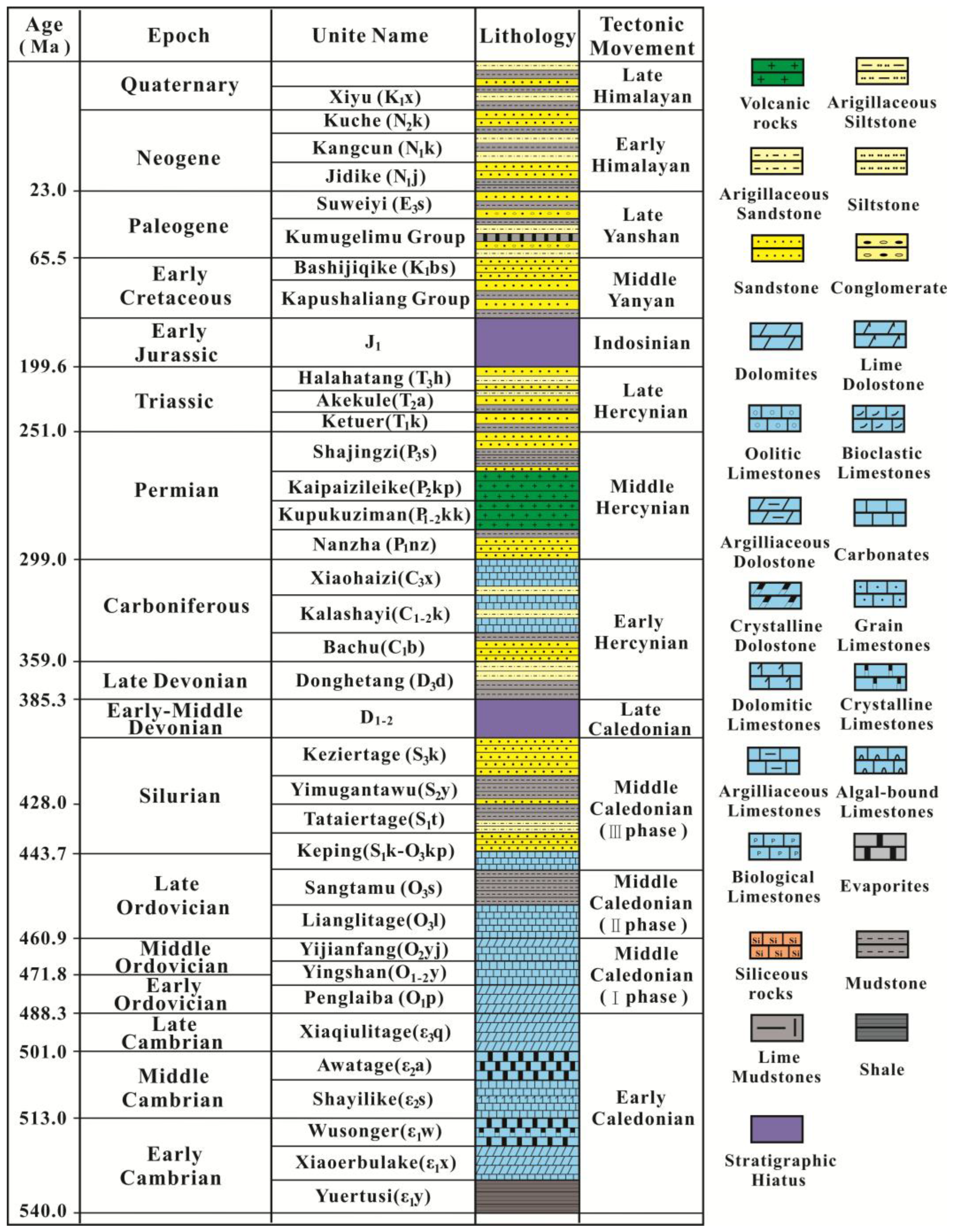
As shown in Figure 2, the study area has experienced stable stratigraphic subsidence and is dominated by marine carbonate deposits of the Ordovician System. The Ordovician sequence can be subdivided from bottom to top into the Penglaiba Formation (O1p), Yingshan Formation (O1–2y), Yijianfang Formation (O2yj), Qia’erbake Formation (O3q), Lianglitag Formation (O3l), and Sangtamu Formation (O3s). Among these, the Yijianfang and Yingshan formations are the primary hydrocarbon reservoir units [26].
Strike-slip faults play a crucial role in providing vertical connectivity between source rocks and reservoirs. The Lower Cambrian Yuertusi Formation (Ꞓ1y), deposited in a slope–shelf environment, acts as a high-quality source rock, continuously supplying hydrocarbons upward. Regionally, the Upper Ordovician mudstones and marls serve as the regional seal, while tight limestones form local seals and lateral barriers for the fault-controlled fractured–vuggy traps. Together, these geological elements form an excellent source–reservoir–seal assemblage. This configuration highlights the critical role of strike-slip fault zones in the formation of deep marine carbonate reservoirs, with distinct control over reservoir development, trap formation, hydrocarbon migration, accumulation, and enrichment [20,27,28].

3. Materials and Methods

Screening reliable formation-water data is fundamental for interpreting the hydrochemical and geochemical characteristics of subsurface fluids. Traditional approaches have commonly relied on single diagnostic criteria—such as the presence of key trace ions (e.g., Sr, Ba, B, I, Br), ion-balance assessments, anion-evaluation methods, or characteristic ionic concentration ratios—to distinguish primary formation water from fluids affected by external disturbance. Building upon these earlier methods, this study places particular emphasis on the provenance and acquisition context of formation-water samples. Through field investigations at oil-production facilities and a thorough understanding of real-time production operations and reservoir-development dynamics, we developed an integrated screening workflow tailored to the multiple reservoir types present in the Shunbei area. This workflow provides a more robust basis for identifying formation-water compositions that represent true subsurface conditions.
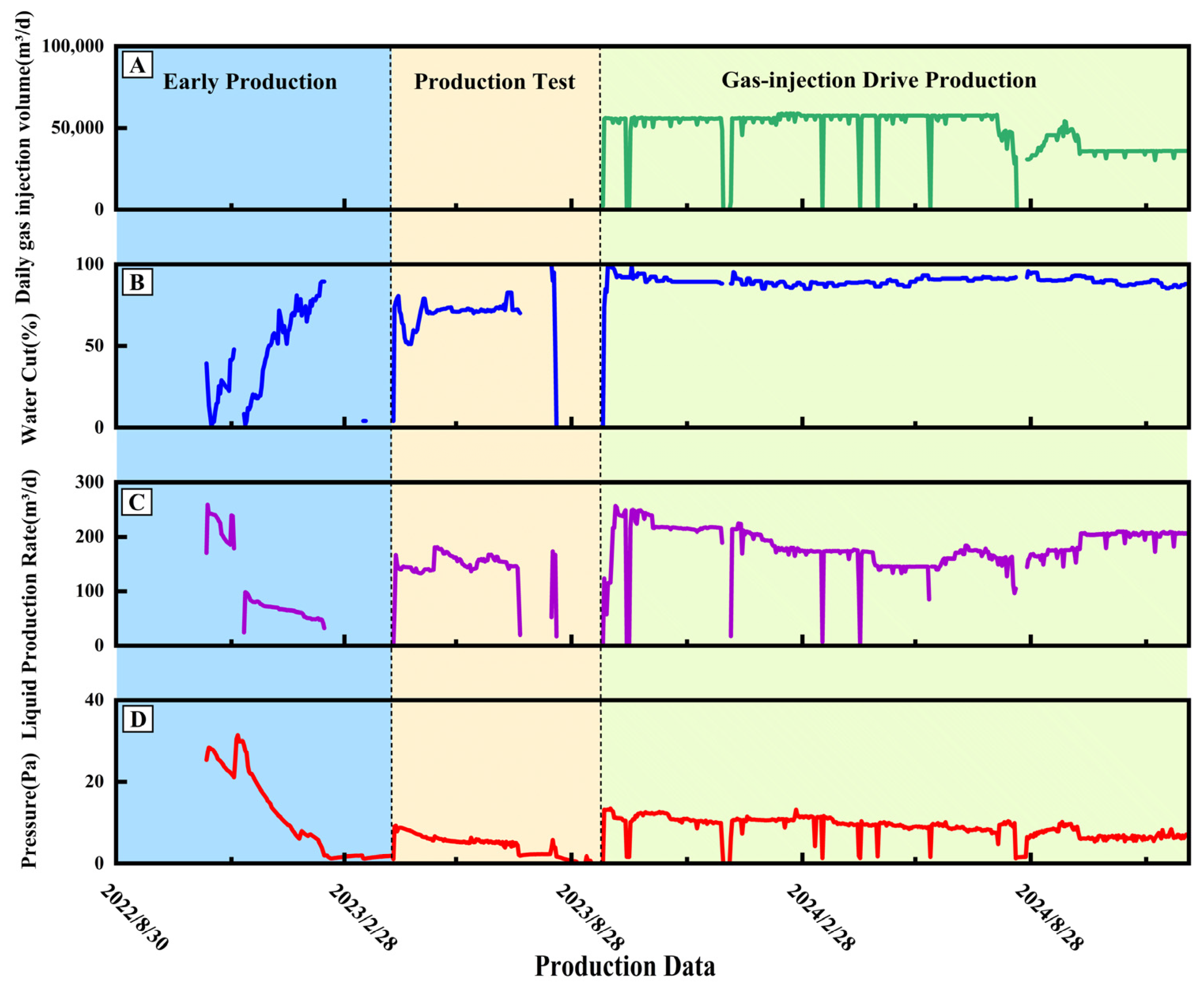
The Shunbei Oil and Gas Field is a typical ultra-deep marine carbonate reservoir system, structurally controlled by strike-slip fault networks and characterized by fault-controlled fractured–vuggy architectures. Hydrocarbon distribution exhibits a distinct spatial pattern “oil in the north and west, gas in the south and east”, reflecting significant reservoir-phase heterogeneity and the absence of a unified oil–water contact. Crude oil is predominantly medium to light in quality, and condensate-gas reservoirs locally occur. Under these unique geological and reservoir-engineering conditions, production operations in Shunbei are typified by initially high reservoir pressures, rapid pressure depletion, and substantial volumes of produced water (Figure 3). Furthermore, development practices such as water or gas injection, acidizing, and the use of drilling fluids are routine and often essential. These operational and geological complexities collectively pose considerable challenges to the accurate identification and screening of representative formation-water data.
The selection of formation-water samples was initially restricted to wells without any history of water injection. Wells displaying stable production, flowback volumes exceeding 200%, and water cuts greater than 50% were prioritized as primary sampling targets. After confirming the absence of potential external contamination sources, the wellhead separator was identified as the preferred sampling location, with single-well oil–water storage tanks near the wellhead serving as secondary options. These measures ensured that the collected samples represented authentic and uncontaminated formation water. In accordance with the geological characteristics of the Shunbei reservoirs, a screening workflow tailored to the Shunbei Oil and Gas Field was established as follows:
(1)
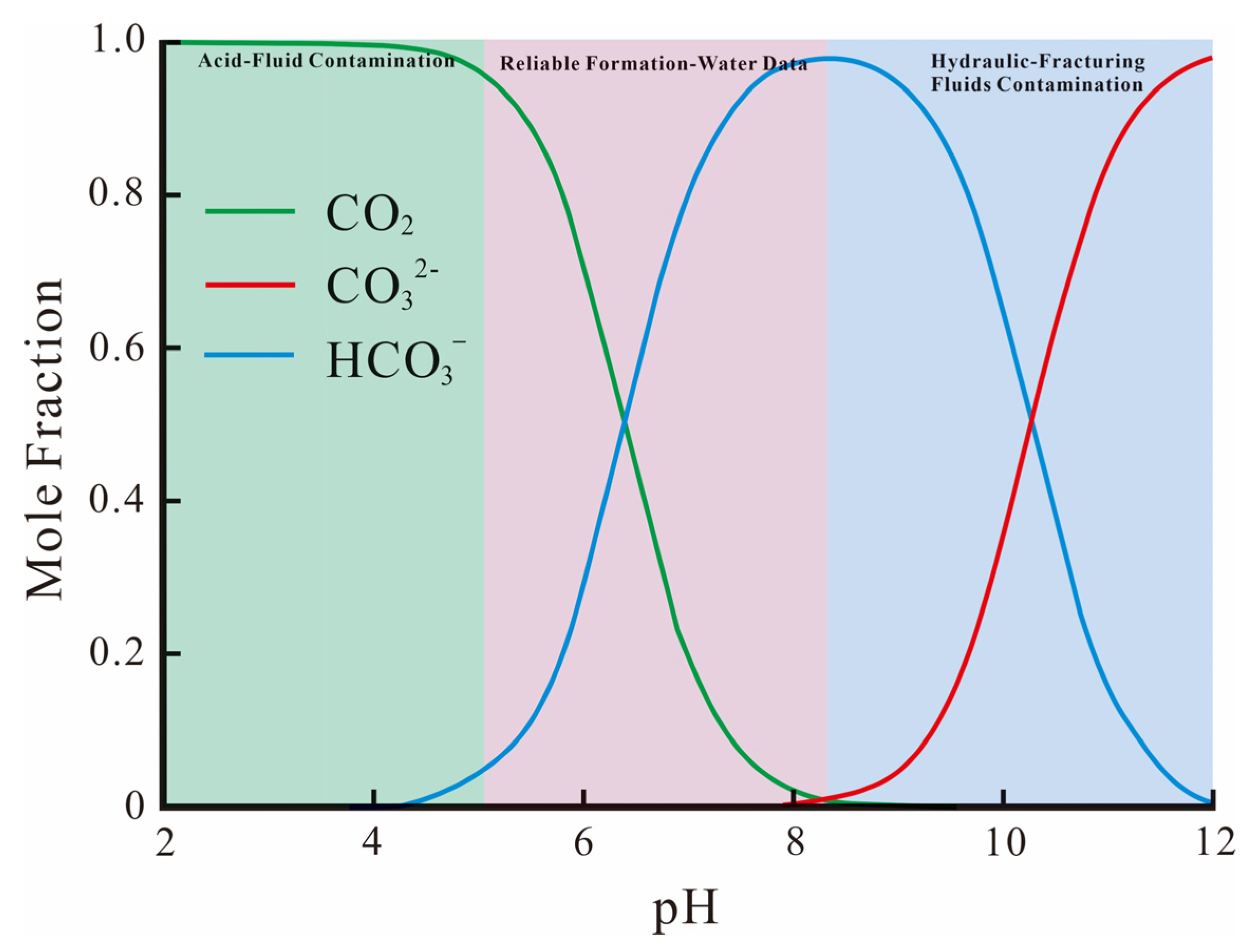
Elimination of acid-fluid contamination. Acid treatments produce used in reservoir stimulation (pH: 1–3). A pH threshold of 5 was adopted. Samples with pH > 5 were retained to avoid the influence of acidizing fluids introduced during reservoir stimulation.
(2)
Elimination of fracturing-fluid contamination. Given the typically alkaline nature of hydraulic-fracturing fluids, and considering both the pH-dependent behavior of carbonate species and the chemical composition of fracturing fluids used in Shunbei drilling operations, samples were retained only when CO32− was absent and pH < 8.3 (Figure 4). This criterion effectively removes samples affected by fracturing-fluid contamination.
(3)
Formation-water type classification. Following the classification scheme of Sulin (1956) [29], three water types are present in the study area: calcium chloride (CaCl2), sodium sulfate (Na2SO4), and sodium bicarbonate (NaHCO3). Consistency between water types, ionic-coefficient indicators, and the inferred degree of hydrodynamic closure was assessed. These criteria were integrated with regional geological context and the spatial distribution of total dissolved solids (TDS) to perform a comprehensive evaluation.
(4)
Screening of CaCl2-type waters. Samples were retained when the sodium chlorine coefficient (γNa+/γCl) < 0.9 and the desulfidation coefficient (γSO42−/γ(Cl + SO42−) × 100) < 3.
(5)
Screening of NaHCO3-type waters. Samples were retained when the sodium chlorine coefficient was <5 and the desulfidation coefficient was <40.
(6)
Screening of Na2SO4-type waters. Samples were evaluated based on (i) the presence of gypsum–salt formations in the corresponding stratigraphic interval (samples retained where such formations are developed), (ii) reservoir fluid phase (samples from condensate- or gas-dominated reservoirs were removed), and (iii) whether TDS values fall within the higher range characteristic of the study area.
(7)
Removal of extreme values. Following the integrated screening process, samples were retained only when the discrepancy between measured TDS and the summed ionic concentration was less than 10 g/L.

4. Results

4.1. Chemical Characteristics of Formation Water

4.1.1. General Hydrochemistry

The dataset used in this study consists of formation-water geochemical analyses from oil, gas, and water wells in the Shunbei Oilfield, complemented by a comprehensive compilation of Ordovician formation-water data from 229 wells across the Shunbei region and adjacent areas. Following a rigorous multi-step screening workflow, more than 280 samples were ultimately identified as reliable. Due to space constraints, Table 1 shows only a representative subset of the analyzed formation water samples.
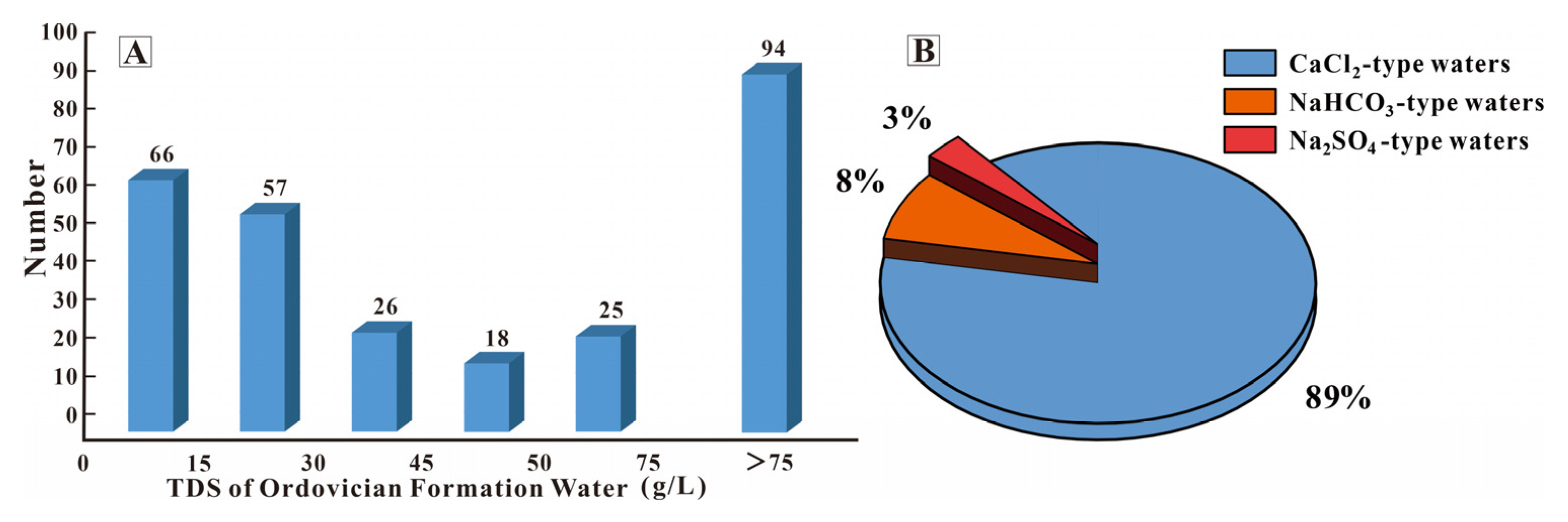
Formation waters from the Yijianfang and Yingshan formations of the Ordovician System exhibit pH values ranging from 5.4 to 8.0, with a mean of 6.98, median of 6.56, mode of 6.43, variance of 1.098, and standard deviation of 1.048. These statistical results indicate that Ordovician formation waters in the study area are generally weakly acidic. As illustrated in Figure 5 and following the classical hydrochemical classification of Sulin (1956) [29], calcium chloride (CaCl2) waters overwhelmingly dominate the dataset, accounting for 89% of all samples. The remaining formation-water samples primarily fall into the sodium bicarbonate (NaHCO3) and sodium sulfate (Na2SO4) types. Magnesium chloride (MgCl2)-type water was detected in only two wells in the central Tarim (Tazhong) region; however, these samples were excluded from further analysis as they were deemed unreliable.

4.1.2. Ionic Characteristics

The major ions in formation water include potassium (K+), sodium (Na+), calcium (Ca2+), magnesium (Mg2+), chloride (Cl), bicarbonate (HCO3), carbonate (CO32−), and sulfate (SO42−). Among cations, K+ and Na+ are dominant, whereas Cl accounts for more than 85% of total anions.
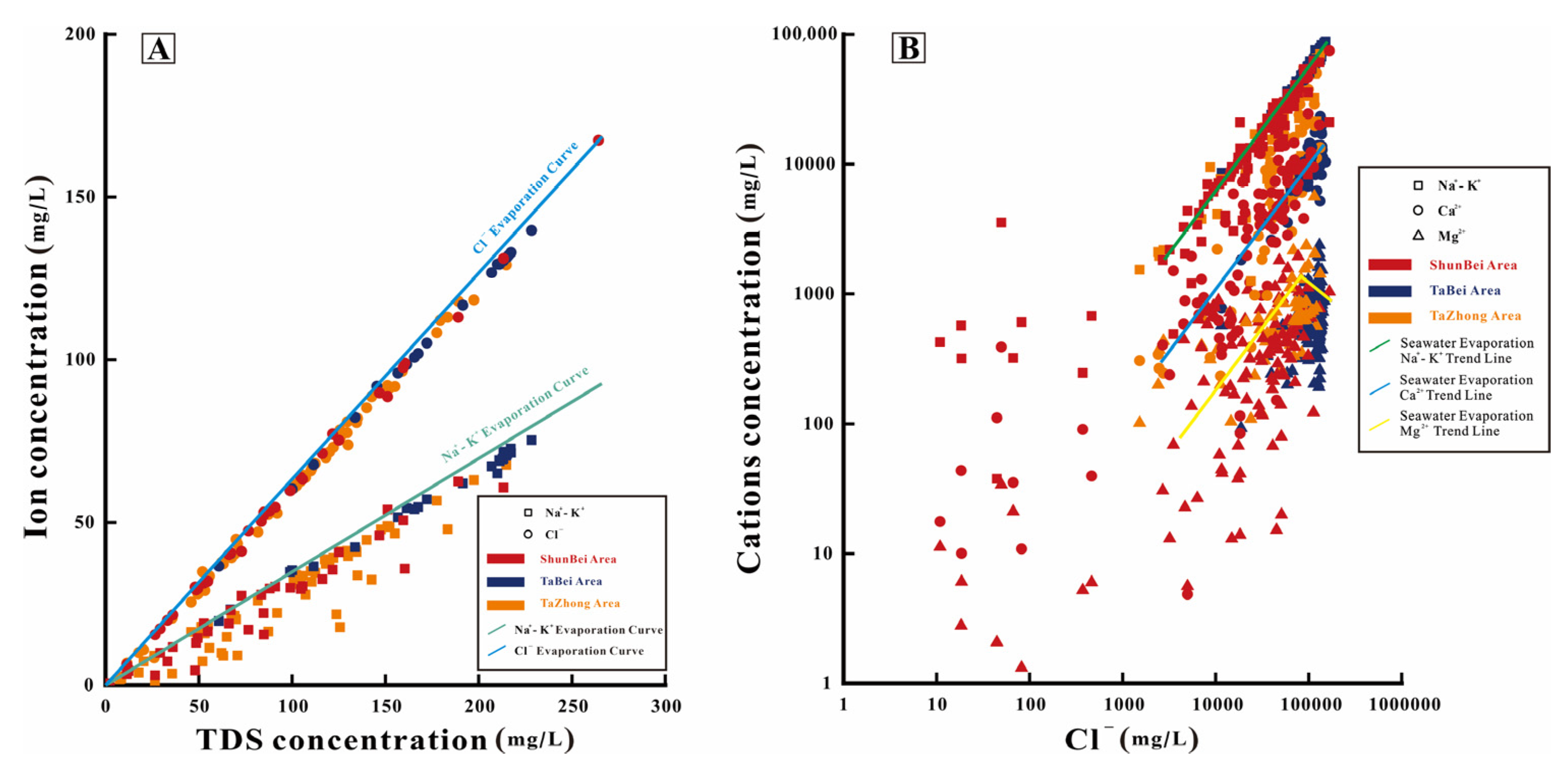
Ion-evaporation (ion-convergence) diagrams were used to plot ion concentrations against total dissolved solids (TDS). As illustrated in Figure 6A, Cl exhibits no systematic enrichment or depletion with increasing salinity. In contrast, Na+ and K+ show a consistent depletion trend relative to the theoretical seawater evaporation curve as salinity increases. To further analyze these trends, major cations (Na+ + K+, Ca2+, and Mg2+) are cross-plotted against Cl (Figure 6B). With increasing Cl concentrations, formation waters from both the Shunbei and Tazhong regions display pronounced depletion of Na+ and Mg2+, accompanied by relative enrichment of Ca2+. In contrast, the northern Tarim (Tabei) region shows limited Na+ + K+ variation, notable Mg2+ depletion, and consistent Ca2+ enrichment.

4.1.3. Planar Distribution of Salinity and Desulfurization Coefficient

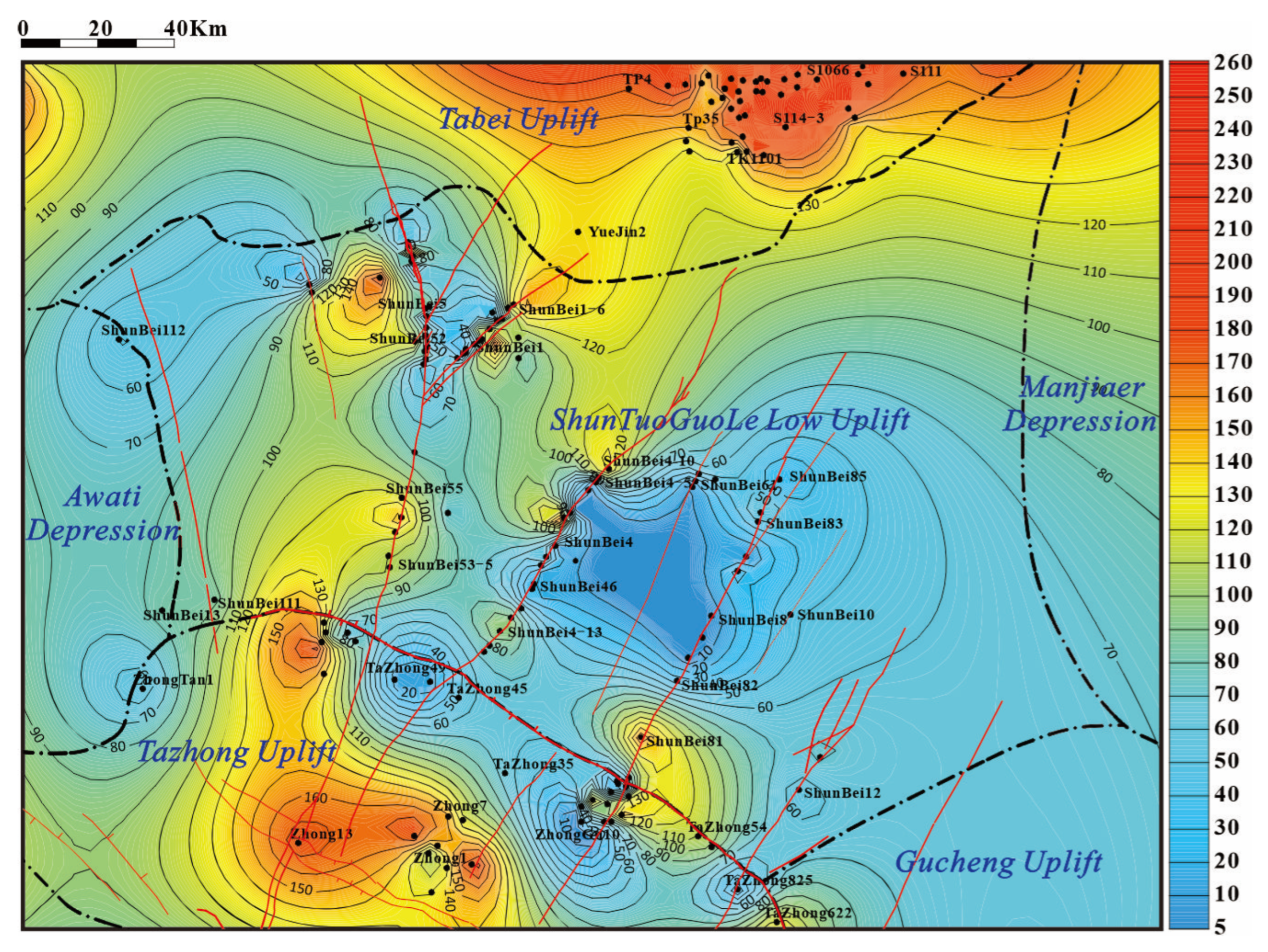
In the plan view, the salinity of Ordovician formation water across the Shunbei area and its surrounding regions ranges from 5 to 260 g/L (Figure 7). In the Tabei and Tazhong regions, salinity exhibits a relatively simple spatial pattern, characterized by progressive concentration from structural depressions toward structural highs, with values typically exceeding 120 g/L (Table 2).
In contrast, the Shunbei area displays a complex, fault-controlled salinity architecture. Formation-water salinity follows a first-order spatial trend of “low in the east–west depressions and high in the northern and southern structural uplifts.” Low-salinity zones (<30 g/L) primarily occur in three areas: (1) the Awati Depression to the west; (2) the region west of Well Shunbei-82 along the No. 8 Fault Zone; and (3) the segment between Wells Shunbei-46 and Shunbei-4-5 along the No. 4 Fault Zone to the east. Conversely, high-salinity zones are concentrated in the southern segments of the No. 5 (Well Shunbei-53-5), No. 4 (Well Shunbei-4-13H), and No. 8 (Well Shunbei-81) fault zones, as well as in the northern segments of the No. 1 (Well Shunbei-1-6) and No. 4 (Well Shunbei-4-10) fault zones. Within individual fault belts, systematic variations are observed: in the central segments of the No. 4 and No. 6 fault belts and the northern segment of the No. 8 Fault Zone, salinity increases outward from the fault core, whereas in the southern segments of the No. 4, No. 5, and No. 8 fault belts, salinity decreases away from the fault core.
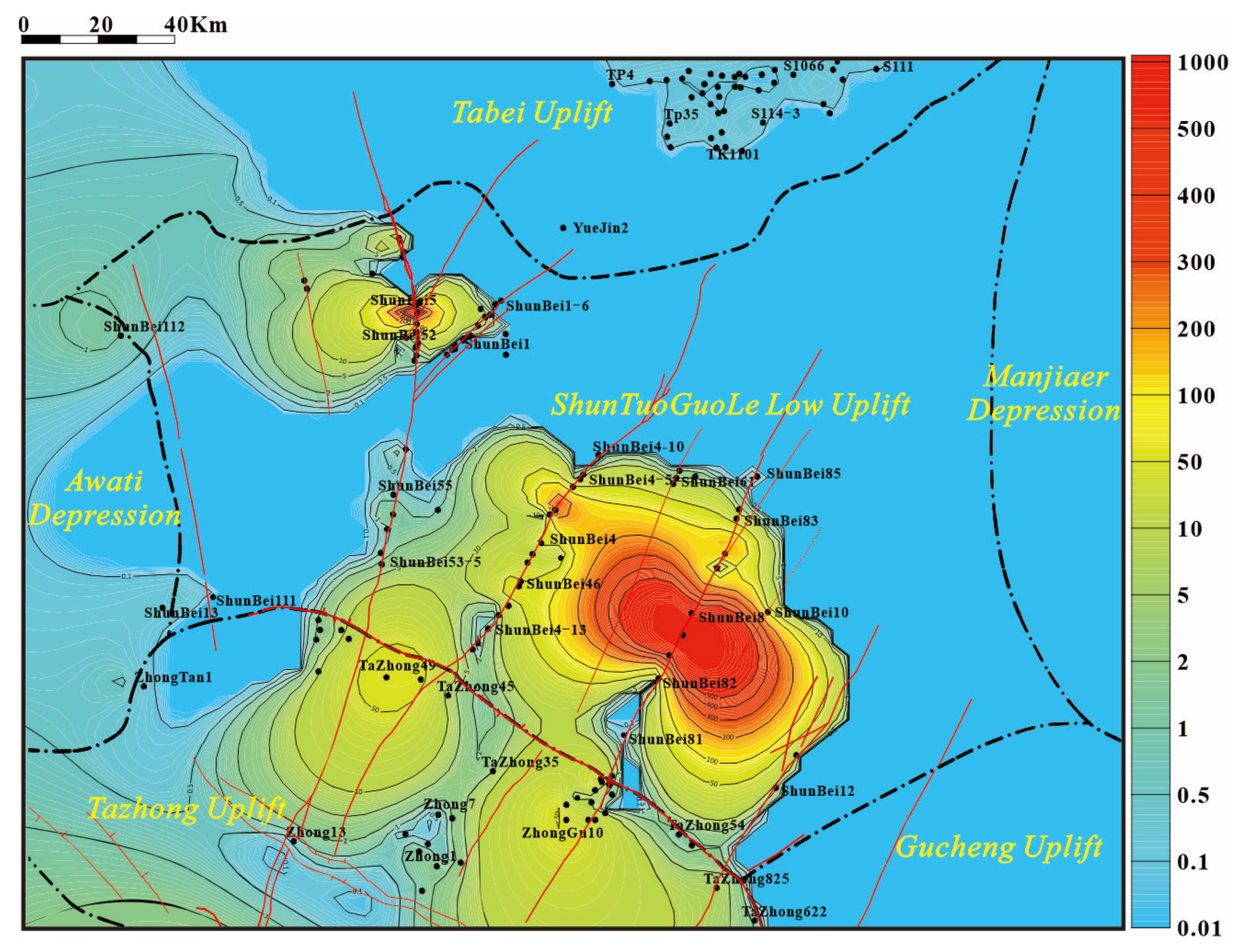
Regarding redox conditions, the plan-view distribution of desulfurization coefficients in the Shunbei area and adjacent regions (Figure 8) reveals that values are consistently high and tend to increase outward from the fault cores toward the surrounding wall rocks.

4.2. Source and Evolution of the Ordovician Formation Water

4.2.1. Rare Earth Elements (REEs)

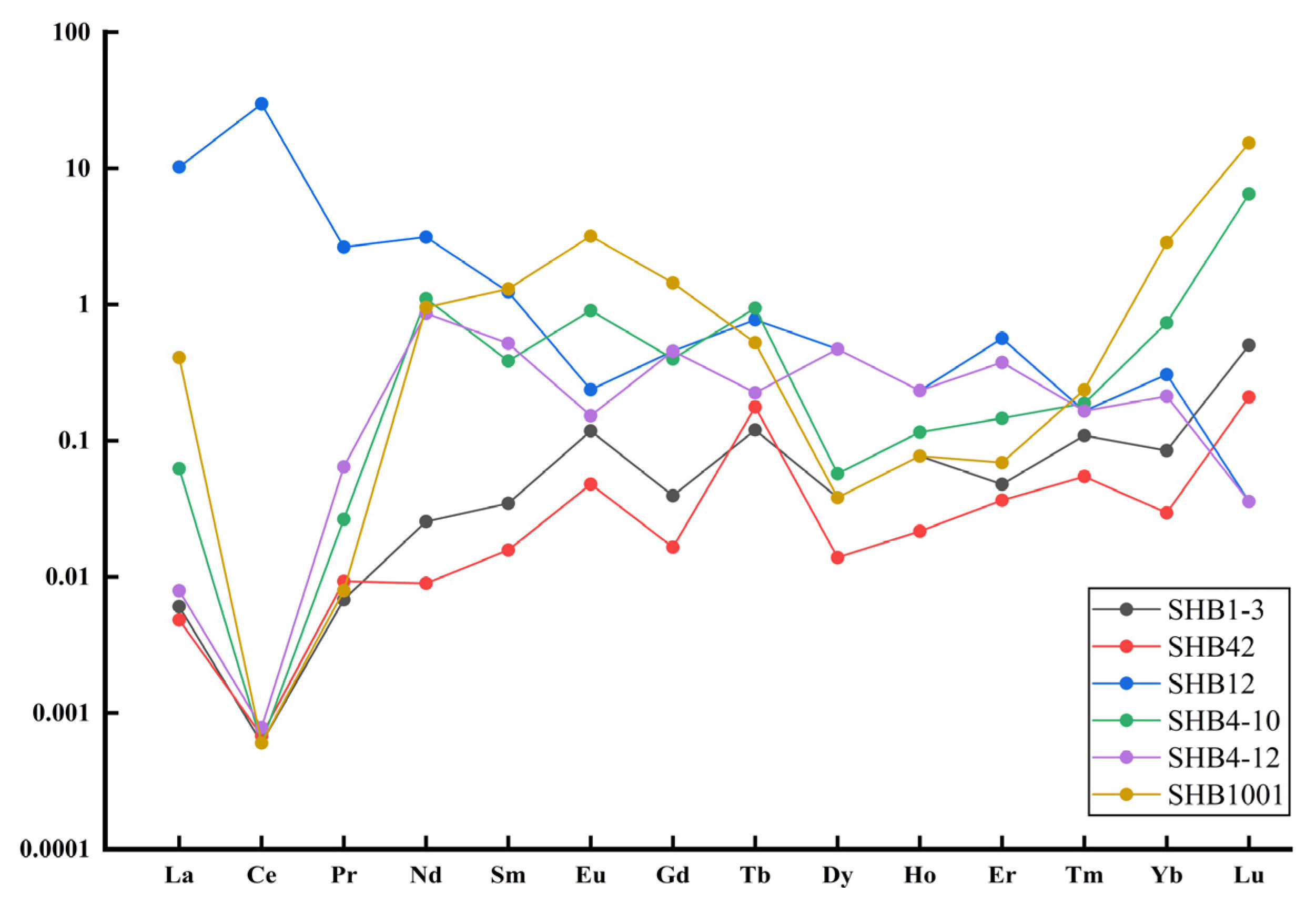
Inductively coupled plasma mass spectrometry (ICP-MS) provided concentrations for 41 trace elements. Rare earth elements (REEs) were normalized to Post-Archean Australian Shale (PAAS). The Ordovician formation waters in Shunbei are generally enriched in heavy REEs (HREEs) and exhibit a well-defined negative cerium (Ce) anomaly accompanied by a weak positive europium (Eu) anomaly (Figure 9). One sample (Well SHB12) displays an REE pattern markedly different from all other samples in the dataset.

4.2.2. Stable Isotopes

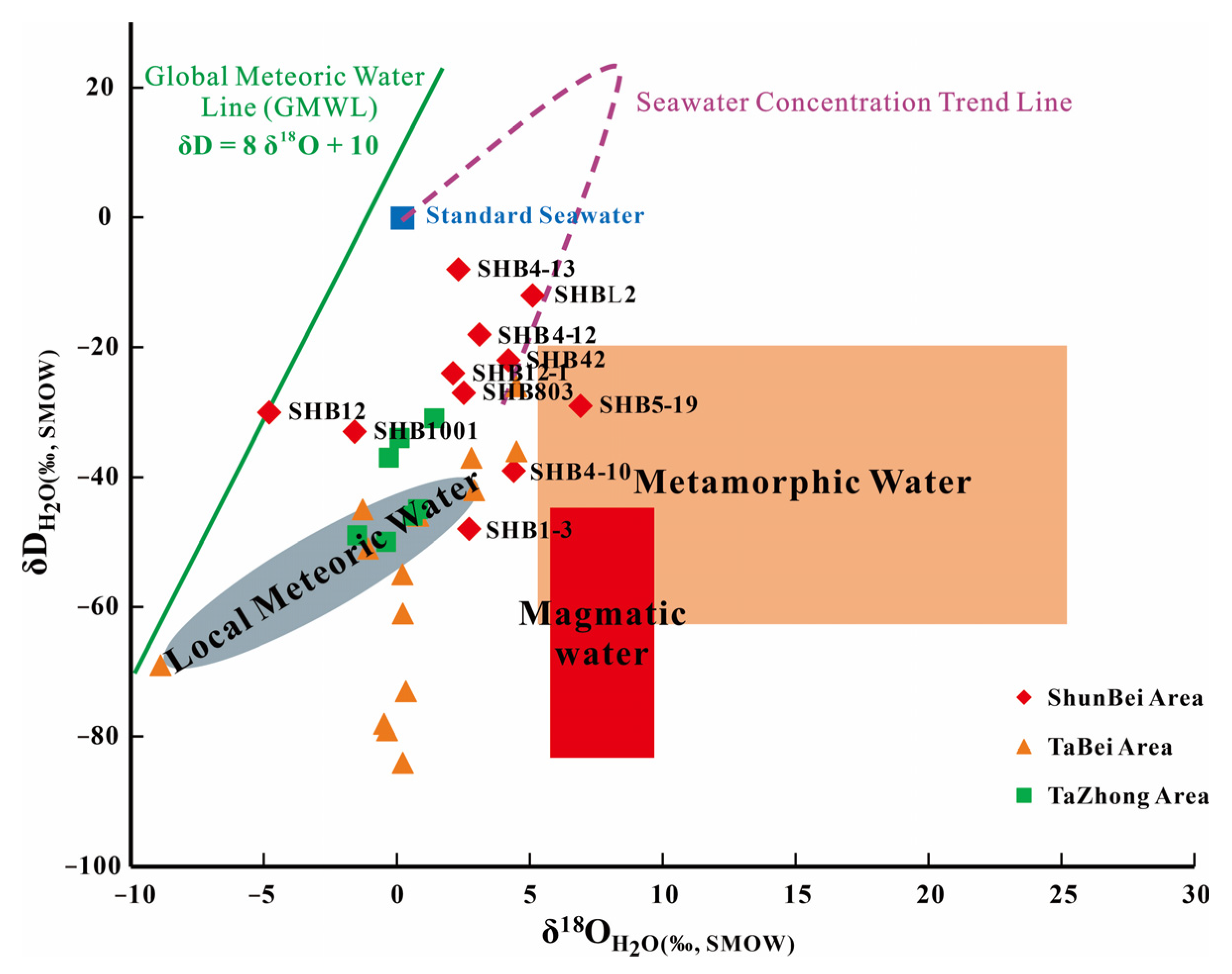
In the Shunbei area, δD values of Ordovician formation waters range from −32‰ to −10‰, and δ18O values range from +3‰ to +6‰, with respective averages of −21.7‰ and +5.1‰. All Shunbei data plot to the right of the Global Meteoric Water Line (GMWL) [30,31] (Figure 10). Compared with the Tabei and Tazhong regions, the Shunbei samples show a substantially tighter clustering and relatively heavier isotopic signatures. Two samples (SHB4-13 and SHBL2) exhibit anomalously enriched δD values, while the Well SHB12 sample plots directly on the meteoric water line.
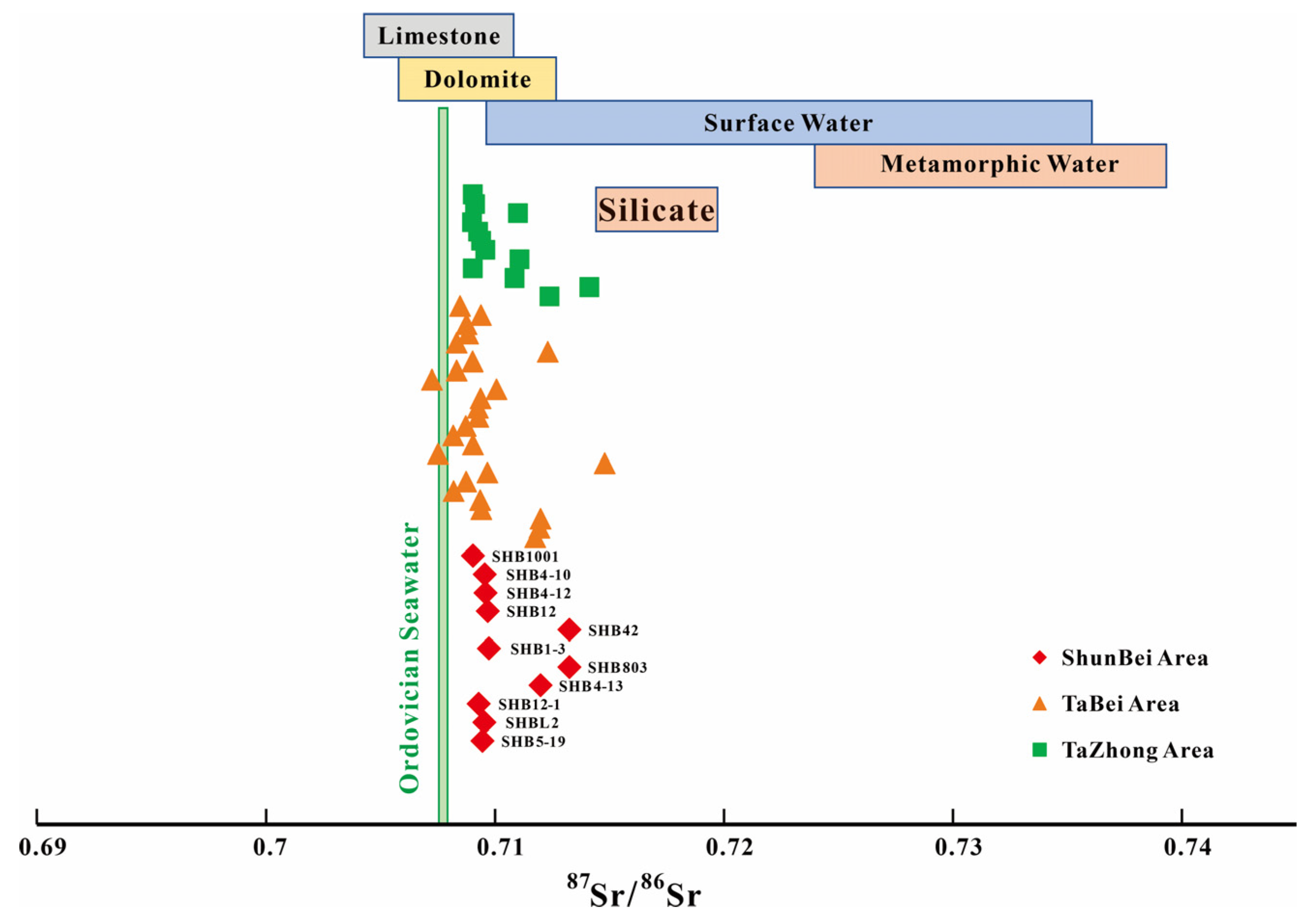
Strontium isotope analyses reveal 87Sr/86Sr ratios ranging from 0.709417 to 0.716454 (Figure 11). These values fall within the compositional range characteristic of marine carbonate systems but are consistently higher than the estimated Sr isotopic composition of global Ordovician seawater (approximately 0.7080–0.7090).

4.3. Formation Pressure Characteristics

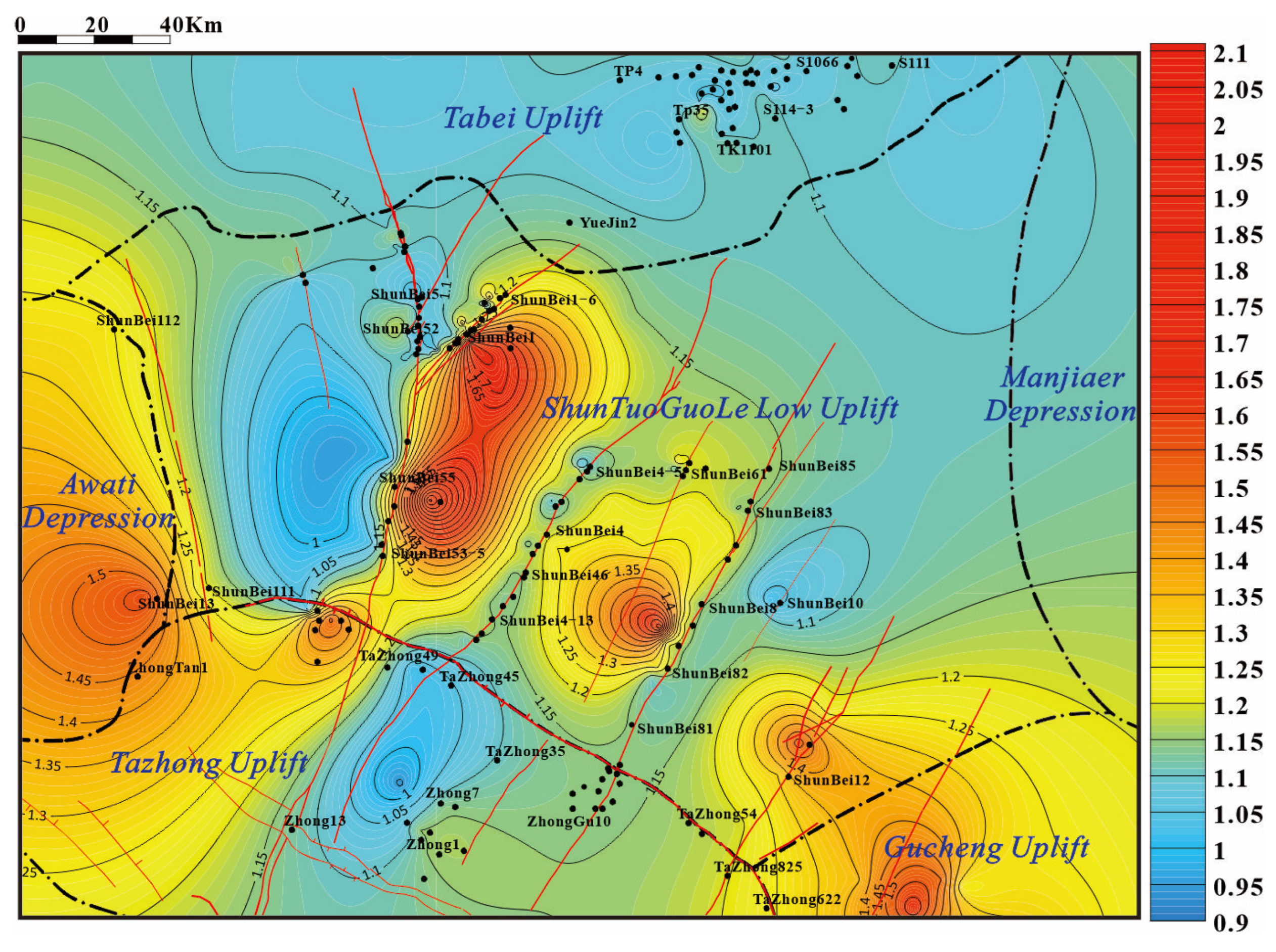
Formation-pressure coefficients in the Shunbei region and adjacent areas are generally high (Figure 12). The Tabei area falls within the normal-pressure range (0.9–1.1). Most of the Tazhong area shows abnormally high pressure (1.1–1.4), with the northwestern part characterized by ultra-high pressure (>1.4). The Shunbei area is dominated by ultra-high-pressure systems (0.9–2.1). Specifically, pressure coefficients in compartments between major fault belts are consistently higher than those measured within the fault cores. The inter-fault regions between Faults No. 5 and No. 4 and between Faults No. 6 and No. 8 constitute the highest-pressure domains, with coefficients commonly exceeding 1.6 [32,33,34].

5. Discussion

5.1. Water–Rock Interactions and Fluid Evolution

5.1.1. Significance of Major Ion Patterns

The dominance of CaCl2-type waters (89%) in the Shunbei area reflects a relatively closed hydrodynamic and hydrogeological system, which is generally favorable for hydrocarbon preservation. While NaHCO3-type waters are typically associated with shallow intervals in conventional systems, their presence in the Shunbei region likely indicates that large strike-slip fault systems allow fluids to retain signatures of deeply buried Ordovician connate water [35,36,37].
The conservativeness of Cl (Figure 6A) confirms its stability during subsurface fluid evolution. However, the observed depletion of Na+ and K+ with increasing salinity suggests progressive consumption during water–rock reactions. Specifically, in the Shunbei and Tazhong areas, deep strike-slip faults likely enhance vertical fluid communication between Ordovician carbonates and overlying clastic reservoirs, promoting Na+ consumption through feldspar alteration (plagioclase/K-feldspar to albite transformation). In contrast, areas with weaker fault development exhibit limited cation variation.
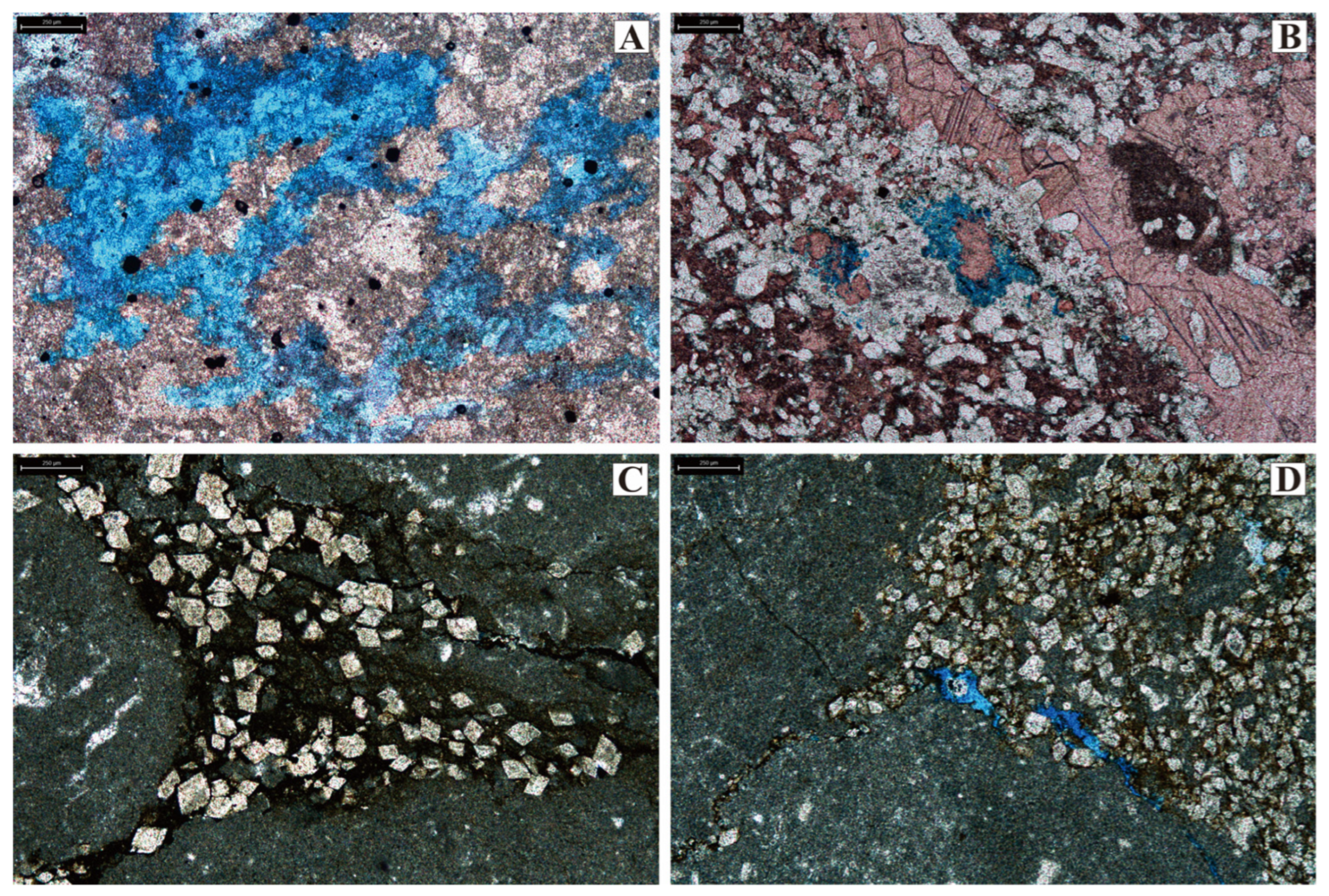
The widespread Ca2+ enrichment and Mg2+ depletion (Figure 6B) indicate extensive calcite dissolution and dolomitization during burial diagenesis trace-element [36]. The precipitation of Ca-bearing minerals or dolomitization typically removes Ca2+, whereas dissolution releases it. The behavior of Mg2+ implies varying degrees of dolomitization within the Ordovician succession, which not only modifies hydrochemistry but contributes to the development of favorable dolomite reservoirs (Figure 13).

5.1.2. Interpretation of Isotopic and Trace Element Signatures

The REE signatures (negative Ce, positive Eu) collectively indicate that the Ordovician formation waters were derived primarily from paleo-seawater trapped during early burial [38], subsequently modified by varying degrees of high-temperature hydrothermal input. The anomaly in Well SHB-12 is attributed to drilling-fluid contamination, a conclusion supported by its position on the meteoric water line in the H-O isotope plot (Figure 10).
The muted δ18O variability and distinct rightward shift from the GMWL reflect extensive late-stage water–rock interactions (temperature-driven 18O enrichment) and potential hydrocarbon expulsion effects. The systematic enrichment in radiogenic 87Sr (Figure 11) further indicates that, after initial deposition, the formation water experienced lateral migration and evaporative concentration, enhancing the contribution of crustal-derived 87Sr. Taken together, the geochemical (CaCl2 type, REE patterns) and petrophysical constraints (tight limestone host rock) demonstrate that the Ordovician formation water has remained in a deeply buried, hydrologically closed system since deposition, with no substantial influence from post-depositional meteoric recharge.

5.2. Implications for Hydrocarbon Accumulation

5.2.1. Re-Evaluating the Desulfurization Coefficient

Under a traditional reservoir paradigm, high desulfurization coefficients (Figure 8) indicate an open system and poor preservation. However, this interpretation is not applicable to the Shunbei fault-controlled fractured–vuggy system. Here, hydrocarbon charge occurs via long-distance migration along deep strike-slip faults [39]. During this process, formation water co-migrates with externally sourced fluids, undergoing extensive hydrochemical overprinting (sulfate enrichment). Paradoxically, in this context, elevated desulfurization coefficients serve as geochemical signatures of active fluid communication and long-distance migration, corresponding to favorable domains for hydrocarbon accumulation.

5.2.2. Pressure Seals and Fault-Controlled Accumulation

The anomalous ultra-overpressure observed in inter-fault compartments (Figure 12) is interpreted as the combined effect of lithofacies-controlled karst reservoirs encased in extremely low-permeability host rocks [40,41]. This demonstrates that formation water becomes effectively sealed within these systems under high-burial conditions. The high-yield breakthrough in Well SHBL2 confirms that these ultra-overpressured zones represent prime targets for hydrocarbon enrichment.

5.2.3. Genetic Models of Dolomitization and Reservoir Quality

The relative enrichment of Ca2+ and depletion of Mg2+ in Shunbei formation waters supports the occurrence of euhedral dolomitization in a closed system (isochemical replacement: 2CaCO3 + Mg2+ + CO32− → CaMg(CO3)2 + Ca2+). Unlike open-system dolomitization, this process releases Ca2+ and is considered constructive for reservoir development, potentially increasing porosity by up to 13% [42,43].

5.3. Regional Migration and Accumulation Model

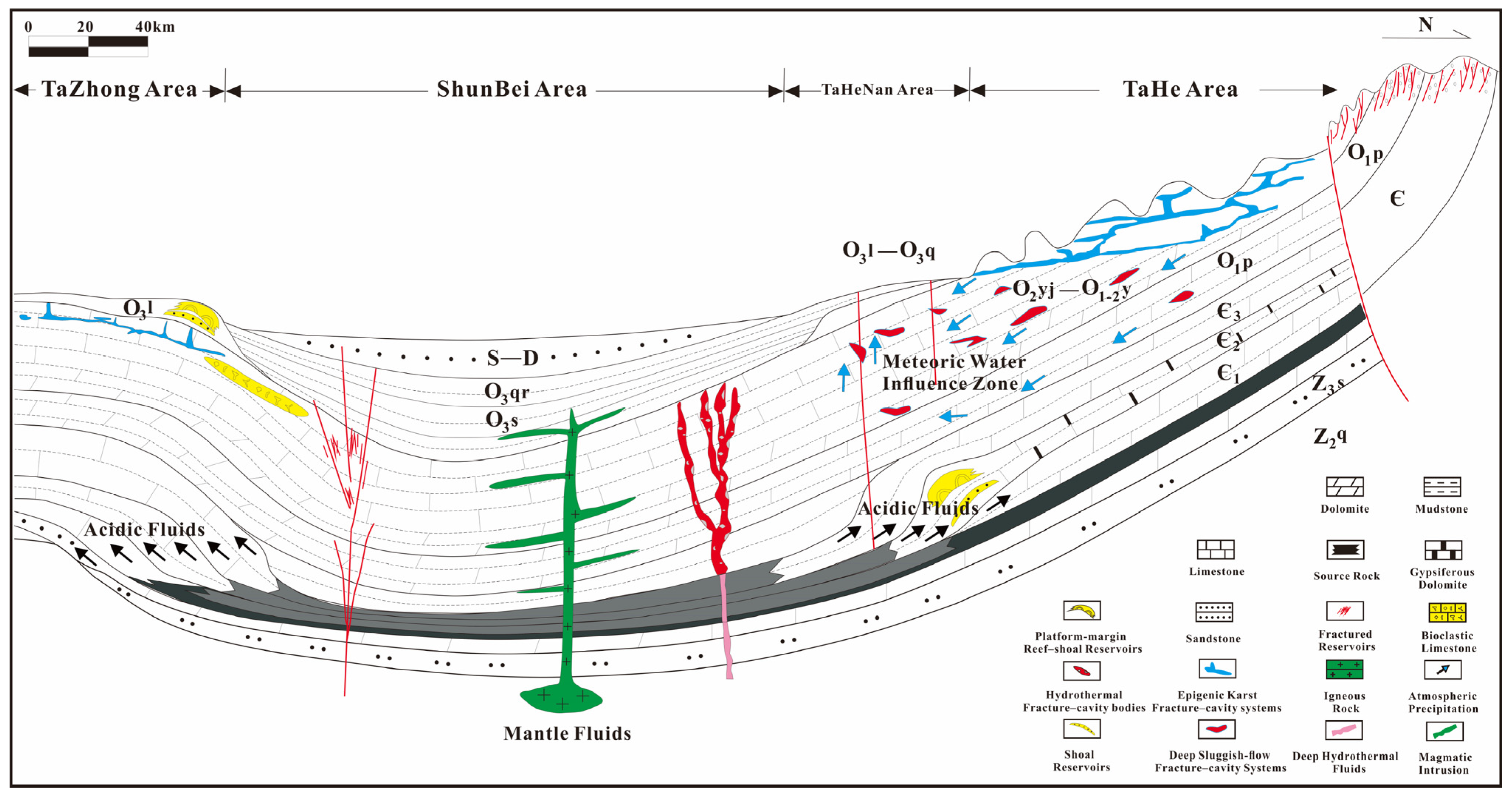
The integrated framework (Figure 14) illustrates a distinct contrast between the Tabei/Tazhong uplifts and the Shunbei depression. Tabei and Tazhong are characterized by meteoric-modified NaHCO3/Na2SO4 waters and low desulfurization coefficients. The transitional Tahenan zone represents a mixing interface.
In sharp contrast, the Shunbei area is governed by a fault-controlled circulation model. Formation water migrates toward the central Shunbei area from both the Awati (west) and Manjiaer (east) depressions in an irregular annular pattern. The No. 5 fault belt acts as a first-order hydrochemical boundary. In the eastern sector, fluids migrate predominantly north-to-south along fault conduits. The consistency among chemical characteristics, REE signatures, and isotopic compositions between the central segments of the No. 4 and No. 8 fault belts demonstrates that these fluids are connate sedimentary waters that have undergone cross-formational concentration. This corridor retains excellent preservation conditions and constitutes one of the most favorable targets for hydrocarbon enrichment in the Shunbei fault-controlled system.

6. Conclusions

(1) The Ordovician formation waters in the Shunbei region and adjacent areas are dominated by CaCl2-type waters, with subordinate NaHCO3-type and Na2SO4-type signatures. In Shunbei, Ca2+ is consistently enriched whereas Na+, K+, and Mg2+ are depleted—patterns likely related to euhedral dolomitization and fluid invasion associated with strike-slip faulting, which disrupts stratigraphic continuity and facilitates mixing with non-connate fluids. Compared with neighboring areas such as Tahe and Tazhong, Shunbei exhibits a distinct fault-controlled salinity architecture. Importantly, unlike in conventional hydrocarbon reservoirs—where low desulfurization coefficients typically indicate favorable preservation—Shunbei’s fault-controlled fracture–vuggy systems display the opposite trend. Here, high desulfurization coefficients delineate zones of enhanced hydrocarbon enrichment, reflecting the fundamentally different fluid-flow and preservation mechanisms operating within these deep, fault-governed carbonate reservoirs.
(2) Rare earth element (REE) geochemistry demonstrates that the Ordovician formation waters in Shunbei originated from paleo-seawater trapped during early burial, with localized modification by high-temperature hydrothermal fluids. Integration of hydrogen–oxygen and strontium isotope compositions confirms that these waters have undergone cross-formational concentration with minimal meteoric-water recharge. The persistence of connate-water signatures across multiple geochemical proxies indicates that the reservoirs maintain excellent sealing capacity and have remained hydrologically closed throughout their burial history—conditions highly conducive to hydrocarbon preservation.
(3) Formation-water geochemical characteristics define two distinct hydrochemical systems within the Shunbei region, separated by the No. 5 fault belt. At the regional scale, Ordovician formation water migrates from the Awati and Manjiaer depressions toward central Shunbei in an irregular annular flow pattern. Hydrocarbon accumulation is further governed by the spatial distribution and maturity of source rocks, with hydrocarbons migrating together with formation water along major strike-slip faults in a northwest–southeast direction. Notably, the corridor between the central segments of the No. 4 and No. 8 fault belts—defined by CaCl2-type formation waters and REE–isotope signatures reflecting progressive seawater concentration—stands out as one of the most favorable zones for hydrocarbon accumulation.

Author Contributions

Methodology, Y.X.; Validation, A.J.; Formal analysis, Y.X., A.J. and R.Z.; Investigation, Y.X.; Resources, J.H. and C.H.; Data curation, Y.L., L.Z. and R.Z.; Writing—original draft, Y.X.; Writing—review & editing, Y.X.; Supervision, J.H., C.H., L.Z. and Z.L. All authors have read and agreed to the published version of the manuscript.

Funding

This research received no external funding.

Data Availability Statement

The data presented in this study are available on request from the corresponding author due to this research being conducted in collaboration with an industrial partner (the Oilfield Company) and being bound by a strict Data Confidentiality Agreement.

Conflicts of Interest

Authors Jun Han, Cheng Huang and Lianhua Zhu were employed by the company Northwest Oilfield Branch Company. The remaining authors declare that the research was conducted in the absence of any commercial or financial relationships that could be construed as a potential conflict of interest.

References

  1. Land, L.S. Na-Ca-Cl saline formation waters, Frio Formation (Oligocene), South Texas, USA: Products of diagenesis. Geochim. Cosmochim. Acta 1995, 59, 2163–2174. [Google Scholar] [CrossRef]
  2. Li, Z. Research frontiers of deep basin fluid-rock interaction and hydrocarbon generation. Bull. Mineral. Petrol. Geochem. 2016, 35, 805, 807–816. [Google Scholar] [CrossRef]
  3. Lou, Z.H.; Li, M.; Jin, A.M.; Zhu, R. Hydrogeological and geochemical characteristics of marine strata and hydrocarbon preservation conditions in China. Acta Geol. Sin. 2008, 3, 387–396. [Google Scholar]
  4. Chen, Z.H.; Wang, S.N.; Wang, L.; Zha, M. Hydrochemical field characteristics and hydrocarbon significance of Neogene formation water in Dongying Sag, Shandong Province. J. Palaeogeogr. 2012, 14, 685–693. [Google Scholar]
  5. Jia, L.; Cai, C.; Li, K.; Liu, L.; Chen, Z.; Tan, X. Impact of fluorine-bearing hydrothermal fluid on deep burial carbonate reservoirs: A case study from the Tazhong Area of Tarim Basin, Northwest China. Mar. Pet. Geol. 2022, 139, 105579. [Google Scholar] [CrossRef]
  6. Bahnan, A.E.; Pironon, J.; Carpentier, C.; Barré, G.; Gaucher, E.C. The diagenetic history of the giant Lacq Gas Field, witness to the Apto-Albian rifting and the Pyrenean orogeny, revealed by fluid and basin modeling. Mar. Pet. Geol. 2021, 133, 105250. [Google Scholar] [CrossRef]
  7. Zhou, X.X.; Lou, Z.H.; Zhu, R.; Zhu, H.Q.; Li, H.J.; Li, F. Hydrogeological and geochemical characteristics and natural gas migration and accumulation in Xinchang Gas Field, Western Sichuan Depression. Chin. J. Geol. 2015, 50, 330–339. [Google Scholar]
  8. Shan, J.J.; Bi, Y.Y.; Deng, M.Z.; Yan, H.R.; Zhou, X.R.; Zheng, Y. Genetic study of formation water in the second member of Xujiahe Formation gas reservoir, Xinchang Gas Field, Western Sichuan Depression: Evidence from hydrochemistry and strontium isotopes. Acta Petrol. Mineral. 2023, 42, 735–744. [Google Scholar] [CrossRef]
  9. Guo, T.L.; Xiong, L.; Ye, S.J.; Dong, X.X.; Wei, L.M.; Yang, Y.T. Unconventional natural gas exploration theory and practice of carrier beds (bodies): Enlightenment from breakthroughs in new types of shale gas and tight sandstone gas in Sichuan Basin. Pet. Explor. Dev. 2023, 50, 24–37. [Google Scholar] [CrossRef]
  10. Blaise, T.; Tarantola, A.; Cathelineau, M.; Boulvais, P.; Techer, I.; Rigaudier, T.; Boiron, M.-C.; Pierron, O.; Landrein, P. Evolution of porewater composition through time in limestone aquifers: Salinity and D/H of fluid inclusion water in authigenic minerals (Jurassic of the Eastern Paris Basin, France). Chem. Geol. 2015, 417, 210–227. [Google Scholar] [CrossRef]
  11. Zhao, W.Z.; Wang, Z.C.; Huang, F.X.; Zhao, Z.Y.; Jiang, H.; Xu, Y. Hydrocarbon accumulation conditions and exploration status of ultra-deep formations in onshore superimposed basins of China. Acta Pet. Sin. 2023, 44, 2020–2032. [Google Scholar] [CrossRef]
  12. Ma, Y.S.; Cai, X.Y.; Li, M.W.; Li, H.L.; Zhu, D.Y.; Qiu, N.S.; Pang, X.Q.; Zeng, D.Q.; Kang, Z.J.; Ma, A.L.; et al. Research progress on reservoir-forming mechanisms and development methods of deep-ultra-deep marine carbonate hydrocarbon reservoirs. Pet. Explor. Dev. 2024, 51, 692–707. [Google Scholar] [CrossRef]
  13. Zhu, R.K.; Sun, L.D.; Zhang, T.S.; Zhang, Z.J.; Shen, A.J.; Mao, Z.G.; Wang, Z.M.; Ren, Y.L.; Jiang, H.; Zhang, S.R.; et al. New progress and development directions of sedimentological research in oil and gas exploration and development in China. Acta Sedimentol. Sin. 2024, 43, 1–25. [Google Scholar] [CrossRef]
  14. Wang, J.; Wang, H.; Zhang, R.; Dong, L.; Wang, K.; Zhang, Z. Improvement of reservoir quality of ultra-deep tight sandstones by tectonism and fluid: A case study of Keshen Gas Field in Tarim Basin, Western China. Petroleum 2023, 9, 124–134. [Google Scholar] [CrossRef]
  15. Yun, L.; Zhu, X.X. A new type of trap: Fault-controlled fracture-cavity trap. Oil Gas Geol. 2022, 43, 34–42. [Google Scholar] [CrossRef]
  16. Salomon, E.; Rotevatn, A.; Kristensen, T.B.; Grundvåg, S.-A.; Henstra, G.A. Microstructure and fluid flow in the vicinity of basin bounding faults in rifts—The Dombjerg Fault, NE Greenland Rift System. J. Struct. Geol. 2021, 153, 104463. [Google Scholar] [CrossRef]
  17. Liseroudi, M.H.; Ardakani, O.H.; Pedersen, P.K.; Sanei, H. Fluid flow and water/rock interaction during the Early Triassic evolution of the Western Canada Sedimentary Basin as revealed by carbonate diagenesis. Mar. Pet. Geol. 2022, 142, 105765. [Google Scholar] [CrossRef]
  18. Qi, L.X.; Yun, L.; Cao, Z.C.; Li, H.Y.; Huang, C. Geological reserve evaluation and oil and gas exploration directions of Shunbei Oil and Gas Field. Xinjiang Pet. Geol. 2021, 42, 127–135. [Google Scholar]
  19. Ma, Y.S.; Cai, X.Y.; Yun, L.; Li, Z.J.; Li, H.L.; Deng, S.; Zhao, P.R. Practice and theoretical and technical progress in exploration and development of Shunbei ultra-deep carbonate oil and gas field, Tarim Basin, NW China. Pet. Explor. Dev. 2022, 49, 1–17. [Google Scholar] [CrossRef]
  20. Yun, L. Reservoir-controlling and pool-controlling effects and breakthrough significance of NE-trending strike-slip fault system in Eastern Shunbei Area. China Pet. Explor. 2021, 26, 41–52. [Google Scholar] [CrossRef]
  21. He, D.F.; Jia, C.Z.; De, S.; Zhang, C.J.; Meng, Q.R.; Shi, X. Formation and evolution of the multicyclic superimposed Tarim Basin. Oil Gas Geol. 2005, 26, 64–77. [Google Scholar] [CrossRef]
  22. He, D.F.; Zhou, X.Y.; Yang, H.J.; Guan, S.W.; Zhang, C.J. Genetic mechanisms and tectonic types of intra-cratonic paleo-uplifts in Tarim Basin. Earth Sci. Front. 2008, 2, 207–221. [Google Scholar]
  23. Li, M.; Tang, L.J.; Qi, L.X.; Huang, T.Z.; Zhen, S.J.; Tian, Y.J. Differential tectonic evolution of the southern slope of Tabei Uplift and its control on hydrocarbon accumulation. Nat. Gas Geosci. 2015, 26, 218–228. [Google Scholar]
  24. Deng, S.; Li, H.L.; Zhang, Z.P.; Wu, X.; Zhang, J.B. Differential activity characteristics of major strike-slip fault zones and their relationship with hydrocarbon enrichment in Shunbei and adjacent areas, Tarim Basin. Oil Gas Geol. 2018, 39, 878–888. [Google Scholar] [CrossRef]
  25. Deng, S.; Qiu, H.B.; Liu, D.W.; Han, J.; Ru, Z.X.; Peng, W.L.; Bian, Q.; Huang, C. Research progress on genesis and reservoir-controlling mechanisms of intra-cratonic strike-slip faults: A case study of Northern Tarim Basin. Oil Gas Geol. 2024, 45, 1211–1225. [Google Scholar] [CrossRef]
  26. Feng, J.W.; Guo, H.H.; Wang, R.J.; Chang, L.J.; Wang, C.; Gao, X. Genetic mechanisms of segmentation of deep strike-slip faults in Tabei Area, Tarim Basin. Earth Sci. 2023, 48, 2506–2519. [Google Scholar] [CrossRef]
  27. Jiao, F.Z. Discovery significance and prospects of ultra-deep carbonate fault-karst reservoirs in Shunbei Area, Tarim Basin. Oil Gas Geol. 2018, 39, 207–216. [Google Scholar] [CrossRef]
  28. Han, J.; Kuang, A.P.; Neng, Y.; Huang, C.; Li, Q.Q.; Chen, P.; Shen, Z.Y. Vertical stratified structure of Shunbei No.5 strike-slip fault zone and its petroleum geological significance. Xinjiang Pet. Geol. 2021, 42, 152–160. [Google Scholar]
  29. Shchulin, B.A. Oilfield Waters in Natural Water Systems; Wang, C.Y., Translator; Petroleum Industry Press: Beijing, China, 1956. [Google Scholar]
  30. Craig, H. Isotopic variations in meteoric waters. Science 1961, 133, 1702–1703. [Google Scholar] [CrossRef]
  31. Zhou, X.; Li, C.J. Seawater evaporation trajectory and its application. Earth Sci. 1995, 4, 410–414. [Google Scholar]
  32. Qi, L.X. Ultra-deep hydrocarbon breakthrough of Ordovician carbonate rocks in Shuntuoguole Uplift, Tarim Basin and its significance. China Pet. Explor. 2016, 21, 38–51. [Google Scholar] [CrossRef]
  33. Qu, H.; Yang, B.; Gao, S.; Zhao, J.; Han, X.; Chen, S.; Hayat, K. Controls on hydrocarbon accumulation by facies and fluid potential in large-scale lacustrine petroliferous basins in compressional settings: A case study of the Mesozoic Ordos Basin, China. Mar. Pet. Geol. 2020, 122, 104668. [Google Scholar] [CrossRef]
  34. Jin, B.; Liu, Z.; Zhang, R.X.; Guo, F. Abnormal low pressure (negative pressure) and hydrocarbon distribution in sedimentary basins. Acta Geosci. Sin. 2004, 3, 351–356. [Google Scholar]
  35. Zhang, Y.H.; Zhu, R.; Lou, Z.H.; Chen, X.G.; Jin, A.M. Formation water characteristics and gas reservoir distribution of Upper Paleozoic in Hangjinqi Exploration Area. Acta Geol. Sin. 2025, 99, 3182–3192. [Google Scholar] [CrossRef]
  36. Gui, Y.Q.; Zhu, G.Y.; Ruan, Z.; Cao, Y.H.; Shen, Z.H.; Chang, Q.H.; Chen, G.P.; Yu, B.S. Hydrochemical characteristics, genesis and mineral dissolution-precipitation simulation of Cambrian formation water in Tabei Uplift, Tarim Basin. Oil Gas Geol. 2022, 43, 196–206. [Google Scholar] [CrossRef]
  37. Yang, L.-L.; Li, X.-W.; Wei, G.; Liu, Y.-D.; Zhuo, Q.-G.; Yu, Z.-C.; Gao, Z.-Y. Effects of deep alkaline and acidic fluids on reservoir developed in fault belt of saline lacustrine basin. Pet. Sci. 2023, 20, 776–786. [Google Scholar] [CrossRef]
  38. Hu, A.P.; Liang, F.; Luo, X.Y.; Wang, Y.S.; Qiao, Z.F.; He, X.Y.; Shen, A.J. Development and application of a new technology for trace rare earth element analysis of carbonate minerals. Oil Gas Geol. 2025, 46, 365–376. [Google Scholar]
  39. Li, K.; Cai, C.; Tan, X.; Jiang, H.; Fan, J. Multiple fluid flow events and diversity of hydrothermal minerals in Neoproterozoic to Lower Paleozoic carbonate reservoirs, Tarim Basin, NW China. J. Asian Earth Sci. 2022, 233, 105260. [Google Scholar] [CrossRef]
  40. Wen, L.; Luo, B.; Zhang, B.J.; Chen, X.; Li, W.Z.; Liu, Y.F.; Hu, A.P.; Zhang, X.H.; Shen, A.J. Formation and preservation of pores in deep limestone reservoirs: A case study of Upper Permian Changxing Formation, central Sichuan Basin, SW China. Pet. Explor. Dev. 2025, 52, 292–305. [Google Scholar] [CrossRef]
  41. Pan, L.Y.; Hao, Y.; Liang, F.; Hu, A.P.; Feng, Y.X.; Zhao, J.X. New evidence from in-situ laser U-Pb dating and isotope geochemistry for the genesis of dolomite reservoirs: A case study of Middle Permian Qixia Formation dolomite reservoirs in Northwestern Sichuan Basin. Acta Pet. Sin. 2022, 43, 223–233. [Google Scholar] [CrossRef]
  42. Morrow, D.W. Diagenesis 1. Dolomite—Part 1: The chemistry of dolomitization and dolomite precipitation. Geosci. Can. 1982, 9, 5–13. [Google Scholar]
  43. Weyl, P.K. Porosity through dolomitization: Conservation-of-mass requirements. J. Sediment. Res. 1960, 30, 85–90. [Google Scholar] [CrossRef]
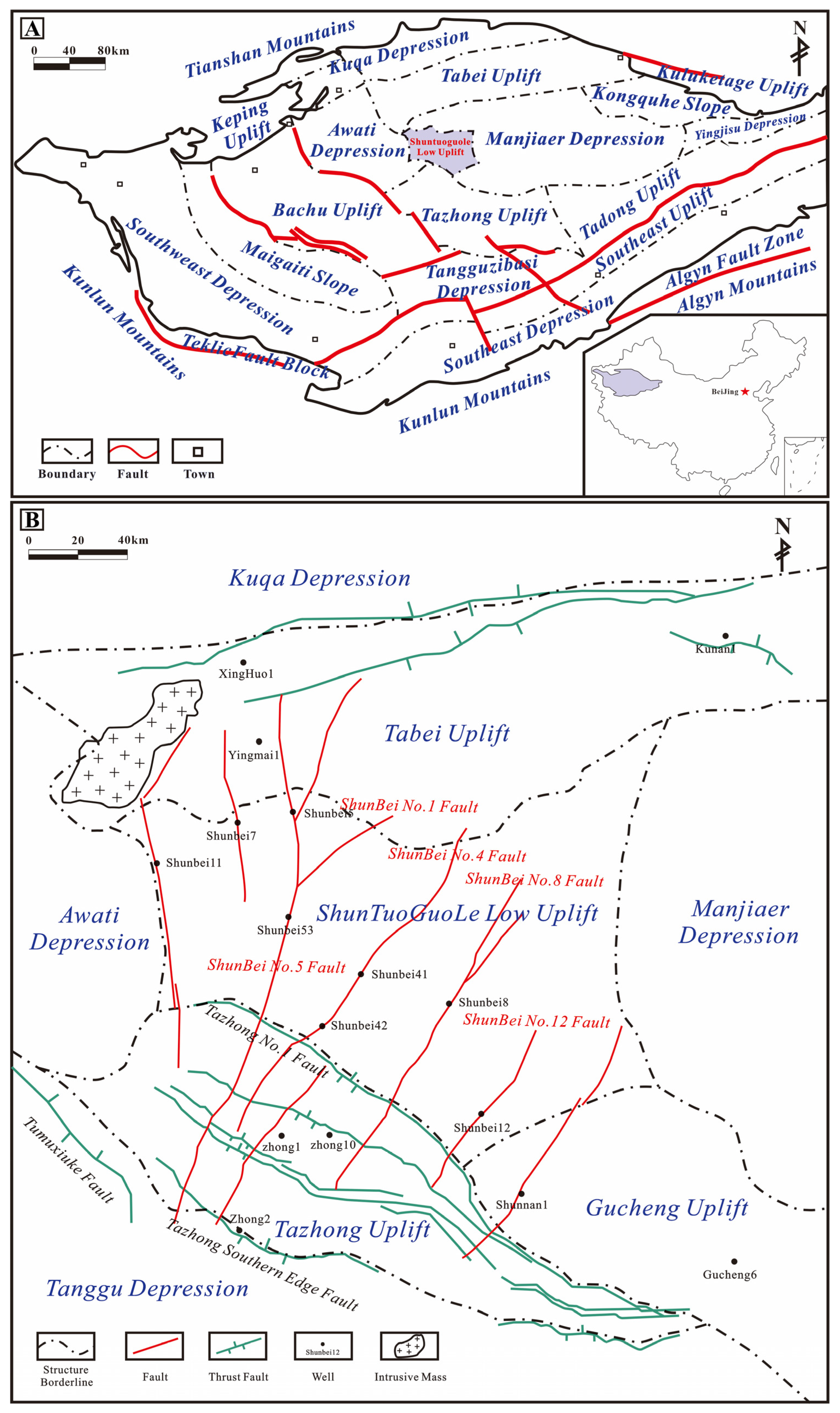
Figure 1. Maps show the structural division of the Shuntuoguole Low Uplift within North Tarim basin of West China (A). Both Distribution map of the intracratonic strike-slip faults (B).
Water 18 00714 g001
Figure 2. Chart showing the northern Tarim Basin stratigraphy and the timing of regional tectonic movements.
Water 18 00714 g002
Figure 3. Production performance curves of representative wells in the Shunbei area. (A) Daily gas injection rate curve; (B) Water cut curve; (C) Daily liquid production rate curve; (D) Pressure curve.
Water 18 00714 g003
Figure 4. Diagram of carbonate ion concentrations as a function of pH under ideal closed-system conditions.
Water 18 00714 g004
Figure 5. TDS distribution (A) and hydrochemical type statistics (B) of formation waters in the Shunbei and adjacent regions.
Water 18 00714 g005
Figure 6. Variations in Na+ + K+ and Cl with total dissolved solids (TDS) for formation waters in the Shunbei and adjacent regions (A), and cross-plots of major cations versus Cl (B).
Water 18 00714 g006
Figure 7. The distribution of TDS of Ordovician formation water in the Shunbei and adjacent regions.
Water 18 00714 g007
Figure 8. The distribution of the desulfidation coefficient of Ordovician formation water in the Shunbei and adjacent regions.
Water 18 00714 g008
Figure 9. Distribution characteristics of rare earth elements (REEs) in Ordovician formation waters in the Shunbei and adjacent regions.
Water 18 00714 g009
Figure 10. Hydrogen–oxygen isotopic characteristics of Ordovician formation waters in the Shunbei and adjacent regions.
Water 18 00714 g010
Figure 11. Strontium isotopic distribution of Ordovician formation waters in the Shunbei and adjacent regions.
Water 18 00714 g011
Figure 12. Plan-view distribution of present-day formation pressure in the Ordovician reservoirs of the Shunbei and adjacent regions.
Water 18 00714 g012
Figure 13. Microscopic thin-section characteristics of Ordovician carbonate rocks from the Yingshan and Yijianfang formations of the Shunbei and adjacent regions. (A) Well SHB5-8, depth 7678.53 m, micritic limestone with dissolution pores, under polarized light; (B) Well SZ412, depth 8092.42 m, micritic limestone with dissolution pores, under polarized light; (C) Well SHB6, depth 8120.25 m, micritic limestone affected by dolomitization, under polarized light; (D) Well SHB701, depth 8124.17 m, micritic limestone affected by dolomitization, under polarized light.
Water 18 00714 g013
Figure 14. Hydrocarbon–water migration model for the Ordovician reservoirs in the Shunbei and adjacent regions.
Water 18 00714 g014
Table 1. Statistical data of major ion concentrations and water types of Ordovician formation waters in the Shunbei and adjacent regions.
AreaWellEpochTDS (g/L)Na+-K+ (mg/L)Ca2+ (mg/L)Mg2+ (mg/L)Cl (mg/L)CO32− (mg/L)HCO3 (mg/L)SO42− (mg/L)pHWater Type
ShunBeiSHB1O2yj + O1–2y30.3077610,561.22958.42155.4718,163.070266.3157.677.38CaCl2
SHB5O2yj + O1–2y102.829954,200.4110,600.91654.2815,809.210131.19163.656.78CaCl2
SHB4O2yj + O1–2y106.4794645,442.599972.71772.6389,752.10208.67126.876.72CaCl2
SHB8O2yj + O1–2y72.1789621,215.56870.9956.7345,191.34785.765292.68345.97.27NaHCO3
SHB10O2yj + O1–2y64.3825711,321.49535.2721.18166.5702682.81211.977.14CaCl2
SHB12O2yj + O1–2y72.9524827,477.92436.1767.4941,120.2303387.8339.27.23Na2SO4
TaBeiYueJin2O104.408769447.4327,972.29485.4264,703.340664.18510.46.87CaCl2
S111O99.74025,1105337203.6148,300486.1964.183096.38NaHCO3
TP35O189.0491562,607.869484.73122.3511,3005.740728.27333.336.48NaHCO3
TaZhongZhong1O3s + O3l51.3324518,026.521801.8118.130,794.710632.662256.9Na2SO4
Zhong7O3s + O3l58.070994547.1412,022.39758.230,155.19769.58420.67123.757.04NaHCO3
Zhong9O3s + O3l93.5423426,944.058252.08416.6456,531.050811.69484.67.24CaCl2
Unreliable dataSHB4–5O2yj + O1–2y649.542189.53238.4913.093207.1719.3678.72759.408.98Na2SO4
SHB71O2yj + O1–2y184.159.714.172.8179.840037.644.16Na2SO4
Table 2. Characteristics of Total Dissolved Solids (TDS) and ionic ratio parameters of Ordovician formation waters in the Shunbei and adjacent regions.
AreaTDS (g/L)Sodium Chlorine CoefficientDesulfidation CoefficientMetamorphism Coefficient
ShunBei 2.05 ~ 259.75 97.84 / 91.45   ( 108 ) 0.35 ~ 60.08 7.56 / 4.38   ( 108 ) 0.43 ~ 96.02 19.67 / 13.35   ( 108 ) 14.34 ~ 91.18 37.16 / 31.07   ( 108 )
TaBei 32.35 ~ 205.98 137.57 / 141.95   ( 89 ) 0.55 ~ 1.98 1.56 / 1.45     ( 89 ) 0.35 ~ 21.81 5.72 / 3.31   ( 89 ) 1.15 ~ 63.08 29.56 / 32.35   ( 89 )
TaZhong 4.85 ~ 219.08 107.56 / 131.35   ( 83 ) 0.33 ~ 4.56 1.68 / 1.69   ( 83 ) 0.75 ~ 49.51 13.36 / 9.38   ( 83 ) 4.57 ~ 79.48 37.56 / 35.95   ( 83 )
Notes: T Note: M i n ~ M a x A v e r a g e / M e d i a n ( N u m b e r   o f   S a m p l e s ) ; Sodium chlorine Coefficient = γNa+/γCl; Desulfidation Coefficient = γSO42−/γ(Cl + SO42−) × 100; Metamorphism Coefficient = γ(Cl + SO42−)/γMg2+.
Disclaimer/Publisher’s Note: The statements, opinions and data contained in all publications are solely those of the individual author(s) and contributor(s) and not of MDPI and/or the editor(s). MDPI and/or the editor(s) disclaim responsibility for any injury to people or property resulting from any ideas, methods, instructions or products referred to in the content.