Article

Unraveling Causal Drivers of Eutrophication in Chao Lake: A Three-Decade Analysis of Land Use, Climate, and Chlorophyll-A Dynamics


1
School of Remote Sensing and Geomatics Engineering, Nanjing University of Information Science and Technology, Nanjing 210044, China
2
School of Ecology and Applied Meteorology, Nanjing University of Information Science and Technology, Nanjing 210044, China
3
Research Centre for Borneo Regionalism and Conservation, University of Technology Sarawak, No. 1 Jalan University, Sibu 96000, Sarawak, Malaysia
4
School of Geography and Environmental Sciences, University of Reading, Reading RG6 6AH, UK
5
Jiangsu Key Laboratory of Atmospheric Environment Monitoring and Pollution Control, Collaborative Innovation Center of Atmospheric Environment and Equipment Technology, School of Environmental Science and Engineering, Nanjing University of Information Science and Technology, Nanjing 210044, China
6
Department of Geography and Spatial Information Techniques, Ningbo University, Ningbo 315211, China
7
Collaborative Innovation Center on Forecast and Evaluation of Meteorological Disaster, Nanjing University of Information Science and Technology, Nanjing 210044, China
8
School of Hydrology and Water Resources, Nanjing University of Information Science and Technology, Nanjing 210044, China
9
School of Law and Public Administration, Research Institute for History of Science and Technology, Nanjing University of Information Science and Technology, Nanjing 210044, China
10
College of Geographical Science and Engineering, Henan University, Kaifeng 475004, China
*
Author to whom correspondence should be addressed.
Water 2026, 18(6), 650; https://doi.org/10.3390/w18060650
Submission received: 13 January 2026 / Revised: 26 February 2026 / Accepted: 7 March 2026 / Published: 10 March 2026

Abstract

Chlorophyll-a (Chl-a) is a critical indicator of freshwater ecosystem health, reflecting phytoplankton biomass and primary productivity. This study investigates the long-term dynamics of Chl-a concentrations in Chao Lake, China, over three decades (1993–2023), employing an integrated approach combining remote sensing, causality, and comprehensive land use and climate data analysis. Our findings reveal a dramatic 175% increase in Chl-a levels, from 37.26 km2 (1.71%) in 1993 to 102.41 km2 (4.71%) in 2023, highlighting the ongoing eutrophication crisis. Significant correlations were established between land cover changes and Chl-a dynamics, with built-up areas exhibiting a positive correlation of 0.763 with Chl-a. In contrast, vegetation cover showed an inverse correlation of −0.766. Rising land surface temperatures (LST) increased by 1.8 °C from 1993 to 2023, significantly affecting nutrient cycling and algal bloom proliferation. Precipitation trends indicate a decline of approximately 10% over the study period, further exacerbating hydrological stress and nutrient concentrations. Employing Convergent and Geographic Convergent cross-mapping, we established robust causal relationships, confirming that urbanization and climate variability are primary drivers of Chl-a fluctuations. These findings stress the urgent need for targeted management strategies to mitigate nutrient loading and improve water quality in Chao Lake.

1. Introduction

Chlorophyll-a (Chl-a) is a widely recognized indicator of phytoplankton biomass and trophic status in freshwater ecosystems [1,2]. Its levels are influenced by both natural factors and human impacts, rendering it a vital parameter for assessing the ecological condition and water quality of lakes [2,3]. Growing global concern over eutrophication, driven by nutrient pollution and climate change, stresses the need for comprehensive assessments of Chl-a dynamics in freshwater ecosystems [4,5,6]. In Chao Lake, one of China’s five largest freshwater bodies and a eutrophic system severely impacted by nutrient pollution, elevated Chl-a concentrations reflect the persistent algal bloom crises that have intensified over recent decades [7,8]. Analyzing long-term patterns and influencing factors of Chl-a levels in the lake is essential for developing targeted management and preservation measures. Understanding the temporal and spatial dynamics of Chl-a provides a scientific basis for managing eutrophication and safeguarding freshwater ecosystems.
Over the recent decades, rapid urbanization, intensive agriculture, and climate variability have driven substantial environmental changes in Chao Lake [9]. These factors have significantly altered the lake’s nutrient cycling, hydrological regimes, and ecological stability, resulting in variable Chlorophyll-a (Chl-a) concentrations [10,11]. Although previous studies have explored short-term or episodic fluctuations in Chl-a levels [8,12], a lack of long-term trend analysis has revealed important research gaps. In particular, the long-term interactions among temperature, precipitation, land-use changes, vegetation cover, and hydrological factors in influencing Chl-a dynamics remain inadequately explored. Temperature and precipitation play crucial roles as environmental regulators: temperature affects phytoplankton growth, bloom formation, and thermal stratification, while precipitation modulates nutrient inputs via runoff and erosion processes [1,6,13]. Land-use changes such as urban expansion and agricultural intensification tend to increase nutrient loads into the lake, accelerating eutrophication. Conversely, natural vegetation can reduce these impacts by improving sediment retention and reducing nutrient runoff [14,15,16]. Despite its ecological and socioeconomic significance, the long-term dynamics of Chl-a in Chao Lake and their primary drivers remain inadequately characterized. While previous studies have examined short-term fluctuations or isolated factors, integrated analyses linking multi-decadal land-use change, climate variability, and Chl-a trends are lacking. This stresses the necessity for integrated, multidisciplinary research that combines long-term data, advanced modeling techniques, and spatial-temporal analysis to better understand and manage Chl-a dynamics in freshwater systems.
In conjunction with traditional in situ monitoring, remote sensing has become an essential approach for evaluating Chl-a variations across broad spatial and temporal extents [11,14,17]. Satellite-based Chl-a measurements allow for continuous observation of aquatic systems, offering detailed information on spatial patterns and long-term changes that are difficult to obtain through field sampling alone. Nevertheless, remote sensing methods encounter obstacles such as atmospheric distortions, sensor-specific constraints, and the necessity of ground-truthing with empirical data [1]. Progress in satellite sensor technology and analytical algorithms, particularly hyperspectral imaging, has markedly improved the accuracy and utility of remote sensing for tracking Chl-a [1,17]. Despite these improvements, the capacity of remote sensing to reliably detect multi-decadal trends in Chl-a in lakes such as Chao Lake has not been fully examined. To bridge this gap, the present research employs advanced causal modeling techniques, including Convergent Cross Mapping (CCM) and Geographic Convergent Cross Mapping (GCCM), to analyze the factors influencing Chl-a changes over extended timeframes. These models are especially useful for detecting both temporal and spatial causal links between critical environmental drivers, such as temperature, precipitation, vegetation shifts, and land-use alterations, and Chl-a levels [14,18]. By extending beyond mere correlation, these causal inference techniques enable a more profound exploration of the processes governing Chl-a fluctuations, helping distinguish direct from indirect effects and incorporating spatial variability. This methodology offers an innovative strategy for tracing historical trends and elucidating the complex interactions among factors that determine the ecological condition of Chao Lake.
This study addresses this gap by investigating the causal relationships between urbanization, temperature, precipitation, and Chl-a concentrations (Chl-a) in Chao Lake over a 30-year period (1993–2023). The study presents a novel methodology for examining the spatio-temporal dynamics of Chl-a concentrations in Chao Lake across a thirty-year period. By integrating long-term field observations with advanced remote sensing technology and causal inference analysis, the study establishes a comprehensive framework for assessing the ecological condition of this crucial freshwater ecosystem. Departing from conventional approaches that often rely on short-term datasets or isolated monitoring techniques, this work pioneers an interdisciplinary strategy to elucidate the intricate connections between environmental drivers and Chl-a fluctuations. A major advantage of this investigation is its incorporation of longitudinal field measurements, which supply high-resolution baseline data essential for detecting temporal patterns and changes in Chl-a levels. This extended observational record is particularly valuable for differentiating between natural variations and human-induced alterations. Furthermore, the application of cutting-edge remote sensing methods enables detailed mapping of spatial distributions in Chl-a concentrations, addressing limitations inherent in traditional in situ monitoring, such as restricted geographical coverage and practical implementation challenges.
Unlike correlation-based approaches, CCM and GCCM provide insights into the underlying mechanisms driving Chl-a variability while accounting for spatial heterogeneity in environmental influences [18]. This interdisciplinary framework addresses critical challenges in Chl-a monitoring, including data gaps and the complexity of nonlinear interactions among environmental factors [18]. By integrating multiple methodologies, the study not only enhances the understanding of historical trends but also provides actionable insights for the sustainable management of Chao Lake. It highlights the need for adaptive strategies considering the evolving interplay between land use, climate variability, and freshwater ecosystem health. The findings serve as a model for similar ecological assessments in other large, dynamic water bodies worldwide.

2. Materials and Methods

2.1. Study Area

Chao Lake, among China’s five largest freshwater bodies, is situated in Anhui Province within the lower Yangtze River basin. It occupies a geographical position between 31°25′–31°43′ N latitude and 117°16′–117°51′ E longitude, with a surface area of roughly 770 km2. The lake has an average depth of 3 m, reaching a maximum depth of approximately 6 m [7]. Its watershed extends over about 13,000 km2 and includes a variety of land cover types, including agricultural areas, urban zones, and forested landscapes [19]. More than 30 tributaries supply water to the lake, the most significant being the Nanfei River, while outflow is controlled by the Yuxi River, which eventually discharges into the Yangtze River. The region experiences a subtropical monsoon climate, featuring warm, rainy summers and relatively mild winters. Average annual temperatures are around 16 °C, and yearly rainfall typically exceeds 1000 mm [20]. These climatic conditions, combined with the lake’s shallow nature, contribute to active water mixing and nutrient circulation, thereby affecting its overall trophic condition. Traditionally, Chao Lake has played a vital role in the local economy, supporting agriculture, fisheries, and recreational activities. In recent decades, however, rapid urbanization and economic growth within the watershed have led to deteriorating water quality, resulting in eutrophication and frequent algal blooms [21].
Recent monitoring data from the Chao Lake watershed reveal concerning levels of the primary nutrients driving eutrophication. A 2018 survey of 88 rivers flowing into the lake reported mean total nitrogen (TN) concentrations of 4.00 mg/L (range: 1.24–18.80 mg/L) and mean total phosphorus (TP) concentrations of 0.22 mg/L (range: 0.03–1.47 mg/L) [8]. More recent 2022–2023 sampling within the lake itself recorded annual mean concentrations of 1.57 mg/L for TN and 0.184 mg/L for TP, with chlorophyll-a averaging 21.21 μg/L [12]. Sediment analyses further indicate that TN and TP in the lakebed range from 117–2470 mg/kg and 142–2022 mg/kg, respectively, with the western lake region exhibiting the highest pollution levels [19]. Government monitoring at the SanShui factory water intake in April 2024 recorded TN at 1.28 mg/L and TP at 0.020 mg/L, demonstrating that while nutrient concentrations have declined from peak levels, they remain elevated enough to sustain eutrophication risk [7]. Notably, total phosphorus in the lake has decreased from 0.102 mg/L in 2018 to 0.064 mg/L in 2024, a 37.3% reduction, indicating progress from pollution control measures [10].
Elevated nutrient concentrations fundamentally alter the lake’s food-web structure, primarily through promoting cyanobacterial dominance. Cyanobacteria currently constitute approximately 75% of the total phytoplankton biomass in Chao Lake, and their proliferation directly impacts higher trophic levels [11]. Experimental studies demonstrate that bloom-forming cyanobacteria (Microcystis and Oscillatoria) at naturally occurring concentrations significantly affect fish health and reproduction. Long-term exposure reduces body length and weight in zebrafish, disrupts hormone levels, delays ovarian and sperm development, and increases mortality and deformities in offspring [22]. For commercially important species, Oscillatoria exposure reduces weight gain in crucian carp and induces oxidative damage and inflammation in the livers of silver carp and bighead carp fingerlings—species intentionally stocked for algal control [11]. Beyond fish, cyanobacteria impair feeding behaviors and cause tissue damage in benthic organisms like river snails and freshwater mussels, disrupting the broader food web [11]. These ecological impacts have prompted management responses, including the stocking of 1.6 million silver carp fry annually to graze on algae, though such measures address symptoms rather than the root cause of nutrient pollution [22].
The wastewater situation within the Chao Lake watershed remains a critical concern despite recent infrastructure improvements. Rapid urbanization and industrial growth have overwhelmed the region’s wastewater treatment capacity, with studies identifying municipal and industrial effluents as primary contributors to the lake’s nutrient loading [23]. Reference [7] reported that the western part of the lake, which receives discharges from the heavily urbanized Hefei City via the Nanfei and Shipu Rivers, exhibits the highest concentrations of pollutants, including heavy metals and nutrients. Reference [8] documented that many tributaries flowing into the lake consistently exceed national water quality standards due to inadequately treated domestic sewage and industrial wastewater discharge. Reference [19] further emphasized that sediment internal nutrient loading, phosphorus released from lakebed sediments under anoxic conditions, perpetuates eutrophication even after external inputs are reduced, indicating that decades of untreated wastewater have created a legacy pollution problem within the lake itself. While wastewater treatment plants have been upgraded and expanded in recent years under national pollution control programs, rapid population growth and industrial expansion continue to challenge these systems, resulting in periodic untreated or partially treated discharges during high-flow events [24,25].
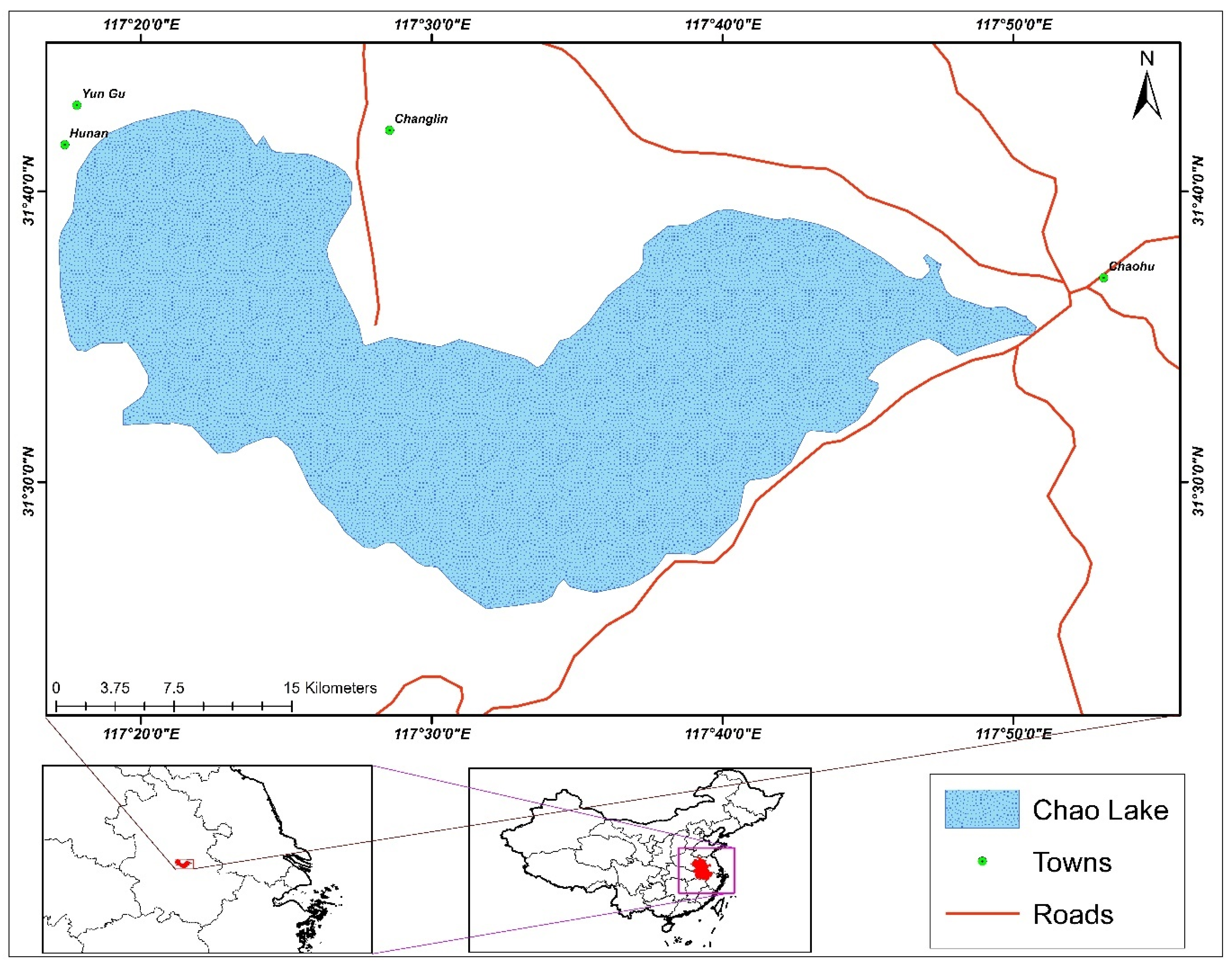
Chao Lake was chosen to investigate Chlorophyll-a (Chl-a) concentrations due to its ecological, socioeconomic, and scientific importance. As a eutrophic lake, Chao Lake has been severely impacted by excessive nutrient loading from agricultural runoff, untreated wastewater, and urban stormwater, making it a hotspot for algal blooms (Figure 1) [12]. Chlorophyll-a, a key indicator of algal biomass, is a vital parameter for assessing eutrophication levels and understanding phytoplankton dynamics in freshwater ecosystems. The lake’s unique hydrological and geographical features, including its shallow depth, wide surface area, and connection to a densely populated watershed, provide an ideal natural laboratory for studying the spatial and temporal variations in Chl-a concentrations [22]. Additionally, Chao Lake’s inclusion in China’s national water quality monitoring programs and environmental protection initiatives highlights its critical status in the country’s efforts to combat eutrophication and restore aquatic ecosystems [21]. Furthermore, Chao Lake’s prominence in past research allows the integration of historical datasets, thereby enhancing the robustness of the analysis. The insights gained from studying Chao Lake can be extrapolated to inform the management of other eutrophic lakes in similar climatic and socio-environmental contexts, thereby contributing to broader efforts in mitigating water quality degradation. This makes Chao Lake an exemplary case study for advancing scientific understanding of eutrophication processes and developing evidence-based management strategies.

2.2. Data and Methods

For this study, 30 Landsat images spanning 1993 to 2023, each with 30-m spatial resolution, were acquired from the United States Geological Survey’s EarthExplorer website [23]. For classification, bands 7, 4, and 2 were selected for Landsat 5 TM (1992–2001) and Landsat 7 ETM+ (2002–2015) imagery. For Landsat 8 OLI/TIRS imagery (2016–2023), bands 7, 5, and 3 were utilized, which correspond to the specific row and path details of each scene. The satellite imagery from the USGS was captured under optimal conditions, ensuring the study area was fully covered and free of cloud cover. Preprocessing procedures included calibrating the images, stacking layers, and applying supervised classification methods to enhance data analysis. A technique for filling gaps in Landsat images was employed to improve data continuity and overall imagery quality. These preparatory steps were vital for producing reliable, high-quality datasets for later examinations.
Data on Chlorophyll-a (Chl-a) for the Chao Lake Basin were acquired from the China National Environmental Monitoring Centre (CNEMC) website [26,27], which can be found through its reports collection at (http://www.cnemc.cn/jcbg/qgdbsszyb/index_6.shtml, accessed on 23 March 2024). This dataset offers an important understanding of the changes in Chl-a concentrations over space and time, serving as a key measure of the lake’s eutrophication status. Such data are necessary for understanding algal bloom patterns and evaluating changes in water quality in the Chao Lake Basin. This collection of information has been extensively used for both environmental monitoring and scientific research, aiding initiatives to improve the management of water resources and protect the environment.
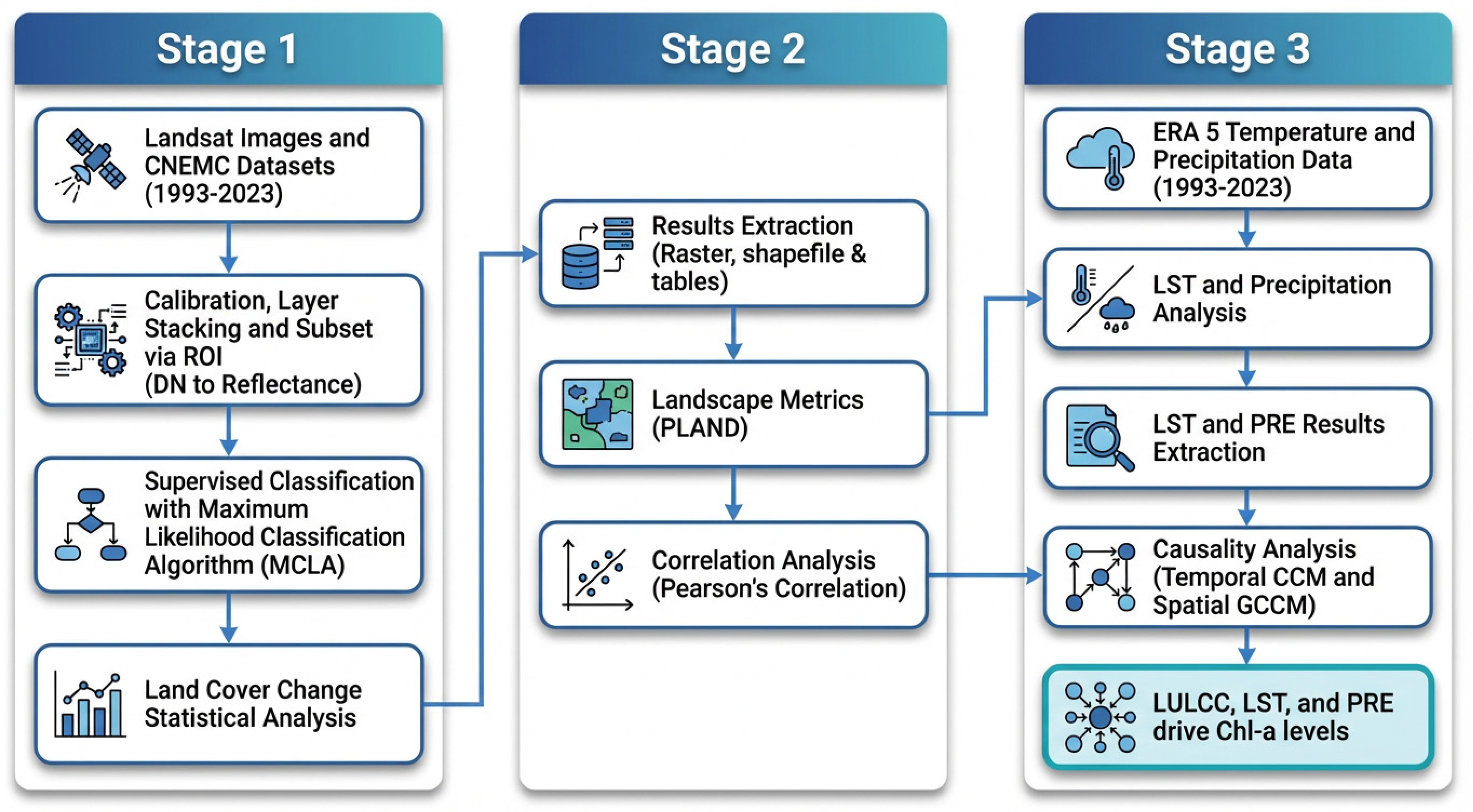
Additionally, data on precipitation and temperature, measured at 2 m above ground, were obtained from the ERA5 reanalysis dataset [28], which is available from the European Centre for Medium-Range Weather Forecasts (ECMWF) at https://cds.climate.copernicus.eu/. These meteorological datasets span the same 30-year period (1993–2023) as the Landsat imagery. The overall methodological framework, comprising three distinct stages, is illustrated in Figure 2 and further elaborated upon in the subsequent subsections.

2.3. LULCC Classification and Change Analysis

Employing supervised image classification techniques, the land cover data was categorized into five distinct classes: built-up areas, vegetation, bare land, water bodies, and Chl-a. The Maximum Likelihood Classification Algorithm (MLCA) [29] was used to classify the images, assigning each pixel to a specific category based on its statistical probability derived from spectral signatures and training datasets. To address spectral confusion between aquatic Chl-a and terrestrial vegetation in shallow lake margins, we implemented several precautions. First, training samples for Chl-a were selected exclusively from open water areas with documented algal blooms, avoiding nearshore zones with emergent vegetation. Second, a Modified Normalized Difference Water Index (MNDWI) water mask restricted Chl-a classification to pixels initially identified as water, excluding terrestrial vegetation. Third, spectral separability analysis using Transformed Divergence confirmed good distinction between Chl-a and vegetation signatures (values > 1.9). Finally, accuracy assessment using validation points specifically targeting shallow-margin areas showed that the user’s and producer’s accuracies for Chl-a remained above 89% throughout the study period. This probability-based methodology played a crucial role in achieving a precise and dependable classification of land cover types across the study area.
In addition, a statistical analysis of Land-Use/Land-Cover Change (LULCC) was performed to assess the dynamics and continuity of land-use systems in the Chao Lake Basin. This analysis also aimed to pinpoint the principal drivers behind temporal changes in land cover, offering essential insights into the fundamental processes shaping the region’s land-use patterns, as detailed in Equations (1)–(3):
C h a n g e   i n   L U L C C = r v v
%   C h a n g e   i n   L U L C C = r v v ×   100 %
R a t e   o f   C h a n g e   i n   L U L C C   p e r   y e a r = r v v ×   100 % ÷ Y
Here, v is the Land-Use/Land-Cover Change (LULCC) for the prior year, r is the LULCC for the present year, and Y is the total time interval of the study, which is a 30-year duration spanning from 1993 to 2023.

2.3.1. Temperature Analysis

Land Surface Temperature (LST) was derived from thermal infrared (TIR) satellite data. This process involved multiple preprocessing stages, including radiometric calibration, atmospheric correction, and cloud masking, to enhance the accuracy of temperature estimation. Thermal bands facilitated the extraction of surface temperatures by first transforming digital numbers (DNs) into radiance values, which were then converted to temperature values based on the surface’s thermal properties [30]. To ensure reliable outcomes, surface emissivity values were integrated to account for variations between urban and rural landscapes in the Chao Lake Basin. Spatial analysis of LST was conducted to enable spatial interpolation and the generation of LST maps. These maps illustrate spatial and temporal variations in temperature across urban and rural zones within the study area. The analytical framework incorporated mathematical formulations and computational workflows implemented in Python 3.10 (Jupyter Notebook) and ArcGIS, as previously established [23,29]. These methods supported a comprehensive and robust assessment of regional temperature dynamics.
L S T = K 2 l n K 1 R a d i a n c e   +   K 0 + 1 273.15
In this context, LST represents Land Surface Temperature and is measured in degrees Celsius (°C). Radiance refers to the amount of emissivity that is detected by the satellite’s sensor. The terms K 0 , K 1   and   K 2 represent constants that are used for the calibration of the sensor.

2.3.2. Precipitation Analysis

The analysis of precipitation data using ERA5 reanalysis began with obtaining high-resolution precipitation datasets from the ECMWF for the period 1993 to 2023. The raw data were preprocessed to match the spatial and temporal resolutions of the study area. This included interpolation techniques to refine spatial consistency and quality control measures to address missing values and outliers, ensuring data accuracy and reliability. The precipitation analysis focused on determining average precipitation levels and identifying spatiotemporal variations across the study area. Spatial patterns and trends were analyzed, and the results were visualized using maps to provide a clear depiction of precipitation dynamics over the 30-year period [31]. This comprehensive approach allowed for a detailed assessment of precipitation variability and its implications for the region.

2.3.3. Correlation Analysis

The Percentage of Landscape (PLAND) metric quantifies the proportional area or relative abundance of a particular land cover class or feature within the entire landscape (Equation (5)).
P L A N D = 100 × u = z i m a / Q
where a is the number of patches in the landscape for class u ; z i m is the area of patch i m ; Q is the total landscape area, which is a measure of the proportion of the total area occupied by a particular land-use type. These metrics supply essential insights into how different land cover types are spatially arranged and which ones are most prevalent within a specified geographical area [23,32].
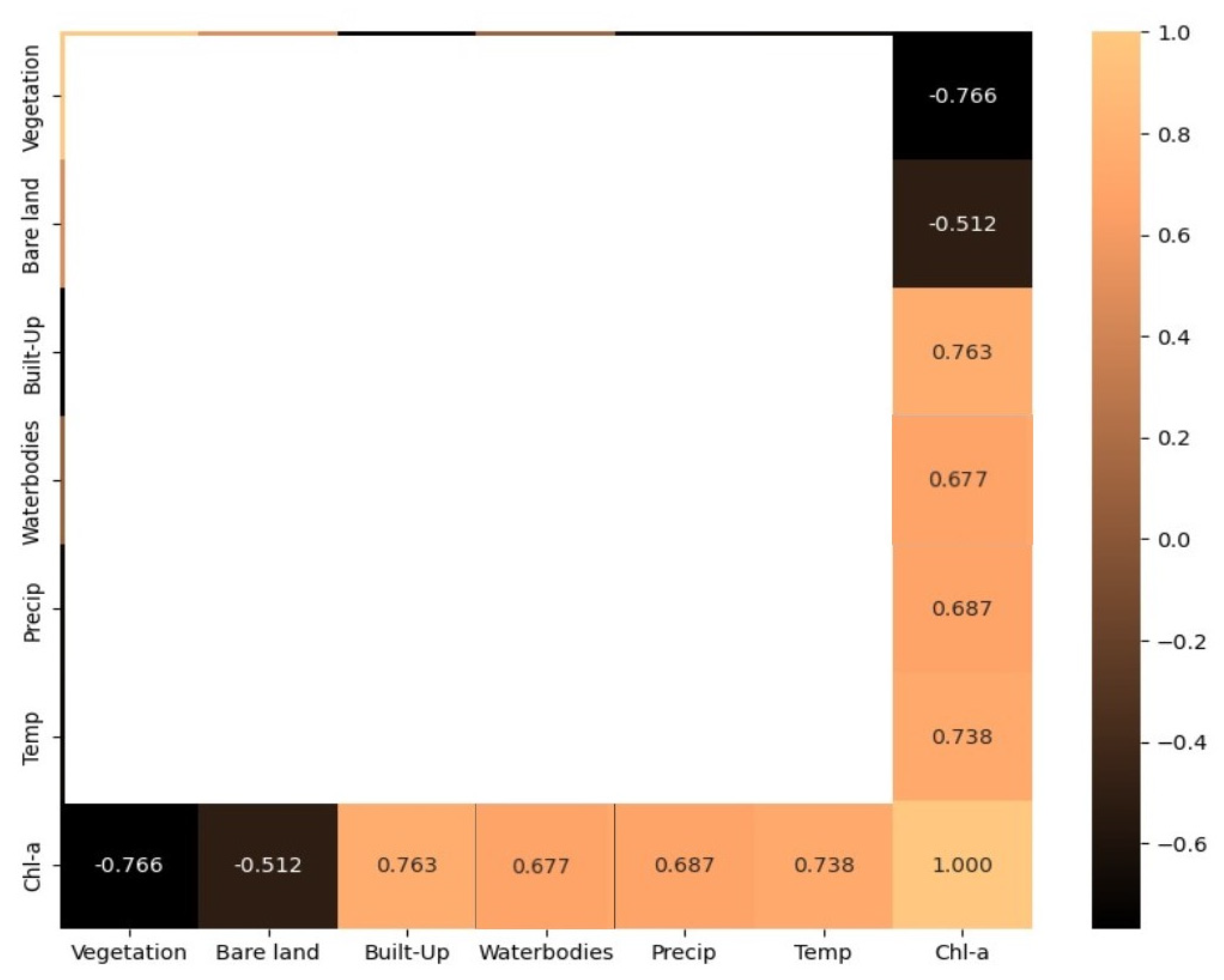
A Pearson correlation analysis was conducted to establish a relationship between PLAND, LST, and precipitation. This statistical method evaluates the strength and direction of linear relationships between PLAND, LST, and precipitation across different land cover classes. The resulting correlation coefficients provide insight into the degree of association between these variables. Positive correlation values close to +1 indicate that two variables vary in the same direction over time, whereas negative values near −1 signify an inverse relationship, where one variable increases as the other decreases. To enhance interpretability, a correlation heatmap was generated to visualize the relationships among multiple variables in the dataset. The heatmap provided a clear depiction of the magnitude and direction of the correlations, making it easier to identify significant patterns and trends across the study period.

2.3.4. Spatiotemporal Causal Relationship Between LULCC, Precipitation, Temperature, and Chl-A

This study utilizes Geographic Convergent Cross Mapping (GCCM) and Convergent Cross Mapping (CCM) to analyze spatial and temporal patterns, drawing upon the methodologies established by [18,31,33]. CCM is a powerful technique within dynamic systems and causality analysis, designed to infer causal or directional relationships between variables in complex systems. By examining the strength and consistency of variable interactions, CCM identifies how changes in one variable may influence another over time. In this context, GCCM extends CCM by incorporating spatial dimensions, enabling the detection of geographically explicit causal relationships. The asymmetry inherent in GCCM is leveraged to isolate directed causalities of LULCC variables, temperature, and precipitation on Chl-a concentrations. This approach provides a robust framework for understanding the interplay between environmental drivers and Chl-a dynamics, offering valuable insights into both spatial and temporal causation.
CCM for Temporal Causal Analysis
This study utilized the Convergent Cross Mapping (CCM) method implemented in a Python Jupyter Notebook to detect temporal causal relationships between LULCC variables, precipitation, temperature, and Chl-a. The analysis commenced by embedding time series data into higher-dimensional spaces to reconstruct the underlying system dynamics. Key parameters such as embedding dimensions and time delays were carefully optimized to ensure the reliability of the CCM results. The algorithm generated cross-mapped predictions for the target variable (Chl-a) using historical data from potential driver variables: LULCC, temperature, and precipitation. Conversely, cross-mapped estimates for these driver variables were also produced based on the historical record of Chl-a. This two-way analytical approach quantified the mutual influences among variables, thereby elucidating the direction and strength of causal relationships within the system.
Within the system defined by the equation Y = f(X, Y), the cross-mapping technique involved locating matching points on the shadow manifolds My and Mx that corresponded to the same time, t. A causal influence of X on Y was indicated if information about X was contained within Y, which allowed for the prediction of X’s values from Y’s data. Because the system’s true manifold is not known, shadow manifolds (Mx and My) were utilized as approximations; these cross-map with a direct 1:1 relationship to the true manifold. These manifolds functioned as systemic “summaries,” with Mx representing X and My representing Y. In this specific nonlinear system, X affects Y and Y also affects X. The impact of X on Y is denoted by a factor βy, x, and the influence of Y on X is determined by a factor βx, y. Furthermore, the constants rx and ry introduced a degree of randomness or chaotic behavior into the system, where increased values resulted in higher levels of unpredictability, as detailed in Equations (6) and (7) [18,31]. This methodological structure offered a powerful means to comprehend the two-way causal relationships and the overall dynamics of the system in the area under study.
X(t + 1) = X(t) [rxrxXtβx, yY(t)]
Y(t + 1) = Y(t) [ryryYtβy, xX(t)]
CCM is typically performed before Geographic CCM because it focuses on uncovering causal relationships between variables based solely on time-series data. By analyzing temporal dynamics, CCM provides an initial understanding of the directionality and strength of influence between variables over time. This foundational assessment establishes the groundwork for more complex spatial analyses. The sequential use of CCM before GCCM allows researchers to first explore the temporal causality, identifying patterns and interactions within the system. These insights into temporal dynamics then inform the spatial analysis performed using GCCM, which extends the causality framework to incorporate spatial interactions. This approach ensures a comprehensive understanding of both the temporal and spatial dimensions of causal relationships, offering a more nuanced perspective on the interplay between variables.
GCCM for Spatial Causal Analysis
The GCCM method was implemented in a Python-based Jupyter Notebook environment to investigate spatial causal relationships among LULCC variables, temperature, precipitation, and Chl-a concentrations. GCCM employs cross-mapping techniques to visually depict interactions and causal connections between these variables across different spatial units. The analytical process begins by constructing multidimensional embeddings with a fixed dimensionality parameter M. Each spatial unit is then examined to identify spatial lags at multiple orders, facilitating the characterization of spatial dependencies among variables. Predictions for the target variable Y are derived from the explanatory variable X by systematically iterating over a range of library sizes and organizing the associated vectors into a matrix according to their spatial ordering [23,31]. For each library size, Y values are predicted by identifying proximate points in the state space that fall within the specified library size constraints, as formalized in Equation (8) [25,27]. This approach facilitates a comprehensive analysis of causal relationships across spatial and temporal domains, providing valuable insights into the dynamics of environmental variables.
Y ^ s | M x = i = 1 M + 1 ( w s i Y s i | M x )
In the given formula, the variable s designates a particular spatial unit where the value of the target variable Y is to be predicted. The notation Y ^ s corresponds to the predicted value at this spatial unit. The parameter M indicates the embedding dimension used in the model. The term si refers to a spatial unit employed during the prediction process for s. Ysi denotes the observed value at si and functions as the initial component of a state in the manifold Mγ, represented as ψ(y, si). This state, ψ(y, si), is uniquely associated with a corresponding point ψ(x, si) in the manifold Mx. The point ψ(x, si) is among the M + 1 nearest neighbors to the focal state ψ(x, s) within Mx. The weight assigned to this point, denoted as wsi, is specified in Equation (9).
w s i | M x = w e i g h t ( ψ ( x , s i ) , ψ ( x , s ) ) i = 1 M + 1 w e i g h t ψ x , s i , ψ x , s
where weight(*,*) is the weight function between two states in the shadow manifold, defined as in Equation (10):
w e i g h t ψ x , s i , ψ x , s = e x p ( d i s ψ x , s i , ψ x , s d i s ψ x , s 1 , ψ x , s )
where exp is the exponential function and dis(*,*) represents the distance function between two states in the shadow manifold defined in Equation (11).
d i s ψ x , s i , ψ x , s = 1 M ( h s i x h s x k = 1 M 1 a b s [ h s i k x , h s k x ] )
In this notation, |*| denotes the absolute value of a real number, and the function abs[*,*] defines a distance metric between two vectors. The first element within the vector ψ(x, s i ) denoted as h s i (x) corresponds to the spatial focal units. For the remaining elements in ψ(x, s i ), each corresponds to a vector comprising several other spatial units relative to the focal units. The specific mathematical formulation of the abs[*,*] function is differentiated based on data type: for raster data, it is explicitly defined as a b s r in Equation (12), and for polygon data, it is defined as a b s v in Equation (13).
a b s r h s i k x , h s k x = 1 D d D u s i ( k , d ) x u s ( k , d ) x
a b s v h s i k x , h s k x = | 1 D 1 d D 1 u s i ( k , d ) x 1 D 2 d D 2   u s k , d x |
In this context, the term u s i ( k , d ) x refers to the spatial unit that represents the k-th order spatial lag of the unit si in the direction d. The variable D denotes the total quantity of spatial units (or possible directions) that are considered for the k-th order.
The skill of cross-mapping prediction is quantified by calculating Pearson’s correlation coefficient. This coefficient measures the strength and direction of the linear relationship between the observed values and the predictions generated for them, as formally defined in Equation (14) [31].
ρ = C o v ( Y , Y ^ ) V a r Y V a r ( , Y ^ )
where Cov() is the covariance and Var() is the variance.
The cross-maps were analyzed to detect converging patterns. This analysis specifically searched for consistent, recurring relationships in which alterations in the LULCC variables, temperature, and precipitation (as causes) occurred before subsequent changes in Chl-a (as effects).

2.3.5. Accuracy Assessment and Validation

To ensure the reliability of the land cover classification, which forms the foundational dataset for subsequent correlation and causal analyses, a rigorous accuracy assessment was conducted. For each of the four reference years (1993, 2003, 2013, 2023), a stratified random sampling method was employed to generate over 300 validation points per epoch. The 300 validation points per epoch were distributed using stratified random sampling proportional to class area. This means that larger classes (e.g., waterbodies) received more validation points, while smaller classes (e.g., Chl-a) received fewer, ensuring statistical representativeness across all land cover types. For example, in 2023, waterbodies (33.81% of area) received approximately 101 points, while Chl-a (4.71% of area) received approximately 14 points. This proportional allocation ensures that the reported accuracy accurately reflects classification performance across all classes. These points were cross-referenced against high-resolution historical imagery available on Google Earth Pro. A confusion (error) matrix was generated for each classified map to calculate key accuracy metrics, including Overall Accuracy (OA), Producer’s Accuracy (PA), User’s Accuracy (UA), and the Kappa coefficient (K).

3. Results

3.1. Chao Lake Basin’s LULCC

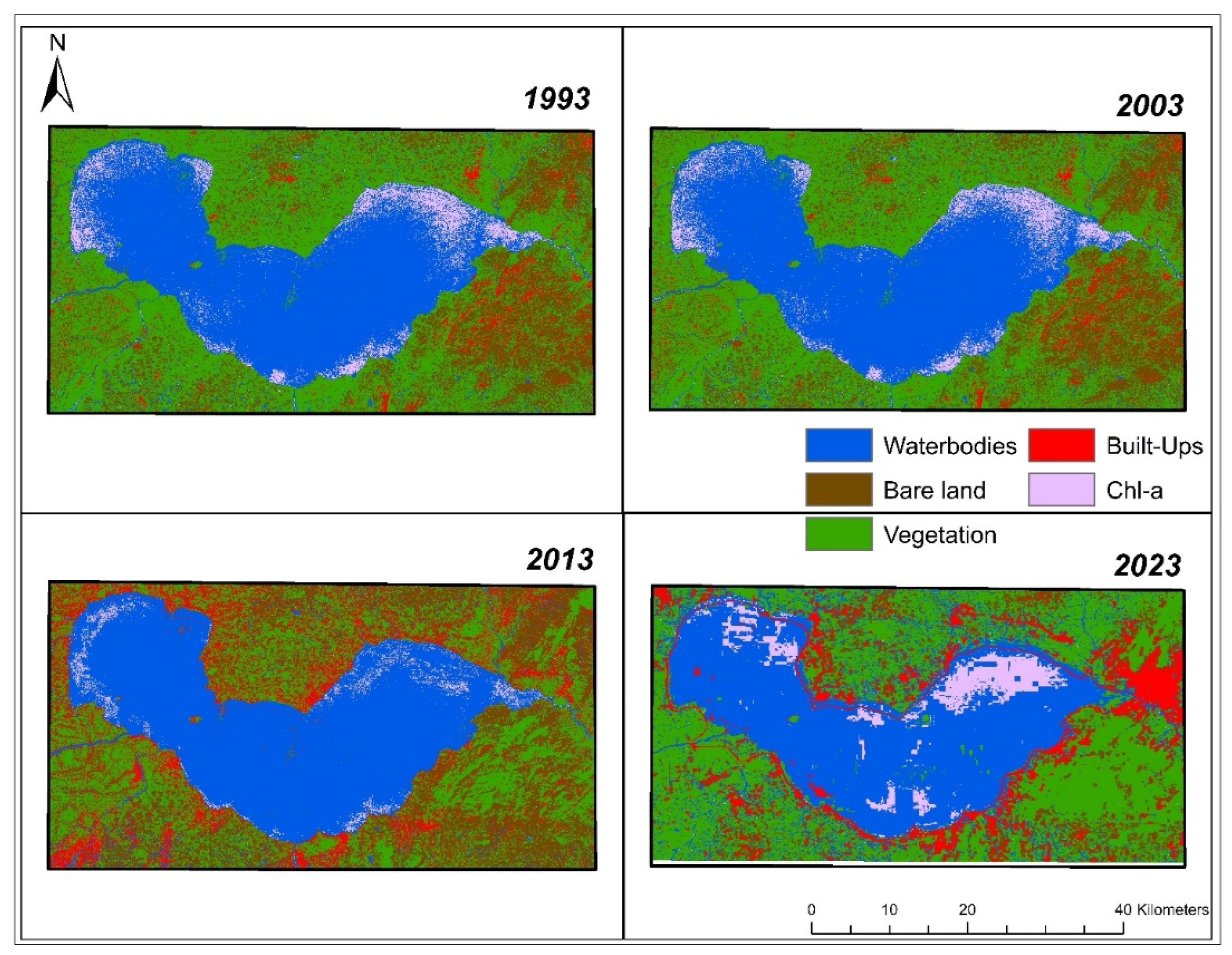
Over the past 30 years, LULCC analysis in the Chao Lake Basin has demonstrated substantial shifts in land cover composition. Using satellite imagery and remote sensing data, changes from 1993 to 2023 were evaluated, as illustrated in Figure 3. The findings show a considerable expansion of built-up areas, which grew by nearly 45% during this period. This rise is closely associated with increasing urbanization and population growth in adjacent areas. Conversely, agricultural land declined by roughly 20%, largely due to urban expansion and the repurposing of farmland for residential and commercial development.
The area classified as waterbodies, including Chao Lake itself, showed fluctuations over the study period, with a net decline of approximately 4% (30.55 km2) between 1993 and 2023. This reduction raises concerns about the lake’s ecological health, particularly its capacity to support biodiversity. Conversely, vegetation cover increased by about 5%, indicating some recovery in areas previously degraded. However, this recovery is not uniform across the basin, as some areas have experienced significant deforestation and land degradation.
The statistical results in Table 1 and Table 2 show that vegetation, which covered 650.81 km2 (29.91%) in 1993, increased to 688.82 km2 (31.66%) by 2003, potentially due to afforestation efforts or natural recovery. However, this trend was reversed in 2013, with vegetation drastically reducing to 383.09 km2 (17.61%), primarily due to deforestation and land conversion for urban development. By 2023, vegetation showed signs of partial recovery, increasing to 536.30 km2 (24.65%), reflecting recent reforestation initiatives and ecological restoration programs. Despite this recovery, the net change over three decades amounted to a 114.51 km2 loss, emphasizing the continued pressure on natural vegetation. Bare land followed a similar declining trend over the study period. In 1993, it covered 438.95 km2 (20.17%), but by 2003, it had reduced slightly to 402.64 km2 (18.51%), likely due to agricultural or urban reclamation. This trend remained relatively stable by 2013, with bare land covering 401.49 km2 (18.45%). However, a significant reduction occurred between 2013 and 2023, with bare land shrinking to 165.81 km2 (7.62%). This 62.2% reduction over 30 years suggests that bare land was primarily converted into built-up areas or vegetated zones, driven by urban expansion and reclamation efforts.
Built-up areas experienced the most substantial growth among all LULC features, highlighting the basin’s rapid urbanization. In 1993, built-up areas accounted for 282.64 km2 (12.99%) of the total area. By 2003, this coverage expanded to 320.77 km2 (14.74%), reflecting the early stages of urban sprawl. The most pronounced growth occurred by 2013, with built-up areas nearly doubling to 599.57 km2 (27.56%), a trend that continued into 2023, reaching 635.69 km2 (29.22%). The net increase of 353.05 km2 (125%) over three decades emphasizes the transformation of the landscape from natural to urban environments, which has significant implications for ecosystem services, surface energy balance, and water quality. Chl-a, an indicator of algal blooms and eutrophication, showed alarming increases over the study period. In 1993, Chl-a accounted for only 37.26 km2 (1.71%), reflecting minimal water quality issues. However, by 2003, Chl-a expanded significantly to 100.37 km2 (4.61%), likely driven by nutrient inflows from agricultural runoff and urban wastewater. Although a slight reduction to 51.27 km2 (2.36%) occurred by 2013, Chl-a rebounded to 102.41 km2 (4.71%) in 2023. This 175% increase over 30 years highlights the persistent challenge of eutrophication in the Chao Lake Basin, emphasizing the need for improved water resource management and pollution control measures. Waterbodies, the dominant feature of the Chao Lake Basin, experienced moderate fluctuations over the study period. In 1993, waterbodies covered 766.17 km2 (35.21%). By 2003, this coverage was reduced to 663.23 km2 (30.48%), likely due to land reclamation for agriculture and development. A recovery was observed in 2013, with waterbodies increasing to 740.42 km2 (34.03%), potentially driven by hydrological interventions and conservation measures. Waterbodies, the dominant feature of the Chao Lake Basin, experienced moderate fluctuations over the study period, with a net loss of 30.55 km2 (4%) over three decades, pointing to sustained anthropogenic pressure on aquatic ecosystems.

3.2. Temperature Analysis Results

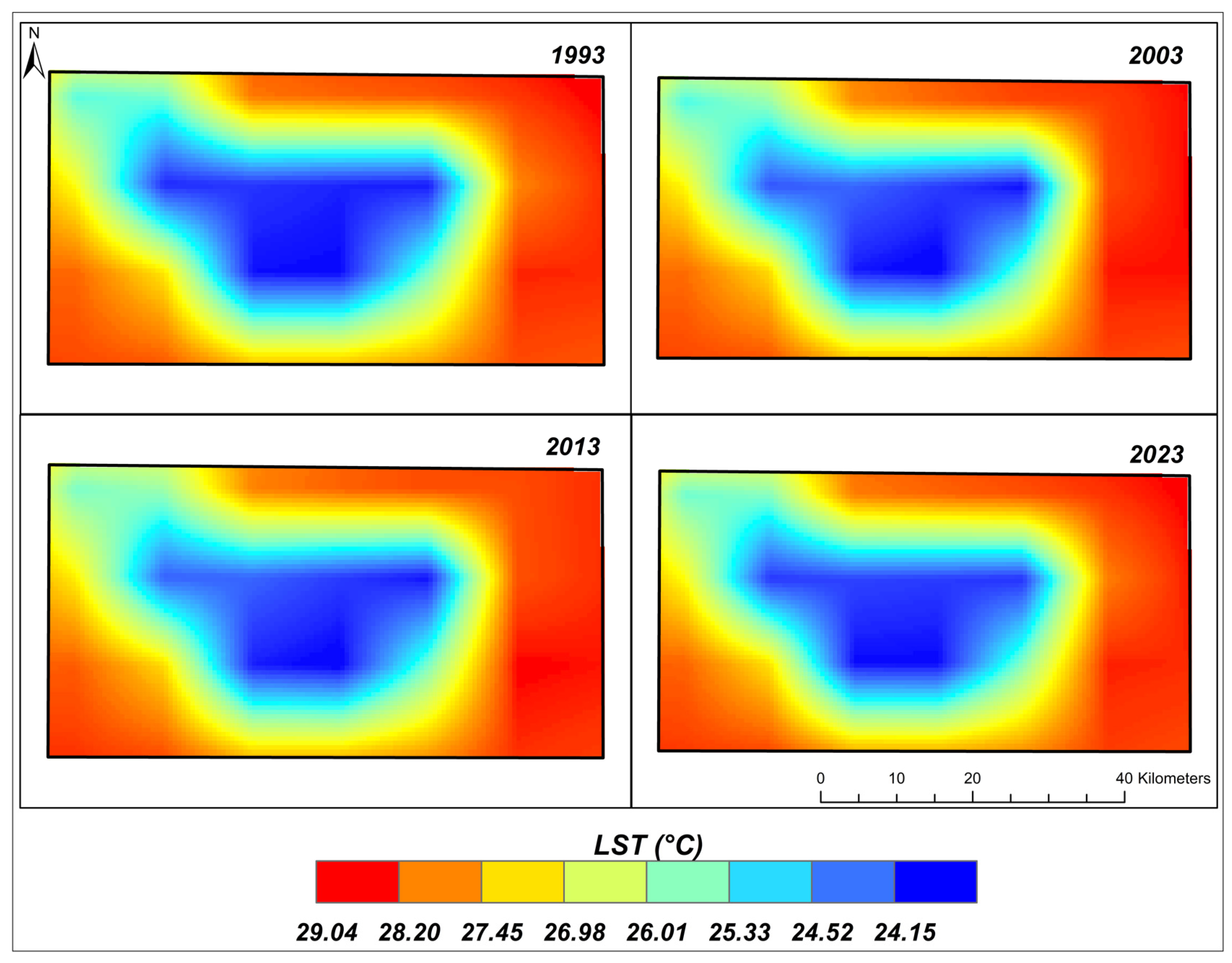
The annual average LST data for the Chao Lake Basin from 1993 to 2023, as illustrated in Figure 4, reveal a consistent upward trend over the three decades. The average LST increased by approximately 1.8 °C, rising from an average of 27.5 °C in 1993 to 29.3 °C in 2023. This increasing trajectory is consistent with global temperature patterns, driven by anthropogenic activities such as deforestation, urbanization, and greenhouse gas emissions. The observed temperature rise indicates a regional phenomenon and underscores the broader impacts of climate change in mid-latitude regions. Statistical analyses demonstrate a strong positive correlation between LST and built-up areas, further confirming that the expansion of urban environments has exacerbated the warming trend. The increase in impervious surfaces, such as roads, rooftops, and pavements, has led to a significant urban heat island (UHI) effect, with urban areas experiencing higher temperatures than surrounding vegetated or rural areas. Between 1993 and 2023, built-up areas expanded by 353.05 km2, aligning with the observed temperature rise. Replacing natural vegetation with impervious surfaces reduces evapotranspiration, increases daytime heat absorption, and retains heat at night, intensifying local warming.
The rise in LST has also been linked to changes in water dynamics within the Chao Lake Basin. Periods of extreme heat, particularly during the summer months, have been correlated with significant drops in water levels in Chao Lake. While elevated temperatures increase the evaporation rate per unit area, the concurrent reduction in lake surface area complicates the net effect on total water loss. More critically, reduced inflows during dry periods, exacerbated by decreased precipitation and increased upstream water extraction, compound the decline in water levels. This trend substantially threatens aquatic ecosystems, as rising temperatures exacerbate water loss, promote algal blooms (as reflected in increased Chl-a levels), and degrade water quality. The interplay between higher temperatures and eutrophication further endangers the lake’s ecological health, impacting fish populations, biodiversity, and local livelihoods dependent on fishing and tourism. The impacts of rising LST extend beyond environmental degradation, influencing human well-being and resource availability. Elevated temperatures increase the risk of heat stress for local communities, particularly in urbanized regions experiencing UHI effects. Vulnerable populations, such as children, the elderly, and outdoor workers, face heightened health risks during heat waves. Moreover, thermal stress on agricultural systems could reduce crop yields, as higher surface temperatures accelerate soil moisture depletion, alter growing seasons, and exacerbate water scarcity.

3.3. Precipitation Analysis Results

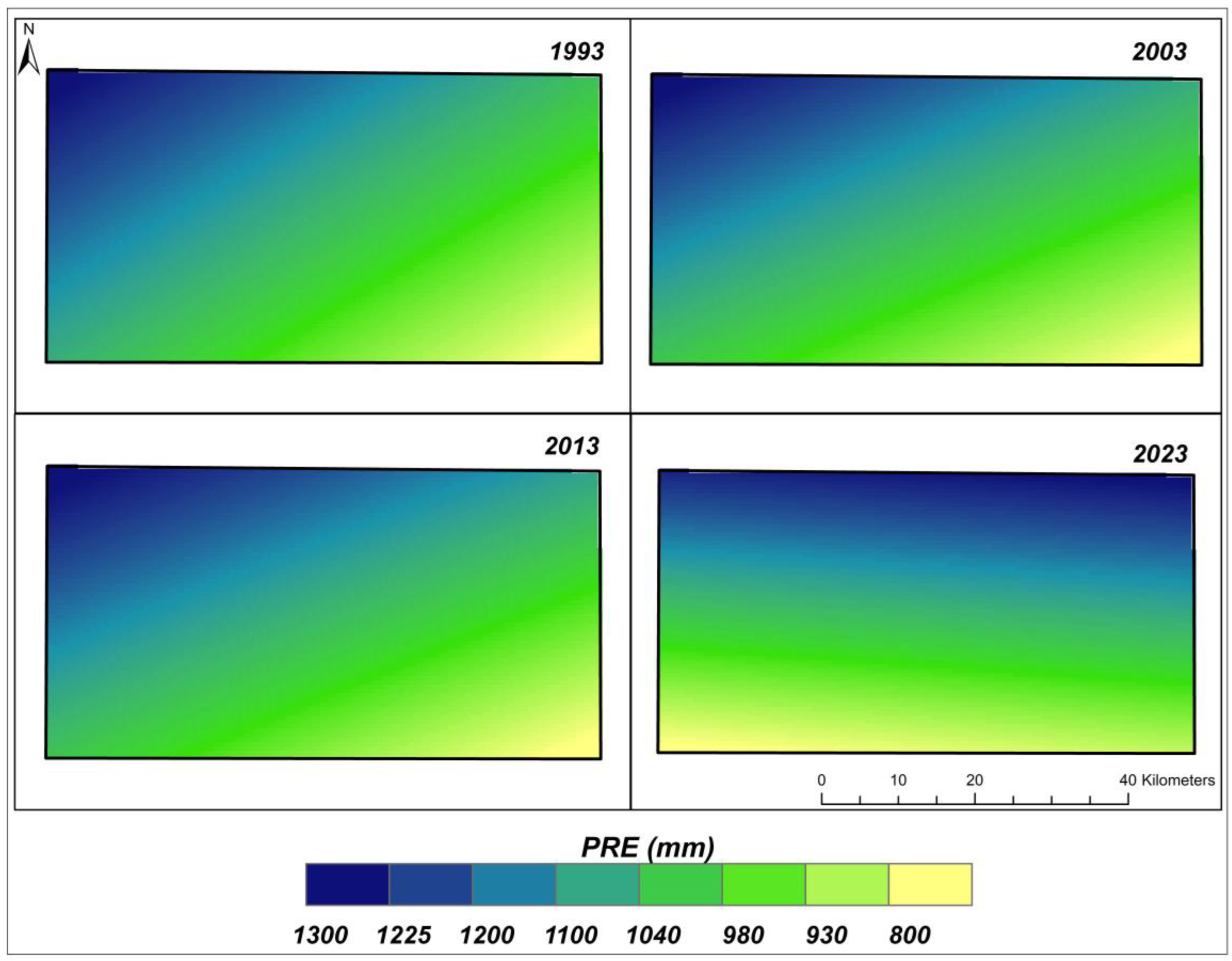
The annual precipitation data from 1993 to 2023, depicted in Figure 5, reveal substantial inter-annual variability, reflecting the region’s sensitivity to changing climatic conditions. Over the three decades, the average annual precipitation was approximately 1200 mm, with pronounced peaks during the monsoon season. However, a noticeable declining trend of around 10% has been observed, particularly in recent years, suggesting a gradual reduction in precipitation inputs to the Chao Lake Basin. This decline may be attributed to broader climatic shifts, such as weakened monsoon systems, changes in atmospheric circulation patterns, and increased regional temperatures driven by global climate change. The observed decrease in precipitation has significant implications for the basin’s hydrological balance, particularly for Chao Lake’s water levels and overall water availability. Lower precipitation inputs, combined with rising LST, exacerbate surface water evaporation, leading to significant reductions in water volume. The hydrological stress caused by reduced rainfall has been further linked to increased salinity and nutrient concentrations within the lake. The increase in salinity can be explained by the concentration effect: as freshwater inflow from precipitation and tributaries declines, the same salt load from natural weathering and anthropogenic sources is dissolved in a smaller water volume, leading to higher salinity. This effect is amplified by elevated evaporation rates under rising temperatures, which further concentrate dissolved ions in the remaining water. As freshwater inflow decreases, the reduced dilution effect concentrates dissolved salts and nutrients from ongoing wastewater discharges and agricultural runoff. This process is exacerbated by elevated evaporation rates under rising temperatures, which further concentrate ions such as sodium, chloride, and sulfate in the remaining water volume. These changes stem from a combination of decreased freshwater inflow, reduced flushing of pollutants, and higher evaporation rates, which concentrate dissolved nutrients and contaminants in the lake’s waters.
A strong negative correlation between declining precipitation and aquatic system health highlights the potential for deteriorating water quality. Lower precipitation levels have been associated with frequent occurrences of harmful algal blooms, a phenomenon exacerbated by elevated Chl-a concentrations, as recorded in recent years. The increased nutrient loading, primarily driven by agricultural runoff and reduced dilution capacity, creates favorable conditions for algal proliferation, posing severe risks to the lake’s ecological stability. Algal blooms deplete dissolved oxygen levels, harm aquatic habitats, and threaten fish populations, ultimately impacting the livelihoods of communities reliant on fishing and water-based activities.

3.4. Correlation Analysis Results

The correlation analysis presented in Figure 6 reveals the intricate interrelationships between land cover types, chlorophyll-a (Chl-a) concentrations, temperature, and precipitation, shedding light on the underlying drivers of water-quality changes in the Chao Lake Basin. A positive correlation (0.763) between built-up areas and Chl-a levels indicates that urban environment expansion contributes significantly to Chao Lake’s nutrient loading. Urban runoff, which carries pollutants such as nitrogen and phosphorus from impervious surfaces, roads, and unmanaged wastewater (untreated or inadequately treated sewage discharged directly into drains or waterways due to insufficient treatment capacity or illegal connections), provides favorable conditions for algal blooms. This relationship emphasizes the direct impact of anthropogenic activities on aquatic systems, as urbanization intensifies the nutrient influx into water bodies, compromising their ecological health. In contrast, an inverse correlation (−0.766) between vegetation cover and Chl-a concentrations suggests that areas with higher vegetation density tend to experience lower algal growth.
The findings emphasize the dual roles of urbanization and vegetation in shaping the water-quality dynamics of Chao Lake. While inevitable in rapidly developing regions, urban expansion poses significant risks to aquatic ecosystems if not managed sustainably. On the other hand, preserving and expanding vegetative cover offers a nature-based solution to counteract these pressures. The results highlight the importance of integrating green infrastructure into urban planning, such as establishing riparian buffers, reforestation initiatives, and wetland restoration, to mitigate the impacts of urban runoff. Moreover, the interactions between land cover, Chl-a, and climatic variables such as temperature and precipitation further compound the lake’s challenges. Rising LST enhances nutrient cycling within the lake, accelerating algal bloom proliferation. Concurrently, declining precipitation reduces freshwater inputs, limiting pollutant dilution and exacerbating nutrient concentrations. These combined effects create a positive feedback loop that further deteriorates water quality.

3.5. Spatiotemporal Causal Relationship Between Precipitation, Temperature, and LULCC Variables

3.5.1. Temporal Causal Relationship: Chl-A, Temperature, Precipitation, and LULCC Variables

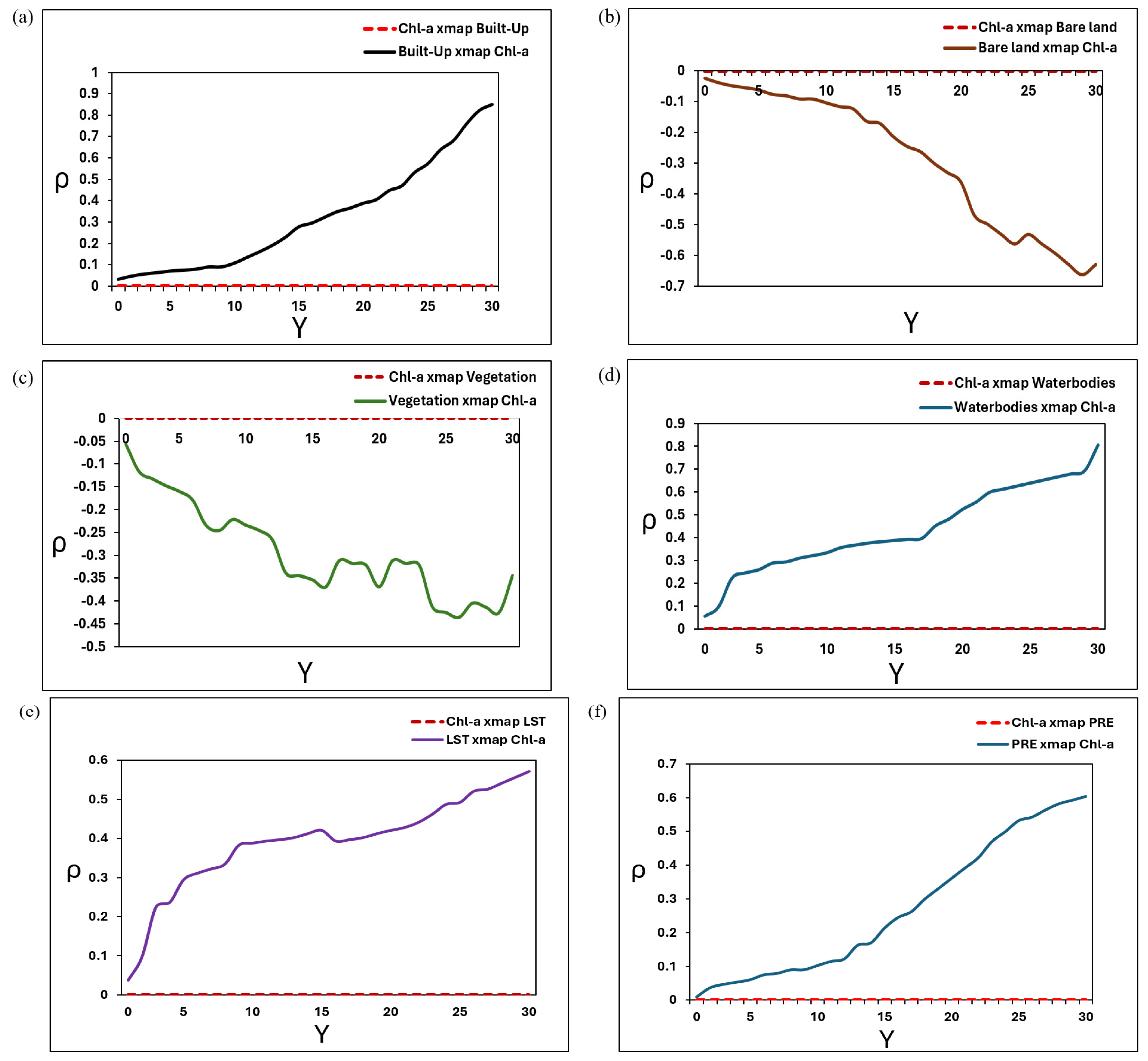
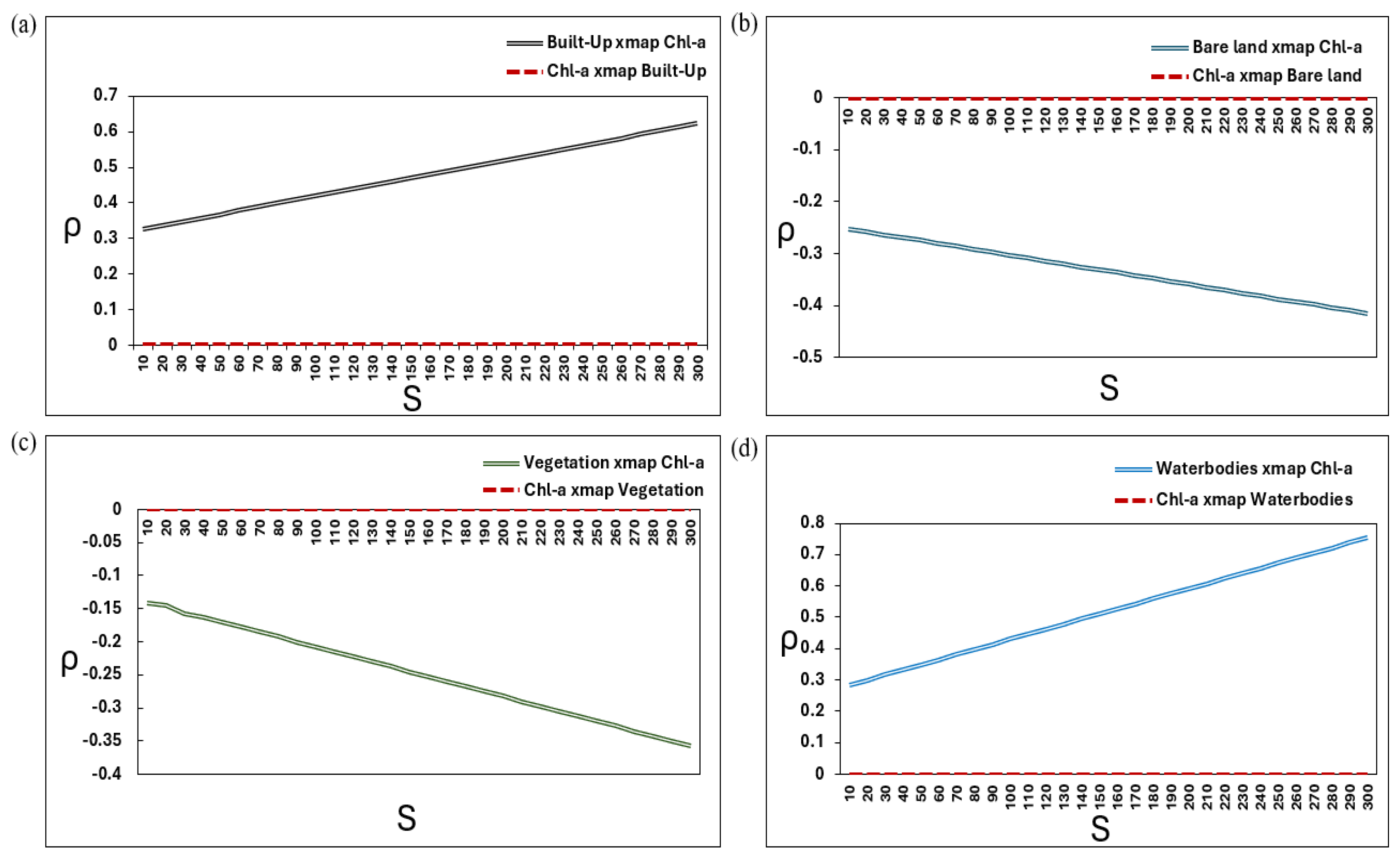
The CCM analysis, illustrated in Figure 7, offers essential insights into the temporal cause–and–effect relationships between land cover categories and Chl-a concentrations, clarifying key factors behind water quality variations in the Chao Lake Basin. In the case of built-up areas (Figure 7a), a strong positive causal influence (ρ = 0.85) on Chl-a levels stresses the major role of urban expansion in nutrient enrichment within the lake. Impervious surfaces and inadequate stormwater management in urban zones contribute to increased nutrient runoff, particularly nitrogen and phosphorus. Meanwhile, direct or partially treated wastewater discharges further stimulate algal bloom formation, endangering the ecological stability of the lake.
In contrast, bare land (Figure 7b) exhibits substantial negative causation with Chl-a (ρ = −0.63), suggesting a more pronounced but still measurable influence on water quality. Bare land contributes to sedimentation and runoff during rainfall events, which may carry nutrients and organic matter into the lake. However, its relatively inverse causation compared to built-up areas indicates that sediment transport negatively drives algal bloom proliferation, particularly in the absence of significant nutrient enrichment. The relationship between vegetation cover (Figure 7c) and Chl-a concentrations reveals a notable inverse causation (ρ = −0.35), reinforcing the protective role of vegetative ecosystems in regulating water quality. Vegetation acts as a buffer zone, intercepting runoff, stabilizing soil to reduce sediment transport, and absorbing excess nutrients before they reach aquatic systems. This filtering capability is particularly critical in reducing external nutrient loading, which is the primary driver of algal blooms. The findings stress the importance of riparian vegetation, wetlands, and forest cover in maintaining the ecological health of Chao Lake.
The interaction between waterbodies (Figure 7d) and Chl-a levels (ρ = 0.85) demonstrates a complex feedback mechanism where water quality influences and is influenced by algal growth. Elevated Chl-a levels, indicative of algal blooms, can reduce dissolved oxygen levels, harm aquatic habitats, and alter water chemistry. Conversely, the physical and chemical properties of the lake, such as nutrient availability and hydrodynamic processes, may further drive algal proliferation, creating a self-reinforcing cycle of water quality degradation. The causal relationships between LST (Figure 7e) and Chl-a concentrations (ρ = 0.64) provide evidence of the exacerbating effects of rising temperatures on algal blooms. Elevated LST enhances nutrient cycling and accelerates biological processes within the lake, creating favorable conditions for algal growth. This finding aligns with the broader context of climate change, where warming trends amplify the risks of eutrophication in freshwater systems.
Lastly, the causal relationship between precipitation (Figure 7f) and Chl-a levels (ρ = 0.60) highlights the role of hydrological dynamics in nutrient regulation. Reduced precipitation over the study period has likely limited freshwater inflows, leading to higher nutrient concentrations and salinity levels due to decreased dilution. Such conditions favor algal blooms and exacerbate water quality challenges. On the other hand, extreme rainfall events may temporarily increase runoff and sediment loading, further complicating the relationship between precipitation and Chl-a dynamics. Reduced precipitation drives increased Chl-a through two mechanisms: (1) a concentration effect—less freshwater inflow means nutrients become concentrated in a smaller water volume; (2) altered flushing patterns—longer dry periods allow nutrient accumulation on urban surfaces, which are then pulsed into the lake during rain events. Rising LST promotes algal growth by (1) directly increasing phytoplankton metabolic rates; (2) strengthening thermal stratification that traps nutrients in the photic zone; and (3) accelerating internal phosphorus loading from sediments under warmer, low-oxygen conditions.

3.5.2. Spatial Causal Inference: Chl-A, Temperature, Precipitation, and LULCC Variables

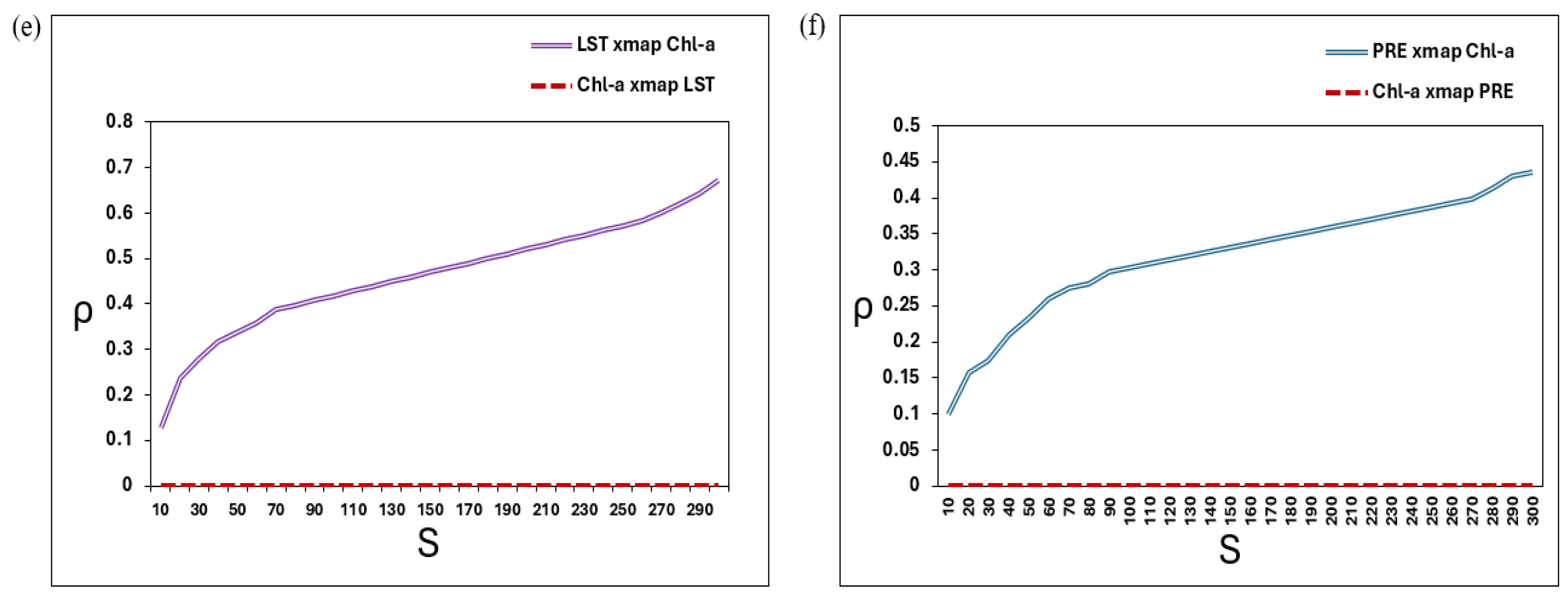
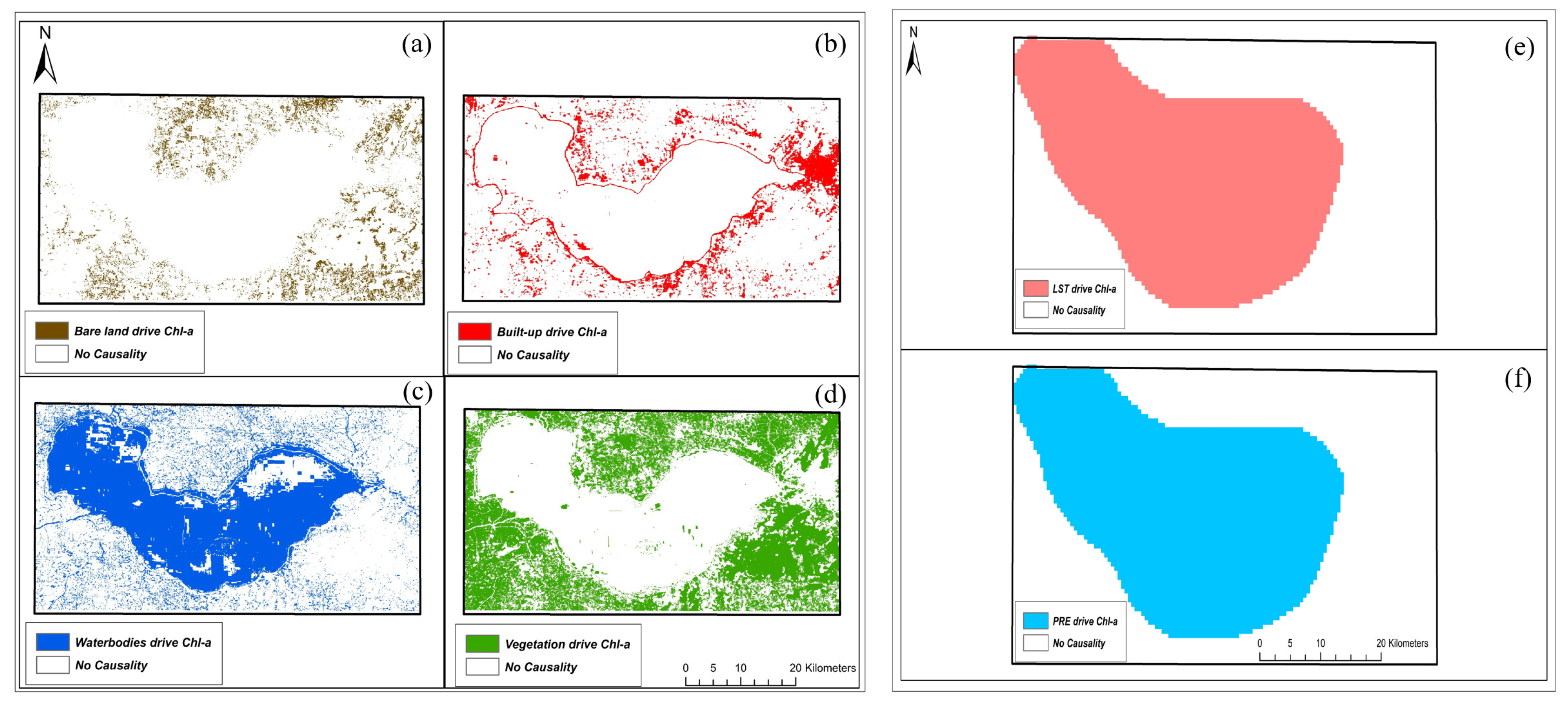
The GCCM outputs, presented in Figure 8 and Figure 9, further deepen our understanding of the complex interactions between land cover types and Chl-a concentrations in the Chao Lake Basin. The results confirm the significant role that various land cover types play in influencing the nutrient dynamics of the lake, each with distinct patterns of correlation and influence. Among the land cover types, built-up areas (Figure 8a and Figure 9a) exhibit high positive causation with Chl-a concentrations (ρ = 0.65), stressing the substantial contribution of urbanization to nutrient loading in the lake. This strong correlation reflects the impact of increasing impervious surfaces, such as roads and buildings, which limit natural water infiltration and increase surface runoff. Urban runoff, often laden with nutrients from fertilizers, waste, and other pollutants, flows into the lake, enriching its nutrient content and fostering conditions favorable for algal blooms. The findings confirm the hypothesis that urban development is a major driver of nutrient pollution in freshwater ecosystems, highlighting the critical need for sustainable urban planning and runoff management practices to mitigate the effects of urban expansion.
However, waterbodies (Figure 8c and Figure 9d) show the highest positive causation with Chl-a concentrations (ρ = 0.75), followed by LST (ρ = 0.70), suggesting that while waterbodies contribute to nutrient cycling within the lake, their role is more complex. Waterbodies serve as both recipients and dynamic environments for nutrient exchange, where factors such as water retention time, nutrient concentration, and hydrodynamic properties interact to influence the extent of algal growth. While the correlation is positive, it is not as strong as that observed in built-up areas, suggesting that waterbodies do not directly cause nutrient enrichment but instead respond to external nutrient inputs.
In contrast, vegetation (Figure 8d and Figure 9c) demonstrates a significant negative correlation with Chl-a concentrations (ρ = −0.37), emphasizing the protective role of natural vegetative cover in regulating water quality. Vegetation, particularly riparian zones and wetlands, acts as a natural filter, intercepting surface runoff and preventing excess nutrients from entering water systems. This buffering effect is critical in maintaining lower nutrient concentrations in waterbodies, thereby reducing the likelihood of eutrophication and algal blooms. The negative causation supports the importance of preserving and restoring vegetative cover in and around water bodies to safeguard water quality.

3.6. Accuracy Assessment and Validation

The results, presented in Table 3, indicate that the classification achieved high accuracy across all time periods. The overall accuracies ranged from 90.4% to 92.8%, with Kappa coefficients between 0.87 and 0.91, indicating almost perfect agreement between the classified maps and the reference data, as per standard interpretation guidelines [27]. The built-up and waterbody classes consistently yielded the highest accuracies (UA and PA > 92%), owing to their distinct spectral signatures. The vegetation and bare land classes showed slightly lower, yet still robust, accuracies, primarily due to occasional spectral confusion between sparse vegetation and bare soil, especially in peri-urban areas undergoing transition.
Validation of the causal inference models (CCM and GCCM) is inherently more complex than traditional classification assessment. The validation for these models is based on the principle of convergence—the idea that the cross-mapping skill (ρ) should increase and converge as the length of the time series (library size, L) increases if a causal relationship truly exists. This convergence was tested for all variable pairs (e.g., Built-up → Chl-a). Furthermore, a sensitivity analysis was performed by varying the embedding dimension (E) to ensure the causal findings were not an artifact of specific model parameters. The strong, convergent cross-mapping skills (ρ) reported in the results (Figure 7, Figure 8 and Figure 9) for key drivers like built-up areas (ρ = 0.85) and LST (ρ = 0.64) provide statistical confidence in the inferred causal relationships, confirming they are robust and not spurious.

4. Discussion

This study offers valuable insights into land use and LULCC, temperature trends, precipitation patterns, and their interactions with water quality in the Chao Lake Basin over the past three decades. Our findings highlight significant environmental changes, particularly the influence of urbanization on water quality, and present an opportunity to explore the relationships among these factors. In this discussion, we compare our results with existing literature and elaborate on the dynamics of these interactions, including their potential causes.

4.1. Land-Use/Land-Cover Change (LULCC) and Water Quality

The Chao Lake Basin has experienced notable land-use transformation over the past three decades, with built-up areas increasing by 125%. This rapid urbanization mirrors broader trends observed across China, where urban expansion has led to substantial changes in land-use patterns [34]. The expansion of built-up areas is primarily driven by population growth, industrial development, and economic growth in urban centers, which have increased the demand for land. As cities expand, natural landscapes such as forests, wetlands, and agricultural areas are replaced with impervious surfaces, profoundly altering the hydrological cycle. These changes modify natural filtration and runoff processes, intensifying the flow of pollutants into nearby water bodies [35,36]. Our study identified a strong positive correlation between the expansion of built-up areas and elevated Chl-a concentrations in Chao Lake, signifying an increase in algal blooms as a key indicator of eutrophication.
This relationship between urbanization and water quality is well documented in other studies [37,38]. For example, reference [37] found that nutrients runoff from impervious surfaces, wastewater, and stormwater runoff in urbanizing catchments lead to higher nutrient levels, fostering algal growth and water quality degradation. The observed increase in Chl-a concentrations can be attributed to heightened nutrient loading, primarily from urban runoff enriched with nitrogen (N) and phosphorus (P), the primary nutrients fueling drivers of eutrophication [38]. Nitrogen can be sourced from untreated sewage and agricultural runoff, while phosphorus typically enters water bodies from fertilizers [3,39,40]. The altered hydrology associated with urbanization, marked by increased land imperviousness and reduced natural water retention, further accelerates these pollutant inputs, exacerbating eutrophication.
In contrast, the approximately 20% reduction in agricultural land in the Chao Lake Basin over the past three decades aligns with global urbanization trends. This trend is consistent with the findings of [41], who documented significant reductions in agricultural land due to urban sprawl in southern China. However, the decline in agricultural land in this study could have certain positive implications for water quality, as agricultural practices, including fertilizer use and pesticide application, are major contributors to nutrient pollution and heavy metal contamination in aquatic ecosystems [42]. However, the reduction in agriculture must be understood in the broader context of urbanization. While urbanization may reduce some types of agricultural pollution, it introduces new sources of contamination, including runoff from industrial sites, roadways, and wastewater treatment facilities, which often have higher pollutant concentrations [43].
Additionally, the reduction in vegetation cover has exacerbated water quality degradation. Vegetation plays a critical role in maintaining water quality by stabilizing soils, reducing surface runoff, and filtering out pollutants before they reach water bodies. Vegetative buffers, particularly riparian zones and wetlands, act as natural filters that intercept surface runoff, trap sediments, and absorb excess nutrients such as nitrogen and phosphorus before they enter aquatic systems [44,45,46]. This buffering effect is critical in maintaining lower nutrient concentrations in waterbodies, thereby reducing the likelihood of eutrophication and algal blooms. The loss of vegetative cover, especially in riparian zones, undermines this natural filtration capacity and exacerbates water quality degradation.

4.2. Temperature and Precipitation Trends

The observed increase in LST of 1.8 °C between 1993 and 2023 in the Chao Lake Basin aligns with global and regional climate change trends. This warming trend aligns with findings from other studies in China, which have reported comparable temperature increases over the past several decades, driven by both global climate change and local urbanization [12]. The rise in temperature directly impacts water quality, especially in eutrophic lakes. Elevated temperatures accelerate biological processes in water, particularly those linked to algal growth [1,47]. Algal blooms, often fueled by excess nutrients such as nitrogen and phosphorus, are more likely to occur in warmer waters. The observed positive correlation between temperature and Chl-a concentrations in this study supports the hypothesis that rising temperatures promote algal growth in the lake. Elevated temperatures also enhance the metabolic rates of microorganisms involved in nutrient cycling, thereby accelerating the release of nitrogen and phosphorus into the water column. Elevated water temperatures, driven by rising LST, accelerate microbial decomposition in lake sediments, consuming oxygen and creating anoxic conditions at the sediment-water interface [19]. Under these low-oxygen conditions, phosphorus previously bound to iron oxides is released into the water column, a process known as internal phosphorus loading [19,38]. This mechanism is particularly significant in shallow lakes like Chao Lake, where wind-induced mixing transports released nutrients to the photic zone, fueling additional algal growth. The subsequent decomposition of algal biomass further depletes oxygen, perpetuating a positive feedback loop that sustains eutrophication even after external nutrient inputs are reduced. This explains the strong causal relationship between LST and Chl-a (ρ = 0.64) observed throughout the study period, as well as the persistent nature of algal blooms in Chao Lake. This accelerated nutrient cycling can result in more severe and persistent eutrophication, particularly in shallow lakes such as Chao Lake.
The approximately 10% decline in precipitation over the past three decades in the Chao Lake Basin is equally significant. Similar patterns of reduced rainfall and more frequent extreme weather events have been documented across various regions of China, aligning with predictions of climate change impacts [32]. Decreased precipitation exacerbates water quality issues by reducing the freshwater influx into the lake, which typically dilutes nutrient concentrations. Furthermore, reduced rainfall means pollutants from urban and agricultural runoff are less likely to be flushed away, resulting in higher concentrations of nutrients, heavy metals, and organic matter in the water [43].

4.3. Interactions Between Land Cover, Temperature, Precipitation, and Water Quality

The results of this study emphasize the complex interactions between land cover, temperature, precipitation, and water quality in the Chao Lake Basin. Our findings indicate a feedback loop wherein urbanization increases impervious surfaces, exacerbating runoff and pollutant loading, while rising temperatures accelerate biological processes, such as algal growth, further degrading water quality. This feedback loop is further compounded by reduced precipitation, which limits the dilution and flushing of pollutants from the lake. The interactions between these variables are dynamic and mutually reinforcing, creating significant challenges for water quality management.
Land cover changes in rapidly urbanizing regions profoundly impact local climates and water quality. Urban expansion increases pollutant inputs, while rising temperatures and reduced rainfall complicate their management in aquatic systems. These findings emphasize the need for integrated environmental management strategies that address the interactions between land-use changes, climate change, and water quality. Preserving or restoring vegetation in riparian zones can mitigate the negative impacts of urban runoff. Conversely, sustainable urban planning practices, such as green infrastructure and low-impact development, can reduce the extent of impervious surfaces and enhance water management [38]. Additionally, policies aimed at reducing nutrient loads from urban and agricultural sources, such as improved wastewater treatment, enhanced stormwater management, and stricter regulations on fertilizer use, will be essential to improving water quality in the Chao Lake Basin.

4.4. Policy Recommendations

The findings of this study highlight the critical need for comprehensive policy measures to address the ongoing eutrophication crisis in Chao Lake. The dramatic 175% increase in chlorophyll-a concentrations over three decades, driven by urbanization, agricultural runoff, and climate change, demands urgent action. These recommendations align with the United Nations Sustainable Development Goal (SDG) 14: Life Below Water, which aims to reduce marine and freshwater pollution from land-based activities. By implementing targeted strategies, policymakers can mitigate nutrient loading, restore water quality, and protect aquatic ecosystems.
Sustainable urban planning must be prioritized to reduce the impact of built-up areas on water quality. The temporary decline in Chl-a concentrations observed in 2013, from 100.37 km2 (4.61%) in 2003 to 51.27 km2 (2.36%) in 2013, despite continuous urban expansion, offers important insights for policy design. This reduction likely resulted from a combination of factors: (1) implementation of pollution control measures under China’s National Water Pollution Control Action Plan, which intensified around this period; (2) improved wastewater treatment infrastructure in Hefei City and surrounding urban areas; and (3) interannual climatic variability, including potentially favorable hydrological conditions that increased flushing and dilution. However, the subsequent rebound to 102.41 km2 (4.71%) by 2023 demonstrates that these interventions were insufficient to permanently address the underlying drivers of eutrophication. This pattern stresses the critical need for Low-Impact Development (LID) strategies that go beyond end-of-pipe treatment to fundamentally alter the hydrologic connectivity between urban surfaces and receiving waters. Specifically, LID techniques such as permeable pavements, bioretention cells, and green roofs should be designed to capture and treat the “first flush” of stormwater following dry periods, a mechanism identified in our causal analysis as a key pathway for nutrient delivery. By reducing impervious surface runoff at its source rather than merely treating its symptoms, LID addresses the fundamental hydrologic alteration that allows nutrient pulses to reach the lake, thereby providing more resilient protection against eutrophication under varying climatic conditions.
The study found a strong positive causation (ρ = 0.85) between urban expansion and chlorophyll-a levels, emphasizing the role of impervious surfaces in increasing nutrient runoff. LID techniques, such as permeable pavements, green roofs, and constructed wetlands, should be mandated in new urban projects to enhance stormwater infiltration and filtration. Additionally, preserving and expanding riparian vegetation buffers along lakeshores and tributaries can significantly reduce pollutant influx, as vegetation cover showed a protective effect (ρ = −0.37) against algal blooms. Agricultural practices in the Chao Lake Basin must also be reformed to minimize nutrient pollution. Although agricultural land decreased by 20% over the study period, residual fertilizer runoff remains a major contributor to eutrophication. Precision farming technologies, including soil nutrient sensors and controlled-release fertilizers, should be promoted through government subsidies to optimize fertilizer use. Transitioning to organic farming practices could further reduce synthetic fertilizer dependency, as demonstrated in other regions facing similar challenges. These measures would not only improve water quality but also support sustainable food production systems.
Climate change adaptation must be integrated into water management strategies. The observed 1.8 °C rise in land surface temperature and 10% decline in precipitation exacerbate nutrient cycling and algal bloom proliferation. Adaptive water quality standards should be established to account for these climate-driven changes, ensuring that regulatory frameworks remain effective under shifting environmental conditions. Furthermore, real-time monitoring systems using remote sensing and IoT-based sensors should be deployed to provide early warnings of algal blooms, enabling timely interventions to protect aquatic life and human health. Cross-sectoral collaboration is essential for effective water governance. A dedicated Chao Lake Basin Authority, comprising representatives from urban planning, agriculture, and environmental agencies, should be established to coordinate pollution control and habitat restoration efforts. Public–private partnerships can also play a key role in funding wastewater treatment upgrades and community-led conservation projects, such as wetland restoration. Engaging local communities in citizen science initiatives for water quality monitoring would foster environmental stewardship and enhance data collection, aligning with SDG 14’s emphasis on inclusive action.
Finally, long-term research and monitoring programs are critical for tracking progress and refining strategies. Interdisciplinary studies should investigate emerging pollutants, climate impacts, and the effectiveness of mitigation measures. By adopting these evidence-based policies, stakeholders can address the interconnected challenges of urbanization, agriculture, and climate change while advancing the global commitment to sustainable freshwater ecosystems [44]. These recommendations provide a scalable framework for other regions grappling with eutrophication, contributing to the broader goals of SDG 14.

4.5. Limitations and Future Directions

While this study provides valuable insights into the drivers of eutrophication in Chao Lake, several limitations should be acknowledged. First, the reliance on remote sensing data, despite its advantages in spatial and temporal coverage, may introduce uncertainties due to atmospheric interference and sensor resolution constraints, particularly in quantifying chlorophyll-a concentrations. Second, the study’s causal inference models (CCM and GCCM) assume stationarity in relationships over time, which may not fully capture nonlinear or threshold-driven interactions between variables. Third, the analysis did not account for point-source pollution inputs, such as industrial discharges, which could significantly influence nutrient dynamics. Additionally, the 30-year study period, while extensive, may not fully represent long-term climatic cycles or extreme weather events that could alter eutrophication trends. Future research incorporating higher-resolution data, more frequent sampling, and explicit modeling of anthropogenic point sources could further refine these findings.

5. Conclusions

This study provides a comprehensive assessment of the interactions among land-use changes, temperature increases, precipitation trends, and water quality dynamics in the Chao Lake Basin over the past three decades. The findings emphasize the profound impacts of urbanization, agricultural intensification, and climate variability on the lake’s ecological health, particularly through increased nutrient loading, altered hydrological processes, and diminished buffering capacities due to vegetation loss. The interconnectedness of these drivers stresses the cascading effects of human activities and climatic shifts on aquatic ecosystems, highlighting the critical need for integrated and adaptive management strategies. The study concludes by advocating for sustainable land-use practices, enhanced green infrastructure, and advanced monitoring frameworks to mitigate further ecological degradation and ensure the long-term resilience of Chao Lake. By addressing these challenges holistically, this research contributes valuable insights into freshwater ecosystem management amidst accelerating environmental pressures.

Author Contributions

Conceptualization, E.Y., A.R. and M.N.; methodology, E.Y., C.O. and A.I.O.; software, M.N. and M.M.S.; validation, A.R., A.O. and I.Q.; formal analysis, M.N.; investigation, E.Y. and I.S.; resources, A.R. and A.O.; data curation, A.O.K.N.M.; writing—original draft, E.Y. and C.O.; writing—review and editing, A.R. and I.S.; visualization, M.N. and M.M.S.; supervision, A.R. All authors have read and agreed to the published version of the manuscript.

Funding

This research received no external funding.

Data Availability Statement

The original contributions presented in this study are included in the article. Further inquiries can be directed to the corresponding author.

Acknowledgments

We extend our heartfelt thanks to the editors and anonymous reviewers for their valuable and insightful comments.

Conflicts of Interest

The authors declare no conflicts of interest.

References

  1. Chen, R.; Ju, M.; Chu, C.; Jing, W.; Wang, Y. Identification and quantification of physicochemical parameters influencing chlorophyll-a concentrations through combined principal component analysis and factor analysis: A case study of the Yuqiao Reservoir in China. Sustainability 2018, 10, 936. [Google Scholar] [CrossRef]
  2. Ayele, H.S.; Atlabachew, M. Review of characterization, factors, impacts, and solutions of Lake eutrophication: Lesson for lake Tana, Ethiopia. Environ. Sci. Pollut. Res. 2021, 28, 14233–14252. [Google Scholar] [CrossRef] [PubMed]
  3. Wang, Y.; Guo, Y.; Zhao, Y.; Wang, L.; Chen, Y.; Yang, L. Spatiotemporal heterogeneities and driving factors of water quality and trophic state of a typical urban shallow lake (Taihu, China). Environ. Sci. Pollut. Res. 2022, 29, 53831–53843. [Google Scholar] [CrossRef]
  4. Poddar, S.; Chacko, N.; Swain, D. Estimation of chlorophyll-a in northern coastal Bay of Bengal using Landsat-8 OLI and Sentinel-2 MSI sensors. Front. Mar. Sci. 2019, 6, 598. [Google Scholar] [CrossRef]
  5. Ye, H.; Tang, S.; Yang, C. Deep learning for Chlorophyll-a concentration retrieval: A case study for the Pearl River Estuary. Remote Sens. 2021, 13, 3717. [Google Scholar] [CrossRef]
  6. Quang, N.H.; Nguyen, M.N.; Paget, M.; Anstee, J.; Viet, N.D.; Nones, M.; Tuan, V.A. Assessment of Human-Induced Effects on Sea/Brackish Water Chlorophyll-a Concentration in Ha Long Bay of Vietnam with Google Earth Engine. Remote Sens. 2022, 14, 4822. [Google Scholar] [CrossRef]
  7. Fang, T.; Yang, K.; Lu, W.; Cui, K.; Li, J.; Liang, Y.; Hou, G.; Zhao, X.; Li, H. An overview of heavy metal pollution in Chaohu Lake, China: Enrichment, distribution, speciation, and associated risk under natural and anthropogenic changes. Environ. Sci. Pollut. Res. 2019, 26, 29585–29596. [Google Scholar] [CrossRef]
  8. Wu, Z.; Lai, X.; Li, K. Water quality assessment of rivers in Lake Chaohu Basin (China) using water quality index. Ecol. Indic. 2021, 121, 107021. [Google Scholar] [CrossRef]
  9. Yao, S.; Zhang, Y.; Wang, P.; Xu, Z.; Wang, Y.; Zhang, Y. Long-term water quality prediction using integrated water quality indices and advanced deep learning models: A case study of Chaohu Lake, China, 2019–2022. Appl. Sci. 2022, 12, 11329. [Google Scholar] [CrossRef]
  10. Zhang, Y.; Tong, X.; Liu, T.; Duan, L.; Hao, L.; Singh, V.P.; Jia, T.; Lun, S. Spatio-temporal evolution of inland lakes and their relationship with hydro-meteorological factors in Horqin Sandy Land, China. Remote Sens. 2023, 15, 2719. [Google Scholar] [CrossRef]
  11. Wang, W.; Wang, H.; Feng, Y.; Wang, L.; Xiao, X.; Xi, Y.; Luo, X.; Sun, R.; Ye, X.; Huang, Y.; et al. Consistent responses of the microbial community structure to organic farming along the middle and lower reaches of the Yangtze River. Sci. Rep. 2016, 6, 35046. [Google Scholar] [CrossRef]
  12. Hu, M.; Zhang, Y.; Ma, R.; Xue, K.; Cao, Z.; Chu, Q.; Jing, Y. Optimized remote sensing estimation of the lake algal biomass by considering the vertically heterogeneous chlorophyll distribution: Study case in Lake Chaohu of China. Sci. Total Environ. 2021, 771, 144811. [Google Scholar] [CrossRef] [PubMed]
  13. Harvey, E.T.; Kratzer, S.; Philipson, P. Satellite-based water quality monitoring for improved spatial and temporal retrieval of chlorophyll-a in coastal waters. Remote Sens. Environ. 2015, 158, 417–430. [Google Scholar] [CrossRef]
  14. Xu, S.; Li, S.; Tao, Z.; Song, K.; Wen, Z.; Li, Y.; Chen, F. Remote sensing of chlorophyll-a in xinkai lake using machine learning and GF-6 WFV images. Remote Sens. 2022, 14, 5136. [Google Scholar] [CrossRef]
  15. Rodríguez-López, L.; Alvarez, D.; Bustos Usta, D.; Duran-Llacer, I.; Bravo Alvarez, L.; Fagel, N.; Bourrel, L.; Frappart, F.; Urrutia, R. Chlorophyll-a detection algorithms at different depths using in situ, meteorological, and remote sensing data in a Chilean Lake. Remote Sens. 2024, 16, 647. [Google Scholar] [CrossRef]
  16. Walton, C.R.; Zak, D.; Audet, J.; Petersen, R.J.; Lange, J.; Oehmke, C.; Wichtmann, W.; Kreyling, J.; Grygoruk, M.; Jabłońska, E.; et al. Wetland buffer zones for nitrogen and phosphorus retention: Impacts of soil type, hydrology and vegetation. Sci. Total Environ. 2020, 727, 138709. [Google Scholar] [CrossRef] [PubMed]
  17. Jiang, G.; Loiselle, S.A.; Yang, D.; Ma, R.; Su, W.; Gao, C. Remote estimation of chlorophyll a concentrations over a wide range of optical conditions based on water classification from VIIRS observations. Remote Sens. Environ. 2020, 241, 111735. [Google Scholar] [CrossRef]
  18. Sugihara, G.; May, R.; Ye, H.; Hsieh, C.H.; Deyle, E.; Fogarty, M.; Munch, S. Detecting causality in complex ecosystems. Science 2012, 338, 496–500. [Google Scholar] [CrossRef]
  19. Yang, C.; Yang, P.; Geng, J.; Yin, H.; Chen, K. Sediment internal nutrient loading in the most polluted area of a shallow eutrophic lake (Lake Chaohu, China) and its contribution to lake eutrophication. Environ. Pollut. 2020, 262, 114292. [Google Scholar] [CrossRef]
  20. Zhao, Y.; Yu, Z.; Chen, F.; Zhang, J.; Yang, B. Vegetation response to Holocene climate change in monsoon-influenced region of China. Earth-Sci. Rev. 2009, 97, 242–256. [Google Scholar] [CrossRef]
  21. Lin, Y.; Zhang, T.; Ye, Q.; Cai, J.; Wu, C.; Syed, A.K.; Li, J. Long-term remote sensing monitoring on LUCC around Chaohu Lake with new information of algal bloom and flood submerging. Int. J. Appl. Earth Obs. Geoinf. 2021, 102, 102413. [Google Scholar] [CrossRef]
  22. Zhang, L.; Fang, Y.; Cai, H.; Zhang, S. Spatio-temporal heterogeneities in water quality and their potential drivers in Lake Chaohu (China) from 2001 to 2017. Ecohydrology 2021, 14, e2333. [Google Scholar] [CrossRef]
  23. Yeboah, E.; Wang, G.; Hagan, D.F.; Shi, X.; Cabral, P.; Sarfo, I.; Amankwah, S.O.; Okrah, A. A causal investigation of land use and land cover change on emerging urban heat island footprints in a mid-latitude region. Environ. Dev. Sustain. 2025, 6, 1–34. [Google Scholar] [CrossRef]
  24. Peng, J.; Chen, J.; Liu, S.; Liu, T.; Deng, F.; Fan, Y.; De Maeyer, P. Dynamics of the risk of algal blooms induced by surface water temperature in an alpine eutrophic lake under climate warming: Insights from Lake Dianchi. J. Hydrol. 2024, 643, 131949. [Google Scholar] [CrossRef]
  25. Delpla, I.; Baurès, E.; Jung, A.V.; Thomas, O. Impacts of rainfall events on runoff water quality in an agricultural environment in temperate areas. Sci. Total Environ. 2011, 409, 1683–1688. [Google Scholar] [CrossRef] [PubMed]
  26. Lin, J.; Wang, P.; Wang, J.; Zhou, Y.; Zhou, X.; Yang, P.; Zhang, H.; Cai, Y.; Yang, Z. Water quality dataset in China. Earth Syst. Sci. Data Discuss. 2023, 1–14. [Google Scholar]
  27. Han, J.; Zhang, L.; Ye, B.; Gao, S.; Yao, X.; Shi, X. The standards for drinking water quality of China (2022 edition) will take effect. China CDC Wkly. 2023, 5, 297. [Google Scholar] [PubMed]
  28. Yan, Y.; Wang, H.; Li, G.; Xia, J.; Ge, F.; Zeng, Q.; Ren, X.; Tan, L. Projection of future extreme precipitation in China based on the CMIP6 from a machine learning perspective. Remote Sens. 2022, 14, 4033. [Google Scholar] [CrossRef]
  29. Sarfo, I.; Bi, S.; Xu, X.; Yeboah, E.; Kwang, C.; Batame, M.; Addai, F.K.; Adamu, U.W.; Appea, E.A.; Djan, M.A.; et al. Planning for cooler cities in Ghana: Contribution of green infrastructure to urban heat mitigation in Kumasi Metropolis. Land Use Policy 2023, 133, 106842. [Google Scholar] [CrossRef]
  30. Wang, D.; Tang, B.H.; Fu, Z.; Huang, L.; Li, M.; Chen, G.; Pan, X. Estimation of chlorophyll-a concentration with remotely sensed data for the nine plateau lakes in Yunnan province. Remote Sens. 2022, 14, 4950. [Google Scholar] [CrossRef]
  31. Gao, B.; Yang, J.; Chen, Z.; Sugihara, G.; Li, M.; Stein, A.; Kwan, M.P.; Wang, J. Causal inference from cross-sectional earth system data with geographical convergent cross mapping. Nat. Commun. 2023, 14, 5875. [Google Scholar] [CrossRef]
  32. Yeboah, E.; Sarfo, I.; Zhu, Q.; Kwang, C.; Puplampu, D.A.; Nikoi, E.; Arthur, I.K.; Owusu, B.A.; Fynn, I.E.; El Rhadiouini, C.; et al. Traceability and projected patterns of Africa’s land use systems and climate variability (1993–2053). Land Use Policy 2025, 157, 107680. [Google Scholar] [CrossRef]
  33. Peng, J.; Ma, J.; Liu, Q.; Liu, Y.; Hu, Y.N.; Li, Y.; Yue, Y. Spatial-temporal change of land surface temperature across 285 cities in China: An urban-rural contrast perspective. Sci. Total Environ. 2018, 635, 487–497. [Google Scholar] [CrossRef] [PubMed]
  34. Kumar, M.; Denis, D.M.; Singh, S.K.; Szabó, S.; Suryavanshi, S. Landscape metrics for assessment of land cover change and fragmentation of a heterogeneous watershed. Remote Sens. Appl. Soc. Environ. 2018, 10, 224–233. [Google Scholar] [CrossRef]
  35. Müller, A.; Österlund, H.; Marsalek, J.; Viklander, M. The pollution conveyed by urban runoff: A review of sources. Sci. Total Environ. 2020, 709, 136125. [Google Scholar] [CrossRef] [PubMed]
  36. Wang, C.; Liu, S.; Zhou, S.; Zhou, J.; Jiang, S.; Zhang, Y.; Feng, T.; Zhang, H.; Zhao, Y.; Lai, Z.; et al. Spatial-temporal patterns of urban expansion by land use/land cover transfer in China. Ecol. Indic. 2023, 155, 111009. [Google Scholar] [CrossRef]
  37. Yao, S.; Chen, C.; He, M.; Cui, Z.; Mo, K.; Pang, R.; Chen, Q. Land use as an important indicator for water quality prediction in a region under rapid urbanization. Ecol. Indic. 2023, 146, 109768. [Google Scholar] [CrossRef]
  38. Yu, S.; Li, X.; Wen, B.; Chen, G.; Hartley, A.; Jiang, M.; Li, X. Characterization of water quality in Xiao Xingkai Lake: Implications for trophic status and management. Chin. Geogr. Sci. 2021, 31, 558–570. [Google Scholar] [CrossRef]
  39. Shi, K.; Chen, Y.; Yu, B.; Xu, T.; Li, L.; Huang, C.; Liu, R.; Chen, Z.; Wu, J. Urban expansion and agricultural land loss in China: A multiscale perspective. Sustainability 2016, 8, 790. [Google Scholar] [CrossRef]
  40. Liu, S.; Qiu, Y.; Fu, R.; Liu, Y.; Suo, C. Identifying the water quality variation characteristics and their main driving factors from 2008 to 2020 in the Yellow River Basin, China. Environ. Sci. Pollut. Res. 2023, 30, 66753–66766. [Google Scholar] [CrossRef]
  41. Shang, W.; Jin, S.; He, Y.; Zhang, Y.; Li, J. Spatial–temporal variations of total nitrogen and phosphorus in Poyang, Dongting and Taihu Lakes from landsat-8 data. Water 2021, 13, 1704. [Google Scholar] [CrossRef]
  42. Wang, X.; Yang, Y.; Wan, J.; Chen, Z.; Wang, N.; Guo, Y.; Wang, Y. Water quality variation and driving factors quantitatively evaluation of urban lakes during quick socioeconomic development. J. Environ. Manag. 2023, 344, 118615. [Google Scholar] [CrossRef] [PubMed]
  43. Zhao, J.; Hou, S.; Zhang, H.; Sun, S.; Guo, C.; Zhang, X.; Song, G.; Xu, J. Spatiotemporal variations and priority ranking of emerging contaminants in nanwan reservoir: A case study from the agricultural region in huaihe river basin in China. J. Environ. Manag. 2024, 368, 122195. [Google Scholar] [CrossRef]
  44. Wang, R.; Liu, L.; Tao, Z.; Wan, B.; Wang, Y.; Tang, X.; Li, Y.; Li, X. Effect of urbanization and urban forests on water quality improvement in the Yangtze River Delta: A case study in Hangzhou, China. J. Environ. Manag. 2024, 351, 119980. [Google Scholar] [CrossRef]
  45. Geedicke, I.; Oldeland, J.; Leishman, M.R. Urban stormwater run-off promotes compression of saltmarshes by freshwater plants and mangrove forests. Sci. Total Environ. 2018, 637, 137–144. [Google Scholar] [CrossRef] [PubMed]
  46. Szalińska, E.; Jarosińska, E.; Orlińska-Woźniak, P.; Jakusik, E.; Warzecha, W.; Ogar, W.; Wilk, P. Total nitrogen and phosphorus loads in surface runoff from urban land use (city of Lublin) under climate change. Environ. Sci. Pollut. Res. 2024, 31, 48135–48153. [Google Scholar] [CrossRef]
  47. Jaja, N.; Mbila, M.; Codling, E.; Tsegaye, T.; Odutola, J. Landscape variability of riparian buffers and its impact on soil and water chemistry of an urbanized watershed. Ecol. Indic. 2022, 137, 108777. [Google Scholar] [CrossRef]
Figure 1. Geographical location of Chao Lake.
Water 18 00650 g001
Figure 2. Flowchart diagram of the study.
Water 18 00650 g002
Figure 3. LULCC over the past three decades in the Chao Lake Basin.
Water 18 00650 g003
Figure 4. Annual average LST variations in the Chao Lake Basin (1993–2023).
Water 18 00650 g004
Figure 5. Annual average Precipitation variations in Chao Lake Basin (1993–2023).
Water 18 00650 g005
Figure 6. Correlation between the Land cover types, Chl-a, Temperature, and Precipitation.
Water 18 00650 g006
Figure 7. (a) CCM Outputs of Built Up and Chl-a; (b) Bare Land and Chl-a; (c) Vegetation and Chl-a; (d) Waterbodies and Chl-a; (e) LST and Chl-a; (f) PRE and Chl-a. Y represents years, and ρ depicts the cross-mapping skill values.
Water 18 00650 g007
Figure 8. (a) GCCM Output Built Up and Chl-a; (b) Bare Land and Chl-a; (c) Waterbodies and Chl-a; (d) Vegetation and Chl-a; (e) LST and Chl-a; (f) PRE and Chl-a.
Water 18 00650 g008
Figure 9. (a) GCCM Output of Built Up and Chl-a; (b) Bare Land and Chl-a; (c) Waterbodies and Chl-a; (d) Vegetation and Chl-a; (e) LST and Chl-a; (f) PRE and Chl-a. S represents the sample of points, and ρ depicts the cross-mapping skill values.
Water 18 00650 g009aWater 18 00650 g009b
Table 1. Area Coverage Change of each Class (km2) (1993–2023).
Features1993200320132023
Vegetation650.81688.82383.09536.30
Bare land438.95402.64401.49165.81
Built-Up282.64320.77599.57635.69
Chl-a37.26100.3751.27102.41
Waterbodies766.17663.23740.42735.62
Total2175.832175.832175.832175.83
Table 2. Area Coverage Change of each Class (%) (1993–2023).
Features1993200320132023
Vegetation29.91%31.66%17.61%24.65%
Bare land20.17%18.51%18.45%7.62%
Built-Up12.99%14.74%27.56%29.22%
Chl-a1.71%4.61%2.36%4.71%
Waterbodies35.21%30.48%34.03%33.81%
Total100.00%100.00%100.00%100.00%
Table 3. Accuracy Assessment of Land-Use/Land-Cover Classification for the Chao Lake Basin.
LULC Class1993 2003 2013 2023
PA (%)UA (%)PA (%)UA (%)PA (%)UA (%)PA (%)UA (%)
Built-up94.293.593.892.195.194.39693.8
Vegetation88.586.289.190.387.388.990.589.1
Bare Land85.387.886.784.288.286.586.988.4
Waterbody96.897.595.496.897.296.596.397.1
Chl-a (Water)91.289.590.192.392.590.89391.5
Overall Accuracy91.50% 90.40% 92.80% 92.10%
Kappa Coefficient0.89 0.87 0.91 0.9
Disclaimer/Publisher’s Note: The statements, opinions and data contained in all publications are solely those of the individual author(s) and contributor(s) and not of MDPI and/or the editor(s). MDPI and/or the editor(s) disclaim responsibility for any injury to people or property resulting from any ideas, methods, instructions or products referred to in the content.