1. Introduction
Low-saturated hydraulic conductivity covers (LSHCCs), also known as water infiltration barriers or impermeable barriers, are used to prevent exchanges between sulphide-rich mine waste and the natural environment. The primary objective of LSHCCs is to control water infiltration into underlying mine waste, thereby reducing the reactions responsible for acid mine drainage (AMD) production [
1,
2,
3].
LSHCCs can be composed of a single low hydraulic conductivity layer, a two-layer system with a non-compacted layer overlying a compacted layer, or a more complex multilayer structure, where each layer serves a specific function. In two-layer covers, the non-compacted layer functions as a moisture storage and release zone, protecting the compacted layer from evapotranspiration effects [
4].
Multilayer covers can include up to five soil layers [
1,
5]: (i) surface layer—supports vegetation establishment; (ii) protective layer—ensures physical stability and prevents bio-intrusion; (iii) drainage layer—acts as a capillary break; (iv) hydraulic barrier layer—the low hydraulic conductivity layer; and (v) support layer—provides both structural support and an additional capillary break.
The surface, protective, and drainage layers help mitigate the impact of wet–dry and freeze–thaw cycles on the underlying layers. Typically, the surface layer consists of organic soils, the protection layer is composed of cobble-sized materials, while the drainage and support layers are made of granular soils such as sand or gravel.
Different materials can be used in the hydraulic barrier layer, including geomembranes, geosynthetic clay liners, and clay materials [
1]. Compacted clay is the most frequently used natural material for the hydraulic barrier layer due to its hydrogeological properties [
6]. Compacted clay should be characterised and placed appropriately to ensure good performance as hydraulic barrier, in accordance with design parameters [
6,
7].
A clay-based hydraulic barrier should have a hydraulic conductivity equal to or lower than 10−9 m.s−1 (in accordance with Québec regulation). To meet this criterion, the barrier should be constructed using medium- to low-plasticity clayey soils, defined as having a fine particle content greater than 30% (sieve, opening 0.075 mm), a clay fraction (0.002 mm) exceeding 15%, a plasticity index (PI) between 7 and 20%, a liquid limit (LL) exceeding 20%, and a gravel content less than 50%.
Based on the estimated long transit time and low water infiltration, clay cover can be a very effective hydraulic barrier [
8]. However, the properties of clay and its performance as a hydraulic barrier may be affected by several factors, such as field placement conditions (degree of compaction, moisture content), cracking, and structural changes induced by seasonal weather cycles (e.g., wetting–drying, shrinkage/swelling processes, and freeze–thaw cycles), as well as root penetration [
9,
10].
Compaction procedures and moisture content during construction strongly influence the mechanical and hydrogeological properties of clayey soils. Saturated hydraulic conductivity is lower when the soil is compacted wet of the optimum water content with a high level of compaction energy [
11,
12]. During the compaction process, the soil must be sufficiently wet to mold clay clods, thereby eliminating large inter-clod pores [
13,
14]. Similarly, high compaction energy can knead the soil, remold clods and eliminate large pore spaces [
12,
13,
14]. This highlights the need for proper control of the compaction process, specifically managing moisture content and energy levels.
A clay layer acting as a LSHCC can be exposed to wetting–drying cycles. The drying process decreases the soil’s water content, inducing an increase in matric suction. This results in cracks due to the desiccation process (shrinkage) [
15,
16,
17]. At the same time, these cracks become preferential pathways for water, reducing the cover’s effectiveness as a hydraulic barrier. A single drying cycle can cause significant damage to the cover, leading to loss of its hydraulic barrier capacity [
18,
19,
20]. The volume changes induced by the desiccation process are directly related to the water content of the clay after compaction, which is a function of the soil properties (including its consistency limits) and compaction conditions [
15,
18]. Soil layers with a high clay content and a high plasticity index exhibit greater initial water contents and consequently significant volume changes. On the other hand, clay amendments with sand, silt, cement, and other materials can be used to reduce the plasticity of the clay and minimize its susceptibility to crack formation. However, these mixtures generally increase the saturated hydraulic conductivity of covers [
10].
Freeze–thaw cycles also cause changes in the hydrogeological properties of clays. At the freezing front, a suction pressure is induced, attracting water molecules from the unfrozen zone. This process leads to changes in soil structure due to rearrangement and consolidation, affecting the hydraulic conductivity of the clays and their performance as a hydraulic barrier [
21,
22,
23]. These effects are more pronounced in high-plasticity soils [
13,
22]. On the other hand, ref. [
24], as cited by [
21,
25,
26], explain that the increase in hydraulic conductivity after a freeze–thaw cycle, without crack formation, is due to changes in soil structure at the microscopic and macroscopic level. In silty clay, coarse grains control the soil structure, while fine grains regulate hydraulic conductivity. After a freeze–thaw cycle, clay form denser and dispersed structures due to consolidation, occupying a smaller volume. This decreased the void ratio, which, in turns, leads to higher hydraulic conductivity [
22,
27]. In clayey silt, coarse grains are not in contact. Freeze–thaw cycles in this type of soil also cause a collapse and rearrangement of the clay particles into a more dispersed structure, resulting in a reduced void ratio. However, in this case, hydraulic conductivity increases because of the shrinkage cracks that form during freezing [
21,
23].
Based on laboratory tests, ref. [
22] demonstrated that the effects of freeze–thaw cycles can be reduced by using a high compaction energy. On the other hand, some non-plastic or very low-plasticity soils do not experience changes in permeability, even if cracking zones are observed after the freezing cycle. This behavior can be attributed to the self-healing properties of these fractures during thawing and subsequent percolation [
13]. Other processes influencing the hydraulic conductivity have been discussed by several authors, including root penetration [
27] and differential settlement [
9]. According to [
10], the settlement effects on the clay-based covers can be minimized by using clay amendments with sand, silt, or man-made substances. However, this leads to an increase in hydraulic conductivity.
In the Abitibi-Témiscamingue and northern regions of Quebec and Ontario, clay materials are readily available in the form of clay plains, which can exceed 50 m in thickness in some areas (e.g., north of La Sarre—[
28]). However, despite their abundance, these clay materials are generally underutilized in mine site reclamation as hydraulic barriers due to their susceptibility to freeze–thaw effects. Freeze–thaw cycles have been shown to increase their k
sat beyond the threshold commonly accepted for materials considered impermeable (k
sat = 10
−9 m.s
−1—[
29]).
Recently, Abitibi clay materials were amended in lab and submitted to different freeze–thaw cycles [
29]. Investigation results showed that the freeze–thaw effect on the k
sat was reduced, and therefore these amended clayey materials can be used as construction materials in the LSHCC. These clay materials were tested in the lab using experimental instrumented columns physically simulating LSHCCs and submitted to wetting and dying cycles. The investigation results showed that the amended clay materials remained close to water saturation, and the water infiltration across the LSHCCs was very limited. These results allow us to conclude that amended clay materials can be used adequately as LSHCCs [
30]. However, it necessary to test these amended materials in the field using experimental cells before using them in the reclamation of mine sites generating AMD. The present study was initiated with the objective to evaluate the performance of LSHCC configurations made with amended or unamended clay material, incorporating either a simple or a double waterproof layer. These evaluations were performed using k
sat, volumetric water content, suctions, and water infiltration measurements.
This article presents the material characterization and the configuration of the experimental cells. It then outlines the monitoring results, followed by a discussion and conclusion.
2. Material and Methods
In this study, clay, silty sand, sand, and amended clay materials were used. These amended clay materials were prepared using different proportions of silty sand and sand. Therefore, two mixtures were prepared in the field: (a) mixture 1, made with clay and fine sand at a ratio of 5:1; (b) mixture 2, made with clay and silty sand at a ratio of 5:1. The ratio used in the experimental cells is based on previous studies of clay amendments [
29] and evaluations of amended clay-based cover systems [
30].
The following sections present the material characterizations, followed by a description of the experimental cell configurations and instrumentation.
2.1. Materials
2.1.1. Physical Characterization
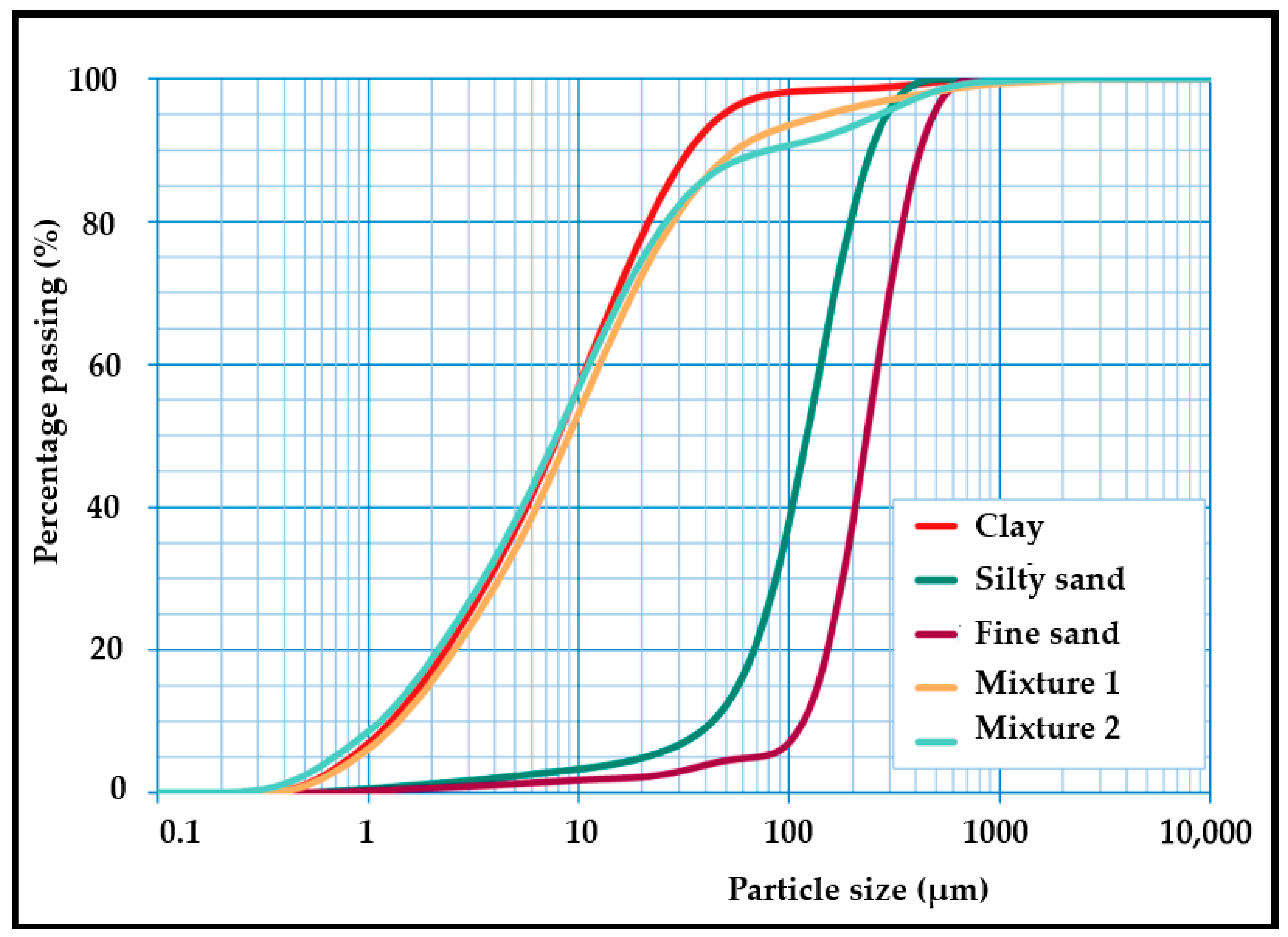
Grain-size distribution (GSD): The particle size analysis was conducted to quantitatively determine the distribution of soil particles across different diameter classes. Testing was conducted using a Malvern Panalytical Mastersizer 3000 laser particle-size distribution analyser (Malvern Panalytical, Malvern, UK). The results of the GSD of the material used in the cells construction are illustrated in
Figure 1.
Key parameters extracted from the GSD curves are summarized in
Table 1. D
10, D
30, and D
60 represent the particle diameters at 10%, 30%, and 60% passing on the cumulative grain-size distribution curve, respectively. The coefficients of uniformity (C
U) and of curvature (C
C) were calculated using the formula C
U = D
60/D
10 and C
C = (D
30)
2/(D
10 × D
60). In addition, the clay, silt, and sand fractions are given in
Table 1.
The D
10 values range between 1.3 µm for clay and 115.9 µm for sand, while the D
60 values range from 12.3 mm for mixture 2 to 262.3 µm for sand. The C
U values of the tested materials range from 2.3 (sand) to 9.4 (mixture 1). Based on these parameters and the Unified Soil Classification System (USCS) [
31], the amendment soils are classified as silty sand (SM) and fine sand (SP).
Atterberg limits: The liquid limit (w
L) and plastic limit (w
P) were determined in accordance with standard method [
32]. The values of w
L were 29, 29, and 31%, while those of w
P were 19, 16 and 21% for the clay, mixture 1, and mixture 2, respectively (
Table 2). The resulting plasticity index PI (=w
L − w
P) was 10% for the clay and mixture 2 and 13% for mixture 1. There was a slight increase in the plasticity index for mixture 1 due to the low measured value of
. This value appears to be inaccurate, as a decrease in clay content should lead to a decrease in the plasticity index; however, the opposite trend is observed in this case. Based on the results presented in
Table 1 (GSD) and
Table 2 (Atterberg limits), the clayey soil and the two mixtures were classified as low-plasticity clays (CLs).
The activity, calculated as the ratio of the PI to the percentage of clay-sized particles (P
2µm), ranged from 0.56 for mixture 2 to 0.81 for mixture 1. The clay and mixture 2 are inactive clays (activity < 0.75, low volume swelling potential; [
31]) while mixture 1 (activity ranging between 0.75 and 1.25) exhibits medium volume change potential [
33] to medium swelling potential.
2.1.2. Hydrogeological Characterisation
As part of hydrogeological characterization, water retention curve (WRC) and saturated hydraulic conductivity (k
sat) tests were conducted on the materials clay and silty sand. The WRC was determined for the granular soils using a Tempe pressure cell according to standard method [
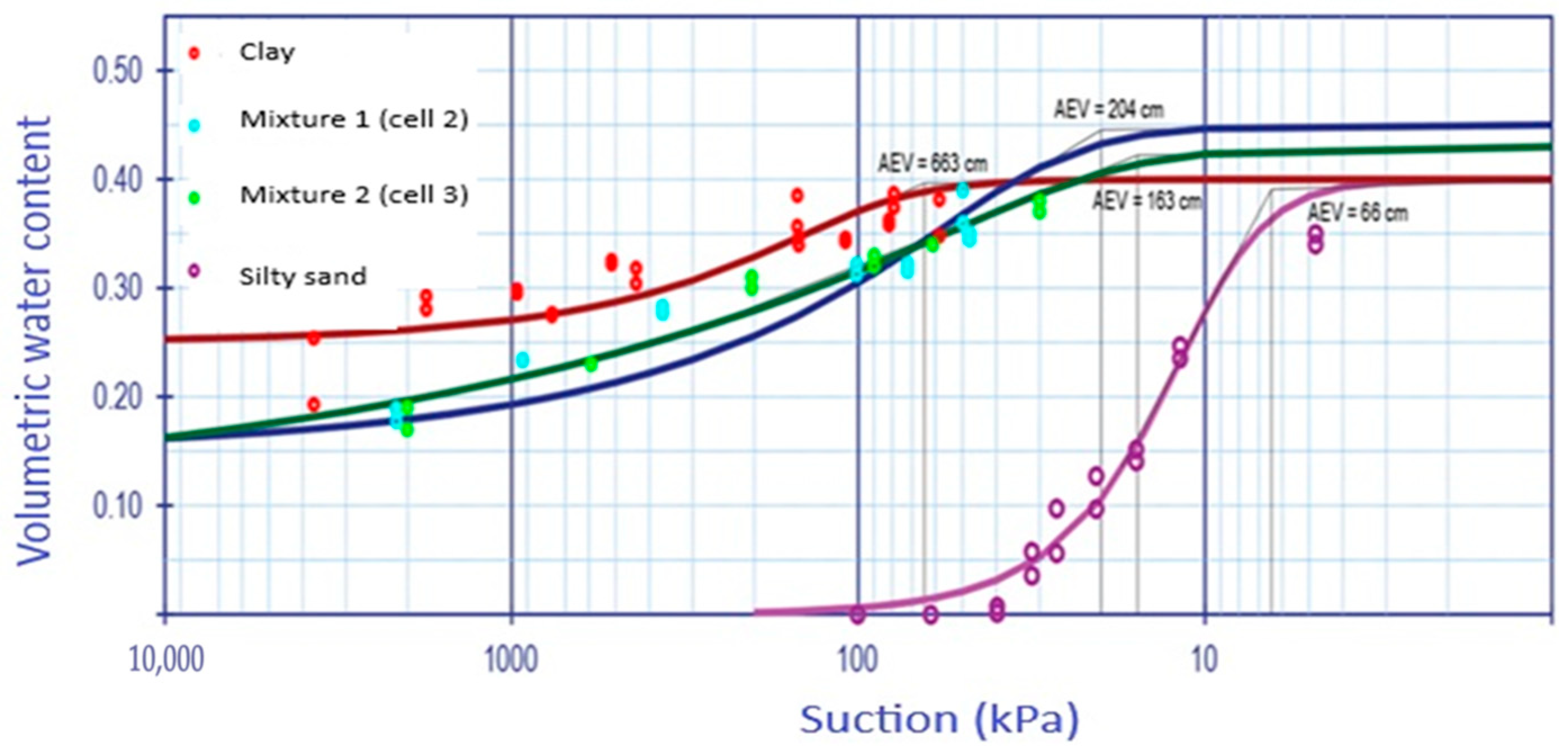
33] and for the fine soils using a pressure plate extractor. The measurement results are presented in
Figure 2, which also includes fitted curves using the van Genuchten model [
34,
35]. These curves were used to determine the air entry value (AEV) using the tangent method [
36,
37,
38].
The fitted parameters of the van Genuchten equation (α, n
v, θ
s and θ
r) and the AEV values are summarized in
Table 3. The AEV ranges from 6.6 kPa (66 cm of water) for silty sand to 66.3 kPa (663 cm of water) for clay materials. These fitted parameters will be used in the numerical modeling of cover performance.
The saturated hydraulic conductivity (k
sat) was measured using different methods, depending on soil type: a constant-load rigid-wall permeameter [
30] was used for sandy soils, a variable-load rigid-wall permeameter [
39] for silty soils, and a flexible-wall permeameter [
40] for clay soils. The measured values for materials in Cells 1, 2, and 4 (clay and mixtures) are lower than the threshold established for LSHCC (10
−9 m.s
−1), while the values measured for the amendment materials used in Cell 3 fall within the required range (10
−9 m.s
−1—see
Table 4).
2.2. Field Experimental Cells
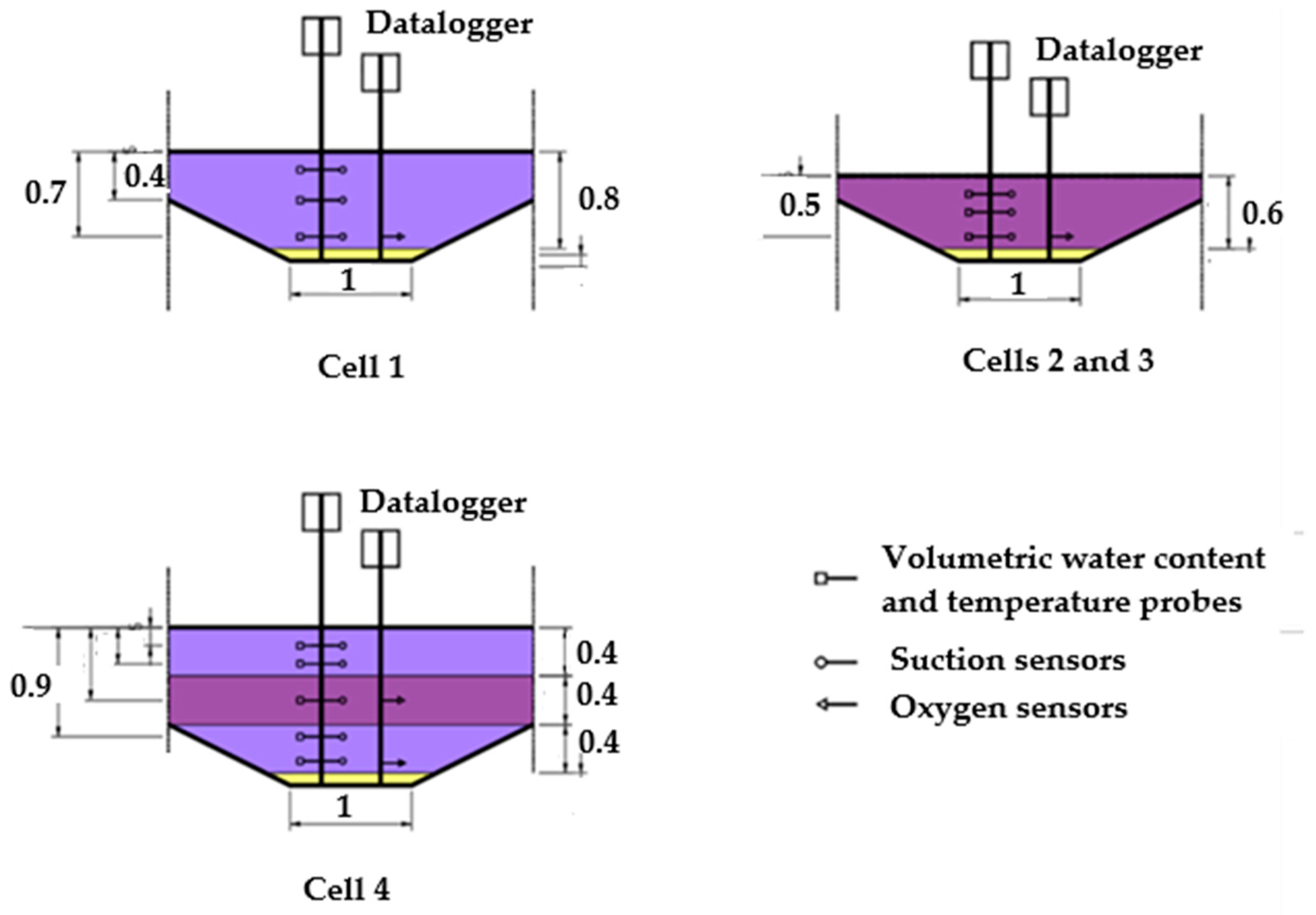
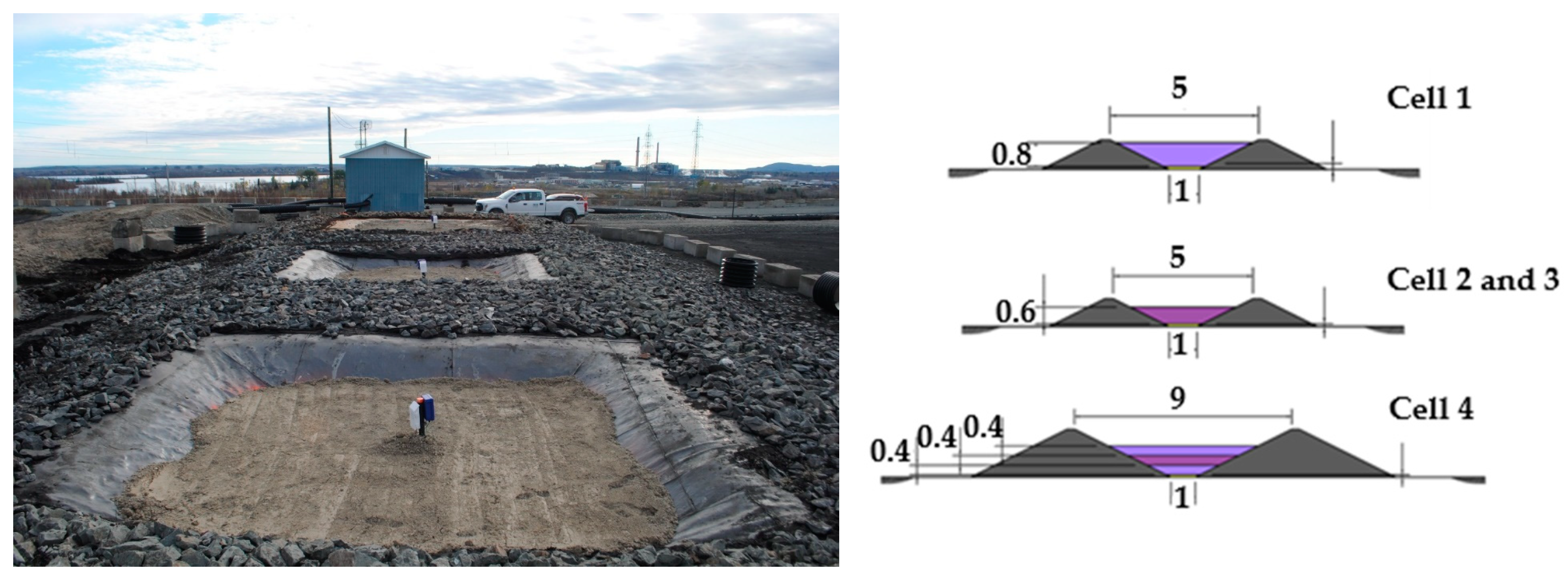
To evaluate the performance of clay and amended clay materials, four experimental cells were constructed in the field. Each experimental cell had an inverted truncated pyramid shape with a 1 m × 1 m base and 2H:1V slopes (see
Figure 3).
Cell 1 serves as the control cell, simulating a cover composed entirely of a clay layer with a thickness of 0.8 m. Cell 2 consists of a clay–fine sand mixture (mixture 1—with a ratio of 5:1) and has a thickness of 0.6 m. Cell 3 has the same geometry as Cell 2 but is composed of a clay—silty sand mixture (mixture 2—with a 5:1 ratio), also with a thickness of 0.6 m. Finally, Cell 4 is composed of two clay layers, each 0.4 m thick, with an intermediate silty sand layer of the same thickness, as shown in the
Figure 3.
Each experimental cell was equipped with an outlet drain near the bottom for water infiltration measurements. The drains consisted of a perforated pipe and a sand filter.
The construction process involved excavation, geomembrane installation, backfilling, and compaction. Compaction was performed with a plate compactor in 0.2 m layers. The material mixtures were prepared on site, and the density and moisture contents were controlled by using a nuclear density gauge and a soil sample ring.
The monitoring system for the experimental cells consisted of three levels of instrumentation for Cells 1, 2, and 3 and five levels for Cell 4. Each level was equipped to measure volumetric water content, suction, and temperature (see
Figure 3 and
Figure 4). In the sensor labeling, the first number refers to the experimental cell, while the second indicates the sensor depth. The sensor positions from the cell surface are as follows:
Sensor 1: 70 cm (Cell 1), 50 cm (Cells 2 and 3), and 110 cm (Cell 4);
Sensor 2: 50 cm (Cell 1), 30 cm (Cells 2 and 3), and 90 cm (Cell 4);
Sensor 3: is positioned at 15 cm (Cells 1, 2 and 3) and 60 cm (Cell 4);
Sensors 4 and 5 (Cell 4 only), located at 30 cm and 15 cm, respectively.
Water infiltration measurements near the bottom of the cells were conducted using tilt flowmeters, each connected to a data logger for continuous recording. The sensor measures the number of tilts made by the flowmeter bucket. Since the bucket volume is known, data processing converts the number of tilts into a flow rate by accumulating measurements over a specific period (hourly).
Hydraulic conductivity tests were periodically performed in the field using the Guelph permeameter and in accordance with ASTM [
39,
40]. These measurements enable a comparison between lab and field measurements, helping to identify the influence of construction factors and assess the evolution of hydrogeological parameters under varying meteorological conditions.
2.3. Numerical Simulation Modeling
Numerical simulations were conducted using SEEP/W 2021 [
41], which employs the finite element method (FEM) to simulate the movement of liquid water or water vapor through both saturated and unsaturated porous media. Water flow modeling with SEEP/W is based on the Richards equation, and simulations can be performed in either steady-state or transient modes, considering hydrogeological conditions.
For the numerical simulations, one-dimensional models consistent with the vertical configuration of the cells were developed. In these numerical models, the thicknesses of the different layers were identical to those used in the experimental cells. Each layer was assigned specific hydrogeological properties, including the water retention curve, ksat and the hydraulic conductivity (permeability) function. The following boundary conditions were applied:
Lower boundary (node): A constant head boundary condition (with ), combined with a potential seepage face condition, was imposed to simulate the installed drain. This condition allows the simulation of a free surface.
Upper boundary (node): A land–climate interaction (LCI) boundary condition was applied. This condition enables calculation of the water balance and net percolation through the simulated covers [
41]. It corresponds to a Neumann-type boundary condition (i.e., prescribed flux). The software computes the imposed flux based on surface interactions, using surface mass balance equations to estimate the infiltration rate.
These one-dimensional models simulate water flow through the LSHCC in different experimental cells, allowing for the evaluation of the water balance for each scenario. The primary objective was to calibrate and validate the models using field measurements. Additionally, sensitivity analysis was performed by adjusting the saturated hydraulic conductivity in the numerical model, calculating the hourly percolation flow rate, and comparing the results with the flow rates measured in the field using tilt flowmeters.
3. Results
3.1. Volumetric Water Content Measurements
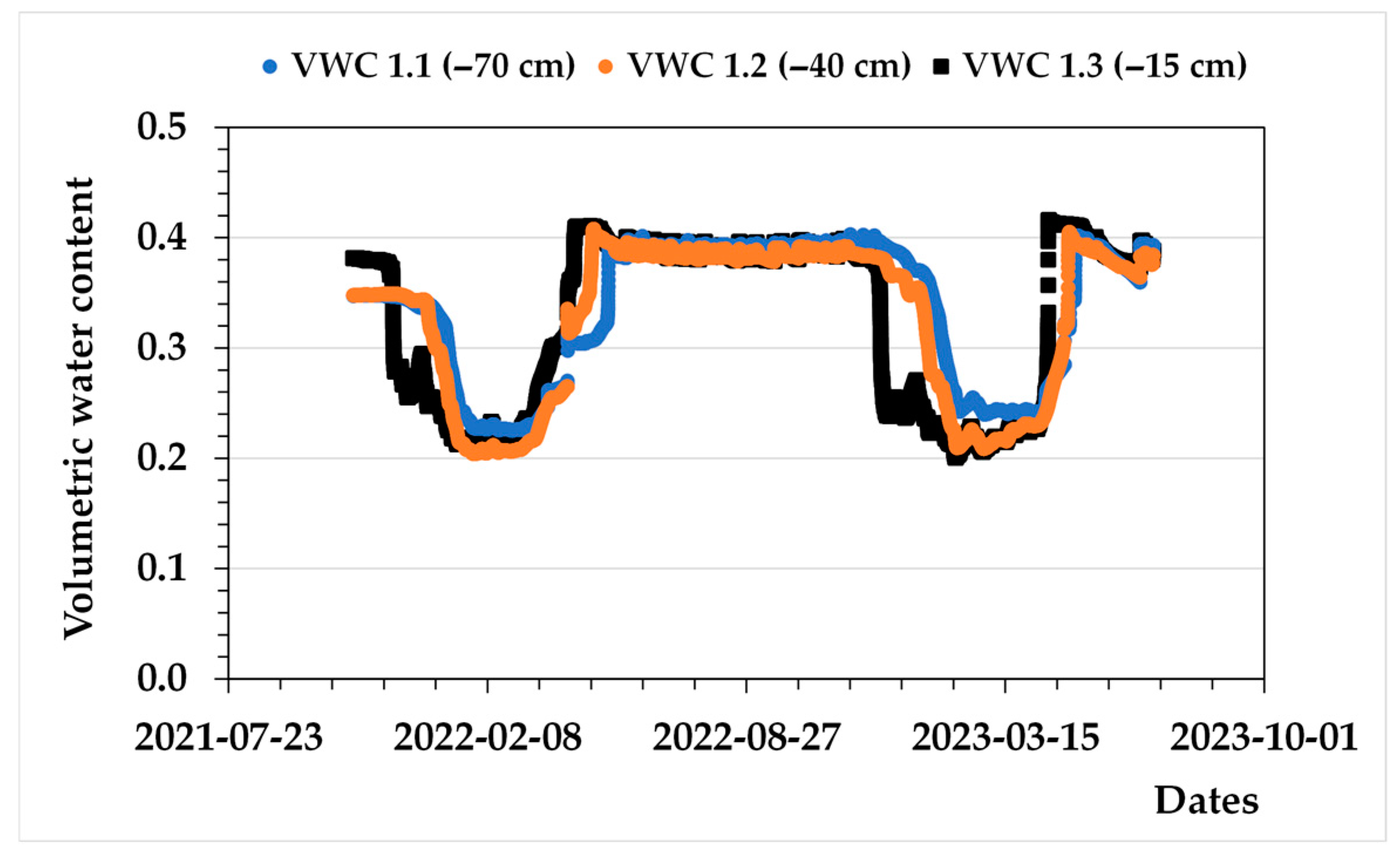
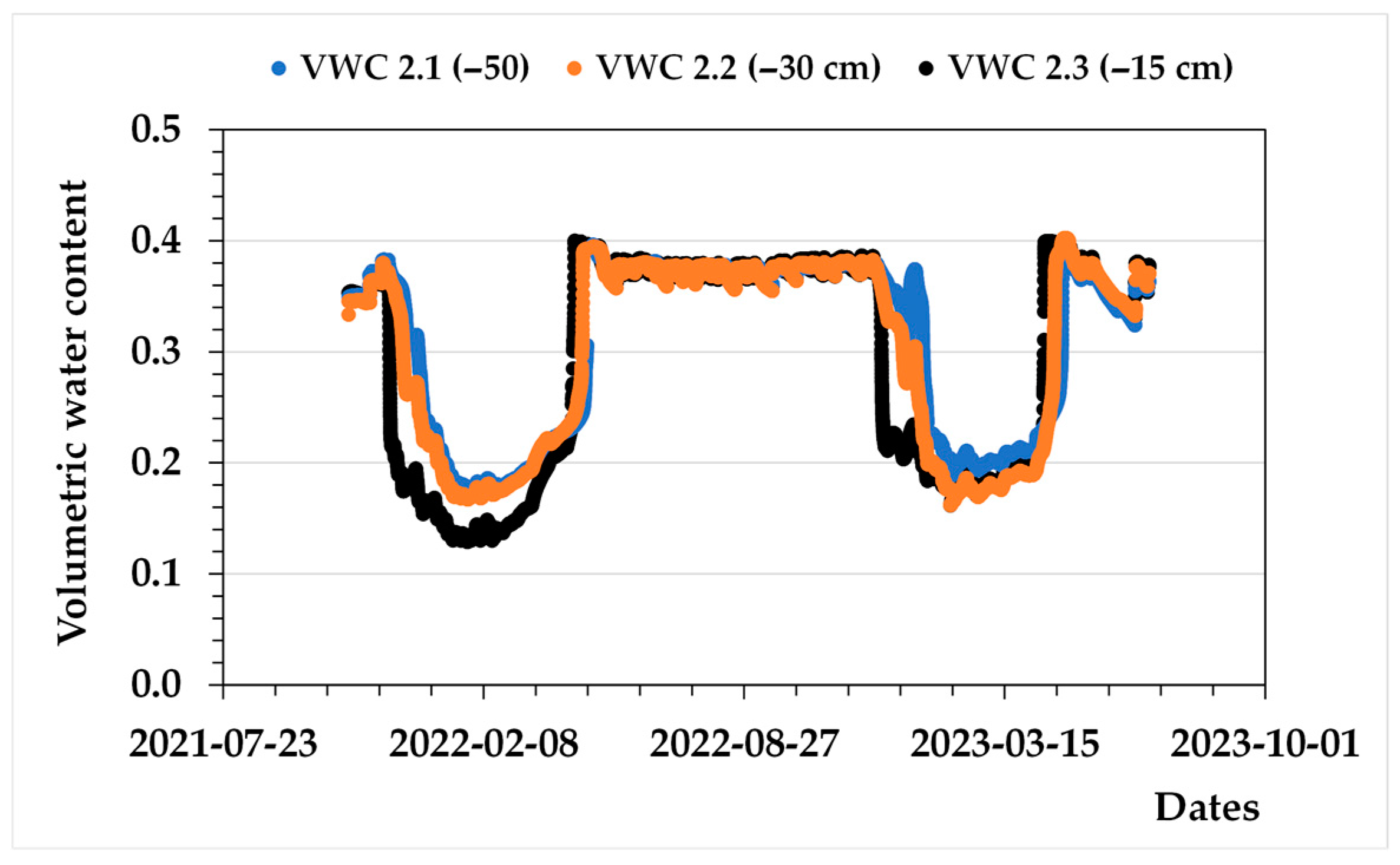
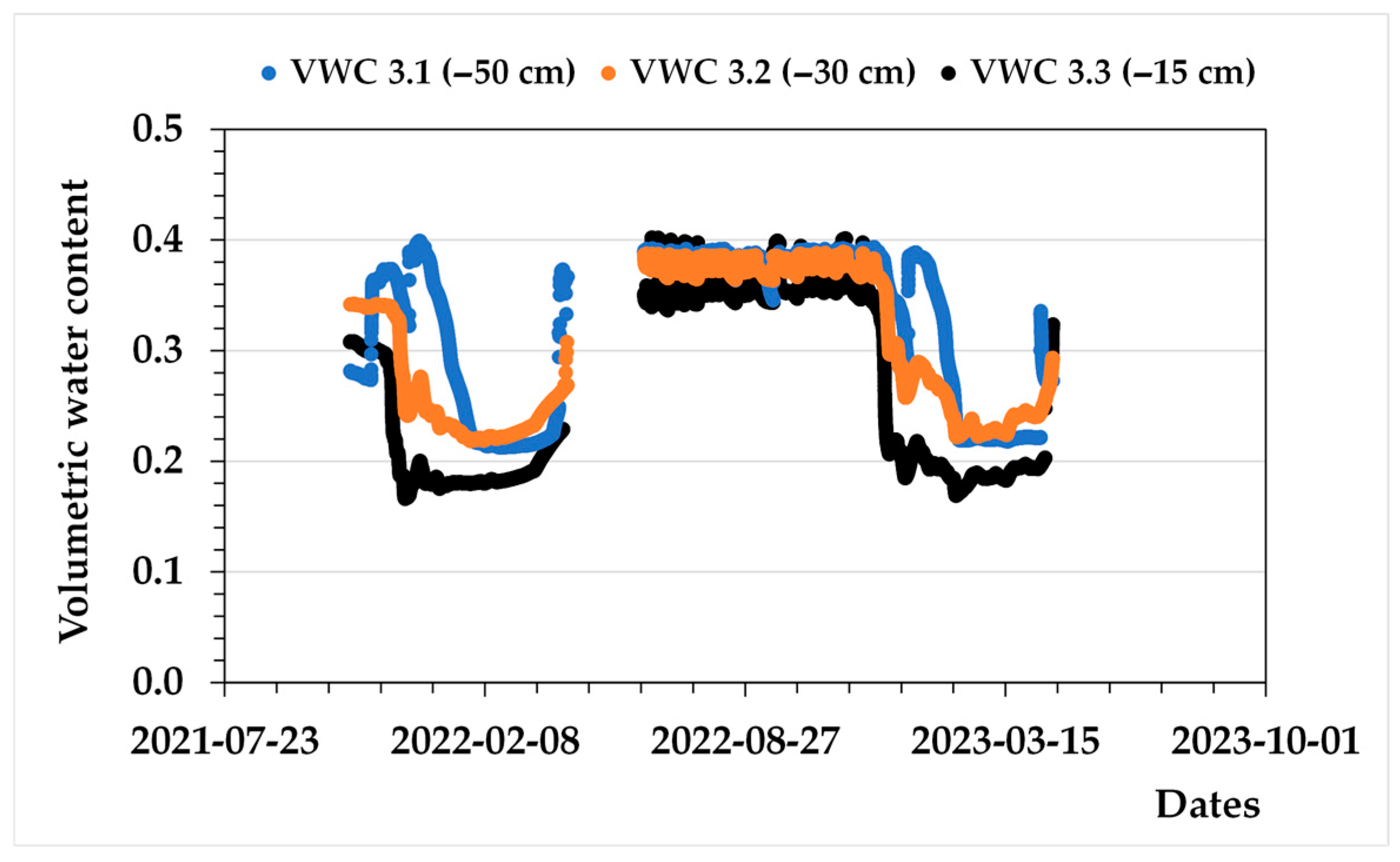
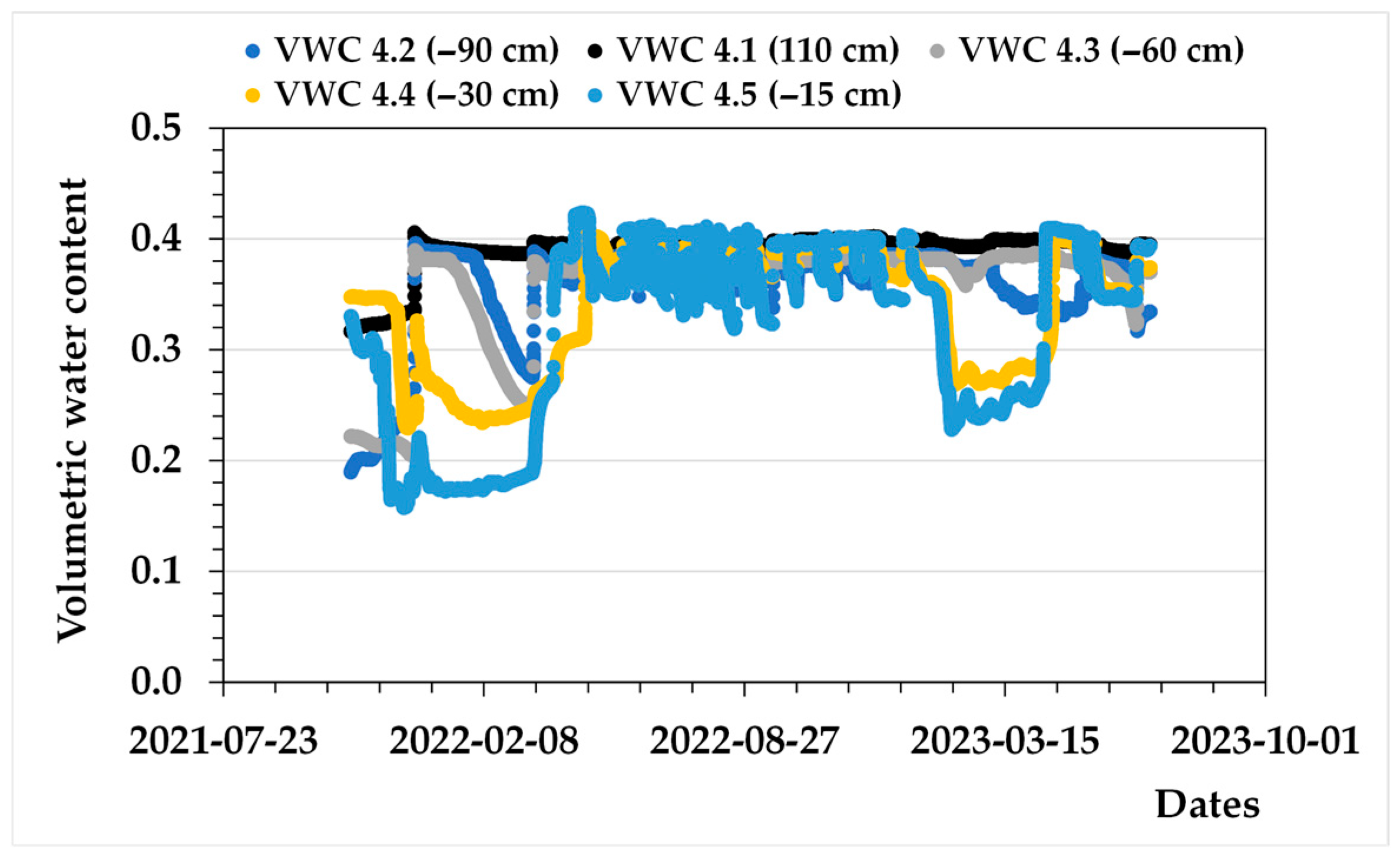
Volumetric water contents (VWCs) were measured using sensors, with continuous data logging through dataloggers. The raw data were adjusted using calibration curves developed in the laboratory for each used material. The VWC measurement results over the observation period (October 2021 to June 2023) are presented in
Figure 5,
Figure 6 and
Figure 7, and 8 for Cells 1, 2, 3, and 4, respectively.
The VWCs across the four experimental cells exhibit similar trend. VWC remains relatively stable during the spring and summer periods, followed by a marked decline in winter. This significant drop in VWC corresponds to temperature falling below freezing, during which the sensors detect only the unfrozen (liquid) water content [
42]. As a result, the presence of ice leads to artificially low VWC readings. This behavior is consistent with observations made at mine sites during winter months.
During the spring and summer periods, significant variations in VWC were observed near the top of experimental Cell 4, where the VWC dropped from 0.40 to 0.32, representing a reduction of about 0.08. In contrast, the VWC variation near the bottom of the experimental cells was less pronounced, with values ranging from: 0.40 to 0.38 in Cell 1, 0.40 to 0.36 in Cell 2, 0.39 to 0.35 in Cell 3, and 0.40 to 0.39 in Cell 4 [
43].
Despite these variations, the degree of saturation across all cells remained above 89%, a threshold that is sufficient to limit oxygen migration [
44].
It is important to note that the freezing effect is more pronounced for the sensor located near the top of the experimental cell compared to those positioned deeper. This effect is particularly evident in Cell 4, where the lowest sensor (Sensor 4-1) showed no signs of freezing influence (see
Figure 8).
3.2. Suction Measurements
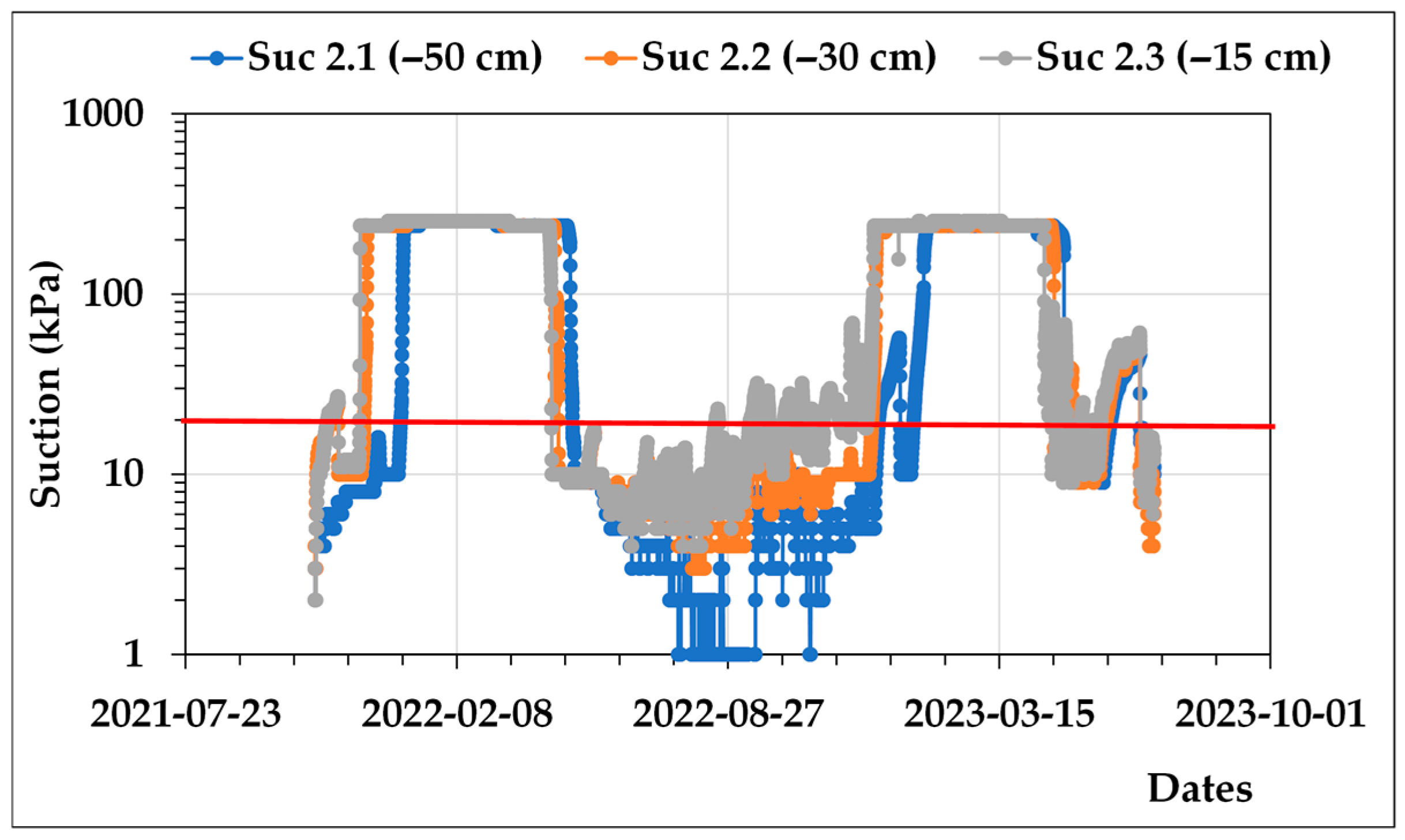
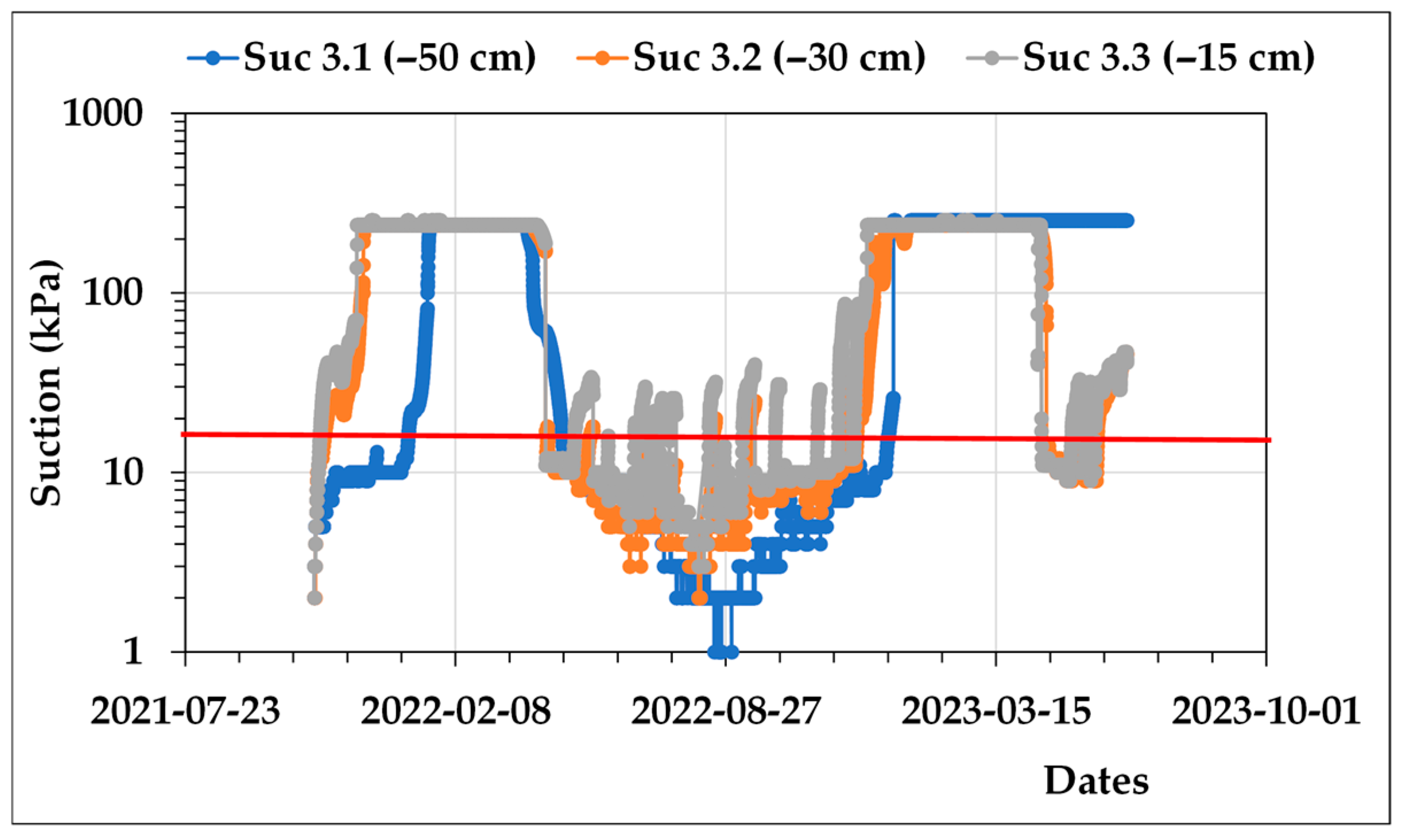
Due to a lack of measurement, only the suction results obtained from Cells 2 and 3 are presented (see
Figure 9 and
Figure 10). Except during the freezing period, suction values measured near the bottom (sensor 1) remain below the air entry value (AEV) of the material used (20 and 16 kPa, respectively, for mixture 1 and 2—indicated by red line in
Figure 9 and
Figure 10). These low suction values suggest that the mixtures remain close or near saturation, which is in accordance with those of the VWC (see
Figure 6 and
Figure 7). However, suction measurements, near the top of the experimental Cells 2 and 3 and also near the middle of the experimental Cell 3 are occasionally higher than their AEVs, indicating localized desaturation.
During the freezing period, suction values measured near the top of the cover increase and can exceed the AEV. This effect is attributed to temperature-induced phenomena, as declining temperatures promote an increase in suction (commonly referred to as cryo-suction), particularly near the freezing front. When the pore water within the sensor is entirely frozen, readings often reach the maximum measurable value (250 kPa); however, this value does not reflect the actual suction.
In Cell 4, suction measurements near the bottom (Sensor 4-1) did not exhibit significant variation during the freezing period. This suggests that the underlying clay layer remained unfrozen, consistent with both VWC and temperature data (see [
42]).
3.3. In Situ Permeability Tests
Hydraulic conductivity tests were conducted in the field using a Guelph permeameter following the construction of the cells and at various intervals thereafter. The results and porosity measured near surface with nuclear density gauge are presented in
Table 5. This table shows that the k
sat values range from 1.35 × 10
−9 m.s
−1 in Cell 2 to 1.24 × 10
−6 m.s
−1 in Cell 3. The average values vary between 2.39 × 10
−8 m.s
−1 in Cell 2 and 3.97 × 10
−7 m.s
−1 in Cell 1. These values are in agreement with those reported by [
13] and are comparable to measurements taken at sites where compaction was suboptimal.
An analysis of the ratio between maximum and minimum values of ksat reveals significant variability, particularly in Cell 4, where the maximum value exceeds the minimum by a factor of 100. Cell 2 exhibits a ratio of 80, while the ratios for Cells 1 and 3 are 8 and 19, respectively.
Table 5 also indicates a slight increase in k
sat over time in Cells 1 and 2, while Cells 3 and 4 exhibit a modest decrease toward the end of the observation period. The magnitude and temporal evolution of hydraulic conductivity in these experimental cells will be analysed in
Section 4.
3.4. Water Infiltration
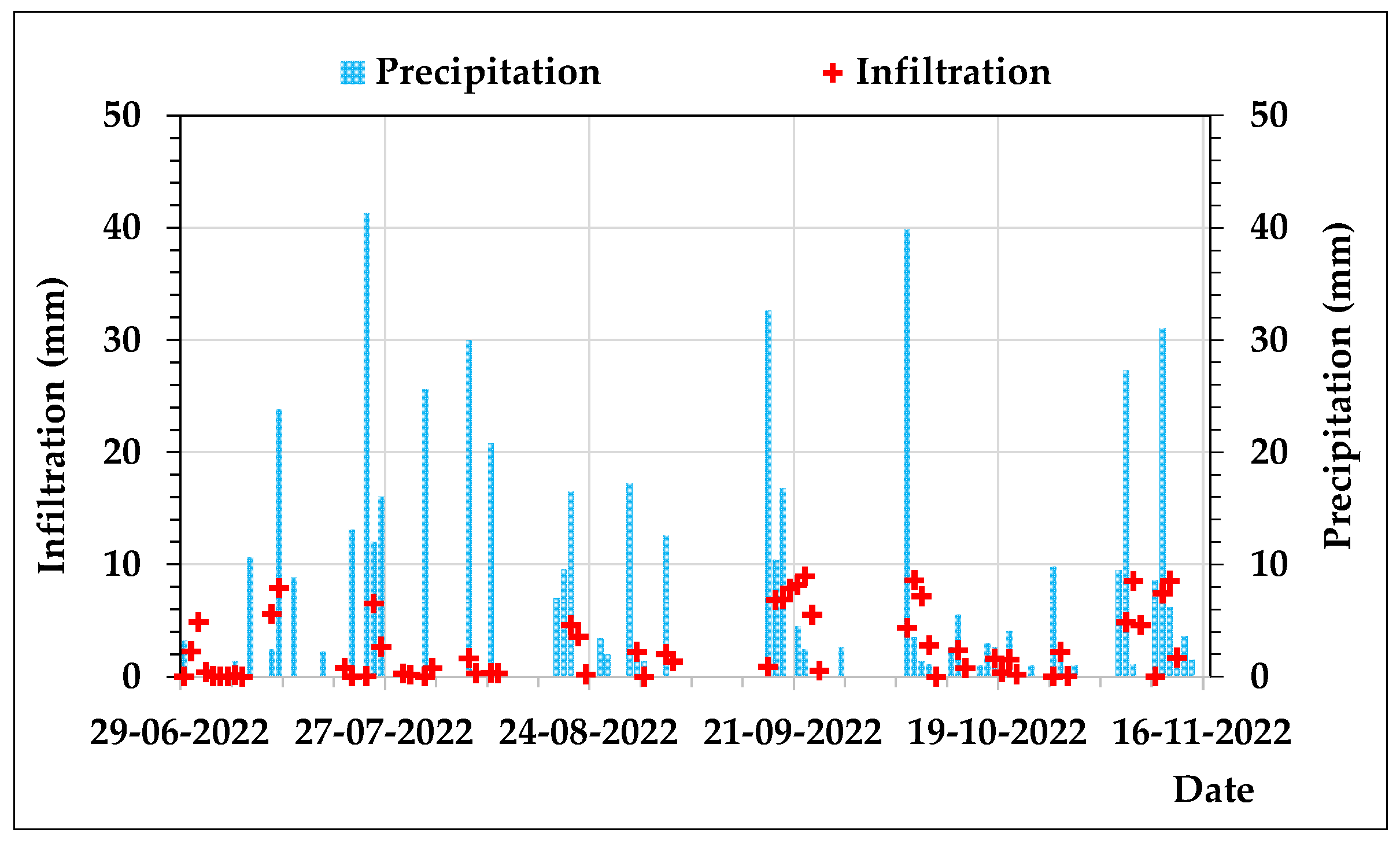
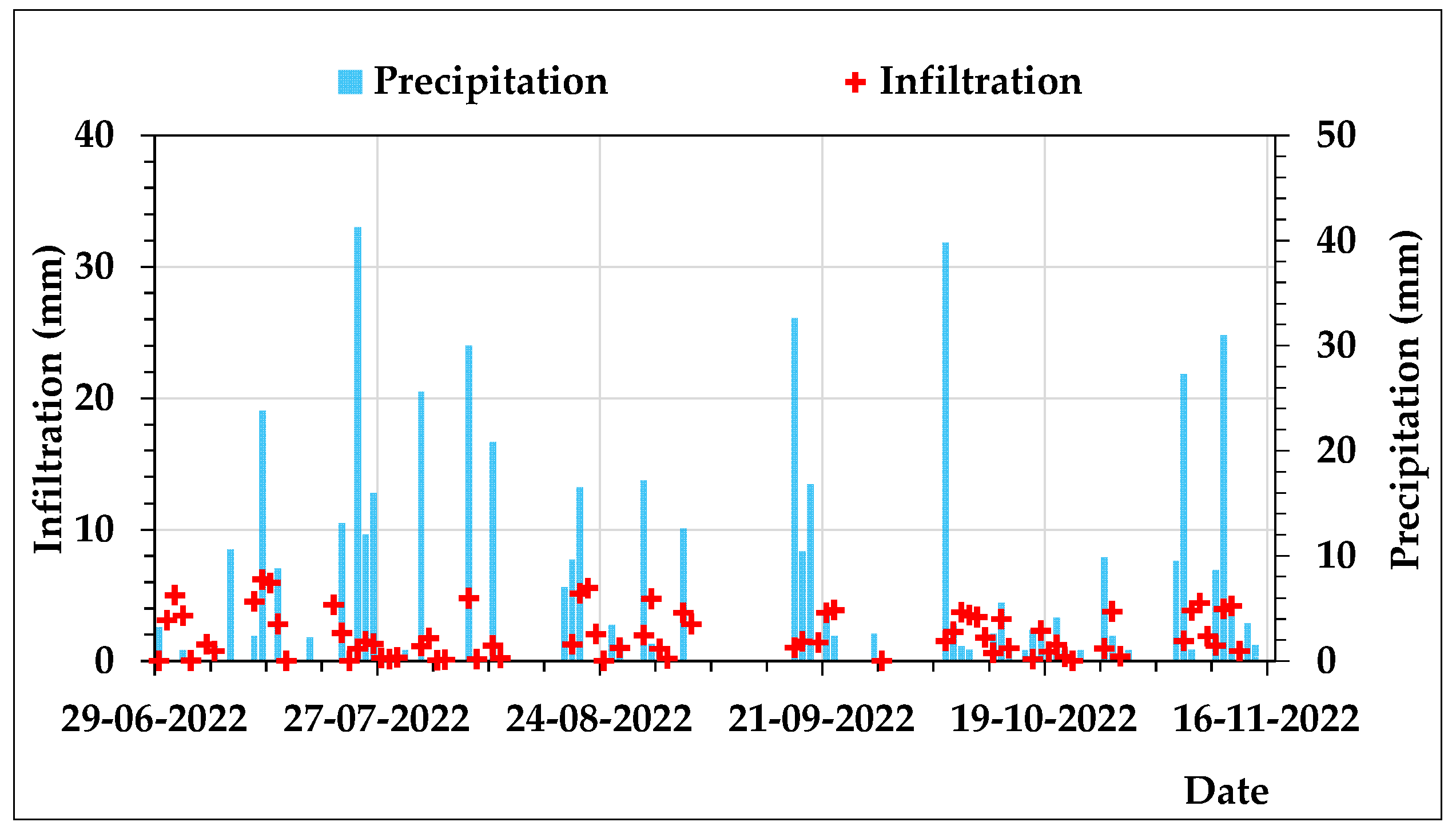
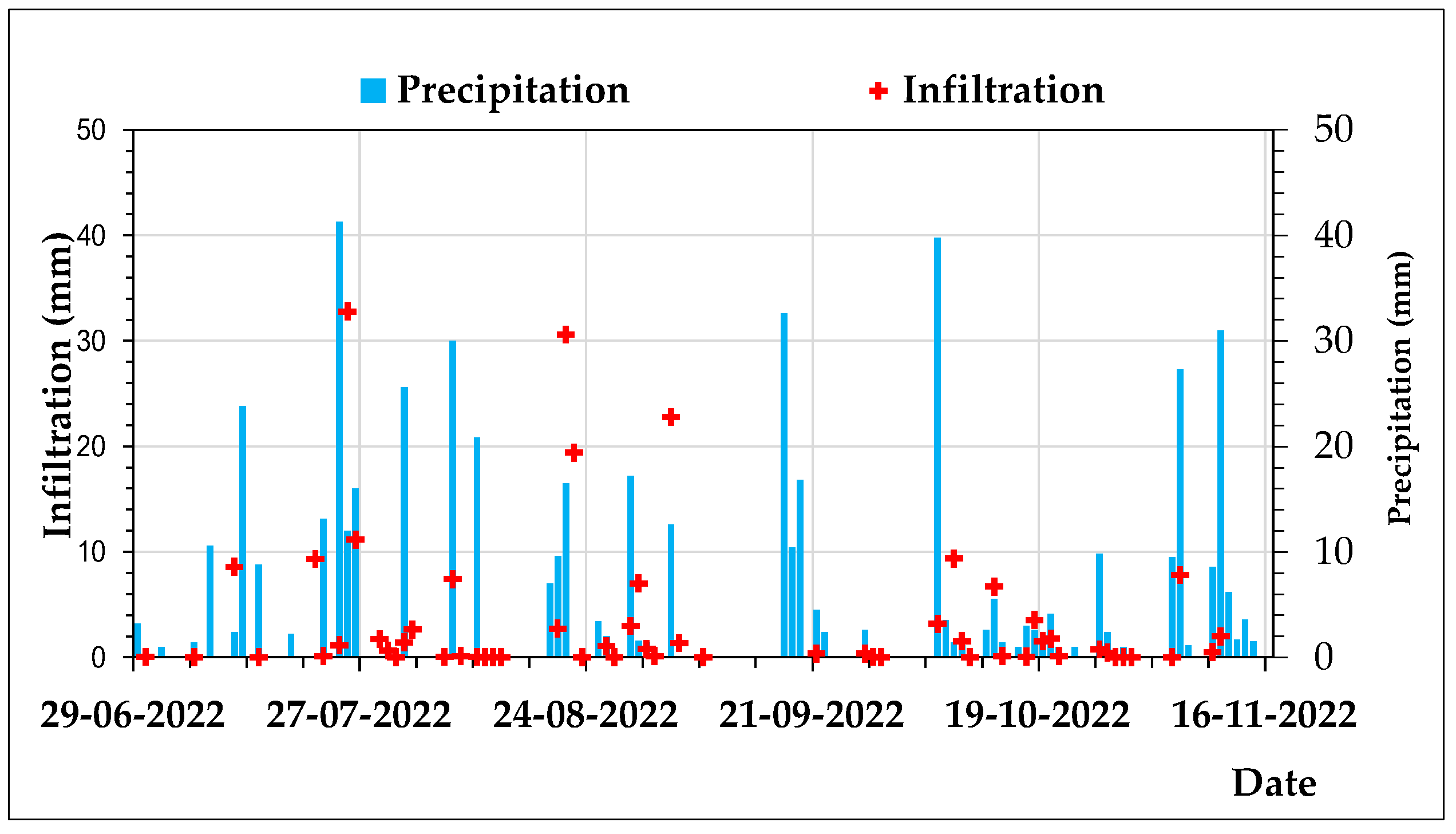
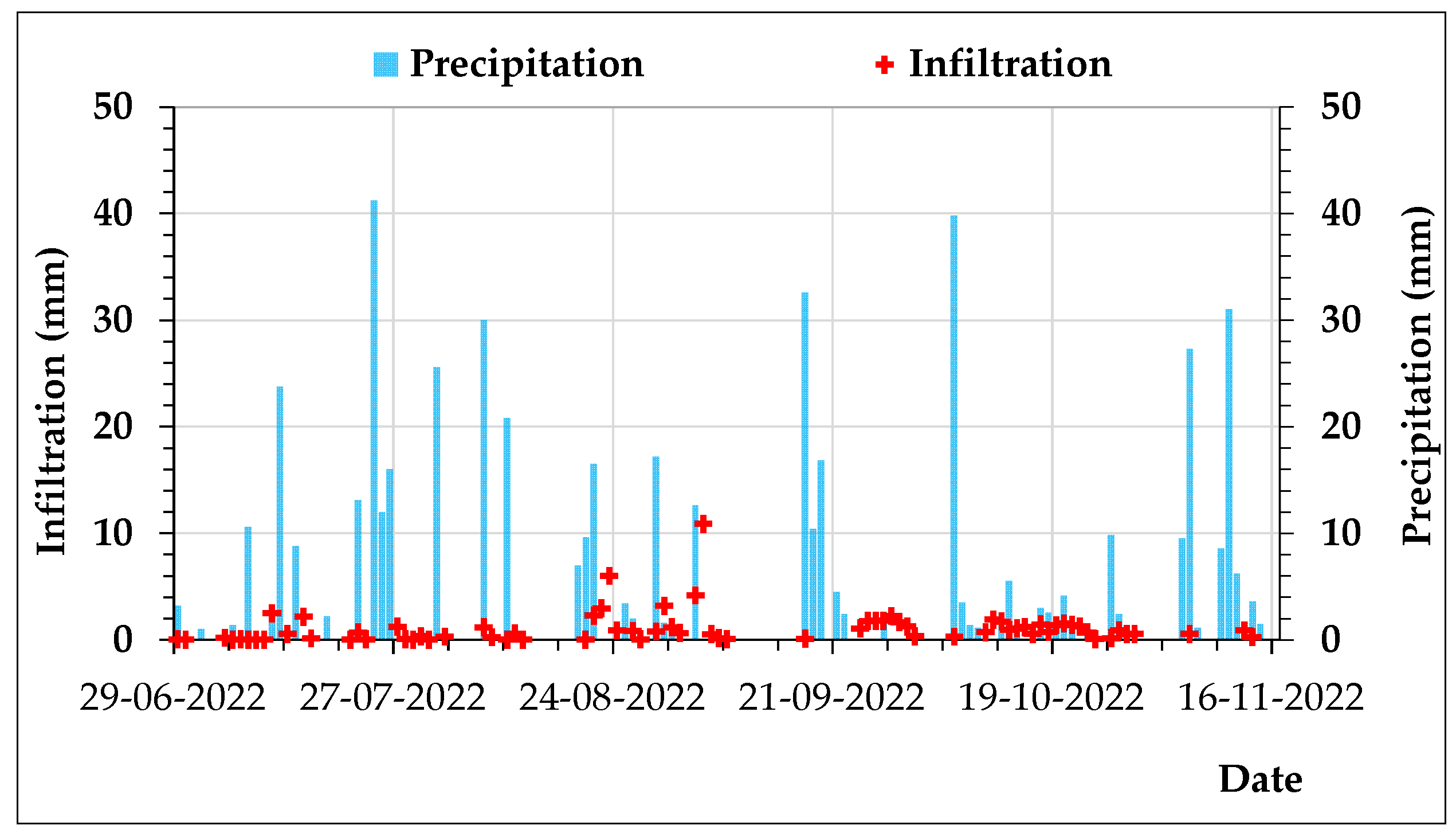
The flowmeters were installed at the beginning of summer, on 30 June 2022, and used for infiltration monitoring until 11 November 2022. The infiltration rates at the bottom of the experimental cells were recorded every 20 min; however, for clarity and convenience, only daily values are presented here.
Figure 11,
Figure 12,
Figure 13 and
Figure 14 illustrate the evolution of water infiltration over the observation period in cells 1, 2, 3, and 4, respectively.
The highest daily infiltrations were recorded as 8.93 mm, 36.8 mm, 32.8 mm, and 10.82 mm for Cells 1, 2, 3, and 4, respectively. Over the full monitoring period, cumulative infiltration reached 163 mm in Cell 1, 147 mm in Cell 2, 207 mm in Cell 3, and 78 mm in Cell 4. These values correspond to approximately 31%, 28%, 40%, and 15% of the cumulative precipitation measured at Rouyn-Noranda climatic station [
45], respectively. The relatively high infiltration rates may be attributed to the presence of preferential flow paths, which facilitate rapid water movement from the surface to the bottom of the cells.
This interpretation is supported by multiple observations and field measurements:
Thus, the water flow rates measured at the base of the cells may be overestimated due to preferential flow mechanisms. Notably, Cell 4 exhibited a unique behavior: higher infiltration rates were observed during the summer than in the autumn. The maximum recorded value in summer was 10.88 mm, compared to only 1.9 mm in autumn (approximately four times lower, as illustrated in
Figure 13).
3.5. Numerical Simulation
Water balance is a critical component for evaluating the performance of cover systems, particularly LSHCCs. To investigate the water balance of the experimental cells more thoroughly, a 1D numerical model was developed to simulate infiltration through the cover layers. Through calibration, especially of the water infiltration rate, the sensitivity of the hydrogeological parameters was assessed, and their plausible ranges of variation were also identified.
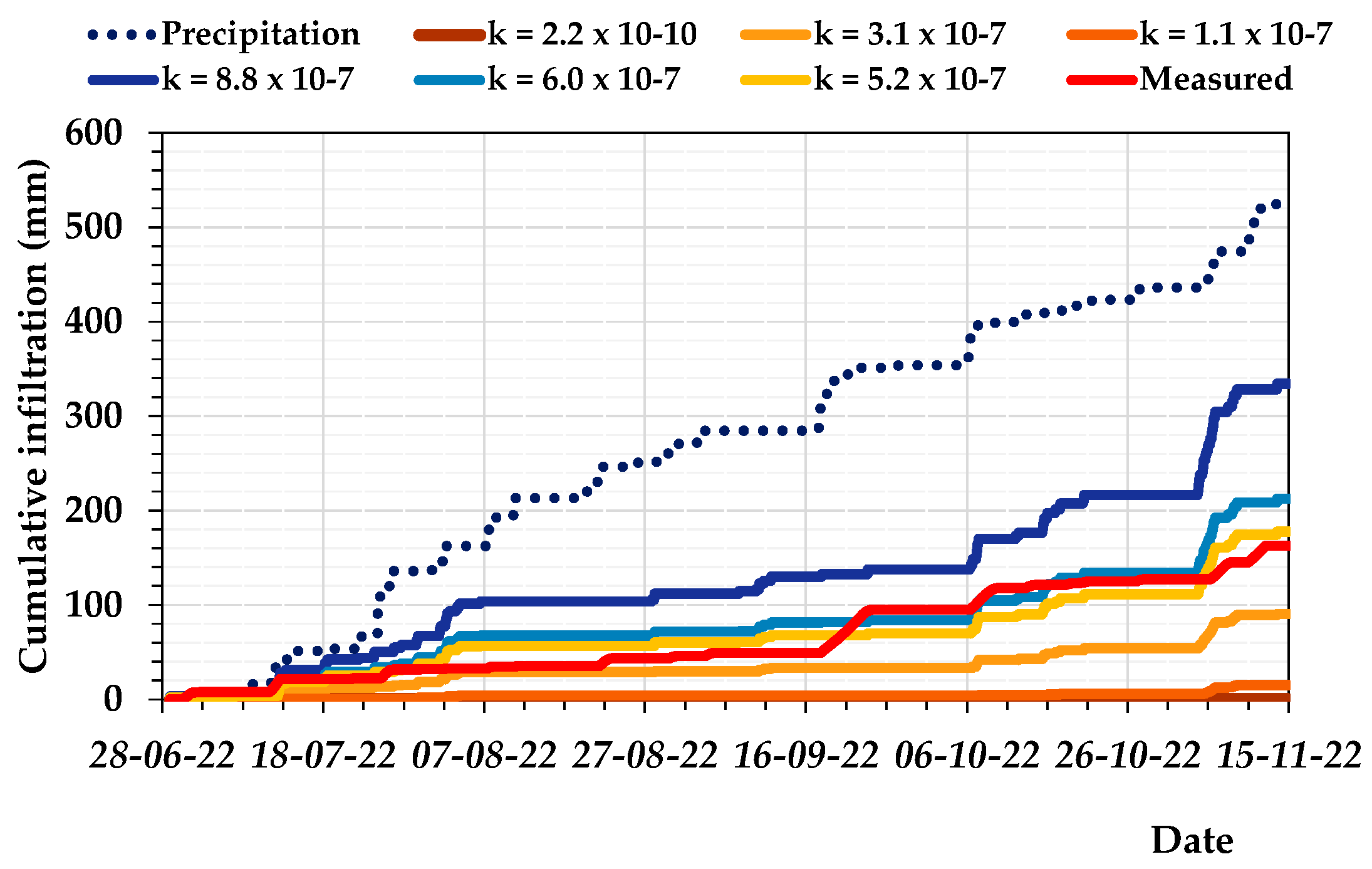
The sensitivity analysis involved simulating hourly infiltration rates by varying the ksat in the numerical model. These results were then compared to the infiltration rates measured in the field using flowmeters. The simulations initially used the extreme ksat values obtained from laboratory and field measurements. The resulting cumulative infiltration over the observation period was then compared with the cumulative infiltration measured in the field.
Figure 15 presents the sensitivity analysis results for Cell 1. The initial simulation was conducted using a k
sat of 2.2 × 10
−10 m.s
−1, corresponding to the lowest value measured in the laboratory. This simulation yielded a cumulative infiltration of only 0.01 mm, which was substantially lower than the 162.8 mm measured in the field (see
Figure 11). Conversely, the simulation using the highest measured k
sat value of 8.8 × 10
−7 m.s
−1 (field measurement) produced a cumulative infiltration of 334.3 mm, which also did not align with the observed data.
These results highlight a substantial discrepancy between simulated and measured infiltration when using extreme ksat values. Therefore, additional simulations were performed using intermediate ksat values specifically, the average and calibrated values. This iterative process continued until the simulated cumulative infiltration approximated the measured values with an acceptable margin of error.
The results of the sensitivity analysis and best-fit k
sat values are summarized in
Table 6. For Cell 1, the iterative calibration yielded a k
sat of 5.2 × 10
−7 m.s
−1, resulting in a simulated cumulative infiltration of 177.6 mm. This corresponds to a deviation of 14.8 mm, or approximately 9%, from the measured value (162.8 mm). Notably, this calibrated k
sat is close to the average field-measured value of 4.0 × 10
−7 m.s
−1 (see
Table 5).
For Cell 2, a best-fit ksat of 1.6 × 10⁻⁸ m.s−1 produced a cumulative infiltration of 143.5 mm, just 3.2 mm (2%) less than the observed infiltration of 146.7 mm. This value is of the same order of magnitude as the mean value obtained using the Guelph permeameter.
In the case of Cell 3, a ksat of 2.2 × 10⁻⁸ m.s−1 yielded a simulated cumulative infiltration of 214 mm, which exceeds the measured infiltration (207 mm) by 7 mm, or 3%. This best-fit value falls between the laboratory-measured ksat (1.7 × 10⁻⁹ m.s−1) and the higher values obtained from field tests using the Guelph permeameter.
For Cell 4, a calibrated ksat of 5.8 × 10⁻⁹ m.s−1 resulted in a simulated infiltration of 85 mm, which is 7 mm (9%) higher than the field-measured value of 78 mm. Although slightly lower than the ksat measured in the field, this value remains substantially higher than the laboratory-measured ksat of 2.2 × 10⁻¹⁰ m.s−1.
While the measured infiltration rates may be overestimated, possibly due to preferential flow paths, the best-fit ksat values used consistently fell below those obtained from field tests using permeameters. This observation suggests that the ksat values derived from in situ (near top experimental cells) tests may tend to overestimate the actual hydraulic conductivity under field conditions.
4. Discussion
The experimental cells were constructed to evaluate the performance of clay and amended clay-based cover systems. The assessment was performed in two stages: first, by evaluating the overall performance of the covers, and second, by analyzing the key parameters that may influence their effectiveness.
4.1. Cover Performance
Based on measured infiltration rates and excluding Cell 4 (cover made with two clay layers separated by a silty sand layer), the cover with clay amended with sand appears to perform better than the other covers. The infiltration measured in this cell was 147 mm, corresponding to approximately 28% of the total precipitation for the analyzed period. It is important to note that, liquid precipitation during this year exceeded the annual average for the 1980–2020 period by about 40%. Additionally, during the summer, there were at least four precipitation events exceeding 30 mm per day.
Due to the configuration of the experimental cells, which are flat and not completely filled (leaving space for water accumulation), no runoff occurred. This condition facilitates preferential flow along the geomembrane cover interface. As a result, the measured infiltration is likely overestimated, leading to an apparent reduction in cover performance.
The configuration comprising two hydraulic barriers separated by a silty sand layer exhibited the best performance by comparison to the other experimental cells. For this LSHCC, a total infiltration of only 78 mm was recorded over the observation period. This represents approximately 15% of the total precipitation, which is within the same range as the infiltration observed for the cover with a capillary barrier effect.
This type of configuration could be further enhanced by incorporating amended clay materials and optimizing the thickness of the individual layers.
4.2. Material Used in the Covers
As previously discussed, LSHCC should be constructed using materials with more than 30% fine particles, a clay fraction greater than 15%, a plasticity index (PI) between 7% and 20%, a liquid limit (LL) above 20%, and a gravel content below 50% [
1]. The properties of the materials used as a hydraulic barrier are presented in
Table 7.
Thus, as shown in
Table 7, all geotechnical criteria are met, with the only remaining requirement being the k
sat, which will be analyzed in the following section.
4.3. Field Cover Construction
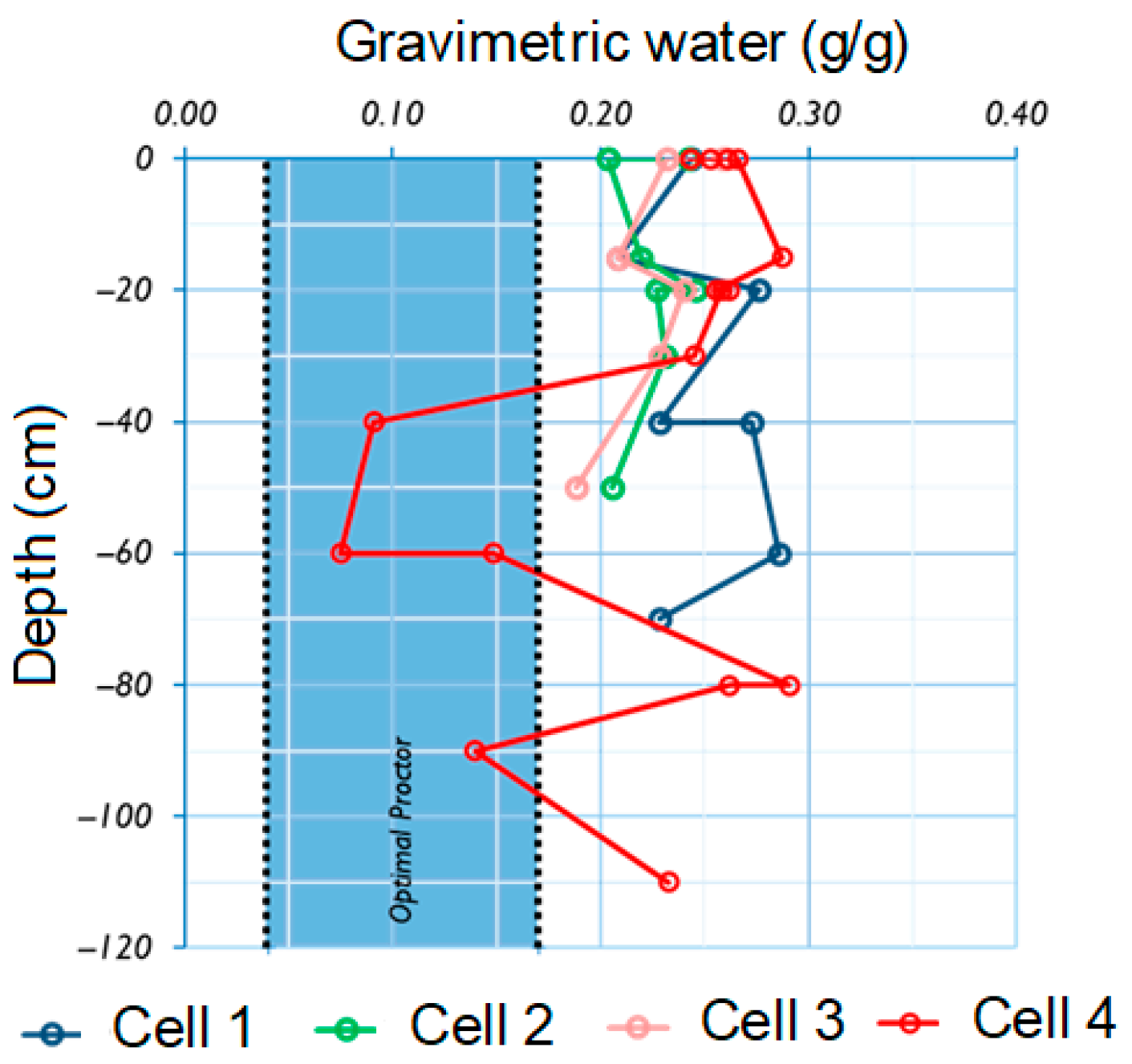
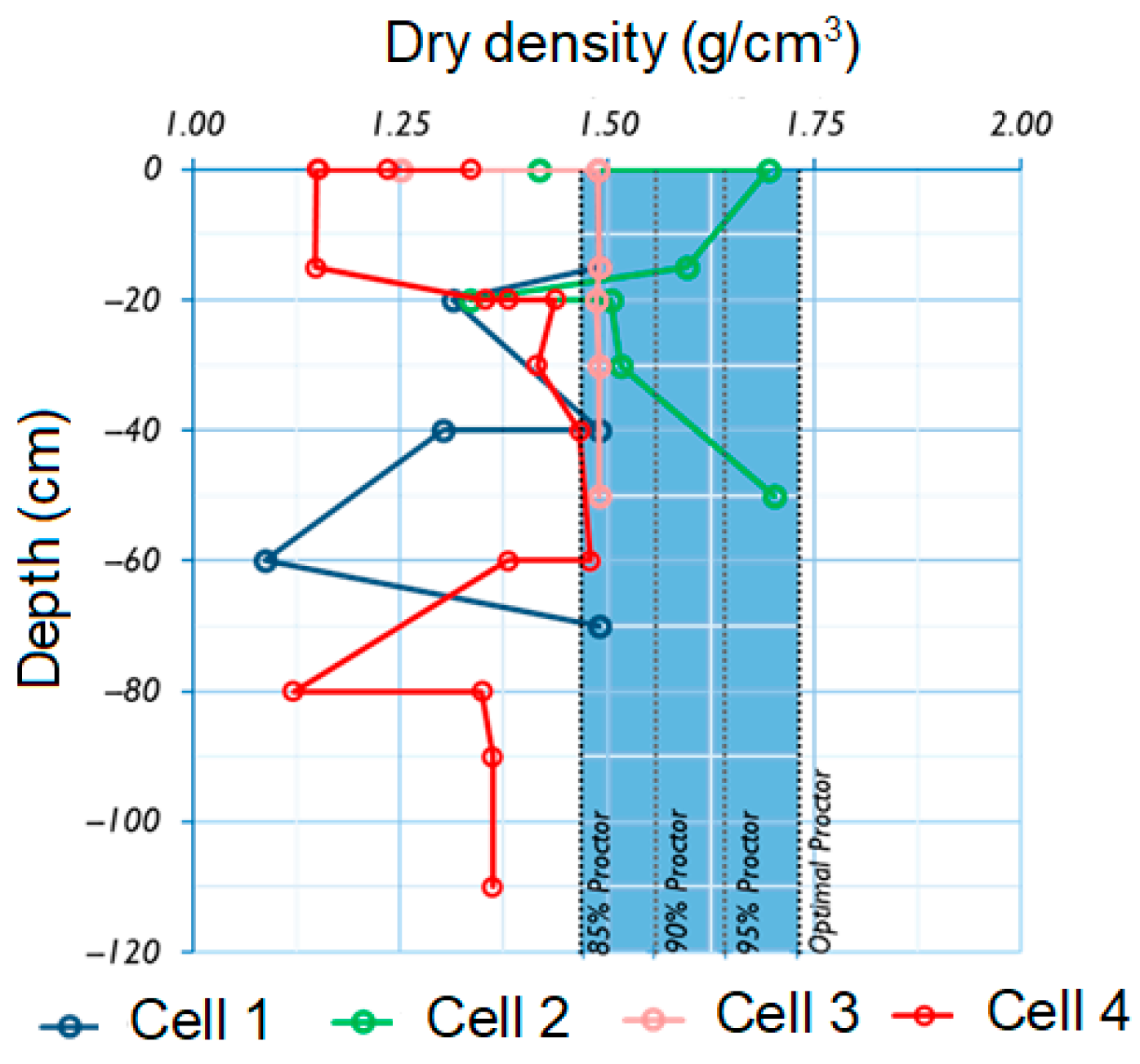
During cell construction, the materials used were submitted to several characterisations, both in the field and in the laboratory, including Proctor tests. The results for gravimetric water content and dry density are presented in
Figure 16 and
Figure 17, respectively. These figures also show the optimum limit values determined using the Proctor tests.
For the gravimetric water content, only slight variations with depth were observed, except in Cell 4, which was constructed with two different layers (clay and silty sand). However, it is worth noting that the measured values fall outside the optimum Proctor range (0.04 to 0.17) and exceed the maximum values determined by the Proctor test, as shown in
Figure 16.
For the dry density, the maximum measured value was 1.70 g/cm
3 in Cell 2 (see
Figure 17). In contrast, the values in the other cells were consistently below 1.50 g/cm
3. These measured values are lower than the optimum values, with the exception of Cell 2. Additionally, slight variations were observed in Cell 3, while more significant variations occurred in the other cells, indicating differences in layer compactions. To illustrate this, Cell 2 is used as an example: in both the upper and lower layers, the measured dry density was 1.70 g/cm
3, but towards the center of the cell (20 cm from the surface), the measured value dropped to approximately 1.33 g/cm
3. This change represents a 0.36 g/cm
3 decrease.
The measured values of gravimetric water content and dry density indicate insufficient compaction of the cover layer during the construction of the cells, primarily due to factors related to the construction process. Compaction was performed using a vibratory plate with a compaction force of 1030 kgf (10.1 kN), which may be considered inadequate, given the cell geometries. Additionally, precipitation events occurred during construction, which likely increased the water content of the material used. The insufficient compaction is expected to impact the ksat, which will be analyzed in the following section.
4.4. Comparison Between Field and Lab Measurement of ksat
The laboratory and field measurements of k
sat are presented in
Table 8. The data indicate that the k
sat values measured in the laboratory are lower than those obtained in the field. Specifically, the field measurements of k
sat range from 10
−7 to 10
−8 m.s
−1 for porosities between 0.52 and 0.42, while the laboratory measurements range from 10
−9 to 10
−10 m.s
−1 for porosities between 0.31 and 0.37. It is important to note that the material porosities in the laboratory and field tests differ significantly, which could influence the k
sat values. To account for this, normalized k
sat values for a porosity of 0.44 were calculated using the formula proposed by [
47]:
, is the normalization index defined by [
47] in [
48], and
e0 is the used void index.
The results of the calculations indicate that the normalized ksat values for the laboratory tests range from 10−9 to 10−10 m.s−1, while those for the field tests range from 10−7 to 10−8 m.s−1. As result, the normalized ksat values for the laboratory tests are lower than those for the field tests. This suggests that the differences between the laboratory and field measurements cannot be attributable to variations in porosity.
These differences can be attributed to the conditions under which the materials were placed, and more specifically, to the compaction energy applied.
4.5. Freeze–Thaw Effects on ksat
Field measurements indicate a slight increase in ksat in Cells 1 and 2 over the observation period, while Cells 3 and 4 exhibit a slight decrease toward the end of the period.
To assess the significance of these variations, the ratio between maximum and minimum values was calculated. Additionally, the coefficient of variation (CV) was determined and compared with reference values reported in the literature (see
Table 9).
Table 9 shows that the CV ranges from 0.62 for Cell 1 to 1.71 for Cell 2. In terms of the ratio between the maximum and minimum k
sat values, it varies from 5.35 in Cell 1 to 105.54 in Cell 4. Among the cells, Cell 1 exhibits the lowest variability, while Cell 2 shows the greatest dispersion. Nevertheless, all values reported in
Table 9 fall within the ‘normal’ range of variation documented in the literature by [
49,
50,
51,
52]. This indicate that the observed variations remain within typical statistical bounds for this variable.
Based on these findings, one can conclude that the annual variations in ksat are within the range of statistical variability. Therefore, it is not possible to assert that these changes are caused by, or directly influenced by, freeze–thaw or wet–dry weather cycles. Continued monitoring is essential to determine whether the upward trend observed in Cell 2 is sustained potentially, indicating an influence of these environmental factors and whether the recent changes recorded in Cells 3 and 4 represent a developing trend or merely fluctuations within normal measurement variability.
5. Conclusions
This study tested Abitibi clay-based materials amended with sand and silty sand to simulate low permeability cover systems (LSHCC) for mine site reclamation. In these physical simulations, two configurations were tested using four experimental cells. Each experimental cell was equipped with a monitoring system for volumetric water content, suction, and temperature, along with outlet drains for measuring water infiltration using flowmeters. Compaction was performed using a vibratory plate in 0.2 m layers, with dry density and moisture content controlled using a nuclear density gauge.
Field investigations and volumetric water content and suction measurements allow us to conclude that the cover layer remained above 89% water saturation, a threshold that is sufficient to limit oxygen migration.
It is important to note that the freezing effect is more pronounced near the top of the experimental cell than at greater depths. This effect is particularly evident in Cell 4, where the lowest sensor showed no signs of freezing influence. This finding is very important, and the configuration of this cell (two low saturated hydraulic conductivity layers) should be used as a typical design for LSHCC.
Laboratory tests revealed that the saturated hydraulic conductivity (ksat) of the clay materials used in the cells was 2.2 × 10⁻¹⁰ m.s−1 for both unamended and amended clays in Cell 2, while Cell 3 showed a higher value of 1.7 × 10⁻⁹ m/s, exceeding the waterproofing threshold.
The discrepancies between the laboratory and field ksat values were attributed to insufficient compaction, influenced by unfavorable weather and low-energy compaction equipment. The water content during placement exceeded optimum levels, affecting the material’s hydraulic performance. Implementing a quality control system to ensure proper compaction and installation conditions is essential to correct all these problems in large-scale applications.
The field measurements using the Guelph permeameter varied significantly, with values ranging from 1.4 × 10⁻⁹ m.s−1 in Cell 2 to 1.2 × 10⁻⁶ m.s−1 in Cell 3, all above the waterproofing threshold, suggesting potential limitations in cover effectiveness under field conditions.
Sensitivity analysis with numerical models indicated calibrated ksat values ranging from 5.8 × 10⁻⁹ m.s−1 in Cell 4 to 5.2 × 10⁻⁷ m.s−1 in Cell 1, generally aligning with the field measurements, with all values remaining above the sealing threshold.
The observed variations in ksat values over time appear to fall within statistical variability, and ongoing monitoring is needed to assess whether these trends are influenced by weather-related factors. Cell 2 showed a distinct difference in hydraulic conductivity, suggesting that factors beyond statistical variability may affect this cell.
Monitoring revealed that 31% of precipitation infiltrated through Cell 1, 28% through Cell 2, 40% through Cell 3, and 15% through Cell 4, although these values may be overestimated due to preferential flow along the walls of the cells. This issue could be mitigated by completely filling the cells (which was not the case for the experimental cells used) and by lining the walls with geomembranes to eliminate any potential preferential flow paths.
In the calibration process, the measured flow rates were used. However, as previously discussed, these values appear to be overestimated, as indicated by the detailed measurements. Consequently, the calibrated ksat values are expected to be lower than those initially obtained. This suggests that the permeameter measurements likely overestimate the ksat values. Consequently, consideration should be given to adapting the equipment so that samples taken in the field can be used directly, without modification in the pressure plate extractor to compare the ksat values obtained with those obtained using the permeameter.
As final remark, this study was performed under field conditions using materials available on site. Owing to the weather conditions prevailing during the construction period, the materials exhibited a high-water content, which adversely affected compaction, resulting in in insufficient densification and constraining the methodology adopted. This limitation could be mitigated by scheduling construction activities during the winter period, when more favorable moisture conditions are expected.