


Abstract
Gold mining in South Africa’s Witwatersrand Basin represents a critical case study of mining-induced environmental degradation affecting interconnected ecological and human systems. While the cascading effects of acid mine drainage (AMD), originating from a legacy of approximately 270 tailings dams containing 6 billion tons of FeS2 waste and 600,000 tons of residual uranium, are widely documented, this evidence often remains fragmented. This study applies a systematic, framework-based analytical approach that integrates multidisciplinary evidence from geochemical, ecological, agricultural, and public health research within a One Health/EcoHealth perspective. Qualitative field observations are used to contextualize and validate the analytical synthesis along the water–soil–food–human continuum. A four-pathway conceptual model, including environmental dispersion, biotic uptake, trophic transfer, and direct human exposure, is developed to structure and interpret the integrated findings. The results demonstrate that mining-derived contaminants propagate through interconnected pathways, leading to persistent contamination of water resources, agricultural systems, and human communities, particularly within the Wonderfonteinspruit watershed. Evidence synthesized across pathways reveals extreme bioaccumulation and exposure levels and elevated uranium levels in the hair of local children. The study concludes that the impacts of acid mine drainage constitute a systemic socio-ecological failure driven by cumulative and interacting exposure pathways that cannot be effectively addressed through sectoral or single-medium interventions. The principal contribution of this research is the development of an operational, transferable framework that enables integrated risk assessment and supports evidence-based management and remediation strategies in post-mining landscapes.
1. Introduction
Environmental pollution represents a critical global concern, affecting air, water, and soil systems and posing substantial risks to human health and ecological sustainability. Exposure to pollutants occurs across multiple pathways, including both outdoor environmental contamination and indoor air pollution, being increasingly recognized as a major contributor to respiratory, cardiovascular, and chronic health outcomes [1,2].
Environmental pollution increasingly poses complex challenges that transcend traditional disciplinary boundaries, linking ecosystem degradation, animal health, and human well-being into a single, deeply interconnected system [3,4]. Contaminants released into the environment rarely remain confined to their original source; instead, they propagate through water, soil, and food chains, bioaccumulate, and biomagnify, ultimately affecting human communities, especially vulnerable groups [5,6,7,8]. This dynamic movement of heavy metals and toxicants within a shared environment necessitates a holistic perspective that bridges human and animal medicine through shared health risks [9]. In this context, environmental degradation can no longer be addressed solely as an ecological problem; it must be understood as a major public health issue and integrated into complex socio-ecological systems, as highlighted by recent One Health literature [4,10,11].
The economic and social history of South Africa is deeply intertwined with the mining industry. For over a century, the country’s rich mineral resources have been the engine of economic development, but this industrial legacy has left behind complex and costly environmental and social problems [12]. One of the most significant of these problems is the Acid Mine Drainage (AMD) crisis, particularly concentrated in the Witwatersrand gold mining basin. AMD is a chemical process that occurs when sulfide-bearing minerals (especially FeS2) are exposed to water and oxygen, and the resulting wastewater is characterised by high acidity, heavy metals, and sulfates [13,14]. This pollution spreads far beyond mining sites, destroying water resources, agricultural lands, and ecosystems, thus posing a serious threat to human health [15].
The situation in the Witwatersrand has become critical with the flooding of vast, abandoned, and interconnected underground mine voids. This process was first made tangible in 2002 with the uncontrolled surface discharge in the Western Basin [16]. This event signalled not just a local environmental issue, but a national crisis threatening the country’s most densely populated and economically active region. The effects of AMD are manifested across a wide spectrum, from rivers where aquatic life has been eradicated to soils contaminated with heavy metals and rendered unsuitable for agriculture [17,18]. The uptake of heavy metals from soil to plants, including phytoremediation processes, and their subsequent entry into the food chain, represents one of the most critical stages of mining pollution [19]. Evidence of heavy metal bioaccumulation in livestock and food products raised near mine tailings sites demonstrates the journey of contamination from the ecosystem to the human dinner table [20].
The repercussions of this environmental degradation on human health are alarming. Impoverished communities, often in informal settlements living near mine waste, are disproportionately exposed to these risks through direct contact with contaminated water and soil [21,22].
Studies have shown an increased prevalence of health problems associated with heavy metal exposure, respiratory issues, and radiological risks in these communities, and quantitative risk assessments indicate levels far exceeding acceptable limits [23,24].
While the scale of the AMD crisis in the Witwatersrand basin is well documented [13,15,16,21,22], academic and policy responses to this problem have remained largely fragmented. Uncertainties following mine closures and the management of long-term hydraulic risks often falter due to a lack of strategic planning and the disregard of historical lessons [25,26]. To date, research has mostly addressed the issue within disconnected technical or social silos: geochemical studies have focused on the pollution itself [16], public health studies have examined community impacts [21,22], and ecological studies have concentrated on ecotoxicological effects [18]. Furthermore, the economic implications of rehabilitation are often debated in isolation from technical remediation strategies [27,28]. This fragmented approach overlooks the most fundamental feature of the AMD crisis: its holistic and deeply interconnected nature. The absence of a comprehensive analytical framework, one that traces the pathways from contaminated water to soil, into the food web (via flora and fauna), and ultimately to the health of vulnerable communities, constitutes the primary gap in the literature [29,30,31].
The main objective of this study is to fill this gap by evaluating the AMD problem not merely as a technical pollution issue, but as a holistic problem with profound impacts on environmental and public health. To this end, the One Health (or EcoHealth) approach, which emphasises the interdependence of human, animal, and environmental health, has been adopted as a foundational paradigm. This paper is explicitly positioned as a multidimensional integrative review of the literature on AMD in the Witwatersrand Basin. Although the existing literature is extensive, it remains largely unidimensional, addressing the impacts of AMD separately, within distinct disciplinary frameworks (geochemical, ecological, public health or socio-economic). This fragmentation limits understanding of the systemic nature of mining pollution and how its effects propagate across the environment, ecosystems, and human health. The main goal of this study is not to generate new quantitative data but to systematically synthesise existing evidence, dispersed across the multidisciplinary literature, within a coherent, multidimensional analytical framework. The novelty of this paper is not the One Health framework itself; its originality lies in the systematic adaptation of this framework to the Witwatersrand crisis, using it for the first time as an operational, four-pathway analytical model to trace the journey of AMD-related contaminants from their geochemical source to human health outcomes (the “water-soil-food-human” continuum). By synthesising existing fragmented information, this study enriches the literature with a new methodological framework for examining the effects of mining pollution, thereby filling a significant gap.
2. Materials and Methods
2.1. Case Study
The geographical and industrial context for this study is established by the Witwatersrand Basin, the world’s largest gold and uranium mining province, geographically centred at 26°12′13″ S, 28°02′34″ E. The Witwatersrand has been mined for over a century. It is the world’s largest gold and uranium basin. Specifically, the field investigation focused on the West Rand Goldfield, including the Robinson Lake area at 26°09′38″ S, 27°48′22″ E.
Over the past century, 43,500 tons of gold have been extracted from more than 120 mines. Additionally, 73,000 tons of uranium were produced between 1953 and 1995. The basin itself covers an area of 1600 km2. However, an estimated 6000 km2 of land has been significantly affected by gold mining. Mining activities have resulted in a legacy of approximately 400 km2 of mine tailings dams (270 tailings dams and 380 mine rock dumps). These tailings contain an estimated 6 billion tons of FeS2 and 600,000 tons of low-grade uranium [32].
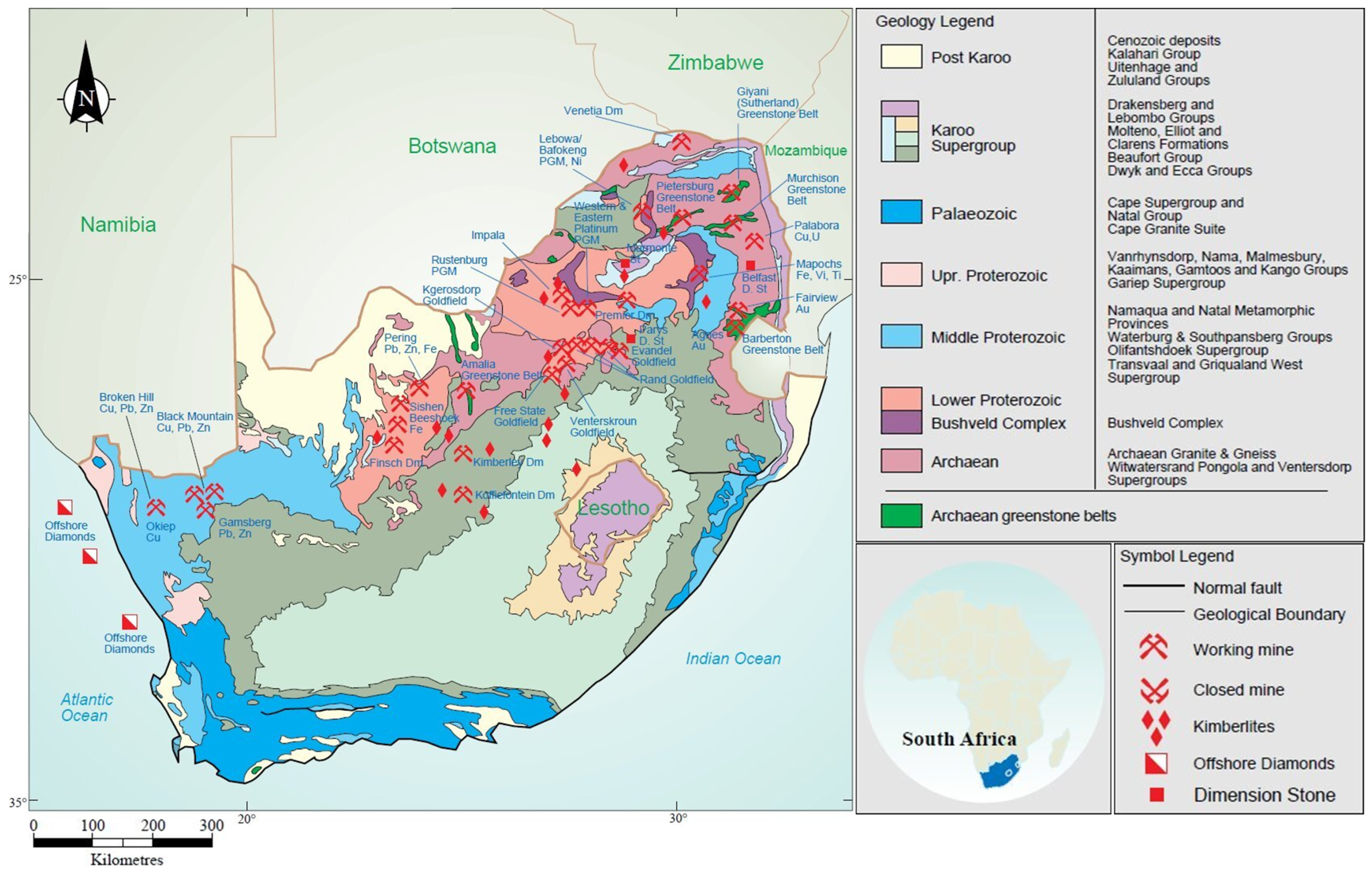
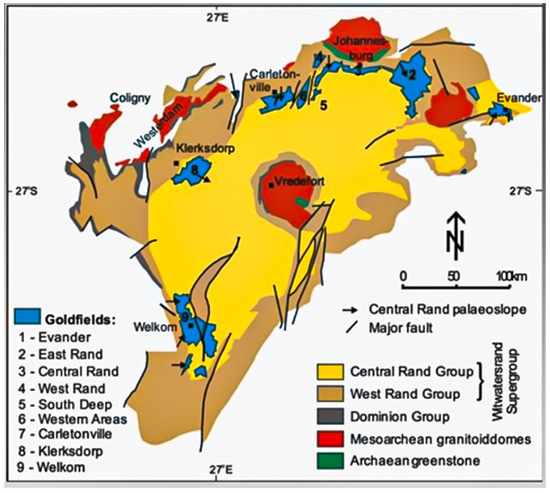
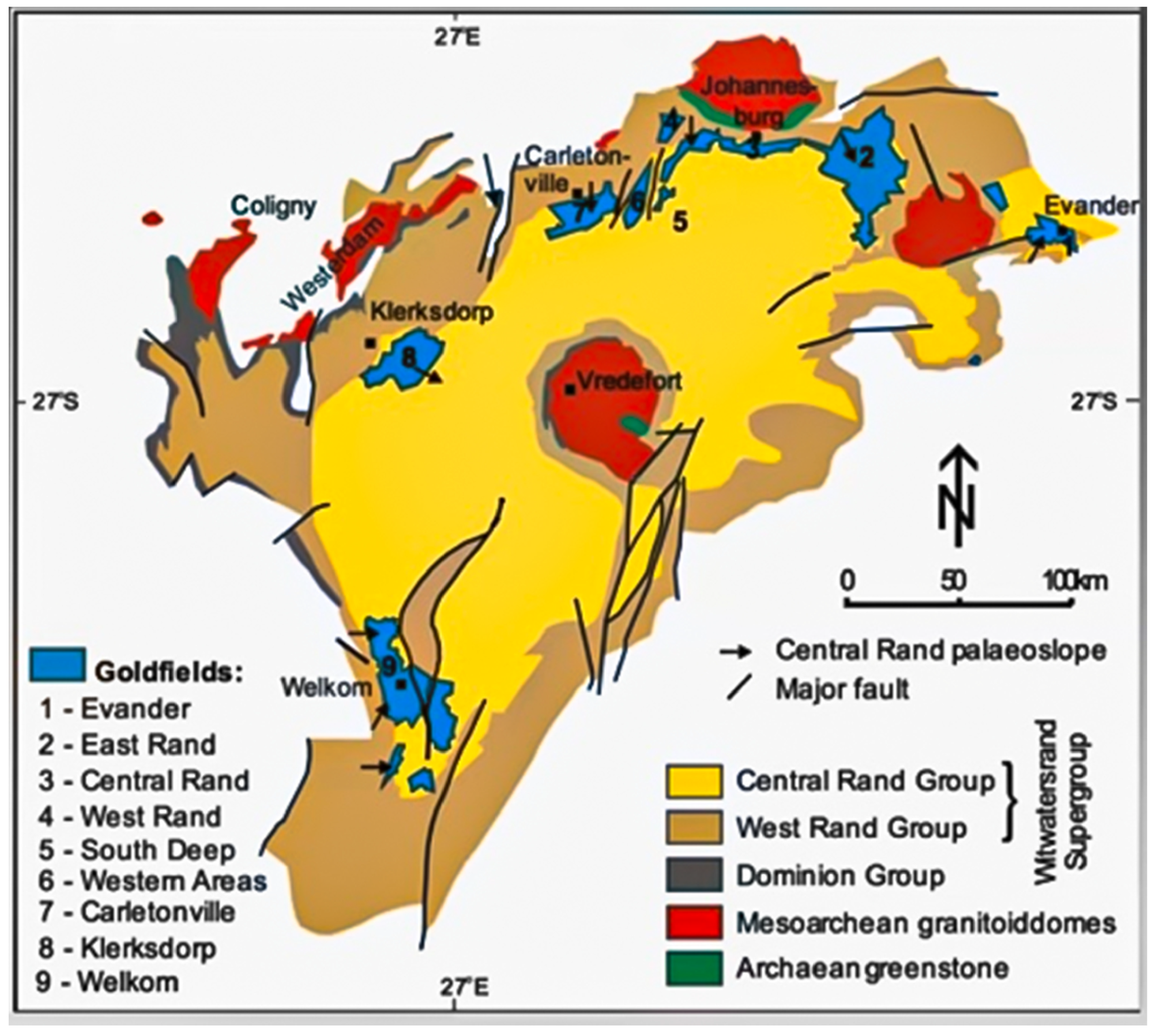
As illustrated in Figure 1, the gold deposits of the Witwatersrand Basin are exploited in seven major goldfields situated along the “Golden Arc,” a feature that extends for over 400 kilometres and is centred on the Vredefort Dome. This arc exhibits a distinct geographical distribution that reflects both the history of its discovery and the region’s complex geological structure. Having produced over 43,500 metric tons of gold since their discovery in 1886, these goldfields have established the Witwatersrand as the world’s preeminent mining region [12,33]. Following the arc (Figure 1 and Figure 2) on the map from northeast to southwest clarifies the relationship between the location of the goldfields and their history of discovery.
Figure 1.
Spatial extent and distribution of the major goldfield zones within the Witwatersrand Mining Basin. Adapted after Shnorhokian & Ahmed [34].
At the northeastern end of the arc lies the Evander Goldfield, a blind deposit discovered in the 1950s using geophysical methods because it is completely concealed beneath younger rock formations. Moving westward, the historically significant East Rand Goldfield is located. This field is separated from the Central Rand Goldfield by structural features, such as the Boksburg Gap, the site of the original discovery on which the city of Johannesburg was built. Immediately to the west is the West Rand Goldfield. These initial, surface-accessible discoveries lie along the northern and northwestern flanks of the arc. The southwestern limb of the arc consists of blind deposits that were later discovered and are concealed by younger cover rocks. These are, in sequence, the West Wits Goldfield, the Klerksdorp Goldfield, and at the southernmost extent of the arc, the Welkom Goldfield. The discovery of these fields required advanced geophysical and drilling technologies [33,34,35,36]. This geographical distribution illustrates how the gold-rich conglomerate layers (reefs) of the Witwatersrand Supergroup form an arc along the basin’s edge, shaped by its depositional history and subsequent tectonic events (Figure 1 and Figure 2).
Figure 2.
Geological map of South Africa. Adapted after Mindat.org [37].
Situated within this extensive mining context, the Wonderfonteinspruit catchment presents a critical case study for examining the impacts of mining-related pollution. The Wonderfonteinspruit originates south of Krugersdorp in the Gauteng Province and flows for 90 km through the world’s richest gold deposits before its confluence with the Mooi River, draining an area of approximately 1600 km2. The river, whose name historically translates to “wonderful fountain stream” in reference to the abundant dolomitic springs that once fed it, has become emblematic of the hydrological and geochemical impacts of mining. The catchment is differentiated into two principal sections defined by their mining histories and environmental conditions. The Upper Wonderfonteinspruit encompasses the West Rand goldfield, which has been operational since 1887. Today, this area is dominated by a landscape of closed or abandoned mines, characterised by vast, unrehabilitated tailings (slimes) dams and waste rock dumps that serve as uncontrolled sources of environmental contaminants. In contrast, the Lower Wonderfonteinspruit flows through the West Wits Line, a region known for large-scale uranium production. Intensive mining in this section necessitated systematic dewatering, which led to the desiccation of dolomitic springs and extensive degradation of the riverbed. Also formation of sinkholes in the dolomite due to dewatering has led to the abandonment of areas of land and some buildings in the catchment.
The principal mechanism driving contamination in the Wonderfonteinspruit is the formation of AMD. This process occurs when FeS2-rich minerals, abundant in mine waste, are exposed to oxygen and water, generating acidic leachate. This acidic solution, in turn, solubilises heavy metals and radioactive uranium from the waste rock, rendering them bioavailable for transport into aquatic systems. However, the geochemical dynamics of the Wonderfonteinspruit are uniquely complex due to the region’s underlying dolomite geology. The carbonate minerals within the dolomite provide a significant buffering capacity, neutralising the acidity of the AMD and typically maintaining the river water at alkaline pH levels. While this may appear beneficial on the prima facie, it paradoxically induces the precipitation and subsequent sorption of dissolved metals and radionuclides onto streambed sediments [38,39]. Consequently, the Wonderfonteinspruit riverbed has been transformed into a long-term sink and a persistent reservoir for toxic and radioactive contaminants derived from decades of mining operations.
Despite various engineering and chemical treatment measures having been implemented in the region to prevent environmental pollution from AMD, these efforts have not fully resolved the issue. In particular, the high-density sludge treatment plant established near the Grootvlei Mine aimed to improve water quality by controlling groundwater levels and facilitating the precipitation of heavy metals. However, these interventions have increased water salinity and sulfate concentrations, thereby creating secondary negative impacts on the ecological balance. Consequently, existing measures are insufficient for the long-term management of AMD pollution in the area, underscoring the need for more comprehensive, integrated management strategies [25].
2.2. Research Methodology
This study employed a mixed-methods research design, executed in two distinct phases: (1) a comprehensive literature synthesis to develop the conceptual framework, and (2) qualitative fieldwork to validate this framework.
2.2.1. Phase 1: Literature Synthesis and Conceptual Framework Development
A comprehensive qualitative synthesis of secondary data was conducted to provide a broad understanding of the AMD crisis. This included a systematic review of scientific literature, official reports, and analyses from civil society organisations, particularly Federation for a Sustainable Environment reports. This desk-based review provided foundational context and informed the formulation of the research questions and the development of the analytical framework for this study.
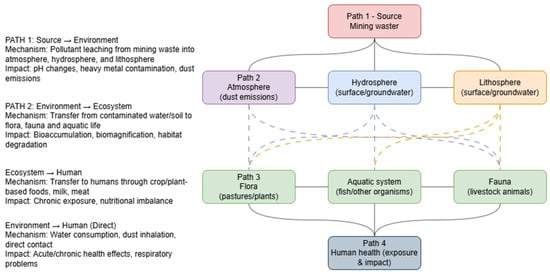
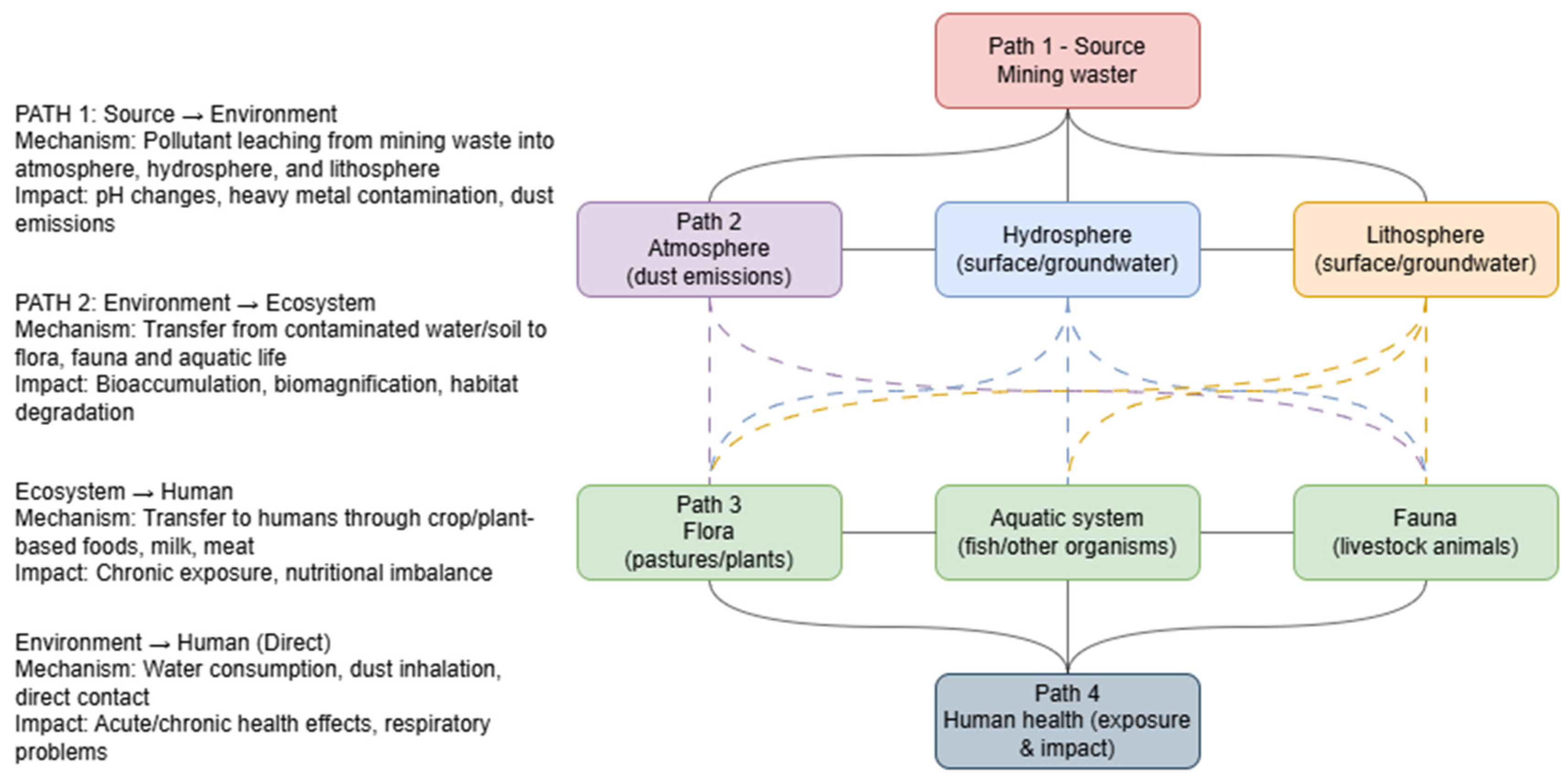
The analytical framework holistically models the complex, multi-pathway process through which mining-related contaminants propagate from their source into environmental, ecological, and human systems. This framework exemplifies the One Health approach by modelling the entire pathway of mine contaminants from their source through the ecosystem, ultimately to humans, highlighting the inextricable link between human, animal, and environmental health. The model details the following four key pathways identified from the literature synthesis:
- Pathway 1: Environmental Dispersion of contaminants from source (mining waste) into air (atmosphere), water (hydrosphere), and soil (lithosphere).
- Pathway 2: Biotic Uptake by flora (pastures/plants) and fauna (livestock animals and aquatic organisms) through contaminated soil, water, and air.
- Pathway 3: Trophic Transfer up the food web, as contaminants bioaccumulate and biomagnify, leading to human exposure through the consumption of contaminated meat and vegetables.
- Pathway 4: Direct Human Exposure through contaminated water consumption, dust inhalation, and dermal contact (Figure 3).
Figure 3.
Conceptual One Health framework illustrating mining-derived contaminant pathways in the Witwatersrand Basin, South Africa, linking source processes, environmental compartments, ecosystem transfer, and human exposure.
The literature used in this study was treated as analytical input for constructing the conceptual framework, not as a descriptive compilation of studies. The selection of sources followed a systematic strategy oriented towards mapping the holistic exposure chain specific to the One Health approach, which constitutes the analytical foundation of the research. Empirical data from geochemical, ecological, agricultural, and public health studies were extracted and reinterpreted to identify contamination sources, transport mechanisms, exposure pathways, and impact receptors, thereby defining the four interconnected pathways of the conceptual model.
The main selection criterion was the ability of studies to provide direct evidence for the components of the model (environmental, biotic, trophic and human), with priority given to research documenting interactions between abiotic matrices (soil, air, water), biotic transfer (plants and animals) and impacts on human health. Through this approach, AMD was analysed as an interconnected contamination system, not just as a water pollution problem, enabling the integration of fragmented data into a unified evidence base on the interactions among the environment, biota, and human health.
2.2.2. Phase 2: Qualitative Field Validation (Ground-Truthing)
The second phase consisted of primary qualitative data gathered during a structured field investigation in the Witwatersrand Basin in April 2025. The specific purpose of this fieldwork was not to generate new quantitative data, but to provide direct, empirical groundtruthing and contextual validation for the pathways identified in the Phase 1 literature synthesis.
Field sites were selected using purposive sampling to capture the full spectrum of contamination sources, environmental media, and exposure contexts. The selected locations represent key nodes along the four-pathway framework, including active and abandoned pollution sources, hydrological receptors, biotic interfaces, and areas of direct human interaction. This ensured that the field investigation systematically corresponded to the analytical structure of the conceptual model.
The structured site visits provided direct observational data on the multifaceted nature of the AMD crisis, covering a transect of key legacy and operational sites. Specific locations investigated included:
- Lancaster Dam and the headwaters of the Wonderfonteinspruit: To observe the direct impact of AMD on surface water quality.
- Monarch/Emerald Pit cluster: To document the risks associated with unrehabilitated open pits.
- Sand Dump 20 reclamation site: To illustrate modern remining efforts and their associated environmental challenges.
- Western Basin AMD Treatment Plant: To observe the state’s short-term mitigation strategy in action.
- Goldfields’ South Deep Mine—Doornpoort Tailings Storage Facilities: To gain insight into the management practices of a large-scale, operational mine.
At each site, observations followed a structured qualitative protocol to identify visible indicators of contamination sources, transport mechanisms, and exposure pathways. These indicators included the presence of AMD decant, sediment discolouration, dust-generating surfaces, proximity of grazing and agricultural activities, water abstraction points, and informal human use of contaminated environments. Field notes and systematic photographic documentation were used to record the spatial relationships between pollution sources, environmental media, biological receptors, and human activities. This empirical component enabled the direct verification of exposure pathways and land and water degradation reported in the literature, while also providing contextual insight into the everyday environmental conditions experienced by affected communities, thereby adding a critical layer of grounded evidence to the analytical framework.
Observational data were subsequently analysed by assigning each recorded indicator to one or more of the four analytical pathways, allowing field evidence to be systematically compared with the conceptual framework.
2.2.3. The One Health/Ecohealth Approach and Its Application to Mining Research
The One Health approach is recognised as an interdisciplinary and transdisciplinary paradigm that views human, animal, and environmental health as an indivisible and interdependent whole [10]. Similarly, the EcoHealth approach highlights the complex linkages between ecosystem health and human well-being, with particular focus on the role of social, economic, and cultural factors in these interactions [11].
The use of these holistic approaches to understand the environmental and social problems created by large-scale industrial activities, such as mining, is an increasingly accepted and rapidly developing field. Initially, the application of these frameworks was limited to more focused studies, such as assessing the ecotoxicological effects of mining-related water pollution or specific pollutants [40]. However, recent studies have shifted toward using these approaches as models for understanding the broader impacts of mining on entire socio-ecological systems. The focus is now on elucidating how environmental stressors, such as land-use change, biodiversity loss, and chemical pollution from mining, interact to indirectly affect zoonotic disease transmission, food security, and community health.
This evolution demonstrates that interdisciplinary integration is critical not only for characterising but also for managing the health risks associated with mining. Despite this, the standardisation of operational frameworks systematically models the cascading effects of a complex problem like AMD, from its geochemical origins to ecosystem degradation, food chain contamination, and long-term community health outcomes, while centralising stakeholder participation remains a significant area of research. While existing studies increasingly acknowledge the interconnectedness of mining-related environmental and health impacts, most applications of One Health or EcoHealth perspectives remain conceptual or limited to specific components of the system. In particular, few studies explicitly translate these holistic paradigms into operational analytical structures that can trace contaminant pathways from source to human health outcomes in a systematic and reproducible manner. Therefore, the present study aims to address this gap by systematically analysing the AMD crisis through a One Health lens.
To this end, the analytical framework developed in this study depicts the complex, multi-pathway system through which contaminants originating from mining activities propagate through environmental, ecological, and human systems. This model offers a systematic framework for assessing the holistic impacts of anthropogenic stressors, moving beyond linear cause-and-effect analyses to capture the interconnectedness inherent in socio-ecological systems. The framework addresses the pathway of contaminants from their sources to their final receptors. In this study, the One Health framework is not applied as a descriptive or normative concept but is operationalised as an analytical tool. The four-pathway structure provides clearly defined units of analysis that enable the systematic organisation, comparison, and integration of heterogeneous empirical evidence across environmental, ecological, agricultural, and public health domains.
Pathway 1 represents the initial environmental release and dispersion, in which mining-induced contaminants are mobilised from their sources. This primary pathway involves the partitioning of stressors into abiotic compartments, including atmospheric dispersal of particulate matter, hydrospheric contamination of surface and groundwater, and lithospheric pollution of soil and sediment. Pathways 2 and 3 illustrate the critical transition from the abiotic to the biotic realm through biotic uptake and trophic transfer. Pathway 2 details the bioaccumulation of contaminants within foundational ecological components such as flora, fauna, and aquatic organisms. Subsequently, Pathway 3 traces the bio magnification of these contaminants as they move up the food web, creating indirect exposure routes for higher-order species and, ultimately, for human populations through the consumption of contaminated food sources. Pathway 4 specifies routes of direct human exposure, whereby communities, particularly those near mining operations, are directly affected. This pathway encompasses the ingestion of contaminated water, the inhalation of airborne particulates, and dermal contact with polluted environmental media.
By structuring evidence along explicit contaminant pathways, the framework facilitates the identification of critical intervention points where mitigation measures may be most effective. This pathway-based perspective supports integrated decision-making by linking environmental remediation, ecosystem protection, food safety, and public health interventions within a single systems-oriented model. Consequently, by providing a holistic and operationally structured understanding of the AMD crisis in the Witwatersrand Basin, this framework establishes a comprehensive foundation for integrated risk assessment, evidence-based policy formulation, and the development of effective management strategies in post-mining landscapes.
3. Results
3.1. Pathway 1: Environmental Dispersion of Contaminants into Air, Water, and Soil
The synthesis of evidence under Pathway 1 indicates that mining-related contamination in the Witwatersrand Basin manifests as a multi-compartment environmental dispersion process affecting air, water, soil, and sediments. The environment, which constitutes the foundation of the ‘One Health’ chain, has been deeply scarred both physically and geochemically by the legacy of more than a century of gold mining in the Witwatersrand, a reality manifested in the landscape through mine dumps and sinkholes. The geochemical origin of AMD stems from the oxidation process of FeS2 minerals contained in gold-bearing rocks, initiated when mining activities expose them to oxygen and water. The flooding of abandoned mine shafts has led to the discharge (decant) of this acidic and metal-laden water to the surface, as occurred in the West Rand Basin in 2002. At the same time, the massive tailings dams not only disperse toxic and radioactive dust by wind transport but also continuously leak contaminants into groundwater [41,42,43]. As a result of these processes, the regional water systems, most notably the Wonderfonteinspruit, have become “main conduits” of mining-related pollution [44] (Figure 4).
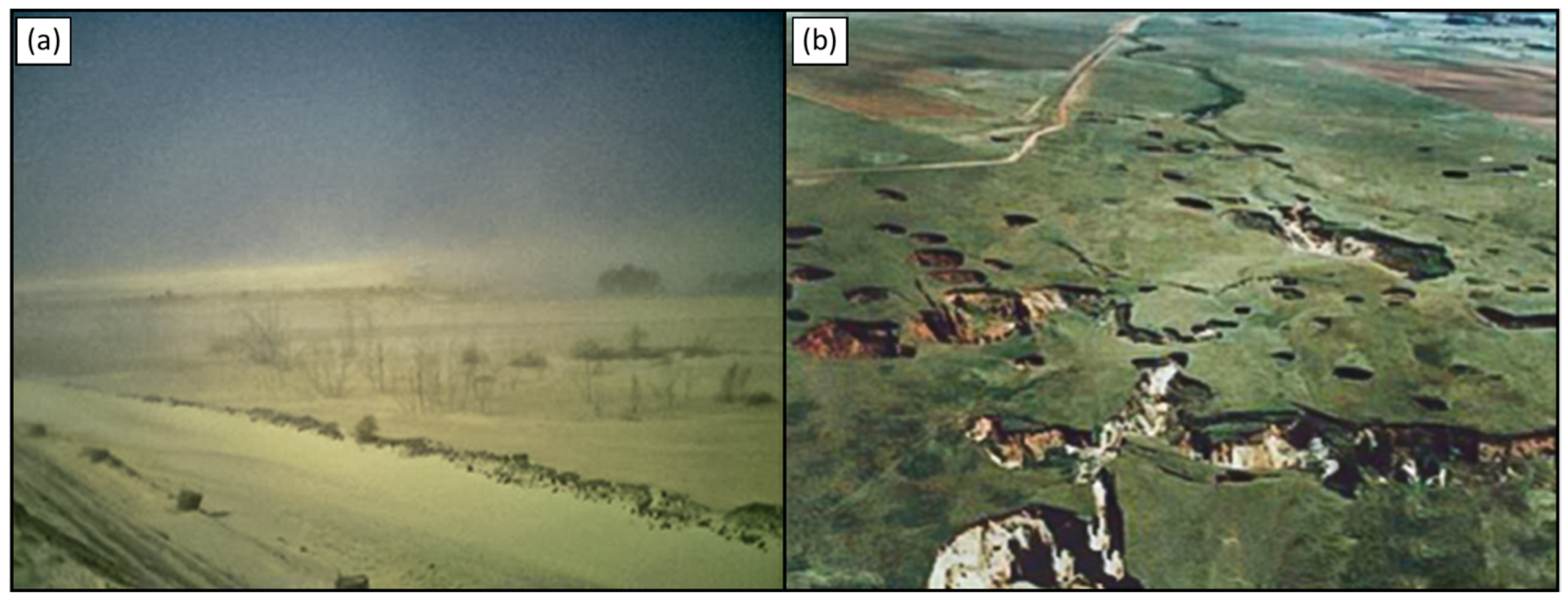
Figure 4.
Environmental impacts associated with legacy gold mining in the Witwatersrand Basin. (a)—air pollution generated by windblown tailings dust, with estimated emissions of approximately 42.24 tons per day in the West Rand; (b)—accelerated formation of sinkholes induced by historical mine dewatering and subsequent rewatering of dolomitic aquifers. Adapted after Liefferink [45].
When considered within the four-pathway framework, the available quantitative evidence highlights the scale and persistence of environmental dispersion processes. Research on the Wonderfonteinspruit has revealed that uranium concentrations in river sediments are 375 times higher than those in an uncontaminated control river [38,41,45]. Pollution has not remained confined to water and sediments; the use of contaminated water for agricultural irrigation has facilitated the transfer of pollutants into soils, while windblown dust from mine residues has resuspended and transported contaminants into surrounding residential areas. This situation has created a pollution cycle that encompasses all components of the environmental matrix (water, soil, air, and sediments) and continues persistently. Together, these processes demonstrate that contaminant dispersion occurs through interactions among environmental compartments rather than in isolated media.
The accelerated formation of sinkholes in gold-mining areas is driven by complex hydro-geomechanical processes triggered by extensive mine dewatering operations. During active mining, continuous groundwater abstraction generates substantial drawdown cones, altering subsurface stress regimes and causing the consolidation of overlying strata. This dewatering process destabilises the dolomitic and limestone formations commonly associated with the Witwatersrand goldfields, creating voids and weakening carbonate rock structures through dissolution processes. Following mine closure and the cessation of pumping activities, rapid aquifer recharge and the consequent rise in groundwater levels exert hydraulic pressures that exceed the structural capacity of the overlying rock formations. The combined effects of consolidation-induced weakening and renewed hydraulic loading often result in catastrophic collapse events, manifested at the surface as sudden sinkhole formation. These collapses are further accelerated by interconnected underground mine workings, which create preferential groundwater flow paths and concentrate hydraulic stresses at specific geological weak zones (Figure 5).
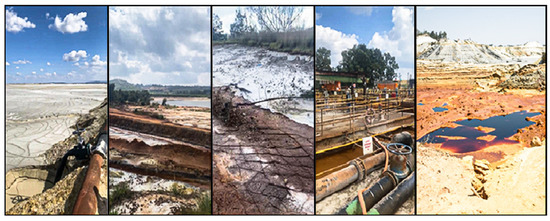
Figure 5.
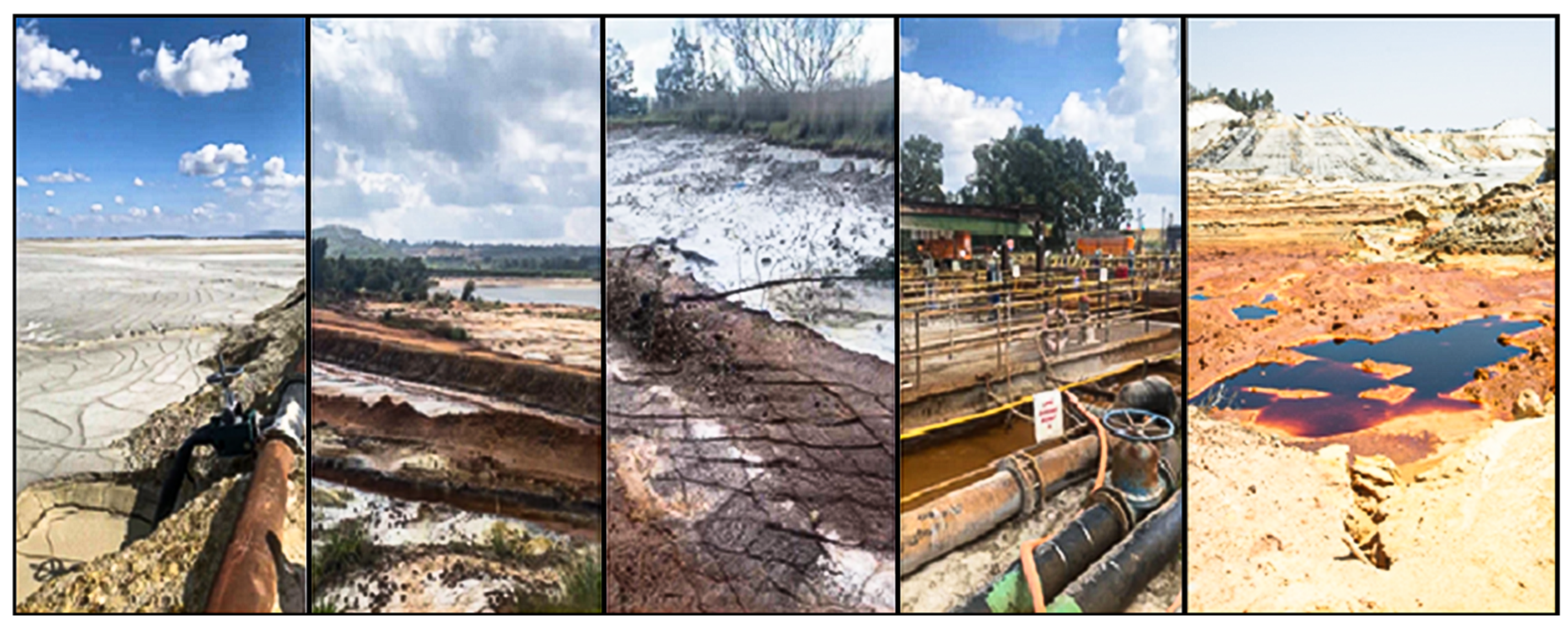
Selected sites across the Witwatersrand Basin, including dams, abandoned mine pits, tailings storage facilities, and AMD treatment plants.
Abandoned mine workings, now flooded with contaminated water, create uncontrolled acidic discharge points that severely pollute river systems like the Wonderfonteinspruit [39]. The massive tailings storage facilities pose a complex contamination scenario, as they continuously leach pollutants into groundwater and release radioactive and toxic dust particles into the atmosphere during dry seasons, creating a multi-matrix contamination web that affects air, soil, and water resources across the region (Figure 6). The environmental damage is extensive, causing pollution of surface and groundwater, degradation of soil quality, harm to aquatic life, and the seepage of heavy metals into the environment. This contamination poses severe risks to human health [18].
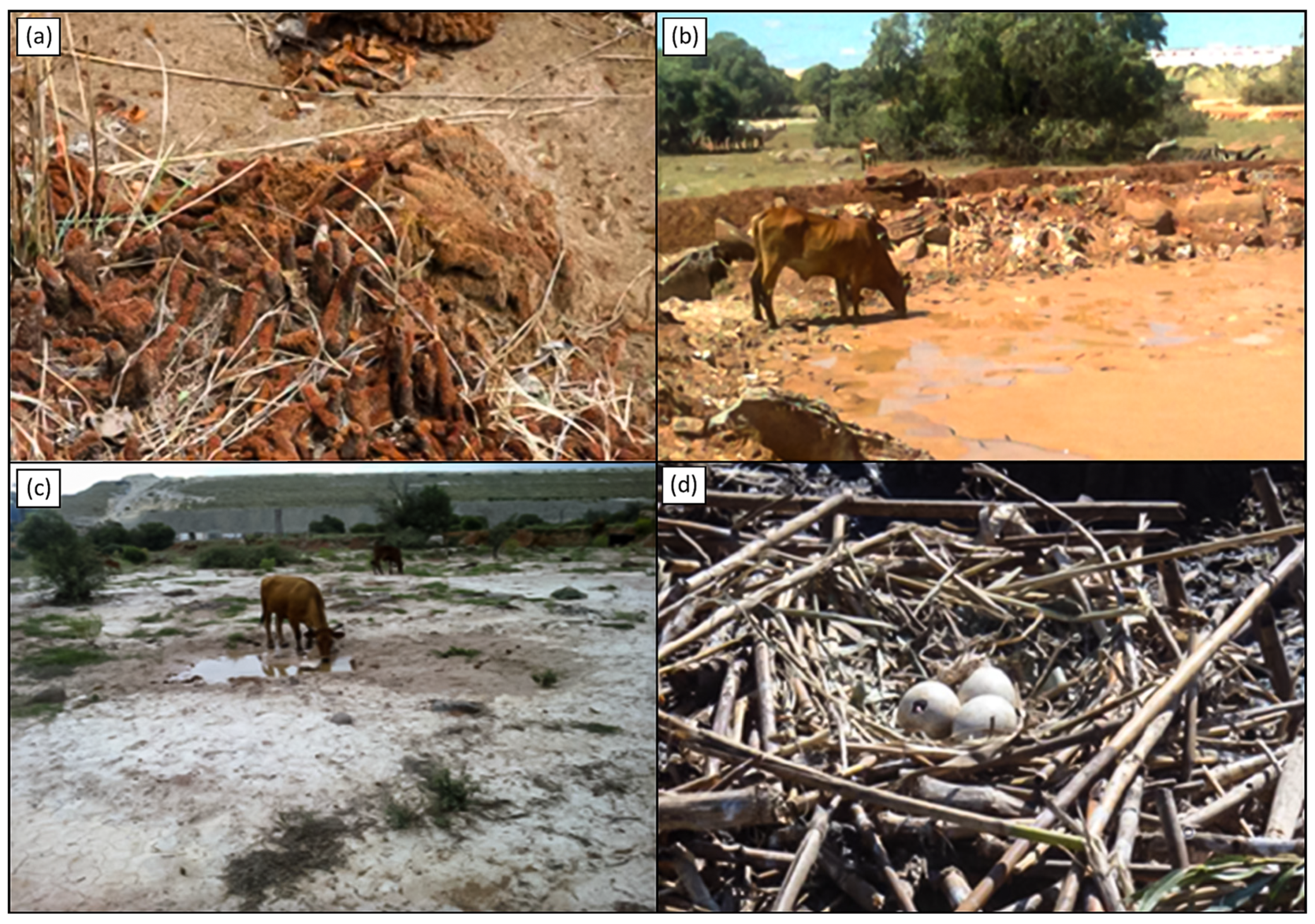
Figure 6.
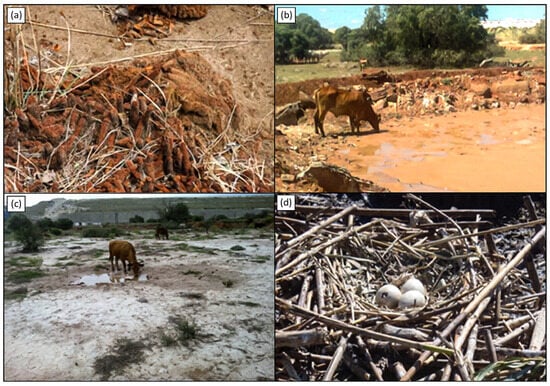
Pathways of contaminant transfer through biotic systems within mining-impacted landscapes ((a)—deposition of metal-rich AMD residues on pasture vegetation and subsequent infiltration into underlying soils; (b)—direct ingestion of contaminated surface water by livestock; (c)—exposure of grazing cattle to heavy metals and radionuclides through the ingestion of contaminated forage and soil particles; (d)—bioaccumulation of uranium, mercury, and gold in waterbird eggs, indicating trophic transfer and ecological exposure). Adapted after Liefferink [46].
This environmental dispersion pathway establishes the foundational exposure context for subsequent biotic uptake and trophic transfer, linking abiotic contamination to ecological and human health impacts addressed in the following pathways.
3.2. Pathway 2: Biotic Uptake by Plants and Animals
The synthesis of evidence under Pathway 2 demonstrates that biotic uptake represents a critical amplification mechanism through which environmental contamination is transferred into living systems. Building on the environmental dispersion processes identified in Pathway 1, this pathway captures the transition from abiotic contamination to biological accumulation.
Environmental degradation directly affects the next link in the “One Health” chain, animal and ecosystem health. AMD, characterised by its low pH and elevated heavy metal concentrations, creates highly toxic conditions for aquatic ecosystems, posing a severe threat to biodiversity in the Witwatersrand Basin. Beyond this ecological damage, a particularly critical concern from a One Health perspective is the role of livestock as “biological vectors.”
Within the Wonderfonteinspruit catchment, cattle grazing in contaminated areas are exposed to pollutants not only by drinking polluted water but, more importantly, through the ingestion of contaminated soil and hyper-accumulating plants. Integrated analysis of biotic indicators reveals consistent patterns of contaminant uptake across plant and animal receptors. Research has shown that grasses irrigated with Wonderfonteinspruit water can accumulate uranium and other contaminants at levels more than 1000 times reference values. Consequently, cattle feeding on these grasses exhibit alarming levels of bioaccumulation in their tissues. For example, uranium concentrations in the kidneys of Wonderfonteinspruit cattle were recorded at up to 4350 times higher than those observed in control groups [38] (Figure 6). This magnitude of bioaccumulation reflects the high transfer efficiency of uranium from contaminated soils and forage into mammalian tissues, indicating sustained biological exposure and potential chronic toxicological stress in grazing livestock.
Toxic and radioactive discharges from reclamation activities contaminate local water systems, creating direct exposure pathways for flora and fauna. Through irrigation and natural hydrological processes, radionuclides and heavy metals, such as uranium, mercury, and gold, are transferred from soils and waters into plants, including those in grazing pastures. Subsequent bioaccumulation within animal tissues is evidenced by avian egg analyses, which reveal alarmingly elevated contaminant levels [32]. The case of Robinson Lake, where uranium concentrations reach nearly 40,000 times background levels, underscores the severity of this pathway and its ecological consequences [46]. The accumulation of contaminants in plants and animals identified in this pathway provides a direct basis for trophic transfer and human exposure addressed in the subsequent pathway.
3.3. Pathway 3: Trophic Transfer up the Food Web
The synthesis of evidence under Pathway 3 identifies trophic transfer as a key mechanism through which localised environmental contamination is transformed into systemic human exposure risk. Building on the biotic uptake processes described in Pathway 2, this pathway captures the amplification of contaminants as they move through the food web. At this critical stage, livestock consuming polluted vegetation function as biological vectors for heavy metals and radionuclides, while contaminated environmental matrices act as primary points of entry for pollutants into biological systems.
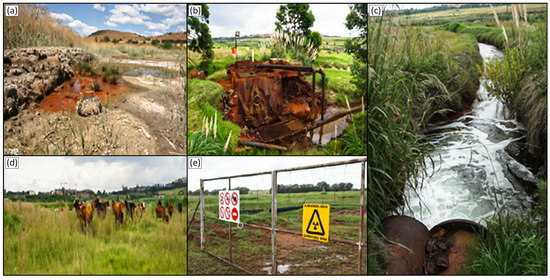
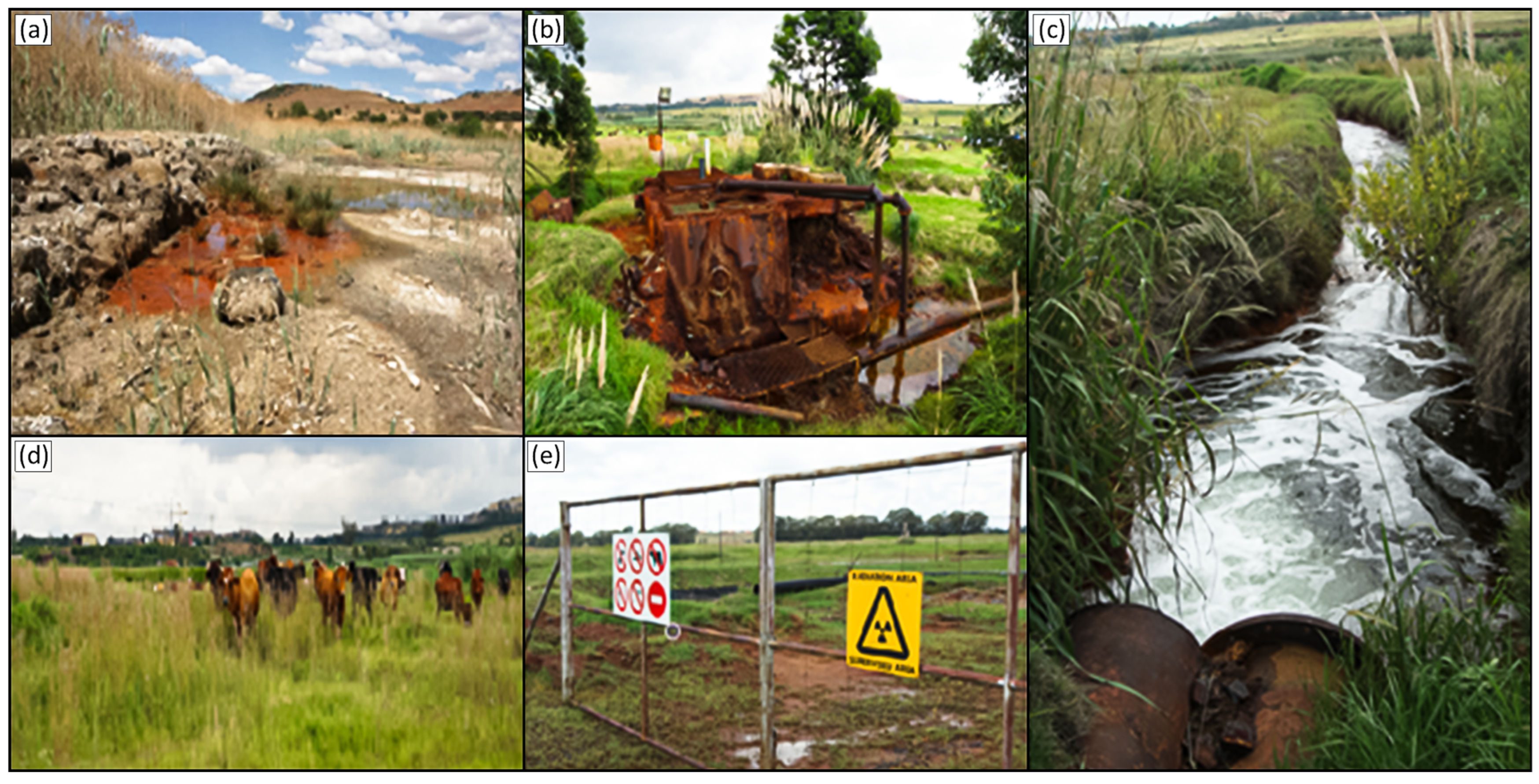
When integrated across environmental and biological indicators, the evidence highlights irrigation-mediated food-chain contamination as a dominant exposure route. In the case of the Wonderfonteinspruit, the use of mine-impacted water for agricultural irrigation facilitates the transfer of radionuclides such as uranium, along with associated heavy metals, from soils into plants, particularly within grazing pastures used by livestock. This process not only leads to the bioaccumulation of contaminants in plant tissues but also initiates a contamination cycle at the first trophic level of the food chain. Over time, this creates cascading ecological and health risks, as livestock feeding on contaminated forage become secondary vectors of exposure and, ultimately, humans are exposed to these pollutants through dietary intake (Figure 7). This pathway thus converts diffuse environmental contamination into concentrated dietary exposure, effectively bridging ecosystem degradation and human health risk.
Figure 7.
AMD and environmental hazards observed in the study area. (a)—AMD discharge near grazing livestock; (b)—corroded mining infrastructure affected by acidic waters; (c)—active AMD decant channel; (d)—cattle grazing on mining-impacted pasture; (e)—radiation hazard signage near mine residue area.
A critical finding emerging from the synthesis is that trophic transfer may proceed without overt ecological or veterinary warning signals. The most insidious aspect of this phenomenon is the asymptomatic nature of exposure. Despite carrying extraordinarily high toxic loads, the cattle appear outwardly healthy and maintain normal reproductive performance. This creates a “silent vector” pathway through which severe environmental contamination is effectively transferred into the human food chain, bypassing early detection and conventional health safeguards. In this way, livestock become both sentinels and concealed carriers of mining-derived contamination, amplifying the interconnected risks at the environment–animal–human interface. This mechanism demonstrates how localised environmental contamination can be amplified through food-chain transfer, increasing the probability of chronic low-dose exposure in human populations consuming contaminated animal products.
The identification of this silent trophic pathway underscores the limitations of conventional monitoring approaches focused solely on environmental media, highlighting the need for integrated food-chain and One Health-based risk assessment.
3.4. Pathway 4: Direct Human Exposure (Ingestion, Inhalation, Contact)
The synthesis of evidence under Pathway 4 demonstrates that environmental contamination in the Witwatersrand Basin culminates in direct and multi-vector human exposure, transforming ecological degradation into measurable public health risk. Approximately 1.6 million people live in informal settlements near radioactive mine residue areas (MRAs) east of the study area in the East Rand (Ekurhuleni). Most of these MRAs are radioactive because the gold-bearing ores of the Witwatersrand contain nearly ten times more uranium than gold [29]. Building on trophic transfer mechanisms identified in Pathway 3, direct human exposure represents the final stage through which contaminants reach vulnerable populations.
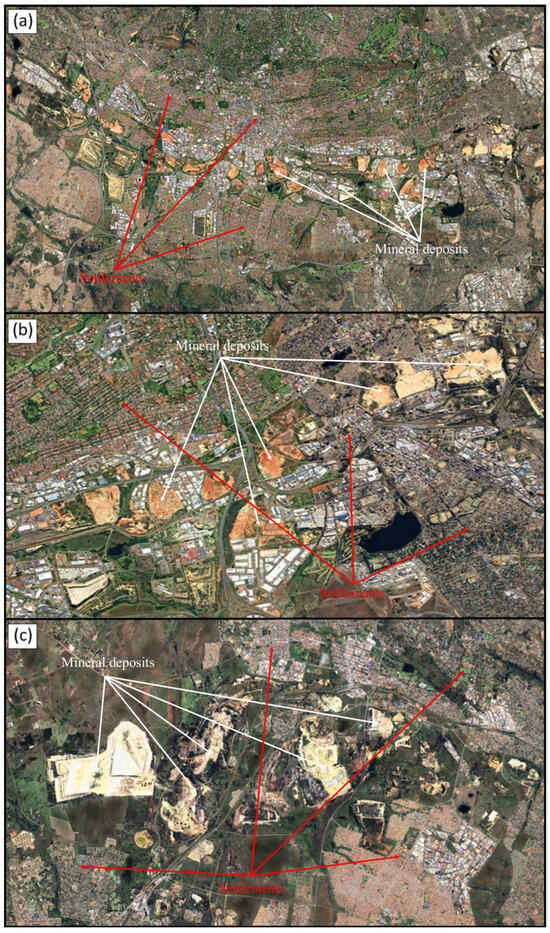
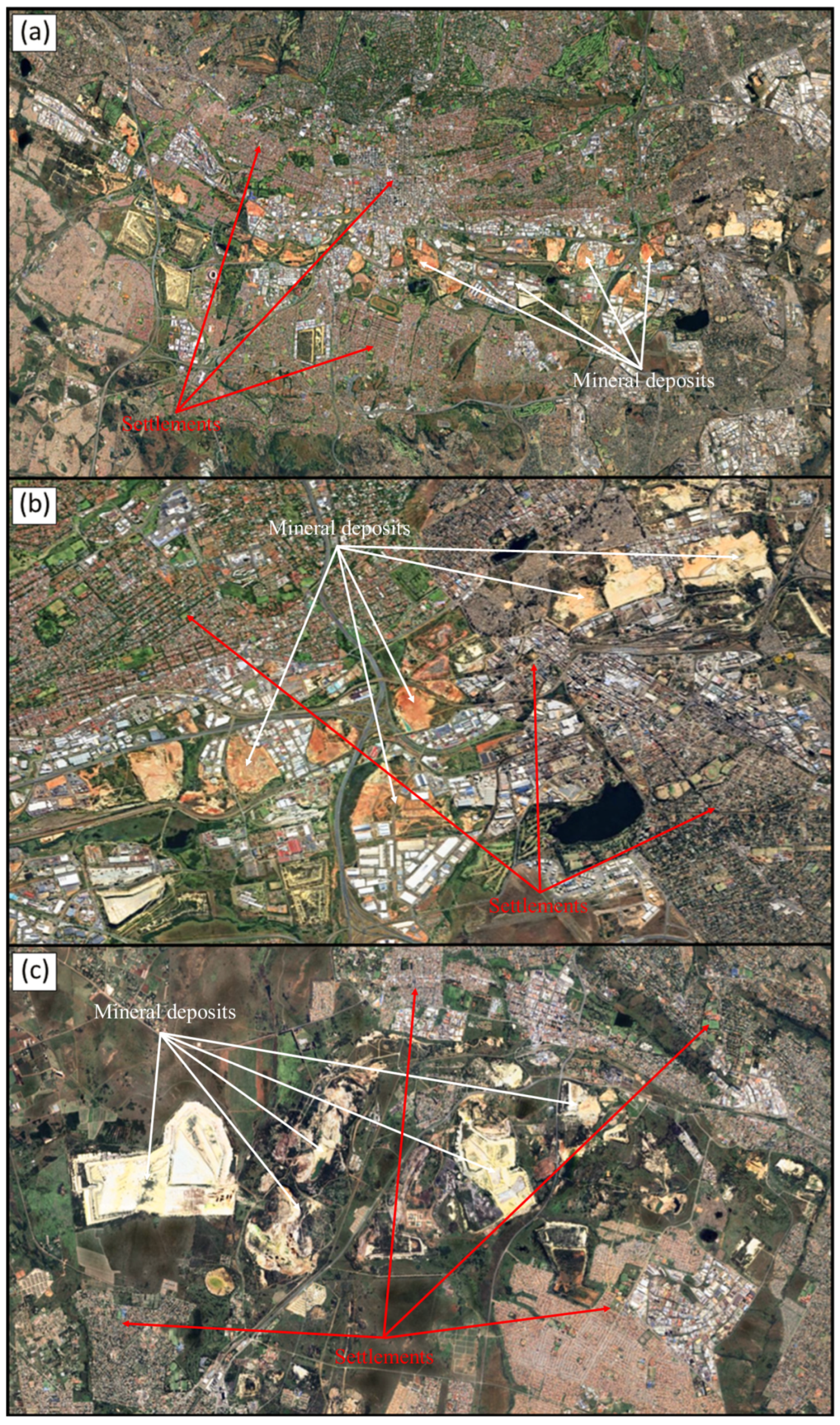
Integrated analysis of epidemiological and exposure data highlights inhalation as a dominant exposure pathway in densely populated mining-affected areas. Direct human exposure through inhalation of airborne particulates poses a significant public health risk to communities near unrehabilitated waste facilities. Empirical evidence from Johannesburg, one of the world’s most densely mined regions, substantiates this pathway. A pivotal study conducted by the Bench Marks Foundation [34] surveyed households in four communities (Riverlea, Diepkloof, Meadowlands, and Doornkop), all of which are located in the central-southwestern part of the Witwatersrand Basin, within the Johannesburg metropolitan area, and have historically been directly affected by both Central Rand and West Rand gold mining operations. The research documented the high prevalence of respiratory ailments, with a majority of residents (56.1%) identifying conditions such as coughing, sinusitis, asthma, and tuberculosis as their most persistent health challenge (Figure 8) [47].
Figure 8.
Spatial distribution of mineral deposits and human settlements in the Central Rand Basin, illustrating mining–settlement interactions ((a)—Johannesburg area; (b)—Germiston area; (c)—Robinson Lake area). Source: Google Earth imagery [48], modified by the authors.
In a study conducted in Soweto, located in the central-lower part of the Witwatersrand Basin, particularly near the junction of the eastern and western mining belts, Zupunski et al. [23] analysed uranium levels in hair samples of 128 individuals living near gold mine tailings. The average uranium concentration was 143 μg/kg, significantly higher than that in unexposed populations worldwide. The median value in children (149 μg/kg) was 2.1 times higher than in adults (63 μg/kg), indicating that children are a more vulnerable group (p < 0.001). These findings collectively indicate disproportionate exposure burdens among children, reflecting both physiological vulnerability and intensified contact with contaminated environments. Due to their play behaviour and hand-to-mouth activities, children were identified as being particularly at risk. Uranium poses dangers through both chemical toxicity (effects on kidneys and bones) and radiological effects (cancer risk), and alpha particle-emitting radionuclides have been classified by the International Agency for Research on Cancer as human carcinogens.
Evidence from food, water, and soil matrices further confirms the convergence of multiple exposure routes at the household level. According to a study conducted by Khomo [29], the Soweto region is home to approximately 1.9 million people today. The research reveals that these residents are exposed to AMD, a legacy of historical mining activities in the area. The researcher’s study found that AMD has contaminated streams, irrigation sources, and soil in the area adjacent to the Klip River, which flows south and west of Soweto. According to the findings, even minimal exposure to the heavy metals in AMD can cause dehydration and abdominal pain, while severe exposure is linked to more serious health issues such as birth defects, brain damage, cancer, and miscarriages. The research team collected samples from river sediment, water, and soil in vegetable gardens along the Klip River. They also tested spinach leaves from these gardens. Their analysis showed extreme toxicity near the mine dumps, which are the source of the AMD. Those living closest to these abandoned sites were the most affected. The study further demonstrated the highly destructive impact of contamination on microbial life. Even bacteria, known for their resilience, could not survive in the areas tested. The findings provide strong evidence that AMD is detrimental to microbial communities, disrupting the sensitive networks that are essential for a healthy environment [29] (Figure 8).
Once a popular recreational site, Robinson Lake is now severely degraded due to AMD from historic and ongoing gold mining operations in the Central Rand Basin. The lake exhibits extremely low pH values (≈2.2–2.6), uranium concentrations reaching ~16 mg/L, far exceeding drinking water guidelines, and elevated levels of other heavy metals and radionuclides, including iron, arsenic, and radium. These geochemical conditions have transformed the lake into a toxic environment devoid of aquatic life, while also presenting pathways of human exposure through contaminated groundwater, soil, dust, and agricultural use [30,31]. This case exemplifies how legacy mining sites function as persistent exposure hotspots, where environmental contamination directly intersects with human activity and access to resources.
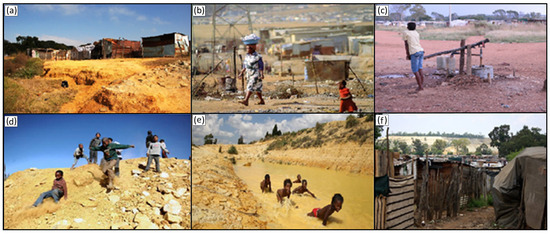
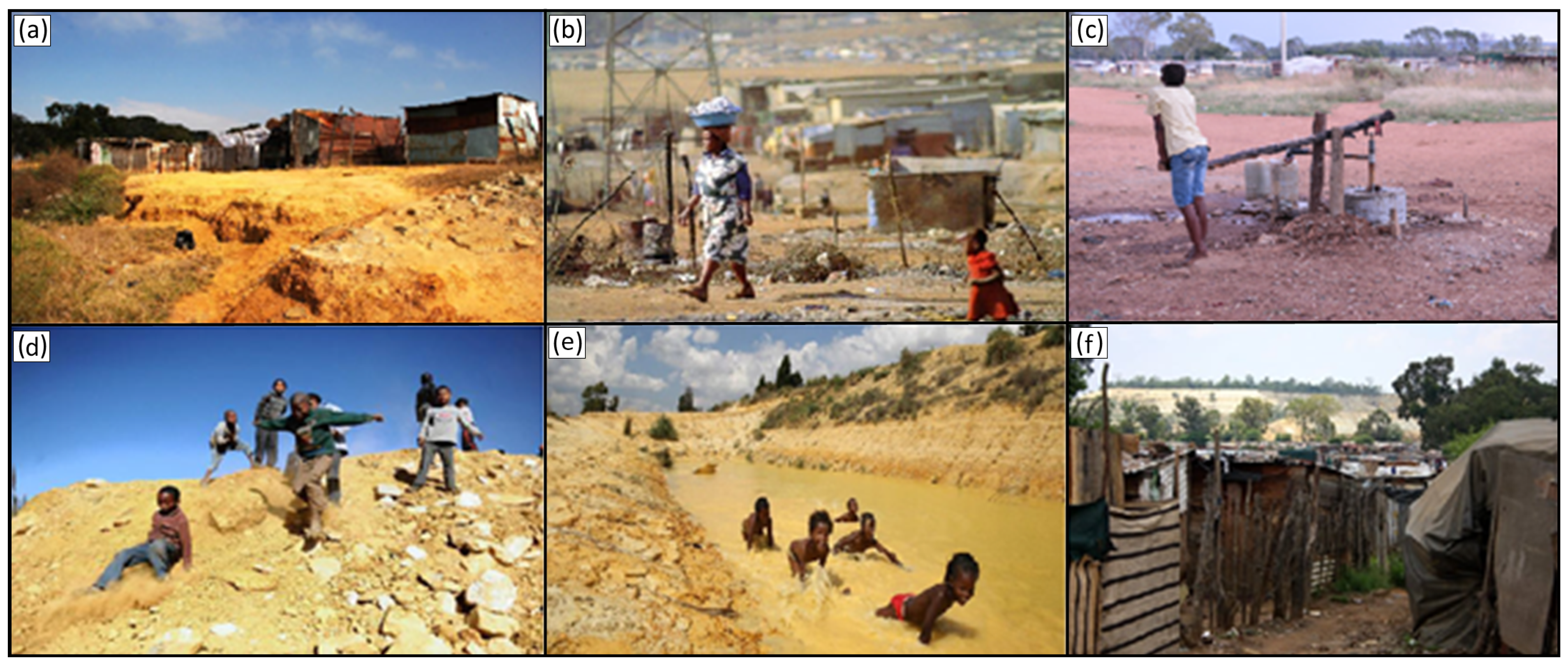
The dimension of human and community health represents the ultimate link and intersection within the One Health matrix. In the Witwatersrand Basin, mining-induced pollution is a context in which environmental degradation translates into tangible public health crises (Figure 9).
Figure 9.
Environmental contamination and human exposure pathways in informal settlements adjacent to mining areas, Witwatersrand Basin (Source: (a,d) adapted from Mkhize [49]; (b,e) adapted from Liefferink [46,50]; (c) adapted from Human Rights Commission [51]; (f) adapted from Tang & Watkins [52]).
In addition, Gauteng Province is one of the regions that have historically been heavily affected by gold mining on the Central Rand and the West Rand. A study conducted by Kamunda et al. [21] found that gold mine tailings in the area contain naturally occurring radionuclides (238 U, 232 Th, 40 K) and pose a potential radiological risk to local communities (Figure 9).
Based on field observations and site visits, it is evident that the human dimension is the most critical and immediate concern within the “One Health” framework. Far from being an abstract issue, exposure risks are tangibly experienced by those living in proximity to contaminated mine waste sites, particularly households settled informally at the periphery of tailings dams, subsistence farmers whose fields depend on polluted surface waters, and children frequently exposed to contaminated soil and airborne dust during daily outdoor activities. These groups face disproportionate health burdens not merely because of environmental hazards themselves but also because of the intersection of ecological degradation with structural inequalities.
These vulnerable communities are subject to a multi-vector exposure matrix characterised by intersecting and cumulative effects. This exposure begins with direct hydro-social pathways, where contaminated surface waters are utilised not only for domestic consumption but also for social practices such as recreation and religious rituals. This is accompanied by atmospheric exposure, involving the chronic inhalation of radionuclide- and heavy metal-laden particulates transported by wind from tailings storage facilities; evidence indicates that this condition increases the prevalence of respiratory illnesses, particularly among physiologically more susceptible children [41]. Furthermore, an indirect trophic (food web) exposure occurs as contaminants enter the food chain, both through the consumption of meat and organs from cattle that have bioaccumulated toxins grazing on contaminated pastures [38] and through the consumption of agricultural products cultivated with contaminated resources.
These multiple and cumulative exposure pathways are known to entail significant public health threats, including severe radiological risks such as cancer and renal damage and heavy metal toxicity, which can lead to neurological damage [53,54]. Ultimately, the fundamental dynamic that deepens the “One Health” crisis is the intersection of high environmental exposure with pre-existing social vulnerabilities stemming from the legacy of apartheid and economic inequalities [55,56]. This situation transcends a mere toxicological issue, transforming it into a matter of environmental justice (Table 1).
Table 1.
Tracing AMD Impacts Across the One Health Continuum in the Witwatersrand Basin.
Taken together, the evidence synthesised under Pathway 4 demonstrates that human exposure in mining-affected regions is not the result of isolated pathways but of cumulative, interacting mechanisms that disproportionately affect socially vulnerable communities.
4. Discussion
The results of this study, obtained through a multidimensional synthesis of the specialised literature, highlight that the impacts of AMD manifest as a system of interconnected trajectories linking the abiotic environment, ecosystems, food chains, and human health. Consequently, the intervention strategies discussed in this section are implicitly structured around the four analytical trajectories identified (environmental dispersion, biotic uptake, trophic transfer, and direct human exposure) and derive from the need to interrupt or mitigate these mechanisms of risk propagation, rather than from an isolated sectoral approach. From an implementation perspective, these interventions require coordinated responsibility between state regulators, mining operators and environmental oversight institutions, in line with the “polluter pays” principle embedded in South African environmental legislation [60,61].
The initial and most urgent phase of the intervention strategy must focus on minimising the public’s direct exposure to radioactive and toxic pollutants. In this context, it is critical to immediately control the aeolian dispersion of particulates from the surfaces of tailings dams, particularly during dry and windy periods, by regularly wetting surfaces or stabilising them with eco-compatible binding agents [61,62]. However, preventing physical access to contaminated areas must not be limited to passive measures such as warning signs alone. Given that local populations may rely on these zones for their livelihoods (e.g., scrap metal collection, animal grazing), the construction of robust physical barriers (fences) and the establishment of active monitoring mechanisms to ensure their effectiveness are mandatory. The success of this process depends on a comprehensive community engagement program that transparently explains the rationale for prohibitive measures and offers alternative livelihoods. Concurrently, the provision of clean water via tankers must be prioritised as a public health measure for communities dependent on contaminated groundwater and surface water [63]. In practice, such short-term exposure reduction measures are typically implemented through joint state–industry responsibility frameworks, particularly in cases involving both active and legacy mining operations [61].
In the medium and long term, a sustainable solution requires addressing the contamination at its source. This necessitates the geotechnical reprofiling of tailings dams, reducing their slopes to minimise erosion, followed by their permanent closure with a multi-layered engineered cover (“capping”) composed of clay, geomembranes, and clean soil to prevent seepage [64]. In parallel with this engineering solution, cost-effective biological methods, such as phytoremediation, should be considered for low- to moderate-level soil contamination spread over large areas [65]. The use of hyperaccumulator plant species that absorb uranium and heavy metals can facilitate biological remediation of soil. In contrast, highly contaminated “hotspots” located near residential areas or in agriculturally critical zones will require more radical interventions, such as excavation and transportation to secure, engineered disposal facilities [66]. Under current South African legislation (NEMA and MPRDA), mining companies are required to provide financial provisions for mine closure and environmental rehabilitation; however, multiple studies indicate that long-term AMD treatment costs are frequently underestimated relative to actual post-closure environmental liabilities [60].
The rehabilitation of hydrological systems plays a central role in controlling contaminant migration pathways. AMD is one of the most significant threats to both groundwater and surface water quality. Therefore, it is necessary to increase the capacity of existing treatment plants and to establish new active or passive treatment systems to neutralise the leachate and precipitate heavy metals. Furthermore, hydrologically isolating contaminated surface runoff from clean water sources through diversion channels and collection ponds will prevent the spread of pollution to wider catchments. To monitor the effectiveness of these interventions and the temporal and spatial migration of the groundwater contaminant plume, establishing a comprehensive groundwater monitoring network, including new observation wells at strategic locations, is imperative. Long-term treatment and monitoring costs may persist for decades, highlighting the need for dynamic financial assurance systems and, where necessary, state-supported remediation funds for abandoned or orphaned mine sites [60,67].
Finally, it must be acknowledged that no technical solution can succeed without addressing the human and socio-economic dimensions of the crisis. A food chain monitoring program must be implemented to regularly assess radioactivity and heavy metal levels in agricultural and animal products from the region [68]. While restricting agriculture and animal husbandry in high-risk areas is a public health necessity, these measures must not become a punitive tool against the local population. Therefore, a comprehensive socio-economic support package must be implemented concurrently with any restrictions, including the allocation of alternative safe farmlands for farmers, the creation of direct financial support mechanisms to compensate for lost income, and the provision of vocational training programs to enhance their employability in non-agricultural sectors. Long-term epidemiological studies should be initiated to understand the long-term health impacts of pollution, and voluntary resettlement programs should be developed for households at the highest risk [69].
The financing and sustainability of these interventions must combine industry liability, regulatory financial provisioning, and, where necessary, state support for rehabilitation [60]. In addition to traditional funding models, alternative circular-economy approaches should be considered. Mineral recovery from tailings and mine waste remains technically feasible in certain contexts and can partially offset remediation costs. Where recovery is not economically viable, controlled reuse of mine waste in construction materials, soil stabilisation, or engineered agricultural remediation applications may provide partial self-financing pathways, provided strict environmental safety standards are enforced [70,71].
The financing and sustainability of all these efforts depend on the uncompromising application of the “polluter pays” principle, the strengthening of legislation governing mine closure and rehabilitation, and the establishment of an independent authority to transparently oversee all processes. The economic burden of environmental rehabilitation is a major constraint for both operators and regulatory authorities, and several studies have shown that rehabilitation and environmental compliance costs can account for a significant share of total mining operational costs, influencing long-term closure planning and environmental liability management [27,28].
5. Conclusions
The legacy of AMD in the Witwatersrand Basin is not just an environmental pollution problem but a complex socio-ecological crisis in which environmental degradation, ecosystem damage, and human health impacts are deeply interconnected and manifest through cumulative mechanisms. Applying the One Health/EcoHealth perspective in this study demonstrates that the risks associated with AMD cannot be adequately understood through isolated disciplinary analyses, as contamination systematically propagates between environmental compartments, biological systems and human communities.
The main contribution of this article is to explicitly reposition the existing, predominantly unidimensional literature within an integrative and multidimensional analytical framework. By systematically synthesising fragmented evidence from geochemical, ecological, agricultural, and public health studies, the proposed four-pathway conceptual model clarifies how contaminants from mining activities are dispersed into the abiotic environment, absorbed by living organisms, transferred along the food chain, and ultimately transformed into human exposure and health effects.
By providing an operational, transferable framework rather than site-specific point measurements, this study offers a practical tool for integrated risk assessments, policy formulation, and remediation planning in post-mining landscapes.
6. Limitations and Future Studies
This study proposes an integrative framework for analysing the impacts of acid mine drainage, based on a multidimensional synthesis of the existing literature and the application of the One Health paradigm. The complexity of the systems analysed and the spatio-temporal variability of the contamination processes inevitably imply a dependence on data from diverse sources and methodologies. In this context, the developed analytical framework provides a coherent representation of the main exposure pathways, but the precise quantification of each pathway’s relative contribution remains contingent on the availability of integrated long-term datasets. Future research should develop this framework by integrating environmental and human exposure data over extended periods, assessing the relative weight of each transfer pathway, and testing the model’s applicability in other mining contexts. Such an extension would strengthen the value of the proposed framework as an operational tool for the holistic, evidence-based management of risks generated by mining activities.
Author Contributions
Conceptualization, Z.C.E. and V.G.; methodology, Z.C.E., V.G. and C.C.; formal analysis, V.G. and C.C.; investigation, Z.C.E. and C.C.; resources, Z.C.E. and C.C.; writing—original draft preparation, Z.C.E. and V.G.; writing—review and editing, V.G. and C.C.; visualization, Z.C.E., V.G. and C.C. All authors have read and agreed to the published version of the manuscript.
Funding
The APC was funded by the University of Oradea, Oradea, Romania.
Data Availability Statement
The original contributions presented in this study are included in the article. Further inquiries can be directed to the corresponding author.
Acknowledgments
The research undertaken was made possible by equal scientific involvement of all the authors concerned. We extend our sincere gratitude to Mariette Liefferink, CEO of the Federation for a Sustainable Environment (FSE), for her invaluable support throughout the manuscript preparation process and during the field investigation. We also extend our sincere gratitude to Lecturer Tudor Caciora as he played a substantial role during the revision stage, contributing significantly to the intellectual content and the refinement of the updated manuscript. (*)This study is an expanded version of the abstract presented at the International Conference on Recent Trends in Geoscience Research and Applications 2025, Belgrade, Serbia, 15–19 September 2025.
Conflicts of Interest
The authors declare no conflicts of interest.
References
- Caciora, T.; Ilieş, A.; Berdenov, Z.; Al-Hyari, H.S.; Ilieş, D.C.; Safarov, B.; Hassan, T.H.; Herman, G.V.; Hodor, N.; Bilalov, B.; et al. Comprehensive Analysis of Classroom Microclimate in Context to Health-Related National and International Indoor Air Quality Standards. Front. Public Health 2024, 12, 1440376. [Google Scholar] [CrossRef] [Scilit]
- Caciora, T.; Ilies, D.C.; Costea, M.; Blaga, L.; Berdenov, Z.; Ilies, A.; Hassan, T.H.; Peres, A.C.; Safarov, B.; Josan, I.; et al. Microclimate Assessment in a 19th-century Heritage Building from Romania. Indoor Air 2024, 2024, 2989136. [Google Scholar] [CrossRef] [Scilit]
- Whitmee, S.; Haines, A.; Beyrer, C.; Boltz, F.; Capon, A.G.; de Souza Dias, B.F.; Ezeh, A.; Frumkin, H.; Gong, P.; Head, P.; et al. Safeguarding Human Health in the Anthropocene Epoch: Report of The Rockefeller Foundation-Lancet Commission on Planetary Health. Lancet 2015, 386, 1973–2028. [Google Scholar] [CrossRef] [Scilit]
- Rohr, J.R.; Barrett, C.B.; Civitello, D.J.; Craft, M.E.; Delius, B.; DeLeo, G.A.; Hudson, P.J.; Jouanard, N.; Nguyen, K.H.; Ostfeld, R.S.; et al. Emerging Human Infectious Diseases and the Links to Global Food Production. Nat. Sustain. 2019, 2, 445–456. [Google Scholar] [CrossRef] [Scilit]
- Landrigan, P.J.; Fuller, R.; Acosta, N.J.R.; Adeyi, O.; Arnold, R.; Basu, N.N.; Baldé, A.B.; Bertollini, R.; Bose-O’Reilly, S.; Boufford, J.I.; et al. The Lancet Commission on Pollution and Health. Lancet 2018, 391, 462–512. [Google Scholar] [CrossRef] [Scilit] [PubMed]
- Persson, L.; Carney Almroth, B.M.; Collins, C.D.; Cornell, S.; de Wit, C.A.; Diamond, M.L.; Fantke, P.; Hassellöv, M.; MacLeod, M.; Ryberg, M.W.; et al. Outside the Safe Operating Space of the Planetary Boundary for Novel Entities. Environ. Sci. Technol. 2022, 56, 1510–1521. [Google Scholar] [CrossRef] [Scilit]
- Ilieș, A.; Caciora, T.; Ilieș, G.; Hassan, T.H.; Berdenov, Z.; Ilieș, D.C.; Pereș, A.C.; Safarov, B.; Grama, V.; Sabina, H.; et al. An Integrated Risk Assessment Model for Indoor Air Quality Impacts on Museum Exhibits and Human Health Using Microclimatic Indices and AgNPs Treatment. PLoS ONE 2025, 20, e0336594. [Google Scholar] [CrossRef] [Scilit] [PubMed]
- Herman, G.V.; Gaceu, O.; Mester, C.; Baias, S.; Caciora, T.; Wendt, J.A. Spatial Analysis of Water Quality in Natura 2000 Sites Bihor, Romania. J. Environ. Prot. Ecol. 2019, 20, 2121–2129. [Google Scholar]
- Rabinowitz, P.M.; Conti, L.A. Human–Animal Medicine: Clinical Approaches to Zoonoses, Toxicants and Other Shared Health Risks; Saunders: Philadelphia, PA, USA; Elsevier: Amsterdam, The Netherlands, 2010. [Google Scholar]
- Zinsstag, J.; Schelling, E.; Crump, L.; Whittaker, M.; Tanner, M.; Stephen, C. (Eds.) One Health: The Theory and Practice of Integrated Health Approaches; CABI: Wallingford, UK, 2020. [Google Scholar]
- Charron, D.F. Ecohealth research in practice. In Ecohealth Research in Practice: Innovative Applications of an Ecosystem Approach to Health; Springer: New York, NY, USA, 2011; pp. 255–271. [Google Scholar] [CrossRef] [Scilit]
- Tucker, R.F.; Viljoen, R.P.; Viljoen, M.J. A review of the Witwatersrand Basin—The world’s greatest goldfield. Episodes 2016, 39, 105–139. [Google Scholar] [CrossRef] [Scilit]
- McCarthy, T.S. The impact of acid mine drainage in South Africa. S. Afr. J. Sci. 2011, 107, 1–7. [Google Scholar] [CrossRef] [Scilit]
- Naidoo, S. An assessment of the impacts of acid mine drainage on socio-economic development in the Witwatersrand, South Africa. Environ. Dev. Sustain. 2015, 17, 1045–1063. [Google Scholar] [CrossRef] [Scilit]
- Rambabu, K.; Banat, F.; Pham, Q.M.; Ho, S.H.; Ren, N.Q.; Show, P.L. Biological remediation of acid mine drainage: Review of past trends and current outlook. Environ. Sci. Ecotechnol. 2020, 2, 100024. [Google Scholar] [CrossRef] [Scilit]
- Durand, J.F. The impact of gold mining on the Witwatersrand rivers and karst system of Gauteng and North West Province, South Africa. J. Afr. Earth Sci. 2012, 68, 24–43. [Google Scholar] [CrossRef] [Scilit]
- Jordaan, K.; Comeau, A.M.; Khasa, D.P.; Bezuidenhout, C.C. An integrated insight into the response of bacterial communities to anthropogenic contaminants in a river: A case study of the Wonderfonteinspruit catchment area, South Africa. PLoS ONE 2019, 14, e0216758. [Google Scholar] [CrossRef] [Scilit]
- Ouma, K.O.; Shane, A.; Syampungani, S. Aquatic ecological risk of heavy-metal pollution associated with degraded mining landscapes of the Southern Africa river basins: A review. Minerals 2022, 12, 225. [Google Scholar] [CrossRef] [Scilit]
- Audet, P.; Charest, C. Heavy Metal Phytoremediation from a Meta-Analytical Perspective. Environ. Pollut. 2007, 147, 231–237. [Google Scholar] [CrossRef] [Scilit]
- Oti, W.O. Bioaccumulation Factors and Pollution Indices of Heavy Metals in Selected Fruits and Vegetables from a Derelict Mine and Their Associated Health Implications. Int. J. Environ. Sustain. 2015, 4, 15–23. [Google Scholar] [CrossRef] [Scilit]
- Kamunda, C.; Mathuthu, M.; Madhuku, M. Health risk assessment of heavy metals in soils from Witwatersrand Gold Mining Basin, South Africa. Int. J. Environ. Res. Public Health 2016, 13, 663. [Google Scholar] [CrossRef] [Scilit]
- Mine Health and Safety Council. Characterising the Risk of Human Exposure and Health Impacts from Acid Mine Drainage in South Africa; Deliverable for Output VII; MHSC: Johannesburg, South Africa, 2013. Available online: https://mhsc.org.za/sites/default/files/public/research_documents/SIM110901%20Report.pdf (accessed on 20 August 2025).
- Zupunski, L.; Street, R.; Ostroumova, E.; Winde, F.; Sachs, S.; Geipel, G.; Mathee, A. Environmental exposure to uranium in a population living in close proximity to gold mine tailings in South Africa. J. Trace Elem. Med. Biol. 2023, 77, 127141. [Google Scholar] [CrossRef] [Scilit] [PubMed]
- Nkosi, V.; Hoek, G.; Wichmann, J.; Voyi, K. Acute respiratory health effects of air pollution on asthmatic adolescents residing in a community in close proximity to mine dump in South Africa: Panel study. Int. Res. J. Public Environ. Health 2016, 3, 205–213. [Google Scholar] [CrossRef]
- Lourenco, M.; Curtis, C. The Influence of a High-Density Sludge Acid Mine Drainage (AMD) Chemical Treatment Plant on Water Quality along the Blesbokspruit Wetland, South Africa. Water SA 2021, 47, 35–44. [Google Scholar] [CrossRef] [Scilit]
- Stoch, E.J.; Winde, F. Threats and opportunities for post-closure development in dolomitic gold mining areas of the West Rand and Far West Rand (South Africa)-A hydraulic view part 3: Planning and uncertainty-lessons from history. Water SA 2010, 36, 83–88. [Google Scholar] [CrossRef] [Scilit]
- Yıldız, T.D. Rehabilitation Costs Paid by Mining Enterprises in Turkey: Comparison of Rehabilitation Costs with Their Shares in Mining Operation Costs and Other Environmental Costs. Resour. Policy 2025, 104, 105593. [Google Scholar] [CrossRef] [Scilit]
- Kulczycka, J.; Góralczyk, M.; Włodarczyk, B. Cost of Waste Management versus Competitiveness of Mining: The Example of Non-ferrous Metal Industry. Miner. Energy Raw Mater. Rep. 2003, 18, 10–15. [Google Scholar] [CrossRef] [Scilit]
- Khomo, L. South Africa: Gold mine pollution is poisoning Soweto’s water and soil—Study finds food gardens are at risk. Conversation 2024, 228954. [Google Scholar] [CrossRef] [Scilit]
- Wade, P.; Winde, F.; Coetzee, H. Risk assessment. In An Assessment of Sources, Pathways, Mechanisms and Risks of Current and Potential Future Pollution of Water and Sediments in Gold-Mining Areas of the Wonderfonteinspruit Catchment; Coetzee, H., Ed.; WRC Report No. 1214/1/06; Water Research Commission: Pretoria, South Africa, 2004; pp. 119–165. Available online: https://www.wrc.org.za/wp-content/uploads/mdocs/1214-1-061.pdf (accessed on 10 September 2025).
- Winde, F. Uranium pollution of water resources in mined-out and active goldfields of South Africa—A case study in the Wonderfonteinspruit catchment on extent and sources of U-contamination and associated health risks. In Proceedings of the International Mine Water Conference, Pretoria, South Africa, 19–23 October 2009; IMWA: Pretoria, South Africa, 2009; pp. 19–23. Available online: https://www.imwa.info/docs/imwa_2009/IMWA2009_Winde.pdf (accessed on 10 September 2025).
- Liefferink, M. Environmental Risks and Hazards Pertaining to AMD and Radioactivity Within the Witwatersrand Goldfields; The Federation for a Sustainable Environment: Johannesburg, South Africa, 2015; Available online: https://www.nuclear-risks.org/fileadmin/user_upload/pdfs/Uranabbau/ronneburg-2014/Liefferink_IPPNW_PRESENTATION_klein.pdf (accessed on 17 February 2026).
- Gold Fields. Geology—South Deep. 2025. Available online: https://www.goldfields-southdeep.co.za/about-us/about-south-deep/geology (accessed on 17 August 2025).
- Shnorhokian, S.; Ahmed, S. Mechanisms and Measurements of Destressing in Underground Mines: A State-of-the-Art Review. Min. Metall. Explor. 2024, 41, 2959–3005. [Google Scholar] [CrossRef] [Scilit]
- Robb, L.J.; Meyer, F.M. The Witwatersrand Basin, South Africa: Geological framework and mineralization processes. Ore Geol. Rev. 1995, 10, 67–94. [Google Scholar] [CrossRef] [Scilit]
- Frimmel, H.E. The Witwatersrand Basin and its gold deposits. In The Archaean Geology of the Kaapvaal Craton, Southern Africa; Springer: Cham, Switzerland, 2019; pp. 255–275. [Google Scholar] [CrossRef] [Scilit]
- Mindat.org. Geological Map of South Africa. Hudson Institute of Mineralogy. 2012. Available online: https://www.mindat.org/photo-479128.html (accessed on 10 January 2026).
- Hamman, D. A Holistic View on the Impact of Gold and Uranium Mining. Master’s Thesis, North-West University, Potchefstroom, South Africa, 2012. Available online: https://repository.nwu.ac.za/server/api/core/bitstreams/f3b7535c-b818-4317-95d3-60a882263797/content (accessed on 17 August 2025).
- Bobbins, K. Acid Mine Drainage and Its Governance in the Gauteng City-Region; GCRO Occasional Paper 10; Gauteng City-Region Observatory: Johannesburg, South Africa, 2015; Available online: https://cdn.gcro.ac.za/media/documents/amd_occasional_paper_final_web.pdf (accessed on 17 August 2025).
- Amiard-Triquet, C.; Amiard, J.C.; Mouneyrac, C. (Eds.) Aquatic Ecotoxicology: Advancing Tools for Dealing with Emerging Risks; Academic Press: London, UK, 2015. [Google Scholar]
- Harvard Law School International Human Rights Clinic. The Cost of Gold: Environmental, Health, and Human Rights Consequences of Gold Mining in South Africa’s West and Central Rand; Harvard Law School: Cambridge, MA, USA, 2016; Available online: https://hrp.law.harvard.edu/wp-content/uploads/2016/11/The-Cost-of-Gold-Full-Report-Final.pdf (accessed on 15 August 2025).
- Liefferink, M. Sites to Be Visited: Mintails Operations (Acquired by PAR), Sibanye-Stillwater (Sand Dump 20), Western Basin AMD Treatment Plant, Goldfields South Deep Mine Doornpoort TSF; The Federation for a Sustainable Environment: Johannesburg, South Africa, 2025. [Google Scholar]
- Du Plessis, D.M.; Curtis, C.J. Curtis Trace element contaminants associated with historic gold mining in sediments of dams and pans across Benoni, South Africa. Environ. Monit. Assess. 2021, 193, 122. [Google Scholar] [CrossRef] [Scilit] [PubMed]
- Laker, M.C. Environmental impacts of gold mining—With special reference to South Africa. Mining 2023, 3, 205–220. [Google Scholar] [CrossRef] [Scilit]
- National Nuclear Regulator. Regulatory Strategy for the Remediation of the Wonderfonteinspruit Catchment Area (Report No: NNR-SD-0002, Rev. 0); National Nuclear Regulator: Centurion, South Africa, 2009.
- Liefferink, M. Environmental Risks and Hazards Pertaining to AMD and Radioactivity Within the Witwatersrand Goldfields: Orange-Senqu Water Resources Quality Joint Basin Survey 2 (JBS 2)—Final Report: Persistent Organic Pollutants and Metals Survey in 2015 (ORASECOM Rep. No. ORASECOM/004/2015); Orange-Senqu River Commission: Pretoria, South Africa, 2015; Available online: https://wis.orasecom.org/wp-content/uploads/2025/03/JBS2_2015_004_2015_POPs_Metals_Monitoring_Report_Orange-Senqu_Basin.pdf (accessed on 18 August 2025).
- Bench Marks Foundation. Soweto Report: “Waiting to Inhale”: A Survey of Household Health in Four Mine-Affected Communities (Policy Gap 12); Bench Marks Foundation: Johannesburg, South Africa, 2017; Available online: https://www.bench-marks.org.za/wp-content/uploads/2021/02/policy_gap_12.pdf (accessed on 18 August 2025).
- Google Earth. Satellite Imagery of the Central Rand Basin; reference 378; Google LLC: Mountain View, CA, USA, 2026; Available online: https://earth.google.com (accessed on 2 February 2026).
- Iyaloo, S.; Kootbodien, T.; Naicker, N.; Kgalamono, S.; Wilson, K.S.; Rees, D. Respiratory health in a community living in close proximity to gold mine waste dumps, Johannesburg, South Africa. Int. J. Environ. Res. Public Health 2020, 17, 2240. [Google Scholar] [CrossRef] [Scilit]
- Liefferink, M. Uranium mining and uraniferous waste: Hazards, risks and impacts to mining-affected communities within the Witwatersrand goldfields in South Africa. In Proceedings of the METALS Conference, Johannesburg, South Africa, 3 February 2025; The Federation for a Sustainable Environment: Johannesburg, South Africa, 2025. [Google Scholar]
- South African Human Rights Commission. National Hearing on the Underlying Socio-Economic Challenges of Mining-Affected Communities in South Africa (13–14 September; 26 and 28 September; 3 November 2016); SAHRC: Johannesburg, South Africa, 2016.
- Tang, D.; Watkins, A. Ecologies of Gold: The Past and Future Mining Landscapes of Johannesburg. Places J. 2011, 110224. [Google Scholar] [CrossRef] [Scilit] [PubMed]
- Jaishankar, M.; Tseten, T.; Anbalagan, N.; Mathew, B.B.; Beeregowda, K.N. Toxicity, Mechanism and Health Effects of Some Heavy Metals. Interdiscip. Toxicol. 2014, 7, 60–72. [Google Scholar] [CrossRef] [Scilit]
- Balali-Mood, M.; Naseri, K.; Tahergorabi, Z.; Khazdair, M.R.; Sadeghi, M. Toxic Mechanisms of Five Heavy Metals: Mercury, Lead, Chromium, Cadmium, and Arsenic. Front. Pharmacol. 2021, 12, 643972. [Google Scholar] [CrossRef] [Scilit]
- Barthel, R. Radiological impact assessment of mining activities in the Wonderfonteinspruit Catchment Area, South Africa. In The New Uranium Mining Boom; Merkel, B., Schipek, M., Eds.; Springer Geology; Springer: Berlin/Heidelberg, Germany, 2011; pp. 1221–1240. [Google Scholar] [CrossRef] [Scilit]
- Liefferink, M. Wonderfontein Catchment Uranium Contamination. Environment, 17 June 2016. Available online: https://www.environment.co.za/poisoning-carcinogens-heavy-metals-mining/wonderfontein-catchment-uranium-contamination.html (accessed on 10 July 2025).
- Mkhize, T.A. Assessment of Heavy Metal Contamination in Soils Around Krugersdorp Mining Area, Johannesburg, South Africa. Ph.D. Thesis, University of KwaZulu-Natal, Howard College, Durban, South Africa, 2020. Available online: https://researchspace.ukzn.ac.za/items/663ca878-b870-49d4-9df1-9fba0a9b92bd (accessed on 16 November 2025).
- Wang, L.; Liu, Q.; Bai, R. Soil Heavy Metal Pollution and Health Risk Assessment Based on Monte Carlo Simulation: Case Study of Xicheng Lead-Zinc Mining Area. Sustainability 2025, 17, 3963. [Google Scholar] [CrossRef] [Scilit]
- Arregocés, H.A.; Bonivento, G.J.; Ladino, L.A.; Beristain-Montiel, E.; Restrepo, G.; Miranda, J.; Alvarez-Ospina, H.; Rojano, R. Human Health Risk Assessment of PM10-Bound Heavy Metals and PAHs around the Latin America’s Largest Opencast Coal Mine. Environ. Sci. Pollut. Res. Int. 2023, 30, 125915–125930. [Google Scholar] [CrossRef] [Scilit] [PubMed]
- Adler, R.A.; Claassen, M.; Godfrey, L.; Turton, A.R. Water, mining, and waste: An historical and economic perspective on conflict management in South Africa. Econ. Peace Secur. J. 2007, 2, 33–44. [Google Scholar] [CrossRef] [Scilit]
- Mhlongo, S.E.; Amponsah-Dacosta, F.; Muzerengi, C.; Gitari, W.M.; Momoh, A. The Impact of Artisanal Mining on Rehabilitation Efforts of Abandoned Mine Shafts in Sutherland Goldfield, South Africa. Jamba 2019, 11, 688. [Google Scholar] [CrossRef] [Scilit]
- Oguntoke, O.; Ojelede, M.E.; Annegarn, H.J. Frequency of Mine Dust Episodes and the Influence of Meteorological Parameters on the Witwatersrand Area, South Africa. Int. J. Atmos. Sci. 2013, 2013, 128463. [Google Scholar] [CrossRef] [Scilit]
- Naicker, K.; Cukrowska, E.; McCarthy, T.S. Acid Mine Drainage Arising from Gold Mining Activity in Johannesburg, South Africa and Environs. Environ. Pollut. 2003, 122, 29–40. [Google Scholar] [CrossRef] [Scilit]
- Kemp, A.; Chapman, P. Tailings Dam Closure and Declassification: Closure Optimisation with Limited Rehabilitation Resources. In Proceedings of the International Conference on Mine Closure, Perth, Australia, 13–15 November 2024; Australian Centre for Geomechanics: Perth, Australia, 2024; pp. 873–878. [Google Scholar]
- Pérez, R.; Tapia, Y.; Antilén, M.; Casanova, M.; Vidal, C.; Silambarasan, S.; Cornejo, P. Rhizosphere Management for Phytoremediation of Copper Mine Tailings. J. Soil Sci. Plant Nutr. 2021, 21, 3091–3109. [Google Scholar] [CrossRef] [Scilit]
- Naidoo, S. Acid Mine Drainage and Its Treatment in the Eastern Basin. In Social Constructions of Water Quality in South Africa; Springer International Publishing: Berlin/Heidelberg, Germany, 2022; pp. 61–84. ISBN 9783030982362. [Google Scholar]
- Younger, P.L. Mine Water Pollution in Scotland: Nature, Extent and Preventative Strategies. Sci. Total Environ. 2001, 265, 309–326. [Google Scholar] [CrossRef] [Scilit] [PubMed]
- Skousen, J.; Zipper, C.E.; Rose, A.; Ziemkiewicz, P.F.; Nairn, R.; McDonald, L.M.; Kleinmann, R.L. Review of Passive Systems for Acid Mine Drainage Treatment. Mine Water Environ. 2017, 36, 133–153. [Google Scholar] [CrossRef] [Scilit]
- Nordstrom, D.K.; Blowes, D.W.; Ptacek, C.J. Hydrogeochemistry and Microbiology of Mine Drainage: An Update. Appl. Geochem. 2015, 57, 3–16. [Google Scholar] [CrossRef] [Scilit]
- Edraki, M.; Baumgartl, T.; Manlapig, E.; Bradshaw, D.; Franks, D.M.; Moran, C.J. Designing mine tailings for better environmental, social and economic outcomes: A review of alternative approaches. J. Clean. Prod. 2014, 84, 411–420. [Google Scholar] [CrossRef] [Scilit]
- Pacheco-Torgal, F.; Jalali, S. Reusing mine waste in building materials: A review. Constr. Build. Mater. 2010, 24, 832–839. [Google Scholar] [CrossRef] [Scilit]

Disclaimer/Publisher’s Note: The statements, opinions and data contained in all publications are solely those of the individual author(s) and contributor(s) and not of MDPI and/or the editor(s). MDPI and/or the editor(s) disclaim responsibility for any injury to people or property resulting from any ideas, methods, instructions or products referred to in the content. |
© 2026 by the authors. Licensee MDPI, Basel, Switzerland. This article is an open access article distributed under the terms and conditions of the Creative Commons Attribution (CC BY) license.