Article

Research Progress and Hot Spots of Bisphenol Compounds Removal Technologies in Global Perspective: A Bibliometric Analysis from 1994 to 2023

1
College of Resources and Environmental Engineering, Shanghai Polytechnic University, Shanghai 201209, China
2
Key Laboratory for Water Quality and Conservation of the Pearl River Delta, Ministry of Education, School of Environmental Science and Engineering, Guangzhou University, Guangzhou 510006, China
3
Ningbo Yonghuanyuan Environmental Engineering Technology Co., Ltd., Ningbo 315016, China
4
Department of Environmental and Bioresource Sciences, Faculty of Bioenvironmental Sciences, Kyoto University of Advanced Science, Kyoto 606-8501, Japan
*
Author to whom correspondence should be addressed.
These authors contributed equally to this work.
Water 2026, 18(5), 595; https://doi.org/10.3390/w18050595
Submission received: 23 December 2025 / Revised: 9 February 2026 / Accepted: 17 February 2026 / Published: 28 February 2026

Abstract

Bisphenol compounds (BPs), widely utilized in industrial production, have raised significant concerns within the scientific community due to their high environmental risks, which pose serious threats to human health and ecological security. Consequently, numerous researchers have dedicated efforts to developing advanced technologies to address BPs pollution. In this study, bibliometric analysis was employed to visually analyze 13,639 publications related to BPs removal from 1994 to 2023, aiming to elucidate the development status, research hotspots, and frontier trends in BPs removal technologies. The consistent upward trend in annual publication numbers underscores the ongoing expansion and deepening of research in this field, with the Chinese Academy of Sciences emerging as the most prominent contributing institution. Keywords burst analysis revealed that advanced oxidative degradation has become a predominant research focus among BPs removal technologies (removal efficiency ranging between 80 and 100). It is anticipated that future research on BPs removal will likely concentrate on developing more efficient and cleaner technologies, emphasizing sustainability and environmental friendliness. Overall, this study offers an objective and comprehensive overview of the research landscape in BPs removal technologies, providing a valuable reference and insightful suggestions for future researchers in the field.

1. Introduction

Bisphenol compounds (BPs) are a class of synthetic chemicals that are widely used around the world to make food packaging [1], dental fillings [2], plastic products [3], cigarette filters and thermal paper [4,5]. Unfortunately, the endocrine-disrupting properties of BPs pose a serious threat to the environment and human health. Nowadays, the presence of BPs has been detected in water environments worldwide, especially in some developing countries such as China [6], Egypt and India [7,8]. Previous studies have linked BPs to premature birth and increased the risk of breast cancer, obesity and diabetes, among other health problems [9,10]. Therefore, many countries have introduced a series of strict measures to reduce the health risks posed by BPs. For example, China and the European Union have enacted relevant laws and regulations to restrict the use of BPs in various products [11]. Meanwhile, new environmentally friendly materials that can replace BPs have also begun to be explored.
In addition to controlling the source of BPs, removing BPs from the environment is also an important method to reduce their harm [12]. Therefore, the development of removal technologies for BPs and the exploration of the degradation mechanism of BPs have become hot research directions. At present, the mainstream approaches include adsorption, advanced oxidation processes, and biodegradation [13]. For example, one study achieved efficient adsorption of bisphenol A (BPA) through the loess amended by the organo-bentonite [14]. Meanwhile, TiO2-nanodiamond composites have been confirmed to be an excellent photocatalytic material to combat the BPA contamination [15]. Furthermore, some researchers have attempted to use the activated sludge process to remove BPs from the environment and have been successful in some categories [16]. Although the research on the removal technology of BPs has attracted considerable interest from scholars, most of them focus on specific directions or problems. Meanwhile, it is worth noting that, to the best of our knowledge, there are few papers that summarize the research focus and development trend of removal technologies for BPs.
In today’s digital age, bibliometrics has become an important method for analyzing published literature, which is widely used to analyze research hotspots in a certain field and predict its development trend [17]. The advantage of bibliometrics is the combination of modern database management and statistical technology, which avoids researcher bias to provide reasonably objective results [18]. In general, bibliometric analysis mainly includes two parts: performance analysis and scientific mapping [19]. It can reveal the research contribution based on the information about regions, subjects, journals, and authors in publications, thereby clarifying the links between topics in the study field and explaining the knowledge structures and development processes. Therefore, to comprehensively analyze the research hotspots and progress of BPs removal technology, the past, present and future of this field were investigated in the study by bibliometrics through the database of Web of Science, which is the most universal and comprehensive data source. The objectives of this study include: (1) determining the spatial and temporal distribution of research on BPs removal technologies and the contributions of subjects, journals, and authors; (2) revealing the knowledge network and theoretical framework of studies in this field; and (3) elucidating the evolution of hotspots and research trends of the future. This study not only provides valuable insights into the current research state in this field of BPs removal technology but also can serve as a foundation for determining future research directions. The results enable readers to understand the maturity of the field, dominant methodologies, and existing research gaps, thereby supporting the formulation of future research strategies. The findings also have implications for environmental management by informing the selection and development of BPs removal approaches.

2. Materials and Methods

2.1. Data Retrieval

The raw data utilized in this study were sourced from the Web of Science Core Collection (WoSCC) online database. As a reliable literature retrieval platform, WoSCC has been widely employed in the identification of core publications and the evaluation of scientific research outputs [20]. To ensure precise retrieval, the following search strategy was adopted: the topic (TS) was set as “(bisphenol OR bisphenol compounds OR bisphenol analogues) AND (degradation OR treatment)”, with a time span from “1 January 1994” to “31 December 2023”, to comprehensively cover key achievements and emerging trends in this field. After the initial search, duplicate records were removed using CiteSpace, resulting in 13,639 valid publications retained for subsequent analysis.

2.2. Data Analysis and Visualization

The specific analytical procedure of this study is illustrated in Figure 1. Following data collection and preprocessing, a systematic data analysis was conducted, with the results visually presented. The analysis primarily focused on three key aspects, including the publication trend, core research contributors, and keywords clustering characteristics. To visualize the results, two widely used knowledge mapping tools in bibliometric analysis, VOSviewer (version 1.6.20) and CiteSpace (version 6.3.R1), were employed in this study [21]. VOSviewer can construct visual networks by calculating similarity among publications, offering strong graphical capabilities and suitability for large-scale datasets, thereby effectively mapping collaborative relationships among authors, institutions, and countries [22]. CiteSpace, a Java-based text-mining tool, integrates techniques such as co-occurrence networks, association rules, and cluster analysis to perform in-depth visualization of selected literature. This aids in tracing the evolution of research fields, identifying emerging hotspots, and forecasting future research trends [23].

3. Results and Discussions

3.1. Publication Output and International Collaboration

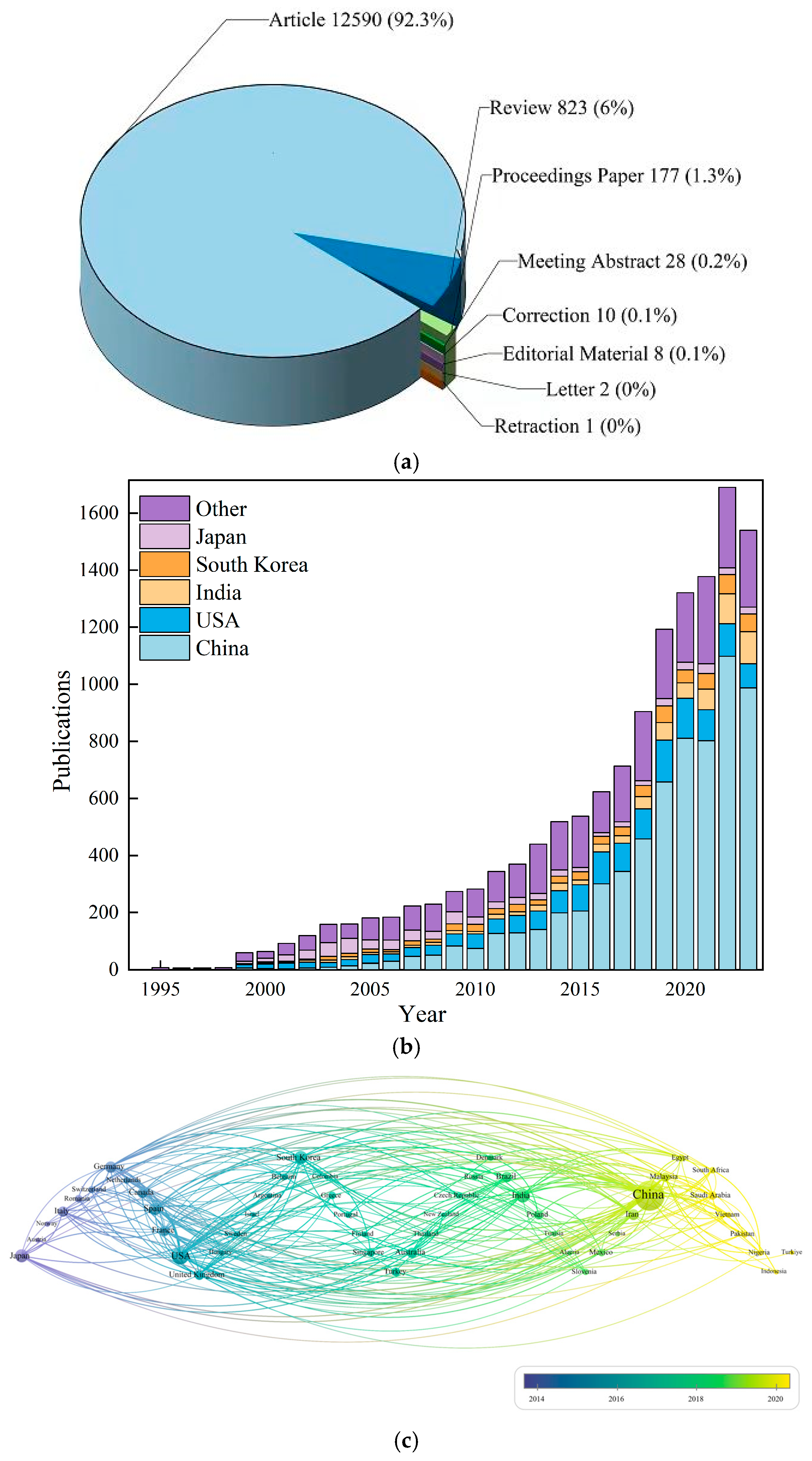
Figure 2a showed the categorical characteristics of publications, and the type of “Articles” being the most frequently published, with 12,222, accounting for 92.3% of the overall total. Meanwhile, the published type of “Review” is close behind “Articles” with a total of 823. Therefore, these two types of publications were focused on in this study for further in-depth analysis. The statistical result of the number and the country (region) of the corresponding author of the publications in the field of BPs removal technology from 1994 to 2023, as shown in Figure 2b. The year 1999 is an important time node in terms of the number of papers published because the number of related publications increased by 7 times compared with before.
The results illustrate the lack of global concern about the potential effects of BPs before 1999. However, with the dramatic increase in the use of BPs, researchers gradually paid attention to the environmental harm caused by them and actively explored effective schemes to degrade them. Although the initial growth was relatively gradual, it undoubtedly marks a significant shift in research direction. Meanwhile, it is worth noting that the published number of relevant papers declined slightly in 2023, which may be due to some researchers broadening their study horizons to other emerging pollutants [18]. Furthermore, in bibliometric analysis, the statistics of author nationalities help reflect the level of attention and investment different countries devote to a particular field. The study shows that in the field of BPs removal technology, the top five countries in terms of published papers are China, the United States, India, Japan, and South Korea. This result clearly indicates that these countries have placed high importance on BPs removal and provided corresponding financial support. It is worth noting that these countries are also major producers of BPs. Therefore, the distribution pattern of published papers may further suggest that these countries are facing more severe BP pollution problems. Moreover, in terms of the volume of published research, China has emerged as the leader in the study of BPs removal technologies. This leading position is closely linked to the proactive environmental governance policies of China in recent years, particularly the implementation of the Water Pollution Prevention and Control Action Plan in 2015 and the enactment of the Action Plan for New Pollutant Management in 2022 [24]. These policies not only establish stringent wastewater discharge standards but also emphasize targeted risk control requirements for new pollutants, including endocrine-disrupting chemicals. Overall, clear environmental governance demands, systematic policy guidance, and sustained national funding have collectively driven the rapid advancement of BPs removal technologies in China.
Figure 2c illustrates the average publication year of research articles from different countries and their international collaborative networks in the field of BPs removal technology. As shown, developed countries initiated systematic research in this area significantly earlier than developing countries. For instance, nations such as Germany, Italy, Norway, and Japan had already conducted extensive studies on BPs removal by 2014 or even earlier. This indicates that since the international community began paying increasing attention to the environmental impact of BPs in 1999, the deepening understanding of their ecological and health risks has driven these countries to increase research investment, thereby promoting the rapid growth of related publications worldwide. In addition, with the complication and globalization of BPs pollution problems, international collaboration is crucial for the rapid development of BPs removal technologies. [25]. Therefore, it is necessary to sort out the cooperation and exchange relations between countries in the field of BPs removal technology. As shown in Figure 2c, the density of the lines connecting the nodes directly reflects the activity level of each country in international research cooperation on BPs removal technology, and it shows that the United States, Germany, France, China and the United Kingdom have outstanding performances in the international cooperation.
The driving factors behind these countries’ active engagement in international cooperation include the following aspects. Firstly, as they are all manufacturing powerhouses, they face more severe BPs pollution challenges. Secondly, these countries have long enjoyed stable funding support in the field of environmental pollutant management. For instance, the Environmental Protection Agency of the United States, the National Natural Science Foundation of China, and the European Union Framework Programme have all provided substantial funding for related research. Additionally, government policies encouraging cross-border scientific collaboration have laid a solid foundation for international cooperation in this field among these countries. Overall, the extensive international cooperation reflects the positive attitude and global influence of scholars from these countries in exploring BPs removal techniques.

3.2. Analysis of Institutes and Authors

Based on understanding the publication output and international collaboration in the field of BPs removal technology, this study conducted statistics of the high-yield institutions and key authors in the field, which will facilitate the tracking of research hotspots and the prediction of future research directions. The leading (top 20) institutions in terms of the number of publications about BPs removal technology during the period from 1994 to 2023 are presented in Table 1. It was found that 18 of the 20 institutions are from China, and the remaining two are from the United States and Singapore. Among them, the Chinese Academy of Sciences is the leading institution with 646 articles, followed by Harbin Institute of Technology (276 articles), Chinese Academy of Sciences University (233 articles), Sichuan University (203 articles), and Nanjing University (196 articles). It can be seen from this that China plays a dominant role in this research field. This reflects its considerable attention and research investment toward addressing BPs contamination as the world’s largest producer and consumer of BPs. However, it is worth noting that the ranking in terms of average citations to papers of these institutions showed large shifts compared to the ranking of the number of publications. It was found that although the University of Cincinnati only ranked 17th in the number of publications, with 103 articles, it topped the list of average citations with 80.8. Meanwhile, they were followed closely by Nanyang Technological University and Hunan University with the average citations of 77.3 and 75.6, respectively. While the number of publications can indicate the efforts made by an institution in the field, the average citations per paper can better represent the contribution of the institution to that field.
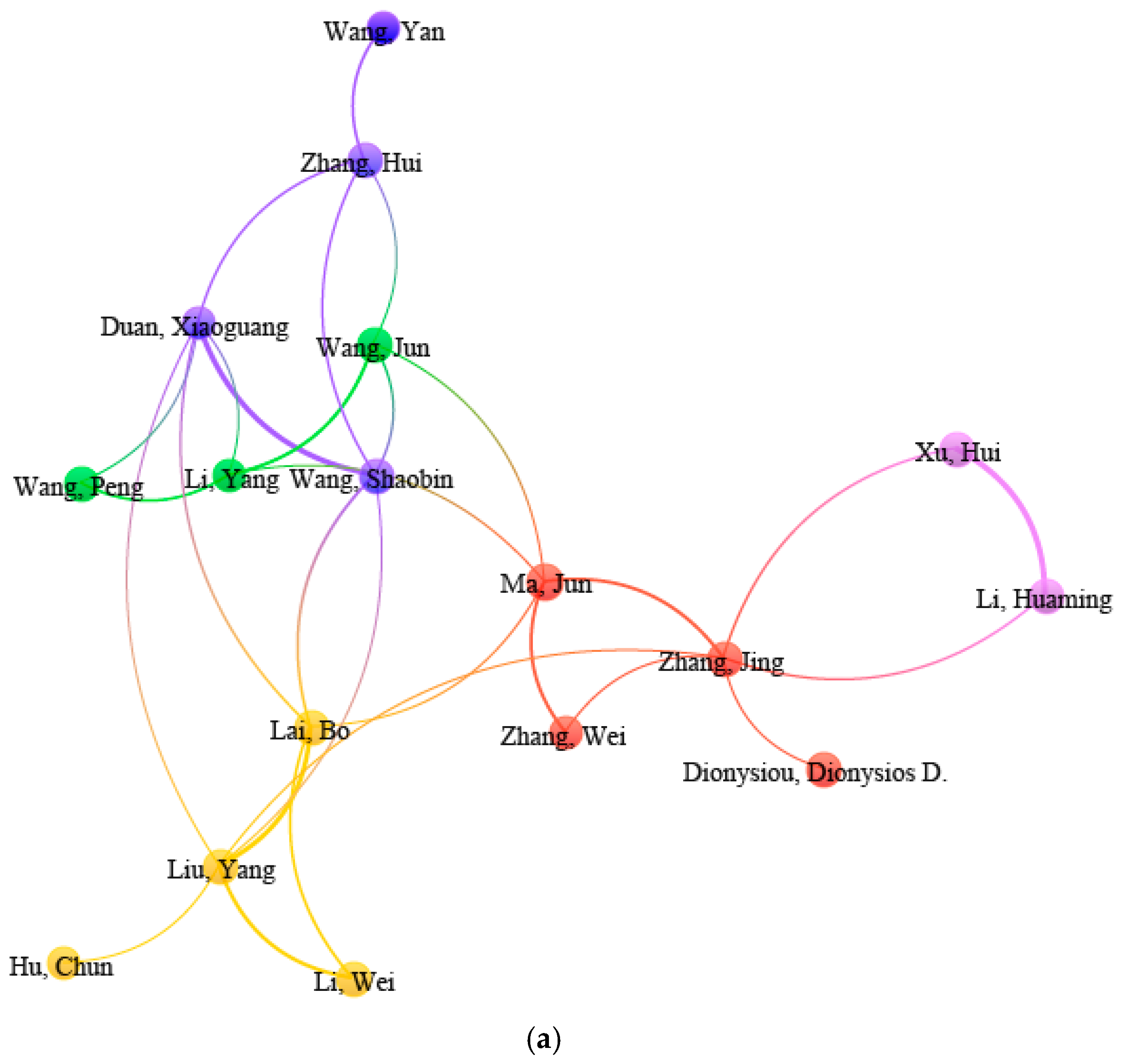
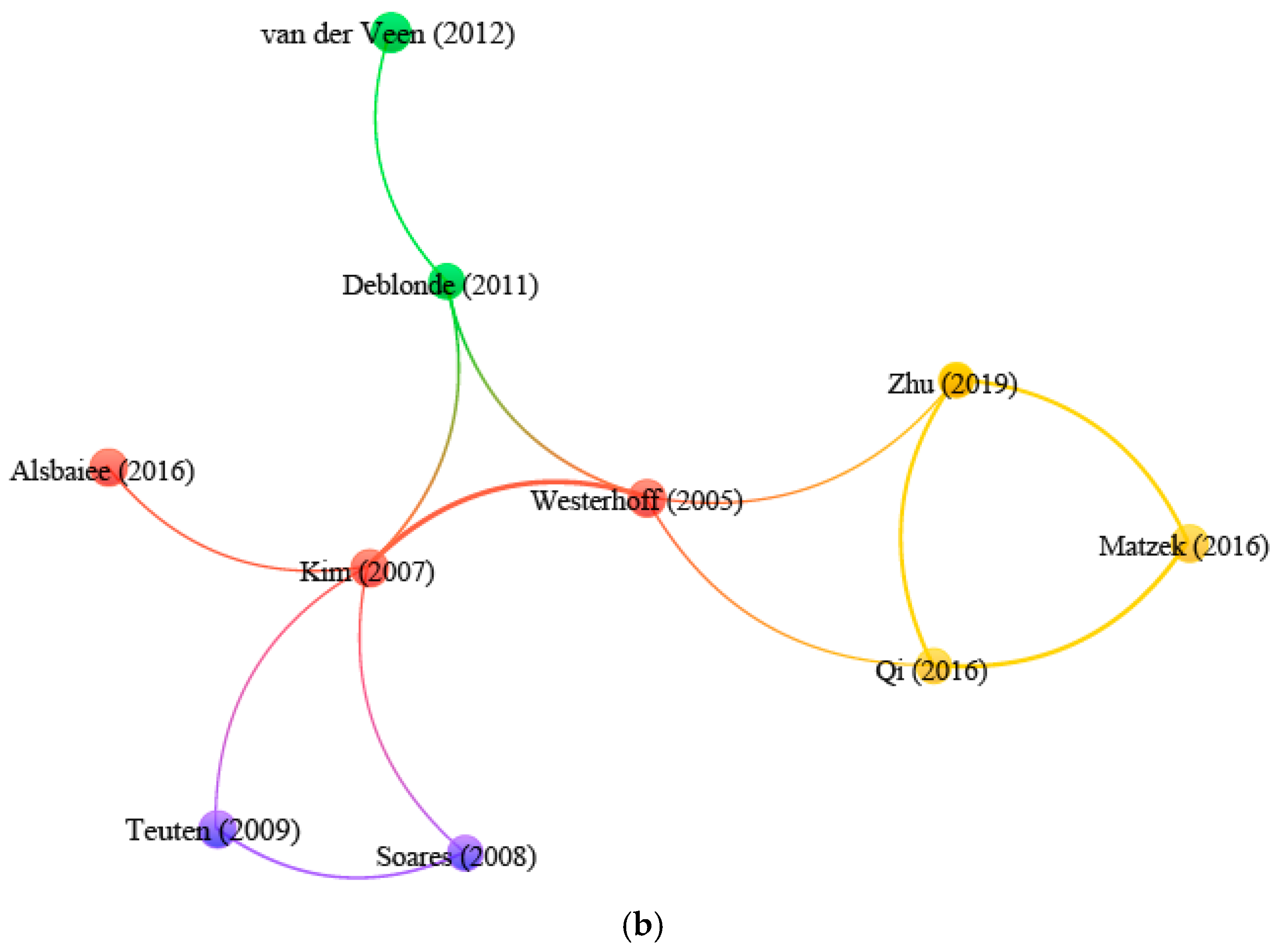
In addition, there are 45,745 scholars who contribute to research on the removal technology of BPs worldwide. The collaboration map of high-productivity authors drawn using the VOSviewer software 1.6.20 as shown in Figure 3a. Each node denotes an author, and the size of the node represents the number of publications of each author. The large nodes corresponding to researchers such as Jun Ma, Bo Lai, Yang Liu, and Dionysios D. Dionysiou reveal their active state in the field of BPs removal technology. Moreover, the line between different nodes symbolizes the cooperative relationship between authors, and the thickness of lines indicates the closeness of their cooperation. Figure 3a shows the strong academic exchange between these high-productivity authors, which benefits the development of this field. Furthermore, this study also focused on the first authors of highly cited papers and the collaboration between them, as shown in Figure 3b. A higher proportion of these authors come from institutions of the United States, followed by those from the United Kingdom, France, and China, which aligned with the analysis at the national level in Section 3.1. Meanwhile, it was found that Kim and Westerhoff are the key nodes in the cooperative relationship map, but research by these authors with highly cited papers is relatively independent on the whole.
Overall, the active and close collaboration among high-productivity authors has provided strong support for the dissemination of key information in this field, facilitating the continuous development of BPs removal technology in terms of methodological innovation and theoretical deepening. Meanwhile, the relative independence demonstrated by highly cited authors in their research to a certain extent reflects the diversity of research perspectives within the field of BPs removal technology. This diversity not only contributes to broadening the disciplinary boundaries but also offers richer perspectives and possibilities for addressing complex environmental challenges.

3.3. Analysis of Leading Journals

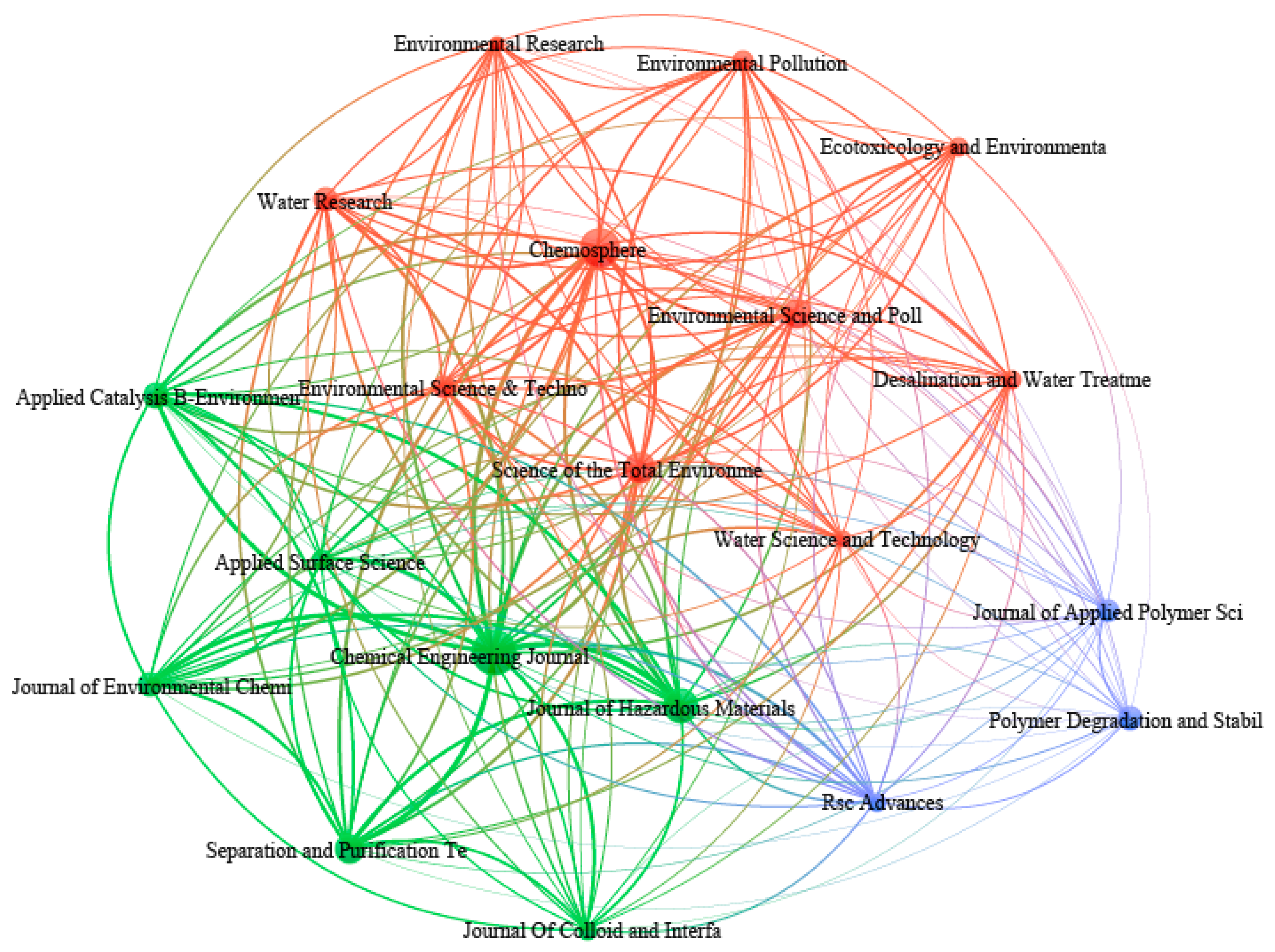
The distribution of papers in different journals can reflect the concentration of literature, which is considered an important indicator for evaluating the development level of a research field [26]. The analysis of WoSCC publication sources revealed that articles in the field of BPs removal technology were widely published in 1748 different journals. Therefore, this study focused on analyzing the top 20 journals by published volume among them, as shown in Figure 4. These journals were the primary source within the field of BPs removal technology, featuring a total of 5411 articles published, accounting for 44.3% of the total publications. In terms of the publication volume, “Chemical Engineering Journal” performed the most outstanding, publishing a total of 805 papers related to BPs removal technology from 1994 to 2023. It was followed by “Chemosphere” (602 articles), “Journal of Hazardous Materials” (470 articles), “Science of the Total Environment” (368 articles), and “Separation and Purification Technology” (336 articles). The statistical results suggested that the above journals have a strong interest in the degradation of BPs and have greatly contributed to exploring different removal technologies.
Except for the published volume, the quality of journals in which the papers are published can also be a critical indicator of the development level of the research field. Meanwhile, the category, impact factor and citation frequency are always considered as the key indicators to measure the journal quality. In this study, the impact factors were sourced from the 2025 Journal Citation Reports (JCR). It was found that there are twelve journals belonging to the Q1 category in the top 20 journals by publication volume, shown in Figure 4 (Science of the Total Environment, Environmental Science and Pollution Research, and Chemosphere are classified as delisted/high-risk journals and have not been included in the statistics). Among them, “Applied Catalysis B-Environment and Energy” has the highest impact factor at 22.1, followed by “Chemical Engineering Journal” (13.2), “Journal of Hazardous Materials” (11.3), “Water Research” (12.4) and “Environmental Science & Technology” (11.3). The reports on the removal technology of BPs in these authoritative international journals prove that the research results in this field have high quality and influence. In addition, the citation frequency of a journal reflects the recognition and attention it receives, which is often used to evaluate the academic impact of the journal. It is worth noting that the citation frequency of a journal is not directly related to the published volume. For example, although “Chemosphere” has the second-highest number of publications, its average citation frequency of 55.5 is only ranked seventh among these top 20 journals. In contrast, “Environmental Science & Technology” only published 210 related articles in the field of BPs removal technology, but its average citation frequency is as high as 123.7, which is just below 135.2 in “Applied Catalysis B-Environment and Energy”. Therefore, it demonstrated that journals with a high published volume do not necessarily have a significant impact on the field of research, while journals that have a high impact factor tend to attract more attention from scholars around the world.

3.4. Analysis of Keywords

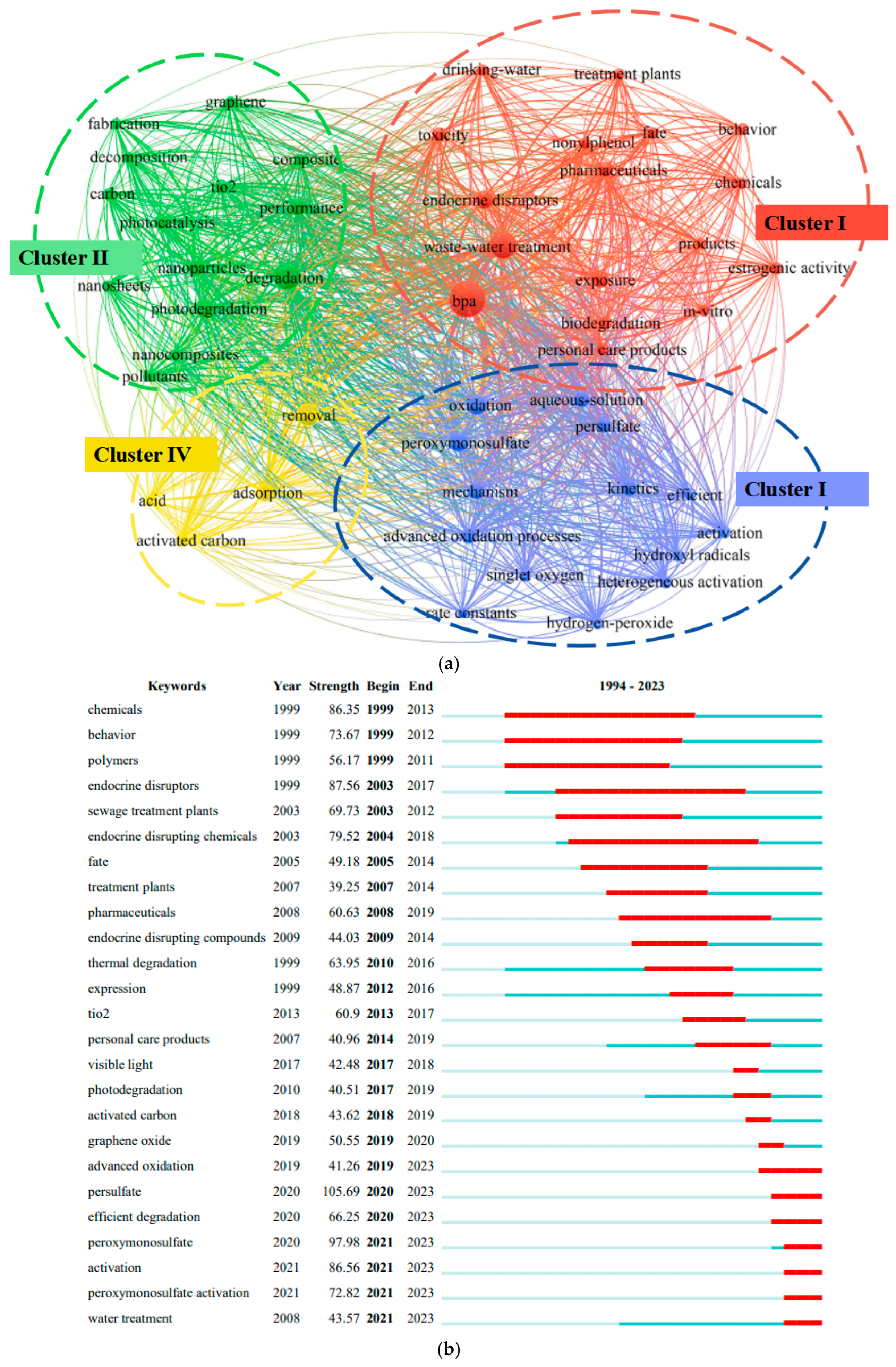
The keywords mentioned in an article usually represent the main ideas and boundaries of this research, so analyzing keywords can help quickly understand the research topic of a study. In this study, VOSviewer and CiteSpace were used to generate the keywords co-occurrence map (Figure 5a) and the keywords burst map (Figure 5b) to help identify the research hotspots in the field of BPs removal technology [27]. Meanwhile, the keyword list has been reasonably cleaned to remove some meaningless words such as “organic pollutants”, “organic contaminants”, and “contaminants” before the work was carried out.

3.4.1. Keywords Co-Occurrence Analysis

Keyword co-occurrence maps can reveal correlations between research topics and help identify research hotspots and trends. As shown in Figure 5a, the network of co-occurrence keywords of this study is divided into four clusters by different colors (cluster I (red), cluster II (green), cluster III (blue), cluster IV (yellow)), and each color marks research with a similar objective. Meanwhile, the node size indicates the occurrence frequency of this keyword, and the connecting lines between keywords represent co-occurrences of them in the same article.
The main keywords in cluster I include “Bisphenol A (BPA)”, “wastewater treatment”, “endocrine disruptors”, “pharmaceutical”, “exposure”, “toxicity”, etc. This showed that articles on cluster I lay emphasis on the presence and source of BPs, and their harm has also been focused on, such as endocrine-disrupting activities and toxic effects. In addition, BPA is the most prominent keyword in this cluster, indicating that it was mentioned in most of the articles. This is because BPA was the first bisphenol compound to be produced and used in large quantities, and the environmental hazards it caused attracted the attention of researchers earlier [28]. The keywords shown in green color (cluster II) include “degradation”, “photodegradation”, “performance”, “nanoparticles”, “photocatalysis”, etc. These keywords imply the research hotspot of the photochemical degradation used for the removal of BPs. Meanwhile, the keyword “nanoparticles” indicates the important role of functional materials, especially nanoscale materials, in the degradation of BPs through the photochemical process. Cluster III (blue) indicates research on removing BPs using advanced oxidation processes with the keywords including “peroxymonosulfate”, “oxidation”, “advanced oxidation processes”, “persulfate”, etc. Advanced oxidation processes are regarded as promising techniques for removing BPs, especially the peroxymonosulfate/persulfate-based process recently gained increasing attention because of the convenience and security of peroxymonosulfate or persulfate during transportation and storage [29]. In the peroxymonosulfate/persulfate-based system, reactive oxygen species, including sulfate radical, hydroxyl radical, superoxide radical and singlet oxygen, can be generated for efficient degradation of BPs [30]. The keywords shown in yellow color (cluster IV) are a relatively small section, including “removal”, “adsorption”, “activated carbon”, and so on, which indicates that this section mainly discusses adsorption technologies for the removal of BPs. Although adsorption is a mature approach for removing organic pollutants, the high cost, vulnerability, and ease of secondary contamination limit the widely application of it [31,32]. Therefore, many researchers have committed to developing efficient, green, and economical adsorbents and applying them for BPs removal in recent years [33].

3.4.2. Keywords Burst Analysis

Burst analysis shows the changes in keyword frequencies that can provide valuable insights into the importance and durability of keywords. This approach permits a more comprehensive overview of research hotspots and frontiers in the field of BPs removal technology [34]. In this study, the burst condition of keywords in the literature published between 1999 and 2023 was identified, screening the top 25 prominent mutated keywords (Figure 5b). Meanwhile, the burst map presented the keywords as individual bars where the dark blue signifies the emergence year of the keyword, and the red denotes the duration of the keyword burst.
According to the burst situation of keywords, research on BPs removal technology can be divided into different yet interconnected eras. During the period between 1999 and 2009, the primary keywords included “chemicals”, “behavior”, “polymers”, “endocrine disruptors”, “sewage treatment plants”, “fate”, and “pharmaceuticals”. This suggested that the focal point of research during this period was predominantly centered on the migration and transformation of BPs. In the subsequent period (2009–2019), keywords such as “thermal degradation”, “visible light”, and “photodegradation” exhibited high burst strengths of 63.95, 42.48, and 40.51, respectively, indicating a focus on the control of BPs and the development of treatment technologies during this period. Meanwhile, the keywords of “TiO2”, “activated carbon”, and “graphene oxide” also demonstrated high burst strength during this period, which signified that researchers were exploring the effects of various functional materials for reducing the dangers of BPs. In addition, the keywords of “persulfate”, “peroxymonosulfate”, and “efficient degradation” have emerged as research hotspots in recent years (2020–2023), with burst strengths of 105.69, 97.98, and 66.25, respectively. This trend indicates that the current research focus is centered on developing advanced oxidation processes based on persulfate and peroxymonosulfate to achieve efficient removal of BPs. Compared to traditional Fenton or ozone oxidation methods, persulfate and peroxymonosulfate systems demonstrate significant advantages, including higher redox potential, a wider applicable pH range, and simpler raw material storage and transportation conditions, thereby substantially enhancing the applicability and operability in complex aqueous environments. These advantages likely explain why research on BPs removal is shifting toward persulfate- and peroxymonosulfate-based advanced oxidation systems, rather than Fenton or ozone oxidation.

3.5. Research Progress in BPs Removal Technology

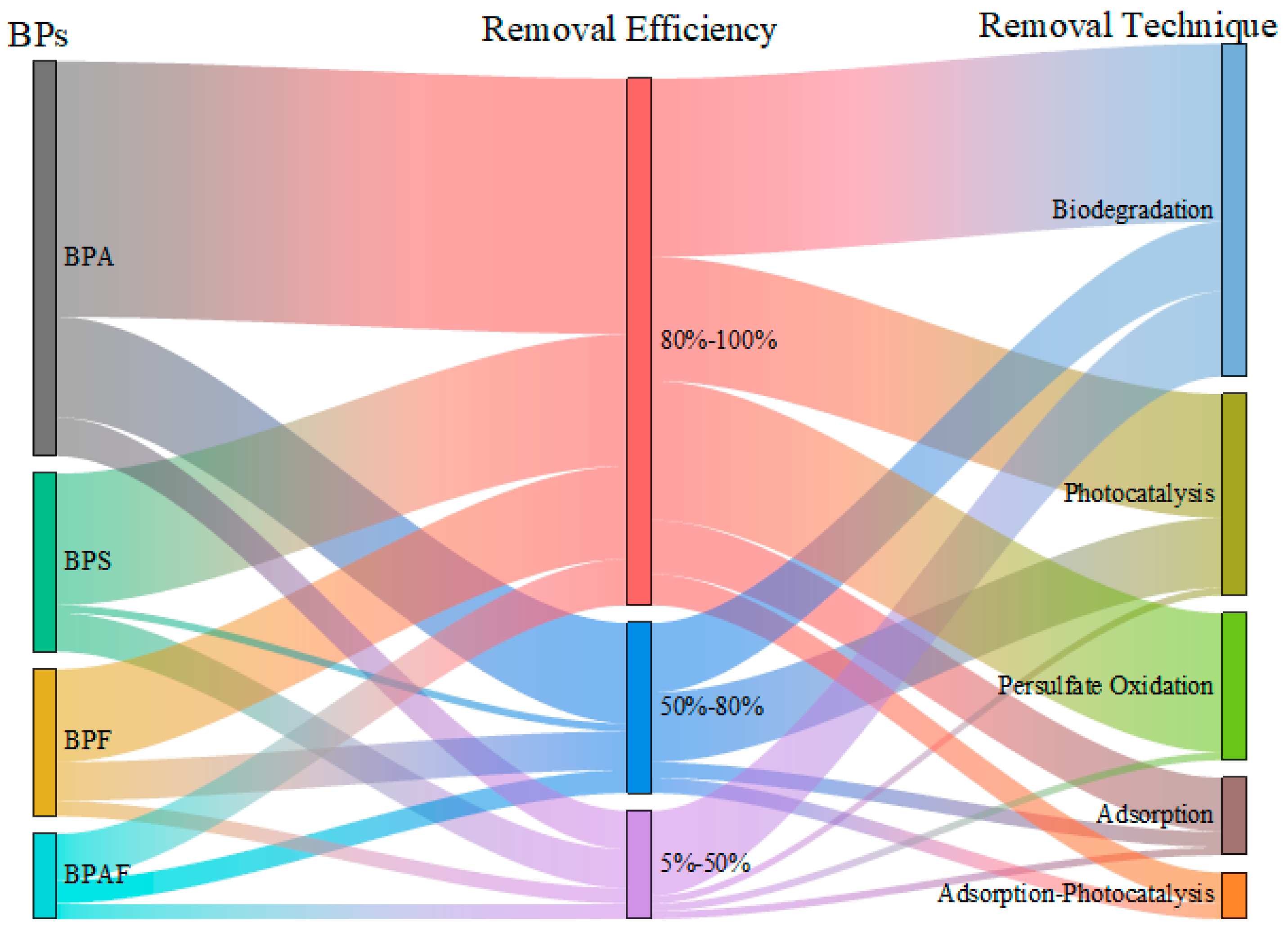
Through a systematic analysis of existing literature, this study summarizes that the current removal technologies for bisphenol compounds mainly fall into three categories: adsorption, advanced oxidation (photocatalysis and persulfate oxidation), and biodegradation. Based on this, the removal efficiencies of the above technologies for several common BPs were further analyzed and visualized using a Sankey diagram (Figure 6). The data presented in the figure were derived from 100 studies rigorously selected from an initial pool of over 13,000 identified through preliminary searches. Due to the difficulty of reliably extracting quantitative degradation efficiency data using bibliometric tools, the dataset was manually constructed in this study. The screening process began with an initial review of titles and abstracts to identify studies reporting BPs removal efficiencies, followed by a full-text assessment to verify data completeness. Only literature that quantitatively described the degradation efficiency of specific BPs and provided detailed experimental protocols was included in the final dataset. The study extracted three key metadata categories: bisphenol compound type, removal efficiency, and removal technology. In the Sankey diagram, the height of each band corresponds to the publication frequency of related studies, intuitively revealing the relationships among the three metadata categories.
As shown in Figure 6, BPA is the most widely studied BPs compound, and researchers are more concerned about the removal performance of biodegradation on BPs. In addition, the same technology also has an obvious difference in removal efficiency, which is closely related to the functional materials and experimental conditions. Therefore, the research progress of the three BPs removal technologies was described in detail below for a clearer understanding of them.

3.5.1. Adsorption

The principle of BPs removal by adsorption methods lies in the separation and enrichment of BPs by using adsorbents with high porosity or a strong affinity for BPs, thus reducing their environmental mobility and potential bioavailability [35]. Therefore, the key to the removal of BPs by adsorption depends on the development of adsorbent materials with high efficiency, low cost, and strong reliability [36]. A previous study has reported that HCNTs/Fe3O4 composite with good adsorption capacity for BPA was prepared by co-precipitation loading magnetic Fe3O4 particles onto hydroxylated multi-walled carbon nanotubes, and this adsorbent material reached a maximum adsorption of 113 mg/g of BPA at 303 K [37]. Moreover, some researchers synthesized a double cross-linking adsorbent BDE-T-CDP(B) by the simultaneous ring-opening and nucleophilic substitution reaction of beta-cyclodextrin (β-CD), a rigid crosslinker (tetrafluoroterephthalonitrile, TFTPN), and a flexible crosslinker (1,4-butanediol diglycidyl ether, BDE) in the alkaline aqueous system [38]. The adsorption capacity of BDE-T-CDP(B) for BPA reached 71.30 mg/g under the combined effects of cavity inclusion, π-π interaction, and hydrogen bonding. In addition, Figure 6 demonstrates that although the removal efficiency of most adsorption technologies for BPs can usually reach 80–100%, it was also found that the removal efficiencies of some adsorption processes are less than 80% or even lower [39]. This is owing to the fact that the adsorption performance will be affected by the particle size distribution and specific surface area of the adsorbent and the nature of the adsorbed substances, resulting in significant differences in the adsorption efficiency of BPs across different environmental media [40].

3.5.2. Advanced Oxidation Processes

Advanced oxidation processes (AOPs) can achieve efficient degradation and mineralization of BPs by generating active free radicals (such as hydroxyl radicals ·OH and superoxide ·O2) in the reaction by means of electricity, light irradiation and catalysts [41,42]. Compared with traditional AOPs, such as Fenton oxidation and supercritical water oxidation, photocatalysis has gained extensive attention in the field of BPs degradation in recent years, and most photocatalytic processes showed good performance as per the statistics shown in Figure 6. Therefore, many researchers have focused on the development of photocatalysts because they are the key to improving efficiency. For example, a study constructed the S-scheme n-n heterojunction composite (Bi2O2CO3/Bi2O2+xS1−x) via a two-step chemical precipitation method for the removal of BPA in the water environment [43]. The composite catalyst exhibited outstanding catalytic activity for BPA with the degradation rate of 0.00724 min−1, and the hole and superoxide radicals played a major role during the process. In addition, persulfate oxidation is also considered to be an advanced oxidation process that can achieve high efficiency degradation of BPs. A previous study investigated the activation and degradation mechanism of bisphenol AF (BPAF) in a persulfate/bisulfite system, and the results showed that sulfate radical (SO4·) was evidenced as the dominant radical for BPAF degradation, while hydroxyl radical (·OH) and singlet oxygen (1O2) were minor contributors [44]. Meanwhile, as shown in Figure 6, the efficiency of persulfate oxidation in degrading most of the BPs, such as BPA, BPS, and BPF, could reach 80–100%, which proved that this method had wide applicability in efficiently removing BPs [45]. However, it should be noted that the high removal efficiencies were achieved under optimized and controlled laboratory conditions. In real-world environments or complex water systems, the removal efficiency may decrease significantly due to factors such as matrix effects, water quality parameters, and reaction conditions.

3.5.3. Biodegradation

In view of the high operational cost, long operation period, and the generation of more toxic by-products by physicochemical approaches, biodegradation has considered economical and environmentally safe for BPs removal [46]. The biodegradation of BPs can be divided into two categories: aerobic degradation and anaerobic degradation. Among them, aerobic degradation of BPs refers to the process in which microorganisms decompose BPs into smaller molecules or completely mineralize them into inorganic substances under aerobic conditions. Meanwhile, three pathways for aerobic biodegradation of BPs have been proposed by previous studies. The first is the oxidative skeleton rearrangement of the MV1 strain, which produces intermediates such as p-hydroxyacetophenone, p-hydroxybenzoic acid, or 4,4′-dihydroxybenzophenone [47]. The second is the ortho-substitution represented by the degradation of BPs by Sphingobium xenophagum Bayram strain, during which hydroquinone and 4-isopropyl phenol are produced [48]. Moreover, when researchers used Sphingobium fuliginis TIK1 and Sphingobium sp. IT4 isolated from the reed rhizosphere to remove BPs, they found that these two strains achieve BPs degradation through phenolic ring hydroxylation and self-hydroxylation, respectively [49]. Therefore, hydroxylation is also considered to be an important pathway for the degradation of BPs. In terms of anaerobic degradation, although there are relatively few studies on anaerobic treatment of BPs, some studies have demonstrated its effectiveness. For example, researchers isolated a strain of Bacillus sp. GZB has the unique ability to employ Fe3+ as an electron acceptor, which has been verified to have a remarkable ability to degrade BPA in anaerobic environments [50]. In general, biodegradation of BPs has advantages over adsorption methods and AOPs in terms of cost-effectiveness and environmental friendliness. However, biodegradation technology needs to be further explored in the pursuit of increasing efficiency, especially for refractory BPs with longer half-life and higher chemical inertness [51].

3.6. Future Perspectives and Challenges

The research focuses on BPs removal technologies according to the frequency of keywords determined in this study, with adsorption, AOPs, and biodegradation being the most extensively studied, which showed the primary areas of current research interest. However, to evaluate the progress of research in a certain field, it is also an important task for bibliometric analyses to make predictions about the future direction of this field based on its current research status. Therefore, this study prospected the development prospects and challenges of BPs removal technology.
For adsorption methods and AOPs, the most serious challenge is the high material costs of adsorbent and catalyst, and the possible secondary pollution problems. Fortunately, with the growing understanding of synthetic materials science, many researchers have already tried to use renewable and biodegradable natural materials, or bio-based materials, which can be used to develop adsorbents and catalysts, such as chitosan [33], green algae [52], wheat straw [53], corn stalk and bamboo [54]. These materials not only reduce secondary pollution of the environment but also promote the practice of green degradation, in line with the principles of circular economy and sustainable development. Therefore, exploring environmentally friendly and cost-effective materials for adsorbents and catalysts will be one of the research foci of BPs removal technology in the future [55]. In addition, due to the toxic effects of BPs and environmental sensitivity, improving the removal efficiency is a difficult issue for biodegradation technologies of BPs that needs to be addressed. Previous studies indicated that immobilized microbial technology can effectively alleviate the negative effects of adverse environmental factors on microorganisms. For example, the novel strain of Xenophilus sp. was embedded onto walnut shell biochar to form an immobilized bacteria bio-composite for biodegradation of BPA in water, and the bio-composite demonstrated a superior ability to degrade BPA compared to the free bacteria [56]. Moreover, some researchers prepared a type of SQ-2@MOFs composite synthesizing CNT-hemin/Mn-MOF and BPA degrading bacteria SQ-2, and the results indicated that SQ-2@MOFs significantly accelerated the BPA degradation rate compared to SQ-2 alone [57]. Therefore, the development of immobilized microbial materials is conducive to promoting the application of biodegradation technology in the field of BPs removal, and is also expected to become the focus of scholars’ attention.
Meanwhile, to overcome the limitations of individual processes in removing BPs, current research is increasingly focused on the development and application of hybrid treatment systems. For instance, the integration of nanofiltration and reverse osmosis processes can fully leverage the synergistic and complementary effects of multiple approaches, thereby significantly enhancing the efficiency and operational stability of BPs wastewater treatment [58]. Furthermore, the future research trends in BPs removal also point toward low-energy reaction systems and energy-friendly technologies. The development of energy-efficient processes is expected to ensure efficient wastewater treatment while substantially reducing energy consumption, ultimately achieving the dual objectives of pollution control and energy conservation with reduced carbon emissions. In conclusion, interdisciplinary collaboration between materials science, chemistry, biology, and environmental science will be crucial, which can drive the development of new technologies and methods for BPs removal and contribute to more practical and effective solutions to the pollution of BPs.
It should be noted that current research on the removal of BPs remains largely confined to the laboratory stage. Such studies predominantly employ synthetic wastewater with relatively simple compositions, which facilitates the achievement of favorable removal outcomes. Nevertheless, actual wastewater typically contains high concentrations of organic pollutants, suspended solids, and other coexisting interfering substances, which can significantly inhibit treatment efficiency and lead to a substantial decline in the performance of laboratory findings in practical applications. Furthermore, most existing studies have failed to systematically assess the cost and energy consumption of the treatment processes, making it difficult to support the demands of continuous and large-scale operations at the industrial level. Future research should focus more on the stability and adaptability of BPs removal technologies under complex water quality conditions, while also striving to advance the development of low-cost adsorption/catalytic materials and strengthen the design of continuous-flow processes and reactors, thereby promoting the substantive transition of laboratory technologies towards pilot-scale and even engineering applications.
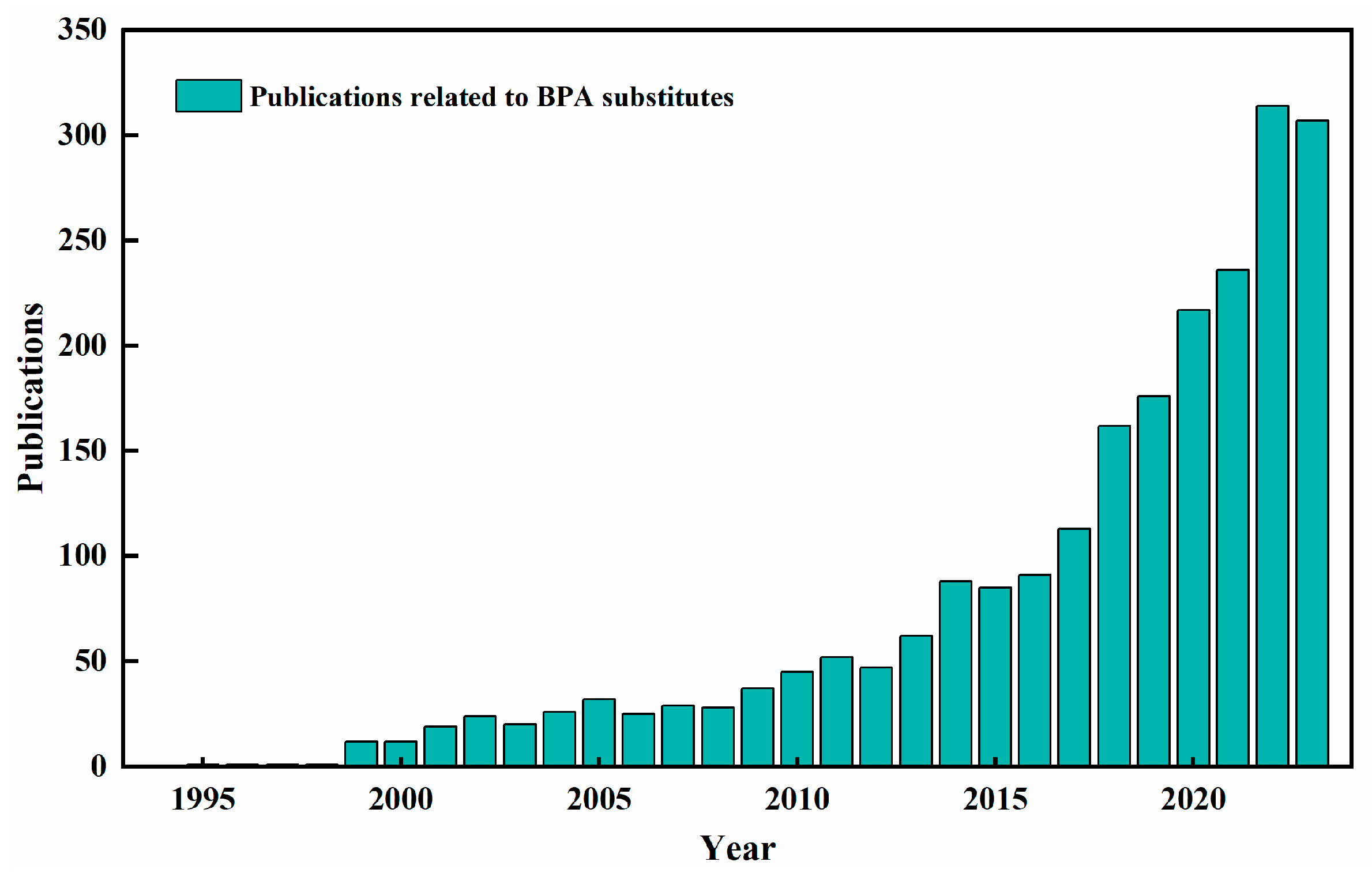
Furthermore, this study employed a search strategy using keywords such as “BPS or BPF or bisphenol S or bisphenol F or bisphenol A substitutions or BPA substitutions” to conduct a systematic review of global research on BPA alternatives. As shown in Figure 7, research in this field experienced explosive growth between 2017 and 2023. This trend is likely associated with the significant endocrine-disrupting effects of BPA, which have prompted industries and consumer goods sectors to increasingly adopt structurally similar compounds such as BPS and BPF as alternatives. However, these alternatives do not genuinely eliminate the environmental and health risks posed by BPA, and some substitutes even exhibit stronger toxicological effects than BPA [59]. Additionally, certain alternatives demonstrate higher environmental persistence and broader human exposure pathways, leading to a shift in risks rather than their fundamental resolution. In summary, based on current trends, future research is expected to continue focusing on the toxicological properties, environmental fate, ecological impacts, and removal technologies of bisphenol-based alternatives.

4. Conclusions and Limitations

This study conducted a comprehensive bibliometric analysis of 13,639 publications on the removal technology of BPs from 1994 to 2023 based on the WoSCC database. The analysis took multiple dimensions, including publication output, international cooperation, contributions by institutions and authors, leading journals, and the keyword co-occurrence and burst analysis. Meanwhile, the analysis traced the development trajectory, identified research processes, and predicted research trends in this field, with the main conclusions as follows:
(1)
The research literature in the field of BPs removal technology overall showed a growing trend, which indicated the increasing worldwide attention on it. Meanwhile, China led in research output globally in this field, and the Chinese Academy of Sciences became the most productive research institution with 646 articles. However, a higher average citation and number of authors with highly cited papers showed that American institutions and authors have a greater advantage in terms of influence and visibility. In addition, related articles were primarily published in journals such as Chemical Engineering Journal, Chemosphere, and Journal of Hazardous Materials.
(2)
The co-occurrence and burst analysis of keywords revealed that the research gradually transitions from the migration and transformation mechanism of BPs to the control and treatment of it. Meanwhile, the research on BPs removal technology mainly focuses on adsorption, AOPs (including photocatalysis, persulfate oxidation), and biodegradation. In addition, the development and application of new materials have gradually become the research trend in the field of BPs removal technology to meet the principles of circular economy and sustainable development. Moreover, interdisciplinary collaboration is expected to be an important aid to push the development of BPs removal technologies forward.
(3)
The limitation of this study is that while the WoSCC database utilized contains a substantial amount of literature, the reliance on a single database may result in some specific areas or journals not being adequately represented. This could result in underestimation or oversight of the contribution of some countries or institutions to particular aspects. Meanwhile, the specific selection of English-language papers reduced the coverage and comprehensiveness of the research. Therefore, future bibliometrics analyses should improve the depth by incorporating data from broader scientific literature and patent databases, and consider literature published in multiple languages to address the above limitation. Furthermore, the employment of novel technological tools such as natural language processing and machine learning is also a promising approach to improve the representativeness of bibliometrics analyses.
(4)
While this study provides a relatively systematic analysis of the existing publications, it is necessary to acknowledge potential limitations in the literature statistics. Currently, the literature search was conducted with “bisphenol” and “bisphenol compounds” as topic keywords. While this strategy effectively captures most studies on traditional bisphenol analogues, it should be noted that many recent articles focusing specifically on BPS, BPF, or BPAF do not include the general term “bisphenol” in their topic fields. Consequently, these publications were not encompassed within the scope of this statistical analysis. Future bibliometric analyses should further incorporate the specific identifiers of the above-mentioned compounds into the search strings to achieve a more comprehensive overview of the evolving landscape of emerging bisphenol removal technologies.

Author Contributions

Conceptualization, M.C. and Y.J.W.; Methodology, Investigation, and Analysis, M.C., R.M., Y.H., J.W., N.W. and T.X.; writing—original draft, M.C.; writing—review and editing, all authors; supervision and project administration, M.C. and Y.J.W. All authors have read and agreed to the published version of the manuscript.

Funding

This research was funded by Shanghai Sci-tech Co-research Program (No. 25HB2705500), National Natural Science Foundation of China (NSFC) Young Investigator Grant Program (No. 42407169), China Postdoctoral Science Foundation (No. 2024M760623), and Guangdong Basic and Applied Basic Research Foundation (No. 2024A1515030098).

Data Availability Statement

The original contributions presented in this study are included in the article. Further inquiries can be directed to the corresponding author.

Acknowledgments

The authors acknowledge the support of the Partner Research Program of Shanghai, the National Natural Science Foundation of China (NSFC) Young Investigator Grant Program, the China Postdoctoral Science Foundation, and the Guangdong Basic and Applied Basic Research Foundation.

Conflicts of Interest

Author Yuxiao Han was presently employed by Ningbo Yonghuanyuan Environmental Engineering Technology Co., Ltd. The remaining authors declare that the research was conducted in the absence of any commercial or financial relationships that could be construed as a potential conflict of interest.

References

  1. Hernández-Abreu, A.; Álvarez-Torrellas, S.; Águeda, V.; Larriba, M.; Delgado, J.; Calvo, P.; García, J. Enhanced removal of the endocrine disruptor compound Bisphenol A by adsorption onto green-carbon materials. Effect of real effluents on the adsorption process. J. Environ. Manag. 2020, 266, 110604. [Google Scholar] [CrossRef]
  2. Russo, G.; Capuozzo, A.; Barbato, F.; Irace, C.; Santamaria, R.; Grumetto, L. Cytotoxicity of seven bisphenol analogues compared to bisphenol A and relationships with membrane affinity data. Chemosphere 2018, 201, 432–440. [Google Scholar] [CrossRef]
  3. Kapoor, D.D.; Yadav, S.; Gupta, R.K. Comprehensive study of microbial bioplastic: Present status and future perspectives for sustainable development. Environ. Dev. Sustain. 2023, 26, 21985–22011. [Google Scholar] [CrossRef]
  4. Liao, C.; Kannan, K. Widespread occurrence of bisphenol A in paper and paper products: Implications for human exposure. Environ. Sci. Technol. 2011, 45, 9372–9379. [Google Scholar] [CrossRef] [PubMed]
  5. Björnsdotter, M.K.; Jonker, W.; Legradi, J.; Kool, J.; Ballesteros-Gómez, A. Bisphenol A alternatives in thermal paper from the Netherlands, Spain, Sweden and Norway. Screening and potential toxicity. Sci. Total. Environ. 2017, 601, 210–221. [Google Scholar] [CrossRef] [PubMed]
  6. Song, S.; Song, M.; Zeng, L.; Wang, T.; Liu, R.; Ruan, T.; Jiang, G. Occurrence and profiles of bisphenol analogues in municipal sewage sludge in China. Environ. Pollut. 2014, 186, 14–19. [Google Scholar] [CrossRef]
  7. Radwan, E.K.; Ibrahim, M.B.; Adel, A.; Farouk, M. The occurrence and risk assessment of phenolic endocrine-disrupting chemicals in Egypt’s drinking and source water. Environ. Sci. Pollut. Res. 2020, 27, 1776–1788. [Google Scholar] [CrossRef] [PubMed]
  8. Yamazaki, E.; Yamashita, N.; Taniyasu, S.; Lam, J.; Lam, P.K.; Moon, H.-B.; Jeong, Y.; Kannan, P.; Achyuthan, H.; Munuswamy, N.; et al. Bisphenol A and other bisphenol analogues including BPS and BPF in surface water samples from Japan, China, Korea and India. Ecotoxicol. Environ. Saf. 2015, 122, 565–572. [Google Scholar] [CrossRef]
  9. Biemann, R.; Blüher, M.; Isermann, B. Exposure to endocrine-disrupting compounds such as phthalates and bisphenol A is associated with an increased risk for obesity. Best Pract. Res. Clin. Endocrinol. Metab. 2021, 35, 101546. [Google Scholar] [CrossRef]
  10. Pérez-Bermejo, M.; Mas-Pérez, I.; Murillo-Llorente, M.T. The Role of the Bisphenol A in Diabetes and Obesity. Biomedicines 2021, 9, 666. [Google Scholar] [CrossRef]
  11. Demierre, A.-L.; Reinhard, H.; Zeltner, S.; Frey, S. Evaluating the efficiency of the 2020 ban of BPA and BPS in thermal papers in Switzerland. Regul. Toxicol. Pharmacol. 2024, 146, 105526. [Google Scholar] [CrossRef] [PubMed]
  12. Van de Velde, N.; Javornik, S.; Sever, T.; Štular, D.; Šobak, M.; Štirn, Ž.; Likozar, B.; Jerman, I. Bio-Based Epoxy Adhesives with Lignin-Based Aromatic Monophenols Replacing Bisphenol A. Polymers 2021, 13, 3879. [Google Scholar] [CrossRef]
  13. Han, Y.; Dai, H.; Rong, X.; Jiang, H.; Xue, Y. Research Progress of Methods for Degradation of Bisphenol A. Molecules 2023, 28, 8028. [Google Scholar] [CrossRef] [PubMed]
  14. Wu, J.; Xie, H.; Zhang, C.; Bouazza, A.; Sun, Z.; Qiu, Z. Adsorption behavior of bisphenol A on bentonite-loess mixtures. Environ. Sci. Pollut. Res. 2022, 29, 6360–6374. [Google Scholar] [CrossRef]
  15. Hunge, Y.; Yadav, A.; Khan, S.; Takagi, K.; Suzuki, N.; Teshima, K.; Terashima, C.; Fujishima, A. Photocatalytic degradation of bisphenol A using titanium dioxide@nanodiamond composites under UV light illumination. J. Colloid Interface Sci. 2021, 582, 1058–1066. [Google Scholar] [CrossRef]
  16. Frankowski, R.; Zgoła-Grześkowiak, A.; Smułek, W.; Grześkowiak, T. Removal of bisphenol A and its potential substitutes by biodegradation. Appl. Biochem. Biotechnol. 2020, 191, 1100–1110. [Google Scholar] [CrossRef]
  17. Mishra, P.; Sant, T.G.; Kumar, K. A bibliometric analysis of sustainability and organization’s performance. Environ. Dev. Sustain. 2024, 27, 26609–26636. [Google Scholar] [CrossRef]
  18. Yu, Y.; Wang, S.; Yu, P.; Wang, D.; Hu, B.; Zheng, P.; Zhang, M. A bibliometric analysis of emerging contaminants (ECs) (2001−2021): Evolution of hotspots and research trends. Sci. Total. Environ. 2024, 907, 168116. [Google Scholar] [CrossRef]
  19. Zhao, L.; Deng, J.; Sun, P.; Liu, J.; Ji, Y.; Nakada, N.; Qiao, Z.; Tanaka, H.; Yang, Y. Nanomaterials for treating emerging contaminants in water by adsorption and photocatalysis: Systematic review and bibliometric analysis. Sci. Total. Environ. 2018, 627, 1253–1263. [Google Scholar] [CrossRef]
  20. Yu, G.; Fu, Q.; Huang, J.; Hu, J.; Lu, L.; Zhou, J. Research status and trends in sustainable microbial self-healing concrete: A bibliometric analysis based on CiteSpace and VOSviewer. Environ. Dev. Sustain. 2024, 26, 1–34. [Google Scholar] [CrossRef]
  21. Alazaiza, M.Y.; Alzghoul, T.M.; Ramu, M.B.; Abu Amr, S.S.; Abushammala, M.F.; Nassani, D.E. Global perspectives on industrial wastewater management: A bibliometric analysis of research output. J. Hazard. Mater. Adv. 2024, 17, 100567. [Google Scholar] [CrossRef]
  22. Zhang, Y.; Li, A.-A.; Xiao, S.-N.; Zhong, N.-S.; Tong, W.-L.; Wang, S.-J.; Liu, J.-M.; Liu, Z.-L. A Bibliometric Analysis of Publications on Spinal Cord Injury Treatment with Glucocorticoids Using VOSviewer. Front. Public Health 2022, 10, 907372. [Google Scholar] [CrossRef]
  23. Ding, X.; Yang, Z. Knowledge mapping of platform research: A visual analysis using VOSviewer and CiteSpace. Electron. Commer. Res. 2020, 22, 787–809. [Google Scholar] [CrossRef]
  24. Xu, J.; Zhao, X.; Jin, X.; Sun, J.; Guo, R.; Wu, F. Addressing the challenges of new pollutants in China: Current status, knowledge gaps, and strategic recommendations. Carbon Res. 2025, 4, 48. [Google Scholar] [CrossRef]
  25. Laurentino, L.S.; dos Santos, L.M.G.; Silva, C.B.; de Barros, A.L.R.; Thomas, P.C.L.; Moreira, J.C. The Use of Silver Nanoparticles as Antimicrobial Agents between 2014 and 2023 in Brazil and Worldwide: A Bibliometric Review. J. Braz. Chem. Soc. 2025, 36, e-20240167. [Google Scholar] [CrossRef]
  26. Li, Z.; Du, C. Current status and research hotspots of pesticide-containing wastewater treatment: Systematic review and bibliometric analysis. J. Water Process. Eng. 2025, 69, 106738. [Google Scholar] [CrossRef]
  27. González-Delgado, Á.D.; Ramos-Olmos, M.; Pájaro-Gómez, N. Bibliometric and Co-Occurrence Study of Process System Engineering (PSE) Applied to the Polyvinyl Chloride (PVC) Production. Materials 2023, 16, 6932. [Google Scholar] [CrossRef] [PubMed]
  28. Czarny, K.; Krawczyk, B.; Szczukocki, D. Toxic effects of bisphenol A and its analogues on cyanobacteria Anabaena variabilis and Microcystis aeruginosa. Chemosphere 2021, 263, 128299. [Google Scholar] [CrossRef]
  29. Peng, Y.; Tang, H.; Yao, B.; Gao, X.; Yang, X.; Zhou, Y. Activation of peroxymonosulfate (PMS) by spinel ferrite and their composites in degradation of organic pollutants: A Review. Chem. Eng. J. 2021, 414, 128800. [Google Scholar] [CrossRef]
  30. Chi, H.; He, X.; Zhang, J.; Ma, J. Efficient degradation of refractory organic contaminants by zero-valent copper/hydroxylamine/peroxymonosulfate process. Chemosphere 2019, 237, 124431. [Google Scholar] [CrossRef]
  31. Mahmad, A.; Zango, Z.U.; Noh, T.U.; Usman, F.; Aldaghri, O.A.; Ibnaouf, K.H.; Shaharun, M.S. Response surface methodology and artificial neural network for prediction and validation of bisphenol a adsorption onto zeolite imidazole framework. Groundw. Sustain. Dev. 2023, 21, 100925. [Google Scholar] [CrossRef]
  32. Jun, B.-M.; Nam, S.-N.; Jung, B.; Choi, J.S.; Park, C.M.; Choong, C.E.; Jang, M.; Jho, E.H.; Son, A.; Yoon, Y. Photocatalytic and electrocatalytic degradation of bisphenol A in the presence of graphene/graphene oxide-based nanocatalysts: A review. Chemosphere 2024, 356, 141941. [Google Scholar] [CrossRef]
  33. Ahari, M.; Hadoudi, N.; Zaki, N.; Charki, A.; El Ouarghi, H.; Bayoussef, A.; Mansori, M.; El Barkany, S.; Salhi, A.; Amhamdi, H. Adsorption of bisphenol A (BPA) and pentachlorophenol (PCP) using a bentonite-chitosan composite: A study on removal efficiency. Inorg. Chem. Commun. 2024, 165, 112468. [Google Scholar] [CrossRef]
  34. Wang, L.; Luo, D.; Hamdaoui, O.; Vasseghian, Y.; Momotko, M.; Boczkaj, G.; Kyzas, G.Z.; Wang, C. Bibliometric analysis and literature review of ultrasound-assisted degradation of organic pollutants. Sci. Total. Environ. 2023, 876, 162551. [Google Scholar] [CrossRef]
  35. Son, L.T.; Katagawa, K.; Kobayashi, T. Using molecularly imprinted polymeric spheres for hybrid membranes with selective adsorption of bisphenol A derivatives. J. Membr. Sci. 2011, 375, 295–303. [Google Scholar] [CrossRef]
  36. Javid, N.; Malakootian, M. Removal of bisphenol A from aqueous solutions by modified-carbonized date pits by ZnO nano-particles. Desalination Water Treat. 2017, 95, 144–151. [Google Scholar] [CrossRef]
  37. Gao, H.; Han, X.; Wang, R.; Zhu, K.; Han, R. Adsorption and catalytic degradation of bisphenol A and p-chlorophenol by magnetic carbon nanotubes. Environ. Res. 2023, 231, 116314. [Google Scholar] [CrossRef]
  38. Chen, H.; Xu, H.; Zhang, Y.; Zhou, J.; He, J.; Wang, W.; Yuan, C.; Zhao, C.; Yang, L. A double-crosslinked cyclodextrin-based porous polymer for effective removal of bisphenol A: Preparation, adsorption behavior and mechanism. J. Environ. Chem. Eng. 2023, 11, 111570. [Google Scholar] [CrossRef]
  39. Monica, A.V.; Anbalagan, K.; Becky Miriyam, I. An integrated approach to remove endocrine-disrupting chemicals bisphenol and its analogues from the aqueous environment: A review. Water Sci. Technol. 2023, 88, 1518–1546. [Google Scholar] [CrossRef] [PubMed]
  40. Tang, X.; Tang, P.; Si, S.; Liu, L. Adsorption and removal of bisphenol A from aqueous solution by p-phenylenediamine-modified magnetic graphene oxide. J. Serbian Chem. Soc. 2017, 82, 39–50. [Google Scholar] [CrossRef]
  41. Cai, H.; Niu, Y.; Guan, T.; Zhang, Y.; Ma, Z. Removal of metronidazole using a novel ZnO–CoFe2O4@Biochar heterostructure composite in an intimately coupled photocatalysis and biodegradation system under visible light. J. Environ. Manag. 2024, 364, 121431. [Google Scholar] [CrossRef]
  42. Chinthala, M.; Ashwathanarayanaiah, B.K.; Kulkarni, S.; Udayakishore, Y.; Halyal, A.; Chavan, A. Intensification of advanced oxidation processes (AOPs) for the degradation of bisphenol-A. Int. J. Chem. React. Eng. 2021, 19, 605–614. [Google Scholar] [CrossRef]
  43. Mu, W.; Wang, L.; Xu, J.; Chang, C. Bi2O2CO3/Bi2O2+S1−x S-scheme n-n heterojunction with boosted photocatalytic degradation for bisphenol A. J. Environ. Manag. 2025, 373, 123597. [Google Scholar] [CrossRef]
  44. Wang, J.; Guo, H.; Liu, Y.; Li, W.; Yang, B. Peroxymonosulfate activation by porous BiFeO3 for the degradation of bisphenol AF: Non-radical and radical mechanism. Appl. Surf. Sci. 2020, 507, 145097. [Google Scholar] [CrossRef]
  45. Niu, L.; Zhang, S.; Wang, S.; An, L.; Manoli, K.; Sharma, V.K.; Yu, X.; Feng, M. Overlooked environmental risks deriving from aqueous transformation of bisphenol alternatives: Integration of chemical and toxicological insights. J. Hazard. Mater. 2022, 427, 128208. [Google Scholar] [CrossRef]
  46. Frankowski, R.; Płatkiewicz, J.; Stanisz, E.; Grześkowiak, T.; Zgoła-Grześkowiak, A. Biodegradation and photo-Fenton degradation of bisphenol A, bisphenol S and fluconazole in water. Environ. Pollut. 2021, 289, 117947. [Google Scholar] [CrossRef]
  47. Ike, M.; Chen, M.; Danzl, E.; Sei, K.; Fujita, M. Biodegradation of a variety of bisphenols under aerobic and anaerobic conditions. Water Sci. Technol. 2006, 53, 153–159. [Google Scholar] [CrossRef]
  48. Gabriel, F.L.P.; Cyris, M.; Giger, W.; Kohler, H.E. ipso-Substitution: A general biochemical and biodegradation mechanism to cleave α-quaternary alkylphenols and bisphenol A. Chem. Biodivers. 2007, 4, 2123–2137. [Google Scholar] [CrossRef] [PubMed]
  49. Toyama, T.; Ojima, T.; Tanaka, Y.; Mori, K.; Morikawa, M. Sustainable biodegradation of phenolic endocrine-disrupting chemicals by Phragmites australis–rhizosphere bacteria association. Water Sci. Technol. 2013, 68, 522–529. [Google Scholar] [CrossRef] [PubMed]
  50. Li, G.; Zu, L.; Wong, P.-K.; Hui, X.; Lu, Y.; Xiong, J.; An, T. Biodegradation and detoxification of bisphenol A with one newly-isolated strain Bacillus sp GZB: Kinetics, mechanism and estrogenic transition. Bioresour. Technol. 2012, 114, 224–230. [Google Scholar] [CrossRef] [PubMed]
  51. Godiya, C.B.; Park, B.J. Removal of bisphenol A from wastewater by physical, chemical and biological remediation techniques. A review. Environ. Chem. Lett. 2022, 20, 1801–1837. [Google Scholar] [CrossRef]
  52. Yu, C.; Tang, J.; Su, H.; Huang, J.; Liu, F.; Wang, L.; Sun, H. Development of a novel biochar/iron oxide composite from green algae for bisphenol-A removal: Adsorption and Fenton-like reaction. Environ. Technol. Innov. 2022, 28, 102647. [Google Scholar] [CrossRef]
  53. Shi, W.; Wang, H.; Yan, J.; Shan, L.; Quan, G.; Pan, X.; Cui, L. Wheat straw derived biochar with hierarchically porous structure for bisphenol A removal: Preparation, characterization, and adsorption properties. Sep. Purif. Technol. 2022, 289, 120796. [Google Scholar] [CrossRef]
  54. Zeng, Z.; Umeh, A.; Iyengar, G.A.; Qi, F.; Naidu, R. A critical review of different types of biochar-based catalysts and mechanisms in advanced oxidation processes for organic contaminants removal. J. Environ. Chem. Eng. 2024, 12, 114262. [Google Scholar] [CrossRef]
  55. Thanh, P.N.; Phung, V.-D.; Nguyen, T.B.H. Recent advances and future trends in metal oxide photocatalysts for removal of pharmaceutical pollutants from wastewater: A comprehensive review. Environ. Geochem. Health 2024, 46, 364. [Google Scholar] [CrossRef]
  56. Xu, K.; Li, Y.; Li, Q.; Yi, G.; Gao, R.; Tang, K.H.D.; Ali, E.F.; Hooda, P.; Shaheen, S.M.; Li, R. Biodegradation of bisphenol-A in water using a novel strain of Xenophilus sp. embedded onto biochar: Elucidating the influencing factors and degradation pathway. J. Hazard. Mater. 2024, 477, 135239. [Google Scholar] [CrossRef]
  57. Hou, S.; Chen, Z.; Luo, X.; Zhang, M.; Yang, P. Hydrogel immobilized bacteria@MOFs composite towards Bisphenol A degradation and the interconnection mechanism elucidation. Environ. Res. 2024, 251, 118718. [Google Scholar] [CrossRef]
  58. Piekutin, J.; Kotowska, U.; Puchlik, M.; Polińska, W.; Dobkowska, A. Application of an integrated process for the removal of organic compounds of the phenols group from water. Desalination Water Treat. 2023, 301, 63–70. [Google Scholar] [CrossRef]
  59. dos Santos, C.R.; Arcanjo, G.S.; Araújo, A.A.D.; Santos, L.V.d.S.; Amaral, M.C.S. Occurrence, environmental risks, and removal of bisphenol A and its analogues by membrane bioreactors. Chem. Eng. J. 2024, 494, 153278. [Google Scholar] [CrossRef]
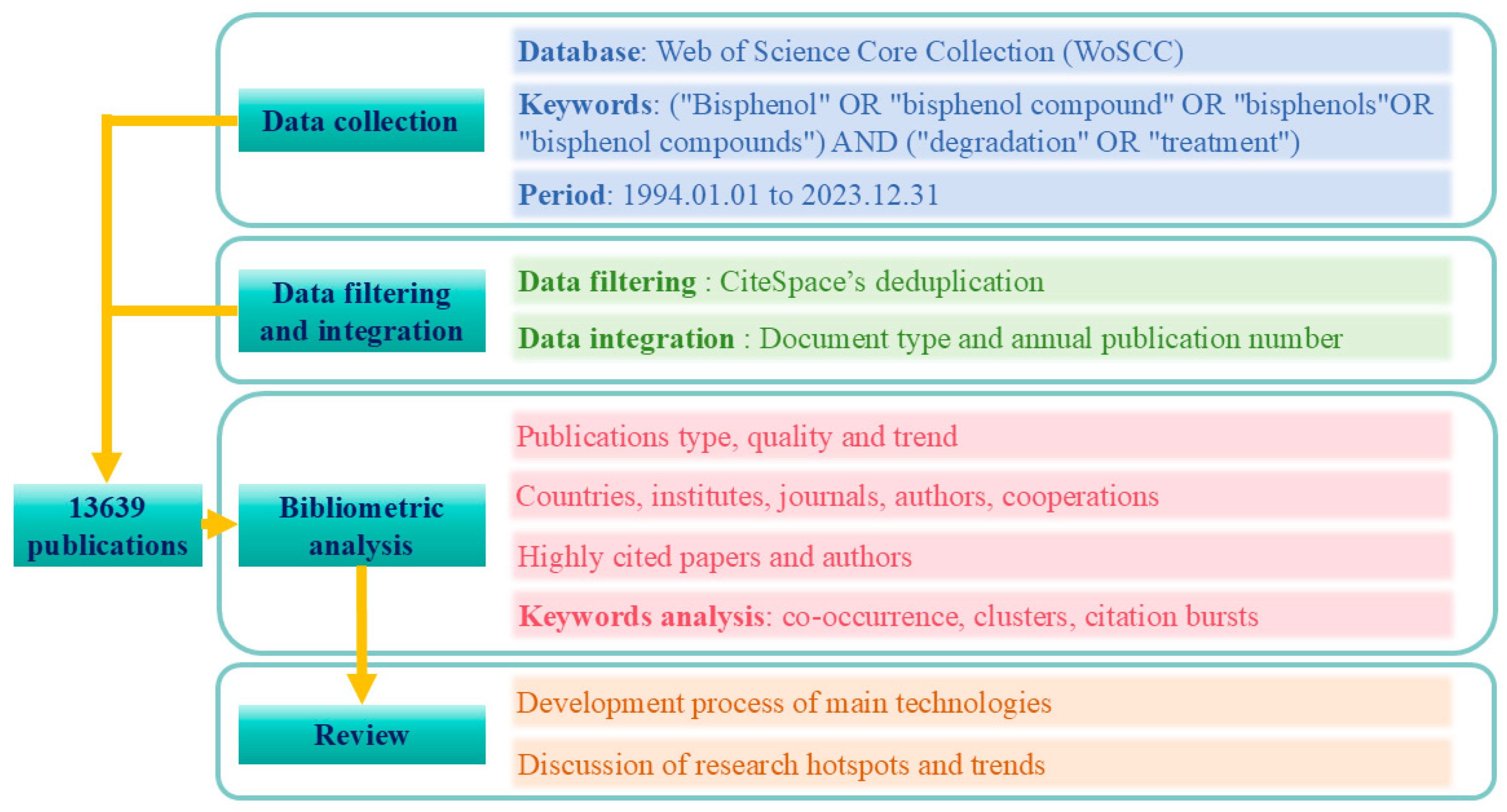
Figure 1. The process of data retrieval, data processing, and visualization.
Water 18 00595 g001
Figure 2. (a) The type of publications related to the BPs removal; (b) The publication trend related to the BPs removal from 1994 to 2023; (c) The networks of international collaboration.
Water 18 00595 g002
Figure 3. (a) The collaboration network among high-productivity authors; (b) The collaboration network among first authors of highly cited papers.
Water 18 00595 g003aWater 18 00595 g003b
Figure 4. Network diagram of high-output journals.
Water 18 00595 g004
Figure 5. (a) The network map of co-occurrence keywords; (b) Top 25 keywords with the strongest citation burst map.
Water 18 00595 g005
Figure 6. Sankey diagram of removal methods-removal rates-types of BPs.
Water 18 00595 g006
Figure 7. Publication trends related to BPA substitutes from 1994 to 2023.
Water 18 00595 g007
Table 1. A list of the top 20 institutes during 1994–2023.
RankOrganizationDocumentsCitationsAverage Citations
1Chinese Academy of Sciences64636,48856.5
2Harbin Institute of Technology27615,65256.7
3Chinese Academy of Sciences University23312,03151.6
4Sichuan University20310,81153.3
5Nanjing University196861243.9
6Tongji University189989652.4
7Hunan University17413,15475.6
8Jiangsu University163808049.6
9Tsinghua University134869464.9
10Wuhan University129729556.6
11Zhejiang University129503339.0
12Nankai University127734457.8
13South China University of Technology124558245.0
14Huazhong University of Science and Technology118763464.7
15Guangdong University of Technology111698762.9
16Sun Yat-sen University106401837.9
17University of Cincinnati103832180.8
18Nanyang Technological University100773077.3
19Shandong University96646967.4
20University of Science and Technology of China95621465.4
Disclaimer/Publisher’s Note: The statements, opinions and data contained in all publications are solely those of the individual author(s) and contributor(s) and not of MDPI and/or the editor(s). MDPI and/or the editor(s) disclaim responsibility for any injury to people or property resulting from any ideas, methods, instructions or products referred to in the content.