Research Progress and Hot Spots of Bisphenol Compounds Removal Technologies in Global Perspective: A Bibliometric Analysis from 1994 to 2023




Abstract
1. Introduction
2. Materials and Methods
2.1. Data Retrieval
2.2. Data Analysis and Visualization
3. Results and Discussions
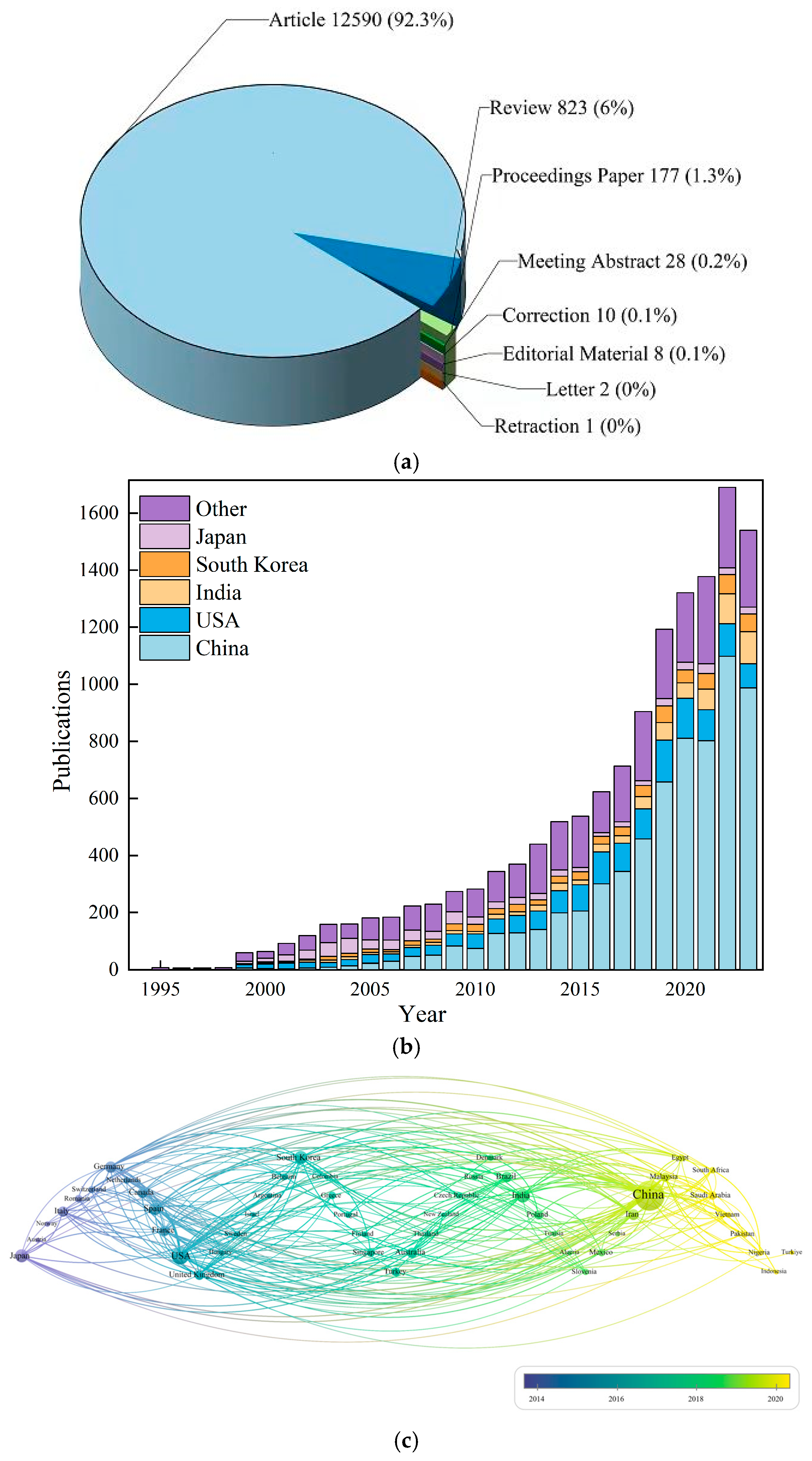
3.1. Publication Output and International Collaboration
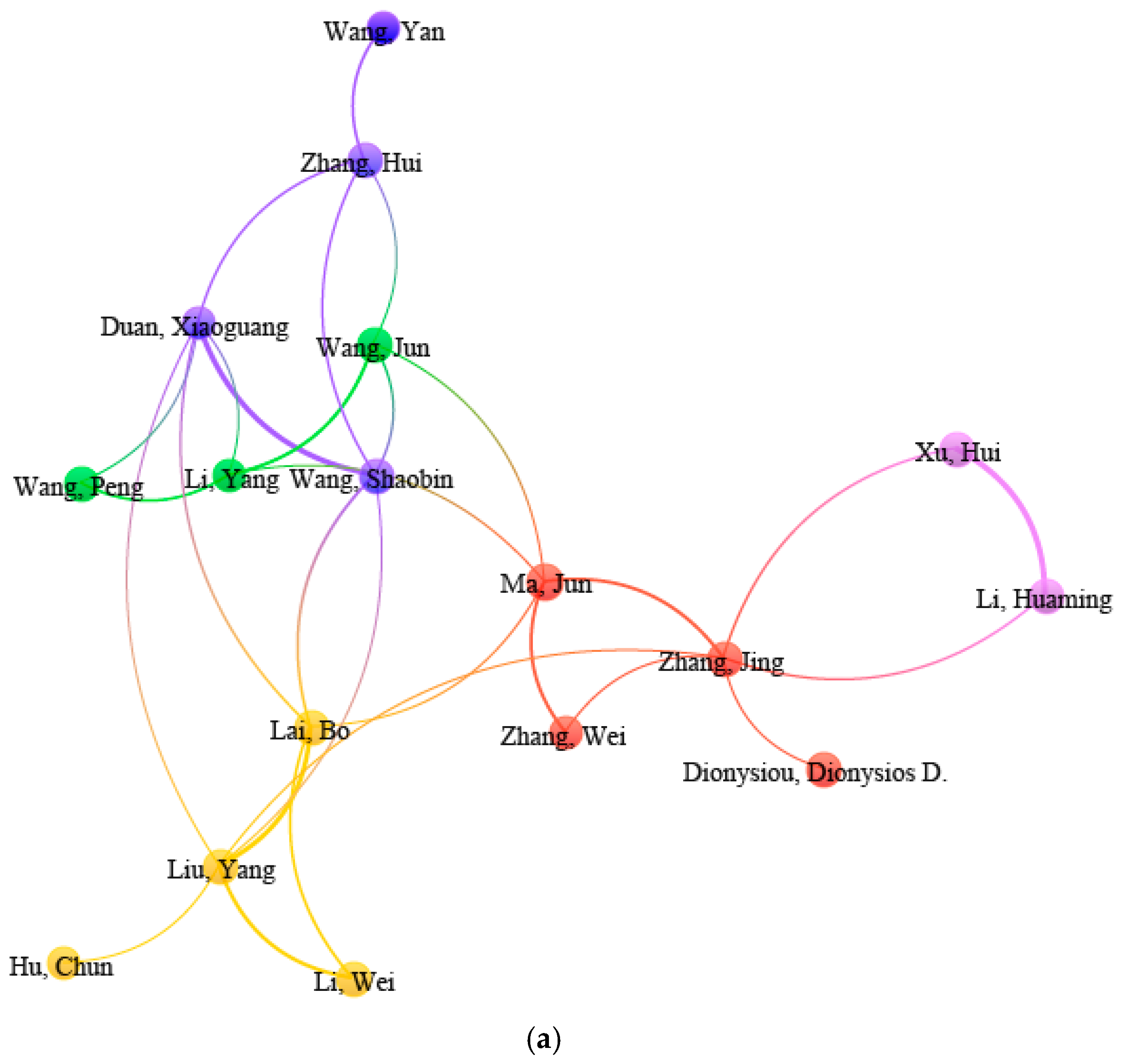
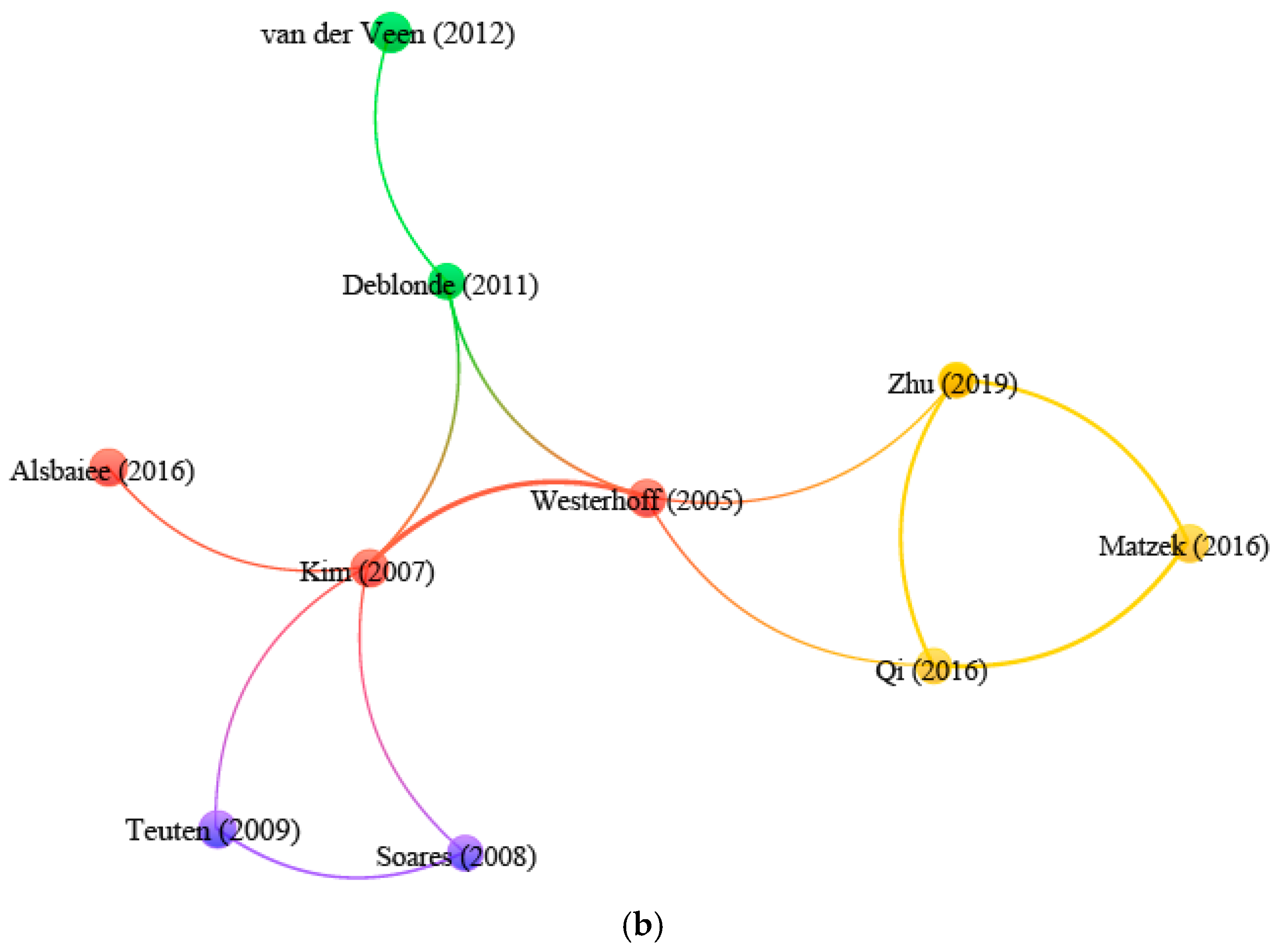
3.2. Analysis of Institutes and Authors
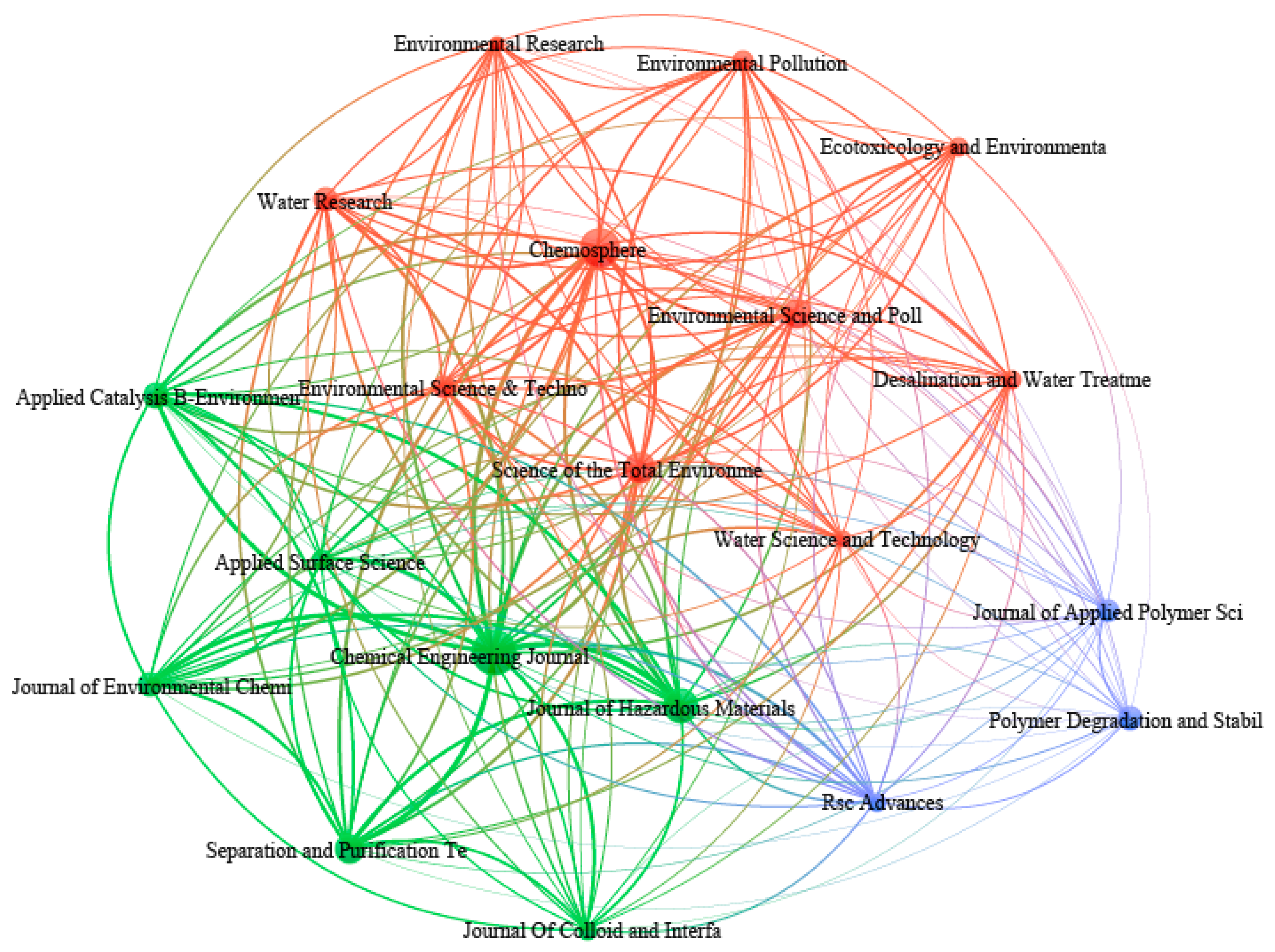
3.3. Analysis of Leading Journals
3.4. Analysis of Keywords
3.4.1. Keywords Co-Occurrence Analysis
3.4.2. Keywords Burst Analysis
3.5. Research Progress in BPs Removal Technology
3.5.1. Adsorption
3.5.2. Advanced Oxidation Processes
3.5.3. Biodegradation
3.6. Future Perspectives and Challenges
4. Conclusions and Limitations
- (1)
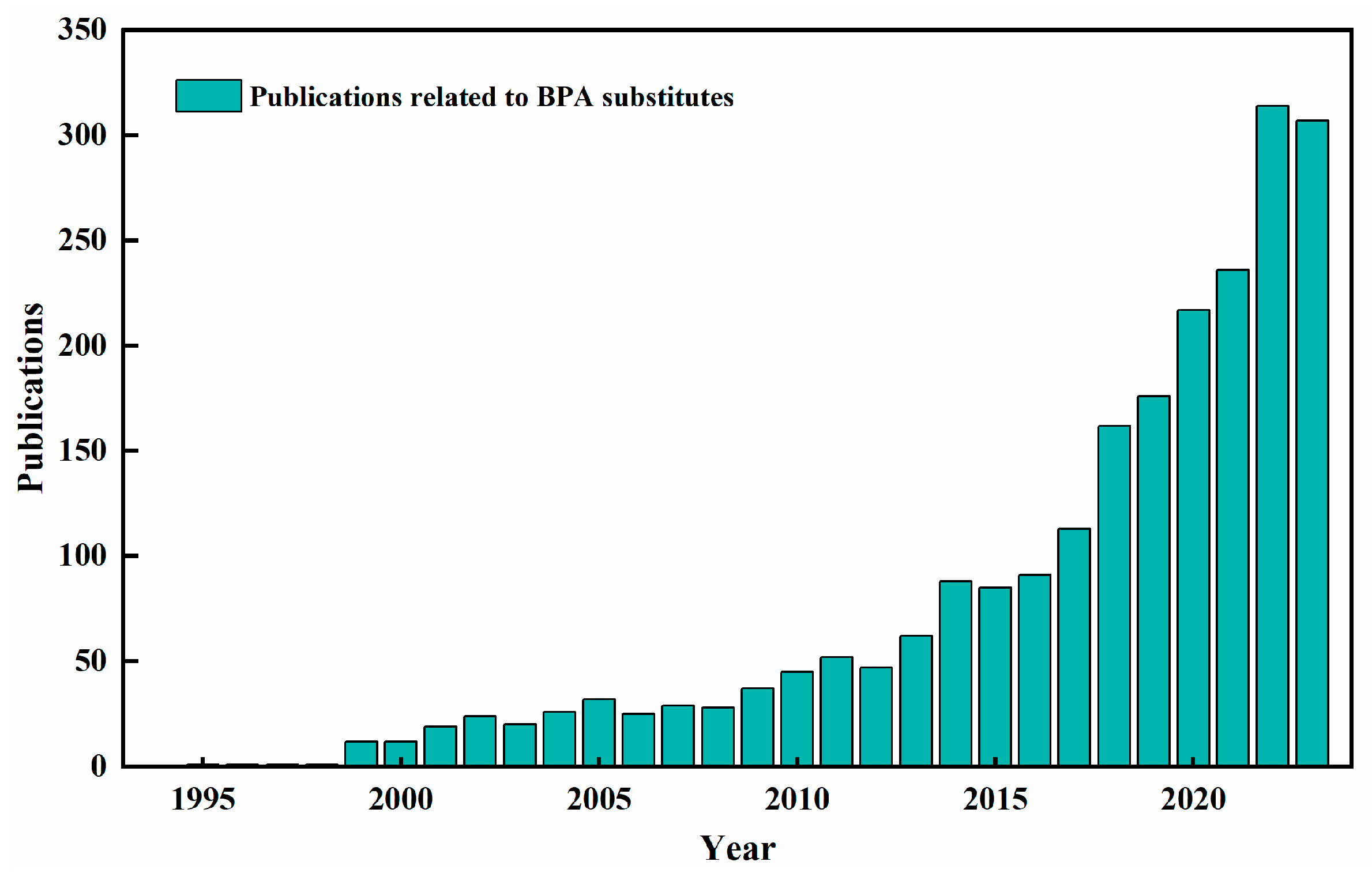
- The research literature in the field of BPs removal technology overall showed a growing trend, which indicated the increasing worldwide attention on it. Meanwhile, China led in research output globally in this field, and the Chinese Academy of Sciences became the most productive research institution with 646 articles. However, a higher average citation and number of authors with highly cited papers showed that American institutions and authors have a greater advantage in terms of influence and visibility. In addition, related articles were primarily published in journals such as Chemical Engineering Journal, Chemosphere, and Journal of Hazardous Materials.
- (2)
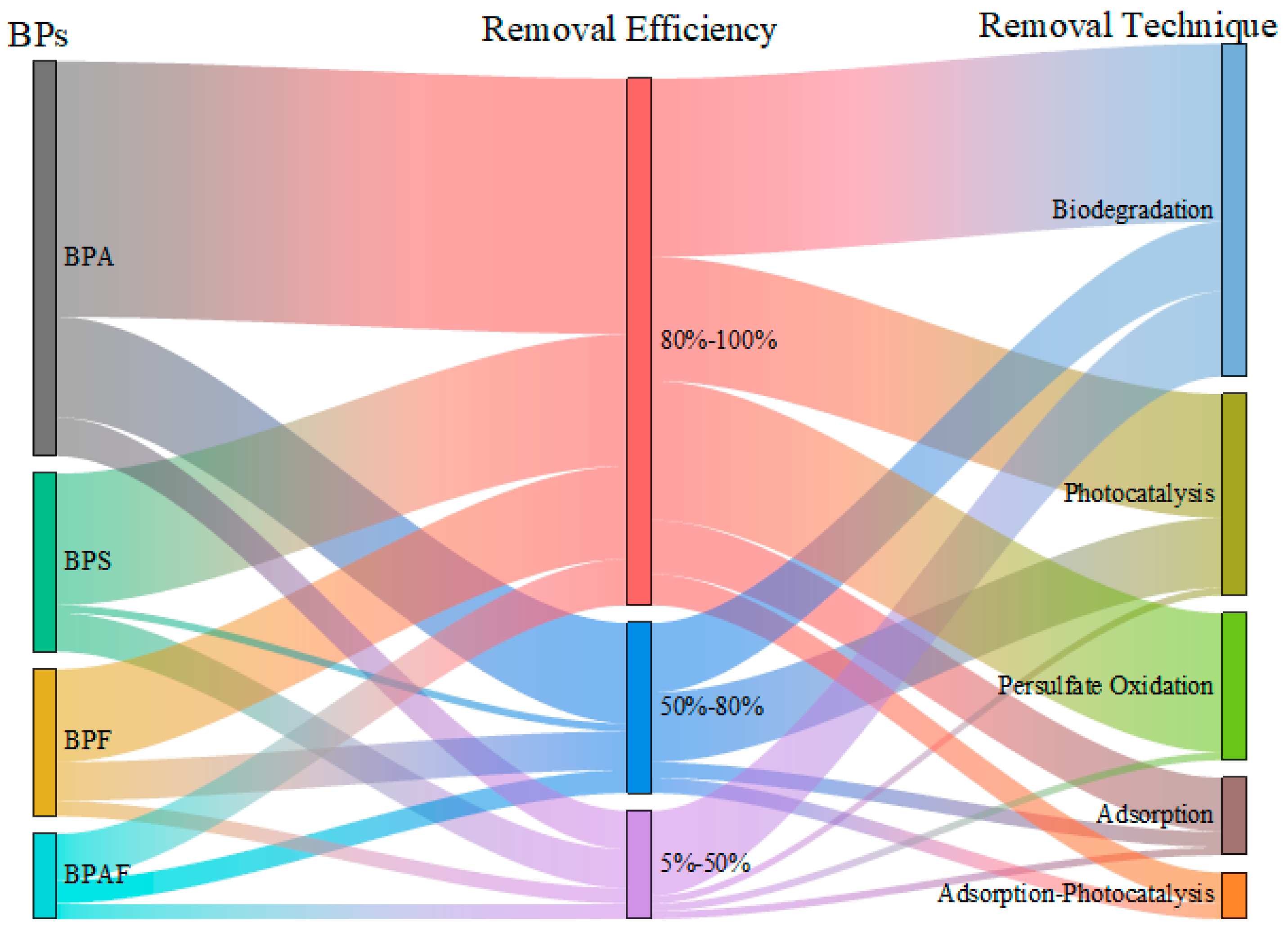
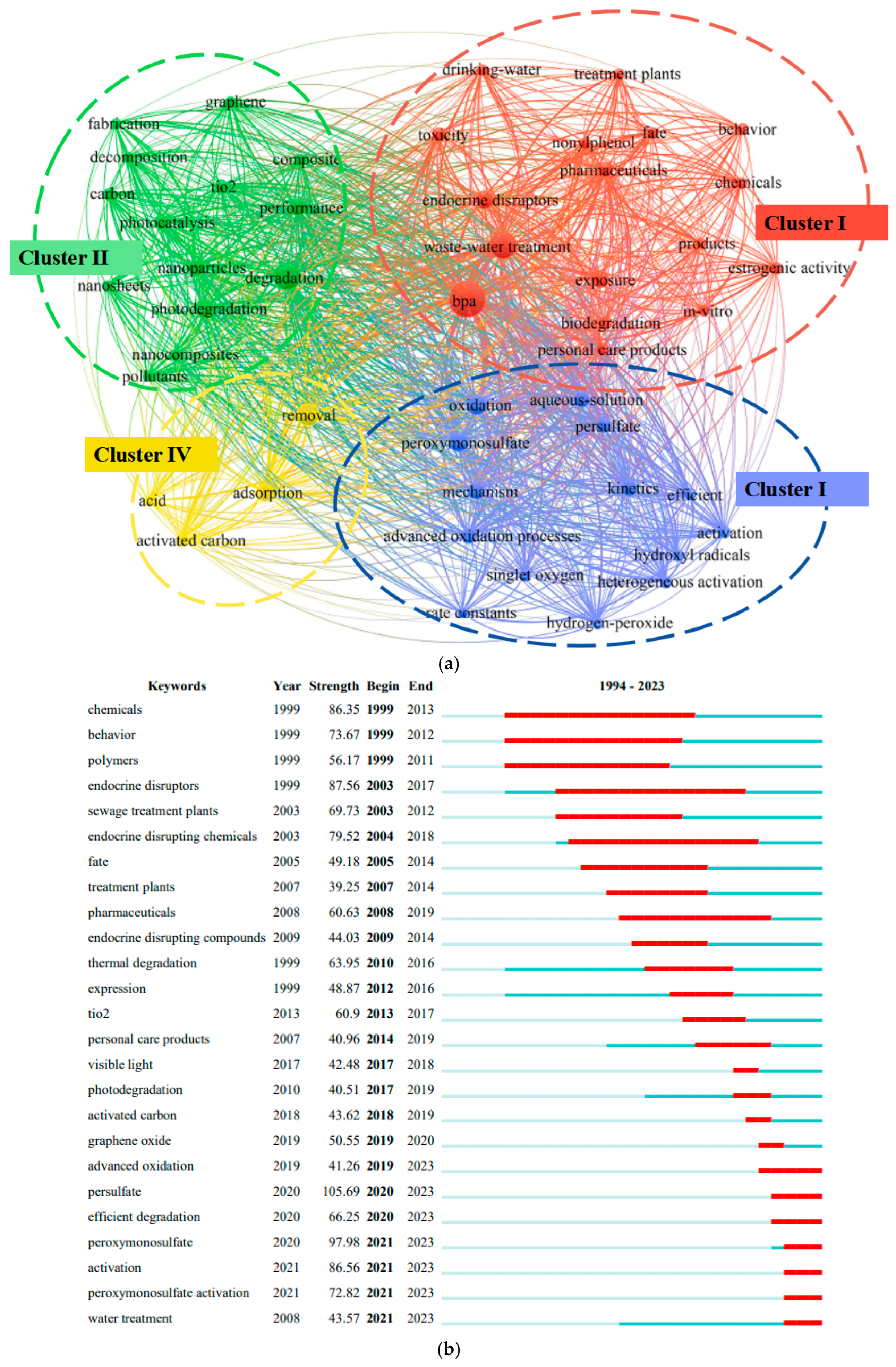
- The co-occurrence and burst analysis of keywords revealed that the research gradually transitions from the migration and transformation mechanism of BPs to the control and treatment of it. Meanwhile, the research on BPs removal technology mainly focuses on adsorption, AOPs (including photocatalysis, persulfate oxidation), and biodegradation. In addition, the development and application of new materials have gradually become the research trend in the field of BPs removal technology to meet the principles of circular economy and sustainable development. Moreover, interdisciplinary collaboration is expected to be an important aid to push the development of BPs removal technologies forward.
- (3)
- The limitation of this study is that while the WoSCC database utilized contains a substantial amount of literature, the reliance on a single database may result in some specific areas or journals not being adequately represented. This could result in underestimation or oversight of the contribution of some countries or institutions to particular aspects. Meanwhile, the specific selection of English-language papers reduced the coverage and comprehensiveness of the research. Therefore, future bibliometrics analyses should improve the depth by incorporating data from broader scientific literature and patent databases, and consider literature published in multiple languages to address the above limitation. Furthermore, the employment of novel technological tools such as natural language processing and machine learning is also a promising approach to improve the representativeness of bibliometrics analyses.
- (4)
- While this study provides a relatively systematic analysis of the existing publications, it is necessary to acknowledge potential limitations in the literature statistics. Currently, the literature search was conducted with “bisphenol” and “bisphenol compounds” as topic keywords. While this strategy effectively captures most studies on traditional bisphenol analogues, it should be noted that many recent articles focusing specifically on BPS, BPF, or BPAF do not include the general term “bisphenol” in their topic fields. Consequently, these publications were not encompassed within the scope of this statistical analysis. Future bibliometric analyses should further incorporate the specific identifiers of the above-mentioned compounds into the search strings to achieve a more comprehensive overview of the evolving landscape of emerging bisphenol removal technologies.
Author Contributions
Funding
Data Availability Statement
Acknowledgments
Conflicts of Interest
References
- Hernández-Abreu, A.; Álvarez-Torrellas, S.; Águeda, V.; Larriba, M.; Delgado, J.; Calvo, P.; García, J. Enhanced removal of the endocrine disruptor compound Bisphenol A by adsorption onto green-carbon materials. Effect of real effluents on the adsorption process. J. Environ. Manag. 2020, 266, 110604. [Google Scholar] [CrossRef]
- Russo, G.; Capuozzo, A.; Barbato, F.; Irace, C.; Santamaria, R.; Grumetto, L. Cytotoxicity of seven bisphenol analogues compared to bisphenol A and relationships with membrane affinity data. Chemosphere 2018, 201, 432–440. [Google Scholar] [CrossRef]
- Kapoor, D.D.; Yadav, S.; Gupta, R.K. Comprehensive study of microbial bioplastic: Present status and future perspectives for sustainable development. Environ. Dev. Sustain. 2023, 26, 21985–22011. [Google Scholar] [CrossRef]
- Liao, C.; Kannan, K. Widespread occurrence of bisphenol A in paper and paper products: Implications for human exposure. Environ. Sci. Technol. 2011, 45, 9372–9379. [Google Scholar] [CrossRef] [PubMed]
- Björnsdotter, M.K.; Jonker, W.; Legradi, J.; Kool, J.; Ballesteros-Gómez, A. Bisphenol A alternatives in thermal paper from the Netherlands, Spain, Sweden and Norway. Screening and potential toxicity. Sci. Total. Environ. 2017, 601, 210–221. [Google Scholar] [CrossRef] [PubMed]
- Song, S.; Song, M.; Zeng, L.; Wang, T.; Liu, R.; Ruan, T.; Jiang, G. Occurrence and profiles of bisphenol analogues in municipal sewage sludge in China. Environ. Pollut. 2014, 186, 14–19. [Google Scholar] [CrossRef]
- Radwan, E.K.; Ibrahim, M.B.; Adel, A.; Farouk, M. The occurrence and risk assessment of phenolic endocrine-disrupting chemicals in Egypt’s drinking and source water. Environ. Sci. Pollut. Res. 2020, 27, 1776–1788. [Google Scholar] [CrossRef] [PubMed]
- Yamazaki, E.; Yamashita, N.; Taniyasu, S.; Lam, J.; Lam, P.K.; Moon, H.-B.; Jeong, Y.; Kannan, P.; Achyuthan, H.; Munuswamy, N.; et al. Bisphenol A and other bisphenol analogues including BPS and BPF in surface water samples from Japan, China, Korea and India. Ecotoxicol. Environ. Saf. 2015, 122, 565–572. [Google Scholar] [CrossRef]
- Biemann, R.; Blüher, M.; Isermann, B. Exposure to endocrine-disrupting compounds such as phthalates and bisphenol A is associated with an increased risk for obesity. Best Pract. Res. Clin. Endocrinol. Metab. 2021, 35, 101546. [Google Scholar] [CrossRef]
- Pérez-Bermejo, M.; Mas-Pérez, I.; Murillo-Llorente, M.T. The Role of the Bisphenol A in Diabetes and Obesity. Biomedicines 2021, 9, 666. [Google Scholar] [CrossRef]
- Demierre, A.-L.; Reinhard, H.; Zeltner, S.; Frey, S. Evaluating the efficiency of the 2020 ban of BPA and BPS in thermal papers in Switzerland. Regul. Toxicol. Pharmacol. 2024, 146, 105526. [Google Scholar] [CrossRef] [PubMed]
- Van de Velde, N.; Javornik, S.; Sever, T.; Štular, D.; Šobak, M.; Štirn, Ž.; Likozar, B.; Jerman, I. Bio-Based Epoxy Adhesives with Lignin-Based Aromatic Monophenols Replacing Bisphenol A. Polymers 2021, 13, 3879. [Google Scholar] [CrossRef]
- Han, Y.; Dai, H.; Rong, X.; Jiang, H.; Xue, Y. Research Progress of Methods for Degradation of Bisphenol A. Molecules 2023, 28, 8028. [Google Scholar] [CrossRef] [PubMed]
- Wu, J.; Xie, H.; Zhang, C.; Bouazza, A.; Sun, Z.; Qiu, Z. Adsorption behavior of bisphenol A on bentonite-loess mixtures. Environ. Sci. Pollut. Res. 2022, 29, 6360–6374. [Google Scholar] [CrossRef]
- Hunge, Y.; Yadav, A.; Khan, S.; Takagi, K.; Suzuki, N.; Teshima, K.; Terashima, C.; Fujishima, A. Photocatalytic degradation of bisphenol A using titanium dioxide@nanodiamond composites under UV light illumination. J. Colloid Interface Sci. 2021, 582, 1058–1066. [Google Scholar] [CrossRef]
- Frankowski, R.; Zgoła-Grześkowiak, A.; Smułek, W.; Grześkowiak, T. Removal of bisphenol A and its potential substitutes by biodegradation. Appl. Biochem. Biotechnol. 2020, 191, 1100–1110. [Google Scholar] [CrossRef]
- Mishra, P.; Sant, T.G.; Kumar, K. A bibliometric analysis of sustainability and organization’s performance. Environ. Dev. Sustain. 2024, 27, 26609–26636. [Google Scholar] [CrossRef]
- Yu, Y.; Wang, S.; Yu, P.; Wang, D.; Hu, B.; Zheng, P.; Zhang, M. A bibliometric analysis of emerging contaminants (ECs) (2001−2021): Evolution of hotspots and research trends. Sci. Total. Environ. 2024, 907, 168116. [Google Scholar] [CrossRef]
- Zhao, L.; Deng, J.; Sun, P.; Liu, J.; Ji, Y.; Nakada, N.; Qiao, Z.; Tanaka, H.; Yang, Y. Nanomaterials for treating emerging contaminants in water by adsorption and photocatalysis: Systematic review and bibliometric analysis. Sci. Total. Environ. 2018, 627, 1253–1263. [Google Scholar] [CrossRef]
- Yu, G.; Fu, Q.; Huang, J.; Hu, J.; Lu, L.; Zhou, J. Research status and trends in sustainable microbial self-healing concrete: A bibliometric analysis based on CiteSpace and VOSviewer. Environ. Dev. Sustain. 2024, 26, 1–34. [Google Scholar] [CrossRef]
- Alazaiza, M.Y.; Alzghoul, T.M.; Ramu, M.B.; Abu Amr, S.S.; Abushammala, M.F.; Nassani, D.E. Global perspectives on industrial wastewater management: A bibliometric analysis of research output. J. Hazard. Mater. Adv. 2024, 17, 100567. [Google Scholar] [CrossRef]
- Zhang, Y.; Li, A.-A.; Xiao, S.-N.; Zhong, N.-S.; Tong, W.-L.; Wang, S.-J.; Liu, J.-M.; Liu, Z.-L. A Bibliometric Analysis of Publications on Spinal Cord Injury Treatment with Glucocorticoids Using VOSviewer. Front. Public Health 2022, 10, 907372. [Google Scholar] [CrossRef]
- Ding, X.; Yang, Z. Knowledge mapping of platform research: A visual analysis using VOSviewer and CiteSpace. Electron. Commer. Res. 2020, 22, 787–809. [Google Scholar] [CrossRef]
- Xu, J.; Zhao, X.; Jin, X.; Sun, J.; Guo, R.; Wu, F. Addressing the challenges of new pollutants in China: Current status, knowledge gaps, and strategic recommendations. Carbon Res. 2025, 4, 48. [Google Scholar] [CrossRef]
- Laurentino, L.S.; dos Santos, L.M.G.; Silva, C.B.; de Barros, A.L.R.; Thomas, P.C.L.; Moreira, J.C. The Use of Silver Nanoparticles as Antimicrobial Agents between 2014 and 2023 in Brazil and Worldwide: A Bibliometric Review. J. Braz. Chem. Soc. 2025, 36, e-20240167. [Google Scholar] [CrossRef]
- Li, Z.; Du, C. Current status and research hotspots of pesticide-containing wastewater treatment: Systematic review and bibliometric analysis. J. Water Process. Eng. 2025, 69, 106738. [Google Scholar] [CrossRef]
- González-Delgado, Á.D.; Ramos-Olmos, M.; Pájaro-Gómez, N. Bibliometric and Co-Occurrence Study of Process System Engineering (PSE) Applied to the Polyvinyl Chloride (PVC) Production. Materials 2023, 16, 6932. [Google Scholar] [CrossRef] [PubMed]
- Czarny, K.; Krawczyk, B.; Szczukocki, D. Toxic effects of bisphenol A and its analogues on cyanobacteria Anabaena variabilis and Microcystis aeruginosa. Chemosphere 2021, 263, 128299. [Google Scholar] [CrossRef]
- Peng, Y.; Tang, H.; Yao, B.; Gao, X.; Yang, X.; Zhou, Y. Activation of peroxymonosulfate (PMS) by spinel ferrite and their composites in degradation of organic pollutants: A Review. Chem. Eng. J. 2021, 414, 128800. [Google Scholar] [CrossRef]
- Chi, H.; He, X.; Zhang, J.; Ma, J. Efficient degradation of refractory organic contaminants by zero-valent copper/hydroxylamine/peroxymonosulfate process. Chemosphere 2019, 237, 124431. [Google Scholar] [CrossRef]
- Mahmad, A.; Zango, Z.U.; Noh, T.U.; Usman, F.; Aldaghri, O.A.; Ibnaouf, K.H.; Shaharun, M.S. Response surface methodology and artificial neural network for prediction and validation of bisphenol a adsorption onto zeolite imidazole framework. Groundw. Sustain. Dev. 2023, 21, 100925. [Google Scholar] [CrossRef]
- Jun, B.-M.; Nam, S.-N.; Jung, B.; Choi, J.S.; Park, C.M.; Choong, C.E.; Jang, M.; Jho, E.H.; Son, A.; Yoon, Y. Photocatalytic and electrocatalytic degradation of bisphenol A in the presence of graphene/graphene oxide-based nanocatalysts: A review. Chemosphere 2024, 356, 141941. [Google Scholar] [CrossRef]
- Ahari, M.; Hadoudi, N.; Zaki, N.; Charki, A.; El Ouarghi, H.; Bayoussef, A.; Mansori, M.; El Barkany, S.; Salhi, A.; Amhamdi, H. Adsorption of bisphenol A (BPA) and pentachlorophenol (PCP) using a bentonite-chitosan composite: A study on removal efficiency. Inorg. Chem. Commun. 2024, 165, 112468. [Google Scholar] [CrossRef]
- Wang, L.; Luo, D.; Hamdaoui, O.; Vasseghian, Y.; Momotko, M.; Boczkaj, G.; Kyzas, G.Z.; Wang, C. Bibliometric analysis and literature review of ultrasound-assisted degradation of organic pollutants. Sci. Total. Environ. 2023, 876, 162551. [Google Scholar] [CrossRef]
- Son, L.T.; Katagawa, K.; Kobayashi, T. Using molecularly imprinted polymeric spheres for hybrid membranes with selective adsorption of bisphenol A derivatives. J. Membr. Sci. 2011, 375, 295–303. [Google Scholar] [CrossRef]
- Javid, N.; Malakootian, M. Removal of bisphenol A from aqueous solutions by modified-carbonized date pits by ZnO nano-particles. Desalination Water Treat. 2017, 95, 144–151. [Google Scholar] [CrossRef]
- Gao, H.; Han, X.; Wang, R.; Zhu, K.; Han, R. Adsorption and catalytic degradation of bisphenol A and p-chlorophenol by magnetic carbon nanotubes. Environ. Res. 2023, 231, 116314. [Google Scholar] [CrossRef]
- Chen, H.; Xu, H.; Zhang, Y.; Zhou, J.; He, J.; Wang, W.; Yuan, C.; Zhao, C.; Yang, L. A double-crosslinked cyclodextrin-based porous polymer for effective removal of bisphenol A: Preparation, adsorption behavior and mechanism. J. Environ. Chem. Eng. 2023, 11, 111570. [Google Scholar] [CrossRef]
- Monica, A.V.; Anbalagan, K.; Becky Miriyam, I. An integrated approach to remove endocrine-disrupting chemicals bisphenol and its analogues from the aqueous environment: A review. Water Sci. Technol. 2023, 88, 1518–1546. [Google Scholar] [CrossRef] [PubMed]
- Tang, X.; Tang, P.; Si, S.; Liu, L. Adsorption and removal of bisphenol A from aqueous solution by p-phenylenediamine-modified magnetic graphene oxide. J. Serbian Chem. Soc. 2017, 82, 39–50. [Google Scholar] [CrossRef]
- Cai, H.; Niu, Y.; Guan, T.; Zhang, Y.; Ma, Z. Removal of metronidazole using a novel ZnO–CoFe2O4@Biochar heterostructure composite in an intimately coupled photocatalysis and biodegradation system under visible light. J. Environ. Manag. 2024, 364, 121431. [Google Scholar] [CrossRef]
- Chinthala, M.; Ashwathanarayanaiah, B.K.; Kulkarni, S.; Udayakishore, Y.; Halyal, A.; Chavan, A. Intensification of advanced oxidation processes (AOPs) for the degradation of bisphenol-A. Int. J. Chem. React. Eng. 2021, 19, 605–614. [Google Scholar] [CrossRef]
- Mu, W.; Wang, L.; Xu, J.; Chang, C. Bi2O2CO3/Bi2O2+S1−x S-scheme n-n heterojunction with boosted photocatalytic degradation for bisphenol A. J. Environ. Manag. 2025, 373, 123597. [Google Scholar] [CrossRef]
- Wang, J.; Guo, H.; Liu, Y.; Li, W.; Yang, B. Peroxymonosulfate activation by porous BiFeO3 for the degradation of bisphenol AF: Non-radical and radical mechanism. Appl. Surf. Sci. 2020, 507, 145097. [Google Scholar] [CrossRef]
- Niu, L.; Zhang, S.; Wang, S.; An, L.; Manoli, K.; Sharma, V.K.; Yu, X.; Feng, M. Overlooked environmental risks deriving from aqueous transformation of bisphenol alternatives: Integration of chemical and toxicological insights. J. Hazard. Mater. 2022, 427, 128208. [Google Scholar] [CrossRef]
- Frankowski, R.; Płatkiewicz, J.; Stanisz, E.; Grześkowiak, T.; Zgoła-Grześkowiak, A. Biodegradation and photo-Fenton degradation of bisphenol A, bisphenol S and fluconazole in water. Environ. Pollut. 2021, 289, 117947. [Google Scholar] [CrossRef]
- Ike, M.; Chen, M.; Danzl, E.; Sei, K.; Fujita, M. Biodegradation of a variety of bisphenols under aerobic and anaerobic conditions. Water Sci. Technol. 2006, 53, 153–159. [Google Scholar] [CrossRef]
- Gabriel, F.L.P.; Cyris, M.; Giger, W.; Kohler, H.E. ipso-Substitution: A general biochemical and biodegradation mechanism to cleave α-quaternary alkylphenols and bisphenol A. Chem. Biodivers. 2007, 4, 2123–2137. [Google Scholar] [CrossRef] [PubMed]
- Toyama, T.; Ojima, T.; Tanaka, Y.; Mori, K.; Morikawa, M. Sustainable biodegradation of phenolic endocrine-disrupting chemicals by Phragmites australis–rhizosphere bacteria association. Water Sci. Technol. 2013, 68, 522–529. [Google Scholar] [CrossRef] [PubMed]
- Li, G.; Zu, L.; Wong, P.-K.; Hui, X.; Lu, Y.; Xiong, J.; An, T. Biodegradation and detoxification of bisphenol A with one newly-isolated strain Bacillus sp GZB: Kinetics, mechanism and estrogenic transition. Bioresour. Technol. 2012, 114, 224–230. [Google Scholar] [CrossRef] [PubMed]
- Godiya, C.B.; Park, B.J. Removal of bisphenol A from wastewater by physical, chemical and biological remediation techniques. A review. Environ. Chem. Lett. 2022, 20, 1801–1837. [Google Scholar] [CrossRef]
- Yu, C.; Tang, J.; Su, H.; Huang, J.; Liu, F.; Wang, L.; Sun, H. Development of a novel biochar/iron oxide composite from green algae for bisphenol-A removal: Adsorption and Fenton-like reaction. Environ. Technol. Innov. 2022, 28, 102647. [Google Scholar] [CrossRef]
- Shi, W.; Wang, H.; Yan, J.; Shan, L.; Quan, G.; Pan, X.; Cui, L. Wheat straw derived biochar with hierarchically porous structure for bisphenol A removal: Preparation, characterization, and adsorption properties. Sep. Purif. Technol. 2022, 289, 120796. [Google Scholar] [CrossRef]
- Zeng, Z.; Umeh, A.; Iyengar, G.A.; Qi, F.; Naidu, R. A critical review of different types of biochar-based catalysts and mechanisms in advanced oxidation processes for organic contaminants removal. J. Environ. Chem. Eng. 2024, 12, 114262. [Google Scholar] [CrossRef]
- Thanh, P.N.; Phung, V.-D.; Nguyen, T.B.H. Recent advances and future trends in metal oxide photocatalysts for removal of pharmaceutical pollutants from wastewater: A comprehensive review. Environ. Geochem. Health 2024, 46, 364. [Google Scholar] [CrossRef]
- Xu, K.; Li, Y.; Li, Q.; Yi, G.; Gao, R.; Tang, K.H.D.; Ali, E.F.; Hooda, P.; Shaheen, S.M.; Li, R. Biodegradation of bisphenol-A in water using a novel strain of Xenophilus sp. embedded onto biochar: Elucidating the influencing factors and degradation pathway. J. Hazard. Mater. 2024, 477, 135239. [Google Scholar] [CrossRef]
- Hou, S.; Chen, Z.; Luo, X.; Zhang, M.; Yang, P. Hydrogel immobilized bacteria@MOFs composite towards Bisphenol A degradation and the interconnection mechanism elucidation. Environ. Res. 2024, 251, 118718. [Google Scholar] [CrossRef]
- Piekutin, J.; Kotowska, U.; Puchlik, M.; Polińska, W.; Dobkowska, A. Application of an integrated process for the removal of organic compounds of the phenols group from water. Desalination Water Treat. 2023, 301, 63–70. [Google Scholar] [CrossRef]
- dos Santos, C.R.; Arcanjo, G.S.; Araújo, A.A.D.; Santos, L.V.d.S.; Amaral, M.C.S. Occurrence, environmental risks, and removal of bisphenol A and its analogues by membrane bioreactors. Chem. Eng. J. 2024, 494, 153278. [Google Scholar] [CrossRef]





| Rank | Organization | Documents | Citations | Average Citations |
|---|---|---|---|---|
| 1 | Chinese Academy of Sciences | 646 | 36,488 | 56.5 |
| 2 | Harbin Institute of Technology | 276 | 15,652 | 56.7 |
| 3 | Chinese Academy of Sciences University | 233 | 12,031 | 51.6 |
| 4 | Sichuan University | 203 | 10,811 | 53.3 |
| 5 | Nanjing University | 196 | 8612 | 43.9 |
| 6 | Tongji University | 189 | 9896 | 52.4 |
| 7 | Hunan University | 174 | 13,154 | 75.6 |
| 8 | Jiangsu University | 163 | 8080 | 49.6 |
| 9 | Tsinghua University | 134 | 8694 | 64.9 |
| 10 | Wuhan University | 129 | 7295 | 56.6 |
| 11 | Zhejiang University | 129 | 5033 | 39.0 |
| 12 | Nankai University | 127 | 7344 | 57.8 |
| 13 | South China University of Technology | 124 | 5582 | 45.0 |
| 14 | Huazhong University of Science and Technology | 118 | 7634 | 64.7 |
| 15 | Guangdong University of Technology | 111 | 6987 | 62.9 |
| 16 | Sun Yat-sen University | 106 | 4018 | 37.9 |
| 17 | University of Cincinnati | 103 | 8321 | 80.8 |
| 18 | Nanyang Technological University | 100 | 7730 | 77.3 |
| 19 | Shandong University | 96 | 6469 | 67.4 |
| 20 | University of Science and Technology of China | 95 | 6214 | 65.4 |
Disclaimer/Publisher’s Note: The statements, opinions and data contained in all publications are solely those of the individual author(s) and contributor(s) and not of MDPI and/or the editor(s). MDPI and/or the editor(s) disclaim responsibility for any injury to people or property resulting from any ideas, methods, instructions or products referred to in the content. |
© 2026 by the authors. Licensee MDPI, Basel, Switzerland. This article is an open access article distributed under the terms and conditions of the Creative Commons Attribution (CC BY) license.
Share and Cite
Chang, M.; Ma, R.; Han, Y.; Wang, J.; Wang, N.; Xiao, T.; Wong, Y.J. Research Progress and Hot Spots of Bisphenol Compounds Removal Technologies in Global Perspective: A Bibliometric Analysis from 1994 to 2023. Water 2026, 18, 595. https://doi.org/10.3390/w18050595
Chang M, Ma R, Han Y, Wang J, Wang N, Xiao T, Wong YJ. Research Progress and Hot Spots of Bisphenol Compounds Removal Technologies in Global Perspective: A Bibliometric Analysis from 1994 to 2023. Water. 2026; 18(5):595. https://doi.org/10.3390/w18050595
Chicago/Turabian StyleChang, Mingdong, Rui Ma, Yuxiao Han, Jianqiao Wang, Nana Wang, Tangfu Xiao, and Yong Jie Wong. 2026. "Research Progress and Hot Spots of Bisphenol Compounds Removal Technologies in Global Perspective: A Bibliometric Analysis from 1994 to 2023" Water 18, no. 5: 595. https://doi.org/10.3390/w18050595
APA StyleChang, M., Ma, R., Han, Y., Wang, J., Wang, N., Xiao, T., & Wong, Y. J. (2026). Research Progress and Hot Spots of Bisphenol Compounds Removal Technologies in Global Perspective: A Bibliometric Analysis from 1994 to 2023. Water, 18(5), 595. https://doi.org/10.3390/w18050595