

Article

Investigation into the Dynamic Coupling Mechanisms of Labile Phosphorus, Iron, and Sulfur in Lakeside Wetland Sediments

School of Life and Health Sciences, Environment Engineering, Hefei University, Hefei 230601, China
*
Author to whom correspondence should be addressed.
Water 2026, 18(4), 486; https://doi.org/10.3390/w18040486
Submission received: 13 January 2026 / Revised: 9 February 2026 / Accepted: 10 February 2026 / Published: 13 February 2026
(This article belongs to the Section Water Quality and Contamination)

Abstract

The release of phosphorus (P) from littoral wetland sediments drives eutrophication, with iron (Fe) and sulfur (S) cycles playing key regulatory roles. This study investigated the Tongyang River corridor wetland (Lake Chaohu) in China to elucidate P–Fe–S coupling mechanisms. High-resolution two-dimensional (2D) Diffusive Gradients in Thin-Films (DGT), P-fractionation, and microbial sequencing were employed during wet and dry periods. Results indicated significant total phosphorus (TP) spatial heterogeneity and seasonal available phosphorus (AP) variation. A robust spatial co-variance between DGT-Fe and DGT-P (r > 0.95) reinforces the iron-redox paradigm. However, 2D mapping revealed discretized sub-millimeter “hotspots,” demonstrating that iron (oxyhydr)oxide reductive dissolution is governed by micro-scale niches rather than uniform processes. Microbial analysis further identified summer diversity and Chloroflexi enrichment as primary biological drivers of P mobilization. Specifically, hydrological fluctuations dictate the iron-redox cycle, with wet-period microbial activation serving as the engine for internal P release. These findings suggest that regulating sediment redox conditions across hydrological stages is essential for mitigating wetland eutrophication.

1. Introduction

Wetlands function as critical ecotones between terrestrial and aquatic ecosystems, and have a pivotal role in regulating biogeochemical processes and intercepting pollutants. Despite stringent external nutrient controls implemented globally, eutrophication in shallow lakes remains a persistent challenge, primarily driven by the internal loading of phosphorus (P) from sediments [1]. In river–lake transition zones, phosphorus (P) release dynamics are highly intricate. In contrast to the relatively stable environments characteristic of lacustrine pelagic zones, these transition areas are subject to frequent hydrological fluctuations that trigger pronounced oscillations in redox potential (Eh), thereby driving the transformation of sediments from nutrient “sinks” to significant “sources” [2].
Mobilization of sedimentary phosphorus (P) is conventionally attributed to the iron (Fe)-redox cycle [3], wherein the reductive dissolution of Fe(oxyhydr) oxides triggers the release of adsorbed P. Although Fe-P interactions are well-documented [4,5], the intervention of the sulfur (S) cycle in organic-rich wetland sediments complicates this classic mechanism. Specifically, sulfides generated from sulfate reduction can react with dissolved Fe2+ to form iron sulfide minerals (e.g., FeS or FeS2), thereby either precluding P readsorption or decoupling P dynamics from the Fe cycle [6,7]. While it is well-established that hydrologic pulses increase terrestrial DOM loading [8], the subsequent impact on nutrient stoichiometry remains poorly understood. Accordingly, we hypothesize that during wet periods, the influx of highly bioreactive allochthonous OM acts as a metabolic switch that stimulates microbial sulfate reduction. This process intensifies Fe–S competition for binding sites, thereby attenuating Fe–P coupling and establishing OM-driven reductive dissolution as the predominant mechanism for internal P mobilization in constructed wetland ecosystems of Lake Chaohu.
To test this hypothesis, the high-resolution characterization of millimeter-scale chemical gradients at the sediment–water interface (SWI) is imperative. Traditional ex situ sampling techniques often perturb the fine-scale physicochemical architecture of the interface and introduce oxidation-induced artifacts [9]. In contrast, the Diffusive Gradients in Thin-Films (DGT) technique offers a robust in situ passive sampling strategy with high spatial resolution and minimal environmental interference. DGT facilitates the simultaneous, high-resolution measurement of labile P, Fe, and S while quantifying their diffusive fluxes [10], thereby providing a requisite technical framework for elucidating intricate Fe–S–P coupling mechanisms.
The Tongyang River corridor wetland represents a critical internal P “source–sink” transition zone within the Lake Chaohu Basin; however, the underlying Fe–S–P coupling mechanisms and their potential contributions to cyanobacterial blooms remain poorly understood. In contrast to large, relatively stable lakes such as Lake Taihu or Lake Dianchi, this palustrine wetland is characterized by distinct interfacial dynamics, where hydrological fluctuations and external OM inputs synergistically modulate P release pathways [11]. Consequently, this study employed in situ high-resolution DGT measurements, P fractionation, and microbial high-throughput sequencing to: (1) characterize the spatiotemporal distribution of sedimentary P during wet and dry periods; (2) elucidate the coupled Fe–S–P interactions and the corresponding P mobilization mechanisms; and (3) identify the microbial drivers underpinning these P–Fe–S interactions.

2. Materials and Methods

2.1. Study Area

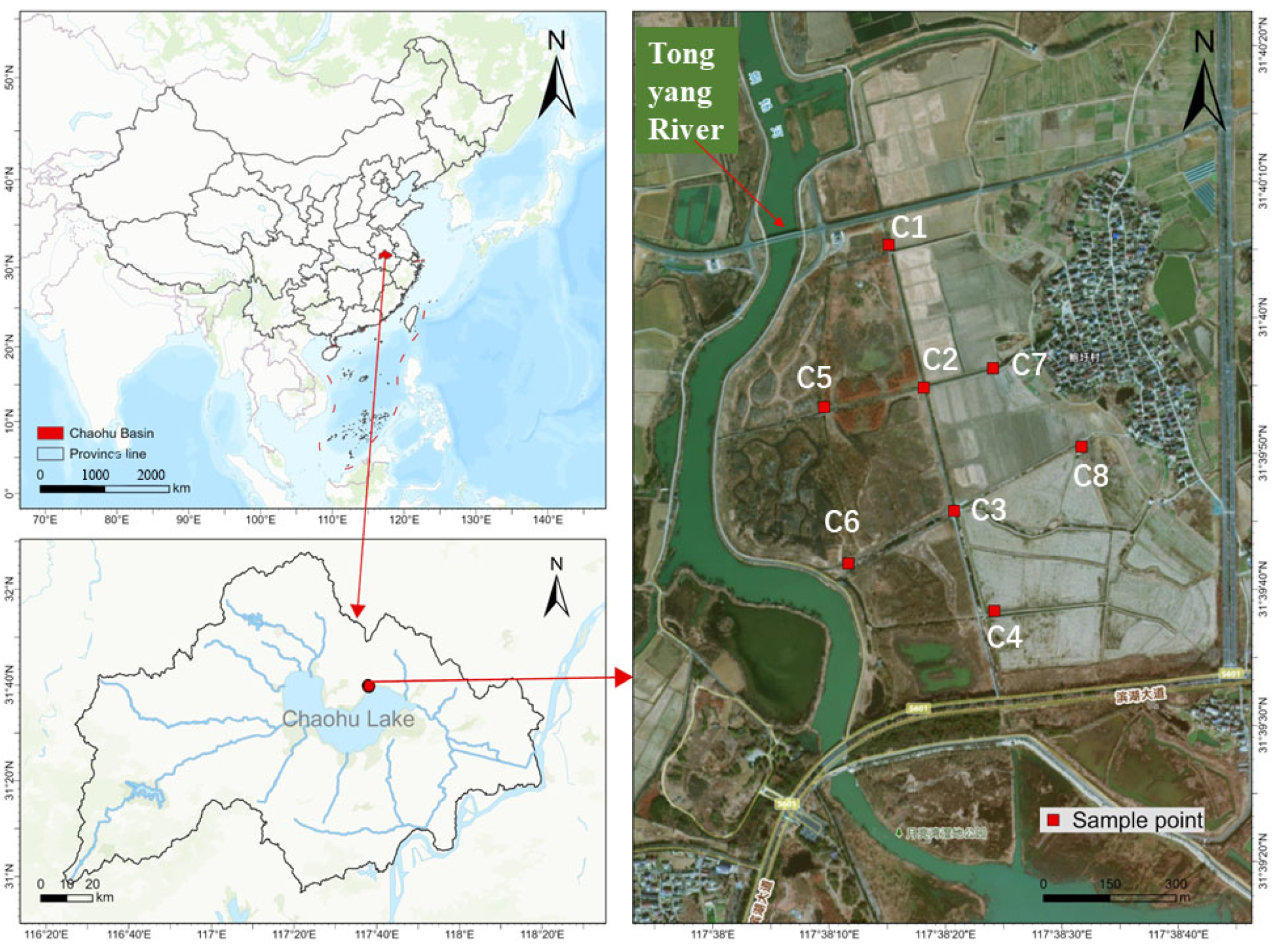
This study was conducted in the Tongyang River corridor wetland, situated on the northern shore of Lake Chaohu, China (116°24′30″–118°00′00″ E, 30°58′00″–32°06′00″ N). The Tongyang River represents a major inland tributary, characterized by a length of approximately 3.0 km, a width of 20–40 m, and an average water depth of 1.4 m. Topographically, the catchment slopes from northwest to southeast, transitioning from hilly uplands to lowland polder plains before discharging into Lake Chaohu near Tongyang Town. Pollution within the basin is categorized into point and non-point sources. The former primarily consists of effluent from the Tongyang Town Wastewater Treatment Plant. At the same time, the latter includes diverse inputs such as domestic sewage, livestock waste, agricultural tailwater, and rural surface runoff. Six field sampling campaigns were conducted in 2023, covering the dry period (January, March, and November) and the wet period (May, July, and September).
Eight sampling sites (C1–C8) were designated along the hydrological flow gradient (Figure 1). Based on the Cowardin wetland classification system and local habitat features, these sites were classified into four distinct habitat types:
Habitat I: Canalized Inlet Zone (C1, C2). Located at the northernmost entrance of the wetland, these sites exhibit typical “canalized” characteristics, characterized by restricted flow, and are dominated by submerged macrophytes. Habitat II: Palustrine Emergent Vegetation Zone (C5, C6), characterized by reduced flow velocity and dense stands of Phragmites australis and Typha orientalis. This zone serves as a core area for nutrient interception and transformation. Habitat III: Farmland-adjacent and Natural Lakeside Zone (C7, C8). Situated along the eastern edge, these sites are significantly subject to non-point source pollution from adjacent croplands. Habitat IV: Localized Stagnation and Transition Zone (C4), which represents a distinct habitat within the system. Due to dense vegetation and local topography, C4 forms a static water stagnation zone that facilitates the accumulation of organic matter (OM) and the development of a strongly reducing environment, differentiating it from the more lotic riverine environments.

2.2. Sample Collection and Preparation

Sediment cores were extracted from the sediment–water interface (SWI) using a vertical gravity corer. At each site, cores were collected in triplicate and stratified into three depth intervals: surface (0–10 cm), middle (10–30 cm), and deep (30–60 cm). The stratified samples were immediately sealed in sterile polyethylene bags and stored at 4 °C in the dark to inhibit microbial activity. Simultaneously, overlying water samples were obtained using a Plexiglass sampler and transferred into pre-cleaned, acid-washed 250 mL amber glass bottles for nutrient analysis.
In situ high-resolution monitoring was conducted at sites C2, C3, and C4 during the dry period (January 2023) and the wet period (July 2023). Prior to field deployment, the Diffusive Gradients in Thin-Films (DGT) probes were rinsed with deionized water and deoxygenated with N2 for 16 h to eliminate potential interference from dissolved oxygen. The probes were then inserted vertically and slowly into the sediment, minimizing physical perturbation. After a 24 h deployment to allow for the attainment of a dynamic steady-state between the probe and the porewater [12], the probes were retrieved, rinsed, and the SWI position was accurately demarcated. All probes were transported back to the laboratory at 4 °C for subsequent sub-millimeter-scale analysis.

2.3. Experimental Methods

2.3.1. Methods for Sediment and Water Analysis

Sediment organic matter (OM) content was quantified via the potassium dichromate oxidation–external heating method. Total phosphorus (TP) in the sediments was determined through high-temperature ashing and acid extraction, followed by molybdenum blue spectrophotometry. TP concentrations in the overlying water were measured via the ammonium molybdate spectrophotometric method. Specifically, sediment TP content was quantified in accordance with the Standards, Measurements, and Testing (SMT) protocol [13]. At the same time, inorganic and organic phosphorus fractions were characterized using the sequential extraction procedure described by Wang et al. [14].

2.3.2. DGT Deployment and Analysis

Two configurations of DGT probes, specifically ZrO-AT and ZrO-CA, were deployed to sample porewater at the sediment–water interface (SWI). The ZrO-AT probe was utilized for the high-resolution measurement of labile phosphorus (DGT-P). Following retrieval, the binding gels were equilibrated for 24 h, sliced at a sub-millimeter resolution, rinsed with deionized water for 2 h, and eluted in 10 mL of 1.0 M NaOH for 24 h at room temperature. The concentration of eluted phosphate was subsequently quantified via the molybdenum blue spectrophotometric method. The ZrO-CA probe was employed for the simultaneous determination of Fe2+ and S2−. Upon retrieval, the binding gels were rinsed, dried, and scanned immediately to minimize oxidation. The spatial distribution of S2− was mapped using computer-imaging densitometry within ImageJ (v1.53), calibrated against a standard color curve. Simultaneously, Fe2+ was eluted with 1.8 mL of 1.0 M HNO3 and quantified via the 1,10-phenanthroline colorimetric method. Overlying water temperature was recorded throughout the deployment period to determine the temperature-corrected diffusion coefficients required for the calculation of diffusive fluxes.

2.3.3. Microbial Community Analysis

Total genomic DNA was extracted from homogenized sediment samples using a PowerSoil DNA Isolation Kit (or specify the kit used) according to the manufacturer’s protocols. The V3–V4 hypervariable regions of the bacterial 16S rRNA gene were targeted for amplification and subsequently sequenced on the Illumina MiSeq PE300 platform(Illumina, Inc., San Diego, CA, USA). The resulting raw sequences were subjected to stringent quality filtering and clustered into operational taxonomic units (OTUs) at a 97% similarity threshold using the QIIME 2 pipeline (v2023.5). Taxonomic classification of the representative sequences was performed using the SILVA reference database (v.138).

2.4. Data Analysis and Diffusive Flux Calculation

The geospatial distributions of sedimentary phosphorus (P) concentrations were mapped and visualized using Origin 2022 and ArcGIS 10.2. Statistical analyses were conducted using Microsoft Excel 2022 and SPSS 22.0.
The diffusive flux of target ions across the sediment–water interface was calculated based on Fick’s first law of diffusion. The DGT-measured flux ( F DGT ) was determined using the following equations:
F DGT = M A t
F DGT = D C DGT Δ g
C DGT = M Δ g D A t
where
  • A is the exposure window area (cm2).
  • M is the accumulated mass of the target ion on the binding gel (µg).
  • t is the deployment time (s).
  • D is the diffusion coefficient (cm2·s−1).
  • Δ g is the thickness of the diffusion layer (cm).
  • C DGT is the DGT-measured concentration (mg·L−1).
A diffusion coefficient D = 6.12 × 10 6 (cm2·s−1) was applied based on in situ water temperature during deployment.
The accumulated mass M was calculated as follows:
M = C e ( V e + V g ) f e
where
  • C e is the concentration in the extract (mg·L−1);
  • V e is the volume of extractant (mL);
  • V g is the volume of the binding gel (mL);
  • f e is the elution efficiency.

3. Results

3.1. Spatiotemporal Distribution of Sediment Phosphorus

During the wet period, surface sediment TP concentrations varied between 0.541 and 1.135 g·kg−1, exhibiting a distinct spatial gradient characterized by higher concentrations in the north and lower levels in the south (Table 1). The maximum TP content was observed at Site C8 (1.135 g·kg−1), situated in the northern part of the study area, representing 1.43 times the regional mean (0.796 g·kg−1). During the dry period, TP concentrations ranged from 0.390 to 1.177 g·kg−1, paralleling the spatial distribution pattern observed during the wet period, with TP hotspots primarily concentrated near the northern inlet and the eastern agricultural reaches.
In contrast, available phosphorus (AP) during the wet period exhibited a distinct spatial gradient, increasing from north to south, with concentrations ranging from 2.13 to 17.44 mg·kg−1. Site C4 reached a peak concentration of 17.44 mg·kg−1 (approximately 1.5 times the regional mean), surpassing its corresponding dry-period level of 11.33 mg·kg−1. During the dry period, the spatial distribution of AP reversed, characterized by a “north-high, south-low” pattern, varying between 0.44 and 22.44 mg·kg−1. Site C1, which is dominated by submerged macrophytes, exhibited a maximum of 20.73 mg·kg−1, a value notably higher than its wet-period concentration of 13.47 mg·kg−1.
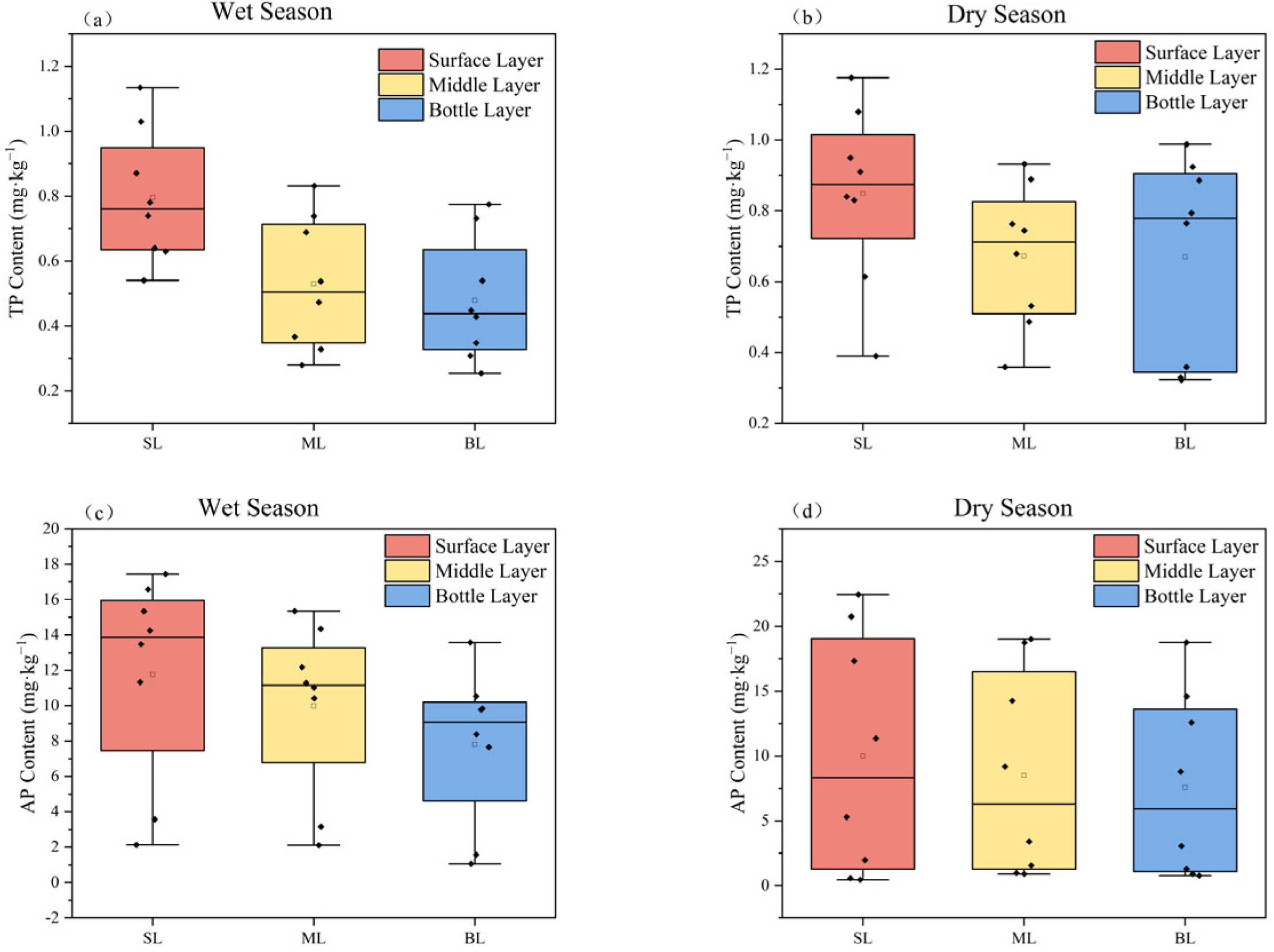
The vertical profiles of sedimentary TP and AP are illustrated in Figure 2. During the wet period, TP concentrations exhibited a progressive decline with depth, decreasing from the surface (0.630–1.135 g·kg−1) to the middle (0.279–0.832 g·kg−1) and deep layer (0.253–0.774 g·kg−1). The vertical attenuation rates varied from 28.9% to 53.3% (mean: 41.6%). A similar vertical trend was observed during the dry period, with TP concentrations in the surface, middle, and deep layers ranging from 28.9% to 53.3% (mean 41.6%). A similar vertical trend was observed during the dry period, with TP concentrations in the surface, middle, and deep layers ranging from 0.390 to 1.177 g·kg−1, 0.358–0.932 g·kg−1, and 0.322–0.988 g·kg−1, respectively (mean attenuation: 21.7%). At the majority of sampling sites, surface sediments functioned as the primary reservoir for sedimentary TP. Correspondingly, AP concentrations demonstrated a steady decrease with depth, from the surface (2.13–17.44 mg·kg−1) to the middle (2.11–15.34 mg·kg−1) and deep layers (1.07–13.57 mg·kg−1), indicating pronounced surface enrichment. However, Site C2 exhibited a distinct vertical profile, with deep-layer AP concentrations surpassing surface levels by 102.5%.

3.2. Vertical and 2D Distribution of Labile P, Fe, and S

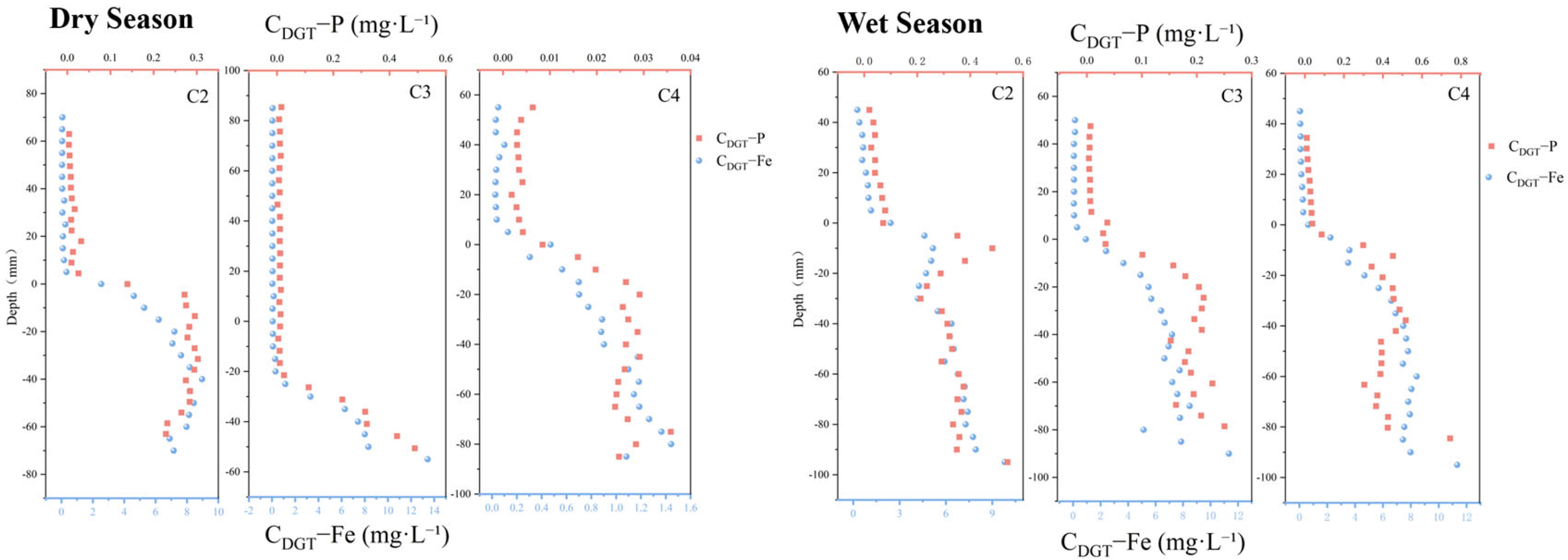
Figure 3 illustrates the high-resolution vertical profiles of labile iron (DGT-Fe) and phosphorus (DGT-P) at the sediment–water interface (SWI). During the dry period, concentrations of both DGT-Fe and DGT-P were consistently low and stable within the overlying water, subsequently exhibiting a progressive increase below the SWI. This transition demarcates a shift from a “static surface layer” (characterized by low P-reactivity) to an “active subsurface layer” (characterized by enhanced P-mobilization), which is consistent with the sedimentary stratification model proposed by Ding et al. [15]. A similar vertical trend was observed during the wet period, where DGT-Fe concentrations exhibited high spatial synchronicity with DGT-P fluctuations throughout the profile.
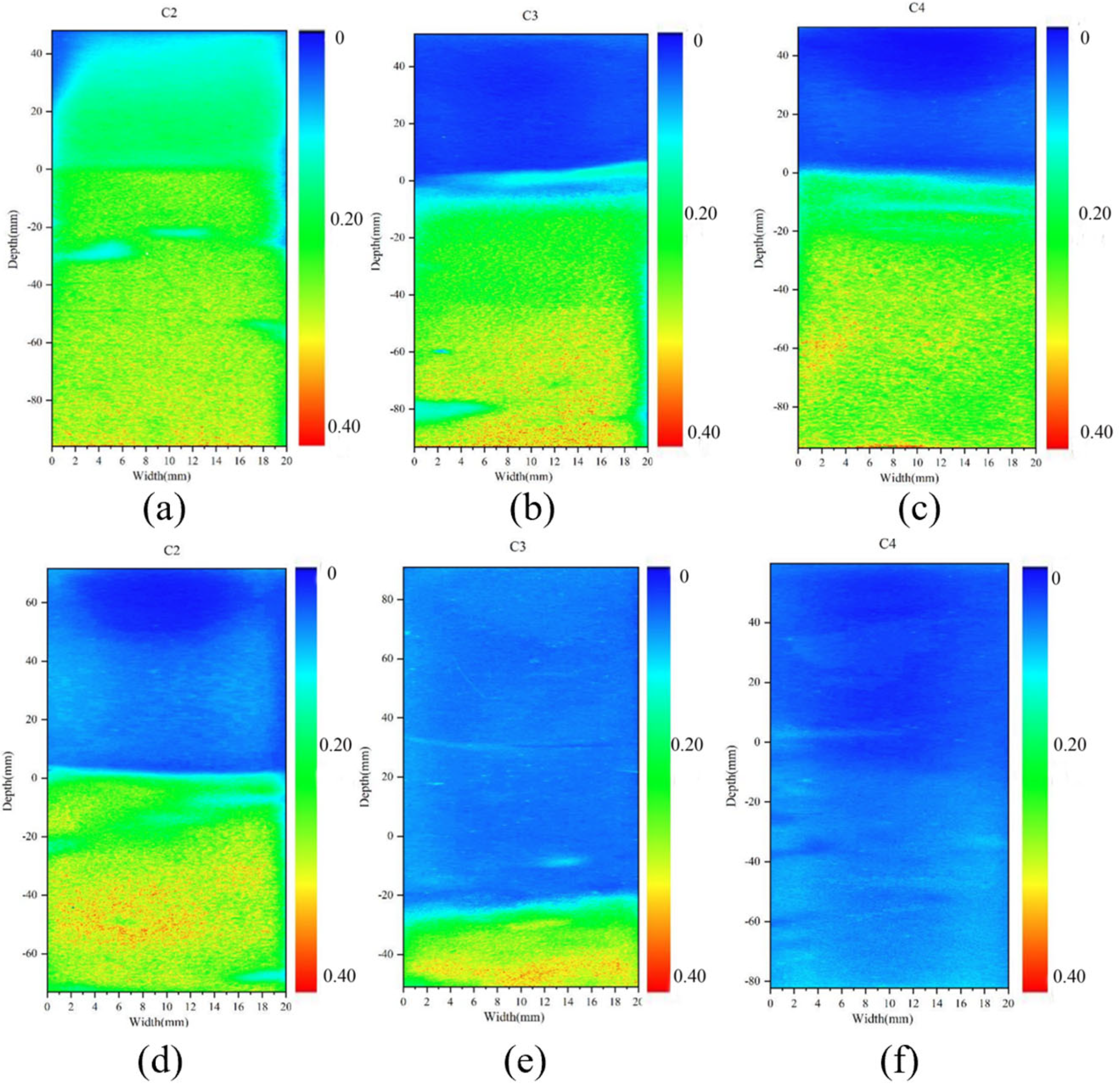
Figure 4 presents the two-dimensional (2D) high-resolution distribution of labile sulfur (DGT-S) across the sediment–water interface (SWI). During the wet period, DGT-S concentrations increased markedly within the uppermost sediment layer, with pronounced enrichment observed within the top 3 cm below the SWI. Two distinct DGT-S “hotspots” were identified at depth intervals of 4–7 cm and 8–10 cm. Notably, Site C4, corresponding to a localized stagnation zone, exhibited consistently lower DGT-S concentrations compared to Sites C2 and C3. In contrast, during the dry period, overall DGT-S concentrations were substantially lower than those observed during the wet period and exhibited a gradual increase with increasing sediment depth.
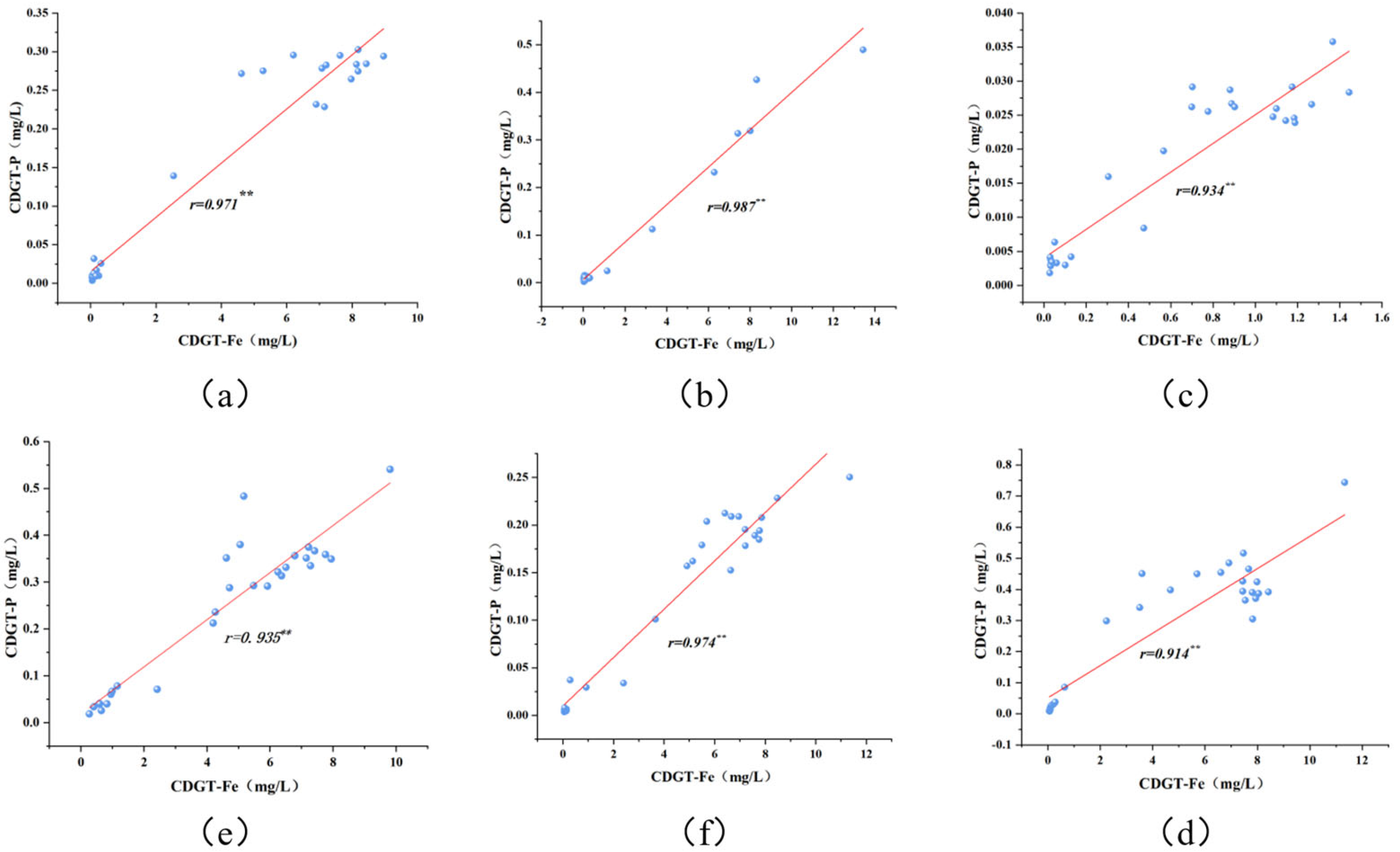
Correlation analysis (Figure 5) revealed a strong positive correlation between DGT-Fe and DGT-P (p < 0.01), indicating that iron-redox cycling represents a primary control on phosphorus mobility. In contrast, no statistically significant correlation was observed between DGT-S and either DGT-Fe or DGT-P. Notably, two-dimensional spatial overlays showed that the high-value regions of labile Fe and S were spatially staggered, providing direct in situ evidence for competitive interactions between the iron and sulfur cycles in these organic-rich sediments.

3.3. Diffusive Flux and Fractionation of Phosphorus

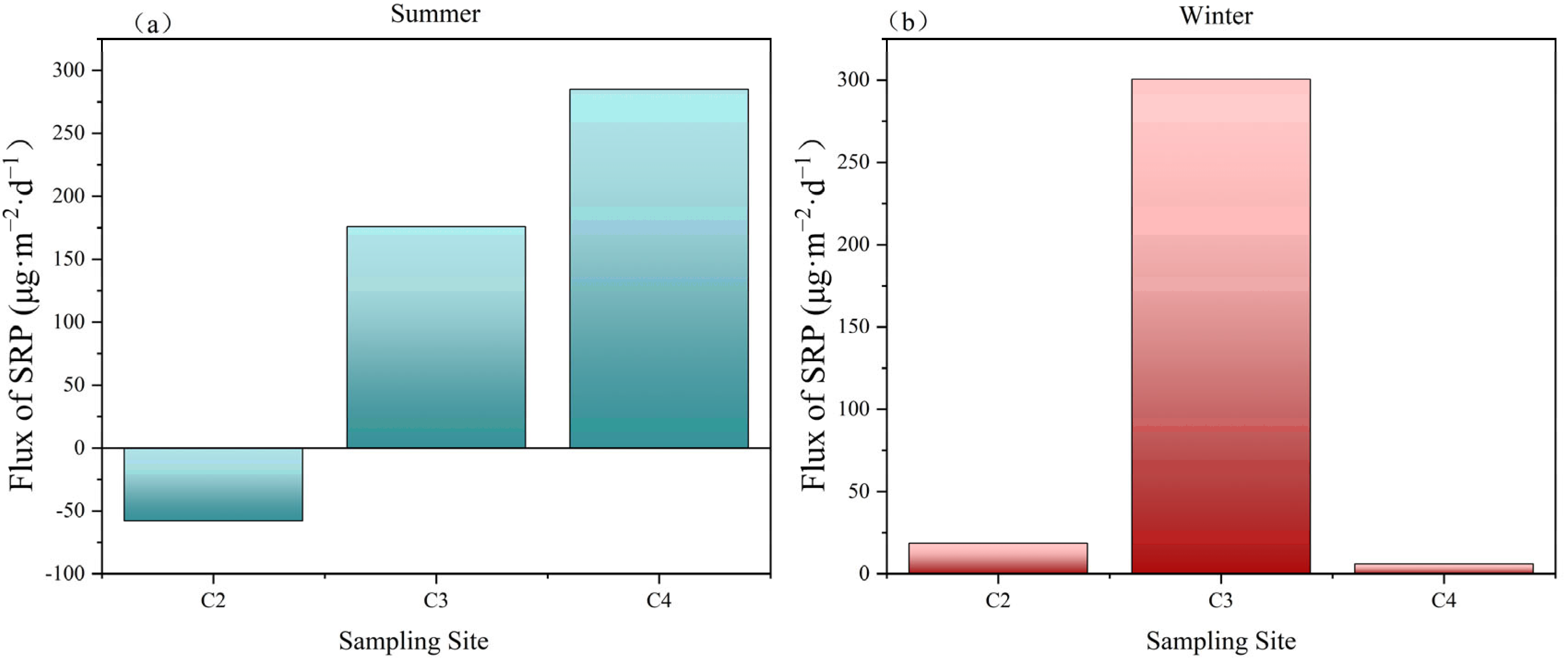
Figure 6 presents the diffusive fluxes of labile phosphorus (P) across the sediment–water interface (SWI). Site C2 exhibited a negative flux (−57.95 μg·m−2·d−1), indicating that the sediment acted as a phosphorus sink at this location. In contrast, Sites C3 and C4 showed positive fluxes of 175.82 and 285.10 μg·m−2·d−1, respectively, suggesting pronounced benthic phosphorus release from porewater into the overlying water column.
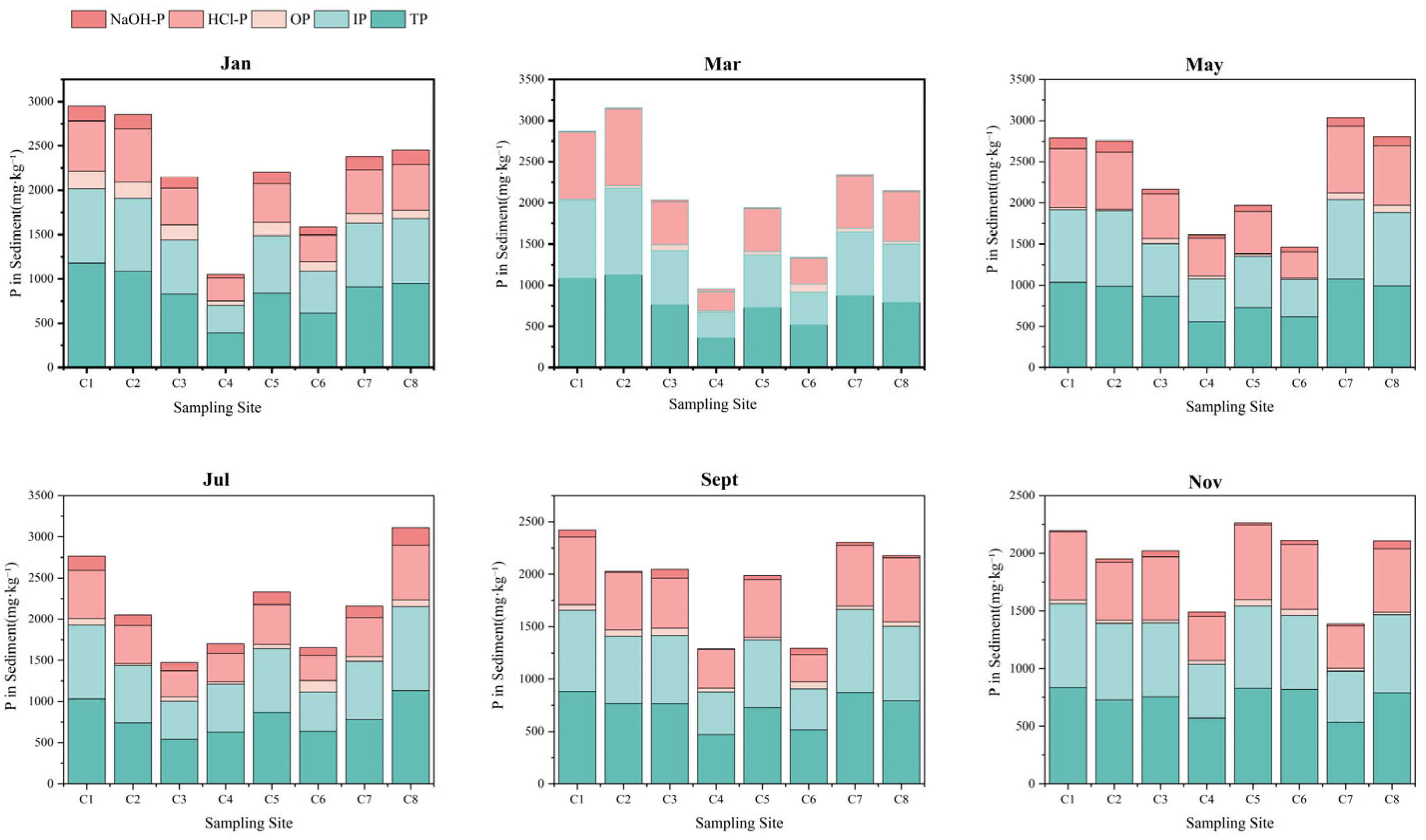
The partitioning of sedimentary phosphorus fractions is illustrated in Figure 7. Sediment P was dominated by inorganic phosphorus (IP), with concentrations ranging from 432.4 to 844.8 mg·kg−1, whereas organic phosphorus (OP) concentrations were comparatively low (33.3–80.0 mg·kg−1). IP accounted for 83.2–93.5% of total phosphorus (TP). Among IP fractions, calcium-bound phosphorus (HCl-P) was predominant (251.7–553.9 mg·kg−1), followed by iron/aluminum-bound phosphorus (NaOH-P; 39.9–92.8 mg·kg−1).
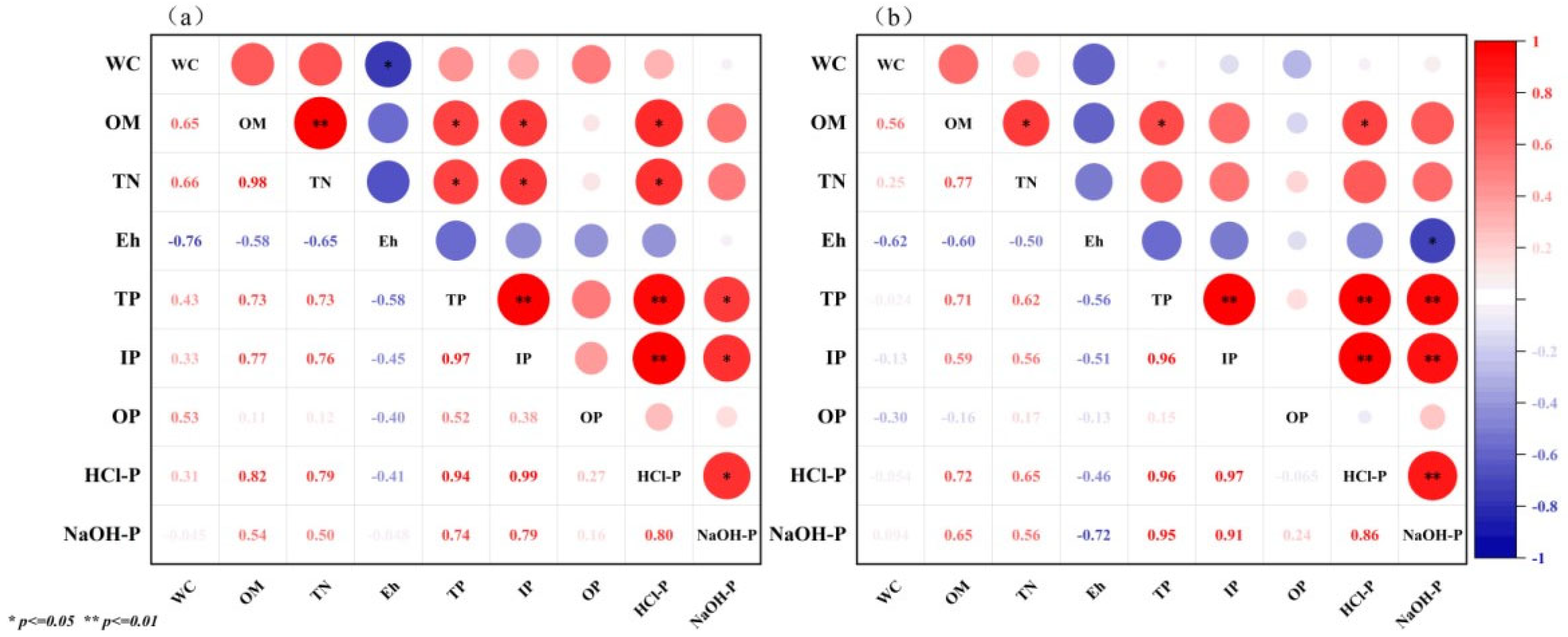
Correlation analysis (Figure 8) revealed significant positive relationships between organic matter (OM) and IP (r = 0.77), HCl-P (r = 0.82), and NaOH-P (r = 0.54) (p < 0.05). Temporally, concentrations of all P fractions at Site C3 during the wet period (July) were generally lower than those observed during the dry period (January), indicating enhanced mobilization or depletion of sedimentary phosphorus during the high-flow season.

3.4. Microbial Community Structure in Sediments

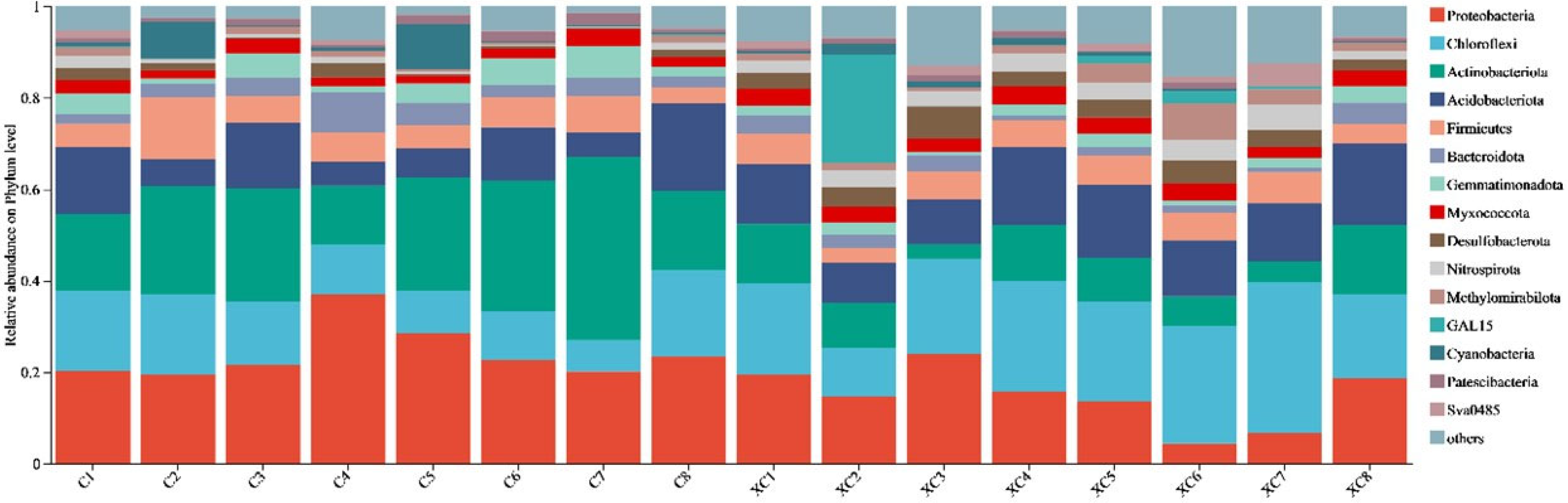
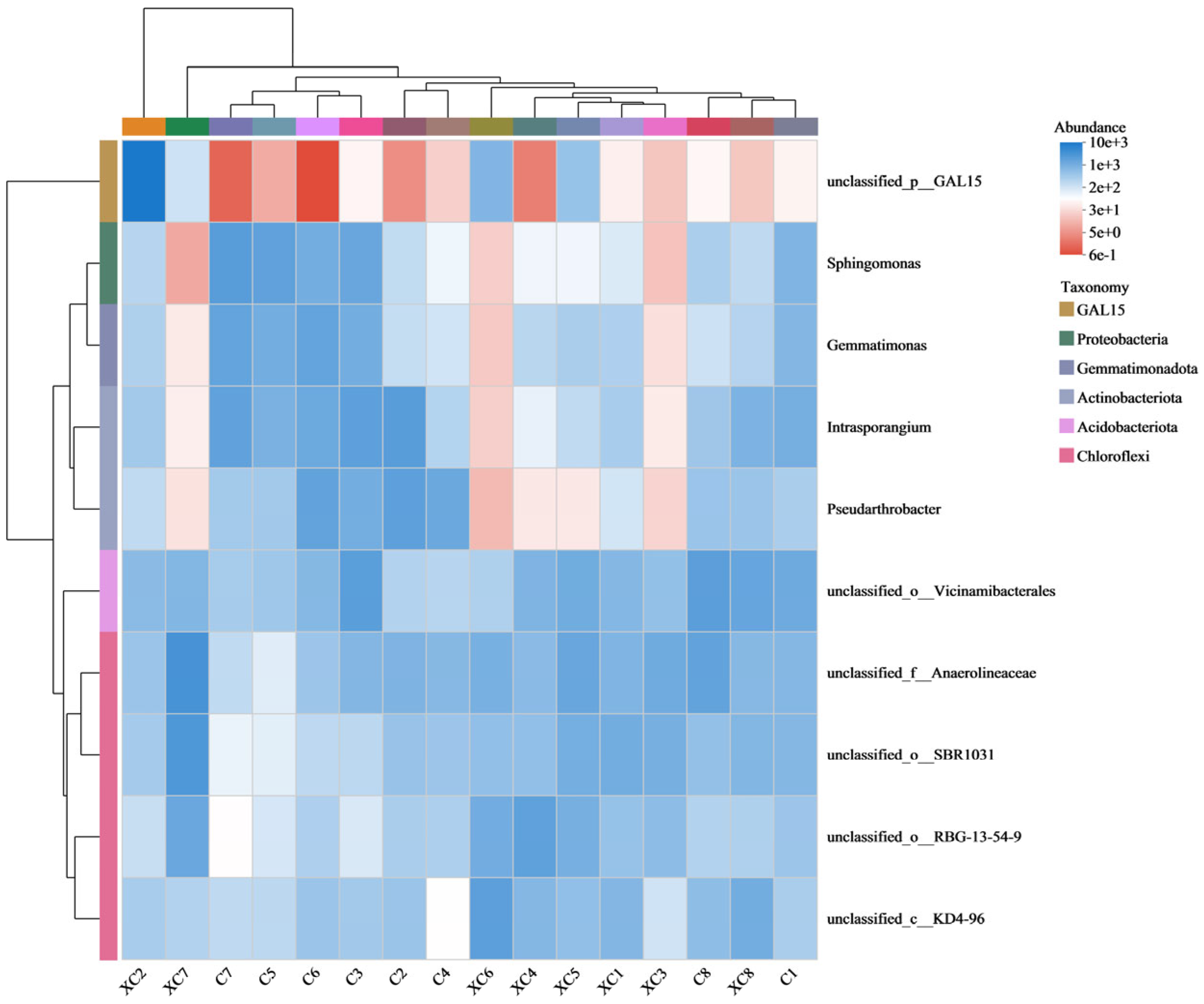
High-throughput sequencing of the 16S rRNA gene yielded a total of 24,105 operational taxonomic units (OTUs) from the 48 seasonal sediment samples. The taxonomic composition of the top 10 microbial phyla, based on mean relative abundance, is illustrated in Figure 9. During the dry period, the bacterial community was predominated by Actinobacteriota (12.8–40.1%), Proteobacteria (9.5–37.1%), Chloroflexi (9.2–18.9%), Acidobacteria (5.23–19.1%), and Firmicutes (5.1–13.4%). In contrast, during the wet period, the dominant phyla shifted to Chloroflexi (10.7–32.8%), Proteobacteria (4.4–24.1%), Actinobacteriota (3.1–15.27%), and Acidobacteria (8.6–17.8%). Further analysis at the genus level (Figure 10) identified Sphingomonas, Gemmatimonas, Pseudarthrobacter, and Intrasporangium as the most prevalent genera across the studied wetland habitats.
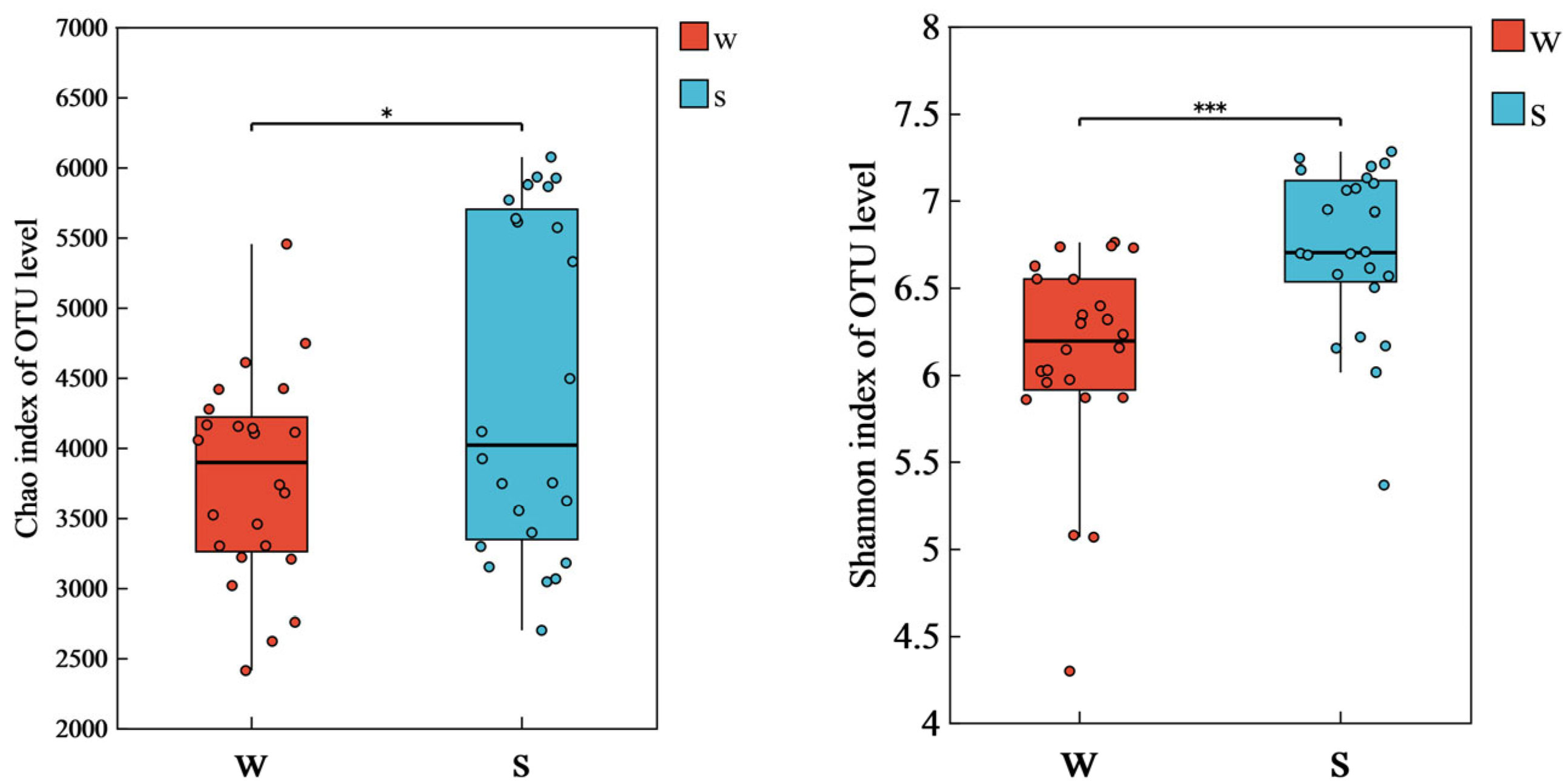
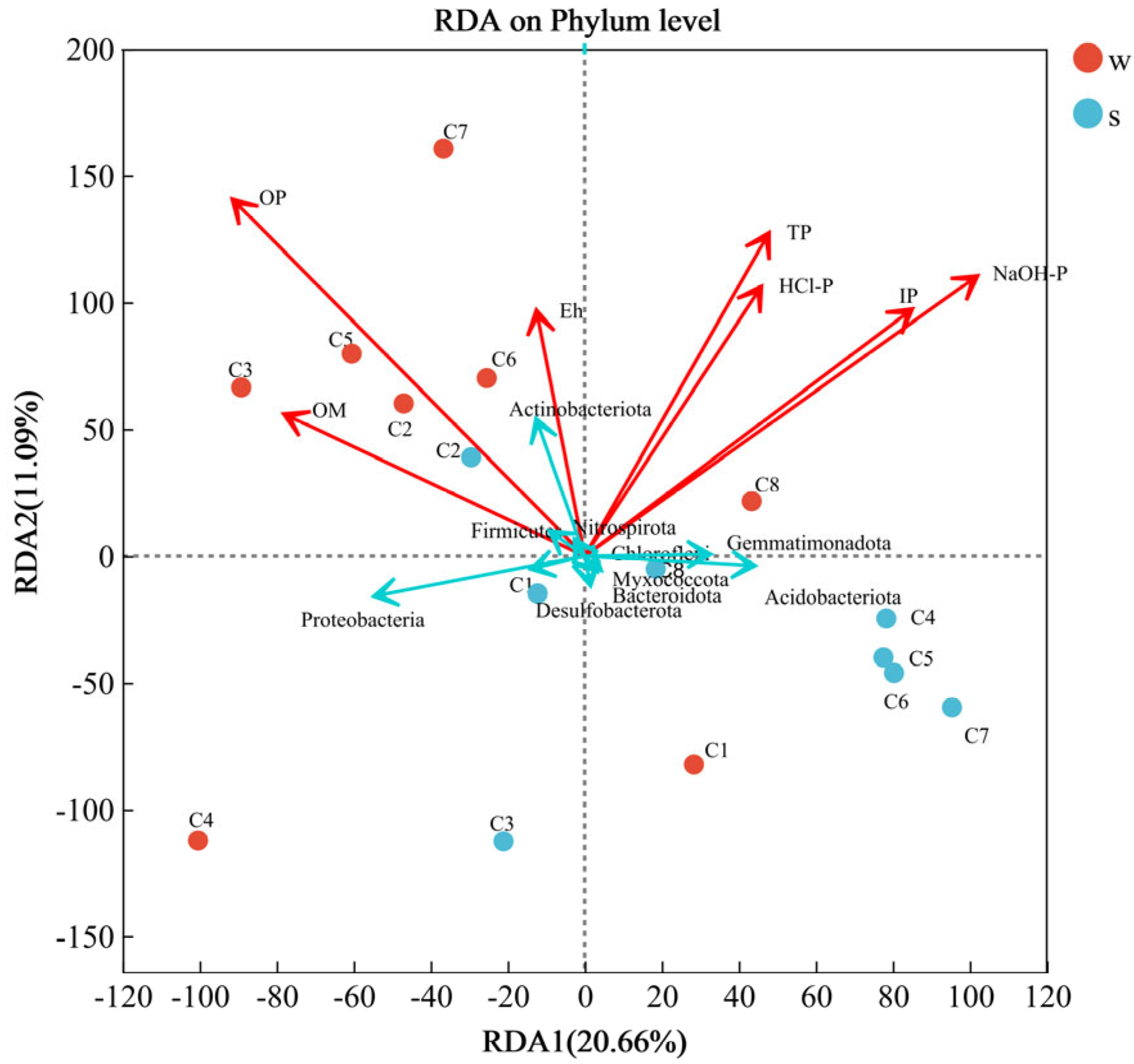
The alpha-diversity metrics of the microbial communities, specifically the Chao and Shannon indices, were evaluated to compare microbial richness and evenness between the wet and dry periods (Figure 11). The Chao index varied from 2409.57 to 6071.23, while the Shannon index ranged between 4.29 and 7.27. Both the Chao (p < 0.05) and Shannon (p < 0.01) indices were significantly elevated during the wet period compared to the dry period, indicating a more diverse and complex microbial community during the high-flow period. Redundancy analysis (RDA) was performed at the phylum level (Figure 12) to elucidate the relationships between environmental drivers and microbial community structure. The first two axes, RDA1 and RDA2, accounted for 20.66% and 11.09% of the community variance, respectively, cumulatively explaining 31.75% of the total variation. Sedimentary phosphorus fractions, including TP, IP, HCl-P, and NaOH-P, exhibited strong positive associations with the phyla Actinobacteriota and Firmicutes. Conversely, OP and OM were significantly correlated with the prevalence of Proteobacteria and Acidobacteriota. Notably, the AP concentration at Site C7 reached 14.26 mg·kg−1 during the wet period, surpassing the 0.44 mg·kg−1 recorded during the dry period; this seasonal enrichment in AP coincided with a significantly higher relative abundance of Chloroflexi at this site during the wet period.

4. Discussion

4.1. Spatiotemporal Heterogeneity Driven by Hydrology and Land Use

The sedimentary TP concentrations exhibited a pronounced spatial gradient, characterized by higher concentrations in the northern reaches and lower levels in the south. Given the proximity of the north region to intensive agricultural areas, the elevated TP levels observed during the wet period are primarily attributed to intensified pluvial runoff, which facilitates the transport of terrestrial pollutants from surrounding farmlands into the aquatic system. This aligns with the seminal findings of Carpenter et al. [16], which identified agricultural non-point source pollution as a predominant driver of aquatic eutrophication. The high-concentration signature at the northern river inlet further underscores the dominance of external loading during the high-flow season.
A comparison between the dry and wet periods indicated that the spatial distribution of TP exhibited limited seasonal variability, consistent with previous observations in shallow lake systems [1]. As a long-term nutrient “sink,” the sedimentary TP pool remains relatively recalcitrant and is less susceptible to transient seasonal shifts; instead, it is primarily governed by long-term external accumulation and authigenic burial. Vertically, TP concentrations declined with increasing depth, a trend consistent with previous literature. For instance, Yang et al. demonstrated that the subsurface anaerobic environment facilitates the reductive mobilization of phosphorus from sediments into the overlying water, ultimately resulting in a progressive vertical decline in P content [17]. This confirms that the surface sediment serves as the critical interface for external interception and internal biogeochemical cycling [18].
Regarding the distribution of available phosphorus (AP), vegetation assemblages exert a pivotal regulatory influence. The southern region is dominated by emergent macrophytes; during the wet period, their dense structural architecture can modulate local hydrodynamic conditions, attenuating sediment resuspension and fostering relatively stable anaerobic microenvironments. Aldous et al. [19] and Barko and James [20] noted that rhizodeposition and the mineralization of vegetal detritus deplete dissolved oxygen, engendering localized anaerobic conditions that facilitate the reductive dissolution of Fe(III) and promote the transformation of Fe-bound P into labile phases, leading to significant AP enrichment.
Conversely, the observed increase in surface AP in the northern region during the dry period is hypothesized to be linked to the decomposition of submerged macrophyte residues. Hupfer and Lewandowski [21] found that water-level drawdowns can accelerate the mineralization kinetics of organic matter, transforming organic phosphorus into labile inorganic phosphate, thereby elevating the sedimentary AP pool. Furthermore, the intensified anaerobic conditions during the dry period promote the microbial reduction of Fe3+ to Fe2+, diminishing the adsorptive capacity of iron oxides and triggering the subsequent release of AP. Thus, the dry-period AP configuration is primarily controlled by the synergistic effects of submerged macrophyte detritus accumulation, microbial mineralization, and iron-mediated reductive dissolution. Vertically, the surface sediment constitutes the primary active zone for AP migration and transformation. Notably, the anomalous AP enrichment in the deeper layers at Site C2 is potentially attributable to sediment resuspension triggered by localized hydrodynamic perturbations during the dry period, a phenomenon that warrants further investigation.

4.2. Iron–Sulfur–Phosphorus Coupling and Sediment Phosphorus Release Mechanism

High-resolution DGT profiles demonstrated that the mobilization of labile iron (DGT-Fe) from porewater was predominantly localized within the surface sediments, with both DGT-Fe and DGT-P exhibiting high spatial synchronicity (p < 0.01, Figure 7). These findings corroborate the seminal work of Mortimer, reinforcing the paradigm that the iron-redox cycle dictates phosphorus (P) biogeochemical cycling in sediments [3]. Under oxic conditions, phosphate is readily sequestered and immobilized by amorphous iron (oxyhydr)oxides formed in oxygen-rich environments; conversely, under anaerobic conditions, these iron oxides undergo reductive dissolution, triggering the reactivation and release of adsorbed P [22]. This is consistent with the coupled DGT-Fe and DGT-P fluctuations observed in lacustrine environments [15,23].
However, the two-dimensional (2D) distributions of DGT-S reveal the significant intervention of the sulfur cycle in this classical mechanism. During the wet period, distinct enrichment zones of the interference of the sulfur cycle with this classic mechanism are observed. During the wet period, distinct high-value zones of DGT-S emerged in the deeper sediment layers (Figure 6), suggesting that sulfate in the porewater underwent extensive reduction. Sulfides generated via microbial sulfate reduction react with dissolved Fe2+ to form iron sulfide minerals (e.g., FeS or FeS2), which can inhibit the re-fixation of phosphorus [6,7,24]. This process not only reduces the pool of dissolved Fe in porewater but, more crucially, impedes the upward migration of Fe2+ toward the oxic interface, thereby neutralizing the “iron curtain” effect that would otherwise scavenge P through re-oxidation and adsorption.
The localized low DGT-S concentrations observed at Site C4 may be attributed to the inhibition of sulfate-reducing bacteria (SRB) activity by transiently higher dissolved oxygen levels or specific hydrodynamic conditions [21]. Nevertheless, in regions with high DGT-S levels, a distinct spatial segregation of labile Fe and S was observed, providing in situ evidence of the competitive interplay between the iron and sulfur cycles. This interaction attenuates the Fe–P coupling effect, leading to the sequestration of Fe as stable sulfides in the sediment, while P becomes increasingly prone to diffusive efflux into the overlying water column. During the dry period, overall DGT-S concentrations were substantially lower than those in the wet period and increased with depth. This seasonal shift is likely driven by the higher redox potential and dissolved oxygen levels in the overlying water during winter. However, the influx of non-point source pollutants increases sedimentary organic matter (OM); the rapid mineralization of OM in surface sediments consumes oxygen, potentially inducing localized hotspots of sulfate reduction. Below a depth of 6 cm, the decrease in labile OM and the corresponding increase in oxidative capacity appear to weaken sulfate reduction. This suggests that while sulfur cycling intervenes, it is not the primary control mechanism for internal P release in this system, consistent with the findings of Pan et al. [25]. The overall enrichment of labile P in porewater is more likely driven by intense iron reduction in deeper layers. In contrast, the Fe–S competition reaction acts as a secondary modulator that, to some extent, limits the intensity of iron-driven internal phosphorus loading.

4.3. Environmental Response of Diffusive Flux and Phosphorus Fractions

The diffusive flux characterizes the migration direction and interfacial exchange intensity of phosphorus at the sediment–water interface (SWI). The majority of sampling sites (C3, C4) exhibited positive fluxes, indicating that the sediment functions as a significant internal source of phosphorus for the overlying water. Regarding the anomaly observed at Site C2, a negative flux was recorded, indicating benthic phosphorus sink behavior. This reverse diffusion is potentially attributable to localized hydrologic stagnation; the proliferation of unmanaged macrophytes at Site C2 has impaired hydrological connectivity and hydrodynamic circulation, leading to elevated P concentrations in the overlying water and the subsequent establishment of a reverse concentration gradient. Seasonal variations were also evident, with summer fluctuations significantly surpassing those in winter. This aligns with the findings of Chen et al. [26] and Wang et al. [27], where high temperatures and hypoxic conditions in summer facilitate the reductive dissolution of Fe-bound phosphorus, thereby intensifying the diffusive efflux across the SWI.
Compared with other typical wetlands, such as the Minjiang River estuary wetland [28] (IP accounting for 74–83% of TP) and the Guilin Huixian wetland [29] (IP accounting for 75.80–85.06% of TP), the sediments in this study exhibited a higher proportion of inorganic phosphorus enrichment. This indicates that Ca2+ and Fe(III) oxides are the primary carriers of phosphorus. Specifically, HCl-P and NaOH-P collectively constitute the labile pool of internal phosphorus, the stability of which is governed by the ambient redox state and organic matter dynamics.
Although inorganic components dominate phosphorus occurrence, collectively, these results suggest that OM plays a key regulatory role in phosphorus reactivation. During the wet period in eutrophic wetlands, OM enrichment does not merely facilitate P sequestration but rather catalyzes P reactivation via dual mechanisms. First, organic ligands can undergo competitive complexation with Fe/Al oxides, thereby attenuating their phosphorus adsorption capacity and promoting the mobilization of NaOH-P [30]. Second, CO2 generated via microbial OM mineralization can induce localized metabolic acidification of the sediment microenvironment, facilitating the dissolution of carbonate minerals and the subsequent release of HCl-P [31]. These mechanisms explain the enhanced internal phosphorus loading observed during the summer high-flow season, mirroring the flux patterns shown in Figure 7. Furthermore, high temperatures and anaerobic conditions promote the reduction of Fe(III) to Fe(II) and the liberation of iron-bound phosphorus [32]. As confirmed by Liu et al. [33] in Honghu Lake, the inherent instability of the metal–phosphorus bond in Fe/Al-P makes it highly sensitive to these environmental perturbations.
In summary, phosphorus occurrence in the Tongyang River estuary wetland is dominated by inorganic fractions, with HCl-P and NaOH-P controlling the activation and migration kinetics. The intervention of OM significantly enhances the responsiveness of phosphorus at the redox interface [34,35]. Therefore, elucidating the specific contributions of iron-reducing bacteria (IRB) and sulfate-reducing bacteria (SRB) to these speciation transformations is imperative for deciphering the biological regulatory mechanisms of the phosphorus cycle at the SWI.

4.4. Microbial Drivers of the Phosphorus Cycle

The spatiotemporal succession of the microbial community structure exerts a pivotal influence on the internal phosphorus (P) loading from sediments. In this study, the dominance of Proteobacteria, Chloroflexi, Actinobacteriota, and Acidobacteria within the Tongyang River corridor wetland aligns with previous characterizations of typical eutrophic freshwater ecosystems [36,37,38]. Comparative analysis revealed that the Shannon index during the wet period was significantly higher than that during the dry period (p < 0.01), suggesting that elevated temperatures and substantial influxes of external organic matter (OM) sustain enhanced microbial diversity. This heightened biodiversity provides superior functional redundancy for the biogeochemical cycling of phosphorus.
Further correlation analysis elucidated the link between microbial community shifts and temporal AP variations, highlighting a significant increase in the relative abundance of Chloroflexi—a typical heterotrophic and facultative anaerobic taxon—during the summer. As reported in [39], Chloroflexi plays a fundamental role in the degradation of complex organic matter. During the wet period, the accelerated metabolic activity of Chloroflexi facilitates the mineralization of sedimentary OM, rapidly depressing the redox potential (Eh) and establishing the necessary conditions for anaerobic reduction.
Consequently, key functional groups within the Proteobacteria phylum, specifically dissimilatory iron-reducing bacteria (DIRB) and sulfate-reducing bacteria (SRB), are activated under these anoxic conditions. DIRB utilizes electrons derived from OM oxidation to reduce Fe(III), directly triggering the mobilization of adsorbed phosphorus [3]. Simultaneously, SRB generate sulfides that preclude the re-adsorption of phosphorus by sequestering Fe(II) as stable minerals. Therefore, the seasonal succession of the microbial community functions as a “biological engine” that orchestrates internal phosphorus loading. The synergistic interplay between Chloroflexi (as primary OM mineralizers) and Proteobacteria (as redox-active functional executors), stimulated by elevated summer temperatures, ultimately drives the significant intensification of phosphorus efflux at the sediment–water interface.

5. Conclusions

This study demonstrates that internal phosphorus (P) loading in lakeside wetlands is fundamentally a discretized, micro-scale process rather than a uniform one. By integrating high-resolution DGT imaging with microbial sequencing, we provide the following scientific insights:
Micro-Scale Heterogeneity: While labile Fe and P show strong spatial co-variance (r > 0.95), 2D mapping reveals that P mobilization is concentrated in sub-millimeter “hotspots”. This indicates that iron (oxyhydr)oxide reductive dissolution is governed by localized biogeochemical niches.
Fe–S–P Coupling Mechanism: In organic-rich sediments, the sulfur cycle acts as a secondary modulator. During wet periods, microbial sulfate reduction generates sulfides that sequester Fe(II) as FeS minerals, thereby decoupling the “iron curtain” from P re-adsorption and intensifying diffusive P efflux.
Microbial Biological Engine: Seasonal succession, particularly the enrichment of Chloroflexi and Proteobacteria during summer, serves as the biological engine driving P reactivation. This highlights that functional microbial diversity dictates the sediment’s shift from a nutrient sink to a source.
Implications for Management: Effective eutrophication control must transition from monitoring bulk sediment P content to regulating fine-scale redox dynamics and organic matter-driven microbial activity across varying hydrological stages.

Author Contributions

Conceptualization, F.Z. and C.D.; methodology, F.Z.; formal analysis, F.Z. and D.L.; investigation, F.Z. and D.L.; data curation, F.Z.; writing—original draft preparation, F.Z.; writing—review and editing, F.Z. and C.D.; visualization, F.Z. and D.L.; supervision, C.D.; project administration, C.D.; funding acquisition, C.D. All authors have read and agreed to the published version of the manuscript.

Funding

This research was funded by the 2024 Talent Research Foundation Project of Hefei University, grant number 24RC30, titled “Catalytic degradation of VOCs by manganese-based catalysts synergized with non-thermal plasma”.

Data Availability Statement

The original contributions presented in this study are included in the article. Further inquiries can be directed to the corresponding author.

Acknowledgments

The authors thank the laboratory staff for their assistance with sediment sampling and chemical analyses. The authors reviewed and edited the content and take full responsibility for the integrity and accuracy of the work.

Conflicts of Interest

The authors declare no conflicts of interest. The funders had no role in the design of the study; in the collection, analyses, or interpretation of data; in the writing of the manuscript; or in the decision to publish the results.

References

  1. Søndergaard, M.; Jensen, J.P.; Jeppesen, E. Role of Sediment and Internal Loading of Phosphorus in Shallow Lakes. Hydrobiologia 2003, 506, 135–145. [Google Scholar] [CrossRef]
  2. Baldwin, D.S.; Mitchell, A.M. The Effects of Drying and Re-Flooding on the Sediment and Soil Nutrient Dynamics of Lowland River-Floodplain Systems: A Synthesis. Regul. Rivers Res. Manag. 2000, 16, 457–467. [Google Scholar] [CrossRef]
  3. Mortimer, C.H. The Exchange of Dissolved Substances Between Mud and Water in Lakes. J. Ecol. 1941, 29, 280. [Google Scholar] [CrossRef]
  4. Cesbron, F.; Metzger, E.; Launeau, P.; Deflandre, B.; Delgard, M.-L.; Thibault De Chanvalon, A.; Geslin, E.; Anschutz, P.; Jézéquel, D. Simultaneous 2D Imaging of Dissolved Iron and Reactive Phosphorus in Sediment Porewaters by Thin-Film and Hyperspectral Methods. Environ. Sci. Technol. 2014, 48, 2816–2826. [Google Scholar] [CrossRef]
  5. Stockdale, A.; Davison, W.; Zhang, H. High-Resolution Two-Dimensional Quantitative Analysis of Phosphorus, Vanadium and Arsenic, and Qualitative Analysis of Sulfide, in a Freshwater Sediment. Environ. Chem. 2008, 5, 143–149. [Google Scholar] [CrossRef]
  6. Kraal, P.; Burton, E.D.; Rose, A.L.; Kocar, B.D.; Lockhart, R.S.; Grice, K.; Bush, R.T.; Tan, E.; Webb, S.M. Sedimentary Iron–Phosphorus Cycling under Contrasting Redox Conditions in a Eutrophic Estuary. Chem. Geol. 2015, 392, 19–31. [Google Scholar] [CrossRef]
  7. Rozan, T.F.; Taillefert, M.; Trouwborst, R.E.; Glazer, B.T.; Ma, S.; Herszage, J.; Valdes, L.M.; Price, K.S.; Luther Iii, G.W. Iron-sulfur-phosphorus Cycling in the Sediments of a Shallow Coastal Bay: Implications for Sediment Nutrient Release and Benthic Macroalgal Blooms. Limnol. Oceanogr. 2002, 47, 1346–1354. [Google Scholar] [CrossRef]
  8. Zhang, L.; Xu, Y.J.; Li, S. Source and Quality of Dissolved Organic Matter in Streams Are Reflective to Land Use/Land Cover, Climate Seasonality and pCO2. Environ. Res. 2023, 216, 114608. [Google Scholar] [CrossRef]
  9. Ding, S.; Wang, Y.; Wang, D.; Li, Y.Y.; Gong, M.; Zhang, C. In Situ, High-Resolution Evidence for Iron-Coupled Mobilization of Phosphorus in Sediments. Sci. Rep. 2016, 6, 24341. [Google Scholar] [CrossRef]
  10. Wang, Y.; Ding, S.; Ren, M.; Li, C.; Xu, S.; Sun, Q.; Xu, L. Enhanced DGT Capability for Measurements of Multiple Types of Analytes Using Synergistic Effects among Different Binding Agents. Sci. Total Environ. 2019, 657, 446–456. [Google Scholar] [CrossRef]
  11. Pan, F.; Guo, Z.; Cai, Y.; Liu, H.; Wu, J.; Fu, Y.; Wang, B.; Gao, A. Kinetic Exchange of Remobilized Phosphorus Related to Phosphorus-Iron-Sulfur Biogeochemical Coupling in Coastal Sediment. Water Resour. Res. 2019, 55, 10494–10517. [Google Scholar] [CrossRef]
  12. Zhang, H.; Davison, W. Performance Characteristics of Diffusion Gradients in Thin Films for the in Situ Measurement of Trace Metals in Aqueous Solution. Anal. Chem. 1995, 67, 3391–3400. [Google Scholar] [CrossRef]
  13. Che, F.; Chen, J.; Wang, S.; Zheng, S.; Jiang, X. Spatio-temporal distribution, influencing factors and control countermeasures of phosphorus in water and sediments of Nanhu Lake system. J. Environ. Eng. Technol. 2020, 10, 928–935. [Google Scholar]
  14. Wang, S.; Zhang, B.; Jiang, X.; Wang, W.; Zhao, L.; Chen, J. Study on chemical forms of phosphorus in sediments by sequential extraction method. Res. Environ. Sci. 2015, 28, 1382–1388. [Google Scholar] [CrossRef]
  15. Ding, S.; Chen, M.; Gong, M.; Fan, X.; Qin, B.; Xu, H.; Gao, S.; Jin, Z.; Tsang, D.C.W.; Zhang, C. Internal Phosphorus Loading from Sediments Causes Seasonal Nitrogen Limitation for Harmful Algal Blooms. Sci. Total Environ. 2018, 625, 872–884. [Google Scholar] [CrossRef] [PubMed]
  16. Carpenter, S.R.; Caraco, N.F.; Correll, D.L.; Howarth, R.W.; Sharpley, A.N.; Smith, V.H. Nonpoint Pollution of Surface Waters with Phosphorus and Nitrogen. Ecol. Appl. 1998, 8, 559–568. [Google Scholar] [CrossRef]
  17. Yang, Y.; Liu, Q.; Hu, Z.; Zhang, Y.; Gao, Y. Distribution and pollution assessment of carbon, nitrogen and phosphorus in sediments of Lake Taihu Basin. Acta Sci. Circumstantiae 2014, 34, 3057–3064. (In Chinese) [Google Scholar] [CrossRef]
  18. Roden, E.E.; Edmonds, J.W. Phosphate Mobilization in Iron-Rich Anaerobic Sediments: Microbial Fe (III) Oxide Reduction versus Iron-Sulfide Formation. Arch. Hydrobiol. 1997, 139, 347–378. [Google Scholar] [CrossRef]
  19. Aldous, A.R.; Craft, C.B.; Stevens, C.J.; Barry, M.J.; Bach, L.B. Soil Phosphorus Release from a Restoration Wetland, Upper Klamath Lake, Oregon. Wetlands 2007, 27, 1025–1035. [Google Scholar] [CrossRef]
  20. Barko, J.W.; James, W.F. Effects of Submerged Aquatic Macrophytes on Nutrient Dynamics, Sedimentation, and Resuspension. In The Structuring Role of Submerged Macrophytes in Lakes; Jeppesen, E., Søndergaard, M., Søndergaard, M., Christoffersen, K., Eds.; Ecological Studies; Springer: New York, NY, USA, 1998; Volume 131, pp. 197–214. ISBN 978-1-4612-6871-0. [Google Scholar]
  21. Hupfer, M.; Lewandowski, J. Oxygen Controls the Phosphorus Release from Lake Sediments—A Long-Lasting Paradigm in Limnology. Int. Rev. Hydrobiol. 2008, 93, 415–432. [Google Scholar] [CrossRef]
  22. Gu, X.; Chen, K.; Zhang, L.; Fan, C. Preliminary Evidence of Nutrients Release from Sediment in Response to Oxygen across Benthic Oxidation Layer by a Long-Term Field Trial. Environ. Pollut. 2016, 219, 656–662. [Google Scholar] [CrossRef]
  23. Gao, Y.; Liang, T.; Tian, S.; Wang, L.; Holm, P.E.; Bruun Hansen, H.C. High-Resolution Imaging of Labile Phosphorus and Its Relationship with Iron Redox State in Lake Sediments. Environ. Pollut. 2016, 219, 466–474. [Google Scholar] [CrossRef]
  24. Muyzer, G.; Stams, A.J.M. The Ecology and Biotechnology of Sulphate-Reducing Bacteria. Nat. Rev. Microbiol. 2008, 6, 441–454. [Google Scholar] [CrossRef]
  25. Pan, F.; Guo, Z.; Cai, Y.; Liu, H.; Wang, X. Spatio-temporal distribution of phosphorus, iron and sulfur in intertidal sediments of Xiamen and the potential risk of phosphorus release. Acta Oceanol. Sin. 2021, 43, 14–26. (In Chinese) [Google Scholar] [CrossRef]
  26. Chen, Q.; Chen, J.; Wang, J.; Guo, J.; Jin, Z.; Yu, P.; Ma, Z. In Situ, High-Resolution Evidence of Phosphorus Release from Sediments Controlled by the Reductive Dissolution of Iron-Bound Phosphorus in a Deep Reservoir, Southwestern China. Sci. Total Environ. 2019, 666, 39–45. [Google Scholar] [CrossRef]
  27. Wang, F.; Wang, J.; Cao, T.; Ji, X.; Yan, J.; Ding, S.; Chen, N. Seasonal Hypoxia Enhances Sediment Iron-Bound Phosphorus Release in a Subtropical River Reservoir. Sci. Total Environ. 2024, 936, 173261. [Google Scholar] [CrossRef]
  28. Ni, R.; Hu, M.; Zhong, Y.; Yan, R.; Wu, H.; Wang, J.; Liu, C.; Liao, H. Response of soil phosphorus forms to increased salinity and its influencing factors in Minjiang Estuary wetland. Acta Ecol. Sin. 2024, 44, 7140–7149. [Google Scholar]
  29. Wang, J.; Liu, H.; Zhang, Q.; Li, L.; Qiao, Z.; Li, J. Occurrence forms and distribution characteristics of phosphorus in sediments of Huixian Wetland, Guilin. J. Guilin Univ. Technol. 2020, 40, 201–208. [Google Scholar]
  30. Jiang, T.; Ma, T.; Peng, Z.; Zheng, B.; Jiang, Q. Comparative study on occurrence characteristics and adsorption capacity of sediment phosphorus in reclaimed area and lake area: A case study of Chenhu Wetland in Jianghan Plain. J. Lake Sci. 2025, 37, 446–456. [Google Scholar]
  31. Xi, Y.; Qu, W.; Fu, D.; Wang, S.; Han, Y.; Hu, L.; Li, Y.; Wang, P. Study on the effect of in-situ capping on phosphorus release and interfacial characteristics in lake sediments. China Environ. Sci. 2025, 45, 6241–6249. [Google Scholar]
  32. Zhou, Y.; Wang, H.; Zhang, Y.; Cai, Y.; Yin, H.; Yang, Z.; Li, Q.; Yuan, H. Availability and Diffusion Kinetic Process of Phosphorus in the Water–Sediment Interface Assessed by the High-Resolution DGT Technique. J. Soils Sediments 2021, 21, 3274–3288. [Google Scholar] [CrossRef]
  33. Liu, Y.; Huang, S.; Zhang, L.; Peng, X.; Zhang, X.; Ge, F.; Liu, B.; Wu, Z. Spatial distribution characteristics and release risk of sediment phosphorus in Honghu International Important Wetland. Environ. Sci. 2021, 42, 3198–3205. (In Chinese) [Google Scholar] [CrossRef]
  34. Chen, X.; Wang, Y.; Li, M.; He, X.; Li, Q.; Jin, J.; Wu, T.; Shao, Y.; Wu, J.; Li, G.; et al. Seasonal Changes-Facilitated Release of Phosphorus and Tungsten from the Lake Taihu Sediments through Reductive Dissolution of Fe/Mn (Hydr)Oxides and Competitive Adsorption with Dissolved Organic Matter. Environ. Pollut. 2025, 383, 126746. [Google Scholar] [CrossRef]
  35. Liu, Y.-P.; Song, D.; Jiao, L.-X.; Zheng, J.-L.; Zhang, M.; Yao, B.; Yan, J.-Y.; Wu, J.-X.; Wen, X. Sedimentary Differentiation Characteristics of Organic Matter and Phosphorus in Eutrophic Lake Special Zones. Water 2025, 17, 1899. [Google Scholar] [CrossRef]
  36. Lv, X.; Ma, B.; Yu, J.; Chang, S.X.; Xu, J.; Li, Y.; Wang, G.; Han, G.; Bo, G.; Chu, X. Bacterial Community Structure and Function Shift along a Successional Series of Tidal Flats in the Yellow River Delta. Sci. Rep. 2016, 6, 36550. [Google Scholar] [CrossRef]
  37. Yin, X.; Li, S.; Shang, T.; Jiang, X.; Zhen, Y. Characteristics of bacterial community structure in intertidal sediments of the Yellow River Estuary. Acta Ecol. Sin. 2021, 41, 8496–8506. [Google Scholar] [CrossRef]
  38. Wu, J.; Hong, Q.; Zhang, J.; Xie, C.; Liu, Y.; Li, D.; Liu, H.; Fan, Z. Response Analysis of Microbial Community Structures and Functions Under Water and Sediment Changes in the Middle and Lower Yellow River. Diversity 2025, 17, 41. [Google Scholar] [CrossRef]
  39. Imhoff, J.F.; Thiel, V. Phylogeny and Taxonomy of Chlorobiaceae. Photosynth. Res. 2010, 104, 123–136. [Google Scholar] [CrossRef] [PubMed]
Figure 1. Geographical location and sedimentary sampling sites. Location of Lake Chaohu in China. The Lake Chaohu Basin with the position of the study area shown. Details of the Tongyang River corridor wetland.
Water 18 00486 g001
Figure 2. Vertical profiles of total phosphorus (TP) and available phosphorus (AP) in the sediments of Tongyang River wetland during the wet period (a,c) and dry period (b,d). In the boxplots, the horizontal line represents the median, the white boxes represent the mean value, and the black diamonds represent individual data points.
Water 18 00486 g002
Figure 3. Vertical Distributions of DGT-labile P and Fe Concentrations in Dry season and Wet season.
Water 18 00486 g003
Figure 4. Two-dimensional (2D) high-resolution distribution of labile sulfur (DGT-S) during the wet period (ac) and dry period (df).
Water 18 00486 g004
Figure 5. Correlation between DGT-labile P and Fe at the sediment–water interface. ** indicates a significant correlation at the 0.01 level. Panels (ac): Winter; Panels (df): Summer.
Water 18 00486 g005
Figure 6. Diffusive flux of phosphorus at the sediment-overlying water interface. Positive and negative values represent fluxes into the water body and sediments, respectively. (a) Summer, (b) Winter.
Water 18 00486 g006
Figure 7. Distribution of different phosphorus fractions. TP: Total phosphorus; IP: Inorganic phosphorus; OP: Organic phosphorus; NaOH-P: Fe/Al-bound phosphorus; HCl-P: Ca-bound phosphorus.
Water 18 00486 g007
Figure 8. Correlation analysis between phosphorus fractions and environmental factors. (a): Low-flow season. (b): High-flow season; WC: Water content of sediment.
Water 18 00486 g008
Figure 9. Relative abundance of microorganisms at the phylum level in winter and summer.
Water 18 00486 g009
Figure 10. Relative abundance of microorganisms at the genus level in winter and summer.
Water 18 00486 g010
Figure 11. Alpha diversity of microorganisms in winter and summer. (a): Chao index; (b): Shannon index. W: winter; S: summer. * indicates p < 0.05, and *** indicates p < 0.001.
Water 18 00486 g011
Figure 12. Redundancy analysis (RDA) of sediment bacterial community structure and environmental factors.
Water 18 00486 g012
Table 1. Phosphorus concentrations in surface sediments during different hydrological periods.
Sampling SitesWet Period
TP (g·kg−1)
Wet Period
AP (mg·kg−1)
Dry Period
TP (g·kg−1)
Dry Period
AP (mg·kg−1)
C11.0313.4721.1765820.732
C20.7416.5811.0822.438
C30.5415.3320.8317.324
C40.6317.4380.3911.334
C50.872.130.845.278
C60.643.570.613471.975
C70.7814.2560.910.438
C81.13511.3270.950.552
Disclaimer/Publisher’s Note: The statements, opinions and data contained in all publications are solely those of the individual author(s) and contributor(s) and not of MDPI and/or the editor(s). MDPI and/or the editor(s) disclaim responsibility for any injury to people or property resulting from any ideas, methods, instructions or products referred to in the content.