Article

Biomarkers for Tracking Organic Matter Maturity in Therapeutic Muds (Peloids): A Comparison of Natural and Spa-Scaled Systems

by
Emilija Vukićević
1,
Nikola Burazer
2,
Jovana Roganović
1,
Tijana Mutić
2,
Gorica Veselinović
2,
Branimir Jovančićević
1 and
Gordana Gajica
2,*
1
Faculty of Chemistry, University of Belgrade, Studentski Trg 12–16, 11000 Belgrade, Serbia
2
Institute of Chemistry, Technology and Metallurgy, University of Belgrade, Njegoševa 12, 11000 Belgrade, Serbia
*
Author to whom correspondence should be addressed.
Water 2026, 18(4), 457; https://doi.org/10.3390/w18040457
Submission received: 28 December 2025 / Revised: 29 January 2026 / Accepted: 4 February 2026 / Published: 10 February 2026
(This article belongs to the Special Issue Advances in Swimming Pool Hygiene Safety and Spa Research)

Abstract

Peloid maturation is governed by geological settings, duration of water–sediment interaction (microbial reworking), and thermomineral water properties, with molecular distributions providing insights into transformation mechanisms. To assess site-specific biomarker maturity, geochemical parameters were applied to five Serbian therapeutic muds, including spa peloids (Bujanovac, Jošanica, Kanjiža) and natural systems (Vrujci, Rusanda). Mineralogy was determined via X-ray diffraction, and organic matter (OM) was characterized by gas chromatography–mass spectrometry of n-alkanes, steranes and hopanes. Samples are mostly clay-rich, providing favorable catalytic conditions for biomarker transformations. Bujanovac shows a higher plant OM signature (n-C29 maximum) and elevated biomarker maturity (high Ts/Tm, near-equilibrium C29 S/(S + R)), likely inherited from volcanically influenced source material. Jošanica exhibits high CPI but low Ts/Tm and C29 S/(S + R), indicating largely immature OM despite four years of spa aging. Kanjiža shows unexpectedly high apparent maturity after one-day aging, with a pronounced UCM and C31 S/(S + R) (0.58), consistent with incorporation of migrated petrogenic hydrocarbons. Vrujci displays coherent maturity due to prolonged water–sediment interaction, clay-rich mineralogy, extended aging, and regional geothermal gradients. Rusanda exhibits decoupled parameters (CPI 3.91, C29 S/(S + R) 0.69), indicative of hydrocarbon overprinting. Overall, integrating biomarker geochemistry with mineralogy, depositional context, and local thermal/geological conditions provides a robust framework to evaluate peloid maturation.

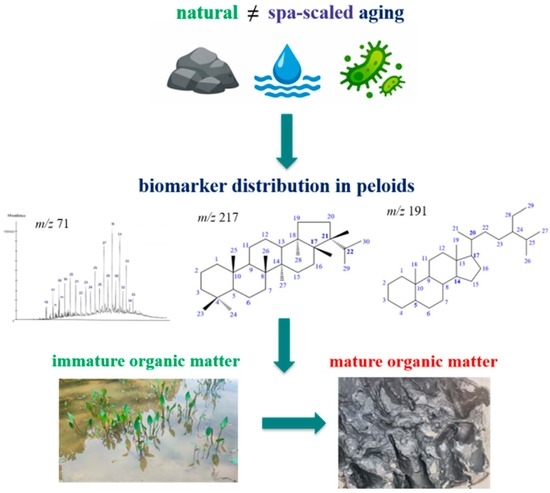
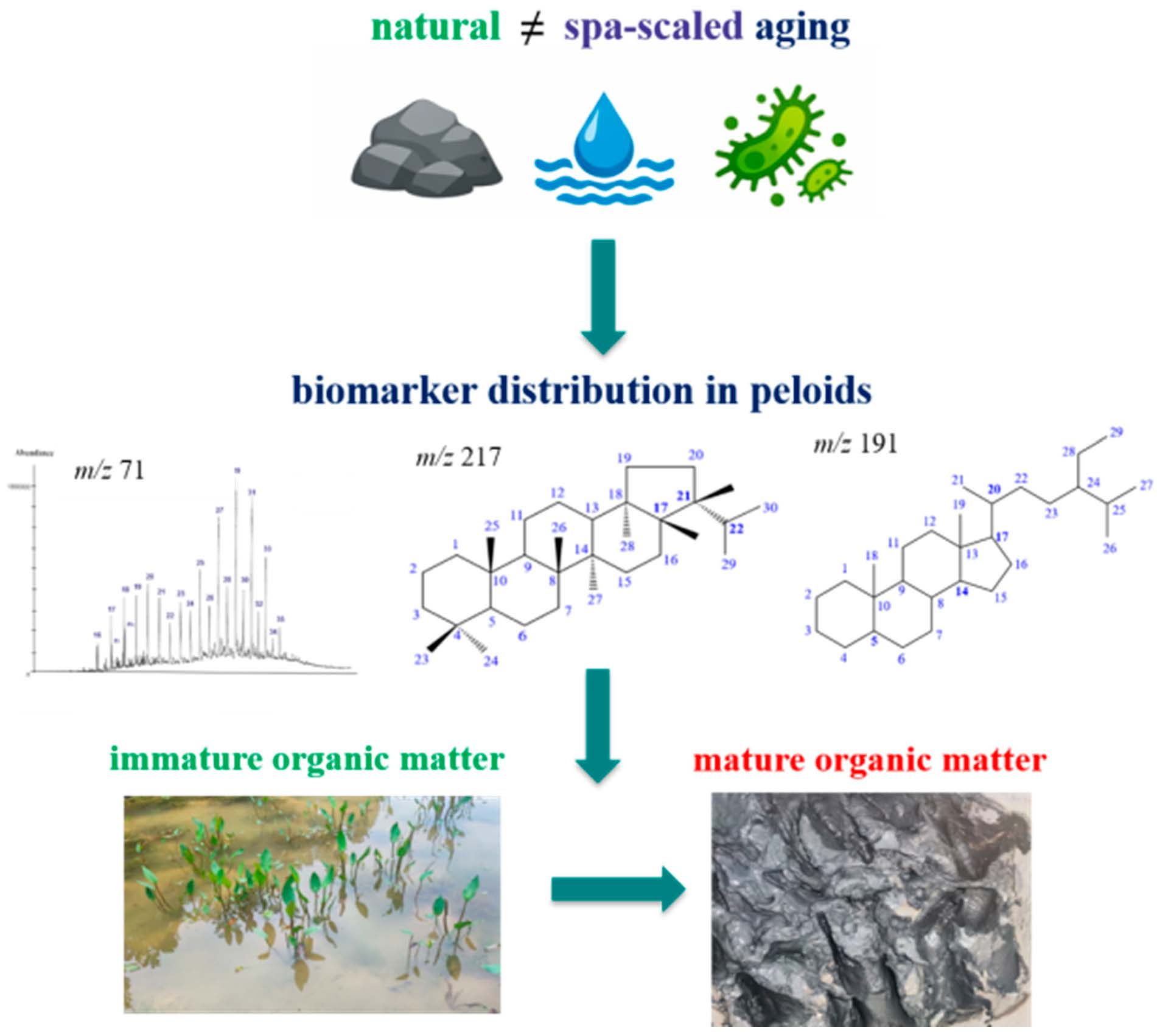
Graphical Abstract

1. Introduction

Peloids are natural, multi-component systems comprising inorganic, organic, and microbial components combined with thermomineral water [1,2,3,4,5]. Their solid phase, usually soils or sediments, consists of minerals and organic matter derived from precursor biomass and microbial transformations, mixed with thermomineral, seawater, or salt lake water [1,3,5]. These phases remain in close contact throughout peloid formation, a process commonly referred to in the literature as maturation or aging [1,5,6]. The maturation of peloids can occur under natural environmental conditions or within controlled spa settings [1,5]. Therefore, peloids may be classified as naturally matured or artificially matured materials depending on the conditions under which the aging process takes place. The primary distinction between these two types of peloids lies in their geological representativeness: naturally matured peloids directly reflect the geological characteristics of their site of formation, whereas artificially matured peloids incorporate a geological material (solid phase) that reflects the characteristics of its source area rather than the location of maturation.
In addition, both the inorganic and organic fractions contain biologically active components that contribute to the therapeutic efficacy of peloids. The use of peloids in medical treatments, known as pelotherapy, is employed to treat various pathologies and diseases. Therefore, comprehensive geochemical characterization is essential to evaluate their suitability for specific therapeutic applications [1,3,5,6]. Owing to the combined presence of organic and inorganic components, peloids also exhibit excellent heat retention properties, anti-inflammatory effects, ion exchange, and adsorption capacity, enabling their use in healing, rehabilitation therapies, as well as cosmetic treatments [1,2,3,4,5].
During diagenetic and catagenetic processes in sediments, organic matter (OM) undergoes a series of transformations driven by microbial activity, thermal stress, pressure, mineral catalysts, and time [7,8]. These changes lead to the formation of smaller molecules and thermodynamically more stable isomers of organic compounds. Such transformations occur slowly over extensive geological timescales, often lasting millions of years. Therefore, geological time should be considered a key factor governing these processes [7,8].
Compounds like steranes and hopanes serve as reliable markers of organic matter maturity and origin, owing to their stability over time and resistance to thermal and environmental alteration [7,9]. Steranes serve as effective biomarkers for evaluating the thermal maturation of sediments, as they form characteristic S and R isomers that reach a stable equilibrium with increasing maturity [7,9]. However, because steranes typically occur in low concentrations and require a longer geological time frame for the isomerization process, hopanes are often considered more reliable indicators because they are more abundant, thermally stable, and resistant to biodegradation [7,8,9,10,11]. In addition to the previously mentioned compound classes, aromatic compounds such as polycyclic aromatic hydrocarbons (PAHs) are often used as indicators of organic matter maturation [12,13,14]. Ratios of naphthalene and phenanthrene isomers are among the most commonly used parameters for this purpose. However, a major setback in applying these indicators is that certain PAHs may originate from biogenic sources, form through biogeochemical transformations mediated by microorganisms, or accumulate due to anthropogenic contamination [12,13,14].
As mentioned, heat and pressure represent the most critical factors driving the transformation of organic compounds. However, since peloids form in the near-surface part of the geosphere, typically corresponding to the diagenetic phase, where temperatures and pressures are relatively low, many of these changes occur as a result of the catalytic influence of minerals and/or microbially mediated processes [1,2,3,4,5,6,7,8,9,10,11,12,13,14,15,16,17,18]. Certain biomarker transformations require the catalytic activity of silicate-type minerals, even under elevated temperature and pressure conditions. Clay minerals, in particular, play a crucial role in promoting the conversion of organic compounds into more stable isomeric forms [7,8,9,10,11,16,18]. Given that the solid fraction of peloids mainly consists of clay minerals, peloid maturation, and consequently biomarker transformations, is influenced by the interplay of geological characteristics, heat from thermal water, microbial consortia, mineral composition, and clay interactions [3,5,7,8,16,18].
With all being said, the objectives of this study are as follows:
(i)
Identify the key factors, such as geological settings, origin of organic matter, duration of solid–liquid interaction, mineral composition, and thermomineral water properties, that govern biomarker maturation in peloids within a classical organic geochemical context.
(ii)
Compare naturally formed peloids with spa-prepared peloids in order to evaluate how differences in origin, depositional environment, and mode of formation influence biomarker composition (n-alkanes and polycyclic alkanes, including steranes and hopanes [1,3,5,8]).
To address these objectives, biomarker analyses were performed on peloids from different formation settings. Naturally formed peloids from Rusanda (RUS) and Vrujci (VRU) Spas were examined, where the solid phase remains in continuous contact with thermomineral water, allowing prolonged maturation. These were compared with spa-prepared peloids from Bujanovac (BUJ), Jošanica (JOS), and Kanjiža (KANJ) Spas, which were produced under controlled conditions using geological material collected from specific sites.

2. Materials and Methods

2.1. Sample Sites and Maturation Characteristics

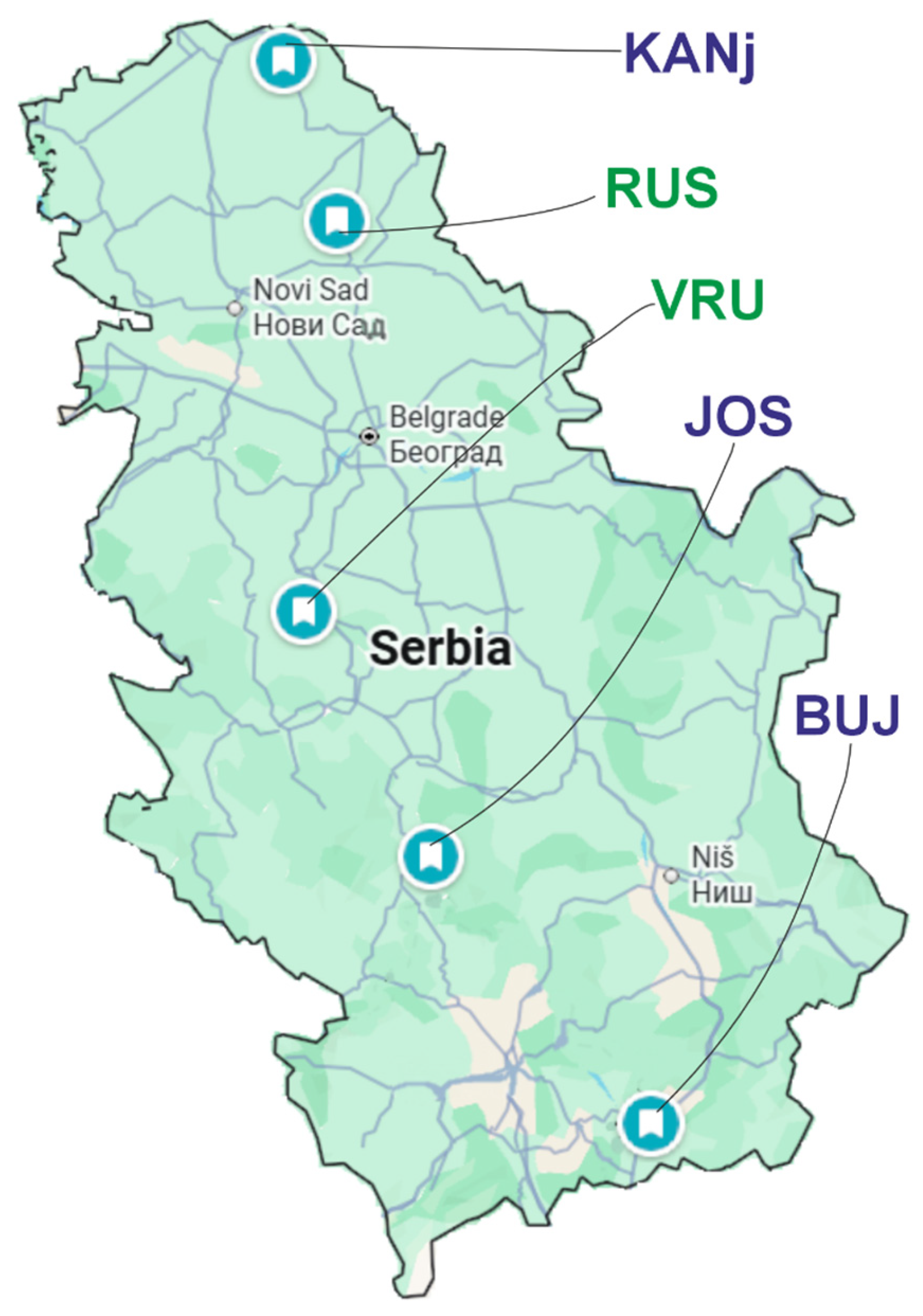
This study included peloid samples from five Serbian Spas: Bujanovac, Jošanica, Vrujci, Kanjiža, and Rusanda. These spa sites are distributed across western, eastern, and central Serbia, encompassing a range of distinct geological and depositional settings (Figure 1). The composition, location, type of thermomineral water, and maturation conditions vary among these peloids (Table 1). Rusanda (RUS) and Vrujci (VRU) represent naturally formed peloids, whereas Kanjiža (KANJ), Bujanovac (BUJ), and Jošanica (JOS) are peloids formed under controlled conditions within spa facilities.

2.1.1. Spa-Scaled Peloids: BUJ, JOS and KANJ

Bujanovac Spa, located in southern Serbia (Figure 1), is known for treating various conditions, including rheumatic and degenerative joint diseases, orthopedic and post-traumatic conditions, and chronic respiratory disorders. The peloid from Bujanovac Spa (BUJ) is primarily used for thermal wraps. The geological material collected from the nearby Ljiljance village is mixed with thermomineral water in covered basins and allowed to mature for 6–12 months. The sample from this site, as well as the broader region of southern Serbia, is characterized by a pronounced volcanic history associated with the Lece Magmatic Complex, which underwent extensive Tertiary volcanic activity from the Late Oligocene through the Middle Miocene [14,19]. The matured peloid is then dried (for up to a year), ground, and stored. Before therapeutic use, the peloid is remixed with thermomineral water at about 60 °C. The sample examined in this study was one year old (Table 1).
Jošanica Spa (JOS), located in central Serbia (Figure 1), uses peloid therapy by directly applying the material to the skin. The spa’s thermomineral water is also widely used for bathing and hydro-kinesiotherapy in the treatment of rheumatic diseases, sterility, skin disorders, and post-traumatic or post-operative conditions. The geological component used in peloid preparation originates from a nearby village and is mixed with thermomineral water in a mud basin to undergo maturation at 60 °C. The peloid sample analyzed in this study was four years old (Table 1).
Kanjiža Spa is situated in northern Serbia near the Tisa River (Figure 1). The geological sample used for peloid preparation (KANJ) was collected near the spa, in the Jaraš area, at a depth of 15 cm after removing surface layers and vegetation. The geology of northern Serbia is closely linked to ancient fluvial and marine sedimentary formations associated with the Pannonian Basin [20]. In addition to its geological heritage, the present-day Vojvodina region is characterized by well-developed industrial activity, particularly related to oil and gas exploration and production [21]. The geological sample is heated with thermomineral water in mixers at 60 °C. The obtained peloid is cooled by adding water until it reaches a temperature suitable for therapeutic application. This peloid is typically prepared immediately before use, and the sample examined in this study represented a one-day maturation stage (Table 1).

2.1.2. Naturally Formed Peloids: VRU and RUS

Vrujci Spa, located in central-western Serbia (Figure 1), has five main and several secondary thermomineral springs emerging from muddy and loose sediments at 25–27 °C (Table 1). The peloid used in Vrujci Spa (VRU) originates from the Banjska River riverbed, where it naturally forms through the interaction of mud and thermomineral spring water. For therapy, the mud is reheated to 70 °C in a mixer with thermomineral water, then cooled and softened to the desired temperature.
Rusanda Spa is renowned for Lake Rusanda (Figure 1), a saline lake covering approximately 3 km2, whose location also belongs to the ancient Pannonian Basin. It is used in the treatment of neurological, rheumatic, dermatological, and post-traumatic conditions, as well as locomotor system deformities in children. Peloid from Rusanda Spa (RUS) is applied in various therapeutic forms, including full and partial mud baths, mud immersions, localized wraps, mud electrophoresis, and cosmetic treatments. Rusanda Spa is unique because peloid forms naturally in large quantities in the salt lake. The peloid particles are uniform, extremely fine (mostly <0.01 mm), and form a stable, biogeochemically balanced material that is easy to prepare and apply. Remarkably, the mud is traditionally harvested by boat and, after use, returned to the lake, an approach that actively contributes to the preservation of this valuable natural healing resource.

2.2. Analytical Methods

Five representative peloid samples from the Serbian Spas of Bujanovac, Jošanica, Vrujci, Kanjiža, and Rusanda were analyzed. Sampling was performed using a small shovel, and the collected material was immediately placed into clean glass containers. At each spa site, the sampled material was taken from the same batch used for patient treatments on the day of collection. Only a subsample was reserved for laboratory analyses, while the remaining material was applied in routine therapeutic practice. Sampling took place during the spring. The samples were air-dried under ambient conditions, and grain-size separation was performed by wet sieving to isolate the <63 µm fraction, following standard wet-sieving procedures commonly applied in soil and sediment analysis [22]. The dry sample was soaked in distilled water for 24 h and subsequently dispersed using ultrasonic treatment to minimize aggregation. The suspension was then passed through a 63 µm sieve, and the fine fraction was collected, dried, and used for subsequent analyses.
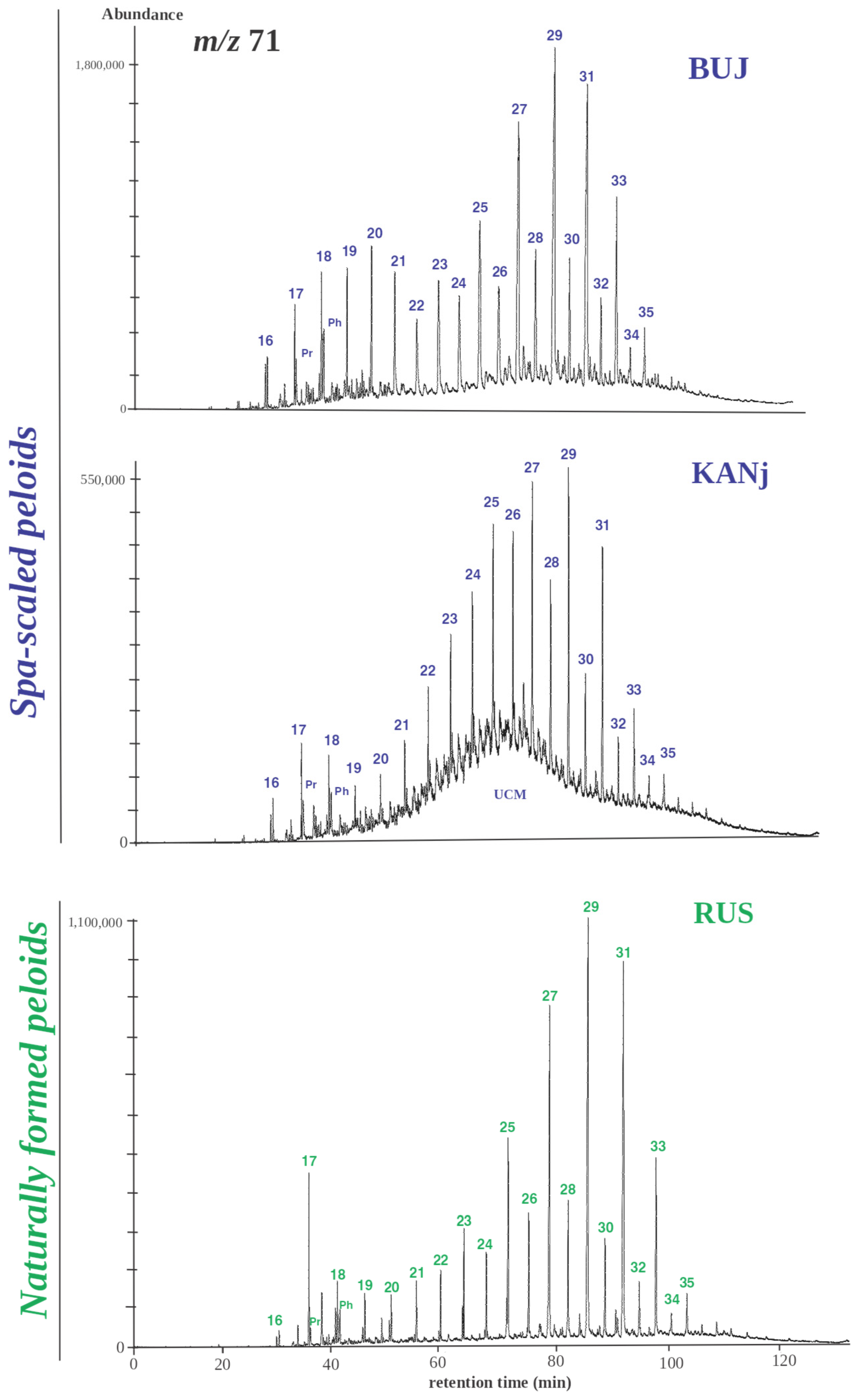
The mineral composition of the peloids was determined using powder X-ray diffraction (XRPD). Analyses were conducted on a Rigaku SmartLab X-ray diffractometer (Tokyo, Japan), employing Bragg–Brentano geometry and CuKα radiation. Oriented aggregates were used to identify the presence and type of clay minerals [8]. The soluble organic matter was extracted using the Soxhlet technique, with an azeotropic solvent mixture of methylene chloride and methanol (88:12, v/v). The saturated hydrocarbon fraction was separated by column chromatography using n-hexane as the eluent and a mixture of silica gel and aluminum oxide (2:1) as the adsorbent. The total aliphatic fractions were analyzed by gas chromatography–mass spectrometry (GC-MS, TIC mode; Santa Clara, CA, USA) on an Agilent 7890A gas chromatograph equipped with an HP-5MS column (30 m × 0.25 mm, 0.25 μm film thickness) and helium carrier gas (1.5 cm3 min−1) coupled with an Agilent 5975C mass selective detector [8,23]. The GC oven was operated under a temperature program starting at 80 °C and ramped to 310 °C at 2 °C min−1, after which the final temperature was maintained for 20 min. Mass spectrometric detection was performed in low-resolution electron-impact ionization mode (EI+, 70 eV) using a source temperature of 230 °C and scanning ions over an m/z range of 45–600. Data were acquired in full-scan mode, and compound identification was performed by comparing the obtained spectra with literature data and matches from the NIST 5a mass spectral library. For detailed interpretation, characteristic mass fragmentograms (m/z 71, 217, and 191) corresponding to n-alkanes, steranes, and hopanes, respectively, were isolated and examined.

3. Results

3.1. Mineralogical Composition of the Investigated Peloids

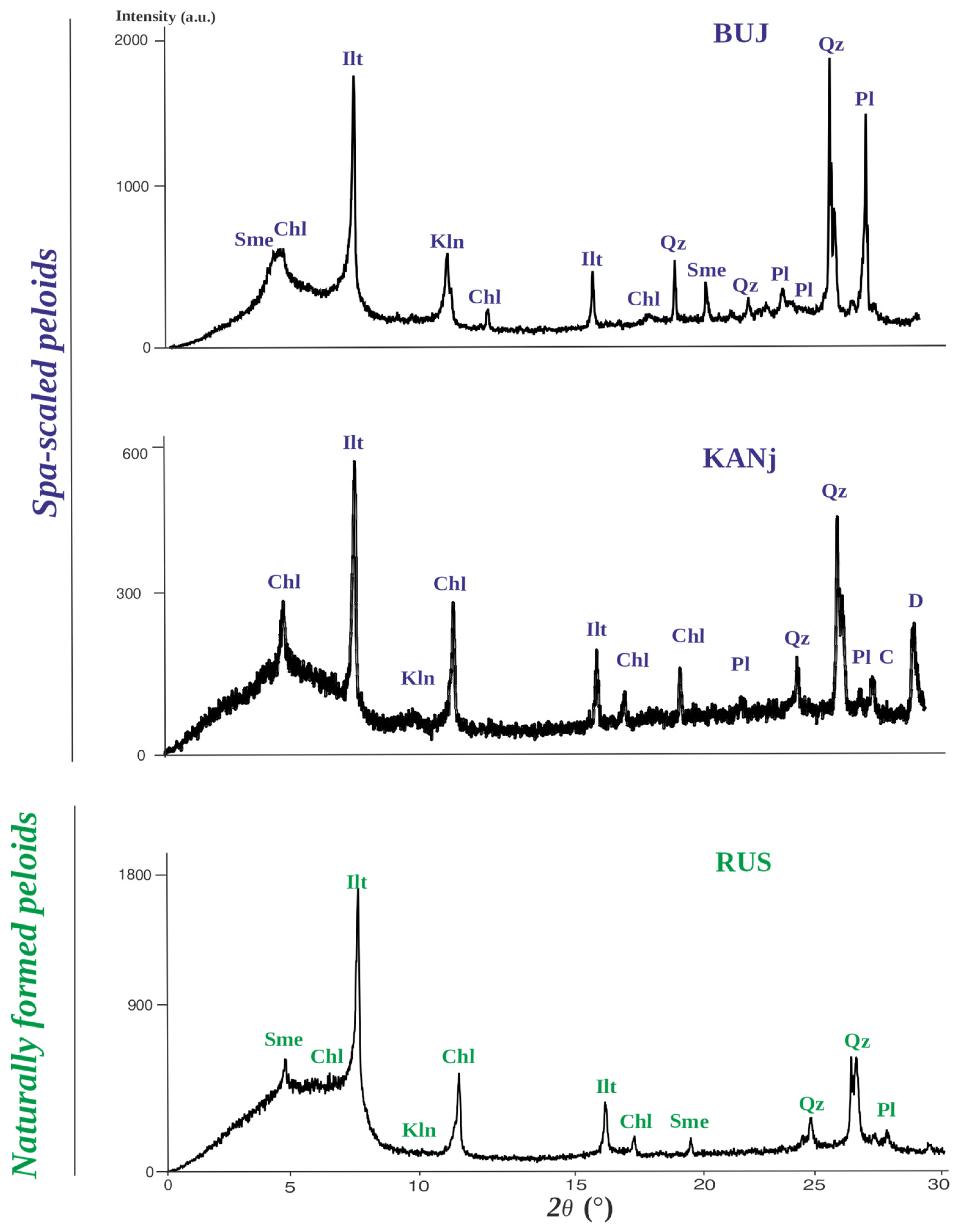
The mineralogical composition of the samples was determined using powder X-ray diffraction (XRPD). Figure 2 shows the X-ray diffractograms of samples from Bujanovac (BUJ), Jošanica (JOS), Kanjiža (KANJ), Vrujci (VRU), and Rusanda (RUS). Only minor differences in mineral distribution were observed among the peloid samples from the investigated spas.

3.1.1. Spa-Scaled Peloids: BUJ, JOS and KANJ

The BUJ sample contained quartz, plagioclase, and a significant proportion of layered silicates (clay minerals). The oriented slides also suggest the possible presence of calcium feldspar-group minerals and dolomite. The identified clay minerals include illite, smectite, kaolinite, and chlorite (Figure 2). The Jos sample showed quartz, plagioclase, and layered silicates, with minor peaks indicating a possible presence of amphibole minerals. The clay fraction consists of kaolinite, illite, smectite, and chlorite (Figure S1, Supplementary Materials). KANJ peloid contained quartz, dolomite, calcite, and plagioclase, along with layered silicates classified as illite, chlorite, kaolinite, and smectite (Figure 2).

3.1.2. Naturally Formed Peloids: VRU and RUS

The VRU sample comprised quartz, plagioclase, and clay minerals. The clay minerals detected were illite, chlorite, smectite, and kaolinite (Figure S1, Supplementary Materials). Rus peloid exhibited quartz, plagioclase, calcite, and layered silicates, with weak peaks suggesting the potential presence of amphibole minerals, calcium feldspar, and dolomite. The clay minerals identified belong to the illite, chlorite, smectite, and kaolinite groups (Figure 2).

3.2. Molecular Characteristics of Soluble Organic Matter in the Investigated Peloids

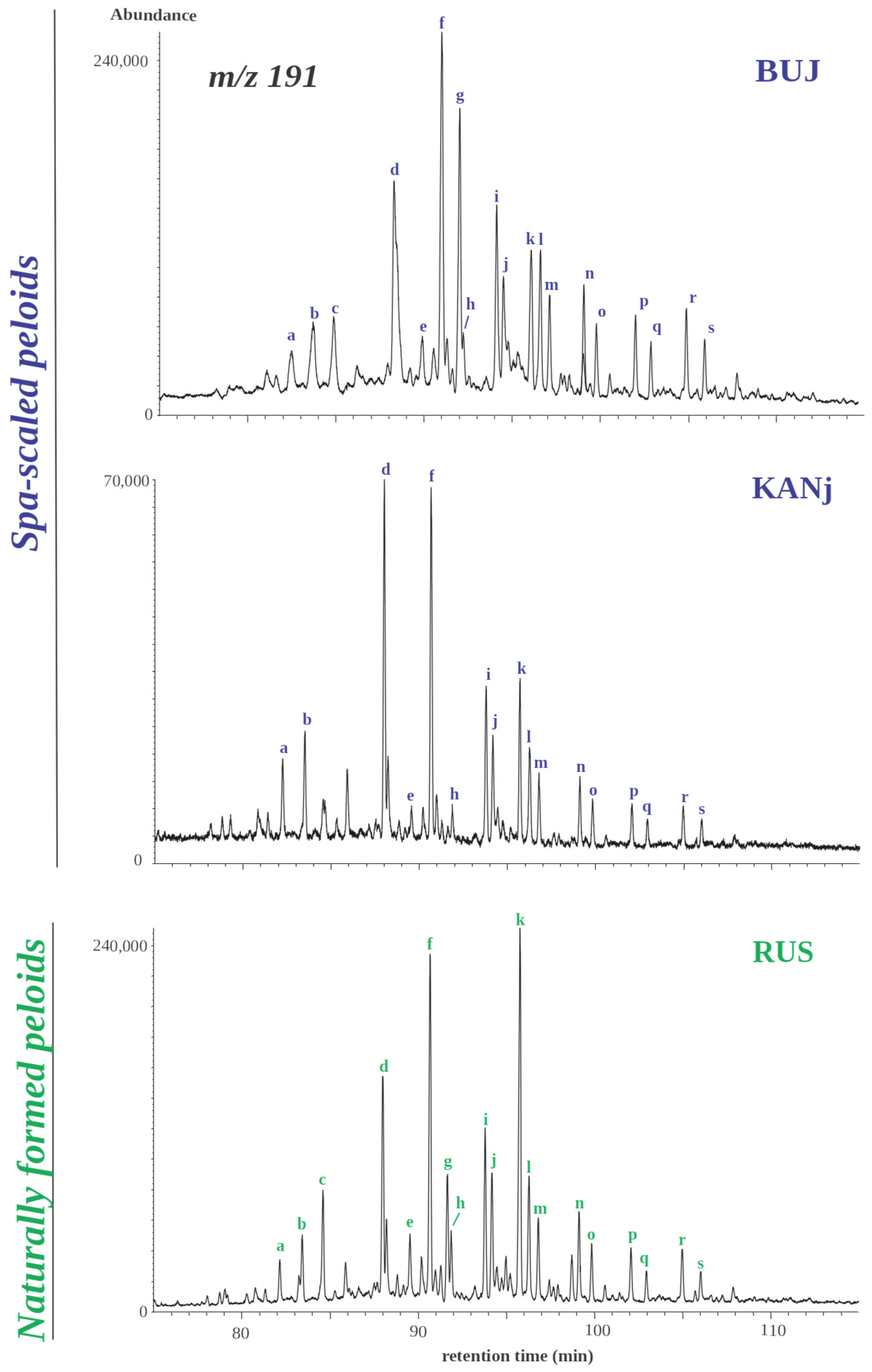
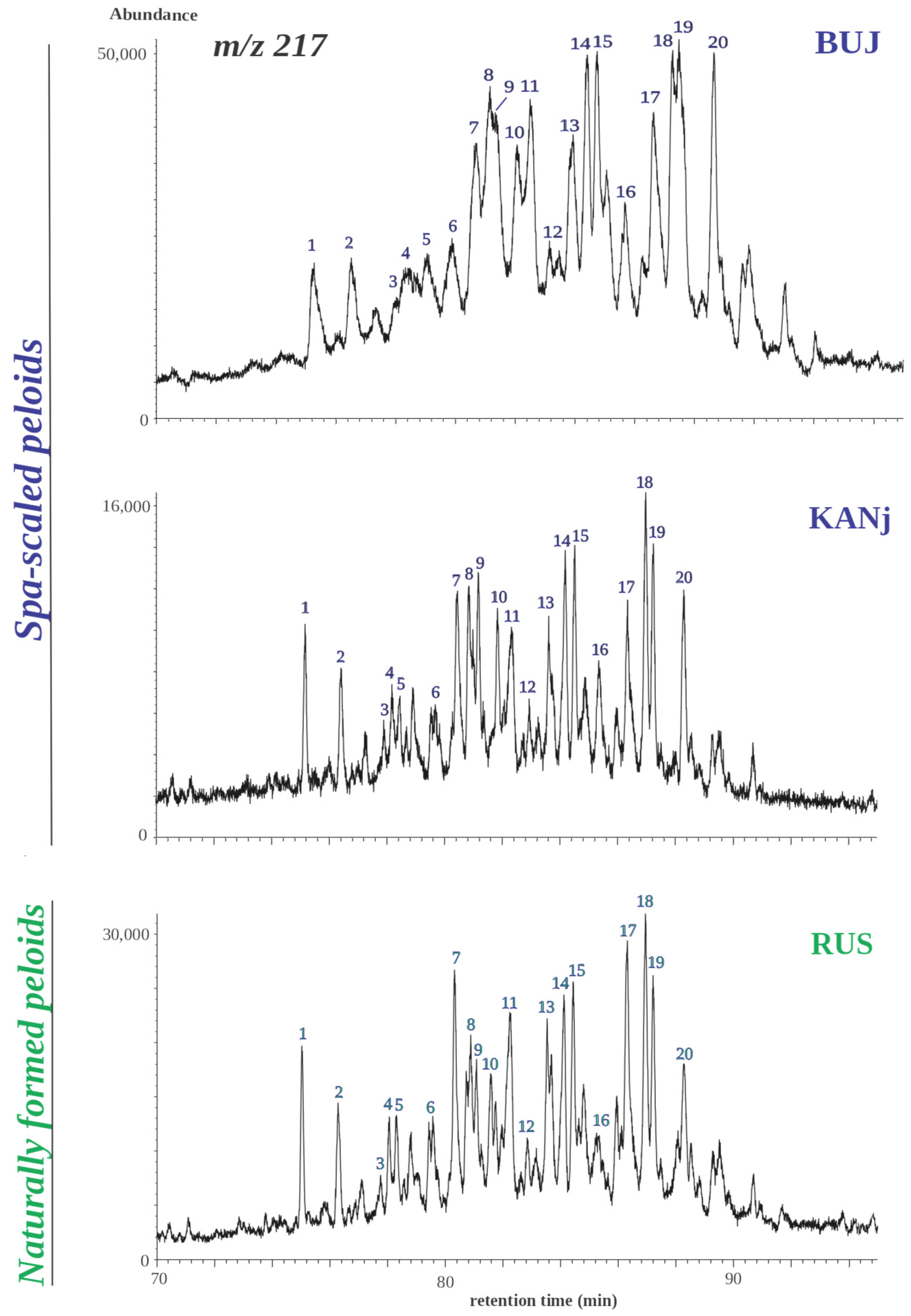
Figure 3, Figure 4, Figure 5 and Figure S2–S4 illustrate the distribution and relative abundances of n-alkanes, steranes, and hopanes for the studied samples. Correspondingly, Table 2 summarizes key organic geochemical parameters commonly used to evaluate maturity differences, derived from the relative abundances of these compounds.
Therefore, geochemical parameters derived from the distribution and relative abundance of biomarkers, such as CPI (carbon preference index), Pr/Ph (pristane to phytane), Ts/Tm (C2718α (H) 25,29,30 trisnorneohopane to C2717α (H) 25,29,30 trisnorhopane), C29 S/(S + R) steranes, and C31 S/(S + R) hopanes, are commonly used to assess the biomarker maturity [8,23].

3.2.1. Spa-Scaled Peloids: BUJ, JOS and KANJ

The CPI values for spa-scaled systems range from 1.52 to 3.63 (Table 2), indicating variable odd-over-even predominance of n-alkanes, while the n-alkane maximum is consistently observed at n-C29 (Figure 3 and Figure S2). The Pr/Ph ratios range from 0.29 to 0.82. Sterane distributions are dominated by C29 steranes (41.76–45.11%), followed by C27 and C28 homologues, with the C29 S/(S + R) ratios between 0.37 and 0.47 (Table 2, Figure 4 and Figure S3).
Hopane parameters show Ts/Tm ratios ranging from 0.40 to 0.69, with Kanjiža exhibiting the highest value (Table 2). The C31 S/(S + R) ratios vary between 0.58 and 0.59, while the C30 moretane/hopane ratios range from 0.10 to 0.15 (Table 2, Figure 5 and Figure S4).

3.2.2. Naturally Formed Peloids: VRU and RUS

In natural peloid systems, CPI values range from 2.02 to 3.91 (Table 2), indicating a more pronounced odd-over-even predominance of n-alkanes, as further supported by the dominance of n-C29 and n-C31 alkanes (Figure 3 and Figure S2). The Pr/Ph ratios range from 0.30 to 0.63. Sterane distributions are dominated by C29 steranes (42.95–46.30%), followed by C27 and C28 homologues, with C29 S/(S + R) ratios ranging from 0.47 to 0.69 (Table 2, Figure 4 and Figure S3).
Hopane parameters show Ts/Tm ratios between 0.40 and 0.78, with VRU exhibiting the highest value (Table 2). The C31 S/(S + R) ratios vary from 0.56 to 0.60, while the C30 moretane/hopane ratios range from 0.14 to 0.18 (Table 2, Figure 5 and Figure S4).

4. Discussion

Maturity of OM in peloids is strongly controlled by microbial reworking, depositional environment, thermomineral water temperature, the duration of solid–liquid interaction, and mineralogical composition [1,2,3,4,5,6,7,8,23,24]. Maturity markers in peloids often evolve more slowly or follow non-classical pathways, as clay-rich, water-logged, and carbonate-poor systems limit sustained heating and hydrocarbon expulsion typical of burial-driven maturation [1].

4.1. Biomarker Maturity Implications: Differences Between Natural and Spa-Scaled Aging

4.1.1. Spa-Scaled Peloids: BUJ, JOS and KANJ

The BUJ peloid is characterized by a mixed OM origin derived from both aquatic organisms and terrestrial plants, with a dominant contribution of higher plants deposited under anoxic to suboxic depositional conditions, as evidenced by a maximum at n-C29, a high proportion of C29 steranes (>45.00%), and a Pr/Ph ratio > 0.60 (Table 2; Figure 2, Figure 3 and Figure 4) [7,8,23,25,26,27,28]. The obtained CPI value of 2.67 indicates an immature, well-preserved, and predominantly vascular OM dominated by long-chain n-C27n-C31 homologs (Figure 3 and Table 2) [7,8,23]. In contrast, a more uniform distribution of n-alkanes, particularly in the absence of prevalent long-chain homologs, would typically yield CPI values close to 1, which is indicative of a more mature OM. However, other maturity indicators, including elevated Ts/Tm (~0.53), C29 S/(S + R) sterane (~0.45) and C31 S/(S + R) hopane (~0.58) ratios, together with a relatively low moretane/hopane ratio (~0.10), suggest a higher degree of biomarker transformation of the OM (Table 2), characteristic of older sedimentary formations. This result is unexpected given that peloids typically experience neither sufficiently high temperatures and pressures nor the prolonged geological timescales required for advanced thermal maturation [7,8,23,29,30,31]. Such maturity is unlikely to result from burial processes alone; rather, it likely reflects the combined influence of ancient volcanic activity recorded in the area where the geological material was sampled and subsequently used for peloid preparation at Bujanovac Spa (see Section 2.1), elevated thermomineral water temperatures (~60 °C; see Section 2), clay-mediated catalytic effects (e.g., illite, kaolinite, smectite, and chlorite; Figure 2) [8,9,16], and microbial reworking during the one-year aging period (see Section 2.1) [7,8,23,29,30,31]. Clay minerals are known to play a direct role in biomarker maturation. Illite, with K+ in its interlayers, promotes sterane and hopane isomerization, while smectite, due to its large surface area and cation-exchange capacity, enhances catalytic conversions at relatively low temperatures. Kaolinite, though less reactive, facilitates mild catalysis and adsorption processes, whereas chlorite, enriched in iron and magnesium, can contribute to redox reactions and the catalytic transformation of organic compounds [9,16,18]. An elevated Ts/Tm ratio further suggests strong facies and mineralogical control, consistent with observations that Ts/Tm may be elevated in clay-rich, terrestrially influenced systems independently of thermal stress [7,29].
Similar to the BUJ peloid, the JOS peloid contains organic matter derived from both aquatic (C27 sterane over 40.00%) and terrestrial sources; however, it is also predominantly composed of terrestrial higher plants and deposited under strongly anoxic depositional settings, as evidenced by a pronounced n-C29 alkane peak, a high proportion of C29 steranes (44.00%), and a very low Pr/Ph ratio (0.29, Table 2; Figures S2 and S3) [7,8,23,25,26,27,28]. The high CPI value of 3.63, the highest among the spa-scale peloids (Table 2), reflects the low biomarker maturity of the organic matter and the well-preserved vascular components. Compared to the BUJ sample, the JOS peloid displays lower Ts/Tm (~0.40) and C29 S/(S + R) sterane (~0.37) values, while C31 S/(S + R) hopane (~0.59) and moretane/hopane ratios (~0.13) approach equilibrium (Table 2). This pattern indicates an immature to early maturity level, consistent with prolonged aging (four years, see Section 2.1) under relatively high-temperature conditions (~60 °C), but without the extreme thermal or facies effects observed in Bujanovac [7,8,23,29,30,31]. The results suggest gradual isomerization driven primarily by time, moderate heating, microbial reworking, and the catalytic influence of clay minerals (e.g., kaolinite; Figure S1) rather than by intense thermal overprinting [7,8,29].
The KANJ peloid is dominated by organic matter derived from higher terrestrial plants deposited under anoxic to suboxic conditions, as indicated by a pronounced n-C29 alkane maximum, a substantial proportion of C29 steranes (41.80%), and a Pr/Ph ratio over 0.80 (Table 2; Figure 2, Figure 3 and Figure 4). However, it also exhibits a well-developed unresolved complex mixture (UCM) indicative of significant microbial activity and/or presence of petrogenic input, along with notable abundances of mid-chain homologs reflecting additional macrophyte contributions [7,8,23,25,26,27,28,32]. A CPI value closer to 1 (1.52; Table 2) suggests a higher degree of biomarker transformation compared to the BUJ and JOS peloids, likely reflecting increased alteration and/or the contribution of allochthonous organic matter [7,8,23]. Compared to both BUJ and JOS, the KANJ peloid exhibits relatively high values of maturity indicators despite an extremely short aging period (one day, see Section 2.1). Elevated Ts/Tm (~0.69), C29 S/(S + R) sterane (~0.47), and C31 S/(S + R) hopane (~0.58) ratios indicate mature OM, while the low moretane/hopane ratio (~0.15) further supports this interpretation (Table 2) [7,8,23,29,30,31]. Given the negligible aging duration and low-temperature conditions of peloid maturation, these values cannot be attributed to in situ biomarker evolution. Instead, they most likely reflect the maturity of the source geological material and the incorporation of pre-matured or migrated hydrocarbons. This interpretation is consistent with the presence of a well-developed unresolved complex mixture (UCM), which suggests a petrogenic contribution and/or extensive microbial alteration of hydrocarbons [7,33,34,35]. Kanjiža is situated in northern Serbia (Vojvodina), within the Pannonian Basin, a region characterized by active oil and gas systems where migrated steranes and hopanes are known to overprint indigenous organic matter signatures (see Section 2.1) [20,21]. The occurrence of carbonate-rich lithologies, together with clay minerals, may further promote hydrocarbon preservation and contribute to the apparent enhancement of maturity signals [18].

4.1.2. Naturally Formed Peloids: VRU and RUS

As observed for the spa-scale peloids, a mixed OM origin characterizes the naturally occurring VRU peloid; however, it exhibits a pronounced terrestrial higher plant signature and was deposited under strongly anoxic environmental conditions, as evidenced by a dominant n-C31 alkane maximum, the highest proportion of C29 steranes (46.30%), and a low Pr/Ph ratio (0.30) (Table 2; Figures S2 and S3) [7,8,23,25,26,27,28]. Similar to the BUJ and JOS peloids, a CPI value exceeding 2 indicates domination by immature, well-preserved OM in which higher plant inputs are prevalent. On the other hand, the VRU peloid shows a coherent maturity pattern, with Ts/Tm (~0.78), C29 S/(S + R) steranes (~0.47), moretane/hopane ratio (~0.14) and C31 S/(S + R) hopane (~0.60) values indicating high biomarker transformation, which are close to equilibrium isomerization levels (Table 2). The relatively high apparent maturity of VRU OM cannot be attributed to burial-driven thermal evolution alone. Instead, it likely reflects the combined influence of clay-rich mineralogy (Figure S1), prolonged natural aging under continuous water–sediment interaction (microbial reworking), and the regional geological setting of central Serbia, characterized by elevated geothermal gradients and the coexistence of older sedimentary units with younger deposits [7,8,23,29,30,31,36]. Such conditions are known to promote sterane and hopane isomerization through catalytic and time-integrated processes, resulting in mature biomarker signatures at shallow depths [7,8,23,29,30,31]. The consistency among sterane and hopane parameters suggests that the VRU sample reflects a genuine local maturity signal rather than external hydrocarbon input.
Another naturally occurring peloid examined in this study is the RUS peloid, whose organic matter exhibits a mixed origin dominated by terrestrial higher plant inputs preserved under anoxic to suboxic depositional conditions, as evidenced by the predominance of long-chain C29 n-alkane and high proportions of C29 steranes (~43.00%), together with a notable algal and bacterial contribution indicated by the substantial presence of short-chain C17 n-alkane and elevated relative abundance of C28 steranes (35.92%, Table 2; Figure 2, Figure 3 and Figure 4) [7,8,23,25,26,27,28]. A substantial presence of mid-chain n-C25 alkanes is also observed, consistent with inputs from aquatic macrophytes, which is expected in lacustrine environments such as Rusanda [32]. A high carbon preference index (CPI) value of 3.91 indicates immature, well-preserved organic matter with minimal maturation changes in the OM [7,8,23]. However, judging by sterane and hopane distributions, the RUS peloid displays a more complex maturity signature. While Ts/Tm (~0.40) and moretane/hopane (~0.18) suggest immature to early mature OM, the exceptionally high C29 S/(S + R) steranes value (~0.69) exceeds typical equilibrium ranges, whereas the C31 S/(S + R) hopanes ratio (~0.56) nearly reaches equilibrium values. Such decoupling between sterane and hopane parameters is characteristic of systems affected by migrated hydrocarbons, particularly in petroleum-prone basins [7,8,23,29,30,31]. Rusanda is also located in Vojvodina, where long-standing oil and gas activities and carbonate-rich sediments of the former Pannonian Sea may facilitate the introduction and preservation of allochthonous petroleum biomarkers (see Section 2) [20,21]. Consequently, the Rusanda peloid likely records a mixed signal reflecting both local OM maturation and migration overprinting.

4.2. Implications for Peloid Maturation Processes

Overall, the sterane and hopane maturity parameters clearly demonstrate the differences between spa-scaled and naturally occurring peloids. Spa-scaled peloids largely inherit the maturity signature of their source geological material, modified by aging duration, water temperature, and mineral catalysis. In contrast, naturally occurring peloids integrate long-term geological, hydrological, and depositional influences. In southern and central Serbia, ancient volcanism, hydrothermal heat and clay-rich mineralogy appear to enhance apparent maturity at shallow conditions, while in northern Serbia, petroleum migration and carbonate-rich settings introduce additional complexity to biomarker-based maturity interpretation.

5. Conclusions

This study highlights the key factors, such as geological settings, contact time, clay mineral composition, organic matter source, and thermomineral water temperature, that control the OM maturation of naturally occurring and spa-prepared peloids, as revealed through biomarker analysis of n-alkanes and polycyclic compounds, including steranes and hopanes.
The analysis of spa-scaled (BUJ, JOS, KANJ) and naturally occurring (VRU, RUS) peloids demonstrates that their OM originates from a mixed source, with terrestrial higher plant inputs dominating and additional contributions from aquatic organisms and microbial communities. Spa-scaled peloids largely reflect the maturity signature of their source geological material, subsequently modified by aging duration, thermomineral water temperature, clay-mediated catalytic effects, and microbial reworking. In contrast, naturally occurring peloids integrate long-term geological, hydrological, and depositional influences, including prolonged water–sediment interaction and mineralogical composition.
Biomarker-based maturity indicators, including Ts/Tm, C29 S/(S + R) sterane, C31 S/(S + R) hopane, and moretane/hopane ratios, reveal distinct maturation patterns between spa-scaled and natural peloids. The Bujanovac peloid shows a mixed OM origin with dominant higher plant inputs under anoxic to suboxic conditions and evidence of enhanced biomarker maturity (high Ts/Tm and equilibrium sterane/hopane ratios), while Jošanica exhibits lower values of geochemical indicators consistent with gradual maturation over a four-year aging period. In contrast, Kanjiža displays unexpectedly high apparent maturity despite a very short aging period, likely reflecting the incorporation of pre-matured or migrated petrogenic hydrocarbons from northern Serbia (Vojvodina) and the influence of clay and carbonate-rich lithologies. Among naturally occurring peloids, Vrujci Spa shows high apparent maturity despite moderate water temperatures (~27 °C), likely driven by illite-rich mineralogy, prolonged natural interaction with thermomineral water, and regional volcanic influence. Rusanda Spa, in contrast, exhibits a mixed signal, integrating local OM maturation with overprinting effects of migrated hydrocarbons in the oil-rich Pannonian Basin.
Overall, the results highlight that the biomarker distribution in peloids is strongly influenced by depositional settings, organic matter type, interactions between the solid and liquid phases (including microbial reworking), and mineralogical context, rather than by burial-driven thermal maturation alone. These findings demonstrate that integrating geochemical biomarker analysis with mineralogy, depositional environment, and site-specific thermal and geological conditions provides a robust framework for assessing the maturation state of therapeutic muds. This type of research could provide a foundation for developing guidance, inputs and recommendations to spas regarding the maturation of peloids.

Supplementary Materials

The following supporting information can be downloaded at https://www.mdpi.com/article/10.3390/w18040457/s1, Figure S1: Diffractograms of representative peloid samples. Legend: Ilt—illite; Chl—chlorite; Sme—smectite; Qz—quartz; Pl—plagioclase; Kln—kaolinite; D—dolomite; C—calcite; Figure S2: The GC-MS fragmentograms of n-alkanes (m/z 71) for the analyzed peloids. Legend: Pr—Pristane; Ph—Phytane. n-alkanes are labeled by their carbon number; Figure S3: The GC-MS fragmentograms of steroids (m/z 217) for the analyzed peloids. Legend: 1—C2713β(H)17α(H)20(S)-diasterane; 2—C2713β(H)17α(H)20(R)-diasterane; 3—C2713α(H)17β(H)20(S)-diasterane; 4—C2713α(H)17β(H)20(R)-diasterane; 5—C2813β(H)17α(H)20(S)24(S + R)-diasterane; 6—C2813β(H)17α(H)20(R)24(S + R)-diasterane; 7—C2813α(H)17β(H)20(S)-diasterane + C2714α(H)17α(H)20(S)-sterane; 8—C2913β(H)17α(H)20(S)-diasterane + C2714β(H)17β(H)20(R)-sterane; 9—C2813α(H)17β(H)20(R)-diasterane + C2714β(H)17β(H)20(S)-sterane; 10—C2714α(H)17α(H)20(R)-sterane; 11—C2913β(H)17α(H)20(R)-diasterane; 12—C2913α(H)17β(H)20(S)-diasterane; 13—C2814α(H)17α(H)20(S)-sterane; 14—C2913α(H)17β(H)20(R)-diasterane + C2814β(H)17β(H)20(R)-sterane; 15—C2814β(H)17β(H)20(S)-sterane; 16—C2814α(H)17α(H)20(R)-sterane; 17—C2914α(H)17α(H)20(S)-sterane; 18—C2914β(H)17β(H)20(R)-sterane; 19—C2914β(H)17β(H)20(S)-sterane; 20—C2914α(H)17α(H)20(R)-sterane; Figure S4: The GC-MS fragmentograms of terpenoids (m/z 191) for the analyzed peloids. Legend: a—Ts (C2718α(H) 25,29,30 trisnorneohopane); b—22,29,30-trinor-hop-5(6)-ene (C27 hopene); c—Tm (C2717α(H) 25,29,30 trisnorhopane); d—C2917α(H)21β(H)-hopane; e—C2917β(H)21α(H)-moretane; f—C3017α(H)21β(H)-hopane; g—C30hop-17(21)-ene (C30-hopene); h—C3017β(H)21α(H)-moretane; i—C3117α(H)21β(H)22(R) hopane; j—C3117α(H)21β(H)(S) hopane; k—C30-hop-22(29)-ene (diploptene), l—C3217α(H)21β(H)22(R)-hopane; m—C3217α(H)21β(H)22(S)-hopane; n—C3317α(H)21β(H)22(R)-hopane; o—C3317α(H)21β(H)22(S)-hopane; p—C3417α(H)21β(H)22(R)-hopane, q—C3417α(H)21β(H)22(S)-hopane; r—C3517α(H)21β(H)22(R)-hopane; s—C3517α(H)21β(H)22(S)-hopane.

Author Contributions

Conceptualization, E.V., N.B. and G.G.; methodology, J.R. and G.V.; formal analysis, E.V. and T.M.; data curation, J.R.; writing—original draft preparation, E.V. and N.B.; writing—review and editing, N.B.; B.J. and G.G.; visualization, E.V. and G.G.; supervision, G.G.; funding acquisition, G.G. All authors have read and agreed to the published version of the manuscript.

Funding

This research has been financially supported by the Science Fund of the Republic of Serbia, #GRANT No. 11015, Peloids in Serbia: Geochemical characterization, quality assessment and ecosystem services of peloid-rich areas—PELAS and the Ministry of Science, Technological Development and Innovation of Republic of Serbia (Contract No: 451-03-136/2025-03/200168 and 451-03-136/2025-03/200026). The study addresses SDG 3, which aims to ensure healthy lives and promote well-being for all at all ages.

Data Availability Statement

The original contributions presented in this study are included in the article. Further inquiries can be directed to the corresponding author.

Acknowledgments

The authors thank the individual spa centres in Serbia that participated in this research.

Conflicts of Interest

The authors declare no conflicts of interest.

References

  1. Gámiz, E.; Martín-García, J.M.; Fernández-González, M.V.; Delgado, G.; Delgado, R. Influence of water type and maturation time on the properties of kaolinite–saponite peloids. Appl. Clay Sci. 2009, 46, 117–123. [Google Scholar] [CrossRef]
  2. Carretero, M.I.; Pozo, M.; Martín-Rubí, J.A.; Pozo, E.; Maraver, F. Mobility of elements in interaction between artificial sweat and peloids used in Spanish spas. Appl. Clay Sci. 2010, 48, 506–515. [Google Scholar] [CrossRef]
  3. Fernández-González, M.V.; Martín-García, J.M.; Delgado, G.; Párraga, J.; Carretero, M.I.; Delgado, R. Physical properties of peloids prepared with medicinal mineral waters from Lanjarón Spa (Granada, Spain). Appl. Clay Sci. 2017, 135, 465–474. [Google Scholar] [CrossRef]
  4. Martínez-Villegas, N.; Muñoz, M.S.; González-Hernández, P.; Rodríguez, C.M.; Cossio, J.B.; Díaz, R.H.; Castillo, J.R.F.; Rudnikas, A.G.; López, C.D.; Pérez-Gramatges, A.; et al. Inorganic and organic characterization of Santa Lucía salt mine peloid for quality evaluations. Environ. Sci. Pollut. Res. 2019, 27, 15944–15958. [Google Scholar] [CrossRef]
  5. Carretero, M.I. Clays in pelotherapy. A review. Part II: Organic compounds, microbiology and medical applications. Appl. Clay Sci. 2020, 189, 105531. [Google Scholar] [CrossRef]
  6. Suárez, M.; González, P.; Domínguez, R.; Bravo, A.; Melián, C.; Pérez, M.; Herrera, I.; Blanco, D.; Hernández, R.; Fagundo, J.R. Identification of Organic Compounds in San Diego de los Baños Peloid (Pinar del Río, Cuba). J. Altern. Complement. Med. 2011, 17, 155–165. [Google Scholar] [CrossRef]
  7. Peters, K.E.; Walters, C.C.; Moldowan, J.M. The biomarker Guide, Vol. 2: Biomarkers and Isotopes in Petroleum Exploration and Earth History. In The Bi-Omarker Guide; Camridge University Press: Cambridge, UK, 2005; ISBN 0-521-83763-4. [Google Scholar]
  8. Nikolovski, Z.; Sajnovic, A.; Gajica, G.; Burazer, N.; Brceski, I.; Dabic, P.; Jovancicevic, B. Maturation changes of hydrocarbons in solid parts of peloids from Serbian spas—Catalytic influence of clay minerals. J. Serbian Chem. Soc. 2024, 89, 1559–1570. [Google Scholar] [CrossRef]
  9. Jovančićević, B.; Vitorović, D.; Šaban, M.; Wehner, H. Evaluation of the effects of native minerals on the organic matter of Aleksinac oil shale based on the composition of free and bound bitumens. Org. Geochem. 1992, 18, 511. [Google Scholar] [CrossRef]
  10. Jovančićević, B.; Vučelić, D.; Šaban, M.; Wehner, H.; Vitorović, D. Investigation of the catalytic effects of indigenous minerals in the pyrolysis of Aleksinac oil shale substrates: Steranes, triterpanes and triaromatic steroids in the pyrolysates. Org. Geochem. 1993, 20, 69. [Google Scholar] [CrossRef]
  11. Vučelić, D.; Marković, V.; Vučelić, V.; Spiridonović, D.; Jovančićević, B.; Vitorović, D. Investigation of catalytic effects of indigenous minerals in the pyrolysis of Aleksinac oil shale organic matter. Org. Geochem. 1992, 19, 445. [Google Scholar] [CrossRef]
  12. Yunker, M.B.; Macdonald, R.W.; Vingarzan, R.; Mitchell, R.H.; Goyette, D.; Sylvestre, S. PAHs in the Fraser River basin: A critical appraisal of PAH ratios as indicators of PAH source and composition. Org. Geochem. 2002, 33, 489–515. [Google Scholar] [CrossRef]
  13. Xu, H.; George, S.C.; Hou, D. Algal-derived polycyclic aromatic hydrocarbons in Paleogene lacustrine sediments from the Dongying Depression, Bohai Bay Basin, China. Mar. Pet. Geol. 2019, 102, 402–425. [Google Scholar] [CrossRef]
  14. Burazer, N.; Šajnović, A.; Kašanin-Grubin, M.; Radisavljević, M.; Jovančićević, B. Polycyclic aromatic hydrocarbons and their relationship to maturity and paleoenvironmental settings in lacustrine sediments of the Neogene Toplica Basin, Serbia. J. Paleolimnol. 2021, 66, 187–205. [Google Scholar] [CrossRef]
  15. Tissot, B.P.; Welte, D.H. Petroleum Formation and Occurrence, 2nd ed.; Springer: Heidelberg, Germany, 1984; ISBN 0-387-08698-6. [Google Scholar]
  16. Schwarzbauer, J.; Jovančićević, B. Fundamentals in Organic Geochemistry—Fossil Matter in the Geosphere; Springer: Heidelberg, Germany, 2015; ISBN 978-3-319-27241-2. [Google Scholar]
  17. Waples, D. Geochemistry in Petroleum Exploration; International Human Resources Development Corporation: Boston, MA, USA, 1985; ISBN 90-277-208-8. [Google Scholar]
  18. Philp, R.P. Fossil Fuel Biomarkers. In Applications and Spectra; Elsevier: Amsterdam, The Netherlands, 1985; ISBN 0444424717. [Google Scholar]
  19. Dragić, D.; Miskovic, A.; Hart, C.; Tosdal, R.; Fox, P.; Glisic, S. Spatial and temporal relations between epithermal and porphyry style mineralization in the Lece Magmatic Complex, Serbia. In Proceedings of the SEG Conference Building Exploration Capability for the 21st Century, Keyston, CO, USA, 27–30 September 2014; Society of Economic Geologists: Keystone, CO, USA, 2014. [Google Scholar]
  20. Mrazovac, S.; Basic, D. Methane-rich geothermal waters in the Pannonian Basin of Vojvodina (northern Serbia). Geothermics 2009, 38, 303–312. [Google Scholar] [CrossRef]
  21. APV. Pokrajinski Sekretarijat za Urbanizam i Zaštitu Životne Sredine, Autonomna Pokrajina Vojvodina (Provincial Office for Urban Planning and Environmental Protection, Autonomous Province of Vojvodina), Novi Sad (In Serbian), Republika Srbija. 2025. Available online: http://www.ekourbapv.vojvodina.gov.rs/wp-content/uploads/2019/07/1.2-faza-karte.pdf (accessed on 11 July 2025).
  22. ISO 11277: 2020(E3); Soil Quality—Determination of Particle Size Distribution in Mineral Soil Material—Method by Sieving and Sedimentation. International Standard: Geneva, Switzerland, 2020.
  23. Šajnović, A.; Burazer, N.; Veselinović, G.; Stojadinović, S.; Gajica, G.; Trebše, P.; Glavaš, N.; Jovančićević, B. Changes in hydrocarbons and elemental distribution in peloids during maturation processes (Sečovlje Salina Nature Park Slovenia). Sci. Total Environ. 2023, 897, 165424. [Google Scholar] [CrossRef]
  24. Pesciaroli, C.; Viseras, C.; Aguzzi, C.; Rodelas, B.; González-López, J. Study of bacterial community structure and diversity during the maturation process of a therapeutic peloid. Appl. Clay Sci. 2016, 132–133, 59–67. [Google Scholar] [CrossRef]
  25. Didyk, B.M.; Simoneit, B.R.T.; Brassell, S.T.; Eglinton, G. Organic geochemical indicators of palaeoenvironmental conditions of sedimentation. Nature 1978, 272, 216–222. [Google Scholar] [CrossRef]
  26. Bush, R.T.; McInerney, F.A. Leaf wax n-alkane distributions in and across modern plants: Implications for paleoecology and chemotaxonomy. Geochim. Cosmochim. Acta 2013, 117, 161–179. [Google Scholar] [CrossRef]
  27. Schreuder, L.T.; Stuut, J.-B.W.; Korte, L.F.; Damsté, J.S.S.; Schouten, S. Aeolian transport and deposition of plant wax n-alkanes across the tropical North Atlantic Ocean. Org. Geochem. 2018, 115, 113–123. [Google Scholar] [CrossRef]
  28. Lin, M.; Xi, K.; Cao, Y.; Niu, X.; Otharán, G.; Wang, X.; Hui, X.; Liu, J.; Liu, K.; Zavala, C.; et al. Recognition of muddy hyperpycnites in deep-lacustrine settings: Depositional model for muddy hyperpycnal flows in lacustrine basins. Geol. Soc. Am. Bull. 2024, 137, 2315–2334. [Google Scholar] [CrossRef]
  29. Peters, K.E.; Moldowan, J.M. Effects of source, thermal maturity, and biodegradation on the distribution and isomerization of homohopanes in petroleum. Org. Geochem. 1991, 17, 47–61. [Google Scholar] [CrossRef]
  30. Morad, S.; Ketzer, J.M.; De Ros, L.F. Spatial and temporal distribution of diagenetic alterations in siliciclastic rocks: Implications for mass transfer in sedimentary basins. Sedimentology 2000, 47, 95–120. [Google Scholar] [CrossRef]
  31. Seifert, W.K.; Moldowan, J.M. The effect of thermal stress on source-rock quality as measured by hopane stereochemistry. Phys. Chem. Earth 1980, 12, 229–237. [Google Scholar] [CrossRef]
  32. Ficken, K.J.; Li, B.; Swain, D.L.; Eglinton, G. An n-alkane proxy for the sedimentary input of submerged/floating freshwater aquatic macrophytes. Org. Geochem. 2000, 31, 745–749. [Google Scholar] [CrossRef]
  33. Wade, M.J.; Stainken, D. The History of Hydrocarbon Analyses: Whence Has Forensic Geochemical Hydrocarbon Fingerprinting Come. J. Environ. Prot. 2016, 7, 303–311. [Google Scholar] [CrossRef]
  34. Li, S.; Cao, J.; Hu, S.; Luo, G. Characterization of compounds in unresolved complex mixtures (UCM) of a Mesoproterzoic shale by using GC×GC-TOFMS. Mar. Pet. Geol. 2015, 66, 791–800. [Google Scholar] [CrossRef]
  35. Mirzaei, Y.; Douglas, P.M.J.; Gélinas, Y. Isotopic and molecular analyses of n-alkanes in a temporal study of coastal sediment contributions to organic carbon degradation induced by algal bloom and terrestrial runoff. Sci. Total Environ. 2025, 958, 178071. [Google Scholar] [CrossRef]
  36. Doljak, D.; Jojic-Glavonjic, T. State and prospects of geothermal energy usage in Serbia. J. Geogr. Inst. Jovan Cvijic SASA 2016, 66, 221–236. [Google Scholar] [CrossRef]
Figure 1. Geographical map showing the sampling locations of the investigated peloids. BUJ—Bujanovac Spa; JOS—Jošanica Spa; KANJ—Kanjiža; VRU—Vrujci Spa; RUS—Rusanda Spa.
Water 18 00457 g001
Figure 2. Diffractograms of representative peloid samples. Legend: Ilt—illite; Chl—chlorite; Sme—smectite; Qz—quartz; Pl—plagioclase; Kln—kaolinite; D—dolomite; C—calcite.
Water 18 00457 g002
Figure 3. The GC-MS fragmentograms of n-alkanes (m/z 71) for the analyzed peloids. Legend: Pr—Pristane; Ph—Phytane. n-alkanes are labeled by their carbon number.
Water 18 00457 g003
Figure 4. The GC-MS fragmentograms of steroids (m/z 217) for the analyzed peloids. Legend: 1—C2713β(H)17α(H)20(S)-diasterane; 2—C2713β(H)17α(H)20(R)-diasterane; 3—C2713α(H)17β(H)20(S)-diasterane; 4—C2713α(H)17β(H)20(R)-diasterane; 5—C2813β(H)17α(H)20(S)24(S + R)-diasterane; 6—C2813β(H)17α(H)20(R)24(S + R)-diasterane; 7—C2813α(H)17β(H)20(S)-diasterane + C2714α(H)17α(H)20(S)-sterane; 8—C2913β(H)17α(H)20(S)-diasterane + C2714β(H)17β(H)20(R)-sterane; 9—C2813α(H)17β(H)20(R)-diasterane + C2714β(H)17β(H)20(S)-sterane; 10—C2714α(H)17α(H)20(R)-sterane; 11—C2913β(H)17α(H)20(R)-diasterane; 12—C2913α(H)17β(H)20(S)-diasterane; 13—C2814α(H)17α(H)20(S)-sterane; 14—C2913α(H)17β(H)20(R)-diasterane + C2814β(H)17β(H)20(R)-sterane; 15—C2814β(H)17β(H)20(S)-sterane; 16—C2814α(H)17α(H)20(R)-sterane; 17—C2914α(H)17α(H)20(S)-sterane; 18—C2914β(H)17β(H)20(R)-sterane; 19—C2914β(H)17β(H)20(S)-sterane; 20—C2914α(H)17α(H)20(R)-sterane.
Water 18 00457 g004
Figure 5. The GC-MS fragmentograms of terpenoids (m/z 191) for the analyzed peloids. Legend: a—Ts (C2718α(H) 25,29,30 trisnorneohopane); b—22,29,30-trinor-hop-5(6)-ene (C27 hopene); c—Tm (C2717α(H) 25,29,30 trisnorhopane); d—C2917α(H)21β(H)-hopane; e—C2917β(H)21α(H)-moretane; f—C3017α(H)21β(H)-hopane; g—C30hop-17(21)-ene (C30-hopene); h—C3017β(H)21α(H)-moretane; i—C3117α(H)21β(H)22(R) hopane; j—C3117α(H)21β(H)(S) hopane; k—C30-hop-22(29)-ene (diploptene), l—C3217α(H)21β(H)22(R)-hopane; m—C3217α(H)21β(H)22(S)-hopane; n—C3317α(H)21β(H)22(R)-hopane; o—C3317α(H)21β(H)22(S)-hopane; p—C3417α(H)21β(H)22(R)-hopane, q—C3417α(H)21β(H)22(S)-hopane; r—C3517α(H)21β(H)22(R)-hopane; s—C3517α(H)21β(H)22(S)-hopane.
Water 18 00457 g005
Table 1. List of peloid samples, maturation duration, and thermomineral water temperature from selected Serbian Spas.
Peloid
Sample
Bujanovac (BUJ)Jošanica (JOS)Kanjiža (KANJ)Vrujci (VRU)Rusanda (RUS)
Time
of mixing
1 year4 years1 daynaturalnatural
Water
temperature
60 °C60 °C60 °C25–27 °C37 °C
Note: Spa-Scaled peloids: Bujanovac (BUJ), Jošanica (JOS), Kanjiža (KANJ); Naturally formed peloids: Vrujci (VRU), Rusanda (RUS).
Table 2. Results of organic geochemical parameters used to assess the maturity of organic matter.
ParametersBujanovac (BUJ)Jošanica (JOS)Kanjiža (KANJ)Vrujci (VRU)Rusanda (RUS)
n-Alkanes
CPI2.673.631.522.023.91
Pr/Ph0.640.290.820.300.63
n-alkane
maximum
C29C29C29C31C29
Steranes
%C2733.73%40.94%35.51%32.19%21.13%
%C2821.16%15.03%22.73%21.51%35.92%
%C2945.11%44.03%41.76%46.30%42.95%
C29 S/(S + R)0.450.370.470.470.69
Hopanes
Ts/Tm0.530.400.690.780.40
C31 S/(S + R)0.580.590.580.600.56
C30 moretane/
C30 hopane
0.100.130.150.140.18
Note: CPI (carbon preference index) (C14–C34) = 1/2 × [Σodd(n-C15–C33)/Σeven(n-C14–C32) + Σodd(n-C15–C33)/Σeven(n-C16–C34)]; Pr/Ph—pristane/phytane; Maximum—the highest peak in the distribution; %C27 = 100 × C27ααα20(R)-sterane/Σ(C27ααα20(R) + C28ααα20(R) + C29ααα20(R))-steranes; %C28 = 100 × C28ααα20(R)-sterane/Σ(C27ααα20(R) + C28ααα20(R) + C29ααα20(R))-steranes; %C29 = 100 × C29ααα20(R)sterane/Σ(C27 ααα20(R) + C28 ααα20(R) + C29ααα20(R))-steranes; C29 S/S + R = C29 sterane S/(C29 sterane S + C29 sterane R); Ts/Tm = Ts (C2718α (H) 25,29,30 trisnorneohopane)/Tm (C2717α (H) 25,29,30 trisnorhopane); C31 S/S + R = C31 hopane S/(C31 hopane S + C31 hopane R); Spa-Scaled peloids: Bujanovac (BUJ), Jošanica (JOS), Kanjiža (KANJ); Naturally formed peloids: Vrujci (VRU), Rusanda (RUS).
Disclaimer/Publisher’s Note: The statements, opinions and data contained in all publications are solely those of the individual author(s) and contributor(s) and not of MDPI and/or the editor(s). MDPI and/or the editor(s) disclaim responsibility for any injury to people or property resulting from any ideas, methods, instructions or products referred to in the content.