Article

Enhanced Stormwater Treatment via Thermally Modified Steel Slag-Based Bioretention System: Performance Evaluation and Mechanistic Insights

1
Zhangjiagang Municipal Bureau of Housing and Urban-Rural Development, Suzhou 215600, China
2
Suzhou Puletaike Environmental Technology Co., Suzhou 215000, China
3
School of Environmental Science and Engineering, Suzhou University of Science and Technology, Suzhou 215009, China
*
Author to whom correspondence should be addressed.
Water 2026, 18(4), 441; https://doi.org/10.3390/w18040441
Submission received: 12 January 2026 / Revised: 1 February 2026 / Accepted: 5 February 2026 / Published: 7 February 2026
(This article belongs to the Special Issue Urban Water Pollution Control: Theory and Technology, 2nd Edition)

Abstract

Conventional bioretention systems face challenges in effectively removing dissolved nutrients, heavy metals, and emerging contaminants from stormwater runoff. This study investigates the application of thermally modified steel slag (700 °C) as a functional bioretention matrix for comprehensive stormwater purification. Three pilot-scale systems were evaluated over 120 days: Control (biochar-zeolite), Unmodified (raw steel slag-biochar-zeolite), and Modified (thermally modified steel slag-biochar-zeolite). The modified system demonstrated superior and stable removal efficiencies for NH4+-N (95.3 ± 1.3%), TN (85.7 ± 1.8%), TP (90.5 ± 1.5%), Cu2+ (96.1 ± 0.7%), Cr6+ (90.5 ± 1.2%), Pb2+ (92.2 ± 1.1%), enrofloxacin (65.6 ± 2.1%), and norfloxacin (62.6 ± 2.4%). Performance remained robust under varying hydraulic conditions, with high removal maintained across rainfall return periods (0.5–2 years) and antecedent dry periods (2–8 days). Mechanistic investigations revealed synergistic effects: (1) Enhanced physical adsorption through increased surface area (2.338 m2/g) and pore volume (0.109 cm3/g); (2) Chemical precipitation via Ca2+/Fe3+ release at alkaline pH (8.2–8.5); (3) Enriched microbial communities with 35% higher Shannon diversity, particularly Hydrogenophaga (12.3%) for autotrophic denitrification using Fe2+ as electron donor. The modified slag matrix creates a “triple-barrier” removal mechanism combining physical, chemical, and biological processes, offering an efficient solution for multi-pollutant stormwater treatment. This study demonstrates that thermally modified steel slag represents a high-performance, cost-effective bioretention matrix for comprehensive stormwater treatment while promoting industrial byproduct utilization and aligning with circular economy principles.

1. Introduction

Urban stormwater runoff has become a major contributor to non-point source pollution, carrying significant loads of nutrients, heavy metals, organic matter, and emerging contaminants into receiving waters [1,2,3]. Recent meta-analysis results demonstrate that field bioretention systems can significantly reduce stormwater pollutant loads and concentrations in urban settings, but pollutant removal efficiencies vary widely depending on design and operating conditions [4]. Conventional stormwater management approaches often fail to effectively remove pollutants.
Bioretention systems, as key components of low-impact development strategies, offer promising solutions for stormwater treatment through integrated physical, chemical, and biological processes. The performance of these systems critically depends on the filter media, which serves as the primary site for pollutant removal [5]. Reviews on sustainable stormwater management emphasize that media properties—such as porosity, organic content, and interaction with vegetation—are among the most influential factors determining pollutant removal efficiency in bioretention systems globally [6]. Traditional media such as sand, soil, and organic amendments have shown limitations in removing dissolved nutrients (particularly nitrogen and phosphorus), heavy metals, and organic micropollutants [7,8,9,10]. Moreover, these materials often exhibit inconsistent performance under varying hydraulic conditions and may contribute to secondary pollution through nutrient leaching. Moreover, systematic reviews note that conventional media frequently produce inconsistent removal performance under varying hydraulic conditions and may even contribute to nutrient leaching or release of background contaminants [6].
Steel slag, a major industrial byproduct with annual global production exceeding 7 billion tons, presents both an environmental challenge and a resource opportunity. Global crude steel production has exceeded 1.9 billion tons, leading to significant steel slag accumulation that remains under-utilized in many regions and poses environmental disposal risks [11]. Rich in calcium, iron, and aluminum oxides, steel slag possesses inherent properties suitable for environmental applications, including alkaline pH, metal-binding capacity, and porous structure [12]. Previous research has demonstrated the potential of steel slag for phosphorus removal through precipitation and adsorption mechanisms [13,14]. More recent reviews on steel slag applications reveal that, after appropriate modification or activation, steel slag can serve as an effective adsorbent for a range of pollutants, including inorganic ions, heavy metals, and organic contaminants, owing to enhanced surface reactivity and porosity [15]. However, raw steel slag typically exhibits limited specific surface area, insufficient active sites, and variable composition, constraining its performance as a standalone treatment medium.
Thermal modification has emerged as an effective approach to enhance the physicochemical properties of steel slag. Previous studies have indicated that high-temperature heat treatment significantly increases its specific surface area, pore volume, and the exposure of active sites [16,17]. While these material improvements have been documented, the practical application of modified steel slag as a bioretention matrix and its performance under realistic stormwater conditions remain largely unexplored. Existing studies have mainly focused on phosphorus removal by modified steel slag in batch experiments, lacking long-term performance data under dynamic stormwater conditions and comprehensive evaluation of multi-pollutant (nutrients, heavy metals, antibiotics) removal.
This study addresses this knowledge gap by investigating the long-term performance and underlying mechanisms of thermally modified steel slag as a multifunctional bioretention matrix, which has not been comprehensively explored in existing research. The novelty of this study lies in its focus on multi-pollutant removal, including nutrients, heavy metals, and antibiotics, under realistic stormwater conditions, a critical aspect that has not been thoroughly evaluated in previous works. Specifically, we aim to: (1) Evaluate the removal efficiency of conventional pollutants, heavy metals, and antibiotics under continuous operation; (2) Assess system stability under varying hydraulic conditions (rainfall intensity and antecedent dry periods); (3) Elucidate the synergistic removal mechanisms through comprehensive characterization of physical, chemical, and biological processes; and (4) Compare the performance with conventional and unmodified steel slag systems, and clarify the synergistic physical-chemical-biological mechanisms underlying multi-pollutant removal.

2. Materials and Methods

2.1. Modified Steel Slag Matrix

Thermally modified steel slag was prepared according to our previously optimized protocol [12]. The modification temperature was selected within the range of 500–900 °C, with 700 °C identified as the optimal temperature for steel slag modification. This temperature achieved the best removal performance for NH4+-N, NO3-N, TN, TP, COD, heavy metals, and antibiotics. It significantly increased the specific surface area and porosity, regulated the physical structure of the steel slag surface, and enhanced the number of active sites. The rough, porous surface provides an ideal substrate for microbial biofilm attachment, laying the foundation for subsequent development of a bio-chemical synergistic system. Raw steel slag (2–5 mm particle size, Jiangsu Shagang Group Co., Ltd., Suzhou, China) was heated at 700 °C for 1 h in a muffle furnace, followed by natural cooling (the sample reached near-ambient temperature after about 8–10 h) and sieving. The modification process enhanced specific surface area from 2.048 to 2.338 m2/g and pore volume from 0.008994 to 0.108621 cm3/g, while creating characteristic surface crack structures with exposed Fe2+/Ca2+ active sites. Unmodified steel slag and commercial biochar (2–4 mm, Gongyi Yuanheng Water Purification Materials Co., Ltd., Zhengzhou, China) were used as received. Zeolite (2–4 mm, Suzhou East Building Materials Technology Co., Ltd., Suzhou, China) served as an additional matrix component for all systems.

2.2. Bioretention System Setup

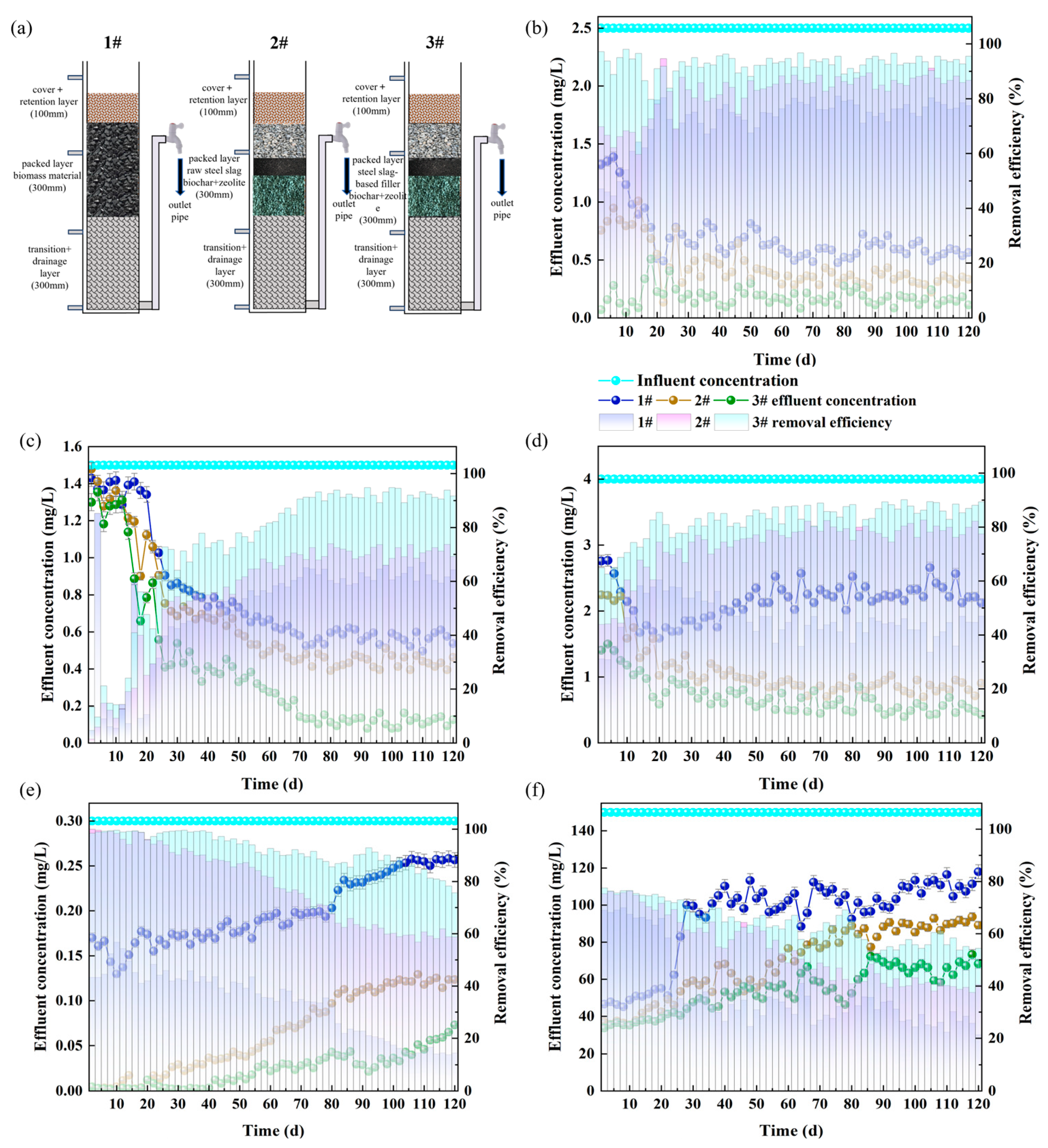
Three identical pilot-scale bioretention columns were constructed using acrylic cylinders (150 mm diameter × 800 mm height). Each system comprised: (1) 100 mm ponding zone, (2) 300 mm filter media layer, and (3) 300 mm gravel drainage layer. The media compositions were System C (Control): 15 cm biochar + 10 cm zeolite; System U (Unmodified): 15 cm raw steel slag + 5 cm biochar + 10 cm zeolite; System M (Modified): 15 cm thermally modified steel slag + 5 cm biochar + 10 cm zeolite.
Media layers were separated by geotextile fabric (Suzhou East Building Materials Technology Co., Ltd., Suzhou, China). A perforated collection pipe with a 45 cm raised section created a saturated zone to enhance denitrification. Sampling ports at 200 mm intervals allowed for media sampling during operation [18].

2.3. Simulated Stormwater and Operation Conditions

Synthetic stormwater was prepared by dissolving analytical-grade chemicals in dechlorinated tap water to achieve concentrations representative of urban runoff. The solution contained conventional pollutants (NH4+-N, NO3-N, TN, TP, COD), heavy metals (Cu2+, Cr6+, Pb2+), and antibiotics (enrofloxacin, norfloxacin). Detailed composition is shown in Table 1.The systems were operated for 120 days with simulated rainfall events every 48 h (1 h duration per event). The design flow rates corresponded to rainfall return periods of 0.5a (118 mL/min), 1a (162 mL/min), and 2a (204 mL/min) based on Suzhou’s rainfall intensity formula. To investigate the effect of dry periods, antecedent dry periods of 2, 4, and 8 days were tested during weeks 8–12 of operation. Each experiment was repeated three times.

2.4. Analytical Methods

Water samples were analyzed for NH4+-N (Nessler’s reagent spectrophotometry), NO3-N (ultraviolet spectrophotometry), TN (alkaline potassium persulfate digestion), TP (ammonium molybdate spectrophotometry), COD (dichromate method), heavy metals (ICP-MS, Thermo Scientific iCAP RQ, Waltham, MA, USA), and antibiotics (HPLC-UV, Agilent 1260, Santa Clara, CA, USA).
Media samples collected at days 0, 60, and 120 were characterized by SEM (Zeiss Sigma 300, Bavaria, Germany), XPS (Thermo Scientific K-Alpha, MA, USA), and FTIR (Thermo Scientific Nicolet iS50, MA, USA). Phosphorus fractionation was performed using sequential extraction for TP, inorganic P, Fe/Al-bound P, and Ca-bound P.
Microbial community analysis was conducted on day 120 samples. DNA was extracted (PowerSoil DNA Isolation Kit, Limburg, The Netherlands), the V3–V4 region of 16S rRNA gene was amplified and sequenced (Illumina MiSeq, San Diego, CA, USA), and data were processed using QIIME2 (Version 2023.9) with statistical analyses in R.

3. Results and Discussion

3.1. Long-Term Pollutant Removal Performance

3.1.1. Routine Water Quality Parameters

The modified steel slag system (3#) exhibited superior and stable removal of conventional pollutants throughout the 120-day operation (Figure 1). For nitrogen species, System 3# maintained removal efficiencies of 95.3 ± 1.3% for NH4+-N, 80.2 ± 2.1% for NO3-N, and 85.7 ± 1.8% for TN. In contrast, System 1# showed moderate performance with 70.1 ± 3.2% NH4+-N removal and 45.3 ± 4.1% TN removal, while System 2# achieved intermediate results (75.2 ± 2.8% NH4+-N, 70.5 ± 3.6% TN). The enhanced nitrogen removal in System 3# can be attributed to multiple mechanisms: (1) Improved NH4+-N adsorption through increased cation exchange capacity and surface complexation with exposed metal sites; (2) Enhanced nitrification in aerobic zones due to better oxygen diffusion through the porous structure [19,20]; (3) Effective denitrification in the saturated zone, facilitated by Fe2+ from steel slag serving as an electron donor for autotrophic denitrification.
Phosphorus removal showed similar trends, with System 3# achieving 90.5 ± 1.5% TP removal, significantly higher than System 2# (75.3 ± 2.9%) and System 1# (40.2 ± 5.1%) (Figure 1d). The high phosphorus removal efficiency in steel slag systems primarily resulted from chemical precipitation with Ca2+ and Fe3+ released from the slag, forming stable compounds such as hydroxyapatite [Ca10(PO4)6(OH)2] and strengite (FePO4·2H2O) [21,22]. The modified slag’s higher surface area and active site density further enhanced adsorption capacity [18].
COD removal efficiencies followed the order: System 3# (60.2 ± 3.1%) > System 2# (45.3 ± 4.2%) > System 1# (35.1 ± 4.8%) (Figure 1e). The improved organic matter removal in steel slag systems likely resulted from enhanced microbial activity supported by the slag’s alkaline microenvironment pH 8.2–8.5 and trace nutrient release.

3.1.2. Heavy Metals

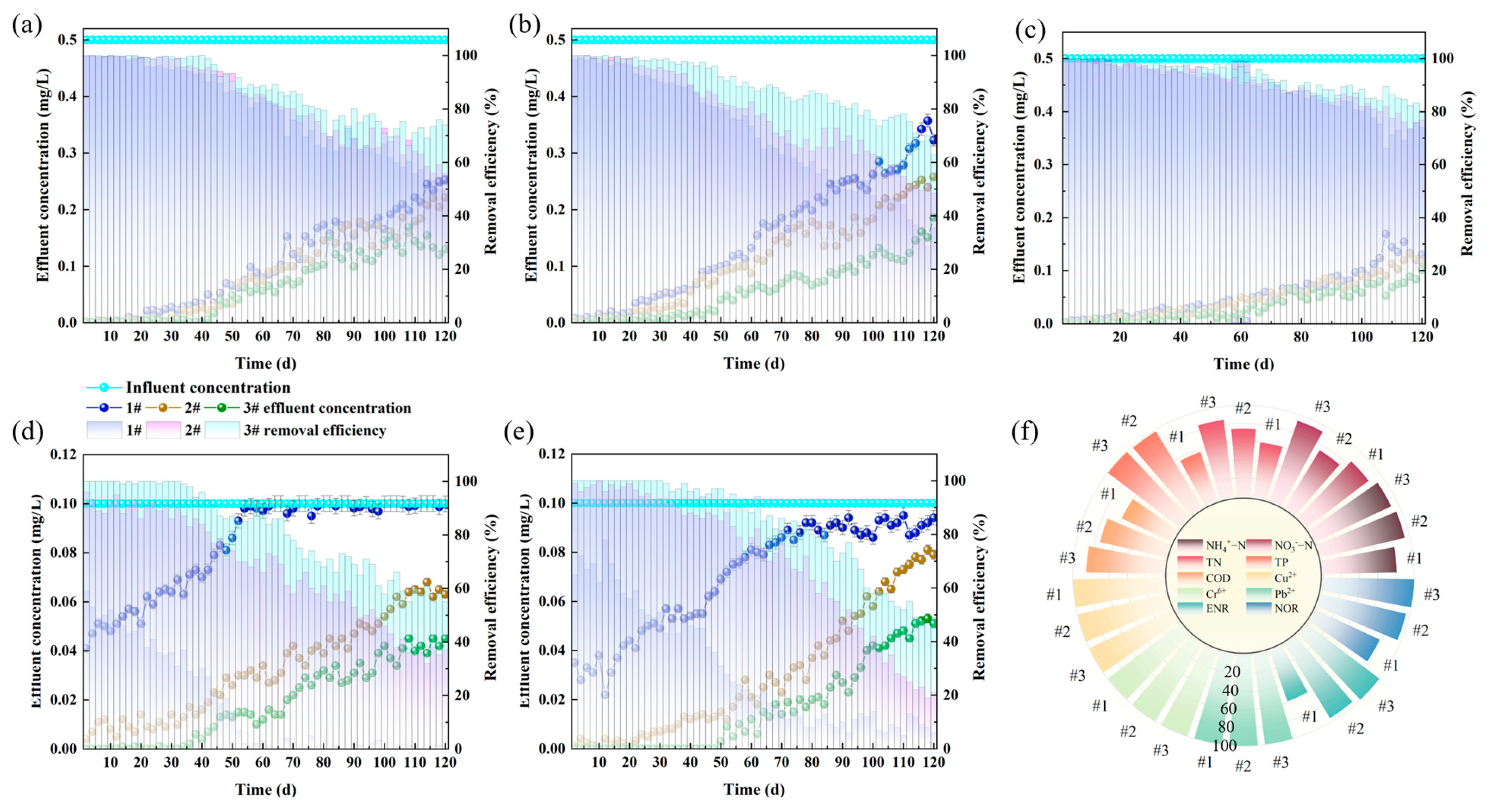
System 3# demonstrated excellent heavy metal removal throughout the experimental period (Figure 2a–c). Removal efficiencies for Cu2+, Cr6+, and Pb2+ were 96.1 ± 0.7%, 90.5 ± 1.2%, and 92.2 ± 1.1%, respectively. System 2# showed slightly lower but still substantial removal (85.1 ± 1.3%, 80.6 ± 1.8%, 90.2 ± 1.4%), while System 1# exhibited the poorest performance (70.3 ± 3.2%, 50.2 ± 4.1%, 85.1 ± 2.3%).
The superior heavy metal removal in steel slag systems can be attributed to several mechanisms operating simultaneously [19]: (1) Precipitation as hydroxides or carbonates at alkaline pH pH8.2–8.5; (2) Surface complexation with iron/aluminum oxides and hydroxyl groups; (3) Ion exchange with Ca2+ and Mg2+; (4) Co-precipitation with iron/aluminum (hydro)xides; and (5) For Cr6+, reduction to Cr3+ by Fe2+ followed by precipitation as Cr(OH)3. The modified slag’s enhanced surface area and active site exposure further improved these processes [19]. We tested the concentrations of other metals (Ni, Zn, Cd, Mn) after the operation concluded, all of which were significantly below the Class 1A standards of the “Urban Sewage Treatment Plant Pollutant Discharge Standard.” This indicates that the modified steel slag matrix did not pose significant environmental risks during long-term operation.

3.1.3. Antibiotics

The removal of quinolone antibiotics showed distinct patterns among the three systems (Figure 2d,e). System 3# achieved the highest and most stable removal for both enrofloxacin (ENR, 65.6 ± 2.1%) and norfloxacin (NOR, 62.6 ± 2.4%). System 2# showed moderate removal (ENR: 41.8 ± 3.2%, NOR: 32.6 ± 3.8%), while System 1# exhibited the lowest efficiencies (ENR: 12.5 ± 4.1%, NOR: 10.3 ± 4.3%) with significant decline after 60 days.
Antibiotic removal in bioretention systems involves complex mechanisms including adsorption, biodegradation, and redox-related transformation [20]. In this study, the superior performance of System 3# is suggested to be associated with the combined contribution of these mechanisms rather than a single dominant pathway. The initial rapid decrease in antibiotic concentrations indicates the involvement of adsorption, which was likely enhanced by iron oxides and clay minerals through cation bridging and surface complexation.
Sustained antibiotic removal during long-term operation further implies the contribution of biodegradation supported by enriched microbial communities. In addition, redox transformation is supported by multiple lines of indirect but quantitative evidence. XPS analysis showed a decrease in Fe2+ content (from 32% to 18%) and a corresponding increase in Fe3+ content (from 68% to 82%) in the modified steel slag after operation, indicating active Fe2+/Fe3+ cycling. Furthermore, HPLC–MS analysis detected intermediate products of ENR (e.g., desethylenrofloxacin), which is indicative of transformation processes during system operation.
By contrast, the rapid decline observed in System 1# suggests adsorption saturation and limited biodegradation capacity in the biochar–zeolite system [21]. Although adsorption, biodegradation, and redox transformation were all supported by experimental observations, a complete quantitative partitioning of the contribution of each mechanism was beyond the scope of this study.

3.2. System Performance Under Varying Hydraulic Conditions

3.2.1. Effects of Rainfall Return Periods

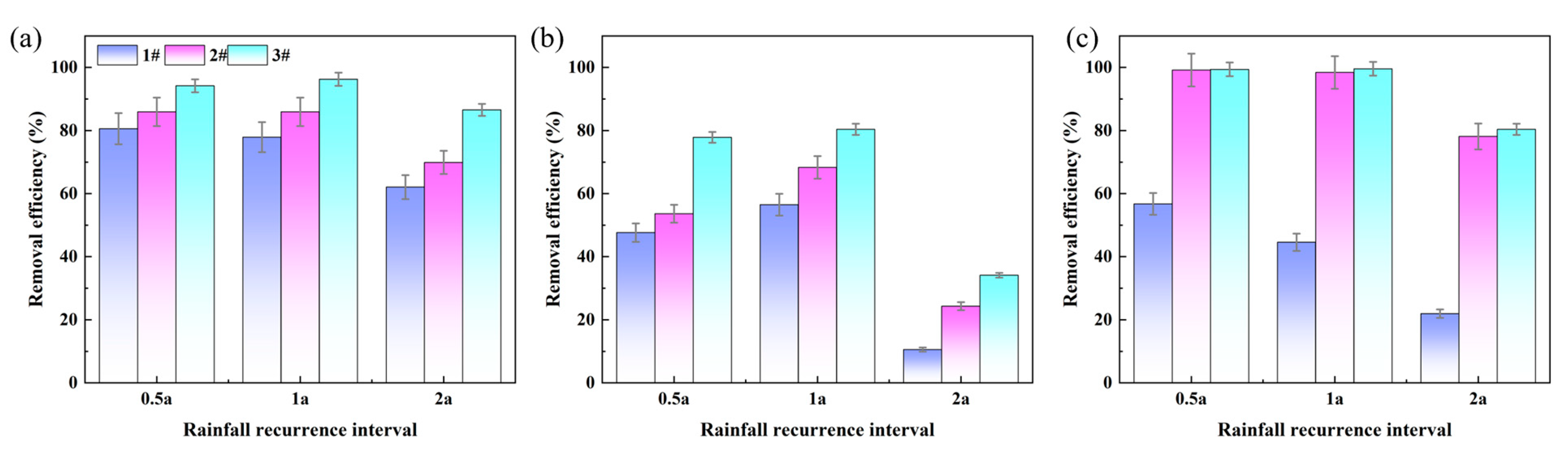
The impact of different rainfall intensities (simulated by varying flow rates corresponding to 0.5a, 1a, and 2a return periods) on pollutant removal is shown in Figure 3. System 3# demonstrated remarkable resilience, maintaining high removal efficiencies across all tested conditions. For instance, NH4+-N removal remained above 85% even at the highest flow rate (2a return period, 204 mL/min), while Systems 1# and 2# showed significant decline (from 80% to 60% and from 85% to 70%, respectively).
The nitrate removal process exhibits a particularly sensitive response to hydraulic loading. All three systems experienced a significant drop in NO3-N removal efficiency. However, in comparison, System 3# still demonstrated a notable advantage, whereas the corresponding removal rates for System 1# and System 2# were below 10% and 24%, respectively. This resilience can be attributed to its modified slag medium, which supports both heterotrophic and autotrophic denitrification processes. In this system, Fe2+ released from the steel slag can serve as an electron donor under high-flow conditions, where organic carbon may become a limiting factor [22].
TP removal remained consistently high (>90%) in System 3# across all flow rates, demonstrating the robustness of chemical precipitation mechanisms. In contrast, System 1# showed a significant drop in TP removal (from 40% to 20%) at higher flow rates, indicating the limitations of physical adsorption processes under increased hydraulic loading [18].

3.2.2. Effects of Antecedent Dry Periods

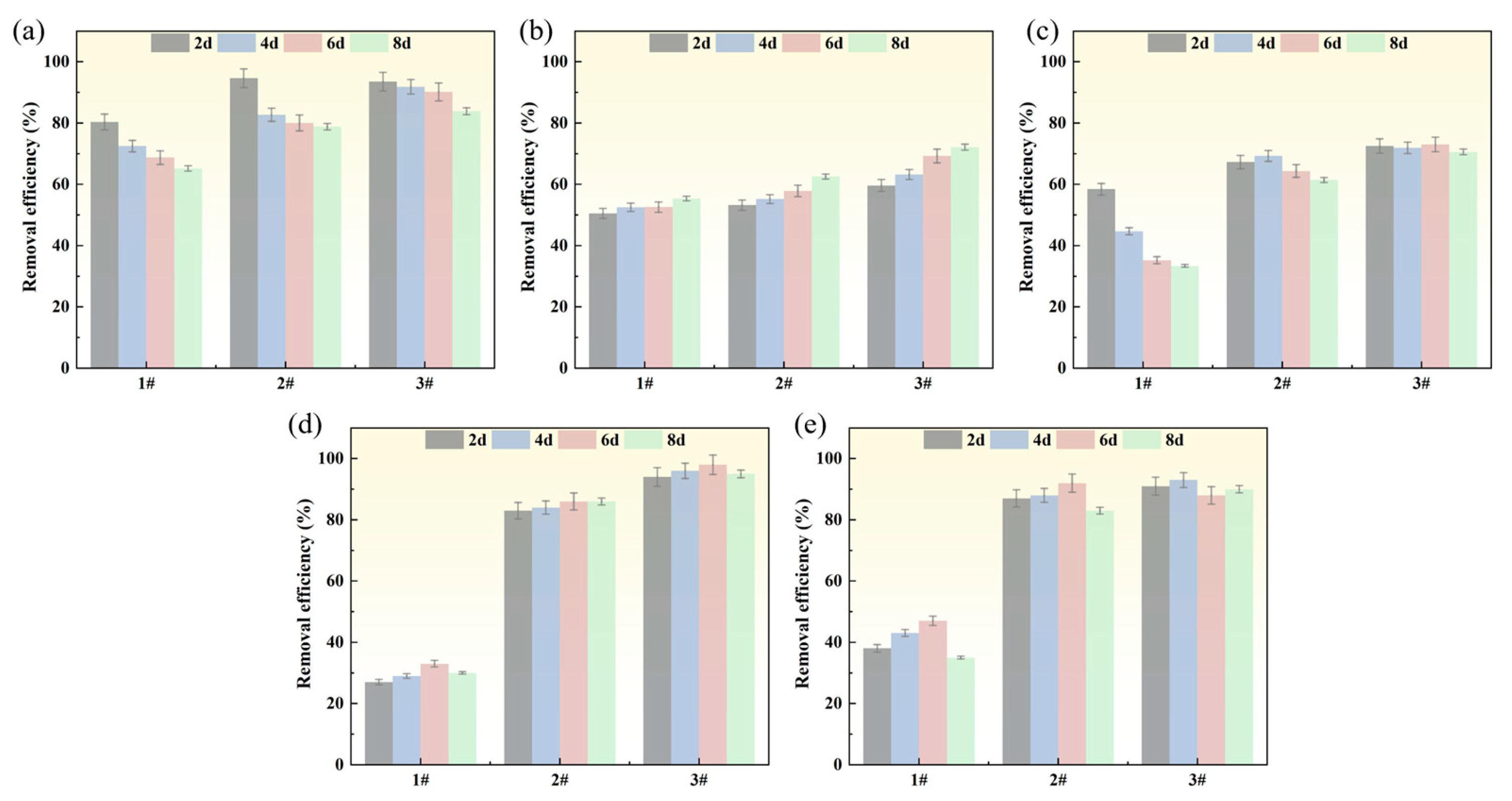
Extended dry periods (2, 4, and 8 days) between rainfall events had complex effects on system performance (Figure 4). As the duration of the dry period increased, the NO3-N removal rate of System 3# remained relatively stable and was maintained at 82% on the eighth day, which was significantly higher than the removal level during the rainfall period. A grouped comparison of data from the rainfall and dry periods further indicated that the improvement in removal efficiency during the dry period was primarily attributed to the extended contact time for denitrification in the saturated zone under low hydraulic loading conditions, as well as the sustained microbial denitrification activity supported by the slag matrix [23].
In contrast, System 1# exhibited a decline in the removal rates of both NH4+-N and COD as the dry period extended. However, System 1# demonstrated distinct characteristics: its NH4+-N removal rate decreased from approximately 80% during the rainfall period to about 50% in the dry period, while its NO3-N removal rate increased to around 80% during the dry period (Figure 4). This phenomenon can be attributed to the presence of ammonia-oxidizing bacteria (AOB) and heterotrophic nitrification-aerobic denitrification (HNAD) bacteria in the system. During the rainfall period, under high hydraulic loading, the ammonia oxidation process dominated by AOB was more active, driving efficient NH4+-N removal. In the dry period, the low hydraulic loading and longer hydraulic retention time provided a more favorable environment for the heterotrophic nitrification-aerobic denitrification processes carried out by HNAD bacteria, thereby enhancing NO3-N removal efficiency. This also indicates that the microbial community in System 2# exhibits a certain level of adaptability to hydrological period changes, although its overall stability remains inferior to that of System 3#.
Antibiotic removal showed minimal sensitivity to dry period duration in System 3#, with ENR and NOR removal remaining above 60% across all conditions. This stability suggests that both adsorption and degradation mechanisms remained effective during extended dry periods, possibly due to continued microbial activity and chemical transformations within the slag matrix [24].

3.3. Mechanistic Investigations

3.3.1. Media Surface Evolution and Pollutant Accumulation

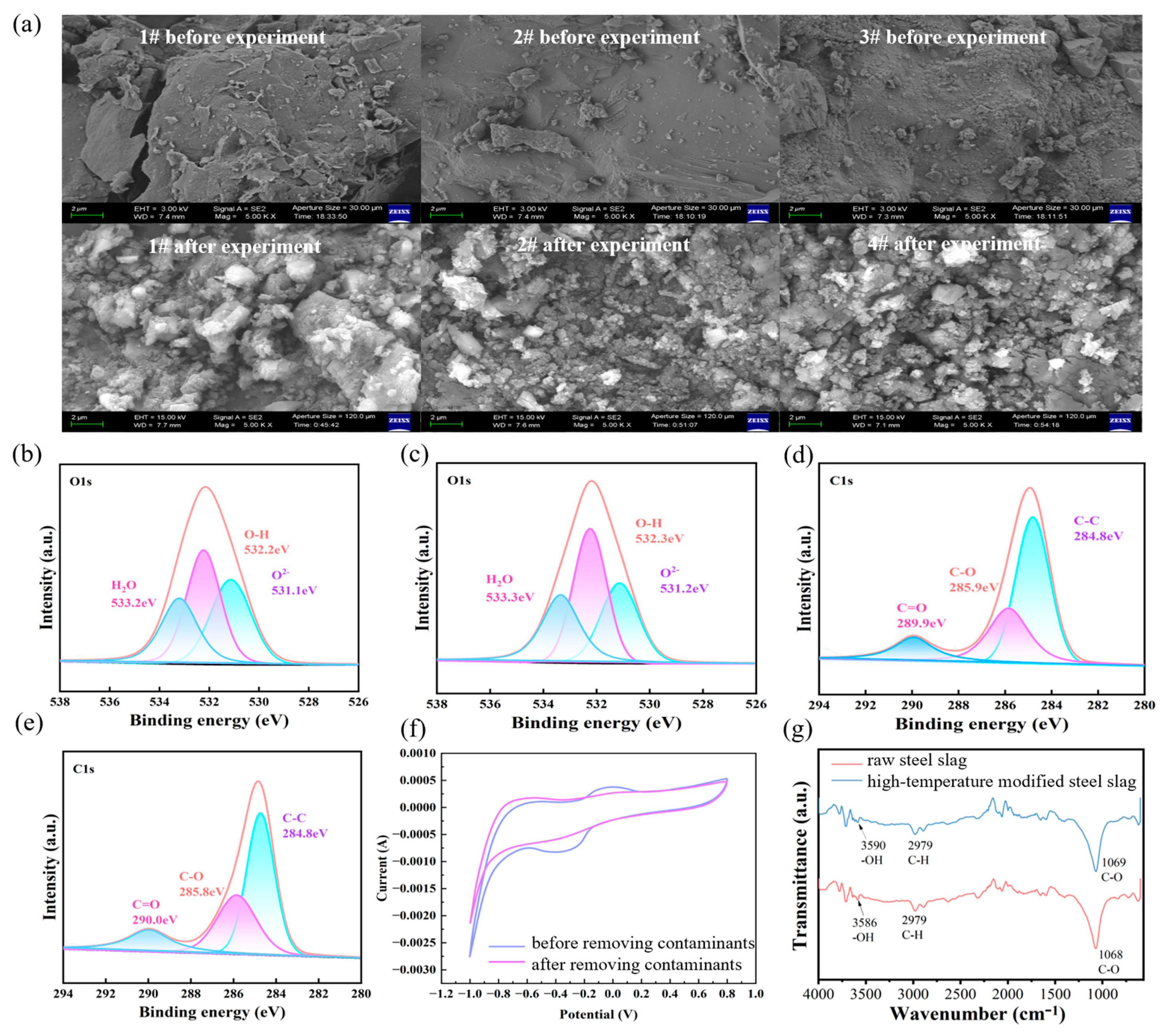
SEM analysis revealed significant changes in media surface morphology after 120 days of operation (Figure 5a). The modified steel slag surface transitioned from an initial cracked structure to one covered with particulate deposits and biofilm development. EDS analysis confirmed the accumulation of phosphorus, calcium, and iron on the slag surface, with phosphorus content increasing from 1.2% to 8.7% by weight.
XPS analysis provided insights into surface chemical transformations (Figure 5b–e). The O1s spectra showed a decrease in surface hydroxyl groups (from 35% to 22%) and an increase in metal-oxygen bonds (from 45% to 58%), indicating ligand exchange and surface complexation with pollutants. The C1s spectra revealed an increase in carbonates and organic carbon, suggesting accumulation of organic matter and possible precipitation of carbonate minerals.
The modified steel slag showed enhanced electrochemical activity during pollutant removal, with increased redox peak currents (e.g., reduction peak from −0.00075 A to −0.0010 A) and reduced peak separation (Figure 5f). This indicates faster charge transfer and improved kinetics. High-temperature treatment created a porous structure, increasing surface area and active sites, which enhanced double-layer capacitance and redox activity [25]. In contrast, unmodified steel slag exhibited quasi-reversible behavior with limited electrochemical response due to its dense surface and fewer active sites. These results confirm that thermal modification optimizes the surface structure and electron transfer of steel slag, explaining its superior pollutant removal performance.
FTIR spectra (Figure 5g) showed the appearance of new peaks at 1060 cm−1 (P-O stretching) and 1474 cm−1 (carbonate), confirming phosphate and carbonate precipitation on the slag surface. These findings collectively demonstrate that pollutant removal occurred through a combination of adsorption, precipitation, and surface complexation mechanisms.

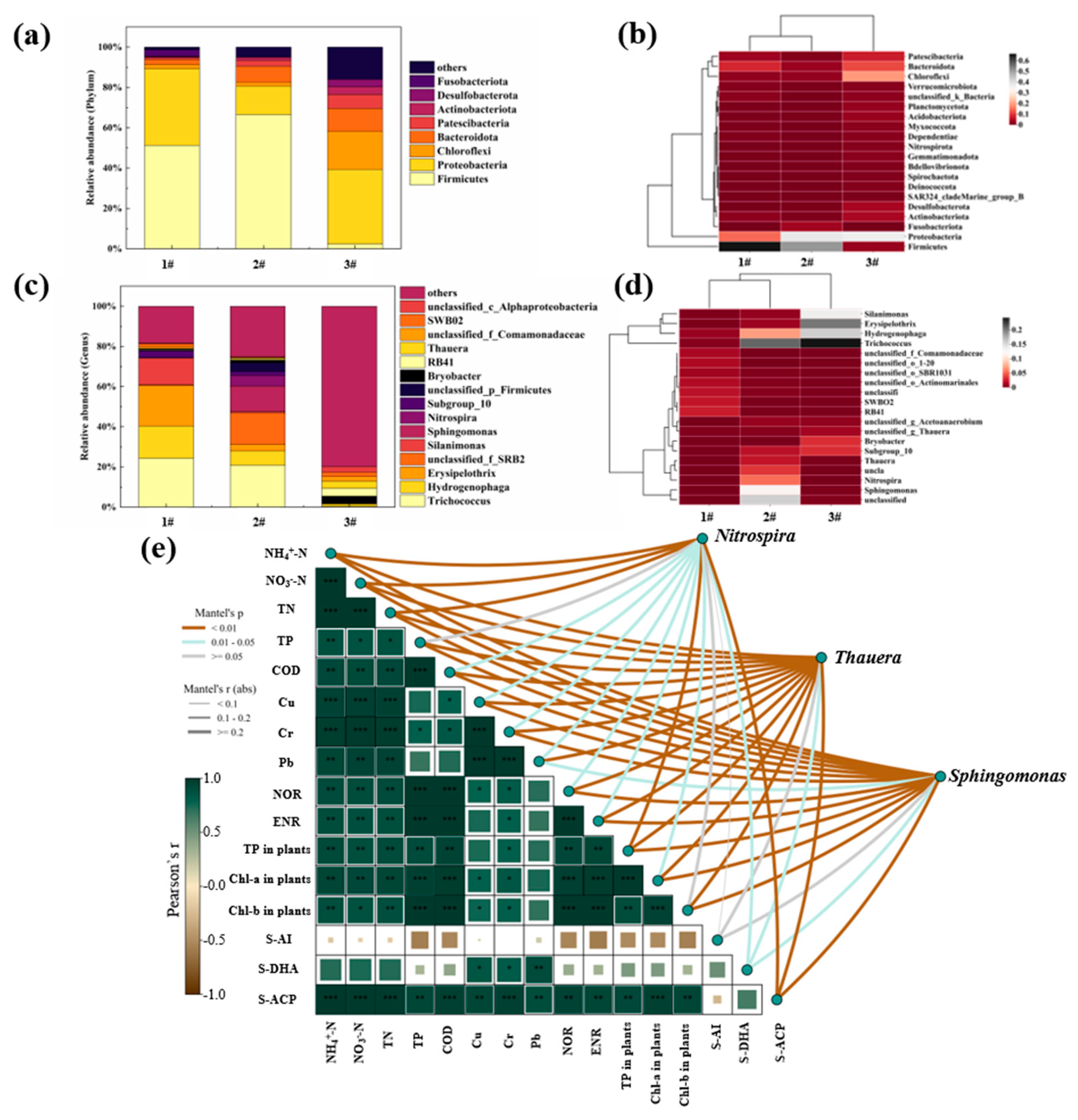
3.3.2. Microbial Community Dynamics

Microbial community analysis revealed distinct differences among the three systems (Figure 6). System 3# exhibited the highest microbial diversity (Shannon index: 9.26) and richness (Chao1: 2787), followed by System 2# (Shannon: 5.50, Chao1: 2043) and System 1# (Shannon: 4.12, Chao1: 1303.5).
At the phylum level, Proteobacteria, Firmicutes, and Chloroflexi dominated all systems, but with different relative abundances. System 3# showed higher proportions of Chloroflexi (18.7%) and Actinobacteria (12.3%), both known for their roles in organic matter decomposition and phosphorus cycling. The increased abundance of these phyla in System 3# likely contributed to enhanced organic pollutant degradation and phosphorus mineralization.
At the genus level, System 3# was enriched with Hydrogenophaga (12.3%), known for autotrophic denitrification using hydrogen or iron as electron donors, and Rhodocyclus (8.7%), involved in phosphorus accumulation [26]. The enrichment of Hydrogenophaga in System 3# was attributed to the continuous release of Fe2+ (15.2 mg/L) from thermally modified steel slag and the alkaline pH (8.2–8.5), which are favorable for the growth of this Fe-dependent autotrophic denitrifier. These functional groups align with the observed performance in nitrogen and phosphorus removal. Correlation analysis (Figure 6e) revealed strong positive relationships between Firmicutes abundance and nitrogen removal r = 0.82, p < 0.01 and between Actinobacteria abundance and phosphorus removal r = 0.76, p < 0.05.

3.4. Synergistic Removal Mechanisms

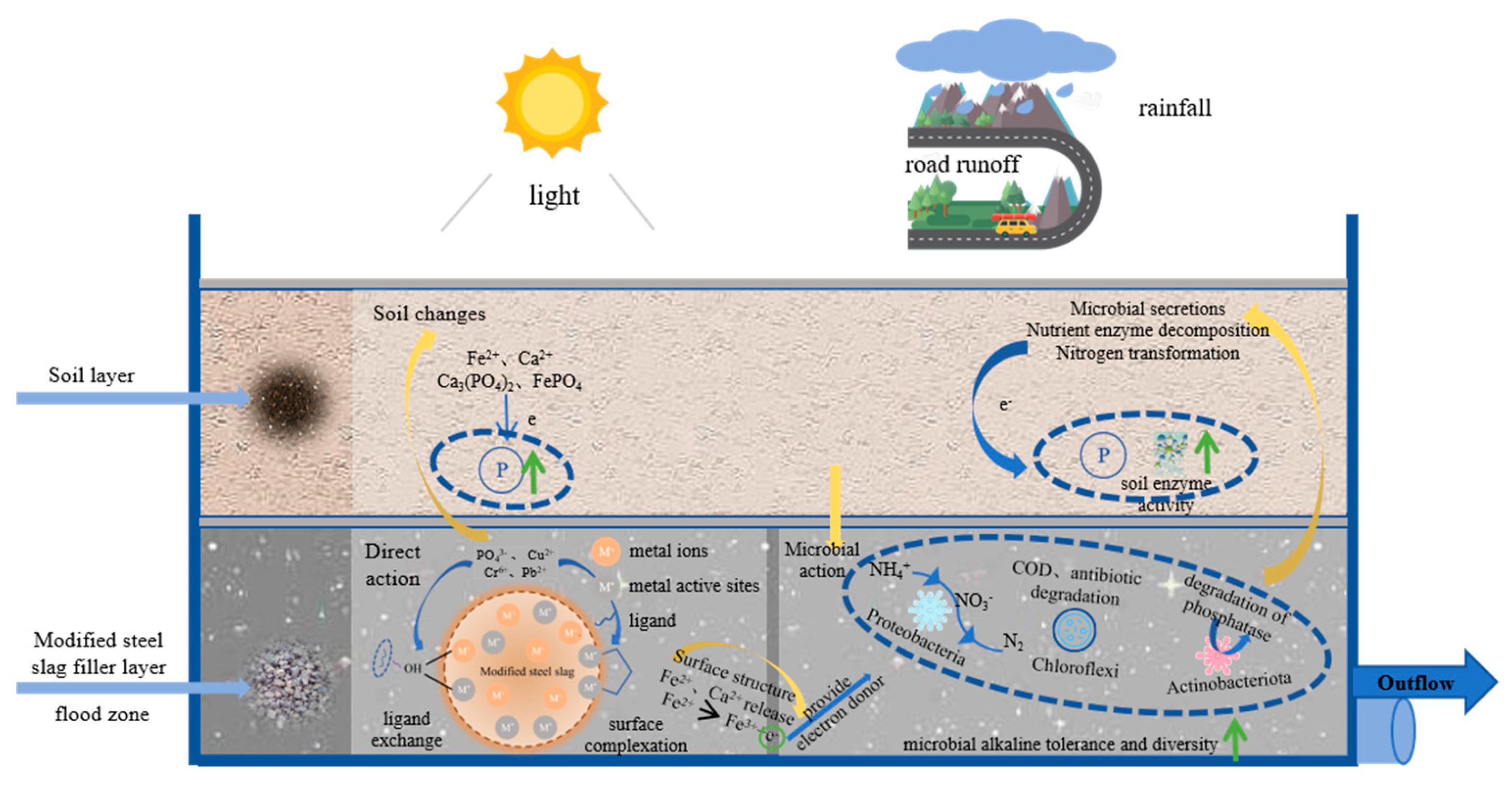
Based on comprehensive characterization, we propose a synergistic removal mechanism for the modified steel slag bioretention system (Figure 7):
(1)
Physical filtration and adsorption:
The porous structure of modified slag provides extensive surface area 2.338m2/g for physical interception of particulate matter and adsorption of dissolved pollutants.
(2)
Chemical precipitation and complexation:
Released Ca2+, Fe2+, and Fe3+ ions precipitate with phosphate as stable minerals (hydroxyapatite, strengite). Heavy metals precipitate as hydroxides/carbonates or form surface complexes with iron/aluminum oxides.
(3)
Microbial transformation:
Enriched microbial communities (35% higher diversity) drive nitrification-denitrification, phosphorus mineralization, and organic pollutant degradation [26]. Autotrophic denitrification using Fe2+ as electron donor enhances nitrogen removal during carbon-limited conditions.

4. Discussion

4.1. Performance Comparison with Conventional Systems

The superior performance of the thermally modified steel slag-based bioretention system (System 3#) compared to both the conventional biochar-zeolite system (System 1#) and the unmodified steel slag system (System 2#) can be attributed to multiple synergistic mechanisms. The enhanced physical properties of the modified slag, including increased specific surface area (2.338 m2/g) and pore volume (0.109 cm3/g), facilitated greater adsorption capacity for a wide range of pollutants. This structural improvement not only enhanced the physical interception of particulate matter but also provided more active sites for chemical interactions.
Chemically, the continuous release of Ca2+ and Fe3+ from the modified slag under alkaline conditions (pH 8.2–8.5) promoted the precipitation of phosphate as stable minerals such as hydroxyapatite and strengite, as confirmed by FTIR and XPS analyses. For heavy metals, the alkaline environment favored hydroxide and carbonate precipitation, while Fe2+ mediated the reduction of Cr6+ to less toxic Cr3+, followed by precipitation. The sustained release of these ions ensured long-term removal efficiency, contrasting with the adsorption-based systems that are prone to saturation.
Biologically, the modified system supported a more diverse and functionally enriched microbial community, with a 35% higher Shannon diversity index compared to System 1#. The enrichment of genera such as Hydrogenophaga (12.3%), known for autotrophic denitrification using Fe2+ as an electron donor, explains the robust nitrate removal even under high hydraulic loading and carbon-limited conditions. Similarly, the increased abundance of Actinobacteria and Chloroflexi likely contributed to enhanced organic matter degradation and phosphorus mineralization.
The system’s resilience under varying hydraulic conditions—maintaining high removal efficiencies across different rainfall return periods (0.5–2 years) and antecedent dry periods (2–8 days)—further underscores its practical applicability. This adaptability is crucial for real-world stormwater management, where rainfall patterns are often unpredictable and intermittent.

4.2. Mechanistic Integration and Synergistic Effects

The “triple-barrier” mechanism proposed in this study integrates physical, chemical, and biological processes into a cohesive removal strategy. Physical adsorption and filtration provided the first line of defense, particularly for particulate and colloidal pollutants. Chemical precipitation and surface complexation acted as a second barrier, effectively immobilizing dissolved nutrients and heavy metals. The third barrier, microbial transformation, not only degraded organic pollutants and antibiotics but also facilitated nitrogen removal through nitrification-denitrification pathways.
The interaction between these barriers was particularly evident in the removal of antibiotics. While adsorption played a significant role initially, the detection of degradation intermediates (e.g., desethylenrofloxacin) via HPLC-MS and the shift in iron oxidation states (Fe2+ to Fe3+) observed in XPS indicate that redox-mediated biodegradation and chemical transformation contributed substantially to long-term removal. This multi-mechanistic approach reduces the risk of media saturation and extends the operational lifespan of the system.

4.3. Practical Implications and Design Recommendations

The use of thermally modified steel slag aligns with circular economy principles by valorizing an industrial byproduct that is otherwise considered waste. With global steel slag production exceeding 7 billion tons annually, its application in stormwater treatment not only reduces disposal challenges but also decreases reliance on virgin materials such as sand and zeolite [27].
Based on our findings, the following design considerations are proposed for field implementation. First, regarding media composition, a combination of 15 cm thermally modified steel slag, 5 cm biochar, and 10 cm zeolite is recommended, as this configuration optimally balances pollutant removal efficiency, hydraulic conductivity, and cost-effectiveness. Second, to ensure effective denitrification—particularly under high hydraulic loading conditions—it is critical to maintain a saturated zone within the system, which can be achieved through a raised outlet set at approximately 45 cm from the base. Lastly, the formation of stable calcium-bound phosphorus minerals within the modified slag matrix indicates that the system may require less frequent media replacement compared to conventional adsorption-dominated systems, thereby potentially reducing long-term operational and maintenance costs.

4.4. Limitations and Future Research Directions

While this study demonstrates promising results under controlled laboratory conditions, several aspects warrant further investigation to facilitate practical application and broader implementation. First, field validation is essential to evaluate the long-term performance of the system under real rainfall conditions, which involve natural variability in temperature, pollutant loading patterns, and hydraulic shocks. Second, the durability and potential regeneration of the modified slag medium must be systematically assessed to understand its aging behavior and develop sustainable maintenance strategies [28]. Finally, the climate adaptability of the system should be examined across diverse environmental contexts, including its performance in cold regions subject to freeze–thaw cycles and in tropical zones characterized by high-intensity rainfall, in order to optimize its design and operational guidelines for wider geographical applicability [29].

5. Conclusions

This study demonstrates that thermally modified steel slag serves as an effective multifunctional matrix for bioretention systems, addressing multiple stormwater pollutants through synergistic mechanisms. Key findings include:
The thermally modified steel slag-based bioretention system consistently exhibited superior and stable performance in removing a broad range of pollutants over 120 days of continuous operation. The modified system achieved >85% removal of conventional nutrients (NH4+-N, TN, TP), 90–96% removal of heavy metals (Cu2+, Cr6+, Pb2+), and 60–65% removal of antibiotics (enrofloxacin, norfloxacin), outperforming conventional biochar-zeolite and unmodified steel slag systems. This performance is due to the combined physical, chemical, and biological processes that enhance pollutant removal efficiency.
The superior performance can be attributed to a synergistic triple-barrier mechanism: (1) enhanced physical adsorption via increased surface area and pore volume, (2) chemical precipitation with Ca2+/Fe3+ released from modified slag, and (3) intensified microbial transformations, driven by enriched microbial communities (e.g., Hydrogenophaga for autotrophic denitrification) that enhance nitrogen and phosphorus removal. The system demonstrated high adaptability and performance under varying hydraulic conditions, including different rainfall return periods (0.5–2a) and antecedent dry periods (2–8 days), showcasing its environmental resilience.
This technology promotes industrial byproduct utilization of steel slag, aligning with circular economy principles. Future research should focus on full-scale field validation, media regeneration, and climate adaptability optimization to facilitate practical application.

Author Contributions

Conceptualization, L.Y. and Y.N.; methodology, Y.N.; software, W.C. and J.S.; investigation, T.H.; resources, L.Y.; data curation, Y.N.; writing—original draft preparation, L.Y. and Y.N.; writing—review and editing, B.W.; visualization, B.W.; supervision, B.W.; project administration, T.H.; funding acquisition, T.H. and B.W. All authors have read and agreed to the published version of the manuscript.

Funding

This work was supported by the National Natural Science Foundation of China (No. 52070137), Gusu Innovation and Entrepreneurship Leading Talent Plan (No. ZXL2022500).

Data Availability Statement

The original contributions presented in this study are included in the article. Further inquiries can be directed to the corresponding author.

Acknowledgments

We thank Jinlong Zhuang for her help in data analysis.

Conflicts of Interest

Author Yiming Nie was employed by the company Suzhou Puletaike Environmental Technology. The remaining authors declare that the research was conducted in the absence of any commercial or financial relationships that could be construed as a potential conflict of interest.

References

  1. Zgheib, S.; Moilleron, R.; Saad, M.; Chebbo, G. Partition of pollution between dissolved and particulate phases: What about emerging substances in urban stormwater catchments? Water Res. 2011, 45, 913–925. [Google Scholar] [CrossRef] [PubMed]
  2. Zgheib, S.; Moilleron, R.; Chebbo, G. Priority pollutants in urban stormwater: Part 1—Case of separate storm sewers. Water Res. 2012, 46, 6683–6692. [Google Scholar] [CrossRef] [PubMed]
  3. You, J.; Ha, M.; Wang, S.; Kang, A.; Lei, X.; Chen, B.; Chai, B. Life cycle assessment of sponge campus systems: Integrated analysis of stormwater, carbon emissions, and economic performance. J. Clean. Prod. 2025, 524, 146503. [Google Scholar] [CrossRef]
  4. Zhang, H.K.; Zhang, X.R.; Liu, J.F.; Zhang, L.M.; Li, G.D.; Zhang, Z.Y.; Gong, Y.W.; Li, H.Y.; Li, J.Q. Coal gangue modified bioretention system for runoff pollutants removal and the biological characteristics. J. Environ. Manag. 2022, 314, 115044. [Google Scholar] [CrossRef]
  5. Westholm, L.J. Filter media for storm water treatment in sustainable cities: A review. Front. Chem. Eng. 2023, 5, 1149252. [Google Scholar] [CrossRef]
  6. Biswal, B.K.; Vijayaraghavan, K.; Tsen-Tieng, D.L.; Balasubramanian, R. Biochar-based bioretention systems for removal of chemical and microbial pollutants from stormwater: A critical review. J. Hazard. Mater. 2022, 422, 126886. [Google Scholar] [CrossRef]
  7. Thorat, D.S.; Singh, S.; Ushir, Y.V.; Tiwari, K.; Kokate, S.; Nagime, P.V. Biomaterials-based biofilters from sugarcane waste: An eco-friendly way to clean water and manage nutrients. Discov. Mater. 2025, 5, 56. [Google Scholar] [CrossRef]
  8. Liu, J.; Davis, A.P. Phosphorus Speciation and Treatment Using Enhanced Phosphorus Removal Bioretention. Environ. Sci. Technol. 2014, 48, 607–614. [Google Scholar] [CrossRef]
  9. Nabaterega, R.; Vesuwe, R.N.; Iorhemen, O.T. Statistical evaluation of different filter media and application of multiple criteria analysis to select the best media for pollutants removal in wastewater biofiltration: A review. Sci. Total Environ. 2025, 996, 180104. [Google Scholar] [CrossRef]
  10. Hong, E.; Seagren, E.A.; Davis, A.P. Sustainable oil and grease removal from synthetic stormwater runoff using bench-scale bioretention studies. Water Environ. Res. 2006, 78, 141–155. [Google Scholar] [CrossRef]
  11. Sun, J.; Huang, W.; Wang, X.M.; Hu, J.; Wang, Y.Z.; Zhang, Z.H.; Luo, S. Feasibility of pretreated steel slag for asphalt pavement application and risk assessment of hazardous substance leaching. Chem. Eng. J. 2024, 498, 155497. [Google Scholar] [CrossRef]
  12. Agalit, H.; Zari, N.; Maaroufi, M. Thermophysical and chemical characterization of induction furnace slags for high temperature thermal energy storage in solar tower plants. Sol. Energy Mater. Sol. Cells 2017, 172, 168–176. [Google Scholar] [CrossRef]
  13. Okochi, N.C.; McMartin, D.W. Laboratory investigations of stormwater remediation via slag: Effects of metals on phosphorus removal. J. Hazard. Mater. 2011, 187, 250–257. [Google Scholar] [CrossRef] [PubMed]
  14. Wang, S.; Yao, S.; Du, K.; Yuan, R.; Chen, H.; Wang, F.; Zhou, B. The mechanisms of conventional pollutants adsorption by modified granular steel slag. Environ. Eng. Res. 2021, 26, 190352. [Google Scholar] [CrossRef]
  15. Zhang, S.P.; Ghouleh, Z.; Mucci, A.; Bahn, O.; Provençal, R.; Shao, Y.X. Production of cleaner high-strength cementing material using steel slag under elevated-temperature carbonation. J. Clean. Prod. 2022, 342, 130948. [Google Scholar] [CrossRef]
  16. Cui, H.; Wang, C.; Zhang, G.; Zhang, K.; Liu, Z.; Qi, Y.; Zheng, Y.; Bai, Y.; Fu, X. Properties, structure and mechanism of high-temperature modified steel slag based on solid waste. Alex. Eng. J. 2024, 101, 25–37. [Google Scholar] [CrossRef]
  17. Wu, W.; Nie, Y.; Wang, Z.; Huang, T.; Xu, X.; Liu, H.; Li, P.; Wu, B. Adsorption Removal of Organophosphates from Water by Steel Slag: Modification, Performance, and Energy Site Analysis. Water 2024, 16, 3145. [Google Scholar] [CrossRef]
  18. Kratky, H.; Li, Z.; Yu, T.; Li, X.; Jia, H. Study on bioretention for stormwater management in cold climate, part II: Water quality. J. Water Clim. Change 2021, 12, 3582–3601. [Google Scholar] [CrossRef]
  19. Kim, G.; Kim, Y.M.; Kim, S.M.; Cho, H.U.; Park, J.M. Magnetic Steel Slag Biochar for Ammonium Nitrogen Removal from Aqueous Solution. Energies 2021, 14, 2682. [Google Scholar] [CrossRef]
  20. Qiu, R.; Cheng, F.; Wang, X.; Li, J.; Gao, R. Adsorption kinetics and isotherms of ammonia-nitrogen on steel slag. Desalin. Water Treat. 2015, 55, 142–150. [Google Scholar] [CrossRef]
  21. Zhang, S.; Liu, F.; Zhu, H.; Lv, S.; Wang, B. Simultaneous nitrate and phosphorus removal in novel steel slag biofilters: Optimization and mechanism study. J. Environ. Manag. 2024, 349, 119558. [Google Scholar] [CrossRef] [PubMed]
  22. Zhang, J.; Yu, X.; Ding, S.; Zou, Y. Lignite-steel slag constructed wetland with multi-functionality and effluent reuse. J. Environ. Manag. 2024, 353, 120183. [Google Scholar] [CrossRef] [PubMed]
  23. Cao, X.K.; Chen, Y.G.; Zheng, H.; Liao, Y.; Feng, L.H.; Feng, J.C.; Liu, C.; Ji, F.Y. Integration of steel slag and zeolite enhances simultaneous nitrification and autotrophic denitrification in ultra-low carbon/nitrogen ratio wastewater: Remodeling microbiota and iron metabolism. Bioresour. Technol. 2025, 429, 132504. [Google Scholar] [CrossRef] [PubMed]
  24. Zhang, Q.; Yu, X.Y.; Yang, Y.Q.; Ruan, J.J.; Zou, Y.H.; Wu, S.J.; Chen, F.R.; Zhu, R.L. Enhanced ammonia removal in tidal flow constructed wetland by incorporating steel slag: Performance, microbial community, and heavy metal release. Sci. Total Environ. 2024, 922, 171333. [Google Scholar] [CrossRef]
  25. Kim, K.; Nakashita, S.; Yoshimura, K.; Hibino, T. In situ electrochemical remediation of brackish river sediment rich in aromatic organic matter using steel-slag-combined sediment microbial fuel cells. J. Clean. Prod. 2021, 315, 128206. [Google Scholar] [CrossRef]
  26. Liang, Y.F.; Pan, Z.R.; Feng, H.B.; Cheng, X.Y.; Guo, T.; Yan, A.Q.; Li, J. Biofilm coupled micro-electrolysis of waste iron shavings enhanced iron and hydrogen autotrophic denitrification and phosphate accumulation for wastewater treatment. J. Environ. Chem. Eng. 2022, 10, 108959. [Google Scholar] [CrossRef]
  27. Ren, Z.Y.; Li, D.S. Application of Steel Slag as an Aggregate in Concrete Production: A Review. Materials 2023, 16, 5841. [Google Scholar] [CrossRef]
  28. Sun, J.; Luo, S.; Wang, Y.Z.; Dong, Q.F.; Zhang, Z.H. Pre-treatment of steel slag and its applicability in asphalt mixtures for sustainable pavements. Chem. Eng. J. 2023, 476, 146802. [Google Scholar] [CrossRef]
  29. Liu, J.Z.; Yu, B.; Wang, Q. Application of steel slag in cement treated aggregate base course. J. Clean. Prod. 2020, 269, 121733. [Google Scholar] [CrossRef]
Figure 1. (a) Schematic diagrams of three bioretention systems (1#: Control, 2#: Unmodified, 3#: Modified); Dynamic removal profiles of (b) NH4+-N, (c) NO3-N, (d) TN, (e) TP, and (f) COD during the 120-day operational period.
Water 18 00441 g001
Figure 2. Dynamic removal profiles of (a) Cu2+, (b) Cr6+, (c) Pb2+, (d) ENR, and (e) NOR during the 120-day operational period; (f) Optimal removal efficiencies of target pollutants by Bioretention Systems 1#, 2#, and 3#.
Water 18 00441 g002
Figure 3. Effects of rainfall return periods on pollutant removal efficiency (a) NH4+-N, (b) NO3-N, (c) TP.
Water 18 00441 g003
Figure 4. Influence of antecedent dry periods on system performance (a) NH4+-N, (b) NO3-N, (c) COD, (d) ENR, (e) NOR.
Water 18 00441 g004
Figure 5. (a) Comparison of SEM images before and after the medium test operation of bioretention ponds 1#, 2# and 3#; O1s of unmodified steel slag (b) and high-temperature modified steel slag (c); C1s of unmodified steel slag (d) and high-temperature modified steel slag (e); CV curves of high temperature modified steel slag (f); Infrared spectra of unmodified steel slag and high-temperature modified steel slag (g).
Water 18 00441 g005
Figure 6. Relative abundance of microorganisms at phylum level (a) and phylum level clustering heat map (b); Relative abundance map of microbial genera (c) and heat map of genera (d); Interactive correlation analysis between dominant bacteria and various indicators, ’*’ indicates a high correlation (e).
Water 18 00441 g006
Figure 7. Mechanism diagram of enhanced bioretention facility for pollutant removal using modified steel slag filler.
Water 18 00441 g007
Table 1. Influent concentrations of synthetic rainwater.
PollutantsAverage Concentration (mg/L) ± Standard Deviation
Conventional pollutantsNO3-N1.5 ± 0.1
NH4+-N2.5 ± 0.1
TN4 ± 0.1
TP0.3 ± 0.1
COD150 ± 0.1
Heavy metalsCu0.5 ± 0.05
Cr0.5 ± 0.05
Pb0.5 ± 0.05
AntibioticsNOR0.1 ± 0.05
ENR0.1 ± 0.05
Disclaimer/Publisher’s Note: The statements, opinions and data contained in all publications are solely those of the individual author(s) and contributor(s) and not of MDPI and/or the editor(s). MDPI and/or the editor(s) disclaim responsibility for any injury to people or property resulting from any ideas, methods, instructions or products referred to in the content.