Advances in Phytoremediation-Based Strategies for Co-Contaminated Riparian Soils: A Review



Abstract
1. Introduction
2. Status of Soil Pollution in Riparian Zones
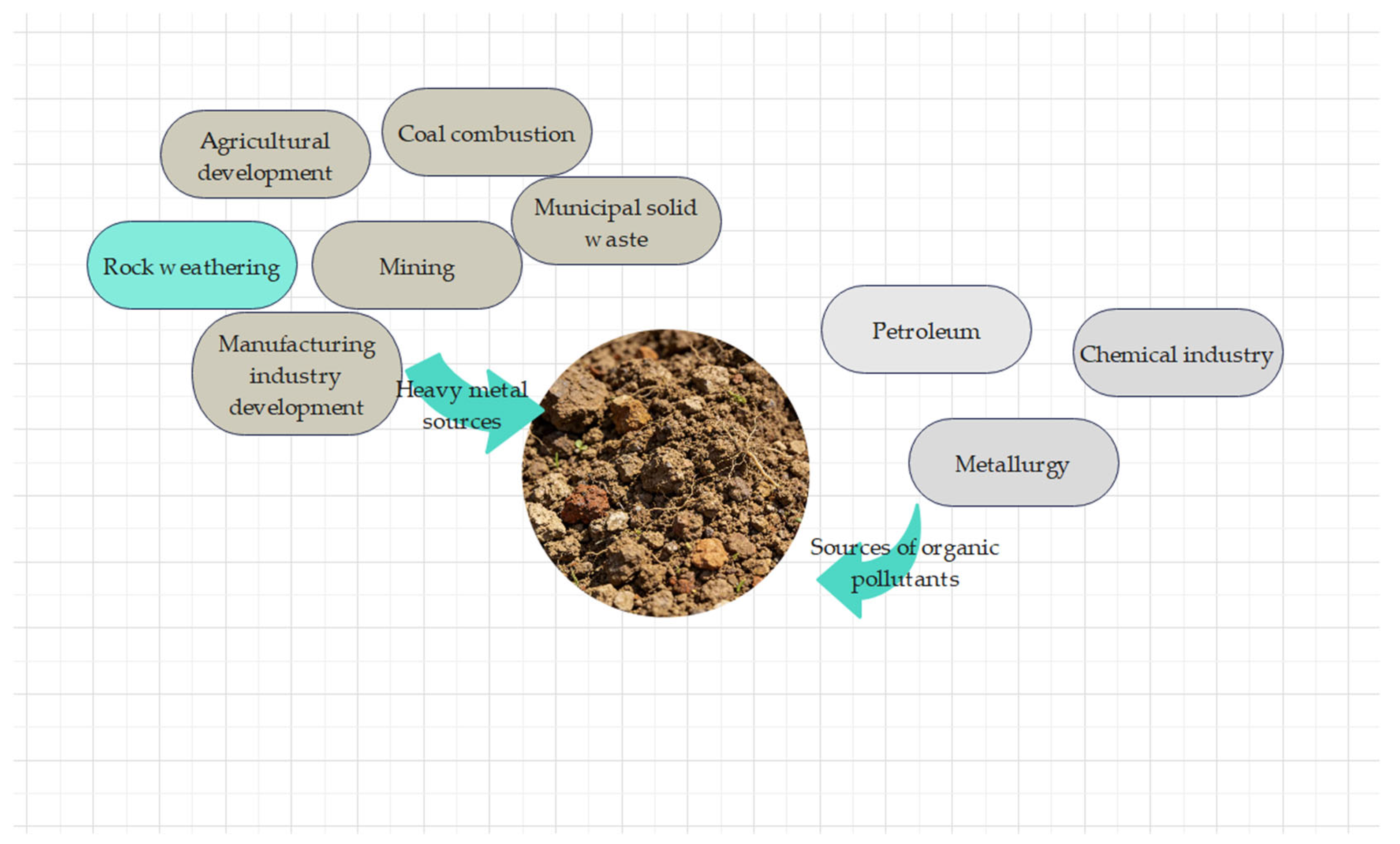
3. Sources of Compound Pollution in Soil
3.1. Sources of Heavy Metals
3.1.1. Natural Factors
3.1.2. Anthropogenic Factors
3.2. Sources of Organic Pollutants
3.3. Difficulties in Dealing with Complex Pollution in Riparian Zones
3.3.1. Synergistic Effects of Pollutants
3.3.2. Complexity of Contaminant Speciation
3.3.3. Influence of the Self-Characteristics of Riparian Zones
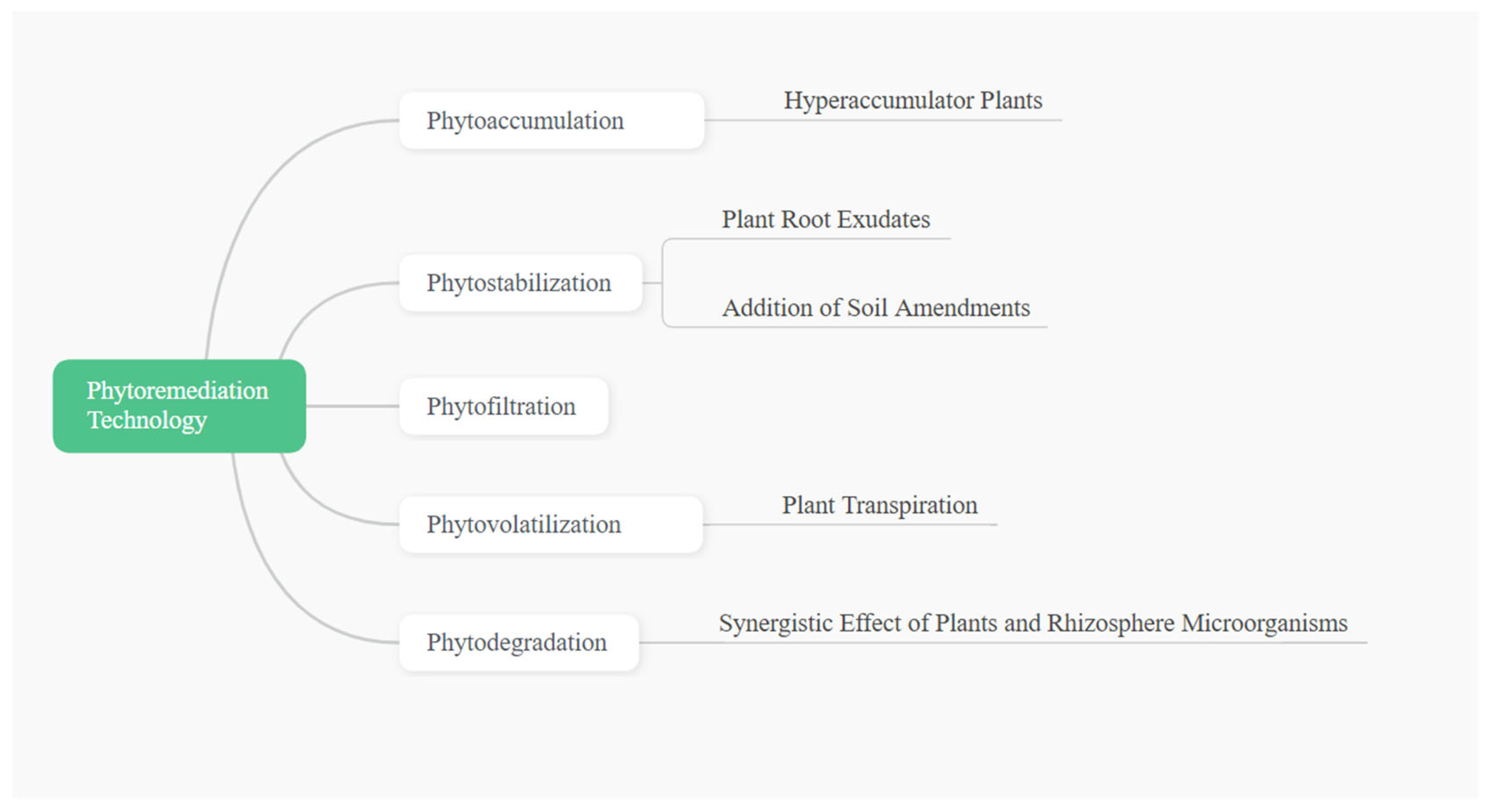
4. Phytoremediation Technology
4.1. Phytoaccumulation
4.2. Phytostabilization
4.3. Rhizofiltration
4.4. Phytovolatilization
4.5. Phytodegradation
5. Types of Remediation Plants
5.1. Plants for Remediation of Heavy Metal Contamination
Phytoremediation of Organic Contaminants
5.2. Summary
6. Factors Influencing Phytoremediation Efficiency
6.1. Plant Characteristics
6.2. Pollutant Properties
6.3. Environmental Conditions
6.3.1. Soil Physicochemical Properties
6.3.2. Pollutant Bioavailability
6.3.3. Plant–Microbe Interactions
7. Development Directions for Phytoremediation
7.1. Plant-Gene Editing Combined Remediation Technology
7.1.1. Modifying Plants with Genes Encoding Metal-Binding Proteins
7.1.2. Genes Encoding Metal Transporters
7.1.3. Genes Encoding Enzymes That Detoxify Metals and Metalloids
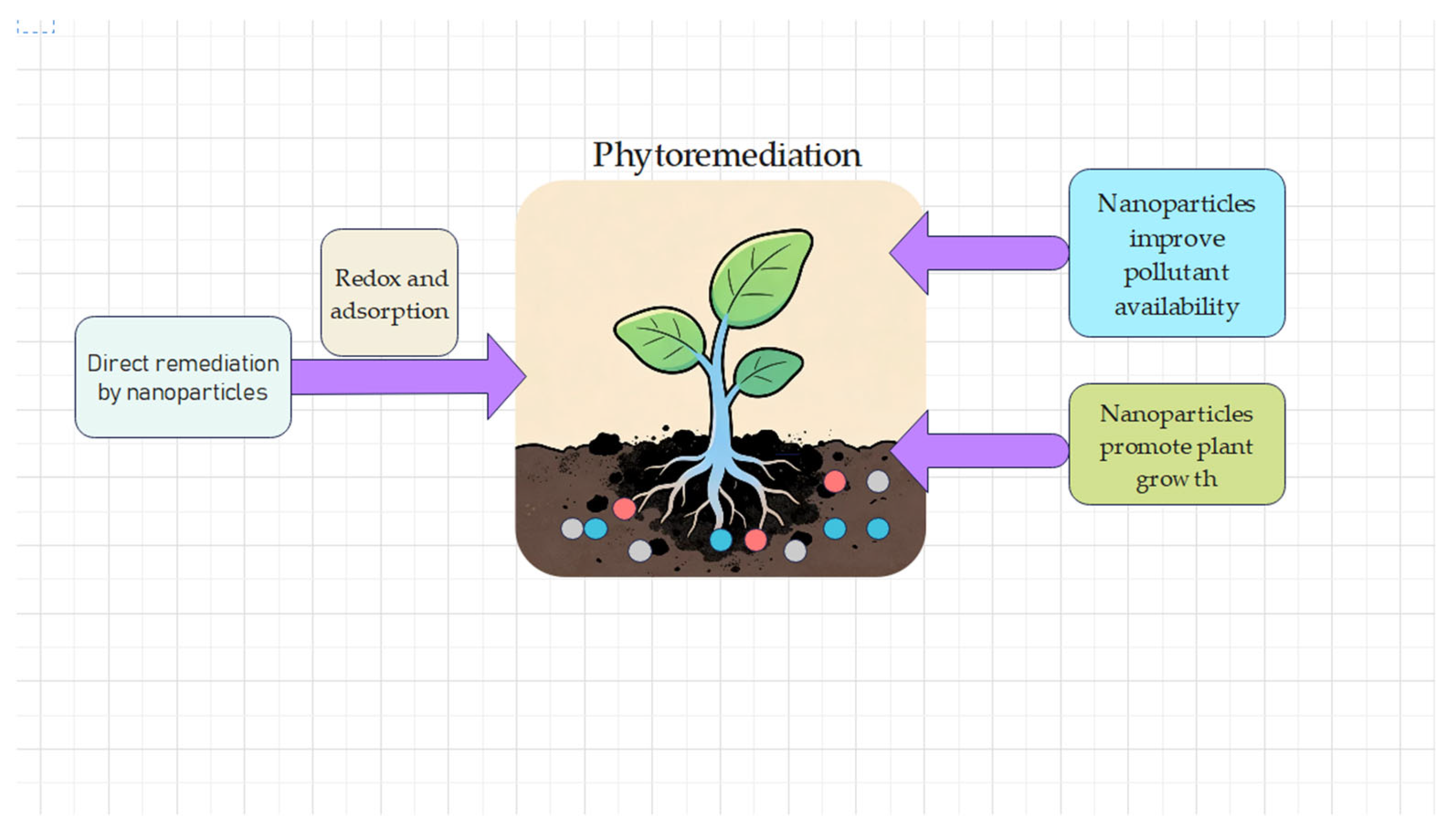
7.2. Plant–Nanoparticle Combined Remediation Technology
7.2.1. Direct Remediation by Nanoparticles
7.2.2. Enhancing Pollutant Phytoavailability
7.2.3. Promoting Plant Growth
7.3. Plant–Low-Molecular-Weight Organic Acid Combined Remediation Technology
7.4. Phytoremediation–Microbial Synergistic Technology
7.4.1. Enhancement of Phytoremediation via Plant Growth Promotion
7.4.2. Activation and Transformation of Pollutants
7.5. Plant–Chemical–Microbial Combined Remediation Technology
7.6. Feasibility of Phytoremediation
8. Conclusions
Author Contributions
Funding
Data Availability Statement
Conflicts of Interest
References
- Wang, B.; Liu, G.B.; Xue, S.; Zhu, B. Changes in soil physico-chemical and microbiological properties during natural succession on abandoned farmland in the Loess Plateau. Environ. Earth Sci. 2011, 62, 915–925. [Google Scholar] [CrossRef]
- Pan, Y.; Wu, J.; Liu, G.; Liu, W.; Ma, L. Differential responses of temperature sensitivity of greenhouse gases emission to seasonal variations in plateau riparian zones. Environ. Pollut. 2024, 353, 124190. [Google Scholar] [CrossRef] [PubMed]
- Chen, L.; Yang, Y.; Ding, M.; Zhang, H.; Zou, F.; Wang, P.; Nie, M.; Huang, G.; Yan, C. Scale effects of multi-medium heavy metals in response to landscape indices in the Yuan River, China. J. Clean. Prod. 2022, 373, 133784. [Google Scholar] [CrossRef]
- Nie, J.; Wang, Q.-M.; Han, L.-J.; Li, J.-S. Synergistic remediation strategies for soil contaminated with compound heavy metals and organic pollutants. J. Environ. Chem. Eng. 2024, 12, 113145. [Google Scholar] [CrossRef]
- Zhang, H.; Yuan, X.; Xiong, T.; Wang, H.; Jiang, L. Bioremediation of co-contaminated soil with heavy metals and pesticides: Influence factors, mechanisms and evaluation methods. Chem. Eng. J. 2020, 398, 125657. [Google Scholar] [CrossRef]
- Cao, X.; Cui, X.; Xie, M.; Zhao, R.; Xu, L.; Ni, S.; Cui, Z. Amendments and bioaugmentation enhanced phytoremediation and micro-ecology for PAHs and heavy metals co-contaminated soils. J. Hazard. Mater. 2022, 426, 128096. [Google Scholar] [CrossRef]
- Ali, M.; Song, X.; Ding, D.; Wang, Q.; Zhang, Z.; Tang, Z. Bioremediation of PAHs and heavy metals co-contaminated soils: Challenges and enhancement strategies. Environ. Pollut. 2021, 295, 118686. [Google Scholar] [CrossRef]
- Hewage, S.A.; Batagoda, J.H.; Meegoda, J.N. In Situ Remediation of Sediments Contaminated with Organic Pollutants Using Ultrasound and Ozone Nanobubbles. Environ. Eng. Sci. 2020, 37, 521–534. [Google Scholar] [CrossRef]
- Lee, E.S.; Seol, Y.; Fang, Y.C.; Schwartz, F.W. Destruction efficiencies and dynamics of reaction fronts associated with the permanganate oxidation of trichloroethylene. Environ. Sci. Technol. 2003, 37, 2540–2546. [Google Scholar] [CrossRef]
- Polti, M.A.; Amoroso, M.J.; Abate, C.M. Chromium(VI) resistance and removal by actinomycete strains isolated from sediments. Chemosphere 2007, 67, 660–667. [Google Scholar] [CrossRef]
- Kashiwa, M.; Ike, M.; Mihara, H.; Esaki, N.; Fujita, M. Removal of soluble selenium by a selenate-reducing bacterium Bacillus sp. SF-1. BioFactors 2001, 14, 261–265. [Google Scholar] [CrossRef] [PubMed]
- Van Dillewijn, P.; Caballero, A.; Paz, J.A.; González-Pérez, M.M.; Oliva, J.M.; Ramos, J.L. Bioremediation of 2,4,6-trinitrotoluene under field conditions. Environ. Sci. Technol. 2007, 41, 1378–1383. [Google Scholar] [CrossRef] [PubMed]
- Chukwunonso Ossai, I.C.; Shahul Hamid, F.; Hassan, A. Biological Treatments for Petroleum Hydrocarbon Pollutions: The Eco-Friendly Technologies. In Hazardous Waste Management; Rajesh Banu Jeyakumar, S., Kavitha, R.Y.K., Eds.; IntechOpen: London, UK, 2022. [Google Scholar]
- Bi, Y.; Liu, F.; Fu, Z.; Qiao, H.; Liu, S.; Wang, J. Greenhouse-aged biochar increases nitrogen removal in riparian soils: Disentangling abiotic and biotic controls. Agric. Water Manag. 2026, 325, 110174. [Google Scholar] [CrossRef]
- Bai, J.; Xiao, R.; Zhang, K.; Gao, H. Arsenic and heavy metal pollution in wetland soils from tidal freshwater and salt marshes before and after the flow-sediment regulation regime in the Yellow River Delta, China. J. Hydrol. 2012, 450–451, 244–253. [Google Scholar] [CrossRef]
- Grigera, A.; Montecinos, S.; Tognana, S. Meso and macroplastics present on the surface and soil of a stream bank in the Pampas Region of Argentina. Environ. Monit. Assess. 2025, 197, 551. [Google Scholar] [CrossRef]
- Bing, H.; Wu, Y.; Zhou, J.; Sun, H.; Wang, X.; Zhu, H. Spatial variation of heavy metal contamination in the riparian sediments after two-year flow regulation in the Three Gorges Reservoir, China. Sci. Total Environ. 2019, 649, 1004–1016. [Google Scholar] [CrossRef]
- Ye, C.; Butler, O.M.; Du, M.; Liu, W.; Zhang, Q. Spatio-temporal dynamics, drivers and potential sources of heavy metal pollution in riparian soils along a 600 kilometre stream gradient in Central China. Sci. Total Environ. 2019, 651, 1935–1945. [Google Scholar] [CrossRef]
- Kumar, S.; Anshumali. Heavy metal pollution and health risk assessment in upland and riparian soils of the Ganga River basin. Discov. Soil 2025, 2, 33. [Google Scholar] [CrossRef]
- Salar, R.; Farrokh, A.; Amin, N.; Habib, K.; Mohammad, H. Distribution, source apportionment, and risk analysis of heavy metals in river sediments of the Urmia Lake basin. Sci. Rep. 2022, 12, 17455. [Google Scholar] [CrossRef]
- Vega, F.A.; Covelo, E.F.; Andrade, M.L.; Marcet, P. Relationships between heavy metals content and soil properties in minesoils. Anal. Chim. Acta 2004, 524, 141–150. [Google Scholar] [CrossRef]
- Xiaolin, J.; Tingting, F.; Bifeng, H.; Zhou, S.; Lianqing, Z.; Youwei, Z. Identification of the potential risk areas for soil heavy metal pollution based on the source-sink theory. J. Hazard. Mater. 2020, 393, 122424. [Google Scholar] [CrossRef]
- Wang, C.; Hu, J.; Zhang, Y.; Di, Y.; Wu, X. Spatial distribution characteristic, source apportionment, and risk assessment of heavy metals in the soil of an urban riparian zone. Ecotoxicol. Environ. Saf. 2025, 298, 118271. [Google Scholar] [CrossRef] [PubMed]
- Li, W.; Wu, J.; Yan, J.; Liang, X.; Li, X.; He, Y.; Li, B.; Zhan, F. Mycorrhizal fungi mitigate cadmium leaching losses by decreasing the inorganic cadmium proportion in soil solutions. Ecotoxicol. Environ. Saf. 2025, 289, 117505. [Google Scholar] [CrossRef] [PubMed]
- Han, L.; Gao, B.; Lu, J.; Zhou, Y.; Xu, D.; Gao, L.; Sun, K. Pollution characteristics and source identification of trace metals in riparian soils of Miyun Reservoir, China. Ecotoxicol. Environ. Saf. 2017, 144, 321–329. [Google Scholar] [CrossRef] [PubMed]
- Hua, W.; Wuyan, L.; Congmou, Z.; Xiaobo, T. Analysis of Heavy Metal Pollution in Cultivated Land of Different Quality Grades in Yangtze River Delta of China. Int. J. Environ. Res. Public Health 2021, 18, 9876. [Google Scholar] [CrossRef]
- Ramos, A.; Rouboa, A. Renewable energy from solid waste: Life cycle analysis and social welfare. Environ. Impact Assess. Rev. 2020, 85, 106469. [Google Scholar] [CrossRef]
- Yang, X.; Meng, L.; Meng, F. Combination of self-organizing map and parallel factor analysis to characterize the evolution of fluorescent dissolved organic matter in a full-scale landfill leachate treatment plant. Sci. Total Environ. 2019, 654, 1187–1195. [Google Scholar] [CrossRef]
- Hassan, A.; Pariatamby, A.; Ossai, I.C.; Hamid, F.S. Bioaugmentation assisted mycoremediation of heavy metal and/metalloid landfill contaminated soil using consortia of filamentous fungi. Biochem. Eng. J. 2020, 157, 107550. [Google Scholar] [CrossRef]
- Qian, W.; Hac, K.J.; Feng, L.; Qiyong, X. Leaching characteristics of heavy metals in MSW and bottom ash co-disposal landfills. J. Hazard. Mater. 2021, 416, 126042. [Google Scholar] [CrossRef]
- Tang, Q.; Bao, Y.; He, X.; Zhou, H.; Cao, Z.; Gao, P.; Zhong, R.; Hu, Y.; Zhang, X. Sedimentation and associated trace metal enrichment in the riparian zone of the Three Gorges Reservoir, China. Sci. Total Environ. 2014, 479–480, 258–266. [Google Scholar] [CrossRef]
- Abdel-Shafy, H.I.; Mansour, M.S.M. A review on polycyclic aromatic hydrocarbons: Source, environmental impact, effect on human health and remediation. Egypt. J. Pet. 2016, 25, 107–123. [Google Scholar] [CrossRef]
- Abunada, Z.; Alazaiza, M.Y.D.; Bashir, M.J.K. An Overview of Per- and Polyfluoroalkyl Substances (PFAS) in the Environment: Source, Fate, Risk and Regulations. Water 2020, 12, 3590. [Google Scholar] [CrossRef]
- Chunhui, W.; Jian, Z.; Baoshan, X. Environmental source, fate, and toxicity of microplastics. J. Hazard. Mater. 2021, 407, 124357. [Google Scholar] [CrossRef] [PubMed]
- Kong, X.; Barone, G.D.; Jin, D.; Mao, Y.; Nan, F.; Xu, L.; Wang, Z.; Deng, Y.; Cernava, T. Pollution Status, Ecological Effects, and Bioremediation Strategies of Phthalic Acid Esters in Agricultural Ecosystems: A Review. J. Agric. Food Chem. 2024, 72, 27668–27678. [Google Scholar] [CrossRef] [PubMed]
- Zhang, Z.-B.; Duan, Y.-P.; Zhang, Z.-J.; Tu, Y.-J.; Luo, P.-C.; Gao, J.; Dai, C.-M.; Zhou, L. Multimedia fate model and risk assessment of typical antibiotics in the integrated demonstration zone of the Yangtze River Delta, China. Sci. Total Environ. 2022, 805, 150258. [Google Scholar] [CrossRef]
- Mukai, Y.; Goto, A.; Tashiro, Y.; Tanabe, S.; Kunisue, T. Coastal biomonitoring survey on persistent organic pollutants using oysters (Saccostrea mordax) from Okinawa, Japan: Geographical distribution and polystyrene foam as a potential source of hexabromocyclododecanes. Sci. Total Environ. 2020, 739, 140049. [Google Scholar] [CrossRef]
- Tanabe, S. Contamination and toxic effects of persistent endocrine disrupters in marine mammals and birds. Mar. Pollut. Bull. 2002, 45, 69–77. [Google Scholar] [CrossRef]
- Qiuying, A.; Tong, Z.; Ce, W.; Changzhou, Y. The effects of microplastics on heavy metals bioavailability in soils: A meta-analysis. J. Hazard. Mater. 2023, 460, 132369. [Google Scholar] [CrossRef]
- Anderson, J.C.; Park, B.J.; Palace, V.P. Microplastics in aquatic environments: Implications for Canadian ecosystems. Environ. Pollut. 2016, 218, 269–280. [Google Scholar] [CrossRef]
- Zhou, Y.; Yang, Y.; Liu, G.; He, G.; Liu, W. Adsorption mechanism of cadmium on microplastics and their desorption behavior in sediment and gut environments: The roles of water pH, lead ions, natural organic matter and phenanthrene. Water Res. 2020, 184, 116209. [Google Scholar] [CrossRef]
- Ashton, K.; Holmes, L.; Turner, A. Association of metals with plastic production pellets in the marine environment. Mar. Pollut. Bull. 2010, 60, 2050–2055. [Google Scholar] [CrossRef] [PubMed]
- Agnieszka, M.; Bhakti, J. Influence of Different Microplastic Forms on pH and Mobility of Cu2+ and Pb2+ in Soil. Molecules 2022, 27, 1744. [Google Scholar] [CrossRef]
- Bradney, L.; Wijesekara, H.; Palansooriya, K.N.; Obadamudalige, N.; Bolan, N.S.; Ok, Y.S.; Rinklebe, J.; Kim, K.-H.; Kirkham, M.B. Particulate plastics as a vector for toxic trace-element uptake by aquatic and terrestrial organisms and human health risk. Environ. Int. 2019, 131, 104937. [Google Scholar] [CrossRef] [PubMed]
- Cerqueira, B.; Covelo, E.F.; Andrade, L.; Vega, F.A. The influence of soil properties on the individual and competitive sorption and desorption of Cu and Cd. Geoderma 2010, 162, 20–26. [Google Scholar] [CrossRef]
- Kim, M.-J.; Nriagu, J. Oxidation of arsenite in groundwater using ozone and oxygen. Sci. Total Environ. 2000, 247, 71–79. [Google Scholar] [CrossRef]
- Han, Q.; Fu, G.; Liu, K.; Adnan, M.; Liu, S.; Wang, M.; Jiang, F.; Wang, M. Chemical speciation and transformation of heavy metals in soil and groundwater: Implications for ecotoxicology and remediation. J. Environ. Chem. Eng. 2025, 13, 119858. [Google Scholar] [CrossRef]
- Zhou, X.; Cao, H. Effect of Common Ions in Agricultural Additives on the Retention of Cd, Cu, and Cr in Farmland Soils. Sustainability 2024, 16, 4870. [Google Scholar] [CrossRef]
- Liu, L.; Hu, J.; Fan, X.; Zhang, Y.; Zhang, S.; Tang, B. Phase change materials with Fe3O4/GO three-dimensional network structure for acoustic-thermal energy conversion and management. Chem. Eng. J. 2021, 426, 130789. [Google Scholar] [CrossRef]
- Xu, Z.; Yang, P.; Yin, X.; Cai, X. Editorial: Watershed environmental changes and adaptive management for sustainability. Front. Environ. Sci. 2024, 12, 1455906. [Google Scholar] [CrossRef]
- Philip, L.; Cheryl, S.; Stan, B. Quantitative review of riparian buffer width guidelines from Canada and the United States. J. Environ. Manag. 2004, 70, 165–180. [Google Scholar] [CrossRef]
- Ros, L.M.D.; Soolanayakanahally, R.Y.; Guy, R.D.; Mansfield, S.D. Phosphorus storage and resorption in riparian tree species: Environmental applications of poplar and willow. Environ. Exp. Bot. 2018, 149, 1–8. [Google Scholar] [CrossRef]
- Hernández, M.E.; Marín-Muñiz, J.L.; Olguín, E.J. Effect of Flooding Frequency and Nutrient Addition on Plant Growth and Total Petroleum Hydrocarbons Removal in Mangrove Microcosms. J. Water Resour. Prot. 2014, 6, 1716–1730. [Google Scholar] [CrossRef][Green Version]
- Qu, B.; Yuan, Y.; Wang, L.; Liu, Y.; Chen, X.; Shao, M.; Xu, Y. Effects of different water conditions on the cadmium hyperaccumulation efficiency of Rorippa sylvestris (L.) Besser and Rorippa amphibia Besser. Environ. Sci. Pollut. Res. Int. 2022, 30, 20970–20979. [Google Scholar] [CrossRef] [PubMed]
- Ashraf, S.; Ali, Q.; Zahir, Z.A.; Ashraf, S.; Asghar, H.N. Phytoremediation: Environmentally sustainable way for reclamation of heavy metal polluted soils. Ecotoxicol. Environ. Saf. 2019, 174, 714–727. [Google Scholar] [CrossRef]
- Purwadi, I.; Erskine, P.D.; Casey, L.W.; van der Ent, A. Recognition of trace element hyperaccumulation based on empirical datasets derived from XRF scanning of herbarium specimens. Plant Soil 2023, 492, 429–438. [Google Scholar] [CrossRef]
- Ridha, S.; Mejda, A.; Zoubeir, B. Assessment of Casuarina glauca as biofiltration model of secondary treated urban wastewater: Effect on growth performances and heavy metals tolerance. Environ. Monit. Assess. 2021, 193, 653. [Google Scholar] [CrossRef]
- Ying, G.; Huawei, W.; Rong, X.; YaNan, W.; Yingjie, S.; Rongxing, B.; Weihua, L. Remediation of Cr(VI)-contaminated soil by combined chemical reduction and microbial stabilization: The role of biogas solid residue (BSR). Ecotoxicol. Environ. Saf. 2022, 231, 113198. [Google Scholar] [CrossRef]
- Farahat, E.A.; Galal, T.M. Trace metal accumulation by Ranunculus sceleratus: Implications for phytostabilization. Environ. Sci. Pollut. Res. Int. 2018, 25, 4214–4222. [Google Scholar] [CrossRef]
- Nour, H.; Mikael, M.-H.; Xavier, B.; Michel, M. Mobility and phytoavailability of Cu, Cr, Zn, and As in a contaminated soil at a wood preservation site after 4 years of aided phytostabilization. Environ. Sci. Pollut. Res. Int. 2014, 21, 10307–10319. [Google Scholar] [CrossRef][Green Version]
- Guo, P.; Wang, T.; Liu, Y.; Xia, Y.; Wang, G.; Shen, Z.; Chen, Y. Phytostabilization potential of evening primrose (Oenothera glazioviana) for copper-contaminated sites. Environ. Sci. Pollut. Res. Int. 2014, 21, 631–640. [Google Scholar] [CrossRef]
- Xing, Q.; Cao, X.; Tan, C.; Sun, L.; Deng, Y.; Yang, J.; Tu, C. Effects of single and combined applications of three root exudates of Sedum plumbizincicola on the phytoremediation efficiency of paddy soil contaminated with Cd. Front. Environ. Sci. 2023, 10, 1086753. [Google Scholar] [CrossRef]
- Zhao, M.; Zhao, J.; Yuan, J.; Hale, L.; Wen, T.; Huang, Q.; Vivanco, J.M.; Zhou, J.; Kowalchuk, G.A.; Shen, Q. Root exudates drive soil-microbe-nutrient feedbacks in response to plant growth. Plant Cell Environ. 2020, 44, 613–628. [Google Scholar] [CrossRef] [PubMed]
- Sophie, D.; Katharina, H.; Karin, G.; Ute, J.; Helge, B.; Dierk, S. Root exudate composition of grass and forb species in natural grasslands. Sci. Rep. 2020, 10, 10691. [Google Scholar] [CrossRef] [PubMed]
- Radziemska, M.; Gusiatin, Z.M.; Bęś, A.; Czajkowska, J.; Mazur, Z.; Hammerschmiedt, T.; Sikorski, Ł.; Kobzova, E.; Klik, B.K.; Sas, W.; et al. Can the Application of Municipal Sewage Sludge Compost in the Aided Phytostabilization Technique Provide an Effective Waste Management Method? Energies 2021, 14, 1984. [Google Scholar] [CrossRef]
- Radziemska, M.; Gusiatin, M.Z.; Cydzik-Kwiatkowska, A.; Blazejczyk, A.; Holatko, J.; Brtnicky, M. Does biochar in combination with compost effectively promote phytostabilization of heavy metals in soil under different temperature regimes? Sci. Total Environ. 2023, 882, 163634. [Google Scholar] [CrossRef]
- Fan, Q.; Xie, J.; Du, J.; Chang, D.; Liang, H.; Lv, Y.; Geng, M.; Xu, C.; Hu, F.; Gao, S.; et al. Mixed plantation of milk vetch (Astragalus sinicus L.) and ryegrass (Lolium perenne L.) promotes biological nitrogen fixation by modulating diazotrophic community. Eur. J. Agron. 2026, 172, 127880. [Google Scholar] [CrossRef]
- Zhang, H.; Dang, Z.; Zheng, L.C.; Yi, X.Y. Remediation of soil co-contaminated with pyrene and cadmium by growing maize (Zea mays L.). Int. J. Environ. Sci. Technol. 2009, 6, 249. [Google Scholar] [CrossRef]
- Ahmad, I.; Pacheco, M.; Santos, M.A. Anguilla anguilla L. oxidative stress biomarkers: An in situ study of freshwater wetland ecosystem (Pateira de Fermentelos, Portugal). Chemosphere 2006, 65, 952–962. [Google Scholar] [CrossRef]
- Luca, G.A.D.; Maine, M.A.; Mufarrege, M.M.; Hadad, H.R.; Sánchez, G.C.; Bonetto, C.A. Metal retention and distribution in the sediment of a constructed wetland for industrial wastewater treatment. Ecol. Eng. 2011, 37, 1267–1275. [Google Scholar] [CrossRef]
- Ansola, G.; González, J.M.; Cortijo, R.; Luis, E.d. Experimental and full–scale pilot plant constructed wetlands for municipal wastewaters treatment. Ecol. Eng. 2003, 21, 43–52. [Google Scholar] [CrossRef]
- Nahlik, A.M.; Mitsch, W.J. Tropical treatment wetlands dominated by free-floating macrophytes for water quality improvement in Costa Rica. Ecol. Eng. 2006, 28, 246–257. [Google Scholar] [CrossRef]
- Headley, T.R.; Tanner, C.C. Constructed Wetlands with Floating Emergent Macrophytes: An Innovative Stormwater Treatment Technology. Crit. Rev. Environ. Sci. Technol. 2012, 42, 2261–2310. [Google Scholar] [CrossRef]
- Goldoni, A.; Golfeto, C.; Teixeira, J.B.; Blumm, G.; Wilhelm, C.M.; Telöken, F.; Bianchi, E.; Schmitt, J.L.; Gehlen, G.; Rodrigues, M.A.S.; et al. Cytotoxic and genotoxic evaluation and chemical characterization of sewage treated using activated sludge and a floating emergent-macrophyte filter in a municipal wastewater treatment plant: A case study in Southern Brazil. Environ. Earth Sci. 2014, 72, 1503–1509. [Google Scholar] [CrossRef]
- Cristaldi, A.; Conti, G.O.; Jho, E.H.; Zuccarello, P.; Grasso, A.; Copat, C.; Ferrante, M. Phytoremediation of contaminated soils by heavy metals and PAHs. A brief review. Environ. Technol. Innov. 2017, 8, 309–326. [Google Scholar] [CrossRef]
- Lee, M.; Yang, M. Rhizofiltration using sunflower (Helianthus annuus L.) and bean (Phaseolus vulgaris L. var. vulgaris) to remediate uranium contaminated groundwater. J. Hazard. Mater. 2009, 173, 589–596. [Google Scholar] [CrossRef]
- Pérez-Palacios, P.; Agostini, E.; Ibáñez, S.G.; Talano, M.A.; Rodríguez-Llorente, I.D.; Caviedes, M.A.; Pajuelo, E. Removal of copper from aqueous solutions by rhizofiltration using genetically modified hairy roots expressing a bacterial Cu-binding protein. Environ. Technol. 2017, 38, 2877–2888. [Google Scholar] [CrossRef]
- Khalid, S.; Shahid, M.; Niazi, N.K.; Murtaza, B.; Bibi, I.; Dumat, C. A comparison of technologies for remediation of heavy metal contaminated soils. J. Geochem. Explor. 2016, 182, 247–268. [Google Scholar] [CrossRef]
- Rakesh, Y.; Pooja, A.; Sandeep, K.; Ashok, C. Perspectives for genetic engineering of poplars for enhanced phytoremediation abilities. Ecotoxicology 2010, 19, 1574–1588. [Google Scholar] [CrossRef]
- Van der Ent, A.; Baker, A.J.; Reeves, R.D.; Pollard, A.J.; Schat, H. Hyperaccumulators of metal and metalloid trace elements: Facts and fiction. Plant Soil 2013, 362, 319–334. [Google Scholar] [CrossRef]
- Niu, X.; Zhou, Y.; Zhou, J.; Wang, X.; Gao, Z.; Huang, D. The Effects of Different Lead Pollution Levels on Soil Microbial Quantities and Metabolic Function With/Without Salix integra Thunb. Planting. For. 2019, 10, 77. [Google Scholar] [CrossRef]
- Xiong, Y.H.; Yang, X.E.; Ye, Z.Q.; He, Z.L. Characteristics of cadmium uptake and accumulation by two contrasting ecotypes of Sedum alfredii Hance. J. Environ. Sci. Health Part A Toxic/Hazard. Subst. Environ. Eng. 2004, 39, 2925–2940. [Google Scholar] [CrossRef]
- Liu, M.; Feng, Y.; Wang, M.; Sun, X.; Qi, C.Y.; Yang, X.; Zhang, D. Sedum alfredii Hance: A cadmium and zinc hyperaccumulating plant. Ecotoxicol. Environ. Saf. 2025, 290, 117588. [Google Scholar] [CrossRef] [PubMed]
- Yang, X.E.; Li, T.Q.; Long, X.X.; Xiong, Y.H.; He, Z.L.; Stoffella, P.J. Dynamics of zinc uptake and accumulation in the hyperaccumulating and non-hyperaccumulating ecotypes of Sedum alfredii Hance. Plant Soil 2006, 284, 109–119. [Google Scholar] [CrossRef]
- Kästner, F.; Kuester, T.; Feilhauer, H.; Lohmann, M.S. Monitoring nickel and zinc accumulation in phytoremediation plants using spectroscopy and spectral indices: A pot study with Brassica juncea (Indian Mustard). Int. J. Remote Sens. 2025, 46, 3618–3641. [Google Scholar] [CrossRef]
- Kolbert, Z.; Oláh, D.; Molnár, Á.; Szőllősi, R.; Erdei, L.; Ördög, A. Distinct redox signalling and nickel tolerance in Brassica juncea and Arabidopsis thaliana. Ecotoxicol. Environ. Saf. 2020, 189, 109989. [Google Scholar] [CrossRef]
- Wang, Y.; Sun, J.; Chen, H.; Guo, F. Determination of the contents and distribution characteristics of REE in natural plants by NAA. J. Radioanal. Nucl. Chem. 2005, 219, 99–103. [Google Scholar] [CrossRef]
- Zhao, H.; Luo, H.; Wu, L.; Zhou, X.; Zhang, W.; Li, H.; Guo, W.; Yao, H.; Yu, C.; Liang, X. Enhanced adsorption of Ce3+ from aqueous solutions by citric acid functionalized Dicranopteris dichotoma. J. Rare Earths 2025, 43, 1964–1974. [Google Scholar] [CrossRef]
- Kim, A.B.T.; Ngoc, M.N.; Hoang, H.N.T.; Dinh, K.D.; Trung, K.N.; Quang, T.N.; Thien, C.T.; Thai, D.L. Field Survey and Comparative Study of Pteris Vittata and Pityrogramma Calomelanos Grown on Arsenic Contaminated Lands with Different Soil pH. Bull. Environ. Contam. Toxicol. 2018, 100, 720–726. [Google Scholar] [CrossRef]
- Groeber, S.; Przybyłowicz, W.; Echevarria, G.; Montarges-Pelletier, E.; Barnabas, A.; Mesjasz-Przybyłowicz, J. Fate of nickel and calcium in seedlings of the hyperaccumulator Berkheya coddii during germination. Biol. Plant. 2015, 59, 560–569. [Google Scholar] [CrossRef]
- Rue, M.; Paul, A.L.D.; Echevarria, G.; van der Ent, A.; Simonnot, M.-O.; Morel, J.L. Uptake, translocation and accumulation of nickel and cobalt in Berkheya coddii, a ‘metal crop’ from South Africa. Met. Integr. Biometal Sci. 2020, 12, 1278–1289. [Google Scholar] [CrossRef]
- He, X.; Xu, M.; Wei, Q.; Tang, M.; Guan, L.; Lou, L.; Xu, X.; Hu, Z.; Chen, Y.; Shen, Z.; et al. Promotion of growth and phytoextraction of cadmium and lead in Solanum nigrum L. mediated by plant-growth-promoting rhizobacteria. Ecotoxicol. Environ. Saf. 2020, 205, 111333. [Google Scholar] [CrossRef]
- Wang, Y.; Duan, W.; Lv, C.; Wei, Z.; Zhu, Y.; Yang, Q.; Liu, Y.; Shen, Z.; Xia, Y.; Duan, K.; et al. Citric Acid and Poly-glutamic Acid Promote the Phytoextraction of Cadmium and Lead in Solanum nigrum L. Grown in Compound Cd–Pb Contaminated Soils. Bull. Environ. Contam. Toxicol. 2023, 110, 37. [Google Scholar] [CrossRef] [PubMed]
- Chedadi, M.; Moussaoui, A.E.; Bassouya, M.; Jawhari, F.Z.; Zoufri, I.; Barnossi, A.E.; Asmi, H.E.; Ammari, M.; Merzouki, M.; Bari, A. Capacity of an aquatic macrophyte, Pistia stratiotes L., for removing heavy metals from water in the Oued Fez River and their accumulation in its tissues. Environ. Monit. Assess. 2024, 196, 1114. [Google Scholar] [CrossRef] [PubMed]
- Angelova, V.R.; Perifanova-Nemska, M.N.; Krustev, L.K.; Uzunova, G.P. Potential of Silybum marianum L. for Phytoremediation of Soils Contaminated with Heavy Metals. Ecol. Saf. 2018, 12, 267–282. [Google Scholar]
- Papadimou, S.G.; Golia, E.E.; Barbayiannis, N.; Tsiropoulos, N.G. Dual role of the hyperaccumulator Silybum marianum (L.) Gaertn. in circular economy: Production of silymarin, a valuable secondary metabolite, and remediation of heavy metal contaminated soils. Sustain. Chem. Pharm. 2024, 38, 101454. [Google Scholar] [CrossRef]
- Chen, M.; Zhang, X.; Jiang, P.; Liu, J.; You, S.; Lv, Y. Advances in heavy metals detoxification, tolerance, accumulation mechanisms, and properties enhancement of Leersia hexandra Swartz. J. Plant Interact. 2022, 17, 766–778. [Google Scholar] [CrossRef]
- Jiang, P.; Chen, M.; Qui, H.; Jiang, X.; Liu, J.; Zhang, X.; Yu, G. A novel process for recovering Cd from the biomass of the hyperaccumulator Celosia argentea Linn. Environ. Technol. Innov. 2024, 35, 103708. [Google Scholar] [CrossRef]
- You, S.; An, Z.; Lai, C.; Yu, G.; Lian, F.; Yu, H.; Sunahara, G.I.; Jiang, X.; Mo, F.; Ullah, H.; et al. Spatially resolved localization of Cd and Mn and their interactions in the Cd/Mn hyperaccumulator Celosia argentea Linn. Plant Physiol. Biochem. PPB 2025, 221, 109660. [Google Scholar] [CrossRef]
- Deng, H.; Lei, H.; Luo, Y.; Huan, C.; Li, J.; Li, H.; He, F.; Zhang, B.; Yi, K.; Sun, A. The effects of titanium dioxide nanoparticles on cadmium bioaccumulation in ramie and its application in remediation of cadmium-contaminated soil. Alex. Eng. J. 2024, 86, 663–668. [Google Scholar] [CrossRef]
- Butar, B.E.S.; Intan, P.; Jasmansyah; Tarzan, S. Phytoremediation of heavy metal contaminated soil by Chrysopogon zizanioides L. IOP Conf. Ser. Earth Environ. Sci. 2022, 1017, 012022. [Google Scholar] [CrossRef]
- Otunola, B.O.; Aghoghovwia, M.P.; Thwala, M.; Gómez-Arias, A.; Jordaan, R.; Hernandez, J.C.; Ololade, O.O. Influence of Clay Mineral Amendments Characteristics on Heavy Metals Uptake in Vetiver Grass (Chrysopogon zizanioides L. Roberty) and Indian Mustard (Brassica juncea L. Czern). Sustainability 2022, 14, 5856. [Google Scholar] [CrossRef]
- Akoto, R.; Anning, A.K.; Belford, E.J. Growth response of vetiver grass (Chrysopogon zizanioides (L.) Roberty) to chemical amendments in assisted phytoremediation of contaminated mined soil. Acta Physiol. Plant. 2024, 46, 51. [Google Scholar] [CrossRef]
- Da Silva, E.B.; Lessl, J.T.; Wilkie, A.C.; Liu, X.; Liu, Y.; Ma, L.Q. Arsenic removal by As-hyperaccumulator Pteris vittata from two contaminated soils: A 5-year study. Chemosphere 2018, 206, 736–741. [Google Scholar] [CrossRef]
- Lu, L.; Tian, S.; Zhang, J.; Yang, X.; Labavitch, J.M.; Webb, S.M.; Latimer, M.; Brown, P.H. Efficient xylem transport and phloem remobilization of Zn in the hyperaccumulator plant species Sedum alfredii. New Phytol. 2013, 198, 721–731. [Google Scholar] [CrossRef] [PubMed]
- Xiaoe, Y.; Tingqiang, L.; Juncheng, Y.; Zhenli, H.; Lingli, L.; Fanhua, M. Zinc compartmentation in root, transport into xylem, and absorption into leaf cells in the hyperaccumulating species of Sedum alfredii Hance. Planta 2006, 224, 185–195. [Google Scholar]
- Chuan, W.; Bin, L.; Sheng-Long, W.; Jun, Z.; Jin-Tian, L. Pb and Zn accumulation in a Cd-hyperaccumulator (Viola baoshanensis). Int. J. Phytoremediation 2010, 12, 574–585. [Google Scholar] [CrossRef]
- Chaudhry, H.; Nisar, N.; Mehmood, S.; Iqbal, M.; Nazir, A.; Yasir, M. Indian Mustard Brassica juncea efficiency for the accumulation, tolerance and translocation of zinc from metal contaminated soil. Biocatal. Agric. Biotechnol. 2020, 23, 101489. [Google Scholar] [CrossRef]
- Guo, D.; Ali, A.; Ren, C.; Du, J.; Li, R.; Lahori, A.H.; Xiao, R.; Zhang, Z.; Zhang, Z. EDTA and organic acids assisted phytoextraction of Cd and Zn from a smelter contaminated soil by potherb mustard (Brassica juncea, Coss) and evaluation of its bioindicators. Ecotoxicol. Environ. Saf. 2019, 167, 396–403. [Google Scholar] [CrossRef]
- Hanikenne, M.; Talke, I.N.; Haydon, M.J.; Lanz, C.; Nolte, A.; Motte, P.; Kroymann, J.; Weigel, D.; Krämer, U. Evolution of metal hyperaccumulation required cis-regulatory changes and triplication of HMA4. Nature 2008, 453, 391–395. [Google Scholar] [CrossRef]
- Saxena, A.; Gauba, P. Phytoremediation potential of Indian Mustard (Brassica juncea L.) for Ciprofloxacin contaminated soil. Int. J. Phytoremediat. 2025, 28, 139–148. [Google Scholar] [CrossRef]
- Thathola, P.; Agnihotri, V.; Dasila, K.; Rai, S. Evaluation of the phytoremediation potential of Brassica juncea L. for bisphenol A and ibuprofen in contaminated soil. Plant Physiol. Biochem. PPB 2025, 229, 110645. [Google Scholar] [CrossRef] [PubMed]
- Cunha, A.C.B.; Sabedot, S.; Sampaio, C.H.; Ramos, C.G.; Silva, A.R. Salix rubens and Salix triandra Species as Phytoremediators of Soil Contaminated with Petroleum-Derived Hydrocarbons. Water Air Soil Pollut. 2012, 223, 4723–4731. [Google Scholar] [CrossRef]
- Tesfa, G.; Terefe, A. Evaluating the efficiency of vetiver grass (Vetiveria zizanoides) for municipal wastewater treatment in Bahir Dar City, Ethiopia. Sci. Rep. 2025, 15, 38700. [Google Scholar] [CrossRef] [PubMed]
- Hao, L.; Chen, L.; Zhu, P.; Zhang, J.; Zhang, D.; Xiao, J.; Xu, Z.; Zhang, L.; Liu, Y.; Li, H.; et al. Sex-specific responses of Populus deltoides to interaction of cadmium and salinity in root systems. Ecotoxicol. Environ. Saf. 2020, 195, 110437. [Google Scholar] [CrossRef]
- Odom, L.; Burken, J.; Newman, L. Distribution and Accumulation of Trichloroethylene and Trichloroacetic Acid in Hybrid Poplars. J. Environ. Eng. 2013, 139, 1162–1167. [Google Scholar] [CrossRef]
- Zhang, M.; Liang, H.; Gao, D.-W.; Zhang, B.-H.; Li, X.-P.; Guo, X.-H. Characteristics of 23 species of weed in northeast of China hyperaccumulating PAHs in contaminated soils. Huan Jing Ke Xue = Huanjing Kexue 2011, 32, 3088–3093. [Google Scholar]
- Aamer, A.; Aqeel, A.M.S.; Muhammad, A.; Qasim, A.; Khadija, A.A. Role of antioxidative defense system in amelioration of cadmium-induced phytotoxic effects in germinating seeds of maize (Zea mays). Crop Pasture Sci. 2021, 73, 599–613. [Google Scholar] [CrossRef]
- Leonid, P.; Anna, M.; Olga, T. Comparison of the phytoremediation potentials of Medicago falcata L. And Medicago sativa L. in aged oil-sludge-contaminated soil. Environ. Sci. Pollut. Res. Int. 2017, 24, 3117–3130. [Google Scholar] [CrossRef]
- Nan, Y.; Zhu, N.; Sun, S.; Lei, T.; Guo, X.; Leng, F.; Yang, M.; Chen, J.; Wang, Y. Degradation of petroleum hydrocarbon contaminants by Rhodococcus erythropolis KB1 synergistic with alfalfa (Medicago sativa L.). Environ. Sci. Pollut. Res. Int. 2024, 31, 35332–35352. [Google Scholar] [CrossRef]
- Tani, E.; Sarri, E.; Goufa, M.; Asimakopoulou, G.; Psychogiou, M.; Bingham, E.; Skaracis, G.; Abraham, E. Seedling Growth and Transcriptional Responses to Salt Shock and Stress in Medicago sativa L. Medicago arborea L. and Their Hybrid Alborea. Agronomy 2018, 8, 231. [Google Scholar] [CrossRef]
- Wei, Z.; Le, Q.V.; Peng, W.; Yang, Y.; Yang, H.; Gu, H.; Lam, S.S.; Sonne, C. A review on phytoremediation of contaminants in air, water and soil. J. Hazard. Mater. 2021, 403, 123658. [Google Scholar] [CrossRef]
- Yuan, L.; Zhong, X.; Liao, J.; Zheng, L.; Huang, X. Efficient phytoremediation of Cd-contaminated soils by Tagetes patula L.: Greenhouse experiment, field study and meta-analysis. Curr. Res. Biotechnol. 2024, 7, 100212. [Google Scholar] [CrossRef]
- Passioura, J.B. Viewpoint: The perils of pot experiments. Funct. Plant Biol. FPB 2006, 33, 1075–1079. [Google Scholar] [CrossRef]
- Ellili, A.; Rabier, J.; Prudent, P.; Salducci, M.-D.; Heckenroth, A.; Lachaâl, M.; Laffont-Schwob, I. Decision-making criteria for plant-species selection for phytostabilization: Issues of biodiversity and functionality. J. Environ. Manag. 2017, 201, 215–226. [Google Scholar] [CrossRef] [PubMed]
- Chen, L.; Yang, J.-Y.; Wang, D. Phytoremediation of uranium and cadmium contaminated soils by sunflower (Helianthus annuus L.) enhanced with biodegradable chelating agents. J. Clean. Prod. 2020, 263, 121491. [Google Scholar] [CrossRef]
- Yan, X.; Luo, X.G. Uptake of uranium, thorium, radium and potassium by four kinds of dominant plants grown in uranium mill tailing soils from the southern part of China. Radioprotection 2016, 51, 141–144. [Google Scholar] [CrossRef]
- Liu, H.; Luo, L.; Jiang, G.; Li, G.; Zhu, C.; Meng, W.; Zhang, J.; Jiao, Q.; Du, P.; Li, X.; et al. Sulfur enhances cadmium bioaccumulation in Cichorium intybus by altering soil properties, heavy metal availability and microbial community in contaminated alkaline soil. Sci. Total Environ. 2022, 837, 155879. [Google Scholar] [CrossRef]
- Wang, J.; Chen, X.; Chu, S.; You, Y.; Chi, Y.; Wang, R.; Yang, X.; Hayat, K.; Zhang, D.; Zhou, P. Comparative cytology combined with transcriptomic and metabolomic analyses of Solanum nigrum L. in response to Cd toxicity. J. Hazard. Mater. 2022, 423, 127168. [Google Scholar] [CrossRef]
- Ali, H.; Khan, E.; Sajad, M.A. Phytoremediation of heavy metals—Concepts and applications. Chemosphere 2013, 91, 869–881. [Google Scholar] [CrossRef]
- Bondarenko, O.; Rõlova, T.; Kahru, A.; Ivask, A. Bioavailability of Cd, Zn and Hg in Soil to Nine Recombinant Luminescent Metal Sensor Bacteria. Sensors 2008, 8, 6899. [Google Scholar] [CrossRef]
- Eunice, A.A.; Samuel, O.O.; Oluranti, B.O.; Fadeke, A.C.; Fortune, C.C.; Bernard, O.O.; Israel, O.O. The functionality of plant-microbe interactions in disease suppression. J. King Saud Univ.-Sci. 2023, 35, 102893. [Google Scholar] [CrossRef]
- Han, H.; Luo, Z.; Pei, X.; Xie, Y.; Zhu, Y.; Li, J.; Zou, T.; Wang, Z.; Su, C. Microbial-Plant Interaction: Bacillus subtilis-Driven Gravel Soil Improvement and Growth Promotion of Festuca arundinacea. Microb. Ecol. 2025, 89, 9. [Google Scholar] [CrossRef] [PubMed]
- Ullah, K.W.; Rashid, A.S.; Ahmad, Y.N.; Aamir, A.; Aqeel, A. Effect of Pseudomonas fluorescens RB4 and Bacillus subtilis 189 on the phytoremediation potential of Catharanthus roseus (L.) in Cu and Pb-contaminated soils. Int. J. Phytoremediat. 2017, 19, 514–521. [Google Scholar] [CrossRef]
- Andrea, F.; Alessandra, F.; Giulia, S.; Flavio, F.; Eren, T.; Chiara, F.M.; Maria, B.G.; Stefano, A.; Edoardo, P. Bioaugmented Phytoremediation of Metal-Contaminated Soils and Sediments by Hemp and Giant Reed. Front. Microbiol. 2021, 12, 645893. [Google Scholar] [CrossRef]
- De Vos, B.; Souza, M.; Michels, E.; Meers, E. Industrial hemp (Cannabis sativa L.) in a phytoattenuation strategy: Remediation potential of a Cd, Pb and Zn contaminated soil and valorization potential of the fibers for textile production. Ind. Crops Prod. 2022, 178, 114592. [Google Scholar] [CrossRef]
- Kumar Gupta, D. Plant-Based Remediation Processes; Springer: Berlin/Heidelberg, Germany, 2013. [Google Scholar]
- Placido, D.F.; Lee, C.C. Potential of Industrial Hemp for Phytoremediation of Heavy Metals. Plants 2022, 11, 595. [Google Scholar] [CrossRef]
- Huang, Y.; Zhou, S.; Chen, W.J.; Zhou, X.; Chen, S.F.; Song, H.; Yan, Z.; Mishra, S.; Ghorab, M.A.; Bhatt, P.; et al. Mechanistic insights into D-cyphenothrin biodegradation by Rhodococcus ruber Y14 and its potential for bioremediation of pyrethroid-polluted environment. Chem. Eng. J. 2025, 506, 160030. [Google Scholar] [CrossRef]
- Chen, W.-J.; Zhang, W.; Lei, Q.; Chen, S.-F.; Huang, Y.; Bhatt, K.; Liao, L.; Zhou, X. Pseudomonas aeruginosa based concurrent degradation of beta-cypermethrin and metabolite 3-phenoxybenzaldehyde, and its bioremediation efficacy in contaminated soils. Environ. Res. 2023, 236, 116619. [Google Scholar] [CrossRef]
- Sarma, H.; Islam, N.; Prasad, R.; Prasad, M.; Ma, L.Q.; Rinklebe, J. Enhancing phytoremediation of hazardous metal(loid)s using genome engineering CRISPR–Cas9 technology. J. Hazard. Mater. 2021, 414, 125493. [Google Scholar] [CrossRef]
- Gupta, N.; Koley, A.; Debnath, S.; Patchaiyappan, A.; Kumari, K.; Ishrat, L.; Roy, C.S.; Balachandran, S.; Hoque, R.R. Recent advances and research trends in phytoremediation of polycyclic aromatic hydrocarbons (PAHs): A critical review. Appl. Soil Ecol. 2026, 217, 106612. [Google Scholar] [CrossRef]
- Pallavi, S.; Bhushan, J.A.; Shanker, D.R. Enhancing Phytoremediation Efficacy in Plants Cultivated in Heavy Metal-Contaminated Soil Under Drought Stress: Understanding Plant Responses and Genetic Engineering Strategies. Water Air Soil Pollut. 2024, 235, 451. [Google Scholar] [CrossRef]
- An, Y.; Yamin, W.; Ngin, T.S.; Lokman, M.Y.M.; Subhadip, G.; Zhong, C. Phytoremediation: A Promising Approach for Revegetation of Heavy Metal-Polluted Land. Front. Plant Sci. 2020, 11, 359. [Google Scholar] [CrossRef] [PubMed]
- Mani, D.; Kumar, C. Biotechnological advances in bioremediation of heavy metals contaminated ecosystems: An overview with special reference to phytoremediation. Int. J. Environ. Sci. Technol. (IJEST) 2014, 11, 843–872. [Google Scholar] [CrossRef]
- Gisbert, C.; Ros, R.; De Haro, A.; Walker, D.J.; Bernal, M.P.; Serrano, R.; Navarro-Aviñó, J. A plant genetically modified that accumulates Pb is especially promising for phytoremediation. Biochem. Biophys. Res. Commun. 2003, 303, 440–445. [Google Scholar] [CrossRef] [PubMed]
- Elisa, F.; Anna, M.; Flavio, M.; Antonella, F.; Giovanni, D. The potential of genetic engineering of plants for the remediation of soils contaminated with heavy metals. Plant Cell Environ. 2018, 41, 1201–1232. [Google Scholar] [CrossRef]
- LeBlanc, M.S.; McKinney, E.C.; Meagher, R.B.; Smith, A.P. Hijacking membrane transporters for arsenic phytoextraction. J. Biotechnol. 2013, 163, 1–9. [Google Scholar] [CrossRef]
- Verret, F.; Gravot, A.; Auroy, P.; Leonhardt, N.; David, P.; Nussaume, L.; Vavasseur, A.; Richaud, P. Overexpression of AtHMA4 enhances root-to-shoot translocation of zinc and cadmium and plant metal tolerance. FEBS Lett. 2004, 576, 306–312. [Google Scholar] [CrossRef]
- Grispen, V.M.J.; Hakvoort, H.W.J.; Bliek, T.; Verkleij, J.A.C.; Schat, H. Combined expression of the Arabidopsis metallothionein MT2b and the heavy metal transporting ATPase HMA4 enhances cadmium tolerance and the root to shoot translocation of cadmium and zinc in tobacco. Environ. Exp. Bot. 2010, 72, 71–76. [Google Scholar] [CrossRef]
- Saad, R.B.; Hsouna, A.B.; Saibi, W.; Hamed, K.B.; Brini, F.; Ghneim-Herrera, T. A stress-associated protein, LmSAP, from the halophyte Lobularia maritima provides tolerance to heavy metals in tobacco through increased ROS scavenging and metal detoxification processes. J. Plant Physiol. 2018, 231, 234–243. [Google Scholar] [CrossRef]
- Alka, S.; Shahir, S.; Ibrahim, N.; Ndejiko, M.J.; Vo, D.-V.N.; Manan, F.A. Arsenic removal technologies and future trends: A mini review. J. Clean. Prod. 2021, 278, 123805. [Google Scholar] [CrossRef]
- Song, B.; Xu, P.; Chen, M.; Tang, W.; Zeng, G.; Gong, J.; Zhang, P.; Ye, S. Using nanomaterials to facilitate the phytoremediation of contaminated soil. Crit. Rev. Environ. Sci. Technol. 2019, 49, 791–824. [Google Scholar] [CrossRef]
- Mueller, N.C.; Nowack, B. Nanoparticles for remediation: Solving big problems with little particles. Elements 2010, 6, 395–400. [Google Scholar] [CrossRef]
- Md, G.A.B.; Behari, M.P. Helping plants to deal with heavy metal stress: The role of nanotechnology and plant growth promoting rhizobacteria in the process of phytoremediation. Environ. Sci. Pollut. Res. Int. 2022, 29, 40319–40341. [Google Scholar] [CrossRef]
- Wang, H.; Jia, Y.; Wang, S.; Zhu, H.; Wu, X. Bioavailability of cadmium adsorbed on various oxides minerals to wetland plant species Phragmites australis. J. Hazard. Mater. 2009, 167, 641–646. [Google Scholar] [CrossRef] [PubMed]
- Su, Y.; Yan, X.; Pu, Y.; Xiao, F.; Wang, D.; Yang, M. Risks of single-walled carbon nanotubes acting as contaminants-carriers: Potential release of phenanthrene in Japanese medaka (Oryzias latipes). Environ. Sci. Technol. 2013, 47, 4704–4710. [Google Scholar] [CrossRef]
- Glomstad, B.; Altin, D.; Sørensen, L.; Liu, J.; Jenssen, B.M.; Booth, A.M. Carbon Nanotube Properties Influence Adsorption of Phenanthrene and Subsequent Bioavailability and Toxicity to Pseudokirchneriella subcapitata. Environ. Sci. Technol. 2016, 50, 2660–2668. [Google Scholar] [CrossRef]
- Wang, P.; Lombi, E.; Zhao, F.-J.; Kopittke, P.M. Nanotechnology: A New Opportunity in Plant Sciences. Trends Plant Sci. 2016, 21, 699–712. [Google Scholar] [CrossRef]
- Ma, X.; Wang, C. Fullerene Nanoparticles Affect the Fate and Uptake of Trichloroethylene in Phytoremediation Systems. Environ. Eng. Sci. 2010, 27, 989–992. [Google Scholar] [CrossRef]
- Mehdi, M.; Masoomeh, A.K. Capability of Secale montanum trusted for phytoremediation of lead and cadmium in soils amended with nano-silica and municipal solid waste compost. Environ. Sci. Pollut. Res. Int. 2019, 26, 24315–24322. [Google Scholar]
- Amooaghaie, R.; Baram, A.K.; Ghorbanpour, M.; Ahadi, A. Silicon dioxide nanoparticles enhance phytoremediation potential while contributing to the safer production of Chenopodium quinoa Willd. in Pb-contaminated soils. Sci. Total Environ. 2025, 987, 179777. [Google Scholar] [CrossRef]
- Su, Y.; Ashworth, V.; Kim, C.; Adeleye, A.S.; Rolshausen, P.; Roper, C.; White, J.; Jassby, D. Delivery, uptake, fate, and transport of engineered nanoparticles in plants: A critical review and data analysis. Environ. Sci. Nano 2019, 6, 2311–2331. [Google Scholar] [CrossRef]
- Elkhatib, E.A.; Sherif, F.; Kandil, M.; Mahdy, A.; Moharem, M.; Al-Basri, A.A. Using nanoparticles from water treatment residuals to reduce the mobility and phytoavailability of Cd and Pb in biosolid-amended soils. Environ. Geochem. Health 2018, 40, 1573–1584. [Google Scholar] [CrossRef] [PubMed]
- Agnello, A.C.; Huguenot, D.; Van Hullebusch, E.D.; Esposito, G. Enhanced Phytoremediation: A Review of Low Molecular Weight Organic Acids and Surfactants Used as Amendments. Crit. Rev. Environ. Sci. Technol. 2014, 44, 2531–2576. [Google Scholar] [CrossRef]
- Clemens, S.; Palmgren, M.G.; Krämer, U. A long way ahead: Understanding and engineering plant metal accumulation [Review]. Trends Plant Sci. 2002, 7, 309–315. [Google Scholar] [CrossRef]
- Rocheleau, S.; Lachance, B.; Kuperman, R.G.; Hawari, J.; Thiboutot, S.; Ampleman, G.; Sunahara, G.I. Toxicity and uptake of cyclic nitramine explosives in ryegrass Lolium perenne. Environ. Pollut. 2007, 156, 199–206. [Google Scholar] [CrossRef]
- Fang, J.; Wang, G.; Zhang, C.; Liu, G.; Xu, J.; Gao, Y.; Guo, Y.; Wang, X.; Qiu, T. Conserved genotype-independent rhizobacteria promote maize growth. NPJ Biofilms Microbiomes 2025, 12, 29. [Google Scholar] [CrossRef]
- Liu, H.; Ciric, L.; Bhatti, M. Phytoremediation of organic pollution using leguminous plants and auxiliary additives: Principles and advantages. Chem. Biol. Technol. Agric. 2025, 12, 98. [Google Scholar] [CrossRef]
- Shwetha, R.; Sathiavelu, A. Trends in Legume-Rhizobia Symbiosis in Remediation of Mercury-Contaminated Agricultural Soils. Commun. Soil Sci. Plant Anal. 2024, 55, 916–930. [Google Scholar] [CrossRef]
- Chen, J.; She, Z.; Zhou, G.; Liu, X.; Wang, X.; Mu, Y. Microbial-induced Kirkendall effect for aged nanosized zero-valent iron regeneration and enhanced pollutant reductive removal. Water Res. 2026, 292, 125333. [Google Scholar] [CrossRef]
- Vaishnavi, J.; Osborne, J.W. Biodegradation of monocrotophos, cypermethrin & fipronil by Proteus myxofaciens VITVJ1: A plant—Microbe based remediation. Heliyon 2024, 10, e37384. [Google Scholar] [CrossRef]
- Khaleeq, A.; Zahid, I.Y.; Wajiha, M.; Nabeel, S. Greenhouse gas emissions and corporate social responsibility in USA: A comprehensive study using dynamic panel model. Heliyon 2023, 9, e13979. [Google Scholar] [CrossRef]
- Hoyle, H.; Hitchmough, J.; Jorgensen, A. All about the ‘wow factor’? The relationships between aesthetics, restorative effect and perceived biodiversity in designed urban planting. Landsc. Urban Plan. 2017, 164, 109–123. [Google Scholar] [CrossRef]
- Manyà, J.J. Pyrolysis for biochar purposes: A review to establish current knowledge gaps and research needs. Environ. Sci. Technol. 2012, 46, 7939–7954. [Google Scholar] [CrossRef]
- Zhang, Z.; Liu, X.; Li, Z.; Chen, X.; Zu, Y.; Ho, S.H.; Liang, B.; Zhou, S.; Wang, A. Humin oxidation drives microbial dehalogenation in oligotrophic environments. ISME J. 2025, 19, wraf207. [Google Scholar] [CrossRef] [PubMed]
- Ibukun, O.; Ronald, T. The Role of Biosurfactants in the Continued Drive for Environmental Sustainability. Sustainability 2018, 10, 4817. [Google Scholar] [CrossRef]
- Teodorescu, T.I.; Guidi, W.; Labrecque, M. The use of non-dormant rods as planting material: A new approach to establishing willow for environmental applications. Ecol. Eng. 2011, 37, 1430–1433. [Google Scholar] [CrossRef]
- Grenier, V.; Pitre, F.E.; Nissim, W.G.; Labrecque, M. Genotypic differences explain most of the response of willow cultivars to petroleum-contaminated soil. Trees Struct. Funct. 2015, 29, 871–881. [Google Scholar] [CrossRef]
- Zhang, J.; Cao, X.; Yao, Z.; Lin, Q.; Yan, B.; Cui, X.; He, Z.; Yang, X.; Wang, C.-H.; Chen, G. Phytoremediation of Cd-contaminated farmland soil via various Sedum alfredii-oilseed rape cropping systems: Efficiency comparison and cost-benefit analysis. J. Hazard. Mater. 2021, 419, 126489. [Google Scholar] [CrossRef]





| Plant Name | Accumulated Heavy Metals | Effects | Citations |
|---|---|---|---|
| Sedum alfredii | Cd, Zn | Cadmium content in leaves and stems can reach up to 9000 mg/kg (dry weight, DW) and 6500 mg/kg (DW), respectively; zinc content in roots can reach approximately 14,000 mg/kg DW. | [82,83,84] |
| Brassica juncea (Indian Mustard) | Zn, Ni | Zinc concentrations ranged from 147.2 ± 13.9 to 155.5 ± 6.3 mg kg−1 (stems) and 134.7 ± 7.7 to 171.9 ± 3.9 mg kg−1 (leaves). Nickel concentration can reach up to 2687 mg kg−1 (though chlorophyll is inhibited at this level). | [85,86] |
| Dicranopteris pedata (Gleicheniaceae fern) | Rare Earth Elements | Concentration of rare earth elements can reach up to 3358 µg/g. | [87,88] |
| Pityrogramma calomelanos | As | Arsenic concentration accumulated in leaves can reach up to 4260 mg kg−1. | [89] |
| Berkheya coddii | Ni, Co | Accumulates > 30,000 µg g−1 Ni in dry leaves while co-accumulating up to 600 µg g−1 Co. | [90,91] |
| Solanum nigrum L. (Black Nightshade) | Cd, Pb | Citric and polyglutamic acids in the plant enhance the translocation of Cd and Pb from roots to shoots and increase available Cd and Pb concentrations in rhizosphere soil, improving uptake efficiency. | [92,93] |
| Pistia stratiotes L. (Water Lettuce) | Fe, Al, Zn | Fe content in roots can reach 19,726 mg kg−1; Al content, 15,128 mg kg−1. | [94] |
| Silybum marianum(L.) Gaertn. (Milk Thistle) | Cu, Pb, Cd, Zn | - | [95,96] |
| Leersia hexandra Swartz | Cd | Under high-concentration Cd culture solution, the average Cr concentration in its leaves was 2932 mg/kg. | [97] |
| Celosia argentea L. | Cd, Mn | Maximum Cd and Mn concentrations in leaves were 276 and 29,000 mg/kg, respectively. | [98,99] |
| Boehmeria nivea (L.) Gaudich. (Ramie) | Cd | Highest Cd content reached 146 mg/kg in roots and 102 mg/kg in leaves. | [100] |
| Chrysopogon zizanioides (L.) Roberty (Vetiver) | Zn | Maximum total zinc accumulation reached (8068 ± 407) mg/kg. | [101,102,103] |
| Pteris vittata L. (Chinese Brake Fern) | As | Exhibits strong As uptake, efficient As translocation, and high cellular As tolerance; leaf As concentration can reach up to 3210 mg/kg. | [89,93,104] |
| Plant Names | Translocation Factor (TF) | Citations |
|---|---|---|
| Sedum alfredii | 1.2~3.5 | [105,106] |
| Viola baoshanensis | 2.3~5.1 | [107] |
| Brassica juncea | 1.1~2.7 | [108,109] |
| Arabidopsis halleri | 1.3~3.2 | [110] |
| Plant Name | Accumulated/Degraded Organic Compound(s) | Effects/Performance | Citations |
|---|---|---|---|
| Brassica juncea (Indian Mustard) | Ciprofloxacin; Bisphenol A and Ibuprofen | Showed phytotoxicity symptoms at higher ciprofloxacin concentrations (200 mg kg−1 and above) but demonstrated 65.71% remediation potential at 100 mg kg−1. Under high pollutant (BPA and Ibuprofen) concentrations, soil enzyme activities including dehydrogenase activity (DHA) were reduced by 45%. | [111,112] |
| Salix rubens and Salix triandra (Willow species) | Petroleum Hydrocarbons | Initial concentrations of pyrene and chrysene (23.06 μg kg−1 and 126.27 μg kg−1, respectively) decreased to undetectable levels in most cases. Concentrations of benzo[k]fluoranthene and benzo[a]pyrene also decreased from 28.44 and 3.82 μg kg−1 to undetectable levels. | [113] |
| Chrysopogon zizanioides (L.) Roberty (Vetiver) | Nitrogen- and Phosphorus-containing organics (in wastewater) | The highest overall removal efficiency was achieved at a high planting density (60 plants/m2), with removal rates for BOD, COD, nitrogen, and phosphate reaching 89.7%, 80.6%, 60.5%, and 40.8%, respectively. | [114] |
| Hybrid Poplar (Populus spp.) | Trichloroethylene (TCE) | Takes up TCE into above-ground tissues and degrades it into metabolites trichloroacetic acid (TCAA), dichloroacetic acid, and trichloroethanol, while the parent chlorinated solvent volatilizes into the atmosphere. | [115,116] |
| Taraxacum ohwianum K., Potentilla discolor B., and Chelidonium majus L. | Benzo[a]pyrene (BaP) | Shoot enrichment factors were 1.01, 4.98, and 38.24, respectively, indicating a strong ability to transport BaP from roots to shoots. | [117] |
| Medicago sativa L. (Alfalfa) | Petroleum Hydrocarbon Pollutants | Stimulates the activity of soil dehydrogenase and peroxidase, thereby promoting the oxidative decomposition of pollutants. | [118,119,120,121] |
Disclaimer/Publisher’s Note: The statements, opinions and data contained in all publications are solely those of the individual author(s) and contributor(s) and not of MDPI and/or the editor(s). MDPI and/or the editor(s) disclaim responsibility for any injury to people or property resulting from any ideas, methods, instructions or products referred to in the content. |
© 2026 by the authors. Licensee MDPI, Basel, Switzerland. This article is an open access article distributed under the terms and conditions of the Creative Commons Attribution (CC BY) license.
Share and Cite
Wang, J.; Luo, N.; Ji, B. Advances in Phytoremediation-Based Strategies for Co-Contaminated Riparian Soils: A Review. Water 2026, 18, 412. https://doi.org/10.3390/w18030412
Wang J, Luo N, Ji B. Advances in Phytoremediation-Based Strategies for Co-Contaminated Riparian Soils: A Review. Water. 2026; 18(3):412. https://doi.org/10.3390/w18030412
Chicago/Turabian StyleWang, Jian, Na Luo, and Bin Ji. 2026. "Advances in Phytoremediation-Based Strategies for Co-Contaminated Riparian Soils: A Review" Water 18, no. 3: 412. https://doi.org/10.3390/w18030412
APA StyleWang, J., Luo, N., & Ji, B. (2026). Advances in Phytoremediation-Based Strategies for Co-Contaminated Riparian Soils: A Review. Water, 18(3), 412. https://doi.org/10.3390/w18030412