1. Introduction
The Infrastructure Leakage Index (ILI) [
1,
2] is currently the global standard for assessing water loss levels in water distribution systems.
This indicator has been validated using data from numerous water and wastewater utilities over more than 20 years of application [
3,
4,
5,
6,
7]. Typically, ILI value is determined for entire water distribution systems over months and years.
In Europe, the Directive (EU) 2020/2184 of the European Parliament and of the Council on the quality of water intended for human consumption [
8] requires all Member States to annually determine and report ILI values for each water utility. Similarly, in the United States, the ILI is a core component of the water audit standard developed by the American Water Works Association (AWWA) and presented in the AWWA Manual M36: “Water Audits and Loss Control Programs” [
9]. While the AWWA guidance is not legislative, many states, including Georgia (Georgia Water Stewardship Act), Texas (Texas Water Loss Audit Program [
10]), and California (Senate Bill 555 [
11]), have adopted these guidelines as mandatory.
In Australia, the ILI is included in the National Performance Report (NPR) [
12], prepared annually by the Bureau of Meteorology to evaluate utility performance. Other countries, such as New Zealand (via Water New Zealand [
13]), South Africa (via the No Drop programme by the Department of Water and Sanitation [
14]), Canada (e.g., the City of Guelph [
15]), Chile (via standards set by Superintendencia de Servicios Sanitarios—SISS [
16]), and Israel (via the national water utility Mekorot [
17]), apply ILI-based frameworks in line with international standards.
All of the aforementioned regulations, recommendations, and guidelines stem from an extensive and evolving body of research on the Infrastructure Leakage Index (ILI), developed over a significant period by academic and professional communities across multiple countries. Key areas of scholarly investigation include:
Forecasting ILI values based on monthly and annual data sources [
18];
Identifying the limitations of using annual average Non-Revenue Water (NRW) values, particularly due to the masking effects of consumption fluctuations and network upgrades [
19];
Estimating the ILI through methodologies based on the analysis and measurement of Minimum Night Flow (MNF) [
20];
Determining the ILI using the Geographic Information System (GIS) tools to support strategic decision-making, spatial identification of leakage hotspots, and realistic estimation of potential financial recovery from leakage control interventions [
21];
Applying environmental valuation frameworks to determine the Economic Level of Leakage (ELL) under arid conditions, as demonstrated in the Al-Qassim region of Saudi Arabia. The model assumes the reduction in real losses to the Unavoidable Real Losses (URL) threshold, equivalent to an ILI value of 1 [
22];
Assessing the impact of pressure management implementation on the ILI as a key performance indicator for water loss control [
23];
Developing robust methodologies for ILI estimation in large-scale, non-homogeneous water distribution systems, incorporating the variability of service connection lengths and average operating pressures, along with conducting sensitivity analyses of the contributing parameters [
24].
However, despite the long tradition of ILI use, the literature does not provide a validated procedure for assessing the representativeness of input data—especially when high-frequency AMI datasets introduce short-term disturbances that can distort the computed value. This gap is increasingly relevant as utilities adopt AMI systems generating 720 times more data points than traditional monthly reads.
Water utilities worldwide are increasingly investing in the development of an Advanced Metering Infrastructure (AMI) for water meter reading systems. These systems provide consumption data for each customer usually at an hourly interval.
The data obtained from the AMI systems enables advanced analyses of the water distribution systems’ performance and provides water utilities with a level of insight that allows for optimal management of potable water supply to customers [
25]. AMI data supports:
Hourly water balance calculations within DMAs [
26];
Real-time water consumption monitoring systems at an individual user level, enabling rapid leak detection and prompt operational response within the water distribution network [
27];
Analysis of the hourly water consumption value and the usage pattern [
28,
29,
30,
31];
Assessment of water losses in distribution networks where the AMI systems enable synchronous readings, i.e., measurements taken simultaneously from all water meters [
32];
Identification of leaks at the customer level [
33].
1.1. State of the Art
Dynamic analyses of leakage indicators—including the ILI—have been widely discussed in the literature. However, existing studies typically rely on simplified temporal resolutions or use AMI data only partially. Two dominant approaches can be identified: (i) annual or monthly ILI calculations treated as representative values, and (ii) high-frequency analyses limited to Minimum Night Flow (MNF), consumption profiles, or leak detection, without reconstructing full hourly water balances at the DMA level.
Studies based on MNF [
20] provide insights into nighttime leakage but do not assess the temporal stability of ILI nor the effect of short-term operational disturbances. Research using annual or monthly water balance metrics [
19,
21] does not incorporate synchronous hourly inflow/outflow–consumption data and therefore cannot identify periods that distort ILI calculations. IoT- and AMI-oriented publications [
25,
33,
34] demonstrate the analytical potential of high-resolution data but do not propose an algorithm for validating ILI inputs or filtering non-representative periods.
A representative example of AMI-based water balance reconstruction is provided by Alvisi et al. [
27], who demonstrated that hourly water consumption data from smart meters can be used to close the water balance at the DMA level with good accuracy, even when only a subset of users is monitored. Their study highlights the potential of high-resolution consumption data for improving loss estimation and supporting operational analyses. However, the proposed approach focuses on short-term accuracy of water balance reconstruction and does not address the validation of ILI values, the identification of non-representative periods, or the impact of operational disturbances on the reliability of the annual ILI indicator for an individual DMA.
A different stream of research is represented by IoT-oriented studies focusing on Non-Revenue Water reduction strategies, such as the work by Hingmire et al. [
25], which discusses the use of smart metering, IoT sensors, and decision-support architectures to support NRW management and leakage reduction. While this approach highlights the operational and technological potential of high-frequency measurements, it treats ILI primarily as a static performance indicator and does not address its temporal variability, validation at the individual DMA level, or the impact of short-term disturbances on the reliability of annual ILI values.
Smart metering has also been extensively applied to leakage detection at the individual user level, as demonstrated by Luciani et al. [
26], who proposed an AMI-based system for identifying post-meter leakages using hourly consumption patterns and non-zero flow criteria. Their approach, conceptually related to Minimum Night Flow analysis, proved effective for detecting household leaks and supporting user-level water loss reduction. However, the method focuses exclusively on post-meter consumption and alarm generation and does not address water balance reconstruction at the DMA level, ILI variability, or the validation of annual ILI values under disturbed operating conditions.
An earlier example of AMI-based leakage analysis at both user and district levels is provided by the GST4Water project presented by Luciani et al. [
28]. The study demonstrated the use of hourly smart meter data to reconstruct water balances at the DMA level and to detect leakages at individual user connections. However, the approach was primarily focused on real-time monitoring, alarm generation, and operational support, without addressing the temporal variability of ILI, the validation of representative periods, or the reliability of annual ILI values for an individual DMA under disturbed operating conditions.
Therefore, although the literature recognizes the limitations of annual averages and emphasizes the potential of high-frequency and IoT-based measurements, no method has yet been proposed to systematically integrate synchronized hourly data into ILI validation at the level of an individual DMA.
Despite significant progress in AMI-based water loss analyses, the following key research gaps remain unaddressed:
A lack of studies utilizing complete, year-long sequences of fully synchronized hourly inflow–outflow–consumption data to reconstruct a comprehensive water balance for an individual DMA.
The absence of a systematic procedure for detecting and classifying non-representative periods (e.g., operational events, network configuration changes, data gaps, measurement artefacts) that distort ILI values at the level of an individual DMA.
The lack of a quantitative method for assessing the impact of such disturbed periods on the final annual ILI value for a single DMA, despite the fact that this indicator is widely used for regulatory and economic decision-making.
Existing approaches do not utilize AMI as a tool for ensuring the reliability of ILI at the individual DMA level through diagnostic filtering and removal of distorted data segments.
1.2. Research Gap
This study addresses the identified research gap by:
utilizing a full year of synchronized hourly inflow–outflow–consumption data from two real-world DMAs;
developing a diagnostic procedure for identifying and filtering disturbed periods that distort ILI calculations at the level of an individual DMA;
providing a quantitative assessment of the impact of such disturbances on ILI values for a single DMA;
demonstrating that omitting the filtering step leads to significant distortions in the annual ILI value for an individual DMA;
showing how reconstruction of the hourly water balance improves the reliability of the final (annual) ILI value used for reporting and decision-making at the individual DMA level.
Importantly, the study does not propose the use of hourly ILI as a reporting indicator; instead, the hourly scale analysis is applied diagnostically, to validate the periods that are subsequently included in the final annual ILI calculation for each individual DMA.
2. Materials and Methods
2.1. Study Area
The study area is located in Piekary Śląskie, a city situated within one of the most urbanized and industrialized regions of southern Poland (Silesian Voivodeship). Since the 18th century, intensive mining activity has been carried out in this area, resulting in significant anthropogenic transformations of the terrain. These mining-induced changes have considerable implications for the functioning and reliability of the local water supply system.
Water supply services in Piekary Śląskie are provided by Miejskie Przedsiębiorstwo Wodociągów i Kanalizacji Sp. z o.o. (MPWiK), which operates approximately 218 km of water distribution network. In 2024, the Infrastructure Leakage Index (ILI) for the entire water distribution system was recorded at 1.29.
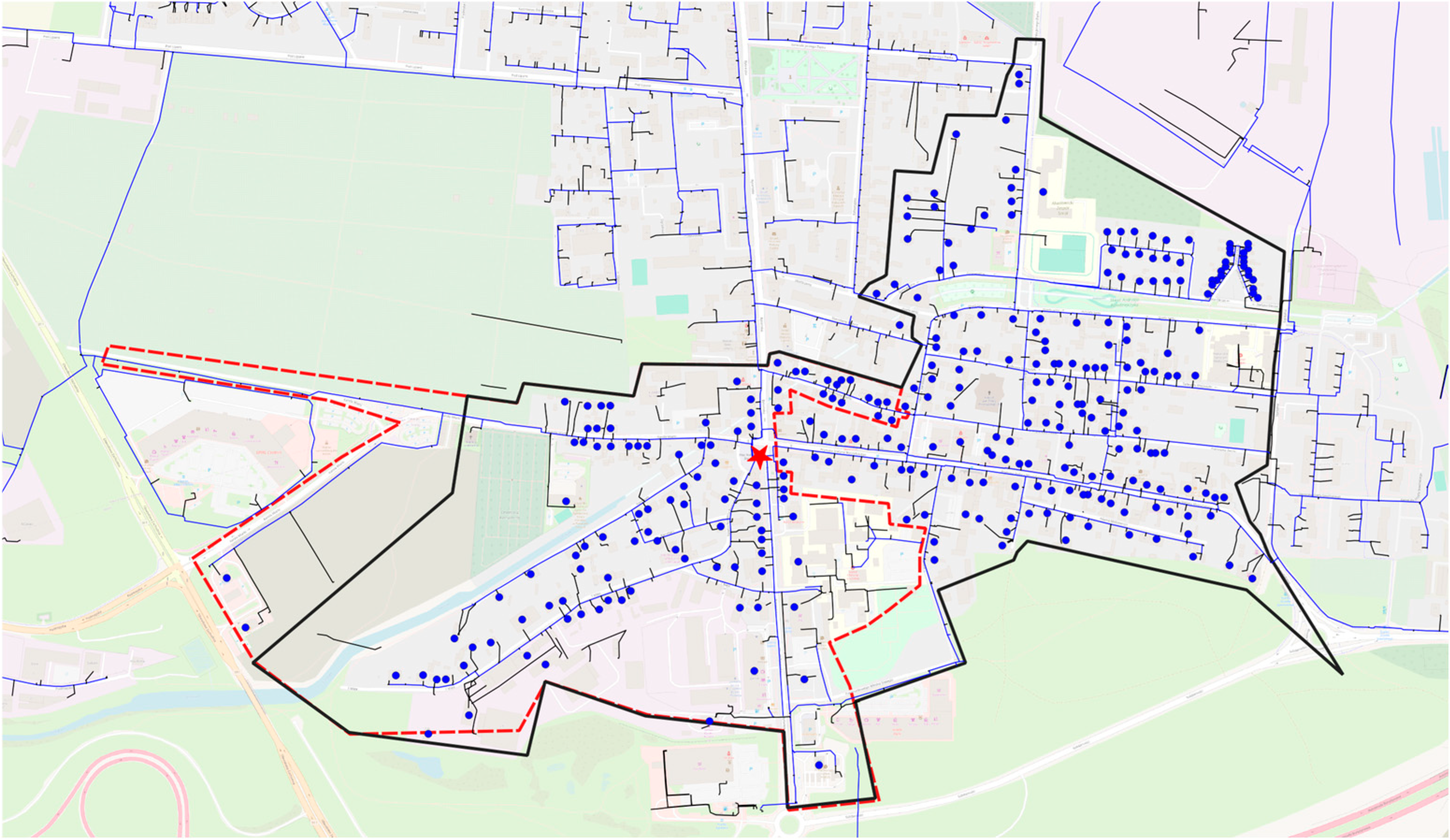
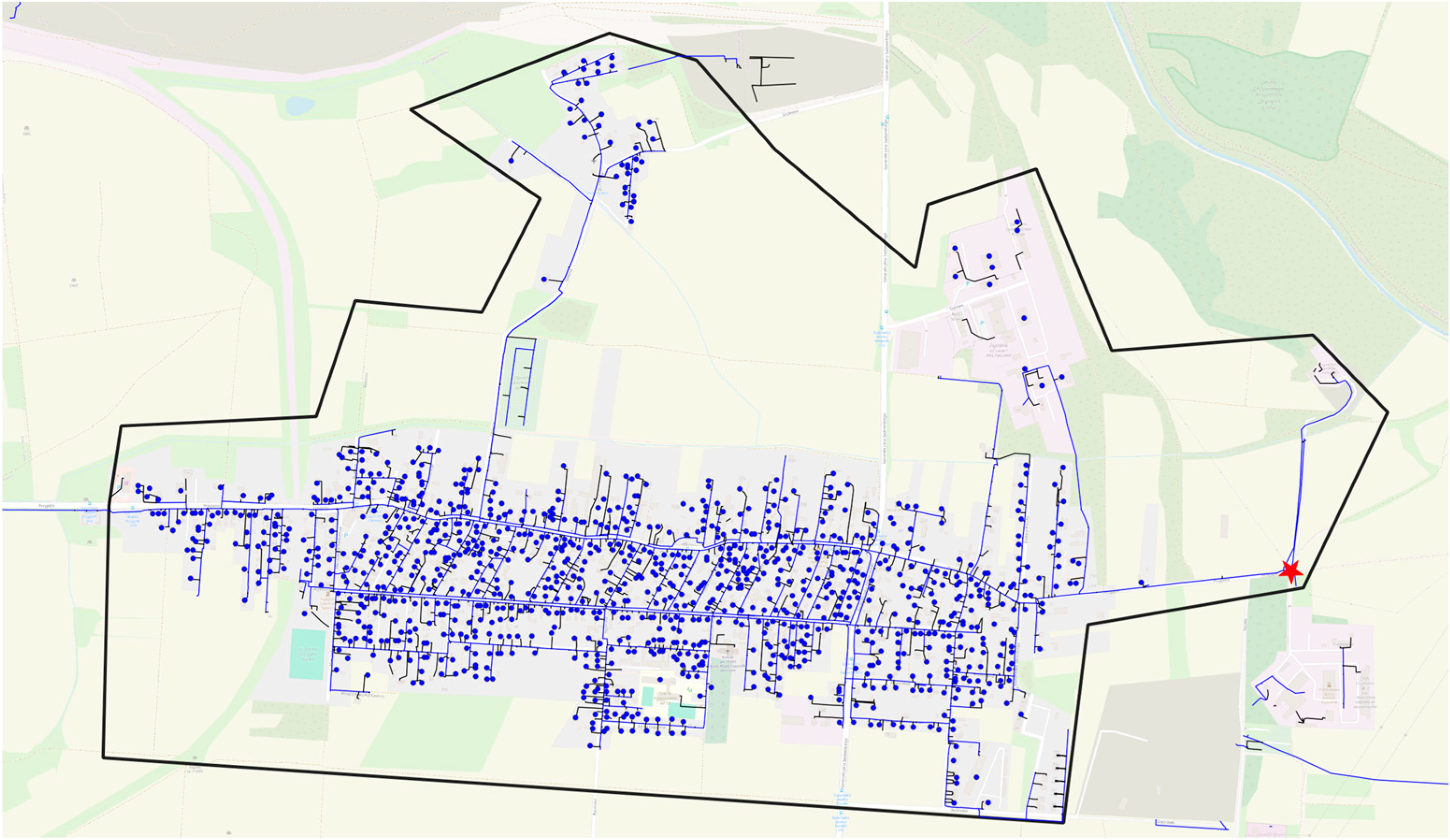
This study focuses on two designated and metered District Metered Areas (DMAs): SW Bata and SW Rozalia, both operated by MPWiK. Their locations are illustrated in
Figure 1 and
Figure 2.
Each DMA is supplied through a dedicated monitoring point installed at the connection to the main transmission pipeline. These connection points are equipped with pressure-reducing valves with fixed pressure settings, making each DMA an independent Pressure Management Area (PMA).
The key characteristics of the two analyzed zones are presented in
Table 1. SW Rozalia is significantly larger than SW Bata, exhibits a lower ILI value, and serves a different customer profile. In the SW Bata zone, there are substantial gaps in the hourly consumption data, and one customer does not provide any data at all. In contrast, in SW Rozalia, a 100% of consumption data is missing for 21 consumers; however, the overall data acquisition success rate remains high at 98.3%.
The inflow points of each DMA are equipped with sensors that record the flow rate and pressure at hourly intervals. Furthermore, all customer water meters are equipped with remote reading modules using the LoRa technology, which transmit hourly consumption data to the MPWiK’s servers automatically, without the need for manual intervention. The data is transmitted once per day.
The availability of such high-resolution datasets enables the determination of hourly water balances for each DMA, along with the calculation of water loss indicators for each hour of the day.
The methodology proposed in this paper was developed based on long-term (over five years) analyses of hourly water balance data conducted by the authors for several cities in Poland, covering more than one hundred DMAs with diverse structures and operational conditions. Within this work, hourly profiles of DMA inflow, outflow, consumption, and water losses were systematically linked to documented operational events (including pipe failures, leak incidents, pressure regulation works, DMA merging, and configuration changes) as well as to data-quality issues (e.g., measurement errors, transmission failures, and data-logging problems).
On this basis, diagnostic rules were developed to identify non-representative periods during which the calculation of the Infrastructure Leakage Index (ILI) at the individual DMA level is subject to a significant risk of distortion. In this paper, a detailed analysis is presented for two representative DMAs: one characterized by stable operation over the year (SW Rozalia) and the other (SW Bata) exhibiting frequent operational events, configuration changes, and increased susceptibility to data disturbances in 2024. This comparative setup enables a clear demonstration of the applicability and behavior of the proposed methodology.
2.2. Methods
The following research agenda was established, employing a range of techniques and analytical methods:
Stage 1: Validation of Hourly Water Balance Data and Identification of Non-Representative Periods
Reconstruction of the hourly water balance for each DMA using synchronous high-resolution data from AMI systems and telemetry, including:
aggregated hourly inflow/outflow to/from the DMA (DMA supply points),
aggregated hourly customer consumption,
derived hourly real water losses.
A diagnostic analysis of the hourly water balance was performed to identify periods in which the fundamental assumptions of DMA integrity were violated. The following types of non-representative conditions were systematically identified:
temporary merging or reconfiguration of DMA zones,
missing or incomplete inflow/outflow measurements to/from the DMA,
missing or inconsistent consumption data,
water balance inconsistencies (e.g., recorded consumption exceeding inflow),
documented operational events (pressure regulation works, valve operations at DMA boundaries),
data-quality issues (measurement and transmission errors).
Based on this analysis, non-representative periods were classified and excluded from further analyses. Periods affected by the above disturbances were flagged as unsuitable for reliable ILI estimation at the individual DMA level and were removed prior to statistical analysis and annual aggregation.
To exclude non-representative periods from further ILI analysis, the following quantitative criteria were applied:
ILId takes negative values;
hourly data for inflow, outflow, or key consumers are missing for at least one measurement hour;
the calculated ILId is associated with documented operational events, such as DMA zone merging or other system configuration changes.
Weekly aggregation—a given week is excluded if fewer than 6 days with valid ILId values are available.
Monthly aggregation—a given month is excluded if fewer than 21 days with valid ILId values are available.
This stage results in the identification of a validated set of time periods for each DMA, for which the hourly water balance is internally consistent and hydraulically meaningful.
Stage 2: Determination of ILI Values Based Exclusively on Validated Data
Estimation of ILI values exclusively for the representative periods identified in Stage 1 for the analyzed DMAs based on hourly data for each day, week, and month throughout the year of 2024. For clarity, we denote the Infrastructure Leakage Index calculated for a given aggregation period T as:
where d—day, w—week, m—month.
The index was computed from synchronous hourly data (inflow/outflow at/from the DMA inlet and the sum of customer consumption) integrated over the corresponding period T.
The Infrastructure Leakage Index for a given aggregation period T (ILI
T) was calculated according to the following formula:
where
CRLT—Current Real Losses over period T [m3/day];
URLT—Unavoidable Real Losses over period T [m3/day];
SCF—System Factor Coefficient [-].
The ILIT values were calculated using high-resolution hourly data, including flow measurements from the inlet points supplying the respective zones and hourly water consumption data from all customers assigned to each DMA.
The CRL
T was determined using the following equation:
where:
Qinp,T—average inflow to the network over period T, [m3/day];
Qcon,T—average consumption over period T, [m3/day].
The URL
T was determined using the following equation:
where:
Lm—length of mains [km];
Np—number of service connections;
Lp—average length of service connections from main to customer’s meter [km];
P—average operating pressure in the network (AOP) [m H2O];
t—conversion factor corresponding to the selected aggregation period T.
The SCF was determined using the following equation:
where:
Nc—number of service connections;
P—average operating pressure in the network (AOP) [mH2O];
a, b—the exponents 0.25 and 0.5 are empirical values derived from calibration studies of the UARL equation for systems of different sizes and pressures (
https://www.leakssuitelibrary.com/ accessed on 15 December 2025).
Stage 3: Variability Analysis and Methodological Interpretation
Analysis of the variability of the calculated ILIT values using statistical methods for the studied water distribution zones.
Comparative analysis of the variability indicators derived from the analyzed zones.
Assessment of the usefulness of ILIT values calculated on daily, weekly, and monthly intervals for operational management of water distribution systems at the DMA level.
The proposed methodological framework is designed not only to calculate the Infrastructure Leakage Index (ILI), but primarily to validate whether the available data allow for a physically meaningful and reliable determination of the annual ILI value for an individual DMA.
The introduction of a systematic diagnostic data-filtering stage, based on the analysis of the hourly water balance, addresses a key limitation of previous ILI applications and enables a scalable, AMI-based approach to ILI validation for individual DMAs.
3. Results
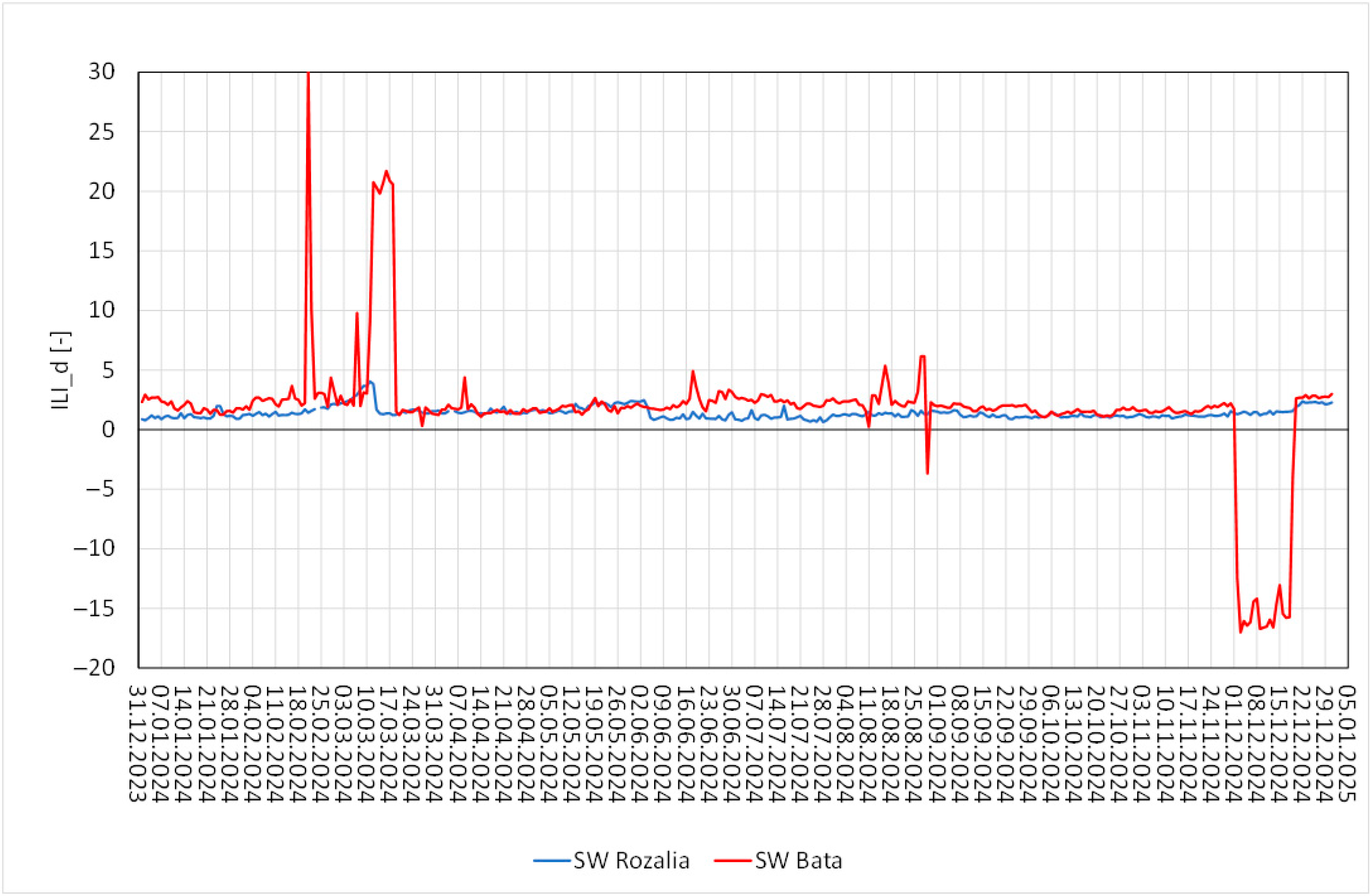
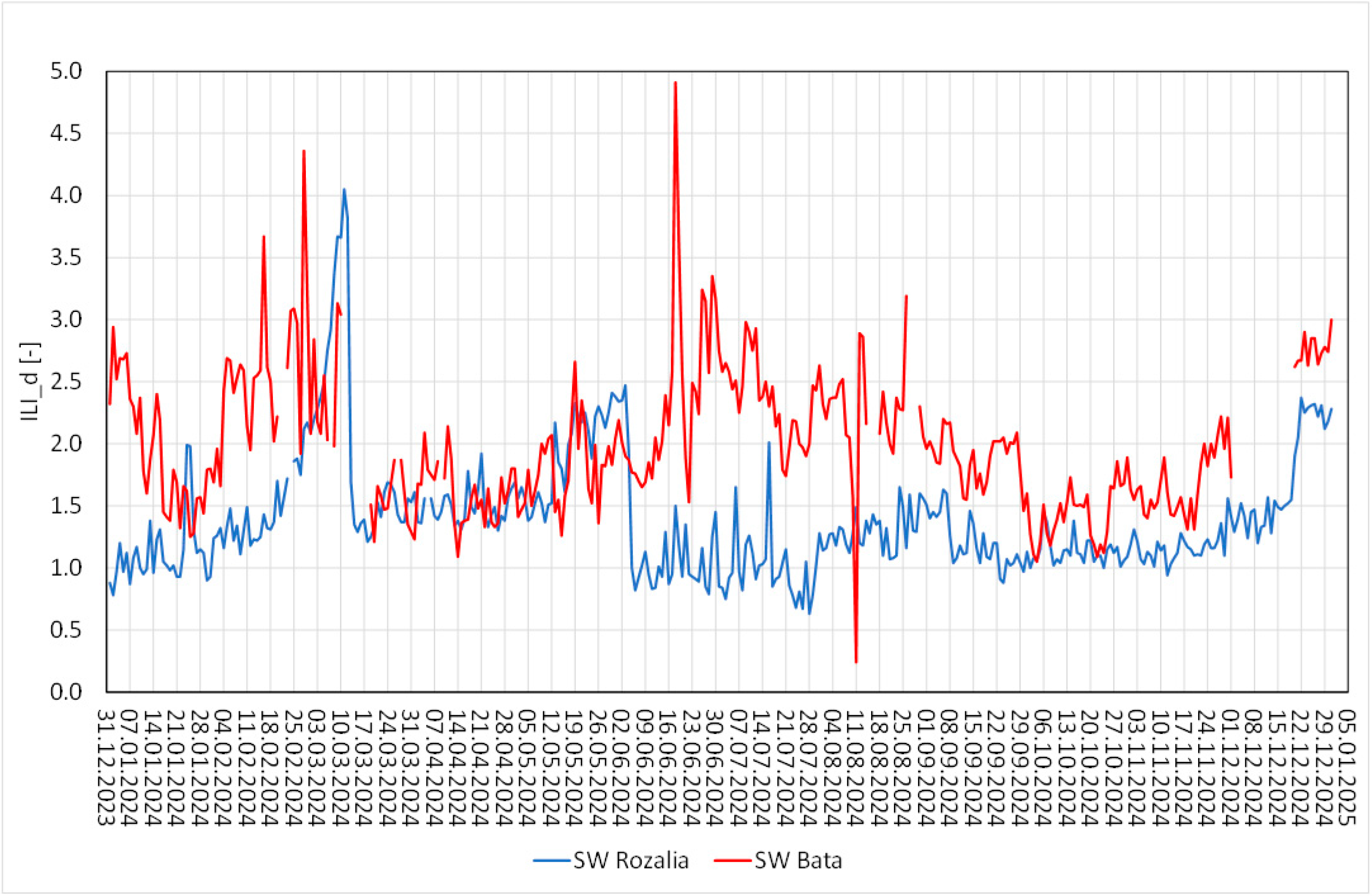
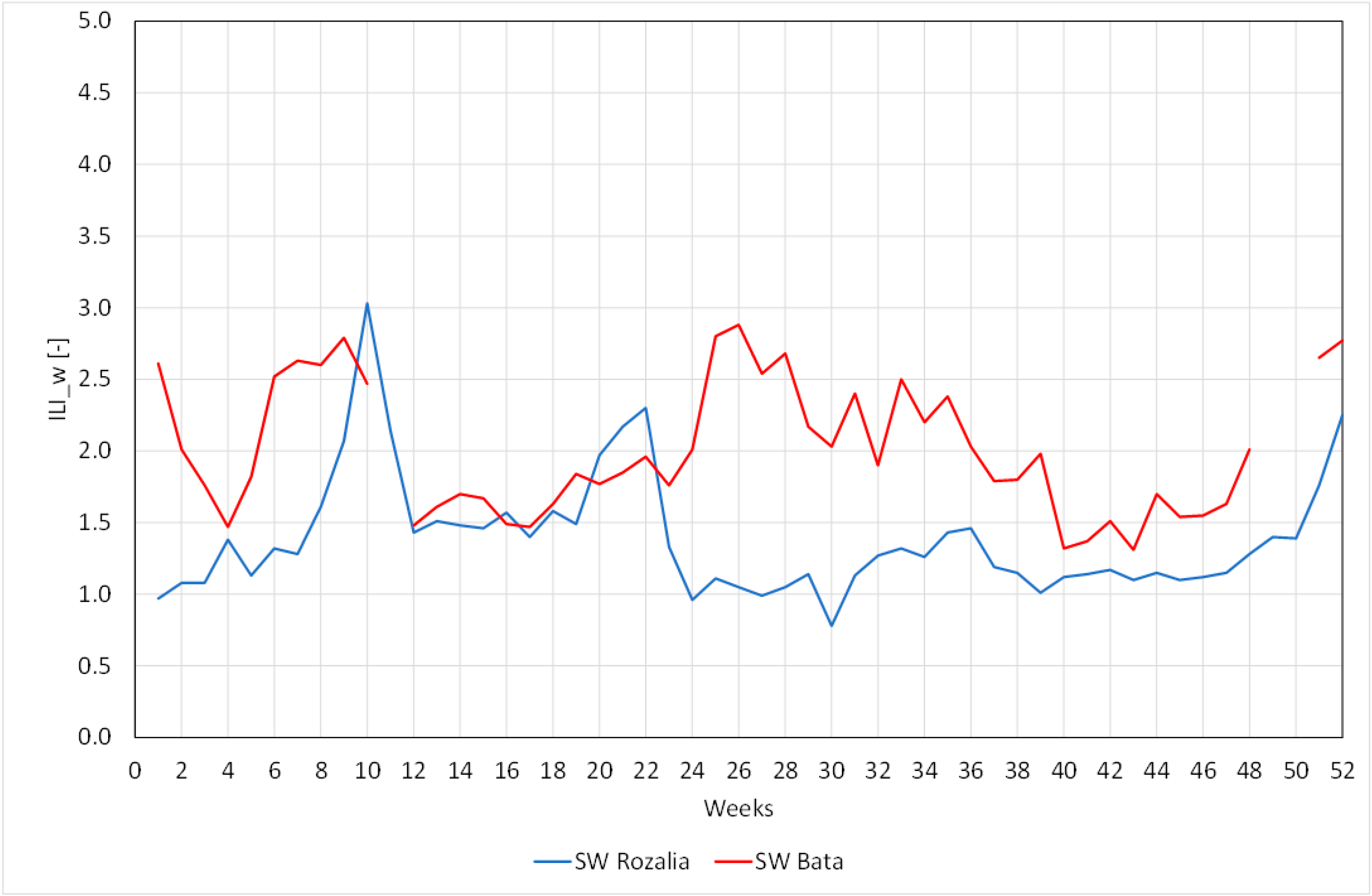
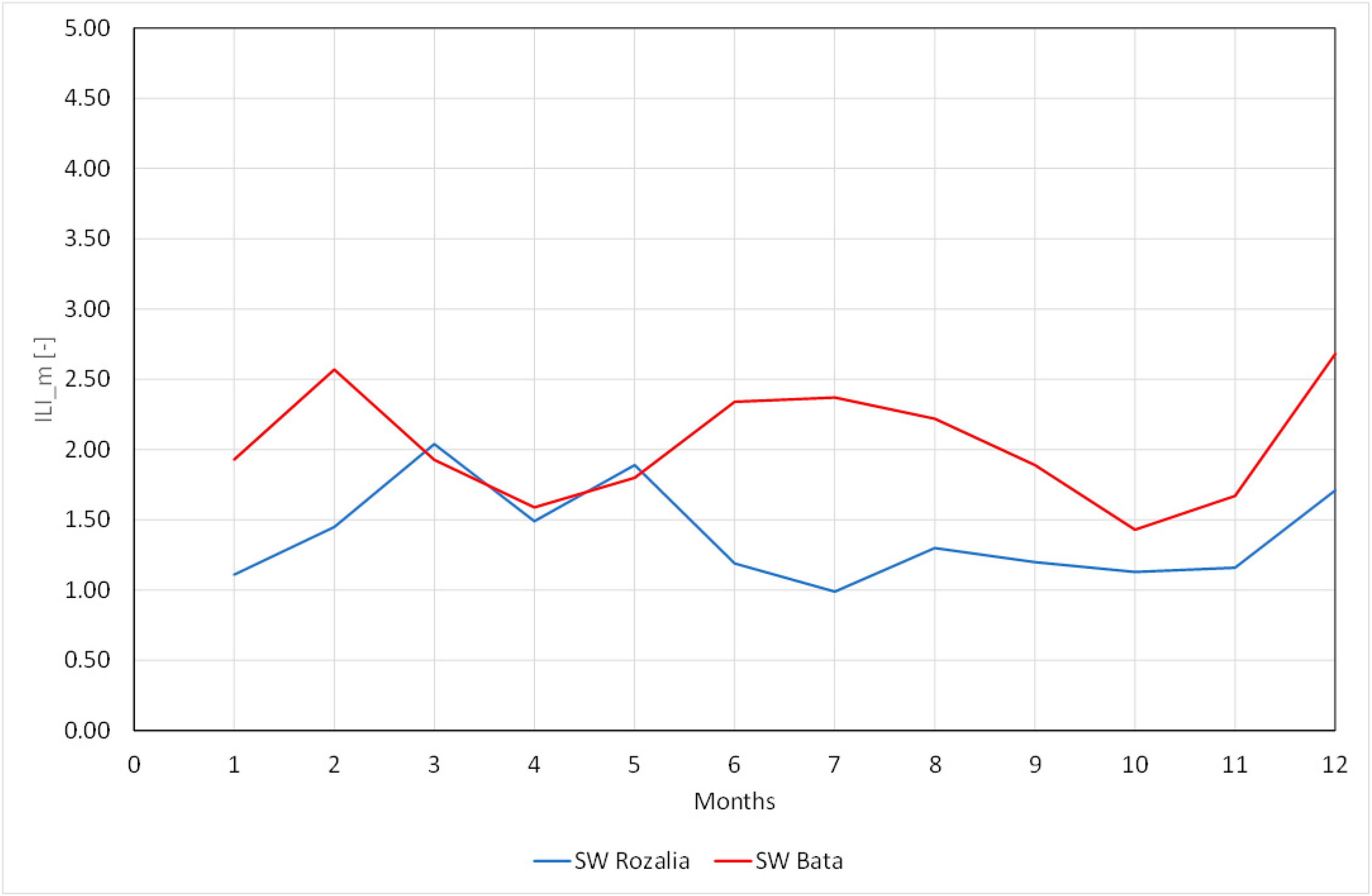
The chart illustrates the variations in the ILI
T values for 2024 for SW Rozalia and SW Bata is presented in
Figure 3 for daily values,
Figure 4 for weekly values, and
Figure 5 for monthly values are based on
raw (pre-validated) data. This preliminary presentation is intended to visualize the scale and nature of data-related and operational disturbances affecting the ILI
T calculation, which are subsequently identified, classified, and discussed in detail in the following sections.
The daily values of the Infrastructure Leakage Index (ILId) for SW Rozalia throughout 2024 remained close to 1.0 and exhibited a stable trend, with two distinct increases corresponding to the occurrence and subsequent repairs of water network failures. The maximum ILId value was recorded on 11 March 2024, reaching 4.05, which significantly deviates from the annual average of 1.39.
In 2024, data regarding the water inflow into the SW Rozalia zone were missing on 24 February and 5 April. As a result, these days were excluded from the analysis.
SW Bata exhibited substantially higher daily ILId values, with an annual average of 1.40 (without any corrections). Several extreme values were observed throughout the year, namely: 30.80 (21 February 2024); 9.78 (7 March 2024); 21.70 (16 March 2024); 4.38 (9 April 2024); 4.91 (18 June 2024); 5.35 (16 August 2024); 6.15 (27 August 2024); −3.76 (29 August 2024); and −17.01 (3 December 2024).
These extreme values correspond to short-term operational disturbances and do not represent the typical leakage behavior of the DMA. Their identification is essential for validating which periods may distort the final annual ILI value for DMA (2.00 with corrections).
Selected identified extremes in the SW Bata zone in 2024 are characterized below.
21 February 2024—SW Bata took over the water supply for the entire SW Janty zone.
7 March 2024—SW Bata took over the water supply for the entire SW Janty zone.
11 to 18 March 2024—Extension of the zone to include part of the consumers from SW Janty, without adjusting/assigning their consumption to SW Bata.
9 April 2024—Connection of the SW Bata with the SW Pod Lipami Górka.
18 June 2024—Probable water main failure (value of ILId is correct).
16 August 2024—Missing consumption data from a large water user.
3 to 22 December 2024—A failure occurred in the supplier’s network, as a result of which MPWiK interconnected several zones into one, supplied from multiple points, thus making an analysis impossible.
Negative ILId values were excluded from the variability analysis because such configurations require analytical treatment of merged DMAs as a single supply zone and cannot be interpreted at the individual DMA level. Accurately determining the ILId during these periods would require an integrated estimation approach accounting for the joint operation of multiple DMAs as a single supply zone.
The weekly values of the Infrastructure Leakage Index (ILI
w) (
Figure 4) exhibit a smoothed profile, with extreme values significantly flattened. For instance, in the case of SW Rozalia, the highest peak observed on 11 March 2024, decreased from 4.05 (daily value) to 3.03 (weekly value). Similarly, in the SW Bata zone, the highest positive extreme was reduced from 4.91 to 2.88 (after corrections).
Aggregating the data reduces the influence of short-term disturbances, making ILIw values more representative for operational trend analysis.
In the case of a representative event in SW Rozalia—the first extreme observed on 11 March 2024—the data reveals a substantial discrepancy between the ILI
T values calculated at different temporal resolutions: 4.05 for daily data, 3.03 for weekly data, and 2.04 for monthly data (
Figure 5).
This illustrates the core methodological point of this study: ILId is highly sensitive to localized disturbances, whereas monthly aggregation produces values suitable for benchmarking and inter-DMA comparison.
Additionally, the described case highlights the significant impact that water supply network failures can have on the ILIT value and underscores the sensitivity of ILId calculations to such events. During subsequent stages of the analysis, the extreme ILIT outliers were excluded, as they were attributable to water balance inconsistencies arising from zone merging and missing inflow or consumption data.
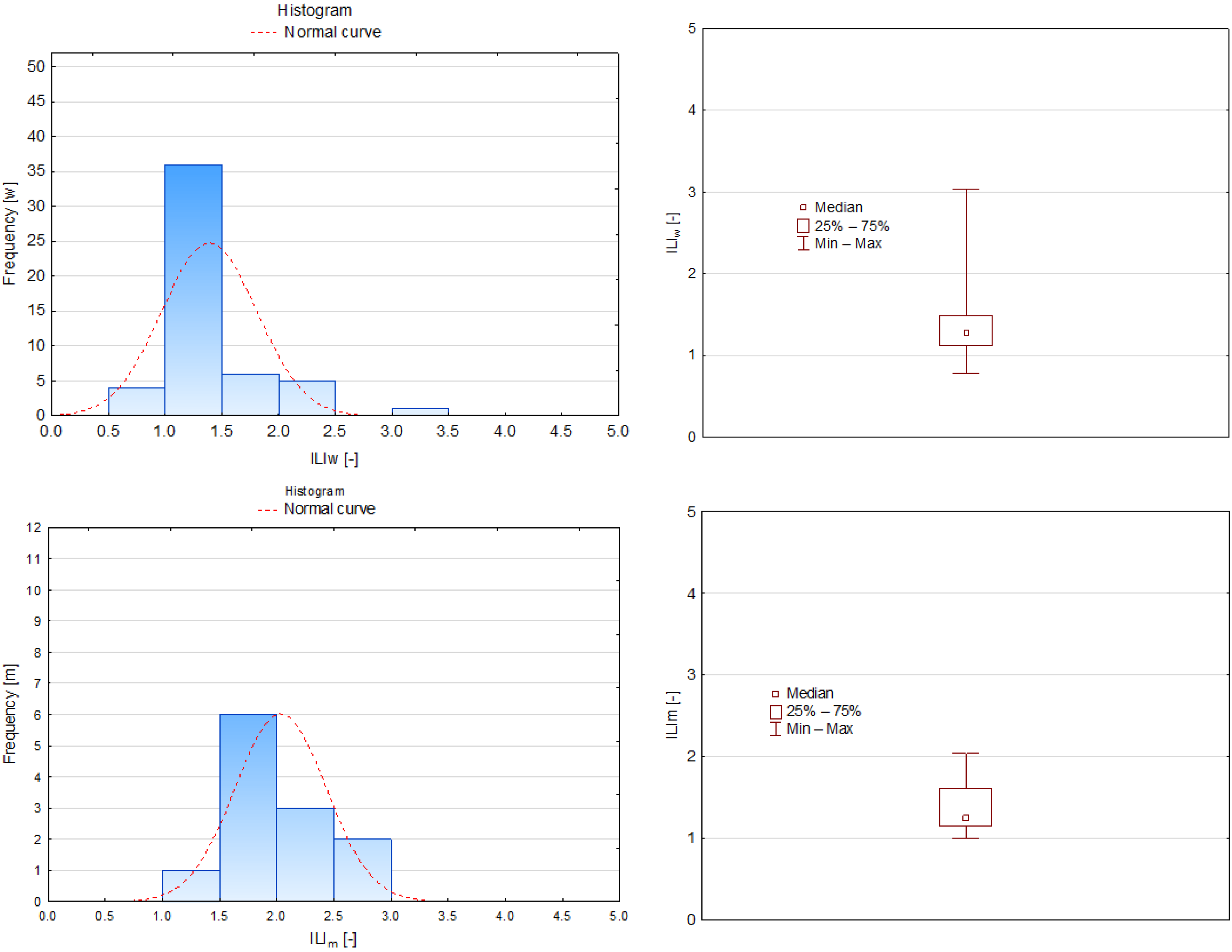
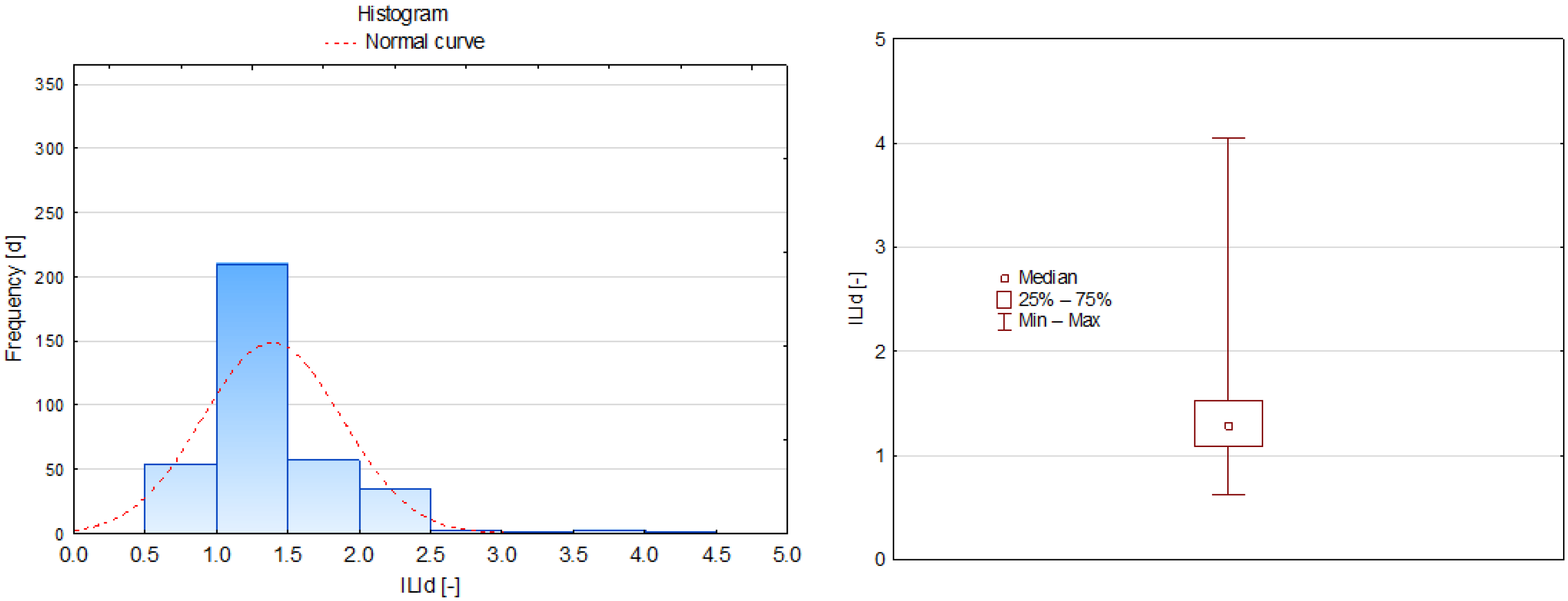
The histograms and boxplots for SW Rozalia (
Figure 6) demonstrate a relatively narrow distribution of ILI
T values across all temporal aggregations with a noticeable right-skewness reflecting occasional elevated values. This indicates stable system performance with only limited operational disturbances.
Daily data shows low dispersion with occasional short-term peaks rather than persistent anomalies, suggesting generally stable short-term operation. Weekly and monthly aggregations result in more compact distributions with reduced variability, effectively filtering transient disturbances and yielding consistently low leakage indicators.
These visualizations confirm that SW Rozalia operates as a well-controlled DMA, characterized by stable leakage conditions and effective operational management over time.
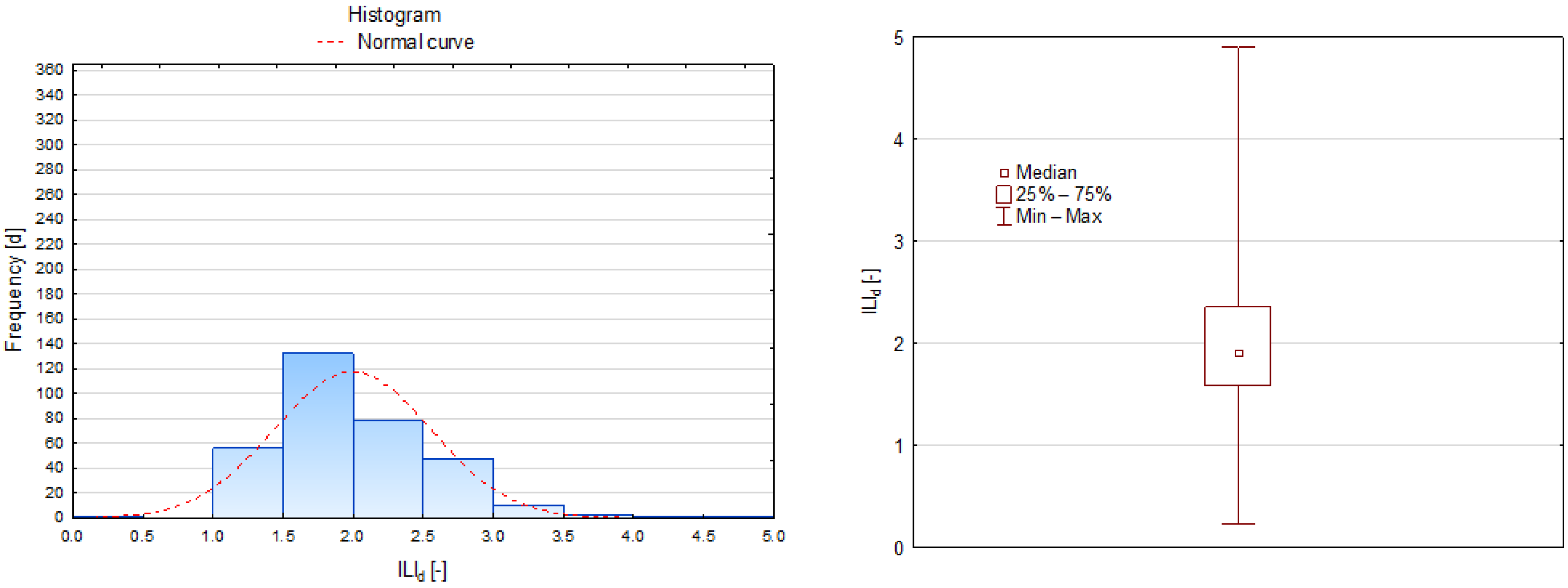
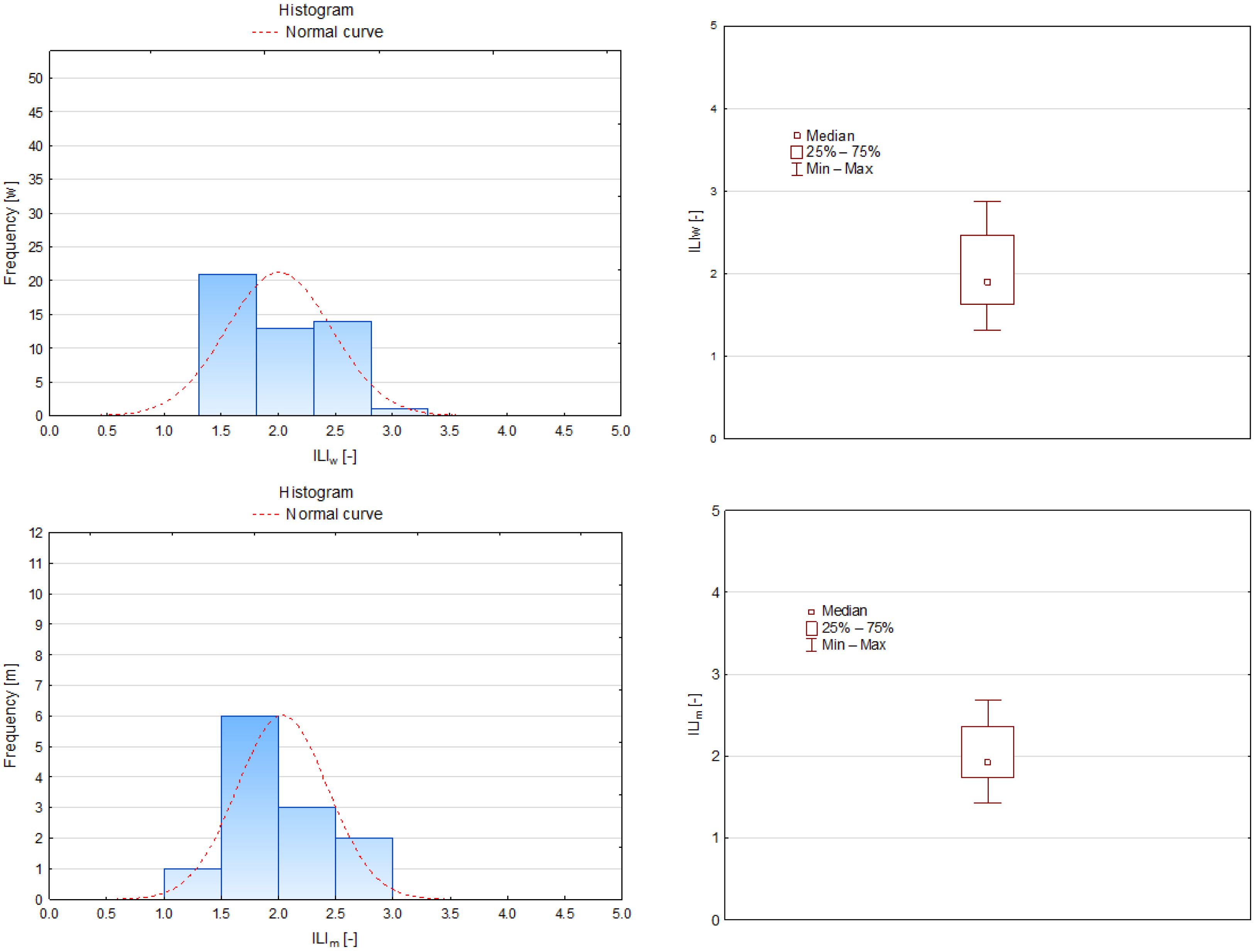
In contrast, SW Bata (
Figure 7) exhibits a wider, right-skewed distribution, especially for daily data. Such dispersion does not imply poorer performance in absolute terms but reflects the occurrence of operational disturbances that must be detected and filtered before determining the annual ILI for DMA. ILI
d values are more dispersed, with a right-skewed tail and several outliers, indicating short-term leakage spikes or operational anomalies. Weekly and monthly data remains more dispersed than in SW Rozalia, although aggregation reduces the extremes and yields more compact distributions.
This variability pattern suggests that SW Bata experiences unstable leakage conditions, pointing to potential operational inefficiencies or intermittent infrastructure failures that require further investigation.
In the next step, an analysis of the variability of the ILIT values calculated for each day, week, and month of the year of 2024 was conducted for the studied zones.
The statistical analysis of ILI
T values in SW Rozalia for different temporal resolutions (daily, weekly, and monthly) is presented in
Table 2. The mean ILI
T values are very similar (≈1.38–1.39) regardless of the aggregation level, indicating that the average level of water losses in the DMA is stable and relatively insensitive to the method of averaging. The medians are slightly lower than the means, which—together with the high positive skewness for ILI
d and ILI
w (Sk ≈ 2.07 and 1.78)—indicates a right-skewed distribution: typical values are lower, while episodes of elevated ILI
T occur on the right tail. For daily and weekly aggregation, a high positive kurtosis is also observed (K ≈ 6.46 and 3.87), evidencing a heavy right tail in which sporadically very high ILI
T values appear, associated with short-term events (failures, changes in operating regime, atypical operation).
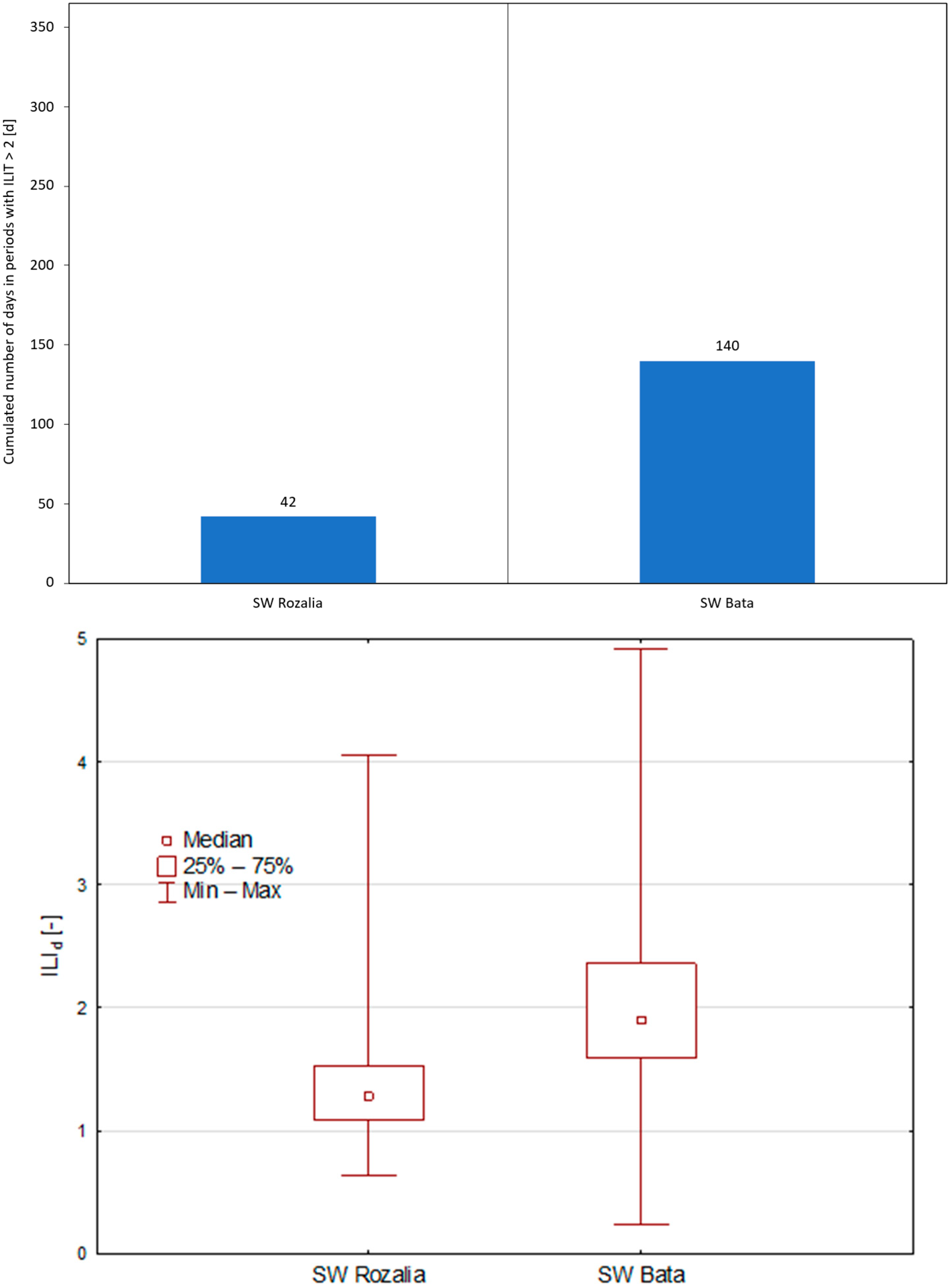
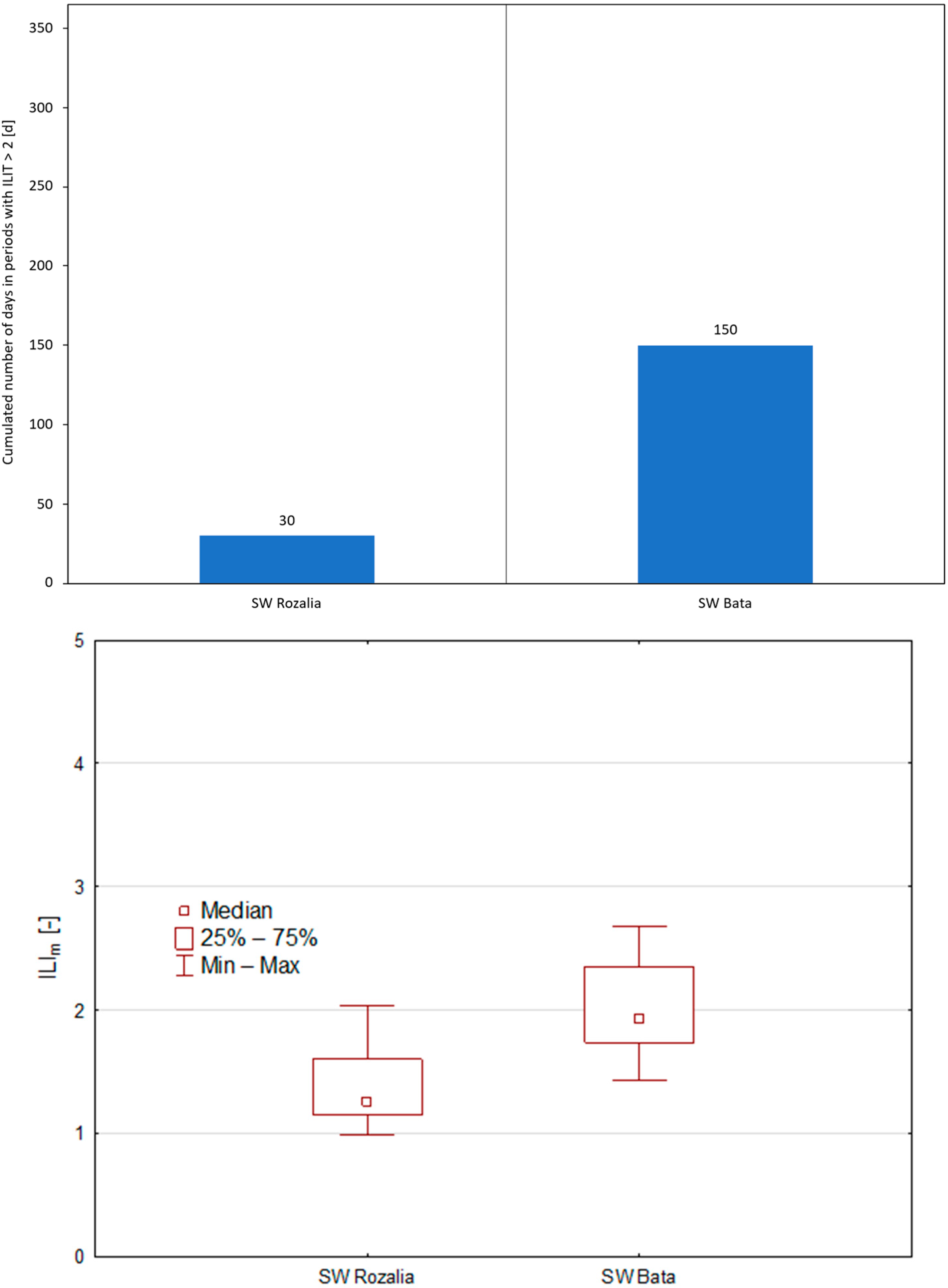
With increasing aggregation, a systematic “smoothing” of the series is evident: the standard deviation and range decrease with increasing aggregation, indicating a smoothing effect, while the coefficient of variation remains at a comparable level. Maximum ILIT values decline from approximately 4 for ILId to approximately 2 for ILIm, confirming that weekly and monthly aggregation strongly reduces the influence of extreme values. At the same time, the interquartile range (IQR) decreases with aggregation, indicating a tighter concentration of typical values at the monthly scale. This indicates that for daily and weekly data most observations are concentrated within a relatively narrow interval, but a small number of very high values substantially extend the overall range, whereas at the monthly level, extreme events are largely “masked” by the averaging process. The number of observations with ILIT > 2 is relatively small (T = 42 days for both ILId and ILIw) and further decreases at the monthly level (T = 30 days), confirming the incidental nature of elevated-loss periods.
Daily and weekly ILId,w values exhibit high variability (CV = 0.35 for daily data, CV = 0.30 for weekly data) and therefore should be used cautiously as a synthetic measure of the current “state” of the DMA; however, they are particularly useful for anomaly detection and short-term system diagnostics—precisely because they retain information about short-lived peaks. In contrast, the monthly ILIm, despite a comparable coefficient of variation (CV ≈ 0.35), provides a more stable basis for long-term assessment due to reduced extreme values.
In SW Bata, ILIT values are high across all temporal resolutions (on average approximately 1.99–2.03), indicating a substantial level of real losses and only moderate system efficiency. The medians are very close to the means, and the skewness is only moderately positive (Sk ≈ 0.20–0.99), which implies a fairly regular, slightly right-skewed distribution without strongly outlying peaks. Variability is moderate and decreases with aggregation (CV ≈ 0.28 for ILId, 0.23 for ILIw, and 0.20 for ILIm), meaning that daily and weekly data remain sensitive to short-term events, whereas the monthly ILIm—with the lowest CV—is best suited for inter-DMA comparisons and long-term performance reporting.
With increasing aggregation, minimum values increase markedly (from 0.24, 1.31 to 1.43), while maximum values decrease (from 4.91, 2.88 to 2.68), indicating strong “truncation” of extremes. The interquartile range decreases from 0.77 (daily) to 0.62 (monthly), with a local increase at the weekly scale (0.84). Kurtosis is moderately positive for the daily series (K ≈ 2.58) and slightly negative for the weekly series (K ≈ −1.12), indicating heavier tails and occasional extremes in daily data, while weekly aggregation attenuates outliers and yields a flatter distribution. The large number of days with ILIT > 2 observed at the weekly aggregation level (T = 154 days, 22 weeks), as well as the high frequency of threshold exceedances even at the monthly scale (T = 150 days, 5 months), confirms the persistent, long-term nature of elevated water losses in this DMA.
The key insight is that absolute dispersion is not used for performance comparison; instead, ILI provides the normalized basis for comparing leakage levels between DMAs.
Time aggregation reduces volatility, demonstrating the importance of selecting representative periods when determining annual ILI values.
Figure 8 shows a comparison of the variability parameters of the ILI
d indicator, calculated for each day of 2024 for SW Rozalia and SW Bata.
The comparison of the daily Infrastructure Leakage Index (ILId) values between SW Rozalia and SW Bata shows clear differences in level and dispersion.
SW Rozalia exhibits low ILId values (mean 1.39, median 1.28, maximum 4.05) with moderate relative variability (CV ≈ 0.35). The low standard deviation (0.48) and low IQR (0.44) indicate a compact distribution and a generally stable, well-managed zone.
SW Bata is characterized by consistently elevated ILId values (mean = 1.99, median = 1.90, maximum = 4.91), indicating a persistently high level of real water losses and only moderate system efficiency. Although the relative variability is moderate (CV ≈ 0.28) and lower than in SW Rozalia, the wide absolute dispersion (SD = 0.55, IQR = 0.77) reflects substantial losses and frequent high-loss episodes. This interpretation is strongly supported by the very large number of days with ILId > 2 (T ≈ 140 days), confirming that elevated losses in this DMA are long-term rather than episodic. The moderately positive skewness and kurtosis (Sk ≈ 0.99; K ≈ 2.58) further indicate a right-skewed distribution with a moderately heavy tail, typical of a sustained, structurally increased level of leakage rather than isolated short-term disturbances.
In summary, SW Rozalia reflects good operational control at a lower loss level, whereas SW Bata indicates higher real losses and broader day-to-day fluctuations. Targeted leak detection, pressure management, and focused field checks are recommended in SW Bata to reduce losses and improve stability.
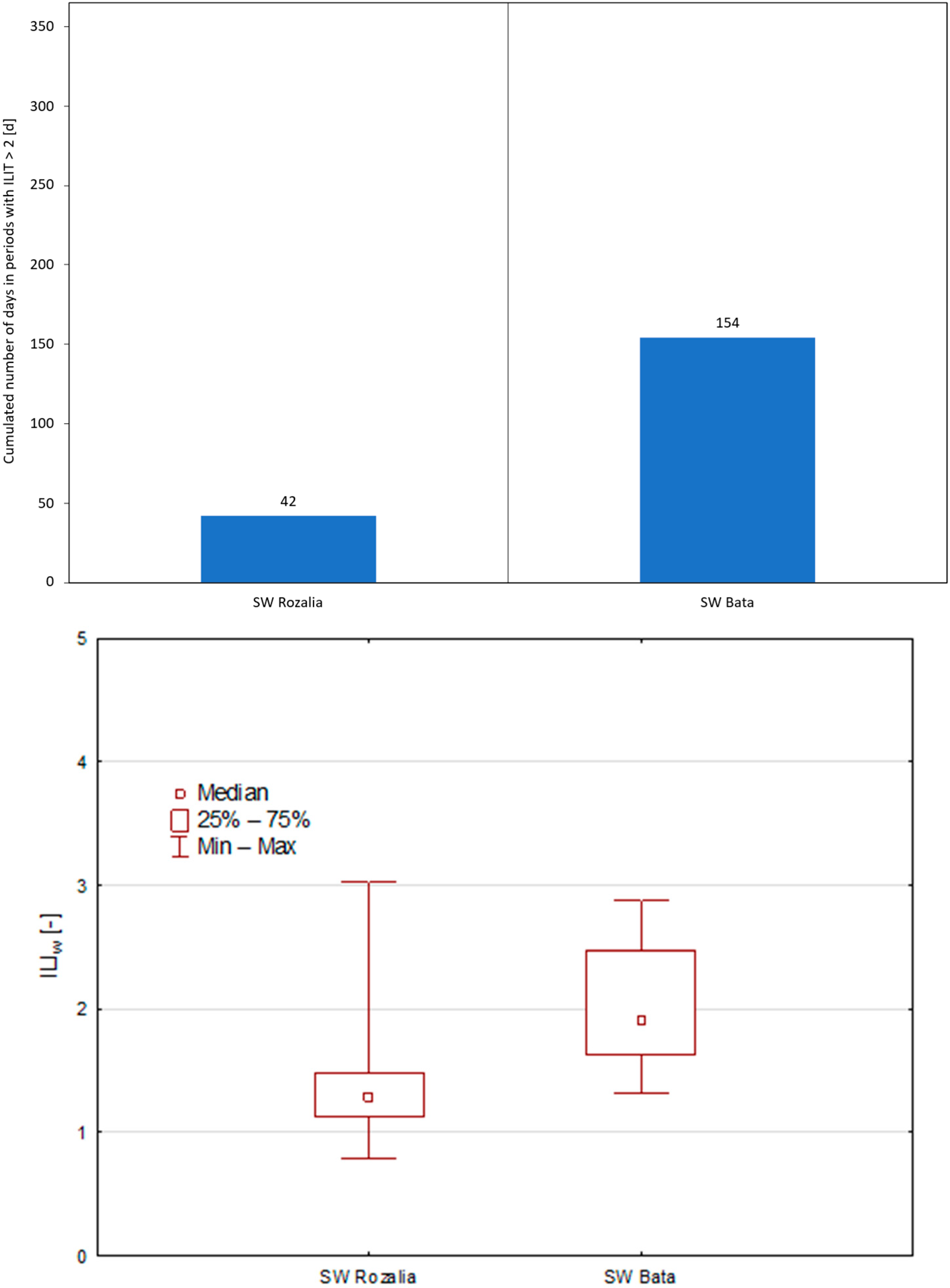
In terms of variability (
Figure 9), SW Bata is characterized by a larger absolute dispersion, reflected in higher standard deviation, interquartile range, and a wider min–max range, while its coefficient of variation (CV) is lower than that of SW Rozalia. This indicates that losses in SW Bata are higher in absolute terms, but their weekly behavior is relatively more stable in proportional terms.
The shapes of the distributions confirm this interpretation. SW Rozalia exhibits a strongly right-skewed distribution with a heavy upper tail (Sk ≈ 1.8; K ≈ 3.9), consistent with generally low loss levels interrupted by sporadic weeks with elevated ILIw values. In contrast, SW Bata shows lower skewness and kurtosis (Sk ≈ 0.4; K ≈ −1.1), indicating a less skewed distribution centered around persistently elevated ILIw levels.
This is consistent with the daily statistics, which show 42 days (6 weeks) with ILId > 2 in SW Rozalia compared with 154 such days (22 weeks) in SW Bata, confirming that high-loss conditions occur much more frequently in SW Bata throughout the year.
At the monthly scale (
Figure 10), SW Bata shows clearly higher ILI
m values and a wider absolute dispersion than SW Rozalia, while temporal aggregation substantially reduces variability in both DMAs. Monthly averaging stabilizes the indicator, indicating that losses in SW Bata are consistently elevated rather than driven by isolated extremes.
The distributional patterns confirm this behavior: SW Rozalia remains concentrated at relatively low ILIm values, with only a limited number of months exceeding the ILIm > 2 threshold, whereas SW Bata exceeds this threshold for most of the year (T = 150 days, 5 months), demonstrating a persistent high-loss condition that remains evident even after monthly aggregation.
Analysis of Hourly Water Balance Components for SW Bata and SW Rozalia in 2024
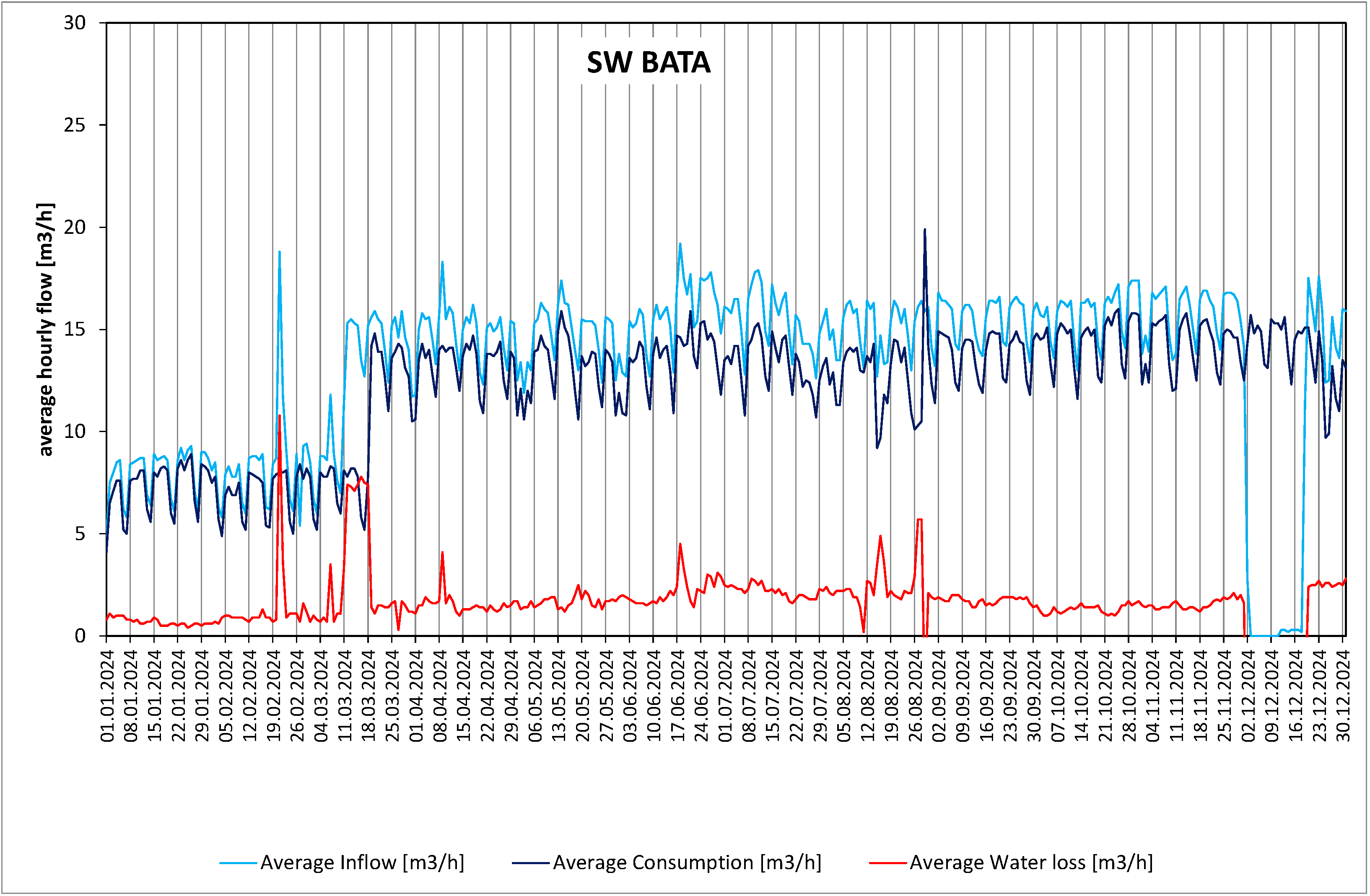
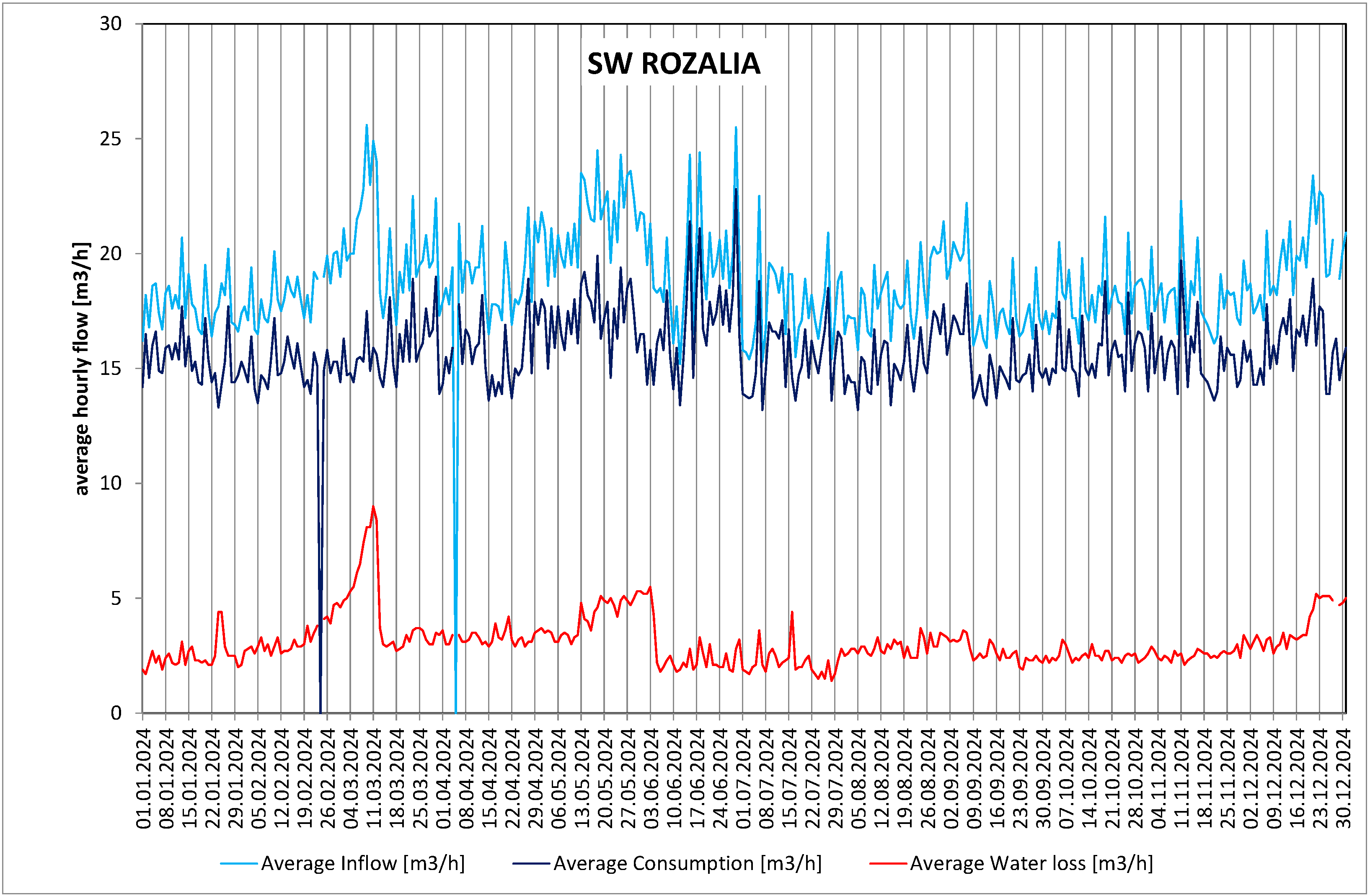
The analysis of hourly water balance components in the SW Bata (
Figure 11) and SW Rozalia (
Figure 12) indicates a relatively stable relationship between inflow and consumption throughout most of 2024, with moderate and consistent levels of water loss. The extreme values observed at certain periods (e.g., March, August, and November) do not reflect actual operational conditions—their causes have been described in detail earlier in the article (e.g., temporary network shutdowns, sensor malfunctions, or maintenance works).
When excluding atypical events, the hourly water balance reconstruction shows average losses of approximately 3–5 m3/h in SW Bata and 4–6 m3/h in SW Rozalia. These values serve exclusively as diagnostic indicators of short-term hydraulic behavior within each DMA. They must not be interpreted as a basis for comparing leakage performance between zones, since absolute losses depend on system size, number of connections, and pressure. As emphasized earlier, inter-DMA comparison must rely on the normalized ILI, not on m3/h values. The purpose of this hourly assessment is to identify irregularities and to determine whether a given period should be included in the calculation of the annual ILI.
From an operational perspective, such loss levels can be considered moderate for medium-sized DMAs. However, on a monthly scale, they still represent significant volumes of water—reaching several hundred cubic meters. In practice, the magnitude of losses observed in both DMAs suggests that standard acoustic leak detection methods may have limited effectiveness in pinpointing leaks in the field, particularly when losses are dispersed or related to background leakage rather than distinct burst events.
4. Discussion
The results presented above provide a detailed basis for interpreting the temporal behavior of water losses in both DMAs and for linking the observed hourly losses with the ILIT. In particular, they make it possible to evaluate which periods in the hourly time series are representative for ILIT determination and which should be treated as distorted and removed from the calculation of the annual indicator.
The findings demonstrate that the ILI
T is sensitive to the temporal resolution of the input data. The daily series shows higher fluctuation amplitudes and enables detection of short-term anomalies (e.g., leak bursts or configuration changes), which is consistent with prior research (e.g., [
26,
29]). In particular, the distinct peaks in the daily ILI
d of SW Bata highlight its sensitivity to short-term disturbances, whereas weekly and monthly aggregations dampen these extremes and produce more stable indicators suitable for benchmarking and long-term assessment (cf. [
7,
24]). This confirms that daily and weekly ILI
d,w values should primarily be used as a diagnostic tool for identifying non-representative periods, rather than as standalone reporting indicators.
Regarding relative variability, the coefficient of variation (CV%) is higher in SW Rozalia and lower in SW Bata at all time scales, decreasing with greater aggregation in both DMAs. This pattern indicates that the two DMAs differ not only in the average ILIT level but also in the stability of their leakage behavior. However, these differences must be interpreted exclusively through normalized indicators (ILI, CV) and not through absolute loss rates in m3/h, which depend on system size, number of connections and pressure. The hourly water balance analysis enhances this understanding by providing a tangible representation of what a given ILI level means in practice. Translating a relative indicator into actual hourly flow rates of lost water allows for direct visualization of the dynamics of leakage behavior. In the context of this study, hourly balances are used to explain why, for certain days or weeks, the ILI takes unusually high or low values and whether these deviations are caused by real leaks, operational interventions, or data errors. The hourly analysis therefore does not serve to compare leakage levels between DMAs, but to diagnose the causes of ILIT variability within each individual DMA. Although the detailed analysis presented in this paper focuses on two DMAs, the diagnostic rules and validation logic were derived from multi-year analyses more than hundred DMAs, and are therefore transferable and scalable to larger systems.
Moreover, the magnitude of the hourly losses—typically in the range of 3–6 m3/h—illustrates the technical and economic boundaries of leakage control. Such background or diffuse losses are often below the detection thresholds of standard acoustic tools (geophones, correlators, loggers), indicating that further reduction would require significant investment or advanced analytical methods. Hence, hourly data not only supports the quantitative ILI interpretation but also sets realistic expectations for operational fieldwork and cost-effective asset management. At the same time, these absolute values are interpreted only within the given DMA and are not used as a basis for cross-DMA performance ranking, which remains the role of the normalized ILI.
Overall, the integration of high-resolution (hourly) analysis confirms that short-term fluctuations contain valuable diagnostic information. Incorporating this temporal detail into leakage management frameworks enhances the interpretability and operational relevance of the ILI and strengthens its connection to real network conditions. Most importantly, the results demonstrate that AMI-based hourly analysis can be used as a systematic validation step preceding the calculation of the annual ILI for each DMA, by identifying and excluding distorted periods (e.g., those affected by DMA reconfiguration, data gaps, or sensor malfunction).
From a practical perspective, the proposed approach suggests several directions for utilities:
implementing a procedure for pre-selecting and validating measurement periods before calculating the ILI for each individual DMA;
using AMI/telemetry data to automatically detect non-representative hours and days (e.g., configuration changes, missing consumption, abnormal flows);
integrating hourly inflow–outflow–consumption data as a qualitative check of DMA water balance for selected analysis periods;
applying diagnostic filters (removal of invalid values and disturbed intervals) before computing regulatory indicators;
estimating uncertainty ranges for the annual ILI and assessing its sensitivity to the presence or removal of disturbed periods.
For engineers and researchers, the results indicate the potential for:
developing predictive models that support the validation of ILI for individual DMAs (e.g., anomaly detection and classification in hourly data);
automating the classification of AMI data disturbances into operational events, data errors, and configuration changes;
using the proposed methodology to assess the impact of pressure management, rehabilitation programs and operational interventions on the stability and reliability of the ILI for each DMAs.
In this way, the study not only documents the temporal variability of ILI for each DMAs, but also provides a reproducible framework for improving the quality of the annual indicator derived from AMI data.
5. Conclusions
This study demonstrates that the key prerequisite for the reliable determination of the annual Infrastructure Leakage Index (ILI) for an individual DMA is not merely the availability of high-temporal-resolution data, but their informed and deliberate use to validate the representativeness of the periods included in the indicator calculation. The analysis shows that ILIT values derived from daily and hourly data are highly sensitive to short-term operational disturbances, network configuration changes, and data-quality issues; at the same time, when properly analyzed, this data provides unique diagnostic insight, enabling the unambiguous identification of non-representative periods that would otherwise significantly distort the final annual ILI value.
The study further demonstrates that high-resolution time series should not be interpreted as alternative reporting indicators, but rather as a tool supporting the selection and validation of input data. Monthly aggregation, applied after the prior removal of disturbed periods, yields the most stable and comparable ILIm values, suitable for benchmarking and for assessing the performance of water distribution systems.
From a broader perspective, the results confirm that the ILI is inherently reactive to transient system behavior, particularly in zones with hydraulically unstable operating conditions. Consequently, its interpretation must always account for the selected level of temporal aggregation, and high-frequency monitoring must be supported by systematic data validation, trend analysis, and anomaly detection, as provided by the AMI-based procedure proposed in this study.
The ongoing development of AMI systems, delivering hourly water-consumption data, enables a more accurate estimation of actual demand (approximating Qreal) and, consequently, more reliable ILI calculations. At the same time, without appropriate filtering, such high-frequency data may artificially amplify the apparent variability of the indicator; this study explicitly identifies this risk and demonstrates how it can be effectively mitigated through the proposed diagnostic procedure.
Finally, integrating ILI interpretation with hourly water balance analysis, as illustrated for the SW Bata and SW Rozalia DMAs, bridges the gap between indicator-based assessment and operational practice. It enables direct evaluation of leakage dynamics, realistic assessment of leak-localization feasibility, and identification of the economic limits of further loss reduction. This approach enhances the practical value of the ILI and strengthens its role as a tool supporting both operational decision-making and long-term performance management of water distribution systems at the DMA level.
In summary, the main contributions of this study are:
a diagnostic procedure for identifying and filtering distorted periods in AMI-based ILI calculations for every individual DMA;
a quantitative assessment of how such periods affect annual ILI value for individual DMA;
a demonstration that filtering non-representative periods significantly improves the stability and interpretability of the annual ILI for every individual DMA;
practical recommendations for utilities, engineers and researchers on how to integrate AMI-based diagnostics into leakage management and regulatory reporting.
These findings provide a basis for further research on automated ILI validation algorithms and support the development of more robust, data-driven leakage performance indicators at the DMA level.