1. Introduction
Maritime transportation has experienced significant growth in recent years, resulting in substantial challenges during berthing and unberthing maneuvers in ports, particularly due to increased ship drafts and engine powers [
1]. These issues are severe for older ports originally designed for smaller vessels [
2]. When a ship is fully loaded, the channel depth significantly limits the selection of the vessel’s navigational route. Typically, a clearance exists between the seabed and the bottom of the ship to prevent grounding. However, high-velocity jets generated by ship propellers can spread into the port and reach the toe of port structures. The velocity of propeller jets can reach values of 1–2 m/s, which can cause unforeseen scouring and sedimentation problems in approach channels and navigable rivers [
3].
The propeller water jet causes three interrelated problems on the seabed in ports: (i) scouring that damages berthing structures; (ii) sediment accumulation that reduces water depth and consequently hinders port operations; and (iii) resuspension of contaminated materials deposited on the seabed, leading to a decline in water quality [
2].
In reality, there are many types of propellers and vessels, which makes it difficult to generalize the effects of propeller jets. However, certain vessel types are typically associated with specific types of propellers. For instance, ferries and Ro-Ro ships are commonly equipped with one or two bow thrusters and twin main propellers to perform maneuvers. Marzano et al. (2020) [
4] noted that these vessels are among the most common in Mediterranean port operations [
5]. Twin-propeller (TP) ships are vessels equipped with two counter-rotating propellers and are widely used in maritime transport. Most ships maneuver in an outward-turning propeller (OTP) mode and sometimes use an inward-turning propeller (ITP) mode during berthing.
In recent years, there has been an increase in the number of studies examining scouring problems caused by propeller jets. While earlier studies primarily focused on scour caused by a single propeller jet, more recent research has investigated scour caused by twin-propeller jets. In the literature, two different scouring scenarios are identified for both single- and twin-propeller problems:
- (i)
Scouring that occurs when the propeller jet spreads without interacting with any structures, referred to as unconfined propeller jet flow;
- (ii)
Scouring that occurs when the propeller jet interacts with a vertical berthing structure or a pile, referred to as confined propeller jet flow.
Hamill et al. (1999) [
6] identified the maximum scour depth in front of quay walls caused by a single ship propeller in their study. Dimensional analysis revealed that the densimetric Froude number (F
0) has the greatest impact on scouring. The densimetric Froude number is defined as
where U
0 is the efflux velocity, d
50 is the median grain size, g is the gravitational acceleration, ρ is the water density, and ρ
s is the density of sediment particles.
In the unconfined scouring scenario without a vertical berthing structure, a symmetry relative to the propeller axis was observed, and a peak was found in the sediment accumulation zone at the end of the scour pit.
Hong et al. (2013) [
7] experimentally investigated the scour problem caused by single propeller jets. They divided the development of the scour profile into four stages: initial, development equilibrium, and asymptotic. The final stage, known as the asymptotic scour profile, consists of a small scour region beneath the propeller, the main scour region, and the sediment accumulation zone. They also proposed an expression for the time-dependent maximum scour depth using experimental data.
Wei et al. (2017) [
8] examined the effect of confined single propeller flows on scouring. To confine the flow, they placed a sloped revetment with a 1:1.5 gradient at the end of a sandy bed in the downstream region of the propeller, along with a vertical wall embedded into the sand at the toe of the slope. They analyzed the impact of jet diffusion and downstream flows on scouring for different propeller openings.
Penna et al. (2019) [
9] conducted a study on the three-dimensional analysis of local scouring caused by a single propeller jet under unconfined conditions. They state that the scour hole is not necessarily symmetrical around the propeller’s longitudinal axis, as the swirling effect generated by the propeller causes asymmetry, resulting in a deeper scour on one side. Tan and Yüksel (2018) [
10] experimentally investigated seabed scouring caused by single propeller jets. They proposed expressions to estimate the equilibrium scour depths under unconfined conditions.
Cui et al. (2019a) [
11] experimentally studied and proposed equations to predict location-dependent scour profiles caused by both single and twin-propeller jets on a cohesionless seabed under unconfined flow conditions.
Cui et al. (2019b) [
12] carried out an experimental study to determine the temporal variation in scour caused by twin propellers on a cohesionless seabed under unconfined flow conditions. Their findings led to the proposal of an expression for the temporal evolution of the maximum scour depth (Smax).
Cui et al. (2020) [
3] experimentally examined the scour mechanism caused by twin propellers under unconfined conditions. Their experiments considered two different propeller rotation directions:
While a single scour hole was formed in the experiments conducted with ITP, two separate scour holes were formed in the experiments conducted with OTP.
Mujal-Colilles et al. (2018) [
2] employed a 1:25 scale Ro-Ro ship model under the Froude model to investigate seabed scouring in confined twin-propeller jet conditions. Their experiments separately examined berthing and unberthing operations. Furthermore, they compared scour profiles from forward-reverse propeller operations during berthing/unberthing maneuvers with those produced during continuous forward or reverse operations.
Llull et al. (2021) [
5] conducted an experimental study to investigate scour profiles on the seabed caused by confined twin-propeller jets in the presence of a vertical wall. The scour was examined for two operational modes:
For both scenarios, equations were proposed to describe the temporal evolution of scouring.
Suljevic and Kesgin (2025) [
13] studied the scour problem caused by twin-propeller jets in cohesionless soils under various wall conditions. They proposed expressions to estimate scour for different wall configurations.
As summarized from the literature, investigations of scouring caused by single propeller jets have considered both confined (e.g., vertical wall, pile, or sloped revetment) and unconfined flow conditions for cohesionless seabed. In unconfined flow conditions, parameters such as varying bed material diameters (d50), different propeller heights (y0), different propeller diameters (Dp), and various propeller rotation speeds (rpm) have been used. Based on these parameters, expressions have been proposed to estimate maximum scour depth (Smax) either at equilibrium or as a function of time.
This study aims to fill a critical gap in the existing literature on propeller-induced scour. It is the only research that comprehensively investigates the effect of seabed sediment size, one of the most influential factors governing propeller-induced scour depth and morphology. While previous studies typically employed a single, fine-grained material, the present study considers sediment size (fine, medium, and coarse sand) as the primary independent variable. This narrow focus limits the applicability of current predictive formulas, as sediment grain size plays a crucial role in scour development. By systematically investigating the effects of fine, medium, and coarse sand on scour caused by unconfined twin-propeller jets, this research addresses a significant shortcoming in the field. Furthermore, based on the experimental data, this study develops new empirical equations with high accuracy for all key equilibrium dimensions of the propeller-induced scour hole, including depth, length, width, and deposition height. By incorporating a broad range of sediment conditions and providing empirical relations for multiple dimensional characteristics, the present study offers a more comprehensive and holistic representation of scour morphology. These findings are not only expected to advance academic understanding but also provide practical guidance for safer and more effective design in marine and coastal engineering applications.
2. Experimental Set-Up
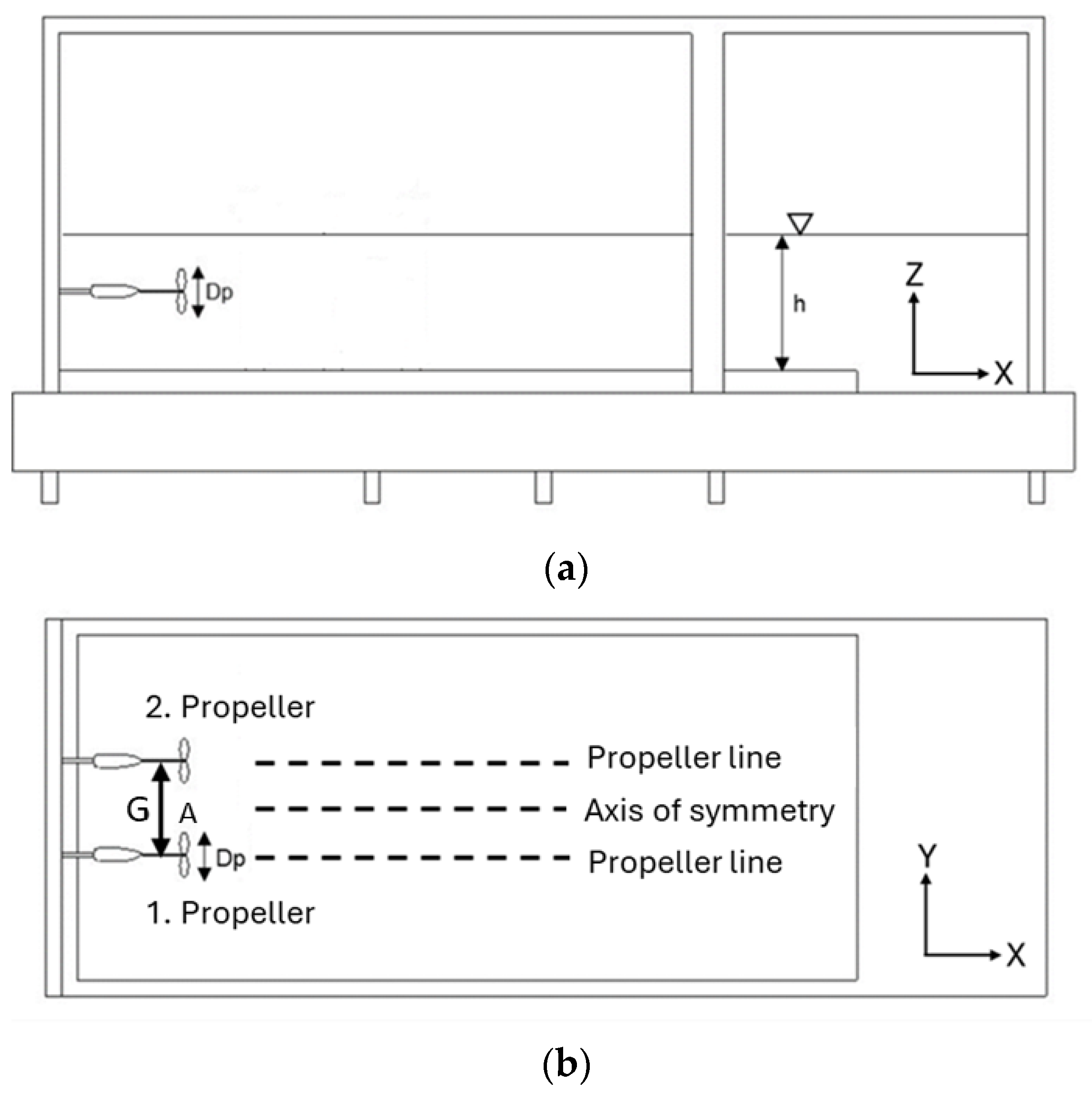
The experiments were conducted in the Hydraulics Laboratory of Kırıkkale University, using a test tank with dimensions of 2 m in width, 1 m in height, and 3.2 m in length. For the placement of cohesionless soil in the experiments, a box measuring 1.5 m in width, 0.30 m in height, and 1.70 m in length was used. In each experiment, the water level was maintained at a constant 0.40 m above the sand surface. Care was taken during the tank’s filling to avoid disturbing the sand bed.
Figure 1 provides a schematic representation of the test tank.
To simulate twin-propeller conditions in the experiments, a propeller-motor-control system was designed. In this system, the propellers are capable of operating in both inward and outward rotational directions and can also be used as a single-propeller system when necessary. The system operates within a propeller speed range of 300 to 1500 rpm. The horizontal distance between the propellers (G) and their vertical position can be adjusted. The propeller system is controlled via a panel, which manages two submersible motors connected to the system.
The propellers used in the experimental setup were produced using a K1 Max AI Fast 3D Printer (Creality, Shenzhen, China). Both the propellers and the shafts to which they are attached were made using rigid plastic materials.
To prepare a cohesionless seabed, three different sizes of quartz sand were used, corresponding to fine, medium, and coarse sand classifications.
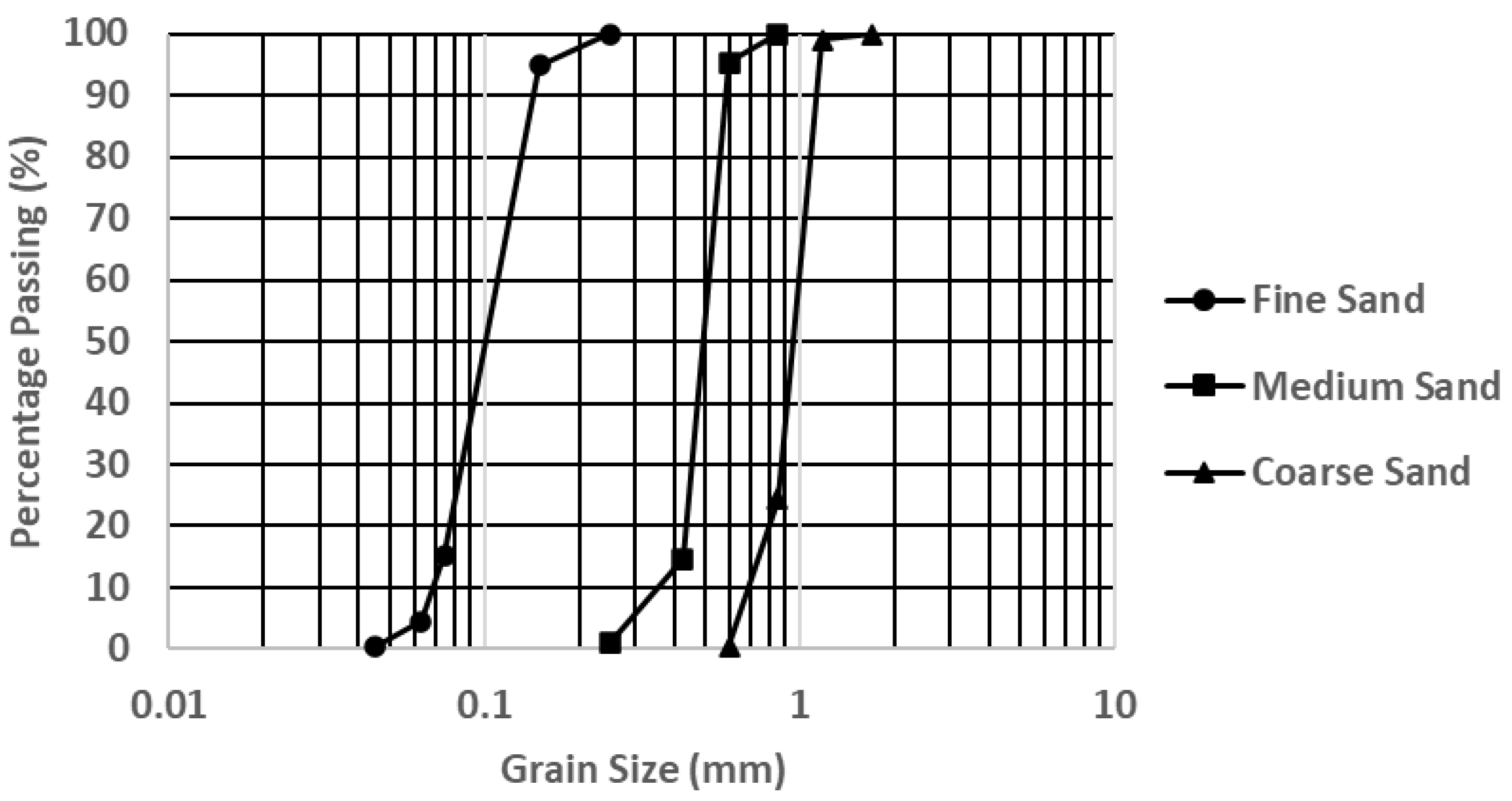
The grain size distribution curves of the cohesionless materials used are presented in
Figure 2. The d
50 values of the materials are 0.11 mm, 0.5 mm, and 0.95 mm, respectively. Based on these values, it is evident that the materials fall into the categories of fine, medium, and coarse sand. The particle size distribution of the sediment is characterized by the geometric standard deviation, defined as:
where d
16 and d
84 represent the grain diameters at which 16% and 84% of the sample are finer by weight, respectively.
The geometric standard deviation (σ
g) values for fine, medium, and coarse sand were determined as 1.36, 1.16, and 1.21, respectively. According to the classification proposed by [
14], these values indicate that the fine and coarse sands are well-sorted, while the medium sand is very well-sorted.
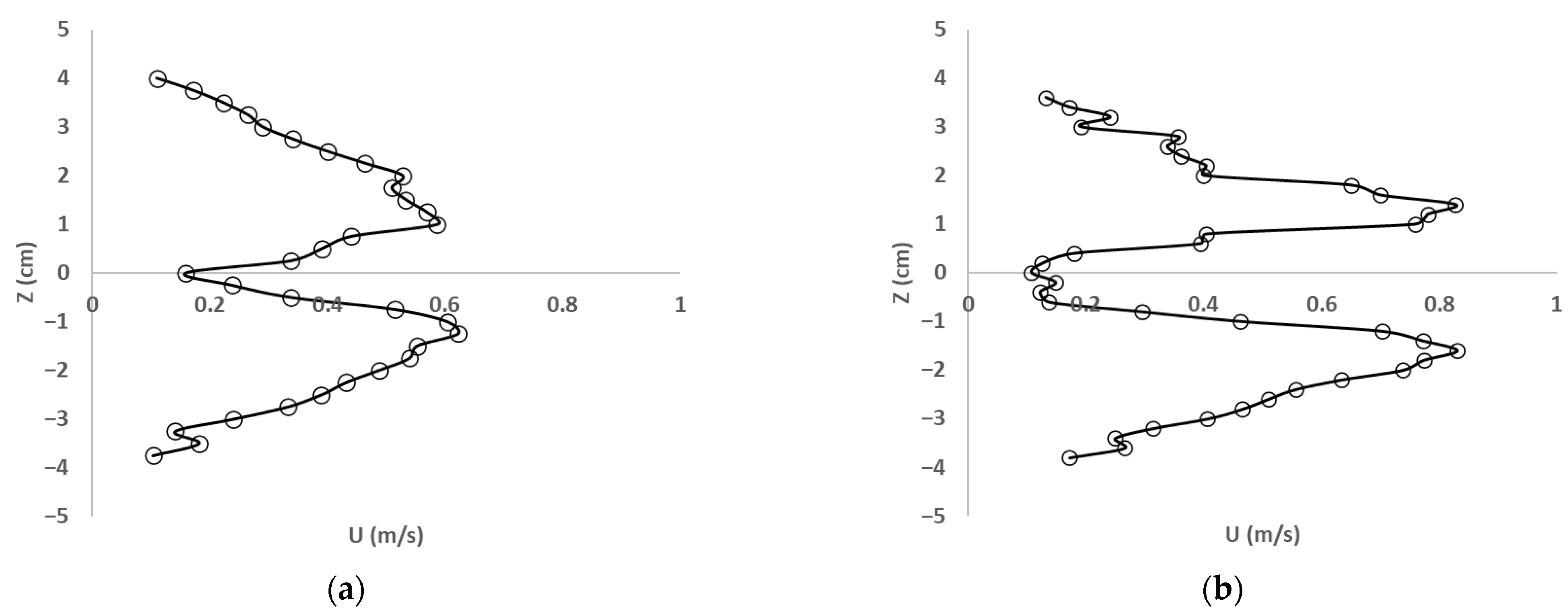
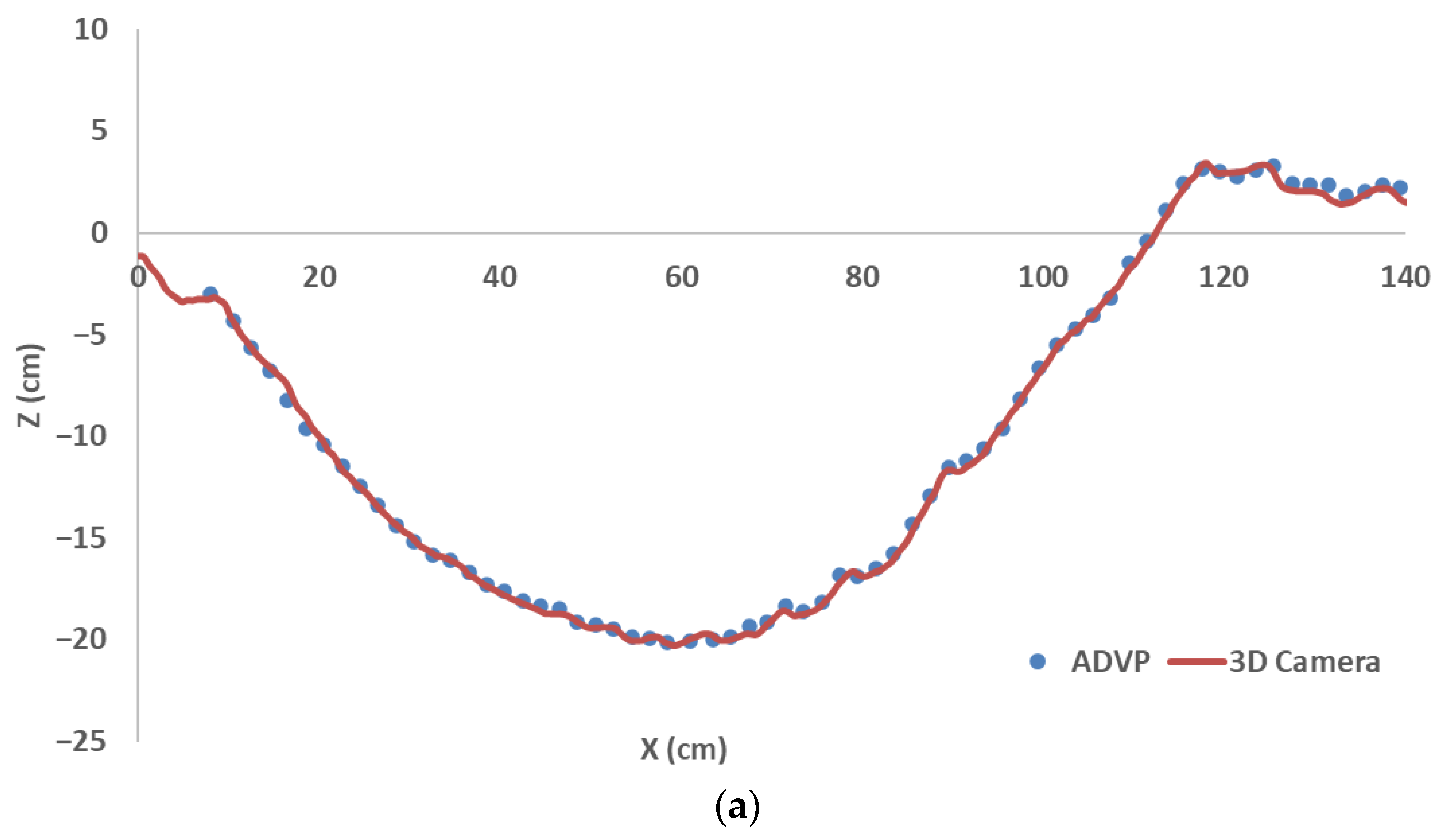
A four-beam, downward-looking Acoustic Doppler Velocimeter Profiler (ADVP) was employed to measure scour depth due to its ability to detect the bottom boundary accurately. The ADVP determines the distance from the central transducer to the seabed, with a maximum measurement range of 35 cm. To monitor changes in the seabed profile during the experiments, the ADVP was mounted on a transverse system. The initial bed level was recorded as the reference elevation, and subsequent measurements were taken at various time intervals to determine when the scour reached an equilibrium state. Scour profile measurements were performed at 2 cm intervals along the bed.
An advantage of using the ADVP is its capability to perform measurements while fully submerged, enabling accurate seabed profiling underwater. Bed profiles were recorded at 5, 15, 30, 45, and 60 min, then at 120 min, and subsequently at 2 h intervals by ADVP. During these measurement periods, the propeller was turned off. Previous studies by [
7,
15] indicated that operating the propeller during measurement does not significantly influence the development of the scour profile.
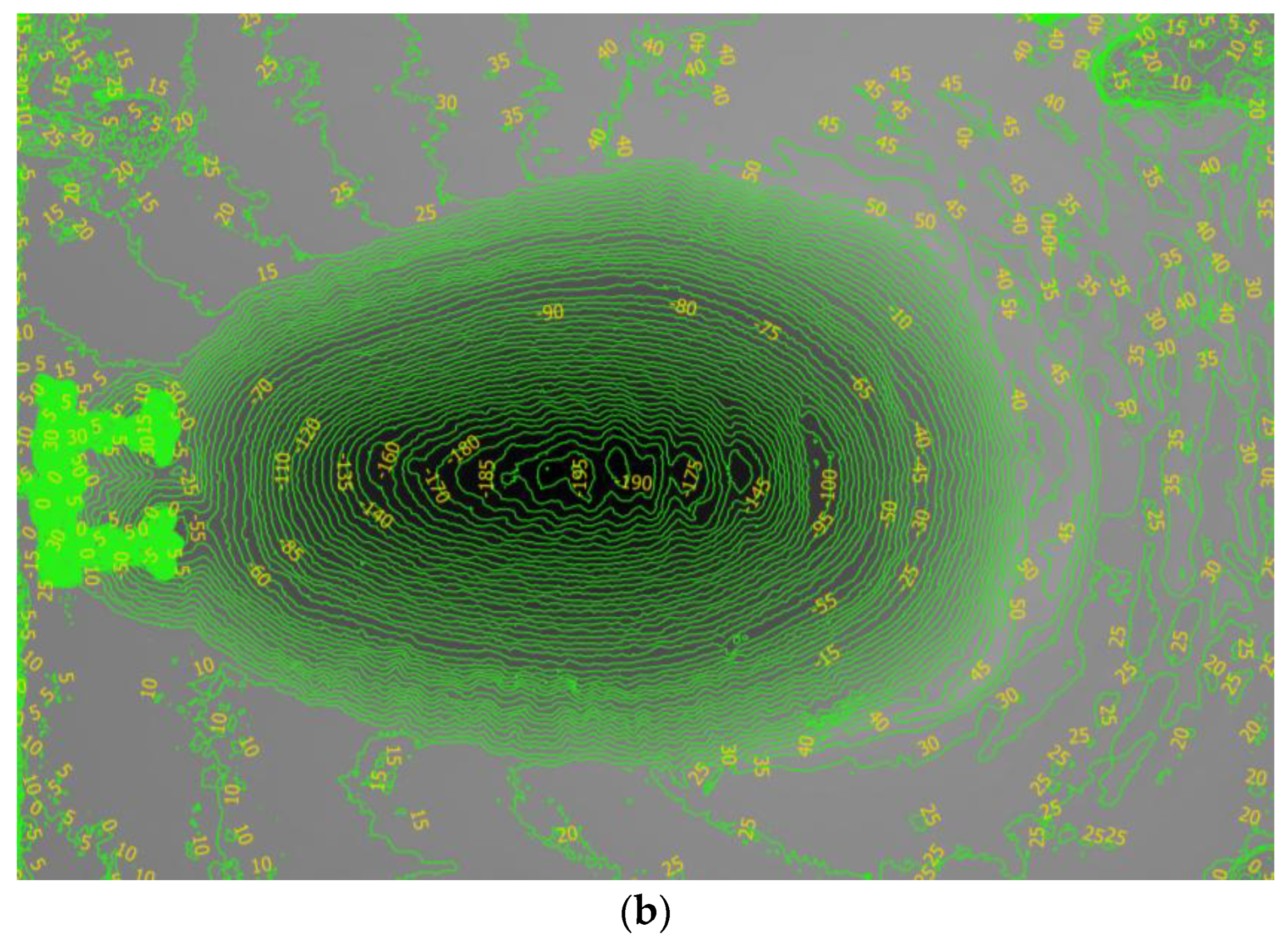
To obtain 3D representations of equilibrium bed profiles, a a Shining EinScan H handheld 3D scanner (Shining 3D Technology Co., Ltd., Hangzhou, China) was used. This is a handheld color 3D scanner equipped with a 5 MP texture camera, dual light sources (white LED and infrared VCSEL laser), allowing for high-quality scanning.
The scanner can save scan data in various file formats (e.g., *.ply, *.stl, *.asc) and supports different resolution settings. Data can be captured at resolutions ranging from 0.2 mm to 3 mm.
In the experiments, the 3D scanner was used to perform a detailed three-dimensional analysis of the scour profile. By scanning the bed surface before and after the experiments, the scour pattern formed by the propeller jet could be analyzed in relation to different parameters.
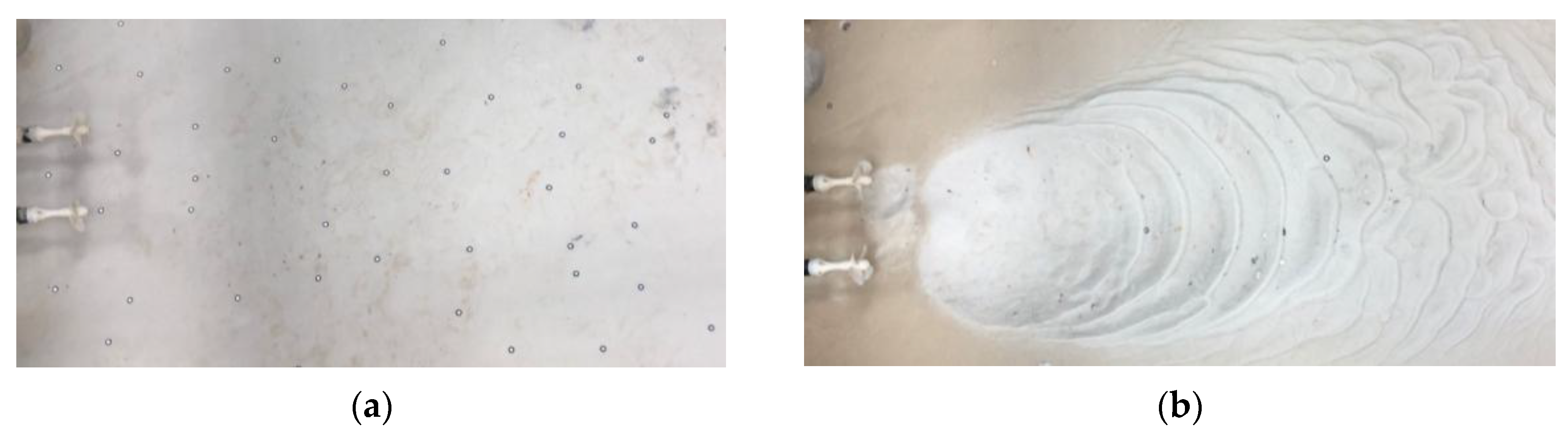
Since the scanned surface shows no significant depth variation before the experiment, reflectors were used to ensure accurate data acquisition. Additionally, including fixed reference points (such as the twin-propeller system) in the 3D scan data is essential for reliable post-experiment evaluation. Reflectors placed on the surface to be scanned before and after the experiment are shown in
Figure 3.
To evaluate the pre- and post-experiment surface scans captured by the camera, the free and open-source software CloudCompare v2.14 was used to align both scans (in point cloud format) within the same coordinate system. The resulting point cloud data were then imported into QGIS, where raster data were generated for both conditions using the Inverse Distance Weighting (IDW) interpolation method. To obtain the bed deformation pattern, the raster data representing the initial condition were subtracted from the raster data representing the equilibrium condition.
The experimental test conditions are summarized in
Table 1. In this study, scour development was examined on seabeds composed of sands with three different median grain sizes (d
50): 0.11 mm (fine), 0.50 mm (medium), and 0.95 mm (coarse).
Experiments were carried out in a test tank. Two propeller diameters (Dp) were tested—5 cm and 7.5 cm—at three rotational speeds of 500, 750, and 1000 rpm. The vertical offset between the propeller axis and the initial bed surface (y0) was set to 5 cm and 10 cm. The distance between propellers (G) is 2Dp.
Bed evolution was monitored over time. Bed profiles were recorded at 5, 15, 30, 45, and 60 min, then at 120 min, and subsequently at 2 h intervals. The tests continued until the difference between consecutive maximum scour depths (Smax) was less than approximately 2 mm, indicating equilibrium conditions. Each test lasted approximately 12 h.
The experimental results indicate that the scour profile parameters, namely S
max, B
max, and L
max, are dependent on the following experimental variables.
The dimensionless parameters governing the scour profile were identified using the Buckingham Π theorem (Equation (3)). ρ, g, and U
0 were selected as the fundamental variables, following the approach of [
10]. For further details, readers are referred to [
10].
Here, F0 represents the densimetric Froude number. Meanwhile, Smax is the maximum scour depth, Lmax is the maximum length of the scour hole, and Bmax is the maximum width of the scour hole.
Rajaratnam (1981) [
16] concluded that viscous effects are negligible when the propeller jet Reynolds number (Re
f) exceeds 10,000. Later, Ref. [
17] proposed that viscosity can be disregarded if the propeller’s Reynolds number (Re
prop) is above 7 × 10
4 and the flow’s Reynolds number (Re
flow) is greater than 3 × 10
3. The equations (Equations (4) and (5)) below can be used to calculate both Re
prop and Reflow:
where ν is defined as kinematic viscosity (m
2/s).
Here,
n is the frequency of propeller rotation, ν represents kinematic viscosity, and L
m represents the characteristic length of the propeller, calculated using the equation (Equation (6)) provided by [
18] as follows:
where D
h is the diameter of the propeller hub, β is the blade area ratio (BAR) of the propeller, and N is the number of propeller blades.
In this study, while the Reflow values range from 19,500 to 88,000, the Reprop values vary between 1694 and 7626. Since the Reflow values exceed 10,000, the effect of viscosity was neglected in the dimensionless parameters.
The results detailing the scour profiles formed on sandy seabeds of varying particle sizes, under unconfined twin-propeller jet conditions, are presented in dimensionless form in the
Table A1 given in
Appendix A.
The complete matrix of experimental conditions is summarized in
Table 1. Each test configuration was repeated for all three sediment sizes.
4. Results and Discussion
4.1. Obtained Experimental Scour Profiles
Building on the mechanism proposed by [
3], the present experiments were conducted to quantify how varying sediment size, propeller offset height, and rpm influence the scour morphology under similar hydrodynamic conditions.
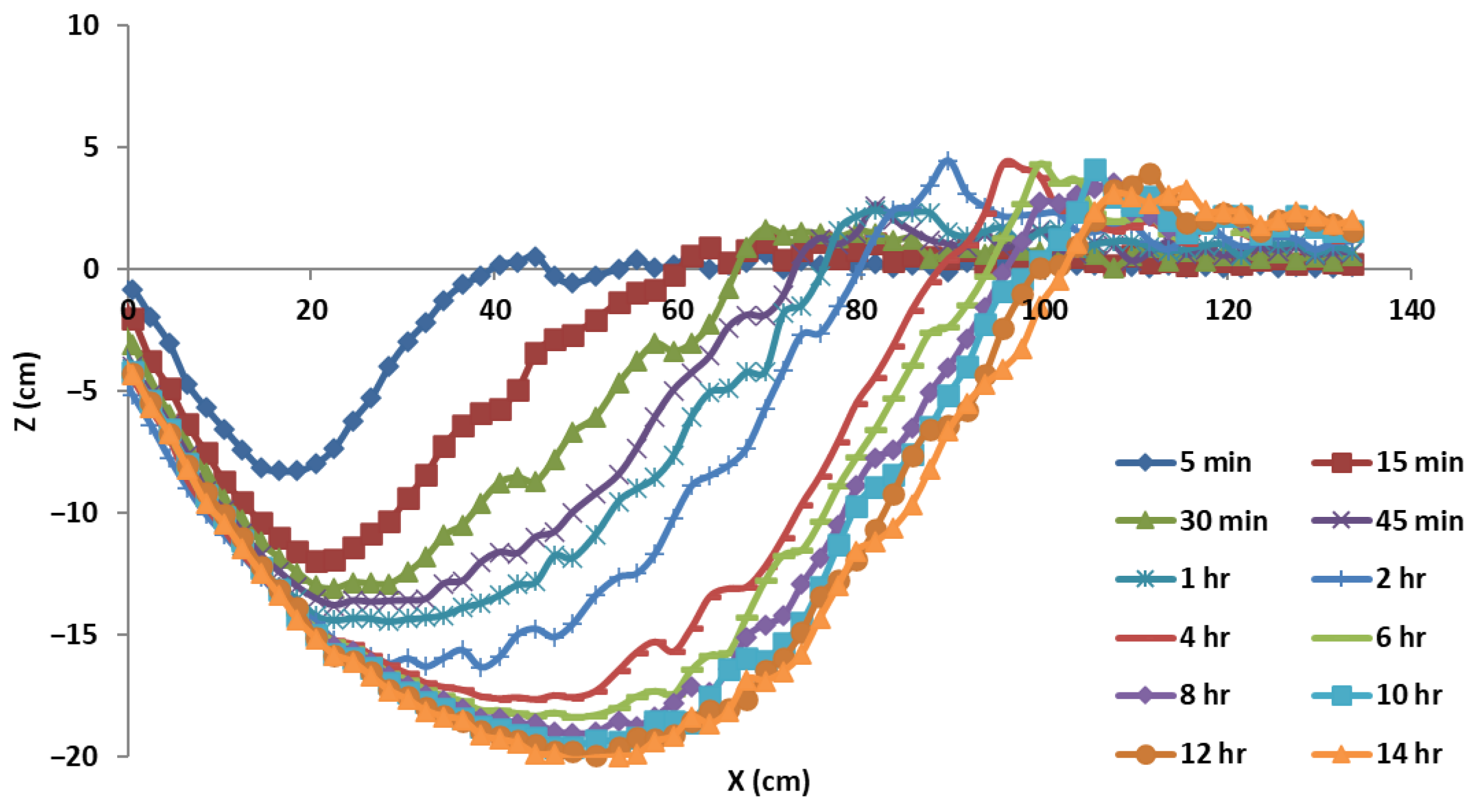
Figure 6 illustrates the temporal variation in the bed profiles along the symmetry axis under specific experimental conditions: a rotation speed of 750 rpm, a propeller elevation (y
0) of 5 cm, a propeller diameter (D
p) of 7.5 cm, and a grain size (d
50) of 0.11 mm. The maximum scour depths are observed along the symmetrical axis, an observation consistent with the experimental findings of [
3] for inward-turning propellers (ITP).
When examining the temporal evolution of the scour hole, it is evident that the development is rapid during the first hour. However, after the fourth hour, the increase in scour depth slows down significantly. Furthermore, the location of the maximum scour depth shifts downstream over time, indicating a progressive displacement of the scour hole in the direction of the flow. Additionally, a deposition zone is observed at the downstream end of the main scour hole, followed by the formation of small sand ripples.
This investigation considered variations in propeller diameters, rotational speeds, and propeller heights. The typical characteristics used to evaluate and compare scour profiles are S
max, B
max, and L
max values. S
max represents the maximum scour depth, while B
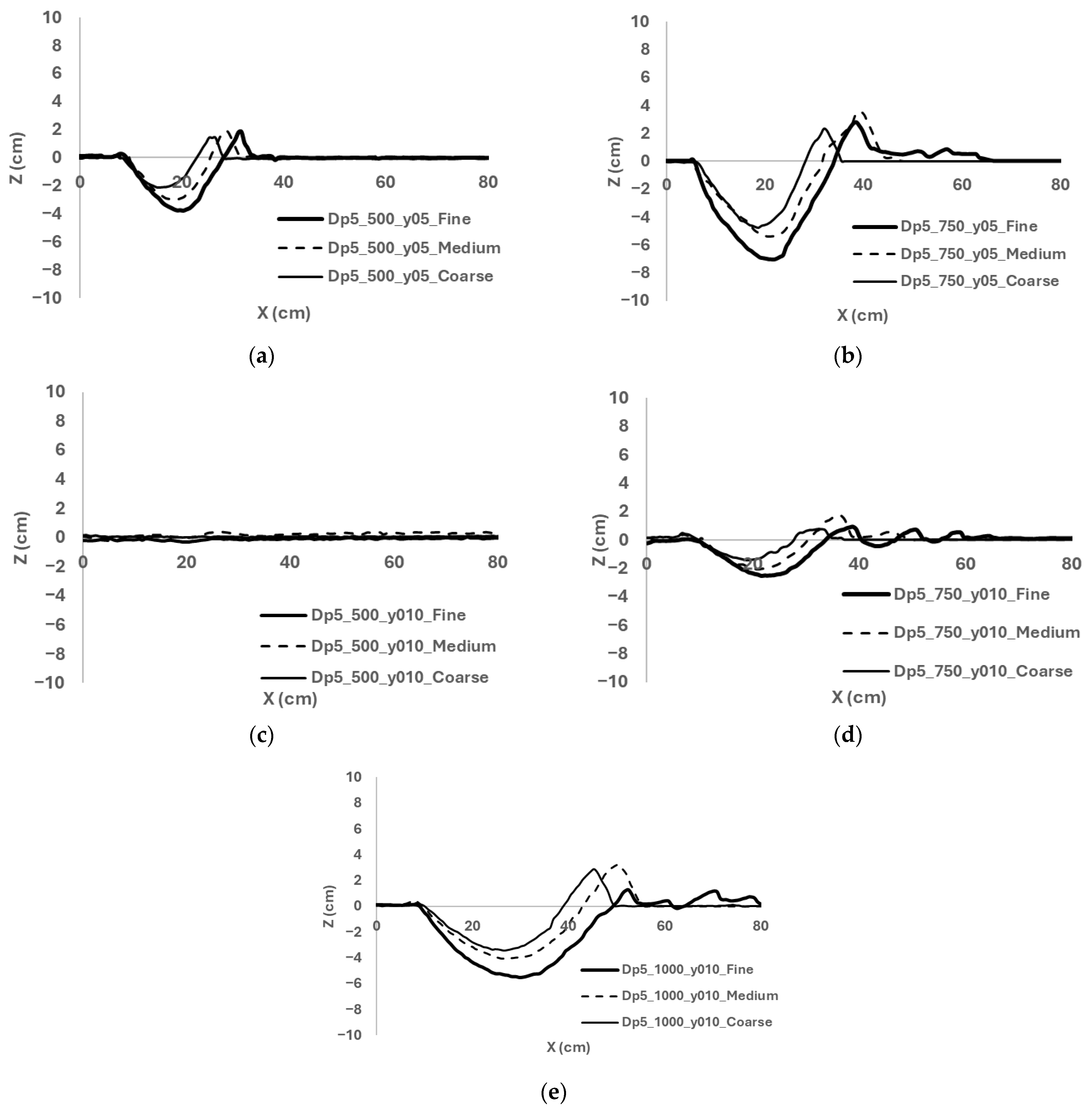
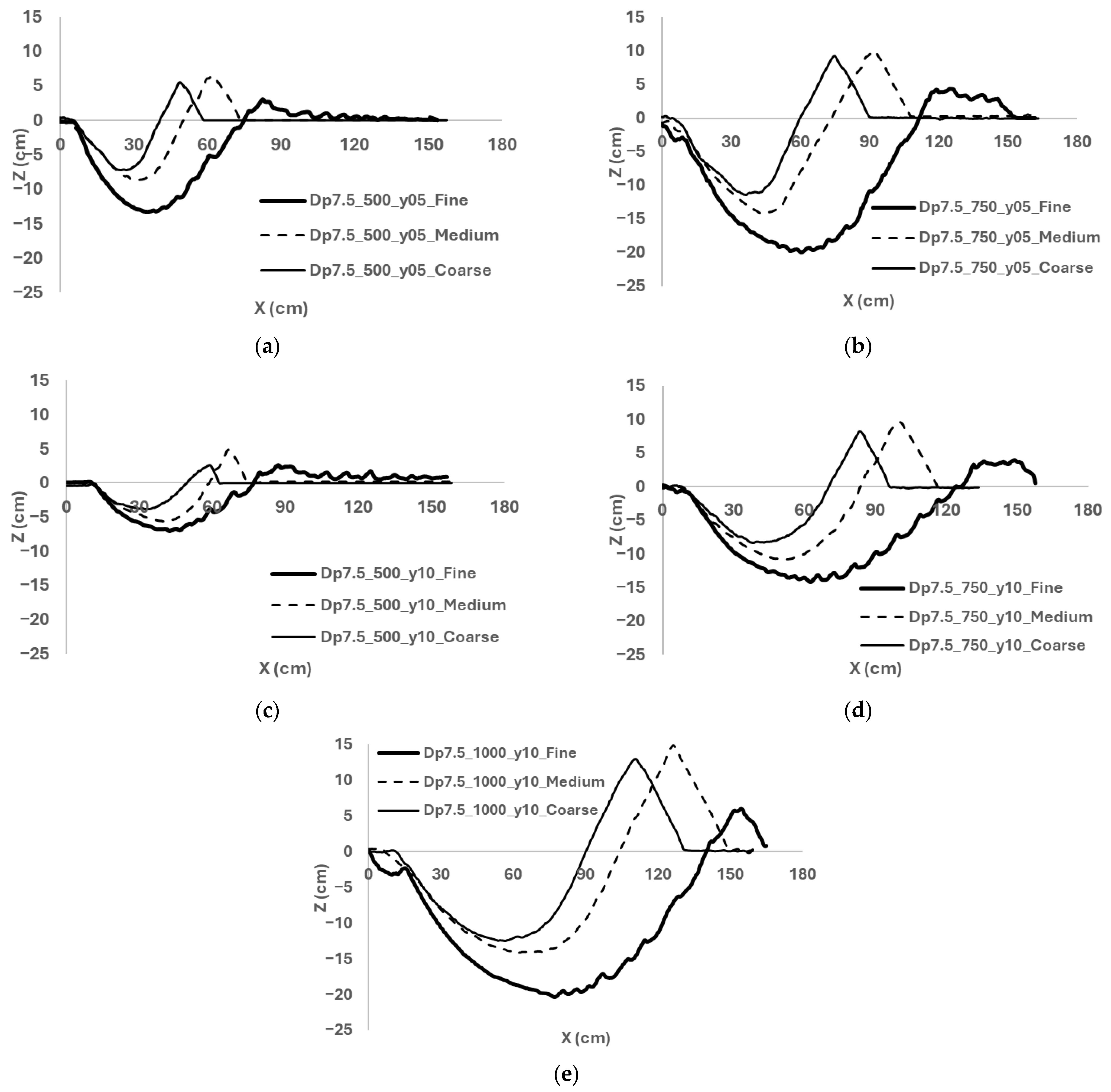
max is the widest distance of the scour hole in the transverse direction, and L denotes the length of the scour hole. The scour profiles obtained along the symmetrical axis of the propeller under the same conditions in the experiments conducted with fine, medium, and coarse sands are presented together in
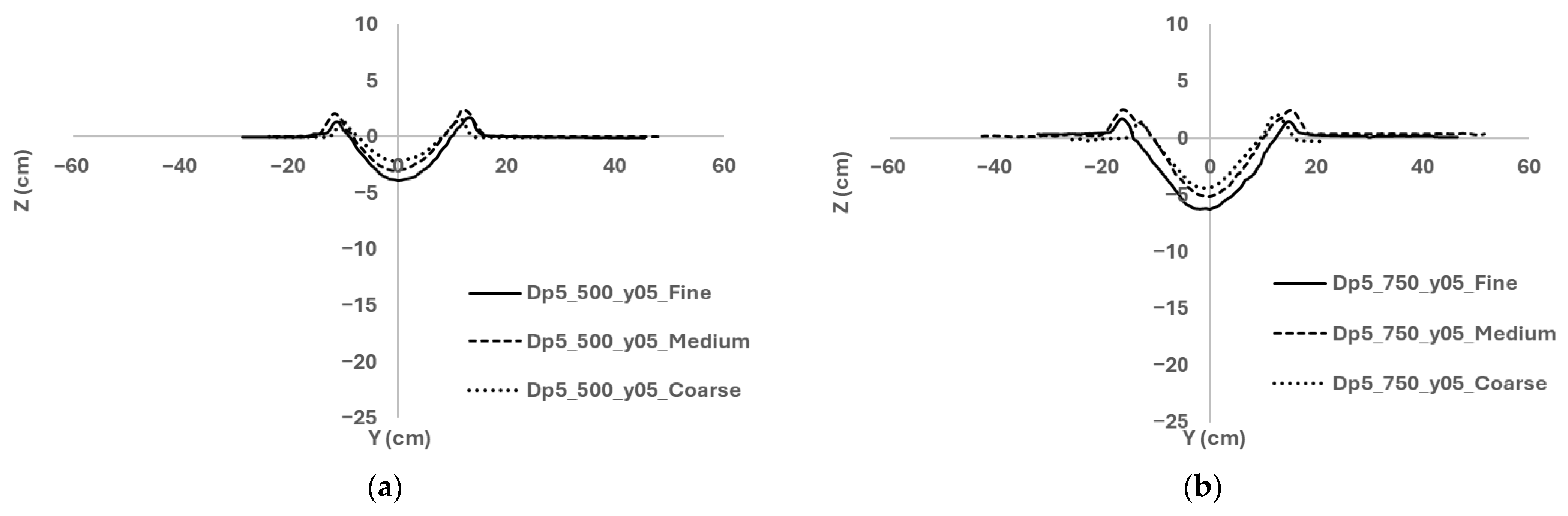
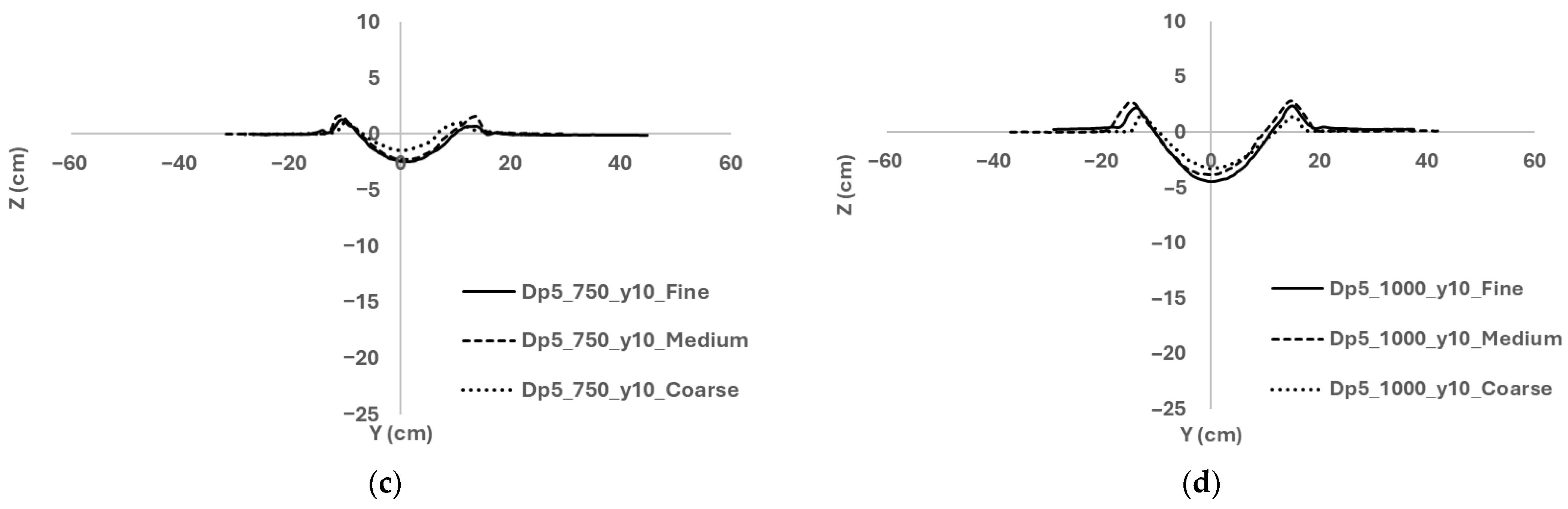
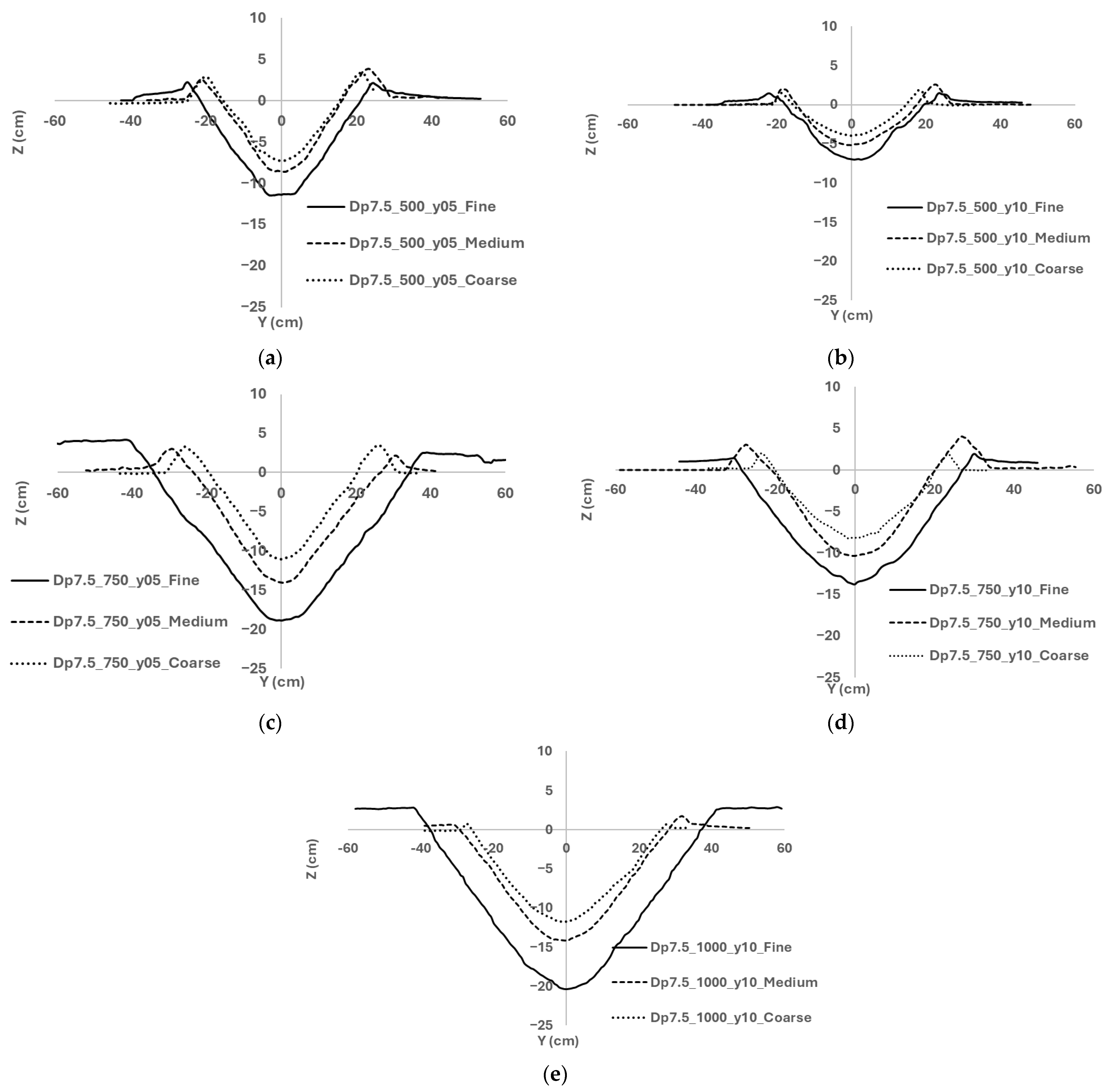
Figure 7 and
Figure 8. Generally, the largest scour is observed in the seabed composed of fine sand under the twin-propeller jet effect. As expected, depth decreases as the grain size of the sand increases. However, the length of the scour hole (L
max) is longest in fine sand and shortest in coarse sand.
The propeller height (y
0) appears to have a significant effect on the scour profile. For example, when y
0 = 5 cm, distinct scour profiles are formed at a rotational speed of 500 rpm (
Figure 7a), while when y
0 = 10 cm, no scour profiles are formed for all three sand types at the same rotational speed (
Figure 7c). Also, as the propeller rotational speed increases, the scour depth decreases for larger y
0 values in all three types of sands (see
Figure 7 and
Figure 8).
Another effect of y0 is the displacement of the location of the scour profile. A higher y0 shifts the point where the propeller jet reaches the seabed, thereby increasing the distance between the scour hole and the propeller. Additionally, especially on the seabed composed of fine sand, sand ripples are observed in the deposition zone. This is because the transport of fine sand occurs both by bed load transport and suspended load transport over short distances. As the sand grain size increases, bed-load transport becomes dominant, and the equilibrium profiles develop more uniformly.
The effect of propeller diameter is one of the most important parameters influencing scour. As the propeller diameter increases, the efflux velocity of the jet increases, resulting in larger scour profile dimensions (such as scour depth, scour length, and deposition zone height) on the seabed.
At the end of the scour hole, a deposition zone forms as flow conditions decrease. The accumulation of sand in this region develops in relation to the development of the scour hole. As the depth of the scour hole increases and the influence of the propeller jet begins to weaken, the development of the deposition zone slows down and eventually reaches equilibrium. On a fine sand bed, under the influence of the propeller jet, transport takes place both as bed load and as short-range suspended transport. As grain size increases, bed load transport becomes more dominant. Therefore, the height of the deposition zone on medium and coarse sand beds is greater than that on fine sand. The deposition zone exhibits a well-defined shape with a smooth, single-sloped profile. Due to the influence of sediment weight, coarse sand particles cannot be transported on the slope as easily as medium sand particles. As a result, the height of the deposition crest on coarse sand beds is lower than that on medium sand beds. However, on fine sand beds, the total height of the accumulation zone is lower due to the suspension of sand by the propeller jet, leading to the formation of sand ripples behind it (see
Figure 7 and
Figure 8).
Figure 9 and
Figure 10 show the transverse scour profiles at the location of maximum scour width for different sand types under equilibrium conditions with D
p = 0.05 and D
p = 0.075 m. According to the results given above, the most influential parameters affecting the equilibrium scour profiles are y
0 and the propeller rotation speed (rpm). A reduction in y
0 at constant rpm, or an increase in rpm while keeping y
0 constant, leads to an increase in the dimensions of the scour profiles. It is clearly observed that both scour depth and width decrease with decreasing propeller diameter, under identical propeller rotational speeds. Conversely, scour depth and width increase as the sand grain size decreases. Due to the inward rotation of the twin propellers, the sediment deposition in the transverse direction appears to be nearly symmetrical. On the other hand, the deposition heights on medium and coarse sand seabeds are generally greater than those observed on fine sand seabeds due to the higher suspended sediment transport capacity of fine sand.
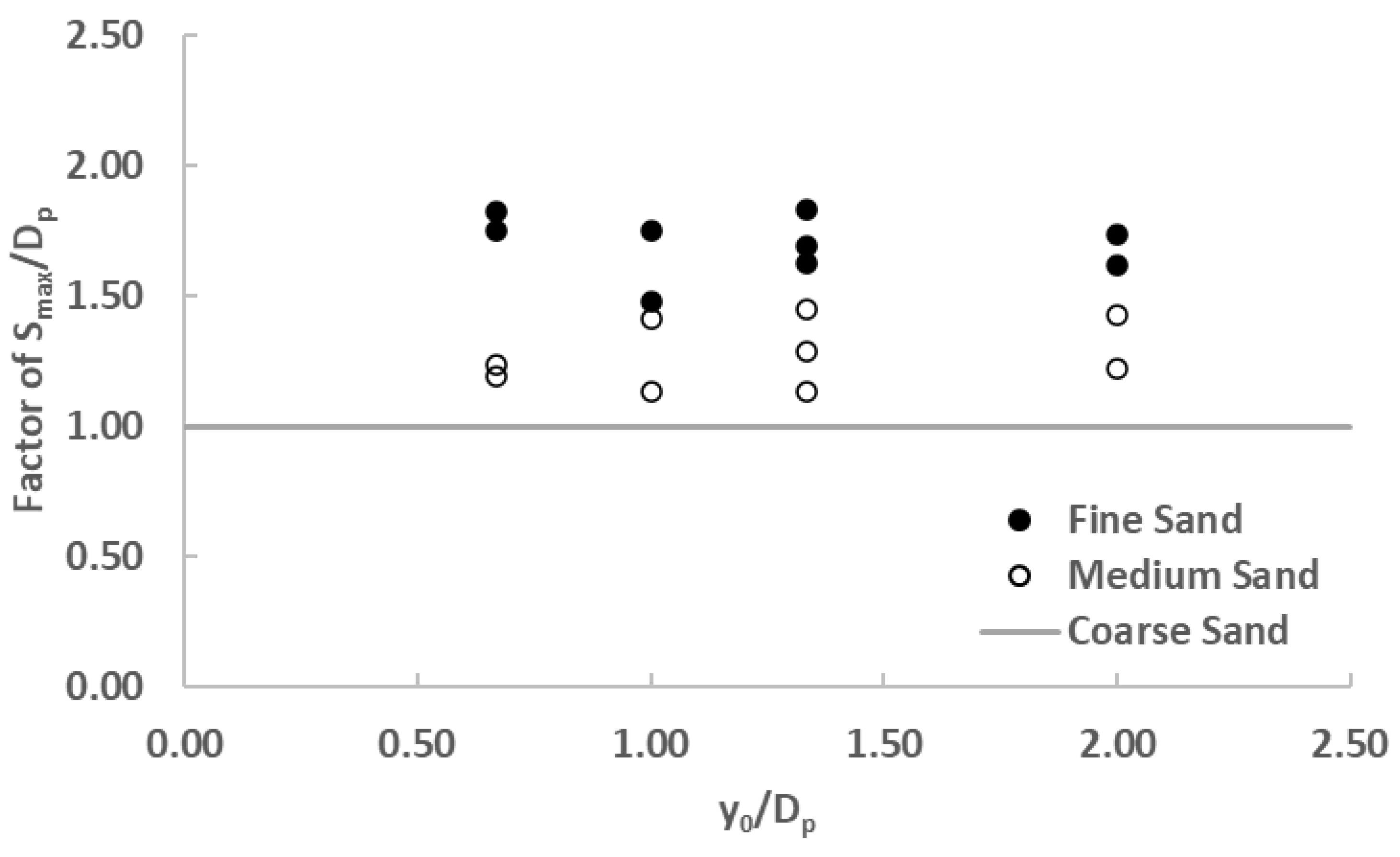
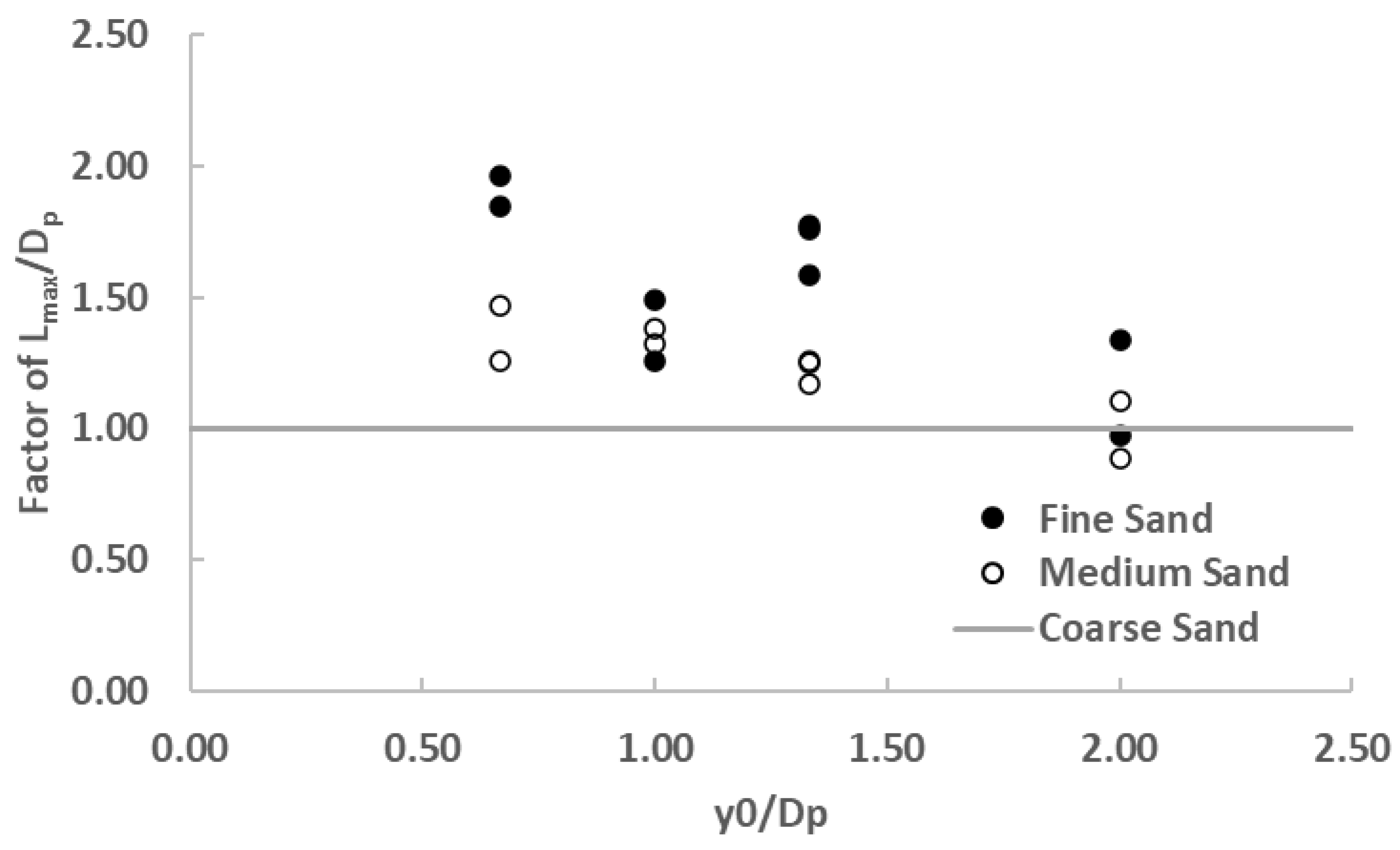
Figure 11 illustrates the ratio of dimensionless scour depths (S
max/D
p) for fine and medium sands compared to coarse sand under identical conditions. The continuous line with a unit value in
Figure 11 represents the S
max/D
p conditions for coarse sand. As all data points lie above this line, it indicates that, under the same conditions, the S
max/D
p values for fine and medium sands are greater than those for coarse sand. This can also be attributed to the enhanced turbulent diffusion and bed shear stress in finer sediments, leading to greater entrainment and sediment mobility.
The deepest scour occurs in the fine sand bed, as its smaller d
50 offers the least resistance to the propeller-induced jet. In contrast, the lowest scour depths are observed in coarse sand beds, where the larger d
50 provides greater resistance to jet-induced erosion.
Table 2 summarizes the comparative scour ratios obtained under various propeller speeds and propeller-bed distance ratios (S
max/D
p).
Referring to
Figure 7c, when y
0/D
p = 2, the S
max/D
p values for all sediment types approach zero when F
0 reaches:
9.289 for fine sand;
4.357 for medium sand;
3.161 for coarse sand.
This observation is valid for conditions where y0 = 10 cm, Dp = 5 cm, and the propeller speed is 500 rpm.
Figure 12 indicates the ratio of dimensionless scour lengths (L
max/D
p) for fine and medium sands compared to those obtained for coarse sand under identical test conditions. Here, L
max/D
p represents the maximum scour length, and the continuous line with a unit value indicates L
max/D
p conditions for coarse sand. As seen in the
Figure 12, nearly all points are located above this line, indicating that the L
max/D
p values for fine and medium sands are larger than those of coarse sand under the same test conditions. It also appears that the largest L
max/D
p occurs in fine sand conditions. When y
0/D
p is 0.67 (i.e., y
0 = 5 and D
p = 7.5 cm), relatively high L/D
p values are obtained. It was found that L
max/D
p could not be obtained in all sediment types when y
0/D
p = 2 (i.e., y
0 = 10 cm, D
p = 5 cm) at a rotation speed of 500 rpm. This occurred when the Froude number (F
0) reached:
9.289 in fine sand;
4.357 in medium sand;
3.161 in coarse sand.
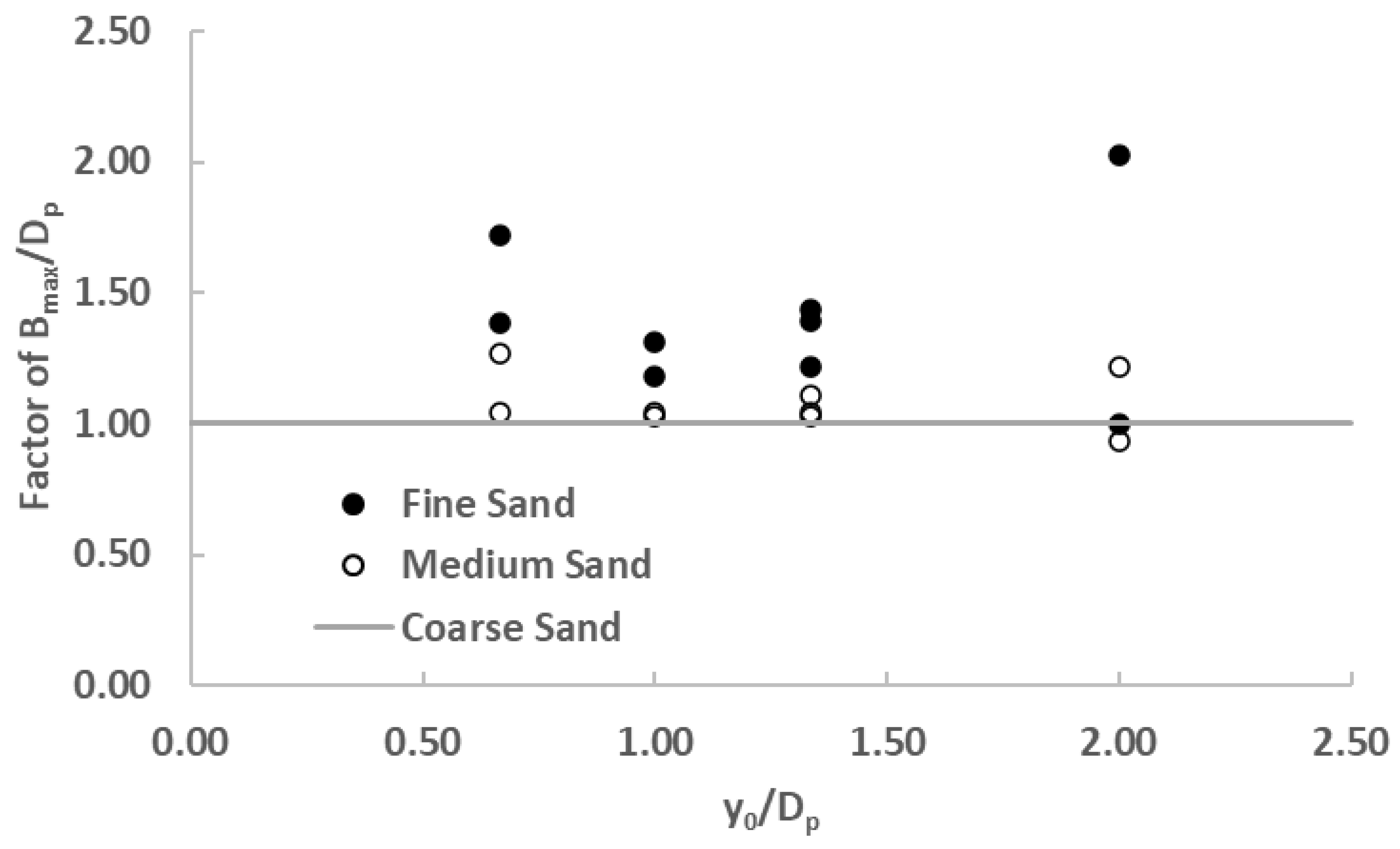
Figure 13 displays the ratio of dimensionless scour widths (B
max/D
p) obtained for fine and medium sands to those obtained for coarse sand under identical conditions. Here, B
max is the maximum scour width, and the continuous line with a unit value represents B
max/D
p conditions for coarse sand.
Most data points for fine and medium sands fall above this line, indicating that their Bmax/Dp values are higher than those for coarse sands under identical test conditions. This suggests that fine sands generally lead to larger scour widths, likely due to their increased susceptibility to suspended transport. It is also noted that the Bmax/Dp ratio does not consistently form across all sediment types, a behavior similar to that observed for L/Dp. This occurs when y0/Dp = 2 and the densimetric Froude number (F0) reaches values of 9.289 for fine sand, 4.357 for medium sand, and 3.161 for coarse sand, respectively. These specific values correspond to experimental conditions where y0 = 10 cm, Dp = 5 cm, and the propeller speed is 500 rpm.
4.2. Estimation of Scour Profile Parameters
To obtain the scour dimensions from the experimental results, a nonlinear regression analysis was performed using SPSS 22 software. The maximum scour depth () is the primary characteristic defining the scour hole generated by the propeller jet. The equilibrium values of the dimensionless scour parameters , , and were correlated with the non-dimensional parameters , , and . The parameter was not included in the regression analysis because it was maintained at a constant value of 2 throughout the experiments; however, this limitation should be considered when evaluating the general applicability of the proposed equations.
Following the functional form (Equation (8)) proposed by [
7] for describing scour characteristics, the general nonlinear expression used in this study is given as:
where K
1, K
2 and K
3 are regression coefficients are determined based on the experimental data (see
Table A2 and
Table A3 in the
Appendix B). Among the examined parameters,
exhibited the highest correlation with all three scour hole dimensions and was therefore selected as the governing variable in the final formulations.
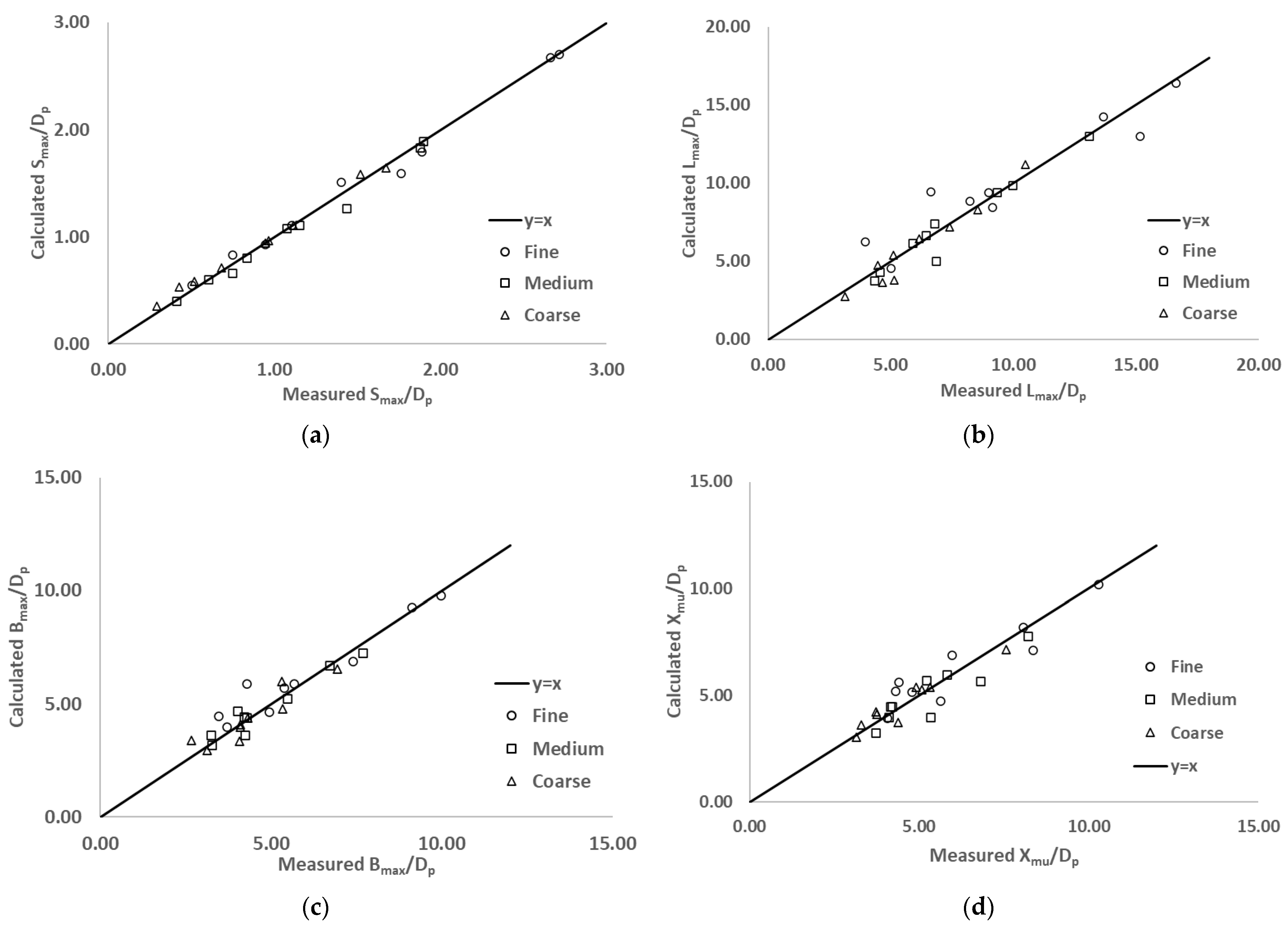
Figure 14 presents a composite comparison between measured and calculated values for all scour dimensions: (a) maximum scour depth
, (b) scour hole length
, (c) scour hole width
, and (d) the overall predictive performance. As shown in
Figure 14a, the proposed equation for
demonstrates excellent agreement with the experimental data, yielding an
value of 0.99 and an RMSE of 0.069. Similarly,
Figure 14b,c indicate strong predictive capability for
and
, with
values of 0.92 and 0.91 and RMSE values of 1.00 and 0.528, respectively.
The validity ranges of the proposed equations are identical for all three scour dimensions and are defined as 0.67 < y0/Dp < 2, 3.16 < F0 < 27.87, 52.63 < y0/d50 < 909.09, and G/Dp = 2.
While the equations above describe the dimensions of scour profiles, they do not specify the location of maximum scour (S
max). To address this, ref. [
9] introduced a relationship for single propeller water jet conditions to determine X
mu, which represents the distance from the propeller face to the position of maximum scour in the equilibrium profile. The equation is based on F
0, which is the densimetric Froude number, and C, which corresponds to the clearance of the propeller blade tip.
In the present study, Xmu/Dp values range from 4.07 to 10.28 for fine sand, 3.73 to 8.22 for medium sand, and 3.14 to 7.57 for coarse sand. It is evident that increasing sediment size results in a narrower range of Xmu/Dp values.
Based on these observations, the current study proposes an equation (Equation (9)) to predict X
mu/D
p by incorporating the following dimensionless parameters:
The following relationship (Equation (10)) was obtained for predicting the dimensionless location of maximum scour depth defined as X
mu/D
p.
Figure 14d demonstrates high agreement between the calculated and measured X
mu/D
p values, with an R
2 value of 0.84. The RMSE between the calculated and observed values was 0.71. It indicates a good level of agreement between the calculated and observed values (see
Table A4 in
Appendix B for the coefficients).
4.3. Time-Dependent Scour Depth Prediction
Given the critical importance of evaluating the temporal change in erosion for implementing effective measures in ports or navigation channels, the temporal evolution of scour was also investigated experimentally in this study.
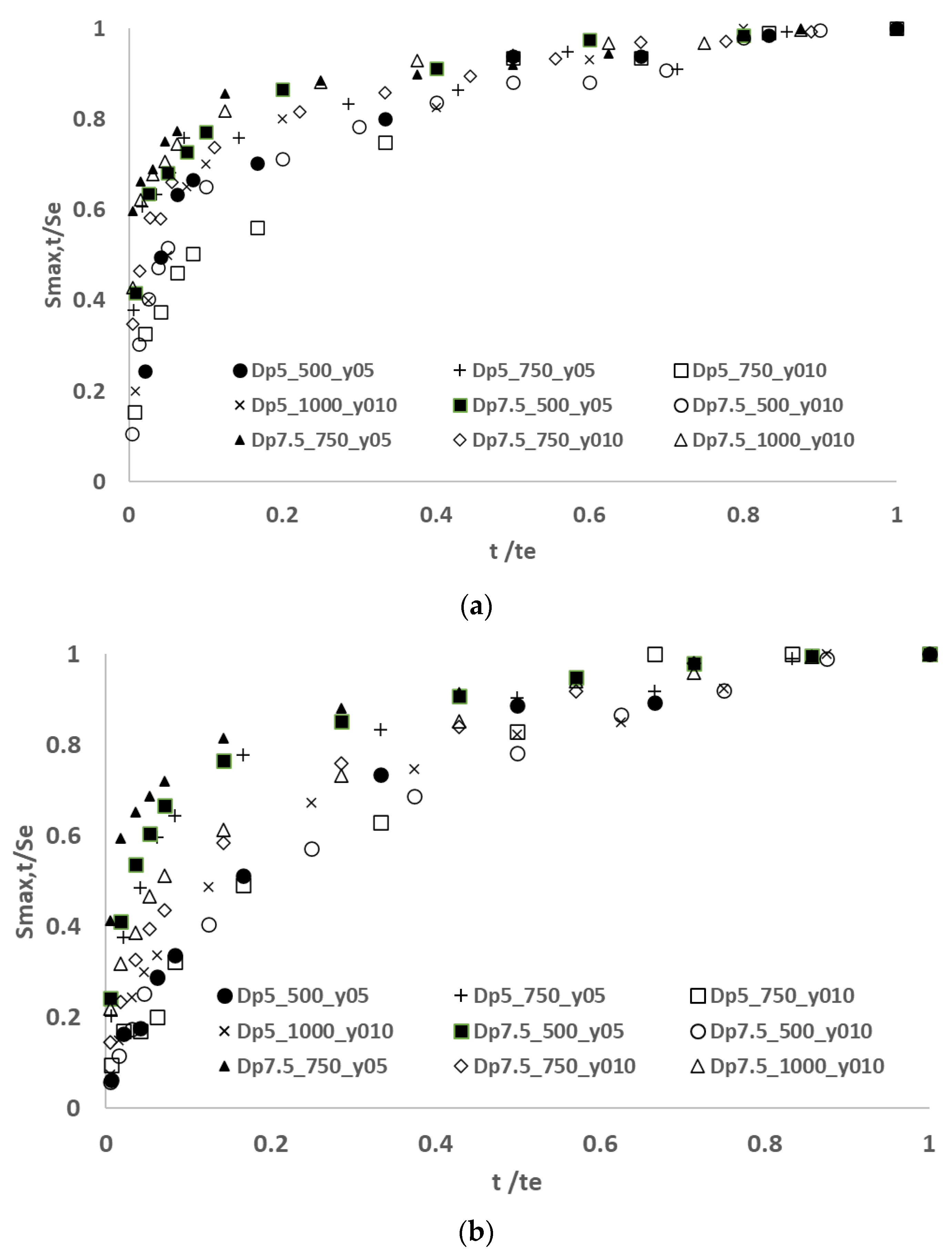
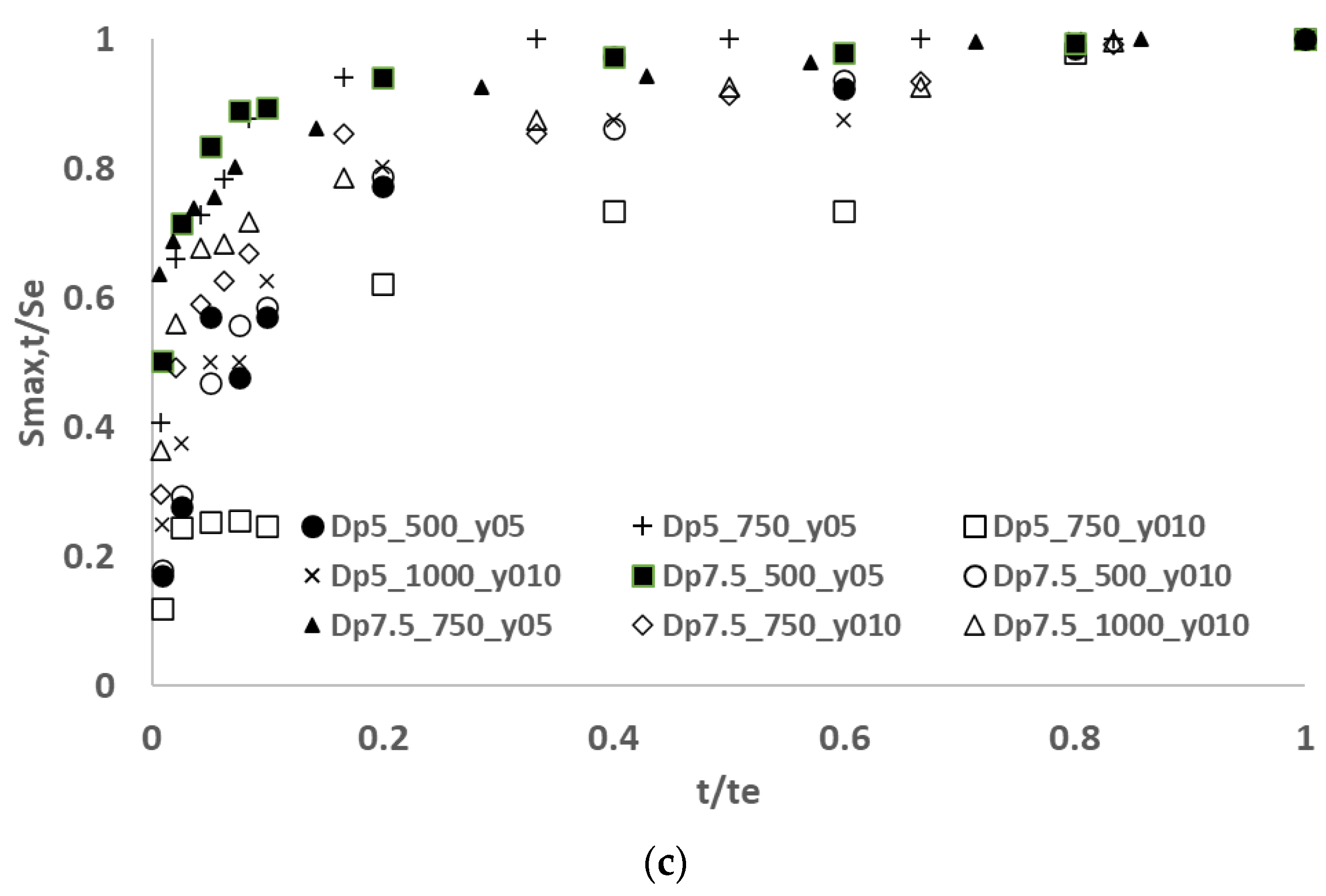
Figure 15a–c presents the variation in the ratio of the temporally maximum scour depth to the equilibrium scour depth (S
max,t/S
e) with dimensionless time (
), where
denotes time and
denotes the time at which the scour profile reaches equilibrium.
According to the results, the temporal variation in the scour ratio during the initial two hours of the experiment shows distinct ranges based on material size: 50–81% for fine material, 56–86% for medium material, and 62–94% for coarse material. Additionally, a notable observation is that when y0 = 10 cm, the resulting scour ratios are lower compared to the case where y0 = 5 cm.
For fine material, the scour ratio’s variation is more uniform, while medium and coarse materials exhibit a sharper initial increase during the first two hours. This indicates that as particle size decreases, the propeller jet continues to mobilize the bed material for a longer duration.
During the experiments, the bed profiles were measured at specific time intervals using an ADVP. This allowed for the temporal variations in the S
max,t/D
p values to be obtained. The following equation form (Equation (11)), originally developed by [
10] for predicting the temporal variation in scour under a single propeller jet, was applied to the results of this study (see
Table A4 in the
Appendix B for the coefficients)
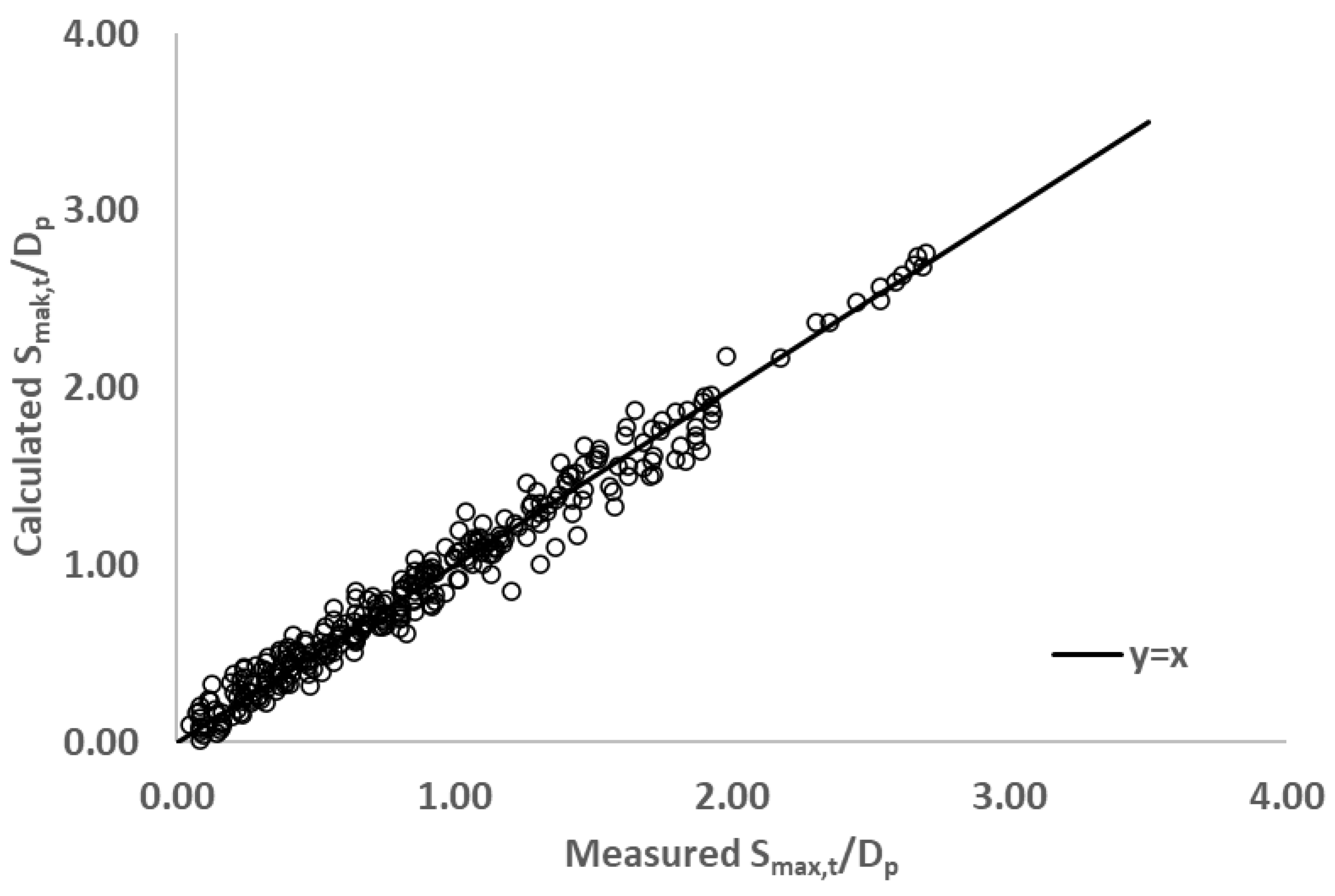
Figure 16 shows a high agreement between the calculated and measured time-dependent S
max,t/D
p values, with an R
2 value of 0.98. However, it is worth noting that the derived equations are not valid for S
max values less than 0.5 cm. For S
max < 0.5 cm, measurement uncertainty and insufficient sediment mobilization are likely to reduce the regression accuracy; this limitation should be discussed explicitly.
4.4. Comparison with Previous Studies
The methods proposed in the literature for predicting scour under the influence of twin-propeller jets are summarized in
Table 3. The differences between the conditions under which these methods were developed and those adopted in the present study can be outlined as follows:
Suljevic and Kesgin (2025) [
13] conducted experiments using co-rotating propellers, which generate different velocity distributions compared to the inward-rotating propellers employed in the present study. Consequently, the scour patterns formed on the bed surface differ markedly. In particular, an asymmetric scour profile develops, with greater scour depths observed on the side corresponding to the direction of rotation. Moreover, their experiments were limited to 150 min, and the Froude number range (F
0) was relatively low, restricting the applicability of their proposed equations.
Yew (2017) [
23] also utilized a co-rotating twin-propeller configuration, which results in distinct jet interactions and scour characteristics compared with the inward-rotating setup investigated in the present study.
Cui (2019) [
11,
12] proposed empirical formulations to estimate the temporal variation in scour depth caused by outward-rotating propellers. However, their experiments were conducted exclusively with fine sand, and the results were reported to be valid for a relatively short experimental duration of two hours.
Cui et al. (2020) [
3] investigated the seabed scour mechanism induced by inward-turning (ITP), outward-turning (OTP), and single propellers (SP) using an experimental setup with Acoustic Doppler Velocimetry (ADV). They reported that, after 2 h, the scour depth reached approximately 87% of the value observed after 7 days. Although the scour rate decreases significantly after the first 0.5 h, continuous scouring up to 7 days contributed an additional 13%. Thus, the variation in scour depth after one week was only 13% higher than that after 2 h, and the ultimate long-term scour depth was estimated to be less than 20% greater than the 2 h value. Their experiments were performed at rotation speeds of 500 and 700 rpm, with a constant distance of 110 mm between the propeller axes. The equations proposed for estimating scour depth were derived based on scour depths observed under single-propeller (SP) conditions and should therefore be regarded as estimation tools rather than precise engineering solutions.
Therefore, it can be concluded that experimental data available in the literature for validating empirical equations developed under similar conditions are highly limited, primarily due to differences in propeller rotation configurations, sediment types, and experimental durations.
The equations proposed in the literature for predicting scour induced by twin propeller jets are presented in
Table 3. Among these, one of the formulas proposed by [
3] is compatible with the inward-rotating twin propellers used in the present study. The proposed method is based on the approach originally introduced by ref. [
6].
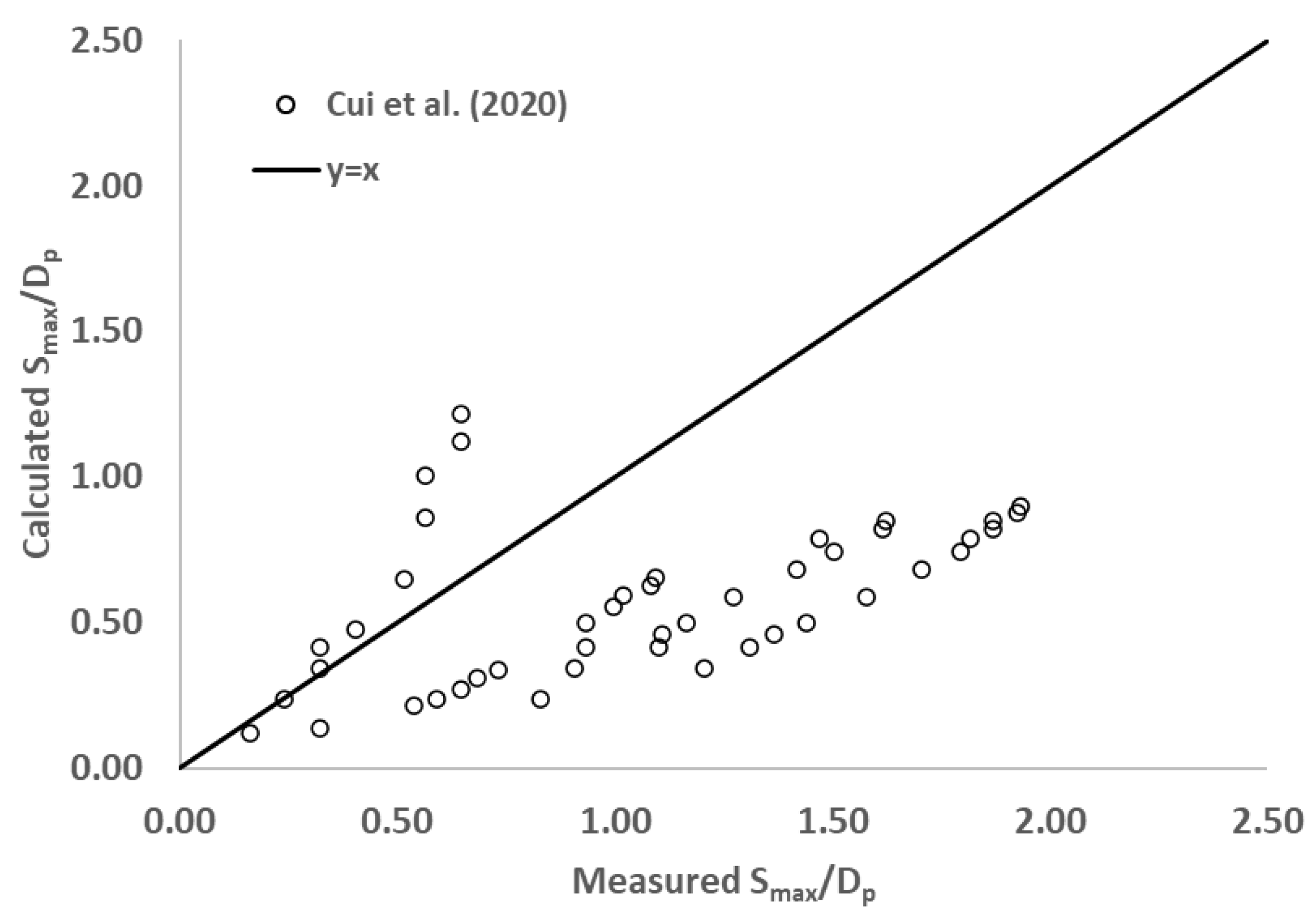
Figure 17 compares the predicted and measured S
max/D
p values obtained using the temporal scour development model of ref. [
3] with the experimental data from the present study.
However, for a meaningful comparison, limits of the experimental conditions were selected in accordance with the parameters given in [
6], and only the experimental data generated within these limits were used. It was observed that the difference in sediment size strongly affects the discrepancy between measured and predicted scour depths. Two sediment diameters (0.11 mm and 0.50 mm) used in the present study lie outside the parameter range of [
6] and were therefore excluded from the comparison. Based on the remaining dataset, it was found that the method of [
3] generally predicts larger scour values than those measured in the experiments.
Furthermore, ref. [
3] reported two measured S
max values for inward-turning propellers (ITP). Using the experimental conditions provided in their study, the equation proposed herein (Equation (10)), which predicts S
max,
t/D
p, was applied to estimate the S
max/D
p values at the end of 2 h. The experimental conditions of [
3] and the calculated results are summarized in
Table 4. The comparison indicates that the prediction errors remain low.




 ,
,