Article

Effectiveness, Feasibility and Seasonality of Subsewershed Disease Surveillance in Socially and Economically Diverse Areas of Cincinnati, Ohio, in 2023 and 2024; Insights from Laboratory and Rapid Testing Analysis


1
Ohio Department of Health, Columbus, OH 43215, USA
2
Kando Environmental Services, Central District, Tzur Yig’al 4486200, Israel
3
Metropolitan Sewer District of Greater Cincinnati, Cincinnati, OH 45204, USA
4
RJN Group, Cincinnati, OH 45215, USA
5
Limnotech, Ann Arbor, MI 48108, USA
6
Ohio Department of Health Laboratory, Reynoldsburg, OH 43068, USA
7
Cincinnati Health Department, Cincinnati, OH 45229, USA
*
Authors to whom correspondence should be addressed.
Water 2026, 18(2), 158; https://doi.org/10.3390/w18020158
Submission received: 29 October 2025 / Revised: 15 December 2025 / Accepted: 3 January 2026 / Published: 7 January 2026
(This article belongs to the Special Issue Wastewater-Based Epidemiology (WBE) Research, 2nd Edition)

Abstract

Wastewater surveillance gained popularity as a tool supporting public health decision-making during the COVID-19 pandemic. In this study, we monitored four distinct socially vulnerable communities in Cincinnati, Ohio, by monitoring four subsewersheds using 15 upstream locations over two time periods: spring/summer (2023) and fall/winter (2023–2024). The goal of our study was to evaluate the feasibility and effectiveness of monitoring wastewater in socially and economically diverse subsewersheds. A number of 24 h composite samples were collected twice a week and analyzed for SARS-CoV-2 viral loads in the four subsewersheds and two wastewater treatment plants (WWTPs). Wastewater quality parameters (electric conductivity, pH, temperature, ORP) were also measured continuously. During the fall/winter period, increased clinical cases were correlated with high SARS-CoV-2 viral concentrations indicated by both subsewershed and WWTP monitoring. In our study, subsewershed monitoring did not provide early warning of SARS-CoV-2 levels in wastewater and cases compared to WWTP wastewater monitoring during the fall/winter period when outbreaks with higher pathogen levels often occur. This was possibly due to the proximity of the selected subsewersheds to the WWTPs. Although two socially vulnerable subsewersheds had higher SARS-CoV-2 viral concentrations in wastewater, the most vulnerable subsewershed had the lowest wastewater concentrations and the lowest number of reported cases during our study. Therefore, social vulnerability is not always the best predictor of the community COVID-19 burden since other factors may play a role in community infection, including transiency and population age distribution. This study presents some challenges and important findings from subsewershed SARS-CoV-2 wastewater monitoring during two seasons in Ohio.

1. Introduction and Background

Surveillance of wastewater for public health applications has been ongoing for over 40 years, with various countries establishing routine programs for early detection of pathogens such as poliovirus [1,2]. As infectious diseases continue to represent a global threat to public health, improved monitoring techniques that allow the quantification of multiple pathogens in real time are required to enable accurate and rapid response. Common public health surveillance methods include mandatory disease reporting, laboratory test results, hospital admissions data, mortality and morbidity reports, sentinel clinical surveillance, prescription rates, seroprevalence studies, surveys and questionnaires and search engine trends. Wastewater surveillance, however, has been used sparsely in the past.
When the COVID-19 pandemic emerged, many countries used the power of wastewater surveillance as a complementary tool to support traditional surveillance methods and support public health decisions [3]. The use of wastewater surveillance for SARS-CoV-2 allows an early warning system at the community level, detection of increased transmission, analysis of viral circulation in the community due to the detection of both symptomatic and asymptomatic carriers and identification of variants of concern [2,3,4,5,6,7,8]. Moreover, compared to individual clinical testing, wastewater surveillance programs are more cost-effective and provide community-wide results in near-real-time. Wastewater surveillance relies on passive environmental sampling and, therefore, does not require individual access to healthcare, compliance and reporting [9].
Representative sample collection is an important part of obtaining accurate and reliable data. The most representative sample for fecally-shed infectious disease would be collected at the original source (i.e., toilet) since every downstream collection source introduces other sources of wastewater, such as non-sanitary wastewater, including commercial or industrial wastewater and dilution waters such as rain runoff [10]. Numerous wastewater surveillance programs focus on municipal wastewater collected at wastewater treatment plants (WWTPs). Several studies have focused on building level surveillance that might provide more direct public health action, but exhibits high cost per monitored population and presents ethical challenges [11,12]. The least amount of research has been published about wastewater monitoring at the subsewershed (“neighborhood”) level [13], even though narrowing the monitored regions of the wastewater collection system in large communities upstream of the WWTP can allow for a responsive early warning system and more actionable area insights [14,15,16]. Several studies reported SARS-CoV-2 concentration or variant hotspots in subsewersheds before resurgence in clinical data and/or increases on the WWTP scale [14,17,18,19,20,21,22,23,24,25]. Additionally, wastewater SARS-CoV-2 concentrations between subsewershed areas in the same WWTP are often heterogenous with high socially vulnerable areas exhibiting the highest viral loads [18,24,26,27,28,29]. Nonetheless, this sampling approach requires special expertise in sampling device installation and maintenance, and requires attention regarding the identification of individuals or other ethical considerations.
The analysis and quantification of SARS-CoV-2 and other pathogens in wastewater require sophisticated lab procedures that include sample concentration, nucleic acid extraction and molecular analysis, all of which require experienced personnel and costly laboratory equipment [15,30]. Together with operational efforts for sample collection and transportation, results reporting can take 24–72 h. However, several technologies were developed for rapid testing. These technologies include automated or semi-automated systems, saving time needed for sample processing (i.e., concentration and extraction). One such system is the Cepheid GeneXpert, a rapid diagnosis test for SARS-CoV-2, Influenza A (Flu A), Influenza B (Flu B) and Respiratory Syncytial Virus (RSV), which allows quantification of these respiratory viruses in less than an hour [30]. This provides a significant reduction in time to results, especially in cases where rapid response is required.
The goal of our study was to evaluate the feasibility and effectiveness of monitoring wastewater in socially and economically diverse subsewersheds during low and high case prevalence periods. We compared the differences in subsewershed and WWTP results and employed rapid detection technology in parallel with traditional laboratory analyses.

2. Materials and Methods

2.1. Monitoring Locations

The research was conducted in the city of Cincinnati, Ohio, during two periods. The first project phase was between April and June 2023 (spring/summer, low case prevalence), and the second phase was between October 2023 and February 2024 (fall/winter, high case prevalence).
Subsewersheds were chosen following discussions with the local health district and the Metropolitan Sewer District of Greater Cincinnati (MSD). These subsewersheds were chosen as they represent communities of various sizes, social vulnerabilities and vaccination rates, as determined by an analysis of population, demographic and public health data. The area characteristics (residential, commercial and industrial) of these subsewersheds were determined using zoning maps for the City of Cincinnati. Subsewersheds with equivalent zoning area devoted to more than one type are designated with the mixed area characteristic residential/commercial or residential/industrial. To accurately sample the four subsewersheds (A–D), 15 sampling locations were identified. These sampling locations (manholes) were chosen based on a comprehensive sewer analysis that further confirmed downstream flow from these locations to the sampled wastewater treatment plant locations and included the analyses shown in Supplementary Table S1. These sampling locations also represented manholes that were easily accessible for regular sampling. These locations, together with their population sizes, water quality and other analysis parameters, are described in detail in Supplemental Tables S1 and S2.

2.2. Wastewater Quality Measurements

The quality of the wastewater in the 15 sampling locations was evaluated using real-time measurements with a Kando Pulse data logger connected to an electric conductivity (EC) sensor (C4E conductivity sensor, Aqualabo, France) and pH, oxidation–reduction potential (ORP) and temperature sensor (PHEHT digital sensor, Aqualabo, France). These parameters were measured every 15 min, and the data were sent to the cloud and documented. The analysis included only the data from sampling days. The EC sensor values are considered to indicate water presence in the manhole, and, therefore, all data points with EC less than 500 or values of each parameter with a Z-score above 3 were removed from the analysis [31].

2.3. Wastewater Sampling

Upon autosampler deployment, raw sewage was collected twice a week from sewage access points (manholes) by an automatic sampler (Kando environmental services LTD, Tzur Yig’al, Israel). Samples from all sewage access points were collected on Sunday or Tuesday (96% of sample collections), and, on rare occasions, samples were collected on a Monday/Wednesday cadence (4% of sample collections) for all access points. The region’s population was pooled by collecting ~200 mL of wastewater every 30 min to create a 24-h time-composite sample. Samples were vigorously mixed, aliquoted into 2 L polyethylene bottles and transported to the central WWTP in coolers the same day. In the second period of the research, two 2 L polyethylene bottles were collected at several sampling locations so that a comparison between the GeneXpert (Cepheid, Sunnyvale, CA, USA) system and laboratory analysis could be performed. In cases where the time-composite sampler had malfunctioned, a grab sample was collected. Grab samples were collected 27 times out of the overall 762 samples collected in this study (3.5%). An analysis of the z-scores of wastewater concentration for these grab samples found that six grab samples (0.79% of total samples) had z-scores greater than three, all of which occurred during peak season (fall/winter). The use of grab sampling did not appear to have an effect on wastewater concentrations during this period, with grab samples and composite samples having equivalent increased pathogen levels during this seasonal period; thus, they were not removed. Grab samples continued the overall trends alongside non-grab samples during the same period, with non-grab samples being of similar magnitude for the sample before or just after the grab samples. Given this, the use of grab sampling did not affect the quantification of SARS-CoV-2 in wastewater, given a lack of appreciable difference between samples collected by grab or by composite sampling.

2.4. Wastewater Sample Processing and Quantification

Samples were delivered on ice to the Ohio Department of Health Laboratory (ODHL) the day after sample collection. Received samples were processed, and the SARS-CoV-2 concentration in wastewater samples was quantified as stated in previous work from the Ohio Wastewater Monitoring Network (OWMN) [32].

2.5. Analysis of Viral Concentrations Using GeneXpert System

The GeneXpert multi pathogens cartridges were used to evaluate rapid analysis technology. The cartridges quantified SARS-CoV-2 in addition to Influenza A, Influenza B and Respiratory Syncytial Virus (RSV)—only SARS-CoV-2 results will be presented in this manuscript. For these analyses, five sampling locations were selected (B4, B7, D13, D15 and D16). The five sampling locations selected represent locations that are part of diverse communities with differing characteristics, including differences in social vulnerability, different vaccination rates, those that are upstream from different wastewater treatment plants and those that vary in the levels during peak season and timing of pathogen level peak during the season, as shown in Supplementary Figure S2. The GeneXpert analysis was conducted only in the second phase of the study between November 2023 and February 2024.
The viral loads were analyzed by the GeneXpert device using Xpert Xpress-SARS-CoV-2/Flu/RSV cartridge (GeneXpert, Sunnyvale, CA, USA) according to the manufacturer’s instructions. Briefly, the samples were shaken, settled for 2 min, and then 300 µL of raw wastewater was loaded directly into the Xpert Xpress cartridge. The cartridge was inserted into the device, and gene copies/L values were calculated according to the manufacturer’s instructions.
The multi-pathogen cartridges use RT-qPCR targeting SARS-CoV-2 envelope (E), nucleocapsid (N) and RNA-dependent RNA polymerase (RdRP); Influenza A matrix (M), basic polymerase (PB2) and acidic protein (PA); Influenza B matrix (M) and non-structural protein (NS); and RSV A and B nucleocapsid genes.

2.6. Data Reporting and Normalizations

Laboratory results were recalculated to gene copies/L and reported following the GT-Molecular guide for wastewater. Samples with a BCoV recovery of less than 3% were not reported. Samples without detection and samples below our LOQ were reported as 6500 copies/L or half of our LOQ for statistical purposes.
For all sampling sites, wastewater concentration of SARS-CoV-2 (gene copies/L) was normalized for flow rate and population. The population data were estimated using QGIS (version 3.34.9-Prizren)-defined monitored locations and census data (2020). Subsewersheds closely followed census tract boundaries. Subsewershed populations were estimated using the most recent census tract-level population data, as performed by other groups [33]. Flows (million gallons per day, MGD) were estimated utilizing MSD’s Watershed SCADA sensor network [Smart Sewers Program—Metropolitan Sewer District of Greater Cincinnati (msdgc.org), Technologies for CMOM Activities in Wastewater Collection Systems (wef.org) Chapter 6] in combination with the Kando sensor (water level plus Manning equation) and the RJN group. Where available, Kando flow estimates were compared to MSD’s nearby sensors that measure both level and velocity and therefore provide more accurate flow estimates. Other MSD level data were also compared to Kando level data and other factors in flow estimation included distance between Kando and MSD level and AV sensors, pipe sizes, other pipe connections in between Kando and MSD sensors and how these impact the sensors (for example these parameters can affect the flow going through the sensor and cause “burping” and other hydraulics issues). After these analyses, new average daily flows per location were estimated, and million gene copies per person per day (MGCPD) were calculated as follows:
M G C P D = g e n e   c o p i e s   p e r   l i t e r × M S D   a v e r a g e   d a i l y   f l o w L d × 1000000 p o p u l a t i o n   s i z e
To obtain subsewersheds A, B and D wastewater levels, weekly average N concentrations and normalized concentrations (MGCPDs) per sampled location (manholes) in each subsewershed were summed. For subsewershed C, the SARS-CoV-2 wastewater concentrations for site C9 were subtracted from the C8 wastewater concentration, as C9 lies upstream of C8 and only fecal contributions in between C9 and C8 were the target of this study.
Three of the subsewersheds (A, C and D) are upstream of WWTP1, and the fourth (subsewershed B) is upstream of a separate WWTP2. Subsewersheds A and C are relatively close to one another and much farther from the WWTP than subsewershed D. WWTP normalized wastewater SARS-CoV-2 concentration in MGCPD was determined from untreated wastewater collected from the influents of the two WWTPs using the WWTP-specific flows and populations.

2.7. Clinical and Other Subsewershed Level Data

Census tract level case counts were identified from the Ohio Disease Reporting System (ODRS) and extracted by the Innovate Ohio Platform (IOP) using subsewershed boundaries assigned by shapefiles. Case counts (reported by onset date) were summed per subsewershed by week. Case counts were then converted to case incidence per 100,000 residents by dividing the cases by the population and multiplying by 100,000 persons.
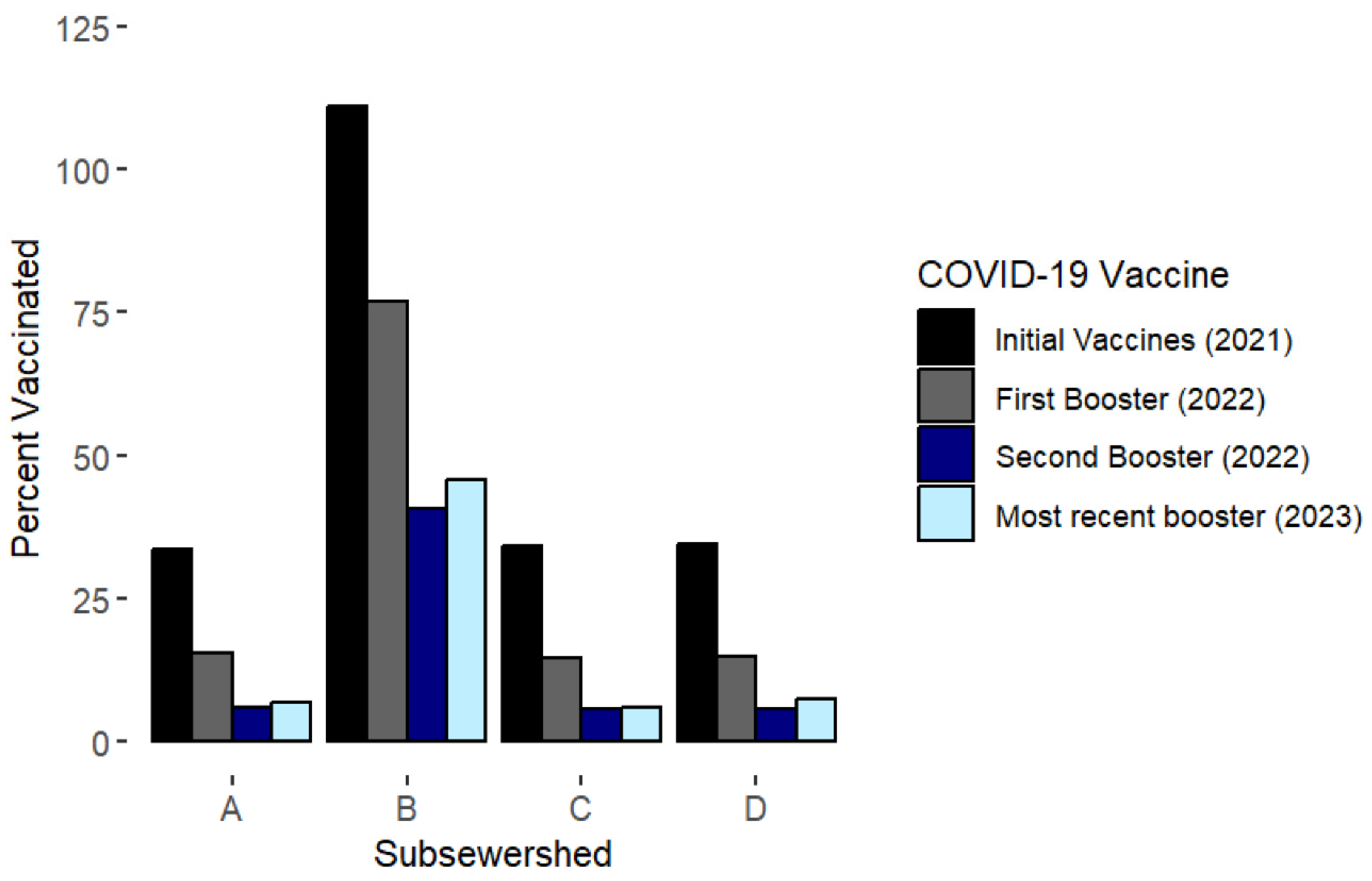
The number of COVID-19 vaccinations within the census tracts in each subsewershed was extracted similarly to the case data and summed by subsewershed. The percent vaccinated by subsewershed was calculated for those that completed the first dose or series of vaccines in 2021 (CDC, MMWR 2021;70), the first and second boosters (CDC, MMWR 2022;71), and the COVID-19 vaccine formulation that was released as of August 2023 (CDC, MMWR 2023;72) using the number of vaccinations and estimated populations of the subsewersheds (Figure 1).
The total number of hospitals, hospital beds and nursing homes or assisted living facilities within the subsewersheds was determined similarly to work by the OWMN previously [32]. These numbers were checked by the local health district for accuracy. Social vulnerability index (SVI) data for census tracts were analyzed in the same way as was performed by OWMN previously [31], and the overall SVI is presented in Table 1. A summary of area characteristics, flow estimates and population-based demographics is included in the table below (Table 1).

2.8. Statistical Data Analyses

Correlations between subsewershed cases and three wastewater parameters, raw N concentrations, Kando normalized wastewater concentrations (NVL) and MSD/RJN normalization (MGCPD) at the subsewershed, were determined by Spearman correlation during each sampling period (proc corr statement, SAS 9.4). Wastewater and case correlations were also determined by lagging case data by one or two weeks relative to the subsewershed level wastewater concentration. Spearman correlation was used as the wastewater data was determined to have a non-normal distribution (p < 0.05) based on four normality tests (Shapiro–Wilk, Kolmogorov–Smirnov, Cramer–von Mises and Anderson–Darling) run using the proc univariate statement in Statistical Analysis Software (SAS 9.4, SAS institute). Significant correlations were determined by p < 0.05.
Significant differences in the wastewater concentration between the subsewersheds were determined by the Kruskal–Wallis test, followed by Dunn’s multiple comparisons test using the packages kruskal.test, dunn.test and FSA in RStudio (R v4.4.0). Outliers were removed based on a Z-score greater than 3.

3. Results

3.1. Overall Wastewater Concentrations and Detection Rates

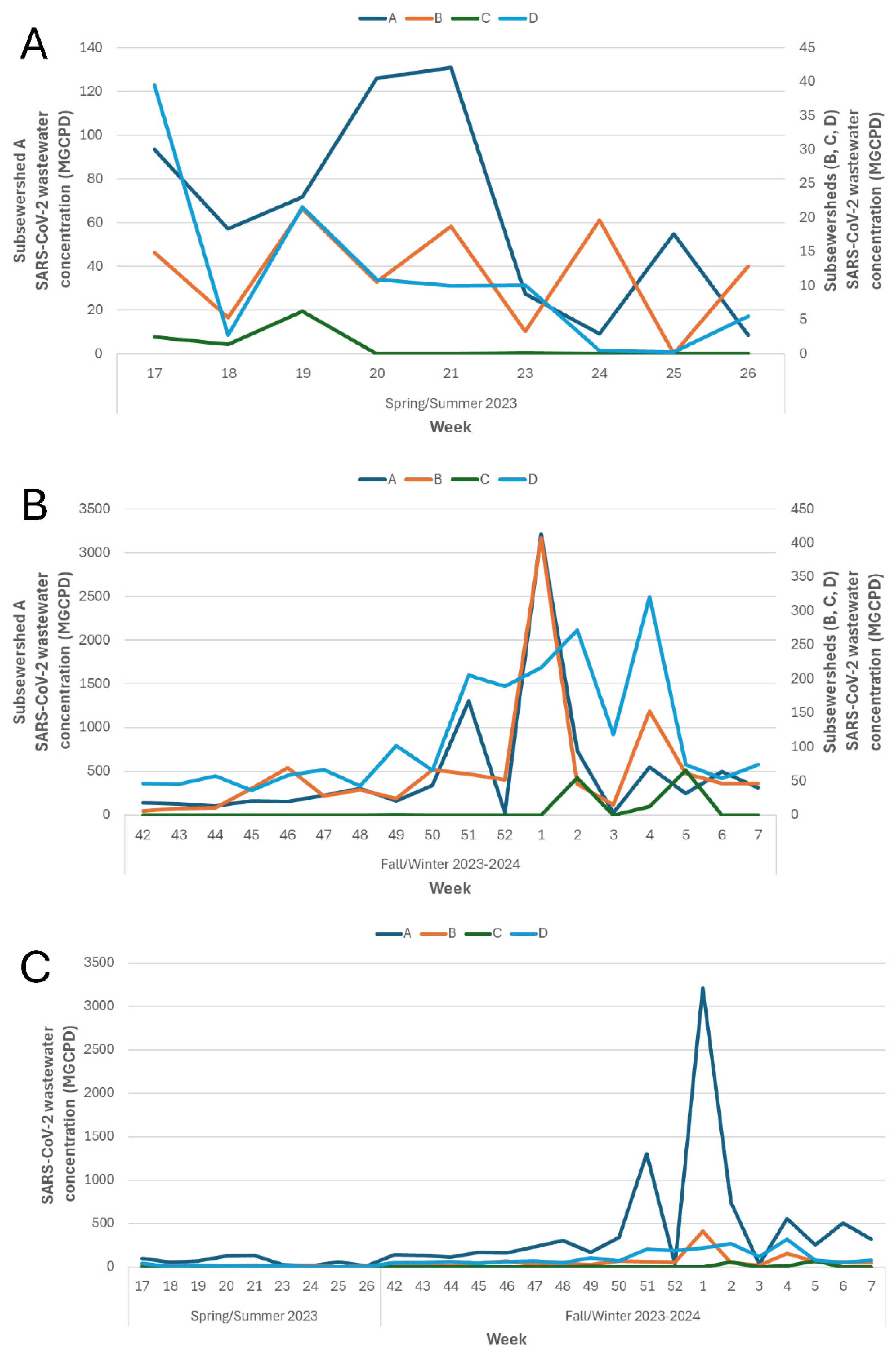
To evaluate SARS-CoV-2 community viral loads, 15 locations delineating four Cincinnati, Ohio, subsewersheds were monitored during two time periods: spring/summer (April–June 2023) and fall/winter (October 2023–February 2024). The individual sampling locations showed large heterogeneity in the SARS-CoV-2 detection rate throughout the monitoring periods (Supplemental Figure S1). The SARS-CoV-2 normalized wastewater concentrations (MGCPD) were aggregated per subsewershed (appropriate sampling locations were added) by season and for the full sampling period (Figure 2).
When comparing the two sampling periods, both the average SARS-CoV-2 N concentrations and MGCPD loads were significantly higher in fall/winter than in spring/summer (p < 0.05). The highest loads were detected in mid-December 2023 and mid-January 2024. In the spring/summer sampling period, the detection rate of SARS-CoV-2 in wastewater above LOQ ranged from 6% (1/17 samples) to 59% (10/17 samples) with an average detection rate of 23 ± 16% across all sampling locations (Supplemental Figure S1). At the subsewershed level, the detection rates were 24% in subsewershed A (10/34 samples), 34% in B (23/68 samples), 12% in C (4/34 samples) and 18% in D (22/119 samples). In the fall/winter sampling period, the detection rate of SARS-CoV-2 in wastewater above LOQ ranged from 34% (11/32 samples) to 94% (30/32 samples), with an average detection rate of 72 ± 17% across the sampling locations (Supplemental Figure S1). At the subsewershed level, the detection rates in each subsewershed were 89% in A (57/64 samples), 63% in B (81/128 samples), 75% in C (48/64 samples) and 72% in D (160/222 samples). While the detection rates for the subsewersheds did not show a pattern for the spring/summer sampling period, the fall/winter sampling period detection rates of samples above LOQ tended to be higher in subsewersheds that represented larger populations.
When visually comparing wastewater concentration trends over time at different sampling locations (Supplemental Figure S2), no specific trend indicating a distinct spatial spread of COVID-19 in the city could be implied. The majority of manhole locations (12/15) showed high virus load between 18 and 25 December 2023.

3.2. Subsewershed Heterogeneity and Comparison to WWTP

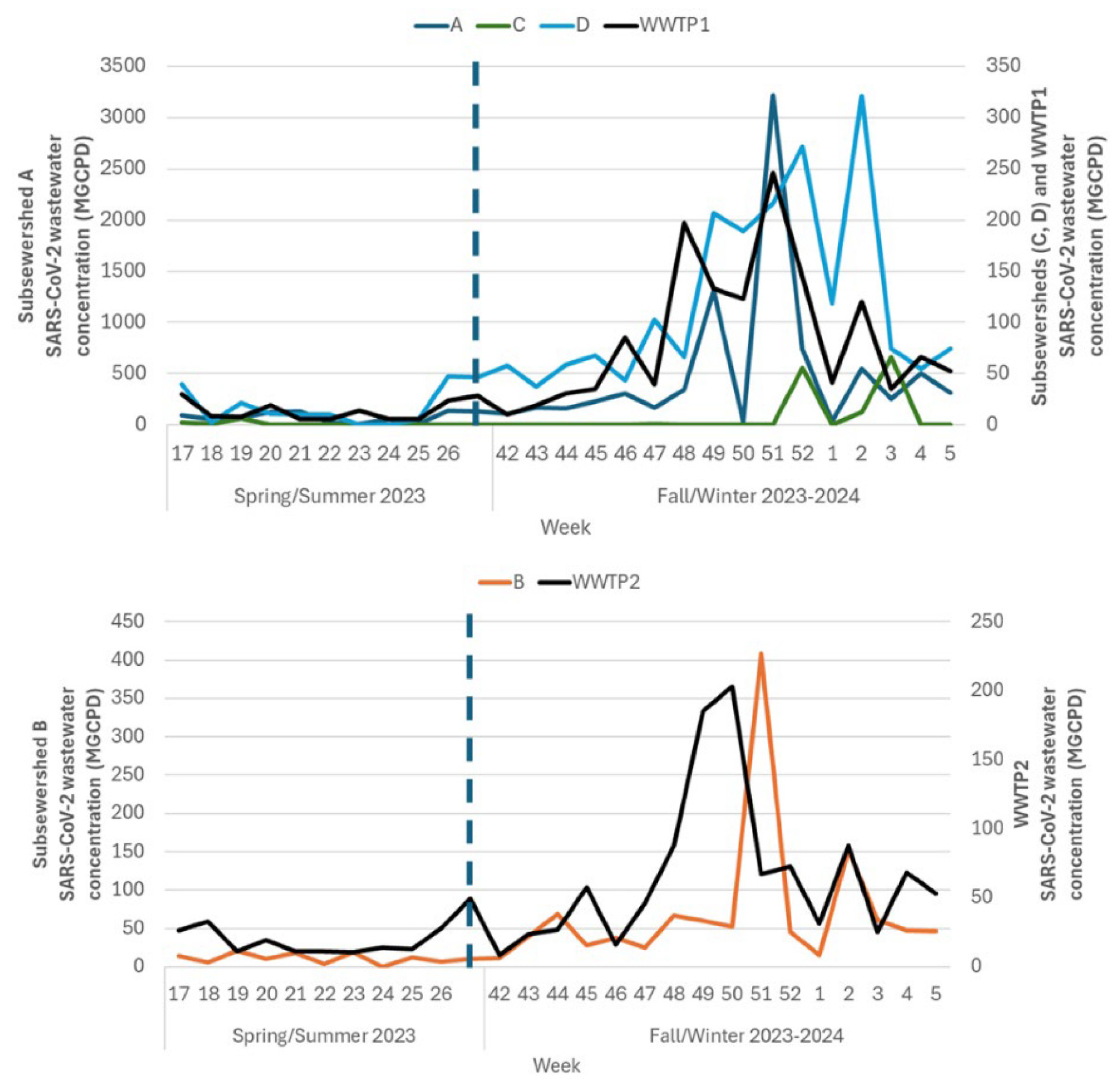
In the summer/spring sampling period, subsewershed wastewater tended to peak one week prior to increases in the wastewater concentration at the respective downstream WWTPs, although levels of SARS-CoV-2 were very low during this period (Figure 2A,B). During the fall/winter sampling period, subsewershed wastewater tended to peak either during the same week or one week after a peak in the wastewater concentration at the downstream WWTPs (Figure 3).
During the spring/summer sampling period, the normalized concentration of SARS-CoV-2 at the subsewershed scale did not correlate with the normalized concentrations at the respective downstream WWTPs (−0.46–0.48, p = 0.20–0.83). However, during the fall/winter sampling period when SARS-CoV-2 levels were higher, two of the subsewersheds (A and D) upstream of WWTP1 and subsewershed B upstream of WWTP2 showed significant correlation with SARS-CoV-2 concentration in wastewater for their respective WWTP: subsewershed A (0.68, p < 0.01), D (0.62, p < 0.01) and B (0.47, p < 0.0.5). Subsewershed C did not significantly correlate with WWTP1 SARS-CoV-2 levels (0.15, p = 0.55).
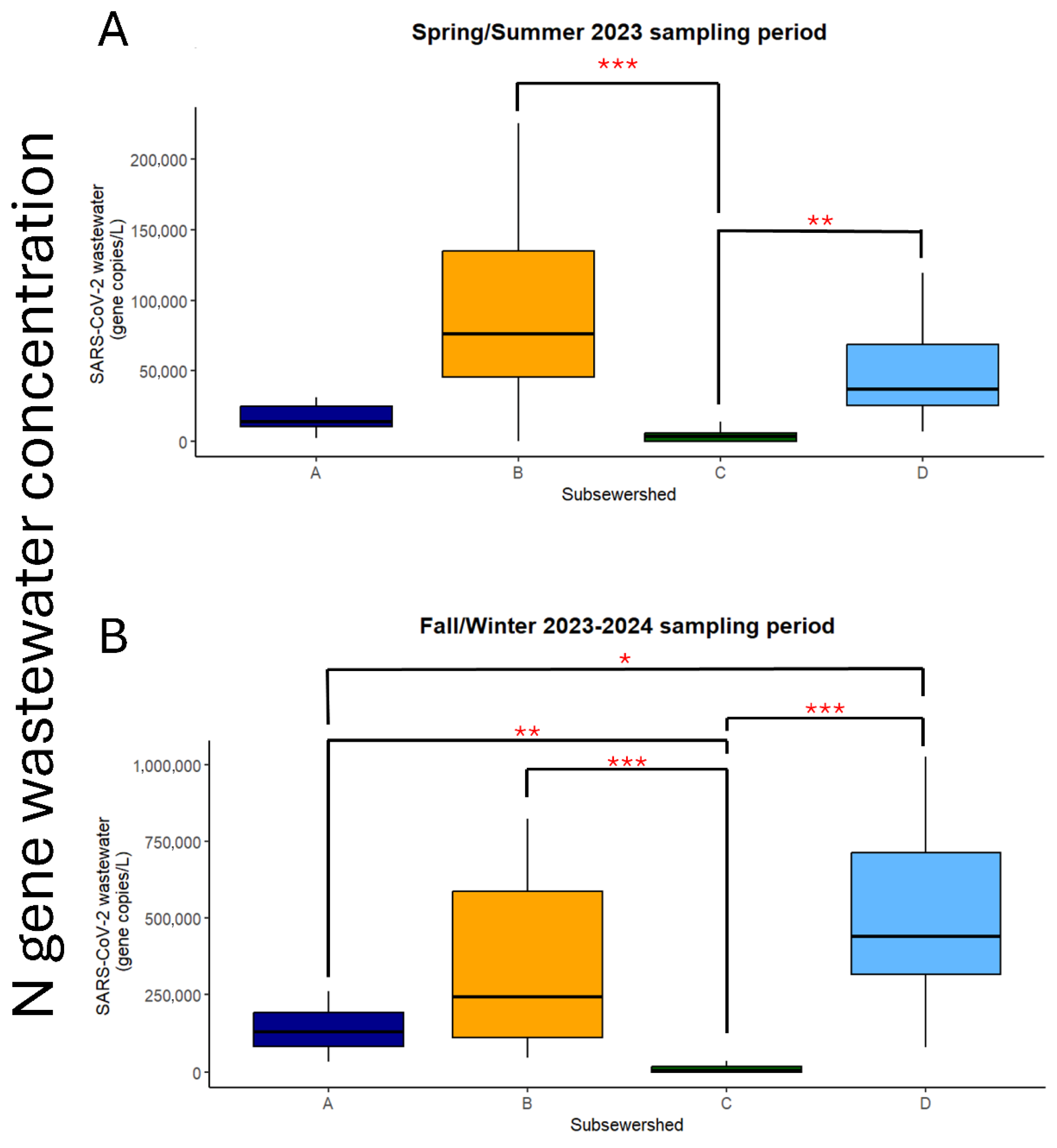
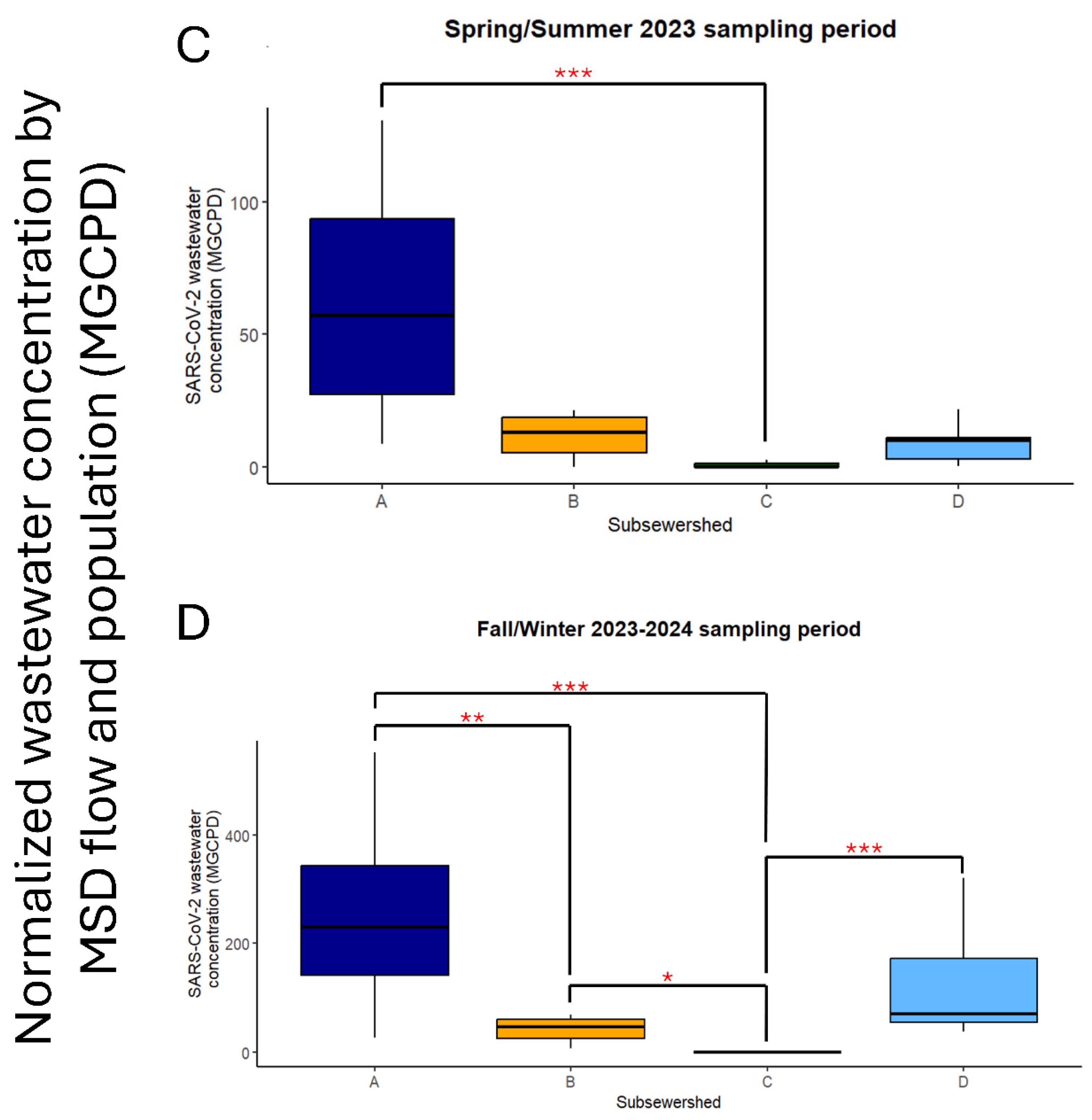
The wastewater concentrations between the subsewersheds were significantly different depending on the season and normalization method. During the spring/summer period, the MGCPD were significantly higher in subsewershed A compared to C (p < 0.001). In fall/winter, the wastewater MGCPD in subsewershed A was significantly higher than either subsewershed B or C (p < 0.01) (Figure 4). Subsewershed D also had significantly higher wastewater concentration compared to subsewershed C (p < 0.001). When evaluating only the N gene concentrations (not normalized) in gene copies/L, in spring/summer, subsewershed B and D were significantly different than subsewershed C (p < 0.001 and p < 0.01, respectively). Similarly, for the N concentration in wastewater in fall/winter, subsewersheds A, B and D were significantly higher than subsewershed C (p < 0.001 for all three).
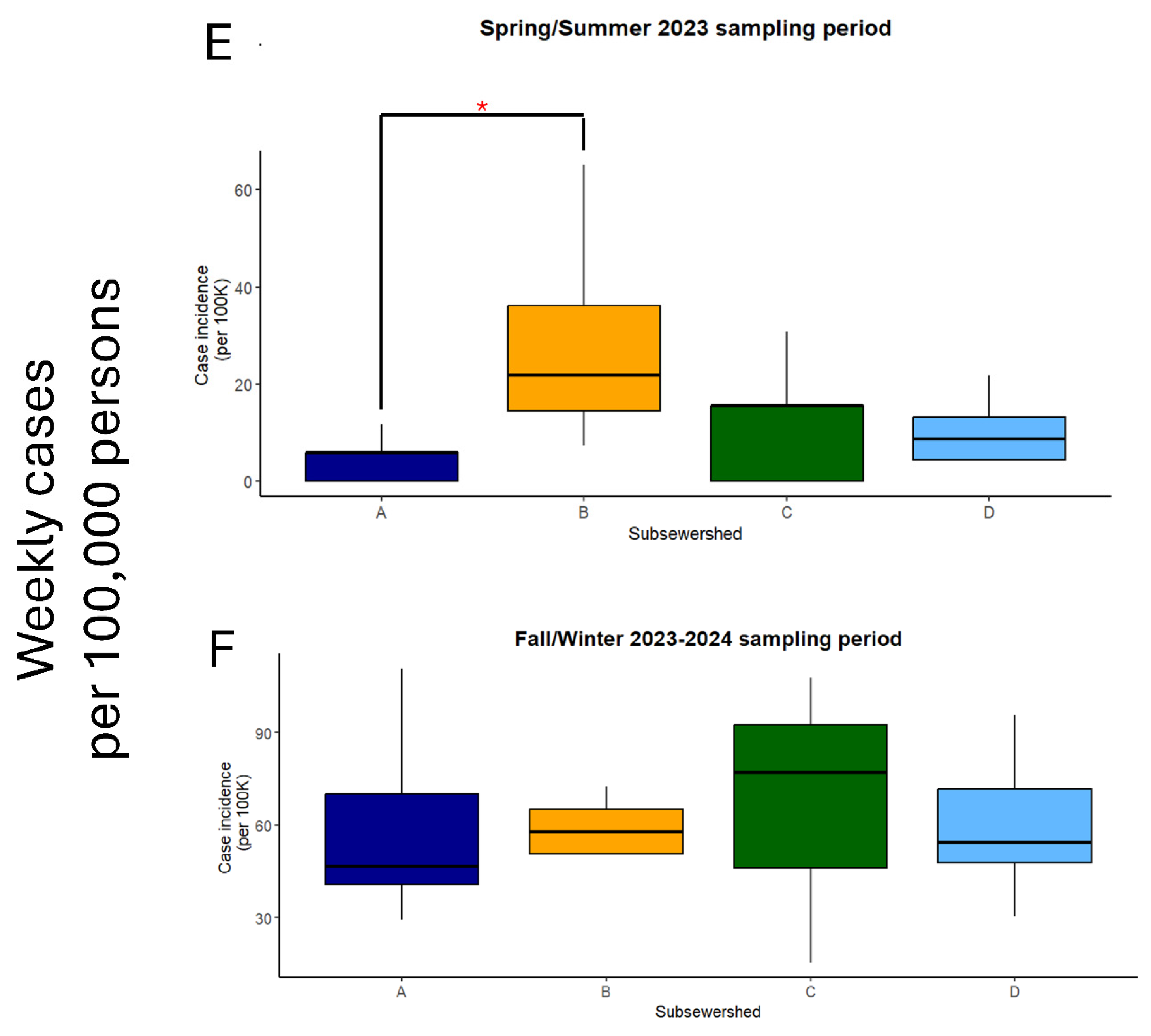
Subsewershed cases showed slightly different patterns than wastewater concentrations and normalized concentrations. During the low prevalence period (spring/summer), subsewershed B had significantly higher case incidence than subsewershed A (p < 0.05). In the high prevalence period (fall/winter), the case incidence was not significantly different among the subsewersheds (p = 0.89–1.00).

3.3. Wastewater Results and Cases Correlations

In the fall/winter sampling period, both WWTPs (WWTP1 and WWTP2) had wastewater levels of SARS-CoV-2 that significantly correlated with the number of cases within their sewershed boundaries, with a two-week leading time for wastewater (0.68–0.86, p < 0.01). Neither WWTP showed a significant correlation between wastewater and their respective sewershed cases during the spring/summer sampling period (0.19–0.57, p = 0.14–0.66).
During spring/summer, there was no significant wastewater-case correlation for subsewersheds A–C, while subsewershed D had a significant correlation between wastewater and subsewershed-specific cases when wastewater was leading cases by two weeks (0.8, p < 0.05). Both subsewershed A and D also had significant correlations with cases at the WWTP sewershed level (0.67 and 0.82, respectively, p < 0.05). During the fall/winter sampling period, the subsewershed case incidence did not correlate with subsewershed level wastewater for any of the subsewersheds (−0.44–0.34, p = 0.08–0.87) (Supplemental Figure S3). Subsewersheds A, B and D significantly correlated with cases at their respective WWTP sewershed level when there was no lag in cases relative to wastewater: (A: 0.68, p < 0.01, B: 0.47, p < 0.05 and D: 0.65, p < 0.01). Additionally, subsewershed D wastewater concentration, which is the closest proximity to WWTP1, showed significant correlation with WWTP1 sewershed level cases with one (0.82, p < 0.0001) or two (0.66, p < 0.01) week lag in cases relative to wastewater.

3.4. Comparison of Laboratory and Rapid Quantification

One aim of this study was to compare the SARS-CoV-2 laboratory quantification protocol with the Cepheid GeneXpert system, which allows a rapid and direct wastewater analysis for different pathogens. Overall, 124 samples were analyzed using the two methods in parallel. The GeneXpert system had a higher sample positivity rate for SARS-CoV-2 with a rate of 77.4% compared to a sample positivity rate of 72.6% using the laboratory quantification protocol. Among the negative results, which indicate no viral loads or loads below the detection limits, seven were negative only in the laboratory analysis, and one was negative only using GeneXpert.
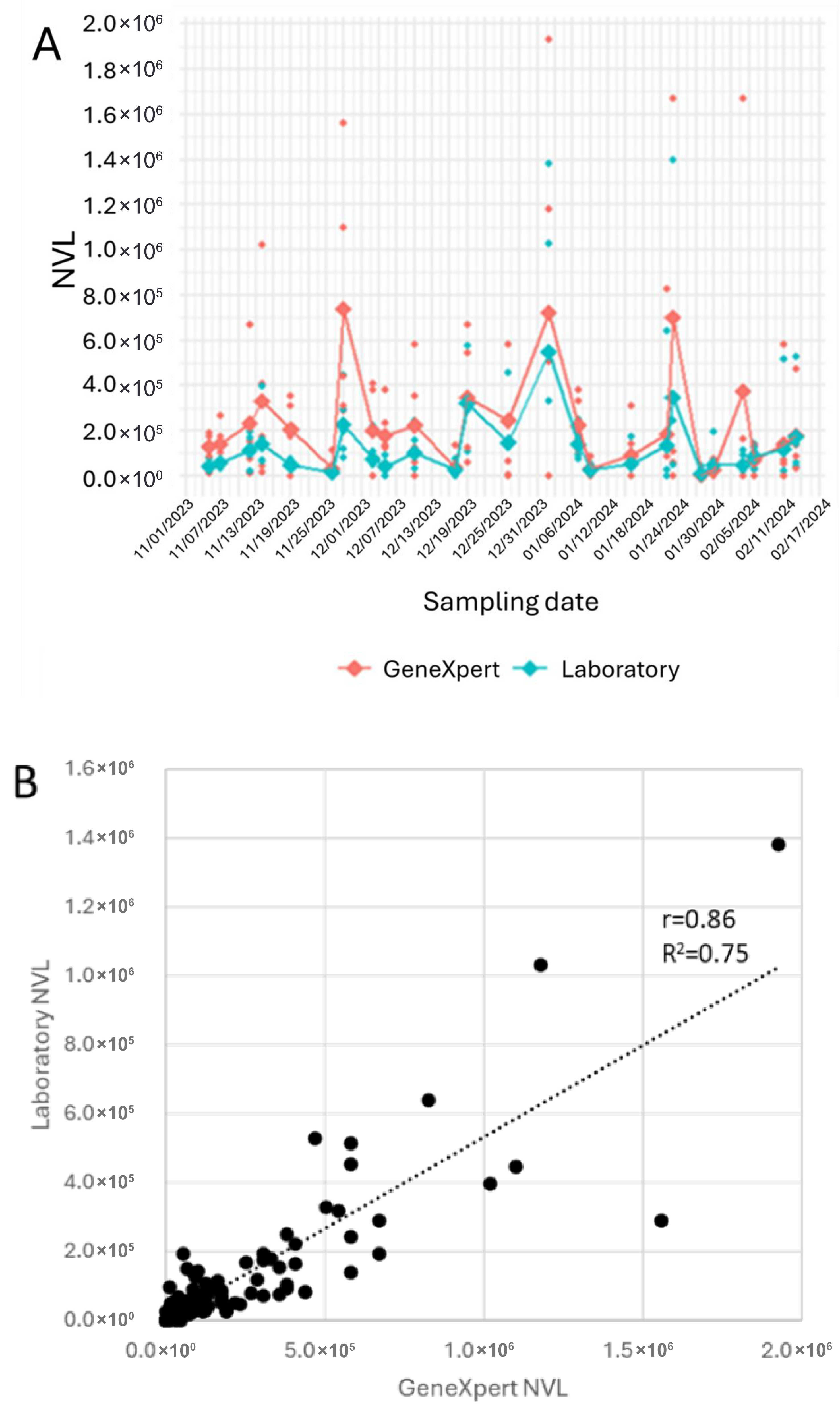
When comparing the overall trend of the SARS-CoV-2 gene copies concentrations measured using laboratory quantification or GeneXpert, similar results were observed for all five sampled locations over time (Figure 5). Compared to the laboratory quantification, the GeneXpert results showed higher concentration in 62.1% of the samples. Laboratory and the GeneXpert SARS-CoV-2 concentrations were linearly correlated (Figure 5). Four outliers were removed from the 124 samples with Z-scores of residuals >3.5. The removal of these outliers increased the R2 by 29.3% (from R2 = 0.58 to R2 = 0.75). For 21.8% of samples, both methods indicated that the virus loads were below the detection limits.

4. Discussion

As wastewater monitoring networks have matured since the beginning of the COVID-19 pandemic, a greater focus has been placed on network representativeness, sustainability and outbreak prediction, especially in terms of subsewershed monitoring. Work from other groups has shown that both subsewershed- and building-level monitoring show promise in outbreak detection [32]. Monitoring at the subsewershed level seems to provide a level of resolution that allows public health action to more effectively reach vulnerable communities and directly address local level outbreaks [11,24,34]; however, subsewershed level monitoring is more cost-prohibitive, labor and resource intensive and will naturally cover a smaller proportion of the local population compared to monitoring at the broader WWTP sewershed level.
The substantial amount of heterogeneity between nearby subsewersheds makes sampling site selection for communities complex [35]. Similar to other studies [11,22,24,36], the four subsewersheds examined in this study exhibited a high amount of heterogeneity in wastewater SARS-CoV-2 concentration, clinical indicators and vaccination rate, with sampling locations within subsewersheds being highly heterogeneous in their wastewater detection rate of SARS-CoV-2. Heterogeneity in wastewater SARS-CoV-2 concentration was also observed among similar socially vulnerable subsewersheds. Some studies reported low or no heterogeneity between monitored subsewersheds, usually connected to small differences between monitored subsewersheds, monitoring during high prevalence periods or implementing more accurate representations of the transient population using chemical normalization methods [27,37,38].
Three of the subsewersheds were highly representative of the larger WWTP sewershed in terms of both wastewater concentration and WWTP level case incidence, indicating that monitoring at the subsewershed level may be sufficiently predictive of outbreaks at the city or larger community level. This is especially important in terms of public health surveillance, given a decline in testing and reporting of COVID-19 cases since the end of the national emergency in 2023. This decline in clinical indicator reporting, coupled with population transiency, is likely evident in the four subsewersheds studied based on a lack of correlation between subsewershed-level cases and subsewershed-level wastewater concentration. Previous work conducted during the beginning of the pandemic (2020–2022) indicated that wastewater and case incidence were highly correlated at the subsewershed or sewershed level [11,18,26,36,37,39]; however, our work and work from other groups indicates weak or no correlation between wastewater and case incidence at the subsewershed level, especially if the monitored population is small, the case prevalence is low, or the population is strongly transient [19,27,35,40].
A major benefit of subsewershed-level wastewater monitoring is that the resolution provided allows for more directed and efficient public health action, especially in underserved, socially vulnerable communities. Work from other groups has shown that wastewater viral load is often higher in more socially vulnerable communities that are more diverse or have a lower median income [18,24,26,27,28,29,30] and that inclusion of demographic information makes wastewater-based models more predictive. Similarly, in our study, the highest viral load among the four subsewersheds was detected during both sampling periods at two of the more socially vulnerable subsewersheds. On the other hand, one of the highest socially vulnerable subsewersheds with the lowest COVID-19 vaccination rate in our study consistently had the lowest SARS-CoV-2 wastewater and case levels, even when wastewater concentration was normalized for flow and population (subsewershed C). A few things stand out when examining other differences between the monitored subsewersheds. The first is age. According to the 2020 US Census data, subsewershed C is the youngest community of the four groups in this study, with more than half the residents estimated to be children between the ages of 0 and 17 years. When comparing the age group incidence of positive COVID-19 cases measured per 100,000 per week (7-day average) in Southwestern Ohio counties, the 0–19 age group has consistently demonstrated the lowest incidence with few exceptions, according to the Greater Cincinnati COVID-19 Situational Awareness report [41]. The Centers for Disease Control (CDC) agreed as early as January 2021 that, while the trend of cases in children ages 0–17 followed the same pattern as adult case trends from week to week, there was a lower incidence and fewer cases with severe outcomes in young children and adolescents than in adults [42]. Some studies have additionally suggested that children’s immune response to COVID-19 is faster and more able to prevent symptoms from developing than that of adults [43]. Yet fecal studies of children still demonstrated COVID-19 virus shedding from asymptomatic and mild cases [44], suggesting that, where reported case counts and low viral load in wastewater agree, there was a true lower incidence in the community compared to communities where there are low case counts and elevated viral loads of SARS-CoV-2 in their wastewater. Additionally, the community with the lowest COVID-19 vaccination rate and the lowest SARS-CoV-2 wastewater and case levels in this study is primarily residential, having no congregate settings such as long-term care facilities, large employers, or transient settings that would contribute to the subsewershed. By comparison, the community with the highest number of vaccinated residents in this study and high wastewater viral loads, subsewershed B, has five long-term care facilities, and only 17.6% of residents are 0–17 years of age (2020 census). Although the population serviced by a given catchment has been noted to be difficult to estimate, it seems that the resident population estimates are not a sufficient population proxy due to transiency, as is evident in our study and others [37].
The subsewershed that had the highest wastewater SARS-CoV-2 normalized concentration (MGCPD), subsewershed A, included two hospitals and several industrial facilities with significant flow inputs. Although flow normalization is a very useful tool to adjust concentration for dilution due to intermittent flow increases, such as rain [45], it might also lead to overestimation of SARS-CoV-2 load in areas with significant “other than residential wastewater” input, as seen in our study. This is supported by subsewershed A and B having similar estimated populations. However, (1) subsewershed B had much higher non-normalized SARS-CoV-2 concentrations, while (2) subsewershed A had substantially higher normalized wastewater concentrations of SARS-CoV-2, indicating that subsewershed A may have had additional flow inputs that are not accounted for based on a difference in population. Work from other groups also indicates that physicochemical characteristics of wastewater, including ammonia concentration and pH, can also alter viral load detection [46,47]. Accurate flow measurement in a sewage conveyance system can be challenging, given the irregularity of pipe sizes and the reliability of differing types of level sensors. MSD’s Wet Weather SCADA system and its network of roughly 1000 level and velocity sensors is one of the most advanced flow monitoring networks in the world, and, still, there are challenges with flow estimation in areas where no sensor is nearby. Reliance upon level and Manning’s equation alone is a method of rough estimation of flow in a conveyance; however, when the pipe geometry is not well known, considerable error might be introduced into this estimate. Additionally, we identified unpredictable swings in wastewater quality (pH, ORP and Electrical Conductivity) in subsewershed A, which were later attributed to an untreated industrial waste discharge (Supplemental Figure S4). It is unknown how these aberrations in wastewater quality affected the viability and detectability of SARS-CoV-2 in untreated wastewater. When monitoring in subsewersheds, coupling wastewater sample collection with accurate flow and water quality sensors might be necessary for the correct interpretation of results.
While subsewershed level monitoring provides a higher resolution, this study also indicates that many residential subsewersheds might not be adequate for hotspots or lead time monitoring. Our subsewersheds lacked lead time for an increase in case incidence at the subsewershed or WWTP level, while the WWTP wastewater concentration provided up to two weeks of lead time for an increase in sewershed cases during the peak season. Other work has highlighted that the WWTP wastewater results are more reflective of closer communities than those that are further upstream of the plant [15,18]. However, our study found that the subsewershed proximity to the WWTP did not appear to be a factor affecting correlation with the WWTP wastewater loads, concentrations, or cases. This could be because our subsewersheds are located at a similar distance to WWTPs, and the small differences in the distance did not affect this relationship.

5. Conclusions

As in previous studies, our subsewershed monitoring project unveiled the heterogeneity of SARS-CoV-2 concentrations even in very similar and nearby areas, pointing to the complexity of COVID-19 spread in urban areas and the difficulty in defining sampling locations without sampling possibly overlapping transient populations. The subsewershed wastewater SARS-CoV-2 concentrations were representative of the larger sewershed areas but did not seem to provide a warning earlier than the WWTP data. Additionally, subsewershed social vulnerability did not seem to be the main predictor of wastewater viral concentrations and loads. Other factors, including population age distribution, presence of hospitals, transient areas that attract visitors, “other than residential wastewater” flow volumes, and quality that affect viral signals, may all play a role in the prediction of wastewater viral loads. Wastewater concentration loads determined either by traditional laboratory analyses or by a rapid detection system (GeneXpert) showed high agreement, providing support for the reliability of the GeneXpert when deployed for wastewater monitoring efforts. Furthermore, delineating residential areas in a city with aging wastewater collection system networks and locating the best monitoring locations requires expertise and knowledge, and, in our case, many monitoring locations.

Supplementary Materials

The following supporting information can be downloaded at: https://www.mdpi.com/article/10.3390/w18020158/s1, Figure S1: Detection rates of SARS-CoV-2; Figure S2: SARS-CoV-2 wastewater concentration (MGCPD) by sampling location; Figure S3: SARS-CoV-2 wastewater concentrations and case incidence for subsewersheds; Figure S4: Wastewater quality parameters for one day in subsewershed A; Table S1: Water quality metrics by sampling location in the subsewersheds by sampling period; Table S2: Recovery percentage of bovine coronavirus (BCoV) by sampling location in the subsewersheds by sampling period.

Author Contributions

D.S.—writing original draft, investigation, data curation, visualization, formal analyses; H.K.-R.—writing original draft, investigation, data acquisition, project planning and operational management; S.M.B.—conceptualization, funding acquisition, investigation, methodology, project administration, resources, supervision, writing—review and editing; D.P.—project administration, validation, visualization, data curation; C.T.—funding acquisition, supervision; M.W.—project coordination, logistics, data entry and editing; Z.B.—project administration, supervision, funding acquisition, data curation, validation, writing—review and editing; J.S., P.C. and J.K.—investigation, methodology, validation, writing—review and editing; E.L.—project administration, supervision, funding acquisition; S.H.—logistics, investigation, methodology; S.R.—data curation, formal analysis, methodology; K.W.—conceptualization, investigation, supervision, writing—review and editing; M.A.—conceptualization, funding acquisition, investigation, project administration, resources, supervision. All authors have read and agreed to the published version of the manuscript.

Funding

Funding to the local health district was provided via subaward from a CDC grant through the Ohio Department of Health, award number 6 NU50CK000543-02-11, and by the Metropolitan Sewer District of Greater Cincinnati.

Institutional Review Board Statement

Ethical review and approval were waived for this study, as no personally identifiable data were collected as part of the monitoring process, as per the Ohio Department of Health Human Subjects Institutional Review Board.

Data Availability Statement

Wastewater data can be found publicly available at the subsewershed level on the Cincinnati Center for Clinical and Translational Science and Training dashboard at https://www.cctst.org/cctst/pandemic-dashboard, (accessed on 12 October 2025) and additional data at the wastewater treatment plant level can be found on the Ohio Wastewater Monitoring Network website under Monitoring Data https://odh.ohio.gov/know-our-programs/ohio-wastewater-monitoring-network (accessed on 12 October 2025).

Acknowledgments

We are grateful for the technical assistance and operational support from Kando environmental services LTD. operations team. We thank MSD staff, Tom Fritz and Robin Shafer for their help with sample receiving, shipping and laboratory space.

Conflicts of Interest

Hila Korach-Rechtman was employed by the company Kando Environmental Services LTD that includes employment. Author David Partridge was employed by the company RJN Group, and Author Carrie Turner was employed by the company Limnotech. The remaining authors declare that the research was conducted in the absence of any commercial or financial relationships that could be construed as a potential conflict of interest.

References

  1. Jiménez-Rodríguez, M.G.; Silva-Lance, F.; Parra-Arroyo, L.; Medina-Salazar, D.A.; Martínez-Ruiz, M.; Melchor-Martínez, E.M.; Martínez-Prado, M.A.; Iqbal, H.M.N.; Parra-Saldívar, R.; Barceló, D.; et al. Biosensors for the detection of disease outbreaks through wastewater-based epidemiology. TrAC Trends Anal. Chem. 2022, 155, 116585. [Google Scholar] [CrossRef] [PubMed]
  2. Shah, S.; Gwee, S.X.W.; Ng, J.Q.X.; Lau, N.; Koh, J.; Pang, J. Wastewater surveillance to infer COVID-19 transmission: A systematic review. Sci. Total Environ. 2022, 804, 150060. [Google Scholar] [CrossRef] [PubMed]
  3. Ai, Y.; Davis, A.; Jones, D.; Lemeshow, S.; Tu, H.; He, F.; Ru, P.; Pan, X.; Bohrerova, Z.; Lee, J. Wastewater SARS-CoV-2 monitoring as a community-level COVID-19 trend tracker and variants in Ohio, United States. Sci. Total Environ. 2021, 801, 149757. [Google Scholar] [CrossRef] [PubMed]
  4. Amman, F.; Markt, R.; Endler, L.; Hupfauf, S.; Agerer, B.; Schedl, A.; Richter, L.; Zechmeister, M.; Bicher, M.; Heiler, G.; et al. Viral variant-resolved wastewater surveillance of SARS-CoV-2 at national scale. Nat. Biotechnol. 2022, 40, 1814–1822. [Google Scholar] [CrossRef]
  5. Bar-Or, I.; Indenbaum, V.; Weil, M.; Elul, M.; Levi, N.; Aguvaev, I.; Cohen, Z.; Levy, V.; Azar, R.; Mannasse, B.; et al. National Scale Real-Time Surveillance of SARS-CoV-2 Variants Dynamics by Wastewater Monitoring in Israel. Viruses 2022, 14, 1229. [Google Scholar] [CrossRef]
  6. Fontenele, R.S.; Kraberger, S.; Hadfield, J.; Driver, E.M.; Bowes, D.; Holland, L.R.A.; Faleye, T.O.C.; Adhikari, S.; Kumar, R.; Inchausti, R.; et al. High-throughput sequencing of SARS-CoV-2 in wastewater provides insights into circulating variants. Water Res. 2021, 205, 117710. [Google Scholar] [CrossRef]
  7. Matheri, A.N.; Belaid, M.; Njenga, C.K.; Ngila, J.C. Water and wastewater digital surveillance for monitoring and early detection of the COVID-19 hotspot: Industry 4.0. Int. J. Environ. Sci. Technol. 2023, 20, 1095–1112. [Google Scholar] [CrossRef]
  8. Sims, N.; Kasprzyk-Hordern, B. Future perspectives of wastewater-based epidemiology: Monitoring infectious disease spread and resistance to the community level. Environ. Int. 2020, 139, 105689. [Google Scholar] [CrossRef]
  9. Levy, J.I.; Andersen, K.G.; Knight, R.; Karthikeyan, S. Wastewater surveillance for public health. Science 2023, 379, 26–27. [Google Scholar] [CrossRef]
  10. Parkins, M.D.; Lee, B.E.; Acosta, N.; Bautista, M.; Hubert, C.R.J.; Hrudey, S.E.; Frankowski, K.; Pang, X.-L. Wastewater-based surveillance as a tool for public health action: SARS-CoV-2 and beyond. Clin. Microbiol. Rev. 2023, 37, e00103-22. [Google Scholar] [CrossRef]
  11. Bowes, D.A.; Darling, A.; Driver, E.M.; Devrim, K.; Maal-Bared, R.; Lee, L.M.; Goodman, K.; Adhikari, S.; Aggarwal, S.; Bivins, A.; et al. Structured ethical review for wastewater-based testing in support of public health. Environ. Sci. Technol. 2023, 57, 12969–12980. [Google Scholar] [CrossRef]
  12. Hrudey, S.E.; Silva, D.S.; Shelley, J.; Pons, W.; Isaac-Renton, J.; Chik, A.H.S.; Conant, B. Ethics guidance for environmental scientists engaged in surveillance of wastewater for SARS-CoV-2. Environ. Sci. Technol. 2021, 55, 8484–8491. [Google Scholar] [CrossRef] [PubMed]
  13. Schmiege, D.; Haselhoff, T.; Thomas, A.; Kraiselburd, I.; Meyer, F.; Moebus, S. Small-scale wastewater-based epidemiology (WBE) for infectious diseases and antibiotic resistance: A scoping review. Int. J. Hyg. Environ. Health 2024, 259, 114379. [Google Scholar] [CrossRef]
  14. Bowes, D.A.; Driver, E.M.; Kraberger, S.; Fontenele, R.S.; Holland, L.R.A.; Wright, J.; Johnston, B.; Savic, S.; Engstrom Newell, M.; Adhikari, S.; et al. Leveraging an established neighbourhood-level, open access wastewater monitoring network to address public health priorities: A population-based study. Lancet Microbe 2023, 4, e29–e37. [Google Scholar] [CrossRef]
  15. Schmiege, D.; Kraiselburd, I.; Haselhoff, T.; Thomas, A.; Doerr, A.; Gosch, J.; Schoth, J.; Teichgräber, B.; Moebus, S.; Meyer, F. Analyzing community wastewater in sub-sewersheds for the small-scale detection of SARS-CoV-2 variants in a German metropolitan area. Sci. Total Environ. 2023, 898, 165458. [Google Scholar] [CrossRef]
  16. Yaniv, K.; Shagan, M.; Lewis, Y.E.; Kramarsky-Winter, E.; Weil, M.; Indenbaum, V.; Elul, M.; Erster, O.; Brown, A.S.; Mendelson, E.; et al. City-level SARS-CoV-2 sewage surveillance. Chemosphere 2021, 283, 131194. [Google Scholar] [CrossRef]
  17. Barrios, R.E.; Lim, C.; Kelley, M.S.; Li, X. SARS-CoV-2 concentrations in a wastewater collection system indicated potential COVID-19 hotspots at the zip code level. Sci. Total Environ. 2021, 800, 149480. [Google Scholar] [CrossRef] [PubMed]
  18. Haak, L.; Delic, B.; Li, L.; Guarin, T.; Mazurowski, L.; Dastjerdi, N.G.; Dewan, A.; Pagilla, K. Spatial and temporal variability and data bias in wastewater surveillance of SARS-CoV-2 in a sewer system. Sci. Total Environ. 2022, 805, 150390. [Google Scholar] [CrossRef]
  19. Oh, C.; Zhou, A.; O’Brien, K.; Jamal, Y.; Wennerdahl, H.; Schmidt, A.R.; Shisler, J.L.; Jutla, A.; Keefer, L.; Brown, W.M.; et al. Application of neighborhood-scale wastewater-based epidemiology in low COVID-19 incidence situations. Sci. Total Environ. 2022, 852, 158448. [Google Scholar] [CrossRef] [PubMed]
  20. Quoc, N.B.; Saingam, P.; RedCorn, R.; Carter, J.A.; Jain, T.; Candry, P.; Gattuso, M.; Huang, M.L.W.; Greninger, A.L.; Meschke, J.S.; et al. Case study: Impact of diurnal variations and stormwater dilution on SARS-CoV-2 RNA signal intensity at neighborhood scale wastewater pumping stations. ACS ES&T Water 2022, 2, 1964–1975. [Google Scholar] [CrossRef]
  21. Rios, G.; Lacoux, C.; Leclercq, V.; Diamant, A.; Lebrigand, K.; Lazuka, A.; Soyeux, E.; Lacroix, S.; Fassy, J.; Couesnon, A.; et al. Monitoring SARS-CoV-2 variants alterations in Nice neighborhoods by wastewater nanopore sequencing. Lancet Reg. Health Eur. 2021, 10, 100202. [Google Scholar] [CrossRef]
  22. Saguti, F.; Magnil, E.; Enache, L.; Churqui, M.P.; Johansson, A.; Lumley, D.; Davidsson, F.; Dotevall, L.; Mattsson, A.; Trybala, E.; et al. Surveillance of wastewater revealed peaks of SARS-CoV-2 preceding those of hospitalized patients with COVID-19. Water Res. 2021, 189, 116620. [Google Scholar] [CrossRef]
  23. Saingam, P.; Li, B.; Nguyen Quoc, B.; Jain, T.; Bryan, A.; Winkler, M.K.H. Wastewater surveillance of SARS-CoV-2 at intra-city level demonstrated high resolution in tracking COVID-19 and calibration using chemical indicators. Sci. Total Environ. 2023, 866, 161467. [Google Scholar] [CrossRef]
  24. Saingam, P.; Jain, T.; Woicik, A.; Li, B.; Candry, P.; Redcorn, R.; Wang, S.; Himmelfarb, J.; Bryan, A.; Winkler, M.K.H. Integrating socio-economic vulnerability factors improves neighborhood-scale wastewater-based epidemiology for public health applications. Water Res. 2024, 254, 121415. [Google Scholar] [CrossRef]
  25. Wannigama, D.L.; Amarasiri, M.; Hongsing, P.; Hurst, C.; Modchang, C.; Chadsuthi, S.; Anupong, S.; Phattharapornjaroen, P.; Ali, A.H.; Fernandez, S.; et al. COVID-19 monitoring with sparse sampling of sewered and non-sewered wastewater in urban and rural communities. iScience 2023, 26, 107019. [Google Scholar] [CrossRef]
  26. Acosta, N.; Bautista, M.A.; Waddell, B.J.; McCalder, J.; Beaudet, A.B.; Man, L.; Pradhan, P.; Sedaghat, N.; Papparis, C.; Bacanu, A.; et al. Longitudinal SARS-CoV-2 RNA wastewater monitoring across a range of scales correlates with total and regional COVID-19 burden in a well-defined urban population. Water Res. 2022, 220, 118611. [Google Scholar] [CrossRef]
  27. Baldwin, W.M.; Dayton, R.D.; Bivins, A.W.; Scott, R.S.; Yurochko, A.D.; Vanchiere, J.A.; Davis, T.; Arnold, C.L.; Asuncion, J.E.T.; Bhuiyan, M.A.N.; et al. Highly socially vulnerable communities exhibit disproportionately increased viral loads as measured in community wastewater. Environ. Res. 2023, 222, 115351. [Google Scholar] [CrossRef]
  28. Mota, C.R.; Bressani-Ribeiro, T.; Araújo, J.C.; Leal, C.D.; Leroy-Freitas, D.; Machado, E.C.; Espinosa, M.F.; Fernandes, L.; Leão, T.L.; Chamhum-Silva, L.; et al. Assessing spatial distribution of COVID-19 prevalence in Brazil using decentralised sewage monitoring. Water Res. 2021, 202, 117388. [Google Scholar] [CrossRef]
  29. Pardo-Figueroa, B.; Mindreau-Ganoza, E.; Reyes-Calderon, A.; Yufra, S.P.; Solorzano-Ortiz, I.M.; Donayre-Torres, A.J.; Antonini, C.; Renom, J.M.; Quispe, A.M.; Mota, C.R.; et al. Spatiotemporal Surveillance of SARS-CoV-2 in the Sewage of Three Major Urban Areas in Peru: Generating Valuable Data Where Clinical Testing Is Extremely Limited. ACS ES&T Water 2022, 2, 2144–2157. [Google Scholar] [CrossRef]
  30. Nelson, J.R.; Lu, A.; Maestre, J.P.; Palmer, E.J.; Jarma, D.; Kinney, K.A.; Grubesic, T.H.; Kirisits, M.J. Space-time analysis of COVID-19 cases and SARS-CoV-2 wastewater loading: A geodemographic perspective. Spat. Spatio-Temporal Epidemiol. 2022, 42, 100521. [Google Scholar] [CrossRef]
  31. Shi, B.; Catsamas, S.; Kolotelo, P.; Wang, M.; Lintern, A.; Jovanovic, D.; Bach, P.M.; Deletic, A.; McCarthy, D.T. A Low-Cost Water Depth and Electrical Conductivity Sensor for Detecting Inputs into Urban Stormwater Networks. Sensors 2021, 21, 3056. [Google Scholar] [CrossRef]
  32. Servello, D.; Chalasani, P.; Leasure, E.; LeMaster, K.D.; Kellar, J.; Stiverson, J.; White, M.; Bohrerova, Z. Identification of Statewide Hotspots for Respiratory Disease Targets Using Wastewater Monitoring Data. Trop. Med. Infect. Dis. 2025, 10, 241. [Google Scholar] [CrossRef]
  33. Muralidharan, A.; Olson, R.; Bess, C.W.; Bischel, H.N. Equity-centered adaptive sampling in sub-sewershed wastewater surveillance using census data. Environ. Sci. Water Res. Technol. 2024, 11, 136–151. [Google Scholar] [CrossRef]
  34. Cohen, A.; Maile-Moskowitz, A.; Grubb, C.; Gonzalez, R.A.; Ceci, A.; Darling, A.; Hungerford, L.; Fricker, R.D., Jr.; Finkielstein, C.V.; Pruden, A.; et al. Subsewershed SARS-CoV-2 Wastewater Surveillance and COVID-19 Epidemiology Using Building-Specific Occupancy and Case Data. ACS ES&T Water 2022, 2, 2047–2059. [Google Scholar] [CrossRef] [PubMed]
  35. Zdenkova, K.; Bartackova, J.; Cermakova, E.; Demnerova, K.; Dostalkova, A.; Janda, V.; Jarkovsky, J.; Lopez Marin, M.A.; Novakova, Z.; Rumlova, M.; et al. Monitoring COVID-19 spread in Prague local neighborhoods based on the presence of SARS-CoV-2 RNA in wastewater collected throughout the sewer network. Water Res. 2022, 216, 118343. [Google Scholar] [CrossRef]
  36. Starke, J.C.; Bell, N.S.; Martinez, C.M.; Friberg, I.K.; Lawley, C.; Sriskantharajah, V.; Hirschberg, D.L. Measuring SARS-CoV-2 RNA concentrations in neighborhood wastewater. Sci. Total Environ. 2024, 926, 172021. [Google Scholar] [CrossRef]
  37. Li, Y.; Miyani, B.; Zhao, L.; Spooner, M.; Gentry, Z.; Zou, Y.; Rhodes, G.; Li, H.; Kaye, A.; Norton, J.; et al. Surveillance of SARS-CoV-2 in nine neighborhood sewersheds in Detroit Tri-County area, United States: Assessing per capita SARS-CoV-2 estimations and COVID-19 incidence. Sci. Total Environ. 2022, 851, 158350. [Google Scholar] [CrossRef]
  38. Yeager, R.; Holm, R.H.; Saurabh, K.; Fuqua, J.L.; Talley, D.; Bhatnagar, A.; Smith, T. Wastewater Sample Site Selection to Estimate Geographically Resolved Community Prevalence of COVID-19: A Sampling Protocol Perspective. GeoHealth 2021, 5, e2021GH000420. [Google Scholar] [CrossRef]
  39. Layton, B.A.; Kaya, D.; Kelly, C.; Williamson, K.J.; Alegre, D.; Bachhuber, S.M.; Banwarth, P.G.; Bethel, J.W.; Carter, K.; Dalziel, B.D.; et al. Evaluation of a Wastewater-Based Epidemiological Approach to Estimate the Prevalence of SARS-CoV-2 Infections and the Detection of Viral Variants in Disparate Oregon Communities at City and Neighborhood Scales. Environ. Health Perspect. 2022, 130, 67010. [Google Scholar] [CrossRef] [PubMed] [PubMed Central]
  40. Greenwald, H.D.; Kennedy, L.C.; Hinkle, A.; Whitney, O.N.; Fan, V.B.; Crits-Christoph, A.; Harris-Lovett, S.; Flamholz, A.I.; Al-Shayeb, B.; Liao, L.D.; et al. Tools for interpretation of wastewater SARS-CoV-2 temporal and spatial trends demonstrated with data collected in the San Francisco Bay Area. Water Res. X 2021, 12, 100111. [Google Scholar] [CrossRef]
  41. Center for Clinical and Translational Science and Training (CCTST). Greater Cincinnati COVID-19 Situational Awareness. 2023. Available online: https://www.cctst.org/pandemic-dashboard (accessed on 12 October 2025).
  42. Leidman, E.; Duca, L.M.; Omura, J.D.; Proia, K.; Stephens, J.W.; Sauber-Schatz, E.K. COVID-19 Trends Among Persons Aged 0–24 Years—United States, 1 March 1–12 December 2020. MMWR Morb. Mortal. Wkly. Rep. 2021, 70, 88–94. [Google Scholar] [CrossRef]
  43. Yoshida, M.; Worlock, K.B.; Huang, N.; Lindeboom, R.G.H.; Butler, C.R.; Kumasaka, N.; Dominguez Conde, C.; Mamanova, L.; Bolt, L.; Richardson, L.; et al. Local and systemic responses to SARS-CoV-2 infection in children and adults. Nature 2021, 602, 321–327. [Google Scholar] [CrossRef]
  44. Li, W.T.; Zhang, Y.; Liu, M.; Liu, Y.Q.; Ma, X. Prolonged viral shedding in feces of children with COVID-19: A systematic review and synthesis of data. Eur. J. Pediatr. 2022, 181, 4011–4017. [Google Scholar] [CrossRef]
  45. Nagarkar, M.; Keely, S.P.; Jahne, M.; Wheaton, E.; Hart, C.; Smith, B.; Garland, J.; Varughese, E.A.; Braam, A.; Wiechman, B.; et al. SARS-CoV-2 monitoring at three sewersheds of different scales and complexity demonstrates distinctive relationships between wastewater measurements and COVID-19 case data. Sci. Total Environ. 2022, 816, 151534. [Google Scholar] [CrossRef]
  46. Amoah, I.D.; Abunama, T.; Awolusi, O.O.; Pillay, L.; Pillay, K.; Kumari, S.; Bux, F. Effect of selected wastewater characteristics on estimation of SARS-CoV-2 viral load in wastewater. Sci. Total Environ. 2022, 203, 111877. [Google Scholar] [CrossRef]
  47. Varbanov, M.; Bertrand, I.; Philippot, S.; Retourney, C.; Gardette, M.; Hartard, C.; Jeulin, H.; Duval, R.E.; Loret, J.F.; Schvoerer, E.; et al. Somatic coliphages are conservative indicators of SARS-CoV-2 inactivation during heat and alkaline pH treatments. Sci. Total Environ. 2021, 797, 149112. [Google Scholar] [CrossRef]
Figure 1. Percent COVID-19 vaccinated per subsewershed for each dose and booster. The percent vaccinated is estimated based on the subsewershed population size. Note that percent vaccinated estimates reflect the difficulty of population counts in monitored areas and extraction of vaccination census tract records vs. subsewershed boundaries that do not reflect census tracts.
Water 18 00158 g001
Figure 2. SARS-CoV-2 normalized wastewater concentration (MGCPD) during the study periods in subsewersheds. Weekly average SARS-CoV-2 normalized wastewater concentrations (MGCPD) for spring/summer (A) and fall/winter (B) were determined in four subsewersheds of the city. The overall trend for the full sampling period is shown in (C).
Water 18 00158 g002
Figure 3. Line graphs depicting the wastewater SARS-CoV-2 normalized concentration (MGCPD) at the subsewersheds and respective WWTPs during the sampling periods. Wastewater concentrations for both WWTP and subsewershed level are weekly averages. (Top) WWTP1 and upstream subsewersheds (A, C and D). (Bottom) WWTP2 and upstream subsewershed B.
Water 18 00158 g003
Figure 4. Boxplots of the average N gene wastewater concentration (A,B), normalized wastewater concentration (MGCPD; C,D), and weekly cases per 100,000 residents (E,F) during the two sampling periods. Significant differences determined by Kruskal–Wallis/Dunn’s Multiple Comparisons test (* indicates p < 0.05, ** indicates p < 0.01, *** indicates p < 0.001).
Water 18 00158 g004aWater 18 00158 g004bWater 18 00158 g004c
Figure 5. SARS-CoV-2 concentrations comparison between laboratory analysis and GeneXpert system. (A) Concentrations for each sampling date and location are shown in dots (●) for the laboratory analysis (green) and the GeneXpert system (orange). The mean values for all sampling sites per sampling date appear in diamonds (ω) with connecting lines representing the overall trend. (B) Linear regression between the values for each sample as analyzed in the lab and using the GeneXpert system. Four out of 124 samples were removed from the analysis.
Water 18 00158 g005
Table 1. Monitored subsewersheds’ (A, B, C, D) characteristics.
Subsewersheds
ParametersABCD
Area characteristics Residential/IndustrialResidentialResidentialResidential/Commercial
Kando population estimate17,17013,830650123,043
MSD/RJN Flow estimate (MGD)150.80.31.5
Overall SVI0.760.240.930.94
Hospitals/Nursing homes2/20/50/00/2
Age characteristics (<18 year, %)26185228
Age characteristics (>65 year, %)36251614
Race, ethnicity (% Black/White/Hispanic)87/7/34/86/480/9/530/56/8
Disclaimer/Publisher’s Note: The statements, opinions and data contained in all publications are solely those of the individual author(s) and contributor(s) and not of MDPI and/or the editor(s). MDPI and/or the editor(s) disclaim responsibility for any injury to people or property resulting from any ideas, methods, instructions or products referred to in the content.