Article

Evolution Pattern of Hydraulic Characteristics at a Bridge Site: The Influence of Key Flood Factors

Research Institute of Highway Ministry of Transport, Beijing 100088, China
*
Author to whom correspondence should be addressed.
Water 2026, 18(2), 155; https://doi.org/10.3390/w18020155
Submission received: 24 November 2025 / Revised: 20 December 2025 / Accepted: 5 January 2026 / Published: 7 January 2026
(This article belongs to the Section Hydraulics and Hydrodynamics)

Abstract

Flood factors are key parameters affecting the hydraulic characteristics at a bridge site. Clarifying the development patterns and impacts of flood factors at a bridge site is of great significance for the stability assessment and service safety of bridges. Therefore, the impact analysis of flood factors, i.e., the initial flow velocity, scour angle, scour depth, on the evolution pattern of hydraulic characteristics at a bridge site is numerically conducted in this research. The structural model and hydraulic model are first established for numerical analysis. The correctness of models is verified through the existing analytical formula and experimental result. The evolution patterns of hydraulic characteristics at a bridge site are systematically evaluated. The results show that the flow velocity at the upstream side of the bridge exhibits relatively uniform and continuous distribution in both transverse and vertical directions, primarily caused by the obstruction of bridge piers. At the downstream side of the bridge, the flow velocity presents non-uniform development, induced by the horseshoe vortex and flow disturbance near the upstream pier. The coupling effect of the lateral flow velocity component suppressing vertical vortices and complex flow separation induces the distinct flow velocity distributions. Scour depth alters the flow field patterns, thereby influencing the flow’s resistance and acceleration properties. The above development pattern of hydraulic characteristics at the bridge site holds practical significance for conducting detailed analyses of flood impacts on bridges.

1. Introduction

Hydraulic failure of bridges has become the primary cause of bridge collapse, characterized by its pronounced suddenness, devastating destructiveness, and high concealment, which is caused by the increasing frequency of extreme climate events. For instance, in 63 bridge collapse cases in California, as recorded by Edgare et al. [1], 63% were caused by floods. From 1989 to 2000, a total of 503 bridges collapsed in the United States, with 55% of these failures caused by hydrological disasters [2]. Globally, bridge failures caused by water damage account for close to 50% of all bridge collapse incidents to date [3,4,5]. Conventional periodic bridge inspections and technical methods struggle to detect early signs of flood-induced damage in a timely manner, and moreover cannot provide accurate qualitative and quantitative assessments and early warning. Therefore, it is essential to determine the working mechanism and failure mode of flood-induced bridge damage for ensuring structural lifecycle safety and the secure operation of transportation systems.
The hydraulic factors contributing to the hydraulic failure of bridges can be classified into two categories: scour and flood [6,7,8]. Scour refers to the process whereby flowing water erodes and carries away sedimentary materials surrounding structures such as riverbed, embankment, and bridge foundation. Scour is influenced by multiple factors [9,10,11,12,13], including hydraulic conditions such as water depth, flow direction, and flow velocity, as well as environmental factors like the configuration of the bridge pier or foundation, sediment characteristics, and climate change. It is primarily categorized into three types: local scour, general scour, and aggradation/degradation [14]. Among all types of scours, the depth of local scour typically far exceeds the combined depths of natural evolution and general scour. This phenomenon primarily stems from complex flow structures around the pier, such as downflow and horseshoe vortices [15,16]. When water flows past a bridge pier, it generates flow patterns including the downward jet and the horseshoe vortex. The downward jet undergoes reverse deflection near the riverbed and, together with the accelerated flow along the pier sides, forms the horseshoe vortex system. The horseshoe vortex system generates substantially greater turbulent stress than classical shear mechanisms, significantly increasing instantaneous bed shear stress and intensifying both pier-front scouring and bedload transport. The flow-blocking effect of the pier accelerates the surrounding flow along the pier walls, forming a boundary layer. As the flow velocity initially increases then decreases to the separation point, the mainstream detaches from the wall, causing boundary layer separation and generating a wake region with shedding vortices behind the pier [17,18,19]. According to previous research [20], the combined effect of horseshoe and shedding vortices markedly enhances sediment transport capacity in the wake zone, serving as the primary driver of pier-rear scouring.
Current theories and design methodologies for bridge foundation scour are primarily derived from experimental studies under steady-flow conditions [21,22]. These approaches operate on the fundamental assumption that bridges are continuously subjected to flood events equivalent to the design peak discharge, resulting in a monotonic increase in local scour depth around the foundations until an equilibrium scour state is attained. Representative empirical formulas developed under this premise include the modified 65-1 and 65-2 equations [23], the HEC-18 formula [24], the Melville equation [25], the Sheppard–Melville equation [26], and the Liang equation [27]. However, the calculated results from this method may show substantial discrepancies compared with experimental findings.
For the unsteady flow conditions, the research on local scour around bridge piers primarily focuses on two aspects: the influence of unsteady flow characteristics on the scour process and maximum scour depth, and the development of predictive models for temporal evolution of scour depth. The local scour around bridge foundations predominantly occurs during the rising limb of floods, with the recession phase having negligible effects [28]. Compared to the steady flow, the unsteady flow generally results in smaller scour depths [29,30], which are primarily governed by factors such as the peak flow velocity, peak flow discharge, sediment properties, the pier geometry, and the ratio of rising-to-falling limb durations. Building upon the widely adopted exponential empirical model, numerous studies have been conducted on predicting local scour around bridge piers. The dimensionless effective flow work (DFW) model proposed by the research team [31] of Link and Pizarro achieves remarkable breakthroughs in estimating the temporal evolution of local scour depth under real flood conditions. Subsequently, through incorporating a sediment deposition formula, Link et al. [32] further enhanced the model to simulate both the backfilling of scour holes during flood recession and the local scour process in natural rivers under live-bed conditions, significantly improving its practicality and accuracy.
Local scour at bridge piers is influenced by multiple factors, which are commonly categorized into three groups [33]: flow conditions, sediment properties, and pier characteristics. Existing research on scour-influencing factors has remained largely confined to analyzing the impact of different factor on local scour around bridge piers [34,35]. In contrast, the systematic influence of flood-related factors on post-construction hydraulic characteristics at the bridge site, e.g., the river–bridge skew angle, has not been systematically elucidated. Therefore, this study investigates the influence of initial flow velocity, scour depth, and river–bridge skew angle on the hydraulic characteristics at the bridge site. The organization of the research is as follows: in Section 2, the structural and hydraulic models are established and the correctness and accuracy of the models as well as the optimal flow duration are verified and determined; in Section 3, the influence analyses of the initial flow velocity, the bridge–channel skew angle and the scour depth on the hydraulic characteristics at the bridge site are evaluated; finally, the main findings are summarized in Section 4.

2. Numerical Models and Method

2.1. Structural Model

The structural model is constructed in two separate modules: the bridge component and the riverbed component.
The bridge component is modeled with reference to an actual bridge located in Shaanxi Province, China that had been destroyed by the flood. The highway where the bridge is located was completed and opened to traffic in 2018, and the primary design standards adopted in the bridge are: General Specifications for Design of Highway Bridges and Culverts (JTG D60-2015) [36] and Technical Standard of Highway Engineering (JTG B01-2014) [37]. In July 2024 [38], the river upstream of the bridge site experienced over 10 consecutive hours of torrential rainfall, followed by flash floods and a sudden surge in water levels. This caused a partial collapse on one side of the bridge. The collapsed bridge had a total length of 366 m, with the single-sided collapse spanning approximately 40 m. The primary causes of the bridge collapse were as follows: (1) prolonged torrential rains and intense precipitation on the day triggered mountain torrents and widespread flooding across the watershed; (2) floodwaters carried large amounts of debris, including massive trees, which accumulated and caused blockages at the bridge piers; (3) as water levels rise and debris continues to accumulate, combined with impact factors such as the uplift of the bridge’s tie beams, the arrangement of the piers, and localized convergence of floodwaters, the hydraulic pressure and debris thrust exerted on the piers steadily increased. This exceeded their ultimate load-bearing capacity, causing the pier foundations to fracture and collapse, leading to the bridge’s failure.
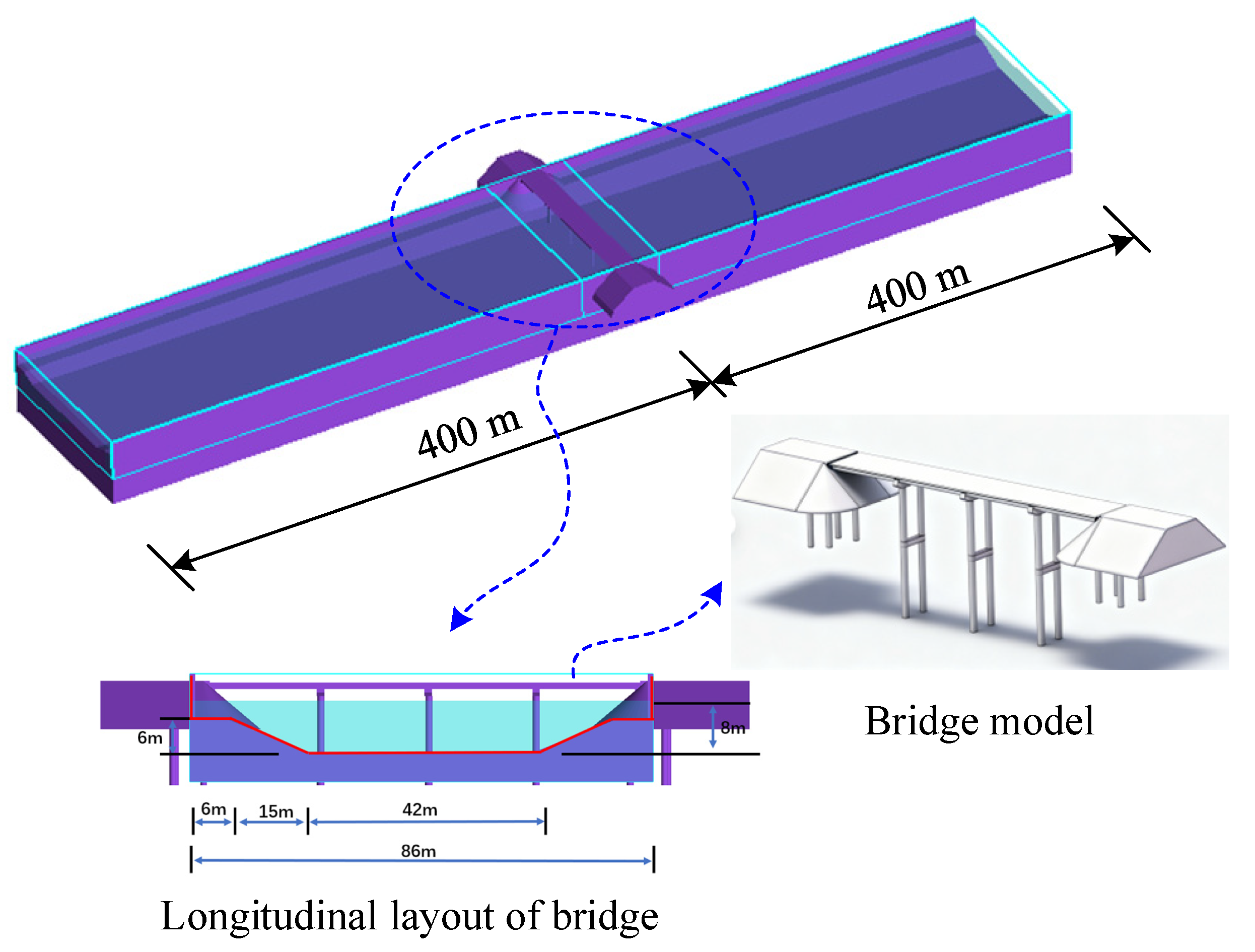
The prototype structure has a total length of 80 m, configured as a four-span, simply supported prestressed concrete box girder bridge, as shown in Figure 1. The superstructure had a width of 12.25 m and a girder depth of 1.2 m, as illustrated in Figure 1. Rectangular elastomeric bearings with dimensions of 1.1 m × 0.6 m are incorporated at the interface between the superstructure and substructure. Given the exclusive focus on flow field analysis in this study, the bearings are modeled with a fixed connection to the superstructure. The substructure piers are supported by pile foundations, with a grade beam provided at the pier-to-pile connection. The piers have a diameter of 1.3 m and a length of 12.7 m, while the pile foundations measured 1.4 m in diameter with a length of 18 m. The grade beam had a depth of 1.1 m. The abutments featured conical slope protection, supported by double-row piles with a diameter of 1.3 m and length of 12 m.
The riverbed component consists of the floodplain and the channel, forming an inverted trapezoidal cross-section. The total river width is set at 86 m with an initial water depth of 8 m, as shown in Figure 2. To ensure fully developed flow velocity, the total river length is configured as 800 m. Considering the interaction between the river and the conical slope protection on both riverbanks, the protection extends some distance from the riverbank. The base of the slopes intersects with the channel at the embankment. To ensure fully developed flow and observable wake characteristics, the model incorporated a 1:1 upstream-to-downstream length ratio (400 m approach vs. 400 m exit). The downstream section of 400 m, being over 20 times the bridge width, ensures the wake fully develops after passing the bridge, thereby facilitating its observation. The layout of the bridge within the river channel is shown in Figure 2.
The inlet boundary condition is set as a velocity inlet, while a pressure outlet condition is applied at the downstream boundary to regulate the water flow depth. The free surface is captured using the Volume of Fluid (VOF) method, in which the volume fraction of liquid F within each cell indicates the phase distribution: F = 1 represents a cell full of liquid, F = 0 a cell full of air, and the free surface lies within cells where 0 < F < 1. By solving the transport equation of the volume fraction, the method enables the simulation of large free-surface deformations. A gravity term is included to allow natural water surface formation, thereby realistically reproducing flow features such as surface fluctuations and recirculating turbulence during scouring. To ensure sufficient resolution for analyzing complex vortex structures near the piers, the computational domain is partitioned into three blocks with locally refined meshes around the bridge area. Interface conditions are applied to couple these blocks, thus balancing computational accuracy with efficiency. Table 1 summaries the boundary conditions of the hydraulic model. The surface roughness height of the hydraulic model is set to 0.0023 m based on the on-site river channel conditions [39].

2.2. Hydraulic Model

The initial flow velocity in this model is calculated by using Chezy’s equation [40], as follows:
V = C R J
where V is the initial mean velocity; C is the Chezy’s resistance coefficient, which can be calculated through C = R(1/6)/n with R and n denoting the hydraulic radius and the roughness coefficient, respectively; and J is the bed slope of the channel.
The Froude number Fr and Reynold number Re are two critical hydraulic model parameters, which can be modelled by:
F r = V g L
R e = ρ V L μ
in which g is the acceleration of the gravity; L denotes the width of the girder; ρ is the fluid’s density; and μ is the viscosity coefficient of the fluid.
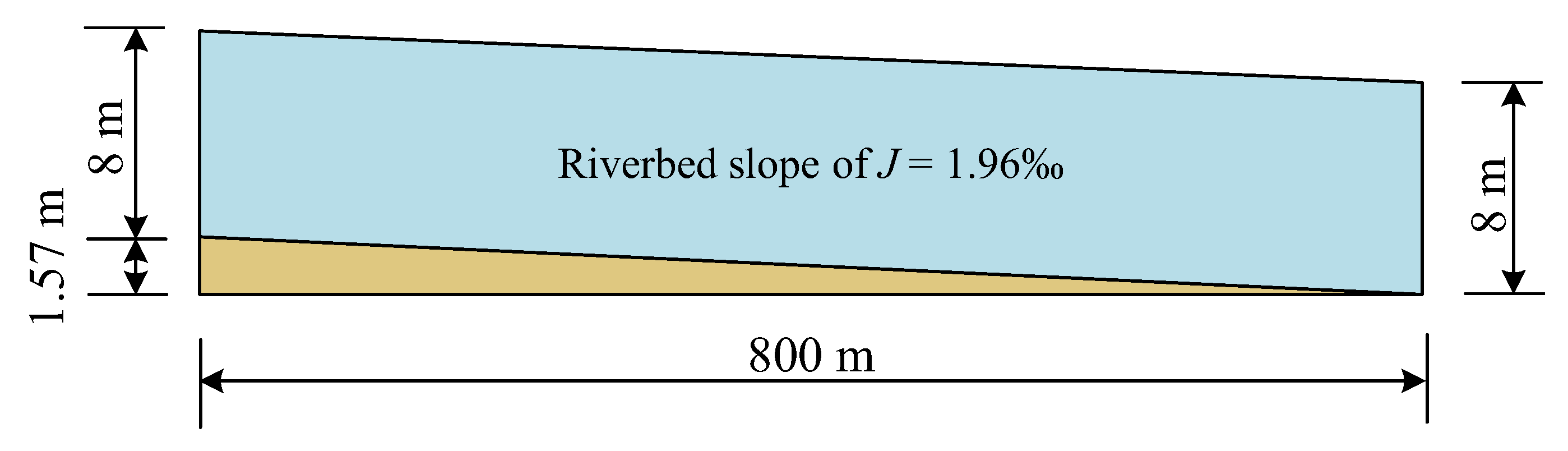
Actual rivers have a riverbed slope, which serves as the primary source of flow velocity dynamics. Referring to mountainous riverbeds, the slope typically ranges from 0.5‰ to 5‰. This model adopts a riverbed slope of J = 1.96‰, meaning the elevation difference between the river inlet and outlet is 1.57 m, as demonstrated in Figure 3.
The cross-sectional area of the hydraulic model is A = 514 m2, and the wetted perimeter is x = 90.3 m. Therefore, the hydraulic model parameter, the hydraulic radius, is R = A/x = 5.69 m. This model incorporates the skew angle between the river and the bridge, ensuring conformity with the terrain at the bend transitions upstream and downstream. A flood roughness coefficient (1/n) of 45 is adopted for the simulation. The initial flow velocity V is approximately 6.35 m/s.

2.3. Model Validation

To validate the accuracy of the developed hydraulic model, a comparative analysis of the hydraulic characteristics at the bridge site was conducted, using a hydraulic test of an open channel and an existing theoretical flow velocity model. The theoretical formula of the flow velocity at the outside the viscosity-affected region, which accounts for the vast majority of the flow velocity range, is established as follows [41]:
U + = 1 κ ln y + + A
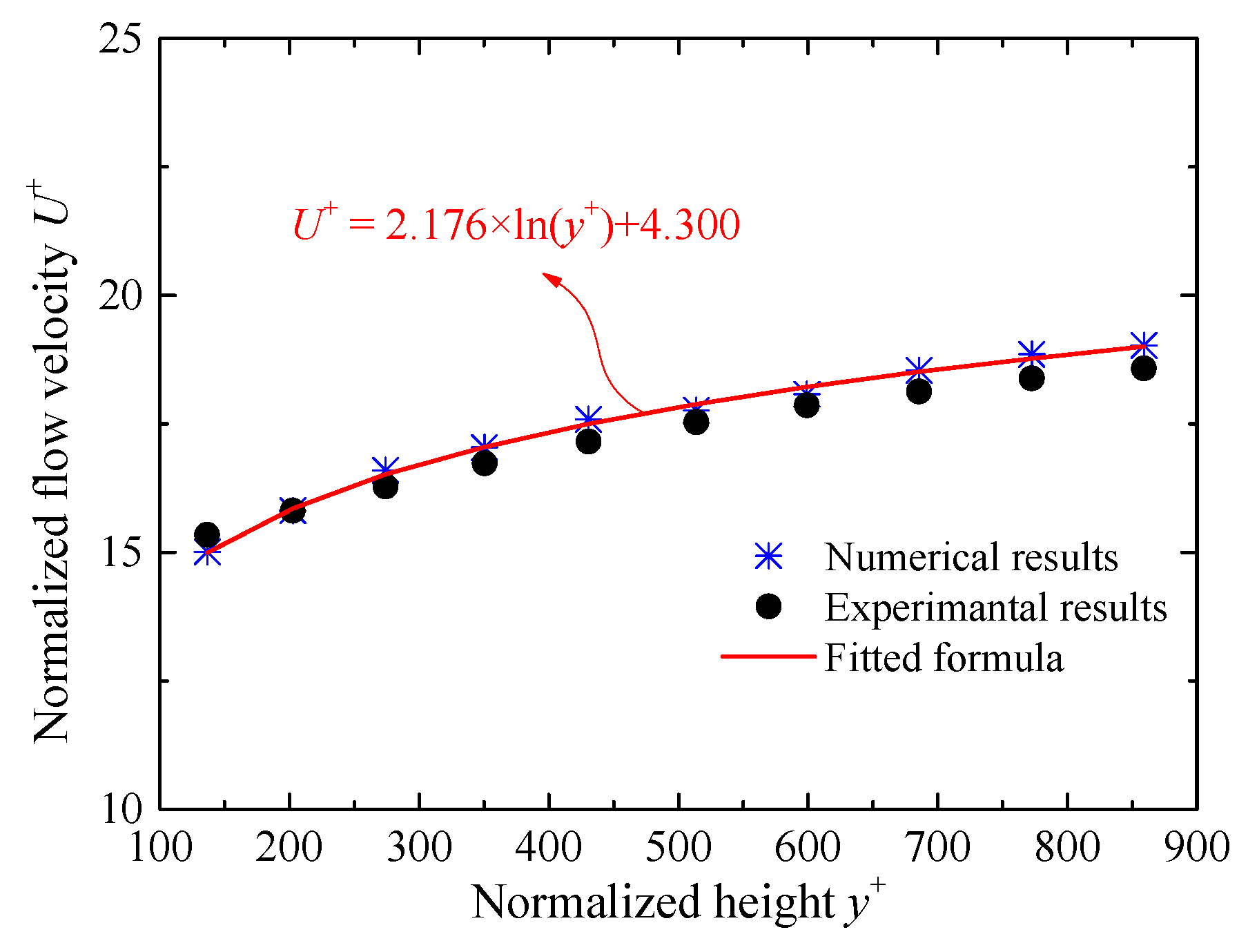
where U+ = U/u* and y+ = y·u*/ν are the normalized flow velocity and water depth, respectively, in which u* and ν is the shear velocity and the kinematic viscosity of the water, respectively; κ and A are the von Karman constant and the integration constant, which are influenced and fitted through the experimental results. Based on the numerical results in this research, the parameters κ = 0.45 are fitted to match the flow velocity curve in the open channel, within the required tolerance range. The integration constant A = 4.3 is slightly below the normal range. This is because the primary difference between the trapezoidal cross-section employed in this study and the conventional rectangular cross-section lies in the presence of inclined slopes. Influenced by lateral velocity gradients and shear forces, the trapezoidal cross-section exhibits higher flow velocities at the bottom and lower velocities along the slopes. Lateral shear enhances viscous dissipation, thereby suppressing the full development of turbulence. Consequently, the applicability of the logarithmic law diminishes, resulting in a lower integration constant compared to the rectangular cross-section. Based on this, the integration constant A = 4.3 is considered reasonable.
The experimental results in the previous study [42] are adopted to validate the accuracy of numerical results. Figure 4 shows the comparison analyses of the numerical and experimental results. It can be found that both numerical and experimental results are consistent with the log-growth pattern. Across the entire height range, the flow velocity error varies gradually within the range of −0.33 m/s to 0.45 m/s (i.e., the maximum flow velocity error of 0.45 m/s at the normalized height of 860), and the error of root mean square (RMS) in both numerical and experimental flow velocities is only 0.27 m/s, indicating that the numerical model shows good match with the flow velocity distribution results from experimental data. Therefore, the models established in this research for investigating the hydraulic characteristics at the bridge site are correct.

3. Results and Discussion

3.1. Determination of Optimal Flow Duration

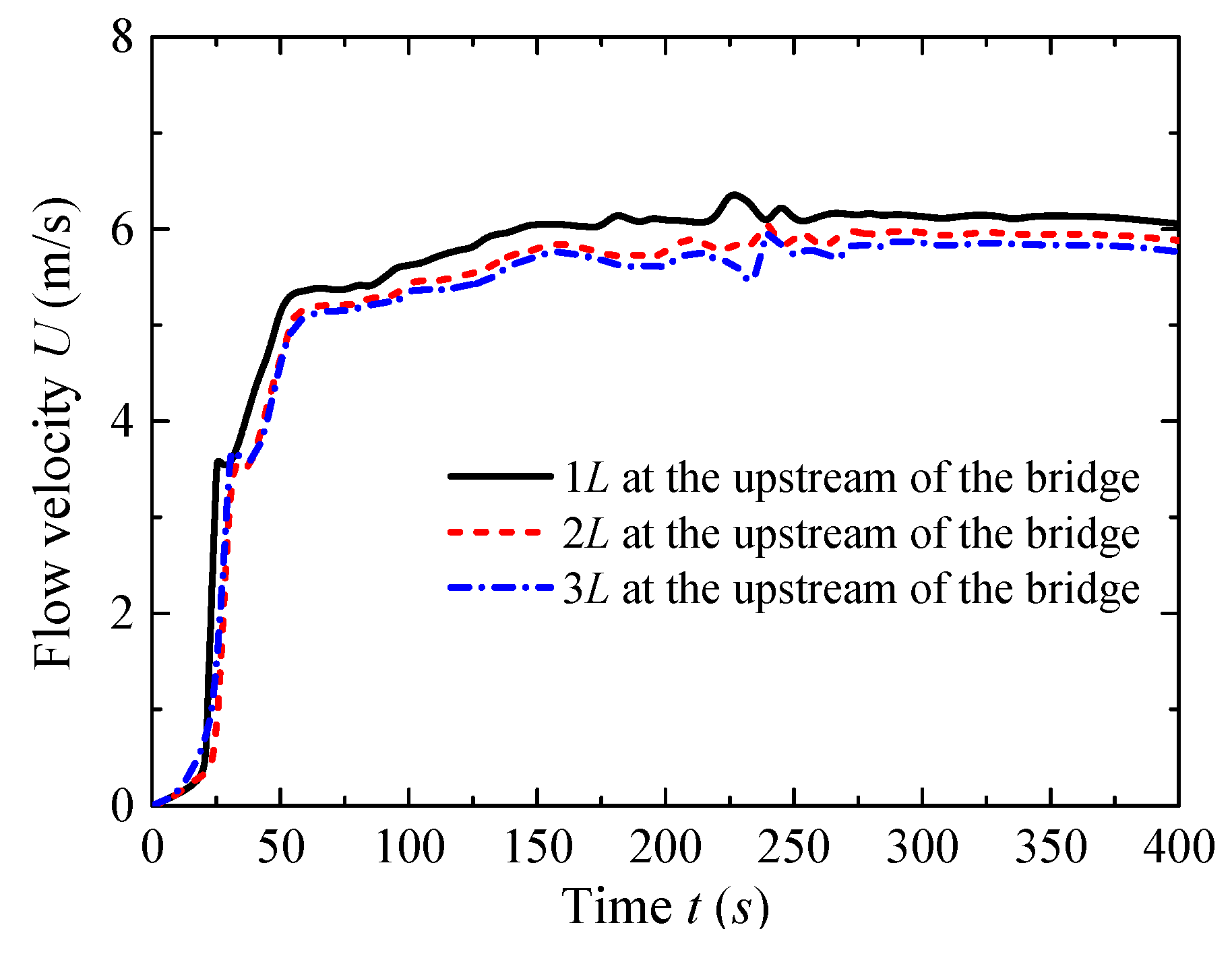
To analyze the hydraulic characteristics at the bridge site, it is essential to determine the influence of flow duration on the stability of these conditions. Therefore, the variation in the flow velocity over the flow time is calculated and extracted at the center of the river surface at locations 1, 2, and 3 times the bridge width upstream from the bridge, as shown in Figure 5. After t = 60 s, the flow velocity at the bridge site transitions into a gradually leveling-off phase and begins to stabilize at t = 150 s.
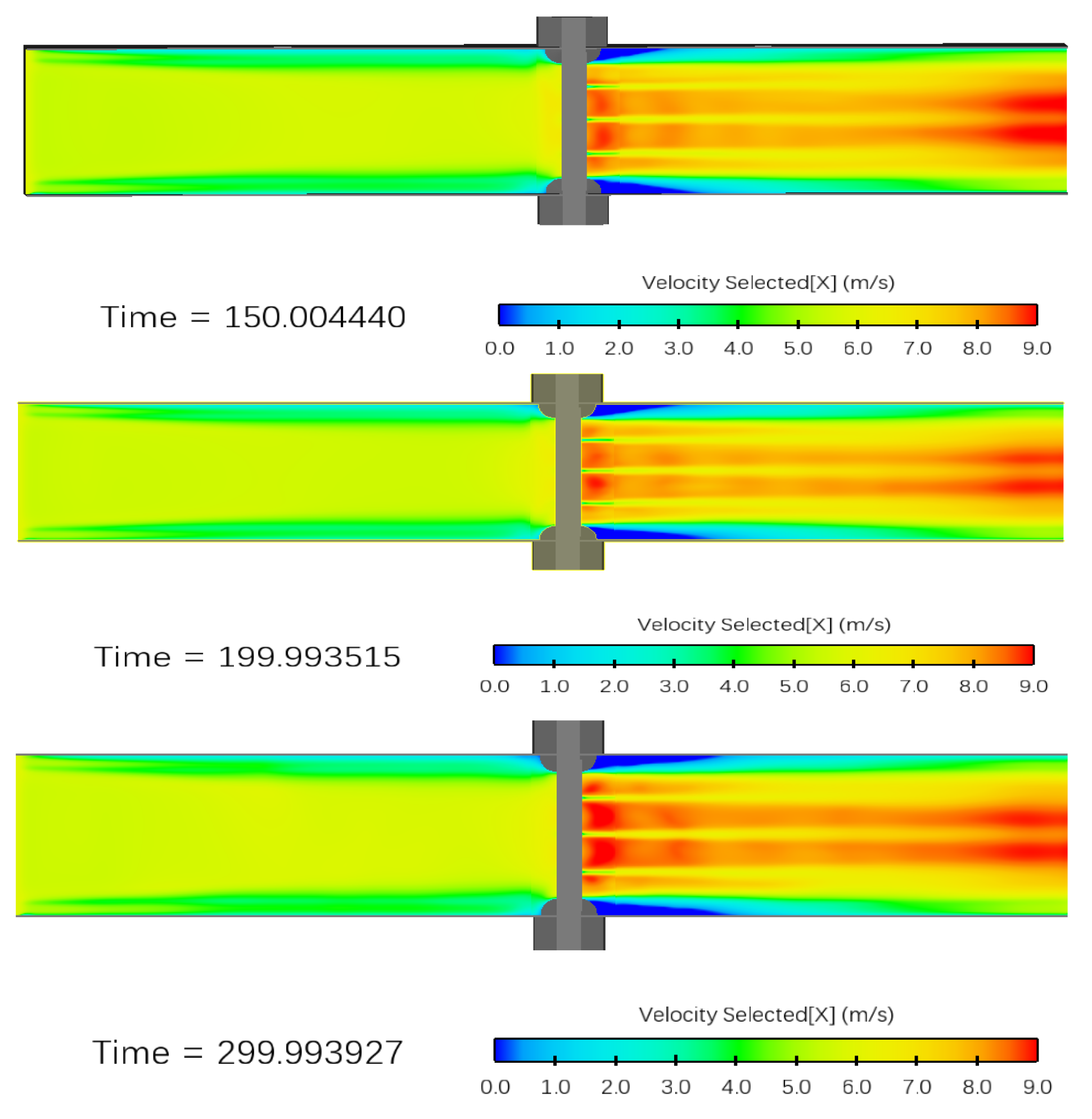
Figure 6 shows the contour plots of transverse flow velocity distribution at different time points (i.e., t = 150 s, 200 s, 300 s). It can be found that the flow velocity distribution has become highly regular at t = 150 s and is essentially consistent with the patterns observed at t = 200 s and 300 s. After passing through the bridge, the flood flow velocity increases significantly, forming a relatively uniform wake flow pattern. The wake flow exhibits a higher velocity in the center and lower velocities on both sides. Near the downstream conical slope protection, the flow velocity decreases noticeably, and there is an area where the velocity falls below zero. To ensure both computational accuracy and efficiency, the flow velocity at t = 150 s is adopted for all subsequent analyses.

3.2. Effects of Initial Flow Velocity

Flow velocity is a critical parameter of the hydraulic environment at the bridge site, directly influencing the safety and stability of the bridges as well as the hydrodynamic characteristics of their surrounding area. The vertical flow velocity distribution around the pier, the transverse flow velocity distribution along the bridge direction, and the effects of different initial flow velocities are analyzed in this section.

3.2.1. Upstream Flow Velocity Distribution

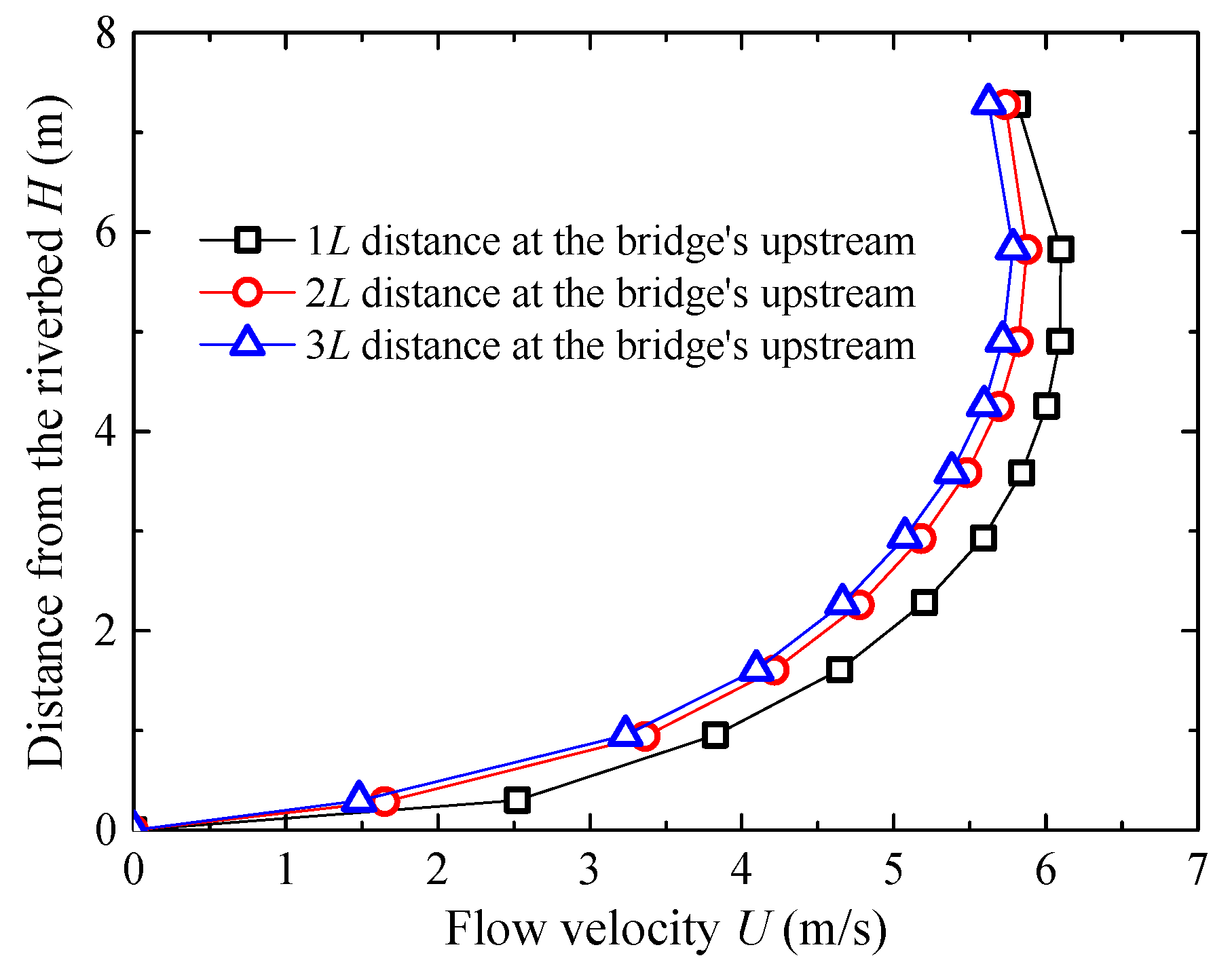
To characterize the upstream flow velocity distribution of the bridge, the vertical flow velocity distribution at the channel symmetry plane is presented in Figure 7, measured at upstream distances of 1, 2, and 3 times the bridge width. It can be observed that the upstream flow velocity gradually stabilizes with increasing height, following an exponential distribution with respect to height. The maximum flow velocities at 1, 2, and 3 times the bridge width upstream are 6.10 m/s, 5.85 m/s, and 5.76 m/s, respectively. As the location approaches the bridge, the flow velocity increases gradually. At the upstream location of one bridge width, the maximum flow velocity compares well with the computed value of 6.35 m/s in Section 2.2, which also verifies the correctness and accuracy of the computational model. At a vertical height of 6 m above the riverbed, the flow velocity begins to stabilize and approaches the maximum velocity.

3.2.2. Flow Velocity Distribution at Bridge Site

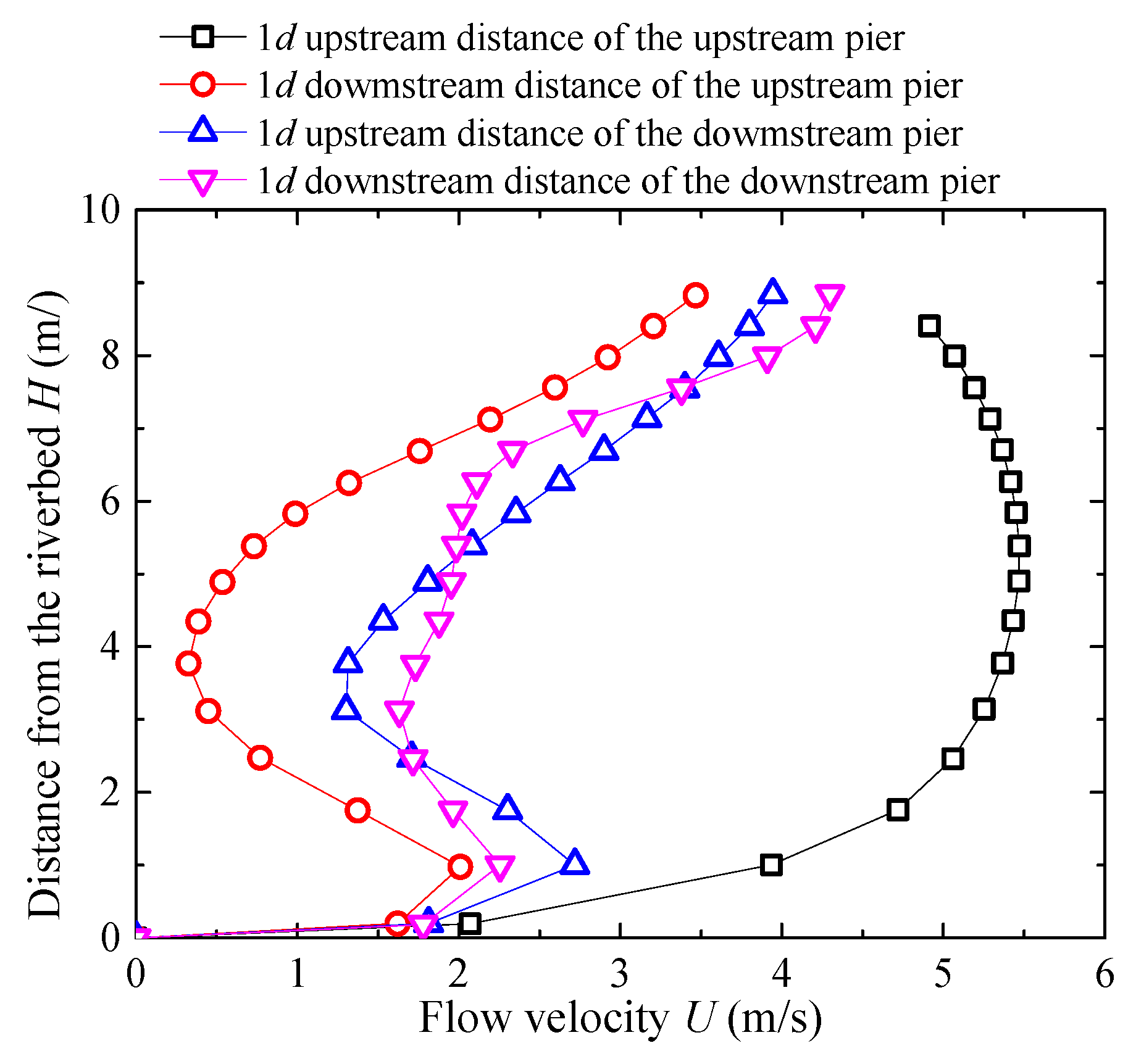
The obstruction of bridge piers will affect the surrounding hydraulic characteristics. Investigating the flow velocity changes near the pier is of significant importance for local scouring and flood effects. Figure 8 analyzes the vertical flow velocity distributions near the upstream and downstream sides of the bridge at 1d (where d is the pier diameter) upstream and downstream of the pier, respectively.
The vertical maximum flow velocity at 1d upstream side of the upstream pier is 5.7 m/s. At the same water depth, the velocities at 1d downstream side of the upstream pier, 1d upstream side of the downstream pier, and 1d downstream side of the downstream pier are 0.53 m/s, 1.80 m/s, and 1.96 m/s, respectively, indicating a significant reduction in flow velocity. In terms of the vertical flow velocity distribution pattern, the velocities for the other three cases exhibit an S-shaped change trend, with noticeable turbulent effects. Two inflection points are observed from the riverbed to the water surface: the first inflection point occurs where the velocity in the upstream side of the upstream pier begins to stabilize, at a height of approximately 0.5 m above the riverbed; the second inflection point occurs at 4 m above the riverbed. There are three primary reasons for this phenomenon: (1) Laws of energy conservation and continuity: the constriction of flow by the bridge pier causes a conversion of potential energy into turbulent kinetic energy, leading to its dissipation rather than the preservation of main flow momentum. This process thereby reduces the flow velocity in the region immediately upstream. (2) Horseshoe vortex effect: the horseshoe vortex formed upstream of the pier scours the riverbed and develops downstream. It entrains and dissipates the forward momentum of the approaching flow, thereby directly impeding its movement and reducing the local flow velocity. (3) Flow around characteristics: separating upstream of the pier, the flow passes around both sides. This diversion redistributes both the flow’s energy and its direction, dissipating the energy available for forward motion. As a result, the flow velocity directly in front of the pier is significantly decreased.
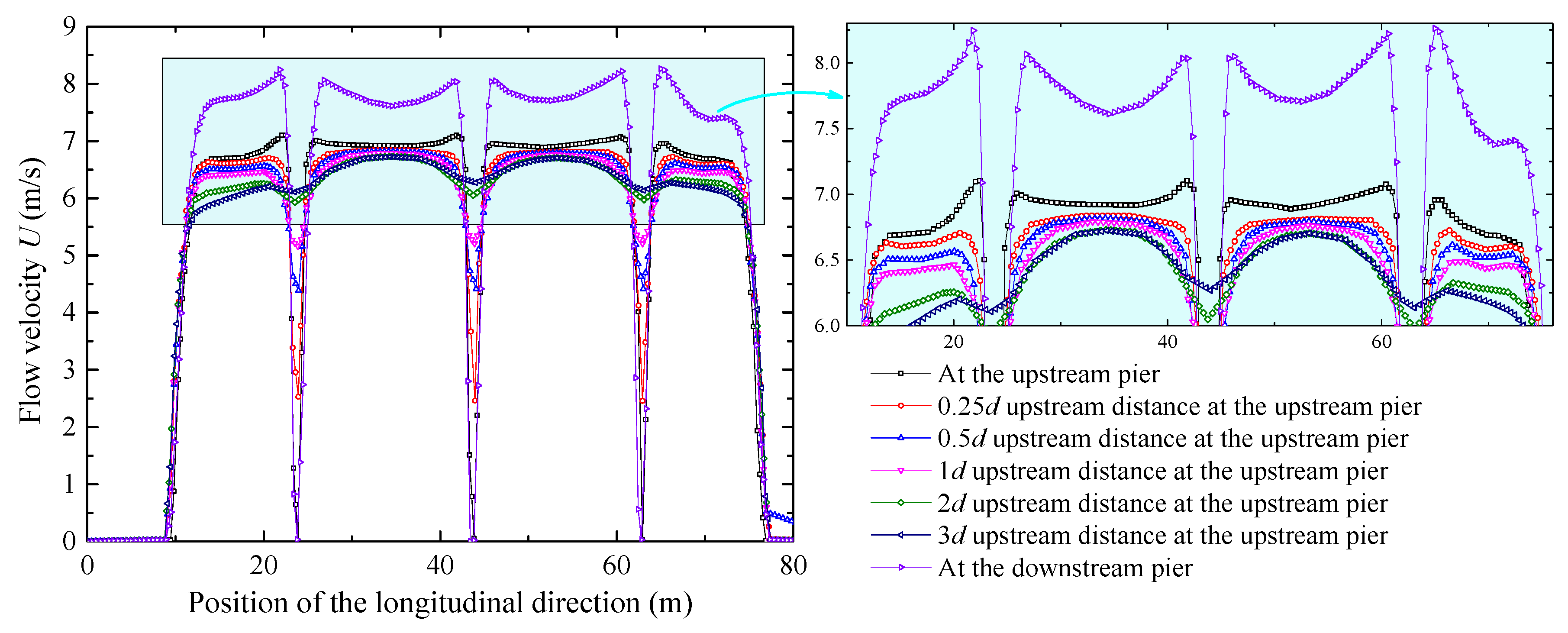
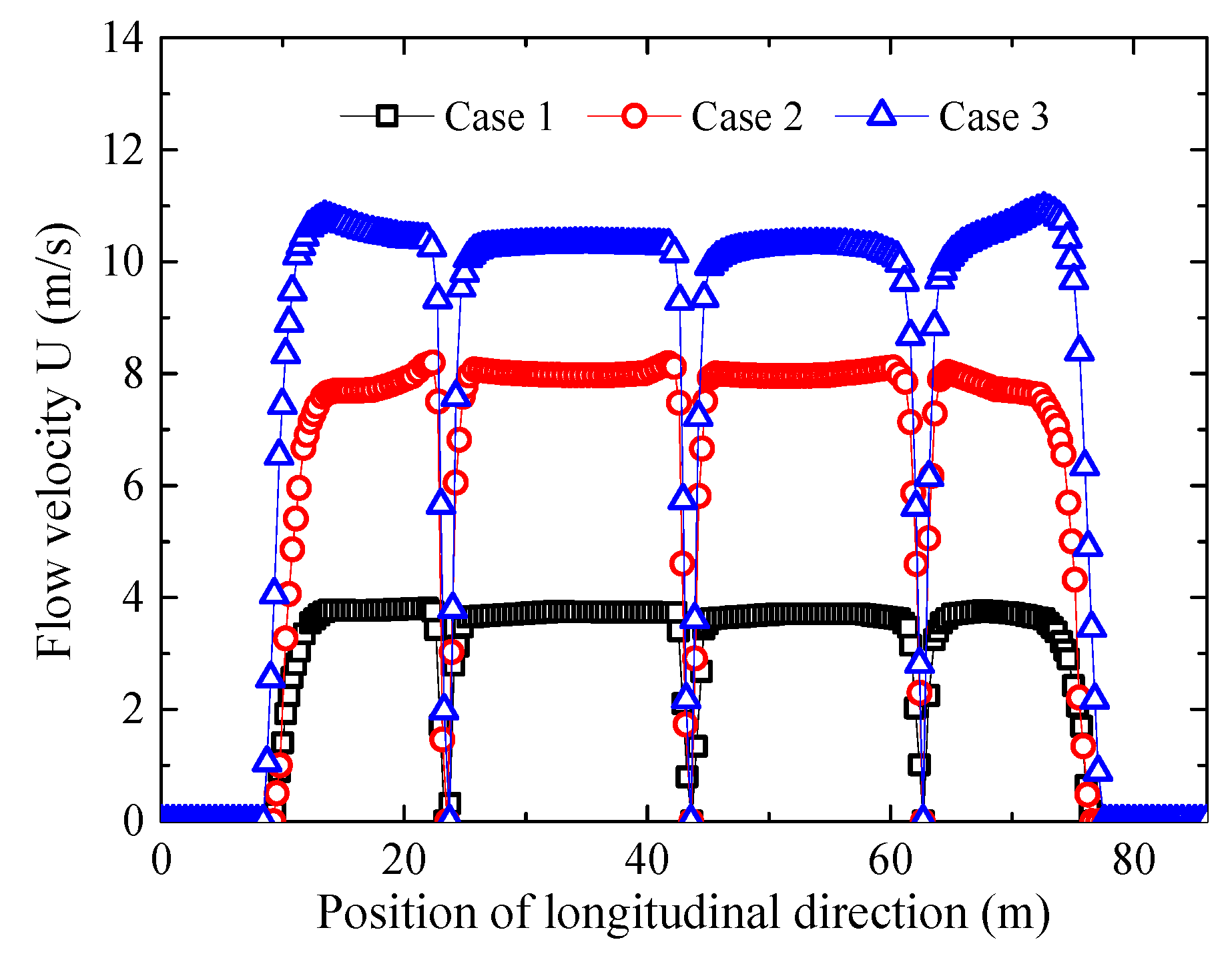
To investigate the distribution pattern of transverse flow velocity, Figure 9 extracts the flow velocity distributions at different cross-sectional locations of the river channel (i.e., the upstream pier location, and the locations at 0.5d, 1d, 2d, and 3d upstream of the pier, as well as the downstream pier location). It can be observed that the flow velocity generally increases at positions away from the pier. As the distance in front of the bridge (the upstream side of the pier) gradually decreases, the flow velocity near the pier gradually reduces, whereas the velocity between piers gradually increases. Within the four distinct flow zones separated by the abutments and piers, the maximum flow velocities at the upstream side of the pier are 7.15 m/s, 7.14 m/s, 7.09 m/s, and 7.00 m/s, representing increases of 19.2%, 19.0%, 18.2%, and 16.7% compared to the initial flow velocity, respectively. The velocity distribution exhibits a concave, arc-shaped profile, with lower velocities in the middle and slightly higher velocities on both sides. The maximum velocities occur near the outer piers. At the location of the downstream pier, the maximum flow velocities are 8.32 m/s, 8.17 m/s, 8.30 m/s, and 8.38 m/s, representing increases of 38.7%, 36.2%, 38.3%, and 39.7% compared to the initial flow velocity, respectively. These values are significantly higher than those at the location of the upstream pier.
Compared to the upstream side, the flow velocity between downstream piers is significantly higher. This increase occurs as the piers obstruct the flow, raising upstream water levels and thus increasing potential energy. As water moves from this elevated zone into the inter-pier region, potential energy converts to kinetic energy, resulting in higher velocities. Simultaneously, vortex zones generated around the piers interact with the main inter-pier channel, creating a divergence-convergence effect that further concentrates kinetic energy and amplifies the velocity increase.
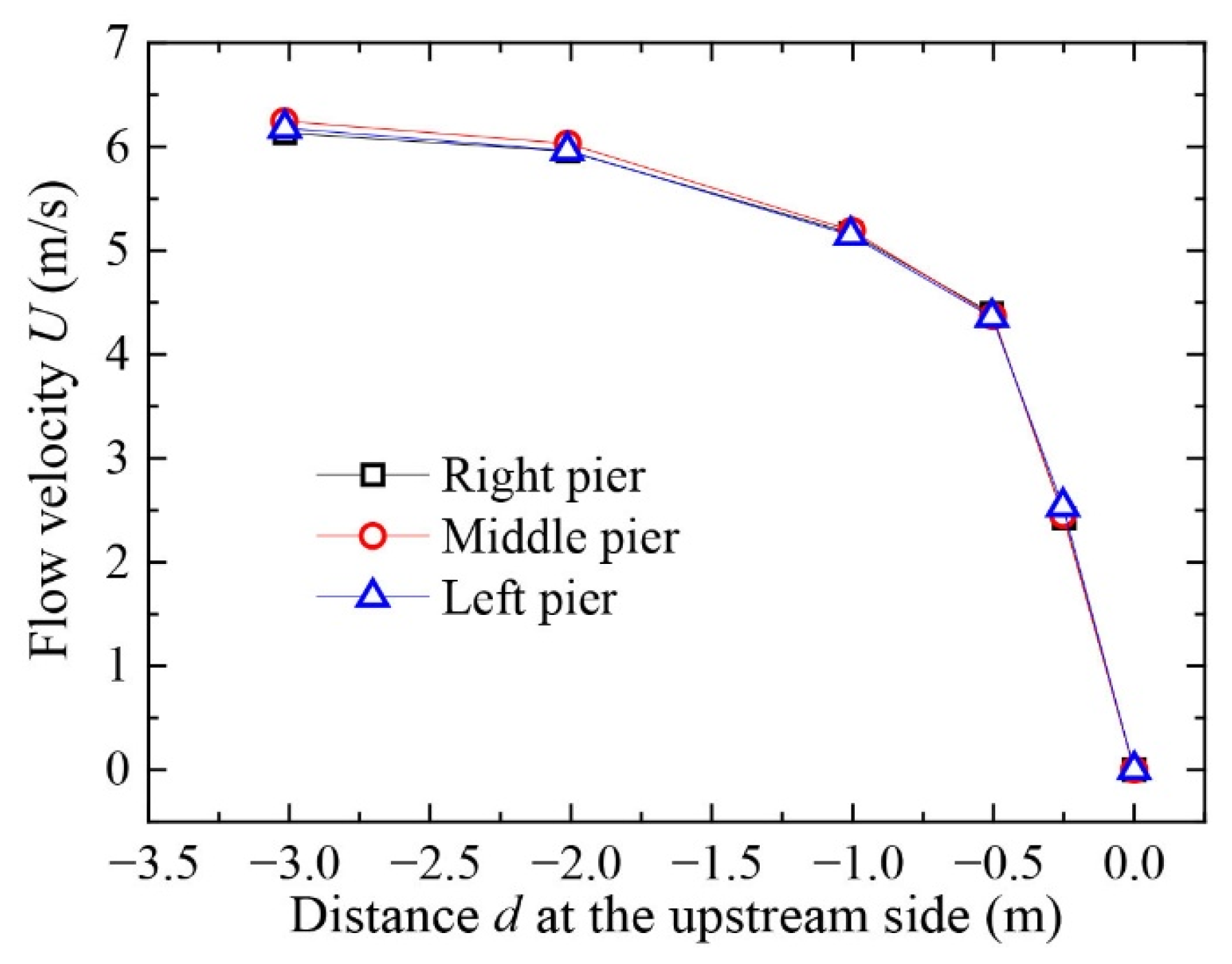
To compare the flow velocity trends in front of the left, middle, and right piers, Figure 10 shows the flow velocities at different locations ahead of the three piers. It can be seen that the flow velocity drops progressively when approaching the bridge piers. The variation trends of the flow velocity at the upstream sides of the three piers are generally consistent, showing an exponential decay as the distance to the upstream piers decreases.
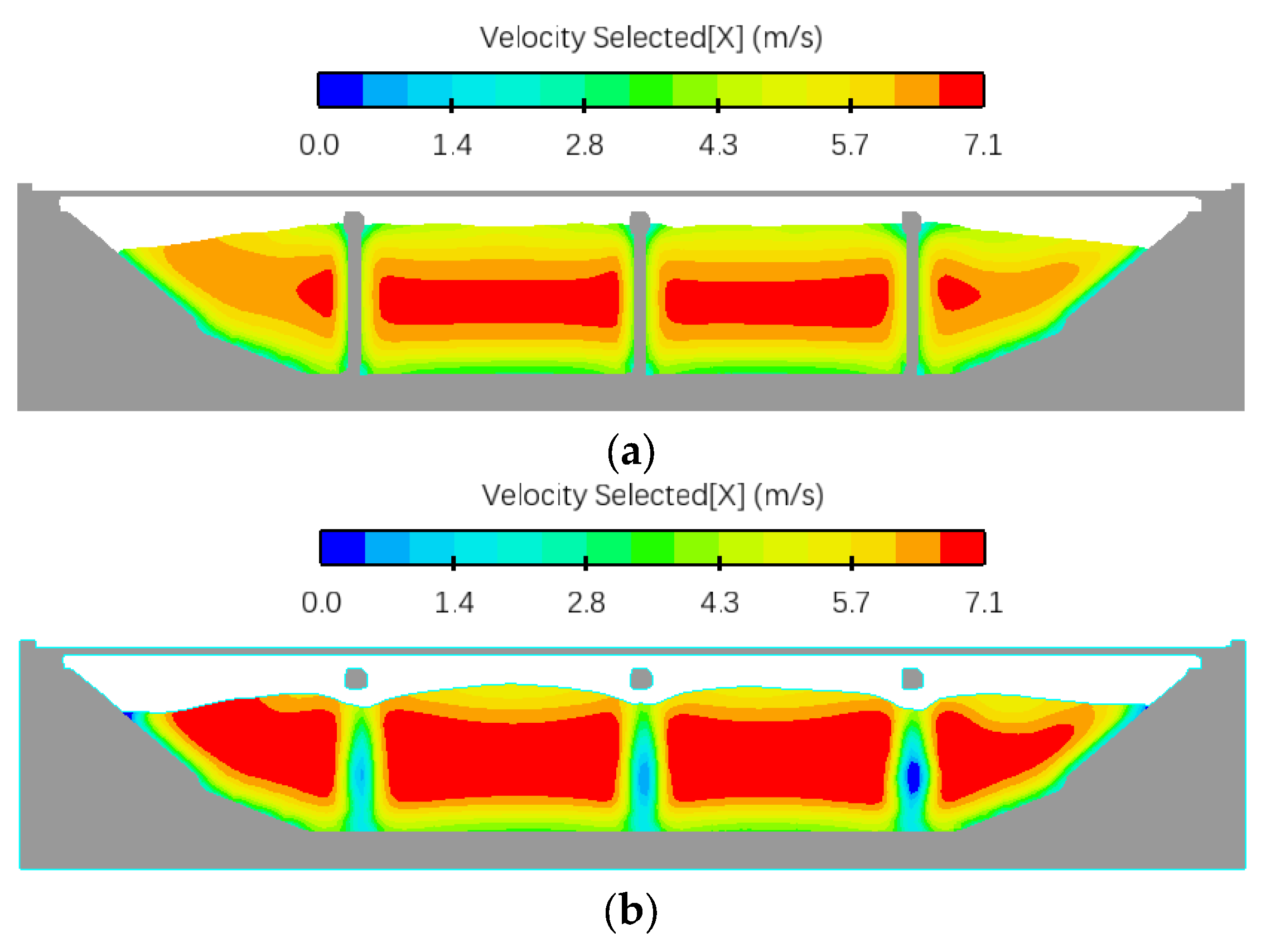
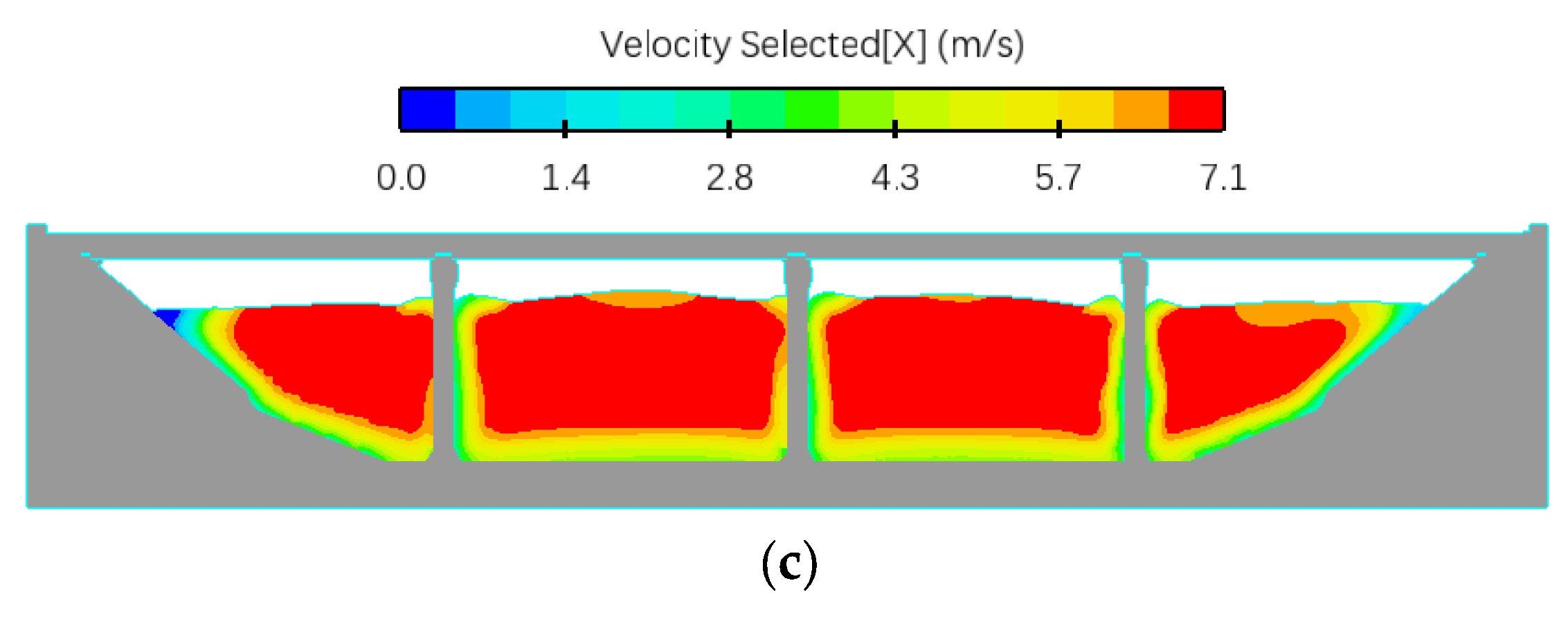
Figure 11 shows the transverse flow velocity contour plot beneath the bridge, including three cross-sections: at the upstream pier location, the girder axis location, and the downstream pier location. The distribution characteristics of the transverse flow velocity contour plot are as follows: (1) flow velocities are relatively low near the piers or abutments; (2) the flow velocity increases in a concentric pattern from the outer to the inner regions between the piers; (3) progressing downstream, the overall flow velocity across the river section beneath the bridge increases; (4) the flow velocity between two piers in the transverse direction is relatively low, generally below 1.4 m/s, indicating a significant flow-blocking effect caused by the piers; (5) at the locations of the girder axis and the downstream pier, the flow velocities in most areas exceed the initial velocity of 6 m/s, accompanied by significant turbulent effects.

3.2.3. Influence of Different Initial Flow Velocity

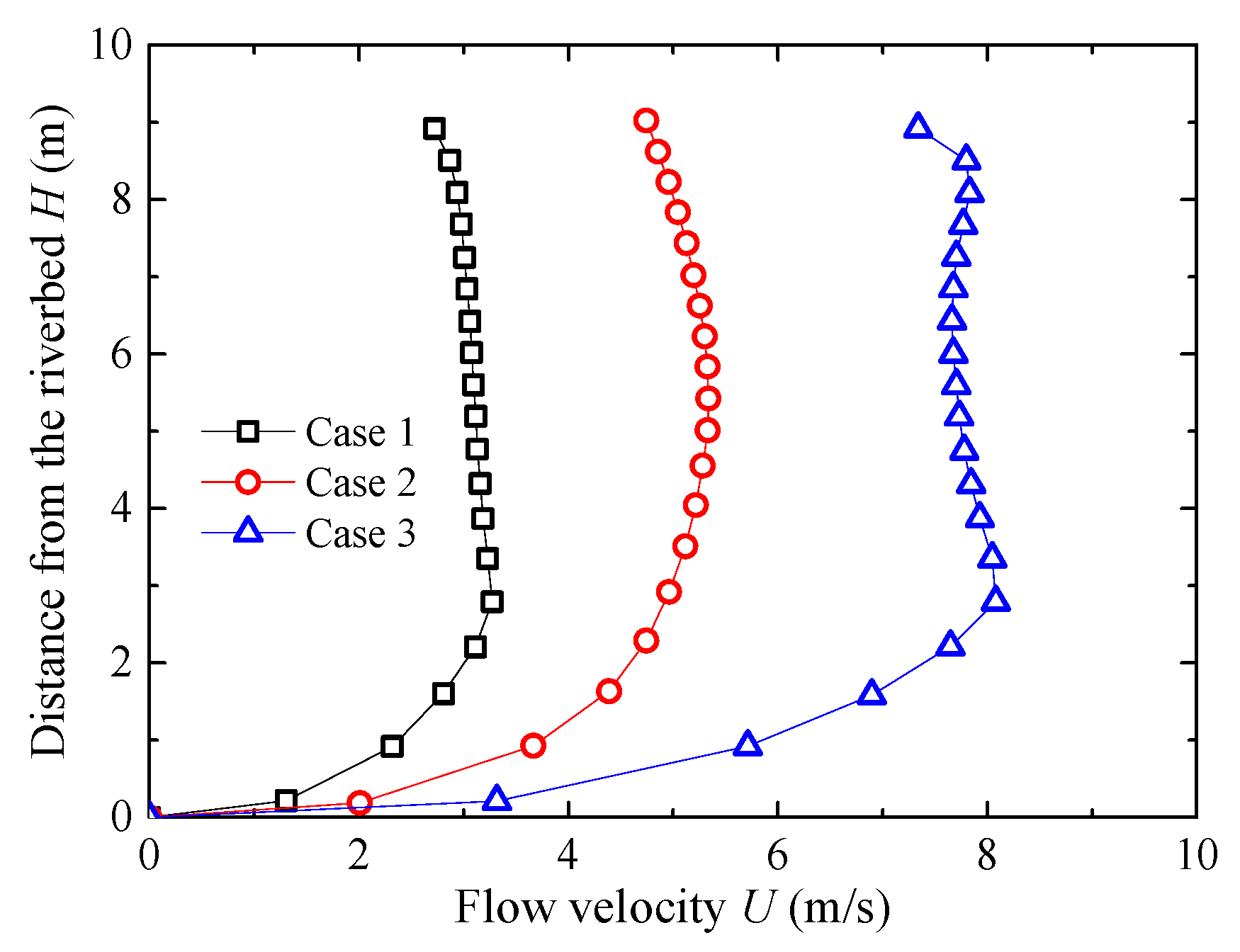
To evaluate the impact of different initial flow velocities on the hydraulic characteristics at the bridge site, three cases with the steady-state initial velocities of 3 m/s, 6 m/s, and 9 m/s are established, which will give slightly higher flow velocity and impact than actual situations where peak velocity occurs only for a short time. This setup is more conservation in terms of structural safety performance. The configuration parameters are listed in Table 2.
Figure 12 shows the vertical flow velocity distribution at 1d upstream side of the pier. At the location 1d upstream of the pier, the maximum flow velocities are 3.22 m/s, 5.28 m/s, and 8.11 m/s, corresponding to an increase of 7% compared to the initial velocity of 3 m/s, and decreases of 12% and 10% compared to the initial velocities of 6 m/s and 9 m/s, respectively. Under lower initial flow velocities, the flow-blocking effect of the pier on the upstream velocity is not significant. As the initial velocity increases, the flow velocity at the upstream side of the pier decreases slightly relative to the initial value, indicating that the pier exerts a flow-blocking effect. The standard deviations for the three flow velocity distributions are 0.76, 1.28, and 1.92, respectively.
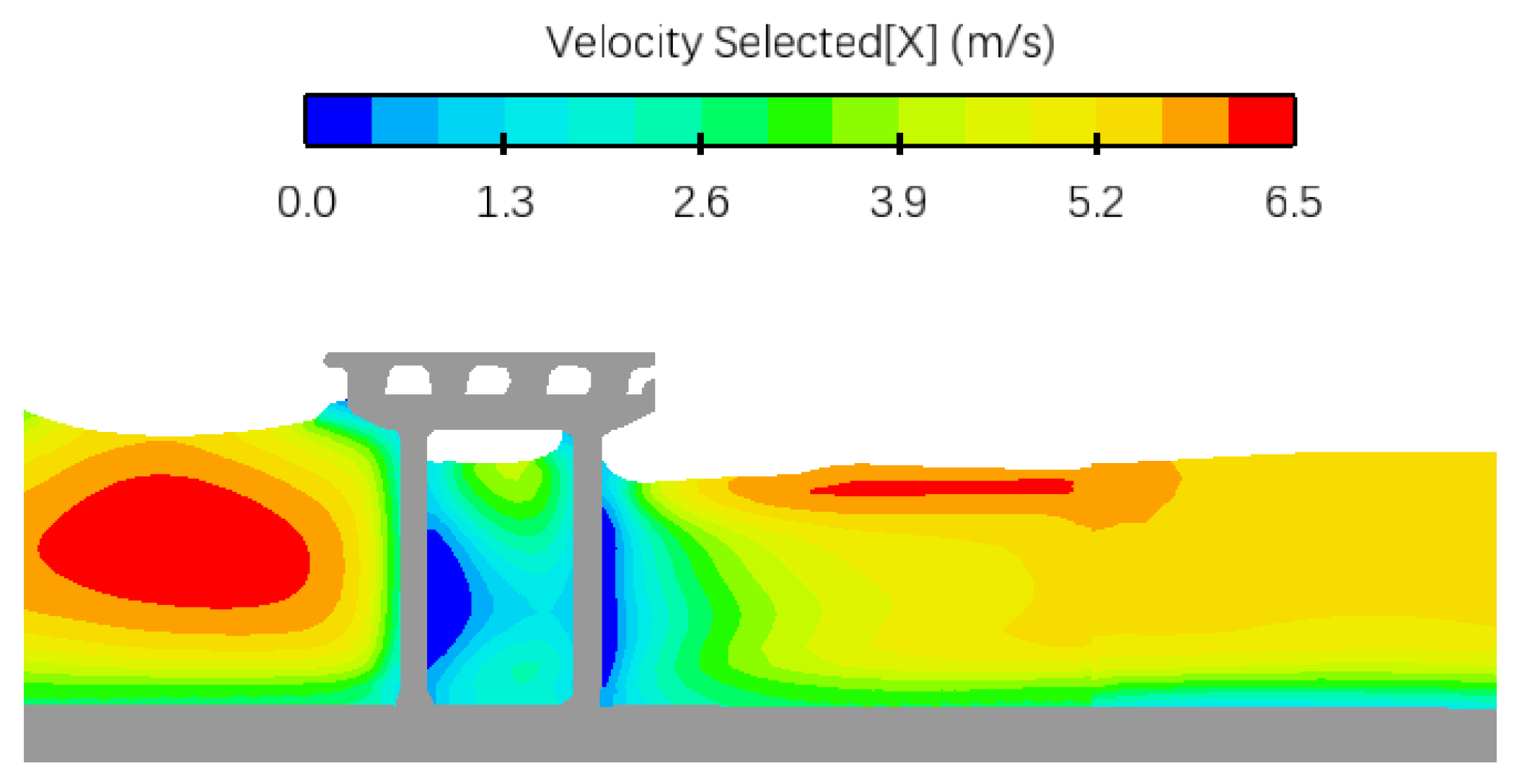
Taking the Case 2 with an initial velocity of 6 m/s as an example, a flow velocity contour plot at the central symmetrical position of the river channel is presented in Figure 13. A concentrated area (i.e., the red area) of high flow velocity is observed upstream of the bridge. A blue region with significantly reduced flow velocity, close to 0 m/s, appears on the downstream side of the pier. After passing the downstream side of the bridge pier, the flow velocity gradually recovers to approximately 6 m/s. According to potential flow theory, the compression of streamlines upstream of the bridge pier generates an annular region of radially increasing flow velocity. However, in a real viscous fluid, the boundary layer develops along the pier surface, causing the peak velocity zone to shift slightly away from the pier wall. Furthermore, as previously explained, the flow separation and wake vortices are the primary causes of the velocity reduction behind the pier.
Figure 14 shows the flow velocity distribution along the transverse direction at the location of the upstream pier. At different initial flow velocities, the flow velocity development patterns at the bridge site are essentially consistent. The maximum flow velocities corresponding to the initial flow velocities of 3 m/s, 6 m/s, and 9 m/s are 3.71 m/s, 8.38 m/s, and 10.89 m/s, respectively. At relatively low flow velocities (3 m/s or 6 m/s), the development of flow velocity between piers is relatively gradual, with the maximum velocity occurring near the pier columns. At the initial flow velocity of 9 m/s, the maximum flow velocity appears near the abutments. The dominant mechanism shifts between the flow-accelerating effect of cross-sectional narrowing and the flow-decelerating effect of abutment resistance, depending on the initial flow velocity. At lower velocities (3 m/s and 6 m/s), the deceleration effect induced by the abutment resistance prevails. The lower kinetic energy causes the abutment to act primarily as an obstruction, increasing local flow resistance. Conversely, at a higher velocity of 9 m/s, the acceleration effect due to the narrowing of the flow cross-section becomes dominant. The enhanced kinetic energy and inertia of the flow allow this “narrowing effect” to outweigh the resistance effect.

3.3. Effect of Bridge–Channel Skew Angle

In the design and construction of bridges, the orthogonal alignment (where the river flow direction is perpendicular to the bridge axis) is typically prioritized. However, in practice, due to constraints imposed by terrain and channel alignment, many bridges intersect the channel direction at a skew angle. This skew angle significantly alters the effects of water flow on the bridge, increasing scouring risks and complicating structural forces. Therefore, four scenarios with varying skew angles (i.e., 0°, 15°, 30°, 45°) between the river and the bridge are selected in this section to study the flow field variations under oblique intersection conditions, as tabulated in Table 3. The initial flow velocity and the water depth are 6 m/s and 8 m, respectively.
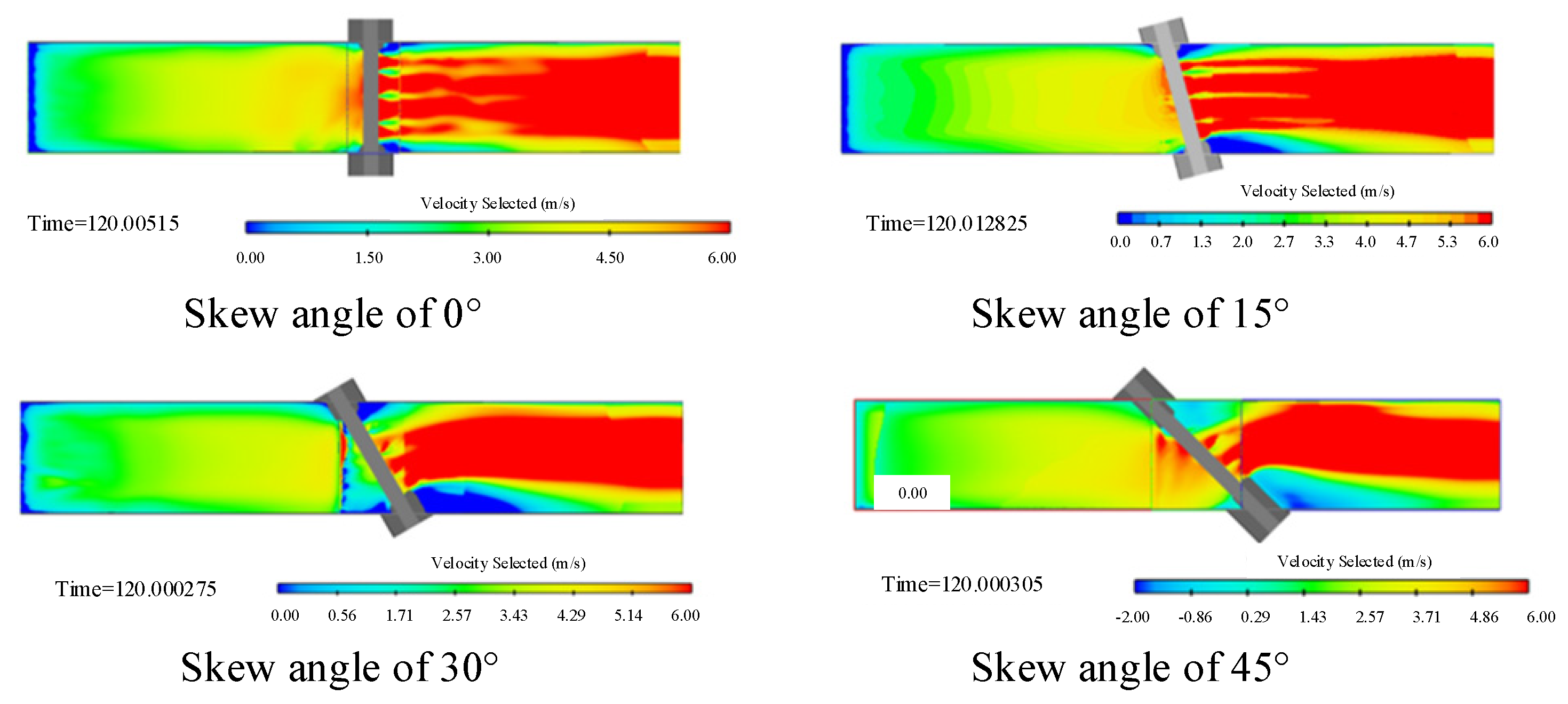
For the aforementioned scenarios with varying skew angles, the top-down flow velocity contour plots along the river channel are shown in Figure 15. The skew angle between the bridge and the channel directly modifies the interaction between the flow and the bridge, leading to flow asymmetry and complexity that intensify as the skew angle decreases. For the perpendicular scenario (0°), as described in the above section, the flow-around and recirculation zones are symmetrically distributed. A concentrated high-velocity jet forms on the upstream side of the piers, while a relatively regular turbulent zone is generated downstream due to flow convergence. For the skewed scenarios (15°, 30°, 45°), the flow encounters the bridge at a skew alignment, exhibiting a distinct “lateral deflection” pattern. As the skew angle decreases, the upstream “pre-deflection” of the flow becomes more pronounced. The vortex zones around the piers expand with increasingly distorted shapes, and the downstream flow convergence area extends asymmetrically due to the transfer of skewed kinetic energy. The location of flow velocity extremes shifts laterally towards the side of skewed impingement as the skew angle decreases, with a significant increase in the lateral heterogeneity of the flow velocity distribution. This is because the skew angle resolves the flow’s kinetic energy into components along the bridge axis and the channel direction, resulting in a spatially heterogeneous velocity field with directional bias.

3.3.1. Vertical Flow Velocity Distribution at the Upstream Piers

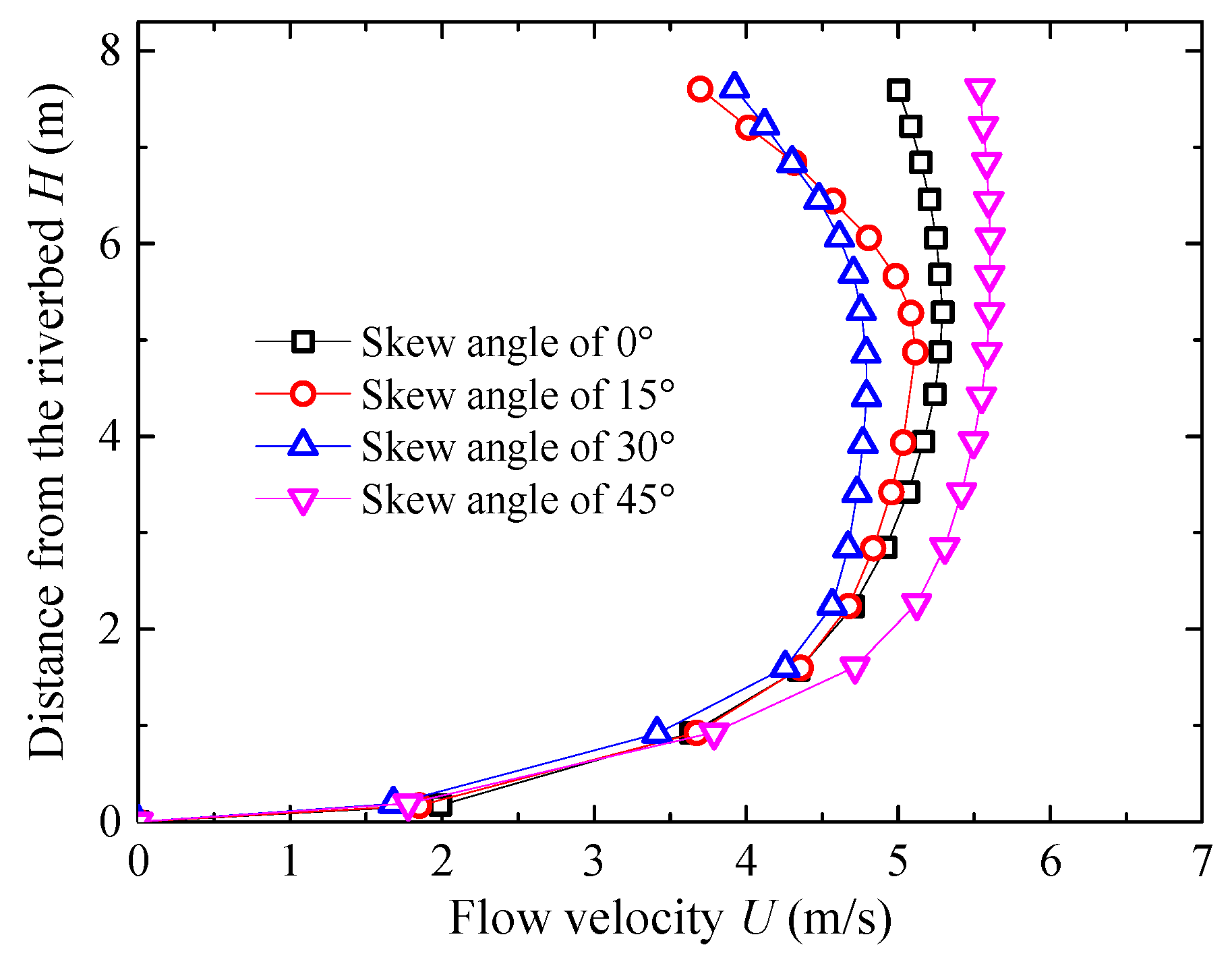
Taking the location 1d upstream of the central pier on the upstream side as an example, the vertical flow velocity distribution under different skew angle scenarios is shown in Figure 16. As the distance from the riverbed increases, the overall vertical flow velocity exhibits the same trend across different skew angle scenarios. Within 1 m above the riverbed, the differences in the flow velocity distribution among the various scenarios are minor. With further increase in height, the influence of the skew angle on the flow velocity distribution becomes progressively more pronounced. It is noteworthy that at the skew angle of 45°, the overall flow velocity at the upstream pier is the highest, while the velocity distributions at the skew angles of 30° and 15° are both lower than that at the perpendicular alignment of 0°.
As the skew angle decreases from the perpendicular (0°) to 15° and 30°, the skew angle between the pier and the channel generates a lateral velocity component along the bridge axis. This lateral component alters the flow-around pattern by allowing part of the flow to disperse energy along the sides of the pier, thereby suppressing the development of vertical vortices around the pier and resulting in a reduction in the peak vertical flow velocity. When the skew angle decreases further to 45°, the three-dimensional turbulent effects intensify significantly due to increased flow complexity. The stronger lateral velocity component enhances three-dimensional eddy motions, particularly vertical vortices, in the downstream flow convergence zone. This redistributes energy from longitudinal and transverse motions into vertical turbulence, causing an unexpected rise in vertical flow velocity. Furthermore, the reduced skew angle produces more tortuous flow trajectories around the pier, exacerbating local shear and vortex stretching-fragmentation mechanisms, which culminates in heightened peaks of vertical velocity fluctuation. In summary, at larger skew angles, the lateral velocity component suppresses vertical vortices, thereby reducing vertical flow velocity; at smaller skew angles, complex flow separation induces intense three-dimensional turbulence, enhancing vertical vortices and fluctuating energy, which restores vertical flow velocity.

3.3.2. Transverse Flow Velocity Distribution at the Upstream Piers

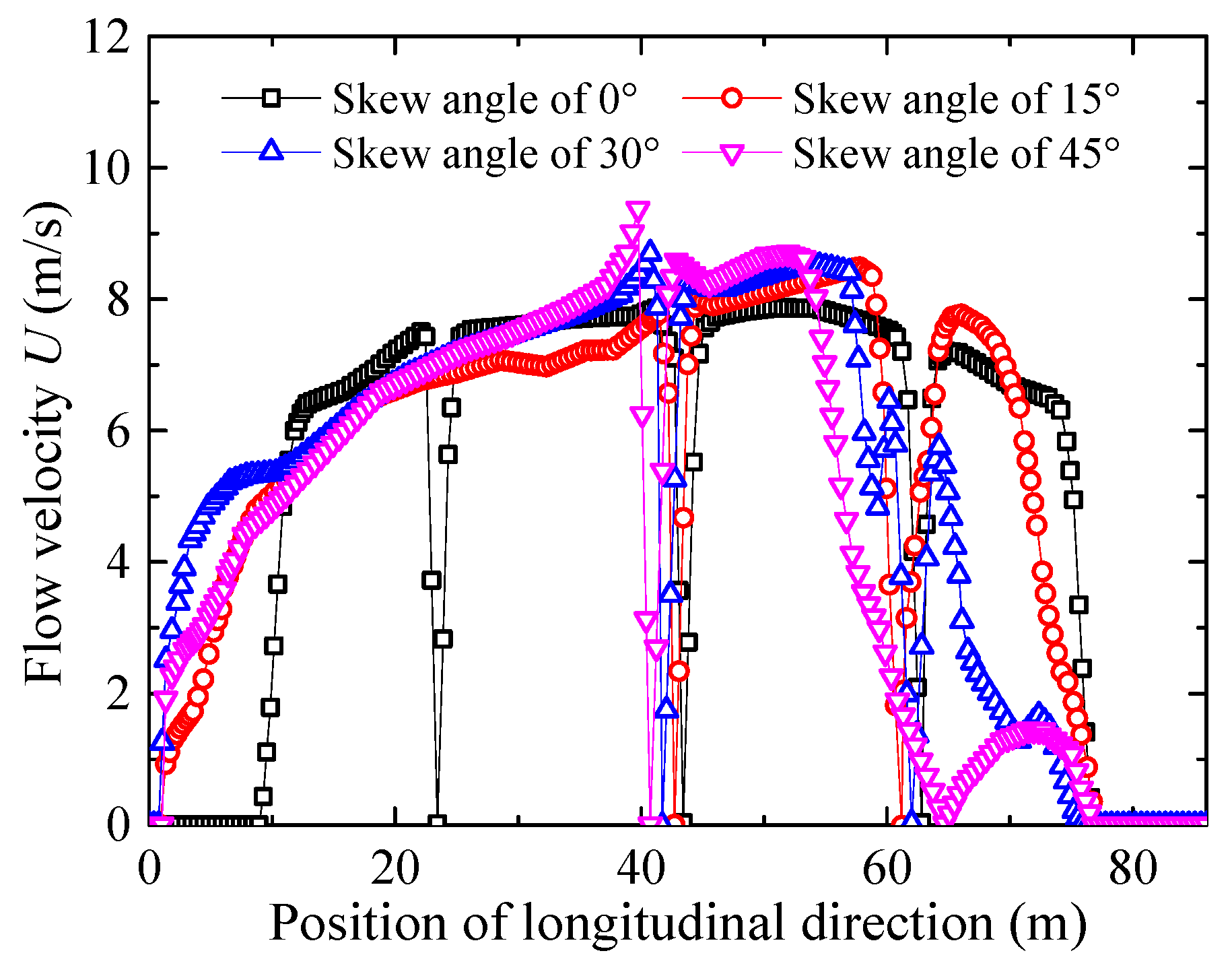
Figure 17 presents the flow velocity distribution along the longitudinal bridge axis at the upstream piers for various skew angles. Under the perpendicular (0°) scenario, the flow velocity patterns between the piers are symmetrical with stable peak values. As the skew angle decreases, the peak flow velocity rises progressively, in tandem with a broadening of its distribution range. At the skew angle of 45°, the peak flow velocities near Pier 2 and Pier 3 are particularly prominent, showing a wider “bulge range” in the curve; the variation for the skew angle of 15° is relatively moderate, lying between the perpendicular and smaller skew angles. Spatially, the difference in peak flow velocity among all skew angles is greatest at Pier 2, the curves begin to diverge at Pier 1, and the decay rate of flow velocity at Pier 3 slows as the skew angle decreases, reflecting non-uniform development and energy redistribution of the flow state along the bridge axis in the vicinity of a skewed bridge.
The smaller skew angle (e.g., 45°) results in a stronger lateral velocity component and more tortuous flow paths around the piers, intensifying three-dimensional turbulence (longitudinal, transverse, and vertical) and leading to elevated peak velocities and a wider distribution range. Although the projected obstruction area decreases with the skew angle, the increased complexity of the flow separation outweighs this reduction, explaining the higher velocity peaks observed at Piers 2 and 3 under small skew angles. Spatially, the central pier (Pier 2) acts as a “turbulence superposition zone”, where interactions among multiple piers cause the most intense energy exchange of lateral velocity, resulting in the most pronounced differences in peak flow velocity.

3.4. Effect of Scour Depth

An increase in scour depth directly undermines the bridge foundation stability, thereby threatening the overall safety of the bridge. The exposure of foundations and loss of supporting soil will reduce substructure bearing capacity, and the associated stress redistribution can create localized concentrations, elevating the risk of structural failure. Accordingly, this section analyzes hydraulic trends under varying scour depths.
The scour depth beneath the bridge considering channel constriction can be calculated according to the specification [23], as follows:
h p = 1.04 A d Q 2 Q c 0.90 B c ( 1 λ ) μ B c g 0.66 h c m
Q 2 = Q c Q c + Q t 1 Q p
A d = B z H z 0.15
where hp is the maximum water depth under the bridge after general scouring; QP is the design flood discharge; Q2 is the design flood discharge for the river channel component beneath the bridge; Qc and Qt1 represent the design flood discharges for the river channel component and the river shoal component under natural conditions, respectively; Bc and Bcg are the channel width in its natural state and within the bridge span, respectively; Bz and Hz denotes the channel width and the average channel depth at the dominant discharge, respectively; hcm is the maximum channel depth; μ is the lateral compression coefficient of piers on the flow side; and λ represents the ratio of the total water-blocking area to the water-passing area within the Beg width range under the design water level.
Based on Equations (5)–(7), with the corresponding parameters in Table 4, the critical parameters for the scour depth at the bridge site under different initial scour velocities are tabulated in Table 5. It can be observed that under different initial scour velocities (3 m/s, 6 m/s, 9 m/s), considering the bridge’s compression of the river channel, the scour depths beneath the bridge reached 0.45 m, 1.05 m, and 1.71 m, respectively.
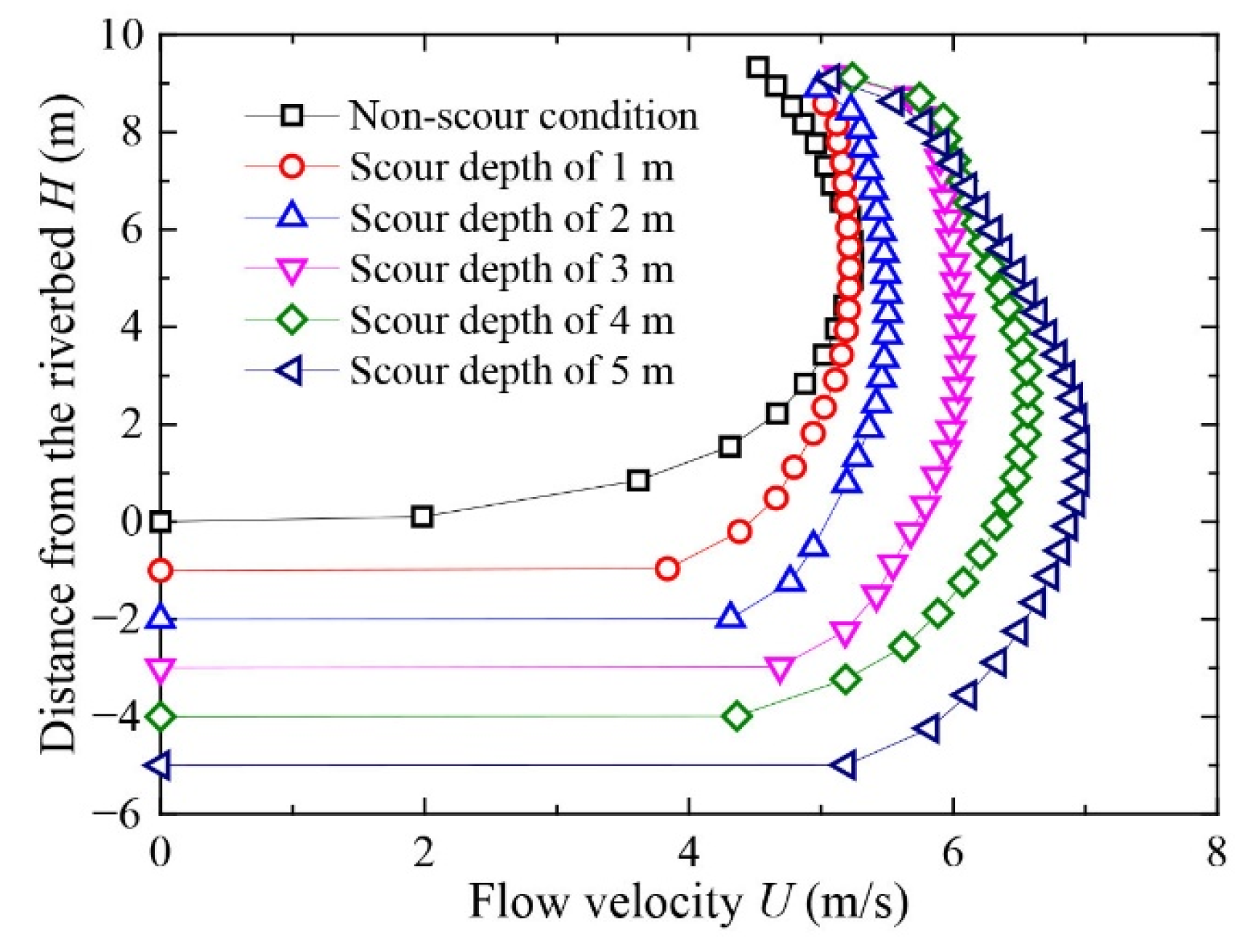
Within the conventional initial flow velocity range, scour depth generally falls within 2 m, as analyzed above. Therefore, to explicitly investigate the influence of scour depth on the vertical flow velocity at the bridge site, five scour depth conditions are analyzed, i.e., the scour depth of 1 m, 2 m, 3 m, 4 m and 5 m, and compares with the non-scour condition. The domain bathymetry is artificially lowered by the specified scour depth, i.e., deepening the entire model channel. The initial flow velocity is set at 6 m/s. Figure 18 shows the vertical flow velocity distribution at different scour depth conditions. A greater scour depth leads to a higher peak flow velocity and a steeper slope of the velocity curve from its initial value to the peak. Scour will alter the flow field patterns, such as the topography around riverbeds or structures, thereby influencing the flow’s resistance and acceleration characteristics. As the scour depth increases, the riverbed develops a channel-like morphological change: deeper scouring enhances the channel’s constraining and guiding effects, reducing energy loss within the channel. Consequently, the flow begins to accelerate at a more upstream position, and the magnitude of acceleration (peak value, gradient) increases significantly as the channel morphology becomes more pronounced.
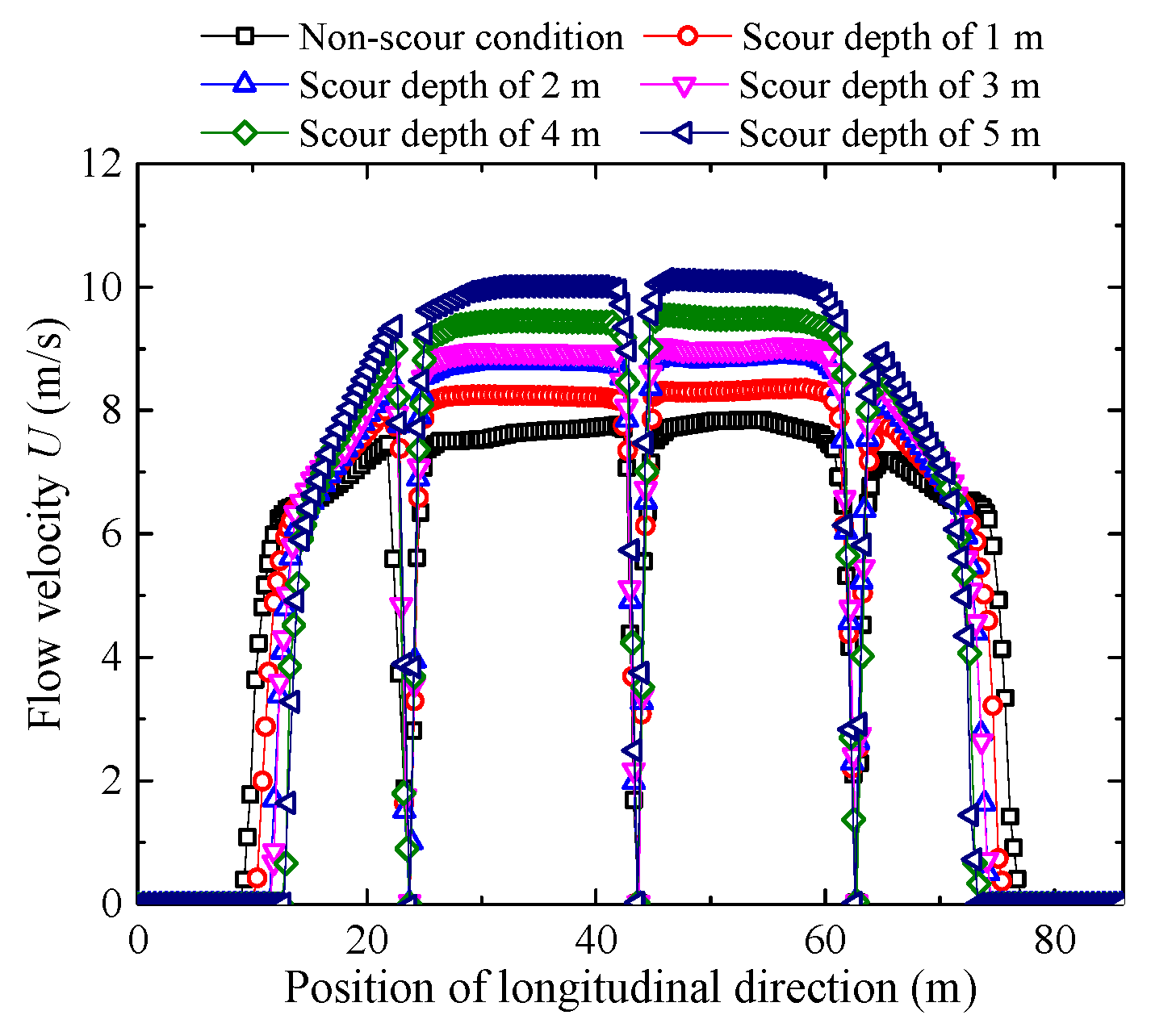
The transverse flow velocity distribution at different scour depth conditions is shown in Figure 19. The flow velocity curve distributions at different scour depth conditions are basically consistent. As the scour depth increases, the peak flow velocity between the bridge piers gradually rises. Under varying scour depths, the maximum flow velocities at the transverse direction are 7.85 m/s, 8.40 m/s, 8.79 m/s, 8.98 m/s, 9.48 m/s, and 10.04 m/s, respectively. The growth rate of flow velocity with the transverse position in the side span near the abutment increases with the scour depth. An increase in the scour depth serves to accentuate the “boundary gradient” of the flow channel, rendering the elevation and morphological differences from the adjacent topography more pronounced. This results in a faster energy dissipation rate as water exits the channel, causing a sharper decline in flow velocity from its peak value towards both sides.

4. Conclusions

This research investigates the impact analysis and evolution pattern of flood factors on hydraulic characteristics at the bridge site. The structural and hydraulic models are established, and their correctness is verified through the existing analytical formula and experimental result. The detailed parametric analyses in terms of the initial flow velocity, bridge–channel skew angle and scour depth are conducted to evaluate the evaluation pattern of the hydraulic characteristics. The main findings are summarized as follows:
(1)
The vertical flow velocity distribution at the upstream side of the upstream pier gradually increases with increasing distance from the riverbed elevation. In contrast, the vertical flow velocity on the downstream side of the upstream pier and on both sides of the downstream pier exhibits vertically non-uniform development. This is due to the horseshoe vortex and flow disturbance near the upstream pier, which disrupt and dissipate part of the flow’s forward momentum. At the transverse direction, the flow velocity increases slightly between piers when approaching from upstream, but decreases directly in front of the piers. With increasing the initial flow velocity, the vertical and transverse flow velocity distribution at the bridge site will gradually increase.
(2)
For the different scenarios with varying bridge–channel skew angles we obtain the following: at larger skew angles, the lateral velocity component suppresses vertical vortices, thereby reducing vertical flow velocity; at smaller skew angles, complex flow separation triggers intense three-dimensional turbulence, enhancing vertical vortices and fluctuating energy, which restores vertical flow velocity.
(3)
A greater scour depth increases the peak flow velocity by altering the flow field and its resistance properties. Deeper scouring enhances the channel’s confinement, which reduces flow energy loss and initiates acceleration further upstream. This leads to a significantly higher and steeper acceleration peak as the channel morphology becomes more pronounced.
(4)
The findings in this research primarily apply to bridges with circular piers. For piers of different shapes, alterations in flow disturbance characteristics may influence the development patterns of hydraulic conditions at the bridge site. In future work, unsteady flow simulations incorporating flood hydrographs derived from actual events will be performed to analyze how the rate of flow change and flood duration affect the hydraulic conditions at bridge sites.

Author Contributions

Conceptualization, W.L.; methodology, Z.L., P.L. and W.L.; software, Z.L., X.J. and Y.L.; validation, P.L. and X.J.; formal analysis, Z.L., X.J. and Y.L.; investigation, Z.L. and X.J.; resources, P.L.; data curation, Z.L.; writing—original draft preparation, Z.L.; writing—review and editing, Z.L. and P.L.; visualization, X.J.; supervision, P.L.; project administration, W.L.; funding acquisition, P.L. All authors have read and agreed to the published version of the manuscript.

Funding

This research was funded by the Research Institute of the Highway Ministry of Transport under Grant 2025-9011A.

Data Availability Statement

Data is contained within the article.

Conflicts of Interest

The authors declare no conflicts of interest.

References

  1. Edgare, M.D.; Federico, N.M.; Mohammadi, J. Investigation of common causes of bridge collapse in Colombia. Pract. Period. Struct. Des. Constr. 2009, 14, 194–200. [Google Scholar]
  2. Wardhana, K.; Hadipriono, F.C. Analysis of recent bridge failures in the United States. J. Perform. Constr. Facil. 2003, 17, 124–135. [Google Scholar] [CrossRef]
  3. Xiong, W.; Cai, C.; Zhang, R. Review of hydraulic bridge failures. China J. Highw. Transp. 2021, 34, 10–28. [Google Scholar]
  4. Deng, L.; Wang, W.; Yu, Y. State-of-the-art review on the causes and mechanisms of bridge collapse. J. Perform. Constr. Facil. 2016, 30, 04015005. [Google Scholar] [CrossRef]
  5. Zhang, G.; Liu, Y.; Liu, J.; Lan, S.; Yang, J. Causes and statistical characteristics of bridge failures: A review. J. Traffic Transp. Eng. 2022, 9, 388–406. [Google Scholar] [CrossRef]
  6. Xiong, W.; Cai, C.; Zhang, R.; Shi, H.; Xu, C. Review of hydraulic bridge failures: Historical statistic analysis, failure modes, and prediction methods. J. Bridge Eng. 2023, 28, 03123001. [Google Scholar] [CrossRef]
  7. Zhang, R.; Xiong, W.; Ma, X.; Cai, C. Progressive bridge collapse analysis under both scour and floods by coupling simulation in structural and hydraulic fields. Part I: Numerical solver. Ocean Eng. 2023, 273, 113849. [Google Scholar] [CrossRef]
  8. Shahriar, A.R.; Montoya, B.M.; Ortiz, A.C.; Gabr, M.A. Quantifying probability of deceedance estimates of clear water local scour around bridge piers. J. Hydrol. 2021, 597, 126177. [Google Scholar] [CrossRef]
  9. Pizarro, A.; Manfreda, S.; Tubaldi, E. The science behind scour at bridge foundations: A review. Water 2020, 12, 374. [Google Scholar] [CrossRef]
  10. Wang, C.; Yu, X.; Liang, F. A review of bridge scour: Mechanism, estimation, monitoring and countermeasures. Nat. Hazards 2017, 87, 1881–1906. [Google Scholar] [CrossRef]
  11. Shahriar, A.R.; Gabr, M.A.; Montoya, B.M.; Ortiz, A.C. Local scour around bridge abutments: Assessment of accuracy and conservatism. J. Hydrol. 2023, 619, 129280. [Google Scholar] [CrossRef]
  12. Yang, Y.; Xiong, X.; Melville, B.W.; Sturm, T.W. Dynamic morphology in a bridge-contracted compound channel during extreme floods: Effects of abutments, bed-forms and scour countermeasures. J. Hydrol. 2021, 594, 125930. [Google Scholar] [CrossRef]
  13. Kajikawa, Y. Numerical simulation of flow and local scour around structures in steep channels using two-and three-dimensional hydrodynamic models. Water 2025, 17, 3243. [Google Scholar] [CrossRef]
  14. Klinga, J.V.; Alipour, A. Assessment of structural integrity of bridges under extreme scour conditions. Eng. Struct. 2015, 82, 55–71. [Google Scholar] [CrossRef]
  15. Unger, J.; Hager, W.H. Down-flow and horseshoe vortex characteristics of sediment embedded bridge piers. Exp. Fluids 2007, 42, 1–19. [Google Scholar] [CrossRef]
  16. Dey, S.; Raikar, R.V. Characteristics of horseshoe vortex in developing scour holes at piers. J. Hydraul. Eng. 2007, 133, 399–413. [Google Scholar] [CrossRef]
  17. Dargahi, B. Controlling mechanism of local scouring. J. Hydraul. Eng. 1990, 116, 1197–1214. [Google Scholar] [CrossRef]
  18. Simpson, R.L. Junction flows. Annu. Rev. Fluid Mech. 2001, 33, 415–443. [Google Scholar] [CrossRef]
  19. Devenport, W.J.; Simpson, R.L. Time-depeiident and time-averaged turbulence structure near the nose of a wing-body junction. J. Fluid Mech. 1990, 210, 23–55. [Google Scholar] [CrossRef]
  20. Zhao, M.; Cheng, L.; Zang, Z. Experimental and numerical investigation of local scour around a submerged vertical circular cylinder in steady currents. Coast. Eng. 2010, 57, 709–721. [Google Scholar] [CrossRef]
  21. Peng, Y.; Yin, Z.-Y. Micromechanical analysis of local scour behaviors around circular piles in granular soil under steady flows with SPH-DEM. Ocean. Eng. 2025, 328, 121061. [Google Scholar] [CrossRef]
  22. Adnan, M.; Zhao, M.; Wu, H.; Dhamelia, V. Experimental study of local scour around a compound pile under steady current. Ocean Eng. 2025, 318, 120151. [Google Scholar] [CrossRef]
  23. Ministry of Transport of the People’s Republic of China. Hydrological Specifications for Survey and Design of Highway Engineering; China Communications Press: Beijing, China, 2015. [Google Scholar]
  24. Arneson, L.; Zevenbergen, L.; Lagasse, P.; Clopper, P. Evaluating Scour at Bridges, 5th ed.; National Highway Institute (US): Vienna, VA, USA, 2012. [Google Scholar]
  25. Melville, B.W. Pier and abutment scour: Integrated approach. J. Hydraul. Eng. 1997, 123, 125–136. [Google Scholar] [CrossRef]
  26. Sheppard, D.M.; Miller, W., Jr. Live-bed local pier scour experiments. J. Hydraul. Eng. 2006, 132, 635–642. [Google Scholar] [CrossRef]
  27. Liang, F.; Wang, C.; Huang, M.; Wang, Y. Experimental observations and evaluations of formulae for local scour at pile groups in steady currents. Mar. Georesources Geotechnol. 2017, 35, 245–255. [Google Scholar] [CrossRef]
  28. Oliveto, G.; Hager, W.H. Further results to time-dependent local scour at bridge elements. J. Hydraul. Eng. 2005, 131, 97–105. [Google Scholar] [CrossRef]
  29. Hager, W.H.; Unger, J. Bridge pier scour under flood waves. J. Hydraul. Eng. 2010, 136, 842–847. [Google Scholar] [CrossRef]
  30. Tabarestani, M.K.; Zarrati, A.R. Local scour calculation around bridge pier during flood event. KSCE J. Civ. Eng. 2017, 21, 1462–1472. [Google Scholar] [CrossRef]
  31. Link, O.; Castillo, C.; Pizarro, A.; Rojas, A.; Ettmer, B.; Escauriaza, C.; Manfreda, S. A model of bridge pier scour during flood waves. J. Hydraul. Res. 2017, 55, 310–323. [Google Scholar] [CrossRef]
  32. Link, O.; García, M.; Pizarro, A.; Alcayaga, H.; Palma, S. Local scour and sediment deposition at bridge piers during floods. J. Hydraul. Eng. 2020, 146, 04020003. [Google Scholar] [CrossRef]
  33. Melville, B. The physics of local scour at bridge piers. In Proceedings of the Fourth International Conference on Scour and Erosion, Tokyo, Japan, 5–7 November 2008; pp. 28–38. [Google Scholar]
  34. Lee, S.O.; Sturm, T.W. Effect of sediment size scaling on physical modeling of bridge pier scour. J. Hydraul. Eng. 2009, 135, 793–802. [Google Scholar] [CrossRef]
  35. Vijayasree, B.; Eldho, T.; Mazumder, B.; Ahmad, N. Influence of bridge pier shape on flow field and scour geometry. Int. J. River Basin Manag. 2019, 17, 109–129. [Google Scholar] [CrossRef]
  36. Ministry of Transport of the People’s Republic of China. General Specifications for Design of Highway Bridges and Culverts; China Communications Press: Beijing, China, 2015. [Google Scholar]
  37. Ministry of Transport of the People’s Republic of China. Technical Standard of Highway Engineering; China Communications Press: Beijing, China, 2014. [Google Scholar]
  38. Investigation and Assessment Team. Investigation and Assessment Report on the July 19 Highway Bridge Collapse Disaster in Shangluo, Shaanxi. 2024, 36p. Available online: https://jtyst.qinghai.gov.cn/jtyst/2025-07/29/article_2025072915040382114.html (accessed on 23 November 2025).
  39. Qiu, M.; Ostfeld, A. A head formulation for the steady-state analysis of water distribution systems using an explicit and exact expression of the Colebrook-White equation. Water 2021, 13, 1163. [Google Scholar] [CrossRef]
  40. Chanson, H. Hydraulics of Open Channel Flow; Elsevier: Amsterdam, The Netherlands, 2004. [Google Scholar]
  41. Nezu, I.; Rodi, W. Open-channel flow measurements with a laser Doppler anemometer. J. Hydraul. Eng. 1986, 112, 335–355. [Google Scholar] [CrossRef]
  42. Sun, D.; Wang, E.; Dong, Z.; Li, G. Discussion and application of velocity profile in open channel with rectangular cross-section. J. Hydrodyn. 2004, 19, 144–151. [Google Scholar]
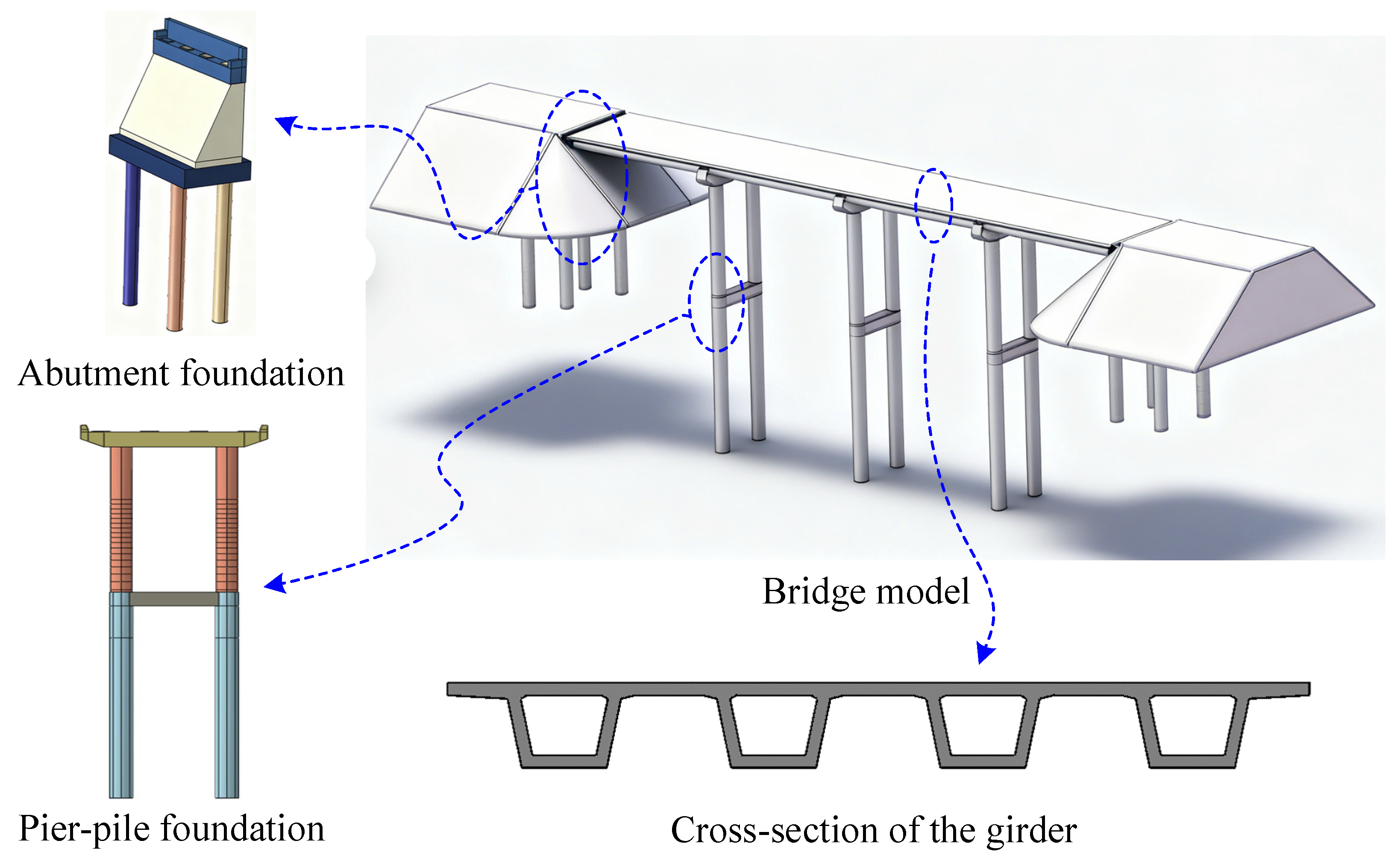
Figure 1. Bridge model and its components.
Water 18 00155 g001
Figure 2. Layout of the bridge within the river channel.
Water 18 00155 g002
Figure 3. Riverbed slope setting.
Water 18 00155 g003
Figure 4. Comparison of numerical and experimental results.
Water 18 00155 g004
Figure 5. Flow velocity curve at the bridge site.
Water 18 00155 g005
Figure 6. Contour plots of transverse flow velocity distribution at different time points (t = 150 s, 200 s, 300 s).
Water 18 00155 g006
Figure 7. Vertical flow velocity distribution along the vertical height at the channel symmetry plane.
Water 18 00155 g007
Figure 8. Vertical flow velocity distribution at the bridge site.
Water 18 00155 g008
Figure 9. Flow velocity distributions at different cross-sectional locations of the river channel.
Water 18 00155 g009
Figure 10. Flow velocities at different upstream locations of the three piers.
Water 18 00155 g010
Figure 11. Transverse flow velocity contour plot beneath the bridge. (a) transverse flow velocity contour plot at the upstream pier location, (b) transverse flow velocity contour plot at the girder axis location, (c) transverse flow velocity contour plot at the downstream pier location.
Water 18 00155 g011aWater 18 00155 g011b
Figure 12. Vertical flow velocity distribution at different initial flow velocity.
Water 18 00155 g012
Figure 13. Flow velocity contour plot at the central symmetrical position of the river channel.
Water 18 00155 g013
Figure 14. Flow velocity distributions along the transverse direction at different initial flow velocity.
Water 18 00155 g014
Figure 15. Top-down flow velocity contour plots along the river channel for the four scenarios.
Water 18 00155 g015
Figure 16. Vertical flow velocity distribution at different skew angles.
Water 18 00155 g016
Figure 17. Transverse flow velocity distribution at different skew angles.
Water 18 00155 g017
Figure 18. Vertical flow velocity distribution at different scour depth conditions.
Water 18 00155 g018
Figure 19. Transverse flow velocity distribution at different scour depth conditions.
Water 18 00155 g019
Table 1. Boundary conditions of the hydraulic model.
PositionSetup Status
Inlet boundary conditionSpecified velocity boundary, different initial flow velocity for different conditions
Outlet boundary conditionSpecified pressure boundary
Free surface treatmentSolving the transport equation of the volume fraction
Table 2. Corresponding model parameters for different cases.
CaseInitial Flow Velocity U0 (m/s)Skew Angle θWater Depth H0 (m)Froude Number FrReynold Number Re
139080.342.40 × 107
269080.684.80 × 107
399081.027.20 × 107
Table 3. Key parameters for different scenarios with varying skew angles.
ScenarioInitial Flow Velocity U0 (m/s)Skew Angle θWater Depth H0 (m)Froude Number FrReynold Number Re
16080.684.80 × 107
261580.684.80 × 107
363080.684.80 × 107
464580.684.80 × 107
Table 4. Corresponding parameters of the model.
AdλBc/BcgQ2/Qchcm
0.9950.0650.918
Table 5. Scour depth at different initial flow velocities.
Initial Flow Velocity U0 (m/s)Compression Coefficient μInitial Water Depth (m)Water Depth After Scouring hp (m)Scour Depth (m)
30.8288.470.47
60.8889.051.05
90.9489.711.71
Disclaimer/Publisher’s Note: The statements, opinions and data contained in all publications are solely those of the individual author(s) and contributor(s) and not of MDPI and/or the editor(s). MDPI and/or the editor(s) disclaim responsibility for any injury to people or property resulting from any ideas, methods, instructions or products referred to in the content.