Article

Spatio-Temporal Variation in Water Quality in Urban Lakes and Land Use Driving Impact: A Case Study of Wuhan

1
POWERCHINA Chengdu Engineering Corporation Limited, Chengdu 611130, China
2
State Key Laboratory of Water Resources Engineering and Management, Wuhan University, Wuhan 430072, China
3
Hubei Key Laboratory of Water System Science for Sponge City Construction, Wuhan University, Wuhan 430072, China
*
Author to whom correspondence should be addressed.
Water 2026, 18(2), 153; https://doi.org/10.3390/w18020153
Submission received: 20 November 2025 / Revised: 19 December 2025 / Accepted: 4 January 2026 / Published: 7 January 2026
(This article belongs to the Section Water Quality and Contamination)

Abstract

Urban lakes, as critical components of urban ecosystems, provide essential ecological services but face water quality deterioration due to rapid urbanization and associated land use changes. This study investigated the temporal and spatial characteristics and evolution mechanisms of water quality in Wuhan city lakes, with a focus on the Great East Lake basin (GELB), a typical urban lake cluster in the middle Yangtze River basin. By integrating monthly water quality monitoring data (2017–2023) with high-resolution land use data (2020), we employed the Water Quality Index (WQI), Spearman correlation analysis, and Redundancy Analysis (RDA) to assess water quality and the impact of land use on major pollutants. The results revealed significant spatial heterogeneity: Sha Lake (SL) exhibited the best water quality, while Yangchun Lake (YCL) and North Lake (NL) showed the worst conditions. Seasonal variations in water quality were observed, influenced by the ecological functions of lakes and surrounding land use. Notably, understanding these seasonal dynamics provides insights into nutrient cycle operations and their effective management under varying climatic conditions. In addition, the correlation between chlorophyll-a concentration and nutrient elements in urban lakes was not consistent, with some lakes showing significant negative correlations. The water quality of urban lakes is influenced by both land use and human management. Land use analysis indicated high impervious surfaces in East Lake (EL), SL, and YCL exacerbated runoff-driven nutrient loads, the nitrogen elevation from agricultural runoff of Yan East Lake (YEL) and NL’s pollution from historical industrial discharge. This study highlights the urgent need for targeted water management strategies to mitigate the impact of urbanization on water quality and provide a scientific basis for effective governance and ecological restoration in rapidly urbanizing areas around the world. By adopting an integrated approach combining water quality assessments with land use data, this research offers valuable insights for sustainable urban lake management.

1. Introduction

Urban lakes, defined as freshwater bodies situated predominantly within urban landscapes, shaped by anthropogenic pressures such as impervious surfaces and altered hydrology, and serving as crucial ecological and recreational assets that enhance urban resilience [1,2], play an irreplaceable role in maintaining ecological security and promoting socio-economic development [3]. These lakes, often referred to as the lungs of urban environments, not only provide crucial drinking water sources and recreational spaces for urban residents but also serve as essential habitats for various flora and fauna, thereby supporting biodiversity [4]. The presence of urban lakes significantly enhances urban livability through their ecological services, including climate regulation, biodiversity maintenance, and mitigation of the urban heat island effect. The interconnectedness of these water bodies with their surroundings underscores their importance in urban planning and management. However, against the backdrop of rapid global urbanization, the deterioration of urban lake water quality has become increasingly severe, posing a significant threat to both aquatic ecological security and human well-being [5]. This decline adversely affects not only the aesthetic and recreational value of these water bodies but also the health of local ecosystems and communities.
According to the United Nations Environment Programme (UNEP) Global Environment Outlook report, approximately 40% of urban lakes worldwide are at risk of eutrophication, with frequent algal blooms leading to deteriorated water quality that endangers aquatic biodiversity and, through food chain amplification effects, compromises the safety of urban drinking water. Such environmental changes can result in the loss of aquatic species, making ecosystems less resilient and reducing their capacity to provide essential services [6]. This alarming trend highlights the urgent need for enhanced protection and restoration of urban lakes. The implications of poor water quality extend beyond ecological impacts. Therefore, it is imperative to not only assess the current state of urban lake water quality but also to understand the underlying factors driving its deterioration.
Land use patterns serve as direct representations of urban spatial expansion, and their evolution profoundly affects the spatial and temporal distribution of pollutants in lakes. The expansion of impervious surfaces associated with urban growth significantly increases the volume and velocity of stormwater runoff, which in turn elevates the transport of pollutants into lakes [7,8]. This runoff often carries a mix of heavy metals, nutrients, organic debris, fuels, oils, mineral parts and so on, leading to a cascade of environmental issues. Different land use types, such as residential, commercial, agricultural, and industrial zones, exert varying pressures on water quality, and impervious urban surfaces often disproportionately increase pollutant loads [9,10]. Furthermore, the consequences of land use change are not uniform, as some areas may experience more intense urbanization pressures than others, resulting in a complex map of pollutant sources and impacts [11]. This spatial heterogeneity necessitates that water quality management strategies be founded on a precise understanding of the land use-water quality response mechanisms.
Currently, the evaluation of urban lake water quality relies heavily on comprehensive indices and multivariate statistical techniques. The Water Quality Index (WQI) is widely regarded as a robust tool for transforming complex monitoring data into a single, communicative score, facilitating decision-making [12]. Simultaneously, multivariate methods such as Spearman correlation analysis and Redundancy Analysis (RDA) are extensively used to identify pollution sources and quantify the relationship between land use and water quality indicators [9]. However, existing research exhibits certain limitations. First, many studies focus on individual lakes or short-term monitoring, lacking comparative analyses of lake clusters within the same urban matrix over long temporal scales. Second, while the statistical correlations between land use and water quality are frequently reported, the underlying ecological mechanisms driving these relationships—especially when they deviate from typical expectations (e.g., negative correlations between nutrients and algal biomass)—are often overlooked or insufficiently discussed using ecological theories such as toxicity thresholds or light limitation.
To address these gaps, this study introduces an integrated approach to analyze the Great East Lake Basin (GELB) of Wuhan city. Wuhan’s unique geographical position as a critical hub in central China, along with its extensive lake network, makes it a compelling case for studying urban lake dynamics. Rapid economic growth and population influx have intensified the pressure on water resources, leading to conflicts between development and environmental sustainability [13,14]. Unlike traditional single-lake studies, this research: (1) performs a comparative analysis of six interconnected yet distinct urban lakes over a 7-year period (2017–2023) to capture spatial heterogeneity; (2) utilizes high-resolution (1 m) land use data to precisely quantify urbanization impacts; and (3) goes beyond statistical description to elucidate the specific ecological mechanisms (e.g., decoupling of nutrient-algal relationships) driving water quality evolution in hyper-eutrophic urban environments. The findings will not only provide a scientific basis for water environment management in the urban agglomeration of the middle reaches of the Yangtze River but also offer theoretical references for water ecological protection in rapidly urbanizing regions worldwide. This cross-scale research paradigm, based on complex systems theory, will promote a strategic shift in urban lake management from end-of-pipe treatment to source control.

2. Materials and Methods

2.1. Study Area

The study focuses on the Greater East Lake Basin (GELB) in Wuhan, China, a representative urban lake cluster in the middle Yangtze River basin (Figure 1). Wuhan has a subtropical climate, with distinct seasonal changes [15]. The region is characterized by abundant rainfall, with an annual average of approximately 1260 mm, predominantly during the summer monsoon season from May to September, which may lead to increased surface runoff and an augmented pollutant load entering the lakes [4]. To capture these seasonal hydrological dynamics, January and July were selected as representative periods for the dry and rainy seasons, respectively. Situated in the central urban area of Wuhan, the GELB has boasted a high population density and a prosperous business environment, and exerted increasing pressure on its aquatic ecosystems. In response, comprehensive water quality management measures, including the Great East Lake Ecological Water Network Project initiated in 2009 and the Yangtze River Protection and Restoration Battle Plan launched in 2019, have been implemented to reduce nutrient loads and enhance ecological resilience in GELB lakes, contributing to significant water quality improvements in recent years. The dynamic interplay between economic development and environmental sustainability makes the GELB in Wuhan an ideal location for investigating the impacts of urbanization and land use on the water quality of urban lakes.
The GELB in Wuhan City, a typical urban lake cluster in the middle Yangtze River basin, encompasses six key lakes: East Lake (EL, 114°23′48″ E, 30°33′57″ N, 31.75 km2), Sha Lake (SL, 114°18′36″ E, 30°33′55″ N, 3.08 km2), Yangchun Lake (YCL, 114°25′6″ E, 30°36′49″ N, 0.58 km2), North Lake (NL, 114°30′49.91″ E, 30°36′8.21″ N, 1.94 km2), Yan East Lake (YEL, 114°32′54″ E, 30°32′15″ N, 9.17 km2), and Yan West Lake (YWL, 114°28′42″ E, 30°34′23″ N, 14.2 km2). This basin exhibits a unique dual natural-artificial coupling pattern, with hydraulic connectivity between lakes maintained through channels and pumping stations, yet water exchange is constrained by anthropogenic regulation. The Dongsha Lake system (EL-SL-YCL) is significantly impacted by high-density urban development, confronting challenges such as eutrophication, pollutant accumulation, and diminished hydrodynamic conditions. In contrast, the Beihu Lake system (NL-YEL-YWL) features NL receiving long-term industrial effluent from Qingshan District, while YEL and YWL, primarily deepwater lakes, serve as critical ecological barriers. Complex water source interactions within the basin result in intricate pollutant migration pathways. Investigating the current status of water pollution and land-use-driven impacts in the Greater East Lake Basin’s urban lakes can provide valuable insights for ecological restoration strategies and dynamic water resource management in similar urban lake clusters.

2.2. Data Sources

This study utilized monthly water quality data from the GELB spanning from 2017 to 2023 (yielding a total of approximately 504 observations across the six lakes), which were obtained from the Wuhan Municipal Water Affairs Authority. These data include key water quality indicators such as water temperature (WT, °), pH, chlorophyll a (Chl-a, μg/L), total nitrogen (TN, mg/L), total phosphorus (TP, mg/L), ammonia nitrogen (NH3-N, mg/L) and chemical oxygen demand (COD, mg/L), which are critical for assessing the ecological health of urban lakes. Additionally, land use data (1 m × 1 m) of 2020 were sourced from School of Remote Sensing at Wuhan University, as detailed in Section 2.3.3, providing a comprehensive overview of land use and their potential impacts on the basin, with a resolution and accuracy surpassing all publicly available open-source datasets, enabling precise analysis of urbanization and land use influences on lake water quality. In fact, the 2020 land use data serves as a representative snapshot of conditions across the study period (2017–2023), effectively capturing the spatial heterogeneity in land cover surrounding urban lakes. It was specifically paired with contemporaneous (2020) water quality measurements to facilitate a robust analysis of their interrelationships.

2.3. Methods

2.3.1. Water Quality Index (WQI) Assessment

To evaluate the water quality of urban lakes in the GELB, the Water Quality Index (WQI) assessment method was employed, which is a widely recognized tool for simplifying complex water quality data into a single value that reflects overall aquatic ecosystem health. This study prioritized parameters critical to ecological integrity, including Chl-a as a proxy for algal biomass, TN, TP, and NH3-N as nutrient indicators, and COD, measuring oxidative contaminant loads [15] (Table 1). The weights were assigned based on their relative ecological significance in urban lake systems, informed by expert judgment and literature [12,15]. Moreover, the weighting scheme follows a hierarchy based on ecosystem integrity and restoration targets. Parameters indicating severe organic pollution and ecosystem stress were assigned the highest weight. Specifically, COD and NH3-N serve as critical indicators of the black-odorous potential and oxygen depletion risks. In Wuhan’s urban lakes, controlling these pollutants is the prerequisite for ecological restoration, as they directly regulate dissolved oxygen levels and aquatic organism survival. Similarly, Chl-a was assigned a weight of 3 as the direct biological indicator of eutrophication. Since preventing algal blooms is the primary visual and ecological goal for these urban landscape waters, Chl-a reflects the actual health status more effectively than potential drivers. Nutrient drivers were assigned relatively lower weights (TN = 2, TP = 1). While monitoring data shows that nutrient saturation often occurs, high nutrient levels do not always lead to immediate ecological collapse if biological uptake is limited. Therefore, the index prioritizes the direct stressors (oxygen depletion, physiological stress) and biological endpoints (blooms) over the nutrient reservoirs, minimizing subjective bias by aligning with the actual stress-response mechanisms of the local aquatic systems. Each parameter was assigned a weight according to its importance and was normalized to a scale from 0 to 100, where elevated scores denote superior water quality conditions. The calculation formula of WQI is shown in Equation (1).
W Q I = i = 1 n ( S c o r e i × W e i g h t i ) / i = 1 n W e i g h t i
where S c o r e i is the normalized value for the ith water quality parameter (ranging from 0 to 100), W e i g h t i is the weight for the ith water quality parameter, and n is the number of water quality parameters.
The composite WQI score enables temporal categorization of aquatic health across five hierarchical classes: “Excellent” (91–100), “Good” (71–90), “Moderate” (51–70), “Low” (26–50), and “Bad” (0–25) [16]. This stratified system facilitates intuitive interpretation of long-term trends in lake ecosystem stability by translating complex hydrochemical data into actionable insights.

2.3.2. Spearman Correlation Analysis

Correlation analysis is a statistical method used to assess linear and non-linear relationships between variables. In this study, Spearman correlation analysis was conducted using R4.4.0 to evaluate relationships between Chl-a and other water quality parameters across the six urban lakes in GELB from 2017 to 2023, using monthly data to compare interrelationships among water quality factors, particularly the interactions between Chl-a and nutrient concentrations (TN, TP, NH3-N), across different lakes without considering temporal variations. The analysis aimed to determine whether controlling these pollutants could effectively mitigate algal blooms, thereby providing evidence-based insights for urban lake management and water pollution remediation. Correlation results are quantified using correlation coefficients and significance levels, with p-values computed and reported. Generally, the larger the absolute value of the correlation coefficient, the stronger the relationship between the two variables.

2.3.3. Land Coverage

To quantify the driving impact of land use on lake water quality, a spatial analysis framework was established based on high-resolution (1 m) land cover data from the School of Remote Sensing and Information Engineering, Wuhan University. Nine distinct land use types were classified: Surface water (SW), forest vegetation (FV), building vegetation (BV), park vegetation (PV), road vegetation (RV), urban buildings (UB), rural buildings (RB), urban roads (UR, including roads and sidewalks), and bare land (BL) (Figure 1). A buffer zone within 500 m of urban lakes was selected as the core analytical unit to effectively capture the impact of surface runoff and non-point source pollution inputs on the lake bodies. Within these buffer zones, the areal proportion of each land use type was calculated to represent the terrestrial pollution load potential. Specifically, we aggregated Urban Buildings (UB), Rural Buildings (RB), and Urban Roads (UR) to define impervious surfaces (IS), which serves as a critical proxy for urbanization intensity and runoff coefficient. Although a single-year (2020) high-resolution (1 m × 1 m) land use dataset was utilized, the analysis focuses on spatial heterogeneity in land use patterns across the six urban lakes in the GELB to evaluate urbanization effects, capturing lake-specific impacts such as urban development in the Dongsha Lake system. The land use data year was selected to align temporally with the 2017–2023 water quality dataset, ensuring consistency for assessing land use-water quality relationships. To validate the temporal representativeness of this dataset, we examined the annual land cover dynamics of the study area from 2017 to 2023 using the Esri 10 m Land Cover Time Series derived from Sentinel-2 imagery on the Google Earth Engine (GEE) platform. The verification results indicated that the land use structure within the lake buffer zones exhibited high stability. Thus, the 2020 land use pattern effectively represents the average underlying surface conditions and supports the assessment of land use-water quality relationships for the entire study period.

2.3.4. Redundancy Analysis (RDA)

Redundancy Analysis (RDA) is a multivariate statistical technique designed to investigate linear relationships between response variables (e.g., environmental metrics like water quality parameters) and explanatory variables (e.g., land use categories) [9]. It constructs constrained ordination axes that maximize the variance explained in the response data by the predictors, making it ideal for ecological and environmental studies, such as assessing how land cover influences pollutant dynamics in urban lakes. Typically, the first two axes account for >90% of variance, confirming model robustness, though multicollinearity must be checked via variance inflation factors.

3. Results and Discussion

3.1. Temporal and Spatial Variation Characteristics of Major Pollutants

3.1.1. Inter-Annual Variation Feature

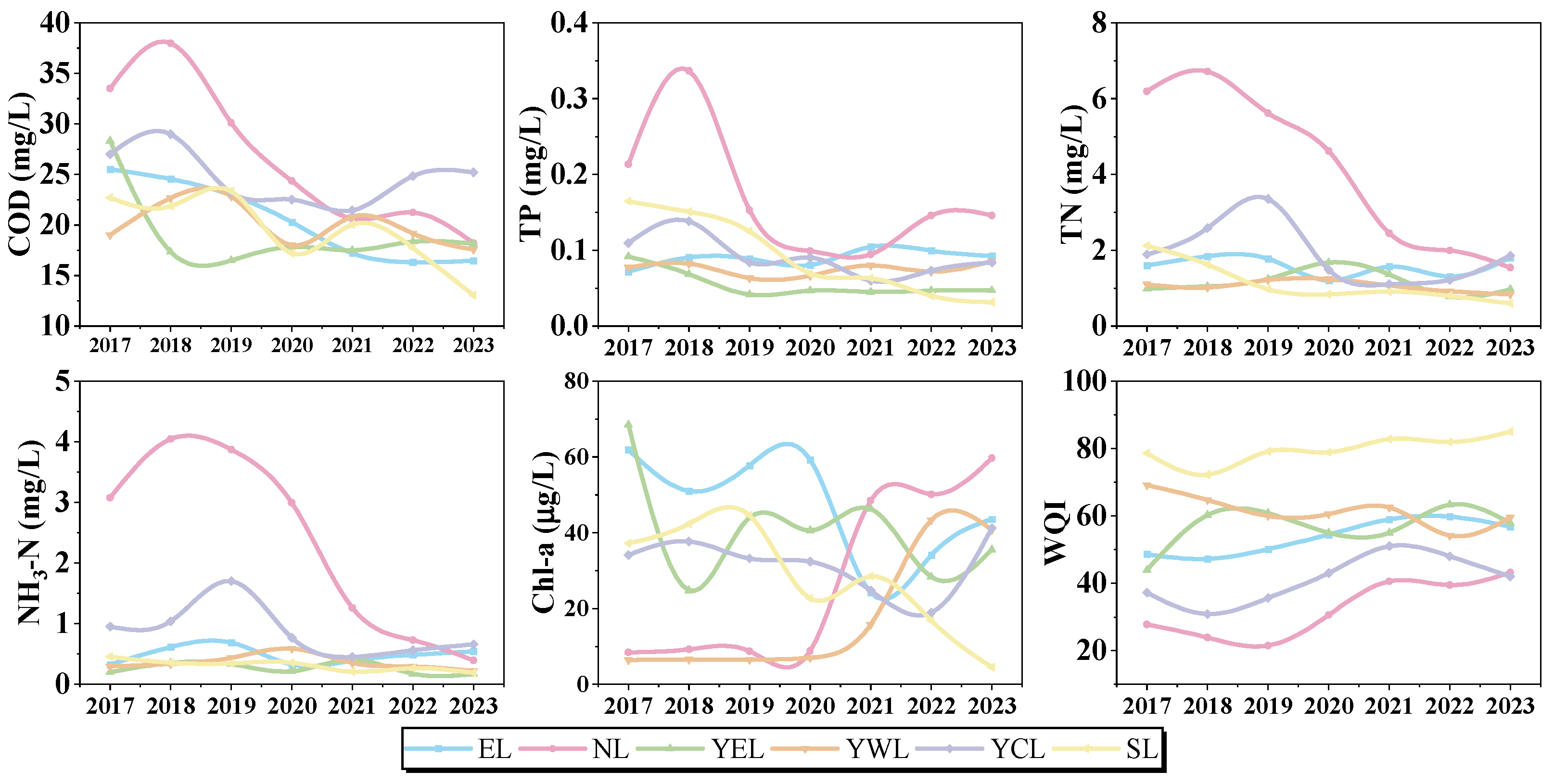
The analysis of the annual variation trends of crucial pollutants across six urban lakes in Wuhan from 2017 to 2023 reveals significant temporal patterns in the water quality indicators (Figure 2). The COD levels were notably high in 2018, with NL exhibiting the highest mean concentration of 38.0 mg/L during this period (Figure 2). Over the years, COD concentrations have shown a consistent decrease, particularly after 2020, reflecting the effectiveness of sewage interception and ecological restoration efforts, which improved water exchange and reduced organic pollutant loads. TP concentrations peaked in 2018 across various lakes, followed by a general decline. Notably, this reduction became more pronounced after 2020, driven by phosphorus control measures, including wetland restoration and runoff management, under frameworks such as the Yangtze River Protection and Restoration Battle Plan. However, the TP concentration in NL and YCL increased significantly, indicating the need for lake-specific management adjustments and suggesting that other factors, such as industrial effluents in NL and urban runoff in YCL, may contribute to water quality deterioration. The trend for TN closely mirrored that of TP, with concentrations reaching their highest levels in 2018 before gradually decreasing in subsequent years, reflecting nitrogen pollution control through upgraded sewage treatment systems and ecological buffer zones in GELB. Similarly, NH3-N concentrations peaked in 2018 or 2019, and have shown a decreasing trend since then in most lakes (except for EL and YCL), highlighting significant improvements in ammonia nitrogen pollution levels. The fluctuations in Chl-a concentrations exhibit significant variability compared to other water quality parameters in the lakes, demonstrating considerable instability over time. Among the studied lakes, only SL shows a notable decreasing trend in Chl-a levels, likely due to localized ecological restoration and water quality management in SL, while NL and YCL display a significant increasing trend. This contrasting behavior highlights the diverse dynamics of algal growth and nutrient interactions across different lakes, emphasizing the need for tailored management strategies to address site-specific challenges. Smaller urban lakes like NL and YCL, with limited water volume and hydraulic residence time, exhibit reduced self-purification capacity, making them more vulnerable to pollutant accumulation and rebound effects even after initial restoration efforts. This underscores the priority for enhanced buffer zones and targeted pollutant interception in compact urban water bodies.

3.1.2. Seasonal Variation Feature

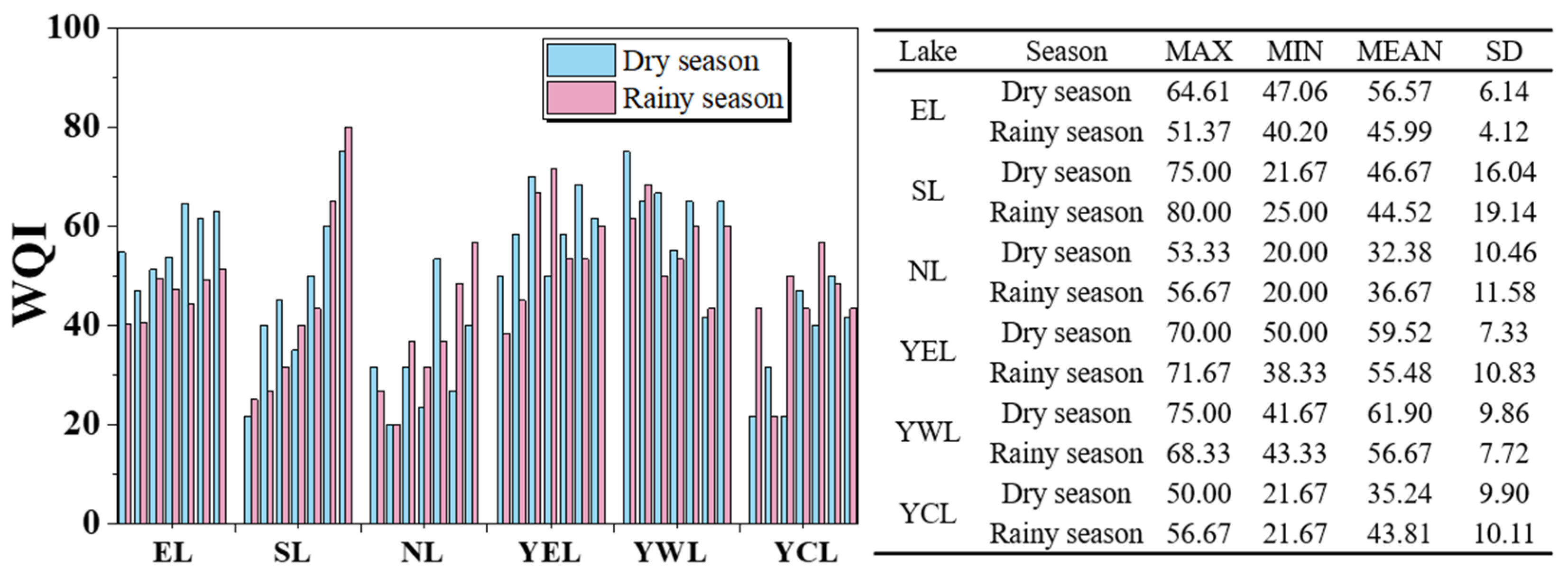
The Water Quality Index (WQI) evaluation results for the six urban lakes in Wuhan, based on monthly water quality data from 2017 to 2023 obtained from the Wuhan Municipal Water Affairs Authority for January (dry season) and July (rainy season) (Figure 3), highlight the complex interplay between hydrological conditions and ecosystem responses. For the seasonal analysis, January and July were selected as the representative proxies for the dry and rainy seasons, respectively. This selection is substantiated by meteorological data from the Wuhan Statistical Yearbook, which confirms that precipitation in Wuhan is heavily concentrated during the ‘Plum Rain’ (Meiyu) season in June and July, whereas December and January always record the lowest rainfall. Therefore, these two months effectively represent the hydrological extremes of the region. While this snapshot approach highlights the contrast between peak runoff and low-flow conditions, we acknowledge that it may simplify intra-seasonal variability and mask the specific effects of short-term meteorological events occurring in other months.
Lakes such as EL, SL, YEL, and YWL exhibited improved water quality in the dry season compared to the rainy season,, which has also been found in other studies [17], likely due to their greater exposure to non-point source pollution, including urban runoff for EL and SL and agricultural runoff for YEL and YWL, relative to point source pollution, leading to lower nutrient inputs during periods of reduced rainfall. This improvement can be attributed to reduced external runoff, which minimizes the influx of pollutants, and the stabilization of aquatic ecosystems under lower hydrological stress [18]. The dry season’s calm conditions also facilitate the settling of suspended solids and the degradation of organic pollutants, contributing to higher WQI values. In contrast, NL and YCL demonstrate enhanced water quality during the rainy season. The increase in the concentration of water quality parameters in the dry seasons of the urban river has also been studied [19]. Wastewater discharge significantly increases pollutant concentrations, particularly in the dry season, due to limited water volume [20]. However, increased water volume in the rainy season likely dilutes these pollutants, enhancing the natural resilience of these ecosystems to seasonal flooding [21]. Floodwaters may also flush out accumulated contaminants, temporarily improving water quality [19]. However, this improvement is often short-lived, as prolonged flooding can introduce new pollutants from surrounding areas, underscoring the need for targeted management strategies to mitigate flood-related impacts. The contrasting seasonal patterns in WQI values across the lakes underscore the importance of considering temporal hydrological variations in water quality management. For instance, lakes that perform better during the dry season may benefit from measures that control external pollutant inputs and enhance ecosystem stability, while those showing improved conditions during the rainy season may require strategies to manage floodwater quality and mitigate post-flood pollution. These findings emphasize the need for adaptive, season-specific management approaches to address the dynamic nature of urban lake ecosystems and ensure sustainable water quality improvements.

3.1.3. Spatial Distribution of Crucial Pollutants

The concentrations of TP and NH3-N in EL remain consistently high (elevated relative to Class III standards, NH3-N ≤ 1.0 mg/L, TP ≤ 0.05 mg/L), indicating poor water quality and severe pollution. Despite some progress in recent years, stronger management efforts are still needed to further reduce pollutant levels. In contrast, NL shows significant improvement in water quality, with lower concentrations of COD, TP, TN, and NH3-N, suggesting that management strategies are effective and that the lake has a strong ecological recovery capacity. YEL has maintained relatively stable water quality indicators since 2019, with relatively low concentrations of NH3-N and TP, indicating effective water quality management measures. YEL experienced a slight peak in NH3-N and TN concentrations in 2020, but overall, the levels have remained relatively stable over the years. SL exhibits relatively good water quality, with low levels of major pollutants, indicating that effective management measures have maintained its good condition. On the other hand, YCL shows higher concentrations of pollutants, a slower rate of improvement, and a certain degree of rebound, highlighting the need for enhanced management efforts in the area. Overall, the spatial distribution patterns of key pollutants reveal differences in water quality indicators among the lakes, providing important insights for future water quality management and ecological protection efforts.

3.2. Water Quality Evaluation

3.2.1. Single Factor Evaluation Method

The variations in each water quality factor are shown in Figure 2. The analysis of COD concentrations across the six major lakes in the GELB reveals a consistent declining trend overall. Since 2020, the COD levels in most lakes have generally adhered to Class III water quality standards. However, YCL presents an exception, experiencing an increase in COD levels over the past two years. Notably, between 2017 and 2020, the COD concentration in NL was significantly higher compared to the other lakes. Fortunately, it has decreased substantially and has maintained levels below 20 mg/L since 2020. In terms of TP concentrations, all six lakes in the GELB have significantly exceeded acceptable limits. Only SLand YEL have managed to meet the Class III water quality standards for total phosphorus in recent years, indicating some success in pollution management. In contrast, TP levels in the other lakes remain excessively high, particularly in NL, which has seen a substantial increase in total phosphorus levels since 2021. When examining NH3-N concentrations, NL stands out with the highest levels of ammonia nitrogen among the six lakes. Nonetheless, there have been noticeable improvements in recent years. Since 2020, the other lakes have generally managed to meet Class III water quality standards for ammonia nitrogen, reflecting effective management strategies. The concentrations of TN in the six major lakes also exhibit a consistent declining trend. However, overall levels remain high, well above Class III water quality standards, with NL recording the highest total nitrogen concentration, closely followed by YCL. Overall, the water quality indicators for the six major lakes in the GELB have maintained a relatively stable condition since 2020, though fluctuations within certain ranges are evident. Nevertheless, the concentrations of TP and TN remain a concern due to their relatively high levels. In examining Chl-a concentrations, the patterns among the six major lakes vary significantly. All lakes exhibit notably high levels of Chl-a, with NL and YWL showing similar trends of relative stability prior to 2020, which was followed by a marked increase thereafter. The remaining four lakes, however, display considerable interannual fluctuations, although, in general, Chl-a concentrations have shown a slight decline.

3.2.2. WQI

The analysis of the spatial distribution patterns of crucial pollutants among the six urban lakes reveals significant differences in water quality indicators, reflecting the varying degrees of pollution and management effectiveness in each lake. Based on the Water Quality Index (WQI) values (Figure 2), the water quality assessment of the lakes indicates that SL has the best water quality, while YCL and NL exhibit the worst conditions. The relative rankings of WQI values for EL, YEL, and YWL have varied over time, with the three lakes showing similar WQI levels by 2023. From a spatial perspective, significant differences in WQI values were observed among the various lakes. The superior water quality of SL underscores the efficacy of governance measures, such as prohibiting sewage discharge into the lake. YEL displayed considerable variability in its WQI over time and space, emphasizing the influence of external factors on its water quality. The WQI values for NL and YCL remain relatively low, signifying higher levels of pollution and suboptimal water quality management outcomes, potentially attributable to their smaller lake sizes and limited self-purification capacities. On a temporal scale, the WQI of most lakes (SL, EL, NL and YCL) has shown an overall increasing trend, indicating continuous improvement in water quality over the years. The WQI of EL was initially lower than that of YWL and YEL, but has since risen to a comparable level with both. In particular, although the WQI values for NL and YCL have remained notably low, they are nonetheless showing positive gains. In contrast, the WQI of YWL exhibited a downward trend, signaling a deterioration in water quality, with persistent challenges impeding its recovery. Therefore, a more targeted management approach is required to enhance its overall water quality.

3.3. Correlation Analysis of Water Quality Parameters

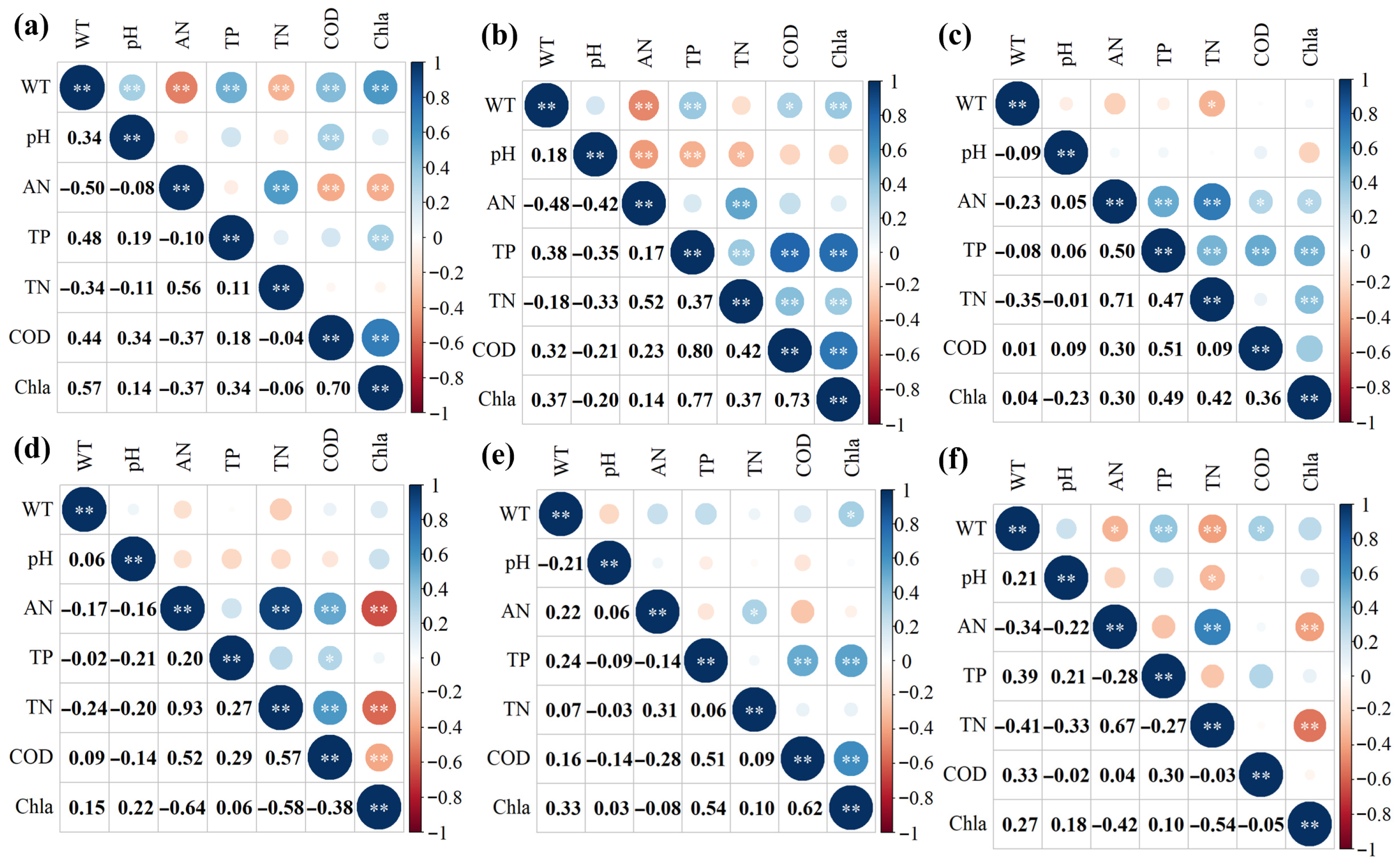
In this study, we conducted a correlation analysis of water quality parameters across six urban lakes in Wuhan, with a particular focus on the relationships between Chl-a and other key water quality factors (Figure 4). The analysis revealed significant patterns that highlight the role of nutrients and organic pollutants in driving algal growth and eutrophication, while also identifying unique characteristics of individual lakes that necessitate tailored management strategies.
In EL, SL and YEL, Chl-a exhibited strong positive correlations with TP and TN, reflecting the critical role of these nutrients in promoting algal growth. Specifically, elevated TP and TN concentrations were found to significantly enhance eutrophication, leading to increased Chl-a levels [22]. These findings underscore the importance of monitoring and controlling nitrogen and phosphorus inputs in urban water bodies to prevent ecological issues associated with eutrophication, such as algal blooms and oxygen depletion [23]. The strong Chl-a-TP correlations in these lakes highlight the need for targeted phosphorus reduction measures, including improved wastewater treatment and restrictions on agricultural runoff [18]. Chl-a also showed a positive correlation with COD in several lakes. This relationship suggests that increased organic pollution may provide additional resources for algal growth, potentially exacerbating eutrophication [17]. However, the rise in organic pollutants also poses a risk of oxygen depletion, as microbial decomposition of organic matter consumes dissolved oxygen. This dual effect emphasizes the importance of integrated pollution control strategies that address both nutrient and organic pollutant inputs to maintain water quality and ecosystem health.
In YCL, the correlations between Chl-a and other water quality factors were relatively weak, indicating that algal growth in this lake may be influenced by factors other than nutrient availability, such as hydrological conditions or external pollution sources. This finding suggests that management strategies for YCL should focus on comprehensive monitoring and adaptive measures to address its unique environmental context. In contrast, NL and YWL exhibited significant negative correlations between Chl-a and TN as well as NH3-N. These unexpected relationships may indicate complex interactions between nutrient dynamics, algal growth, and other environmental factors, such as microbial activity or sediment-water interactions [6]. This counterintuitive phenomenon may imply that nutrient availability is no longer the primary limiting factor in these hyper-eutrophic systems.
For NL, this negative relationship is likely driven by an inhibition threshold effect caused by severe historical pollution. Our data indicate that between 2017 and 2020, NL experienced extremely high concentrations of TN, NH3-N, and COD due to wastewater discharge from the Wuhan Iron and Steel Corporation, yet Chl-a levels remained disproportionately low. We hypothesize that this decoupling is attributed to ammonium toxicity. Previous studies have established that excessively high concentrations of un-ionized ammonia can damage the photosynthetic apparatus of algae and inhibit growth [24]. Furthermore, in subtropical reservoirs similar to NL, strong nitrate inhibition and ammonium toxicity have been identified as key factors suppressing phytoplankton blooms even when nutrient levels are high [25].
In the case of YWL, the negative correlation points towards a shift from nutrient limitation to light limitation, exacerbated by hydrological dynamics. Surrounded by agricultural land and peri-urban areas, YWL receives nutrient pulses primarily during rainfall events. In such nutrient-rich lakes, nitrogen and phosphorus concentrations often exceed the saturation threshold for algal uptake, leading to a decoupling of the nutrient-chlorophyll relationship [26]. Consequently, algal growth becomes limited by physical factors rather than nutrients. Specifically, rainfall-driven runoff increases turbidity (non-algal light attenuation) and hydraulic flushing rates. Recent research highlights that in shallow eutrophic lakes, such light limitation caused by suspended solids can intensify, suppressing blooms even when nitrogen is abundant [27]. Thus, the ‘high nutrient’ periods in YWL coincide with high flushing conditions, resulting in the observed negative correlation.
The variability in Chl-a correlations across the six lakes underscores the importance of adopting lake-specific management strategies. For EL, SL, and YEL, where strong Chl-a-TP and Chl-a-TN correlations were observed, priority should be given to nutrient control measures, such as reducing agricultural runoff, upgrading wastewater treatment facilities, and implementing phosphorus removal technologies. In SL, additional attention should be paid to managing organic pollution to mitigate the risks of oxygen depletion. For YCL, a more holistic approach is needed, focusing on comprehensive monitoring and adaptive management to address its unique environmental conditions. Finally, the unexpected negative correlations in NL and YWL warrant further investigation to better understand the underlying mechanisms and inform targeted management actions.

3.4. Analysis of Water Pollution Causes Based on Land Use

The three lakes (EL, SL and YCL) in the Dongsha Lake basin exhibit relatively high impervious surface (IS) coverage in their surrounding areas, particularly SL (Table 2). Notably, all three lakes lack rural residential structures due to their central urban location. Among these water bodies, EL and SL demonstrate the lowest forest vegetation coverage. However, this deficiency is partially offset by extensive road-adjacent greenery and building-integrated vegetation, which compensate for the lack of natural permeable surfaces. In contrast, the Beihu Lake basin features urban lakes with generally lower impervious surface ratios, each possessing distinct characteristics. NL historically received significant industrial wastewater discharge from Wuhan Iron and Steel Corporation prior to 2021. YEL, situated away from the urban core, maintains superior natural environmental conditions with minimal impervious surfaces and partial coverage of rural settlements. YWL, located at the urban fringe, exhibits spatial heterogeneity: some areas show high population density while others retain relatively pristine natural environments.
With the exception of SL, where anthropogenic protection measures have maintained relatively good water quality, all other urban lakes exhibit suboptimal water conditions. The smallest lakes, YCL and NL, registered the lowest WQI scores and better water quality during the rainy season, indicating accelerated water quality deterioration in smaller urban water bodies. This phenomenon correlates with reduced self-purification capacity and insufficient ecological protection prioritization. Seasonal WQI analysis reveals SL’s stable water quality with minimal seasonal variation, despite having the highest impervious surface ratio. Effective sewage control measures appear to mitigate anthropogenic impacts, though significant positive correlations between Chl-a and nutrient levels suggest potential algae proliferation induced by controlled wastewater discharge [11]. In contrast, YCL exhibits severe pollution across all indicators except NH3-N, underscoring urgent protection needs. Post-2021 improvements in NL water quality correlate with enhanced dilution effects during rainy periods, reflecting effective pollutant flushing from its forested catchment. The 2020–2023 WQI dataset shows comparable index values for EL, YWL and YEL, with EL alone demonstrating pronounced seasonal variability, superior dry-season quality contrasts with marked rainwater pollution. This pattern aligns with EL’s urban context, where intensive construction, road networks, and human activities contribute to both point-source and non-point-source contamination [28]. The YEL’s persistent TN elevation above Class III water standards, coupled with high Chl-a concentrations and adjacent agricultural developments, implies agricultural runoff impacts. YWL’s elevated pollutant profile, exacerbated by greater urban infrastructure density, reinforces the hypothesis that urbanization intensifies aquatic pollution through synergistic anthropogenic pressures [29]. These findings collectively emphasize the critical role of land use patterns and management strategies in determining urban lake water quality trajectories.
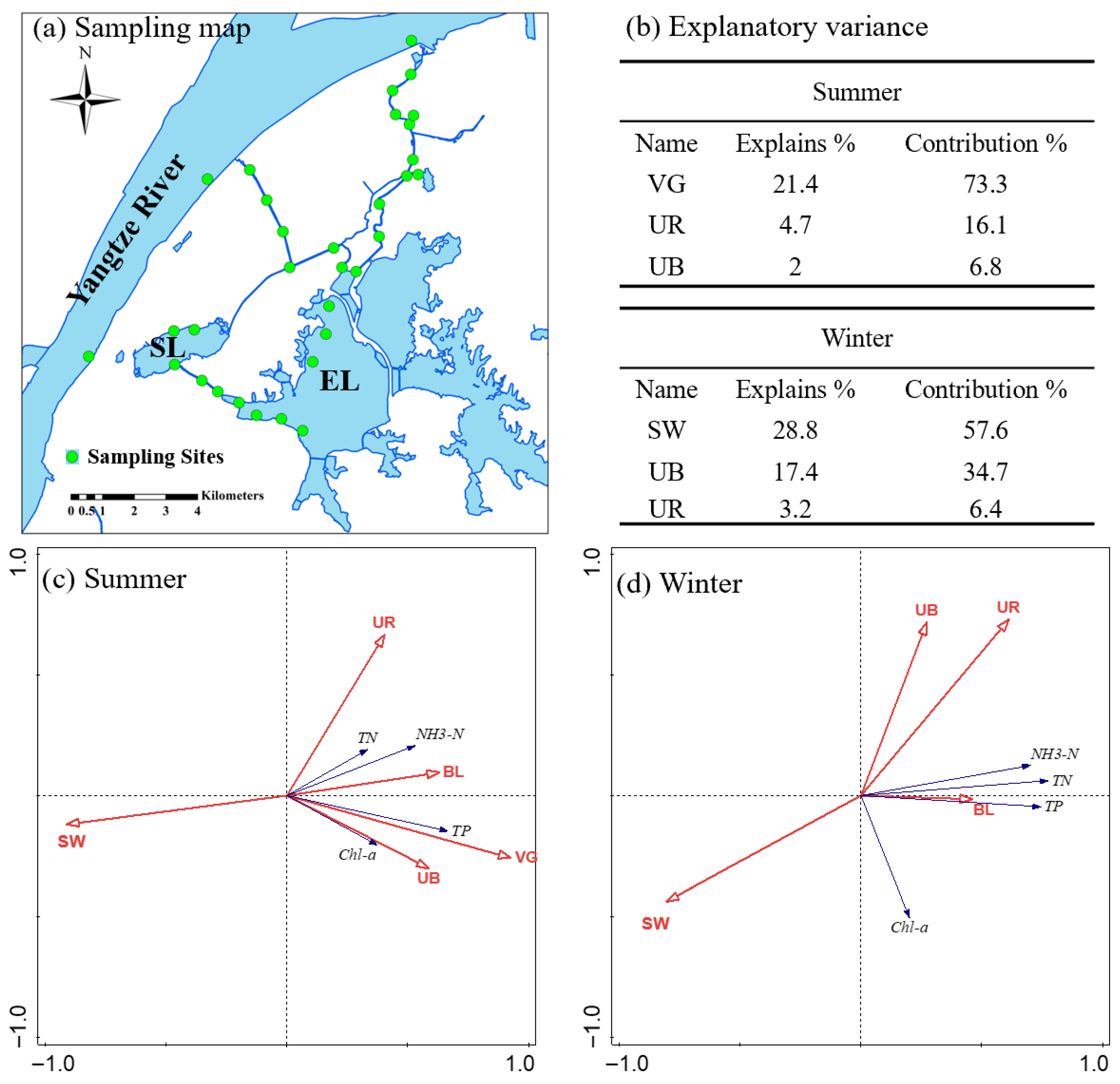
To further investigate the driving effects of land use on urban water bodies and validate the accuracy of our land use impact analysis, we employed Redundancy Analysis (RDA). Due to limitations in the number of lakes with available data, we used our own in situ water quality measurements from January (winter) and June (summer) 2020, with sampling points primarily distributed across urban rivers and lakes in the Dongsha watershed. Seasonal water quality data served as response variables, while land use types—including urban roads (UR), surface water (SW), vegetation (VG), urban buildings (UB), and bare land (BL)—were treated as explanatory variables. The results showed that Axis 1 and Axis 2 explained 96.38% and 98.56% of the variance, respectively, demonstrating the feasibility of the RDA approach. The RDA results are presented in Figure 5. In summer, VG, UR, and UB ranked as the top three contributors to explanatory variance. This pattern reveals a clear runoff-driven pollution mechanism dominated by the “First Flush” effect. Intense summer rainfall mobilizes accumulated particulates from UR and UB, transporting high loads of Nitrogen and Phosphorus into lakes. Crucially, the positive correlation with VG—typically considered a sink—suggests that during the wet season, riparian green spaces can act as active sources. This is likely due to the leaching of dissolved organic matter and nutrients from soil and decomposing plant litter, a process intensified by high temperatures and moisture. In winter, the driving mechanism shifts from external runoff to internal buffering capacity. SW, UB, and UR were the leading contributors, but with distinct ecological implications. SW exhibited strong negative correlations with pollutants, quantifying the role of “Environmental Capacity”: larger water bodies (High SW) possess greater dilution potential and residence time, effectively buffering the base-flow pollutant loads. Urban buildings ranked second, confirming that in the absence of surface runoff, steady-state point-source emissions become the dominant factor controlling water quality, unmasked by the cessation of rain.

4. Conclusions

This study investigated the spatiotemporal evolution and driving mechanisms of water quality in the Great East Lake Basin (GELB) from 2017 to 2023. The integrated analysis reveals that water quality in Wuhan’s urban lakes is shaped by a dynamic interplay between urbanization pressure, hydrological seasonality, and ecological restoration efforts. Inter-annual trends indicate a general decline in COD, TN, and TP concentrations, reflecting the success of recent pollution control measures, such as ecological restoration, sewage interception, and phosphorus control measures; however, specific lakes (e.g., YCL and NL) still face challenges with rising nutrient levels driven by urban runoff and historical accumulation. Seasonally, water quality exhibited distinct heterogeneity: lakes like EL and SL performed better during the dry season due to reduced non-point source inputs, whereas NL and YCL improved during the rainy season, benefiting from the dilution of high background pollutant concentrations.
Crucially, further analysis of ecological drivers revealed divergent response mechanisms among the lakes. While EL, SL, and YEL exhibited typical nutrient-driven eutrophication patterns (positive correlations), NL and YWL displayed significant negative correlations between nutrients and algal biomass. This decoupling phenomenon highlights that in these hyper-eutrophic systems, algal growth is restricted by non-nutrient limiting factors—specifically, inhibitory effects induced by excessive pollutant concentrations (in NL) and light limitation coupled with hydraulic flushing effects caused by rainfall runoff (in YWL). Regarding land use drivers, the RDA provided powerful quantitative evidence, confirming the critical and seasonally distinct roles of different land use types. Specifically, in summer, pollutant loads were primarily driven by rainfall-driven runoff from vegetated areas, urban roads, and buildings. Conversely, in winter, with reduced runoff, pollution was more strongly associated with point-source emissions from urban buildings, while larger surface water areas exhibited a mitigating effect due to enhanced self-purification capacity.
Based on these findings, we propose that urban lake management must shift from a “one-size-fits-all” approach to dynamic, lake-specific strategies. For nutrient-limited lakes (EL, SL), priority should be given to controlling external runoff inputs. For inhibited lakes (NL, YWL), management must focus on alleviating physiological stress and turbidity before nutrient reduction can effectively control algal blooms. While this study provides a robust framework using high-resolution land use and long-term water quality data, limitations remain, including the use of representative months (January/July), which may simplify intra-seasonal variability, and the reliance on a single-year land use dataset. Future research should focus on long-term, high-frequency monitoring to further elucidate these complex ecological feedbacks and evaluate the sustainability of restoration interventions.

Author Contributions

Conceptualization, H.Z., Y.H. and X.Z.; formal analysis, Y.H. and H.Z.; writing—original draft preparation, Y.H. and H.Z.; writing—review and editing, Y.H., Q.C. and X.Z.; project administration, Q.C. and X.Z.; funding acquisition, Y.H. and X.Z. All authors have read and agreed to the published version of the manuscript.

Funding

This research was funded by POWERCHINA Chengdu Engineering Corporation Limited, grant number P57323 and Hubei Key R&D Project, grant number 2021BCA128.

Data Availability Statement

The data that support the findings of this study are available from the authors upon reasonable request due to personal privacy.

Acknowledgments

Comments from the anonymous reviewers are appreciated.

Conflicts of Interest

Author Yanfeng He and Qiang Chen were employed by the company POWERCHINA Chengdu Engineering Corporation Limited. The remaining authors declare that the research was conducted in the absence of any commercial or financial relationships that could be construed as a potential conflict of interest.

References

  1. Costadone, L.; Sytsma, M.D.; Costadone, L.; Sytsma, M.D. Lake and Reservoir Management Identification and Characterization of Urban Lakes across the Continental United States. Lake Reserv. Manag. 2022, 38, 126–138. [Google Scholar] [CrossRef]
  2. Wang, X.; Cheng, Y. Urban Lake Health Assessment Based on the Synergistic Perspective of Water Environment and Social Service Functions. Glob. Chall. 2024, 8, 2400144. [Google Scholar] [CrossRef] [PubMed]
  3. Li, B.; Wan, H.; Cai, Y.; Peng, J.; Li, B.; Jia, Q.; Yuan, X.; Wang, Y.; Zhang, P.; Hong, B.; et al. Human Activities Affect the Multidecadal Microplastic Deposition Records in a Subtropical Urban Lake, China. Sci. Total Environ. 2022, 820, 153187. [Google Scholar] [CrossRef] [PubMed]
  4. Dou, Y.; Yu, X.; Liu, L.; Ning, Y.; Bi, X.; Liu, J. Effects of Hydrological Connectivity Project on Heavy Metals in Wuhan Urban Lakes on the Time Scale. Sci. Total Environ. 2022, 853, 158654. [Google Scholar] [CrossRef] [PubMed]
  5. Weyhenmeyer, G.A.; Chukwuka, A.V.; Anneville, O.; Brookes, J.; Carvalho, C.R.; Cotner, J.B.; Grossart, H.P.; Hamilton, D.P.; Hanson, P.C.; Hejzlar, J.; et al. Global Lake Health in the Anthropocene: Societal Implications and Treatment Strategies Earth’s Future. Earth’s Future 2024, 12, e2023EF004387. [Google Scholar] [CrossRef]
  6. Wang, L.; Shao, H.; Guo, Y.; Bi, H.; Lei, X.; Dai, S.; Mao, X.; Xiao, K.; Liao, X.; Xue, H. Ecological Restoration for Eutrophication Mitigation in Urban Interconnected Water Bodies: Evaluation, Variability and Strategy. J. Environ. Manag. 2024, 365, 121475. [Google Scholar] [CrossRef]
  7. Wei, T.; Wijesiri, B.; Jia, Z.; Li, Y.; Goonetilleke, A. Re-Thinking Classical Mechanistic Model for Pollutant Build-up on Urban Impervious Surfaces. Sci. Total Environ. 2019, 651, 114–121. [Google Scholar] [CrossRef]
  8. Jia, Z.; Chang, X.; Duan, T.; Wang, X.; Wei, T.; Li, Y. Water Quality Responses to Rainfall and Surrounding Land Uses in Urban Lakes. J. Environ. Manag. 2021, 298, 113514. [Google Scholar] [CrossRef]
  9. Wu, Y.; Wang, X.; Kollányi, L.; Zhang, J.; Bai, T. Analyzing and Forecasting Water-Land Dynamics for Sustainable Urban Developments: A Multi-Source Case Study of Lake Dianchi’s Environmental Challenges (China). Ecol. Indic. 2024, 166, 112335. [Google Scholar] [CrossRef]
  10. Zheng, L.; Jiang, C.; Chen, X.; Li, Y.; Li, C.; Zheng, L. Combining Hydrochemistry and Hydrogen and Oxygen Stable Isotopes to Reveal the Influence of Human Activities on Surface Water Quality in Chaohu Lake Basin. J. Environ. Manag. 2022, 312, 114933. [Google Scholar] [CrossRef]
  11. Wang, X.; Yang, Y.; Wan, J.; Chen, Z.; Wang, N.; Guo, Y.; Wang, Y. Water Quality Variation and Driving Factors Quantitatively Evaluation of Urban Lakes during Quick Socioeconomic Development. J. Environ. Manag. 2023, 344, 118615. [Google Scholar] [CrossRef]
  12. Varol, M. Use of Water Quality Index and Multivariate Statistical Methods for the Evaluation of Water Quality of a Stream Affected by Multiple Stressors: A Case Study. Environ. Pollut. 2020, 266, 115417. [Google Scholar] [CrossRef]
  13. Xia, P.; Peng, J.; Gu, T.; Yu, S.; Xu, Z. Lake-Related Ecosystem Services Facing Social—Ecological Risks. People Nat. 2025, 7, 734–751. [Google Scholar] [CrossRef]
  14. Muhammad, H.; Irfan, A.; Muhammad, K.; Latif, I.; Komal, B.; Chen, S. Understanding the Dynamics of Natural Resources Rents, Environmental Sustainability, and Sustainable Economic Growth: New Insights from China. Environ. Sci. Pollut. Res. 2022, 29, 58746–58761. [Google Scholar] [CrossRef] [PubMed]
  15. Zhang, H.; Liu, Z.; Xu, J.; Yang, J.; Zhang, X. The Driving Mechanism of Diverse Land Use Types on Dissolved Organic Matter Characteristics of Typical Urban Streams from Wuhan City. J. Environ. Manag. 2024, 370, 122906. [Google Scholar] [CrossRef]
  16. Wu, T.; Wang, S.; Su, B.; Wu, H.; Wang, G. Understanding the Water Quality Change of the Yilong Lake Based on Comprehensive Assessment Methods. Ecol. Indic. 2021, 126, 107714. [Google Scholar] [CrossRef]
  17. Wang, J.; Fu, Z.; Qiao, H.; Liu, F. Assessment of Eutrophication and Water Quality in the Estuarine Area of Lake Wuli, Lake Taihu, China. Sci. Total Environ. 2019, 650, 1392–1402. [Google Scholar] [CrossRef]
  18. Naranjo, R.C.; Niswonger, R.G.; Smith, D.; Rosenberry, D.; Chandra, S. Linkages between Hydrology and Seasonal Variations of Nutrients and Periphyton in a Large Oligotrophic Subalpine Lake. J. Hydrol. 2019, 568, 877–890. [Google Scholar] [CrossRef]
  19. Liu, Y.; Wu, X.; Qi, W. Assessing the Water Quality in Urban River Considering the Influence of Rainstorm Flood: A Case Study of Handan City, China. Ecol. Indic. 2024, 160, 111941. [Google Scholar] [CrossRef]
  20. Wang, Y.; Thompson, A.M.; Selbig, W.R. Predictive Models of Phosphorus Concentration and Load in Stormwater Runoff from Small Urban Residential Watersheds in Fall Season. J. Environ. Manag. 2022, 315, 115171. [Google Scholar] [CrossRef]
  21. Liu, J.; Zhang, X.; Wu, B.; Pan, G.; Xu, J.; Wu, S. Spatial Scale and Seasonal Dependence of Land Use Impacts on Riverine Water Quality in the Huai River Basin, China. Environ. Sci. Pollut. Res. 2017, 24, 20995–21010. [Google Scholar] [CrossRef]
  22. Li, B.; Yang, G.; Wan, R.; Xu, L. Chlorophyll a Variations and Responses to Environmental Stressors along Hydrological Connectivity Gradients: Insights from a Large Floodplain Lake. Environ. Pollut. 2022, 307, 119566. [Google Scholar] [CrossRef]
  23. Qin, B.; Zhou, J.; Elser, J.J.; Gardner, W.S.; Deng, J.; Brookes, J.D. Water Depth Underpins the Relative Roles and Fates of Nitrogen and Phosphorus in Lakes. Environ. Sci. Technol. 2020, 54, 3191–3198. [Google Scholar] [CrossRef]
  24. Collos, Y.; Harrison, P.J. Acclimation and Toxicity of High Ammonium Concentrations to Unicellular Algae. Mar. Pollut. Bull. 2014, 80, 8–23. [Google Scholar] [CrossRef]
  25. Li, Y.; Nwankwegu, A.S.; Huang, Y.; Norgbey, E.; Paerl, H.W. Evaluating the Phytoplankton, Nitrate, and Ammonium Interactions during Summer Bloom in Tributary of a Subtropical Reservoir. J. Environ. Manag. 2020, 271, 110971. [Google Scholar] [CrossRef] [PubMed]
  26. Filstrup, C.T.; Downing, J.A.; Downing, J.A. Relationship of Chlorophyll to Phosphorus and Nitrogen in Nutrient-Rich Lakes Relationship of Chlorophyll to Phosphorus and Nitrogen in Nutrient-Rich Lakes. Inland Waters 2017, 7, 385–400. [Google Scholar] [CrossRef]
  27. Zou, W.; Xu, H.; Zhu, G.; Zhu, M.; Guo, C.; Xiao, M.; Zhang, Y. Why Do Algal Blooms Intensify under Reduced Nitrogen and Fl Uctuating Phosphorus Conditions: The Underappreciated Role of Non-Algal Light Attenuation. Limnol. Oceanogr. 2023, 68, 2274–2287. [Google Scholar] [CrossRef]
  28. Han, Q.; Tong, R.; Sun, W.; Zhao, Y.; Yu, J.; Wang, G.; Shrestha, S.; Jin, Y. Anthropogenic Influences on the Water Quality of the Baiyangdian Lake in North China over the Last Decade. Sci. Total Environ. 2020, 701, 134929. [Google Scholar] [CrossRef] [PubMed]
  29. Zheng, Y.; Yu, J.; Wang, Q.; Yao, X.; Yue, Q.; Xu, S. What Drives the Changing Characteristics of Phytoplankton in Urban Lakes: Climate, Hydrology, or Human Disturbance? J. Environ. Manag. 2024, 351, 119966. [Google Scholar] [CrossRef]
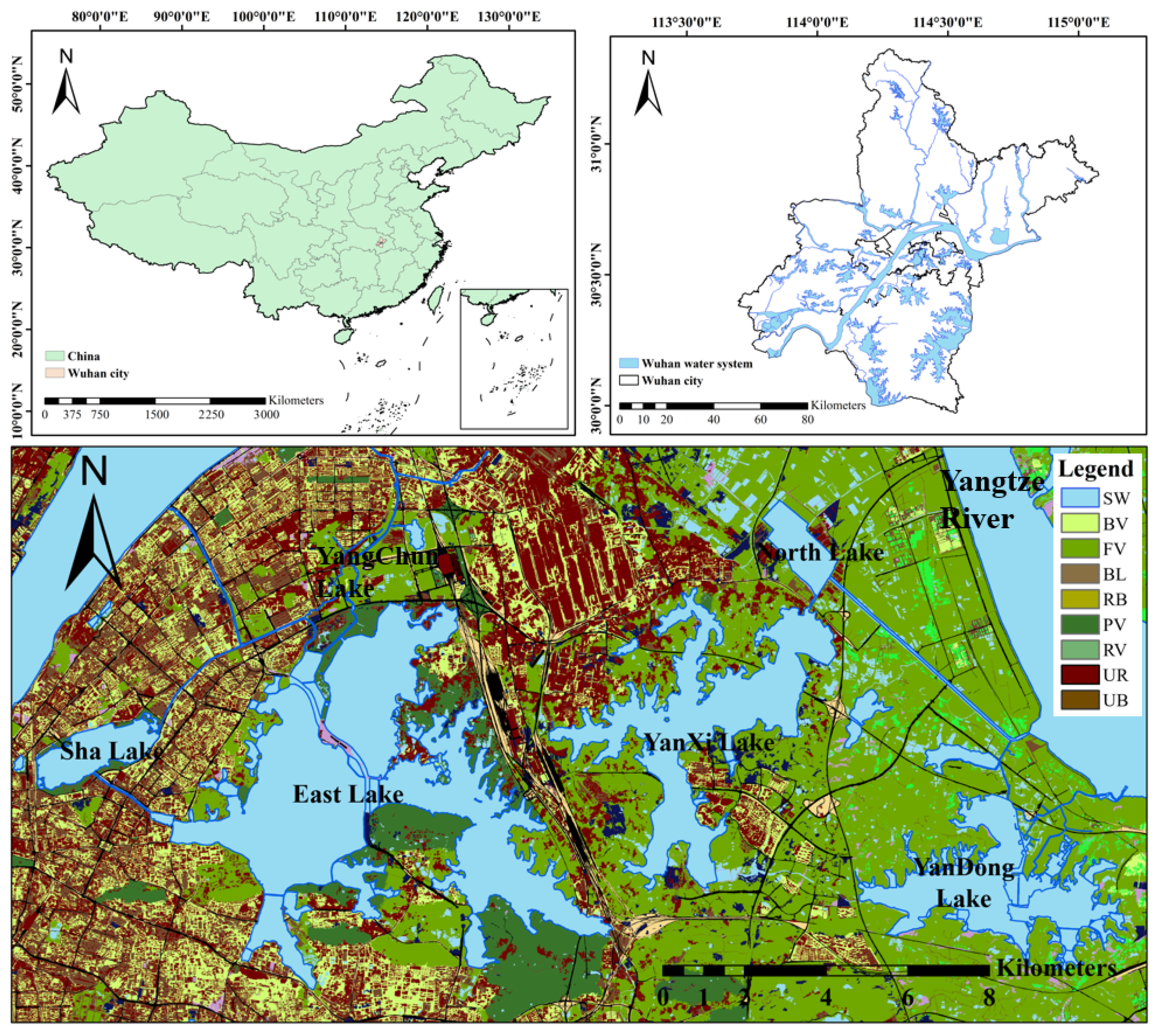
Figure 1. Map of the six urban lakes in Wuhan City, with land use types indicated by color-coded legends: Surface water (SW), forest vegetation (FV), building vegetation (BV), park vegetation (PV), road vegetation (RV), urban buildings (UB), rural buildings (RB), urban roads (UR, including roads and sidewalks), and bare land (BL).
Water 18 00153 g001
Figure 2. Inter-annual temporal variation in pollutant concentrations (COD, TP, TN, NH3-N and Chl-a) and WQI results in urban lakes from 2017 to 2023.
Water 18 00153 g002
Figure 3. Seasonal comparison of WQI values for each urban lake for the dry season (January) and rainy season (July). The seven bars within each lake group correspond chronologically to the years 2017 (left) through 2023 (right).
Water 18 00153 g003
Figure 4. Spearman correlation analysis of water quality factors based on monthly monitoring data (2017–2023) in urban lakes (a) EL, (b) SL, (c) YCL, (d) NL, (e) YEL, (f) YWL. Significant correlations are denoted using “**” for p < 0.01 and “*” for p < 0.05.
Water 18 00153 g004
Figure 5. The RDA result of land use types and water quality parameters. (a) Sampling point map, (b) The top three interpretable parameters, (c,d) RDA results for summer and winter.
Water 18 00153 g005
Table 1. The normalized values and weights of water quality parameters (COD, TP, TN, NH3-N and Chl-a) used in the WQI calculation in this study.
ParamaterWeight100, I80, II60, III40, IV20, V0, Worse Than V
COD (mg/L)3<15<18<20<30<40≥40
TP (mg/L)1<0.02<0.1<0.2<0.3<0.4≥0.4
TN (mg/L)2<0.2<0.5<1.0<1.5<2.0≥2.0
NH3-N (mg/L)3<0.15<0.5<1<1.5<2≥2.0
Chl-a (μg/L)3<1<10<15<40<50≥50
Table 2. Percentage of land use types within a 500 m buffer zone of urban lakes.
LakesFRBVPVRVUBRBURBLIS
EL21.68%11.17%29.71%2.91%15.13%0.00%15.04%4.37%30.17%
SL3.34%16.38%16.66%5.99%16.39%0.00%39.08%2.16%55.48%
YCL50.31%4.92%2.91%8.84%9.22%0.00%22.13%1.67%31.35%
NL65.06%0.07%0.00%0.79%12.58%0.20%12.31%8.99%25.09%
YEL84.03%1.00%0.00%0.16%0.11%4.15%2.49%8.06%6.75%
YWL65.89%3.54%0.51%0.73%16.24%0.19%7.01%5.90%23.44%
Disclaimer/Publisher’s Note: The statements, opinions and data contained in all publications are solely those of the individual author(s) and contributor(s) and not of MDPI and/or the editor(s). MDPI and/or the editor(s) disclaim responsibility for any injury to people or property resulting from any ideas, methods, instructions or products referred to in the content.