


Abstract
Planktothrix species are among the most widespread bloom-forming cyanobacteria in freshwater ecosystems and are of particular concern because of their ability to produce cyanotoxins and form persistent harmful algal blooms (HABs). Among them, Planktothrix agardhii and Planktothrix rubescens are the most extensively studied species and are responsible for a large proportion of bloom events reported in European lakes. This review synthesizes current knowledge on the taxonomy, ecophysiology, toxin production, environmental drivers, species interactions, and management of Planktothrix blooms, with a particular focus on European freshwater ecosystems. The available evidence highlights marked ecological differences between the two dominant species. P. agardhii is primarily associated with shallow, eutrophic, and well-mixed lakes, whereas P. rubescens is typically found in deep, stratified, and relatively transparent water bodies, where it forms persistent metalimnetic populations. These contrasting ecological strategies influence bloom development, toxin dynamics, detection, and management. Nutrient availability, light climate, temperature, water column stability, and biological interactions all contribute to bloom establishment and persistence, while climate change is expected to further modify bloom frequency, duration, and geographic distribution. The review also examines current monitoring and mitigation approaches, highlighting the limitations of conventional surface-based surveys for detecting deep P. rubescens populations and emphasizing the need for integrated monitoring strategies combining depth-resolved sampling, molecular tools, and toxin analyses. Overall, understanding the ecological and physiological diversity of Planktothrix species is essential for improving risk assessment, developing effective management measures, and mitigating the impacts of cyanobacterial blooms in European freshwaters.
1. Introduction
Cyanobacteria, commonly referred to as blue-green algae, are widely recognized for their role in transforming Earth’s early atmosphere through the evolution of oxygenic photosynthesis. This process not only led to the accumulation of atmospheric oxygen but also drove major oxidation events in Earth’s history, fostering the evolution of eukaryotes [1,2]. These organisms, present on Earth for approximately 3.5 billion years [3], are important components of aquatic and terrestrial ecosystems, where they play two main roles: primary producers (carbon fixation) and nitrogen fixers (N2 fixation).
In nutrient-enriched waters (eutrophic conditions), several cyanobacterial species can proliferate rapidly, forming large populations that may eventually lead to algal blooms (ABs). Under these conditions, they can produce a variety of toxins and other bioactive compounds, leading to harmful algal blooms (HABs) that are detrimental to aquatic and terrestrial life and may also pose risks to human health [4,5,6]. Numerous cyanobacterial HABs have been documented worldwide [7,8,9,10,11,12].
Planktothrix is a well-known cyanobacterial genus with a worldwide distribution that comprises some common species that form HABs (Figure 1, Table S1).
Figure 1.
Global occurrence of Planktothrix spp. (see Table S1 for details; [13,14,15,16,17,18,19,20,21,22,23,24,25,26,27,28,29,30,31,32,33,34,35,36,37,38,39,40,41,42,43,44,45,46,47,48,49,50,51,52,53,54,55,56,57,58,59,60,61,62,63,64,65,66,67,68,69,70,71,72,73,74,75,76,77,78,79,80,81,82,83,84,85,86,87,88,89,90,91,92,93,94,95,96,97,98,99,100,101,102,103,104,105,106,107,108,109]). Figure was generated using QGIS v.3.32.1-Lima [110].
These HAB species were recorded across a wide range of freshwater environments in oligotrophic [111], mesotrophic [53,112,113,114,115,116,117,118,119,120,121], eutrophic [112,114,122,123,124,125,126,127,128,129,130], and hypertrophic conditions [126,131,132,133]. In addition, Churro et al. [134] reported the presence of Planktothrix agardhii, a common HAB species, in Portuguese coastal marine waters near a river outfall, suggesting a possible transfer from freshwater to marine habitats. As this remains the only reported occurrence of these cyanobacteria in seawater, the ability of Planktothrix strains to persist and eventually form blooms in marine environments remains uncertain.
Bloom-forming Planktothrix species are capable of producing a diverse array of bioactive compounds, including microcystins (MCs), anatoxins (ATXs), anabaenopeptins (APTs), aeruginosins, cyanopeptolins, oscillamides, and other minor oligopeptidic compounds [7,135].
Within the genus, P. agardhii and P. rubescens are among the most widespread and well-characterized bloom-forming species. Their blooms have been documented globally over the past decades. However, additional species have increasingly been associated with blooms in recent years, including P. isothrix, P. serta, and P. spiroides [7,53,99].
In particular, P. rubescens blooms have been regularly documented in deep lakes with thermal stratification [113]. It has been reported from Europe [122,124], North America [136] and New Zealand [137], while only a few records regard its presence in tropical and subtropical regions [42,92]. On the other hand, P. agardhii has been frequently reported in shallow lakes, especially in the northern hemisphere [49], whereas its occurrence is less common in southern parts of America, Australia [138], as well as in the temperate region of New Zealand [137]. In Europe, after Microcystis spp., P. agardhii and P. rubescens are among the main species responsible for HABs [139].
With the ongoing rise in global temperatures driven by climate change, together with increasing anthropogenic pressures on aquatic ecosystems, the occurrence, frequency, and intensity of Planktothrix spp. blooms and, in general, of HABs are expected to change and exhibit increasingly complex patterns across lakes worldwide [120]. These changes pose growing risks to water quality, aquatic ecosystems, drinking water supply, recreational use, and fisheries [7,140]. Humans may be exposed to the detrimental effects of HABs through direct contact with contaminated water or through the consumption of contaminated drinking water and food [141].
Understanding the ecological dynamics and environmental drivers of Planktothrix spp. proliferation is therefore essential for the development of effective monitoring and mitigation strategies aimed at safeguarding water resources.
In this context, the present review provides a comprehensive overview of the species included in the genus, together with a synthesis of the occurrence and dynamics of Planktothrix blooms. Key aspects are addressed, including biological traits, ecophysiological adaptations, toxin production, and microbial communities associated with Planktothrix blooms. In addition, the review examines the determinants of bloom formation, the impacts of HABs on aquatic organisms, and the potential influence of climate change.
Special attention is given to P. agardhii and P. rubescens in European lakes, where the highest number of bloom events has been reported worldwide. For these species, the review discusses their European distribution, the physicochemical and biological factors influencing bloom formation, current challenges in bloom management, and the strategies implemented to mitigate bloom impacts.
2. Planktothrix Species Characteristics and Adaptations
2.1. Taxonomic Framework and Morphological Traits
Species of the genus Planktothrix have undergone some taxonomic revisions over the past decades. They were initially classified under the genus Oscillatoria due to their growth in solitary trichomes lacking sheaths, heterocysts, and akinetes [142]. In 1988, Anagnostidis and Komárek [143] established the genus Planktothrix, with Planktothrix agardhii (Syn, Oscillatoria agardhii) (Gomont) Anagnostidis & Komárek 1988 as the type species to accommodate taxa distinguished by specific ultrastructural and ecological traits [40]. The taxonomic separation of Planktothrix from Oscillatoria was later supported and corroborated by phylogenetic analyses based on 16S rDNA [49,144,145].
The genus Planktothrix includes filamentous cyanobacteria with cylindrical cells that are slightly shorter than wide [143]. The cells produce gas vesicles (GaVs) to regulate buoyancy [81,146]. The trichomes are often single, free-floating, straight, or slightly curved, and vary in length up to 4 mm. Typically, the trichomes have tapering ends, with or without the presence of thick cap-like structures known as calyptra [47,49,81,97,147].
Currently, the genus Planktothrix includes 24 species. Among them, 21 species are validly named according to the International Code of Botanical Nomenclature (ICBN) and the International Code of Nomenclature of Prokaryotes (ICNP), whereas 3 species are not validly published and currently hold the status of preferred names (i.e., names that are not officially recognized; https://lpsn.dsmz.de/genus/planktothrix, accessed on 25 May 2026) [148]. The number of lineages within the genus was also confirmed by polyphasic analyses that combined genetic, physiological, and morphological data [49,81,97,149].
The description of Planktothrix species is provided in Table 1.
Table 1.
Planktothrix species. For each species, name, basionym, name status, morphology and physiology, toxins, and habitat are provided with reference literature.
2.2. Ecological and Physiological Traits
Members of the genus Planktothrix are generally recognized as non-diazotrophic cyanobacteria, lacking the ability to fix nitrogen [104,167,168]. Nitrogen fixation appears to be a rare functional trait within this genus, with only two benthic strains reported as exceptions: P. tepida PCC 9214 and P. serta PCC 8927. Genomic analyses of these strains identified a complete nitrogenase (nif) gene cluster. However, growth experiments under nitrogen-depleted conditions showed nitrogen fixation only in P. serta PCC 8927 [146].
Thus, almost all Planktothrix species, like other phytoplanktonic organisms, rely on the availability of nitrogen, typically in the forms of NO2− and NO3−, to sustain their growth. Notably, Planktothrix spp. synthesize cyanophycin granules (intracellular N-storage polymers), allowing them to face fluctuations in nitrogen availability and maintain cellular homeostasis under N-limited conditions [169]. Moreover, these species have been shown to outperform other cyanobacteria, exhibiting growth rates up to three to four times higher even under relatively low phosphorus (P) availability. This competitive advantage is largely attributed to their ability to store phosphorus as intracellular phosphate reserves [170].
Planktothrix species are characterized by specific physiological adaptations that allow them to survive in diverse aquatic habitats. For example, differences have been observed in the strength of gas vesicles (GaVs), cytoplasmic structures involved in regulating buoyancy within the water column. Hydrostatic pressure increases with depth and directly affects GaV stability. Studies have shown that strains possessing stronger gas vesicles (GaVs), such as P. rubescens, are able to persist in deeper lake layers (the metalimnion), where water pressure is higher than at the surface [171].
Walsby et al. [172] developed a model to predict P. rubescens surface blooms, also known as the “burgundy blood” phenomenon. In general, filaments’ buoyancy becomes neutral at a specific water depth in relation to light availability, water temperature, water column stability and nutritional levels [173]. As suggested by the model, in spring and summer, due to thermal stratification and increased light availability, the neutral buoyancy layer of P. rubescens is deeper than the mixing depth, resulting in cyanobacterial filament stratification in the metalimnion. In autumn, the light penetrates more shallowly into the water column, seasonal thermal stratification disappears, and the mixing water depth increases, distributing P. rubescens trichomes over a greater vertical range. Under these conditions, trichomes are placed in the mixed layer. However, if light levels within this layer remain relatively high (when the euphotic and the mixing depths are similar), filaments can sink during calm periods, and blooms will be prevented. For further increases in mixing depth, the filaments experiencing lower light conditions will increase their buoyancy. When low light levels drop to a critical threshold, their buoyancy increases sufficiently to allow them to rise and migrate to the surface where they can cause a bloom [172].
Some species of Planktothrix exhibit a different arrangement in their light-harvesting systems, enabling them to dominate environments with distinct light conditions [7,174]. For example, P. rubescens typically dominates in deeper, low-light, and cooler metalimnetic layers, utilizing phycoerythrin pigments (PE) that efficiently capture green light (~600 nm), while P. agardhii thrives in shallower, higher-light environments using phycocyanin pigments (PC) that absorb red light. These pigment differences enable both species to optimize the energy resources and sustain growth under different light regimes and niches. Nevertheless, coexistence of Planktothrix strains with PE- and PC-dominance in the same water body is not well documented. In general, PE strains outnumber PC strains in stratified deep lakes [7,175]. Moreover, several Planktothrix species have been shown to survive under low-light conditions [7,176].
Temperature is also an important ecophysiological factor for Planktothrix species. Comparative and experimental studies on the two best-investigated species, P. rubescens and P. agardhii, indicate that temperature can influence their occurrence, growth performance, and competitive interactions, with P. rubescens being favored under cooler conditions and P. agardhii under warmer conditions [177,178,179] (see Section Water Temperature for a detailed discussion).
For most other Planktothrix species, information on temperature preferences remains fragmentary and suggests a broad thermal tolerance in some taxa. For example, strains of P. mougeotii have been reported from cool lower-euphotic layers with temperatures of approximately 10–12 °C, as well as from tropical Amazonian rivers where water temperatures ranged from 28.7 to 29.3 °C [180,181]. These observations indicate a considerable degree of eurythermy within the species.
In natural ecosystems, temperature, like other environmental factors, can act as a limiting factor. However, its influence does not operate independently but is mediated by interactions with irradiance, water column stability, nutrient availability, buoyancy regulation, and biotic interactions [171,172,173,178,179].
In aquatic ecosystems, Planktothrix spp. are exposed to various ecological pressures, primarily competition from other phytoplankton species and predation by zooplankton and/or grazers. To cope with these challenges, Planktothrix species have evolved multiple strategies that ensure their persistence and, ultimately, dominance. For instance, to reduce competition, the species of Planktothrix produce a diverse array of bioactive compounds, including toxins such as microcystins, anatoxins, anabaenopeptins, aeruginosins, cyanopeptolins, and oscillamides (Table 1).
These toxins not only inhibit the growth of competing phytoplankton but also serve as chemical defenses against potential grazers [182,183,184,185]. In addition, Planktothrix spp. exhibit several other adaptations that reduce their susceptibility to zooplankton grazing. A key adaptation is their deficiency in essential lipids, particularly sterols, which lowers their nutritional value to zooplankton and makes them a less attractive food source for grazers [186]. Additionally, the filamentous morphology of Planktothrix makes it less palatable and more difficult for smaller zooplankton to consume [177,187].
3. Drivers of Planktothrix Blooms and Toxin Production
3.1. Factors Allowing the Dispersal of Planktothrix spp.
The dispersion of Planktothrix is facilitated by different factors, such as wind, water currents, presence of reservoirs/dams, wildlife, hydrological connections, and human activities (Figure 2) [7,53,99,120,134,172,188,189,190,191,192,193,194,195,196,197,198].
Figure 2.
Potential pathways for the dispersal of Planktothrix in aquatic systems. Red arrows indicate possible dispersal routes of Planktothrix; yellow arrows represent water inflow from uncontaminated water bodies; orange arrows denote mixing processes that can transport Planktothrix from contaminated areas to previously unaffected zones. The image was self-designed, with some silhouettes obtained from Creazilla under a Creative Commons Attribution license.
The wind-driven currents and wave action can disperse cyanobacterial filaments both vertically and horizontally throughout the water body, altering their spatial distribution and potentially transporting populations to new areas [195]. These hydrodynamic processes are also important in the establishment, maintenance, and termination of algal blooms, as discussed in the following section.
Also, reservoirs can significantly function as a source of Planktothrix inoculum. In Sandusky Bay (USA), for instance, the removal of the upstream Ballville Dam in 2018 was followed by the disappearance of P. agardhii blooms, associated with high MC concentrations, that had persisted since 2003. After dam removal, cyanobacterial community composition shifted markedly, with a substantial decline in Planktothrix populations [197]. Climate change can exacerbate the conditions that favor HAB persistence in reservoirs and dams, particularly through reduced water flushing [197].
Hydrological connections between rivers and lakes, together with environmental changes, further facilitate the dispersal and establishment of Planktothrix strains. The cells transported from rivers into lakes can colonize new areas. For example, in Germany, P. rubescens, initially established in Mindelsee Lake, later emerged into the nearby Lake Constance, probably due to water flow between the interconnected lakes [53].
In addition to these factors, migratory birds and other wildlife may contribute to the spread of Planktothrix to new habitats through epizoochory [189,190]. Recently, Diez-Chiappe et al. [99] suggested that P. spiroides, typically found in tropical and subtropical regions (e.g., Asia and Mexico), may have reached southern Europe (some Spanish reservoirs) by annual bird migration. In addition, recreational activities like boating and fishing can indirectly transport Planktothrix via equipment or ballast, further expanding their habitats [134,193].
3.2. Establishment and Blooming of Planktothrix spp.
Several factors can contribute to the establishment, persistence, and bloom formation of Planktothrix species; among them, the most important are climatic conditions including wind and water turbulence and nutrient availability.
Calm wind conditions, together with stable thermal stratification, generally promote the formation of surface blooms of some Planktothrix species [7]. In contrast, stronger winds generate turbulence that enhances the cells’ dispersion and prevents surface bloom formation [7,120,196]. When a surface bloom is already established, increasing wind intensity can further spread the cells over a wider area, leading to a more uniform distribution across the water body [172,192]. This process may also affect interactions between Planktothrix and its parasites, thereby further influencing population dynamics. For example, in Grand Lake (USA), higher rates of chytrid infection, common parasites of Planktothrix, were observed under calm, stagnant conditions, whereas infection levels decreased significantly under turbulent conditions [196]. These findings suggest that hydrodynamic conditions can modulate host–parasite interactions and, consequently, influence the development, persistence, and decline of Planktothrix populations.
Temperature can directly influence the growth of Planktothrix species, reflecting species-specific ecological traits and adaptations. Warm conditions appear to favor certain species, such as P. spiroides [199] and P. perornata [200]. Similarly, P. agardhii is generally associated with relatively warm temperatures, although exceptions have been reported, as discussed below [201,202]. Conversely, other species are associated with cooler waters, as observed for P. rubescens, which is common in the metalimnetic waters of several stratified lakes [113,123,203], and P. isothrix, which forms dense metalimnetic deep chlorophyll layers [57]. In addition, P. rubescens, P. agardhii, and P. prolifica have also been reported under ice [204,205,206].
Blooms are typically seasonal in most Planktothrix species, although their timing and dynamics vary considerably among species and water bodies. In some species, blooms occur during the spring–summer transition, as reported for P. mougeotii in Esthwaite Water [180] and for P. prolifica in Summit Lake, where it reached an early-spring biovolume peak of 63.4 mm3 L−1 in May 1977 [207]. In contrast, other species develop blooms during summer or autumn, as observed for P. agardhii in Lake Verevi, where biomass reached 37.7 g m−3 in the metalimnion in July 2000 [132], and for P. isothrix in Georgian Bay embayments, where concentrations reached 0.6 mg L−1 at 9.5 m depth in Twelve Mile Bay and 3.5 mg L−1 at 7.5 m depth in South Bay in 2015 [57]. In Swedish lakes, P. prolifica has been reported to develop in surface waters during winter and to form conspicuous reddish under-ice blooms; during summer stratification, it shifts downward and establishes in the metalimnion [204,208]. An under-ice winter bloom of P. rubescens has also been documented in Lake Krasne (Poland) [205]. Finally, Grosbois et al. [209] reported that Planktothrix was present at bloom-level concentrations throughout the year in Lake Fortune. Cell densities consistently exceeded the WHO guideline value for recreational waters (20,000 cells mL−1), reaching an annual maximum of 210,000 cells mL−1 in November [209].
Nutrients are an additional important driver in establishment and bloom formation. In general, high nutrient availability favors Planktothrix establishment, growth and blooms even if their relative importance differs among the species, i.e., P. rubescens is favored by oligotrophic conditions while P. agardhii by eutrophic ones. Nutrient input can derive from runoff or sediment resuspension. In general, it must be observed that human activities also play a major role in promoting eutrophic conditions. Intensive agriculture, urban wastewater and industrial discharges introduce large quantities of nutrients (N and P) into the water column [192,194]. In addition, land-use changes such as deforestation and urbanization alter water cycles (e.g., increasing runoff) and enhance nutrient transport into aquatic systems. This has been observed in Chinese reservoirs, where the conversion of natural vegetation to cropland and large-scale building construction exacerbated algal blooms [198].
However, considering the factors influencing the establishment and development of Planktothrix blooms, some differences can be identified compared with other toxigenic cyanobacteria. For instance, P. rubescens exhibits ecological preferences that differ markedly from those of other bloom-forming cyanobacteria, such as Microcystis. While Microcystis is typically favored by warm, stable surface waters and often forms buoyant colonies that accumulate as surface scums [210], P. rubescens thrives in deep, stratified, and relatively transparent lakes, where it can develop dense populations within the metalimnion rather than at the water surface. This distribution is facilitated by specialized physiological traits, including phycoerythrin-rich phycobilisomes that enhance the utilization of low-intensity green light and robust gas vesicles (GaVs) that allow the maintenance of buoyancy and stable positioning within deep layers of the water column [173,177].
Temperature may also represent an important differentiating factor. Relatively low growth rates at temperatures above 30 °C have been reported for P. agardhii and P. rubescens, whereas other common toxigenic cyanobacteria, such as Microcystis spp. and Raphidiopsis raciborskii, generally exhibit higher temperature optima. These species are strongly associated with bloom development in warm waters, and R. raciborskii has notably expanded from tropical and subtropical regions into temperate freshwater ecosystems [49,177,210,211].
A further major difference concerns nitrogen acquisition strategies. Most Planktothrix spp., particularly planktonic bloom-forming representatives, are non-diazotrophic (see Section 2.2) and therefore lack the ability to fix atmospheric nitrogen. Consequently, unlike heterocyst-forming cyanobacteria such as Aphanizomenon, Raphidiopsis/Cylindrospermopsis, Dolichospermum/Anabaena, and several Nostoc taxa, Planktothrix may be at a competitive disadvantage under nitrogen-depleted conditions [212]. Consequently, the availability of dissolved inorganic nitrogen may influence the establishment, persistence and bloom development of Planktothrix spp. For example, in stratified lakes, P. rubescens depends on inorganic nitrogen sources, and increased N:P ratios have been proposed as one factor contributing to its success in metalimnetic habitats [187].
The establishment and proliferation of Planktothrix spp. in freshwater ecosystems are influenced by their physiological adaptations to the varying environmental conditions. The physiological adaptations of some species, such as buoyancy regulation via gas vesicles (GaVs), tolerance to low light and temperature, and effective nutrient acquisition under limiting conditions, allow it to thrive in diverse aquatic habitats [7,213]. Considering the contribution of the various species (Table 1), the whole genus encompasses a broader ecological and physiological diversity [7].
Once established, many Planktothrix strains can produce toxins that provide allelopathic advantages by inhibiting competitors and grazers, thereby enhancing their competitive dominance [7,214].
3.3. Toxins Produced by Planktothrix spp.
Members of Planktothrix are known to produce a large variety of toxins and other bioactive compounds (Table 1), which can strongly interfere with freshwater ecosystems and pose risks to human health. This includes MCs, ATXs, APTs, aeruginosins, cyanopeptolins, oscillamides, and other oligopeptides [7,135].
Microcystins—Among all different toxins, MCs are the most studied compounds, particularly in relation to Planktothrix blooms [7,53]. These are cyclic heptapeptides, potent hepatotoxins, which can inhibit the eukaryotic protein phosphatases 1 and 2A [53]. These toxins can bioaccumulate in aquatic organisms and, along the food chain, from phytoplankton to humans, can pose risks at all levels [127,215]. MCs exhibit structural variability due to differences in their amino-acid composition, particularly at positions 2 and 4 of the peptide ring. These variations, known as MC congeners, display a wide range of toxicities [53,151,216].
- MC-LR and [Asp3]MC-RR: these variants were often detected in Mindelsee Lake, with [Asp3]MC-RR associated with P. agardhii blooms [53].
- [d-Asp3]MC-ER and [d-Asp3]MC-EE: newly identified variants from P. prolifica, containing glutamic acid at variable positions [156].
- [d-Asp3] and [d-Asp3, dhb7]MC-RR: found in Bourget Lake, with consistent production across different environmental conditions [217].
- [d-Asp3]MC-RW, [d-Asp3]MC-LR, [d-Asp3]MC-RF, [d-Asp3, Mser7]MC-RR, [d-Asp3]MC-RR–glutathione conjugate, [d-Asp3]MC-RY, and [d-Asp3]MC-RCit: additional variants identified in P. prolifica [156].
Anatoxin-a—ATXs are small, amine alkaloid molecules (MW = 166 g/mol) known for their neurotoxic effects [163]. They act as agonists of nicotinic acetylcholine receptors that can induce severe neurological damage in aquatic organisms. Over the past decades, these compounds have been detected in various freshwater environments, including Syczyńskie Lake in Poland and fishing ponds in northern Italy [163,218]. ATXs are closely associated with blooms of P. rubescens, during which their production and accumulation are markedly enhanced [163].
Anabaenopeptins—These are cyclic tetrapeptides with one ureido group, known to inhibit carboxypeptidases and other enzymes, potentially affecting protein metabolism. Their role as a chemical defender against grazers has also been demonstrated [57,165]. APTs with diverse structures and biological activities have often been found during the Planktothrix blooms. It was seen that APT-A and B produced by P. rubescens during the blooms varied in concentration depending on the environmental conditions. It has been shown that these compounds do not display significant toxicity when used at environmentally relevant doses in in vitro tests, with APT-A displaying some stimulating effects on the Chlorophyceae Raphidocelis subcapitata [57,165].
Aeruginosins—Aeruginosins are structurally variable tetrapeptides that can inhibit the serine protease family of the organisms [219]. Although most aeruginosin variants have been reported from diverse bloom-forming genera such as Microcystis and Nodularia, additional analogs have also been identified in Planktothrix spp. Aeruginosin 828A, isolated from a microcystin-deficient Planktothrix strain, has shown potential thrombin and trypsin enzyme inhibition [185]. Some studies have demonstrated the toxicity of aeruginosins toward predators and competitors [220]. In addition, Aeruginosin 828A exhibited strong toxicity in acute bioassays with the crustacean Thamnocephalus platyurus, producing effects that were slightly greater than those observed for MCs [185].
Cyanopeptolins—This is another group of cyclic peptides with a thiazoline ring, and they are also known for their role in chemical defense to inhibit metabolic enzymes, especially serine proteases. These molecules have been identified in various freshwater ecosystems and show varying structures, with over 20 variants detected in Planktothrix strains [57,221]. Some variants are known to be acutely toxic to aquatic organisms, such as crustaceans. Recently, these compounds have also attracted the attention of the pharmaceutical industry as potential candidates for the treatment of metabolic disorders and other diseases [222]. For example, Konkel et al. [223] reported their anticancer effects against HeLa cells.
Oscillamide Y—These are cyclic peptides having a lipophilic side chain often associated with P. rubescens blooms. Oscillamide Y has been proven to be harmful to multiple aquatic model organisms. For example, laboratory tests demonstrated that they partially inhibited the luminescence in the bacterium Aliivibrio fischeri, reduced the mobility of Daphnia magna, and significantly inhibited the growth of the algae Scenedesmus obliquus and R. subcapitata, suggesting their potential toxicity to these organisms [165].
Saxitoxin (STX) production has also been reported in Planktothrix spp. [224]. However, the evidence supporting this association remains limited and unconfirmed. The principal report originated from a bloom in Lake Varese dominated by strain FP1, in which STX was detected in environmental samples [225]. This finding was partially supported by laboratory analyses of the same isolate, which revealed the production of STX-like compounds and related paralytic shellfish toxins (PSTs) [226]. Nevertheless, subsequent sequence-based analyses reassigned strain FP1 to a lineage more closely related to Limnothrix than to Planktothrix [227,228]. Consequently, the proposed association between STX production and Planktothrix is currently considered insufficiently supported.
Besides these toxins, some Planktothrix species produce diverse bioactive oligopeptides, including aeruginosin 205A, agardhipeptin A, APT-G, microginin T1, microviridin D, oscillapeptin J, oscillatorin, planktocyclin, prenylagaramide A, and others [7,164,185,219,229,230,231,232,233,234,235,236,237,238,239]. Most of these peptides have diverse structural variations and biological activities [7].
The chemical structures of some of these toxins are shown in Figure 3; for peptide toxins, the specific inhibitory enzyme targets are presented in Figure 4.
Figure 3.
Chemical structures of toxins and bioactive peptides produced by some Planktothrix species. The 2D structures were generated via Ketcher 3.12.0 (EPAM, Newtown, PA, USA) using the data records obtained from the PubChem database (https://pubchem.ncbi.nlm.nih.gov/).
Figure 4.
Bioactive peptides produced by some Planktothrix species and their specific enzyme inhibitory targets [7,164,185,219,229,230,231,232,233,234,235,236,237,238,239]. Figure was generated using OriginPro 2026 v.10.3 (OriginLab Corporation, Northampton, MA, USA).
During blooms, cyanotoxins may reach very high concentrations, leading to several cases of human intoxication, animal mortalities, and ecological impairment [4,240]. While severe effects are rare, both acute and chronic exposures have been associated with some health issues in aquatic and terrestrial life, including humans [240,241]. Exposure can occur directly through the consumption of contaminated water or through recreational activities due to accidental ingestion of contaminated water, dermal contact, or inhalation of toxin-containing aerosols. Exposure can also occur indirectly through the consumption of contaminated freshwater organisms or dietary supplements. In addition, a less common route of exposure has been reported in association with medical procedures such as hemodialysis [4,242,243].
Reported human health effects range from mild and self-limiting symptoms, such as skin and eye irritation and gastrointestinal (e.g., nausea, vomiting, and gastroenteritis) and respiratory disorders, to more severe outcomes, including pneumonia, hepatotoxicity, and neurological diseases, occasionally requiring hospitalization [4,241]. The nature and severity of these effects depend on the toxins involved, the exposure route, and individual susceptibility. In the case of Planktothrix, the toxicological risk is primarily associated with microcystins (MCs) and, to a lesser extent, anatoxin-a (ATX). In general, microcystins induce DNA damage and impair antioxidant and detoxification pathways. These effects can lead to tissue damage in organs such as the liver, intestines, and gills in fish. Anatoxin-a, by contrast, is a potent neurotoxin that has been associated with developmental and genotoxic effects [4,224,244]. More detailed information about epidemiological studies related to cyanotoxins was reviewed in the literature [4,242,243].
The concentrations at which adverse effects occur are highly variable and toxin-dependent; the guidelines for drinking and recreational water use were defined by the World Health Organization (WHO) in 2003/2004 [245,246]. The WHO established the alert level values of 1.0 μg/L and 3.0 μg/L for microcystin-LR and anatoxins, respectively, in drinking water, whereas recreational exposure is assessed through cyanobacterial cell density with a threshold of 20.000 cyanobacterial cells/mL [245,246,247].
However, for most cyanobacterial metabolites, including those produced by Planktothrix, international toxicological thresholds were not established.
Determinants of Planktothrix Microcystin Production
Several studies have shown that toxic Planktothrix populations are among the most important MC producers, making MC production a primary concern during Planktothrix blooms [161,162,248,249,250,251,252]. MC production associated with Planktothrix blooms is mainly controlled by genetic, environmental, and ecological factors [7,253,254].
In Planktothrix species, the mcy gene cluster involved in MC synthesis is composed of nine genes, encoding non-ribosomal peptide synthetases (NRPS), polyketide synthases (PKS) and tailoring enzymes (Figure 5) [7,255].
Figure 5.
Schematic overview of the mcy gene cluster responsible for microcystin biosynthesis in Planktothrix. The cluster organization was redrawn from the MIBiG repository (Accession: BGC0001015) [255] and adapted for illustration purposes.
Genetic factors, such as presence, integrity, and expression of the mcy gene cluster, determine the potential for MC production of the Planktothrix strains. Evolutionary analyses have identified two major phylogenetic lineages within Planktothrix. Lineage 1 comprises strains having the complete mcy gene cluster and is therefore capable of producing microcystins. In contrast, lineage 2 forms a distinct monophyletic group largely characterized by the complete loss of the mcy gene cluster, indicating a permanent loss of microcystin biosynthetic capability in most of its representatives. However, some strains within lineage 2 retain the mcy gene cluster, suggesting that the presence or absence of microcystin biosynthetic potential is not strictly congruent with phylogenetic divergence [157,256]. Moreover, in lineage 2, even within the same Planktothrix species, different genotypes of the mcy gene cluster have been identified. Some strains retain a complete and functional mcy gene cluster, enabling MC biosynthesis, whereas others are MC non-producers due to mutations (primarily deletions or insertions) that disrupt gene function [115,257]. In addition, microcystin diversity within a given environment has been shown to reflect fluctuations in Planktothrix population composition, with different genotypes producing distinct profiles of MC variants [252]. This genetic variability directly affects the level and diversity of MC production. Consequently, the overall toxicity of a bloom is determined by the collective contribution of all co-occurring Planktothrix variants, encompassing both microcystin-producing and non-producing cells, as well as distinct chemotypes [248,258,259,260].
The major mechanisms driving the loss of MC production in Planktothrix spp. are the insertion of the mobile element ISPlr1 and/or partial deletions in biosynthetic regions of the mcy gene cluster (such as mcyD, mcyH or mycA). These in/del mutations contribute to the coexistence of toxic and non-toxic populations, commonly observed within species of this genus [261]. ISPlr1 insertion occurs both within coding regions, such as mcyD and mcyA, and in intergenic spacers, particularly between mcyE and mcyG [158,261]. Insertions occurring in non-coding regions are generally considered neutral mutations, as they do not disrupt gene function. Notably, ISPlr1 is more frequently found in the mcyE–mcyG intergenic spacer than within coding sequences, likely due to its affinity for repetitive extragenic palindromic (REP) elements present in the mcy gene cluster. This distribution pattern suggests a potential selective pressure that may limit the emergence of non-toxic mutants within Planktothrix populations, as such mutants may face a survival disadvantage in the environment [261].
The mcy gene expression and MC synthesis are also highly responsive to environmental cues, including light intensity, temperature, and nutrient availability (especially nitrogen, being MCs N-rich metabolites) [217,262]. Rantala et al. [253], investigating the frequency and composition of potential MC producers by targeting the mcyE gene in 70 Finnish lakes, identified Planktothrix as the second most prevalent potential MC-producing genus, after Microcystis. The study revealed that the probability of detecting toxigenic Planktothrix genotypes (Planktothrix mcyE) was associated with specific physicochemical conditions, including higher pHs, larger lake surface areas, and moderate nitrogen concentrations. The authors observed a non-linear relationship between Planktothrix mcyE and total nitrogen: the toxigenic Planktothrix genotype increased as nitrogen levels reached a certain threshold. It has been suggested that nitrogen levels above this threshold may reduce the occurrence of MC-producing Planktothrix strains, possibly as a result of community shifts or inhibitory effects on gene regulation. Furthermore, a positive correlation between light availability and Planktothrix mcyE occurrence indicated that they were more frequent in lakes with higher transparency, suggesting that light availability may play a role in supporting the toxigenic populations [253]. This observation aligns with experimental evidence indicating that light intensity influences both the qualitative and quantitative production of MCs. For instance, variations in irradiance have been shown to modulate the relative abundance of more toxic MC variants in P. agardhii, pointing to potential adaptive responses to photic conditions [263]. Chaffin et al. [264] carried out laboratory experiments using water samples from Sandusky Bay (Lake Erie, USA), a site affected by Planktothrix blooms, to evaluate the effects of light variation and nitrogen availability on MC production by Planktothrix. Light intensity influenced toxin production: microcystin (MC) production was observed under both moderate (30 µmol photons m−2 s−1) and high (300 µmol photons m−2 s−1) irradiance, with no substantial differences between these treatments. In contrast, under low light conditions (3 µmol photons m−2 s−1), MC concentrations remained similar to the initial baseline levels. These findings suggest that insufficient light limits MC production, likely reducing the availability of photosynthetic energy required for secondary metabolism. The enrichment experiments carried out using different nitrogen sources, phosphorus, and their combinations showed that all nitrogen amendments stimulated MC production, indicating that nitrogen availability is a limiting factor for MC biosynthesis. The total MC concentrations increased significantly in response to nitrogen enrichment, regardless of the chemical form supplied (nitrate, ammonium, or urea). However, no significant differences in MC levels were observed among the different nitrogen forms, indicating that Planktothrix can effectively use various nitrogen sources for MC production [264]. Briand et al. [217] investigated (through laboratory experiments) how different phosphate concentrations can affect the MC production by P. rubescens. The findings supported the hypothesis that phosphate concentrations do not directly influence MC production. Instead, they affect the growth rate of P. rubescens, which in turn impacts the toxin production [217]. Kokociński et al. [250] carried out a two-year investigation in Lake Lubosińskie, a shallow, polymictic, and highly eutrophic lake located in western Poland, to understand the dynamics of MC production by P. agardhii. The study revealed that in addition to ammonium concentrations and light availability, water temperature also significantly impacted MC production. While a positive relationship was observed between water temperature and total MC concentrations, the weight-specific MC content (i.e., µg of MC per mg of P. agardhii wet biomass) did not show the same trend. This indicates that, even if single cells produce less toxin at higher temperatures, the increased biomass during warm periods could result in higher total MC concentrations in the water. Therefore, it seems that the total MC levels in eutrophic systems are more influenced by the environmental conditions supporting toxic P. agardhii proliferation [250].
3.4. Microbial Communities Associated with Planktothrix Blooms
The microbial communities associated with Planktothrix blooms include bacteria, fungi, viruses, and other microorganisms, some of which have been shown to directly interact with Planktothrix. Some microbial communities associated with Planktothrix blooms and their interactions are reported below and schematically summarized in Figure 6.
Figure 6.
Schematic overview of the interaction between Planktothrix spp. and the other microorganisms. Figure was generated using ChatGPT-5.5.
3.4.1. Bacteria and Phytoplankton
Planktothrix blooms are often associated with specific bacterial communities, which can significantly vary depending on the environment. For example, in Lake Geneva (Switzerland), during P. rubescens blooming, the bacterioplankton community throughout the water column was consistently dominated by the phyla Proteobacteria, Actinobacteriota, Bacteroidota, Cyanobacteria, and Planctomycetota [265]. Some studies have also highlighted the potential influence of certain bacterial taxa on the resource utilization and toxin regulation of cyanobacterial blooms. For example, Horňák et al. [266] experimentally demonstrated that Limnohabitans sp. can benefit from the presence of stressed P. rubescens, suggesting an interaction where stressed cyanobacteria may provide resources supporting heterotrophic bacterial growth in natural aquatic environments.
Bourne et al. [267] identified the gene cluster (mlrA, mlrB, mlrC, mlrD) in Sphingomonas sp., which is responsible for the enzymatic degradation of the cyanobacterial toxin MC-LR. Similarly, Wang et al. [262] used a combined approach utilizing algicidal bacterial filtrate derived from Paenibacillus sp. SJ-73 and the MC-degrading enzyme mlrA to remove both Microcystis cells and MCs. This provided a promising biological control strategy for freshwater bloom management. Notably, this approach showed significant advantages over traditional chemical treatments, particularly in mitigating the risks of secondary contamination by chemicals [262]. However, there is currently no direct evidence linking Sphingomonas sp. and/or Paenibacillus sp. to MC degradation during Planktothrix blooms. Understanding the interactions between the bacteria and Planktothrix is crucial for determining whether bacterial communities play a significant role in controlling toxin levels in freshwater ecosystems dominated by Planktothrix blooms.
Some field observations indicate that Planktothrix blooms can affect bacterial abundance and diversity. For instance, in Lake Zurich, P. rubescens biomass was strongly and negatively correlated with heterotrophic bacterial biomass; in particular, a strong reduction was observed for Actinobacteria and Betaproteobacteria [268]. However, no direct toxicity or antagonistic effects were demonstrated, even if some experimental evidence seems to support antagonistic effects mediated by Planktothrix metabolites. Cyclic peptides isolated from a P. rubescens bloom, including planktopeptin BL1125, anabaenopeptin B and anabaenopeptin F, inhibited proliferation and induced lysis in several lysogenic Microcystis strains, triggering the virus-mediated lysis [269]. Additional laboratory evidence showed that cyanopeptide extracts from P. rubescens inhibited bacterial extracellular enzymes, including leucine aminopeptidase (from Aeromonas proteolytica) and alkaline phosphatase (from Escherichia coli), which are involved in bacterial nutrient acquisition. However, it should be noted that, as underlined by the authors, the inhibitory concentrations may exceed those typically expected during blooms. Although this experiment does not directly demonstrate inhibition of bacterial cell growth, it indicates that P. rubescens metabolites can impair relevant bacterial functions [270].
Phytoplankton species are involved in dynamic interactions that are influenced by multiple environmental factors. Experimental evidence indicates that Planktothrix competes with other phytoplankton taxa for resources, particularly light and nitrogen, and may also interfere with competing species through the release of extracellular compounds. The outcomes of these interactions are not fixed but depend on environmental conditions, the identity of the competing species, and the strains involved. Consequently, these interactions may contribute to shifts in phytoplankton dominance and succession patterns. Competition for light between P. agardhii and Microcystis aeruginosa has been investigated in chemostat experiments under light-limited conditions, revealing a strong dominance of M. aeruginosa. The authors attributed this outcome to the higher growth rates exhibited by Microcystis strains under light-limited conditions. These findings appear to contrast with the expected competitive superiority of P. agardhii at relatively low irradiance [271]. However, the outcome of such interactions may depend on the specific strains examined, highlighting the importance of intraspecific variability in determining competitive performance.
Nutritional nitrogen-dependent competition was experimentally evaluated between P. agardhii and Raphidiopsis raciborskii. P. agardhii prevailed at high nitrate concentration, whereas R. raciborskii outcompeted it when ammonium was supplied as the sole nitrogen source. Under ammonium or nitrate depletion, P. agardhii did not grow, whereas R. raciborskii maintained growth. In addition, no significant allelopathic effect was detected [272]. Direct evidence of allelopathic interference has been observed. Culture filtrate from a P. rubescens strain significantly inhibited two P. agardhii strains and also reduced the growth of the filamentous green alga Mougeotia gracillima. However, since boiling eliminated the inhibitory effect of filtrate, the authors concluded that the inhibitory substance was unlikely to be a microcystin (a heat-stable molecule) and suggested that it might be proteinaceous, although its chemical identity remained undetermined. In addition, filtrates from other P. rubescens strains did not inhibit the tested P. agardhii strain, indicating substantial strain-level variation in allelopathic activity [273].
Competition experiments involving P. agardhii, M. aeruginosa and the diatom Cyclotella meneghiniana further showed that the interactions varied according to the competing species and temperature. M. aeruginosa was the strongest competitor in mixed cultures at both tested temperatures (18 and 30 °C). In contrast, P. agardhii exhibited higher growth rates than C. meneghiniana in co-cultures at both temperatures. Experiments using culture filtrates revealed that M. aeruginosa inhibited P. agardhii at both temperatures. Nevertheless, the authors did not identify a single mechanism or compound responsible for the observed interactions [274].
Additional field observations indicate that dense Planktothrix rubescens populations can alter nutrient availability and thereby influence the entire phytoplankton community. In Lake Stechlin, a large P. rubescens population was recorded during 1997–1998, coinciding with a decline in spring diatom growth, reduced hypolimnetic development of Cyanobium, and low concentrations of inorganic nitrogen. These changes were attributed to the sequestration of a substantial proportion of the available nutrients within P. rubescens biomass, thereby limiting nutrient availability for other phytoplankton taxa and reducing their abundance [275].
3.4.2. Chytrids
A number of fungal taxa are associated with Planktothrix blooms. Among these, some parasitic chytrids are known for their ability to biocontrol the Planktothrix blooms by their unique infection strategy [196,276]. These microorganisms can become attached to the terminal part of the cyanobacterial trichome with their zoospores, thereby initiating cell lysis and filament fragmentation. As a result, the longer fragments get separated into shorter units that can be easily grazed by zooplankton [276]. Experimental studies have shown that chytrid zoospores actively swarm around the terminal part of the trichomes until one or more get attached. Thus, the fragmentation caused by the zoospores creates new terminal locations for attachment until the filament gets fully cleaved, suggesting an evolved mechanism for maximizing infection efficiency [276].
Studies have shown contradictory findings on the impact of chytrid infections on MC release. McKindles et al. [276] demonstrated that experimental infection by chytrids in laboratory conditions caused cell lysis in P. agardhii, resulting in a greater release of MC toxins relative to non-infected controls [276]. On the other hand, another study reported that the extracellular toxin release is comparatively lower during chytrid infection of P. agardhii [277]. In line with this, Wagner et al. [196] performed a mesocosm experiment allowing the infection of P. agardhii strains by Rhizophydium sp. and confirmed almost no detectable MC release with cell lysis, even during the high-infection phases.
The prevalence and efficiency of these infections are highly influenced by abiotic factors such as water temperature, water turbulence, light and ionic strength [178,196,276,278]. McKindles et al. [276] found that the optimal temperature for infection of P. agardhii by Rhizophidium sp. was around 21.7 °C. In agreement with these findings, a mesocosm experiment conducted on the same species demonstrated that infection prevalence peaked within the 19–22 °C range [196]. Additionally, studies have demonstrated the role of “thermal refuges” (i.e., temperature ranges unsuitable for the infection) in chytrid-Planktothrix infection, showing that at temperatures below 11.6 °C [220] and above 27.1 °C [179], infection is markedly reduced or does not occur.
Water movement also plays a critical role in the chytrid-Planktothrix infections. As the water gets stagnant, it facilitates chytrid spore settlement and the subsequent attachment to the Planktothrix filaments, allowing for an increased infection rate. In contrast, turbulent water conditions can disturb the attachment between chytrid spores and the host, reducing infection rates [196].
High light intensities can stimulate the infection between chytrid parasites and Planktothrix hosts [178,278], since the photosynthetic activity of Planktothrix tends to increase, leading to the release of dissolved organic carbon (DOC), which can eventually attract chytrid zoospores. Conversely, under low-light conditions (below 10 μmol photons m−2 s−1), Planktothrix and chytrids have been observed to coexist with minimal infection [278].
McKindles et al. [276] investigated the effect of growth medium composition on chytrid infection of P. agardhii. They found that infection rates were significantly higher when cyanobacteria and chytrids were cultured in Jaworski’s medium (JM), which has an ionic strength similar to that of natural waters (Sandusky Bay), compared to BG-11 medium, which has a higher ionic strength. Mean infection rates were 82.1% and 3.2% in JM and BG-11, respectively.
3.4.3. Zooplankton
Zooplankton in freshwater ecosystems can contribute to gradual bloom regulation. An example of this dynamic was documented in the shallow artificial lake of the “Base Nautique de Viry-Châtillon” (BNV), a water sports center located in Paris (France) [279]. Catherine et al. [279] found that, among the resident zooplankton community, copepods exerted a significant top-down control on P. agardhii biomass, but only after its initial decline triggered by reduced phosphate concentrations. These findings suggested that the phosphate limitation created conditions under which copepod grazing became more effective in reducing P. agardhii abundance [279]. In Lake Mindelsee (Germany), it was found that the grazer Daphnia accumulated up to ten times more MC-LR than that measured in the surrounding waters during Planktothrix-dominated blooms [53]. This is of particular concern because cyanotoxins can bioaccumulate and be transferred through the aquatic food web, posing risks to higher trophic levels [280,281].
As mentioned earlier, the main factor limiting the grazing pressure on Planktothrix is its filamentous morphology, making it more difficult to ingest than other cyanobacteria [7]. Additionally, Planktothrix produces an array of secondary metabolites, including MCs, that can impair the survival, growth, or reproduction of some zooplankton species and other herbivores upon ingestion; however, the extent of this grazing deterrence varies in relation to the grazer species and their specific tolerance or resistance traits. Certain specialized grazers, including some nucleariid amoebae (Nuclearia thermophila and Nuclearia delicatula), are also capable of consuming and breaking down P. rubescens filaments despite the cyanobacterial chemical defenses [282]. Among metazoan zooplankton, daphnids, as already reported, have been shown to ingest P. rubescens and accumulate microcystins, whereas copepods (particularly the calanoid Eudiaptomus gracilis and, to a lesser extent, cyclopoids) generally avoid it, likely due to their higher sensitivity to cyanobacterial toxins (lipophilic secondary metabolites) [283,284]. Moreover, the grazers can contribute to the accumulation of cyanobacterial toxins within the food chain [53,120,279,285].
The infection by chytrids introduces an additional level of complexity in the trophic interaction between Planktothrix and zooplankton. A controlled feeding trial demonstrated that chytrid infection of P. agardhii can improve food quality for Daphnia. The infection causes fragmentation of the cyanobacterial filaments, producing more edible particles that can be more easily ingested. Moreover, chytrid zoospores, which develop during infection, are rich in long-chain polyunsaturated fatty acids (LC-PUFAs), nutrients that are typically scarce in cyanobacterial biomass. Consequently, the zoospores represent a nutritionally superior food source compared to the host filaments and can be readily consumed by Daphnia [286]. Similarly, chytrid-infected P. rubescens have been shown to support the population growth of the rotifer Keratella sp. In this context, although the cyanobacterial host itself is largely inedible, chytrid infection provides a high-quality food source for rotifers in the form of fungal zoospores [285].
3.4.4. Viruses
Viruses that infect cyanobacteria are collectively known as cyanophages. The host specificity of these viruses varies; some only target one strain of cyanobacteria (strain-specific infectivity), while others target many genera (cross-generic infectivity) [287]. Laboratory experiments using the cyanophage isolates from different cyanobacterial hosts (Planktothrix, Microcystis, and Anabaena) from Lake Zurich (Switzerland) and the Cotswold Water Park (U.K.) have shown that nearly half of the viral isolates were able to infect P. rubescens in culture, indicating that this species is susceptible to cross-infective cyanophages [288]. Later, the podovirus ΦMHI42 was found to infect various types of cyanobacteria, including P. rubescens, which might indicate that cyanophages can suppress host growth [289]. In addition to broad-host-range cyanophages, host-specific viruses were recognized. The cyanophage PaV-LD, isolated from P. agardhii in Lake Donghu (China), represents one of the few Planktothrix-specific phages characterized to date. Infection by PaV-LD has been shown to induce visible morphological alterations in the host, such as filament fragmentation, reduced buoyancy, and aggregation patterns, suggesting that its activity can influence P. agardhii growth dynamics in natural environments [290,291]. However, unlike Microcystis aeruginosa, which has documented studies that support bloom collapse as a result of viral infections [292], Planktothrix blooms currently lack direct evidence demonstrating a similar regulatory effect of cyanophages in natural environments. More recent metagenomic and metatranscriptomic analyses of samples collected from Planktothrix-dominated blooms in Sandusky Bay (Lake Erie, USA) have identified sequences putatively associated with Planktothrix-infecting cyanophages. However, these findings remain suggestive of potential virus–host interaction in situ, but direct evidence of cyanophage-induced collapse in Planktothrix bloom is still lacking [293].
Furthermore, Planktothrix can also influence virus–host dynamics within cyanobacterial communities through the production of bioactive secondary metabolites. Among the produced cyclic peptides, planktopeptins have been shown to inhibit the growth of M. aeruginosa in laboratory experiments. These peptides are thought to activate lysogenic viruses integrated within Microcystis genomes, triggering the lytic cycle and resulting in extensive cell death [269]. Although more investigations are needed to elucidate this mechanism, it may help explain shifts in cyanobacterial dominance in natural environments, potentially contributing to the replacement of Microcystis by Planktothrix observed in some aquatic systems [294].
4. Biogeography of P. agardhii and P. rubescens and Factors Affecting Their Distribution
4.1. Geographical Distribution of P. agardhii and P. rubescens in Europe
P. agardhii and P. rubescens are the primary bloom-forming species within the genus Planktothrix [295,296]. Overall, their occurrence is associated with species-specific ecological niches: P. rubescens typically dominates in deep, stratified lakes, where it occupies low-light, cooler metalimnetic layers; whereas P. agardhii is commonly reported in shallow eutrophic lakes characterized by relatively high light availability.
P. rubescens typically occurs, and often dominates, deep, stratified lakes across Southern and Western/Central Europe (Figure 7, Table S2), where it maintains dense populations within the metalimnion under low-light conditions and stable thermal stratification [174].
Figure 7.
Distribution of P. agardhii and P. rubescens in European water bodies over the past decade (see Table S2 for details). Figure was generated using QGIS v.3.32.1-Lima [13].
Despite the general occurrence of P. rubescens in deep lakes, in Italy it frequently forms blooms in relatively shallow lakes, where its dominance is supported by stable thermal stratification and low-light conditions. For example, in Lake Pusiano (Italy), P. rubescens became the dominant species of the phytoplanktonic community after the intense blooming in autumn 2001 (maximum values of biomass reached in April—3367 mm3 m−3). The species persistence in this lake was mainly attributed to strong and prolonged thermal stratification and reduced light conditions, which create the optimal conditions for maintaining a dense P. rubescens population [123]. Under comparable conditions, P. rubescens blooms were reported in other rather shallow Italian lakes, such as Lake Albano and Lake Occhito, where it has been associated with the production and accumulation in the water column of various MCs [124,160,162]. In Northern and Eastern Europe, some occasional and regionally limited occurrences of P. rubescens blooms were also reported [121,161,297].
P. agardhii is especially present in shallow eutrophic lakes in the Northern and Eastern Europe (Figure 7, Table S2), where it can tolerate high nutrient loads and continuous water column mixing [174,250,298,299].
Interestingly, in 2016, for the first time, the presence of P. agardhii was reported in marine coastal waters influenced by river inputs (in northwest Portugal), and it was characterized by low salinity and high nutrient inputs, suggesting a broad physiological plasticity to varying aquatic environments [134].
The overall distribution of the two species in European water bodies is reported in Figure 7 [90,99,111,112,113,114,115,116,117,118,119,120,121,122,123,124,125,126,127,129,130,131,132,134,159,160,161,162,163,164,165,174,191,203,265,275,279,297,298,299,300,301,302,303,304,305,306,307,308,309,310,311,312,313,314,315,316,317,318,319,320,321,322,323,324,325,326,327,328,329,330,331,332,333,334,335,336].
Across European freshwater ecosystems, P. agardhii and P. rubescens are rarely found in isolation and frequently co-occur with other bloom-forming cyanobacteria, although the composition and dominance patterns of these communities vary among lakes and environmental conditions. In Estonian lakes, P. agardhii commonly co-occurs with other cyanobacteria such as Aphanizomenon sp. and Limnothrix sp. during blooms, typically dominating in smaller, shallow and well-mixed eutrophic systems [126,132].
In Lough Neagh (the largest lake in the UK located in North Ireland), P. agardhii has historically been recorded as one of the dominant HAB cyanobacteria; however, in recent years, other taxa such as M. aeruginosa have become the dominant component of the community [337]. In addition, in Blelham Tarn (UK), P. agardhii has been observed co-occurring with the more abundant P. rubescens [306], while in Northern German lowland lakes, algal blooms have been characterized by the co-occurrence of P. agardhii, P. rubescens and Microcystis spp. [112].
4.2. Factors Influencing the Distributions and Blooms of P. agardhii and P. rubescens
The blooms of P. agardhii and P. rubescens are mainly influenced by a combination of biological, chemical and environmental factors. Understanding these factors that favour the growth and proliferation of these bloom-forming species is essential for implementing effective monitoring programs, which can help to make predictions and apply mitigating strategies on time.
4.2.1. Physical-Chemical Factors
Light
Light is an essential factor controlling the dynamics of Planktothrix blooms. For instance, P. rubescens is a low-light-adapted species (typically growing under ~1–20 μE m−2 s−1) that achieves a maximum growth within the metalimnion under thermal stratification and low irradiance conditions [120,172,338]. In contrast, P. agardhii is a high-light-tolerant species that achieves optimal growth in shallow, well-mixed, and nutrient-rich waters under moderate to high irradiance [174,177,298]. Their distribution within the water column is indicative of different photoadaptive strategies involving variations in pigment composition within the light-harvesting system (phycobilisome). P. rubescens forms dense populations in deep waters where green light prevails, showing a dominance of phycoerythrin [7,172]. On the contrary, P. agardhii thrives in surface waters where full PAR and more photosynthetically effective red light are present, with phycocyanin as the main accessory pigment [7,177].
Water Temperature
The growth of P. rubescens and P. agardhii at different temperatures has been investigated under laboratory conditions and corroborated by field observations to elucidate their thermal preferences. Collectively, the studies have indicated that, in nature, their thermal preferences are environmental-context-dependent, being limited by complex interactions among water temperature and other factors, including irradiance, nutrient availability, and biotic pressure.
Overall, laboratory investigations indicate that P. rubescens can grow over a relatively wide temperature range, although the temperature at which maximum growth occurs varies among studies. Reported growth spans from 6 °C to 30 °C; however, this range likely reflects the experimental conditions tested rather than the true physiological limits of the species [177,178,339,340,341,342]. Increases in growth rate have been documented up to 20–25 °C, which corresponds to the temperature range where P. rubescens most frequently exhibits its maximum experimental growth, depending on the strain and/or light conditions [178,339,341,342]. Over 20–25 °C, the growth rate tends to stabilize or slightly decline.
However, no thermal inhibition is observed up to 30 °C, the highest tested temperature, suggesting that these warm temperatures do not impair cellular metabolism but rather limit growth rate [341]. However, the presence of chytrid parasites can significantly shift the temperature at which the maximal growth rate of P. rubescens occurs. Wierenga et al. [178] showed that the growth of non-infected cultures of the P. rubescens strain NIVA-CYA 98 increased up to 21 °C, while the growth of chytrid-infected strains showed a marked decline above 11 °C. Given that the chytrid infection rate increased sharply with increasing temperature and light intensity, these findings suggest that parasitic pressure may contribute to constraining this species to cooler environments in nature [178]. As already observed, in natural environments, P. rubescens typically proliferates within cool, stably stratified metalimnetic layers of deep lakes. Across different European lakes, its blooms or highest abundances have been observed in a water temperature range of 6–18 °C. In Lake Pusiano (northern Italy), P. rubescens reached its highest biomass within the metalimnion at 12–13 °C, whereas it was nearly absent within the warmer epilimnion, characterized by temperatures exceeding 22 °C [123]. Its recurrent blooms in the lower metalimnion of Lake Bourget (France) were documented, with maximum abundance at ~14 °C [113,335]. It typically forms dense populations in the metalimnion of alpine and subalpine lakes, such as Lake Mondsee (Austria), Lake Zurich (Switzerland), and Lake Garda (Italy), at temperatures in the range of 6–18 °C [187,203,311,343]. In Lake Rogóźno and Lake Piaseczno (Poland), P. rubescens dominated within the metalimnion at 6.5–12 °C and ~8 °C, respectively [174,320]. In Lake Sapanca (Turkey), P. rubescens was recorded between 10 and 20 m depth at temperatures between 9 and 18 °C, although the highest biomass was observed in surface waters at 11 °C [336].
Regarding P. agardhii, laboratory experiments have shown that it grows over a temperature range of 10–30 °C, with maximum growth generally recorded between 20 °C and 28 °C, depending on the strain and experimental conditions. Early studies [344,345,346], investigating various strains of the species, reported increasing growth rates from 10 °C up to 25–30 °C with only a slight increase in the growth rate between 25 and 30 °C. Moreover, no growth was observed at 35 °C, whereas only negligible growth was recorded at 5 °C.
A similar pattern was reported by Sivonen [347] for P. agardhii strains isolated from Finnish lakes, which grew in the range of 15–30 °C, reaching the maximum growth rate at 25 °C. Savadova et al. [348] investigated the growth of two P. agardhii strains (NRC_SIR/F5-09 and NRC_JIE/E9-07) at temperatures ranging from 18 to 30 °C. Both strains were able to grow across the whole temperature range, showing a gradual growth increase up to 28 °C and remaining stable (NRC_SIR/F5-09) or slightly decreasing (NRC_JIE/E9-07) at 30 °C. The highest growth of the strains NRC_SIR/F5-09 and NRC_JIE/E9-07 occurred in the ranges 20–28 °C and 26–28 °C, respectively. McKindles et al. [179] demonstrated the impact of chytrid parasitism in constraining the growth thermal window of P. agardhii. The infection prevalence by Rhizophydium sp. C02 on P. agardhii 1031 increased from 17.1 to 24.3 °C (with a peak at 21–22 °C), then markedly declined beyond 24.3 °C, with a strong reduction above 27.1 °C. This pattern suggested a possible upper thermal refuge for the host, where high temperatures limit the chytrid infection establishment [179].
Field observations corroborate the laboratory-derived data. In general, and in particular across Europe, P. agardhii is reported to commonly form dense populations in warm (>20 °C) epilimnetic waters of shallow, eutrophic lakes. In Lake IJsselmeer (The Netherlands), blooms of P. agardhii have been documented in nearshore areas (at 0–3 m depth), and in the water column (mean depth ~4.5 m) during exceptionally favorable conditions. These blooms have been observed in periods characterized by water temperatures exceeding 20 °C and the occurrence of diurnal microstratification [201]. In the hypertrophic, shallow, and polymictic Lake Syczyńskie (Poland), P. agardhii showed a nearly perennial bloom, with the highest abundances recorded during summer and early autumn, when the water temperatures were ~20 °C and ~14 °C, respectively [349]. In the shallow eutrophic Lake Lubosińskie (Poland), P. agardhii dominated the cyanobacterial bloom that occurred in summer at the surface layer characterized by a temperature of 22.6 °C [202]. The harmful bloom survey carried out during the 2015 European heatwave across shallow and polymictic lakes distributed along a longitudinal gradient in Central Europe, from Poland and Lithuania (northern–temperate regions) to Croatia (southern warm region), revealed that P. agardhii was among the dominant species in the epilimnion cyanobacterial communities in all lakes [350].
Comparative experiments demonstrated that, under the same experimental conditions (growth medium, light intensity, and aeration regime), P. rubescens exhibited the highest growth rate at 15 °C, where it was more competitive than P. agardhii; on the contrary, P. agardhii grew rapidly at 25 °C, outperforming P. rubescens [177].
Water Column Stratification and Mixing Regime
The seasonal stratification and mixing regime of the water column are key factors controlling the establishment and persistence of Planktothrix species blooms.
P. rubescens can dominate the Deep Chlorophyll Maximum (DCM) within the metalimnion under favorable light and stratification conditions [120,203,351]. Yankova et al. [351] and Knapp et al. [120] observed that the development and stability of a thermal stratification in Lake Zurich play a pivotal role in determining the P. rubescens seasonal dynamics. In particular, in years characterized by early and stable stratification of the water column (persisting throughout the summer), it formed a pronounced metalimnetic population, which was instead prevented during years when the spring stratification was weak or repeatedly disturbed by water-mixing episodes [120]. A similar pattern was also reported in Lake Mondsee (Austria) [203].
P. agardhii tends to establish dense populations in shallow lakes when vertical water mixing is weak and short periods of thermal stratification occur, limiting water circulation and allowing the species to maintain its position within the euphotic zone [118,309,349]. In shallow polymictic systems, frequently, temporary periods of calm weather during summer can lead to short thermal stratification phases or diurnal microstratification, which stabilize the water column, reducing water mixing and favoring P. agardhii accumulation in the upper layer [201,309]. Similar dynamics were reported in Lake IJsselmeer (The Netherlands) and Lake Steinsfjorden (Norway) [118,201]. Also, in Lake Glinki (Poland), P. agardhii showed the highest abundance during summer, accumulating in the epilimnion during the stratified period [174].
Nutrient Availability
Nutrient availability, particularly phosphorus and nitrogen, and their ratios (N:P), plays an important role in the growth and proliferation of Planktothrix species [104,118,119,168,174,279,352]. P. rubescens has been frequently observed to proliferate or even persist in oligo-mesotrophic and mesotrophic lakes characterized by relatively low levels of total phosphorus [113,119,174,203,353]. This capability is thought to derive from its efficient utilization of locally available phosphorus, in both inorganic and organic forms (the latter mediated by alkaline phosphatase activity), together with its capacity to take advantage of episodic inputs of inorganic phosphate (mainly orthophosphate) transported by internal waves or lateral intrusions [113]. Long-term survey from Lake Zurich (Switzerland) further supported these observations. Despite progressive oligotrophication and a significant decrease in phosphorus availability, P. rubescens continued to form metalimnetic layers annually, demonstrating its ability to establish and maintain stable populations under persistent low-phosphorus conditions [327].
Although P. rubescens is commonly associated with oligo-mesotrophic and mesotrophic lakes characterized by low phosphorus concentrations, long-term observations in Lake Mondsee (Austria) have shown that its growth remains limited under low-phosphorus conditions (<10 µg L−1), which are typical of oligo-mesotrophic systems. Conversely, it reached the highest abundance under medium phosphorus concentrations (20–35 µg L−1), corresponding to mesotrophic or moderately eutrophic conditions, whereas high phosphorus concentrations did not further promote its proliferation [203].
Nitrogen availability also plays an important role in P. rubescens distribution. In a comparative field study of two lakes with contrasting trophic status (the mesotrophic Lake Piaseczno and the eutrophic Lake Glinki), P. rubescens was exclusively found in the mesotrophic lake, with lower total nitrogen and phosphorus concentrations and a higher N:P ratio compared to the eutrophic system. These observations indicated that P. rubescens was associated with moderate nutrient supply and relatively low total nitrogen availability, consistent with its adaptation to oligo-mesotrophic conditions. In addition, observations from Lake Zurich indicated that P. rubescens plays a significant role in the nitrogen cycle at the metalimnion layer, through the active assimilation and regeneration of different nitrogen sources [354]. Laboratory investigations have also provided insight into P. rubescens response to different environmental ratios of nitrogen and phosphorus. Frenken et al. [352] cultured P. rubescens NIVA-CYA97/1 in media with different N:P ratios (4:1, 20:1, and 100:1 molar NO3−:PO43−) to evaluate how the nutrient balance can impact its physiology. P. rubescens growth rate was almost similar across all conditions, while the cell N and P content varied. In particular, the cell nitrogen content remained nearly constant or slightly decreased while the cell phosphorus content sharply decreased when N:P ratios increased. The results showed that P. rubescens NIVA-CYA97/1 dealt with scarce phosphorus amounts by reducing its internal phosphorus quota, while maintaining a relatively stable carbon and nitrogen content. Overall, the evidence suggested that P. rubescens can tolerate a broad range of nitrogen-to-phosphorus conditions without significant variations in growth rate, adjusting its internal nutrient balance to align with nutrient availability in the environment [352]. Field observations have revealed that dense populations of P. rubescens primarily occur in environments characterized by relatively high N:P ratios (phosphorus-limited conditions) [119,123,163,174]. Furthermore, in Lake Mondsee, it was observed that after lake restoration, P. rubescens disappeared, suggesting that although it can persist under phosphorus-limited high N:P conditions, its proliferation ceases when phosphorus concentrations drop below a critical threshold that can no longer support its growth [355].
P. agardhii prevails in eutrophic and hypertrophic shallow lakes, typically polymictic and well mixed, with high phosphorus availability [104,168,196,279,309,355,356,357]. Several field observations have indicated that a high abundance of P. agardhii is associated with high P levels. P. agardhii represented up to 78% of the total phytoplankton biovolume in shallow eutrophic lakes in north-eastern Germany (Langer See, Wolziger See, and Lebbiner See), featuring high soluble reactive phosphorus (SRP) and low N:P ratio [309]. A continental-scale survey of 92 lakes across Central Europe revealed that total phosphorus was the only variable significantly affecting P. agardhii abundance; the species biomass increased at increasing total phosphorus concentrations. The analyses identified high P-levels as the environmental driver promoting P. agardhii prevalence across the studied lakes during the 2015 European heatwave [350]. Similar observations were reported for Grand Lake St. Marys (USA), where persistent bloom of P. agardhii occurred under hypereutrophic conditions characterized by high phosphorus levels [168]. In eastern Poland, strong and persistent P. agardhii blooms were reported in shallow, hypertrophic lakes (Lake Syczyńskie and Lake Pniówno) with high total phosphorus and, in particular, with high orthophosphate levels. In contrast, in deep, less eutrophic lakes (Lake Tarnowskie and Lake Chuteckie) characterized by lower phosphate concentrations, P. agardhii reached very low abundance (accounting for less than 5% of the total phytoplankton biomass) [356]. P. agardhii dependence on phosphate availability was demonstrated by the collapse of its perennial bloom in the shallow eutrophic Lake Grand-Lieu (France) after a drastic reduction in phosphate concentrations consequent to the lake management actions [279]. It has been reported that P. agardhii frequently proliferates and forms blooms in nitrogen-rich environments. Comparative surveys across different Polish temperate shallow lakes showed that P. agardhii developed extensive and recurrent blooms only in the hypertrophic Lake Syczyńskie, which received high nitrogen inputs, mainly as nitrate, from the catchment. In this system, the high nitrate availability, together with high phosphorus levels, allowed the persistence of P. agardhii-dominated cyanobacterial blooms [356]. Similarly, in Lake Glinki and Lake Gumienek (Poland), P. agardhii reached high abundance during stratified periods under high N-level conditions (ammonium and nitrate) [358]. Nevertheless, the species can also establish dense populations under nitrogen-limited conditions. In Sandusky Bay and Grand Lake St. Marys, P. agardhii dominated cyanobacterial blooms under low nitrogen concentrations and high phosphorus levels. Enrichment experiments carried out using water collected from these sites demonstrated that the addition of nitrate, ammonium, or urea increased growth rates of P. agardhii. Furthermore, 15N assimilation experiments revealed that they could assimilate these nitrogen forms concurrently, with ammonium assimilated to the greatest extent, followed by urea and nitrate [359]. Hampel et al. [357] further showed that, during the summer bloom period in Sandusky Bay, P. agardhii maintained dominance under severe nitrogen-depletion conditions. In particular, it was observed that in the late summer, when the system shifted toward low N:P ratios, with dissolved inorganic nitrogen at nearly undetectable levels, P. agardhii maintained high biomass. Metatranscriptomic analyses revealed a shift in gene expression patterns consistent with the transition from N-replete to N-depleted conditions. In early summer, when dissolved nitrogen was available, P. agardhii showed high transcription of the cyanophycin synthetase gene, indicating active nitrogen storage. Later, as nitrogen became depleted, the transcription of this gene decreased while genes involved in cyanophycin degradation became highly expressed, reflecting the mobilization of intracellular nitrogen reserves. At the same time, the constitutive transcription of ammonium transporter genes and the increased expression of the glutamine synthetase gene indicated the activation of high-affinity ammonium assimilation pathways under nitrogen-limited conditions [357]. Differently, surveys from Lake Grand-Lieu (France), showed that periods characterized by high ammonium concentrations were associated with low P. agardhii abundance, suggesting that ammonium-enriched conditions could result in reduced P. agardhii development in this lake system [279].
4.2.2. Adaptative-Physiological and Biotic Factors
Buoyancy and Vertical Positioning
Both P. agardhii and P. rubescens have specialized GaVs, enabling them to maintain buoyancy within the water column [177,187]. Davis and Walsby [342], in laboratory experiments investigating the growth of P. agardhii and P. rubescens, highlighted that gas vesicles, along with pigmentation and cell size, are important traits influencing growth rate.
In particular, P. rubescens is well known for positioning itself within the metalimnion, where light conditions are favorable for its growth [120,338]. P. rubescens typically develops robust gas vesicles (i.e., narrower structures) that are highly resistant to collapse under pressure, allowing it to maintain positive buoyancy even in deeper water layers. A study examining gas vesicles and critical collapse pressure in strains from Lake Zurich found that the dominant genotypes possess particularly strong vesicles that are able to withstand pressures up to 1.17 MPa. As a result, these strains can maintain positive buoyancy (intact vesicles) at depths of around 99 m during mixing [187,360].
In contrast, P. agardhii possesses GaVs that are generally less resistant to pressure. The critical pressure determined for different strains of this species ranges from 0.75 MPa in populations from Deming Lake, Minnesota, to 0.90 MPa in populations from Lake Gjersjøen, Norway. These data are consistent with its occurrence in shallower environments [343,360,361].
Nevertheless, although gas vesicle width has been shown to vary among different cyanobacteria and to be inversely related to mean critical pressure values, no direct investigation of GaV width in Planktothrix species has been carried out to date [362,363].
Predation and Grazing
Predation and grazing pressure may represent key factors influencing the growth of P. agardhii and P. rubescens. Both species tend to have relatively low grazing pressure due to their long filaments, which are difficult for smaller grazers to ingest. In addition, the production of toxins further deters grazers, reinforcing this reduced susceptibility to predation [177,187].
During experiments with Daphnia grazers exposed to both pure toxins (microcystin and anatoxin-a) and extracts obtained from HAB strains, including P. agardhii, the authors found that cyanobacterial extracts were more toxic than the toxins alone. This increased toxicity appears to be related to the complex metabolite profile of the cyanobacteria, which includes multiple bioactive compounds. For instance, P. agardhii extracts contained anabaenopeptins, oscillamide Y, five different aeruginosins, and four variants of microcystins. In addition, this Planktothrix extract was more toxic to Daphnia than to rotifers [364].
Kennedy [365] in Lake Erie (North America) has shown that microzooplankton grazing plays a more significant role in controlling P. agardhii populations than mesozooplankton, emphasizing the importance of specific grazer groups in top-down regulation.
As discussed above (Section 3.4.3), several organisms have evolved the ability to graze on Planktothrix filaments and tolerate the metabolites produced by this cyanobacterium. In addition, it is important to consider that the complex interactions between specific parasites such as chytrids, and cyanobacteria can further enhance the consumption of Planktothrix by microherbivores.
To aid direct comparison between P. rubescens and P. agardhii features, their main ecological and physiological traits are summarized in Table S3.
5. Challenges and Management Strategies of P. agardhii and P. rubescens Blooms
5.1. Challenges in Bloom Management
Effective management of Plankthotrix spp. requires consideration of species-specific ecological and physiological characteristics, including buoyancy control, light adaptation strategies, cyanotoxin production, and bloom distribution within the water column. In addition, environmental drivers such as nutrient availability and water column stability, as well as the risk of intracellular toxin release following physical or chemical treatments, should be carefully considered [118,366,367].
Compared with many other HAB-forming cyanobacteria P. rubescens, is adapted to low-light, stratified environments, where it can establish persistent metalimnetic populations and maintain substantial toxic biomass without forming conspicuous surface blooms. This represents a fundamental ecological distinction from genera such as Microcystis, which typically form surface scums and are therefore more readily detected via remote or visual monitoring. These ecological characteristics have important implications for bloom detection and risk assessment, as toxic populations may remain largely undetected by conventional surface-based monitoring approaches. Consequently, effective surveillance of P. rubescens blooms requires depth-resolved monitoring strategies capable of capturing vertical heterogeneity in cyanobacterial abundance and toxin distribution throughout the water column [368,369].
Furthermore, Planktothrix can develop blooms in relatively nutrient-poor waters and persist throughout the year [118,327]. Importantly, unlike many other bloom-forming cyanobacteria whose biomass strongly correlates with nutrient enrichment, Planktothrix populations may persist under oligotrophic or mesotrophic conditions. Reductions in nutrient levels, one of the most common strategies used to reduce HABs, do not necessarily result in decreases in Planktothrix populations; instead, improved water clarity and stabilized lake conditions may favor its persistence, particularly for P. rubescens [113,119,123,368]. Additionally, Planktothrix spp. often produce relatively high amounts of microcystins per cell compared to other MC-producing cyanobacteria, and toxin concentrations can also be high in the absence of blooms [7]. This complicates the assessment of population toxicity, highlighting the need for toxin-centered monitoring frameworks rather than monitoring on biomass estimates [217,370].
Therefore, monitoring programs should incorporate depth-resolved sampling and, where feasible, molecular tools such as qPCR assays targeting toxin biosynthesis genes (e.g., mcy genes), alongside conventional phytoplankton assessments. Furthermore, cyanotoxin monitoring should ideally integrate broad-spectrum screening methods, including biological and immunological approaches such as ELISA, with congener-specific analytical techniques such as LC–MS/MS. This combined approach provides information on both the overall cyanotoxin burden and the composition of individual toxin variants, which can differ substantially in their toxicity, environmental persistence, and ecological relevance [369,371].
On the basis of the above considerations, monitoring programs for Planktothrix should be periodically re-evaluated to account for changes in lake trophic status, bloom dynamics, and environmental drivers influencing population development and toxicity. Unlike many seasonal bloom-forming cyanobacteria, Planktothrix populations can persist throughout the year and maintain their toxic potential even during periods not traditionally associated with bloom occurrence. Consequently, monitoring should extend beyond expected bloom seasons and include year-round surveillance. Such monitoring is essential for accurate risk assessment and for supporting the implementation, evaluation, and optimization of bloom prevention and mitigation strategies.
5.2. Management Strategies for Blooms
Blooms of P. agardhii and P. rubescens represent a significant ecological and public health concern due to the frequent presence of toxin-producing genotypes [296]. These blooms can compromise several key services of lake ecosystems related to water quality (i.e., drinking water supply, recreational use, and fishery) [212].
Effective management strategies are essential to prevent, mitigate or control Planktothrix bloom occurrence and require integrated, multidisciplinary approaches rather than isolated interventions to minimize ecological and socio-economic impacts. All strategies emphasize the importance of monitoring systems designed to anticipate bloom development and support timely management decisions. Monitoring programs typically integrate multiple detection methods to provide comprehensive information on bloom occurrence and dynamics [372]. Conventional approaches include the analyses of water turbidity, phytoplankton composition, chlorophyll-a concentrations, cyanobacterial biovolume, and cyanotoxin levels using analytical methods such as ELISA (Enzyme-Linked Immunosorbent Assay), chromatography coupled with mass spectrophotometry (GC/LC–MS/MS), and molecular methods including qPCR [371]. Recently, innovative tools such as fluorescence probes [373,374,375], remote sensing technologies [376,377], and predictive modelling approaches [326,338,372,378] have increasingly been used to improve early warning systems and support bloom forecasting. In this context, Derot et al. [378] demonstrated the potential of machine-learning models to predict P. rubescens blooms in Lake Geneva using long-term monitoring data, highlighting the value of modeling approaches for supporting management decisions.
Management of cyanobacterial blooms is typically addressed within the broader framework of harmful algal bloom (HAB) risk assessment and mitigation strategies established in international and European policies [245,246,247,371,379]. Mitigation strategies generally combine short-term response measures with long-term preventive actions. Short-term measures aim to reduce immediate risks to populations and are based on monitoring strategies that enable rapid identification of risk situations. These measures include timely communication with the public authorities, optimizing existing water treatment processes, adding further treatment steps, or, in the presence of significant levels of toxins (i.e., >12 µL of MCs), providing an alternative water supply until the bloom event is over or the system is under control. Whereas long-term strategies primarily aim to reduce nutrient inputs at the catchment scale [245,246].
A variety of mechanical/physical, chemical, and biological approaches have been proposed to mitigate cyanobacterial blooms and to optimize drinking water treatment in order to prevent cyanotoxin exposure [380,381,382]. However, the effectiveness of each strategy depends on multiple factors, including water body morphology, hydrological processes, nutrient status, and above all the biological characteristics of the target cyanobacterial species. For an overview of management approaches of bloom mitigation techniques used for cyanobacteria, including their principal advantages and limitations, see Kibuye et al. [380,381] and Sahu et al. [382].
To manage Planktothrix blooms, several management approaches were used, either to reduce the organism growth or to treat contaminated waters. Selected case studies focusing specifically on P. agardhii and P. rubescens, including laboratory experiments and field applications in European lakes, are reported in Table 2.
Field-scale investigations have primarily focused on strategies aimed at reducing nutrient availability, either by limiting external nutrient inputs to the water body or by controlling internal nutrient loading from sediments [113,126,279,308,321,325,335,383,384,385]. These approaches included both physical and chemical interventions [304,308]. For example, in a study carried out in a shallow artificial lake (Base Nautique de Viry-Châtillon-Paris), the installation of an in-line treatment system including filtration, flotation and decantation to treat incoming waters and limit the input of suspended solids resulted in a significant reduction in P. agardhii biomass (≈65%). This decline was likely driven by decreased phosphate concentrations in inflowing watershed waters [279].
However, even if the nutrient control has resulted in reductions in bloom intensity in several cases, it does not determine the complete suppression of Planktothrix blooms. A representative example is Lake Bourget (France), where long-term nutrient reduction measures implemented since the 1980s, including improved wastewater treatment and diversion of polluted inflows, initially contributed to a decline in P. rubescens between 2010 and 2015. However, this decline was only temporary: in 2016–2017, the species again formed blooms in deeper layers of the water column despite relatively low phosphorus concentrations [191,335].
Additional studies have investigated chemical approaches to reduce Planktothrix biomass; among them, the most utilized was the hydrogen peroxide (H2O2) treatment [301,302,321,386,387,388,389]. The use of H2O2 as a cyanocide has been explored since the 1980s, when laboratory studies demonstrated its effectiveness against Oscillatoria rubescens (currently P. rubescens) [386]. Subsequent experimental studies have further confirmed the effectiveness of this treatment [302,321,387,388,389]. Despite promising laboratory results, field-scale applications remain limited. Matthijs et al. [301] successfully applied the H2O2 treatment in Lake Koetshuis (Netherlands) to control a bloom of P. agardhii. The authors reported a reduction of up to 99% in cyanobacterial biomass 10 days after treatment. Nevertheless, this was only a temporary result. Similar results were reported in another field study; after treatment, P. agardhii rapidly recovered while other cyanobacteria collapsed. In addition, the treatment caused a negative impact on zooplankton communities [302].
Alternative chemical-based approaches have also been explored, including the so-called “Floc and Lock” technique, which involves the application of low-dose coagulants combined with phosphate-binding ballasts (e.g., polyaluminium chloride and lanthanum-modified bentonite) to sequestrate and precipitate both cyanobacterial filaments and nutrients. In Lake de Kuil (Netherlands), during a P. rubescens bloom, this treatment initially reduced chlorophyll-a concentrations by approximately 90%. However, high biomass levels were observed again after one week, indicating rapid recovery of the population. In this context, pre-treating cyanobacterial cells with H2O2 prior to the addition of coagulants and ballast (“Kill/Floc and Lock/Sink”) has been proposed as a strategy to improve precipitation efficiency and enhance bloom control [321].
Complementary biological control strategies have also been explored to regulate Planktothrix blooms. Investigated agents include parasitic chytrids (e.g., Rhizophydium spp.) [390], grazers such as Daphnia spp. [177,283], and bacteria capable of inhibiting growth or inducing cell lysis [391]. In some cases, ecosystem-scale actions based on trophic manipulation have been used [310,331]. In Lake Ringsjön (Sweden), long-term biomanipulation targeting fish predation on Daphnia led to increases in both its abundance and body size, contributing to limiting the growth of dominant cyanobacterial taxa, including Microcystis and Planktothrix [310]. Nevertheless, despite this example, most biological control strategies targeting Planktothrix have so far been investigated primarily under laboratory conditions. Although these approaches often show promising results, their application at ecosystem scale remains limited and requires further investigation.
Overall, these examples highlight that while several mitigation strategies can reduce Planktothrix biomass, their effectiveness remains highly context-dependent and often transient. Therefore, sustainable Planktothrix management should be based on multidisciplinary and adaptive frameworks that combine long-term nutrient management with complementary physical, chemical, and biological control measures supported by continuous monitoring and risk assessment.
Table 2.
Overview of management approaches applied to P. agardhii and P. rubescens in Europe.
6. Conclusions
Planktothrix species are among the most important bloom-forming cyanobacteria in European freshwater ecosystems and can produce a wide range of cyanotoxins and bioactive metabolites.
P. agardhii and P. rubescens exhibit distinct ecological strategies: P. agardhii is primarily associated with shallow, eutrophic, and well-mixed lakes, whereas P. rubescens predominantly occurs in deep, stratified, and relatively transparent lakes.
Adaptive traits such as buoyancy regulation, efficient light utilization, nutrient storage capacity, and toxin production contribute to the ecological success and persistence of Planktothrix populations.
Bloom development and toxicity are regulated by multiple interacting factors, including nutrient availability, temperature, light conditions, water column stability, hydrology, and biotic interactions.
Compared with many other HAB-forming cyanobacteria, P. rubescens can maintain substantial toxic biomass in deep metalimnetic layers without forming conspicuous surface blooms, complicating detection and risk assessment.
Climate change and ongoing anthropogenic pressures are expected to modify the distribution, frequency, duration, and ecological impacts of Planktothrix blooms across Europe.
Effective monitoring should incorporate depth-resolved sampling, year-round surveillance, molecular detection of toxin-producing genotypes, and complementary toxin analyses to accurately assess bloom risk.
Management strategies should prioritize ecosystem-based approaches while carefully considering the potential release of intracellular toxins associated with physical or chemical control measures.
Future research should focus on species-specific responses to climate change, mechanisms regulating toxin production, microbial interactions, and the development of predictive tools to support bloom forecasting and management.
Supplementary Materials
The following supporting information can be downloaded at: https://www.mdpi.com/article/10.3390/w18131629/s1, Table S1: Geographical distribution of Planktothrix species; Table S2: Distribution of P. agardhii and P. rubescens in European water bodies over the past decade; Table S3: Main ecological and physiological features of P. agardhii and P. rubescens.
Author Contributions
Conceptualization, M.P., A.V.S., S.G. and M.F.; formal analysis, M.P., A.V.S., M.B. and S.G.; investigation, M.P., A.V.S., M.B., F.S., S.G. and M.F.; data curation, M.P., A.V.S., M.B., F.S., S.G. and M.F.; writing—original draft preparation, M.P., A.V.S., M.B., F.S., S.G. and M.F.; writing—review and editing, M.P., M.B., S.G. and M.F.; visualization, M.P., A.V.S. and M.B.; supervision, M.P., S.G. and M.F.; project administration, M.F.; funding acquisition, M.F. All authors have read and agreed to the published version of the manuscript.
Funding
The project is financed by the EU executive agency within the “Marie Skłodowska Curie Actions Support to Experts A.1 MSCA Doctoral Networks” framework (HORIZON-MSCA-2022- DN-01-01) Project no. 101120280; Pathogens of Algae for Biocontrol and Biosecurity (PHABB). Disclaimer: The views and opinions expressed are of the authors only and do not necessarily reflect those of the European Union or the granting authority. Neither the European Union nor the granting authority can be held responsible for them.
Data Availability Statement
No new data were created or analyzed in this study. Data sharing is not applicable to this article.
Acknowledgments
During the preparation of this manuscript, the authors used ChatGPT-5.5 for the purposes of some figure generation. The authors have reviewed and edited the output and take full responsibility for the content of this publication.
Conflicts of Interest
The authors declare no conflicts of interest.
References
- Fischer, W.W.; Hemp, J.; Johnson, J.E. Evolution of Oxygenic Photosynthesis. Annu. Rev. Earth Planet. Sci. 2016, 44, 647–683. [Google Scholar] [CrossRef] [Scilit]
- Graham, L.E.; Graham, J.M.; Wilcox, L.W.; Cook, M.E. Algae, 4th ed.; LJLM Press: Madison, WI, USA, 2022. [Google Scholar]
- Schopf, J.W. The Fossil Record: Tracing the Roots of the Cyanobacterial Lineage. In The Ecology of Cyanobacteria: Their Diversity in Time and Space; Whitton, B.A., Potts, M., Eds.; Springer: Dordrecht, The Netherlands, 2002; pp. 13–35. [Google Scholar] [CrossRef] [Scilit] [PubMed]
- Buratti, F.M.; Manganelli, M.; Vichi, S.; Stefanelli, M.; Scardala, S.; Testai, E.; Funari, E. Cyanotoxins: Producing Organisms, Occurrence, Toxicity, Mechanism of Action and Human Health Toxicological Risk Evaluation. Arch. Toxicol. 2017, 91, 1049–1130. [Google Scholar] [CrossRef] [Scilit] [PubMed]
- Jones, M.R.; Pinto, E.; Torres, M.A.; Dörr, F.; Mazur-Marzec, H.; Szubert, K.; Tartaglione, L.; Dell’Aversano, C.; Miles, C.O.; Beach, D.G.; et al. CyanoMetDB, a Comprehensive Public Database of Secondary Metabolites from Cyanobacteria. Water Res. 2021, 196, 117017. [Google Scholar] [CrossRef] [Scilit] [PubMed]
- He, Y.; Chen, Y.; Tao, H.; Zhou, X.; Liu, J.; Liu, Y.; Yang, B. Secondary metabolites from cyanobacteria: Source, chemistry, bioactivities, biosynthesis and total synthesis. Phytochem. Rev. 2025, 24, 483–525. [Google Scholar] [CrossRef] [Scilit]
- Kurmayer, R.; Deng, L.; Entfellner, E. Role of Toxic and Bioactive Secondary Metabolites in Colonization and Bloom Formation by Filamentous cyanobacteria Planktothrix. Harmful Algae 2016, 54, 69–86. [Google Scholar] [CrossRef] [Scilit] [PubMed]
- Hallegraeff, G.M.; Anderson, D.M.; Belin, C.; Bottein, M.-Y.D.; Bresnan, E.; Chinain, M.; Enevoldsen, H.; Iwataki, M.; Karlson, B.; McKenzie, C.H.; et al. Perceived Global Increase in Algal Blooms is Attributable to Intensified Monitoring and Emerging Bloom Impacts. Commun. Earth Environ. 2021, 2, 117. [Google Scholar] [CrossRef] [Scilit] [PubMed]
- Xu, S.; Lyu, P.; Zheng, X.; Yang, H.; Xia, B.; Li, H.; Zhang, H.; Ma, S. Monitoring and Control Methods of Harmful Algal Blooms in Chinese Freshwater System: A Review. Environ. Sci. Pollut. Res. 2022, 29, 56908–56927. [Google Scholar] [CrossRef] [Scilit] [PubMed]
- Gobry, J.J.; Bachwenkizi, H.S.; Kimambo, O.N.; Ngassapa, F.N.; Kilulya, K.F. Occurrence of Harmful Algal Blooms in Freshwater Sources of Mindu and Nyumba Ya Mungu Dams, Tanzania. J. Toxicol. 2023, 2023, 5532962. [Google Scholar] [CrossRef] [Scilit] [PubMed]
- Feng, L.; Wang, Y.; Hou, X.; Qin, B.; Kutser, T.; Qu, F.; Chen, N.; Paerl, H.W.; Zheng, C. Harmful Algal Blooms in Inland Waters. Nat. Rev. Earth Environ. 2024, 5, 631–644. [Google Scholar] [CrossRef] [Scilit] [PubMed]
- Bhattarai, B.; Bhattacharjee, A.S.; Coutinho, F.H.; Li, H.; Chadalavada, S.; Goel, R. Bacteriophages Carry Auxiliary Metabolic Genes Related to Energy, Sulfur and Phosphorus Metabolism during a Harmful Algal Bloom in a Freshwater Lake. Chemosphere 2025, 370, 143819. [Google Scholar] [CrossRef] [Scilit] [PubMed]
- Barinova, S.; Kukhaleishvili, L.; Nevo, E.; Janelidze, Z. Diversity and Ecology of Algae in the Algeti National Park as a Part of the Georgian System of Protected Areas. Turk. J. Bot. 2011, 6, 729–774. [Google Scholar] [CrossRef] [Scilit]
- Barinova, S.; Smith, T. Flora of Algae and Cyanobacteria of Continental Waters of Israel in the XXI Century: Taxonomy, Autecology and Water Quality Indicators. Diversity 2022, 14, 328. [Google Scholar] [CrossRef] [Scilit]
- Varol, M.; Şen, B. Flora of the Planktonic Algae of the Tigris River. J. Fish. Sci. 2014, 8, 252–264. [Google Scholar]
- Nassar, M.Z.A.; Khairy, H.M. Checklist of Phytoplankton Species in the Egyptian Waters of the Red Sea and Some Surrounding Habitats (1990–2010). Annu. Res. Rev. Biol. 2014, 4, 3566–3585. [Google Scholar] [CrossRef] [Scilit]
- Maulood, B.K.; Hassan, F.M.; Al-Lami, A.A.; Toma, J.J.; Ismail, A.M. Checklist of Algal Flora in Iraq; Ministry of Environment: Baghdad, Iraq, 2013; Volume 94.
- Smith, T.E. Revised List of Algae from Arkansas (USA) and New Additions. Int. J. Algae 2010, 12, 230–256. [Google Scholar] [CrossRef] [Scilit]
- Prescott, G.W. Algae of the Western Great Lakes Area; Wm. C. Brown Co.: Dubuque, IA, USA, 1962; pp. 1–977. [Google Scholar]
- Prescott, G.W.; Dillard, G.E. A Checklist of Algal Species Reported from Montana 1891–1977; Monograph No. 1, Supplement to the Proceedings; Montana Academy of Sciences: Bozeman, MT, USA, 1979; Volume 38, p. 102. [Google Scholar]
- Whitford, L.A.; Schumacher, G.J. A Manual of the Fresh-Water Algae in North Carolina; The North Carolina Agricultural Experiment Station: Raleigh, NC, USA, 1969.
- Figueroa-Torres, M.G.; Arana-Magallón, F.; Almanza-Encarnación, S.; Ramos-Espinosa, M.G.; Ferrara-Guerrero, M.J. Microalgas del Área Natural Protegida Ejidos de Xochimilco y San Gregorio Atlapulco, México. Cienc. UAT 2015, 9, 15–29. [Google Scholar] [CrossRef] [Scilit]
- Poulin, M.; Hamilton, P.B.; Proulx, M. Catalogue Des Algues d’Eau Douce Du Québec, Canada. Can. Field-Nat. 1995, 109, 27–110. [Google Scholar] [CrossRef] [Scilit]
- Duthie, H.C.; Socha, R. A Checklist of the Freshwater Algae of Ontario, Exclusive of the Great Lakes. Le Nat. Can. 1976, 103, 89–109. [Google Scholar]
- De-Lamonica-Freire, E.M.; Heckman, C.W. The Seasonal Succession of Biotic Communities in Wetlands of the Tropical Wet-and-Dry Climatic Zone: III. The Algal Communities in the Pantanal of Mato Grosso, Brazil, with a Comprehensive List of the Known Species and Revision of Two Desmid Taxa. Int. Rev. Hydrobiol. 1996, 81, 253–280. [Google Scholar] [CrossRef] [Scilit]
- Dunck, B.; Junqueira, M.G.; Bichoff, A.; Silva, M.V.D.; Pineda, A.; Paula, A.C.M.D.; Zanco, B.F.; Moresco, G.A.; Iatskiu, P.; Bortolini, J.C.; et al. Periphytic and Planktonic Algae Records from the Upper Paraná River Floodplain, Brazil: An Update. Hoehnea 2018, 45, 560–590. [Google Scholar] [CrossRef] [Scilit]
- Smith, T.E. Revised List of Algae from Sudan and New Additions. Int. J. Algae 2015, 17, 159–192. [Google Scholar] [CrossRef] [Scilit]
- Ammar, M.; Comte, K.; El Bour, M. Seasonal Dynamics of Phytoplankton and Microbiological Communities during Sporadic Fish Die-Offs in the Bir M’Cherga Reservoir (Tunisia). Cryptogam. Algol. 2015, 36, 407–427. [Google Scholar] [CrossRef] [Scilit]
- Singh, Y.; Singh, A.; Singh, D.P. An Updated Checklist of Algae from Himachal Pradesh, India. J. Indian Bot. Soc. 2023, 103, 221–244. [Google Scholar]
- Hu, H.J.; Wei, Y.X. The Freshwater Algae of China: Systematics, Taxonomy and Ecology; Science Press: Beijing, China, 2006. [Google Scholar]
- Lin, S.; Wu, Z.; Yu, G.; Zhu, M.; Yu, B.; Li, R. Genetic Diversity and Molecular Phylogeny of Planktothrix (Oscillatoriales, Cyanobacteria) Strains from China. Harmful Algae 2010, 9, 87–97. [Google Scholar] [CrossRef] [Scilit]
- Wang, Z.; Liu, Y.; Xu, Y.; Xiao, P.; Li, R. The Divergence of cpcBA-IGS Sequences between Dolichospermum and Aphanizomenon (Cyanobacteria) and the Molecular Detection of Dolichospermum flos-aquae in Taihu Lake, China. Phycologia 2013, 52, 447–454. [Google Scholar] [CrossRef] [Scilit]
- Park, J.-G. Algal Flora of Korea; Number 1: Cyanophyta: Cyanophyceae: Chroococcales, Oscillatoriales. Freshwater Cyanoprokaryota I; National Institute of Biological Resources: Incheon, Republic of Korea, 2012; Volume 5, pp. 1–71.
- Medvedeva, L.A.; Nikulina, T.V. Catalogue of Freshwater Algae of the Southern Part of the Russian Far East; Dalnauka: Vladivostok, Russia, 2014; p. 271. [Google Scholar]
- Barinova, S.; Boboev, M.; Hisoriev, H. Freshwater Algal Diversity of the South-Tajik Depression in a High-Mountainous Extreme Environment, Tajikistan. Turk. J. Bot. 2015, 39, 535–546. [Google Scholar] [CrossRef] [Scilit]
- Barinova, S.; Niyatbekov, T. Alpha-Biodiversity of Nondiatom Algae in the Pamir Aquatic Habitats, Tajikistan. Biodivers. Int. J. 2018, 2, 210–237. [Google Scholar] [CrossRef] [Scilit]
- Broady, P.A.; Merican, F. Phylum Cyanobacteria: Blue-green bacteria, blue-green algae. In New Zealand Inventory of Biodiversity. Volume Three. Kingdoms Bacteria, Protozoa, Chromista, Plantae, Fungi; Gordon, D.P., Ed.; Canterbury University Press: Christchurch, New Zealand, 2012; pp. 50–69. [Google Scholar]
- Bostock, P.D.; Holland, A.E. Census of the Queensland Flora; Queensland Herbarium Biodiversity and Ecosystem Sciences, Department of Environment and Resource Management: Toowong, Australia, 2010; pp. 1–320.
- Zidarova, R. Algae from Livingston Island (S Shetland Islands): A Checklist. Phytol. Balc. 2008, 14, 19. [Google Scholar]
- Komárek, J.; Komárková, J. Taxonomic Review of the Cyanoprokaryotic Genera Planktothrix and Planktotrichoides. Czech Phycol. 2004, 4, 1–18. [Google Scholar] [CrossRef] [Scilit]
- Skuja, H. Taxonomische Und Biologische Studien Über Das Phytoplankton Schwedischer Binnengewässer. In Nova Acta Regiae Societas Scientarum Upsaliensis. 4; Almqvist & Wiksell, Uppsala: Uppsala, Sweden, 1956; Volume 16. [Google Scholar]
- Stoyneva-Gärtner, M.; Descy, J.-P. Checklist of Cyanoprokaryotes and Algae in the Large Tropical River Congo (Africa). Annu. Sofia Univ. Fac. Biol. Bot. 2020, 104, 18–57. [Google Scholar] [CrossRef] [Scilit]
- Singh, J.; Sarma, K.; Saini, A.; Kumar, S.; Kant, R. Certain Commercially Interesting Taxa of Phormidioideae, Phormidiaceae (Oscillatoriales Cyanoprokaryote) from Polluted Sites of Meerut, Uttar Pradesh, India. Plant Arch. 2021, 21, 656–661. [Google Scholar] [CrossRef] [Scilit]
- Soesbergen, M. A Preliminary Investigation of Plankton Organisms of Fresh and Brackish Inland Waters in the Northern United Arab Emirates. Tribulus 2018, 26, 46–58. [Google Scholar]
- Singh, Y.; Singh, G.; Singh, D.P.; Khattar, J.I.S. A Checklist of Blue-Green Algae (Cyanobacteria) from Punjab, India. J. Threat. Taxa 2022, 14, 20758–20772. [Google Scholar] [CrossRef] [Scilit]
- Barinova, S.S.; Bilous, O.P.; Tsarenko, P.M. Algal Indication of Water Bodies in Ukraine: Methods and Perspectives, 1st ed.; Publishing House of Haifa University: Haifa, Israel, 2019. [Google Scholar]
- Heidari, F.; Zima, J., Jr.; Riahi, H.; Hauer, T. New Simple Trichal Cyanobacterial Taxa Isolated from Radioactive Thermal Springs. Fottea 2018, 18, 137–149. [Google Scholar] [CrossRef] [Scilit]
- Gkelis, S.; Ourailidis, I.; Panou, M.; Pappas, N. Cyanobacteria of Greece: An Annotated Checklist. Biodivers. Data J. 2016, 4, e10084. [Google Scholar] [CrossRef] [Scilit] [PubMed]
- Suda, S.; Watanabe, M.M.; Otsuka, S.; Mahakahant, A.; Yongmanitchai, W.; Nopartnaraporn, N.; Liu, Y.; Day, J.G. Taxonomic Revision of Water-Bloom-Forming Species of Oscillatorioid Cyanobacteria. Int. J. Syst. Evol. Microbiol. 2002, 52, 1577–1595. [Google Scholar] [CrossRef] [Scilit] [PubMed]
- Guiry, M.D.; Guiry, G.M. AlgaeBase. World-Wide Electronic Publication, University of Galway. Available online: https://www.algaebase.org/search/species/detail/?species_id=133714 (accessed on 25 May 2026).
- Hašler, P.; Hindák, F.; Hindakova, A. Phytoplankton of the Morava and Dyje Rivers in Spring and Summer 2006. Fottea 2007, 7, 49–68. [Google Scholar] [CrossRef] [Scilit]
- Täuscher, L. Checklisten Und Gefährdungsgrade Der Algen Des Landes Brandenburg. Einleitender Überblick, Checklisten Und Gefährdungsgrade Der Cyanobacteria/Cyanophyta, Rhodophyta Und Phaeophyceae/Fucophyceae. Verh. Bot. Ver. Berl. Brandenbg. 2011, 144, 177–192. [Google Scholar]
- Riehle, E.; Beach, D.G.; Multrus, S.; Parmar, T.P.; Martin-Creuzburg, D.; Dietrich, D.R. Fate of Planktothrix-Derived Toxins in Aquatic Food Webs: A Case Study in Lake Mindelsee (Germany). Ecotoxicol. Environ. Saf. 2024, 273, 116154. [Google Scholar] [CrossRef] [Scilit] [PubMed]
- Perez, M.d.C.; Maidana, N.I.; Comas, A. Phytoplankton Composition of the Ebro River Estuary, Spain. Acta Bot. Croat. 2009, 68, 11–27. [Google Scholar]
- Comas González. Catálogo de las Algas y Cianoprocariotas Dulciacuícolas de Cuba; Universidad “Carlos R. Rodríguez”: Cienfuegos, Cuba, 2009; p. 147. [Google Scholar]
- Erratt, K.J.; Creed, I.F.; Freeman, E.C.; Trick, C.G.; Westrick, J.; Birbeck, J.A.; Watson, L.C.; Zastepa, A. Deep Cyanobacteria Layers: An Overlooked Aspect of Managing Risks of Cyanobacteria. Environ. Sci. Technol. 2022, 56, 17902–17912. [Google Scholar] [CrossRef] [Scilit] [PubMed]
- Zastepa, A.; Miller, T.R.; Watson, L.C.; Kling, H.; Watson, S.B. Toxins and Other Bioactive Metabolites in Deep Chlorophyll Layers Containing the Cyanobacteria Planktothrix cf. isothrix in Two Georgian Bay Embayments, Lake Huron. Toxins 2021, 13, 445. [Google Scholar] [CrossRef] [Scilit] [PubMed]
- Nguyen, L.T.T.; Cronberg, G.; Annadotter, H.; Larsen, J. Planktic Cyanobacteria from Freshwater Localities in ThuaThien-Hue Province, Vietnam. II. Algal Biomass and Microcystin Production. Nova Hedwig. 2007, 85, 35–50. [Google Scholar] [CrossRef] [Scilit]
- Nguyen, L.T.T.; Cronberg, G.; Larsen, J.; Moestrup, O. Planktic Cyanobacteria from Freshwater Localities in Thuathien-Hue Province, Vietnam. I. Morphology and Distribution. Nova Hedwig. 2007, 85, 1–34. [Google Scholar] [CrossRef] [Scilit]
- Phang, S.-M.; Yeong, H.-Y.; Ganzon-Fortes, E.T.; Lewmanomont, K.; Hau, L.N.; Gerung, G.S.; Tan, K.S. Marine Algae of the South China Sea Bordered by Indonesia, Malaysia, Philippines, Singapore, Thailand and Vietnam. Raffles Bull. Zool. 2016, 34, 13–59. [Google Scholar] [CrossRef]
- Umezaki, I.; Watanabe, M. Enumeration of the Cyanophyta (Blue-Green Algae) of Japan 1. Chroococcales and Oscillatoriales. Jpn. J. Phycol. 1994, 42, 175–219. [Google Scholar]
- Sant’Anna, C.L.; Gama, W.A.; Silva, T.G.; Vieira, A.A.H. A New Species of Trichodesmium (Cyanobacteria) from Freshwaters, Brazil. Rodriguésia 2018, 69, 2019–2024. [Google Scholar] [CrossRef] [Scilit]
- Hällfors, G. Checklist of Baltic Sea Phytoplankton Species (Including Some Heterotrophic Protistan Groups). Balt. Sea Environ. Proc. 2004, 95, 1–208. [Google Scholar]
- John, D.M.; Whitton, B.A.; Brook, A.J. The Freshwater Algal Flora of the British Isles: An Identification Guide to Freshwater and Terrestrial Algae; Cambridge University Press: Cambridge, UK, 2002. [Google Scholar]
- Cobelas, M.Á.; Gallardo, T. Catálogo de las algas continentales españolas. V. Cyanophyceae Schaffner 1909. Acta Bot. Malacit. 1988, 13, 53–75. [Google Scholar] [CrossRef] [Scilit]
- Mauch, E.; Schmedtje, U.; Maetze, A.; Fischer, F. Taxaliste Der Gewässerorganismen Deutschlands: Zur Kodierung Biologischer Befunde. In Informationsberichte Des Bayerischen Landesamtes Für Wasserwirtschaft; Mauch, E., Schmedtje, Eds.; Bayerisches Landesamt für Wasserwirtschaft: München, Germany, 2003; ISBN 978-3-930253-89-0. [Google Scholar]
- Vitėnaitė, T. Lietuvos vandens telkiniu melsvadumbliu (Cyanophyta) savadas [Conspectus of blue-green algae (Cyanophyta) of Lithuanian water basins]. Bot. Lith. 2001, 7, 343–364. [Google Scholar]
- Caraus, I. Algae of Romania. A Distributional Checklist of Actual Algae; Studii şi Cercetări, Biologie; University of Bacau: Bacau, Romania, 2002; Volume 7, pp. 1–809. [Google Scholar]
- Nordic Microalgae. Available online: http://www.nordicmicroalgae.org (accessed on 25 May 2026).
- Gerasimiuk, V.P. Microphytobentos of Rivers of the North-Western Black Sea Region (Ukraine). Algologia 2025, 35, 311–330. [Google Scholar] [CrossRef] [Scilit]
- Wehr, J.; Sheath, R.; Kociolek, J.P. (Eds.) Freshwater Algae of North America, 2nd ed.; Elsevier: Amsterdam, The Netherlands, 2015; ISBN 9780123858764. [Google Scholar]
- Al-Saboonchi, A.A.; Al-Shawi, I.J. Checklist of the Marine Algae-ROPME Sea-Area–Iraq. J. Int. Acad. Res. Multidiscip. 2016, 3, 71–86. [Google Scholar]
- Karnataka Biodiversity Board. Flora of Karnataka, A Checklist; Algae, Fungi, Lichens, Bryophytes & Pteridophytes; Karnataka Biodiversity Board: Karnataka, India, 2019; Volume 1, pp. 1–562. [Google Scholar]
- Skuja, H. Zur Süsswasseralgenflora Burmas. Nova Acta Regiae Soc. Sci. Ups. Ser. 4 1949, 14, 1–188. [Google Scholar]
- Kopyrina, L.; Pshennikova, E.; Barinova, S. Diversity and Ecological Characteristic of Algae and Cyanobacteria of Thermokarst Lakes in Yakutia (Northeastern Russia). Oceanol. Hydrobiol. Stud. 2020, 49, 99–122. [Google Scholar] [CrossRef] [Scilit]
- Barinova, S.; Gabyshev, V. The Influence of Arctic Conditions on the Formation of Algae and Cyanobacteria Diversity and on the Water Quality of Freshwater Habitats on Kotelny Island, Lena Delta Wildlife Reserve, Yakutia. Water 2024, 16, 1231. [Google Scholar] [CrossRef] [Scilit]
- Negoro, K.; Aoki, K. The Planktonic Blue-Green Algae of Lake Mikata and Lake Kitagata in Summer and Autumn of 1987. Acta Phytotaxon. Geobot. 1991, 42, 165–172. [Google Scholar]
- Németh, J.; Buczkó, K. Cyanobacteria of Protected Areas in Hungary Until 2004. Stud. Bot. Hung. 2024, 55, 5–140. [Google Scholar] [CrossRef] [Scilit]
- Barinova, S.; Anissimova, O.; Nevo, E.; Jarygin, M.; Wasser, S. Diversity and Ecology of Algae from the Nahal Qishon River, Northern Israel. Plant Biosyst. 2004, 138, 245–259. [Google Scholar] [CrossRef] [Scilit]
- Day, S.A.; Wickham, R.P.; Entwisle, T.J.; Tyler, P.A. Bibliographic Checklist of Non-Marine Algae in Australia; Australian Biological Resources Study: Canberra, Australia, 1995; pp. 1–276. [Google Scholar]
- Gaget, V.; Welker, M.; Rippka, R.; De Marsac, N.T. A Polyphasic Approach Leading to the Revision of the Genus Planktothrix (Cyanobacteria) and Its Type Species, P. agardhii, and Proposal for Integrating the Emended Valid Botanical Taxa, as Well as Three New Species, Planktothrix paucivesiculata sp. nov. ICNP, Planktothrix tepida sp. nov. ICNP, and Planktothrix serta sp. nov. ICNP, as Genus and Species Names with Nomenclatural Standing under the ICNP. Syst. Appl. Microbiol. 2015, 38, 141–158. [Google Scholar] [CrossRef] [Scilit] [PubMed]
- Sherwood, A.R. Bibliographic Checklist of the Nonmarine Algae of the Hawaiian Islands; Bishop Museum Press: Honolulu, HI, USA, 2004; pp. 1–23. [Google Scholar]
- Pawar, Y.; Dave, K.; Phadnis, S.; Iyer, G. Taxonomic Evaluation of Cyanobacteria Using Morphological Characters and Molecular Phylogeny Using cpcB and cpcA Gene Sequencing. J. Algal Biomass Util. 2015, 6, 32–39. [Google Scholar]
- Ullah, N.; Jaffer, M.; Rehman, S.; Ain, Q.; Shaheen, S. Morpho-Anatomical Characters of Family Oscillatoriaceae (Algae) Identified Using Primitive (LM) and Advance Technique (SEM) from Punjab, Pakistan. Microsc. Res. Technol. 2022, 85, 3397–3410. [Google Scholar] [CrossRef] [Scilit] [PubMed]
- Schrader, K.K.; Dennis, M.E. Cyanobacteria and Earthy/Musty Compounds Found in Commercial Catfish (Ictalurus punctatus) Ponds in the Mississippi Delta and Mississippi–Alabama Blackland Prairie. Water Res. 2005, 39, 2807–2814. [Google Scholar] [CrossRef] [Scilit] [PubMed]
- Tucker, C.S.; Schrader, K.K. Off-flavors in pond-grown ictalurid catfish: Causes and management options. J. World Aquac. Soc. 2020, 51, 7–92. [Google Scholar] [CrossRef] [Scilit]
- Täuscher, L. Algen (Cyanobacteria et Phycophyta). In Pflanzen Und Tiere in Sachsen-Anhalt Ein Kompendium Der Biodiversität; Westermann Druck Zwickau: Rangsdorf, Germany, 2016; pp. 63–112. [Google Scholar]
- Aysel, V. Check-List of the Freshwater Algae of Turkey. J. Black Sea/Medit. Environ. 2005, 11, 1–124. [Google Scholar]
- Conradie, K.R.; Du Plessis, S.; Venter, A. Re-Identification of “Oscillatoria simplicissima” Isolated from the Vaal River, South Africa, as Planktothrix pseudagardhii. S. Afr. J. Bot. 2008, 74, 101–110. [Google Scholar] [CrossRef] [Scilit]
- Barinova, S.; Kukhaleishvili, L. Diversity and Ecology of Algae and Cyanobacteria in the Enguri River, Georgia. Elixir Biosci. 2017, 104, 45934–45947. [Google Scholar]
- Daily, W.A.; Miner, E.E. The Phytoplankton of Lake Wawasee, Kosciusko County, Indiana. Butl. Univ. Bot. Stud. 1953, 11, 91–99. [Google Scholar]
- Bicudo, C.E.M.; Ventrice, M.R. Algas Do Brejo Da Lapa, Parque Nacional Do Itatiaia, Brasil. In Anais Do XIX Congresso Da Sociedade De Botânica Do Brasil; Botanical Society of Brazil Fortaleza, Brazil: Fortaleza, Brazil, 1968; pp. 3–42. [Google Scholar]
- Rodriguez, P.L.; Pizarro, H.; Maidana, N.; Santos Afonso, M.D.; Bonaventura, S.M. Epixylic Algae from a Polluted Lowland River of Buenos Aires Province (Argentina). Cryptogam. Algol. 2006, 27, 63–83. [Google Scholar]
- Guellati, F.Z.; Touati, H.; Kadri, S.E.-H.; Saoudi, A.; Brient, L.; Bensouilah, M. First Report of Planktothrix rubescens Bloom from the Algerian Freshwater Reservoir Hammam Debagh. Stud. UBB Biol. 2024, 69, 47–61. [Google Scholar] [CrossRef] [Scilit]
- Pham, M.N.; Tan, H.T.; Mitrovic, S.; Yeo, H.H. A Checklist of the Algae of Singapore; Raffles Museum of Biodiversity Research: Singapore; National University of Singapore: Singapore, 2011; pp. 1–100. [Google Scholar]
- Gupta, P. First Report of Diversity of Cyanobacteria of Broknes Peninsula of Larsemann Hills, East Antarctica. Cryptogam. Algol. 2021, 42, 241–251. [Google Scholar] [CrossRef] [Scilit]
- Liu, Y.; Wang, Z.; Lin, S.; Yu, G.; Li, R. Polyphasic Characterization of Planktothrix spiroides sp. nov. (Oscillatoriales, Cyanobacteria), a Freshwater Bloom-Forming Alga Superficially Resembling Arthrospira. Phycologia 2013, 52, 326–332. [Google Scholar] [CrossRef] [Scilit]
- Nguyen, L.T.T.; Moestrup, Ø.; Daugbjerg, N. Planktic Cyanobacteria from Freshwater Localities in Thuathien-Hue Province, Vietnam. III. Phylogenetic Inference Based on Partial Phycocyanin Sequences, Morphological and Toxicological Characters. Algol. Stud. 2014, 144, 19–43. [Google Scholar] [CrossRef] [Scilit]
- Diez-Chiappe, A.; Cirés, S.; Muñoz-Martín, M.Á.; Justel, A.; Quesada, A.; Perona, E. Unexpected Cyanobacterial Communities in Highly Heterogeneous Toxic Blooms from a Mediterranean Protected Area. Environ. Res. 2025, 270, 120953. [Google Scholar] [CrossRef] [Scilit] [PubMed]
- Carmona Jiménez, J.; Caro Borrero, A.; Sánchez-Salas, A.I.; Becerra-Absalón, I.; Cirés Gómez, S.; Quesada Del Corral, A.; Perona Urizar, E.; Ortíz Suárez, D.; Mazari-Hiriart, M. Polyphasic Approach and Potential Cyanotoxin Production by Planktothrix from the Río Grande de Comitán and Montebello Lakes National Park, Southern Mexico. Int. J. Microbiol. 2024, 2024, 9993635. [Google Scholar] [CrossRef] [Scilit] [PubMed]
- Kaštovský, J.; Hauer, T.; Geriš, R.; Chattová, B.; Juráň, J.; Skácelová, O.; Pitelková, P.; Puzstai, M.; Škaloud, P.; Št’astný, J. Atlas Sinic A Řas České Republiky; Jihočeská Univerzita v Českých Budějovicích: České Budějovice, Czech Republic, 2018. [Google Scholar]
- D’Alelio, D.; Gandolfi, A. Recombination Signals In the rpoC1 Gene Indicate Gene-Flow Between Planktothrix (Cyanoprokaryota) Species. J. Phycol. 2012, 48, 1424–1432. [Google Scholar] [CrossRef] [Scilit] [PubMed]
- de la Rosa Álamos, J.C. Catálogo Florístico de Las Cyanoprokariotas Bentónicas Del Litoral de Andalucía. Acta Bot. Malacit. 2016, 41, 5–17. [Google Scholar] [CrossRef]
- Davis, T.W.; Bullerjahn, G.S.; Tuttle, T.; McKay, R.M.; Watson, S.B. Effects of Increasing Nitrogen and Phosphorus Concentrations on Phytoplankton Community Growth and Toxicity During Planktothrix Blooms in Sandusky Bay, Lake Erie. Environ. Sci. Technol. 2015, 49, 7197–7207. [Google Scholar] [CrossRef] [Scilit] [PubMed]
- Ouchi, T.; Kobinata, H.; Kamiya, K.; Nakagawa, K.; Sugaya, K.; Aizaki, M. Water Quality and Transparency Characteristics During the Planktothrix Abundance Period in Shallow Lake Kasumigaura, Japan. Lakes Reserv. 2018, 23, 163–167. [Google Scholar] [CrossRef] [Scilit]
- Kalita, N.; Boruah, B.; Bhattacharjee, S.; Kalita, H.; Baruah, P.P. Exploration of Cyanobacteria in Heavy Metal-Contaminated Water Bodies with Special Reference to Oil Field. Proc. Natl. Acad. Sci. India Sect. B Biol. Sci. 2025, 95, 357–365. [Google Scholar] [CrossRef] [Scilit]
- Faridi, M.A.F.; Khalil, Z. A New Species of Oscillatoria (Cyanophyceae) from Pakistan. Biologia 1974, 20, 65. [Google Scholar]
- Nguyen, L.T.T.; Cronberg, G.; Moestrup, Ø.; Daugbjerg, N. Annamia toxica gen. et sp. nov. (Cyanobacteria), a Freshwater Cyanobacterium from Vietnam That Produces Microcystins: Ultrastructure, Toxicity and Molecular Phylogenetics. Phycologia 2013, 52, 25–36. [Google Scholar] [CrossRef] [Scilit]
- Lorenzi, A.S.; Chia, M.A.; Lopes, F.A.C.; Silva, G.G.Z.; Edwards, R.A.; Bittencourt-Oliveira, M.D.C. Cyanobacterial Biodiversity of Semiarid Public Drinking Water Supply Reservoirs Assessed via Next-Generation DNA Sequencing Technology. J. Microbiol. 2019, 57, 450–460. [Google Scholar] [CrossRef] [Scilit] [PubMed]
- Dawson, N.; Fischer, J.; Kuhn, M.; Pasotti, A.; Rouzaud, D.; Hugentobler, M.; Bruy, A.; Sutton, T.; Dobias, M.; Pellerin, M.; et al. QGIS/QGIS: 3.44.11 (final-3_44_11). Zenodo 2026. [Google Scholar] [CrossRef]
- Kostić, D.; Blagojević, A.; Subakov-Simić, G.; Ivetić, M.; Naunović, Z. Late Autumn Bloom of Potentially Toxic Cyanobacteria Planktothrix rubescens in the Multipurpose Vrutci Reservoir. Voda Sanit. Teh. 2014, 44, 5–12. [Google Scholar]
- Fastner, J.; Erhard, M.; Carmichael, W.W.; Sun, F.; Rinehart, K.L.; Rönicke, H.; Chorus, I. Characterization and Diversity of Microcystins in Natural Blooms and Strains of the Genera Microcystis and Planktothrix from German Freshwaters. Arch. Hydrobiol. 1999, 145, 147–164. [Google Scholar] [CrossRef] [Scilit]
- Jacquet, S.; Briand, J.-F.; Leboulanger, C.; Avois-Jacquet, C.; Oberhaus, L.; Tassin, B.; Vinçon-Leite, B.; Paolini, G.; Druart, J.-C.; Anneville, O.; et al. The Proliferation of the Toxic Cyanobacterium Planktothrix rubescens Following Restoration of the Largest Natural French Lake (Lac du Bourget). Harmful Algae 2005, 4, 651–672. [Google Scholar] [CrossRef] [Scilit]
- Janse, I.; Kardinaal, W.E.A.; Agterveld, M.K.; Meima, M.; Visser, P.M.; Zwart, G. Contrasting Microcystin Production and Cyanobacterial Population Dynamics in Two Planktothrix-Dominated Freshwater Lakes. Environ. Microbiol. 2005, 7, 1514–1524. [Google Scholar] [CrossRef] [Scilit] [PubMed]
- Mbedi, S.; Welker, M.; Fastner, J.; Wiedner, C. Variability of the Microcystin Synthetase Gene Cluster in the Genus Planktothrix (Oscillatoriales, Cyanobacteria). FEMS Microbiol. Lett. 2005, 245, 299–306. [Google Scholar] [CrossRef] [Scilit] [PubMed]
- Akcaalan, R.; Young, F.M.; Metcalf, J.S.; Morrison, L.F.; Albay, M.; Codd, G.A. Microcystin Analysis in Single Filaments of Planktothrix spp. in Laboratory Cultures and Environmental Blooms. Water Res. 2006, 40, 1583–1590. [Google Scholar] [CrossRef] [Scilit] [PubMed]
- Kurmayer, R.; Gumpenberger, M. Diversity of Microcystin Genotypes among Populations of the Filamentous Cyanobacteria Planktothrix rubescens and Planktothrix agardhii. Mol. Ecol. 2006, 15, 3849–3861. [Google Scholar] [CrossRef] [Scilit] [PubMed]
- Halstvedt, C.B.; Rohrlack, T.; Andersen, T.; Skulberg, O.; Edvardsen, B. Seasonal Dynamics and Depth Distribution of Planktothrix spp. in Lake Steinsfjorden (Norway) Related to Environmental Factors. J. Plankton Res. 2007, 29, 471–482. [Google Scholar] [CrossRef] [Scilit]
- Ernst, B.; Hoeger, S.J.; O’Brien, E.; Dietrich, D.R. Abundance and Toxicity of Planktothrix rubescens in the Pre-Alpine Lake Ammersee, Germany. Harmful Algae 2009, 8, 329–342. [Google Scholar] [CrossRef] [Scilit]
- Knapp, D.; Fernández Castro, B.; Marty, D.; Loher, E.; Köster, O.; Wüest, A.; Posch, T. The Red Harmful Plague in Times of Climate Change: Blooms of the Cyanobacterium Planktothrix rubescens Triggered by Stratification Dynamics and Irradiance. Front. Microbiol. 2021, 12, 705914. [Google Scholar] [CrossRef] [Scilit] [PubMed]
- Lenard, T.; Ejankowski, W. The Ice Phenology as a Predictor of Planktothrix rubescens Bloom in Vegetation Season in Temperate Lakes. Front. Microbiol. 2024, 15, 1384435. [Google Scholar] [CrossRef] [Scilit] [PubMed]
- Jann-Para, G.; Schwob, I.; Feuillade, M. Occurrence of Toxic Planktothrix rubescens Blooms in Lake Nantua, France. Toxicon 2004, 43, 279–285. [Google Scholar] [CrossRef] [Scilit] [PubMed]
- Legnani, E.; Copetti, D.; Oggioni, A.; Tartari, G.; Palumbo, M.T.; Morabito, G. Planktothrix rubescens Seasonal Dynamics and Vertical Distribution in Lake Pusiano (North Italy). J. Limnol. 2005, 64, 61–73. [Google Scholar] [CrossRef] [Scilit]
- Messineo, V.; Mattei, D.; Melchiorre, S.; Salvatore, G.; Bogialli, S.; Salzano, R.; Mazza, R.; Capelli, G.; Bruno, M. Microcystin Diversity in a Planktothrix rubescens Population from Lake Albano (Central Italy). Toxicon 2006, 48, 160–174. [Google Scholar] [CrossRef] [Scilit] [PubMed]
- Honti, M.; Istvánovics, V.; Osztoics, A. Stability and Change of Phytoplankton Communities in a Highly Dynamic Environment—The Case of Large, Shallow Lake Balaton (Hungary). In Eutrophication of Shallow Lakes with Special Reference to Lake Taihu, China; Qin, B., Liu, Z., Havens, K., Eds.; Springer: Dordrecht, The Netherlands, 2007; pp. 225–240. [Google Scholar]
- Rakko, A.; Laugaste, R.; Ott, I. Algal Blooms in Estonian Small Lakes. In Algal Toxins: Nature, Occurrence, Effect and Detection; Evangelista, V., Barsanti, L., Frassanito, A.M., Passarelli, V., Gualtieri, P., Eds.; Springer: Dordrecht, The Netherlands, 2008; pp. 211–220. [Google Scholar]
- Mankiewicz-Boczek, J.; Gągała, I.; Kokociński, M.; Jurczak, T.; Stefaniak, K. Perennial Toxigenic Planktothrix agardhii Bloom in Selected Lakes of Western Poland. Environ. Toxicol. 2011, 26, 10–20. [Google Scholar] [CrossRef] [Scilit] [PubMed]
- Rakko, A. Occurrence of Red Coloured Planktothrix (Cyanophyta) Species in Estonian Lakes. In Proceedings of the 15th International Conference on Harmful Algae; Kim, H.G., Reguera, B., Hallegraeff, G.M., Lee, C.K., Han, M.S., Choi, J.K., Eds.; International Society for the Study of Harmful Algae: Wageningen, The Netherlands, 2014. [Google Scholar]
- Chernova, E.; Sidelev, S.; Russkikh, I.; Voyakina, E.; Zhakovskaya, Z. First Observation of Microcystin- and Anatoxin-a-Producing Cyanobacteria in the Easternmost Part of the Gulf of Finland (the Baltic Sea). Toxicon 2019, 157, 18–24. [Google Scholar] [CrossRef] [Scilit] [PubMed]
- Trbojević, I.; Blagojević, A.; Kostić, D.; Marjanović, P.; Krizmanić, J.; Popović, S.; Subakov-Simić, G. Periphyton Development during Summer Stratification in the Presence of a Metalimnetic Bloom of Planktothrix rubescens. Limnologica 2019, 78, 125709. [Google Scholar] [CrossRef] [Scilit]
- Poulíčková, A.; Hašler, P.; Kitner, M. Annual Cycle of Planktothrix agardhii (Gom.) Anagn. & Kom. Natural Population. Int. Rev. Hydrobiol. 2004, 89, 278–288. [Google Scholar] [CrossRef] [Scilit]
- Kangro, K.; Laugaste, R.; Nõges, P.; Ott, I. Long-Term Changes and Seasonal Development of Phytoplankton in a Strongly Stratified, Hypertrophic Lake. Hydrobiologia 2005, 547, 91–103. [Google Scholar] [CrossRef] [Scilit]
- Babanazarova, O.; Sidelev, S.; Schischeleva, S. The Structure of Winter Phytoplankton in Lake Nero, Russia, a Hypertrophic Lake Dominated by Planktothrix-like Cyanobacteria. Aquat. Biosyst. 2013, 9, 18. [Google Scholar] [CrossRef] [Scilit] [PubMed]
- Churro, C.; Azevedo, J.; Vasconcelos, V.; Silva, A. Detection of a Planktothrix agardhii Bloom in Portuguese Marine Coastal Waters. Toxins 2017, 9, 391. [Google Scholar] [CrossRef] [Scilit] [PubMed]
- Schwarzenberger, A.; Kurmayer, R.; Martin-Creuzburg, D. Toward Disentangling the Multiple Nutritional Constraints Imposed by Planktothrix: The Significance of Harmful Secondary Metabolites and Sterol Limitation. Front. Microbiol. 2020, 11, 586120. [Google Scholar] [CrossRef] [Scilit] [PubMed]
- Nürnberg, G.K.; LaZerte, B.D.; Olding, D.D. An Artificially Induced Planktothrix rubescens Surface Bloom in a Small Kettle Lake in Southern Ontario Compared to Blooms Worldwide. Lake Reserv. Manag. 2003, 19, 307–322. [Google Scholar] [CrossRef] [Scilit]
- Pridmore, R.D.; Etheredge, M.K. Planktonic Cyanobacteria in New Zealand Inland Waters: Distribution and Population Dynamics. N. Z. J. Mar. Freshw. Res. 1987, 21, 491–502. [Google Scholar] [CrossRef] [Scilit]
- Baker, P.; Humpage, A. Toxicity Associated with Commonly Occurring Cyanobacteria in Surface Waters of the Murray-Darling Basin, Australia. Mar. Freshw. Res. 1994, 45, 773–786. [Google Scholar] [CrossRef] [Scilit]
- Zhang, Z.; Li, J. Cyanobacterial Bloom Formation by Enhanced Ecological Adaptability and Competitive Advantage of Microcystis—Non-Negligible Role of Quorum Sensing. Microorganisms 2024, 12, 1489. [Google Scholar] [CrossRef] [Scilit] [PubMed]
- Paerl, H.W.; Huisman, J. Climate Change: A Catalyst for Global Expansion of Harmful Cyanobacterial Blooms. Environ. Microbiol. Rep. 2009, 1, 27–37. [Google Scholar] [CrossRef] [Scilit] [PubMed]
- Lim, C.C.; Yoon, J.; Reynolds, K.; Gerald, L.B.; Ault, A.P.; Heo, S.; Bell, M.L. Harmful Algal Bloom Aerosols and Human Health. eBioMedicine 2023, 93, 104604. [Google Scholar] [CrossRef] [Scilit] [PubMed]
- Gomont, M.A. Monographie des Oscillariées (Nostacacées homocystées). Ann. Sci. Nat. Bot. 1892, 16, 91–264. [Google Scholar]
- Anagnostidis, K.; Komárek, J. Modern Approach to the Classification System of Cyanophytes. 3. Oscillatoriales. Arch. Hydrobiol. Suppl. 1988, 80, 327–472. [Google Scholar]
- Wilmotte, A.; Herdman, M. Phylogenetic Relationships Among the Cyanobacteria Based on 16S rRNA Sequences. In Bergey’s Manual of Systematic Bacteriology; Springer: New York, NY, USA, 2001; Volume 1. [Google Scholar] [CrossRef] [Scilit]
- Komárek, J.; Kaštovský, J.; Mareš, J.; Johansen, J. Taxonomic Classification of Cyanoprokaryotes (Cyanobacterial Genera) Using a Polyphasic Approach. Preslia 2014, 86, 295–335. [Google Scholar]
- Pancrace, C.; Barny, M.-A.; Ueoka, R.; Calteau, A.; Scalvenzi, T.; Pédron, J.; Barbe, V.; Piel, J.; Humbert, J.-F.; Gugger, M. Insights into the Planktothrix Genus: Genomic and Metabolic Comparison of Benthic and Planktic Strains. Sci. Rep. 2017, 7, 41181. [Google Scholar] [CrossRef] [Scilit] [PubMed]
- Komárek, J.; Anagnostidis, K. Süßwasserflora von Mitteleuropa, Bd. 19/2: Cyanoprokaryota, Part 2: Oscillatoriales; Springer: Heidelberg, Germany, 2007. [Google Scholar]
- LPSN-List of Prokaryotic Names with Standing in Nomenclature, Genus Planktohrix. Available online: https://lpsn.dsmz.de/genus/planktothrix (accessed on 25 May 2026).
- Walter, J.M.; Coutinho, F.H.; Dutilh, B.E.; Swings, J.; Thompson, F.L.; Thompson, C.C. Ecogenomics and Taxonomy of Cyanobacteria Phylum. Front. Microbiol. 2017, 8, 2132. [Google Scholar] [CrossRef] [Scilit] [PubMed]
- John, D.M.; Whitton, B.A.; Brook, A.J. The Freshwater Algal Flora of the British Isles: An Identification Guide to Freshwater and Terrestrial Algae, 2nd ed.; Cambridge University Press: Cambridge, UK, 2011. [Google Scholar]
- Christiansen, G.; Yoshida, W.Y.; Blom, J.F.; Portmann, C.; Gademann, K.; Hemscheidt, T.; Kurmayer, R. Isolation and Structure Determination of Two Microcystins and Sequence Comparison of the McyABC Adenylation Domains in Planktothrix Species. J. Nat. Prod. 2008, 71, 1881–1886. [Google Scholar] [CrossRef] [Scilit] [PubMed]
- Ishida, K.; Christiansen, G.; Yoshida, W.Y.; Kurmayer, R.; Welker, M.; Valls, N.; Bonjoch, J.; Hertweck, C.; Börner, T.; Hemscheidt, T.; et al. Biosynthesis and Structure of Aeruginoside 126A and 126B, Cyanobacterial Peptide Glycosides Bearing a 2-Carboxy-6-Hydroxyoctahydroindole Moiety. Chem. Biol. 2007, 14, 565–576. [Google Scholar] [CrossRef] [Scilit] [PubMed]
- Philmus, B.; Christiansen, G.; Yoshida, W.Y.; Hemscheidt, T.K. Post-Translational Modification in Microviridin Biosynthesis. ChemBioChem 2008, 9, 3066–3073. [Google Scholar] [CrossRef] [Scilit] [PubMed]
- Okumura, H.S.; Philmus, B.; Portmann, C.; Hemscheidt, T.K. Homotyrosine-Containing Cyanopeptolins 880 and 960 and Anabaenopeptins 908 and 915 from Planktothrix agardhii CYA 126/8. J. Nat. Prod. 2009, 72, 172–176. [Google Scholar] [CrossRef] [Scilit] [PubMed]
- Cronberg, G.; Carpenter, E.J.; Carmichael, W.W. Taxonomy of Harmful Cyanobacteria. In Manual on Harmful Marine Microalgae; UNESCO Publishing: Paris, France, 2003; pp. 523–562. [Google Scholar]
- Mallia, V.; Uhlig, S.; Rafuse, C.; Meija, J.; Miles, C.O. Novel Microcystins from Planktothrix prolifica NIVA-CYA 544 Identified by LC-MS/MS, Functional Group Derivatization and 15N-Labeling. Mar. Drugs 2019, 17, 643. [Google Scholar] [CrossRef] [Scilit] [PubMed]
- Kurmayer, R.; Blom, J.F.; Deng, L.; Pernthaler, J. Integrating Phylogeny, Geographic Niche Partitioning and Secondary Metabolite Synthesis in Bloom-Forming Planktothrix. ISME J. 2015, 9, 909–921. [Google Scholar] [CrossRef] [Scilit] [PubMed]
- Entfellner, E.; Li, R.; Jiang, Y.; Ru, J.; Blom, J.; Deng, L.; Kurmayer, R. Toxic/Bioactive Peptide Synthesis Genes Rearranged by Insertion Sequence Elements among the Bloom-Forming Cyanobacteria Planktothrix. Front. Microbiol. 2022, 13, 901762. [Google Scholar] [CrossRef] [Scilit] [PubMed]
- Barco, M.; Flores, C.; Rivera, J.; Caixach, J. Determination of Microcystin Variants and Related Peptides Present in a Water Bloom of Planktothrix (Oscillatoria) rubescens in a Spanish Drinking Water Reservoir by LC/ESI-MS. Toxicon 2004, 44, 881–886. [Google Scholar] [CrossRef] [Scilit] [PubMed]
- Bogialli, S.; Nigro di Gregorio, F.; Lucentini, L.; Ferretti, E.; Ottaviani, M.; Ungaro, N.; Abis, P.P.; Cannarozzi de Grazia, M. Management of a Toxic Cyanobacterium Bloom (Planktothrix rubescens) Affecting an Italian Drinking Water Basin: A Case Study. Environ. Sci. Technol. 2013, 47, 574–583. [Google Scholar] [CrossRef] [Scilit] [PubMed]
- Vasas, G.; Farkas, O.; Borics, G.; Felföldi, T.; Sramkó, G.; Batta, G.; Bácsi, I.; Gonda, S. Appearance of Planktothrix rubescens Bloom with [D-Asp3, Mdha7]MC–RR in Gravel Pit Pond of a Shallow Lake-Dominated Area. Toxins 2013, 5, 2434–2455. [Google Scholar] [CrossRef] [Scilit] [PubMed]
- Di Gregorio, F.N.; Bogialli, S.; Ferretti, E.; Lucentini, L. First Evidence of MC-HtyR Associated to a Planktothrix rubescens Blooming in an Italian Lake Based on an LC-MS Method for Routine Analysis of Twelve Microcystins in Freshwaters. Microchem. J. 2017, 130, 329–335. [Google Scholar] [CrossRef] [Scilit]
- Viaggiu, E.; Melchiorre, S.; Volpi, F.; Di Corcia, A.; Mancini, R.; Garibaldi, L.; Crichigno, G.; Bruno, M. Anatoxin-a Toxin in the Cyanobacterium Planktothrix rubescens from a Fishing Pond in Northern Italy. Environ. Toxicol. 2004, 19, 191–197. [Google Scholar] [CrossRef] [Scilit] [PubMed]
- Grach-Pogrebinsky, O.; Sedmak, B.; Carmeli, S. Protease Inhibitors from a Slovenian Lake Bled Toxic Waterbloom of the Cyanobacterium Planktothrix rubescens. Tetrahedron 2003, 59, 8329–8336. [Google Scholar] [CrossRef] [Scilit]
- Zorrilla, J.G.; Siciliano, A.; Petraretti, M.; Saviano, L.; Spampinato, M.; Cimmino, A.; Guida, M.; Pollio, A.; Bravi, S.; Masi, M. Ecotoxicological Assessment of Cyclic Peptides Produced by a Planktothrix rubescens Bloom: Impact on Aquatic Model Organisms. Environ. Res. 2024, 257, 119394. [Google Scholar] [CrossRef] [Scilit] [PubMed]
- D’Alelio, D.; Salmaso, N.; Gandolfi, A. Frequent Recombination Shapes the Epidemic Population Structure of Planktothrix (Cyanoprokaryota) in Italian Subalpine Lakes. J. Phycol. 2013, 49, 1107–1117. [Google Scholar] [CrossRef] [Scilit] [PubMed]
- McKindles, K.M.; McKay, R.M.; Bullerjahn, G.S. Genomic Comparison of Planktothrix agardhii Isolates from a Lake Erie Embayment. PLoS ONE 2022, 17, e0273454. [Google Scholar] [CrossRef] [Scilit] [PubMed]
- Siddiquee, M.; Cornelius, S.; Seo, Y.; Bullerjahn, G.S.; Bridgeman, T.B.; Sudman, M., Jr.; Kang, D.-W. Uncovering Microbial Interactions in a Persistent Planktothrix Bloom: Towards Early Biomarker Identification in Hypereutrophic Lakes. Water Res. 2025, 283, 123683. [Google Scholar] [CrossRef] [Scilit] [PubMed]
- Van De Waal, D.B.; Ferreruela, G.; Tonk, L.; Van Donk, E.; Huisman, J.; Visser, P.M.; Matthijs, H.C.P. Pulsed Nitrogen Supply Induces Dynamic Changes in the Amino Acid Composition and Microcystin Production of the Harmful Cyanobacterium Planktothrix agardhii. FEMS Microbiol. Ecol. 2010, 74, 430–438. [Google Scholar] [CrossRef] [Scilit] [PubMed]
- Reynolds, C.S. The Ecology of Phytoplankton; Cambridge University Press: Cambridge, UK, 2006. [Google Scholar]
- D’Alelio, D.; Gandolfi, A.; Boscaini, A.; Flaim, G.; Tolotti, M.; Salmaso, N. Planktothrix Populations in Subalpine Lakes: Selection for Strains with Strong Gas Vesicles as a Function of Lake Depth, Morphometry and Circulation. Freshw. Biol. 2011, 56, 1481–1493. [Google Scholar] [CrossRef] [Scilit]
- Walsby, A.E.; Schanz, F.; Schmid, M. The Burgundy-Blood Phenomenon: A Model of Buoyancy Change Explains Autumnal Waterblooms by Planktothrix rubescens in Lake Zürich. New Phytol. 2005, 169, 109–122. [Google Scholar] [CrossRef] [Scilit] [PubMed]
- Walsby, A.E.; Ng, G.; Dunn, C.; Davis, P.A. Comparison of the Depth Where Planktothrix rubescens Stratifies and the Depth Where the Daily Insolation Supports Its Neutral Buoyancy. New Phytol. 2004, 162, 133–145. [Google Scholar] [CrossRef] [Scilit]
- Lenard, T.; Poniewozik, M. Planktothrix agardhii versus Planktothrix rubescens: Separation of Ecological Niches and Consequences of Cyanobacterial Dominance in Freshwater. Int. J. Environ. Res. Public Health 2022, 19, 14897. [Google Scholar] [CrossRef] [Scilit] [PubMed]
- Kurmayer, R.; Schober, E.; Tonk, L.; Visser, P.M.; Christiansen, G. Spatial Divergence in the Proportions of Genes Encoding Toxic Peptide Synthesis among Populations of the Cyanobacterium Planktothrix in European Lakes. FEMS Microbiol. Lett. 2011, 317, 127–137. [Google Scholar] [CrossRef] [Scilit] [PubMed]
- Scheffer, M.; Rinaldi, S.; Gragnani, A.; Mur, L.R.; Van Nes, E.H. On the Dominance of Filamentous Cyanobacteria in Shallow, Turbid Lakes. Ecology 1997, 78, 272–282. [Google Scholar] [CrossRef]
- Oberhaus, L.; Briand, J.F.; Leboulanger, C.; Jacquet, S.; Humbert, J.F. Comparative Effects of the Quality and Quantity of Light and Temperature on the Growth of Planktothrix agardhii and P. rubescens. J. Phycol. 2007, 43, 1191–1199. [Google Scholar] [CrossRef] [Scilit]
- Wierenga, J.; Thomas, M.K.; Ranjan, R.; Ibelings, B.W. Complex Effects of Chytrid Parasites on the Growth of the Cyanobacterium Planktothrix rubescens across Interacting Temperature and Light Gradients. ISME Commun. 2022, 2, 93. [Google Scholar] [CrossRef] [Scilit] [PubMed]
- McKindles, K.M.; Manes, M.A.; McKay, R.M.; Davis, T.W.; Bullerjahn, G.S. Environmental Factors Affecting Chytrid (Chytridiomycota) Infection Rates on Planktothrix agardhii. J. Plankton Res. 2021, 43, 658–672. [Google Scholar] [CrossRef] [Scilit] [PubMed]
- Talling, J.F.; Spencer, H.J.; Morison, H.R. The ‘shock period’: Dynamics of phytoplankton during the spring–summer transition of a stratifying English lake. Hydrobiologia 2005, 533, 15–28. [Google Scholar] [CrossRef] [Scilit]
- Genuario, D.B.; Vaz, M.G.M.V.; de Melo, I.S. Phylogenetic insights into the diversity of homocytous cyanobacteria from Amazonian rivers. Mol. Phylogenetics Evol. 2017, 116, 120–135. [Google Scholar] [CrossRef] [Scilit] [PubMed]
- Blom, H.I.; Codd, F. Sensitivity and Adaptation of Aquatic Organisms to Oscillapeptin J and (D-Asp3,(E)-dhb7) Microcystin-RR. Arch. Hydrobiol. 2006, 167, 547–560. [Google Scholar] [CrossRef] [Scilit]
- Baumann, H.I.; Jüttner, F. Inter-Annual Stability of Oligopeptide Patterns of Planktothrix rubescens Blooms and Mass Mortality of Daphnia in Lake Hallwilersee. Limnologica 2008, 38, 350–359. [Google Scholar] [CrossRef] [Scilit]
- Hulot, F.D.; Carmignac, D.; Legendre, S.; Yéprémian, C.; Bernard, C. Effects of Microcystin-Producing and Microcystin-Free Strains of Planktothrix agardhii on Long-Term Population Dynamics of Daphnia magna. Ann. Limnol. Int. J. Lim. 2012, 48, 337–347. [Google Scholar] [CrossRef] [Scilit]
- Kohler, E.; Grundler, V.; Häussinger, D.; Kurmayer, R.; Gademann, K.; Pernthaler, J.; Blom, J.F. The Toxicity and Enzyme Activity of a Chlorine- and Sulfate-Containing Aeruginosin Isolated from a Non-Microcystin-Producing Planktothrix Strain. Harmful Algae 2014, 39, 154–160. [Google Scholar] [CrossRef] [Scilit] [PubMed]
- Martin-Creuzburg, D.; Von Elert, E.; Hoffmann, K.H. Nutritional Constraints at the Cyanobacteria–Daphnia magna Interface: The Role of Sterols. Limnol. Oceanogr. 2008, 53, 456–468. [Google Scholar] [CrossRef] [Scilit]
- Posch, T.; Köster, O.; Salcher, M.M.; Pernthaler, J. Harmful Filamentous Cyanobacteria Favoured by Reduced Water Turnover with Lake Warming. Nat. Clim. Change 2012, 2, 809–813. [Google Scholar] [CrossRef] [Scilit]
- Paerl, H.W.; Hall, N.S.; Calandrino, E.S. Controlling Harmful Cyanobacterial Blooms in a World Experiencing Anthropogenic and Climatic-Induced Change. Sci. Total Environ. 2011, 409, 1739–1745. [Google Scholar] [CrossRef] [Scilit] [PubMed]
- Sukenik, A.; Hadas, O.; Kaplan, A.; Quesada, A. Invasion of Nostocales (Cyanobacteria) to Subtropical and Temperate Freshwater Lakes—Physiological, Regional and Global Driving Forces. Front. Microbiol. 2012, 3, 86. [Google Scholar] [CrossRef] [Scilit] [PubMed]
- Cirés, S.; Wörmer, L.; Ballot, A.; Agha, R.; Wiedner, C.; Velázquez, D.; Casero, M.C.; Quesada, A. Phylogeography of Cylindrospermopsin- and Paralytic Shellfish Toxin-Producing Nostocales Cyanobacteria from Mediterranean Europe (Spain). Appl. Environ. Microbiol. 2014, 80, 1359–1370. [Google Scholar] [CrossRef] [Scilit] [PubMed]
- Moiron, M.; Rimet, F.; Girel, C.; Jacquet, S. Die Hard in Lake Bourget! The Case of Planktothrix rubescens Reborn. Ann. Limnol. Int. J. Lim. 2021, 57, 19. [Google Scholar] [CrossRef] [Scilit]
- Paerl, H.W. Human and Climatic Drivers of Harmful Cyanobacterial Blooms (CyanoHABs). In Assessing the Microbiological Health of Ecosystems; Hurst, C.J., Ed.; Wiley: Hoboken, NJ, USA, 2022; pp. 31–48. [Google Scholar]
- Thraen, J. The Susceptibility for Recreational Boating to Serve as a Vector for Harmful Algal Blooms. Theses, Dissertations and Culminating Projects. 2022. Available online: https://digitalcommons.montclair.edu/etd/1120 (accessed on 25 May 2026).
- Kruk, C.; Segura, A.; Piñeiro, G.; Baldassini, P.; Pérez-Becoña, L.; García-Rodríguez, F.; Perera, G.; Piccini, C. Rise of Toxic Cyanobacterial Blooms Is Promoted by Agricultural Intensification in the Basin of a Large Subtropical River of South America. Glob. Change Biol. 2023, 29, 1774–1790. [Google Scholar] [CrossRef] [Scilit] [PubMed]
- Song, Y. Hydrodynamic Impacts on Algal Blooms in Reservoirs and Bloom Mitigation Using Reservoir Operation Strategies: A Review. J. Hydrol. 2023, 620, 129375. [Google Scholar] [CrossRef] [Scilit]
- Wagner, R.S.; McKindles, K.M.; Bullerjahn, G.S. Effects of Water Movement and Temperature on Rhizophydium Infection of Planktothrix in a Shallow Hypereutrophic Lake. Front. Microbiol. 2023, 14, 1197394. [Google Scholar] [CrossRef] [Scilit] [PubMed]
- Wagner, R.S.; Neudeck, M.J.; Heath, A.E.; Barker, K.B.; Brown, K.M.; Buchholz, S.; Ward, C.S.; Bullerjahn, G.S. The Recent Disappearance of a Persistent Planktothrix Bloom: Characterization of a Regime Shift in the Phytoplankton of Sandusky Bay (USA). Harmful Algae 2024, 136, 102656. [Google Scholar] [CrossRef] [Scilit] [PubMed]
- Zahir, M.; Su, Y.; Chen, Y.; Shahzad, M.I.; Ayub, G.; Rahman, S.U.; Ahmed, T.; Ijaz, J. Anthropogenic and Climate-Driven Changes on Harmful Algal Blooms in Two Chinese Reservoirs. Ecohydrology 2025, 18, e2745. [Google Scholar] [CrossRef] [Scilit]
- Ji-Ho, S.; Do-Hyun, K.; Nam-Ju, L.; So-Won, K.; Hye-Ryeung, W.; Ok-Min, L. Four newly recorded species of planktonic cyanobacteria (Oscillatoriales, Cyanobacteria) in Korea. J. Species Res. 2022, 11, 321–329. [Google Scholar]
- Schrader, K.K.; Tucker, C.S.; Brown, T.W.; Torrans, E.L.; Whitis, G.N. Comparison of phytoplankton communities in catfish split-pond aquaculture systems with conventional ponds. N. Am. J. Aquac. 2016, 78, 384–395. [Google Scholar] [CrossRef] [Scilit]
- Berger, C.; Sweers, H.E. The IJsselmeer and Its Phytoplankton—With Special Attention to the Suitability of the Lake as a Habitat for Oscillatoria agardhii Gom. J. Plankton Res. 1988, 10, 579–599. [Google Scholar] [CrossRef] [Scilit]
- Wejnerowski, Ł.; Dulić, T.; Akter, S.; Font-Nájera, A.; Rybak, M.; Kamiński, O.; Czerepska, A.; Dziuba, M.K.; Jurczak, T.; Meriluoto, J.; et al. Community Structure and Toxicity Potential of Cyanobacteria during Summer and Winter in a Temperate-Zone Lake Susceptible to Phytoplankton Blooms. Toxins 2024, 16, 357. [Google Scholar] [CrossRef] [Scilit] [PubMed]
- Dokulil, M.T.; Teubner, K. Deep Living Planktothrix rubescens Modulated by Environmental Constraints and Climate Forcing. In Phytoplankton Responses to Human Impacts at Different Scales; Springer: Dordrecht, The Netherlands, 2012; pp. 29–46. [Google Scholar]
- Willén, E.; Ahlgren, G.; Söderhielm, A.-C. Toxic cyanophytes in three Swedish lakes. Verh. Int. Ver. Limnol. 2000, 27, 560–564. [Google Scholar] [CrossRef] [Scilit]
- Lenard, T. Winter bloom of some motile phytoplankton under ice cover in a mesotrophic lake: Vertical distribution and environmental factors. Oceanol. Hydrobiol. Stud. 2015, 44, 164–171. [Google Scholar] [CrossRef] [Scilit]
- Reinl, K.L.; Harris, T.D.; North, R.L.; Almela, P.; Berger, S.A.; Bizic, M.; Burnet, S.H.; Grossart, H.-P.; Ibelings, B.W.; Jakobsson, E.; et al. Blooms Also Like It Cold. Limnol. Oceanogr. Lett. 2023, 8, 546–564. [Google Scholar] [CrossRef] [Scilit]
- Olive, J.H.; DeShon, J. Phytoplankton periodicity in an urban lake: Summit Lake, Akron, Ohio (USA). J. Freshw. Ecol. 1986, 3, 419–432. [Google Scholar] [CrossRef] [Scilit]
- Larson, D.; Ahlgren, G.; Willén, E. Bioaccumulation of microcystins in the food web: A field study of four Swedish lakes. Inland Waters 2014, 4, 91–104. [Google Scholar] [CrossRef] [Scilit]
- Grosbois, G.; Anjum Mou, T.; Girona, M.M. Cyanobacteria in winter: Seasonal dynamics of harmful algal blooms and their driving factors in boreal lakes. Heliyon 2024, 10, e40687. [Google Scholar] [CrossRef] [Scilit] [PubMed]
- Harke, M.J.; Steffen, M.M.; Gobler, C.J.; Otten, T.G.; Wilhelm, S.W.; Wood, S.A.; Paerl, H.W. A review of the global ecology, genomics, and biogeography of the toxic cyanobacterium, Microcystis spp. Harmful Algae 2016, 54, 4–20. [Google Scholar] [CrossRef] [Scilit] [PubMed]
- Wu, Z.; Yang, S.; Shi, J. Overview of the distribution and adaptation of a bloom-forming cyanobacterium Raphidiopsis raciborskii: Integrating genomics, toxicity, and ecophysiology. J. Oceanol. Limnol. 2022, 40, 1774–1791. [Google Scholar] [CrossRef] [Scilit]
- Ibelings, B.W.; Kurmayer, R.; Azevedo, S.M.F.O.; Wood, S.A.; Chorus, I.; Welker, M. Understanding the occurrence of cyanobacteria and cyanotoxins. In Toxic Cyanobacteria in Water; CRC Press: Boca Raton, FL, USA, 2021; pp. 213–294. [Google Scholar]
- Carey, C.C.; Ibelings, B.W.; Hoffmann, E.P.; Hamilton, D.P.; Brookes, J.D. Eco-Physiological Adaptations That Favour Freshwater Cyanobacteria in a Changing Climate. Water Res. 2012, 46, 1394–1407. [Google Scholar] [CrossRef] [Scilit] [PubMed]
- Dittmann, E.; Fewer, D.P.; Neilan, B.A. Cyanobacterial Toxins: Biosynthetic Routes and Evolutionary Roots. FEMS Microbiol. Rev. 2013, 37, 23–43. [Google Scholar] [CrossRef] [PubMed]
- Christiansen, G.; Fastner, J.; Erhard, M.; Börner, T.; Dittmann, E. Microcystin Biosynthesis in Planktothrix: Genes, Evolution, and Manipulation. J. Bacteriol. 2003, 185, 564–572. [Google Scholar] [CrossRef] [Scilit] [PubMed]
- Bouaïcha, N.; Miles, C.O.; Beach, D.G.; Labidi, Z.; Djabri, A.; Benayache, N.Y.; Nguyen-Quang, T. Structural Diversity, Characterization and Toxicology of Microcystins. Toxins 2019, 11, 714. [Google Scholar] [CrossRef] [Scilit] [PubMed]
- Briand, J.-F.; Jacquet, S.; Flinois, C.; Avois-Jacquet, C.; Maisonnette, C.; Leberre, B.; Humbert, J.-F. Variations in the Microcystin Production of Planktothrix rubescens (Cyanobacteria) Assessed from a Four-Year Survey of Lac du Bourget (France) and from Laboratory Experiments. Microb. Ecol. 2005, 50, 418–428. [Google Scholar] [CrossRef] [Scilit] [PubMed]
- Toporowska, M.; Pawlik-Skowrońska, B.; Kalinowska, R. Mass Development of Diazotrophic Cyanobacteria (Nostocales) and Production of Neurotoxic Anatoxin-a in a Planktothrix (Oscillatoriales)-Dominated Temperate Lake. Water Air Soil Pollut. 2016, 227, 321. [Google Scholar] [CrossRef] [Scilit] [PubMed]
- Shin, H.J.; Matsuda, H.; Murakami, M.; Yamaguchi, K. Aeruginosins 205A and -B, Serine Protease Inhibitory Glycopeptides from the Cyanobacterium Oscillatoria agardhii (NIES-205). J. Org. Chem. 1997, 62, 1810–1813. [Google Scholar] [CrossRef] [Scilit]
- Rohrlack, T.; Haande, S.; Molversmyr, Å.; Kyle, M. Environmental Conditions Determine the Course and Outcome of Phytoplankton Chytridiomycosis. PLoS ONE 2015, 10, e0145559. [Google Scholar] [CrossRef] [Scilit] [PubMed]
- Rohrlack, T.; Skulberg, R.; Skulberg, O.M. Distribution of Oligopeptide Chemotypes of the Cyanobacterium Planktothrix and Their Persistence in Selected Lakes in Fennoscandia. J. Phycol. 2009, 45, 1259–1265. [Google Scholar] [CrossRef] [Scilit] [PubMed]
- Mazur-Marzec, H.; Fidor, A.; Cegłowska, M.; Wieczerzak, E.; Kropidłowska, M.; Goua, M.; Macaskill, J.; Edwards, C. Cyanopeptolins with Trypsin and Chymotrypsin Inhibitory Activity from the Cyanobacterium Nostoc edaphicum CCNP1411. Mar. Drugs 2018, 16, 220. [Google Scholar] [CrossRef] [Scilit] [PubMed]
- Konkel, R.; Cegłowska, M.; Szubert, K.; Wieczerzak, E.; Iliakopoulou, S.; Kaloudis, T.; Mazur-Marzec, H. Structural Diversity and Biological Activity of Cyanopeptolins Produced by Nostoc edaphicum CCNP1411. Mar. Drugs 2023, 21, 508. [Google Scholar] [CrossRef] [Scilit] [PubMed]
- Christensen, V.G.; Khan, E. Freshwater neurotoxins and concerns for human, animal, and ecosystem health: A review of anatoxin-a and saxitoxin. Sci. Total Environ. 2020, 736, 139515. [Google Scholar] [CrossRef] [Scilit] [PubMed]
- Pomati, F.; Sacchi, S.; Rossetti, C.; Giovannardi, S.; Onodera, H.; Oshima, Y.; Neilan, B.A. The freshwater cyanobacterium Planktothrix sp. FP1: Molecular identification and detection of paralytic shellfish poisoning toxins. J. Phycol. 2000, 36, 553–562. [Google Scholar] [CrossRef] [Scilit] [PubMed]
- Prati, M.; Molteni, M.; Pomati, F.; Rossetti, C.; Bernardini, G. Biological effect of the Planktothrix sp. FP1 cyanobacterial extract. Toxicon 2002, 40, 267–272. [Google Scholar] [CrossRef] [Scilit] [PubMed]
- Gkelis, S.; Rajaniemi, P.; Vardaka, E.; Moustaka-Gouni, M.; Lanaras, T.; Sivonen, K. Limnothrix redekei (Van Goor) Meffert (Cyanobacteria) strains from Lake Kastoria, Greece form a separate phylogenetic group. Microb. Ecol. 2005, 49, 176–182. [Google Scholar] [CrossRef] [Scilit] [PubMed]
- Furtado, A.L.F.F.; Calijuri, M.D.C.; Lorenzi, A.S.; Honda, R.Y.; Genuário, D.B.; Fiore, M.F. Morphological and molecular characterization of cyanobacteria from a Brazilian facultative wastewater stabilization pond and evaluation of microcystin production. Hydrobiologia 2009, 627, 195–209. [Google Scholar] [CrossRef] [Scilit]
- Sano, T.; Kaya, K. Oscillamide Y, a Chymotrypsin Inhibitor from Toxic Oscillatoria agardhii. Tetrahedron Lett. 1995, 36, 5933–5936. [Google Scholar] [CrossRef] [Scilit]
- Shin, H.J.; Matsuda, H.; Murakami, M.; Yamaguchi, K. Agardhipeptins A and B, Two New Cyclic Hepta- and Octapeptides from the Cyanobacterium Oscillatoria agardhii (NIES-204). Tetrahedron 1996, 52, 13129–13136. [Google Scholar] [CrossRef] [Scilit]
- Shin, H.J.; Murakami, M.; Matsuda, H.; Yamaguchi, K. Microviridins D–F, Serine Protease Inhibitors from the Cyanobacterium Oscillatoria agardhii (NIES-204). Tetrahedron 1996, 52, 8159–8168. [Google Scholar] [CrossRef] [Scilit]
- Sano, T.; Kaya, K. Oscillapeptin G, a Tyrosinase Inhibitor from Toxic Oscillatoria agardhii. J. Nat. Prod. 1996, 59, 90–92. [Google Scholar] [CrossRef] [Scilit] [PubMed]
- Sano, T.; Kaya, K. Oscillatorin, a Chymotrypsin Inhibitor from Toxic Oscillatoria agardhii. Tetrahedron Lett. 1996, 37, 6873–6876. [Google Scholar] [CrossRef] [Scilit]
- Sano, T.; Kaya, K. A 3-Amino-10-Chloro-2-Hydroxydecanoic Acid-Containing Tetrapeptide from Oscillatoria agardhii. Phytochemistry 1997, 44, 1503–1505. [Google Scholar] [CrossRef] [Scilit]
- Itou, Y.; Ishida, K.; Shin, H.J.; Murakami, M. Oscillapeptins A to F, Serine Protease Inhibitors from the Three Strains of Oscillatoria agardhii. Tetrahedron 1999, 55, 6871–6882. [Google Scholar] [CrossRef] [Scilit]
- Itou, Y.; Suzuki, S.; Ishida, K.; Murakami, M. Anabaenopeptins G and H, Potent Carboxypeptidase A Inhibitors from the Cyanobacterium Oscillatoria agardhii (NIES-595). Bioorg. Med. Chem. Lett. 1999, 9, 1243–1246. [Google Scholar] [CrossRef] [Scilit] [PubMed]
- Kodani, S.; Suzuki, S.; Ishida, K.; Murakami, M. Five New Cyanobacterial Peptides from Water Bloom Materials of Lake Teganuma (Japan). FEMS Microbiol. Lett. 1999, 178, 343–348. [Google Scholar] [CrossRef]
- Baumann, H.I.; Keller, S.; Wolter, F.E.; Nicholson, G.J.; Jung, G.; Süssmuth, R.D.; Jüttner, F. Planktocyclin, a Cyclooctapeptide Protease Inhibitor Produced by the Freshwater Cyanobacterium Planktothrix rubescens. J. Nat. Prod. 2007, 70, 1611–1615. [Google Scholar] [CrossRef] [Scilit] [PubMed]
- Da Silva Pinto Neto, J.; Serra, G.M.; Xavier, L.P.; Santos, A.V. Chemodiversity and Biotechnological Potential of Microginins. Int. J. Mol. Sci. 2025, 26, 6117. [Google Scholar] [CrossRef] [Scilit] [PubMed]
- Pinto, I.; Silva, R.; Hentschke, G.S.; Vasconcelos, V.; Morais, J.; Azevedo, L.; Antunes, S.C. Cyanobacteria and cyanotoxins in Mediterranean reservoirs: Ecological variability, risks and implications for water quality assessment. Ecohydrology 2026, 19, e70187. [Google Scholar] [CrossRef] [Scilit]
- Hilborn, E.D.; Roberts, V.A.; Backer, L.; DeConno, E.; Egan, J.S.; Hyde, J.B.; Nicholas, D.C.; Viegert, E.J.; Billing, L.M.; DiOrio, M.; et al. Algal bloom-associated disease outbreaks among users of freshwater lakes—United States, 2009–2010. Morb. Mortal. Wkly. Rep. 2014, 63, 11–15. [Google Scholar]
- Funari, E.; Testai, E. Human health risk assessment related to cyanotoxins exposure. Crit. Rev. Toxicol. 2008, 38, 97–125. [Google Scholar] [CrossRef] [Scilit] [PubMed]
- Testai, E.; Scardala, S.; Vichi, S.; Buratti, F.M.; Funari, E. Risk to human health associated with the environmental occurrence of cyanobacterial neurotoxic alkaloids anatoxins and saxitoxins. Crit. Rev. Toxicol. 2016, 46, 385–419. [Google Scholar] [CrossRef] [Scilit] [PubMed]
- Pham, T.L.; Utsumi, M. An overview of the accumulation of microcystins in aquatic ecosystems. J. Environ. Manag. 2018, 213, 520–529. [Google Scholar] [CrossRef] [Scilit] [PubMed]
- World Health Organization. Guidelines for Safe Recreational Water Environments: Coastal and Fresh Waters; World Health Organization: Geneva, Switzerland, 2003; Volume 1. [Google Scholar]
- World Health Organization. Management of Cyanobacteria in Drinking-Water Supplies: Information for Regulators and Water Suppliers, 2nd ed.; World Health Organization: Geneva, Switzerland, 2003; Available online: http://www.who.int/publications/i/item/B09130 (accessed on 6 May 2025).
- Chorus, I.; Welker, M. Toxic Cyanobacteria in Water: A Guide to Their Public Health Consequences, Monitoring and Management, 2nd ed.; CRC Press: London, UK, 2021. [Google Scholar]
- Yéprémian, C.; Gugger, M.F.; Briand, E.; Catherine, A.; Berger, C.; Quiblier, C.; Bernard, C. Microcystin Ecotypes in a Perennial Planktothrix agardhii Bloom. Water Res. 2007, 41, 4446–4456. [Google Scholar] [CrossRef] [Scilit] [PubMed]
- Briand, E.; Gugger, M.; François, J.-C.; Bernard, C.; Humbert, J.-F.; Quiblier, C. Temporal Variations in the Dynamics of Potentially Microcystin-Producing Strains in a Bloom-Forming Planktothrix agardhii (Cyanobacterium) Population. Appl. Environ. Microbiol. 2008, 74, 3839–3848. [Google Scholar] [CrossRef] [Scilit] [PubMed]
- Kokociński, M.; Stefaniak, K.; Izydorczyk, K.; Jurczak, T.; Mankiewicz-Boczek, J.; Soininen, J. Temporal Variation in Microcystin Production by Planktothrix agardhii (Gomont) Anagnostidis and Komárek (Cyanobacteria, Oscillatoriales) in a Temperate Lake. Ann. Limnol.-Int. J. Limnol. 2011, 47, 363–371. [Google Scholar] [CrossRef] [Scilit]
- Farkas, O.; Gyémant, G.; Hajdú, G.; Gonda, S.; Parizsa, P.; Horgos, T.; Mosolygó, Á.; Vasas, G. Variability of Microcystins and Its Synthetase Gene Cluster in Microcystis and Planktothrix Waterblooms in Shallow Lakes of Hungary. Acta Biol. Hung. 2014, 65, 227–239. [Google Scholar] [CrossRef] [Scilit] [PubMed]
- Cerasino, L.; Shams, S.; Boscaini, A.; Salmaso, N. Multiannual Trend of Microcystin Production in the Toxic Cyanobacterium Planktothrix rubescens in Lake Garda (Italy). Chem. Ecol. 2016, 32, 492–506. [Google Scholar] [CrossRef] [Scilit]
- Rantala, A.; Rajaniemi-Wacklin, P.; Lyra, C.; Lepistö, L.; Rintala, J.; Mankiewicz-Boczek, J.; Sivonen, K. Detection of Microcystin-Producing Cyanobacteria in Finnish Lakes with Genus-Specific Microcystin Synthetase Gene E (mcyE) PCR and Associations with Environmental Factors. Appl. Environ. Microbiol. 2006, 72, 6101–6110. [Google Scholar] [CrossRef] [Scilit] [PubMed]
- Beaver, J.R.; Tausz, C.E.; Scotese, K.C.; Pollard, A.I.; Mitchell, R.M. Environmental Factors Influencing the Quantitative Distribution of Microcystin and Common Potentially Toxigenic Cyanobacteria in U.S. Lakes and Reservoirs. Harmful Algae 2018, 78, 118–128. [Google Scholar] [CrossRef] [Scilit] [PubMed]
- Zdouc, M.M.; Blin, K.; Louwen, N.L.L.; Navarro, J.; Loureiro, C.; Bader, C.D.; Bailey, C.B.; Barra, L.; Booth, T.J.; Bozhüyük, K.A.J.; et al. MIBiG 4.0: Advancing Biosynthetic Gene Cluster Curation through Global Collaboration. Nucleic Acids Res. 2025, 53, D678–D690. [Google Scholar] [CrossRef] [Scilit] [PubMed]
- Christiansen, G.; Molitor, C.; Philmus, B.; Kurmayer, R. Nontoxic Strains of Cyanobacteria Are the Result of Major Gene Deletion Events Induced by a Transposable Element. Mol. Biol. Evol. 2008, 25, 1695–1704. [Google Scholar] [CrossRef] [Scilit] [PubMed]
- Ostermaier, V.; Kurmayer, R. Distribution and Abundance of Nontoxic Mutants of Cyanobacteria in Lakes of the Alps. Microb. Ecol. 2009, 58, 323–333. [Google Scholar] [CrossRef] [Scilit] [PubMed]
- Manganelli, M.; Scardala, S.; Stefanelli, M.; Palazzo, F.; Funari, E.; Vichi, S.; Buratti, F.M.; Testai, E. Emerging Health Issues of Cyanobacterial Blooms. Ann. Ist. Super. Sanità 2012, 48, 415–428. [Google Scholar] [CrossRef] [Scilit]
- Salmaso, N.; Copetti, D.; Cerasino, L.; Shams, S.; Capelli, C.; Boscaini, A.; Valsecchi, L.; Pozzoni, F.; Guzzella, L. Variability of Microcystin Cell Quota in Metapopulations of Planktothrix rubescens: Causes and Implications for Water Management. Toxicon 2014, 90, 82–96. [Google Scholar] [CrossRef] [Scilit] [PubMed]
- Earnshaw, C.D.; McMullin, D.R. Cyanopeptolins and Anabaenopeptins Are the Dominant Cyanopeptides from Planktothrix Strains Collected in Canadian Lakes. Toxins 2024, 16, 110. [Google Scholar] [CrossRef] [Scilit] [PubMed]
- Chen, Q.; Christiansen, G.; Deng, L.; Kurmayer, R. Emergence of Nontoxic Mutants as Revealed by Single Filament Analysis in Bloom-Forming Cyanobacteria of the Genus Planktothrix. BMC Microbiol. 2016, 16, 23. [Google Scholar] [CrossRef] [Scilit] [PubMed]
- Wang, S.; Yang, S.; Zuo, J.; Hu, C.; Song, L.; Gan, N.; Chen, P. Simultaneous Removal of the Freshwater Bloom-Forming Cyanobacterium Microcystis and Cyanotoxin Microcystins via Combined Use of Algicidal Bacterial Filtrate and the Microcystin-Degrading Enzymatic Agent, MlrA. Microorganisms 2021, 9, 1594. [Google Scholar] [CrossRef] [Scilit] [PubMed]
- Tonk, L.; Visser, P.M.; Christiansen, G.; Dittmann, E.; Snelder, E.O.F.M.; Wiedner, C.; Mur, L.R.; Huisman, J. The Microcystin Composition of the Cyanobacterium Planktothrix agardhii Changes toward a More Toxic Variant with Increasing Light Intensity. Appl. Environ. Microbiol. 2005, 71, 5177–5181. [Google Scholar] [CrossRef] [Scilit] [PubMed]
- Chaffin, J.D.; Davis, T.W.; Smith, D.J.; Baer, M.M.; Dick, G.J. Interactions between Nitrogen Form, Loading Rate, and Light Intensity on Microcystis and Planktothrix Growth and Microcystin Production. Harmful Algae 2018, 73, 84–97. [Google Scholar] [CrossRef] [Scilit] [PubMed]
- Carratalà, A.; Chappelier, C.; Selmoni, O.; Guillaume, A.S.; Chmiel, H.E.; Pasche, N.; Weil, C.; Kohn, T.; Joost, S. Vertical Distribution and Seasonal Dynamics of Planktonic Cyanobacteria Communities in a Water Column of Deep Mesotrophic Lake Geneva. Front. Microbiol. 2023, 14, 1295193. [Google Scholar] [CrossRef] [Scilit] [PubMed]
- Horňák, K.; Zeder, M.; Blom, J.F.; Posch, T.; Pernthaler, J. Suboptimal Light Conditions Negatively Affect the Heterotrophy of Planktothrix rubescens but Are Beneficial for Accompanying Limnohabitans spp. Environ. Microbiol. 2012, 14, 765–778. [Google Scholar]
- Bourne, D.G.; Riddles, P.; Jones, G.J.; Smith, W.; Blakeley, R.L. Characterisation of a Gene Cluster Involved in Bacterial Degradation of the Cyanobacterial Toxin Microcystin-LR. Environ. Toxicol. 2001, 16, 523–534. [Google Scholar] [CrossRef] [PubMed]
- Van den Wyngaert, S.; Salcher, M.M.; Pernthaler, J.; Zeder, M.; Posch, T. Quantitative dominance of seasonally persistent filamentous cyanobacteria (Planktothrix rubescens) in the microbial assemblages of a temperate lake. Limnol. Oceanogr. 2011, 56, 97–109. [Google Scholar] [CrossRef] [Scilit]
- Sedmak, B.; Carmeli, S.; Eleršek, T. “Non-Toxic” Cyclic Peptides Induce Lysis of Cyanobacteria—An Effective Cell Population Density Control Mechanism in Cyanobacterial Blooms. Microb. Ecol. 2008, 56, 201–209. [Google Scholar] [CrossRef] [Scilit] [PubMed]
- Egli, C.M.; Natumi, R.S.; Jones, M.R.; Janssen, E.M.-L. Inhibition of Extracellular Enzymes Exposed to Cyanopeptides. Environ. Chem. 2020, 74, 122–128. [Google Scholar] [CrossRef] [Scilit] [PubMed]
- Torres, C.d.A.; Lürling, M.; Marinho, M.M. Assessment of the Effects of Light Availability on Growth and Competition Between Strains of Planktothrix Agardhii and Microcystis Aeruginosa. Microb. Ecol. 2016, 71, 802–813. [Google Scholar] [CrossRef] [Scilit] [PubMed]
- Ammar, M.; Comte, K.; Tran, T.D.C.; Bour, M.E. Initial growth phases of two bloom-forming cyanobacteria (Cylindrospermopsis raciborskii and Planktothrix agardhii) in monocultures and mixed cultures depending on light and nutrient conditions. Ann. Limnol. Int. J. Limol. 2014, 50, 231–240. [Google Scholar] [CrossRef] [Scilit]
- Oberhaus, L.; Briand, J.-F.; Humbert, J.-F. Allelopathic growth inhibition by the toxic, bloom-forming cyanobacterium Planktothrix rubescens. FEMS Microbiol. Ecol. 2008, 66, 243–249. [Google Scholar] [CrossRef] [Scilit] [PubMed]
- Gomes, A.; Azevedo, S.M.O.; Lürling, M. Temperature effect on exploitation and interference competition among Microcystis aeruginosa, Planktothrix agardhii and, Cyclotella meneghiniana. Sci. World J. 2015, 2015, 834197. [Google Scholar] [CrossRef] [Scilit] [PubMed]
- Padisák, J.; Hajnal, E.; Krienitz, L.; Lakner, J.; Üveges, V. Rarity, ecological memory, rate of floral change in phytoplankton—And the mystery of the Red Cock. Hydrobiologia 2010, 653, 45–64. [Google Scholar] [CrossRef] [Scilit]
- McKindles, K.M.; Jorge, A.N.; McKay, R.M.; Davis, T.W.; Bullerjahn, G.S. Isolation and Characterization of Rhizophydiales (Chytridiomycota), Obligate Parasites of Planktothrix agardhii in a Laurentian Great Lakes Embayment. Appl. Environ. Microbiol. 2021, 87, e02308-20. [Google Scholar] [CrossRef] [Scilit] [PubMed]
- Agha, R.; Gerphagnon, M.; Schampera, C.; Rohrlack, T.; Fastner, J.; Wolinska, J. Fate of Hepatotoxin Microcystin during Infection of Cyanobacteria by Fungal Chytrid Parasites. Harmful Algae 2022, 118, 102288. [Google Scholar] [CrossRef] [Scilit] [PubMed]
- Tao, Y.; Wolinska, J.; Hölker, F.; Agha, R. Light Intensity and Spectral Distribution Affect Chytrid Infection of Cyanobacteria via Modulation of Host Fitness. Parasitology 2020, 147, 1206–1215. [Google Scholar] [CrossRef] [Scilit] [PubMed]
- Catherine, A.; Quiblier, C.; Yepremian, C.; Got, P.; Groleau, A.; Vinçon-Leite, B.; Bernard, C.; Troussellier, M. Collapse of a Planktothrix agardhii Perennial Bloom and Microcystin Dynamics in Response to Reduced Phosphate Concentrations in a Temperate Lake. FEMS Microbiol. Ecol. 2008, 65, 61–73. [Google Scholar] [CrossRef] [Scilit] [PubMed]
- Miller, M.A.; Kudela, R.M.; Mekebri, A.; Crane, D.; Oates, S.C.; Tinker, M.T.; Staedler, M.; Miller, W.A.; Toy-Choutka, S.; Dominik, C.; et al. Evidence for a Novel Marine Harmful Algal Bloom: Cyanotoxin (Microcystin) Transfer from Land to Sea Otters. PLoS ONE 2010, 5, e12576. [Google Scholar] [CrossRef] [Scilit] [PubMed]
- Moy, N.J.; Dodson, J.; Tassone, S.J.; Bukaveckas, P.A.; Bulluck, L.P. Biotransport of Algal Toxins to Riparian Food Webs. Environ. Sci. Technol. 2016, 50, 10007–10014. [Google Scholar] [CrossRef] [Scilit] [PubMed]
- Dirren, S.; Pitsch, G.; Silva, M.O.D.; Posch, T. Grazing of Nuclearia thermophila and Nuclearia delicatula (Nucleariidae, Opisthokonta) on the Toxic Cyanobacterium Planktothrix rubescens. Eur. J. Protistol. 2017, 60, 87–101. [Google Scholar] [CrossRef] [Scilit] [PubMed]
- Kurmayer, R.; Jüttner, F. Strategies for the Co-Existence of Zooplankton with the Toxic Cyanobacterium Planktothrix rubescens in Lake Zurich. J. Plankton Res. 1999, 21, 87–101. [Google Scholar] [CrossRef] [Scilit]
- Shams, S.; Cerasino, L.; Salmaso, N.; Dietrich, D.R. Experimental Models of Microcystin Accumulation in Daphnia magna Grazing on Planktothrix rubescens: Implications for Water Management. Aquat. Toxicol. 2014, 148, 9–15. [Google Scholar] [CrossRef] [Scilit] [PubMed]
- Frenken, T.; Wierenga, J.; Van Donk, E.; Declerck, S.A.J.; De Senerpont Domis, L.N.; Rohrlack, T.; Van De Waal, D.B. Fungal Parasites of a Toxic Inedible Cyanobacterium Provide Food to Zooplankton. Limnol. Oceanogr. 2018, 63, 2384–2393. [Google Scholar] [CrossRef] [Scilit]
- Agha, R.; Saebelfeld, M.; Manthey, C.; Rohrlack, T.; Wolinska, J. Chytrid Parasitism Facilitates Trophic Transfer between Bloom-Forming Cyanobacteria and Zooplankton (Daphnia). Sci. Rep. 2016, 6, 35039. [Google Scholar] [CrossRef] [Scilit] [PubMed]
- Grasso, C.R.; Pokrzywinski, K.L.; Waechter, C.; Rycroft, T.; Zhang, Y.; Aligata, A.; Kramer, M.; Lamsal, A. A Review of Cyanophage–Host Relationships: Highlighting Cyanophages as a Potential Cyanobacteria Control Strategy. Toxins 2022, 14, 385. [Google Scholar] [CrossRef] [Scilit] [PubMed]
- Deng, L.; Hayes, P.K. Evidence for Cyanophages Active against Bloom-forming Freshwater Cyanobacteria. Freshw. Biol. 2008, 53, 1240–1252. [Google Scholar] [CrossRef] [Scilit]
- Watkins, S.C.; Smith, J.R.; Hayes, P.K.; Watts, J.E.M. Characterisation of Host Growth after Infection with a Broad-Range Freshwater Cyanopodophage. PLoS ONE 2014, 9, e87339. [Google Scholar] [CrossRef] [Scilit] [PubMed]
- Gao, E.; Yuan, X.; Li, R.; Zhang, Q. Isolation of a Novel Cyanophage Infectious to the Filamentous Cyanobacterium Planktothrix agardhii (Cyanophyceae) from Lake Donghu, China. Aquat. Microb. Ecol. 2009, 54, 163–170. [Google Scholar] [CrossRef] [Scilit]
- Gao, E.-B.; Gui, J.-F.; Zhang, Q.-Y. A Novel Cyanophage with a Cyanobacterial Nonbleaching Protein A Gene in the Genome. J. Virol. 2012, 86, 236–245. [Google Scholar] [CrossRef] [Scilit] [PubMed]
- Manage, P.M.; Kawabata, Z.; Nakano, S. Seasonal Changes in Densities of Cyanophage Infectious to Microcystis aeruginosa in a Hypereutrophic Pond. Hydrobiologia 1999, 411, 211–216. [Google Scholar] [CrossRef] [Scilit]
- McKindles, K.M.; Manes, M.; Neudeck, M.; McKay, R.M.; Bullerjahn, G.S. Multi-Year Molecular Quantification and ‘omics Analysis of Planktothrix-Specific Cyanophage Sequences from Sandusky Bay, Lake Erie. Front. Microbiol. 2023, 14, 1199641. [Google Scholar] [CrossRef] [Scilit] [PubMed]
- Guellati, F.Z.; Touati, H.; Tambosco, K.; Quiblier, C.; Humbert, J.-F.; Bensouilah, M. Unusual Cohabitation and Competition between Planktothrix rubescens and Microcystis sp. (Cyanobacteria) in a Subtropical Reservoir (Hammam Debagh) Located in Algeria. PLoS ONE 2017, 12, e0183540. [Google Scholar] [CrossRef] [Scilit] [PubMed]
- Massey, I.Y.; Al Osman, M.; Yang, F. An Overview on Cyanobacterial Blooms and Toxins Production: Their Occurrence and Influencing Factors. Toxin Rev. 2022, 41, 326–346. [Google Scholar] [CrossRef] [Scilit]
- Selmeczy, G.B.; Costa, M.; Padisák, J.; Vasas, G. Biogeography, Life Strategy and Ecology of Planktothrix rubescens: A Review. Hydrobiologia 2025, 852, 3231–3256. [Google Scholar] [CrossRef] [Scilit]
- Sidelev, S.I.; Golokolenova, T.B.; Chernova, E.N.; Russkikh, Y.V. Analysis of Phytoplankton in Tsimlyansk Reservoir (Russia) for the Presence of Cyanobacterial Hepato- and Neurotoxins. Microbiology 2015, 84, 828–837. [Google Scholar] [CrossRef] [Scilit]
- Willén, T.; Mattsson, R. Water-Blooming and Toxin-Producing Cyanobacteria in Swedish Fresh and Brackish Waters, 1981–1995. Hydrobiologia 1997, 353, 181–192. [Google Scholar] [CrossRef] [Scilit]
- Lindholm, T.; Öhman, P.; Kurki-Helasmo, K.; Kincaid, B.; Meriluoto, J. Toxic Algae and Fish Mortality in a Brackish-Water Lake in Åland, SW Finland. Hydrobiologia 1999, 397, 109–120. [Google Scholar] [CrossRef] [Scilit]
- Montealegre, R.J.; Verreth, J.; Steenbergen, K.; Moed, J.; Machiels, M. A Dynamic Simulation Model for the Blooming of Oscillatoria agardhii in a Monomictic Lake. Ecol. Model. 1995, 78, 17–24. [Google Scholar] [CrossRef] [Scilit]
- Matthijs, H.C.; Visser, P.M.; Reeze, B.; Meeuse, J.; Slot, P.C.; Wijn, G.; Talens, R.; Huisman, J. Selective Suppression of Harmful Cyanobacteria in an Entire Lake with Hydrogen Peroxide. Water Res. 2012, 46, 1460–1472. [Google Scholar] [CrossRef] [Scilit] [PubMed]
- Weenink, E.F.; Kraak, M.H.; van Teulingen, C.; Kuijt, S.; van Herk, M.J.; Sigon, C.A.; Piel, T.; Sandrini, G.; Leon-Grooters, M.; de Baat, M.L.; et al. Sensitivity of Phytoplankton, Zooplankton and Macroinvertebrates to Hydrogen Peroxide Treatments of Cyanobacterial Blooms. Water Res. 2022, 225, 119169. [Google Scholar] [CrossRef] [Scilit] [PubMed]
- Al-Tebrineh, J.; Gehringer, M.M.; Akcaalan, R.; Neilan, B.A. A New Quantitative PCR Assay for the Detection of Hepatotoxigenic Cyanobacteria. Toxicon 2011, 57, 546–554. [Google Scholar] [CrossRef] [Scilit] [PubMed]
- Romo, S.; Villena, M.J.; Sahuquillo, M.; Soria, J.M.; Gimenez, M.; Alfonso, T.; Vicente, E.; Miracle, M.R. Response of a Shallow Mediterranean Lake to Nutrient Diversion: Does It Follow Similar Patterns as in Northern Shallow Lakes? Freshw. Biol. 2005, 50, 1706–1717. [Google Scholar] [CrossRef] [Scilit]
- Elliott, J.A.; McElarney, Y.R.; Allen, M. The Past and Future of Phytoplankton in the UK’s Largest Lake, Lough Neagh. Ecol. Indic. 2016, 68, 142–149. [Google Scholar] [CrossRef] [Scilit]
- Davis, P.A.; Dent, M.; Parker, J.; Reynolds, C.S.; Walsby, A.E. The Annual Cycle of Growth Rate and Biomass Change in Planktothrix spp. in Blelham Tarn, English Lake District. Freshw. Biol. 2003, 48, 852–867. [Google Scholar] [CrossRef] [Scilit]
- Chernova, E.; Sidelev, S.; Russkikh, I.; Korneva, L.; Solovyova, V.; Mineeva, N.; Stepanova, I.; Zhakovskaya, Z. Spatial Distribution of Cyanotoxins and Ratios of Microcystin to Biomass Indicators in the Reservoirs of the Volga, Kama and Don Rivers, the European Part of Russia. Limnologica 2020, 84, 125819. [Google Scholar] [CrossRef] [Scilit]
- Köhler, J.; Hilt, S.; Adrian, R.; Nicklisch, A.; Kozerski, H.P.; Walz, N. Long-term Response of a Shallow, Moderately Flushed Lake to Reduced External Phosphorus and Nitrogen Loading. Freshw. Biol. 2005, 50, 1639–1650. [Google Scholar] [CrossRef] [Scilit]
- Rücker, J.; Wiedner, C.; Zippel, P. Factors controlling the dominance of Planktothrix agardhii and Limnothrix redekei in eutrophic shallow lakes. Hydrobiologia 1997, 342, 107–115. [Google Scholar] [CrossRef] [Scilit]
- Urrutia-Cordero, P.; Ekvall, M.K.; Hansson, L.A. Controlling Harmful Cyanobacteria: Taxa-specific Responses of Cyanobacteria to Grazing by Large-bodied Daphnia in a Biomanipulation Scenario. PLoS ONE 2016, 11, e0153032. [Google Scholar] [CrossRef] [Scilit] [PubMed]
- Salmaso, N. Long-term Phytoplankton Community Changes in a Deep Subalpine Lake: Responses to Nutrient Availability and Climatic Fluctuations. Freshw. Biol. 2010, 55, 825–846. [Google Scholar] [CrossRef] [Scilit]
- Salmaso, N.; Boscaini, A.; Shams, S.; Cerasino, L. Strict Coupling between the Development of Planktothrix rubescens and Microcystin Content in Two Nearby Lakes South of the Alps (Lakes Garda and Ledro). Ann. Limnol.—Int. J. Lim. 2013, 49, 309–318. [Google Scholar] [CrossRef] [Scilit]
- Naselli-Flores, L.; Barone, R.; Chorus, I.; Kurmayer, R. Toxic Cyanobacterial Blooms in Reservoirs under a Semiarid Mediterranean Climate: The Magnification of a Problem. Environ. Toxicol. 2007, 22, 399–404. [Google Scholar] [CrossRef] [Scilit] [PubMed]
- Ravera, O.; Vollenweider, R.A. Oscillatoria rubescens DC as an Indicator of Lago Maggiore Eutrophication. Schweiz. Z. Hydrol. 1968, 30, 374–380. [Google Scholar] [CrossRef] [Scilit]
- Bruno, M.; Gallo, P.; Messineo, V.; Melchiorre, S. Health Risk Associated with Microcystin Presence in the Environment: The Case of an Italian Lake (Lake Vico, Central Italy). Int. J. Environ. Prot. 2012, 2, 34–41. [Google Scholar]
- Manganelli, M.; Stefanelli, M.; Vichi, S.; Andreani, P.; Nascetti, G.; Scialanca, F.; Scardala, S.; Testai, E.; Funari, E. Cyanobacteria Biennial Dynamic in a Volcanic Mesotrophic Lake in Central Italy: Strategies to Prevent Dangerous Human Exposures to Cyanotoxins. Toxicon 2016, 115, 28–40. [Google Scholar] [CrossRef] [Scilit] [PubMed]
- Loizzo, A.; Sechi, N.; Volterra, L.; Contu, A. Some Features of a Bloom of Oscillatoria rubescens D.C. Registered in Two Italian Reservoirs. Water Air Soil Pollut. 1988, 38, 263–271. [Google Scholar] [CrossRef] [Scilit]
- Dokulil, M.T.; Teubner, K. Long-Term Adjustment of Phytoplankton Structure to Environmental Traits at Timescales during Lifetime Development and over Generations. Hydrobiologia 2024, 851, 823–847. [Google Scholar] [CrossRef] [Scilit]
- Paulino, S.; Valério, E.; Faria, N.; Fastner, J.; Welker, M.; Tenreiro, R.; Pereira, P. Detection of Planktothrix rubescens (Cyanobacteria) Associated with Microcystin Production in a Freshwater Reservoir. Hydrobiologia 2008, 621, 207–211. [Google Scholar] [CrossRef] [Scilit]
- Lenard, T. Metalimnetic Bloom of Planktothrix rubescens in Relation to Environmental Conditions. Oceanol. Hydrobiol. Stud. 2009, 38, 45–53. [Google Scholar]
- Lürling, M.; Mucci, M.; Waajen, G. Removal of Positively Buoyant Planktothrix rubescens in Lake Restoration. Toxins 2020, 12, 700. [Google Scholar] [CrossRef] [Scilit] [PubMed]
- Almodóvar, A.; Nicola, G.G.; Nuevo, M. Effects of a Bloom of Planktothrix rubescens on the Fish Community of a Spanish Reservoir. Limnetica 2004, 23, 167–177. [Google Scholar] [CrossRef] [Scilit]
- Anneville, O.; Souissi, S.; Gammeter, S.; Straile, D. Seasonal and Inter-annual Scales of Variability in Phytoplankton Assemblages: Comparison of Phytoplankton Dynamics in Three Peri-alpine Lakes over a Period of 28 Years. Freshw. Biol. 2004, 49, 98–115. [Google Scholar] [CrossRef] [Scilit]
- Bachmann, H. Das Burgunderblut im Baldeggersee. Biol. Centbl. 1897, 7, 230–241. [Google Scholar]
- Bürgi, H.; Stadelmann, P. Change of Phytoplankton Composition and Biodiversity in Lake Sempach before and during Restoration. Hydrobiologia 2002, 469, 33–48. [Google Scholar] [CrossRef] [Scilit]
- Gallina, N.; Beniston, M.; Jacquet, S. Estimating Future Cyanobacterial Occurrence and Importance in Lakes: A Case Study with Planktothrix rubescens in Lake Geneva. Aquat. Sci. 2017, 79, 249–263. [Google Scholar] [CrossRef] [Scilit]
- Suarez, E.L.; De Ventura, L.; Stöckli, A.; Ordóñez, C.; Thomas, M.K.; Ibelings, B.W.; McGinnis, D.F. The Emergence and Dominance of Planktothrix rubescens as an Hypolimnetic Cyanobacterium in Response to Re-oligotrophication of a Deep Peri-alpine Lake. Limnol. Oceanogr. 2023, 68, 1346–1359. [Google Scholar] [CrossRef] [Scilit]
- Dochin, K.; Stoyneva, M. Phytoplankton of the Reservoir “Dospat” (Rodopi Mts, Bulgaria) as Indicator of Negative Trend in Reservoir Development Due to Long-Term Cage Fish Farming. Ann. Sof. Univ. Fac. Biol. Bot. 2016, 99, 47–60. [Google Scholar]
- Vareli, K.; Briasoulis, E.; Pilidis, G.; Sainis, I. Molecular Confirmation of Planktothrix rubescens as the Cause of Intense Microcystin-Synthesizing Cyanobacterial Bloom in Lake Ziros, Greece. Harmful Algae 2009, 8, 447–453. [Google Scholar] [CrossRef] [Scilit]
- IGKB. Bericht Nr. 42: Limnologischer Zustand des Bodensees; Internationale Gewässerschutzkommission für den Bodensee (IGKB): Baden, Germany, 2018. [Google Scholar]
- Kasprzak, P.E.; Krienitz, L.; Koschel, R. Changes in the Plankton of Lake Feldberger Haussee (Germany, Mecklenburg-Vorpommern) in Response to Biomanipulation. Arch. Hydrobiol. 1993, 128, 149. [Google Scholar] [CrossRef] [Scilit]
- Wentzky, V.C.; Frassl, M.A.; Rinke, K.; Boehrer, B. Metalimnetic Oxygen Minimum and the Presence of Planktothrix rubescens in a Low-Nutrient Drinking Water Reservoir. Water Res. 2019, 148, 208–218. [Google Scholar] [CrossRef] [Scilit] [PubMed]
- Bourdier, G.; Bohatier, J.; Feuillade, M.; Feuillade, J. Amino Acid Incorporation by a Natural Population of Oscillatoria rubescens: A Microautoradiographic Study. FEMS Microbiol. Lett. 1989, 62, 185–190. [Google Scholar] [CrossRef]
- Cuypers, Y.; Vinçon-Leite, B.; Groleau, A.; Tassin, B.; Humbert, J.-F. Impact of Internal Waves on the Spatial Distribution of Planktothrix rubescens (cyanobacteria) in an Alpine Lake. ISME J. 2011, 5, 580–589. [Google Scholar] [CrossRef] [Scilit] [PubMed]
- Jacquet, S.; Kerimoglu, O.; Rimet, F.; Paolini, G.; Anneville, O. Cyanobacterial Bloom Termination: The Disappearance of Planktothrix rubescens from Lake Bourget after Restoration. Freshw. Biol. 2014, 59, 2472–2487. [Google Scholar] [CrossRef] [Scilit]
- Akçaalan, R.; Köker, L.; Gürevin, C.; Albay, M. Planktothrix rubescens: A Perennial Presence and Toxicity in Lake Sapanca. Turk. J. Bot. 2014, 38, 782–789. [Google Scholar] [CrossRef] [Scilit]
- Reid, N.; Reyne, M.I.; O’Neill, W.; Greer, B.; He, Q.; Burdekin, O.; McGrath, J.W.; Elliott, C.T. Unprecedented Harmful Algal Bloom in the UK and Ireland’s Largest Lake Associated with Gastrointestinal Bacteria, Microcystins and Anabaenopeptins Presenting an Environmental and Public Health Risk. Environ. Int. 2024, 190, 108934. [Google Scholar] [CrossRef] [Scilit] [PubMed]
- Mi, C.; Hamilton, D.P.; Frassl, M.A.; Shatwell, T.; Kong, X.; Boehrer, B.; Li, Y.; Donner, J.; Rinke, K. Controlling Blooms of Planktothrix rubescens by Optimized Metalimnetic Water Withdrawal: A Modelling Study on Adaptive Reservoir Operation. Environ. Sci. Eur. 2022, 34, 102. [Google Scholar] [CrossRef] [Scilit]
- Schmitt, J.; Olive, J.H. Interacting Effects of Light, Temperature, and Nutrients on C-14 Uptake of Oscillatoria rubescens de Candolle. Hydrobiologia 1980, 70, 51–56. [Google Scholar] [CrossRef] [Scilit]
- Konopka, A. Influence of Temperature, Oxygen, and pH on a Metalimnetic Population of Oscillatoria rubescens. Appl. Environ. Microbiol. 1981, 42, 102–108. [Google Scholar] [CrossRef] [Scilit] [PubMed]
- Feuillade, J.B.; Feuillade, M. Modelling Steady-State Growth and Photosynthesis Rates of Oscillatoria rubescens Continuous Cultures in Relation to Temperature and Irradiance. J. Plankton Res. 1987, 9, 445–457. [Google Scholar] [CrossRef] [Scilit]
- Davis, P.A.; Walsby, A.E. Comparison of Measured Growth Rates with Those Calculated from Rates of Photosynthesis in Planktothrix spp. Isolated from Blelham Tarn, English Lake District. New Phytol. 2002, 156, 225–239. [Google Scholar] [CrossRef] [Scilit] [PubMed]
- Walsby, A.E.; Avery, A.; Schanz, F. The Critical Pressures of Gas Vesicles in Planktothrix rubescens in Relation to the Depth of Winter Mixing in Lake Zürich, Switzerland. J. Plankton Res. 1998, 20, 1357–1375. [Google Scholar] [CrossRef] [Scilit]
- Foy, R.H.; Gibson, C.E.; Smith, R.V. The Influence of Daylength, Light Intensity and Temperature on the Growth Rates of Planktonic Blue-Green Algae. Br. Phycol. J. 1976, 11, 151–163. [Google Scholar] [CrossRef] [Scilit]
- Foy, R.H. Interaction of Temperature and Light on the Growth Rates of Two Planktonic Oscillatoria Species under a Short Photoperiod Regime. Br. Phycol. J. 1983, 18, 267–273. [Google Scholar] [CrossRef] [Scilit]
- Post, A.F.; De Wit, R.; Mur, L.R. Interactions between Temperature and Light Intensity on Growth and Photosynthesis of the Cyanobacterium Oscillatoria agardhii. J. Plankton Res. 1985, 7, 487–495. [Google Scholar] [CrossRef] [Scilit]
- Sivonen, K. Effects of Light, Temperature, Nitrate, Orthophosphate, and Bacteria on Growth of and Hepatotoxin Production by Oscillatoria agardhii Strains. Appl. Environ. Microbiol. 1990, 56, 2658–2666. [Google Scholar] [CrossRef] [Scilit] [PubMed]
- Savadova, K.; Mazur-Marzec, H.; Karosienė, J.; Kasperovičienė, J.; Vitonytė, I.; Toruńska-Sitarz, A.; Koreivienė, J. Effect of Increased Temperature on Native and Alien Nuisance Cyanobacteria from Temperate Lakes: An Experimental Approach. Toxins 2018, 10, 445. [Google Scholar] [CrossRef] [Scilit] [PubMed]
- Pawlik-Skowrońska, B.; Pirszel, J.; Kornijów, R. Spatial and Temporal Variation in Microcystin Concentrations during Perennial Bloom of Planktothrix agardhii in a Hypertrophic Lake. Ann. Limnol.-Int. J. Limnol. 2008, 44, 145–150. [Google Scholar] [CrossRef] [Scilit]
- Wilk-Woźniak, E.; Krztoń, W.; Budziak, M.; Walusiak, E.; Žutinič, P.; Udovič, M.G.; Koreivienė, J.; Karosienė, J.; Kasperovičienė, J.; Kobos, J.; et al. Harmful Blooms across a Longitudinal Gradient in Central Europe during Heatwave: Cyanobacteria Biomass, Cyanotoxins, and Nutrients. Ecol. Indic. 2024, 160, 111929. [Google Scholar] [CrossRef] [Scilit]
- Yankova, Y.; Villiger, J.; Pernthaler, J.; Schanz, F.; Posch, T. Prolongation, Deepening and Warming of the Metalimnion Change Habitat Conditions of the Harmful Filamentous Cyanobacterium Planktothrix rubescens in a Prealpine Lake. Hydrobiologia 2016, 776, 125–138. [Google Scholar] [CrossRef] [Scilit]
- Frenken, T.; Wierenga, J.; Gsell, A.S.; Van Donk, E.; Rohrlack, T.; Van de Waal, D.B. Changes in N:P Supply Ratios Affect the Ecological Stoichiometry of a Toxic Cyanobacterium and Its Fungal Parasite. Front. Microbiol. 2017, 8, 1015. [Google Scholar] [CrossRef] [Scilit] [PubMed]
- Chorus, I.; Dokulil, M.T.; Lammens, E.H.; Manca, M.; Naselli-Flores, L.; Nixdorf, B.; Persson, G.; Schindler, D.; Straile, D.; Tátrai, I. Restoration Responses of 19 Lakes: Are TP Thresholds Common? Dessau.-Roßlau Umweltbundesamt 2011, 45, 84–102. [Google Scholar]
- Köster, O.; Jüttner, F. NH4+ Utilization and Regeneration Rates in Freshwater Lakes Determined by GC–MS of Derivatised Dihydroindophenol. J. Microbiol. Methods 1999, 37, 65–76. [Google Scholar] [CrossRef] [Scilit] [PubMed]
- Dokulil, M.T.; Teubner, K. Cyanobacterial dominance in lakes. Hydrobiologia 2000, 438, 1–12. [Google Scholar] [CrossRef] [Scilit]
- Toporowska, M.; Ferencz, B.; Dawidek, J. Impact of lake–catchment processes on phytoplankton community structure in temperate shallow lakes. Ecohydrology 2018, 11, e2017. [Google Scholar] [CrossRef] [Scilit]
- Hampel, J.J.; McCarthy, M.J.; Neudeck, M.; Bullerjahn, G.S.; McKay, R.M.L.; Newell, S.E. Ammonium recycling supports toxic Planktothrix blooms in Sandusky Bay, Lake Erie: Evidence from stable isotope and metatranscriptome data. Harmful Algae 2019, 81, 42–52. [Google Scholar] [CrossRef] [Scilit] [PubMed]
- Poniewozik, M.; Lenard, T. Phytoplankton composition and ecological status of lakes with cyanobacteria dominance. Int. J. Environ. Res. Public Health 2018, 19, 3832. [Google Scholar] [CrossRef] [Scilit] [PubMed]
- Chaffin, J.D.; Bridgeman, T.B. Organic and inorganic nitrogen utilization by nitrogen-stressed cyanobacteria during bloom conditions. J. Appl. Phycol. 2014, 26, 299–309. [Google Scholar] [CrossRef] [Scilit]
- Bright, D.I.; Walsby, A.E. The Relationship between Critical Pressure and Width of Gas Vesicles in Isolates of Planktothrix rubescens from Lake Zürich. Microbiology 1999, 145, 2769–2775. [Google Scholar] [CrossRef] [Scilit] [PubMed]
- Beard, S.; Handley, B.; Hayes, P.; Walsby, A. The Diversity of Gas Vesicle Genes in Planktothrix rubescens from Lake Zurich. Microbiology 1999, 145, 2757–2768. [Google Scholar] [CrossRef] [Scilit] [PubMed]
- Hayes, P.K.; Walsby, A.E. The inverse correlation between width and strength of gas vesicles in cyanobacteria. Br. Phycol. J. 1986, 21, 191–197. [Google Scholar] [CrossRef] [Scilit]
- Walsby, A.E.; Bleything, A. The dimensions of cyanobacterial gas vesicles in relation to their efficiency in providing buoyancy and withstanding pressure. Microbiology 1988, 134, 2635–2645. [Google Scholar] [CrossRef] [Scilit]
- Pawlik-Skowrońska, B.; Toporowska, M.; Mazur-Marzec, H. Effects of secondary metabolites produced by different cyanobacterial populations on the freshwater zooplankters Brachionus calyciflorus and Daphnia pulex. Environ. Sci. Pollut. Res. 2019, 26, 11793–11804. [Google Scholar] [CrossRef] [Scilit] [PubMed]
- Kennedy, M.R. The Role of Microzooplankton and Mesozooplankton Grazing During the Planktothrix-Dominated Cyanobacterial Blooms in Sandusky Bay, Lake Erie; Bowling Green State University: Bowling Green, OH, USA, 2020. [Google Scholar]
- Mur, L.R.; Gons, H.J.; Van Liere, L. Competition of the green alga Scenedesmus and the blue-green alga Oscillatoria: With 5 figures in the text. SIL Commun. 1978, 21, 473–479. [Google Scholar] [CrossRef] [Scilit]
- van Liere, L.; Mur, L.R.; Gibson, C.E.; Herdman, M. Growth and physiology of Oscillatoria agardhii Gomont cultivated in continuous culture with a light-dark cycle. Arch. Microbiol. 1979, 123, 315–318. [Google Scholar] [CrossRef] [Scilit]
- Churro, C.; Dias, E.; Valrio, E. Risk Assessment of Cyanobacteria and Cyanotoxins, the Particularities and Challenges of Planktothrix spp. Monitoring. In Novel Approaches and Their Applications in Risk Assessment; IntechOpen: London, UK, 2012. [Google Scholar]
- Manganelli, M.; Scardala, S.; Stefanelli, M.; Vichi, S.; Mattei, D.; Bogialli, S.; Ceccarelli, P.; Corradetti, E.; Petrucci, I.; Gemma, S.; et al. Health risk evaluation associated to Planktothrix rubescens: An integrated approach to design tailored monitoring programs for human exposure to cyanotoxins. Water. Res. 2010, 44, 1297–1306. [Google Scholar] [CrossRef] [Scilit] [PubMed]
- Falconer, I.; Bartram, J.; Chorus, I.; Kuiper-Goodman, T.; Utkilen, H.; Burch, M.; Codd, G.A. Safe levels and safe practices. In Toxic Cyanobacteria in Water; CRC Press: Boca Raton, FL, USA, 1999; pp. 155–178. [Google Scholar]
- Sanseverino, I.; Niegowska, M.; Loos, R.; Lettieri, T. Good Practice for Cyanobacterial and Algal Bloom Detection Across Europe; JRC Publications: Brussels, Belgium, 2022. [Google Scholar] [CrossRef] [PubMed]
- Carraro, E.; Guyennon, N.; Hamilton, D.; Valsecchi, L.; Manfredi, E.C.; Viviano, G.; Salerno, F.; Tartari, G.; Copetti, D. Coupling High-Resolution Measurements to a Three-Dimensional Lake Model to Assess the Spatial and Temporal Dynamics of the Cyanobacterium Planktothrix Rubescens in a Medium-Sized Lake. In Phytoplankton Responses to Human Impacts at Different Scales; Salmaso, N., Naselli-Flores, L., Cerasino, L., Flaim, G., Tolotti, M., Padisák, J., Eds.; Springer Netherlands: Dordrecht, The Netherlands, 2012; pp. 77–95. ISBN 978-94-007-5789-9. [Google Scholar]
- Weisse, T.; Bergkemper, V. Rapid Detection and Quantification of The Potentially Toxic Cyanobacterium Planktothrix rubescens By In-Vivo Fluorometry and Flow Cytometry. Water Res. 2018, 138, 234–240. [Google Scholar] [CrossRef] [Scilit] [PubMed]
- Simonazzi, M.; Pezzolesi, L.; Guerrini, F.; Vanucci, S.; Graziani, G.; Vasumini, I.; Pandolfi, A.; Servadei, I.; Pistocchi, R. Improvement of in vivo Fluorescence Tools for Fast Monitoring of Freshwater Phytoplankton and Potentially Harmful Cyanobacteria. Int. J. Environ. Res. Public Health 2022, 19, 14075. [Google Scholar] [CrossRef] [Scilit] [PubMed]
- Brown, K.M.; Greenfield, D.I.; Bullerjahn, G.S. A Novel Sandwich Hybridization Assay Method and Probe Sets for Cyanobacterial Harmful Algal Bloom Detection. Anal. Biochem. 2026, 709, 116002. [Google Scholar] [CrossRef] [Scilit] [PubMed]
- Maltese, A.; Capodici, F.; Ciraolo, G.; La Loggia, G.; Granata, A.; Corbari, C. Planktothrix rubescens in Freshwater Reservoirs: Remote Sensing Potentiality for Mapping Cell Density. In Remote Sensing for Agriculture, Ecosystems, and Hydrology XIV; SPIE: Bellingham, WA, USA, 2012; p. 85311X. [Google Scholar] [CrossRef] [Scilit]
- Kubiak, K.; Kotlarz, J.; Czapski, P.; Mazur, A. Monitoring Cyanobacteria Blooms in Freshwater Lakes Using Remote Sensing Methods. Pol. J. Environ. Stud. 2016, 25, 27–35. [Google Scholar] [CrossRef] [Scilit] [PubMed]
- Derot, J.; Yajima, H.; Jacquet, S. Advances in Forecasting Harmful Algal Blooms Using Machine Learning Models: A Case Study with Planktothrix rubescens in Lake Geneva. Harmful Algae 2020, 99, 101906. [Google Scholar] [CrossRef] [Scilit] [PubMed]
- EC Directive 60. Directive 2000/60/EC of the European Parliament and of the Council of 23 October 2000 establishing a framework for Community action in the field of water policy. Off. J. Eur. Communities 2000, L327, 1–72. Available online: https://eur-lex.europa.eu/resource.html?uri=cellar:5c835afb-2ec6-4577-bdf8-756d3d694eeb.0004.02/DOC_1&format=PDF (accessed on 1 July 2026).
- Kibuye, F.A.; Zamyadi, A.; Wert, E.C. A Critical Review on Operation and Performance of Source Water Control Strategies for Cyanobacterial Blooms: Part I—Chemical Control Methods. Harmful Algae 2021, 109, 102099. [Google Scholar] [CrossRef] [Scilit] [PubMed]
- Kibuye, F.A.; Zamyadi, A.; Wert, E.C. A critical review on operation and performance of source water control strategies for cyanobacterial blooms: Part II—Mechanical and biological control methods. Harmful Algae 2021, 109, 102119. [Google Scholar] [CrossRef] [Scilit] [PubMed]
- Sahu, N.; Maldhure, A.; Labhasetwar, P. Management of Cyanobacteria and Cyanotoxins in Drinking Water: A Comprehensive Review on Occurrence, Toxicity, Challenges and Treatment Approaches. Sci. Total Environ. 2025, 976, 179260. [Google Scholar] [CrossRef] [Scilit] [PubMed]
- Vrhovšek, D.; Kosi, G.; Kralj, M.; Bricelj, M.; Zupan, M. The Effect of Lake Restoration Measures on the Physical, Chemical and Phytoplankton Variables of Lake Bled. Hydrobiologia 1985, 127, 219–228. [Google Scholar] [CrossRef] [Scilit]
- Dokulil, M.T.; Jagsch, A. The Effects of Reduced Phosphorus and Nitrogen Loading on Phytoplankton in Mondsee, Austria. Hydrobiologia 1992, 243, 389–394. [Google Scholar] [CrossRef] [Scilit]
- Feuillade, M.; Druart, J.C. The Long-Term Effect of Sewage Diversion on The Phytoplankton Composition and Biomass. In Studies on Lake Nantua, France; Schweizerbart Science Publishers: Stuttgart, Germany, 1994; p. 41. [Google Scholar]
- Barroin, G.; Feuillade, M. Hydrogen peroxide as a potential algicide for Oscillatoria rubescens DC. Water Res. 1986, 20, 619–623. [Google Scholar] [CrossRef] [Scilit]
- Weenink, E.F.; Luimstra, V.M.; Schuurmans, J.M.; van Herk, M.J.; Visser, P.M.; Matthijs, H.C.P. Combatting Cyanobacteria with Hydrogen Peroxide: A Laboratory Study in the Consequences for Phytoplankton Community and Diversity. Front. Microbiol. 2015, 6, 714. [Google Scholar] [CrossRef] [Scilit] [PubMed]
- Carloto, I.; Johnston, P.; Pestana, C.J.; Lawton, L.A. Detection of Morphological Changes Caused by Chemical Stress in the Cyanobacterium Planktothrix agardhii Using Convolutional Neural Networks. Sci. Total Environ. 2021, 784, 146956. [Google Scholar] [CrossRef] [Scilit] [PubMed]
- Ozbayram, E.G.; Köker, L.; Zengin, Z.; Oğuz, A.; Akçaalan, R.; Albay, M. The effects of hydrogen peroxide on bacterial community structures during selective suppression of Planktothrix agardhii bloom. Environ. Manag. 2025, 75, 2498–2505. [Google Scholar] [CrossRef] [Scilit] [PubMed]
- Sønstebø, J.H.; Rohrlack, T. Possible implications of chytrid parasitism for population subdivision in freshwater cyanobacteria of the genus Planktothrix. Appl. Environ. Microbiol. 2011, 77, 1344–1351. [Google Scholar] [CrossRef] [Scilit] [PubMed]
- Kluska, M.; Font-Nájera, A.; Morón-López, J.; Mankiewicz-Boczek, J. Effect of algicidal bacteria on photosynthesis and stress mechanisms of Planktothrix agardhii: A first case study. Ecohydrol. Hydrobiol. 2025, 25, 100690. [Google Scholar] [CrossRef] [Scilit]
- Le Rouzic, B.; Thiébaut, G.; Brient, L. Selective growth inhibition of cyanobacteria species (Planktothrix agardhii) by a riparian tree leaf extract. Ecol. Eng. 2016, 97, 74–78. [Google Scholar] [CrossRef] [Scilit]
- Dionisio Pires, L.M.; Bontes, B.M.; Samchyshyna, L.; Jong, J.; Van Donk, E.; Ibelings, B.W. Grazing on microcystin-producing and microcystin-free phytoplankters by different filter-feeders: Implications for lake restoration. Aquat. Sci. 2007, 69, 534–543. [Google Scholar] [CrossRef] [Scilit]
- Bürgi, H.R.; Stadelmann, R. Change of phytoplankton diversity during long-term restoration of Lake Baldegg (Switzerland). Verh. Int. Ver. Theor. Angew. Limnol. 2000, 27, 574–581. [Google Scholar] [CrossRef] [Scilit]
- Waajen, G.; van Oosterhout, F.; Douglas, G.; Lürling, M. Management of eutrophication in Lake De Kuil (The Netherlands) using combined flocculant–lanthanum modified bentonite treatment. Water Res. 2016, 97, 83–95. [Google Scholar] [CrossRef] [Scilit] [PubMed]
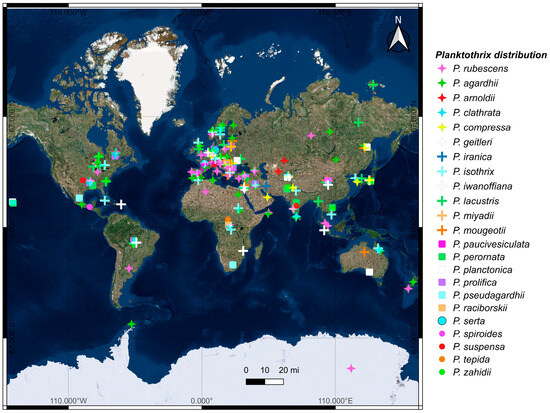
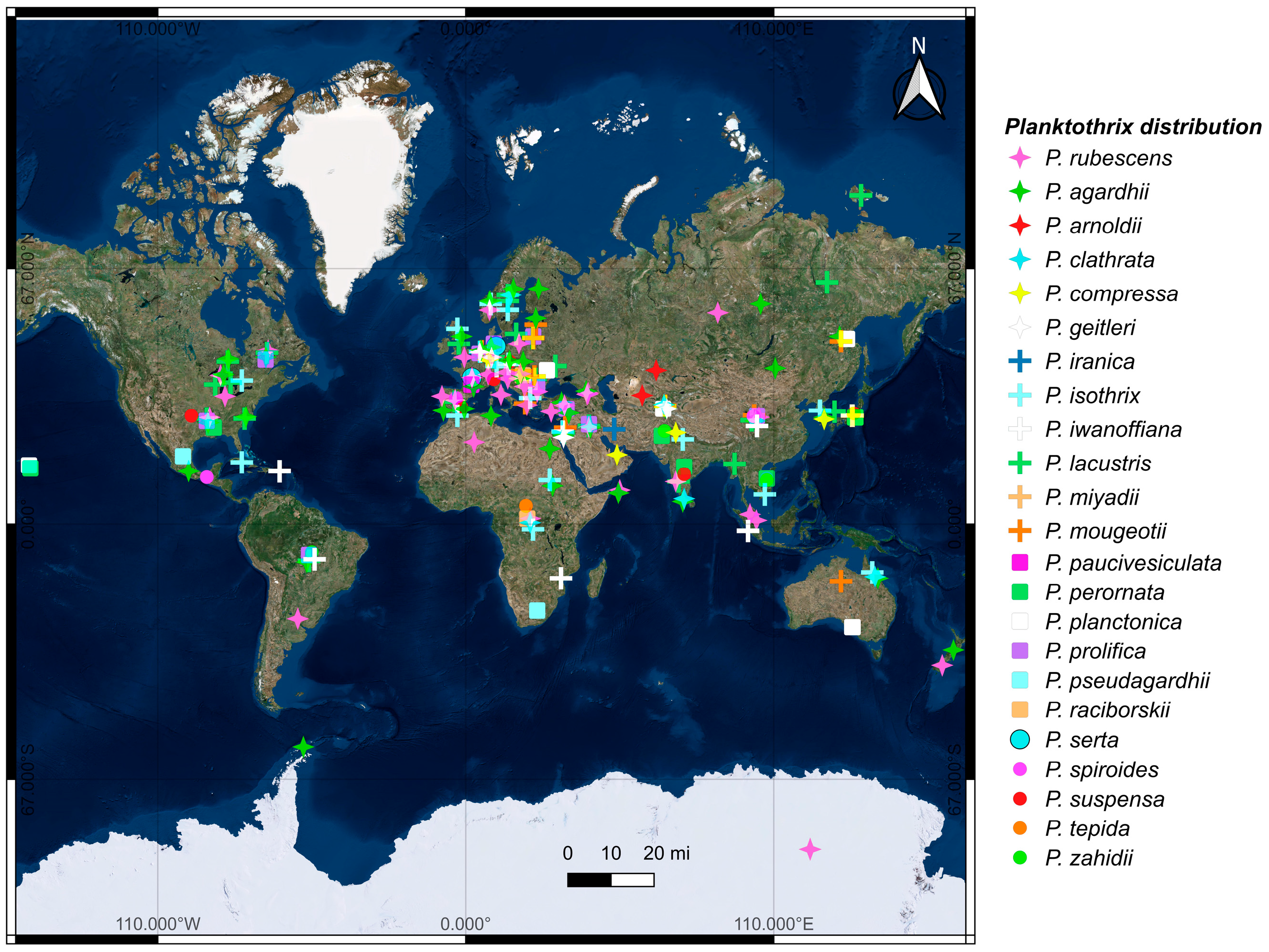
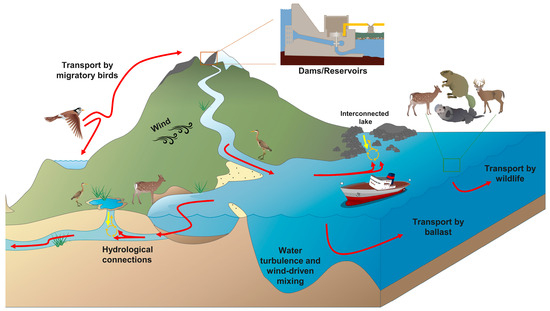
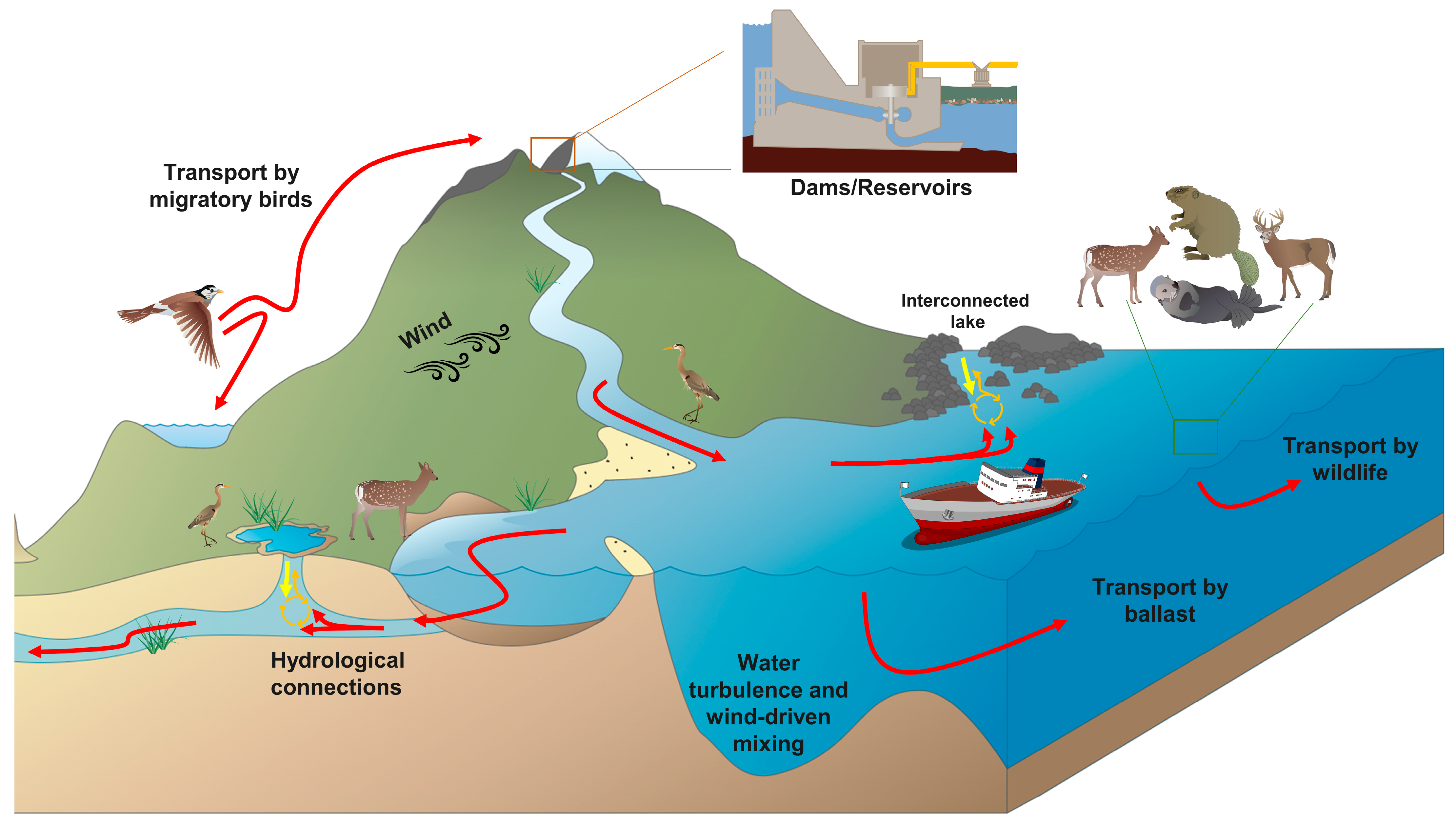
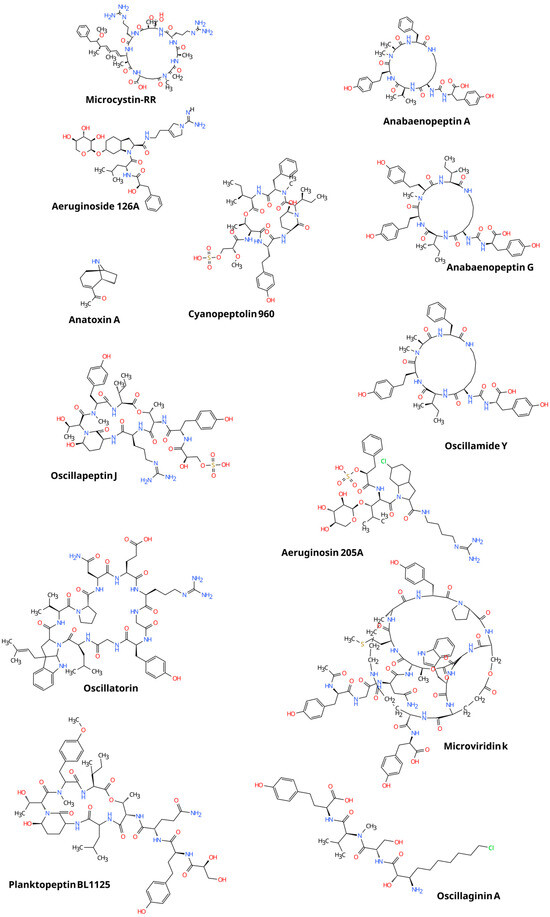
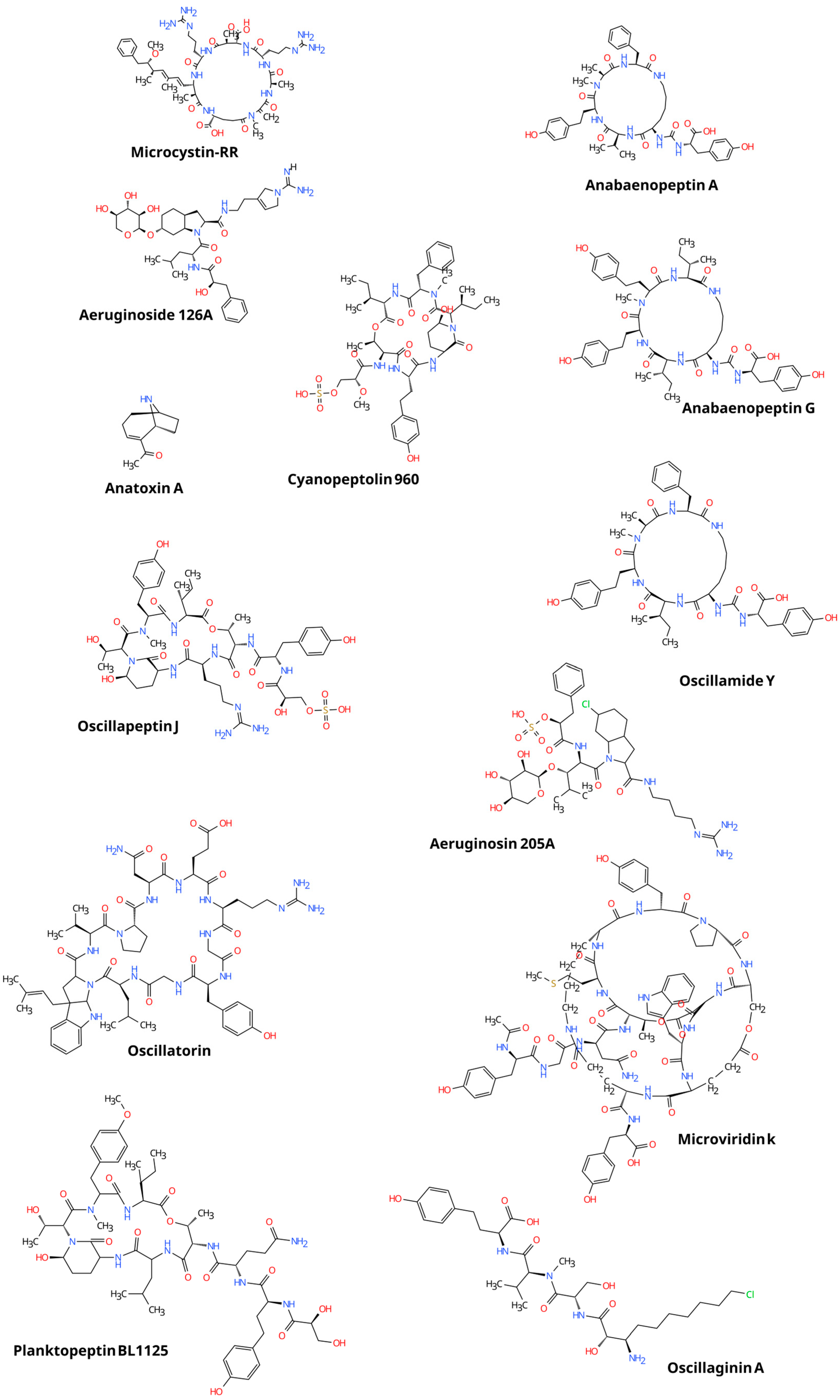
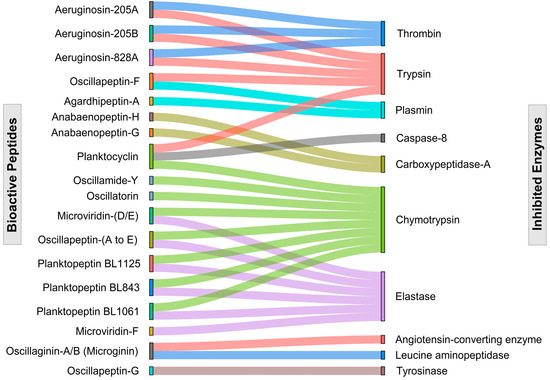
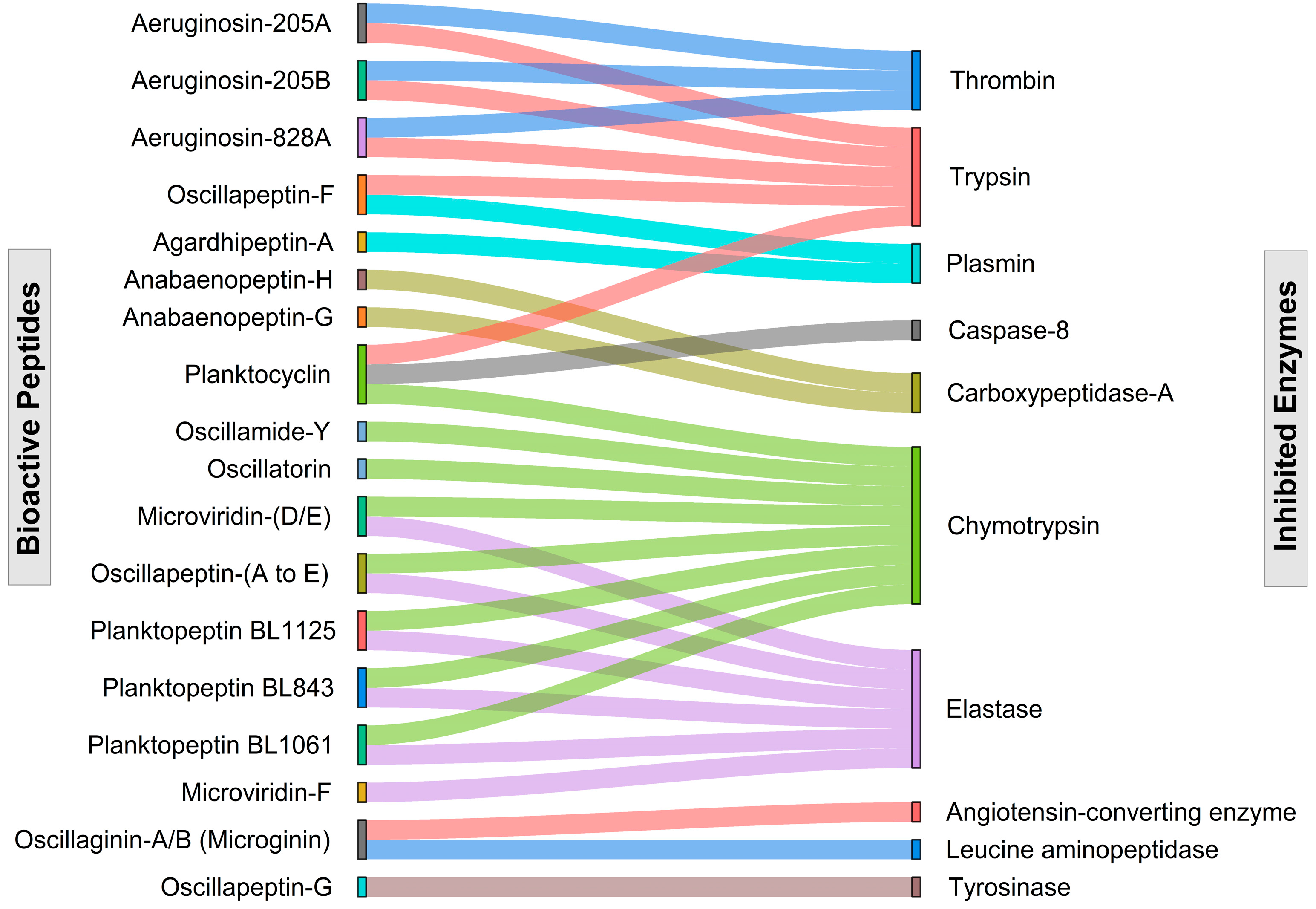
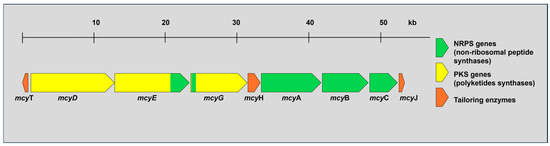
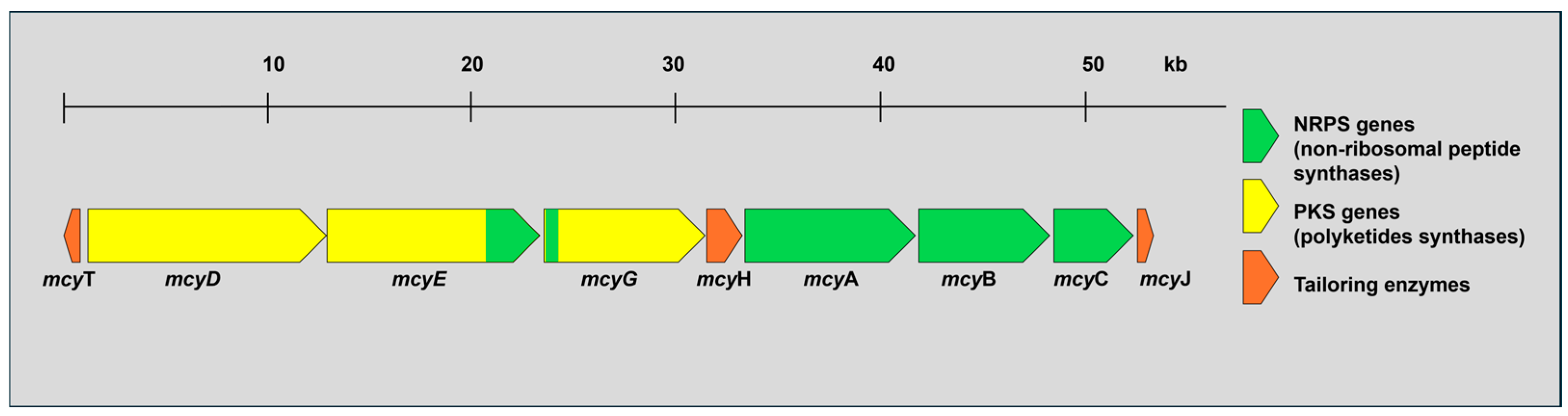
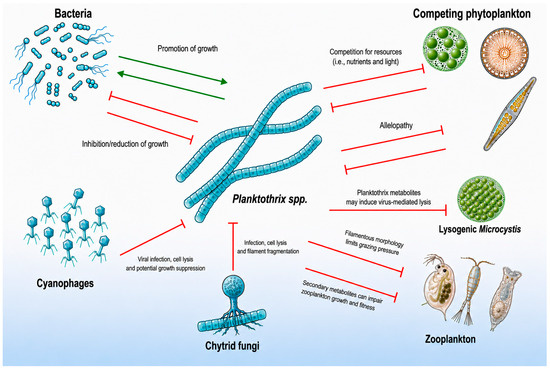
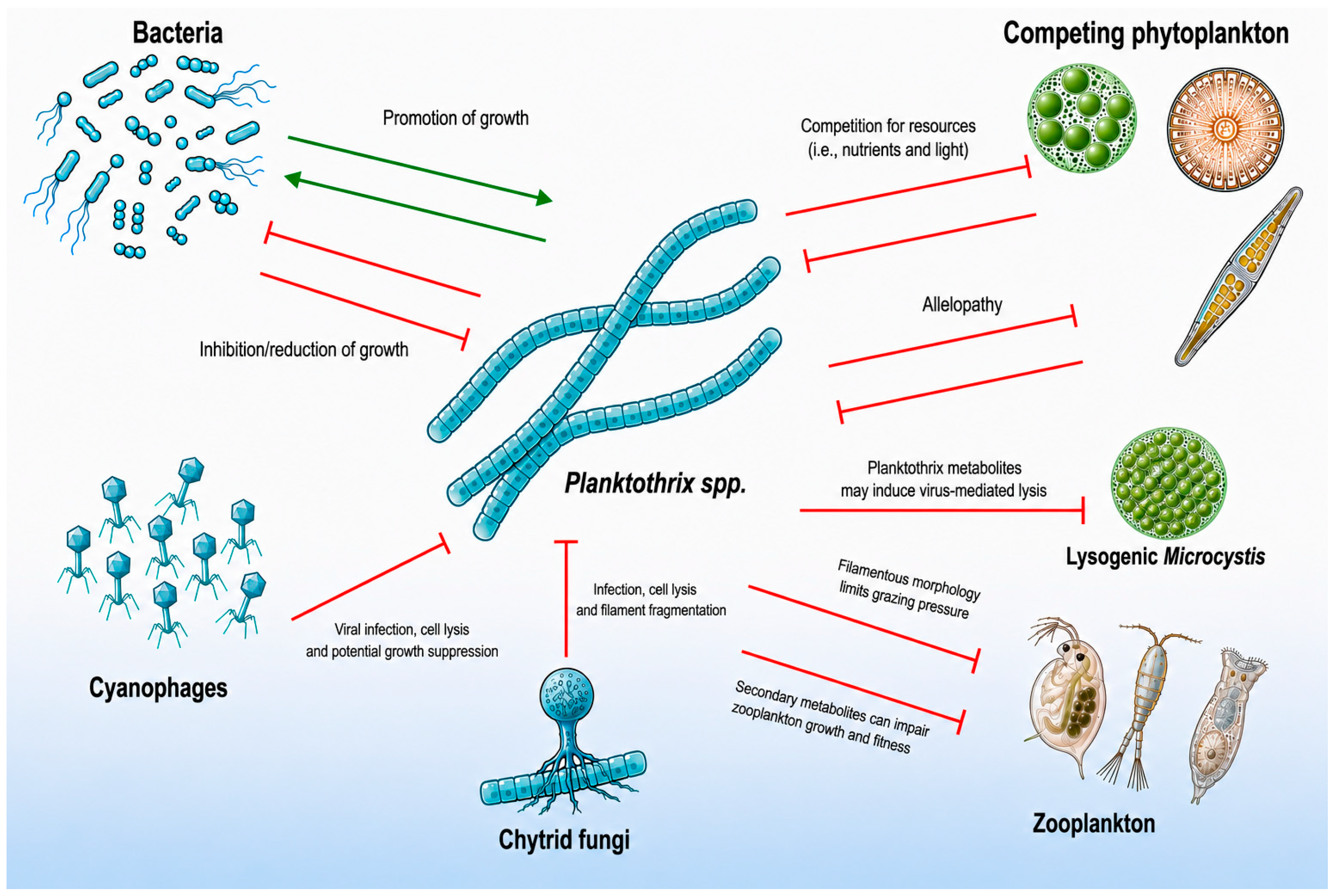
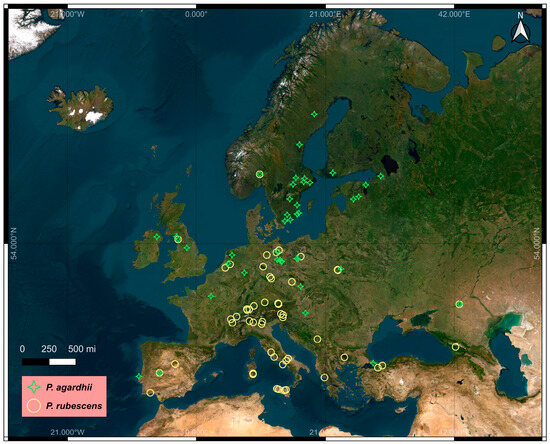
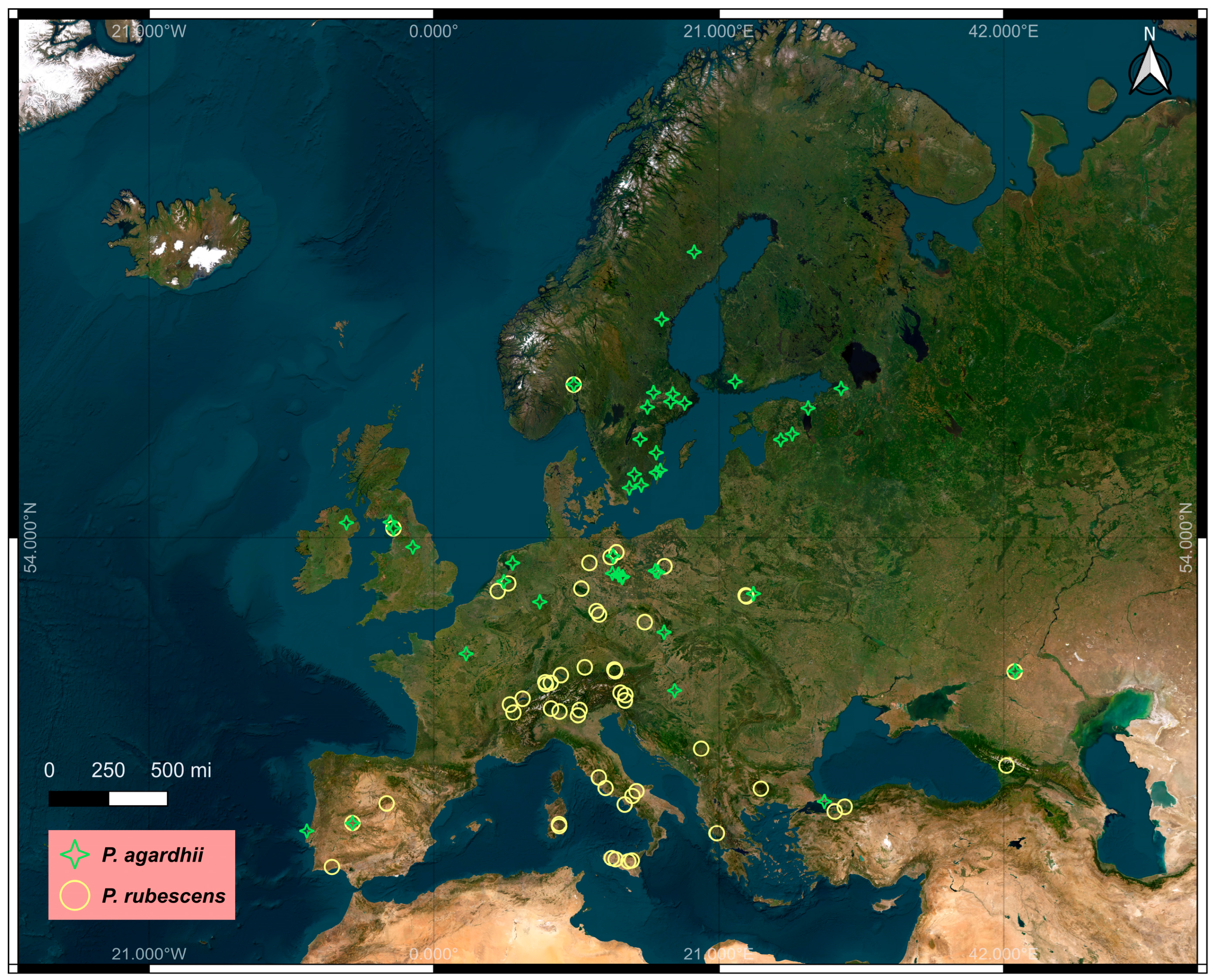

Disclaimer/Publisher’s Note: The statements, opinions and data contained in all publications are solely those of the individual author(s) and contributor(s) and not of MDPI and/or the editor(s). MDPI and/or the editor(s) disclaim responsibility for any injury to people or property resulting from any ideas, methods, instructions or products referred to in the content. |
© 2026 by the authors. Licensee MDPI, Basel, Switzerland. This article is an open access article distributed under the terms and conditions of the Creative Commons Attribution (CC BY) license.