Péclet-Number-Controlled Solute Transport Regimes in Idealized Rough Rock Fractures: Implications for Groundwater Contamination

Abstract
1. Introduction
2. Method
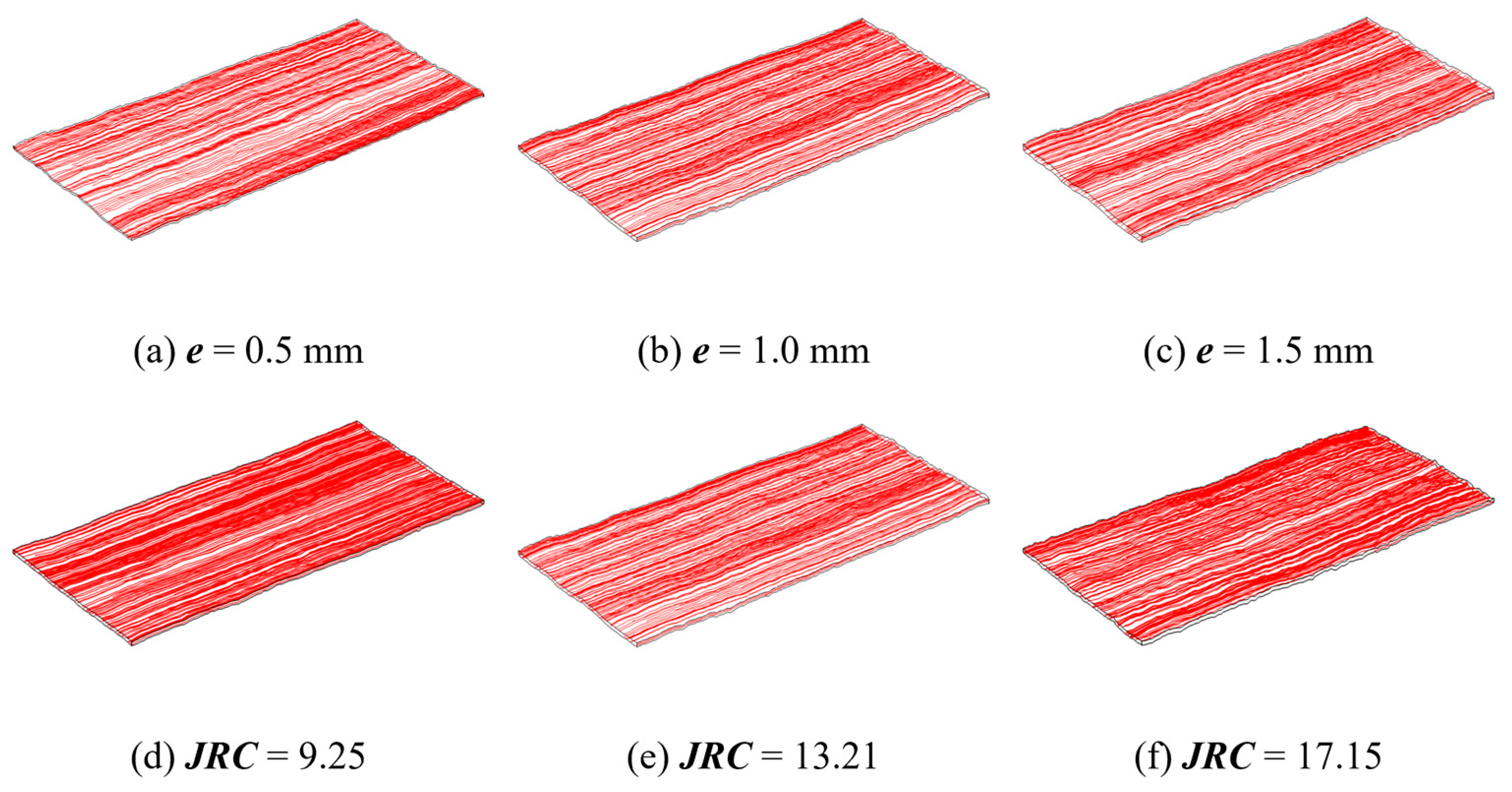
2.1. Development of Fracture Model
2.2. Governing Equations
2.3. Simulation Setup and Boundary Conditions
3. Results
3.1. Fluid Flow Behaviour in Fractures
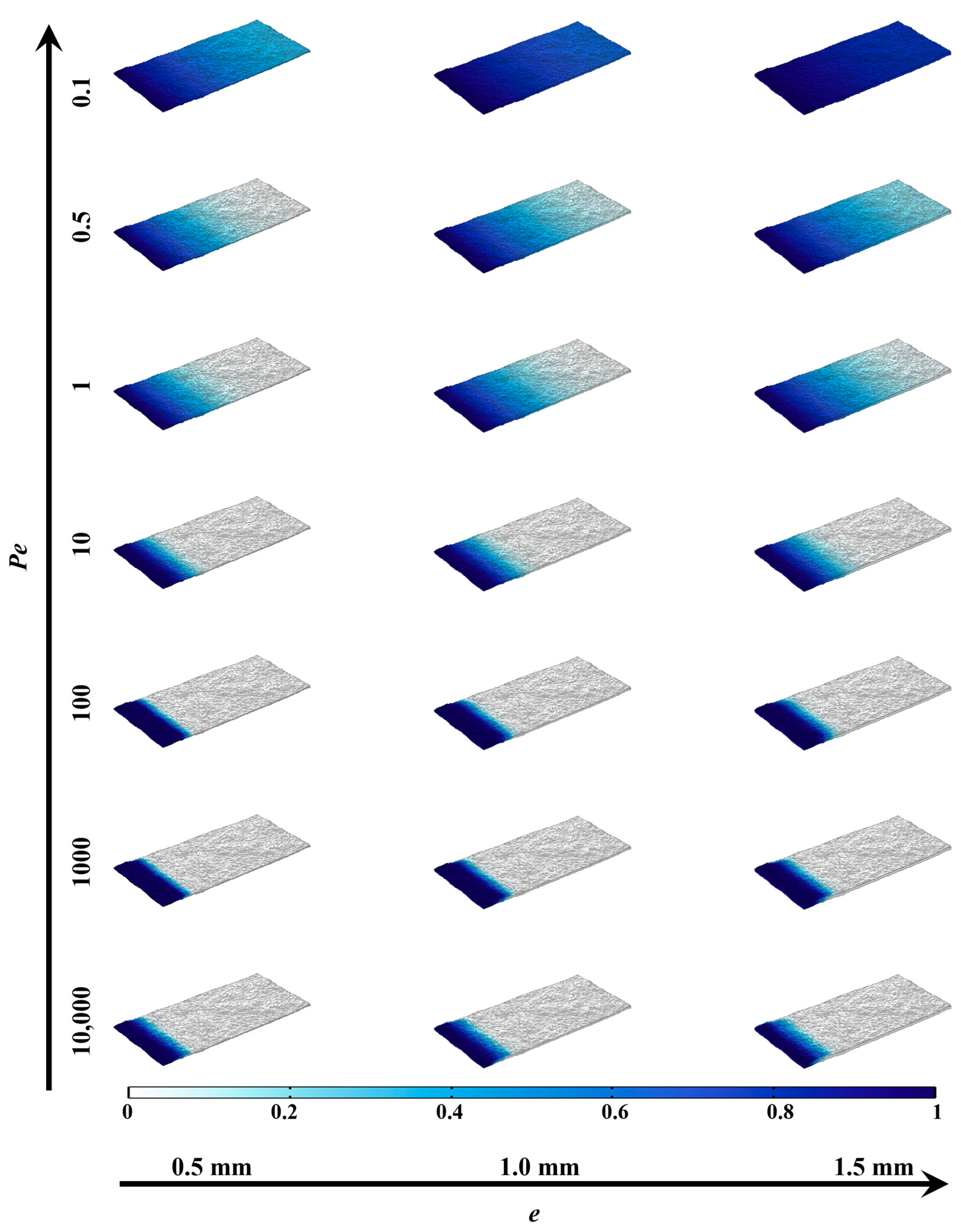
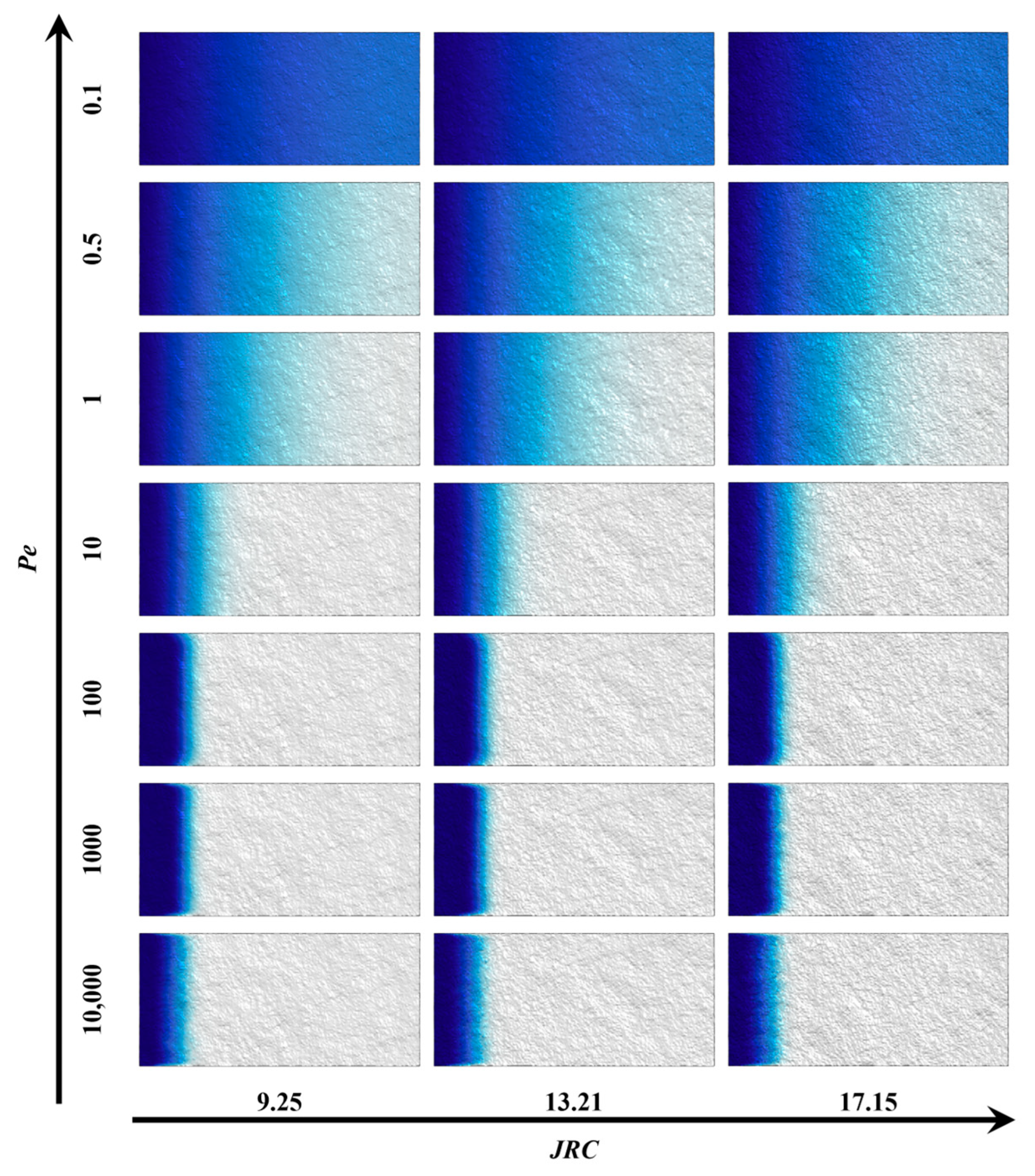
3.2. Evolution of the Concentration Fields in Fractures
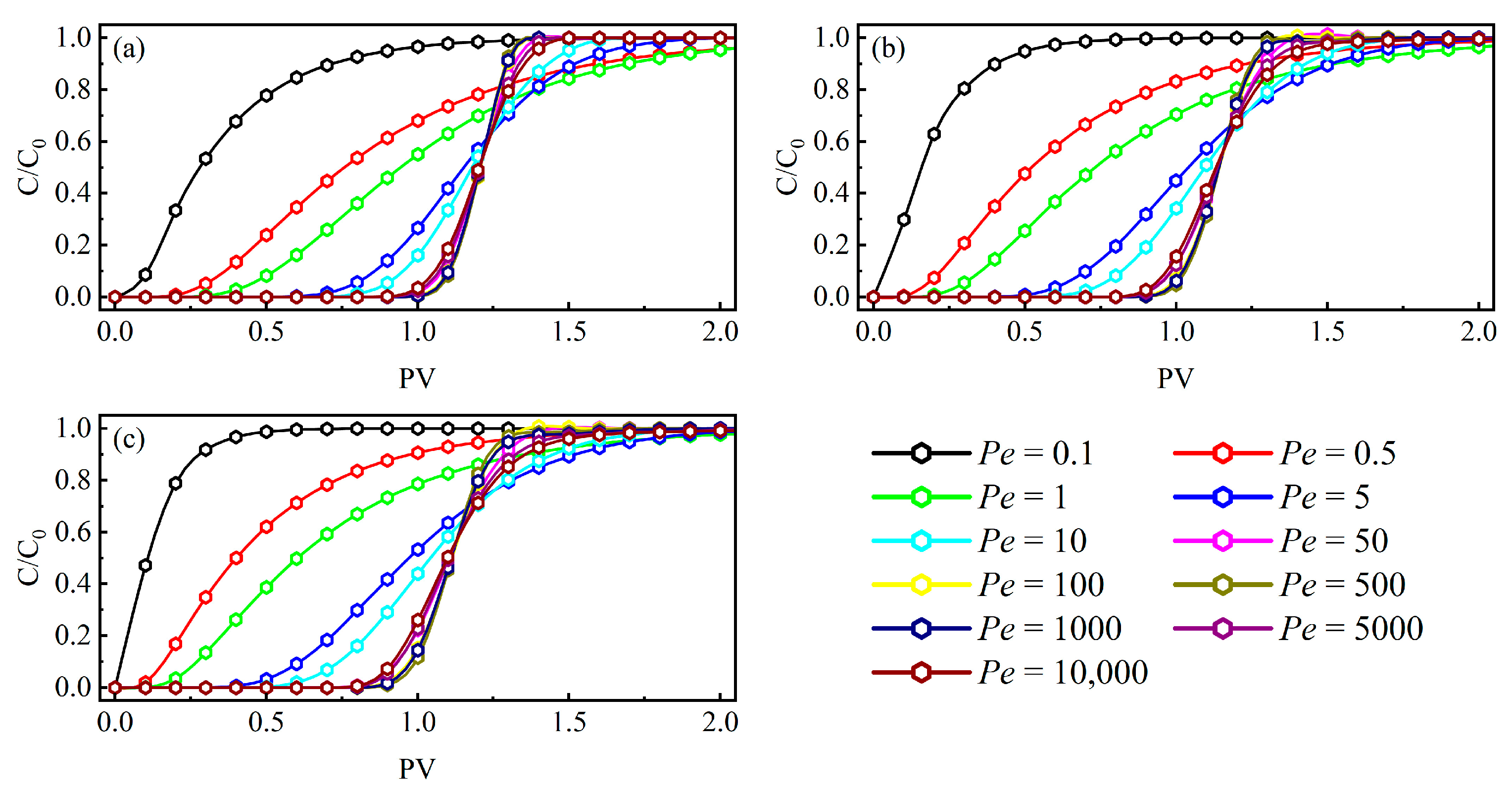
3.3. Evolution of the Solute Breakthrough Curves
4. Discussion
4.1. The Effect of Hydrodynamic Conditions on Dispersion Mechanisms
4.2. Fracture-Scale Implications for Groundwater Contamination Assessment
5. Conclusions
- (1)
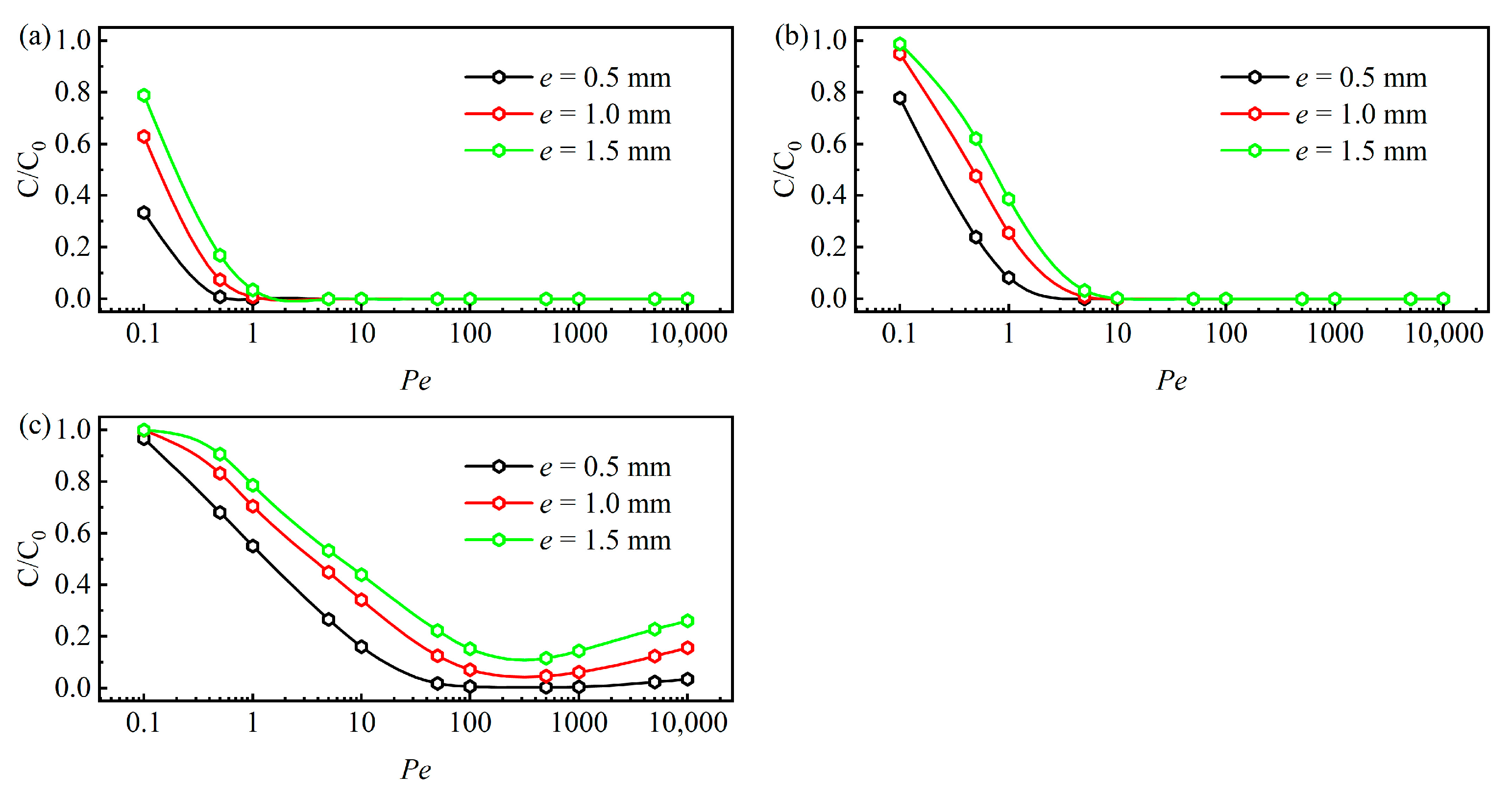
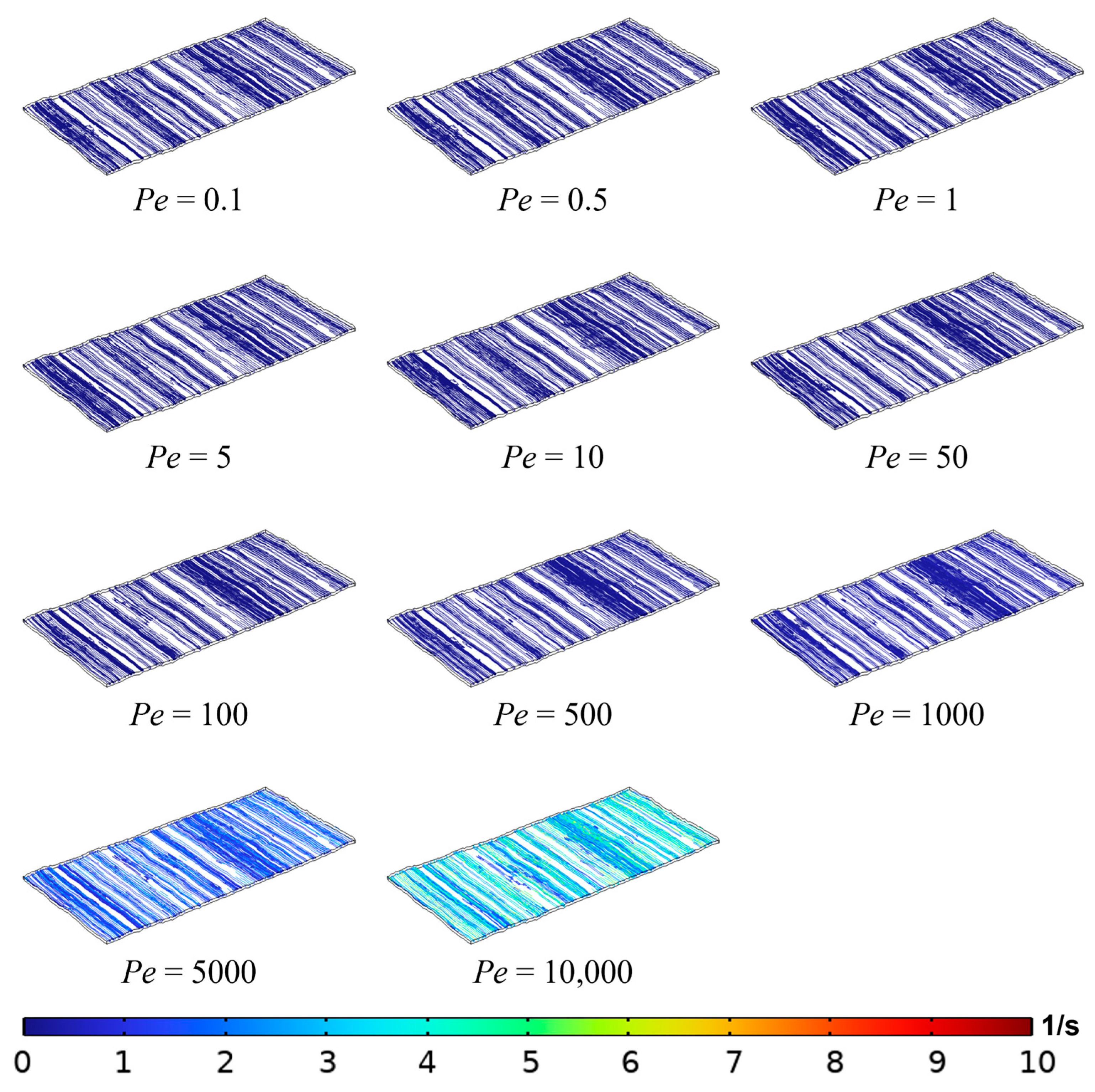
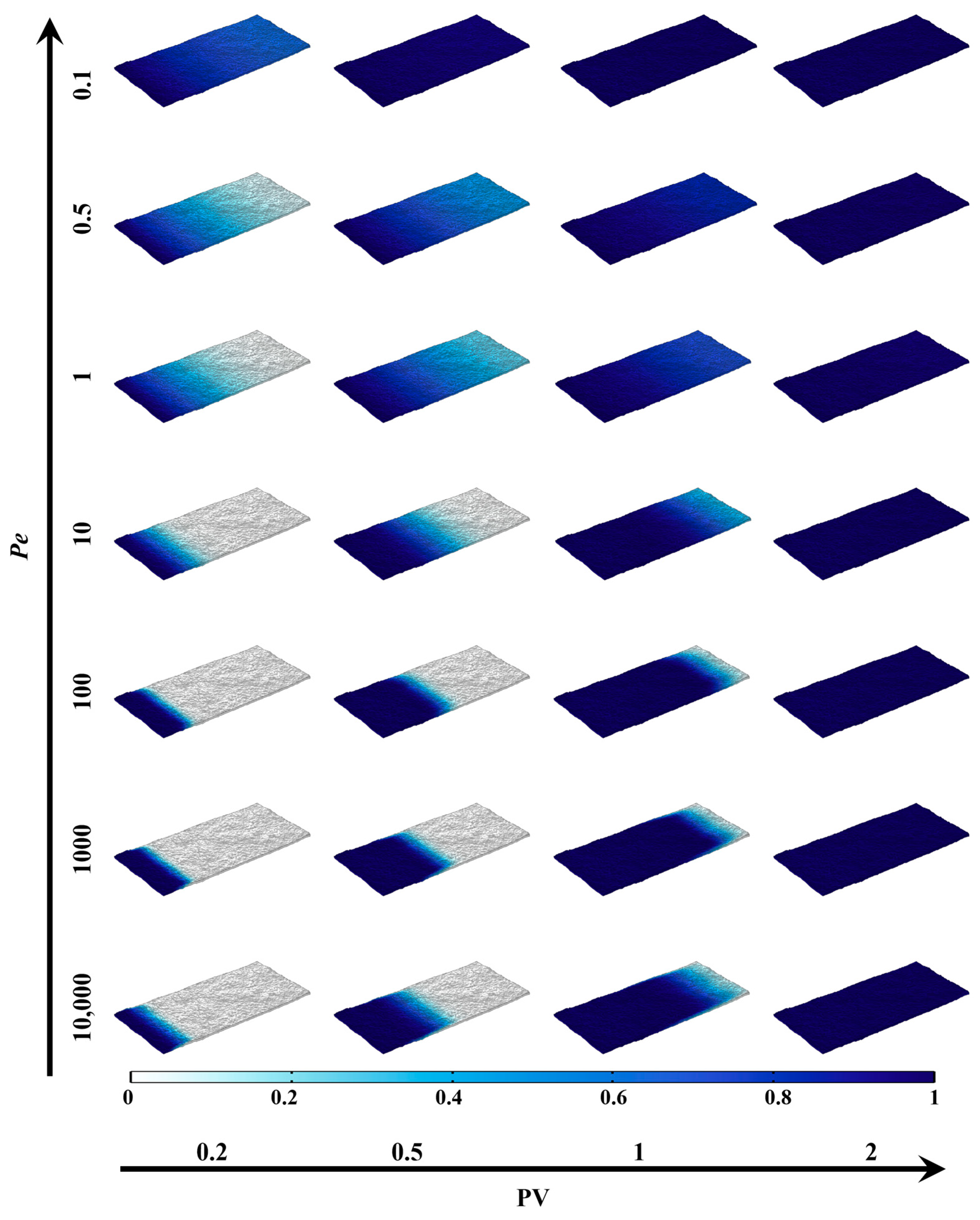
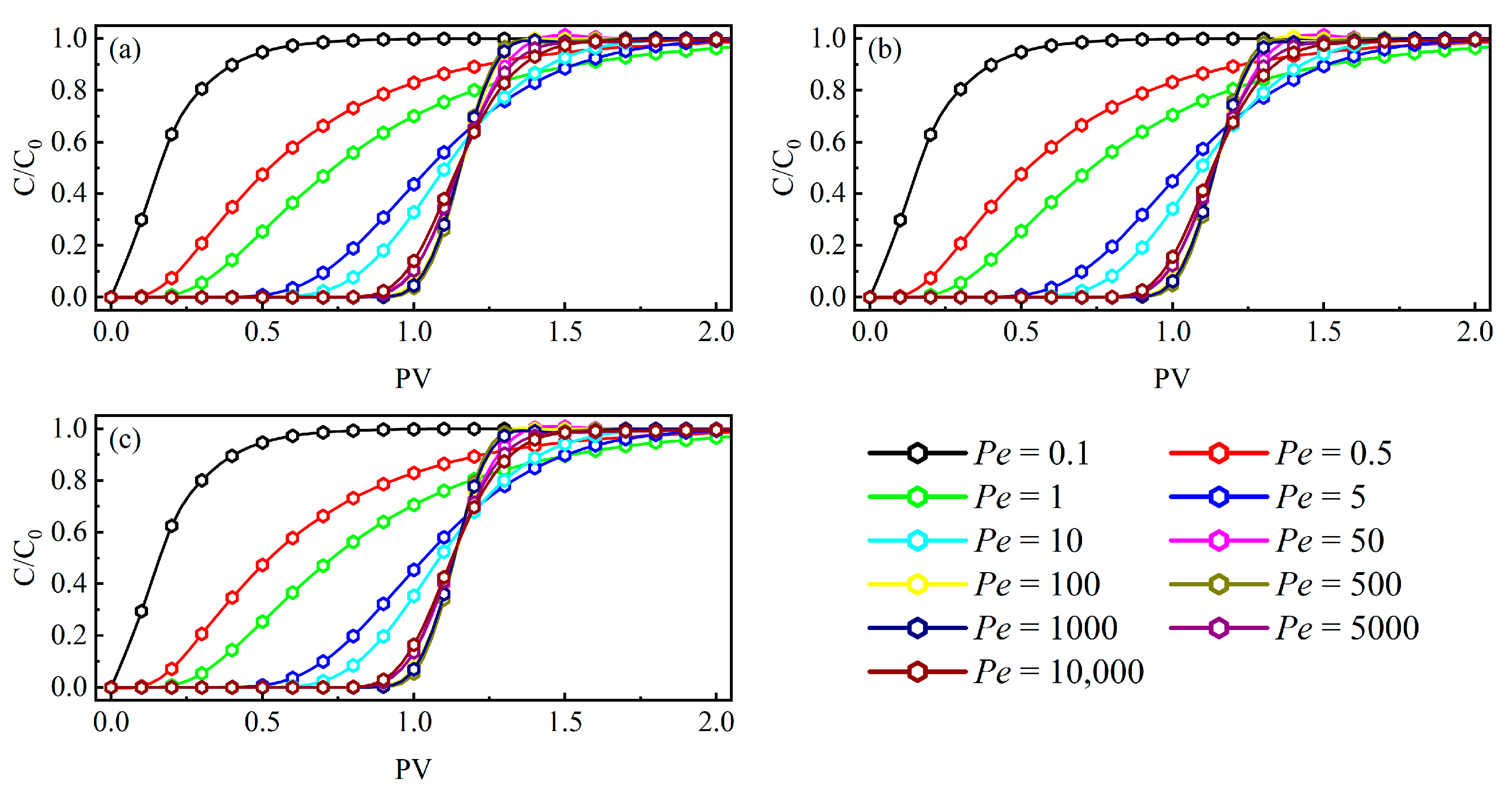
- With increasing Pe, solute transport in the idealized rough fracture exhibits a staged transition from diffusion-dominated transport to mixed macro-dispersion-dominated transport and finally to high-Pe advection-controlled transport with Taylor-dispersion-like characteristics. Under low-Pe conditions, molecular diffusion controls early solute spreading and may lead to early breakthrough. Under intermediate-Pe conditions, diffusion and advection interact, forming a broadened concentration transition zone. Under high-Pe conditions, advection becomes dominant, the solute front becomes sharper, and the BTCs gradually approach step-like breakthrough behavior.
- (2)
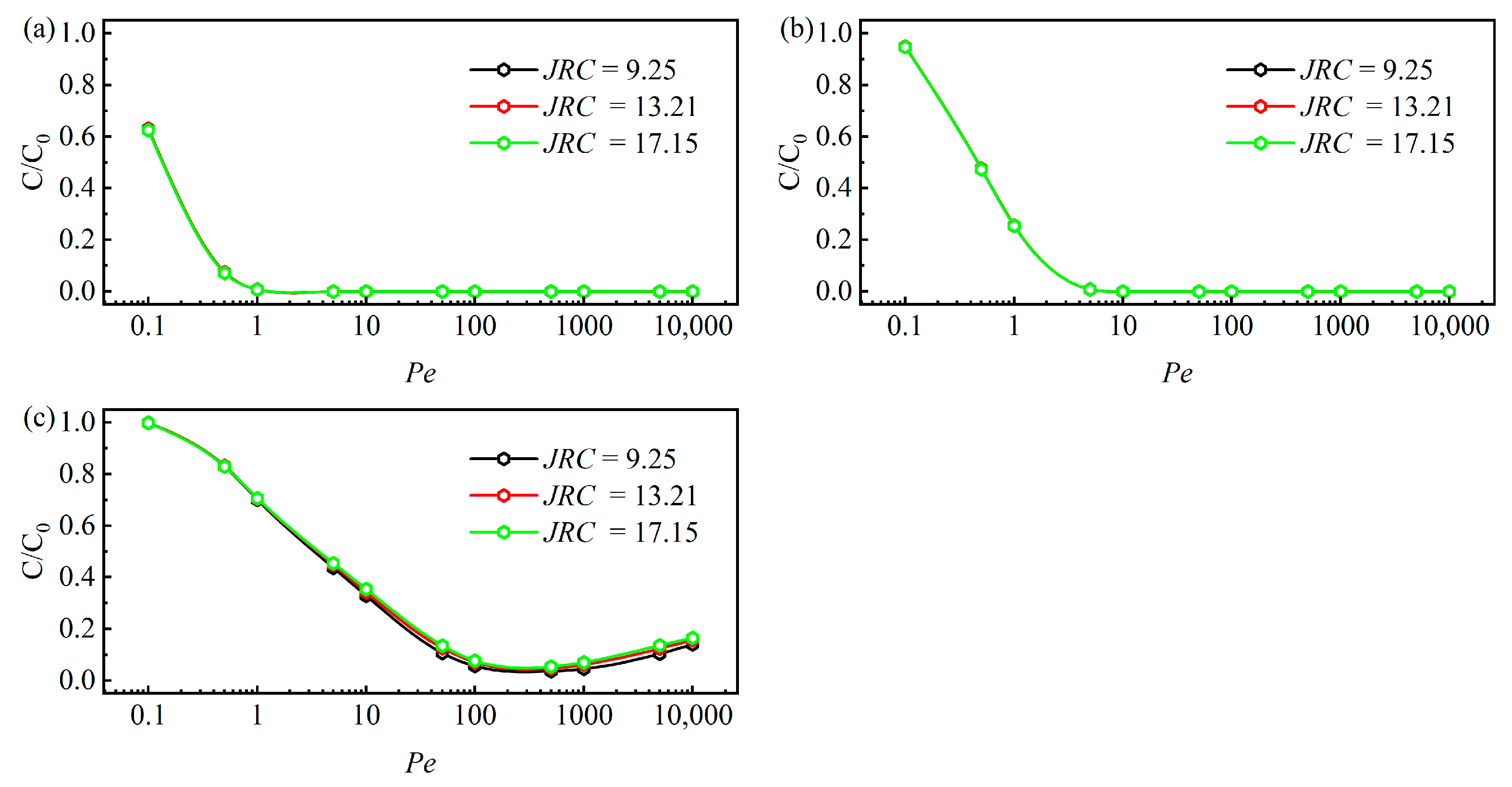
- Fracture aperture has a stronger influence on solute spreading than wall roughness under the geometric assumptions considered in this study. Increasing aperture enhances solute spreading and broadens the concentration transition zone, especially under low-to-intermediate Pe conditions. In contrast, for the perfectly mated and uniform-aperture fracture models considered here, increasing JRC mainly induces local tortuosity and bending of the concentration front, while its influence on the overall outlet BTCs is limited. This conclusion should not be generalized to natural fractures with shear displacement, partial wall mismatch, contact zones, or heterogeneous aperture distributions, where roughness may significantly affect solute transport by modifying aperture connectivity, stagnant zones, local velocity distributions, and preferential flow paths.
- (3)
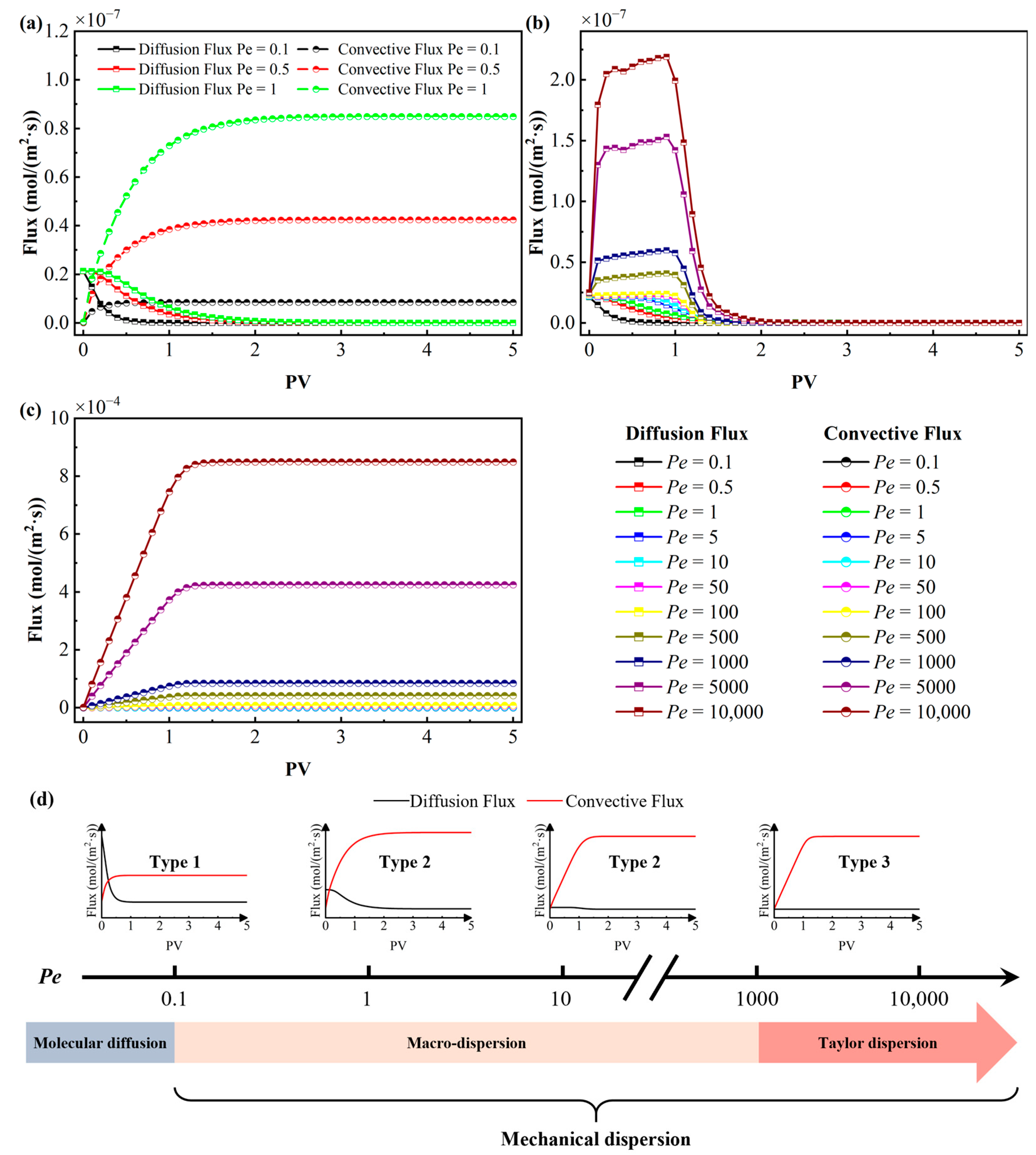
- Flux decomposition further confirms the Pe-controlled transition of transport mechanisms. In the low-Pe regime, diffusive flux contributes significantly to early solute spreading. In the intermediate-Pe regime, advective flux increases rapidly and gradually becomes dominant while diffusion still contributes to solute-front broadening. In the high-Pe regime, advective flux dominates the overall transport process, whereas diffusive flux becomes relatively small. Therefore, the combined analysis of concentration fields, BTCs, and flux components provides a more complete interpretation of Pe-controlled transport regimes than using BTCs alone.
- (4)
- The results provide fracture-scale insights for classified groundwater contamination risk assessment under conservative transport assumptions. Low-Pe systems require attention to diffusion-driven spreading and early breakthrough, intermediate-Pe systems require consideration of mixed diffusion–advection transport, and high-Pe systems require monitoring of rapid advection-controlled migration. However, the implications should be interpreted within the assumptions of the present model, including perfectly mated fracture walls, uniform aperture, conservative solute transport, no matrix diffusion, no adsorption, and no chemical reactions.
- (5)
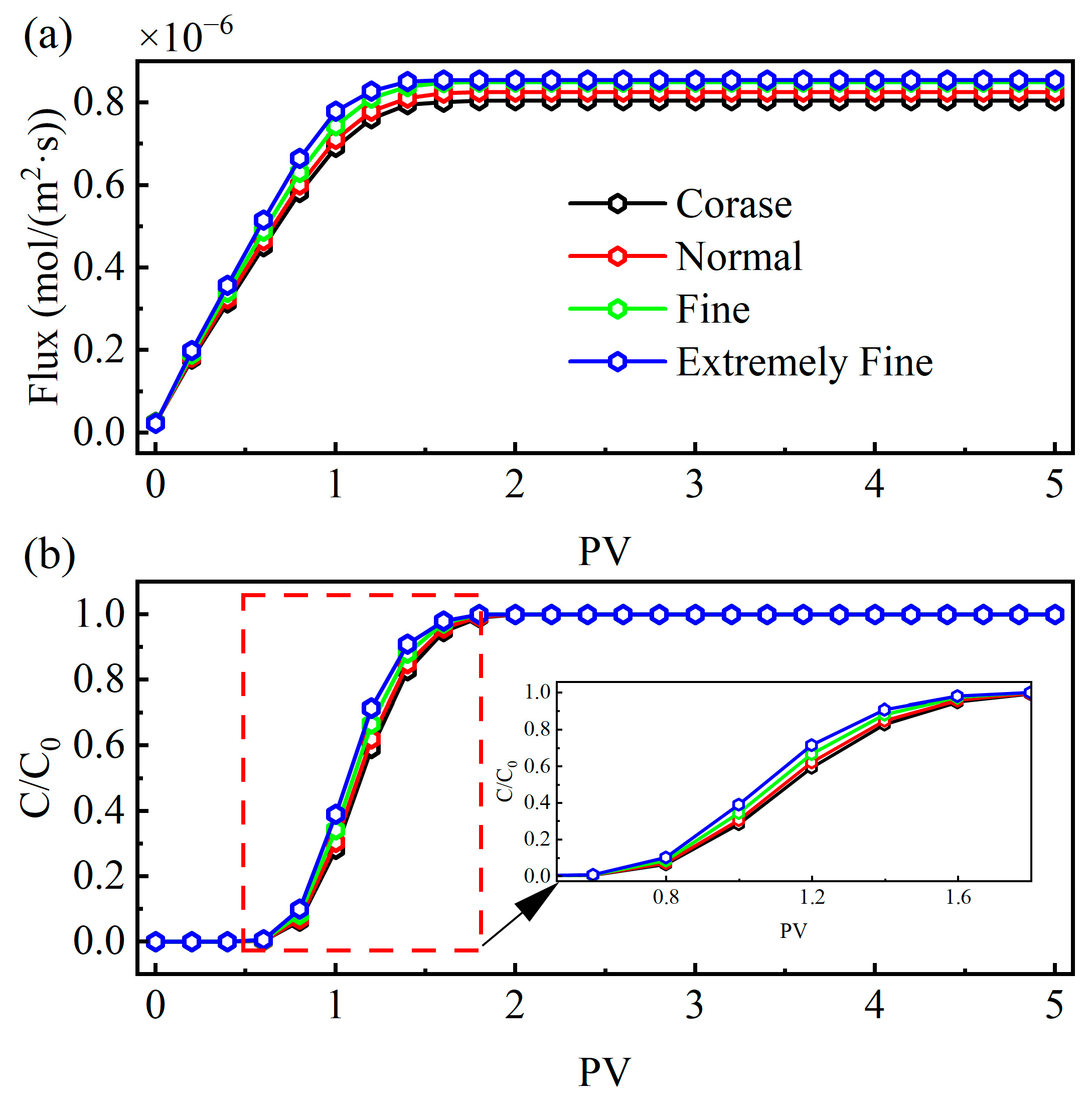
- This study still has several limitations. The model does not consider solute exchange with the surrounding rock matrix, matrix diffusion, adsorption, reactive transport, shear-induced aperture heterogeneity, or contact-zone evolution. In addition, although mesh independence was verified, no smooth parallel-plate benchmark or laboratory tracer validation was included. Future studies should incorporate fracture–matrix coupled models, dual-porosity transport, stochastic rough-fracture realizations, high-roughness mesh verification, smooth-fracture benchmark tests, and experimental validation to further evaluate the generality of the Pe-controlled transport regimes identified in this study.
Author Contributions
Funding
Data Availability Statement
Conflicts of Interest
References
- Lambert, D.C.; McDonough, K.M.; Dzombak, D.A. Long-term changes in quality of discharge water from abandoned underground coal mines in Uniontown Syncline, Fayette County, PA, USA. Water Res. 2004, 38, 277–288. [Google Scholar] [CrossRef] [PubMed]
- Pérez-López, R.; Cánovas, C.R.; Macías, F.; Basallote, M.D.; Freydier, R.; Olías, M.; Nieto, J.M. Tracing acid mine drainage from an accidental spill on the Estuary of Huelva (SW Spain). Environ. Pollut. 2025, 372, 126033. [Google Scholar] [CrossRef] [PubMed]
- Li, Z.; Ren, H.; Wang, W.; Du, F.; Huang, Y.; Cao, Z.; Wang, L. Multi-Factor Coupled Numerical Simulation and Sensitivity Analysis of Hysteresis Water Inundation Induced by the Activation of Small Faults in the Bottom Plate Under the Influence of Mining. Appl. Sci. 2026, 16, 1051. [Google Scholar] [CrossRef]
- Pu, H.; Xue, K.; Wu, Y.; Zhang, S.; Liu, D.; Xu, J. Estimating the permeability of fractal rough rock fractures with variable apertures under normal and shear stresses. Phys. Fluids 2025, 37, 036635. [Google Scholar] [CrossRef]
- Wang, H.D.; Ji, G.P.; Chen, Y.; Ma, G.W. A novel equivalent model of radionuclide migration in three-dimensional rough shear fractures. Int. J. Heat Mass Transf. 2024, 228, 125646. [Google Scholar] [CrossRef]
- Hu, Y.; Zou, L.; Xu, W.; Zhan, L.; Xia, P.; Zhuang, D. Solute transport in stochastic discrete fracture-matrix systems: Impact of network structure. Undergr. Space 2025, 20, 69–82. [Google Scholar] [CrossRef]
- Khafagy, M.; Dickson-Anderson, S.; El-Dakhakhni, W. Towards simulating solute transport in complex, regional-scale fracture networks: A rapid upscaled approach. Environ. Model. Softw. 2025, 192, 106555. [Google Scholar] [CrossRef]
- Wang, D.; Zhang, J.; Li, J. Phosphate-functionalized magnetic calcium alginate for the engineering remediation of uranium-contaminated water and soil. Chem. Eng. J. 2023, 475, 145910. [Google Scholar] [CrossRef]
- Watson, D.B.; Phillips, D.H.; Baker, G.S.; Gaines, D.P.; Boyanov, M.I.; Kemner, K.M.; Earles, J.E.; Williams, K.H.; Hubbard, S.S.; Dafflon, B.; et al. Coupling geophysical, geological, geochemical and mineralogical assessments to examine preferential contaminant transport pathways in interbedded fractured bedrock. J. Hazard. Mater. 2026, 505, 141384. [Google Scholar] [CrossRef] [PubMed]
- Deng, P.; Zhu, J. Equivalent Permeability of Fractured Media Incorporating Tortuosity and Nonlinear Flow. Transp. Porous Med. 2020, 132, 741–760. [Google Scholar] [CrossRef]
- Sweeney, M.R.; Hyman, J.D.; O’Malley, D.; Santos, J.E.; Carey, J.W.; Stauffer, P.H.; Viswanathan, H.S. Characterizing the Impacts of Multi-Scale Heterogeneity on Solute Transport in Fracture Networks. Geophys. Res. Lett. 2023, 50, e2023GL104958. [Google Scholar] [CrossRef]
- Hu, Y.; Xu, W.; Zhan, L.; Zou, L.; Chen, Y. Modeling of solute transport in a fracture-matrix system with a three-dimensional discrete fracture network. J. Hydrol. 2022, 605, 127333. [Google Scholar] [CrossRef]
- Wang, L.; Cardenas, M.B.; Deng, W.; Bennett, P.C. Theory for dynamic longitudinal dispersion in fractures and rivers with Poiseuille flow. Geophys. Res. Lett. 2012, 39, L05401. [Google Scholar] [CrossRef]
- Detwiler, R.L.; Rajaram, H.; Glass, R.J. Solute transport in variable-aperture fractures: An investigation of the relative importance of Taylor dispersion and macrodispersion. Water Resour. Res. 2000, 36, 1611–1625. [Google Scholar] [CrossRef]
- Hedayati, M.; Herbert, R.; Tsang, Y.; Niemi, A.; Hu, Q. Reactive solute transport simulation of multicomponent cation exchange and diffusion processes in column experiments with clay-rich rock. J. Contam. Hydrol. 2025, 272, 104579. [Google Scholar] [CrossRef] [PubMed]
- Zhou, W.; Kulenkampff, J.; Zuna, M.; Jankovský, F.; Butscher, C.; Kammel, R.; Schäfer, T.; Fischer, C. Variability of effective diffusivity in fractured and mineralized metamorphic host rock from Bukov URF, Bohemian Massif (CZ). Appl. Geochem. 2025, 193, 106574. [Google Scholar] [CrossRef]
- Zeng, Y.; Xie, Y.; Ye, Y.; Shen, C.; Nan, T.; Lu, C. Laboratory and numerical investigations on land-sourced solute transport in coastal fractured aquifers. Adv. Water Resour. 2024, 193, 104839. [Google Scholar] [CrossRef]
- Meng, S.; Mo, X.; Liu, L. Solute transport along a single channel with radial diffusion in the porous rock matrix: A simple analytical solution and the implementation of time domain random walk algorithm. J. Hydrol. 2024, 638, 131527. [Google Scholar] [CrossRef]
- Rumynin, V.G.; Sindalovskiy, L.N. Unified analytical framework for multi-dimensional solute transport in fractured porous media. J. Contam. Hydrol. 2026, 277, 104793. [Google Scholar] [CrossRef] [PubMed]
- Bodin, J.; Delay, F.; de Marsily, G. Solute transport in a single fracture with negligible matrix permeability: 2. mathematical formalism. Hydrogeol. J. 2003, 11, 434–454. [Google Scholar] [CrossRef]
- Zhou, J.Q.; Guo, L.G.; Jiao, J.J.; Luo, X. Geometry-Based Prediction of Solute Transport Process in Single 3D Rock Fractures Under Laminar Flow Regime. J. Geophys. Res. Solid Earth 2023, 128, e2022JB025542. [Google Scholar] [CrossRef]
- Zhou, J.Q.; Guo, L.G.; Jiao, J.J.; Jiang, X.Y.; Luo, X. Can Geometric Parameters Enable Direct Prediction of Non-Fickian Transport in Rock Fractures Across Diverse Flow Regimes? J. Geophys. Res. Solid Earth 2024, 129, e2023JB027695. [Google Scholar] [CrossRef]
- Wang, L.; Cardenas, M.B. Non-Fickian transport through two-dimensional rough fractures: Assessment and prediction. Water Resour. Res. 2014, 50, 871–884. [Google Scholar] [CrossRef]
- Xue, H.; Xu, W.; Lou, Y.; Hu, Y.; Gao, W.; Li, J.; Zhuang, D.; Liu, W.; Zhan, L.; Chen, Y. Deep-learning-based surrogate model for solute transport in rough-walled fractures. Comput. Geotech. 2026, 191, 107813. [Google Scholar] [CrossRef]
- Tan, Y.-f.; Zhou, Z.-f. Simulation of Solute Transport in a Parallel Single Fracture with LBM/MMP Mixed Method. J. Hydrodyn. 2008, 20, 365–372. [Google Scholar] [CrossRef]
- Dou, Z.; Chen, Z.; Zhou, Z.; Wang, J.; Huang, Y. Influence of eddies on conservative solute transport through a 2D single self-affine fracture. Int. J. Heat Mass Transf. 2018, 121, 597–606. [Google Scholar] [CrossRef]
- Dou, Z.; Sleep, B.; Zhan, H.; Zhou, Z.; Wang, J. Multiscale roughness influence on conservative solute transport in self-affine fractures. Int. J. Heat Mass Transf. 2019, 133, 606–618. [Google Scholar] [CrossRef]
- Xing, K.; Shi, X.; Kang, P.K.; Kang, X.; Qian, J.; Ma, L.; Wu, J. Effect of evolving recirculation zones on anomalous solute transport in rough single fractures. Int. J. Heat Mass Transf. 2024, 223, 125292. [Google Scholar] [CrossRef]
- Wang, L.; Cardenas, M.B.; Zhou, J.-Q.; Ketcham, R.A. The Complexity of Nonlinear Flow and non-Fickian Transport in Fractures Driven by Three-Dimensional Recirculation Zones. J. Geophys. Res. Solid Earth 2020, 125, e2020JB020028. [Google Scholar] [CrossRef]
- Cardenas, M.B.; Slottke, D.T.; Ketcham, R.A.; Sharp, J.M., Jr. Navier-Stokes flow and transport simulations using real fractures shows heavy tailing due to eddies. Geophys. Res. Lett. 2007, 34, L14404. [Google Scholar] [CrossRef]
- Wang, Z.; Wang, J.; Zhou, C.; Li, C.; Xie, H. Retaining primary wall roughness for flow in rock fractures and implications on heat transfer and solute transport. Int. J. Heat Mass Transf. 2021, 176, 121488. [Google Scholar] [CrossRef]
- Li, B.; Xu, J.; Zhong, J.; Huang, N.; Zou, L. Effects of surface roughness and shear processes on solute transport through 3D crossed rock fractures. Int. J. Rock Mech. Min. Sci. 2023, 170, 105529. [Google Scholar] [CrossRef]
- Zhou, J.-Q.; Li, C.; Wang, L.; Tang, H.; Zhang, M. Effect of slippery boundary on solute transport in rough-walled rock fractures under different flow regimes. J. Hydrol. 2021, 598, 126456. [Google Scholar] [CrossRef]
- Stoll, M.; Huber, F.M.; Trumm, M.; Enzmann, F.; Meinel, D.; Wenka, A.; Schill, E.; Schäfer, T. Experimental and numerical investigations on the effect of fracture geometry and fracture aperture distribution on flow and solute transport in natural fractures. J. Contam. Hydrol. 2019, 221, 82–97. [Google Scholar] [CrossRef] [PubMed]
- Zhang, H.; Qian, J.; Zou, L.; Ma, L.; Cvetkovic, V. Effect of shear-induced geometry changes on solute mixing at 3D rough-walled fracture intersections. J. Hydrol. 2026, 671, 135314. [Google Scholar] [CrossRef]
- Zou, L.; Jing, L.; Cvetkovic, V. Modeling of Solute Transport in a 3D Rough-Walled Fracture–Matrix System. Transp. Porous Med. 2017, 116, 1005–1029. [Google Scholar] [CrossRef]
- Wang, Z.; Zhou, C.; Wang, F.; Li, C.; Xie, H. Channeling flow and anomalous transport due to the complex void structure of rock fractures. J. Hydrol. 2021, 601, 126624. [Google Scholar] [CrossRef]
- Pan, Y.; Liu, X.; Yao, C.; Li, Y.; Hao, Z.; Huang, Z.; Yang, W.; Liu, Y. Impact of shear process on solute transport and mixing partitioning in 3D intersecting fractures of thermally shocked granite. J. Rock Mech. Geotech. Eng. 2025; in press. [CrossRef]
- Pan, Y.; Liu, X.; Li, M.; Gan, Q.; Liu, S.; Hao, Z.; Qian, L.; Luo, X. Non-Fickian solute transport in three-dimensional crossed shear rock fractures at different contact ratios. Comput. Geotech. 2023, 164, 105816. [Google Scholar] [CrossRef]
- Li, B.; Zhang, W.; Xue, Y.; Li, Z.; Kong, F.; Kong, R.; Wang, G. Approach to characterize rock fracture surface: Insight from roughness and fractal dimension. Eng. Geol. 2023, 325, 107302. [Google Scholar] [CrossRef]
- Yan, W.; Komvopoulos, K. Contact analysis of elastic-plastic fractal surfaces. J. Appl. Phys. 1998, 84, 3617–3624. [Google Scholar] [CrossRef]
- Liu, H.-H.; Bodvarsson, G.S.; Lu, S.; Molz, F.J. A Corrected and Generalized Successive Random Additions Algorithm for Simulating Fractional Levy Motions. Math. Geol. 2004, 36, 361–378. [Google Scholar] [CrossRef]
- Guiltinan, E.; Santos, J.E.; Purswani, P.; Hyman, J.D. pySimFrac: A Python library for synthetic fracture generation and analysis. Comput. Geosci. 2024, 191, 105665. [Google Scholar] [CrossRef]
- Ye, Z.; Liu, H.-H.; Jiang, Q.; Zhou, C. Two-phase flow properties of a horizontal fracture: The effect of aperture distribution. Adv. Water Resour. 2015, 76, 43–54. [Google Scholar] [CrossRef]
- Huang, N.; Liu, R.; Jiang, Y.; Li, B.; Yu, L. Effects of fracture surface roughness and shear displacement on geometrical and hydraulic properties of three-dimensional crossed rock fracture models. Adv. Water Resour. 2018, 113, 30–41. [Google Scholar] [CrossRef]
- Luo, Y.; Wang, Y.; Guo, H.; Liu, X.; Luo, Y.; Liu, Y. Relationship between Joint Roughness Coefficient and Statistical Roughness Parameters and Its Sensitivity to Sampling Interval. Sustainability 2022, 14, 13597. [Google Scholar] [CrossRef]
- Batchelor, G.K. An Introduction to Fluid Dynamics; Cambridge University Press: Cambridge, UK, 2000. [Google Scholar] [CrossRef]
- Zimmerman, R.W.; Bodvarsson, G.S. Hydraulic conductivity of rock fractures. Transp. Porous Med. 1996, 23, 1–30. [Google Scholar] [CrossRef]
- Banerjee, S.; Mukhopadhyay, P. Diffusional Transformations. In Pergamon Materials Series; Banerjee, S., Mukhopadhyay, P., Eds.; Elsevier: Amsterdam, The Netherlands, 2007; Volume 12, pp. 555–716. [Google Scholar]
- Zimmerman, R.W.; Paluszny, A. Fluid Flow in Fractured Rocks; Wiley: Hoboken, NJ, USA, 2024. [Google Scholar]






Disclaimer/Publisher’s Note: The statements, opinions and data contained in all publications are solely those of the individual author(s) and contributor(s) and not of MDPI and/or the editor(s). MDPI and/or the editor(s) disclaim responsibility for any injury to people or property resulting from any ideas, methods, instructions or products referred to in the content. |
© 2026 by the authors. Licensee MDPI, Basel, Switzerland. This article is an open access article distributed under the terms and conditions of the Creative Commons Attribution (CC BY) license.
Share and Cite
Zhang, Y.; Wang, Z.; Li, C.; Yang, H.; Qu, X. Péclet-Number-Controlled Solute Transport Regimes in Idealized Rough Rock Fractures: Implications for Groundwater Contamination. Water 2026, 18, 1615. https://doi.org/10.3390/w18131615
Zhang Y, Wang Z, Li C, Yang H, Qu X. Péclet-Number-Controlled Solute Transport Regimes in Idealized Rough Rock Fractures: Implications for Groundwater Contamination. Water. 2026; 18(13):1615. https://doi.org/10.3390/w18131615
Chicago/Turabian StyleZhang, Yongjin, Zengchao Wang, Cheng Li, Hui Yang, and Xin Qu. 2026. "Péclet-Number-Controlled Solute Transport Regimes in Idealized Rough Rock Fractures: Implications for Groundwater Contamination" Water 18, no. 13: 1615. https://doi.org/10.3390/w18131615
APA StyleZhang, Y., Wang, Z., Li, C., Yang, H., & Qu, X. (2026). Péclet-Number-Controlled Solute Transport Regimes in Idealized Rough Rock Fractures: Implications for Groundwater Contamination. Water, 18(13), 1615. https://doi.org/10.3390/w18131615