Article

Hydrochemical Assessment of Shallow Groundwater in a Rural Settlement Following Sewerage Network Development


1
Department of Landscape Protection and Environmental Geography, Institute of Earth Sciences, Faculty of Science and Technology, University of Debrecen, 4032 Debrecen, Hungary
2
Department of Data Science and Visualization, Faculty of Informatics, University of Debrecen, 4023 Debrecen, Hungary
*
Author to whom correspondence should be addressed.
Water 2026, 18(13), 1559; https://doi.org/10.3390/w18131559
Submission received: 31 May 2026 / Revised: 15 June 2026 / Accepted: 21 June 2026 / Published: 26 June 2026
(This article belongs to the Section Water Quality and Contamination)

Abstract

Shallow groundwater systems of rural municipalities are highly vulnerable to long-term contamination from former on-site sanitation systems, while the hydrochemical response of the aquifer after sewerage network development may be delayed by several factors. In the present study, a total of 147 shallow groundwater samples collected during the summer sampling campaigns of 2018, 2019, 2023, and 2024 were analyzed for general water-quality parameters including pH, EC, NH4+, NO2, NO3, PO4, Cl, SO42−, microelements, and potentially toxic elements, including As, Pb, Cd, Ni, Cu, Zn, Fe, and Mn. The dataset was evaluated using descriptive statistics, Piper, Wilcox, and Gibbs diagrams, hierarchical cluster analysis, principal component analysis, and GIS-based spatial interpolation. The results indicate that, more than ten years after sewerage network development (2014), shallow groundwater in the study area still shows considerable contamination, primarily characterized by elevated mean concentrations of ammonium (0.836 mg/L), nitrate (177.43 mg/L), and chloride (313.26 mg/L), accompanied by high electrical conductivity (3115 µS/cm) and sodium enrichment (378.12 mg/L). Spatial and boxplot analyses of SAR further indicated increasing sodium-related heterogeneity after 2018, with higher local SAR values in 2023–2024. Hydrochemical diagrams revealed a shift towards Ca-Cl type to Na–Cl types, while multivariate analyses confirmed that salinity enrichment, nitrate contamination, water–rock interaction and redox-sensitive trace element mobilization act as overlapping but partly separable controls. The nitrate–chloride source plot indicated mixed contamination origins, dominated by residual sewage influence and manure-related inputs, with diffuse agricultural nitrogen leaching. Arsenic was used as a supporting indicator of mixing with wastewater; however, As was no longer detectable in most of the investigated wells, suggesting a marked reduction in the former wastewater leakage. These results support the slow attenuation of contamination in the shallow groundwater system affected by former wastewater infiltration and highlight the need for continuous monitoring.

1. Introduction

Groundwater is one of the most important local water resources in rural settlements, where it supports domestic water supply, small-scale irrigation, livestock watering, gardening, and other household-level water uses [1,2]. At the same time, shallow groundwater bodies located beneath settlements are particularly vulnerable to contamination because they are directly exposed to anthropogenic activities [3,4,5]. In rural and peri-urban environments, the most frequent pollution sources include inadequate wastewater collection, uninsulated septic tanks, pit latrines, leaking sewage infrastructure, manure storage, garden fertilization, and agricultural land use surrounding the built-up area [6,7,8].
Sanitation-related groundwater contamination is a widespread environmental issue, although its dominant mechanisms vary considerably among regions as a function of infrastructure development, land use history, and hydrogeological vulnerability [9]. Otunola et al. [10] emphasized that septic tanks and pit latrines in African peri-urban areas may release nitrates, phosphates, ammonia, dissolved solids, and heavy metals into soil and water, while Kim et al. [11] showed in Jeju Island, South Korea, that total nitrogen concentrations exceeded effluent standards in 75–92% of the investigated personal sewage treatment facilities. Their numerical model also indicated that NH4+ and NO2 plumes remained limited near the surface due to nitrification and adsorption, highlighting the importance of transformation processes in the unsaturated zone. Similar concerns have been reported by Raza et al. [12], who investigated groundwater contamination related to decentralized sanitation systems in the peri-urban areas of Islamabad.
In many European rural settlements, however, sewerage infrastructure has been established or substantially expanded during recent decades [13,14]. Prior to sewerage development, domestic wastewater was often stored for several decades in cesspits, pit latrines, or permeable septic tanks, enabling untreated or only partially treated effluent to infiltrate into the unsaturated zone and shallow aquifers [15]. Widomski et al. [16] highlighted that effective rural wastewater management is essential for reducing environmental pressure, while Gómez-Espín et al. [17] showed that treated wastewater can also become a strategic water resource in semi-arid regions; in Vega Alta, Murcia, 92.52% of treated wastewater is reused, contributing almost 15% of the total water mix. However, sanitation chains may remain environmentally relevant after sewer development if former on-site systems are not properly managed. Moonkawin et al. [18] found that poorly maintained septic tanks may remain a major pressure even after centralized sanitation is established if they are not removed.
The environmental impact of these systems depends on construction quality, hydraulic loading, soil texture, groundwater depth, and subsurface residence time. Such inputs may generate contaminant plumes characterized not only by elevated nitrate concentrations but also by increased electrical conductivity and higher concentrations of ammonium, chloride, sodium, potassium, bicarbonate, phosphate, and dissolved organic matter. Furthermore, wastewater-derived organic loading and associated changes in redox conditions may influence the mobility of Fe, Mn, and other trace elements. Recent source-apportionment studies indicate that sewage- and manure-derived inputs may produce overlapping hydrochemical and isotopic signatures; for example, Biddau et al. [19] reported nitrate concentrations of 1–165 mg/L in groundwater from Sardinia and identified sewage/manure as dominant nitrate sources using a combined geochemical and multi-isotope approach. Field evidence from vulnerable shallow aquifers also confirms that sanitation facilities can affect major-ion chemistry. Rahim et al. [20] found that approximately 50–70% of samples collected near pit latrines and septic tank latrines exceeded the World Health Organization drinking water guideline values (WHO, 2017) [21] and the Bangladesh Drinking Water Standards (BDWS, 2005) [22] for EC, TDS, Na+, Cl, and HCO3.
Similar processes have been documented in Hungarian rural environments, where an uninsulated septic tank produced NH4+ concentrations above 90 mg/L in nearby monitoring wells and generated a groundwater dome exceeding 1.1 m within 25 m of the pollution source [23]. Consequently, post-sewerage groundwater systems may still preserve the hydrochemical imprint of former wastewater infiltration even after the main pollutant source has been reduced or eliminated. These legacy effects may also overlap with contemporary rural pressures, particularly manure storage, manure application, and diffuse agricultural nutrient inputs; therefore, the interpretation of groundwater quality in rural municipal environments requires an integrated hydrochemical approach that considers both historical sanitation-related contamination and present-day land use pressures.
Potentially toxic elements (PTEs) are of particular environmental concern because they are persistent, non-biodegradable, and may accumulate in organisms and food chains. Elements such as Pb, As, Ni, and Cd may be toxic even at low concentrations, while essential micronutrients, including Cu, Fe, Mn, and Zn, can also pose health risks when they exceed permissible limits, especially where groundwater is used for drinking without adequate treatment [24,25]. In alluvial aquifer systems, these elements may originate from both geogenic and anthropogenic sources; therefore, identifying the sources is essential for understanding their mobility, fate, and transport within the environment [26]. Their mobility is strongly controlled by redox conditions, pH, organic matter content, ion exchange, and groundwater residence time, while domestic wastewater infiltration, agricultural activities, manure-derived leachates, fertilizers, and pesticides may further modify groundwater chemistry and enhance the mobilization of redox-sensitive elements, particularly Fe and Mn [27,28]. Integrated geochemical assessment combining physicochemical parameters, major ions, trace elements, and hydrochemical classification provides a useful basis for evaluating water quality and distinguishing geological from local anthropogenic influences [29]. Recent high-frequency monitoring also highlights the dynamic behavior of groundwater PTEs. Yi et al. [30] monitored 19 heavy metals and 10 conventional water quality indicators over three years, generating approximately 1.6 million data points, and they found that heavy-metal anomalies often appeared as short, isolated spikes lasting only several hours, whereas conventional indicators showed longer, high-amplitude variations. Arsenic (As) may enter groundwater through both geogenic and anthropogenic pathways [31]. Geogenic As contamination is mainly associated with water–rock interaction, ion exchange, and the dissolution or reductive mobilization of As-bearing minerals in alluvial sediments. In addition, mining, industrial activities, and agrochemical inputs may contribute to As release or redistribution in groundwater systems. Strontium is generally not harmful at natural background levels, but elevated concentrations in drinking groundwater may have adverse effects, particularly on bone development in children [32]. Therefore, Sr can be considered a relevant trace element in groundwater quality assessments.
In this context, the post-sewerage period represents a particularly important phase for groundwater quality assessment, as the reduction in direct wastewater infiltration does not necessarily result in the immediate recovery of shallow groundwater systems. Although sewerage network development can substantially decrease the continuous input of untreated domestic wastewater into the subsurface, the chemical composition of groundwater may still reflect the former contamination due to pollutant accumulation in soils and in the unsaturated zone. Therefore, evaluating groundwater quality after sewerage development is essential not only for assessing the effectiveness of sanitation infrastructure but also for identifying persistent hydrochemical patterns and remaining environmental risks.
The present study aims to assess the contamination status and hydrochemical characteristics of shallow groundwater (2–6 m) in the period following sewerage network development in a rural settlement of the Great Hungarian Plain. Multivariate statistical analyses were applied to identify the key relationships among parameters, well groups, and hydrochemical processes controlling groundwater composition. Special attention is also given to the spatial distribution of major water quality parameters, major ions, and selected trace elements in order to determine whether groundwater chemistry still preserves the imprint of former wastewater infiltration or increasingly reflects post-sewerage hydrogeochemical conditions. The study hypothesises that, despite the reduction in direct wastewater input after sewerage network development, shallow groundwater still retains a legacy contamination signal expressed by elevated nutrient, salinity, and selected trace element concentrations.

2. Materials and Methods

2.1. Description of the Study Area

The study area is located in Báránd, a rural municipality in the Nagy-Sárrét microregion of the Great Hungarian Plain, eastern Hungary. Geomorphologically, the settlement belongs to a low-relief alluvial plain associated with the former depositional environment of the Sebes-Körös River. Surface elevations are generally between 85 and 89 m a.s.l., and the relative relief is low, reflecting the flat topography that is typical of this part of the Hungarian lowland. These conditions promote the development of a shallow groundwater system that is particularly sensitive to both natural hydrological variability and anthropogenic impacts originating from the built-up area.
The shallow subsurface is dominated by fine-grained alluvial deposits, mainly clayey, silty, and loamy sediments, although more permeable sandy layers may also occur within the upper sedimentary sequence [33]. Owing to the shallow groundwater table, soil development in the region is strongly influenced by periodic or permanent groundwater effects. The dominant soil types include Solonetz, Vertisol, Chernozem, and Kastanozem soils, while anthropogenic soil modification is characteristic within the settled area [34]. The prevalence of loam and clay loam textures is hydrochemically relevant because fine-grained sediments may enhance sorption, ion exchange, and redox-related processes, thereby influencing both the retention and delayed mobilization of contaminants in the shallow aquifer system.
The region has a moderately warm and dry climate, with mean annual precipitation of approximately 520–540 mm and with the driest and warmest months of June to August [33]. The wider surroundings of the settlement are primarily used for agricultural purposes, whereas lower-lying areas affected by excess water or shallow groundwater are commonly associated with meadow and pasture land use. Consequently, groundwater quality in the settlement may be influenced by a combination of local municipal sources and diffuse rural pressures, including former wastewater infiltration, garden-scale nutrient inputs, manure-related effects, and agricultural land use in the surrounding area.
Báránd represents a typical rural municipal environment where the historical development of sanitation infrastructure has had a substantial influence on shallow groundwater conditions. Prior to the construction of the sewerage network, domestic wastewater was commonly stored in on-site facilities, including cesspits and uninsulated septic tanks [23]. Under shallow groundwater conditions, these systems provided a pathway for the infiltration of untreated or only partially treated wastewater into the soil and the near-surface aquifer. Earlier investigations indicated that this long-term input substantially affected the chemical composition of groundwater, particularly through increased concentrations of inorganic nitrogen forms, phosphate, sodium, and organic matter [35].
The sewerage network was constructed as part of the Kaba–Báránd–Tetétlen wastewater agglomeration in 2014, which serves the municipalities of Kaba, Báránd, and Tetétlen. The agglomeration has a total population equivalent of approximately 13,855 and is located within a nitrate-sensitive area under the European Nitrates Directive (91/676/EEC). Although sewerage development substantially reduced direct wastewater discharge into the subsurface, the hydrochemical response of shallow groundwater may be delayed because pollutants accumulated in soils and aquifer sediments can continue to affect water quality after the main pollution source has been removed.
The settlement has been the subject of long-term groundwater monitoring since 2011, allowing the evaluation of water quality changes under both pre- and post-sewerage conditions. The present study aims to assess the post-sewerage hydrochemical status of shallow groundwater in a rural settlement of the Great Hungarian Plain, with particular emphasis on major water quality parameters, major ions, and selected trace elements.

2.2. Water Sampling

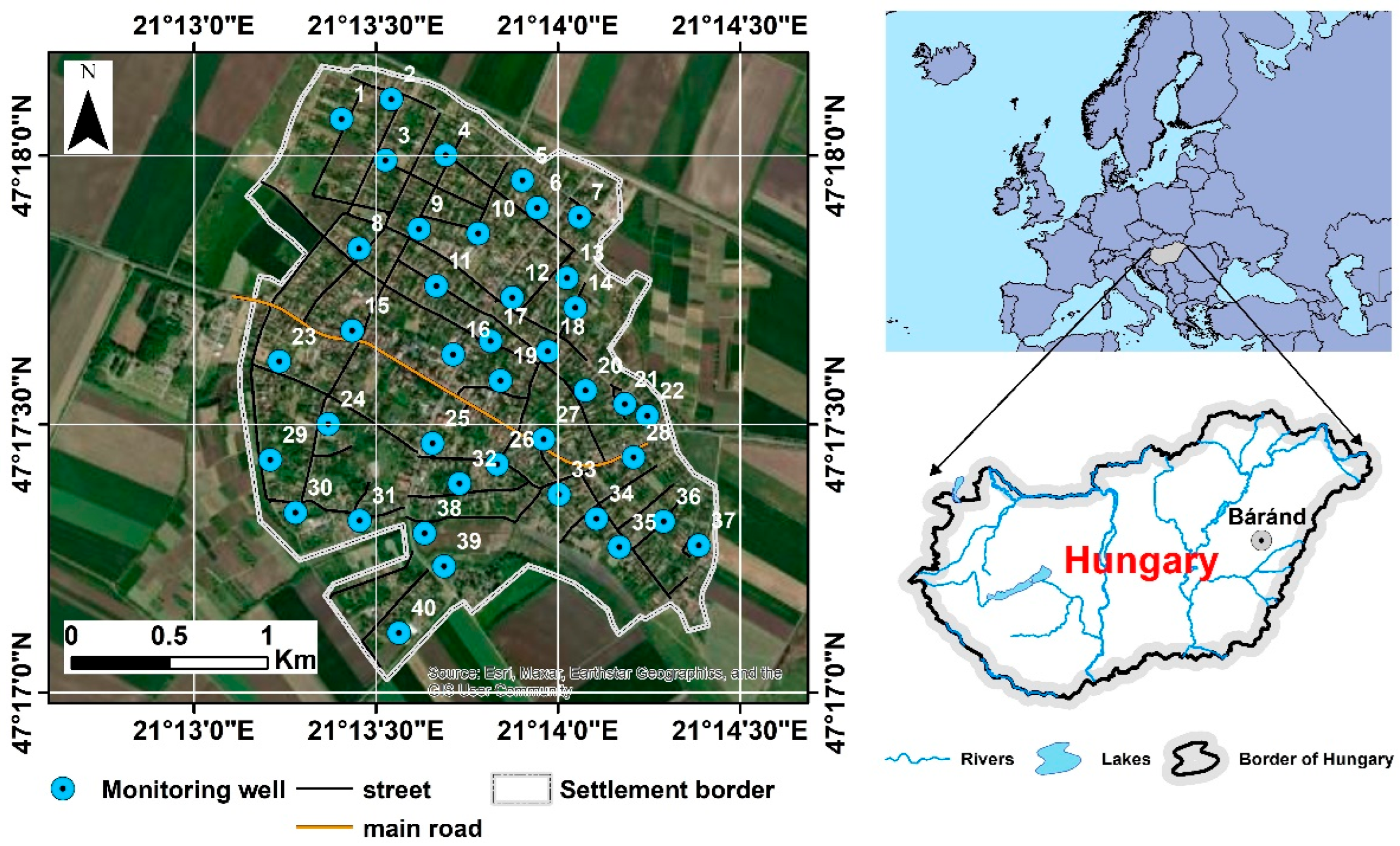
Groundwater samples were collected during the summer sampling campaigns of 2018, 2019, 2023, and 2024 from the monitoring wells shown in Figure 1. The groundwater level was measured before sampling. Samples were collected using a peristaltic pump and transferred into pre-cleaned polyethylene bottles. All samples were transported to the laboratory under cooled conditions, while the pH and electrical conductivity were measured in situ at the sampling sites. The regular sampling program was interrupted during 2020–2022 due to the COVID-19 pandemic; no sampling was conducted in 2020 and 2021, while the datasets from 2022 did not contain the complete and methodologically comparable parameter set required for the present assessment.

2.3. Analytical Measurements

The elemental concentration of the samples was determined by inductively coupled plasma optical emission spectrometry (ICP-OES 5110 Vertical Dual View, Agilent Technologies, Santa Clara, CA, USA). Auto samplers (Agilent SPS4), OneNeb type nebulizers, and double pass spray chambers were used, and a five-point calibration procedure was applied (ICP VI, Merck, Darmstadt, Germany). The ICP-OES operating conditions and measurement parameters are indicated in Table 1 and Table 2, respectively. Standard solutions of As, Ca, K, Mg, Na, P, and S were prepared from the mono-element spectroscopic standard of 1000 mg L−1 (Scharlau), while Al, B, Ba, Bi, Cd, Co, Cu, Cr, Fe, Li, Mn, Ni, Pb, Sr, and Zn from the multi-element spectroscopic standard solution of 1000 mg L−1 (ICP IV, Merck). Both cases and the 5-point calibration process were used, for which standard solutions were diluted with 0.1 M HNO3 prepared in ultrapure water.
The concentration of NH4+, NO2, NO3, and PO43− ions was determined in accordance with Hungarian Standards (HS ISO 7150-1:1992; HS 1484-13:2009) [36,37]. The pH and electrical conductivity (EC) were measured in situ at the sampling sites using an Aquaread AP5000 multiparameter (Broadstairs, UK). The results were assessed based on the contamination limits specified in Joint Regulation KvVM-EüM-FVM No. 6/2009 (IV. 14) [38].
Table 1. Descriptive statistics of the investigated parameters.
UnitN TotalMeanStan. Dev.Min.1st Quartile (Q1)Median3rd Quartile (Q3)Max.Interquartile Range
pH-1477.3910.4556.77.057.297.68.870.55
ECµS/cm1473115.5311712.38269519762700393097701954
NH4+mg/L1470.8360.860.0810.3440.5870.9525.4880.608
NO2mg/L1470.4982.0580.000.040.1560.39924.620.359
NO3mg/L147177.43194.7341.7145.63108.9246.651120.48201.02
PO43−mg/L1470.5860.5390.030.1810.4380.892.760.709
CODmg/L1477.5974.6481.14.6446.869.8336.815.186
Na+mg/L147378.12312.53550.7196288.45467.412019.77271.41
Clmg/L147313.26368.3523.63103.4189.6428.533112.89325.13
HCO3mg/L1476.176.990.000.004.1711.1125.9211.11
Almg/L1470.190.2070.0030.0210.10.430.840.409
Camg/L147419.10330.2662.5156295.326541193498
Mgmg/L147122.1984.56417.2855.05106.49164.2504109.15
Feµg/L147163.69182.6220621002401410178
Mnµg/L1471940.913010.94331160663011,4006599
Cuµg/L14742.4324.64202045.56010040
Srµg/L147956.41622.930.0048083013003850820
Znµg/L14790.5386.070.000.0090140460140
Bµg/L1471012.0375.48320.0760.0910.01130.02130370
Baµg/L14762.94644.9550.0033.5050.080.0030046.5
Pbµg/L1478.04711.2670.000.000.00016.2544.0016.25
Table 2. Contamination limits and limit exceedances in the investigated years.
ParameterLimit Exceed
2018 (%)
Limit Exceed
2019 (%)
Limit Exceed
2023 (%)
Limit Exceed
2024 (%)
Hungarian Limit
for Groundwater [38]
pH0.000.000.000.006.5–9.0
EC45.4543.5959.4678.952500
NH4+48.4835.9048.6594.740.5 mg/L
NO221.2115.3827.0323.680.5 mg/L
NO351.5266.6781.0878.9550 mg/L
PO43−42.4233.3337.8457.890.5 mg/L
COD84.2167.5774.3672.73200 mg/L
Na+21.2128.2156.7647.37200 mg/L
Al31.5782.3556.4188.21200 µg/L
Cu0.000.008.1136.84200 µg/L
Fe *11.3515.3836.795.26-/200 µg/L *
Mn *42.4041.0398.7197.37-/50 µg/L *
Zn3.030.0018.9215.79200 µg/L
B0.000.0092.1197.25500 µg/L
Ba0.000.000.000.00700 µg/L
Pb0.000.0069.2384.8510 µg/L
Cd0.000.000.000.005 µg/L
Co0.000.000.000.0020 µg/L
Cr0.000.000.000.0050 µg/L
Ag0.000.000.000.0010 µg/L
Li *0.000.000.000.00not defined
* No groundwater contamination limit is defined; the indicated threshold refers to drinking water.

2.4. Data Processing and Visualization

The hydrochemical dataset was organized in tabular format before statistical, graphical, and GIS-based analyses. Descriptive statistics, including mean, standard deviation, minimum, maximum, median, quartiles, and interquartile range, were calculated using IBM SPSS Statistics 29; boxplot diagrams were created using OriginLab 2025 Pro.
Hydrochemical diagrams were prepared in Grapher 19 software. Piper diagrams were used to classify groundwater facies, Wilcox diagrams to evaluate irrigation suitability based on salinity and sodium hazard, and Gibbs diagrams to interpret the dominant controls on groundwater chemistry, including water–rock interaction and evaporation-related concentration.
Multivariate statistical analyses were performed in OriginLab 2025 Pro. Spearman correlation heatmaps were used to evaluate relationships among the investigated parameters, while hierarchical cluster analysis and principal component analysis were applied to identify similar parameter groups, well clusters, and the main hydrochemical gradients controlling groundwater composition.
Spatial interpolation maps were created in ArcGIS 10.4.1 using the inverse distance weighting (IDW) interpolation method to visualize the distribution of selected groundwater quality parameters and to identify local contamination hotspots within the monitoring network. IDW estimates values at unsampled locations as a weighted average of neighboring measured values, where the weights decrease with increasing distance according to the following equation [39]:
Z ^ x 0 = i = 1 n Z x i d i p i = 1 n 1 d i p
where
d i = x 0 x i
and where Z ^ x 0 is the estimated value at the unsampled location, Z x i is the measured value at sampling point i , d i is the distance between the prediction location and sampling point, p is the power parameter, and n is the number of sampling points used for the estimation. The resulting maps were used to visualize the spatial distribution of selected groundwater quality parameters and to identify local contamination hotspots within the monitoring network.

3. Results

3.1. General Hydrochemical Characteristics and Limit Exceedances

A total of 147 groundwater samples were evaluated to characterize the post-sewerage hydrochemical status of the shallow groundwater system in the study area. The descriptive statistics indicate that the groundwater was generally neutral to slightly alkaline, while nutrient-related parameters showed considerable variability. The pH values ranged from 6.70 to 8.87, with a median of 7.29 and an interquartile range of 7.05–7.60, indicating relatively stable acid–base conditions across the dataset. In contrast, the nitrogen and phosphorus forms showed pronounced enrichment in several samples, indicating localized phosphate enrichment potentially related to residual impacts of former domestic wastewater infiltration. Phosphate concentrations ranged from 0.030 to 2.760 mg/L, with a median of 0.438 mg/L and an interquartile range of 0.181–0.890 mg/L. Ammonium concentrations ranged from 0.081 to 5.488 mg/L, with a median of 0.587 mg/L and Q1–Q3 values of 0.344–0.952 mg/L. Thus, the median value already exceeded the 0.5 mg/L groundwater contamination limit, suggesting that reduced nitrogen forms remained relevant in the post-sewerage period.
Nitrate represented the most significant nutrient-related contamination indicator. Concentrations varied from 1.71 to 1120.48 mg/L, with a mean of 177.43 mg/L, a median of 108.90 mg/L, and an interquartile range of 45.63–246.65 mg/L. The fact that the median nitrate concentration was more than twice the 50 mg/L limit indicates widespread nitrate contamination in the shallow aquifer. The descriptive statistics, therefore, suggest that the post-sewerage groundwater system is still affected by nutrient accumulation, particularly in relation to nitrate and ammonium.
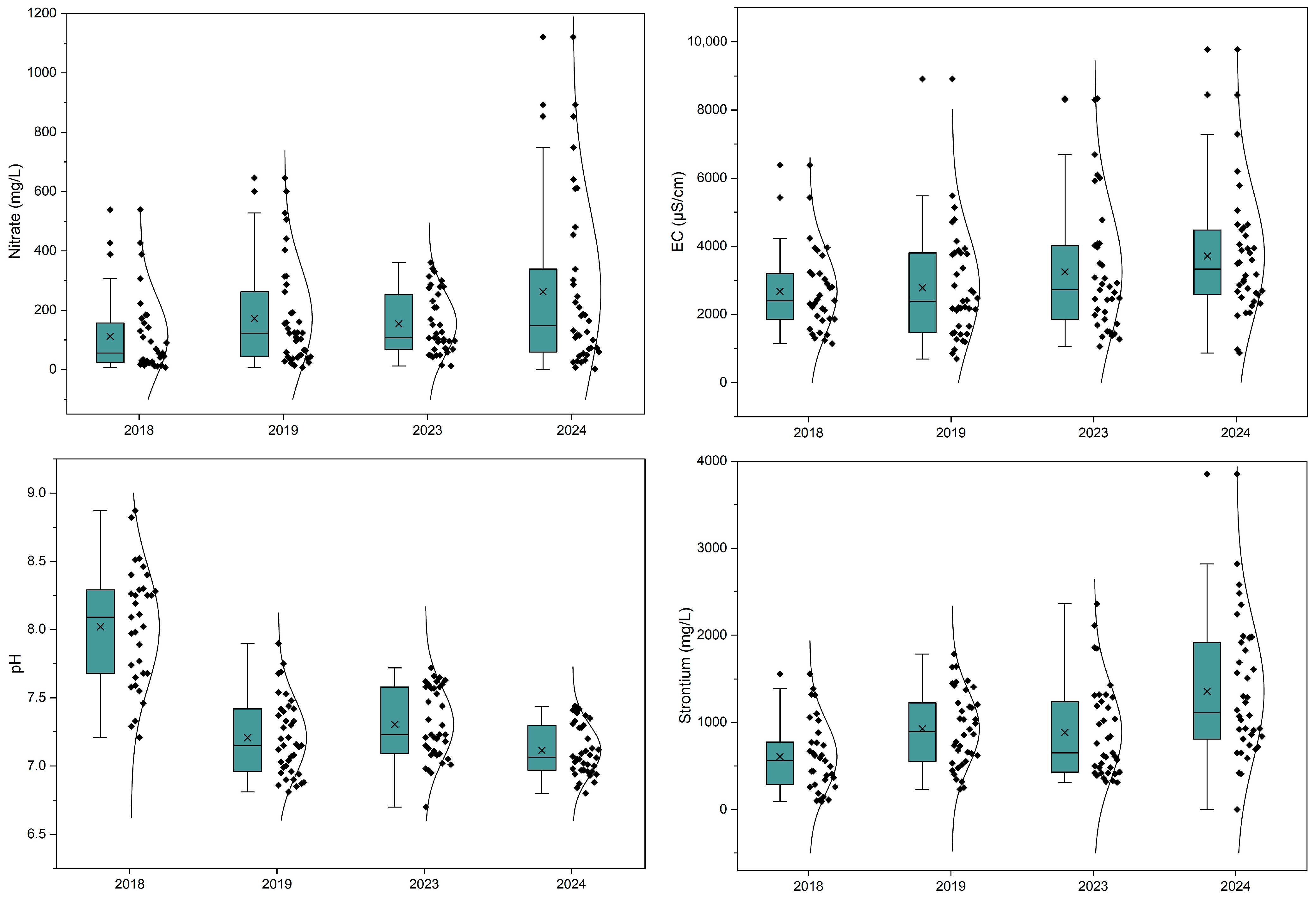
This pattern is further supported by the boxplot diagrams in Figure 2, where nitrate and electrical conductivity show the strongest variability among the selected parameters. Electrical conductivity ranged from 695 to 9770 µS/cm, with a median of 2700 µS/cm and an interquartile range of 1976–3930 µS/cm. The high median value and wide interquartile range indicate substantial mineralization of the groundwater, while the extreme maximum value suggests the presence of strongly affected local hotspots. Nitrate shows a similarly heterogeneous distribution, with a broad interquartile range and several high outliers. Together, the EC and nitrate boxplots indicate that salinity and nutrient contamination are not uniformly distributed across the settlement but are controlled by local hydrochemical conditions, former wastewater-related inputs, and spatially variable groundwater transport processes.
Strontium in groundwater is mainly derived from the dissolution of Sr-bearing carbonate and sulphate minerals, and it often indicates stronger water–rock interaction, longer residence time, or more mineralized groundwater. In the investigated samples, Sr concentrations ranged from <LOD to 3850 µg/L, with a mean of 956.42 µg/L and a median of 830 µg/L. The interquartile range of 480–1300 µg/L and the elevated values shown by the boxplot indicate substantial spatial variability. Together with the high EC values, this suggests that Sr enrichment is mainly linked to groundwater mineralization and sediment–water interaction rather than to a single direct pollution source.
B exhibited relatively high and widespread concentrations, ranging from 320 to 2130 µg/L, with a mean of 1012 µg/L, a median of 910 µg/L, and an interquartile range of 760–1130 µg/L. This indicates that B enrichment affected a large proportion of the samples and may be associated with mineralized groundwater, former domestic wastewater inputs, and evaporative concentration processes. In contrast, Ba concentrations were considerably lower, ranging from <LOD to 300 µg/L, with a median of 50 µg/L and Q1–Q3 values of 33.5–80 µg/L, suggesting moderate variability and no pronounced enrichment across the dataset. Pb showed the most asymmetric distribution. Although the mean concentration was 8.05 µg/L, the median was 0 µg/L, while the upper quartile reached 16.25 µg/L and the maximum was 44 µg/L. This indicates that Pb was absent or very low in most samples, but localized exceedances occurred in a smaller subset of wells, probably reflecting site-specific inputs.
As shown in Table 2, the annual exceedance patterns were evaluated against the Hungarian legal threshold values defined for groundwater contamination. The results indicate the persistence of elevated nutrient and salinity-related parameters in the post-sewerage groundwater system. EC exceedances increased from 45.45% in 2018 and 43.59% in 2019 to 59.46% in 2023 and 78.95% in 2024. Nitrate exceedances were also consistently high, rising from 51.52% in 2018 to 66.67% in 2019, 81.08% in 2023, and 78.95% in 2024. Ammonium showed an especially pronounced increase in 2024, when 94.74% of the samples exceeded the 0.5 mg/L groundwater contamination limit. Phosphate exceedances varied between 33.33% and 57.89%, while sodium exceedances remained high in all years, ranging from 67.57% to 84.21%. These results suggest that the shallow groundwater system still retains a marked nutrient and salinity imprint after sewerage network development.
The higher exceedance rates in 2023 and 2024 may partly reflect the hydrological response of the shallow aquifer to a 2–3 m decline in groundwater level and drier summer periods. Reduced recharge and dilution can promote solute concentration and longer groundwater residence time, thereby enhancing EC, nitrate, sodium, and strontium enrichment in the post-sewerage groundwater system.

3.2. Hydrochemical Facies, Salinity Characteristics, and Controlling Processes

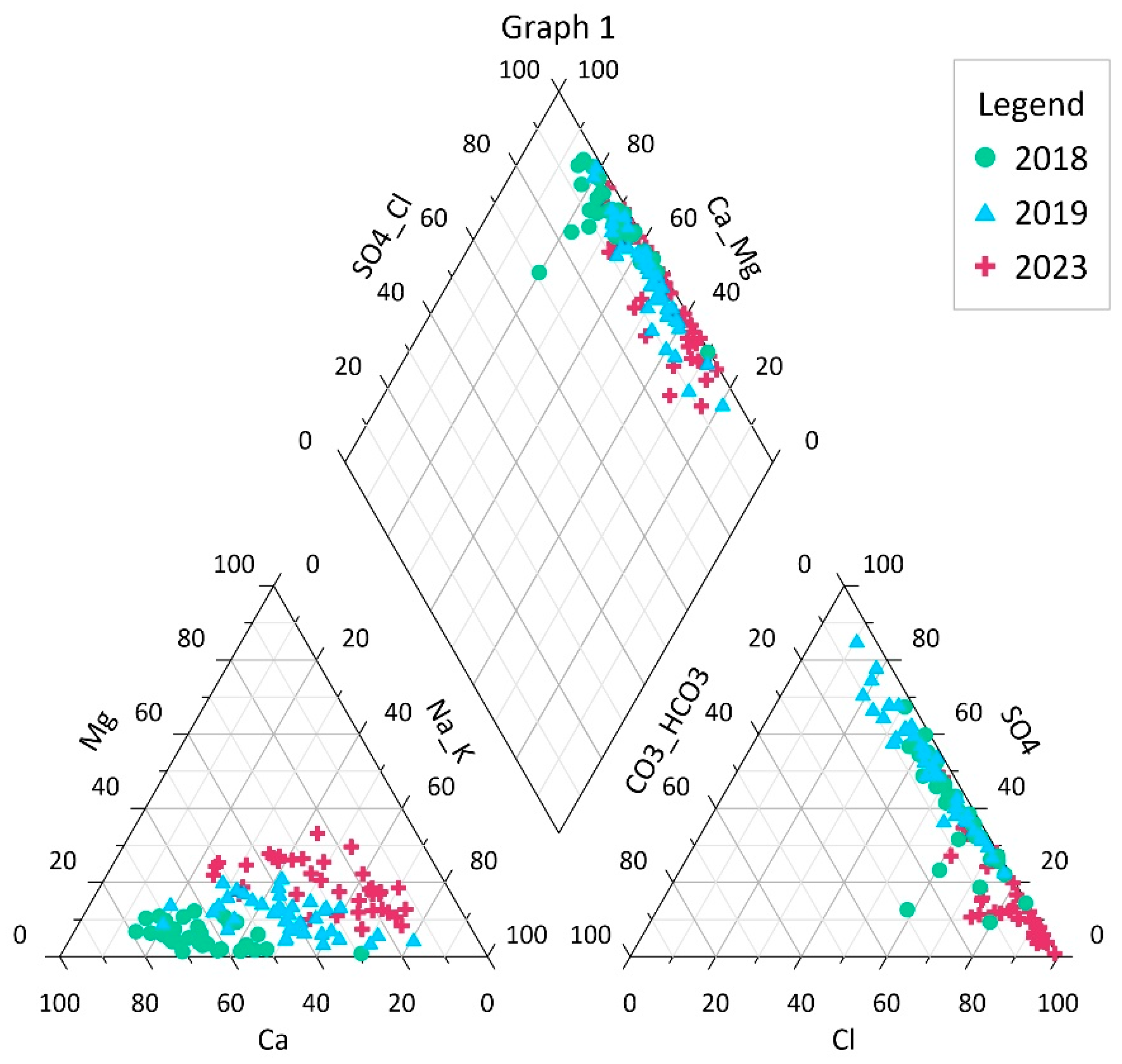
The Piper diagram in Figure 3 shows that the groundwater samples are mainly characterized by Ca–Na + K dominance on the cation side and a strong shift towards Cl-rich composition on the anion side. The samples from 2018 are mainly associated with Ca–Cl type waters, while the samples from 2019 and especially from 2023 show a shift towards mixed Ca–Na–Cl and partly Na–Cl compositions. This hydrochemical evolution reflects increasing Na + K proportions and a strong Cl imprint, suggesting that the original Ca-rich groundwater composition is modified by sodium enrichment, chloride accumulation, ion exchange, and residual wastewater-related salinity inputs.
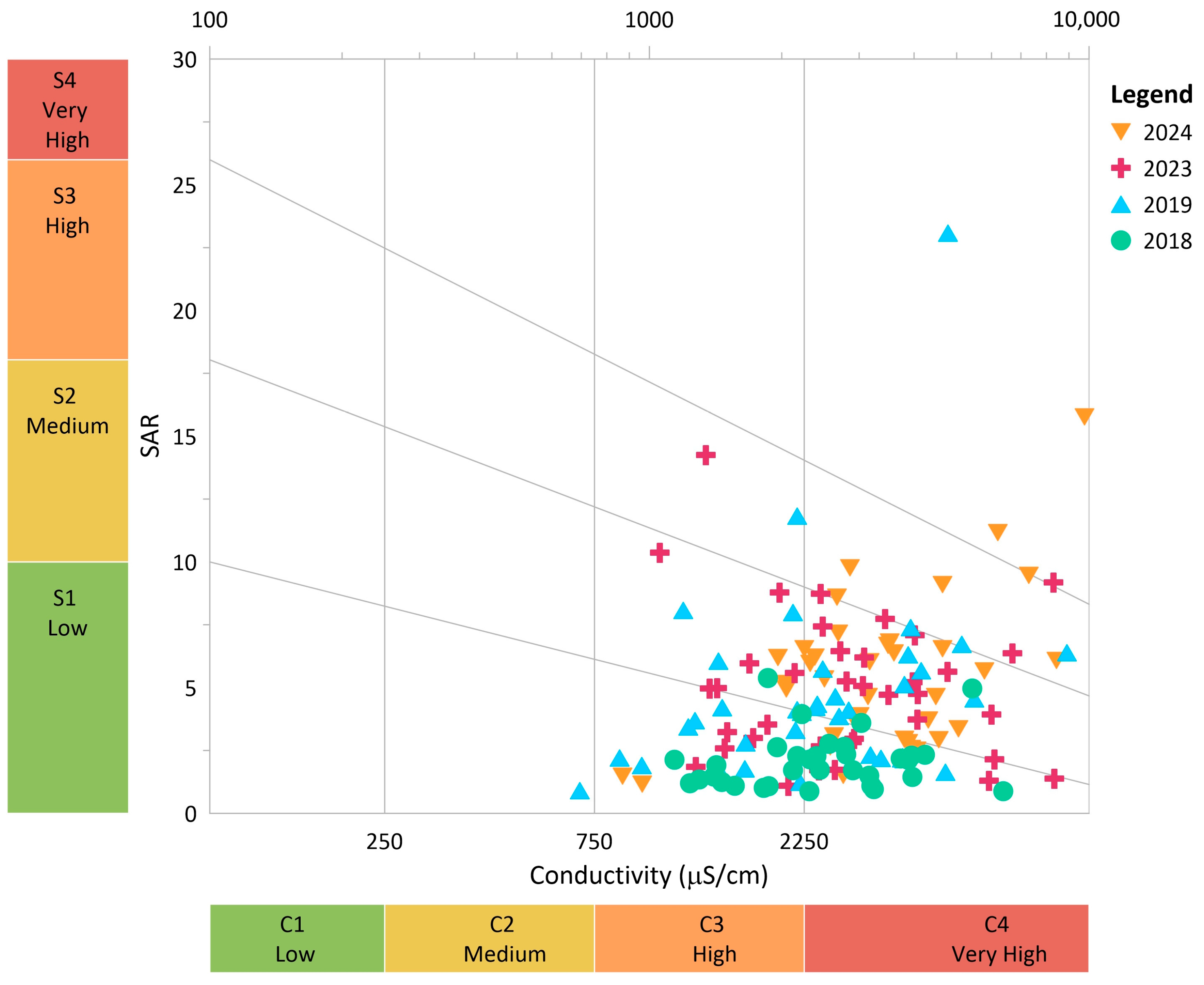
The Wilcox diagram in Figure 4 indicates that irrigation suitability is limited mainly by salinity rather than sodium hazard. Most samples fall into the C3–C4 salinity classes, reflecting the high EC values observed in the dataset. Sodium concentrations were also elevated, with a median of 288.45 mg/L, Q1–Q3 values of 196.00–467.41 mg/L, and a maximum of 2019.77 mg/L. Although most samples remain within the low-to-moderate SAR range, several 2019, 2023, and 2024 samples reach higher sodium hazard fields. This suggests that shallow groundwater use for irrigation would require caution, especially on poorly drained or salt-sensitive soils.
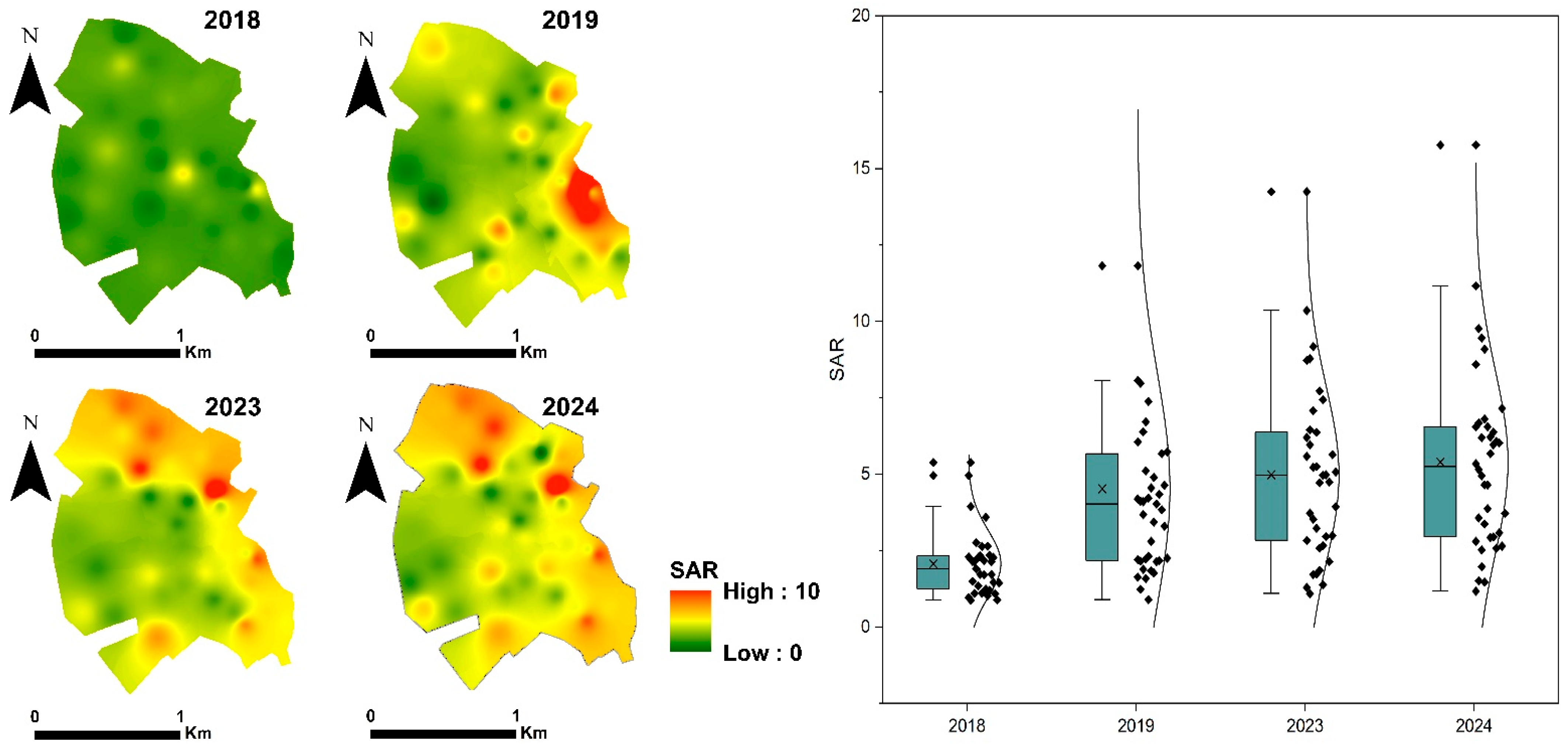
The SAR spatial prediction maps and boxplots in Figure 5 indicate increasing spatial heterogeneity after 2018. In 2018, SAR values were generally low and uniform, with a median of 1.7–2.0 and an interquartile range of about 1.2–2.4. By 2019, the distribution widened markedly, with Q1–Q3 values of 2.0–5.5 and outliers exceeding 10. In 2023 and 2024, median SAR values remained around 5, while the upper outliers reached approximately 14–16, indicating the persistence of localized sodium enrichment. This pattern corresponds with the elevated Na concentrations and suggests that sodium accumulation, ion exchange, and salinity-related processes remained active during the post-sewerage period.
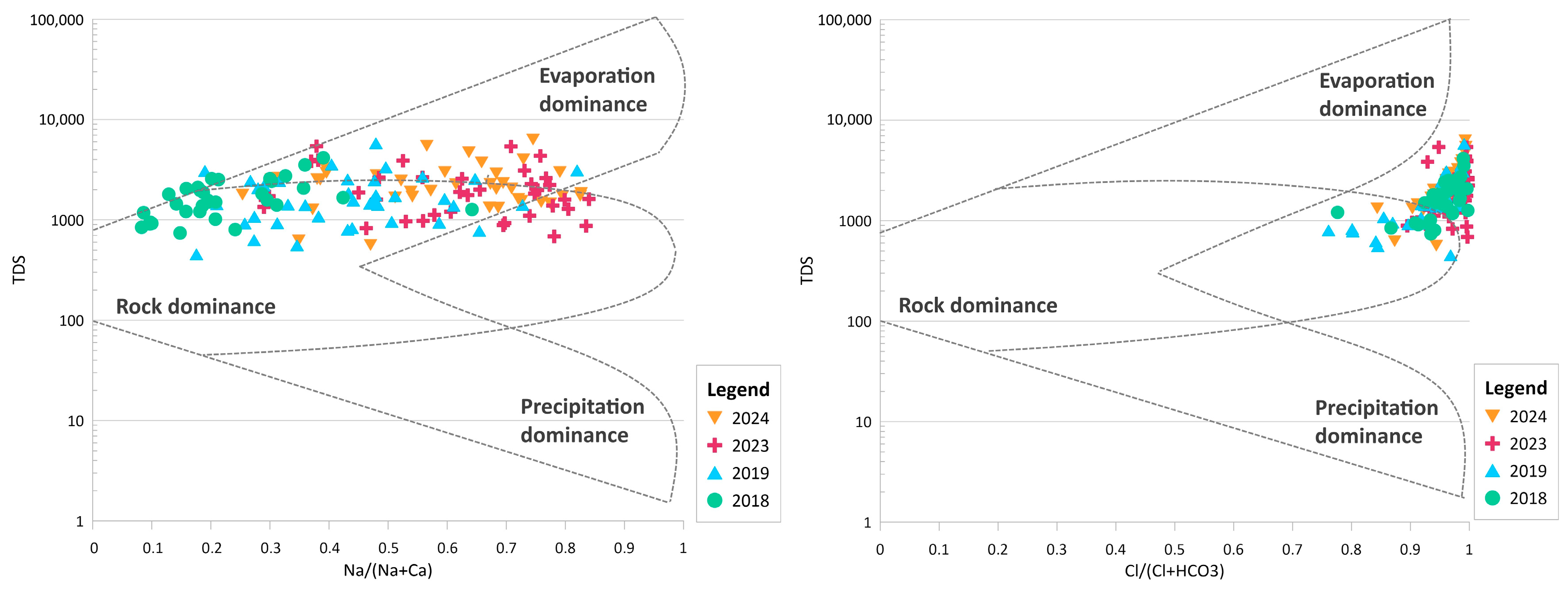
The Gibbs diagrams in Figure 6 indicate that groundwater chemistry is controlled by both water–rock interaction and evaporation-related concentration. In the Na/(Na + Ca) plot, samples occupy a broad range between rock dominance and evaporation dominance. In the Cl/(Cl + HCO3) plot, many samples are shifted towards chloride-rich composition, which is consistent with the elevated Cl and EC values. The combination of high EC, high Cl, and high Na suggests that natural hydrogeochemical processes are modified by anthropogenic salt inputs, most probably related to former wastewater infiltration and rural land use pressures.

3.3. Multivariate Assessment of Groundwater Hydrochemical Patterns

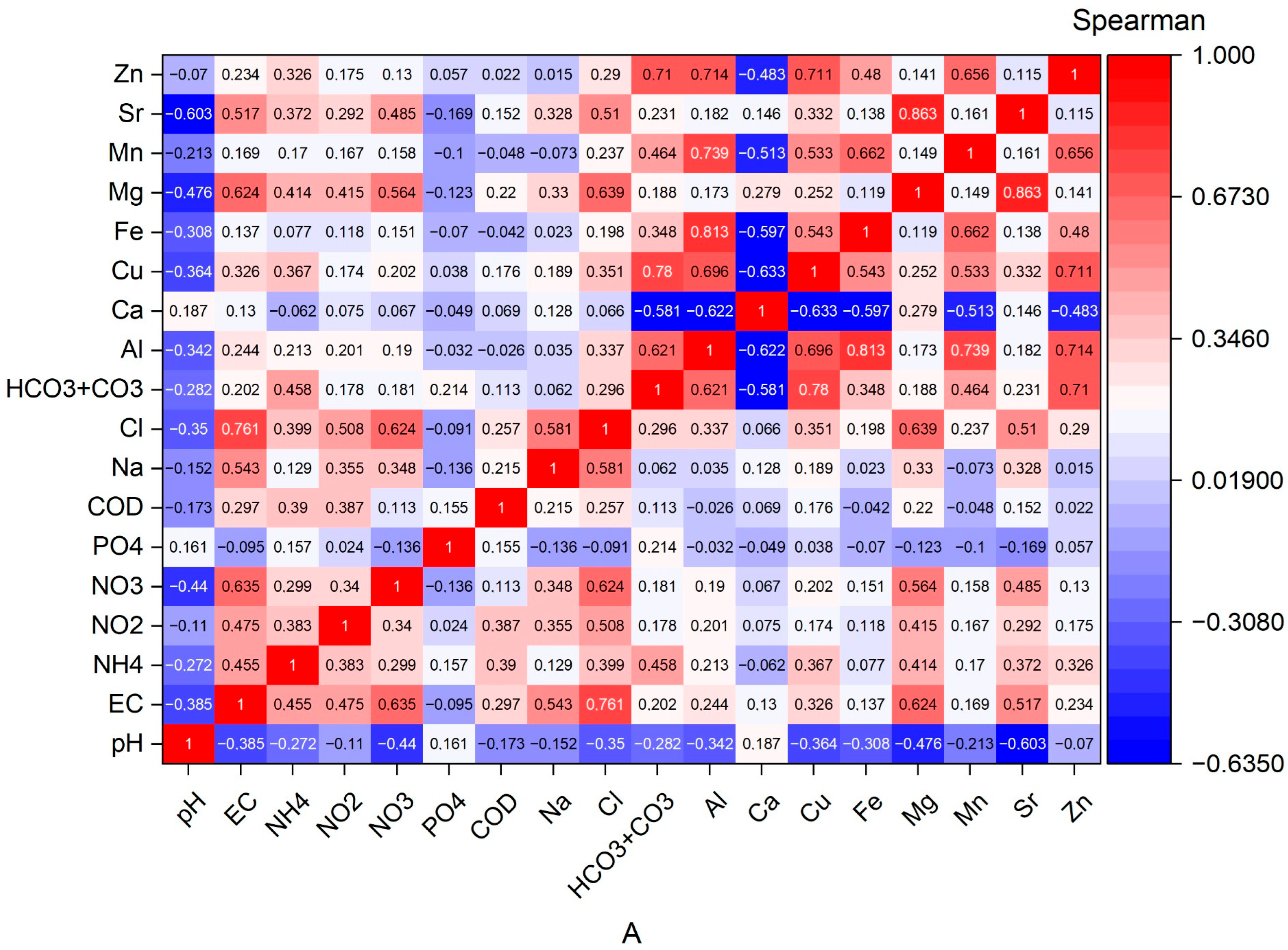
The Spearman correlation matrix in Figure 7 identifies two main parameter groups. The first group is related to salinity and nutrient enrichment. EC correlates strongly with Cl (r = 0.761), NO3 (r = 0.635), Mg (r = 0.624), Na (r = 0.543), and Sr (r = 0.517). This indicates that nitrate contamination and mineralization are partly connected and may share similar sources or migration pathways. The second group includes trace and redox-sensitive elements. Al shows strong positive correlations with Fe (r = 0.813), Mn (r = 0.739), Zn (r = 0.714), and Cu (r = 0.696), while Cu and Zn are also strongly correlated (r = 0.711). These relationships suggest that trace element distribution is influenced by common mobilization processes, including redox variability, sorption–desorption, and interaction with fine-grained alluvial sediments.
The matrix also shows several relevant significant negative correlations, mainly involving pH and Ca. pH was negatively correlated with Sr (r = −0.603), Mg (r = −0.476), NO3 (r = −0.440), EC (r = −0.385), Cu (r = −0.364), Al (r = −0.342), and Fe (r = −0.308), indicating that slightly lower pH conditions are associated with more mineralized, nitrate-rich, and trace element-enriched groundwater. Ca also showed negative correlations with Cu (r = −0.633), Al (r = −0.622), Fe (r = −0.597), HCO3 + CO3 (r = −0.581), and Zn (r = −0.483). These inverse relationships suggest that Ca-dominated waters and trace element-enriched waters represent partly distinct hydrochemical pathways, likely reflecting differences in ion exchange, carbonate equilibrium, and metal mobilization processes.
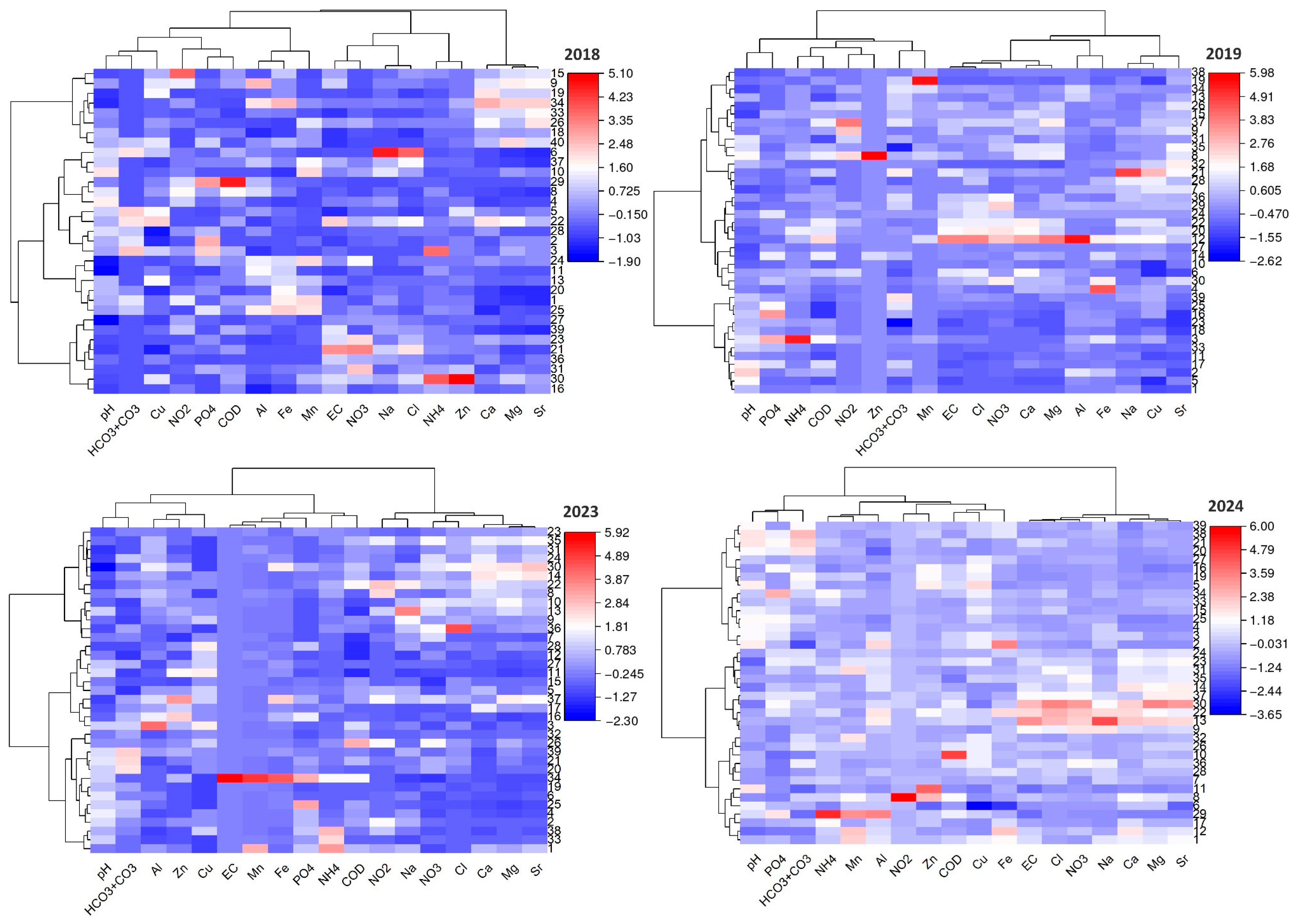
The hierarchical cluster analysis confirms that the monitoring wells and parameters do not form a single homogeneous hydrochemical system (Figure 8). The parameter dendrogram separates several recurring hydrochemical groups. A mineralization–salinity group is mainly represented by EC, Cl, Na, Ca, Mg, and Sr, indicating the joint behavior of dissolved salts and major ions. Nitrate is positioned close to this group in several years, suggesting that nitrate enrichment is partly associated with the overall mineralization of groundwater. A second group includes nutrient and organic matter-related parameters, particularly NH4+, NO2, PO43−, and COD, while Al, Fe, Mn, Cu, and Zn form a trace element/redox-sensitive group with year-dependent internal structure. pH and HCO3 + CO3 generally show a more separate position, reflecting carbonate buffering and acid–base conditions as a distinct hydrochemical control.
The well dendrograms also show clear year-to-year differences. In 2018 and 2019, most wells were characterized by low-to-moderate standardized values, with only a few localized enrichments. This indicates that contamination signals were present but relatively compartmentalized. In 2023 and 2024, the separation among wells becomes stronger; one group of wells remains dominated by low or near-average values, whereas another group shows simultaneous enrichment in EC, Cl, Na, Ca, Mg, Sr, and, in some cases, nitrate and trace elements. This pattern indicates that the later post-sewerage period was characterized by more pronounced spatial structuring of groundwater chemistry. The clustering, therefore, suggests that groundwater quality changes were not uniform across the settlement but were controlled by local hydrogeological conditions, variable flushing of former wastewater-derived solutes, groundwater-level decline, and the persistence of site-specific contamination hotspots.
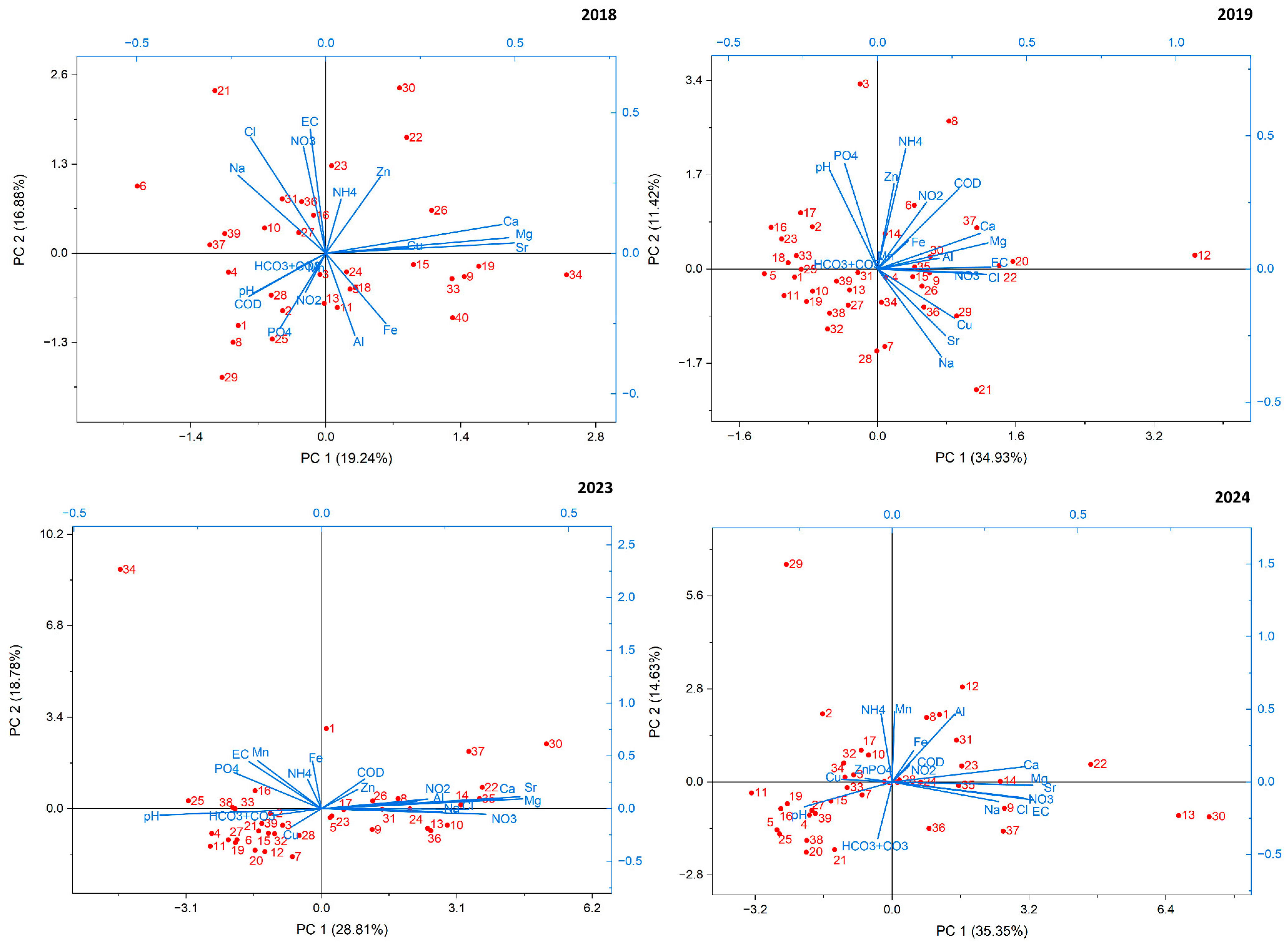
The PCA biplots in Figure 9 further support the multi-process control of groundwater chemistry. In 2018, PC1 and PC2 explained 19.24% and 16.88% of the variance, respectively, together accounting for 36.12% of the total variability. The relatively low explained variance indicates a diffuse hydrochemical structure, with no single dominant controlling gradient. In this year, EC, NO3, Cl, and Na were mainly associated with the positive side of PC2, while Ca, Mg, and Sr were aligned along the positive side of PC1, suggesting a partial separation between salinity/nutrient enrichment and alkaline earth element-related mineralization.
In 2019, PC1 became the dominant axis, explaining 34.93% of the variance, while PC2 explained 11.42%. The first two components, therefore, accounted for 46.35% of the total variance. EC, NO3, Cl, Ca, Mg, and Sr were mainly oriented towards the positive side of PC1, indicating a clearer mineralization and salinity gradient. In contrast, NH4, PO4, pH, and Zn were more strongly associated with PC2, suggesting that reduced nitrogen, phosphorus, and selected trace elements were partly controlled by different local processes. The position of well 12 as a clear outlier on the positive PC1 side indicates a strongly mineralized sample compared with the rest of the monitoring network.
In 2023, PC1 and PC2 explained approximately 28.81% and 18.78% of the variance, respectively, together accounting for 47.59%. The 2023 biplot shows a strong PC1 gradient associated mainly with Cl, NO3, Ca, Mg, and Sr, while EC, Mn, Fe, NH4, COD, and Zn are more strongly related to PC2. This indicates that salinity/mineralization and redox or organic matter-related processes were partly separated in this year. Wells 30 and 37 are positioned on the strongly positive PC1 side, suggesting elevated mineralization, whereas well 34 is clearly separated along PC2, indicating a different hydrochemical signature linked to trace elements or redox-sensitive parameters.
In 2024, PC1 explained 35.30% and PC2 14.63% of the variance, together representing 49.93% of the total variability. The positive side of PC1 was mainly associated with EC, NO3, Na, Cl, Ca, Mg, and Sr, confirming the dominant role of mineralization, salinity, and nitrate enrichment. PC2 was more closely related to NH4, Mn, Al, Fe, COD, and NO2, indicating the influence of reduced nitrogen forms and trace element mobilization. Wells 13 and 30 were separated along the positive PC1 axis, while well 29 was clearly distinguished along PC2, suggesting the persistence of well-specific hydrochemical anomalies. Overall, the PCA confirms that groundwater chemistry is controlled by overlapping but partly separable processes, including salinity enrichment, nitrate contamination, water–rock interaction, and redox-sensitive trace element mobilization.

3.4. Spatial Patterns of Trace Elements and Mineralization Indicators

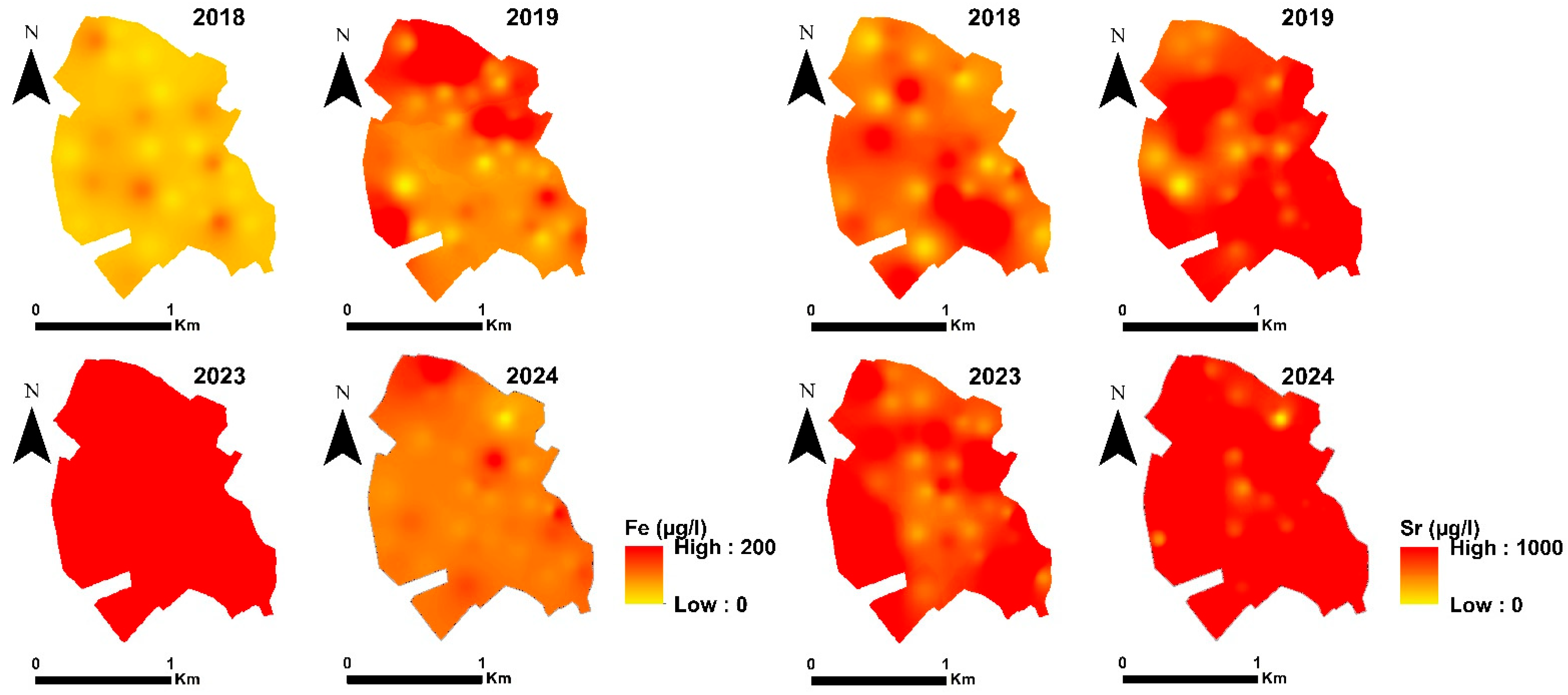
The spatial prediction maps of Fe and Sr in Figure 10 show different temporal patterns.
Fe displayed strong temporal variability, with the most extensive enrichment in 2023. Across the full dataset, Fe had a median of 100 µg/L, Q1–Q3 values of 62–240 µg/L, and a maximum of 1410 µg/L. This suggests episodic redox-controlled mobilization. Sr showed a more persistent enrichment pattern, especially in 2023 and 2024. Its high median concentration of 830 µg/L and strong association with EC and Mg indicate that Sr is mainly linked to mineralized groundwater and water–rock interaction rather than isolated point source pollution.
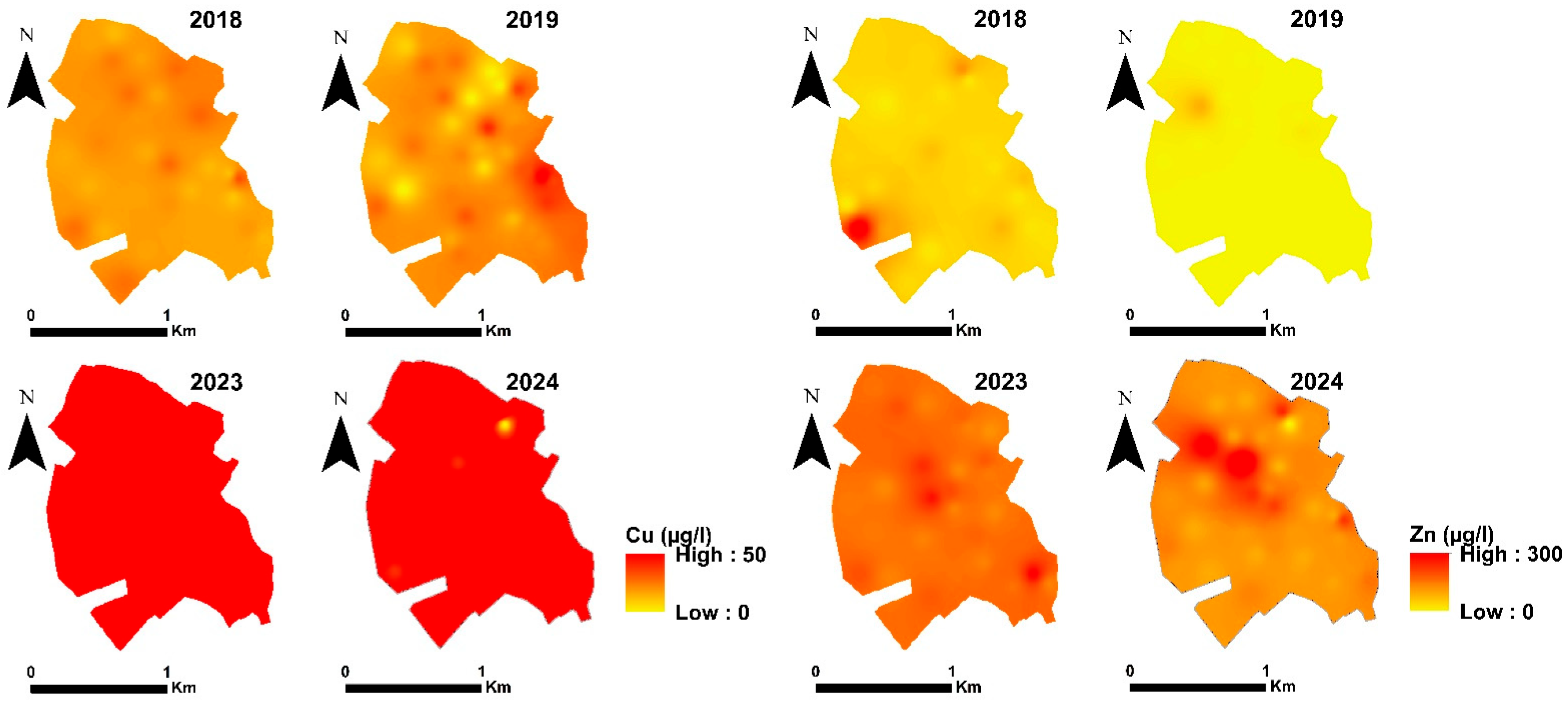
The Cu and Zn prediction maps in Figure 11 reveal increasing spatial heterogeneity in the later years. Cu concentrations had a median of 45.5 µg/L, Q1–Q3 values of 20–60 µg/L, and a maximum of 100 µg/L. Zn had a median of 90 µg/L, Q1–Q3 values of 0–140 µg/L, and a maximum of 460 µg/L. The stronger Cu and Zn enrichment observed in 2023 and 2024, together with their positive correlation, suggests that these elements may be controlled by similar geochemical processes, particularly sorption–desorption reactions, redox-related mobilization, and local settlement-related inputs.

3.5. Indicators of Former Wastewater Influence and Contamination Sources

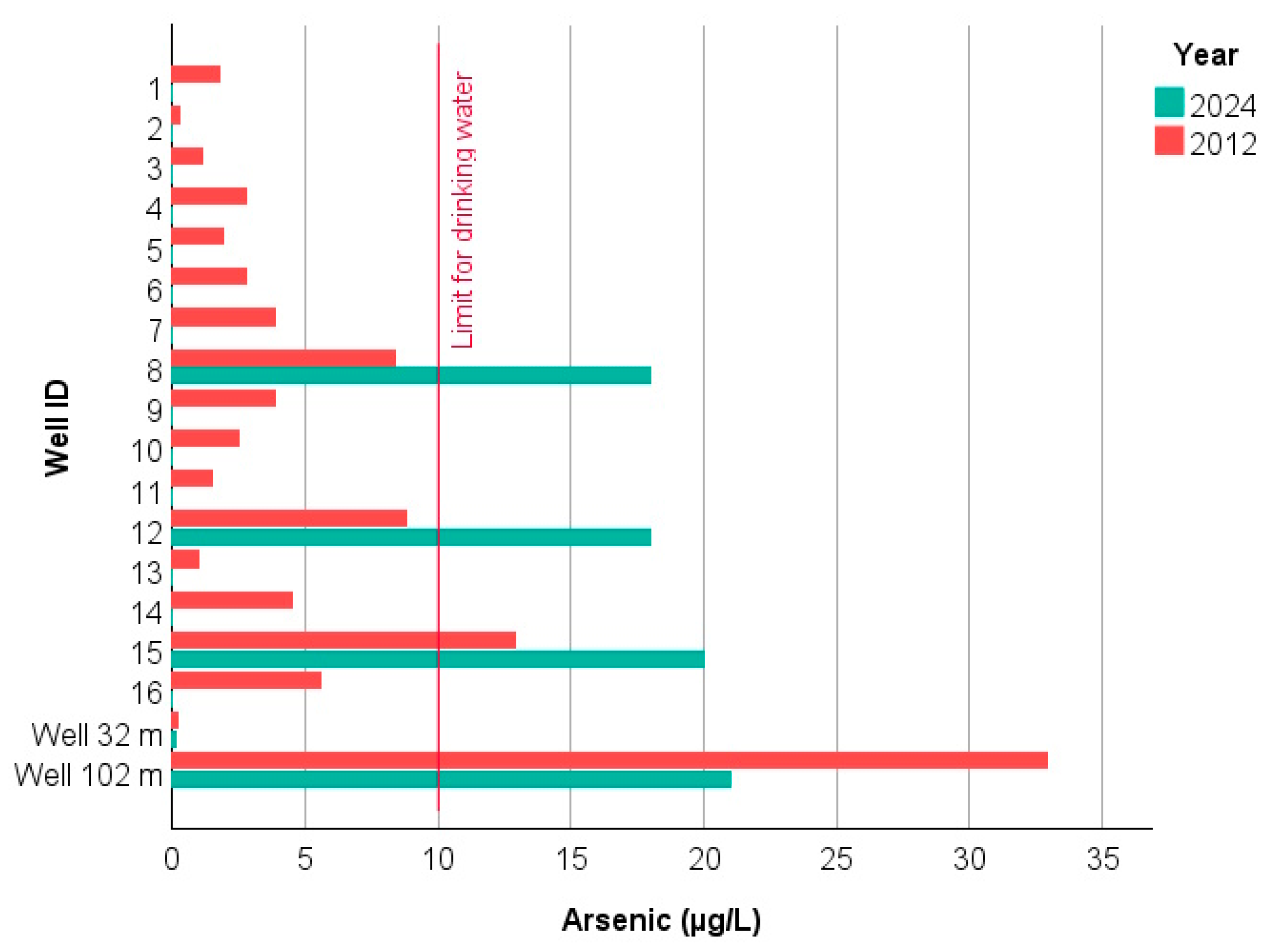
Arsenic was used as a supporting indicator for identifying the possible origin of contamination, because the deeper groundwater historically used in the settlement was characterized by elevated As concentrations. Consequently, domestic wastewater generated before sewerage network development also contained elevated As, and its infiltration through on-site sanitation systems contributed As to the shallow groundwater system. To evaluate whether this signal decreased after sewerage development, the pre-sewerage As concentrations from 2012 were compared with the 2024 data (Figure 12). Although elevated As concentrations were still detected in three shallow wells in 2024, especially wells 8, 12, and 15, As was no longer detectable in the majority of the investigated shallow wells approximately ten years after sewerage development. This indicates a substantial reduction in the wastewater-related As signal across most of the monitoring network. The remaining elevated concentrations in the three wells may be related to later household connection to the sewerage system, which could have prolonged wastewater infiltration locally. The 102 m deep well showed naturally elevated As concentrations in both years, reflecting the As-rich deeper groundwater rather than shallow groundwater contamination.
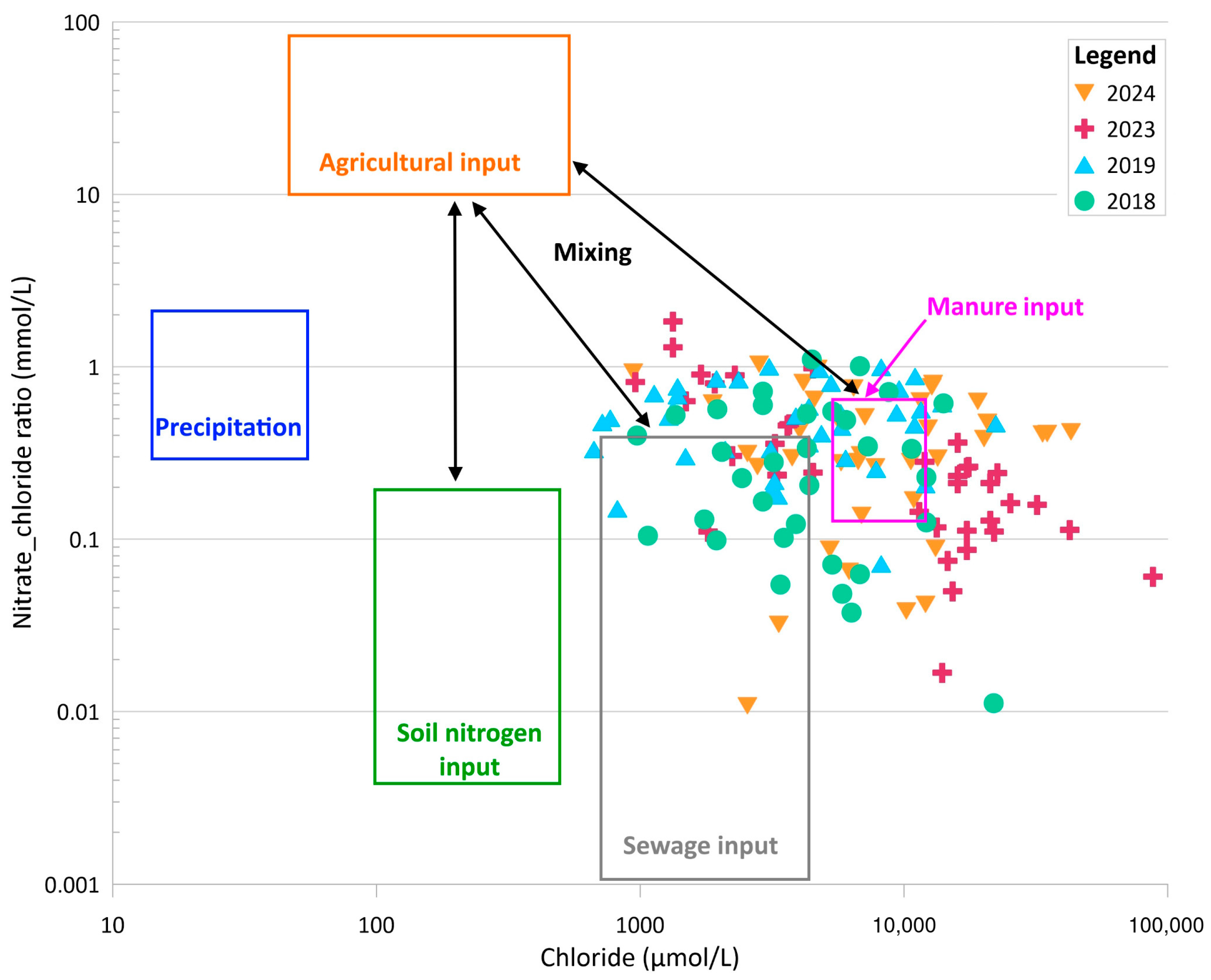
The nitrate–chloride source plot (Figure 13) was used to support the interpretation of contamination origin, because chloride is both a conservative groundwater tracer and an important indicator of wastewater-derived or salinity-related inputs, while nitrate is more directly associated with nitrogen sources such as sewage, manure, and agricultural leaching. Therefore, the nitrate/chloride ratio, together with absolute chloride concentration, can help distinguish between sewage influence, manure input, soil nitrogen contribution, and mixing processes.
Most samples plot within the range of approximately 1000–20,000 µmol/L Cl, while the nitrate/chloride ratio generally varies between 0.05 and 1.0. This distribution indicates mixed contamination sources rather than a single dominant input. Several samples, especially from 2018 and 2019, occur close to the manure input field, with chloride concentrations around 5000–15,000 µmol/L and nitrate/chloride ratios of approximately 0.3–1.0. In contrast, some 2023 and 2024 samples are shifted towards higher chloride concentrations and lower nitrate/chloride ratios, reaching up to approximately 50,000–80,000 µmol/L Cl, which is consistent with stronger sewage-related or mixed salinity influence. Only a limited number of samples approach the soil nitrogen or agricultural input fields, while no clear precipitation-dominated signal is observed. Overall, the plot indicates that the shallow groundwater system still preserves a wastewater-related chloride imprint after sewerage development, but this signal is locally mixed with manure-derived and diffuse agricultural nitrogen inputs.

4. Discussion

The results of this study indicate that sewerage network development (2014) reduced the direct input of untreated domestic wastewater into the shallow groundwater system but did not lead to complete decontamination within the investigated period (2018–2024). This interpretation is consistent with the earlier results of Mester et al. (2025), who showed that before sewerage development, leakage from uninsulated septic tanks produced extremely high NH4+ concentrations and a local groundwater dome, whereas after sewerage expansion, groundwater levels declined and some pollution indicators decreased [40]. However, their results also showed that nitrate and sodium contamination remained detectable in several parts of the settlement. The persistence of NH4+, NO3, Na+, Cl, and EC anomalies in the present study, therefore, suggests a transitional post-sewerage hydrochemical state rather than immediate recovery. This is also supported by Robertson (2021), who reported that septic tank effluent is typically dominated by ammonium-N, with values of 18–108 mg/L, which can later be transformed into nitrate during transport through the unsaturated zone [41]. Similarly, Richards et al. (2016) described septic tank discharges as multi-pollutant hotspots, contributing not only nitrogen forms but also chloride, sodium, phosphorus, and organic matter to groundwater systems [42]. McCobb et al. (2021) also demonstrated in Cape Cod that the replacement of septic systems by municipal sewers does not immediately produce measurable groundwater improvement everywhere, because the rate of change depends strongly on aquifer flushing and groundwater residence time [43].
This delayed recovery is well explained by the broader concept of nitrogen legacy. Van Meter et al. (2016) emphasized that anthropogenic landscapes can accumulate large nitrogen stocks in soils and groundwater, which continue to affect water quality long after inputs are reduced [44]. At the global scale, Ascott et al. (2017) estimated that the vadose zone stored 605–1814 Tg N around 2000, particularly in regions with long agricultural histories, such as Europe, North America, and China [45]. Sebilo et al. (2013) provided direct tracer evidence for this mechanism. More than 25 years after fertilizer application, 12–15% of the labeled nitrogen still remained in soil organic matter, 8–12% had leached toward the hydrosphere, and further nitrate export was expected for decades [46]. Vautier et al. (2021) similarly showed in western France that nitrate concentrations in some wells may remain almost unchanged 5–15 years after a sudden stop in nitrogen input because of groundwater residence time and saturated-zone transport [47]. Liu et al. (2024) confirmed this at the river-basin scale, showing that groundwater nitrogen accounted for 50% of N delivery to streams in the Rhine, 66% in the Mississippi, 56% in the Yangtze, and 65% in the Pearl River basin in 2015 [48]. Sanford and Pope (2013) also demonstrated that groundwater transport may delay water quality improvement for decades, even after land surface nitrogen reduction measures are implemented [49]. These findings strongly support the interpretation that the elevated nitrate and salinity indicators in Báránd are partly controlled by delayed flushing of legacy solutes rather than by present-day wastewater input alone.
The mixed origin of contamination is also consistent with international nitrate source studies. Biddau et al. (2023) reported nitrate concentrations of 1–165 mg/L in Sardinian groundwater and found that sewage and manure were dominant nitrate sources, while hydrochemical evolution ranged from Ca–HCO3-type waters at low salinity to Na–Cl-type waters at higher salinity [19]. This pattern is comparable to our study area, where the Piper diagram indicated a shift towards Ca–Na–Cl and partly Na–Cl water types, suggesting chloride accumulation, sodium enrichment, and residual wastewater-related salinity input. Gao et al. (2024) further demonstrated that NO3/Cl ratios are useful for separating nitrate sources. High Cl and low NO3/Cl ratios usually indicate sewage or manure influence, whereas higher NO3/Cl ratios with lower chloride concentrations point to agricultural or soil nitrogen sources [50]. Their model showed that soil nitrogen contributed 60.1–68.4% of nitrate, while manure and sewage contributed 16.5–35.5%, confirming that mixed rural sources are common in intensively used settlement–agricultural environments. Kyte et al. (2023) also showed that after 44 years of manure application, shallow groundwater nitrate ranged from <0.1 to 1350 mg-N/L, with the highest concentrations linked to cumulative manure loading and irrigation [51]. These results support the interpretation that the nitrate–chloride plot reflects overlapping residual sewage and manure-related and diffuse agricultural nitrogen inputs rather than a single dominant source.

5. Conclusions

The aim of this study was to assess the post-sewerage hydrochemical status of shallow groundwater in a rural village located in the Great Hungarian Plain and to determine whether the groundwater system still preserves the imprint of former wastewater infiltration. The results showed that, more than a decade after sewerage network development in 2014, groundwater quality remained affected by elevated nutrient enrichment and spatially heterogeneous contamination. Nitrate was the dominant pollution indicator, with a median concentration of 108.90 mg/L, exceeding the 50 mg/L limit by more than twofold. Ammonium, phosphate, sodium, chloride, and EC also showed frequent limit exceedances, particularly in 2023 and 2024, suggesting that groundwater purification is delayed and strongly influenced by groundwater-level decline, reduced dilution, and longer residence times.
Hydrochemical diagrams and multivariate analyses confirmed that groundwater composition is controlled by interacting natural and anthropogenic processes. The Piper and Gibbs diagrams indicated a shift towards Ca–Na–Cl and Na–Cl type waters, reflecting chloride accumulation, sodium enrichment, ion exchange, evaporation-related concentration, and residual wastewater-related salinity inputs. Correlation analysis, HCA, and PCA further showed that salinity, nitrate contamination, water–rock interaction, and redox-sensitive trace element mobilization are partly separable but overlapping controls. Spatial prediction maps also indicated that contamination is not uniform across the settlement but occurs in localized hotspots.
The comparison of arsenic concentrations between 2012 and 2024 indicated a substantial decline in former wastewater-derived mixing, as As was no longer detectable in most shallow wells after sewerage development. The nitrate–chloride source plot showed mixed contamination origins, dominated by residual sewage influence, manure-related inputs, and diffuse agricultural nitrogen leaching. The results suggest that sewerage network development reduced several former contamination-related impacts; however, long-term monitoring remains necessary to assess delayed hydrochemical improvement and the persistence of rural land use pressures.

Author Contributions

Conceptualization, T.M., G.S., E.K. and D.B.; methodology, T.M. and D.B.; software, T.M. and D.B.; validation, T.M., G.S., E.K. and D.B.; formal analysis, T.M.; investigation, T.M., G.S. and D.B.; resources, T.M. and G.S.; data curation, T.M. and D.B.; writing—original draft preparation, T.M. and D.B.; writing—review and editing, T.M., G.S., E.K. and D.B.; visualization, T.M. and D.B.; supervision, T.M. All authors have read and agreed to the published version of the manuscript.

Funding

This study was supported by the EKÖP-25-4-II-DE-35 University Research Scholarship Program of the Ministry for Culture and Innovation from the source of the National Research, Development, and Innovation Fund. Project No. TKP2021-NKTA-32 has been implemented with the support provided by the National Research Development and Innovation Fund of Hungary. Supported by the University of Debrecen Program for Scientific Publication. Supported by the University of Debrecen Scientific Research Bridging Fund (DETKA).

Data Availability Statement

The data presented in this study are available upon request from the corresponding author.

Conflicts of Interest

The authors declare no conflicts of interest.

References

  1. Mohammed, M.A.A.; Szabó, N.P.; Mikita, V.; Szűcs, P. Tracking the Spatiotemporal Evolution of Groundwater Chemistry in the Quaternary Aquifer System of Debrecen Area, Hungary: Integration of Classical and Unsupervised Learning Methods. Environ. Sci. Pollut. Res. 2025, 32, 6884–6903. [Google Scholar] [CrossRef] [PubMed]
  2. El Idrissi, M.C.; Saber, E.-R.; Mazi, M.E. Exploring Farmers’ Practices and Perceptions of Groundwater Extraction as a Key Component of Integrated Water Management in the Dayet Aoua Watershed, Middle Atlas, Morocco. Environ. Socio-Econ. Stud. 2025, 13, 48–66. [Google Scholar] [CrossRef]
  3. Bangalore, S. Decentralized Urban Groundwater Nitrate Remediation Using Low-Cost ZVI Reactors: Laboratory Validation, Colony-Scale Simulation, Techno-Economic Assessment, and Deployment Feasibility. Remediat. J. 2025, 36, e70051. [Google Scholar] [CrossRef]
  4. Sorensen, J.P.R.; Sadhu, A.; Sampath, G.; Sugden, S.; Dutta Gupta, S.; Lapworth, D.J.; Marchant, B.P.; Pedley, S. Are Sanitation Interventions a Threat to Drinking Water Supplies in Rural India? An Application of Tryptophan-like Fluorescence. Water Res. 2016, 88, 923–932. [Google Scholar] [CrossRef] [PubMed]
  5. Minea, I.; Chelariu, O.E.; Boicu, D.; Iosub, M.; Mărgărint, M.C. Assessing the Rural Social Vulnerability Associated with Groundwater Resources in Eastern Romania. Environ. Sustain. Indic. 2025, 28, 100910. [Google Scholar] [CrossRef]
  6. Al-Maktoumi, A.; Izady, A.; Kacimov, A.; Abdalla, O.; Al-Yaqoubi, S. Modelling the Risk of Water Table Rise from Dam Seepage in Arid Urban Areas: Lessons Learned from Al-Jifnain Dam Operation. Urban Water J. 2026, 23, 903–924. [Google Scholar] [CrossRef]
  7. Tharik, M.; Arumugam, K.; Vijayaraghavalu, S.S. Assessing Natural and Human-Induced Drivers of Groundwater Quality and Health Risks in Coastal Deltas: Advancing SDG 3, SDG 6, SDG 13, and SDG 15. Appl. Water Sci. 2025, 15, 313. [Google Scholar] [CrossRef]
  8. Maina, B.; Eziashi, A.; Daniel, D. Demographic and Socio-Economic Influences on Groundwater Reliance for Domestic Use in Gombe Metropolis, Nigeria. Afr. J. Geogr. Sci. 2025, 6, 17–26. [Google Scholar]
  9. Mills, F.; Maysarah, S.; Priadi, C.R.; Willetts, J.; Evans, B.; Foster, T. Risk Factors for Well Contamination in Urban Indonesia: Evidence to Inform Siting of Wells and Sanitation Systems. J. Water Health 2025, 23, 1415–1429. [Google Scholar] [CrossRef] [PubMed]
  10. Otunola, B.O.; Zhou, L. The Impacts of Septic Tanks and Pits Latrines on Soil and Water in Peri-Urban Areas of Africa|IIETA. Available online: https://www.iieta.org/journals/ijsdp/paper/10.18280/ijsdp.190735 (accessed on 31 May 2026).
  11. Kim, M.; Koh, E.-H.; Kim, J. Field Study and Numerical Modeling to Assess the Impact of On-Site Septic Systems on Groundwater Quality of Jeju Island, South Korea. Hydrology 2024, 11, 146. [Google Scholar] [CrossRef]
  12. Raza, A.; Maqbool, N.; Amjad, H.; Jamal, Y.; Fatima, M. Assessment and Monitoring of Groundwater Contamination Status in Non-Sewered Sanitation Systems—A Case Study of Peri-Urban Areas of Islamabad, Pakistan. Environ. Forensics 2026, in press. [Google Scholar] [CrossRef]
  13. Piasecki, A.; Jurasz, J. Development of Water and Sewage Infrastructure on Rural Areas in Poland. Sci. Pap. Ser. Manag. Econ. Eng. Agric. Rural. Dev. 2015, 15, 237–240. [Google Scholar]
  14. Gerend, J. Urban-Rural Waste Borderlands: City Planning, EU Water Quality, and Local Wastewater. Cogent Soc. Sci. 2019, 5, 1589662. [Google Scholar] [CrossRef]
  15. Mester, T.; Szabó, G.; Sajtos, Z.; Baranyai, E.; Kiss, E.; Balla, D. Assessment of Groundwater Decontamination Processes around a Dismantled Septic Tank Using GIS and Statistical Analysis. Water 2023, 15, 884. [Google Scholar] [CrossRef]
  16. Widomski, M.K.; Musz-Pomorska, A. Economic Sustainability of Selected Individual On-Site Systems of Rural Sanitation Under Conditions in Poland. Sustainability 2025, 17, 10241. [Google Scholar] [CrossRef]
  17. Gómez-Espín, J.M.; Bernabé-Crespo, M.B.; Gil-Meseguer, E.; Martínez-Medina, R.; Gómez-Gil, J.M. Water Supply, Sanitation, and Irrigation in Vega Alta (Murcia, Spain). Urban Sci. 2025, 9, 345. [Google Scholar] [CrossRef]
  18. Moonkawin, J.; Schneider, M.Y.; Fujii, S.; Yasui, H.; Nguyen, V.-A.; Pham, A.N.; Echigo, S.; Harada, H. Impact of GHG Mitigation Measures in Sanitation Service Chains: A Focus on Septic Tanks and Sewers. Water Res. 2026, 288, 124618. [Google Scholar] [CrossRef] [PubMed]
  19. Biddau, R.; Dore, E.; Da Pelo, S.; Lorrai, M.; Botti, P.; Testa, M.; Cidu, R. Geochemistry, Stable Isotopes and Statistic Tools to Estimate Threshold and Source of Nitrate in Groundwater (Sardinia, Italy). Water Res. 2023, 232, 119663. [Google Scholar] [CrossRef] [PubMed]
  20. Rahim, F.B.; Swarnokar, S.C.; Roy, S.; Rahman, M.M.; Das, T.K. The Quality of Groundwater in Shallow Aquifers Impacted by Inadequately Managed Sanitation Facilities in Coastal Bangladesh. Clean. Water 2025, 4, 100154. [Google Scholar] [CrossRef]
  21. Guidelines for Drinking-Water Quality, 4th Edition, Incorporating the 1st Addendum. Available online: https://www.who.int/publications/i/item/9789241549950 (accessed on 20 June 2026).
  22. Bangladesh Drinking Water Standard; Department of Environment (Bangladesh): Dhaka, Bangladesh, 2005.
  23. Mester, T.; Balla, D.; Karancsi, G.; Bessenyei, É.; Szabó, G. Effects of Nitrogen Loading from Domestic Wastewater on Groundwater Quality. Water SA 2019, 45, 349–358. [Google Scholar] [CrossRef]
  24. Ramos, E.; Bux, R.K.; Medina, D.I.; Barrios-Piña, H.; Mahlknecht, J. Spatial and Multivariate Statistical Analyses of Human Health Risk Associated with the Consumption of Heavy Metals in Groundwater of Monterrey Metropolitan Area, Mexico. Water 2023, 15, 1243. [Google Scholar] [CrossRef]
  25. Farzana, F.; Roy, T.K.; Hossain, S.A.; Mazrin, M.; Islam, M.S.; Mahiddin, N.A.; Jayoti, J.R.; Ghosh, R.; Al Bakky, A.; Ismail, Z.; et al. Assessment of Groundwater Quality and Potential Health Risks Related to Heavy Metals in a Peri-Urban Area of a Developing Country. Sci. Rep. 2025, 15, 27970. [Google Scholar] [CrossRef] [PubMed]
  26. Hepburn, E.; Northway, A.; Bekele, D.; Liu, G.-J.; Currell, M. A Method for Separation of Heavy Metal Sources in Urban Groundwater Using Multiple Lines of Evidence. Environ. Pollut. 2018, 241, 787–799. [Google Scholar] [CrossRef] [PubMed]
  27. Sanga, V.F.; Fabian, C.; Kimbokota, F. Heavy Metal Pollution in Leachates and Its Impacts on the Quality of Groundwater Resources around Iringa Municipal Solid Waste Dumpsite. Environ. Sci. Pollut. Res. 2023, 30, 8110–8122. [Google Scholar] [CrossRef]
  28. Ocampo-Astudillo, A.; Garrido-Hoyos, S.E.; Salcedo-Sánchez, E.R.; Martínez-Morales, M. Alteration of Groundwater Hydrochemistry Due to Its Intensive Extraction in Urban Areas from Mexico. In Water Availability and Management in Mexico; Otazo-Sánchez, E.M., Navarro-Frómeta, A.E., Singh, V.P., Eds.; Springer International Publishing: Cham, Switzerland, 2020; pp. 77–97. ISBN 978-3-030-24962-5. [Google Scholar]
  29. Vural, A.; Gündoğdu, A.; Saka, F.; Bulut, V.N.; Soylak, M. Geochemical Investigation of the Potability of Surface Water in Çit River and Related Creeks in Avliyana Basin (Gümüşhane, NE Türkiye). TurkJAC 2022, 4, 44–51. [Google Scholar] [CrossRef]
  30. Yi, S.; Deng, Y.; Huang, P.; Liu, Y.; Zhang, X.; Shen, Y. Online Monitoring of Heavy Metals in Groundwater: A Case Study of Dynamic Behavior, Monitoring Optimization and Early Warning Performance. Hydrology 2026, 13, 57. [Google Scholar] [CrossRef]
  31. Hughes, M.F.; Beck, B.D.; Chen, Y.; Lewis, A.S.; Thomas, D.J. Arsenic Exposure and Toxicology: A Historical Perspective. Toxicol. Sci. 2011, 123, 305–332. [Google Scholar] [CrossRef] [PubMed]
  32. Musgrove, M. The Occurrence and Distribution of Strontium in U.S. Groundwater. Appl. Geochem. 2021, 126, 104867. [Google Scholar] [CrossRef]
  33. Dövényi, Z.; Ambrózy, P.; Juhász, Á.; Marosi, S.; Mezősi, G.; Michalkó, G.; Somogyi, S.; Szalai, Z.; Tiner, T. Magyarország Kistájainak Katasztere = Inventory of Microregions in Hungary. Available online: http://real.mtak.hu/1416/ (accessed on 23 January 2023).
  34. Michéli, E.; Fuchs, M.; Hegymegi, P.; Stefanovits, P. Classification of the Major Soils of Hungary and Their Correlation with the World Reference Base for Soil Resources (WRB). Agrokémia Talajt. 2006, 55, 19–28. [Google Scholar] [CrossRef]
  35. Mester, T.; Balla, D.; Szabó, G. Assessment of Groundwater Quality Changes in the Rural Environment of the Hungarian Great Plain Based on Selected Water Quality Indicators. Water Air Soil Pollut. 2020, 231, 536. [Google Scholar] [CrossRef]
  36. HS ISO 7150-1:1992; Determination of Ammonium in Water: Manual Spectrophotometric Method. International Organization for Standardization: Geneva, Switzerland, 1992.
  37. HS 1484-13:2009; Determination of Nitrate and Nitrite Content by Spectrophotometric Method. International Organization for Standardization: Geneva, Switzerland, 2009.
  38. Joint Regulation KvVM-EüM-FVM No. 6/2009 (IV. 14.) 6/2009. (IV. 14.) KvVM-EüM-FVM Együttes Rendelet a Földtani Közeg És a Felszín Alatti Víz Szennyezéssel Szembeni Védelméhez Szükséges Határértékekről És a Szennyezések Méréséről—Hatályos Jogszabályok Gyűjteménye. Available online: https://net.jogtar.hu/jogszabaly?docid=a0900006.kvv (accessed on 31 May 2026).
  39. Shepard, D. A Two-Dimensional Interpolation Function for Irregularly-Spaced Data. In Proceedings of the 1968 23rd ACM National Conference; Association for Computing Machinery: New York, NY, USA, 1968; pp. 517–524. [Google Scholar]
  40. Mester, T.; Szabó, G.; Kiss, E.; Balla, D. Towards Environmental Sustainability: Wastewater Management and Sewer Networks for Protecting Groundwater in Rural Settlements. Urban Sci. 2025, 9, 80. [Google Scholar] [CrossRef]
  41. Septic System Impacts on Groundwater Quality|The Groundwater Project. Available online: https://gw-project.org/ (accessed on 20 May 2026).
  42. Richards, S.; Paterson, E.; Withers, P.J.A.; Stutter, M. Septic Tank Discharges as Multi-Pollutant Hotspots in Catchments. Sci. Total Environ. 2016, 542, 854–863. [Google Scholar] [CrossRef] [PubMed]
  43. McCobb, T.D.; Barbaro, J.R.; LeBlanc, D.R.; Belaval, M. Evaluating the Effects of Replacing Septic Systems with Municipal Sewers on Groundwater Quality in a Densely Developed Coastal Neighborhood, Falmouth, Massachusetts, 2016–2019; U.S. Geological Survey: Reston, VA, USA, 2021.
  44. Van Meter, K.J.; Basu, N.B.; Veenstra, J.J.; Burras, C.L. The Nitrogen Legacy: Emerging Evidence of Nitrogen Accumulation in Anthropogenic Landscapes. Environ. Res. Lett. 2016, 11, 035014. [Google Scholar] [CrossRef]
  45. Ascott, M.J.; Gooddy, D.C.; Wang, L.; Stuart, M.E.; Lewis, M.A.; Ward, R.S.; Binley, A.M. Global Patterns of Nitrate Storage in the Vadose Zone. Nat. Commun. 2017, 8, 1416. [Google Scholar] [CrossRef] [PubMed]
  46. Sebilo, M.; Mayer, B.; Nicolardot, B.; Pinay, G.; Mariotti, A. Long-Term Fate of Nitrate Fertilizer in Agricultural Soils. Environ. Sci. 2013, 110, 18185–18189. Available online: https://www.pnas.org/doi/10.1073/pnas.1305372110 (accessed on 31 May 2026). [CrossRef] [PubMed]
  47. Vautier, C.; Kolbe, T.; Babey, T.; Marçais, J.; Abbott, B.W.; Laverman, A.M.; Thomas, Z.; Aquilina, L.; Pinay, G.; de Dreuzy, J.-R. What Do We Need to Predict Groundwater Nitrate Recovery Trajectories? Sci. Total Environ. 2021, 788, 147661. [Google Scholar] [CrossRef] [PubMed]
  48. Liu, X.; Beusen, A.H.W.; van Grinsven, H.J.M.; Wang, J.; van Hoek, W.J.; Ran, X.; Mogollón, J.M.; Bouwman, A.F. Impact of Groundwater Nitrogen Legacy on Water Quality. Nat. Sustain. 2024, 7, 891–900. [Google Scholar] [CrossRef]
  49. Sanford, W.E.; Pope, J.P. Quantifying Groundwater’s Role in Delaying Improvements to Chesapeake Bay Water Quality. Environ. Sci. Technol. 2013, 47, 13330–13338. [Google Scholar] [CrossRef] [PubMed]
  50. Gao, H.; Wang, G.; Fan, Y.; Wu, J.; Yao, M.; Zhu, X.; Guo, X.; Long, B.; Zhao, J. Tracing Groundwater Nitrate Sources in an Intensive Agricultural Region Integrated of a Self-Organizing Map and End-Member Mixing Model Tool. Sci. Rep. 2024, 14, 16873. [Google Scholar] [CrossRef] [PubMed]
  51. Kyte, E.; Cey, E.; Hrapovic, L.; Hao, X. Nitrate in Shallow Groundwater after More than Four Decades of Manure Application. J. Contam. Hydrol. 2023, 256, 104200. [Google Scholar] [CrossRef] [PubMed]
Figure 1. Location of the study area and the monitoring wells.
Water 18 01559 g001
Figure 2. Box plots of NO3, EC, pH, and Sr concentrations by year.
Water 18 01559 g002
Figure 3. Piper diagram showing the hydrochemical facies of groundwater samples in 2018, 2019, and 2023.
Water 18 01559 g003
Figure 4. Wilcox diagram illustrating salinity and sodium hazard classes of groundwater samples in 2018, 2019, 2023, and 2024.
Water 18 01559 g004
Figure 5. Spatial distribution and annual variability of sodium adsorption ratio (SAR) in groundwater samples between 2018 and 2024.
Water 18 01559 g005
Figure 6. Gibbs diagrams showing the dominant hydrochemical processes controlling groundwater chemistry based on TDS, Na/(Na + Ca), and Cl/(Cl + HCO3) ratios.
Water 18 01559 g006
Figure 7. Spearman correlation heat matrix showing relationships among nutrients, major ions, and trace elements in groundwater samples.
Water 18 01559 g007
Figure 8. Hierarchical cluster analysis heatmaps showing the annual grouping of groundwater quality parameters and monitoring wells based on standardized hydrochemical data.
Water 18 01559 g008
Figure 9. Principal component analysis (PCA) biplots showing the annual relationships among groundwater quality parameters and monitoring wells.
Water 18 01559 g009
Figure 10. Spatial prediction maps of Fe and Sr concentrations in groundwater samples in 2018, 2019, 2023, and 2024.
Water 18 01559 g010
Figure 11. Spatial prediction maps of Cu and Zn concentrations in groundwater samples in 2018, 2019, 2023, and 2024.
Water 18 01559 g011
Figure 12. Arsenic concentrations in selected groundwater wells before and after sewerage network development compared with the drinking water limit.
Water 18 01559 g012
Figure 13. Source identification of groundwater contamination based on chloride concentration and nitrate/chloride ratio.
Water 18 01559 g013
Disclaimer/Publisher’s Note: The statements, opinions and data contained in all publications are solely those of the individual author(s) and contributor(s) and not of MDPI and/or the editor(s). MDPI and/or the editor(s) disclaim responsibility for any injury to people or property resulting from any ideas, methods, instructions or products referred to in the content.