1. Introduction
With the intensification of global climate change and rapid urbanization, the increasing frequency of extreme heatwaves and the deterioration of thermal environments have become critical challenges affecting the quality and sustainability of human settlements in both urban and rural areas [
1,
2]. Enhancing the climate adaptability and thermal resilience of settlements has therefore emerged as an important research priority in ecological civilization construction and sustainable human settlement studies [
3]. However, contemporary urban and rural development practices often overlook the ecological wisdom embedded in traditional settlements, where water bodies were strategically integrated to create favorable microclimatic conditions. As a result, the ecological functions of water body morphological configurations in regulating local thermal and humidity environments have not been fully utilized in many planning and design practices [
4,
5]. Weizi settlements are characterized by diverse water body configurations and complex water–settlement spatial relationships. Despite their distinctive water-adaptive characteristics, they have received limited scholarly attention compared with other traditional settlement types. Consequently, uncovering the spatial organization patterns of water bodies in Weizi settlements and quantitatively assessing the microclimatic effects of different water body morphological layouts are essential for advancing the understanding of water-adaptive settlement systems and for supporting the development of livable, resilient, and sustainable human environments [
6,
7].
As a core component of blue infrastructure, water bodies play a vital role in maintaining ecological processes, regulating local climate, and improving outdoor thermal comfort [
8,
9]. Variations in water body size and morphological configuration can directly influence their climatic regulation performance within settlements. Consequently, quantifying water body morphological characteristics and revealing their relationships with microclimatic responses constitute essential prerequisites for improving settlement thermal comfort.
Owing to their unique physical properties, water bodies can influence the surrounding thermal and humidity environment through mechanisms such as evaporative latent heat exchange, high heat storage capacity, and atmospheric moisture regulation [
9,
10]. Previous studies have primarily investigated the climatic effects of water bodies from the perspectives of temporal variability, spatial configuration, and synergistic interactions among multiple environmental factors. From a temporal perspective, existing research has demonstrated significant diurnal variations [
11] and seasonal variations [
12] in the cooling and humidifying performance of water bodies, with the strongest cooling effect generally occurring during daytime in summer, thereby contributing substantially to microclimate improvement [
8,
13]. Regarding spatial configuration, water body size [
14], boundary geometry [
15,
16], and spatial distribution patterns [
17] have been widely recognized as key determinants of microclimatic benefits. Large and geometrically regular water bodies tend to generate more stable cooling effects [
18,
19]. Moreover, the climatic influence of water bodies exhibits distinct distance-decay characteristics [
20] and can significantly affect outdoor thermal comfort levels [
21]. In addition, increasing attention has been devoted to the synergistic interactions among water bodies, vegetation, and the built environment [
22]. Appropriate blue–green space ratios [
23] and optimized waterfront vegetation arrangements [
24] can further enhance the microclimatic regulation capacity of water bodies, thereby creating more comfortable outdoor environments [
25]. For example, combining water features with high-density vegetation cover can substantially improve outdoor thermal comfort through the synergistic effects of canopy shading and enhanced latent heat fluxes [
26].
As summarized in
Table 1, substantial progress has been made in understanding the microclimatic effects of water bodies; however, there are still shortcomings, as follows: First, previous studies have predominantly focused on variations in water body area, shape, and spatial distribution, while relatively limited attention has been paid to enclosure morphology, an important spatial characteristic. Second, most investigations have concentrated on urban parks, university campuses, and waterfront public spaces, whereas studies addressing typical enclosed water-adaptive settlements remain scarce. Third, a systematic understanding of the relationships between water body morphological layouts and microclimatic regulation in traditional enclosed water-adaptive settlements is still lacking. Therefore, the interactions between water body morphology and settlement microclimate warrant further investigation.
This study focuses on the microclimatic regulation effects of water body morphological layouts in traditional settlements, with particular attention given to three key morphological factors: water body size, degree of dispersion, and enclosure morphology. The Weizi settlements of southern Henan Province were selected as representative study cases, and their characteristic water body configurations were translated into standardized morphological models. Using water bodies as the sole controlled variable, fifteen standardized simulation scenarios representing different water body morphological layouts were constructed. Under typical summer climatic conditions, the spatiotemporal effects of different water body morphological factors on air temperature, relative humidity, wind speed, and PET were systematically evaluated. The objectives of this study are to reveal the underlying mechanisms through which different water body morphological layouts influence settlement microclimates and to identify water-adaptive spatial configuration patterns capable of improving climatic conditions. The findings provide theoretical insights and quantitative support for traditional settlement conservation, climate-adaptive human settlement development, and resilient urban–rural planning and design [
29,
30,
31].
2. Materials and Methods
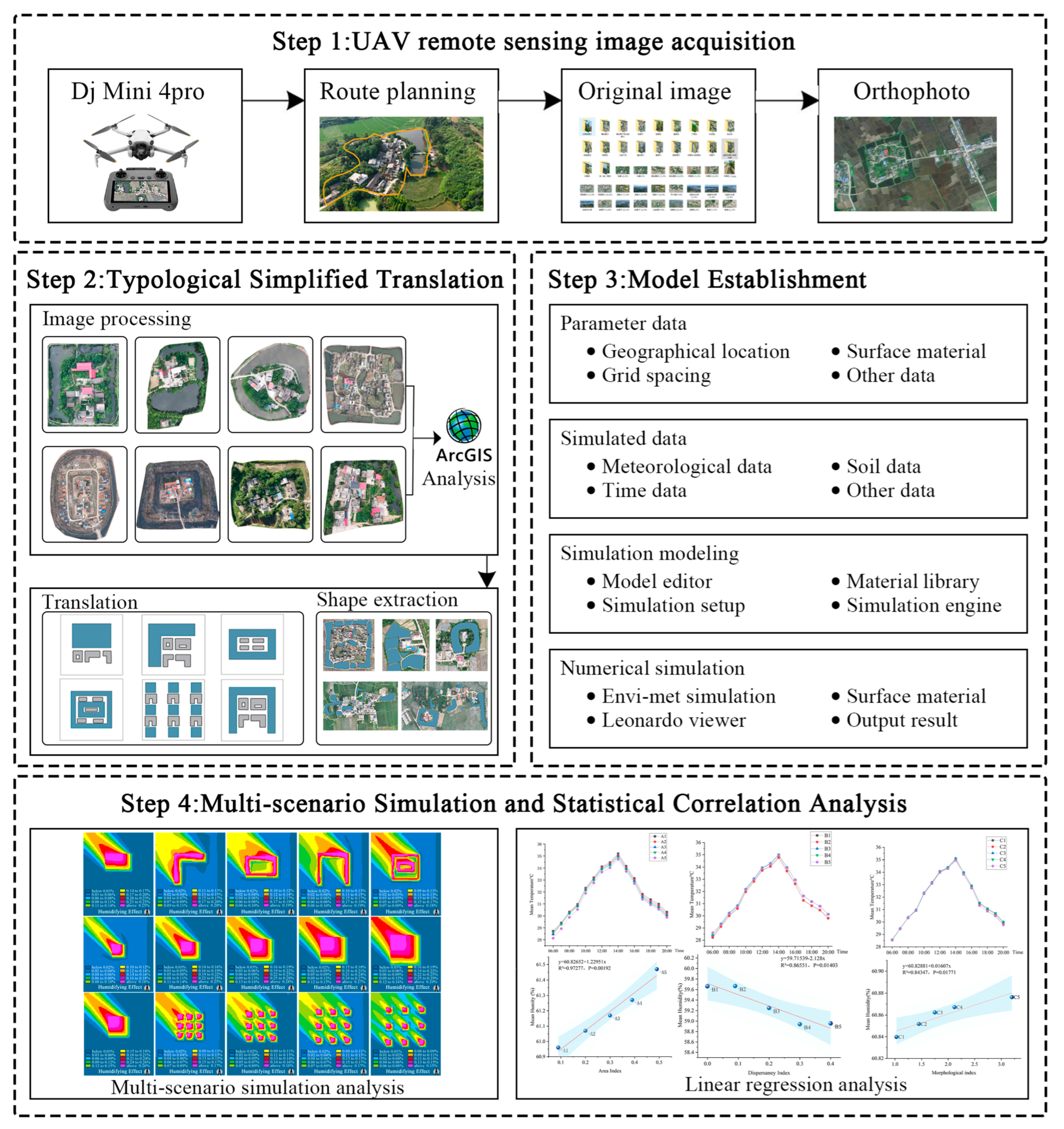
To quantitatively assess the effects of waterbody morphological layouts on microclimate regulation capabilities, an integrated research framework was established. First, relevant settlement data were collected using UAV remote sensing to build a comprehensive database. Then, the methods of “abstraction–simplification–translation” were applied to extract the morphological features of the waterbodies. Finally, combined with ENVI-met version 5.7.2 simulations, single-factor model experiments were designed to analyze the microclimate mitigation mechanisms. The specific research procedure is depicted in
Figure 1.
2.1. Overview of the Research Area and Data Collection
Driven by historical and cultural factors, Weizi settlements are predominantly concentrated in Xinyang City, situated in the southeastern region of Henan Province (31°46′–32°42′ N, 114°01′–114°55′ E). The region exhibits a distinct south-to-north topographic gradient with elevations ranging from 50 to 1500 m above sea level, featuring an interlocking landscape of mountains, hills, and plains. Characterized by a transitional monsoon climate between the subtropical and warm temperate zones (Köppen climate classification: Cwa), the study area experiences pronounced seasonal variations, with cold, dry winters and hot summers. The region receives abundant rainfall, with an annual precipitation ranging from 993 to 1294 mm, ensuring a generally humid hydrological environment.
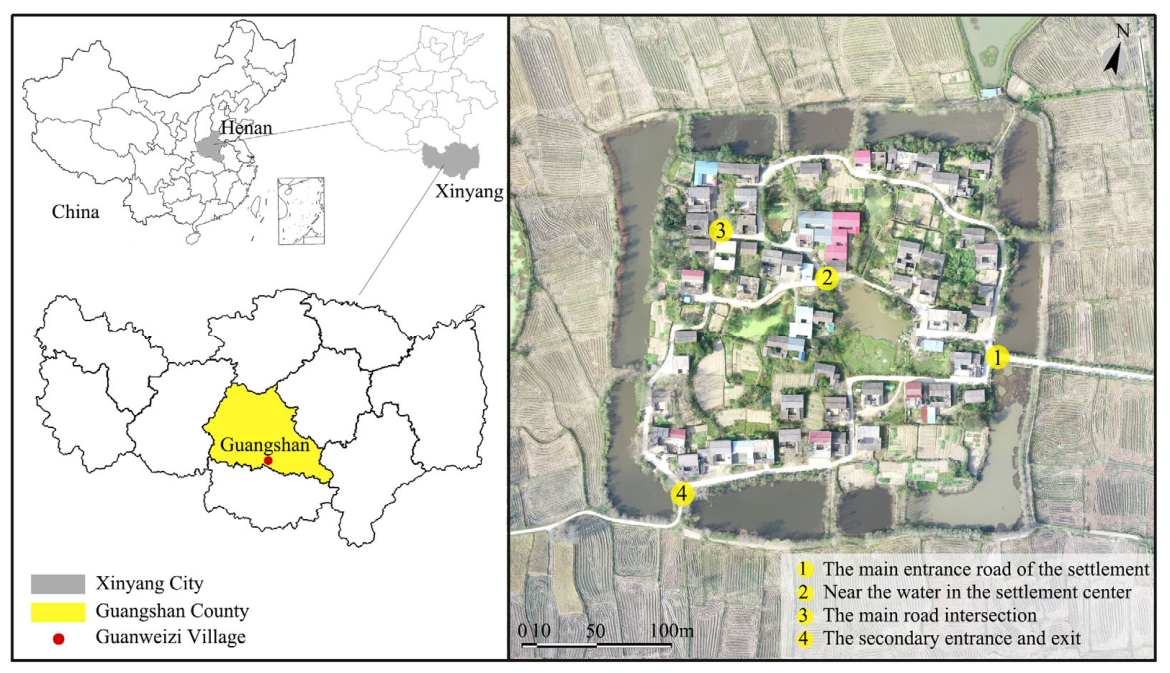
Field investigations reveal that Weizi settlements in this region are characterized by high spatial diversity, large quantities, and favorable eco-climatic adaptability. To systematically investigate the microclimatic observed impacts of surface water configurations, Guanweizi Village was selected as the representative empirical site for both field measurements and numerical simulations. As a quintessential prototype of Southern Henan’s Weizi settlements, Guanweizi features a well-preserved traditional morphology with a regular square layout, characterized by dense vegetation and a peripheral moat system that exemplifies a distinctive hydrophilic pattern (
Figure 2). Furthermore, the clearly defined spatial configurations and homogeneous underlying surfaces of this settlement effectively minimize boundary discrepancies, thereby enhancing the applicability of the ENVI-met model and ensuring the reliability and validity of the microclimatic simulation outcomes.
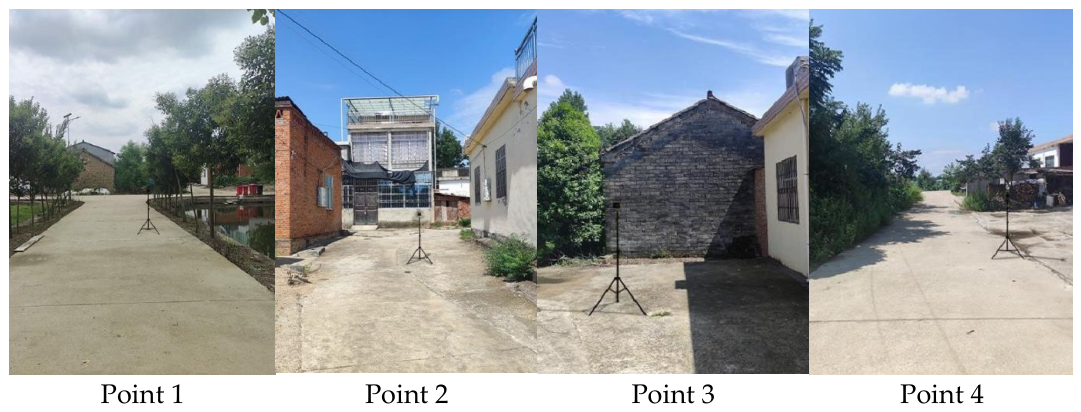
Spatial and environmental data were collected using a DJI Mini 4 Pro unmanned aerial vehicle (UAV) (SZ DJI Technology Co., Ltd., Shenzhen, China) following a pre-planned flight route to obtain high-resolution orthophotos of the settlement pattern. Field measurements were conducted from 08:00 to 18:00 on 22 July 2024. At the four representative local monitoring points shown in
Figure 3, calibrated TES-1360A temperature–humidity sensors were installed at a pedestrian-level height of 1.5 m to record hourly meteorological data, including air temperature and relative humidity. The selected date was identified as a typical summer meteorological day characterized by stable, cloudless weather conditions. The observed air temperature, relative humidity, and wind speed were consistent with the long-term climatic averages of the study area. Moreover, the monitoring period fully captured the diurnal variation in summer thermal and humidity conditions, providing a reliable basis for model validation and microclimate analysis.
2.2. ENVI-Met Modeling Parameters
In this study, ENVI-met 5.7 was employed to simulate relative humidity, air temperature and wind speed at various monitoring points within the study area. Based on rasterized aerial imagery of Guanweizi Village, a model domain of 310 m × 310 m × 10 m was established, with a grid resolution of dx = 3 m, dy = 3 m, and dz = 3 m. Considering the interactions among vegetation, wind conditions, water bodies, different underlying surfaces, and controlled simulation conditions, wind was prescribed at 2 m/s with a southeast direction of 135° [
32]. The soil profile and simplified vegetation parameters were predefined at fixed proportions, while the remaining model settings are detailed in
Table 2.
2.3. Validation of Envi-Met Model
The ENVI-met model was validated in this study using the root mean square error (RMSE) and the mean absolute percentage error (MAPE) to ensure its scientific robustness and simulation accuracy [
33]. The corresponding calculation procedures are given in Equations (1) and (2).
where X
obs denotes observed data, X
sim denotes simulated outputs, and n represents the total count of measurements.
In this study, data validation was conducted using field measurements and corresponding model simulation points from the case shown in
Figure 2. The monitoring points of the simplified theoretical model were set at locations with environmental conditions similar to those of the measured points, and data calibration was performed between the two sets of data. To rigorously assess the predictive accuracy of the ENVI-met model, this study employed statistical metrics that are widely accepted in urban canopy and microclimate simulation research as validation criteria. Previous studies have suggested that a MAPE below 10% generally indicates satisfactory simulation performance, whereas lower RMSE values signify a closer agreement between simulated and observed results [
34]. Accordingly, when both indicators fall within acceptable error ranges, the model can be considered sufficiently reliable for subsequent microclimate simulations and quantitative analyses [
33].
The results in
Table 3 show that the RMSE for air temperature ranges from 1.43 °C to 2.36 °C, while that for relative humidity ranges from 1.97% to 3.31% [
35]; the MAPE varies between 2.24% and 6.55%, all below 10% [
36].
The calculation results satisfied the general standards of numerical simulation, indicating that the model is capable of reliably reproducing the thermal environment characteristics of the village. Given that the major goal of this study is to perform a comparative analysis among controlled simulation scenarios rather than long-term weather forecasting, the selected meteorological conditions provide adequate regional representation. Therefore, it is well-suited for investigating the relative microclimate mitigation mechanisms induced by various morphological layouts of waterbodies [
37].
2.4. Water Morphological Indicators and Numerical Scenario Design
2.4.1. Water Body Morphology in Weizi Settlements
Water is the core constituent element of weizi settlements and plays an ecological role in regulating the local climate. Most weizi settlements are surrounded by water on multiple sides; the overall settlement space is composed of weizi ditches, water-centered islands, pond embankments, gate towers, enclosing walls, and residential courtyards, forming a compact scale [
38]. Based on water system structure, weizi settlements can be classified into single-weizi, double-weizi (with inner and outer ditches), and connected-weizi (multiple single-weizi forming a contiguous water area); in terms of water body morphology, they can be categorized into different spatial forms such as double annular, rectangular, “C” shaped, “L” shaped, and dispersed (
Table 4). The water bodies surrounding settlements store water during the rainy season and provide irrigation during droughts, forming the unique water management wisdom of “storage-accumulation-utilization-drainage”.
Based on field investigations, this study explores the impacts of different water body morphological layouts on the microclimate. To avoid multiple interferences from external factors, an idealized theoretical model is employed for simulation analysis.
To minimize external disturbances and ensure strict control of variables, this study employed an idealized theoretical model for parametric simulations. This approach is widely adopted in microclimate research as it effectively isolates the influence of specific spatial elements and clarifies their underlying mechanisms. In addition, vegetation, as an important component of blue–green infrastructure systems, can substantially influence local thermal and moisture environments by altering surface roughness characteristics and momentum exchange processes, thereby modifying airflow patterns. Therefore, vegetation elements were intentionally excluded from the simulation framework to improve the controllability of the experimental variables and reduce the interference caused by vegetation shading, evapotranspiration, and aerodynamic resistance. This allowed for a more direct assessment of the climatic responses induced by variations in the three water body morphological factors.
If complex vegetation configurations are introduced, the subtle thermal variations induced by changes in water body morphology are likely to be masked by the dominant cooling effects of vegetation, thereby reducing statistical significance and hindering the identification of relationships between morphological parameters and microclimatic responses [
39]. Therefore, a vegetation-free idealized model was constructed to ensure that the simulation results reflect only the thermodynamic effects of water body morphology and its interaction with the surrounding built environment, thereby providing a clear baseline for future studies on the synergistic effects of vegetation and water bodies [
40].
2.4.2. Quantitative Indicators of Water Bodies
To quantitatively characterize the spatial configuration of water bodies in traditional Weizi settlements, this study selected water body morphological parameters based on landscape ecology theory [
28]. Under high-temperature and high-humidity conditions, the influence of water bodies on settlement microclimates is primarily realized through processes such as evaporative cooling, heat–moisture exchange, and cold air dispersion. Specifically, water body area reflects the capacity of water bodies to participate in evaporative cooling; dispersion degree directly affects airflow diffusion pathways and regulatory effectiveness; and enclosure morphology represents the contact characteristics between water body boundaries and spatial configurations, thereby influencing the size of the vapor exchange interface and overall regulation efficiency. Accordingly, three representative morphological dimensions: area Index, dispersion Index, and enclosure morphology Index, were selected as quantitative indicators in this study.
To ensure methodological consistency and quantitative comparability, all morphological indices were calculated at a unified settlement scale under identical environmental boundary conditions, with only a single target morphological parameter varied in each experimental group. The normalization procedures for each morphological index are as follows:
Water body area index (S) is used to represent the scale of water bodies and reflects the spatial proportion between the water surface area and the total land area within the study domain.
S denotes the water body area index, S1 represents the total water area within the region, S2 refers to the land area. In the simulation scheme of this study, all model domains were constructed with dimensions of 200 m × 200 m × 10 m. The water body area index (S) was normalized using a ratio-based approach to eliminate the influence of settlement scale differences. As a dimensionless indicator, it enables direct comparison among different water body layout schemes.
- 2.
Water Body Dispersion Index
The water body dispersion index is defined as the arithmetic mean of the nearest neighbor distances between discrete water body patches within the landscape context. It is used to quantify the spatial dispersion degree of multiple landscape patches with the same total area. In this study, the total water body area is introduced as a control factor to ensure a more reliable comparison of dispersion patterns across water bodies of different scales.
where i represents one patch, j represents other patches, and n denotes the total number of patches.
To eliminate the influence of scale effects on the calculation of inter-patch distance and to ensure scientific comparability among water bodies of different sizes, this study introduces the square root of the total water body area to normalize the original fragmentation distance (FSD). This approach enables a standardized comparison of dispersion under equivalent total area conditions. The calculation formula is as follows:
where FSD denotes the mean nearest-neighbor distance, A
i represents the area of each water body, n indicates the total number of water bodies. A higher normalized
indicates a more dispersed spatial distribution of water bodies and greater isolation of individual patches.
- 3.
Water Body Enclosure Morphology Index
Water body enclosure morphology index (XT) is adapted from the patch shape index in landscape ecology and is used to quantify the geometric complexity of water bodies as well as their enclosure characteristics relative to the surrounding land. The closer XT is to 1, the more the enclosure morphology resembles a square. Since traditional *Weizi* settlements and their surrounding moats historically tend to follow a centripetal square layout, this study uses a standard square as the reference geometry, and normalizes the water body perimeter and area accordingly:
P and A represent the perimeter and area of the water body. Low values of the water body enclosure morphology index (XT) mathematically represent highly compact, centralized, block-like geometric forms, whereas high values indicate that the water bodies evolve toward complex, highly linear, multi-layered, ring-like networks that closely wrap around the settlement fabric. Consequently, controlling this index enhances the comparability and reproducibility among different enclosure morphology schemes.
2.4.3. Simulation Scenario Design
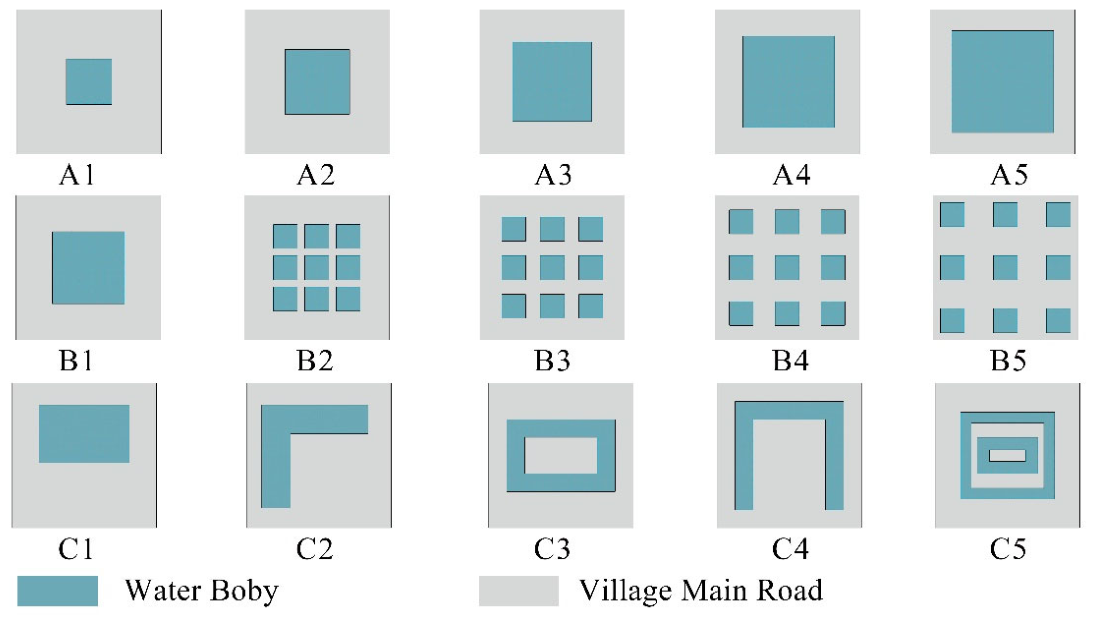
To assess the impact of water body morphological layouts on settlement microclimates, this study constructed a single-factor experimental matrix comprising 15 different simulation schemes (
Figure 4), based on the three mathematically quantified indicators: water body area, enclosure morphology, and dispersion degree, established in
Section 2.3. To ensure both scientific rigor and applicability to modern rural planning, these idealized models represent direct geometric translations of typical water system configurations in traditional Weizi settlements. All models have a land area of 200 m × 200 m, with peripheral zones around the water bodies defined by boundaries and roads to isolate edge effects from influencing the simulation outcomes, and Other basic settings are shown in
Table 2. The simulation design includes five levels of area index (A), five levels of dispersion index (B), and five levels of enclosure morphology index (C) (See
Table 5).
2.5. Data Analysis Methods
Microclimatic variables, including air temperature, relative humidity, and wind speed, were extracted at all monitoring points from the ENVI-met 5.7 simulations. Statistical analyses were performed using Origin 2024 and SPSS 26.0. To quantify the relationships between water body morphological parameters and microclimatic responses, simple linear regression models were established using the mean values recorded during the peak thermal period from 12:00 to 17:00. For each regression model, the coefficient of determination and significance level were calculated. Residual normality was assessed using the Shapiro–Wilk test, while homoscedasticity was evaluated through residual distribution analysis. These procedures were used to verify the validity of model assumptions and improve the robustness of statistical inference.
In addition, simulated data were extracted along the downwind direction from the water body boundary, and ArcGIS version 10.8 was employed to generate buffer zones and perform spatial overlay analysis to assess the spatial extent of cooling and humidification effects under different layout configurations. Using the no-water-body scenario (A0) as the baseline, the regulatory effect was quantified using a difference method, whereby the cooling (humidifying) effect at the same location was calculated as the difference between the baseline value (without water body) and the simulated value (with water body), thus obtaining the overall cooling and humidifying performance of water bodies.
3. Results
Based on idealized theoretical model conditions, this study quantified water body morphological indicators and employed ENVI-met to simulate microclimatic conditions, in order to assess the effects of different water body morphological layouts on microclimate regulation. By analyzing the relationship between water body configurations and microclimatic responses, the study elucidates the underlying theoretical mechanisms of water body–driven environmental regulation.
3.1. Temporal Variations in Settlement Microclimate Under Water Body Morphological Layouts
3.1.1. Temperature Modulation by Water Body Morphology Layouts
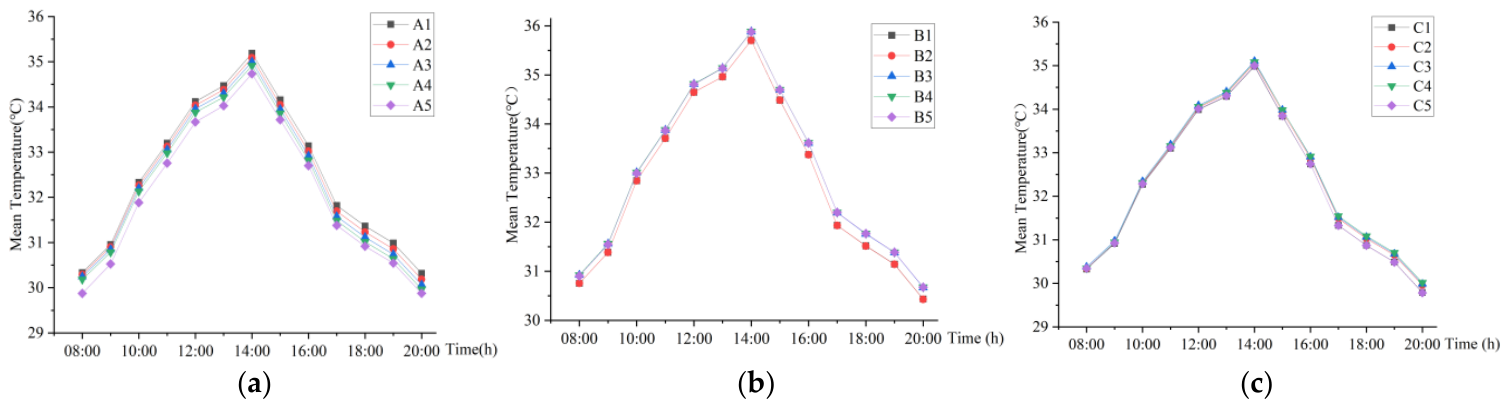
The diurnal temporal patterns of average air temperature show overall similarity across different water body layout schemes in
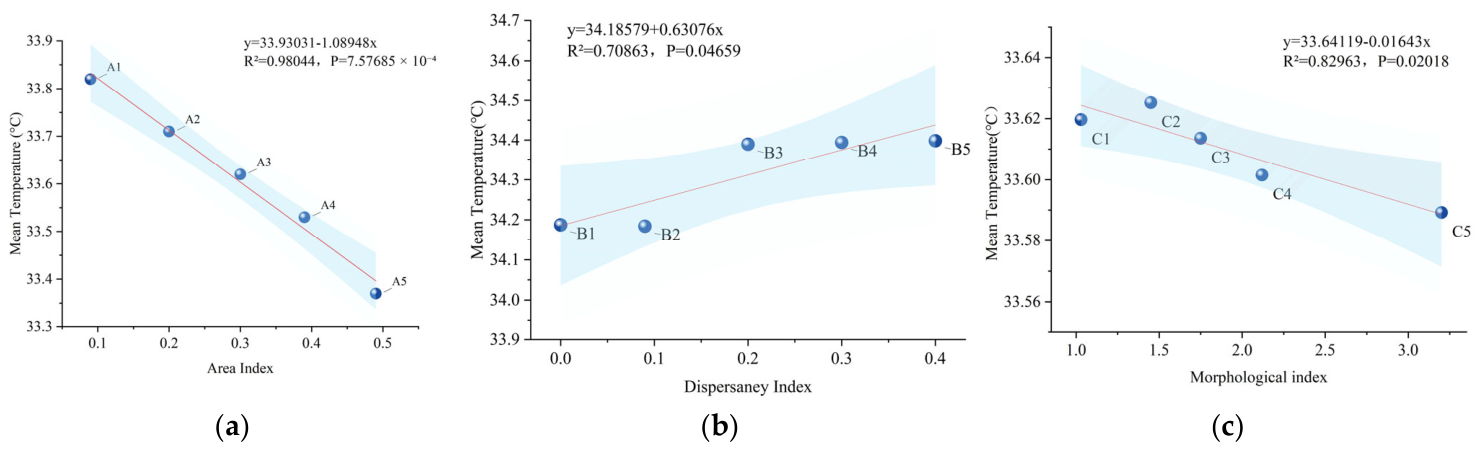
Figure 5, with peak temperatures occurring at 14:00 and minimum at 20:00. This indicates that variations in water body area primarily affect the magnitude of temperature change, while exerting a limited influence on the diurnal thermal pattern. Among the different layout scenarios, the area index A5, dispersion indices B1 and B2, and enclosure morphology index C5 deliver outstanding cooling capacity. Moreover, the mean air temperature during the peak hours from 12:00 to 17:00 was extracted and analyzed using linear regression with three parameters (
Figure 6). It was observed that temperature is negatively correlated with the water body area index and enclosure morphology index, with fitting equations of
y = 33.930 − 1.089
x, R
2 = 0.98 and
y = 33.641 − 0.016
x, R
2 = 0.830 respectively, while a positive correlation is observed with dispersion index, described by
y = 34.186 + 0.631
x, R
2 = 0.709.
These linear fitting relationships reveal the response trends between water body morphology and thermal conditions. Increasing water body area and enlarging the enclosure morphology index generally contribute to lowering air temperature, whereas excessive dispersion weakens the cooling effect. This is because larger water surfaces enhance evaporative cooling and latent heat exchange processes; a higher enclosure morphology index corresponds to more complex boundary interfaces, which increase the interaction surface between water and air, thereby strengthening the cooling performance of water bodies [
41]. Under the same water area, dispersed water layouts exhibit weaker cooling effects compared to concentrated configurations [
42]. The results indicate that water body area and enclosure morphology exert a stronger influence on settlement thermal environments than dispersion degree. Relatively concentrated distributions and moderately enclosed configurations are more conducive to enhancing the overall cooling efficiency of water bodies.
3.1.2. Humidity Modulation by Water Body Morphology Layouts
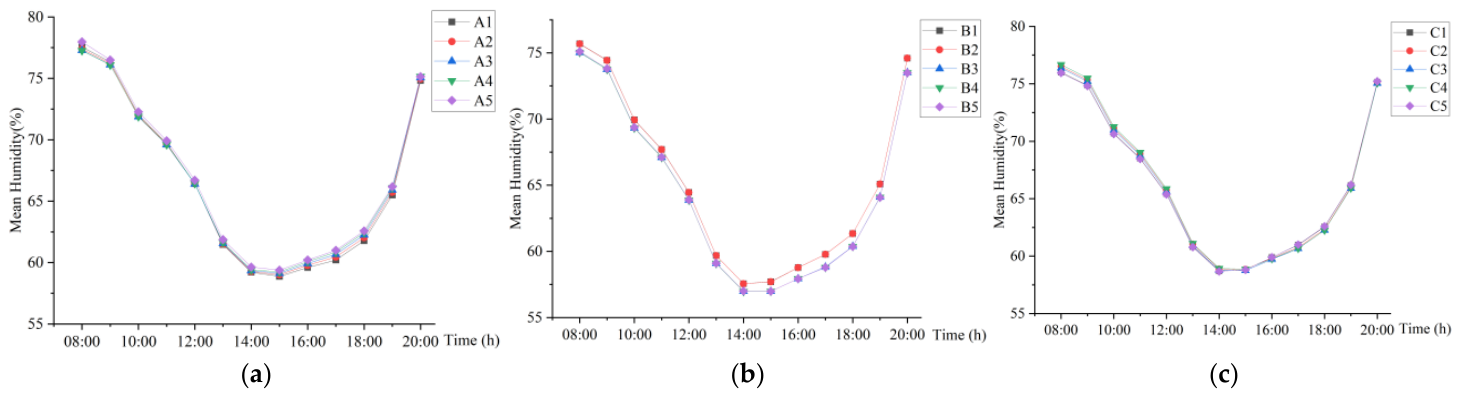
The temporal variation in average relative humidity under different water body configurations exhibits a generally consistent pattern in
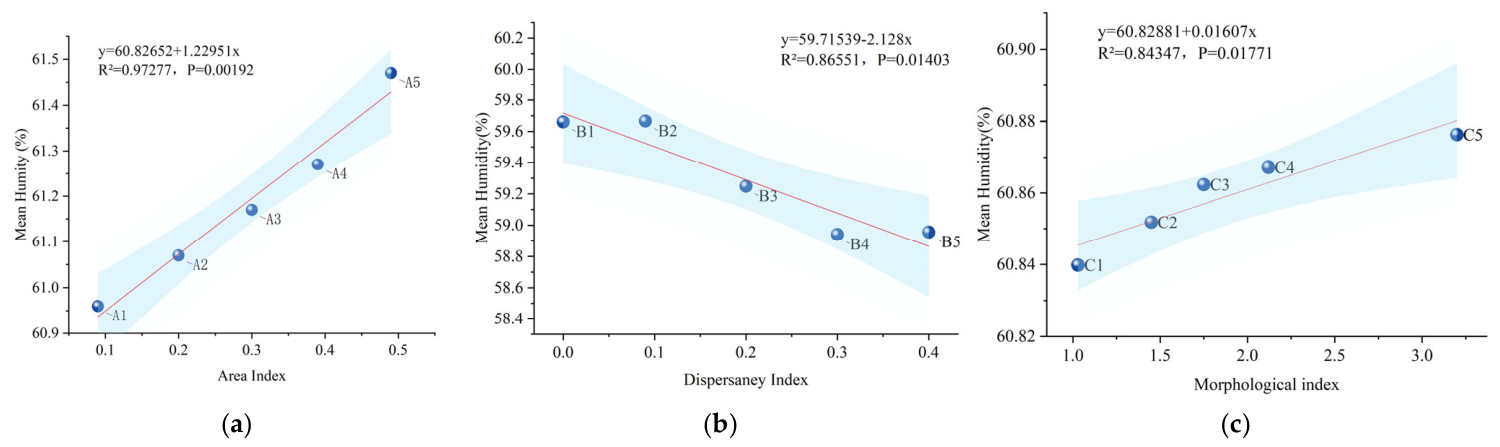
Figure 7, with the highest values appearing at 08:00 and the lowest at 14:00. Comparative analysis across layout types shows that a higher water body area index A5 and specific dispersion configurations B1 and B2) result in superior humidification performance. This trend indicates that continuous large-scale water surfaces maintain strong latent heat flux partitioning under peak daytime heating. The influence of enclosure morphology on humidity shows pronounced temporal differentiation. During the high-radiation period from 08:00 to 15:00, the C4 configuration exhibits a stronger humidifying effect, whereas after 14:00, the C5 configuration becomes dominant, reflecting the varying regulatory roles of complex geometric boundaries under different thermal conditions. Furthermore, the average relative humidity during the high-temperature period from 12:00 to 17:00 was extracted for linear regression analysis with the three parameters (
Figure 8). The results indicate that relative humidity is positively correlated with the water body area index and enclosure morphology index, with fitting equations of
y = 60.827 + 1.230
x, R
2 = 0.973 and
y = 60.829 + 0.016
x, R
2 = 0.843, respectively, while a significant negative correlation is observed with the dispersion index, described by
y = 59.715 − 2.128
x, R
2 = 0.866.
The response trends observed from the correlation analysis indicate that water body area and enclosure morphology play significant roles in enhancing evaporative cooling and increasing humidity. Larger water bodies and more complex enclosure forms directly influence the intensity of latent heat flux and the intrusion of external dry and hot air masses, thereby reducing moisture loss from the water surface and creating a relatively stable high-humidity microenvironment near the water body [
43]. Although highly dispersed small water bodies can provide localized cooling effects, their water vapor transport lacks continuity and synergy, which weakens the cumulative humidification effect [
44]. These results demonstrate that water body area and enclosure morphology exhibit a strong humidification response and play a crucial role in improving the hydrothermal environment of settlements.
3.1.3. Wind Speed Modulation by Water Body Morphology Layouts
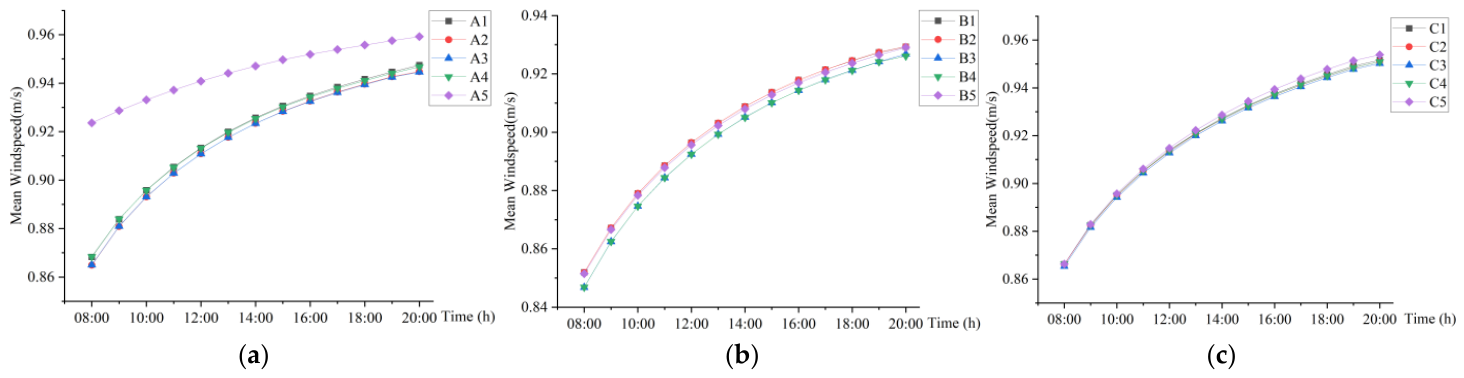
The temporal variation in average wind speed under different water body configurations exhibits a generally similar trend in
Figure 9. Specifically, in terms of water body area index, the A5 configuration shows relatively higher mean wind speeds. The suggesting that, under a constant land area, an increased proportion of water surface may exert a localized influence on airflow, although the effect remains limited. Under the dispersion and enclosure morphology indices, configurations B1, B2, and C5 demonstrate relatively better airflow performance.
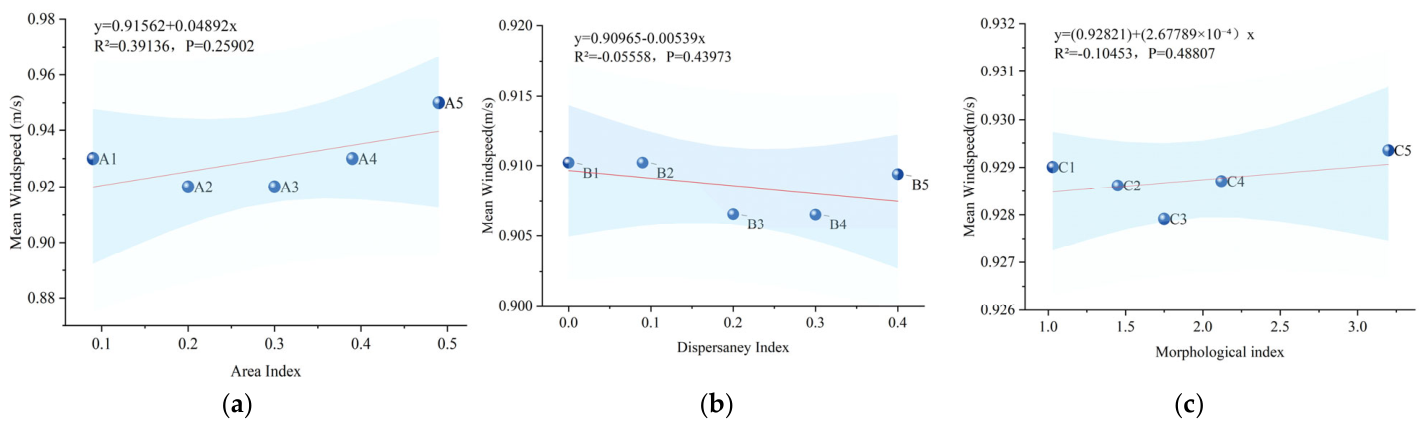
Furthermore, the average wind speed during the period from 12:00 to 17:00 was extracted for linear regression analysis with the three parameters (
Figure 10). The fitted equations for the water body area index, dispersion index, and enclosure morphology index were
y = 0.916 + 0.049
x, R
2 = 0.391;
y = 0.910 − 0.005
x, R
2 = 0.056;
y = 0.928 + (2.678 × 10
−4)
x, R
2 = 0.105, respectively. The
p-values of all regression models exceeded 0.05, indicating that, under the simulation scale and boundary conditions adopted in this study, wind speed exhibited only weak statistical relationships with the three morphological parameters, with no significant effects being detected. Compared with temperature and humidity, the magnitude of variation in wind speed is relatively small, suggesting that, at the scale of this study, the regulatory effect of water body morphology on the local airflow environment is limited. This may be because the regional background wind field and the settlement’s spatial structure play a dominant role in shaping wind conditions, making it difficult for small-scale water bodies to counteract the background wind field or generate a stable superimposed effect [
45]. Given that all simulation scenarios were performed under the same boundary conditions and prevailing wind settings, the findings further suggest that near-surface air-flow is primarily controlled by the combined effects of regional background winds and the aerodynamic roughness associated with settlement morphology. Consequently, although water body configurations may exert localized influences on airflow, their contribution to ventilation enhancement remains secondary compared with larger-scale atmospheric forcing and built-environment characteristics.
Furthermore, the vegetation-free simulation framework adopted in this study also weakens the coupling between water bodies and airflow. Overall, compared with temperature and humidity, wind speed shows a weaker response to changes in water body layout, and its regulation effect is likely more strongly governed by regional background airflow conditions and macro meteorological conditions.
3.2. Spatial Distribution Characteristics of Microclimates Across Diverse Water Body Morphological Layout Factors
3.2.1. Cooling Effect of Water Body Morphology Layouts
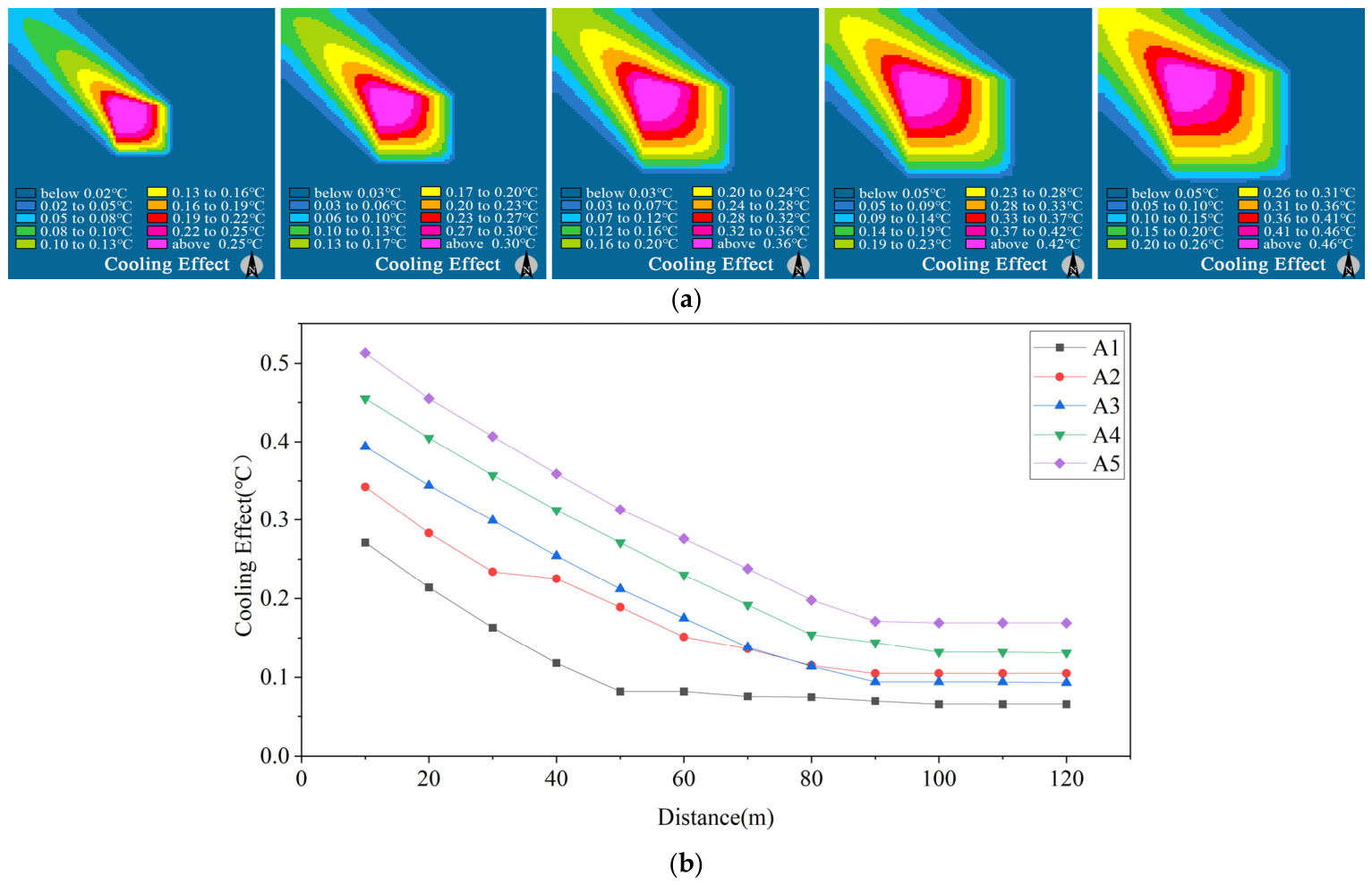
The anemological boundary conditions for water body layout models were initialized with a prevailing southeasterly wind (135°) to simulate summer conditions. The simulation results indicate that the microclimatic effects of various water body configurations are primarily concentrated in the downwind direction, exhibiting a clear spatial gradient. As illustrated in
Figure 11a, the maximum cooling intensity associated with the water body area index reaches 0.51 °C.
Figure 11b indicates an influence range of approximately 90 m, beyond which the cooling benefits stabilize and subsequently diminish. Comparative analysis of different area index scenarios reveals that local cooling intensity generally increases with the expansion of water body area, suggesting that larger water bodies facilitate evaporative processes, thereby supporting more effective thermal regulation. Notably, when the area index reaches 0.49, the cooling intensity attains its highest level among the investigated scenarios. Beyond approximately 90 m, differences among the configurations become progressively smaller, indicating a gradual attenuation of water-body-induced cooling effects.
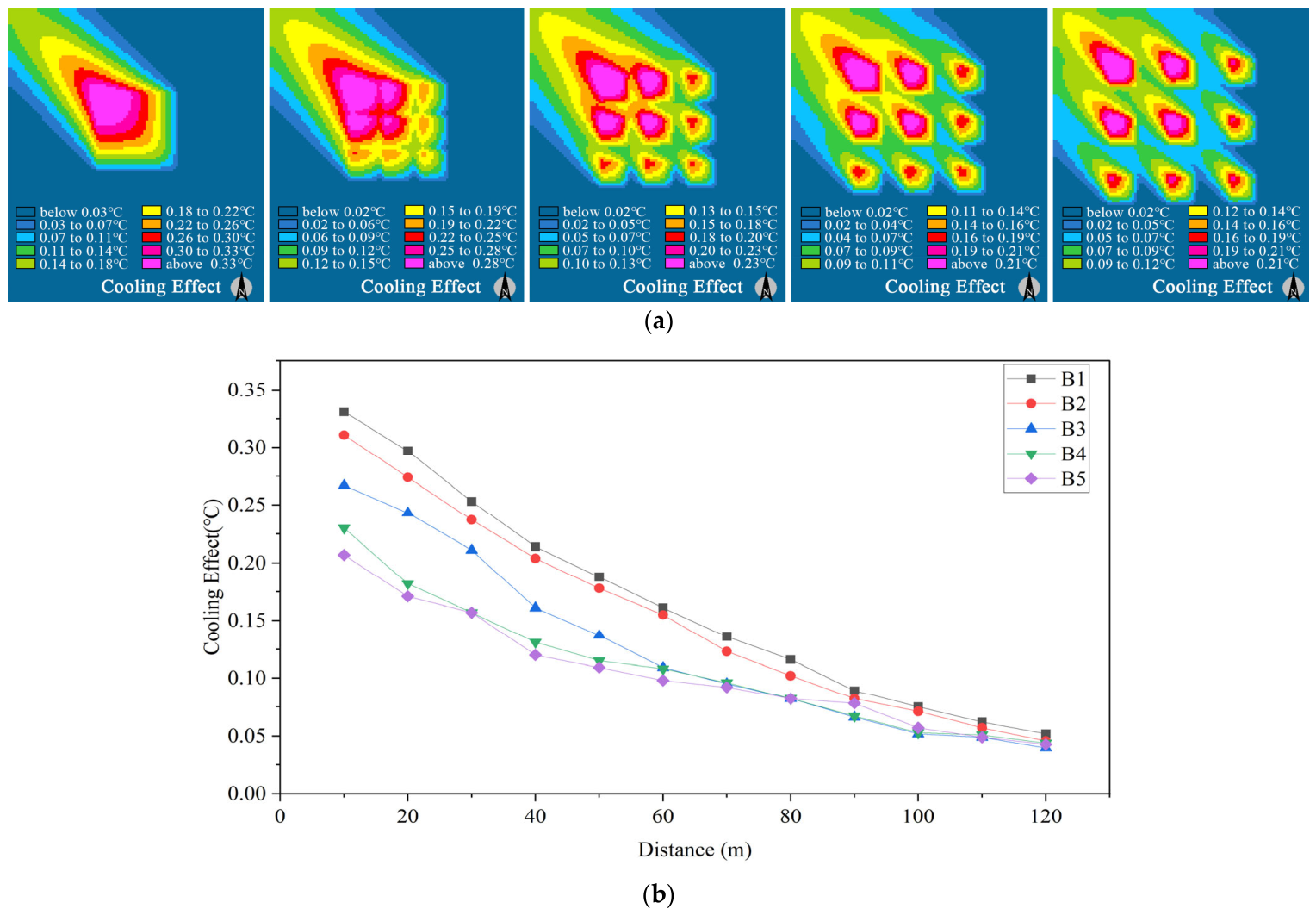
As illustrated in
Figure 12a, a comparative analysis of cooling effects under different water body dispersion index scenarios was conducted while maintaining a constant total water area. The results indicate clear differences in cooling performance among the dispersion configurations, with the overall effectiveness ranked as B1 > B2 > B3 > B4 > B5.
Figure 12b shows that the maximum cooling intensity under these scenarios reaches 0.37 °C, with an effective influence distance of approximately 70 m. Beyond this distance, the differences in cooling effects among the configurations decrease markedly (
p < 0.01) and become negligible. These findings further suggest that, under a constant total water area, a lower dispersion degree of water bodies corresponds to stronger spatial aggregation, which is more conducive to forming stable and continuous cooling effects, thereby enhancing the regulation of the surrounding microclimate. In contrast, excessive dispersion weakens the superposition of cooling sources and reduces overall cooling efficiency. These findings suggest that lower dispersion degrees facilitate the formation of more continuous cooling zones and enhance local thermal regulation.
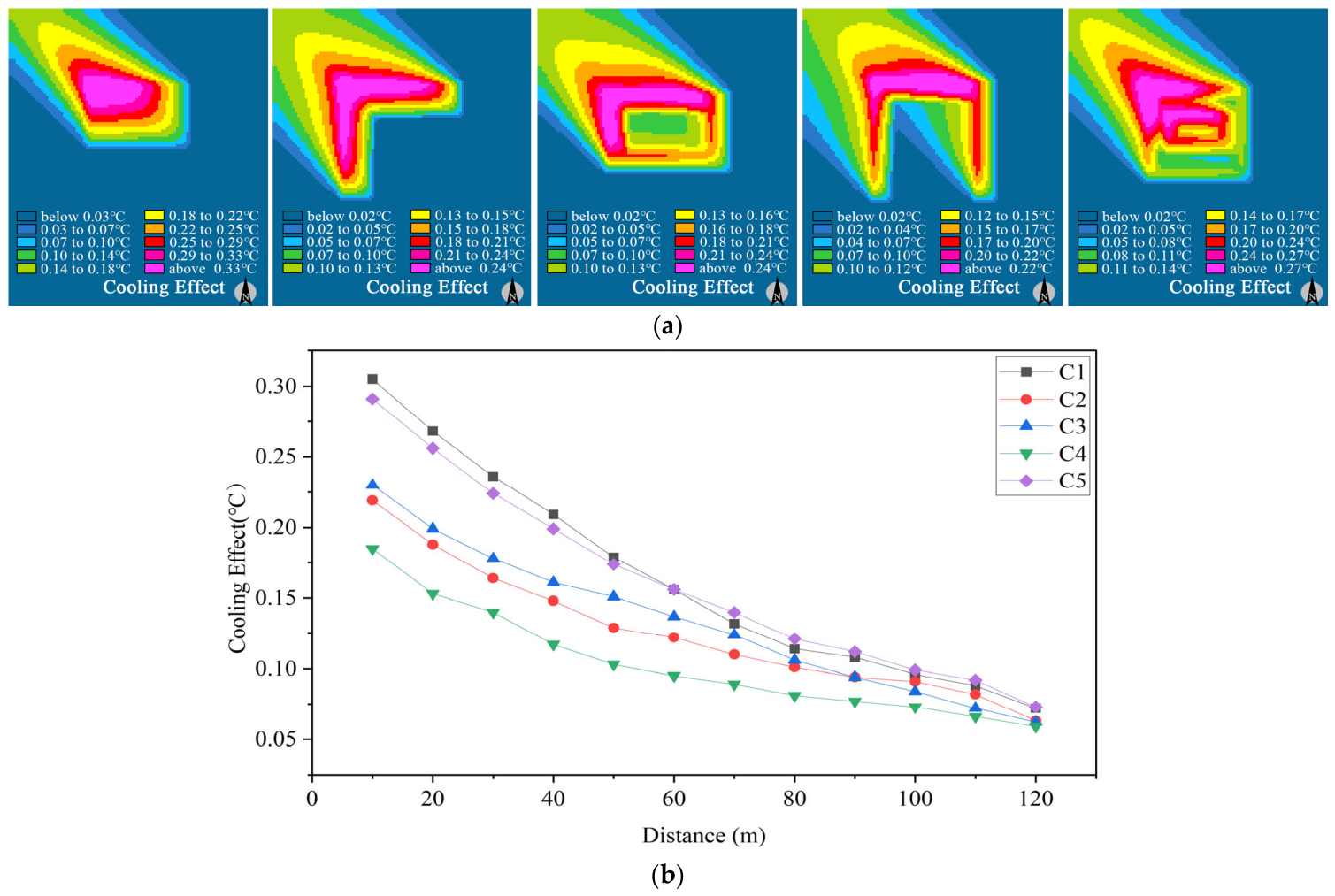
As illustrated in
Figure 13a, the regulatory effects of different enclosure morphology indices on microclimatic cooling performance under a constant water surface area. It can be derived from
Figure 13b that the overall cooling effectiveness of the configurations is ranked as C5 > C1 > C2 > C3 > C4. The maximum cooling intensity reaches 0.37 °C, with an influence range of approximately 80 m. Beyond this range, differences in cooling performance among configurations decrease significantly (
p < 0.01) and gradually stabilize. Spatial comparative analysis reveals distinct variations between near-field and far-field performance. Within a 60 m radius, the C1 configuration exhibits stronger cooling than C5, whereas C3 temporarily outperforms C2 within 90 m but declines below C2 beyond this distance. Furthermore, under unobstructed conditions around the water body, the overall cooling capacity of C3 remains inferior to that of C2, indicating that enclosure morphology plays a critical role in sustaining cooling effects. Among the investigated enclosure morphologies, C5 exhibits relatively stronger cooling intensity and a wider cooling influence range than the remaining configurations.
3.2.2. Humidifying Effect of Water Body Morphology Layouts
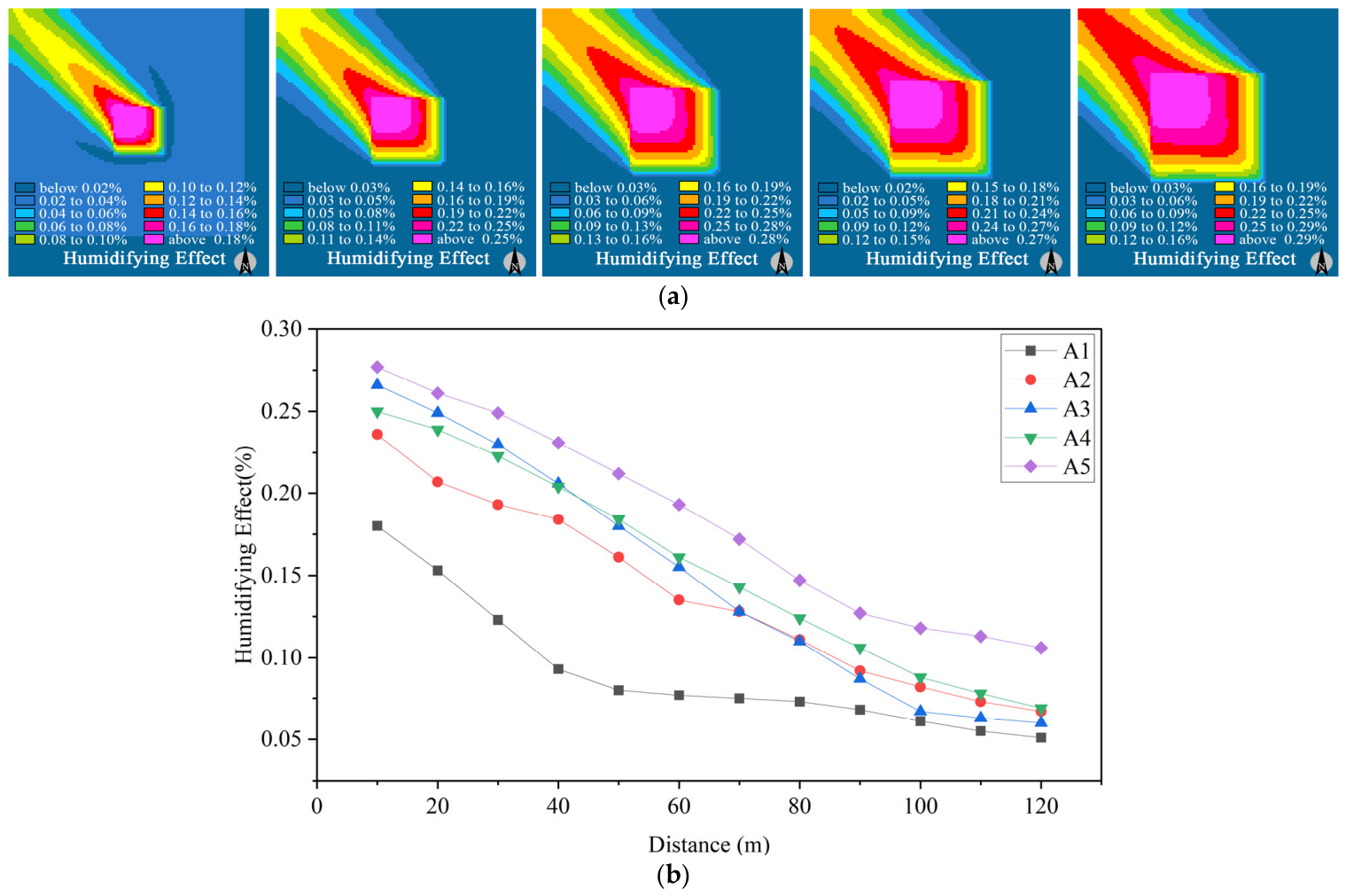
As illustrated in
Figure 14a, the summer humidification performance under various water body area index layouts exhibits pronounced spatial heterogeneity. The results indicate that the maximum increase in humidity reaches 0.32%, with an effective influence distance of approximately 90 m. Within this range, the humidification effect generally intensifies with increasing water body area. This suggests that larger water bodies enhance evaporative moisture supply, thereby improving local humidity levels. Among the five scenarios, the A5 configuration (S = 0.49) demonstrates the most significant humidification effect. As further illustrated in
Figure 14b, beyond a distance of approximately 80 m from the water body, the humidifying impact of the A2 configuration is slightly higher than that of A3; however, the difference is less than 0.01% and is not statistically significant, indicating a gradual stabilization of the humidification effect. These findings indicate that larger water body areas contribute to stronger near-field humidification effects and improved moisture regulation.
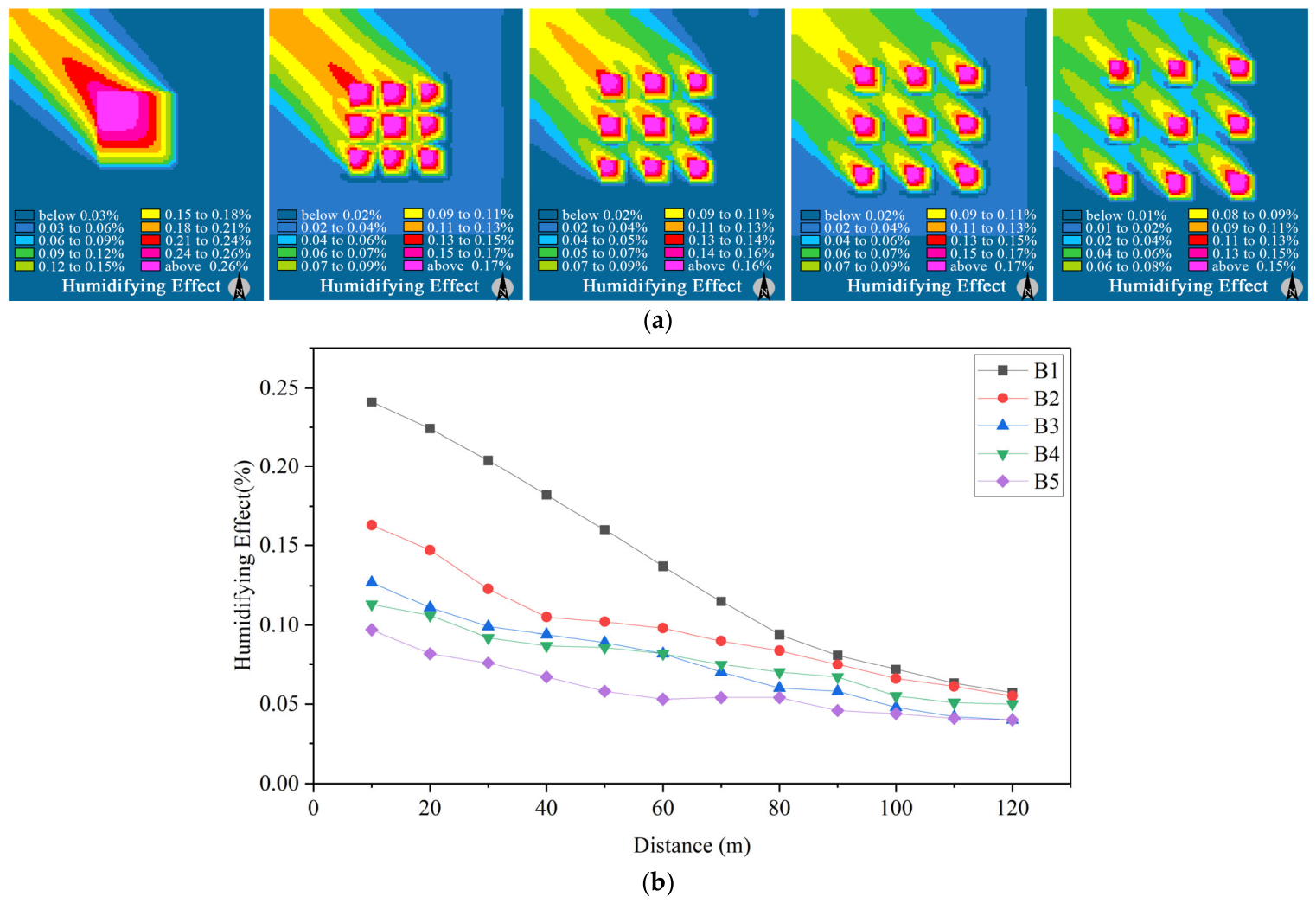
A comparative analysis of humidification performance under different water body dispersion indices, while maintaining a constant total water area, is presented in
Figure 15a. The results reveal significant variations in humidification capacity among the configurations, with the overall ranking of B1 > B2 > B4 > B3 > B5. The maximum increase in relative humidity reaches 0.26%, with an effective influence distance of approximately 80 m. Beyond this distance, the humidification effect decreases significantly (
p < 0.01%) and gradually stabilizes. As shown in
Figure 15b, a slight crossover in humidification performance between configurations B4 and B3 occurs at approximately 60 m; however, the difference is negligible and does not represent a meaningful regulatory advantage. Overall, under a constant water body area, configurations with lower dispersion are more conducive to concentrated evaporation and moisture retention, thereby enhancing local humidification effects. Among the tested scenarios, B1 maintains relatively higher humidity levels within the primary influence zone, indicating a stronger humidification response under low-dispersion conditions.
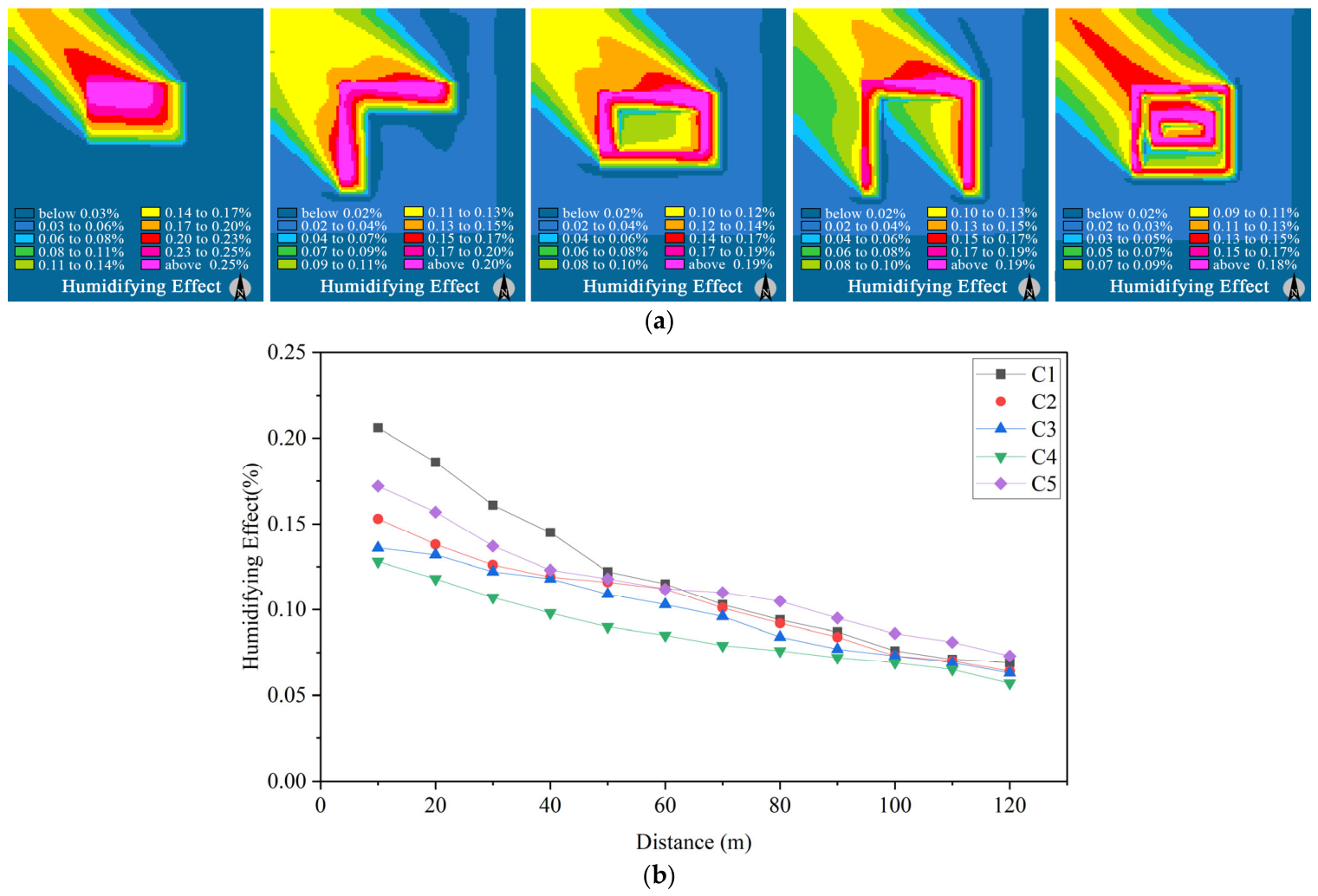
As illustrated in
Figure 16a, a comprehensive comparison of humidification performance under different water body enclosure morphology configurations indicates that the overall ranking is C5 > C1 > C2 > C3 > C4. The maximum increase in relative humidity reaches 0.28%, with a core functional distance of approximately 90 m. Beyond this distance, the humidification effect decreases significantly (
p < 0.01) and gradually stabilizes. Further analysis based on
Figure 16b reveals that within a distance of approximately 63 m from the water body, configuration C1 exhibits stronger humidification performance than C5. Beyond this threshold, C5 gradually becomes dominant, indicating that different enclosure morphologies exert scale-dependent regulatory effects in near-field and far-field zones. When the distance exceeds 90 m, the humidification effects of all five configurations converge and become negligible. Overall, double-enclosure morphologies are more conducive to moisture accumulation and retention. The C5 configuration exhibits relatively stronger humidification intensity and a broader influence range compared with the remaining enclosure patterns.
3.3. Variation Characteristics of PET Under Different Water Body Morphological Layout Scenarios
Physiological Equivalent Temperature (PET) quantifies outdoor thermal comfort from the human perceptual perspective, thereby overcoming the limitations of evaluating microclimates based solely on temperature and humidity. To further assess how different water body morphological layouts affect human thermal comfort, this study adopts PET as a comprehensive thermal comfort indicator and examines its spatiotemporal variations. In the calculation, summer clothing insulation was set to 0.5 clo, activity intensity to 120 W, and human parameters were based on a standard male model (height 175 cm, weight 75 kg, age 35 years). Field measurements were conducted under clear, cloudless skies, and the cloud fraction was set to 0.
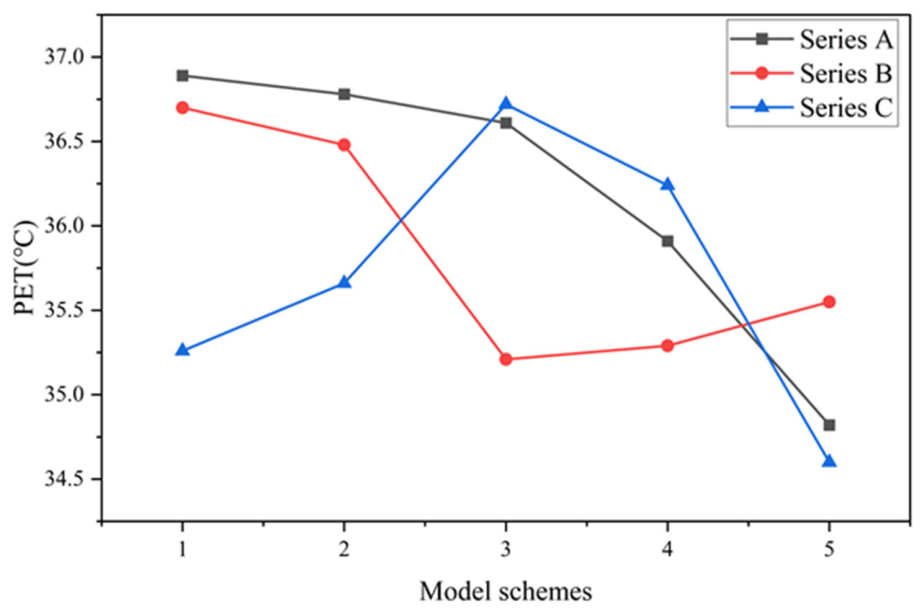
PET distribution maps at 1.5 m above ground level were generated using BIO-met. According to the measured data, air temperature peaked around 14:00; therefore, PET values at this time were used to compare thermal comfort differences across the 15 single-factor simulation scenarios (
Figure 17). The results show that water body morphological layout significantly influences outdoor thermal comfort in settlements, with variations in each morphological factor producing notable differences in PET.
For the area index scenarios (Series A), PET decreases markedly as water body area increases, dropping from 36.89 °C (A1) to 34.82 °C (A5). This consistent reduction demonstrates that enlarging water body area effectively alleviates heat stress and improves outdoor thermal comfort through enhanced evaporative cooling and humidity regulation. This finding aligns with Wang et al., who reported that expanding water surfaces directly increases the intensity and coverage of thermal regulation [
46]. For the dispersion index scenarios (Series B), a non-linear V-shaped trend emerges, with scenario B3 exhibiting the lowest PET. This pattern differs somewhat from the earlier temperature-based analysis, indicating that moderately dispersed water bodies can form continuous evaporative cooling and radiation-shielding corridors in the downwind direction, thereby more effectively reducing the radiative heat load on the human body. However, excessive dispersion leads to a rebound in PET. Highly fragmented patches expose extensive unshaded artificial embankments and disrupt the continuity of the cooling source. Evaporative cooling is diminished, while the embankments absorb solar radiation and re-radiate heat to the surroundings, causing PET to rise again [
4]. For the enclosure morphology index scenarios (Series C), a complex fluctuating pattern appears. Scenario C5 shows the lowest PET, approximately 0.67 °C lower than C1. This improvement is primarily attributable to the highly complex double-layered ring-shaped enclosure, which retains cool, humid air around the water body, blocks radiative exchange with the built environment, and significantly reduces mean radiant temperature [
43].
A comprehensive comparison of PET across the three morphological factors reveals that the overall trends are largely consistent with the earlier results. Although enlarging water body area generally benefits thermal comfort, moderate optimization of dispersion and a shift toward multi-layered ring-shaped enclosures are more effective in improving settlement outdoor thermal comfort. These findings suggest that, in the practical planning of traditional enclosed settlements, maximizing summer outdoor thermal comfort should prioritize double-layered enclosure forms, followed by moderately dispersed layouts, and lastly, simple area expansion. These insights provide a quantitative basis and reference for designing optimal water body morphological layouts.
3.4. Identifying Optimal Water Body Morphological Layout Patterns for Settlement Microclimate Regulation
The scientific optimization of water body morphological layout is an effective approach to improving settlement microclimates and alleviating summer heat–humidity stress. For Weizi settlements with typical water-adaptive characteristics, spatial form and water body configuration exert a significant influence on the local thermal–humid environment, and different layout patterns lead to markedly different microclimatic effects. Based on the comparative analysis of multiple simulation scenarios, under a constant total water area, the B1 configuration with the lowest dispersion index and the C5 configuration with a relatively high enclosure morphology index exhibit superior performance in both cooling and humidification. Specifically, when water body dispersion index FSD = 0 and enclosure morphology index XT = 3.2, the spatial configuration is more conducive to forming a stable and efficient cooling–humidification effect. Among the area index scenarios, configuration A5 demonstrates the most effective overall regulatory performance, indicating that when the water body area index S = 0.49, both cooling and humidification effects are optimized. Integrating the results of the three key indicators, the optimal water body layout pattern for microclimate regulation in settlements is identified as S = 0.49, FSD = 0, and XT = 3.2. This configuration achieves effective spatial regulation of the thermal–humid environment through coordinated control of water body scale, enclosure morphology, and spatial arrangement.
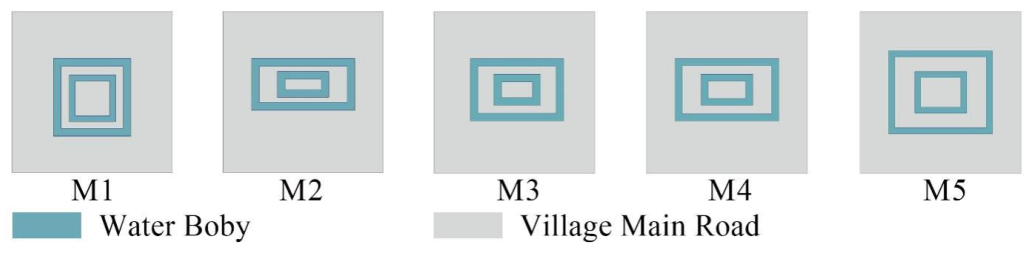
Building upon the optimal water body morphological parameters identified in the preceding analysis (S = 0.49, FSD = 0, and XT = 3.2), a further optimization study was conducted to investigate the effects of water body boundary proportions on settlement microclimate regulation. Field surveys of representative weizi settlements in Xinyang, Henan Province, revealed that both internal and peripheral water bodies predominantly exhibit rectangular, elongated, and near-square geometries. These morphological characteristics have evolved through long-term adaptation to regional hydrological conditions, land-use constraints, and the spatial organization imposed by enclosure embankment systems. To capture the geometric features commonly observed in traditional weizi settlements, five water body models with different length-to-width ratios (1:1, 1:2, 2:3, 3:5, and 4:5) were established and denoted as M1, M2, M3, M4, and M5, respectively (
Figure 18). The internal and external water surface areas were maintained at 3600 m
2 and 8100 m
2, respectively, while all other simulation parameters remained consistent with those presented in
Table 2. These geometric ratios encompass the principal water body forms identified during field investigations, ranging from compact to elongated configurations. By comparing the microclimatic responses associated with different length-to-width ratios, this analysis aims to identify the most favorable boundary proportion for enhancing settlement-scale thermal and humidity regulation, thereby providing a scientific basis for the planning and design of water-adaptive living environments in traditional weizi settlements.
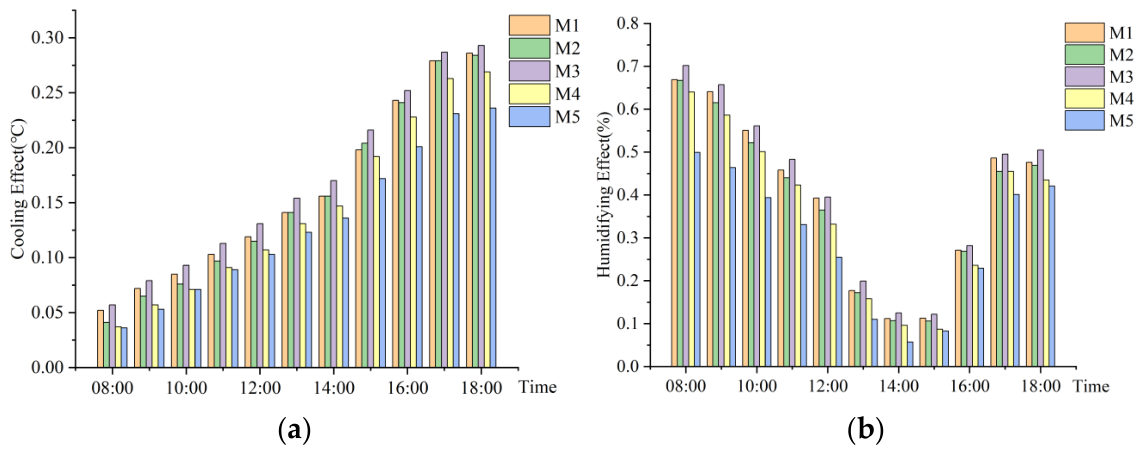
According to numerical simulations, this study comparatively evaluates the cooling and humidification performance of five water body morphological configurations under equal area conditions (
Figure 19). The results reveal a clear gradient in microclimatic regulation efficiency among the configurations, with overall performance ranked as M3 > M1 > M2 > M4 > M5. Under a constant total water area, M3 exhibits the most pronounced regulatory effect, indicating that a length-to-width ratio of 2:3 represents an optimal geometric proportion for maximizing thermal–humid environment improvement in settlements. The findings further demonstrate that water body boundary proportions and area are intrinsically linked to local energy balance and moisture exchange processes, confirming that a well-designed water body morphology can effectively enhance the integrated microclimatic regulation capacity of settlements.
4. Discussion
This study systematically investigated the regulatory mechanisms and spatiotemporal differentiation characteristics of 15 water body morphological layout configurations on settlement microclimates. The results demonstrate that water body morphology is a key determinant in regulating local thermal–humidity conditions and improving outdoor thermal comfort. Simulation results confirm that water bodies, as typical blue infrastructure, regulate microclimates primarily through evaporative cooling and surface energy balance modification [
47]. Previous studies have indicated that water body area is a dominant factor influencing local climate, with larger water surfaces generally providing superior cooling and humidifying benefits. In this study, the largest water body model A5 achieved the greatest temperature reduction and the highest humidity increase among the area index scenarios, which aligns with earlier findings [
48]. This is primarily because the regulatory differences associated with water body size originate from latent heat fluxes: an expanded water surface enlarges the water-air exchange interface, thereby enhancing latent heat transfer and improving water vapor supply. Additionally, the low-roughness underlying surface of water bodies reduces near-surface airflow resistance, promotes air circulation, and further amplifies temperature and humidity regulation efficiency. However, this regulatory effect does not increase indefinitely in a linear manner; a clear spatial threshold exists. When the water body proportion exceeds a certain critical value, or when the distance surpasses the effective influence radius, the improvement in temperature and humidity tends to attenuate and stabilize, consistent with the findings of Sun et al. [
49]. This non-linear characteristic implies that, in urban and rural planning, blindly increasing water body area does not necessarily maximize marginal benefits. Instead, context-specific calculations are required, a diminishing-return pattern also confirmed in the study by Wang et al. [
46].
Regarding the degree of water body dispersion, the results indicate that higher spatial aggregation of water bodies corresponds to stronger microclimate regulation effectiveness. This finding is consistent with existing studies, which suggest that clustered blue infrastructure exhibits superior cooling capacity [
46,
50]. Centralized water body layouts reduce the heat exchange interfaces between water and surrounding heat-retaining surfaces, effectively blocking warm air intrusion into cooler areas and thereby forming stable localized cool-humid microclimatic spaces. This observation aligns with the findings of Cheng et al. [
8]. In contrast, excessively dispersed water bodies suffer from spatial fragmentation of cooling sources, which disrupts the continuity of the evaporative cool-humid zone. Such layouts are more susceptible to thermal interference from adjacent buildings and hardened surfaces, weakening local thermal-humidity contrasts and reducing the efficiency of latent heat superposition. Ultimately, this diminishes the climate regulation capacity [
51]. This conclusion is further supported by Ma et al. in their research on water network landscape renewal [
52].
Geometric form and enclosure degree are key research focuses of this paper regarding the optimization of the microclimatic effects of water bodies. Multi-layered water configurations with a high degree of enclosure and regular geometric shapes are more favorable for retaining cold air and accumulating moisture, thus exhibiting stronger cooling and humidifying performance [
8,
23]. Moderately increasing the enclosure structure promotes the formation of semi-enclosed climatic units, thereby reducing heat exchange with the outside warm air. At the same time, regular enclosure patterns minimize airflow separation and energy dissipation, enhancing the advective transport efficiency of cold air along the prevailing wind direction. Furthermore, studies indicate that double-layered enclosed structures outperform other configurations in lowering PET values, creating a more comfortable microclimatic environment. When water bodies serve as the peripheral boundaries of a settlement, they can significantly reduce physiological equivalent temperature, consistent with Cheng et al. [
15]. This mechanism arises from the outer water layer functioning as a radiative barrier in dual-layer systems, attenuating incident solar shortwave radiation on inner ground surfaces.
In addition, the mechanisms through which water-body morphology influences local wind environments at the small-settlement scale are considerably more complex [
53]. Linear regression analyses revealed that the effects of water-body morphology on wind speed and airflow patterns were relatively weak. This finding does not negate the climatic regulatory potential of blue infrastructure; rather, it emphasizes that such effects are constrained by multiple spatial and environmental factors. For example, when water bodies are surrounded by densely distributed buildings, the low-roughness characteristics of water surfaces cannot effectively extend into the surrounding environment, resulting in limited enhancement of local wind speeds [
54]. In contrast, in waterfront urban districts or around large lakes, extensive and continuous water surfaces can substantially reduce regional mean surface roughness, forming effective ventilation corridors that facilitate the penetration of background winds and promote pollutant dispersion [
55,
56]. The discrepancies between these findings and the present study may be attributed to differences in spatial scale, surrounding land-cover composition, and the complexity of urban morphology. Compared with other settlement types, the water bodies investigated in this study occupy relatively limited spatial extents, which may explain their comparatively weak influence on the overall wind environment.
Under prevailing wind conditions, the advection of thermal and moisture fluxes results in stronger cumulative cooling and humidifying effects in downwind areas. Where microclimatic regulation intensity is markedly higher than in upwind zones. This indicates that water body layouts should align with the local prevailing wind direction to maximize their ventilation corridor function, consistent with prior findings [
57,
58]. Moreover, large-scale water bodies, owing to their low-roughness underlying surfaces, can form localized ventilation corridors, mitigating the obstruction effect of the built environment on airflow and enhancing the natural ventilation efficiency of settlements [
48]. However, under the background wind conditions prescribed in this study, the geometric differences among various water-body configurations were insufficient to substantially alter momentum transport processes within the settlement [
58]. Consequently, the regional background wind field remained the dominant factor controlling local ventilation patterns [
59]. It should also be noted that the vegetation-free simulation framework adopted in this study intentionally excluded the influences of vegetation and other environmental factors, thereby enabling the independent effects of water-body morphology on the microclimate to be identified more clearly. The primary objective of this study was to quantify the climatic contribution of water-body morphology rather than to investigate the synergistic regulatory effects of blue–green infrastructure systems. Although this simplified framework partially explains the relatively weak wind-speed responses observed among different water-body configurations, the conclusions should still be interpreted with caution. Future studies are needed to further validate these findings within an integrated blue–green infrastructure framework, with particular emphasis on the interactive effects between vegetation and water bodies on local airflow conditions [
60,
61].
The effective spatial range of water bodies directly reflects their microclimatic regulation capacity. In this study, simulated schemes demonstrated significant cooling and humidifying effects within a threshold distance, which gradually attenuated with increasing distance. Beyond this range, differences in temperature and humidity fell below 0.01 °C, indicating negligible impact on human thermal comfort, consistent with Xie et al. [
62]. Although the fixed climate zone and simulation site limit the direct applicability of this threshold to other building forms or climates, the 90 m range provides a useful reference for water-adaptive planning in small-scale, enclosed rural settlements. Under single-factor simulation conditions, a water area ratio of 49% and a length-to-width ratio of 2:3 maximized the climate regulation effect, representing an optimal balance between evaporative cooling and aerodynamic efficiency [
13]. Optimized water layouts can function as passive climate buffers, reducing building sensible heat loads and summer cooling energy demand, offering a quantitative basis for the architectural design of climate-resilient communities [
63].
Furthermore, in practical settlement planning and design, the optimization of water-body morphology should primarily aim to improve local thermal and humidity conditions rather than be regarded as an independent strategy for enhancing ventilation performance. This is because settlement ventilation is influenced more strongly by regional prevailing wind patterns, topographic characteristics, building density, and spatial configuration [
64]. Therefore, water-body morphology optimization should be integrated into broader climate-responsive design frameworks. Adequate ventilation performance should first be ensured through appropriate building-density control, spatial layout optimization, and the establishment of ventilation corridors [
65]. On this basis, scientifically designed water-body configurations can be employed to improve local thermal and humidity conditions, thereby achieving a more efficient allocation of climatic resources and enhancing overall settlement resilience [
66].
5. Limitations and Suggestions
This study primarily focused on typical summer meteorological conditions to simulate and analyze the effects of water body morphological layouts on local microclimate within an idealized framework. Certain limitations of this approach warrant further investigation. To begin with, to isolate the independent regulatory effects of water body morphology, vegetation systems were intentionally excluded from the simulations, thereby simplifying the overall ecological complexity of settlement environments. Furthermore, the simulation period and meteorological scenarios are constrained; seasonal variations and extreme weather events were not fully considered in assessing their influence on microclimate. Conducted under idealized environmental conditions, the simplified simulation framework enhances variable controllability and helps identify the intrinsic climate regulation mechanisms associated with water body configurations. However, it cannot fully capture the ecological complexity of real settlement environments. Therefore, the findings of this study should primarily be interpreted as theoretical responses of water body morphological layouts under idealized conditions rather than direct predictions of actual settlement climates. Future research should incorporate vegetation systems to further explore the synergistic effects of blue–green infrastructure on microclimate regulation and outdoor thermal comfort in settlements.
Moreover, future research can build upon this study by incorporating additional factors such as building morphology and underlying surface materials, thereby extending the analytical framework to multi-seasonal, multi-factor, and diverse meteorological scenarios. This would allow a more comprehensive assessment of the microclimatic regulation effects of blue-green infrastructure systems under complex environmental conditions, improving the generalizability and scientific robustness of the findings. In addition, future studies should adopt higher-resolution modeling approaches and integrate vegetation structure, species composition, seasonal ecological dynamics, and complex interactions among multiple environmental factors. Enhanced spatial and temporal resolution can improve the accuracy and reliability of simulation results, thereby reducing modeling uncertainties and capturing microclimatic processes more realistically. This would contribute to a more comprehensive understanding of water body–environment interactions and further strengthen the ecological validity and practical value of water-based strategies for climate-adaptive settlement planning and design.












 Baiguoshuweizi, Gushi County
  Guanweizi, Guangshan County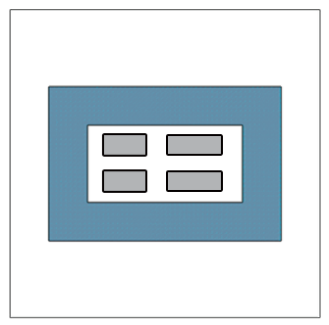
 Baligangweizi, Huangchuan County
 Luodianweizi, Huangchuan County
 Yuanweizi, Gushi County
 Yanweizi, Gushi County
 Caohouweizi, Gushi County
 Shujiaweizi, Guangshan County
 Majiaweizi, Gushi County
 Chenweizi, Guangshan County