Review

From Nanomaterial Performance to System Integration: Advancing Realistic Wastewater Treatment Technologies


1
Microbiology Department, Soil, Water and Environment Research Institute, Sakha Agricultural Research Station, Agriculture Research Center, Kafr El-Sheikh 33717, Egypt
2
Nanofood Laboratory, Department of Animal Husbandry, Faculty of Agricultural and Food Sciences and Environmental Management, Institute of Animal Science, Biotechnology and Nature Conservation, University of Debrecen, 138 Böszörményi Street, 4032 Debrecen, Hungary
3
Soils and Water Department, Faculty of Agriculture, Al-Azhar University, Cairo 11884, Egypt
4
Plant Biotechnology Department, Biotechnology Research Institute, National Research Centre, 33 El Buhouth St., Dokki, Giza 12622, Egypt
5
Soil and Water Department, Faculty of Agriculture, Kafrelsheikh University, Kafr El-Sheikh 33516, Egypt
*
Authors to whom correspondence should be addressed.
Water 2026, 18(13), 1551; https://doi.org/10.3390/w18131551 (registering DOI)
Submission received: 21 May 2026 / Revised: 22 June 2026 / Accepted: 23 June 2026 / Published: 25 June 2026

Abstract

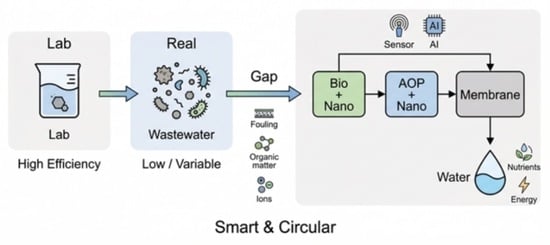
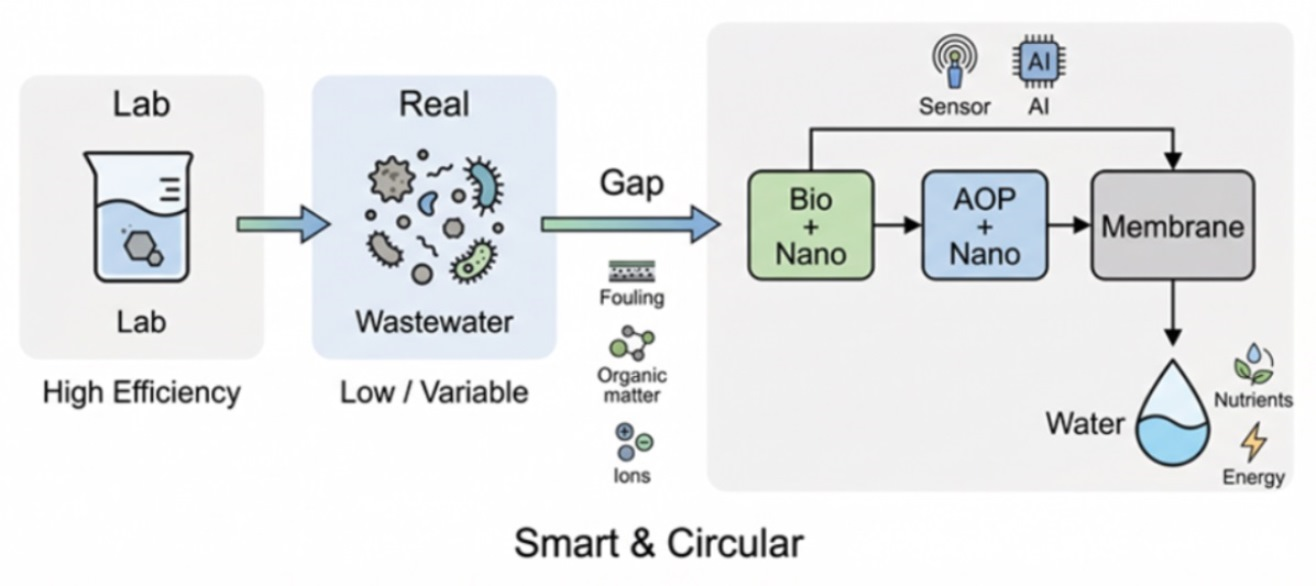
Nanotechnology offers transformative potential for wastewater treatment, yet its full-scale implementation remains bottlenecked by the “lab–reality gap”. While bench-scale studies using idealized matrices report outstanding pollutant removal efficiencies, performance routinely deteriorates in authentic wastewater due to complex matrix interferences, natural organic matter (NOM) competitive binding, fouling dynamics, and unpredictable nano–bio transformations. Moving beyond traditional reviews that focus heavily on material synthesis and theoretical capacities, this review provides a novel, systems-oriented, and function-driven perspective on environmental nanotechnology. We critically evaluate the operational stability and behavior of nano-enabled systems under realistic conditions, categorizing nanomaterial roles into reactive interfaces, selective barriers, signal generators, and biological modulators. Crucially, this work examines the synergistic integration of nanotechnology with advanced oxidation processes (AOPs), membrane bioreactors, and digital intelligence—including artificial intelligence (AI) and real-time nanosensing—to achieve smart fouling management and circular resource recovery. Finally, we propose a comprehensive, multidimensional evaluation framework that simultaneously assesses technical efficiency, stability, scalability, economic feasibility, environmental safety, and system compatibility. This review delivers a pragmatic roadmap to bridge the chasm between isolated laboratory discovery and robust, sustainable, field-scale wastewater engineering.

Graphical Abstract

1. Introduction

The escalating global water crisis, exacerbated by rapid industrialization, urbanization, and climate change-induced water scarcity, presents an existential threat to both human health and ecological stability. The continuous discharge of complex industrial and municipal effluents has drastically altered the chemical profile of receiving waters worldwide. These streams introduce a myriad of persistent and highly mobile emerging contaminants, including per- and polyfluoroalkyl substances (PFAS), micro- and nanoplastics, pharmaceutical residues, and endocrine-disrupting chemicals [1,2]. Ensuring reliable access to clean water in this increasingly contaminated landscape demands immediate, transformative, and highly resilient engineering interventions [3]. Traditional wastewater treatment infrastructures, predominantly reliant on conventional activated sludge processes and basic physicochemical separations, were fundamentally designed to mitigate bulk organic loads and suspended solids. These legacy systems are increasingly inadequate for addressing the molecular complexity and trace concentrations of modern effluents. They frequently fail to effectively sequester or degrade emerging contaminants, which resist biological oxidation and evade traditional physical clarification [4]. Furthermore, conventional treatments often merely transfer pollutants from the aqueous phase to concentrated sludge, generating hazardous secondary waste streams without achieving genuine detoxification or facilitating sustainable resource recovery [5].
To transcend these inherent limitations, environmental nanotechnology has emerged as a highly promising frontier. Engineered nanomaterials (ENMs)—ranging from transition metal oxides and zerovalent metals to carbonaceous nanocomposites and metal–organic frameworks—possess extraordinary surface-area-to-volume ratios, tunable surface chemistries, and exceptional catalytic reactivities. These unique physicochemical properties theoretically allow for the targeted degradation of recalcitrant organics and the highly selective separation of trace contaminants [6,7]. The catalytic potency of these interfaces is exemplified by developments in bimetallic architectures, such as antimonene-derived Sb2O3-CuO nanocomposites synthesized via microwave-assisted pathways, which leverage copper-mediated Fenton-like reactions to generate localized hydroxyl radicals that can achieve up to 96% degradation of recalcitrant organics like p-nitrophenol within mere seconds [8]. Concurrently, the operational stability of these nanomaterials is tightly coupled to their complex fluid behavior; understanding basic transport mechanisms—such as structural disjoining pressure, wettability alteration, and the “log-jamming” retention effects observed during nanofluid transport in high-stress, harsh environmental matrices is essential for predicting material longevity [9]. However, the pronounced optimism currently surrounding nanotechnology in the literature is heavily skewed by the overrepresentation of idealized, bench-scale studies. The vast majority of reported exceptional removal efficiencies are derived from highly controlled experiments utilizing synthetic, single-solute matrices that completely fail to replicate the harsh conditions of authentic wastewater operations.
This dynamic translational gradient from controlled environments to complex matrices represents a critical engineering bottleneck today. The remarkable catalytic and adsorptive kinetics observed in vitro routinely deteriorate when ENMs are exposed to the severe thermodynamic and hydrodynamic constraints of real industrial effluents. In authentic matrices, ubiquitous natural organic matter (NOM) and complex background inorganic ions induce severe competitive inhibition, blocking active sites and indiscriminately scavenging reactive oxygen species (ROS) [10]. Moreover, sustained exposure to these dynamic environments drives rapid structural fouling, irreversible catalyst deactivation via surface passivation, and unintended ecotoxicological interactions with keystone microbial communities, severely disrupting essential biological treatment stages [11,12].
Despite these systemic failures at the pilot scale, contemporary review literature remains disproportionately focused on cataloging novel nanomaterial synthesis routes and celebrating peak theoretical removal capacities. Existing comprehensive studies frequently neglect critical system-level analyses, failing to rigorously examine the thermodynamic complexities of multi-component competitive binding, continuous-flow hydrodynamic limitations, and the techno-economic realities of scale-up [13]. By largely ignoring long-term structural stability, real-world matrix interferences, and the life-cycle environmental fate of these advanced materials, the current literature perpetuates a theoretical narrative that is fundamentally disconnected from the operational imperatives of actual wastewater facilities [14].
The expansive body of existing literature is rich with excellent, comprehensive reviews detailing the synthesis protocols, structural characterization, and maximum theoretical pollutant removal capacities of engineered nanomaterials (ENMs). These classic, material-centric compilations provide vital foundational data regarding optimal laboratory performance boundaries. However, a critical gap remains: prior reviews frequently decouple the nanomaterial from the broader engineering ecosystem, treating treatment processes as static, single-solute operations. The unique novelty of this review lies in transcending this material-isolated paradigm. Rather than re-cataloging synthesis routes or maximum batch capacities, this work introduces a systemic, function-driven taxonomy that explicitly analyzes the operational stability, interfacial competitive thermodynamics, and dynamic fouling boundaries of nano-enabled technologies embedded within authentic, multi-component wastewater matrices. By shifting the analytical lens from isolated material traits to integrated system behaviors, this manuscript bridges the gap between fundamental materials science and practical process engineering.
Addressing this profound disparity, this review decisively reframes environmental nanotechnology from a material-centric novelty to a system-integrated, function-driven engineering approach. The primary objective is to critically evaluate the success and failure scenarios of nano-enabled interventions exclusively under authentic, complex wastewater conditions. Moving beyond mere pollutant destruction, this study emphasizes the absolute necessity of integrating nanotechnology with digital intelligence—including artificial intelligence (AI), machine learning (ML), and in situ nanosensing—to enable predictive fault detection, adaptive process control, and resilient operation [15]. Furthermore, this review aligns nanotechnological deployment with the principles of the circular economy, prioritizing pathways for nutrient and precious metal recovery, and introduces a robust, multi-dimensional evaluation framework that concurrently assesses technical efficacy, economic feasibility, and ecological safety. The subsequent sections systematically unpack these critical dimensions to construct a pragmatic roadmap for scalable remediation. We first dissect the matrix-induced limitations of prominent nanomaterial classes, followed by a critical assessment of hybrid treatment trains and complex nano-biological interactions. Subsequent discussions explore the transformative integration of AI and predictive modeling for smart fouling management and dynamic system optimization. Ultimately, this comprehensive review seeks to reconcile the operational trade-offs across the spectrum of isolated laboratory discovery and full-scale, sustainable engineered application, ensuring that the deployment of nanotechnology genuinely advances global water security and environmental resilience.

2. The Illusion of Efficiency: Why Most Wastewater Technologies Fail in Reality

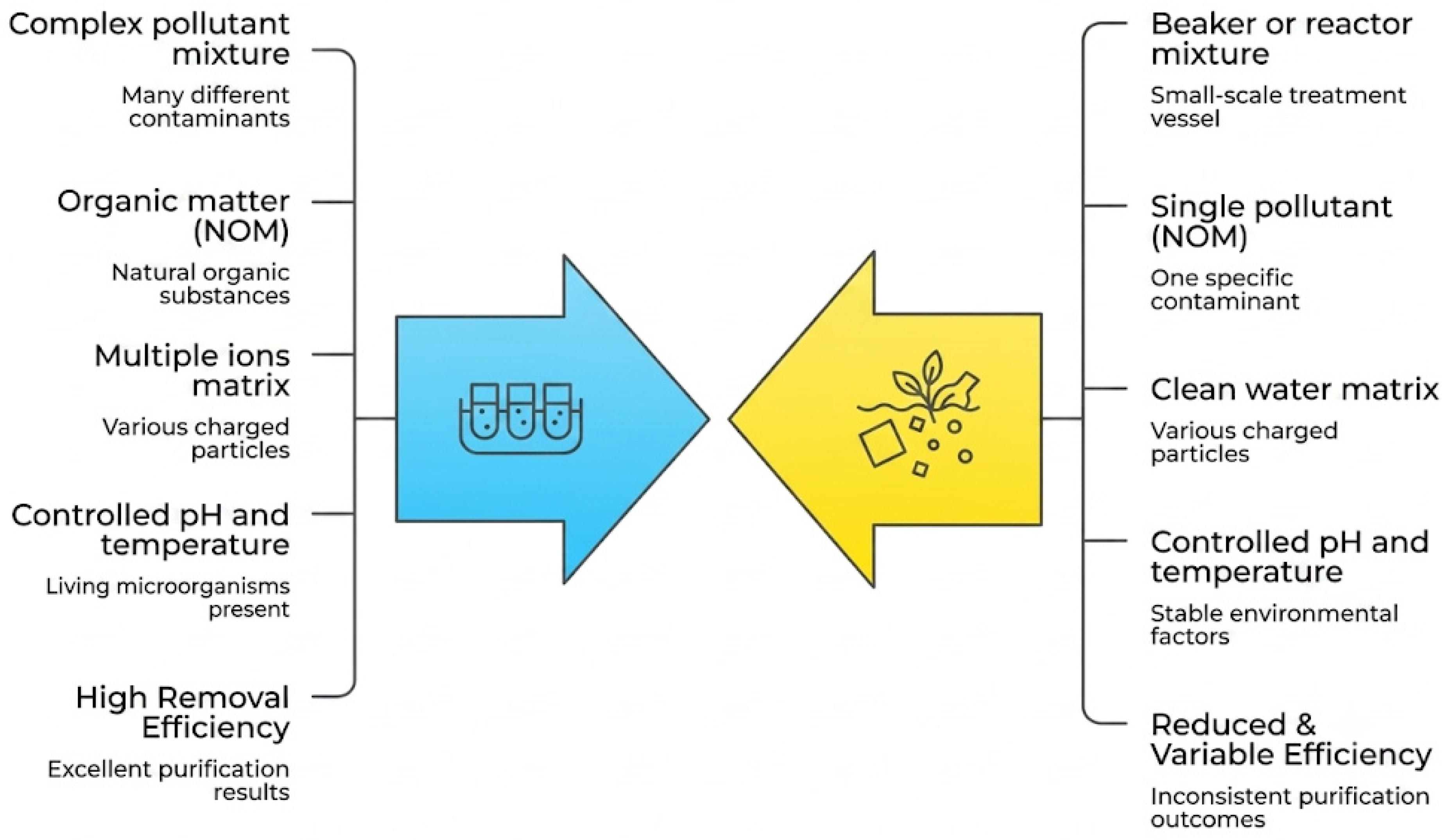
The pervasive reporting of near-complete contaminant removal efficiencies in contemporary peer-reviewed literature frequently projects a deceptive optimism regarding the technological readiness of advanced wastewater remediation systems. In practice, a significant operational gradient exists between bench-scale efficacy and full-scale operational performance, presenting complex trade-offs between optimization and matrix tolerance, primarily driven by the over-reliance on idealized, synthetic batch solutions [16]. Real industrial effluents are characterized by dynamic physicochemical fluctuations, including variable pH, high salinity, and the presence of complex co-contaminants, which fundamentally alter nanomaterial behavior [17]. When translated to authentic wastewater matrices, these engineered systems inevitably encounter severe matrix effects. The presence of background ions and natural organic matter (NOM) competitively adsorb onto and rapidly passivate the active sites of nanomaterials, while high ionic strength compresses the electrical double layer, inducing severe particle agglomeration and reducing effective surface area [18]. Consequently, the extraordinary adsorption capacities and catalytic kinetics achieved in deionized water rarely materialize in actual industrial effluents due to these interfacial thermodynamic constraints [19]. Furthermore, the widespread reporting of mere percentage removal or decolorization metrics—without rigorous system-level context—generates a false narrative of treatment success. Relying exclusively on chemical oxygen demand (COD) reduction or primary phase transfer fails to verify true mineralization, effectively masking the accumulation of toxic intermediate by-products [20]. Toxicity assessments that lack structural confirmation of these degradation intermediates critically underestimate the ecological hazards of residual by-products [21].
These matrix-induced limitations are critically exacerbated when attempting to scale up nanotechnology-enabled systems. Despite promising in vitro reaction kinetics, advanced materials such as nanoscale zero-valent iron (nZVI) and carbon nanotubes (CNTs) are consistently plagued by rapid reagglomeration, oxidative dissolution, and severe mobility limitations when deployed in continuous-flow or heterogeneous subsurface environments [22]. The transition from laboratory synthesis to industrial-scale production frequently introduces structural defects and deviations in nanoparticle morphology, which severely impact their functional reliability and long-term stability [23]. Compounding these physical limitations, the high energy demands of synthesis and the prohibitive costs of raw materials render many of these advanced nanomaterials economically unviable for full-scale municipal or industrial deployment [24]. Ultimately, navigating the transition from idealized conditions to operational settings remains a primary challenge in environmental engineering. Achieving sustainable water remediation demands a decisive departure from the perpetual synthesis of idealized nanomaterials for synthetic matrices. Future research must pivot toward rigorous, life-cycle-aware field validations and systems-level engineering that intrinsically integrate complex matrix thermodynamics, structural stability, and long-term operational resilience into the fundamental design of wastewater technologies (Table 1). The pervasive disconnect between theoretical nanomaterial efficacy and field-scale performance remains the central bottleneck in environmental nanotechnology. While bench-scale studies utilizing synthetic, single-solute matrices consistently report near-complete pollutant degradation or adsorption, these metrics rarely materialize in authentic industrial and municipal effluents. Complex wastewater matrices introduce severe thermodynamic and hydrodynamic constraints—including natural organic matter (NOM) competitive binding, radical scavenging by background ions, and rapid physical passivation. To elucidate this “lab-to-reality” translational gap, the following table synthesizes representative peer-reviewed literature, critically comparing the performance, stability, and operational limitations of various nano-enabled systems when transitioning from idealized synthetic water to authentic wastewater matrices.

3. Wastewater as a Dynamic System, Not a Matrix

The conventional paradigm in environmental engineering frequently mischaracterizes wastewater as a static, homogenous matrix, a gross oversimplification that severely impedes the translation of advanced remediation technologies from bench to pilot scale. In reality, wastewater is a highly dynamic, far-from-equilibrium system defined by continuous spatiotemporal fluctuations and complex interfacial interactions. The operational efficacy of nano-enabled treatment technologies is inextricably linked to temporal variability, including diurnal load shifts and profound seasonal fluctuations. These variations dictate microbial metabolic rates and fundamentally alter the emission profiles of critical greenhouse gases, such as nitrous oxide, during biological treatment phases [33]. Furthermore, authentic industrial and municipal effluents are laden with multi-component mixtures of natural organic matter (NOM), variable ionic strength, and competing co-contaminants. Under these authentic conditions, high-performing engineered nanomaterials (ENMs) rapidly experience electrical double layer compression, inducing severe particle agglomeration and the subsequent passivation of reactive surface sites [28,34].
Crucially, these physicochemical dynamics are tightly coupled with the biological components of the system. Chemical–biological coupling dictates the ultimate fate, transport, and toxicity of both pollutants and ENMs. When introduced into biological treatment units, nanoscale metal oxides undergo profound biotransformations—such as reduction, sulfidation, and ligand exchange—mediated by extracellular polymeric substances and complex microbial consortia [29]. These processes not only alter the intrinsic reactivity of the nanomaterials but can also trigger significant shifts in bacterial community structures, potentially disrupting essential nutrient cycling pathways like nitrification and denitrification [35]. Moreover, the extracellular electron transfer between indigenous microorganisms and nanoscale minerals serves as a critical regulatory mechanism governing the redox transformation and bio-availability of co-existing pollutants [36]. Consequently, static laboratory experiments utilizing synthetic, single-solute solutions are fundamentally inadequate for representing real-world wastewater systems. Bench-scale assays inherently do not fail to replicate the competitive scavenging of reactive oxygen species by background ions, nor do they account for the thermodynamic constraints imposed by fluctuating pH and complex organic matrices. This systemic disconnect leads to a severe overestimation of contaminant degradation kinetics and adsorption capacities, perpetuating the illusion of efficiency that currently plagues environmental nanotechnology [37]. To transcend this translational bottleneck, the trajectory of wastewater remediation must pivot toward dynamic-system-based design. Developing resilient treatment technologies requires abandoning idealized experimental conditions in favor of continuous-flow field validations using authentic effluents. Future research must integrate advanced multi-omics and transient-state modeling to decode chemical–biological coupling and multi-component interactions. Only by engineering technologies that are intrinsically adaptive to the dynamic variability of real wastewater systems can we achieve sustainable, full-scale resource recovery and ecological protection.

4. Functional Roles of Nanotechnology in Complex Systems

The traditional material-centric taxonomy of engineered nanomaterials fails to capture their dynamic behavior within complex environmental matrices. To accurately bridge the translational gap from laboratory synthesis to full-scale deployment, it is imperative to reframe nanotechnology through a systems-level lens, classifying nanoscale interventions strictly by their operational functions: reactive interfaces, selective barriers, signal generators, and biological modulators [7]. Reactive interfaces exploit the exceptionally high surface-area-to-volume ratios and tunable crystal facets of nanomaterials to catalyze the degradation of recalcitrant pollutants. Mechanisms such as “trap-and-zap” utilize hierarchical sub-nanometer geometries to selectively coordinate target contaminants and mineralize them via localized reactive oxygen species (ROS) or rapid electron transfer [10]. However, under real wastewater conditions, this theoretical superiority is severely compromised. Ubiquitous natural organic matter (NOM) and complex background ions competitively scavenge ROS and rapidly passivate active sites, precipitating a dramatic decline in faradaic efficiency and thermodynamic reactivity. The critical research gap remains designing reactive interfaces that resist fouling and maintain long-term stability in highly heterogeneous, multi-component effluents.
Selective barriers, typically manifested in nanocomposite or aquaporin-based membranes, function by manipulating sub-nanometer pore architectures and surface charges to achieve precise steric and Donnan exclusion [38]. While these barriers exhibit unprecedented monovalent-divalent ion selectivity and permeability in synthetic streams, they are acutely vulnerable in industrial applications. Authentic wastewater matrices induce severe scaling and irreversible extracellular polymeric substance (EPS) biofouling [7]. The physical and chemical resilience of these nano-channels against harsh, repetitive backwashing and chemical cleaning protocols remains a major unresolved limitation restricting their industrial scalability. Signal generators function as the core of continuous, real-time diagnostic systems, translating trace molecular interactions into measurable optical, fluorescent, or electrochemical responses [39]. While highly sensitive in vitro, their performance in authentic wastewater is frequently crippled by matrix interference. Unpredictable spectral overlapping from organic foulants, coupled with rapid bio-molecular masking of the sensor surface, drastically reduces signal-to-noise ratios and induces false positives. Achieving reliable, interference-free signal transduction in dynamic biological suspensions represents a profound translational bottleneck.
Biological modulators actively interact with microbial consortia to either enhance metabolic processes (e.g., acting as electron shuttles in anaerobic digestion) or serve as biocidal agents via the controlled release of toxic ions and ROS [7]. The primary limitation in real systems is their lack of specificity. The indiscriminate toxicity of metallic modulators often causes collateral disruption of essential biological processes, severely inhibiting beneficial nitrifying and denitrifying bacterial communities in activated sludge [40]. Furthermore, rapid environmental transformations, such as sulfidation and heteroaggregation in raw sewage, frequently quench their intended biological modulatory capacity long before therapeutic or biocidal targets are reached [37]. Ultimately, evaluating nanomaterials through functional roles rather than material composition is substantially more meaningful because it intrinsically links nanoscale phenomena to system-level engineering constraints. A functional classification directly exposes the persistent lab–reality gap, forcing researchers to prioritize matrix interactions, long-term stability, and complex chemical–biological coupling over mere material novelty.

4.1. Nano as Reactive Interfaces

The transition of nano-enabled advanced oxidation processes (AOPs) from idealized batch reactors to full-scale wastewater infrastructure is currently hindered by a profound disconnect between theoretical reactive oxygen species (ROS) generation and actual systemic efficiency. While engineered nanomaterials—spanning semiconductor photocatalysts, heterogeneous Fenton-like interfaces, and emerging nanozymes—exhibit exceptional capacity to catalyze the formation of highly reactive intermediates such as hydroxyl (•OH) and superoxide (O2) radicals [41], their operational reality in authentic industrial effluents is consistently compromised by severe thermodynamic and mass-transport limitations [42].
The primary driver of this efficiency loss is the ubiquitous presence of radical scavengers in real wastewater matrices. In complex effluents, natural organic matter (NOM) and inorganic background ions (e.g., carbonates, chlorides, and sulfates) act as voracious sinks, indiscriminately consuming the vast majority of generated ROS before they can interact with targeted trace pollutants [10]. Consequently, the remarkable degradation kinetics frequently reported in synthetic, single-solute laboratory studies rapidly deteriorate in the field, exposing a critical vulnerability in systems relying on unconfined radical diffusion [24]. Although nanozymes—nanomaterials mimicking enzymatic activity—have been proposed to overcome the strict pH and environmental constraints of traditional catalysts, they too face significant material stability and scale-up challenges under the harsh physicochemical fluctuations of industrial wastewater [43]. Beyond kinetic quenching, the long-term viability of these nanocatalysts is severely threatened by continuous deactivation and structural fouling. In continuous-flow real-world operations, the dynamic accumulation of organic foulants and the precipitation of inorganic scales rapidly passivate the reactive nanoscale facets. Furthermore, heterogeneous Fenton-like systems frequently suffer from the progressive oxidative dissolution of active metal sites and the subsequent formation of inactive surface complexes, leading to an irreversible loss of catalytic productivity and a costly regeneration burden [44]. The failure to differentiate between reversible surface fouling and irreversible material aging in contemporary literature represents a critical blind spot in predicting catalyst lifespans under authentic operational stressors [10]. This pronounced drop in catalytic efficacy fundamentally skews the energy-performance nexus of nano-enabled AOPs. Driving photocatalytic or electro-Fenton systems demands substantial photon or electrical energy input, yet the effective return on this investment drops precipitously when ROS are competitively scavenged. When quantified through the electrical energy per order (EEO) metric, the energetic footprint required to achieve targeted mineralization in real wastewater often renders these advanced treatments economically unfeasible compared to optimized biological or conventional physicochemical processes [45].
To transcend these translational barriers, the environmental nanotechnology paradigm must pivot away from merely maximizing bulk ROS production. Future innovation demands the intelligent design of resilient, anti-fouling architectures—such as “trap-and-zap” interfaces—that ensure spatial proximity between targeted pollutants and active radical generation sites, thereby actively circumventing the matrix scavenger effect. Ultimately, scaling AOPs requires integrating complex matrix thermodynamics, long-term aging studies, and rigorous techno-economic assessments into the fundamental design of nanocatalysts, ensuring that exceptional laboratory reactivity translates into sustainable, energy-efficient environmental remediation.

4.2. Nano as Selective Barriers

The integration of engineered nanomaterials into adsorptive and membrane-based wastewater treatment systems theoretically offers unprecedented control over physicochemical separation. Yet, the translation of these nano-enabled architectures from idealized laboratory settings to full-scale industrial operations reveals profound, unresolved contradictions regarding selectivity, permeability, and long-term fouling resilience. Contemporary literature is saturated with exceptional contaminant removal efficiencies for nano-adsorbents, largely derived from synthetic, single-solute batch experiments. This projects a deceptive optimism that shatters when confronted with authentic industrial effluents. Real wastewater is a highly dynamic, multi-component matrix where elevated ionic strength, variable pH, and ubiquitous natural organic matter (NOM) induce severe competitive inhibition [46]. In these complex environments, background ions competitively bind to the active sites of advanced nanocomposites, while electrical double layer compression induces nanoparticle agglomeration, drastically reducing the effective surface area. Consequently, the remarkable pollutant-specific selectivity and rapid adsorption kinetics observed in vitro routinely fail to materialize in authentic agricultural or industrial wastewater streams due to aggressive competition for finite surface binding sites [47].
Similar translational failures plague nano-enabled filtration systems. The incorporation of metal oxides, carbon nanotubes, or metal–organic frameworks into polymeric nanofiltration (NF) and ultrafiltration (UF) membranes theoretically breaks the traditional permeability-selectivity trade-off by creating preferential water transport channels [48]. However, in authentic mixed-salt systems, this enhancement is highly susceptible to the feed water’s fluctuating ionic composition. High background salinity exacerbates charge screening effects and induces electroneutrality-driven electromigration, which critically compromises the Donnan exclusion mechanisms that govern monovalent-divalent ion selectivity [49]. Furthermore, the operational reality of these nano-hybrid membranes is consistently undermined by intractable fouling. Despite claims of enhanced superhydrophilicity and antifouling properties in short-term laboratory trials, nano-enabled membranes deployed in complex matrices rapidly accumulate organic and biological foulants, causing structural pore constriction and irreversible cake layer formation [50]. Over continuous operation, this irreversible fouling can diminish membrane life expectancy and permeability by up to 60%, fundamentally negating the initial energetic and hydraulic advantages of the nanoscale modifications [51]. Ultimately, the glaring disparity between laboratory promise and real-world performance exposes a critical methodological flaw in environmental nanotechnology. The current paradigm over-optimizes materials for synthetic matrices while neglecting the thermodynamic and hydrodynamic constraints of actual industrial effluents. Overcoming this translational bottleneck requires a decisive pivot toward dynamic, multi-component field validations, prioritizing long-term structural resilience, fouling resistance, and sustained selectivity over transient, idealized permeability metrics.

4.3. Nano as Signal Generators

The deployment of nanotechnology-enabled sensor platforms for water quality monitoring offers unprecedented sensitivity and target specificity; however, their integration into full-scale wastewater treatment infrastructure exposes profound contradictions between theoretical analytical capacity and actual operational utility. While advanced transducing mechanisms—spanning surface-enhanced Raman scattering (SERS), localized surface plasmon resonance (LSPR), and electrochemical detection—routinely achieve parts-per-trillion (ppt) detection limits in idealized synthetic solutions [39,52], this in vitro prowess is drastically compromised in authentic industrial and municipal effluents. In complex, real-world wastewater matrices, the ubiquitous presence of natural organic matter (NOM), extracellular polymeric substances, and competing inorganic ions induces severe spectral overlap and physical passivation of highly reactive nanoscale “hotspots” [53]. During continuous-flow operations, the competitive adsorption of non-target macromolecules physically occludes the engineered nanogap spaces of SERS substrates and plasmonic sensors, leading to unpredictable signal attenuation, false positives, and a catastrophic loss of detection reproducibility [53]. Consequently, the remarkable pollutant-specific detection limits reported in deionized water rarely translate to authentic effluents due to these aggressive matrix interferences and dynamic physicochemical fluctuations [54].
To mitigate these interferences, recent research has pivoted toward coupling nanomaterial-based transducers with Internet of Things (IoT) frameworks and machine learning algorithms. These digital interventions aim to computationally filter background noise and isolate target analyte signals from matrix-induced spectral clutter [55]. While these hybrid approaches have successfully generated high-resolution datasets detailing real-time influent variability, their implementation inadvertently highlights a critical systemic bottleneck: our capacity to monitor treatment systems now far exceeds our ability to autonomously regulate them. Currently, the integration of these nanosensing platforms into full-scale treatment architectures reveals that while monitoring is highly advanced, decision-making systems remain fundamentally limited. The vast streams of data generated by advanced nanosensors are rarely coupled with closed-loop, multi-objective control algorithms capable of autonomously adjusting critical plant parameters, such as chemical dosing, aeration rates, and hydraulic retention times [56]. Traditional control strategies, driven by single-objective optimization, are fundamentally ill-equipped to process high-frequency nanoscale sensor inputs, rendering the acquired high-fidelity data operationally inert [10]. Ultimately, the current research trajectory reflects a disproportionate emphasis on synthesizing hyper-sensitive nanomaterials while neglecting the systems-level engineering required for adaptive plant operation. Bridging this translational gap demands a decisive shift from isolated nanosensor development toward holistic, AI-driven process control architectures. Future research must prioritize the development of dynamic decision-making frameworks that can directly translate real-time nanosensor outputs into automated interventions, thereby optimizing the thermodynamic, economic, and ecological sustainability of wastewater treatment facilities.

4.4. Nano as Biological Modulators

The intersection of engineered nanomaterials (ENMs) and microbial consortia in wastewater treatment represents a profound biochemical paradox: ENMs simultaneously function as potent electrocatalytic stimulants and severe ecotoxicological stressors. Transitioning nano-enabled remediation from highly controlled, synthetic laboratory environments to the dynamic complexity of authentic industrial and municipal effluents reveals critical contradictions in how nanomaterials interact with indigenous microbial populations. Within biological treatment architectures, such as anaerobic digesters and microbial fuel cells, the introduction of conductive carbonaceous nanomaterials (e.g., carbon nanotubes, graphene oxide) and mixed-valence metal oxides (e.g., Fe3O4) has been shown to dramatically enhance extracellular electron transfer (EET) [57]. By bridging spatial gaps between syntrophic bacteria and methanogenic archaea, these conductive ENMs facilitate direct interspecies electron transfer (DIET). This mechanism significantly reduces activation overpotentials and accelerates the hydrolysis of complex, recalcitrant organics into volatile fatty acids and methane in complex sludge matrices [57]. However, this apparent metabolic stimulation frequently masks underlying cellular toxicity when evaluated under continuous-flow, real-world conditions. The chronic introduction of reactive ENMs into biological reactors triggers collateral disruption of essential microbial communities. The localized generation of reactive oxygen species (ROS) and the continuous dissolution of toxic metal ions from nanoparticles (e.g., Ag, ZnO, and TiO2) inflict severe oxidative stress and membrane disruption [35]. For instance, sub-lethal concentrations of silver nanoparticles actively suppress sensitive nitrifying bacteria populations, critically crippling nitrogen-cycling pathways in activated sludge systems [40]. Furthermore, recent investigations reveal a mechanistic contradiction where ENMs physically penetrate cell membranes and inhibit key intracellular enzymes (such as protease and coenzyme F420); yet, overall system performance, such as biogas yield, often appears stable due solely to the compensatory, abiotic redox capability of the accumulating nanocatalysts [58].
The ultimate fate and toxicity of these ENMs are intrinsically regulated by the structural heterogeneity of microbial biofilms and their extracellular polymeric substances (EPS). In response to nanoparticle shock loads, microbial consortia hyper-secrete tightly bound EPS—specifically altering the protein-to-polysaccharide (PN/PS) ratio—to electrostatically sequester nanoparticles and prevent deep cellular internalization [59]. While this defensive matrix shielding mitigates acute microbial lethality, it effectively transforms biological flocs into permanent sinks for unreacted nanomaterials. This accumulation severely restricts nanoparticle diffusion, alters the localized thermodynamics of the biofilm, and initiates a secondary solid waste crisis that prohibits the safe ecological valorization of the resulting sludge. To transcend this translational bottleneck, the environmental engineering paradigm must pivot from evaluating superficial performance metrics (e.g., bulk biogas yield or chemical oxygen demand reduction) toward systems-level, multi-omics analyses of chronic nano–microbe interactions. The central research challenge remains decoupling transient abiotic catalytic enhancement from genuine biological stimulation. Future dynamic-system designs must ensure that the deployment of ENMs does not irreversibly compromise the structural integrity and metabolic resilience of fundamental wastewater microbiomes.

5. Where Nanotechnology Works—And Where It Does Not

Engineered nanomaterials consistently demonstrate remarkable contaminant removal efficiencies when evaluated in highly controlled, idealized laboratory conditions. In synthetic, single-solute aqueous solutions devoid of background interference, the exceptional surface-to-volume ratios and tunable crystal facets of nano-adsorbents and nanocatalysts drive unprecedented adsorption capacities and rapid degradation kinetics [14]. However, this theoretical superiority frequently projects a deceptive optimism that shatters when these technologies are subjected to the rigorous realities of full-scale environmental remediation. When translated to authentic industrial or municipal wastewater, nanomaterial performance precipitously declines. Real effluents are characterized by elevated organic loads, complex multi-component co-contaminants, and dynamic physicochemical fluctuations [60]. Under these harsh conditions, the inherently high surface energy that makes nanomaterials reactive simultaneously renders them acutely vulnerable to severe fouling. Extracellular polymeric substances (EPS) and natural organic matter (NOM) rapidly accumulate on reactive interfaces and nano-enabled membranes, inducing structural pore constriction, irreversible cake layer formation, and a profound loss of hydraulic permeability [50]. Beyond physical occlusion, the chemical complexity of real wastewater matrices drives rapid catalyst poisoning and passivation. In nano-enabled advanced oxidation processes (AOPs), ubiquitous background inorganic ions (e.g., carbonates, chlorides, sulfates) and dissolved organic matter act as voracious radical scavengers. These constituents competitively consume reactive oxygen species (ROS) before they can interact with targeted trace pollutants, drastically suppressing thermodynamic reactivity and overall degradation efficiency [10]. Furthermore, sustained exposure to these complex matrices often induces the oxidative dissolution of active metal sites and the precipitation of inactive surface complexes, permanently deactivating the nanocatalysts [11].
Compounding these physical and chemical failures is a catastrophic loss of selectivity. The precise molecular sieving and electrostatic interactions carefully engineered into nanomaterials in vitro are effectively neutralized by the high ionic strength of real effluents. Elevated background salinity causes severe electrical double layer (EDL) compression and charge screening, which critically suppresses Donnan exclusion mechanisms and alters the thermodynamic activity of the system [61]. Consequently, the remarkable pollutant-specific selectivity observed in deionized water is overwhelmed by competitive adsorption for finite binding sites, rendering advanced nano-adsorbents largely indiscriminant and inefficient in high-salinity or mixed-contaminant streams [62]. Ultimately, the functional variations observed between bench-scale evaluations and pilot-scale trials reveal that wastewater must be treated as a dynamic, multi-component system rather than a static matrix. The key factors determining the success versus failure of nanotechnology in environmental remediation are not merely intrinsic material properties, such as raw surface area or theoretical ROS yield. Instead, practical success hinges entirely on the engineered resilience of nanomaterials against matrix-induced fouling, their resistance to chemical passivation, and their ability to sustain target selectivity amidst overwhelming competitive inhibition [14]. A multi-dimensional evaluation framework for assessing wastewater treatment technologies can be observed in Table 2, stemming from different sources [10,11,14,28,30,31,32,45,63,64,65,66,67,68,69,70,71].
To mitigate these deactivation pathways under authentic operational conditions, recent chemical engineering strategies focus on proactively preserving active interfacial sites through surface architecture tuning [72]. Rather than relying on static materials, systems can utilize hydrophobic modification (e.g., organosilane grafting) to create a thermodynamic barrier that repels bulky hydrophilic natural organic matter (NOM) while allowing target micropollutants to pass. Similarly, tailoring the localized surface charge to induce electrostatic shielding can minimize the competitive scavenging of background divalent anions [73]. Finally, integrating targeted molecular imprinting on the nanomaterial matrix offers a highly selective engineering solution; creating rigid, three-dimensional cavities matching the precise spatial geometry of target contaminants allows active sites to remain shielded from both steric fouling by macromolecular organic fractions and competitive coordination by inorganic ions [74].

6. Integration, Not Addition

The future of advanced wastewater remediation lies not in the mere sequential addition of nanomaterials to existing infrastructure, but in the fundamental, thermodynamic integration of nanoscale phenomena with biological and physicochemical processes. Treating engineered nanomaterials (ENMs) as isolated unit operations neglects the profound chemical–biological coupling required to effectively remediate complex, dynamic industrial effluents. To transcend the persistent “lab–reality gap,” the engineering paradigm must shift toward designing true hybrid systems where nanomaterials operate synergistically within multi-barrier treatment trains. Contemporary literature highlights the theoretical promise of these bio-nano and physico-nano hybrid architectures. For instance, integrating nanoscale materials into anaerobic digesters and microbial fuel cells has demonstrated substantial enhancements in extracellular electron transfer, accelerating biogas production and nutrient recovery [75]. Furthermore, biohybrid systems that embed biological elements, such as enzymes, into nanostructured frameworks successfully merge the specificity of biocatalysts with the physical resilience of nanomaterials. Encapsulating enzymes like laccase within metal–organic frameworks (MOFs) significantly improves their structural stability and reusability, enabling the synergistic, rapid degradation of complex, recalcitrant dyes under variable effluent conditions [76]. Similarly, the convergence of advanced oxidation processes (AOPs) with nanomaterial-modified membranes creates dual-function submerged membrane electro-bioreactors that simultaneously mitigate irreversible biofouling and enhance the mineralization of high-strength organic micro-pollutants [77]. However, when subjected to the rigors of authentic wastewater matrices, these theoretical synergies frequently precipitate severe operational complexity. The indiscriminate integration of highly reactive ENMs into biological reactors introduces profound ecotoxicological contradictions. For example, the continuous deployment of antimicrobial nanoparticles, such as silver (Ag) or zinc oxide (ZnO), inadvertently induces severe cytotoxicity, crippling the essential, indigenous microbial consortia required for biological nutrient removal and nitrification in activated sludge systems [78].
Beyond biological inhibition, hybrid systems combining coagulation, membrane separation, and nano-catalysis often suffer from conflicting optimal operational parameters. The pH, ionic strength, and presence of natural organic matter that favor optimal microbial metabolism or primary coagulation frequently trigger nanoparticle reagglomeration, surface passivation, and premature exhaustion of catalytic active sites [79]. Consequently, the integration of these distinct processes drastically increases the complexity of system control and maintenance. Maintaining thermodynamic equilibrium between abiotic catalytic degradation and microbial health requires highly sophisticated, adaptive control architectures that are currently absent from full-scale municipal and industrial facilities [80]. Ultimately, the successful deployment of hybrid nano-enabled systems demands a decisive shift from material-centric discovery to systems-level engineering. Future research must prioritize the development of “safe-by-design” nanomaterials that exhibit targeted pollutant specificity without exerting collateral toxicity on keystone microbial communities. Reconciling the trade-offs between catalytic synergy and operational complexity remains the critical frontier, necessitating advanced, AI-driven process control to dynamically regulate these highly integrated treatment platforms under real-world conditions.

6.1. Nano Within Biological Systems

The integration of engineered nanomaterials (ENMs) into membrane bioreactors (MBRs) presents a critical operational dichotomy: these nanoscale additives act as powerful conduits for extracellular electron transfer (EET) while simultaneously imposing severe ecotoxicological stress on keystone microbial biofilms. As the transition is made from highly controlled synthetic media to the dynamic physicochemical fluctuations of authentic industrial and municipal wastewater, the delicate balance between catalytic enhancement and biological disruption is frequently compromised. Within advanced MBR and biological treatment architectures, the deliberate addition of conductive carbonaceous nanomaterials and mixed-valence metal oxides (e.g., magnetite) has demonstrated significant potential to overcome the inherently sluggish kinetics of microbial metabolic pathways. By bridging spatial gaps within microbial flocs, these conductive ENMs serve as abiotic electron conduits, facilitating direct interspecies electron transfer between syntrophic bacteria and methanogenic archaea [81]. This enhanced EET reduces activation overpotentials and dramatically accelerates the hydrolysis and methanogenesis of recalcitrant organics within complex sludge matrices [57].
However, this apparent bioelectrocatalytic stimulation frequently masks profound underlying cytotoxicity when these systems are operated under continuous-flow, real-world conditions. The chronic exposure of indigenous biofilms to reactive ENMs introduces severe microbial toxicity risks. Metal and metal oxide nanoparticles, such as Ag, ZnO, and TiO2, indiscriminately penetrate the protective extracellular polymeric substance (EPS) matrix, inducing severe oxidative stress, membrane lipid peroxidation, and the subsequent inhibition of essential intracellular enzymes. For example, sub-lethal concentrations of silver nanoparticles actively suppress sensitive nitrifying bacterial populations, critically crippling nitrogen-cycling pathways in intact wastewater biofilms and activated sludge [40]. Similarly, the continuous influx of TiO2 nanoparticles severely alters the microbial community structure and drastically weakens sludge dewaterability by shifting bacterial cell death modes toward uncontrolled lysis [82]. Furthermore, these toxicological impacts critically inhibit the ammonia-oxidizing capabilities of the system, fundamentally reducing the overall nutrient removal efficiency of the bioreactor [35].
This toxicity paradox directly undermines the primary rationale for incorporating nanoparticles into MBR membranes for biofouling control. While embedding biocidal nanoparticles—such as Ag-NPs—into polymeric ultrafiltration membranes successfully retards initial biofilm attachment and virus penetration [56], the inevitable release of toxic ions and reactive oxygen species (ROS) into the bulk mixed liquor fundamentally compromises the viability of the suspended biological treatment phase. Furthermore, in real wastewater matrices, complexation with natural organic matter and rapid sulfidation often quench the intended anti-fouling efficacy of the membrane, yielding a hybrid technology that is both biologically hazardous and functionally impaired over extended operation [71]. Ultimately, the persistent disconnect between abiotic EET enhancement and chronic microbial toxicity reveals a central translational gap in environmental nanotechnology. Designing next-generation MBR systems requires a decisive departure from the indiscriminate application of highly reactive ENMs. Future research must prioritize “safe-by-design” functionalization that securely anchors conductive nanomaterials to localized membrane interfaces, thereby enhancing targeted electron transfer and fouling resistance without inducing collateral ecological damage to the foundational microbial consortia that drive wastewater remediation.

6.2. Nano–AOP Systems

Advanced oxidation processes (AOPs), specifically photo-Fenton and electrochemical oxidation (EO), have long been heralded as panaceas for recalcitrant industrial wastewater; yet, their translation to full-scale operations remains critically encumbered by an unresolved energy-efficiency trade-off and severe matrix interferences. Photo-Fenton systems theoretically overcome the sluggish kinetics and sludge-generation bottlenecks of traditional dark Fenton reactions by employing UV or visible light to photochemically regenerate Fe(II) from Fe(III), simultaneously enhancing hydroxyl radical (•OH) yields. However, in real industrial effluents, this efficiency is frequently an illusion. The ubiquitous presence of radical scavengers—such as carbonates, chlorides, and natural organic matter—and the restriction to a narrow, acidic optimal pH range severely depresses radical propagation kinetics [83,84]. Furthermore, while photo-Fenton can achieve significant chemical oxygen demand (COD) reduction, it frequently suffers from poor decolorization and elevates residual iron concentrations in the effluent by up to 40%, which compromises water reusability and escalates downstream separation costs [45].
Similarly, EO presents a theoretically robust, chemical-free alternative capable of generating reactive oxygen species directly at the anode [10]. Despite its adaptability and capacity to mineralize highly persistent pollutants like per- and polyfluoroalkyl substances [85], EO is consistently undermined by prohibitive energy demands and irreversible electrode degradation. Under realistic continuous-flow conditions and high ionic strengths, EO electrodes suffer from rapid passivation and inorganic scaling, dramatically increasing charge-transfer resistance [86]. The high capital cost of dimensionally stable or boron-doped diamond anodes, combined with the propensity to generate toxic by-products such as perchlorate and halogenated organics in complex saline matrices, severely limits EO’s practical viability. The fundamental bottleneck for both technologies lies in the thermodynamic trade-off between electrical energy input and mineralization efficiency, best quantified by the Electrical Energy per Order (EEO) metric [87]. Techno-economic assessments reveal that achieving complete mineralization in raw, heterogeneous effluents requires exponentially higher EEO values due to competitive scavenging. Consequently, the energetic footprint required to drive photo-Fenton or EO often renders them economically prohibitive for bulk COD removal compared to optimized biological or conventional physicochemical processes [10,45]. Ultimately, the current trajectory of AOP research disproportionately focuses on optimizing idealized, single-solute laboratory models while ignoring the massive energetic penalties imposed by complex wastewater matrices. Future innovation must pivot toward dynamic, hybrid systems that decouple energy demand from bulk oxidation—such as integrating AOPs strictly as targeted, short-duration pre-treatment steps to enhance biodegradability, rather than pursuing the energetically futile goal of total mineralization. Bridging this gap requires harmonized life-cycle and techno-economic assessments to ensure that advanced catalytic systems genuinely yield sustainable, field-ready remediation.

6.3. Decentralized Systems

The deployment of advanced wastewater treatment infrastructure in rural and small-scale settings represents a profound engineering dichotomy: the decentralized communities most vulnerable to persistent aqueous contaminants are simultaneously the least equipped to finance and maintain complex remediation technologies. While engineered nanomaterials (ENMs) offer theoretically unprecedented treatment efficiencies, their translation into decentralized, point-of-use (POU) applications remains critically hindered by inherent contradictions surrounding capital cost, operational robustness, and system simplicity [7]. In idealized laboratory scenarios, nano-enabled modular systems—such as carbon nanotube filters, high-capacity nanoadsorbents, and reactive nanocomposite membranes—promise highly efficient pollutant phase-transfer and microbial disinfection without the prohibitive chemical dosing or high-energy demands of centralized conventional plants [88]. The potential for off-grid, renewable-energy-driven nano-reactors theoretically aligns perfectly with the requirements of decentralized wastewater management. However, transitioning these emerging technologies to resource-constrained rural environments exposes severe limitations in operational robustness. High-performing nanoadsorbents and photocatalysts, which exhibit exceptional reaction kinetics in vitro, frequently suffer from rapid surface passivation, competitive fouling from natural organic matter (NOM), and structural degradation under the dynamic, complex matrices of authentic rural effluents [60]. The recurrent requirement for membrane backwashing, catalyst regeneration, and sludge management fundamentally violates the imperative of technological simplicity required for decentralized operations lacking specialized on-site expertise.
Furthermore, the prohibitive economics of nanomaterial synthesis present a formidable barrier to scalable rural adoption. While life-cycle and techno-economic analyses occasionally highlight long-term operational savings, the exorbitant initial capital expenditure (CAPEX) associated with producing high-purity ENMs consistently restricts their accessibility in low-income and small-scale applications [24,66]. This “lab–reality gap” is exacerbated when materials are designed solely for maximum theoretical removal capacity rather than optimizing the technology readiness level to match local institutional and socio-economic capacities [14]. To circumvent these translational barriers, contemporary research has increasingly pivoted toward pragmatic, low-cost alternatives, such as harnessing agricultural waste-derived biochar functionalized with biogenic nanoparticles. While these hybrid bio-nano systems attempt to merge the affordability and simplicity of nature-based solutions with the enhanced reactivity of nanoscale interfaces, they still face persistent challenges regarding batch standardization, predictable longevity, and the prevention of toxic nanoparticle leaching into the receiving environment. Ultimately, advancing nanotechnology for small-scale and rural wastewater applications necessitates a decisive paradigm shift from pursuing maximum theoretical efficiency to designing for intrinsic resilience and affordability. Future innovation must abandon hyper-complex, fragile nano-devices in favor of passive, low-maintenance, “safe-by-design” modular architectures that integrate seamlessly into decentralized frameworks. Bridging this gap demands rigorous field validations under authentic, unbuffered off-grid conditions to ensure that nano-enabled interventions deliver genuine socio-environmental equity rather than escalating operational burdens.

6.4. Adaptive Multi-Stage Systems

The conventional paradigm of evaluating nano-enabled remediation as an isolated unit operation is fundamentally flawed when confronted with the dynamic complexity of full-scale industrial and municipal effluents. Real wastewater is not a steady-state matrix; it is characterized by profound spatiotemporal variability, including sudden chemical shock loads, diurnal organic fluctuations, and abrupt shifts in pH and ionic strength. Under these authentic conditions, standalone nanomaterials—despite their exceptional theoretical reactivity—rapidly succumb to competitive inhibition, surface passivation, and premature exhaustion [10]. Consequently, achieving reliable contaminant mineralization necessitates the integration of nanotechnology into robust, multi-stage treatment trains [60]. Transitioning from bench-scale isolation to multi-barrier architectures theoretically enables a synergistic division of labor: primary physical and biological stages reduce bulk organic loads, preserving downstream nano-enabled advanced oxidation or nanofiltration units exclusively for recalcitrant micropollutant polishing [89,90]. However, this integration introduces severe operational contradictions in practice. The thermodynamic and chemical conditions optimized for an upstream stage often prove antagonistic to the subsequent nano-engineered unit. For instance, the extracellular polymeric substances (EPS) released during upstream biological treatment, or residual ions from primary chemical coagulation, can induce rapid heteroaggregation and irreversible fouling of downstream nano-catalysts and nano-enabled membranes [14]. Thus, rather than achieving seamless synergy, integrating these distinct processes frequently exacerbates operational complexity and accelerates nanomaterial degradation.
A critical, yet largely unresolved, challenge in these multi-stage systems is maintaining operational flexibility under highly variable influent loads. Conventional, static nanoreactors are chemically rigid; they cannot autonomously adapt to sudden spikes in contaminant concentration. During transient periods of high organic or competitive ion loading, the finite active sites on nano-adsorbents are rapidly overwhelmed, and the reactive oxygen species (ROS) generated by photocatalysts are indiscriminately scavenged by background constituents, resulting in catastrophic system failure and the breakthrough of targeted pollutants [10,11]. To counteract this rigidity, contemporary literature increasingly advocates for the coupling of multi-stage hybrid systems with artificial intelligence and in situ nanosensing [14]. In theory, these adaptive remediation systems could dynamically modulate hydraulic retention times, external energy inputs, and sequential flow paths in response to fluctuating environmental conditions [89]. Yet, deploying such sophisticated, data-driven control architectures in highly corrosive, fouling-prone wastewater environments remains economically and technically prohibitive for most industrial operators. Ultimately, the field of environmental engineering must pivot from the perpetual pursuit of novel, hyper-reactive nanomaterials toward the pragmatic engineering of resilient, multi-stage treatment architectures. The central research gap lies in achieving thermodynamic and hydrodynamic compatibility across consecutive unit operations under transient stress. Future innovation must prioritize the development of adaptive, multi-barrier systems capable of sustaining target selectivity and autonomous flexibility amidst the harsh, variable realities of real wastewater management.

7. Intelligent Treatment Systems

The next frontier in environmental nanotechnology transcends the mere synthesis of hyper-reactive materials, demanding the seamless integration of artificial intelligence (AI) and machine learning (ML) to overcome the operational rigidity of current wastewater treatment infrastructure. While modern nano-enabled systems exhibit exceptional theoretical capacities for contaminant degradation, their full-scale deployment is severely constrained by an inability to dynamically respond to the profound spatiotemporal fluctuations inherent to authentic industrial and municipal effluents [14]. Currently, the deployment of highly sensitive, in situ nanosensors allows for the real-time acquisition of high-fidelity data regarding influent composition and system thermodynamics. However, a profound translational gap persists between advanced environmental sensing and autonomous system control. Modern treatment facilities generate vast streams of multidimensional data via IoT-enabled nanosensor networks, yet these plants fundamentally lack the multi-agent reinforcement learning algorithms required to translate this data into instantaneous, closed-loop operational adjustments [55]. Consequently, the acquired high-resolution monitoring data remains operationally inert, failing to inform critical real-time decisions such as dynamic chemical dosing, hydraulic retention time modulation, or aeration control [69].
This disconnect is particularly detrimental in the management of membrane-based hybrid systems, where irreversible fouling remains a ubiquitous barrier to commercial viability. AI integration provides a pathway for smart fouling management through the deployment of artificial neural networks (ANNs) and digital twin frameworks [91]. By utilizing soft sensors to monitor transient hydrodynamics and recurrent neural networks to predict fouling trajectories, adaptive control architectures can theoretically preempt cake layer formation [92]. For example, real-time thermal or impedance-based sensing can track the onset of fouling, allowing AI systems to autonomously modulate feed flow rates or trigger in situ cleaning protocols before severe structural pore constriction permanently diminishes permeability [93]. Furthermore, data-driven optimization is essential for maximizing the energy-efficiency nexus of advanced oxidation and adsorption platforms. ML models trained on real-time influent characteristics can precisely predict the required mass of nanomaterials or the necessary energy inputs for optimal pollutant mineralization, minimizing unnecessary resource depletion [94]. Multi-agent deep reinforcement learning has recently shown promise in simultaneously optimizing competing operational targets, such as maintaining precise dissolved oxygen levels while strictly controlling chemical dosages to limit secondary greenhouse gas emissions [55]. However, a critical limitation remains: contemporary predictive models are predominantly trained on idealized, steady-state laboratory datasets, rendering them highly susceptible to failure when confronted with the stochastic nature, competitive scavenging, and matrix interferences of real wastewater. Ultimately, bridging the chasm between static sensing and dynamic system control is the central challenge for the next generation of environmental engineering. Future research must decisively pivot from isolated nanomaterial discovery toward holistic, AI-driven process architectures. Realizing sustainable wastewater remediation demands the development of robust, closed-loop systems capable of autonomously adapting to complex matrix thermodynamics, thereby ensuring that nanoscale efficacy translates into field-scale, long-term resilience [15].
Multi-agent deep reinforcement learning has recently shown promise in simultaneously optimizing competing operational targets, such as maintaining precise dissolved oxygen levels while strictly controlling chemical dosages to limit secondary greenhouse gas emissions. However, a critical limitation remains: contemporary predictive models are predominantly trained on idealized, steady-state laboratory datasets, rendering them highly susceptible to failure when confronted with the stochastic nature, competitive scavenging, and matrix interferences of real wastewater. Consequently, until extensive field-scale datasets with authentic multi-component effluents are established, the widespread deployment of these cyber-physical architectures remains a prospective framework rather than a mature operational standard. Ultimately, bridging the chasm between static sensing and dynamic system control is the central challenge for the next generation of environmental engineering.

8. Resource Recovery

The paradigm of environmental engineering must undergo a fundamental thermodynamic and conceptual shift—from linear contaminant destruction to a closed-loop, circular economy model that valorizes wastewater as an inexhaustible matrix for resource recovery [14]. While engineered nanomaterials (ENMs) possess the precise tunable surface chemistries theoretically required to achieve this, their transition from bench-scale proof-of-concept to pilot-scale resource valorization exposes severe contradictions between idealized recovery efficiencies and the harsh realities of complex industrial effluents. Traditional biological nutrient removal merely volatilizes nitrogen and precipitates phosphorus into low-grade, often unusable sludge. Conversely, nano-enabled interventions—utilizing metal–organic frameworks (MOFs), magnetic nano-adsorbents, and electro-nanocatalysts—theoretically offer highly selective capture and phase-transfer of phosphates for high-purity struvite crystallization and ammonia recovery [95]. However, in authentic municipal and agricultural effluents, high ionic strength and ubiquitous natural organic matter (NOM) induce severe competitive binding. This matrix interference inevitably leads to the premature exhaustion of finite nanoscale binding sites, rendering these highly selective nano-adsorbents economically inefficient due to intensive chemical regeneration burdens that negate the value of the recovered nutrients. Similar translational failures plague the extraction of critical, high-value resources, such as precious and heavy metals (e.g., Cu, Ni, Ag, Pd). State-of-the-art functionalized magnetic nanocomposites (e.g., Fe3O4) and highly specific polymer inclusion membranes promise targeted metal sequestration followed by facile magnetic or Donnan exclusion separation [96]. Yet, the “mining from wastewater” concept faces profound thermodynamic limitations in the field. Real electroplating or mining effluents possess extreme pH fluctuations and highly corrosive matrices that provoke the oxidative dissolution of active metallic sites and irreversible fouling of nano-membranes. Consequently, this harsh operational environment frequently deteriorates separation factors, yielding low-purity, mixed-metallic sludge rather than market-ready resources, while simultaneously risking the secondary environmental release of toxic nanoparticles [97]. Furthermore, the drive to transform wastewater facilities into energy-positive biorefineries heavily relies on bio-nano synergies within microbial fuel cells (MFCs) and anaerobic digestion (AD) architectures [67]. The strategic integration of conductive carbonaceous nanomaterials (e.g., CNTs) and mixed-valence metal oxides into electrodes or sludge matrices dramatically accelerates extracellular electron transfer (EET) and syntrophic methanogenesis [68]. However, this abiotic electron shuttling introduces a profound bio-compatibility paradox. While transient exposure may enhance immediate power density or biogas yield, the chronic accumulation of reactive ENMs inflicts cumulative cytotoxicity—via reactive oxygen species (ROS) generation and membrane lipid peroxidation—on keystone microbial communities, risking catastrophic bioreactor failure over long-term, continuous-flow operations [58]. Transitioning from batch-scale recyclability to continuous-flow viability requires a rigorous assessment of the chronic aging mechanisms that govern immobilized nano-catalysts. During extended operational cycles, the cumulative loss of active catalytic mass proceeds via three distinct degradation pathways: chemical, mechanical, and interfacial. Chemically, continuous exposure to aggressive chemical elutions or highly acidic/alkaline wastewater streams triggers localized lattice leaching, where active transition metal ions dissociate from the support matrix into the effluent, causing irreversible loss of catalytically active sites [98]. Mechanically, high-shear environment operations—such as periodic cyclical backwashing or continuous hydrodynamic fluidization—induce severe mechanical abrasion, physically shearing the nano-enabled active layers off their macro-supports. Interfacially, even if the material remains structurally intact, it undergoes chronic surface passivation driven by the irreversible chemisorption of recalcitrant organic fragments and foulants that block pore network accessibility [99]. Ultimately, these coupled aging mechanisms systematically depress the continuous-flow lifespan of the system, transforming a theoretically reusable catalyst into a rapidly degrading material that demands proactive monitoring of effluent metal leaching and frequent media replenishment. Ultimately, achieving a genuine circular economy in wastewater management demands moving beyond merely demonstrating transient phase-transfer in idealized batch solutions. Future engineering must prioritize dynamic, multi-barrier systems focused on robust nanomaterial stability, selective desorption kinetics for actual resource isolation, and rigorous life-cycle assessments. We must ensure that the energetic, chemical, and ecological costs of deploying nano-interventions do not eclipse the intrinsic value of the recovered resources.

9. Scale-Up Challenge

Despite decades of intense research, the transition of nano-enabled wastewater treatment from bench-scale proof-of-concept to full-scale industrial deployment remains severely impeded by intractable engineering and techno-economic bottlenecks [60]. A foundational barrier is the inherent complexity of synthesis scalability. While exceptional removal efficiencies are routinely reported for highly tailored nanomaterials, their mass production demands specialized equipment, ultra-pure precursors, and highly controlled, energy-intensive processes [7]. This translates to exorbitant capital expenditures (CAPEX) that fundamentally cripple their economic feasibility for large-scale municipal or industrial applications. Furthermore, rigorous techno-economic assessments reveal that the theoretical operational savings (OPEX) purportedly gained through enhanced catalytic kinetics are frequently an illusion. When quantified using metrics such as Electrical Energy per Order (EEO) in real matrices, the massive energy demands required to overcome competitive scavenging by background ions often render nano-enabled advanced oxidation processes economically prohibitive compared to conventional treatments [45]. Beyond economic constraints, profound reactor design limitations restrict the integration of these advanced materials into existing infrastructure. Most nanomaterials are evaluated in static, batch-scale reactors using synthetic, single-solute solutions, which entirely fail to simulate the severe mass-transport limitations, competitive inhibition, and dynamic load fluctuations of continuous-flow industrial effluents [10]. For example, scaling up nano-photocatalytic slurry reactors exposes severe light attenuation issues in highly turbid wastewater, drastically reducing the active irradiated volume. Conversely, integrating nanoscale powders into continuous-flow packed beds or hybrid filtration configurations introduces severe operational complexities, including catastrophic pressure drops and rapid permeability losses in nano-enhanced membrane modules [50].
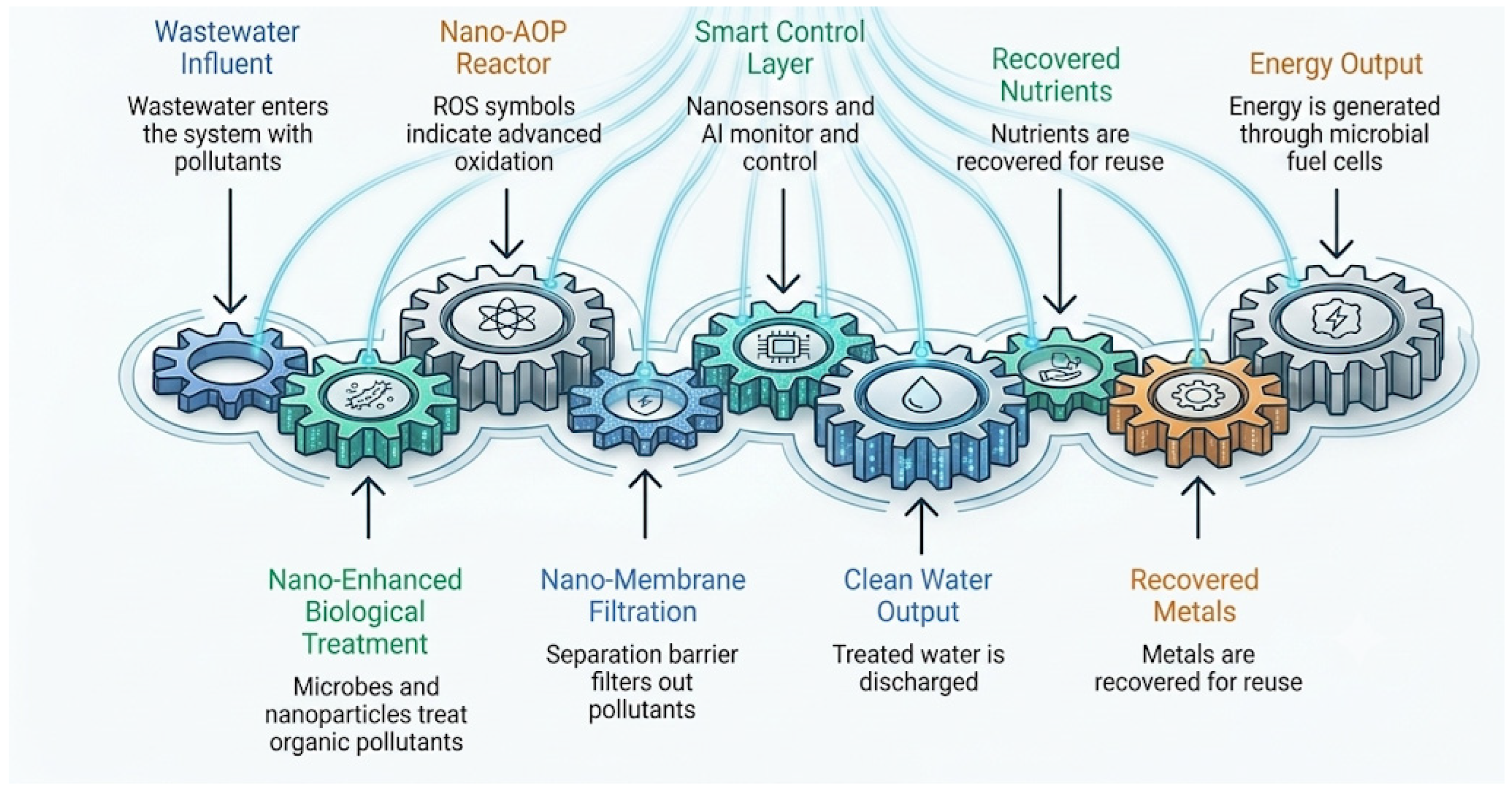
Compounding these design flaws are persistent regeneration and reuse challenges. The exceptional surface energy that affords nanomaterials their high reactivity simultaneously renders them highly susceptible to irreversible passivation and fouling by natural organic matter and complex co-contaminants [7]. Once saturated or fouled, accurately separating and retrieving dispersed nanoparticles—even highly engineered magnetic variants—from treated complex mixtures or viscous biological sludge is remarkably difficult (Figure 1). Consequently, the disposal of spent, contaminant-laden nanoadsorbents poses a severe risk of secondary environmental pollution and chronic ecotoxicity, effectively undermining the sustainability logic of the entire treatment process [50]. Ultimately, these interconnected engineering and economic contradictions explain why the vast majority of environmental nanotechnologies remain stagnated at a low Technology Readiness Level (TRL 1–3) [14]. The current research paradigm overwhelmingly prioritizes the synthesis of novel, hyper-reactive materials evaluated under idealized conditions over the rigorous, systems-level engineering required for authentic wastewater matrices. Until the discipline fundamentally pivots to address continuous-flow reactor compatibility, scalable anti-fouling architectures, and realistic life-cycle constraints, nano-enabled water treatment will remain largely confined to theoretical promise rather than achieving widespread commercialization [10].

10. Nanomaterials as Contaminants

The deployment of engineered nanomaterials (ENMs) for industrial wastewater remediation presents a profound ecological paradox: the very technologies engineered to eradicate recalcitrant pollutants threaten to introduce a new, insidious class of persistent nanoscale contaminants into the environment [65]. While ENMs exhibit unprecedented catalytic and adsorptive capacities in vitro, their full-scale implementation is inextricably linked to the unintentional release of nanoparticles into receiving waters and terrestrial ecosystems. A critical oversight in contemporary environmental nanotechnology is the assumption that ENMs retain their pristine synthetic properties during operation and discharge. In the highly dynamic and chemically aggressive matrix of real wastewater, ENMs are subjected to rapid, profound physicochemical transformations. Upon entering biological treatment units or receiving environments, metallic nanoparticles—such as silver (Ag), zinc oxide (ZnO), and copper oxide (CuO)—undergo extensive oxidative dissolution, ligand exchange, and sulfidation [100]. For instance, pilot-scale validations have demonstrated that Ag-NPs are rapidly converted to silver sulfides (Ag2S) within activated sludge, fundamentally altering their surface charge, solubility, and subsequent bioavailability [27]. Similarly, ZnO nanoparticles experience severe morphological deterioration and dissolution during anaerobic digestion, transforming into distinct zinc sulfide phases that ultimately partition into the sewage sludge [28].
Consequently, the primary environmental fate of these advanced materials is rarely complete degradation; rather, it is their accumulation within biological flocs and biosolids. When this nano-laden sludge is applied to agricultural lands as fertilizer, it establishes a direct, chronic exposure pathway for terrestrial ecosystems. The bioaccumulation kinetics of these environmentally aged, transformed nanomaterials differ fundamentally from their pristine counterparts. Current literature indicates that transformed ENMs can penetrate cellular membranes and accumulate across multiple trophic levels, inflicting sub-lethal oxidative stress, genetic damage, and disruption of essential microbial communities [101]. Furthermore, carbon-based nanomaterials, such as graphene oxide and carbon nanotubes, possess a high affinity for persistent organic pollutants. Rather than merely degrading them, these carbonaceous structures can act as Trojan-horse vectors, binding with trace pharmaceuticals or microplastics to facilitate their synergistic transport and biomagnification within aquatic organisms [102]. Ultimately, the discrepancy between the toxicity of idealized, pristine nanomaterials tested in static laboratory assays and the actual ecotoxicity of transformed, matrix-bound ENMs represents a severe regulatory and engineering blind spot. To prevent nano-enabled remediation from spawning the legacy pollutants of tomorrow, the current research paradigm must shift. Future research must prioritize dynamic, multi-compartment life-cycle assessments that explicitly account for the environmental fate and chronic bioaccumulation of transformed nanomaterials in authentic matrices [103]. Bridging this gap requires the mandatory integration of “safe-by-design” frameworks, ensuring that nanomaterials are engineered not only for peak remediation efficiency but for programmed, benign degradation in post-treatment ecosystems.

11. Risk and Regulation

Despite the transformative potential of engineered nanomaterials (ENMs) for remediating complex industrial effluents, their full-scale deployment remains critically encumbered by a profound lag in regulatory frameworks and systemic standardization gaps. The rapid pace of nanomaterial synthesis has vastly outstripped the development of robust, nano-specific ecotoxicological models, resulting in an operational landscape fraught with environmental and legal uncertainty. Conventional risk assessment protocols—often extrapolated from bulk chemical standards established by organizations like the OECD—are fundamentally ill-equipped to evaluate the dynamic behavior of nanomaterials in authentic wastewater matrices [104]. When introduced into dynamic, continuous-flow systems, pristine ENMs undergo rapid and profound physicochemical transformations, including heteroaggregation, oxidative dissolution, and sulfidation, which drastically alter their environmental fate, bioavailability, and toxicity [101]. Consequently, static in vitro toxicity assays relying on newly synthesized, ideal nanoparticles systematically misrepresent the actual ecological risks posed by environmentally aged, matrix-bound ENMs interacting with natural organic matter and complex ionic backgrounds. Furthermore, a severe standardization gap exists in detection and quantification techniques; advanced tools like dynamic light scattering and single-particle mass spectrometry lack harmonized application protocols across international regulatory bodies, severely limiting the reproducibility of exposure data [98]. This ambiguity translates into a fragmented and deficient regulatory landscape. Currently, governing bodies such as the European Chemicals Agency (ECHA) operating under the REACH framework lack specific, enforceable discharge thresholds for ubiquitous nanomaterials deployed in water treatment. This regulatory inertia leaves municipal and industrial facilities vulnerable to releasing unregulated nanoscale pollutants into receiving aquatic ecosystems or transferring them into terrestrial food webs via contaminated agricultural sludge [90]. To transcend this translational deadlock, the environmental engineering paradigm must pivot from post-synthesis hazard evaluation toward intrinsic “safe-by-design” (SbD) methodologies. SbD strategies necessitate the proactive manipulation of nanoparticle size, morphology, surface functionalization, and structural integration during the fundamental design phase to minimize residual toxicity and environmental persistence while maintaining catalytic or adsorptive efficacy [14]. Rather than engineering materials strictly for peak theoretical reactivity, researchers must prioritize the synthesis of robust, recoverable, and biocompatible ENMs that possess programmed, benign degradation pathways post-treatment. Ultimately, bridging the chasm between nanotechnology innovation and sustainable water management requires an urgent, systemic paradigm shift. Future trajectories must prioritize the establishment of harmonized, multi-compartment life-cycle risk frameworks that explicitly evaluate transformed nanomaterials under real-world hydrodynamic and chemical stresses [66]. Until standardized benchmarking and enforceable, nano-specific regulations are seamlessly integrated with safe-by-design engineering, the widespread commercialization of nano-enabled wastewater treatment will remain a precarious ecological liability rather than a sustainable environmental remedy.

12. Future Convergence

The convergence of nanotechnology with synthetic biology, autonomous material design, and cyber-physical systems represents the next critical frontier in environmental engineering. However, operationalizing these advanced paradigms in authentic, highly heterogeneous wastewater matrices remains profoundly challenging. The transition from idealized laboratory conditions to full-scale continuous-flow systems frequently exposes the fragility of these emerging technologies under dynamic physicochemical stressors. For instance, while solar-powered photocatalysis presents a sustainable ideal for decontaminating industrial effluents, its commercialization is consistently impeded by reduced photo-efficiency under visible light and aggressive matrix scavenging effects [99]. To address the persistent challenges of catalyst deactivation and membrane fouling, the integration of synthetic biology with nanotechnology offers unprecedented synergistic potential. Harnessing engineered microbial consortia alongside functional nanomaterials can facilitate targeted xenobiotic bioremediation, fundamentally altering degradation pathways for recalcitrant pollutants by coupling abiotic electron transfer with biological metabolism [105]. Concurrently, materials science is pivoting toward the conceptualization of self-healing photocatalytic systems capable of autonomous structural regeneration after exposure to harsh effluents [106]. Yet, this bio-nano nexus is fraught with contradictions; the continuous influx of reactive nanomaterials into biological reactors frequently induces chronic oxidative stress that disrupts the essential microbial biofilms these hybrid systems rely upon.
Bridging this translational gap between theoretical capability and operational resilience necessitates the adoption of artificial intelligence (AI) and digital twins. Modern treatment facilities require cyber-physical architectures that can integrate continuous sensor data to dynamically model and predict system performance in real-time [107]. By utilizing digital twins and predictive analytics, plant operators can preemptively identify fouling trajectories and autonomously optimize dosing, aeration, or hydraulic retention times [69]. However, a profound disconnect persists: integrating high-fidelity in situ nanosensing with distributed updating models in real wastewater remains heavily compromised by rapid sensor passivation, bio-molecular masking, and background spectral overlap [12]. Ultimately, the future of sustainable wastewater remediation depends on achieving thermodynamic and digital compatibility across these advanced frontiers. We must decisively transition from synthesizing static, isolated nanomaterials to engineering smart, self-healing bio-nano architectures governed by adaptive digital twins. Until these interconnected, forward-looking systems can autonomously withstand the harsh physicochemical fluctuations of real industrial effluents without inflicting secondary ecotoxicity, their deployment will remain confined to low technology readiness levels (Figure 2).

12.1. Operational Roadmap and Targeted Research Pillars

To effectively operationalize the proposed multidimensional evaluation framework, specific and prioritized actions must be taken across the research, industrial, and regulatory sectors:
  • For Researchers (Priority: High—Immediate Action): Shift experimental designs away from single-solute, idealized batch systems. Research efforts must prioritize the standardization of synthetic “real-matrix” testing cocktails that explicitly include realistic concentrations of natural organic matter (NOM), competing background ions, and surfactant foulants to establish baseline matrix tolerance early in the material development phase.
  • For Industrial Engineers (Priority: Medium—Mid-term Action): Focus on hybrid system integration rather than isolated nano-units. Priority should be given to piloting nano-enabled configurations as polishing stages or localized modular attachments downstream of existing secondary treatments (e.g., membrane bioreactors), thereby protecting active nano-interfaces from heavy initial organic loading and extending material lifespans.
  • For Policymakers and Regulators (Priority: Critical—Long-term Framework): Establish clear, nano-specific environmental safety protocols and standardization frameworks. Regulatory bodies should incentivize the commercial adoption of sustainable nanotechnology by funding large-scale, collaborative validation facilities while simultaneously developing transparent guidelines for the monitoring, containment, and circular recovery of spent engineered nanomaterials.

12.2. Targeted Future Directions for the Research Community

To systematically overcome the translational bottlenecks facing nano-enabled wastewater treatment, future scientific inquiries should prioritize the following four interconnected research pillars:
  • Transition from “High-Capacity” to “High-Selectivity” and “Matrix-Tolerance” Design: Material design paradigms must shift from maximizing absolute contaminant uptake in distilled water to optimizing structural tolerance against competitive background matrices. Future work should focus on engineering molecularly imprinted cavities, protective anti-fouling coatings, and targeted defect sites that preferentially capture target pollutants (e.g., specific micropollutants or nutrients) even in the presence of high concentrations of natural organic matter (NOM) and co-existing background ions.
  • Standardization of Complex, Multi-Component Testing Frameworks: To eliminate the idealized bench-scale reporting bias, the research community must establish and adopt standardized, baseline testing matrices that accurately simulate authentic secondary or tertiary effluents. Evaluating new nanomaterials under standardized, challenging chemical matrices early in the laboratory validation phase will ensure realistic, reproducible, and comparable performance benchmarks.
  • Development of Regenerable and Regenerative Material Architectures: Long-term operational viability depends entirely on material lifespan. Future research should prioritize the synthesis of robust, mechanically stable composite materials that can undergo multiple, low-cost, in situ regeneration cycles without losing structural integrity or releasing secondary chemical byproducts into the treated effluent.
  • Mechanistic Modeling of Nano-Bio Interfaces and Long-Term Transformations: Intensive research is required to map out the dynamic physical, chemical, and biological transformations (such as sulfidation, oxidation, and biomolecule corona formation) that nanomaterials undergo when exposed to complex microbial ecosystems. Understanding these aging mechanisms will allow scientists to proactively design materials that maintain their functional properties while minimizing long-term toxicity and ecological risks.

13. Evaluation Framework

The translation of engineered nanomaterials (ENMs) from laboratory curiosities to full-scale wastewater infrastructure is perpetually hindered by a myopic focus on idealized material properties. To bridge the persistent “lab–reality gap,” environmental engineering must transition toward a multidimensional framework that rigorously evaluates nano-enabled technologies across six critical operational domains.
Efficiency under real conditions: The extraordinary adsorption capacities and catalytic kinetics reported in synthetic, single-solute solutions project a deceptive optimism. In authentic wastewater, dynamic fluctuations in pH, high ionic strength, and ubiquitous natural organic matter (NOM) induce severe competitive inhibition. These matrix constituents indiscriminately scavenge reactive oxygen species (ROS) and competitively bind to active sites, drastically suppressing the thermodynamic efficiency and mass-transfer kinetics of ENMs [10,11].
Stability: Beyond initial reactivity, the operational viability of ENMs hinges on structural and functional resilience. When subjected to the harsh, multi-component matrices of real effluents, nanoscale catalysts and membranes frequently succumb to irreversible passivation, rapid heteroaggregation, and structural pore constriction via extracellular polymeric substance (EPS) fouling [14].
Scalability: The transition from bench-scale synthesis to industrial-scale manufacturing introduces severe logistical bottlenecks. Most high-performing ENMs require ultra-pure precursors and energy-intensive processing, making reproducible, defect-free mass production highly challenging for large-scale continuous-flow reactor integration [7].
Cost: The economic feasibility of nano-remediation is critically constrained by exorbitant capital expenditures (CAPEX) for material synthesis and substantial operating expenses (OPEX). Rigorous techno-economic assessments utilizing the Electrical Energy per Order (EEO) metric consistently reveal that nano-enabled advanced oxidation processes are often economically prohibitive for bulk chemical oxygen demand (COD) removal without targeted, high-value process integration [45,63].
Environmental safety: Deploying highly reactive nanomaterials introduces a profound ecotoxicological paradox. Pristine ENMs inevitably undergo rapid physicochemical transformations—such as oxidative dissolution and sulfidation—in dynamic effluents, fundamentally altering their bioavailability and toxicity. Mitigating the risk of secondary nano-pollution and bioaccumulation demands the mandatory implementation of “safe-by-design” principles and comprehensive life-cycle risk assessments [60,65].
System compatibility: ENMs cannot function as isolated unit operations; they must achieve thermodynamic and hydrodynamic synergy within multi-barrier treatment trains. The indiscriminate application of reactive nanoparticles risks severe collateral cytotoxicity to keystone microbial consortia in conventional activated sludge or anaerobic digestion units, demanding precision anchoring and bio-compatible hybrid architectures [69]. Ultimately, the successful commercialization of environmental nanotechnology requires abandoning isolated material discovery in favor of this systems-level engineering framework. By mandating that future ENMs simultaneously satisfy matrix resilience, economic viability, and ecological safety, researchers can engineer adaptive technologies capable of achieving sustainable, full-scale resource recovery.

14. Conclusions

Despite significant advances in nanotechnology for wastewater treatment, a persistent gap remains between high laboratory efficiencies and real-world performance. This review highlights that the main limitation is not the absence of effective materials but the continued reliance on simplified, material-centered approaches that fail to capture the complexity of real wastewater systems. Factors such as matrix effects, fouling, catalyst instability, and nano–bio interactions critically influence performance and are often underestimated. Reframing nanotechnology as a system-integrated and function-driven tool reveals that its true potential lies in enhancing hybrid treatment processes rather than operating in isolation. The integration of nano-enabled systems with biological treatment, advanced oxidation, and smart monitoring technologies offers a pathway toward more adaptive and efficient solutions. At the same time, challenges related to scalability, cost, long-term stability, and environmental safety must be addressed to move beyond laboratory-scale applications. Importantly, the transition from pollutant removal to intelligent and circular water systems represents a key future direction, where resource recovery and data-driven optimization become central. The proposed multi-dimensional evaluation framework provides a practical basis for assessing technologies under real conditions, helping bridge the gap between innovation and implementation. Ultimately, the impact of nanotechnology will depend on our ability to design robust, scalable, and context-aware systems, shifting the focus from idealized performance to reliable operation in complex, real-world environments.

Author Contributions

H.E.-R. and T.E., conceptualization and investigation; D.S., N.A., M.H.S. and T.E., validation, data curation, and software; T.E., N.A., M.H.S. and H.E.-R., first draft and reviewing. Funding: H.E.-R., J.P. and M.H.S. All authors have read and agreed to the published version of the manuscript.

Funding

The University of Debrecen provides open-access financing. The Program for Scientific Publication supported the study. This research was also supported by the University of Debrecen Scientific Research Bridging Fund (DETKA). Authors extend their gratefulness to Tempus Public Foundation, Hungarian Bilateral State Scholarships (AK-00108-003/2025) for their supporting this study.

Data Availability Statement

No new data were created or analyzed in this study. Data sharing is not applicable to this article. This work is a review and all data can be found in the manuscript.

Acknowledgments

The authors thank their institutions for the great support and help in achieving this work.

Conflicts of Interest

The authors declare no conflicts of interest.

References

  1. Chang, W.; Xiong, Y.-W.; Sun, J.; Wu, L.-L.; Xu, S.-D.; Lu, Q.; Yuan, Z.; Hu, Y.-F.; Chen, C.; Liu, K.-Y. Water consumption contributes to maternal pfas exposure: From source to metabolic perturbations. Environ. Int. 2026, 207, 109996. [Google Scholar] [PubMed]
  2. Hou, D.; Jia, X.; Wang, L.; McGrath, S.P.; Zhu, Y.-G.; Hu, Q.; Zhao, F.-J.; Bank, M.S.; O’connor, D.; Nriagu, J. Global soil pollution by toxic metals threatens agriculture and human health. Science 2025, 388, 316–321. [Google Scholar] [CrossRef] [PubMed]
  3. Shemer, H.; Wald, S.; Semiat, R. Challenges and solutions for global water scarcity. Membranes 2023, 13, 612. [Google Scholar] [CrossRef] [PubMed]
  4. Rana, L.; Kumar, M.; Kumar, N.; Rajput, J.; Sow, S.; Kumar, S.; Kumar, A.; Singh, S.; Singh, D. Unseen threats: The impact of emerging contaminants on surface and groundwater quality. In Surface Water and Groundwater Quality for Sustainable Utilization: Advanced Methods and Technology; Springer: Berlin/Heidelberg, Germany, 2025; pp. 309–331. [Google Scholar]
  5. Srivastava, S.; Malik, A. Drinking water quality assessment through multivariate statistical approach and formulated pca-based contamination index. J. Contam. Hydrol. 2025, 276, 104764. [Google Scholar] [CrossRef] [PubMed]
  6. Bandala, E.R.; Berli, M. Engineered nanomaterials (enms) and their role at the nexus of food, energy, and water. Mater. Sci. Energy Technol. 2019, 2, 29–40. [Google Scholar] [CrossRef]
  7. Qu, X.; Alvarez, P.J.; Li, Q. Applications of nanotechnology in water and wastewater treatment. Water Res. 2013, 47, 3931–3946. [Google Scholar] [CrossRef] [PubMed]
  8. Lu, J.Y.; Bu, Z.Q.; Lei, Y.Q.; Wang, D.; He, B.; Wang, J.; Huang, W.T. Facile microwave-assisted synthesis of Sb2O3-CuO nanocomposites for catalytic degradation of p-nitrophenol. J. Mol. Liq. 2024, 409, 125503. [Google Scholar] [CrossRef]
  9. Fu, C.; Huang, K.; Chen, H.; Huang, B.; Zhang, W. From fundamental mechanisms to applications and challenges of nanofluid flooding in enhanced oil recovery: A review. Fuel 2025, 396, 135317. [Google Scholar] [CrossRef]
  10. Garcia-Segura, S.; Qu, X.; Alvarez, P.J.; Chaplin, B.P.; Chen, W.; Crittenden, J.C.; Feng, Y.; Gao, G.; He, Z.; Hou, C.-H. Opportunities for nanotechnology to enhance electrochemical treatment of pollutants in potable water and industrial wastewater–a perspective. Environ. Sci. Nano 2020, 7, 2178–2194. [Google Scholar]
  11. Sanni, S.E.; Oni, B.A.; Okoro, E.E.; Pandya, S. Recent advances in the use of biogenic nanomaterials and photocatalysts for wastewater treatment: Challenges and future prospects. Front. Nanotechnol. 2024, 6, 1469309. [Google Scholar] [CrossRef]
  12. Rex, M.C.; Anand, S.; Rai, P.K.; Mukherjee, A. Engineered Nanoparticles (ENPs) in the Aquatic Environment: An Overview of Their Fate and Transformations. Water Air Soil Pollut. 2023, 234, 462. [Google Scholar] [CrossRef]
  13. Kamali, M.; Persson, K.M.; Costa, M.E.; Capela, I. Sustainability criteria for assessing nanotechnology applicability in industrial wastewater treatment: Current status and future outlook. Environ. Int. 2019, 125, 261–276. [Google Scholar] [CrossRef] [PubMed]
  14. Ogwu, M.C.; Ojija, F. A nanotechnology roadmap for circular wastewater management. Front. Environ. Eng. 2026, 5, 1785394. [Google Scholar] [CrossRef]
  15. Tabassam, M.N.; Haseeb, M.; Habib, M.; Murtaza, R.; Ali, S.; Malik, M.; Numan, M.; Mahmood, M.; Mustafa, Z.; Khan, W. Next-generation adsorbents for wastewater remediation: A nanotechnology-driven and ai-enabled breakthrough towards clean water. Sch. J. Phys. Math. Stat. 2025, 12, 323–345. [Google Scholar] [CrossRef]
  16. Al-Qodah, Z.; Al-Shannag, M. Heavy metal ions removal from wastewater using electrocoagulation processes: A comprehensive review. Sep. Sci. Technol. 2017, 52, 2649–2676. [Google Scholar] [CrossRef]
  17. Daigh, A.L.M. Bridging single-species research and mixture reality: Emerging contaminants fate and transport in vadose zones. J. Environ. Qual. 2026, 55, e70177. [Google Scholar] [CrossRef] [PubMed]
  18. Batley, G.E.; Kirby, J.K.; McLaughlin, M.J. Fate and risks of nanomaterials in aquatic and terrestrial environments. Acc. Chem. Res. 2013, 46, 854–862. [Google Scholar] [PubMed]
  19. Mehmood, F.; Nadeem, M.; Tursunov, O.; Sihao, R.; Fu, Y.; Dong, R.; Zhou, Y. Engineered biochar-metal oxide nanocomposites for targeted dye remediation in textile wastewater. J. Ecol. Eng. 2026, 27, 295–315. [Google Scholar] [CrossRef]
  20. Che, H.; Tian, X.; Xu, X.; Nie, Y.; Yang, C.; Li, Y.; Lu, L. A promising evaluation method for the detoxification effect of Fenton oxidation technology via tracking by-products of pollutants and corresponding acute toxicity. Sep. Purif. Technol. 2024, 353, 128438. [Google Scholar] [CrossRef]
  21. Shi, J.; Jiang, J.; Chen, Q.; Li, L. Production of higher toxic intermediates of organic pollutants during chemical oxidation processes: A review. Arab. J. Chem. 2023, 16, 104856. [Google Scholar] [CrossRef]
  22. Asad, M.A.; Khan, U.T.; Krol, M.M. Subsurface transport of carboxymethyl cellulose (cmc)-stabilized nanoscale zero valent iron (nZVI): Numerical and statistical analysis. J. Contam. Hydrol. 2021, 243, 103870. [Google Scholar] [CrossRef] [PubMed]
  23. Paulkumar, K.; Reeta, T.J.; Jebasingh, S.E.J.; Mangalanagasundari, S.; Muthu, K.; Murugan, K. Potential utilization of zinc nanoparticles for wastewater treatment. In Aquananotechnology; Elsevier: Amsterdam, The Netherlands, 2021; pp. 437–466. [Google Scholar]
  24. Ahmed, M.; Mavukkandy, M.O.; Giwa, A.; Elektorowicz, M.; Katsou, E.; Khelifi, O.; Naddeo, V.; Hasan, S.W. Recent developments in hazardous pollutants removal from wastewater and water reuse within a circular economy. npj Clean Water 2022, 5, 12. [Google Scholar] [CrossRef]
  25. Buledi, S. Biomagnetic chitosan-ethylene glycol diglycidyl ether/organo-nanoclay nanocomposite for azo dye removal. Int. J. Biol. Macromol. 2024, 27, 295–315. [Google Scholar]
  26. Dihom, H.; Mohamed, R.M.S.R.; Al-Gheethi, A.; Mohamed, W.A.B.W. Optimization and modeling of solar photocatalytic degradation of raw textile wastewater dyes using green ZnO-ED NPs by RSM. Water Pract. Technol. 2024, 19, 2279–2305. [Google Scholar] [CrossRef]
  27. Kaegi, R.; Voegelin, A.; Sinnet, B.; Zuleeg, S.; Hagendorfer, H.; Burkhardt, M.; Siegrist, H. Behavior of metallic silver nanoparticles in a pilot wastewater treatment plant. Environ. Sci. Technol. 2011, 45, 3902–3908. [Google Scholar] [CrossRef] [PubMed]
  28. Lombi, E.; Donner, E.; Tavakkoli, E.; Turney, T.W.; Naidu, R.; Miller, B.W.; Scheckel, K.G. Fate of zinc oxide nanoparticles during anaerobic digestion of wastewater and post-treatment processing of sewage sludge. Environ. Sci. Technol. 2012, 46, 9089–9096. [Google Scholar] [CrossRef] [PubMed]
  29. Barton, L.E.; Auffan, M.; Bertrand, M.; Barakat, M.; Santaella, C.; Masion, A.; Borschneck, D.; Olivi, L.; Roche, N.; Wiesner, M.R. Transformation of pristine and citrate-functionalized CeO2 nanoparticles in a laboratory-scale activated sludge reactor. Environ. Sci. Technol. 2014, 48, 7289–7296. [Google Scholar] [PubMed]
  30. Kovo, A.S.; Alaya-Ibrahim, S.; Abdulkareem, A.S.; Adeniyi, O.D.; Egbosiuba, T.C.; Tijani, J.O.; Saheed, M.; Okafor, B.O.; Yusuff, A.S. Column adsorption of biological oxygen demand, chemical oxygen demand and total organic carbon from wastewater by magnetite nanoparticles-zeolite a composite. Heliyon 2023, 9, e13095. [Google Scholar] [CrossRef] [PubMed]
  31. Bhol, P.; Yadav, S.; Altaee, A.; Saxena, M.; Misra, P.K.; Samal, A.K. Graphene-based membranes for water and wastewater treatment: A review. ACS Appl. Nano Mater. 2021, 4, 3274–3293. [Google Scholar] [CrossRef]
  32. Yan, W.; Herzing, A.A.; Kiely, C.J.; Zhang, W.-x. Nanoscale zero-valent iron (nZVI): Aspects of the core-shell structure and reactions with inorganic species in water. J. Contam. Hydrol. 2010, 118, 96–104. [Google Scholar] [PubMed]
  33. Roothans, N.; Pabst, M.; van Diemen, M.; Herrera Mexicano, C.; Zandvoort, M.; Abeel, T.; van Loosdrecht, M.C.; Laureni, M. Long-term multi-meta-omics resolves the ecophysiological controls of seasonal N2O emissions during wastewater treatment. Nat. Water 2025, 3, 590–604. [Google Scholar] [CrossRef] [PubMed]
  34. Bian, S.-W.; Mudunkotuwa, I.A.; Rupasinghe, T.; Grassian, V.H. Aggregation and dissolution of 4 nm ZnO nanoparticles in aqueous environments: Influence of ph, ionic strength, size, and adsorption of humic acid. Langmuir 2011, 27, 6059–6068. [Google Scholar] [CrossRef]
  35. Zheng, Y.; Hou, L.; Liu, M.; Newell, S.E.; Yin, G.; Yu, C.; Liu, C. Effects of silver nanoparticles on nitrification and associated nitrous oxide production in aquatic environments. Sci. Adv. 2017, 3, e1603229. [Google Scholar] [CrossRef] [PubMed]
  36. Shi, L.; Dong, H.; Reguera, G.; Beyenal, H.; Lu, A.; Liu, J.; Yu, H.-Q.; Fredrickson, J.K. Extracellular electron transfer mechanisms between microorganisms and minerals. Nat. Rev. Microbiol. 2016, 14, 651–662. [Google Scholar] [CrossRef] [PubMed]
  37. Smeraldi, J.; Ganesh, R.; Hosseini, T.; Khatib, L.; Olson, B.H.; Rosso, D. Fate and toxicity of zinc oxide nanomaterial in municipal wastewaters. Water Environ. Res. 2017, 89, 880–889. [Google Scholar] [CrossRef] [PubMed]
  38. Liu, K.; Epsztein, R.; Lin, S.; Qu, J.; Sun, M. Ion–ion selectivity of synthetic membranes with confined nanostructures. ACS Nano 2024, 18, 21633–21650. [Google Scholar] [CrossRef] [PubMed]
  39. Vikesland, P.J. Nanosensors for water quality monitoring. Nat. Nanotechnol. 2018, 13, 651–660. [Google Scholar] [CrossRef] [PubMed]
  40. Sheng, Z.; Van Nostrand, J.D.; Zhou, J.; Liu, Y. The effects of silver nanoparticles on intact wastewater biofilms. Front. Microbiol. 2015, 6, 680. [Google Scholar] [CrossRef] [PubMed]
  41. Wang, J.; Wang, S. Reactive species in advanced oxidation processes: Formation, identification and reaction mechanism. Chem. Eng. J. 2020, 401, 126158. [Google Scholar] [CrossRef]
  42. Miklos, D.B.; Remy, C.; Jekel, M.; Linden, K.G.; Drewes, J.E.; Hübner, U. Evaluation of advanced oxidation processes for water and wastewater treatment–a critical review. Water Res. 2018, 139, 118–131. [Google Scholar] [PubMed]
  43. Hussein, E.B.; Rasheed, F.A.; Mohammed, A.S.; Kayani, K.F. Emerging nanotechnology approaches for sustainable water treatment and heavy metals removal: A comprehensive review. RSC Adv. 2025, 15, 41061–41107. [Google Scholar] [CrossRef] [PubMed]
  44. Nidheesh, P. Heterogeneous fenton catalysts for the abatement of organic pollutants from aqueous solution: A review. Rsc Adv. 2015, 5, 40552–40577. [Google Scholar] [CrossRef]
  45. Bhargava, N.; Bahadur, N.; Kansal, A. Techno-economic assessment of integrated photochemical aops for sustainable treatment of textile and dyeing wastewater. J. Water Process Eng. 2023, 56, 104302. [Google Scholar] [CrossRef]
  46. Saleem, H.; Zaidi, S.J. Developments in the Application of Nanomaterials for Water Treatment and Their Impact on the Environment. Nanomaterials 2020, 10, 1764. [Google Scholar] [CrossRef] [PubMed]
  47. Lu, F.; Astruc, D. Nanocatalysts and other nanomaterials for water remediation from organic pollutants. Coord. Chem. Rev. 2020, 408, 213180. [Google Scholar] [CrossRef]
  48. Gayatri, R.; Yuliwati, E.; Jaafar, J.; Fizal, A.N.S.; Hossain, M.S.; Zulkifli, M.; Yahaya, A.N.A.; Taweepreda, W. Polymer-based nanocomposite membranes for industrial wastewater treatment: A review. J. Environ. Chem. Eng. 2024, 12, 113276. [Google Scholar] [CrossRef]
  49. Epsztein, R.; Shaulsky, E.; Dizge, N.; Warsinger, D.M.; Elimelech, M. Role of ionic charge density in donnan exclusion of monovalent anions by nanofiltration. Environ. Sci. Technol. 2018, 52, 4108–4116. [Google Scholar] [CrossRef] [PubMed]
  50. Ali, A.A.; Al-Othman, A.; Tawalbeh, M.; Ali, A.; Quist-Jensen, C.A.; Shirazi, M.M.A. Membrane technologies for sustainable development goals: A critical review of bright horizons. J. Environ. Chem. Eng. 2025, 13, 114998. [Google Scholar]
  51. Mbarek, W.B.; Escoda, L.; Saurina, J.; Pineda, E.; Alminderej, F.M.; Khitouni, M.; Suñol, J.-J. Nanomaterials as a sustainable choice for treating wastewater: A review. Materials 2022, 15, 8576. [Google Scholar] [CrossRef] [PubMed]
  52. Cho, H.H.; Jung, D.H.; Heo, J.H.; Lee, C.Y.; Jeong, S.Y.; Lee, J.H. Gold nanoparticles as exquisite colorimetric transducers for water pollutant detection. ACS Appl. Mater. Interfaces 2023, 15, 19785–19806. [Google Scholar] [CrossRef] [PubMed]
  53. Huang, Y.-H.; Wei, H.; Santiago, P.J.; Thrift, W.J.; Ragan, R.; Jiang, S. Sensing antibiotics in wastewater using surface-enhanced raman scattering. Environ. Sci. Technol. 2023, 57, 4880–4891. [Google Scholar] [CrossRef] [PubMed]
  54. Yaroshenko, I.; Kirsanov, D.; Marjanovic, M.; Lieberzeit, P.A.; Korostynska, O.; Mason, A.; Frau, I.; Legin, A. Real-Time Water Quality Monitoring with Chemical Sensors. Sensors 2020, 20, 3432. [Google Scholar] [CrossRef] [PubMed]
  55. Chen, K.; Wang, H.; Valverde-Pérez, B.; Zhai, S.; Vezzaro, L.; Wang, A. Optimal control towards sustainable wastewater treatment plants based on multi-agent reinforcement learning. Chemosphere 2021, 279, 130498. [Google Scholar] [CrossRef] [PubMed]
  56. Zodrow, K.; Brunet, L.; Mahendra, S.; Li, D.; Zhang, A.; Li, Q.; Alvarez, P.J. Polysulfone ultrafiltration membranes impregnated with silver nanoparticles show improved biofouling resistance and virus removal. Water Res. 2009, 43, 715–723. [Google Scholar] [CrossRef] [PubMed]
  57. Chen, H.; Simoska, O.; Lim, K.; Grattieri, M.; Yuan, M.; Dong, F.; Lee, Y.S.; Beaver, K.; Weliwatte, S.; Gaffney, E.M. Fundamentals, applications, and future directions of bioelectrocatalysis. Chem. Rev. 2020, 120, 12903–12993. [Google Scholar] [CrossRef] [PubMed]
  58. Cervantes-Avilés, P.; Li, W.; Keller, A.A. Unraveling the effects of cerium oxide nanoparticles on the metabolism of anaerobic digestion of waste activated sludge. Environ. Sci. Nano 2025, 12, 3581–3591. [Google Scholar] [CrossRef]
  59. Jiang, Y.; Shang, Y.; Zhang, W.; Zhang, X.; Li, J.; Shao, S. Assessing the effect of SiO2 and TiO2 nanoparticles on granule stability and microbial community shift in aerobic granular sludge process. Chemosphere 2022, 307, 135677. [Google Scholar] [CrossRef] [PubMed]
  60. Falinski, M.; Turley, R.; Kidd, J.; Lounsbury, A.; Lanzarini-Lopes, M.; Backhaus, A.; Rudel, H.; Lane, M.; Fausey, C.; Barrios, A. Doing nano-enabled water treatment right: Sustainability considerations from design and research through development and implementation. Environ. Sci. Nano 2020, 7, 3255–3278. [Google Scholar] [CrossRef]
  61. Li, Y.; Duan, Y.; Yuan, J.; Ge, L.; Zhang, X.; Hou, J.; Zhang, Y.; Van der Bruggen, B.; Zhu, J.; Elimelech, M. Macrocycle-assembled membranes for high-salinity organic wastewater treatment. Nat. Commun. 2026, 17, 1731. [Google Scholar] [CrossRef] [PubMed]
  62. Ramadan, B.S.; Wibowo, Y.G.; Anwar, D.; Maryani, A.T. A review of life cycle assessment of nanomaterials-based adsorbent for environmental remediation. Glob. NEST J. 2024, 26, 06216. [Google Scholar]
  63. Mpongwana, N.; Rathilal, S. A review of the techno-economic feasibility of nanoparticle application for wastewater treatment. Water 2022, 14, 1550. [Google Scholar] [CrossRef]
  64. Safavi, F.S.; Ebrahimipour, S.Y.; Fatemi, S.J.; Mohammadi, P.; Shamspur, T. Green synthesis of silver nanoparticles and their immobilization on magnetic biochar for the removal of tetracycline and enrofloxacin. Biomass Convers. Biorefin. 2025, 15, 19589–19603. [Google Scholar] [CrossRef]
  65. Abbas, Q.; Yousaf, B.; Ullah, H.; Ali, M.U.; Ok, Y.S.; Rinklebe, J. Environmental transformation and nano-toxicity of engineered nano-particles (ENPs) in aquatic and terrestrial organisms. Crit. Rev. Environ. Sci. Technol. 2020, 50, 2523–2581. [Google Scholar]
  66. Jackson, J.S.; Kantamaneni, K.; Ganeshu, P.; Sunkur, R.; Rathnayake, U. Assessment of the role of nanotechnology in water sector: An expert opinion. Int. J. Energy Water Resour. 2025, 9, 1645–1667. [Google Scholar] [CrossRef]
  67. Ghimire, U.; Sarpong, G.; Gude, V.G. Transitioning wastewater treatment plants toward circular economy and energy sustainability. ACS Omega 2021, 6, 11794–11803. [Google Scholar] [CrossRef] [PubMed]
  68. Barakat, N.A.M.; Gamal, S.; Kim, H.Y.; Abd El-Salam, N.M.; Fouad, H.; Fadali, O.A.; Moustafa, H.M.; Abdelraheem, O.H. Synergistic advancements in sewage-driven microbial fuel cells: Novel carbon nanotube cathodes and biomass-derived anodes for efficient renewable energy generation and wastewater treatment. Front. Chem. 2023, 11, 1286572. [Google Scholar] [CrossRef] [PubMed]
  69. Senthil Rathi, B.; Senthil Kumar, P.; Sanjay, S.; Prem Kumar, M.; Rangasamy, G. Artificial intelligence integration in conventional wastewater treatment techniques: Techno-economic evaluation, recent progress and its future direction. Int. J. Environ. Sci. Technol. 2025, 22, 633–658. [Google Scholar]
  70. Yang, Y.; Zhang, C.; Hu, Z. Impact of metallic and metal oxide nanoparticles on wastewater treatment and anaerobic digestion. Environ. Sci. Process. Impacts 2013, 15, 39–48. [Google Scholar] [CrossRef] [PubMed]
  71. Bani-Melhem, K.; Elektorowicz, M. Performance of the submerged membrane electro-bioreactor (SMEBR) with iron electrodes for wastewater treatment and fouling reduction. J. Membr. Sci. 2011, 379, 434–439. [Google Scholar] [CrossRef]
  72. El Batouti, M.; Alharby, N.F.; Elewa, M.M. Review of new approaches for fouling mitigation in membrane separation processes in water treatment applications. Separations 2021, 9, 1. [Google Scholar] [CrossRef]
  73. He, Z.; Pan, L.; Peng, Z.; Liu, Z.; Zhang, Z.; Li, B.; Zhang, Z.; Wu, X.; Zhao, N.; Dai, L.; et al. Electrostatic shielding engineering for stable Zn metal anodes. Adv. Energy Mater. 2025, 15, 2403958. [Google Scholar] [CrossRef]
  74. Lu, J.; Qin, Y.Y.; Wu, Y.L.; Chen, M.N.; Sun, C.; Han, Z.X.; Yan, Y.S.; Li, C.X.; Yan, Y. Mimetic-core-shell design on molecularly imprinted membranes providing an antifouling and high-selective surface. Chem. Eng. J. 2021, 417, 128085. [Google Scholar] [CrossRef]
  75. Paulo, L.M.; Liu, Y.C.; Castilla-Archilla, J.; Ramiro-Garcia, J.; Hughes, D.; Mahony, T.; Holohan, B.C.; Wilmes, P.; O’Flaherty, V. High-rate low-temperature anaerobic digestion. Water Sci. Technol. 2024, 90, 1239–1249. [Google Scholar] [CrossRef] [PubMed]
  76. Sourgi, M.; Dehnavi, S.M. Multifunctional quaternary ammonium-modified TEMPO-oxidized cellulose nanofibers and MIL-100 with encapsulated laccase for efficient removal of anionic and cationic dyes in wastewater. Int. J. Biol. Macromol. 2025, 300, 140363. [Google Scholar] [CrossRef] [PubMed]
  77. Baghban, S. A large-scale study toward a hybrid treatment approach for high-strength polyester wastewater: A computational and experimental study. J. Appl. Polym. Sci. 2025, 142, e57565. [Google Scholar] [CrossRef]
  78. Giao, N.T.; Limpiyakorn, T.; Kunapongkiti, P.; Thuptimdang, P.; Siripattanakul-Ratpukdi, S. Influence of silver nanoparticles and liberated silver ions on nitrifying sludge: Ammonia oxidation inhibitory kinetics and mechanism. Environ. Sci. Pollut. Res. Int. 2017, 24, 9229–9240. [Google Scholar] [CrossRef] [PubMed]
  79. Lin, R.; Li, Y.; Yong, T.; Cao, W.; Wu, J.; Shen, Y. Synergistic effects of oxidation, coagulation and adsorption in the integrated fenton-based process for wastewater treatment: A review. J. Environ. Manag. 2022, 306, 114460. [Google Scholar] [CrossRef]
  80. Mauter, M.S.; Zucker, I.; Perreault, F.; Werber, J.R.; Kim, J.; Elimelech, M. The role of nanotechnology in tackling global water challenges. Nat. Sustain. 2018, 1, 166–175. [Google Scholar] [CrossRef]
  81. Cheng, J.; Li, H.; Ding, L.; Zhou, J.; Song, W.; Li, Y.Y.; Lin, R. Improving hydrogen and methane co-generation in cascading dark fermentation and anaerobic digestion: The effect of magnetite nanoparticles on microbial electron transfer and syntrophism. Chem. Eng. J. 2020, 397, 125394. [Google Scholar] [CrossRef]
  82. Li, D.; Li, B.; Wang, Q.; Hou, N.; Li, C.; Cheng, X. Toxicity of TiO2 nanoparticle to denitrifying strain CFY1 and the impact on microbial community structures in activated sludge. Chemosphere 2016, 144, 1334–1341. [Google Scholar] [CrossRef] [PubMed]
  83. Oturan, M.A.; Aaron, J.J. Advanced oxidation processes in water/wastewater treatment: Principles and applications. A review. Crit. Rev. Environ. Sci. Technol. 2014, 44, 2577–2641. [Google Scholar] [CrossRef]
  84. Nogueira, R.F.P.; Trovó, A.G.; Silva, M.R.A.D.; Villa, R.D.; Oliveira, M.C.D. Fundamentos e aplicações ambientais dos processos Fenton e foto-Fenton. Quim. Nova 2007, 30, 400–408. [Google Scholar] [CrossRef]
  85. Chaplin, B.P. The prospect of electrochemical technologies advancing worldwide water treatment. Acc. Chem. Res. 2019, 52, 596–604. [Google Scholar] [CrossRef] [PubMed]
  86. Radjenovic, J.; Sedlak, D.L. Challenges and opportunities for electrochemical processes as next-generation technologies for the treatment of contaminated water. Environ. Sci. Technol. 2015, 49, 11292–11302. [Google Scholar] [CrossRef] [PubMed]
  87. Bolton, J.R.; Bircher, K.G.; Tumas, W.; Tolman, C.A. Figures-of-merit for the technical development and application of advanced oxidation technologies for both electric-and solar-driven systems (IUPAC Technical Report). Pure Appl. Chem. 2001, 73, 627–637. [Google Scholar] [CrossRef]
  88. Gul, S.; Nazar, M.; Sharif, M.N.; Tariq, R.; Fatima, I.; Sarfraz, A.; Zaheer, M.A.; Sarfraz, R.; Mustafa, Z. Advanced Nanotechnology in Wastewater Treatment: Investigating the Role of Nanoparticles in Pollutant Removal, Water Recovery, and Environmental Sustainability. Sch. J. Eng. Technol. 2025, 13, 331–356. [Google Scholar] [CrossRef]
  89. Al-Rajhi, A.M.H.; Abdelghany, T.M. Innovative strategies for wastewater treatment: Harnessing green technologies for sustainable resource recovery. a review. Front. Environ. Sci. 2025, 13, 1696485. [Google Scholar] [CrossRef]
  90. Alshehri, H.S. Recent Advances in Nanomaterial-Based Wastewater Treatment: A Sustainable Approach. Pol. J. Environ. Stud. 2025, 34, 1–20. [Google Scholar]
  91. Abuwatfa, W.H.; AlSawaftah, N.; Darwish, N.; Pitt, W.G.; Husseini, G.A. A review on membrane fouling prediction using artificial neural networks (ANNs). Membranes 2023, 13, 685. [Google Scholar] [CrossRef] [PubMed]
  92. George Thuruthel, T.; Gardner, P.; Iida, F. Closing the control loop with time-variant embedded soft sensors and recurrent neural networks. Soft Robot. 2022, 9, 1167–1176. [Google Scholar] [CrossRef] [PubMed]
  93. Jørgensen, M.K.; Paulsen, F.K.; Bentien, A.; Kjul, A.R.; Poulsen, M.; Mikkelsen, L.M.; Thavaneswaran, N.; Hansen, S.A.; Jensen, P.K.; Andersen, J.; et al. Membrane fouling monitoring by 3ω sensing. Sci. Rep. 2023, 13, 15237. [Google Scholar] [CrossRef] [PubMed]
  94. Ganthavee, V.; Trzcinski, A.P. Artificial intelligence and machine learning for the optimization of pharmaceutical wastewater treatment systems: A review. Environ. Chem. Lett. 2024, 22, 2293–2318. [Google Scholar] [CrossRef]
  95. Mavhungu, A.; Foteinis, S.; Mbaya, R.; Masindi, V.; Kortidis, I.; Mpenyana-Monyatsi, L.; Chatzisymeon, E. Environmental sustainability of municipal wastewater treatment through struvite precipitation: Influence of operational parameters. J. Clean. Prod. 2021, 285, 124856. [Google Scholar] [CrossRef]
  96. Monroy-Barreto, M.; Bautista-Flores, A.N.; Munguia Acevedo, N.M.; de San Miguel, E.R.; de Gyves, J. Selective palladium (ii) recovery using a polymer inclusion membrane with tris (2-ethylhexyl) phosphate (TEHP). experimental and theoretical study. Ind. Eng. Chem. Res. 2021, 60, 3385–3396. [Google Scholar] [CrossRef]
  97. Adeeyo, A.O.; Bello, O.S.; Agboola, O.S.; Adeeyo, R.O.; Oyetade, J.A.; Alabi, M.A.; Edokpayi, J.N.; Makungo, R. Recovery of precious metals from processed wastewater: Conventional techniques nexus advanced and pragmatic alternatives. Water Reuse 2023, 13, 134–161. [Google Scholar] [CrossRef]
  98. Lai, R.W.; Yeung, K.W.; Yung, M.M.; Djurišić, A.B.; Giesy, J.P.; Leung, K.M. Regulation of engineered nanomaterials: Current challenges, insights and future directions. Environ. Sci. Pollut. Res. 2018, 25, 3060–3077. [Google Scholar]
  99. Muscetta, M.; Ganguly, P.; Clarizia, L. Solar-powered photocatalysis in water purification: Applications and commercialization challenges. J. Environ. Chem. Eng. 2024, 12, 113073. [Google Scholar] [CrossRef]
  100. Kent, R.D.; Oser, J.G.; Vikesland, P.J. Controlled evaluation of silver nanoparticle sulfidation in a full-scale wastewater treatment plant. Environ. Sci. Technol. 2014, 48, 8564–8572. [Google Scholar] [CrossRef] [PubMed]
  101. Spurgeon, D.J.; Lahive, E.; Schultz, C.L. Nanomaterial transformations in the environment: Effects of changing exposure forms on bioaccumulation and toxicity. Small 2020, 16, 2000618. [Google Scholar] [CrossRef]
  102. Gomez-Gonzalez, M.A.; Da Silva-Ferreira, T.; Clark, N.; Clough, R.; Quinn, P.D.; Parker, J.E. Toward understanding the environmental risks of combined microplastics/nanomaterials exposures: Unveiling ZnO transformations after adsorption onto polystyrene microplastics in environmental solutions. Glob. Chall. 2023, 7, 2300036. [Google Scholar] [PubMed]
  103. Garner, K.L.; Suh, S.; Keller, A.A. Assessing the risk of engineered nanomaterials in the environment: Development and application of the nanoFate model. Environ. Sci. Technol. 2017, 51, 5541–5551. [Google Scholar] [CrossRef] [PubMed]
  104. Halappanavar, S.; Ede, J.D.; Mahapatra, I.; Krug, H.F.; Kuempel, E.D.; Lynch, I.; Vandebriel, R.J.; Shatkin, J.A. A methodology for developing key events to advance nanomaterial-relevant adverse outcome pathways to inform risk assessment. Nanotoxicology 2021, 15, 289–310. [Google Scholar] [PubMed]
  105. Renganathan, P.; Gaysina, L.A.; García Gutiérrez, C.; Rueda Puente, E.O.; Sainz-Hernández, J.C. Harnessing engineered microbial consortia for xenobiotic bioremediation: Integrating multi-omics and AI for next-generation wastewater treatment. J. Xenobiotics 2025, 15, 133. [Google Scholar]
  106. Kakhki, R.M. Beyond photosynthesis: Engineering self-healing photocatalytic systems for sustainability. Colloid Interface Sci. Commun. 2025, 67, 100842. [Google Scholar] [CrossRef]
  107. Animashaun, T.A.; Sunday, O.; Ogunleye, E.; Agbahiwe, O.K.; Afolayan, O.N.; Okpoko, O.A.; Ifionu, E.S. AI-powered digital twin platforms for next-generation structural health monitoring: From concept to intelligent decision-making. J. Eng. Res. Rep. 2025, 27, 12–37. [Google Scholar]
Figure 1. Conceptual schematic of matrix interferences influencing the transition of nano-enabled technologies to complex wastewater systems.
Water 18 01551 g001
Figure 2. Integrated intelligent nano-enabled wastewater treatment and resource recovery system.
Water 18 01551 g002
Table 1. Comparison of nanotechnology performance in synthetic vs. real wastewater systems.
Technology/Nanomaterial TypeTarget Pollutant(s)Performance in Synthetic Water (Ideal Conditions)Performance in Real Wastewater (Matrix Description)Key Limiting FactorsStability/ReusabilityTRL, Approx.Ref.
CuO@BSS (Barley Straw Biochar)Methylene Blue (MB)>99% removal (rapid adsorption and photocatalysis)85–99% removal (Real river water/complex matrix)Efficiency drops due to matrix interference and competitive ion bindingRetained adsorption capacity over 7 continuous cycles4–5[19]
PEG-ZnO/rGO NanocompositeCongo Red (CR) dye97.46% adsorption capacity94.0% removal (Authentic river water)NOM competition and active site occlusionHigh mechanical stability; reusable4[25]
Green ZnO-ED NPs (Solar Photocatalysis)Textile dyes, CODNear complete mineralization under optimized UV~87% decolorization; 100% COD removal (Raw textile wastewater)Light attenuation in highly turbid raw effluent; organic scavengingStable under outdoor solar irradiation conditions5[26]
Metallic Silver Nanoparticles (AgNPs)Microbial pathogens, biofoulingUnprecedented antimicrobial efficacy in vitroRapid loss of biocidal efficacy (Pilot-scale WWTP)Rapid sulfidation into insoluble Ag2S; EPS passivationPoor long-term stability due to irreversible transformation6–7[27]
Zinc Oxide (ZnO) NanoparticlesOrganic pollutants, trace metalsExcellent photocatalytic and adsorptive kineticsSevere morphological deterioration (Anaerobic digestion sludge)Dissolution into ZnS; indiscriminate toxicity to essential microbial consortiaIrreversible transformation and loss of reactive facets3–4[28]
Cerium Oxide (CeO2) NanoparticlesOrganic contaminantsHigh catalytic reactivity in batch assaysRapid agglomeration (Lab-scale activated sludge reactor)Passivation by extracellular polymeric substances (EPS); hetero-aggregationLow functional stability in complex biological flocs3–4[29]
Magnetite-Zeolite A CompositeBOD, COD, TOCComplete phase transfer in optimized batch testsSignificant capacity drop during continuous column flowActive site exhaustion; dynamic flow limitationsHighly recoverable via external magnetic fields4–5[30]
Graphene Oxide (GO)/CNT NanofiltrationHeavy metals, complex organicsExceptional pure water flux and selectivitySevere flux decline over continuous operation (Mixed brine)Intractable organic/biological fouling; electrical double layer compressionRequires frequent, intensive backwashing protocols5–6[31]
Nanoscale Zero-Valent Iron (nZVI)Halogenated organics, heavy metalsExtremely rapid reduction kineticsReactivity decays rapidly (Groundwater/subsurface transport)Oxidative dissolution; surface passivation by background oxyanionsSusceptible to rapid aging and agglomeration6–7[32]
Table 2. Multi-dimensional evaluation framework for assessing wastewater treatment technologies.
Evaluation CriterionDefinitionKey Indicators/MetricsRelevance to Real Wastewater SystemsCommon LimitationsExample (Nano-Enabled System)Recommended Assessment Method
EfficiencyCapacity to selectively degrade, adsorb, or separate target contaminants.Removal percentage (%); Adsorption capacity (mg/g); Kinetic rate constants.Exceptional theoretical in vitro kinetics are frequently quenched by natural organic matter (NOM) and competing background ions in actual effluents Active site competitive inhibition and non-selective scavenging of reactive oxygen species (ROS) severely suppress performance Green-synthesized Z-scheme ZnO/TiO2-NCs advanced catalysts for industrial dye degradation Continuous-flow or semi-batch pilot trials using authentic, multicomponent industrial effluents.
StabilityMaintenance of structural integrity, chemical reactivity, and physical dispersion over timeCycles of reusability; Dissolution rate (mg/L/h); Activity loss per cycle (%).Harsh conditions (pH fluctuations, corrosive matrices) induce rapid oxidative dissolution, sulfidation, or heteroaggregation of engineered nanomaterials Irreversible transformation (e.g., Ag to Ag2S) and physical passivation limit operational lifespan and long-term viability Magnetite-zeolite composites or Fe3O4 nanoparticles allowing facile external magnetic recovery Accelerated aging tests and long-term continuous operation cycles with chemical/thermal regeneration
ScalabilityFeasibility of transitioning materials and reactor designs from bench-scale to full industrial capacityTechnology Readiness Level (TRL); Production volume (kg/day); Specific reactor throughputDecentralized and centralized water infrastructure requires high-volume processing capabilities that accommodate extreme diurnal load variations Mass transport constraints, severe pressure drops in packed beds, and light attenuation in large slurry photoreactors restrict scale-up Scale-up of nanoscale zero-valent iron (nZVI) injection for subsurface or continuous industrial flow systems Modular continuous-flow demonstration and pilot-plant volumetric scale-up studies
CostThe overall economic burden, encompassing capital investment (CAPEX) and operating expenses (OPEX).Electrical Energy per Order (EEO); Cost per cubic meter treated (m3); Material synthesis costMust compete economically with established conventional activated sludge or classical physico-chemical treatments to achieve utility adoptionExorbitant costs of high-purity precursor materials, specialized synthesis equipment, and high energetic demand during operation Green-synthesized Ag-NPs immobilized on magnetic biochar derived from biomass residuesComprehensive Techno-Economic Assessment (TEA) standardizing EEO against baseline processes.
Environmental SafetyThe ecological and human health risks associated with the deployment, transformation, and disposal of materials.Toxicity thresholds (LC50/EC50); Bioaccumulation potential; Leaching concentration.Transformed or escaping ENMs can disrupt essential aquatic ecosystems and accumulate in biological sludge applied to agriculture Lack of nano-specific regulatory discharge thresholds and poorly understood chronic toxicity of environmentally aged NMs Metal–organic frameworks (MOFs) designed with “safe-by-design” biodegradable organic linkers Multi-compartment Life-Cycle Assessment (LCA) and chronic in vivo ecotoxicity bioassays.
Fouling resistanceThe capacity of the material or membrane to resist the accumulation of organic and biological foulantsFlux decline ratio (%); Irreversible fouling index; Cleaning-in-place (CIP) frequency.Real wastewater contains abundant extracellular polymeric substances (EPS) and biocolloids that rapidly blind nanoscale pores and catalytic surfaces.Anti-fouling layers are frequently overwhelmed by heavy organic loads, leading to permanent permeability loss and increased hydraulic resistance.Graphene oxide (GO) or carbon nanotube (CNT) blended nanofiltration membranes with superhydrophilic properties Cross-flow filtration assays coupled with impedance-based real-time fouling sensors.
Energy DemandThe specific energy required to drive the treatment process and maintain operational parameters.Specific energy consumption (kWh/m3); Net energy balance.Sustainable engineering mandates the transition toward low-carbon footprint technologies or energy-positive resource recovery facilities Electrocatalysis and high-pressure nano-membrane systems often exhibit steep energetic penalties when treating high-salinity or high-COD streams.Carbon nanotube cathodes and biomass-derived anodes in sewage-driven microbial fuel cells (MFCs) Life-cycle energy analysis and net energy yield calculations.
System compatibilityThe capability of the technology to integrate synergistically within a multi-barrier treatment train.Inter-stage interference; Footprint integration; Biological inhibition kinetics.Nanotechnology must complement upstream biological and physical stages without inducing collateral cytotoxicity to keystone microbial consortia Incompatible operational pH ranges or the release of biocidal ions (e.g., Zn2+, Ag+) can critically suppress downstream biological nutrient removal Submerged membrane electro-bioreactors (SMEBR) incorporating iron electrodes to reduce biofouling while preserving biomass Hybrid reactor optimization trials and AI-driven predictive control modeling.
Disclaimer/Publisher’s Note: The statements, opinions and data contained in all publications are solely those of the individual author(s) and contributor(s) and not of MDPI and/or the editor(s). MDPI and/or the editor(s) disclaim responsibility for any injury to people or property resulting from any ideas, methods, instructions or products referred to in the content.