Article

Annual Changes in the Feeding Ecology of Blackfin Flounder (Glyptocephalus stelleri) in the East Sea of Korea


Fisheries Resources Research Center, National Institute of Fisheries Science, Tongyeong 53064, Republic of Korea
*
Author to whom correspondence should be addressed.
Water 2026, 18(13), 1549; https://doi.org/10.3390/w18131549 (registering DOI)
Submission received: 21 May 2026 / Revised: 23 June 2026 / Accepted: 23 June 2026 / Published: 25 June 2026
(This article belongs to the Section Biodiversity and Functionality of Aquatic Ecosystems)

Abstract

A total of 3930 blackfin flounder (Glyptocephalus stelleri) individuals were collected continuously on a monthly basis from the East Sea of Korea in 2024 (n = 1800) and 2025 (n = 2130). The total length ranged from 10.6 to 44.0 cm in 2024 and from 11.9 to 49.7 cm in 2025. The major prey items differed between the years. In 2024, polychaetes (75.3%) and amphipods (12.2%) were the dominant prey items, whereas in 2025, euphausiids (33.1%), polychaetes (33.7%), and fish (17.5%) were the most important prey groups, indicating a clear interannual variation in diet composition. PERMANOVA revealed that diet composition varied significantly with year, season, and size class (p < 0.05), with a significant interaction between the year and season. These patterns were consistently supported by the CAP ordination, which showed a clear separation of samples along the seasonal gradient on the CAP1 axis, with additional variations associated with the year and size class observed within the respective seasonal groupings. Ultimately, these results suggest that G. stelleri functions as an opportunistic feeder that is capable of shifting its diet in response to environmental fluctuations. This study aims to provide scientific data for efficient fishery resource management and ecosystem-based assessments in response to future climate change.

1. Introduction

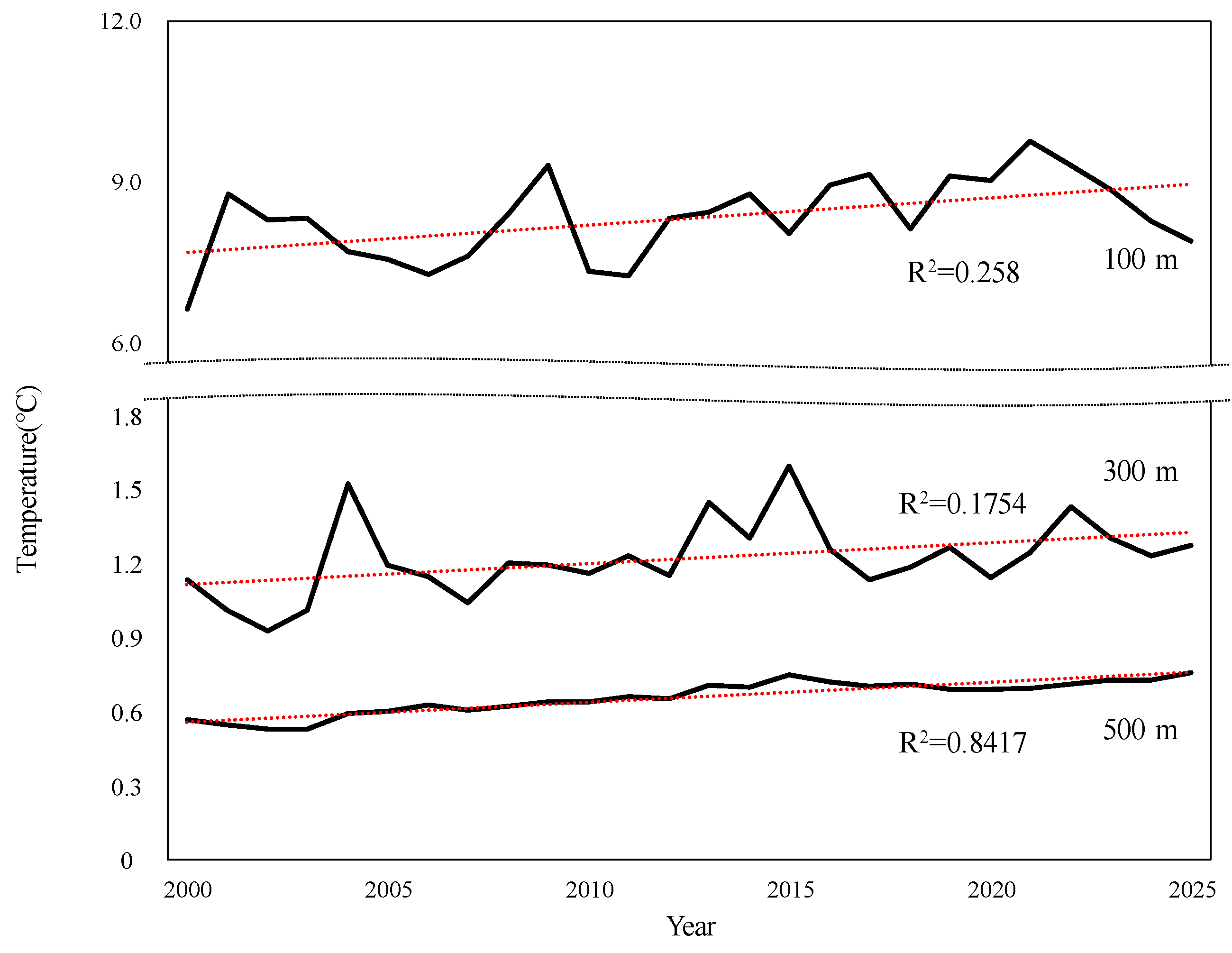
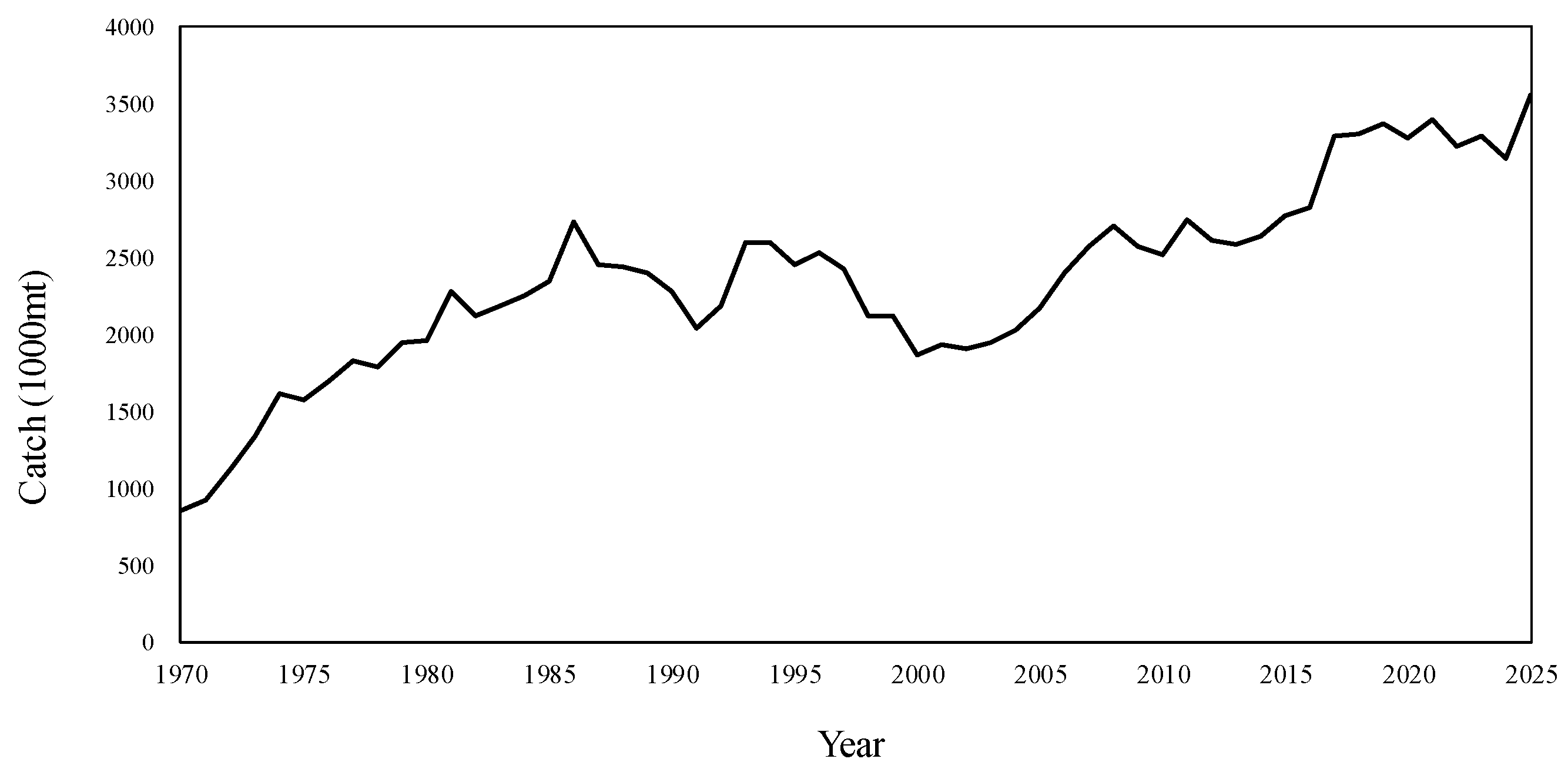
The East Sea of Korea is a highly dynamic marine region characterized by high biodiversity and rich productivity. It is influenced by the Polar Front formed where the cold North Korea Cold Current and warm East Korea Warm Current converge [1,2]. However, owing to the intensification of global climate change, sea surface and bottom temperatures in the East Sea have shown a consistent upward trend (Figure 1 [3]). The Ocean Climate Prediction Center reported that the water temperature in 2022 will be the highest observed over the past 30 years [4]. Furthermore, recent data indicate that the surface water temperature of the East Sea has risen by 1.58 °C since 1968, at a rate approximately twice as fast as the global average increase of 0.74 °C [5]. These physical and environmental changes, along with shifts in current systems, have caused rapid alterations in the biological characteristics of major fishery resources and the structure of the food web. In particular, the recent mass appearance of the large Pacific bluefin tuna (Thunnus orientalis), which was rarely observed in the past, serves as a representative example of dynamic shifts in ecosystem resources. Moreover, qualitative degradation of the marine environment, driven by warming of bottom waters and a decrease in dissolved oxygen (DO), directly impacts the composition of prey organisms and energy transfer within the benthic ecosystem of the East Sea [6,7]. Recent research throughout the Northwest Pacific highlights the profound impact of climate change on ecosystem transitions, which are mediated by shifts in fish species composition and trophic structures [8]. This ongoing environmental degradation triggers substantial species turnover and habitat redistribution, leading to distinct variations in climate adaptation among species [9]. Consequently, these abrupt shifts in community structure and geographical ranges possess the potential to rearrange predator–prey interactions and resource partitioning within benthic food webs. Blackfin flounder (Glyptocephalus stelleri), belonging to the family Pleuronectidae of the order Pleuronectiformes, is widely distributed across the East Sea, Japan, the Sea of Okhotsk, and the Bering Sea. It primarily inhabits muddy or sandy bottoms at depths of 15–800 m and serves as a major commercial and keystone species within the demersal fish community [10]. G. stelleri plays a crucial role as an ecological link between the benthic and pelagic ecosystems by consuming a wide range of prey, including benthic amphipods, polychaetes, and pelagic crustaceans. Currently, various pleuronectidae species, such as Pseudopleuronectes herzensteini, Hippoglossoides pinetorum, and Hippoglossoides dubius, are distributed throughout the East Sea. Owing to their relatively weak swimming capabilities, there is a high potential for interspecific competition for food resources as they share habitats. However, G. stelleri possesses a relatively smaller mouth than co-occurring species such as H. pinetorum and H. dubius. This morphological characteristic is expected to induce differences in prey composition, thereby acting as a mechanism for niche partitioning to mitigate interspecific competition. This phenomenon is further supported by regional dietary variations observed among co-occurring pleuronectids within the East Sea; for instance, P. herzensteini, collected off Uljin, targets brittle stars as its most dominant prey (%IRI 46.9) [11], whereas H. pinetorum in the East Sea primarily consumes shrimps (%IRI 90.8) [12]. Such distinct dietary preferences among closely related species provide clear evidence of active resource partitioning that facilitates coexistence by reducing direct foraging overlap. Therefore, a precise analysis of the feeding habits of G. stelleri is essential for understanding the coexistence mechanisms and energy transfer processes of pleuronectidae fish in the benthic environment of the East Sea. While the catch of G. stelleri in the East Sea has undergone periodic fluctuations since the 1970s, it has shown a long-term upward trend, reinforcing its status as a primary target species and highlighting its increasing ecological and economic importance (Figure 2 [13]). Domestic studies of G. stelleri have focused on its feeding habits [14], maturation and spawning [15,16], age and growth [17,18], and genetic analysis [19]. International research has covered age and growth [20,21], spawning ecology [22], feeding habits [23,24], distribution [25,26], and stock assessment [27]. However, in this era of intensifying marine environmental variability, long-term monitoring of spatiotemporal changes in food resources is vital for the sustainable use of G. stelleri stocks and accurate resource prediction. Previous dietary studies have often been limited to identifying major prey organisms during specific periods, which presents challenges in understanding interannual dietary shifts or changes in food availability in response to environmental fluctuations. Consequently, this study aimed to compare and analyze the annual dietary changes in G. stelleri off the coast of the East Sea. By identifying changes in major prey organisms and subsequent adaptation strategies according to temporal environmental variations, this study sought to reevaluate the ecological niche of G. stelleri within the rapidly changing East Sea ecosystem. Furthermore, this study’s objective is to provide empirical data for sustainable fishery resource management and ecosystem-based assessments in response to future climate change.

2. Materials and Methods

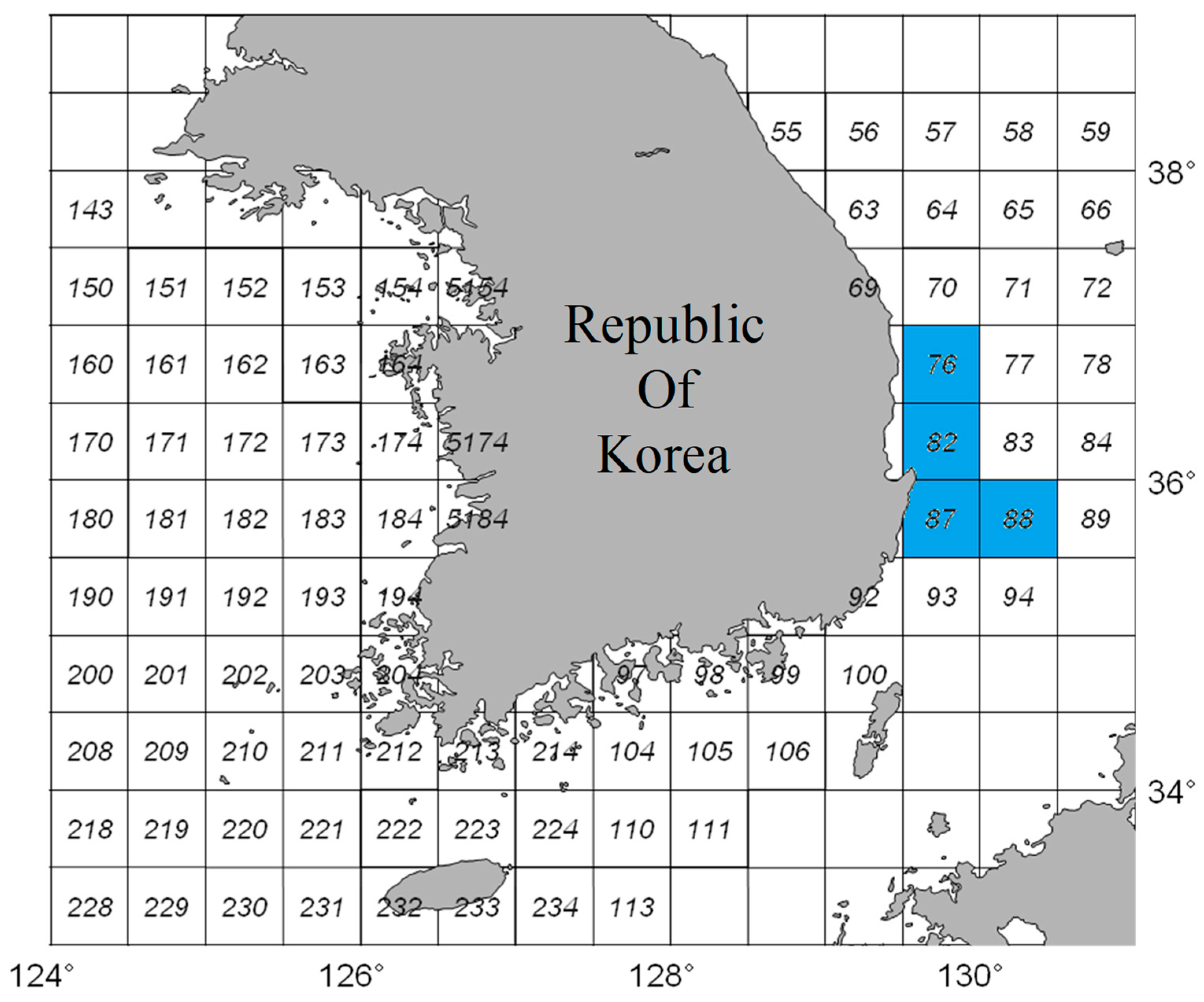
G. stelleri specimens used in this study were collected from blocks 76, 82, 87, and 88 in the East Sea on a continuous monthly basis in 2024 and 2025. Samples were caught using East Sea mid-water trawls and East Sea one-boat medium-sized otter trawls and subsequently purchased at Gampo Port (Figure 3). Total length (TL) and body weight (BW) were measured to the nearest 0.1 cm and 0.1 g, respectively, at the Fishery Resources Research Center of the National Institute of Fisheries Science (NIFS). After measurement, the stomachs were excised, fixed in 10% formalin solution (Junsei Chemical Co., Ltd., Tokyo, Japan), and transported to the laboratory. Stomach contents were analyzed under a stereomicroscope (SZX2–ILLT; Olympus, Tokyo, Japan), and prey items were identified to the lowest possible taxonomic level (species level). Stomachs were identified as empty if no digested fragments or only digestive fluids were present upon microscopic examination, indicating a complete absence of prey traces. These empty stomachs were strictly excluded from the multivariate PERMANOVA analysis. For each identified prey category, the number of individuals was counted, and the weight was measured to the nearest 0.0001 g using an electronic balance (Quintix 224; Sartorius, Göttingen, Germany). Unidentified prey categories were grouped at the family level for subsequent multivariate analyses. Diet composition was expressed as the frequency of occurrence (%F), percentage by number (%N), and percentage by weight (%W), according to the following equations:
% F = A i / N × 100
% N = N i / N t o t a l × 100
% W = W i / W t o t a l × 100
where Ai is the number of fish containing a specific prey item, N is the total number of fish with stomach contents, Ni (Wi) is the number (weight) of specific prey items, and Ntotal (Wtotal) is the total number (weight) of all prey items. The Index of Relative Importance (IRI) was calculated following Pinkas et al. [28] and expressed as a percentage (%IRI).
I R I = % N + % W × % F
To investigate ontogenetic variations in dietary habits, the collected fish were divided into five size classes at 3 cm intervals, considering population comparisons and size at maturity (2024, <25 cm, n = 87; 25–28 cm, n = 92; 28–31 cm, n = 163; 31–34 cm, n = 150; ≥34 cm, n = 66, 2025, <25 cm, n = 292; 25–28 cm, n = 384; 28–31 cm, n = 341; 31–34 cm, n = 224; ≥34 cm, n = 124). Seasonal variations were analyzed by grouping the samples into four seasons in Korea (year 2024: spring: March–May, n = 176; summer: June–August, n = 157; autumn: September–November, n = 78; winter: December–February, n = 147; year 2025: spring, n = 366; summer, n = 364; autumn, n = 221; winter, n = 414). A three-way permutational multivariate analysis of variance (PERMANOVA) was performed to test for significant differences in diet composition based on the three factors (year, size class, and season) and their interactions. PERMANOVA is a non-parametric analysis of variance that uses the distances between samples. The permutation method was used for hypothesis testing. Since PERMANOVA can be sensitive to differences in dispersion among groups, a permutation analysis of multivariate dispersions (PERMDISP [29]) was additionally conducted for each factor using 999 permutations based on an unrestricted permutation of raw data to verify whether the detected differences were driven by true shifts in dietary composition centroids or by inter-individual variability (year: Pperm = 0.384; season: Pperm = 0.092; size class: Pperm = 0.231). In PERMANOVA, the component of variation (COV) represents the degree of influence of each factor; a larger COV indicates a greater influence of a specific factor or interaction. Canonical Analysis of Principal Coordinates (CAP) was conducted to identify the prey items that significantly contributed to differences between the groups. In CAP, correlation coefficients were analyzed, and prey items with a coefficient of 0.4 or higher were indicated on CAP axes 1 and 2. Individuals within each group were randomly assigned to three to five small subgroups, and the mean weight percentage (%W) of the prey was calculated. Using %W is considered optimal for representing the relative importance of prey of different sizes [30], and using the average values of prey categories in randomized subgroups improves the efficiency of multivariate analysis by reducing the number of prey categories to zero proportion [31]. Data were square root transformed to reduce biased interpretation of the dominant prey, and a similarity matrix was constructed using the Bray–Curtis similarity index [32]. Statistical analyses were performed using the PRIMER multivariate statistics software package (v7.0.21; PRIMER–E Ltd., Plymouth, UK) along with the PERMANOVA+ add–on module [33,34]. The feeding strategy of G. stelleri was analyzed using the graphical method of Amundsen et al. [35] (Figure 4), which plots prey-specific abundance against the frequency of occurrence (%F) to determine prey importance (dominant or rare), niche width, and feeding strategy (specialist or generalist). Prey-specific abundance was calculated as follows:
P i = S i S t i × 100
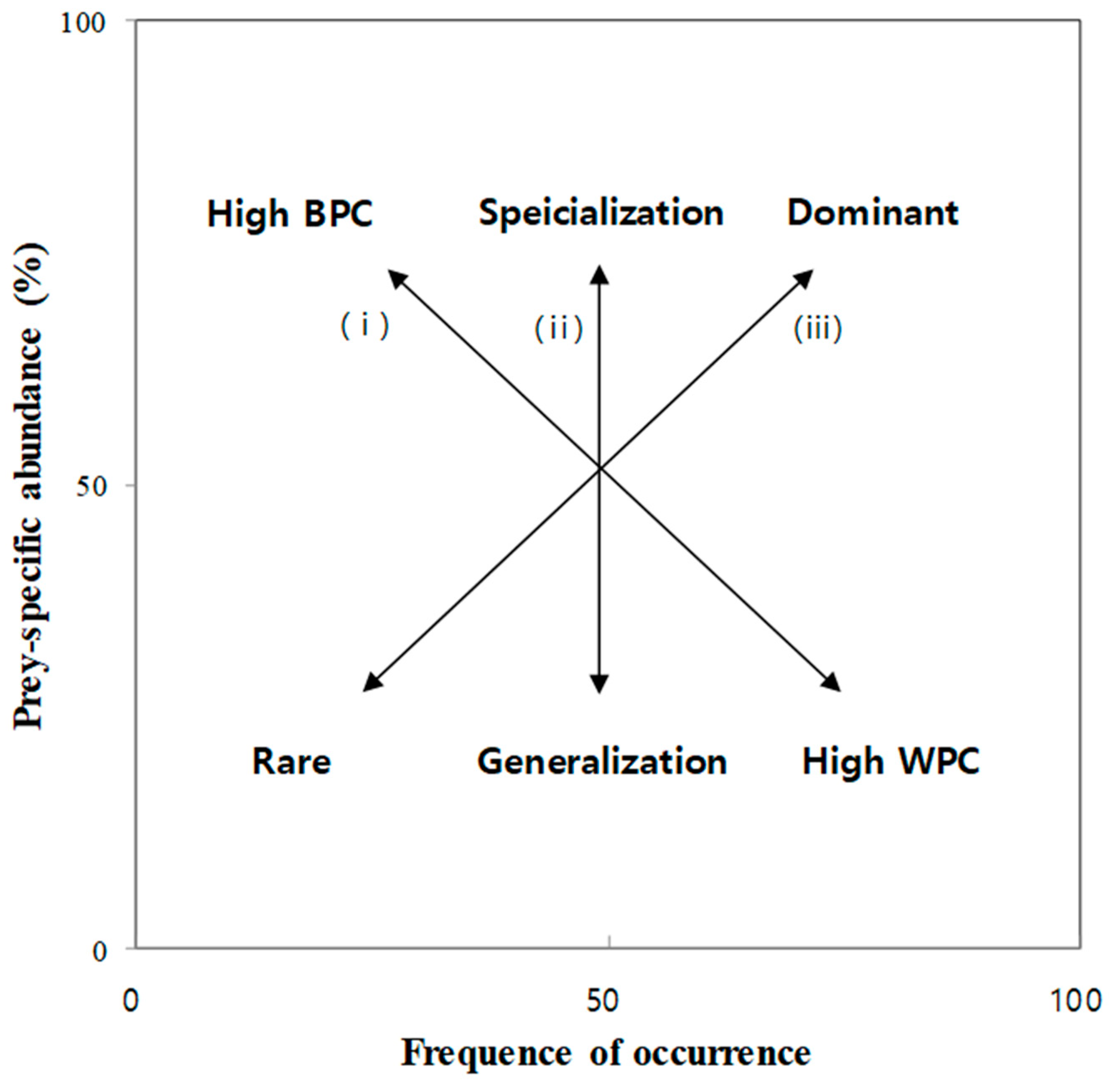
where Pi is the prey–specific abundance of prey i, Si is the weight of prey i, and Sti is the total weight of the stomach contents in only those fish containing prey i. The diagonal line from the lower left to the upper right represents prey importance; items at the top are dominant, and those at the bottom are rare. Items at the top left indicate specialization by individual predators, whereas those at the top right indicate dominance at the population level. The vertical axis represents the feeding strategy; items at the top indicate specialist feeders with narrow niche widths, and items at the bottom indicate generalist feeders with broad niche widths [36].

3. Results

3.1. Length Frequency

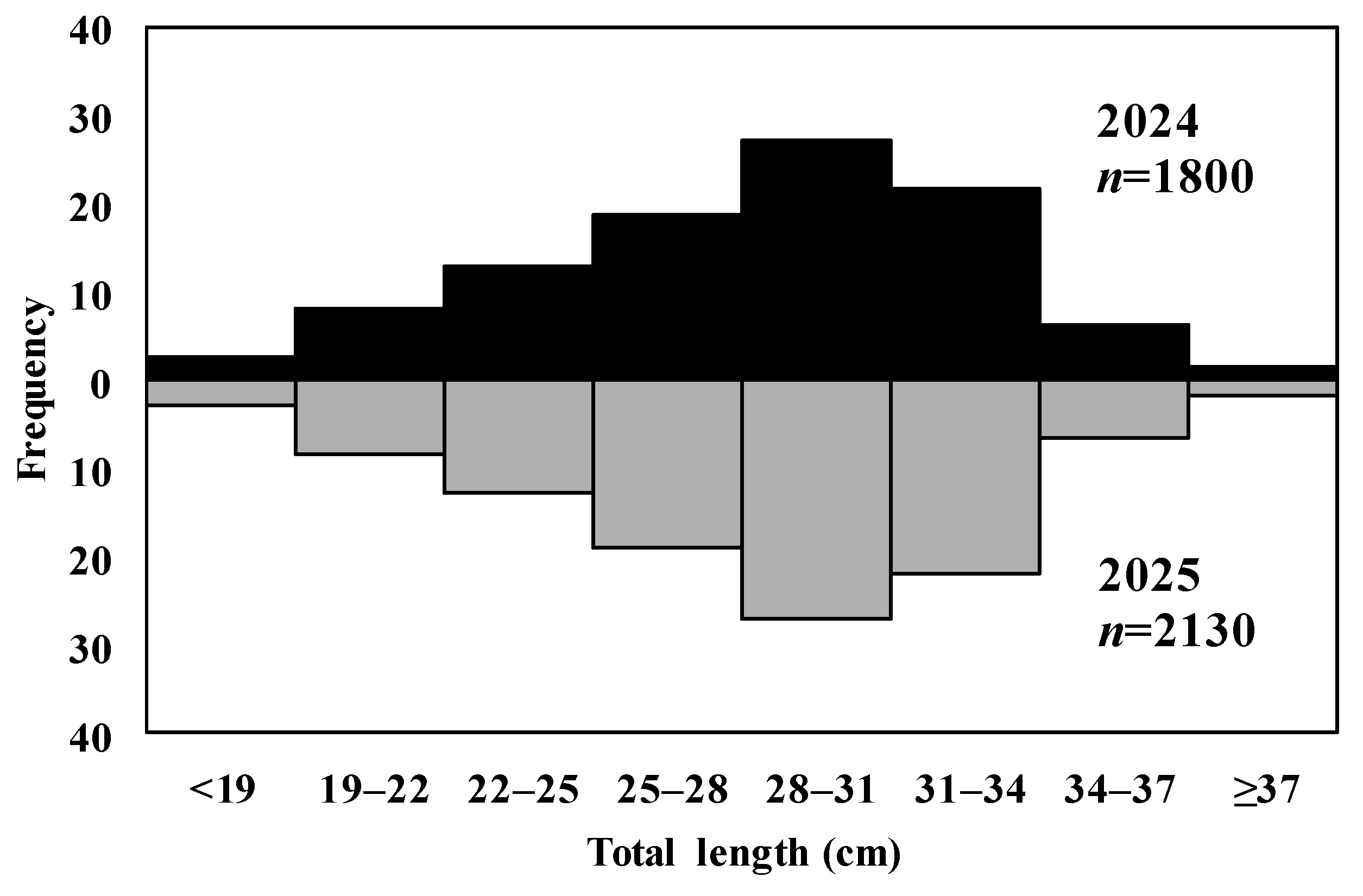
A total of 1800 individuals of G. stelleri were collected in 2024, with total lengths ranging from 10.6 to 44.0 cm and a mean length of 28.3 ± 4.6 cm, and a modal length class of 28–31 cm (Figure 5). In 2025, 2130 individuals were collected, with total lengths ranging from 11.9 to 49.7 cm and a mean length of 28.4 ± 4.4 cm, and a modal length class of 28–31 cm, indicating that the size distribution was similar between 2024 and 2025. To evaluate the difference in length distributions between the years, a two-sample Kolmogorov–Smirnov test was performed; the results indicated a statistically significant difference in the length frequency distributions between the two years (Z = 2.116, p < 0.001).

3.2. Diet Composition

Among the 1800 G. stelleri specimens collected in 2024, excluding 1243 individuals with empty stomachs, yielded an empty stomach rate of 69.1%. Excluding these, 557 individuals containing prey were analyzed (Table 1). Polychaetes were the most significant prey group, accounting for 52.1% of the frequency of occurrence (%F), 25.7% by number (%N), 57.1% by weight (%W), and an index of relative importance (%IRI) of 75.3%. Within this group, the family Nephtyidae was dominant. The second most important prey species was Amphipoda, representing 20.1% (%F), 26.6% (%N), 8.1% (%W), and 12.2% (%IRI), with Melita spp. as the dominant taxa. Other groups, including Pisces, Euphausiids, and Cephalopoda, were present, but had a %IRI of less than 8.0%, reflecting a negligible role in the overall diet. In 2025, among the 2130 collected specimens, 765 individuals had empty stomachs, resulting in a significantly lower empty stomach rate of 35.4%. Excluding these, 1395 individuals containing prey were analyzed. Polychaeta remained the most critical prey group, accounting for 42.4% (%F), 9.5% (%N), 26.0% (%W), and 33.7% (%IRI), with Nephtyidae being the dominant family. Euphausiids emerged as the second most important prey category with 24.7% (%F), 48.6% (%N), 11.4% (%W), and 33.1% (%IRI). This was followed by Pisces, which constituted a significant portion of the diet, with 19.0% (%F), 13.1% (%N), 28.0% (%W), and 17.5% (%IRI). Other prey items such as Amphipoda, Cephalopoda, and Macrura were also identified, but their relative importance remained low, with each contributing less than 8.0% to the %IRI.

3.3. Ontogenetic Diet Shift

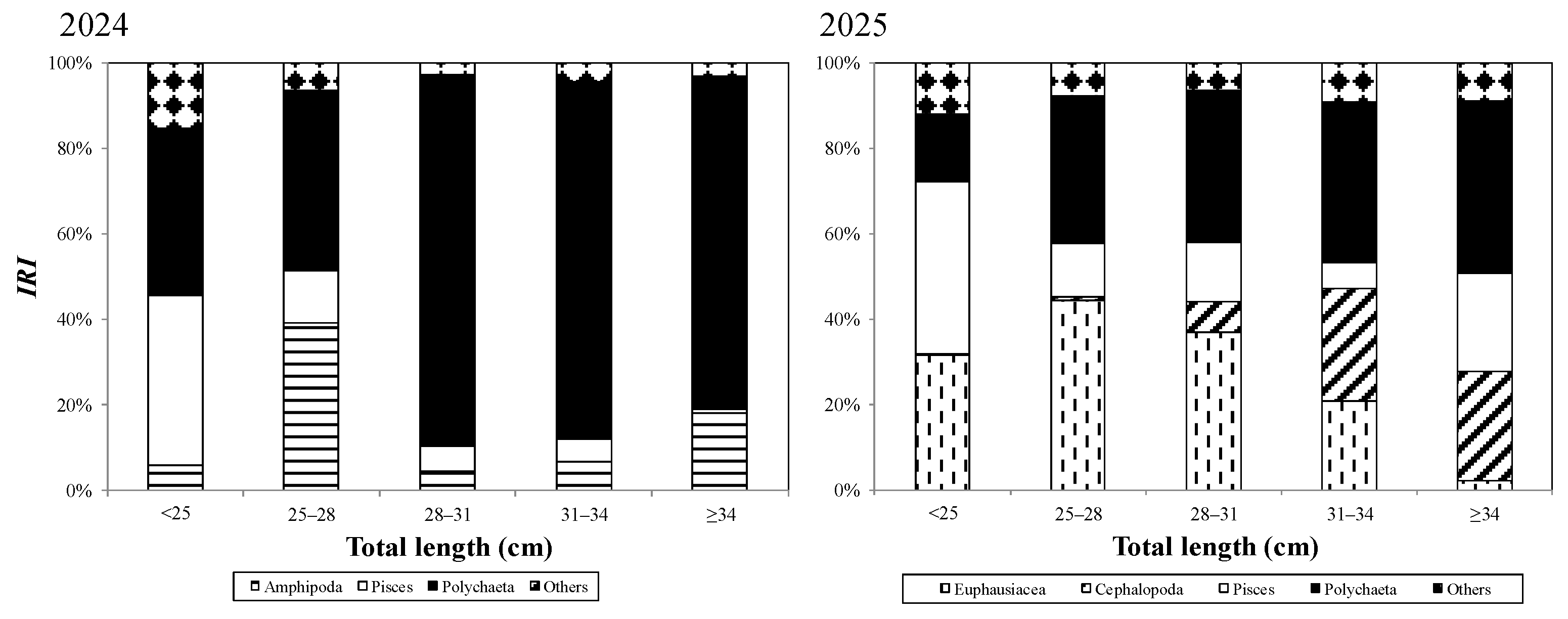
The results of the analysis of ontogenetic shifts in diet composition (Figure 6) revealed that for G. stelleri collected in 2024, Pisces was the most important prey in the smallest size class (<25 cm, which consisted of subadult (young fish) starting from a minimum total length of 10.6 cm), accounting for 39.8% of the index of relative importance (%IRI), followed by Polychaeta at 39.1%. In the 25–28 cm, 28–31 cm, 31–34 cm, and ≥34 cm size classes, Polychaeta was the dominant prey group, representing 42.2%, 87.1%, 83.3%, and 78.0% of the %IRI, respectively. In the 25–28 cm class, Amphipoda (39.2%) and Pisces (12.2%) were the next most significant prey groups, whereas in the ≥34 cm class, Amphipoda accounted for 18.0% of the IRI as secondary prey. For G. stelleri collected in 2025, Pisces was the most significant prey in the <25 cm size class, representing 40.1% of the IRI, followed by Euphausiids (31.7%) and Polychaeta (15.8%). In the 25–28 cm and 28–31 cm size classes, Euphausiids emerged as the primary prey group, accounting for 44.4% and 36.8% of the %IRI, respectively, whereas Polychaeta (34.7% and 35.7%) and Pisces (12.4% and 14.0%) were the next most important prey. In the larger size classes (31–34 cm and ≥34 cm), Polychaeta became the dominant prey group, accounting for 37.6% and 40.3% of the IRI, respectively. Cephalopoda was the second most important prey in these classes, representing 26.4% and 25.6% of the IRI, respectively. Additionally, Euphausiids (20.8%) was a significant prey item in the 31–34 cm class, and Pisces (23.0%) was the next most important group in the ≥34 cm class.

3.4. Seasonal Variations in Prey Composition

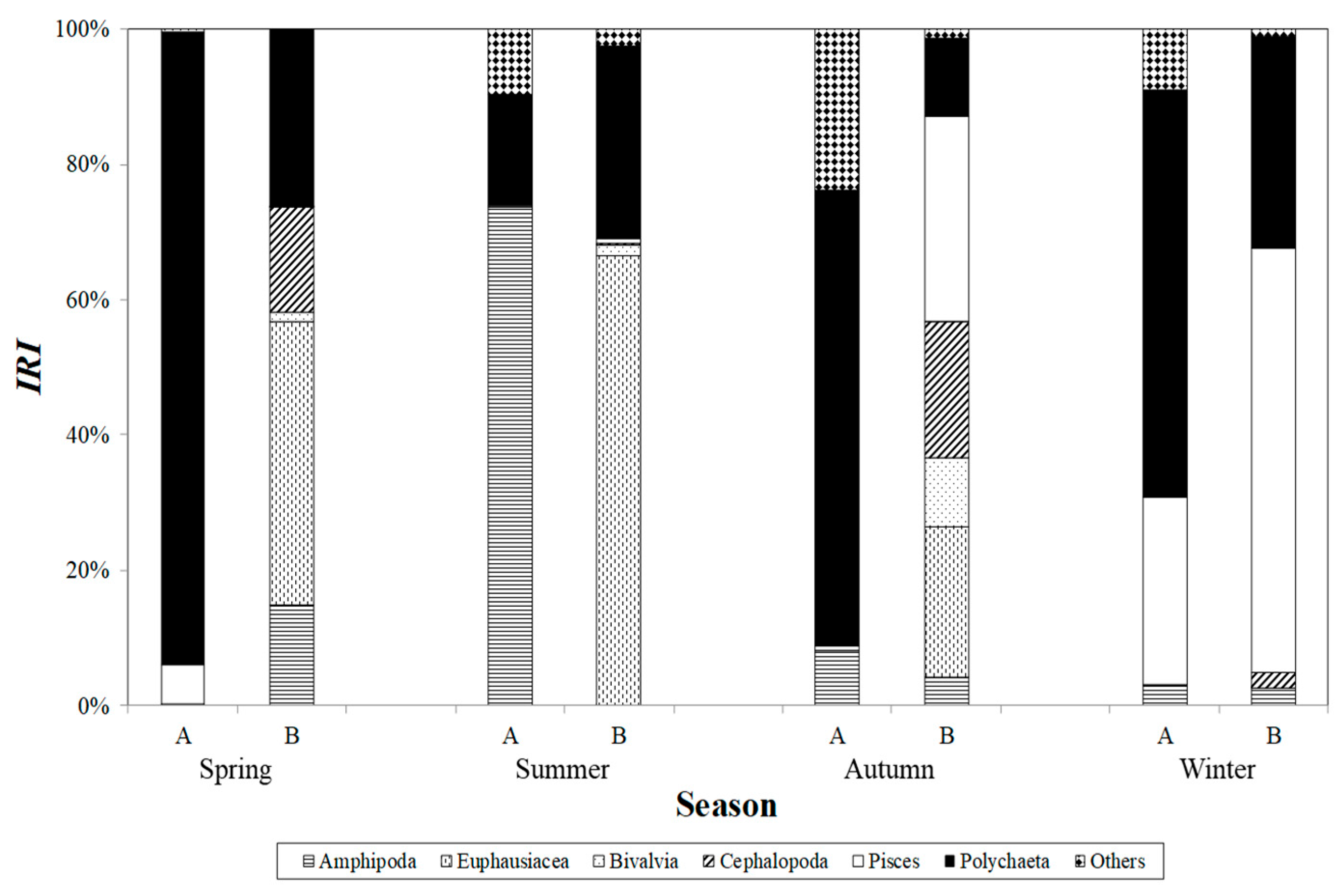
The results of the seasonal analysis of diet composition for G. stelleri collected in 2024 (Figure 7) indicated that Polychaeta was the most significant prey group during the spring, accounting for 93.5% of the index of relative importance (%IRI). In summer, Amphipoda became the dominant prey, representing 73.7% of the IRI, whereas Polychaeta was the second most important prey (16.3%). During autumn and winter, Polychaeta remained the primary prey group, accounting for 67.2% and 60.1% of the IRI, respectively. In winter, Pisces was identified as the secondary prey group, contributing 27.8% to %IRI. For G. stelleri collected in 2025, seasonal analysis revealed that Euphausiids was the most important prey group in both spring and summer, representing 41.8% and 66.4% of the %IRI, respectively. Polychaetes were the second most significant prey species during these seasons, accounting for 26.4% in spring and 28.5% in summer. Additionally, in spring, Cephalopoda (15.3%) and Amphipoda (14.9%) were identified as the major secondary prey items. During autumn and winter, Pisces emerged as the dominant prey group, accounting for 30.2% and 62.8% of the IRI, respectively. In autumn, the diet was more diverse, with Euphausiids (22.4%), Cephalopoda (20.2%), Polychaeta (11.6%), and Bivalvia (10.1%) serving as the important prey groups. In winter, Polychaeta was the next most significant prey, representing 31.1% of the IRI.

3.5. Feeding Habits by Year, Season, and Size Class

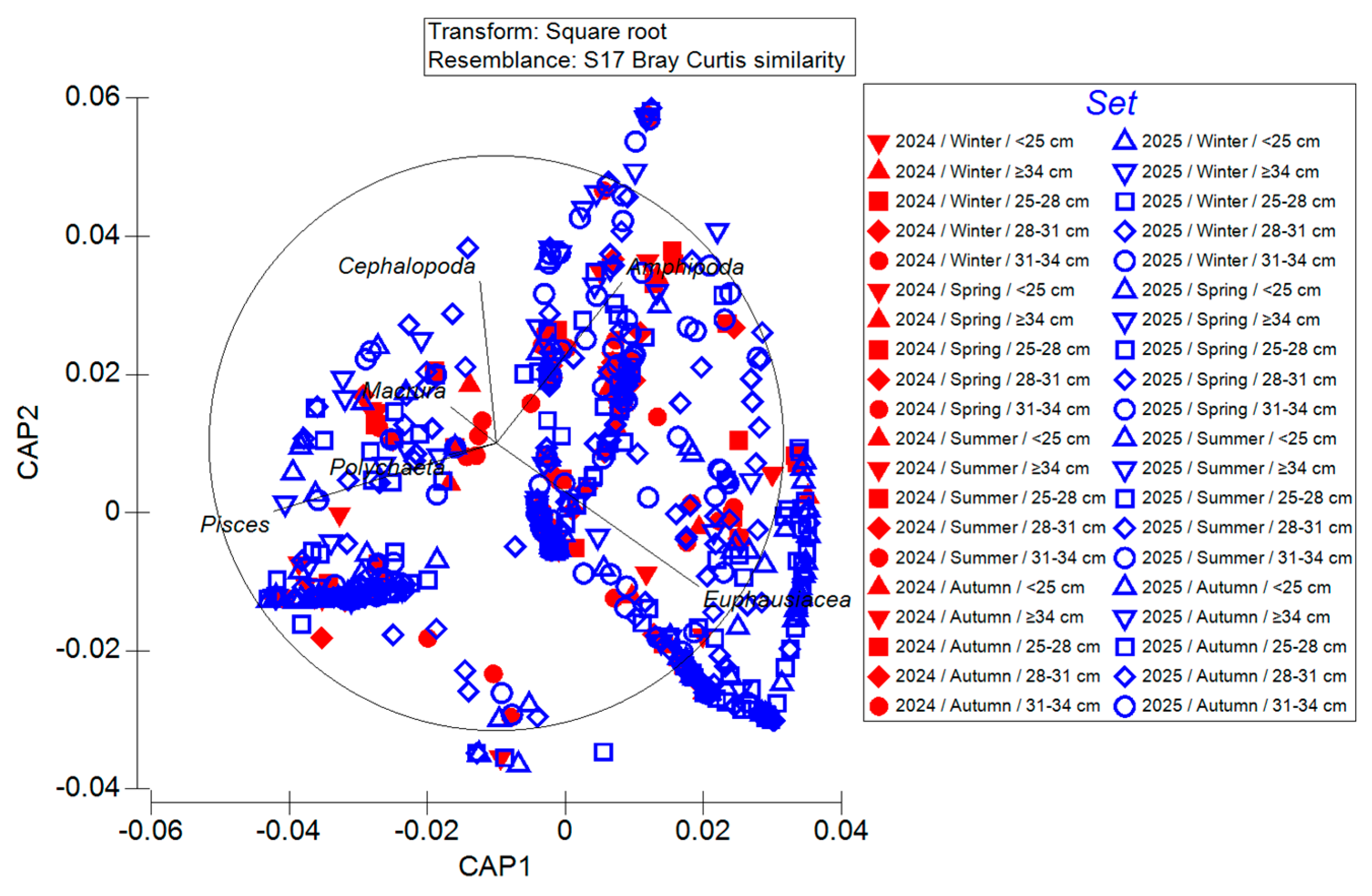
The results of the three-way PERMANOVA (Table 2), which examined the effects of year, season, size class, and their interactions on the diet of G. stelleri collected in 2024 and 2025, revealed statistically significant differences for all individual factors: year, season, and size class (p < 0.05). Consequently, the results of the pair-wise comparisons for the interaction effects between factors revealed that seasonal shifts in dietary composition differed significantly depending on the size class (Table 3). Notably, the intermediate size classes (28–31 cm and 31–34 cm) exhibited the most pronounced seasonal variability, showing statistically significant differences (p < 0.05) in five out of the six seasonal comparison pairs. In contrast, the largest size class (≥34 cm) displayed significant differences only in the ‘Spring vs. Winter’ and ‘Summer vs. Autumn’ comparisons. A Canonical Analysis of Principal Coordinates (CAP) was performed to visually evaluate the interactions between these factors (Figure 8). The analysis showed a clear distinction in diet composition along the CAP1 axis. Pisces, Polychaeta, and Cephalopoda were positioned on the left side of the plot and were identified as the primary prey items for specific groups. In contrast, Amphipoda and Euphausiids were located on the right-hand side and formed distinct feeding patterns. Regarding the distribution by year, 2024 samples were primarily positioned on the left, indicating a high dietary proportion of Polychaeta and Pisces. In 2025, the samples were mainly distributed on the right side, reflecting an increased dietary contribution from Euphausiids and Amphipoda, in addition to Polychaeta.

3.6. Feeding Strategy

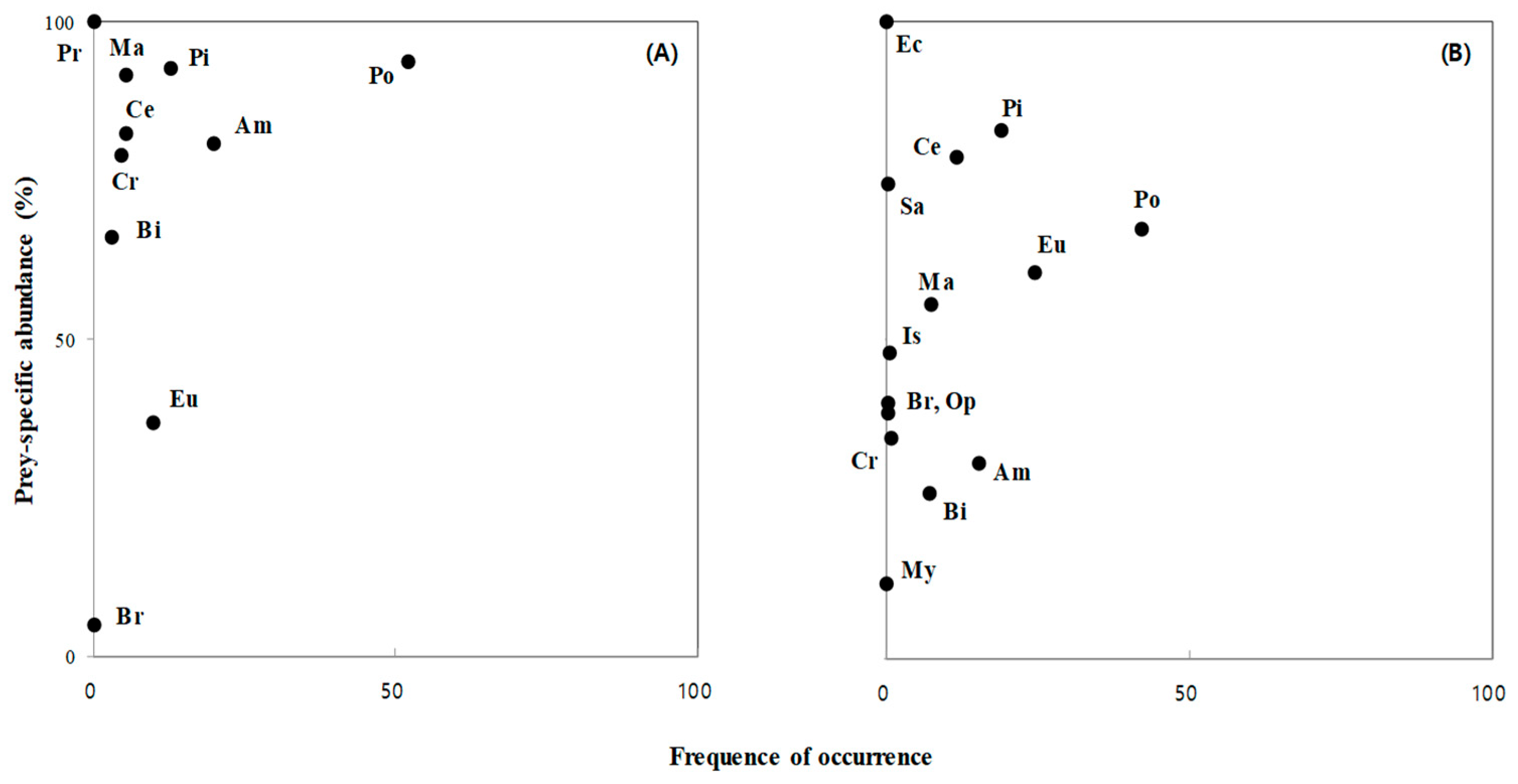
The results of the feeding strategy analysis for G. stelleri (Figure 9) showed that in 2024, Polychaeta, positioned at the upper right of the plot, recorded a 52.1% frequency of occurrence (%F) and a 93.7% prey-specific abundance (Pi). This identified it as the dominant prey item consumed by the majority of the population (Figure 9A). Subsequently, groups such as Pisces, Macrura, and Cephalopoda were located in the upper-left of the plot; while these items showed high dominance in certain individuals, their low frequency of occurrence indicated that they were utilized as specialized prey sources within the population. Other prey items, with the exception of Amphipoda, were positioned at the lower left of the plot, representing prey of low importance. In 2025, Polychaeta continued to be the dominant prey group consumed by most of the population, recording a 42.4% frequency of occurrence and a 67.3% prey-specific abundance (Figure 9B). Pisces and Euphausiids recorded frequencies of 19.0% and 24.7%, respectively. Other prey items were located in the lower left of the plot, indicating their status as low-importance dietary components.

4. Discussion

The mean total length (TL) distributions of G. stelleri analyzed in 2024 and 2025 were 28.3 ± 4.6 cm and 28.4 ± 4.4 cm, respectively. In both years, more than 70% of the total samples were concentrated in the mature size group of 25 cm or larger, suggesting that the G. stelleri stock in the East Sea bottom ecosystem currently maintains a stable resource status centered on reproductive adult populations [15]. A detailed comparison of the annual size composition showed that, while the 28–31 cm size class (27.2%) formed a single dominant group in 2024, the 25–28 cm (26.9%) and 28–31 cm (26.4%) classes showed similar proportions in 2025, indicating a downward expansion of the primary size range. This subtle shift in length structure raises the possibility of increased variability in recruitment in relation to the long-term warming trend of the East Sea bottom water temperature [3]. Generally, pleuronectids show sensitive responses in early growth rates and recruitment timing to water temperature fluctuations [37]; thus, the sustained proportion of small individuals observed in 2025 may signify successful settlement of that year class. The fact that G. stelleri catches in the East Sea have exhibited a long-term upward trend since the 1970s, despite periodic fluctuations [13], suggests that this species maintains stable recruitment and high adaptability within the ecosystem. Notably, the fact that the proportion of large individuals remained at approximately 10% despite qualitative changes in the marine environment, such as the warming of deep waters and decreased DO [3,38], suggests that G. stelleri possesses high ecological plasticity toward changing bottom environments. Furthermore, this robust resource status and high biomass underscore the species’ critical role as a potential prey item for higher-level predators in the trophic web. According to previous studies, top benthic predators such as the yellow goosefish (Lophius litulon) are known to utilize various pleuronectid fishes, including Pseudopleuronectes yokohamae, Hippoglossoides pinetorum and Eopsetta grigorjewi, as part of their diverse prey spectrum [39,40]. This predatory relationship suggests that G. stelleri is considered to function as an accessible ecological link and energy conduit, transferring production from benthic invertebrates up to high-trophic-level demersal predators within the East Sea ecosystem. This stable length structure indicates that G. stelleri maintains a robust ecological status as a key demersal fish species in the East Sea. Analysis of the annual diet composition (Table 1) revealed that Polychaeta will be the most significant prey species in 2024 (IRI: 75.3). However, by 2025, the %IRI of Euphausiids will increase to 33.1%, making it a primary prey group alongside Polychaeta (33.7%). In both 2024 and 2025, Nephtyidae will be the dominant group within Polychaeta. Nephtyidae is a family of aciculate polychaetes found at all depths worldwide and is known to inhabit sandy or muddy substrates in high abundance [41]. This annual shift in primary prey suggests that G. stelleri is an opportunistic feeder that flexibly modifies its targets based on changes in the density of available prey resources rather than being fixed to specific benthic organisms. These dietary fluctuations are closely related to the rapidly changing bottom environment of the East Sea. Recently, the East Sea bottom waters have shown a continuous trend of increasing temperature and decreasing dissolved oxygen due to the impact of global climate change [3,38], and this qualitative degradation of the physical environment directly impacts the species composition and biomass of the benthic ecosystem. Comparing the results of this study with previous research [14], Seong et al. [14] collected samples from specific stations (Trench 55, 63, 69, 70, 76, 82, 87 and 93) in the East Sea during May, Sep. and Oct. of 2016, and Jun. and Sep. of 2017. Most individuals in the study by Seong et al. [14] were in the <25 cm size class (n = 269), representing a relatively small size group. In contrast, the majority of individuals in this study were in the ≥25 cm size class (2024, n = 471; 2025, n = 1073), representing a relatively large size group. Seong et al. [14] reported Euphausiids (63.7%) as the primary prey, which is similar to the trend observed in 2025 in this study, but differs from 2024, when Polychaeta is overwhelmingly dominant. Euphausiids occur in large quantities and high densities in the East Sea [42,43]. Furthermore, the East Sea had the highest habitat density and macrobenthos [44]. Based on this comparative analysis, G. stelleri is considered an opportunistic feeder that consumes both euphausiids, which occur in large quantities, and polychaetes, which abundantly inhabit the benthic environment in the East Sea, regardless of their size. Analysis of diet composition by growth (Figure 6) revealed that instead of the distinct ontogenetic dietary shift typically seen in marine fish, G. stelleri exhibited a pattern in which feeding strategies by size class changed flexibly according to environmental variations. Although most demersal fish transition from small crustaceans to large fish or cephalopods as their mouth structure grows [45,46], G. stelleri showed irregular patterns depending on the year and environment rather than consistent replacement of primary prey at specific length intervals. In both 2024 and 2025, Pisces was the most dominant prey in the smallest class (<25 cm), accounting for 39.8% and 40.1% of the IRI, respectively. This demonstrates an opportunistic predatory habit, preferring high-protein fish even during the juvenile stage. However, as they grew, Polychaeta accounted for an overwhelming proportion (42.2–87.1% IRI) in all classes ≥25 cm in 2024. In contrast, in 2025, Euphausiids was dominant in the 25–31 cm class (over 36.8% IRI), after which the primary prey switched back to Polychaeta starting from the class ≥31 cm, showing a complex pattern. These results suggest several important differences and similarities when compared with a previous study by Seong et al. [14]. Seong et al. [14] reported Euphausiids as an important prey across all size classes, with a particularly high dependence on small individuals. The 2025 data in this study also showed euphausiid dominance in small-to-medium individuals (<31 cm), similar to previous research, but in contrast with 2024, where the proportions of Polychaeta, Amphipoda, and Pisces were high in the same size group. This indicates that while G. stelleri follows general ontogenetic shift pathways, it flexibly modifies its feeding strategy according to environmental factors and prey availability in a given year. A notable finding was the enlargement and diversification of prey in individuals ≥31 cm. According to the 2025 results of this study, Cephalopoda emerged as the second most important prey with a high proportion of approximately 26% in the ≥31 cm class, and the proportion of Pisces consumption also rose to 23.0%. This differs from the results of Seong et al. [14], in which euphausiid and polychaete consumption predominated across all size classes. If a typical dietary shift occurs, the proportion of small crustaceans (euphausiids) should disappear or be minimized in large individuals; however, in this study, prey items of various sizes were still observed in high proportions, even in large individuals. This suggests that the feeding strategy of G. stelleri follows an environment-dependent pattern, likely consuming prey exposed to physical fluctuations or hypoxic conditions in the bottom ecosystem regardless of size rather than size-based optimal foraging. Thus, this study demonstrates that G. stelleri is not simply a species with a fixed ontogenetic dietary shift, but a species with very high ecological plasticity that responds immediately to changes in prey availability within its habitat. Analysis of the seasonal diet composition (Figure 7) showed that the primary prey dynamically fluctuated among Polychaeta, Amphipoda, Cephalopoda, Bivalvia, and Pisces, depending on the year and season. This suggested that G. stelleri has an opportunistic diet that flexibly changes its targets based on the seasonal availability of prey resources. In 2024, Polychaeta was overwhelmingly dominant in all seasons, except summer, reflecting a typical feeding pattern of preying on sedentary polychaetes to minimize energy expenditure during stable periods. However, in the summer of 2024, the proportion of Amphipoda consumed increased. According to a study conducted in Funka Bay [47], during hypoxic conditions (DO < 2.5 mL/L), amphipods inhabiting the sediment are exposed on the seabed surface or float into the water column for respiration. The dietary shift in the summer of 2024 reflects the exact ecological mechanism observed in the Northern Adriatic Sea, where a decline in bottom dissolved oxygen below 2 mL L−1 causes an “internal” physiological stress to be rendered into an “external” behavioral reaction, forcing various infaunal and epibenthic macrofauna to rapidly alter their behavior [48]. Under such hypoxic stress, infaunal species characteristically abandon their concealment or defensive camouflage and emerge onto the sediment surface or move upward to higher, more oxygenated areas. This forced emergence and vertical extension significantly negate safety distances within and between species, making them clump or aggregate atop multi-species mounds, thereby enhancing prey exposure and detectability [48]. By capturing these vulnerable, exposed amphipods that have abandoned their camouflage and safety distances, G. stelleri could opportunistically exploit the derailed predator–prey dynamics and maximize its foraging efficiency [49]. However, the high annual mean empty stomach rate of 69.1% suggests that the decrease in activity due to high temperatures, as mentioned in the Funka Bay study, may have acted in combination, limiting the actual predatory activity despite prey exposure. The year 2025 showed a contrasting dietary structure compared to that of 2024, with Euphausiids appearing as the primary prey in spring and summer, and the empty stomach rate dropping sharply to 35.4%. This suggests that the hypoxic conditions or environmental fluctuations at the bottom of the East Sea in 2025 were more severe than those in 2024. Just as hypoxic conditions improved fish conditions by increasing prey availability in the Funka Bay study, G. stelleri in 2025 was predicted to have maximized feeding efficiency by targeting euphausiids that aggregated near the bottom or exhibited avoidance reactions to environmental stress. The sharp rise in the proportion of Pisces consumption in the autumn and winter of 2025 is related to findings from the Funka Bay study, which noted that preying on highly mobile amphipods can increase energy costs and affect the hepatosomatic index (HSI). In the second half of 2025, G. stelleri will likely choose a high-cost, high-efficiency strategy by switching from small invertebrates to high-calorie Pisces to maintain metabolic efficiency as it enters the cold season. Furthermore, according to a previous study [50], the density of polychaetes in the East Sea was reported to be the lowest during the winter. Therefore, the increased proportion of fish consumption observed during the winter of both 2024 and 2025 suggests a dietary shift triggered by the decreased availability of benthic polychaetes, forcing G. stelleri to switch to alternative pelagic resources. Three-way PERMANOVA (Table 2) showed that the dietary structure of G. stelleri was significantly determined by all three independent factors: Year, Season, and Size Class (p < 0.05). This indicates that the niche of G. stelleri is formed by the complex interaction of temporal environmental fluctuations in the East Sea bottom ecosystem and the biological factors of the growth stages. In particular, the high significance of year and season as single factors statistically supported the analysis that differences in annual water temperature and dissolved oxygen had a decisive impact on prey availability. However, the lack of significant differences in the two-way interactions (Year × Size Class, Season × Size Class) regarding dietary differences by length (p > 0.05) suggests that the pattern of dietary change by growth is relatively consistent and is not limited to a specific year or season. That is, if environmental factors determine the type of primary prey, the size of the individual acts as an internal constraint that determines the type and size of prey that can be consumed within that environment. This statistical trend was also evident in the CAP analysis results (Figure 8). The positioning of Pisces and Cephalopoda on the left and Amphipoda and Euphausiids on the right, centered on the CAP1 axis, highlights the key prey groups determining dietary differentiation. The clustering of 2024 samples near Pisces and Cephalopoda and 2025 samples near Euphausiids and Amphipoda clearly reflects the difference in prey availability between the years. Furthermore, the tendency of larger groups to move from the small crustacean area to the Pisces and Cephalopoda areas suggests that size-based dietary shifts and optimal foraging strategies are valid in this study model. The significant three-way interaction (p < 0.05) suggests that diet is the result of a sophisticated ecological adaptation process where environmental conditions and physiological needs converge, and the graphical analysis of feeding strategies (Figure 9) revealed typical characteristics of an opportunistic feeder, where dependence on specific prey and population-wide feeding patterns change fluidly by year. The 2024 strategy showed a clear trend toward polychaetes as the core prey. The high frequency of occurrence (52.1%) and prey-specific abundance (93.7%) indicated that most individuals relied on polychaetes, which was interpreted as a result of the feeding concentration on high-efficiency benthic prey under stable conditions. In 2025, the concentration of Polychaeta weakened, and the feeding niche expanded compared to that in 2024. The decrease in the prey-specific abundance of Polychaeta (67.3%) and the increase in the frequency of Pisces and Euphausiids suggest that G. stelleri utilizes pelagic resources more broadly. This indicates that, as environmental fluctuations change the availability of primary prey or increase the exposure to pelagic prey in 2025, G. stelleri will adapt by consuming a wider variety of prey items. The empirical datasets on ecological plasticity and the opportunistic dietary shifts in G. stelleri obtained through this study can serve as a critical scientific foundation for establishing adaptive marine monitoring protocols to evaluate climate-induced benthic habitat stress. Furthermore, the analysis of size-specific and seasonal trophic interactions, along with multi-species resource utilization, is expected to provide essential policy-making baselines for designating spatial and temporal fishery closures to protect demersal fish stocks and facilitating the transition from conventional single-species assessments to integrated multi-species management models.

Author Contributions

Conceptualization, S.H.S. and D.-G.K.; methodology, S.H.S.; software, S.H.S.; validation, S.C.Y., D.-H.K. and H.S.; formal analysis, S.H.S.; investigation, S.H.S., H.J.K., D.-G.K.; resources, D.-G.K.; data curation, S.H.S.; writing—original draft preparation, S.H.S.; writing—review and editing, H.J.K., S.C.Y., D.-H.K., H.S. and D.-G.K.; visualization, S.H.S.; supervision, D.-G.K.; project administration, D.-H.K., H.S. and D.-G.K.; funding acquisition, D.-H.K. and H.S. All authors have read and agreed to the published version of the manuscript.

Funding

This study was supported by the National Institute of Fisheries Science (NIFS), Republic of Korea (grant number R2026001).

Institutional Review Board Statement

The animal study protocol was approved by the Institutional Review Board (or Ethics Committee) of Bioethics Information Center (protocol code BIC Study-L-1 202504-012 and date of approval 24 April 2025).

Data Availability Statement

The oceanic environmental and fisheries data used in this study were obtained from multiple public sources: the bottom water temperature data at 100 m, 300 m, and 500 m in the East Sea were published by the Korea Oceanographic Data Center (KODC) and can be accessed at https://www.nifs.go.kr/kodc/(accessed on 26 March 2026); the report on the highest sea surface temperature in the East Sea was provided by the Ocean Climate Prediction Center (OCPC) at https://www.ocpc.kr (accessed on 26 March 2026); the report on surface water temperature trends in the East Sea was published by the National Institute of Fisheries Science (NIFS) at https://www.nifs.go.kr (accessed on 26 March 2026); and the statistical database for fisheries production was sourced from the Korean Statistical Information Service (KOSIS) at https://kosis.kr/index/index.do (accessed on 26 March 2026).

Conflicts of Interest

The authors declare no conflicts of interest.

Abbreviations

The following abbreviations are used in this manuscript:
BPCBetween-phenotypic component
BWBody weight
CAPCanonical Analysis of Principal Coordinates
COVComponent of variation
DODissolved oxygen
MSMean squares
IRIIndex of Relative Importance
NIFSNational Institute of Fisheries Science
OCPCOcean Climate Prediction Center
SSSum of squares
TLTotal length
WPCWithin-phenotypic component

References

  1. Moriyasu, S. The Tsushima Current. In Kuroshio and Its Physical Aspects; Stommel, H., Yoshida, K., Eds.; University of Tokyo Press: Tokyo, Japan, 1972; pp. 353–369. [Google Scholar]
  2. Park, K.A.; Chung, J.Y.; Kim, K. Sea surface temperature fronts in the East (Japan) Sea and temporal variations. Geophys. Res. Lett. 2004, 31, L07304. [Google Scholar] [CrossRef]
  3. KODC (Korea Oceanographic Data Center). Bottom Water Temperature at 100 m, 300 m, 500 m in the East Sea. 2026. Available online: https://www.nifs.go.kr/kodc/ (accessed on 26 March 2026).
  4. OCPC (Ocean Climate Prediction Center). Report on the Highest Sea Surface Temperature in the East Sea. 2022. Available online: https://www.ocpc.kr (accessed on 26 March 2026).
  5. NIFS (National Institute of Fisheries Science). Report on Surface Water Temperature Trends in the East Sea. 2025. Available online: https://www.nifs.go.kr (accessed on 26 March 2026).
  6. Harvey, C.J.; Cox, S.P.; Essington, T.E.; Hansson, S.; Kitchell, J.F. An ecosystem model of food web and fisheries interactions in the Baltic Sea. ICES J. Mar. Sci. 2003, 60, 939–950. [Google Scholar] [CrossRef]
  7. Hočevar, S.; Kuparinen, A. Marine food web perspective to fisheries-induced evolution. Evol. Appl. 2021, 14, 2378–2391. [Google Scholar] [CrossRef] [PubMed]
  8. Ma, S.; Liu, Y.; Li, J.; Fu, C.; Ye, Z.; Sun, P.; Yu, H.; Cheng, J.; Tian, Y. Climate-induced long-term variations in ecosystem structure and atmosphere-ocean-ecosystem processes in the Yellow Sea and East China Sea. Prog. Oceanogr. 2019, 175, 183–197. [Google Scholar] [CrossRef]
  9. Hu, W.; Du, J.; Su, S.; Tan, H.; Yang, W.; Ding, L.; Dong, P.; Yu, W.; Zheng, X.; Chen, B. Effects of climate change in the seas of China: Predicted changes in the distribution of fish species and diversity. Ecol. Indic. 2022, 134, 108489. [Google Scholar] [CrossRef]
  10. NIFS (National Institute of Fisheries Science). Ecology and Fishing Ground of Fisheries Resources in Korean Waters; Coastal Water Fisheries Resources Research Division; Yeamoonsa: Paju-si, Republic of Korea, 2025; pp. 128–135. [Google Scholar]
  11. Lee, C.Y. Feeding Habits of Pseudopleuronectes herzensteini in the Coastal Waters of the Uljin-gun, Korea. Master’s Thesis, Gangneung-Wonju National University, Gangneung, Republic of Korea, 2021. [Google Scholar]
  12. Huh, S.H.; Baeck, G.W. Feeding Habits of Hippoglossoides pinetorum Collected in the Coastal Waters of Kori, Korea. Korean J. Ichthyol. 2003, 15, 157–161. [Google Scholar]
  13. KOSIS (Korean Statistical Information Service). Statistic Database for Fisheries Production. 2026. Available online: https://kosis.kr/index/index.do (accessed on 26 March 2026).
  14. Seong, G.C.; Ko, A.R.; Nam, K.M.; Jeong, J.M.; Kim, J.N.; Baeck, G.W. Diet of the Korean flounder Glyptocephalus stelleri in the coastal waters of the East Sea of Korea. Korean J. Fish. Aquat. Sci. 2019, 52, 430–436. [Google Scholar] [CrossRef]
  15. Cha, H.K.; Kwon, H.C.; Lee, S.I.; Yang, J.H.; Chang, D.S.; Chun, Y.Y. Maturity and spawning of Korean flounder Glyptocephalus stelleri (Schmidt) in the East Sea of Korea. Korean J. Ichthyol. 2008, 20, 263–271. [Google Scholar]
  16. Shin, S.R.; Kim, H.J.; Oh, H.Y.; Lee, J.S.; Song, H.J.; Kim, J.W. Sexual group maturity and main spawning period of Glyptocephalus stelleri (Teleostei: Pleuronectidae). J. Mar. Life Sci. 2022, 7, 37–44. [Google Scholar] [CrossRef]
  17. Lee, J.M. Age and Growth of Korean Flounder (Glyptocephalus stelleri) in the East Sea of Korea. Master’s Thesis, Pukyong National University, Busan, Republic of Korea, 2008. [Google Scholar]
  18. Yang, J.H.; Yoon, S.C.; Lee, S.I.; Cha, H.K.; Kim, J.B.; Choi, Y.M.; Park, J.H. Age and growth of blackfin flounder Glyptocephalus stelleri in the East Sea, Korea. Fish. Aquat. Sci. 2012, 15, 169–176. [Google Scholar] [CrossRef]
  19. Gwak, W.S. Genetic diversity and population structure of blackfin flounder (Glyptocephalus stelleri) in Korean and Japanese waters based on mitochondrial DNA control region sequences. J. Mar. Sci. Eng. 2026, 14, 651. [Google Scholar] [CrossRef]
  20. Hashimoto, R. Studies on the age of Glyptocephalus stelleri (Schmidt). Bull. Tohoku Reg. Fish. Res. Lab. 1953, 2, 49–55. [Google Scholar]
  21. Ishida, R.; Kitakata, M. Studies on the age determination of flatfishes in Hokkaido, Glyptocephalus stelleri (Schmidt). Bull. Hokkaido Reg. Fish. Res. Lab. 1953, 8, 63–84. [Google Scholar]
  22. Ivankova, Z.G. Fecundity and pattern of spawning in Glyptocephalus stelleri (Schmidt) from Peter the Great Bay. In Studies on Fish Biology and Commercial Oceanography; Kizevetter, I.V., Ed.; TINRO Annual Report; TINRO: Vladivostok, Russia, 1974; Volume 4, pp. 118–121. [Google Scholar]
  23. Hayase, S.; Hamai, I. Studies on feeding habits of three flatfishes, Cleisthenes pinetorum herzensteini (Schmidt), Hippoglossoides dubius (Schmidt) and Glypttocephalus stelleri (Schmidt). Bull. Fac. Fish. Hokkaido Univ. 1974, 25, 82–99. [Google Scholar]
  24. Pushchina, O.I. Specific features of feeding of the Glyptocephalus stelleri and Acanthopsetta nadeshnyi in the northwestern Sea of Japan. J. Ichthyol. 2000, 40, 247–252. [Google Scholar]
  25. Shvydkii, G.V.; Vdovin, A.N. Seasonal distribution of the Korean flounder Glyptocephalus stelleri in the Northwestern part of the sea of Japan. Russ. Acad. Sci. Oceanol. 2001, 41, 540–544. [Google Scholar]
  26. Tokranov, A.M. Specific features of distribution and some features of biology of Korean flounder Glyptocephalus stelleri (Pleuronectidae) in waters off Kamchatka in the Sea of Okhotsk. J. Ichthyol. 2008, 48, 759–769. [Google Scholar] [CrossRef]
  27. Majeed, S.; Kindong, R.; Kang, M.G.; Park, J.M. Assessing the stock status of Pointhead flounder (Cleisthenes pinetorum) and blackfin flounder (Glyptocephalus stelleri) in the East Sea of Korea using length-based methods. Reg. Stud. Mar. Sci. 2025, 84, 104112. [Google Scholar] [CrossRef]
  28. Pinkas, L.; Oliphant, M.S.; Iverson, I.L.K. Food habits of albacore, bluefin tuna and bonito in California waters. Fish. Bull. 1971, 152, 1–105. [Google Scholar]
  29. Anderson, M.J. PERMDISP: A FORTRAN Computer Program for Permutational Analysis of Multivariate Dispersions (for Any Two-Factor ANOVA Design) Using Permutation Tests; Department of Statistics, University of Auckland: Auckland, New Zealand, 2004. [Google Scholar]
  30. Hyslop, E.J. Stomach contents analysis: A review of methods and their application. J. Fish. Biol. 1980, 17, 411–429. [Google Scholar] [CrossRef]
  31. White, W.T.; Platell, M.E.; Potter, I.C. Comparisons between the diets of four abundant species of elasmobranchs in a subtropical embayment: Implications for resource partitioning. Mar. Biol. 2004, 144, 439–448. [Google Scholar] [CrossRef]
  32. Platell, M.E.; Potter, I.C. Partitioning of food resources amongst 18 abundant benthic carnivorous fish species in marine waters on the lower west coast of Australia. J. Exp. Mar. Biol. Ecol. 2001, 261, 31–54. [Google Scholar] [CrossRef] [PubMed]
  33. Anderson, M.J.; Gorley, R.N.; Clarke, K.R. PERMANOVA for PRIMER: Guide to Software and Statistical Methods; PRIMER-E: Plymouth, UK, 2008; p. 214. [Google Scholar]
  34. Clarke, K.; Gorley, R. PRIMER v7: User Manual/Tutorial; PRIMER-E: Plymouth, UK, 2015; pp. 1–296. [Google Scholar]
  35. Amundsen, P.A.; Gabler, H.M.; Staldvik, F.J. A new approach to graphical analysis of feeding strategy from stomach contents data modification of Costellos (1990) method. J. Fish. Biol. 1996, 48, 607–614. [Google Scholar] [CrossRef]
  36. Pianka, E.R. Evolutionary Ecology, 4th ed.; HarperCollins: New York, NY, USA, 1988; p. 468. [Google Scholar]
  37. Nash, R.D.M.; Geffen, A.J. Flatfishes: Biology and Exploitation; Gibson, R.N., Ed.; Blackwell Publishing Limited: Oxford, UK, 2005; pp. 138–163. [Google Scholar]
  38. Lee, H.J.; Nam, S.H. Studies on changes in the hydrography and circulation of the deep East Sea (Japan Sea) in a changing climate: Status and prospectus. J. Korean Soc. Oceanogr. 2023, 28, 1–18. [Google Scholar] [CrossRef]
  39. Park, J.M.; Huh, S.H.; Jeong, J.M.; Baeck, G.W. Diet composition and feeding strategy of yellow goosefish, Lophius litulon (Jordan, 1902), on the southeastern coast of Korea. J. Appl. Ichthyol. 2014, 30, 151–155. [Google Scholar] [CrossRef]
  40. Cha, B.Y.; Hong, B.Q.; Jo, H.S.; Sohn, H.S.; Park, Y.C.; Yang, W.S.; Choi, O.I. Food Habits of the Yellow Goosefish, Lophius litulon. J. Korean Fish. Soc. 1997, 30, 95–104. [Google Scholar]
  41. Ravara, A.; Wiklund, H.; Cunha, M.R.; Pleijel, F. Phylogenetic relationships within Nephtyidae (Polychaeta, Annelida). Zool. Scr. 2010, 39, 394–405. [Google Scholar] [CrossRef]
  42. Komaki, Y. On the surface swarming of Euphausiid crustacean. Pac. Sci. 1967, 21, 433–488. [Google Scholar]
  43. Endo, Y. Daytime surface swarming of Euphausia pacifica (Crustacea: Euphausiacea) in the Sanriku coastal waters of northeastern Japan. Mar. Biol. 1984, 79, 269–276. [Google Scholar] [CrossRef]
  44. Lee, J.Y.; Lim, H.S.; Lee, J.H.; Shin, H.C. Spatio-temporal distribution and dominant species of the macrozoobenthic communities on a soft bottom of the Korean coasts. J. Korean Soc. Oceanogr. 2025, 30, 174–198. [Google Scholar] [CrossRef]
  45. Karachle, P.K.; Stergiou, K.I. Feeding and ecomorphology of seven flatfish species in the North-NorthWest Aegean Sea, Greece. Afr. J. Mar. Sci. 2011, 33, 67–78. [Google Scholar] [CrossRef]
  46. Wainwright, P.C.; Richard, B.A. Predicting patterns of prey use from morphology of fishes. Environ. Biol. Fishes 1995, 44, 97–113. [Google Scholar] [CrossRef]
  47. Inagaki, Y.; Takatsu, T.; Uenoyama, T.; Yoneda, N.; Yokoyama, S.; Kamei, Y.; Kobayashi, N.; Takahashi, T. Effects of hypoxia on the feeding intensity and somatic condition of the blackfin flounder Glyptocephalus stelleri in the Funka Bay, Japan. Fish. Sci. 2015, 81, 687–698. [Google Scholar] [CrossRef]
  48. Riedel, B.; Pados, T.; Pretterebner, K.; Schiemer, L.; Steckbauer, A.; Haselmair, A.; Zuschin, M.; Stachowitsch, M. Effect of hypoxia and anoxia on invertebrate behaviour: Ecological perspectives from species to community level. Biogeosciences 2014, 11, 1491–1518. [Google Scholar] [CrossRef]
  49. Pihl, L. Changes in the diet of demersal fish due to eutrophication-induced hypoxia in the Kattegat, Sweden. Can. J. Fish. Aquat. Sci. 1994, 51, 321–336. [Google Scholar] [CrossRef]
  50. Kim, S.L.; Yu, O.H. Understanding the Spatial and Temporal Distribution and Environmental Characteristics of Polychaete Assemblages in the Coastal Waters of Ulleungdo, East Sea of Korea. J. Mar. Sci. Eng. 2021, 9, 1310. [Google Scholar] [CrossRef]
Figure 1. Annual variations in bottom water temperature at depths of 100 m, 300 m, and 500 m from 2000 to 2025. The dotted red lines indicate the linear regression trends for each depth.
Water 18 01549 g001
Figure 2. Annual variations in the catch of blackfin flounder Glyptocephalus stelleri in the East Sea from 1970 to 2025.
Water 18 01549 g002
Figure 3. A map showing the fishing area (Water 18 01549 i001), where blackfin flounder Glyptocephalus stelleri were caught in the East Sea of Korea.
Water 18 01549 g003
Figure 4. Explanatory diagram for interpretation of niche-width contribution (axis i, within-phenotypic component (WPC) or between-phenotypic component (BPC)) of the study population, feeding strategy (axis ii), and prey importance (axis iii).
Water 18 01549 g004
Figure 5. Total length frequency of blackfin flounder Glyptocephalus stelleri collected in the East Sea of Korea in 2024 and 2025.
Water 18 01549 g005
Figure 6. Ontogenetic changes in the composition of stomach contents by index of relative importance (%IRI) of blackfin flounder Glyptocephalus stelleri collected in the East Sea of Korea in 2024 and 2025.
Water 18 01549 g006
Figure 7. Seasonal changes in the composition of stomach contents by index of relative importance (%IRI) of blackfin flounder Glyptocephalus stelleri collected in the East Sea of Korea in 2024 (A) and 2025 (B).
Water 18 01549 g007
Figure 8. Canonical analysis of principal coordinates (CAP) ordination plot for the diet composition of a dominant prey item of blackfin flounder Glyptocephalus stelleri in the East Sea of Korea, illustrating differences by year, season and size class.
Water 18 01549 g008
Figure 9. (A) Graphical representation of the feeding pattern of blackfin flounder Glyptocephalus stelleri collected in the East Sea of Korea in 2024 (n = 557; Am, Amphipoda; Bi, Bivalvia; Br, Brachyura; Ce, Cephalopoda; Cr, Crustacea; Eu, Euphausiacea; Ma, Macrura; Pi, Pisces; Po, Polychaeta; Pr, Protostomia). (B) Graphical representation of feeding pattern of blackfin flounder Glyptocephalus stelleri collected in the East Sea of Korea in 2025 (n = 1395; Am, Amphipoda; Bi, Bivalvia; Br, Brachyura; Ce, Cephalopoda; Cr, Crustacea; Ec, Echinoidea; Eu, Euphausiacea; Is, Isopoda; Ma, Macrura; My, Mysidacea; Op, Ophiuroidea; Pi, Pisces; Po, Polychaeta; Sa, Salpidae).
Water 18 01549 g009
Table 1. Composition of the stomach contents of blackfin flounder Glyptocephalus stelleri by frequency of occurrence (%F), number (%N), weight (%W) and index of relative importance (%IRI) in the East Sea of Korea in 2024 and 2025.
Prey Organism20242025
%F%N%W%IRI%F%N%W%IRI
Amphipoda20.126.68.112.215.511.64.65.6
Melita spp.7.0 3.2 5.4 6.0 2.0 2.9
Themisto sp.0.4 0.9 0.1 5.8 6.9 1.1
Urothoidae spp.12.7 22.5 2.6 3.9 2.8 0.6
Brachyura0.20.1++0.40.10.2+
Unidentified Anomura0.2 0.1 + 0.4 0.1 0.2
Crustacea4.72.01.40.30.90.20.2+
Unidentified Crustacea4.7 2.0 1.4 0.9 0.2 0.2
Euphausiacea9.99.51.11.824.748.611.433.1
Unidentified Euphausiacea9.9 9.5 1.1 24.7 48.6 11.4
Isopoda 0.50.30.1+
Unidentified Copepoda 0.5 0.3 0.1
Macrura5.43.84.50.87.52.04.11.0
Crangon affinis1.4 0.6 1.3 1.2 0.4 1.5
Crangon hakodatei 0.2 0.1 0.4
Eualus spathulirostris0.9 0.9 0.5 0.8 0.2 0.2
Trachysalambria sp. 0.1 ++
Unidentified Macrura3.8 2.3 2.7 5.4 1.2 2.0
Mysidacea 0.1+++
Unidentified Mysidacea 0.1 ++
Bivalvia3.113.60.40.77.110.60.51.8
Unidentified Bivalvia3.1 13.6 0.4 7.1 10.6 0.5
Cephalopoda5.42.48.61.011.73.624.27.3
Loligo japonica 0.9 0.4 1.3
Watasenia scintillans0.9 0.5 3.6 3.1 1.3 15.3
Unidentified Cephalopoda4.5 2.0 5.0 7.7 2.0 7.6
Echinoidea 0.1+++
Unidentified Echinoidea 0.1 ++
Ophiuroidea 0.40.10.2+
Unidentified Ophiuroidea 0.4 0.1 0.2
Pisces12.916.218.57.819.013.128.017.5
Benthosema pterotum0.2 0.1 +
Maurolicus muelleri0.4 1.7 2.1 1.1 2.4 4.8
Unidentified Pisces12.4 14.4 16.4 17.8 10.7 23.2
Polychaeta52.125.757.175.342.49.526.033.7
Aphrodita aculeata0.5 0.2 0.6 0.4 0.1 0.4
Nephtyidae25.1 14.0 46.7 11.3 3.1 15.9
Unidentified Polychaeta26.6 11.5 9.7 30.8 6.4 9.7
Salpidae 0.40.10.5+
Unidentified Salpidae 0.40.1 0.5
Protostomia0.20.10.3+
Unidentified Protostomia0.2 0.1 0.3
Total 100.0 100.0 100.0 100.0 100.0 100.0
Note: +, less than 0.1%. Note: Bold values represent the summarized dietary indices for each major prey taxonomic group.
Table 2. Sum of squares (SS), mean squares (MS), pseudo-F ratios and significance levels (P) for a series of PERMANOVA tests, comparison of the stomach contents for year, season, size class, and interactions among year, season and sea. The total number of permutations for the significance test was set to 999.
SourcedfSSMSCOVPseudo-Fp
Year143,38643,386177.1119.9860.001
Season374,41024,803190.1411.4260.001
Size class430,1817545.353.8573.47580.001
Year × Season3126,08042,026669.6619.360.001
Year × Size class4113,1753293.722.5041.51720.107
Season × Size class1224,3482029−5.35110.934680.617
Year × Season × Size class1242,8173568.1105.461.64360.008
Residual7451,617,3002170.8
Table 3. Results of pair-wise PERMANOVA tests for seasonal comparisons within each size class. Values in bold and marked with an asterisk (*) indicate statistically significant differences (p < 0.05).
SeasonSize Class
<2525–2828–3131–34≥34
Spring vs. Summer1.64162.2122 *1.6836 *2.355 *1.1874
Spring vs. Autumn0.742491.29552.3274 *1.9242 *1.1341
Spring vs. Winter2.2889 *1.50942.175 *2.0276 *1.2152 *
Summer vs. Autumn1.21311.44791.51521.11291.6879 *
Summer vs. Winter3.0774 *2.27072.4922 *2.5088 *1.5177
Autumn vs. Winter1.8081 *1.26762.1515 *1.9178 *1.1151
Disclaimer/Publisher’s Note: The statements, opinions and data contained in all publications are solely those of the individual author(s) and contributor(s) and not of MDPI and/or the editor(s). MDPI and/or the editor(s) disclaim responsibility for any injury to people or property resulting from any ideas, methods, instructions or products referred to in the content.