1. Introduction
Loess is a typical water-sensitive soil characterized by a loose structure, high porosity, and well-developed vertical joints. Under heavy rainfall, loess slopes are prone to rapid infiltration, surface softening, and slope surface erosion, which may further induce shallow slope instability [
1,
2,
3]. On the Loess Plateau, exposed artificial slopes are widely distributed, and rainfall-induced slope hazards have become an important engineering geological problem in this region [
4,
5,
6,
7]. Therefore, developing shallow slope protection techniques with both erosion resistance and anti-seepage functions is of great engineering significance for loess areas.
Traditional slope protection measures have been widely used in engineering practice. However, their application in loess areas is often constrained by ecological disturbance, insufficient durability, or high construction costs [
8]. In recent years, microbially induced calcite precipitation (MICP) has attracted increasing attention because of its environmental friendliness and its ability to improve soil strength and impermeability [
9,
10,
11,
12,
13,
14]. Nevertheless, MICP-only treatment still has several limitations, including non-uniform precipitation distribution and treatment performance that is highly dependent on environmental conditions [
15,
16].
To address the limitations of MICP-only treatment, such as the uneven spatial distribution of calcium carbonate precipitation [
17], the brittleness of cemented structures [
18], and insufficient surface erosion resistance [
19], previous studies have attempted to combine MICP with auxiliary materials, including fibers, synthetic polymers, and natural biopolymers. Fiber materials are mainly used to improve the ductility and cracking resistance of cemented soils [
20,
21,
22]. In contrast, polymers and natural gums, such as polyvinyl alcohol (PVA), polyacrylamide (PAM), hydroxypropyl methyl cellulose (HPMC), xanthan gum, and guar gum, mainly enhance surface stability and erosion resistance through viscosity enhancement, film formation, particle coating, bridging, or regulation of calcium carbonate deposition [
23,
24,
25]. These materials have demonstrated their effectiveness in soil improvement; however, their roles and target functions differ depending on the soil type and treatment objective. For the shallow protection of loess slopes, the selected additive should not only improve particle bonding and surface integrity, but also be compatible with MICP-induced carbonate precipitation. Previous studies have shown that sesbania gum (SG), as a natural plant polysaccharide, exhibits good adhesion and film-forming properties [
26,
27]. In addition, a recent study on SG-modified loess slopes reported that SG can improve the surface stability and erosion-related properties of loess [
28]. Although sesbania gum (SG) possesses promising coating, bonding, and film-forming characteristics, its application in soil improvement, particularly for loess protection, remains insufficiently investigated. To address this gap, SG was selected in this study as a natural polymer aid to complement the pore-filling and cementation effects of MICP. SG may coat and bridge loess particles and form a continuous surface film, while MICP-induced CaCO
3 precipitation fills pores and cements particle contacts within the SG-modified layer. In addition, the hydroxyl-rich SG matrix may help retain Ca
2+ and provide favorable sites for CaCO
3 nucleation, thereby forming an SG-CaCO
3–loess organic–inorganic composite surface layer. However, studies on loess modified by combined MICP-SG treatment remain limited, particularly regarding calcium source selection, optimization of cementation solution concentration and curing time, and systematic evaluation of rainfall response at the slope scale.
Accordingly, this study aims to evaluate the effects of combined MICP-SG treatment on the anti-seepage and erosion resistance of shallow loess slopes. To determine suitable parameters for the combined modification, permeability coefficient tests were first con-ducted under a fixed SG content to select an appropriate calcium source. Subsequently, permeability coefficient tests and surface hardness measurements were performed to investigate the effects of cementation solution concentration and curing time on the modification performance. Furthermore, indoor slope model rainfall tests were carried out to explore the influence of combined modification on the erosion resistance of loess slopes under extreme rainfall conditions. The remainder of this paper is organized as follows:
Section 2 introduces the test materials, specimen preparation, combined modification method, and testing procedures;
Section 3 presents the results of calcium source selection, permeability coefficient tests, surface hardness measurements, and indoor slope model rainfall tests;
Section 4 discusses the effects of combined MICP-SG treatment on the anti-seepage and erosion resistance of loess, as well as the possible improvement mechanisms; and
Section 5 summarizes the main conclusions.
2. Materials and Methods
2.1. Loess
The sampling location of the Malan loess is in Linxian County, Shanxi Province, China (38°2′23.5814″ N, 110°41′30.8618″ E). The sample was collected at a depth of approximately 2 m below the ground surface. The samples were then crushed, passed through a 2 mm sieve, and oven-dried at 105 °C to a constant mass. After cooling, the dried soil was stored for subsequent testing. The tested soil is dominated by silt particles and exhibits the loose, porous, and water-sensitive characteristics typical of loess. Its physical properties are listed in
Table 1. The mineral composition of the tested loess is listed in
Table 2. The tested loess is mainly composed of quartz, plagioclase, calcite, and clay minerals, with minor amounts of K-feldspar, dolomite, and amphibole.
2.2. Bacteria and Cementation Solution
The urea-hydrolyzing bacterium used in this study was
Sporosarcina pasteurii ATCC 11859, which was purchased from the Shanghai Bioresource Collection Center, China. This strain exhibits high urease activity. It can catalyze urea hydrolysis to produce carbonate ions, which further react with calcium ions to form calcium carbonate precipitation, thereby promoting interparticle cementation and pore filling in soil [
26]. Bacterial activation and enrichment were performed using NH
4-YE liquid medium, which mainly consisted of 10 g/L ammonium sulfate, 20 g/L yeast extract, and 0.13 mol/L Tris buffer. The Tris buffer was used to provide a relatively stable pH environment for bacterial cultivation. The medium was sterilized at 105 °C for 2 h and then cooled for later use. After inoculation, the bacterial suspension was cultivated in a shaking incubator at 30 °C and 150 rpm.
To ensure the stability and repeatability of the bacterial suspension in different test groups, OD
600 and urease activity were used to characterize the bacterial state. After 24 h of cultivation, the OD
600 of the bacterial suspension stabilized at approximately 0.6. Because urease-catalyzed urea hydrolysis produced ionic species such as NH
4+ and HCO
3−/CO
32−, resulting in changes in solution conductivity, urease activity was determined using the conductivity method [
29]. Briefly, 1 mL of bacterial suspension was mixed with 9 mL of urea solution, and the electrical conductivity of the mixture was continuously recorded for 5 min at room temperature. The conductivity change rate was obtained from the slope of the conductivity–time curve. In this study, the average conductivity change rate of the mixed solution was approximately 0.3 mS/(cm·min). The urease activity of the original bacterial suspension was calculated according to the following relationship:
where U
A is the urease activity of the original bacterial suspension, ΔEC/Δt is the conductivity change rate of the mixed solution, and D is the dilution factor. Because 1 mL of bacterial suspension was diluted to a total volume of 10 mL, the dilution factor was 10. Therefore, the urease activity of the original bacterial suspension was approximately 33 mmol·L
−1·min
−1. The OD
600 and urease activity results indicate that the prepared bacterial suspension had a stable bacterial concentration and urease catalytic capacity, making it suitable for subsequent MICP modification tests.
The OD600 and urease activity results indicate that the prepared bacterial suspension had a stable bacterial concentration and urease catalytic capacity, making it suitable for subsequent MICP modification tests.
The cementation solution consisted of urea, nutrient broth, and soluble calcium salts. Urea served as the substrate for the mineralization reaction, nutrient broth was used to maintain bacterial growth and metabolism, and calcium salts provided the calcium source for mineralization. To compare the effects of different calcium sources on the modification performance, calcium chloride and calcium acetate were selected for comparison. To ensure the stoichiometric relationship between calcium ions and urea during the mineralization reaction, the molar ratio of Ca2+ to urea was controlled at 1:1. The cementation solution concentration was set at five levels: 0.25, 0.5, 1.0, 1.5, and 3.0 mol/L. Under these conditions, the dosages of CaCl2 were 27.8, 55.5, 111.0, 166.5, and 333.0 g/L, respectively, while the corresponding dosages of urea were 15.0, 30.0, 60.0, 90.0, and 180.0 g/L, respectively. The nutrient broth concentration was maintained at 3 g/L for all groups. In the 1.0 mol/L calcium acetate system, the dosage of Ca(CH3COO)2 was 158.0 g/L. In the calcium source comparison test, 1.0 mol/L was selected as the reference concentration.
2.3. Basis for Determining the Sesbania Gum Content
Sesbania gum (SG) was selected as the organic polymer material. SG is a natural plant polysaccharide derived from the endosperm of sesbania seeds and is chemically classified as galactomannan. Owing to its strong hydrophilicity, water absorption and thickening capacity, and gel-forming ability, SG can improve soil particle bonding. The abundant polar functional groups in its molecular structure, especially hydroxyl groups, enable SG to enhance interparticle connections through coating, bridging, adsorption, and pore filling, while facilitating the formation of a continuous protective layer on the soil surface. The SG-modified material was prepared by uniformly mixing sesbania gum with oven-dried loess at 10% of the dry soil mass. The 10% SG content was chosen based on our previous studies on the modification of loess with sesbania gum. It is emphasized that this content is not the overall proportion for the entire slope but is used for the local surface improvement of the shallow slope protection material. This concentration corresponds to 10% of the mass of the loess removed during the roughening process.
Considering that the sesbania gum content for modified loess has been systematically investigated in a previously published study and an optimal content was obtained under the corresponding test conditions, the single-factor optimization test for SG content was not repeated in this study. Since the focus of this study is to evaluate the performance variation of loess under the combined action of MICP and SG, a fixed SG content of 10% by dry soil mass was selected for subsequent tests with reference to previous results [
28].
2.4. Preparation of Ring-Cutter Specimens
Considering that this study mainly focuses on the surface anti-seepage and erosion resistance of loess slopes, the bacterial suspension and cementation solution were applied by surface spraying, while sesbania gum was incorporated into the surface layer. Ring-cutter specimens were used for the permeability coefficient tests and surface hardness tests, with a diameter of 61.8 mm and a height of 40 mm. To simulate the soil state of natural slopes, the water content of the specimens was controlled at 8%, and the wet density was controlled at 1.4 g/cm3. During specimen preparation, a calculated amount of distilled water was first added to the oven-dried loess and thoroughly mixed. The moistened soil was then sealed and stored for 24 h to ensure a uniform moisture distribution. Subsequently, the soil was compacted by static pressing to prepare untreated loess specimens.
Two types of modified specimens were further prepared based on the untreated loess ring-cutter specimens. For the MICP-only treatment group, a predetermined amount of bacterial suspension was mixed with the cementation solution and then sprayed directly onto the surface of the untreated loess specimens to form a surface mineralized reinforcement layer, thereby obtaining MICP-only modified specimens. For the combined MICP-SG modified group, the specimen surface was first roughened. The pre-prepared SG-modified material was then evenly spread onto the specimen surface in three layers. After each layer was applied, the mixed bacterial suspension–cementation solution was sprayed using a spray bottle to induce mineralization. The total spraying volume was 3 mL per specimen, with 1 mL applied to each layer. Finally, the specimens were moderately compacted by static pressing.
After preparation, all specimens were placed in a constant-temperature and constant-humidity chamber for curing. The curing temperature was maintained at 20 ± 3 °C, and the relative humidity was kept at no less than 95%. The curing times were set as 1, 3, 7, 14, 28, and 56 d.
2.5. Selection of Calcium Source
In this study, calcium chloride and calcium acetate were selected as calcium sources, both at a concentration of 1 mol/L. The bacterial suspension concentration and other conditions were kept consistent to isolate the effect of the calcium source. The use of a 1.0 mol/L cementation solution in the calcium source screening stage was mainly intended to compare the relative improvement effects of different calcium sources at a reasonable reference concentration, rather than to directly define it as the optimal concentration for all treatment conditions. After specimen preparation, the specimens were treated with different calcium sources under both MICP-only treatment and combined MICP-SG treatment, and then cured to the target ages under the specified curing conditions. Subsequently, permeability tests were conducted, and the variation in permeability coefficient was used as the evaluation index for calcium source selection. The modification effects of different calcium sources were then comprehensively compared. Three parallel specimens were prepared for each test group, and the average value was used for analysis.
The comparison of calcium sources was mainly conducted as a preliminary screening step for the subsequent combined MICP-SG treatment. Since the primary objective of the present work is to improve the anti-seepage and erosion resistance of shallow loess slopes, the permeability coefficient was selected as the main evaluation index for calcium source screening. The permeability coefficient directly reflects the ability of the mineralization products to fill pores, reduce pore connectivity, and limit rainfall infiltration. Therefore, under the experimental conditions adopted in this study, the calcium source that produced a lower permeability coefficient was considered more favorable for the anti-seepage-oriented treatment.
2.6. Permeability Coefficient Test
Considering that the permeability of the modified loess ring-cutter specimens may be significantly reduced after treatment, the falling head method was adopted to determine the permeability coefficient of the specimens. The test was conducted using a YC.STH4-1 four-unit falling head permeameter. The specimens were tested after reaching the predetermined curing ages. Three parallel specimens were prepared for each test condition, and the average value was used for analysis.
During the test, the initial water head height
, final water head height
, and the corresponding elapsed time
in the standpipe were recorded. The permeability coefficient was calculated using the following equations:
where
is the cross-sectional area of the standpipe,
is the height of the soil specimen,
is the cross-sectional area of the soil specimen, and
is the dynamic viscosity of water at
°C.
2.7. Surface Hardness Test
To characterize the improvement in the mechanical stability of the loess surface after modification, the surface hardness of the specimens was measured using a Shore D hardness tester. Five measuring points were selected on each specimen. The spacing between adjacent measuring points was greater than 6 mm, and the distance from each measuring point to the edge of the ring cutter was not less than 12 mm. The average value of the five readings was taken as the surface hardness of the specimen.
2.8. Indoor Slope Model Rainfall Test
To evaluate the anti-seepage and erosion resistance of combined MICP-SG-modified loess under rainfall conditions, indoor slope model tests were conducted. The model soil was the same Malan loess described above. Before specimen preparation, the soil was crushed, sieved, and oven-dried. Distilled water was then added to adjust the gravimetric water content to 8%, and the soil was sealed and stored for 24 h to ensure a uniform moisture distribution.
The slope model was prepared by layered filling, with the wet density controlled at 1.4 g/cm3. During filling, water content sensors were embedded at predetermined locations. After compaction of each layer, the layer surface was roughened to ensure good interlayer bonding. After filling, the soil mass was trimmed into a slope model with a slope ratio of 1:1. The prepared model was used as the untreated loess slope model.
The combined MICP-SG-modified slope model was further treated as follows. First, the slope surface was roughened to increase surface roughness and material adhesion. Then, the SG-modified material was uniformly spread onto the slope surface in three layers. After each layer was applied, a mixed bacterial suspension–cementation solution was sprayed to induce mineralization and reinforcement. The total spraying dosage of the mixed bacterial suspension–cementation solution was controlled at 1 L/m2, with approximately one-third of the total dosage applied during each spraying step, in order to improve the distribution uniformity of the treatment solution on the slope surface. After treatment, the modified slope surface was covered with plastic film and cured in a shaded environment.
The rainfall test was conducted using an artificial rainfall simulation system, which consisted of a control terminal, water tank, nozzles, and rain gauge. Tap water was used as the water source. The system could uniformly atomize tap water to achieve a satisfactory rainfall simulation effect. An eight-channel data acquisition system, together with miniature soil moisture sensors, was used to monitor the internal moisture migration characteristics of the slope during rainfall infiltration in real time.
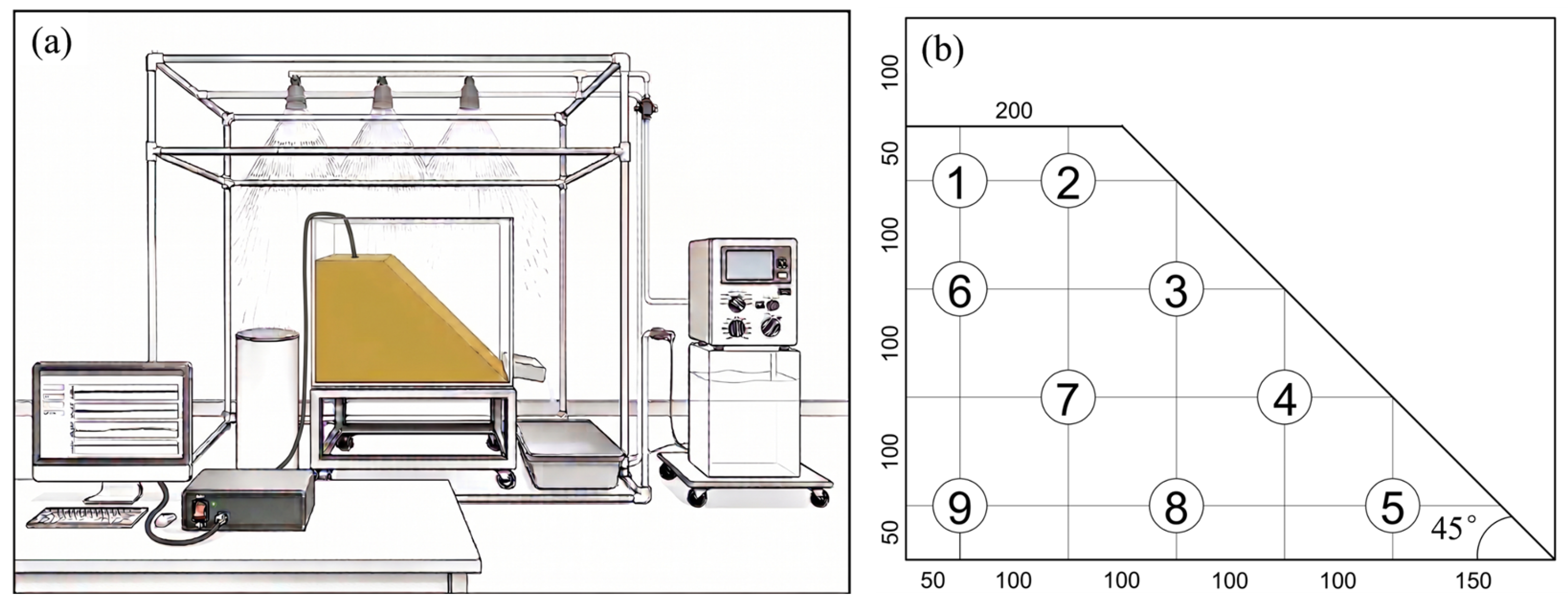
Figure 1a shows the schematic diagram of the rainfall test setup and the sensor locations. The slope model box was a customized acrylic container with internal dimensions of 600 mm × 350 mm × 500 mm, corresponding to length × width × height.
Figure 1b shows the arrangement of water content sensors inside the slope. A total of nine water content monitoring points were installed at different depths within the slope.
The rainfall intensity of 144 mm/h was selected as an extreme rainfall loading condition rather than as a representative rainfall event for all regions. This rainfall intensity is categorized as heavy rain by the “Rainfall Intensity Classification” The purpose was to compare the relative responses of the untreated and combined MICP-SG modified slopes under the same severe rainfall condition. The rainfall test was continued until global instability failure of the slope occurred. In this study, global instability failure was defined as the occurrence of continuous surface erosion accompanied by obvious slope deformation, local collapse, or large-scale soil detachment, after which the original slope profile could no longer be maintained. A time interval of 10 min was used as one observation period. According to the rainfall intensity and effective rainfall area, the theoretical total rainfall amount within each period could be calculated. A diversion plate was installed at the bottom of the model box to guide the mud–water mixture discharged from the slope surface into a collection tray. The collection device was replaced every 10 min, and the total mass of the collected mud–water mixture, , was measured.
The collected mud–water mixture was allowed to stand for sedimentation. After removing the supernatant, the sediment was oven-dried and weighed to obtain the soil loss,
, within the corresponding period. The total runoff amount,
, for each period was then calculated based on the mass difference. The rainfall infiltration rate was calculated using the following equations:
where
is the rainfall intensity,
is the effective rainfall area, and
is the rainfall duration.
3. Results
3.1. Calcium Source Screening Results
To determine a suitable calcium source for loess modified by combined MICP-SG treatment, calcium acetate and calcium chloride were selected as calcium sources for mineralization treatment. The modification performance under different calcium source conditions was evaluated through permeability coefficient tests.
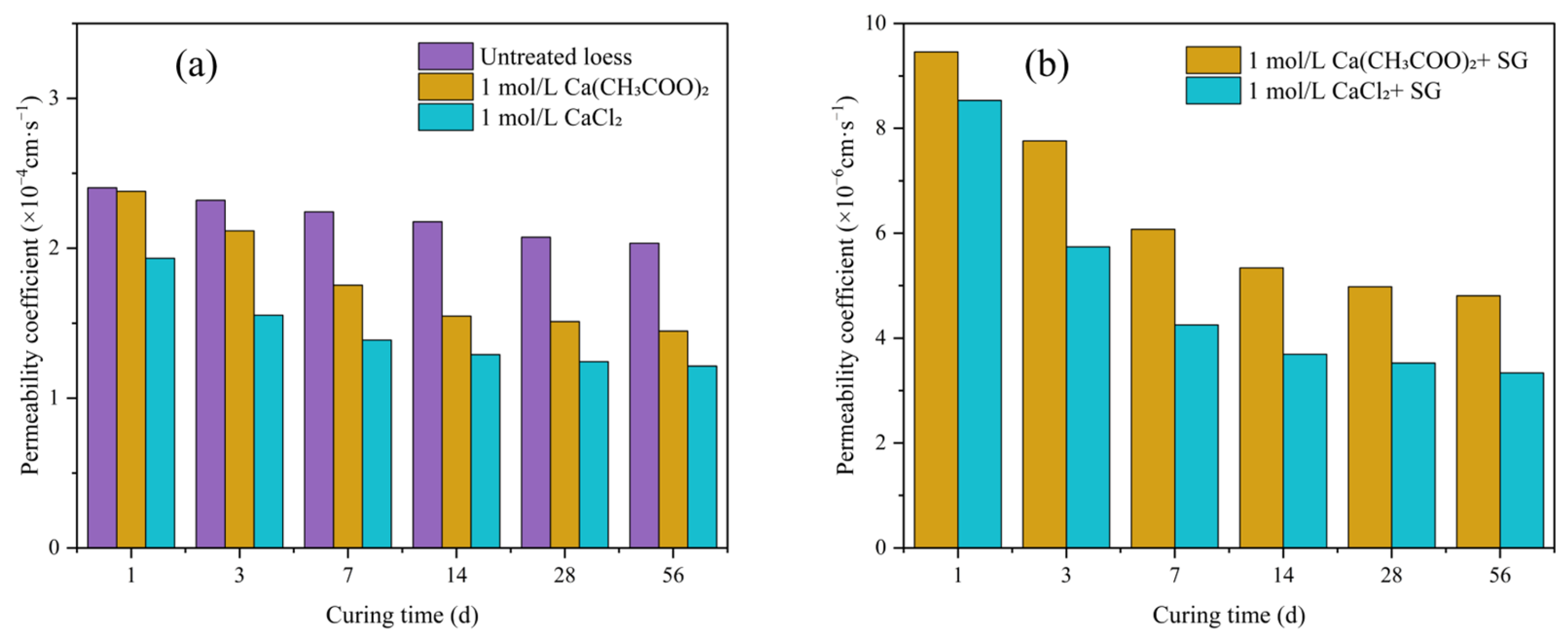
Figure 2 shows the variation in the permeability coefficient of loess specimens with curing time under different calcium source conditions.
Figure 2a presents the results of the MICP-only modified group, while
Figure 2b presents those of the combined MICP-SG modified group.
As shown in
Figure 2a, under MICP-only modification, the permeability coefficient of loess specimens treated with both calcium sources gradually decreased with increasing curing time. Overall, the permeability coefficient decreased rapidly at the early curing stage and then tended to stabilize at the later stage. Taking the 1 mol/L calcium chloride group as an example, after curing for 1, 3, and 7 d, the permeability coefficient decreased by 19.6%, 33.0%, and 38.2%, respectively, compared with the initial value of untreated loess, which was 2.4 × 10
−4 cm·s
−1. After curing for 14 d and beyond, the permeability coefficient continued to decrease, but the reduction rate slowed and stabilized at approximately 40%. After 56 d of curing, the permeability coefficients of the 1 mol/L calcium chloride and calcium acetate groups were 1.21 × 10
−4 cm·s
−1 and 1.45 × 10
−4 cm·s
−1, respectively, representing reductions of 40.4% and 28.6% compared with 2.03 × 10
−4 cm·s
−1 for the untreated loess specimens at the same curing age.
As shown in
Figure 2b, under combined MICP-SG modification, the permeability coefficient of loess specimens also gradually decreased with increasing curing time, showing a similar trend of rapid reduction at the early curing stage followed by stabilization at the later stage. Taking the 1 mol/L calcium chloride group as an example, during the curing period from 1 to 7 d, the permeability coefficient decreased from 8.53 × 10
−6 cm·s
−1 to 4.25 × 10
−6 cm·s
−1, corresponding to a reduction of 50.18%. When the curing time was extended to 56 d, the permeability coefficient further decreased by only 20.71% compared with that at 7 d, indicating that the improvement in impermeability under combined modification mainly occurred during the early curing stage. Compared with untreated loess, the permeability coefficient of the combined modified specimens decreased by up to 98.61%, corresponding to a reduction of approximately two orders of magnitude. This indicates that the combined action of MICP and SG can markedly enhance the permeability-reducing effect of loess.
Overall, the variation in the permeability coefficient under different calcium source conditions indicates that the calcium chloride group exhibited a better permeability-reducing effect under both MICP-only modification and combined MICP-SG modification. Considering that the subsequent tests aimed to further compare the modification performance of combined modified loess under different cementation solution concentrations and curing times, calcium chloride was selected as the calcium source for the following combined modification tests.
3.2. Permeability Coefficient
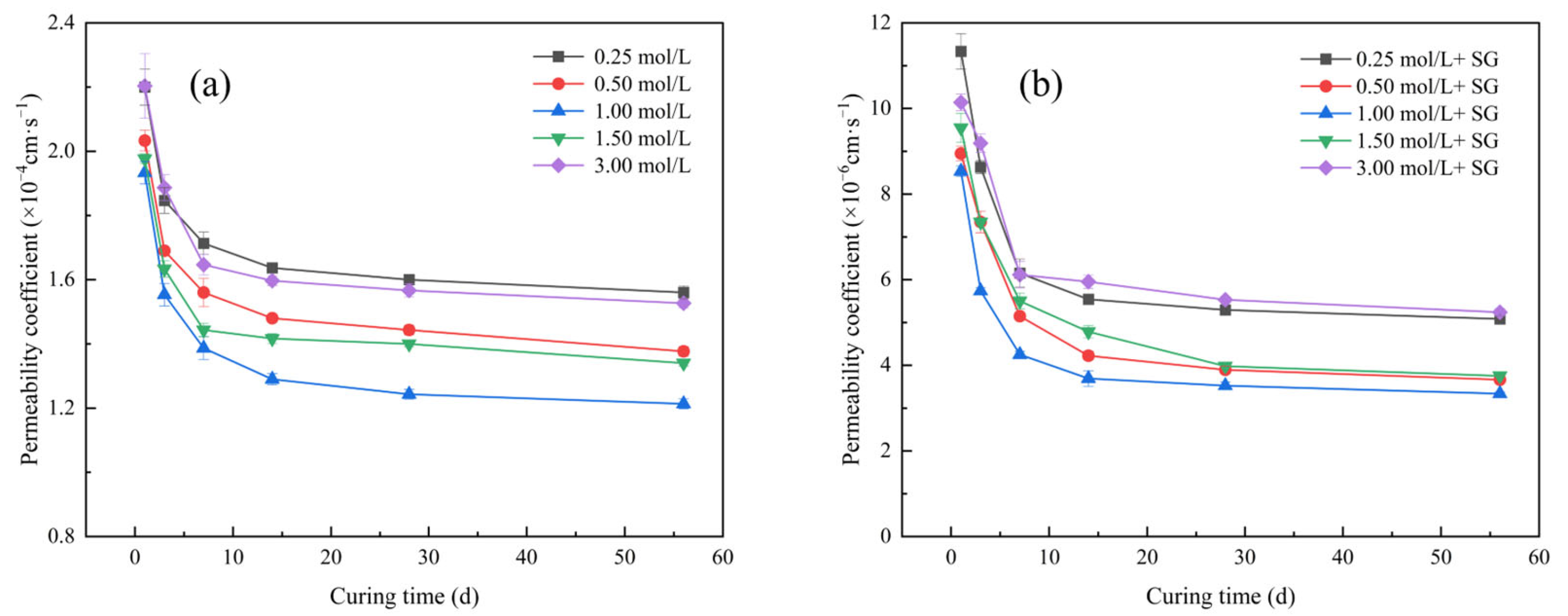
As shown in
Figure 3a,b, under both MICP-only treatment and combined MICP-SG treatment, the permeability coefficient of loess specimens gradually decreased with increasing curing time. Overall, the permeability coefficient decreased rapidly at the early curing stage and then tended to change more slowly at the later stage. Under the combined treatment condition, the cementation solution concentration had a significant influence on the impermeability improvement. When the concentration increased from 0.25 mol/L to 1.0 mol/L, the permeability coefficient continuously decreased. However, when the concentration further increased to 1.5 mol/L and 3.0 mol/L, the permeability coefficient increased again.
Taking the combined treatment specimens cured for 14 d as an example, the permeability coefficient decreased from 5.54 × 10⁻⁶ cm·s−1 to 3.69 × 10⁻⁶ cm·s−1 and then increased to 5.95 × 10⁻⁶ cm·s−1, indicating that the 1.0 mol/L group exhibited the best impermeability within the tested concentration range. In addition, the permeability coefficient of each group decreased most significantly within the first 7 d of curing. Although it continued to decrease after 7 d, the reduction became much smaller, suggesting that further prolonging the curing time had a limited effect on improving impermeability.
Compared with the MICP-only treatment, the combined treatment specimens showed lower permeability coefficients under the same cementation solution concentration and curing time, indicating that the introduction of SG further enhanced the impermeability of loess. For example, in the 1.5 mol/L group, the permeability coefficients of the combined treatment specimens cured for 1, 7, and 28 d were 9.55 × 10⁻⁶, 5.50 × 10⁻⁶, and 3.98 × 10⁻⁶ cm·s−1, respectively, which were generally lower than those of the corresponding MICP-only treatment group.
3.3. Surface Hardness
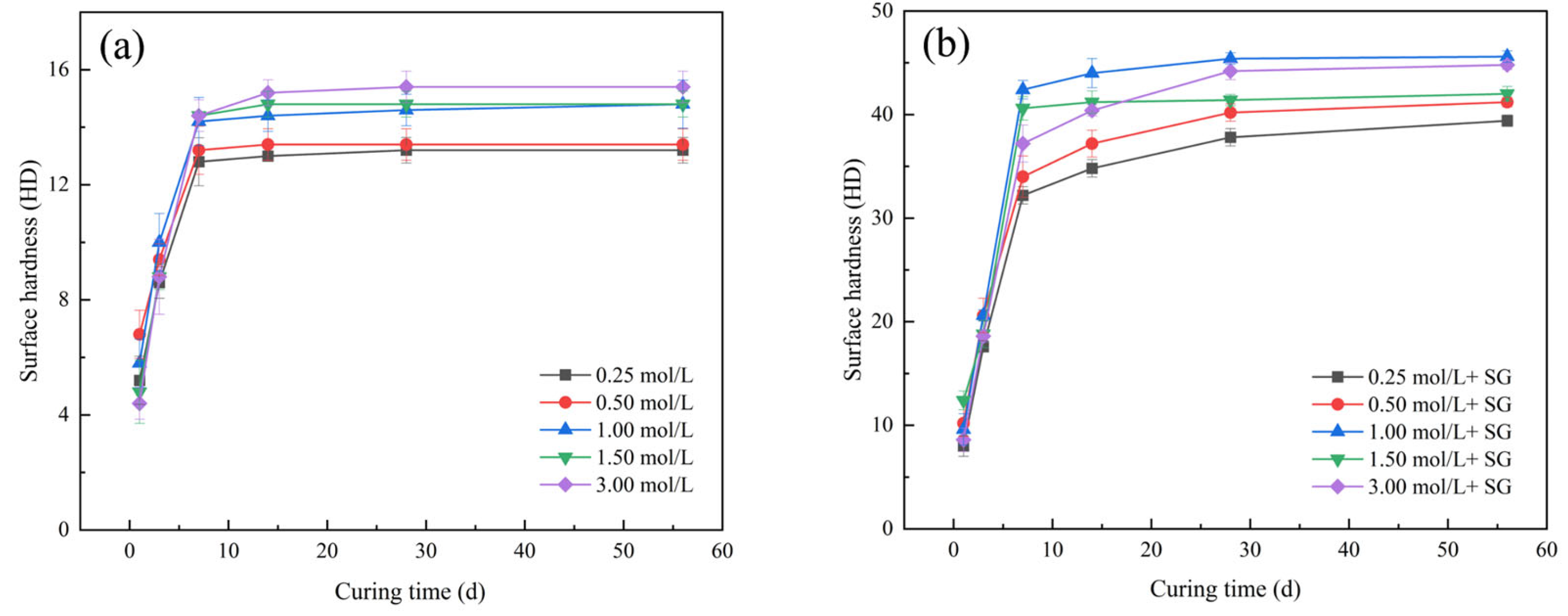
As shown in
Figure 4a,b, under both MICP-only treatment and combined MICP-SG treatment, the surface hardness of the loess specimens gradually increased with increasing curing time, indicating that curing time had a significant influence on the mechanical stability of the specimen surface. Taking the 1.5 mol/L group as an example, the surface hardness of the MICP-only treated specimens was 4.8 HD and 14.8 HD after curing for 1 d and 14 d, respectively, whereas that of the combined treatment specimens reached 12.4 HD and 41.2 HD, respectively, showing a higher degree of surface hardening.
In terms of the concentration effect, the surface hardness of the combined treatment specimens continuously increased as the cementation solution concentration increased from 0.25 mol/L to 1.0 mol/L. However, when the concentration further increased to 1.5 mol/L and 3.0 mol/L, the increase in surface hardness became less pronounced. Taking the specimens cured for 14 d as an example, the surface hardness values of the combined treatment group under 0.25, 0.5, 1.0, 1.5, and 3.0 mol/L were 34.8, 37.2, 44.0, 41.2, and 40.4 HD, respectively. This indicates that the 1.0 mol/L group exhibited the best surface hardening effect within the tested concentration range.
Compared with the MICP-only treatment, the combined treatment specimens exhibited higher surface hardness under the same cementation solution concentration and curing time, indicating that the introduction of SG further enhanced the surface reinforcement effect of loess. Taking the specimens cured for 14 d as an example, the surface hardness values of the MICP-only group under 0.25, 0.5, 1.0, 1.5, and 3.0 mol/L were 13.0, 13.4, 14.4, 14.8, and 15.2 HD, respectively. The corresponding values of the combined treatment group increased to 34.8, 37.2, 44.0, 41.2, and 40.4 HD, representing increases of 167.69%, 177.61%, 205.56%, 178.38%, and 165.79%, respectively.
Based on the permeability coefficient and surface hardness results, the loess specimens treated with a cementation solution concentration of 1.0 mol/L exhibited both favorable impermeability and relatively high surface hardness. In terms of curing time, the reduction in permeability coefficient became much smaller after 7 d, while the surface hardness tended to stabilize after 14 d. Considering the requirements of the indoor rainfall model test for both impermeability and surface stability, as well as the efficiency of the modification process, a cementation solution concentration of 1.0 mol/L and a curing time of 7 d were selected for the subsequent tests.
3.4. Rainfall Erosion Model Test
3.4.1. Slope Morphological Evolution and Erosion Response
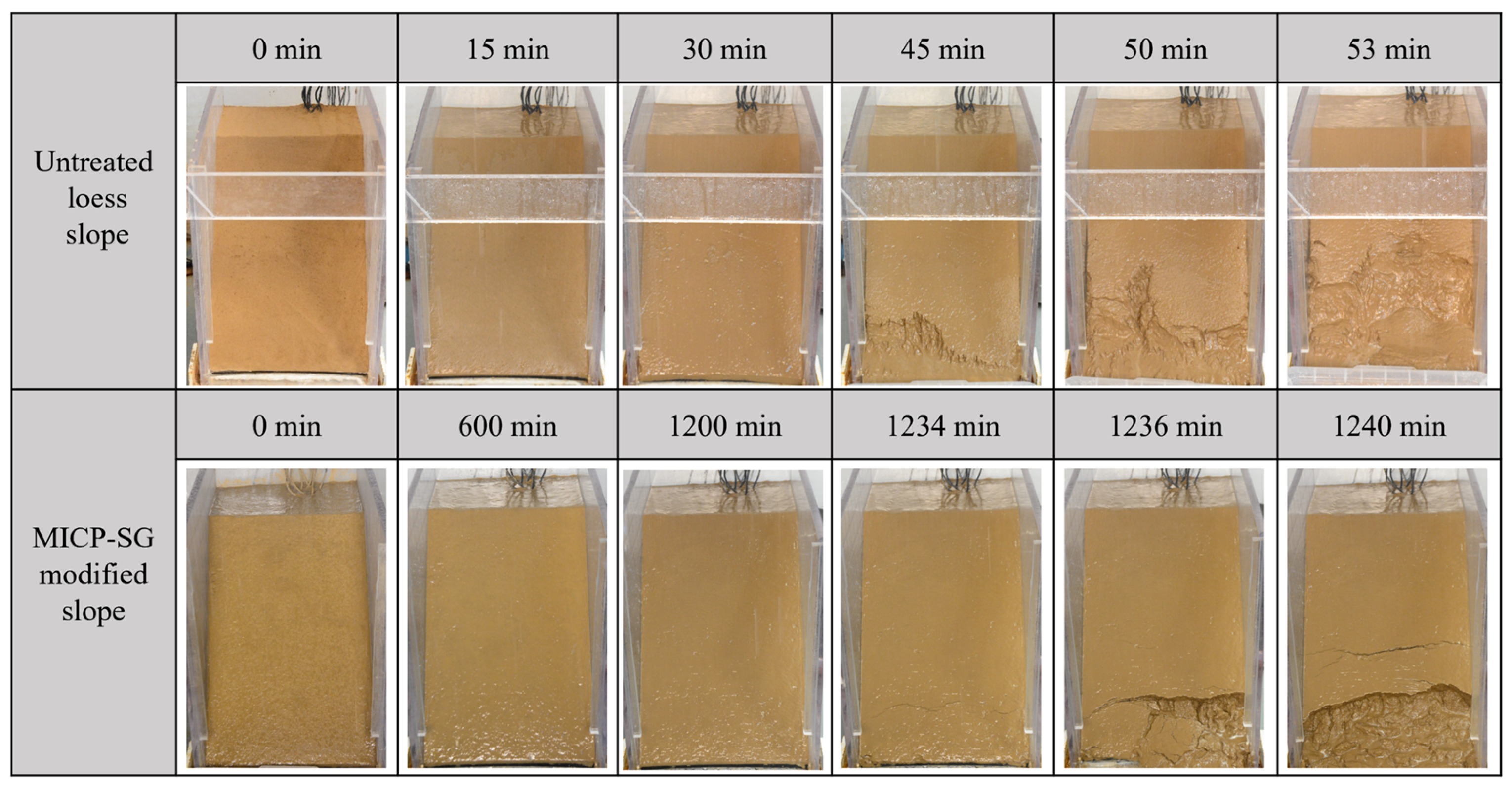
Figure 5 shows the morphological evolution of the untreated loess slope and the combined MICP-SG modified slope under heavy rainfall. The untreated loess slope exhibited obvious surface scouring at the initial stage of rainfall. After 45 min of rainfall, surface erosion rapidly developed into rill erosion and local slumping, resulting in a rapid loss of slope surface integrity. In contrast, the overall morphology of the combined modified slope remained relatively stable within 1200 min of rainfall. Tensile cracks at the slope toe, local spalling, and overall sliding instability occurred only at the later stage. These results indicate that the combined MICP-SG modification significantly delayed the rainfall-induced slope failure process and changed the instability evolution pattern of the slope.
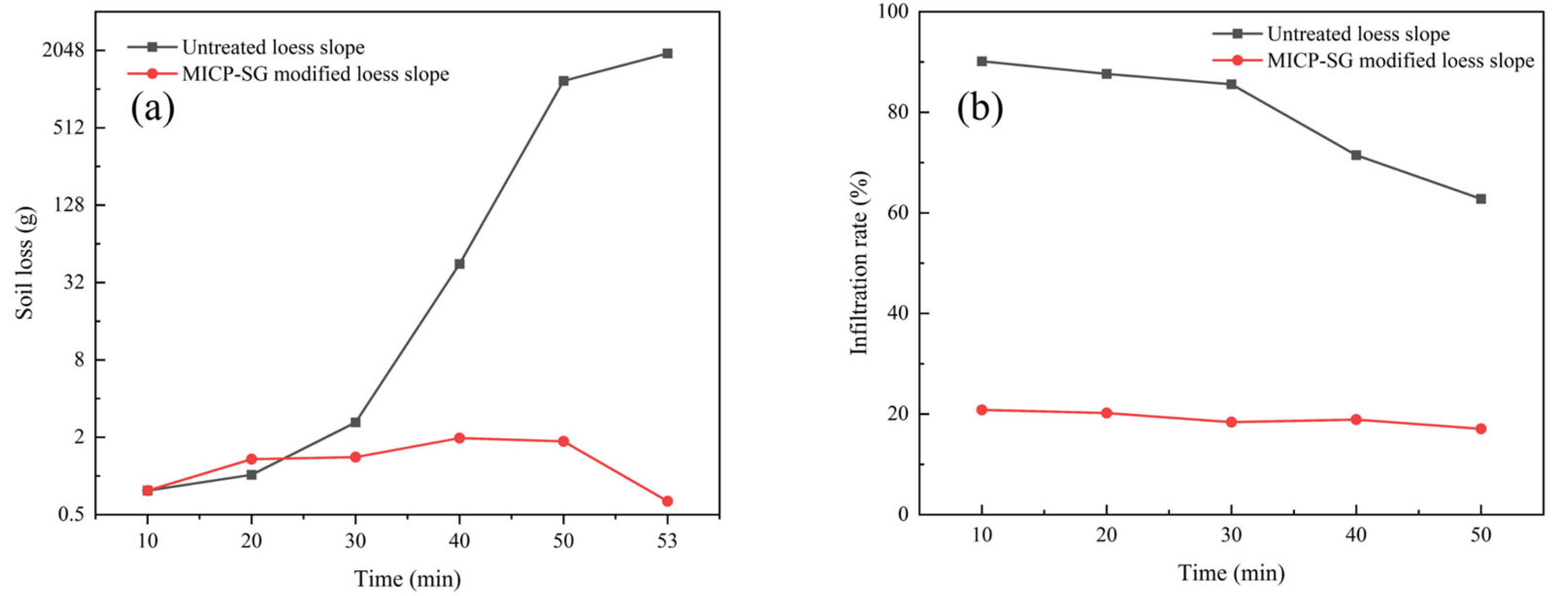
Figure 6a further quantifies the difference in erosion responses between the two slopes. For the untreated loess slope, soil loss increased rapidly during rainfall and entered an accelerated erosion stage after the slope surface approached saturation. In contrast, the soil loss of the combined modified slope remained approximately 0.2 g per 10 min observation interval during the first 180 min of rainfall, indicating higher resistance to runoff-induced erosion. Combined with the observations in
Figure 5, the failure of the untreated loess slope was mainly characterized by a rapid evolution process of surface scouring, rill erosion, and slumping. By contrast, the combined modified slope exhibited a significantly delayed slope toe crack-controlled instability mode. This suggests that the combined MICP-SG modification effectively improved the resistance of the slope surface to raindrop splash and runoff scouring.
Figure 6b shows that the untreated loess slope had a high infiltration capacity at the initial stage of rainfall. The average infiltration rate reached 90.15% within the first 10 min of rainfall and remained above 80% during 10–30 min, before gradually decreasing thereafter. In contrast, the infiltration rate of the combined MICP-SG modified slope remained at approximately 17–21% during the first 180 min of rainfall, with relatively small fluctuations. This result indicates that the combined MICP-SG modification clearly inhibited the rapid input of rainfall water into the slope, which is an important reason for its long-term maintenance of slope stability.
3.4.2. Internal Moisture Response Characteristics
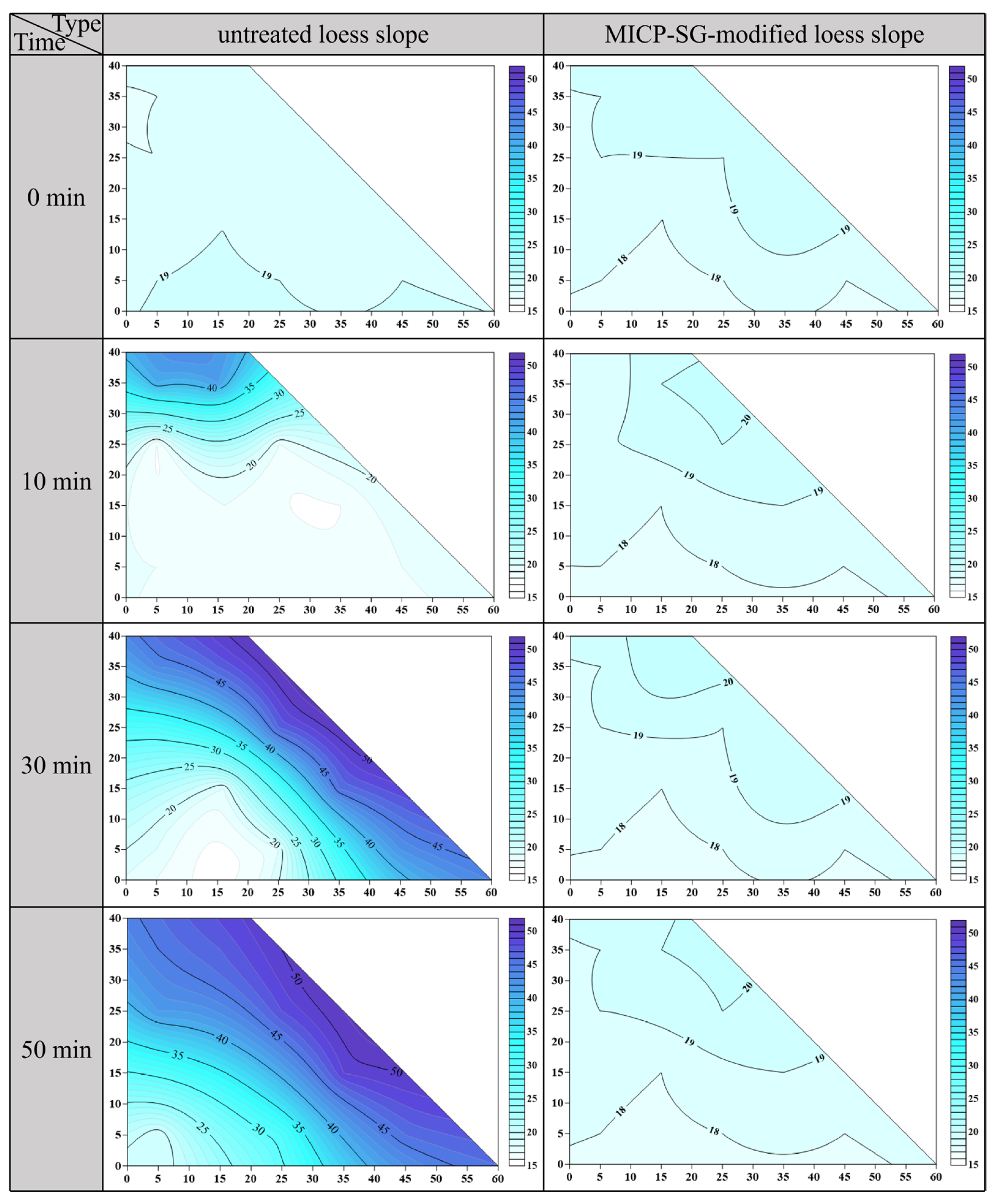
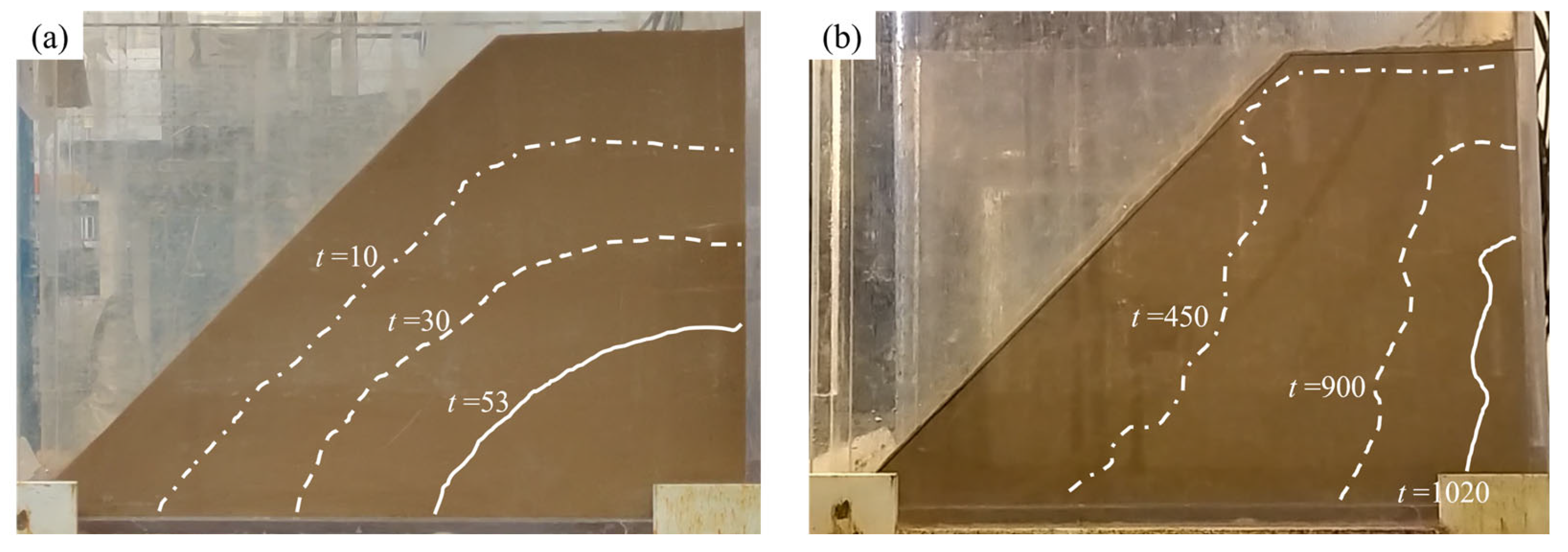
Figure 7 further indicates significant differences in the internal moisture migration processes between the two slopes. As shown in
Figure 7a, the wetting front in the untreated loess slope advanced rapidly and relatively uniformly, extending toward the middle and lower parts of the slope within a short period. In contrast,
Figure 7b shows that the wetting front migration in the combined MICP-SG-modified slope was clearly delayed and exhibited stronger spatial non-uniformity.
Figure 8 shows that the water content distribution contours of the untreated loess slope quickly developed and expanded into a continuous high-water-content zone, indicating that overall wetting occurred within the slope over a short period. However, under the same rainfall duration, the combined modified slope exhibited a smaller overall increase in water content. The high-water-content zones were mainly confined to the slope surface and local shallow regions, and no continuous high-value zone similar to that in the untreated loess slope was formed. Based on the rainfall response of the sensors, the sensors at different locations inside the untreated loess slope began to respond within only several minutes to tens of minutes after rainfall started. However, the response time of the sensors at the corresponding locations inside the combined MICP-SG-modified loess slope was substantially delayed, with the maximum delay reaching 900 min.
These results indicate that the combined MICP-SG modification not only reduced the overall infiltration level of the slope but also significantly delayed wetting front migration and internal wetting, thereby improving the structural stability of the slope under sustained heavy rainfall.
4. Discussion
This study shows that combined MICP-SG modification performed better than MICP-only treatment in reducing the permeability coefficient, increasing surface hardness, and enhancing the erosion resistance of loess slopes. This indicates that the introduction of SG did not weaken the microbial mineralization and reinforcement effect; instead, it further improved the anti-seepage and erosion resistance of loess. The permeability reduction can be further explained from the perspective of pore structure. MICP-induced calcium carbonate precipitation may fill interparticle pores and cement loess particles, while hydrated SG may coat particles, form polymer bridges, and fill local pores. These effects could reduce the effective pore space and pore connectivity, leading to the lower permeability coefficient observed in the combined MICP-SG treated specimens. Nevertheless, direct pore structure characterization was not conducted in this study, and further CT or SEM analyses are needed for quantitative verification.
Based on the above results and the previously published SG-only study, the advantages of the combined MICP-SG treatment may be attributed to two complementary contributions. On the one hand, calcium carbonate precipitation induced by MICP contributes to pore filling and interparticle cementation [
30,
31]. On the other hand, SG, as a natural polymer material, helps improve the integrity and stability of the surface soil, enabling the shallow layer to maintain higher resistance under rainfall scouring and continuous wetting [
28]. Previous studies have shown that the introduction of polymers or plant-derived materials into loess can further enhance the surface reinforcement and erosion resistance effects of MICP. Therefore, the advantages of combined modification observed in this study are supported by the existing literature [
32,
33].
The parameter optimization results further indicate that the modification performance was jointly controlled by the calcium source type, cementation solution concentration, and curing time. Within the screening framework adopted in this study, the calcium chloride group exhibited better impermeability and was therefore selected as the calcium source for subsequent combined modification tests [
34]. Meanwhile, the cementation solution concentration showed an obvious suitable range. The combined modification exhibited the best overall performance at 1.0 mol/L, whereas further increasing the concentration did not lead to additional improvement [
17]. At higher cementation solution concentrations, the improvement effect may be limited or even weakened by potential inhibition effects. Excessive urea and calcium salt concentrations can increase the ionic strength and osmotic stress of the solution, which may adversely affect bacterial activity and urease-catalyzed hydrolysis. In addition, rapid or excessive precipitation may reduce the uniformity of calcium carbonate distribution and hinder the effective transport of reactants within the shallow treated layer. These effects may explain why the 1.5 mol/L and 3.0 mol/L groups did not show further improvement compared with the 1.0 mol/L group. Similar findings have also been reported in previous studies, in which a concentration of approximately 1.0 mol/L corresponded to favorable hydraulic or mechanical improvement [
35,
36]. In terms of curing time, the permeability coefficient decreased rapidly at the early curing stage, and the reduction became much smaller after 7 d. Although the surface hardness continued to increase at the later curing stage, the additional improvement obtained by further prolonging the curing time was markedly reduced.
Compared with conventional inorganic stabilizers such as cement and lime, the MICP-SG combined treatment may have lower ecological disturbance and potential suitability for shallow slope surface treatment. Compared with MICP-only treatment, SG can improve surface integrity through film formation, particle bridging, and pore blocking, thereby compensating for the limited surface erosion resistance of MICP-only treatment. Compared with SG-only treatment, MICP-induced CaCO3 precipitation can further provide mineral cementation and pore filling. Therefore, the advantage of the MICP-SG combined system may result from the coupled effects of organic bonding and inorganic mineralization.
The rainfall model test results demonstrate that the advantages of combined modification were reflected not only in the improvement of specimen-scale indicators but also in the slope-scale response. Specifically, the combined modified slope showed a longer stable stage, a lower infiltration rate, smaller soil loss, and significantly delayed wetting front migration and internal water content response. This suggests that combined modification did not merely improve a single local property, but simultaneously affected the erosion resistance of the slope surface and the internal moisture migration process, thereby producing a more stable overall response at the slope scale. Compared with the untreated loess slope, the failure of the combined modified slope was markedly delayed, and the failure mode changed from rapid surface scouring rill erosion evolution to a later-stage crack-controlled slope toe instability mode. This indicates that the combined modification changed not only the degree of failure but, more importantly, the instability path of the slope under sustained heavy rainfall. Previous studies on loess slopes have similarly indicated that MICP and its composite modification techniques can improve slope stability by enhancing surface erosion resistance, reducing infiltration, and delaying the wetting process [
37,
38]. The results of this study are generally consistent with this understanding.
Nevertheless, the combined modified slope eventually experienced instability under extreme and sustained rainfall, indicating that this method should be regarded as an enhancement measure for improving shallow erosion resistance and anti-infiltration capacity and delaying slope failure, rather than an absolute protection method capable of completely preventing slope failure under all conditions.
From an engineering perspective, this method has potential applications in shallow slope protection, rainfall erosion control, and ecological slope protection in loess areas. However, it should also be noted that this study was conducted using only one type of loess, a single slope model scale, and one extreme rainfall condition; therefore, the obtained parameters are clearly condition-dependent. In addition, the durability of the combined modified layer under drying–wetting cycles, freeze–thaw action, and long-term natural exposure has not yet been verified. Future studies should further consider different loess types, slope ratios, rainfall intensities, and field tests to systematically evaluate the applicability and long-term engineering feasibility of this method.