Article

Ecotoxicological Assessment of Advanced Wastewater Treatments Using Aquatic Model Organisms

by
Ana Rita Alves
1,
Ângela Guedes
1,
Maria Luz Maia
1,
Piedade Barros
2,
Inês Baptista
3,
Sónia A. Figueiredo
1,*,
Valentina Fernandes Domingues
1,* and
Cristina Delerue-Matos
1
1
REQUIMTE/LAQV, ISEP, Polytechnic of Porto, Rua Dr. António Bernardino de Almeida 431, 4249-015 Porto, Portugal
2
REQUIMTE/LAQV, ESS, Polytechnic of Porto, Rua Dr. António Bernardino de Almeida 400, 4200-072 Porto, Portugal
3
Wedotech Lda, Rua do Seixal 108, 4000-521 Porto, Portugal
*
Authors to whom correspondence should be addressed.
Water 2026, 18(13), 1534; https://doi.org/10.3390/w18131534 (registering DOI)
Submission received: 22 May 2026 / Revised: 17 June 2026 / Accepted: 18 June 2026 / Published: 23 June 2026

Abstract

The Directive (EU) 2024/3019 on urban wastewater treatment (WWT) imposes new, stringent targets for nutrients and pharmaceutical compounds, thereby requiring the implementation of tertiary and quaternary treatments and promoting water reuse. This study evaluated the ecotoxicological impacts of advanced wastewater treatments applied to the effluent from a WWTP after secondary treatment: ultrafiltration (UF), ultraviolet radiation (UV), ozonation (OZ), and non-thermal plasma (NTP). Ecotoxicity assays were conducted using Raphidocelis subcapitata (chronic tests) and Daphnia magna (acute and chronic tests), representing primary producers and consumers, respectively. For R. subcapitata, no significant growth inhibition was observed for most treatments, while growth was promoted due to the presence of nutrients, except for OZ, which produced inhibitory effects. In D. magna, acute toxicity was low for most treatments, except for OZ, which showed significant toxicity. An additional chronic exposure experiment was conducted for the NTP-treated effluent, inducing adverse effects on growth and reproduction of D. magna; in contrast, R. subcapitata showed no effects, demonstrating species-specific sensitivity and trophic-level-dependent responses. These findings demonstrate that although advanced oxidation technologies enhance water quality, they may cause sublethal and lethal ecotoxicity effects, highlighting the importance of ecotoxicological evaluations in risk assessment of quaternary treatments, framed by Directive (EU) 2024/3019.

1. Introduction

The increase in industrialisation and urbanisation has led to the widespread occurrence of emerging contaminants (ECs) in aquatic environments, such as pharmaceutical compounds, heavy metals, and persistent organic compounds, which are not fully removed by conventional wastewater treatment processes [1]. These contaminants are a concern due to their persistence, bioaccumulation, and toxicity, being found in water, air, and soil [2]. In Europe, the presence of ECs in urban wastewater typically occurs at concentrations ranging from ng/L to µg/L, with compounds such as carbamazepine, diclofenac, sulfamethoxazole, and ciprofloxacin frequently persisting after conventional treatment [3]. ECs require specific treatments beyond the conventional processes used in wastewater treatment plants (WWTPs) before they can be safely released into the environment [4]. On the other hand, discharging wastewater with high levels of nitrogen and phosphorus can lead to eutrophication, making it crucial to remove these nutrients [5]. Eutrophication is one of the major environmental challenges in aquatic systems. Moreover, nutrient enrichment can promote the excessive growth of aquatic organisms, potentially masking adverse ecological effects associated with other environmental stressors [6,7].
The European Union recognised that the main contaminants include nitrogen, phosphorus, organic micropollutants, and microplastics [8]. In line with this, the Urban Wastewater Treatment Directive recast, Directive (EU) 2024/3019 [9], marks a turning point in European wastewater policy, supporting circular economy strategies, climate-neutrality targets, and improved environmental and public health protection. It imposes more stringent targets for the removal of nutrients (nitrogen and phosphorus) by tertiary treatment and organic micropollutants (pharmaceutical compounds) by quaternary treatment, as well as the monitoring of organic micropollutants (e.g., microplastics and PFAS) and health parameters. Urban wastewater treatment plants with 150,000 population equivalent (p.e.) and above represent a significant share of pollutant discharge in the environment; they also represent a cost-effective scale for treatment implementation, as they are the first target of this recent regulation. The Directive (EU) 2024/3019 requires secondary treatment to remove biodegradable organic material for WWTPs with p.e. equal to or above 1000, and tertiary and quaternary treatments are required to remove nutrients and micropollutants, respectively, for WWTPs with p.e. equal to or above 150,000 [9]. Gradually, tertiary and quaternary treatments will also be adopted by smaller WWTPs [9]. The more stringent treatment requirements, the improvement of monitoring actions, and the tracking and reduction of pollution at source will enhance the quality of treated urban wastewater and support water reuse, namely for agricultural irrigation, in accordance with Regulation (EU) 2020/741. According to this regulation, filtration and disinfection are needed to guarantee the desired standards for water quality [10].
Several advanced treatments can be used alone or in combination for disinfection purposes: ultrafiltration (UF), ultraviolet (UV) radiation, and ozonation (OZ) [11,12,13]. UF treatment uses membrane separation technology based on permeability. One of the main advantages of using this treatment is the removal of bacteria, protozoa, viruses, and macromolecules responsible for the colour and turbidity [14]. Due to the high efficiency in solid removal, it is often combined with UV radiation to maximise the effectiveness of disinfection. UV radiation is effective in the inactivation of various microorganisms present in effluents, being the viruses the most resistant to this type of treatment [15]. OZ is an advanced oxidation process that can be used alone or in combination with other agents. It is used both for partial or total oxidation of compounds resistant to conventional treatment processes through the introduction of ozone [16]. OZ is both efficient as a disinfection and oxidising agent, being one of the most widely used and validated options as quaternary treatment. Non-thermal plasma treatment (NTP) is an innovative advanced oxidation process for contaminant degradation that does not require the addition of chemical reagents. Its effectiveness relies on the formation of by-products, which include reactive species, such as H·, O·, and OH· radicals, as well as oxidising species, shock waves, and UV radiation, when plasma interacts with water. This technology has been successfully applied to the degradation of antibiotics, demonstrating its potential as a promising and innovative treatment approach, which supports its inclusion in the present study [17,18,19,20].
The development of new wastewater treatment processes requires ecotoxicity tests to assess their potential effects before environmental discharge, contributing to treatment optimisation.
A previous study [19] detected more than 25 pharmaceutical compounds in the secondary effluent of the studied WWTP, with an average total pharmaceutical concentration of 16.8 μg/L. After sand filtration, different advanced treatments were tested, showing distinct removal efficiencies, following the order OZ > NTP > UF > UV, with an average pharmaceutical compound removal efficiency of 92%, 86%, 29%, and −0.4%, respectively. As expected, UF and UV technologies present low removal efficiencies, as they are not adequate for the removal of pharmaceutical compounds. Ozonation and non-thermal plasma demonstrated high removal efficiencies for carbamazepine, diclofenac, clarithromycin and venlafaxine, confirming their potential as quaternary treatment technologies for urban wastewater [19]. However, reductions in the concentration of conventional parameters and emerging contaminants do not necessarily reflect a reduction in ecotoxicological risk, since these two processes can generate reactive oxygen species [20]. Recent studies have highlighted that ozonation and non-thermal plasma may generate transformation products that contribute to residual ecotoxicity even when contaminants are efficiently removed. Therefore, ecotoxicological assessment remains essential to evaluate the environmental safety of treated effluents and to identify potential risks associated with oxidation by-products [20,21].
Most available studies focus primarily on contaminant removal efficiencies and physicochemical parameters. Ecotoxicological evaluation using organisms from different trophic levels is still lacking for advanced technologies, such as UF, UV, OZ, and the emerging NTP technology. In this context, ecotoxicity assays were performed using standard test organisms of the first two trophic levels of the aquatic food chain: the microalga Raphidocelis subcapitata (primary producer) and Daphnia magna (primary consumer) [22], in effluents from the secondary treatment and after different advanced treatments. Evaluating treated effluents using organisms from different trophic levels has been increasingly recognised as essential for a more realistic assessment of environmental risks. Species such as microalgae and crustaceans may respond differently to the same stimulation, making a multi-species approach particularly relevant [23,24,25]. Diogo et al. [26] demonstrate that this approach is effective for assessing the performance of wastewater treatment systems, allowing the detection of residual toxicity that may be identified through conventional physicochemical analyses [26]. Furthermore, using a variety of bioassays with organisms from different trophic levels is important for understanding environmental risks and for the development of risk mitigation strategies [27].
The main objective of this study was to evaluate the potential environmental impacts of different advanced treatments through ecotoxicological assessment. The ecotoxicity assays were performed following standard guidelines: the 72 h alga growth inhibition test with Raphidocelis subcapitata (chronic test) [28,29,30], the 48 h immobilisation test with Daphnia magna (acute test) [31,32,33], and its 21 days reproduction test (chronic test) [34].

2. Materials and Methods

2.1. Wastewater and Treatment Processes

The wastewater used in the ecotoxicity assays came from a wastewater treatment plant (WWTP) located in northern Portugal, which serves 300,000 p.e. and treats up to 66,700 m3 of wastewater per day. It is considered a representative example of a wastewater treatment plant that will need quaternary treatment in the future, due to its dimension.
Although seasonal variations occur in the raw water, the operation conditions can change according to the needs to guarantee that the treated wastewater meets the legal limits imposed by the legislation. The sampling campaigns of the study occurred in the Winter and Spring periods.
This WWTP has preliminary, primary (grit and fat/oil removal, and primary sedimentation), and secondary (activated sludge process) treatments. A part (10%) of the treated wastewater undergoes sand filtration and disinfection by ultraviolet radiation so that it can be reused internally by the WWTP. The WWTP effluents tested were obtained after secondary treatment, followed by a sand filtration step and then by one of the following advanced treatments: UF, UV, OZ, and NTP [19]. All the pilot-scale installations used for this study were previously subjected to an optimisation of the operational conditions.
The UF treatment consisted of a unit with an industrial scale equipped with 128 submerged UF modules (high-density polyethylene hollow fibre membranes). This unit was fed with WWTP effluent and operated at a continuous flow rate of 9 m3 h−1 [19].
The UV treatment consists of an open-channel UV disinfection unit with low-pressure lamps. The UV disinfection zone has 5 parallel banks, each with 8 low-pressure lamps (UV lamp with unitary emission of 26.7 W and intensity of 190 μW cm−1 at 1 m) [19].
The OZ treatment consists of an ozone generator and a bubble column reactor, whose function is to introduce ozone into the bottom through diffusers to mix it with the effluent. This ozonation unit was operated continuously with an ozone dose of 88 g O3 m−3, a flow rate of 1.2 m3 h−1, and a contact time of 2 min [19].
The NTP pilot unit consisted of a 50 L tank equipped with a dielectric barrier discharge (DBD) plasma generator operating at a frequency of 500 Hz and a power output of 40 W, which is generated in the gaseous phase in the presence of a 20 L min−1 flow of air supplied by an air pump. Through a diffuser hose installed at the bottom of the tank, the ionised gas is bubbled through the wastewater effluent. This pilot unit was operated for 1 h [19].

2.2. Algae Growth Inhibition Test

The ecotoxicity assays (chronic tests) were performed with the microalga Raphidocelis subcapitata (strain 278/4 from the Culture Centre of Algae and Protozoa of the United Kingdom), following standard guidelines [28,29,30]. The preparation, inoculation, and manipulation during the ecotoxicity tests using the microalga were carried out in a laminar flow chamber (Faster, model Two 30, Milan, Italy), and all the materials used were previously sterilised in an autoclave (AJC, Uniclave 88, Sintra, Portugal) at 121 °C for 20 min.
The culture medium used for R. subcapitata was prepared according to OECD Guideline 201 and Commission Regulation (EU) 2016/266 [29,30]. The medium consisted of stock nutrient solutions containing macronutrients, trace elements, and sodium bicarbonate as an inorganic carbon source. Stock solutions were stored at 4 °C until use.
The experimental procedure for these ecotoxicity tests consisted of testing increasing volumes of the tested wastewaters (UF, UV, OZ, and NTP), corresponding to concentrations from 2.5 to 40%, ratio volume by volume (v/v), which represent the range of real environmental dilutions of the treated wastewater in the aquatic environment. Wastewater, culture medium, and 5 mL of the microalga inoculum, corresponding to a total volume of 50 mL, were added to a 250 mL Erlenmeyer flask. For 72 h, continuous agitation at 70 rpm on an orbital shaker (Busen AO-400, Madrid, Spain), constant temperature (22 ± 2 °C) using air conditioning (Haice, Amadora, Portugal), and continuous lighting (illuminance 6400–6500 lux, Phillips, Katowice, Poland; LX-1102 lux meter, Lutron Electronic Enterprise, Taibei, Taiwan) Eprovided by four fluorescent lamps emitting universal white light as defined in Regulation (EU) 2016/266, were ensured [30]. Each assay was performed in quadruplicate. Initially and after 72 h, pH (pH meter Crison, micropH 2002, Barcelona, Spain) and chlorophyll content were measured in each Erlenmeyer flask. The chlorophyll in vivo was used to evaluate the microalgal growth through fluorescence measurement (excitation/emission wavelength of 485/645 nm) as recommended by the USEPA Guideline [28]. The BioTek Synergy HT microplate reader (BioTek® Instruments, Winooski, VT, USA) with the software Gen5 2.0 was used.
An ecotoxicity test was also performed using K2Cr2O7, a reference toxicant, to confirm the sensitivity of the alga R. subcapitata, yielding a 72 h EC50 value of 0.50 mg L−1, within the limits established by Regulation (EU) No 2016/266 of 7 December 2015 (0.20–0.75 mg L−1) [30]. Detailed results of the toxicity test are provided in the Supplementary Material Section S1 (Table S1 and Figure S1).
The following validity criteria had to be met during the tests: the pH variation of the controls during the test should not exceed 1.5 units; Erlenmeyer flasks should be placed in a random location on the orbital shaker, and the position should be changed daily; and the growth inhibition between the replicates should not have a deviation of more than 20% [29].
To evaluate the growth inhibition percentage (I%), which compares the average variation in fluorescence of the control cultures with the average variation in the cultures exposed to the different concentrations of wastewater, the OECD guidelines were followed [29].

2.3. Daphnia Acute Immobilisation Test

A Daphtoxkit F. kit (MicroBiotest, Inc., Ghent, Belgium) was used for acute immobilisation tests according to the procedures recommended by OECD Guideline 202 and ISO Standard 6341. The standard freshwater composition was prepared according to the OECD guideline [31,32]. Standard freshwater was aerated for at least 15 min before use and then used to hatch the dormant eggs and prepare the dilutions. The ephippia were transferred from the vial to the sieve, then rinsed with tap water to remove all traces of storage medium, and transferred to a Petri dish, adding 15 mL of standard freshwater. The Petri dishes were covered and incubated at 20–22 °C for 72 h under continuous illumination.
The tested samples were prepared by dilution with freshwater. To provide nourishment to newborns hatched from the ephippia, a 2 h pre-feeding with Spirulina microalgae suspension was applied before the study.
These crustaceans were exposed to the test substance for 48 h. During this period, it was checked if there were any immobilisations or deaths and other toxic effects. This assay determines the concentrations of the test substance that cause immobilisation in daphnids, allowing the calculation of the 48 h EC50 [33]. Firstly, standard freshwater with concentrated salt solutions was prepared to be used as a medium both for incubation of ephippia and for preparing dilutions of tested wastewaters [35]. The ephippia were hatched 3 days before the start of acute tests in a light- and temperature-controlled incubator (Binder, KBWF 240, New York, NY, USA). Spirulina was used to feed the ephippia. A test plate consisting of 5 columns and 6 rows was used to carry out the tests, with the first cell in each row being used to wash the Daphnia and the remaining cells in the row corresponding to the replicates of each concentration tested. The test plate was filled, with the first row corresponding to the control (10 mL of medium for each cell). The remaining rows contain 10 mL of the test solutions, diluted in medium to increase the K2Cr2O7 concentration in the range 0.32 to 3.2 mg L−1 (0.32, 0.56, 1.0, 1.8, and 3.2 mg L−1). Detailed results of the toxicity test are provided in the Supplementary Material Section S2 (Figure S2).

2.4. Daphnia Chronic Tests

Daphnia magna in laboratory culture and chronic ecotoxicity tests were maintained in M4 culture medium [36] at a temperature of 21 °C, with a 14:8 h (light:dark) photoperiod, and fed daily with Chlorella vulgaris at a concentration of 3 × 10⁵ cells mL−1.
D. magna chronic assays were performed following the guidelines of OECD [34], with adjustments made due to the limited availability of NTP samples. To evaluate the effect of the NTP on Daphnia, two tests were conducted.
The first test, designated as Generation 0 (G0), was initiated using 3rd brood neonates, less than 24 h old, from females that were kept individually in M4 media, fed daily with Chlorella until the release of the 3rd posture. These 3rd-brood neonates were placed in either 800 mL of M4 medium or a solution of M4 medium and NTP wastewater effluent at a 25:75 ratio. They were fed daily with 3 × 10⁵ cells mL−1 of C. vulgaris, and the medium was renewed three times a week.
The second test, Generation 1 (G1), was performed using neonates from the 2nd brood of the G0 females, which were collected and transferred to 80 mL of M4 medium or NTP solution until the release of the 3rd brood. Five individuals were placed per 80 mL of NTP solution and control (CTR) (M4 medium), with three replicates per treatment.
Survival and reproduction were monitored daily, and the number of live and dead offspring released was recorded.
D. magna growth was calculated from Daphnia body size that was determined using a linear regression equation relating the length of the 1st exopodite of the 2nd antenna and the body length, previously determined as follows:
B o d y   l e n g t h =   0.48 + 10.9   × e x o p o d i t e   l e n g t h ( r 2 = 0.99 )
In this equation, body length refers to the total body length of D. magna, while exopodite length corresponds to the measured length of the first exopodite of the second antenna. Measurements were performed using a Leica DM750 microscope (Wetzlar, Germany) and Leica LAS EZ software version 3.1.

2.5. Statistical Analysis

For the R. subcapitata assays, the graphics with the percentage of growth inhibition versus the logarithm of the concentration tested were represented. In cases where inhibition was observed, the effective concentrations that cause 50%, 20%, and 10% average growth inhibition compared to the average growth of the control (EC50, EC20, EC10, respectively) were estimated by linear interpolation, following the statistical procedures recommended by the OECD 201 guideline [29].
For the D. magna assays, GraphPad Prism software version 6.01 (GraphPad Software, LLC, La Jolla, CA, USA) was used to analyse the acute toxicity data and estimate the EC10, EC20, and EC50 values. These parameters were determined by fitting a nonlinear concentration–response model to the experimental data using nonlinear regression analysis, following the statistical procedures recommended by the OECD 211 guideline [34]. Corresponding 95% confidence intervals were also calculated.

3. Results and Discussion

The wastewater from the secondary treatment was briefly characterised considering the conventional parameters, such as total nitrogen, total phosphorus, conductivity, chemical oxygen demand (COD), and total suspended solids (TSS), although only the last ones (TSS and COD) are included in the discharge licence of the WWTP. For a better understanding of the influence of these parameters on the results of the ecotoxicity tests, the characterisation results are provided in Table 1 and compared with emission limit values for the discharge of effluent from WWTP for more than 100,000 equivalent inhabitants, defined by the European Directive 2024/3019 [9].
This study was conducted within the same research framework reported in [19], in which the performance of advanced treatment technologies was discussed in relation to the physicochemical parameters and removal efficiencies of pharmaceutical compounds. To support the interpretation of the ecotoxicological results, the removal efficiency obtained for the physicochemical parameters and the removal rates of the priority pharmaceutical compounds listed in Category 1 of Directive (EU) 2024/3019 [9] are included in the Supplementary Material Section S3 (Table S2 and Figure S3).
The results of the ecotoxicity tests for the advanced treatments performed will be presented in the following sections: the 72 h alga growth inhibition test with R. subcapitata (chronic test) [28,29,30], the 48 h immobilisation test with D. magna (acute test) [31,32,33] and its 21-day reproduction test (chronic test) [34].

3.1. Algae Growth Inhibition Test

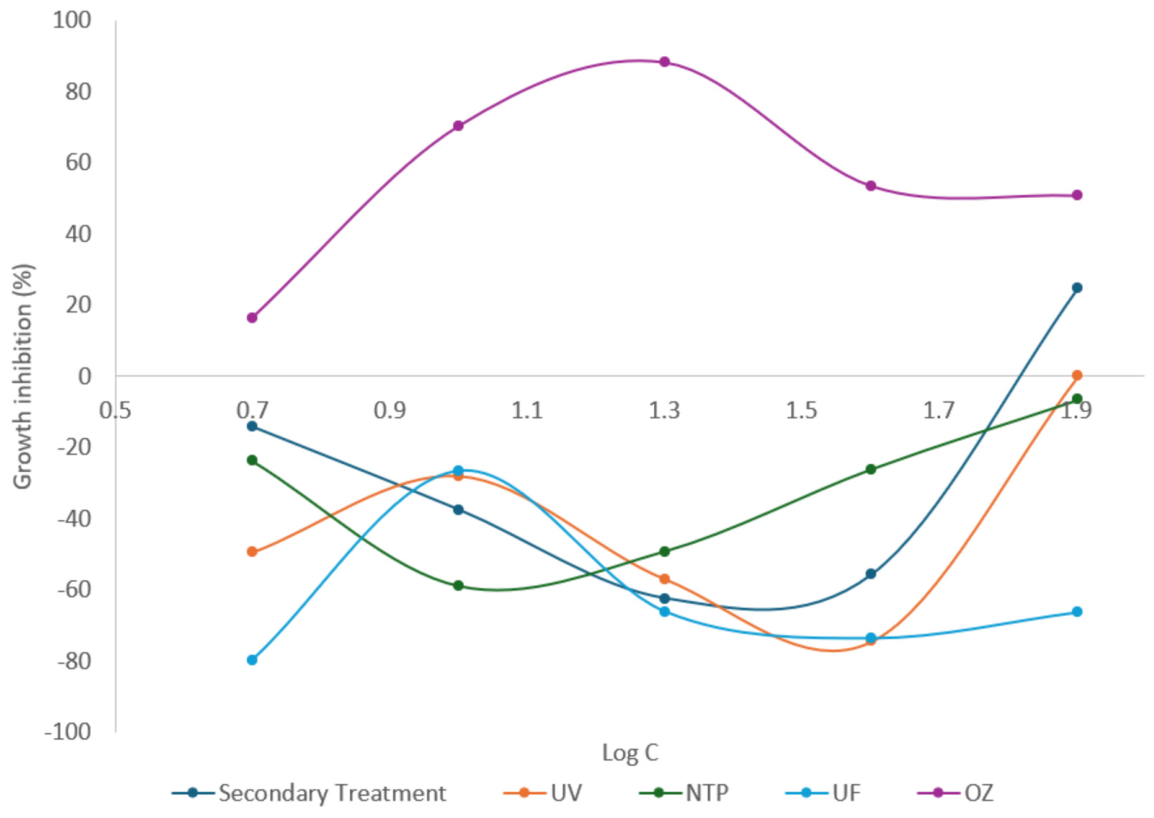
The results of the ecotoxicity tests with the microalga R. subcapitata are presented in Table 2 and Figure 1. Overall, the different treatments induced distinct responses depending on the effluent type and concentration.
The high nutrient concentrations (nitrogen and phosphorus) (Table 1) resulted in enhanced microalgae growth of the wastewater submitted to secondary treatment. Excessive nutrient inputs can promote rapid increases in microalgal biomass, potentially leading to ecological imbalance and reduced water quality [7], being one of the focuses of the Directive (EU) 2024/3019 [9]. Therefore, the results obtained suggest that, although acute toxicity was not observed for this organism, the observed effects suggest a significant eutrophication potential.
For the highest concentration tested (40% v/v), which is above the concentration that could be reached in a real scenario, the secondary treatment presented a growth inhibition of 24.8%. This low inhibition can be explained by the presence of turbidity (associated with total suspended solids) in the solution, which reduces light penetration and consequently decreases the photosynthetic efficiency, thereby limiting microalgal development [37,38]. In contrast, this effect was not observed in UF, NTP and UV, since they were preceded by sand filtration, which removed the suspended solids.
Among the advanced treatments, OZ showed a clearly different behaviour. A strong growth inhibition was observed even at low to intermediate concentrations, with values reaching up to 88% at 10% of concentration. OZ showed a consistently induced level of biological stress compared to the other advanced treatments (UF, NTP, and UV). These results suggest that the ecotoxicological impact on R. subcapitata may be related to the high oxidative capacity of ozone and the possible formation of reactive by-products, as previously reported [39,40]. For instance, Zilberman et al. [40] revealed that six parent compounds were only partially degraded, resulting in the formation of 25 new intermediate products that are persistent, stable, and toxic [40].
Therefore, ecotoxicological parameters (Table 3) were calculated only for the secondary treatment and ozonation.
The ecotoxicological parameters demonstrated that the secondary treatment showed relatively high EC10 and EC20 values (35.2%, 38.4%, respectively), higher than the expected concentrations in a real scenario, indicating low toxicity, as these values are correlated, respectively, with the non-observed and the lowest observed effect concentrations. In contrast, ozonation presented much lower values (EC10 = 4.6%, EC20 = 5.2%, and EC50 = 7.7%), demonstrating a significantly higher sensitivity of the microalgae to this treatment. This information raises concern, as 7.7% (v/v) could, in some cases, represent a real proportion between the volumes of wastewater discharged and the receiving water bodies that would cause a 50% inhibition and therefore a hazardous impact on the aquatic ecosystem. This result is lower than those reported in the available studies on ozonation-treated wastewaters [41,42], suggesting a relatively high residual toxicity in the present case. However, comparison among studies is challenging because ecotoxicity outcomes depend strongly on wastewater characteristics, ozonation conditions, and the bioassays employed. This reinforces the concern that ozone dose conditions and wastewater composition can drive substantial variability in ecotoxicity.
The results suggest that, although nutrient-rich effluents may stimulate microalgal growth and potentially mask inhibitory effects, ozonation stands out as the most critical treatment among those evaluated. Therefore, while UV, UF, and NTP treatments appear to be environmentally more suitable under the tested conditions, ozonation may require further optimisation, namely a stabilisation of the reactive species before wastewater discharge, to mitigate its adverse biological impacts.

3.2. Daphnia Acute Immobilisation Test

Five effluents were tested: secondary-treated wastewater and effluents subjected to quaternary treatments (UV, UF, NTP, OZ). No significant mortality was observed in the secondary-treated effluent, preventing the calculation of EC50 values. Similarly, the UV and NTP treatments resulted in low mortality, indicating negligible acute toxicity under the tested conditions.
It was observed that the mortality of Daphnia was not significant in the secondary treatment, and therefore, it was not possible to calculate EC50. Regarding the UV and NTP treatments, a reduced mortality was observed.
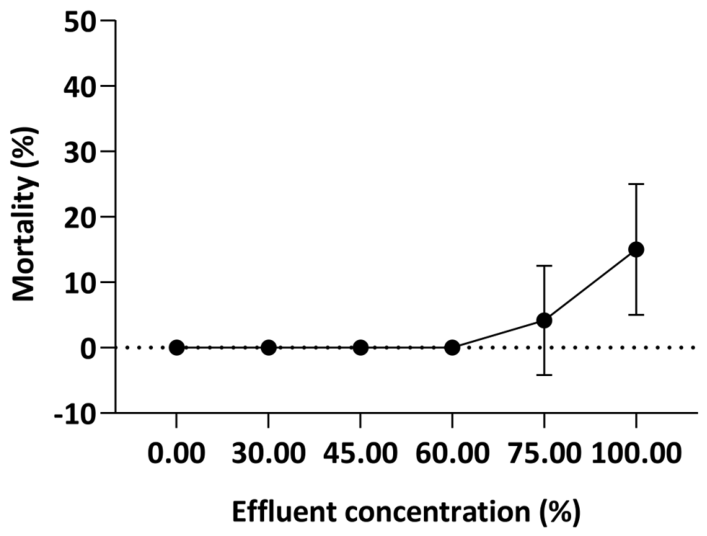
For the UF-treated effluent, toxicity was limited, and only the EC10 value could be determined after 48 h, corresponding to 88.3% effluent concentration (Figure 2).
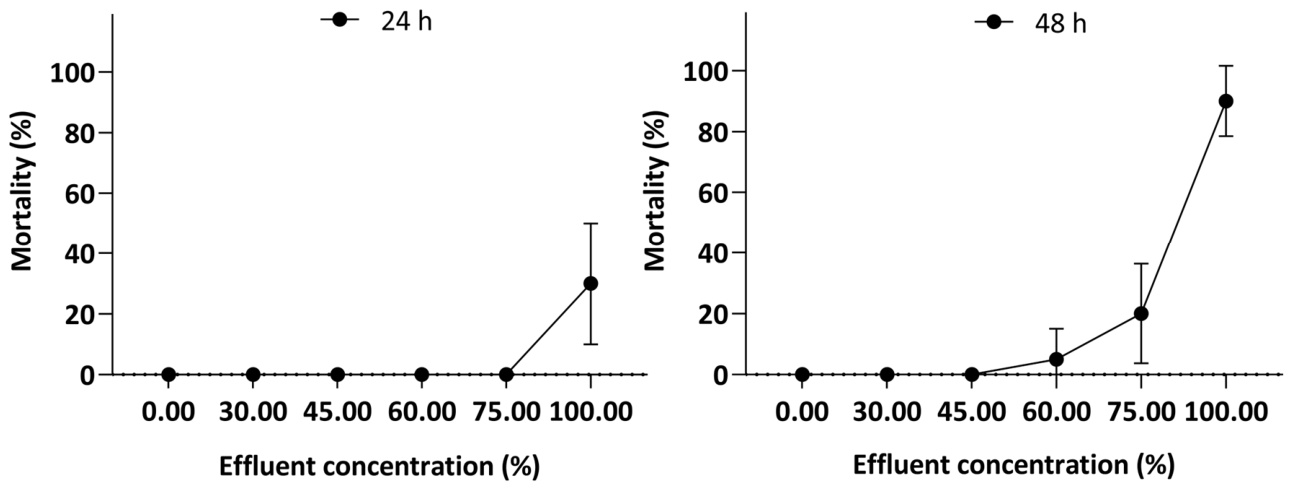
In contrast, ozonation (OZ) exhibited pronounced toxicity. After 24 h, a mortality rate of 40% was observed at 100% effluent concentration (Figure 3), allowing the determination of EC10 and EC20 values (Table 4). After 48 h, nearly all organisms exposed to undiluted effluent were dead (Figure 3), enabling the calculation of EC10, EC20, and EC50 (Table 4). These results indicate a clear increase in toxicity over time for OZ-treated effluent.
The exposure of D. magna to ozone-treated effluent resulted in a significant increase in acute toxicity, particularly after 48 h. This effect can be attributed to the formation of oxidation by-products during the ozonation process, some of which are more toxic than the original compounds. Similar findings in the literature suggest that, despite the high efficiency of ozonation in removing contaminants and disinfecting, it can also increase ecotoxicological risks [43,44]. However, previous studies have reported contrasting results, with some authors observing reductions or no significant changes in toxicity after ozonation [42,45]. These differences may be related to the characteristics of the treated effluent, ozone dose, reaction time, and water matrix composition, which influenced the effluent’s final characteristics [44]. Assessing the ecotoxicological effects after treatment is crucial for ensuring environmental safety and protecting ecosystems.

3.3. Daphnia Magna Chronic Tests

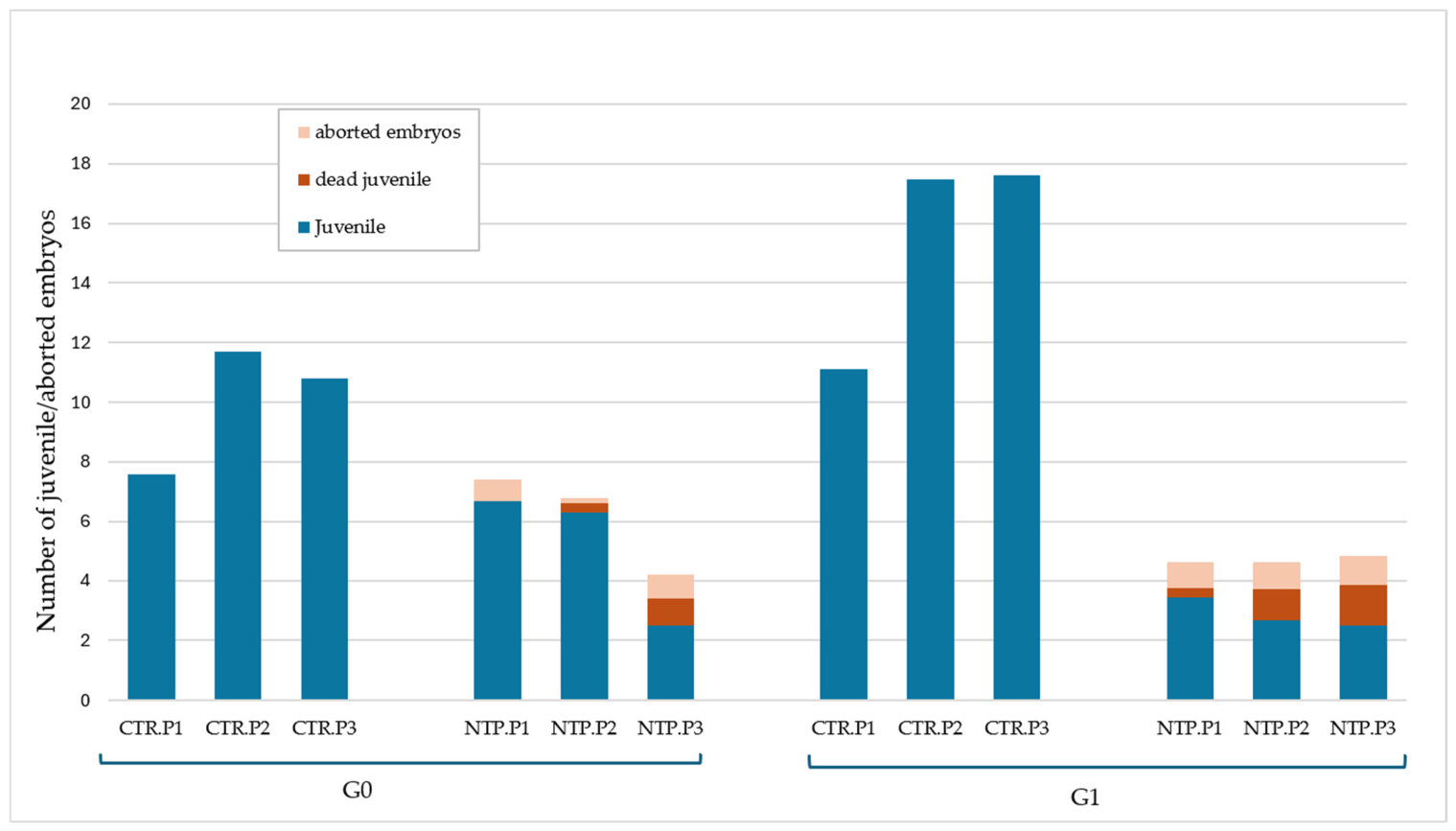
These tests were conducted only with NTP-treated effluent, as it did not exhibit acute toxicity. The reproductive output of Daphnia (Figure 4) differed between generations (G0 and G1), brood periods (P1–P3), and exposure conditions (control group (CTR) vs. NTP).
The control groups showed exclusively live juveniles, with no dead juveniles or aborted embryos recorded in any generation or brood. In contrast, NTP-treated groups exhibited reduced juvenile production and the occurrence of dead juveniles and aborted embryos, with effects varying between generations and broods.
Multigenerational tests may reveal an amplification of adverse effects, affecting not only fecundity but also mortality, which raises concerns for organisms subjected to chronic exposure [46]. Reproductive output of Daphnia was assessed across two generations (G0 and G1) under control conditions (CTR) and after NTP, considering three consecutive broods (P1, P2, and P3). The evaluated endpoints included the number of live juveniles, dead juveniles, and aborted embryos (Figure 4).
Across both generations and all broods, the CTR produced exclusively live juveniles, with no occurrence of dead or aborted embryos, indicating stable reproductive performance and normal embryonic development throughout the experiment. In generation G0, the CTR exhibited consistent juvenile production, with higher numbers observed in broods P2 and P3. In contrast, NTP induced a marked reduction in the number of live juveniles across all broods compared to the control.
The marked reduction in juvenile output observed in the NTP-exposed G0 generation is consistent with previous studies demonstrating that environmental stressors, including nanomaterials, pharmaceuticals, pesticides, or poor food quality, can impair reproductive performance in D. magna by reducing fecundity, increasing developmental failure, or both [22,47,48]. Additionally, dead juveniles and aborted embryos were detected exclusively in the NTP groups, indicating adverse effects of the treatment exposure on both embryonic development and post-hatching survival. These effects were brood-dependent, with the strongest impact observed in brood P3, which showed the lowest number of live juveniles and the highest relative number of aborted embryos and juvenile mortality. This pattern suggests increased sensitivity of later broods to NTP-induced stress in the parental generation.
In generation G1, the CTR maintained a high and stable reproductive output, showing the highest numbers of live juveniles recorded in the study, particularly in broods P1 and P2, and continued to display no embryonic or juvenile mortality.
In the NTP-exposed Daphnia, negative effects persisted in G1 and were more pronounced than in G0. Dead juveniles and aborted embryos increased in number, and the number of live juveniles was lower than in G0 under NTP treatment, mainly in broods P1 and P2. Juvenile production in all NTP broods remained lower than in the corresponding controls.
Overall, early broods (P1) were less affected by NTP treatment in both generations, whereas later broods (P3) consistently exhibited greater sensitivity, reflected by reduced juvenile output and increased numbers of dead juveniles and aborted embryos. Comparison between generations indicates better reproductive performance in G1 in the CTR.
Under NTP treatment, reproductive output was reduced, with fewer live juveniles and more dead juveniles and aborted embryos, suggesting the presence of transgenerational effects that increase the negative impacts of NTP observed in the parental generation.
Results demonstrate that exposure to NTP negatively affects reproductive success in Daphnia, as evidenced by reduced offspring production and the occurrence of embryonic abortion and juvenile mortality. These effects were absent in the CTR groups, which produced exclusively live juveniles across all broods and generations, confirming that the observed impairments are attributable to NTP rather than experimental conditions. Comparable reductions in reproductive output have been widely reported in Daphnia exposed to diverse environmental stressors, reinforcing the suitability of reproductive endpoints as sensitive indicators of sublethal stress.
The brood-specific response observed in G0 and G1, with later broods (P3) being most affected, is further supported by several studies that have shown that later Daphnia broods are more sensitive to stress due to cumulative energetic costs and declining maternal condition over successive reproductive cycles. Under wastewater NTP exposure, such energetic constraints may be exacerbated by increased investment in stress responses (e.g., antioxidant defences), resulting in fewer resources available for embryogenesis [49,50]. While the precise mechanism of NTP toxicity in Daphnia is not well known, the observed outcomes closely resemble those reported under oxidative, chemical, and nutritional stress. Across these stress types, reproduction is often reduced before survival is compromised, consistent with life-history theory, which predicts trade-offs between maintenance and reproduction under adverse conditions. This suggests that NTP exposure likely shifts energy allocation away from reproduction toward cellular protection and repair processes [51,52].
Although no acute toxicity was observed, from an ecological perspective, the absence of effects in the control and the consistent reproductive impairment under NTP exposure highlight the potential population-level consequences of NTP-related stress if encountered in aquatic environments. Even minor reductions in juvenile output, when sustained across generations, can substantially affect population dynamics in zooplankton with short generation times. Moreover, the brood-specific sensitivity observed here emphasises the importance of considering reproductive timing and multigenerational frameworks in risk assessment [53,54].
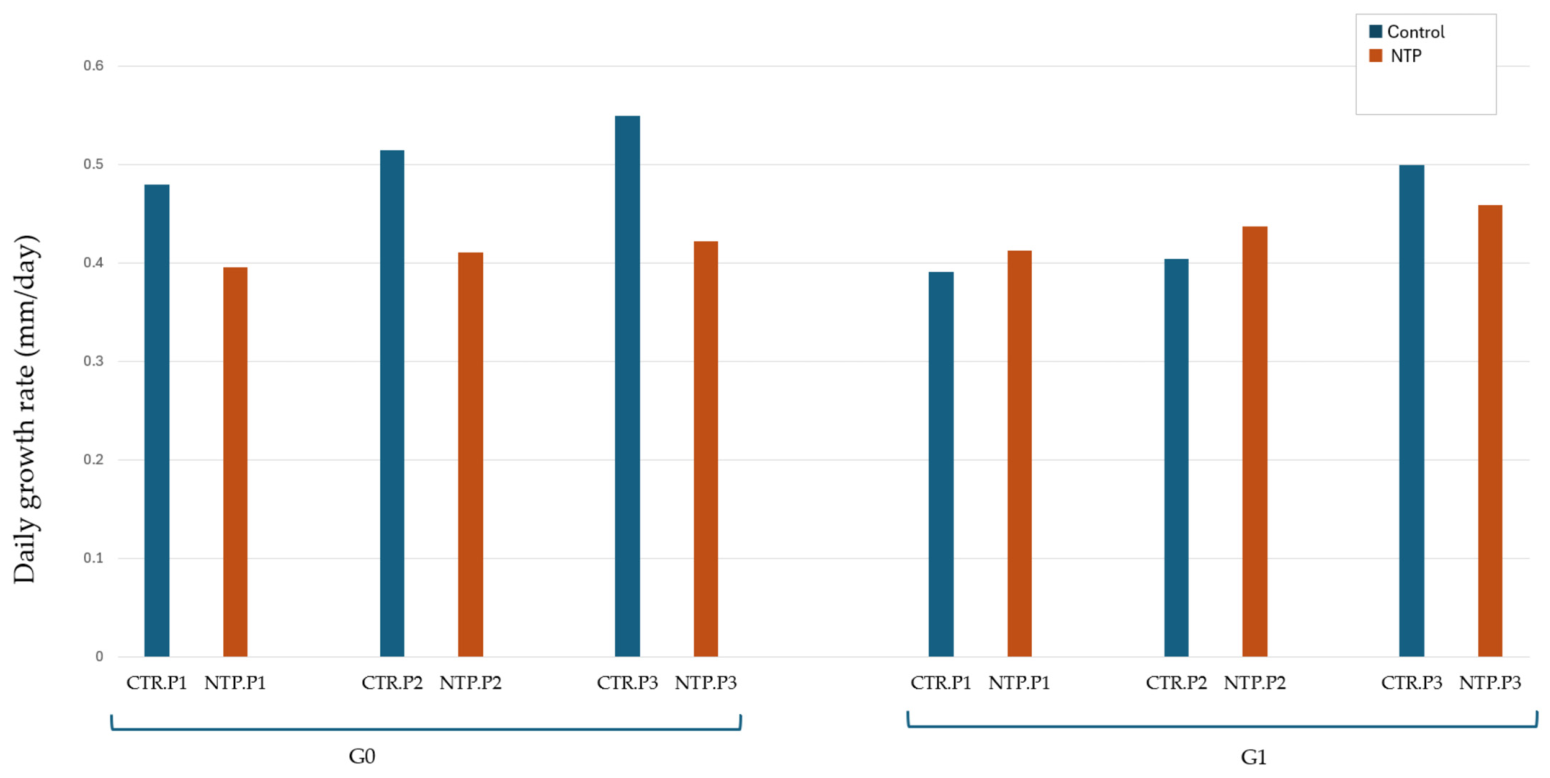
Differences in daily growth of D. magna between generations (G0 and G1), brood periods (P1–P3), and exposure conditions (CTR vs. NTP) are presented in Figure 5.
For the parental generation (G0), growth rates were consistently higher in the control group than in the NTP-exposed group across all three broods. In brood P1, growth decreased from 0.480 mm/day in the control to 0.395 mm/day under NTP exposure, corresponding to an approximately 17.6% reduction. A similar trend was observed in P2 and P3, where growth was reduced by 20.1% and 23.3%, respectively, under NTP exposure. Furthermore, growth in the CTR group progressively increased from P1 to P3, whereas NTP-exposed organisms maintained comparatively lower and more stable growth rates throughout the experiment. These findings indicate that NTP exposure negatively affected somatic growth in the parental generation.
In contrast, the offspring generation (G1) exhibited a different response pattern. During broods P1 and P2, individuals exposed to NTP showed slightly higher growth rates than the respective controls. In P1, growth increased from 0.391 mm/day in the control group to 0.413 mm/day under NTP exposure (+5.7%), while in P2, growth increased from 0.404 to 0.437 mm/day (+8.2%). However, in P3, growth in the NTP group was lower than in the control group. Despite this reduction in the final brood, G1 organisms appeared generally less affected by NTP exposure than those of the parental generation.
Overall, the results demonstrate a generation-dependent response to NTP. While the parental generation (G0) experienced a marked reduction in daily growth under NTP exposure, the offspring generation (G1) showed evidence of partial compensation or acclimation during the first two broods. This pattern may indicate transgenerational physiological adaptation or differential sensitivity between generations.
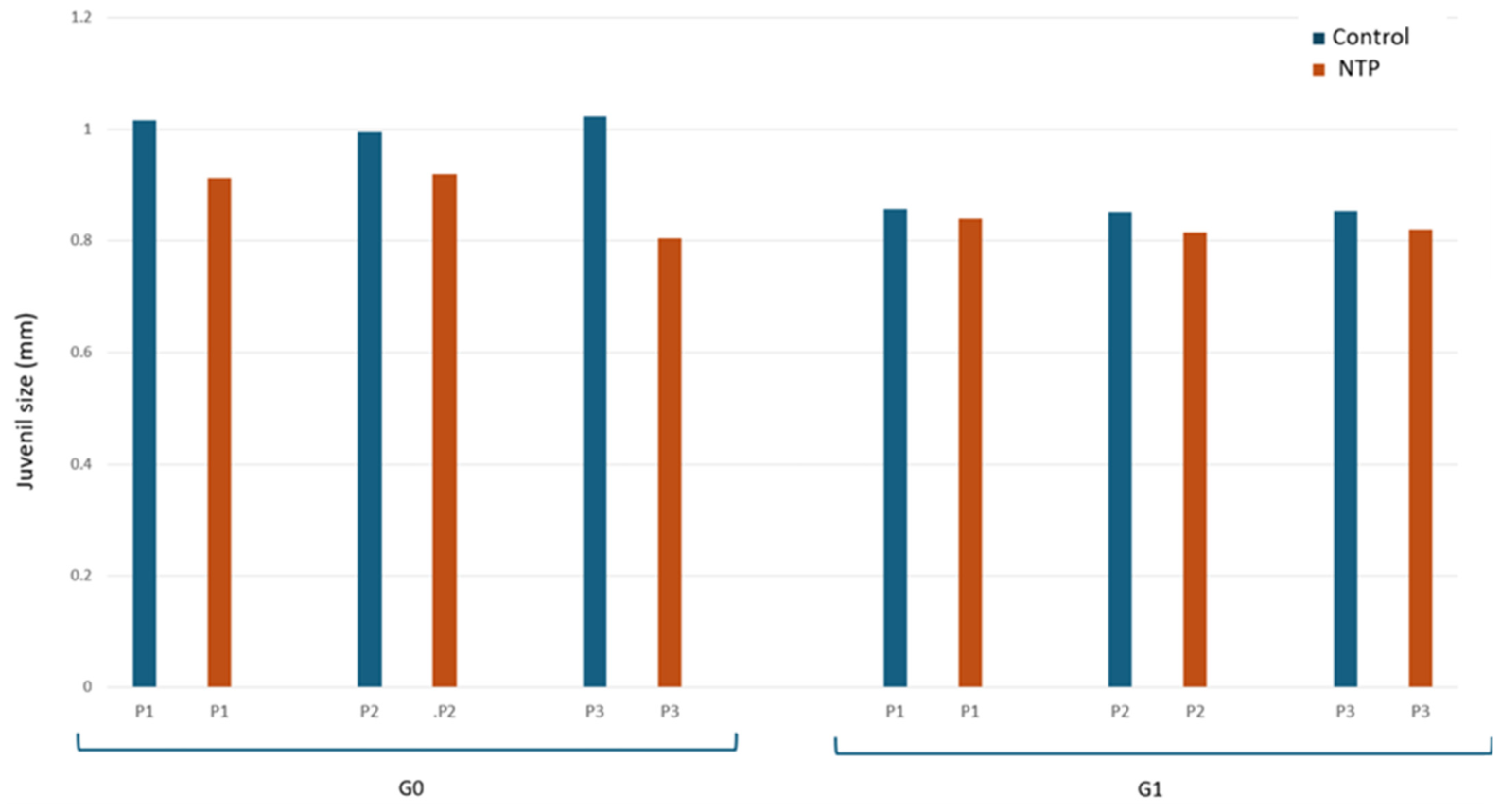
Juvenile size also differed between generations, brood periods, and exposure conditions (Figure 6). In the parental generation (G0), juveniles produced under control conditions were consistently larger than those exposed to NTP across all brood periods. In brood P1, juvenile size decreased from approximately 1.01 mm in the control group to 0.91 mm under NTP exposure. A similar reduction was observed in P2, with juvenile size declining from 0.99 mm to 0.92 mm. The greatest difference occurred during P3, where juvenile size decreased from approximately 1.02 mm in the control group to 0.81 mm under NTP exposure. Moreover, juvenile size in the control treatment remained relatively stable across broods, whereas a progressive reduction was evident under NTP exposure, particularly during the third brood.
In contrast, the offspring generation G1 showed smaller differences between treatments. Juvenile size in the CTR ranged from approximately 0.85 to 0.86 mm across the three broods, while NTP-exposed juveniles ranged from approximately 0.82 to 0.84 mm. Although NTP-treated groups generally exhibited slightly lower values than controls, the magnitude of reduction was considerably smaller than that observed in G0.
Comparison between generations further revealed that G1 juveniles were generally smaller overall than G0 juveniles, irrespective of treatment. Nevertheless, the impact of NTP exposure appeared less pronounced in G1, suggesting reduced sensitivity or a possible acclimation response in the second generation.
The pronounced reduction in juvenile output observed in the NTP-exposed G0 generation is consistent with studies showing that environmental stressors—such as nanomaterials, pharmaceuticals, pesticides, or poor food quality—lead to decreased fecundity, increased developmental failure, or both in Daphnia. Although direct studies on plasma exposure in Daphnia are still scarce, NTP is well known to generate reactive oxygen and nitrogen species, which can induce oxidative stress and cellular damage in biological systems [55]. Oxidative stress has been repeatedly identified as a key mechanism underlying reduced reproduction and developmental abnormalities in aquatic organisms, including crustaceans [56].
Overall, these findings indicate that exposure to NTP negatively affected juvenile size, particularly in the parental generation and during later brood periods. The reduced effect observed in G1 may reflect transgenerational adaptation or physiological compensation mechanisms. The brood- and generation-dependent patterns observed in the present study are consistent with a growing body of evidence from multigenerational Daphnia research. For instance, González et al. [57] demonstrated that reproductive and life-history effects in D. magna subjected to multi-generational stress vary considerably depending on both the specific generation and the compound evaluated [57]. The chronic assay with D. magna revealed adverse effects on reproduction, growth and offspring. However, a different response was observed for R. subcapitata. The absence of microalgal growth inhibition, which suggests a limited ecological impact of the NTP-treated effluent, could be masked by the presence of nutrients that promote microalgal growth. The different responses observed between R. subcapitata and D. magna highlight the importance of adopting a battery of bioassays for the ecotoxicological assessment of treated wastewaters. These findings demonstrate that the use of a single test organism may underestimate potential environmental risks and reinforce the necessity of multi-species approaches encompassing different trophic levels and sensitivity.

4. Conclusions and Future Perspectives

Conventional secondary wastewater treatment reduces organic load, but it is known for its limited efficiency in the removal of nutrients and emerging contaminants, reinforcing the need for both tertiary and quaternary (advanced) treatment processes in line with current European regulations.
Among the treatments evaluated, UF, UV, and OZ are well-known, and NTP is a technology under development. UF, UV, and NTP are considered to produce an overall improvement in wastewater quality. They caused low acute toxicity in D. magna and no inhibitory effects on R. subcapitata. However, the stimulation of algal growth due to the presence of nutrients may mask potential toxic effects and contribute to eutrophication if not properly controlled.
In contrast, ozonation induced clear toxic effects in both test organisms. In R. subcapitata, OZ caused strong growth inhibition even at low concentrations, with EC10, EC20, and EC50 values of 4.6%, 5.2%, and 7.7%, respectively. Similarly, acute toxicity assays with D. magna revealed increased mortality after ozonation, particularly after 48 h of exposure. These findings suggest that oxidation by-products generated during ozonation affect both primary producers and primary consumers, demonstrating that contaminant removal efficiency alone is insufficient to guarantee environmental safety. In addition, these findings suggest that ozonation, despite its effectiveness in contaminant degradation, may require further optimisation, namely the stabilisation of the reactive oxidative species before discharge, to minimise adverse biological impacts.
Chronic exposure to NTP-treated effluent produced significant sublethal effects in D. magna, including reduced reproductive success, increased embryonic abortion and juvenile mortality, decreased somatic growth, and reduced juvenile size. These effects were more pronounced in later broods of the parental generation (G0), indicating cumulative physiological stress over reproductive cycles. Although the offspring generation (G1) appeared less affected in some growth-related endpoints, reproductive impairment persisted, suggesting potential transgenerational effects and physiological acclimation mechanisms. In contrast, no inhibitory effects were observed in R. subcapitata exposed to NTP-treated effluent, highlighting species-specific responses between trophic levels.
Overall, the findings demonstrate that advanced wastewater treatments may substantially differ in their ecotoxicological impacts, even when they are effective in removing conventional contaminants. The study highlights the importance of integrating acute and chronic bioassays using multiple trophic levels to obtain a more comprehensive assessment of environmental safety. In particular, chronic endpoints such as reproduction, growth, and juvenile development proved to be highly sensitive indicators of residual or transformation-related toxicity. These results reinforce the need for ecotoxicological evaluation as part of the risk assessment of the implementation and optimisation of advanced wastewater treatment technologies under the requirements of the recent European regulatory framework.
The results provide relevant indications regarding the potential ecotoxicological implications of advanced treatment technologies under realistic conditions, since the wastewater treatment plant is a representative example of a wastewater treatment plant that will need quaternary treatment, according to the Directive (EU) 2024/3019. Future research should explore the identification of the transformation products generated during OZ and NTP treatment to deepen the knowledge about their contribution to potential toxic effects and environmental risks.

Supplementary Materials

The following supporting information can be downloaded at https://www.mdpi.com/article/10.3390/w18131534/s1: Table S1: Growth inhibition (%) of Raphidocelis subcapitata at different K2Cr2O7 concentrations; Figure S1: Inhibition of Raphidocelis subcapitata growth at different K2Cr2O7 concentrations; Figure S2: Mortality (%) of Daphnia magna after 24 h and 48 h exposure to potassium dichromate (K2Cr2O7); Table S2: Removal efficiencies (%) of the quaternary treatments tested for physical–chemical parameters, adapted from [17]; Figure S3: Removal efficiencies (%) of pharmaceutical compounds from Category 1 of Directive (EU) 2024/3019: carbamazepine, citalopram, clarithromycin, diclofenac and venlafaxine, adapted from [17].

Author Contributions

Conceptualization, A.R.A., V.F.D. and S.A.F.; methodology, A.R.A., S.A.F., V.F.D. and P.B.; investigation, A.R.A., Â.G., P.B. and V.F.D.; data curation, A.R.A., Â.G., P.B., M.L.M. and V.F.D.; writing—original draft preparation, A.R.A.; writing—review and editing V.F.D., S.A.F. and I.B.; visualisation, A.R.A., M.L.M. and V.F.D.; supervision, S.A.F., V.F.D. and C.D.-M.; project administration, C.D.-M.; funding acquisition, I.B. and C.D.-M. All authors have read and agreed to the published version of the manuscript.

Funding

This work received financial support from the PT national funds of Fundação para a Ciência e Tecnologia and Ministério da Educação, Ciência e Inovação (FCT/MECI) through the project UID/50006/2025 (DOI: 10.54499/UID/50006/2025)—Laboratório Associado para a Química Verde—Tecnologias e Processos Limpos, and also through the following research projects: FARMASENSE (NORTE-01-0247-FEDER-039957) sponsored by Sistema de Incentivos à Investigação e Desenvolvimento Tecnológico de Portugal 2020, by the Programa Operacional do Norte (NORTE 2020), the Fundo Europeu de Desenvolvimento Regional (FEDER), and the WISE project—“Improving water for a safer environment” (No. 17091, ref. COMPETE2030-FEDER-00841800)—through FEDER, the European Regional Development Fund (COMPETE 2030) and national funds from the FCT/MECI.

Data Availability Statement

The original contributions presented in this study are included in the article/Supplementary Materials. Further inquiries can be directed to the corresponding authors.

Acknowledgments

The authors are greatly indebted to all of the financing sources.

Conflicts of Interest

Author Inês Baptista was employed by the company WedoTech. The remaining authors declare that the research was conducted in the absence of any commercial or financial relationships that could be construed as potential conflicts of interest.

Abbreviations

The following abbreviations are used in this manuscript:
WWTWastewater treatment
ECsEmerging contaminants
WWTPsWastewater treatment plants
UFUltrafiltration
UVUltraviolet
OZOzonation
NTPNon-thermal plasma

References

  1. Ahmad, H.W.; Bibi, H.A.; Chandrasekaran, M.; Ahmad, S.; Kyriakopoulos, G.L. Sustainable Wastewater Treatment Strategies in Effective Abatement of Emerging Pollutants. Water 2024, 16, 2893. [Google Scholar] [CrossRef]
  2. Sujan Sai, P.; Hemanth Kumar, K.; Nidhi Sri, A.; Katakojwala, R.; Shanthi Sravan, J.; Hemalatha, M. Emerging Contaminants in Wastewater: Mitigation Approaches for Environmental Management and Future Sustainability. Water 2026, 18, 860. [Google Scholar] [CrossRef]
  3. Jiang, T.; Wu, W.; Ma, M.; Hu, Y.; Li, R. Occurrence and Distribution of Emerging Contaminants in Wastewater Treatment Plants: A Globally Review over the Past Two Decades. Sci. Total Environ. 2024, 951, 175664. [Google Scholar] [CrossRef] [PubMed]
  4. Nishat, A.; Yusuf, M.; Qadir, A.; Ezaier, Y.; Vambol, V.; Ijaz Khan, M.; Ben Moussa, S.; Kamyab, H.; Sehgal, S.S.; Prakash, C.; et al. Wastewater Treatment: A Short Assessment on Available Techniques. Alex. Eng. J. 2023, 76, 505–516. [Google Scholar] [CrossRef]
  5. Derco, J.; Žgajnar Gotvajn, A.; Guľašová, P.; Kassai, A.; Šoltýsová, N. Nutrient Removal and Recovery from Municipal Wastewater. Processes 2024, 12, 894. [Google Scholar] [CrossRef]
  6. Pausta, C.M.; Kalbar, P.; Saroj, D. Life Cycle Assessment of Nutrient Recovery Strategies from Domestic Wastewaters to Quantify Environmental Performance and Identification of Trade-Offs. Sci. Rep. 2024, 14, 3678. [Google Scholar] [CrossRef] [PubMed]
  7. Brenckman, C.M.; Parameswarappa Jayalakshmamma, M.; Pennock, W.H.; Ashraf, F.; Borgaonkar, A.D. A Review of Harmful Algal Blooms: Causes, Effects, Monitoring, and Prevention Methods. Water 2025, 17, 1980. [Google Scholar] [CrossRef]
  8. Council of the European Union. Wastewater Treatment. European Council. Available online: https://www.consilium.europa.eu/en/policies/wastewater-treatment/ (accessed on 7 April 2026).
  9. EU. Directive (EU) 2024/3019 of the European Parliament and of the Council of 27 November 2024 Concerning Urban Wastewater Treatment (Recast). Available online: https://eur-lex.europa.eu/eli/dir/2024/3019/oj (accessed on 7 April 2026).
  10. European Parliament and Council of the European Union. Regulation (EU) 2020/741 of the European Parliament and of the Council of 25 May 2020 on Minimum Requirements for Water Reuse (Text with EEA Relevance). 2020. Available online: https://eur-lex.europa.eu/legal-content/EN/TXT/PDF/?uri=CELEX:32020R0741 (accessed on 18 May 2026).
  11. Yacouba, Z.A.; Mendret, J.; Lesage, G.; Zaviska, F.; Brosillon, S. Removal of Organic Micropollutants from Domestic Wastewater: The Effect of Ozone-Based Advanced Oxidation Process on Nanofiltration. J. Water Process Eng. 2021, 39, 101869. [Google Scholar] [CrossRef]
  12. Arvaniti, O.S.; Dasenaki, M.E.; Asimakopoulos, A.G.; Maragou, N.C.; Samaras, V.G.; Antoniou, K.; Gatidou, G.; Mamais, D.; Noutsopoulos, C.; Frontistis, Z.; et al. Effectiveness of Tertiary Treatment Processes in Removing Different Classes of Emerging Contaminants from Domestic Wastewater. Front. Environ. Sci. Eng. 2022, 16, 148. [Google Scholar] [CrossRef]
  13. Leão, I.; Antunes, J.; Baptista, I.; Jorge, R.; Marinheiro, L.; Löblich, S.; Vaz-Moreira, I.; Manaia, C.M. Treating Domestic Wastewater towards Freshwater Quality: Bacterial Community and Antibiotic Resistance Profiles Highlight Critical Steps and Improvement Opportunities. J. Environ. Chem. Eng. 2025, 13, 116172. [Google Scholar] [CrossRef]
  14. Shoshaa, R.; Ashfaq, M.Y.; Al-Ghouti, M.A. Recent Developments in Ultrafiltration Membrane Technology for the Removal of Potentially Toxic Elements, and Enhanced Antifouling Performance: A Review. Environ. Technol. Innov. 2023, 31, 103162. [Google Scholar] [CrossRef]
  15. González, Y.; Gómez, G.; Moeller-Chávez, G.E.; Vidal, G. UV Disinfection Systems for Wastewater Treatment: Emphasis on Reactivation of Microorganisms. Sustainability 2023, 15, 11262. [Google Scholar] [CrossRef]
  16. Das, P.P.; Dhara, S.; Samanta, N.S.; Purkait, M.K. Advancements on Ozonation Process for Wastewater Treatment: A Comprehensive Review. Chem. Eng. Process. Process Intensif. 2024, 202, 109852. [Google Scholar] [CrossRef]
  17. Magureanu, M.; Bilea, F.; Bradu, C.; Hong, D. A Review on Non-Thermal Plasma Treatment of Water Contaminated with Antibiotics. J. Hazard. Mater. 2021, 417, 125481. [Google Scholar] [CrossRef] [PubMed]
  18. Wang, Y.; Song, J.; Zhu, R.; Peng, M.; Long, J.; Bao, T. Degradation of Pharmaceutical Contaminants in Wastewater by Non-Thermal Plasma Technology: A Comprehensive Review. J. Environ. Chem. Eng. 2025, 13, 116150. [Google Scholar] [CrossRef]
  19. Surra, E.; Paíga, P.; Baptista, I.; Jorge, R.; Marinheiro, L.; Löblich, S.; Delerue-Matos, C. Comparative Life Cycle Assessment of Non-Thermal Plasma for the Removal of Pharmaceuticals from Wastewater. J. Environ. Manag. 2024, 370, 122728. [Google Scholar] [CrossRef] [PubMed]
  20. Lee, H.; Shin, Y.; Kim, K.; Kim, H.; Kang, J.; Yoo, J.; Kang, S.U.; Yoo, Y.; Hong, Y.C. Degradation of Trace Pollutants in Industrial Wastewater Using Underwater Nonthermal Plasma: Toward Evaluation of Bioecotoxicity. Chem. Eng. J. 2024, 492, 152057. [Google Scholar] [CrossRef]
  21. Adamek, E.; Baran, W. Degradation of Veterinary Antibiotics by the Ozonation Process: Product Identification and Ecotoxicity Assessment. J. Hazard. Mater. 2024, 469, 134026. [Google Scholar] [CrossRef] [PubMed]
  22. Carvalho, A.R.; Pérez-Pereira, A.I.; Couto, C.M.C.; Tiritan, M.E.; Ribeiro, C.M.R. Assessment of Effluents Quality through Ecotoxicological Assays: Evaluation of Three Wastewater Treatment Plants with Different Technologies. Environ. Sci. Pollut. Res. 2022, 29, 963–976. [Google Scholar] [CrossRef] [PubMed]
  23. Castro, A.M.; Nogueira, V.; Lopes, I.; Rocha-Santos, T.; Pereira, R. Evaluation of the Potential Toxicity of Effluents from the Textile Industry before and after Treatment. Appl. Sci. 2019, 9, 3804. [Google Scholar] [CrossRef]
  24. Liwarska-Bizukojc, E. Evaluation of Ecotoxicity of Wastewater from the Full-Scale Treatment Plants. Water 2022, 14, 3345. [Google Scholar] [CrossRef]
  25. Barceló, D.; Žonja, B.; Ginebreda, A. Toxicity Tests in Wastewater and Drinking Water Treatment Processes: A Complementary Assessment Tool to Be on Your Radar. J. Environ. Chem. Eng. 2020, 8, 104262. [Google Scholar] [CrossRef]
  26. Diogo, B.S.; Rodrigues, S.; Lage, O.M.; Antunes, S.C. Are the Ecotoxicological Tools Viable to Evaluate the Effectiveness of Wastewater Treatment Plant Effluents? Int. J. Environ. Sci. Technol. 2023, 20, 11943–11962. [Google Scholar] [CrossRef]
  27. Emmanouil, C.; Giannakis, I.; Kyzas, G.Z. Terrestrial Bioassays for Assessing the Biochemical and Toxicological Impact of Biosolids Application Derived from Wastewater Treatment Plants. Sci. Total Environ. 2024, 931, 172718. [Google Scholar] [CrossRef] [PubMed]
  28. USEPA. Short-Term Methods for Estimating the Chronic Toxicity of Effluents and Receiving Waters to Freshwater Organisms Fourth Edition October 2002; U.S. Environmental Protection Agency Office of Water: Washington, DC, USA, 2002.
  29. OECD. OECD Guidelines for the Testing of Chemicals. In Freshwater Alga and Cyanobacteria, Growth Inhibition Test; OECD Publications: Paris, France, 2011. [Google Scholar]
  30. European Commission. Commission Regulation (EU) 2016/266 Amending Regulation (EC) No 440/2008 on Test Methods under REACH. 2016. Available online: https://eur-lex.europa.eu/eli/reg/2016/266/oj/eng (accessed on 23 April 2026).
  31. OECD. Test No. 202: Daphnia Sp. Acute Immobilisation Test; OECD Guidelines for the Testing of Chemicals, Section 2; OECD: Paris, France, 2004. [Google Scholar] [CrossRef]
  32. ISO 6341:2012; Water Quality—Determination of the Inhibition of the Mobility of Daphnia Magna Straus (Cladocera, Crustacea)—Acute Toxicity Test. International Organization for Standardization: Geneva, Switzerland, 2012.
  33. OCSPP 850.1010; Aquatic Invertebrate Acute Toxicity Test, Freshwater Daphnids. EPA Ecological effects Test Guidelines. USEPA: Washington, DC, USA, 2016.
  34. OECD. Test Guideline No. 211—OECD Guideline for the Testing of Chemicals—Daphnia Magna Reproduction Test; OECD: Paris, France, 2012. [Google Scholar]
  35. Brunelli, M. Ecotoxicity Evaluation, Using Daphnia Magna, of Deltamethrin and the Major Metabolite (3-PBA): Acute and Chronic Toxicity Test; Università degli Studi di Camerino: Camerino, Italy, 2020. [Google Scholar]
  36. Elendt, B.-P.; Bias, W.-R. Trace Nutrient Deficiency in Daphnia Magna Cultured in Standard Medium for Toxicity Testing. Effects of the Optimization of Culture Conditions on Life History Parameters of D. Magna. Water Res. 1990, 24, 1157–1167. [Google Scholar] [CrossRef]
  37. Maltsev, Y.; Maltseva, K.; Kulikovskiy, M.; Maltseva, S. Influence of Light Conditions on Microalgae Growth and Content of Lipids, Carotenoids, and Fatty Acid Composition. Biology 2021, 10, 1060. [Google Scholar] [CrossRef] [PubMed]
  38. Rodrigues, S.; Pinto, I.; Formigo, N.; Antunes, S.C. Microalgae Growth Inhibition-Based Reservoirs Water Quality Assessment to Identify Ecotoxicological Risks. Water 2021, 13, 2605. [Google Scholar] [CrossRef]
  39. Houska, J.; Manasfi, T.; Gebhardt, I.; von Gunten, U. Ozonation of Lake Water and Wastewater: Identification of Carbonous and Nitrogenous Carbonyl-Containing Oxidation Byproducts by Non-Target Screening. Water Res. 2023, 232, 119484. [Google Scholar] [CrossRef] [PubMed]
  40. Zilberman, A.; Gozlan, I.; Avisar, D. Pharmaceutical Transformation Products Formed by Ozonation—Does Degradation Occur? Molecules 2023, 28, 1227. [Google Scholar] [CrossRef] [PubMed]
  41. Johnson, M.; Akrami, K.; Crosbie, N.D.; Goonan, P.; Griffith, M.; Leahy, P.J.; Leusch, F.D.L.; Mann, R.M.; Neale, P.A.; van Dam, R.; et al. Whole Effluent Toxicity Testing Using in Vitro Effect-Based Methods: Comparison with Conventional Methods. Sci. Total Environ. 2025, 990, 179877. [Google Scholar] [CrossRef] [PubMed]
  42. Jesus, F.; Domingues, E.; Bernardo, C.; Pereira, J.L.; Martins, R.C.; Gomes, J. Ozonation of Selected Pharmaceutical and Personal Care Products in Secondary Effluent—Degradation Kinetics and Environmental Assessment. Toxics 2022, 10, 765. [Google Scholar] [CrossRef] [PubMed]
  43. Affek, K.; Muszyński, A.; Załęska-Radziwiłł, M.; Doskocz, N.; Ziętkowska, A.; Widomski, M. Evaluation of Ecotoxicity and Inactivation of Bacteria during Ozonation of Treated Wastewater. Desalin. Water Treat. 2020, 192, 176–184. [Google Scholar] [CrossRef]
  44. Jesus, F.; Bernardo, C.; Martins, R.C.; Gomes, J.; Pereira, J.L. Ecotoxicological Consequences of the Abatement of Contaminants of Emerging Concern by Ozonation—Does Mixture Complexity Matter? Water 2022, 14, 1801. [Google Scholar] [CrossRef]
  45. Schlüter-Vorberg, L.; Knopp, G.; Cornel, P.; Ternes, T.; Coors, A. Survival, Reproduction, Growth, and Parasite Resistance of Aquatic Organisms Exposed on-Site to Wastewater Treated by Advanced Treatment Processes. Aquat. Toxicol. 2017, 186, 171–179. [Google Scholar] [CrossRef] [PubMed]
  46. Mansilha, C.; Silva, P.; Rocha, S.; Gameiro, P.; Domingues, V.; Pinho, C.; Ferreira, I.M.P.L.V.O. Bisphenol A Migration from Plastic Materials: Direct Insight of Ecotoxicity in Daphnia Magna. Environ. Sci. Pollut. Res. 2013, 20, 6007–6018. [Google Scholar] [CrossRef] [PubMed]
  47. Brunelle, L.D.; Szczygiel, B.; Running, L.S.; Su, L.; Naas, K.M.; Dai, N.; Pérez-Fuentetaja, A.; Aga, D.S. Effects of Advanced Oxidation on Wastewater Effluent Ecotoxicity: A Novel Assessment through the Life History and Lipidomics Analysis of Daphnia Magna. ACS ES&T Water 2023, 3, 438–447. [Google Scholar] [CrossRef]
  48. Oropesa, A.L.; Novais, S.C.; Lemos, M.F.L.; Espejo, A.; Gravato, C.; Beltrán, F. Oxidative Stress Responses of Daphnia Magna Exposed to Effluents Spiked with Emerging Contaminants under Ozonation and Advanced Oxidation Processes. Environ. Sci. Pollut. Res. 2017, 24, 1735–1747. [Google Scholar] [CrossRef] [PubMed]
  49. Bednarska, A. Food Quantity and Quality Shapes Reproductive Strategies of Daphnia. Ecol. Evol. 2022, 12, e9163. [Google Scholar] [CrossRef] [PubMed]
  50. Ellis, L.-J.A.; Kissane, S.; Lynch, I. Maternal Responses and Adaptive Changes to Environmental Stress via Chronic Nanomaterial Exposure: Differences in Inter and Transgenerational Interclonal Broods of Daphnia Magna. Int. J. Mol. Sci. 2020, 22, 15. [Google Scholar] [CrossRef] [PubMed]
  51. Nguyen, N.D.; Matsuura, T.; Kato, Y.; Watanabe, H. DNMT3.1 Controls Trade-Offs between Growth, Reproduction, and Life Span under Starved Conditions in Daphnia Magna. Sci. Rep. 2021, 11, 7326. [Google Scholar] [CrossRef] [PubMed]
  52. Agrelius, T.C.; Dudycha, J.L. Maternal Effects in the Model System Daphnia: The Ecological Past Meets the Epigenetic Future. Heredity 2025, 134, 142–154. [Google Scholar] [CrossRef] [PubMed]
  53. Padilla Suarez, E.G.; Pugliese, S.; Galdiero, E.; Guida, M.; Libralato, G.; Saviano, L.; Spampinato, M.; Pappalardo, C.; Siciliano, A. Multigenerational Tests on Daphnia Spp.: A Vision and New Perspectives. Environ. Pollut. 2023, 337, 122629. [Google Scholar] [CrossRef] [PubMed]
  54. Ebert, D. Daphnia as a Versatile Model System in Ecology and Evolution. Evodevo 2022, 13, 16. [Google Scholar] [CrossRef] [PubMed]
  55. Kooshki, S.; Pareek, P.; Mentheour, R.; Janda, M.; Machala, Z. Efficient Treatment of Bio-Contaminated Wastewater Using Plasma Technology for Its Reuse in Sustainable Agriculture. Environ. Technol. Innov. 2023, 32, 103287. [Google Scholar] [CrossRef]
  56. Song, C.; Sun, C.; Liu, B.; Xu, P. Oxidative Stress in Aquatic Organisms. Antioxidants 2023, 12, 1223. [Google Scholar] [CrossRef] [PubMed]
  57. González, M.P.; Cecconi, I.; Salvatierra, D.; Úbeda-Manzanaro, M.; Parra, G.; Ramos-Rodríguez, E.; Araújo, C.V.M. Multi-Generational Exposure of Daphnia Magna to Pharmaceuticals: Effects on Colonization, Reproduction, and Habitat Selection Behavior. Ecotoxicol. Environ. Saf. 2025, 289, 117633. [Google Scholar] [CrossRef] [PubMed]
Figure 1. Microalgae growth inhibition as a function of the logarithm of the effluent concentration.
Water 18 01534 g001
Figure 2. Mortality (%) of D. magna exposed to increasing concentrations of UF-treated effluent during a 48 h acute toxicity test.
Water 18 01534 g002
Figure 3. Mortality (%) of D. magna exposed to increasing concentrations of OZ-treated effluent during 24 and 48 h acute toxicity tests.
Water 18 01534 g003
Figure 4. Reproductive output of Daphnia across two generations (G0 and G1) under control conditions (CTR) and non-thermal plasma treatment (NTP). Bars (means of replicates) represent the number of live juveniles, dead juveniles, and aborted embryos produced in three consecutive broods (P1, P2, and P3).
Water 18 01534 g004
Figure 5. Female daily growth rate (mm/day) of two Daphnia generations (G0 and G1) during three brood periods (P1, P2, and P3) under control conditions (CTR) and exposure to NTP.
Water 18 01534 g005
Figure 6. Size of juvenile Daphnia from two generations (G0 and G1) during three brood periods (P1, P2, and P3) under control conditions (CTR) and exposure to NTP.
Water 18 01534 g006
Table 1. Comparison of the limit emission values and the characteristics of wastewater after secondary treatment.
ParametersWastewater After
Secondary Treatment
Emission
Limit Value [9]
Total Nitrogen (mg L−1 N)41.010
Total Phosphorus (mg L−1 P)3.60.7
Conductivity (μS cm−1)1506-
COD (mg O2 L−1)75.0125
Total Suspended Solids (mg L−1)4.0035
Table 2. Results of growth inhibition for the microalga R. subcapitata.
Concentration (%)log CGrowth Inhibition (%)
Secondary TreatmentUFUVOZNTP
2.50.398−14.979.749.416.5−23.8
5.00.698−37.526.527.970.3−59.0
10.01.00−62.466.156.988.1−49.2
20.01.30−55.773.674.453.4−26.1
40.01.6024.866.30.1174.1−6.6
Table 3. Ecotoxicological parameters of the effluent after secondary treatment using Raphidocelis subcapitata.
Effective ConcentrationsSecondary TreatmentOZ
EC1035.2%4.6%
EC2038.4%5.2%
EC50-7.7%
Table 4. Ecotoxicological parameters for the OZ-treated effluent using Daphnia magna.
Effective Concentrations24 h48 h
EC1083.2%64.9%
EC2091.5%74.9%
EC50-85.6%
Disclaimer/Publisher’s Note: The statements, opinions and data contained in all publications are solely those of the individual author(s) and contributor(s) and not of MDPI and/or the editor(s). MDPI and/or the editor(s) disclaim responsibility for any injury to people or property resulting from any ideas, methods, instructions or products referred to in the content.