Article

Identification of Testate Amoeba Communities and Their Influencing Factors in Dali Lake

1
Water Conservancy and Civil Engineering College, Inner Mongolia Agricultural University, Hohhot 010018, China
2
College of Urban and Rural Construction, Shanxi Agricultural University, Taigu, Jinzhong 030801, China
*
Author to whom correspondence should be addressed.
Water 2026, 18(12), 1521; https://doi.org/10.3390/w18121521 (registering DOI)
Submission received: 10 May 2026 / Revised: 12 June 2026 / Accepted: 18 June 2026 / Published: 20 June 2026
(This article belongs to the Section Biodiversity and Functionality of Aquatic Ecosystems)

Abstract

The shells of testate amoebae are decay-resistant and well preserved in lake sediments, making them excellent biological indicators of climate change. In this study, the identification method for testate amoebae was initially optimized based on the collection of surface sediments from Dali Lake, and statistical analyses were conducted to investigate the community distribution characteristics and key environmental factors driving the testate amoeba species composition. According to the results, the testate amoeba species diversity in the surface sediments of Dali Lake was relatively low. A total of eight species belonging to five genera were identified, and the dominant species were Arcella discoides (35.64% of the total abundance), Phryganella acropodia (24.75%), and Arcella gibbosa (11.39%). All the identified testate amoeba taxa are common in global freshwater sediments, and no new species was discovered in this study. The testate amoeba community composition exhibited strong correlations with the total organic carbon, total nitrogen, dissolved inorganic phosphorus, and total phosphorus and weak correlations with the electrical conductivity and Chlorophyll-a.

1. Introduction

Species diversity research is one of the three major components of biodiversity research and serves as the foundation for human survival and development. The Dalinuoer National Nature Reserve is located on the eastern Inner Mongolia Plateau and encompasses grasslands, wetlands, forestlands, and sandy lands, forming a complete ecosystem together with the surrounding environment. Over the past few decades, changes in the natural conditions and intensified human activities have severely disturbed the reserve’s ecosystem, substantially threatening the diversity and abundance of species resources in the region and posing severe challenges to biodiversity conservation. Therefore, understanding the climate change impacts on the aquatic biodiversity and ecological management in depth has become an important research topic.
Testate amoebae are widely distributed in various humid environments, such as moist peatland, lake, and freshwater habitats from the tropics to the polar regions, and their tests are well resistant to decay, remain basically well preserved in sediments, and are easy to extract, with stable morphological features that allow for identification down to the genus and species levels. Therefore, they have been widely applied in the biostratigraphy of Quaternary sediments [1]. Testate amoebae are highly sensitive to environmental changes, and their community structure exhibits corresponding variations under the influence of aquatic environmental factors. In Europe, America, New Zealand, and other regions [2,3], regional transfer functions between peatland testate amoebae and water table depths have been established [4,5]. Moreover, such transfer functions have been extensively employed in the quantitative reconstruction of regional environmental changes and peatland palaeohydrology. In recent years, ecological surveys of testate amoebae have been successively carried out in the Lower Devonian of China [6], in the peatland of the Greater Khingan Mountains [7], and in the Changbai Mountain areas in China [8]. Several new and newly recorded species of testate amoebae have been discovered and described, and over the past three decades, freshwater testate amoeba assemblages have been successfully used as environmental indicators [9,10]. Nevertheless, relevant studies on testate amoebae in the lakes of northern China remain scarce.
Dali Lake is a terminal lake and the second largest lake in Inner Mongolia. Moreover, it is an important migration corridor for migratory birds in northern China and is extremely sensitive to climatic and environmental changes. In this study, surface sediment samples were collected and analyzed to clarify the distribution and functional traits of testate amoebae in Dali Lake and to identify the key environmental factors affecting the functional traits and species composition.

2. Materials and Methods

2.1. Study Area

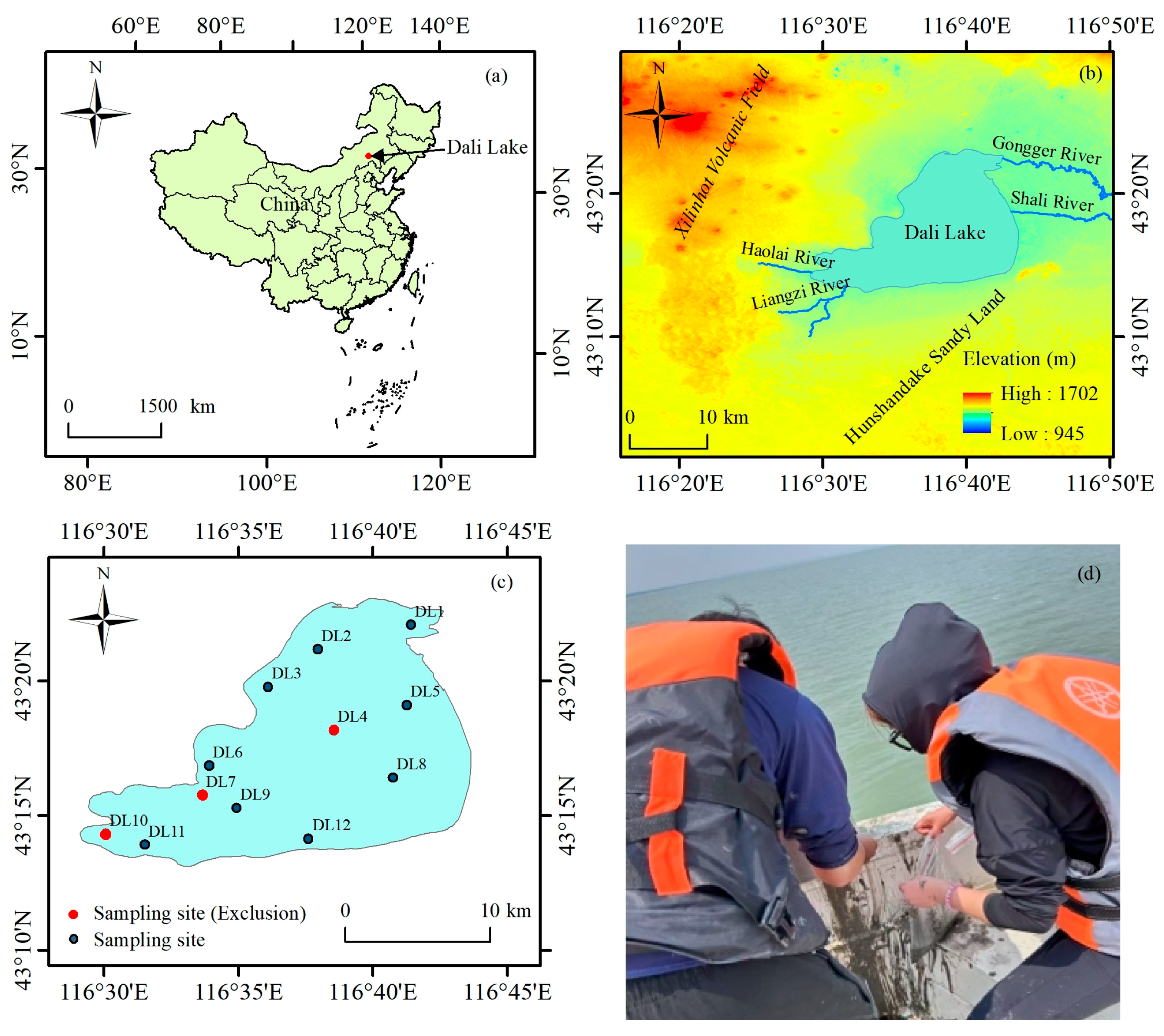
Dali Lake is located in the western part of Hexigten Banner, Chifeng City, Inner Mongolia Autonomous Region, at the southwestern foot of the Greater Hinggan Mountains, and it is the largest lake in Chifeng City, with an altitude of about 1200 m (Figure 1). Situated on the margin of the East Asian monsoon, it is a closed lake in the arid region of the Inner Mongolia Plateau and features a temperate continental climate. The lake water salinity ranges from 4322 to 5287 mg/L, with a pH value of approximately 9, classifying it as a soda-type brackish lake. To the south of Dali Lake lies the Hunshandake Sandy Land, and to the west is the Xilinhot volcanic field [11]. Dali Lake is the second largest freshwater lake in Inner Mongolia, it serves as a crucial water resource in eastern Inner Mongolia, and it has been listed as an Important Wetland in Asia. The regional landscape comprises lakes, grasslands, wetlands, woodlands, and sandy lands, and the wetland system is composed of plateau inland rivers and lakes centered around Dali Lake, which has weakly alkaline water. The lake bottom gradually decreases in depth from west to east, with an average water depth of approximately 7 m. The maximum depth reaches 9 m in the western part, while the shallowest part of the eastern shore is less than 1 m, making ship navigation difficult. The multi-year average precipitation is about 280 mm, and the evaporation reaches 1900 mm, approximately 7 times the precipitation amount [12], an imbalance that has led to the long-term reduction in the lake area. The multi-year average temperature is −1.5 °C.

2.2. Sample Collection

Surface sediment samples were collected from the Dalinuoer National Nature Reserve in July 2024 to explore the characteristics of the testate amoeba community composition and the influencing factors in Dali Lake. The Global Positioning System (GPS) was used for positioning, and the latitude and longitude of each sampling site were recorded (Table 1). A total of 12 sampling sites were set up across the whole lake area (Figure 1). Surface sediment samples were retrieved with a Petersen grab sampler. At sites DL2, DL3, DL6, DL8, DL9, and DL12, samples were taken from the top 0–2 cm layer. Strong riverine input resulted in high sedimentation rates at DL1, DL5, and DL11 near the river inlet, and the sampling depth was set to 0–10 cm. The sample size was insufficient for standard testate amoeba analysis at sampling sites DL4, DL7, and DL10 owing to predominantly sandy-bottom substrates; thus, these three samples were excluded from further analysis. The remaining nine sampling sites were evenly distributed across the eastern, central, and western regions and adequately represented the overall spatial distribution patterns across the whole lake. The collected surface sediment samples were placed in polyethylene self-sealing bags, numbered, kept away from light, and transported back to the laboratory for cryopreservation at −4°C for further treatments. Meanwhile, water samples were collected at a depth of 10 cm below the water surface for the subsequent determination of the following aquatic environmental factors: the pH, total nitrogen (TN), total phosphorus (TP), dissolved inorganic phosphorus (DIP), Chlorophyll a (Chl-a), total organic carbon (TOC), electrical conductivity (EC), and chemical oxygen demand (COD). Our prior research indicated that the pH and TDS had no depth-dependent variation in the lake, as complete vertical mixing prevented halocline formation [13]. Hence, sampling at 10 cm beneath the water surface was representative of the entire water body.

2.3. Research Methods

2.3.1. Determination of Nutrients in Lake Water

The TN was determined via the alkaline potassium persulfate–ultraviolet spectrophotometric method; the TP and DIP were measured using the ammonium molybdate spectrophotometric method; the Chl-a was determined via the acetone spectrophotometric method; the COD was analyzed via the sealed catalytic digestion method; the TOC was determined using an elemental analyzer (multi N/C 3300, Analytik Jena, Jena, Germany); and the pH and EC values were measured and recorded in situ with a water quality analyzer (DZB-718L, Leici, Shanghai, China) during sampling.

2.3.2. Extraction of Testate Amoebae

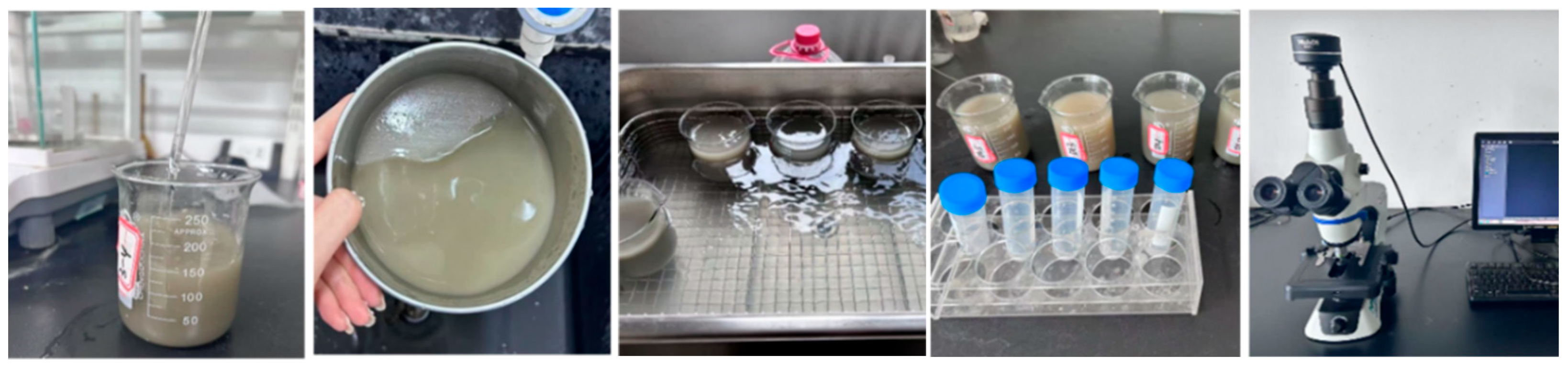
The testate amoeba extraction was mainly based on the method described by Booth et al. (2010) [14]. However, preliminary experiments revealed that this protocol, originally developed for peatland testate amoebae, was not fully applicable to Dali Lake sediments. Thus, the method was continuously optimized and modified through pre-experiments, and a set of extraction and identification procedures suitable for testate amoebae in Dali Lake was finally established. The detailed steps are as follows (Figure 2):
  • Approximately 5 g of sediment sample was weighed into a 200 mL beaker, rinsed with distilled water, and gently stirred with a distilled-water-rinsed glass rod for 10 min to separate testate amoebae from the sediment matrix.
  • The stirred suspension was sequentially sieved through 300 μm and 20 μm meshes to remove coarse particles and mineral detritus, with the 20–300 μm sediment fraction retained for microscopic observation.
  • The residue on the sieves was rinsed back into a 200 mL beaker with distilled water, adjusted to a constant volume of 200 mL, and then ultrasonicated for 5 min. Ultrasonication dispersed aggregated sediment particles and improved the testate amoeba separation efficiency. A 5-min treatment did not cause obvious damage to the tests.
  • The ultrasonicated suspension was re-sieved through 300 μm and 20 μm meshes in sequence, and the 20–300 μm fraction was retained as the observation sample.
  • The processed sample was transferred into a 50 mL centrifuge tube and allowed to stand for 24 h.
  • Microscopic observation and identification: After standing, the supernatant was completely removed using a disposable pipette. The remaining suspension was gently shaken, and an aliquot of 50 μL of the suspension was pipetted onto a glass slide and covered with a coverslip. Identification and quantitative counting were performed under an Olympus BX53 optical microscope, using 10× eyepieces combined with a 20× objective (total magnification: 200×) for routine observation and a 40× objective (total magnification: 400×) for verifying tiny tests. At least 150 tests were identified per sample. For samples with low testate amoeba abundance, no fewer than 6 slides were examined. Pre-experimental results indicated that at least 8 slides needed to be identified per sampling site. In total, 72 slides were analyzed for the surface sediment samples.

2.3.3. Analysis of Testate Amoeba Species Indices in Surface Sediments of Dali Lake

The testate amoeba species data from different sampling sites were analyzed and calculated using the Shannon–Wiener diversity, Pielou evenness, maximum diversity, and Simpson dominance indices.
The calculation formula of the Shannon–Wiener diversity index is as follows [15]:
H   =   - P i × log 2 P i
where Pi is the proportion of the individual number of the i-th species to the total number of individuals.
The calculation formula of the Pielou evenness index is as follows [16]:
J   =   H / ln S
where S is the number of species; H′ is the Shannon–Wiener diversity index.
The calculation formula of the maximum diversity index is as follows [16]:
H max   =   ln S
where S is the number of species; Hmax is the species diversity value under the condition of maximum evenness.
The calculation formula of the Simpson dominance index is as follows [17]:
S p   =   P i 2
where Pi is the proportion of the individual number of the i-th species to the total number of individuals. The Gini–Simpson index was calculated synchronously when computing the Simpson dominance index.

2.3.4. Statistical Analysis

Spearman’s rank correlation analysis was performed using Origin Pro 2024 (OriginLab Corporation, Northampton, MA, USA) to evaluate the correlations among species and between species and environmental factors. Detrended correspondence analysis (DCA) was conducted on the testate amoeba species table and environmental factor set using CANOCO 5 (Microcomputer Power, Ithaca, NY, USA), followed by redundancy analysis (RDA) to explore the relationships between the community/functional traits and environmental factors.

3. Results

3.1. Distribution Characteristics of Testate Amoebae in Dali Lake Surface Sediments

A total of eight species of testate amoebae belonging to five genera were identified in the remaining nine sediment samples (Table 2). All testate amoebae identified are common taxa in freshwater sediments worldwide, and no new species was found. The species number and shell abundance of testate amoebae in the sediments of Dali Lake were relatively poor compared with those of testate amoebae in peatlands and marshes. In terms of the relative abundance, the dominant species were Arcella discoides (35.64%), Phryganella acropodia (24.75%), and Arcella gibbosa (11.39%), while Centropyxis ecornis, Centropyxis aerophila type, and Arcella vulgaris showed relatively lower abundances. Testate amoebae that occurred in more than half of the samples included Phryganella acropodia, Arcella discoides, Hyalosphenia subflava, Trinema complanatum, and Arcella gibbosa. Among them, Phryganella acropodia was present in all sediment samples.
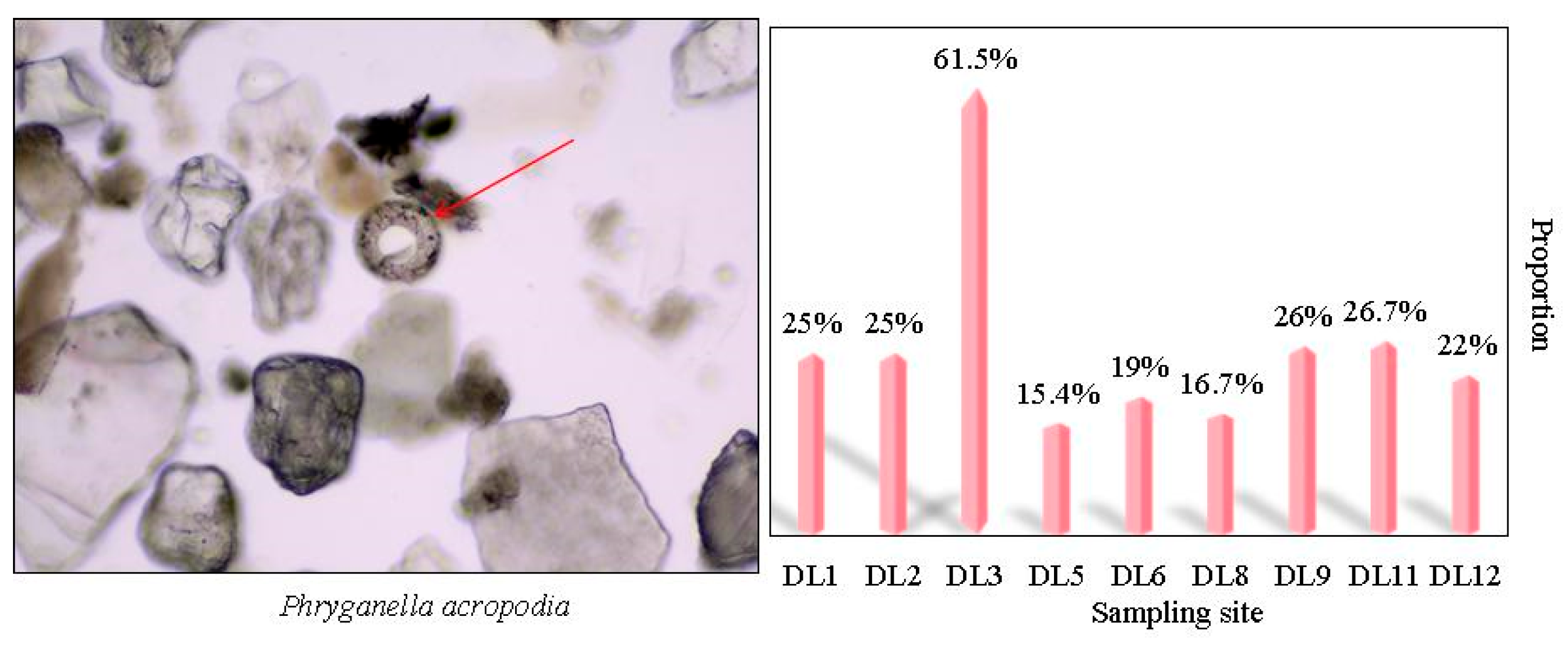
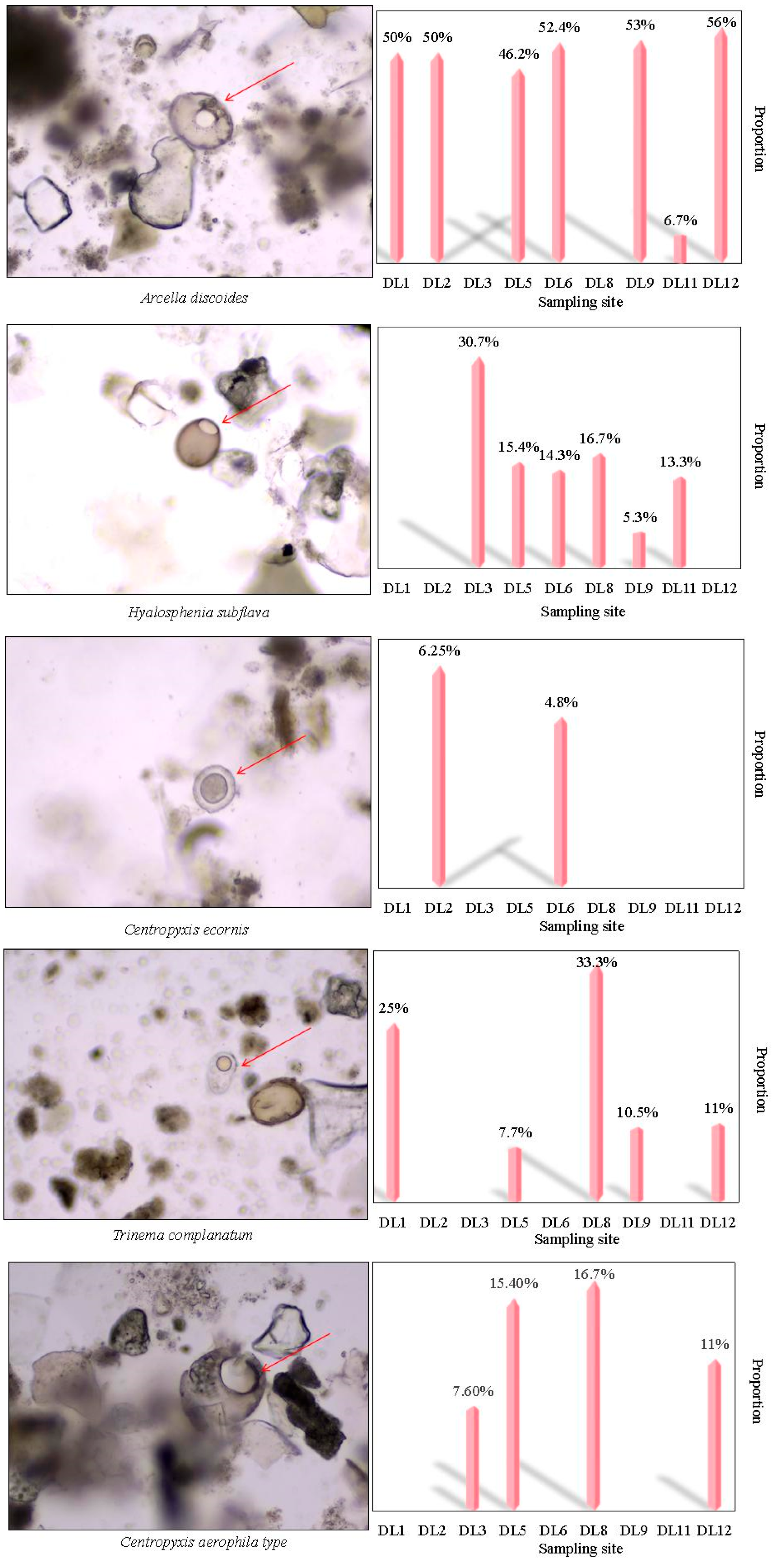
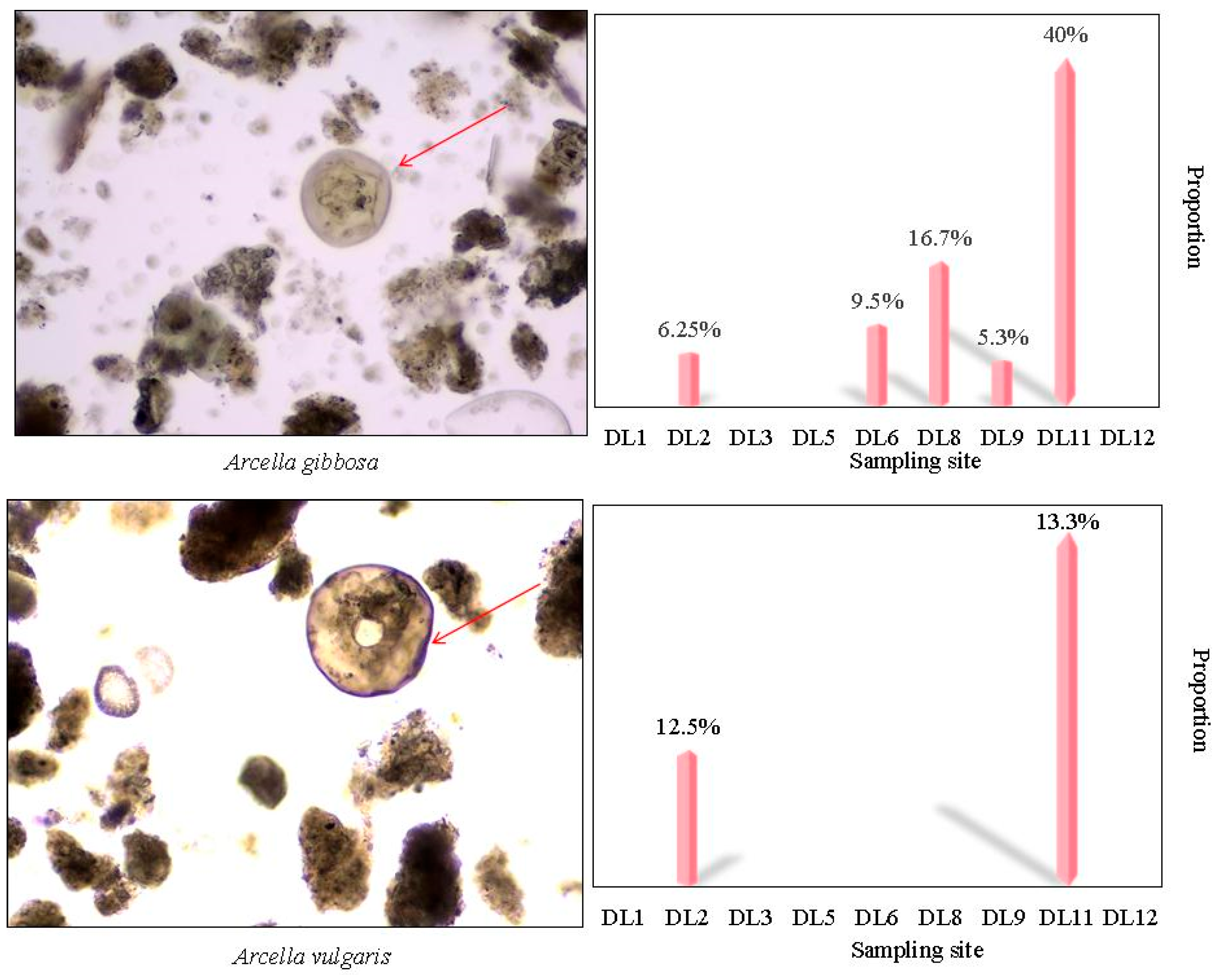
The spatial distributions of the dominant testate amoeba species at each sampling site and their microscopic images are presented in Figure 3. Arcella discoides dominated at sites DL1, DL2, DL5, DL6, DL9, and DL12, with the proportions varying from 50% to 56.0%. Hyalosphenia subflava and Phryganella acropodia were the dominant taxa at site DL3, reaching proportions of 30.7% and 61.5%, respectively. Trinema complanatum exclusively dominated at site DL8, accounting for 33.3% of the total community, and Arcella gibbosa prevailed solely at site DL11, with a proportion of 40.0%. Centropyxis ecornis was only found at DL2 and DL6, with proportions of 6.3% and 4.8%, respectively, while Arcella vulgaris was only detected at DL2 and DL11, with proportions of 12.5% and 13.3%, respectively.

3.2. Analysis of Species Indices of Testate Amoebae in Dali Lake Surface Sediments

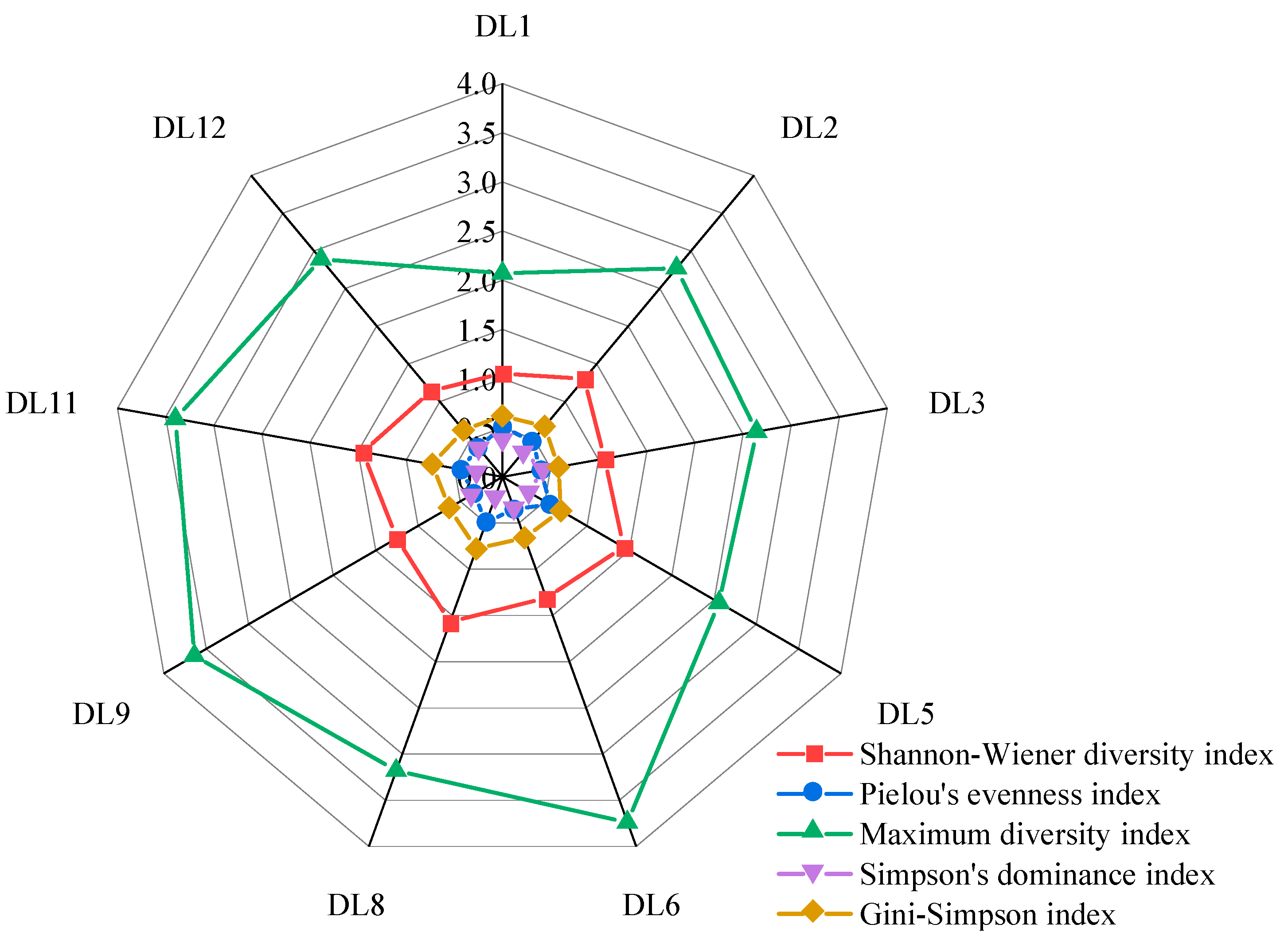
The Shannon–Wiener diversity indices of testate amoeba communities at different sampling sites ranged from 1.05 to 1.57 (Figure 4). Among all sites, DL1 had the lowest diversity index at 1.05, while DL8 had the highest value at 1.57. The diversity indices of testate amoeba communities varied between 2.07 at DL1 and 3.74 at DL9, and the Simpson dominance indices ranged from 0.22 at DL8 to 0.42 at DL3. DL3 had the lowest Gini–Simpson index (0.58), whereas DL8 had the highest value (0.78). The Pielou evenness indices of testate amoeba communities were distributed between 0.34 at DL9 and 0.56 at DL5.

3.3. Environmental Factors at Different Sampling Sites in Dali Lake

The water pH ranged from 8.34 to 9.5, indicating that the lake is mesohaline. The TP concentration was between 2.41 and 3.21 mg/L, which was higher than the TN. The DIP was approximately 1.0 mg/L and, in general, the trophic level of Dali Lake remained relatively low. The COD and TOC were measured at 21.55–73.64 mg/L and 75.46–98.23 mg/L, respectively (Table 3).

3.4. Correlation Analysis Between Testate Amoeba Communities and Environmental Factors

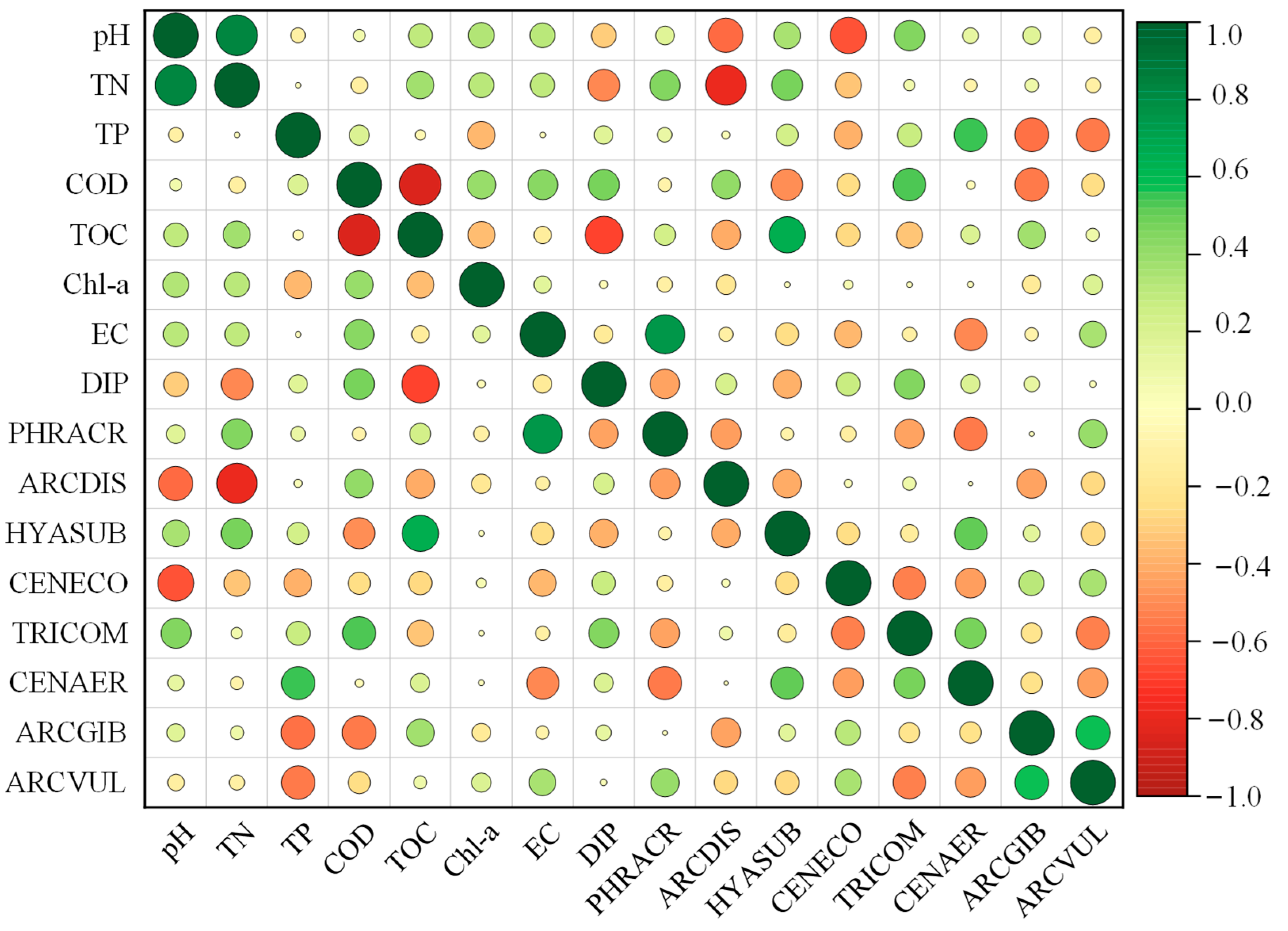
There was a strong negative correlation between Phryganella acropodia and the Centropyxis aerophila type, as well as between Arcella discoides and Trinema complanatum (Figure 5). Arcella discoides was significantly negatively correlated with Hyalosphenia subflava and Arcella gibbosa, and there was a significant positive correlation between Hyalosphenia subflava and Centropyxis aerophila. Centropyxis ecornis was strongly negatively correlated with Trinema complanatum and the Centropyxis aerophila type and strongly positively correlated with Arcella vulgaris. Trinema complanatum was strongly negatively correlated with Arcella vulgaris and strongly positively correlated with the Centropyxis aerophila type. The Centropyxis aerophila type was strongly negatively correlated with Arcella vulgaris, while Arcella gibbosa displayed a strong positive correlation with Arcella vulgaris.
Phryganella acropodia was strongly positively correlated with the EC and TP and strongly negatively correlated with the DIP. Arcella discoides was significantly negatively correlated with the TN and pH. Hyalosphenia subflava was strongly positively correlated with the TOC and TN and strongly negatively correlated with the COD. Centropyxis ecornis was strongly negatively correlated with the pH, and Trinema complanatum was strongly positively correlated with the COD, pH, and DIP. The Centropyxis aerophila type was strongly positively correlated with the TP and strongly negatively correlated with the EC. Arcella gibbosa was strongly negatively correlated with the COD and TP, and Arcella vulgaris was strongly negatively correlated with the TP.

3.5. Ordination Analysis of Testate Amoeba Communities and Environmental Factors

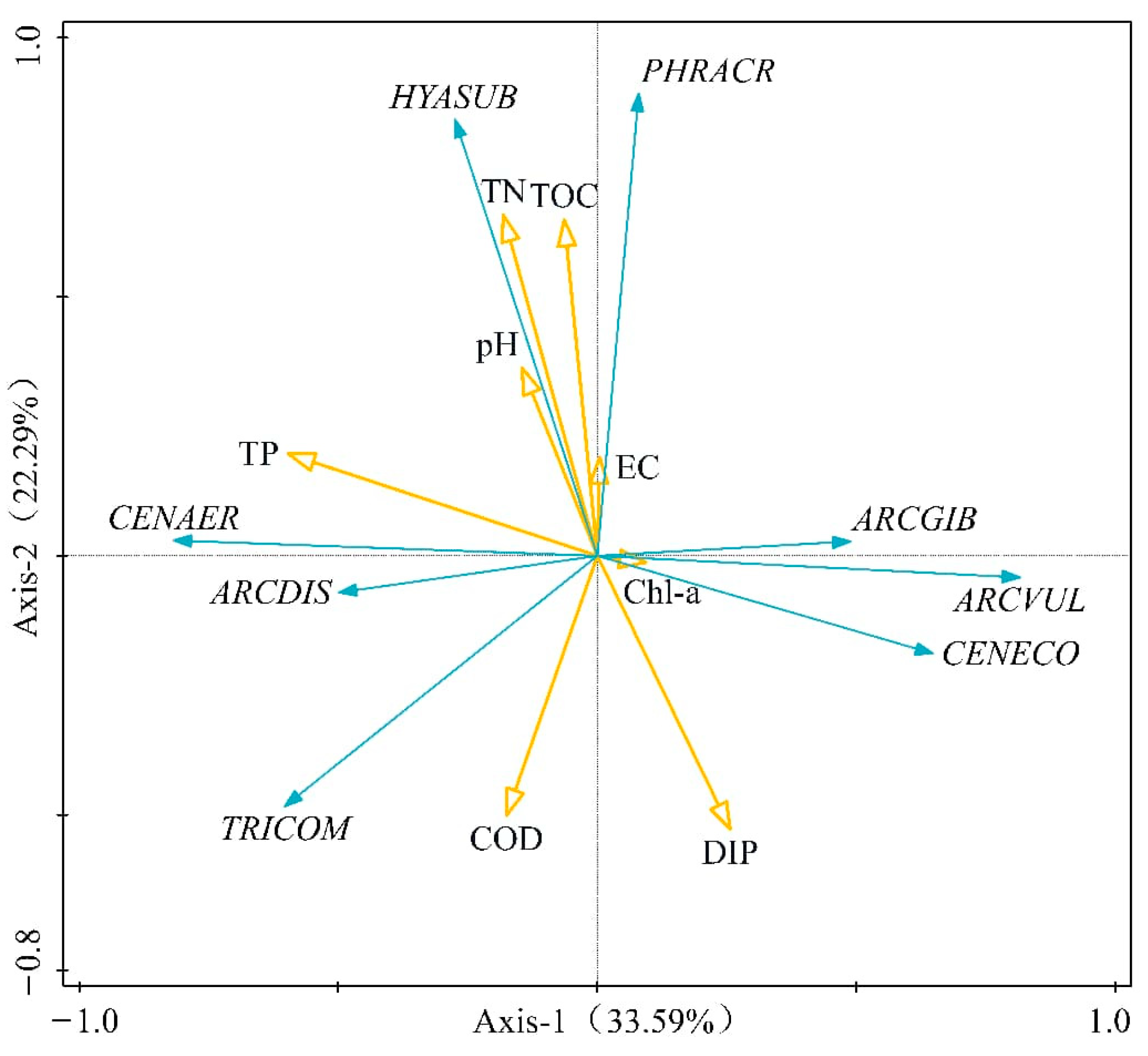
The RDA ordination results indicated that the TOC, TN, DIP, and TP had long vector lines and small angles with the ordination axes (Figure 6), suggesting that these environmental factors were strongly correlated with the testate amoeba community composition, while the EC and Chl-a presented weak correlations. Overall, the TOC and TN were the dominant environmental factors affecting the testate amoeba community composition in Dali Lake.

4. Discussion

Species diversity has long been recognized as one of the critical components in biodiversity research, as it not only reflects the complex interrelationships among organisms and environmental factors but also characterizes the richness of biological resources. As a key indicator of ecosystem health, species diversity serves as the fundamental basis for human survival and development, playing an irreplaceable role in maintaining ecosystem stability, facilitating biological evolution, and mitigating the impacts of climate change. According to previous studies, more than 2000 testate amoeba species have been described globally [18], and a considerable number of these species inhabit freshwater ecosystems and are thus widely used as reliable biological indicators [19,20]. In China, approximately 300 testate amoeba species have been recorded [21], including four newly discovered species. These taxa are of profound significance for the reconstruction of paleoclimates.
A total of eight species belonging to five genera of testate amoebae were identified in Dali Lake in this study—Phryganella acropodia, Arcella discoides, Hyalosphenia subflava, Centropyxis ecornis, Trinema complanatum, Centropyxis aerophila type, Arcella gibbosa, and Arcella vulgaris—which are common taxa in freshwater sediments worldwide. The testate amoeba species resources in Dali Lake were relatively poor, likely due to the following reasons: First, the number of samples collected in this study was smaller and the spatial coverage was insufficient compared with peatland investigations. Although the sampling sites in this study covered the main water area of Dali Lake, the spatial density was insufficient compared with that of global-scale surveys. Second, the species composition was closely related to the lake’s latitude and longitude, type, and trophic status, and the distributions of testate amoebae were mutually regulated by the habitat conditions. Testate amoebae are rarely found in oligotrophic lakes, and their highest abundance is reached in mesotrophic and eutrophic environments [22]. Moreover, excessive nutrient loading is not conducive to testate amoeba growth and reproduction. As aerobic organisms, testate amoebae are restricted by the low oxygen content in sediments, especially in deep sediment layers [23,24]. In addition, a large number of microorganisms, such as bacteria and fungi, inhabit sediments and compete with testate amoebae for living resources, and in lakes affected by agricultural or industrial pollution, contaminants could inhibit testate amoeba abundance through toxic effects. Although most testate amoebae exhibited cosmopolitan distributions, a few species were still restricted by geographical environments, resulting in distinct species assemblages among different regions and certain endemic characteristics of some taxa. Some species commonly found in peatlands or specific regions (e.g., the genera Amphitrema, Heleopera, Hyalosphenia, and Netzelia) were not recorded in this study [25,26,27,28,29,30], further illustrating the distinct alkaline habitat of Dali Lake.
Univariate and multivariate statistical methods have been widely applied to explore the relationships between testate amoeba community structures and environmental factors [31,32]. Paleoecological investigations of peatlands and swamps have indicated that the primary environmental factors controlling the testate amoeba community structure are the pH and water table depth. The dominant environmental regulating factors also vary across different regions. For example, studies conducted in the wetland systems on the Upper Peninsula of Michigan, USA [33], and in the Changbai Mountain wetlands of Northeast China [34] revealed that the wetland humidity ranked second only to the water table depth as a key controlling factor. Nevertheless, due to the different habitat types in the study area, the environmental factors governing the testate amoeba community structure in this study differed significantly from those governing the testate amoeba community structures in peatlands and swamps. Redundancy analysis of testate amoeba communities and environmental variables showed that the TOC and TN are the critical environmental factors shaping the testate amoeba community structure.
In addition, differences in temperature across seasons may affect species composition, and variations in body sizes among species lead to different degrees of water tolerance, which further causes seasonal variations in species composition [35]. Smaller species are more dominant in dry seasons, as they can survive in thinner water films. For example, Phryganella acropodia, an indicator species of arid environments, has an average shell size of approximately 20 μm, while the average shell diameter of testate amoebae in Dali Lake ranges from 20 to 60 μm, with Phryganella acropodia (approximately 20 μm) and Arcella discoides (approximately 45 μm) representing the smallest and largest diameters, respectively.
The significant correlations between the relative abundance of testate amoebae and environmental factors revealed in this study also provides an important modern analog for lake palaeohydrological and palaeoecological reconstruction. The decay-resistant tests of testate amoebae are well preserved in sediments; thus, the species–environment relationships established from surface sediments can be quantitatively applied to palaeoenvironmental reconstruction using sediment cores. According to our results, TOC, TN, DIP, and TP were the key environmental factors shaping the testate amoeba community composition in Dali Lake, and different species exhibited distinct response patterns to these factors (Figure 5 and Figure 6), implying that future research on sediment cores from this lake or similar closed plateau lakes can use testate amoeba assemblages to semi-quantitatively or quantitatively reconstruct the evolutionary history of the lake trophic status and water level fluctuations, thereby providing higher-resolution information on the lake ecosystem evolution.

5. Conclusions

In this study, the procedure for the extraction and identification of testate amoebae was optimized for testate amoebae in the surface sediments of Dali Lake, and a total of eight species belonging to five genera common in global freshwater sediments were identified via identification and statistical analyses. Arcella discoides dominated at sites DL1, DL2, DL5, DL6, DL9, and DL12; Hyalosphenia subflava and Phryganella acropodia were the dominant taxa at site DL3; Trinema complanatum exclusively dominated at site DL8; Arcella gibbosa prevailed solely at site DL11; Centropyxis ecornis was only found at DL2 and DL6; and Arcella vulgaris was only found at DL2 and DL11. Dali Lake is mesohaline; the lake water is thoroughly mixed from top to bottom; and according to the results of the RDA ordination, TOC, TN, DIP, and TP are the key environmental factors affecting the testate amoeba community composition.

Author Contributions

B.S.: conceptualization, writing—original draft. Y.G.: methodology, writing—original draft. C.W.: methodology, writing—review and editing. Z.Z.: supervision, writing—review and editing. All authors have read and agreed to the published version of the manuscript.

Funding

This research was funded by the Regional Project of the National Natural Science Foundation of China [grant number 52369014, 52260028, and 52260029].

Data Availability Statement

The data presented in this study are available from the corresponding author due to ongoing related research.

Conflicts of Interest

The authors declare no conflicts of interest.

References

  1. Gu, X.; Tsyganov, A.N.; Mazei, N.G.; Babeshko, K.V.; Chernyshov, V.A.; Novenko, E.Y.; Mazei, Y.A. Testate amoebae as paleohydrological indicators in the boreal and subarctic permafrost mires in the western part of the central Siberian Plateau. Quat. Sci. Rev. 2025, 349, 109108. [Google Scholar] [CrossRef]
  2. Mckeown, M.M.; Burge, O.R.; Richardson, S.J.; Wood, J.R.; Mitchell, E.A.; Wilmshurst, J.M. Biomonitoring tool for New Zealand peatlands: Testate amoebae and vascular plants as promising bioindicators. J. Environ. Manag. 2024, 354, 120243. [Google Scholar] [CrossRef] [PubMed]
  3. Malysheva, E.; Mazei, N.; Shapovalov, M.; Saprykin, M.A.; Mazei, Y.A. Freshwater testate amoebae in the Belaya River basin (Northwestern Caucasus). Inland Water Biol. 2017, 10, 92–96. [Google Scholar] [CrossRef]
  4. Charman, D.J.; Brown, A.D.; Hendon, D.; Karofeld, E. Testing the relationship between Holocene peatland palaeoclimate reconstructions and instrumental data at two European sites. Quat. Sci. Rev. 2004, 23, 137–143. [Google Scholar] [CrossRef]
  5. Massey, A.C.; Gehrels, W.R.; Charman, D.J.; White, S.V. An intertidal foraminifera-based transfer function for reconstructing Holocene sea-level change in southwest England. J. Foraminifer. Res. 2006, 36, 215–232. [Google Scholar] [CrossRef]
  6. Wang, K.; Xu, H.-H.; Liu, B.-C.; Bai, J.; Wang, Y.; Tang, P.; Lu, J.-F.; Wang, Y. Shallow-marine testate amoebae with internal structures from the Lower Devonian of China. iScience 2023, 26, 106678. [Google Scholar] [CrossRef] [PubMed]
  7. Li, X.; Han, D.; Cong, J.; Gao, C.; Wang, G. Hydroclimate Changes Based on Testate Amoebae in the Greater Khingan Mountains’ Peatland (NE China) during the Last Millennium. Atmosphere 2024, 15, 314. [Google Scholar] [CrossRef]
  8. Liu, L.; Zhao, H.; Li, H.; Bu, Z.; Wang, S. Mire surface wetness is jointly determined by climate and geothermy: A case from Chichi peatland in the Changbai Mountains. Quat. Sci. 2023, 43, 163–172. [Google Scholar]
  9. Bredariol, J.V.; De Matos, M.H.D.O.; Souza-Silva, A.C.; Meira, B.R.; Lansac-Tôha, F.A.; Velho, L.F.M. Rethinking aquatic bioindicators: Testate amoebae versus metazoans in plankton samples for assessing anthropogenic impacts on freshwater ecosystems. Environ. Monit. Assess. 2026, 198, 261. [Google Scholar] [CrossRef] [PubMed]
  10. Sysoev, V.V.; Seleznev, D.G.; Tran, H.Q.; Reshetnikov, F.Y.; Tikhonenkov, D.V. Can the morphological traits of benthic testate amoebae in a freshwater lake be indicators of depth and environmental conditions? Limnology 2025, 26, 31–43. [Google Scholar] [CrossRef]
  11. Zhen, Z.; Li, W.; Xu, L.; Zhang, X.; Zhang, J. Lake-level variation of Dali Lake in mid-east of inner Mongolia since the Late Holocene. Quat. Int. 2021, 583, 62–69. [Google Scholar] [CrossRef]
  12. Jiang, M.; Han, Z.; Li, X.; Wang, Y.; Stevens, T.; Cheng, J.; Lv, C.; Zhou, Y.; Yang, Q.; Xu, Z.; et al. Beach ridges of Dali Lake in Inner Mongolia reveal precipitation variation during the Holocene. J. Quat. Sci. 2020, 35, 716–725. [Google Scholar] [CrossRef]
  13. Zhen, Z.; Li, C.; Zhang, S.; Li, W.B.; Sun, B.; Zhu, Y.H.; Yang, J.H. Major ions in Dali Lake during the icebound season. Environ. Chem. 2015, 34, 1901–1910. (In Chinese) [Google Scholar]
  14. Booth, R.; Lamentowicz, M.; Charman, D. Preparation and analysis of testate amoebae in peatland palaeoenvironmental studies. Mires Peat 2010, 7, 2. [Google Scholar] [CrossRef]
  15. Shannon, C.E. A mathematical theory of communication. Bell Syst. Tech. J. 1948, 27, 379–423. [Google Scholar] [CrossRef]
  16. Pielou, E.C. The measurement of diversity in different types of biological collections. J. Theor. Biol. 1966, 13, 131–144. [Google Scholar] [CrossRef]
  17. Simpson, E.H. Measurement of diversity. Nature 1949, 163, 688. [Google Scholar] [CrossRef]
  18. Mitchell, E.A.; Charman, D.J.; Warner, B.G. Testate amoebae analysis in ecological and paleoecological studies of wetlands: Past, present and future. Biodivers. Conserv. 2008, 17, 2115–2137. [Google Scholar]
  19. Nguyen-Viet, H.; Gilbert, D.; Bernard, N.; Mitchell, E.; Badot, P.-M. Relationship between atmospheric pollution characterized by NO2 concentrations and testate amoebae density and diversity. Acta Protozool. 2004, 43, 233–239. [Google Scholar]
  20. Kuuri-Riutta, O.; Väliranta, M.; Tuittila, E.S. Literature review on testate amoebae as environmental indicators and as a functional part of the microbial community in northern peatlands. Mires Peat 2022, 28, 28. [Google Scholar] [CrossRef]
  21. Bobrov, A.; Mazei, Y.; Chernyshov, V.; Gong, Y.; Feng, W. Testate amoebae communities from some freshwater and soil habitats in China (Hubei and Shandong Provinces). Front. Earth Sci. 2012, 6, 1–9. [Google Scholar] [CrossRef]
  22. Ju, L.; Yang, J.; Liu, L.; Wilkinson, D.M. Diversity and distribution of freshwater testate amoebae (protozoa) along latitudinal and trophic gradients in China. Microb. Ecol. 2014, 68, 657–670. [Google Scholar] [CrossRef] [PubMed]
  23. Mazei, Y.A.; Tsyganov, A.N.; Bubnova, O.A. Structure of a community of testate amoebae in a Sphagnum dominated bog in upper sura flow (Middle Volga Territory). Biol. Bull. 2007, 34, 382–394. [Google Scholar] [CrossRef]
  24. Charqueño Celis, N.F.; Garibay, M.; Sigala, I.; Brenner, M.; Echeverria-Galindo, P.; Lozano, S.; Massaferro, J.; Pérez, L. Testate amoebae (Amoebozoa: Arcellinidae) as indicators of dissolved oxygen concentration and water depth in lakes of the Lacandón Forest, southern Mexico: Testate amoebae from Lacandón Forest lakes, Mexico. J. Limnol. 2019, 79, 82–91. [Google Scholar] [CrossRef]
  25. Zheng, X.; Amesbury, M.J.; Hope, G.; Martin, L.F.; Mooney, S.D. Testate amoebae as a hydrological proxy for reconstructing water-table depth in the mires of south-eastern Australia. Ecol. Indic. 2019, 96, 701–710. [Google Scholar] [CrossRef]
  26. Wilmshurst, J.M.; Wiser, S.K.; Charman, D.J. Reconstructing Holocene water tables in New Zealand using testate amoebae: Differential preservation of tests and implications for the use of transfer functions. Holocene 2003, 13, 61–72. [Google Scholar] [CrossRef]
  27. Zhang, H.; Amesbury, M.J.; Ronkainen, T.; Charman, D.J.; Gallego-Sala, A.V.; Väliranta, M. Testate amoeba as palaeohydrological indicators in the permafrost peatlands of north-east European Russia and Finnish Lapland. J. Quat. Sci. 2017, 32, 976–988. [Google Scholar] [CrossRef]
  28. Mitchell, E.; Buttler, A.; Grosvernier, P.; Rydin, H.; Albinsson, C.; Greenup, A.L.; Heijmans, M.M.P.D.; Hoosbeek, M.R.; Saarinen, T. Relationships among testate amoebae (Protozoa), vegetation and water chemistry in five Sphagnum-dominated peatlands in Europe. New Phytol. 2000, 145, 95–106. [Google Scholar] [CrossRef]
  29. Booth, R.K.; Zygmunt, J.R. Biogeography and comparative ecology of testate amoebae inhabiting Sphagnum-dominated peatlands in the Great Lakes and Rocky Mountain regions of North America. Divers. Distrib. 2005, 11, 577–590. [Google Scholar] [CrossRef]
  30. Wang, W.; Gao, X.; Ndayishimiye, J.C.; Lara, E.; Lahr, D.J.; Qian, H.; Ren, K.; Chen, H.; Yang, J. Population and molecular responses to warming in Netzelia tuberspinifera–An endemic and sensitive protist from East Asia. Sci. Total Environ. 2022, 806, 150897. [Google Scholar] [CrossRef] [PubMed]
  31. Marcisz, K.; Colombaroli, D.; Jassey, V.E.; Tinner, W.; Kołaczek, P.; Gałka, M.; Karpińska-Kołaczek, M.; Słowiński, M.; Lamentowicz, M. A novel testate amoebae trait-based approach to infer environmental disturbance in Sphagnum peatlands. Sci. Rep. 2016, 6, 33907. [Google Scholar] [CrossRef] [PubMed]
  32. Lamentowicz, M.; Bragazza, L.; Buttler, A.; Jassey, V.; Mitchell, E. Seasonal patterns of testate amoeba diversity, community structure and species–environment relationships in four Sphagnum-dominated peatlands along a 1300 m altitudinal gradient in Switzerland. Soil Biol. Biochem. 2013, 67, 1–11. [Google Scholar] [CrossRef]
  33. Booth, R.K. Ecology of testate amoebae (Protozoa) in two Lake Superior coastal wetlands: Implications for paleoecology and environmental monitoring. Wetlands 2001, 21, 564–576. [Google Scholar] [CrossRef]
  34. Li, H.K.; Wang, S.Z.; Bu, Z.J.; Zhao, H.Y.; An, Z.S.; Mitchell, E.A.D.; Ma, Y.Y. The testate amoebae in Sphagnum peatlands in Changbai Mountains. Wetl. Sci. 2010, 8, 249–255. (In Chinese) [Google Scholar]
  35. Ndayishimiye, J.C.; Ju, L.; Li, H.; Yang, X.; Liu, Z.; Yang, J. Temperature transfer functions based on freshwater testate amoebae from China. Eur. J. Protistol. 2019, 69, 152–164. [Google Scholar] [CrossRef] [PubMed]
Figure 1. The location of Dali Lake. (a) Dali Lake in China. (b) The terrain around Dali Lake. (c) The surface sediment sampling sites. (d) A real-scene field sampling photo.
Water 18 01521 g001
Figure 2. Real photos taken during the processing of testate amoeba samples.
Water 18 01521 g002
Figure 3. Relative abundance of each species. The red arrow indicates the target taxon.
Water 18 01521 g003aWater 18 01521 g003bWater 18 01521 g003c
Figure 4. Various indices of testate amoebae at different sites in Dali Lake.
Water 18 01521 g004
Figure 5. Spearman rank correlation coefficients between environment factors and testate amoeba species.
Water 18 01521 g005
Figure 6. Ordination plot of RDA between testate amoeba species and environment factors.
Water 18 01521 g006
Table 1. Coordinates and water depths of sampling sites.
Sampling SiteLongitude (E)Latitude (N)Depth (m)
DL1116°41′44.2″43°22′11.5″5.8
DL2116°31′59.2″43°20′59.7″5.95
DL3116°35′53.4″43°19′54.7″6.4
DL4116°37′51.9″43°17′55.7″6.5
DL5116°40′37.9″43°18′48.8″7.3
DL6116°33′58.1″43°16′59.4″6.3
DL7116°33′40.2″43°15′35.9″9.09
DL8116°39′57.8″43°15′56.8″6.3
DL9116°35′20.6″43°14′59.9″8.59
DL10116°30′4.3″43°14′16.9″7.4
DL11116°30′58.6″43°14′17.5″6.82
DL12116°37′59.6″43°14′5.1″8.59
Table 2. Species, codes, relative abundances, and frequencies of testate amoeba taxa.
NumberSpecies NameCodeRelative Abundance (%)Frequency
1Phryganella acropodiaPHRACR24.759
2Arcella discoidesARCDIS35.647
3Hyalosphenia subflavaHYASUB10.896
4Centropyxis ecornisCENECO1.492
5Trinema complanatumTRICOM8.425
6Centropyxis aerophila typeCENAER4.464
7Arcella gibbosaARCGIB11.395
8Arcella vulgarisARCVUL2.972
Table 3. Environmental factor distributions at different sites in Dali Lake.
SitepHTN (mg/L)TP (mg/L)COD (mg/L)TOC (mg/L)Chl-a (mg/m3)EC (ms/cm)DIP (mg/L)
DL19.50.912.4173.6481.290.9318261.31
DL28.340.822.6839.5375.460.8216521.35
DL39.460.982.9723.0996.340.7118010.95
DL58.480.822.8339.6586.390.8316501.28
DL68.470.833.0721.5593.250.6911021.24
DL89.50.92.8531.2390.260.7114551.61
DL98.570.832.957.2385.680.6418501.59
DL119.470.863.2122.4498.230.7118301.01
DL128.460.782.9231.4487.410.3216471.33
Disclaimer/Publisher’s Note: The statements, opinions and data contained in all publications are solely those of the individual author(s) and contributor(s) and not of MDPI and/or the editor(s). MDPI and/or the editor(s) disclaim responsibility for any injury to people or property resulting from any ideas, methods, instructions or products referred to in the content.