1. Introduction
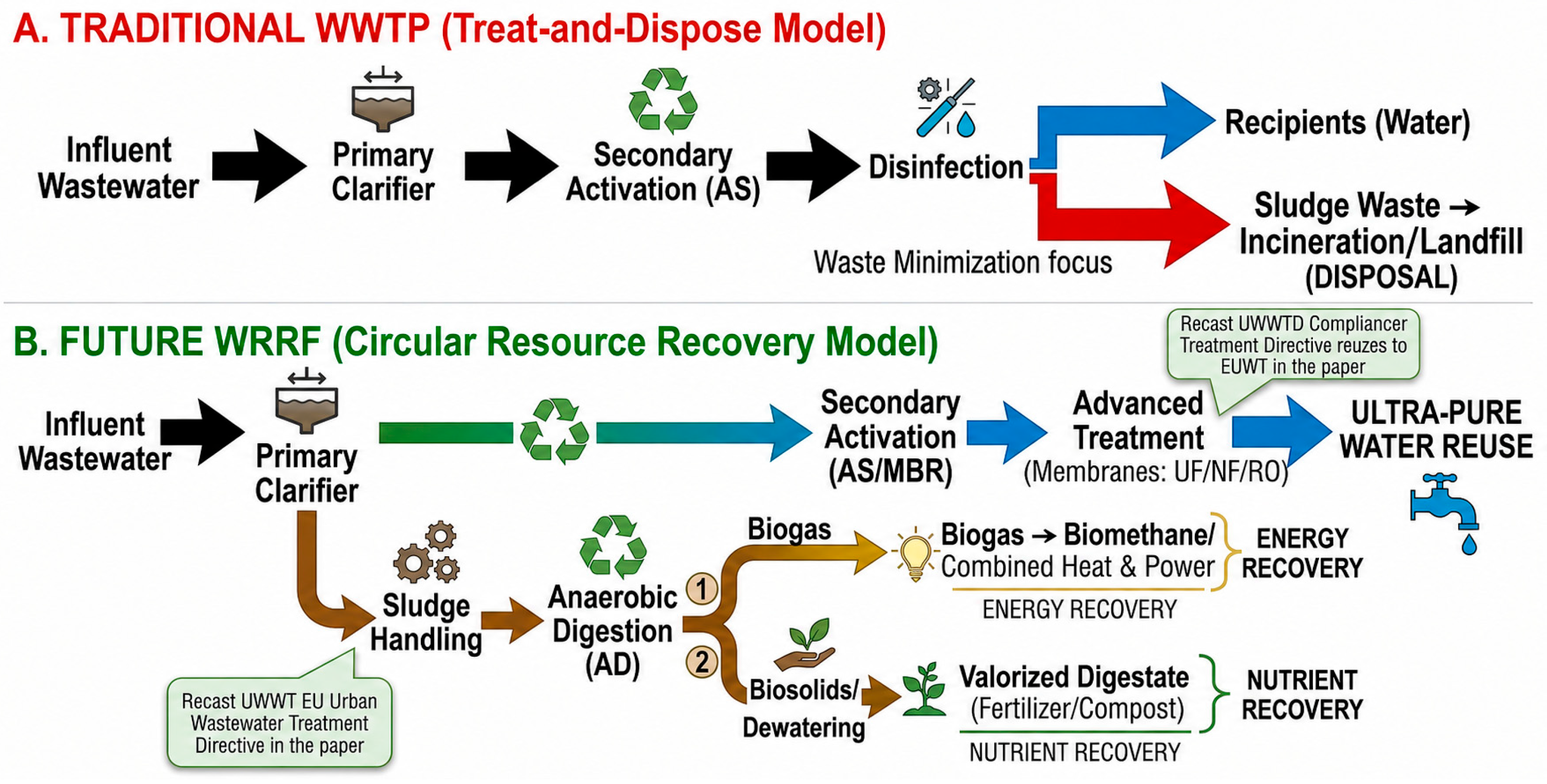
The management of sewage sludge is undergoing a significant transition in municipal wastewater treatment. For decades, the prevailing philosophy in sanitary engineering largely followed a linear approach in which pollutants were removed from the waterline, concentrated into the sludge line, stabilized to reduce putrescibility, and then managed through disposal routes such as landfilling, incineration, or land application [
1,
2]. Although this approach has been effective for basic public-health protection, it is increasingly regarded as unsustainable under conditions of resource scarcity, substantial sludge-management and disposal costs, and tightening environmental regulation, including the recast Urban Wastewater Treatment Directive in the European Union [
3,
4]. Accordingly, wastewater treatment plants are increasingly being reframed as Water Resource Recovery Facilities (WRRFs), in which residual streams are viewed not as wastes but as secondary resources containing recoverable energy, nutrients, organic carbon, and water [
5].
The conceptual shift from conventional treatment and disposal toward circular resource recovery is summarized in
Figure 1.
It is important to recognize that the properties of sewage sludge, and therefore of the digestate produced after anaerobic digestion, depend strongly on influent origin and plant configuration. In municipal systems, urban wastewater can comprise different mixtures of domestic wastewater, non-domestic discharges, and urban runoff, while upstream industrial inputs and combined sewer conditions can substantially alter organic composition, inorganic content, contaminant profiles, and biodegradability [
3,
4]. Following anaerobic digestion, these differences remain reflected in the physicochemical characteristics of the resulting digestate, which condition its suitability for downstream nutrient recovery and membrane-based processing [
6,
7].
Despite its considerable resource potential, digestate presents substantial mechanical and hydrodynamic challenges for downstream separation. Digested sludge behaves as a complex non-Newtonian suspension whose apparent viscosity increases strongly with solids concentration, and its rheology is further shaped by treatment history and solids composition [
8,
9]. In parallel, extracellular polymeric substances (EPS) strongly influence floc structure, water retention, and sludge dewaterability [
10]. EPS should not be treated as a single uniform fraction, because bound and soluble EPS have different implications for downstream processing. Bound EPS is commonly described as tightly bound EPS (TB-EPS), which is closely associated with cell surfaces and contributes to floc cohesion, and loosely bound EPS (LB-EPS), which forms a more hydrated outer layer affecting inter-floc interactions, water retention, and dewaterability [
10,
11]. In contrast, soluble EPS and soluble microbial products (SMPs) are free macromolecules in the bulk liquid phase, including proteins, polysaccharides, humic-like substances, and other cell- or hydrolysis-derived compounds [
11,
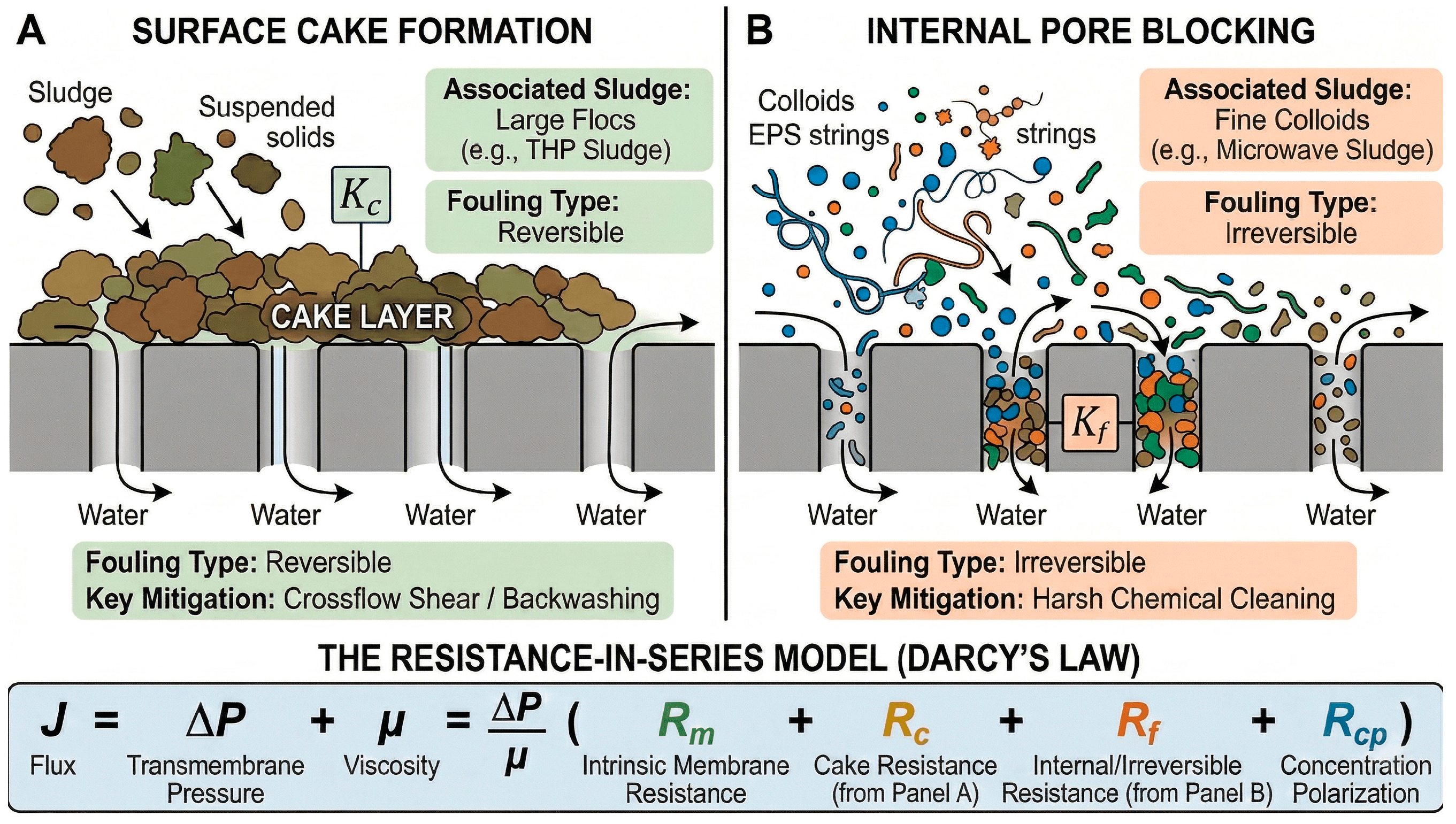
12]. These soluble and colloidal fractions are particularly relevant for membrane filtration because they can adsorb onto membrane surfaces, constrict or block pores, and promote gel-layer formation, thereby increasing hydraulic resistance in pressure-driven systems [
12,
13]. Pretreatment can therefore create a trade-off: disruption of bound EPS may support hydrolysis and alter dewaterability, but it may also increase the soluble biopolymer load available to foul downstream membranes. Anaerobic digestion effectively stabilizes organic matter and enables energy recovery; however, hydrolysis remains its principal biological bottleneck. This limitation necessitates pretreatment, which can subsequently complicate membrane separation if the digestate retains challenging rheological and colloidal properties [
14].
In this context, membrane separation technologies have emerged as key enablers for digestate valorization. Pressure-driven membrane methods can be divided into clarification-oriented processes, such as microfiltration and ultrafiltration, and tighter separation processes, such as nanofiltration and reverse osmosis. In contrast, membrane distillation and electrodialysis represent advanced thermal and electrochemical membrane-based approaches that can support nutrient concentration, ammonia recovery, and high-quality water production from liquid digestate fractions [
7,
15,
16,
17]. Their performance and long-term stability are strongly governed by feedstock properties, especially viscosity, particle-size distribution, dissolved and colloidal organic matter, and ionic composition, all of which affect hydrodynamics, mass-transfer resistance, fouling, and scaling propensity [
17,
18,
19].
Recent studies show that membrane-based digestate treatment is increasingly moving from single-unit demonstrations toward integrated treatment trains designed for specific recovery targets. In pressure-driven systems, ultrafiltration is commonly used to remove residual solids and colloids before nanofiltration or reverse osmosis, which can produce a reusable permeate and a nutrient-enriched concentrate for further fertilizer recovery [
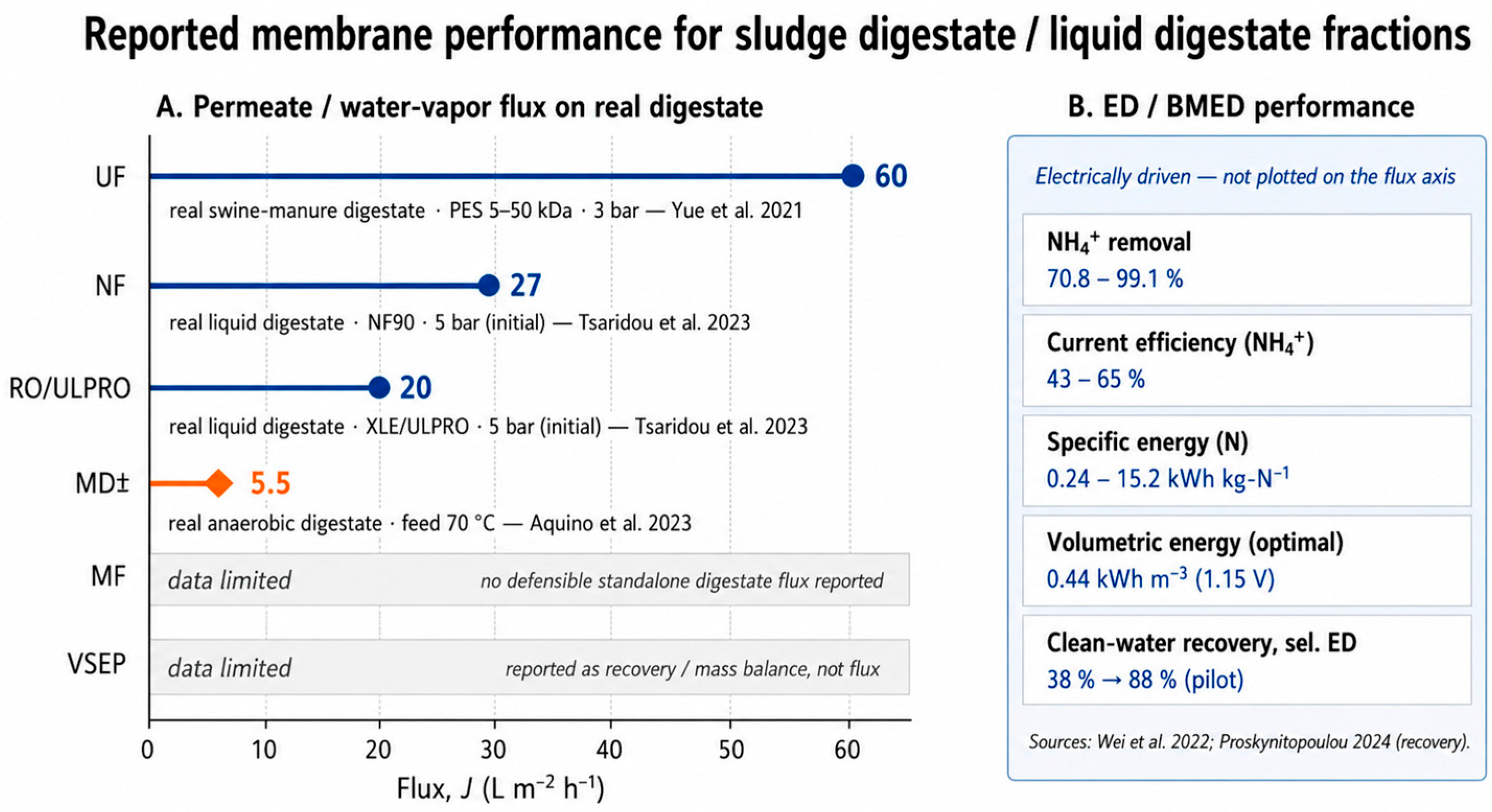
20]. Electro-driven separation has also gained attention. Pilot-scale work on the liquid fraction of digested sewage sludge has shown that inserting selective electrodialysis between ultrafiltration and reverse osmosis can improve fractionation of ammonium, phosphate, and potassium and increase clean-water recovery from approximately 38% to 88%, although performance remains sensitive to dissolved organic matter and fouling [
21]. Membrane distillation has also been investigated for ammonia recovery from liquid digestate [
22], while solar-driven and photothermal MD configurations are developing rapidly, although most reported applications still focus on saline rather than digestate-type feeds [
23].
Taken together, recent membrane studies indicate that digestate valorization usually requires complementary unit operations rather than a single membrane process. Clarification, selective ion separation, nutrient concentration, ammonia recovery, and water reuse are normally achieved through staged systems whose performance depends strongly on feed conditioning, fouling control, and downstream product requirements [
7,
20]. These studies also highlight recurring implementation barriers, including colloidal and macromolecular fouling, scaling, energy demand, cleaning requirements, and the lack of long-term full-scale validation. It is therefore useful to examine membrane-based digestate valorization not only by membrane type, but also through the links between feedstock properties, pretreatment-induced changes, and downstream separation behavior.
Existing reviews have advanced the field considerably, but they tend to treat the relevant subjects in isolation. Digestate management, membrane-based nutrient recovery, membrane fouling, and sludge pretreatment are each the subject of dedicated reviews, yet relatively few works trace how upstream choices—feedstock origin, rheology, EPS and SMP release, and pretreatment severity—propagate forward into membrane flux, fouling and scaling behavior, energy demand, techno-economic implications, and scale-up constraints. As a result, conditioning decisions and downstream separation performance are often discussed separately rather than as a connected treatment train. This review addresses that gap by treating the pretreatment–membrane sequence as a single conditioning-to-separation pathway and by interpreting reported performance through that lens, while making clear where the supporting evidence is robust and where it remains fragmentary.
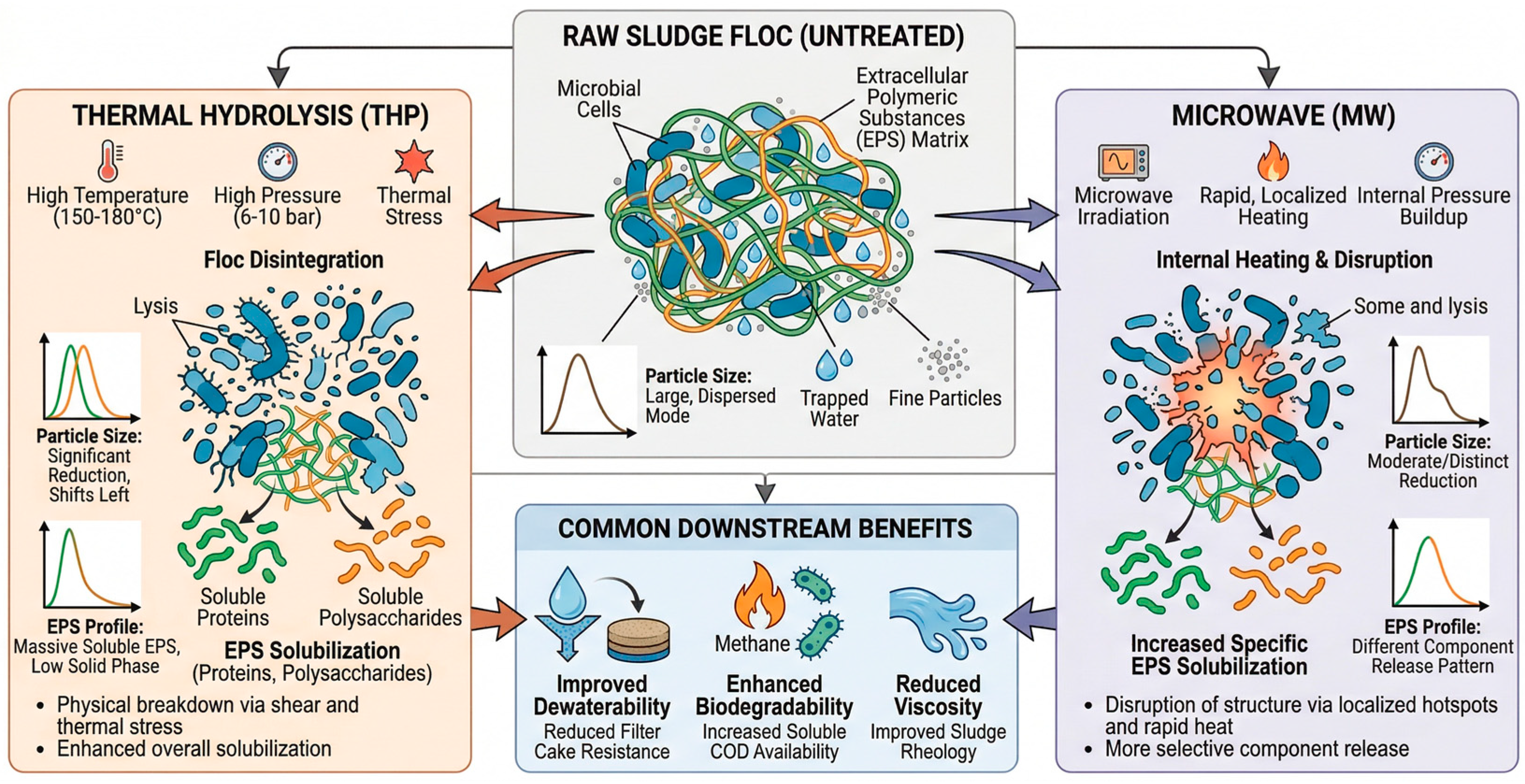
This review synthesizes recent advances in the pretreatment–membrane nexus, focusing on how digestate feedstock characteristics and pretreatment-induced transformations physically condition membrane separation performance. While selected pretreatment mechanisms are discussed using sludge-based literature where it provides transferable physicochemical insight, the review maintains a digestate-focused perspective and explicitly notes where extrapolation is uncertain. Thermal hydrolysis and microwave conditioning are treated as representative high-intensity pretreatments because they have an established empirical basis for increasing solubilization, modifying sludge rheology, and altering particle-size distributions prior to digestion and downstream separation [
14,
24,
25]. For downstream separation, the review covers pressure-driven membranes, membrane distillation, and electrodialysis as complementary routes for water and nutrient recovery from liquid digestate fractions, with emphasis on sustainable-flux thinking, molecular fouling and scaling mechanisms, and process integration rather than isolated performance maxima [
15,
16,
26].
2. Review Methodology and Literature-Selection Strategy
This review was prepared using a structured narrative approach. The aim was to identify and compare studies dealing with sludge digestate, liquid digestate fractions, digested sludge liquors, and related high-strength wastewater streams in which pretreatment and membrane-based separation were connected to resource recovery. A full meta-analysis was not considered appropriate because the available studies differ substantially in feedstock origin, solids content, pretreatment conditions, membrane type, operating mode, and reported performance indicators. Therefore, the review focused on comparing reported trends, mechanisms, performance ranges, and practical limitations rather than statistically pooling the results.
The literature search was carried out using Web of Science, Scopus, and ScienceDirect. Google Scholar was also used as a supplementary search tool to locate additional peer-reviewed papers and relevant institutional or regulatory documents. In addition, the reference lists of key review papers and highly relevant experimental studies were checked manually to identify further sources.
The search terms were selected to cover four main areas: feedstock type, pretreatment, membrane technology, and recovery performance. The main keywords included “sludge digestate”, “anaerobic digestate”, “liquid fraction of digestate”, “digested sludge centrate”, “membrane filtration”, “microfiltration”, “ultrafiltration”, “nanofiltration”, “reverse osmosis”, “electrodialysis”, “bipolar membrane electrodialysis”, “membrane distillation”, “thermal hydrolysis”, “microwave pretreatment”, “alkaline pretreatment”, “ozonation”, “extracellular polymeric substances”, “EPS”, “soluble microbial products”, “SMP”, “fouling”, “scaling”, “nutrient recovery”, “ammonium recovery”, “phosphorus recovery”, “potassium recovery”, “volatile fatty acids”, “rheology”, and “solubilization”. Search strings were built by combining feedstock terms with process and outcome terms using Boolean operators. For example, feedstock terms such as (“sludge digestate” OR “anaerobic digestate” OR “liquid fraction of digestate” OR “digested sludge centrate”) were combined with membrane terms such as (“membrane filtration” OR “microfiltration” OR “ultrafiltration” OR “nanofiltration” OR “reverse osmosis” OR “electrodialysis” OR “bipolar membrane electrodialysis” OR “membrane distillation”) and recovery or performance terms such as (“nutrient recovery” OR “ammonium recovery” OR “phosphorus recovery” OR “potassium recovery” OR “volatile fatty acids” OR “fouling” OR “scaling”) using the operator AND. This approach was used to capture studies linking feedstock characteristics, pretreatment effects, membrane performance, fouling behavior, and recovery outcomes.
The search covered literature published from 2000 to June 2026, which was the final search date used during manuscript revision. Particular attention was given to studies published from 2010 onward, because most digestate-specific membrane studies and resource-recovery-oriented membrane applications have been reported during the last decade. Earlier studies were included when they provided important mechanistic background, such as resistance-in-series modeling, concentration polarization, critical flux, EPS characterization, or general membrane fouling theory.
Studies were included when they addressed at least one of the main topics of the review: sludge or digestate characterization; pretreatment-induced changes in rheology, particle-size distribution, solubilization, or EPS/SMP release; membrane treatment of digestate, sludge liquor, centrate, or comparable high-strength streams; fouling and scaling behavior; nutrient or water recovery; energy demand; or implementation challenges. Studies reporting quantitative indicators such as permeate flux, recovery efficiency, fouling resistance, solubilization degree, particle-size reduction, specific energy consumption, or operational stability were prioritized. Pilot-scale and full-scale studies were preferred where available, while laboratory-scale studies were included when they provided relevant mechanistic or quantitative information.
Studies were excluded when they focused on matrices unrelated to sludge, digestate, wastewater treatment, or resource recovery, unless they provided clearly transferable mechanistic insight. Papers were also excluded when the membrane or pretreatment process was outside the scope of the review, when only an abstract was available, or when the available information was insufficient to evaluate relevance to digestate or sludge-derived liquid streams. Non-peer-reviewed sources were used only for regulatory, market, or implementation context and were not treated as primary evidence for membrane performance.
The screening was performed in sequential steps. Records were first screened based on title, keywords, and abstract to exclude clearly irrelevant studies. Potentially relevant records were then assessed through full-text reading, with priority given to studies that provided quantitative performance indicators, digestate-relevant operating conditions, or mechanistic evidence linking pretreatment, feed characteristics, membrane behavior, and recovery outcomes. Final inclusion was based on relevance to the review scope and the availability of sufficient methodological or performance information.
The selected literature was organized according to feedstock characteristics, pretreatment effects, membrane technology, fouling and scaling mechanisms, nutrient-recovery potential, energy demand, and implementation constraints. Because this review was designed as a structured narrative review rather than a formal systematic review, the literature-selection process was not intended to provide a complete PRISMA-type record count. Instead, the selection focused on identifying studies that were directly relevant to the pretreatment–membrane nexus and that provided either quantitative performance indicators or mechanistic insight applicable to sludge digestate, liquid digestate fractions, digested sludge liquors, and comparable high-strength wastewater streams. This approach helped identify comparable performance indicators across membrane technologies and pretreatment strategies, while also showing where standardized reporting, long-term operation, and full-scale validation are still limited.
6. Techno-Economic and Implementation Considerations
The preceding technical analysis of fouling mechanisms and mitigation strategies provides the necessary context for evaluating whether membrane-enabled digestate valorization is economically viable under real operating conditions. Product market values, avoided disposal costs, and energy demand cannot be meaningfully interpreted in isolation from the operational realities of fouling, cleaning frequency, and membrane replacement—costs that are often underreported but that substantially affect the return on investment for any recovery train. This section, therefore, reviews indicative market values for recovered products and the economic incentives associated with avoided disposal, while explicitly acknowledging that the figures presented are context-dependent estimates rather than universal benchmarks and that integration with the technical performance picture described above is essential for realistic assessment.
6.1. Recovered Product Values and Market Context (2024–2025)
The economic feasibility of sludge valorization technologies hinges heavily on the arbitrage between the cost of recovery and the market value of the derived products. The 2024–2025 European market landscape presents a mixed but generally favorable environment for high-value recovery, driven by supply chain constraints, energy prices, and regulatory mandates for circular economy practices [
27,
88].
Table 7 provides a synthesized techno-economic comparison of the recoverable products discussed in this section, contrasting their current market values with estimated production costs.
6.1.1. Volatile Fatty Acids (VFAs)
VFAs, including acetic, propionic, and butyric acids, serve as versatile platform chemicals for industries ranging from bioplastics (polyhydroxyalkanoates–PHAs) to pharmaceuticals and food preservatives. Their bio-based production from sludge offers a sustainable, low-carbon substitute for fossil-derived equivalents [
89,
90].
Acetic Acid:
Propionic Acid:
Market Trends (2024–2025): Propionic acid commands a significant premium over acetic acid. Technical grade prices are estimated to be between €1300 and €1500 per ton [
92]. In Q3 2025, prices in Spain reached
$1432/MT, reflecting tight supply conditions and strong demand from the animal feed sector [
93];
Drivers: Growth is primarily driven by the agricultural sector, specifically the ban on antibiotic growth promoters in animal husbandry, which necessitates organic acid alternatives for feed preservation and gut health [
90]. The market is projected to grow at a Compound Annual Growth Rate (CAGR) of ~5.3% [
94];
Viability: With production costs via membrane technologies estimated at
$2200–
$3500/ton (
$2.40–
$3.80/kg), the margins for propionic acid are tight but potentially positive for high-purity streams. It represents the highest value-density product recoverable from sludge, making it a key target for BMED systems [
89].
6.1.2. Fertilizer Products: Struvite and Ammonium Sulfate
The recovery of nitrogen (N) and phosphorus (P) is driven less by profit maximization and more by strategic autonomy—phosphorus is a critical raw material in the EU—and regulatory compliance regarding nutrient discharge and recycling [
82,
88].
Struvite (Magnesium Ammonium Phosphate):
Ammonium Sulfate:
Market Price: Prices in Europe for 2024–2025 have stabilized in the range of €150–€195 per ton [
97];
Viability: While the market revenue is modest, the recovery of ammonium sulfate via stripping/scrubbing or membrane distillation is often justified by the “avoided cost” of nitrogen removal in the biological treatment line. Recovering ammonia reduces the nitrogen load returned to the head of the plant, lowering aeration energy demands by 10–20% and protecting downstream piping and pumps from uncontrolled struvite scaling [
7].
6.1.3. Avoided Costs of Disposal
For utilities, the “avoided cost” of sludge disposal often outweighs the direct revenue from product sales, fundamentally altering the return on investment (ROI) calculation for recovery technologies [
27,
88].
Incineration: This is the dominant disposal route in Germany, the Netherlands, and France. Gate fees are high, typically €90–€130 per ton of wet sludge [
98]. When transport and ash disposal are included, total costs can exceed €200/ton dry solids;
Landfilling: While banned for organic waste in many Western EU nations, it remains relevant in parts of Eastern Europe. However, aggressive taxation (e.g., UK tax > £100/ton) creates a strong economic disincentive [
99];
Volume Reduction: Technologies like THP that increase cake dryness from 22% to 32% can reduce disposal volumes by ~30%, generating massive OPEX savings that subsidize the capital investment for recovery technologies. For a large utility, this volume reduction can amount to millions of Euros in annual savings [
24].
Ultimately, the economic viability of product recovery depends significantly on both direct market revenues and avoided disposal costs (
Table 7).
6.2. Operational Energy Demand and Energy-Reporting Gaps
Energy demand is one of the most consequential operating-cost drivers for membrane-based digestate valorization, yet it is reported inconsistently, which limits direct comparison. Reported values differ not only in magnitude but in the underlying metric and driving force: electro-driven processes (ED, EDR) report electrical energy per unit volume treated or per unit nutrient or product recovered; thermally driven membrane distillation reports thermal energy; and pressure-driven processes (UF, NF, RO) report electrical pumping energy. These quantities are physically distinct and cannot be placed on a common scale.
Table 8 therefore compiles representative energy indicators grouped by driving force, retaining only verified digestate or digestate-derived values together with the cases where digestate-specific energy data are not consistently reported. The values are indicative and depend strongly on feed composition, target recovery, concentration factor, and operating scale.
Several patterns emerge, although the evidence base remains uneven. Digestate-specific energy data are concentrated in electro-driven processes, where volumetric demand for clarified, moderate-salinity streams can be low, about 0.44 kWh m−3 at ~93% ion removal, but rises substantially as deeper removals, higher concentration factors, or per-product targets are pursued. This is visible in the 0.24–15.2 kWh kg-N−1 range reported for ED and in the 29.42–160.13 kWh kg-NaH2PO4−1 range reported for EDR as feed phosphate fell and current efficiency declined. Pilot-scale ED on digester centrate, about 4.9 kWh kg-N−1, lies within this per-N envelope, which suggests that laboratory energy figures may be broadly representative at larger scale, although confirmation across feed types remains limited. For membrane distillation, performance is well documented for real digestate, but specific thermal energy is not consistently reported for genuine post-anaerobic-digestion digestate, so this is best treated as a reporting gap rather than as evidence of favorable or unfavorable energetics. Pressure-driven and shear-enhanced systems are similarly affected: high energy demand is recognized as a barrier, but directly comparable digestate-specific values are not consistently available. At plant level, recovering ammonia can reduce the nitrogen load returned to the biological line and the associated aeration energy, but such offsets are not equivalent to membrane specific-energy values and should be accounted separately. Taken together, the data support reporting energy by metric and driving force rather than ranking processes against one another, and they reinforce the need for standardized, scale-explicit energy reporting in future digestate studies.
The same reporting gap blunts economic assessment: because fouling-driven cleaning, membrane replacement, recirculation, and downtime are rarely costed alongside product revenues and avoided-disposal credits, current viability estimates capture the value of recovered products more reliably than the operating burden of obtaining them.
Together, the technical constraints described in
Section 5 and the economic context outlined here suggest that near-term progress in membrane-based digestate valorization will depend less on the discovery of novel separation principles and more on the practical translation of existing knowledge into robust, fouling-tolerant designs operating under real digestate variability. Against this background, the following section considers future perspectives with particular attention to the gap between laboratory-demonstrated performance and engineering feasibility, highlighting where material advances and operational innovations could realistically narrow that gap.
7. Future Perspectives
The transition of municipal wastewater treatment facilities into integrated resource recovery biofactories requires overcoming the critical limitations of membrane-based digestate valorization. While membrane technologies offer the precision to fractionate volatile fatty acids (VFAs), ammoniacal nitrogen, and reclaimable water, their full-scale deployment is severely hindered by aggressive fouling and material degradation. Advancing continuous, high-efficiency valorization protocols requires targeted research in next-generation membrane materials, anti-fouling surfaces, and product recovery optimization.
Crucially, the value of these advances will be determined less by the flux or selectivity they reach in clean or synthetic tests than by whether they retain those properties in real digestate over extended operation; the subsections below should therefore be read as promising directions whose practical relevance still depends on demonstrated durability, cleanability, chemical and oxidative stability, and resistance to scaling under realistic loads.
7.1. Next-Generation Membrane Materials
Conventional polymeric membranes are highly susceptible to the harsh chemical milieu of sewage sludge digestate. Future trajectories are prioritizing the integration of sophisticated two-dimensional (2D) architectures and robust inorganic frameworks. Graphene oxide (GO) and MXenes (2D transition metal carbides) have been reported to offer high flux. For example, transition metal oxide (WO
3)/MXene composite membranes provide superhydrophilic properties that physically repel hydrophobic foulants and allow for UV-activated self-cleaning [
101]. Additionally, highly tuned organosilicon membranes, such as polyalkylmethylsiloxane variants, allow for the precise manipulation of fractional free volume to achieve the highly selective extraction of volatile organics [
102]. For highly abrasive digestate fractions, hierarchically structured flat ceramic membranes deployed after upstream nutrient precipitation show exceptional resistance to irreversible pore constriction [
103].
7.2. Anti-Fouling Surface Technologies
Membrane fouling by extracellular polymeric substances (EPS) remains the primary thermodynamic barrier to economic digestate valorization. Next-generation anti-fouling technologies focus on highly repulsive and reactive surface interfaces. Electrospun nanocomposites, such as polyvinylidene fluoride (PVDF) blended with cellulose acetate (CA), may enhance surface wettability and porosity. This combination enforces a rigid hydration layer that prevents EPS adhesion and stabilizes transmembrane pressure [
104]. Furthermore, novel interfacial polymerization techniques are creating “sandwich-structured” tri-layer nanofiltration membranes (e.g., PVA/PA/PVA) that eliminate the rough, chlorine-sensitive surfaces of conventional polyamides, potentially improving permeability and biofouling resistance [
105]. Catalytic interfaces, such as CuFeS
2/MXene-modified PVDF membranes, take this a step further by actively degrading recalcitrant organics via advanced oxidation [
106].
7.3. Enhancing Valorization Efficiency
The ultimate goal of digestate processing is the highly selective isolation of discrete, valuable fractions. For VFA extraction, hydrophobic pervaporation circumvents the azeotropic limitations of traditional distillation, continuously removing product inhibitors from the fermentation broth to maximize acidogenic yields [
102]. Simultaneously, advancements in electromembrane processes like electrodialysis are targeting the precise fractionation of ammoniacal nitrogen, provided that robust upstream pretreatments mitigate colloidal scaling. Finally, thermally driven membrane distillation (MD) may enable low-liquid-discharge or zero-liquid-discharge operation and high-quality water reclamation using low-grade waste heat, strengthening the potential role of advanced membranes in the circular water economy.
7.4. From Material Performance to Operational Readiness
The materials and configurations discussed above will only influence practice if they are evaluated against the conditions that govern full-scale digestate processing. Instead of relying primarily on peak flux or selectivity measured using idealized feeds, future studies should report long-term flux stability on real digestate, cleaning frequency, permeability recovery after cleaning, chemical and oxidative stability under repeated regeneration, resistance to inorganic scaling, and membrane lifetime under variable loads. These operational properties, together with concentrate management, product purity, energy demand, and cost, determine whether a laboratory result can become a deployable process.
Several specific gaps remain especially important for moving membrane-based digestate valorization toward implementation:
standardized, condition-explicit reporting of flux, recovery, rejection, energy demand, and cleaning protocols, so that processes and materials can be compared on a common basis;
long-term pilot- and full-scale operation on real digestate, rather than short-term tests on synthetic or highly clarified feeds;
direct coupling of pretreatment severity to downstream membrane fouling and scaling, measured on the same feed;
digestate-specific energy accounting that includes pumping, recirculation, cleaning, and downtime, not separation work alone;
concentrate management strategies and product-quality specifications suitable for fertilizer or water-reuse markets;
membrane durability under alkaline, oxidative, and scaling-prone conditions characteristic of digestate and its pretreatment;
transferable scale-up criteria for integrated pretreatment–membrane trains, including fouling-tolerant design and maintenance requirements.
8. Conclusions and Limitations
Membrane-based technologies offer a promising pathway for the valorization of sewage sludge digestates when appropriately integrated with upstream pretreatment processes [
27,
88]. Pretreatment plays an important role in controlling digestate rheology, solubilization behavior, particle size distribution, and fouling mechanisms. Thermal hydrolysis remains the most established method for improving flowability and digestion efficiency, while microwave and chemical pretreatments can enhance solubilization but require additional control to mitigate fouling and scaling risks [
24,
28]. Pressure-driven and electrochemical membrane processes can support the selective recovery of nutrients, organic carbon, and water; however, their successful application depends on multistage process design that considers the interactions among individual unit operations. Membrane fouling, driven by extracellular polymeric substances, fine colloids, and inorganic precipitation, remains the primary technical limitation. Therefore, future development should focus on pretreatment–membrane integration, fouling mitigation strategies, and system optimization to improve operational stability and economic feasibility [
7,
32].
Despite this potential, several limitations constrain direct comparison across the reviewed studies and reduce the extent to which general conclusions can be drawn. Feedstock heterogeneity is a persistent challenge: digestate composition, organic loading, ionic strength, and colloidal characteristics vary substantially with sludge origin, pretreatment severity, digestion conditions, and solid–liquid separation configuration, making performance benchmarking across studies difficult. Many promising membrane configurations, particularly tighter or more selective membrane trains applied to real digestate liquors, have been investigated mainly at laboratory or small pilot scale, while long-term operation under continuously variable full-scale digestate conditions remains insufficiently reported. Net energy balance and economic viability are also uncertain because fouling-related energy penalties, chemical cleaning frequency, membrane replacement intervals, and concentrate management costs are not consistently quantified alongside performance data. Upscaling, therefore, remains challenging, since membrane flux, fouling behavior, and nutrient recovery efficiency are strongly influenced by site-specific rheology, EPS composition, and inorganic scaling potential, which may not be fully represented in controlled experimental conditions [
7,
32,
50].
Overall, sludge digestate valorization through membrane-based systems is technically promising and increasingly supported by regulatory and resource-recovery drivers. Continued research and pilot-scale implementation are required to translate these technologies into reliable and scalable solutions within the circular economy framework [
27,
88].