Article

Removal of Azo Dyes Using a Coupled Adsorption and Electrochemical Oxidation Process—The Impact of Effluent Conditions

1
Department of Earth and Environmental Sciences, School of Natural Sciences and Williamson Research Centre for Molecular Environmental Science, University of Manchester, Manchester M13 9PL, UK
2
Arvia Technology Ltd., Heath Business and Technical Park, Runcorn WA7 4EB, UK
*
Author to whom correspondence should be addressed.
These authors are co-first authors of this article.
Water 2026, 18(12), 1468; https://doi.org/10.3390/w18121468 (registering DOI)
Submission received: 6 May 2026 / Revised: 10 June 2026 / Accepted: 12 June 2026 / Published: 14 June 2026

Abstract

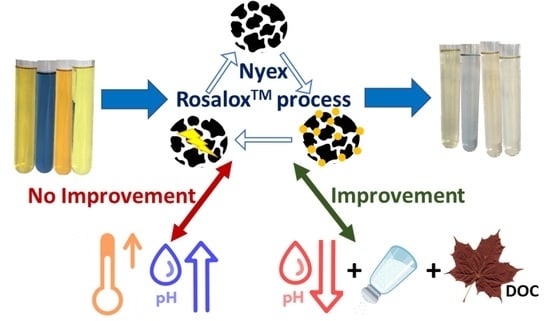
Azo dyes are a major cause of environmental pollution, but under lab-based conditions can be removed using a coupled adsorption and electrochemical oxidation process; the Nyex Rosalox™ (NR) process. However, wastewater effluents are more complex than tap water, indicating that there is a need to assess how altered effluent conditions affect the adsorption of azo dyes onto the adsorbent used (Nyex™ 2000) and overall removal efficiency of the NR process. Analysis indicates that higher temperatures, the addition of minor amounts of sodium chloride, or acidification increased adsorption, while the presence of dissolved organic carbon (DOC) only showed a minor impact if compared to baseline tap water conditions and appears to be dye-specific. Analyses further indicated that effluent conditions could have a major impact on the overall dye removal efficiency using the NR process, with up to 48% more being removed during acidic or saline conditions and, to a lesser extent, when DOC was present. Increased temperature or alkalinity had minimal impact, with inconsistent results across the dyes assessed. Combined, this highlights that effluent-specific conditions can have a major impact on the removal efficiency and should be considered during the planning stage of the azo dye treatment process.

Graphical Abstract

1. Introduction

Not only is the textile industry the second most water-intensive industry in the world [1,2], but particularly the dyeing process is also inefficient, wasting up to 50% of total dye used [3]. Azo dyes with their characteristic azo bond (-N=N-) account for >60% of all dyes used [4], and, when discharged, these azo dye effluents can cause major environmental problems. Their highly pigmented nature means they can impart colour to natural surface waters even at low concentrations (<1 mg L−1) [5], affecting water transparency and impacting photosynthetic activity for plant life and aquatic organisms [6]. Dyes are resistant to light, washing and microbial degradation, as they are designed to withstand harsh conditions and endure regular use [7], and the reduced biological and photolytic degradation means they can persist in the environment for as long as 50 years [8,9]. There is therefore a need to invest in technologies that allow dye effluents to be treated so that the water can be reused or safely discharged.
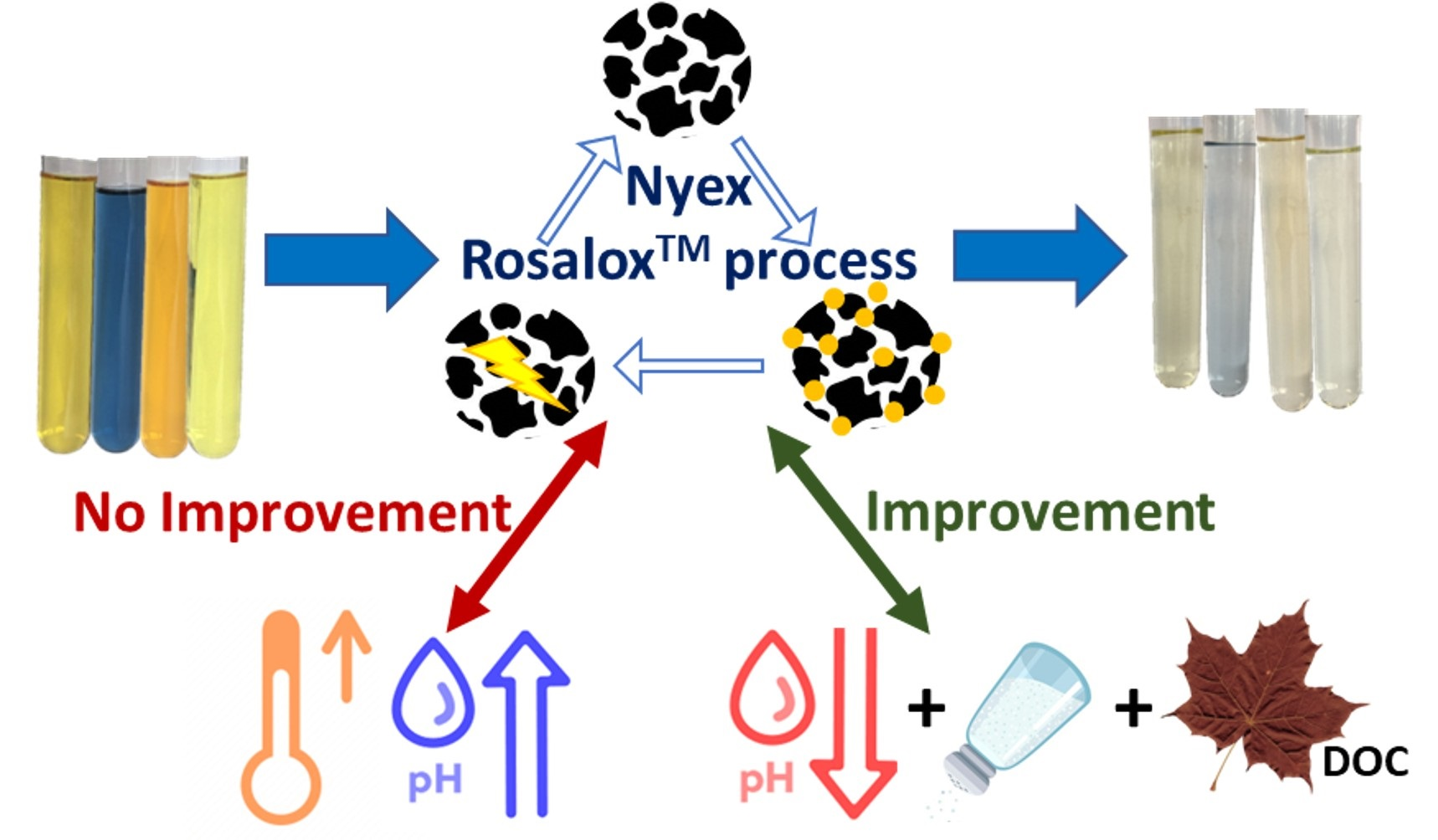
The patented Nyex Rosalox™ coupled adsorption and electrochemical oxidation process (the NR process; Arvia Technology Ltd., Runcorn, UK) effectively combines the advantages of traditional adsorption and electrochemical oxidation/destruction of the adsorbed contaminant into a single water-treatment process (Figure 1). The concurrent adsorption and electrochemical regeneration, indicating that there is no need for prior adsorption, lead to the regeneration of the adsorbent material used—Nyex™ 2000 media (a non-porous, highly conducting, graphite-based adsorbent).
This process has been successfully used in the pharmaceutical and agrochemical industry to remove active pharmaceutical ingredients, pesticides, herbicides, and insecticides [9,10,11]. More importantly, the process can remove colourants or reduce biological- and/or chemical-oxygen demand, as needed in textile and other industries, to the required levels for discharge [12,13,14,15,16]. Recent analyses indicate that the NR process can also effectively destroy azo dyes using relatively low energy without the generation of harmful secondary byproducts [17], indicating that this process could be used to successfully treat azo dye pollution to acceptable levels prior to discharge. However, industrial effluents can be complex mixtures, which may have a variety of effluent conditions, different to the circumneutral, room temperature, non-saline solutions normally used in laboratory-based experiments. Previous research has only included limited alterations to effluent parameters, albeit case studies looking into the treatability of metaldehyde [11] and tributyltin [18] indicated that a shift in pH or salinity could impact the treatment rates. This study further suggested that the presence of high amounts of peat-derived natural dissolved organic carbon (DOC) impacted the efficiency of the process, resulting in a reduction in the metaldehyde removal efficiency by 20% compared to tap water [11]. However, it remains unclear as to what extent the removal efficiency of azo dyes using the NR process is impacted by the effluent conditions present. In addition, as direct oxidation of azo dyes adsorbed on to the adsorbent surface is more efficient than indirect oxidation of free azo dyes in solution [17], it is important to establish if a shift in any of the effluent parameters has an impact on the adsorption of azo dye on to the Nyex™ media. This study therefore aims to establish to what extent altered effluent conditions, specifically solution pH, temperature, salinity and the presence of DOC, affects (i) the adsorption of azo dyes onto Nyex™ media and (ii) the removal efficiency of these compounds using the NR process. Combined this will increase our understanding of how efficient the NR process is in destroying azo dyes under real effluent conditions.

2. Materials and Methods

2.1. Materials

Fresh Nyex™ media (batch #4029; batches #2114 and #4029; for chemical an physical characterisation see [13]) was provided by Arvia Technology Ltd. (Runcorn, UK) and washed in Manchester tap water and stored as described previously [17]. Stock solutions (100 mg L−1) were prepared for Acid Orange 6, Methyl Orange, Methyl Red Sodium Salt and Janus Green B (Table 1) by dissolving dye powder in tap water and stirring for 24 h to ensure that the solution was thoroughly mixed. The dyes assessed have comparable structures (two have an N,N-dimethylaniline group and three have benzene sulfonic acid groups; Table 1), can easily be obtained and are some of the most widely used azo dyes worldwide, making them excellent model compounds to be tested [9].
The concentrations required for each experiment were prepared by diluting the stock solution with tap water. Water supplied to post code M13 in Manchester (UK) typically has a hardness defined as soft (2.31 Clarke), a pH between 6.97 and 7.64, colour of <1.56 mg L−1 (Pt/Co scale) and an electrical conductivity of 97.4 µS cm−1 (at 20 °C; data taken from [21]). Depending on the effluent experiment type, additions were made to these dye solutions before treatment. To determine the impact of salinity on absorption and dye removal using the NR process, sodium chloride was added to dye solutions, up to 80 g L−1, and mixed until fully dissolved. This is above the typical environmental range for surface waters, but within salinity ranges for an industrial dye effluent, where salt may be added when dyeing textiles not only to aid dye fastness but also to prevent the build-up of negative charge on cellulose fibres. To determine the impact of salinity on absorption and dye removal using the NR process, the pH of the solutions was either raised using a 0.1 M sodium hydroxide solution or lowered using a 3.7% hydrochloric acid solution.
To determine the impact of DOC on adsorption and dye removal using the NR process, water from the river Mersey was collected from Jackson’s Bridge (near Sale Water Park, Sale, Greater Manchester, UK) in June 2023, filtered using a 0.2 μm Nylon filter to remove suspended solids, and stored at +4 °C until use to prevent degradation [9]. The DOC content was determined through the difference method using a Shimadzu TOC-V CPN Carbon analyser (Kyoto, Japan) and averaged at 6.0 ± 0.1 mg L−1, comparable to levels generally observed in UK river water [22]. The conductivity of the water collected was 383 μS cm−1 while the Ca concentration was 13.2 mg L−1 (Palintest; Gateshead; UK). Dye stock solutions were made up using the filtered river water in the same way as the tap water stock solutions.

2.2. Adsorption Experiments

Experiments to determine the impact on adsorption were run, comparable to those in [17], using 100 mL of 20 mg L−1 aqueous dye solutions in 250 mL conical flasks, mixed with 8 g of washed and dried Nyex™ media. The solutions were stirred at approx. 330 rpm (setting ‘3’ on Fisherbrand™ Microstirrer Magnetic Stirrer; Waltham, MA, USA) using a 20 mm PTFE magnetic cross-stirrer for 30 min. Samples were taken of the stock solution prior to Nyex™ media addition (t = 0), and of the final mixed solution at 30 min (t = 30), which was used as a pseudo-equilibrium point considering that previous experiments showed that this gives a good representation of the adsorption capacity [17]. End-point samples were taken by carefully pouring off the remaining dye solution into a beaker, taking care to minimise capturing adsorbent particles within the sample, as samples were not filtered to prevent the loss of dye onto the filter medium. Samples were split into three aliquots, and the amount of dye present was determined by UV-Vis analysis using a Thermo Scientific BioMate™ 3 Series spectrophotometer (Madison, WI, USA; wavelengths used are detailed in Table 1). Experiments were run in triplicate and the results presented as the mean value with 95% confidence intervals. The temperature of solutions was controlled by using crystallising dishes to create water baths around the solutions, which were controlled by adding or removing cooled water and ice or hot water as needed. Heated solutions were covered with a foil cap to prevent excess concentration of the dye due to water loss through evaporation. The temperature of the water baths and solutions were monitored with glass thermometers, with the aim of keeping the solutions within a ±3 °C range of the target temperature. Temperatures were tested in the target range of 0 to 55 °C. The amount of azo dye removed from solution, expressed as a percentage of initial concentration (% removed), was calculated using equation:
% r e m o v e d = C 0   C t C 0 × 100
where C0 = initial concentration of compound in solution (mg L−1) and Ct = final concentration of compound remaining in solution after t minutes (mg L−1). Based on the results of previous adsorption studies [17], either 10 mg L−1 (to assess the impact of DOC) or 20 mg L−1 (pH, temperature and salinity) of each dye was chosen as the starting concentration. The only exception was cationic dye Janus Green B, which showed a high adsorption on to Nyex™ media. Therefore, 40 mg L−1 concentration was chosen to provide scope for increased and decreased adsorption due to the altered parameters.

2.3. Nyex RosaloxTM Process Experiments

The NR process experiments were conducted using a similar two compartment batch style set up (cell) to simulate the NR process within a laboratory setting as was previously used [17], applying the same amounts of washed and dried Nyex™ media (10 ± 0.5 g) in each compartment, creating an adsorbent bed. All experiments comprised 3 cycles during which a dye solution (1 L; 10 mg L−1), obtained by dilution of the stock solution and mixed using a cross-shaped stirrer on a stirring plate throughout the experiment duration at approximately 330 rpm, was pumped through the cell (circulated) at a flow rate of approximately 200 mL per minute (turnover rate of 5 min) for 1 h. At the end of each cycle the solution was fully drained from the cell and replaced with a new dye solution, without replacing the Nyex™ media, before the next cycle was started.
A 0.01 Amp (A) current was used to supply the minimum amount of energy required for electrochemical oxidation and maintained throughout the experiment duration by adjusting the voltage as needed (2 to 4 V resulting in 0.2 to 0.4 W). In the case of the experiments to identify the impact of an increased temperature, a heated stirring plate was used to maintain a dye solution temperature of 35 ± 3 °C and monitored using two digital thermometers to improve measurement precision [9]. The glass beaker containing the dye solution was covered with foil to maintain a constant temperature throughout and minimise loss through evaporation. The voltage and current were recorded alongside temperature and pH and samples (10 mL) were taken at regular intervals over a 60 min duration. Samples were taken from the mixture tank, split into three aliquots and the amount of dye present was determined by UV-VIS analysis. The amount of azo dye removed from solution, expressed as a percentage of initial concentration (% removed), was calculated using Equation (1). When an experiment was completed, after the final cycle, the Nyex™ media was removed, and the cell and tubing connections were rinsed thoroughly with tap water until all residue was removed and air-dried before reuse [9]. Note that by the end of each experiment, dye solution pH decreased by approximately 0.05 to 0.2 for all dyes. The dye removal experienced in altered effluent condition experiments were compared to those of circumneutral, room-temperature, non-saline solutions (data obtained from [17]).

3. Results

3.1. Adsorption Results

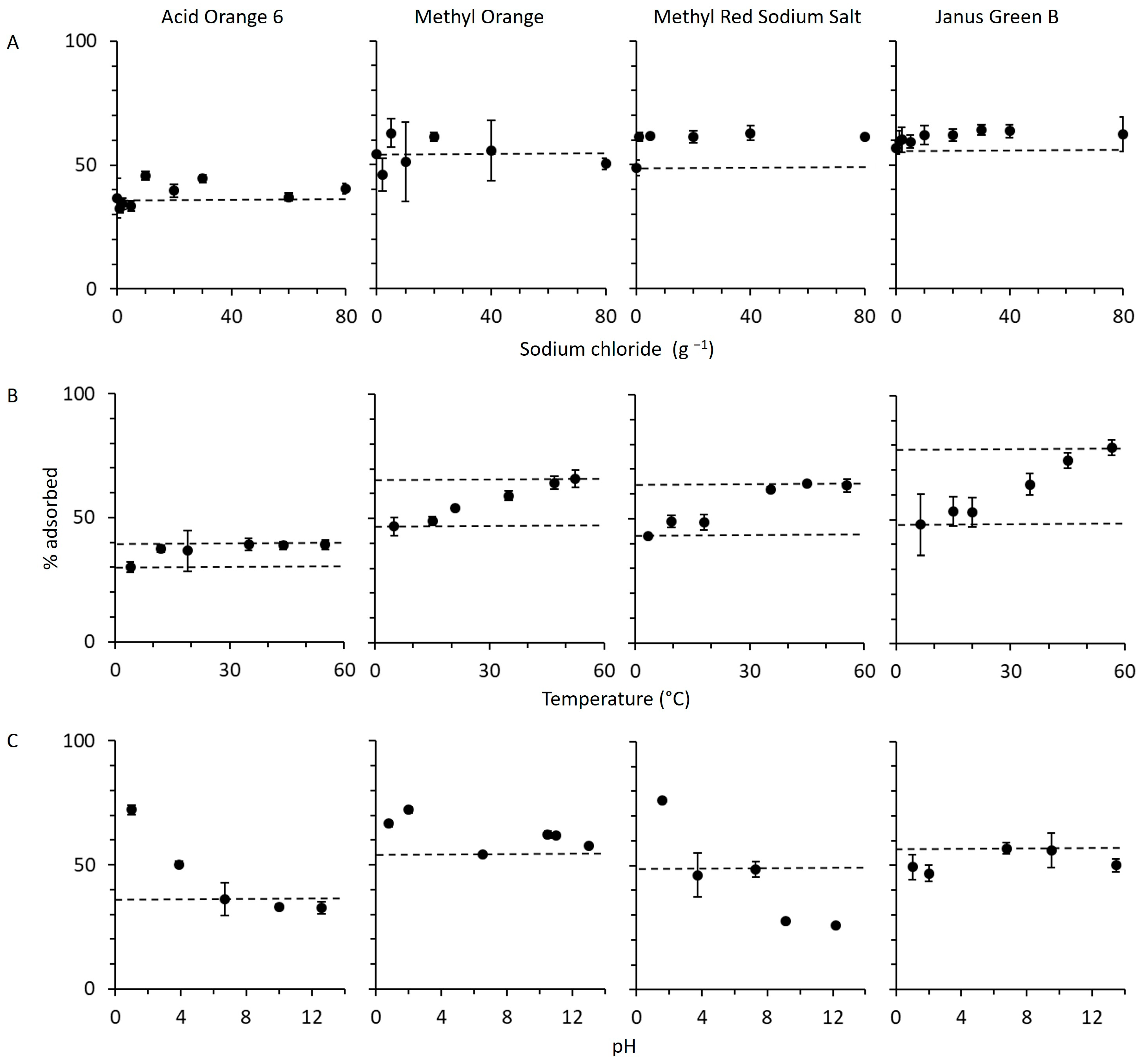
To determine the impact of different effluent conditions on the adsorption to the Nyex™ media, a series of experiments was conducted with conditions that were different to the standard laboratory conditions (e.g., tap water at room temperature, 18 to 25 ± 1 °C, and neutral pH without presence of sodium chloride). Analyses indicate that the addition of sodium chloride had a mixed impact on the adsorption of the dyes assessed (Figure 2A). For the Methyl Red Sodium Salt, there was a clear improvement in adsorption with increased salinity with an increase in adsorption of up to 14% between a sodium chloride-free solution and saline solutions. However, this increase was not gradual and no further increases in adsorption were observed above a salinity of 1 g L−1. The adsorption of Janus Green B also showed a more modest increase in adsorption, up to 7%, when compared to a sodium chloride-free baseline. For Acid Orange 6, a large variation on the sodium chloride baseline solution was observed; however, there was clearly more adsorption in high salinity solutions, >20 g L−1, if compared to the lower salinity (1 and 2 g L−1) solutions. Therefore, it can be assumed that increasing salinity does result in an increase in adsorption, between 5% and 10%. The adsorption for Methyl Orange varied substantially with increasing salinity. This variation was too large to draw any conclusions.
In contrast to salinity, solution temperature had a clear impact on the adsorption for all dyes tested (Figure 2B). There was a positive correlation between solution temperature and the amount of dye adsorbed in 30 min, with up to between 9% (Acid Orange 6) and 30% (Janus Green B) more being adsorbed at higher temperatures compared to the lowest temperature tested. The adsorption of both Methyl Orange and Janus Green B showed a clear increase over the whole temperature range tested. However, in the case of both Acid Orange 6 and Methyl Red Sodium Salt, initially an increase in adsorption with increases in temperature was observed, but this reached maximum adsorption—a plateau—from approx. 35 °C onwards, after which further increases in temperature did not result in any significant further increase in dye adsorption.
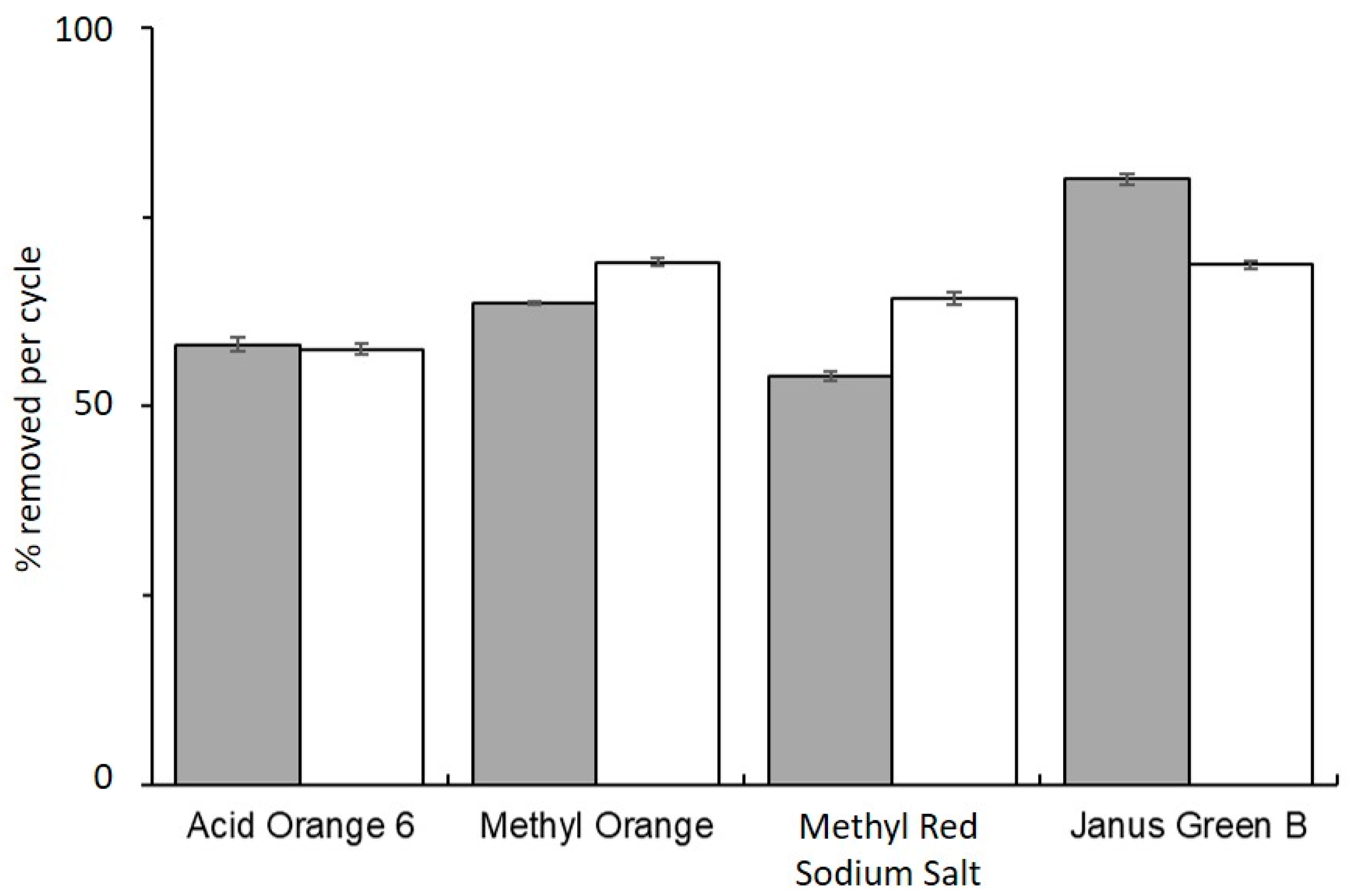
For most dyes, altering the pH of the dye solution also had a clear effect on adsorption (Figure 2C), with the largest difference between the minimum and maximum dye adsorption achieved being >50% (Methyl Red Sodium Salt). Aside from Janus Green B, which showed a 7% decrease in adsorption, lowering the pH to acidic conditions caused an 18% to 36% increase in the amount of dye adsorbed in 30 min, when compared to unadjusted circumneutral solutions. When the pH was increased to more alkaline conditions, the results were mixed, with a substantial decrease in adsorption compared to unadjusted circumneutral solutions for Methyl Red Sodium Salt (23% less adsorbed; Figure 2C). Acid Orange 6 and Janus Green B showed a minor decrease, up to 7% less adsorbed, while Methyl Orange showed an 8% increase when compared with the circumneutral baseline. Using the river water (with DOC = 6 mg L−1) had no consistent impact on the average percentage of dye adsorbed in 30 min across all dyes assessed if compared to when tap water was used (Figure 3). Both Methyl Orange and Methyl Red Sodium Salt showed a decrease of 5% and 10%, respectively, while Janus Green B showed an increase of 11% in the amount of dye adsorbed when river water was used. For Acid Orange 6 there was no significant difference between amounts adsorbed from river water and when tap water was used.

3.2. Nyex RosaloxTM Experiments

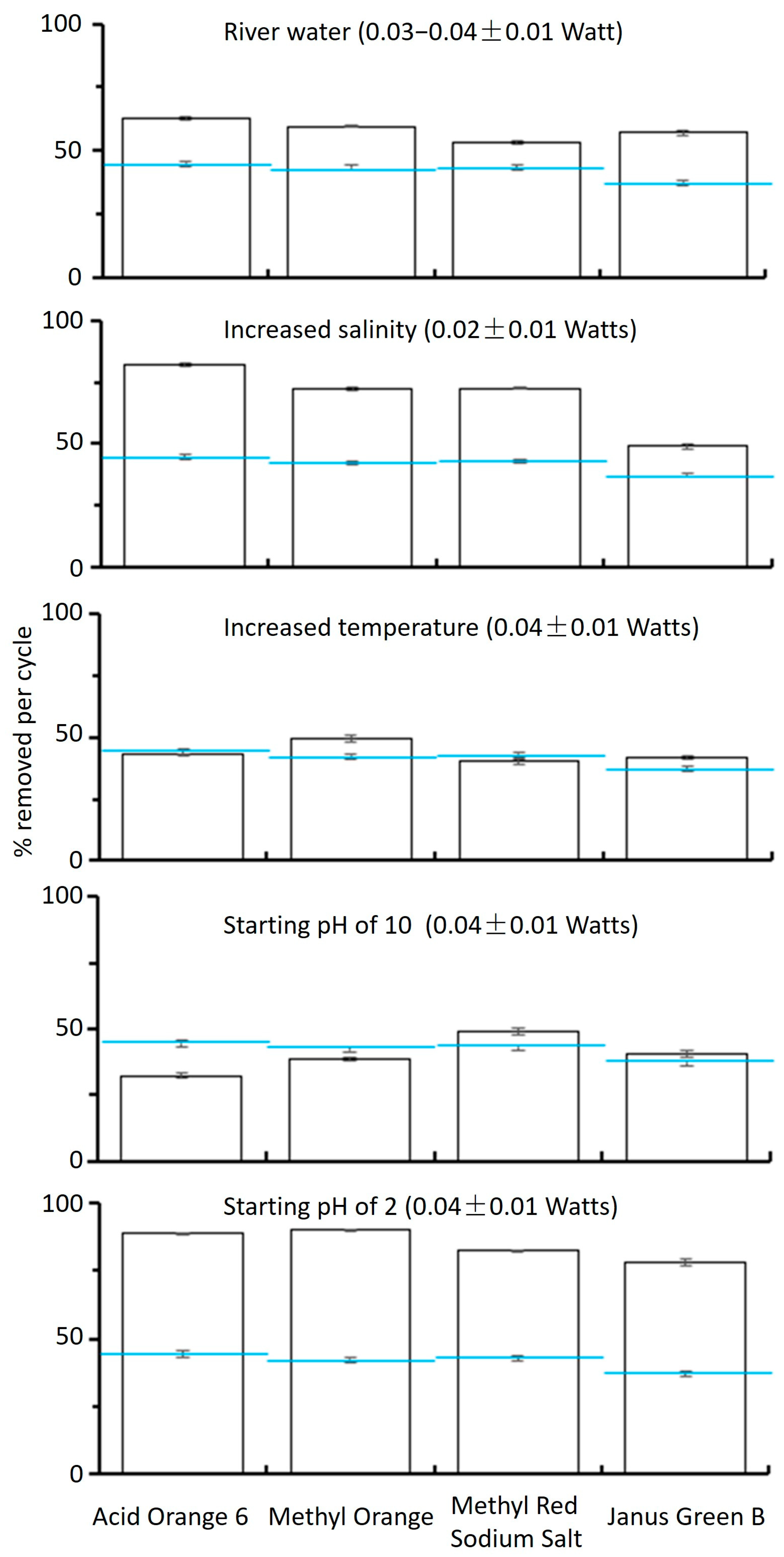
To determine the impact of different effluent conditions on the removal efficiency using the NR process, a series of experiments were conducted with conditions that were different from the standard laboratory conditions (e.g., tap water at room temperature, 18 to 25 ± 1 °C, and neutral pH without the presence of sodium chloride [17]). Using river water resulted in significantly higher average percentage removal, ranging from a 10% (Methyl Red Sodium Salt) to 20% (Janus Green B) increase, if compared to the standard regeneration experiments, confirmed via two-sample t-tests (Figure 4; Table 2). Analysis indicated that the addition of 1 g L−1 sodium chloride also resulted in a greater average percentage of dye removed for all dyes, ranging from a 12% (Janus Green B) to 38% (Acid Orange 6) increase, if compared to the standard regeneration experiments with no sodium chloride addition (Figure 4; Table 2). Two-sample t-test analysis confirmed that all differences were significant (Table 2). Increasing the temperature to 35 ± 3 °C led to no consistent impact on the amounts removed across all dyes assessed, with differences between the amounts removed at solution temperatures of 35 ± 3 °C and those at room temperature all being <8%, confirmed via two-sample t-test analysis (Figure 4; Table 2). Similarly, for three of the four dyes raising the pH to a more alkaline starting solution (pH 10) had no consistent impact on the average percentage of dye removed when compared to unadjusted circumneutral conditions, with the difference in the amount removed ranging from 4.3% less (Methyl Orange) to 5.7% more (Methyl Red Sodium Salt; Figure 4; Table 2). Only Acid Orange 6 experienced significantly lower average percentage removed in more alkaline conditions—12% less if compared to unadjusted circumneutral conditions, confirmed via two-sample t-test analysis (Table 2). However, having a more acidic starting solution (pH 2) had the greatest positive impact of all effluent conditions on the percentage of dye removed across all dyes. The additional average percentage of dye removed ranged from a 39% (Methyl Red Sodium Salt) to 48% (Methyl Orange) increase under acidic starting conditions when compared to unadjusted circumneutral conditions. It should be noted that the voltage required to maintain the 0.01 A current, and therefore, the power input (watts) was unchanged in acidic conditions compared to the saline conditions. Power input was higher for the waters without salt or acid additions (Figure 4; Table 2).

4. Discussion

4.1. Impact of Effluent Condition on the Adsorption of Azo Dyes onto the NyexTM Media

Analyses clearly indicate that altering the effluent conditions can have a major impact on the adsorption of azo dyes on the Nyex™ media used. The addition of sodium chloride had a positive impact on the adsorption for three of the four dyes (Acid Orange 6, Methyl Red Sodium Salt, and Janus Green B), improving adsorption up to a maximum of 10%. Furthermore, in case of the final dye, whilst addition of sodium chloride did not cause an improvement, it also did not result in a worsening of the adsorption (Figure 2). This is not unexpected when it is considered that electrolytes such as sodium chloride or sodium sulfate are commonly added to direct dye baths to ‘salt out’ dyes and increase the uptake of dye onto the fabric [23]. Electrolytes do this by suppressing the build-up of negative charge on the fibre surface, which would repel anionic dye molecules [24]. The results of the sodium chloride experiments suggest that the presence of sodium chloride in dye effluents being treated by the NR process will likely not decrease treatment rates through inhibition at the adsorption stage, and may improve adsorption by preventing a build-up of negative charge.
Raising the temperature of the dye solution before treatment also had a substantial impact, and a clear positive correlation between increased temperature and increased adsorption was observed for all dyes (Figure 2), although some dyes were more sensitive to temperature than others. The effect of solution temperature was clearly evident below 35 °C, but for some dyes there was a plateau in the amount of adsorption achieved with the higher temperatures. This would suggest that an equilibrium was reached, where equal amounts of adsorption and desorption are taking place. However, the experiments were only run for 30 min and it was not confirmed that the final solutions were indeed at an equilibrium point. Following Le Chatelier’s principle and assuming that the adsorption is physisorption, the adsorption capacity of the Nyex™ media at equilibrium should decrease with increasing solution temperature. As a system’s temperature increases, it causes a shift away from heat/energy favouring exothermic reactions, such as bond formation and adsorption, towards heat/energy-consuming endothermic reactions such as bond breakage and desorption. If the experiments had been run to equilibrium, it is possible that equal or greater amounts of dye adsorption may have been achieved at the cooler temperatures when compared with the warmer temperatures. Instead, what has been demonstrated is an increase in the rate of dye loading within 30 min, likely due to increased dye diffusion. The increased temperature of the solution means that dye molecules have greater kinetic energy, and with an enhanced movement of the dye molecules, there is an increased opportunity for contact between the dye and the adsorbent surface, leading to increased adsorption. Therefore, whilst the impact on total adsorption capacity at equilibrium remains unclear, it can be concluded that the rate of loading of dye onto Nyex™ media was increased with warmer temperatures.
Of all the parameters tested, the solution pH showed the largest impact on the amount of adsorption that could be achieved in 30 min (Figure 2), generally showing an increase in adsorption in more acidic conditions and a decrease in more alkaline conditions. Anionic dye adsorption is favoured when the solution pH is less than the adsorbent’s pHpzc (pH at the point of zero charge), which is approximately 3 [13], due to the adsorbent surface having a positive charge. These opposing charges attract dye molecules to the adsorbent surface. Acidic solutions (pH less than 3) will promote a greater net positive surface charge on the Nyex™ media, creating stronger attraction forces between its surface and a negatively charged dye molecule and thus improved adsorption. Solutions with a pH above the pHpzc will have greater net negative surface charge, making adsorption of a negatively charged dye molecule less favourable, and the adsorption of a positively charged molecule more favourable. This effect was clearly seen for the adsorption of Acid Orange 6 and Methyl Red Sodium Salt, where more acidic conditions showed a significant increase in the adsorption of these anionic dyes while more alkaline conditions resulted in a decrease in adsorption. A previous study investigating the adsorption of Methyl Orange onto organic rich clay already noticed the greatest uptake capacity in acidic conditions (pH 2 to 3) [25]. This likely resulted from the high degree of ionisation of Methyl Orange, implying that there is improved electrostatic attraction between the azo dyes and the charged adsorbent surface in acidic conditions. It is also in line with previous work [11], which showed that treatment rates of the pesticide metaldehyde decreased in high pH conditions, and theorised this may be due to reduced adsorption of the organic on to the Nyex™ media. They suggested that the adsorption might be reduced due to the interaction of OH– ions with the positively charged adsorbent surface. Hussain et al. [14] also speculated that the effect of reduced adsorption with increased pH may be due to a change in the surface pH of the Nyex™ media, with a higher pH leading to an increased number of negatively charged surface sites, which would then have a repulsing effect on the negatively charged dye molecules.
Methyl Orange and Janus Green B showed different trends. The adsorption of Janus Green B was the only dye to have a decrease in adsorption, relative to a circumneutral solution baseline, at more acidic conditions. This was expected, as cationic dye adsorption is generally favoured when the solution pH is greater than the pHpzc, because of OH functional groups and a negative surface charge on the adsorbent. In contrast, Methyl Orange showed increased adsorption for both very low and very high pH. It was expected that the adsorption would be comparable to what was observed for Acid Orange 6 or Methyl Red Sodium Salt dyes, with decreasing adsorption with increasing pH; however, this was not the case and it remains unclear what exactly caused this. Combined, the pH adsorption experiments suggest that, in line with previous studies looking at the effect of dye adsorption on to various adsorbents [26], a lower pH will generally lead to a greater amount of dye adsorption within 30 min; however, as demonstrated by Methyl Orange and Janus Green B, the effect of pH is likely more complex and dye-dependent.
Finally, the impact of the presence of DOC, naturally present in rivers, appears to be compound specific. When other organics are present competition for active binding sites onto the Nyex™ media is expected that would lead to a reduction in the dye adsorption capacity. Indeed, for two of the dyes tested, Methyl Orange and Methyl Red Sodium Salt, a small reduction was observed, although it did not inhibit adsorption. However, in case of Acid Orange 6, there was no significant difference between the adsorption experiments with river and tap water, suggesting that the adsorption for this specific azo dye outcompeted adsorption of other organics present. Interestingly, the percentage removed for Janus Green B, the only cationic azo dye tested, was significantly higher; 11% more dye was removed when river water was used. Although it remains unclear what exactly caused this, it suggests that something present in the river water aids the adsorption of this specific azo dye.

4.2. Impact of Effluent Conditions on the Azo Dye Removal Efficiency Using the NR Process

The analyses clearly indicate that altering the effluent conditions can have a major impact on the removal efficiency of azo dyes using the NR process. It is important to note that none of the effluent conditions completely inhibited the process. This is evident from the fact that dye removal was experienced across all experiments under all conditions (Figure 4). In this study, the greatest impact on dye removal was experienced when the pH of the solution was lowered, resulting in substantially more dye removal than that of circumneutral tap water conditions for all dyes tested (up to 48%; Figure 4). Similarly, the presence of sodium chloride or DOC significantly increased the percentage of dye removed from solution compared to that of circumneutral, non-saline tap water (Figure 4), although to a lesser extent than lowering the pH. However, an elevated solution temperature (35 °C) and increasing the pH to more alkaline starting conditions had a much lower overall impact on dye removal using the NR process, where some dyes experienced no impact or only slight changes to the amounts removed when compared to those at room temperature.
That acidification of the starting solution led to higher (the highest) overall removal of all azo dyes is in line with the outcomes of the adsorption experiments for all dyes, with the exception of Janus Green B. Similarly, that more alkaline conditions resulted in a decrease in the percentage of dye adsorbed for all dyes, again with the exception of Janus Green B, is also in line with the much lower impact of these conditions on the overall removal using the NR process. However, where the adsorption experiment indicated that lowering or increasing the pH did not improve the adsorption of Janus Green B on the absorbent used, substantially more of this azo dye was removed using the NR process when the pH was lowered. It was suggested that adsorption of OH- ions to the overall positively charged Nyex™ media surface occurring under alkaline conditions may reduce the density of active sites for metaldehyde sorption [11]. However, improved electrostatic attraction and the influence of OH- ions related to the adsorption process does not explain the substantially greater dye removal for all dyes experienced in this study, suggesting acidic conditions may affect the electrochemical oxidation of azo dyes in the NR process. Acidic conditions have been shown to have multiple effects on electrochemical oxidation; as pH increases, the oxidation potential of water decreases, causing increased water oxidation at the anode [27]. This suggests that greater oxidation occurs under acidic conditions, with the generation of powerful oxidisable species at low pH, regardless of the respective charge of specific azo dye molecules. Additionally, pH plays an important role in indirect electrochemical processes, as it determines forms of active chlorine available [28]. Although previous analyses indicate that direct oxidation seems to be the minor/non-dominant form of oxidation of azo dyes occurring in the NR process [17], it cannot be excluded that this contributed significantly to the overall removal under acidic conditions. In addition, the redox reactions of Janus Green B are pH-dependent, due to the consumption/release of protons along with the redox processes. The nitrogens in Janus Green B are partly protonated at low pH, altering the redox reactions taking place and controlling the hydrophobicity/hydrophilicity of this dye and its byproducts, directly impacting experienced adsorption [29]. The change in chemical structure of Janus Green B alongside the change in redox processes occurring at low pH helps to explain the increased dye removal experienced in acidic conditions compared to alkaline and neutral conditions in this study. It also highlights the complexity of the potential reactions occurring in the NR process, which are suggested to be dependent on compound-specific characteristics and pH that ultimately determines overall removal. Although additional research is needed, based on these results alone, regardless of relative charges of azo dyes, consistent high removal rates could be obtained using acidic conditions in the NR process. However, it should be noted that the impact that more acidic effluent conditions may have on the operational feasibility/industrial implementation, including potential corrosion, will still need to be assessed.
The presence of sodium chloride also significantly increased the percentage of dye removed from solution compared to that of circumneutral, non-saline tap water (Figure 4), although to a lesser extent than the acidic conditions. This is likely the result of the increased conductivity associated with the greater abundance of ions [30], since for these increased-salinity experiments, the voltages needed to maintain a 0.01 amp current were significantly lower than in non-saline conditions (Figure 4). Although indirect electrochemical oxidation may have played a role, the improved solution conductivity likely enabled greater ease for electricity to flow through the adsorbent bed, which resulted in more efficient regeneration of active sites than that in non-saline conditions. This suggests that greater energy efficiency, and thus lower operational costs, can be achieved when sodium chloride is present to effectively remove azo dyes in the NR process. The use of sodium chloride as a supporting electrolyte has also been shown to have considerable effects on dye degradation efficiency, where the oxidation of chloride ions leads to chlorine/hypochlorite formation, which can oxidise organic compounds near the anode and in solution [27,31]. The additional azo dye removal in saline conditions compared to non-saline may therefore (partly) be explained by this additional oxidation process facilitated by chlorine/hypochlorite in the NR process. Combined these results suggest that salinity is an important additional parameter that can enhance the removal of azo dyes using the NR process through combined anodic oxidation and improved solution conductivity. It can have a major impact for the effective treatment of dye effluent where sodium chloride addition occurs during the dyeing process [32], but further research is needed to identify the optimal sodium chloride concentration to maximise azo dye removal and whether this can be used in industrial applications using the NR process [9].
The adsorption experiments clearly indicated that increasing the dye solution temperature generally resulted in increased adsorption for all dyes onto the Nyex™ media used. Interestingly, increasing the solution temperature had the least impact on dye removal of all effluent conditions tested, suggesting that the overall process is far less impacted by temperature than suggested by the adsorption results. A slight increase was observed in the case of Methyl Orange that could imply that perhaps the extent of temperature increase was not large enough to improve the overall removal efficiency. This suggests that it cannot be excluded that a larger increase in temperature could have had resulted in a more significant impact. However, it should be noted that the adsorption experiments indicated that at 35 °C for some of the dyes assessed, maximum adsorption was reached, making it less likely that azo dye removal will be enhanced above this temperature. Furthermore, based on these results, the energy needed to increase and maintain higher solution temperatures is often not a feasible enhancement option, although it does provide the option of treating the water at elevated temperatures.
Finally, a significantly greater dye removal was observed in regeneration experiments containing the river-derived DOC compared to those with just tap water, suggesting that the presence of dissolved organic matter may, in fact, aid dye removal within the NR process. Previous research found that the removal efficiency of metaldehyde decreased by approximately 20% in the presence of high-DOC peat water when compared to that of deionised water [11]. This effect is comparable to that of OH- ions in alkaline conditions, where other organics present competition for active binding sites onto the Nyex™ media. This reduces the adsorption capacity for dyes and thus the removal efficiency. It remains unclear why something similar is not observed for the azo dyes, suggesting that the impact may be compound specific. However, these results indicate that not only is the removal of these azo dyes possible in the presence of (natural amounts of) dissolved organic carbon, but it is actually enhanced, suggesting that the NR process will remain effective in many industrial wastewater applications, including treating contaminated river water [9].
Comparison between the impact of the effluent conditions on the adsorption on the Nyex™ media and the overall azo dye removal using the NR process suggests that these are not always equally impacted. In some cases, such as in the presence of sodium chloride and lowering of the pH, an increased adsorption as well as an increased overall removal efficiency of the NR process was generally observed. However, changing the effluent conditions could also have a minimal impact on the overall efficiency, while the adsorption experiments clearly indicate an increased adsorption, as shown, for instance, by the dye solution temperature experiments. This suggests that the adsorption of the azo dye on the Nyex™ media is not always the rate-dominating step in the overall process and that the degree of azo dye absorption cannot be linked to the effectiveness of the NR process, i.e., better adsorption does not guarantee an increased efficiency of the process.
Combined, these results indicate that there is a clear impact on the removal efficiency of azo dyes using the NR process when changing the effluent conditions, highlighting that the conditions of the specific effluent being treated need to be taken into account in the planning stage of the treatment process. The NR process currently does, for instance, not include or require any chemical dosing, but present study suggests that designs based on acidic treatment units may be worth considering, especially for the treatment of anionic organics/azo dyes. It also suggests that the placement of the NR process in a series of effluent treatment stages should be considered with respect to, for instance, any pH-neutralising or desalination steps, in order to enhance treatment performance. It should be noted that this work was only done using laboratory-based small-scale batch systems and synthetic single-dye solutions rather than actual industrial textile wastewater that often contains dye mixtures. There is therefore a requirement to assess flowthrough systems and more complex dye mixtures in order to determine the applicability of the NR process in a real industrial setting.

5. Conclusions

Assessing the effluent conditions indicates that lowering the pH to more acidic conditions caused the largest increase in adsorption on the Nyex™ media used for all azo dyes tested, but raising the pH had a more mixed impact. Changing the solution temperature also had a clear impact, with warmer temperatures (>20 °C) adsorbing more than colder temperatures (<10 °C). Some dyes showed a plateau effect after approximately 35 °C, where adsorption stopped increasing with any further additional increase in temperature. The addition of small amounts of sodium chloride generally also caused an increase in adsorption, but adding additional sodium chloride often had no further/minimal impact, although in no case inhibited adsorption. The impact of DOC appears to be compound-specific but overall shows little variability in the amounts adsorbed, if compared to when tap water was used. Assessing the impact on the overall NR process indicates that the azo dye removal substantially increased in acidic and saline conditions or, to a lesser extent, when DOC was present, with up to 48% more being removed in acidic conditions compared to that of baseline tap water conditions. Increased temperatures and more alkaline conditions had the least impact, with inconsistent results across dyes. Combined, these results indicate that changing effluent conditions impacts the azo dye removal efficiency using the NR process, but also that better adsorption does not guarantee an increased efficiency of the process. Combined, it highlights that the conditions of the effluent being treated need to be taken into account in the planning stage of the azo dye treatment process.

Author Contributions

Conceptualization, K.C., R.V., S.B. and B.E.v.D.; methodology, K.C., R.V. and B.E.v.D.; formal analysis, K.C. and R.V.; investigation, K.C. and R.V.; resources, N.B.; writing—original draft preparation, K.C., R.V. and B.E.v.D.; writing—review and editing, N.B., S.B., D.A.P. and R.A.W.; supervision, S.B. and B.E.v.D.; funding acquisition, N.B., S.B., D.A.P., R.A.W. and B.E.v.D. All authors have read and agreed to the published version of the manuscript.

Funding

The study was funded by the UK Natural Environment Research Council [grant NE/R007373/1] as part of a CASE partnership with Arvia Technology Ltd.

Data Availability Statement

The original contributions presented in this study are included in the article. Further inquiries can be directed to the corresponding author.

Acknowledgments

The authors would like to thank Abby Ragazzon-Smith and Roseanna Byrne for analytical support with the analysis and Nils and Kai van Dongen for assisting with collecting the river water. We gratefully acknowledge the constructive comments provided by two anonymous reviewers.

Conflicts of Interest

N.B. is a co-founder of Arvia Technology Ltd. and is currently employed part-time as a Technical Specialist. The other co-authors were responsible for generating the data published. The funding sponsors had no role in the design of the study; in the collection, analyses, or interpretation of data; in the writing of the manuscript; or in the decision to publish the results.

References

  1. Desore, A.; Narula, S.A. An overview on corporate response towards sustainability issues in textile industry. Environ. Dev. Sustain. 2018, 20, 1439–1459. [Google Scholar] [CrossRef]
  2. Raja, A.S.M.; Arputharaj, A.; Saxena, S.; Patil, P.G. Water requirement and sustainability of textile processing industries. In Water in Textiles and Fashion; Muthu, S.S., Ed.; Woodhead Publishing: Cambridge, UK, 2019; pp. 155–173. [Google Scholar]
  3. de Castro, K.C.; Leme, V.F.C.; Souza, F.H.M.; Costa, G.O.B.; Santos, G.E.; Litordi, L.R.V.; Andrade, G.S.S. Performance of inactivated Aspergillus oryzae cells on dye removal in aqueous solutions. Environ. Technol. Innov. 2021, 24, 101828. [Google Scholar] [CrossRef]
  4. Shankarling, G.S.; Deshmukh, P.P.; Joglekar, A.R. Process intensification in azo dyes. J. Environ. Chem. Eng. 2017, 5, 3302–3308. [Google Scholar] [CrossRef]
  5. Schweitzer, L.; Noblet, J. Water Contamination and Pollution. In Green Chemistry; Török, B., Dransfield, T., Eds.; Elsevier: Amsterdam, The Netherlands, 2018; pp. 261–290. [Google Scholar]
  6. Forss, J.; Welander, U. Decolourization of reactive azo dyes with microorganisms growing on soft wood chips. Int. Biodeterior. Biodegrad. 2009, 63, 752–758. [Google Scholar] [CrossRef]
  7. Al-Degs, Y.; Khraisheh, M.A.M.; Allen, S.J.; Ahmad, M.N. Effect of carbon surface chemistry on the removal of reactive dyes from textile effluent. Water Res. 2000, 34, 927–935. [Google Scholar] [CrossRef]
  8. Pereira, L.; Alves, M. Dyes—Environmental Impact and Remediation. In Environmental Protection Strategies for Sustainable Development; Malik, A., Grohmann, E., Eds.; Springer: Dordrecht, The Netherlands, 2012; pp. 111–162. [Google Scholar]
  9. Venn, R. The Removal of Azo Dyes Using the Nyex®RosaloxTM Coupled Adsorption and Electrochemical Oxidation Process. Master’s Thesis, Univeristy of Manchester, Manchester, UK, 2023. [Google Scholar]
  10. Brown, N.W.; Roberts, E.P.L.; Garforth, A.A.; Dryfe, R.A.W. Electrochemical regeneration of a carbon-based adsorbent loaded with crystal violet dye. Electrochim. Acta 2004, 49, 3269–3281. [Google Scholar] [CrossRef]
  11. Nabeerasool, M.A.; Campen, A.K.; Polya, D.A.; Brown, N.W.; van Dongen, B.E. Removal of Metaldehyde from Water Using a Novel Coupled Adsorption and Electrochemical Destruction Technique. Water 2015, 7, 3057–3071. [Google Scholar] [CrossRef]
  12. Asghar, H.M.A.; Hussain, S.N.; Brown, N.W.; Roberts, E.P.L. Comparative adsorption–regeneration performance for newly developed carbonaceous adsorbent. J. Ind. Eng. Chem. 2019, 69, 90–98. [Google Scholar] [CrossRef]
  13. Asghar, H.M.A.; Roberts, E.P.L.; Hussain, S.N.; Campen, A.K.; Brown, N.W. Wastewater treatment by adsorption with electrochemical regeneration using graphite-based adsorbents. J. Appl. Electrochem. 2012, 42, 797–807. [Google Scholar] [CrossRef]
  14. Hussain, S.N.; Asghar, H.M.A.; Sattar, H.; Brown, N.W.; Roberts, E.P.L. Removal of Tartrazine From Water by Adsorption with Electrochemical Regeneration. Chem. Eng. Commun. 2015, 202, 1280–1288. [Google Scholar] [CrossRef]
  15. Liu, H.; Li, G.; Qu, J.; Liu, H. Degradation of azo dye Acid Orange 7 in water by Fe0/granular activated carbon system in the presence of ultrasound. J. Hazard. Mater. 2007, 144, 180–186. [Google Scholar] [CrossRef]
  16. Mohammed, F.M.; Roberts, E.P.L.; Hill, A.; Campen, A.K.; Brown, N.W. Continuous water treatment by adsorption and electrochemical regeneration. Water Res. 2011, 45, 3065–3074. [Google Scholar] [CrossRef]
  17. Cullen, K.; Venn, R.; Brown, N.; Boult, S.; Polya, D.A.; Uzuh, F.D.; Wang, M.; Wogelius, R.A.; van Dongen, B.E. Coupled adsorption and electrochemical oxidation can be effective for azo dye removal. Water 2026, 18, 659. [Google Scholar] [CrossRef]
  18. Wang, M.; Boult, S.; Brown, N.; van Dongen, B.E. Removal of tributyltin from water using a coupled adsorption and electrochemical oxidation process. Water Res. 2026, 298, 125813. [Google Scholar] [CrossRef] [PubMed]
  19. Hejazifar, M.; Azizian, S. Adsorption of Cationic and Anionic Dyes onto the Activated Carbon Prepared from Grapevine Rhytidome. J. Dispers. Sci. Technol. 2012, 33, 846–853. [Google Scholar] [CrossRef]
  20. Saha, B.; Suresh Kumar, G. Microcalorimetry and spectroscopic studies on the binding of dye janus green blue to deoxyribonucleic acid. J. Therm. Anal. Calorim. 2016, 123, 1993–2001. [Google Scholar] [CrossRef]
  21. United Utilities. Water Quality Search Results. Available online: https://www.unitedutilities.com/help-and-support/your-water-supply/your-water/water-quality/ (accessed on 1 January 2026).
  22. Worrall, F.; Harriman, R.; Evans, C.D.; Watts, C.D.; Adamson, J.; Neal, C.; Tipping, E.; Burt, T.; Grieve, I.; Monteith, D.; et al. Trends in Dissolved Organic Carbon in UK Rivers and Lakes. Biogeochemistry 2004, 70, 369–402. [Google Scholar] [CrossRef]
  23. Broadbent, A.D. Basic Principles of Textile Coloration; Society of Dyers and Colourists: Bradford, UK, 2001. [Google Scholar]
  24. Gamal, A.M.; Farha, S.A.A.; Sallam, H.; Mahmoud, G.A.E.; Ismail, L.F.M. Kinetic Study and Equilibrium Isotherm Analysis of Reactive Dyes Adsorption onto Cotton Fiber. Nat. Sci. 2010, 8, 95–110. [Google Scholar]
  25. Zayed, A.M.; Abdel Wahed, M.S.M.; Mohamed, E.A.; Sillanpää, M. Insights on the role of organic matters of some Egyptian clays in methyl orange adsorption: Isotherm and kinetic studies. Appl. Clay Sci. 2018, 166, 49–60. [Google Scholar] [CrossRef]
  26. Yagub, M.T.; Sen, T.K.; Afroze, S.; Ang, H.M. Dye and its removal from aqueous solution by adsorption: A review. Adv. Colloid Interface Sci. 2014, 209, 172–184. [Google Scholar] [CrossRef]
  27. Parsa, J.B.; Rezaei, M.; Soleymani, A.R. Electrochemical oxidation of an azo dye in aqueous media investigation of operational parameters and kinetics. J. Hazard. Mater. 2009, 168, 997–1003. [Google Scholar] [CrossRef] [PubMed]
  28. Zhou, M.; Särkkä, H.; Sillanpää, M. A comparative experimental study on methyl orange degradation by electrochemical oxidation on BDD and MMO electrodes. Sep. Purif. Technol. 2011, 78, 290–297. [Google Scholar] [CrossRef]
  29. Hai, N.T.M.; Huynh, T.M.T.; Fluegel, A.; Mayer, D.; Broekmann, P. Adsorption behavior of redox-active suppressor additives: Combined electrochemical and STM studies. Electrochim. Acta 2011, 56, 7361–7370. [Google Scholar] [CrossRef]
  30. Cañizares, P.; Hernández-Ortega, M.; Rodrigo, M.A.; Barrera-Díaz, C.E.; Roa-Morales, G.; Sáez, C. A comparison between Conductive-Diamond Electrochemical Oxidation and other Advanced Oxidation Processes for the treatment of synthetic melanoidins. J. Hazard. Mater. 2009, 164, 120–125. [Google Scholar] [CrossRef]
  31. Scialdone, O.; Randazzo, S.; Galia, A.; Silvestri, G. Electrochemical oxidation of organics in water: Role of operative parameters in the absence and in the presence of NaCl. Water Res. 2009, 43, 2260–2272. [Google Scholar] [CrossRef] [PubMed]
  32. Yaseen, D.A.; Scholz, M. Textile dye wastewater characteristics and constituents of synthetic effluents: A critical review. Int. J. Environ. Sci. Technol. 2019, 16, 1193–1226. [Google Scholar] [CrossRef]
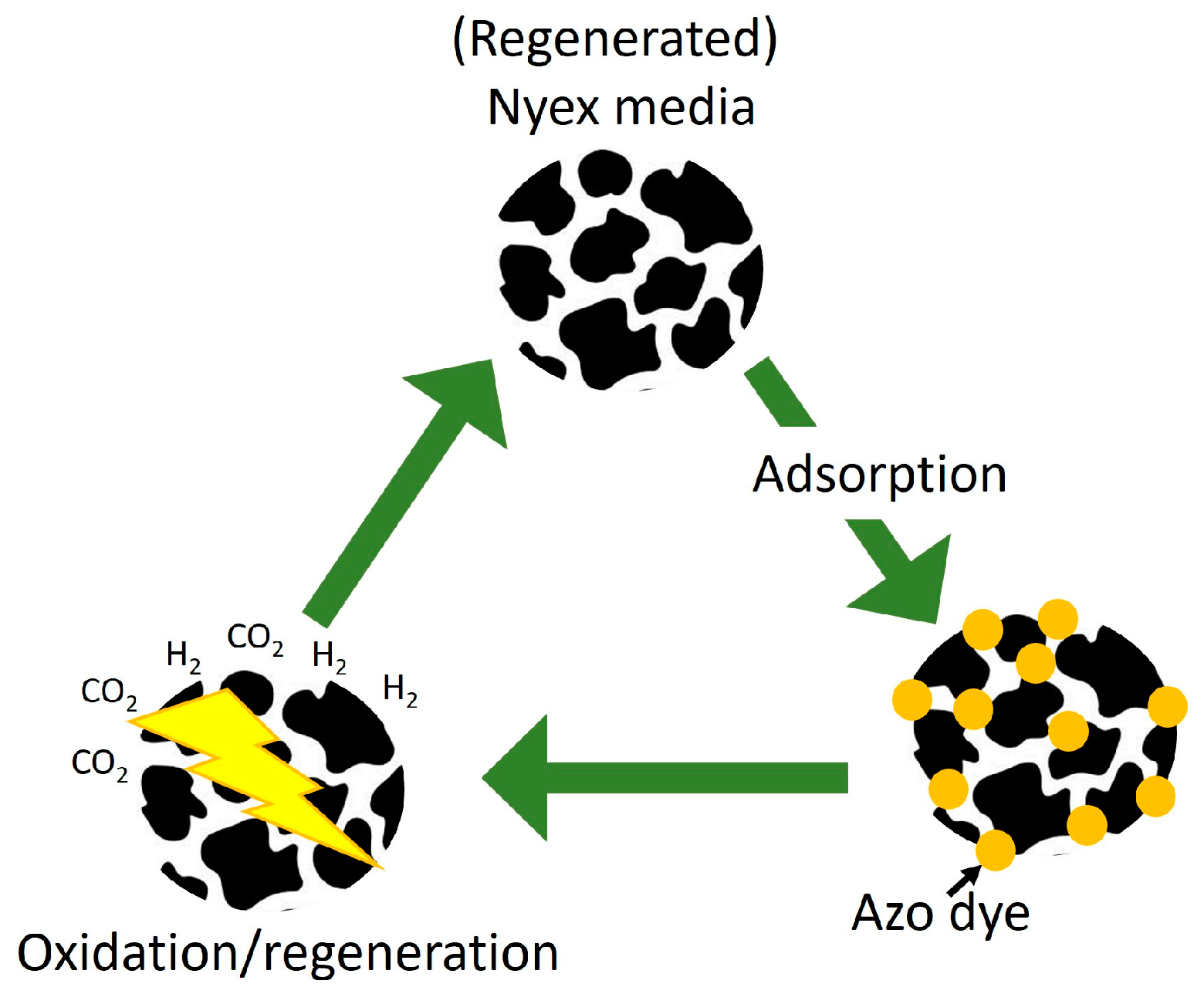
Figure 1. A schematic overview showing the Nyex Rosalox™ coupled adsorption and oxidation process. The treatment consists of adsorption of azo dyes on the active adsorption sites of the absorbent (Nyex™ 2000 media) and electrochemical oxidation of these dyes, resulting in a regeneration of the absorbent material.
Water 18 01468 g001
Figure 2. Graphs showing how changing (A) salinity (dashed lines = baseline adsorption for 0 g L−1 sodium chloride), (B) temperature (dashed lines = minimum and maximum amounts of adsorption) and (C) pH affects the amount of azo dye adsorbed on Nyex™ 2000 media (dashed lines = baseline adsorption at circumneutral conditions). Y error bars represent 95% confidence limits and, in the case of temperature, for clarity of the figure, the X error bars are not shown but the solutions were kept within a maximum of ±3 °C.
Water 18 01468 g002
Figure 3. Bar chart showing the amount of azo dye adsorpt on Nyex™ 2000 media using filtered river water (grey; dissolved organic carbon = 6 mg L−1) and tap water (white).
Water 18 01468 g003
Figure 4. Bar charts showing the amounts of azo dyes removed per cycle (% of initial concentration; 10 mg L−1) using the Nyex Rosalox™ coupled adsorption and electrochemical oxidation process when different effluent conditions were used. Blue lines indicate the average amounts removed under standard conditions (tap water, room temperature, pH = 7 and no NaCl; 0.04 to 0.05 ± 0.01 watts; data obtained from [17]) for each dye. Average electrical power usage for each type of treatment is listed within brackets.
Water 18 01468 g004
Table 1. Characteristics of the azo dyes used in this study.
CAS Name & No. (Supplier)TypeMolecular Weight (g mol−1)Structure & FormulaUV-Vis Adsorption Maximum 2 (nm)
Acid Orange 6547-57-9 (Acros Organics; Geel, Belgium) 1Acidic/Anionic316.26Water 18 01468 i001
C12H9N2NaO5S
430
Methyl Orange 547-58-0 (Sigma Aldrich; Darmstadt, Germany)Acidic/Anionic327.33Water 18 01468 i002
C14H14N3NaO3S
465
Methyl Red Sodium Salt 845-10-3 (Acros Organics; Geel, Belgium)Acidic/Anionic291.28Water 18 01468 i003
C15H14N3NaO2
437
Janus Green B 2869-83-2
(Acros Organics; Geel, Belgium)
Basic/Cationic511.07Water 18 01468 i004
C30H31ClN6
606
Notes: 1 Also known as Tropaeolin; 2 data obtained from [17,19,20].
Table 2. Test results for each unpaired, two-sample independent t-test assuming equal variances (equal variances confirmed with Levene’s test of Homogeneity of Variances) performed to determine differences between average percentage of dye removed using the Nyex Rosalox™ process under altered (increased salinity or temperature, altered starting pH, or use or river water) and standard effluent conditions (tap water, room temperature, neutral pH of 7) using triplicates. Orange and blue indicate no (p ≥ 0.05) and statistically (p < 0.05) significant difference, respectively, while the difference in average percentage removed if compared to standard conditions is listed between brackets.
DyeRiver Water Used
(DOC = 6.0 ± 0.05) 1
Increased Salinity
(+1 mg L−1 NaCl)
Increased Temperature (35 ± 3 °C)Alkaline Conditions (pH = 10)Acidic Conditions
(pH = 2)
Acid Orange 6t(16) = −4.65,
p-value < 0.001
(+16.4 ± 1.6%)
t(16) = 12.49,
p-value < 0.001
(+37.5 ± 1.7%)
t(16) = −0.95,
p-value = 0.356
(−1.1 ± 2.0%)
t(16) = 3.92,
p-value < 0.001,
(−12.2 ± 1.9%)
t(16) = −16.18,
p-value < 0.001
(+44.15 ± 1.5%)
Methyl
Orange
t(16) = −7.60,
p-value < 0.001,
(+17.9 ± 1.7%)
t(16) = 11.42,
p-value < 0.001
(+30 ± 1.7%)
t(16) = −0.02,
p-value = 0.987
(+7.8 ± 1.6%)
t(16) = 0.91,
p-value = 0.376
(−4.3 ± 1.5%)
t(16) = −22.32,
p-value < 0.001
(+47.7 ± 1.2%)
Methyl Red
Sodium Salt
t(16) = −3.56,
p-value < 0.001
(+9.9 ± 1.6%)
t(16) = 13.40,
p-value < 0.001,
(29.6 ± 1.2%)
t(16) = −0.68491,
p-value = 0.503
(−2.8 ± 2.0%)
t(16) = −0.47,
p-value = 0.647
(+5.7 ± 2.3%)
t(16) = −17.36,
p-value < 0.001,
(+39.2 ± 1.4%)
Janus Green Bt(16) = −6.63,
p-value < 0.001
(+19.7 ± 1.7%)
t(16) = 3.75,
p-value < 0.001,
(+11.7 ± 1.9%)
t(16) = 1.9319,
p-value = 0.071
(+4.6 ± 1.6%)
t(16) = −1.08,
p-value = 0.295
(+3.24 ± 2.2%)
t(16) = −13.42,
p-value < 0.001
(+40.7 ± 1.9%)
Note: 1 DOC = dissolved organic carbon.
Disclaimer/Publisher’s Note: The statements, opinions and data contained in all publications are solely those of the individual author(s) and contributor(s) and not of MDPI and/or the editor(s). MDPI and/or the editor(s) disclaim responsibility for any injury to people or property resulting from any ideas, methods, instructions or products referred to in the content.