1. Introduction
Historically, aquatic ecosystems have played a fundamental role in human development, providing essential water resources to meet both quantitative and qualitative demands [
1,
2]. However, maintaining these systems healthy and functional in the face of population growth and climate change has become one of the greatest challenges in resource planning and management. In the mountains of the Iberian Peninsula, recent variability in snow cover has significantly altered the hydrological regime of Mediterranean mountain headwater catchments, particularly in upland stream systems draining steep topographic gradients [
3]. Additionally, anthropogenic activities, such as urban expansion, the construction of hydraulic infrastructures, and agricultural intensification, have led to widespread degradation of these habitats, increasing the need to use aquatic organisms as bioindicator tools for climate change and environmental impacts [
4].
In areas of high ecological fragility, such as steep slopes near springs and headwater streams, the need for increased agricultural production frequently results in water erosion processes. Studies indicate that the influence of intensive agriculture in mountain basins introduces diffuse chemical stressors that alter biological communities, even when physicochemical parameters appear stable [
5]. The increased input of agrochemicals degrades the quality of surface water bodies, prompting the European Commission to reinforce the importance of applying the “One Health” approach in management policies, directly connecting mountain ecosystem integrity to public health [
6]. Traditional monitoring approaches, predominantly focused on physicochemical measurements, offer only instantaneous records [
7]. To overcome this limitation, the Water Framework Directive (WFD) established the integration of biological elements into ecological characterization [
8]. Unlike point measurements, aquatic organisms demonstrate the cumulative effects of environmental disturbances [
9], reflecting the holistic integrity of the system [
10]. Biological quality assessment in freshwater ecosystems commonly includes fish, diatoms, macrophytes, and benthic macroinvertebrates, each responding differently to environmental stressors and spatial scales. Among these, benthic macroinvertebrates stand out due to their long-life cycles, sedentary behavior, and high taxonomic diversity, relatively well-known ecology, and varying degrees of sensitivity [
11,
12,
13]. This differential sensitivity, ranging from taxa typical of pristine environments (e.g., Plecoptera) to tolerant ones (e.g., Chironomidae), allows for the detection of subtle changes in community structure and the understanding of functional resilience in nature reserves [
14]. However, the structure of these communities is not solely shaped by local river characteristics. The “environmental filters” theory postulates that water quality and fluvial biology are strongly influenced by the dynamics of the surrounding landscape [
15,
16]. The use of Geographic Information Systems (GIS) and spatial metrics has allowed researchers to quantify how land uses affect water degradation [
17,
18]. Currently, the integration of high-resolution data supports the premise that the landscape acts as the primary filter in lotic systems [
19,
20].
Despite the considerable body of research on Mediterranean stream ecology in the Iberian Peninsula, fewer studies have simultaneously integrated catchment-scale landscape metrics, hydromorphological assessment, and local physicochemical variables within a multi-scale environmental filtering framework [
9,
15,
16]. In this context, the novelty of this work lies in combining these complementary spatial scales to evaluate how emerging diffuse anthropogenic pressures may influence macroinvertebrate assemblages even in systems currently classified as having high ecological quality. While most lotic literature focuses on the restoration of already severely degraded lowland systems [
21], this study advances by investigating ecosystems classified as having high biological quality, with the aim of identifying early thresholds of ecological vulnerability caused by the expansion of the agricultural and grazing frontiers before degradation becomes irreversible.
In this context, and to provide scientific support aligned with the 2027 European targets [
22], this study evaluated the diversity patterns and composition of benthic macroinvertebrate communities in small streams of the Sierra de Gredos (Spain), and quantified the relative influence of different environmental determinants (filters) on their structuring. This framework is grounded in previous studies demonstrating that stream ecological integrity is jointly controlled by catchment-scale land use, riparian condition, and local physicochemical and hydromorphological factors, particularly under the multi-stressor conditions typical of European river systems [
23,
24]. This perspective is also consistent with the River Continuum Concept, which predicts that biological communities in lotic systems vary predictably along longitudinal gradients due to continuous changes in physical and energetic conditions from headwaters to downstream reaches [
25]. In headwater systems, in particular, catchment-scale controls and land–water interactions are expected to exert strong influence on community structure, often overriding purely local effects. Specifically, three hypotheses were tested: (H1) landscape metrics at the catchment scale explain a higher proportion of variation in macroinvertebrate community structure than local physicochemical and hydromorphological variables, consistent with variance partitioning studies showing the increasing importance of landscape drivers at broader spatial scales [
26]; (H2) alterations in the landscape matrix, particularly those associated with intensive mountain agriculture and extensive grazing, act as key environmental filters reducing the occurrence of pollution-sensitive taxa, as widely reported in studies on land-use impacts in stream ecosystems [
16]; and (H3) there is a significant shared variance between landscape configuration and water quality variables, reflecting the mechanistic coupling between land use and ecological condition in headwater streams, as demonstrated in multi-scale analyses of stream biota responses to catchment characteristics [
26].
2. Materials and Methods
2.1. Study Area and Sampling Design
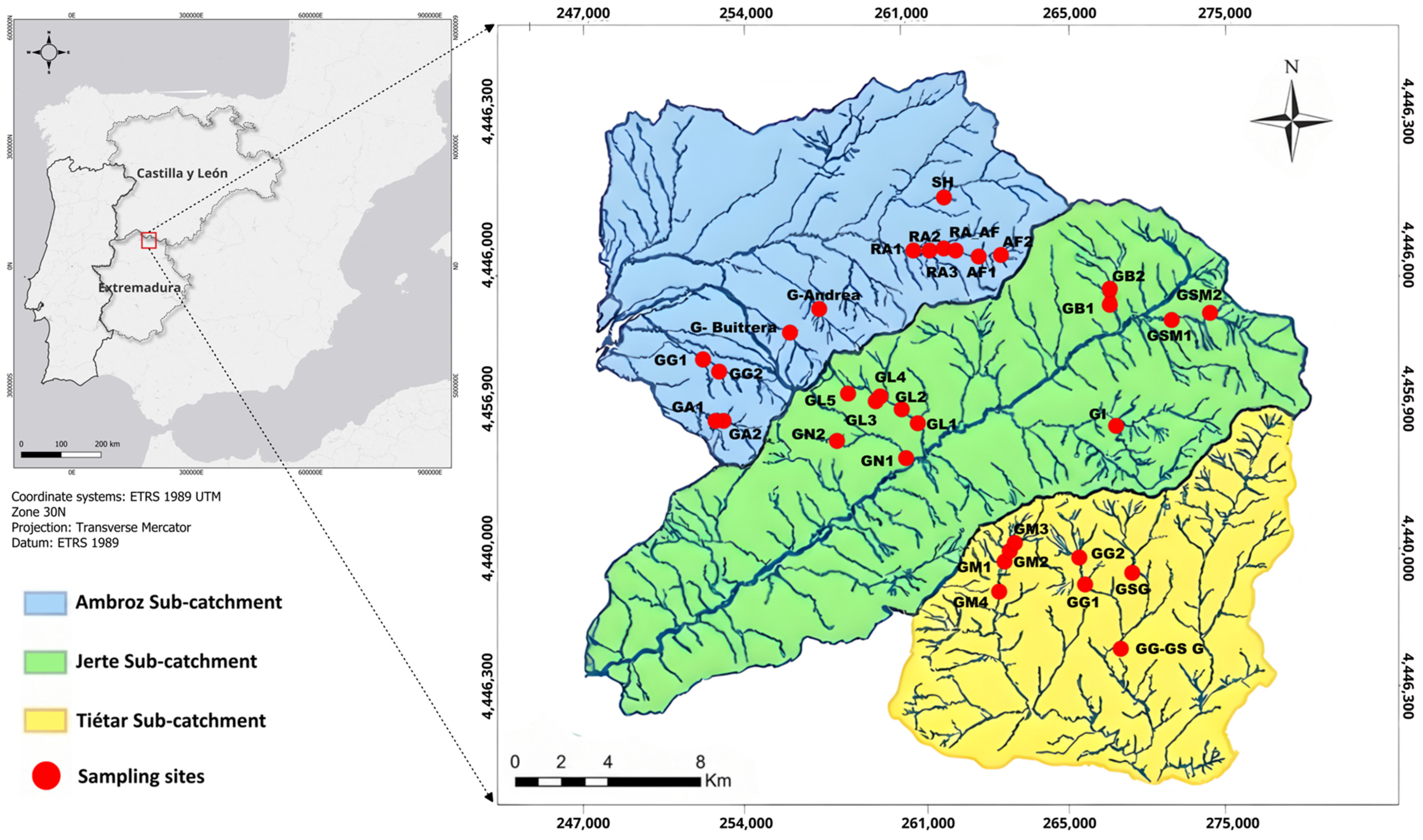
Sampling was conducted in the Sierra de Gredos (
Figure 1), a SW–NE-oriented mountain range within the Central System of the Iberian Peninsula [
27]. This massif is the largest in central Spain and represents a key watershed divide between the Douro and Tagus catchments. The study area includes three sub-basins of the Tiétar River, a major right-bank tributary of the Tagus: the Ambroz, Jerte, and the upper reach of the Tiétar River. The three sub-catchments encompass broad elevational gradients, ranging from 201 to 1800 m a.s.l. in Tiétar, 253–1800 m a.s.l. in Ambroz, and 300–1800 m a.s.l. in Jerte, whereas sampled reaches were located in relatively higher-elevation upstream sectors (
Supplementary Materials: Tables S1–S3).
The region exhibits a Mediterranean climate with strong continental and orographic influences. Annual precipitation displays a marked gradient, from 500 mm/year at lower elevations to over 2000 mm/year at higher elevations, where snowfall is frequent in winter [
28]. Recent observations indicate that snow cover in Spanish mountains has changed in recent decades, altering the timing and regularity of headwater flows [
29]. Mean annual temperatures range from 6 °C at the summits to 14 °C in the lowlands [
28].
The lithology is dominated by plutonic rocks, mainly granites, resulting in moderately acidic and fertile siliceous soils, predominantly Inceptisols and Entisols [
30].
Vegetation follows a clear elevational gradient. Summit areas are dominated by shrublands (
Cytisus spp.) and grassland habitats, many of which are maintained by extensive grazing activities, and mid-elevation slopes support oak forests (
Quercus pyrenaica and
Quercus rotundifolia) and Scots pine (
Pinus sylvestris). Many natural forests have been replaced by planted pines for forestry or cleared to expand pastures for livestock, a key economic activity in this rural region [
31]. Valley bottoms, particularly in the Jerte sub-catchments, are shaped by intensive agriculture. Cherry orchards are predominant, exerting considerable pressure on local water resources and influencing the hydrological dynamics of the area.
A total of 33 sites were sampled in low-order streams (1st to 3rd order, according to Strahler [
32]), distributed across the Ambroz (
n = 13), Jerte (
n = 12), and the upper Tiétar (
n = 8) sub-catchments (
Figure 1). These streams correspond to relatively well-preserved mountain headwater systems located in upland sectors of the studied catchments, with sampling site elevations ranging from approximately 468 to 1488 m a.s.l. (
Supplementary Materials: Tables S1–S3). At each site, physicochemical parameters were measured in situ, hydromorphological conditions were characterized, and biological sampling was performed based on benthic macroinvertebrate communities.
2.2. Biological Sampling and Physicochemical Characterization
Field campaigns were conducted in late summer and early autumn of 2021, a period selected for its hydrological stability, minimizing the influence of flash floods on water clarity and organism drift [
33].
Benthic macroinvertebrates were sampled following the official protocol established under the Water Framework Directive (WFD) in Portugal [
33], using a hand net with a 0.5 mm mesh size. At each sampling site, six 1 m kick samples were collected along a 50 m reach, proportionally covering the diversity of available microhabitats. Collected samples were preserved in 96% ethanol to ensure rapid fixation and optimal preservation of macroinvertebrate specimens during transport and laboratory processing. Organisms were identified mostly to the family level, except for Oligochaeta, which were identified at the class level, using standard taxonomic keys.
Community structure was assessed based on taxonomic composition and the application of widely used biotic indices in biomonitoring programs. These included the EPT index (Ephemeroptera, Plecoptera, and Trichoptera), which reflects the richness and relative abundance of pollution-sensitive taxa, and the IBMWP index (Iberian Biological Monitoring Working Party; ref. [
34,
35]), specifically developed for the Iberian Peninsula and based on family-level tolerance to organic pollution. These indices integrate distinct ecological responses to environmental degradation and were therefore used as proxies for biological water quality and for assessing the ecological response of benthic communities to environmental pressures acting at both local and landscape scales.
Physicochemical parameters were measured in situ using calibrated multiparametric probes (Hanna Instruments HI98194, portable pH/EC/DO meter, Hanna Instruments, Woonsocket, RI, USA). The variables recorded included water temperature (°C), pH, electrical conductivity (µS/cm), and dissolved oxygen (mg/L and % saturation), providing a baseline characterization of water quality conditions at each site. Sampling was conducted during daytime, generally between 8:00 a.m. and 6:00 p.m., under stable hydrological conditions.
2.3. Hydromorphological Characterization
Hydromorphological quality at the sampling sites was assessed using the River Habitat Survey (RHS) methodology [
36,
37], a widely applied method across Europe for characterizing the physical condition and degree of modification of river ecosystems. This approach integrates two complementary indices: the Habitat Modification Score (HMS), which quantifies the extent of channel artificialization, and the Habitat Quality Assessment (HQA), which evaluates the diversity and naturalness of in-channel and riparian habitats. Both indices comprise nine sub-components that capture specific hydromorphological features, allowing for a detailed and structured assessment of habitat quality and alteration. The RHS methodology is based on field surveys conducted along a 500 m reach, from which HQA and HMS are derived.
Due to the absence of an RHS reference database specific to Spain, HQA scores were interpreted by comparison with reference values established for ecologically similar mountain rivers in the Picos da Europa [
38], considering comparable gradients and distance from source. In this context, HQA values ranging between 54 and 74 indicate habitats with ecological conditions close to natural.
This approach enabled a robust relative assessment of the hydromorphological condition of the studied streams in the Sierra de Gredos.
2.4. Landscape Metrics
For each sampling site, the corresponding drainage basin (hereafter, catchment) was delineated using a 25 m spatial resolution Digital Elevation Model (DEM) and the Spanish hydrographic network (1:25,000 scale), implemented in ArcGIS 10.7.1 (Esri, Redlands, CA, USA). Catchments represent the upstream area draining to each sampling point, allowing the integration of cumulative land-use effects at the catchment scale, widely recognized as a primary environmental filter structuring lotic communities.
Spatial datasets were obtained from official sources, namely the Instituto Geográfico Nacional (IGN, Madrid, Spain) and the United States Geological Survey (USGS). Land use and land cover (LULC) were characterized using CORINE Land Cover (CLC) data [
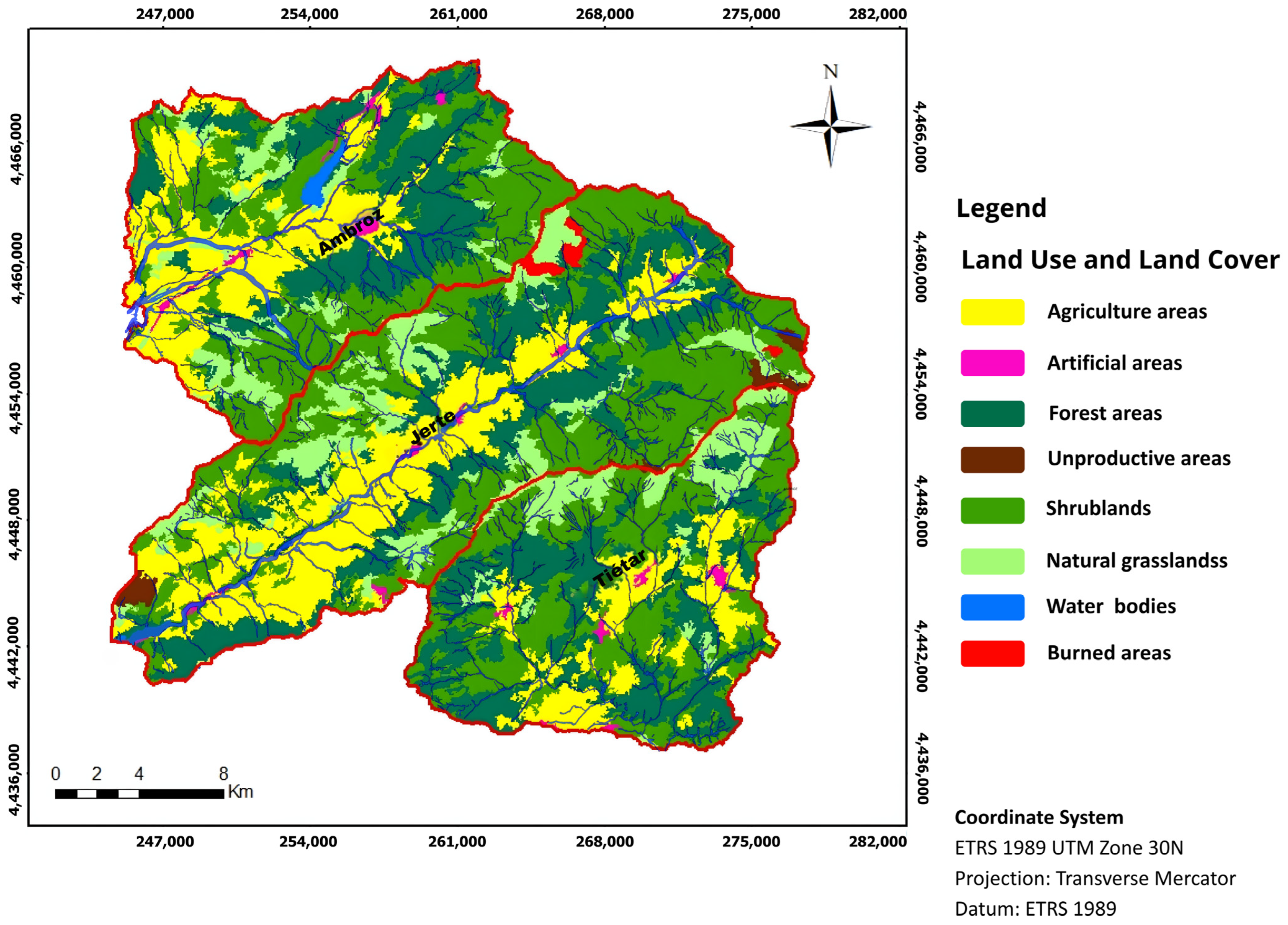
39], produced under the CORINE programme of the European Environment Agency. The CLC dataset is based on Sentinel-2 and Landsat-8 imagery, with a reference scale of 1:100,000, a minimum mapping unit of 25 ha, and a hierarchical classification system comprising 44 classes. For this study, LULC classes were reclassified into ecologically meaningful categories for mountain stream systems (artificial areas, agriculture, forest, shrublands, CLC natural grasslands, including semi-natural grassland habitats where applicable, burned areas, water bodies and unproductive areas) (
Figure 2 and
Table S4).
Catchment polygons were intersected with the LULC map, and the resulting layers were converted into raster format for subsequent analysis. Landscape composition and configuration were quantified using FRAGSTATS v4.2 [
40], a widely used spatial pattern analysis tool. Metrics were calculated using the 8-cell neighborhood rule, which considers both orthogonal and diagonal adjacency among pixels.
A set of five metrics was selected based on their ecological relevance for fluvial systems and their ability to capture key aspects of landscape structure. At the class level, Class Area (CA), Percentage of Landscape (PLAND), Largest Patch Index (LPI), and Edge Density (ED) were computed, reflecting dominance, spatial extent, and fragmentation of land-use classes (
Table S5). At the landscape level, Simpson’s Diversity Index (SIDI) was used to quantify landscape heterogeneity. These metrics jointly describe landscape composition and configuration, which are known to influence the fluxes of water, sediments, nutrients, and agrochemicals reaching stream ecosystems [
41] (
Table S6).
Metric selection was guided by the environmental filtering framework, assuming that landscape composition and connectivity at the catchment scale regulate material and energy inputs to streams, thereby indirectly shaping local habitat conditions and benthic community structure.
Additionally, high-resolution imagery (10 m resolution bands) from the Sentinel-2C sensor [
19] was used to validate riparian zone integrity and refine the interpretation of fragmentation and connectivity patterns, particularly in transitional areas between forest and agricultural land uses.
2.5. Statistical and Multivariate Analysis
Spatial variation in benthic macroinvertebrate assemblages and their relationship with environmental variables were analysed using partial Redundancy Analysis (pRDA) [
42,
43].
This constrained ordination technique was used to assess the independent and shared effects of three groups of predictors: (i) physicochemical variables, (ii) hydromorphological indices (RHS), and (iii) landscape metrics, following a variance partitioning framework [
44].
Prior to analysis, abiotic variables were standardized to ensure comparability, while biotic data (family-level abundances of benthic macroinvertebrates) were log(x + 1) transformed to reduce the influence of dominant taxa [
45]. Variance partitioning was performed to quantify the unique and shared contributions of the three groups of environmental predictors to community composition.
Statistical significance of the pRDA models and explanatory fractions was assessed using Monte Carlo permutation tests (999 permutations).
All analyses were performed using CANOCO 5 (version 5.14, Biometrics, Wageningen, The Netherlands).
3. Results
3.1. Physicochemical and Hydromorphological Conditions
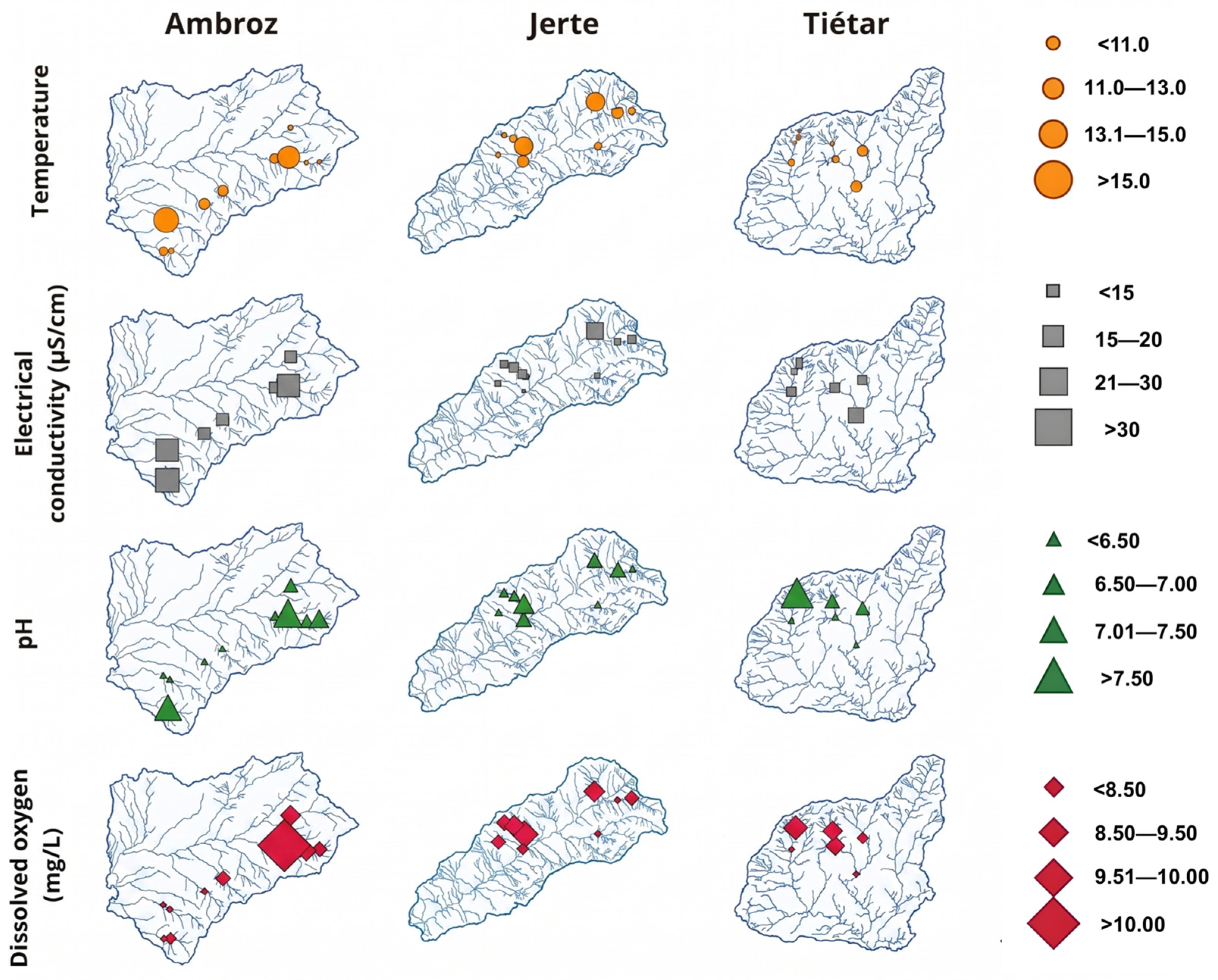
The physicochemical characteristics of the studied sites were consistent with relatively well-preserved mountain systems (
Figure 3). Water temperature ranged from 9.38 to 16.98 °C, reflecting the elevational gradient across sub-catchments. Electrical conductivity values were consistently low (<40 µS/cm), indicating low mineralization and limited anthropogenic inputs. Dissolved oxygen concentrations were high (mean > 9.0 mg/L), suggesting well-oxygenated conditions, while pH values ranged from 6.16 to 7.60.
Hydromorphological assessment revealed generally high habitat quality with HQA scores exceeding 70 in most sites. However, HMS indicated spatial heterogeneity. While 54.5% of the sites were classified as “Pristine” or “Predominantly Unmodified” (Classes 1 and 2), 45.5% exhibited moderate to significant hydromorphological alterations (Classes 3 to 5). The highest HMS values were recorded in the Jerte River sub-catchment, associated with channel regulation and bank modifications.
3.2. Macroinvertebrate Community Composition and Biological Quality
A total of 76,759 individuals were collected, representing 78 families distributed across 14 taxonomic groups (see
Supplementary Materials: Tables S4–S6). Insecta accounted for 98.6% of total abundance, reflecting a strongly uneven distribution of taxa within the assemblages.
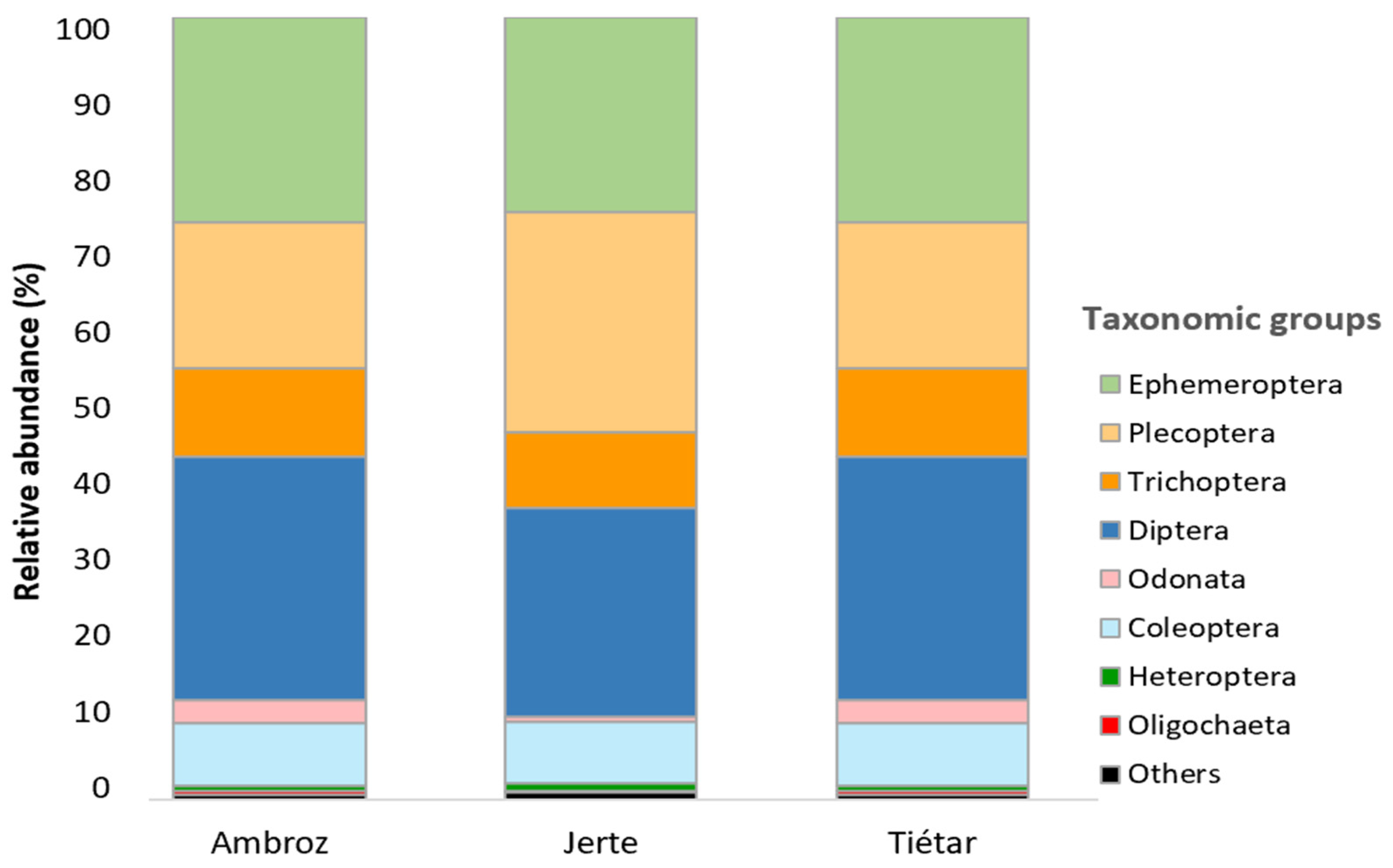
The most abundant orders were Diptera (29.2%, mostly Chironomidae family), Plecoptera (24.2%), and Ephemeroptera (23.4%), followed by Trichoptera (10.9%) and Coleoptera (8.4%). Spatial differences in community composition were observed among sub-catchments. Plecoptera dominated in the Ambroz sub-catchment (28.1%), whereas Diptera were more abundant in Jerte (29.6%) and Tiétar (31.0%) (
Figure 4).
Despite these compositional differences, Ephemeroptera, Plecoptera, and Trichoptera (EPT) taxa accounted for more than 40% of total family richness in all sub-catchments (46.0% in Ambroz, 44.5% in Jerte, and 43.7% in Tiétar). Accordingly, all sampling sites were classified as Class I (“Excellent”) based on the IBMWP index.
3.3. Landscape Metrics
Natural and semi-natural land cover types dominated the study area overall, although their relative proportions varied spatially. The Ambroz and Tiétar sub-catchments were characterized by higher coverage of forested areas, shrublands, and natural pastures, resulting in more heterogeneous landscape mosaics. In contrast, the Jerte sub-catchment exhibited a higher proportion of agricultural land, primarily associated with intensive cherry orchards concentrated along valley bottoms.
At the class level, Percentage of Landscape (PLAND) indicated that agricultural areas reached their highest values in the Jerte sub-catchment, whereas natural pastures (CAPN) and forest-related classes were more prominent in Ambroz and Tiétar. The Largest Patch Index (LPI) further reflected this pattern, with larger and more continuous patches of natural vegetation in Ambroz and Tiétar, while Jerte displayed a more fragmented landscape structure dominated by agricultural plots.
Edge Density (ED) values suggested increased landscape fragmentation in areas with mixed land use, particularly in transitional zones between agricultural and natural land covers. In contrast, sub-catchments with higher proportions of continuous forest and pasture exhibited lower edge densities, indicating more homogeneous landscape structures.
At the landscape level, Simpson’s Diversity Index (SIDI) revealed moderate to high heterogeneity across all catchments, with slightly higher values in Ambroz and Tiétar, reflecting a more diverse composition of land-use classes compared to Jerte.
3.4. Environmental Drivers of the Community Structure
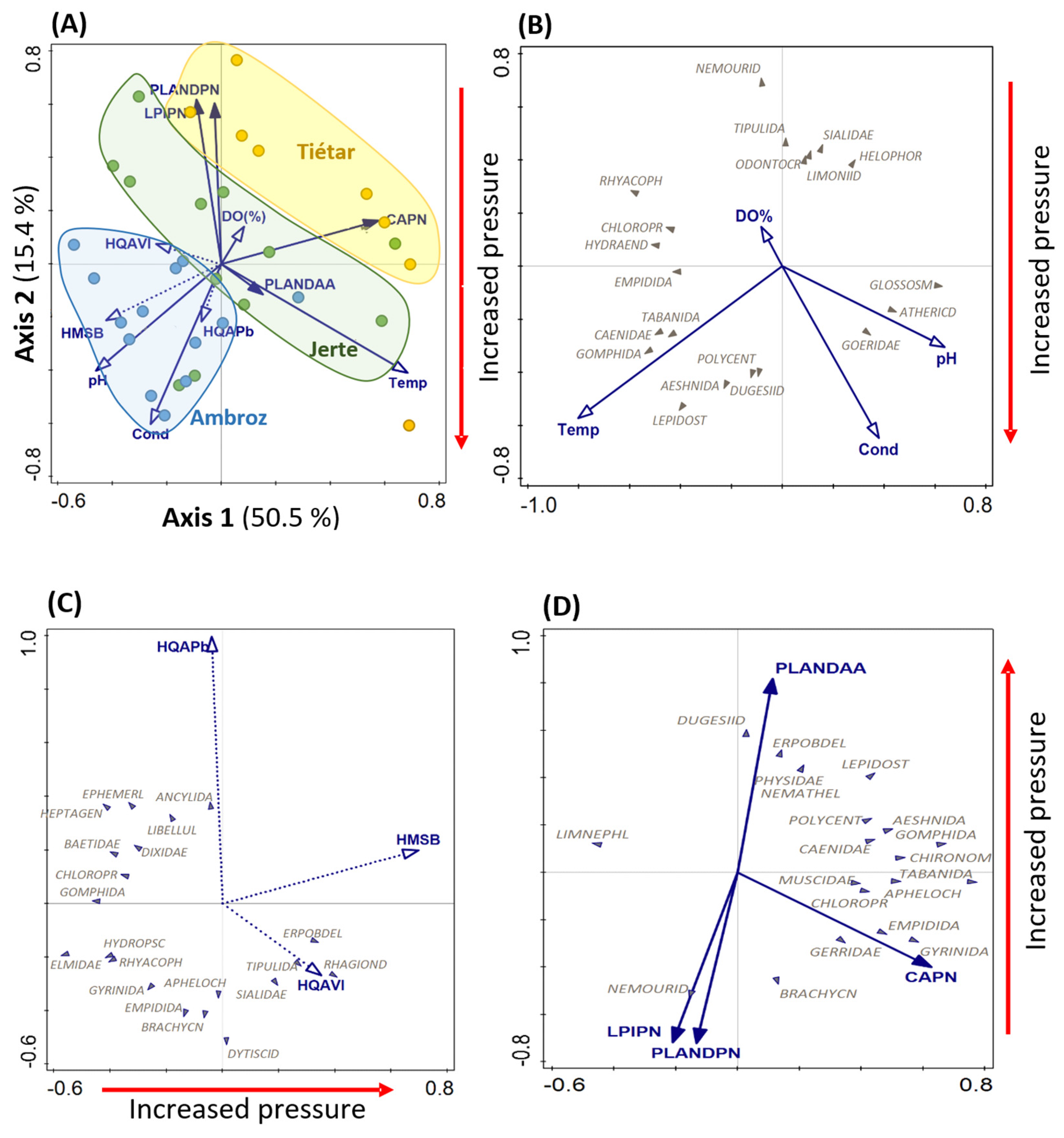
Multivariate analyses based on pRDA showed clear relationships between benthic macroinvertebrate community composition and environmental predictors (
Figure 5). The pRDA showed that environmental variables significantly explained variation in community structure (Monte Carlo permutation tests,
p < 0.05). Ordination patterns indicated a clear spatial segregation of sampling sites among sub-catchments, reflecting distinct environmental gradients.
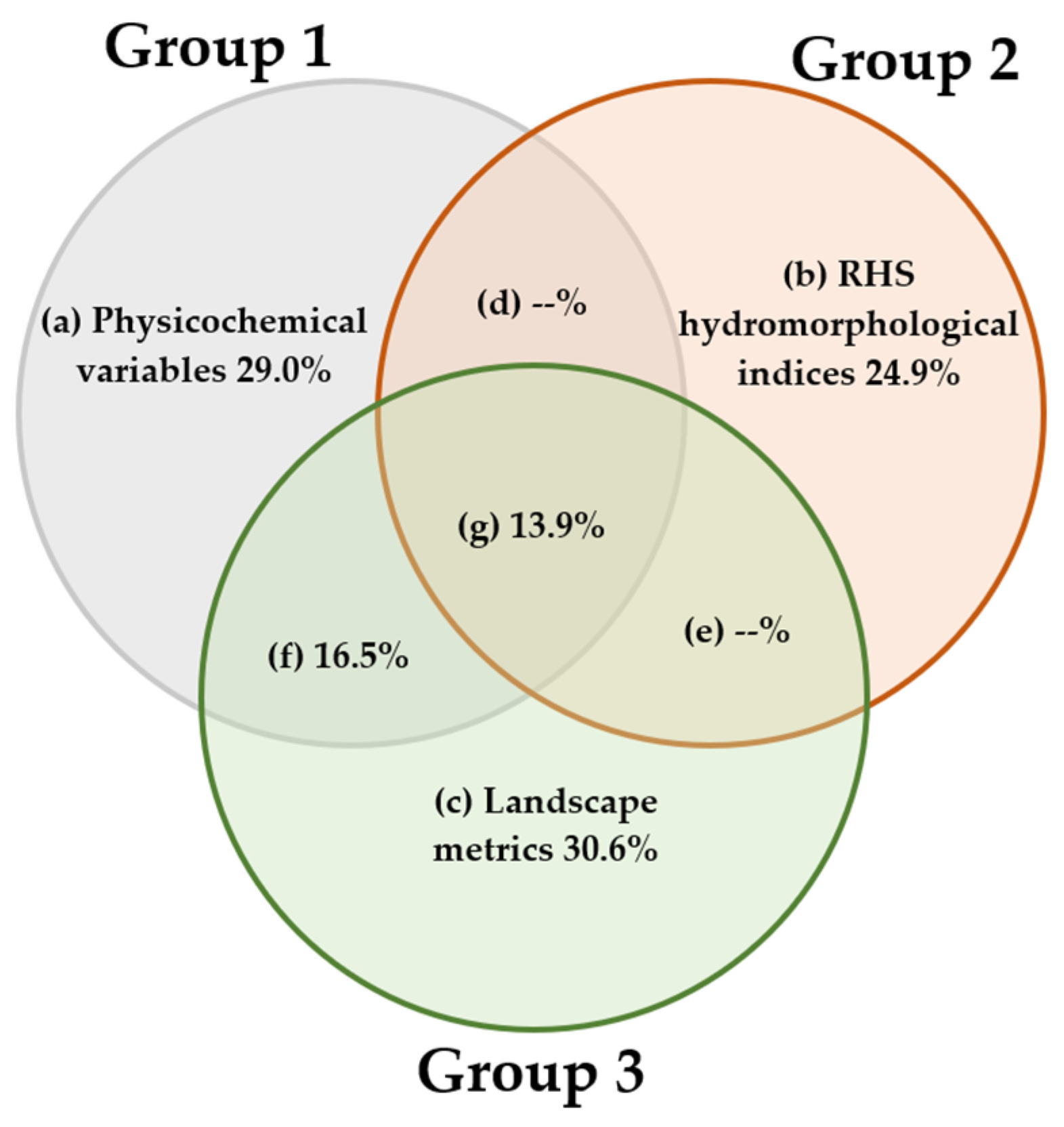
Variance partitioning revealed that landscape variables accounted for the largest unique fraction of explained variance (30.6%), followed by physicochemical variables (29.0%) and hydromorphological indices (24.9%) (
Figure 6). In addition to their individual contributions, substantial shared effects (16.5%) were observed among predictor groups, particularly between landscape and physicochemical variables, indicating coupled influences of catchment land use and water quality on macroinvertebrate assemblages. A smaller but non-negligible proportion of variance (13.9%) was jointly explained by all three groups (landscape, physicochemical, and hydromorphological), highlighting the integrated nature of multi-scale environmental control.
Sites in the Tiétar sub-catchment were associated with higher natural pasture cover (CAPN) and lower pH and conductivity. Ambroz sites were linked to higher conductivity and sediment-related habitat variables, whereas Jerte sites were strongly associated with higher proportions of agricultural land cover (PLANDAA).
4. Discussion
4.1. Multi-Scale Environmental Control of Stream Communities
Results indicate that macroinvertebrate community structure in mountain streams classified as having “Excellent” ecological status is influenced by a combination of environmental drivers operating at multiple spatial scales. Although landscape variables explained the largest fraction of variance (
Figure 6), their contribution was comparable to that of physicochemical and hydromorphological factors, supporting a multi-scale framework of environmental control.
These findings are consistent with the hierarchical filtering concept proposed by Poff [
15] and further developed by Allan [
16], which postulates that regional and catchment-scale processes constrain local habitat conditions and, consequently, the composition of aquatic communities. In this context, landscape characteristics define the pool of potential colonizers, while local-scale filters subsequently act to structure assemblages.
A growing body of literature has highlighted the importance of multi-scale drivers in structuring freshwater communities, emphasizing that interactions among environmental factors operating at different spatial scales are critical in shaping biodiversity patterns [
46,
47]. The significant shared variance observed between landscape and physicochemical variables reinforces this interpretation, indicating that land-use patterns influence water chemistry through diffuse pathways such as nutrient runoff, sediment transport, and hydrological alteration. Similar relationships have been widely reported in stream ecology, where catchment land use has been shown to regulate nutrient dynamics and habitat quality [
9,
16,
48].
Overall, these results highlight that even in relatively undisturbed mountain systems, ecological patterns cannot be fully understood without integrating processes occurring at the catchment scale.
4.2. Influence of Land Use and Agricultural Pressure
The spatial segregation of sampling sites revealed by the pRDA highlights the role of land use as a key driver of macroinvertebrate community differentiation among sub-catchments. Overall, these patterns indicate a gradient from more natural and heterogeneous landscapes (Ambroz and Tiétar) to more agriculturally influenced and spatially structured catchments (Jerte), providing a basis for interpreting the observed relationships between land use and macroinvertebrate community structure. In particular, the Jerte sub-catchment, characterized by a higher proportion of intensive agriculture, especially cherry orchards, was associated with environmental conditions linked to increased anthropogenic pressure.
Agricultural intensification is widely recognized as a major driver of ecological change in stream ecosystems, acting through nutrient enrichment, pesticide contamination, and sediment inputs [
16,
49,
50]. These stressors promote shifts in community composition, favoring tolerant and opportunistic taxa such as Chironomidae, while reducing the relative abundance of sensitive groups such as Ephemeroptera, Plecoptera, and Trichoptera (EPT).
The patterns observed in this study are consistent with previous research in both Mediterranean and temperate regions, where land use has been identified as a primary determinant of stream ecological condition [
49,
51]. Importantly, recent large-scale assessments across Europe have demonstrated that multiple stressors, including agriculture, often interact synergistically, amplifying their ecological effects [
9].
In contrast, the Tiétar and Ambroz sub-catchments, characterized by higher coverage of natural vegetation (scrublands, pastures, and forested areas), supported higher richness of sensitive taxa. These environments likely provide greater habitat heterogeneity, improved shading, and reduced exposure to diffuse pollution, all of which are known to promote biodiversity in headwater streams.
In addition to agricultural pressures, other diffuse anthropogenic stressors, such as plastic pollution, may also influence macroinvertebrate colonization and stream ecological integrity. Microplastics have been shown to alter habitat structure, interfere with feeding and respiration, and modify community composition in freshwater ecosystems, particularly under multi-stressor conditions where interactions with nutrients and sediment loads can amplify ecological effects [
52,
53]. Recent evidence also indicates that contamination can affect benthic invertebrates through both direct ingestion and indirect habitat-mediated pathways, ultimately influencing community assembly processes in lotic systems [
54]. Although plastic pollution was not directly assessed in this study, its potential occurrence in agricultural and recreational mountain catchments should be considered in future multi-scale assessments of ecological condition, particularly in systems already exposed to diffuse land-use pressures [
55].
Beyond ecological consequences, land-use intensification may generate relevant socioeconomic implications, particularly in rural mountain regions where ecosystem services are tightly linked to local livelihoods. Impacts on water quality can directly affect irrigation reliability, drinking water treatment costs, and the sustainability of traditional agro-forestry systems, thereby influencing the long-term resilience of socio-ecological systems in Mediterranean mountain landscapes [
16,
56]. In addition, degradation of stream ecological integrity may reduce cultural and recreational values associated with headwater ecosystems. Preventive and mitigation strategies should therefore adopt integrated catchment-scale management approaches, including the conservation and restoration of riparian buffers, reduction in diffuse agricultural inputs, limitation of hydromorphological alterations, and implementation of improved waste management and circular economy practices to reduce plastic leakage into freshwater systems [
53,
55,
57].
4.3. Hydromorphological Alterations and Ecological Integrity
Although most sampling sites exhibited high habitat quality according to RHS metrics, nearly half showed evidence of hydromorphological alteration, indicating that structural pressures are already present in these systems. The presence of transverse barriers, particularly in the Jerte sub-catchment, may disrupt longitudinal connectivity, which is essential for dispersal, recolonization, and life-cycle completion in many aquatic organisms.
Hydromorphological degradation has been widely identified as a major driver of ecological change in river systems, often interacting with other stressors such as land use and water abstraction [
36,
58], and its interaction with catchment-scale pressures may constrain biological responses to restoration measures [
59]. Recent continental-scale assessments have further highlighted the extent of river fragmentation in Europe, with widespread impacts on connectivity and ecosystem functioning [
60].
The relatively moderate explanatory power of hydromorphological variables in this study may reflect the early stage of alteration or the resilience of mountain headwater systems. Similar findings have been reported in other studies, where hydromorphological impacts become more evident under higher levels of disturbance [
59].
4.4. Limitations of Traditional Biotic Indices
Despite all sites being classified as “Excellent” according to the IBMWP index, multivariate analysis revealed clear ecological gradients associated with land use and environmental variables. This discrepancy highlights a well-recognized limitation of traditional taxonomic indices, which may lack sensitivity to subtle or early-stage environmental changes.
Previous studies have also demonstrated that single-metric indices can fail to detect ecological degradation in relatively undisturbed systems [
50,
61]. More recent work has emphasized that the presence of multiple interacting stressors further complicates ecological assessment, reducing the effectiveness of conventional bioassessment tools [
9].
In contrast, multivariate approaches and trait-based analyses provide a more sensitive and integrative framework for detecting ecological responses, capturing shifts in community composition that may precede observable declines in index-based classifications.
5. Conclusions
This study demonstrates that macroinvertebrate communities in Mediterranean mountain streams are structured by the combined influence of landscape, physicochemical, and hydromorphological factors. Although landscape variables explained the largest fraction of variance, their contribution was comparable to that of local environmental conditions, highlighting the importance of multi-scale processes in shaping lotic ecosystems. These findings support a hierarchical environmental filtering framework in which catchment-scale landscape characteristics determine the potential pool of colonizing taxa, while local physicochemical and hydromorphological conditions further structure community composition.
Despite all sampling sites being classified as having “Excellent” ecological status according to the IBMWP index, multivariate analyses revealed clear responses of macroinvertebrate assemblages to land use and environmental gradients. In particular, the influence of agricultural areas and sediment-related variables suggests that diffuse pressures are already acting as environmental filters, potentially affecting sensitive taxa even under apparently high ecological quality conditions.
These findings highlight the limitations of relying exclusively on traditional biotic indices and support the integration of catchment-scale variables into ecological assessment frameworks. While local habitat conditions remain important, the results indicate that broader landscape processes play a key role in determining ecological integrity.
From a management perspective, maintaining the ecological status of these systems will require integrated catchment-scale approaches that address diffuse pressures and preserve landscape connectivity. Preventive strategies aimed at minimizing agricultural impacts, conserving riparian corridors, and reducing hydromorphological alterations are likely to be more effective than local-scale restoration alone in safeguarding long-term biodiversity and ecosystem functioning.





 ,
,