Article

The N(itrogen)- and P(hosphorus)-Related Grey Water Footprints of Domestic and Industrial Water Use—A Global Analysis from 1990 to 2019


1
Multidisciplinary Water Management, Faculty of Engineering Technology, University of Twente, Horst Complex Z223, P.O. Box 217, 7500 AE Enschede, The Netherlands
2
Water Footprint Network, Drienerlolaan 5, 7522 NB Enschede, The Netherlands
*
Author to whom correspondence should be addressed.
Water 2026, 18(12), 1425; https://doi.org/10.3390/w18121425
Submission received: 10 April 2026 / Revised: 29 May 2026 / Accepted: 1 June 2026 / Published: 10 June 2026
(This article belongs to the Section Water Quality and Contamination)

Highlights

  • First historic global N and P grey water footprints (GWFs) from 1990 to 2019.
  • Global domestic and industrial GWFs at 5 × 5 arc minute resolution.
  • N and P GWFs increased by factors of 2.4 and 2.6 from 1990 to 2019, respectively.
  • GWF reduction potential is high in densely populated areas and industrial hotspots.
  • Wastewater treatment upgrade is key for reducing global N and P GWFs.

Abstract

Freshwater pollution by nutrients is a global concern. While agriculture is the largest contributor globally, domestic and industrial emissions are responsible for substantial emission hotspots worldwide. To this end, this paper presents the global grey water footprint (GWF) of nitrogen (N) and phosphorus (P) from domestic and industrial sources as a water pollution indicator. GWFs are displayed as gridded datasets with 5 × 5 arc minute resolution annually from 1990 to 2019, extending previous time series. Methodologically, the domestic GWF calculations were refined but were largely based on previous GWF studies. For industrial GWFs, this study presents a novel approach to estimating emissions based on country-specific industrial-to-domestic load ratios instead of the uniform ratios used in earlier studies. The global N-related GWF rose from 2.6 × 10¹² m3/yr to 6.3 × 10¹² m3/yr between 1990 and 2019. During the same period, the P-related GWF increased from 75.2 × 10¹² m3/yr to 194.5 × 10¹² m3/yr. Domestic wastewater is the dominant contributor, with hotspots in densely populated regions, such as East China, North India, and parts of Africa. Industrial contributions show relevance in heavily industrialized areas with limited wastewater treatment infrastructure. Population growth was the primary driver of increased GWFs, particularly in regions with limited sanitation and wastewater treatment. This reflects the need to improve these to mitigate nutrient pollution.

1. Introduction

The global population is experiencing water scarcity increases from 30% to 40% when not only accounting for water quantity but also for water quality [1]. This highlights the relevance of including degradative use in assessments of human appropriation of water resources. Among the most considerable pollutants negatively impacting freshwater resources are nutrients, particularly N and P. Excessive nutrient loads contribute to eutrophication, leading to oxygen depletion, detrimental algal blooms, and declines in aquatic biodiversity [2]. Understanding the sources and impacts of these pollutants is crucial for effective water management and policies, eventually leading to less pollution and reduction in global water scarcity.
On a global level, agriculture is widely recognized as the largest contributor to nutrient pollution due to diffuse runoff from grazing animals and fertilizer application [3]. However, point source pollution from domestic and industrial wastewater also play a considerable role [4,5], especially in regional hotspots [6,7]. Modeling these point source emissions is more straightforward compared to diffuse emissions. However, for parts of the point source emissions, data availability remains limited. This is especially the case for industrial nutrient emissions, as well as their treated fractions and treatment quality [8]. Domestic wastewater releases N and P primarily through human waste [9]. Other domestic sources of phosphorus pollution include dishwashers and laundry detergents [10]. Industrial activities, such as mining, manufacturing, and energy production, contribute to wastewater discharges containing nutrients and other pollutants [11]. Among the main contributors to industrial nutrient pollution are the use of process water and cooling water.
A commonly used indicator to quantify water pollution is the grey water footprint (GWF). The water footprint (WF) method assesses freshwater use required to produce goods or services along the supply chain. A WF consists of three components: green, blue and grey. While the green and blue WF account for consumptive water use from precipitation and surface-/groundwater respectively, the grey WF accounts for degradative use. As a volumetric pollution indicator, it expresses the amount of water required to assimilate pollution so that ambient water quality standards are not violated [12]. The GWF is determined as the ratio of pollutant load to maximum allowed concentration minus the natural background concentration. It is calculated per pollutant, whereby the largest GWF among pollutants determines the overall GWF per spatial unit.
Several studies accounting for the GWF as an indicator of nutrient pollution have been conducted at various geographical scales—from the (sub-)basin-scale [6,13] to the national scale [14] and to the global scale [4,5]. Many GWF studies focus only on agricultural nutrient pollution [15,16,17], while others focus on specific industries [18,19,20]. Fewer present combined agricultural, domestic, and industrial GWFs [6,21]. Only the studies by Mekonnen and Hoekstra [4,5] present global GWFs for agricultural, domestic and industrial sectors at a high spatial resolution (5 × 5 arc minute). The years covered are from 2002 to 2010.
The objective of the present study is to refine previously applied methods to conduct a spatio-temporal analysis of global nutrient pollution over the past three decades, thereby identifying key hotspots and emerging trends, as well as exploring future pollution scenarios. To this end, we build on and expand the work of Mekonnen and Hoekstra [4,5] by quantifying the historical N- and P-related GWF from domestic and industrial emissions between 1990 and 2019. Besides an expansion of the time span covered, this study extends the earlier global studies by accounting for collected but untreated domestic wastewater, most of which is directly discharged into freshwater sources [9]. In contrast to previous approaches that applied a globally uniform industrial-to-domestic ratio, this study incorporates country-specific industrial data where available, and estimates missing values using country-specific factors derived from the industrial share of GDP. This approach better captures regional differences in industrial nutrient loads that may have been overlooked in earlier global assessments. In addition, two scenario analyses were conducted to evaluate the potential impact of improved sanitation standards in China and India, as well as hypothetical political shifts on detergent emissions in Europe. Results for these case regions illustrate the potential for nutrient load reduction and less freshwater pollution.
This study hence adds several novelties: (1) Providing annual 5 × 5 arc minute global datasets for a 30-year period across 254 countries and regions to examine spatiotemporal trends in nutrient pollution with a refined methodology; (2) Using the GWF as volumetric indicator of water pollution to be able to directly compare the results to water footprint studies examining consumptive use for the same period, e.g., [22]. This adds to a global assessment of humanity’s appropriation of freshwater resources; (3) Exploring scenarios which can serve decision makers for more environmentally sustainable water management.

2. Materials and Methods

The research design takes the water footprint manual [12] as basis. The novelty for the present GWF study lies in the spatially explicit, global determination of the pollution load for N and P from domestic and industrial sources for a time series of three decades. The following sections outline details about data generation and assumptions. Moreover, we present two scenarios of GWF change based on justified assumptions regarding changes in pollution loads.

2.1. Grey Water Footprint Calculation

The GWF is calculated based on the Water Footprint Assessment Manual [12], using pollutant loads, natural background concentrations, and maximum allowable concentrations to determine the volume of freshwater required to assimilate N and P. The formula is presented in Equation (1).
G W F = L o a d C m a x C n a t
  • GWF [m3/yr] is the grey water footprint;
  • Load [kg/yr] is the amount of pollutants entering freshwater bodies;
  • Cmax [kg/m3] is the maximum allowable concentration of a pollutant;
  • Cnat [kg/m3] is the natural background concentration of a pollutant in a freshwater body.
The inputs to the GWF calculation are presented in the following paragraphs. The GWF is calculated separately for N and P. They are calculated on a yearly basis on a global 5 × 5 arc minute grid.

2.1.1. The Domestic Loads to Freshwater

The load of N and P from domestic sources is calculated using Equation (2):
L   = ( L h + L d e t ) D c 1 R n + ( L h + L d e t ) D n c + L h 1 ( D n c + D c f s w )
  • L [kg/capita/yr] represents the nutrient load reaching freshwater bodies;
  • Lh [kg/capita/yr] is the nutrient emission from human waste;
  • Ldet [kg/capita/yr] accounts for emissions detergents (only for phosphorous);
  • Dc [-] is the fraction of people connected to wastewater treatment plants;
  • Dnc [-] is the fraction of people connected to a sewage system but not to a wastewater treatment plant;
  • Rn [-] is the fraction of nutrients removed by wastewater treatment plants;
  • fsw [-] is the fraction of uncollected wastewater entering freshwater bodies.
This equation, adapted from Mekonnen and Hoekstra [4,5], is modified to account for untreated wastewater. Unlike the previous studies, which assume that all collected wastewater is treated, this study explicitly includes direct discharges of collected but untreated wastewater into freshwater bodies. The collected but untreated fraction directly discharged is determined by taking the difference between the fractions of people connected to a wastewater collection system and the sum of people connected to waste water treatment plants with different treatment types.

Nutrient Emissions from Human Waste

Human nutrient emissions are determined by the amount of excreted nutrients, which directly depends on nutrient intake. N intake is estimated using national protein consumption data from FAOSTAT [23], assuming a 16% protein-to-N ratio [24]. FAOSTAT employs two methods for determining protein consumption: one used before 2013 [25] and a more detailed method implemented from 2010 onward [26]. The latter is taken for the present study when data was available for both methods. Some countries are not included in the datasets, for which we assigned proxy values based on GDP and geographic proximity (as explained in Table S3.1, Supporting Information).
Phosphorus intake data is determined using a country-specific protein-to-P ratio. These ratios are based on P intake values [26], yielding an average factor of 1.7%, with a minimum of 1.2% and a maximum of 2.6%. Mekonnen and Hoekstra used a fraction of 10% between N and P, thus using a fraction of 1.6% between protein and P. Hence, the country-specific fraction also provides an improvement compared to the method used by Mekonnen and Hoekstra [4]. For countries lacking data (mostly small island states), we used values from countries with close geographical proximity (see Table S3.2, Supporting Information S3).
97% of ingested N and P were assumed to be excreted (80% and 62% via urine and 17% and 35% via feces for N and P, respectively). The remaining 3% are lost through sweat and are considered not to enter freshwater sources [9].

Dishwasher and Laundry Detergent

Region-specific, annual P-related domestic loads from the dishwasher and laundry detergents were derived from Van Puijenbroek [10]. We thus improved Mekonnen and Hoekstra’s [4] approach of using a static value. Van Puijenbroek [10] provides P emission values for different geographical regions for 1970, 2010, and 2050 (Table S1.1, Supporting Information S1). Projections for 2050 are based on the Shared Socio-economic Pathway (SSP) 2. Linear interpolation was used to acquire in-between annual values for this study.

Wastewater Treatment and Collection

Human waste-derived nutrients can reach freshwater bodies in multiple ways, one of which is via sewage systems. The amount of these nutrients reaching freshwater sources depends on various parameters, such as the fraction of wastewater collected and treated, and the type of treatment in the wastewater treatment plants [9].
While spatially explicit global wastewater treatment plant data recently became available for the current situation [27], this data is not available for historic time series. We therefore developed an approach combining different datasets as follows. The data on the fraction of collected wastewater is sourced from EuroStat [28] for European countries and from OECD [29] for other member countries. For countries not covered by these sources, estimates from the Joint Monitoring Programme (JMP) [30] provide wastewater collection data. In the absence of available data, proxy values are derived using similar countries based on GDP and geographic proximity.
Data on wastewater treatment types by country is sourced from Van Puijenbroek [31], interpolating values between 1990, 2000, and 2010 and extrapolating till 2019. It should be noted that the extrapolation of the shares of wastewater treatment types between 2010 and 2019 introduces uncertainty, which was unavoidable to deliver a global dataset. For countries without data, we multiplied treatment-type fractions from similar countries (countries with around the same GDP and geographic proximity) with the total sewage system connection rates. All country-specific values used for the connection rate and treatment type can be found in Table S3.3, Supporting Information S3.
The amount of nutrients removed in treatment plants is calculated by applying nutrient removal rates [32] to the fractions of each treatment type (data displayed in Table S1.2, Supporting Information S1); the nutrient load reaching freshwater sources via wastewater treatment plants is determined based on the remaining nutrient content after treatment.
Following the approach of Morée [9], which is supported by recent information [33,34], it is assumed that all collected but untreated wastewater is directly discharged into freshwater bodies. This water volume is estimated by subtracting the percentage of the population connected to wastewater treatment plants from the percentage connected to a sewage system.

Fraction of Uncollected Wastewater Entering Freshwater Bodies

Nutrients in uncollected wastewater are assumed to be emitted to freshwater via different pathways: volatilization, agricultural reuse, loss in soil, and direct discharge.
Volatilization occurs only for N and is estimated at 20% [5,8]. Agricultural reuse is estimated based on the classification framework established by Morée [9], categorizing countries into four nutrient recycling levels: high, medium, low, and none (Table S1.3, Supporting Information S1). Due to lacking time series data, it is assumed that the recycling levels for 2000 remain constant between 1990 and 2019.
Loss in soil and direct discharge to freshwater occur for the remaining fraction due to open defecation or other non-sewered sanitation methods, such as pit latrines and septic tanks. The distribution between these pathways is based on JMP [30] data. It is assumed that one-third of open defecation enters freshwater bodies directly, categorized as direct discharge to freshwater [35]. The remaining two-thirds of open defecation and excreta from pit latrines and septic tanks are assumed to leak into the soil, representing the loss in the soil pathway. The fraction of these leached nutrients eventually entering groundwater is based on leaching–runoff rates from Franke [36], with 0.1 for N and 0.03 for P. These nutrient losses to groundwater are included in the GWF calculation.
Ultimately, the resulting fraction of uncollected wastewater that reaches freshwater (fsw) is around 10% for both N and P—aligning with the value used by Mekonnen and Hoekstra [4,5] in their research.

2.1.2. The Industrial Loads to Freshwater

Equation (3) (adapted from Hoekstra and Mekonnen [4,5]) displays how industrial nutrient loads to freshwater are determined.
L = I F ( U ( L h + L d e t ) 1 R n )
  • L [kg/capita/yr] represents the nutrient load reaching freshwater bodies;
  • I [-] is the ratio between the domestic and industrial loads;
  • F [-] accounts for wastewater stabilization ponds and represents the fraction of nutrients not eliminated by such;
  • U [-] is the proportion of the population living in urban areas;
  • Lh [kg/capita/yr] is the nutrient emission from human waste;
  • Ldet [kg/capita/yr] accounts for emission detergents (only for phosphorous);
  • Rn [-] is the fraction of nutrients removed by wastewater treatment plants.
While earlier studies used globally uniform, static industrial-to-domestic ratios (10% for N and 15% for P [4,5]), this study refines earlier approaches by including country- and (where available) year-specific industrial-to-domestic load ratios. Where available, we determined ratios using Pollutant Release and Transfer Registers (PRTR) data. For countries without data, we established ratios using a function describing the relationship between industrial-to-domestic ratio and per capita industrial GDP, as explained in the following section. The assumed fraction of nutrients eliminated in wastewater stabilization ponds before reaching freshwater bodies is 0.3, hence 0.7 remain in the wastewater stream [9,37]. Urban population fractions are obtained from FAOSTAT [38]. Human nutrient emissions, detergent emissions, and nutrient removal fractions are applied consistently with the domestic load calculations.

Country-Specific Data

PRTR datasets categorize pollutant releases per environmental pathway: air, water, and land. This study considers industrial contributions to nutrient water pollution as direct releases to water bodies and indirect releases via wastewater treatment plants. Countries for which PRTR datasets are found can be seen in Table S1.4, Supporting Information S1.
This study uses PRTR data from 2007 onwards to ensure data consistency. To estimate industrial pollution data for 1990–2006, the following steps were conducted:
  • The industrial-to-domestic load ratio is calculated for countries with available PRTR data for 2007–2019 (Equation (4)).
  • A trendline is derived from these ratios, allowing for the extrapolation of ratios from 1990 to 2006.
  • These estimated ratios are multiplied by domestic load data of the corresponding years to approximate the industrial loads for the years where the data is missing.
For China, national databases provide N and P emission data from 2016 onwards [39]. Hence, this data is used to calculate the industrial-to-domestic ratio of earlier years using the same method as for the PRTR data.
R = I D + I I 1 R n N D o m
  • R [-] is the fraction of industrial load over domestic load;
  • ID [kg/yr] represents industrial pollutants directly released into water;
  • II [kg/yr] represents industrial pollutants entering wastewater treatment;
  • Rn [-] is the fraction of nutrients removed in wastewater treatment;
  • Ndom [kg/yr] is the total domestic load.

Countries Without Data

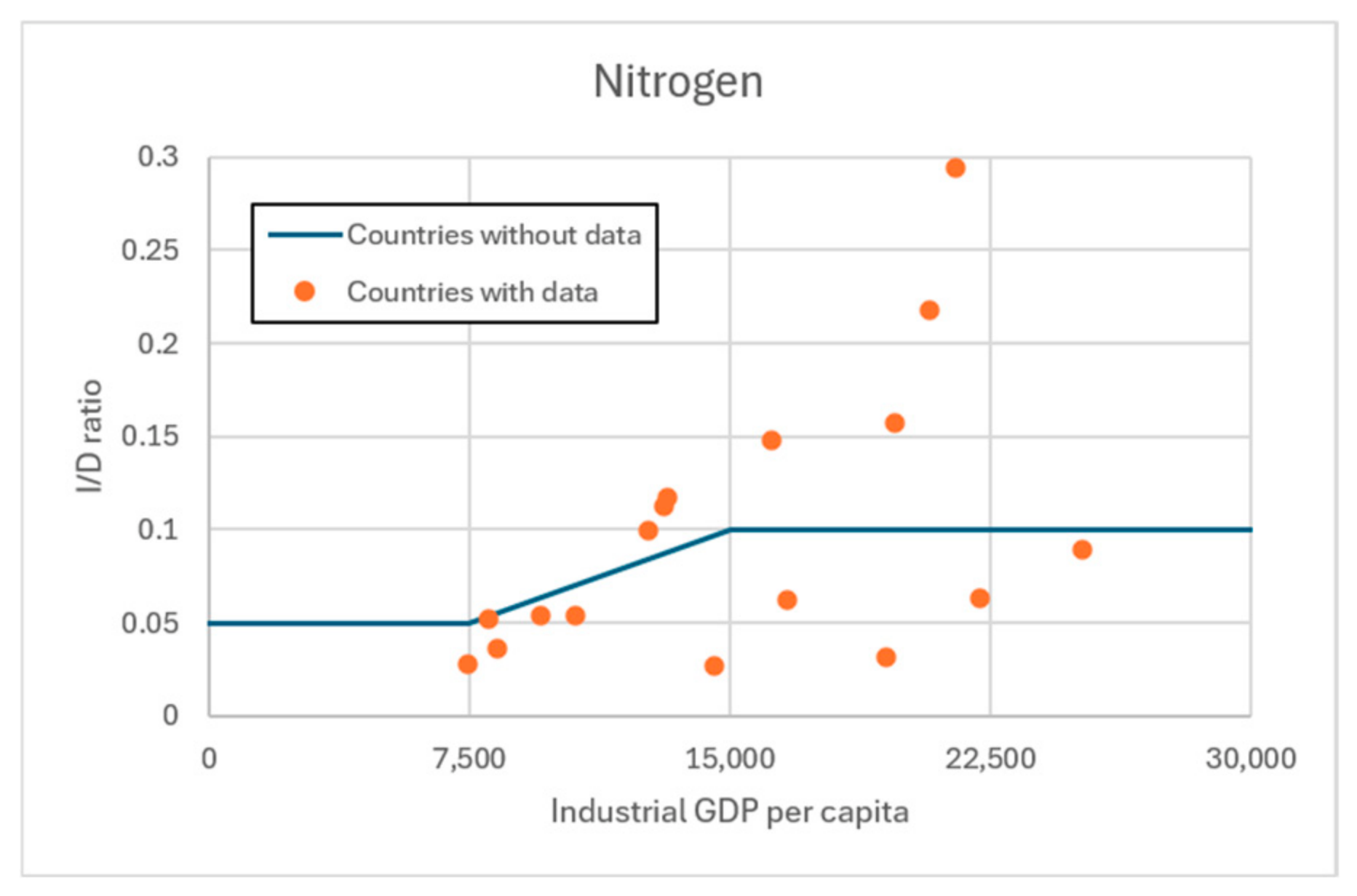
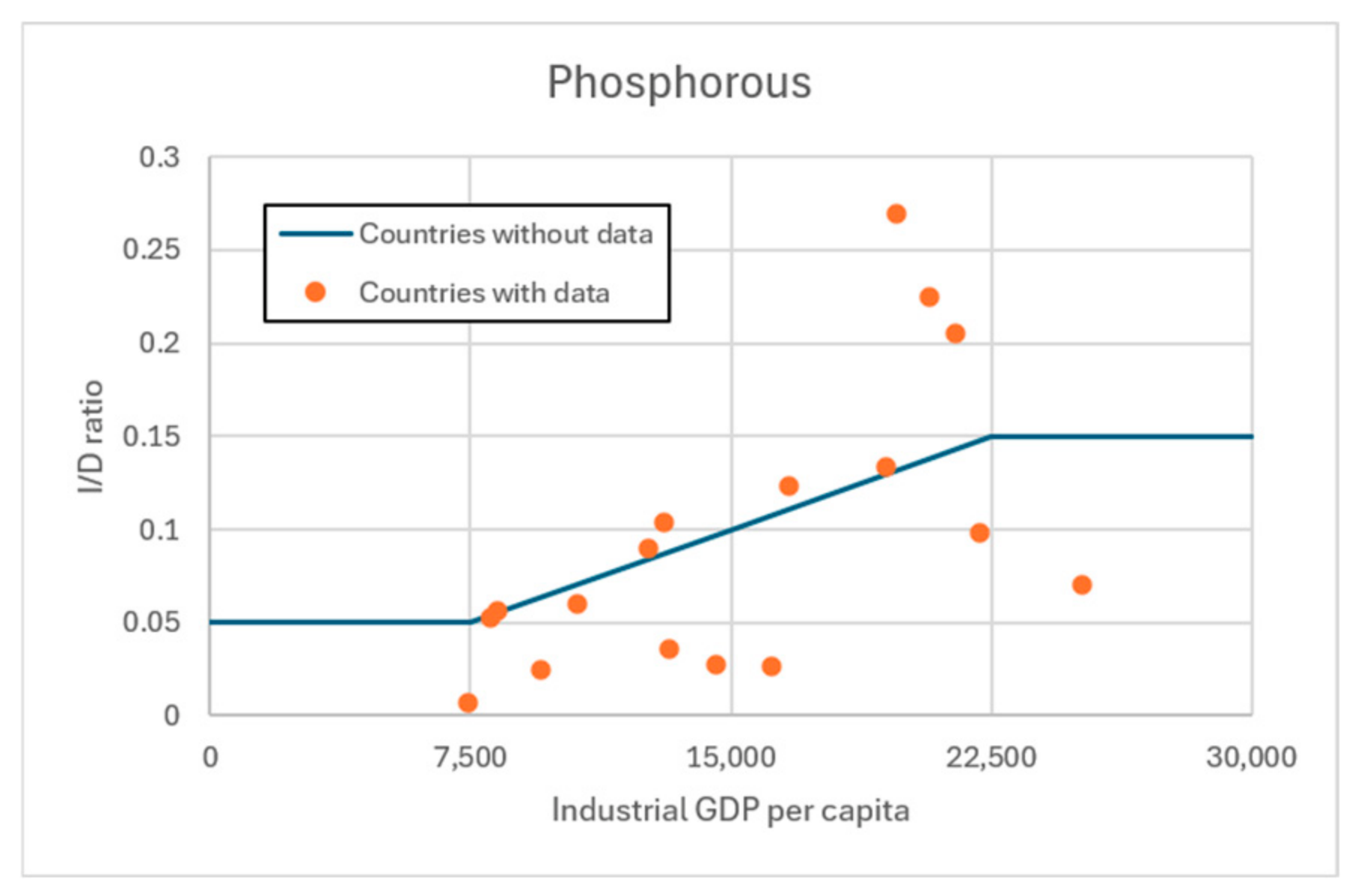
For countries without industrial pollution data, industrial-to-domestic pollution ratios are estimated using a trendline describing the relationship between industrial-to-domestic ratios of countries with available data and their respective industrial GDPs from the World Bank Group [40]. Figure 1 and Figure 2 illustrate the functions used for N and P, respectively. Further details of the function and its derivation are provided in Supporting Information S2.
The estimated industrial-to-domestic pollution ratios remain constant for countries without industrial pollution data. However, for countries with available data, these ratios vary annually. For countries also lacking data about their industrial GDP, proxies were obtained based on their geographical proximity (Table S3.4, Supporting Information S3).

2.1.3. Natural Background Concentration

Natural background concentration refers to the pollutant levels naturally present in water before human-induced contamination [12]. In industrial and domestic GWF calculations, these values are assumed to be constant worldwide from 1990 to 2019, representing baseline levels in freshwater sources. However, data on natural background concentrations are limited, and direct measurement is challenging due to the widespread influence of human-induced contamination in most rivers.
Meybeck [41] addresses this issue by analyzing relatively pristine rivers, such as the Yukon in Alaska, the Mackenzie in Canada, and the Orinoco in Venezuela, identifying a natural N concentration of 0.375 mg/L. The GWF Accounting Guidelines [36] recommend a natural N concentration of 0.36 mg/L. Mekonnen and Hoekstra [5] adopt a conservative approach by rounding this to 0.4 mg/L, which this study follows. The GWF Accounting Guidelines [36] suggest a natural concentration of 0.01 mg/L for P, adopted by the previous study on global P GWF [4]. This research uses the same natural background concentration for P to align with the suggested approach.

2.1.4. Maximum Allowed Concentration

The maximum allowed concentration refers to the ambient water quality standard. According to the Canadian Council of Ministers of the Environment (CCME) [42] and the GWF Accounting Guidelines [36], freshwater’s maximum allowable N concentration is 13 mg/L as nitrate, equivalent to 2.9 mg/L of N. This threshold, also used in research done by Mekonnen and Hoekstra [5], is applied in this study.
For P, both the CCME [42] and the GWF Accounting Guidelines [36] suggest varying values depending on the type of water body. To establish a global standard, Mekonnen and Hoekstra [4] adopted an average value of 0.02 mg/L for general freshwater bodies, which this study followed. Adopting the maximum and natural concentration values from Mekonnen and Hoekstra’s work ensures comparability.

2.2. Mapping Industrial and Domestic Grey Water Footprint

This study’s objective was to develop a global annual GWF dataset for N and P from 1990 to 2019 at a 5 × 5 arc minute resolution. The country-specific annual domestic pollutant load per capita was multiplied by a 5 × 5 arc minute population density map derived from NASA Earthdata [43], which provides 2.5 × 2.5 arc minute maps for 2000, 2005, 2010, 2015, and 2020. Annual population density maps between 2000 and 2020 were generated through linear interpolation. For 1990–1999, population density maps were created based on the total national population of each year and the relative geospatial population distribution in 2000. The 2.5 × 2.5 arc minute maps were aggregated to a 5 × 5 arc minute resolution using a mean aggregation method. Missing values for individual grid cells were filled with national average population densities from the World Bank Group [44].
The resulting load for each grid cell was divided by the difference between the maximum allowable concentration and the natural background concentration. The same approach was followed for the industrial GWF. The sum of the domestic and industrial GWFs per pollutant represents the total GWF (excluding agriculture as an emission source).

2.3. What if Scenarios

Two what-if scenarios were developed to assess the potential impact of key variables on future GWFs. These scenarios aim to evaluate the implications of notable changes in pollution per capita without altering the overall methodological framework or computational model. The focus is on how shifts in sanitation infrastructure or political dynamics could affect environmental pollutant loads.

2.3.1. Scenario: Sanitation Levels in China and India Comparable to Central Europe

This scenario investigates the potential changes in GWF if China and India (chosen as case regions due to their considerable influence on global nutrient pollution) had sanitation standards equivalent to those of Central Europe. Specifically, we model Dutch standards, which are one of the highest globally. To assess this, the following parameters were adjusted, representing a technology adaptation pathway with major infrastructure upgrades (specific values for each parameter displayed in Table 1): fraction of the population connected to wastewater treatment facilities (Dc), fraction of the population connected to a sewage network without treatment (Dnc), and the nutrient removal efficiency of treatment plants (Rn).

2.3.2. Scenario: Effects of Political Shifts on Detergent Emissions in Europe

This scenario explores how changing political landscapes in Europe could influence P emissions from detergents. Currently, the region aligns with the Shared Socio-economic Pathway 2 (SSP2), representing a “Middle of the Road” development with moderate environmental regulations. However, recent political developments suggest that SSP3—a scenario defined by regional fragmentation and reduced international cooperation—may become more plausible.
This scenario therefore represents a policy regression pathway, where weaker governance and declining environmental ambition lead to higher per capita emissions from detergent use. Table 2 illustrates detergent use under both scenarios, highlighting the potential increase in P emissions associated with SSP3.
By comparing these two divergent futures, this scenario underscores the importance of political commitment and international coordination in mitigating environmental pollution.

3. Results and Discussion

The GWF of N and P from domestic and industrial water use has changed considerably over the past three decades due to population growth, urbanization, and industrial expansion. This section outlines these trends from 1990 to 2019, highlighting absolute and relative changes in GWF, regional variations, and the GWF per capita.
Besides historical GWFs, we present two what-if scenarios representing potential future developments: (1) Changes in GWF if China and India upgraded sewage connection and wastewater treatment to Central European standards; (2) European political shifts (from currently likely SSP2 to SSP3, reflecting a more fragmented world with weaker environmental policies) that alter detergent use policies.

3.1. Grey Water Footprint of Nitrogen and Phosphorus (1990–2019)

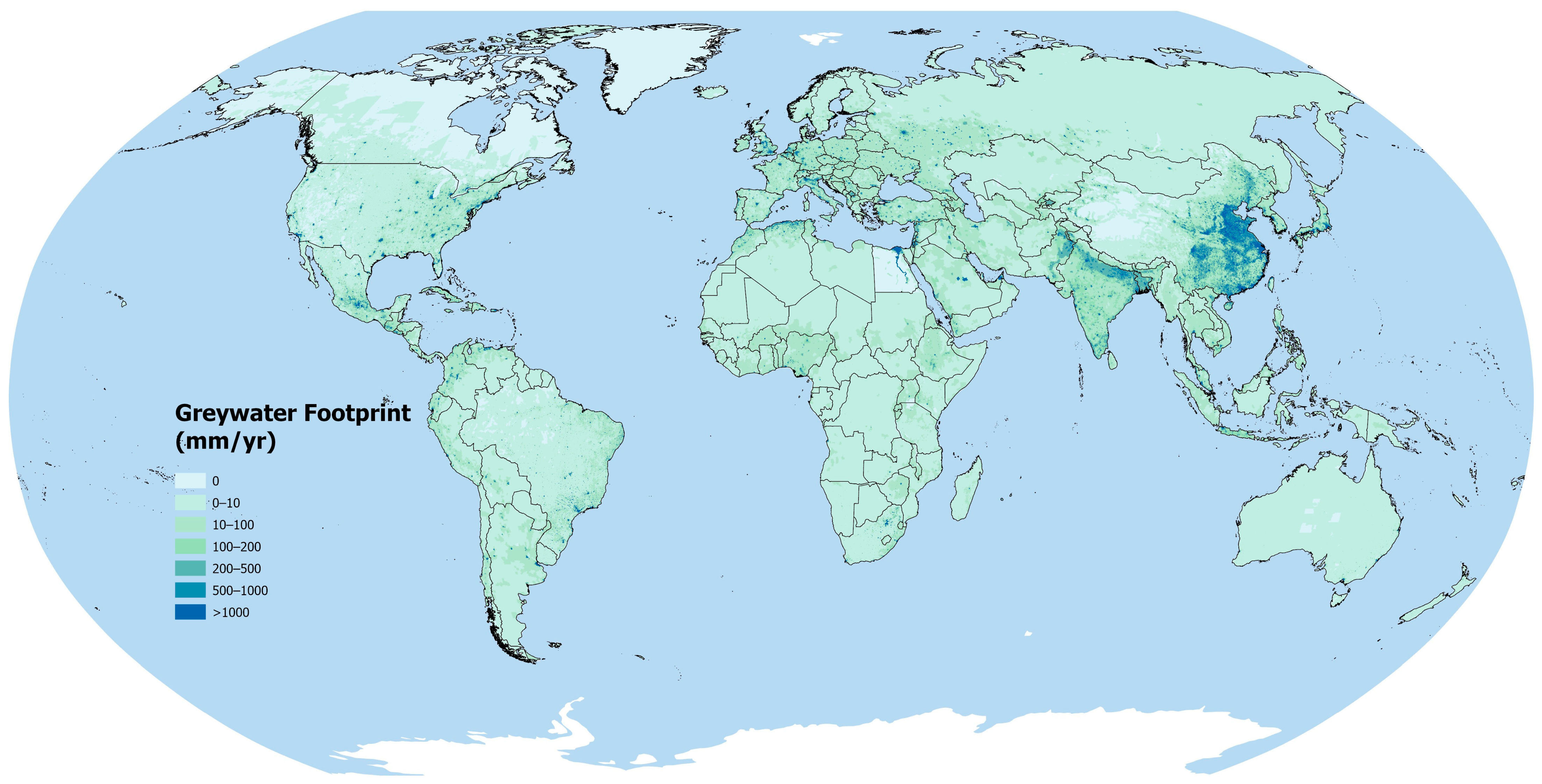
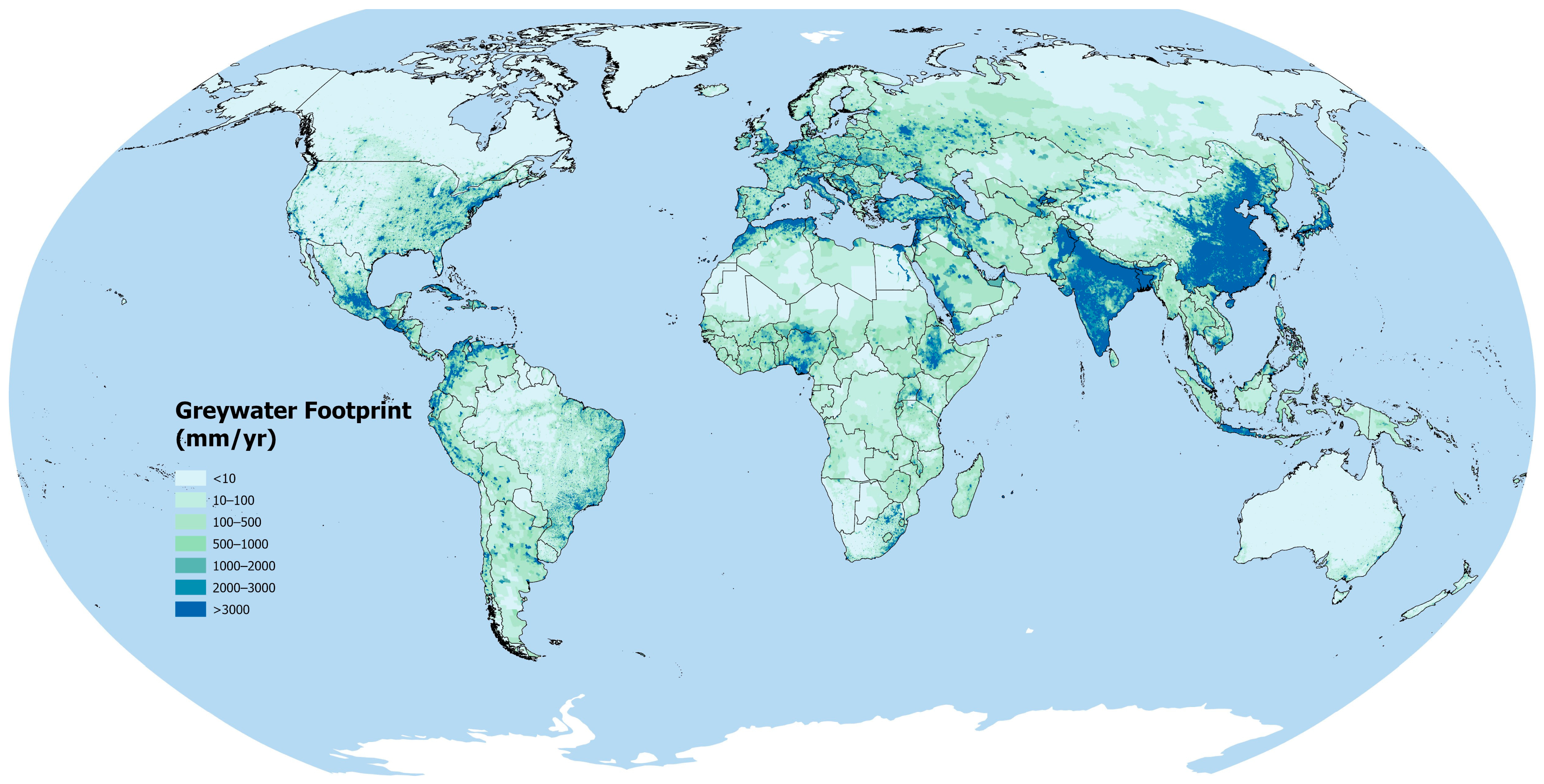
In 1990, the N-related GWF totaled 2.6 × 10¹² m3. By 2019, this value had increased to 6.3 × 10¹² m3, reflecting a substantial rise in N pollution. Figure 3 illustrates the spatial distribution of the N-related GWF in 2019. Areas with specifically large GWFs are the east coast of China, northwest Europe, and North India around the river Ghaghara. These hotspots correlate with high population density and are identical to the spatial hotspots of P-related global GWF for the same year (Figure 4). Same as for N, the GWF of P increased over the study period from 75.2 × 10¹² m3 in 1990 to 194.5 × 10¹² m3 in 2019. In absolute terms, the P-related GWF is considerably higher than the N-related GWF, namely 188.3 × 10¹² m3 in 2019. This results from the considerably lower environmental quality threshold for P compared to N, despite total N loads being higher than P loads (15.12 × 10⁹ kg N and 1.945 × 10⁹ kg P for 2019, respectively).
Due to their large populations, China and India were the largest contributors to the global GWF for both pollutants. In 1990, China contributed 10.5% and 9.8% to the N and P GWF, respectively, while India followed with 9.4% for both N and P. By 2019, China’s share had increased to 33.9% (N) and 35.6% (P), while India’s GWF decreased to 8.6% (N) and 8.5% (P).
In 1990, Iceland recorded the highest per capita GWF for both N and P. This resulted from a combination of high nutrient emissions from human waste (8th highest globally for N and 9th for P) and a large share of the population not connected to a wastewater treatment plant (88%). By 2019, Iceland still exhibited the highest per capita GWF for N and P. The persistently high values are primarily driven by the substantial proportion of wastewater that is collected but not treated, resulting in direct discharge into receiving waters. The calculation applies a conservative assumption that all untreated wastewater enters freshwater systems. However, in Iceland’s coastal regions, a portion of this wastewater is likely not discharged into freshwater bodies, but into the sea, where potentially different water quality standards apply.

3.2. Absolute and Relative Changes in GWF (1990–2019)

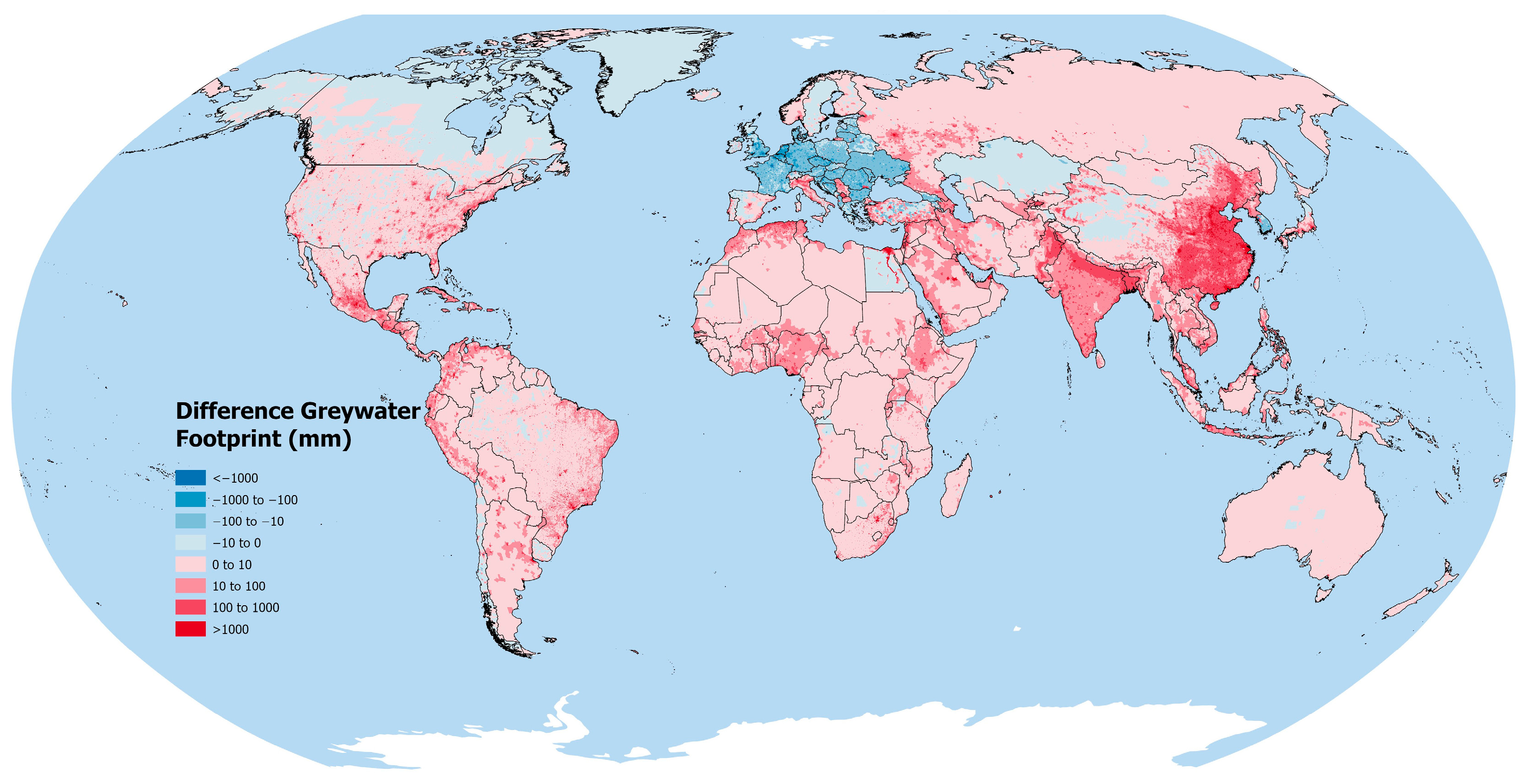
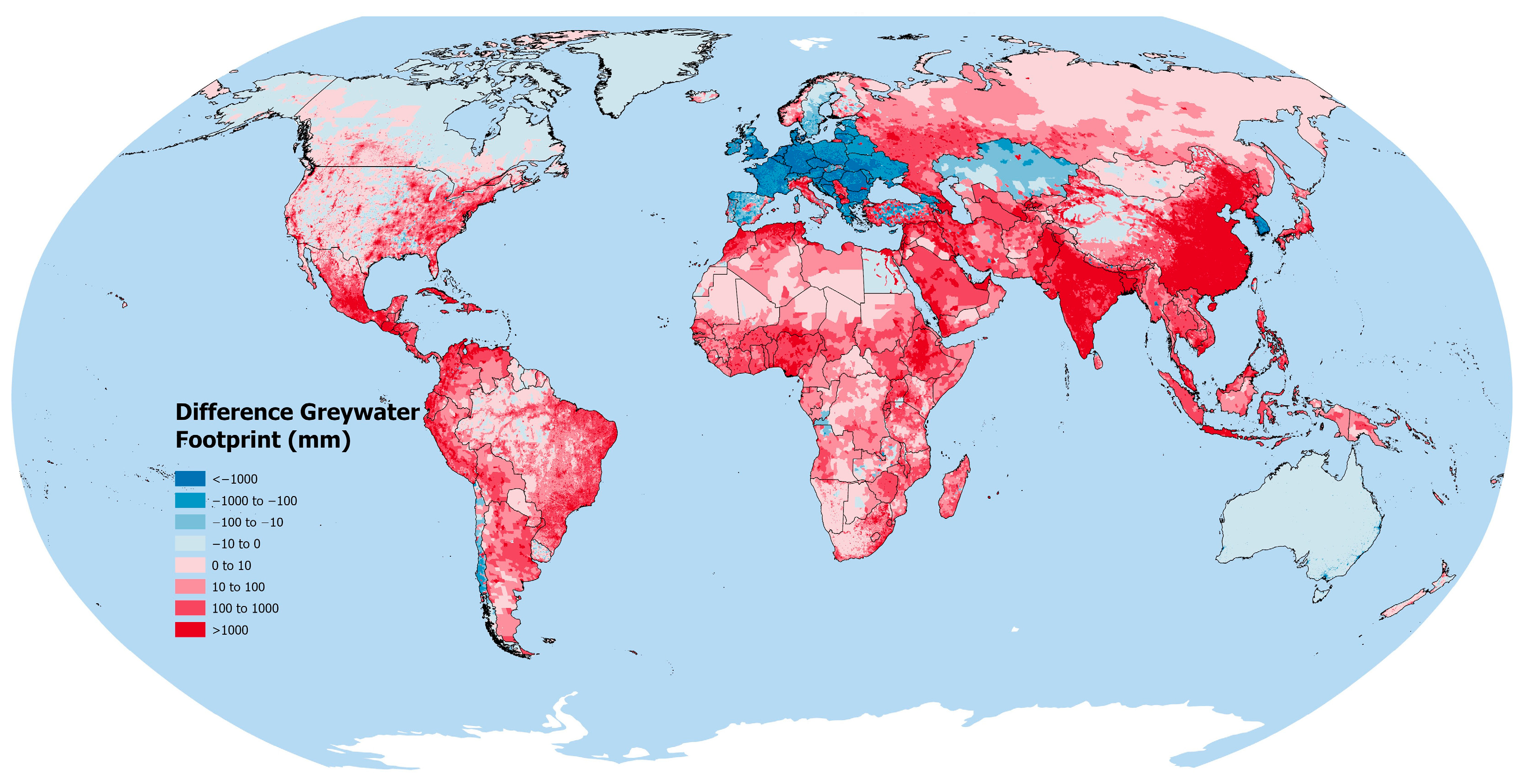
The global GWF increased considerably between 1990 and 2019, with an absolute rise of 3.7 × 10¹² m3/yr for N (Figure 5) and 119.3 × 10¹² m3/yr for P (Figure 6).
Regions such as East China, North India, North and Central Africa, and the Middle East experienced substantial increases in their GWF, primarily due to population growth, urbanization, and industrial expansion. The countries with the largest recorded increases between 1990 and 2019 are China and India, with their N-related GWF rising by 1.9 × 10¹² m3/yr and 0.3 × 10¹² m3/yr, respectively. Meanwhile, their P-related GWF has increased by 61.8 × 10¹² m3/yr and 9.4 × 10¹² m3/yr, respectively.
Conversely, Europe and Japan experienced considerable reductions in their GWF, largely due to advancements in wastewater treatment technologies and stricter environmental regulations. Although the population did increase, the increase in technology caused the GWF to reduce. France has recorded the largest absolute decrease over the study period, reducing its N-related GWF by 42.6 × 10⁹ m3/yr and its P-related GWF by 1.6 × 10¹² m3/yr. The second-largest decrease in N-related GWF (28.1 × 10⁹ m3/yr) was observed for Germany. At the same time, the United Kingdom has the second-largest decrease in P, reducing its GWF by 1.3 × 10¹² m3/yr.
Compared with other high-GDP countries, the United States, Canada, and Australia show an overall increase in GWF. Although their per capita GWF declined, population growth outpaced these efficiency gains, leading to a net rise in total GWF.
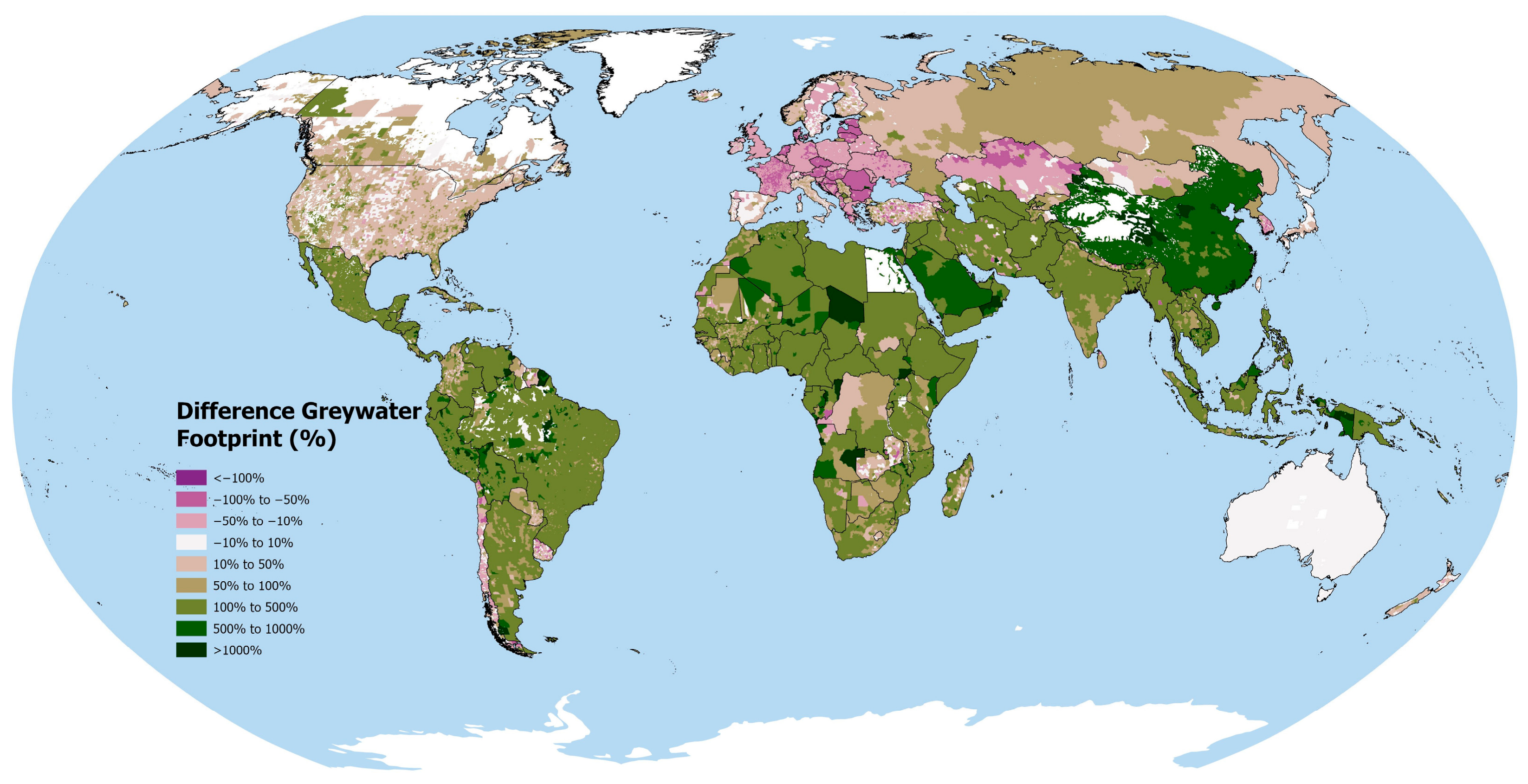
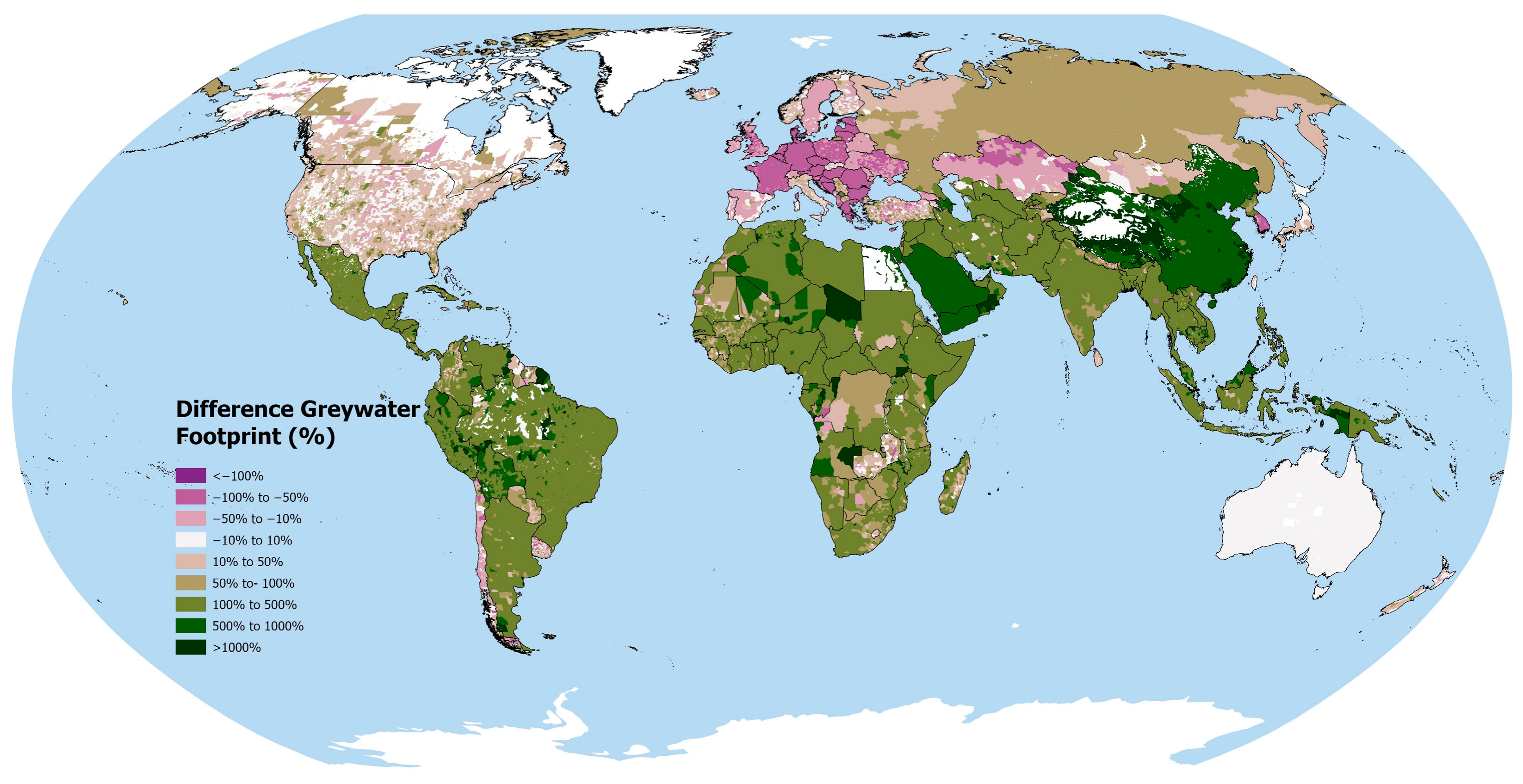
While absolute changes highlight the largest contributors to overall reductions and increases, analyzing relative changes reveals how the GWF evolved in proportion to its initial value. This approach offers insight into the rate of increase or decrease across different regions. A high relative increase results from expanding industrial activities, population growth, or worsening wastewater management, while a relative decrease emerges from improvements in wastewater management and pollution control. The relative changes for N and P are presented in Figure 7 and Figure 8.
Mayotte exhibited the highest relative increase in GWF, rising by 1.814% for N and 3.078% for P, driven by population growth, increased wastewater discharge, and limited treatment expansion. French Guiana also showed a considerable increase, with 1.677% for N and 2.960% for P, reflecting similar trends in urbanization and wastewater management challenges.
Estonia recorded the largest decrease in GWF, reducing N by 75.5% and P by 87.4%, primarily due to improved wastewater treatment efficiency and advanced nutrient removal technologies. Czechia, Latvia, Romania, and the Netherlands also achieved major reductions, reflecting the effectiveness of stringent pollution control policies and infrastructure investments.

3.3. Scenario Analyses

3.3.1. Scenario: Sanitation Levels in China and India Comparable to Central Europe

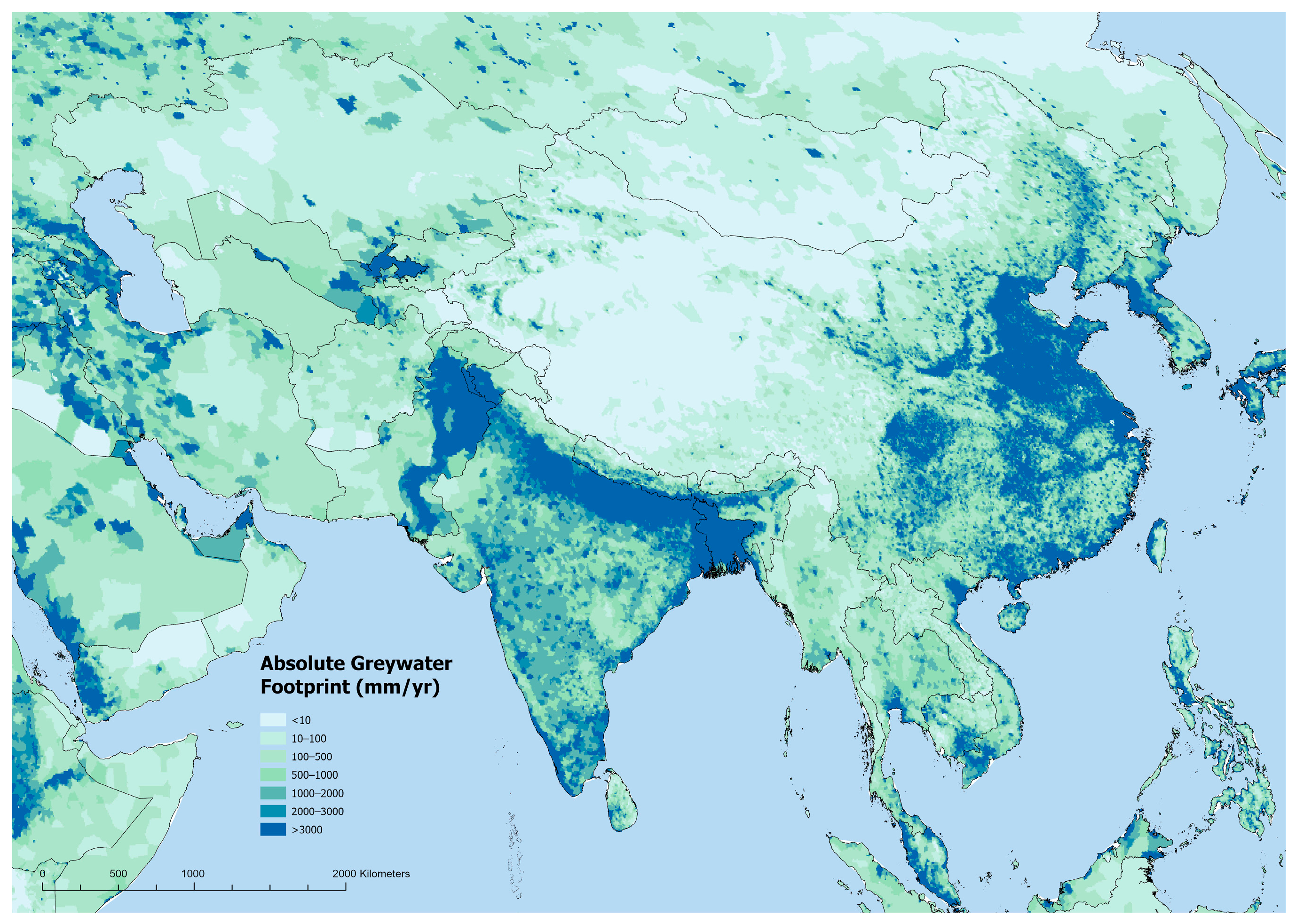
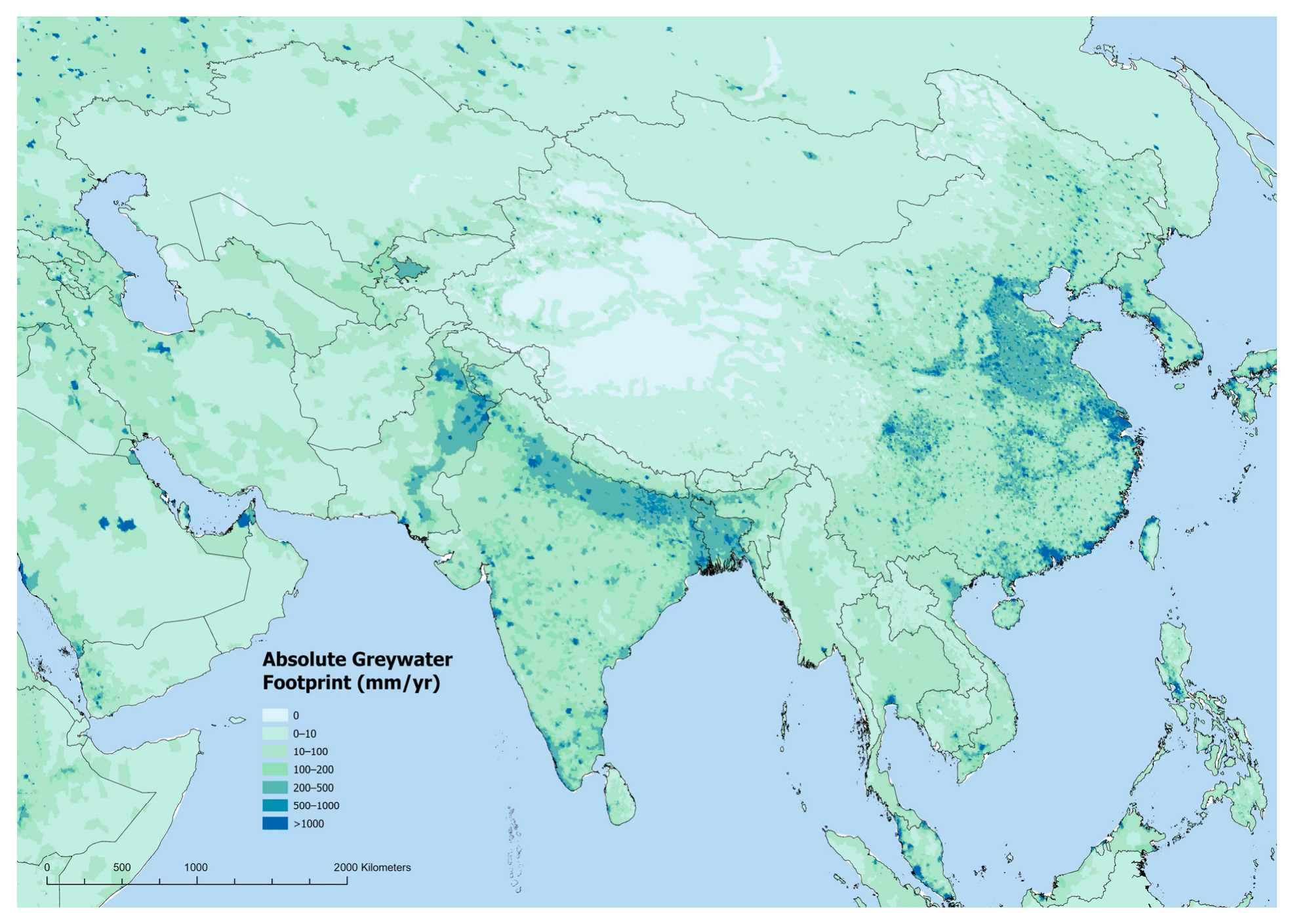
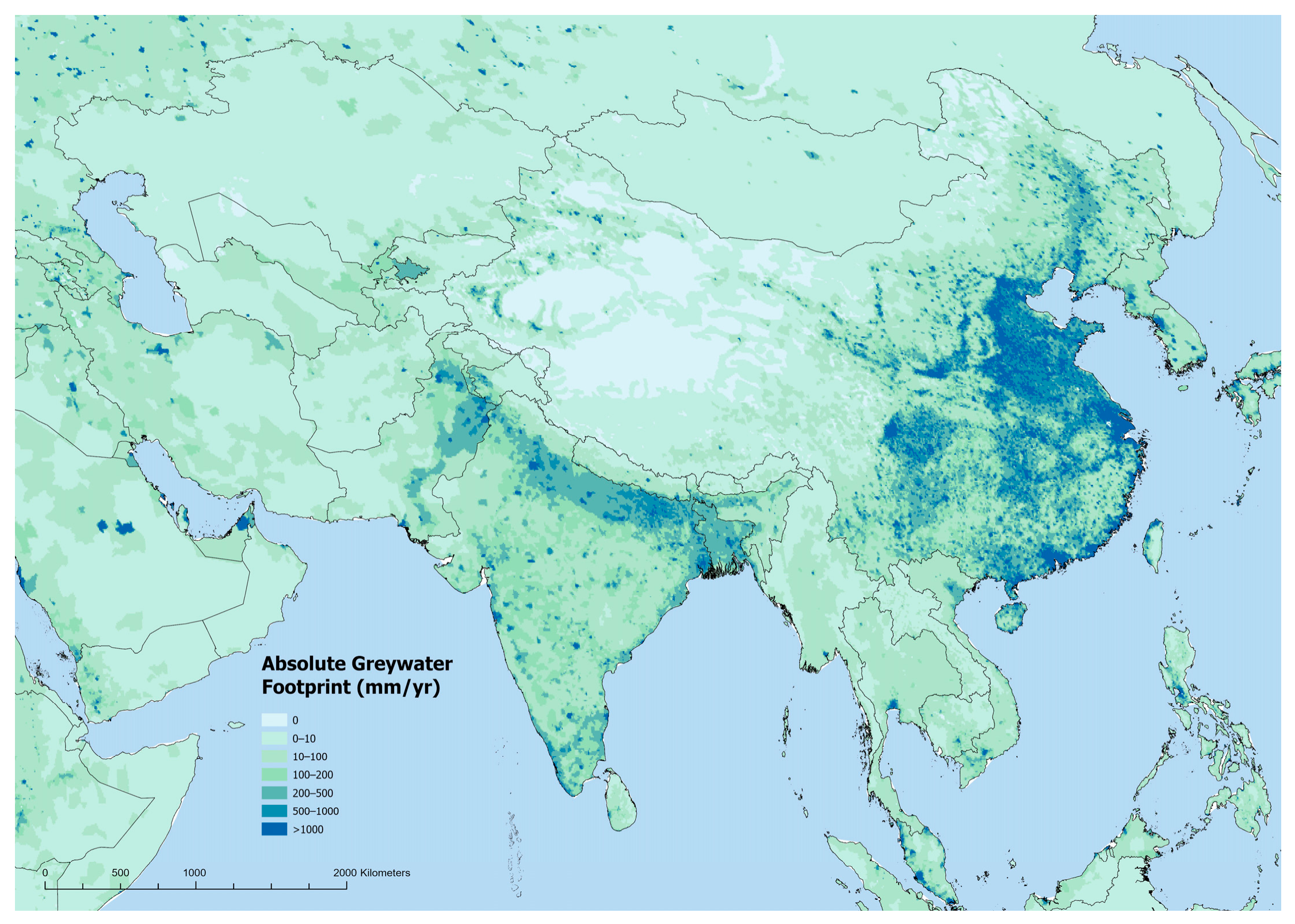
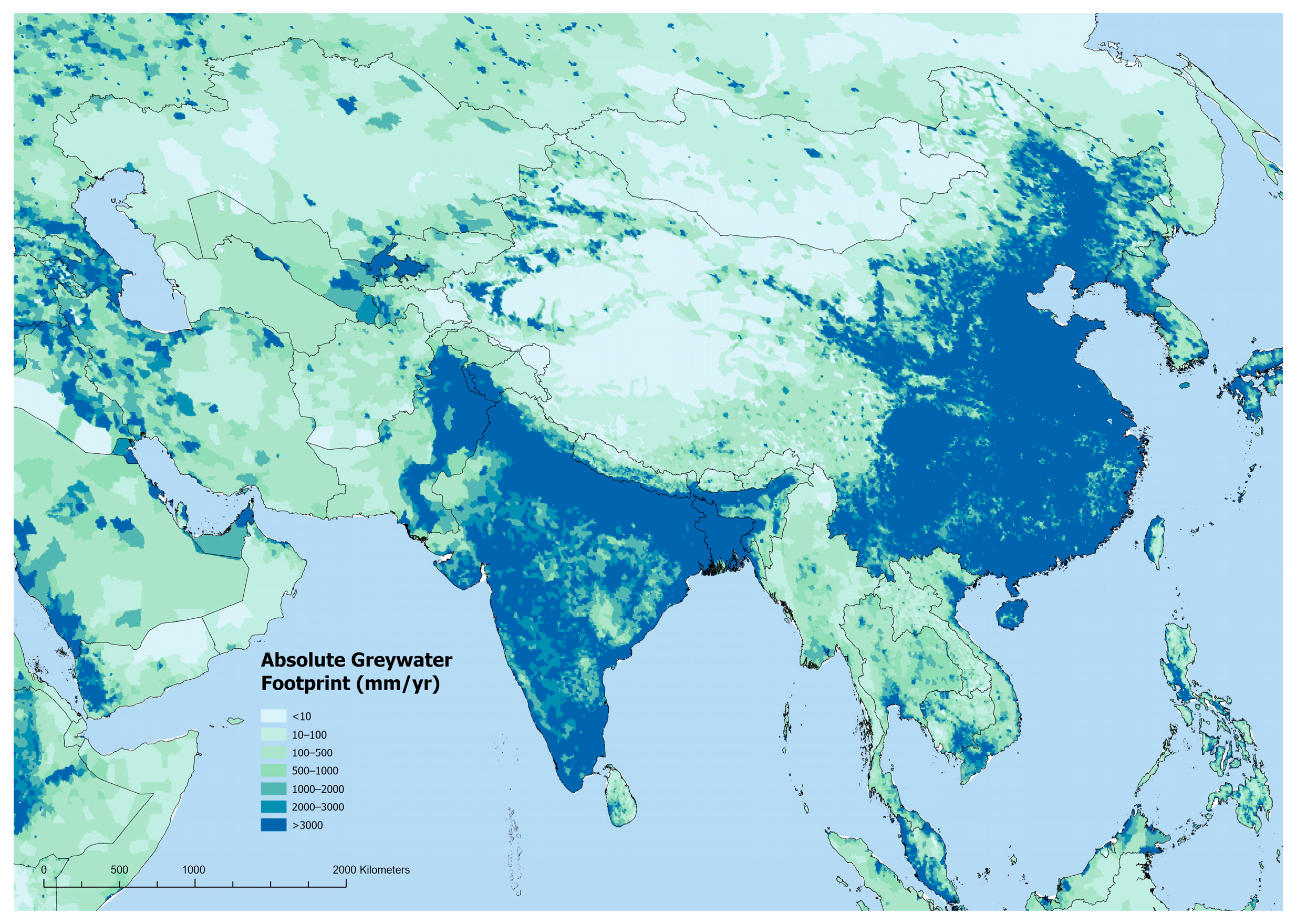
As identified in the previous section, China and India have a high absolute domestic GWF, primarily due to their large populations. However, due to poorer sanitation standards, the relative per capita GWF is also large compared to, for example, Central European countries. Modeling results assuming Dutch sanitation standards in India and China are illustrated in Figure 9 and contrasted with the status quo of 2019 (Figure 10). Analogously, Figure 11 and Figure 12 show the P-related GWFs for the status quo and the modeled scenario.
The figures clearly show a considerable decrease in both N- and P-related GWF in the scenario of improved sanitation standards. Yet, some hotspots remain in North India and (South-)East China, especially for the GWF of P.
Table 3 summarizes the changes in GWF, comparing current values with those projected under improved sanitation conditions for India and China and on a global level. The results indicate that the P-related GWF decreases more than the N-related GWF, with China experiencing a greater reduction than India. This difference is attributed to the percentage of people connected to sewage systems without wastewater treatment, which was 27% in China compared to only 0.5% in India. These findings confirm that sewage systems without treatment contribute the most to N and P pollution. The significance of India and China is further highlighted by the fact that the global GWF would reduce by 24% and 34% for N and P, respectively.

3.3.2. Scenario: Effects of Political Shifts on Detergent Emissions in Europe

The change in P-related GWF from detergent use is displayed in Table 4, revealing a distinct GWF increase. In Europe, the GWF would rise by 8% from 11,716 × 109 m3/yr to 12,652 × 109 m3/yr. However, at the global level, the GWF would increase by only 0.5%, indicating that while Europe’s GWF would be considerably affected, the impact on a global scale would be relatively minor.

3.4. General Observations

The results of this study reveal key patterns in the spatial distribution and magnitude of GWF. One of the most prominent findings is the strong correlation between GWF and population density. Given that domestic wastewater loads are estimated on a per capita basis, regions with high population densities predictably exhibit elevated GWF values.
In many low- and middle-income countries, considerable volumes of wastewater are collected through sewage networks but not treated, leading to direct discharges into surface water. Accounting for this pathway brings the estimates more in line with real-world conditions compared to previous assessments and explains the observed increase in domestic GWF values.
As a result, countries with large populations and varying degrees of wastewater infrastructure, such as China, India, and the United States, exert a disproportionate influence on the global GWF. Europe on the other hand contributes less due to its more comprehensive sanitation coverage and higher treatment efficiency. These contrasts highlight the critical role of wastewater management infrastructure in shaping national and global water pollution burdens.
These results indicate that while the study improves upon earlier efforts by offering greater methodological completeness and a more realistic representation of untreated wastewater flows, the findings, particularly concerning industrial pollution, should be interpreted in light of data constraints. These challenges further underscore the need for enhanced global reporting systems and expanded environmental monitoring, especially in emerging economies where industrial activity is increasing and infrastructure remains uneven.

3.5. Limitations and Uncertainties

Several input parameters for the GWF estimations carry uncertainty, mainly due to the assumptions needed to generate a consistent global dataset. A key limitation is the incomplete availability of global input datasets to calculate the pollution loads. Many countries lack continuous or comprehensive reporting, leading to spatial gaps and incomplete time series.
Where data were unavailable, proxy values were applied as outlined in Section 2. These gaps affected datasets such as per capita protein intake, the phosphorus-to-protein ratio, sewer connectivity, wastewater treatment coverage, and industrial GDP. Although necessary for global coverage, these proxies may not fully capture local variability. For instance, using average regional sewer connectivity may overestimate infrastructure coverage in informal settlements, such as those around Nairobi or Dhaka, where population density is high, but sanitation access is limited. Conversely, using national protein intake averages may underestimate domestic nitrogen pollution in rapidly urbanizing areas of Southeast Asia, where meat consumption is increasing rapidly due to a diverse number of reasons [45]. Such mismatches can lead to under- or overestimation of pollution loads, particularly in transitional economies with high internal diversity.
In addition to spatial gaps, temporal discontinuities were addressed through (linear) interpolation and extrapolation. These methods were applied to parameters such as sewage connectivity, treatment coverage and type, and the ratio of industrial to domestic pollution loads. The assumption of linear trends simplifies temporal dynamics but may not capture abrupt, policy-driven changes. For example, implementing stricter effluent standards, such as the European Union’s Urban Wastewater Treatment Directive or India’s National River Conservation Plan, can rapidly reduce nutrient concentrations in treated discharges, creating nonlinear shifts in pollutant loads. While interpolation within observed periods generally introduces less uncertainty, extrapolation beyond available data carries a higher risk of deviation from real-world developments, particularly in countries undergoing rapid infrastructure expansion or regulatory reform. When even lacking data to inter- or extrapolate, constant values were assumed. This was the case for recycling rates between 1990 and 2000, which needs to be acknowledged when interpreting the results. All of these limitations (inter- and extrapolations or assuming constant values) in the present as well as in other global studies clearly highlight the need to increase data availability and contingency across spatial and temporal scales.
The availability and quality of PRTR data or equivalent datasets further limit the robustness of industrial pollution estimates. These databases are largely restricted to high-income countries, with limited or no coverage in many low- and middle-income regions. To address these gaps, industrial GWF estimates in data-scarce regions were inferred using scaling relationships based on industrial GDP and emission data from high-income countries under the assumption that similar GDP-pollution correlations apply globally. However, this assumption may not hold across contexts, as industrial sector composition can vary considerably between countries. For example, economies dominated by heavy industries, such as metal processing or petrochemicals, produce different types and magnitudes of pollution than those centred on food processing or textiles. Studies have shown that similar economic or technological trends can result in different environmental consequences depending on national income level, industrial mix, and regulatory environment [46]. In a high-resolution nutrient inventory for the Yangtze catchment in China the authors illustrate diverging hotpots across sectors and sub-basin [47], which industrial GDP-based estimates will not capture. However, sector-specific emission data on global level is not available. Temporal inconsistencies in PRTR availability further constrain the ability to capture long-term trends, reducing the reliability of industrial GWF estimates, particularly in emerging economies where industrial activity is rapidly growing and diversifying.
To ensure methodological consistency with previous GWF assessments, the study applied a set of standardized assumptions based on earlier work by Mekonnen and Hoekstra [4,5]. These include fixed values for nutrient removal efficiencies, volatilization rates, permissible pollutant concentrations, and maximum industrial-to-domestic load ratios. While these assumptions improve comparability, they introduce simplifications that may not hold uniformly across regions or over time [48].
Another key assumption is that all untreated wastewater is discharged directly into freshwater bodies. Although some of this water may be reused, evaporated, infiltrated into soils, or discharged to oceans, the lack of consistent global data on these alternative pathways necessitates a conservative assumption [4]. This approach may overestimate pollutant loads in some areas but avoids underestimation where infrastructure is weak or undocumented.
Industrial GWF estimates also include only direct discharges to surface waters. Emissions to air and land are excluded, although atmospheric deposition, particularly nitrogen, can indirectly contribute to aquatic pollution [49]. This pathway is omitted to prevent double counting, as nitrogen deposition on agricultural land is already accounted for in the agricultural GWF. While this improves analytical clarity, it may result in a minor underestimation of industrial contributions in regions with high atmospheric outputs.
In parallel, uncollected wastewater is less considerable in the GWF calculation. However, it poses severe public health and ecological risks due to direct environmental discharge. This exclusion underscores the importance of improving access to sanitation and wastewater collection globally.
Overall, these limitations underscore the difficulties of global environmental assessments under data gaps and inconsistencies. Although the methodological framework aims for transparency and comparability, results should be interpreted cautiously, particularly in data-scarce regions. Strengthening global monitoring and reporting will be vital to improve the accuracy and policy relevance of GWF estimates.

3.6. Comparison to Previous Studies

To place the N- and P-related GWFs reported in this study in the context of the existing literature, the results are compared with earlier estimates by Mekonnen and Hoekstra [4,5]. Table 5 and Table 6 present a comparison of N and P, respectively, between this study and the baseline estimates.
As shown in Table 5, the total N-related GWFs in this study are consistently higher across most countries and regions. A key factor contributing to this increase is the inclusion of untreated but collected domestic wastewater—a previously underrepresented pollution source with impact especially in urbanizing regions with low treatment coverage.
In contrast, industrial GWFs are generally lower than in previous estimates. This outcome is due to the introduction of an emission allocation parameter that more accurately represents the share of domestic versus industrial wastewater generation. By doing so, the model adjusts for the higher contribution from domestic sources in regions where industrial pollution is relatively better regulated or where industrial wastewater data are less comprehensively reported.
For phosphorus, similar patterns are observed in Table 6. Domestic GWFs are substantially higher than in earlier studies, while industrial GWFs are again lower. Countries such as India, Brazil, and Pakistan show considerable increases in total P-related GWFs, reinforcing the critical role of domestic wastewater for nutrient pollution in regions with limited treatment coverage.
These findings differ from studies such as Qin et al. [14], which reported a higher industrial share of China’s GWF due to the use of chemical oxygen demand (COD) as a pollution indicator. Moreover, their use of national data sources provided a more granular view of industrial discharges than is possible with globally harmonized datasets. To conclude, the GWF results should always be interpreted considering the methodological choices.

3.7. Conclusions and Final Remarks

This study demonstrates that domestic and industrial GWF for N and P have increased substantially between 1990 and 2019, largely due to population growth and limited improvements in wastewater treatment infrastructure in low- and middle-income countries. Domestic sources were found to be the dominant contributors, especially in countries with large populations and insufficient treatment coverage, such as China and India.
The spatial analysis highlights clear regional disparities in GWF pollution, with high-income countries showing relative declines due to regulatory improvements and technological advancements. In contrast, many low- and middle-income countries continue to experience increases. Notably, including untreated but collected wastewater in the GWF estimation substantially increased domestic GWF values compared to earlier studies, underlining the importance of accounting for these overlooked emission pathways and highlighting one of this study’s novelties.
Scenario analyses further emphasize the transformative potential of improved sanitation infrastructure. If China and India were to reach sanitation standards comparable to Central Europe, global N- and P-related GWFs could decrease by 24% and 34%, respectively. By contrast, projected increases in detergent-related phosphorus emissions under a politically fragmented scenario in Europe would have a relatively minor global effect despite a notable regional rise. These findings provide impulses for decision makers by, e.g., suggesting that investments in sanitation infrastructure, particularly expanding wastewater treatment and improving nutrient removal efficiency, offer substantial opportunities to mitigate freshwater pollution and reduce water-related environmental pressures. As global urbanization and industrialization continue, especially in the Global South, addressing untreated wastewater remains a key strategy for achieving sustainable water quality management.

Supplementary Materials

The following supporting information can be downloaded at https://www.mdpi.com/article/10.3390/w18121425/s1, File S1: Tables—Table S1.1: Regional per capita detergent phosphorus emissions for 1970, 2010, and 2050 [10]; Table S1.2: nutrient removal efficiencies by treatment type [30]; Table S1.3: wastewater recycling rates by region and year [8]; Table S1.4: Countries with PRTR data; File S2: Formula Industrial over Domestic—Formulas and assumptions used to calculate the industrial over domestic (I/D) nutrient ratio (Supporting Information S2), including thresholds and linear scaling based on industrial GDP per capita for nitrogen and phosphorus emissions; File S3: Assumptions and Data Sources—Assumptions and data sources used for protein intake (Table S3.1), phosphorus conversion factors (Table S3.2), wastewater treatment data and assumptions (Table S3.3), and industrial/domestic wastewater fractions (Table S3.4), including country-specific proxies and time spans.

Author Contributions

B.J.H.T.: Conceptualization, Methodology, Data Curation, Investigation, Visualization, Writing—Original Draft. L.W.: Conceptualization, Methodology, Supervision, Writing—Review and Editing. M.B.: Conceptualization, Methodology, Supervision, Writing—Review and Editing. All authors have read and agreed to the published version of the manuscript.

Funding

This research received no external funding.

Data Availability Statement

The original contributions presented in this study are included in the article/Supplementary Material. Further inquiries can be directed to the corresponding author.

Acknowledgments

We thank Michelle van Vliet and her team for their valuable insights on sectoral N and P emissions during the conceptualization phase of the research.

Conflicts of Interest

The authors declare no conflicts of interest.

Abbreviations

m3/yrcubic metre per year
kg/yrkilogram per year
kg/capita/yrkilogram per capita and year
kg/m3kilogram per cubic metre
mg/Lmilligram per litre

References

  1. van Vliet, M.T.H.; Jones, E.R.; Flörke, M.; Franssen, W.H.P.; Hanasaki, N.; Wada, Y.; Yearsley, J.R. Global water scarcity including surface water quality and expansions of clean water technologies. Environ. Res. Lett. 2021, 16, 24020. [Google Scholar] [CrossRef]
  2. Hammer, M.S.; Donkelaar, A.V.; Li, C.; Lyapustin, A.; Sayer, A.M.; Hsu, N.C.; Levy, R.C.; Garay, M.J.; Kalashnikova, O.V.; Kahn, R.A.; et al. Global Estimates and Long-Term Trends of Fine Particulate Matter Concentrations 1998–2018. Environ. Sci. Technol. 2020, 54, 7879–7890. [Google Scholar] [CrossRef]
  3. Li, Y.; Wang, M.; Chen, X.; Cui, S.; Hofstra, N.; Kroeze, C.; Ma, L.; Xu, W.; Zhang, Q.; Zhang, F.; et al. Multi-pollutant assessment of river pollution from livestock production worldwide. Water Res. 2022, 209, 117906. [Google Scholar] [CrossRef]
  4. Mekonnen, M.M.; Hoekstra, A.Y. Global Anthropogenic Phosphorus Loads to Freshwater and Associated Grey Water Footprints and Water Pollution Levels. Water Resour. Res. 2018, 54, 345–358. [Google Scholar] [CrossRef]
  5. Mekonnen, M.M.; Hoekstra, A.Y. Global Gray Water Footprint and Water Pollution Levels Related to Anthropogenic Nitrogen Loads to Fresh Water. Environ. Sci. Technol. 2015, 49, 12860–12868. [Google Scholar] [CrossRef]
  6. Fu, T.; Xu, C.; Yang, L.; Hou, S.; Xia, Q. Measurement and driving factors of grey water footprint efficiency in Yangtze River Basin. Sci. Total Environ. 2022, 802, 149587. [Google Scholar] [CrossRef] [PubMed]
  7. Meng, X.; Lu, J.; Wu, J.; Zhang, Z.; Chen, L. Quantification and Evaluation of Grey Water Footprint in Yantai. Water 2022, 14, 1893. [Google Scholar] [CrossRef]
  8. Zhang, G.P.; Hoekstra, A.Y.; Mathews, R.E. Water Footprint Assessment (WFA) for better water governance and sustainable development. Water Resour. Ind. 2013, 1–2, 1–6. [Google Scholar] [CrossRef]
  9. Morée, A.L.; Beusen, A.H.W.; Bouwman, A.F.; Willems, W.J. Exploring global nitrogen and phosphorus flows in urban wastes during the twentieth century. Glob. Biogeochem. Cycles 2013, 27, 836–846. [Google Scholar] [CrossRef]
  10. van Puijenbroek, P.J.T.M.; Beusen, A.H.W.; Bouwman, A.F. Datasets of the phosphorus content in laundry and dishwasher detergents. Data Brief 2018, 21, 2284–2289. [Google Scholar] [CrossRef] [PubMed]
  11. Herrebrugh, R.C. The Blue and Grey Water Footprint of Industry and Domestic Water Supply. Master’s Thesis, University of Twente, Enschede, The Netherlands, 2018. [Google Scholar]
  12. Hoekstra, A.Y.; Chapagain, A.K.; Aldaya, M.M.; Mekonnen, M.M. The Water Footprint Assessment Manual; Earthscan: London, UK, 2011; Available online: www.earthscan.co.uk (accessed on 29 May 2026).
  13. Liu, C.; Kroeze, C.; Hoekstra, A.Y.; Gerbens-Leenes, W. Past and future trends in grey water footprints of anthropogenic nitrogen and phosphorus inputs to major world rivers. Ecol. Indic. 2012, 18, 42–49. [Google Scholar] [CrossRef]
  14. Qin, X.; Sun, C.; Han, Q.; Zou, W. Grey Water Footprint Assessment from the Perspective of Water Pollution Sources: A Case Study of China. Water Resour. 2019, 46, 454–465. [Google Scholar] [CrossRef]
  15. Joy, M.K.; Rankin, D.A.; Wöhler, L.; Boyce, P.; Canning, A.; Foote, K.J.; McNie, P.M. The grey water footprint of milk due to nitrate leaching from dairy farms in Canterbury, New Zealand. Australas. J. Environ. Manag. 2022, 29, 177–199. [Google Scholar] [CrossRef]
  16. Muratoglu, A. Grey water footprint of agricultural production: An assessment based on nitrogen surplus and high-resolution leaching runoff fractions in Turkey. Sci. Total Environ. 2020, 742, 140553. [Google Scholar] [CrossRef]
  17. Xiao, Y.; Liu, W.; Zhang, F.; Zhu, Y.; Zhao, P. A modified approach of the agricultural grey water footprint considering the nitrogen fixation effect of crops in China. Environ. Pollut. 2024, 357, 124457. [Google Scholar] [CrossRef]
  18. Fowzi, M.; Arastou, K.; Jamshidi, S. Grey water footprint of stone-cutting and processing industry. Water Resour. Ind. 2025, 33, 100295. [Google Scholar] [CrossRef]
  19. Dong, H.; Zhang, L.; Geng, Y.; Li, P.; Yu, C. New insights from grey water footprint assessment: An industrial park level. J. Clean. Prod. 2021, 285, 124915. [Google Scholar] [CrossRef]
  20. Gerbens-Leenes, P.W.; Hoekstra, A.Y.; Bosman, R. The blue and grey water footprint of construction materials: Steel, cement and glass. Water Resour. Ind. 2018, 19, 1–12. [Google Scholar] [CrossRef]
  21. Cazcarro, I.; Duarte, R.; Sánchez-Chóliz, J. Downscaling the grey water footprints of production and consumption. J. Clean. Prod. 2016, 132, 171–183. [Google Scholar] [CrossRef]
  22. Mialyk, O.; Schyns, J.F.; Booij, M.J.; Su, H.; Hogeboom, R.J.; Berger, M. Water footprints and crop water use of 175 individual crops for 1990–2019 simulated with a global crop model. Sci. Data 2024, 11, 206. [Google Scholar] [CrossRef]
  23. FAOSTAT. FAOSTAT 2024. Available online: https://www.fao.org/faostat/en/#data (accessed on 29 May 2026).
  24. Pupim, L.B.; Martin, C.J.; Ikizler, T.A. Assessment of Protein and Energy Nutritional Status. In Nutritional Management of Renal Disease; Academic Press: Cambridge, MA, USA, 2013; pp. 137–158. [Google Scholar]
  25. FAOSTAT. Food Balances (–2013, Old Methodology and Population). 2013. Available online: https://www.fao.org/faostat/en/#data/FBSH (accessed on 29 May 2026).
  26. FAOSTAT. Food Balances (2010–). 2024. Available online: https://www.fao.org/faostat/en/#data/FBS (accessed on 29 May 2026).
  27. MacEdo, H.E.; Lehner, B.; Nicell, J.; Grill, G.; Li, J.; Limtong, A.; Shakya, R. Distribution and characteristics of wastewater treatment plants within the global river network. Earth Syst. Sci. Data 2022, 14, 559–577. [Google Scholar] [CrossRef]
  28. EuroStat. Statistics|Eurostat. 2024. Available online: https://ec.europa.eu/eurostat/databrowser/view/env_ww_con__custom_13646194/default/table?lang=en (accessed on 29 May 2026).
  29. OECD. OECD Data Explorer • Wastewater—Connection Rates to Treatment. 2024. Available online: https://data-explorer.oecd.org/vis?lc=en&tm=DF_WATER_TREAT&pg=0 (accessed on 29 May 2026).
  30. JMP. 2024. Available online: https://washdata.org/data/household#!/ (accessed on 29 May 2026).
  31. van Puijenbroek, P.J.T.M.; Beusen, A.H.W.; Bouwman, A.F. Global nitrogen and phosphorus in urban waste water based on the Shared Socio-economic pathways. J. Environ. Manag. 2019, 231, 446–456. [Google Scholar] [CrossRef]
  32. Drecht, G.V.; Bouwman, A.F.; Harrison, J.; Knoop, J.M. Global nitrogen and phosphate in urban wastewater for the period 1970 to 2050. Glob. Biogeochem. Cycles 2009, 23, GB0A03. [Google Scholar] [CrossRef]
  33. Thomas, J. Where Does Untreated Wastewater Go in Developing Countries? 2021. Available online: https://www.sydney.edu.au/news-opinion/news/2021/01/12/where-does-untreated-wastewater-go-in-developing-countries-.html (accessed on 29 May 2026).
  34. Jones, E.R.; Vliet, M.T.H.V.; Qadir, M.; Bierkens, M.F.P. Country-level and gridded estimates of wastewater production, collection, treatment and reuse. Earth Syst. Sci. Data 2021, 13, 237–254. [Google Scholar] [CrossRef]
  35. Kashiwase, H. World Toilet Day: 420 Million People are Defecating Outdoors, 2023. Available online: https://blogs.worldbank.org/en/opendata/world-toilet-day-420-million-people-are-defecating-outdoors (accessed on 29 May 2026).
  36. Franke, N.A.; Boyacioglu, H.; Hoekstra, A.Y. Grey Water Footprint Accounting Tier 1 Supporting Guidelines; Value of Water Research Report Series No. 65; UNESCO, Institute for Water Education: Delft, The Netherlands, 2013. [Google Scholar]
  37. Billen, G.; Garnier, J.; Deligne, C.; Billen, C. Estimates of early-industrial inputs of nutrients to river systems: Implication for coastal eutrophication. Sci. Total Environ. 1999, 243–244, 43–52. [Google Scholar] [CrossRef]
  38. FAOSTAT. FAOSTAT Annual Population. 2024. Available online: https://www.fao.org/faostat/en/#data/OA (accessed on 29 May 2026).
  39. Ministry of Ecology and Environment of the People’s Republic of China. Environmental Quality. 2025. Available online: https://www.mee.gov.cn/hjzl/sthjzk/sthjtjnb/ (accessed on 29 May 2026).
  40. World Bank Group. World Development Indicators|DataBank. 2025. Available online: https://databank.worldbank.org/source/world-development-indicators (accessed on 29 May 2026).
  41. Meybeck, M. Carbon, nitrogen, and phosphorus transport by world rivers. Am. J. Sci. 1982, 282, 401–450. [Google Scholar] [CrossRef]
  42. Canadian Council of Ministers of the Environment. Available online: https://ccme.ca/en/chemical/140#_aql_fresh_date (accessed on 29 May 2026).
  43. NASA Earthdata. GPW|NASA Earthdata. 2024. Available online: https://earthdata.nasa.gov/data/projects/gpw (accessed on 29 May 2026).
  44. Group, W.B. Population Density (People per sq. km of Land Area), Data 2024. Available online: https://data.worldbank.org/indicator/EN.POP.DNST (accessed on 29 May 2026).
  45. Guo, W. Evolution of Meat Production and Consumption in the Bay of Bengal and South Asia: Trends, Challenges, and Sustainable Futures. Int. J. Food Syst. Dyn. 2025, 16, 195–209. [Google Scholar] [CrossRef]
  46. Huang, Y.; Haseeb, M.; Usman, M.; Ozturk, I. Dynamic association between ICT, renewable energy, economic complexity and ecological footprint: Is there any difference between E-7 (developing) and G-7 (developed) countries? Technol. Soc. 2022, 68, 101853. [Google Scholar] [CrossRef]
  47. Li, J.; Chen, Y.; Cai, K.; Fu, J.; Ting, T.; Chen, Y.; Folberth, C.; Liu, Y. A high-resolution nutrient emission inventory for hotspot identification in the Yangtze River Basin. J. Environ. Manag. 2022, 321, 115847. [Google Scholar] [CrossRef]
  48. Liu, W.; Antonelli, M.; Liu, X.; Yang, H. Towards improvement of grey water footprint assessment: With an illustration for global maize cultivation. J. Clean. Prod. 2017, 147, 1–9. [Google Scholar] [CrossRef]
  49. Bouwman, A.F.; Beusen, A.H.W.; Griffioen, J.; Groenigen, J.W.V.; Hefting, M.M.; Oenema, O.; Puijenbroek, P.J.T.M.V.; Seitzinger, S.; Slomp, C.P.; Stehfest, E. Global trends and uncertainties in terrestrial denitrification and N2O emissions. Philos. Trans. R. Soc. B Biol. Sci. 2013, 368, 20130112. [Google Scholar] [CrossRef] [PubMed]
Figure 1. I/D ratio nitrogen.
Water 18 01425 g001
Figure 2. I/D ratio phosphorous.
Water 18 01425 g002
Figure 3. Absolute GWF of nitrogen in 2019.
Water 18 01425 g003
Figure 4. Absolute GWF of phosphorous in 2019.
Water 18 01425 g004
Figure 5. Absolute differences in nitrogen-related GWF between 1990 and 2019.
Water 18 01425 g005
Figure 6. Absolute differences in phosphorous-related GWF between 1990 and 2019.
Water 18 01425 g006
Figure 7. Relative differences in N-related GWF between 1990 and 2019.
Water 18 01425 g007
Figure 8. Relative differences in P-related GWF between 1990 and 2019.
Water 18 01425 g008
Figure 9. Absolute N-related GWF—scenario with improved sanitation.
Water 18 01425 g009
Figure 10. Absolute N-related GWF—scenario with current sanitation.
Water 18 01425 g010
Figure 11. Absolute P-related GWF—scenario with current sanitation.
Water 18 01425 g011
Figure 12. Absolute P-related GWF—scenario with good sanitation.
Water 18 01425 g012
Table 1. Sanitation parameters for the reference year 2019; the left and middle column display the original sanitation values for China and India respectively; the right column displays the corresponding values for the Netherlands, serving as the benchmark in this hypothetical scenario.
Sanitation ParametersChina (%)India (%)The Netherlands (%)
Dc [-]32.3010.8099.50
Dnc [-]27.010.540
PollutantNPNPNP
Rn [-]17.3520101079.9590
Note(s): Dc = percentage of the population connected to wastewater treatment plants, Dnc = percentage of the population connected to a sewage system but without wastewater treatment, Rn = fraction of nutrients removed by wastewater treatment plants.
Table 2. Detergent use estimated for different SSPs in 2019 [10].
DetergentSSP2SSP3
Laundry detergents P (kg/capita/yr)0.056750.0995
Dishwasher detergents P (kg/capita/yr)0.0910.1135
Table 3. Changes in GWF if China and India implemented Central European sanitation standards.
PollutantCurrent Scenario
(×109 m3/yr)
Hypothetical Scenario
(×109 m3/yr)
Absolute Difference (×109 m3/yr)Relative Difference (%)
ChinaN2145.30753.011392.2964.90
P69,173.1212,782.1356,390.9981.52
IndiaN543.55425.05118.5021.80
P16,489.726939.009550.7257.92
GlobalN6329.764823.441506.3223.80
P194,527.02128,623.5865,903.4433.88
Table 4. Changes in GWF if political shifts in Europe followed a different predicted SSP.
RegionCurrent Scenario
(×109 m3/yr)
Hypothetical Scenario
(×109 m3/yr)
Absolute Difference (×109 m3/yr)Relative Difference (%)
Europe11,716.1012,652.32936.227.99
Global194,527.02195,463.24936.220.48
Table 5. Nitrogen GWF comparison.
RegionDomestic GWF [5]
(m3 × 109)
Industry GWF [5]
(m3 × 109)
Total GWF [5] (m3 × 109)Domestic GWF This Study
(m3 × 109)
Industrial GWF This Study
(m3 × 109)
Total GWF This Study (m3 × 109)
China891689591157341191
United States2242124527716293
Russia107101171886194
India1922321532513338
Pakistan2332658260
Brazil1021611820010210
Egypt2843275277
Japan114121261059114
Germany2622843245
Ukraine3233549251
Others123512713621716831799
World total2974288326241931794372
Table 6. Phosphorous GWF comparison [4].
RegionDomestic GWF [4]
(m3 × 109)
Industry GWF [4]
(m3 × 109)
Total GWF [4] (m3 × 109)Domestic GWF This Study
(m3 × 109)
Industrial GWF This Study
(m3 × 109)
Total GWF This Study (m3 × 109)
China22,270254024,81038,626118839,815
India4810860567073186227941
United States7100967806755811675748
Spain1010100111094353999833
Brazil317076039301717531770
Russia3130420355063163326648
Japan284045032902394692464
Mexico2020430245031592743434
Turkey1670200187082328851
France123013013601576601636
Others30,610476035,37050,359261852,977
World total79,87011,61091,480127,3055810133,116
Disclaimer/Publisher’s Note: The statements, opinions and data contained in all publications are solely those of the individual author(s) and contributor(s) and not of MDPI and/or the editor(s). MDPI and/or the editor(s) disclaim responsibility for any injury to people or property resulting from any ideas, methods, instructions or products referred to in the content.