Landscape-Derived Indicators of Water-Related Ecological Risks: Multi-Scale Drivers and Zoned Governance in Yangtze River Basin Urban Agglomerations


Abstract
1. Introduction
2. Materials and Methods
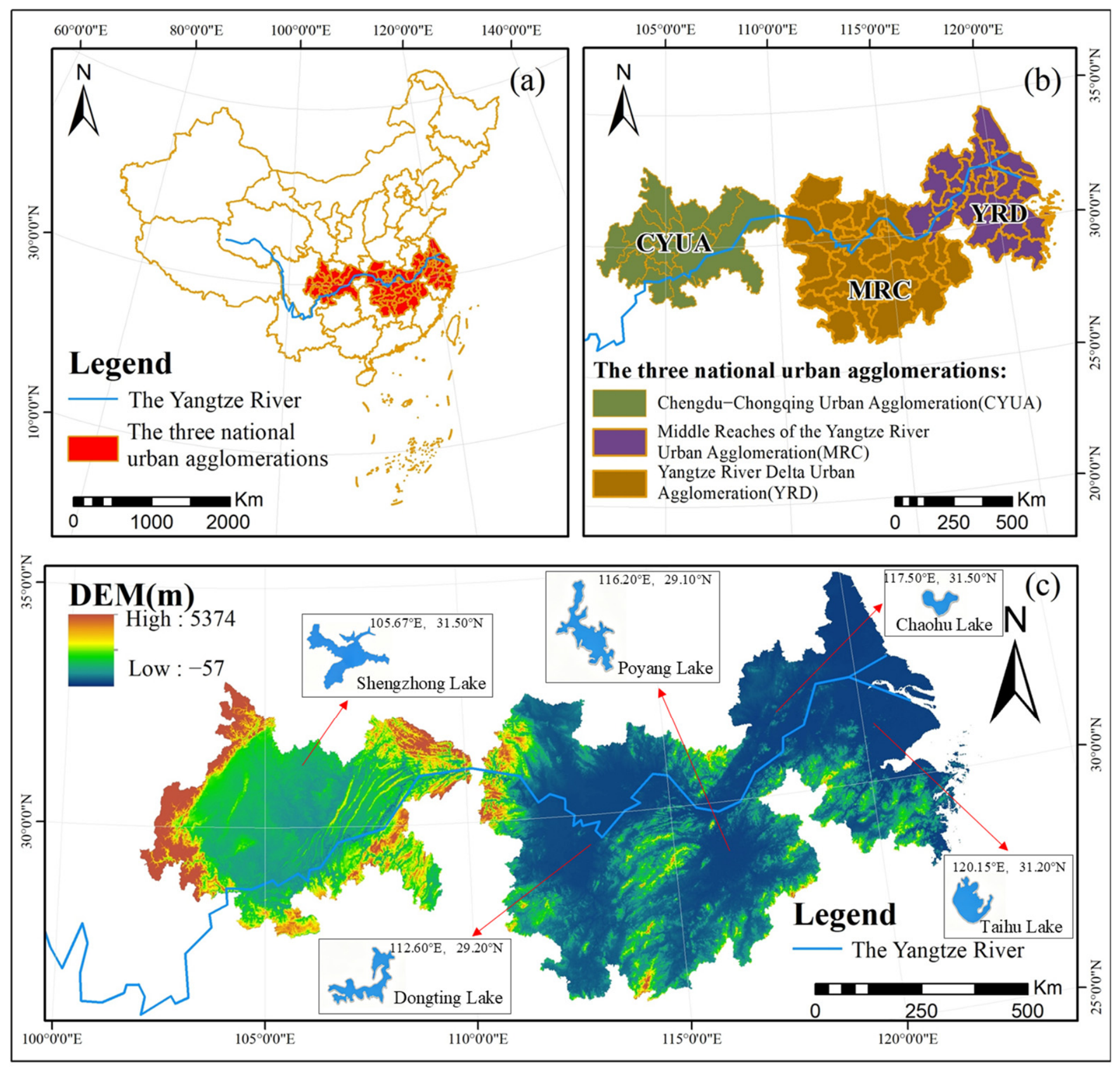
2.1. Study Area
2.2. Data
2.3. Model and Methodology
2.3.1. Landscape Ecological Risk Index Assessment
2.3.2. Geodetector
2.3.3. Multi-Scale Geographically Weighted Regression Analysis
2.3.4. Structural Equation Modeling Analysis
3. Results
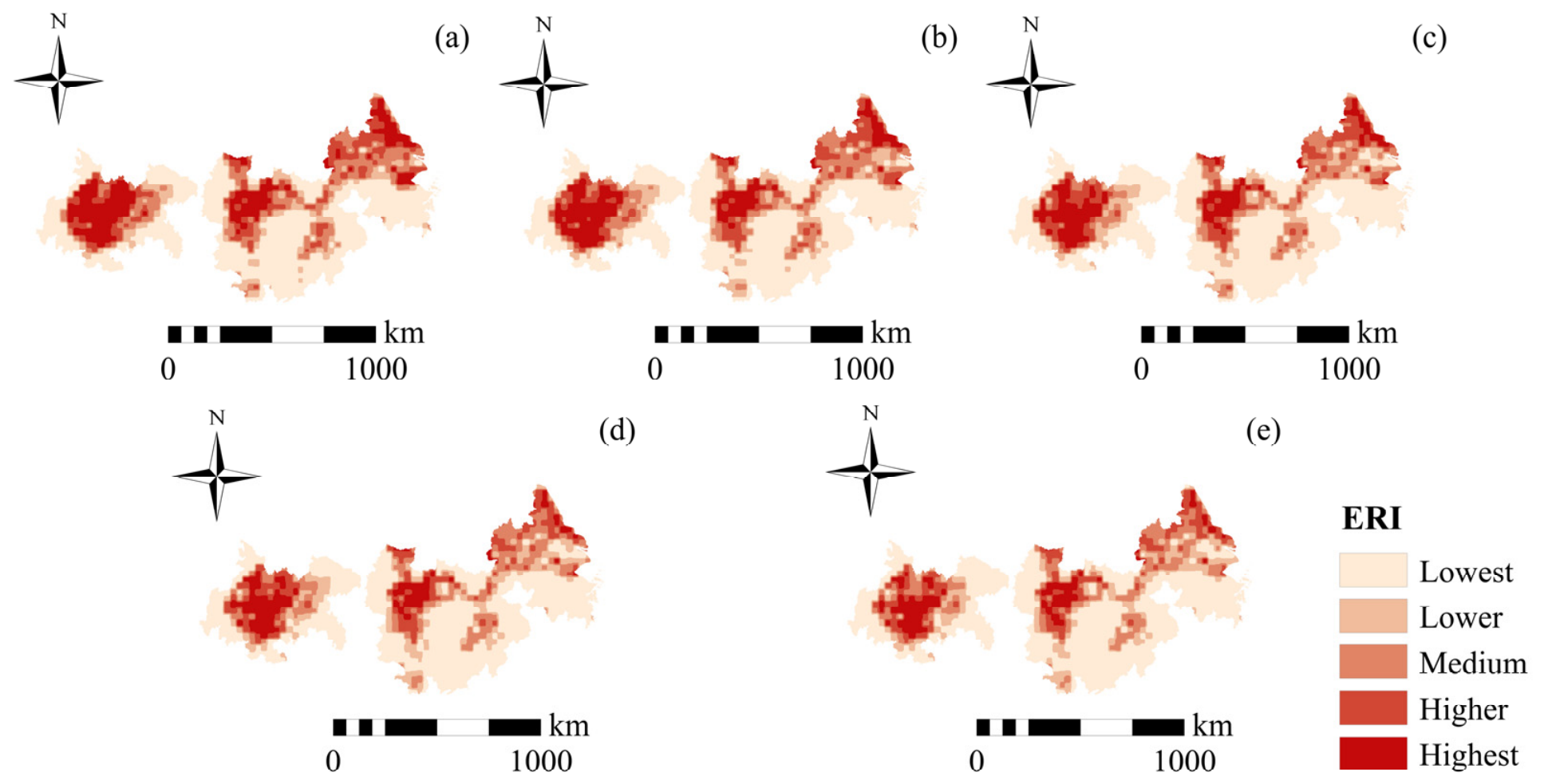
3.1. Spatiotemporal Evolution of Water-Related Ecological Risk
3.2. Geodetector Analysis of Landscape Ecological Risk Drivers
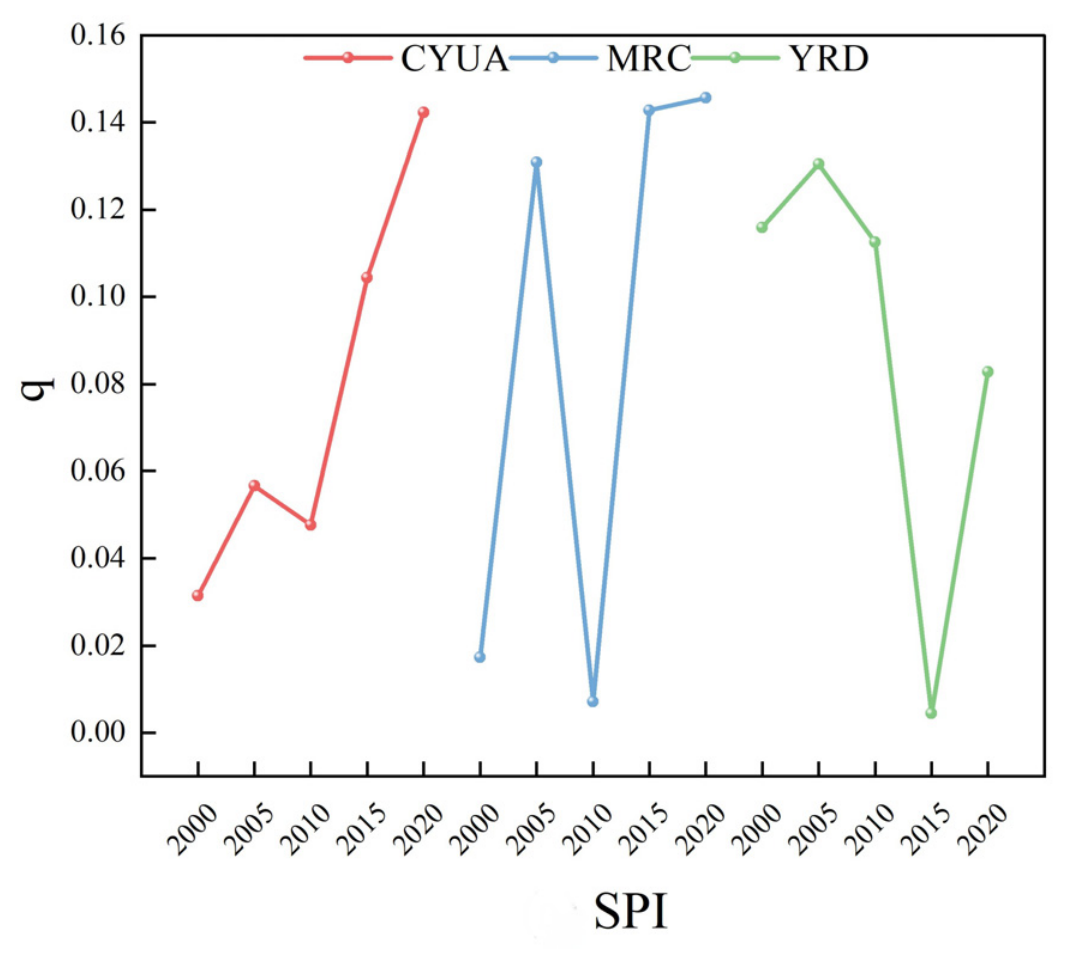
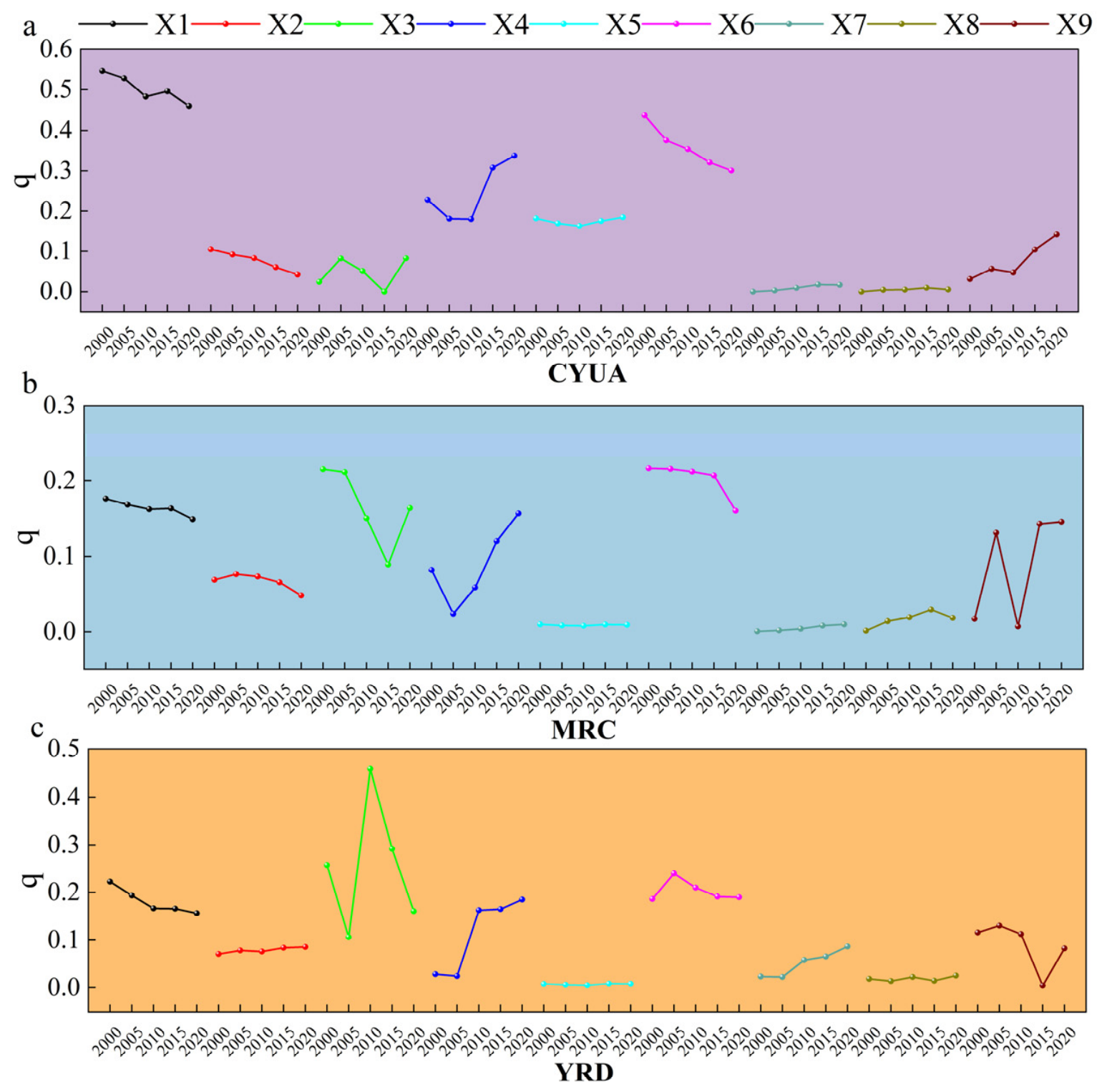
3.2.1. Factor Detection
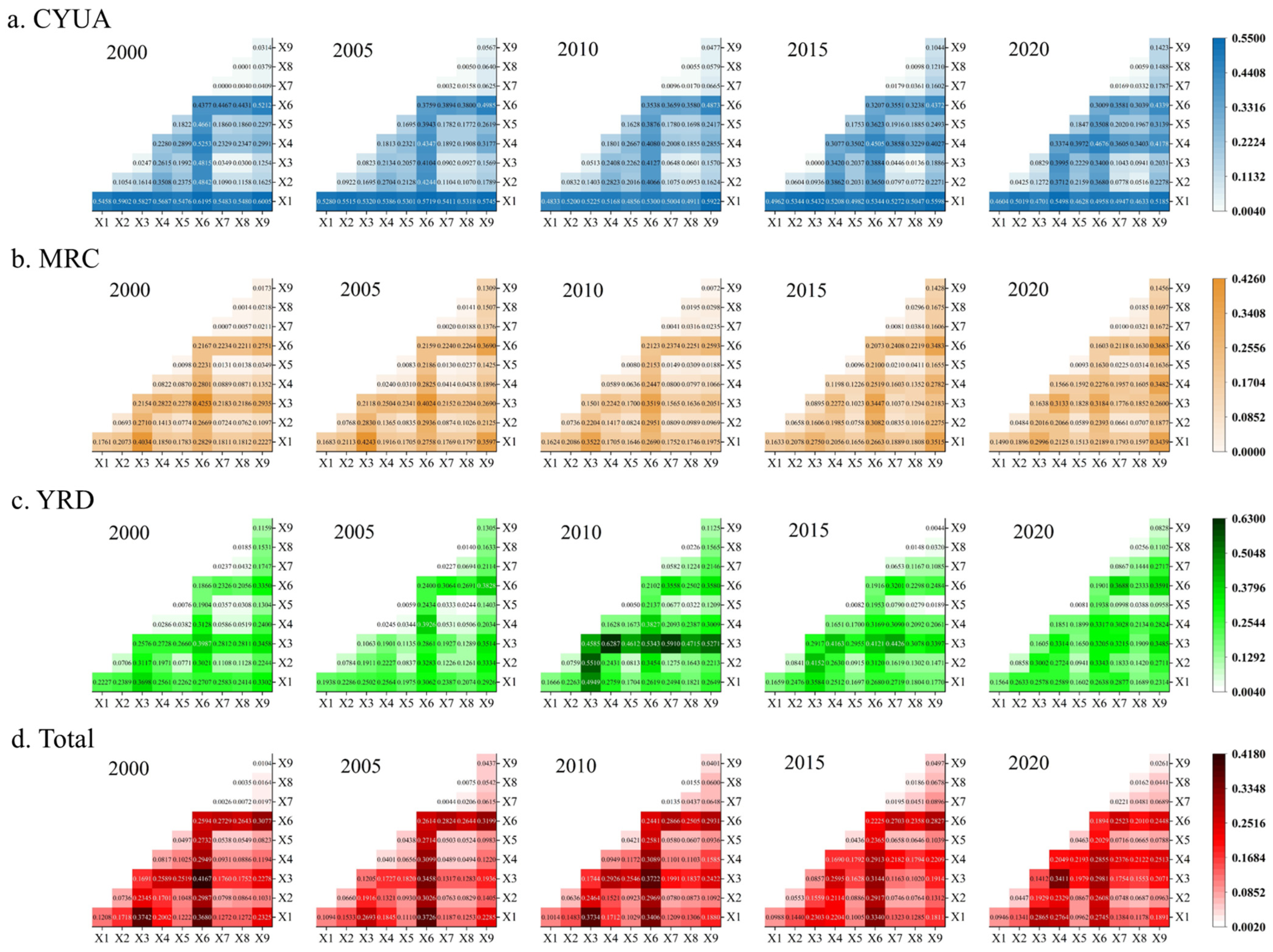
3.2.2. Overall Structure
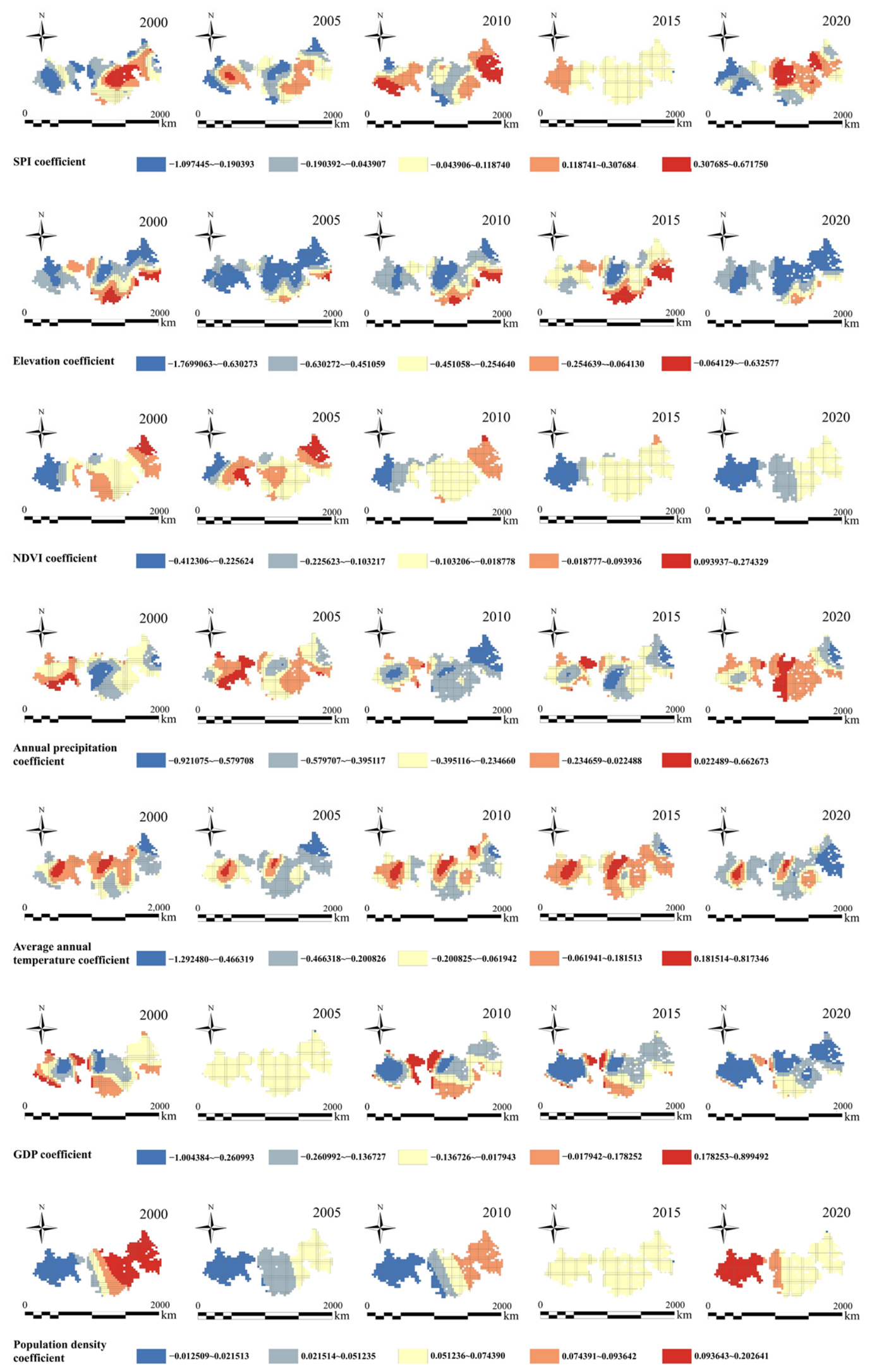
3.3. Spatial Heterogeneity of Water-Related Natural Drivers (MGWR)
3.4. Regional Differentiation of Water-Related Causal Pathways: SEM Analysis
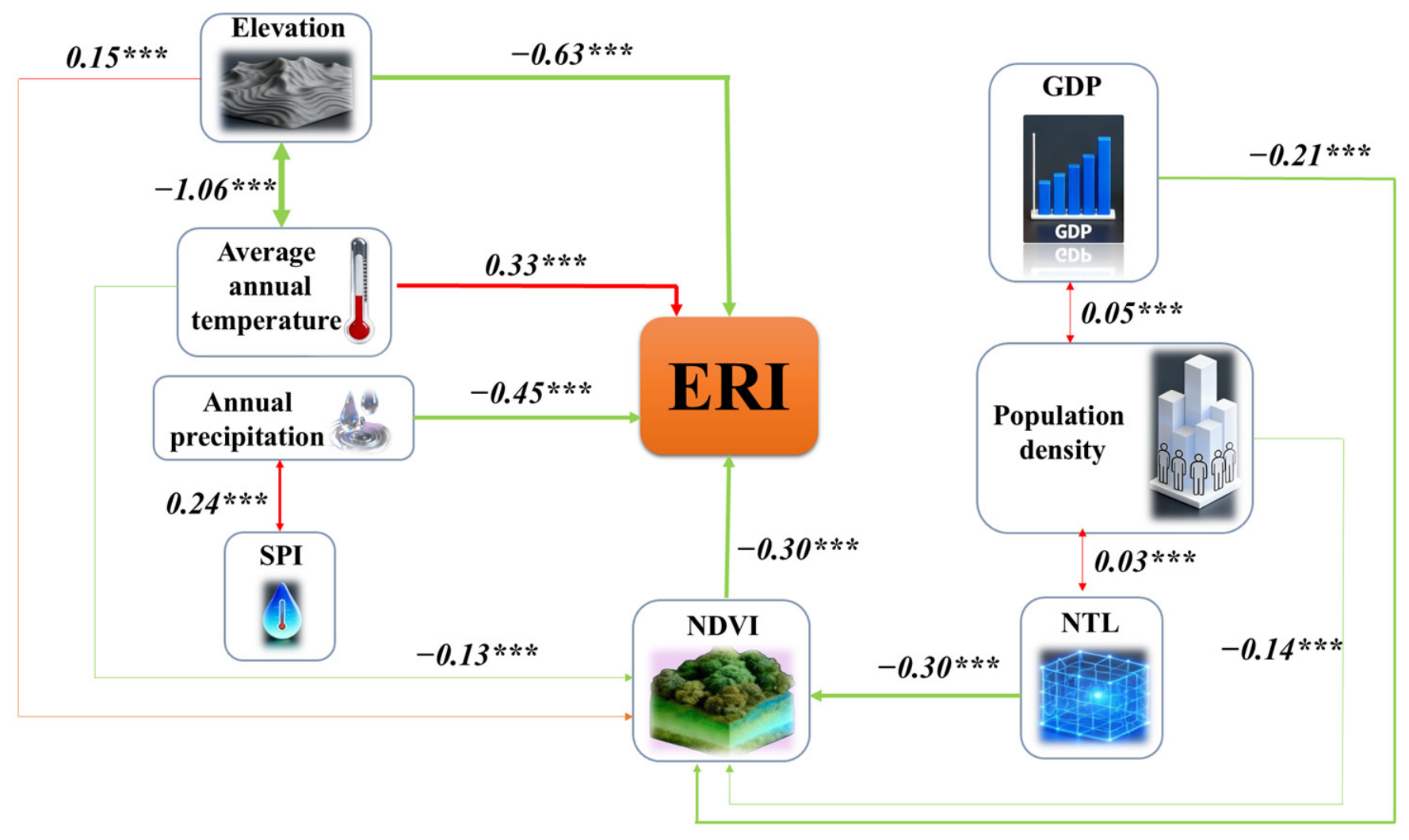
3.4.1. Common Basin-Wide Patterns
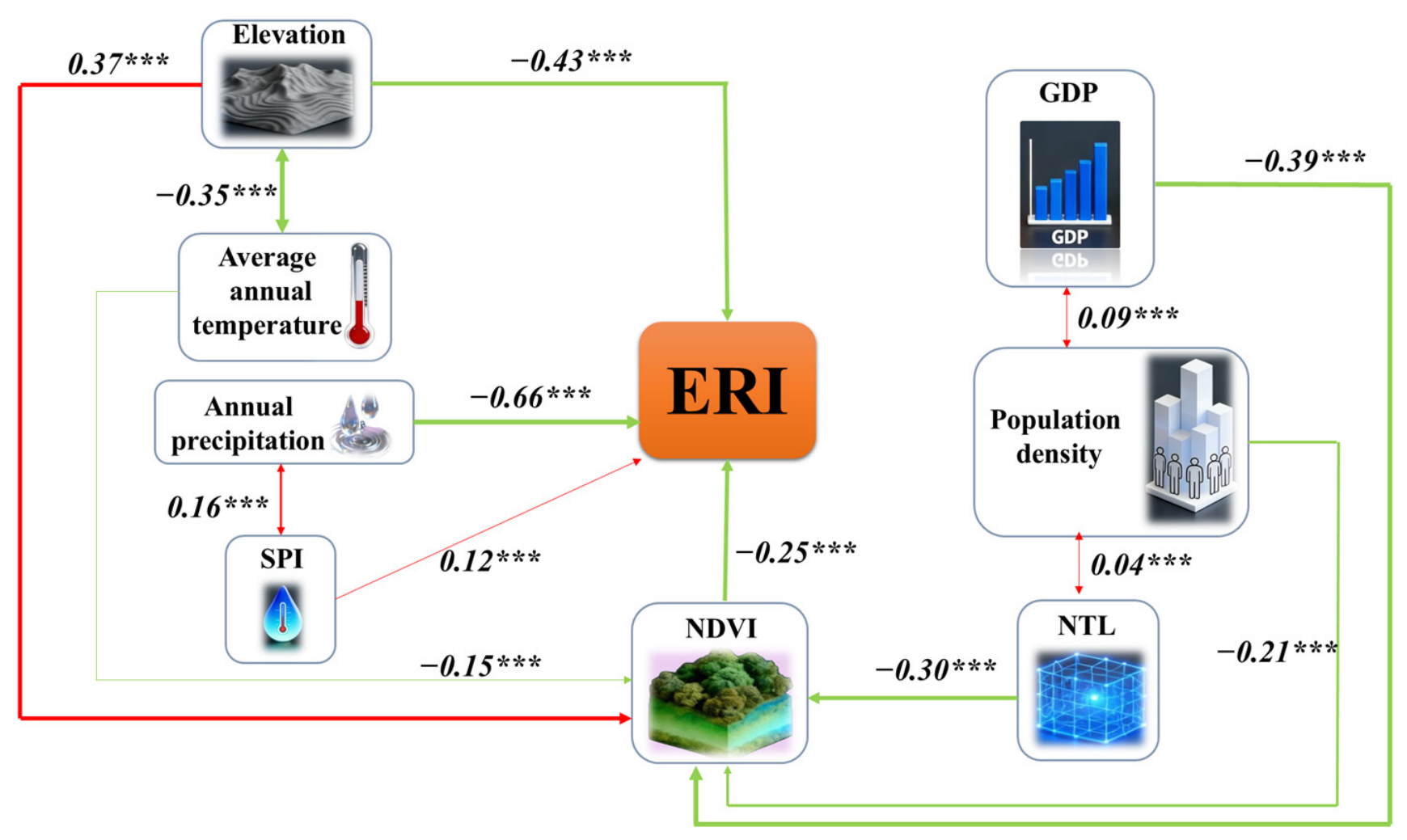
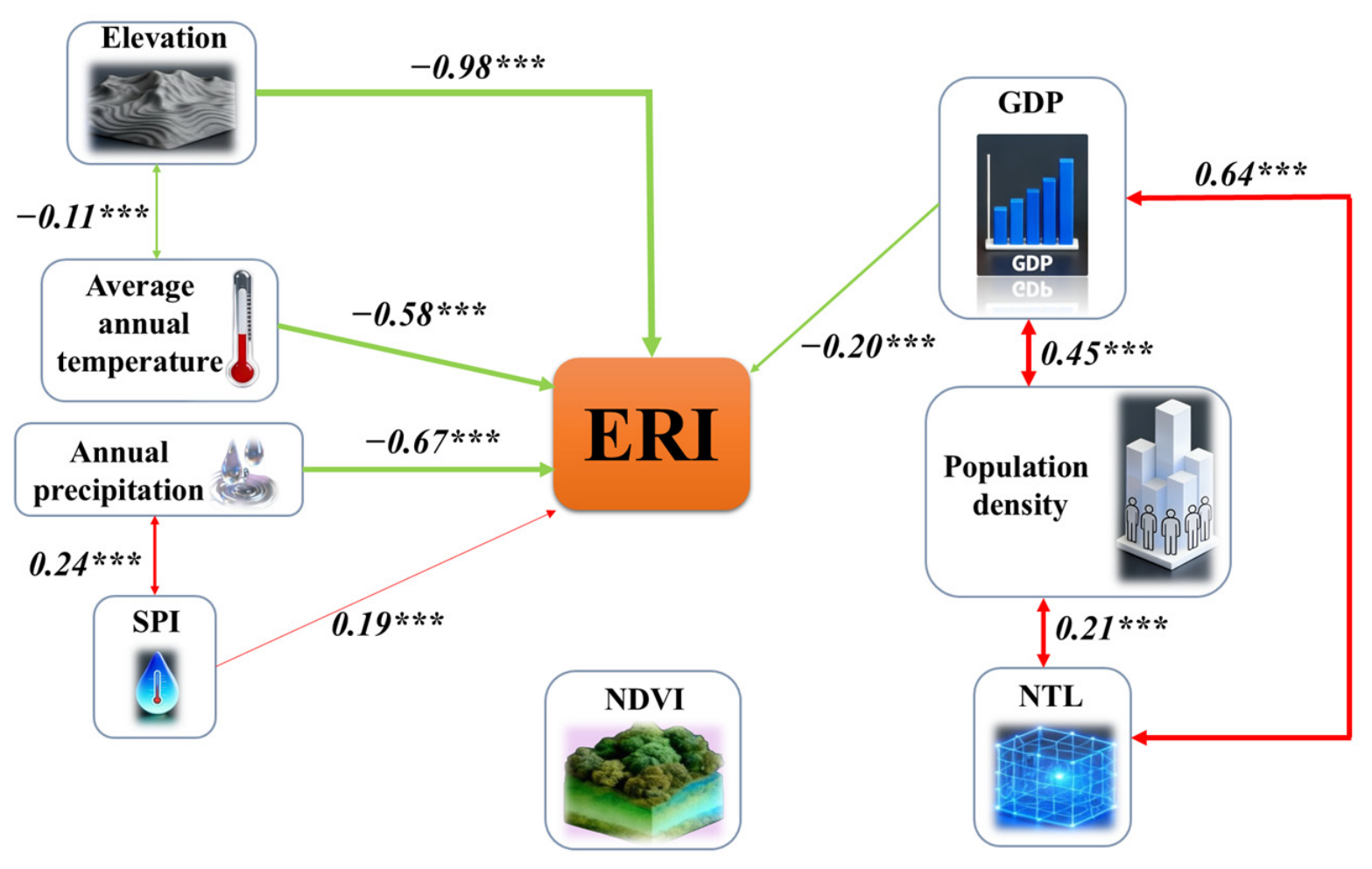
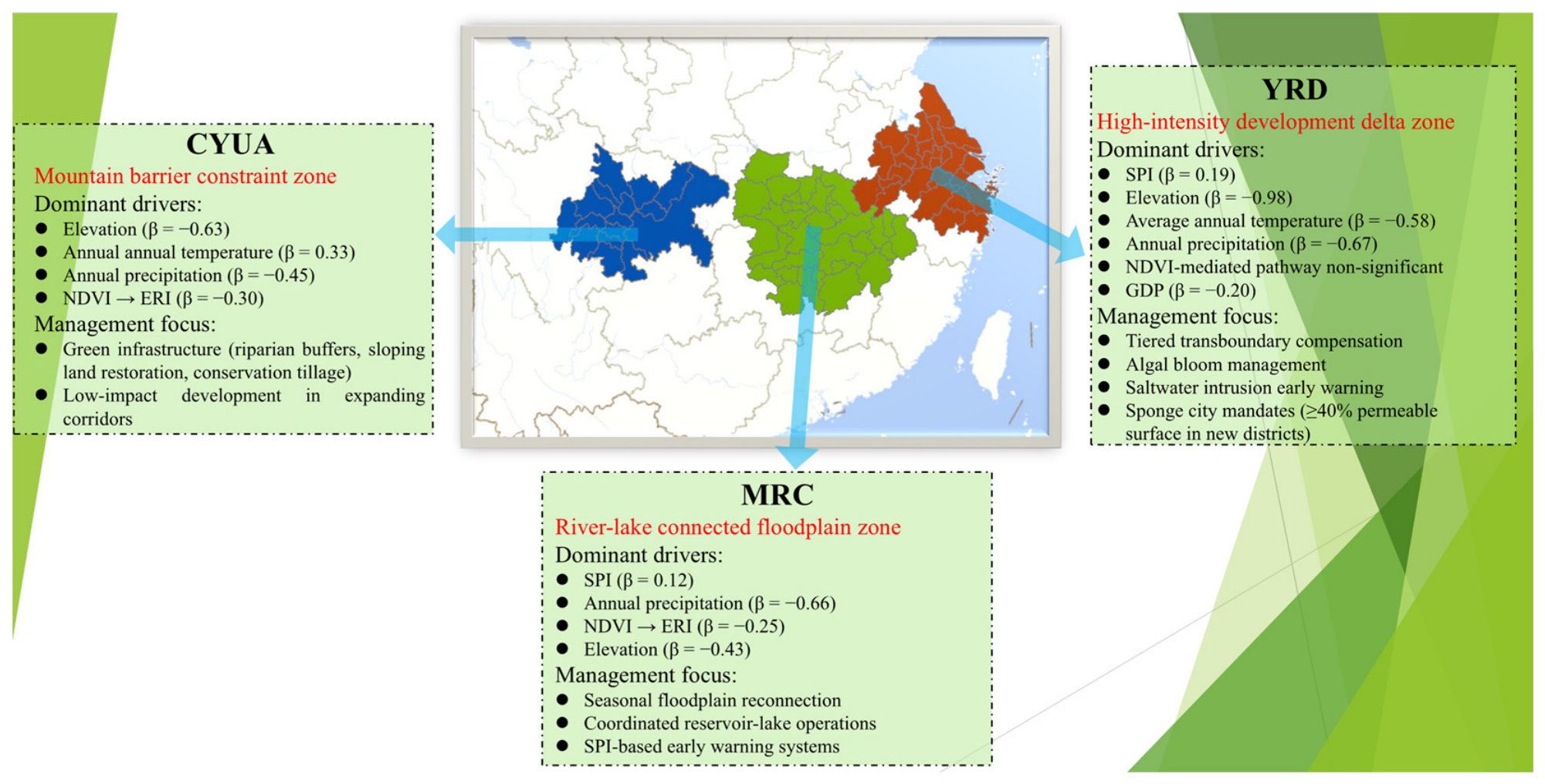
3.4.2. Three Distinct Regimes
4. Discussion
4.1. Water Risk Mechanisms in Three Contrasting Hydro-Social Contexts
4.2. Scale-Sensitive Policy Implications
4.3. Zone-Based Water Management Strategies
4.4. Limitations and Future Directions
5. Conclusions
Author Contributions
Funding
Data Availability Statement
Conflicts of Interest
Appendix A

| Component | Formula/Value | Description |
|---|---|---|
| Fragmentation () | is the number of patches in landscape and is the total area of the landscape | |
| Isolation () | A is the total landscape area | |
| Dominance () | is the total number of sampling points and is the number of sampling points containing landscape | |
| Vulnerability values () | ||
| Snow/ice | 6 | Highest vulnerability |
| Water bodies | 5 | |
| Wetlands | 5 | |
| Cropland | 4 | |
| Shrubland | 3 | |
| Grassland | 3 | |
| Bare land | 3 | |
| Forest | 2 | |
| Impervious surface | 1 | Lowest vulnerability |
| Variable | Representative Bandwidth (km) | Spatial Scale Interpretation |
|---|---|---|
| Annual precipitation | 1520 | Basin-wide |
| Annual average temperature | 1480 | Basin-wide |
| SPI | 1450–1680 | Basin-wide |
| Population density | 720 | Metropolitan/city cluster scale |
| GDP | 280 | Urban core/local hotspot |
| GDP per capita | 260 | Urban core/local hotspot |
| Nighttime light intensity | 310 | Urban core/local hotspot |
| Study Area | Key Causal Pathway | 2000–2010 Coefficient (p-Value) | 2010–2020 Coefficient (p-Value) | Consistency Characteristic |
|---|---|---|---|---|
| CYUA | Elevation → ERI | −0.617 (p < 0.001) | −0.628 (p < 0.001) | Stable negative effect |
| NDVI → ERI | −0.304 (p < 0.001) | −0.298 (p < 0.001) | Stable negative effect | |
| Annual precipitation → ERI | −0.425 (p < 0.001) | −0.438 (p < 0.001) | Stable negative effect | |
| MRC | Annual precipitation → ERI | −0.648 (p < 0.001) | −0.661 (p < 0.001) | Stable negative effect |
| SPI → ERI | 0.102 (p < 0.001) | 0.127 (p < 0.001) | Stable positive effect | |
| NDVI → ERI | −0.249 (p < 0.001) | −0.253 (p < 0.001) | Stable negative effect | |
| Elevation → ERI | −0.431 (p < 0.001) | −0.439 (p < 0.001) | Stable negative effect | |
| YRD | Elevation → ERI | −0.969 (p < 0.001) | −0.982 (p < 0.001) | Stable negative effect |
| Annual precipitation → ERI | −0.672 (p < 0.001) | −0.683 (p < 0.001) | Stable negative effect | |
| GDP → Population density | 0.447 (p < 0.001) | 0.461 (p < 0.001) | Stable positive effect |
| Evaluation Index | 15 km × 15 km | 30 km × 30 km | 45 km × 45 km | Consistency |
|---|---|---|---|---|
| Moran’s I of ERI | 0.751 | 0.736 | 0.724 | Differences ≤ 0.012 |
| Top three drivers (Geodetector q-value, 2020) | NDVI (0.212), population density (0.194), annual precipitation (0.144) | NDVI (0.204), population density (0.190), annual precipitation (0.141) | NDVI (0.198), population density (0.185), annual precipitation (0.137) | Ranking unchanged |
| SPI q-value in MRC (2020) | 0.153 | 0.146 | 0.140 | Variation ≤ 5.5% |
| SEM path: SPI → ERI (MRC) | 0.128 | 0.124 | 0.118 | Sign and significance unchanged |
| SEM path: NDVI → ERI (CYUA) | −0.315 | −0.303 | −0.294 | Sign and significance unchanged |
| SEM path: Elevation → ERI (YRD) | −0.986 | −0.979 | −0.968 | Sign and significance unchanged |

References
- Gong, L.; Zhang, X.; Liu, J.; Gui, H. Exploring the Influence of Urban Agglomeration on Extreme Precipitation: Evidence from the Middle Reaches of the Yangtze River, China. J. Hydrol. Reg. Stud. 2024, 55, 101932. [Google Scholar] [CrossRef]
- Tan, Z.; Li, H.; Song, Q.; Wang, Z.; Cao, Y. Synergistic Optimization and Interaction Evaluation of Water-Energy-Food-Ecology Nexus Under Uncertainty from the Perspective of Urban Agglomeration. Sustain. Cities Soc. 2025, 124, 106291. [Google Scholar] [CrossRef]
- He, N.; Guo, W.; Lan, J.; Yu, Z.; Wang, H. The Impact of Human Activities and Climate Change on the Eco-Hydrological Processes in the Yangtze River Basin. J. Hydrol. Reg. Stud. 2024, 53, 101753. [Google Scholar] [CrossRef]
- Wang, Z.; Ma, C.; Tan, Z.; Wu, T. Low-Carbon Development Pathways for the Water-Energy-Food-Carbon Nexus in the Yangtze River Economic Belt: Insights from Coupling Coordination and Obstacle Degree Analysis. J. Clean. Prod. 2025, 523, 146399. [Google Scholar] [CrossRef]
- Bai, J.; Guo, K.; Liu, M.; Jiang, T. Spatial Variability, Evolution, and Agglomeration of Eco-Environmental Risks in the Yangtze River Economic Belt, China. Ecol. Indic. 2023, 152, 110375. [Google Scholar] [CrossRef]
- Zhu, Z.; Wu, H.; Wang, Z.; Zhang, X.; Kong, J.; Liu, C.; Tan, Z.; Liu, Q. Physics-AI Synergized Optimization-Learning-Simulation Framework for Robust Cascade Reservoir Scheduling Under Future Hydrological Uncertainty. Water Resour. Res. 2026, 62, e2025WR042149. [Google Scholar] [CrossRef]
- Li, Z.; Peng, L.; Wu, F. The Impacts of Impervious Surface on Water Quality in the Urban Agglomerations of Middle and Lower Reaches of the Yangtze River Economic Belt From Remotely Sensed Data. IEEE J. Sel. Top. Appl. Earth Obs. Remote Sens. 2021, 14, 8398–8406. [Google Scholar] [CrossRef]
- Ding, C.; Wang, Z.; Tan, Z.; Zhang, X. Multi-source Heterogeneous Data-Driven Interpretable Model Based on Transformer and Kolmogorov-Arnold Networks for Streamflow Prediction. Expert Syst. Appl. 2026, 328, 132862. [Google Scholar] [CrossRef]
- Jia, L.; Yu, K.; Li, Z.; Li, P.; Cong, P.; Li, B. Spatiotemporal Pattern of Landscape Ecological Risk in the Yangtze River Basin and Its Influence on NPP. Front. For. Glob. Change 2024, 6, 1335116. [Google Scholar] [CrossRef]
- Qi, Z.; Cai, Y.; Ye, Y.; Yang, H.; Cai, S.; Tan, Q.; Zhang, S.; Yang, Z. Integrating Landscape “Source-Transport-Sink” Mechanisms into GeoAI to Enhance Surrogate Modeling of Watershed Nutrient Loads. Water Res. 2026, 291, 125263. [Google Scholar] [CrossRef] [PubMed]
- Matomela, N.; Li, T.; Zhang, P.; Ikhumhen, H.O.; Lopes, N.D.R. Role of Landscape and Land-Use Transformation on Nonpoint Source Pollution and Runoff Distribution in the Dongsheng Basin, China. Sustainability 2023, 15, 8325. [Google Scholar] [CrossRef]
- Yin, S.; Wang, Y.; Lei, C.; Zhang, J. Runoff Responses to Landscape Pattern Changes and Their Quantitative Attributions Across Different Time Scales in Ecologically Fragile Basins. Catena 2025, 249, 108716. [Google Scholar] [CrossRef]
- Wei, J.; Wang, Z.; Han, L.; Shang, J.; Zhao, B. Analysis of Spatio-Temporal Evolution Characteristics of Drought and Its Driving Factors in Yangtze River Basin Based on SPEI. Atmosphere 2022, 13, 1986. [Google Scholar] [CrossRef]
- Canedo Rosso, C.; Nyberg, L.; Pechlivanidis, I. Drought Hazard Assessment across Sweden’s Diverse Hydro-Climatic Regimes. Nat. Hazards Earth Syst. Sci. 2025, 25, 4577–4592. [Google Scholar] [CrossRef]
- Song, Q.; Wang, Z.; Wu, T. Risk Analysis and Assessment of Water Resource Carrying Capacity Based on Weighted Gray Model with Improved Entropy Weighting Method in the Central Plains Region of China. Ecol. Indic. 2024, 160, 111907. [Google Scholar] [CrossRef]
- Pan, Z.; Gao, G.; Fu, B. Spatiotemporal Changes and Driving Forces of Ecosystem Vulnerability in the Yangtze River Basin, China: Quantification Using Habitat-Structure-Function Framework. Sci. Total Environ. 2022, 835, 155494. [Google Scholar] [CrossRef]
- Zhao, Y.-L.; Sun, H.-J.; Wang, X.-D.; Ding, J.; Lu, M.-Y.; Pang, J.-W.; Zhou, D.-P.; Liang, M.; Ren, N.-Q.; Yang, S.-S. Spatiotemporal Drivers of Urban Water Pollution: Assessment of 102 Cities across the Yangtze River Basin. Environ. Sci. Ecotechnol. 2024, 20, 100412. [Google Scholar] [CrossRef] [PubMed]
- Li, Q.; Ge, J.; Zhang, X.; Wu, X.; Fan, H.; Yang, L. Assessment of the Interaction Between Digital Infrastructure and Ecological Resilience: Insights from Yangtze River Delta Urban Agglomeration in China. J. Clean. Prod. 2025, 486, 144364. [Google Scholar] [CrossRef]
- Sun, J.; Che, M.; Yang, F.; Zhang, C.; Yin, S.; Wei, C. Temporal and Spatial Variability of Landscape Ecological Risk in the Yangtze River Midstream Urban Agglomeration in the Context of Climate Change. Hum. Ecol. Risk Assess. Int. J. 2025, 31, 165–194. [Google Scholar] [CrossRef]
- Sun, J.; Bi, S.; Bashir, B.; Ge, Z.; Wu, K.; Alsalman, A.; Ayugi, B.O.; Alsafadi, K. Historical Trends and Characteristics of Meteorological Drought Based on Standardized Precipitation Index and Standardized Precipitation Evapotranspiration Index over the Past 70 Years in China (1951–2020). Sustainability 2023, 15, 10875. [Google Scholar] [CrossRef]
- Zhu, X.; Wei, S.; Wu, Y. Eco-Environmental Assessment and Trend Analysis of the Yangtze River Middle Reaches Megalopolis Based on a Modified Remote Sensing Ecological Index. Sustainability 2024, 16, 8118. [Google Scholar] [CrossRef]
- Peng, L.; Wu, H.; Li, Z. Spatial–Temporal Evolutions of Ecological Environment Quality and Ecological Resilience Pattern in the Middle and Lower Reaches of the Yangtze River Economic Belt. Remote Sens. 2023, 15, 430. [Google Scholar] [CrossRef]
- Li, Y.; Wang, Z.; Liu, S. Enhance Carbon Emission Prediction Using Bidirectional Long Short-Term Memory Model Based on Text-Based and Data-Driven Multimodal Information Fusion. J. Clean. Prod. 2024, 471, 143301. [Google Scholar] [CrossRef]
- Li, Z.; Yu, K.; Zhong, J.; Yang, J.; Zhang, D.; Zhu, J. Spatial Correlation Network Characteristics and Influencing Factors of Water Environmental Efficiency in Three Major Urban Agglomerations in the Yangtze River Basin, China. Sustain. Cities Soc. 2024, 104, 105311. [Google Scholar] [CrossRef]
- Shen, W.; Zheng, Z.; Pan, L.; Qin, Y.; Li, Y. A Integrated Method for Assessing the Urban Ecosystem Health of Rapid Urbanized Area in China Based on SFPHD Framework. Ecol. Indic. 2021, 121, 107071. [Google Scholar] [CrossRef]
- Wang, Z.; Xu, N.; Bao, X.; Wu, J.; Cui, X. Spatio-Temporal Deep Learning Model for Accurate Streamflow Prediction with Multi-Source Data Fusion. Environ. Model. Softw. 2024, 178, 106091. [Google Scholar] [CrossRef]
- Cheng, L.; Wang, Z.; Pei, R.; Wu, J. Sustainable Urban Management and Flood Resilience in China’s Yangtze River Economic Belt: Drivers, Patterns, and Policy Synergies. Sustain. Cities Soc. 2025, 131, 106737. [Google Scholar] [CrossRef]
- Huang, S.; Gan, Y.; Chen, N.; Wang, C.; Zhang, X.; Li, C.; Horton, D.E. Urbanization Enhances Channel and Surface Runoff: A Quantitative Analysis Using Both Physical and Empirical Models over the Yangtze River Basin. J. Hydrol. 2024, 635, 131194. [Google Scholar] [CrossRef]
- Liang, H.; Zhang, D.; Wang, W.; Yu, S.; Nimai, S. Evaluating Future Water Security in the Upper Yangtze River Basin Under a Changing Environment. Sci. Total Environ. 2023, 889, 164101. [Google Scholar] [CrossRef] [PubMed]
- Yang, J.; Huang, X. The 30 m Annual Land Cover Dataset and Its Dynamics in China from 1990 to 2019. Earth Syst. Sci. Data 2021, 13, 3907–3925. [Google Scholar] [CrossRef]
- Zhang, Q.; Miao, C.; Su, J.; Gou, J.; Hu, J.; Zhao, X.; Xu, Y. A New High-Resolution Multi-Drought-Index Dataset for Mainland China. Earth Syst. Sci. Data 2025, 17, 837–853. [Google Scholar] [CrossRef]
- Sims, K.; Reith, A.; Bright, E.; Kaufman, J.; Pyle, J.; Epting, J.; Gonzales, J.; Adams, D.; Powell, E.; Urban, M.; et al. LandScan Global 2022 [Data Set]; Oak Ridge National Laboratory: Oak Ridge, TN, USA, 2023. [CrossRef]
- Chen, Z.; Yu, B.; Yang, C.; Zhou, Y.; Yao, S.; Qian, X.; Wang, C.; Wu, B.; Wu, J. An Extended Time Series (2000–2018) of Global NPP-VIIRS-like Nighttime Light Data from a Cross-Sensor Calibration. Earth Syst. Sci. Data 2021, 13, 889–906. [Google Scholar] [CrossRef]
- Shen, J.; Du, S.; Ma, Q.; Huang, Q.; Wen, J.; Yin, Z.; Gao, J. A New Multiple Return-Period Framework of Flood Regulation Service—Applied in Yangtze River Basin. Ecol. Indic. 2021, 125, 107441. [Google Scholar] [CrossRef]
- Qing, X.; Li, Y.; Li, W.; Lu, Z.; Yue, R. To Refine Differential Land Use Strategies by Developing Landscape Risk Assessment for Urban Agglomerations in the Yellow River Basin of China. Environ. Impact Assess. Rev. 2026, 117, 108162. [Google Scholar] [CrossRef]
- Li, Z.-T.; Li, M.; Xia, B.-C. Spatio-Temporal Dynamics of Ecological Security Pattern of the Pearl River Delta Urban Agglomeration Based on LUCC Simulation. Ecol. Indic. 2020, 114, 106319. [Google Scholar] [CrossRef]
- Urban, M.C.; Alberti, M.; De Meester, L.; Zhou, Y.; Verrelli, B.C.; Szulkin, M.; Schmidt, C.; Savage, A.M.; Roberts, P.; Rivkin, L.R.; et al. Interactions Between Climate Change and Urbanization Will Shape the Future of Biodiversity. Nat. Clim. Change 2024, 14, 436–447. [Google Scholar] [CrossRef]
- Chen, E.; Yu, X. (Bill) Real-Time Control of Urban Drainage System for Flood and Combined Sewer Overflow Mitigation with a Novel Recurrent Deep Reinforcement Learning Framework. Water Res. 2026, 299, 125797. [Google Scholar] [CrossRef] [PubMed]
- Kuang, W.; Huang, G.; Zhou, X.; Wang, S.; Li, Y.; Yu, B. Intensifying Extreme Rainfall Will Threaten the Socioeconomic Development of the Yangtze River Basin. Int. J. Climatol. 2025, 45, e70062. [Google Scholar] [CrossRef]
- Xia, X.; Zhou, F.; Chen, J. Spatiotemporal Heterogeneity and Zoning Strategies for Urban Ecological Resilience in Yichang, China. Land Degrad. Dev. 2025, 36, 5957–5975. [Google Scholar] [CrossRef]
- Li, Y.; Ji, C.; Wang, P.; Huang, L. Proactive Intervention of Green Infrastructure on Flood Regulation and Mitigation Service Based on Landscape Pattern. J. Clean. Prod. 2023, 419, 138152. [Google Scholar] [CrossRef]
- Hettiarachchi, S.; Wasko, C.; Sharma, A. Rethinking Urban Storm Water Management through Resilience—The Case for Using Green Infrastructure in Our Warming World. Cities 2022, 128, 103789. [Google Scholar] [CrossRef]
- Leng, L.; Jia, H.; Chen, A.S.; Zhu, D.Z.; Xu, T.; Yu, S. Multi-Objective Optimization for Green-Grey Infrastructures in Response to External Uncertainties. Sci. Total Environ. 2021, 775, 145831. [Google Scholar] [CrossRef]
- Yang, W.; Zhang, J. Assessing the Performance of Gray and Green Strategies for Sustainable Urban Drainage System Development: A Multi-Criteria Decision-Making Analysis. J. Clean. Prod. 2021, 293, 126191. [Google Scholar] [CrossRef]
- Yang, M.; Xue, L.; Liu, Y.; Liu, S.; Han, Q.; Yang, L.; Chi, Y. Asymmetric Response of Vegetation GPP to Impervious Surface Expansion: Case Studies in the Yellow and Yangtze River Basins. Environ. Res. 2024, 243, 117813. [Google Scholar] [CrossRef]
- Zhu, B.; Lin, J.; Liu, Y.; Zhang, D.; Peng, Q.; Ren, Y.; Chen, J.; Xu, Y. Multi-Risk Interaction Analysis of Cascade Hydropower Stations Based on System Dynamics Simulation. Water Resour. Manag. 2024, 38, 45–62. [Google Scholar] [CrossRef]
- Jiang, Q.; Xiong, S.; Yang, F.; Huang, J. Simulation Study on Rain-Flood Regulation in Urban “Gray-Green-Blue” Spaces Based on System Dynamics: A Case Study of the Guitang River Basin in Changsha. Water 2023, 16, 109. [Google Scholar] [CrossRef]
- Dai, K.; Shen, S.; Cheng, C.; Song, Y. Integrated Evaluation and Attribution of Urban Flood Risk Mitigation Capacity: A Case of Zhengzhou, China. J. Hydrol. Reg. Stud. 2023, 50, 101567. [Google Scholar] [CrossRef]
- Wang, Z.; Zhu, Z.; Luan, H.; Wu, T. Multi-Objective Optimal Scheduling of Cascade Reservoirs in Complex Basin Systems: Case Study of the Jinsha River-Yalong River Confluence Basin in China. J. Hydrol. Reg. Stud. 2025, 58, 102240. [Google Scholar] [CrossRef]
- Qi, W.; Ma, C.; Xu, H.; Chen, Z.; Zhao, K.; Han, H. Low Impact Development Measures Spatial Arrangement for Urban Flood Mitigation: An Exploratory Optimal Framework Based on Source Tracking. Water Resour. Manag. 2021, 35, 3755–3770. [Google Scholar] [CrossRef]


| Category | Data Variable | Source/Product | Resolution | Temporal Range | Primary Use |
|---|---|---|---|---|---|
| Land use/cover | Land cover type | CLCD (Wuhan University) | 30 m | 2000–2020 (annual) | ERI calculation (landscape metrics) |
| Natural | Elevation | DEM, Chinese Academy of Sciences | 30 m | – | Topographic control factor |
| Natural | Annual precipitation | RESDC, Chinese Academy of Sciences | 1 km | 2000–2020 | Climatic driver |
| Natural | Average annual temperature | RESDC, Chinese Academy of Sciences | 1 km | 2000–2020 | Climatic driver |
| Natural | NDVI | MODIS MOD13A3 | 1 km | 2000–2020 | Vegetation regulation |
| Natural | SPI-6 | Derived from precipitation (Zhang et al., 2025) [31] | 1 km | 2000–2020 (annual) | Hydroclimatic extreme indicator |
| Socioeconomic | GDP | RESDC, Chinese Academy of Sciences | 1 km | 2000–2020 | Anthropogenic pressure |
| Socioeconomic | Population density | LandScan [32] | 1 km | 2000–2020 | Anthropogenic pressure |
| Socioeconomic | Nighttime light intensity | NPP-VIIRS-like [33] | 1 km | 2000–2020 | Impervious surface proxy, urban activity |
| Socioeconomic | Per capita GDP | Calculated (GDP/population density) | 1 km | 2000–2020 | Economic intensity |
| Urban Agglomeration | Sample Size | Chi/DF | GFI | AGFI | CFI | RMSEA |
|---|---|---|---|---|---|---|
| CYUA | 1312 | 3.487 | 0.990 | 0.972 | 0.989 | 0.044 |
| MRC | 1915 | 1.874 | 0.996 | 0.989 | 0.997 | 0.021 |
| YRD | 1115 | 3.185 | 0.992 | 0.970 | 0.992 | 0.044 |
Disclaimer/Publisher’s Note: The statements, opinions and data contained in all publications are solely those of the individual author(s) and contributor(s) and not of MDPI and/or the editor(s). MDPI and/or the editor(s) disclaim responsibility for any injury to people or property resulting from any ideas, methods, instructions or products referred to in the content. |
© 2026 by the authors. Licensee MDPI, Basel, Switzerland. This article is an open access article distributed under the terms and conditions of the Creative Commons Attribution (CC BY) license.
Share and Cite
Tao, J.; Ma, T.; Meng, H. Landscape-Derived Indicators of Water-Related Ecological Risks: Multi-Scale Drivers and Zoned Governance in Yangtze River Basin Urban Agglomerations. Water 2026, 18, 1421. https://doi.org/10.3390/w18121421
Tao J, Ma T, Meng H. Landscape-Derived Indicators of Water-Related Ecological Risks: Multi-Scale Drivers and Zoned Governance in Yangtze River Basin Urban Agglomerations. Water. 2026; 18(12):1421. https://doi.org/10.3390/w18121421
Chicago/Turabian StyleTao, Jing, Tianli Ma, and Huajun Meng. 2026. "Landscape-Derived Indicators of Water-Related Ecological Risks: Multi-Scale Drivers and Zoned Governance in Yangtze River Basin Urban Agglomerations" Water 18, no. 12: 1421. https://doi.org/10.3390/w18121421
APA StyleTao, J., Ma, T., & Meng, H. (2026). Landscape-Derived Indicators of Water-Related Ecological Risks: Multi-Scale Drivers and Zoned Governance in Yangtze River Basin Urban Agglomerations. Water, 18(12), 1421. https://doi.org/10.3390/w18121421