1. Introduction
The seepage gradient at the bottom of a suspended cutoff wall is generally high. It can easily exceed the allowable gradient of the soil [
1] and may induce seepage failure incidents in some cases. For example, the water and sand inrush accident at the Luding Hydropower Station was caused by suffusion. This occurred because the gradient at the bottom of the wall surpassed the allowable gradient for the internally unstable soil [
2]. In a specific project, the dam foundation is underlain by a deep overburden layer with a thickness exceeding 500 m. Through three-dimensional seepage optimization and comparative studies, a suspended cutoff wall was selected for foundation seepage control. The optimal wall depth was determined to be 190 m, which has reached the current maximum construction depth [
3]. However, seepage analysis indicates that the gradient near the bottom of the wall still exceeds the allowable gradient of 0.6~0.65 for the gravelly medium-coarse sand (the allowable soil gradient is generally determined based on conventional permeability tests [
4]). Therefore, whether there is a risk of seepage failure in the soil at the bottom of the cutoff wall urgently requires experimental investigation to evaluate and verify.
The soil near the bottom of the cutoff wall is deeply buried at depths of approximately 200 m, existing in a high-stress state characterized by triaxial compression. The control of stress states on the seepage resistance of soil has been widely recognized in the geomechanics community. For instance, the classic experiments by Skempton and Brogan [
5] pointed out that the effective stress distribution within the soil matrix directly determines the initiation gradient of seepage failure. Subsequent research by Wan and Fell [
6] further confirmed that the driving force required for particle migration increases significantly with the enhancement of effective stress. Additionally, Ke and Takahashi [
7] found that increased effective stress leads to significant densification of the soil structure, which reduces the size and connectivity of pore channels. Consequently, it is insufficient to evaluate the seepage stability of such deep foundations using allowable gradients derived from conventional permeability tests. To scientifically assess the seepage stability at the wall tip, the influence of the high-stress state must be incorporated. This stress state should approximate the coefficient of earth pressure at rest (
K0) condition.
Some existing studies have explored the influence of stress state on the anti-seepage strength of soil, but few have specifically focused on the seepage stability of soil at the bottom of a cutoff wall. Furthermore, the stress states simulated in these tests often differ from the
K0 condition that actually exists in the soil at the bottom of a wall. Some studies employed confined seepage tests where only axial pressure was applied. In such configurations, the specimen is constantly under axial compression; consequently, as the axial pressure increases, both the critical gradient and the failure gradient of the specimen increase significantly. For example, Moffat and Fannin [
8], Li and Fannin [
9], Xie et al. [
10], Sheil et al. [
11], Li et al. [
12], Nishimura et al. [
13], Liang et al. [
14], and Zhang et al. [
15] investigated the effect of axial pressure on the critical gradient for seepage deformation in soil through seepage tests that considered axial pressure. They found that the critical gradient and the axial pressure are approximately linearly positively correlated—the greater the pressure, the higher the critical gradient. Jin et al. [
2] investigated the influence of particle gradation and axial pressure on the critical and failure gradients for suffusion in the soil near the bottom of the cutoff wall at the Luding Hydropower Station. The study indicates that particle gradation significantly affects the critical and failure gradients for suffusion. Specifically, a lower content of particles smaller than 5 mm corresponds to lower critical and failure gradients for suffusion. Furthermore, axial pressure has a notable impact on these gradients, with higher axial pressure leading to increased critical and failure gradients for suffusion. Other research employed unconfined triaxial seepage tests, considering the effect of confining pressure variations on soil seepage behavior. For instance, Luo et al. [
1] found that a higher confining pressure results in a greater critical gradient for suffusion. Based on the experimental results, a linear empirical formula for the critical suffusion gradient expressed in terms of confining pressure was established. Zhang and Wang [
16] observed that an increase in confining pressure reduces the porosity of sand, thereby decreasing its permeability coefficient. Additionally, some studies have examined the variation rules of the critical and failure gradients with increasing axial pressure under a constant confining pressure. However, this stress state differs from the
K0 stress state present in the soil near the bottom of a cutoff wall. For example, existing studies [
17,
18,
19] have indicated that the seepage stability of soil is closely related to the shear stress ratio
μ (
μ = (
σ1 −
σ3)/
p′), where
p′ is the mean effective stress (
p′ = (
σ1 + 2
σ3)/3). They indicate a non-linear relationship in which the critical gradient initially increases with
μ but undergoes an abrupt change or decrease upon reaching the critical threshold
μcr. While these findings highlight the sensitivity of seepage stability to stress ratios, the specific behavior of soil under a constant coefficient of earth pressure at rest (
K0) condition, which is common at the bottom of deep cutoff walls, still remains a critical research gap addressed in this study.
Based on the above, it can be concluded that although existing studies have investigated the influence of stress state, the stress states examined differ from the K0 stress condition present in the soil near the bottom of the cutoff wall. To scientifically evaluate the effect of the stress state at the bottom of a cutoff wall on the allowable gradient of the soil, this paper utilizes soil from the bottom of the cutoff wall of a specific project. A series of triaxial seepage tests is conducted to simulate the high-stress K0 condition corresponding to different burial depths. Based on the test results, proposed values for the soil’s allowable gradient that account for the influence of the stress state at the bottom of a cutoff wall. The research findings will provide an important basis for the scientific assessment of the seepage stability of the soil at the bottom of a cutoff wall.
2. Materials and Methods
2.1. Testing Material
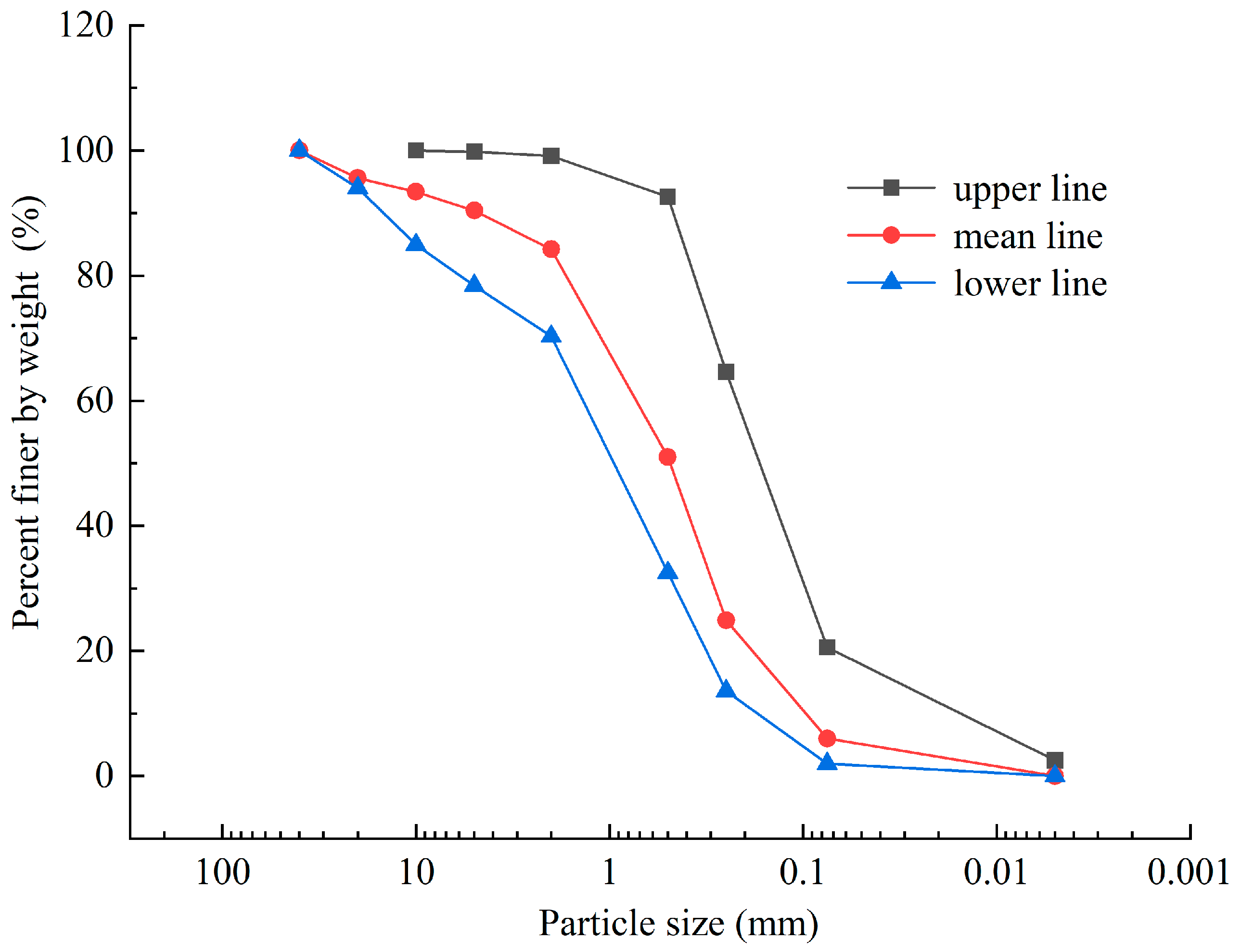
The soil material used in the tests was disturbed soil from the gravelly, medium-coarse sand layer at the dam site of a specific project. Its particle gradation envelopes are shown in
Figure 1. The physical properties of the test soil are summarized in
Table 1. The triaxial seepage specimens had a diameter of 10 cm and a height of 20 cm. According to the Code for soil tests for hydropower and water conservancy engineering (DL/T 5355-2006) [
20], a specimen diameter to maximum particle size ratio greater than 5 is sufficient to eliminate local effects and avoid significant bias in test results. Therefore, the maximum particle size of the test soil should be less than 2 cm. As shown in
Figure 1, the maximum particle size in the upper envelope line of the gravelly medium-coarse sand layer is only 1 cm. The percentage of particles larger than 2 cm in the mean envelope line and lower envelope line is only 5%. Consequently, the gradation of the gravelly medium-coarse sand layer envelopes requires no scaling and can be directly tested using the full gradation. From the perspective of particle gradation analysis, the soil particles are macroscopically relatively fine and uniform, with no clear distinction between skeleton particles and filling fine particles. The seepage failure mode for this type of soil is generally soil flow. According to the geometric criteria proposed by Kenney and Lau [
21], Fannin and Moffat [
22], and Indraratna et al. [
23], the tested gravelly medium-coarse sand across all three gradations is assessed to be internally stable.
2.2. Testing Stress State
The test stress state was applied through axial pressure (simulating the vertical effective overburden stress) and confining pressure (simulating the horizontal effective overburden stress). The axial pressure was determined based on the thickness and unit weight of the overlying soil layer, combined with the groundwater level. The horizontal stress was obtained as the product of the coefficient of at-rest earth pressure and the axial pressure. It is important to note that there are multiple methods for determining the coefficient of at-rest earth pressure (
K0). It can be determined through laboratory tests or in situ tests, estimated from empirical values (for sand,
K0 typically ranges from 0.34 to 0.45; for clay, it generally ranges from 0.5 to 0.7), or calculated using semi-empirical formulas. One widely used formula in design is Jaky’s formula [
24]: for cohesive soil,
K0 = 0.95 −
sinφ′; for sandy soil,
K0 = 1 −
sinφ′, where
φ′ is the effective internal friction angle of the soil. Alternatively, Japan’s Building Foundation Structure Design Code recommends a
K0 value of 0.5, regardless of soil type.
After comprehensive consideration and comparison, the widely used and well-recognized Jaky’s formula was selected to determine
K0. Based on conventional borehole CD shear tests conducted on the gravelly medium-coarse sand layer, the average measured value of
φ′ was 33°. Consequently, the
K0 for the gravelly medium-coarse sand layer was determined to be 0.46. The stress states at different burial depths were calculated according to the burial depth range of the gravelly medium-coarse sand layer, as shown in
Table 2. Based on the geotechnical investigation results, the relative density of the gravelly medium-coarse sand layer was 0.74. To ensure that the laboratory seepage test results reflect the in situ conditions as closely as possible, the initial specimen preparation targeted a relative density of 0.74.
For comparison, conventional permeability tests were also conducted simultaneously on the soil envelope of the gravelly medium-coarse sand layer. The specimen gradation and relative density for sample preparation were identical to those used for the triaxial seepage specimens. Based on the relative density test results for the soil within the gradation envelope lines, the corresponding compaction dry densities for the upper envelope line, mean envelope line, and lower envelope line were determined to be 1.768 g/cm3, 1.802 g/cm3, and 1.844 g/cm3, respectively. To ensure data reliability, three sets of parallel tests were performed for the upper envelope line, mean envelope line, and lower envelope line.
2.3. Testing Apparatus
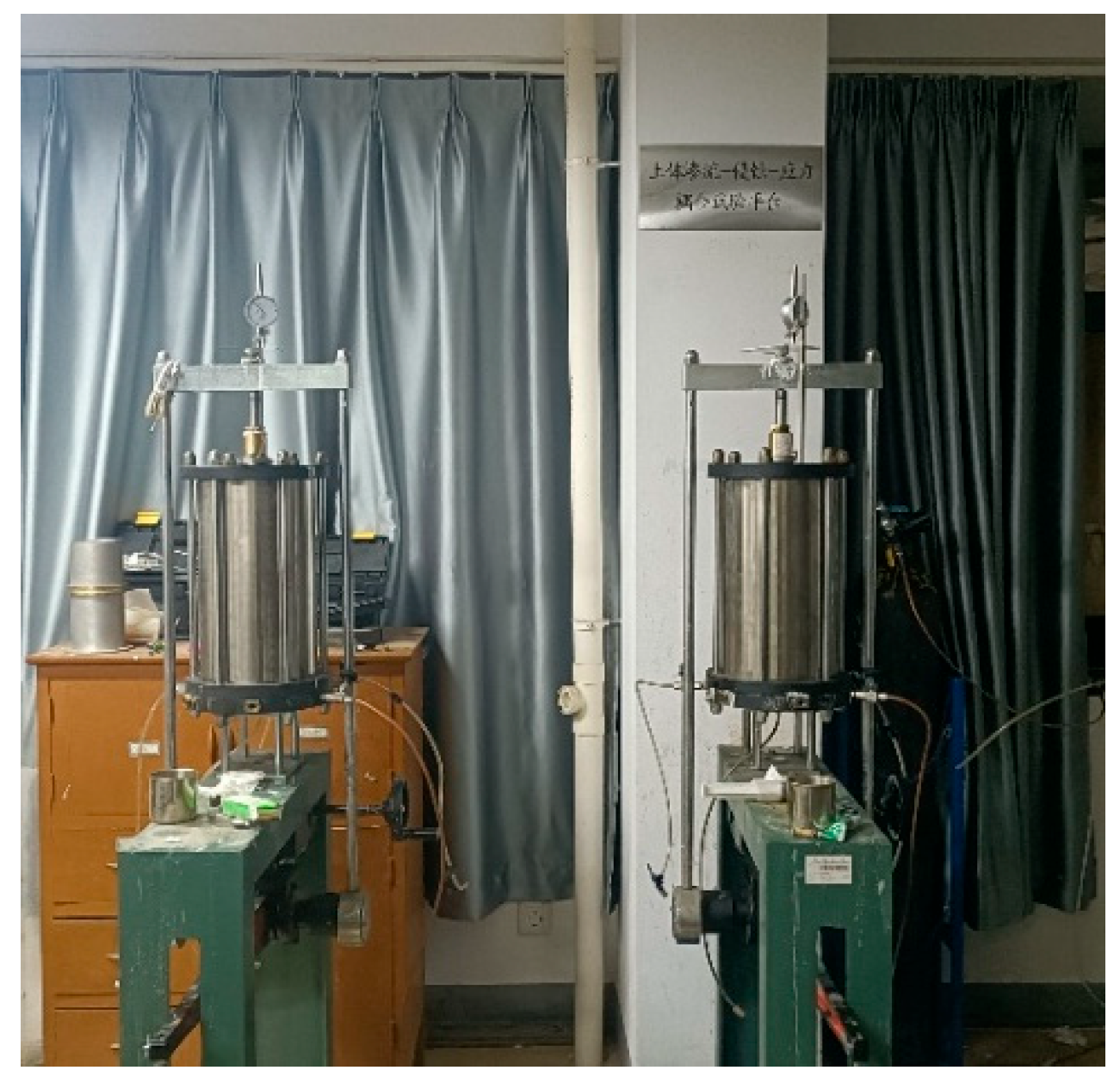
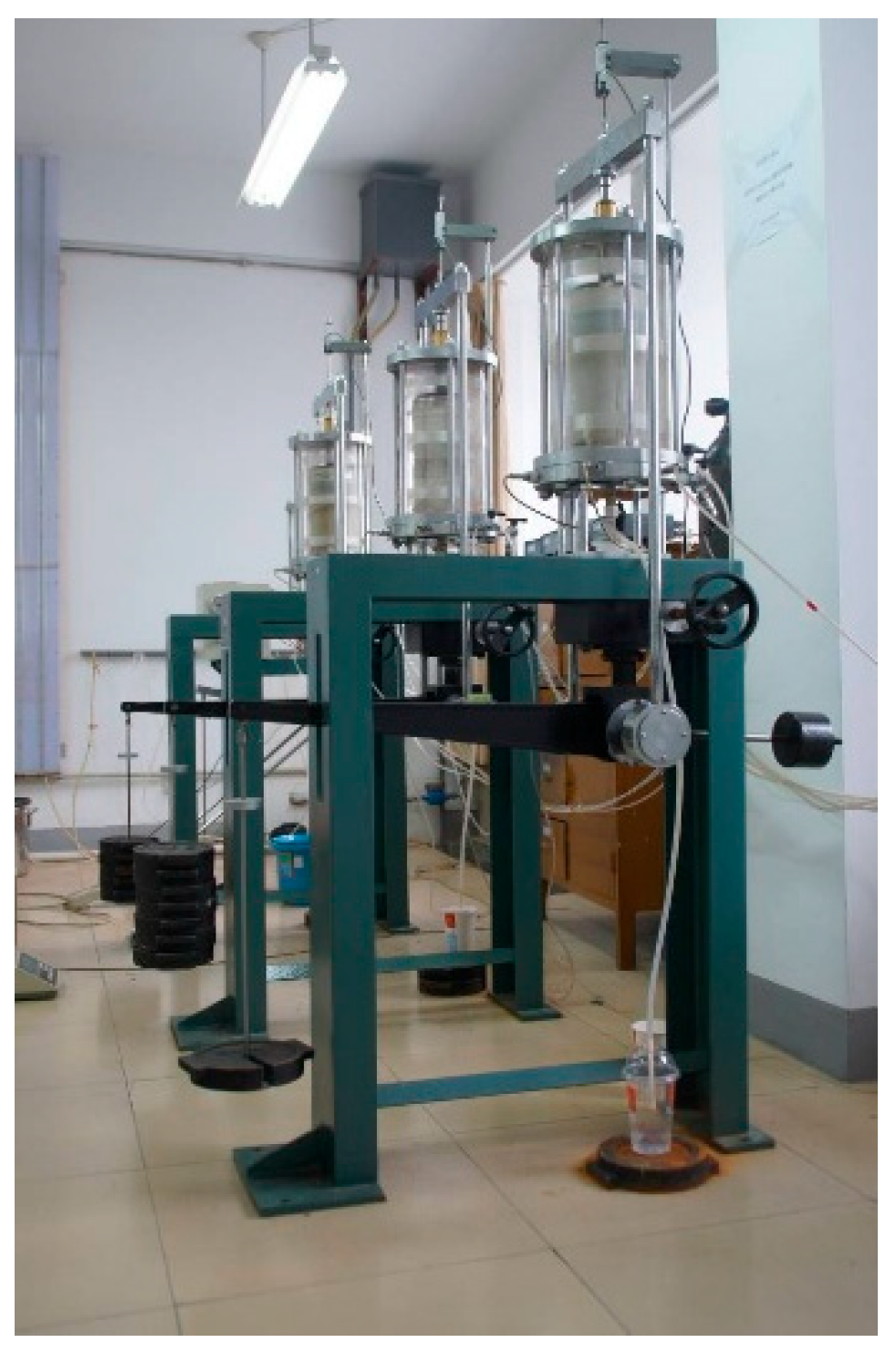
The tests were conducted using a stress-controlled triaxial seepage testing apparatus developed by Hohai University (Nanjing, China) [
25], as shown in
Figure 2. The apparatus consists of a confining pressure system, an axial pressure system, a seepage pressure system, and a data acquisition system. The confining pressure and axial pressure systems simulate the stress state of the soil, with a maximum confining pressure of 2.0 MPa and a maximum axial pressure of 4.0 MPa. The seepage pressure system simulates the upward seepage force acting on the soil, with a maximum seepage pressure of 2.0 MPa. This system allows convenient switching between low pressure (0.02 MPa) and high pressure (2.0 MPa), with a precision of 1 mm under low-pressure conditions. The data acquisition system enables real-time monitoring of soil settlement and pore water pressure and allows for the real-time storage and processing of sensor data. Furthermore, to minimize the hindrance of fine particle movement by the downstream porous plate at the seepage outlet, the plate was uniformly perforated with 5 mm diameter holes. Given that the soils in the gravelly medium-coarse sand layer are relatively fine, predominantly consisting of particles smaller than 0.5 mm, the 5 mm aperture of the downstream porous plate is ten times the size of the 0.5 mm particles. Therefore, the downstream porous plate does not affect the movement of fine particles at the specimen’s downstream outlet [
18,
26].
2.4. Experiment Procedure
To systematically investigate the seepage stability and failure mechanisms of the gravelly medium-coarse sand under high stress, a series of triaxial seepage tests was executed. The detailed experimental procedures are outlined as follows:
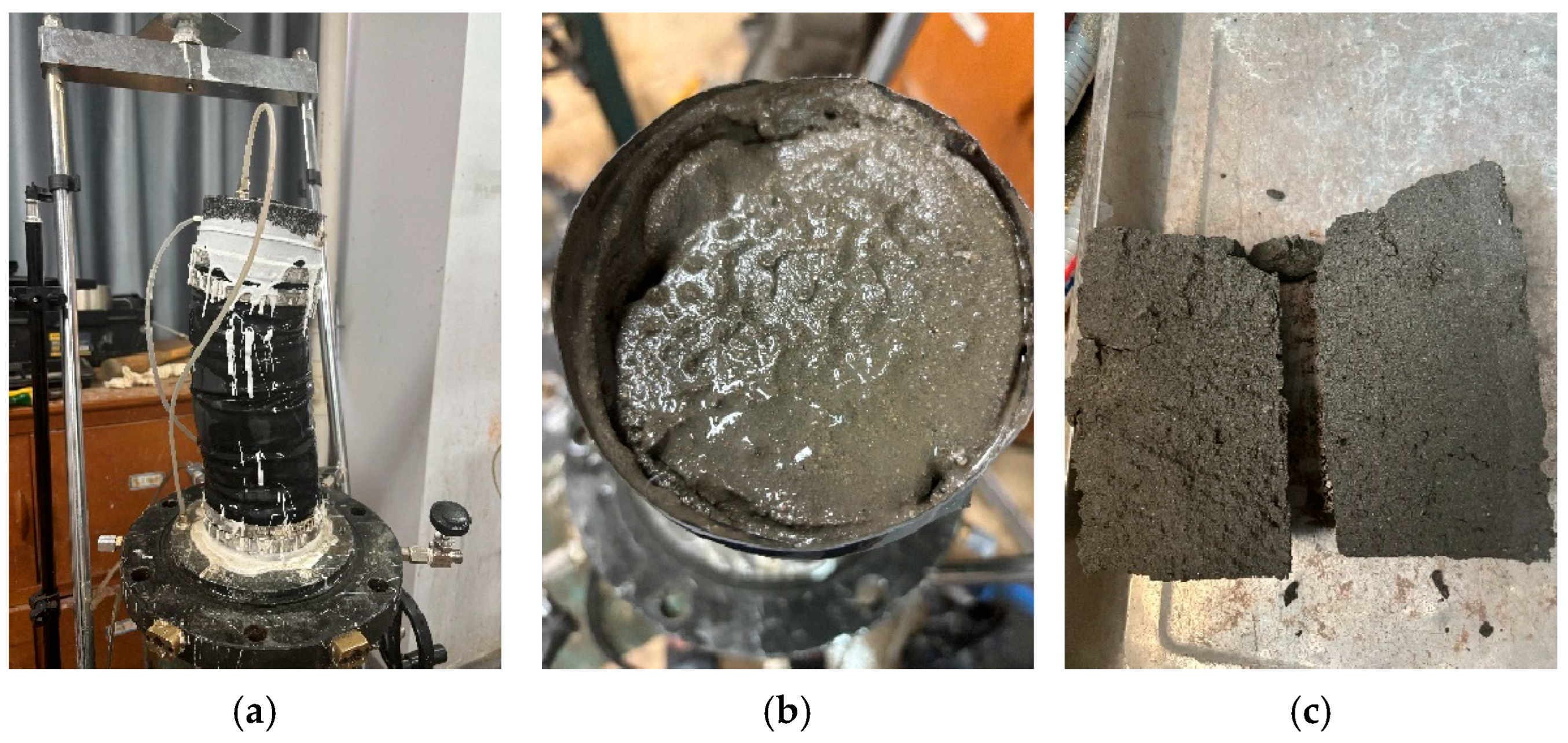
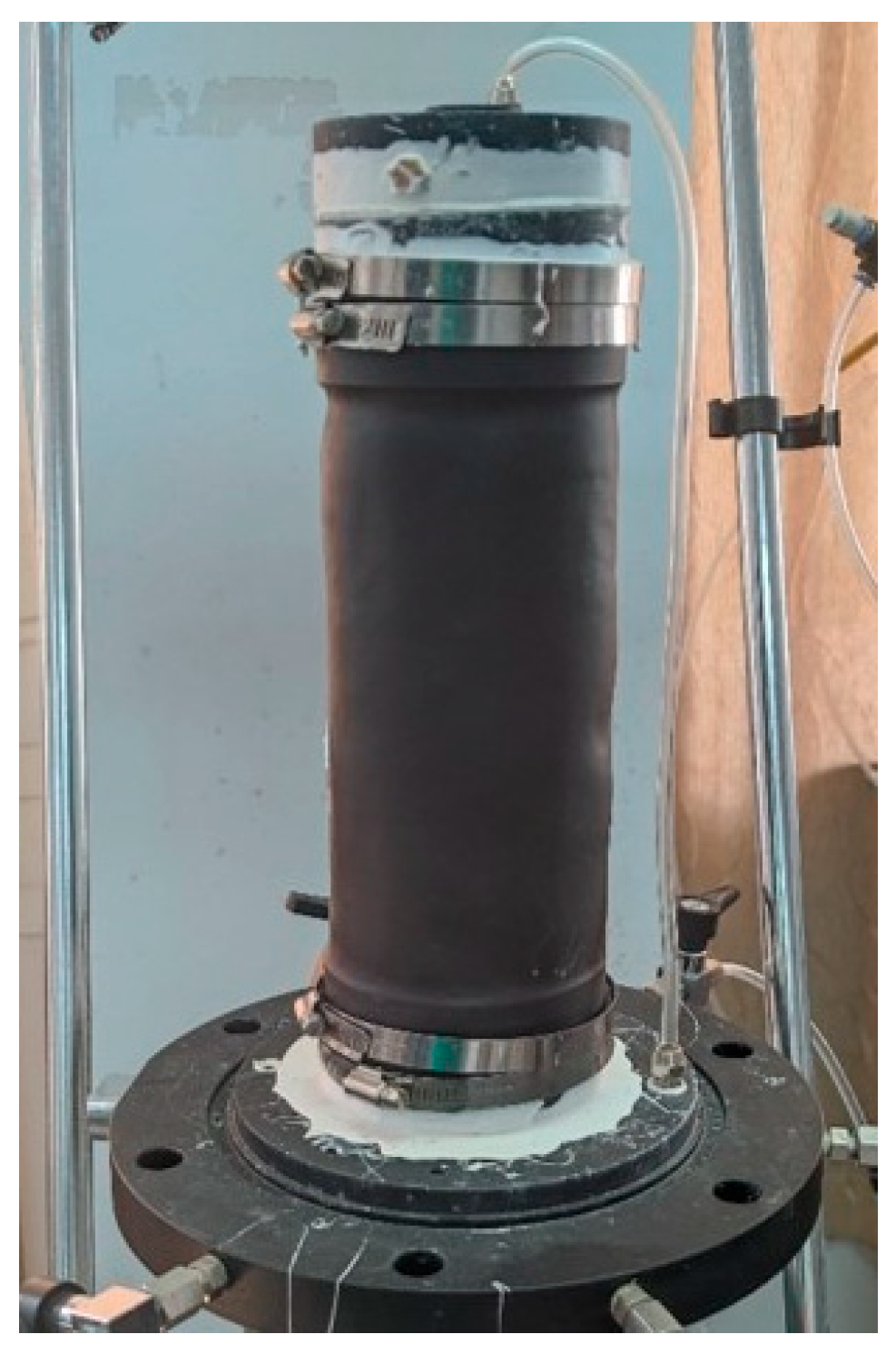
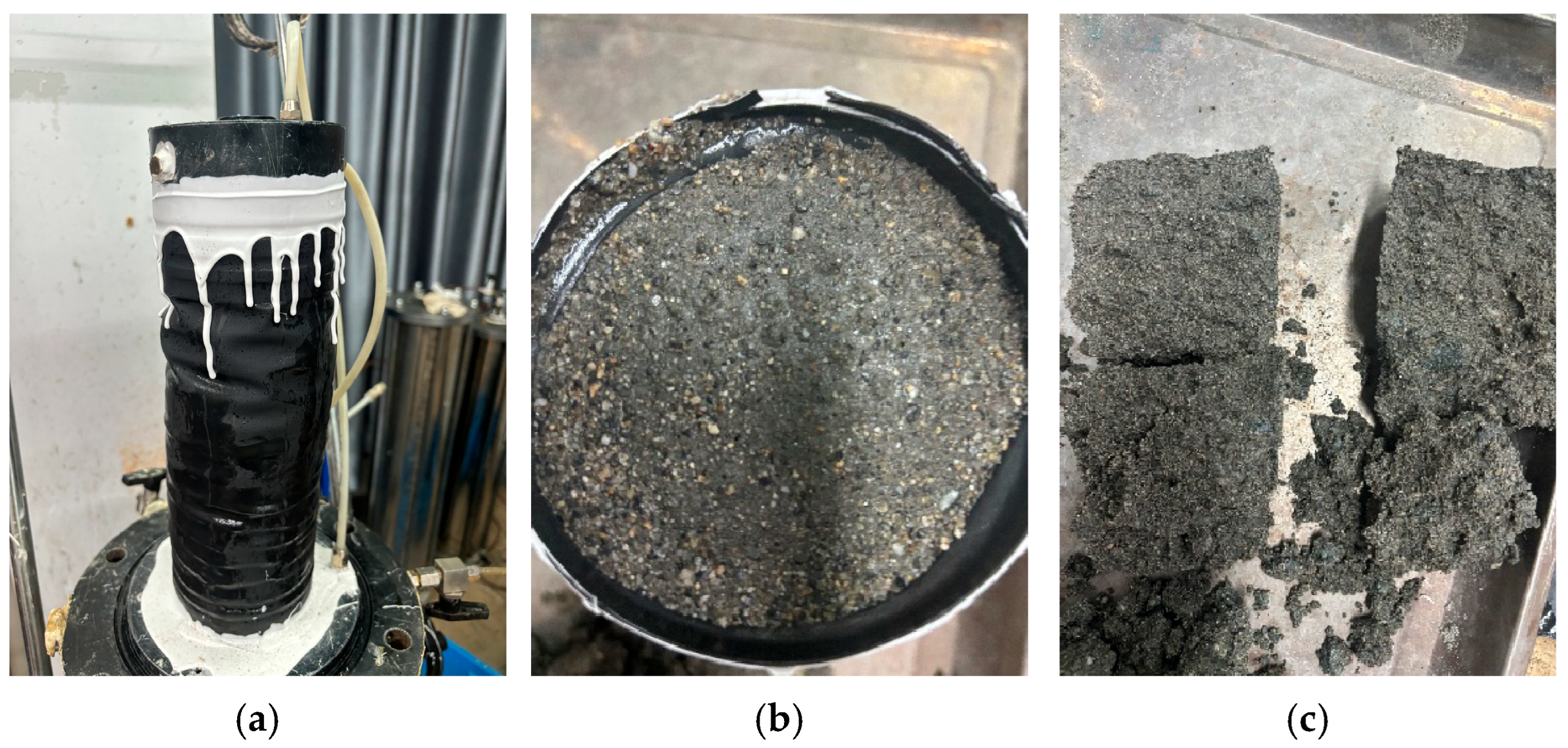
Soil materials were prepared according to the parameters such as particle gradation and compaction dry density. The specimen was compacted in layers step by step. During preparation, care was taken to ensure the specimen remained vertical to prevent eccentric loading during axial pressure application. The assembled triaxial seepage test specimen is shown in
Figure 3.
- 2.
Specimen Saturation
Saturation was achieved by slowly raising the upstream water tank while ensuring the head difference between the upstream and downstream was sufficiently small, allowing for natural and gradual saturation. During this process, attention was paid to sequentially removing air bubbles from the upstream and downstream piezometers and the outlet pipe. Saturation was considered complete when the water level in the water tank reached the top cap elevation and a continuous flow of water was observed at the outlet pipe.
- 3.
Consolidation and Drainage
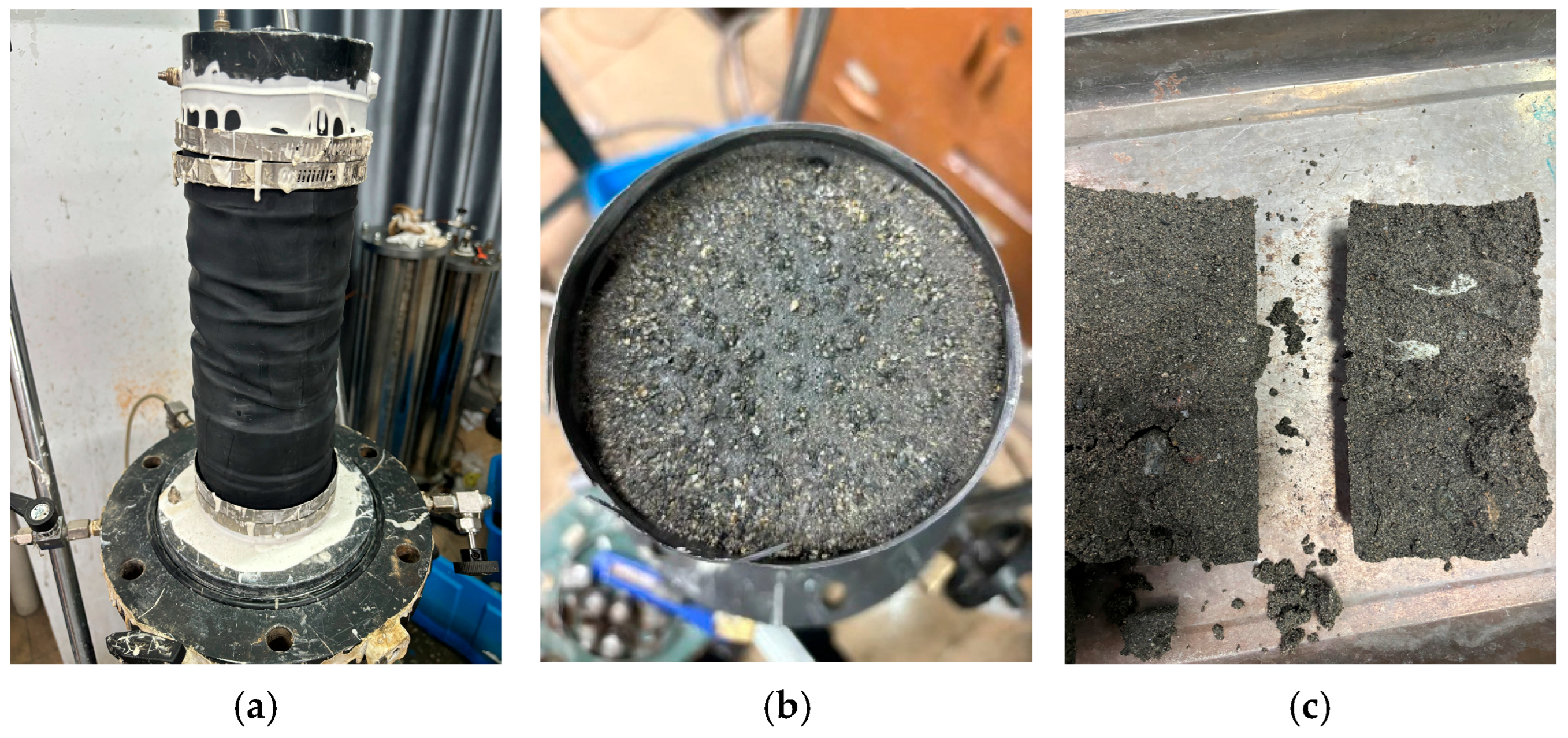
The confining pressure was applied incrementally and slowly until reaching the predetermined value. Subsequently, while keeping the confining pressure constant, the axial pressure was increased incrementally and slowly to its target value. After pressure application, the system was left undisturbed for a period, maintaining the lever arm in a horizontal position. Consolidation and drainage were considered complete when the readings from the displacement gauges stabilized. Given the high magnitudes of the applied confining and axial pressures, safety measures were implemented. The pressure chamber was constructed using a 2 cm thick acrylic cylinder. High-strength fibers were wound around the exterior of the chamber, and additional steel plates were installed externally for reinforcement, as shown in
Figure 4.
- 4.
Application of Seepage Pressure
Seepage pressure (upward flow) was applied incrementally and slowly. Upon stabilization at each pressure level, the readings from the upstream and downstream piezometers, the effluent flow rate, and the displacement gauge readings were recorded before proceeding to the next pressure increment. Throughout the test, collect the fine particles detached from the specimen. The relationship between seepage flow rate and hydraulic gradient was closely monitored to determine the specimen’s critical gradient and failure gradient.
- 5.
Specimen Disassembly and Post-Testing Processing
After the test, the specimen was carefully disassembled, and any changes at the specimen outlet were recorded. The soil material from the tested specimen was then carefully collected, oven-dried, sieved, and weighed to determine its total mass and particle gradation composition.
2.5. Determination of the Failure Gradient and Permeability Coefficient
According to the relevant provisions of the Code for soil tests for hydropower and water conservancy engineering (DL/T 5355-2006) [
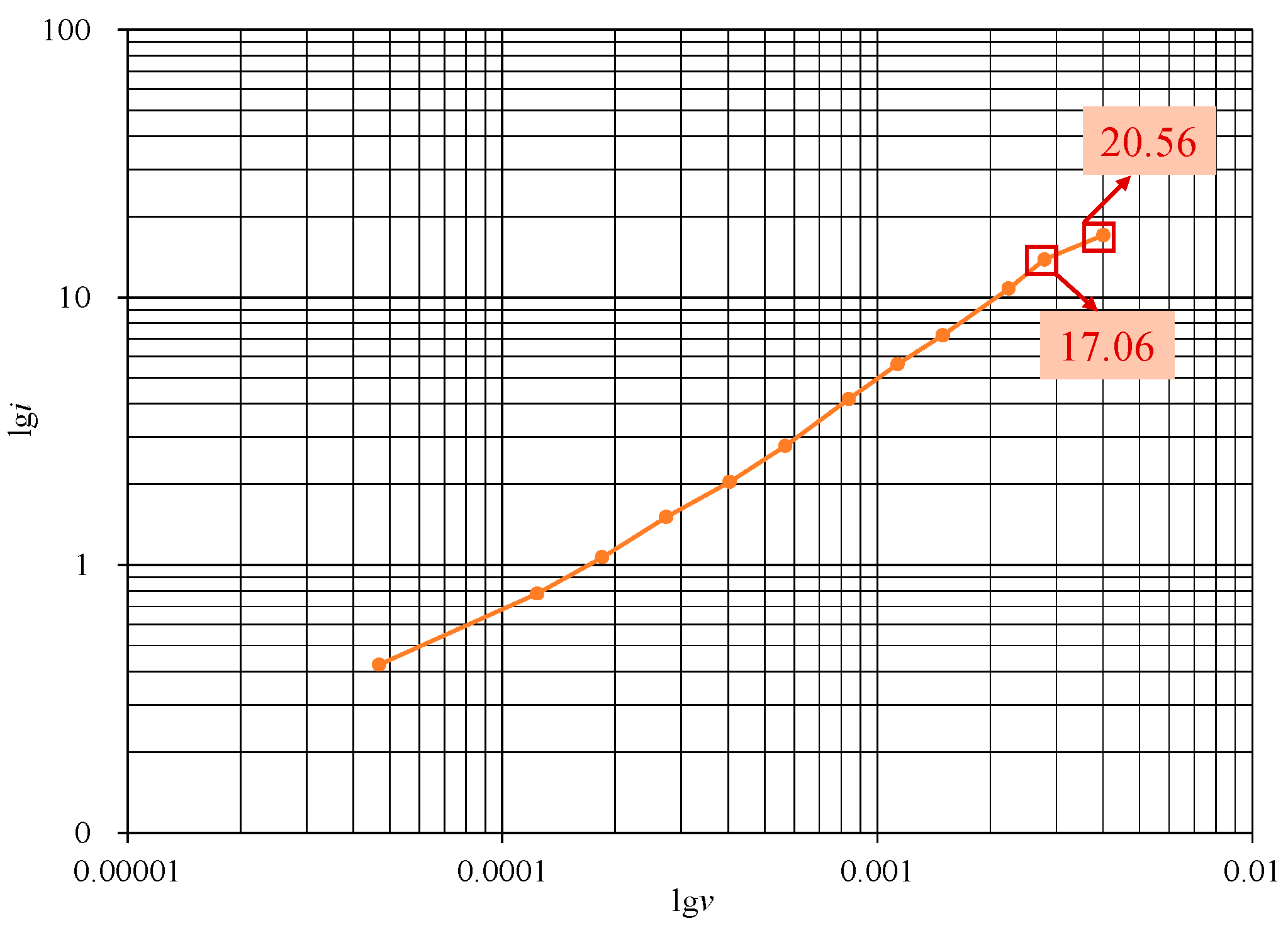
20], the gravelly medium-coarse sand layer is classified as a coarse-grained soil. The methods for determining its critical gradient and failure gradient are as follows: The change in the slope of the lg
i-lg
v curve, as specified in the Code for coarse-grained soil tests for hydropower and water conservancy engineering (DL/T 5356-2006) [
27], serves as the primary criterion. Concurrently, the seepage flow rate, settlement, and the local gradient between piezometers at different heights of the specimen are used as auxiliary criteria. For soil with a seepage deformation mode of soil flow, the change in the slope of the lg
i-lg
v curve before failure is not distinct. Therefore, only the hydraulic gradient at which obvious failure phenomena occur (such as turbid effluent, sand boiling, a significant increase in seepage flow, or the appearance of cracks) is provided as the specimen’s failure gradient, and no critical gradient is given. The soil’s permeability coefficient is determined by averaging the permeability coefficients from the test points located on the linear segment of the lg
i-lg
v curve [
28].
4. Discussion
The experimental results in this paper indicate that variations in burial depth have an insignificant effect on both the failure gradient and the permeability coefficient of the gravelly medium-coarse sand layer. This conclusion appears to be inconsistent with the conventional understanding that “greater burial depth leads to denser soil, resulting in a higher failure gradient and a lower permeability coefficient.” What is the reason for this discrepancy?
The author considers that the test results are closely related to the applied stress state. In this study, the axial and confining pressures for the triaxial seepage tests were determined according to the vertical and horizontal effective overburden stresses after reservoir impoundment. The ratio of the horizontal to the vertical effective overburden stress is
K0 for the gravelly medium-coarse sand layer. Consequently, although the simulated burial depths of the soil in the tests varied between 120 m and 260 m, the ratio
σ3/
σ1 remained the same, equal to
K0. This leads to an identical shear stress ratio,
μ, for specimens at different burial depths, ranging from 0.85 to 0.86. The parameter
μ reflects the relative density of the triaxial specimen under a triaxial stress state [
19]. In other words, the relative density of the gravelly medium-coarse sand specimens at different burial depths is the same. This is supported by the test monitoring data: the initially prepared relative density for all soils within the gradation envelope lines was 0.74. After the stepwise, slow application of the predetermined confining and axial pressures, the relative density of the specimens for the upper envelope line, mean envelope line, and lower envelope line increased to 0.89~0.90, 0.89~0.90, and 0.87, respectively. Therefore, it is reasonable that the test results showed little variation in the failure gradient and permeability coefficient among specimens at different burial depths.
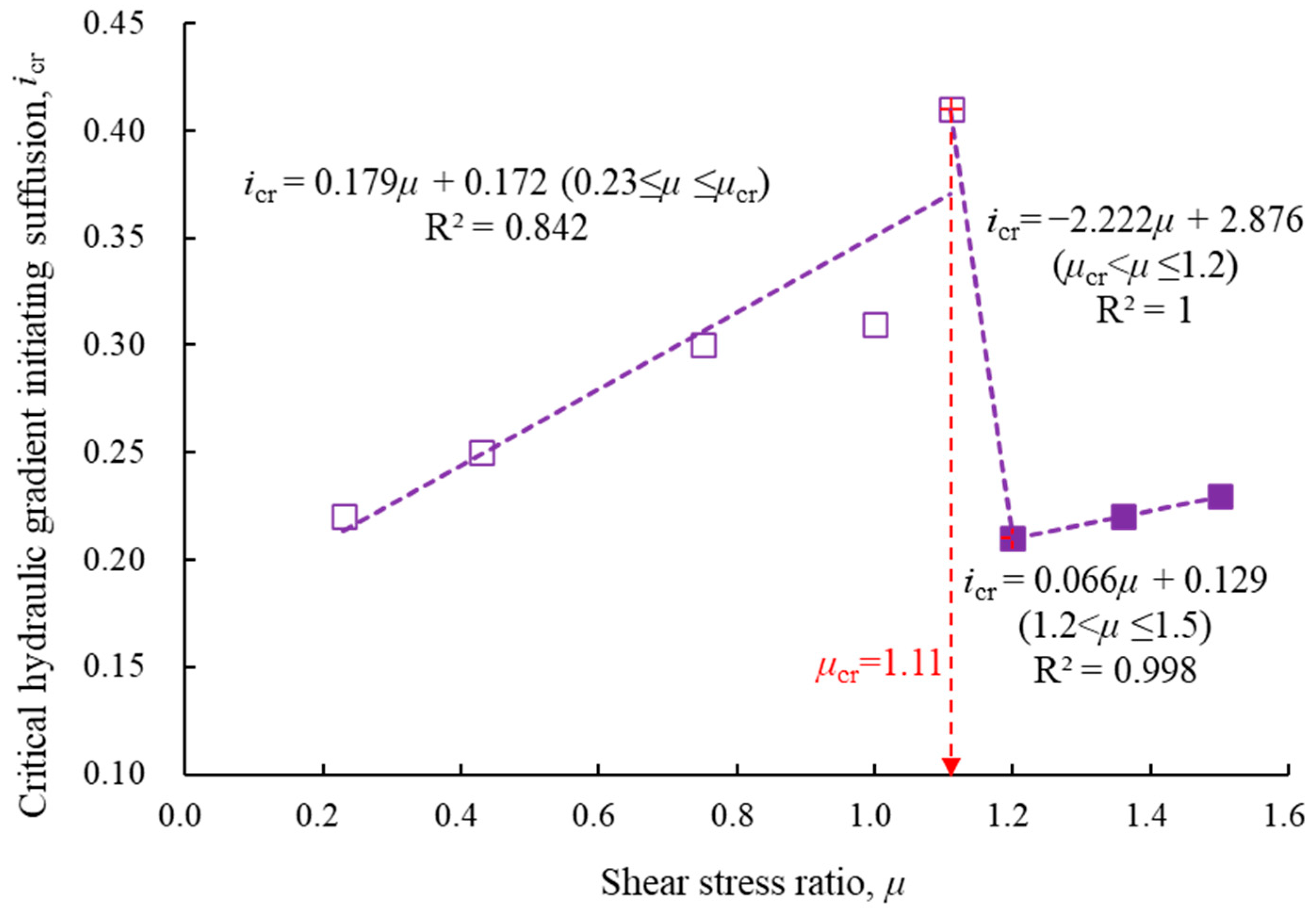
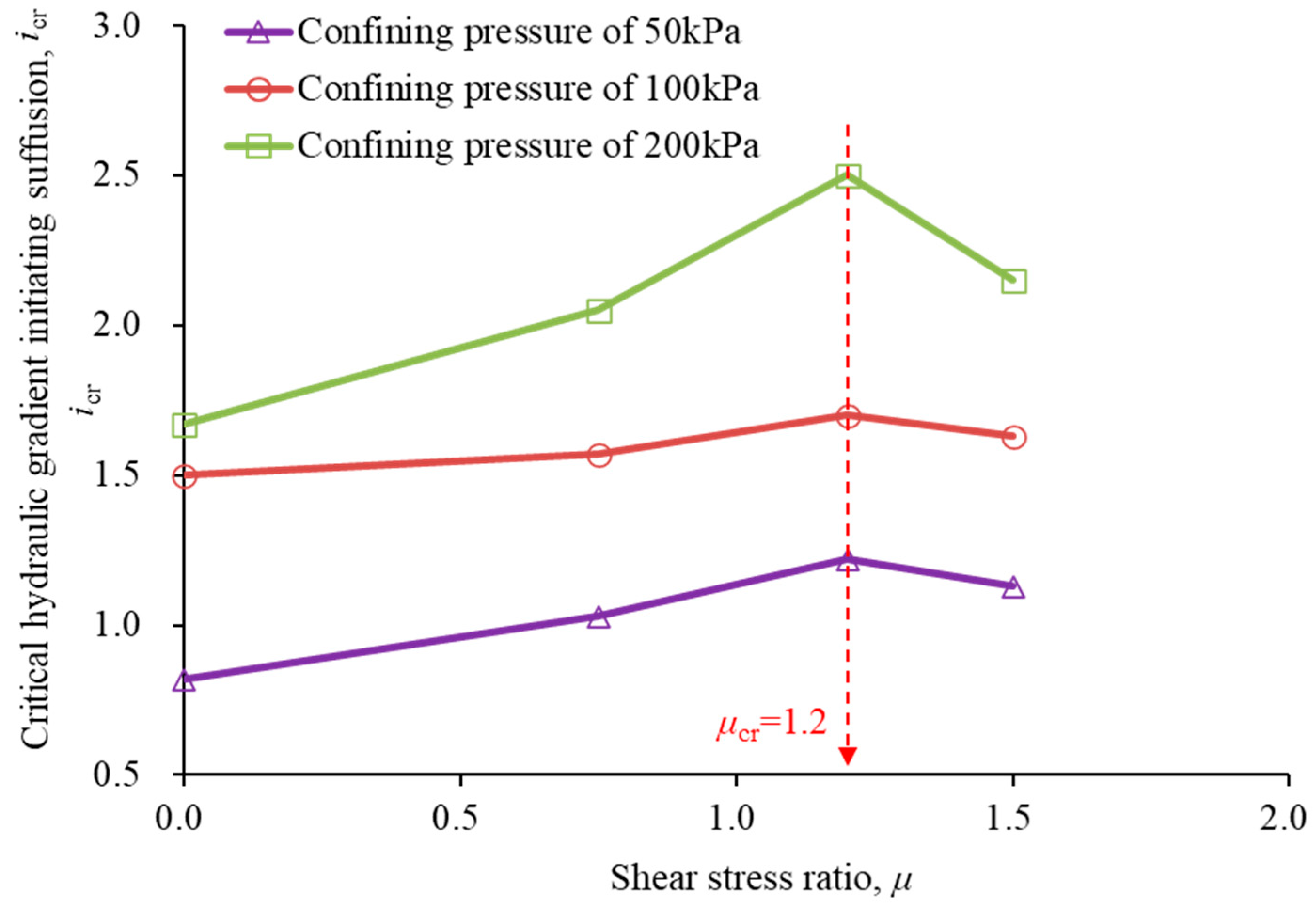
In fact, existing research findings also support the author’s inference above. Luo et al. [
19] conducted triaxial seepage tests on four types of internally unstable soils under a constant confining pressure (0.4 MPa) and varying axial pressures (0.4~1.6 MPa). They found that the critical gradients for suffusion of the four soils exhibit similar variation trends with the shear stress ratio
μ, as shown in
Figure 9.
Figure 9 indicates that when
μ is less than the critical shear stress ratio,
μcr, the critical gradient for suffusion increases approximately linearly with increasing
μ under a constant confining pressure. After reaching
μcr, a further increase in
μ causes the critical gradient to drop abruptly. Subsequently, as
μ continues to increase, the critical gradient again shows a roughly linear increasing trend. The variation pattern of the critical gradient for suffusion under different
μ conditions reported by Luo et al. [
19] essentially reflects the evolution of the specimen’s relative density. Similarly, the study by Chang and Zhang [
17] also demonstrates that the change in the soil’s critical gradient is closely related to
μ, as illustrated in
Figure 10, and will not be elaborated further here. In addition, the phenomenon observed in this study is highly consistent with the experimental concepts of Indraratna et al. [
23] and Richards and Reddy [
30]. However, rather than showing a continuous increase in stability with depth, our results demonstrate that under the investigated deep burial depths (120 m to 260 m), the high stress has already compressed the soil matrix to its physical compaction limit. Consequently, the relative density and void ratio of the gravelly sand remain virtually constant across these extreme stress levels. This stabilization of the soil skeleton and pore connectivity explains why the failure gradients and permeability coefficients exhibit only minor fluctuations and remain relatively independent of further increases in burial depth.
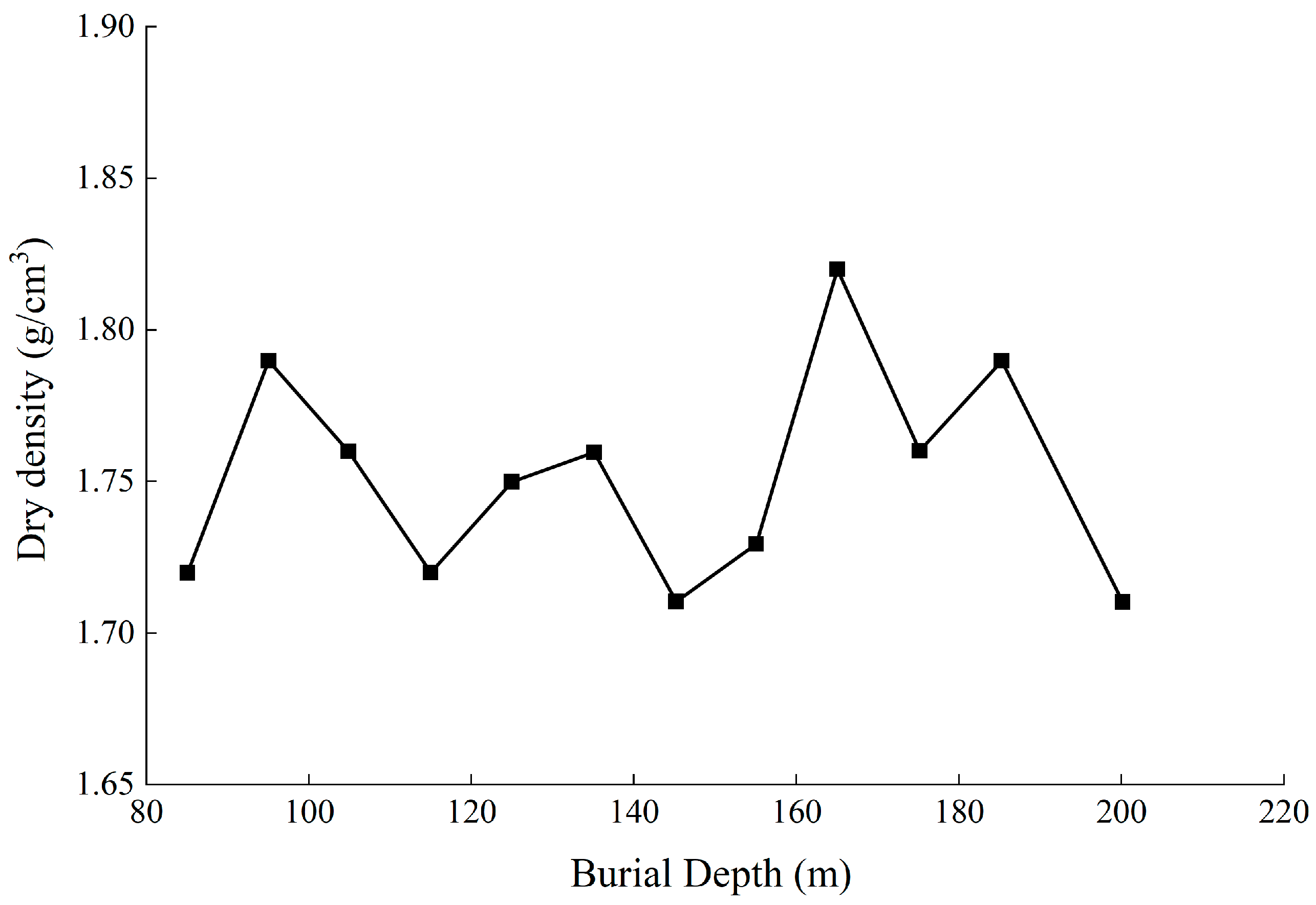
Furthermore, geotechnical investigation data from the dam site provide corroborating evidence for the test results. As shown in
Figure 11, the dry density of the gravelly medium-coarse sand layer in the dam foundation does not exhibit a clear macroscopic trend of increasing with greater burial depth. Instead, it shows a saw-tooth distribution pattern with depth variation, with an average value of 1.75 g/cm
3. For instance, the dry density is 1.72 g/cm
3 at a burial depth of 80~90 m, 1.73 g/cm
3 at 150~160 m, and 1.71 g/cm
3 at depths exceeding 200 m. This indicates that within the actual stratum of this project, no clear “critical burial depth” leads to a step change in soil densification. This observation provides important context for the design of our experimental program. The primary objective of simulating multiple burial depths was not to trace a non-existent strong correlation between dry density and depth, but to systematically verify the influence of the
K0 condition on the soil’s anti-seepage strength.
In summary, it can be seen that the soil’s failure gradient and permeability coefficient are closely related to the specimen’s relative density. The stress state simulated in this study differs from those used in previous research, which leads to different test results. The stress state applied in this paper to simulate the influence of burial depth on the soil near the bottom of the cutoff wall is reasonable. However, limitations exist. For instance, future work could consider the value of K0 more precisely, as the burial depth varies, the relative density of the soil changes, which in turn alters the particle gradation and consequently leads to a change in the value of K0.
5. Conclusions
In order to scientifically evaluate the seepage stability of soil at the bottom of a cutoff wall, a series of triaxial seepage tests was conducted on a gravelly medium-coarse sand at the bottom of the wall, simulating the K0 stress condition at different burial depths. Based on the test results, the main conclusions are as follows:
Based on the characteristics of the particle gradation curves, the results of conventional permeability tests, and the triaxial seepage tests considering the stress state, it is comprehensively determined that the seepage failure mode of the gravelly medium-coarse sand layer is soil flow. For the gravelly medium-coarse sand layer at the deeply buried bottom of the cutoff wall, the risk of seepage failure is relatively low, provided there are no significant geological defects or internal seepage outlets nearby, as particles within the layer lack space for movement;
Compared with conventional permeability tests, the K0 stress condition has a significant effect on the failure gradient and permeability coefficient of the gravelly medium-coarse sand layer, leading to a notable increase in the failure gradient and a significant decrease in the permeability coefficient. Under the same gradation, variations in burial depth have little influence on the failure gradient and permeability coefficient. At the same burial depth, the gradation has a pronounced effect on these parameters, with the greatest influence observed for the mean envelope line, followed by the upper envelope line, and the least for the lower envelope line;
Under the considered stress state, the average failure gradients for the envelopes of the gravelly medium-coarse sand layer are 19.8, 42.22, and 5.99, respectively. The value of 5.99 is adopted as the characteristic failure gradient under the most unfavorable gradation condition. By comprehensively accounting for potential adverse factors, such as inhomogeneity or local defects within the gravelly medium-coarse sand layer, and applying a safety factor of 2.0, a suggested value of 3.0 is proposed for the allowable gradient of the layer, considering the influence of the stress state at the bottom of the cutoff wall. This value provides a basis for subsequent assessments of the seepage stability of the soil at the bottom of a cutoff wall.
Although previous research has extensively investigated internal erosion under conventional stress levels, a critical research gap remained regarding the seepage stability of soils at the bottom of the cutoff wall under the ultra-high stress conditions typical of deep river valley foundations. This manuscript addressed it by utilizing a high-stress triaxial seepage apparatus to replicate the K0 stress state at simulated burial depths from 120 m to 260 m. Our results systematically quantified the controlling effects of the upper, mean, and lower gradation envelope lines under extreme stress and proposed the allowable gradient of the soil at the bottom of the cutoff wall, considering the influence of stress state.
The research still has some limitations. For instance, the consideration of K0 could be more refined. In general, as the burial depth changes, the soil gradation may vary, and K0 may consequently change, leading to variations in the soil’s stress state and seepage characteristics. Furthermore, the study also found that different soil gradations exhibit varying degrees of susceptibility to the stress state. Some gradations are more sensitive and are more readily compacted, resulting in a more significant increase in the failure gradient, while others are less sensitive. Subsequent research could delve deeper into the relationship between gradation and stress sensitivity, which holds significant importance for a thorough understanding of the influence of stress on the failure gradient of soils.