1. Introduction
Between 1980 and 2022, despite global economic downturns and pandemic conditions, electricity consumption continued to increase compared to the previous year. As fossil fuels still hold the largest share in electricity generation today, the effective and efficient use of electrical energy has become increasingly important [
1]. Similar to many other devices, the efficient use of pumps contributes to energy savings in terms of energy and resource efficiency. By 2025, the total electricity consumption in the global water sector is projected to reach approximately 1062 TWh, accounting for about 4% of the world’s total electricity consumption. Of this amount, 201 TWh is expected to be used for water distribution, while 147 TWh will be consumed for water transfer [
2]. Ensuring the efficient use of both water and electricity can be achieved by improving the control mechanisms of pumps used in water distribution and transfer systems.
To achieve optimal energy performance in systems utilizing pumps, the process must be managed in three stages. The first stage involves determining all system components at an optimal level to meet the required needs. The second stage focuses on the proper design and construction of the system. The third stage entails the controlled operation of the system [
3]. Recent studies increasingly emphasize the third stage, demonstrating that improving the control of pumps used in water distribution and transfer can significantly reduce energy consumption. In the study conducted by Ahmed et al. [
4], the researchers analyzed the operating points of pump-motor groups to identify the most efficient working point at different flow rates and head heights for energy savings. Their findings indicate that, when investment costs are considered, the Multi-Pump Multi-Drive (MPMD) system is more economical and reliable compared to the Multi-Pump Single-Drive (MPSD) system. The MPMD system achieved a 2.5% power savings. In both techniques, the operation of the motor-pump set was based on the field-oriented speed control of induction motors. Moradi-Jalal and Karney examined the control of an irrigation pump station using a nonlinear management model based on Lagrange Multipliers (LM) and the Genetic Algorithm (GA) approach. Their study provided insights into pump type, capacity, and the number of units, as well as the scheduling of irrigation pump operations [
5]. Vodovozov et al. [
6] have designed an efficiency map aimed at maintaining the performance of a system consisting of centrifugal pumps in the regions of optimal efficiency using predefined data. The results obtained showed that while the pump system operates two pumps at low speeds, running one pump above its nominal speed leads to increased energy consumption. In another study by Vodovozov et al. [
7], unlike speed-focused pump arrangements, predictions for the optimal operating points of a pump station were made, taking into account not only the general losses in the pump and pipeline but also the specific power loss in motor drivers. Moreira and Ramos emphasized that considering pump characteristic curves to reach the optimal operating point of pumps could result in significant energy savings. In their experimental setting, they determined this savings rate to be 43.7% [
8].
Circulation pumps are widely used in water supply and heat pump systems today. The most important factor in optimizing the energy consumption of these systems is taking pump circulation speeds into account. In the optimization methodology proposed by Mondagud et al. [
3], performance maps were utilized to determine the optimal operating point of the system at any load ratio. This approach has predicted that the system’s annual electricity consumption could be reduced by 28% through adjusted motor frequencies.
In recent years, heuristic and meta-heuristic algorithms have increasingly been preferred for solving nonlinear, non-convex, and black-box problems, where traditional mathematical programming methods encounter significant challenges [
9]. This trend is also evident in the optimization of water distribution systems. For instance, in [
10], Ant Colony Optimization (ACO) is proposed as a stochastic meta-heuristic algorithm for optimizing pump scheduling within a system, and its results are compared with those obtained using genetic algorithms. Additionally, in [
11], the Particle Swarm Optimization (PSO) algorithm has been employed to optimize the frequencies of variable frequency drive (VFD) pumps in water distribution systems. Similarly, in [
12], genetic algorithms that integrate the hill climber search strategy have been utilized for operational optimization in water distribution systems, enabling the avoidance of local optima.
Candelieri et al. [
9] have proposed two different Bayesian Optimization approaches to minimize costs by determining the operational status of each pump over time without compromising hydraulic feasibility. Among these approaches, the Random Forest-based method has demonstrated the most effective and efficient results. Variable speed pumps are controlled by adjusting their speeds.
A review of existing research shows that once the most suitable pump for improving energy efficiency in hydraulic systems is selected, it is crucial to optimize the control parameters of these pumps. In such systems, maintaining the frequency of variable frequency drives (VFDs) at an optimal level is vital. Most studies determine the optimal frequency of the VFD based on the system flow rate. However, this study proposes an alternative approach by determining the optimal frequency of the VFD based on the system’s differential pressure.
Centrifugal pumps are essential for fluid transfer in various industries, including petroleum, cooling, heating, and HVAC (Heating, Ventilation, and Air Conditioning) systems. HVAC systems refer to integrated engineering systems designed to regulate indoor environmental conditions, including temperature, humidity, air quality, and airflow, in order to ensure thermal comfort, occupant health, and energy efficiency. These systems typically consist of interconnected components such as heating and cooling units, ventilation equipment, and control systems that operate in a coordinated manner. In such systems, the operation of centrifugal pumps is frequently regulated by Variable Frequency Drives (VFDs), where Proportional–Integral–Derivative (PID) control algorithms are commonly employed for frequency adjustment. However, conventional PID algorithms often struggle to perform adequately in controlling nonlinear and time-varying systems. The success of this control algorithm is closely tied to the tuning of PID parameters [
13]. Consequently, optimizing these parameters is vital for reducing uncertainties in the PID algorithm and improving overall system performance.
In this study, the authors propose a modified Particle Swarm Optimization (PSO) model to optimize the PID controller parameters that determine the VFD frequency based on differential pressure, aiming to minimize the energy consumption of a centrifugal pump in a water circulation system. The proposed model employs an objective function that minimizes overshoot, rise time, settling time, and absolute error. To evaluate the performance and energy efficiency of the proposed model, comparative analyses with other models have been conducted. Experimental results demonstrate that the proposed method is both effective and reliable in reducing electrical energy consumption.
2. Materials and Methods
In contrast to conventional approaches, the main methodological contribution of this study in the development of a Modified Particle Swarm Optimization (MPSO)-based PID tuning framework tailored for real-time pressure control in a VFD-driven water circulation system. Specifically, a linearly decreasing inertia weight strategy is employed to dynamically balance exploration and exploitation during the optimization process. In addition, a composite objective function (Minf) is formulated by integrating multiple performance criteria, including overshoot, rise time, settling time, and the integral of absolute error, enabling a more comprehensive evaluation of control performance. Furthermore, the proposed method is implemented and validated in a real-time experimental setup, ensuring practical applicability beyond simulation-based studies.
2.1. Experimental Setup and Working Process
Pump stations may contain multiple pumps operating at different times and speeds. Although the experimental design in this study is structured based on the operating conditions of multiple pumps, the primary focus is solely on the electrical energy efficiency of a single pump.
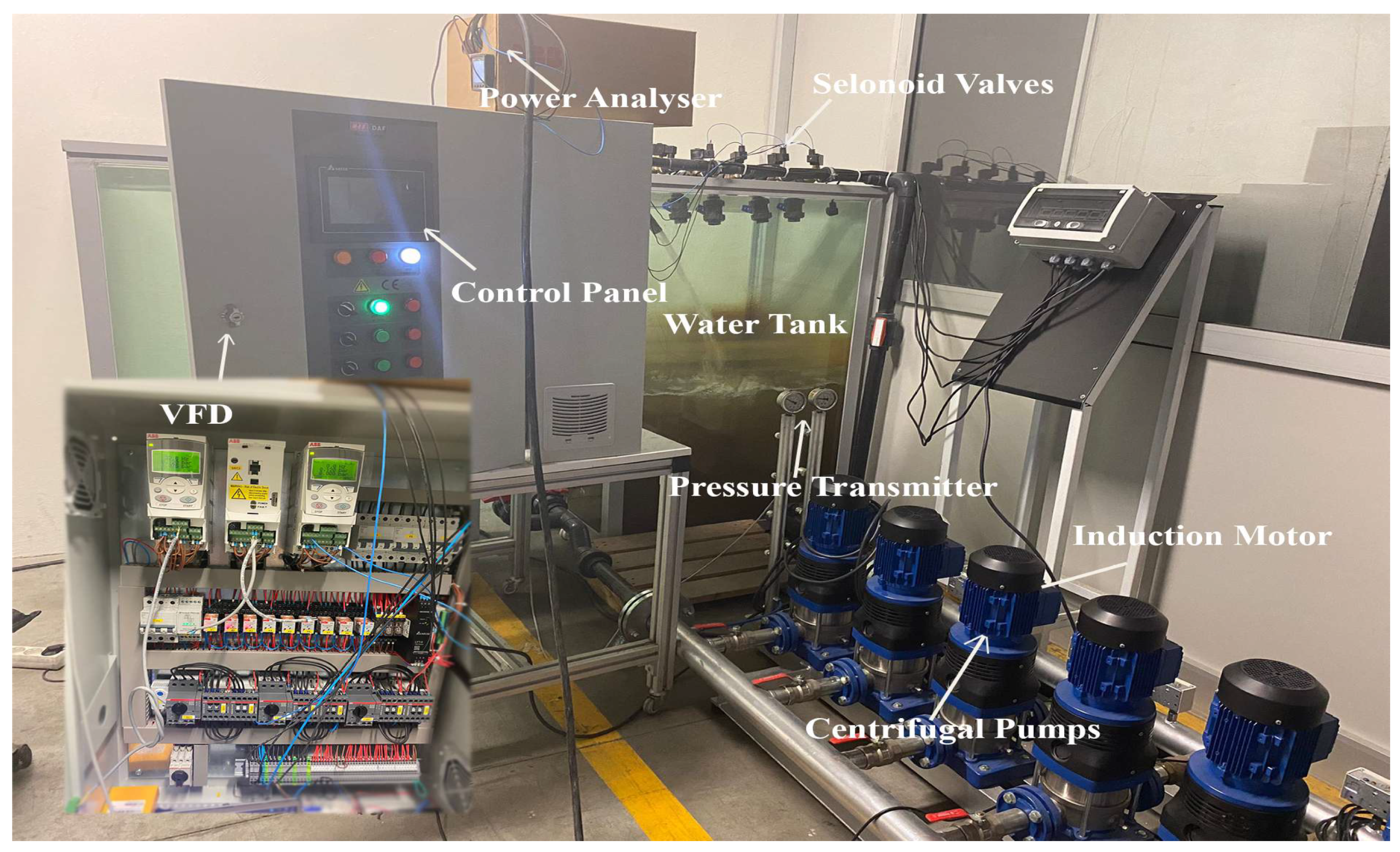
Figure 1 shows the components of the water pumping system.
The system components include a 0.55 kW three-phase induction motor, a Hexa (2-04) model centrifugal pump, a pressure transmitter with a 4–20 mA analog signal output, an expansion tank, a water tank, and various connection elements. The control panel of the system primarily consists of a VFD (Variable Frequency Drive), a PLC (Programmable Logic Controller) and a power analyzer.
The drive system employed in this study is based on an ABB ACS310-03E-04A5-4 Variable Frequency Drive (VFD), operated under standard manufacturer settings. The drive was configured in scalar control mode, without the implementation of explicit field-oriented control strategies such as direct or indirect vector control. In this configuration, internal control loops for speed and torque are inherently managed by the drive itself, and no external speed or torque controllers were utilized. The overall control architecture consists of a single closed-loop PID controller designed for pressure regulation. The feedback signal is obtained from a Danfoss DST P140 pressure transmitter (4–20 mA, 0–16 bar), and the PID controller output is used to adjust the reference frequency of the VFD. Thus, the control action is achieved indirectly by modulating the pump speed through frequency variation.
The system operates within the constant torque region, with a maximum frequency limit of 50 Hz, corresponding to a motor speed below 2900 rpm. Therefore, the constant power region is not considered in this study. Although pump control is often associated with direct flow regulation, a pressure-based control strategy is adopted due to the high cost and practical limitations of flow measurement devices. In this context, the relationship between flow rate and pressure is utilized, and system demand is inferred through pressure variations. Consequently, the proposed approach enables effective closed-loop control of pump operation while maintaining a cost-efficient and practically implementable system structure.
The centrifugal pump functions within a closed-loop system, drawing water from a tank and returning it to the same tank. The water discharge into the tank, or water demand, is managed by a solenoid valve controlled by the PLC.
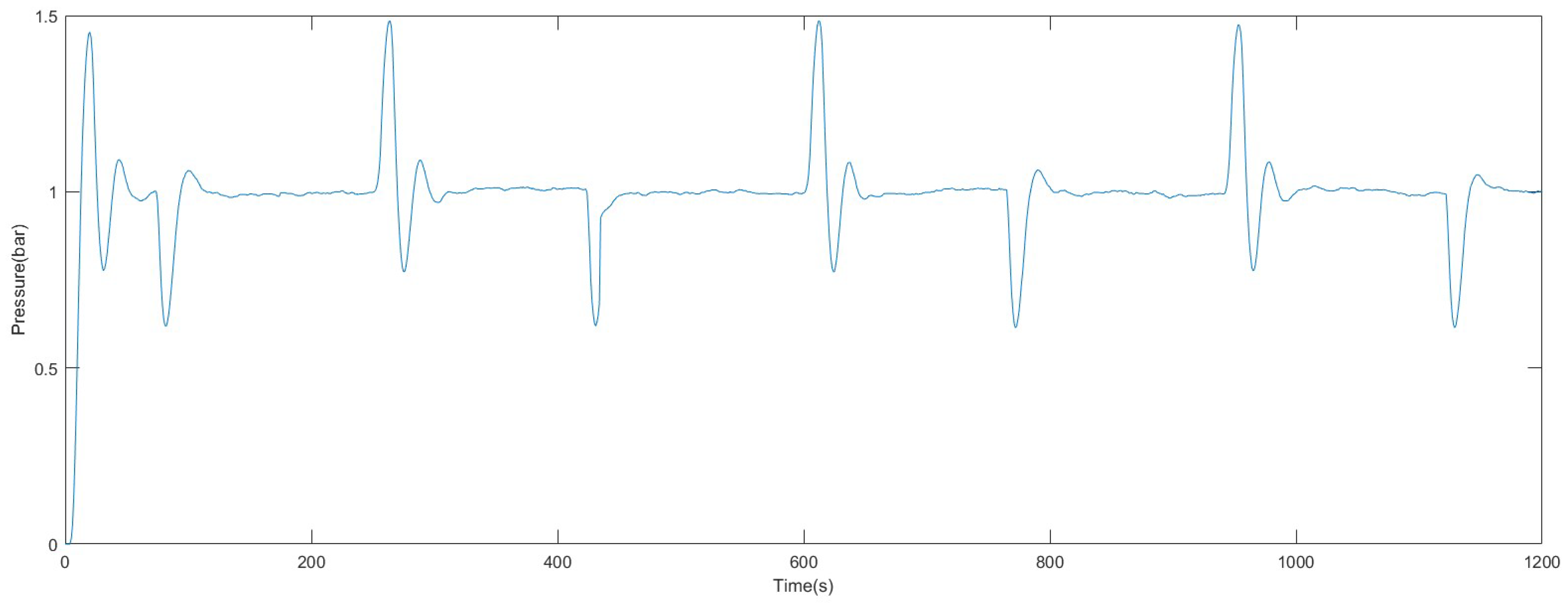
Figure 2 shows the variation of the set pressure over a 120 s timeframe, depending on the on/off states of the solenoid valve. In this system, the expansion tank is utilized not to control the number of pump activations, but to absorb pressure fluctuations, thereby improving operational safety and user comfort.
The pressure generated by the pump is continuously monitored. As the water demand in the system increases, the pressure begins to drop; in response, the VFD increases the frequency, thereby raising the speed of the centrifugal pump. Conversely, when the water demand decreases, the pressure rises, prompting the VFD to reduce the frequency and lower the pump speed.
2.2. Centrifugal Pump Formulation
In centrifugal pumps, the electric motor generates mechanical energy on the pump shaft, which is then converted into hydraulic energy through the pump [
6]. In the system, a 0.55 kW induction motor (IM) is used. The specifications of the pump integrated with the motor are provided in
Table 1.
Table 1.
Specifications of the pump.
Table 1.
Specifications of the pump.
| Parameter | Type | PRATE (W) | n (rpm) | Q (m3/h) | HBEP (m) | Efficiency (%) |
|---|
| Value | Hexa 2-04 | 550 | 2900 | 1–3.5 | 16–36 | 75.8 |
ω, angular velocity and
T shaft torque. The angular velocity of the motor can be calculated using the frequency (f) and rotational speed
n (in the usual unit 1/min based on Equation (3) [
14]. The relationship is given by:
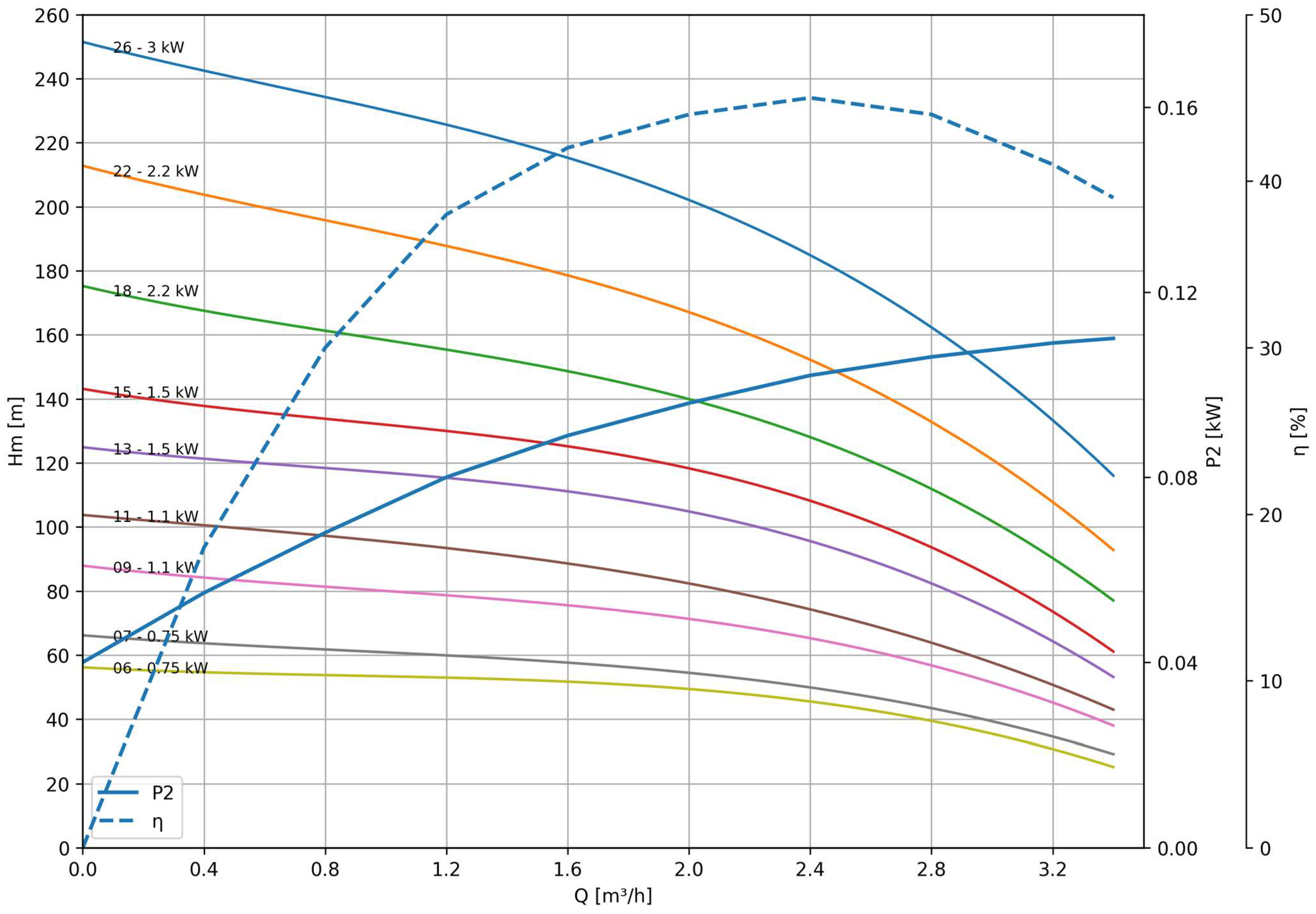
Changes in the frequency of the motor driver will affect the pump speed, leading to variations in the pump’s performance curves. The characteristic curve of the centrifugal pump is showed in
Figure 3. The transformation formulas for the flow rate (
Q), head (
H), and power (
P) of the centrifugal pump at a given frequency are presented below [
6].
n1 represents the initial rotational speed, while
n2 denotes the final rotational speed.
Figure 3.
Characteristics of a centrifugal pump.
Figure 3.
Characteristics of a centrifugal pump.
The efficiency of a pump is defined as the ratio of hydraulic power to mechanical power [
14]. The relationship between the pressure
P and the resulting head
H can be defined by the following Equation (7).
H is Pressing height [m],
Q is flow rate [m
3/s],
q is density [kg/m
3],
g is gravity [9.81 m/s
2].
2.3. Optimization of Pumping Frequency
In traditional water circulation systems, the flow rate is adjusted using parallel pumps and valves, leading to inefficient system operation [
15]. Nowadays, controlling the speed of centrifugal pumps, which are widely used in water circulation systems, helps prevent unnecessary water and energy consumption [
16]. The speed adjustment of induction motors that drive centrifugal pumps is currently achieved through frequency control devices, which typically employ the PID control method. However, determining the parameters of a PID controller, such as proportional gain (Kp), integral gain (Ki), and derivative gain (Kd), is a challenging task [
17]. One of the conventional methods commonly used for tuning PID coefficients is the Ziegler–Nichols method [
18]. However, this approach has certain limitations. In recent years, many researchers have developed alternative methods for optimizing Kp, Ki, and Kd parameters and have proposed solutions to enhance system performance. In [
19], an intelligent Ant Colony Optimization (ACO) algorithm, inspired by the behavior of ants, is proposed. In [
20], genetic algorithms, inspired by evolutionary mechanisms observed in nature, have been utilized. Furthermore, in [
21], the Gray Wolf Optimization algorithm has been applied to determine the optimal PID parameters.
2.3.1. Particle Swarm Optimization (PSO)
Originally developed by Kennedy and Eberhart [
22], this method was inspired by the behaviors of animals that move in swarms to meet basic needs, such as finding food. Today, it is recognized as one of the most widely used evolutionary optimization algorithms. This approach stands out for its simplicity and rapid convergence while focusing on the globally optimal solution by adjusting the search direction based on the best position and past experiences. This characteristic makes it an effective search mechanism in many optimization fields [
23].
Particle Swarm Optimization (PSO) is an evolutionary process that specifically models the behavior of bird flocks. In this process, each bird is represented as an entity called a particle, which searches for the optimal solution within a D-dimensional search space. Each particle has its own velocity and position at a given moment, where the position represents the solution to the optimization problem. The velocity and position of the
i th particle are formulated according to Equation (8).
The position and velocity vectors can be updated based on the following rules [
24]:
represents the inertia weight, which governs the rate of velocity adjustment. The constants c
1 and c
2 are referred to as acceleration coefficients, while
r1 and
r2 denote uniformly distributed random variables. The term
corresponds to the personal best position of the
i-th particle over the preceding
t iterations, whereas
signifies the global best position achieved by any particle within the swarm during the same
t iterations.
2.3.2. Optimization of PID Parameters with PSO
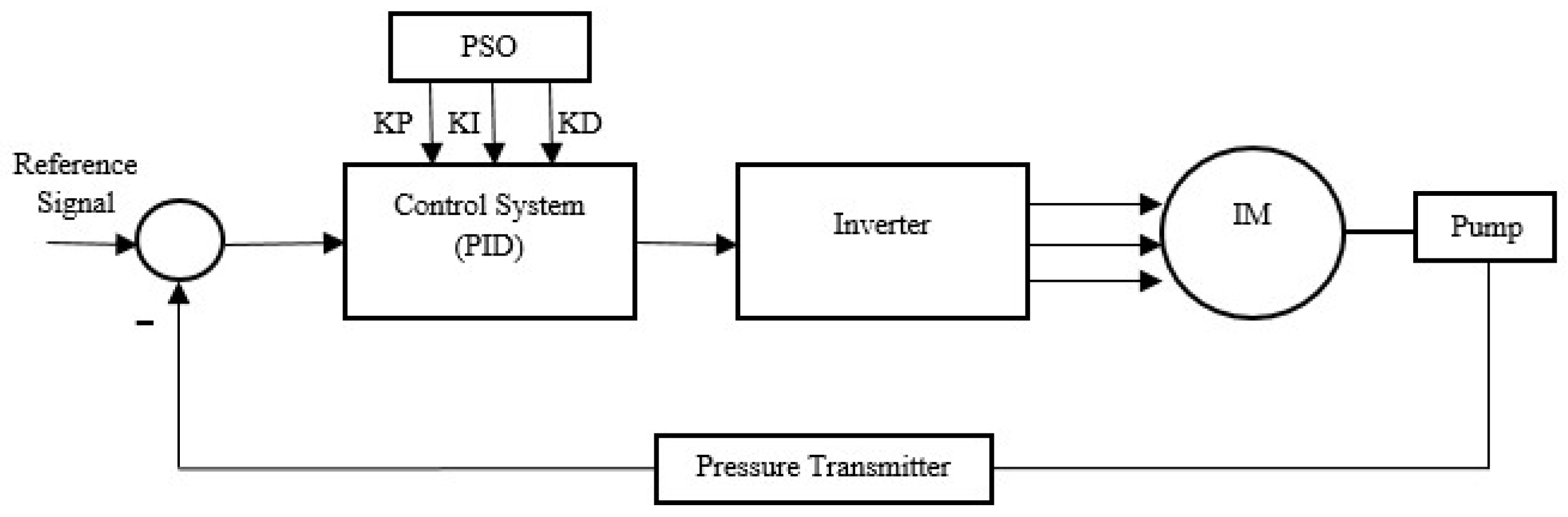
Figure 4 shows the control architecture of the constant pressure process in the closed-loop water circulation system. A PID controller is employed to ensure that the system pressure reaches the desired reference signal. The PID controller computes the error value, e(t), as the difference between the desired setpoint and the measured process value. To stabilize the system by minimizing this error, the controller adjusts the control variable, u(t), through proportional (P), integral (I), and derivative (D) actions. A standard PID controller is mathematically expressed as follows [
23].
K
p represents the proportional gain, K
i is the integral gain, and Kd is the derivative gain. The term P corresponds to the current value of the error
e(
t), while I refer to the accumulation of errors over time. The term D provides the best estimate of the future trend of the error, calculated from its current rate of change.
Figure 4.
Architecture of the water circulation control system.
Figure 4.
Architecture of the water circulation control system.
For the system to adapt to the reference signal, the error must be minimized, necessitating the determination of optimal PID parameters. In this study, the Particle Swarm Optimization (PSO) algorithm was utilized to identify these optimal PID parameters. The convergence of particles in the PSO algorithm toward the global optimal solution is achieved based on the selected objective function. Generally, functions such as Integral Absolute Error (IAE), Integral Squared Error (ISE), and Integral Time-weighted Absolute Error (ITAE) are preferred. In this study, two different objective functions were employed. The first of these is the ITAE function, which is presented in Equation (11).
The other objective function that determines the performance of the PID controller includes criteria such as overshoot (
ymax), rise time (
rt), settling time (
st), and the integral of absolute error |
e(
t)|. This objective function, referred to as Minf is presented in Equation (12) [
25].
fmo is the maximum overshoot value. The variable
ymax denotes the maximum value of
y, while
yss represents the steady-state value. The rise time and settling time are defined as
frt and
fst, respectively [
26].
At the end of each iteration in the PSO algorithm, the local best (pbest) and global best (gbest) values are updated. The obtained pbest and gbest values are then applied to the velocity update equation, given in Equation (15), and the position update equation, defined in Equation (16), to compute the new velocity and position values.
In the standard PSO algorithm, the acceleration constants are set as
c1 = 2 and
c2 = 2, while
R1 and
R2 are matrices consisting of randomly selected values between 0 and 2. The inertia weight (
) in standard PSO is computed in each iteration (k) using Equation (17).
In PSO, the inertia weight plays a significant role in enhancing the initial particles and achieving the optimal solution. The inertia weight determines the extent to which a particle’s previous velocity contributes to its velocity in the current time step. Research has shown that a large inertia weight enhances global search capability, whereas a small inertia weight strengthens local search ability. Therefore, balancing local and global search is crucial for achieving an optimal solution. Various strategies are employed to determine the inertia weight in PSO. In this study, the linearly decreasing inertia weight strategy, which is widely used in particle swarm optimization research due to its positive impact on local search, has been implemented. In this approach, the inertia weight decreases linearly from
to
over iterations. In the modified PSO (MPSO) algorithm, the inertia weight is computed using Equation (18) [
26,
27].
The inertia weight enhances the exploration capability of particles by enabling them to traverse the search space more extensively. As the inertia weight decreases toward its minimum value, particle movements become increasingly controlled and refined; this transition promotes the exploitation phase and enables more precise convergence toward the global best solution region. The inertia weight was bounded between and .
During the PSO process, each particle representing the PID parameter set (Kp, Ki, and Kd) focuses on finding the optimal position within a three-dimensional search space. The positions of the particles are updated in each iteration, and the optimization process terminates when the change in the search direction is sufficiently minimized.
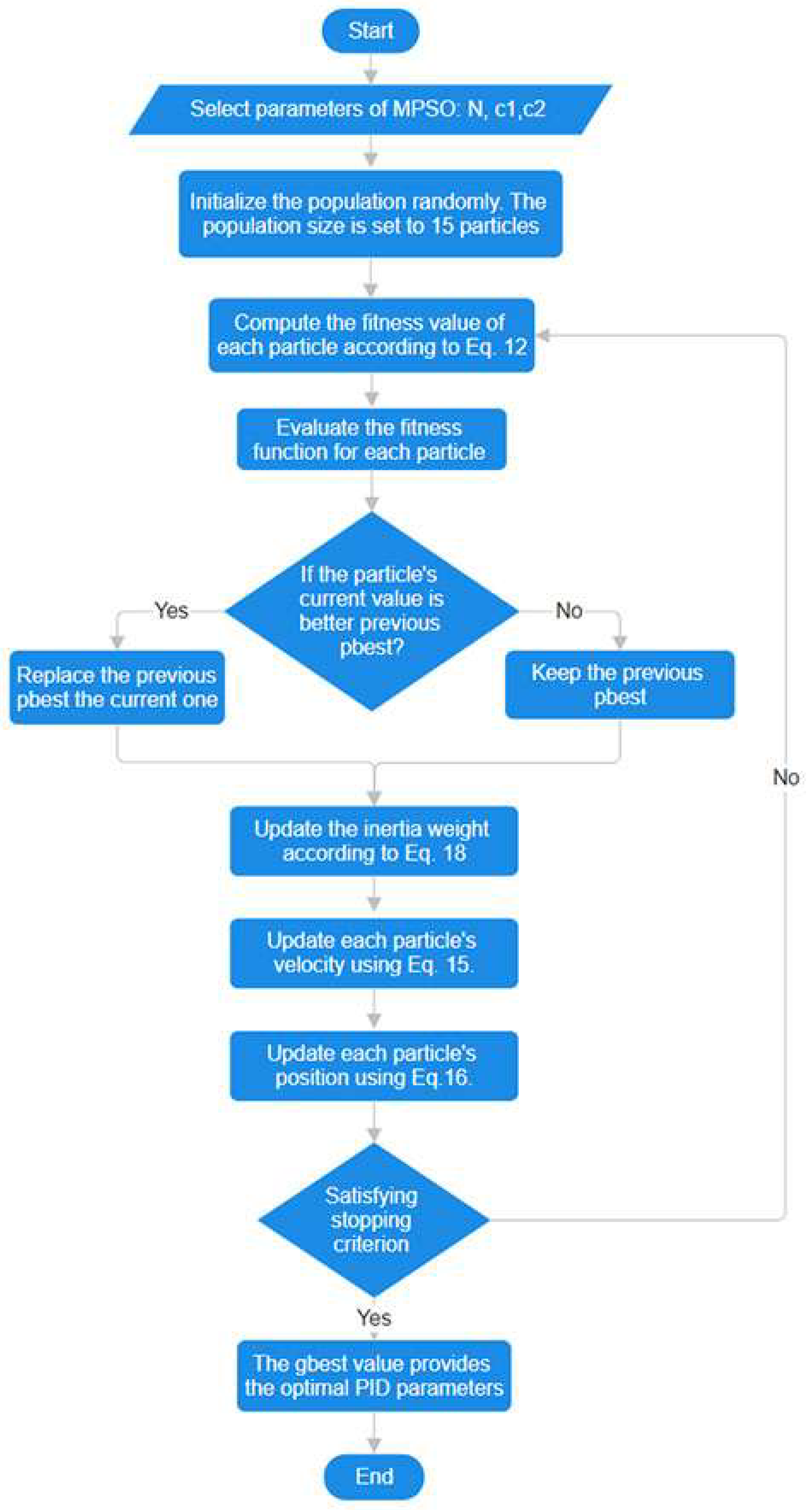
The steps of the MPSO algorithm for determining optimal PID parameters are shown in the flowchart in
Figure 5.
3. Results
It has been emphasized that improving the control of pumps used in water distribution and transfer can significantly reduce energy consumption. In this section, the performance and energy consumption test results of four different optimization models are presented within a closed-loop system designed to balance the differential pressure arising from water demand. In this closed-loop system, data transfer between components such as the PLC, frequency inverter, and power analyzer is carried out using the RS-485 standard Modbus protocol. The C# programming language was preferred for solving software-related problems due to its flexible programming structure and ease of use.
To realize this communication framework, C# based Windows Forms applications were developed for each device, enabling real-time data acquisition and control. Communication was established over RS-485 interfaces using the Modbus RTU protocol. Separate applications were designed for each component to ensure independent data collection and management. A dedicated USB-to-RS485 converter was assigned to each device, allowing simultaneous and parallel data acquisition. This approach ensured independent operation of each subsystem and eliminated delays associated with sequential data processing.
For Modbus communication, the EasyModbus library was utilized, and the communication speed was configured at 115,200 baud. Additionally, a timer-based periodic polling mechanism was implemented in each application to ensure continuous and reliable data exchange.
Achieving the desired system pressure within a specified time and with stability is possible by optimally tuning the PID gains. When examining the effects of these gains on the system, it is observed that while proportional gain effectively reduces rise time, it may also destabilize the system. Integral gain is useful in eliminating steady-state error; however, excessively high values can slow the system response. Derivative gain enhances stability by reducing overshoot, but its effects in real-time systems are not always straightforward, as proportional, integral, and derivative gains influence each other. Therefore, a systematic approach is required to determine the optimal P, I, and D gain values that enhance system performance and ensure efficient use of electrical energy.
The solution space of optimization algorithms considers the specified variables or unknown parameters. The solution space of the PID control algorithm is three-dimensional due to the Kp, Ki, and Kd parameters. In PSO and MPSO algorithms, 15 particles were defined, and the velocity of each particle was calculated using a specific equation. The Cognitive Coefficient (c
1), which represents a particle’s commitment to its own best position, was set to 2. The Social Coefficient (c
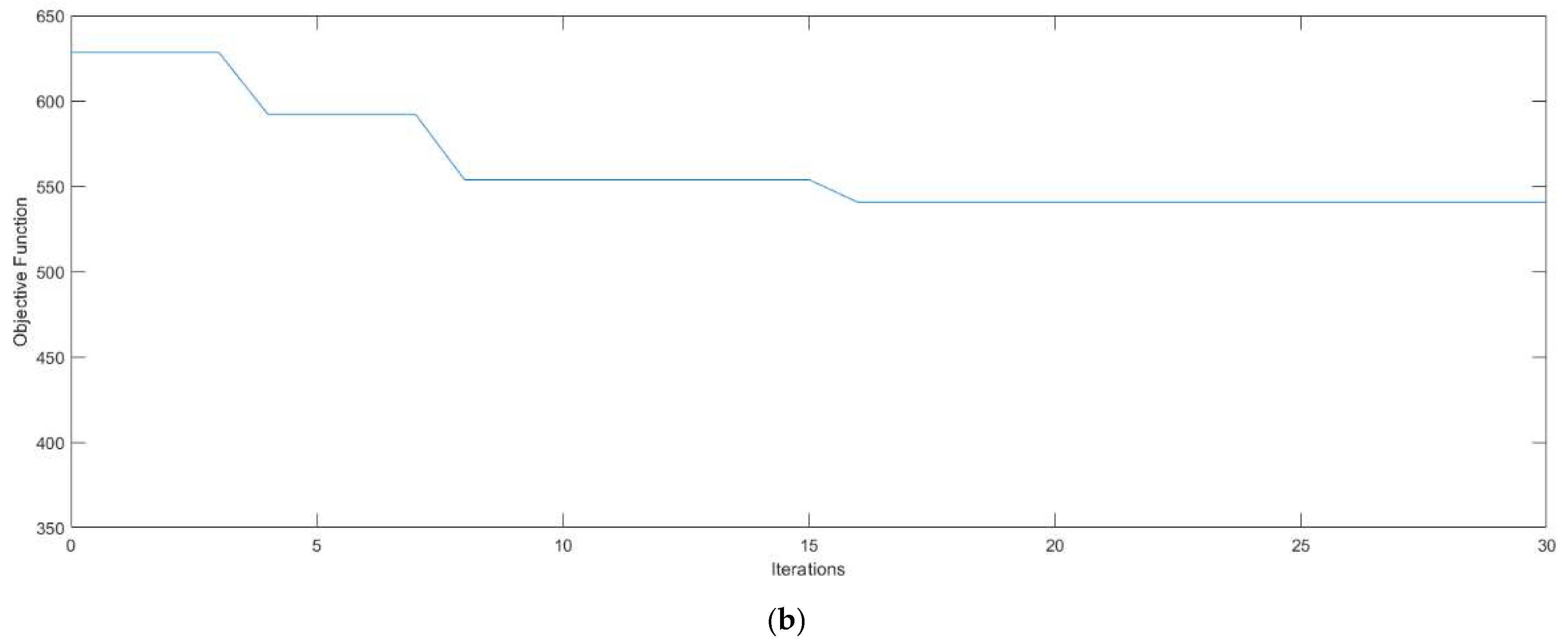
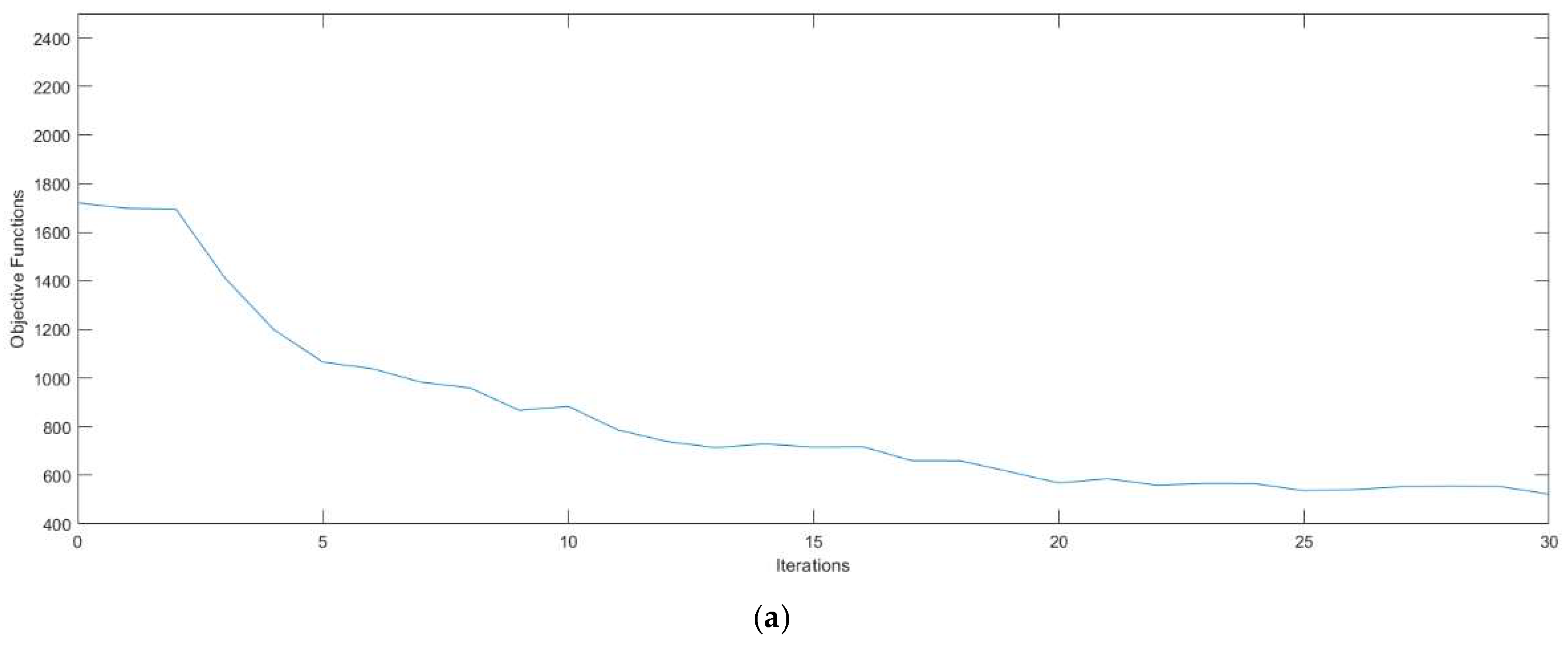
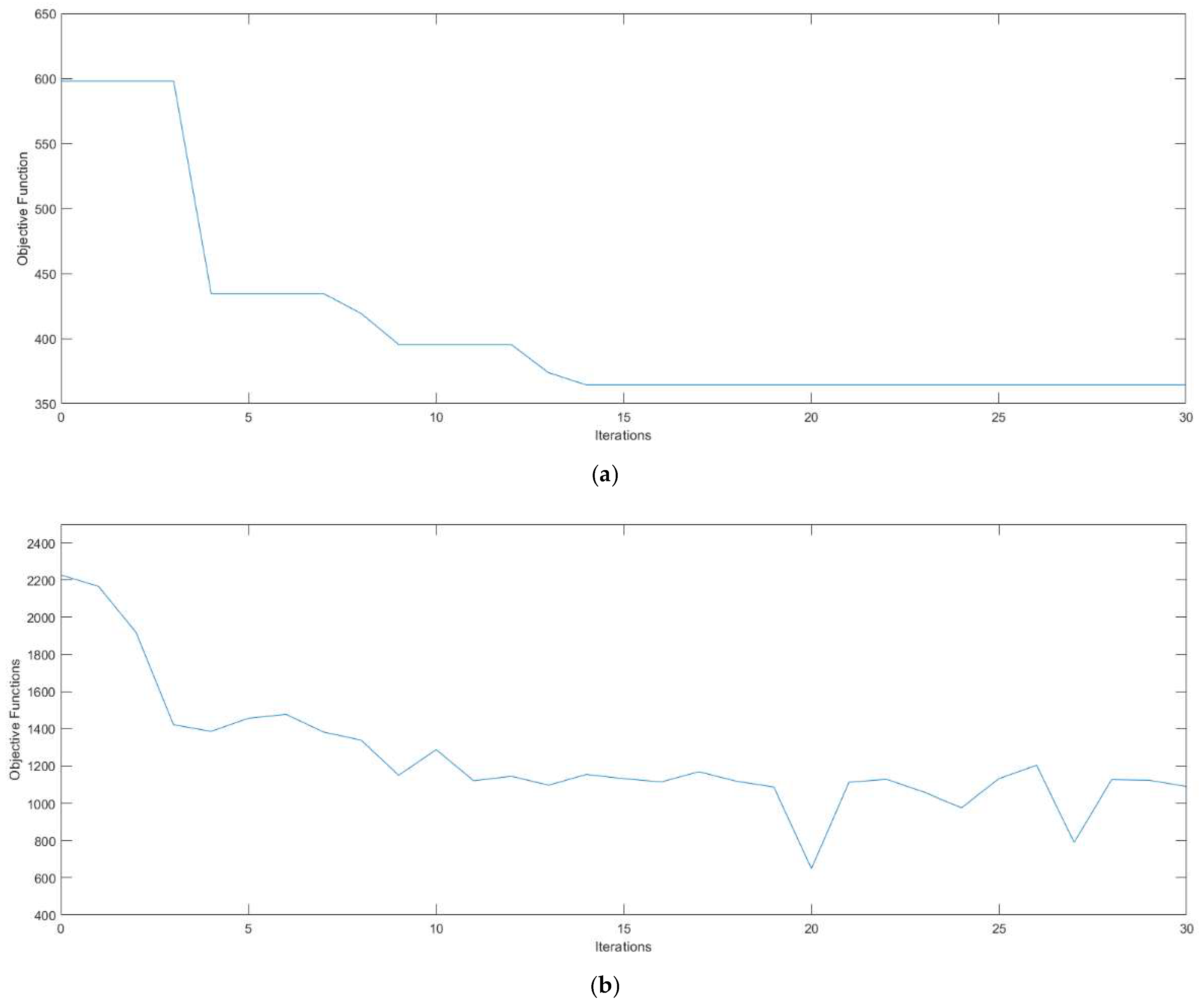
2), which indicates a particle’s adherence to the swarm’s best position, was randomly selected between 0 and 2. The inertia weight, which determines how much of the previous velocity the particles retain, was computed differently for the two optimization algorithms. This distinction, defined by Equation (18) for MPSO and Equation (17) for PSO, represents the primary difference between these algorithms. The convergence curves related to the Minf and ITAE objective functions for the optimization of the Kp, Ki, and Kd parameters in the MPSO and PSO algorithms are presented in
Figure 6 and
Figure 7.
Figure 6 shows the variation in the fitness function at each iteration while determining the optimal PID parameter values using the PSO and MPSO algorithms. The fitness curve exhibits significant improvement during the search for the optimal solution. In the minimization process of the Minf objective function over 30 iterations, the PSO and MPSO algorithms achieved optimal values of 522 and 540, respectively. Despite having different initial conditions, both algorithms successfully converged to a similar global solution.
In
Figure 7, the results of the ITAE objective function for the MPSO and PSO algorithms vary depending on the iteration. Specifically, the learning curve in
Figure 6a demonstrates a continuous improvement in finding the best solution at each iteration. The optimization process, which initially started with randomly assigned solutions, achieved an improvement of approximately 60% through subsequent updates. Based on this graph, the MPSO algorithm reached an optimal value of 364 at the 15th iteration by the end of 30 iterations.
The inability of the standard Particle Swarm Optimization (PSO) algorithm to reach the global optimum can primarily be attributed to premature convergence to a local minimum. This behavior typically occurs when particles lose diversity early in the search process and rapidly cluster around a local solution. Additionally, the absence of adaptive mechanisms in classical PSO limits its ability to escape from local optimum once convergence begins.
In contrast, the MPSO algorithm, which incorporates adaptive mechanisms, enhances the search capability by maintaining a high level of swarm diversity. This enables MPSO to prevent premature convergence and to continuously refine solutions throughout the iterations. Consequently, a lower ITAE value is achieved, demonstrating superior optimization performance compared to the standard PSO. During the optimization algorithm testing, the initial conditions were randomly assigned after parameter tuning, and each algorithm was executed once. As a result of these tests, the optimal Kp, Ki, and Kd values obtained for two different optimization algorithms based on two distinct objective functions are presented in
Table 2.
The PID parameters (Kp, Ki, Kd) listed in
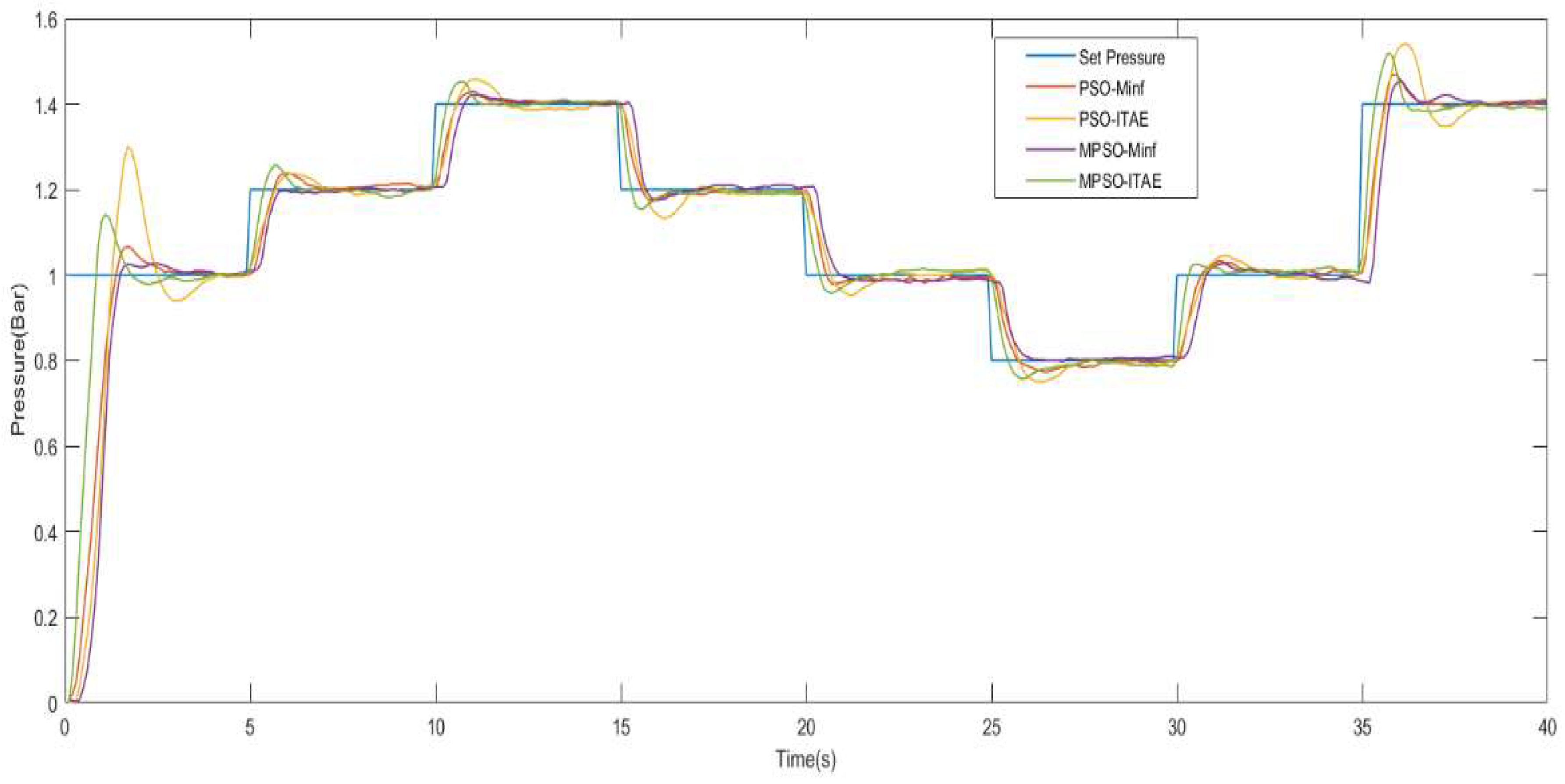
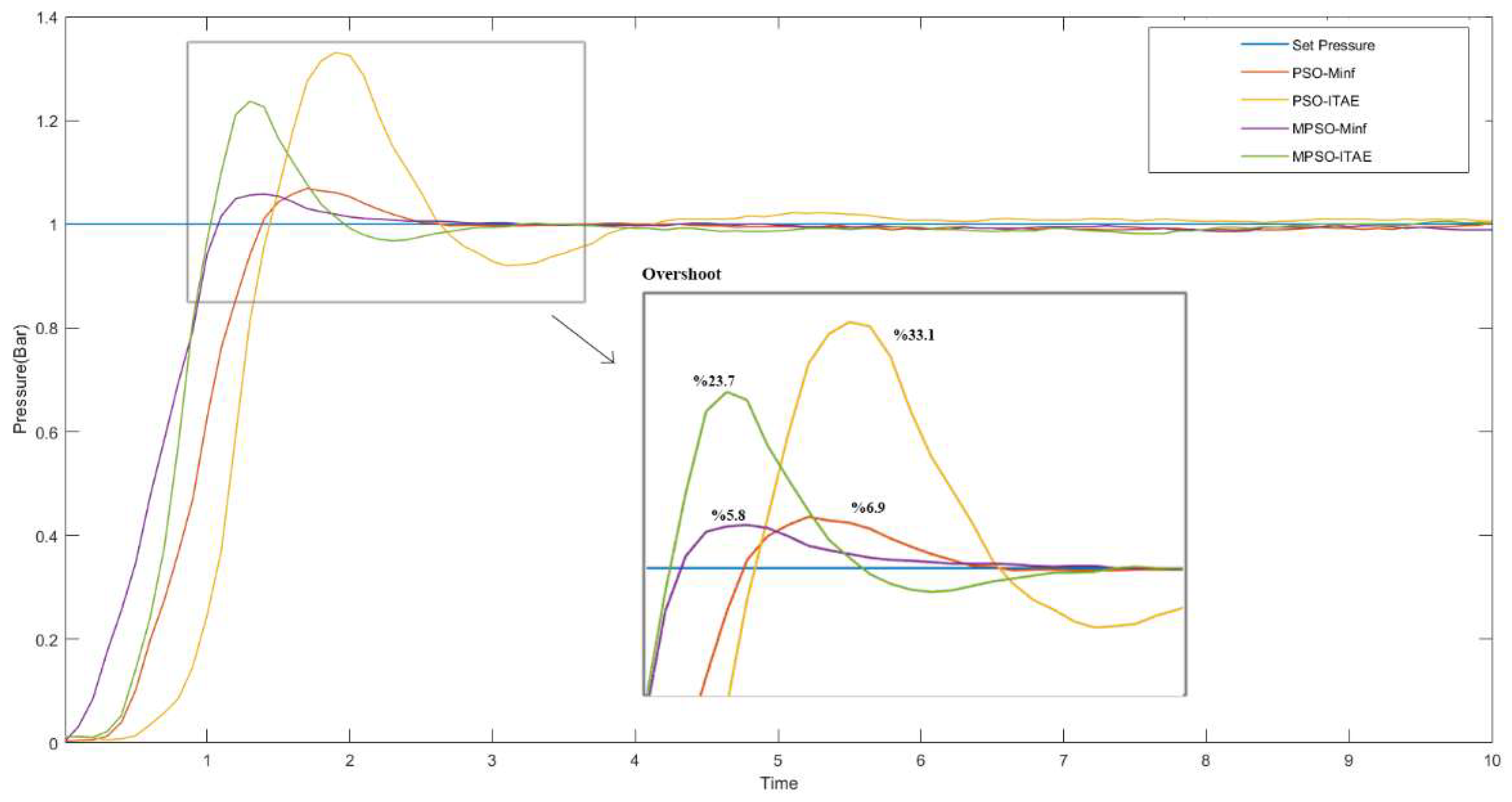
Table 2 were sequentially integrated into the VFD device, and the system was operated with a set pressure of 1 bar. The system response curves obtained based on these PID parameters are presented in
Figure 8.
Among different PID (Proportional–Integral–Derivative) tuning methods, the MPSO-Minf, a modified particle swarm optimization algorithm that employs the Minf objective function, approach demonstrated more controlled performance, exhibiting only a 5.8% deviation from the target value compared to other models. In contrast, the PSO-ITAE (Particle Swarm Optimization based on the Integral of Time-weighted Absolute Error), MPSO-ITAE (Modified Particle Swarm Optimization based on the Integral of Time-weighted Absolute Error) and PSO-Minf (Particle Swarm Optimization based on the Minf objective function) methods showed significant overshoot responses, with overshoot values of 33.1%, 23.7% and 6.9%, respectively. In terms of the time required to reach the set pressure, the MPSO-ITAE method achieved this in 600 ms, while the time to permanently reach the target pressure was recorded as 2900 ms. On the other hand, the MPSO-Minf method reached the set pressure in 800 ms, with a permanent stabilization time of 2200 ms. When analyzing the steady-state error, which represents the difference between the reference value and the actual value when the system is in equilibrium, the MPSO-Minf and PSO-Minf methods demonstrated a clear advantage with an error of −0.014. The responses of these methods to varying set pressures are illustrated in
Figure 9.
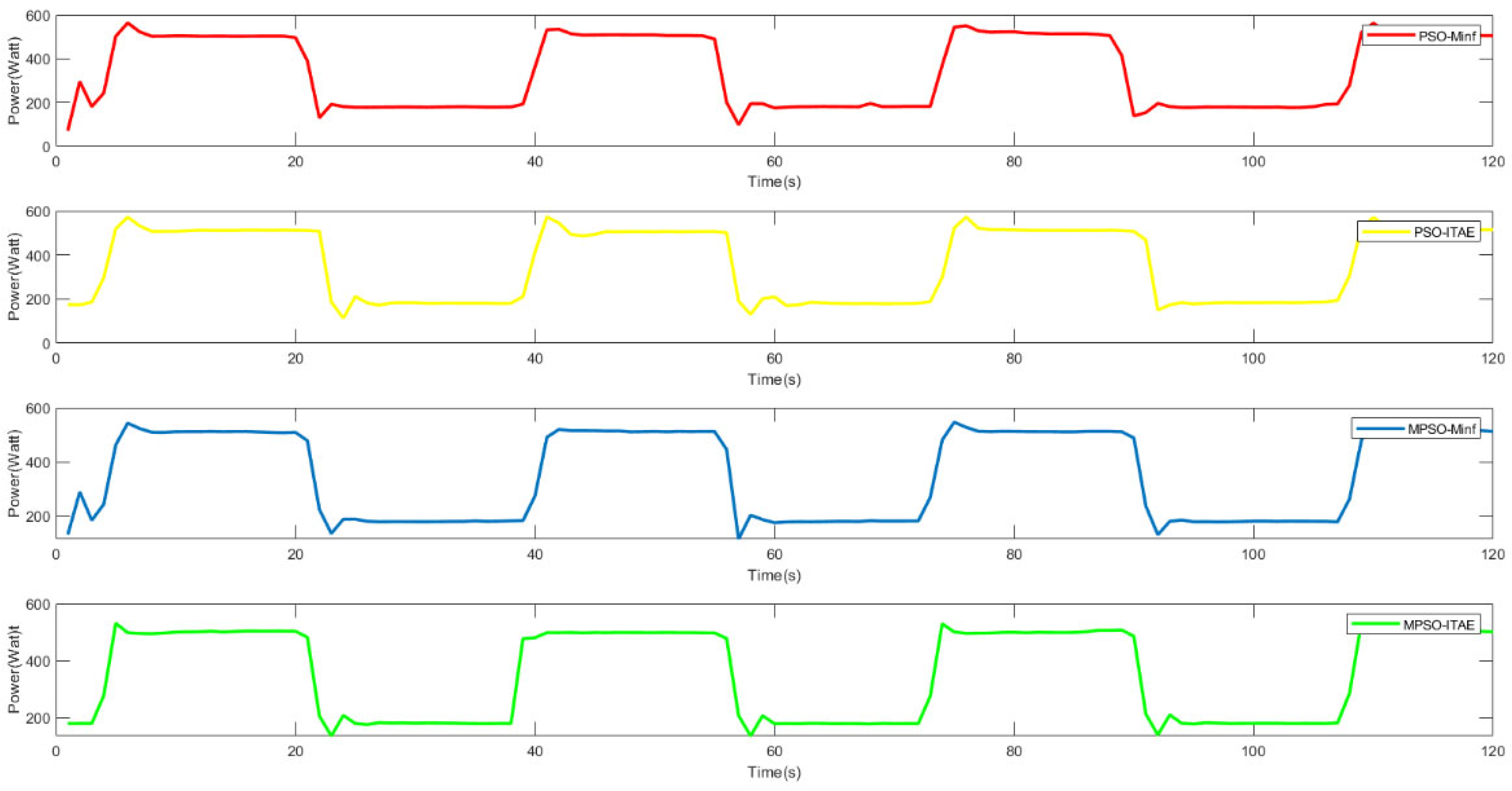
In
Figure 10, the power consumption of four different PID Tuning methods over a 120 s period is presented based on the open and closed states of the solenoid valve. A Programmable Logic Controller (PLC) was used to control the solenoid valve, and a consistent test scenario was applied across all experiments to ensure reliable comparisons.
Figure 10 shows the power demand from the grid for pumps controlled using the PID parameters determined by four different models to reach the set pressure. The centrifugal motor in the system consumed power ranging between 50 W and 570 W, depending on the error, to achieve the 1 bar set pressure. Additionally, the hourly energy consumption of the four different models is also presented in
Table 3 for a comparative analysis. This comparison provides insights into the energy efficiency of each model, highlighting their differences in power demand and overall performance. The results help determine the most efficient PID tuning method for maintaining the 1 bar set pressure while minimizing energy consumption.
Finally, in
Table 3, the energy consumption of the pump operating with VFD speed frequency, tuned using PID parameters determined by PSO-Minf, PSO-ITAE, MPSO-Minf, and MPSO-ITAE methods, was measured as 0.346, 0.347, 0.345, and 0.346 kWh, respectively.
Among these methods, MPSO-Minf demonstrated the lowest energy consumption, attributed to its minimal overshoot percentage and short settling time. In contrast, PSO-ITAE exhibited the highest energy consumption, influenced by its high overshoot percentage and extended settling time. These results highlight the impact of PID tuning on the overall energy efficiency of the system.
The fact that the MPSO-Minf model exhibits lower overshoot and shorter adjustment time compared to other models demonstrates its advantage in terms of energy performance. This is because, during overshoot, the motor accelerates more than necessary, drawing excessive power. Additionally, delays in reaching the set value (adjustment time) and oscillations occurring during this period lead to unnecessary energy consumption.
However, tuning PID parameters with a primary focus on energy consumption may negatively impact system characteristics, particularly by prolonging the adjustment time. As noted by Serradilla, softer acceleration results in lower applied voltage, which consequently increases the time required to reach the setpoint [
28]. Therefore, in this application, the priority is to find a balanced configuration that optimizes both performance and energy consumption.
A more comprehensive comparison with existing studies reveals the distinct contributions and improvements offered by the proposed approach. In [
29], a PID-based control strategy was developed for a geothermal power plant, achieving significant improvements in power generation (23%) under varying operating conditions; however, the study primarily highlights the difference between manual control and conventional PID control, without incorporating an advanced optimization mechanism for controller tuning. Similarly, in [
30] investigates energy efficiency improvements in submersible pump systems and reports energy savings of up to 20%; nevertheless, this improvement is mainly attributed to the use of motor drive technology rather than control-oriented optimization.
In contrast, the proposed MPSO-Minf approach introduces an optimization-driven control framework that simultaneously enhances dynamic response and energy efficiency. By integrating a multi-objective function with an adaptive inertia weight strategy, the proposed method enables more effective tuning of PID parameters under real-time conditions, resulting in reduced overshoot, shorter settling time, and improved steady-state performance, along with increased energy efficiency. Therefore, the proposed approach not only complements existing energy efficiency strategies but also provides a control-oriented optimization perspective, offering a more flexible and scalable solution for pump systems operating under varying demand conditions.
4. Conclusions
In this study, a Modified Particle Swarm Optimization (MPSO) method is proposed for a Variable Frequency Drive (VFD) in a water circulation system. The method is designed to regulate differential pressure in a closed-loop tank system based on water demand. When the valve opens, the differential pressure decreases, causing the pump to accelerate. Conversely, when the valve closes, the differential pressure increases, leading to a reduction in pump speed. This mechanism prevents unnecessary high speeds, thereby enhancing energy efficiency, reducing mechanical stress, and minimizing wear on system components.
The PID parameters were optimized using PSO-Minf, PSO-ITAE, MPSO-Minf, and MPSO-ITAE methods and validated under identical real-time conditions. The experimental results demonstrate that the MPSO-Minf approach provides superior performance in responding to differential pressure variations, achieving reduced overshoot, shorter settling time, improved steady-state accuracy, and enhanced energy efficiency compared to the other methods.
The main novelty of this study lies in the integration of a multi-objective optimization function with a linearly decreasing inertia weight strategy within the PSO framework, enabling more effective tuning of PID parameters under real-time operating conditions. The proposed Minf objective function incorporates multiple performance criteria, including overshoot (ymax), rise time (rt), settling time (st), and the integral of absolute error, thereby providing a comprehensive performance evaluation.
Despite these promising results, several limitations should be acknowledged. The present study is limited to a single-pump laboratory-scale system (0.55 kW). Therefore, its applicability to large-scale and multi-pump systems with more complex dynamics requires further investigation, particularly by considering pump performance curves and system-specific operating conditions.