1. Introduction
Lead–zinc (Pb-Zn) mining has historically played an indispensable role in global industrialization, yet it has concomitantly triggered severe environmental degradation worldwide [
1]. In China, the rapid expansion of mineral extraction and smelting has generated vast quantities of wastewater, exhaust emissions, and solid wastes (e.g., mine tailings and slag). The chronic weathering, leaching, and atmospheric deposition of these legacy wastes result in the persistent release of highly toxic heavy metal(loid)s, such as lead (Pb), zinc (Zn), cadmium (Cd), and arsenic (As), into the surrounding environment [
2]. Characterized by their non-degradability, high toxicity, and bioaccumulative nature, these trace elements inevitably migrate through the hydrological cycle, threatening crop safety, biomagnifying across the food web, and ultimately posing severe carcinogenic and non-carcinogenic risks to human health [
3].
In riverine ecosystems affected by mining activities, trace elements do not remain confined to a single medium; rather, they undergo complex physical and chemical fractionations within the water–soil–sediment continuum [
4]. While water acts as the primary transport medium, benthic sediments typically serve as the ultimate “sink” for trace elements due to hydrodynamic deposition and adsorption processes [
5]. Meanwhile, riparian soils are frequently contaminated through agricultural irrigation and flood inundation [
6]. Consequently, relying solely on total concentration assessments in a single medium is insufficient for capturing the holistic pollution landscape. In recent years, evaluating the comprehensive ecological risk (e.g., using the Hakanson potential ecological risk index) and quantitatively apportioning the pollution sources have become the frontier of environmental geochemistry [
7]. Receptor models, particularly the Positive Matrix Factorization (PMF) model coupled with Principal Component Analysis (PCA), have been widely proven as robust tools to decouple complex composite pollution sources—such as distinguishing mining emissions from natural geological backgrounds or agricultural inputs—thereby providing critical insights for targeted remediation [
8].
Guangxi is recognized as one of the most significant Pb-Zn mining hubs in China. Notably, the region is dominated by typical karst topography. The karst critical zone is characterized by a high geochemical background of trace elements, shallow soils, and highly permeable carbonate rock networks, which facilitate the rapid exchange between surface water and groundwater [
9]. This unique geological setting renders the local terrestrial and aquatic ecosystems exceptionally fragile and highly sensitive to external mining disturbances. Despite the increasing attention given to trace element pollution, systematic studies concurrently investigating the “water–soil–sediment” multi-phase media, coupled with quantitative source apportionment and toxicological risk assessment in vulnerable karst legacy mining watersheds, remain relatively scarce.
To bridge this scientific gap, the Taohuajiang River—a tributary of the Xiling River located in a typical karst Pb-Zn mining area in Gongcheng Yao Autonomous County, Guangxi—was selected as the target area. Due to historical extraction, upstream legacy mines have ceased production, yet their long-term environmental impacts remain unquantified. In this study, six specific trace elements (As, Cd, Pb, Zn, Cu, and Ag) were identified as the priority target analytes. The rationale for this selection is twofold: Pb, Zn, Cu, and Ag represent the primary characteristic elements inherent to local polymetallic sulfide ores; concurrently, Cd and As were selected because they are highly toxic associated trace elements notorious for their pronounced mobility and severe ecological hazards during the weathering of mine tailings. Therefore, the primary objectives of this study were to: (1) systematically characterize the spatial distribution and accumulation patterns of six trace elements (As, Cd, Pb, Zn, Cu, and Ag) across the river water, riparian soils, and benthic sediments; (2) comprehensively evaluate the severity and dominant factors of the regional ecological risks; and (3) quantitatively identify the primary input pathways and contribution proportions of these trace elements using the PMF model. The findings of this study are expected to provide a robust scientific basis and data support for precise pollution interception, ecological restoration, and the protection of downstream aquatic ecological security in typical karst legacy mining areas.
2. Materials and Methods
2.1. Study Area
The study area is located along the Taohuajiang River, a tributary of the Xiling River within the Xijiang River basin. Situated in the northern part of Gongcheng Yao Autonomous County in Guangxi, the Taohuajiang River flows from west to east before merging into the Xiling River within the territory of Xiling Town. The geomorphology of the river basin is characterized by erosional-tectonic low- and medium-elevation mountainous terrain. The bedrock lithology consists predominantly of sandstone and shale, while the riverbed deposits are mainly composed of boulders and cobbles. The river spans approximately 8 km in length with an average longitudinal gradient of 25‰, classifying it as a typical mountainous stream. The Taohuajiang River serves as a crucial ecological corridor and primary irrigation water source for Xiling Town in northern Gongcheng. The river is located in a lead–zinc mining area, with a lead–zinc mine upstream that has now ceased production and mining [
10,
11]. Geologically, the upstream mining area is characterized by hydrothermal vein-type polymetallic sulfide deposits. The primary ore paragenesis consists predominantly of galena (PbS) and sphalerite (ZnS), frequently accompanied by associated minerals such as chalcopyrite (CuFeS
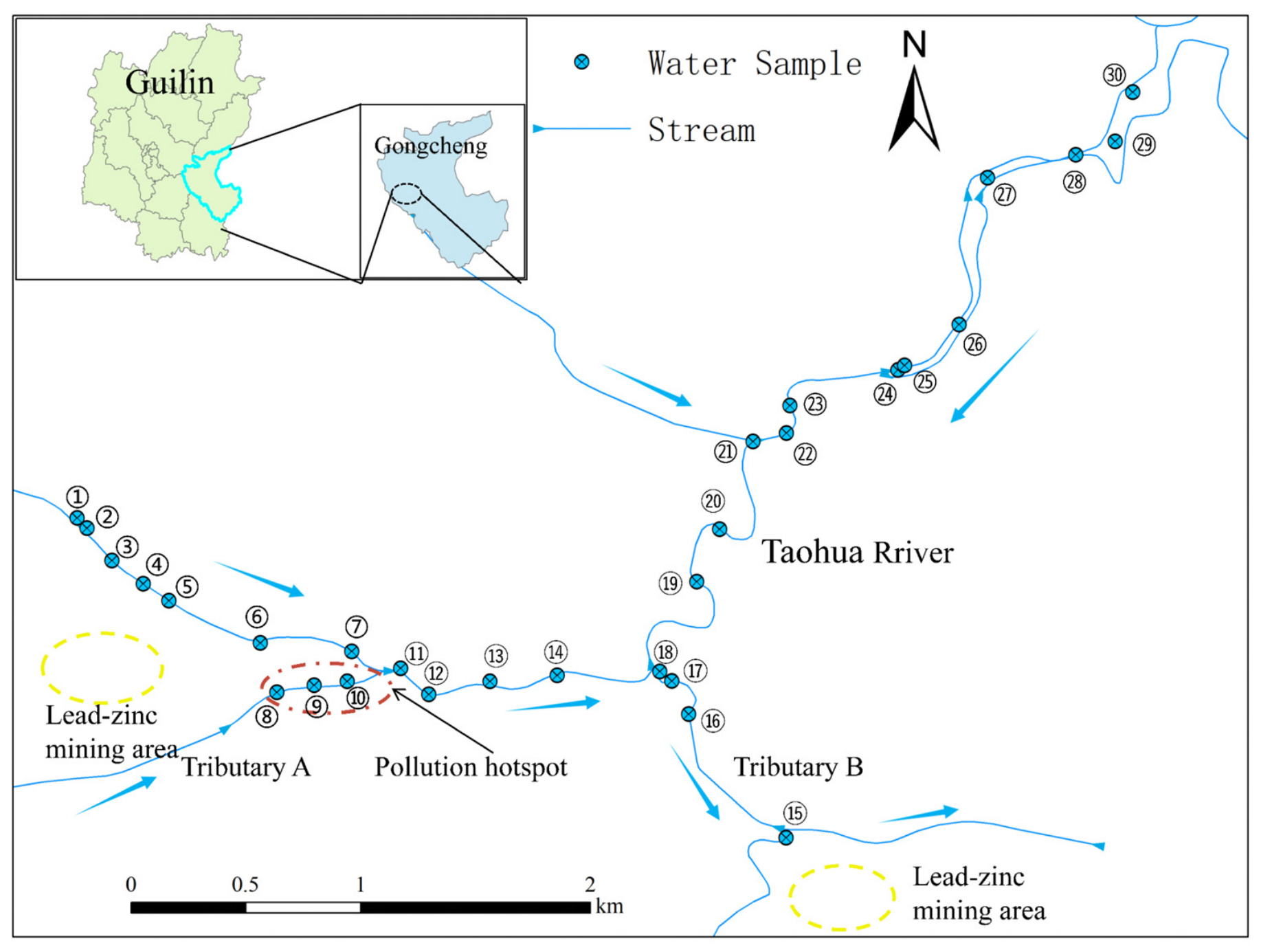
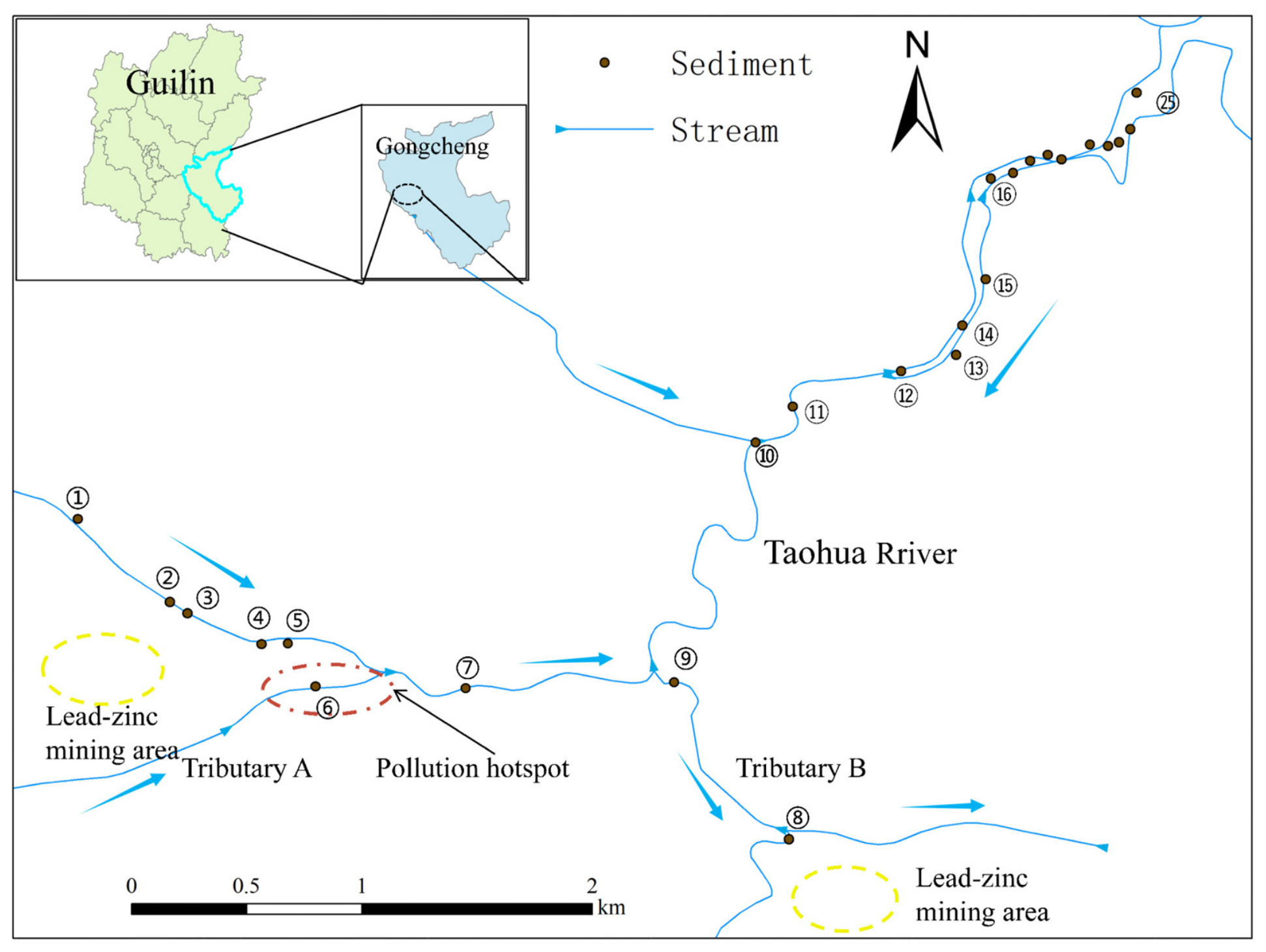
2), and trace amounts of cadmium and arsenic-bearing sulfides. The distribution map of sampling points in the study area is shown in
Figure 1.
2.2. Sample Collection, Preparation, and Analysis
The field sampling campaign was conducted in October 2025, which corresponds to the typical dry season in this region. The study area features a subtropical monsoon climate characterized by distinct seasonal variations: a wet season from April to August, and a dry season from September to March. During the sampling period, the weather was predominantly clear with no significant rainfall events in the preceding week. Consequently, the Taohuajiang River exhibited typical dry-season hydrological characteristics: the water level was relatively low, and the river flow was stable and slow, primarily sustained by groundwater baseflow. This stable hydrological condition effectively minimized the dilution effect caused by sudden rainfall runoff, thereby reflecting the baseline concentration and maximum accumulation status of trace elements in the water and sediments.
Water samples were collected in accordance with the Technical Specifications for Surface Water and Wastewater Monitoring (HJ/T 91-2019) [
12]. A total of 30 water samples were collected using a polyethylene snap-lid water sampler. To accurately determine the dissolved trace element concentrations, the water samples were filtered through a 0.45 μm microporous membrane (Jinteng Laboratory Equipment Co., Ltd., Tianjin, China) prior to acidification. Following filtration, concentrated nitric acid (Sinopharm Chemical Reagent Co., Ltd., Shanghai, China) was added exclusively to the filtrate to adjust the pH to <2 to preserve the dissolved trace elements and prevent precipitation or adsorption. The acidified filtrates were then stored in 200 mL sterile sampling bags and kept refrigerated at 4 °C until laboratory analysis.
Soil and sediment sampling was conducted following the Technical Specifications for Soil Environmental Monitoring (HJ/T 166-2004) [
13]. A total of 75 soil and 25 sediment sampling sites were established along the river. Surface soil/sediment samples (0–20 cm depth) were collected using a five-point (quincunx) sampling method. The thoroughly mixed composite samples from each site (approximately 2–3 kg) were placed in labeled, sealed plastic Ziplock bags and transported to the laboratory. In the laboratory, after removing visible stones, plant roots, and debris, the samples were naturally air-dried in a well-ventilated environment. Once fully dried, the samples were homogenized and reduced to approximately 1 kg using the coning and quartering method. In the laboratory, after removing visible stones, plant roots, and debris, the soil and sediment samples were naturally air-dried in a well-ventilated, contamination-free environment. Once fully dried, the samples were gently disaggregated and passed through a 2 mm nylon sieve to remove coarse gravel and remaining organic residues [
14].
The sieved (<2 mm) samples were then divided into two aliquots. The first aliquot of the unground (<2 mm) soil and sediment samples was directly used for pH determination. The pH of both soils and sediments was measured via the potentiometric method (using a soil/sediment to water ratio of 1:2.5,
w/
v) according to the Determination of Soil pH—Potentiometry (HJ 962-2018) [
15]. The second aliquot was ground into a fine powder using a ceramic mortar and pestle, and subsequently passed through a 100-mesh (0.15 mm) nylon sieve to ensure homogeneity for trace element extraction and analysis.
For the river water samples, the pH was measured in situ (in the field) immediately upon collection using a calibrated portable multi-parameter water quality meter (HQ40d, Hach, Loveland, CO, USA), preventing any pH alterations caused by transportation and temperature changes. For the elemental analysis of the pre-treated water samples, trace element concentrations were directly quantified using an inductively coupled plasma mass spectrometer (ICP-MS, NexION350X, PerkinElmer, Waltham, MA, USA) in accordance with the Water Quality—Determination of 65 Elements (HJ 700-2014) [
16]. Soil and sediment samples were subjected to hot plate digestion prior to analysis via the ICP-OES (Optima 7000 DV, PerkinElmer, Waltham, MA, USA). Quality assurance and quality control (QA/QC) procedures included the use of procedural blanks and parallel replicate samples. The relative standard deviation (RSD) for all replicates was strictly maintained below ±5%.
2.3. Evaluation Standards and Assessment Methods for Trace Elements
2.3.1. Single Factor Pollution Index Method
The single factor pollution index (
Pi) method is a fundamental approach for evaluating the contamination level of individual trace elements. It intuitively reflects the pollution status of a specific element by calculating the ratio between the measured concentration of the trace element in soil or sediment and its corresponding reference value. Characterized by its computational simplicity and straightforward results, this method is extensively applied for the preliminary identification of key pollutants [
17]. The index is calculated using Equation (1):
where
Pi represents the single factor pollution index for trace element
i;
Ci denotes the measured concentration of trace element
i (mg/kg);
Si is the evaluation standard for trace element
i, typically adopting either the regional soil environmental background value or the risk screening value stipulated in national soil environmental quality standards.
2.3.2. Nemerow Comprehensive Pollution Index Method
The Nemerow comprehensive pollution index (
PN) is an integrated assessment method designed to simultaneously account for both the average and maximum pollution indices of all evaluated trace elements. By emphasizing the dominant role of the most severely contaminated element on overall environmental quality, this approach highlights the significant impact of high-concentration pollutants. Consequently, it provides a more realistic representation of the pollution status than the traditional arithmetic mean method [
18].
PN is calculated using Equation (2):
where
PN represents the Nemerow comprehensive pollution index;
Pimax denotes the maximum single factor pollution index among all assessed trace elements;
Piave is the average of the single factor pollution indices for all trace elements.
2.3.3. Geo-Accumulation Index Method
Originally proposed by the German scientist Müller, the geo-accumulation index (
Igeo) was initially developed to assess trace element contamination in aquatic sediments. This index accounts not only for the measured concentrations of trace elements but also incorporates the geochemical background values, as well as potential variations in these background levels caused by natural diagenetic processes. By effectively isolating the anthropogenic contribution to trace element accumulation, this method is widely applied in the historical pollution assessment of both sediments and soils [
19]. The index is calculated using Equation (3):
where
Igeo is the geo-accumulation index of trace element
i;
Bi represents the regional background value of trace element
i (mg/kg);
k is a correction constant (typically set to 1.5) applied to account for potential variations in background values induced by natural diagenetic processes.
2.3.4. Potential Ecological Risk Index Method
Proposed by the Swedish scientist Håkanson, the potential ecological risk index (
RI) method is an integrated approach for evaluating the ecological risks posed by trace elements in sediments. From a biotoxicological perspective, this method comprehensively accounts for pollutant concentrations, ecological effects, and overall environmental impacts, that can reflect its toxicity level and the sensitivity of organisms to it. According to Håkanson’s classical parameter framework, the toxic-response factors (
) for As, Cd, Pb, Zn, and Cu are established as 10, 30, 5, 1, and 5, respectively. Although a standardized
value for Ag is lacking, an assigned value of 10 was adopted in this study, based on comprehensive evaluations of previous literature and the measured Ag concentrations within the study area [
14]. The indices are calculated using Equations (4) and (5):
The potential ecological risk factor for an individual trace element:
The comprehensive potential ecological risk index for multiple trace elements:
where
is the potential ecological risk factor for trace element
i;
represents the toxic-response factor for trace element
i, which reflects both its inherent toxicity and the biological sensitivity to the element;
RI denotes the comprehensive potential ecological risk index.
Table 1 shows the evaluation criteria for various assessment methods.
2.3.5. Principal Component Analysis (PCA)
Principal Component Analysis (PCA) is a widely applied multivariate statistical technique. It is designed to transform a set of potentially correlated original variables into a smaller suite of linearly uncorrelated principal components via orthogonal transformation, thereby facilitating data dimensionality reduction and structural simplification while retaining the maximum possible variance from the original dataset. Based on the criterion of eigenvalues greater than 1, principal components (PCs) are extracted, followed by Varimax rotation of the initial factor loading matrix. Subsequent analysis of the rotated variable loadings on these PCs allows for the identification of the primary potential sources governing trace element distribution in riverine soils. All statistical analyses, including PCA, were performed using SPSS software (version 27.0, IBM Corp., Armonk, NY, USA)
2.3.6. PMF Source Apportionment Model
Positive Matrix Factorization (PMF) is a robust multivariate factor analysis model extensively utilized for pollution source apportionment. Unlike traditional PCA, PMF incorporates non-negativity constraints and utilizes the standard deviation of individual data points for uncertainty weighting, making it highly effective in processing environmental datasets with collinearity and missing values. In this study, EPA PMF software (version 5.0, U.S. Environmental Protection Agency, Washington, DC, USA) was employed to quantitatively identify the predominant pollutant sources and their respective proportional contributions to the trace elements in the soils and sediments.
The PMF model decomposes the original data matrix into factor contributions (
G) and factor profiles (
f), aiming to minimize the objective function (
Q) as described by Equation (6) [
20].
To ensure the reliability and applicability of the model, stringent data preprocessing and uncertainty (uij) calculations were performed prior to model execution. The method detection limit (MDL) of the analytical instruments was used as a benchmark for data screening. The uij was calculated based on the concentration data and the MDL using the following equations (Equations (7) and (8)):
If the concentration (
cij) was less than or equal to the MDL:
If the concentration (
cij) was greater than the MDL:
where the
RSD (relative standard deviation) was conservatively set at 10% based on the QA/QC results of the instrument analysis. Furthermore, to evaluate data quality and the applicability of the model, the signal-to-noise (S/N) ratio for each element was assessed. In this study, the S/N ratios for all six analyzed trace elements (As, Cd, Pb, Zn, Cu, and Ag) were strictly greater than 1.0 (ranging from 3.2 to 8.5), leading to their categorization as “Strong” variables in the PMF model without the need for down-weighting or exclusion. The model was run in robust mode with 20 base runs, and optimal factor numbers were determined by evaluating the Q
true/Q
expected ratio alongside the physical interpretability of the resolved factor profiles.
3. Results
3.1. Trace Element Concentrations
3.1.1. Trace Elements in River Water
The water quality was evaluated according to the Chinese Environmental Quality Standards for Surface Water (GB 3838-2002) [
21]. This standard classifies surface water into five categories (Class I to Class V) based on environmental functions and protection targets. Class I represents pristine water quality suitable for source waters and national nature reserves, whereas higher class numbers indicate progressive degradation; for instance, Class V represents severely polluted water that is only suitable for agricultural irrigation or general landscape purposes. Given that the studied rivers flow through an ecological corridor and serve as headwaters for regional drinking and irrigation supplies, the stringent Class I standard limits (As ≤ 0.05 mg/L; Cd ≤ 0.001 mg/L; Pb ≤ 0.01 mg/L; Zn ≤ 0.05 mg/L; Cu ≤ 0.01 mg/L) were applied to evaluate the water quality.
Figure 2 is the distribution map of water sampling points. Among the 30 analyzed water samples, Pb, Cu, and Ag were below the detection limit, whereas Cd, As, and Zn were detected in 3, 10, and 16 samples, respectively. Notably, only two samples exhibited As concentrations within the Class I threshold; all other samples with detectable pollutants exceeded their respective Class I limits.
This trend was particularly pronounced at sites 24–30, where As levels exceeded the Class I limit by a factor of 2.26 to 4.30, even surpassing the Class V threshold. The slow water velocity in these downstream sections facilitates the deposition and subsequent benthic release of As [
22,
23,
24]. The highest and second-highest As concentrations (0.215 mg/L and 0.203 mg/L) were recorded at sites 24 and 25, respectively. The proximity of site 24 to residential settlements and site 25 to agricultural cultivation (cornfields) strongly indicates that the elevated As levels are primarily driven by anthropogenic activities.
Sites 7–9, situated downstream of the Pb-Zn mining area, exhibited Zn concentrations ranging from 1.052 to 2.080 mg/L. These values exceeded the Class I limit by up to a factor of 4.16 and were significantly elevated compared to other sampling sites. Longitudinally, Zn concentrations in the mainstem of the Taohuajiang River demonstrated a general decreasing trend, with sites 1–6 (located upstream of the mining zone) maintaining relatively low levels. These findings indicate that aqueous Zn concentrations are primarily driven by Pb-Zn mining activities, wherein the precipitation-induced leaching of mine tailings facilitates the mobilization of Zn into surface runoff.
Furthermore, although Cd was only detected in three water samples, its extreme toxicity and spatial occurrence warrant particular attention. The Cd concentrations in these three samples (located at sites 8, 9, and 12) ranged from 0.003 to 0.009 mg/L, exceeding the Class I standard limit (0.001 mg/L) by 3 to 9 times. Spatially, these Cd-contaminated sites are situated immediately downstream of the legacy Pb-Zn mining zone, closely overlapping with the Zn pollution hotspots. This concurrent aqueous exceedance of Cd and Zn further confirms that the weathering and leaching of high-impurity mine tailings act as a localized point source, continuously releasing highly mobile and toxic trace elements into the adjacent river water.
3.1.2. Trace Elements in Sediments
The descriptive statistics of the six trace element concentrations in the sediments of the Taohuajiang River are summarized in
Table 2. The mean concentrations of the six trace elements followed the descending order of Pb > Zn > Cu > As > Cd > Ag. Compared to the regional soil background values of Guangxi, the mean concentrations of Cd, Pb, Zn, Cu, and Ag were significantly elevated, exhibiting pronounced enrichment. Pb displayed the most severe enrichment, exceeding its background value by a factor of 49.7, followed by Cd (24.0-fold), Zn (13.8-fold), Ag (11.1-fold), and Cu (3.1-fold). The coefficient of variation (CV) reflects the overall dispersion of the dataset, and its spatial variability serves as a robust indicator of the intensity of natural or anthropogenic disturbances [
25,
26,
27]. Based on the classification criteria proposed by Wilding [
28], spatial variability is categorized into high (CV > 36%), moderate (16% ≤ CV ≤ 36%), and low (CV < 16%) variability. The CV values of the six metals followed the order of Pb > Ag > Cd > Cu > Zn > As. With the exception of As, all other metals exhibited high variability, with Ag and Pb peaking at 68.4% and 67.7%, respectively. This pronounced spatial heterogeneity strongly suggests that the distributions of these two elements are predominantly driven by anthropogenic activities.
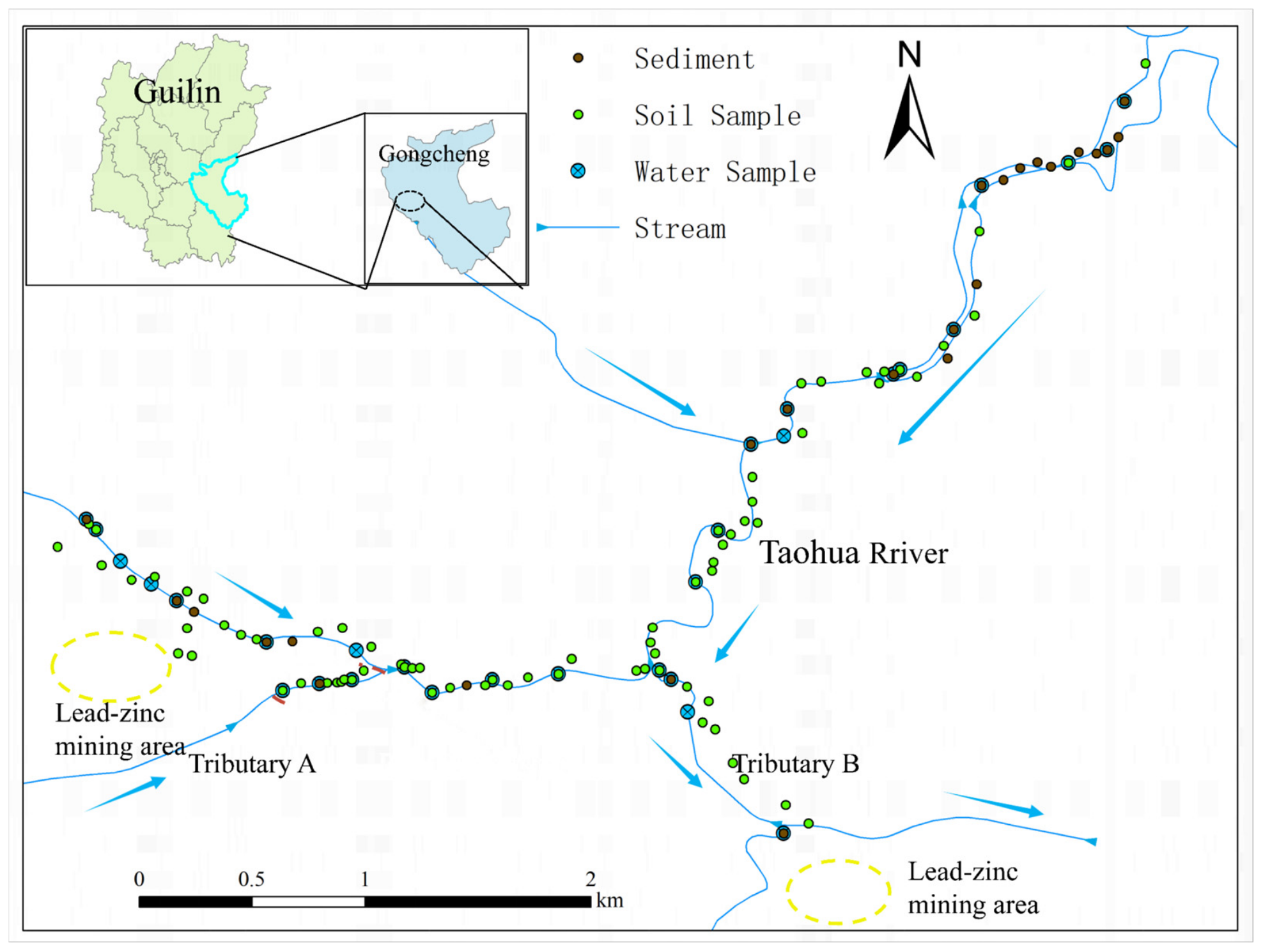
Figure 3 illustrates the spatial distribution of the sediment sampling sites. Spatially, trace element concentrations in sediments at sites 1–5, located upstream of the mining area, remained generally low. In stark contrast, concentrations at downstream sites 6–8 exhibited a sharp increase, well above the overall mean. This highlights the profound impact of mining operations on sediment quality, whereby trace elements from the mining zone are transported via surface runoff and ultimately deposited and enriched in the benthic sediments. Similarly, downstream sites 11 and 22 recorded trace element concentrations substantially higher than the mean. Geomorphologically, both sites are situated at river meander bends. Specifically, these locations are on the convex banks, where reduced hydrodynamic energy and the presence of secondary circulation promote pronounced sedimentation [
29]. Consequently, these hydrodynamic conditions facilitate the intense localized accumulation of trace elements within the sediments.
3.1.3. Trace Elements in Riparian Soils
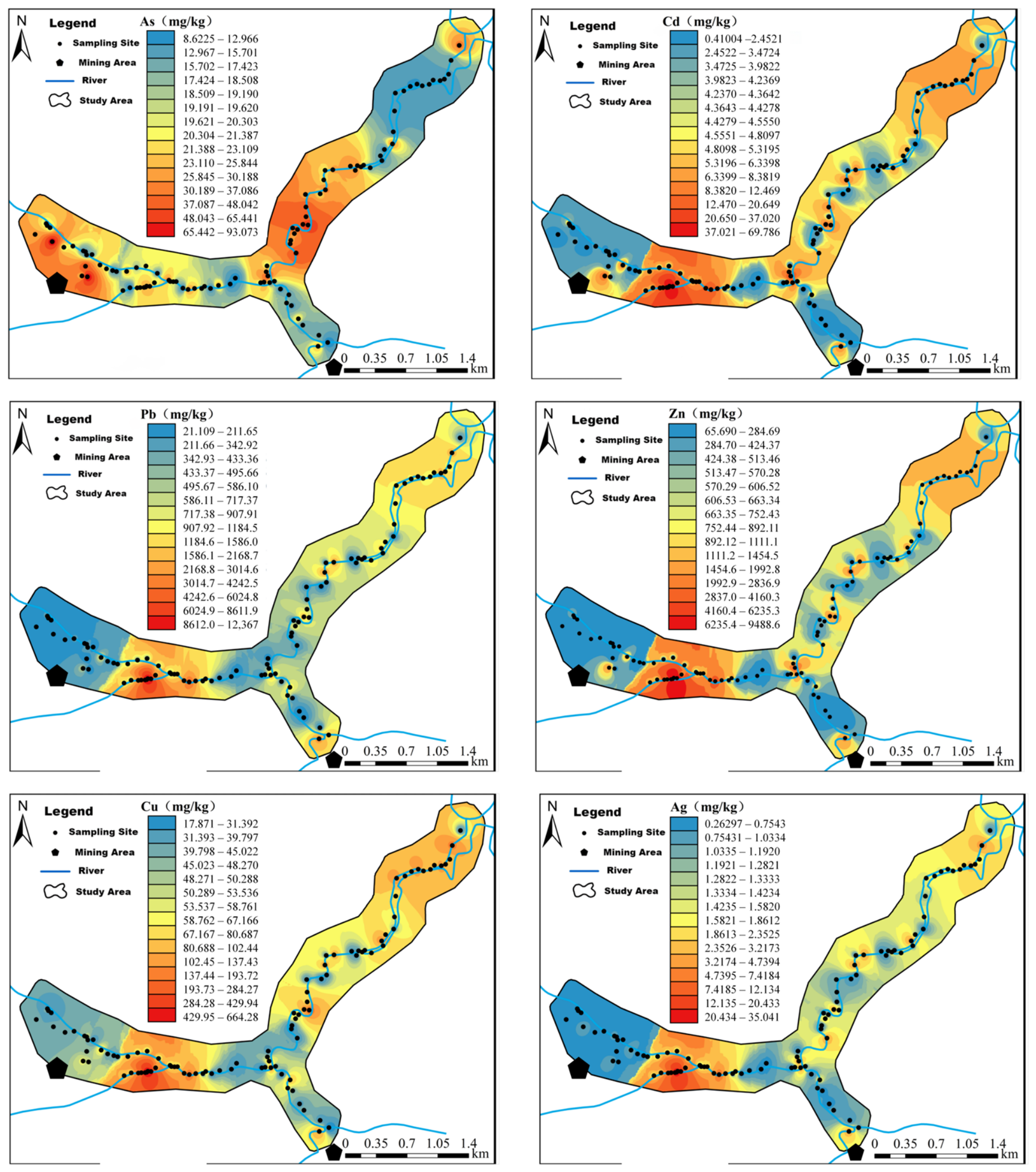
Table 3 summarizes the descriptive statistics for trace element concentrations in the riparian soils along the Taohuajiang River. The mean concentrations of As, Cd, Pb, Zn, Cu, and Ag exceeded the regional soil background values of Guangxi by factors of 1.14, 27.50, 47.99, 14.54, 2.97, and 14.21, respectively. Extreme maximum values were recorded across all analyzed metals. Specifically, the peak concentration of As reached 4.65 times its background level; maximums for Cd and Zn soared to 270.83- and 134.26-fold; and Pb, Cu, and Ag peaked at an astonishing 538.65, 25.22, and 224.55 times their respective baselines. With the exception of the As peak, which occurred upstream of the confluence between Tributary A and the mainstem, the maximum concentrations of all other metals were clustered in the immediate vicinity of this confluence. This spatial clustering strongly indicates the presence of pronounced, localized point sources of trace element pollution within the study area. The spatial distribution patterns of the analyzed trace elements along the riparian zones are illustrated in
Figure 4.
The coefficients of variation (CV) for the soil trace elements followed the descending order of Ag > Pb > Cd > Zn > Cu > As. All elements exhibited high spatial variability (CV > 36%), demonstrating that the soils are subject to intense external disturbances and are profoundly driven by anthropogenic activities.
Among the collected soil samples, 25 were sourced from agricultural lands, the details of which are summarized in
Table 4. These parcels are primarily utilized by local residents for the small-scale cultivation of crops such as citrus, corn, and oil tea camellia. A comparison between
Table 5 and
Table 4 reveals that, with the exception of As, the mean concentrations of all trace elements in the cropped soils were generally lower than the overall averages of the riparian soils. This suggests that actively managed agricultural soils are comparatively less susceptible to the impacts of natural deposition and mining-derived pollution. Conversely, the mean As concentration in these agricultural soils slightly exceeded the overall regional average. This elevation indicates that the historical or ongoing application of arsenic-based agrochemicals has a discernible impact on the As accumulation in farmland soils.
3.2. Pollution Characteristics of Trace Elements in Soils
Given the spatial proximity of the soil and sediment sampling sites and the fundamental consistency in their trace element sources, this study will comprehensively discuss them as a unified system in subsequent characterization and source apportionment analyses, focusing on elucidating the overall distribution patterns of trace elements within the basin [
30].
3.2.1. Results of Single Factor Index and Nemerow Comprehensive Pollution Index Assessments
The evaluation results based on
Pi are presented in
Table 5. Cd, Pb, and Zn emerged as the primary pollutants in both soils and sediments, yielding mean pollution indices of 27.50, 47.99, and 14.54, respectively, all of which fall into the category of heavy pollution. Cd contamination was the most severe, with 78% of the samples classified as heavily polluted and zero samples categorized as unpolluted. Pb contamination was similarly alarming, with 68% of the samples exhibiting heavy pollution. Zn exhibited a contamination pattern comparable to that of Pb, with 57% of the samples reaching the heavily polluted level. Ag pollution was predominantly characterized by heavy and moderate pollution, accounting for 55% and 27% of the samples, respectively. Conversely, Cu exhibited a relatively mild degree of contamination, dominated by lightly polluted (40%) and unpolluted (14%) samples. Furthermore, 58% of the samples were classified as unpolluted with respect to As. Spatially, significant concentration peaks for these trace elements were observed at sites 25–28 in the upper and middle reaches of the river, forming pronounced pollution hotspots. Overall, while the contamination levels of As and Cu were relatively low, localized concentration increases were detected in specific mid-to-downstream areas.
The evaluation based on
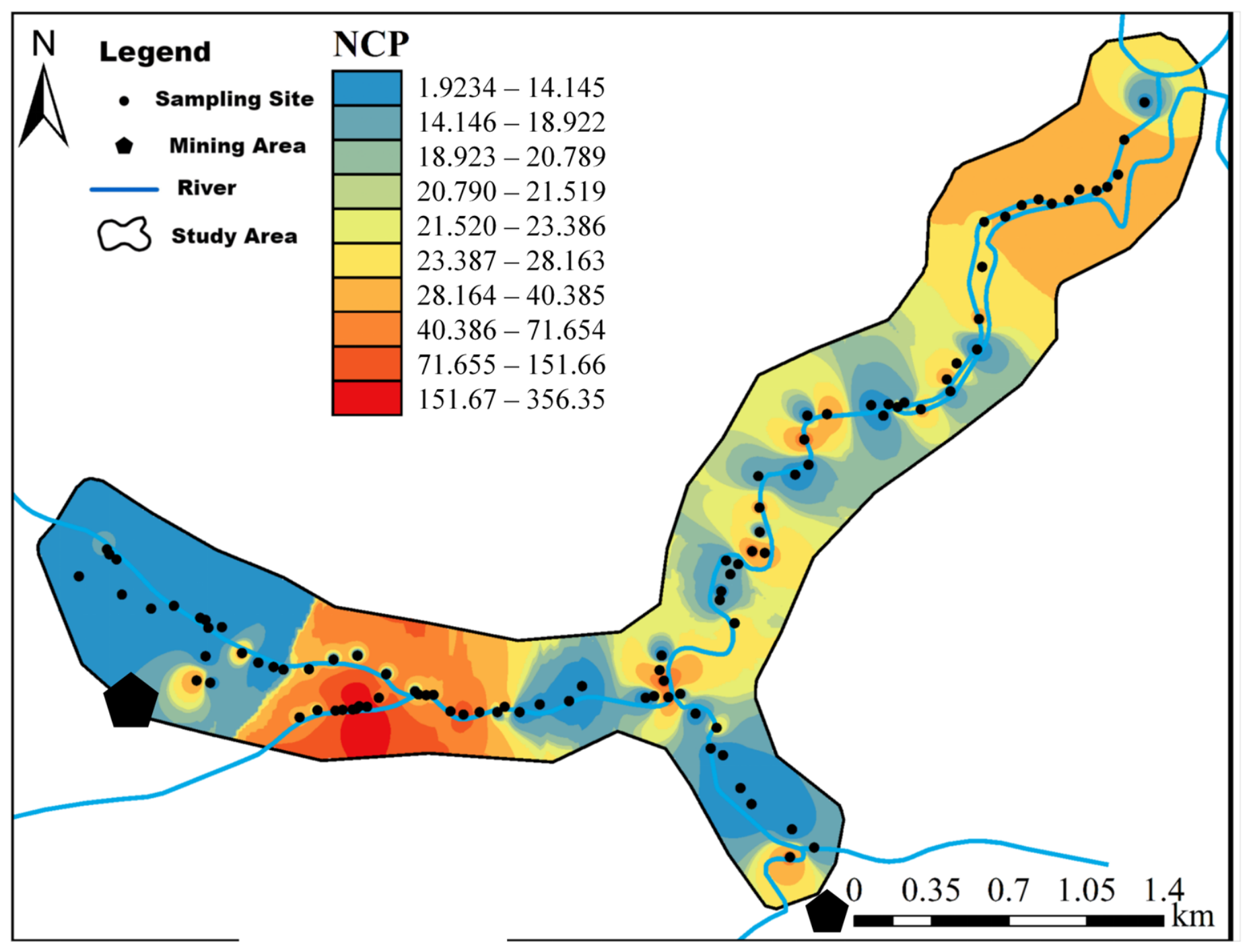
PN underscores a high degree of trace element contamination within the study area. Among all the sampling sites, apart from a minor fraction classified as lightly or moderately polluted, the overwhelming majority (up to 94%) reached the heavily polluted level. The detailed spatial distribution pattern is illustrated in
Figure 5.
From a macroscopic spatial perspective, the pollution load demonstrates a pronounced longitudinal variation along the river course. Generally, the contamination level originates relatively low in the upper reaches, peaks in the middle reaches, and, despite a slight mitigation upon entering the lower reaches, persists at a high concentration state. The most severely contaminated zones are concentrated in the middle and upper sections, reflecting the presence of localized intensive pollution inputs and substantial pollutant accumulation effects in this area. Although the pollution intensity in the downstream segment is partially alleviated due to hydrodynamic dilution and particulate sedimentation, its PN values still exceed the safety threshold. This indicates that the downstream diffusion effect of pollutants transported via surface runoff is highly significant, exerting persistent adverse impacts on the downstream soil environment.
3.2.2. Assessment Results Based on the Geo-Accumulation Index
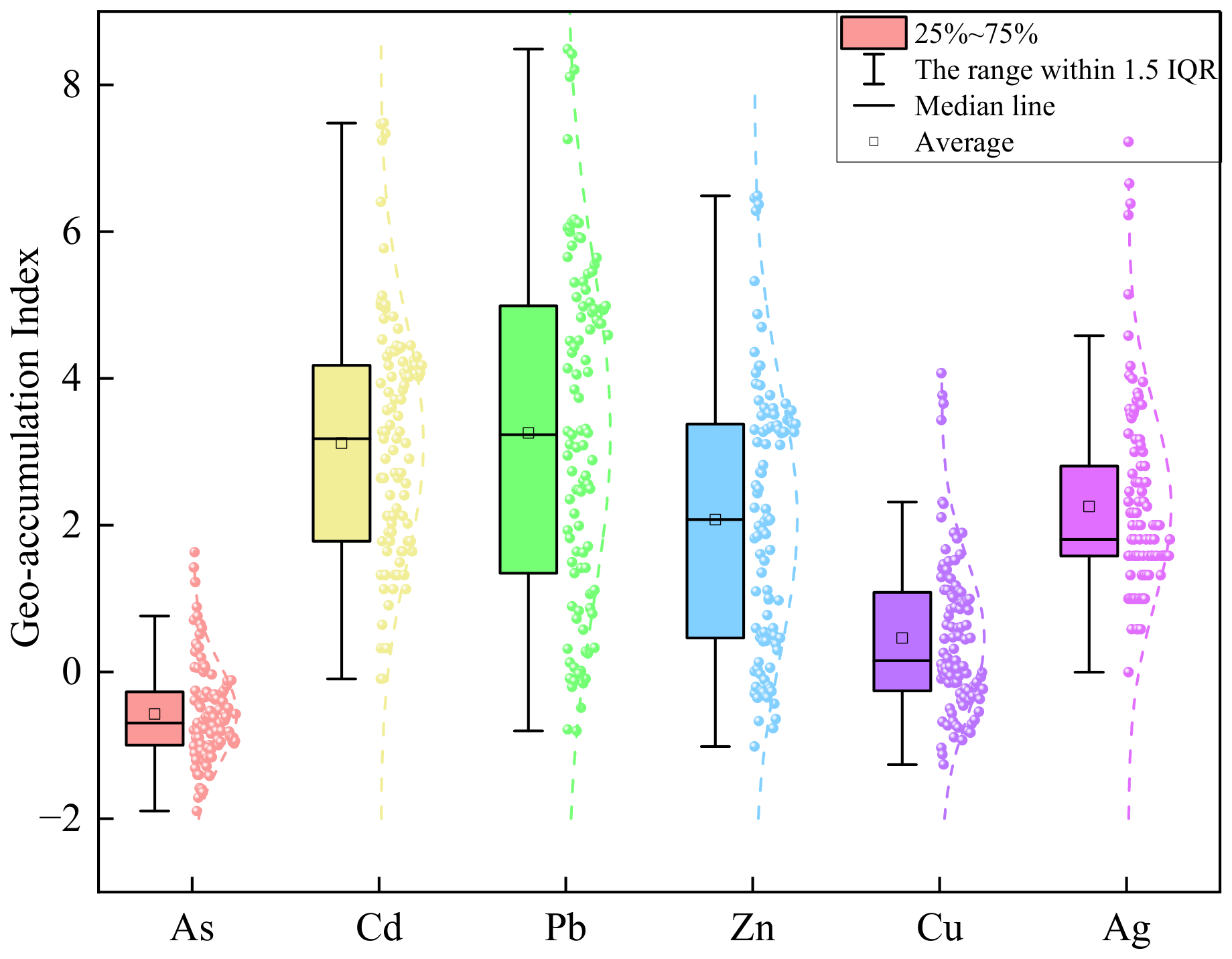
The evaluation results derived from the
Igeo are presented in
Table 6 and
Figure 6. Cd exhibited the most severe contamination, with the overwhelming majority of samples registering at or above the moderately polluted level. Samples classified as heavily-to-extremely polluted and extremely polluted cumulatively accounted for an alarming 36% of the total, indicating a profound ecological risk. Pb contamination was similarly severe; samples categorized at or above the moderately-to-heavily polluted level cumulatively constituted 65%. Notably, 24% of the samples reached the extremely polluted level, signifying substantial Pb enrichment within the study area. In contrast, the distribution of Zn pollution was more divergent; while unpolluted and lightly polluted samples collectively represented 36%, the highest proportion (30%) was observed in the heavily polluted category, reflecting a distinct accumulation trend. Ag pollution was predominantly characterized by moderate and heavy contamination. Moderately polluted samples constituted the largest fraction (41%), whereas samples at or above the heavily polluted level cumulatively accounted for 23%. Cu exhibited relatively minor contamination, dominated by unpolluted (44%) and lightly-to-moderately polluted classes. Fewer than 10% of the samples were classified at or above the moderately-to-heavily polluted level. As recorded the lowest degree of contamination, with a striking 82% of samples remaining unpolluted, thereby posing a minimal overall environmental risk.
Overall, the pollutant accumulation was most severe for Cd and Pb, characterized by a high prevalence of heavily to extremely polluted samples. Conversely, As and Cu remained predominantly clean or lightly polluted. The contamination levels of Zn and Ag fell intermediate between these two extremes, exhibiting a moderately to heavily polluted status.
Based on the overall mean values presented in
Table 6, As was in an unpolluted state; Cd and Pb belonged to the heavily polluted category; Zn and Ag fell into the moderately to heavily polluted range; and Cu was classified as lightly polluted. With the exception of As, the maximum and extreme values of the geo-accumulation indices for all other elements were concentrated between sampling Sites 25 and 28, indicating severe localized contamination in this specific area.
3.2.3. Assessment Results of Potential Ecological Risk Index
The single-factor potential ecological risk assessment results for trace elements in the study area’s soils are presented in
Table 7. Cd exhibited the highest potential
, with a mean value reaching 825.14, classifying it under the “very high” risk grade. Ag was categorized as presenting a “high” ecological risk, while Pb indicated a “considerable” risk. Ranked by the single-factor risk evaluation index, the potential ecological risks of trace elements in the region’s soils follow the descending order: Cd > Pb > Ag > Cu > Zn > As. Except for As, whose maximum potential ecological risk factor was located at Site 6, the extreme values for the other five elements were all concentrated between Sites 25 and 28.
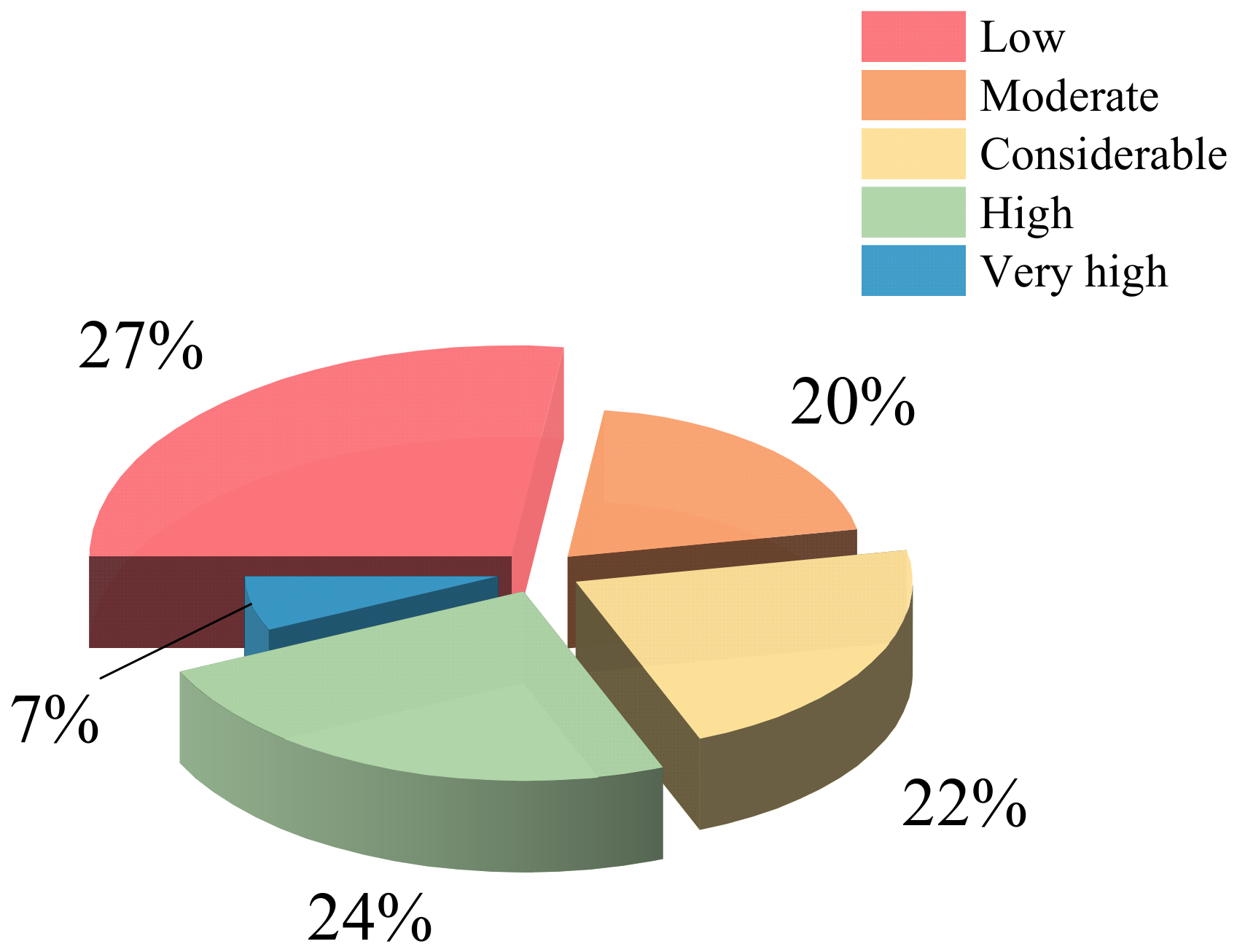
The spatial distribution of the comprehensive potential RI across the study area is illustrated in
Figure 7. The RI values across the sampling sites ranged broadly from 77.91 to 13,161.78, with a striking mean value of 1248.08. In terms of risk categorization, 7% of the sampling sites exhibited low ecological risk, 24% showed moderate risk, 20% presented considerable risk, 22% indicated high risk, and 27% reached the very high risk grade. These statistics compellingly demonstrate that the trace elements in the soils of the study area pose a severe ecological risk.
3.3. Source Apportionment of Trace Elements
3.3.1. Correlation Analysis of Trace Elements
Correlation analysis among trace elements is a well-established approach for source apportionment [
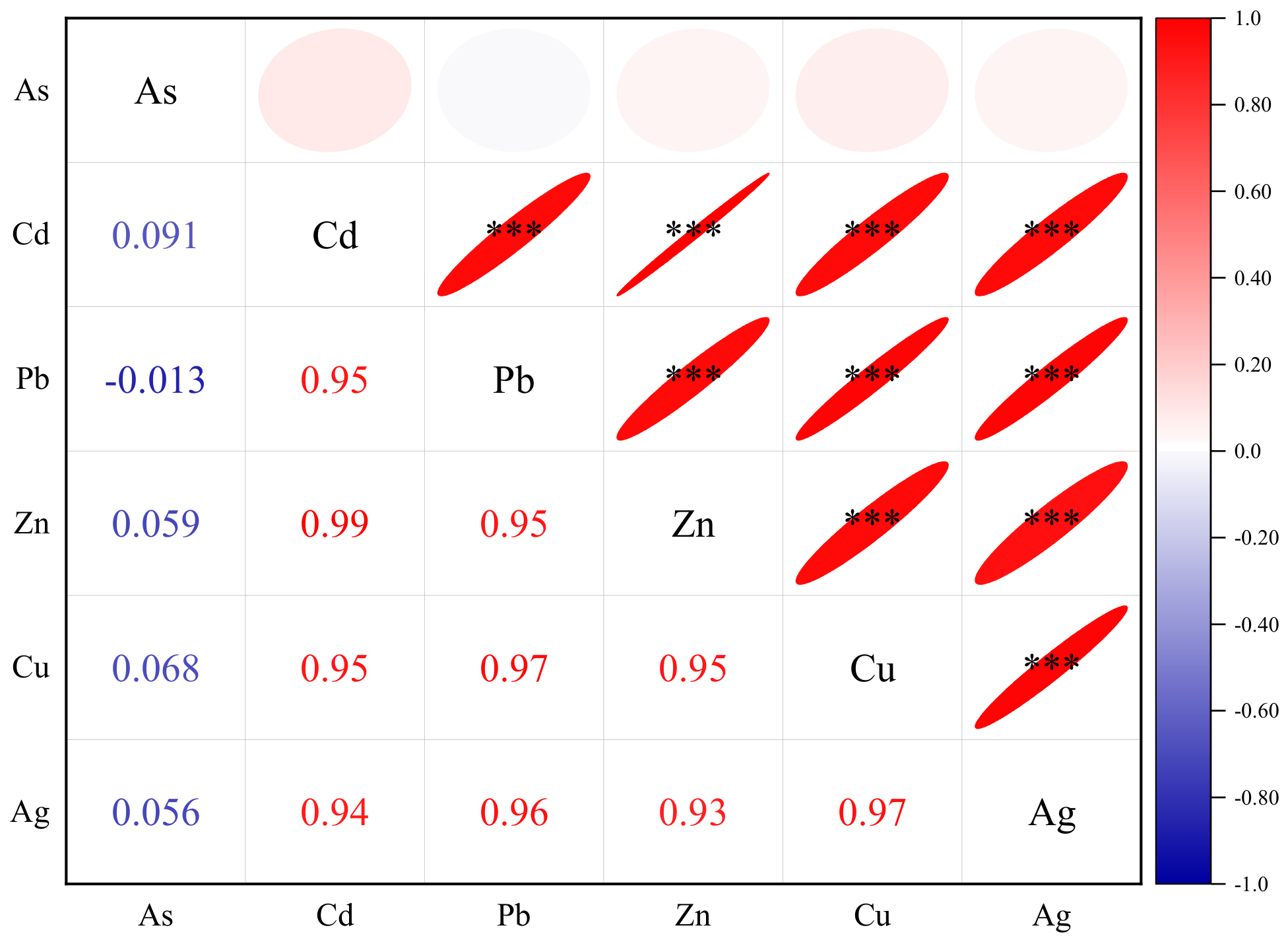
31]. In this study, a correlation analysis was performed on the trace element concentrations of 100 riparian soil and sediment samples, with the results depicted in
Figure 8. The pairwise correlation coefficients among Cd, Pb, Zn, Cu, and Ag ranged from 0.932 to 0.994, all exhibiting highly significant positive correlations (
p < 0.01). This strong coherence indicates that these metals share homologous sources or similar geochemical behaviors. In stark contrast, As displayed weak and statistically insignificant correlations with the other metals. This implies that the accumulation of As is likely governed by disparate sources or distinct environmental factors.
3.3.2. Principal Component Analysis of Trace Elements
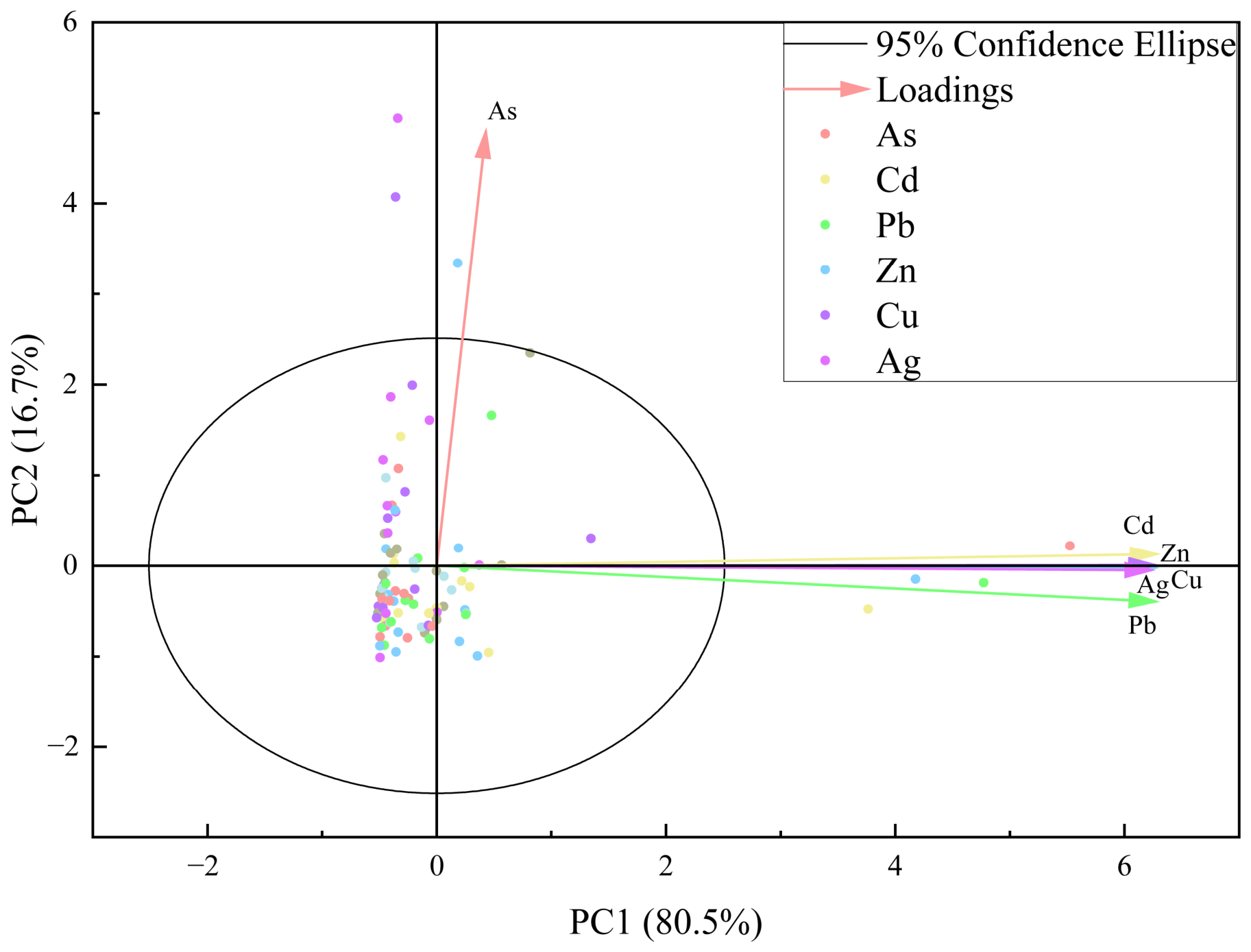
To further elucidate the origins of the trace elements, Principal Component Analysis (PCA) was performed. Prior to extraction, the suitability of the dataset was evaluated using the Kaiser–Meyer–Olkin (KMO) measure and Bartlett’s test of sphericity. The calculated KMO value was 0.803 (exceeding the recommended threshold of 0.7), and Bartlett’s test yielded a significance level of p < 0.01, confirming that the data were highly adequate for PCA. The total variance explained indicates that two principal components (PCs) were extracted, accounting for a cumulative variance contribution of 97.18%. Specifically, the first principal component (PC1) and the second principal component (PC2) contributed 80.47% and 16.71% of the total variance, respectively, sufficiently representing the underlying information of the original dataset.
The component matrix reveals that PC1 exhibits extraordinarily high loadings (>0.97) on Cd, Pb, Cu, Zn, and Ag. This strong association indicates that PC1 primarily represents a common source for these elements. Given that Cd, Pb, Cu, Zn, and Ag are signature pollutants associated with mining and smelting activities [
32,
33], and considering that their mean concentrations in the studied soils vastly exceed background values alongside highly variable CVs, it is evident that they are heavily influenced by human interventions. Consequently, PC1 is interpreted as an anthropogenic source, specifically reflecting industrial and mining activities. Conversely, PC2 displays an exceptionally high loading on As, which concomitantly exhibits a low loading on PC1. This signifies that As is predominantly governed by PC2. Considering that As possesses the lowest coefficient of variation among the six measured elements, PC2 likely originates from natural geological backgrounds or soil parent materials [
34], with negligible relation to anthropogenic activities.The PCA loading plot for the trace elements in the study area soils is shown in
Figure 9.
In summary, the findings from both the correlation and principal component analyses suggest that the accumulations of Cd, Pb, Zn, Cu, and Ag in the riparian soils likely stem from anthropogenic pollution, such as industrial and mining activities. In contrast, As is predominantly governed by natural geological factors.
3.3.3. Source Apportionment of Trace Elements Using the PMF Model
PMF model was employed to further apportion the sources of the six trace elements (As, Cd, Pb, Zn, Cu, and Ag) within the riverine system. Based on the simulation results, three underlying factors were extracted to interpret the source categories of the trace elements in the soils. The signal-to-noise (S/N) ratios for all elements exceeded 1, categorizing them strictly as “Strong” variables, with all residual values distributing precisely within the acceptable range of −3 to 3. Furthermore, the determination coefficients (R2) for all elements were greater than 0.9, and the predicted-to-observed ratios ranged from 0.916 to 0.999, closely approximating unity. These robust statistical metrics confirm the high accuracy and stability of the 3-factor PMF source apportionment results [
35].
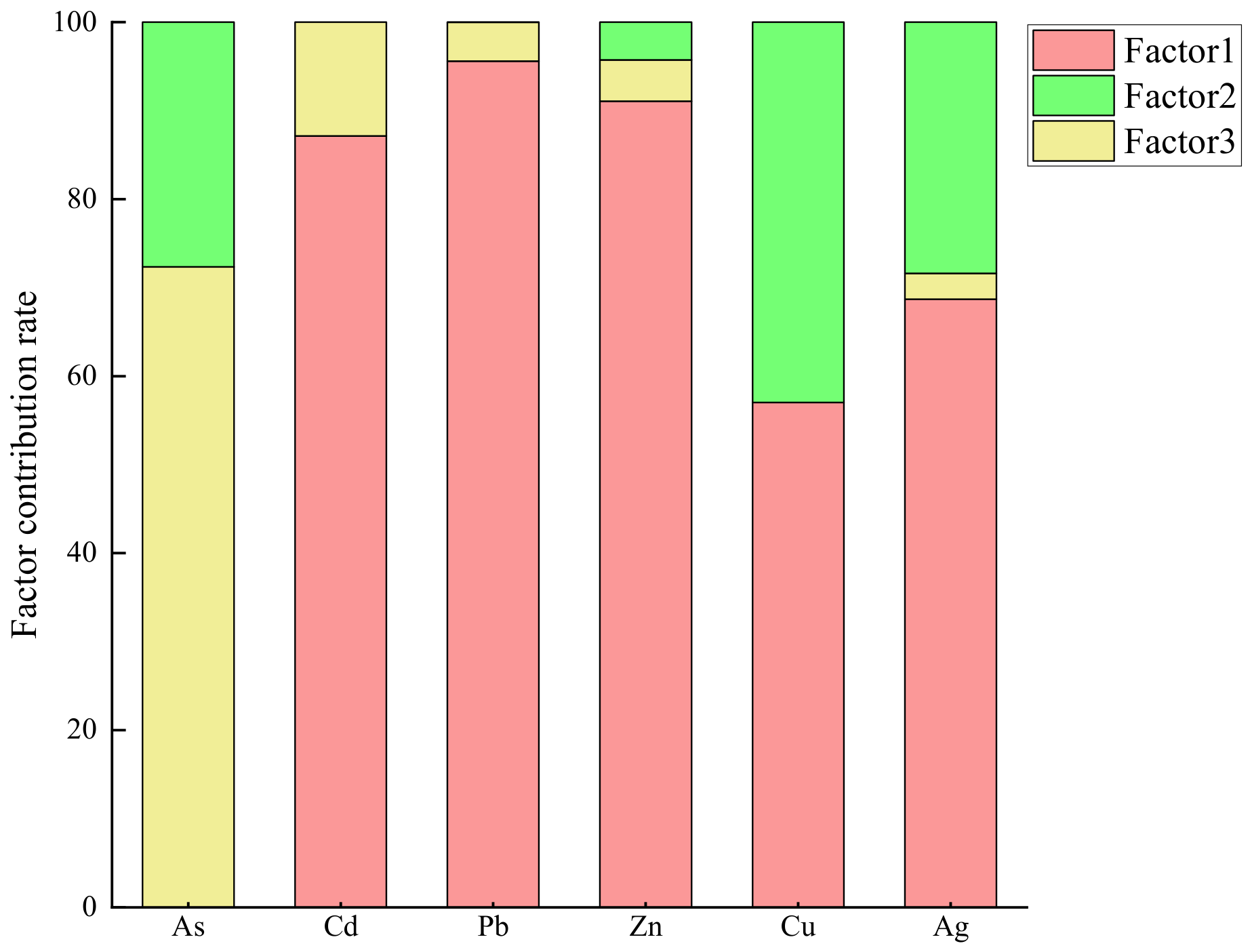
Figure 10 illustrates the source component profiles of the trace elements in the soils resolved by the PMF model. Factor 1 acts as a major contributor to the concentrations of Pb, Zn, Cd, Ag, and Cu, with its specific contribution rates reaching 96%, 91%, 87%, 69%, and 57%, respectively. The historical presence of a Pb-Zn mine in the study area implies that extraction, smelting, and the subsequent stockpiling of legacy tailings post-closure have heavily influenced the local environment. Fluvial erosion, compounded by the villagers’ utilization of these materials for paving agricultural roads, has exacerbated the elevated levels of trace elements in the soils. Moreover, previous studies have established that Pb-Zn mining operations are the paramount drivers influencing Pb, Zn, Cd, Cu, and Ag accumulations in soils [
36,
37]. Consequently, Factor 1 is designated as the mining activity source.
Factor 2 accounts for 43%, 28%, 28%, and 4% of the variability in Cu, Ag, As, and Zn, respectively, establishing it as the secondary contributing factor for Cu, Ag, and As. In the context of local land use, Cu serves as a primary active ingredient in agrochemicals and fungicides widely applied in orchards. Ag is frequently detected as an associated trace impurity within these pesticides; it is also present in poultry and livestock feed, subsequently entering the terrestrial environment through the discharge and application of animal manure. Concurrently, significant quantities of As are typically found in conventional insecticides and herbicides [
38]. Additionally, Cu and Zn are extensively utilized as trace element supplements in livestock feed to promote animal growth and development [
39]. Based on these characteristic agro-environmental inputs, it can be deduced that Factor 2 primarily represents the combined influence of agricultural activities and domestic rural sources.
Factor 3 overwhelmingly dominates the contribution to As at 72%, while also providing minor contributions to Cd (13%), Pb (4%), Zn (5%), and Ag (3%). Notably, As, which is most heavily influenced by this factor, possesses the lowest coefficient of variation among the six targeted trace elements, confirming that it is least susceptible to anthropogenic interference. Concurrent research highlights that various trace elements can undergo secondary enrichment via mechanisms such as rainfall runoff [
36]. Therefore, Factor 3 is hypothesized to characterize natural processes, such as the weathering of soil parent materials and pluvial erosion.
4. Conclusions
Focusing on the river water and riparian soils of the Taohuajiang River, this study investigated the pollution characteristics and potential ecological risks of trace elements within the study area by coupling extensive field sampling with multiple assessment methods. The results demonstrate that Zn acts as the primary pollutant in the aquatic system, with its spatial distribution exhibiting a variation trend highly correlated with the locations of the mining sites. Conversely, As displays localized exceedances in the downstream reaches characterized by intensive agricultural activities. The contamination issues confronting the soil environment are substantially more severe. The mean concentrations of elements including Cd, Pb, Zn, and Ag significantly exceed the background values of Guangxi soils, indicating that the overall contamination has reached a severe level. Potential ecological risk assessments further elucidate that the local ecosystem is enduring a high-intensity ecological threat. Among the targeted elements, Cd emerges as the paramount contributing factor, with its individual potential ecological risk factor reaching the “very high” grade.
To elucidate the origins of pollution, Principal Component Analysis (PCA) and the Positive Matrix Factorization (PMF) model were employed for the source apportionment of six trace elements (As, Cd, Pb, Zn, Cu, and Ag) in the soils of the study area. The PCA results revealed that two principal components (PCs) were extracted, accounting for a cumulative variance of 97.18%. Specifically, PC1 (explaining 80.47% of the variance) exhibited exceptionally high loadings for Cd, Pb, Cu, Zn, and Ag, reflecting the predominant influence of anthropogenic inputs, particularly industrial and mining activities. PC2 (explaining 16.71% of the variance) was primarily dominated by As, representing natural geological backgrounds or pedogenic (parent material) sources.
The PMF model demonstrated robust performance, characterized by high signal-to-noise (S/N) ratios for all elements and excellent goodness-of-fit. The PMF source apportionment yielded three primary factors: Factor 1 was identified as mining-related emissions, making substantial contributions to Pb, Zn, Cd, Ag, and Cu. This factor is intimately associated with historical Pb-Zn extraction, smelting processes, and the subsequent release from mine tailings. Factor 2 was attributed to agricultural and domestic sources, exhibiting notable contributions to Cu, Ag, and As. These elements likely originate from anthropogenic inputs such as arsenic-based agrochemicals, silver-containing domestic products, and copper-enriched feed additives. Factor 3, representing natural sources, was heavily loaded with As and is primarily governed by natural processes, including the weathering of parent materials and precipitation-induced erosion.
In conclusion, this study systematically characterized the trace element contamination profiles associated with the Taohuajiang Pb-Zn mine. The findings confirm that the river water is predominantly polluted by Zn, while the riparian soils suffer from severe contamination by trace elements such as Pb and Cd, thereby posing elevated ecological risks. Source apportionment via the PMF model reveals that the contamination is collectively driven by a tripartite combination of mining activities, natural background processes, and agricultural/domestic inputs.
Author Contributions
Conceptualization, Y.W. and H.D.; software, Y.W. and H.D.; validation, Y.W. and H.D.; formal analysis, Y.W.; investigation, Y.W., H.W., X.Z. and H.Z.; resources, R.F.; data curation, Y.W.; writing—original draft preparation, Y.W.; writing—review and editing, Y.W. and H.D. and R.F.; visualization, H.D.; supervision, R.F.; project administration, H.D. All authors have read and agreed to the published version of the manuscript.
Funding
This research was funded by the Research Foundation of Guangxi Key Laboratory of Environmental Pollution Control Theory and Technology (Guikeneng 2101Z012); Guilin Scientific Research and Technology Development Program (20220114-4).
Data Availability Statement
The original contributions presented in this study are included in the article. Further inquiries can be directed to the corresponding author.
Conflicts of Interest
The authors declare no conflicts of interest.
Abbreviations
The following abbreviations are used in this manuscript:
| RI | The potential ecological risk index |
| PCA | Principal Component Analysis |
| PMF | Positive Matrix Factorization |
| MDL | The method detection limit |
| CV | The coefficient of variation |
| KMO | The Kaiser–Meyer–Olkin measure |
References
- Chen, T.; Wen, X.C.; Zhang, L.J.; Tu, S.C.; Zhang, J.H.; Sun, R.N.; Yan, B. The geochemical and mineralogical controls on the release characteristics of potentially toxic elements from lead/zinc (Pb/Zn) mine tailings. Environ. Pollut. 2022, 315, 120328. [Google Scholar] [CrossRef]
- Meng, S.; Wen, S.; Han, G.; Wang, X.; Feng, Q. Wastewater treatment in mineral processing of non-ferrous metal resources: A review. Water 2022, 14, 726. [Google Scholar] [CrossRef]
- Ali, H.; Khan, E.; Ilahi, I. Environmental chemistry and ecotoxicology of hazardous heavy metals: Environmental persistence, toxicity, and bioaccumulation. J. Chem. 2019, 2019, 6730305. [Google Scholar] [CrossRef]
- Yang, E.; Wang, Q.; Zhang, Z.; Shao, W.; Luo, H.; Xiao, X.; Ni, F.; Mi, J.; Sun, X.; Guan, Q. Source-oriented health risk assessment of heavy metals in a soil-river continuum in northwest China. Int. J. Sediment Res. 2024, 39, 916–928. [Google Scholar] [CrossRef]
- Li, Z.; Li, X.; Wang, S.; Che, F.; Zhang, Y.; Yang, P.; Zhang, J.; Liu, Y.; Guo, H.; Fu, Z. Adsorption and desorption of heavy metals at water sediment interface based on bayesian model. J. Environ. Manag. 2023, 329, 117035. [Google Scholar] [CrossRef] [PubMed]
- Mohammadi, M.; Khaledi Darvishan, A.; Dinelli, E.; Bahramifar, N.; Alavi, S.J. How does land use configuration influence on sediment heavy metal pollution? Comparison between riparian zone and sub-watersheds. Stoch. Environ. Res. Risk Assess. 2022, 36, 719–734. [Google Scholar] [CrossRef]
- Saha, A.; Gupta, B.S.; Patidar, S.; Martínez-Villegas, N. Evaluation of potential ecological risk index of toxic metals contamination in the soils. Chem. Proc. 2022, 10, 59. [Google Scholar] [CrossRef]
- Bashir, Z.; Raj, D.; Selvasembian, R. Source profiling, pollution and health risk assessment of heavy metals in agricultural soils around an industrial cluster using PCA and GIS-assisted PMF. Environ. Monit. Assess. 2025, 197, 711. [Google Scholar] [CrossRef]
- Ren, H.; Zhang, M.; Li, X.; Wang, H.; Yu, J.; Zhou, C. Managing acidic mine water pollution in karst regions based on hydrogeological structures. Results Eng. 2024, 24, 103399. [Google Scholar] [CrossRef]
- Zhao, H.; Pang, F.Y. Geological exploration of lead-zinc mines in Guangxi. World Nonferrous Met. 2024, 172–174. (In Chinese) [Google Scholar] [CrossRef]
- People’s Government of Gongcheng Yao Autonomous County. Overall Plan for Mineral Resources of Gongcheng Yao Autonomous County; People’s Government of Gongcheng Yao Autonomous County: Gongcheng, China, 2023; pp. 1–72. (In Chinese)
- HJ/T 91-2019; Technical Specifications for Surface Water and Wastewater Monitoring. Ministry of Ecology and Environment of the People’s Republic of China: Beijing, China, 2019. (In Chinese)
- HJ/T 166-2004; Technical Specifications for Soil Environmental Monitoring. State Environmental Protection Administration of China: Beijing, China, 2004. (In Chinese)
- Wang, X.W.; Wang, Y.Y.; Zhao, N. Distribution characteristics and risk assessment of heavy metals in soils around lead-zinc smelters. Environ. Prot. Circ. Econ. 2024, 44, 36–41+56. (In Chinese) [Google Scholar]
- HJ 962-2018; Determination of Soil pH—Potentiometry. Ministry of Ecology and Environment of the People’s Republic of China: Beijing, China, 2018. (In Chinese)
- HJ 700-2014; Water Quality—Determination of 65 Elements. Ministry of Ecology and Environment of the People’s Republic of China: Beijing, China, 2014. (In Chinese)
- Wang, L.F.; Bai, Y.X.; Gai, S.N. Single-Factor and Nemerow Multi-Factor Index to Assess Heavy Metals Contamination in Soils on Railway Side of Harbin-Suifenhe Railway in Northeastern China; Trans Tech Publications, Ltd.: Bäch, Switzerland, 2011; pp. 71–78+3033–3036. [Google Scholar]
- Hu, W.; Hao, W.; Liu, H.; Wang, W.; Jiao, R. Water quality evaluation of Dahai Lake in Inner Mongolia based on improved Nemero pollution index method and principal component analysis. EDP Sci. 2023, 393, 03040. [Google Scholar] [CrossRef]
- Förstner, U.; Müller, G. Concentrations of heavy metals and polycyclic aromatic hydrocarbons in river sediments: Geochemical background, man’s influence and environmental impact. GeoJournal 1981, 5, 417–432. [Google Scholar] [CrossRef]
- Sun, S.J.; Dong, C.Y.; Zhang, H.; Yang, H.C.; Huang, Z.Z.; Han, Y.; Zhang, N.M.; Bao, L. Source apportionment and influencing factors of soil heavy metals based on PMF model and geographical detector. Environ. Sci. 2024, 45, 5474–5484. (In Chinese) [Google Scholar]
- GB 3838-2002; Environmental Quality Standards for Surface Water. State Environmental Protection Administration of China: Beijing, China, 2002. (In Chinese)
- Li, S.; Zhao, Z. Effects of dam construction on arsenic mobility and transport in two large rivers in Tibet, China. Geochem. Soc. 2020, 741, 1512. [Google Scholar]
- Sharifi, R.; Moore, F.; Keshavarzi, B. Mobility and chemical fate of arsenic and antimony in water and sediments of Sarouq River catchment, Takab geothermal field, northwest Iran. J. Environ. Manag. 2016, 170, 136–144. [Google Scholar] [CrossRef]
- Li, Z.H.; Bai, Y.J.; Gao, C.; Li, W.; Wang, J.W. Discussion on the source and genesis of arsenic in groundwater in the southern part of Fengxi New City, Fengdong New City, Xixian New Area. Ground Water 2022, 44, 46–48. (In Chinese) [Google Scholar]
- Dang, L.N.; Yang, Y. Spatial distribution characteristics and pollution evaluation of heavy metals in soils of Wuhan City. J. Huazhong Agric. Univ. 2015, 34, 66–72. (In Chinese) [Google Scholar]
- Dai, X.J.; Sun, K.Z.; Guo, M.M.; Liu, J.J. Ecological risk assessment of soil heavy metals in a chemical industry park in Shandong Province. J. Hebei Univ. Environ. Eng. 2022, 32, 43–47. (In Chinese) [Google Scholar]
- Lv, Y.J.; Wang, Q.Y.; Sun, X.M.; Zhang, Z.W.; Zhang, Y.M.; Gao, Y.X. Pollution characteristics and source apportionment of heavy metals in farmland soils around a tailings pond in Zhejiang Province. J. Environ. Eng. Technol. 2023, 13, 1464–1475. (In Chinese) [Google Scholar]
- Lafrance, P.; Banton, O. Implication of spatial variability of organic carbon on predicting pesticide mobility in soil. Geoderma 1995, 65, 331–338. [Google Scholar] [CrossRef]
- Bradl, H.B. Adsorption of heavy metal ions on soils and soils constituents. J. Colloid Interface Sci. 2004, 277, 1–18. [Google Scholar] [CrossRef] [PubMed]
- Wu, J.; Guo, X.; Liu, Y.; Xiang, W.; Qu, S.; Song, J.; Tian, Y. Spatiotemporal response of suspended sediment to soil erosion in a sediment-laden river. Ecol. Front. 2025, 46, 716–727. [Google Scholar] [CrossRef]
- Sun, H.; Bi, R.T.; Guo, Y.; Yuan, Y.Z.; Chai, M.; Guo, Z.X. Source tracking and apportionment of heavy metals in soils of Guangdong Province. Acta Sci. Circumstantiae 2018, 38, 704–714. (In Chinese) [Google Scholar]
- Yuan, X.R.; Tan, J.A.; Wang, J.B.; Mao, Z.C. Determination of Copper, Nickel, Lead, Zinc and Cobalt in Copper-Nickel Ore and Lead-Zinc Ore by ICP-AES; Chongqing VIP Information Co., Ltd.: Chongqing, China, 2022. [Google Scholar]
- Cao, J.; Xie, C.Y.; Hou, Z.R. Transport patterns and numerical simulation of heavy metal pollutants in soils of lead-zinc ore mines. J. Mt. Sci. 2021, 18, 2345–2356. [Google Scholar] [CrossRef]
- Dergachev, A.L. Global factors of lead-zinc ore formation. Mosc. Univ. Geol. Bull. 2019, 74, 433–440. [Google Scholar] [CrossRef]
- Chen, M.; Pan, Y.X.; Huang, Y.X.; Wang, X.T.; Zhang, R.D. Spatial distribution characteristics and source apportionment of heavy metals in soils of a typical lead-zinc mining area in Yangshuo. Environ. Sci. 2022, 43, 4545–4555. (In Chinese) [Google Scholar]
- Cao, J.; Xie, C.Y.; Hou, Z.R. Ecological Evaluation of Heavy Metal Pollution in the Soil of Pb-Zn Mines; Springer Science and Business Media LLC: New York, NY, USA, 2022; pp. 259–270. [Google Scholar]
- Rouhani, A.; Gutiérrez, M.; Newton, R.A.; Al Souki, K.S. An overview of potentially toxic element pollution in soil around lead–zinc mining areas. Environ. Rev. 2025, 33, 1–16. [Google Scholar] [CrossRef]
- Wang, M.; Li, S.T. Heavy metal contents in fertilizers and the effects of fertilization on heavy metal accumulation in soils and crops. J. Plant Nutr. Fertil. 2014, 20, 466–480. (In Chinese) [Google Scholar]
- Yang, Q.; Li, Z.; Lu, X.; Duan, Q.; Huang, L.; Bi, J. A review of soil heavy metal pollution from industrial and agricultural regions in China: Pollution and risk assessment. Sci. Total Environ. 2018, 642, 690–700. [Google Scholar] [CrossRef]
| Disclaimer/Publisher’s Note: The statements, opinions and data contained in all publications are solely those of the individual author(s) and contributor(s) and not of MDPI and/or the editor(s). MDPI and/or the editor(s) disclaim responsibility for any injury to people or property resulting from any ideas, methods, instructions or products referred to in the content. |