1. Introduction
Ammonia-oxidizing bacteria (AOB) exhibit high substrate specificity and require stringent environmental conditions for growth. In natural environments, AOB frequently compete with heterotrophic bacteria, resulting in low isolation efficiency [
1]. Due to their chemoautotrophic nature, AOB rely on specific substrates and favorable environmental conditions for growth. Even under suitable cultivation conditions, AOB generally exhibit slow growth rates, with doubling times typically exceeding 10 h. Consequently, they are readily outcompeted by fast-growing heterotrophic microorganisms, making it difficult to obtain high-purity strains using conventional isolation methods [
2]. The cultivation efficiency of AOB is influenced by multiple environmental factors, among which medium composition, temperature, and the initial ammonia nitrogen concentration are particularly important.
Iron is an essential trace element in the metabolism of AOB, as it directly participates in the active centers of both ammonia monooxygenase (AMO) and hydroxylamine oxidoreductase (HAO) [
3]. The chemical form of iron significantly influences the growth and metabolic activity of AOB. Ferrous iron (Fe
2+) functions as a cofactor for AMO. Insufficient Fe
2+ concentrations may result in reduced enzyme activity, whereas excessive Fe
2+ levels can promote the generation of reactive oxygen species (ROS) through the Fenton reaction, thereby inducing oxidative stress [
4]. In addition, the sensitivity of AOB to Fe
2+ varies among species. Compared with Fe
2+, ferric iron (Fe
3+) exhibits lower bioavailability and must first be converted into Fe
2+ through siderophore-mediated transport or cellular reduction systems before microorganisms can utilize it. Moreover, excessive Fe
3+ concentrations may compete with Fe
2+ for membrane transporters, thereby inhibiting the catalytic activity of key enzymes involved in ammonia oxidation [
5].
Calcium carbonate (CaCO
3) performs multiple functions in the cultivation of AOB. It acts as a pH buffer, thereby maintaining the alkaline conditions required for ammonia oxidation, and simultaneously provides an inorganic carbon source for CO
2 fixation by chemoautotrophic microorganisms [
6]. In addition, CaCO
3 particles can serve as attachment sites for bacterial cells [
7] and may further enhance quorum-sensing processes [
6]. However, the low solubility of CaCO
3 may adversely affect the medium composition when excessive amounts are added. Elevated Ca
2+ concentrations can promote precipitation with phosphate ions, thereby reducing phosphorus bioavailability in the culture medium [
8].
In addition to the medium composition, temperature is a key environmental factor regulating AOB metabolic activity, determining their growth kinetics by influencing enzymatic reaction rates and cell membrane fluidity. Antoniou et al. [
9] observed that, within the experimental temperature range of 15–25 °C, the effective maximum specific growth rate (μ
max) of Nitrosomonas increased from 0.12 to 0.97 d
−1 with increasing temperature. However, significant inter-strain differences in temperature adaptability exist among various
N. europaea isolates, and studies on temperature suitability under practical wastewater treatment scenarios remain scarce.
N. europaea exhibits low affinity toward ammonia but demonstrates strong tolerance to elevated ammonia nitrogen concentrations. In contrast, its growth is inhibited under conditions of low ammonia nitrogen availability [
10]. However, excessively high ammonia nitrogen levels can lead to the accumulation of free ammonia (FA). The FA concentration is jointly influenced by pH and ammonia nitrogen levels. Elevated FA concentrations exert substantial inhibitory effects on the growth and metabolic activity of
N. europaea [
11].
Despite extensive research on ammonia-oxidizing bacteria, three critical knowledge gaps remain regarding
Nitrosomonas europaea: (i) studies are almost exclusively based on the type strain ATCC 19718, leaving the genetic diversity of geographically distinct strains largely unknown [
12], (ii) systematic medium optimization is lacking, and the mechanistic role of CaCO
3 as well as the differential effects of Fe
2+/Fe
3+ have not been elucidated [
13]; (iii) environmental adaptability assessments have been largely confined to synthetic media, without validation in real complex wastewaters. Therefore, based on the systematic optimization of culture medium composition, the present study investigates the effects of CaCO
3, Fe
2+, and Fe
3+ on the growth and ammonia oxidation performance of the AOB strain
N. europaea W4. Furthermore, the roles of temperature and initial ammonia nitrogen concentration in nitrogen removal performance are examined. Finally, the practical application potential of the strain is evaluated through bench-scale treatment experiments using landfill leachate. This study aims to provide support for the application of
N. europaea W4 in wastewater bioaugmentation.
2. Materials and Methods
2.1. Sample Source
Water samples were collected from a section of the river affected by domestic sewage discharge in Zhongshan. Its physicochemical properties were as follows: pH 7.39, dissolved oxygen 0.52 mg/L, ammonia nitrogen concentration 3.93 mg/L, and temperature 26.00 °C. The samples were initially pre-filtered through a 0.45 μm nylon membrane to remove large suspended particles. Subsequently, the filtrates were centrifuged at 3000× g for 5 min (Model: Centrifuge5810R, Eppendorf, Hamburg, Germany), and the resulting pellets were collected for further analysis.
2.2. Media and Reagents
AOB liquid medium (pH 7) was modified based on DSMZ Medium 1583 [
14]. The medium contained 0.5 g/L MgSO
4·7H
2O, 0.2 g/L NaCl, 0.1 g/L KH
2PO
4, 5.0 g/L CaCO
3, 1.5 g/L NaHCO
3, 0.37 g/L NH
4Cl, 0.05 g/L FeCl
3·6H
2O, and 0.1% trace element solution. Accurately weigh sequentially 0.062 g/L H
3BO
3, 0.017 g/L CuCl
2·2H
2O, 0.1 g/L MnCl
2·4H
2O, 0.036 g/L Na
2MoO
4·2H
2O, 0.07 g/L ZnCl
2, 0.19 g/L CoCl
2·6H
2O, and 0.024 g/L NiCl
2·6H
2O. Dissolve in ultrapure water (Model: UPT-II-10T, Sichuan Youpu Ultra-Pure Technology Co., Ltd., Chengdu, China) and bring the volume to 1 L. Store at 4 °C in the dark until use. The pH of the medium was adjusted to 7.0 with 1 mol/L NaOH and 1 mol/L HCl using a pH meter (METTLER TOLEDO, Mettler Toledo Instruments Co., Ltd., Shanghai, China).
The basal medium was sterilized by autoclaving at 121 °C for 20 min using an automatic sterilizer (Model: GR60DA, ZEALWAY, Wilmington, DE, USA). CaCO3 was sterilized by dry heat at 160 °C for 2 h. The Fe2+/Fe3+ stock solution (10 g/L) was filter-sterilized through a 0.22 μm membrane and added aseptically after the medium had cooled to below 50 °C (Model: HH-6, Guohua Dianxi Co., Ltd., Beijing, China). The Fe2+ stock solution was prepared fresh immediately before use.
Silica gel plates were prepared according to the classic Winogradsky method for autotrophic bacteria isolation. Briefly, sodium silicate solution (specific gravity 1.10) was mixed with hydrochloric acid solution (specific gravity 1.09) at a volume ratio of 1:2 to form a silica gel. The gel was cut into small pieces and dialyzed against running tap water for 72 h until no chloride ions were detected by 1% silver nitrate solution. The dialyzed gel was autoclaved at 121 °C for 20 min and cooled to 50 °C. One milliliter of filter-sterilized (0.22 μm) AOB isolation medium was added to 10 mL of sterile silica gel solution, mixed gently, and poured into sterile Petri dishes. The plates were dried at 55 °C in a sterile incubator (Model: SHP-250, Jinghong, China) until no free liquid was present on the surface before use.
2.3. Isolation and Purification of AOB
2.3.1. Strain Enrichment
The collected cell pellet was inoculated into a 250 mL conical flask containing 95 mL of AOB liquid medium with an initial ammonia nitrogen concentration of 100 mg/L. The cultures were incubated at 30 °C and 150 r/min in the dark. Ammonia nitrogen and nitrite nitrogen concentrations were measured at 12 h intervals throughout the cultivation period. Once the culture reached the logarithmic growth phase, 5 mL of the enriched culture was transferred into fresh medium for subculturing. This enrichment procedure was repeatedly performed until stable ammonia degradation and nitrite accumulation were achieved. This concentration was chosen because it closely matches the ammonia nitrogen levels in typical municipal wastewater influent (50–150 mg/L) and pretreated landfill leachate (80–120 mg/L), ensuring the enriched strains can directly adapt to actual wastewater environments. It also provides sufficient nitrogen source for AOB growth while effectively eliminating low-tolerance contaminants, thus improving enrichment efficiency.
2.3.2. Strain Isolation
Primary screening: The AOB medium was sterilized by filtration through a 0.22 μm membrane and subsequently dispensed for later use. A 5 mL aliquot of the enrichment culture, with an initial ammonia nitrogen concentration of 100 mg/L, was inoculated into 95 mL of sterile AOB medium. The culture was incubated at 30 °C and 150 r/min in the dark until the logarithmic growth phase was reached (OD600 ≈ 0.1). Subsequently, 0.5 mL of the culture was transferred into 4.5 mL of sterile medium and thoroughly mixed. Serial 10-fold dilutions were then prepared up to 10−9. Before each gradient dilution, the bacterial suspension was dispersed by pulsed ultrasound (40 kHz, 160 W, 3 s on/5 s off for 1 min) in a KQ-800KDE high-power digital ultrasonic cleaner (Kunshan Ultrasonic Instruments Co., Ltd., Kunshan, China) to break up bacterial aggregates. Aliquots (200 μL) from the 10−6 to 10−9 dilutions were spread onto silica gel solid plates, and blank control plates were prepared simultaneously. All plates were sealed and incubated at 30 °C in the dark for 14 days. Single colonies were subsequently selected and inoculated into 5 mL of liquid medium, then incubated statically at 30 °C for 7 days. Nitrite production was quantified using the Griess assay. Cultures exhibiting nitrite concentrations greater than 20 mg/L were selected for further purification.
Secondary screening: The positive culture obtained from the primary screening was serially diluted 10-fold. Subsequently, 500 μL aliquots from the 10−7 and 10−8 dilutions were inoculated into two separate 96-well plates. The plates were sealed with Parafilm and incubated at 30 °C in the dark for 30 days. Nitrite concentrations in the wells were determined using the Griess assay. Cultures from nitrite-positive wells were subsequently transferred into beef extract peptone medium and incubated at 30 °C in the dark for 7 days. The absence of contamination was verified based on medium clarity and microscopic observation. The isolate was then preliminarily identified as an AOB strain.
2.4. Identification of AOB
2.4.1. Scanning Electron Microscopy
Cells harvested during the logarithmic growth phase were centrifuged at 3000× g for 10 min, and approximately 1 g of cell pellet was collected. The pellet was fixed with 2.5% glutaraldehyde for 4 h. After fixation, the supernatant was removed, and the cells were rinsed three times with 0.1 mol/L phosphate buffer, with each wash lasting 20 min. The samples were subsequently dehydrated using a graded ethanol series (30%, 50%, 70%, 80%, 90%, and 100%) with each step lasting 15 min. After ethanol removal, the samples were immersed in isoamyl acetate for 10 min under gentle agitation. The treated samples were then dried using a critical-point dryer, sputter-coated with gold, and finally observed and photographed using a field-emission scanning electron microscope (FE-SEM).
2.4.2. 16S rRNA Gene Sequence Analysis
The 16S rRNA gene was amplified using the universal primers 27F (5′-AGAGTTTGATCCTGGCTCAG-3′) and 1492R (5′-GGTTACCTTGTTACGACTT-3′). The polymerase chain reaction (PCR) mixture (25 μL total volume) consisted of 12.5 μL 2× Taq Master Mix (Vazyme, Nanjing, China), 1 μL each of forward and reverse primers (10 μM), 1 μL of template DNA, and 9.5 μL of double-distilled water (ddH
2O). The PCR amplification conditions were as follows: initial denaturation at 95 °C for 5 min; followed by 30 cycles of denaturation at 95 °C for 30 s, annealing at 55 °C for 30 s, and extension at 72 °C for 90 s. A final extension step was performed at 72 °C for 10 min. The purified PCR products were submitted to Sangon Biotech (Shanghai, China) for sequencing. The obtained sequences were analyzed using NCBI BLAST (
https://blast.ncbi.nlm.nih.gov/Blast.cgi, accessed on 10 May 2026), and reference sequences with greater than 99% similarity were retrieved for comparative analysis. Phylogenetic analysis was performed using MEGA 11.0 software. A phylogenetic tree was constructed using the neighbor-joining (NJ) method, with bootstrap values set to 1000 replicates.
The 16S rRNA gene sequence of N. europaea W4 obtained in this study has been deposited in the EMBL-EBI database under accession number PRJNA245576.
2.4.3. Bacterial Genomic DNA Extraction Method
To minimize interference from medium impurities, the AOB liquid medium was sterilized and filtered through a 0.22 μm membrane filter. The bacterial cells were inoculated after the medium had cooled to near room temperature. Strain W4 was cultured to the logarithmic growth phase and then centrifuged at 8000 g for 5 min. Approximately 0.5 g of cell pellet was collected and used for DNA extraction with a MagPure Bacterial DNA Kit. The concentration of genomic DNA was measured using TBS380, and DNA fragment integrity was confirmed by pulsed-field gel electrophoresis. The purified genomic DNA was quantified, and high-quality DNA was used for subsequent library construction and sequencing. The raw sequencing data and assembled genome have been deposited in NCBI under the following accession numbers: chromosome sequence, CP157069.1; plasmid sequence, CP157070.1.
2.5. Effects of Medium Components and Environmental Factors on the Nitrogen Removal Performance of the Strain
2.5.1. General Experimental Methods
The tested strain was the ammonia-oxidizing strain isolated and purified above. Prior to inoculation, the pre-culture was grown to mid-exponential phase (OD600 ≈ 0.1), and the inoculum density was adjusted based on the optical density at 600 nm (OD600) to achieve an initial OD600 of approximately 0.001 in the experimental flasks (corresponding to an inoculum size of approximately 1%, v/v). The adjusted bacterial suspension was then inoculated into 250 mL conical flasks containing 100 mL of sterile medium at an inoculum size of 1% (v/v). The flasks were sealed with sterile cotton plugs, and all experimental procedures were conducted under aseptic conditions in a clean bench. Except for the temperature-related experiments, all cultures were incubated at 30 °C and 150 r/min in a constant-temperature shaker. Three replicates were prepared for each treatment, together with a non-inoculated blank control. Ammonia nitrogen and nitrite nitrogen concentrations were measured every 12 h to evaluate the ammonia-oxidation performance. When required, the pH was adjusted to 7.0 using 1 mol/L NaOH and monitored using pH test paper.
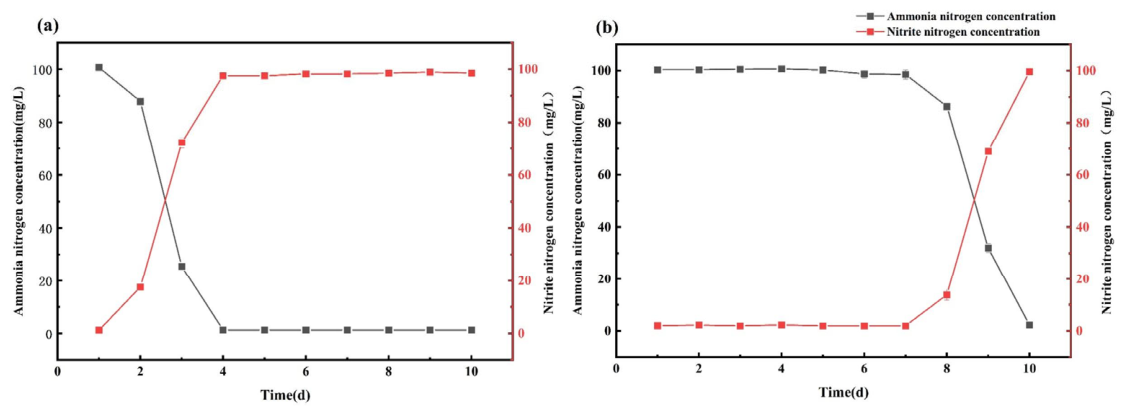
2.5.2. Effect of CaCO3 on the Nitrogen Removal Performance of N. europaea W4
Two treatment groups were established: one without CaCO3 supplementation and the other with 5 g/L CaCO3 supplementation. The initial ammonia nitrogen concentration in both groups was maintained at 100 mg/L. The effects of CaCO3 on the ammonia-oxidizing performance of N. europaea W4 were evaluated by monitoring changes in ammonia nitrogen and nitrite nitrogen concentrations throughout the cultivation period.
2.5.3. Effects of Fe2+ and Fe3+ on the Nitrogen Removal Performance of N. europaea W4
The concentrations of both Fe2+ and Fe3+ were adjusted to 0.05 g/L. The effects of iron ions in different valence states on the ammonia-oxidizing performance of N. europaea W4 were compared.
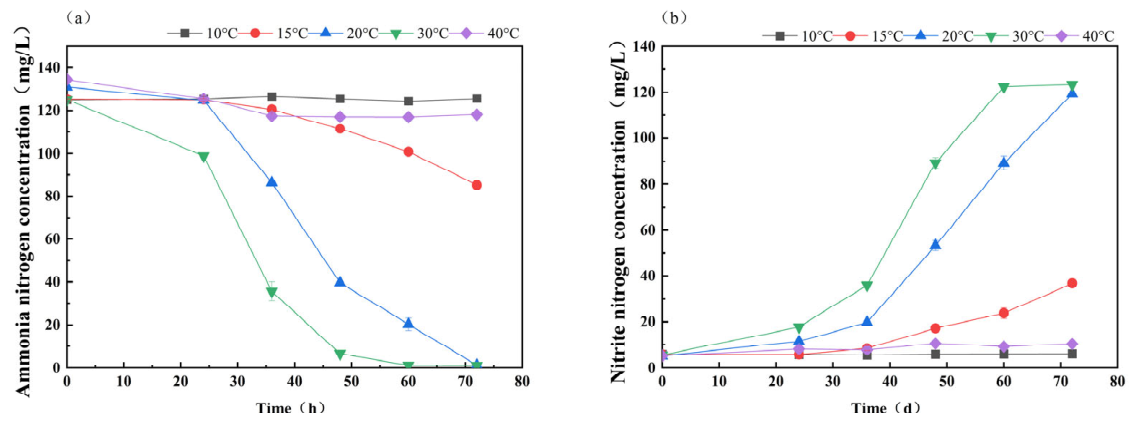
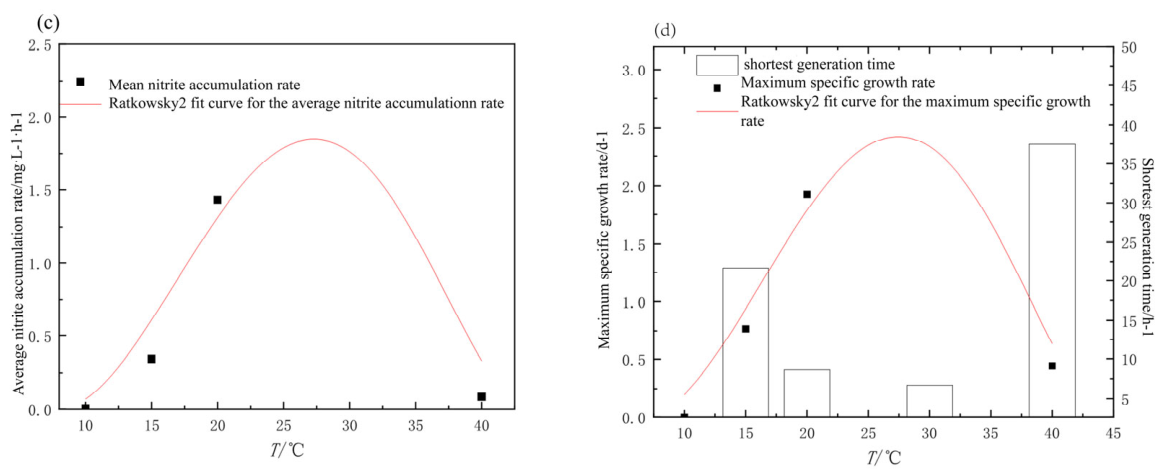
2.5.4. Effect of Temperature on the Nitrogen Removal Performance of N. europaea W4
Five temperature conditions were established at 10, 15, 20, 30, and 40 °C. Following inoculation, the conical flasks were incubated at the respective temperatures with shaking at 150 r/min. The initial ammonia nitrogen concentration in all treatment groups was maintained at 100 mg/L.
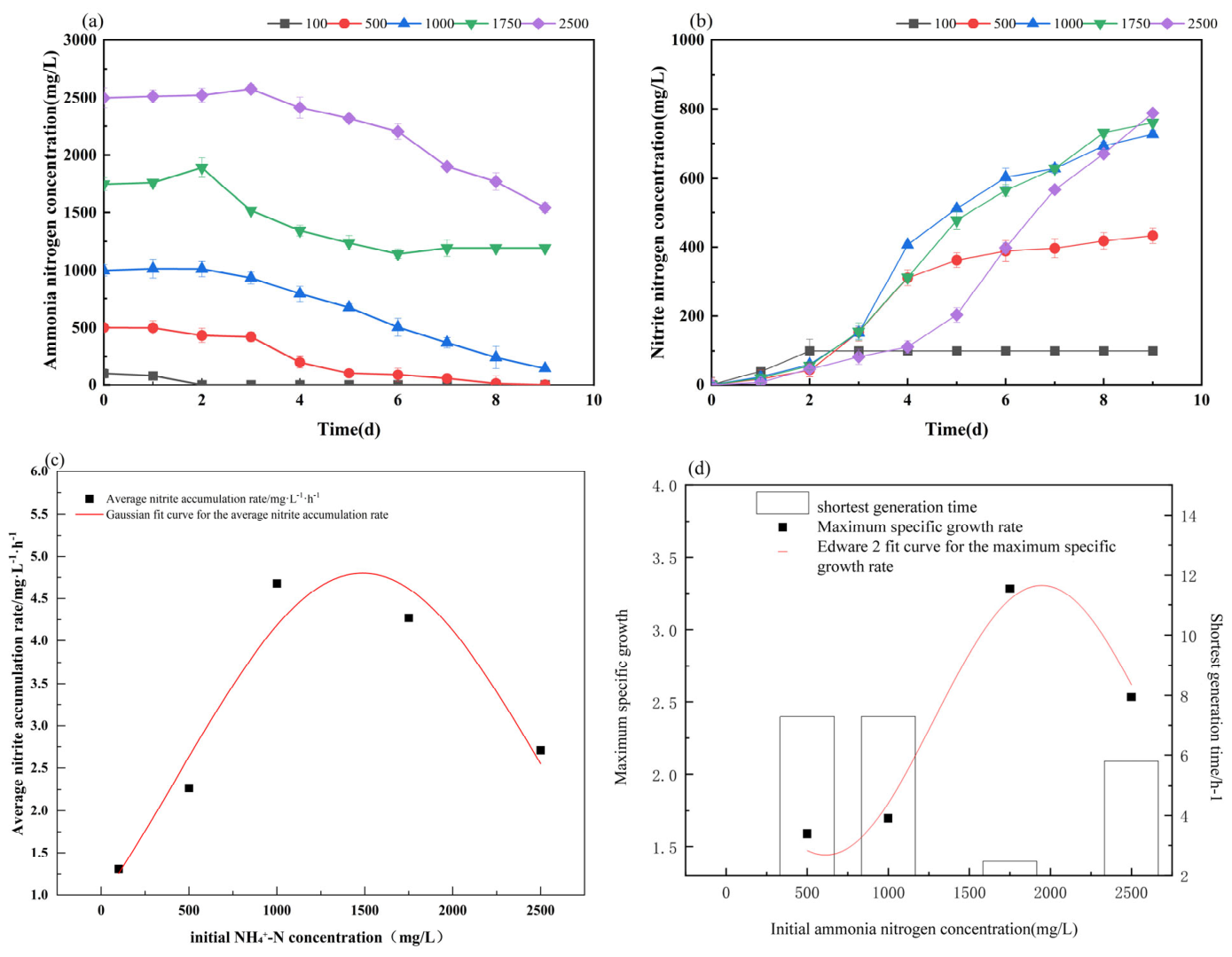
2.5.5. Effect of Initial Ammonia Nitrogen Concentration on the Nitrogen Removal Performance of N. europaea W4
The initial ammonia nitrogen concentrations were adjusted to 100, 500, 1000, 1750, and 2500 mg/L. Changes in ammonia nitrogen and nitrite nitrogen concentrations were monitored throughout the cultivation period to evaluate the effects of different ammonia nitrogen concentrations on the ammonia-oxidizing performance of N. europaea W4.
2.6. Bench-Scale Test of N. europaea W4 in Aerobic Tank Wastewater
Wastewater from the aerobic tank at a municipal solid waste transfer station in Yichang, with a treatment capacity of 100 t/d, was selected as the target for treatment. The sampling point was located at the center of the aerobic tank, approximately 1.5 m below the water surface. A composite wastewater sample (25 L) was collected in September 2023 using a sterile sampler. The collected samples were filtered through 0.45 μm membrane filters before analysis. The main water quality parameters of the wastewater are presented in
Table 1.
Raw non-sterilized landfill leachate was used to retain the indigenous microbial community. Collect 100 mL of culture broth of strains in exponential phase and harvest bacterial cells by centrifugation at 3000 g, then prepare bacterial suspension. The resulting cell pellet was resuspended to prepare a bacterial suspension, which was subsequently inoculated into a 250 mL conical flask containing 100 mL of landfill leachate. The flask was incubated at 30 °C and 50 r/min in the dark, with the dissolved oxygen level controlled at 2.0–3.0 mg/L by adjusting the shaking speed. During the experiment, the flask was manually shaken three times per day (1 min each time) to ensure homogeneous mixing. The cultures were incubated at 30 °C and 50 r/min in the dark. A non-inoculated control group was established simultaneously, and all treatments were conducted in triplicate. Ammonia nitrogen and nitrite nitrogen concentrations were measured every 12 h throughout the experiment.
2.7. Analytical Methods and Parameters
The main analytical parameters and corresponding methods are shown in
Table 2.
2.8. Statistical Analysis
The nitrite accumulation rate (V, mg/(L·h)) was calculated using Equation (1):
where C
t1 and C
t2 represent the nitrite concentrations (mg/L) at time t
1 and t
2, respectively. t
1, t
2: two adjacent sampling time points, in hours (h). The sampling interval in this study was 12 h. The specific growth rate (μ, d
−1) was calculated using Equation (2):
where V
2 and V
1 represent the nitrite accumulation rates (mg/(L·h)) measured at days t
2 and t
1, respectively. t
1, t
2: two adjacent sampling time points, in days (d). The generation time (g, h) was calculated using Equation (3):
where μ represents the specific growth rate (d
−1).
ln2: the constant used for calculating doubling time.
24: conversion factor to convert specific growth rate from day
−1 to h
−1.
μm: Maximum specific growth rate without inhibition, unit: d−1
b2: Temperature coefficient in the suboptimal temperature range, value = 0.0377 √(d−1)/°C
c2: Temperature coefficient in the supraoptimal temperature range, value = 0.25 °C−1
T: Incubation temperature, unit: °C
Tmin: Theoretical minimum temperature for microbial growth, unit: °C
Tmax: Theoretical maximum temperature for microbial growth, unit: °C
Figures and graphs were prepared using Origin, and the error bars represent the standard deviation (SD). Statistical analysis was performed using SPSS 20.0. Normality was assessed using the Shapiro–Wilk test, and homogeneity of variances was evaluated using Levene’s test. For data meeting the assumptions of normality and homogeneity of variance, analysis of variance (ANOVA) was conducted to evaluate statistical significance among different treatment groups, followed by Tukey’s HSD post hoc test for multiple comparisons.
4. Discussion
The isolation of the
N. europaea W4 strain enriches the existing resource pool of ammonia-oxidizing bacteria (AOB) and provides valuable experimental material for investigating AOB diversity in freshwater environments in South China. Compared with the previously reported
N. europaea ATCC 19718 [
15],
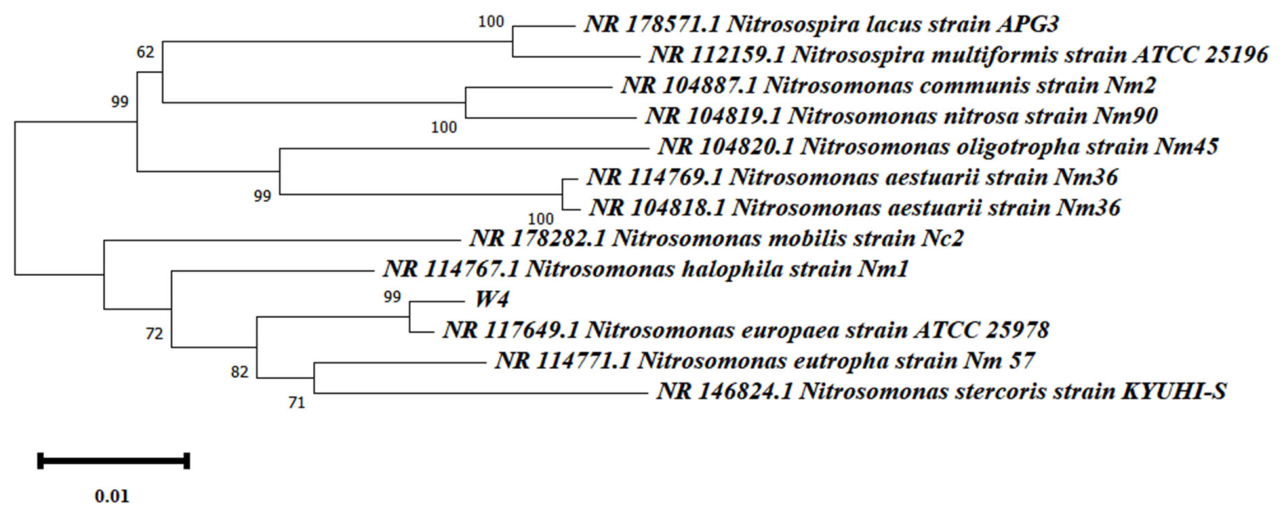
N. europaea W4 exhibits short rod-shaped to subspherical cellular morphology and shows highly phylogenetic similarity, with a 16S rRNA sequence similarity of 99.93%. However, strain W4 demonstrates distinct advantages in ammonia oxidation performance and may possess unique metabolic regulatory characteristics and environmental adaptability [
16]. Phylogenetic analysis demonstrated that
N. europaea W4 clustered within the same clade as
N. europaea and was clearly separated from
Nitrosospira strains. This finding not only confirms the taxonomic classification of strain W4 but also reflects the functional divergence that has occurred between
Nitrosomonas and
Nitrosospira during evolutionary adaptation processes.
Nitrosomonas species are generally adapted to environments with high ammonia nitrogen concentrations, whereas
Nitrosospira species preferentially inhabit environments with relatively low ammonia nitrogen levels [
17].
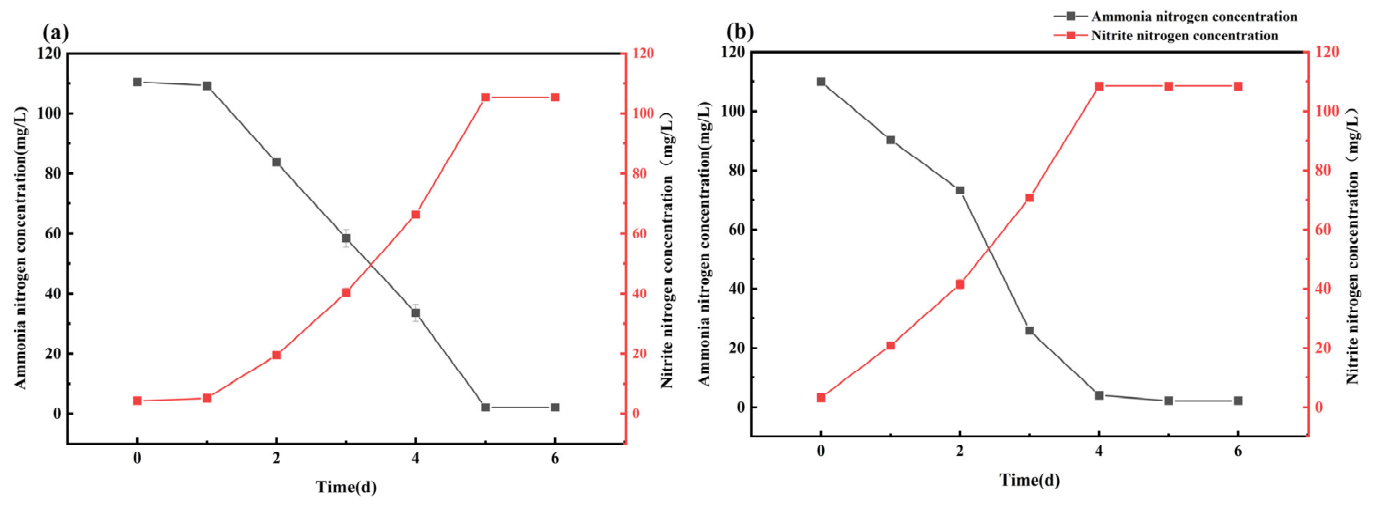
N. europaea W4 demonstrated high ammonia oxidation efficiency in a medium containing an initial ammonia nitrogen concentration of 100 mg/L. Within 72 h, the strain achieved an ammonia nitrogen removal efficiency of 99% and a nitrite nitrogen conversion efficiency exceeding 99%. Notably, no nitrate accumulation was detected throughout the process. This observation is consistent with the typical metabolic characteristics of ammonia-oxidizing bacteria (AOB), which oxidize ammonia to nitrite without further conversion to nitrate under the experimental conditions. The ammonia oxidation-related gene clusters of
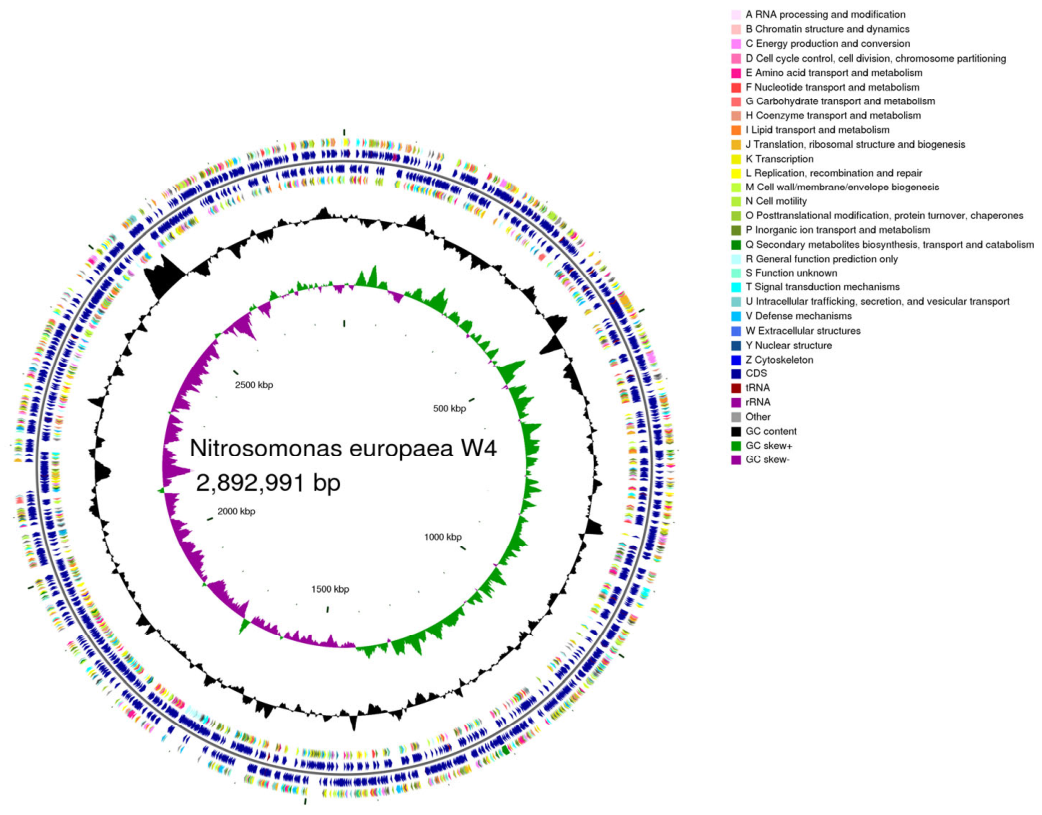
N. europaea W4 are located within highly conserved LCBs, and their arrangement order is completely consistent with that of
N. europaea ATCC 19718. This indicates that the ammonia oxidation function in
N. europaea W4 exhibits a high degree of evolutionary conservation, representing an important manifestation of core metabolic functions.
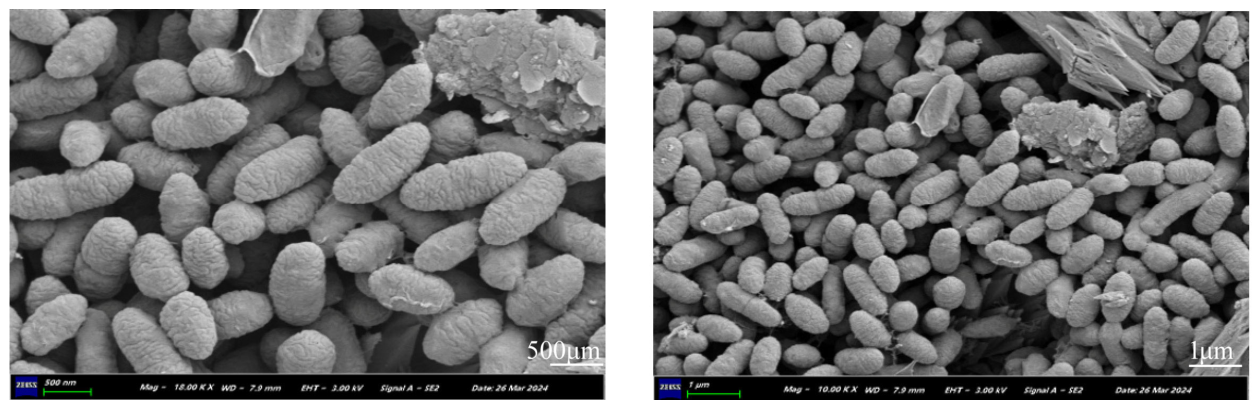
Scanning electron microscopy (SEM) observations revealed that N. europaea W4 exhibited a short-rod-shaped to subspherical morphology with irregularly wrinkled cell surfaces. No cellular appendages, such as flagella, fimbriae, or capsules, were observed. These morphological characteristics may be related to the strain’s planktonic growth state in the liquid medium. In addition, the cells tended to aggregate into clusters rather than disperse uniformly throughout the medium, suggesting that N. europaea W4 possesses an inherent propensity for cell-to-cell aggregation, the specific mechanism of which requires further investigation.
CaCO
3 supplementation significantly reduced the lag phase of
N. europaea W4 from 6 days to 0 days, while exerting no substantial effect on the maximum specific growth rate (μ
max). The μ
max values were 1.42 d
−1 and 1.37 d
−1 in the CaCO
3-supplemented and non-supplemented groups and 1.37 d
−1 in the non-supplemented group. The well-known conventional functions of CaCO
3 (neutralizing acidity and providing an inorganic carbon source) cannot explain this decoupling phenomenon, where the lag phase is significantly shortened while μ
max remains essentially unchanged. Wang et al. [
18] reported that the combined application of calcium carbonate with specific biochar and organic fertilizers effectively stimulated soil nitrification activity, suggesting that CaCO
3 may exert biological functions beyond simple acid–base neutralization. Furthermore, Kolodkin-Gal et al. [
19] noted that Ca
2+ not only serves as a structural component involved in biomineralization but also acts as a signaling molecule that regulates gene expression and biofilm formation. Based on the above experimental results and previous studies, we propose the following working hypothesis: the mechanism by which CaCO
3 shortens the lag phase of AOB involves the dual effects of physical enrichment and calcium-mediated signaling. On one hand, CaCO
3 particles can provide attachment sites for bacterial cells and accelerate local microbial enrichment; on the other hand, Ca
2+ released from CaCO
3 dissolution may act as a signaling molecule to independently initiate early-stage colonization and coordinated expression of functional genes, thereby shortening the time required for the establishment of community function. This hypothesis explains why the lag phase is significantly shortened while μ
max is unaffected, as Ca
2+ primarily regulates community-level initiation behaviors rather than the metabolic growth rate of individual cells. It should be clearly stated that the above mechanism regarding Ca
2+-mediated signal transduction is currently a speculative conclusion. The potential interaction between Ca
2+ signaling and the quorum-sensing system of AOB, as well as the specific contribution of CaCO
3 in complex systems, still requires further verification through molecular biological methods such as gene expression analysis and signal molecule detection. Our experimental results clearly confirm that CaCO
3 primarily plays a priming-promoting role rather than a growth-enhancing role in the regulation of nitrifying microorganisms, providing important experimental evidence for understanding AOB growth kinetics and optimizing high-ammonia-nitrogen wastewater treatment processes.
The experimental results demonstrated that the lag phase in the Fe
2+ treatment group was approximately 1 day shorter than that in the Fe
3+ treatment group. In addition, the ammonia nitrogen consumption rate in the Fe
2+-supplemented medium was slightly higher than that observed in the Fe
3+ medium. Since the transformation and stability of iron oxidation states were not experimentally monitored in this study, the following analysis is proposed as a reasonable speculation based on existing physiological results. Fe
2+ can be directly absorbed by AOB and incorporated into the active centers of ammonia monooxygenase (AMO) and hydroxylamine oxidoreductase (HAO). In contrast, Fe
3+ must first undergo chelation, transport, and reduction to Fe
2+ via siderophore-mediated pathways before it can be utilized. This reduction process imposes an additional energy burden on the cells [
20]. The genome of
N. europaea encodes a wide range of proteins associated with iron acquisition and transport [
4]. The activities of AMO and HAO depend on copper/iron cofactors and heme iron cofactors, respectively. Therefore, iron availability directly affects ammonia oxidation efficiency. Under iron-limited conditions, the ammonia-dependent oxygen consumption activity of AOB decreases significantly [
21]. Moreover, the transport and reduction processes required for Fe
3+ utilization further increase the metabolic burden on the cells [
22]. Consequently, under Fe
3+ supplementation conditions, the strain is likely to allocate additional energy to Fe
3+ reduction, leading to a lower ammonia oxidation rate and an extended lag phase [
5]. Under both iron source treatments, nitrite nitrogen remained the primary end product of the AOB ammonia oxidation pathway in AOB [
21],The presence of Fe
2+ mainly enhanced the rate of nitrite nitrogen accumulation without altering the nature of the metabolic end product.
The optimal growth temperature range for
N. europaea W4 was determined to be 25–30 °C. The strain still maintained basal metabolic activity at 15 °C; however, growth arrest occurred at 10 °C, indicating that further acclimation may be required to improve low-temperature tolerance. Temperature influences bacterial growth and metabolism primarily by affecting membrane fluidity, DNA replication, protein synthesis, and enzyme activity. In general, elevated temperatures enhance enzymatic activity, whereas reduced temperatures suppress metabolic processes [
23]. Compared with typical AOB strains,
N. europaea ATCC 19718 exhibits an optimal growth temperature range of 28–32 °C [
24], whereas
N. eutropha CZ-4 has an optimal growth temperature of 30.9 °C and is capable of surviving at 40 °C [
25,
26]. Both strains therefore demonstrate stronger high-temperature adaptability than
N. europaea W4. The suitable growth temperature range for AOB is generally considered to be 20–30 °C. The lower temperature tolerance limit of
N. europaea W4 was approximately 5 °C lower than that reported for typical AOB strains, indicating that W4 possesses a relatively broad temperature adaptation range within the 15–30 °C. These batch experimental results demonstrate that
N. europaea W4 shows preliminary adaptability to temperatures in the 15–30 °C range; however, its engineering applicability for treating fluctuating-temperature wastewater requires further validation through continuous-flow experiments and pilot-scale tests.
N. europaea W4 exhibits low affinity toward ammonia and primarily maintains intracellular homeostasis through a high ammonia metabolic rate. When the initial ammonia nitrogen concentration increased to 2500 mg/L, the lag phase was prolonged to 72 h, approximately 48 h longer than in the moderate- and low-concentration treatment groups (100–1750 mg/L). In addition, the maximum specific growth rate decreased to 2.85 d
−1. This phenomenon is associated with multiple stress effects induced by high ammonia nitrogen concentrations, including disruption of intracellular ion homeostasis [
27], free ammonia concentrations exceeding the inhibitory threshold for AMO activity, and increased accumulation of hydroxylamine, a by-product of ammonia oxidation that can trigger feedback inhibition [
28]. Meanwhile, ammonia transporters encoded by the strain may enhance cellular tolerance to ammonia toxicity [
29]. Edwards model fitting (R
2 = 0.94) indicated that the optimal ammonia nitrogen concentration for
N. europaea W4 was approximately 1987 mg/L, which is substantially higher than those reported for related strains. For example, the inhibition constant (K
i) of
N. europaea SH-3 is 922.76 mg/L, whereas those of
N. eutropha CZ-4 and
N. halophila C-19 are 597.88 mg/L and 186.24 mg/L, respectively [
30]. Similarly, the optimal ammonia nitrogen concentration for the
N. mobilis NZ13 enrichment culture is only 200–400 mg/L, with a half-maximal inhibitory concentration of 840 mg/L [
25]. In addition, strains belonging to
N. cluster 7 achieve their maximum growth rates at ammonium concentrations of ≥5 mM (approximately 70 mg/L NH
4+) [
31].
Free ammonia (FA) concentrations below 23.64 mg NH
3-N/L have been reported to promote the proliferation of AOB and stimulate extracellular polymeric substance secretion. In contrast, FA concentrations exceeding 687.1 mg/L can completely inhibit microbial activity [
32,
33].
N. europaea W4 may therefore possess unique adaptive mechanisms that enable tolerance to high nitrogen loading conditions during its evolutionary development.
N. europaea W4 can achieve an ammonia oxidation load of 1.28–1.55 kg-N·m
−3·d
−1 at ammonia nitrogen concentrations ranging from 1500 to 2000 mg/L. Under ammonia nitrogen concentrations ranging from 1500 to 2000 mg/L, strain W4 achieved an ammonia oxidation load of 1.28–1.55 kg-N/m
3/d. In future engineering applications, when treating wastewater with ammonia nitrogen concentrations exceeding 2500 mg/L, measures such as staged dilution or pH regulation may be considered to keep the free ammonia (FA) concentration below the inhibitory threshold, thereby ensuring efficient operation of the strain.
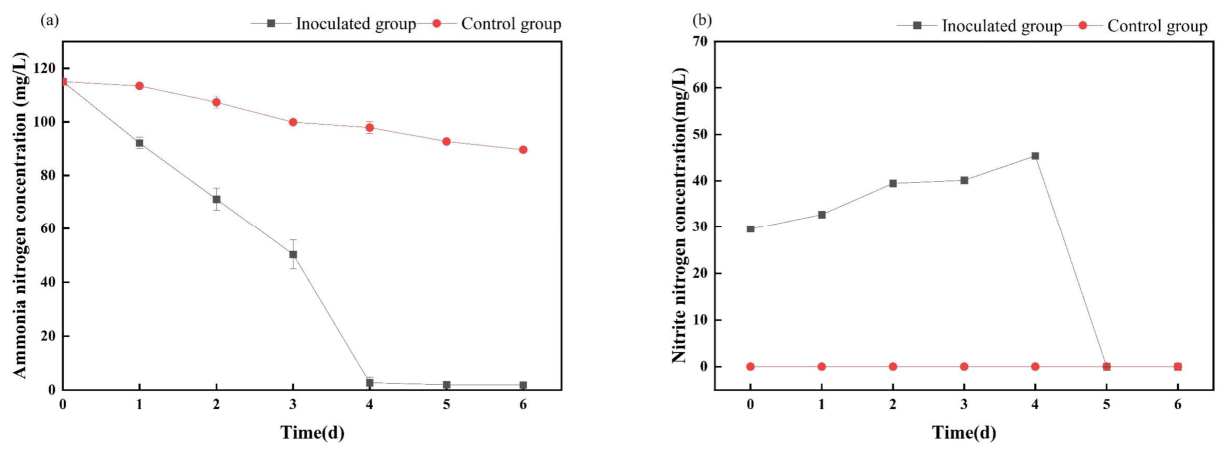
N. europaea W4 exhibited measurable ammonia oxidation capacity in landfill leachate. In the inoculated treatment group, the ammonia nitrogen degradation rate was significantly enhanced, and the nitrite nitrogen concentration reached a maximum value of 45.40 mg/L. In contrast, no detectable nitrite accumulation was observed in the control group following ammonia nitrogen degradation. The high chemical oxygen demand (COD) environment (5.79 × 10
3 mg/L) did not completely inhibit the strain’s activity. This observation may be attributable to the inherent resistance mechanisms of autotrophic AOB toward elevated organic matter concentrations [
34]. Park and Noguera reported that certain AOB strains can reduce the toxicity of organic compounds by expressing efflux pump proteins [
35,
36]. This capability is particularly important for the biological treatment of complex wastewater matrices such as landfill leachate. The rapid decline in nitrite concentration following ammonia nitrogen depletion is likely due to synergistic interactions among multiple microbial groups. Future studies employing high-throughput sequencing technologies could elucidate the underlying mechanisms. Notably, the primary objective of this study was to evaluate the tolerance of the AOB strain W4 in actual wastewater, with a focus on its ammonia-nitrogen conversion function. During the experiment, the decreasing trend of ammonia nitrogen and the concurrent production of nitrite nitrogen were significant and well-correlated, which fully reflected the ammonia oxidation activity of the strain and strongly supported the core conclusions of this study. Therefore, nitrate was not included as a measurement indicator in this study, and this limitation has been explicitly stated in the limitations section of the manuscript. Additionally, long-term continuous reactor trials are warranted to evaluate the stability of ammonia oxidation by strain W4 under practical operating conditions.



 ,
,