1. Introduction
High-Andean ecosystems, particularly páramos, play a strategic role in regulating the hydrological cycle due to their capacity to capture, store, and gradually release water, thereby serving as essential sources of water supply for human populations, agricultural systems, and hydroelectric generation [
1,
2]. This function is closely linked to their hydrogeological and ecological characteristics, including organic soils with high water retention capacity, specialized vegetation, and wetlands, which regulate flow pathways and promote the persistence of baseflow [
3,
4]. Beyond water quantity regulation, páramo ecosystems also contribute to the stabilization of water quality through hydrological buffering, subsurface flow regulation, and natural solute attenuation processes [
4].
However, these ecosystems are increasingly threatened by land-use change, agricultural and livestock expansion, afforestation with exotic species, and extractive activities [
5]. These disturbances can alter hydrological functioning by increasing surface runoff, reducing baseflow, and enhancing the export of nutrients and contaminants, thereby compromising the long-term sustainability of water resources [
1,
5]. In headwater catchments, these pressures may not immediately produce severe hydrochemical degradation, but they can generate early, spatially localized signals in nutrients, organic matter, suspended solids, and microbiological indicators [
6,
7].
Throughout the Andean mountain range, páramo ecosystems have shown recurrent degradation patterns mainly associated with land-use intensification, including reductions in native vegetation cover, increased hydrological variability, and the progressive loss of ecological integrity [
8,
9]. These conditions, together with complex topography and strong orographic influence, generate marked spatial heterogeneity in precipitation, leading to substantial local variability in water availability and hydrological dynamics [
4,
10]. Therefore, understanding the relationships among precipitation, hydrological pathways, and water quality is essential for interpreting the ecohydrological functioning of páramo ecosystems and for supporting the long-term sustainability and resilience of their water resources under increasing environmental pressures [
11]. Recent studies have also emphasized that river water quality dynamics are often shaped by the interaction among hydrochemical facies, lithological conditions, hydrological variability, and anthropogenic inputs. This supports the use of integrated hydrogeochemical and multivariate approaches for assessing river water quality [
12,
13,
14]. In this context, hydrogeochemical stability and water quality are fundamental components of hydrological ecosystem services in páramo ecosystems [
9]. Natural processes such as water storage, water–rock interaction, and ecohydrological buffering can attenuate or even mask emerging anthropogenic signals, thereby hindering the early detection of incipient environmental degradation [
6,
7]. Therefore, identifying early anthropogenic gradients is essential for strengthening preventive conservation and long-term monitoring strategies in protected ecosystems [
6,
7]. This is particularly relevant in high-Andean protected areas, where natural mineralization processes may dominate the hydrochemical signature, while anthropogenic pressures remain secondary, intermittent, and seasonally modulated.
In Ecuador, several studies have highlighted the critical role of precipitation in regulating páramo hydrology. At the Zhurucay Ecohydrological Observatory (ZEO), located within Cajas National Park, more than 80% of rainfall events correspond to low-intensity precipitation, which contributes substantially to baseflow maintenance and modulates nutrient and sediment concentrations in river systems. Similarly, studies conducted on the slopes of the Antisana volcano have documented marked spatial variability in annual precipitation and atmospheric humidity, confirming that precipitation plays a key role in maintaining the thermal, hydrological, and ecological balance of Ecuadorian páramo ecosystems [
8,
15]. These findings indicate that páramo water quality cannot be interpreted solely as a response to land-use pressure; rather, it must also be analyzed in relation to rainfall seasonality, subsurface connectivity, residence time, and lithological controls.
Rivers located within páramo ecosystems exhibit marked physicochemical variability along longitudinal gradients and across hydrological seasons as a result of interactions among altitudinal, hydroclimatic, geological, and land-use factors [
8,
15]. High-Andean headwater rivers generally show low to moderate EC values and well-oxygenated conditions; however, these parameters should be interpreted quantitatively and in relation to lithology, altitude, hydrological seasonality, and land-use pressure. Published studies in Andean systems have reported EC values of approximately 70.5 µS/cm in minimally disturbed rivers of Cajas National Park and 98.4–473.8 µS/cm in an Ecuadorian Andean watershed. Similarly, high-Andean rivers in Peru have shown EC values ranging from 141.17 to 377.7 µS/cm and DO concentrations between 5.58 ± 0.18 and 7.98 ± 0.75 mg/L [
16,
17]. In the Diablo Sacha River, EC ranged from 101.8 to 359.0 µS/cm, while DO varied from 5.0 to 12.1 mg/L, indicating moderate mineralization and generally favorable oxygenation.
Similarly, recent water-quality studies have used hydrochemical facies, water-quality indicators, spatial analysis, and multivariate statistics to distinguish the relative influence of natural geochemical processes and human pressures on aquatic systems [
12,
13,
14]. Despite these advances, studies that explicitly differentiate natural hydrogeochemical controls from anthropogenic signals under seasonal ecohydrological dynamics remain scarce in protected páramo ecosystems [
9]. In this context, no previous study has comprehensively evaluated the spatiotemporal variability of water quality in the Diablo Sacha River, located within the QWPA, through the integrated analysis of physicochemical and hydrochemical parameters using multivariate statistical approaches.
This lack of systematic information limits the understanding of the processes controlling water quality dynamics in this protected area and constrains the development of evidence-based management and conservation strategies. This knowledge gap is particularly relevant because the Diablo Sacha River drains a high-Andean protected catchment where natural lithological weathering, páramo soil regulation, and seasonal hydrological connectivity may interact with localized livestock, agricultural, and rural-settlement pressures.
Based on the available literature, three main lines of evidence support this study: (1) the páramo ecosystems regulate streamflow and water quality through organic soils, vegetation cover, wetlands, and subsurface flow pathways; (2) the hydrochemical variability in high-Andean rivers is strongly influenced by natural processes such as water–rock interaction, mineral weathering, residence time, and longitudinal solute accumulation; (3) the land-use pressures may generate early anthropogenic signals associated with nutrients, organic matter, suspended solids, oils and grease, and microbiological indicators; however, these signals may remain spatially localized and seasonally modulated. Therefore, an integrated approach is required to distinguish natural hydrogeochemical background conditions from emerging anthropogenic pressures in protected headwater systems.
In high-Andean páramo ecosystems, where water chemistry is predominantly controlled by natural hydrogeochemical and hydrological processes, distinguishing natural variability from land-use-related signals remains a key scientific challenge. The Diablo Sacha River, located within the Quinllunga Water Protection Area, represents a protected páramo headwater system where water quality may reflect both natural hydrogeochemical controls and emerging anthropogenic pressures. Based on previous studies, three main lines of evidence support this research: páramo ecosystems regulate streamflow and water quality through organic soils, vegetation, wetlands, and subsurface flow pathways; hydrochemical variability in Andean rivers is strongly influenced by water–rock interaction, mineral weathering, residence time, and hydrological seasonality; and land-use pressures may generate early signals related to nutrients, organic matter, suspended solids, oils and grease, and microbiological indicators [
9,
18].
Accordingly, this study hypothesizes that water quality in the Diablo Sacha River is primarily structured by natural hydrogeochemical processes, while anthropogenic pressures generate secondary, spatially localized, and seasonally modulated signals. The innovation of this research lies in the explicit separation of natural hydrogeochemical gradients from early anthropogenic signals through the combined use of hydrochemical facies analysis, non-parametric correlation, independent principal component analyses for hydrogeochemical and anthropogenic variables, and spatiotemporal multivariate testing. Therefore, this study evaluates the spatiotemporal variability of water quality in the Diablo Sacha River, with the aim of distinguishing natural background conditions from anthropogenic pressures and supporting early-warning, conservation, and water-security strategies in protected high-Andean ecosystems.
2. Materials and Methods
2.1. Study Area
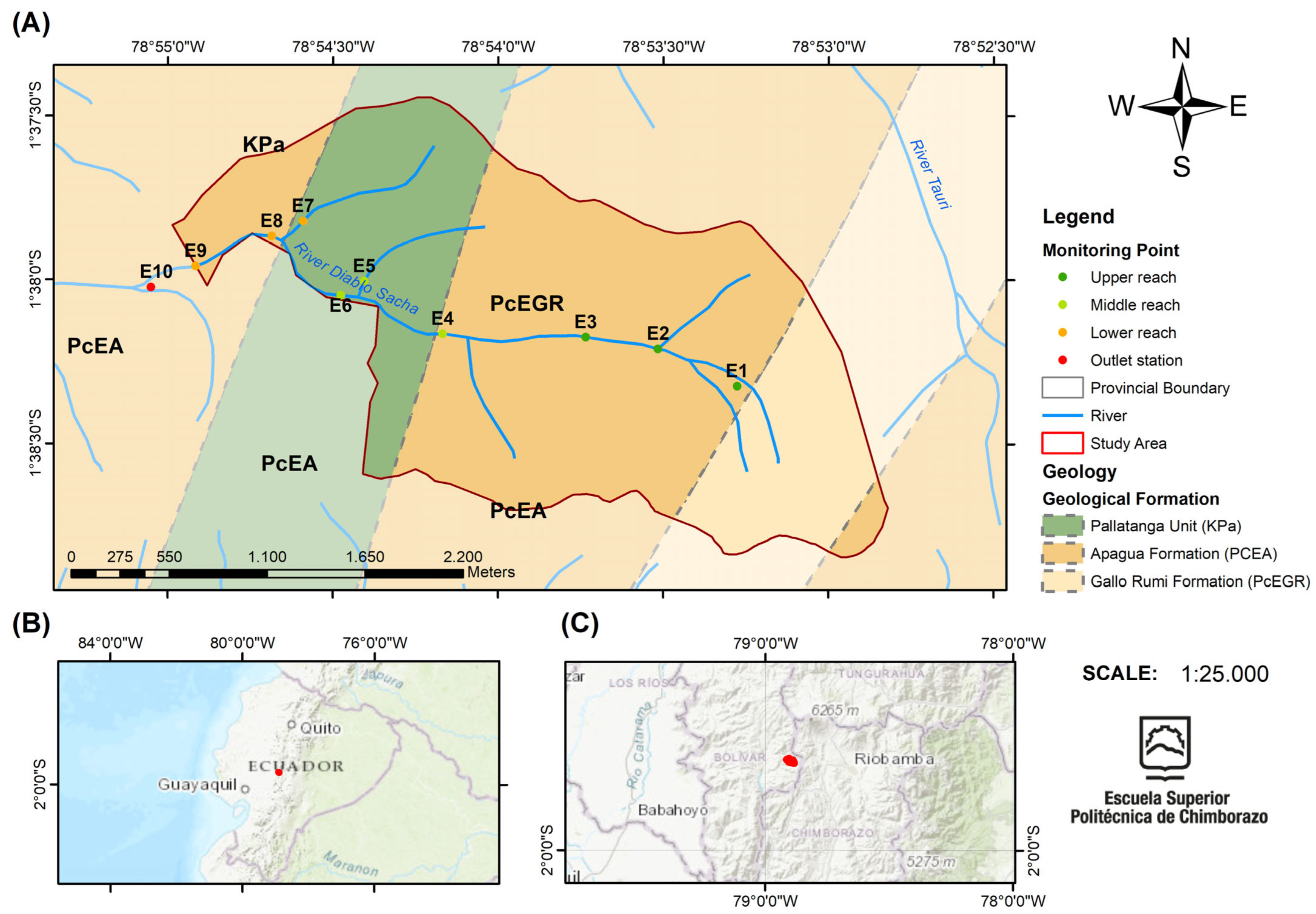
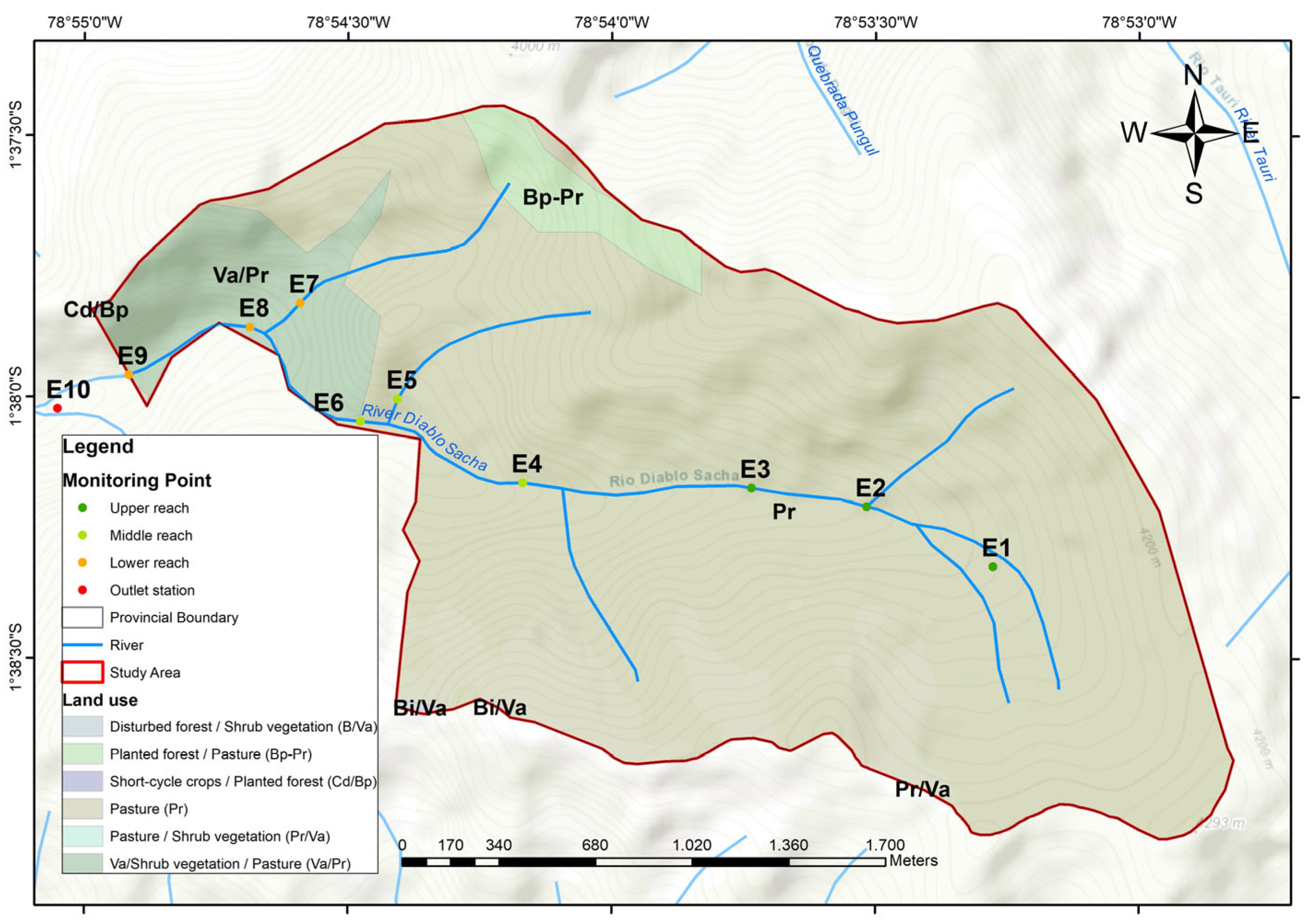
Figure 1A, shows the Quinllunga Water Protection Area (QWPA), located in San Simón rural parish, Guaranda canton, Bolívar province, in the central Ecuadorian Andes. The protected area extends approximately between 78°55′ W and 78°53′ W longitude and 1°37′ S and 1°39′ S latitude. Within this area, the Diablo Sacha River originates and flows through a high-Andean mountainous landscape characterized by steep slopes, deeply incised valleys, and a pronounced altitudinal gradient. These geomorphological features strongly influence hydrological dynamics, erosion processes, sediment transport, and water physicochemistry. Panels (B) and (C) show the regional and national location of the study area within Ecuador, providing geographical context at different spatial scales.
The Diablo Sacha River drains longitudinally through the protected area, from approximately 4100 m a.s.l. in the upper headwaters to 3352 m a.s.l. at the outlet. This altitudinal gradient defines a clear geomorphological transition from narrow, high-energy headwater channels to relatively wider middle and lower reaches, where slopes decrease and lateral hydrological connectivity progressively increases. This spatial configuration favors longitudinal variability in hydraulic conditions, sediment transport, and solute dynamics. To support this longitudinal interpretation,
Table 1 summarizes the spatial attributes of the monitoring stations.
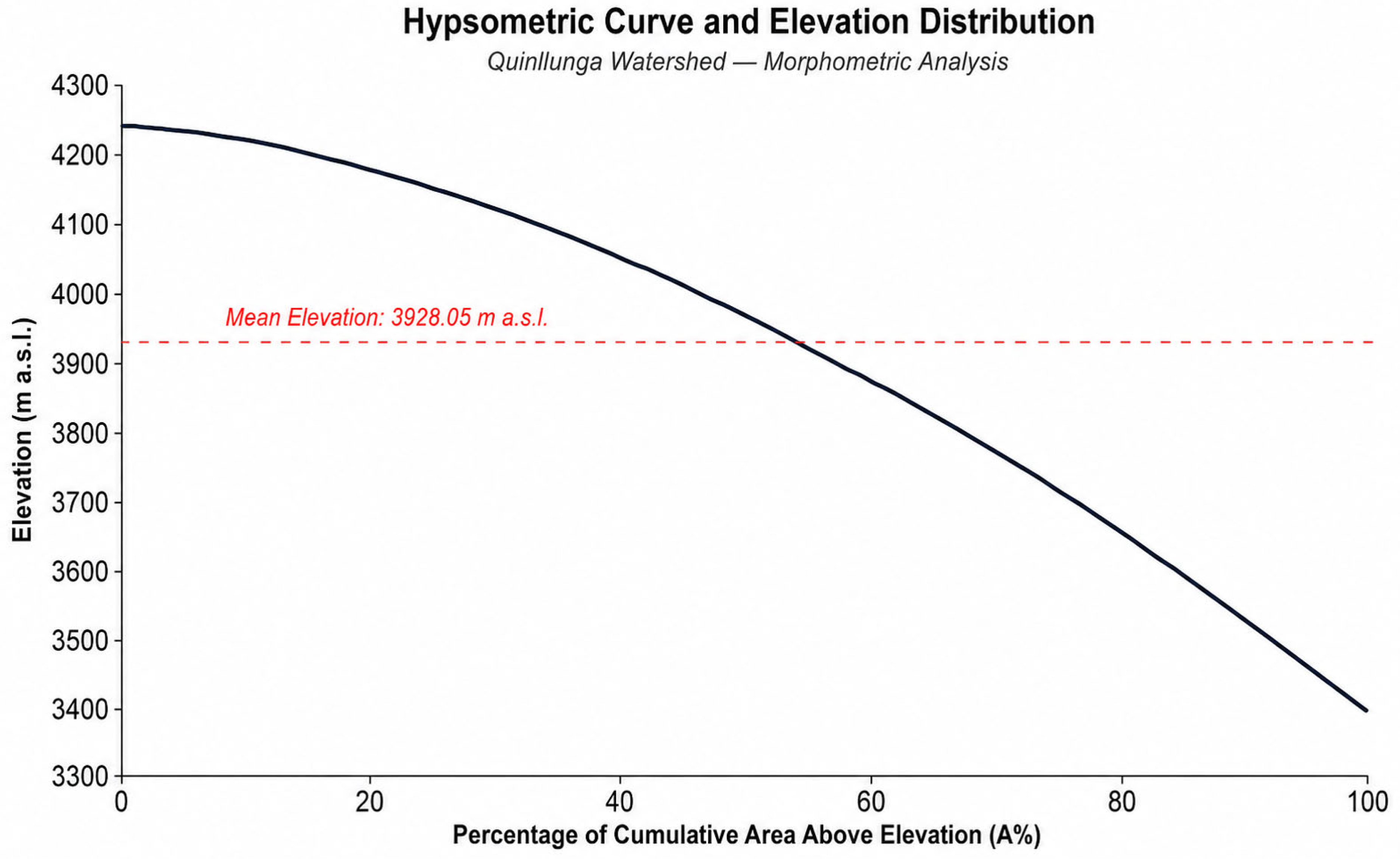
Appendix A.2 (
Figure A3) presents the hypsometric curve of the Quinllunga watershed.
The morphometric characteristics of the Diablo Sacha River catchment are presented in
Table 2 to support the interpretation of spatial hydrochemical variability.
Appendix A.2 (
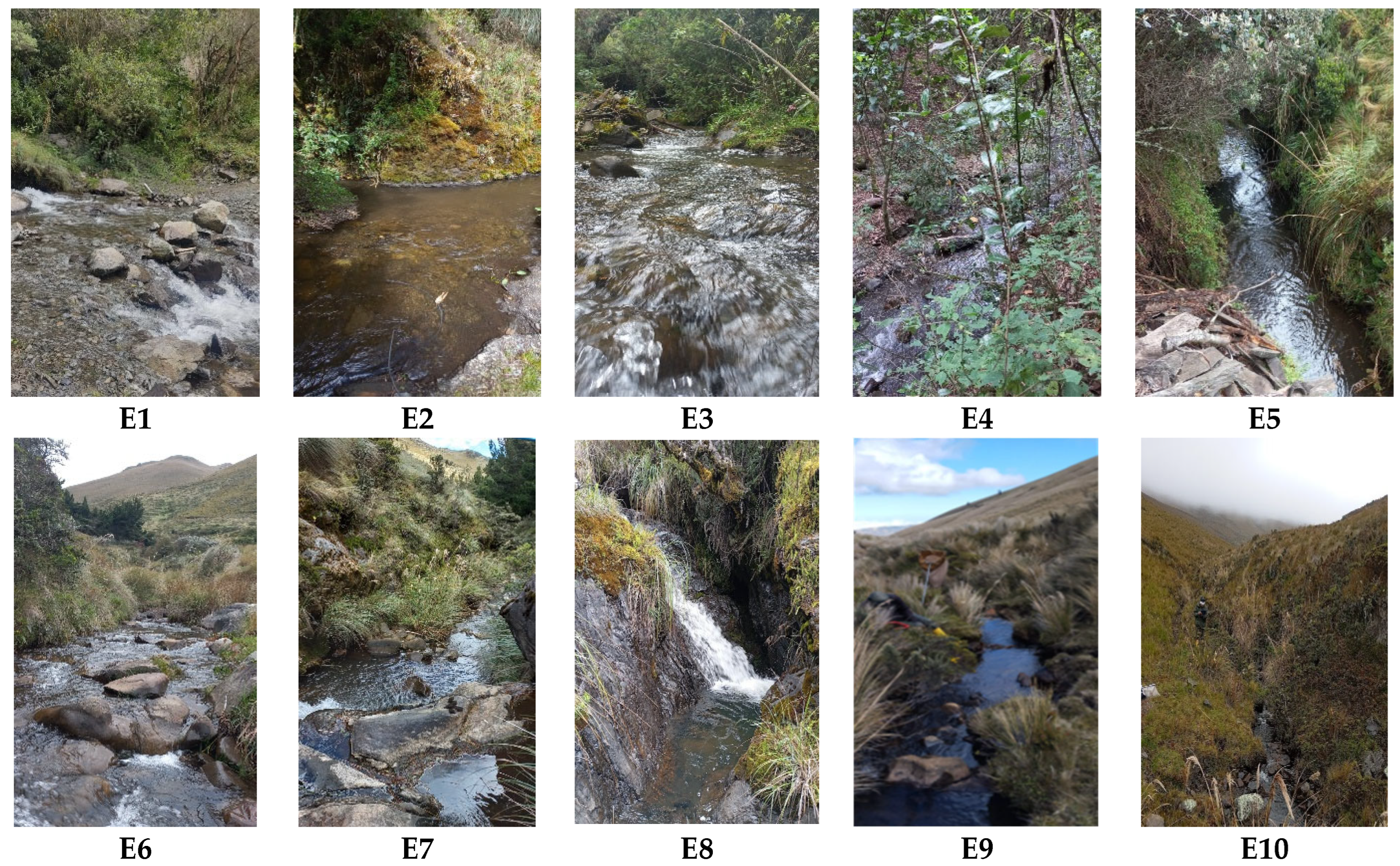
Figure A2) also includes photographs of the ten monitoring stations (E1–E10), showing variations in channel morphology, riparian vegetation, flow conditions, and surrounding páramo cover from the downstream outlet to the upper headwaters.
Appendix A.2 (
Figure A1) shows the ecosystem is dominated by high-Andean páramo formations, including grass páramo (
pajonales), herbaceous páramo communities, and remnants of evergreen páramo shrublands. These environments are characterized by organic-rich Andisols with high porosity and water retention capacity, which regulate runoff generation, enhance infiltration, and sustain baseflow throughout the hydrological year [
19]. The climatic regime exhibits marked seasonality, with well-defined wet and dry periods. Thermal variability is mainly controlled by altitude, seasonal precipitation, and persistent wind exposure, all of which are typical of páramo environments and directly influence evapotranspiration rates, hydrological response, and biogeochemical cycling.
From a geological perspective, the basin comprises three main lithostratigraphic units that influence hydrogeochemical processes: the Pallatanga Unit (KPa), the Apagua Formation (PcEA), and the Gallo Rumi Formation (PcEGR) [
Figure 1A].
The central-western sector is dominated by the Pallatanga Unit, which is mainly composed of tholeiitic oceanic basalts with mid-ocean ridge basalt (MORB) affinity from the Middle Cretaceous. The Apagua Formation, widely distributed across the central and eastern sectors, consists of fine- to coarse-grained sandstones and siltstones with high quartz content, influencing silica availability and bicarbonate formation through silicate weathering. The easternmost portion includes the Gallo Rumi Formation, characterized by conglomerates, pebbly sandstones, bedded quartz, mudstones, cherts, and volcanic lithic fragments, which introduce additional lithological heterogeneity. The spatial distribution of these units along the fluvial corridor creates contrasting water–rock interaction environments, supporting longitudinal variations in major ionic composition.
The monitoring network consisted of ten stations (E1–E10) distributed longitudinally along the Diablo Sacha River to capture the altitudinal, geomorphological, lithological, hydrological, and land-use gradients of the catchment. For the spatial analysis, the stations were grouped into three river reaches: lower reach (3352–3560 m a.s.l.; E2–E4), middle reach (3640–3880 m a.s.l.; E5–E7), and upper reach (3900–4100 m a.s.l.; E8–E10). Station E1 was analyzed separately as a downstream outlet station, representing the integrated hydrochemical response of the catchment outside the QWPA boundaries. This classification is consistent with the spatial structure used for PCA interpretation and PERMANOVA analysis.
The lower reach and outlet sector are relatively more accessible and may therefore be more influenced by diffuse anthropogenic pressures, whereas the upper reaches represent high-altitude headwater conditions with comparatively lower direct human influence [
1]. However, these spatial categories were not interpreted as fixed pollution classes, but rather as geomorphological and ecohydrological units used to evaluate longitudinal hydrochemical gradients and localized anthropogenic signals. Overall, the combined geomorphological, geological, hydrological, and ecological gradients of the QWPA provide an appropriate natural setting for assessing the relative influence of geogenic controls, seasonal hydrological variability, and localized anthropogenic pressures on water quality dynamics in a protected high-Andean headwater basin.
2.2. Hydrological and Water Quality Monitoring
A longitudinal spatiotemporal sampling design was implemented along the Diablo Sacha River to evaluate seasonal and spatial variability in water quality within the QWPA. Ten monitoring stations, designated as E1–E10, were distributed along the main river corridor to capture changes in altitude, geomorphology, hydrological connectivity, land use, and diffuse anthropogenic influence associated with livestock activity, small-scale agriculture, and scattered rural settlements.
The stations were grouped into three spatial sectors according to altitude and geomorphological characteristics: lower reach, from 3352 to 3560 m a.s.l. E2–E4; middle reach, from 3640 to 3880 m a.s.l. E5–E7; and upper reach, from 3900 to 4100 m a.s.l. E8–E10. Station E1 was analyzed separately as a downstream outlet station, representing the integrated hydrochemical response of the catchment outside the QWPA boundaries.
Monitoring was conducted bimonthly over one hydrological year, from March 2024 to January 2025, resulting in six sampling campaigns: March, May, July, September, November, and January. Based on regional Andean hydrological seasonality and observed streamflow dynamics, the sampling campaigns were classified into three hydrological seasons: wet season, including March and January; transitional season, including May and November; and dry season, including July and September.
The monitoring program generated 60 spatiotemporal observations per parameter, corresponding to 10 stations sampled across six monitoring campaigns. This design enabled the evaluation of longitudinal hydrochemical gradients, seasonal ecohydrological variability, and localized anthropogenic signals within a high-Andean headwater river system.
2.3. Field Measurements and Sample Collection
Field measurements and water sample collection were conducted following the Ecuadorian technical standard NTE INEN 2176:2013 [
20] for water quality sampling, preservation, and handling procedures. During each monitoring campaign, in situ measurements of pH, electrical conductivity, dissolved oxygen and temperature were performed using a portable multiparameter meter (HI9829, Hanna Instruments, Woonsocket, RI, USA), while water depth, channel width, and flow velocity were measured using calibrated hydrometric equipment. The descriptive summary of the main physical parameters measured during the monitoring campaigns is provided in
Table A1.
Flow velocity was measured using a calibrated universal current meter equipped with a Type 1 propeller (HyQuest Solutions Pty Ltd., Warwick, Queensland, Australia; operational range: 0.025–10 m s−1; accuracy: ±1%), following standard hydrometric procedures and manufacturer recommendations. Measurements were taken at representative channel cross-sections following standard hydrometric procedures. Water depth and channel width were determined using a graduated staff.
Hydraulic measurements were performed under relatively stable flow conditions, avoiding extreme rainfall events whenever possible. This allowed the characterization of local hydrodynamic variability influencing hydrochemical transport and seasonal ecohydrological responses.
Water samples were collected in pre-cleaned polyethylene bottles and preserved according to parameter-specific requirements. Samples intended for physicochemical, hydrochemical, and microbiological analyses were refrigerated and transported to the laboratory under controlled conditions for subsequent analysis.
Field quality assurance and quality control procedures included instrument calibration prior to each campaign, standardized sampling protocols, duplicate field measurements whenever possible, and appropriate sample preservation during transport and storage.
2.4. Laboratory Analysis
Physicochemical, hydrochemical, and microbiological analyses were conducted in the Instrumental Chemistry Laboratory of the Escuela Superior Politécnica de Chimborazo (ESPOCH), according to Standard Methods for the Examination of Water and Wastewater [
21] The analytical parameters, methods, techniques, and equipment used for laboratory determinations are summarized in
Table A2.
The analyzed parameters included physical variables, major ions, nutrients, organic matter indicators, trace metals, and microbiological indicators. Field parameters, including temperature, pH, electrical conductivity, and dissolved oxygen, were measured in situ using a multiparameter probe, and their descriptive summary is provided in
Table A1. Total suspended solids were determined using APHA Method 2540 D, corresponding to total suspended solids dried at 103–105 °C, while total dissolved solids were determined using APHA Method 2540 C, corresponding to total dissolved solids dried at 180 °C.
Alkalinity was determined by titration and expressed in terms of bicarbonate/carbonate species when appropriate. Chemical oxygen demand was measured using the closed reflux colorimetric method, whereas biochemical oxygen demand was determined using the 5-day BOD test. Sulfates, nitrates, and nitrites were analyzed using spectrophotometric methods. Major cations, including Ca2+, Mg2+, Na+, K+, Fe, Mn, and Zn, were determined by atomic absorption spectrophotometry. Trace metals, including Cu, Cd, Ni, Hg, Pb, As, Co, and Se, were analyzed by inductively coupled plasma–mass spectrometry. Total and fecal coliforms were determined using the IDEXX Colilert method and expressed as MPN/100 mL.
Quality assurance and quality control procedures included calibration with certified standards, reagent blanks, duplicate analyses, and verification of analytical precision according to APHA recommendations. Samples with anomalous values or analytical inconsistencies were reanalyzed when necessary.
Detection limits varied according to the analytical technique and parameter evaluated. Major ions and nutrients generally had detection limits within the mg/L range, whereas trace metals analyzed by ICP–MS had detection limits within the µg/L range, according to instrument specifications and APHA recommendations. Approximate detection limits were 0.01 mg/L for NO2− and NO3−, 0.1 mg/L for major ions, and between 0.01 and 1 µg/L for trace metals determined by ICP–MS.
The reliability of hydrochemical analyses was evaluated using ionic balance error calculations. Samples with ionic balance errors within ±5% were considered analytically acceptable for subsequent hydrochemical interpretation.
Trace metals with concentrations near detection limits or limited spatial variability were excluded from PCA and PERMANOVA analyses to avoid introducing statistical noise and masking the dominant hydrogeochemical and anthropogenic gradients. However, these variables were retained for descriptive interpretation when analytically reliable.
2.5. Hydrogeochemical Analysis
A hydrogeochemical analysis was conducted based on the relationships between major cations (Ca
2+, Mg
2+, Na
+, and K
+) and anions (HCO
3− + CO
32−, SO
42−, and Cl
−) represented in a Piper diagram, with data expressed in (% meq/L) [
22]. Ion concentrations originally expressed in mg/L were converted to milliequivalents per liter (meq/L) using the equivalent weight of each ion and were subsequently transformed into percentage milliequivalents (% meq/L) for graphical representation. This conversion allowed the relative dominance of major cations and anions to be compared among stations and hydrological periods.
This graphical approach is widely used to identify hydrochemical facies, interpret hydrogeochemical processes, assess geological controls, and evaluate mineral dissolution reactions that influence water chemistry [
22]. In this study, the Piper diagram was used to classify dominant hydrochemical facies, evaluate longitudinal hydrochemical gradients, and support the interpretation of mineralization and water–rock interaction processes along the Diablo Sacha River.
Only samples with ionic balance errors within ±5% were considered analytically acceptable for hydrogeochemical interpretation. This criterion was applied to ensure consistency between major cation and anion concentrations and to increase confidence in facies classification [
9].
The Piper diagram and related hydrochemical analyses were performed in RStudio Version 2025.09.2+418 using the hydrogeo, tidyverse, readxl, and cowplot packages. This analysis was also used to assess whether the hydrochemical composition remained relatively stable across monitoring stations and hydrological seasons, and whether downstream changes in ionic composition were consistent with progressive mineralization and lithological influence.
2.6. Statistical Analysis
The statistical analysis of the dataset was conducted using three complementary approaches: descriptive statistics, bivariate analysis, and multivariate analysis. The descriptive statistics were used to characterize the general behavior of the data, summarize measures of central tendency and dispersion, identify outliers and potential anomalies, and assess the consistency and quality of the dataset collected throughout the monitoring period.
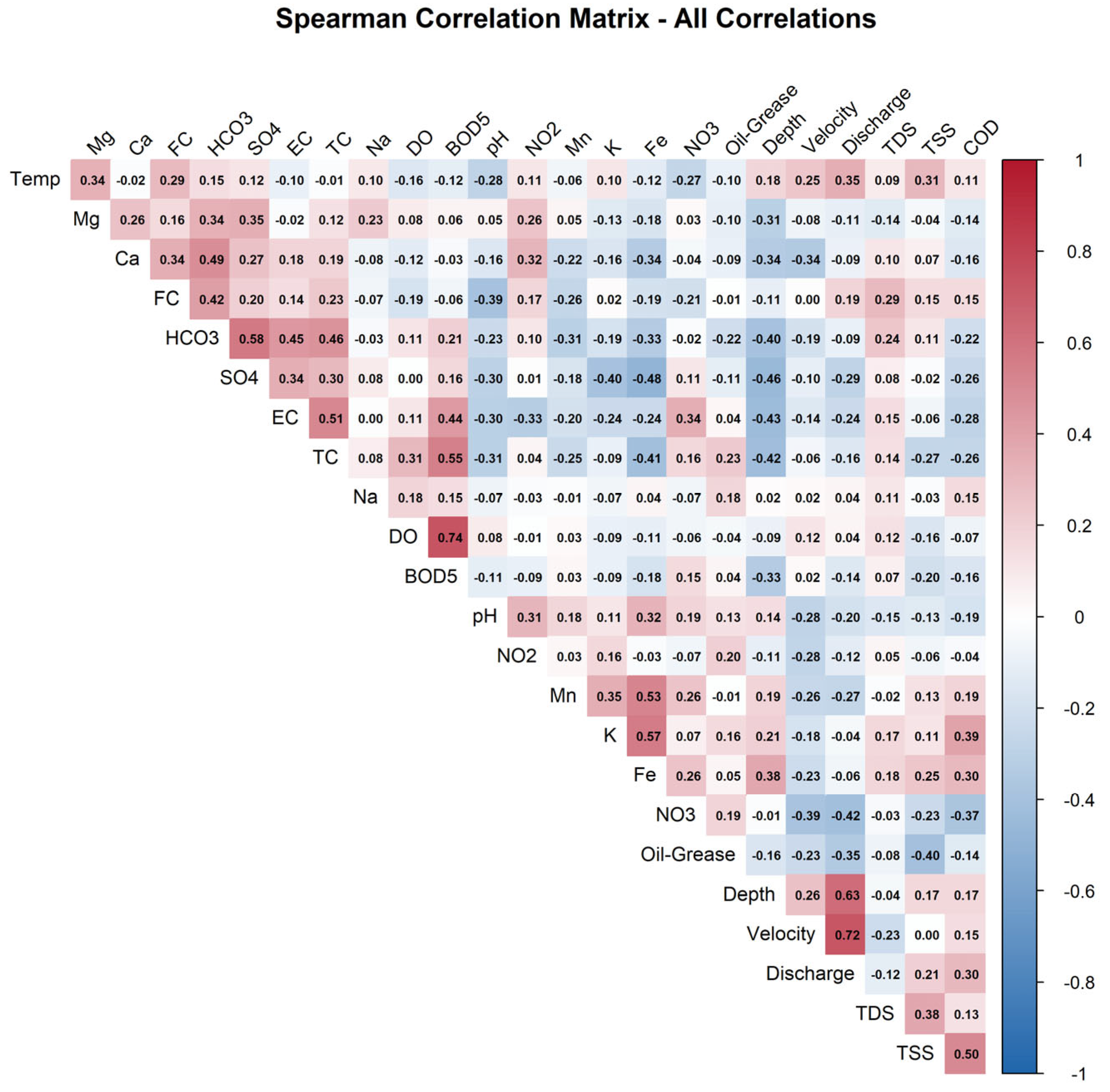
Subsequently, bivariate analysis was performed using Spearman’s rank correlation to assess monotonic associations among physicochemical parameters. This non-parametric test is appropriate when datasets contain extreme values or violate normality assumptions, as indicated by the Shapiro–Wilk test (
p < 0.05), making it suitable for surface water studies characterized by heterogeneous concentrations and variables measured at different scales [
22,
23]. Variables with concentrations close to analytical detection limits, very low variability, or limited environmental interpretability were excluded from correlation and multivariate analyses to reduce spurious associations and statistical noise [
24].
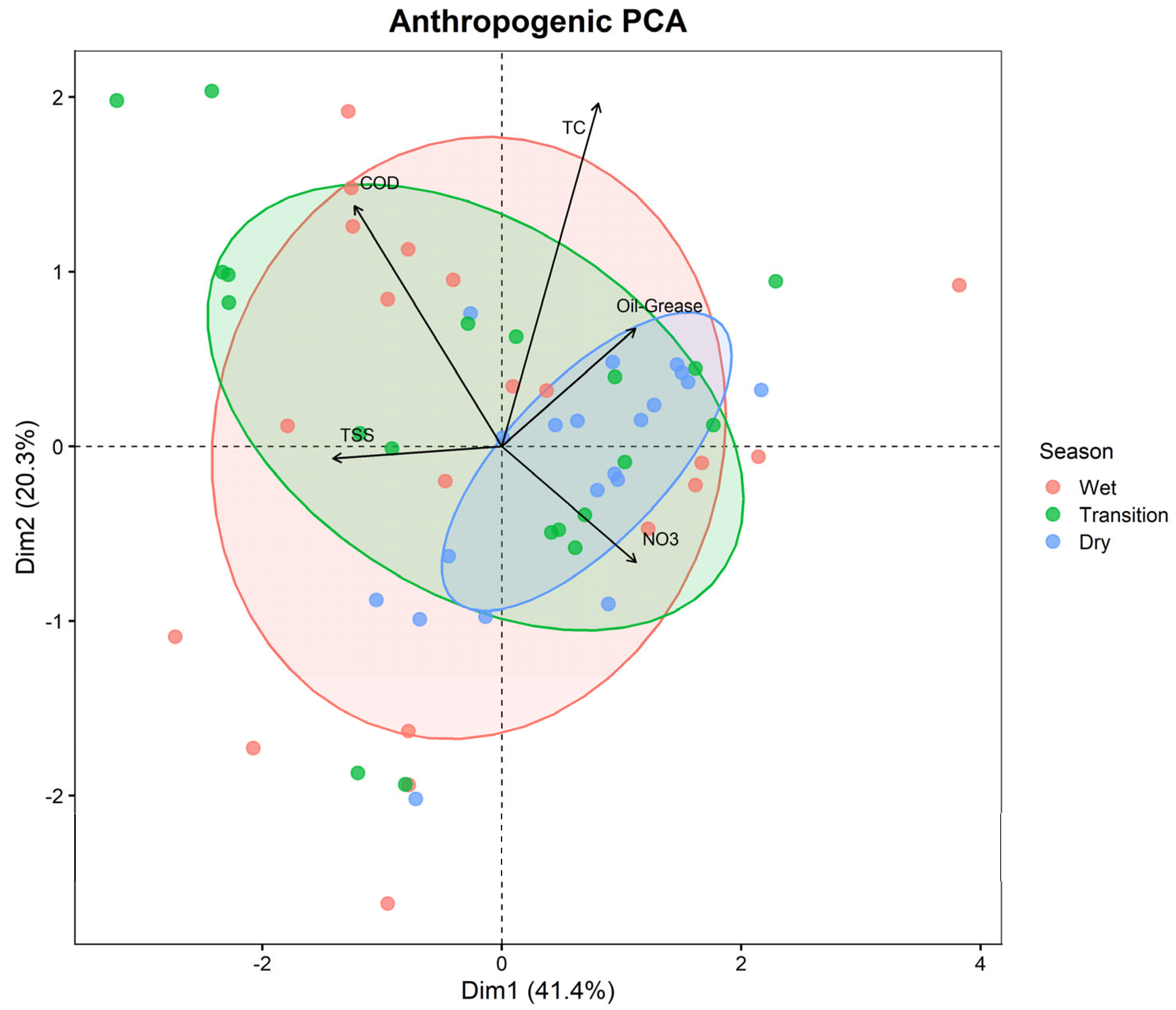
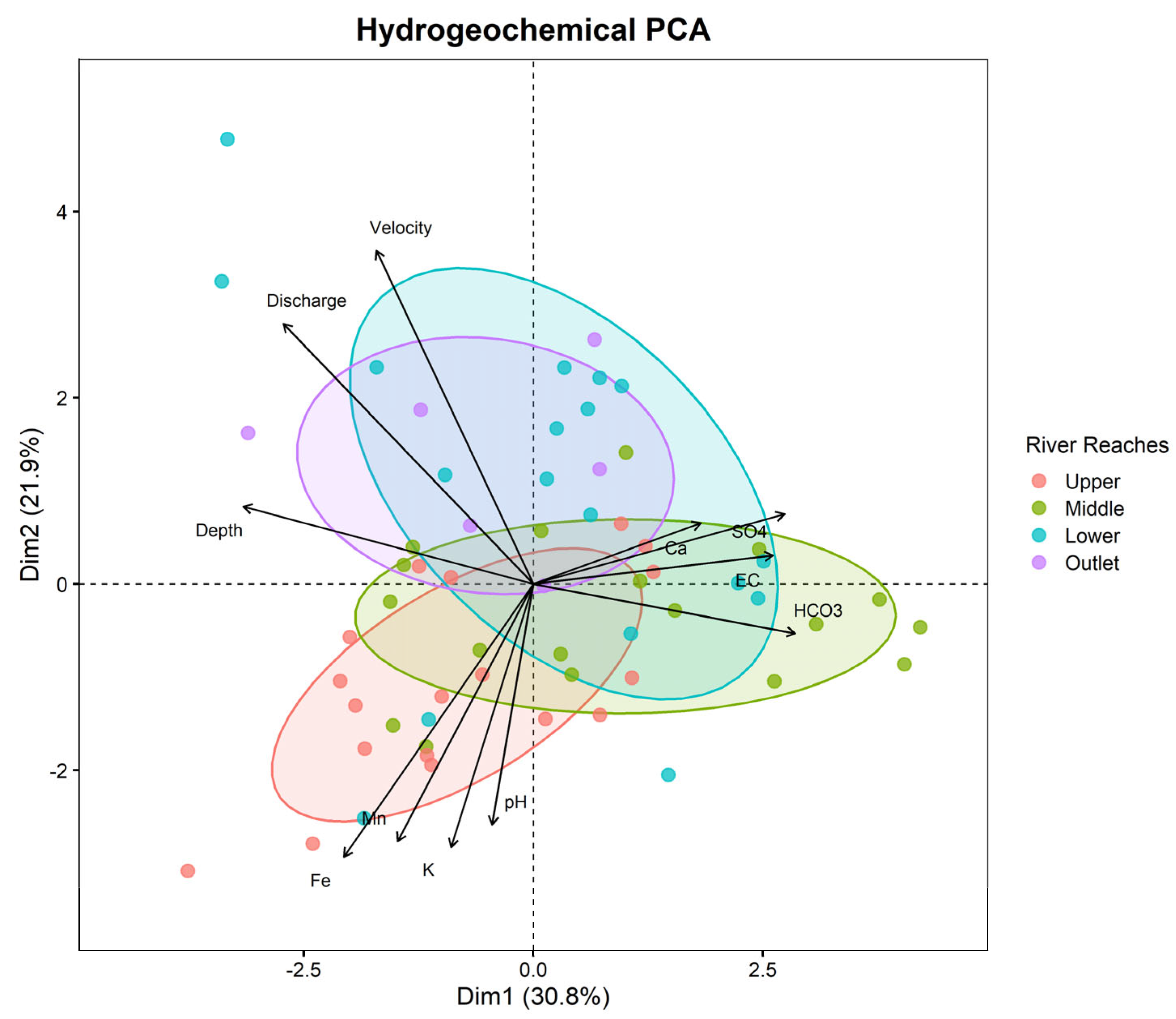
The multivariate statistical methods were applied to evaluate spatial and temporal patterns in water quality. Principal component analysis (PCA) was performed separately on two predefined groups of variables to distinguish natural hydrogeochemical gradients from potential anthropogenic signals [
24]. This separation was adopted to avoid masking weaker anthropogenic gradients by the stronger geogenic and hydrological variability typically observed in high-Andean headwater systems.
The hydrogeochemical PCA included electrical conductivity, total dissolved solids, pH, HCO3−, SO42−, Ca2+, Mg2+, Na+, K+, Fe, Mn, discharge, flow velocity, and water depth. These variables were selected because they reflect mineralization, lithological influence, water–rock interaction, and seasonal hydrological modulation. The anthropogenic PCA included NO3−, NO2−, BOD5, COD, total suspended solids, oils and grease, total coliforms, and fecal coliforms. These variables were selected because they represent nutrient enrichment, organic matter inputs, suspended material transport, and microbiological signals associated with localized land-use pressures.
Prior to multivariate analysis, all variables were transformed using log10(x + 1) and subsequently standardized using z-score normalization. The log10(x + 1) transformation was applied to reduce skewness and minimize the influence of extreme values, whereas z-score standardization was used to remove the effect of different measurement units and ensure comparability among variables expressed in different units and concentration ranges. This strategy enabled separate interpretation of natural and anthropogenic processes, avoiding confusion between environmental signals of different nature. In particular, the independent PCA structure was used to prevent strong geogenic gradients from masking weaker but environmentally relevant anthropogenic signals. The suitability of each PCA dataset was evaluated using the Kaiser–Meyer–Olkin index and Bartlett’s test of sphericity. PCA was interpreted as an exploratory ordination method for identifying dominant ecohydrological gradients rather than as a causal model.
Trace metals were excluded from PCA and PERMANOVA analyses when they presented concentrations close to analytical detection limits, limited spatial variability, or high collinearity with other variables (|ρ| > 0.70). This criterion was applied to reduce redundancy, minimize statistical noise, and avoid the disproportionate influence of variables with limited contribution to the dominant hydrogeochemical and anthropogenic gradients. However, trace metals were retained for descriptive interpretation when analytically reliable [
24].
Spatiotemporal variation in water quality was evaluated using a two-way PERMANOVA based on Euclidean distances and 999 permutations. Prior to analysis, variables were transformed and standardized as described above. The model included spatial effects represented by river reach (River_Reaches), temporal effects represented by hydrological season (Season), and their interaction (River_Reaches × Season). To account for the repeated sampling structure and reduce potential bias associated with non-independent observations from the same monitoring stations, permutations were constrained within each sampling station using the
strata argument [
24]. Homogeneity of multivariate dispersions was assessed using PERMDISP for both River_Reaches and Season to evaluate whether significant PERMANOVA results could be attributed to differences in group centroids rather than differences in within-group dispersion. When PERMDISP was significant, PERMANOVA results were interpreted cautiously, as significant differences may partially reflect dispersion heterogeneity [
25].
To verify the reliability of the hydrochemical data, ionic balance error (IBE) was calculated for each sample after converting major cation and anion concentrations from mg/L to meq/L. The ionic balance error was calculated as: IBE (%) = [(Σ cations − Σ anions)/(Σ cations + Σ anions)] × 100. Samples with ionic balance errors within ±5% were considered analytically acceptable for hydrogeochemical interpretation and Piper diagram classification. This criterion was applied to ensure consistency between major cation and anion concentrations.
2.7. Use of Generative AI and AI-Assisted Technologies
ChatGPT (OpenAI, San Francisco, CA, USA; GPT-5.5 version) was used only to support language editing, grammar correction, and textual clarity. It was not used to generate data, conduct analyses, create results, or replace the authors’ interpretation.
4. Discussion
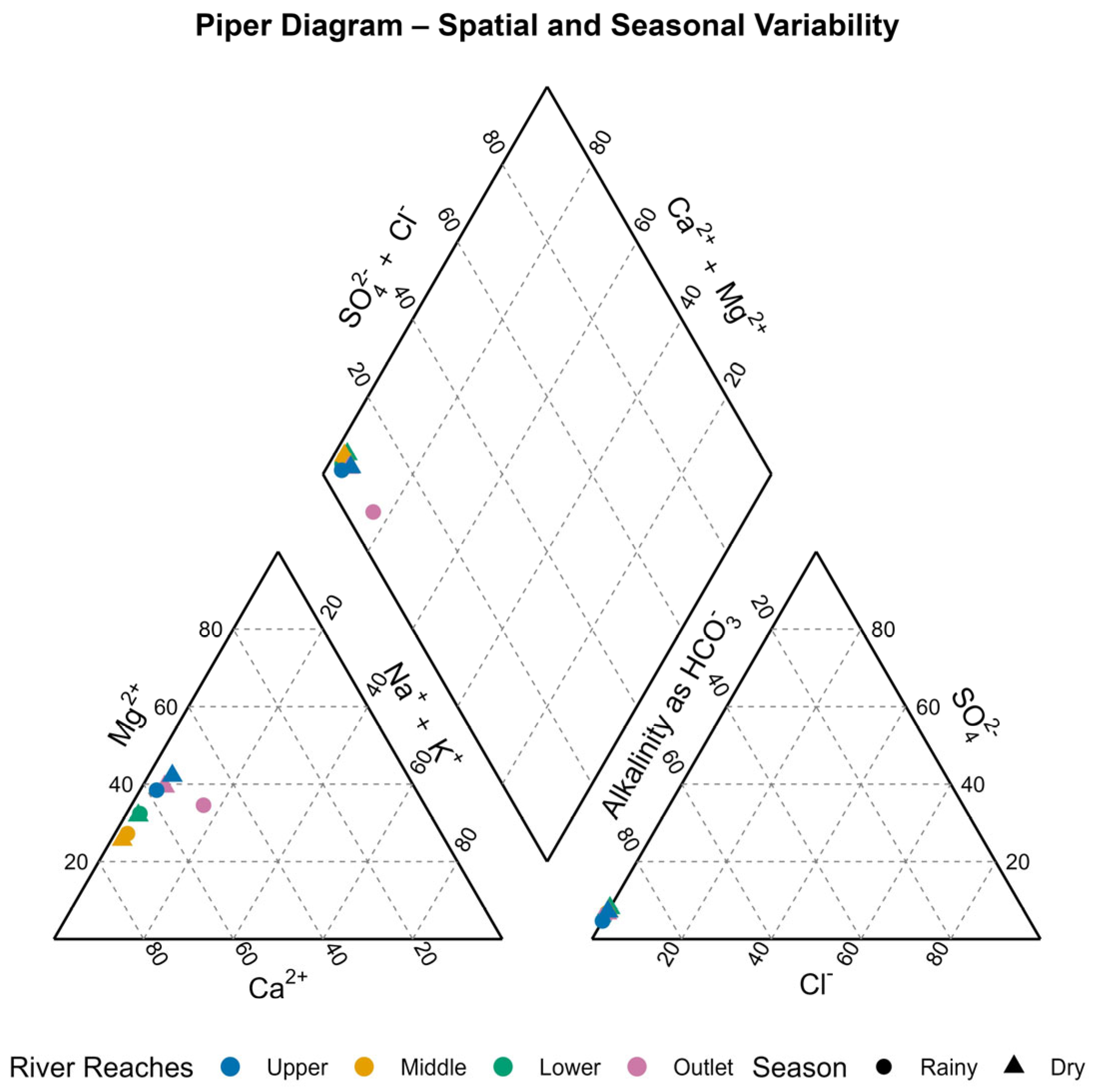
The hydrogeochemical composition of the Diablo Sacha River is predominantly controlled by natural processes characteristic of high-Andean páramo ecosystems. The dominance of calcium–bicarbonate and magnesium–bicarbonate facies (
Figure 2), identified through the Piper diagram, indicates that water chemistry is primarily governed by water–rock interaction, mineral weathering, and geochemical equilibrium between water, soil CO
2, and substrate minerals [
22,
29,
60]. These mechanisms have been widely recognized as the main controls on solute generation and mobilization in high-Andean catchments, where lithology, water residence time, and soil properties regulate the hydrogeochemical evolution of the system [
1,
3].
The observed stability in pH (7.95 ± 0.58) and the moderate electrical conductivity values (190.70 ± 64.89 µS/cm) suggest the presence of natural buffering mechanisms associated with the high organic matter content and the elevated water retention capacity of páramo soils, which regulate subsurface flow pathways and contribute to maintaining stable chemical conditions despite seasonal hydrological variability [
1,
3]. This interpretation is consistent with the predominance of Ca–Mg–HCO
3 facies and the limited dispersion of samples within the Piper diagram, indicating a relatively stable hydrochemical background rather than severe hydrochemical alteration.
Spatial variability along the altitudinal gradient reflects the combined influence of lithological, geomorphological, and hydrological factors on the dynamics of the system. Increased mineralization in middle and lower sectors suggests longer water residence time and differential interaction with the substrate. This longitudinal pattern is intrinsically linked to the complex geological architecture of the QWPA.
Along the monitored river corridor, the upper, middle, lower, and outlet sectors intersect different lithological domains, including the Apagua Formation, the Pallatanga Unit, and the Gallo Rumi Formation. This spatial arrangement creates contrasting water–rock interaction environments that may explain the observed variability in Ca
2+, Mg
2+, HCO
3−, SO
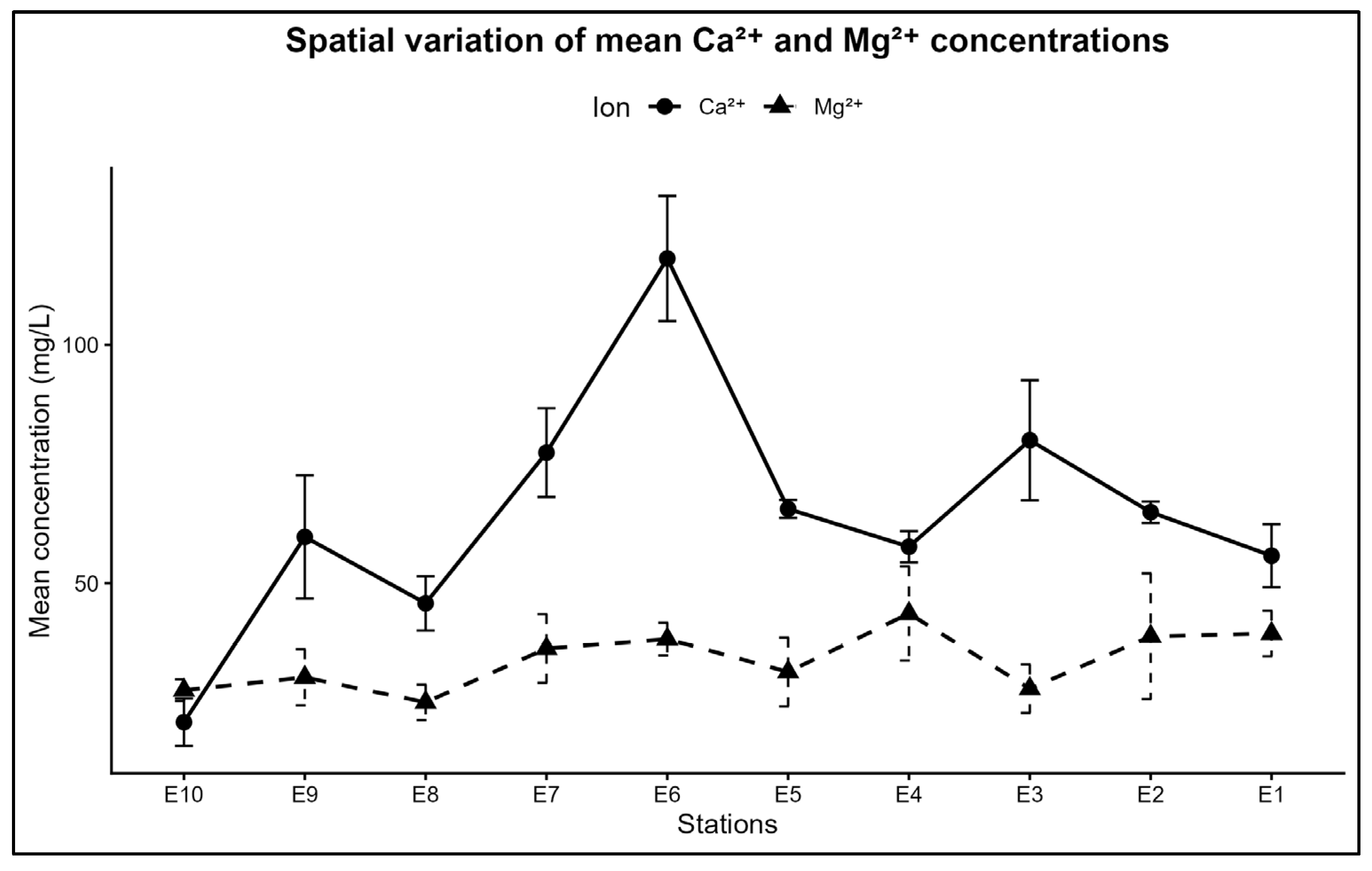
42−, and total ionic content. Therefore, the progressive enrichment of major ions toward middle and lower reaches should be interpreted as the result of cumulative mineralization, longer residence time, subsurface connectivity, and lithological heterogeneity rather than as direct evidence of anthropogenic contamination. This interpretation is further supported by the spatial analysis of mean Ca
2+ and Mg
2+ concentrations (
Figure A2) which showed marked differences among monitoring stations and was consistent with water–rock interaction, residence time, and lithological heterogeneity.
This succession of water-rock interaction environments confirms what has been documented in high Andean river systems, where geogenic control and hydrological connectivity determine the spatial distribution of solutes [
18,
60].
The hydrological dataset showed marked discharge variability, ranging from 3.12 to 445.02 L/s, which indicates strong temporal changes in dilution capacity and hydrological connectivity. At the seasonal scale, EC increased from 162.70 ± 46.45 µS/cm during wet periods to 212.63 ± 64.69 µS/cm during dry periods, while transitional periods showed intermediate-to-high EC values of 196.77 ± 73.22 µS/cm. This pattern supports the interpretation that higher hydrological connectivity and dilution capacity partially reduced dissolved ion concentrations, whereas reduced dilution and longer residence times favored mineralization and solute accumulation.
This behavior is consistent with the ecohydrological functioning of páramo ecosystems, where precipitation patterns and gradual water storage and release regulate solute transport [
61]. The high storage capacity of organic soils contributes to buffering hydrogeochemical fluctuations and maintaining relatively stable water quality conditions throughout the year. However, seasonality should not be interpreted only as a dilution–concentration mechanism. During wet and transitional periods, increased surface runoff and hydrological connectivity may also mobilize suspended solids, nutrients, organic matter, and microbiological indicators from riparian areas, livestock zones, and small-scale disturbed surfaces. The high storage capacity of organic soils contributes to buffering hydrogeochemical fluctuations and maintaining relatively stable water quality conditions throughout the year [
6,
8].
However, seasonality should not be interpreted only as a dilution–concentration mechanism. During wet and transitional periods, increased surface runoff and hydrological connectivity may also mobilize suspended solids, nutrients, organic matter, and microbiological indicators from riparian areas, livestock zones, and small-scale disturbed surfaces. Thus, seasonal hydrology simultaneously regulates natural solute dilution and the detectability of localized anthropogenic signals [
56,
59,
62].
Multivariate analysis allowed for a robust differentiation between natural hydrogeochemical gradients and signals associated with land use. PERMANOVA results demonstrated that both hydrogeochemical and anthropogenic variables significantly contribute to the spatiotemporal variability of the system, confirming that water quality reflects the interaction between geogenic controls and anthropogenic pressures modulated by hydrological dynamics and surface and subsurface connectivity. This behavior highlights the ecohydrological complexity of páramo ecosystems, where natural processes structure hydrogeochemical composition, while human activities generate detectable signals that contribute to system variability [
25].
For hydrogeochemical variables, the significant effects of river reach and season, together with non-significant PERMDISP results, support the interpretation that the observed differences mainly reflect changes in multivariate centroid location rather than dispersion artifacts. In contrast, for anthropogenic variables, seasonal differences should be interpreted more cautiously because PERMDISP indicated significant heterogeneity of dispersion among seasons. Therefore, anthropogenic patterns represent temporally variable and spatially localized signals rather than persistent basin-wide degradation [
24,
25].
The independent application of principal component analyses enabled clear separation between background hydrogeochemical variability and anthropogenic signals. The hydrogeochemical PCA identified a mineralization gradient dominated by bicarbonates, sulfates, and major cations, reflecting lithological control and the influence of water residence time, as widely documented in high-Andean systems [
53,
63]. In contrast, the anthropogenic PCA revealed an independent gradient associated with nitrates, organic matter, and microbiological indicators, suggesting localized inputs related to livestock activities or low-intensity human settlements (
Figure 4). Similar patterns have been reported in Andean catchments, where anthropogenic pressures modify nutrient and organic matter dynamics without significantly altering dominant hydrogeochemical facies [
31]. This separation is methodologically important because it reduces the risk that strong geogenic gradients mask weaker but environmentally relevant anthropogenic signals. In this sense, the independent PCA structure supports the central hypothesis of the study: the Diablo Sacha River maintains a dominant natural hydrogeochemical signature, while anthropogenic pressures appear as secondary, localized, and seasonally modulated signals.
Temporal variability also influenced the expression of anthropogenic signals. During the rainy season, increased surface runoff promoted the mobilization of nutrients, organic matter, and coliforms, whereas during the dry season, reduced dilution capacity enhanced the expression of localized sources. This behavior highlights the role of hydrological connectivity in contaminant transport, regulated by interactions among organic soils, vegetation, and precipitation regimes [
39,
40,
64]. The presence of elevated concentrations of BOD
5, nitrates, and coliforms in specific sectors suggests that even low-intensity disturbances may constitute early indicators of ecosystem pressure [
49]. Nevertheless, these signals did not modify the dominant Ca–Mg–HCO
3 hydrochemical facies, indicating that anthropogenic influence remains secondary relative to the natural hydrogeochemical structure of the system. This distinction is important for management because localized organic, nutrient, suspended-solid, oil-and-grease, and microbiological signals may represent early-warning indicators before structural hydrochemical degradation becomes evident [
53].
Trace metals showed limited contribution to the dominant multivariate gradients, consistent with their low concentrations, limited spatial variability, and weak association with the main hydrogeochemical and anthropogenic indicators. Because the exclusion criteria were defined in the methodology, these elements were not emphasized in the multivariate interpretation. This reinforces the interpretation that major ions, nutrients, organic matter indicators, suspended solids, oils and grease, and microbiological variables were more relevant for explaining water quality variability in the Diablo Sacha River.
Overall, the results demonstrate that water quality in the Diablo Sacha River is primarily structured by natural hydrogeochemical controls, while anthropogenic pressures act as secondary factors modulated by seasonal hydrological dynamics. The coexistence of hydrochemical stability and localized anthropogenic signals suggests that the system still maintains functional ecohydrological resilience. However, this resilience should not be interpreted as absence of vulnerability. Instead, it indicates that the natural buffering capacity of páramo soils, vegetation, and subsurface flow pathways can partially attenuate disturbance signals, while cumulative land-use pressures may progressively reduce this capacity over time [
1,
49].
From a management perspective, these results support a preventive monitoring strategy for the QWPA. Because the dominant Ca–Mg–HCO
3 hydrochemical facies remained relatively stable, management actions should not focus only on detecting severe hydrochemical degradation, but also on identifying early-warning indicators such as localized increases in NO
3−, BOD
5, COD, TSS, oils and grease, and coliforms. Monitoring programs should prioritize middle and lower reaches, transitional and wet periods, and areas with greater livestock access or diffuse runoff potential [
30,
45,
53]. These results can support protected-area management by guiding riparian buffer conservation, livestock exclusion near stream channels, control of diffuse organic inputs, and the design of seasonal water-quality surveillance protocols. At the policy level, the findings provide scientific support for strengthening water-protection-area management plans, establishing site-specific monitoring indicators, and integrating water-quality surveillance with land-use control, páramo conservation, and community-based watershed management [
9].
Study Limitations and Future Research
Although this study provides relevant evidence on the factors controlling water quality in the Diablo Sacha River, the monitoring period was limited to one hydrological year. Therefore, the observed spatial and seasonal patterns should be interpreted as first-order ecohydrological responses rather than long-term trends. The six bimonthly sampling campaigns captured wet, transitional, and dry conditions; however, they do not fully represent interannual hydroclimatic variability, extreme rainfall events, prolonged droughts, or multi-year land-use changes. Consequently, interpretations related to ecosystem resilience, hydrochemical stability, and anthropogenic pressure should be understood as conditional on the monitored period. Future studies should incorporate multi-year monitoring and, where available, regional historical rainfall and discharge records to place local water-quality variability within a broader hydroclimatic context [
9,
65].
Future research should integrate multi-year and high-frequency monitoring with isotopic tracers, hydrochemical end-member analysis, and conceptual or distributed hydrological modeling to better identify residence times, flow pathways, and solute sources. The incorporation of water quality indices could also help translate complex hydrochemical and microbiological information into management-oriented indicators. In addition, hydrological models such as SWAT or other process-based tools could be used to evaluate land-use scenarios, runoff generation, sediment transport, and nutrient export under changing climate and management conditions. These approaches would strengthen the capacity to distinguish natural hydrogeochemical variability from anthropogenic pressures and support the design of adaptive management strategies for protected high-Andean watersheds.
5. Conclusions
Water quality in the Diablo Sacha River is predominantly structured by natural hydrogeochemical processes characteristic of high-Andean páramo ecosystems, where water–rock interaction, mineral weathering, and water residence time control solute generation and distribution. These processes determine the predominance of calcium–bicarbonate and magnesium–bicarbonate facies, reflecting dominant geogenic control and contributing to the physicochemical stability of the system.
Hydrological seasonality acts as a key modulating factor of hydrogeochemical variability. Dilution processes during the rainy season, associated with increased discharge and meteoric water inputs, contrast with stronger geochemical control during the dry season, when longer residence times enhance water–rock interaction and mineralization.
The independent application of multivariate analyses enabled robust differentiation between natural hydrogeochemical controls and anthropogenic signals. PERMANOVA results demonstrated that both hydrogeochemical variables (R2 = 0.191; p < 0.05) and anthropogenic variables (R2 = 0.203; p < 0.05) significantly contribute to the spatiotemporal variability of the system. These findings confirm that, although geogenic control dominates the hydrogeochemical structure, land-use-related pressures generate detectable signals modulated by seasonal hydrological dynamics.
Organic, sanitary, and nutrient-related variables exhibited greater sensitivity to surface runoff processes and hydrological connectivity, constituting early indicators of ecosystem pressure, particularly in the middle and lower sections of the catchment. This behavior highlights the vulnerability of these systems to land-use changes.
Overall, the results confirm the role of the páramo as a key ecohydrological regulator that maintains water quality stability through natural processes of storage, filtration, and gradual release. However, the detection of anthropogenic signals underscores the sensitivity of these ecosystems to environmental disturbances, emphasizing the need to implement long-term monitoring programs and adaptive management strategies aimed at preserving ecosystem services and ensuring water security under current and future environmental pressures.
This study provides key insights for sustainable water resource management in high-Andean protected areas, emphasizing the importance of preserving ecohydrological processes that regulate water quality. The identification of early anthropogenic signals supports the implementation of adaptive management strategies aimed at maintaining ecosystem resilience and ensuring long-term water security.
From a practical management perspective, conservation actions in the QWPA should prioritize: maintaining and restoring riparian buffer zones; limiting livestock access to stream channels and springs; controlling diffuse organic, nutrient, and microbiological inputs from grazing areas and rural settlements; and strengthening seasonal water-quality monitoring, especially during wet and transitional periods. Monitoring programs should include early-warning indicators such as NO3−, BOD5, COD, TSS, oils and grease, and coliforms, in addition to major ions and electrical conductivity. These measures would support adaptive management, páramo conservation, and long-term water security in protected high-Andean ecosystems.



 ,
,