Article

Watershed Water Supply Security Reliability Assessment and Risk Node Identification in Mountain Piedmont Transition Zones Under Extreme Drought Stress: A Case Study from the Feng River Basin


1
PowerChina Northwest Engineering Co., Ltd., Xi’an 710100, China
2
School of Water and Environment, Chang’an University, Xi’an 710054, China
3
School of Civil Engineering, Xijing University, Xi’an 710123, China
*
Author to whom correspondence should be addressed.
Water 2026, 18(10), 1121; https://doi.org/10.3390/w18101121
Submission received: 5 March 2026 / Revised: 29 April 2026 / Accepted: 4 May 2026 / Published: 7 May 2026

Highlights

  • Transitions the assessment emphasis from “basin-scale total safety” to a “spatial node-based network” reliability framework.
  • Reveals that system instability originates from nonlinear oscillations of certain control nodes rather than homogeneous deficits across the basin.
  • Identifies water supply risks as outcomes of overlapping “natural–artificial” variables like topography gradients and water extraction practices.
  • Indicates that inadequate allocation intensity results in a “downstream risk shift” instead of a systemic elimination of water risks.

Abstract

During severe drought conditions, water supply risks tend to be concentrated at critical water intake nodes and vulnerable river segments, while the conventional total balance method is inadequate for depicting the spatial evolution of these risks. This study developed a node-based water supply security assessment framework for the Feng River Basin, a representative watershed in the piedmont transition zone. The framework coupled SWAT-simulated runoff with a supply–demand balance model and evaluated water supply reliability at both the node and basin scales. Two scenarios were compared: an artificial water system scenario and an artificial water system with an engineering-based water resource allocation scenario. Dry (P = 75%) and extremely dry (P = 95%) conditions were considered to examine the performance of artificial regulation under drought stress. The results showed that basin-scale water supply reliability remained relatively stable, ranging from 0.833 to 0.853 under different scenarios. However, the node-scale results revealed strong spatial heterogeneity. Nodes 1 and 3 maintained full or nearly full reliability, whereas Nodes 4, 6, and 7 showed relatively low reliability and higher water shortage risk. Under the P = 75% scenario, engineering-based water resource allocation increased basin-scale reliability from 0.848 to 0.853, indicating a slight improvement in supply–demand balance. In contrast, under the P = 95% scenario, reliability decreased from 0.839 to 0.833 after introducing water resource allocation, suggesting that transfer-based interventions may have limited effectiveness when natural inflow is severely reduced. In particular, Node 7 showed a marked decline in reliability under the allocation scenario, indicating that water supply risks may be redistributed and concentrated at specific intake nodes under extreme drought conditions. The scenario comparison further indicates that water diversion strategies may produce a dual effect of local improvement and global reconfiguration. Insufficient supply intensity may result in engineering interventions that cause downstream water reduction impacts, leading to a spatial redistribution and shifting of risks rather than their systemic eradication. This study seeks to transition the evaluation paradigm from “total safety” to “node safety,” establishing a scientific foundation for enhancing the emergency response system in critical areas of the basin.

1. Introduction

The security of water supply is essential for regional development and is strongly linked to the social stability and ecological security [1,2]. In recent years, climate change has intensified the frequency and severity of extreme droughts, while urbanization has substantially altered land surface conditions and water use patterns. These changes have shifted the concept of water supply security from a conventional “total water balance” to a multi-faceted issue influenced by water source allocation capacity, river network flow dynamics, and water resource engineering transmission and distribution limitations [3,4]. During extreme periods, competition among domestic, industrial, and ecological water usage becomes more intense. This makes traditional large-scale and long-term security evaluations less effective in identifying short-duration and localized risks. Consequently, precisely identifying risk nodes and pinpointing vulnerabilities under extreme drought conditions holds substantial academic significance and practical relevance for enhancing the reliability of regional water supply systems [5].
Water supply security pertains to the capacity of a water supply system to consistently fulfill regional industrial, domestic, and ecological water demands under specific constraints, while satisfying both quantity and quality standards [3]. At present, global scholars have established a well-developed research framework for the quantitative evaluation of water supply security. Initial research concentrated on the balance between water supply and demand, evaluating water supply security in terms of resource availability, water utilization patterns, and infrastructure support [6,7]. Subsequently, the research paradigm progressively transitioned towards the formulation of comprehensive evaluation models, resulting in the emergence of novel methodologies such as the water poverty index [8,9], harmonious equation model [10,11,12], system dynamics [13,14], and driving force-pressure-state-impact-response model [15]. Meanwhile, the development of decision support systems and policy scenario simulation tools [16,17] has further promoted the transition from single-source analysis to multi-source integrated scheduling and demand-side management [18,19].
Nevertheless, these studies have inadequately addressed the spatial variability of risk evolution, particularly in the geographically complex piedmont transition zone [20]. From an engineering standpoint, water supply instability does not usually occur uniformly across an entire basin. Instead, it displays pronounced “node-like” triggering features [21,22]. The piedmont basin typically exhibits a pronounced hydrological gradient and significant anthropogenic disruption. When the primary water intake, diversion inlet, and headworks of the main canal lose control during the extreme dry season, it will trigger a “chain reaction” throughout the river network, leading to local flow disruption or a significant decrease in the water supply assurance rate. Conventional assessment techniques reliant on total basin volume frequently obscure the structural bottlenecks and nonlinear reactions of micro-nodes [23]. A recent study indicates that the rise in extreme drought occurrences will diminish river flow and extend the duration of low flow [24,25], hence highlighting the node-based and corridor-based attributes of risk. Specifically, insufficient inflow during the dry season can reduce the flow capacity of the river channel, causing nodes such as water intake and headworks to become focal points for supply–demand mismatch. Meanwhile, artificial canal systems can extend water supply coverage, but their tree-like branching diversion structure may also intensify downstream flow reduction and increase the possibility of flow interruptions in critical river sections [26]. Consequently, the incorporation of spatiotemporally varied hydrological processes, artificial water intake regulations, ecological baselines, and dynamic water quality limitations into an integrated “reliability assessment” framework is a significant challenge.
This study focuses on the Feng River Basin, a representative piedmont transition zone watershed in the Guanzhong Plain, China. The objective is to develop a node-based framework for assessing water supply reliability and identifying water shortage risks under extreme drought conditions. Specifically, this study aims to: (1) construct a spatial node network-based evaluation framework for water supply reliability by coupling hydrological simulation with supply–demand balance analysis, thereby overcoming the limitations of conventional basin-scale total balance assessments and achieving quantitative characterization of multiple stresses; (2) investigate the node-based and propagation characteristics of water supply risks in a complex piedmont water network, including identifying key vulnerable nodes and river sections that lead to a decline in system reliability, and revealing the mechanism by which risks are transmitted from micro-nodes to the regional system; (3) quantify the regulatory effects of “natural–artificial” water systems (coupled regulation by natural river networks and artificial water systems) by comparing artificial water system construction and engineering-based water resource allocation scenarios, so as to evaluate the compensatory effects of water diversion and transfer projects on local hydrological processes. The results are expected to provide practical technical support for emergency response and resource optimization in key parts of the basin during extreme dry seasons.

2. Study Area and Data Resources

2.1. Study Area

The Feng River originates from the northern slopes of the Qinling Mountains, China, and serves as a first-order tributary of the Wei River on its right bank [27]. It flows from south to north through Chang’an District, Huyi District, and Xixian New Area in Xi’an City, with a total length of 78 km [28]. The river converges with the Wei River in Yuwang Village in Fengdong New City. The overall drainage area encompasses 1386 km2 (Figure 1), situated between 33°50′~34°20′ N and 108°35′~109°09′ E. The basin displays considerable geomorphological diversity, changing abruptly from the elevated terrain of the Qinling Mountains in the south to a plain and plateau region in the north. The southern mountainous region encompasses 863.6 km2, representing roughly 62.3% of the overall area, while the northern plain covers 522.4 km2, accounting for approximately 37.7%. This particular geographical configuration engenders characteristic piedmont river movements. Tributaries including the Jue River, Hao River, Taipingyu River, and Gaoguanyu River converge into the main stream in a fan-shaped pattern [29]. The basin, influenced by a mild temperate semi-humid monsoon climate, exhibits significant precipitation variability and pronounced seasonality. The pronounced slope and hydraulic gradient of the piedmont transition zone restrict the basin’s inherent water storage capacity. The runoff mechanism in the dry season is very vulnerable to alteration by artificial water intake and diversion initiatives, indicating significant susceptibility to human interference [30].

2.2. Data Sources

This study encompasses multi-source heterogeneous data across five primary categories: topography, land use, soil properties, meteorological and hydrological measurements, and socio-economic development data. The characteristics and origins of each data item are as follows:
Topography: The 2000 China SRTM DEM dataset, with a spatial resolution 90 m, was obtained from the National Tibetan Plateau Scientific Data Center (https://data.tpdc.ac.cn/, accessed on 6 March 2026). Additionally, high-resolution DEM data from the Gaofen-7 satellite in 2024, with a spatial resolution 2.5 m, was provided by the Land Observation Satellite Data Service Platform (https://data.cresda.cn/#/2dMap, accessed on 6 September 2025). The aforementioned data are mostly utilized to enhance the topography of the piedmont transition zone and the attributes of the Feng River system.
Land use: Land use data were obtained from the China Annual Land Cover Dataset (CLCD), developed by Professors Yang Jie and Huang Xin [31], with a spatial resolution of 30 m. Based on the correspondence between the land use classification system of the Second National Land Survey and the SWAT model requirements, the CLCD data were reclassified into six land use types for the Feng River Basin: cultivated land, forest land, grassland, water area, other land, and construction land.
Soil properties: Soil data were obtained from the 1 km resolution China Soil Database provided by the National Qinghai–Tibet Plateau Scientific Data Center (https://data.tpdc.ac.cn/, accessed on 6 March 2026). These data were primarily used for hydrological model parameterization. The soils in the Feng River Basin mostly consist of primitive soils, anthropogenic soils, unconsolidated lithological soils, alluvial soils, highly reactive leached soils, and thin-layer soils. The soil database can be further processed according to the hydrological response unit classification and parameter format requirements of the SWAT model.
Meteorological observations: Long-term meteorological data (precipitation, temperature, relative humidity, solar radiation, and wind speed) from 1976 to 2019 were obtained from four national meteorological stations: Wugong, Xi’an, Foping, and Zhen’an. These stations are located in the plains and primarily at the periphery of the basin. The data were acquired from the National Meteorological Science Data Center (https://data.cma.cn/, accessed on 6 March 2026). In addition, concurrent precipitation data from the Qinduzhen hydrological station and daily observations from 13 rainfall observation stations (Jiwozi, Qinggangshu, Bianzigou, etc.) from 2000 to 2019 were incorporated. These data were obtained from the Hydrological Data Yearbook of the Yellow River Conservancy Commission. The additional rainfall station data were used because the Feng River Basin has a strong topographic gradient and pronounced vertical climate zonation. These characteristics make it challenging to accurately capture spatial precipitation variability using solely peripheral national meteorological stations. Therefore, rainfall observations from 13 stations within the basin and the Qinling Mountains were incorporated to enhance the spatial representativeness of the precipitation input field, rectify the spatial gradient distribution of precipitation, and facilitate the risk assessment of micro-nodes in the intricate piedmont water network.
Hydrological observations: Daily runoff data from the Qinduzhen hydrological station, spanning from 1976 to 2019, were obtained from the Yellow River Conservancy Commission Hydrological statistics Yearbook.
Socio-economic and water supply engineering data: Socio-economic data included population, gross domestic product and sectoral water use. Water supply engineering data included the spatial distribution, service areas, and capacities of water supply and diversion projects within the basin. Information on the main canals, secondary canals, canal terminals, and water intake locations was also collected. These data were obtained from the annual Water Resources Bulletin, the Statistical Bulletin on National Economic and Social Development, and specialized planning documents pertaining to the Feng River Basin and Xi’an city.

3. Methodology

This study applied the SWAT distributed hydrological model to simulate the dry-season runoff processes in piedmont rivers in the Feng River Basin utilizing. The simulated runoff was then used to calculate surface water availability under different scenarios, incorporating ecological flow constraints and the influence of the artificial canal system (tree-like water intake). A water resource supply–demand balance model was developed by spatially distributing water demand across urban, industrial, agricultural, and ecological sectors to find nodes with water supply deficits. The water supply assurance rate was chosen as a metric for quantitatively evaluate the water supply security level of each sub-basin. The study elucidated the effects of engineering interventions (building of artificial water systems) and the integration of engineering and management (overlaying water resource allocation) on the reliability of water supply security through scenario comparison. The pertinent findings can establish a scientific foundation for enhancing basin water distribution and guaranteeing regional water supply security.

3.1. SWAT Distributed Hydrological Model

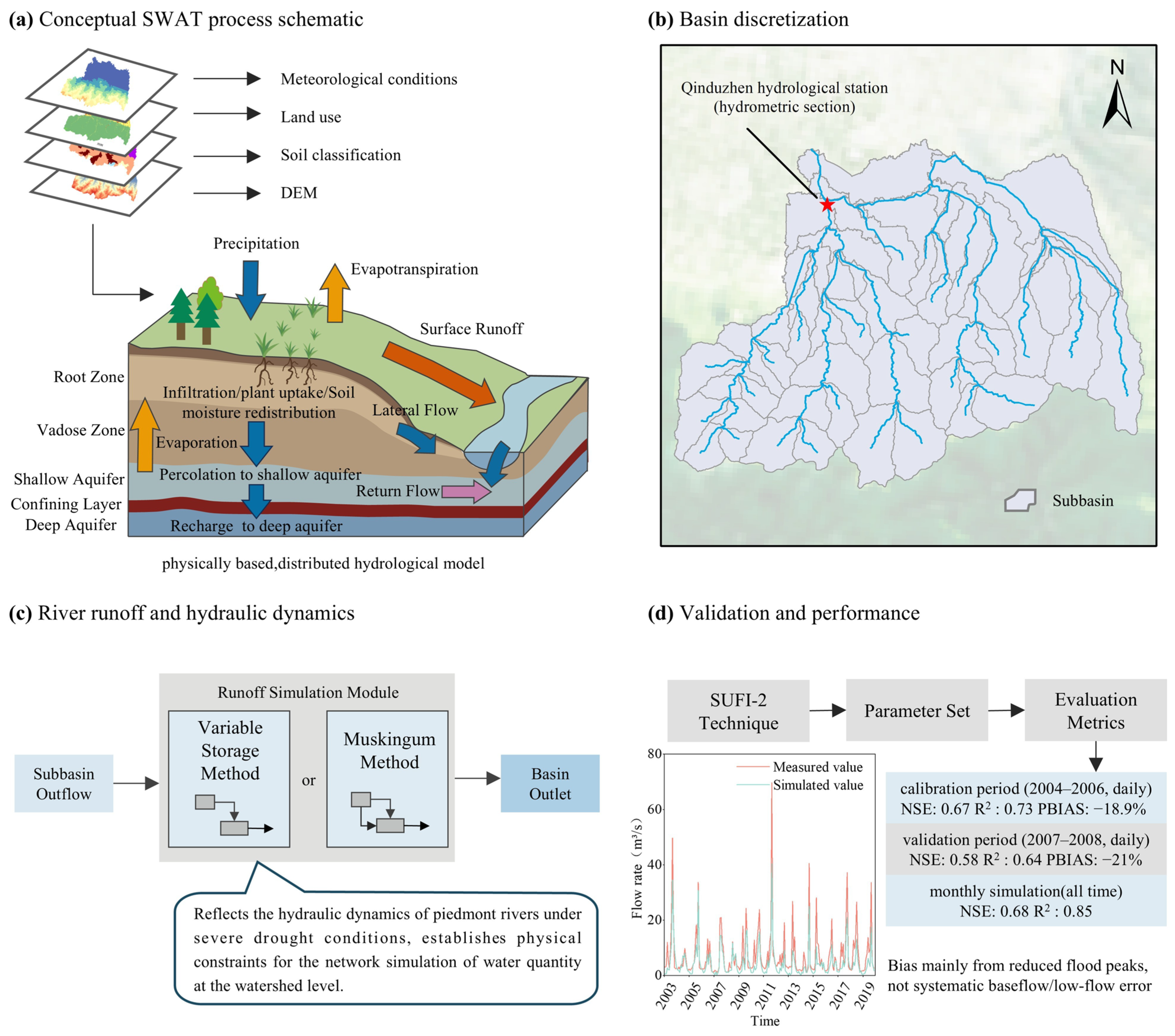
SWAT (Soil and Water Assessment Tool, version 2012) is an extensive distributed hydrological model characterized by a clearly articulated physical mechanism [32,33]. This study primarily employed its hydrological cycle module to accurately delineate precipitation, evapotranspiration, infiltration, runoff generation, and flow routing processes at the hydrological response unit (HRU) scale. In the runoff production stage, the model precisely replicates the nonlinear distribution mechanism of surface runoff, interflow, and baseflow by using multidimensional data such as meteorological conditions, land use, soil classification, and topographical features [34]. During the flow routing stage, SWAT employs the Variable Storage Method or the Muskingum Method to simulate river runoff. This provides a hydrological basis for assessing water availability and water supply security under dry and extremely dry conditions.
This study categorized the research region into 62 sub-catchments and 560 hydrological response units (HRUs) based on the 2000 DEM data. The SUFI-2 technique, in conjunction with runoff monitoring data from the Qinduzhen hydrological station, was employed to calibrate the model parameters (refer to Figure 2 [35]). Model performance was assessed using the coefficient of determination (R2), Nash–Sutcliffe efficiency coefficient (NSE), and percent bias (PBIAS). During the calibration period (2004–2006), the daily scale model exhibited an NSE of 0.67, an R2 of 0.73, and a PBIAS of −18.9%. During the validation period (2007–2008), the model obtained NSE and R2 values of 0.58 and 0.64, respectively. Although the PBIAS (−21%) indicates a minor underestimation of total runoff, the monthly scale simulation results showed improved performance, with R2 = 0.85 and NSE = 0.68. Combined with the hydrological process curves, this bias primarily originated from the model’s attenuation of peak flow during extreme rainfall events rather than a consistent error in baseflow or low water levels. Overall, all performance indicators met commonly used criteria (NSE > 0.5, R2 > 0.6, |PBIAS| < 30%), and the model demonstrates stability during low flow events, hence facilitating further examinations of water supply security reliability.

3.2. Selection of Representative Years and Model Scenario Settings

  • (1) Selection of Representative Years and Construction of Water Boundaries
A frequency analysis was performed using long-term annual runoff series observed at the Qinduzhen hydrological station. To align the statistical properties of the hydrological sequence with the sequence’s consistency amidst significant artificial disturbances post-2000, the years 2004 (P = 75%) and 2006 (P = 95%) were designated as representative dry and extremely dry years, respectively. The daily flow process over typical representative years was simulated using the calibrated and verified SWAT distributed hydrological model, offering enhanced water boundary support for later assessments of water supply security and reliability.
  • (2) Node Selection and Configuration Scenario Establishment
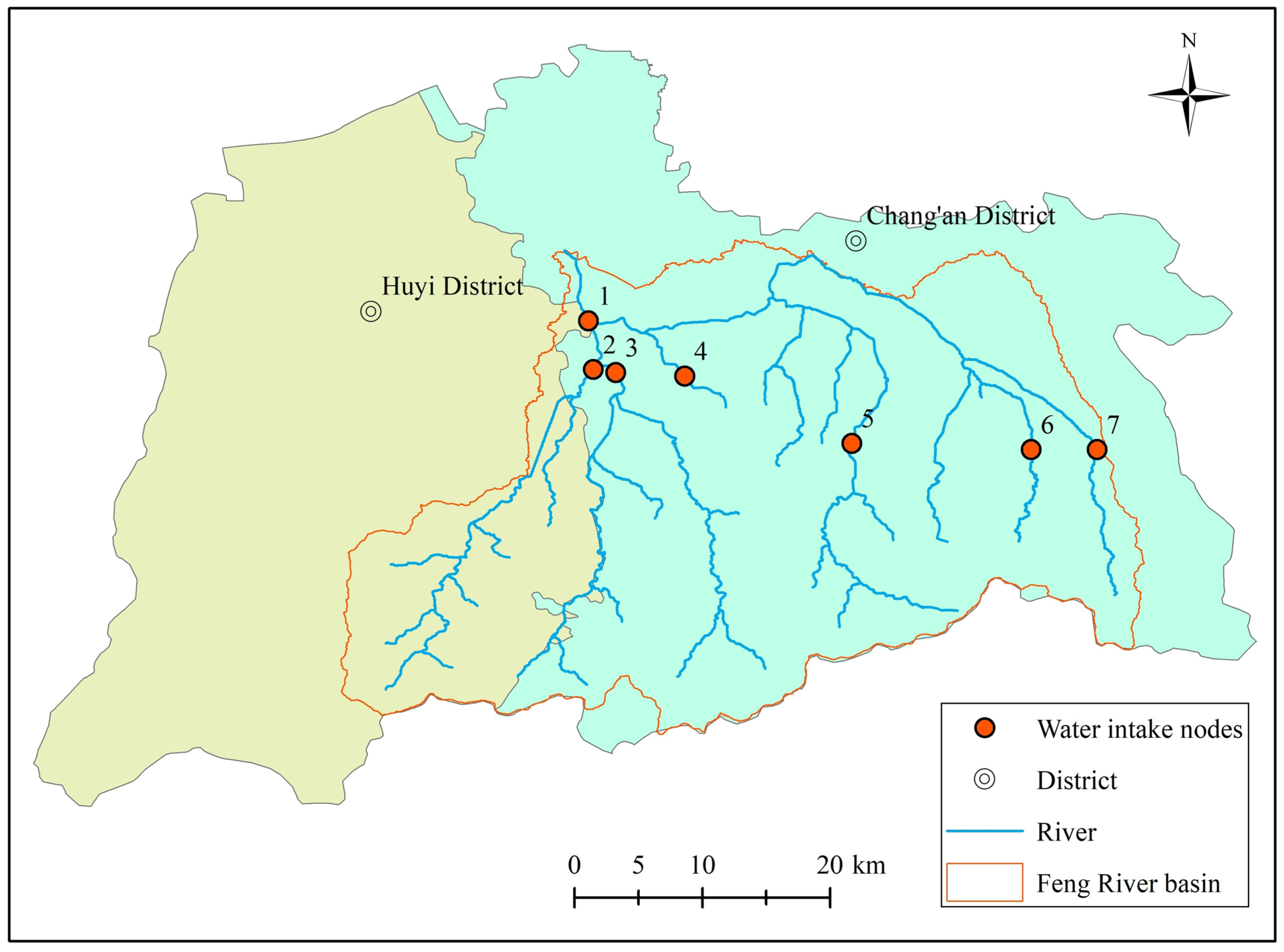
By integrating the spatial distribution characteristics of the artificial canal network with the engineering layout, this study identified key water withdrawal nodes within the basin based on canal intake locations, as shown in Figure 3.
This research established two comparative simulation scenarios to quantitatively assess the effects of artificial water system construction and water resource allocation on water network performance during the dry season, influenced by both natural and artificial factors.
Scenario 1 (Construction of an Artificial Water System, Governed by Node Water Intake): This scenario clearly delineates the interaction process of water intake, transmission, and distribution between artificial canals and rivers via critical water intake nodes in the basin. The objective is to evaluate the water volume at nodes under identical drought conditions and to investigate the spatiotemporal evolution characteristics of water resources caused by node-specific water extraction and downstream water reduction.
Scenario 2 (Water Resource Allocation, Informed by Coupled Node Water Intake and Scheduling): This scenario builds upon Scenario 1 by incorporating a water resource allocation mechanism. Cross-basin or regional water transfer units were introduced at the node level to represent the contribution of existing artificial regulation projects to water supply security. The node-level water transfer settings were determined based on actual reservoir diversion projects and existing water supply relationships. The objective is to assess the possibilities for enhancing basin water supply balance and mitigating risk transfer through artificial regulation during extreme drought conditions.

3.3. A Supply–Demand Balance Model for Water Resources

  • (1) Calculation of Accessible Water Supply
Based on the daily average flow Q i ( t ) at the principal confluence nodes generated by the SWAT model, the minimum ecological flow constraint Q e c o was introduced to ensure the maintenance of basic riverine ecological functions. In this study, Q e c o was set to 0.18 m3/s according to the Water Resources Protection and Utilization Plan of the Qinling Mountains in Xi’an, organized by the Xi’an Water Authority. The physically accessible water supply of the nodes can be subsequently computed:
W p h y , i ( t ) = m a x { 0 , [ Q i ( t ) Q e c o ] Δ t }
where W p h y , i ( t ) is the physically available water supply at node i on day t; Q i ( t ) is the daily average flow simulated by the SWAT model; Q e c o is the minimum ecological flow constraint; and Δt denotes the conversion coefficient associated with the time interval. In light of the regulatory demands for surface water development and use, the exploitable coefficient k d e v was included to diminish the physically available water supply, thereby deriving the surface water supply under management constraints:
W s u p , i ( t ) = k d e v W p h y , i ( t )
where W s u p , i ( t ) is the surface water supply available at node i under management constraints on day t, and k d e v is the surface water development coefficient, which was set to 0.525 in this study.
  • (2) Calculation of Water Demand and Node Distribution
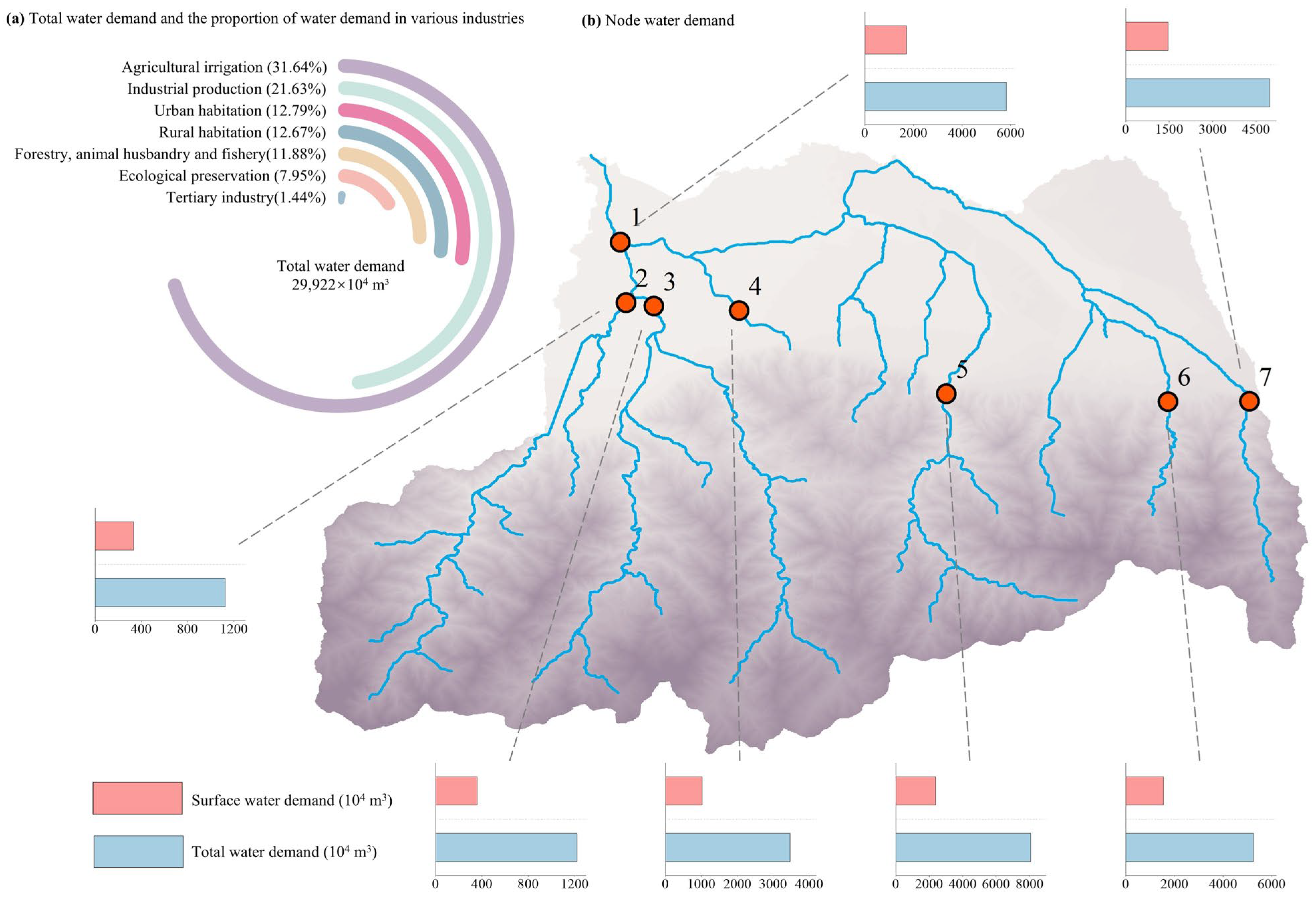
Previous research findings [36] indicated the predicted water demand for each industry in the Feng River Basin under the current conditions, as presented in Figure 4. The analysis indicates that the water demand framework of the basin primarily consists of urban and rural habitation, industrial production, agricultural irrigation, and ecological preservation. Agricultural irrigation constitutes the primary water demand, and its demand variability presents a considerable challenge to the basin’s water supply security during the dry season.
Statistical data indicate that the overall water demand of the Feng River Basin in the current year is 299 million m3. To examine the role of surface water in water supply security, this study decomposed water source structure under a stringent constraint of groundwater. Considering available groundwater supply (181 million m3) and reclaimed water reuse (30 million m3), the net water demand to be supplied by surface water was determined to be 88.03 million m3, denoted as D s w a n n u a l .
Artificial canal systems serve as the primary conduits for surface water transport and distribution within a watershed, and their spatial arrangement directly influences the coverage and scale of water supply services [37,38]. Therefore, this study used the canal service-area weighting approach to spatially allocate surface water demand to each critical water intake node, supplying input conditions for the subsequent supply–demand balance simulation. Specifically, the artificial canal intakes were treated as water intake nodes, and the weight of node i was determined according to the irrigation or water supply service area controlled by the corresponding canal system:
w i = A i i = 1 n A i
where w i is the weight of diversion node i; Ai is the irrigation or water supply service area controlled by the canal system corresponding to node i; and n is the total number of diversion nodes.
The converted annual surface water demand D s w a n n u a l was distributed to each water intake node based on its service-area weight. The annual surface water demand assigned to node i was calculated as follows:
D i a n n u a l = w i D s w a n n u a l
where D i a n n u a l is the annual surface water demand of node i. Figure 4 delineates the detailed water demand associated with each water intake node in the Feng River Basin.
In order to reflect intra-annual differences in agricultural irrigation, domestic, industrial, and ecological water demands, the annual demand of each node was further disaggregated into monthly values using monthly demand distribution coefficients. The monthly surface water demand of node i was calculated as
D i , m = D i a n n u a l r m
where D i , m is the surface water demand of diversion node i in month m, r m denotes the demand distribution coefficient for month.
For the daily scale supply–demand comparison, the monthly demand was further converted into the daily average demand within each month:
D i t = D i , m N m ,   t m
where D i ( t ) is the surface water demand of node i on day t, and N m is the number of days in month m.

3.4. Systematic Evaluation Criteria for the Reliability of Water Supply Security

  • (1) Actual Water Supply at the Node Level
During time period t, the actual surface water supply at water intake node i was primarily governed by the dual restrictions of resource availability (available water volume) and user demand. The value adheres to the idea of minimal demand, and the calculation formula was
S i ( t ) = m i n { W s u p , i ( t ) ,   D i ( t ) }
where Si(t) represents the real water supply of node i on day t; W s u p , i ( t ) denotes the physically accessible water volume of the node i; D i ( t ) indicates the surface water demand of the node i on day t.
  • (2) Water Supply Deficit at the Node
The water supply deficit at node i during time period t was defined as the difference between water demand and actual water supply:
G i ( t ) = D i ( t ) S i ( t )
where Gi(t) represents the water supply deficit of node i on day t. If Gi(t) > 0, the node experiences a water supply deficit during the current period; if Gi(t) ≤ 0, the node’s water demand is completely satisfied.
  • (3) Node Water Supply Assurance Rate
To thoroughly represent the water supply reliability of each node during the evaluation period, the node-scale water supply assurance rate R s , i was defined as follows:
R s , i = t = 1 T S i ( t ) t = 1 T D i ( t )
where T represents the whole duration of the evaluation session. The value of R s , i varies between 0 and 1. A value approaching 1 signifies greater water supply security for the node; conversely, when R s , i is less than 1, it denotes varying levels of water shortage risk for the node.
  • (4) Overall Assurance Rate of Watershed Water Supply Reliability
This work quantified water resource security at the watershed scale by integrating node assurance rates through a spatial weighting method. Taking into account the diversity of the service area for each node, the control area of the artificial canal system associated with the node was utilized as the weight. The calculation formula was:
R s = i = 1 n ( A i A i ) R s , i
where Rs is the overall water supply assurance rate of the watershed, Ai represents the control area of the artificial canal system corresponding to node i, and n denotes the total number of nodes. This indicator represents the comprehensive redundancy and geographical equilibrium of water supply security within the basin.

3.5. Sensitivity Analysis Method for the Ecological Flow Threshold

A scenario-based sensitivity analysis was designed to examine the influence of uncertainty in the minimum ecological flow threshold Q e c o on water supply reliability. The baseline value of Q e c o was set to 0.18 m3/s. Two perturbation scenarios were designed by decreasing and increasing this value by 10%, corresponding to 0.162 m3/s and 0.198 m3/s, respectively. Under each scenario, the basin-scale water supply reliability Rs was recalculated to evaluate the response of the results to uncertainty in the ecological flow constraint.

4. Results

4.1. Water Supply Reliability Under Extreme Scenarios

A quantitative evaluation of the water supply security of the Feng River Basin under extreme scenarios was performed, with the specific results described in Table 1.
  • (1) Watershed scale
The calculations shown in Table 1 indicated that, within the “artificial water system” scenario, the water supply assurance rate was 0.848 at P = 75% and 0.839 at P = 95%. This suggests that the overall water supply capacity of the basin remained relatively stable under dry and extremely dry conditions. However, as drought intensity increases, the minor decline in the guarantee level indicates that the reduction in natural water inflow due to extreme climate exacerbated the supply–demand imbalance within the watershed.
Under the “water resource allocation” scenario, the assurance rate at P = 75% was 0.853, marginally exceeding the previous figure, suggesting that resource allocation exerted a beneficial regulatory influence in dry years. Nonetheless, for P = 95%, this value diminished to 0.833, which was inferior to the “artificial water system” scenario (0.839). This suggests that, under extremely dry conditions, the effectiveness of inter-regional water transfer may be constrained by the severe reduction in natural runoff, particularly when no additional replenishment is available. As a result, the marginal benefit of water resource allocation may weaken, leading to limited improvement or even a slight decline in basin-scale water supply guarantee level.
  • (2) Node Scale
The node-scale results indicated considerable regional variation. Nodes 1 and 3 attained or approached a value of 1.0 across all scenarios, whilst node 2 fluctuated between 0.922 and 0.977, signifying that these nodes exhibited insensitivity to water variations and possessed exceptionally high-water supply security. Conversely, nodes 4–7 exhibited markedly reduced assurance rates under dry and extremely dry conditions. Node 4 had the most sensitivity to inflow circumstances, maintaining an assurance rate that is consistently low at 0.716–0.725, which underscored a notable supply–demand imbalance. Node 6 also showed potential risk of water scarcity, with assurance rate varies between 0.767 and 0.775.
Significantly, node 7 maintained an assurance rate of 0.796–0.805 under the “artificial water system” scenario; but declined sharply to 0.648–0.658 under the “water resource allocation” scenario. This reveals a critical vulnerability in the allocation method. Research indicates that, under severe drought conditions, the absence of supplementary water sources in diversion-based allocation strategies may lead to a redistribution of water supply risks among nodes. Consequently, the overall watershed security level may remain static or even decline locally, exacerbating disparities among nodes, with risks becoming concentrated in specific critical nodes and river segments.

4.2. Response of Water Supply Reliability to Ecological Flow Threshold Perturbations

Based on the sensitivity analysis design described in Section 3.5, water supply reliability was recalculated under the lower and upper ecological flow threshold scenarios. The results were summarized in Table 2.
The results showed a clear directional response of water supply reliability to changes in Q e c o . When Q e c o decreased by 10%, basin-scale water supply assurance rate increased by 0.208–0.258% compared with the baseline scenario. In contrast, when Q e c o increased by 10%, basin-scale assurance rate decreased by 0.133–0.163%. This response is consistent with the mechanism of the supply–demand balance model: a lower ecological flow threshold leaves more water available for supply, whereas a higher threshold reserves more flow for ecological requirements and reduces the water available for extraction.
However, the magnitude of change was small. Across all scenarios, the relative change in basin-scale assurance rate remained below 0.30%. These results indicate that reasonable perturbations in Q e c o did not alter the spatial identification of key water shortage areas, suggesting that the main conclusions are robust to uncertainty in the ecological flow threshold.

5. Discussions

5.1. The Nodal Attributes and Propelling Forces of Water Supply Risk

The results indicate that the water supply security of the Feng River Basin has notable node-based risk attributes under extreme drought scenarios. The supply–demand imbalance is not uniformly spread across the basin scale but is concentrated at critical control points, such as water intakes. This phenomenon is primarily influenced by a dual “natural–artificial” mechanism: (1) the combined impact of resource intensity limitations and topographic gradients. Resource intensity constraints result in significant runoff reduction during the dry season, leading to the river channel’s water volume nearing its threshold [24], while topographic gradients indicate rapid confluence, with storage and regulation feasible solely at engineering nodes, reinforcing the “bottleneck” characteristics of these nodes [20]; (2) the cumulative impact of diminished water intake, specifically concentrated nodal water extraction, creates a pronounced “temporal mismatch” in low flow conditions. Maintaining high-intensity water intake at the node location will ultimately lead to a cumulative reduction in water, considerably increasing the frequency of local flow interruptions downstream and causing a steep decline in the water supply assurance rate [26,39,40].

5.2. The Dual Impact of Water Resource Allocation on Water Supply Security

A comparative analysis of water resource allocation and artificial water system construction scenarios indicates that water resource allocation procedures do not yield a linear enhancement of system security; instead, they produce a dual effect of “local improvement and entire reconstruction.” Specifically: (1) When allocation mechanisms facilitate effective replenishment and precisely align with low-flow periods, they can substantially enhance the water supply stability of local nodes (e.g., node 5). (2) If the allocation scheme primarily relies on inter-regional water transfer and the replenishment intensity is inadequate, the system will activate a phenomenon where risks concentrate on particular critical nodes. In addition, priority protection of more sensitive or higher-level scheduling units may further reshape the spatial distribution of water supply risks. As a result, node 7, despite its geographical advantage in water diversion, may become a reliability weak spot in resource competition. This demonstrates that effectively addressing severe drought is contingent upon the synergistic optimization of replenishment intensity, water intake limitations, and the ecological base flow of rivers, rather than merely the scale of projects [41].

5.3. Constraints of the Evaluation Framework

This study used the Water Use module of the SWAT model to evaluate the dynamic effects of water extraction on river flow, with results indicating the relative risks associated with resource availability [42]. Nevertheless, the output of this module solely represents the river flow reduction impact resulting from water extraction activities. This does not imply that the model can entirely satisfy actual water withdrawal requirements [43]. Consequently, the assessment of water supply security levels and deficits at nodes should be viewed as a relative risk indicator contingent upon particular inflow conditions and water withdrawal requirements, rather than a direct reflection of the engineering system’s actual water supply capacity.
In addition, due to the limited availability of detailed diversion records and operational rules, canal operation was simplified using a service area-based allocation method. This treatment provides a transparent and reproducible way to spatially distribute surface water demand, but it does not explicitly represent user-specific allocation priorities or dynamic competition among different water users. Future studies could incorporate actual diversion records, priority-based allocation rules, and dynamic competition mechanisms to improve the operational representation of the canal system.
Furthermore, this study primarily focused on the water quantity dimension of supply security, with water supply reliability as the core assessment indicator. Although a minimum ecological flow constraint was introduced to reserve basic ecological water requirements before calculating available water supply, broader ecological responses to water extraction, such as aquatic species, riparian ecosystem health, and river ecosystem services, were not explicitly evaluated. Future research could further integrate ecohydrological indicators and ecosystem health assessments to support a more comprehensive understanding of the interactions between water supply security and river ecological conditions.

6. Conclusions and Suggestions

6.1. Conclusions

This study focused on the Feng River Basin, developed a node-based framework for evaluating water supply security and reliability, and conducted an in-depth analysis of the water supply risk pattern during extreme drought conditions at the node scale. The primary conclusions are as follows:
  • (1) The spatial attributes of water supply security risk in the basin exhibited a pronounced node clustering effect. The water supply assurance rate at the basin level typically ranged from 0.833 to 0.853, indicating substantial system resilience. Spatial analysis, however, uncovers notable node-based risk attributes, indicating that the instability of the water supply system was not caused by a uniform deficiency across the basin but was primarily instigated by fluctuations at specific control nodes. This pattern exhibited a pronounced “natural–artificial” dual driving characteristic. The primary driving factors are the superposition of resource intensity constraints and topographic gradients, along with the cumulative impact of water reduction due to water intake behavior.
  • (2) Water intake nodes may become critical weak points in the basin-scale water supply system under extreme drought conditions. The analysis revealed that following the implementation of engineering-based water resource allocation, the water supply assurance rate at node 7, situated at the canal system’s origin, exhibited a trend of “decreasing rather than increasing.” This indicates that under severe drought conditions, the alteration of scheduling priorities due to cross-regional water transfer or allocation may intensify resource competition at water intake nodes, thereby creating a new risk to water supply security within the basin’s water system.
  • (3) Water resource allocation measures yield a dual effect of localized enhancement and entire reconfiguration. It is important to recognize that the enhancement of system resilience via water resource allocation is not linear. Insufficient supply intensity may result in allocation procedures that cause downstream water reduction effects via canal networks and river transport, leading to a spatial redistribution and downstream shifting of water supply hazards, rather than their systemic eradication.

6.2. Suggestions

Due to concentrated exposure and downstream risk transmission at specific nodes, the water supply security of the Feng River Basin should transition from broad total amount control to targeted node-based management. The specific countermeasures are as follows:
  • (1) Enhance engineering reliability and coordinated operation. This primarily entails fortifying the regulation and storage of critical water sources and emergency reservoir capacity in the Feng River Basin, so as to improve continuous replenishment capability during severe drought circumstances. A multi-source joint scheduling system should be built concurrently, delineating the activation sequence and interconnection among various water sources under specified inflow and engineering restrictions, thereby facilitating water resource conservation and intense utilization.
  • (2) Enhance the demand-side framework. Demand management should shift from regulating total volume to optimizing structure and shifting temporal and spatial peaks. Targeted water intake regulation procedures should be used to alleviate immediate water supply pressure during important periods and at sensitive locations, hence preventing disruptions in river flow.

Author Contributions

Conceptualization, J.L. and Y.Z.; methodology, J.L., Y.Z. and Z.W.; software, Z.W.; validation, Y.Z. and D.S.; formal analysis, J.L.; investigation, Y.W., Z.W. and H.M.; resources, Y.Z.; data curation, Y.W.; writing—original draft preparation, J.L.; writing—review and editing, Y.Z. and D.S.; visualization, H.M.; supervision, Y.Z.; project administration, X.Z.; funding acquisition, J.L. and X.Z. All authors have read and agreed to the published version of the manuscript.

Funding

This research was support by the Natural Science Basic Research Program of Shaanxi (2024JC-YBMS-786), Science and Technology Support Program for Local Development by Shaanxi Education Department (24JE004).

Data Availability Statement

The original contributions presented in this study are included in the article. Further inquiries can be directed to the corresponding author.

Acknowledgments

The authors are grateful to the members of the research group. The authors thank the editor and anonymous reviewers for their valuable comments and suggestions to this paper.

Conflicts of Interest

Authors Jiaojiao Lv, Yifan Wang and Huan Ma were employed by the company PowerChina Northwest Engineering Co., Ltd. The remaining authors declare that the research was conducted in the absence of any commercial or financial relationships that could be construed as a potential conflict of interest.

References

  1. Falkenmark, M. The greatest water problem: The inability to link environmental security, water security and food security. Int. J. Water Resour. Dev. 2001, 17, 539–554. [Google Scholar] [CrossRef]
  2. Han, Z.Y.; Wei, Y.P.; Meng, J.J.; Zou, Y.; Wu, Q.Q. Integrated water security and coupling of social-ecological system to improve river basin sustainability. Sci. Total Environ. 2023, 905, 167182. [Google Scholar] [CrossRef]
  3. Mishra, B.K.; Kumar, P.; Saraswat, C.; Chakraborty, S.; Gautam, A. Water security in a changing environment: Concept, challenges and solutions. Water 2021, 13, 490. [Google Scholar] [CrossRef]
  4. Stringer, L.C.; Mirzabaev, A.; Benjaminsen, T.A.; Harris, R.M.; Jafari, M.; Lissner, T.K.; Stevens, N.; Tirado-von der Pahlen, C. Climate change impacts on water security in global drylands. One Earth 2021, 4, 851–864. [Google Scholar] [CrossRef]
  5. Borgomeo, E.; Pflug, G.; Hall, J.W.; Hochrainer-Stigler, S. Assessing water resource system vulnerability to unprecedented hydrological drought using copulas to characterize drought duration and deficit. Water Resour. Res. 2015, 51, 8927–8948. [Google Scholar] [CrossRef]
  6. Kundzewicz, Z.W. Water resources for sustainable development. Hydrol. Sci. J. 1997, 42, 467–480. [Google Scholar] [CrossRef]
  7. Sophocleous, M. Global and regional water availability and demand: Prospects for the future. Nat. Resour. Res. 2004, 13, 61–75. [Google Scholar] [CrossRef]
  8. Sullivan, C. Calculating a water poverty index. World Dev. 2002, 30, 1195–1210. [Google Scholar] [CrossRef]
  9. Zare-Bidaki, R.; Pouyandeh, M.; Zamani-Ahmadmahmoodi, R. Applying the enhanced Water Poverty Index (eWPI) to analyze water scarcity and income poverty relation in Beheshtabad Basin, Iran. Appl. Water Sci. 2023, 13, 53. [Google Scholar] [CrossRef]
  10. Zuo, Q.T.; Han, C.H.; Liu, J.; Ma, J.X. A new method for water quality assessment: By harmony degree equation. Environ. Monit. Assess. 2018, 190, 162. [Google Scholar] [CrossRef] [PubMed]
  11. Zuo, Q.T.; Li, W.; Zhao, H.; Ma, J.X.; Han, C.H.; Luo, Z.L. A harmony-based approach for assessing and regulating human-water relationships: A case study of Henan province in China. Water 2021, 13, 32. [Google Scholar] [CrossRef]
  12. Qiu, M.; Zuo, Q.T.; Wu, Q.S.; Wu, B.B.; Ma, J.X.; Zhang, J.W. Optimizing water distribution in transboundary rivers based on a synthesis–dynamic–harmonious approach: A case study of the Yellow River Basin, China. Water 2023, 15, 1207. [Google Scholar] [CrossRef]
  13. Chen, Z.H.; Wei, S. Application of system dynamics to water security research. Water Resour. Manag. 2014, 28, 287–300. [Google Scholar] [CrossRef]
  14. Yazdanparast, M.; Ghorbani, M.; Salajegheh, A.; Kerachian, R. Development of a water security conceptual model by combining human-environmental system (HES) and system dynamic approach. Water Resour. Manag. 2023, 37, 1695–1709. [Google Scholar] [CrossRef]
  15. Li, S.Q.; Qian, H.; Xu, P.P.; Gao, Y.Y.; Chen, J.; Shi, X.X.; Liu, Y.X.; Wu, P.X.; Ma, Y.D. Insight into the water resource carrying capacity of the central water tower in China: Integrating the driving-pressure-state-impact-response frame and obstacle degree recognition. Ecol. Indic. 2024, 167, 112730. [Google Scholar] [CrossRef]
  16. Mysiak, J.; Giupponi, C.; Rosato, P. Towards the development of a decision support system for water resource management. Environ. Model. Softw. 2005, 20, 203–214. [Google Scholar] [CrossRef]
  17. Fassio, A.; Giupponi, C.; Hiederer, R.; Simota, C. A decision support tool for simulating the effects of alternative policies affecting water resources: An application at the European scale. J. Hydrol. 2005, 304, 462–476. [Google Scholar] [CrossRef]
  18. Cai, X.M.; McKinney, D.C.; Lasdon, L.S. A framework for sustainability analysis in water resources management and application to the Syr Darya Basin. Water Resour. Res. 2002, 38, 21-1–21-14. [Google Scholar] [CrossRef]
  19. Chu, J.Y.; Wang, Z.C.; Bao, X.G.; Yao, Z.Y.; Cui, X.F. Addressing the contradiction between water supply and demand: A study on multi-objective regional water resources optimization allocation. Environ. Dev. Sustain. 2024, 28, 11289–11317. [Google Scholar] [CrossRef]
  20. Ronchi, C.; Rabuffetti, D.; Salandin, A.; Vargiu, A.; Barbero, S.; Pelosini, R. Development of the Piedmont Region Hydrological Bulletin as a support to water resources monitoring and management. In Methods and Tools for Drought Analysis and Management; Springer: Dordrecht, The Netherlands, 2007; pp. 49–65. [Google Scholar] [CrossRef]
  21. Hopkins, M. Critical Node Analysis for Water Distribution System Using Flow Distribution. Master’s Thesis, California Polytechnic State University, San Luis Obispo, CA, USA, 2012. [Google Scholar] [CrossRef][Green Version]
  22. Shuang, Q.; Liu, Y.S.; Tang, Y.Z.; Liu, J.; Shuang, K. System reliability evaluation in water distribution networks with the impact of valves experiencing cascading failures. Water 2017, 9, 413. [Google Scholar] [CrossRef]
  23. Zhang, J.X.; Zhang, X.H.; Li, H.Z.; Fan, Y.Z.; Meng, Z.Z.; Liu, D.; Pan, S.L. Optimization of water quantity allocation in multi-source urban water supply systems using graph theory. Water 2025, 17, 61. [Google Scholar] [CrossRef]
  24. Hammond, J.C.; Simeone, C.; Hecht, J.S.; Hodgkins, G.A.; Lombard, M.; McCabe, G.; Wolock, D.; Wieczorek, M.; Olson, C.; Caldwell, T.; et al. Going beyond low flows: Streamflow drought deficit and duration illuminate distinct spatiotemporal drought patterns and trends in the US during the last century. Water Resour. Res. 2022, 58, e2022WR031930. [Google Scholar] [CrossRef]
  25. Athukoralalage, D.; Brookes, J.; McDowell, R.W.; Mosley, L.M. Impact of hydrological drought occurrence, duration, and severity on Murray-Darling basin water quality. Water Res. 2024, 252, 121201. [Google Scholar] [CrossRef]
  26. Barlow, P.M.; Leake, S.A. Streamflow Depletion by Wells-Understanding and Managing the Effects of Groundwater Pumping on Streamflow; US Geological Survey: Reston, VA, USA, 2012; 84p. [Google Scholar] [CrossRef]
  27. Yang, Y.; Zhou, Z.C.; Bai, Y.Y.; Cai, Y.M.; Chen, W.P. Risk assessment of heavy metal pollution in sediments of the Fenghe River by the fuzzy synthetic evaluation model and multivariate statistical methods. Pedosphere 2016, 26, 326–334. [Google Scholar] [CrossRef]
  28. Zhang, F.P.; Zhao, S.; Zhou, Z.C.; Wei, Y.F. Relationship between changes of land use pattern and water quality in Fenghe River Basin. Bull. Soil Water Conserv. 2014, 34, 308–312. [Google Scholar]
  29. Luo, P.P.; Xu, C.Y.; Kang, S.X.; Huo, A.D.; Lyu, J.Q.; Zhou, M.M.; Nover, D. Heavy metals in water and surface sediments of the Fenghe River Basin, China: Assessment and source analysis. Water Sci. Technol. 2021, 84, 3072–3090. [Google Scholar] [CrossRef]
  30. Li, Z.J.; Liu, J.Y.; Zheng, S.W.; Xiang, Z.; Wang, H.J.; Zhao, M.J.; Wen, F.; Lu, Z.J.; Lin, J.K. Impact of anthropogenic stress on runoff changes exceeded natural factors in the Yihe River, a typical rocky mountain river in northern China. Environ. Earth Sci. 2025, 84, 165. [Google Scholar] [CrossRef]
  31. Yang, J.; Huang, X. The 30 m annual land cover datasets and its dynamics in China from 1985 to 2024 [Data set]. Earth Syst. Sci. Data 2025, 13, 3907–3925. [Google Scholar] [CrossRef]
  32. Arnold, J.G.; Moriasi, D.N.; Gassman, P.W.; Abbaspour, K.C.; White, M.J.; Srinivasan, R.; Santhi, C.; Harmel, R.D.; van Griensven, A.; Van Liew, M.W.; et al. SWAT: Model use, calibration, and validation. Trans. ASABE 2012, 55, 1491–1508. [Google Scholar] [CrossRef]
  33. Wang, Y.P.; Jiang, R.G.; Xie, J.C.; Zhao, Y.; Yan, D.F.; Yang, S.Y. Soil and water assessment tool (SWAT) model: A systemic review. J. Coast. Res. 2019, 93, 22–30. [Google Scholar] [CrossRef]
  34. Yao, C.C.; Zhang, H.B.; Lan, T.; Gong, X.H.; Ren, C.F.; Sun, D.Y.; Liu, S.D.; Lyu, F.G. DHRFLUT: A scenario-controlled framework for decoupling runoff responses from land use transitions–a case study in China’s Wei River basin. J. Hydrol. 2026, 669, 135092. [Google Scholar] [CrossRef]
  35. Yao, C.C.; Zhang, H.B.; Zhang, S.Q.; Zhang, S.Q.; Dang, C.H.; Mu, D.R.; Zhang, Y.; Lyu, F.G. A categorical quantification of the effects of vegetation restorations on streamflow variations in the Loess Plateau, China. J. Hydrol. 2024, 628, 130577. [Google Scholar] [CrossRef]
  36. Zhang, H.J.; Feng, J.; Zhang, Z.C.; Feng, J.; Zhang, Z.C.; Liu, K.; Gao, X.; Wang, Z.D. Regional spatial management based on supply–demand risk of ecosystem services—A case study of the fenghe river watershed. Int. J. Environ. Res. Public Health 2020, 17, 4112. [Google Scholar] [CrossRef]
  37. Li, T.X.; Sun, M.X.; Fu, Q.; Cui, S.; Liu, D. Analysis of irrigation canal system characteristics in Heilongjiang Province and the influence on irrigation water use efficiency. Water 2018, 10, 1101. [Google Scholar] [CrossRef]
  38. Mai, Z.J.; He, Y.P.; Feng, C.; Han, C.Y.; Shi, Y.Z.; Qi, W. Multi-objective modeling and optimization of water distribution for canal system considering irrigation coverage in artesian irrigation district. Agric. Water Manag. 2024, 301, 108959. [Google Scholar] [CrossRef]
  39. Döll, P.; Fiedler, K.; Zhang, J. Global-scale analysis of river flow alterations due to water withdrawals and reservoirs. Hydrol. Earth Syst. Sci. 2009, 13, 2413–2432. [Google Scholar] [CrossRef]
  40. Van Loon, A.F.; Rangecroft, S.; Coxon, G.; Werner, M.; Wanders, N.; Di Baldassarre, G.; Tijdeman, E.; Bosman, M.; Gleeson, T.; Nauditt, A.; et al. Streamflow droughts aggravated by human activities despite management. Environ. Res. Lett. 2022, 17, 044059. [Google Scholar] [CrossRef]
  41. Murgatroyd, A.; Gavin, H.; Becher, O.; Coxon, G.; Hunt, D.; Fallon, E.; Wilson, J.; Cuceloglu, G.; Hall, J.W. Strategic analysis of the drought resilience of water supply systems. Philos. Trans. R. Soc. A Math. Phys. Eng. Sci. 2022, 380, 20210292. [Google Scholar] [CrossRef]
  42. Tetra Tech Inc. Lake Champlain Basin SWAT Model: Configuration, Calibration and Validation. 2015. Available online: https://www.epa.gov/sites/default/files/2015-09/documents/swat-model-configuration-calibration-validation.pdf (accessed on 6 March 2026).
  43. Brochet, E.; Grusson, Y.; Sauvage, S.; Lhuissier, L.; Demarez, V. How to account for irrigation withdrawals in a watershed model. Hydrol. Earth Syst. Sci. 2024, 28, 49–64. [Google Scholar] [CrossRef]
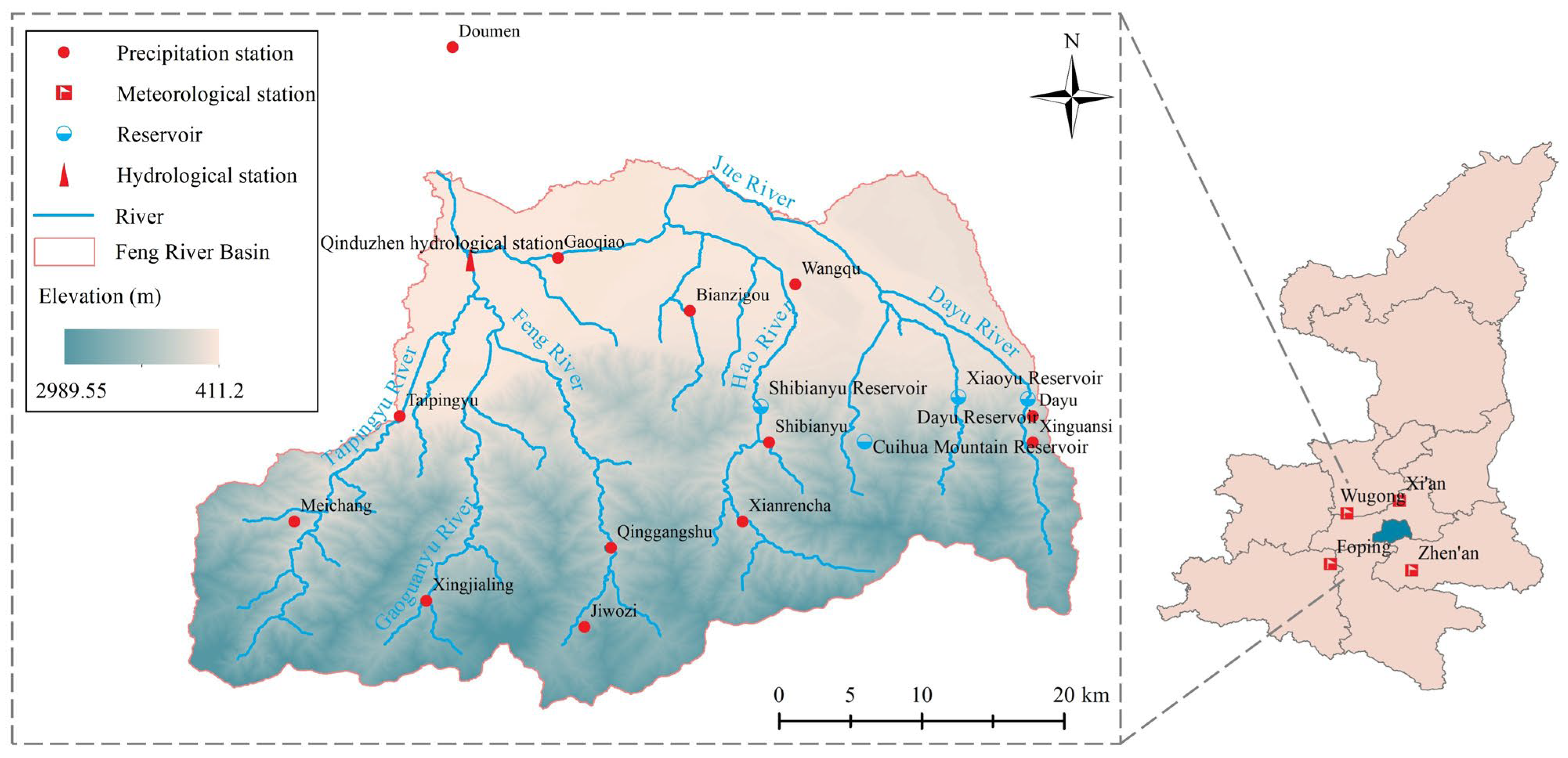
Figure 1. Geographical location, topography, and river network of the Feng River Basin.
Water 18 01121 g001
Figure 2. SWAT hydrological model establishment and parameter calibration in the Feng River Basin.
Water 18 01121 g002
Figure 3. Map of water intake nodes in the Feng River Basin. The background colors distinguish different administrative districts.
Water 18 01121 g003
Figure 4. Total and node water demand in the Feng River Basin.
Water 18 01121 g004
Table 1. Water Supply Assurance Rate of Nodes and Total Water Supply in the Feng River Basin.
ScenarioNode1234567Total
1 Artificial Water SystemP = 75%1.0000.9771.0000.7250.8240.7750.8050.848
P = 95%1.0000.9221.0000.7160.8130.7670.7960.839
2 Water Resource AllocationP = 75%0.9680.9771.0000.7250.9580.7750.6580.853
P = 95%0.9010.9221.0000.7160.9530.7670.6480.833
Table 2. Response of Basin-scale Water Supply Reliability to Ecological Flow Threshold Perturbations.
ScenarioFrequencyBaseline RsRs Under Qeco − 10%Change (%)Rs Under Qeco + 10%Change (%)
1 Artificial Water SystemP = 75%0.8480.8500.2440.847−0.157
P = 95%0.8390.8410.2580.837−0.163
2 Water Resource AllocationP = 75%0.8530.8550.2080.852−0.133
P = 95%0.8330.8350.2340.831−0.147
Notes: The baseline ecological flow threshold was Q e c o =   0.18   m 3 / s . The Q e c o − 10% and Q e c o + 10% scenarios correspond to 0.162 m3/s and 0.198   m 3 / s , respectively. The relative change was calculated using the basin-scale reliability under the baseline scenario as the reference.
Disclaimer/Publisher’s Note: The statements, opinions and data contained in all publications are solely those of the individual author(s) and contributor(s) and not of MDPI and/or the editor(s). MDPI and/or the editor(s) disclaim responsibility for any injury to people or property resulting from any ideas, methods, instructions or products referred to in the content.