Study on Erosion and Siltation Change of Macrotidal Estuary in Mountain Stream: The Case of Jiao (Ling) River, China

Abstract
1. Introduction
2. Materials and Methods
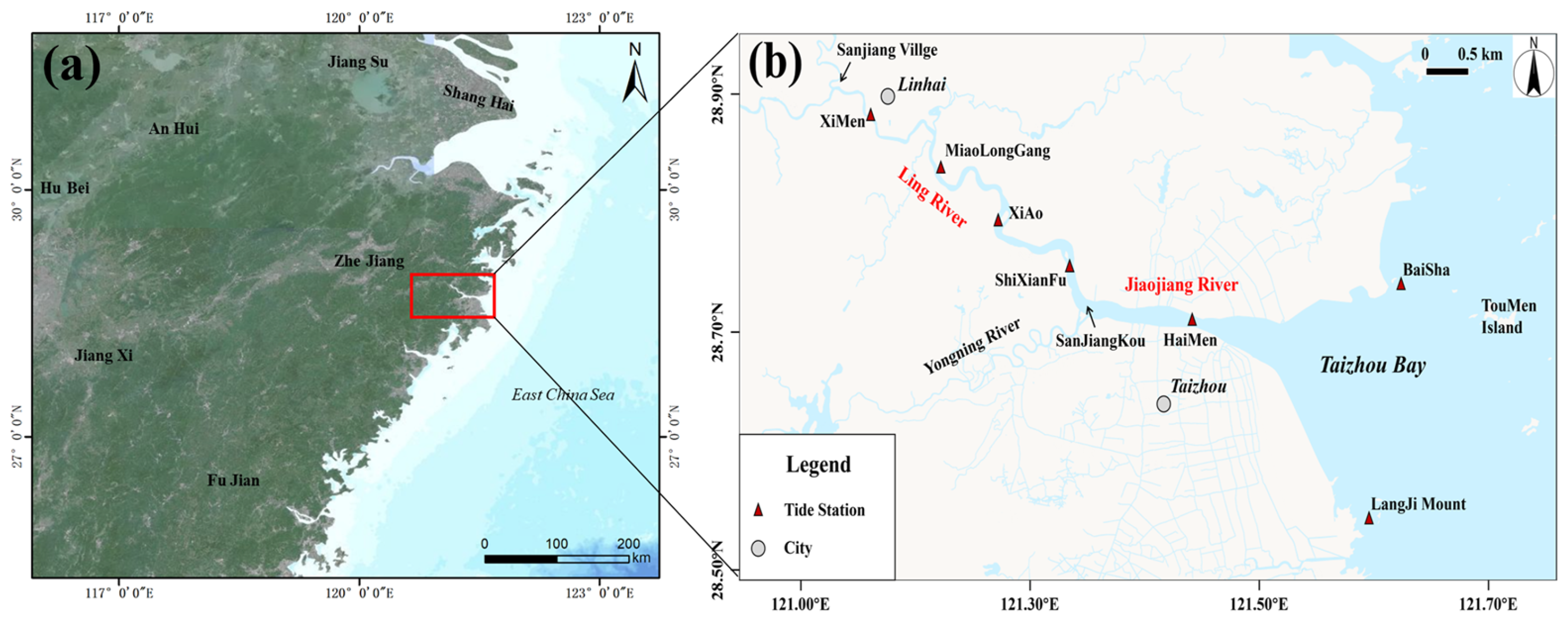
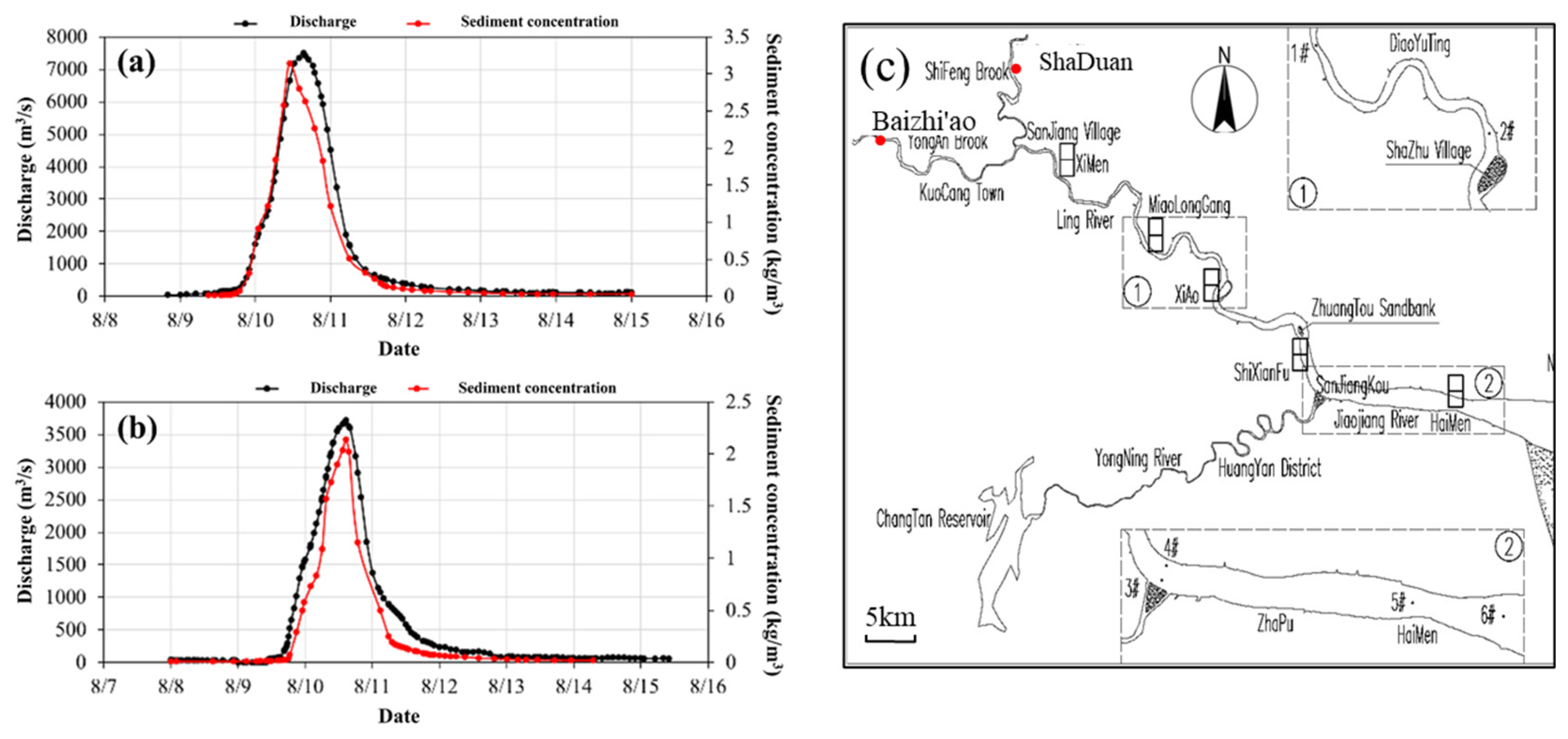
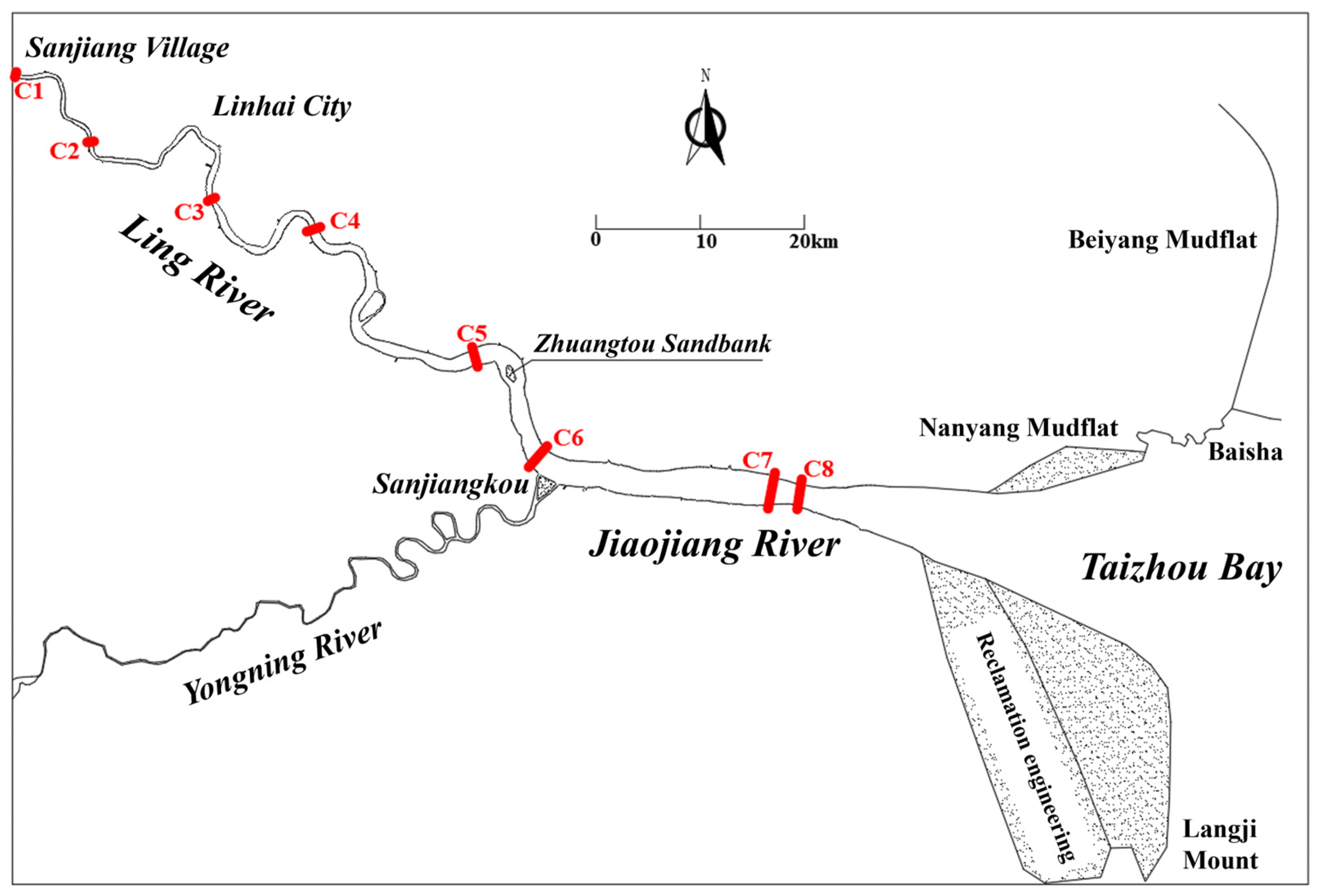
2.1. Study Area
2.2. Data Collection and Methods
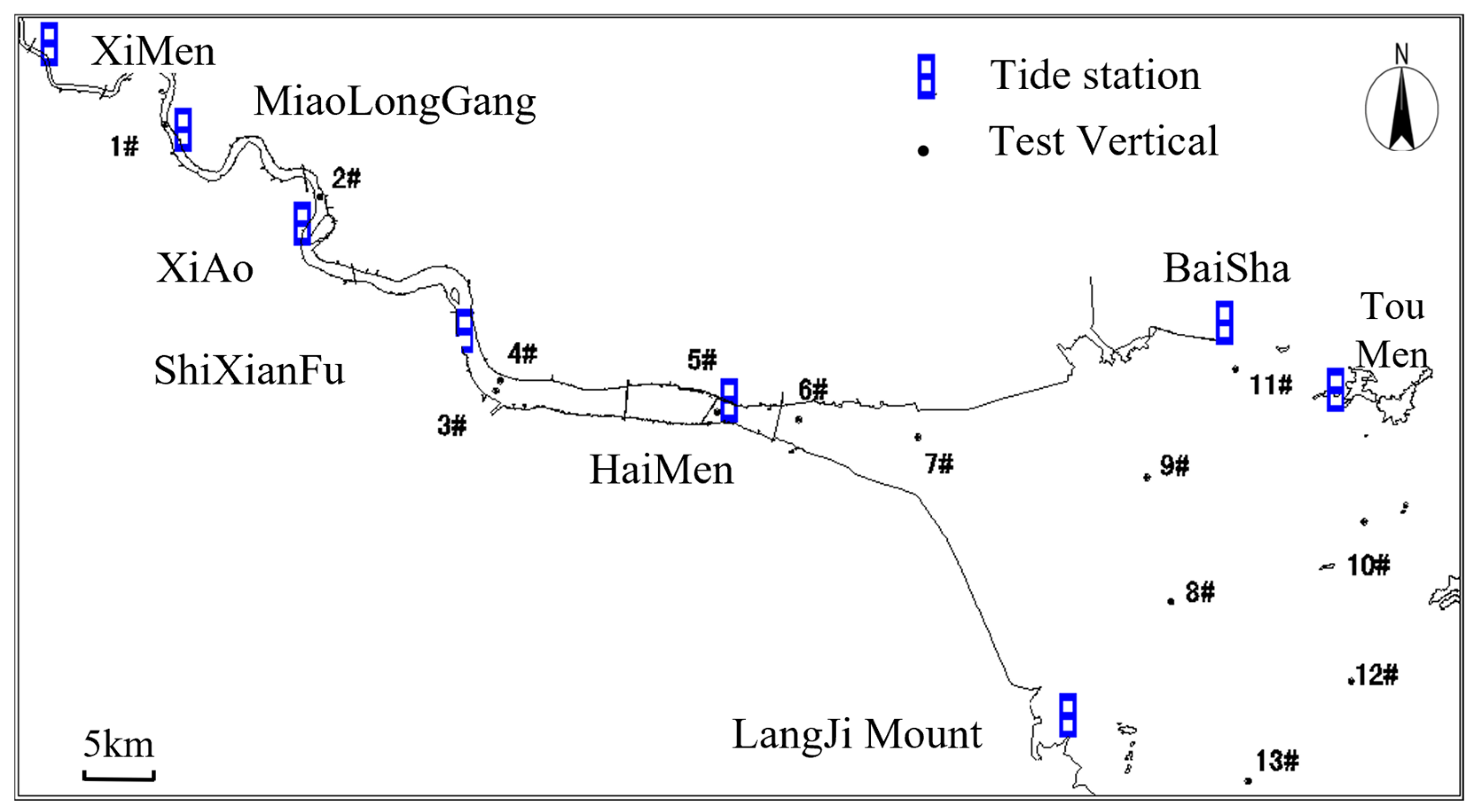
2.2.1. Data Sources and Survey Framework
2.2.2. Instrumentation
- (1)
- Positioning and Topographic Measurement
- (2)
- Hydrodynamic Measurement
- (3)
- Sediment and Grain-Size Measurement
2.2.3. Measurement Methods
- (1)
- Tide-Level Observation
- (2)
- Fixed-Point Hydrological and Sediment Measurements
- Depth > 4 m: six-point method (surface, 0.2 H, 0.4 H, 0.6 H, 0.8 H, near-bed);
- 2–4 m: three-point method (0.2 H, 0.6 H, 0.8 H);
- <2 m: single-point method (0.6 H);
- Salinity and grain size were sampled uniformly at 0.6 H.
- (3)
- Cross-Sectional Discharge Measurement
2.2.4. Data Quality Assurance
2.3. Numerical Simulation of ETM
2.3.1. Hydrodynamic and Sediment Transport Equations
2.3.2. Solution Method
2.3.3. Parameter Determination
- (1)
- Flow sediment-carrying capacity
- (2)
- Settling velocity of cohesive sediments
3. Results
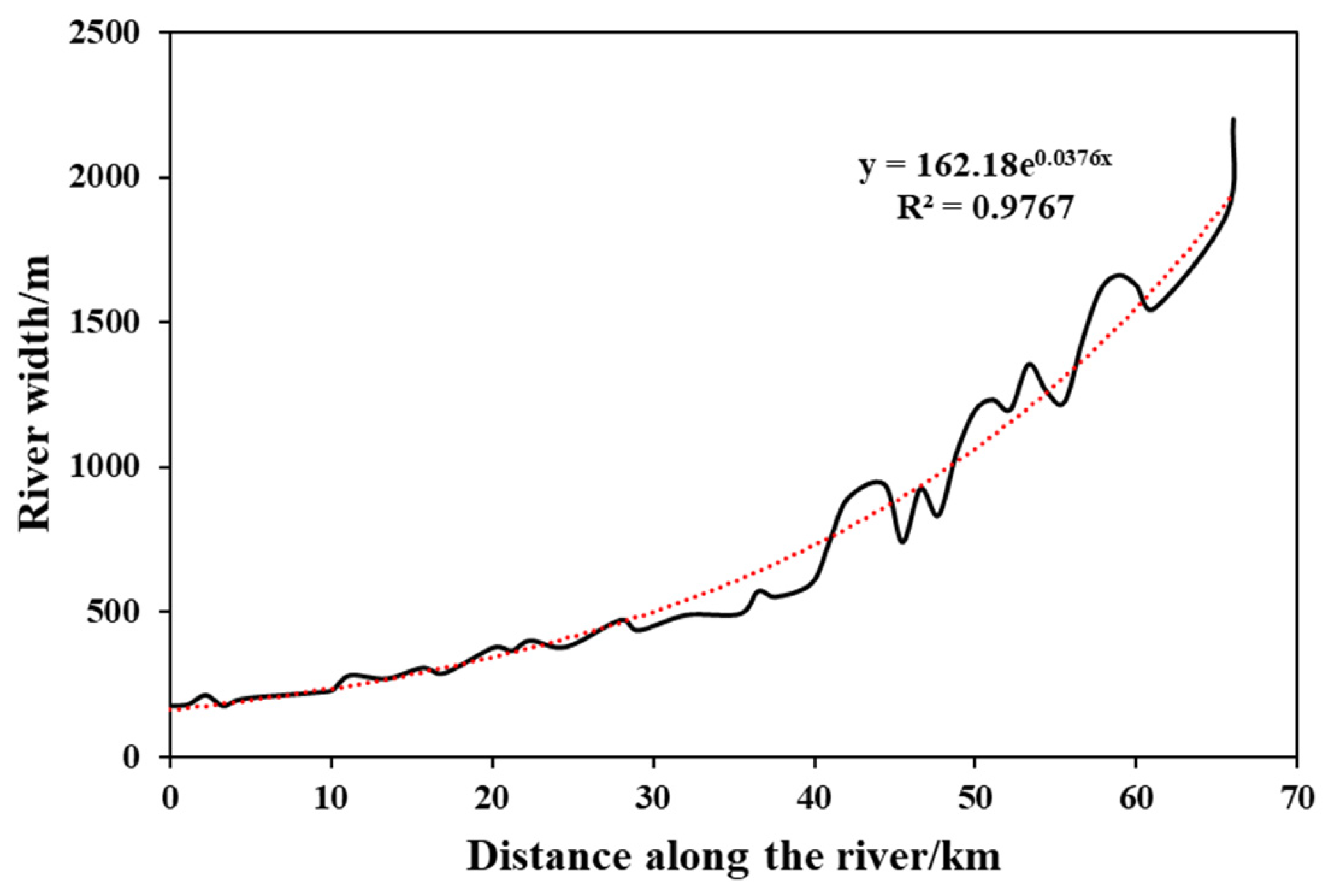
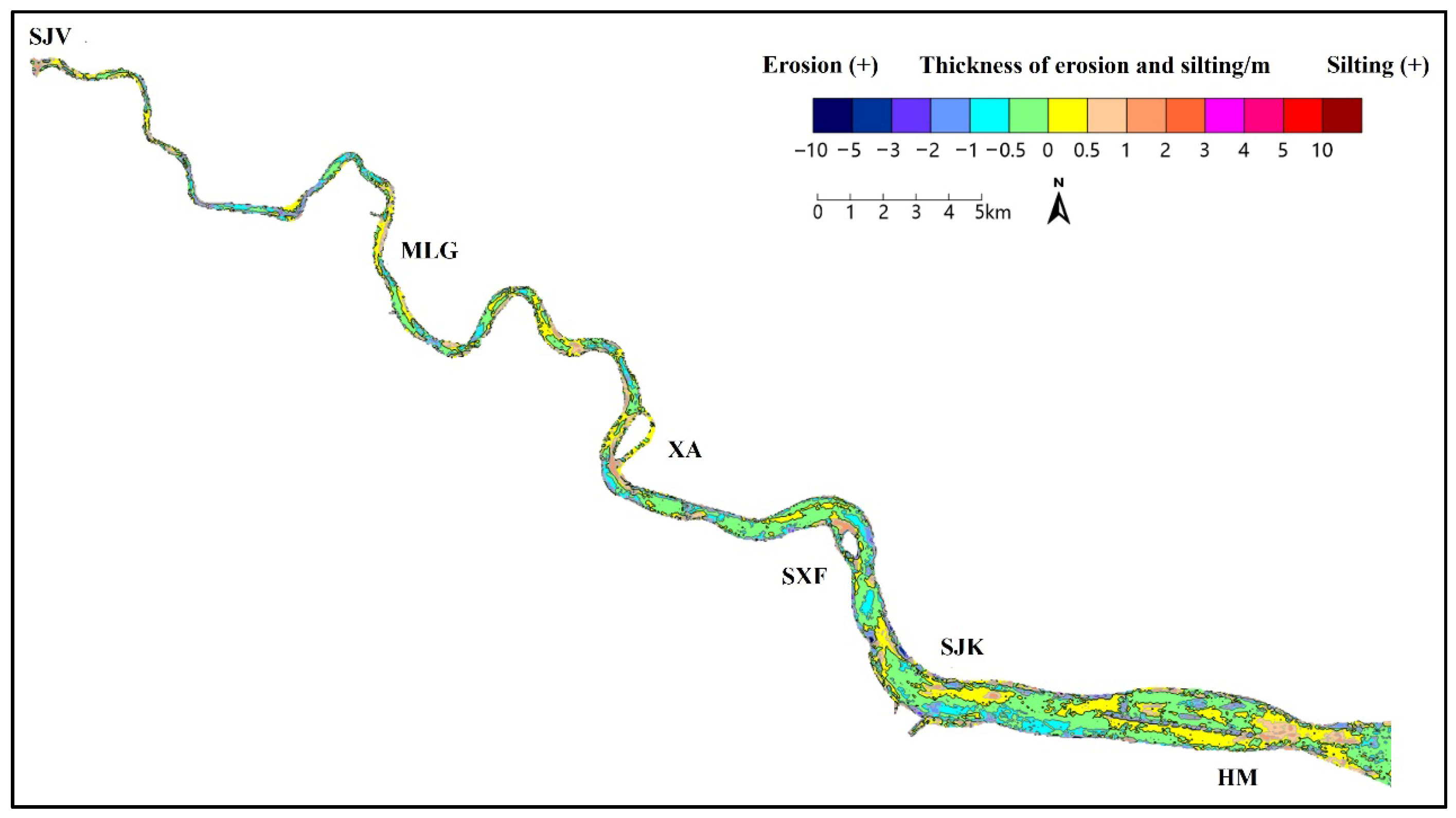
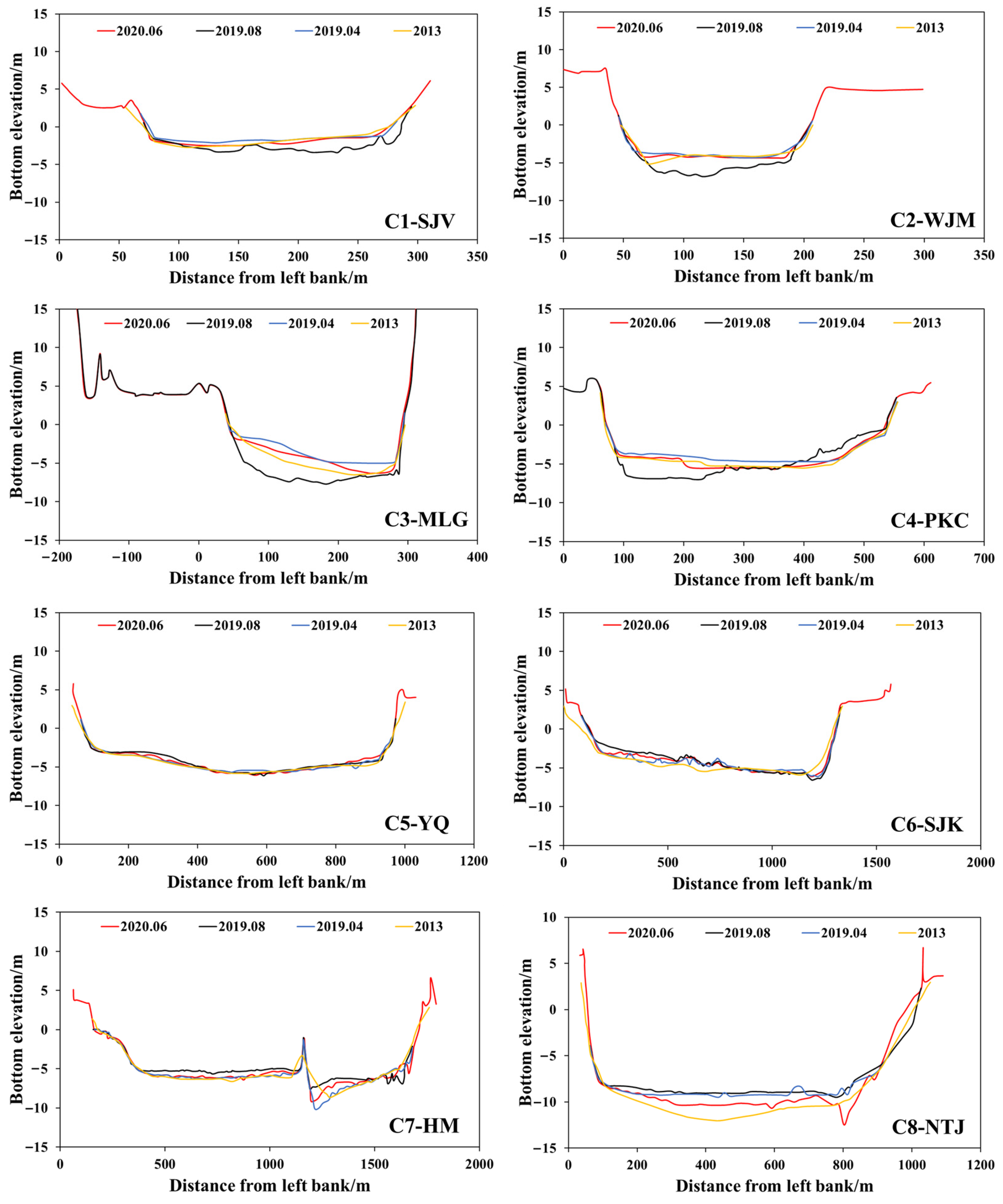
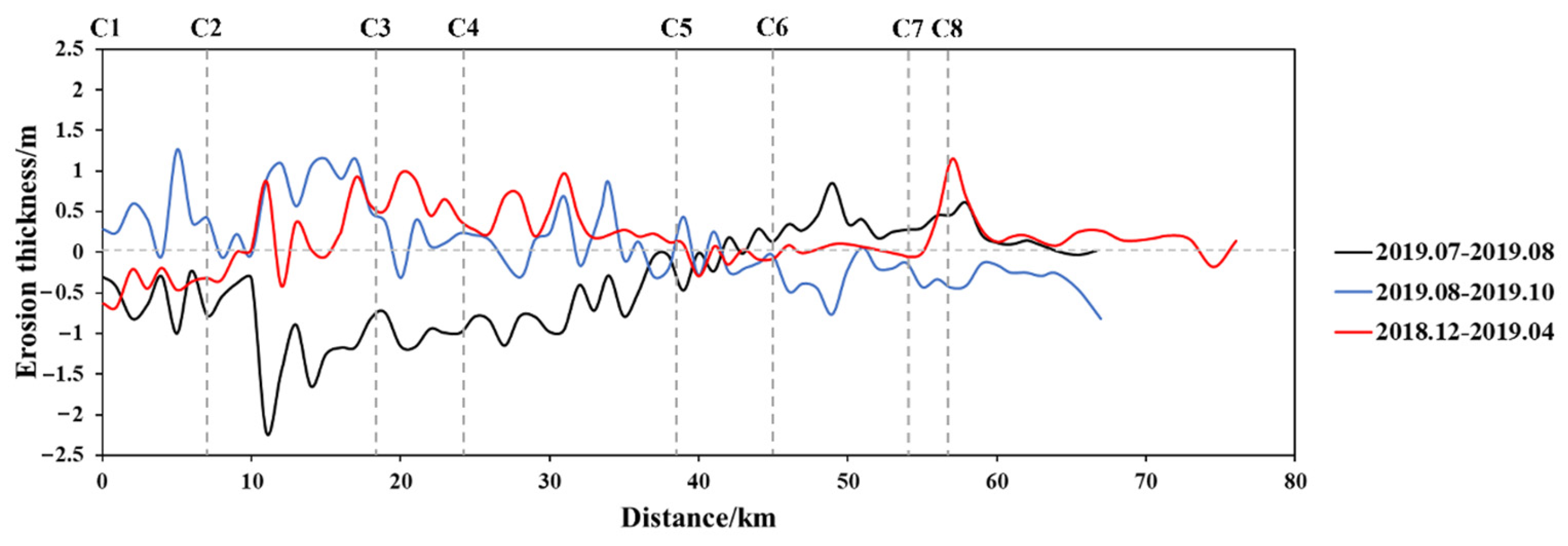
3.1. Morphology Change
3.2. Hydrodynamic
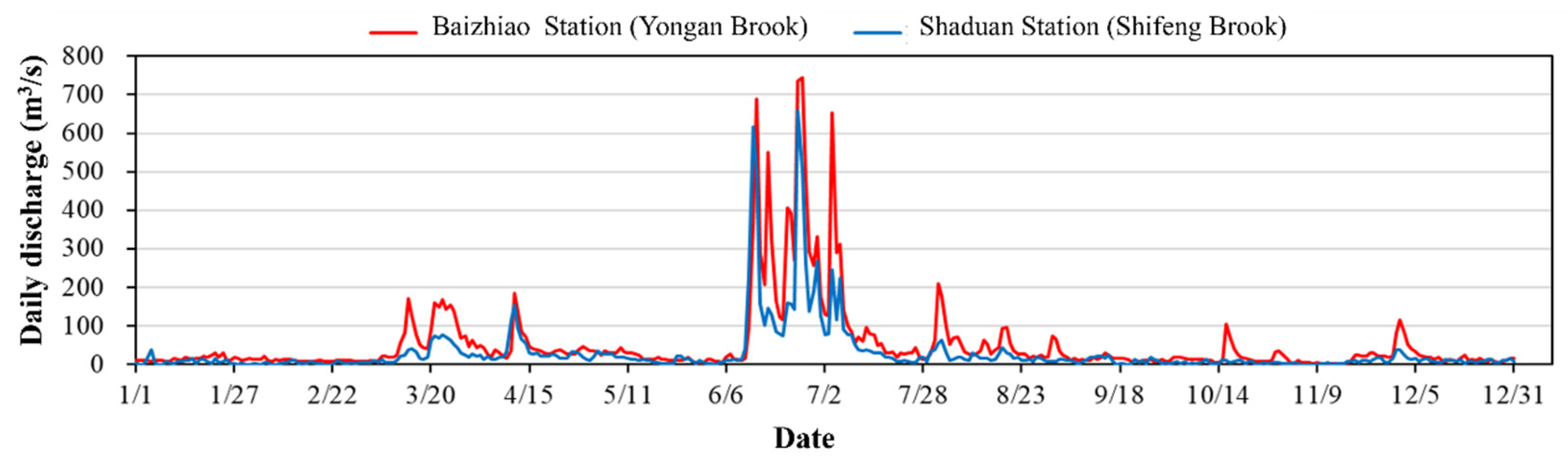
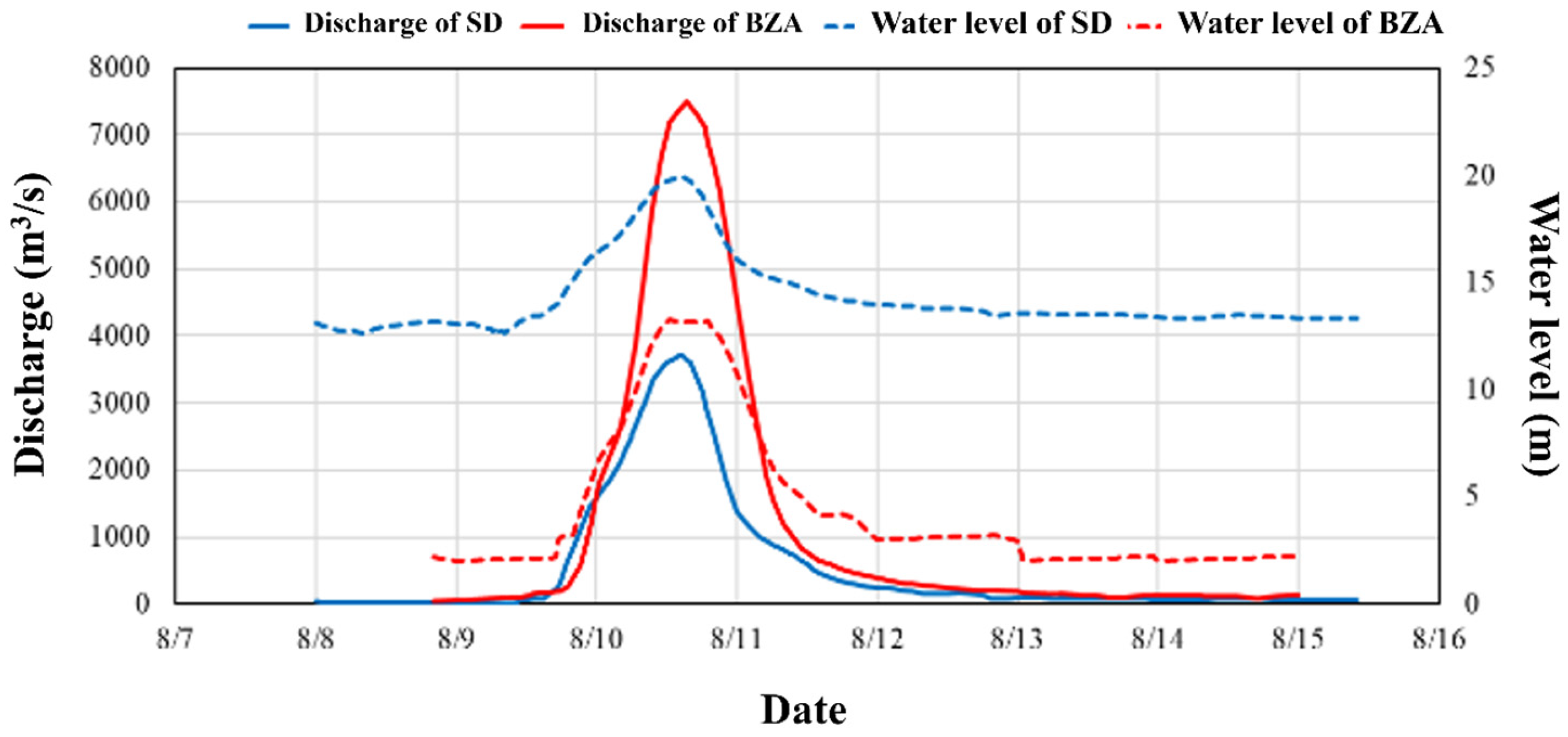
3.2.1. Runoff
3.2.2. Tide
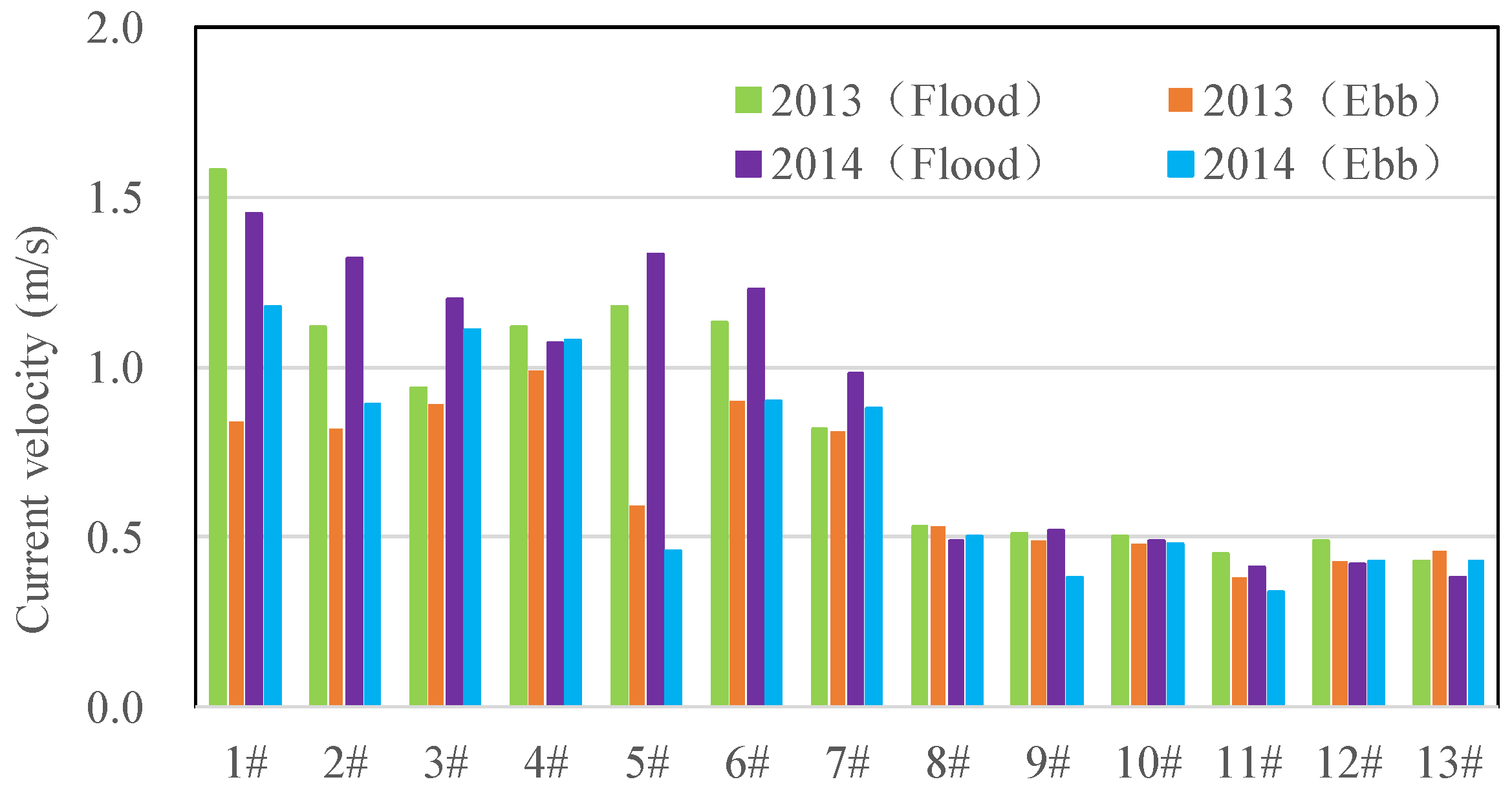
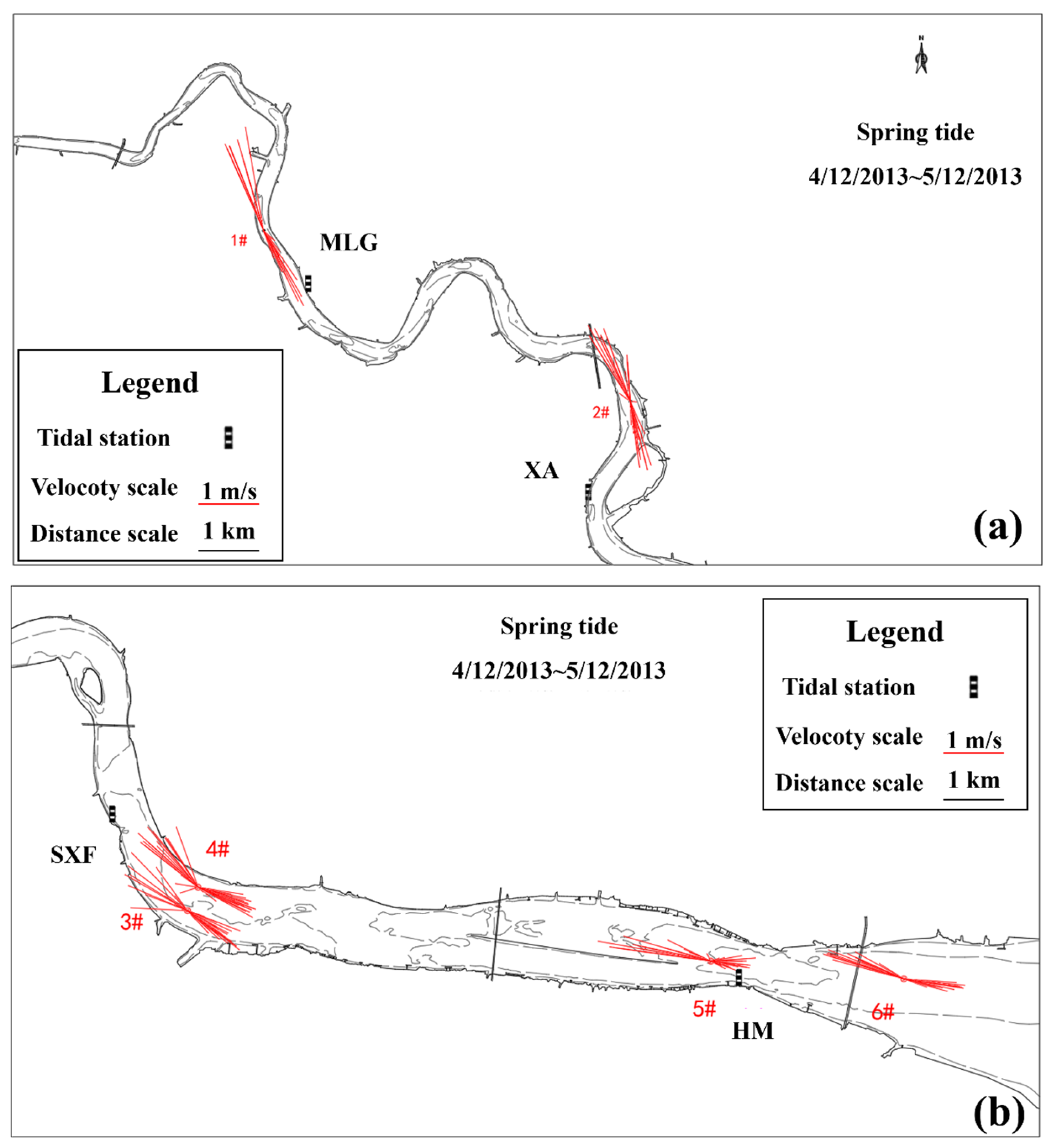
3.2.3. Tidal Current
3.3. Sediment
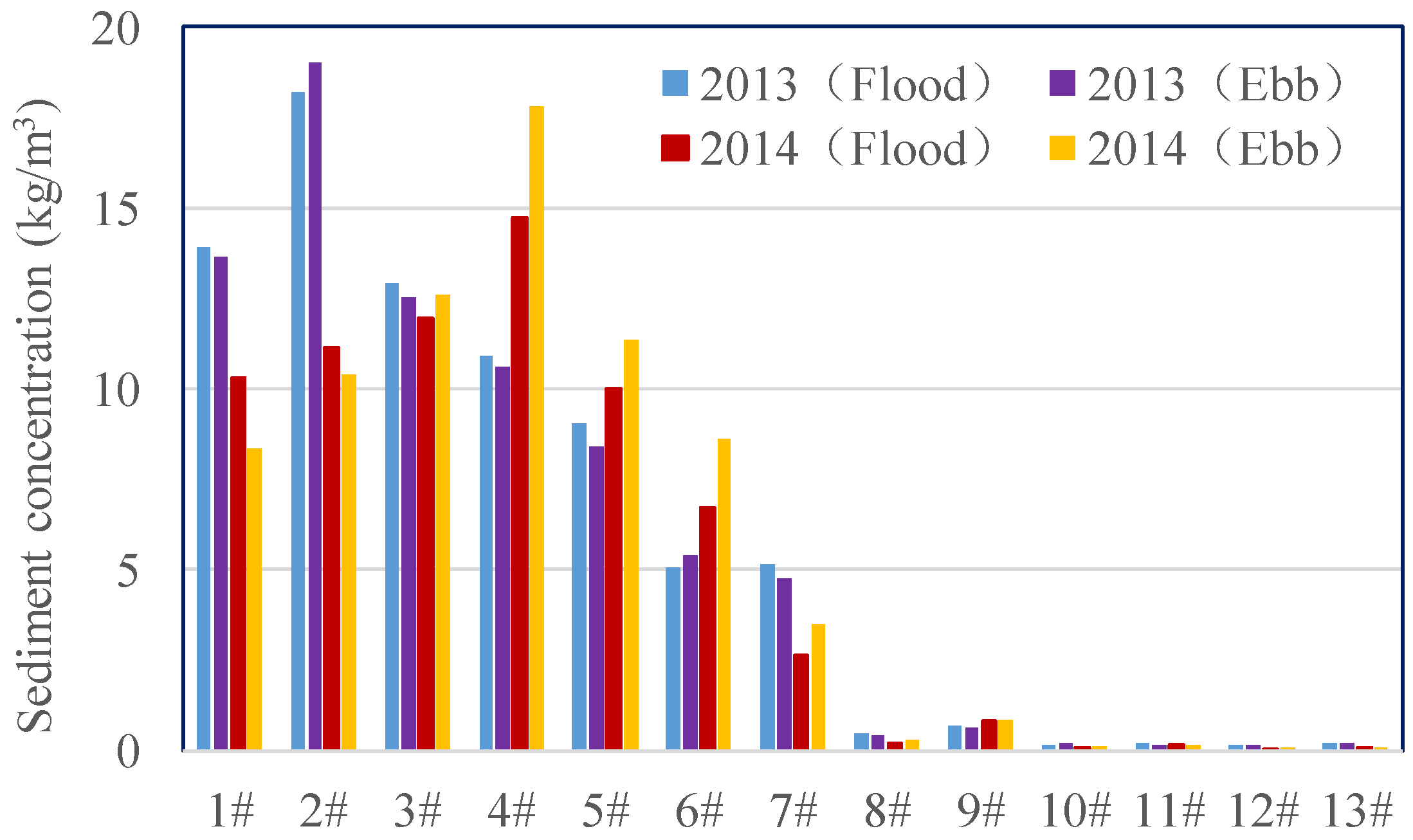
3.3.1. Sediment Concentration
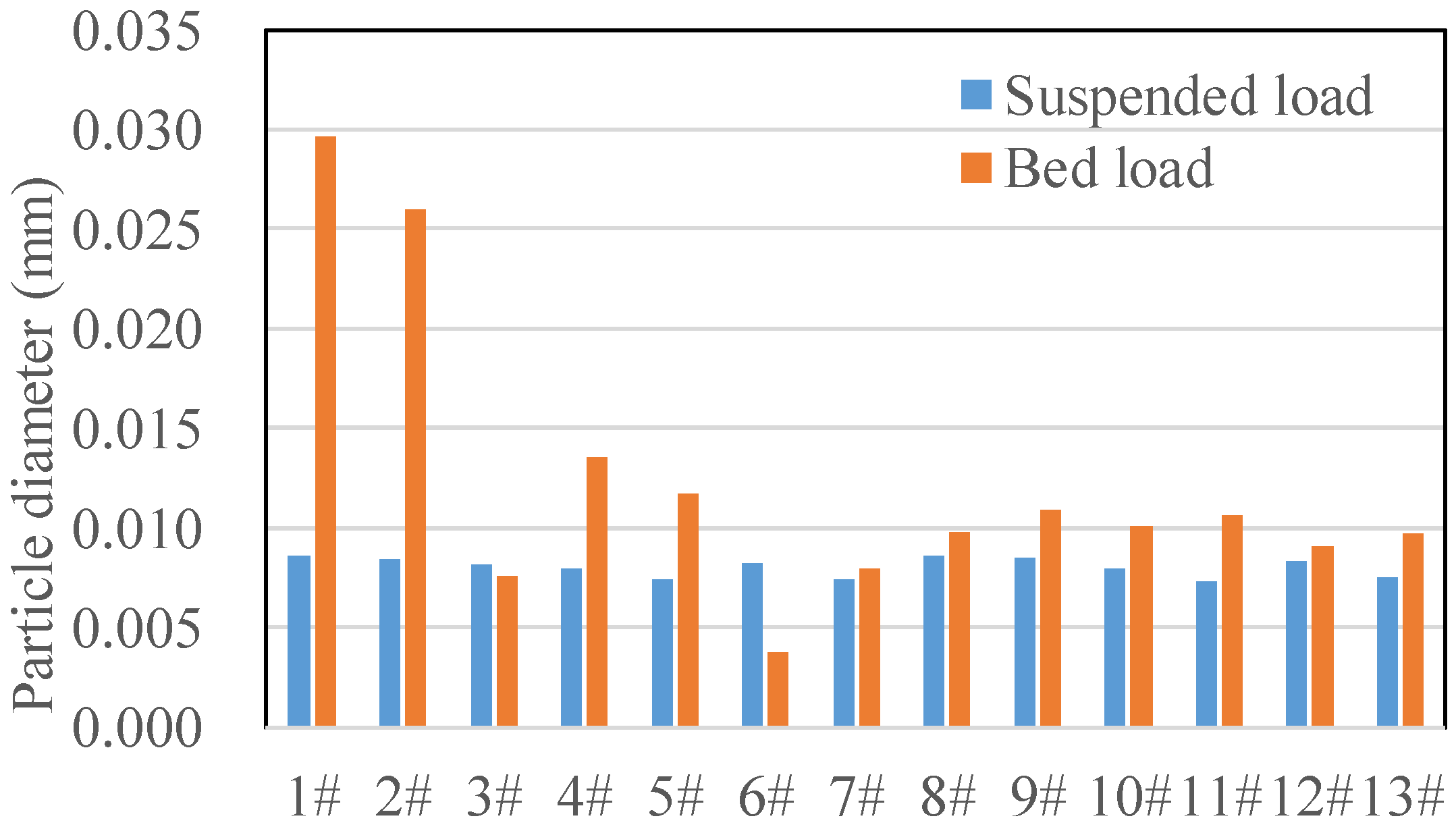
3.3.2. Sediment Properties
3.4. Salinity
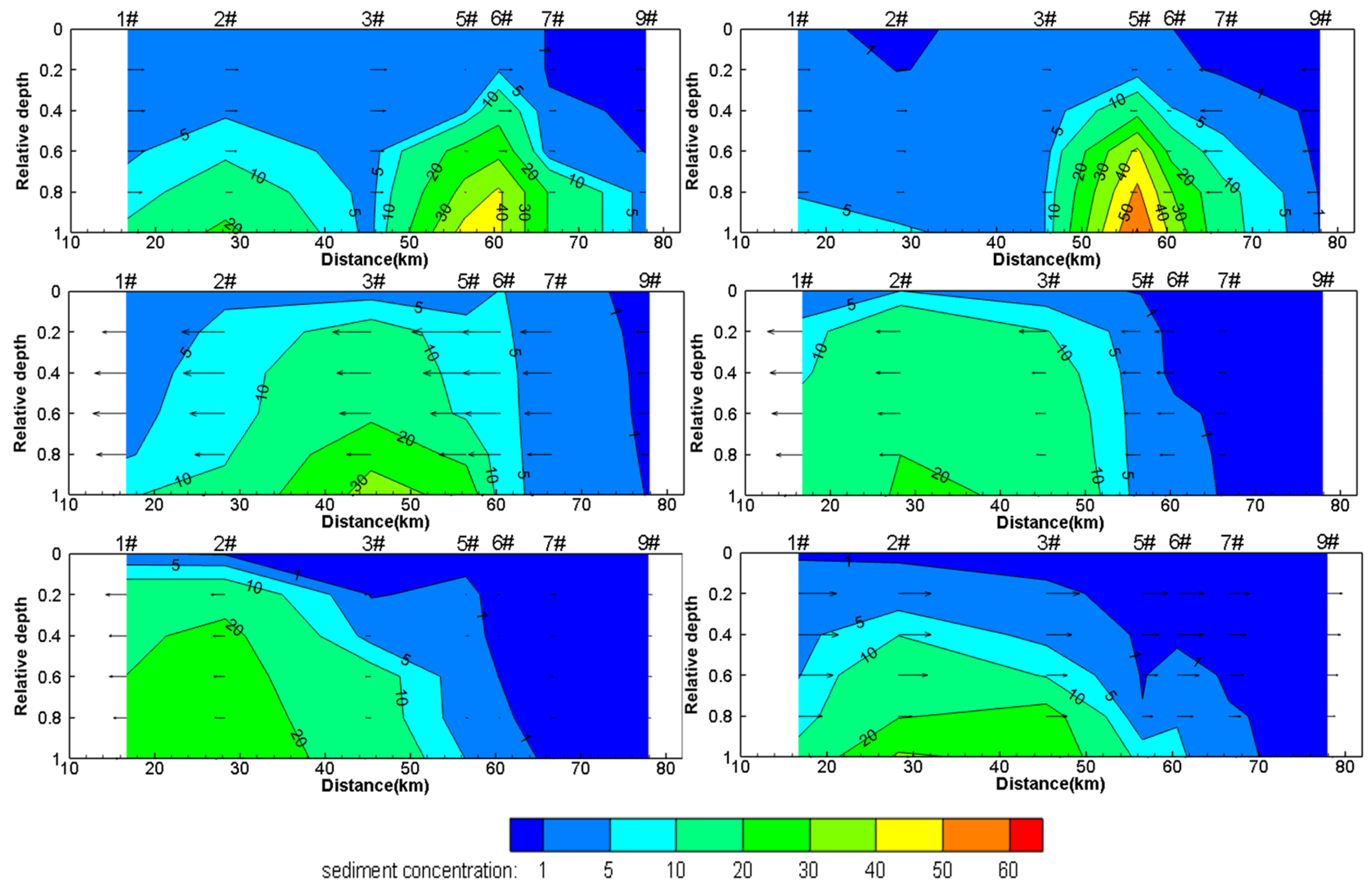
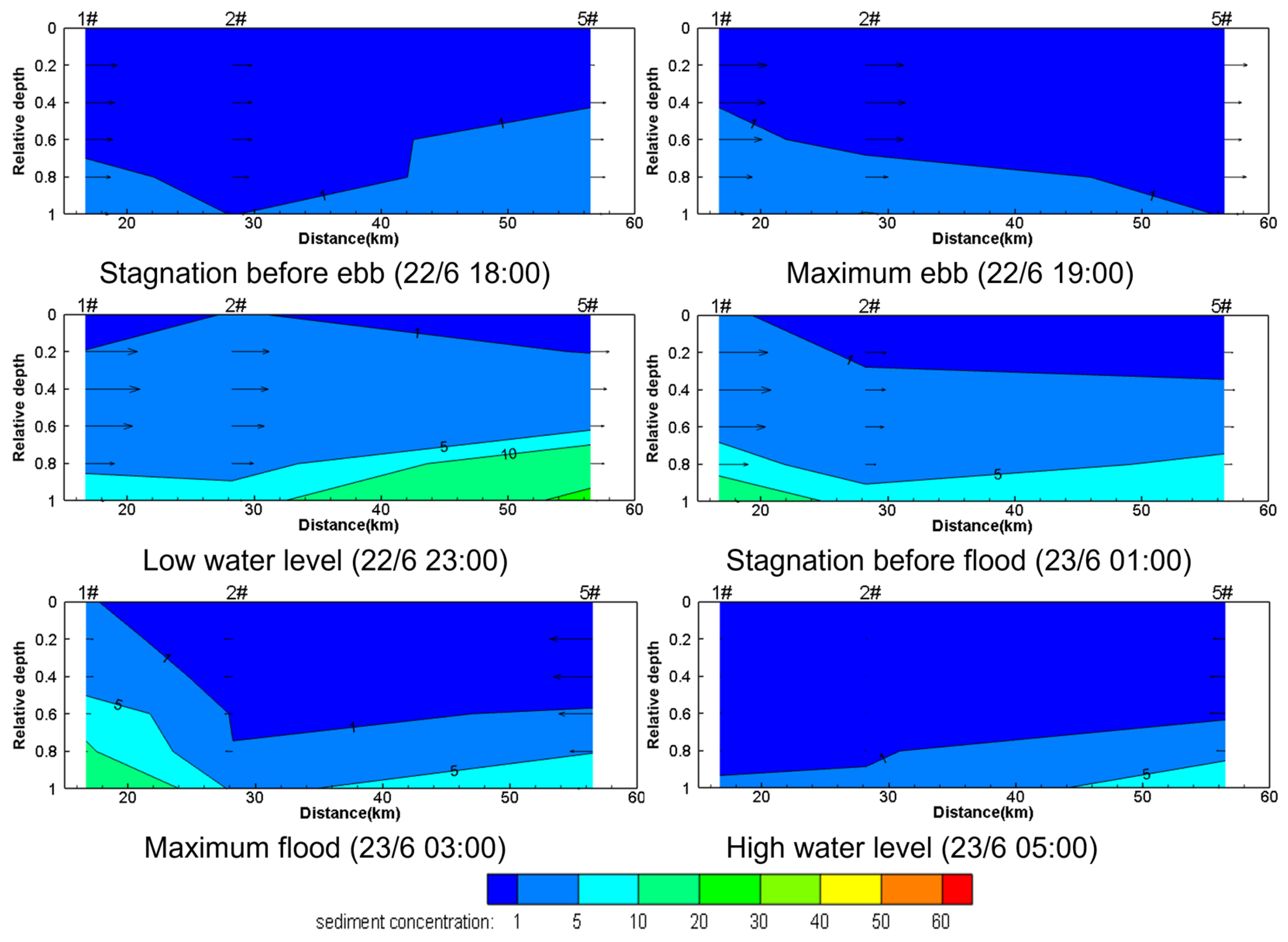
3.5. Motion Characteristics of ETM
4. Discussion
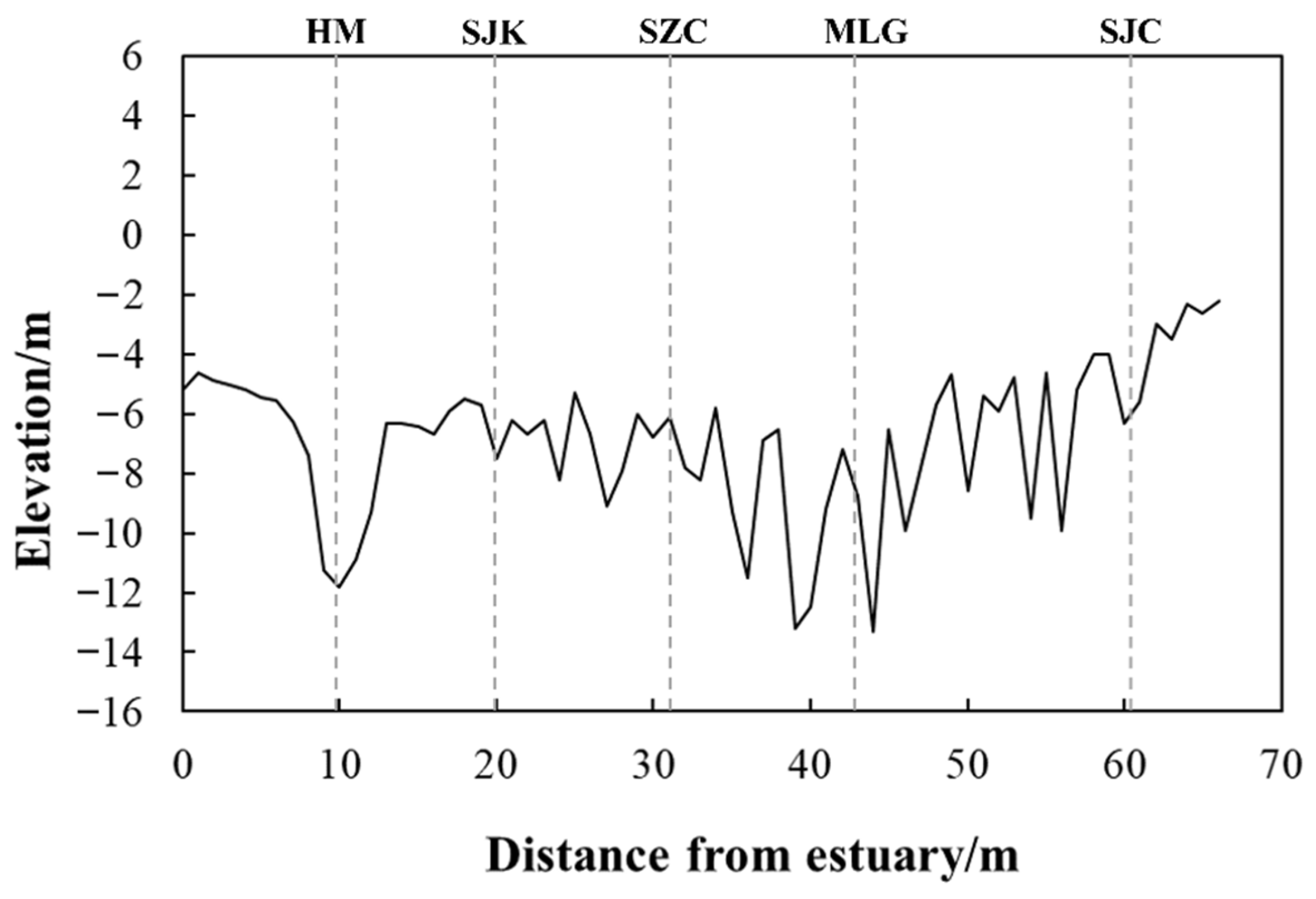
4.1. Riverbed Morphological Characteristics and Evolution Process
4.2. The Impacts of Sand Mining
4.3. Relationship Between ETM and Estuarine Geomorphology
4.4. Topographic Evolution Under Complex Hydrodynamic Conditions
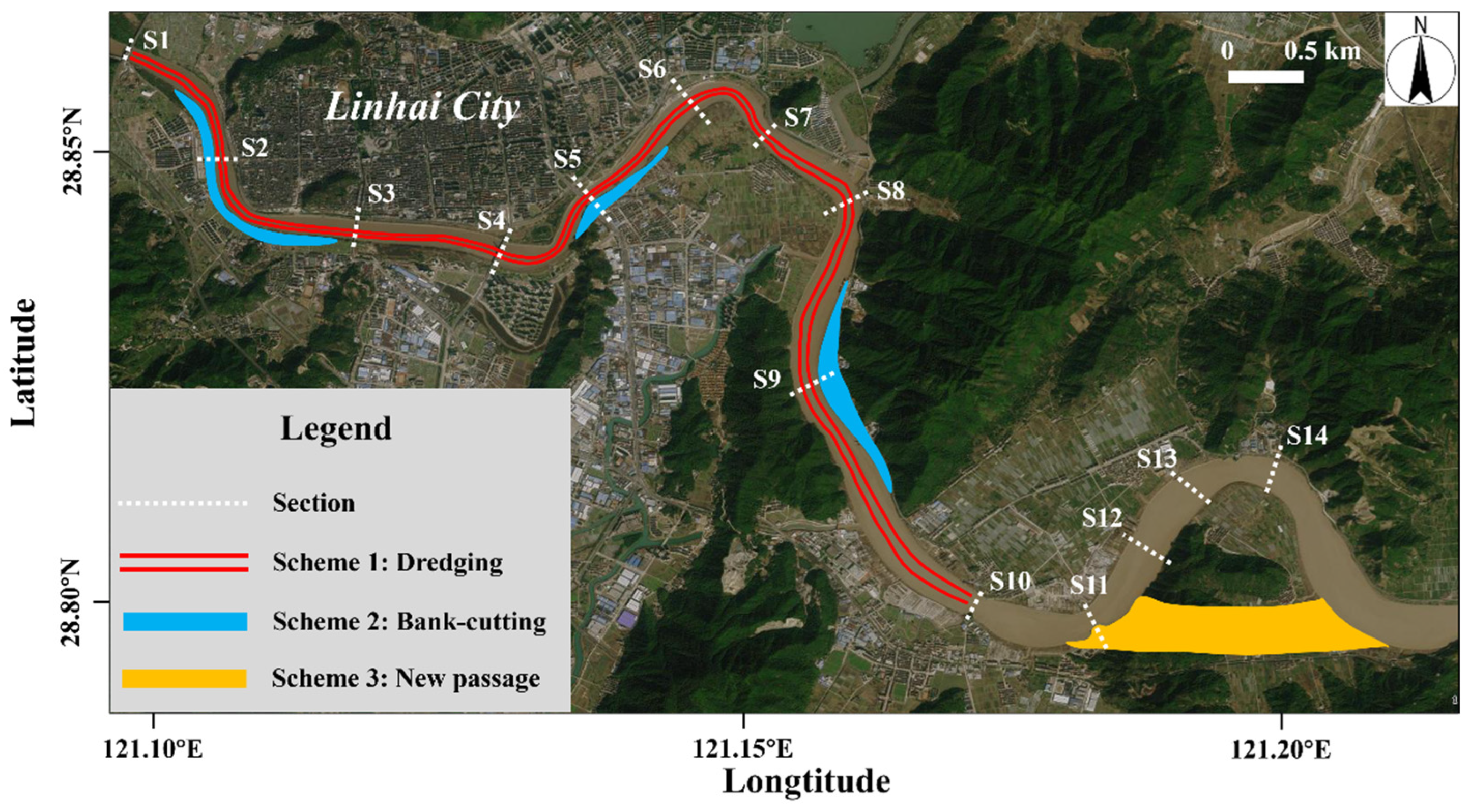
4.5. Causes of Flood Disaster and Flood Control Measures
5. Conclusions
- (1)
- The interaction between river runoff and strong tides produces highly variable hydrodynamic conditions, leading to complex sediment transport patterns and pronounced riverbed evolution. Marked seasonal differences occur: erosion dominates in wet years when the average annual discharge exceeds 164 m3/s, while deposition is more common in dry years.
- (2)
- Human interventions—especially sand mining—exert substantial influence on erosion and deposition patterns within the JLR. Such activities can drastically alter channel morphology and modify riverbed sediment composition, triggering abrupt shifts in local hydrodynamics and sediment transport.
- (3)
- The development of the estuarine turbidity maximum (ETM) in macrotidal estuaries is controlled by tidal deformation and sediment supply. Tidal deformation drives upstream transport of suspended sediment through Stokes drift, while the abundance of fine particles in the riverbed provides sufficient material for ETM formation.
- (4)
- The ETM position in a macrotidal estuary differs fundamentally from that in slow, weakly tidal estuaries. In the latter, the ETM typically coincides with the stagnation point, the salt-wedge tip, or a sandbar near the estuary mouth. In the MEMS, however, the ETM forms mainly during spring tides, with its active zone and the downstream diffusion zone representing two distinct sedimentary processes near the estuary.
- (5)
- Erosion and deposition in a MEMS are governed jointly by water and sediment conditions. Short flood pulses generate intense upstream erosion and downstream deposition. During the dry season, tidal currents erode the lower reach and transport sediment upstream, sustaining an approximate dynamic equilibrium throughout the year.
- (6)
- Flood characteristics in a MEMS are strongly shaped by channel morphology and tidal dynamics. Key bayonet nodes and channel curvature determine the spatial pattern of flood levels. Lowering shoal elevations and widening constricted bayonet zones produce the most effective reductions in flood levels.
Author Contributions
Funding
Data Availability Statement
Conflicts of Interest
References
- Dyer, K.R. Estuaries: A Physical Introduction; Wiley: Chichester, UK, 1997. [Google Scholar]
- Dalrymple, R.W.; Zaitlin, B.A.; Boyd, R. Estuarine facies models and their application to geological interpretation. AAPG Bull. 1992, 76, 180–200. [Google Scholar]
- Short, A.D. Macro-meso tidal beach morphodynamics: An overview. J. Coast. Res. 1991, 2, 417–436. [Google Scholar]
- Liu, J.P.; Liu, C.; Xu, K.H.; Milliman, J.; Chiu, J.K.; Kao, S.; Lin, S. Flux and fate of small mountainous rivers derived sediments into the Taiwan strait. Mar. Geol. 2008, 256, 65–76. [Google Scholar] [CrossRef] [Scilit]
- Azhikodan, G.; Yokoyama, K. Sediment transport and fluid mud layer formation in the macro-tidal Chikugo River estuary during a fortnightly tidal cycle. Estuar. Coast. Shelf Sci. 2018, 202, 232–245. [Google Scholar] [CrossRef] [Scilit]
- Liu, R.; Cheng, H.; Chen, J.; Teng, L.; Ren, Z.; Yang, Q.; Fan, H.; Lefebvre, A. Subaqueous multiscale bedform morphology dynamics in a mountainous macrotidal estuary. Front. Mar. Sci. 2025, 12, 1585285. [Google Scholar] [CrossRef] [Scilit]
- Liu, J.; Li, Y.; Pan, Q.; Zhang, T. Suspended sediment transport and turbidity maximum dynamics in a mountainous macrotidal estuary: The Oujiang Estuary. Cont. Shelf Res. 2023, 256, 104–125. [Google Scholar]
- MacCready, P. Estuarine adjustment to changes in river flow and tidal mixing. J. Phys. Oceanogr. 1999, 29, 708–726. [Google Scholar] [CrossRef] [Scilit]
- Du, Y.; Cheng, Z.; You, Z. Morphodynamic response of a macrotidal estuary to an extreme flood event: Insights from numerical modeling. Front. Mar. Sci. 2023, 10, 112–130. [Google Scholar]
- Moore, R.D.; Wolf, J.; Souza, A.J.; Flint, S.S. Morphological evolution of the Dee Estuary, eastern Irish Sea, UK: A tidal asymmetry approach. Geomorphology 2009, 103, 588–596. [Google Scholar] [CrossRef] [Scilit]
- Xia, W.Y.; Zhao, X.D.; Zhang, X.Z. Influence of variations in runoff and tide on spatial and temporal distribution of sediment concentration in the Jiaojiang River Estuary. Hydro-Sci. Eng. 2016, 3, 35–45. (In Chinese) [Google Scholar]
- Lane, A.; Prandle, D. Random-walk particle modelling for estimating bathymetric evolution of an estuary. Estuar. Coast Shelf Sci. 2006, 68, 175–187. [Google Scholar] [CrossRef] [Scilit]
- Zhang, W.; Feng, H.; Hoitink, A.J.F.; Zhu, Y.; Gong, F.; Zheng, J. Tidal impacts on the subtidal flow division at the main bifurcation in the Yangtze River Delta. Estuar. Coast. Shelf Sci. 2017, 196, 301–314. [Google Scholar] [CrossRef] [Scilit]
- Surian, N.; Righini, M.; Lucía, A.; Nardi, L.; Amponsah, W.; Benvenuti, M.; Borga, M.; Cavalli, M.; Comiti, F.; Marchi, L.; et al. Channel response to extreme floods: Insights on controlling factors from six mountain rivers in northern Apennines, Italy. Geomorphology 2016, 272, 7891. [Google Scholar] [CrossRef] [Scilit]
- Zhang, X.Z.; Chen, X.; Dou, X.P.; Zhao, X.D.; Xia, W.Y.; Jiao, J.; Xu, H. Study on formation mechanism of turbidity maximum zone and numerical simulations in macro-tidal estuaries. Adv. Water Sci. 2019, 30, 84–92. (In Chinese) [Google Scholar]
- Ma, M.; Porz, L.; Schrum, C.; Zhang, W. Physical mechanisms and interconnected processes of estuarine turbidity maxima: A comprehensive review. Estuar. Coast. Shelf Sci. 2024, 305, 107–155. [Google Scholar]
- Guo, L.; Chen, Z.H. Remote Sensing Research on the Distributed Characteristics of Suspended Matter in Jiaojiang Estuary and Taizhou Gulf. J. Wuhan Univ. Technol. 2007, 29, 49–52. (In Chinese) [Google Scholar]
- Lamb, M.P.; Nittrouer, J.A.; Mohrig, D.; Shaw, J. Backwater and river plume controls on scour upstream of river mouths: Implications for fluvio-deltaic morphodynamics. J. Geophys. Res-Earth 2012, 117, F01002. [Google Scholar] [CrossRef] [Scilit]
- Yan, Y.; Song, D.; Bao, X.; Ding, Y. The response of lateral flow to peak river discharge in a macrotidal estuary. Water 2020, 12, 3571. [Google Scholar] [CrossRef] [Scilit]
- Cheng, Z.; Jalon-Rójas, I.; Wang, X.H.; Liu, Y. Impacts of land reclamation on sediment transport and sedimentary environment in a macro-tidal estuary, Estuarine. Coast. Shelf Sci. 2020, 242, 106861. [Google Scholar] [CrossRef] [Scilit]
- Chen, K.; Lin, Y.; Liu, J.; He, Z.; Jia, L. Combined effects of massive reclamation and dredging on the variations in hydrodynamic and sediment transport in Lingdingyang Estuary, China. Front. Earth Sci. 2023, 18, 127–147. [Google Scholar] [CrossRef] [Scilit]
- Yu, R.; Zhang, C.; Zhu, Z.; Liu, Y. Tidal channel morphology controls on water exchange and sedimentation Patterns: Implications for sustainable reclamation design in semi-enclosed lagoons. Mar. Environ. Res. 2025, 210, 107282. [Google Scholar] [CrossRef] [Scilit]
- Acharyya, R.; Mukhopadhyay, A.; Habel, M. Coupling of SWAT and DSAS Models for Assessment of Retrospective and Prospective Transformations of River Deltaic Estuaries. Remote. Sens. 2023, 15, 958. [Google Scholar] [CrossRef] [Scilit]
- Zhang, H.; Sun, T.; Yang, W. Short-Term Environmental Flow Assessment of a Functional Estuarine Tidal Flat Ecosystem: A Nonlinear Ecological Response to Flow Alteration. Water Resour. Res. 2020, 56, e2020WR027084. [Google Scholar] [CrossRef] [Scilit]
- Zhao, J.; Guo, L.; He, Q.; Wang, Z.; Maren, D.; Wang, X. An analysis on half century morphological changes in the Changjiang Estuary: Spatial variability under natural processes and human intervention. J. Mar. Syst. 2018, 181, 25–36. [Google Scholar] [CrossRef] [Scilit]
- Zhu, C.; Guo, L.; Maren, D.; Tian, B.; Wang, X.; He, Q.; Wang, Z. Decadal morphological evolution of the mouth zone of the Yangtze Estuary in response to human interventions. Earth Surf. Process. Landf. 2019, 44, 2319–2332. [Google Scholar] [CrossRef] [Scilit]
- Yan, Y.; Song, D.; Bao, X.; Wang, N. The response of turbidity maximum to peak river discharge in a macrotidal estuary. Water 2021, 13, 106. [Google Scholar] [CrossRef] [Scilit]
- Yildiz, I.; Stanev, E.V.; Staneva, J. Advancing bathymetric reconstruction and forecasting using deep learning. Ocean. Dyn. 2025, 75, 36. [Google Scholar] [CrossRef] [Scilit]
- Xu, J.; Chen, J.; Zhao, Q.; Shi, J.; She, S.; Chen, H. The impact of port-city interaction on urban economic development: An empirical study based on coastal port cities in China. Cities 2025, 159, 105770. [Google Scholar] [CrossRef] [Scilit]
- Zhuang, Y.; Xing, A.; Sun, Q.; Jiang, Y.; Zhang, Y.; Wang, C. Failure and disaster-causing mechanism of a typhoon-induced large landslide in Yongjia, Zhejiang, China. Landslides 2023, 20, 2257–2269. [Google Scholar] [CrossRef] [Scilit]
- Lokhorst, I.R.; Braat, L.; Leuven, J.R.F.W.; Baar, A.W.; van Oorschot, M.; Selakovic, S.; Kleinhans, M.G. Morphological effects of vegetation on the tidal-fluvial transition in Holocene estuaries. Earth Surf. Dynam 2018, 6, 883–901. [Google Scholar] [CrossRef] [Scilit]
- Fan, D.; Tu, J.; Shang, S.; Cai, G. Characteristics of tidal-bore deposits and facies associations in the Qiantang Estuary, China. Mar. Geol. 2014, 348, 1–14. [Google Scholar] [CrossRef] [Scilit]
- Xie, D.F.; Pan, C.H.; Gao, S.; Wang, Z.B. Morphodynamics of the qiantang estuary, China: Controls of river flood events and tidal bores. Mar. Geol. 2018, 406, 27–33. [Google Scholar] [CrossRef] [Scilit]
- Hajika, T.; Yamakawa, Y.; Uchida, T. Spatial distribution of rainfall–runoff characteristics and peak lag time in high-relief meso-scale mountain catchments where observations are scarce. Hydrol. Process. 2024, 38, e15177. [Google Scholar] [CrossRef] [Scilit]
- Tokarev, I.; Yakovlev, E.; Erokhin, S.; Tuzova, T.; Druzhinin, S.; Puchkov, A. Reflection of Daily, Seasonal and Interannual Variations in Run-off of a Small River in the Water Isotopic Composition (δ2H, δ18O): A Case of the Ala-Archa Mountain River Basin with Glaciation (Kyrgyzstan, Central Asia). Water 2024, 16, 1632. [Google Scholar] [CrossRef] [Scilit]
- Yao, Y.; Chen, X.; Yuan, J.; Li, L.; Guan, W. Impacts of channel dredging on hydrodynamics and sediment dynamics in the main channels of the Jiaojiang River Estuary in China. Acta Oceanol. Sin. 2023, 42, 132–144. [Google Scholar] [CrossRef] [Scilit]
- Álvarez, A.; Otero, L.; Restrepo, J.; Álvarez, O. The effect of waves in hydrodynamics, stratification, and salt wedge intrusion in a microtidal estuary. Front. Mar. Sci. 2022, 9, 974163. [Google Scholar] [CrossRef] [Scilit]
- Kukulka, T.; Chant, R. Lateral transport controls the tidally averaged gravitationally driven estuarine circulation: Tidal mixing effects. J. Phys. Oceanogr. 2024, 54, 1603–1612. [Google Scholar] [CrossRef] [Scilit]
- Zhu, C.; Van Maren, D.; Guo, L.; Lin, J.; He, Q.; Wang, Z. Effects of Sediment-Induced Density Gradients on the Estuarine Turbidity Maximum in the Yangtze Estuary. J. Geophys. Res. 2021, 126, e2020JC016927. [Google Scholar] [CrossRef] [Scilit]
- Laursen, S.; Fruergaard, M.; Andersen, T. Rapid flocculation and settling of positively buoyant microplastic and fine-grained sediment in natural seawater. Mar. Pollut. Bull. 2022, 178, 113619. [Google Scholar] [CrossRef] [Scilit]
- Gao, S. Holocene shelf-coastal sedimentary systems associated with the Changjiang River: An overview. Acta Oceanol. Sin. 2013, 32, 4–12. [Google Scholar] [CrossRef] [Scilit]



| Sampling Vertical | Beijing Geodetic Coordinate System 1954 (Central Meridian 120° E) | Riverbed (Seabed) Elevation | |||
|---|---|---|---|---|---|
| X (m) | Y (m) | B (° ′ ″ N) | L (° ′ ″ E) | National Vertical Datum 1985 (m) | |
| 1# | 3,190,166 | 613,541 | 28 49 19.6 | 121 09 47.5 | −6.4 |
| 2# | 3,186,597 | 621,202 | 28 47 21.2 | 121 14 28.6 | −7.7 |
| 3# | 3,177,027 | 629,887 | 28 42 07.4 | 121 19 44.8 | −5.2 |
| 4# | 3,177,519 | 630,107 | 28 42 23.3 | 121 19 53.2 | −4.1 |
| 5# | 3,175,974 | 640,824 | 28 41 29.1 | 121 26 27.2 | −9.6 |
| 6# | 3,175,603 | 644,855 | 28 41 15.4 | 121 28 55.5 | −6.4 |
| 7# | 3,174,728 | 650,747 | 28 40 44.6 | 121 32 31.9 | −6.0 |
| 8# | 3,166,619 | 663,252 | 28 36 15.8 | 121 40 08.3 | −6.0 |
| 9# | 3,172,748 | 662,070 | 28 39 35.4 | 121 39 27.9 | −5.4 |
| 10# | 3,170,566 | 672,786 | 28 38 19.6 | 121 46 01.1 | −10.7 |
| 11# | 3,178,092 | 666,420 | 28 42 26.9 | 121 42 10.8 | −4.9 |
| 12# | 3,162,687 | 672,146 | 28 34 04.0 | 121 45 33.3 | −10.7 |
| 13# | 3,157,769 | 667,052 | 28 31 26.8 | 121 42 23.4 | −8.7 |
| Reaches | Annual Average Value | Annual Runoff of Different Frequencies | |||
|---|---|---|---|---|---|
| 50% | 75% | 90% | 95% | ||
| Yong’an Creek | 22.78 | 28.72 | 21.95 | 17.37 | 12.02 |
| Shifeng Creek | 11.76 | 15.26 | 11.21 | 8.55 | 5.52 |
| Ling River | 14.11 | 18.38 | 13.42 | 10.16 | 6.49 |
| Jiao River | 22.14 | 28.36 | 21.15 | 16.40 | 11.01 |
| Total | 70.79 | 90.71 | 67.73 | 52.48 | 35.04 |
| Sites | Mean Range of Tide (m) | Maximum Tidal Range (m) | Minimum Tidal Range (m) | |||||||||
|---|---|---|---|---|---|---|---|---|---|---|---|---|
| 2005 * | 2013 * | 2014 * | 2016 * | 2005 * | 2013 * | 2014 * | 2016 * | 2005 * | 2013 * | 2014 * | 2016 * | |
| XM * | 5.65 | 5.54 | 4.84 | 5.23 | 6.31 | 6.61 | 6.85 | 6.78 | 4.77 | 4.41 | 1.25 | 3.43 |
| MLG * | 6.27 | 5.14 | 4.90 | 4.93 | 6.75 | 6.39 | 6.73 | 6.55 | 5.85 | 3.95 | 2.98 | 3.03 |
| XA * | 6.04 | 4.87 | 4.74 | 4.80 | 6.47 | 6.11 | 6.54 | 6.54 | 5.65 | 3.67 | 3.07 | 2.82 |
| SXF * | 5.38 | 4.55 | 4.46 | 4.48 | 5.85 | 5.83 | 6.20 | 6.23 | 4.96 | 3.37 | 2.77 | 2.63 |
| HM * | 5.02 | 4.26 | 4.23 | 4.05 | 5.63 | 5.61 | 6.00 | 5.84 | 4.24 | 3.02 | 2.44 | 2.32 |
| Sections | 2018.12~2019.4 | 2019.7~2019.8 | 2019.8~2019.10 | 2019.10~2020.6 |
|---|---|---|---|---|
| SJV | 59.3% | 12.4% | −10.7% | −22.5% |
| WJM * | 9.4% | 18.1% | −8.5% | −20.1% |
| MLG | −20.8% | 22.6% | −18.2% | −19.3% |
| PKC * | −6.7% | 19.5% | −4.4% | −4.9% |
| YQ * | −2.7% | 0.7% | 4.3% | −1.9% |
| SJK * | 1.8% | −3.1% | 0.7% | 2.6% |
| HM | 0.0% | −5.7% | 8.5% | −1.0% |
| NTJ * | −12.5% | −5.6% | 5.4% | 4.3% |
| Section | Scheme 1 | Scheme 2 | Scheme 3 | Scheme 4 |
|---|---|---|---|---|
| S1 | −0.239 | −0.620 | −0.075 | −0.782 |
| S2 | −0.330 | −0.799 | −0.079 | −0.964 |
| S3 | −0.143 | −0.728 | −0.089 | −0.913 |
| S4 | −0.162 | 0.151 | −0.101 | −0.021 |
| S5 | −0.155 | 0.017 | −0.108 | −0.150 |
| S6 | −0.036 | 0.013 | −0.111 | −0.193 |
| S7 | −0.032 | 0.010 | −0.121 | −0.221 |
| S8 | −0.029 | 0.006 | −0.143 | −0.124 |
| S9 | −0.014 | 0.005 | −0.161 | −0.162 |
| S10 | −0.005 | 0.003 | −0.212 | −0.216 |
| S11 | −0.004 | 0.001 | −0.178 | −0.176 |
| S12 | −0.004 | 0.000 | −0.136 | −0.135 |
| S13 | −0.002 | 0.000 | −0.092 | −0.100 |
| S14 | 0.000 | 0.000 | −0.052 | −0.053 |
Disclaimer/Publisher’s Note: The statements, opinions and data contained in all publications are solely those of the individual author(s) and contributor(s) and not of MDPI and/or the editor(s). MDPI and/or the editor(s) disclaim responsibility for any injury to people or property resulting from any ideas, methods, instructions or products referred to in the content. |
© 2025 by the authors. Licensee MDPI, Basel, Switzerland. This article is an open access article distributed under the terms and conditions of the Creative Commons Attribution (CC BY) license.
Share and Cite
Zhang, X.; Zhou, G.; Dong, Z.; Li, C.; Li, L.; Li, Q. Study on Erosion and Siltation Change of Macrotidal Estuary in Mountain Stream: The Case of Jiao (Ling) River, China. Water 2026, 18, 40. https://doi.org/10.3390/w18010040
Zhang X, Zhou G, Dong Z, Li C, Li L, Li Q. Study on Erosion and Siltation Change of Macrotidal Estuary in Mountain Stream: The Case of Jiao (Ling) River, China. Water. 2026; 18(1):40. https://doi.org/10.3390/w18010040
Chicago/Turabian StyleZhang, Xinzhou, Guanghuai Zhou, Zhaohua Dong, Chang Li, Lin Li, and Qiong Li. 2026. "Study on Erosion and Siltation Change of Macrotidal Estuary in Mountain Stream: The Case of Jiao (Ling) River, China" Water 18, no. 1: 40. https://doi.org/10.3390/w18010040
APA StyleZhang, X., Zhou, G., Dong, Z., Li, C., Li, L., & Li, Q. (2026). Study on Erosion and Siltation Change of Macrotidal Estuary in Mountain Stream: The Case of Jiao (Ling) River, China. Water, 18(1), 40. https://doi.org/10.3390/w18010040