Article

Groundwater Storage Changes Derived from GRACE-FO Using In Situ Data for Practical Management

1
College of Water Sciences, Beijing Normal University, Beijing 100875, China
2
Engineering Research Center of Groundwater Pollution Control and Remediation of Ministry of Education, Beijing Normal University, Beijing 100875, China
3
State Key Laboratory of Environmental Criteria and Risk Assessment, Chinese Research Academy of Environmental Sciences, Beijing 100012, China
4
School of Natural Resources, Faculty of Geographical Science, Beijing Normal University, Beijing 100875, China
5
General Institute of Water Resources and Hydropower Planning and Design, Ministry of Water Resources, Beijing 100120, China
*
Author to whom correspondence should be addressed.
Water 2025, 17(24), 3572; https://doi.org/10.3390/w17243572
Submission received: 26 October 2025 / Revised: 12 December 2025 / Accepted: 13 December 2025 / Published: 16 December 2025

Abstract

The ongoing global decline in groundwater levels poses significant challenges for sustainable water management. Satellite gravity missions, such as the Gravity Recovery and Climate Experiment Follow-On (GRACE-FO), provide valuable estimates of groundwater storage changes at regional scales. However, the relatively coarse spatial resolution of these satellite data limits their direct applicability to local groundwater management. In this study, we address this limitation for China by analyzing groundwater monitoring data from 108 cities with shallow groundwater use and 37 cities with deep groundwater use from the period 2019–2022, integrating in situ groundwater level records, official monitoring reports, monthly dynamic data, and GRACE-FO-derived groundwater storage estimates. Our findings reveal rapid groundwater depletion in northern China, especially in Xinjiang and Hebei Provinces. Fluctuations in shallow groundwater levels in Beijing and Jiangsu are closely related to precipitation variability. For deep aquifer regions, GRACE-FO-derived groundwater storage changes show a moderate Pearson correlation coefficient of 0.45 and groundwater level variations. Regional analysis for 2019–2021 in the Northeast Plain and the Huang–Huai–Hai Basin indicates better agreement between satellite-derived storage and groundwater levels, with a Pearson correlation coefficient of 0.58 in the Huang–Huai–Hai Basin. Groundwater level dynamics are strongly influenced by both precipitation and pumping, with an approximate three-month lag between precipitation events and groundwater storage responses. Overall, satellite gravity data are suitable for use in regional groundwater assessment and could serve as valuable indicators in areas with intensive deep groundwater exploitation. To enable fine-scale groundwater management, future work should focus on improving the spatial resolution through downscaling and other advanced techniques.

1. Introduction

Groundwater is a crucial component of the world’s freshwater supply, accounting for approximately 33% of global freshwater resources [1]. It is widely used across domestic, industrial, and agricultural sectors, providing over half of the urban drinking water in regions such as China, the United States, and the European Union [2]. Groundwater plays a key role in balancing water supply and demand. However, rapid economic growth, population increases, and urban expansion have accelerated groundwater depletion. Excessive extraction has caused persistent groundwater level declines, leading to environmental and geological problems such as land subsidence, soil salinization, ecosystem degradation, and groundwater contamination. These challenges significantly constrain sustainable development in many areas. Therefore, effective monitoring of groundwater storage changes is essential for sustainable groundwater management.
Traditionally, groundwater level changes are measured using observation wells. However, the spatial distribution of these wells is limited and uneven, hindering the acquisition of comprehensive regional groundwater data, especially in remote or harsh areas. Since 2002, the Gravity Recovery and Climate Experiment (GRACE) satellite mission has provided near-monthly estimates of terrestrial water storage (TWS) changes by measuring variations in Earth’s gravity field [3,4,5]. TWS includes water stored in groundwater, soil moisture, snow, ice, and surface water. This integrated measurement allows for the extraction of groundwater storage changes from GRACE data [6]. GRACE technology has proven to be a reliable tool for monitoring groundwater storage over large regions (hundreds of thousands of square kilometers) and has been widely applied. For example, Strassberg et al. [7] demonstrated the potential of GRACE data for regional groundwater storage assessment. Comparisons with the Global Land Data Assimilation System (GLDAS) have confirmed the accuracy of GRACE data-derived groundwater storage variations in Illinois, USA [8]; the Mississippi River Basin [9]; North China [10]; and across China [11]. These studies showed good agreement between satellite-derived data and well measurements, revealing significant groundwater depletion in deep aquifers in plains and piedmont areas. The follow-on mission, GRACE Follow-On (GRACE-FO), launched in May 2018, has provided over six years of continuous data. In China, however, the accuracy and precision of GRACE-FO data remain insufficiently validated.
Groundwater over-extraction poses a serious challenge in China. For instance, in 2000, groundwater accounted for more than 70% of the total water use in the North China Plain (NCP) [12]. Field observations estimated groundwater storage losses at approximately −28.1 ± 7.5 mm per year in the NCP from 2005 to 2010 [13]. Non-climatic factors have been identified as the primary causes of shallow groundwater depletion in this region, overshadowing climatic effects [14]. In Tianjin, heavy groundwater pumping has caused persistent declines in groundwater levels, resulting in notable land subsidence [15]. Groundwater extraction in the middle Heihe River Basin increased steadily between 1983 and 2000 [16], while groundwater storage in the Hexi Corridor declined continuously from 2002 to 2010 [17]. To relieve pressure on groundwater resources, the Chinese government has implemented several measures. The Central Route of the South-to-North Water Diversion Project began operation in 2014. Since 2015, the Ministry of Water Resources and the Ministry of Natural Resources have jointly launched a national groundwater monitoring program covering about 3.5 million km2 with 20,469 monitoring stations. This program, together with locally established wells, provides essential data for groundwater level change notifications and dynamic supervision of over-extraction zones nationwide. Since 2019, various laws and regulations have been enacted to strictly regulate groundwater use. In 2020, the Ministry of Water Resources established a national groundwater level change bulletin system to support comprehensive local management of groundwater overuse, reporting on major cities facing groundwater depletion.
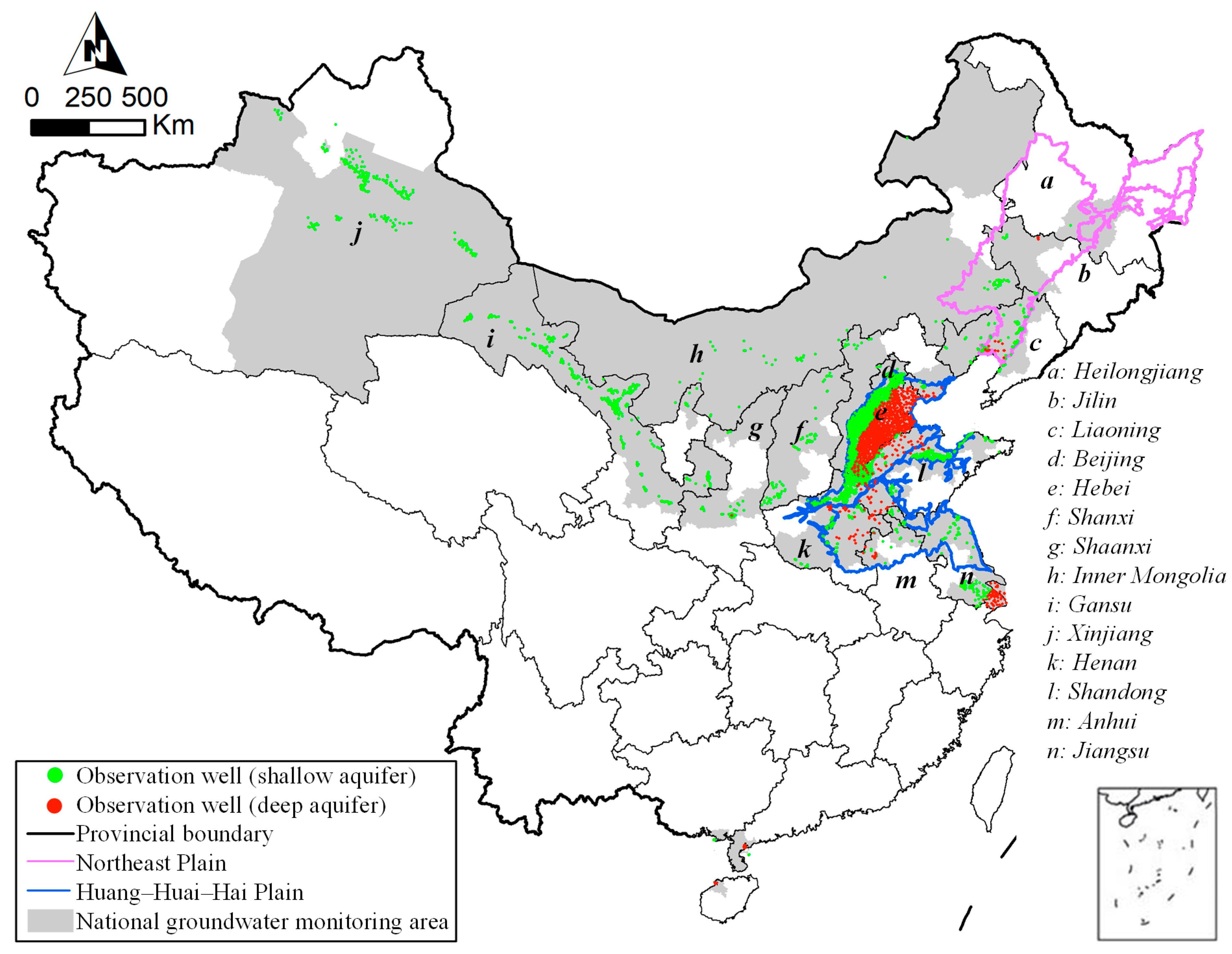
For a long time, satellite gravity-derived groundwater storage data have been used to study regional groundwater dynamics. Existing monitoring data from major river basins worldwide confirm the potential of satellite-inferred groundwater storage. However, due to their relatively coarse spatial resolution, these data have rarely been applied directly in practical groundwater management. In most regions, persistent over-extraction is the main cause of continuous groundwater decline. Considering the conflicts among socio-economic development, environmental constraints, and groundwater use, it remains challenging to efficiently monitor groundwater level changes and develop effective groundwater extraction plans. To strengthen groundwater management in major Chinese cities, authorities have identified 108 cities with shallow groundwater over-extraction and 37 cities with deep groundwater over-extraction issues (Figure 1). Groundwater level changes in these cities are monitored quarterly to support stricter control measures. These observation wells were established by local governments and form part of the national monitoring program. However, the high cost of building and maintaining such wells limits the expansion of similar monitoring networks in other groundwater management areas. Given the promising potential of satellite gravity observations, it is important to assess the differences between satellite-derived groundwater storage data and existing monitoring data, as well as their feasibility for practical groundwater management. Currently, research in this area remains limited both in China and internationally.
Therefore, this study focuses on key groundwater over-extraction regions in China, comparing GRACE-FO-derived groundwater storage with in situ observations. First, groundwater level changes from monitoring wells are compared with GRACE retrievals to assess the accuracy of GRACE-FO data. Then, the relationships among groundwater level changes, precipitation, and groundwater use in major cities are examined. Finally, spatial and temporal variations in groundwater storage in the Northeast Plain and the Huang–Huai–Hai Plain are analyzed. The results aim to provide a scientific basis for the sustainable use and management of groundwater resources in China’s over-exploited areas.

2. Materials and Methods

2.1. Groundwater Storage Variation

Changes in TWS derived from GRACE-FO reflect the combined variation in multiple water storage components including groundwater storage (GWS), soil moisture (SM), snow water equivalent (SWE), and surface water (SW). Groundwater storage changes can be separated from TWS when the other components are known. Rodell and Famiglietti [18] showed that in Illinois (USA), surface water storage variation during non-flood years was at least ten times smaller than the changes in soil moisture and groundwater. Take the Amazon Basin as an example because of its abundant surface water resources and its status as one of the world’s largest basins, surface water storage accounts for approximately 5% of the variability in TWS [19,20]. Therefore, the average variation in surface water in the study area is considered negligible. Based on this, the change in groundwater storage (ΔGWS) can be calculated using GRACE-FO-based changes in terrestrial water storage (ΔTWS), together with modeled changes in soil moisture (ΔSM) and snow water equivalent (ΔSWE), as expressed in Equation (1).
GWS = ∆TWS − ∆SM − ∆SWE
where Δ denotes the monthly change.

2.2. Groundwater Balance

The groundwater balance provides a quantitative description of the groundwater cycle and can be applied to any area. It states that the difference between groundwater inflows and outflows equals the change in groundwater storage within that area. The water balance equation expresses this relationship mathematically, showing that changes in precipitation combined with changes in groundwater discharge account for the overall groundwater balance. This relationship is represented in Equation (2).
GWS = ∆P + ∆Q
where P represents precipitation and Q represents groundwater discharges including groundwater pumping.
According to the definition of groundwater storage derived from GRACE/GRACE-FO data, groundwater storage change can be expressed by the following equation:
Δ G W S = S s h h a v g
where Ss is the specific yield for unconfined aquifers or the storage coefficient for confined aquifers; is the groundwater level at the time of measurement; and avg is the average groundwater level over the period from 2004 to 2009.

2.3. Datasets

2.3.1. GRACE-FO Data

GRACE/GRACE-FO data are mainly processed in two ways: by representing the Earth’s gravity field with spherical harmonic coefficients (SHs) and by using regional mass concentration functions (mascons). Both methods use raw GRACE satellite data and gravity field models with signals from the atmosphere, oceans, and tides removed. The main difference is that spherical harmonics provide global coverage, while mascons can cover regional to global scales [21]. Three major GRACE data processing centers—the Center for Space Research (CSR), the Jet Propulsion Laboratory (JPL), and the German Research Center for Geosciences (GFZ)—all supply GRACE/GRACE-FO-based TWS changes using the standard spherical harmonic method. The data used in this study come from the monthly 0.5° Level 3 mascon dataset produced by JPL, version RL06. This JPL mascon dataset represents TWS anomalies relative to the baseline period of January 2004 to December 2009. The data period analyzed in this study covers January 2019 to June 2022.

2.3.2. GLDAS Model Data

The GLDAS was developed by NASA’s Goddard Space Flight Center and the National Centers for Environmental Prediction. GLDAS uses advanced data assimilation methods to combine satellite and ground observations, allowing for real-time simulation of global land surface states and fluxes [22]. It includes four land surface models: Noah [23], the Community Land Model (CLM) [24], Mosaic [25], and the Variable Infiltration Capacity (VIC) model [26]. Our previous studies [11] showed that the patterns of SM and SWE changes in Northern China among the four LSMs (VIC, Noah, Mosaic, and CLM) were similar. Thus, in this study, we used monthly SM and SWE data from the GLDAS Noah version 2.1 model. These values were adjusted by subtracting the mean of the 2004–2009 baseline to align with the GRACE data. The Noah model was chosen because it simulates water storage changes with lower bias and uncertainty compared to the other GLDAS models [27]. The data cover the period from January 2019 to June 2022, with a spatial resolution of 1° × 1°.

2.3.3. Official Datasets

This study collected groundwater change data from the first quarter of 2019 to the second quarter of 2022 for 108 cities with shallow groundwater extraction and 37 cities with deep groundwater over-extraction. A total of 2512 monitoring wells for shallow groundwater and 1152 wells for deep groundwater were selected. Groundwater level and precipitation data for the Northeast China Plain and the Huang–Huai–Hai Plain (HHH) were obtained from monthly groundwater observation reports and public water resources bulletins issued by the Ministry of Water Resources (MWR) (http://www.mwr.gov.cn/sj/tjgb/dxsdtyb/, accessed on 5 October 2025). Before July 2020, groundwater level data came from monitoring stations managed by provincial water resources authorities. After that, the data were collected through automated monitoring stations established under the national groundwater monitoring program. Monthly groundwater level and precipitation data from January 2019 to June 2022 were compiled for analysis.

2.3.4. Key Focus Areas

The Northeast Plain and the HHH were selected as the two key areas for analysis. The Northeast Plain is one of China’s three major plains and the largest, located in the northeastern part of the country. It includes the Sanjiang, Songnen, and Liaohe Plains, covering an area of approximately 350,000 km2. This region is situated within temperate and warm temperate zones and has a continental monsoon climate. Summers are hot and humid, while winters are cold and dry. The annual precipitation ranges from 350 to 700 mm, with lower levels in the southeast compared to the northwest. Groundwater is the main water source in the Northeast Plain, with an average extraction rate of about 80 mm/year between 2019 and 2021. Several studies have shown that parts of the Northeast Plain have experienced groundwater depletion in recent years [28,29], emphasizing the need to prevent severe GWS loss in this area. Zhong et al. [30] found that GWS declined at a rate of −0.92 ± 0.49 km3/year in the West Liaohe River Basin during 2005–2011, consistent with field observations. This long-term GWS depletion was mainly caused by decreased precipitation and heavy groundwater overuse in the 2000s.
The HHH is an alluvial plain in North China. The lower reaches of the Yellow River naturally divide the region into two parts: the Haihe Plain in the north and the Huanghuai Plain in the south, together covering about 320,000 km2. It is also the most densely populated plain in China. The HHH experiences a temperate and subtropical monsoon climate with strong seasonal changes—hot and rainy summers and cold, dry winters. The annual precipitation ranges between 500 and 1000 mm. Rapid industrialization, urban growth, and shifts in temperature and rainfall have greatly increased the water demand in the region. More than 70% of the groundwater use in the HHH is for irrigation [12]. Several studies have documented long-term declines in groundwater levels and GWS depletion in parts of the HHH [31,32], with their GRACE-based groundwater estimates matching well with groundwater well measurements. Su et al. [33] reported a GWS depletion rate of −1.14 ± 0.89 cm/year in the HHH from 2003 to 2015. Spatially, groundwater loss in the Haihe River Basin was more severe than in the Huaihe River Basin, showing a decreasing trend from south to north. Other studies have confirmed similar mass loss signals in this region [34,35].

3. Results

3.1. Groundwater Storage Changes Based on Field Observations

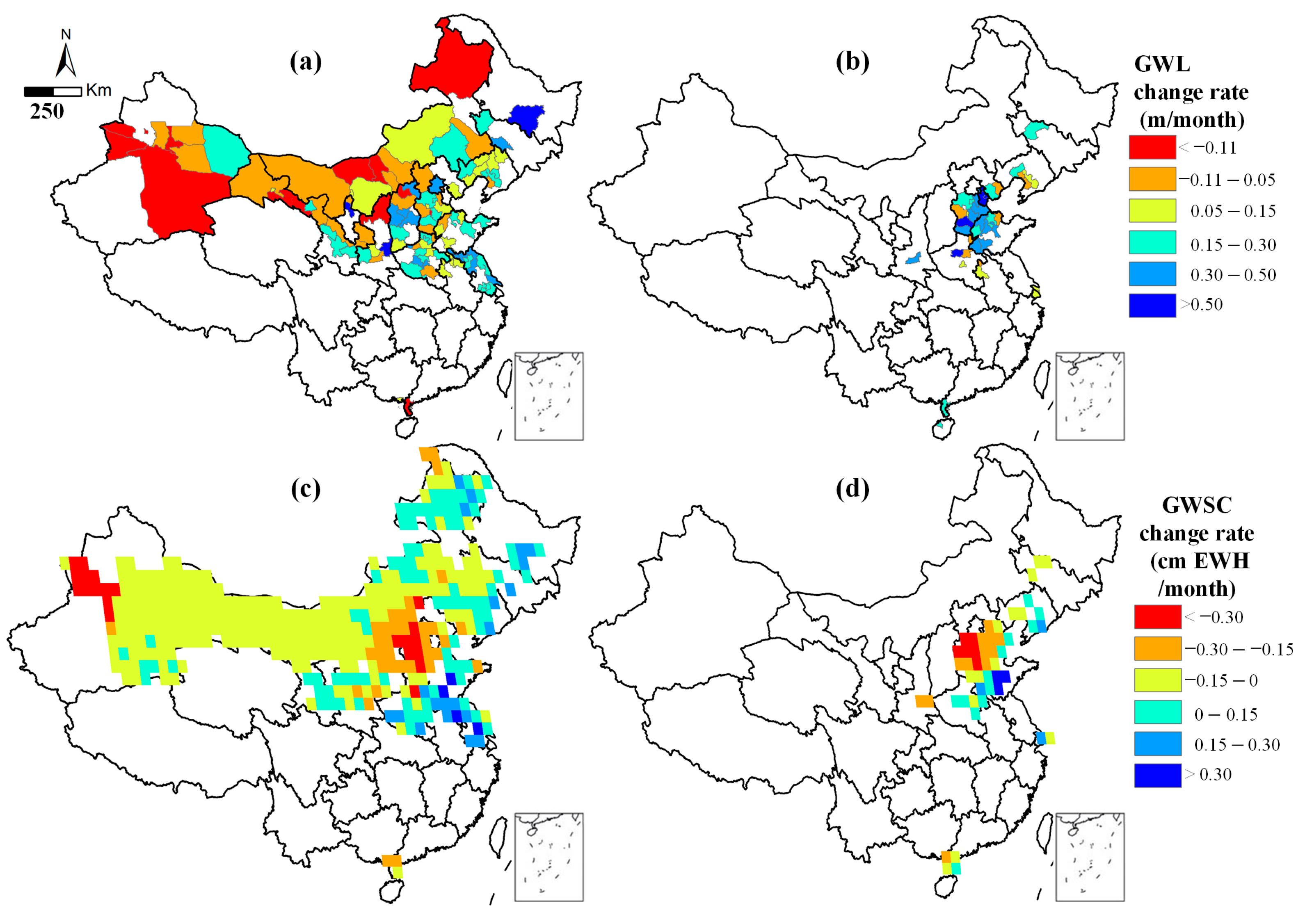
Figure 2a indicates that the areas with the largest annual average decline in shallow groundwater levels over the past three years are mainly located in Xinjiang, Inner Mongolia, and Shaanxi Provinces, with decline rates ranging from 0.05 to 0.12 m/month. In addition, some areas in the HHH and Northeast Plain experienced a rebound in shallow groundwater levels. Figure 2b highlights the significant regional differences in changes to deep groundwater levels, with the steepest decline occurring in Henan Province at a rate of 0.36 to 0.48 m per quarter. In the Hebei area, groundwater reserves have noticeably decreased, with the maximum decline reaching −0.62 cm EWH/month (Figure 2b). Figure 2d shows the groundwater storage changes (GWSCs) in areas with deep over-extraction: GWSCs in Shandong Province increased, reaching a maximum of 0.43 cm EWH/month, while GWSCs in Henan Province slightly increased.
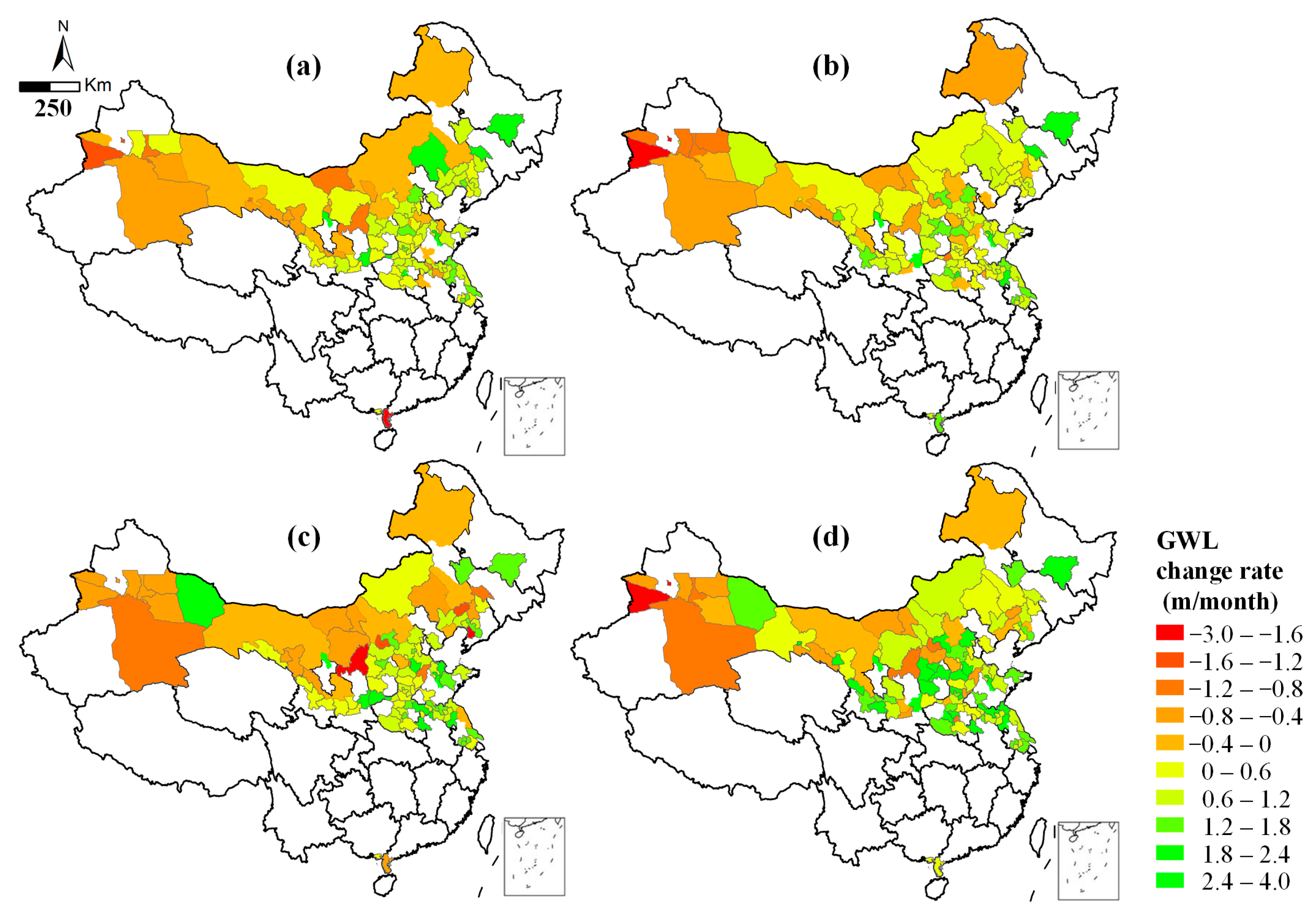
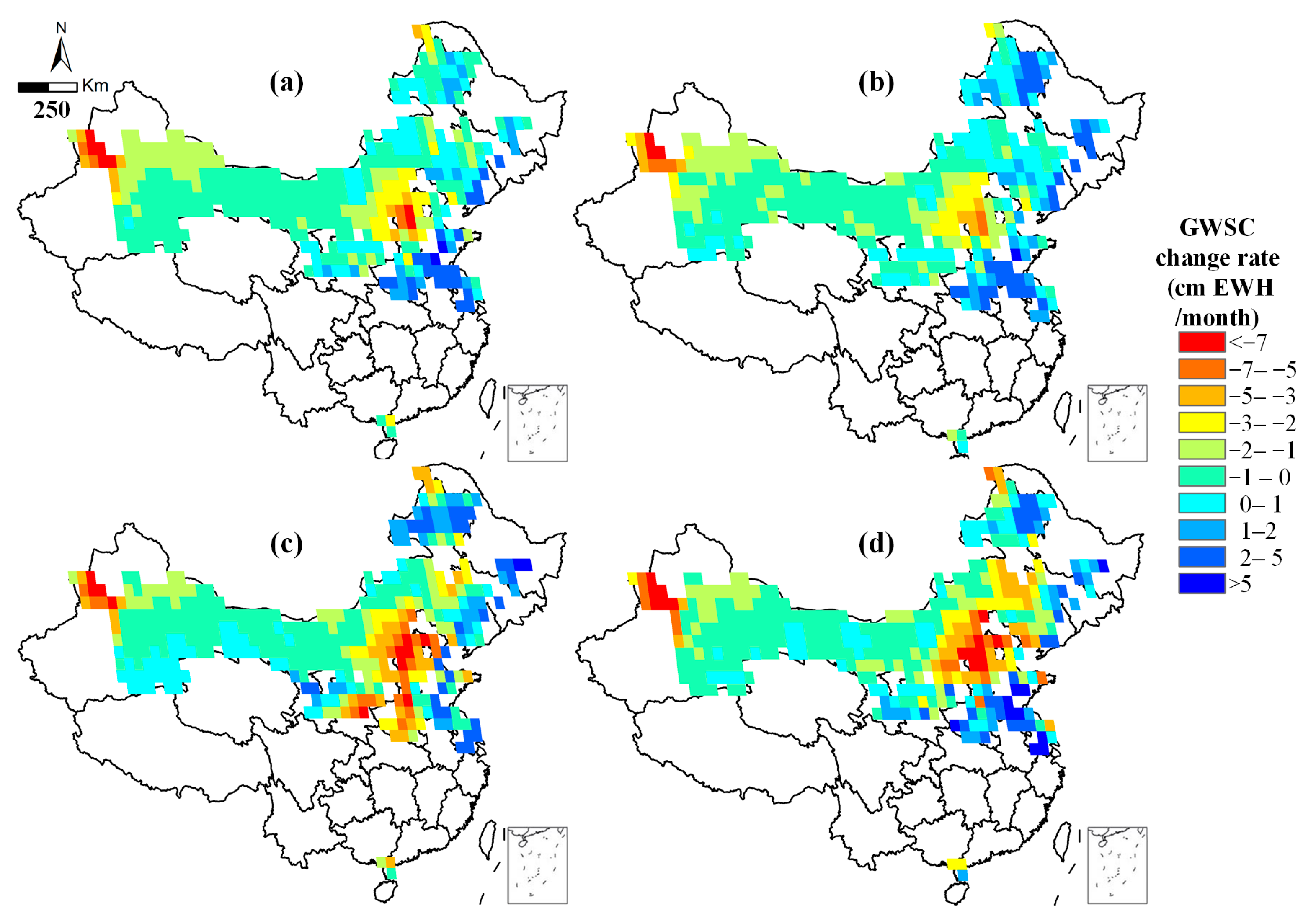
To gain a deeper understanding of the quarterly changes, the seasonal trends in groundwater level changes and GWSCs are shown in Figure 3 and Figure 4. The data for the first and second quarters span from 2019 to 2022, while the data for the third and fourth quarters cover 2019 to 2021. It can be observed that GRACE detected a decline in GWS in Xinjiang, Gansu, and Inner Mongolia, which aligns well with the reported changes in groundwater levels in shallow overdraft areas. As shown in Figure 4b, GRACE observed a decrease in GWS in Henan Province during the third quarter, while other quarters showed an increase in GWS. Additionally, GRACE detected a decline in GWS in Hebei Province; however, the reported groundwater levels only indicated a decrease in certain areas of Hebei. This discrepancy may be due to the broader range of GRACE observations and a decline in deep groundwater levels in specific parts of Hebei Province.
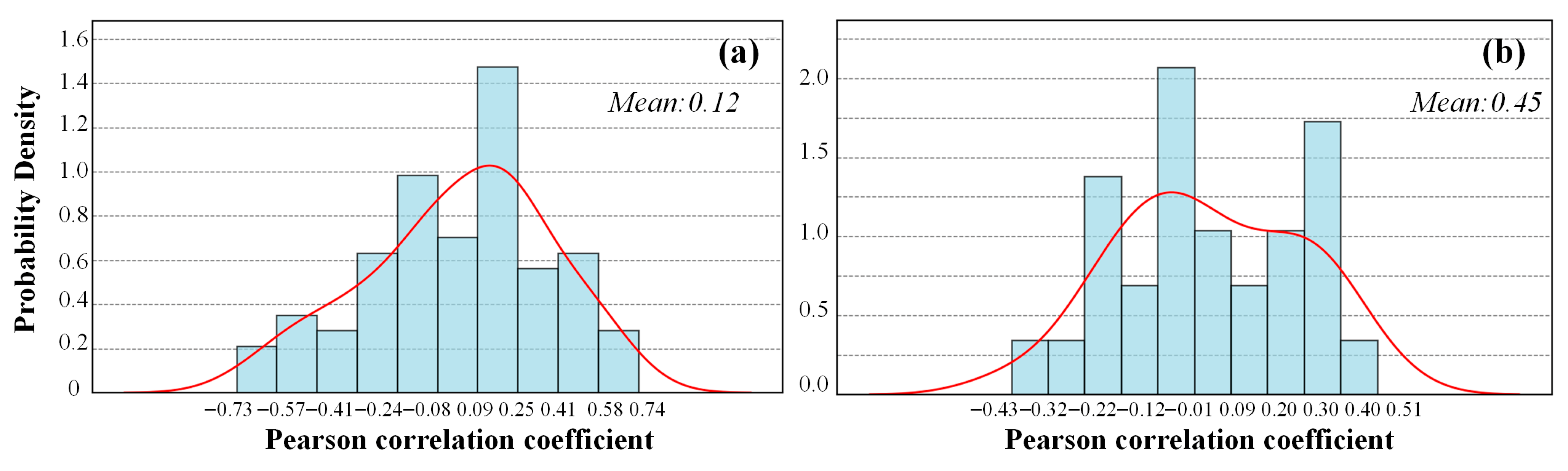
To further analyze the relationship between the average regional groundwater level and groundwater storage in shallow and deep aquifers of key cities, we calculated the Pearson correlation coefficient between monthly groundwater levels and groundwater storage changes. For shallow aquifers, the average Pearson correlation coefficient between groundwater level and storage change was 0.12, indicating a weak positive Pearson correlation coefficient, with maximum value reaching 0.74; however, some areas show negative values. For deep aquifers, the average Pearson correlation coefficient was 0.45, with a maximum of 0.51, demonstrating a strong correlation. Figure 5 shows the probability density distribution of the Pearson correlation coefficients between groundwater level and groundwater storage changes in shallow aquifers and deep aquifers. The groundwater storage data reflect the changes in groundwater storage at the representative spatial resolution derived from gravity satellite inversions, while observation wells only capture point-scale changes. The average groundwater level for shallow and deep urban aquifers was calculated from the mean of groundwater levels measured at the wells in each city. From this perspective, groundwater storage changes represent groundwater level variations and show better correlation for confined aquifers.

3.2. Comparison Between In Situ Observations and GWSCs in Two Regions

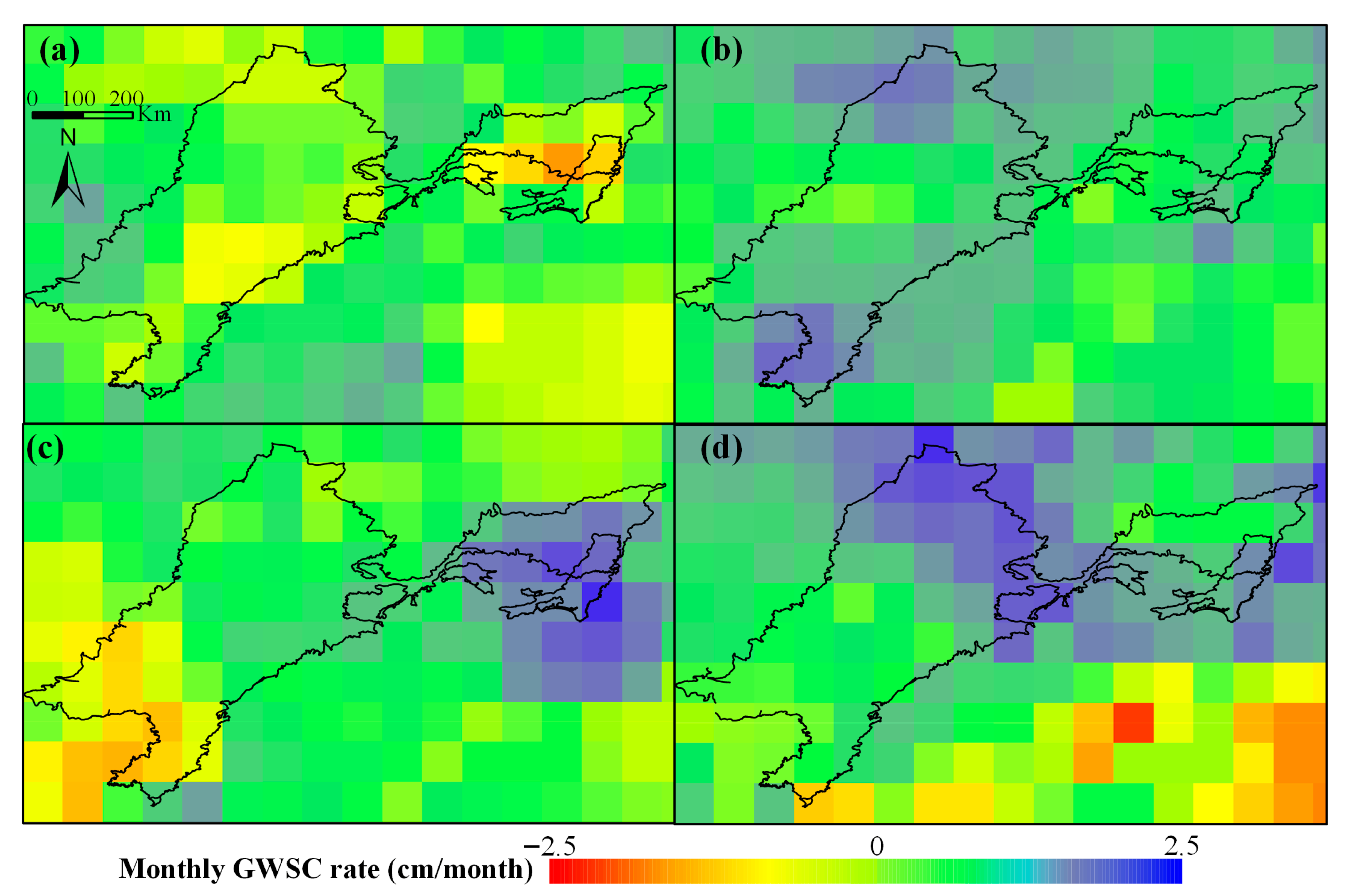
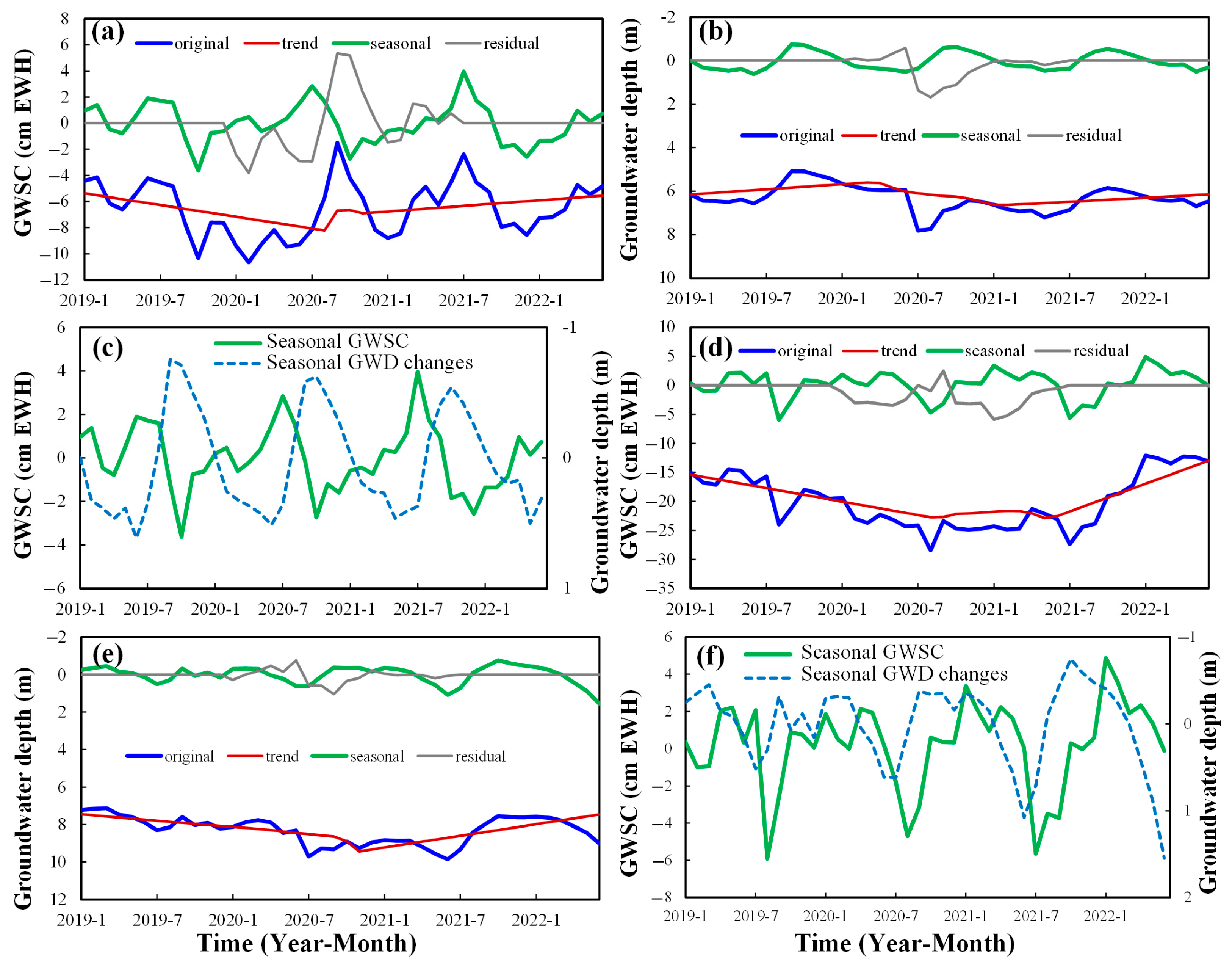
We selected the Northeast Plain and the HHH as study areas for comparison. In general, the TWS, SM, and GWS in the Northeast Plain showed similar variation patterns. From 2019 to June 2022, the average TWS was 0.10 mm/month, while the average GWS was 0.0042 mm/month with significant fluctuations throughout the year. Precipitation showed a clear seasonal pattern, with a peak around August, causing increases in both TWS and GWS. Figure 6 presents the spatial distribution of GWSCs in the Northeast Plain based on GRACE data from 2019 to June 2022, where the GWSC slope represents the average rate of change from 2019 to 2022. Overall, the annual GWSCs displayed an increasing trend, although certain regions showed noticeable variations. In 2021, there was a sharp decline in GWSCs in the southwestern part of the Northeast Plain, while in the first half of 2022, Heilongjiang Province experienced a significant increase. The Seasonal-Trend decomposition procedure based on Loess (STL) [36] was applied to examine the relationship between GWSCs and groundwater depth (GWD) changes. We compared monthly regional average GWD changes from monitoring wells and GRACE-FO-based GWSCs from 2019 to June 2022 in the Northeast Plain and HHH Plain (Figure 7). In the Northeast Plain, the GWSCs trend declines gradually from about −6 cm EWH in January 2019 to a minimum near −8.5 cm EWH by July 2020, then slowly recovers to around −6.5 cm EWH by March 2022, reflecting a depletion phase followed by partial restoration (Figure 7a). In the HHH Plain, the GWSCs trend declines from approximately −15 cm EWH in early 2019 to a minimum near −23 cm EWH by mid-2021, a drop of about 8 cm EWH, followed by a rebound to around −13 cm EWH by early 2022, forming a pronounced U-shaped pattern. GWD changes in both plains showed less fluctuation than GWSCs, which varied greatly month-to-month. Nevertheless, the overall GWSC and GWD changes trends were similar (Figure 7a,b). After July 2020, the correlation between the two notably improved. This can be attributed to the upgrade of the groundwater monitoring network from provincial wells to automatic national stations, which increased the number of monitoring sites and expanded coverage from shallow to deep groundwater. In the Northeast Plain, the GWSCs showed a lag of three two months compared to GWD changes (Figure 7c). After adjusting for this lag, the Pearson correlation coefficient between the two reached 0.59. This suggests that GWSCs derived from GRACE-FO can significantly reflect groundwater level changes.
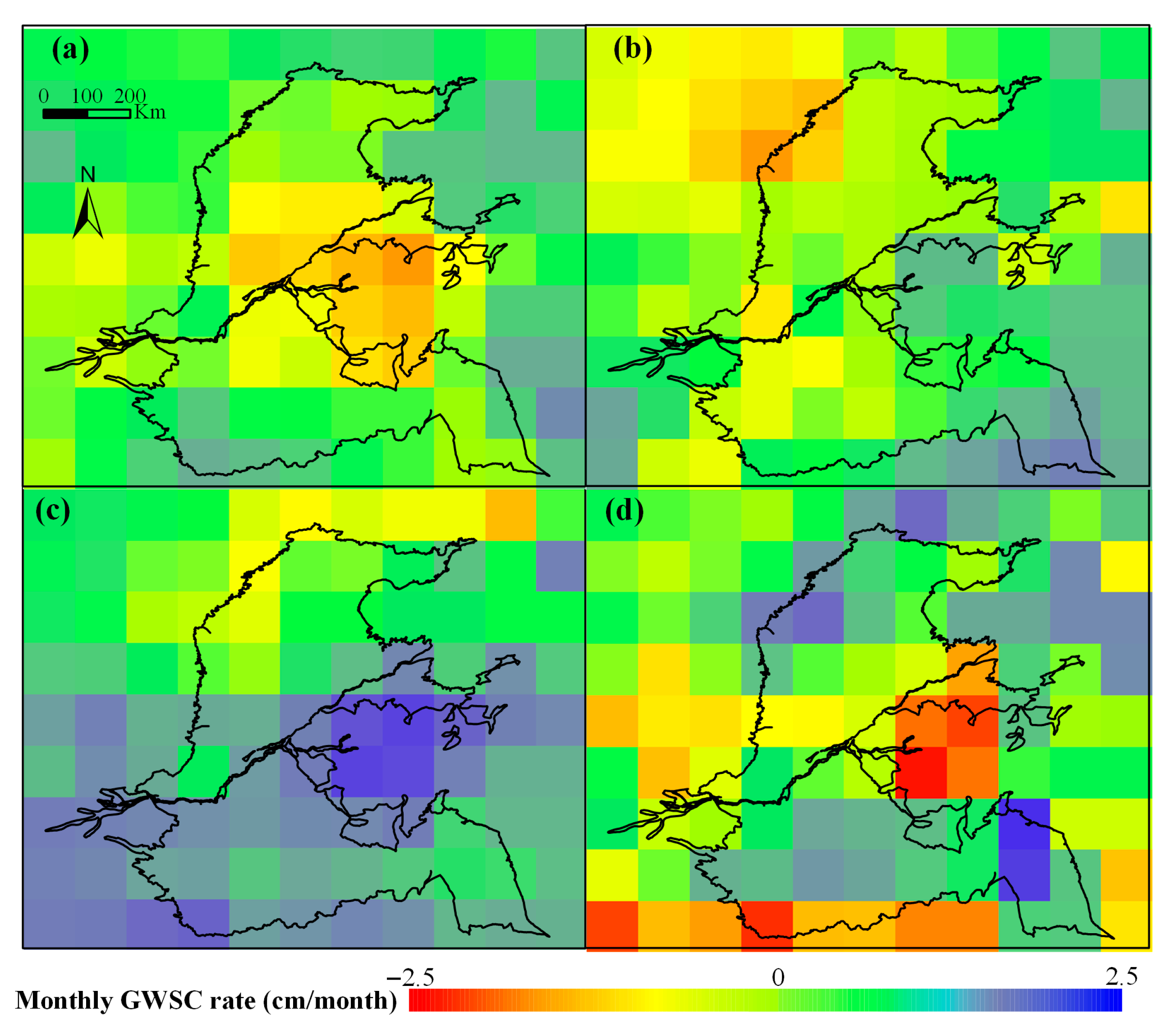
In the HHH region, GWS showed a decreasing trend from 2019 to June 2021, with an average decline rate of −0.1085 mm/month. After June 2021, GWS started to rise at an average rate of 0.4566 mm/month. During the same period, the average TWS was 0.1485 mm/month. SM accounted for a large part of the variation in TWS, resulting in similar trends for the two variables. Figure 8 shows the spatial patterns of the GWS changes in the HHH region from 2019 to June 2022, which showed significant differences. In 2019 and 2020, GWS showed a slight overall decrease. In 2021, GWS increased sharply, especially in the southern region compared to the north. In the first half of 2022, only the central region showed a decrease, while other areas had varying levels of increase. In the HHH Plain, the GWSCs also showed a lag of about three months compared to GWD changes (Figure 7e), which show the GWSCs may be not influenced by the shallow water level changes.

4. Discussion

4.1. Correlation Between Groundwater Storage and Precipitation in Typical Plain Regions

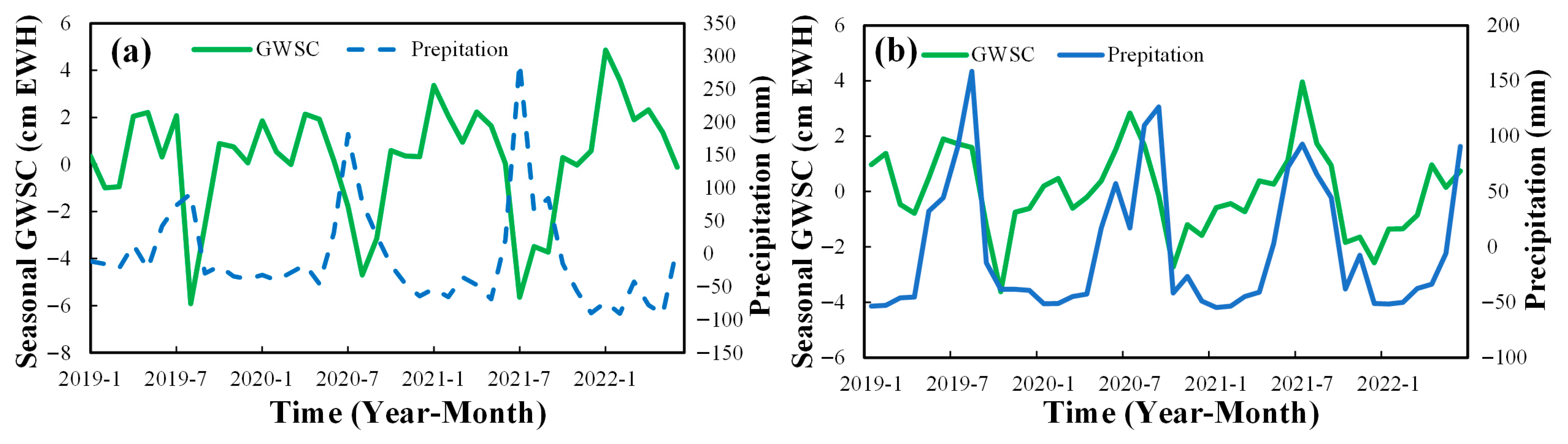
Because accurate groundwater-extraction data are unavailable, STL decomposition was applied to examine the relationships between GWSCs and precipitation. In the Northeast Plain, precipitation trends remain relatively stable, fluctuating mildly between about 55 and 60 mm from 2019 to early 2021, then gradually decline to roughly 52 mm by early 2022 (overall variation < 10 mm). The precipitation seasonal component exhibits pronounced cyclic fluctuations, with positive anomalies around 150 mm and negative anomalies down to about −50 mm, corresponding to an amplitude of roughly 200 mm and reflecting strong summer rainfall. The correlation analysis reveals a weak negative correlation (−0.28) between GWSCs and precipitation trends, suggesting that factors beyond precipitation—such as anthropogenic extraction—significantly influence long-term groundwater changes, whereas the seasonal components show a moderate positive correlation (0.54), indicating that precipitation seasonality is a notable driver of groundwater seasonal dynamics (Figure 9a). In the HHH Plain, STL decomposition reveals clear differences between the trend and seasonal components of GWSCs and precipitation. Precipitation shows an overall upward trend, increasing from approximately 20 mm in early 2019 to about 110 mm by mid-2022 (a cumulative rise of nearly 90 mm). Seasonally, precipitation exhibits substantial variability with peaks near 300 mm and troughs around −150 mm, whereas GWSCs seasonal variation is markedly smaller, oscillating within ±5 cm EWH, indicating a weaker but detectable seasonal influence (Figure 7d). The correlation analysis indicates a moderate negative Pearson correlation (−0.35) between GWSCs and precipitation trends over the entire period, which sharpens to about 0.99 after 2021, consistent with prior findings [37]. The seasonal components show a moderate positive correlation (0.58), suggesting that precipitation seasonality partially drives groundwater seasonal responses (Figure 9b).

4.2. Causes of Groundwater Level Changes

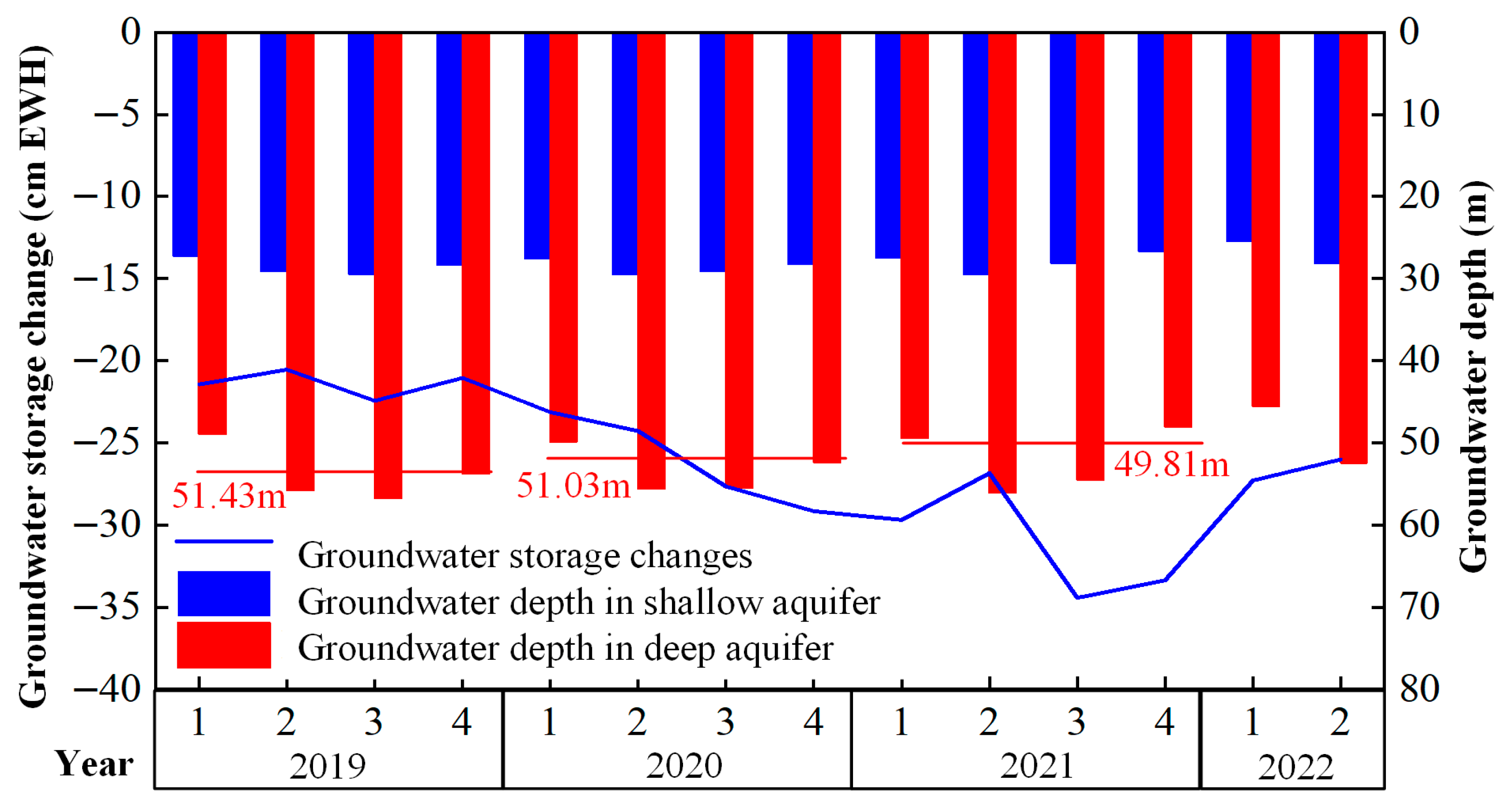
We analyzed groundwater-level changes and GWSCs in Hebei Province, a key region with groundwater over-extraction in the NCP (see Figure 1). Figure 10 shows the quarterly variations in groundwater depth in shallow and deep aquifers, and GRACE-FO-derived GWSCs data for the period of 2019 to June 2022 in Hebei Province. The shallow groundwater depth remained relatively stable, with a slight recovery in recent years. By contrast, the groundwater depth in deep aquifers exhibited pronounced fluctuations and a clear rebound trend, with the average groundwater depth decreasing from 51.43 m in 2019 to 51.03 m in 2020 and further to 49.81 m in 2021. The lowest GWSCs value was observed in the third quarter of 2021, which gradually increased thereafter, consistent with the behavior of the groundwater depth in deep aquifers. Groundwater extraction has declined year by year, while precipitation has increased annually, both contributing to the observed recovery of groundwater levels.
Groundwater-level changes in shallow and deep aquifers are governed by both climatic factors and human activities. To identify the drivers of groundwater level variations, we collected data on provincial groundwater level changes, precipitation, and groundwater extraction from the China Water Resources Bulletin. The following formula (Equation (4)) was used for the analysis:
d H d t = f ( d P P a v g d t , d Q Q a v g d t )
where H denotes the regional average groundwater level, P represents the monthly precipitation, Q denotes the monthly groundwater extraction, and Pavg and Qavg denote the long-term monthly means of precipitation and groundwater extraction, respectively.
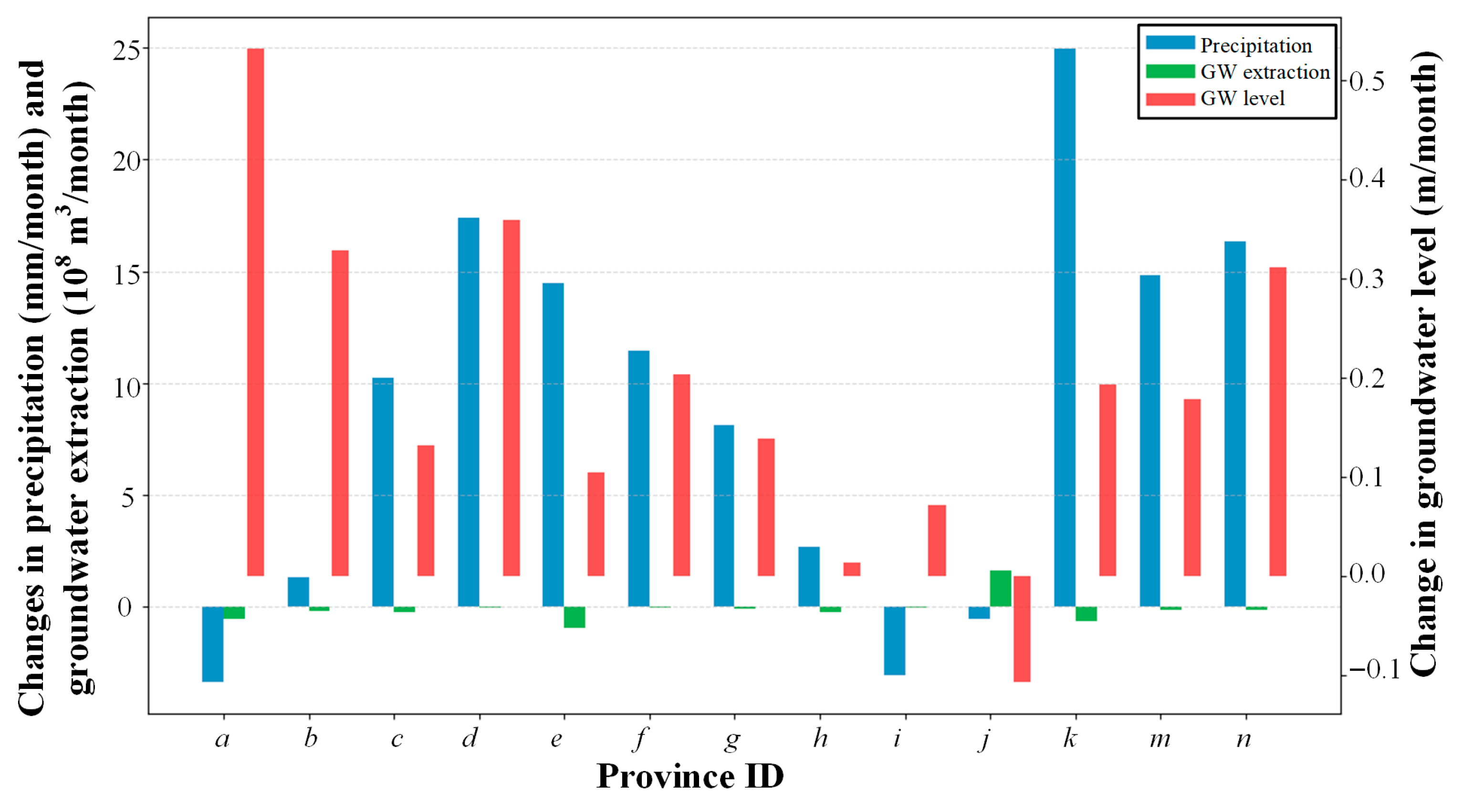
The monthly data analyses showed that fluctuations in shallow groundwater levels strongly correlated with variations in both monthly precipitation and groundwater extraction volumes. By contrast, fluctuations in groundwater levels in deep aquifers exhibited weak correlations with precipitation and were more closely related to extraction activities. Since only a limited number of provinces experienced deep groundwater over-extraction, this study primarily focused on the factors influencing shallow groundwater level changes. Note that provincial groundwater extraction data do not distinguish between withdrawals from shallow and deep aquifers; therefore, total groundwater extraction was used to assess the correlations. Figure 11 illustrates the relationship between the monthly groundwater level change rate and the corresponding change rates of precipitation and groundwater extraction across major provinces. Overall, precipitation changes exhibit a wide range, with the highest increase observed in Province k (Henan) at approximately 25 mm/month. Several other provinces, such as d (Beijing) and n (Anhui), also show substantial precipitation increases ranging from 15 to 18 mm/month. In contrast, provinces i (Gansu) and j (Xinjiang) experience a decrease in precipitation of about −5 mm/month. Changes in groundwater extraction are generally minor, with most provinces showing values close to zero. A few provinces, including i (Gansu) and k (Henan), display slight increases in groundwater extraction, approximately 0.5 × 10⁸ m3/month, while others like b (Jilin) and e (Hebei) exhibit minor decreases. The magnitude of groundwater level changes ranges from −0.1 m/month to 0.55 m/month, with provinces a (Heilongjiang) and d (Beijing) showing significant groundwater level rises of about 0.55 m/month and 0.35 m/month, respectively. Conversely, province j (Xinjiang) experiences a groundwater level decline of around −0.1 m/month, while most other provinces display positive but relatively small groundwater level changes. The figure also reveals a generally positive correlation between precipitation and groundwater level changes: increases in precipitation tend to coincide with rises in groundwater levels. Groundwater extraction changes remain relatively stable and exhibit much smaller variations compared to those of precipitation and groundwater level, indicating that precipitation exerts a more direct influence on groundwater level fluctuations. However, some provinces display discrepancies in the relationships among groundwater level changes, precipitation, and extraction. For example, Province k (Henan) has the largest increase in precipitation but a relatively modest rise in groundwater level, likely due to the impact of groundwater extraction. In Province i (Gansu), decreased precipitation coupled with increased extraction corresponds with a declining groundwater level, highlighting the significant negative effect of extraction in this region. Generally, precipitation is the primary driver of groundwater level variations, while groundwater extraction, despite exhibiting smaller changes overall, significantly affects groundwater levels in certain provinces.

4.3. Limitations of the Study

There are differences between GWSCs derived from GRACE-FO and in situ groundwater level measurements. These discrepancies can be attributed to the contrasting spatial scales: GRACE-FO provides regional, integrated GWSCs over large areas, whereas groundwater-monitoring wells are unevenly distributed and offer limited spatial resolution. Moreover, wells record water level changes only in certain aquifers, and the Kriging-interpolated mean water level may not fully capture spatial heterogeneity or multi-aquifer responses; the regional average groundwater level was used in the study. External factors and human activities, such as irrigation, can also affect observed data accuracy. In the Northeast Plain, GWSCs may not dominate the TWS signal, and neglecting surface-water variations when isolating GWSCs from TWS can introduce additional errors. Additional uncertainties stem from the estimation of GLDAS-derived components, such as SWE and SM. Inaccuracies in these components propagate into the GRACE-FO-derived GWSCs estimates, affecting the reliability of the derived groundwater storage changes.

5. Conclusions

GRACE-FO data were used to estimate groundwater storage changes in representative cities with heavy groundwater use by isolating GWSCs from the TWS components provide by the GLDAS model. These GWSCs estimates were then compared with groundwater level data from designated over-extraction areas. Additionally, we analyzed the spatial and temporal variations in groundwater storage in the Northeast Plain and the HHH. The main findings are as follows:
(1)
From January 2019 to June 2022, GRACE-FO detected a notable decline in groundwater storage in northern Xinjiang and Hebei, with the maximum decrease reaching −0.62 cm EWH/month. Groundwater monitoring in over-exploited areas showed that groundwater levels in shallow aquifers fell in Xinjiang, Inner Mongolia, and other regions, while groundwater levels in deep aquifers in Henan Province declined significantly, with rates of 0.36 to 0.48 m per quarter. The analysis also revealed a strong correlation between groundwater changes in shallow aquifers and variations in precipitation and groundwater extraction in Beijing, Jiangsu, and Xinjiang.
(2)
A comparison between groundwater level data from 108 cities with groundwater extraction from shallow aquifers and 37 cities with groundwater extraction from deep aquifers to GRACE-FO-derived GWSCs showed higher correlations in the areas that draw from deep aquifers, with an average Pearson correlation coefficient of 0.45. In contrast, areas mainly drawing from shallow aquifers showed a lower Pearson correlation coefficient of 0.11, mainly because shallow groundwater is more sensitive to precipitation, irrigation, and local pumping.
(3)
During the study period, GRACE-FO observed significant seasonal fluctuations in GWSCs in the Northeast Plain, while overall storage remained relatively stable. The trends in GWSCs aligned with those of groundwater levels. Between 2019 and June 2021, groundwater storage in the Huang–Huai–Hai Plain declined at an average rate of −0.1085 mm/month. After June 2021, it began increasing at about 0.4566 mm/month. GWSCs lagged behind groundwater depth changes by approximately three months by using STL decomposition method; accounting for this lag improved the Pearson correlation coefficient between seasonal GWSCs and GWD changes to 0.59.
(4)
The differences and time delays between GWSCs and GWD changes are influenced by multiple factors. Nevertheless, in areas lacking in situ groundwater measurements, GRACE-FO data offer valuable insight into groundwater storage changes.
Due to spatial constraints, this study did not compare different GRACE products or alternative hydrological models. Our analysis predominantly integrated in situ groundwater-level data, official groundwater bulletins, and GRACE-FO satellite observations. While the coarse spatial resolution of GRACE-FO limits its direct application to fine-scale local groundwater management, it yields effective indicators for groundwater extraction areas in deep aquifers. Furthermore, the formal time-series analysis of GWSCs and GWLCs was not included here, given the need for refined data. Future work should focus on improving GRACE-FO data downscaling to better capture local groundwater storage changes and to support more precise management in shallow groundwater zones.

Author Contributions

Conceptualization, H.L., J.S. and L.H.; methodology, H.L., J.S. and L.H.; software, H.L., J.Z. and Z.Z.; validation, L.H., S.T. and F.C.; formal analysis, H.L. and L.H.; investigation, L.H., S.T. and F.C.; resources, S.T., F.C. and Z.Z.; data curation, L.H., S.T. and F.C.; writing—original draft preparation, L.H., J.S. and L.H.; writing—review and editing, H.L. and L.H.; visualization, H.L., J.S., J.Z. and Z.Z.; supervision, L.H.; project administration, L.H.; funding acquisition, L.H. All authors have read and agreed to the published version of the manuscript.

Funding

This study was supported by the National Natural Science Foundation of China (Grant number: U2167211).

Data Availability Statement

Requests to access the datasets should be directed to litanghu@bnu.edu.cn.

Conflicts of Interest

The authors declare no conflicts of interest.

Abbreviations

The following abbreviations are used in this manuscript:
TWSTerrestrial Water Storage
GWSGroundwater Storage
GWGroundwater
SMSoil Moisture
SWESnow Water Equivalent
SWSurface Water
GWSCsGroundwater Storage Changes
GLDASGlobal Land Data Assimilation System
GWLGroundwater Level
GWDGroundwater Depth
GWLCsGroundwater Level Change
HHHHuang–Huai–Hai Plain
EWHEquivalent Water Height

References

  1. Aeschbach-hertig, W.; Gleeson, T. Regional Strategies for the Accelerating Global Problem of Groundwater Depletion. Nat. Geosci. 2012, 5, 853–861. [Google Scholar] [CrossRef]
  2. Stevanovic, Z. Karst Waters in Potable Water Supply: A Global Scale Overview. Environ. Earth Sci. 2019, 78, 662. [Google Scholar] [CrossRef]
  3. Tapley, B.D.; Bettadpur, S.; Ries, J.C. GRACE Measurements of Mass Variability in the Earth system. Science 2004, 305, 503–505. [Google Scholar] [CrossRef]
  4. Eshagh, M.; Jin, S.G.; Pail, R.; Barzaghi, R.; Tsoulis, D.; Tenzer, R.; Novák, P. Satellite Gravimetry: Methods, Products, Applications, and Future Trends. Earth-Sci. Rev. 2024, 253, 104783. [Google Scholar] [CrossRef]
  5. Scanlon, B.R.; Zhang, Z.; Save, H.; Wiese, D.N.; Landerer, F.W.; Long, D.; Longuevergne, L.; Chen, J.L. Global Evaluation of New GRACE Mascon Products for Hydrologic Applications. Water Resour. Res. 2016, 52, 9412–9429. [Google Scholar] [CrossRef]
  6. Strassberg, G.; Scanlon, B.R.; Chambers, D. Evaluation of Groundwater Storage Monitoring with the GRACE Satellite: Case Study of the High Plains Aquifer, Central United States. Water Resour. Res. 2009, 45, W05410. [Google Scholar] [CrossRef]
  7. Strassberg, G.; Scanlon, B.R.; Rodell, M. Comparison of Seasonal Terrestrial Water Storage Variations from GRACE with Groundwater-level Measurements from the High Plains Aquifer (USA). Geophys. Res. Lett. 2007, 34, L14402. [Google Scholar] [CrossRef]
  8. Yeh, P.J.F.; Swenson, S.C.; Famiglietti, J.S.; Rodell, M. Remote Sensing of Groundwater Storage Changes in Illinois Using the Gravity Recovery and Climate Experiment (GRACE). Water Resour. Res. 2006, 42, W12203. [Google Scholar] [CrossRef]
  9. Rodell, M.; Chen, J.; Kato, H.; Famiglietti, J.S.; Nigro, J.; Wilson, C.R. Estimating Groundwater Storage Changes in the Mississippi River Basin (USA) Using GRACE. Hydrogeol. J. 2007, 15, 159–166. [Google Scholar] [CrossRef]
  10. Feng, W.; Zhong, M.; Lemoine, J.; Biancale, R.; Hsu, H.T.; Xia, J. Evaluation of Groundwater Depletion in North China Using the Gravity Recovery and Climate Experiment (GRACE) Data and Ground-based Measurements. Water Resour. Res. 2013, 49, 2110–2118. [Google Scholar] [CrossRef]
  11. Yin, W.J.; Hu, L.T.; Jiao, J.J. Evaluation of Groundwater Storage Variations in Northern China Using GRACE Data. Geofluids 2017, 2017, 8254824. [Google Scholar] [CrossRef]
  12. Cao, G.; Zheng, C.; Scanlon, B.R.; Liu, J.; Li, W.P. Use of Flow Modeling to Assess Sustainability of Groundwater Resources in the North China Plain. Water Resour. Res. 2013, 49, 159–175. [Google Scholar] [CrossRef]
  13. Huang, Z.; Pan, Y.; Gong, H.; Yeh, P.J.F.; Li, X.J.; Zhou, D.M.; Zhao, W.J. Subregional-scale Groundwater Depletion Detected by GRACE for Both Shallow and Deep aquifers in North China Plain. Geophys. Res. Lett. 2015, 42, 1791–1799. [Google Scholar] [CrossRef]
  14. Zhou, H.; Dai, M.; Wei, M.; Luo, Z.C. Quantitative Assessment of Shallow Groundwater Sustainability in North China Plain. Remote Sens. 2023, 15, 474. [Google Scholar] [CrossRef]
  15. Ha, D.; Zheng, G.; Loáiciga, H.A.; Guo, W.; Zhou, H.Z.; Chai, J.C. Long-term Groundwater Level Changes and Land Subsidence in Tianjin, China. Acta Geotech. 2021, 16, 1303–1314. [Google Scholar] [CrossRef]
  16. Chen, J.L.; Famigliett, J.S.; Scanlon, B.R.; Rodell, M. Groundwater Storage Changes: Present Status from GRACE Observations. Surv. Geophys. 2016, 37, 397–417. [Google Scholar] [CrossRef]
  17. Wang, S.; Liu, H.; Yu, Y. Evaluation of groundwater sustainability in the arid Hexi Corridor of Northwestern China, using GRACE, GLDAS and measured groundwater data products. Sci. Total Environ. 2020, 705, 135829. [Google Scholar] [CrossRef] [PubMed]
  18. Rodell, M.; Famiglietti, J.S. An Analysis of Terrestrial Water Storage Variations in Illinois with Implications for the Gravity Recovery and Climate Experiment (GRACE). Water Resour. Res. 2001, 37, 1327–1339. [Google Scholar] [CrossRef]
  19. Pokhrel, Y.N.; Fan, Y.; Miguez-Macho, G.; Yeh, P.J.-F.; Han, S.-C. The Role of Groundwater in the Amazon Water Cycle: 3. Influence on Terrestrial Water Storage Computations and Comparison with GRACE. J. Geophys. Res. Atmos. 2013, 118, 3233–3244. [Google Scholar] [CrossRef]
  20. Chen, J.L.; Tapley, B.; Rodell, M.; Seo, K.-W.; Wilson, C.; Scanlon, B.R.; Pokhrel, Y. Basin-Scale River Runoff Estimation From GRACE Gravity Satellites, Climate Models, and In Situ Observations: A Case Study in the Amazon Basin. Water Resour. Res. 2020, 56, e2020WR028032. [Google Scholar] [CrossRef]
  21. Scanlon, B.R.; Fakhreddine, S.; Rateb, A.; de Graaf, I.; Famiglietti, J.; Gleeson, T.; Grafton, R.Q.; Jobbagy, E.; Kebede, S.; Kolusu, S.R.; et al. Global Water Resources and The Role of Groundwater in a Resilient Water Future. Nat. Rev. Earth Environ. 2023, 4, 87–101. [Google Scholar] [CrossRef]
  22. Rodell, M.; Houser, P.R.; Jambor, U.; Gottschalck, J.; Mitchell, K.; Meng, C.J.; Arsenault, K.; Cosgrove, B.; Radakovich, J.; Bosilovich, M.; et al. The Global Land Data Assimilation System. Bull. Am. Meteorol. Soc. 2004, 85, 381. [Google Scholar] [CrossRef]
  23. Ek, M.B.; Mitchell, K.E.; Lin, Y.; Rogers, E.; Grunmann, P.; Koren, V.; Gayno, G.; Tarpley, J.D. Implementation of Noah Land Surface Model Advances in the National Centers for Environmental Prediction Operational Mesoscale Eta Model. J. Geophys. Res.-Atmos. 2003, 108, 8851. [Google Scholar] [CrossRef]
  24. Dai, Y.J.; Zeng, X.B.; Dickinson, R.E.; Baker, I.; Bonan, G.B.; Bosilovich, M.G.; Denning, A.S.; Dirmeyer, P.A.; Houser, P.R.; Niu, G.Y.; et al. The Common Land Model. Bull. Am. Meteorol. Soc. 2003, 84, 1013–1023. [Google Scholar] [CrossRef]
  25. Long, D.; Scanlon, B.R.; Longuevergne, L.; Sun, A.Y.; Fernando, N.; Save, H. GRACE Satellite Monitoring of Large Depletion in Water Storage in Response to the 2011 Drought in Texas. Geophys. Res. Lett. 2013, 40, 3395–3401. [Google Scholar] [CrossRef]
  26. Liang, X.; Lettenmaier, D.P.; Wood, E.F.; Burges, S.J. A Simple Hydrologically Based Model of Land-surface Water and Energy Fluxes for General-circulation Models. J. Geophys. Res.-Atmos. 1994, 99, 14415–14428. [Google Scholar] [CrossRef]
  27. Xu, L.; Chen, N.; Zhang, X.; Chen, Z.Q. Spatiotemporal Changes in China’s Terrestrial Water Storage from GRACE Satellites and Its Possible Drivers. J. Geophys. Res.-Atmos. 2019, 124, 11976–11993. [Google Scholar] [CrossRef]
  28. Zheng, L.Q.; Pan, Y.; Gong, H.L.; Huang, Z.Y.; Zhang, C. Comparing Groundwater Storage Changes in Two Main Grain Producing Areas in China: Implications for Sustainable Agricultural Water Resources Management. Remote Sens. 2020, 12, 2151. [Google Scholar] [CrossRef]
  29. Chen, H.; Zhang, W.; Nie, N.; Guo, Y.D. Long-term Groundwater Storage Variations Estimated in the Songhua River Basin by Using GRACE Products, Land Surface Models, and In-Situ Observations. Sci. Total Environ. 2019, 649, 372–387. [Google Scholar] [CrossRef]
  30. Zhong, Y.; Zhong, M.; Feng, W.; Zhang, Z.Z.; Shen, Y.C.; Wu, D.C. Groundwater Depletion in The West Liaohe River Basin, China and Its Implications Revealed by GRACE And in Situ Measurements. Remote Sens. 2018, 10, 493. [Google Scholar] [CrossRef]
  31. Liu, C.M.; Yu, J.J.; Kendy, E. Groundwater Exploitation and Its Impact on The Environment in The North China Plain. Water Int. 2001, 26, 265–272. [Google Scholar] [CrossRef]
  32. Kendy, E.; Zhang, Y.Q.; Liu, C.M.; Wang, J.X.; Steenhuis, T. Groundwater Recharge from Irrigated Cropland in The North China Plain: Case Study Of Luancheng County, Hebei Province, 1949-2000. Hydrol. Process. 2004, 18, 2289–2302. [Google Scholar] [CrossRef]
  33. Su, Y.; Guo, B.; Zhou, Z.; Zhong, Y.L.; Min, L.L. Spatio-Temporal Variations in Groundwater Revealed by GRACE And Its Driving Factors in The Huang-Huai-Hai Plain, China. Sensors 2020, 20, 922. [Google Scholar] [CrossRef]
  34. Moiwo, J.P.; Yang, Y.; Li, H.; Han, S.M.; Hu, Y.K. Comparison of GRACE with in Situ Hydrological Measurement Data Shows Storage Depletion in Hai River Basin, Northern China. Water SA 2009, 35, 663–670. [Google Scholar] [CrossRef]
  35. Zhong, M.; Duan, J.; Xu, H.; Peng, P.; Yan, H.M.; Zhu, Y.Z. Trend of China Land Water Storage Redistribution at Medi- And Large-Spatial Scales in Recent Five Years by Satellite Gravity Observations. Chin. Sci. Bull. 2009, 54, 816–821. [Google Scholar] [CrossRef]
  36. Humphrey, V.; Gudmundsson, L.; Seneviratne, S.I. Assessing Global Water Storage Variability from GRACE: Trends, Seasonal Cycle, Subseasonal Anomalies and Extremes. Surv. Geophys. 2016, 37, 357–395. [Google Scholar] [CrossRef]
  37. Long, D.; Xu, Y.; Cui, Y.; Cui, Y.; Butler, J., Jr.; Dong, L.; Wang, L.; Liu, D.; Wada, Y.; Hu, L.; et al. Unprecedented Large-scale Aquifer Recovery through Human Intervention. Nat. Commun. 2025, 16, 7296. [Google Scholar] [CrossRef] [PubMed]
Figure 1. Schematic map of the national groundwater monitoring areas, the locations of observation wells, and the two major plains in northern China.
Water 17 03572 g001
Figure 2. Distribution of trends in groundwater level changes and GWSCs. (a): GWL change rate in shallow aquifers; (b): GWL change rate in deep aquifers; (c,d): GWSCs rate in areas with shallow and deep aquifers, respectively.
Water 17 03572 g002
Figure 3. Seasonal variation trends of groundwater levels: (a) spring; (b) summer; (c) autumn; (d) winter.
Water 17 03572 g003
Figure 4. Seasonal variation trends of groundwater storage changes: (a) spring; (b) summer; (c) autumn; (d) winter.
Water 17 03572 g004
Figure 5. Probability density distribution of Pearson correlation coefficients between groundwater level and groundwater storage changes in (a) shallow aquifers and (b) deep aquifers. The red line represents the normal distribution curve.
Water 17 03572 g005
Figure 6. Spatial distribution of GWSCs in the Northeast Plain in 2019 (a), 2020 (b), 2021 (c), and 2022 (d).
Water 17 03572 g006
Figure 7. Decomposition of GWSCs and groundwater depth data for the Northeast Plain and the HHH Plain during 2019–2022. (a) GWSCs and its decomposed components in the Northeast Plain; (b) groundwater depth and its decomposed components in the Northeast Plain; (c) seasonal variations in GWSCs and GWD in the Northeast Plain; (d) GWSCs and its decomposed components in the HHH Plain; (e) groundwater depth and its decomposed components in the HHH Plain; (f) seasonal variations in GWSCs and GWD in the HHH Plain.
Water 17 03572 g007
Figure 8. Spatial distribution of GWSCs in the HHH in 2019 (a), 2020 (b), 2021 (c), and 2022 (d).
Water 17 03572 g008
Figure 9. Relationship between seasonal GWSCs and precipitation data in the Northeast Plain (a) and HHH Plain (b) from 2019 to 2022.
Water 17 03572 g009
Figure 10. Schematic diagram of quarterly changes in groundwater level and GWSCs in Hebei Province.
Water 17 03572 g010
Figure 11. Relationship between monthly groundwater level change rate and the combined precipitation–extraction change rate in major provinces. Note: Province IDs correspond to Figure 1: (a) Heilongjiang; (b) Jilin; (c) Liaoning; (d) Beijing; (e) Hebei; (f) Shanxi; (g) Shaanxi; (h) Inner Mongolia; (i) Gansu; (j) Xinjiang; (k) Henan; (m) Anhui; (n) Jiangsu.
Water 17 03572 g011
Disclaimer/Publisher’s Note: The statements, opinions and data contained in all publications are solely those of the individual author(s) and contributor(s) and not of MDPI and/or the editor(s). MDPI and/or the editor(s) disclaim responsibility for any injury to people or property resulting from any ideas, methods, instructions or products referred to in the content.