Review

Towards a Structured Approach to Advance Sustainable Water Management in Higher Education Institutions: A Review


by
Riccardo Boiocchi
1,*,
Cosimo Peruzzi
2,
Ramona Giurea
3 and
Elena Cristina Rada
4
1
Area for the Monitoring and Reclamation of Internal Waters (BIO–ACID), Department for Environmental Monitoring and Protection and for Biodiversity Conservation, Italian Institute for Environmental Protection and Research (ISPRA), 48 Via V. Brancati, 00144 Rome, Italy
2
Area for Hydrology, Hydrodynamics, Hydromorphology and Freshwater Ecology (BIO–ACAS), Department for Environmental Monitoring and Protection and for Biodiversity Conservation, Italian Institute for Environmental Protection and Research (ISPRA), 48 Via V. Brancati, 00144 Rome, Italy
3
Department of Industrial Engineering and Management, Lucian Blaga University of Sibiu, 4 Emil Cioran Street, 550025 Sibiu, Romania
4
Department of Theoretical and Applied Sciences, University of Insubria, 46 Via G.B. Vico, 21100 Varese, Italy
*
Author to whom correspondence should be addressed.
Water 2025, 17(24), 3526; https://doi.org/10.3390/w17243526
Submission received: 9 October 2025 / Revised: 2 December 2025 / Accepted: 4 December 2025 / Published: 12 December 2025
(This article belongs to the Special Issue Drawbacks, Limitations, Solutions and Perspectives of Water Reuse)

Abstract

The aim of this paper is to investigate the measures adopted by higher education institutions (HEIs) for sustainable water management in university campuses. Rain and storm water harvesting and treatment, rain and storm water reuse, wastewater treatment and reuse and technologies for runoff reduction were found to be frequently undertaken. Sustainable approaches to water supply such as water-efficient appliances, irrigation algorithms and the use of drought-resistant plants have been adopted as well. In support, monitoring of consumed water and of rain and storm waters has been a widespread practice. Important considerations were given to the impact of the identified measures on campuses’ energy consumption and greenhouse gas emissions. Nature-based solutions, employment of renewable energies and sustainable disinfection methods are measures to prioritize. Some wastewater technologies may deserve priority in virtue of their positive contribution to circular economy. Drawbacks such as groundwater and soil contamination due to wastewater reuse and the release of pollutants from fertilized nature-based technologies were identified. Despite their variety, it must be noted that many of these measures have generally involved rather limited portions of campuses, taken more for demonstration or pilot/full-scale research purposes. Additional measures not identified in the current review—for instance the prevention of pollution from micropollutants and waste mismanagement—should be implemented to boost HEIs’ environmental sustainability. The findings of this review pave the way for a more structured implementation of water sustainability measures in university campuses.

1. Introduction

Along with air, water is the core element for life-support systems. It is a critical resource requiring careful management and conservation in today’s world [1]. With increasing population growth, urbanization and climate change, the availability and quality of water have become major concerns [1,2]. Water scarcity, pollution and management inefficiency are spread across the globe and intensifying. At the same time, water preservation needs to be achieved through sustainable management that takes into account economic [3,4,5,6,7,8,9], social [8,9,10,11,12] and environmental [13,14] aspects through integrated and holistic solutions [15]. To address water-related threats, Sustainable Development Goal 6 (SDG-6) focusing on ensuring clean water and sanitation for all [16] should be incorporated as a fundamental objective into sustainable water management (SWM) programmes.
Higher Education Institutions (HEIs) can play a crucial role in SWM [17,18]. As extensively emphasized by Ankareddy et al. [15], HEIs can significantly contribute to global water sustainability through education [19,20] and research [21]. As a matter of fact, given the power of education to develop a series of skills in people by providing interdisciplinary knowledge and by encouraging autonomous action and active engagement in social decision-making processes [22], HEIs can introduce education for sustainable development, including water sustainability, to the world’s population [23,24,25,26,27]. This can be achieved by offering interdisciplinary courses and programmes that focus on water conservation, governance and SWM practices [28,29]. Such educational initiatives can help students develop a holistic understanding of water-related challenges and potential solutions [30]. Thus, universities can spread knowledge about water sustainability practices that students can apply in their daily lives. Furthermore, students can spread the acquired knowledge on water sustainability to their social circles and family members, thereby boosting HEIs’ impact on water sustainability [31]. Education for water sustainability within universities is also key in preparing future professionals to address the challenges of water management [32,33]. Besides education, research activities performed at universities can increase the knowledge of novel technologies and approaches to advance SWM [34,35]. Thus, by integrating water and sustainability into education and research, universities can foster a culture of sustainability and equip students with the knowledge and skills needed to address water challenges in a sustainable manner.
While contributing positively to SWM through education and research, it must be acknowledged that HEIs can also have negative impacts on water reservoirs and the connected environment. This occurs due to intensified human activities within university buildings, within university campuses at large [36,37,38] and due to the experimental activities carried out for research and teaching purposes [7,39]. Intensified human activities present a high rate of water consumption which can undermine water availability especially in already water-stressed areas [40]. Linked to the amount of consumed water is the amount of produced wastewater which—if not properly managed—can pose a serious threat to the environment [41]. Urbanization can also increase surface impermeabilization, thereby reducing groundwater recharge [42] and increasing pollution of surface water bodies [43]. Therefore, to achieve water sustainability in university campuses, practical actions need to be systematically implemented to mitigate these negative impacts and preserve quality and quantity of water bodies, which could contextually serve the purpose of providing students and university staff with the best examples on SWM practices. Actions for water conservation, recycling, reuse and water pollution control are also rewarded in university green metric ranking systems [44,45].
To date, there is a lack of comprehensive studies compiling and analyzing the various actions taken by HEIs to improve SWM in university campuses, despite the growing importance of this issue and their contribution to global environmental sustainability in terms of both direct impact and knowledge-transfer. At the aim of understanding how far worldwide HEIs have advanced towards SWM and identifying a systematic structured approach that HEIs can follow to improve their environmental sustainability, a review is needed. Based on this, the present review aims to investigate the reported involvement of HEIs in water sustainability considering the SWM measures taken so far to mitigate university campuses’ negative impacts on water reservoirs and also the environmental implications that the implementation of these measures can have. The work has the potentiality to inspire and encourage worldwide HEIs on structured SWM actions.

2. Methods

To achieve the set goal, a bibliographic review is carried out focusing on works dealing with actions towards SWM within university campuses.
Table 1 summarizes the search criteria first adopted. As can be seen, the types of documents searched are articles and reviews published in journals as well as conference proceedings, book chapters and books. These can be considered the most reliable sources to review the literature. Conference reviews, providing only lists of works presented at conferences, were excluded. The time span of the bibliographic search was from 2013 up to end of October/start of November 2025, aiming at achieving the most up-to-date overview of the subjects explored. The language of the material was limited to English.
As shown in Table 1, the database first used in this study was Scopus (www.scopus.com) which has been considered the largest database of abstracts and citations of the peer-reviewed research literature in numerous fields [46]. Considering Scopus indexed documents represents a reasonable trade-off between exhaustiveness at representing a research activity on different subjects and selectiveness [47]. While selectiveness based on quality of articles published is important, it is contextually crucial to achieve a representative picture of the research activities on a specific topic for review purposes.
Out of the papers resulting from this search, selections were made based on whether the measures undertaken by HEIs ultimately contributed to the following end goals:
-
Water conservation.
-
Mitigation of pollution due to contaminated water release.
A further screening was made based on ad hoc criteria aiming to have a fair representativeness of the actual work by HEIs towards SWM. Specifically, publications focused only on laboratory water experiments in HEIs were excluded, whereas full-scale or pilot-scale experiences conducted within the perimeter of university campuses were considered especially if they could lead to some benefit for the institution’s water sustainability. A typical example is the implementation of green roofs (GRs) on university buildings for research purposes. In this case, works such as the one by Palermo et al. [48] describing the implementation of a GR only on a limited portion of HEIs’ buildings were considered relevant since they represented contributions—though limited—to improving the water sustainability of the institution. Furthermore, those research experiences show, on one side, the institution commitment in implementing sustainable water practices and, on the other side, the practical feasibility of this implementation [49]. Another type of works considered are those describing demonstrative implementations of measures for improved HEIs’ water sustainability, such as the pilot-scale plant for wastewater treatment and reuse by Mannina et al. [50], the onsite constructed wetland (CW) by Stefanakis [51] and the demonstration facility by Bahho and Vale [52], among several others. In addition, published perspectives for the implementation of technologies aimed at improving SWM in HEIs—such as, for instance, the one by Liu et al. [53]—were considered, as they still represent, though preliminary, steps toward enhanced sustainability in HEIs. Furthermore, the definition of programmes for improved sustainability is rewarded as sustainable action according to some HEI sustainability ranking system [54].
Out of the selected papers, a deep analysis was conducted and core actions for SWM taken by HEIs were identified. In a secondary step, aiming at a comprehensive review, a more detailed online search was carried out to incorporate other relevant papers related to the main identified core actions maintaining as search criteria the time span from 2013 to end of October/start of November 2025 and the indexing on Scopus.

3. Results

3.1. Overview of the Identified Core Actions for Sustainable Water Management in University Campuses

From the analysis of the publications selected as described in Section 2, the following core actions for water sustainability reportedly carried out by HEIs could be identified:
(a)
Monitoring of consumed water (Section 3.2.1),
(b)
Monitoring of rain and storm waters (Section 3.2.2),
(c)
Harvesting of rain and storm waters (Section 3.2.3),
(d)
Water reuse from rain and storm waters (Section 3.2.3),
(e)
Treatment of rain and storm waters (Section 3.2.4),
(f)
Reduction in urban runoff (Section 3.2.5),
(g)
Wastewater treatment (Section 3.2.6),
(h)
Water reuse from treated wastewater (Section 3.2.6),
(i)
Monitoring of groundwater (Section 3.2.7),
(j)
Sustainable water supply (Section 3.2.8).
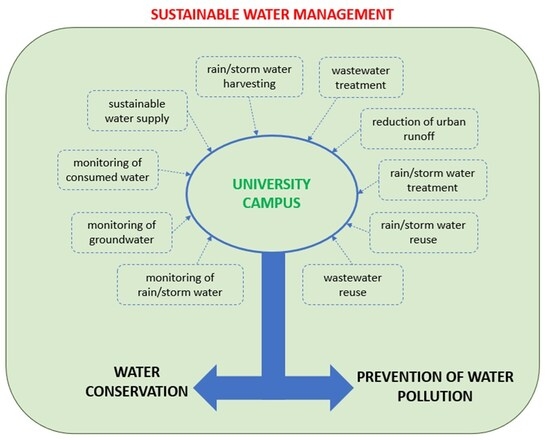
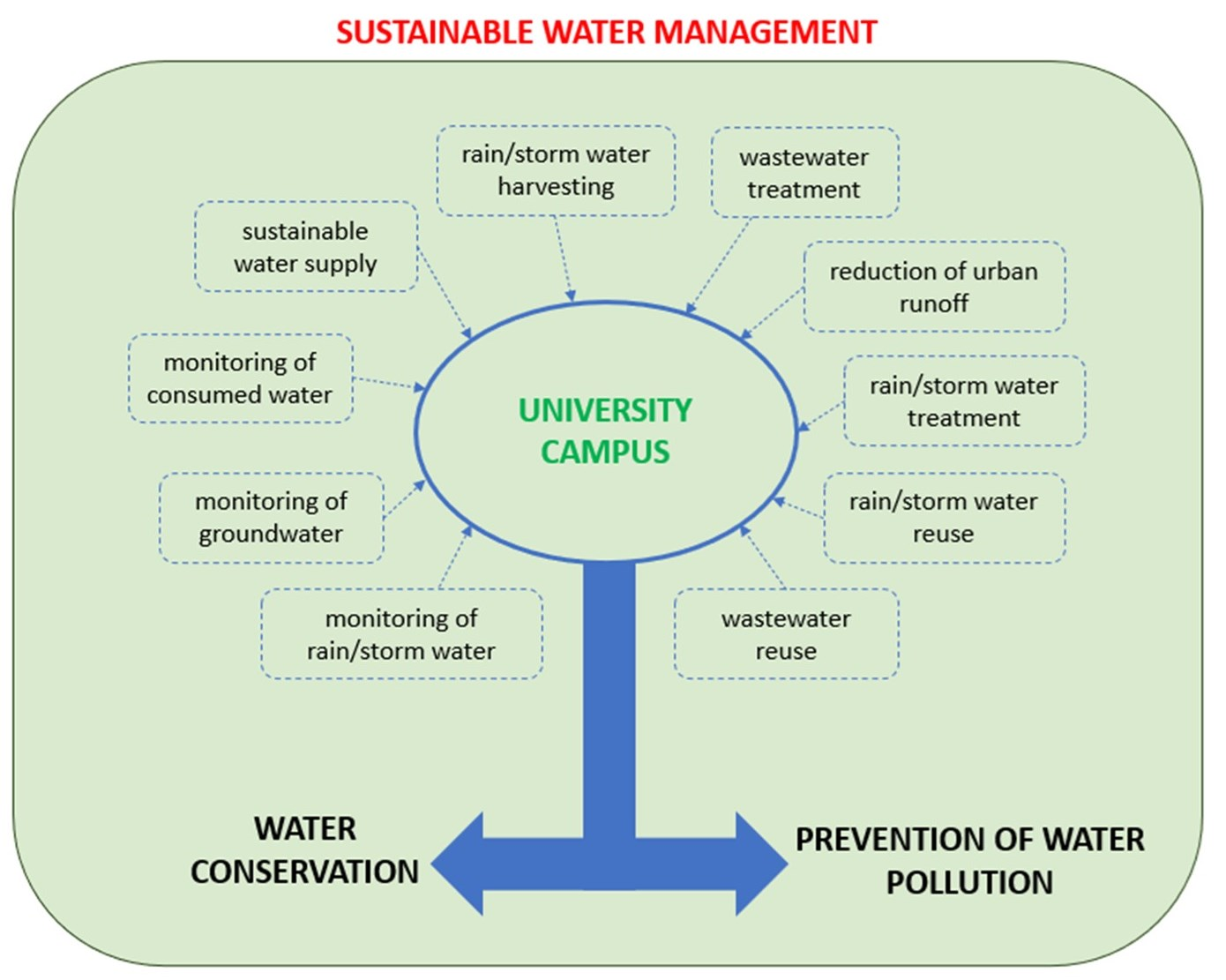
These actions contribute to the two goals for sustainable water management set in Section 2 as depicted in Figure 1.
As can be noted, several of the actions identified such as water monitoring, harvesting, treatment and reuse involve both rain and storm waters. For the sake of clarity, it is important to consider that, throughout this work, the term “rainwater” is used to refer to the water that is collected only from university building rooftops, while the term “stormwater” is here used for the waters collected from university campuses’ urban surfaces, in virtue of the definitions by Lin et al. [55] and National Poly Industries [56].
The following identified actions contribute to the preservation of the quality and quantity of water bodies from HEIs’ negative impact: treatment of stormwater from university campuses is essential to prevent the release in the environment of pollutants from urban surfaces [57] and from sewer overflows into surface water bodies [58,59]; treatment of various types of waters is essential to prevent pollutants in urban wastewater, including rainwater, domestic wastewater, industrial wastewater and source-diverted black and grey waters, from being released into the environment matrixes such as ground and surface water bodies. A sustainable water supply contributes to the preservation of water availability along with practices of water reuse from rain and storm waters and from university campuses’ wastewaters. Auxiliary actions, considered within the framework of SWM by HEIs, are the monitoring of consumed water, of rain and storm waters as well as of groundwaters. Although not directly contributing to SWM in HEIs, monitoring of these water fluxes enables HEIs taking proper actions for SWM, such as the design and management of water treatment technologies or the adoption of efficient water appliances among several others.
It must be pointed out that the actions for SWM by HEIs presented in this work are only those emerged from the literature search carried out in this study according to the procedure described in Section 2. On the other hand, there could be other actions that may improve water sustainability in HEIs but were not considered since they could not be found in the literature.

3.2. Analysis of Sustainable Water Management Measures by HEIs Emerged from the Literature

In this section, the implementation of the core actions by HEIs identified through the present literature review is analyzed with case studies and emerged challenges.

3.2.1. Monitoring of Water Consumption

The monitoring of water consumption is well-known to represent a key element for the improvement of HEIs’ environmental sustainability. This is because, on one side, the volume of consumed water by itself is an important element of HEIs’ sustainability where too high values may indicate use beyond needs, which can lead to depletion of water reservoirs, and, on the other side, it has an indirect effect on HEIs’ carbon footprint due to consumption of energy by the plumbing system and for purification [60,61]. Maulidevi et al. [62] proposed a value of 0.46 kg CO2 emitted per litre of water consumed to estimate the carbon footprint of HEIs due to water consumption. However, other values may be used depending on factors, such as:
(1)
The energy sources employed for extraction, pumping and purification,
(2)
The water source and water quality policies determining the intensity of the purification treatments required,
(3)
The height of buildings,
(4)
The amount of water consumed,
(5)
The amount of hot water consumed.
Another derived environmental impact of water consumption is linked to the volume of wastewater generated to treat, which is proportional to water consumed [63] apart from water for irrigation purposes. While a larger water consumption can increase pollutant dilution in wastewater, increased energy consumption by the various pumping systems at the treatment facilities is most likely to occur. Related to energy consumption and depending on the energy source are the amount of greenhouse gases emitted from wastewater treatment.
Besides enabling the assessment of HEIs’ sustainability, monitoring of consumed water in HEIs allows for the identification of distribution systems’ faults, such as leakages, and cases of overconsumption by people attending the institutions, based on which measures for consumption reduction can be taken [64]. Water consumption in university buildings has been important information for the determination of where to best collocate water saving measures such as rainwater harvesting (RWH) systems [65]. In general, measures for more sustainable water management in HEIs can be better planned by considering detailed information about current water consumptions.
Direct water consumption in university campuses could occur for the purposes mentioned in various works [7,38,66], such as:
-
Drinking,
-
Cooking in universities’ kitchens,
-
Research laboratories,
-
Gardening,
-
Washing (e.g., hand washing in washbasins),
-
Sanitation (e.g., toilet and urinal flushing),
-
Cleaning,
-
Bathing,
-
Dish washing.
In addition to direct water consumption occurring in HEIs’ buildings, Mu et al. [67] pointed out the issue of indirect water consumption, associated with—among other factors—the consumption of water for the production of food and drinks consumed by people attending HEIs. A typical example of indirect water consumption in HEIs could be the water used for the production of food and drinks used in canteens and cafeterias [68]. However, this is often a neglected item that is not currently considered even in widespread sustainability world university ranking systems [54]. Fatemi et al. [69] considered the water footprint for food production in cubic metres of water used water per weight of wasted food. Intervention on food waste reduction in university canteens reduced water wastages by about 16.7%.
Regarding quantities of water typically consumed in HEIs over long periods such as—typically—one year, the literature provides several examples. Rosa et al. [70] found a reduction in water consumptions from 2010 to 2015 in a Portuguese university, with a per student yearly water consumption of 3550 L in 2015, while a lower per student water consumption value of 2940 L in 2018 at a Brazilian university was recorded. At Cibiru UPI Campus (Indonesia), freshwater demand was monitored separately for office workers and students, yielding per capita yearly consumptions of 7300 and 3650 L, respectively [71]. Torrijos et al. [7] reported yearly per capita water consumptions oscillating between 2730 and 3400 L at University of A Coruña (Spain) from 2010 to 2018. Boiocchi et al. [31] analyzed average yearly per capita water consumption over a 10-year period (2012–2021), which enabled identifying a significantly decreasing trend from around 7500 L to around 4500 L. Custódio and Ghisi [72] observed per capita daily water consumption in a private university building to be 5.38 L, equivalent to a yearly consumption around 2000 L. This value was used in the same study to evaluate the feasibility of a rainwater harvesting system in the same university. Domingos et al. [44] reported the monthly average per population equivalent daily potable water consumption oscillating between 25 L in June 2023 and 12.5 L in January 2024 at University of São Paulo Easter campus (Brazil), although a clear seasonal trend of the analyzed year could not be clearly detected (only a weakly decreasing per capita consumption could be detected in colder seasons). On the other hand, much larger (i.e., about 154,000 L) was the yearly per capita water use recorded by Zang et al. [73]. However, this much larger value is because water consumption in student housing areas was also incorporated besides the water consumption in university buildings. According to another research analysis, per capita yearly water consumption in an Indian university campus was estimated to be around 120,000 L [74]. Much lower is the yearly per capita water consumption calculated for the campus of Jordan University of Science and Technology, i.e., about 20,400 L [75].
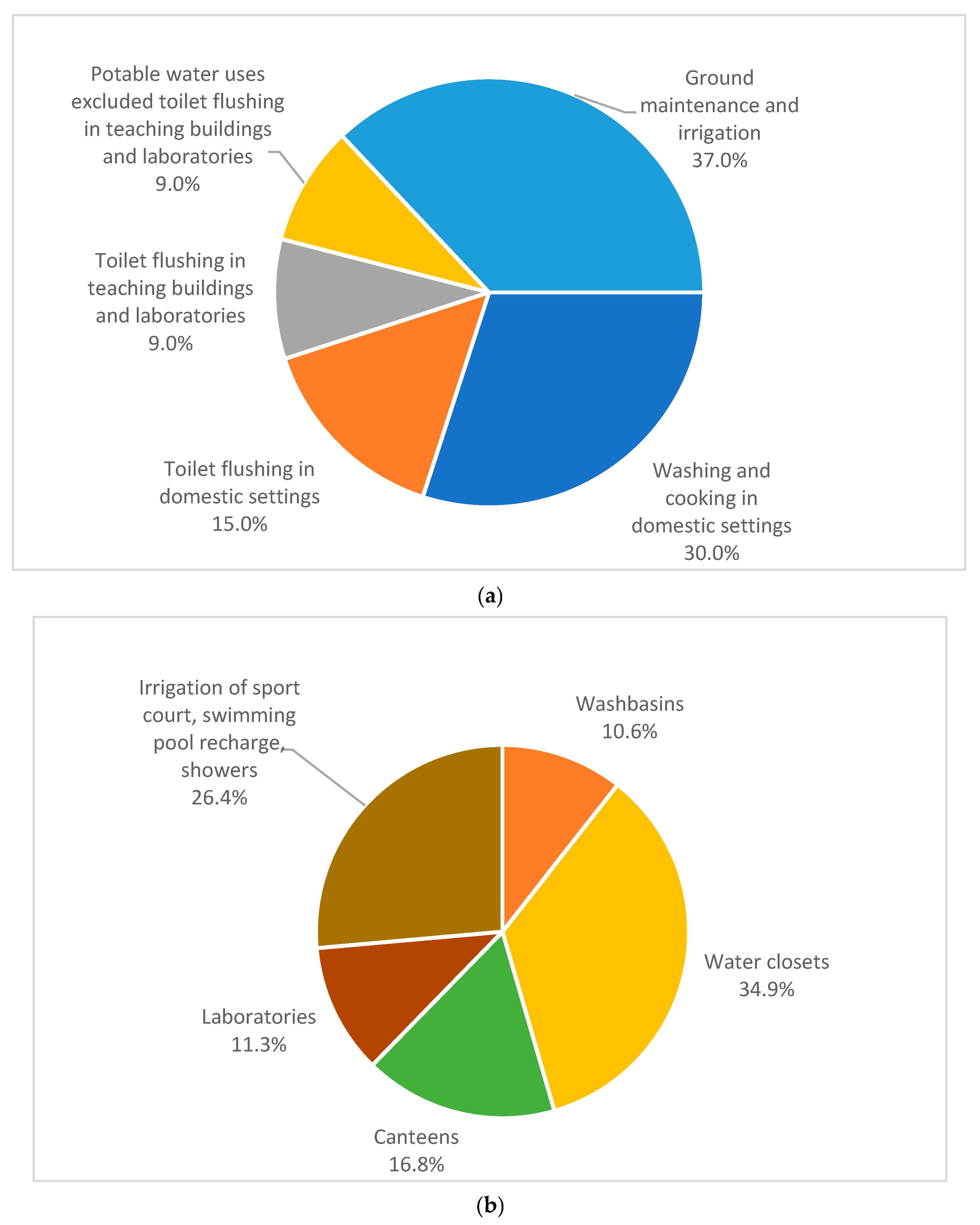
The same Zang et al. [73] made a detailed analysis of the various contributions to the campus water demand, considering five different items such as toilet flushing for university and residential buildings, potable water usages in university buildings and in student housing settings and water consumption for ground maintenance (such as cleaning indoor university buildings) and irrigation, as depicted in Figure 2a. On the other hand, Torrijos et al. [7] considered different contributions by different buildings and by various water fixtures, as reported in Figure 2b. Indeed, detailed tracking of water consumption is essential to properly design effective strategies for water saving.
Further, contributions to the total water consumption in university buildings were differently grouped by Almeida et al. [38] into three components, yielding the following percentages:
-
A total of 72% for personal use, such as water used in toilets, urinals, washbasins, showers and fountains of which toilet water consumption contributes 58% on total personal use,
-
A total of 19% for cleaning activities,
-
A total of 9% for other water consumptions.
In the case of Almeida et al. [38], water consumptions were evaluated both per unit of surface, yielding a value ranging between 0.2 and 2.5 m3. m−2. year−1, and per unit of university occupant, yielding a value of 15.12 m3. occupant−1. year−1. According to the per surface unit quantification type, Almeida et al. [38] found that the highest water consumption occurred in libraries with a value of 2.5 m3. m−2. year−1. In addition to water consumed by students and office workers, Anchan and Shiva Prasad [66] monitored the water consumption for gardening, recording values of 50,000 L per day for a South Indian University campus. However, this value was not compared against the surface of the campus garden. On the other hand, Sangita Mishra et al. [65] estimated water demand for gardening purposes as 23 L. person−1. d−1. Nevertheless, this was a mere estimation based on the norms of the Central Public Health and Environmental Engineering Organization that should be verified with actual data. Other estimations of water demand for green area irrigation were made based on an assumed volume of water used per unit of surface area irrigated in university campuses equal to 25 L. m−2 [76].
Indeed, these data show the different levels of detail according to which HEIs quantify water consumption, considering not only the mere overall volume of water consumed within a year, but also the patterns of water consumption within university buildings and campuses, which represent the basis to identify strategies for more sustainable water consumption. Detailed estimations about water consumption in university campuses that consider its various patterns have been an important SWM action to identify proper measures for effective water consumption reduction [77,78]. A typical perspective analysis based on detailed knowledge about water consumption patterns regarded the reduction in water consumption in university buildings following adoption of various water-saving appliances by Soares et al. [79]. Another analysis carried out based on water consumption data was on the impact of the so-called students’ Environmental Relevant Behaviour change [80]. Monthly water usages in university residence halls during the autumn season demonstrated a positive outcome with respect to this initiative. The latter additionally analyzed the derived benefit in terms of reduced energy consumption linked to water supply, wastewater handling and water heating, which contributes further to enhancing HEIs’ sustainability.
Detailed knowledge about water consumption patterns can also contribute to other important water conservation practices, such as greywater reuse, where estimations of water consumption by various water appliances and for irrigation in university campuses have allowed for the preliminary assessment of greywater reuse feasibility in a university campus as carried out by Lanchipa-Ale et al. [81].
Besides yearly quantifications, online monitoring at tight frequencies has been reported to be carried out in various HEIs. Specifically, the literature on water consumption monitoring in HEIs highlights a common trend of using Internet of Things (IoT) networks in support of smart water management [73,82,83,84,85,86,87,88,89,90,91]. As detailed by Simmhan et al. [82], the aims of smart water management typically are the following:
(a)
Ensuring quality standards of distributed water,
(b)
Guaranteeing reliability of water supply,
(c)
Avoiding water wastages (e.g., by detecting leakages),
(d)
Maintaining water infrastructure,
(e)
Reducing the cost of water and of electricity used for water pumping,
(f)
Engaging consumers in water conservation practices.
Within the IoT framework, Barroso et al. [84] proposed a Cyber-Physical System SmartPoliTech with the purpose of water consumption optimization by minimizing leaks in the distribution network and by avoiding consumption beyond actual needs. Through Cyber-Physical System implementation in the Engineering School at the University of Extremadura (Spain), information collected from various sensors instantaneously measuring water consumption was employed to create and synchronize other information used by the university to detect cases of overconsumption, leakages and opportunities for water consumption reduction. Water leakages were detected also at Lille University’s Scientific Campus through the application of the Comparison of Flow Pattern Distribution (CFPD) method where anomalies can be easily detected by comparing water consumption data against one another [92]. The water leak repair detected as described by Walsh et al. [93] reduced night water flow rate demand from 2.3 L per second to 1.9 L per second.
In addition, the literature reports an IoT network employed to monitor the amount of water consumed at the Indian Institute of Technology Jodhpur [85] and at the Universiti Teknologi Malaysia campus [86]. Smart metering of water consumption in a university allowed for the detection of a significant water leakage (about 1640 L per hour) in a building of Newcastle University (United Kingdom) [88]. In a university campus located in a hot, semi-arid region of India, thanks to water flow metering which allowed for the comparison of drinking water provision against downstream wastewater production, an important leakage could be identified by Zang et al. [73]. Verma et al. [94] demonstrated a preferable use of ultrasonic water level sensors instead of more tedious, high-cost and intrusive-to-install pressure or buoy sensors in support of IoT for smart water management in a university campus. These sensors were installed not only in water storage tanks but also to monitor groundwater reservoirs with the aim of optimizing the amount of water provided to the campus storage tanks employed to meet the peak demand [94]. Ultrasonic sensors were also employed by Ayeni et al. [87] to indirectly monitor water consumption based on water level measurements in a drinking water distribution tank at Anchor University (Nigeria). In a more recently reported experience, detailed water consumption monitoring on an hourly basis was employed to develop a neural network-based model predicting water demand by users living at a campus of Jiangsu University (China) [95].
Besides quantity, quality parameters of consumed water, such as pH, dissolved oxygen (DO), TDS and chlorine, were monitored with the aim of additionally assessing water suitability for drinking purposes [85,87]. A more detailed water quality monitoring than the ones by Ayeni et al. [87] and Singh et al. [85] was carried out by Ige et al. [96] at the Federal University of Agriculture Abeokuta (Nigeria), where electrical conductivity, calcium, magnesium, potassium, sodium, iron, bicarbonates and carbonates, sulphates (SO42−) and nitrates (NO3) in addition to the aforementioned quality parameters were systematically compared against standards set out by the World Health Organization and by the Standards Organisation of Nigeria. Indeed, the more comprehensive monitoring by Ige et al. [96], including specifically NO3, enabled tracking of the impact of anthropogenic activity on the quality of water extracted for university uses.

3.2.2. Rain and Storm Water Monitoring

Monitoring both the quality and quantity of rain and storm waters is essential for HEIs to identify proper decisions on which SWM measures to implement. Quality monitoring serves to understand the possible reuse options [55], to identify the level of depuration needed and, along with quantity monitoring, to optimally design management infrastructures [97,98]. Furthermore, once infrastructures for rain and storm water management are put in place, monitoring is crucial to assess the effectiveness of these technologies and eventually decide for corrective actions in terms of implementing new stormwater management infrastructures and/or upgrading the maintenance of the existing ones [99,100,101,102,103,104,105].
Quality Monitoring of Rain and Storm Waters
The literature provides copious examples of quality monitoring for rain and storm waters by HEIs [8,9,55,88,106,107,108,109,110,111,112,113,114,115,116,117,118,119,120,121,122,123,124,125,126,127,128,129,130,131,132,133,134,135,136,137,138,139,140,141,142,143,144,145,146,147].
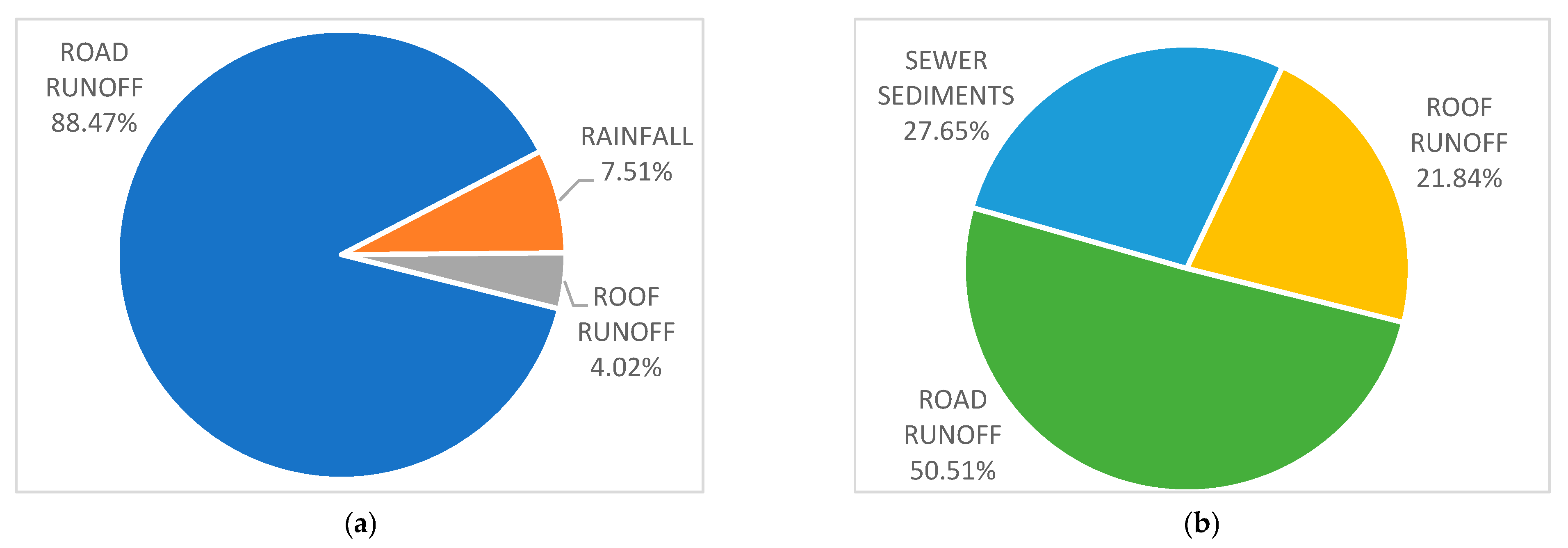
Chiang et al. [107] assessed the quality of rainwater harvested at the National Taiwan University Science and Technology (Chinese Taiwan) in terms of pH, alkalinity, metal and anion content and total coliforms. It was found that storage time had a decreasing effect on rainwater electrical conductivity, turbidity and dissolved organic carbon, while total coliforms first increased and subsequently decreased during a 14-day storage period. Dry deposition of NO3 and SO42− from urban polluted air were observed as well. An important finding was related to the effect of the material of catchment systems and storage tanks on rainwater pH: stainless steel for catchment systems and high-density polyethylene for storage tanks were attributed to making stored water acidic, while cement material for both catchment and storage systems enabled the increase of stored water alkalinity and pH, suggesting its preferable use. Nevertheless, while Wang and Yu [134] found significant concentrations—though decreasing during the precipitation event—of heavy metals such as iron, cadmium, copper and zinc in rainwater collected from concrete building roofs at the campus of Chongqing University (China), Dufault et al. [109] considered cement not the best material since it could raise the pH to too high values. Indeed, pH of stored rainwater is an important parameter that, if not compliant with the quality standards in force that usually recommend values around neutrality [112], could compromise rainwater potable use as well as other uses. In addition, Dufault et al. [109] discouraged the use of asphalt shingles as roof material, which could potentially leach toxic chemicals such as mercury, lead and polycyclic aromatic hydrocarbons (PAHs) to the harvested rainwater. In addition, they proposed the use of high-density polyethylene as storage tank material, which did not lead to any pH changes different from those in the case of Chiang et al. [107], nor released the aforementioned toxic chemicals. The impact of catchment material on the quality of rain and storm waters with perspective of harvesting was also the subject of a systematic study by Al-Amoush et al. [144]. The study, carried out on Al-Albayt University’s (Jordan) rooftop and parking lot runoffs, identified a peculiarly high concentration of NO3 in seal coat-insulated parking lot runoff, which was not otherwise detected as high in runoffs from any of the university rooftops made of various materials [144]. Specifically, NO3 concentrations from parking lot runoff reached values up to 370.4 mg NO3. L−1, abundantly above the limit of 50 mg NO3. L−1 set by the Jordanian Water Standards, requiring appropriate treatment prior to various reuse destinations. The issue of NO3 in university campus stormwaters was detailly studied also at the Haidian Campus of Beijing Normal University (China) using NO3 isotopes [118]. The highest contribution of NO3 to stormwater collected in sewer flows was found to come from road runoff, while lower—yet non-negligible contributions—came from rainfall and roof runoff, as depicted in Figure 3a. Similarly, road runoff contributed mostly to particulate organic nitrogen while other significant contributors were from roof runoff and sewer sediments (see Figure 3b).
Regarding again the impact of surface material on rain and storm waters, asphalt roll roof insulation led to high chlorine concentrations in rainwater, while mixed asphalt material increased Total Dissolved Solid (TDS) concentrations but apparently prevented SO42− contamination the most [144]. Allameh et al. [145] compared rainwater quality collected from university building roofs with isogum and cement sheet materials. It was found that rainwater from isogum roofs has lower turbidity than rainwater from cement-sheet roofs. In any case, filtration is needed to make rainwater suitable for potable uses. Electrical conductivity was also much larger in cement sheet roof rainwater than in isogum roof rainwater. A systematic comparison of rainwater composition due to different materials of building roofs at University of Canterbury (New Zealand) in terms of zinc, copper and aluminum was carried out by Souza de Carvalho et al. [130]. High zinc content was found in rainwater from aluminum, galvanized and Zincalume® roofs. Zincalume® is a material manufactured by BlueScope Steel Limited (Melbourne, Australia).
Roof thermal insulation with chemical sealing materials led to the lowest rainwater contamination of TDS, bicarbonate, chlorine, aluminum and NO3 [144]. Despite the same roof materials, Köster et al. [116] revealed that activities near the collecting areas of roofs can non-negligibly impact rainwater quality. Regarding chemical contamination, Gispert et al. [112] found only a few instances of lead and aluminum concentrations in the harvesting system installed in a building belonging to the National Autonomous University of Mexico that were only slightly higher than the allowable limit for potable uses imposed by both the Mexican Drinking water standards and the World Health Organization Guidelines for drinking water, and even less-concerning issues linked to low pH values. GR-filtered rainwater appeared to be higher in Total Organic Carbon (TOC), pH and electrical conductivity than rainwater from a conventional roof in Osawa et al. [125]. Ross et al. [127] systematically compared the quality of three rainwater fluxes from a combined harvesting and treatment system: first-flush rainwater, pre-filtered rainwater and filtered rainwater. Filtered rainwater had a higher pH and hardness compared to the other two fluxes, while first-flush rainwater had higher nitrogen components (total nitrogen, ammonium and nitrate), phosphate and dissolved organic carbon as well as zinc and chromium. This highlights the need for first-flush diversion of harvested rainwater for its safe use. Filtration enabled the reduction in total coliforms while it reduced Escherichia coli presence more lightly. Regarding first-flush diversion, monitoring results by Maykot et al. [121] confirmed its importance by estimating significant reduction in turbidity, conductivity and colour, but did not make rainwater meet quality standards for Escherichia coli.
The issue of organic matter, turbidity and, more importantly, microbial contamination was investigated in rainwaters harvested at various university buildings [8,88,109,115,123]. Zang et al. [88] identified issues regarding the presence of total coliforms, legionella and Campylobacter, pathogenic contaminants originated from bird nesting and excreta in the rainwater storage tank, compromising some uses such as potable and irrigational among others without proper disinfection treatment. Kabbashi et al. [115] evaluated the quality of rainwater harvested on rooftops from the International Islamic University Malaysia in terms of Biochemical Oxygen Demand (BOD), Chemical Oxygen Demand (COD), Total Suspended Solids (TSS), turbidity, pH and microbial count. While pH was found to be acidic during the first period of storage due to air CO2 solubilization but increased as storage time proceeded, BOD, COD and TSS were not found in negligible concentrations (2–3.2 mg. L−1, 22.5–42.5 mg. L−1 and 20 mg. L−1, respectively), which was ascribed to the intrusion of dried leaves, animal excreta and even dead animal parts, similar to Zang et al. [88]. For the same reasons, the microbial count (200–260 CFU. mL−1) was also non-negligible, requiring disinfection and preventing potable uses. In the experience by Dufault et al. [109] an aluminum mesh was installed on top of the eaves troughs collecting rainwater to prevent the intrusion of leaves and roof debris. Nevertheless, a very high bacterial count (120,000–230,000 CFU. mL−1) could be observed in stored rainwater but was deemed suitable for irrigational purposes. Similarly to Kabbashi et al. [115], Yulistyorini et al. [138] identified issues of organic matter and coliform presence above national standards for clean water quality control in rainwater harvested at the Rektorat building of the State University of Malang (Indonesia). In line with this, highly varying total coliforms and Escherichia coli concentrations (from 0 to 56,000 MPN.100 mL−1 and from 0 to 3200 MPN.100 mL−1, respectively) were found in the rainwater stored at Ton Duc Thang University (Vietnam) by Hui et al. [8]. In addition to COD and TOC, total ammoniacal and organic nitrogen as well as total phosphorus were analyzed in water harvested from a building at Xi’an University [111].
An additional issue regarding algae build-up in a storage tank due to tank exposure to sunlight was encountered by Dufault et al. [109]. The issue was then solved by wrapping the tank with a metallic green wallpaper, efficiently screening sunlight. Dao et al. [9] adopted a slightly different approach to work out the issue by covering the internal part of the tank with a white tile. Gao et al. [148] studied the impact of different rainwater storage modes at a university building. It was found that aerated storage reduced organic carbon content by about 54%. With sealed storage, organic carbon degradation occurs in the early stages while during open-tank storage degradation occurs at later stages. A light nitrification process occurs under the presence of oxygen, leading to NO3 build-up.
In case of university campus stormwater quality, Awang Ali and Bolong [146] found elevated levels of TSS in stormwater collected nearby parking lots and construction areas. A higher TSS concentration was found in another university campus’ stormwater at the beginning of a high intensity rainfall event [141]. Similar findings to Awang Ali and Bolong [146] were revealed by Hazizan et al. [113], who detected high TSS concentrations in stormwater runoff collected near a construction site at the Universiti Tenaga Nasional (Malaysia) campus. In the same site, high turbidity and COD concentration values were encountered similar to the case of stormwater coming from campus cafeteria. However, while BOD concentrations were high in stormwater collected from the latter site, the same were not as high in the construction site runoff. Runoff from the campus residential area presented, in general, lower pollution. A study on the stormwater collected in detention ponds at the Universiti Malaysia Sabah campus revealed concentrations of ammonia nitrogen (NHX-N) and BOD5 indicative of only slight pollution, as well as high concentrations of TSS indicative of polluted conditions according to the National Water Quality Standards from the Department of Environment Malaysia [146]. Sources of NHX-N slight pollution from the campus were essentially linked to landscape fertilization, while the high TSS concentrations were attributed to the proximity of the detention ponds to parking lots and roads outside campus as well as to construction activities, besides lack of proper maintenance. The issue of heavy metals in university campus runoff was brought up by Maniquiz-Redillas and Kim [149] who analyzed in detail the dynamics of cadmium, chromium, iron, lead, nickel, zinc and copper in both the inlet and the outlet of an infiltration trench receiving stormwater from a campus road. It was found that these heavy metals were present for a larger percentage bound to particulate components rather than being dissolved. The presence of some metals in stormwater collected from a university campus located in an arid region, (the American University of Sharjah campus in the United Arab Emirates) characterized by the lack of proper drainage infrastructure and of stormwater management systems, was also analyzed [108]. Iron, aluminum and potassium were the most abundant metals, while manganese, barium, chromium nickel and vanadium were found in lower concentrations. Marszałek et al. [120] analyzed a university campus parking lot runoff and found values of only zinc exceeding the local limit for safe discharge of stormwaters in water bodies while organic matter, nitrate and phosphate were found in concentrations much lower than the respective limit. Shafiquzzaman et al. [128] found high TSS, BOD and COD in stormwater stored in a pond at a university campus in Saudi Arabia, while low were the concentrations of Total Nitrogen (TN) and Total Phosphorus (TP), indicating low usage of fertilizers. The presence of organically bound halogens in university campus stormwater runoff was monitored by Marko et al. [119], while Chen et al. [106] innovatively analyzed the concentration of microplastics in the sediments of stormwater drain systems at the Jiashan campus of Anhui University of Technology (China). Microplastics in stormwater can impact biological processes occurring in NbSs for stormwater management by promoting denitrification and discouraging nitrification.
A mixed rain and storm water case is presented by Carpio-Vallejo et al. [147] where rooftop collected rainwater is carried to an open storage pond for recreation on a university campus surface. In this case, source contamination comes not only from university building roofs but also from university urban surface, more specifically the surrounding lawn and the human activities that occur on it. Carpio-Vallejo et al. [147] carried out a detailed microbial analysis considering concentrations of total coliforms, Escherichia coli (E. coli), Enterococci, Salmonella spp. and P. aeruginosa. The higher concentration of Enterococci compared to Escherichia coli suggested animal fecal contamination. Increased recreational activities in summer increased E. coli, Enterococci and Salmonella spp. Risks for groundwater contamination can emerge consequent to the fact that excess water from the pond can infiltrate the surrounding lawn [147].
Systematic comparisons between university campus rain and storm waters were made by a few studies. Lin et al. [55] compared stormwater from a road between two university campuses and rainwater from a university building roof. Rainwater was found to have lower TP and dissolved organic matter as well as slightly higher TN compared to stormwater. Furthermore, rainwater presented lower disinfection by-product potential than stormwater, which indicated rainwater is more prone to be reused for potable destinations compared to stormwater. Differences between university campus rain and storm water quality in terms of TSS, COD, TN, ammonium (NH4+), NO3 and TP were assessed also by Wang et al. [133]. Concrete roof rainwater pollution was found to be intermediate between a campus catchment area runoff and a residential road runoff, where the latter was the most highly polluted. Rainwater was found higher in iron and zinc compared to campus catchment area runoff and only slightly lower in cadmium and lead. Another university campus stormwater was compared against other stormwaters in terms of volatile organic compounds [117]. University campus stormwater was found to be more concentrated than residential area stormwater but less polluted than stormwater from parking areas, gas stations, city roads and highway junctions. These differences were mainly linked to the different land uses variably releasing oils, particles, grease and soot [117] on urban surfaces. Zhan et al. [140] compared university campus rain and storm waters in terms of toxicity and heavy metals under open and closed storage experimental conditions. Stormwater resulted to be particularly higher in zinc and lead than rainwater and fairly higher in chromium and copper than rainwater, which—on the other side—presented higher toxicity under both open and closed storage conditions. It can be concluded that comparison is affected by both the roof surface from where the rainwater comes from and the land use of the urban surface where stormwater flows, and it is not always the case that stormwater is more polluted than rainwater.
Quantity Monitoring of Rain and Storm Waters
The literature highlights the important role of quantitative monitoring of rain and storm waters in enhancing sustainability on university campuses [88,103,104,132,150,151,152,153,154,155,156,157,158,159,160,161,162,163,164,165,166,167]. This is because understanding the magnitude of storm and rain waters is essential to implement effective water management strategies: proper monitoring provides critical data to accurately size storage tanks [152], drainage infrastructures [151] and technologies for rain and storm water treatment and flood prevention [157,168,169], as well as to calibrate and validate hydraulic models useful for technology performance evaluation and prediction [132,153,154,155,156]. The monitoring process in HEIs has involved measuring key hydrological parameters, including rainfall depth [170], surface runoff [170] and soil infiltration capacity. For this purpose, a set of instruments is used to collect reliable data, such as:
  • − Rain gauges, to measure the intensity and depth of precipitation allowing for the estimation of total rainfall volume over a given period [103,104,141,157,162,163,164],
  • − Level and flow sensors installed in drainage systems, retention basins and stormwater channels to track runoff volume and discharge rates [157,158,163,165,171],
  • − Soil moisture sensors to assess infiltration capacity, which influences runoff generation and groundwater recharge [166,167].
The size and characteristics of surfaces where rain can fall, such as rooftops, roads and green spaces, significantly impact runoff generation. For instance, in RWH systems, the total rainwater collection potential is calculated by multiplying the available roof drainage area by the local rainfall depth, usually represented by the median annual rainfall depth, and by a collection efficiency factor (e.g., 80%, as applied by Zang et al. [88]). To properly design a RWH system at the South Indian University in Mangaluru, India, Anchan and Shiva Prasad [66] considered rainfall data over a 15 year period which enabled estimating the RWH potential of the university buildings. Beyond surface parameters, subsurface assessments may also be required: Misra et al. [161] illustrate how geological–geophysical data guide the safe siting of water reservoirs in hilly university terrains (Sikkim University, India).
Monitoring systems are essential to collect data and assess design effectiveness in mitigating runoff and restoring hydrological balance. A university campus can be equipped with low-cost sensors forming an IoT-based measurement network to monitor water distribution and urban drainage in real-time [150]. This enables optimizing water usage, preventing floods (e.g., smart rain barrels with discharge valves to minimize flood risks and combined sewer overflows) and enhancing urban resilience through data-driven water management. An IoT monitoring system for rainwater harvesting that uses real-time control technology can also be designed to generate indoor energy, as proposed by Ismail et al. [160].
Finally, findings by Zang et al. [88] revealed that green infrastructure, when poorly maintained or insufficiently integrated with conventional systems, frequently underperformed, resulting in delayed resource savings and diminished economic returns. This reinforces the critical importance of robust maintenance protocols [170], continuous monitoring and careful alignment of supply and demand to optimize stormwater management and achieve sustainable outcomes in campus settings. In this regard, Yakimov et al. [159] demonstrated at the Lobachevsky State University of Nizhny Novgorod (Russia) that vegetation-driven runoff regulation can be quantitatively assessed; indeed, by using a field-based inventory and the i-Tree Hydro model, they estimated 956.1 m3/y of stormwater retention by campus green infrastructure.

3.2.3. Rain and Storm Water Harvesting and Reuse

While RWH systems typically store rainwater in tanks for later uses, stormwater harvesting (SWH) consists of a variety of techniques essentially based on ground infiltration or storage of runoff intercepted from urban surfaces for either groundwater recharge or other uses. Both RWH and SWH are practices particularly useful at times of increased water scarcity by ensuring a more constant water availability [172,173] and contextually preserving natural water reservoirs for other uses. Furthermore, in a typical urban context with significant surface impermeabilization such as university campuses, RWH and SWH can reduce urban runoff and floods [57], thereby mitigating the derived risks of environmental pollution linked to urban surface washout and overflows from sewer systems.
HEIs have shown significant interest in RWH and SWH with numerous preliminary and implemented projects and case studies focused on integrating harvesting systems into university campuses to enhance institution sustainability. There are several cases for both RWH [8,9,52,65,66,73,74,78,88,98,107,109,111,112,115,116,123,127,138,147,173,174,175,176,177,178,179,180,181,182,183,184,185,186,187,188,189,190,191,192,193,194,195] and SWH [30,53,71,98,99,100,101,102,103,104,128,129,137,146,149,153,165,186,187,195,196,197,198,199,200,201,202,203,204,205,206,207,208,209,210,211,212,213,214,215,216,217,218,219,220,221,222,223,224,225,226,227,228,229,230,231,232,233,234,235,236,237,238,239].
The potentially significant asset of RWH in HEIs was testified by Zang et al. [73] where collected rainwater covered 7% of institutional yearly water demand, a percentage that reached 42% in the month of August. Much larger savings were reported at McMaster University (Canada) where the RWH system reduced external water supply by about 74% when the potable use was in function and by 69% when only non-potable usages of harvested rainwater were active [194]. Xie et al. [190] recorded a 14.11% reduction in annual water supply supplementation in a Japanese university campus. However, the latter figure incorporates—additionally to the university campus case—a nearby residential area. In a new building of the “Arenberg III” campus of the Katholieke Universiteit Leuven (KU Leven), the RWH system receives water filtrated by a GR installed on the building roof, which represents an original RWH configuration [191].
RWH design considers three fundamental input data, such as the roof areas over which collection tanks are placed, the runoff coefficient of the catchment area and the water demand needs. In light of advances in harvesting system design, Soni et al. [189] proposed a novel method to estimate runoff coefficients using Motilal Nehru National Institute of Technology campus as a pilot case study for testing purposes. In another experience, an innovative RWH project was implemented in a Korean university where so-called wind-driven rain was collected from the building wall [240]. It is important to note that, while rainwater collection occurs on university building rooftops, storage of the same could occur in different places. For instance, in the experience of the harvesting system by Dufault et al. [109], rainwater collected from the roof of a Canadian university campus building is then carried through aluminum eaves troughs to storage tanks laying on the campus ground. This layout was chosen given the fact that collected rainwater was destined for irrigational purposes rather than for internal uses in the campus buildings. In another case, rainwater collected on university building rooftops was carried to a HEI’s surface given the need for advanced purification treatments for potable uses [9].
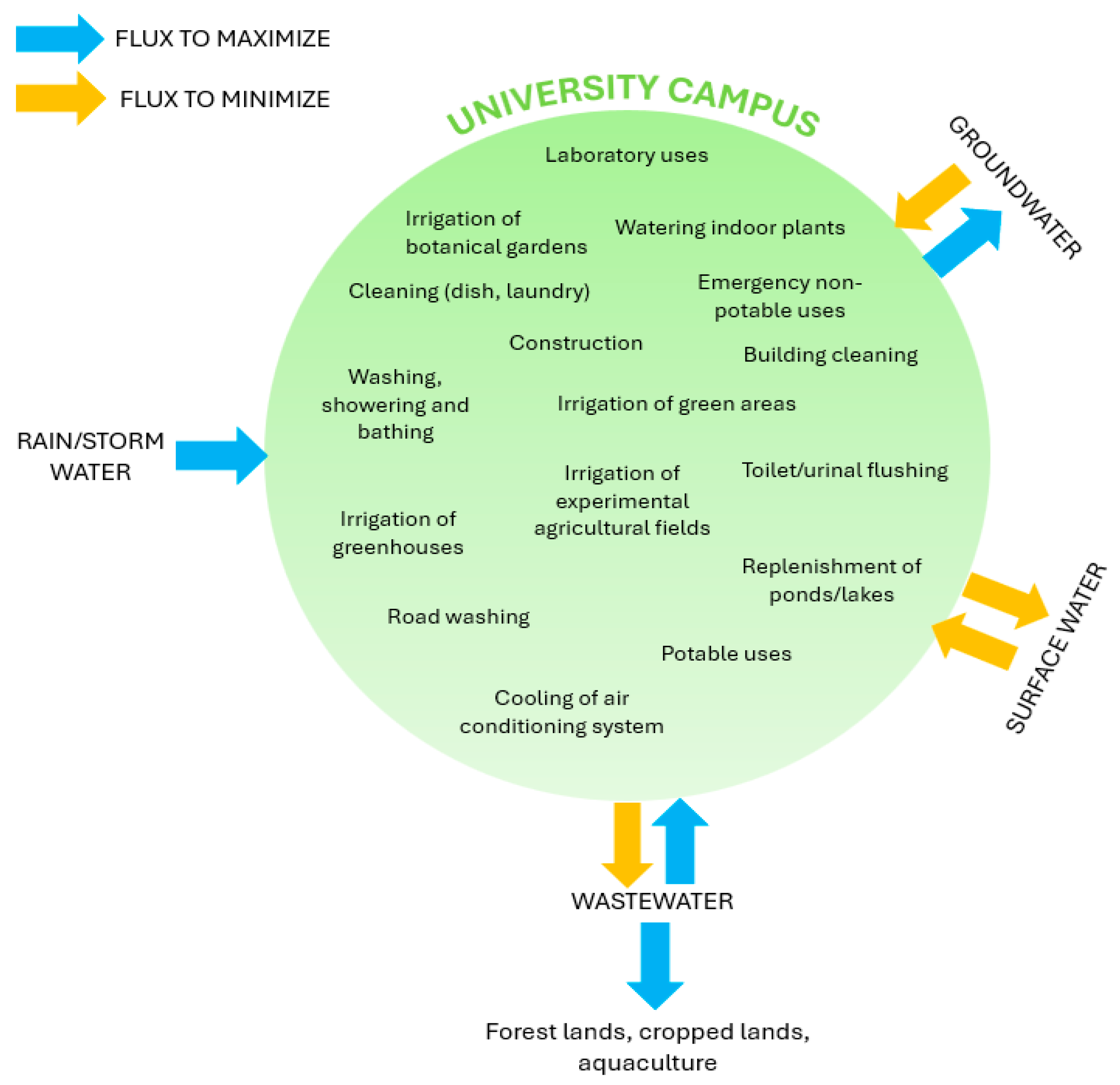
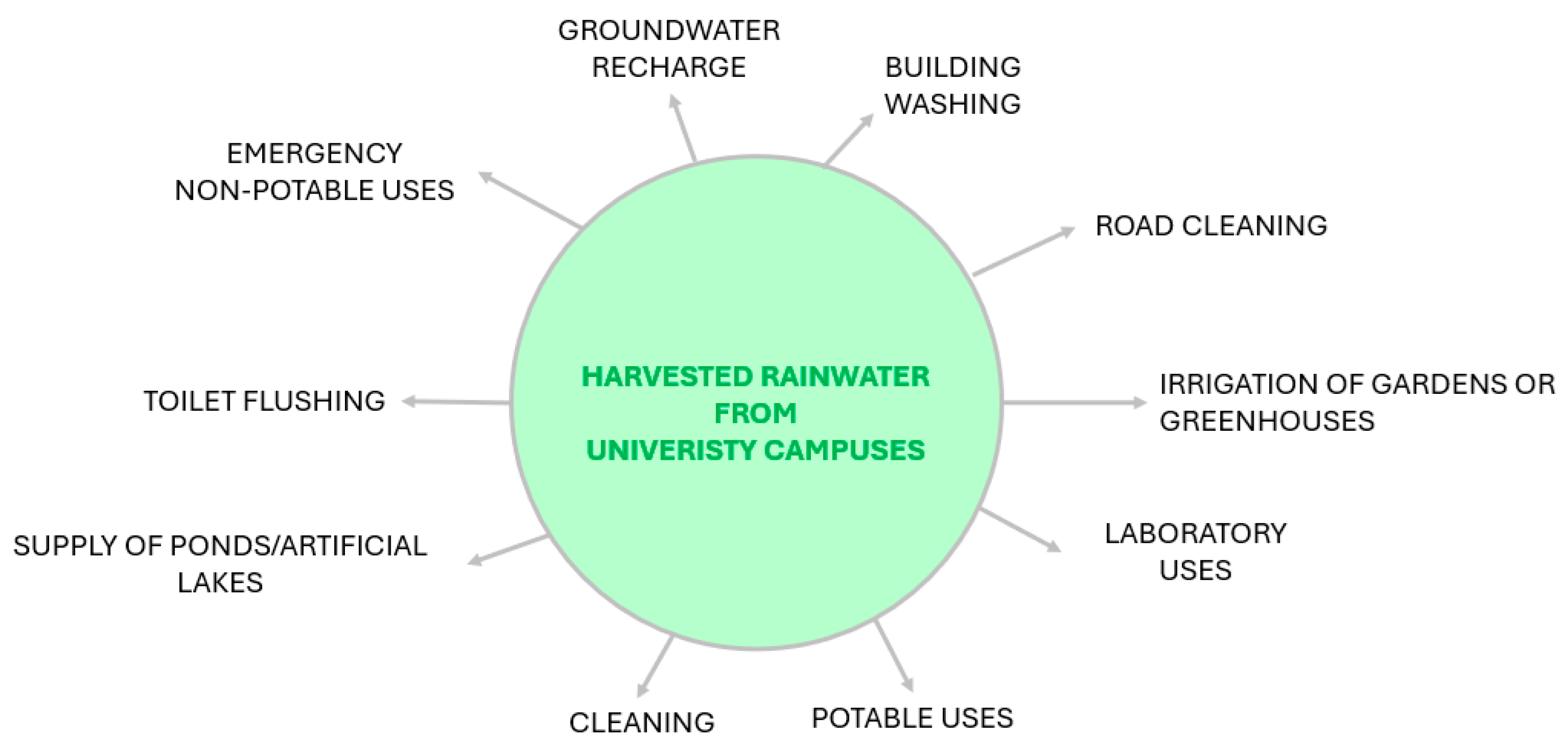
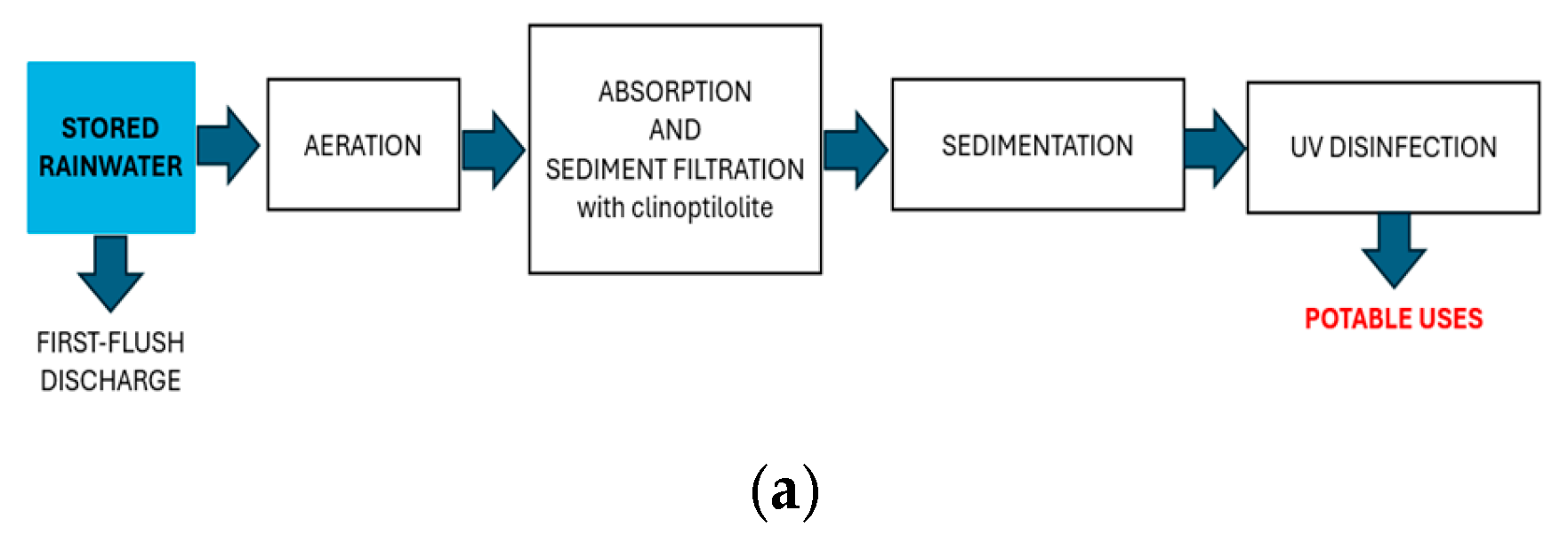
With regard to its reuse destinations, harvested rainwater has been prospected to be used or has been used in HEIs for the following purposes depicted in Figure 4:
-
Building washing [19,52,66,73,175],
-
Garden/greenhouse irrigation [53,66,74,78,109,173,175,184,186,234,241],
-
Toilet flushing [66,73,88,175,181,183,184,186,191,195],
-
Cleaning, such as bathing and dishwashing [66],
-
Water-demanding laboratory uses [174],
-
Potable uses, such as drinking and cooking [8,9,52,73,88,112,194,242],
-
Various domestic uses (excluded toilet flushing) [73],
-
Groundwater recharge [53,65,147,178,179],
-
Emergency non-potable water supply [175],
-
Road cleaning [241],
-
Water supply for ponds or artificial lakes [53,111,147,226,241].
Despite the strong emphasis on these practices, two works have highlighted some limitations and challenges of RWH and reuse applied in HEIs [88,178]. Specifically, Zang et al. [88] highlighted the low degree of exploitation (below 50% of the maximum harvesting capacity) of harvested rainwater for toilet flushing due to its implementation as an addition to the conventional water supply system rather than in place of the same. This was attributed to delays in fault detection and intervention in the event of failures, given the secondary need for this water source. On the other hand, Wang et al. [178] identified an issue regarding the inadequate levels of turbidity in harvested rainwater for groundwater recharge. Optimal pre-treatments need to be identified and implemented to make the rainwater suitable for that reuse destination. At the Engineering Faculty of Pancasila University (Indonesia), a dedicated RWH system was built showing a significant reduction in groundwater reliance, saving on a yearly average 3903 m3 [179]. Additionally, infiltration wells integrated into the RWH system provided effective groundwater recharge. This example highlights how RWH can address immediate water needs while also serving as a sustainable method for restoring underground reserves. In the case study of the Universty of Cape Town (South Africa), usage of harvested rainwater led to up to 70% freshwater savings for irrigation. Another original RWH configuration was adopted by Carpio-Vallejo et al. [147], where rainwater harvested from the building roof of Leibniz Universität Hannover (Germany), instead of being employed for internal uses, was diverted through a PVC pipe into a storage pond for recreational purposes in the campus. Therefore, rainwater can mix with surface runoff and can overflow the pond, consequently infiltrating the surrounding lawn and recharging groundwater. Besides groundwater recharge, the use of harvested rainwater as a resource in laboratory applications is noteworthy [174]. Indeed, some experiments performed in university laboratories are heavily water demanding, and this reduces the environmental sustainability of HEIs according to some green ranking systems [45]. Thus, using harvested rainwater in these laboratories can represent an important asset to effectively improve HEIs’ sustainability.
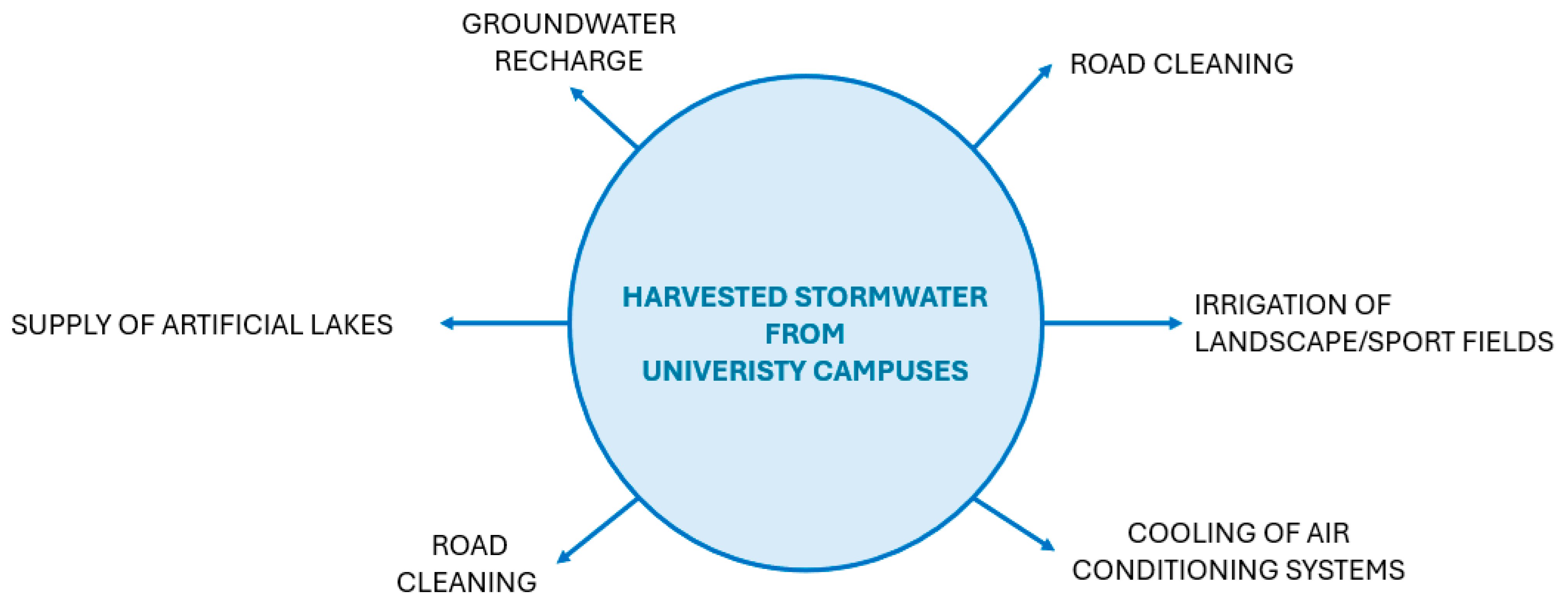
Regarding stormwater reuse, the following end destinations in HEIs have been reported or prospected as depicted in Figure 5:
-
-
Replenishment of artificial lakes [186,223],
-
Road cleaning [226],
-
Cooling of air conditioning systems [227],
-
Irrigation of landscapes or sport fields [153,204,226,233,244].
As can be noted, stormwater is most frequently employed for groundwater recharge in university campuses. Another stormwater reuse destination in university campuses is the replenishment of artificial lakes: in the experience described by Strybos and Lanford [233] stormwaters are harvested in a constructed lake known as Lago Vista, which also collects condensate water from the air conditioning systems of buildings. In addition, de Macedo et al. [165] made an analysis on the suitability for reuse of stormwater harvested in a bioretention cell located at the University of Sao Paulo (Brazil). It was found that such stormwater was safe for various reuse purposes such as discharge in river for potable water extraction, irrigation, direct human contact with respect to NO3, nitrite (NO2), manganese, zinc, copper and chromium but treatments were needed for compliance with standard limits on a few heavy metals such as iron, lead, nickel and cadmium. A novel stormwater reuse destination is the one applied at the Duke University Campus (USA) for the cooling of the university air conditioning systems, presented by Richardson and Flanagan [227].

3.2.4. Rain and Storm Water Treatment

Treatment technologies for rain and storm waters in HEIs are chosen according to the initial level of contamination and to the end destination [175].
Given the scenario of harvested rainwater quality presented in Section 3.2.3, treatments implemented in HEIs have reportedly varied as well, also in function of the different reuse destinations detailed in Section 3.2.3. While for some water reuse destinations, such as landscape irrigation, treatments did not need to be put in place [109,173], the following treatments for harvested rainwater opted for and/or prospected in HEIs have been reported in the various university experiences published in the literature:
(1)
Aeration [242];
(2)
Sedimentation [8,9,88,109,178,183,190,242];
(3)
Clariflocculation [73];
(4)
Filtration with the following:
-
Gravel [66],
-
Mesh [112],
-
Zeolite [178,242],
-
Membrane [9,116,123],
-
Nano filter [8],
-
Cartridge filter [112,130],
-
Combined zeolite and activated carbon filter [138],
-
Activated carbon filter [9,112,116,123],
-
Fibre filter [9],
-
Sand filter [73,116],
-
Microfilter [9,123],
-
Combined in sequence: small gravel, charcoal, limestone, sand, two cheesecloth layers, small gravel and large gravel [127],
-
Moringa oleifera seeds [115];
(5)
Disinfection via:
-
Ozonation [9],
-
UV irradiation [8,9,88,123,242],
-
Chlorination [112,194];
(6)
Treatment by nature-based solutions (NbSs) such as:
-
Rain gardens [53,166,206],
-
Ecological tree pools [206],
-
Bioretention cells [53],
-
CW treatment in wet detention ponds [53],
-
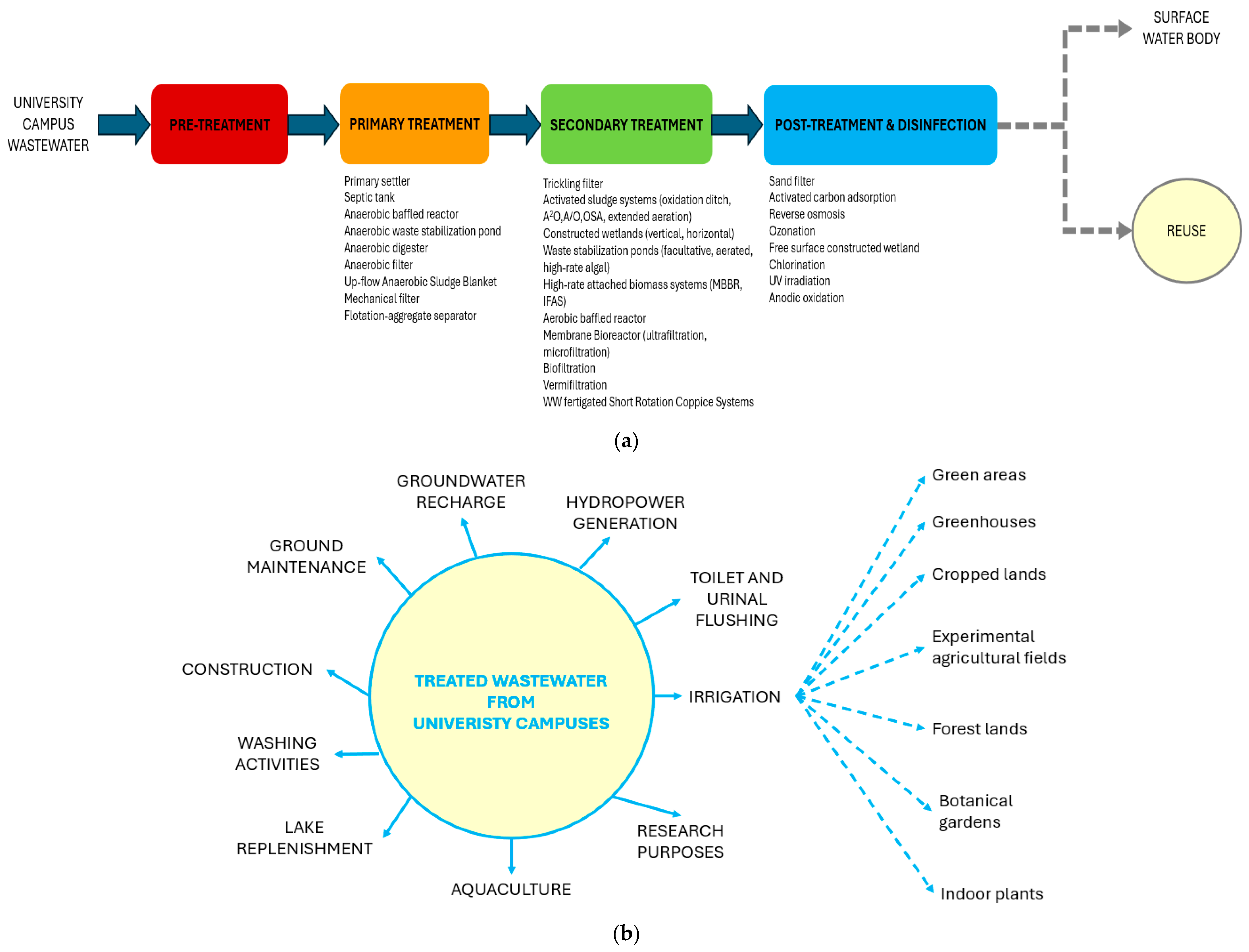
Apart from the typical sedimentation occurring either in the storage tank or in a dedicated tank along the treatment line used to remove rooftop-suspended solids, it can be noted that the other treatments for rainwaters harvested from HEIs’ rooftops can be grouped as filtration and disinfection technologies, as also shown in the university case studies on rainwater purification for potable destination depicted in Figure 6. Among the filtration technologies adopted, mesh and gravel filtrations are typically employed to remove large sediments consisting essentially of leaves and bird excreta. Mesh and gravel filtrations are adopted prior to inputting the collected rainwater in the storage tank and prior to finer filtration treatments and disinfection. Among finer filtration treatment, besides traditional membrane and activated carbon filtration (where the latter serves also for adsorption purposes), there emerges the use of zeolite, nano and micro filters, and fibre and cartridge filters. While the latter showed to be effective at removing heavy metals from rainwater from university building roofs with different materials [130], an issue regarding rainwater purification was revealed in the experience by Yulistyorini et al. [138], who detected an increased TDS concentration in the treated rainwater by employing both zeolite and activated carbon filters, highlighting the importance of choosing the right filter material to avoid compromising potable use and water distribution pipes. The ideal filter composition found to decrease the amount of TDS in stored rainwater was 75% zeolite and 25% activated carbon. In general, the fine filtration treatments used for HEIs’ rainwater treatment enabled TDS removal as well as reduction in turbidity, heavy metal content often leached from roof cover material in the rainwater and microbial count. Furthermore, these represent fundamental pre-treatments for effective disinfection, contextually reducing the risk of toxic by-product formation [285,286,287]. An innovative filtration method was adopted in the experience by Kabbashi et al. [115], where Moringa oleifera seeds were employed, exploiting their coagulation-flocculation property [288,289] which enabled reduction in not only turbidity but also microbial count. With regard to the latter, those seeds yielded up to 77.1% microbial count removal [115]. The employment of Moringa oleifera seeds for water disinfection is particularly noteworthy given their higher environmental sustainability compared to traditional disinfection methods, such as the addition of aluminum sulphate or chloride which instead release toxic by-products in the treated water [289,290]. Besides Moringa oleifera seeds, more traditional technologies such as chlorination, ozonation and UV irradiation have been reportedly used to disinfect HEIs’ harvested rainwater. A particular case is represented by Zang et al. [73], where rainwater was treated along with river water for potable uses in university buildings. In this case, a first disinfection was put in place, followed by flash mixing and clariflocculation, sand filtration and chlorination. In one case, aeration was adopted for rainwater purification in an HEI to remove dissolved gases such as carbon dioxide and volatile organic compounds as well as to prevent anaerobic digestion from taking place in only one university case study for safe drinking purposes [242].
Besides active treatment technologies, noteworthy is the installation of a calm inlet to avoid particle re-suspension after settling in the storage tank, a technique adopted in a rainwater harvesting system at a university building in Ethiopia [183] as well as in other university case studies [8,9]. Another important approach for harvested rainwater quality improvement was reported by Wang et al. [178], where the first flush of rainwater was discharged to reduce the burden of pollutant removal on the treatment line. The same practise was adopted in several other university experiences [8,66,112,115,182,183].
A further consideration can be made regarding the environmental sustainability of purification technologies employed for HEIs’ rainwaters. Specifically, the traditional disinfection and filtration treatments applied to harvested rainwaters in HEIs can increase an institution’s indirect energy consumption and, according to the energy source, also its carbon footprint. Hence, while contributing to resource circularity, they may worsen rather than improve HEIs’ overall sustainability, especially when making rainwater potable. To cope with this, Khalid and Alodah [242] produced the required energy for rainwater treatment through solar panels. Another strategy to reduce the burden of rainwater treatment was proposed by Liu et al. [53], where rainwater collected from a university building rooftop was designed to be handled in a nature-based solution (NbS) train as follows: first, the rainwater is directed in bioretention cells, then in a rain garden and finally in a wet detention pond—also known as a retention pond—where a wetland purifies the rooftop rainwater along with GR-infiltrated rainwater and with stormwater coming from the campus surface. Through this treatment train, rainwater collected from the university rooftop is expected to be purified from rooftop debris, sediments, toxic metals, nutrients and pathogens through physical processes, such as filtration and adsorption, exerted by the bioretention cell filling material and rain garden soil and enhanced by the plants installed in the same systems [291,292,293]. Plants, used for the wetland in the retention pond, also have a peculiar function of bioaccumulation and biotransformation of metals and nutrients present in rainwater [292,294]. Other complex depuration mechanisms can occur in these NbS systems [294,295]. Indeed, the project described by Liu et al. [53] represents an eco-friendly solution that, though not allowing for potable reuse, does not consume electrical energy and, thus, does not increase the institutional carbon footprint. Furthermore, it still allows for safe garden irrigation reuse purposes and groundwater recharge. In another experience, rainwater collected from a 215 m2 university building roof was carried into two rain gardens, thereby reducing the runoff of the urban drainage system [166].
A widespread NbS technology adopted by HEIs for rainwater is represented by GRs.
GRs basically consist in laying on the roofs of buildings a vegetation layer supported by a substrate layer, under which a filter and a drainage layer are placed to allow rainwater to leave the roof while retaining fine particles from the substrate [296]. Although the main aims of GRs are to improve urban stormwater management by reducing runoff volumes and delaying peak flows [48,252,297,298] as well as to mitigate heat transfer in buildings [245,246,251,253,254,255,259,266,267,269,270,277,282,298], they have been acknowledged to improve the quality of rainwaters by filtering some airborne pollutants incorporated in rain [259]. Nevertheless, it is still subject of dispute whether GRs work overall as a sink rather than a source of pollution for rainwaters. For instance, the review by Marín et al. [296] discussed how GRs can actually increase stormwater pollution especially if the soil layer used for plant growth is fertilized; water passing through a fertilized GR can get enriched with fertilizers present in the soil, such as nitrogen and phosphorus, thus increasing the environmental risk of eutrophication when drained water is released in the environment. At the same time, the reduction in runoff volumes and the delaying of peak flows exerted by GRs can indirectly reduce stormwater pollution given the reduced energy needed for soil erosion and urban surface pollutant transport and the enhanced capability of natural ground infiltration.
GRs have been extensively applied in HEIs either within the framework of pilot-scale experiments occupying a limited—but still significant—portion of HEIs’ building roofs [21,48,245,247,248,250,258,259,260,266,267,269,270,271,272,273,281,282,284,299] or as real-scale technologies occupying more extensive HEIs’ roof surfaces [99,164,246,249,251,252,253,254,255,256,257,261,262,263,274,275,276,277,278,279,280,283].
Only few studies on the impact of GRs on the rainwater pollution in university campuses are available. A study on a university building GR identified the great role of vegetation on GRs in capturing NO3 and phosphates (PO43−) from soil substrate [263]. However, the study did not directly analyze the GR leachate quality, which was important for assessing the actual role of GRs in rainwater treatment. A more dedicated study on GR-infiltrated rainwater in a university building is presented by Speak et al. [275]. The comparison was made among 3 fluxes: rainwater, bare roof runoff and GR runoff. Lead emerged increased in both GR and bare roof runoffs compared to rainwater. A deeper investigation clarified that most of the lead found in the GR runoff was leached from GR substrates. Iron did not decrease in GR runoff compared to rainwater, while significantly decreasing in the bare roof runoff. Other elements such as cadmium and copper were reduced in both GR and bare roof runoffs in a similar way, which suggests that vegetated roof covering did not play a central role in reducing the concentrations of these two metals from rainwater. On the other hand, zinc was reduced sensibly more in GR runoff compared to bare roof runoff, suggesting the university GR acted as a sink for this heavy metal. Regarding its capability at reducing the rainwater content in anions such as NO3, PO43− and SO42−, the GR was found to significantly reduce rainwater NO3 content, even compared to the bare roof, which suggests the important role of plants in nitrogen uptake resulting in rainwater purification. On the other hand, the change in PO43− content between rainwater and runoffs from both green and bare roofs was not relevant, suggesting vegetation covering of roof did not play a significant role in reducing rainwater phosphorus content. Given its higher concentration in roof runoffs, both green and bare roofs acted as a source of SO42− rather than a sink of it. Similarly, the GR acted as a source of pollution also for dissolved organic carbon, likely due to leaching from soil substrate. Compatible with the role of GR on rainwater NO3 by Speak et al. [275] are the findings by Todorov et al. [279] on a university research centre building. Considering also another nitrogen species such as NH4+, the university GR acted as a sink. Contrarily, the GR acted as a source of PO43− while as a sink for TP. Furthermore, while the university building GR acted as a sink for chloride, dissolved organic and inorganic carbon leached from the same GR, making it a source of dissolved carbon. From the GR experience on a university building by Gnecco et al. [300], the neutralizing role of GRs on rainwater identified by Speak et al. [275] and Todorov et al. [279] was confirmed. At the same time, in the same experience GR-infiltrated rainwater presented higher TDSs and COD. Among the metals analyzed, zinc decreased, while calcium and potassium increased. Osawa et al. [125] compared GR-infiltrated rainwater against rainwater from a bare ceramic roof in a university case study. From this experience, the potentiality of GRs at mitigating acidity of rain emerged but the leaching of organic matter identified also from the previously mentioned studies was confirmed, requiring treatment of harvested GR runoff before its potential reuse.
These experiences on university GRs show that GRs can act as sinks for some rainwater pollutants but as sources for others. For these reasons, given their limited and latent purifying role on rainwater, GR-infiltrated rainwater is not directly used for the various university campus needs, rather it is delivered on campus urban surfaces following the path of stormwater.
Regarding treatment of stormwaters, the following technologies in HEIs either implemented or incorporated in projects for improved water management were reported as follows:
(1)
Sedimentation tanks or basins [100,203,204,301];
(2)
Wetlands [157,208,212,218,223,226,228,244,302], according to the following configurations:
-
Horizontal subsurface [100,213,303],
-
Free surface [212,230,232,304];
(3)
Floating CWs built up in the following:
-
Wet detention/retention ponds [53,139,196,227,305,306,307,308,309],
-
Artificial lakes [223];
(4)
Infiltration systems, such as:
-
Infiltration wells [71,199],
-
Seepage wells [241],
-
Biopower infiltration units [199],
-
Infiltration ditches [191,241],
-
Infiltration trenches [104,149],
-
Biofilters [214,226,238], referred to as biofiltration cells in Grover et al. [210] or as eco-biofilters in Maniquiz-Redillas and Kim [217] and in Maniquiz-Redillas et al. [100], including tree box filters as reported in Geronimo et al. [209], Haque et al. [212] and Houle et al. [213] and rain gardens [53,98,99,101,103,132,137,163,169,186,197,199,200,204,206,207,211,212,216,223,229,231,232,234,235,241,243,302],
-
Bioretention cells or basins [99,165,198,202,203,205,208,213,215,219,222,223,225,236,239,301],
-
Planter box [228],
-
Bioretention belt [206,226],
-
Vegetated swales [213,223], sometimes referred to as bioswales [102,103,208,214,221,225,228,234,243,302], including grassy swales [136],
-
Sand filters [213,228,237],
-
Infiltration basins [103,224,225],
-
Bioinfiltration ponds [220],
-
Bioretention curb extension [225],
-
Bioretention planter [225],
-
Infiltration planter [212],
-
Sunken green belts [226,239] and ditches [241],
-
Infiltration wadis [191],
-
Infiltration shallow pools [241],
-
(5)
Storage systems such as:
-
Storage pond [128,129,213],
-
Grassed detention pond [219,329],
-
Wet detention/retention pond [208,213,227,307],
-
Dry detention pond [241],
-
Buffer basin [191,195],
-
Artificial lakes [223,226,233,244];
(6)
Aeration systems in artificial lakes/ponds: natural through wind-induced waves to sustain life of fish [233] or artificially through oxygen supply [223,233] or through the input of major water streams such as reclaimed wastewater [223].
From this overview of the technologies adopted for sustainable stormwater treatment in university campuses, the adoption of NbSs emerges as predominant. Despite their expected assets, the performance of NbSs can widely vary depending on design conditions as well as on the type of catchment surface from which the stormwater originates. The literature on the performance of NbSs and of other treatment technologies for university campus stormwater provides a deep analysis, allowing for an understanding of the potential for improved sustainable water management through their implementation.
Among the stormwater treatment experiences, Shaharuddin et al. [230] analyzed in detail the removal performance of a free-surface CW receiving stormwater runoffs from the Universiti Sains Malaysia Engineering Campus for total ammonia nitrogen, TN, TP, BOD, COD and TSS. The CW showed good removal of both BOD and COD but had some issues with respect to TSS removal. Almost undetectable were both TN and TP removal efficiencies despite macrophyte nutrient uptake. This was attributed—at least partly—to plant decay which would release nutrients, offsetting their pickup by the macrophytes themselves. On the other hand, the floating CW installed in a university campus wet detention pond was found to considerably remove nitrogen either through plant uptake or incorporated in sediments captured by plant roots or accumulated on the CW mat [309]. The same technology installed in an experimental bioretention pond receiving university campus runoff was able to significantly remove NO3 but not PO43− [139]. At the same time, the wetland removed stormwater NH4+, SO42− and—to a larger extent—potassium. In another floating CW experience in a university campus wet detention pond, positive feedback in terms of TP and organic phosphorus removals could be achieved, besides the efficient removal of TN, NH4+, NO3 and NO2 [305]. Richardson and Flanagan [227] detected diverse removal of unfiltered TN and TP in a retention pond-wetland system for Duke university campus: at large precipitation events, TN and TP removals were 28% and 26%, respectively, while at smaller precipitation events the same removals reached values of 91% and 94%, respectively.
The tree box filter receiving stormwater from an impervious parking lot at the Kongju National University (Republic of Korea) showed good capabilities at removing TSS (with 91% removal efficiency) and soluble heavy metals, while lower removals were obtained for TN, TP, BOD and COD [209]. The eco-biofilter receiving runoff from an impervious road at the same institution showed about 75% in TSS removal and, along with that, high particulate-bound heavy metal removal, testifying to the efficiency of the sedimentation and filtration processes [217]. Within the same context, an infiltration trench received the university campus road runoff previously passed through a pre-treatment chamber to dissipate the inlet energy and thus allowing for the treatment of the first highly polluted stormwater flush [149]. Dissolved heavy metal reduction was found to increase at small runoff volumes occurring within a short time span. In addition, the ratio between effluent and influent runoff volumes was found to particularly impact the removal efficiencies of several heavy metals both in the dissolved form and as total concentrations. Pre-treatment consisted in the settling of particulate components on the geotextile, gravel and woodchip bottom layers of a chamber. These layers contributed to adsorption, thus aiding heavy metal removal which was achieved also through the settling of the particulate material to which a large portion of stormwater heavy metals was bound. At the same university campus of the aforementioned experience, the importance of settling the pre-treatment of stormwater was highlighted also by Maniquiz-Redillas et al. [100] in the three green infrastructure case studies (i.e., one eco-filter and two CWs), especially in cases of high TSS load, high runoff rates and intensive rainfalls. In the other stormwater case study, the expected removal capabilities of the biofiltration cell was found only limitedly to COD, total organic carbon, manganese and copper [165]. An innovative rain garden configuration, known as a biphasic rain garden, was tested at The Ohio State University’s Wooster campus (United States of America (USA)) [235]. This innovative design increased both the saturated zone, necessary for oxygen-free conditions promoting effective denitrification, and the retention time of stormwater, needed to allow for complete mineralization of stormwater pollutants. Besides hydrological benefits, the rain gardens showed good performance in terms of NO3 removal (about 90% removal) thanks to the improved denitrification and phosphorus removal through the sorption by the rain garden soil [235]. Regarding the issue of stormwater heavy metals, Guo et al. [211] revealed a significant accumulation degree of heavy metals such as zinc, copper, lead and chromium in the surface layers of rain gardens installed at the campus of Xi’an University of Technology (China), with zinc having the potential of contaminating groundwater by downward migration. On the other hand, the study on the treatment performance of a sand filter in a university campus by Zarezadeh et al. [237] indicated good TSS removal capabilities (with an average of 93.5%, larger than the expected design performance) but fell short with respect to orthophosphate and NO3 removals. Copper removal efficiency was not statistically significant, while lead and zinc removals were, respectively, 79.4% and 42%. Interestingly, McPhillips et al. [219] investigated the environmental sustainability of two NbSs for stormwater treatment—an amended bioretention basin and a grassed detention basin—installed at Cornell University campus (USA), in terms of nutrient leaching and greenhouse gas (GHG) emissions from the same green infrastructures. With regard to the latter, the two technologies did not show the increased levels of nitrous oxide (N2O) and methane (CH4) typically generated during the biological processes occurring in these systems. Meanwhile, higher levels of carbon dioxide (CO2) were found from the bioretention basin compared to the grassed detention basin and control lawns. This was linked to the higher organic matter and carbon content of the bioretention soil compared to those of the grassed detention basin and control lawns, which promoted CO2 production from microbial respiration in the soil. Differently, CH4 was found to be the dominant GHG contributor of a free-surface CW installed in a university campus according to Bledsoe et al. [304]. This was linked to highly flooded conditions which promoted an oxygen-free environment, a low availability of NO3 suppressing methanogenesis and the availability of organic carbon. With regard to nutrient leaching from the bioretention cells studied by McPhillips et al. [219], NO3 concentrations increased from inflow to outflow, attributable to nitrification in bioretention soil starting from inflow NH4+ and organic nitrogen as well as from nitrogen in the added compost. Due to the high presence of phosphorus in the bioretention soil still linked to the amendment, high rate leaching of soluble reactive phosphorus occurred as well [219]. Indeed, the study by McPhillips et al. [219] highlights important aspects of sustainability for stormwater management infrastructures to be considered: while treating and managing stormwaters and avoiding floods and the related environmental risks, precautions in terms of nutrient content in amendments used for bioretention should be taken into account. Findings on TP and PO43− from different green stormwater management infrastructures in a university campus by Poor et al. [225] are in line with this. However, an innovative amendment with freeze-thaw cycling processed residuals from a drinking water treatment plant using polyalumonium chloride was implemented in bioretention cells at the University of Vermont (USA) [198,330]. Compared against bioretention cells amended with low-P compost, the drinking water treatment residual (DWTR)-amended bioretention cells showed better removal capabilities on soluble phosphorus, indicating improved phosphorus sorption with the DWTR amendment [198], while nitrogen removal changes were not significant [330]. Furthermore, analyzing their performance over a long period, the conventionally amended cells showed much faster phosphorus saturation compared to DWTR-amended cells. Particulate and dissolved organic phosphorus were also removed with higher efficiency by DWTR cells. Concerns regarding manganese and aluminum leaching from DWTR-amended cells were addressed: while effluent manganese concentration were below the detection limit, minor aluminum leachings occurred from all cells and did not pose any threat to aquatic ecosystems [198]. Regarding heavy metal removal over time, Poor et al. [225] found improved removal of zinc and copper as the age of the green infrastructures being analyzed progressed. The issue of heavy metal accumulation in green infrastructures at university campuses was thoroughly evaluated, highlighting long-term drawbacks of green technologies and their potential threat to surrounding soil and groundwater [137,206,211]. A bioretention cell at University of Maryland Campus (USA) showed good removal capabilities of particulate-bound copper and zinc (82% and 83%, respectively) but was not as effective at removing the same metals in dissolved form [205]. The same green system showed good removal of polychlorinated biphenyls (82–85%), persistent organic compounds posing particular health threats to both aquatic and human life [202]. Yuan et al. [236] analyzed the dynamics of PAHs in bioretention cells receiving stormwater runoff from a university campus parking lot and road. The analysis suggested special maintenance measures considering the higher degree of accumulation of PAHs in layers below the surface. In other university campuses green stormwater infrastructure soils were found to potentially pose environmental/health threats by spreading antibiotic resistance genes via co-selection by metal(loid)s typically present in stormwaters and tending to accumulate in bioretention systems [214]. Flynn and Traver [207] highlighted further aspects that could undermine sustainable stormwater management related to construction, operation and decommissioning. Shi et al. [231] highlighted the issue of mosquito breeding in a university campus rain garden in China due to the high humidity environment. This poses a few challenges to people passing by the rain garden that can be overcome by opting for mosquito repellening plants during their implementation.
Besides green and infiltration systems, storage systems and permeable pavements have also been considered as treatment systems given their capabilities at reducing the suspended solid and particulate compounds content of stormwaters through physical processes such as either settling (typically in storage systems) [227] or filtration (typically for permeable pavements) [331].
These experiences highlight the high level of analysis on the environmental sustainability of stormwater management infrastructures in university campuses. This encompassed not only the quality of stormwater released from these technologies but also the impact of soil amendments in some of these technologies, the GHG emissions due to the biological processes occurring within, and the release and accumulation of contaminants of emerging concern.

3.2.5. Reduction in Urban Runoffs

Reduction in runoff in urban cities is an important measure to prevent pollution of surface water bodies by reducing the load of pollutants accumulated on urban surfaces carried to these bodies of water. It also prevents flooding and reduces the risk of sewer overflows, which could further contribute to pollution of surface water bodies due to discharges of a variably large portion of untreated urban wastewater. Besides maximizing the green covering of university campuses, the following practical measures to reduce urban runoffs have been adopted by HEIs according to the literature:
Stormwater infiltration and storage systems and GRs are measures that have already been discussed in Section 3.2.4 as treatment technologies for rain and storm waters. Besides their treatment properties essentially linked to their filtration working principle, GRs retain rainwater fallen on building roofs and thus delay its discharge on urban surfaces, thereby smoothing the peak flows of urban runoffs. Meanwhile stormwater infiltration systems increase stormwater infiltration rate in the ground, thereby subtracting a portion of stormwater from the runoff volume. Stormwater storage systems accumulate stormwater intercepted from urban surfaces in dedicated volumes, thus subtracting stormwater from urban runoff. Another mechanism of runoff reduction exerted by GRs and vegetated stormwater infiltration and storage systems is by evapotranspiration, namely the transport of infiltrated water to the atmosphere due to direct evaporation and transpiration from plants installed within the technology. It must be acknowledged, as can be deduced from [335], GR positive contribution to water sustainability in university campuses may be reduced by the need for irrigation of vegetation in some periods of the year. Being installed on building rooftops, energy consumption may as well increase.
Regarding the application of GRs for runoff attenuation in university campuses, while Nindyaputra Octarino and Wahono [336] talk about GRs as mere perspective options for campuses, other works on real GR installations have quantified the actual effect of existing GRs on runoffs [48,247,249,250,256,260,261,273,276,283]. More specifically, Palermo et al. [48] analyzed an actual GR implementation in the University of Calabria (Italy) located in a Mediterranean climate region. The analysis demonstrated the effectiveness of the GR at reducing the risk of flooding by attenuating storm peaks. Over 62 rainfall events, the subsurface runoff coefficient mean value was 50.4% (ranging between 17.5% and 83.3%), indicating that about half of the rain fallen on the GR was retained. In the same GR case study, a mean peak flow reduction of 56% and a peak flow lag-time of 294.9 min were recorded. Similarly positive results were achieved with the GR installed at a residential building of Columbia University (USA) [261]. In that case, results were analyzed separately for small rainfall events (<20 mm rainfall depth), medium events (20–40 mm rainfall depth) and large events (>40 mm). Rainfall retention by the GR varied between 81 ± 26% for small rainfall events and 25 ± 11% for large events, while peak flow reduction ranged between 92 ± 14% for small events to 54 ± 12% for large events. Positive results were achieved also with respect to the peak flow lag time. A similar analysis of GR performance at two Canadian universities (Western University and University of Calgary) was carried out by Sims et al. [273], considering as small rainfall events those with a rainfall depth of less than 3 mm, as medium events those with a rainfall depth between 3 and 15 mm and as large events those with a rainfall depth greater than 15 mm. Even according to this different data grouping, runoff retention sensibly decreased as the depth of the rainfall event increased ranging from 93.8 to 94.5% for small events to 42.8–58.5% for large events, confirming anyhow the positive performance in runoff volume reduction by GRs. A further confirmation can also be observed from the GR installed at the University of Auckland (New Zealand) [256], who analyzed runoff reduction and peak flow at different seasons. The lowest runoff reduction (66%) was recorded in winter where the number of rainfall events was the largest, while the largest (92%) was recorded in summer where the number of rainfall events was the smallest. Peak flow reduction followed the same trend ranging from 87% reduction in winter to 98% in summer. Good performances in terms of runoff volume reduction were testified also in university campuses’ GR works by Carson et al. [249], Cipolla et al. [250], Gong et al. [260], Speak et al. [276] and Yang et al. [283]. In the solar GR installed at the Zurich University of Applied Science (Switzerland), runoff and peak flow reduction were less when solar panels were installed [251]. In another university located in a Mediterranean region, Cristiano et al. [252] evaluated the use of Crassulacean Acid Metabolism vegetation for GRs which, contrary to other vegetation types typically used for GRs, does not require maintenance or artificial irrigation. Even with this type of vegetation, model results showed promising outcomes in terms of reducing the runoff caused by extreme rainfall events, although GRs planted with C3-metabolism vegetation performed better according to simulations. In addition, multilayer green-blue roofs—different from the traditional GRs due to the inclusion of an additional layer underneath the soil layer, enabling the storing of a larger amount of rainwater—were extensively tested for runoff mitigation in four Italian universities by Cristiano et al. [21]. The innovative roofs exhibited better performances than traditional GRs at mitigating runoffs. Good results at reducing runoff peaks were achieved during the implementation of a GR over a library building at the University of Bologna (Italy) by Bonoli et al. [247] who observed a good storm peak reduction. Specifically, considering two rainfall events with different maximum intensities corresponding to 54 mm per hour and 18 mm per hour, peak flows were 0.24 and 0.14 L/s from the impervious roof while only 0.02 and 0.5 L/s for the GR, respectively. Noteworthy is the study on the use of a GR as covering of the roof catchment area delivering rainwater to a harvesting system in a university building, which was predicted to improve the smoothing of stormwater runoff peaks but to contextually reduce the amount of stored rainwater available for non-potable uses in university buildings due to increased retention of rainwater in the catchment area [181].
Similarly to GRs, good capabilities at reducing runoff volumes and peak flows could be observed from stormwater infiltration systems implemented in university campuses. For instance, according to the experience by Geronimo et al. [209] the tree box filter implemented for Kongju National University (Republic of Korea) was found to achieve 100% runoff volume reduction when rainfall depth was below 4.5 mm and the runoff volume was 0.06 m3. According to a more detailed data analysis, at events with rainfall depths of less than 5 mm the filter was able to reduce runoff volume by 73%, for events with rainfall depths between 5 and 10 mm the runoff reduction decreased to 52% and for events with rainfall depths higher than 10 mm the runoff was reduced by 22% [209]. Similarly good performances on runoff mitigation were achieved through the implementation of the biphasic rain gardens described by Yang et al. [235]. More specifically, for rainfall events with depths below 6 mm, those rain gardens were able to completely retain runoff. At 6–12 mm-deep rainfall events runoff volume was reduced by 59% and peak flow decreased by 84%, while at rainfall events with depths larger than 12 mm the rain gardens reduced runoff volumes by 54% and the peak flow by 88%. Lag times between the beginning of the inflow into the rain garden and the first appearance of the effluent were 180 min for the 6–12 mm events and 80 min for the events with rainfall depths larger than 12 mm [235]. A similar performance in terms of peak flow reduction was achieved by the sand filter at the main campus of the University of Texas in San Antonio (USA) [237]. Besides overall runoff reduction, other performance parameters such as percolation ratio and evapotranspiration were considered for the bioretention cell case study by de Macedo et al. [165] at the University of San Paulo (Brazil). In this case, runoff reduction widely ranged between 34 and 99% for selected events. Besides rainfall volume, this wide variation was ascribed to the dry period prior to the rainfall event as well as to the soil moisture in the same period. Evapotranspiration, proportional to solar radiation, was computed to be up to 0.2% of the total precipitation and less than 1.5% of the influent flow rate. Finally, a model-based performance evaluation of a variety of stormwater infiltration systems such as infiltration basins, rain gardens, GRs and bioswales installed at the Belknap Campus, the University of Louisville’s main campus (USA), was carried out by Li et al. [103]. The artificial neural network model calibrated using real data revealed that runoff flow rate was reduced on average by 33%, but this reduction largely varied between 0.5 and 79%, while peak flow reduction was on average 61% but varied between 9 and 99%.
Among the permeable pavements case studies applied in university campuses, only four emerged that carried out analyses about their capability at reducing runoff by infiltration [310,311,332,334]. Specifically, Knappenberger et al. [310] compared the infiltration rate and the surface runoff reduction by maintained and unmaintained porous asphalt over a 6-year observational period (i.e., from 2011 to 2016). It was found that over time both unmaintained and maintained asphalts became increasingly clogged, which resulted in a reduced infiltration rate. Noteworthy was the fact that the infiltration rate was lower in the maintained asphalt compared to the unmaintained asphalt. This suggested improper maintenance practices that forced particulate matter deeper in the pavement had taken place. Aside from the infiltration rate, surface runoff was reduced by at least 99.5% with well-maintained porous asphalt and by at least 99% with unmaintained asphalt. A strong reduction in stormwater peak flow resulted as well, testifying to the effectiveness of porous asphalt as pervious pavements for runoff reduction, at the Washington State University Puyallup campus (USA). Other performance results were obtained from four pilot-scale pavements implemented at the parking lot in the main Tonji University campus (China) [311]. These pavements were: (a) an impervious concrete pavement; (b) two permeable interlocking concrete pavements; and (c) an innovative permeable pavement made with capillary columns and an internal water storage area with a polyethylene liner. This resulted in a 96–96.5% runoff reduction for the two interlocking concrete pavements and a 99.4% reduction for the innovative permeable pavement compared to the impervious pavement. An analysis on three selected rainfall events showed peak flow reduction varying between 39.1% and 85.1% for one of the two interlocking concrete pavements, between 16% and 81.3% for the other interlocking concrete pavement, and between 17.2% and 100% for the innovative permeable pavement (excluding one event in the latter case). Lag time to peak tended to be larger in the case of the innovative pavement than for the two interlocking concrete pavements. It must be pointed out that the results by Liu et al. [311] were achieved on pavements each extended only 6 m per 6 m. Finally, from the experience by Merten et al. [322] pervious pavement was made by recycling construction waste, which highlights the commitment to the circular economy by universities when carrying out SWM measures.

3.2.6. Treatment and Reuse of University Campus Wastewaters

Treatment of university campus wastewater can occur in centralized facilities along with other wastewater streams from the same agglomeration or nearby agglomerations or in dedicated decentralized facilities. In the latter option, treatment has the potential to enhance an HEI’s sustainability in the following cases:
(a)
When the university campus is located in places where a connection to a sewer system could result physically and/or economically unfeasible, by preventing the direct discharge of wastewater pollutants into the environment [337],
(b)
When the university campus is close to gardens and/or agricultural fields [338], by increasing the chances for water reuse and resource recovery,
(c)
When the centralized wastewater treatment plant eventually serving the university campus along with other wastewater streams is under-sized, by reducing the pollutant load to the same facility.
Furthermore, in a decentralized context, nature-based technologies requiring low energy and maintenance and promoting water reuse, such as CWs, soil infiltration and waste stabilization ponds (WSPs) among others, can be more easily implemented, thus reducing the indirect energy consumption of the HEIs linked to wastewater treatment, compared to the use of more traditional treatment technologies [339,340,341]. To enhance further the HEI’s sustainability by promoting resource circularity, some technologies typically adopted in decentralized contexts, such as anaerobic baffled reactors (ABRs), anaerobic filters (AFs), septic tanks (STs) and anaerobic membrane bioreactors (MBRs), are based on processes which produce CH4 that can be used for energy production for HEIs, thereby reducing the need for external sources [342,343,344,345,346].
The importance of HEIs’ wastewater treatment has also been largely acknowledged in the literature. According to Liang et al. [347], secondary and tertiary treatments of HEIs’ wastewater were effective strategies for reducing the nitrogen footprint of an Australian university, projecting to remove up to 87% of the wastewater nitrogen. Along with wastewater treatment, HEIs’ water reuse has been considered particularly important for HEIs’ sustainability by Arafat et al. [348], who included wastewater reuse as a relevant item in the Green Pyramid Rating System for improvement in the rating system of Egyptian universities’ sustainability. In particular, wastewater reuse was assigned a large weight in the Water Efficiency category, contributing 25.8% in the same category and 4.9% to the overall sustainability ranking system.
University campus wastewaters are characterized by peculiarly large fluctuations in terms of both quantity and quality [49,349,350]. Flow rate variations follow the typical seasonal and daily variations in teaching and research activities in university buildings, with likely much lower flows during summer and winter vacation periods and much larger flows during teaching periods [351]. Sport activities in university campuses additionally impact flow rate patterns [349,350,352]. In terms of composition, it must be considered that university campus wastewaters are a combination of wastewaters coming not only from toilets and washbasins in university buildings and dormitories but also from cafeterias, canteens and, more notably, laboratories. Indeed, laboratory wastewater composition is strongly affected by the chemicals used during experiments, which makes it a potential source of hazardous substances, especially when handled along with domestic wastewater [352,353]. Contributions from laboratories may reduce the overall biodegradability of organic carbon in university wastewaters [49]. Grimah et al. [354] detected the same low biodegradability in a university campus wastewater. An additional contribution to university campus wastewaters is given by condensate water from air conditioning systems, which is a stream that can be valued in light of circular economy principles [241]. From a couple of research works, university campus non-source-diverted wastewater seems to be characterized by a low COD-to-TN ratio [355,356], although more confirmations from other experiences are needed. With respect to water reuse from university wastewater, Amare et al. [357] carried out a detailed study investigating the characteristics of wastewater from a public university located in Ethiopia. It was found that the concentrations of organic matter, nitrogen, phosphorus and heavy metals such as cobalt, cadmium, iron and manganese were above the allowable limits for wastewater reuse in agriculture. Based on this, ad hoc treatment solutions able to cope with these peculiarities, making campus wastewater suitable for safe discharge in the environment and for reuse purposes, not only within university campuses by helping to cope with their large water needs [358] but also outside campus boundaries, could significantly enhance HEIs’ environmental sustainability.
Decentralized treatment of wastewater generated from university campuses—often in light of water reuse—has been already implemented or proposed in several case studies [34,44,49,50,51,52,71,73,182,299,347,348,349,350,351,352,353,355,357,359,360,361,362,363,364,365,366,367,368,369,370,371,372,373,374,375,376,377,378,379,380,381,382,383,384,385,386,387,388,389,390,391,392,393,394,395]. Among these studies, there are those describing the treatment and eventual reuse for the entire amount of wastewater generated in university campuses, while others present demonstrative pilot-scale treatment plants receiving only a limited—yet non-negligible—portion of the university campus population.
The reported treatment technologies for wastewaters from university campuses adopted or included in projects for improved HEIs’ water sustainability in these works vary largely. However, in most cases, campus wastewaters generally go through a train of pre-treatment, primary treatment, secondary treatment, post-treatment and disinfection prior to either discharge into a surface water body or being reused for various destinations, as depicted in Figure 7.
As can be seen in Figure 7a, the following primary treatment technologies have been adopted for university campus wastewaters:
-
Primary settlers [55,73,365,367,370,374,375,380,384];
-
-
ABRs [73,350,359,363,387,397];
-
AFs [359,382,383,397];
-
Anaerobic waste stabilization ponds [372];
-
Anaerobic digester [387];
-
Upflow Anaerobic Sludge Blanket (UASB) reactors [44,351,366,371,388], combined with a membrane reactor [389];
-
Mechanical filter [394];
-
Flotation-aggregate separator [394].
The secondary treatment technologies adopted for university campus wastewaters according to the literature are as follows:
-
Trickling filters [375,388];
-
Activated sludge (AS) processes according to conventional and advanced configurations such as extended-aeration, anaerobic/anoxic/oxic and anaerobic/oxic, coupled with oxic-settling-anoxic/anaerobic (OSA) process [34,50,349,355,362,364,370,375,381,384,390,391,392,393];
-
Multi-soil layering system, according to vertical and horizontal configurations [385];
-
CWs, according to:
(a)
Vertical subsurface configuration [359,363,365,366,388,397],
(b)
Horizontal subsurface configuration [51,350,352,353,363,365,366,368,369,373,379,388,393];
-
Waste stabilization ponds (WSPs) such as:
(a)
High-rate algal ponds (HRAPs) [353,399,400], also in combination with Oxylag reactor [49],
(b)
Facultative ponds [353,367,379,398],
(c)
Aerated ponds [378];
-
High-rate attached biomass systems such as Moving Bed Biofilm Reactors (MBBRs) [374] and Integrated Fixed-film Activated Sludge (IFAS) systems [401];
-
Aerobic baffled reactor [380];
-
MBR for:
(a)
Ultrafiltration [50,73,370,389],
(b)
Microfiltration [364,381],
(c)
Unspecified filtration [355];
-
Biofiltration [55,351], among which aerated biofiltration [44] and combined anaerobic-facultative-aerobic biofiltration [394];
-
Vermifilter [402];
-
Wastewater fertigated Short Rotation Coppice systems (wfSRC) [403].
In some cases, the following post-treatment technologies—some of which have disinfection purposes—were adopted:
-
Sand filters [73,370,383,391,394];
-
Activated carbon for adsorption [370,391];
-
Reverse osmosis [370];
-
Ozonation [391];
-
Free surface CWs [394];
-
Maturation WSPs [367,379,394,398];
-
Chlorination [44,73,364,370,375,378,391,394,395];
-
UV irradiation [73,349,366,388,392,393];
-
Anodic oxidation (AO) [366,373,388].
After going through the treatment train, HEIs’ wastewater is reportedly reused or prospected to be so for the following destinations:
-
Irrigation of:
(a)
(b)
Greenhouses [50,52,387,395,406],
(c)
Cropped lands [299,366,370],
(d)
Experimental agricultural fields [50,403],
(e)
Forest lands [299],
(f)
Botanical gardens [394],
(g)
Indoor plants [407];
-
Toilet and urinal flushing [156,194,359,364,366,397,408];
-
Ground maintenance [73];
-
Construction [391];
-
Washing activities [391], such as road washing (dust control) [364];
-
Lake replenishment [223,364,368];
-
Aquaculture [366];
-
Research purposes (e.g., concrete laboratory) [409];
-
Hydropower generation [394];
-
Groundwater recharge [403].
Among the wastewater treatment experiences, Masri [71] incorporated the implementation of STs in the environmental management plan for the Cibiru UPI Campus, Bandung (Indonesia). Other case studies implemented STs for campus wastewater treatment. It must be pointed out that STs alone only partially treat wastewaters. As a matter of fact, STs are capable at removing up to 50% of organic biodegradable from influent wastewaters, while no sufficient reduction in pathogenic content can be achieved [410], thus providing no meaningful asset for water reuse when used alone [411]. Hence, the solution proposed by Masri [71] contributes to HEI’s sustainability in a limited manner. On the other hand, in the experience by Masi et al. [359] detailed in Sagar et al. [397], with the aim of water reuse for campus garden irrigation, domestic wastewater from the College of Engineering of Pune (India) was treated with more extensive treatments including a two-chamber ST, followed by an ABR and an AF in series, whose effluent was then carried to a system of three vertical subsurface CWs in parallel [397], as depicted in Figure 8. Vertical CWs were preferred over horizontal CWs in virtue of the lower surface occupation [412].
In the same campus, without anaerobic primary treatments given the different composition, source-diverted greywater was treated in a system of two vertical subsurface CWs in parallel, which enabled its reuse for toilet flushing and gardening [359,397]. In both domestic and grey water cases by Masi et al. [359], the high disinfection potential of CWs was employed to enable safe water reuse [413,414,415,416]. Blackwater from the same context was treated in an ST before being discharged in a sewer system for treatment in a centralized facility [397]. Although the experience by Masi et al. [359] enhanced the environmental sustainability of the university campus, further improvements of the interventions could have entailed the collection of biogas from the anaerobic systems, such as the ST, the ABR and AF and the energy production thereby, instead of venting CH4 in the atmosphere which would otherwise increase systems’ carbon footprint [345]. CH4 production is expected to be significant for energy production especially in both ABRs and AFs where anaerobic processes occur more extensively than in STs [342,343,344]. In other university campus case studies, UASB systems were used for primary treatment [44,351,366,371,388,389], providing more chances for biogas collection and energy production.
Testifying to the preferred adoption of NbSs for the decentralized treatment of university wastewater, CWs and WSPs seem to be predominantly used as a secondary treatment for university campus wastewater. Among the WSPs, HRAPs have been promoted in virtue of the higher chances of nutrient recovery they offer compared to traditional facultative and maturation stabilization ponds [49,400], which could represent a significant contribution to HEIs’ environmental sustainability. Nevertheless, energy consumption in the HRAP configuration, where the pond is combined with an Oxylag tank for separate oxygen supply typically through air or oxygen blowers as in Keffala et al. [49], is not negligible. Similarly, non-negligible is the energy consumption in the various AS configurations adopted in several university case studies [34,50,349,355,362,364,370,375,381,384,390,391,392,393]. One typical example of AS treatment is the case of Pennsylvania State University (USA) where 50% of the collected campus wastewater undergoes AS treatment, 25% is carried to an anoxic tank for denitrification and the remaining 25% is treated in a trickling filter [375]. After chlorination, the treated effluent is used to irrigate cropped, grassed and forested lands nearby [299]. Although AS treatments may result less sustainable than nature-based and anaerobic treatment solutions, the employment of renewable energy and operational control could improve the sustainability of AS systems by reducing CO2 emissions due to energy consumption and by promoting nutrient recovery. A practical application of university campus treatment self-sustained with renewable energy is provided by Anker et al. [394], where a biofiltration-based WWTP is attempted to run on locally produced solar energy. Issues regarding energy demand coverage by solar power occurred especially during the peak energy demand between 20:00 and 21:00 where solar radiation is no longer available. Besides energy for wastewater treatment, Anker et al. [394] highlights the additional energy requirements for pumping treated wastewater to irrigation fields located at higher positions. Innovatively, compared to other university wastewater reuse case studies, treated wastewater in the case study by Anker et al. [394] is reused not only for irrigation of landscapes and a botanical garden but also for hydropower generation, hence partial recovery of energy is expected to be achieved. Another innovatively remarkable reuse application is the employment of treated wastewater to irrigate plants used for indoor air quality improvement [407]. Notably, some university campus WWTP case studies have been contributing to circular economy principles not only through water reuse, but also through the production of materials usable outside of the campus’ boundaries such as duckweed from the CW in Roman and Brennan [393], microalgae from the HRAP by Morillas-España et al. [400], bioplastics from polyhydroxyalcanoates produced during the OSA process by Mannina et al. [50] and biomass from the wfSRC by Hänel et al. [403].
Among the technological choices for campus wastewater treatment, there emerges the interest by some universities in adopting sustainable disinfection methods. Although disinfection is an essential treatment enabling safe water reuse [411], sustainability of disinfection itself must also be considered. In case of Álvarez et al. [366] and Mishra et al. [373], an AO system was employed to disinfect university wastewater. Through the AO process, wastewater is first filtered to then be electrolyzed to produce free chlorine starting from the chloride naturally present in the wastewater itself. This way, no external disinfectant is needed, which makes the AO process more sustainable under not only an environmental but also an economic perspective. To enhance further the sustainability of this disinfection method, in both case studies by Álvarez et al. [366] and Mishra et al. [373] the energy required was provided through solar panels. The AO treatment was proven to be effective at making wastewater safe for irrigational reuse.
From the literature, the reuse of condensate water coming from air conditioning systems for university campus buildings has emerged. This has been the case of Strybos and Lanford [233], where this flux of wastewater is input in an artificial lake in the campus to then be reused along with stormwater runoff for landscape irrigation. In a university case study, condensate water was filtrated in the soil underneath a campus green space along with roof runoff and infiltrated in a reservoir [241]. Deng et al. [417] prospected the recycle of condensate water for university needs such as toilet flushing. Another perspective on condensate water from air conditioning from a Jordanian university promoted its reuse for purposes such as cleaning, drinking and green space irrigation [418].
With regard to the long-term effect of irrigational wastewater reuse by HEIs, thanks to its widespread adoption in university campuses [50,52,299,366,370], some extensive long-term research has been carried out. The study by Al-Busaidi et al. [361] targeted treated wastewater coming from government sewage treatment plants. Specifically, Al-Busaidi et al. [361] analyzed the partitioning of a selected set of heavy metals among date fruits, date palms and soil located at Sultan Qaboos University (Oman) where treated wastewater was reused. This was investigated in virtue of the fact that, compared to traditional groundwater, wastewater from domestic sources is more prone to contain a wide variety of heavy metals which can accumulate in soil, plant and fruit. From this analysis, it was found that the reuse of the treated wastewater led to heavy metal accumulation in university campus soils, but inconsistent results were found with respect to the accumulation of heavy metals in plants. Higher concentrations of iron, zinc and nickel were found in date fruits from plants irrigated with treated wastewater compared to the fruits from plants irrigated with groundwater, while other metals such as copper, cadmium, lead and boron were found in lower concentrations. Balengayabo et al. [387] monitored heavy metal accumulation in the soil of the experimental agricultural field irrigated with primary treated wastewater at Ardhi University (Tanzania). It was found that irrigation with reclaimed wastewater after three farming cycles slightly increased zinc and nickel content, moderately contaminated the soil with copper and raised significantly the concentration of chromium. Thanks to the long-term commitment on water reuse by Pennsylvania State University (USA), several studies could be conducted to elucidate the effects of the presence of Pharmaceutical and Personal Care Products (PPCPs), per- and polyfluoroalkyl substances, Antimicrobial Resistance and of other parameters on soil, groundwater and crops where treated university wastewater was reused [299,375,376,377,406,419]. It was found that long term water reuse led to the following: sodium adsorption ratio and electrical conductivity increase in soil [377], antibiotic content increase in soil [376], antibiotic contamination of groundwater [376], more generic PPCPs groundwater contamination in forested and agricultural lands [375] and accumulation of antibiotic and antiepileptic compounds in both wheat plants and grains [299]. While pointing out these issues, authors have highlighted the fact that water reuse prevents PPCPs from direct discharge in freshwater bodies allowing soil to act as a filter, thereby preventing the free diffusion of these chemicals in the environment [375]. Indeed, examining the long-term side-effects of water reuse from domestic sources is an important task within the framework of sustainable water management by HEIs.

3.2.7. Groundwater Monitoring

Effective groundwater monitoring is crucial to assess resource availability, potential contamination risks and recharge capacities [74,420,421,422,423,424,425,426]. It is important to highlight that, in line with the qualitative and quantitative regulatory standards in force, rain and storm waters can be used to regenerate groundwater, especially during drought periods. In this context, groundwater monitoring can detect water scarcity issues soliciting the adoption of water reuse measures from alternative sources such as rainwater, stormwater and wastewater [427]. For instance, Franklin et al. [419] at Pennsylvania State University (USA) showed that long-term irrigation with treated effluent led to the persistence of antimicrobial-resistance genes in soils down up to 80 cm depth, indicating the need, within groundwater monitoring frameworks, to include also emerging contaminants such as antibiotic resistance indicators. The monitoring of the groundwater table can also support the performance assessment of infiltration capacity by green infrastructures deployed in university campuses. In this perspective, O’Leary et al. [243] at Wayne State University (Detroit, USA) implemented a distributed, low-cost groundwater monitoring network designed to be installed and operated with the involvement of local residents. This community-integrated system was deployed around green stormwater infrastructures to capture groundwater responses at high spatial resolution, revealing localized increases in the hydraulic head near the installations and modest variations in nutrient and coliform concentrations. Similarly, Welker et al. [428] at Villanova University (USA) quantified water partitioning in unlined rain gardens, showing that a large fraction of infiltrated water is lost to evapotranspiration for most storms, meaning groundwater recharge is often lower than assumed and emphasizing the need to measure actual infiltration to evaluate green infrastructure performance. The effectiveness at recharging the groundwater of a buffer basin at the Arenberg III campus of KU Leven was demonstrated through a calibrated model using real groundwater level data by [195].
To quantitatively assess the availability of groundwater resources, Said and Anees [429] demonstrated how geospatial and analytical hierarchy process techniques could be used to delineate groundwater exploitation potential zones on the Aligarh Muslim University campus (India). The results indicated that nearly half of the study area exhibited extended areas with moderate to poor groundwater recharge potential, emphasizing the urgent need for conservation measures. Said and Anees [429] proposed implementing SWH through recharge wells and percolation tanks as a remedial strategy, highlighting how such practices can directly enhance groundwater reserves while addressing resource scarcity. Similarly, Moges and Dinka [430] assessed groundwater vulnerability in the Limpopo River Basin using the GIS-based DRASTIC index by Aller et al. [431], identifying areas at high risk of contamination due to both natural and anthropogenic activities. One of these areas was the Doornfontein Campus, part of the University of Johannesburg (South Africa), where groundwater was found to be highly vulnerable to contamination, primarily due to shallow water tables and urbanization. This underscores the importance of integrating groundwater monitoring systems within campus water management plans, where in-campus activities may inadvertently contribute to contamination, as reported also in other studies [432]. In the same direction, Alemu et al. [433] evaluated groundwater quality at the main campus of Hawassa University (Ethiopia), identifying widespread chemical exceedances, including fluoride, organic load and bicarbonate. Their findings highlight the need to ensure watertight septic and sewerage systems and to enhance groundwater recharge through gravel-packed soak pits inside the campus.
Monitoring groundwater levels is also essential for assessing the potential reactivation and evolution of landslides that may occur within university campuses, posing risks to buildings and laboratories, as observed at Abd Arahmane Mira University in Algeria [434].
Endyana et al. [435] documented the initiatives undertaken by Universitas Padjadjaran (Indonesia) in water resource management, aligning with the SDGs. Their efforts in groundwater management began with detailed studies of aquifer characteristics, recharge zones and water movement to identify critical conservation areas. The insights achieved were used to schedule a groundwater conservation master plan, which guided the implementation of infiltration wells, bio-pore systems and artificial ponds. Also, Ali et al. [436] emphasized the significance of university campuses as experimental sites for groundwater monitoring.

3.2.8. Sustainable Water Supply

With regard to the sustainable supply of water to university campuses, the following measures were reportedly taken according to the literature:
(1)
Upgrading of water appliances with water-saving appliances [302], such as:
-
Low, ultralow, waterless and/or dual flush toilets [44,78,88,175,187,199,437,438,439,440,441],
-
Reduced-discharge flush, waterless and/or automatic sensor urinals [194,439,441],
-
Efficient, self-closing, compressed air and/or automatic-sensor-equipped taps in washbasins [7,44,64,187,199,439,441],
-
Automatic drinking water taps [44],
-
Water-efficient bidet sprays [64],
-
Water-efficient kitchen faucets [64],
-
Low-flow, aerated and/or flow-reduced showerheads [44,78,199,439],
-
Water-efficient washing machines [78];
(2)
Use of renewable energy to produce hot water [52] and for the production of drinking water [60,442];
(3)
Implementation of sustainable plumbing systems [443];
(4)
Adoption of sustainable irrigation strategies through the adoption of resistant plants and the implementation of algorithms for smart water supply [199,241,444,445,446,447,448].
In the case study on a Green Gown Award winning building of Newcastle University (United Kingdom) by Zang et al. [88], conventional toilets were estimated to consume 71% of the total water consumption of the university building; this percentage was computed excluding the consumption of non-potable water for the laboratory facility within the same building. This led to expecting large water savings when some conventional toilets were replaced by ultralow flush toilets. Nevertheless, for reasons essentially linked to a low social acceptance of the novel toilet technology by attending people, actual water savings achieved when implementing ultralow flush toilets were estimated to be much lower (only 28% of the expected saving) but still significant. In another study by Moatassem et al. [438], in support of the economic feasibility of the implementation of water-efficient appliances, a complex optimization model was developed to aid decision-making for the implementation of water fixtures entailing low flush toilets at minimum costs. Indeed, an important aspect to consider when improving water sustainability in university buildings is the cost associated with upgrading appliances with more efficient ones. With regard to reduction in water consumption in washbasins, Torrijos et al. [7] intervened in 26 university centres by implementing aerators in 16% of taps and by adjusting valves in 33.5% of taps. These interventions yielded a reduction in the average flow rate of 42%, while in the university’s total water consumption the reduction was 4.5%. In the case of the study at the Mehran University of Engineering and Technology Jamshoro (Pakistan), replacement of water fixtures with more efficient ones was predicted to yield to 1.05 per capita m3 savings of water or 33–34% in total water consumption [64]. Rodrigues et al. [439] measured actual savings in water consumption following the implementation of various measures to improve water efficiencies in various appliances such as toilets, urinals, showerheads and taps at Aveiro University (Portugal) and estimated a 37% of water savings. The implementation of ultralow flush toilets at the University of Exeter (United Kingdom) led to a median monthly water consumption reduction between 16% and 62%, which was remarkable [440]. However, a low risk of drainage system blockage was detected especially in those cases (i.e., ladies’ washrooms) where water-based urinals were not present. The repercussion on wastewater treatment performance remains unexplored, especially in the case of onsite treatment, where a more concentrated wastewater is to be handled. The waterless urinals installed at McMaster University (Canada) encountered blockage issues linked to the formation of mineral precipitates from urine [194]. A waterless toilet was installed in a building at the University of British Columbia (Canada), which enabled composting and thus contributed effectively to resource recovery [437].
Another sustainability aspect linked to water supply in HEIs is the related consumption of energy and derived greenhouse gas emissions, concepts already considered by HEIs when dealing with water consumption (Section 3.2.1), rainwater treatment (Section 3.2.4) and wastewater treatment (Section 3.2.6). With respect to this, Bahho and Vale [52] implemented a project to improve HEIs’ sustainability including a solar system to produce hot water, which would reduce the carbon footprint of the water distribution system, whereas Bdour et al. [60,442] employed solar energy for a brackish water desalination plant located at Hashemite University (Jordan). In addition, reducing the amount of water demands from showerheads generally implies reducing energy consumption and CO2 emissions for water heating, which has been reported at the University of Cape Town (South Africa) by Moghayedi et al. [78].
Nestmann et al. [443] improved the sustainability of a water plumbing system at the campus of Gadjah Mada University (Indonesia) through the following:
(a)
Installing a reverse-driven centrifugal pump—otherwise known as Pump as Turbine—for water supply, which contextually produces energy from the gravitational flow of supplied water; such produced energy can then be used to pump water at various outlets in the building,
(b)
Implementing wood stave pipelines, which makes the water supply system more sustainable given the low-energy material employed, especially if wood is obtained from local forests, compared to steel.
These two measures mitigate the negative environmental impact of water consumption in HEIs by reducing the indirect energy consumption of the plumbing system, representing important assets for the university’s environmental sustainability.
Sustainable irrigation seeks to optimize water use for irrigational purposes while minimizing environmental impact and energy consumption. In the context of university campuses, this concept holds particular significance as extensive green spaces and agricultural and greenhouse projects in university campuses need to be managed. By implementing smart irrigation systems, campuses exemplify how innovative water management practices can address environmental challenges while fostering a culture of sustainability within and beyond academic settings [449,450].
A few experiences on the implementation of sustainable irrigation framework in university campuses have emerged from the literature. The Botanical Garden of the University of Coimbra (Portugal) illustrated how utilizing natural water sources, such as spring water, can drastically reduce reliance on purified public water supplies, which are more expensive and less sustainable for plant irrigation, particularly during dry periods [444]. The integration of spring water not only lowered costs but also supported aquifer recharge, emphasizing the importance of harmonizing water use with ecological processes.
Innovative technological advancements further highlight the possibilities of sustainably providing water for irrigational purposes in university campuses. For instance, Navarro-Gonzàlez et al. [445] developed an irrigation scheduling algorithm powered by photovoltaic energy, specifically designed to optimize water delivery in pressurized networks. Tested at the University of Alicante (Spain), this system synchronized water pumping with solar energy availability, reducing energy consumption and greenhouse gas emissions. The results—indicating a 21.74% reduction in energy use and notable CO2 savings—demonstrate how renewable energy can integrate irrigation technologies to create sustainable, self-sufficient systems, showcasing the synergy between renewable energy and efficient water management practices. Considering weather conditions and soil moisture levels when optimizing irrigational water has been a practice at the University of California (USA) [199]. A smart IoT irrigation system, where irrigation water is automatically supplied based on data of soil temperature, soil moisture and air temperature, was tested in a small portion of a university campus green area by Froiz-Míguez et al. [448]. In another university campus, the implementation of an algorithm regulating opening and closing of valves led to significant energy savings (0.065 kWh/m3) in a university campus [451]. Sánchez-Sutil and Cano-Ortega [452] proposed another algorithm for university campus landscape irrigation based not only on temperature and soil moisture data but also on rainfall probability data. Similarly, Fortes et al. [83] implemented an IoT system to control the irrigation of a university campus based on data from sensors about soil moisture, soil temperature and other physicochemical soil parameters.
The implementation of efficient irrigation measures in university campuses extend beyond resource optimization to address broader challenges such as land use and climate change. Research at the Federal University of Technology at Akure in Nigeria, employing remote sensing techniques, demonstrated that shifts in land use—such as the expansion of built-up areas at the expense of vegetation—exacerbate drought conditions and reduce agricultural resilience [446]. By implementing strategies such as mixed cropping systems, land restoration and prioritizing drought-resistant crops, the university highlighted how such practices ensure the long-term availability of arable land, enhance soil health and fertility, conserve natural resources and mitigate climate change impacts. Another interesting initiative was presented by Ismaeil and Sobaih [447] who underlined how the xeriscaping method, namely a landscaping method that reduces the need for irrigation by using drought-resistant plants and water, is effective for reducing water consumption in university campuses located in arid lands. By adopting this measure, Ismaeil and Sobaih [447] achieved an average 41% reduction in water usage at King Faisal University (Saudi Arabia). Drought-tolerant plants were implemented also at the Cairo University campus [441]. Volo et al. [453] developed and calibrated a model based on soil moisture data to compare xeric with mesic landscaping. Some of the data came from xeric and mesic landscapes at Arizona State University Polytechnic Campus. In the latter case where turf and shade trees were used, soil showed a large storage capacity and plants were less impacted by water stress than xeric landscaping. Indeed, this highlights the fact that xeric landscaping requires more irrigation scheduling than mesic landscaping. Another water-saving measure that can reduce the amount of irrigational water consists of planting trees, which reduced evapotranspiration by shading as data from university campuses suggested [454].
Besides using resistant plants [241], drip irrigation has been selected to avoid water wastages during campus irrigation [199].
In summary, all these experiences provide a broad vision of the approach to sustainable water supply in HEIs, aiming not only at optimizing water consumptions in relation to actual needs but also by considering the indirect environmental impacts that the provision of water can have in terms of energy consumption and greenhouse gas emissions [455].

3.3. Summary of Key Findings and Critical Considerations

The present literature review has enabled an overview of the advancement towards SWM in university campuses by HEIs. A wide spectrum of diverse SWM measures involving rainwater, stormwater and wastewater that are contributing to the achievement of two sustainability milestones—water conservation and prevention of water pollution—was identified. Monitoring of consumed water, rainwater and stormwater has represented a key element contributing to the decision-making, implementation and performance verification of these measures. Specifically, detailed monitoring of rain and storm water quality as well as consumed water in university campuses has been carried out, thereby enabling understanding the level of purification needed for rain and storm waters as well as achieving a detailed picture of water consumption patterns in university buildings for planning proper actions and leakage detection. On one side, the wide spectrum of SWM measures identified in this work demonstrates the extensive engagement of HEIs towards improving the environmental sustainability of university campuses and, on the other side, provides a detailed benchmark for worldwide HEIs to improve their SWM. In addition, the review highlighted the importance of implementing these SWM measures considering their contribution not only to water sustainability but also to other important environmental sustainability aspects such as energy consumption and GHG emissions. In light of this, the employment of low-impact technologies, including NbSs, such as GRs, CWs, WSPs and rain gardens, has been widespread in several university campuses for the management of rain, storm and waste waters. This has enabled achieving water sustainability in HEIs while minimizing indirect negative impacts such as increased energy consumption and GHG emissions and in some cases contributing to resource recovery. However, the employment of such SWM solutions is not completely exempt from emitting GHGs produced from various biological processes [210,456]. Additionally, the employment of sustainable disinfection methods such as Moringa oleifera for rainwaters and AO for wastewaters has been detected. To advance further SWM in university campuses, the use of renewable energy for drinking water production and supply and for wastewater treatment, representing an important contribution to the mitigation of indirect water exploitation effect in university campuses, should be adopted as carried out in a few of the case studies. The literature presented in this work also highlighted some drawbacks related to some SWM measures that should be considered during decision-making, such as the accumulation of PPCPs in groundwater where university campus treated wastewaters were used for irrigation, the release of pollutants from the amendment of NbSs such as GRs and bioretention cells or the scarce social acceptance of some water-efficient appliances such as ultralow flush toilets among many others. GRs, while effective at reducing urban runoff and peak flow and at thermically insulating buildings, need to be periodically irrigated and this may increase the water consumption of universities. These literature trends indicate what measures among those comprehensively identified should be prioritized by considering not only their effectiveness at improving SWM but also their indirect adverse impact on university sustainability in terms of energy consumption and greenhouse gas emissions and their drawbacks.
Other important factors that can impact the decision of SWM measures is the cost–benefit trade-off, which is case-specific to the economy of the country where the campus is located and to the money allocated for HEIs’ sustainability, and the expected effectiveness of the various measures in terms of water conservation and water pollution prevention, which are dependent on context-specific environmental factors such as the rainfall regime, the weather, the characterization of rain, storm and waste water, the occupational surface of the campus and the amount of people living therein, among several others.
Considering the location of the documented implementation of measures identified through this review, a few geography-related trends could be identified. Specifically, the implementation of stormwater management technologies for harvesting, reuse and treatment is frequently documented at university campuses located in the USA and China, while fewer contributions come from Australia, Indonesia and Malaysia. Negligible or no documented applications of stormwater management practices come from universities in Africa, the Middle East and Europe, apart from the case of GRs which have been documented frequently in Italian universities at a pilot-scale level and the stormwater management measures at a campus of KU Leven in Belgium. With regard to rainwater harvesting and reuse, more frequently documented measures are implemented in India and China and slightly less frequently in the USA. Regarding decentralized treatment of university campuses’ wastewater, frequently documented measures from the literature come from India, Brazil and China, while fewer cases but still frequently researched are from USA, such as the Living Filter serving the Pennsylvania State University. A few cases of decentralized wastewater treatment of university campuses were reported also for Tanzania, Nigeria and Spain. Reuse of wastewater treated onsite has been frequently documented at university campuses in India and China, although other relevant case studies could be identified in other universities such as the University of Palermo (Italy) and a dormitory of the University of Ariel (Israel). In general, Europe and Africa are the continents with least documentation on SWM in university campuses while USA and China are the two countries with the most frequently documented experiences. Non-negligible contributions are from Brazil and India as well, although these two have not frequently reported on stormwater management. It must be considered that the amount of documented SWM measures implemented at university campuses in various countries does not necessarily represent the actual distribution of all SWM measures in worldwide campuses since not all implemented measures have been subjects of research reporting. Furthermore, other trends based on campus size in terms of occupational surfaces and population could not be evaluated due to the lack of consistent information in the literature.
Regarding the research gaps in the field, a common critical trend could be identified: in several cases the aim of the implementation of SWM measures revealed during this review was not to directly improve sustainability in HEIs. Rather, adopting the wording by Parker et al. [57], university campuses were often used as “testing labs” for the evaluation of pilot- or full-scale technologies dealing with rain, storm and waste waters, while the overall impact on university campus’s water sustainability was neglected. This occurred due to the fact that the implementation of several SWM measures regarded only limited portions of university campuses, rather than the entire university campuses. Consequently, a lack of structured approaches to improve university campuses’ overall water sustainability emerged from the literature and more studies focused on the environmental sustainability and the overall water cycle of university campuses should be conducted for effective improvement of higher education sustainability. Sustainability indicators comprehensively considering the overall sustainability of measures for rain, storm and waste waters and reliably assessing their environmental assets and drawbacks as well as their cost–benefit balance should be developed to drive decision-making on SWM in university campuses.
A qualitative approach to maximize SWM in university campuses could follow the scheme proposed in Figure 9. As depicted, water fluxes to maximize are those related to rain, storm and waste water reuse for university campuses’ internal needs and groundwater recharge and wastewater reuse for external purposes, while fluxes to minimize are groundwater and surface water extractions and, consequent to the reduced employment of waters, wastewater production. Regarding water fluxes to surface water bodies, these are to be minimized in case of first rain flushes in order to avoid contamination of the same bodies with pollutants present on campuses’ urban surface.
In addition to the criticalities linked to the lack of structured consideration of water sustainability in campuses, by considering qualitatively the number of papers emerged to focus on each of the core actions listed in Section 3.1, it can be noted that the most frequently researched measures contributing to SWM in university campuses have been the monitoring of the amount of consumed water in university campuses, the monitoring of university rainwater quality and the treatment for university rain, storm and waste waters. A fair degree of investigation has been carried out for the reduction in urban runoffs on university campuses’ surfaces; however, only a limited amount of research has emerged on permeable pavements applied on campuses’ surfaces. Limited investigations were conducted on the monitoring of the quality of consumed water and stormwater, of the rain and storm water quantity and on sustainable water supply. Wastewater resource recovery measures involving CH4 exploitation from anaerobic technologies and nutrient valorisation through water reuse were not centrally considered in the research on university campuses.
Besides those actions mitigating a posteriori the negative effect of university campuses on water resources, there are others that could be implemented as prevention measures but not found during the current literature review. More specifically, for the prevention of source pollution, which entails avoiding the introduction of pollutants into water, the following measures can be adopted in university campuses:
  • Measures minimizing the release of micropollutants in wastewater. With the objective of preventing pollution due to release of contaminated water from university campuses, one topic that did not emerge from this review is the issue of micropollutant release through HEIs’ wastewater in the environment. Among the typical micropollutants released in wastewater that can be input into the water cycle through the human usage of PPCPs, such as detergents for the cleaning of toilets and other washroom accessories as well as soaps used for personal hygiene, there are several molecules that are persistent and therefore cannot be removed from wastewater through conventional treatment technologies, nor undergo significant degradation in the environment. Specific energy-demanding treatment processes would need to be installed [457]. If not removed from wastewaters, these molecules accumulate in bodies of water [457], thereby potentially threatening fish species and humans [458]. This problem has become such a concern that the recast of urban wastewater treatment directive in the European Union has prescribed quaternary treatment for the removal of a selected list of micropollutants from urban wastewaters [459]. The input of persistent micropollutants into water bodies by HEIs can be particularly concerning given the fact that people tend to spend a large portion of the day in them and hygiene measures require, in most cases, that toilets and washbasins be cleaned daily, contrary to what happens to domestic household infrastructures, besides frequent handwashing [460]. Therefore, preventing water micro-pollution is key to reducing the workload of wastewater treatment plants and safeguarding the environment and can be considered a core action for water sustainability in HEIs. Specific actions that can be undertaken by HEIs are as follows:
    (i)
    Sensitizing students and academic staff regarding the use of soap for handwashing, discouraging usages beyond the normal need;
    (ii)
    Sensitizing cleaning staff regarding proper usage of detergents for toilet and washbasin cleaning, avoiding overuse;
    (iii)
    Buying eco-friendly soaps and detergents free or very low in persistent chemicals [461,462];
    (iv)
    Teaching HEIs’ staff and students about the environmental and health hazards of the micropollutants typically contained in PPCPs;
    (v)
    Researching and teaching to increase the understanding and awareness of the side effects of micropollutants on the environment and on human health;
    (vi)
    Researching and teaching about sustainable technologies for micropollutant removal from wastewater.
  • Measures for water pollution prevention from waste mismanagement. Besides micropollutants, another source of water pollution in HEIs can derive from waste mismanagement. HEIs tend to produce various amounts of organic waste from the canteen leftovers of various sources. If mismanaged, percolate generated by stormwater infiltration into organic waste can infiltrate underground, thus contaminating underground water reservoirs [463]. Mismanaged waste can also in some cases be carried by runoffs to surface water bodies, thereby compromising the living organisms inhabiting them and their eventual human consumption [464,465]. Contamination of stormwater by mismanaged waste in a university campus was studied only by Akpanke et al. [143]. The issue of stormwater contamination by mismanaged waste highlights the interconnection between water sustainability and other sustainability actions within HEIs: water sustainability cannot be achieved without sustainability actions on other important items, such as waste management.
Besides practical actions, aspects such as social engagement, policy development and education that are neglected in the current research should be contextually considered in support of the implementation of SWM practices in university campuses. While institutional engagement is of fundamental importance and can represent the starting point for an improved SWM, involving the entire campus population in large by creating opportunities for students and staff to actively participate and collaborate in water sustainability initiatives could improve the effectiveness and spread of measures taught and applied in universities. Engaging campuses involves establishing student-led organizations, green teams or clubs dedicated to water conservation, as well as organizing events such as water-themed competitions, workshops or symposiums to encourage involvement [466]. Furthermore, universities should establish policies and guidelines that promote sustainable water practices across campus. They should also advocate for sustainable water policies at the local and regional levels [467]. Universities can establish sustainability committees or task forces to oversee and drive sustainable water management efforts. Developing policies and guidelines that promote water conservation, reuse and responsible water practices, including setting water usage targets and promoting the use of water-efficient equipment, can also contribute to overall sustainability.
Sustainability education in HEIs is also essential because it provides students with the knowledge, awareness, skills, values and motivation needed to address interconnected environmental, social and economic challenges [15]. It teaches students how to transfer knowledge into meaningful participation, contributing to the university’s vision as well as to the wider community through interdisciplinary problem-solving, civic engagement and practical learning. Integrating sustainability across curricula and campus life, rather than just niche courses, helps students to translate theory into action, fostering the ethical, systems thinking and collaborative competencies required for resilient societies [468,469].

4. Conclusions and Future Perspectives

From the literature review carried out in this study, HEIs have been found to implement diverse actions for sustainable water management. These include rain and storm water harvesting, treatment and reuse, wastewater treatment and reuse and implementation of sustainable water supply systems such as water-efficient appliances and sustainable irrigation of green areas. Monitoring of rain and storm water, consumed water and groundwater have been carried out as supporting tools to optimally identify where and when to take water sustainability measures as well as for performance evaluation.
An additional relevant finding of the present review is that sustainable water management in university campuses was implemented considering not only water conservation and water pollution prevention but also other relevant environmental sustainability items such as energy consumption and carbon footprint. A clear example is the adoption of sustainable technologies for rain, storm and wastewater treatment such as nature-based solutions. Specifically, recurring technologies for water sustainability in university campuses were rain gardens for stormwater treatment and reduction in stormwater runoff, green roofs for rainwater treatment and reduction in stormwater runoff, and constructed wetlands and waste stabilization ponds for university campus wastewater treatment. Other sustainable technologies for rain and wastewater disinfection, a key treatment process allowing for safe reuse and thus promoting resource recovery within the circular economy framework, such as anodic oxidation for wastewater and filtration with Moringa oleifera for harvested rainwater, have emerged. The employment of renewable energies for water and wastewater treatment technologies and for water supply should be considered as well to reduce the indirect adverse effect of sustainable water measures on other aspects of universities’ sustainability. This highlights the importance of following an integrated approach for water sustainability in HEIs considering other important aspects of environmental sustainability involving soil and air matrixes.
One critical aspect to consider is that several of the water sustainability case studies emerged from the literature review involved only limited portions of university campuses. More extensive projects involving larger areas or larger served populations of campuses should be implemented to actually achieve stronger improvement on environmental sustainability in HEIs. With this aim, it is crucial to invest in sustainable water practices for university campuses and strive for long-term water conservation to create a more sustainable future for all. Implementing these sustainable approaches within universities can not only reduce water usage, promote conservation and prevent pollution but also serve as examples and learning opportunities for the broader community.
In addition to actions aimed at mitigating the negative impact of university campuses on water sustainability, education for water sustainability in universities can be additionally reviewed as a tool for positive contribution to sustainable water management by higher education institutions.
This review represents a significant step forward towards a more structured implementation of measures to improve sustainable water management in university campuses and can be employed for the sustainable development of smart cities.

Author Contributions

Conceptualization, E.C.R.; methodology, R.B., R.G. and E.C.R.; validation, R.B., C.P. and E.C.R.; formal analysis, R.B., C.P. and R.G.; investigation, R.B., C.P. and R.G.; data curation, R.B.; writing—original draft preparation, R.B., C.P. and R.G.; writing—review and editing, R.B., C.P. and R.G.; visualization, R.B. and C.P.; supervision, E.C.R.; project administration, R.B. and E.C.R. All authors have read and agreed to the published version of the manuscript.

Funding

This research received no external funding.

Data Availability Statement

All data used were taken from the published literature.

Conflicts of Interest

The funders had no role in the design of the study; in the collection, analyses or interpretation of data; in the writing of the manuscript; or in the decision to publish the results.

Abbreviations

The following abbreviations are used in this manuscript:
ABRAnaerobic Baffled Reactor
AFAnaerobic Filter
AOAnodic Oxidation
ASActivated Sludge
BODBiochemical Oxygen Demand
CODChemical Oxygen Demand
CWConstructed Wetland
DWTRDrinking Water Treatment Residual
GHGGreenhouse Gas
GRGreen Roof
HEIHigher Education Institutions
HRAPHigh-Rate Algal Pond
IFASIntegrated Fixed-film Activated Sludge
MBBRMoving Bed Biofilm Reactors
MBRMembrane Bioreactor
NbSNature-based Solutions
OSAOxic-Settling-Anoxic/anaerobic
PAHPolycyclic Aromatic Hydrocarbon
PPCPPharmaceutical and Personal Care Product
RWHRainwater harvesting
SWHStormwater harvesting
SWMSustainable Water Management
STSeptic Tank
TDSTotal Dissolved Solid
TNTotal Nitrogen
TOCTotal Organic Carbon
TPTotal Phosphorus
TSSTotal Suspended Solid
UASBUpflow Anaerobic Sludge Blanket
wfSRCWastewater fertigated Short Rotation Coppice systems
WSPWaste Stabilization Pond

References

  1. Cosgrove, W.J.; Loucks, D.P. Water Management: Current and Future Challenges and Research Directions. Water Resour. Res. 2015, 51, 4823–4839. [Google Scholar] [CrossRef]
  2. United Nations Educational Scientific and Cultural Organization UNITED NATIONS WORLD. WATER DEVELOPMENT REPORT 2023: Partnerships and Cooperation for Water; United Nations Educational Scientific and Cultural Organization: Paris, France, 2023. [Google Scholar]
  3. Gawel, E.; Bedtke, N. Economic Requirements and Instruments for Sustainable Urban Water Management. In Urban Water Management for Future Cities. Future City; Köster, S., Reese, M., Zuo, J., Eds.; Springer: Berlin/Heidelberg, Germany, 2019; ISBN 978-3-030-01488-9. [Google Scholar]
  4. Braden, J.B.; Van Ierland, E.C. Balancing: The Economic Approach to Sustainable Water Management. Water Sci. Technol. 1999, 39, 17–23. [Google Scholar] [CrossRef]
  5. Aznar-Sánchez, J.A.; Belmonte-Ureña, L.J.; Velasco-Muñoz, J.F.; Manzano-Agugliaro, F. Economic Analysis of Sustainable Water Use: A Review of Worldwide Research. J. Clean. Prod. 2018, 198, 1120–1132. [Google Scholar] [CrossRef]
  6. Clothier, B.; Jovanovic, N.; Zhang, X. Reporting on Water Productivity and Economic Performance at the Water-Food Nexus. Agric. Water Manag. 2020, 237, 106123. [Google Scholar] [CrossRef]
  7. Torrijos, V.; Soto, M.; Calvo Dopico, D. SOSTAUGA Project: Reduction of Water Consumption and Evaluation of Potential Uses for Endogenous Resources. Int. J. Sustain. High. Educ. 2020, 21, 1391–1411. [Google Scholar] [CrossRef]
  8. Bui, T.T.; Nguyen, D.C.; Han, M.; Kim, M.; Park, H. Rainwater as a Source of Drinking Water: A Resource Recovery Case Study from Vietnam. J. Water Process Eng. 2021, 39, 101740. [Google Scholar] [CrossRef]
  9. Dao, A.D.; Nguyen, V.A.; Han, M. Benefit of the Drinking Water Supply System in Office Building by Rainwater Harvesting: A Demo Project in Hanoi, Vietnam. Environ. Eng. Res. 2013, 18, 103–108. [Google Scholar] [CrossRef]
  10. Anderson, E.P.; Jackson, S.; Tharme, R.E.; Douglas, M.; Flotemersch, J.E.; Zwarteveen, M.; Lokgariwar, C.; Montoya, M.; Wali, A.; Tipa, G.T.; et al. Understanding Rivers and Their Social Relations: A Critical Step to Advance Environmental Water Management. Wiley Interdiscip. Rev. Water 2019, 6, e1381. [Google Scholar] [CrossRef]
  11. Pahl-Wostl, C. The Role of Governance Modes and Meta-Governance in the Transformation towards Sustainable Water Governance. Environ. Sci. Policy 2019, 91, 6–16. [Google Scholar] [CrossRef]
  12. Sharp, L. Reconnecting People and Water: Public Engagement and Sustainable Urban Water Management; Routledge: London, UK, 2017; ISBN 9781315851679. [Google Scholar]
  13. Schiavon, M.; Giurea, R.; Ionescu, G.; Magaril, E.; Cristina, E. Agro-Tourism Structures, SARS-CoV-2: The Role of Water. Matec Web Conf. 2022, 354, 00070. [Google Scholar] [CrossRef]
  14. Bogardi, J.J.; Dudgeon, D.; Lawford, R.; Flinkerbusch, E.; Meyn, A.; Pahl-Wostl, C.; Vielhauer, K.; Vörösmarty, C. Water Security for a Planet under Pressure: Interconnected Challenges of a Changing World Call for Sustainable Solutions. Curr. Opin. Environ. Sustain. 2012, 4, 35–43. [Google Scholar] [CrossRef]
  15. Ankareddy, S.; Dorfleitner, G.; Zhang, L.; Ok, Y.S. Embedding Sustainability in Higher Education Institutions: A Review of Practices and Challenges. Clean. Environ. Syst. 2025, 17, 100279. [Google Scholar] [CrossRef]
  16. United Nations Statistics Division. United Nations The Sustainable Development Goals Report; United Nations Statistics Division: New York, NY, USA, 2023. [Google Scholar]
  17. Alshuwaikhat, H.M.; Abubakar, I. An Integrated Approach to Achieving Campus Sustainability: Assessment of the Current Campus Environmental Management Practices. J. Clean. Prod. 2008, 16, 1777–1785. [Google Scholar] [CrossRef]
  18. Munaro, M.R.; John, V.M. Towards More Sustainable Universities: A Critical Review and Reflections on Sustainable Practices at Universities Worldwide. Sustain. Prod. Consum. 2025, 56, 284–310. [Google Scholar] [CrossRef]
  19. Rauen, T.R.S.; Lezana, Á.G.R.; da Silva, V. Environmental Management: An Overview in Higher Education Institutions. Procedia Manuf. 2015, 3, 3682–3688. [Google Scholar] [CrossRef]
  20. Obara, A.T.; Kovalski, M.L.; Regina, V.B.; Riva, P.B.; Hidalgo, M.R.; Galvão, C.B.; Takahashi, B.T. Environmental Education for Sustainable Management of the Basins of the Rivers Pirapó, Paranapanema III and Parapanema IV. Braz. J. Biol. 2015, 75, S137–S147. [Google Scholar] [CrossRef]
  21. Cristiano, E.; Annis, A.; Apollonio, C.; Pumo, D.; Urru, S.; Viola, F.; Deidda, R.; Pelorosso, R.; Petroselli, A.; Tauro, F.; et al. Multilayer Blue-Green Roofs as Nature-Based Solutions for Water and Thermal Insulation Management. Hydrol. Res. 2022, 53, 1129–1149. [Google Scholar] [CrossRef]
  22. Lazarov, A.S.; Semenescu, A. Education for Sustainable Development (ESD) in Romanian Higher Education Institutions (HEIs) within the SDGs Framework. Int. J. Environ. Res. Public Health 2022, 19, 1998. [Google Scholar] [CrossRef]
  23. Simon, M.; Blacky, T.; Zoubek, M. Comparison of a Watercooler and Other Alternatives in Terms of Their Environmental Impacts Using the Lca Method. MM Sci. J. 2023, 2023, 6582–6593. [Google Scholar] [CrossRef]
  24. Bagherianfar, M.; Dolati, A. Strategies for Social Participation of Universities in the Local Community; Perspectives of Internal and External Beneficiaries. J. Appl. Res. High. Educ. 2023, 15, 698–712. [Google Scholar] [CrossRef]
  25. Weiss, M.; Barth, M.; von Wehrden, H. The Patterns of Curriculum Change Processes That Embed Sustainability in Higher Education Institutions. Sustain. Sci. 2021, 16, 1579–1593. [Google Scholar] [CrossRef]
  26. Strachan, S.; Logan, L.; Willison, D.; Bain, R.; Roberts, J.; Mitchell, I.; Yarr, R. Reflections on Developing a Collaborative Multi-Disciplinary Approach to Embedding Education for Sustainable Development into Higher Education Curricula. Emerald Open Res. 2021, 3, 24. [Google Scholar] [CrossRef]
  27. Giurea, R.; Carnevale Miino, M.; Torretta, V.; Rada, E.C. Approaching Sustainability and Circularity along Waste Management Systems in Universities: An Overview and Proposal of Good Practices. Front. Environ. Sci. 2024, 12, 1363024. [Google Scholar] [CrossRef]
  28. Martínez-Borreguero, G.; Maestre-Jiménez, J.; Mateos-Núñez, M.; Naranjo-Correa, F.L. Water from the Perspective of Education for Sustainable Development: An Exploratory Study in the Spanish Secondary Education Curriculum. Water 2020, 12, 1877. [Google Scholar] [CrossRef]
  29. Nourredine, H.; Barjenbruch, M.; Million, A.; El Amrani, B.; Chakri, N.; Amraoui, F. Linking Urban Water Management, Wastewater Recycling, and Environmental Education: A Case Study on Engaging Youth in Sustainable Water Resource Management in a Public School in Casablanca City, Morocco. Educ. Sci. 2023, 13, 824. [Google Scholar] [CrossRef]
  30. Grehl, E.; Kauffman, G. THE UNIVERSITY OF DELAWARE RAIN GARDEN: ENVIRONMENTAL MITIGATION OF A BUILDING FOOTPRINT. J. Green Build. 2007, 2, 53–67. [Google Scholar] [CrossRef]
  31. Boiocchi, R.; Adami, L.; Rada, E.C.; Schiavon, M. Towards Context-Independent Indicators for an Unbiased Assessment of Environmental Sustainability in Higher Education: An Application to Italian Universities. J. Environ. Manag. 2024, 366, 121658. [Google Scholar] [CrossRef]
  32. do Rêgo, J.R.S.; Meiguins de Lima, A.M. A Percepção Dos Alunos Do Ensino Fundamental Sobre o Uso Da Água Consumida No Município de Belém-PAThe Perception of Fundamental Education Students on the Use of Consumed Water in the County of Belém-PALa Percepción de Los Alumnos de La Enseñanza. REMEA-Rev. Eletrônica do Mestr. em Educ. Ambient. 2018, 35, 155–172. [Google Scholar] [CrossRef]
  33. Vehmaa, A.; Karvinen, M.; Keskinen, M. Building a More Sustainable Society? A Case Study on the Role of Sustainable Development in the Education and Early Career of Water and Environmental Engineers. Sustainability 2018, 10, 2605. [Google Scholar] [CrossRef]
  34. Albornoz, L.L.; Marder, L.; Benvenuti, T.; Bernardes, A.M. Electrodialysis Applied to the Treatment of an University Sewage for Water Recovery. J. Environ. Chem. Eng. 2019, 7, 102982. [Google Scholar] [CrossRef]
  35. Horn, T.B.; Zerwes, F.V.; Kist, L.T.; Machado, Ê.L. Constructed Wetland and Photocatalytic Ozonation for University Sewage Treatment. Ecol. Eng. 2014, 63, 134–141. [Google Scholar] [CrossRef]
  36. Kang, S.; Su, X.; Tong, L.; ÙZhang, J.; Zhang, L.; Davies. A Warning from an Ancient Oasis: Intensive Human Activities Are Leading to Potential Ecological and Social Catastrophe. Int. J. Sustain. Dev. World Ecol. 2008, 15, 440–447. [Google Scholar] [CrossRef] [PubMed]
  37. Marques, C.; Bachega, S.J.; Tavares, D.M. Framework Proposal for the Environmental Impact Assessment of Universities in the Context of Green IT. J. Clean. Prod. 2019, 241, 118346. [Google Scholar] [CrossRef]
  38. Almeida, A.P.; Sousa, V.; Silva, C.M. Methodology for Estimating Energy and Water Consumption Patterns in University Buildings: Case Study, Federal University of Roraima (UFRR). Heliyon 2021, 7, e08642. [Google Scholar] [CrossRef] [PubMed]
  39. Novita, E.; Andriyani, I.; Hartiningsih, E.S.; Pradana, H.A. Characterisation of Laboratory Wastewater for Planning Wastewater Treatment Plants in a University Campus in Indonesia. Ecol. Environ. Conserv. 2022, 28, S45–S50. [Google Scholar] [CrossRef]
  40. Hong, Y.; Park, J. Exploring Circular Water Options for a Water-Stressed City: Water Metabolism Analysis for Paju City, South Korea. Sustain. Cities Soc. 2023, 89, 104355. [Google Scholar] [CrossRef]
  41. Qadir, M.; Drechsel, P.; Jiménez Cisneros, B.; Kim, Y.; Pramanik, A.; Mehta, P.; Olaniyan, O. Global and Regional Potential of Wastewater as a Water, Nutrient and Energy Source. Nat. Resour. Forum 2020, 44, 40–51. [Google Scholar] [CrossRef]
  42. Pasquier, U.; Vahmani, P.; Jones, A.D. Quantifying the City-Scale Impacts of Impervious Surfaces on Groundwater Recharge Potential: An Urban Application of WRF–Hydro. Water 2022, 14, 3143. [Google Scholar] [CrossRef]
  43. Kamali, M.; Delkash, M.; Tajrishy, M. Evaluation of Permeable Pavement Responses to Urban Surface Runoff. J. Environ. Manag. 2017, 187, 43–53. [Google Scholar] [CrossRef]
  44. Domingos, J.M.F.; Marques, D.G.; Campos, V.; Nolasco, M.A. Analysis of the Water Indicators in the UI GreenMetric Applied to Environmental Performance in a University in Brazil. Sustainability 2024, 16, 9014. [Google Scholar] [CrossRef]
  45. Boiocchi, R.; Ragazzi, M.; Torretta, V.; Rada, E.C. Critical Analysis of the GreenMetric World University Ranking System: The Issue of Comparability. Sustainability 2023, 15, 1343. [Google Scholar] [CrossRef]
  46. Fahimnia, B.; Sarkis, J.; Davarzani, H. Green Supply Chain Management: A Review and Bibliometric Analysis. Int. J. Prod. Econ. 2015, 162, 101–114. [Google Scholar] [CrossRef]
  47. Singh, V.K.; Singh, P.; Karmakar, M.; Leta, J.; Mayr, P. The Journal Coverage of Web of Science, Scopus and Dimensions: A Comparative Analysis; Springer International Publishing: Berlin/Heidelberg, Germany, 2021; Volume 126, ISBN 0123456789. [Google Scholar]
  48. Palermo, S.A.; Turco, M.; Principato, F.; Piro, P. Hydrological Effectiveness of an Extensive Green Roof in Mediterranean Climate. Water 2019, 11, 1378. [Google Scholar] [CrossRef]
  49. Keffala, C.; Jmii, G.; Mokhtar, A.; Zouhir, F.; Liady, N.D.; Tychon, B.; Jupsin, H. Diagnosis and Assessment of a Combined Oxylag and High Rate Algal Pond (COHRAP) for Sustainable Water Reuse: Case Study of the University Campus in Tunisia. Water 2025, 17, 1326. [Google Scholar] [CrossRef]
  50. Mannina, G.; Alduina, R.; Badalucco, L.; Barbara, L.; Capri, F.C.; Cosenza, A.; Di Trapani, D.; Gallo, G.; Laudicina, V.A.; Muscarella, S.M.; et al. Water Resource Recovery Facilities (WRRFs): The Case Study of Palermo University (Italy). Water 2021, 13, 3413. [Google Scholar] [CrossRef]
  51. Stefanakis, A.I. Constructed Wetlands for Sustainable Wastewater Treatment in Hot and Arid Climates: Opportunities, Challenges and Case Studies in the Middle East. Water 2020, 12, 1665. [Google Scholar] [CrossRef]
  52. Bahho, M.; Vale, B. A Demonstration Building Project: Promoting Sustainability Values. J. Green Build. 2020, 15, 91–112. [Google Scholar] [CrossRef]
  53. Liu, J.; Chen, S.; Wu, L.; She, N.; Lucas, W.; Li, B. Innovative Design of a Suite of Low Impact Development Facilities in Civil Structure Experimental Building Complex. In Proceedings of the 17th International Symposium on Advancement of Construction Management and Real Estate; Springer: Berlin/Heidelberg, Germany, 2014; pp. 859–866. [Google Scholar]
  54. University Indonesia Green Metric Ranking System. Available online: https://greenmetric.ui.ac.id/ (accessed on 8 October 2025).
  55. Lin, S.; Chu, W.; Liu, A. Characteristics of Dissolved Organic Matter in Two Alternative Water Sources: A Comparative Study between Reclaimed Water and Stormwater. Sci. Total Environ. 2022, 851, 158235. [Google Scholar] [CrossRef]
  56. National Poly Industries. What Is the Difference Between Stormwater and Rainwater? Available online: https://nationalpolyindustries.com.au/2018/06/14/what-is-the-difference-between-stormwater-and-rainwater/ (accessed on 8 October 2025).
  57. Parker, E.A.; Grant, S.B.; Sahin, A.; Vrugt, J.A.; Brand, M.W. Can Smart Stormwater Systems Outsmart the Weather? Stormwater Capture with Real-Time Control in Southern California. ACS Environ. Sci. Technol. Water 2022, 2, 10–21. [Google Scholar] [CrossRef]
  58. Müller, A.; Österlund, H.; Marsalek, J.; Viklander, M. The Pollution Conveyed by Urban Runoff: A Review of Sources. Sci. Total Environ. 2020, 709, 136125. [Google Scholar] [CrossRef]
  59. Björklund, K.; Bondelind, M.; Karlsson, A.; Karlsson, D.; Sokolova, E. Hydrodynamic Modelling of the Influence of Stormwater and Combined Sewer Overflows on Receiving Water Quality: Benzo(a)Pyrene and Copper Risks to Recreational Water. J. Environ. Manag. 2018, 207, 32–42. [Google Scholar] [CrossRef] [PubMed]
  60. Bdour, A.; Hejab, A.; Almakhadmah, L.; Hawwa, M. Management Strategies for the Efficient Energy Production of Brackish Water Desalination to Ensure Reliability, Cost Reduction, and Sustainability. Glob. J. Environ. Sci. Manag. 2023, 9, 173–192. [Google Scholar] [CrossRef]
  61. Stec, A.; Piotrowska, B.; Słyś, D. Greywater as an Undervalued Tool for Energy Efficiency Enhancement and Decarbonizing the Construction Sector: A Case Study of a Dormitory in Poland. Energy Build. 2025, 330, 115337. [Google Scholar] [CrossRef]
  62. Maulidevi, N.U.; Aji, B.S.K.; Hikmawati, E.; Surendro, K. Modeling Integrated Sustainability Monitoring System for Carbon Footprint in Higher Education Buildings. IEEE Access 2023, 11, 135365–135376. [Google Scholar] [CrossRef]
  63. Kamel, M.M.; Hebala, A.; Hamad, M.S. Carbon Footprint Assessment for Higher Educational Institutions: A Case Study. In Proceedings of the 2024 International Telecommunications Conference, ITC-Egypt 2024, Cairo, Egypt, 22–25 July 2024; pp. 374–379. [Google Scholar]
  64. Talpur, B.D.; Ullah, A.; Ahmed, S. Water Consumption Pattern and Conservation Measures in Academic Building: A Case Study of Jamshoro Pakistan. SN Appl. Sci. 2020, 2, 1781. [Google Scholar] [CrossRef]
  65. Sangita Mishra, S.; Shuruthi, B.K.; Jeevan Rao, H. Design of Rooftop Rainwater Harvesting Structure in a University Campus. Int. J. Recent Technol. Eng. 2020, 8, 3591–3595. [Google Scholar] [CrossRef]
  66. Anchan, S.S.; Shiva Prasad, H.C. Feasibility of Roof Top Rainwater Harvesting Potential - A Case Study of South Indian University. Clean. Eng. Technol. 2021, 4, 100206. [Google Scholar] [CrossRef]
  67. Mu, L.; Liu, Y.; Wang, C.; Qu, X.; Yu, Y. Enhancing Capacity Building to Climate Adaptation and Water Conservation among Chinese Young People. Environ. Sci. Pollut. Control 2021, 28, 27614–27628. [Google Scholar] [CrossRef]
  68. Saleki, N.; Kulaksiz, S.B.; Arslan, F.; Guney Coskun, M. The Evaluation of Menus’ Adherence to Sustainable Nutrition and Comparison with Sustainable Menu Example in a Turkish University Refectory. Nutr. Food Sci. 2023, 53, 1293–1303. [Google Scholar] [CrossRef]
  69. Fatemi, S.F.; Eini-Zinab, H.; Anari, F.M.; Amirolad, M.; Babaei, Z.; Sobhani, S.R. Food Waste Reduction and Its Environmental Consequences: A Quasi-Experimental Study in a Campus Canteen. Agric. Food Secur. 2024, 13, 37. [Google Scholar] [CrossRef]
  70. Rosa, F.; Kern, A.; Braganca, L. Comparative Analysis of Sustainable Development Environmental Indicators between Worldwide, Portugal and Brazil and between Two Universities within These Countries. IOP Conf. Ser. Earth Environ. Sci. 2020, 503, 012039. [Google Scholar] [CrossRef]
  71. Masri, R.M. Environmental Management and Monitoring for Education Building Development. J. Phys. Conf. Ser. 2018, 1013, 012105. [Google Scholar] [CrossRef]
  72. Custódio, D.A.; Ghisi, E. Potential for Potable Water Savings Using Rainwater: A Case Study in a University Building in Southern Brazil. Urban Water J. 2024, 21, 251–258. [Google Scholar] [CrossRef]
  73. Zang, J.; Kumar, M.; Werner, D. Real-World Sustainability Analysis of an Innovative Decentralized Water System with Rainwater Harvesting and Wastewater Reclamation. J. Environ. Manag. 2021, 280, 111639. [Google Scholar] [CrossRef]
  74. Bhakar, V.; Sihag, N.; Gieschen, R.; Andrew, S.; Herrmann, C.; Sangwan, K.S. Environmental Impact Analysis of a Water Supply System: Study of an Indian University Campus. Procedia CIRP 2015, 29, 468–473. [Google Scholar] [CrossRef]
  75. Abu Qdais, H.; Saadeh, O.; Al-Widyan, M.; Al-tal, R.; Abu-Dalo, M. Environmental Sustainability Features in Large University Campuses: Jordan University of Science and Technology (JUST) as a Model of Green University. Int. J. Sustain. High. Educ. 2019, 20, 214–228. [Google Scholar] [CrossRef]
  76. Velazquez, L.; Munguia, N.; Ojeda, M. Optimizing Water Use in the University of Sonora, Mexico. J. Clean. Prod. 2013, 46, 83–88. [Google Scholar] [CrossRef]
  77. Antão-Geraldes, A.M.; Ohara, G.; Afonso, M.J.; Albuquerque, A.; Silva, F. Towards Sustainable Water Use in Two University Student Residences: A Case Study. Appl. Sci. 2024, 14, 7559. [Google Scholar] [CrossRef]
  78. Moghayedi, A.; Michell, K.; Hübner, D.; Le Jeune, K.; Massyn, M. Examine the Impact of Green Methods and Technologies on the Environmental Sustainability of Supportive Education Buildings, Perspectives of Circular Economy and Net-Zero Carbon Operation. Facilities 2024, 42, 201–222. [Google Scholar] [CrossRef]
  79. Soares, A.E.P.; Silva, J.K.D.; Nunes, L.G.C.F.; Rios Ribeiro, M.M.; Silva, S.R.D. Water Conservation Potential within Higher Education Institutions: Lessons from a Brazilian University. Urban Water J. 2023, 20, 1429–1437. [Google Scholar] [CrossRef]
  80. Parece, T.E.; Grossman, L.; Geller, E.S. Reducing Carbon Footprint of Water Consumption: A Case Study of Water Conservation at a University Campus. In Climate Change and Water Resources. The Handbook of Environmental Chemistry; Springer: Berlin/Heidelberg, Germany, 2013; Volume 25, pp. 199–218. ISBN 9783642375859. [Google Scholar]
  81. Lanchipa-Ale, T.; Bruz-Baltuano, A.; Molero-Yañez, N.; Chucuya, S.; Vera-Barrios, B.; Pino-Vargas, E. Assessment of Greywater Reuse in a University Building in a Hyper-Arid Region: Quantity, Quality, and Social Acceptance. Sustainability 2024, 16, 3088. [Google Scholar] [CrossRef]
  82. Simmhan, Y.; Ravindra, P.; Chaturvedi, S.; Hegde, M.; Ballamajalu, R. Towards a Data-Driven IoT Software Architecture for Smart City Utilities. Softw.-Pract. Exp. 2018, 48, 1390–1416. [Google Scholar] [CrossRef]
  83. Fortes, S.; Santoyo-Ramón, J.A.; Palacios, D.; Baena, E.; Mora-García, R.; Medina, M.; Mora, P.; Barco, R. The Campus as a Smart City: University of Málaga Environmental, Learning, and Research Approaches. Sensors 2019, 19, 1349. [Google Scholar] [CrossRef] [PubMed]
  84. Barroso, S.; Bustos, P.; Núñez, P. Towards a Cyber-Physical System for Sustainable and Smart Building: A Use Case for Optimising Water Consumption on a SmartCampus. J. Ambient Intell. Humaniz. Comput. 2023, 14, 6379–6399. [Google Scholar] [CrossRef]
  85. Singh, S.; Choudhary, M.; Sørensen, K. Demonstration of Real-Time Monitoring in Smart Graded-Water Supply Grid: An Institutional Case Study. AQUA Water Infrastruct. Ecosyst. Soc. 2023, 72, 2152–2169. [Google Scholar] [CrossRef]
  86. Abdul Aziz, N.A.A.; Musa, T.A.; Musliman, I.A.; Omar, A.H.; Wan Aris, W.A. Smart Water Network Monitoring: A Case Study at Universiti Teknologi Malaysia. Int. Arch. Photogramm. Remote Sens. Spat. Inf. Sci.-ISPRS Arch. 2022, 46, 3–7. [Google Scholar] [CrossRef]
  87. Ayeni, O.C.; Olaleye, T.O.; Arogundade, O.T.; Ifeanacho, F.; Adesemowo, A.K. Contextual Use of IoT Based Water Quality Control System. In Proceedings of the Co-Creating for Context in the Transfer and Diffusion of IT, Maynooth, Ireland, 15–16 June 2022; pp. 204–217. [Google Scholar]
  88. Zang, J.; Royapoor, M.; Acharya, K.; Jonczyk, J.; Werner, D. Performance Gaps of Sustainability Features in Green Award-Winning University Buildings. Build. Environ. 2022, 207, 108417. [Google Scholar] [CrossRef]
  89. Lall, A.K.; Terala, A.; Goyal, A.; Chaudhari, S.; Rajan, K.S.; Chouhan, S.S. Behavioural Analysis of Water Consumption Using IoT-Based Smart Retrofit Meter. IEEE Access 2024, 12, 113597–113607. [Google Scholar] [CrossRef]
  90. Zarpellon, B.O.; De Oro Arenas, L.; Paciencia Godoy, E.; Pinhabel Marafao, F.; Morales Paredes, H.K. Design and Implementation of a Smart Campus Flexible Internet of Things Architecture on a Brazilian University. IEEE Access 2024, 12, 113705–113725. [Google Scholar] [CrossRef]
  91. Carrera-Villacrés, D.V.; Gallegos Rios, D.F.; Chiliquinga López, Y.A.; Córdova Córdova, J.J.; Arroba Giraldo, A.M. The Implementation of IoT Sensors in Fog Collector Towers and Flowmeters for the Control of Water Collection and Distribution. Appl. Sci. 2024, 14, 8334. [Google Scholar] [CrossRef]
  92. Farah, E.; Shahrour, I. Use of Data-Driven Methods for Water Leak Detection and Consumption Analysis at Microscale and Macroscale. Water 2024, 16, 2530. [Google Scholar] [CrossRef]
  93. Walsh, B.P.; Murray, S.N.; O’Sullivan, D.T.J. The Water Energy Nexus, an ISO50001 Water Case Study and the Need for a Water Value System. Water Resour. Ind. 2015, 10, 15–28. [Google Scholar] [CrossRef]
  94. Verma, P.; Kumar, A.; Rathod, N.; Jain, P.; Mallikarjun, S.; Subramanian, R.; Amrutur, B.; Kumar, M.M.; Sundaresan, R. Towards and IoT Based Water Management System. In Proceedings of the 2015 IEEE First International Smart Cities Conference (ISC2), Guadalajara, Mexico, 25–28 October 2015; pp. 1–6. [Google Scholar]
  95. Yu, H.; Lv, H.; Yang, Y.; Zhao, R. Water Demand Prediction Model of University Park Based on BP-LSTM Neural Network. Water 2025, 17, 2729. [Google Scholar] [CrossRef]
  96. Ige, O.O.; Owolabi, T.A.; Fatoyinbo, I.O.; Ayodele, O.E.; Obasaju, D.O. Characterization of Factors Influencing Water Quality in Federal University of Agriculture Abeokuta and Its Environ, Southwestern Nigeria. Int. J. Energy Water Resour. 2021, 5, 205–218. [Google Scholar] [CrossRef]
  97. Zhu, Y.; Li, H.; Yang, B.; Zhang, X.; Mahmud, S.; Zhang, X.; Yu, B.; Zhu, Y. Permeable Pavement Design Framework for Urban Stormwater Management Considering Multiple Criteria and Uncertainty. J. Clean. Prod. 2021, 293, 126114. [Google Scholar] [CrossRef]
  98. Xiong, H.; Sun, Y.; Ren, X. Comprehensive Assessment of Water Sensitive Urban Design Practices Based on Multi-Criteria Decision Analysis via a Case Study of the University of Melbourne, Australia. Water 2020, 12, 2885. [Google Scholar] [CrossRef]
  99. Dietz, M.E.; Arnold, C.L.; Milardo, K.D.; Miller, R.A. The Care and Feeding of a Long-Term Institutional Commitment to Green Stormwater Infrastructure: A Case Study at the University of Connecticut. J. Green Build. 2015, 10, 1–13. [Google Scholar] [CrossRef]
  100. Maniquiz-Redillas, M.C.; Geronimo, F.K.F.; Kim, L.H. Investigation on the Effectiveness of Pretreatment in Stormwater Management Technologies. J. Environ. Sci. 2014, 26, 1824–1830. [Google Scholar] [CrossRef]
  101. Amur, A.; Wadzuk, B.; Traver, R. Analyzing the Performance of a Rain Garden over 15 Years: How Predictable Is the Rain Garden’s Response? In Proceedings of the International Low Impact Development Conference 2020, Bethesda, MD, USA, 20–24 July 2020; pp. 151–162. [Google Scholar]
  102. Papuga, S.A.; Seifert, E.; Kopeck, S.; Hwang, K. Ecohydrology of Green Stormwater Infrastructure in Shrinking Cities: A Two-Year Case Study of a Retrofitted Bioswale in Detroit, MI. Water 2022, 14, 3064. [Google Scholar] [CrossRef]
  103. Li, S.; Kazemi, H.; Rockaway, T.D. Performance Assessment of Stormwater GI Practices Using Artificial Neural Networks. Sci. Total Environ. 2019, 651, 2811–2819. [Google Scholar] [CrossRef]
  104. Toran, L. Water Level Loggers as a Low-Cost Tool for Monitoring of Stormwater Control Measures. Water 2016, 8, 346. [Google Scholar] [CrossRef]
  105. Rachmayani, A.N. Urban Runoff and Pollutant Reduction by Retrofitting Green Infrastructures in Storm Water Management System. In Proceedings of the World Environmental and Water Resources Congress 2019, Pittsburgh, PA, USA, 19–23 May 2019; pp. 93–104. [Google Scholar]
  106. Chen, Y.; Niu, S.; Yu, J.; Wu, J.; Wang, T. Microplastics and Microorganisms in Sediments from Stormwater Drain System. Sci. Total Environ. 2023, 889, 164284. [Google Scholar] [CrossRef] [PubMed]
  107. Chiang, V.C.; Kao, M.H.; Liu, J.C. Assessment of Rainwater Harvesting Systems at a University in Taipei. Water Sci. Technol. 2013, 67, 564–571. [Google Scholar] [CrossRef] [PubMed]
  108. Dronjak, L.; Kanan, S.; Ali, T.; Mortula, M.M.; Mohammed, A.; Ramos, J.N.; Aga, D.S.; Samara, F. Stormwater in the Desert: Unveiling Metal Pollutants in Climate-Intensified Flooding in the United Arab Emirates. Water 2025, 17, 2457. [Google Scholar] [CrossRef]
  109. Dufault, R.; Batal, K.; Decoteau, D. Design, Construction, and Operation of a Demonstration Rainwater Harvesting System for Greenhouse Irrigation at McGill University, Canada. Horttechnology 2013, 23, 220–226. [Google Scholar] [CrossRef]
  110. Fernando, A.; Rathnayake, U. Stormwater Runoff Quality in Malabe, Sri Lanka. Eng. Appl. Sci. Res. 2018, 45, 70–73. [Google Scholar] [CrossRef]
  111. Gao, Z.; Zhang, Q.; Wang, Y.; Jv, X.; Dzakpasu, M.; Wang, X.C. Evolution of Water Quality in Rainwater Harvesting Systems during Long-Term Storage in Non-Rainy Seasons. Sci. Total Environ. 2024, 912, 168784. [Google Scholar] [CrossRef]
  112. Gispert, M.Í.; Hernández, M.A.A.; Climent, E.L.; Flores, M.F.T. Rainwater Harvesting as a Drinking Water Option for Mexico City. Sustainability 2018, 10, 3890. [Google Scholar] [CrossRef]
  113. Hazizan, A.b.A.; Ahmed, A.N.; Hayder, G. Assessment of Stormwater Runoff Quality in Various Location in University Campus. Water Resour. Dev. Manag. 2020, 1, 398–407. [Google Scholar] [CrossRef]
  114. Ikehata, K.; Espindola, C.A.; Ashraf, A.; Adams, H. Augmentation of Reclaimed Water with Excess Urban Stormwater for Direct Potable Use. Sustainability 2024, 16, 7917. [Google Scholar] [CrossRef]
  115. Kabbashi, N.A.; Jami, M.S.; Abdurahman, N.H.; Puad, N.I.M. Rainwater Harvesting Quality Assessment and Evaluation: IIUM Case Study. IIUM Eng. J. 2020, 21, 12–22. [Google Scholar] [CrossRef]
  116. Köster, S.; Hadler, G.; Opitz, L.; Thoms, A. Using Stormwater in a Sponge City as a NewWing of Urban Water Supply—A Case Study. Water 2023, 15, 1893. [Google Scholar] [CrossRef]
  117. Li, H.; Wang, Y.; Liu, F.; Tong, L.; Li, K.; Yang, H.; Zhang, L. Volatile Organic Compounds in Stormwater from a Community of Beijing, China. Environ. Pollut. 2018, 239, 554–561. [Google Scholar] [CrossRef]
  118. Ma, Y.; Wang, S.; Zhang, X.; Shen, Z. Transport Process and Source Contribution of Nitrogen in Stormwater Runoff from Urban Catchments. Environ. Pollut. 2021, 289, 117824. [Google Scholar] [CrossRef] [PubMed]
  119. Marko, I.; Škultétyová, I.; Hrudka, J.; Rózsa, G. Studying the effect of urban runoff from the roadway and analysis of the chemical composition of stormwater. Int. Multidiscip. Sci. GeoConference Surv. Geol. Min. Ecol. Manag. SGEM 2020, 20, 257–264. [Google Scholar] [CrossRef]
  120. Marszałek, A.; Puszczało, E.; Szymańska, K.; Sroka, M.; Kudlek, E.; Generowicz, A. Application of Mesoporous Silicas for Adsorption of Organic and Inorganic Pollutants from Rainwater. Materials 2024, 17, 2917. [Google Scholar] [CrossRef]
  121. Maykot, J.K.; Martins Vaz, I.C.; Ghisi, E. Characterisation of First Flush for Rainwater Harvesting Purposes in Buildings. Water 2025, 17, 1772. [Google Scholar] [CrossRef]
  122. McElmurry, S.P.; Long, D.T.; Voice, T.C. Stormwater Dissolved Organic Matter: Influence of Land Cover and Environmental Factors. Environ. Sci. Technol. 2014, 48, 45–53. [Google Scholar] [CrossRef]
  123. Naddeo, V.; Scannapieco, D.; Belgiorno, V. Enhanced Drinking Water Supply through Harvested Rainwater Treatment. J. Hydrol. 2013, 498, 287–291. [Google Scholar] [CrossRef]
  124. Nyaupane, N.; Bhandari, S.; Mafuzur Rahaman, M.; Wagner, K.; Kalra, A.; Ahmad, S.; Gupta, R. Evaluating the Effectiveness of Bioswales and Catch Basin Inserts for Treating Urban Stormwater Runoff in Detroit, Michigan. In Proceedings of the World Environmental and Water Resources Congress 2019, Pittsburgh, PA, USA, 19–23 May 2019; pp. 124–131. [Google Scholar]
  125. Osawa, T.M.; Pereira, M.C.S.; Leite, B.C.C.; Martins, J.R.S. Impact of an Aged Green Roof on Stormwater Quality and First-Flush Dynamics. Buildings 2025, 15, 1763. [Google Scholar] [CrossRef]
  126. Ramadhan, A.; Chandra, I.; Setyawati, W.; Tanti, D.A.; Indrawati, A.; Alawi, A.F.; Karo, B.F.B.; Sabilla, V.A.; Prihatini, A.P.A. Central Tendency Data Real-Time Acid Rain Measurement to Evaluate Tool’s Performance Using Statistical Analysis. Int. J. Adv. Sci. Eng. Inf. Technol. 2024, 14, 1161–1169. [Google Scholar] [CrossRef]
  127. Ross, T.T.; Alim, M.A.; Rahman, A. Simple and Effective Filtration System for Drinking Water Production from Harvested Rainwater in Rural Areas. J. Environ. Manag. 2025, 373, 123887. [Google Scholar] [CrossRef] [PubMed]
  128. Shafiquzzaman, M.; Haider, H.; Ghazaw, Y.M.; Alharbi, F.; Alsaleem, S.S.; Almoshaogeh, M. Evaluation of a Low-Cost Ceramic Filter for Sustainable Reuse of Urban Stormwater in Arid Environments. Water 2020, 12, 460. [Google Scholar] [CrossRef]
  129. Shafiquzzaman, M.; Uddin, B. Evaluating Preamble Clay Bricks for Mitigating Urban Heat Island Effects and Stormwater Pollution. Sci. Rep. 2025, 15, 23450. [Google Scholar] [CrossRef]
  130. Souza de Carvalho, J.; Bello-Mendoza, R.; O’Sullivan, A. Field Performance of an Innovative Downpipe Roof Runoff Treatment System: Effect of Roof Material, Stormwater Characteristics, and System Age on Heavy Metals Removal. Water Air Soil Pollut. 2025, 236, 133. [Google Scholar] [CrossRef]
  131. Stamm, G.; Bhattacharjee, A.; Basapuram, G.; Dutta, A.; Duttagupta, S. Molecular and Ionic Signatures in Rainwater: Unveiling Sources of Atmospheric Pollution. Environments 2025, 12, 351. [Google Scholar] [CrossRef]
  132. Tan, Y.; Cheng, Q.; Lyu, F.; Liu, F.; Liu, L.; Su, Y.; Yuan, S.; Xiao, W.; Liu, Z.; Chen, Y. Hydrological Reduction and Control Effect Evaluation of Sponge City Construction Based on One-Way Coupling Model of SWMM-FVCOM: A Case in University Campus. J. Environ. Manag. 2024, 349, 119599. [Google Scholar] [CrossRef]
  133. Wang, S.; He, Q.; Ai, H.; Wang, Z.; Zhang, Q. Pollutant Concentrations and Pollution Loads in Stormwater Runoff from Different Land Uses in Chongqing. J. Environ. Sci. 2013, 25, 502–510. [Google Scholar] [CrossRef]
  134. Wang, S.M.; Yu, H. Spatial and Temporal Distribution of Heavy Metals Concentration in Urban Stormwater Runoff. Adv. Mater. Res. 2013, 726–731, 1801–1804. [Google Scholar] [CrossRef]
  135. Wijewantha, H.L.S.S.; Dharaka, B.D.P.; Deeyamulla, M.P.; Priyantha, N. Monitoring of Rainwater Quality in Kandy and Peradeniya, Sri Lanka. Environ. Monit. Assess. 2024, 196, 218. [Google Scholar] [CrossRef]
  136. Ahmed, F.; Loc, H.H.; Babel, M.S.; Stamm, J. A Community-Scale Study on Nature-Based Solutions (NBS) for Stormwater Management under Tropical Climate: The Case of the Asian Institute of Technology (AIT), Thailand. J. Hydroinformatics 2024, 26, 1080–1099. [Google Scholar] [CrossRef]
  137. Yan, D.; Li, H.; Li, J.; Jiang, C.; Jia, B.; Cheng, B. Cumulative Risk of Heavy Metals in Long-Term Operational Rain Garden. Water 2025, 17, 955. [Google Scholar] [CrossRef]
  138. Yulistyorini, A.; Idfi, G.; Fahmi, E.D. Enhanced Rooftop Rainwater Harvesting Quality through Filtration Using Zeolite and Activated Carbon. MATEC Web Conf. 2018, 204, 03016. [Google Scholar] [CrossRef]
  139. Zanin, G.; Bortolini, L.; Borin, M. Assessing Stormwater Nutrient and Heavy Metal Plant Uptake in an Experimental Bioretention Pond. Land 2018, 7, 150. [Google Scholar] [CrossRef]
  140. Zhan, Y.; Hong, N.; Yang, B.; Du, Y.; Wu, Q.; Liu, A. Toxicity Variability of Urban Road Stormwater during Storage Processes in Shenzhen, China: Identification of Primary Toxicity Contributors and Implications for Reuse Safety. Sci. Total Environ. 2020, 745, 140964. [Google Scholar] [CrossRef]
  141. Zuraini, N.A.; Alias, N.; Abd Rahman, N.; Harun, S.; Ibrahim, Z.; Azman, S.; Jumain, M. Influence of Rainfall Characteritics on Total Suspended Solid Concentration. J. Phys. Conf. Ser. 2018, 1049, 012039. [Google Scholar] [CrossRef]
  142. Lin, Y.; Wang, Y.; Ho, Y.W.; Fang, J.K.H.; Li, Y. Characterization and Ecological Risks of Microplastics in Urban Road Runoff. Sci. Total Environ. 2024, 954, 176590. [Google Scholar] [CrossRef]
  143. Akpanke, J.; Henry, I.I.; Ugbadu, J.I.; Abuh, S.A. In Vitro Antibiotics Resistance Patterns of Selected Genera of Bacteria from Waste Collection Sites in University of Calabar Campus, Cross River State, Nigeria. Malays. J. Microbiol. 2023, 19, 254–260. [Google Scholar] [CrossRef]
  144. Al-Amoush, H.; Al-Ayyash, S.; Shdeifat, A. Harvested Rain Water Quality of Different Roofing Material Types in Water Harvesting System at Al Al-Bayt University/Jordan. Jordan J. Civ. Eng. 2018, 12, 228–244. [Google Scholar]
  145. Allameh, Z.; Kouchakzadeh, M.; Imteaz, M.A. Investigation of Stormwater Quality from Successive First Flush Diverted from Roof for Different Roofing Materials. Int. J. Environ. Sci. Technol. 2025, 22, 8149–8166. [Google Scholar] [CrossRef]
  146. Awang Ali, A.N.; Bolong, N. Determination of Water Quality in Universiti Malaysia Sabah (UMS), Kota Kinabalu: The Effectiveness of Stormwater Management Systems. Mater. Today Proc. 2021, 46, 1848–1854. [Google Scholar] [CrossRef]
  147. Carpio-Vallejo, E.; Düker, U.; Nogueira, R. Rainwater Management and Associated Health Risks: Case Study on the Welfengarten Campus of the Leibniz University of Hannover, Germany. Front. Water 2025, 7, 1590548. [Google Scholar] [CrossRef]
  148. Gao, Z.; Zhang, Q.; Gao, S.; Dzakpasu, M.; Wang, X.C. Optimizing Roof-Harvested Rainwater Storage: Impact of Dissolved Oxygen Regime on Self-Purification and Quality Dynamics. Sci. Total Environ. 2024, 954, 176574. [Google Scholar] [CrossRef] [PubMed]
  149. Maniquiz-Redillas, M.C.; Kim, L.H. Understanding the Factors Influencing the Removal of Heavy Metals in Urban Stormwater Runoff. Water Sci. Technol. 2016, 73, 2921–2928. [Google Scholar] [CrossRef]
  150. Oberascher, M.; Kinzel, C.; Kastlunger, U.; Schöpf, M.; Grimm, K.; Plaiasu, D.; Rauch, W.; Sitzenfrei, R. Smart Water Campus—A Testbed for Smart Water Applications. Water Sci. Technol. 2022, 86, 2834–2847. [Google Scholar] [CrossRef]
  151. Zha, X.; Fang, W.; Zhu, W.; Wang, S.; Mu, Y.; Wang, X.; Luo, P.; Zainol, M.R.R.M.A.; Zawawi, M.H.; Chong, K.L.; et al. Optimizing the Deployment of LID Facilities on a Campus-Scale and Assessing the Benefits of Comprehensive Control in Sponge City. J. Hydrol. 2024, 635, 131189. [Google Scholar] [CrossRef]
  152. Badriyyah, M.N.; Adistya, N.; Sagita, S.D.; Saputri, U.S.; Sari, N.K.; Marifah, S.L. Analysis of Rainwater Harvesting for Toilet and Landscaping Needs of Building B, Nusa Putra University. BIO Web Conf. 2025, 148, 5–7. [Google Scholar] [CrossRef]
  153. Mogano, M.M.; Okedi, J. Toward a Water-Sensitive Precinct with Stormwater Harvesting: A Case Study in South Africa. Water Supply 2024, 27, 2367–2382. [Google Scholar] [CrossRef]
  154. Anker, Y.; Ne’eman, N.; Gimburg, A.; Benenson, I. Integrative Runoff Infiltration Modeling of Mountainous Urban Karstic Terrain. Hydrology 2025, 12, 222. [Google Scholar] [CrossRef]
  155. You, J.; Wang, S.; Ha, M.; Kang, A.; Lei, X.; Chen, B.; Yu, Y.; Chai, B. Comparative Hydrologic Performance of Cascading and Distributed Green-Gray Infrastructure: Experimental Evidence for Spatial Optimization in Urban Waterlogging Mitigation. J. Hydrol. 2025, 662, 133979. [Google Scholar] [CrossRef]
  156. Wang, S.; Wang, J.; Xue, C.; Qiu, R.; Sun, S.; Yang, Z.; Qiao, Y. Assessing the Effectiveness of a Residential-Scale Detention Tank Operated in a Multi-Objective Approach Using SWMM. Water Sci. Technol. 2024, 89, 54–70. [Google Scholar] [CrossRef] [PubMed]
  157. McGauley, M.W.; Zaremba, G.; Wadzuk, B.M. A Complete Water Balance of a Constructed Stormwater Wetland. Water Resour. Res. 2025, 61, e2024WR039045. [Google Scholar] [CrossRef]
  158. Sebicho, S.W.; Lou, B.; Anito, B.S. A Multi-Parameter Flexible Smart Water Gauge for the Accurate Monitoring of Urban Water Levels and Flow Rates. Eng 2024, 5, 198–216. [Google Scholar] [CrossRef]
  159. Yakimov, B.N.; Zaznobina, N.I.; Kuznetsova, I.M.; Bolshakova, A.D.; Kovaleva, T.A.; Markelov, I.N.; Onishchenko, V.V. University Campuses as Vital Urban Green Infrastructure: Quantifying Ecosystem Services Based on Field Inventory in Nizhny Novgorod, Russia. Land 2025, 14, 2073. [Google Scholar] [CrossRef]
  160. Ismail, F.B.; Fahmy, M.I.; Abed, A.M.; Kazem, H.A.; Chaichan, M.T.; Rahmat, M.A.A. Malaysian Rainwater Harvesting System for In-House Power Generation. Appl. Mech. Mater. 2024, 922, 123–134. [Google Scholar] [CrossRef]
  161. Misra, A.K.; Dolui, S.; Dutta, K.; Baruah, B.; Ranjan, R.K.; Wanjari, N. Sustainable Water Management in Sikkim Himalayan Region: Innovative Solutions for Rainwater Harvesting Reservoirs. Geol. Ecol. Landsc. 2024, 9, 1127–1140. [Google Scholar] [CrossRef]
  162. Van Mazijk, R.; Smyth, L.K.; Weideman, E.A.; West, A.G. Isotopic Tracing of Stormwater in the Urban Liesbeek River. Water SA 2018, 44, 674–679. [Google Scholar] [CrossRef]
  163. Welker, A.L.; Mandarano, L.; Greising, K.; Mastrocola, K. Application of a Monitoring Plan for Storm-Water Control Measures in the Philadelphia Region. J. Environ. Eng. 2013, 139, 1108–1118. [Google Scholar] [CrossRef]
  164. Gnecco, I.; Palla, A.; Lanza, L.G.; La Barbera, P. The Role of Green Roofs as a Source/Sink of Pollutants in Storm Water Outflows. Water Resour. Manag. 2013, 27, 4715–4730. [Google Scholar] [CrossRef]
  165. de Macedo, M.B.; do Lago, C.A.F.; Mendiondo, E.M. Stormwater Volume Reduction and Water Quality Improvement by Bioretention: Potentials and Challenges for Water Security in a Subtropical Catchment. Sci. Total Environ. 2019, 647, 923–931. [Google Scholar] [CrossRef]
  166. Bortolini, L.; Zanin, G. The Experimental and Educational Rain Gardens of the Agripolis Campus (North-East Italy): Preliminary Results on Hydrological and Plant Behavior. Acta Hortic. 2017, 1189, 531–536. [Google Scholar] [CrossRef]
  167. Nagchaudhuri, A.; Mitra, M.; Ford, T.; Pandya, J.R. Towards Efficient Irrigation Management with Solar-Powered Wireless Soil Moisture Sensors and Real-Time Monitoring Capability. In Proceedings of the 2021 ASEE Annual Conference and Exposition, Conference Proceedings, Virtual, 26 July 2021. [Google Scholar]
  168. Wojciechowska, E.; Gajewska, M.; Nawrot, N.; Kilanowska, M.; Obarska-Pempkowiak, H. Combination of architectural, environmental and social aspects in urban stormwater management. A case study of the university campus. Int. J. Conserv. Sci. 2021, 12, 681–700. [Google Scholar]
  169. Amur, A.; Wadzuk, B.; Traver, R. Exploring Storm Intensities and the Implications on Green Stormwater Infrastructure Design. Hydrol. Process. 2024, 38, e15333. [Google Scholar] [CrossRef]
  170. Merchán-Sanmartín, B.; Carrión-Mero, P.; Suárez-Zamora, S.; Aguilar-Aguilar, M.; Cruz-Cabrera, O.; Hidalgo-Calva, K.; Morante-Carballo, F. Stormwater Sewerage Masterplan for Flood Control Applied to a University Campus. Smart Cities 2023, 6, 1279–1302. [Google Scholar] [CrossRef]
  171. Pochodyła-Ducka, E.; Glinska-Lewczuk, K.G.; Jaszczak, A. Changes in Stormwater Quality and Heavy Metals Content along the Rainfall–Runoff Process in an Urban Catchment. Water 2023, 15, 3505. [Google Scholar] [CrossRef]
  172. Campisano, A.; Butler, D.; Ward, S.; Burns, M.J.; Friedler, E.; DeBusk, K.; Fisher-Jeffes, L.N.; Ghisi, E.; Rahman, A.; Furumai, H.; et al. Urban Rainwater Harvesting Systems: Research, Implementation and Future Perspectives. Water Res. 2017, 115, 195–209. [Google Scholar] [CrossRef]
  173. Saeedi, I.; Goodarzi, M. Rainwater Harvesting System: A Sustainable Method for Landscape Development in Semiarid Regions, the Case of Malayer University Campus in Iran. Environ. Dev. Sustain. 2020, 22, 1579–1598. [Google Scholar] [CrossRef]
  174. Kosonen, H.; Kim, A. Rainwater System to Concrete Laboratory—An Interdisciplinary Approach to Sustainability Education. In Proceedings of the 6th CSCE-CRC International Construction Specialty Conference 2017 - Held as Part of the Canadian Society for Civil Engineering Annual Conference and General Meeting 2017, Vancouver, WA, Canada, 31 May–3 June 2017; pp. 1226–1227. [Google Scholar]
  175. Paschoalin, R.; Pace, R.; Isaacs, N. Urban Resilience: Potential for Rainwater Harvesting in a Heritage Building. In Proceedings of the International Conference of Architectural Science Association, Auckland, New Zealand, 26–27 November 2020; pp. 1331–1340. [Google Scholar]
  176. Almeida, A.P.; Liberalesso, T.; Silva, C.M.; Sousa, V. Dynamic Modelling of Rainwater Harvesting with Green Roofs in University Buildings. J. Clean. Prod. 2021, 312, 127655. [Google Scholar] [CrossRef]
  177. Stec, A.; Zeleňáková, M. An Analysis of the Effectiveness of Two Rainwater Harvesting Systems Located in Central Eastern Europe. Water 2019, 11, 458. [Google Scholar] [CrossRef]
  178. Wang, W.; Page, D.; Zhou, Y.; Vanderzalm, J.; Dillon, P. Roof Runoff Replenishment of Groundwater in Jinan, China. J. Hydrol. Eng. 2015, 20, B5014005. [Google Scholar] [CrossRef]
  179. Ariyani, D.; Wulandari, A.; Juniati, A.; Nur Arini, R. Rainwater Harvesting for Water Security in Campus (Case Study Engineering Faculty in University of Pancasila). J. Phys. Conf. Ser. 2021, 1858, 012020. [Google Scholar] [CrossRef]
  180. Kucukkaya, E.; Kelesoglu, A.; Gunaydin, H.; Kilic, G.A.; Unver, U. Design of a Passive Rainwater Harvesting System with Green Building Approach. Int. J. Sustain. Energy 2020, 40, 175–187. [Google Scholar] [CrossRef]
  181. Almeida, A.P.; Liberalesso, T.; Silva, C.M.; Sousa, V. Combining Green Roofs and Rainwater Harvesting Systems in University Buildings under Different Climate Conditions. Sci. Total Environ. 2023, 887, 163719. [Google Scholar] [CrossRef] [PubMed]
  182. Yang, J.G.; Wang, B. Recycled Water Reuse and Rainwater Utilization Project of Jilin Jianzhu University. Appl. Mech. Mater. 2014, 448–453, 1165–1168. [Google Scholar] [CrossRef]
  183. Temesgen, T.; Han, M.; Park, H.; Kim, T.-I. Design and Technical Evaluation of Improved Rainwater Harvesting System on a University Building in Ethiopia. Water Sci. Technol. Water Supply 2015, 15, 1220–1227. [Google Scholar] [CrossRef]
  184. Chaimoon, N. The Observation of Rainwater Harvesting Potential in Mahasarakham University (Khamriang Campus). Adv. Mater. Res. 2013, 807–809, 1087–1092. [Google Scholar] [CrossRef]
  185. Ramana, G.V.; Sudheer, C.S.S.; Suresh Kumar, R. An Identification of Suitable Location to Construct Underground Sump for Rooftop Rainwater Harvesting in the Campus of Debre Tabor University. In Advanced Modelling and Innovations in Water Resources Engineering; Rao, C.M., Patra, K.C., Jhajharia, D., Kumari, S., Eds.; Lecture Notes in Civil Engineering; Springer: Berlin/Heidelberg, Germany, 2022; p. 176. [Google Scholar]
  186. Wei, Z.; Sun, S.; Ji, X. The Inspiration of Rainwater Utilization of Foreign Sponge Campus Landscape Planning for Beijing. IOP Conf. Ser. Earth Environ. Sci. 2019, 227, 052019. [Google Scholar] [CrossRef]
  187. Kim, J.J.; Sanchez, M.A.; Del Aguila, M.; Kim, S. Green Building Strategies for LEED Certified Recreational Facilities. J. Green Build. 2017, 12, 149–166. [Google Scholar] [CrossRef]
  188. Fan, S.; Wen, G.; Liu, A. Urban Stormwater Disinfection, Quality Variability during Storage and Influence on the Freshwater Algae: Implications for Reuse Safety. J. Environ. Sci. 2023, 124, 655–666. [Google Scholar] [CrossRef]
  189. Soni, P.; Medhi, H.; Sagar, A.; Garg, P.; Singh, A.; Karna, U. Runoff Estimation Using Digital Image Processing for Residential Areas. AQUA Water Infrastruct. Ecosyst. Soc. 2022, 71, 938–948. [Google Scholar] [CrossRef]
  190. Xie, H.; Wu, Z.; Kong, X.; Chen, W.; Wang, J.; Gao, W. Enhancing Water Reliability and Overflow Control Through Coordinated Operation of Rainwater Harvesting Systems: A Campus–Residential Case in Kitakyushu, Japan. Buildings 2025, 15, 3592. [Google Scholar] [CrossRef]
  191. Wu, X.; Moustakas, S.; Bezak, N.; Radinja, M.; Alivio, M.B.; Mikoš, M.; Dohnal, M.; Bares, V.; Willems, P. Assessing the Performance of Blue-Green Solutions through a Fine-Scale Water Balance Model for an Urban Area. Sci. Total Environ. 2024, 948, 174750. [Google Scholar] [CrossRef]
  192. Zacki, A.; Pathirana, S. Effect of Green Building Features on Energy Efficiency of University Buildings in Tropical Climate. Sustain. Future 2025, 10, 101069. [Google Scholar] [CrossRef]
  193. Cintura, I.; Arenas, A. Multi-Scale Assessment of Rainwater Harvesting Availability across the Continental U.S. J. Environ. Manag. 2024, 366, 121776. [Google Scholar] [CrossRef]
  194. Cupido, A.; Steinberg, L.; Baetz, B. Water Conservation: Observations from a Higher Education Facility Management Perspective. J. Green Build. 2016, 11, 162–182. [Google Scholar] [CrossRef]
  195. Wu, X.; Willems, P. Assessing Blue-Green Infrastructures for Urban Flood and Drought Mitigation under Changing Climate Scenarios. J. Hydrol. Reg. Stud. 2025, 62, 102798. [Google Scholar] [CrossRef]
  196. Ahn, C.; Schmidt, S. Designing Wetlands as an Essential Infrastructural Element for Urban Development in the Era of Climate Change. Sustainability 2019, 11, 1920. [Google Scholar] [CrossRef]
  197. Al Mehedi, M.A.; Amur, A.; Metcalf, J.; McGauley, M.; Smith, V.; Wadzuk, B. Predicting the Performance of Green Stormwater Infrastructure Using Multivariate Long Short-Term Memory (LSTM) Neural Network. J. Hydrol. 2023, 625, 130076. [Google Scholar] [CrossRef]
  198. Ament, M.R.; Roy, E.D.; Yuan, Y.; Hurley, S.E. Phosphorus Removal, Metals Dynamics, and Hydraulics in Stormwater Bioretention Systems Amended with Drinking Water Treatment Residuals. J. Sustain. Water Built Environ. 2022, 8, 04022003. [Google Scholar] [CrossRef]
  199. Barnett-Itzhaki, Z.; Tifferet, S.; Berkowic, D.; Arviv, T.; Daya, A.; Carasso Romano, G.H.; Levi, A. Strategies and Challenges for Green Campuses. Front. Sustain. Cities 2025, 7, 1469274. [Google Scholar] [CrossRef]
  200. Bumgarner, N.R.; Ludwig, A.L.; Collett, B.P.; Stewart, C.E. Establishing Campus Rain Gardens That Link Student Experiential Learning with Stakeholder Education and Outreach. Acta Hortic. 2017, 1189, 537–540. [Google Scholar] [CrossRef]
  201. Canfield, D.C.; Thomas, S.; Rotz, R.R.; Missimer, T.M. Stormwater Pond Evolution and Challenges in Measuring the Hydraulic Conductivity of Pond Sediments. Water 2023, 15, 1122. [Google Scholar] [CrossRef]
  202. Cao, S.; Bensi, M.; Davis, A.P.; Kjellerup, B.V. Polychlorinated Biphenyls (PCBs) in Dissolved and Particulate Phases of Urban Stormwater before and after Bioretention Treatment. ACS ES T Water 2023, 3, 3235–3243. [Google Scholar] [CrossRef]
  203. Chandrasena, G.I.; Deletic, A.; McCarthy, D.T. Survival of Escherichia coli in Stormwater Biofilters. Environ. Sci. Pollut. Res. 2014, 21, 5391–5401. [Google Scholar] [CrossRef]
  204. Chandrasena, G.I.; Deletic, A.; McCarthy, D.T. Biofiltration for Stormwater Harvesting: Comparison of Campylobacter Spp. and Escherichia Coli Removal under Normal and Challenging Operational Conditions. J. Hydrol. 2016, 537, 248–259. [Google Scholar] [CrossRef]
  205. Croft, K.; Kjellerup, B.V.; Davis, A.P. Interactions of Particulate- and Dissolved-Phase Heavy Metals in a Mature Stormwater Bioretention Cell. J. Environ. Manag. 2024, 352, 120014. [Google Scholar] [CrossRef]
  206. Duan, X.; Wang, S.; Li, J. Accumulation Characteristics and Risk of Heavy Metals and Microbial Community Composition in Bioretention Systems: A Case Study of a University Campus. Ecol. Eng. 2023, 193, 106996. [Google Scholar] [CrossRef]
  207. Flynn, K.M.; Traver, R.G. Green Infrastructure Life Cycle Assessment: A Bio-Infiltration Case Study. Ecol. Eng. 2013, 55, 9–22. [Google Scholar] [CrossRef]
  208. Galella, J.G.; Kaushal, S.S.; Mayer, P.M.; Maas, C.M.; Shatkay, R.R.; Stutzke, R.A. Stormwater Best Management Practices: Experimental Evaluation of Chemical Cocktails Mobilized by Freshwater Salinization Syndrome. Front. Environ. Sci. 2023, 11, 1020914. [Google Scholar] [CrossRef]
  209. Geronimo, F.K.F.; Maniquiz-Redillas, M.C.; Kim, L.-H. Treatment of Suspended Solids and Heavy Metals from Urban Stormwater Runoff by a Tree Box Filter. Desalin. Water Treat. 2013, 51, 4044–4049. [Google Scholar] [CrossRef]
  210. Grover, S.P.P.; Cohan, A.; Chan, H.S.; Livesley, S.J.; Beringer, J.; Daly, E. Occasional Large Emissions of Nitrous Oxide and Methane Observed in Stormwater Biofiltration Systems. Sci. Total Environ. 2013, 465, 64–71. [Google Scholar] [CrossRef]
  211. Guo, C.; Li, J.; Li, H.; Li, Y. Influences of Stormwater Concentration Infiltration on the Heavy Metal Contents of Soil in Rain Gardens. Water Sci. Technol. 2020, 81, 1039–1051. [Google Scholar] [CrossRef] [PubMed]
  212. Haque, M.T.; Geronimo, F.K.F.; Robles, M.E.L.; Vispo, C.; Kim, L.H. Comparative Evaluation of the Carbon Storage Capacities in Urban Stormwater Nature-Based Technologies. Ecol. Eng. 2025, 212, 107539. [Google Scholar] [CrossRef]
  213. Houle, J.J.; Roseen, R.M.; Ballestero, T.P.; Puls, T.A.; Sherrard, J. Comparison of Maintenance Cost, Labor Demands, and System Performance for LID and Conventional Stormwater Management. J. Environ. Eng. 2013, 139, 932–938. [Google Scholar] [CrossRef]
  214. Hung, W.C.; Rugh, M.; Feraud, M.; Avasarala, S.; Kurylo, J.; Gutierrez, M.; Jimenez, K.; Truong, N.; Holden, P.A.; Grant, S.B.; et al. Influence of Soil Characteristics and Metal(Loid)s on Antibiotic Resistance Genes in Green Stormwater Infrastructure in Southern California. J. Hazard. Mater. 2022, 424, 127469. [Google Scholar] [CrossRef]
  215. Imteaz, M.A.; Ahsan, A.; Rahman, A.; Mekanik, F. Modelling Stormwater Treatment Systems Using MUSIC: Accuracy. Resour. Conserv. Recycl. 2013, 71, 15–21. [Google Scholar] [CrossRef]
  216. Kravchenko, M.; Trach, Y.; Trach, R.; Tkachenko, T.; Mileikovskyi, V. Improving the Efficiency and Environmental Friendliness of Urban Stormwater Management by Enhancing the Water Filtration Model in Rain Gardens. Water 2024, 16, 1316. [Google Scholar] [CrossRef]
  217. Maniquiz-Redillas, M.; Kim, L.H. Fractionation of Heavy Metals in Runoff and Discharge of a Stormwater Management System and Its Implications for Treatment. J. Environ. Sci. 2014, 26, 1214–1222. [Google Scholar] [CrossRef]
  218. Maranan, C.; Cruz, G.; Santos, F. Quantifying Blue, Green, and Gray Water Footprints in a Mixed Land Use Urban Catchment for Sustainable Urban Water Management. Front. Water 2025, 7, 1655691. [Google Scholar] [CrossRef]
  219. McPhillips, L.; Goodale, C.; Walter, M.T. Nutrient Leaching and Greenhouse Gas Emissions in Grassed Detention and Bioretention Stormwater Basins. J. Sustain. Water Built Environ. 2018, 4. [Google Scholar] [CrossRef]
  220. Navickis-Brasch, A.S.; Bormann, N.E.; Niezgoda, S.L.; Zarecor, M. Expanding the Presence of Stormwater Management in Undergraduate Civil Engineering. In Proceedings of the ASEE Annual Conference and Exposition, Conference Proceedings, Indianapolis, IN, USA, 15–18 June 2014. [Google Scholar] [CrossRef]
  221. Nizamutdinova, Z.F.; Potonova, N.A. Determination of Territorial Compactness and Analysis of Optimization of Energy-Efficient Characteristics of the University Campus. IOP Conf. Ser. Earth Environ. Sci. 2021, 751, 012029. [Google Scholar] [CrossRef]
  222. Nyaupane, N.; Bhandari, S.; Mafuzur Rahaman, M.; Wagner, K.; Kalra, A.; Ahmad, S.; Gupta, R. Improvements to SIU’s Engineering Campus Parking and Walkways along Campus Lake Melissa. In Proceedings of the World Environmental and Water Resources Congress 2016, West Palm Beach, FL, USA, 22–26 May 2016; pp. 262–271. [Google Scholar]
  223. Peng, S.; Cui, H.; Ji, M. Sustainable Rainwater Utilization and Water Circulation Model for Green Campus Design at Tianjin University. J. Sustain. Water Built Environ. 2018, 4, 04017015. [Google Scholar] [CrossRef]
  224. Pinasseau, L.; Wiest, L.; Volatier, L.; Mermillod-Blondin, F.; Vulliet, E. Emerging Polar Pollutants in Groundwater: Potential Impact of Urban Stormwater Infiltration Practices. Environ. Pollut. 2020, 266, 115387. [Google Scholar] [CrossRef] [PubMed]
  225. Poor, C.; Membrere, T.; Miyasato, J. Impact of Green Stormwater Infrastructure Age and Type on Water Quality. Sustainability 2021, 13, 10484. [Google Scholar] [CrossRef]
  226. Qu, L.; Dai, Y. Reshaping Resilient Cities from an Educational Perspective: The Case of IZJU. In Sustainable and Smart Cities: Governance, Economy and Society; Routledge: London, UK, 2025; pp. 131–142. ISBN 9781040335857. [Google Scholar]
  227. Richardson, C.J.; Flanagan, N.E. Water Quality and Wetland Vegetation Responses to Water Level Variations in a University Stormwater Reuse Reservoir: Nature-Based Approaches to Campus Water Sustainability. Sci. Total Environ. 2024, 948, 174616. [Google Scholar] [CrossRef]
  228. Rippy, M.A.; Pierce, G.; Feldman, D.; Winfrey, B.; Mehring, A.S.; Holden, P.A.; Ambrose, R.; Levin, L.A. Perceived Services and Disservices of Natural Treatment Systems for Urban Stormwater: Insight from the next Generation of Designers. People Nat. 2022, 4, 481–504. [Google Scholar] [CrossRef]
  229. Sample-Lord, K.M.; Smith, V.; Gallagher, P.; Welker, A.L. Using Your Campus as a Laboratory: An Adaptable Field Trip on Geomorphology for Engineering Geology. In Proceedings of the ASEE Annual Conference and Exposition, Conference Proceedings, Tampa, FL, USA, 15–19 June 2019. [Google Scholar] [CrossRef]
  230. Shaharuddin, S.; Zakaria, N.A.; Ghani, A.; Wan Maznah, W.O. Assessing Phytoplankton Distribution and Water Quality in Constructed Wetlands during Dry and Wet Periods: A Case Study in USM Engineering Campus. IOP Conf. Ser. Earth Environ. Sci. 2019, 380, 012018. [Google Scholar] [CrossRef]
  231. Shi, L.; Maruthaveeran, S.; Yusof, M.J.M.; Zhao, J.; Liu, R. Exploring Herbaceous Plant Biodiversity Design in Chinese Rain Gardens: A Literature Review. Water 2024, 16, 1586. [Google Scholar] [CrossRef]
  232. Smith, V.B.; McGauley, M.W.; Newman, M.; Garzio-Hadzick, A.; Kurzweil, A.; Wadzuk, B.M.; Traver, R. A Relational Data Model for Advancing Stormwater Infrastructure Management. J. Sustain. Water Built Environ. 2023, 9, 04022023. [Google Scholar] [CrossRef]
  233. Strybos, J.W.; Lanford, M.L. Water Conservation, Management and Re-Use at Northwest Vista College John. In Proceedings of the Water Conservation, Management, and Re-Use at Northwest Vista College, San Antonio, TX, USA, 21 May 2015; pp. 2707–2715. [Google Scholar]
  234. Veracka, M. Delivering Better Water Quality: Rethinking Storm Water Management. In Proceedings of the 2013 Energy and Sustainability Conference, Farmingdale, NY, USA, 22 March 2013; pp. 1–6. [Google Scholar]
  235. Yang, H.; Dick, W.A.; McCoy, E.L.; Phelan, P.L.; Grewal, P.S. Field Evaluation of a New Biphasic Rain Garden for Stormwater Flow Management and Pollutant Removal. Ecol. Eng. 2013, 54, 22–31. [Google Scholar] [CrossRef]
  236. Yuan, C.; Davis, A.P.; Kaya, D.; Kjellerup, B.V. Distribution and Biodegradation Potential of Polycyclic Aromatic Hydrocarbons (PAHs) Accumulated in Media of a Stormwater Bioretention. Chemosphere 2023, 336, 139188. [Google Scholar] [CrossRef] [PubMed]
  237. Zarezadeh, V.; Lung, T.; Dorman, T.; Shipley, H.J.; Giacomoni, M. Assessing the Performance of Sand Filter Basins in Treating Urban Stormwater Runoff. Environ. Monit. Assess. 2018, 190, 697. [Google Scholar] [CrossRef] [PubMed]
  238. Zhang, X.; Chen, J.; Hu, L. A Type of Rainwater Ecological Treatment Technology: Rainwater Biofiltration System. Appl. Mech. Mater. 2013, 295–298, 1502–1507. [Google Scholar] [CrossRef]
  239. Zhao, L.; Zhang, T.; Li, J.; Zhang, L.; Feng, P. Numerical Simulation Study of Urban Hydrological Effects under Low Impact Development with a Physical Experimental Basis. J. Hydrol. 2023, 618, 129191. [Google Scholar] [CrossRef]
  240. Yoo, C.; Cho, E.; Lee, M.; Kim, S. Observation Experiment of Wind-Driven Rain Harvesting from a Building Wall. Water 2022, 14, 603. [Google Scholar] [CrossRef]
  241. Luo, P.; Yan, P.; Wang, X.; Wu, Y.; Lyu, J.; He, B.; Duan, W.; Wang, S.; Zha, X. Historical and Comparative Overview of Sponge Campus Construction and Future Challenges. Sci. Total Environ. 2024, 907, 167477. [Google Scholar] [CrossRef]
  242. Khalid, B.; Alodah, A. Multivariate Analysis of Harvested Rainwater Quality Utilizing Sustainable Solar-Energy-Driven Water Treatment. Sustainability 2023, 15, 14568. [Google Scholar] [CrossRef]
  243. O’Leary, B.F.; Linn, C.; Hunt, D.; Dabney, B.; Hartrick, J.; Ekhator, K.; Lyon, N.; Miller, C.J.; Mitra, R.; Serreyn, M.; et al. Designing Community Facing Tools for Green Stormwater Infrastructure and Groundwater Monitoring: A Model of Interdisciplinary Action Research. Environ. Res. Commun. 2025, 7, 105012. [Google Scholar] [CrossRef]
  244. Suárez-Zamora, S.; Velásquez-Molina, A.; Rosales-Serrano, P.; Arias-Hidalgo, M.; Jaya-Montalvo, M.; Aguilar-Aguilar, M. Water Availability in a University Campus: The Role of an Artificial Lake as a Nature-Based Solution. Front. Water 2025, 7, 1631938. [Google Scholar] [CrossRef]
  245. Bevilacqua, P.; Mazzeo, D.; Bruno, R.; Arcuri, N. Surface Temperature Analysis of an Extensive Green Roof for the Mitigation of Urban Heat Island in Southern Mediterranean Climate. Energy Build. 2017, 150, 318–327. [Google Scholar] [CrossRef]
  246. Bevilacqua, P.; Mazzeo, D.; Bruno, R.; Arcuri, N. Experimental Investigation of the Thermal Performances of an Extensive Green Roof in the Mediterranean Area. Energy Build. 2016, 122, 63–79. [Google Scholar] [CrossRef]
  247. Bonoli, A.; Conte, A.; Maglionico, M.; Stojkov, I. Green Roofs for Sustainable Water Management in Urban Areas. Environ. Eng. Manag. J. 2013, 12, 153–156. [Google Scholar]
  248. Brunetti, G.; Šimůnek, J.; Piro, P. A Comprehensive Analysis of the Variably Saturated Hydraulic Behavior of a Green Roof in a Mediterranean Climate. Vadose Zone J. 2016, 15, vzj2016-04. [Google Scholar] [CrossRef]
  249. Carson, T.B.; Marasco, D.E.; Culligan, P.J.; McGillis, W.R. Hydrological Performance of Extensive Green Roofs in New York City: Observations and Multi-Year Modeling of Three Full-Scale Systems. Environ. Res. Lett. 2013, 8, 024036. [Google Scholar] [CrossRef]
  250. Cipolla, S.S.; Maglionico, M.; Stojkov, I. A Long-Term Hydrological Modelling of an Extensive Green Roof by Means of SWMM. Ecol. Eng. 2016, 95, 876–887. [Google Scholar] [CrossRef]
  251. Ciriminna, R.; Meneguzzo, F.; Pecoraino, M.; Pagliaro, M. Solar Green Roofs: A Unified Outlook 20 Years On. Energy Technol. 2019, 7, 1900128. [Google Scholar] [CrossRef]
  252. Cristiano, E.; Urru, S.; Farris, S.; Ruggiu, D.; Deidda, R.; Viola, F. Analysis of Potential Benefits on Flood Mitigation of a CAM Green Roof in Mediterranean Urban Areas. Build. Environ. 2020, 183, 107179. [Google Scholar] [CrossRef]
  253. Darkwa, J.; Suba, G.; Kokogiannakis, G. An Investigation into the Thermophysical Properties and Energy Dynamics of an Intensive Green Roof. JP J. Heat Mass Transf. 2013, 7, 65–84. [Google Scholar]
  254. Darkwa, J.; Kokogiannakis, G.; Suba, G. Effectiveness of an Intensive Green Roof in a Sub-Tropical Region. Build. Serv. Eng. Res. Technol. 2013, 34, 417–432. [Google Scholar] [CrossRef]
  255. Eksi, M.; Rowe, D.B.; Wichman, I.S.; Andresen, J.A. Effect of Substrate Depth, Vegetation Type, and Season on Green Roof Thermal Properties. Energy Build. 2017, 145, 174–187. [Google Scholar] [CrossRef]
  256. Fassman-Beck, E.; Voyde, E.; Simcock, R.; Hong, Y.S. 4 Living Roofs in 3 Locations: Does Configuration Affect Runoff Mitigation? J. Hydrol. 2013, 490, 11–20. [Google Scholar] [CrossRef]
  257. Feng, H.; Hewage, K. Energy Saving Performance of Green Vegetation on LEED Certified Buildings. Energy Build. 2014, 75, 281–289. [Google Scholar] [CrossRef]
  258. Ferrante, P.; La Gennusa, M.; Peri, G.; Rizzo, G.; Scaccianoce, G. Vegetation Growth Parameters and Leaf Temperature: Experimental Results from a Six Plots Green Roofs’ System. Energy 2016, 115, 1723–1732. [Google Scholar] [CrossRef]
  259. Garofalo, G.; Porti, M.; Carbone, M.; Nigro, G.; Piro, P. Effects of Evapotranspiration in the Energy Performance of a Vegetated Roof: First Experimental Results. In Proceedings of the 15th International Multidisciplinary Scientific GeoConference: SGEM 2015, Albena, Bulgaria, 18–24 June 2015; SGEM: Sofia, Bulgaria, 2015; Volume 2, pp. 429–436. [Google Scholar]
  260. Gong, Y.; Zhang, X.; Li, J.; Fang, X.; Yin, D.; Xie, P.; Nie, L. Factors Affecting the Ability of Extensive Green Roofs to Reduce Nutrient Pollutants in Rainfall Runoff. Sci. Total Environ. 2020, 732, 139248. [Google Scholar] [CrossRef]
  261. Hakimdavar, R.; Culligan, P.J.; Finazzi, M.; Barontini, S.; Ranzi, R. Scale Dynamics of Extensive Green Roofs: Quantifying the Effect of Drainage Area and Rainfall Characteristics on Observed and Modeled Green Roof Hydrologic Performance. Ecol. Eng. 2014, 73, 494–508. [Google Scholar] [CrossRef]
  262. Li, Y.; Babcock, R.W. Green Roofs against Pollution and Climate Change. A Review. Agron. Sustain. Dev. 2014, 34, 695–705. [Google Scholar] [CrossRef]
  263. Lundholm, J.; Tran, S.; Gebert, L. Plant Functional Traits Predict Green Roof Ecosystem Services. Environ. Sci. Technol. 2015, 49, 2366–2374. [Google Scholar] [CrossRef]
  264. Oral, H.V.; Carvalho, P.; Gajewska, M.; Ursino, N.; Masi, F.; van Hullebusch, E.D.; Kazak, J.K.; Exposito, A.; Cipolletta, G.; Andersen, T.R.; et al. A Review of Nature-Based Solutions for Urban Water Management in European Circular Cities: A Critical Assessment Based on Case Studies and Literature. Blue-Green Syst. 2020, 2, 112–136. [Google Scholar] [CrossRef]
  265. Osawa, T.M.; Leite, B.C.C.; Martins, J.R.S. Improving Stormwater Retention in Humid Subtropical Cities: Environmental Controls on Green Roof Performance. Blue-Green Syst. 2025, 7, 381. [Google Scholar] [CrossRef]
  266. Ouldboukhitine, S.E.; Belarbi, R.; Sailor, D.J. Experimental and Numerical Investigation of Urban Street Canyons to Evaluate the Impact of Green Roof inside and Outside Buildings. Appl. Energy 2014, 114, 273–282. [Google Scholar] [CrossRef]
  267. Pianella, A.; Aye, L.; Chen, Z.; Williams, N.S.G. Effects of Substrate Depth and Native Plants on Green Roof Thermal Performance in South-East Australia. IOP Conf. Ser. Earth Environ. Sci. 2020, 588, 022057. [Google Scholar] [CrossRef]
  268. Piro, P.; Carbone, M.; De Simone, M.; Maiolo, M.; Bevilacqua, P.; Arcuri, N. Energy and Hydraulic Performance of a Vegetated Roof in Sub-Mediterranean Climate. Sustainability 2018, 10, 3473. [Google Scholar] [CrossRef]
  269. Pirouz, B.; Palermo, S.A.; Maiolo, M.; Arcuri, N.; Piro, P. Decreasing Water Footprint of Electricity and Heat by Extensive Green Roofs: Case of Southern Italy. Sustainability 2020, 12, 10178. [Google Scholar] [CrossRef]
  270. Pizzuti, G.; Lamonaca, F.; Arcuri, N. Data Acquisition for Green Roof. In Proceedings of the 19th IMEKO TC4 Symposium - Measurements of Electrical Quantities 2013 and 17th International Workshop on ADC and DAC Modelling and Testing, Barcelona, Spain, 18–19 July 2013; pp. 661–665. [Google Scholar]
  271. Raimondi, A.; Marchioni, M.; Sanfilippo, U.; Becciu, G. Vegetation Survival in Green Roofs without Irrigation. Water 2021, 13, 136. [Google Scholar] [CrossRef]
  272. Savi, T.; Dal Borgo, A.; Love, V.L.; Andri, S.; Tretiach, M.; Nardini, A. Drought versus Heat: What’s the Major Constraint on Mediterranean Green Roof Plants? Sci. Total Environ. 2016, 566–567, 753–760. [Google Scholar] [CrossRef]
  273. Sims, A.W.; Robinson, C.E.; Smart, C.C.; Voogt, J.A.; Hay, G.J.; Lundholm, J.T.; Powers, B.; O’Carroll, D.M. Retention Performance of Green Roofs in Three Different Climate Regions. J. Hydrol. 2016, 542, 115–124. [Google Scholar] [CrossRef]
  274. Skala, V.; Dohnal, M.; Votrubova, J.; Vogel, T.; Dusek, J.; Sacha, J.; Jelinkova, V. Hydrological and Thermal Regime of a Thin Green Roof System Evaluated by Physically-Based Model. Urban For. Urban Green. 2020, 48, 126582. [Google Scholar] [CrossRef]
  275. Speak, A.F.; Rothwell, J.J.; Lindley, S.J.; Smith, C.L. Metal and Nutrient Dynamics on an Aged Intensive Green Roof. Environ. Pollut. 2014, 184, 33–43. [Google Scholar] [CrossRef]
  276. Speak, A.F.; Rothwell, J.J.; Lindley, S.J.; Smith, C.L. Rainwater Runoff Retention on an Aged Intensive Green Roof. Sci. Total Environ. 2013, 461–462, 28–38. [Google Scholar] [CrossRef]
  277. Speak, A.F.; Rothwell, J.J.; Lindley, S.J.; Smith, C.L. Reduction of the Urban Cooling Effects of an Intensive Green Roof Due to Vegetation Damage. Urban Clim. 2013, 3, 40–55. [Google Scholar] [CrossRef]
  278. Sun, T.; Bou-Zeid, E.; Wang, Z.H.; Zerba, E.; Ni, G.H. Hydrometeorological Determinants of Green Roof Performance via a Vertically-Resolved Model for Heat and Water Transport. Build. Environ. 2013, 60, 211–224. [Google Scholar] [CrossRef]
  279. Todorov, D.; Driscoll, C.T.; Todorova, S.; Montesdeoca, M. Water Quality Function of an Extensive Vegetated Roof. Sci. Total Environ. 2018, 625, 928–939. [Google Scholar] [CrossRef] [PubMed]
  280. Walters, S.A.; Midden, K.S. Sustainability of Urban Agriculture: Vegetable Production on Green Roofs. Agriculture 2018, 8, 168. [Google Scholar] [CrossRef]
  281. Williams, N.S.G.; Rayner, J.P.; Lee, K.E.; Fletcher, T.D.; Chen, D.; Szota, C.; Farrell, C. Developing Australian Green Roofs: Overview of a 5-Year Research Program. Acta Hortic. 2016, 1108, 345–352. [Google Scholar] [CrossRef]
  282. Xing, Q.; Hao, X.; Lin, Y.; Tan, H.; Yang, K. Experimental Investigation on the Thermal Performance of a Vertical Greening System with Green Roof in Wet and Cold Climates during Winter. Energy Build. 2019, 183, 105–117. [Google Scholar] [CrossRef]
  283. Yang, W.Y.; Li, D.; Sun, T.; Ni, G.H. Saturation-Excess and Infiltration-Excess Runoff on Green Roofs. Ecol. Eng. 2015, 74, 327–336. [Google Scholar] [CrossRef]
  284. Bevilacqua, P.; Bruno, R.; Arcuri, N. Green Roofs in a Mediterranean Climate: Energy Performances Based on in-Situ Experimental Data. Renew. Energy 2020, 152, 1414–1430. [Google Scholar] [CrossRef]
  285. Latif, S.; Alim, M.A.; Rahman, A.; Haque, M.M. A Review on Chlorination of Harvested Rainwater. Water 2023, 15, 2816. [Google Scholar] [CrossRef]
  286. Latif, S.; Alim, M.A.; Rahman, A. Disinfection Methods for Domestic Rainwater Harvesting Systems: A Scoping Review. J. Water Process Eng. 2022, 46, 102542. [Google Scholar] [CrossRef]
  287. Gilca, A.F.; Teodosiu, C.; Fiore, S.; Musteret, C.P. Emerging Disinfection Byproducts: A Review on Their Occurrence and Control in Drinking Water Treatment Processes. Chemosphere 2020, 259, 127476. [Google Scholar] [CrossRef]
  288. Unnisa, S.A.; Deepthi, P. Water Purification: A Sustainable Technology for Rural Development. Int. J. Environ. Technol. Manag. 2010, 13, 161–170. [Google Scholar] [CrossRef]
  289. Pagsuyoin, S.A.; Santos, J.R.; Barajas, J.S.; Latayan, J.R. A Multi-Attribute Decision-Making Approach to the Selection of Point-of-Use Water Treatment. Environ. Syst. Decis. 2015, 35, 437–452. [Google Scholar] [CrossRef]
  290. Horn, L.; Shakela, N.; Mutorwa, M.K.; Naomab, E.; Kwaambwa, H.M. Moringa Oleifera as a Sustainable Climate-Smart Solution to Nutrition, Disease Prevention, and Water Treatment Challenges: A Review. J. Agric. Food Res. 2022, 10, 100397. [Google Scholar] [CrossRef]
  291. Liu, J.; Sample, D.J.; Bell, C.; Guan, Y. Review and Research Needs of Bioretention Used for the Treatment of Urban Stormwater. Water 2014, 6, 1069–1099. [Google Scholar] [CrossRef]
  292. Sharma, R.; Malaviya, P. Management of Stormwater Pollution Using Green Infrastructure: The Role of Rain Gardens. WIREs Water 2021, 8, e1507. [Google Scholar] [CrossRef]
  293. Wang, M.; Zhuang, J.; Sun, C.; Wang, L.; Zhang, M.; Fan, C.; Li, J. The Application of Rain Gardens in Urban Environments: A Bibliometric Review. Land 2024, 13, 1702. [Google Scholar] [CrossRef]
  294. Malaviya, P.; Singh, A. Constructed Wetlands for Management of Urban Stormwater Runoff. Crit. Rev. Environ. Sci. Technol. 2012, 42, 2153–2214. [Google Scholar] [CrossRef]
  295. Vymazal, J. Removal of Nutrients in Various Types of Constructed Wetlands. Sci. Total Environ. 2007, 380, 48–65. [Google Scholar] [CrossRef]
  296. Marín, C.; El Bachawati, M.; Pérez, G. The Impact of Green Roofs on Urban Runoff Quality: A Review. Urban For. Urban Green. 2023, 90, 128138. [Google Scholar] [CrossRef]
  297. Chen, C.F. Performance Evaluation and Development Strategies for Green Roofs in Taiwan: A Review. Ecol. Eng. 2013, 52, 51–58. [Google Scholar] [CrossRef]
  298. Pons Fiorentin, D.; Martín-Gamboa, M.; Rafael, S.; Quinteiro, P. Life Cycle Assessment of Green Roofs: A Comprehensive Review of Methodological Approaches and Climate Change Impacts. Sustain. Prod. Consum. 2024, 45, 598–611. [Google Scholar] [CrossRef]
  299. Franklin, A.M.; Williams, C.F.; Andrews, D.M.; Woodward, E.E.; Watson, J.E. Uptake of Three Antibiotics and an Antiepileptic Drug by Wheat Crops Spray Irrigated with Wastewater Treatment Plant Effluent. J. Environ. Qual. 2016, 45, 546–554. [Google Scholar] [CrossRef] [PubMed]
  300. Gnecco, I.; Palla, A.; Lanza, L.G.; La Barbera, P. A Green Roof Experimental Site in the Mediterranean Climate: The Storm Water Quality Issue. Water Sci. Technol. 2013, 68, 1419–1424. [Google Scholar] [CrossRef] [PubMed]
  301. Brunetti, G.; Šimůnek, J.; Piro, P. A Comprehensive Numerical Analysis of the Hydraulic Behavior of a Permeable Pavement. J. Hydrol. 2016, 540, 1146–1161. [Google Scholar] [CrossRef]
  302. Bryson, M.A. Schaumburg’s Sustainable Future: Student Research, Social Media, and Suburban Sustainability. J. Environ. Stud. Sci. 2017, 7, 288–295. [Google Scholar] [CrossRef]
  303. Alihan, J.C.; Flores, P.E.; Geronimo, F.K.; Kim, L.H. Evaluation of a Small Hssf Constructed Wetland in Treating Parking Lot Stormwater Runoff Using Swmm. Desalin. Water Treat. 2018, 101, 123–129. [Google Scholar] [CrossRef]
  304. Bledsoe, R.B.; Bean, E.Z.; Austin, S.S.; Peralta, A.L. A Microbial Perspective on Balancing Trade-Offs in Ecosystem Functions in a Constructed Stormwater Wetland. Ecol. Eng. 2020, 158, 106000. [Google Scholar] [CrossRef]
  305. Chang, N.B.; Xuan, Z.; Marimon, Z.; Islam, K.; Wanielista, M.P. Exploring Hydrobiogeochemical Processes of Floating Treatment Wetlands in a Subtropical Stormwater Wet Detention Pond. Ecol. Eng. 2013, 54, 66–76. [Google Scholar] [CrossRef]
  306. Hartshorn, N.; Marimon, Z.; Xuan, Z.; Cormier, J.; Chang, N.B.; Wanielista, M. Complex Interactions among Nutrients, Chlorophyll-a, and Microcystins in Three Stormwater Wet Detention Basins with Floating Treatment Wetlands. Chemosphere 2016, 144, 408–419. [Google Scholar] [CrossRef]
  307. Schwammberger, P.F.; Yule, C.M.; Tindale, N.W. Rapid Plant Responses Following Relocation of a Constructed Floating Wetland from a Construction Site into an Urban Stormwater Retention Pond. Sci. Total Environ. 2020, 699, 134372. [Google Scholar] [CrossRef] [PubMed]
  308. McAndrew, B.; Ahn, C. Developing an Ecosystem Model of a Floating Wetland for Water Quality Improvement on a Stormwater Pond. J. Environ. Manag. 2017, 202, 198–207. [Google Scholar] [CrossRef]
  309. McAndrew, B.; Ahn, C.; Spooner, J. Nitrogen and Sediment Capture of a Floating Treatment Wetland on an Urban Stormwater Retention Pond-The Case of the Rain Project. Sustainability 2016, 8, 972. [Google Scholar] [CrossRef]
  310. Knappenberger, T.; Jayakaran, A.D.; Stark, J.D.; Hinman, C.H. Monitoring Porous Asphalt Stormwater Infiltration and Outflow. J. Irrig. Drain. Eng. 2017, 143, 04017027. [Google Scholar] [CrossRef]
  311. Liu, Y.; Li, T.; Yu, L. Urban Heat Island Mitigation and Hydrology Performance of Innovative Permeable Pavement: A Pilot-Scale Study. J. Clean. Prod. 2020, 244, 118938. [Google Scholar] [CrossRef]
  312. Ralla, A.; Saadeh, S.; Harvey, J.; Mahmoud, E. Sustainable Mitigation of Stormwater Runoff through Fully Permeable Pavement. In Advances in Materials and Pavement Performance Prediction; CRC Press: Boca Raton, FL, USA, 2018; pp. 327–330. [Google Scholar]
  313. Joshi, T.; Dave, U. Construction of Pervious Concrete Pavement Stretch, Ahmedabad, India—Case Study. Case Stud. Constr. Mater. 2022, 16, e00622. [Google Scholar] [CrossRef]
  314. Noviandini, Z.P.; Dewi, O.C.; Laksitoadi, B.; Widyarta, M.N. The Effect of Permeable Pavement on Pedestrian Walkway for Human Comfort. IOP Conf. Ser. Earth Environ. Sci. 2020, 409, 012009. [Google Scholar] [CrossRef]
  315. Welker, A.L.; Gilbert Jenkins, J.K.; McCarthy, L.; Nemirovsky, E. Examination of the Material Found in the Pore Spaces of Two Permeable Pavements. J. Irrig. Drain. Eng. 2013, 139, 278–284. [Google Scholar] [CrossRef]
  316. Strieder, H.L.; Dutra, V.F.P.; Graeff, Â.G.; Núñez, W.P.; Merten, F.R.M. Performance Evaluation of Pervious Concrete Pavements with Recycled Concrete Aggregate. Constr. Build. Mater. 2022, 315, 125384. [Google Scholar] [CrossRef]
  317. Monrose, J.; Tota-Maharaj, K. Technological Review of Permeable Pavement Systems for Applications in Small Island Developing States. Clean-Soil Air Water 2018, 46, 1700168. [Google Scholar] [CrossRef]
  318. Turco, M.; Brunetti, G.; Carbone, M.; Piro, P. Modelling the Hydraulic Behaviour of Permeable Pavements through a Reservoir Element Model. In Proceedings of the 18th International Multidisciplinary Scientific GeoConference on SGEM 2018: Surveying Geology & Mining Ecology Management, Albena, Bulgaria, 2–8 July 2018; SGEM: Sofia, Bulgaria, 2018; Volume 18, pp. 507–514. [Google Scholar] [CrossRef]
  319. Boogaard, F.; Lucke, T.; Beecham, S. Effect of Age of Permeable Pavements on Their Infiltration Function. Clean-Soil Air Water 2014, 42, 146–152. [Google Scholar] [CrossRef]
  320. Fan, L.-F.; Wang, S.-F.; Chen, C.-P.; Hsieh, H.-L.; Chen, J.-W.; Chen, T.-H.; Chao, W.-L. Microbial Community Structure and Activity under Various Pervious Pavements. J. Environ. Eng. 2014, 140, 04013012. [Google Scholar] [CrossRef]
  321. Zhang, Z.; Xue, J.; Zhang, J.; Yang, M.; Meng, B.; Tan, Y.; Ren, S. A Deep Learning Automatic Classification Method for Clogging Pervious Pavement. Constr. Build. Mater. 2021, 309, 125195. [Google Scholar] [CrossRef]
  322. Merten, F.R.M.; Dutra, V.F.P.; Strieder, H.L.; Graeff, Â.G. Clogging and Maintenance Evaluation of Pervious Concrete Pavements with Recycled Concrete Aggregate. Constr. Build. Mater. 2022, 342, 127939. [Google Scholar] [CrossRef]
  323. Nemirovsky, E.M.; Welker, A.L.; Lee, R. Quantifying Evaporation from Pervious Concrete Systems: Methodology and Hydrologic Perspective. J. Irrig. Drain. Eng. 2013, 139, 271–277. [Google Scholar] [CrossRef]
  324. Yekkalar, M.; Haselbach, L.; Langfitt, Q. Impacts of a Pervious Concrete Retention System on Neighboring Clay Soils. J. Cold Reg. Eng. 2018, 32, 04017023. [Google Scholar] [CrossRef]
  325. Werner, B.; Haselbach, L. Temperature and Testing Impacts on Surface Infiltration Rates of Pervious Concrete. J. Cold Reg. Eng. 2017, 31, 04017002. [Google Scholar] [CrossRef]
  326. Zhang, K.; Kevern, J. Review of Porous Asphalt Pavements in Cold Regions: The State of Practice and Case Study Repository in Design, Construction, and Maintenance. J. Infrastruct. Preserv. Resil. 2021, 2, 4. [Google Scholar] [CrossRef]
  327. Deng, J.; Yin, H.; Kong, F.; Chen, J.; Dronova, I.; Pu, Y. Determination of Runoff Response to Variation in Overland Flow Area by Flow Routes Using UAV Imagery. J. Environ. Manag. 2020, 265, 109868. [Google Scholar] [CrossRef]
  328. Shafique, M.; Kim, R. Green Stormwater Infrastructure with Low Impact Development Concept: A Review of Current Research. Desalin. Water Treat. 2017, 83, 16–29. [Google Scholar] [CrossRef]
  329. Morse, N.R.; McPhillips, L.E.; Shapleigh, J.P.; Walter, M.T. The Role of Denitrification in Stormwater Detention Basin Treatment of Nitrogen. Environ. Sci. Technol. 2017, 51, 7928–7935. [Google Scholar] [CrossRef] [PubMed]
  330. Betz, C.; Ament, M.R.; Hurley, S.E.; Roy, E.D. Nitrogen Removal Performance in Roadside Stormwater Bioretention Cells Amended with Drinking Water Treatment Residuals. J. Environ. Qual. 2023, 52, 1115–1126. [Google Scholar] [CrossRef]
  331. Yu, Z.; Gan, H.; Xiao, M.; Huang, B.; Zhu, D.Z.; Zhang, Z.; Wang, H.; Lin, Y.; Hou, Y.; Peng, S.; et al. Performance of Permeable Pavement Systems on Stormwater Permeability and Pollutant Removal. Environ. Sci. Pollut. Res. 2021, 28, 28571–28584. [Google Scholar] [CrossRef]
  332. Park, J.; Choi, K.; Park, J.; Lee, D. Experimental Study on Water Circulation Performance of Combined Interstitial Permeable Retention Block Pavement. KSCE J. Civ. Eng. 2025, 29, 100046. [Google Scholar] [CrossRef]
  333. Zhang, K.; Chui, T.F.M.; Huang, P. Impact of Climatic Factors and Groundwater Level on the Hydrologic Performance of Pervious Concrete Pavements. In Pervious Concrete Pavements: Design, Performance, and Applications; Elsevier: Amsterdam, The Netherlands, 2025; Volume 12, pp. 251–269. ISBN 9780443217043. [Google Scholar]
  334. Zuo, C.; Yin, B.; Tan, F.; Ma, Z.; Gong, S.; Qi, X. Runoff Simulation and Waterlogging Analysis of Rainstorm Scenarios with Different Return Periods on Campus: A Case Study at China University of Geosciences. Appl. Sci. 2025, 15, 691. [Google Scholar] [CrossRef]
  335. Liaw, C.H.; Huang, E.H.; Chiu, Y.R. Designing a Rainwater Harvesting System for Urban Green Roof Irrigation. Water Sci. Technol. Water Supply 2015, 15, 271–277. [Google Scholar] [CrossRef]
  336. Nindyaputra Octarino, C.; Wahono, M.J. Green Building Concept Implementation Through Appropriate Site Development (Case Study: Universitas Kristen Duta Wacana Yogyakarta). In Proceedings of the 6th International Conference on Indonesian Architecture and Planning (ICIAP 2022), Yogyakarta, Indonesia, 13–14 October 2022; pp. 49–59. [Google Scholar]
  337. Rahman, K.Z.; Al Saadi, S.; Al Rawahi, M.; van Afferden, M.; Bernhard, K.; Friesen, J.; Müller, R.A. Small Decentralized Technologies for High-Strength Wastewater Treatment and Reuse in Arid and Semi-Arid Regions. Environments 2024, 11, 142. [Google Scholar] [CrossRef]
  338. Estévez, S.; González-García, S.; Feijoo, G.; Moreira, M.T. How Decentralized Treatment Can Contribute to the Symbiosis between Environmental Protection and Resource Recovery. Sci. Total Environ. 2022, 812, 151485. [Google Scholar] [CrossRef]
  339. Justino, S.; Calheiros, C.S.C.; Castro, P.M.L.; Gonçalves, D. Constructed Wetlands as Nature-Based Solutions for Wastewater Treatment in the Hospitality Industry: A Review. Hydrology 2023, 10, 153. [Google Scholar] [CrossRef]
  340. Pan, J.; Yuan, F.; Zhang, Y.; Huang, L.; Yu, L.; Zheng, F.; Cheng, F.; Zhang, J. Pollutants Removal in Subsurface Infiltration Systems by Shunt Distributing Wastewater with/without Intermittent Aeration under Different Shunt Ratios. Bioresour. Technol. 2016, 218, 101–107. [Google Scholar] [CrossRef]
  341. Mahapatra, S.; Samal, K.; Dash, R.R. Waste Stabilization Pond (WSP) for Wastewater Treatment: A Review on Factors, Modelling and Cost Analysis. J. Environ. Manag. 2022, 308, 114668. [Google Scholar] [CrossRef] [PubMed]
  342. Hahn, M.J.; Figueroa, L.A. Pilot Scale Application of Anaerobic Baffled Reactor for Biologically Enhanced Primary Treatment of Raw Municipal Wastewater. Water Res. 2015, 87, 494–502. [Google Scholar] [CrossRef] [PubMed]
  343. Barber, W.P.; Stuckey, D.C. The Use of the Anaerobic Baffled Reactor (ABR) for Wastewater Treatment: A Review. Water Res. 1999, 33, 1559–1578. [Google Scholar] [CrossRef]
  344. Lemmer, A.; Krümpel, J. Demand-Driven Biogas Production in Anaerobic Filters. Appl. Energy 2017, 185, 885–894. [Google Scholar] [CrossRef]
  345. Boiocchi, R.; Mainardis, M.; Rada, E.C.; Ragazzi, M.; Salvati, S.C. Carbon Footprint and Energy Recovery Potential of Primary Wastewater Treatment in Decentralized Areas: A Critical Review on Septic and Imhoff Tanks. Energies 2023, 16, 7938. [Google Scholar] [CrossRef]
  346. Rodríguez-Castillo, M.; Balsebre, N.; Bolivar-Paypay, V.; Poganietz, W.R.; Prieto, A.L. Sustainability Assessment of a Sequential Anaerobic-Algal Membrane Bioreactor for Wastewater Reuse. Sustain. Prod. Consum. 2024, 49, 104–114. [Google Scholar] [CrossRef]
  347. Liang, X.; Ng, E.L.; Lam, S.K.; Castner, E.A.; Leach, A.M.; Gu, B.; Healey, G.; Galloway, J.N.; Chen, D. The Nitrogen Footprint for an Australian University: Institutional Change for Corporate Sustainability. J. Clean. Prod. 2018, 197, 534–541. [Google Scholar] [CrossRef]
  348. Arafat, M.Y.; Faggal, A.A.; Khodeir, L.; Refaat, T. Customizing the Green Pyramid Rating System for Assessing University Buildings’ Sustainability: A Stakeholder-Involved Weighting Approach. Alex. Eng. J. 2023, 82, 446–458. [Google Scholar] [CrossRef]
  349. Gao, Z.; Cizdziel, J.V.; Wontor, K.; Vianello, A. Spatiotemporal Characteristics of Microplastics in a University Wastewater Treatment Plant: Influence of Sudden on-Campus Population Swings. J. Environ. Chem. Eng. 2022, 10, 108834. [Google Scholar] [CrossRef]
  350. Da Silva, J.A.; Sarti, A.; da Silva, G.H.R. Performances of Two Pilot Decentralized Wastewater Treatment Plants Used to Treat Low-Strength Wastewater. Desalin. Water Treat. 2017, 91, 93–100. [Google Scholar] [CrossRef]
  351. Silveira, E.O.; Moura, D.; Rieger, A.; Machado, Ê.L.; Lutterbeck, C.A. Performance of an Integrated System Combining Microalgae and Vertical Flow Constructed Wetlands for Urban Wastewater Treatment. Environ. Sci. Pollut. Res. 2017, 24, 20469–20478. [Google Scholar] [CrossRef] [PubMed]
  352. Guedes-Alonso, R.; Montesdeoca-Esponda, S.; Herrera-Melián, J.A.; Rodríguez-Rodríguez, R.; Ojeda-González, Z.; Landívar-Andrade, V.; Sosa-Ferrera, Z.; Santana-Rodríguez, J.J. Pharmaceutical and Personal Care Product Residues in a Macrophyte Pond-Constructed Wetland Treating Wastewater from a University Campus: Presence, Removal and Ecological Risk Assessment. Sci. Total Environ. 2020, 703, 135596. [Google Scholar] [CrossRef] [PubMed]
  353. Mayo, A.W. Effect of Pre-Treatment of Wastewater in HRAP on Nitrogen Removal in Subsurface Flow Gravel Bed Constructed Wetland. Phys. Chem. Earth 2020, 117, 102868. [Google Scholar] [CrossRef]
  354. Grimah, K.; Nahli, A.; Lazrak, A.; Chlaida, M. Physicochemical Characterization of University Campus’ Wastewater for Internal Treatment System Installation (Casablanca, Morocco). Environ. Res. Technol. 2024, 7, 13–26. [Google Scholar] [CrossRef]
  355. Zheng, M.; Wu, S.; Dong, Q.; Huang, X.; Yuan, Z.; Liu, Y. Achieving Mainstream Nitrogen Removal via the Nitrite Pathway from Real Municipal Wastewater Using Intermittent Ultrasonic Treatment. Ultrason. Sonochem. 2019, 51, 406–411. [Google Scholar] [CrossRef]
  356. Chen, W.H.; Tsai, C.Y.; Chen, S.Y.; Sung, S.; Lin, J.G. Treatment of Campus Domestic Wastewater Using Ambient-Temperature Anaerobic Fluidized Membrane Bioreactors with Zeolites as Carriers. Int. Biodeterior. Biodegrad. 2019, 136, 49–54. [Google Scholar] [CrossRef]
  357. Amare, E.; Kebede, F.; Kloos, H.; Mulat, W. Wastewater Confronting Realities for Sustainable Livelihood in Developing Countries: Case Study Mekelle University, Ethiopia. Water Conserv. Sci. Eng. 2017, 2, 21–30. [Google Scholar] [CrossRef]
  358. Han, L.; Pei, H.; Hu, W.; Jiang, L.; Ma, G.; Zhang, S.; Han, F. Integrated Campus Sewage Treatment and Biomass Production by Scenedesmus Quadricauda SDEC-13. Bioresour. Technol. 2015, 175, 262–268. [Google Scholar] [CrossRef]
  359. Masi, F.; Bresciani, R.; Rizzo, A.; Panse, D. College of Engineering Pune Hostel Campus: An Indian Experience of Sustainable Wastewater Treatment and Reuse. In Circular Economy and Sustainability; Elsevier: Amsterdam, The Netherlands, 2021; Volume 2, pp. 79–95. ISBN 9780128216644. [Google Scholar]
  360. Devitama, F.F.; Paramita, B.; Ardiani, N.A. Planning and Designing UPI Science and Techno Park as a Green Campus Center in Universitas Pendidikan Indonesia. IOP Conf. Ser. Earth Environ. Sci. 2020, 520, 012021. [Google Scholar] [CrossRef]
  361. Al-Busaidi, A.; Al-Yahyai, R.; Ahmed, M. Heavy Metal Concentrations in Soils and Date Palms Irrigated by Groundwater and Treated Wastewater. Pak. J. Agric. Sci. 2015, 52, 129–134. [Google Scholar]
  362. Maw, M.M.; Boontanon, S.K.; Jindal, R.; Boontanon, N.; Fujii, S. Occurrence and Removal of Microplastics in Activated Sludge Treatment Systems: A Case Study of a Wastewater Treatment Plant in Thailand. Eng. Access 2022, 8, 106–111. [Google Scholar] [CrossRef]
  363. Gholipour, A.; Stefanakis, A.I. A Full-Scale Anaerobic Baffled Reactor and Hybrid Constructed Wetland for University Dormitory Wastewater Treatment and Reuse in an Arid and Warm Climate. Ecol. Eng. 2021, 170, 106360. [Google Scholar] [CrossRef]
  364. Zhou, J.; Wang, X.C.; Ji, Z.; Xu, L.; Yu, Z. Source Identification of Bacterial and Viral Pathogens and Their Survival/Fading in the Process of Wastewater Treatment, Reclamation, and Environmental Reuse. World J. Microbiol. Biotechnol. 2015, 31, 109–120. [Google Scholar] [CrossRef]
  365. Torrens, A.; de la Varga, D.; Ndiaye, A.K.; Folch, M.; Coly, A. Innovative Multistage Constructed Wetland for Municipal Wastewater Treatment and Reuse for Agriculture in Senegal. Water 2020, 12, 3139. [Google Scholar] [CrossRef]
  366. Álvarez, J.A.; Ávila, C.; Otter, P.; Kilian, R.; Istenič, D.; Rolletschek, M.; Molle, P.; Khalil, N.; Ameršek, I.; Mishra, V.K.; et al. Constructed Wetlands and Solar-Driven Disinfection Technologies for Sustainable Wastewater Treatment and Reclamation in Rural India: SWINGS Project. Water Sci. Technol. 2017, 76, 1474–1489. [Google Scholar] [CrossRef]
  367. Adrover, M.; Moyà, G.; Vadell, J. Use of Hydroponics Culture to Assess Nutrient Supply by Treated Wastewater. J. Environ. Manage. 2013, 127, 162–165. [Google Scholar] [CrossRef]
  368. Sudarsan, J.S.; Roy, R.L.; Baskar, G.; Deeptha, V.T.; Nithiyanantham, S. Domestic Wastewater Treatment Performance Using Constructed Wetland. Sustain. Water Resour. Manag. 2015, 1, 89–96. [Google Scholar] [CrossRef]
  369. Haddis, A.; Van der Bruggen, B.; Smets, I. Constructed Wetlands as Nature Based Solutions in Removing Organic Pollutants from Wastewater under Irregular Flow Conditions in a Tropical Climate. Ecohydrol. Hydrobiol. 2020, 20, 38–47. [Google Scholar] [CrossRef]
  370. Khalaf, S.; Al-Rimawi, F.; Khamis, M.; Zimmerman, D.; Shuali, U.; Nir, S.; Scrano, L.; Bufo, S.A.; Karaman, R. Efficiency of Advanced Wastewater Treatment Plant System and Laboratory-Scale Micelle-Clay Filtration for the Removal of Ibuprofen Residues. J. Environ. Sci. Heal. - Part B Pestic. Food Contam. Agric. Wastes 2013, 48, 814–821. [Google Scholar] [CrossRef]
  371. de Souza Celente, G.; Colares, G.S.; da Silva Araújo, P.; Machado, Ê.L.; Lobo, E.A. Acute Ecotoxicity and Genotoxicity Assessment of Two Wastewater Treatment Units. Environ. Sci. Pollut. Res. 2020, 27, 10520–10527. [Google Scholar] [CrossRef]
  372. Uzen, N.; Cetin, O.; Unlu, M. Effects of Domestic Wastewater Treated by Anaerobic Stabilization on Soil Pollution, Plant Nutrition, and Cotton Crop Yield. Environ. Monit. Assess. 2016, 188, 664. [Google Scholar] [CrossRef] [PubMed]
  373. Mishra, V.K.; Otter, P.; Shukla, R.; Goldmaier, A.; Alvarez, J.A.; Khalil, N.; Avila, C.; Arias, C.; Ameršek, I. Application of Horizontal Flow Constructed Wetland and Solar Driven Disinfection Technologies for Wastewater Treatment in India. Water Pract. Technol. 2018, 13, 469–480. [Google Scholar] [CrossRef]
  374. Shukla, R.; Gupta, D.; Singh, G.; Mishra, V.K. Performance of Horizontal Flow Constructed Wetland for Secondary Treatment of Domestic Wastewater in a Remote Tribal Area of Central India. Sustain. Environ. Res. 2021, 31, 13. [Google Scholar] [CrossRef]
  375. Kibuye, F.A.; Gall, H.E.; Elkin, K.R.; Ayers, B.; Veith, T.L.; Miller, M.; Jacob, S.; Hayden, K.R.; Watson, J.E.; Elliott, H.A. Fate of Pharmaceuticals in a Spray-Irrigation System: From Wastewater to Groundwater. Sci. Total Environ. 2019, 654, 197–208. [Google Scholar] [CrossRef]
  376. Franklin, A.M.; Williams, C.F.; Watson, J.E. Assessment of Soil to Mitigate Antibiotics in the Environment Due to Release of Wastewater Treatment Plant Effluent. J. Environ. Qual. 2018, 47, 1347–1355. [Google Scholar] [CrossRef]
  377. Andrews, D.M.; Robb, T.; Elliott, H.; Watson, J.E. Impact of Long-Term Wastewater Irrigation on the Physicochemical Properties of Humid Region Soils: “The Living Filter” Site Case Study. Agric. Water Manag. 2016, 178, 239–247. [Google Scholar] [CrossRef]
  378. Dogan, E.C.; Yasar, A.; Sen, U.; Aydiner, C. Water Recovery from Treated Urban Wastewater by Ultrafiltration and Reverse Osmosis for Landscape Irrigation. Urban Water J. 2016, 13, 553–568. [Google Scholar] [CrossRef]
  379. Mburu, N.; Tebitendwa, S.M.; van Bruggen, J.J.A.; Rousseau, D.P.L.; Lens, P.N.L. Performance Comparison and Economics Analysis of Waste Stabilization Ponds and Horizontal Subsurface Flow Constructed Wetlands Treating Domestic Wastewater: A Case Study of the Juja Sewage Treatment Works. J. Environ. Manag. 2013, 128, 220–225. [Google Scholar] [CrossRef]
  380. Da Silva, J.A.; Sarti, A.; Maintinguer, S.I.; Kaiser, I.M.; Da Silva, G.H.R. Performance of an Anaerobic Baffled Reactor with an Aerobic Chamber Treating Low-Strength Wastewater. Desalin. Water Treat. 2017, 100, 1–10. [Google Scholar] [CrossRef]
  381. Satayavibul, A.; Ratanatamskul, C. A Novel Integrated Single-Stage Anaerobic Co-Digestion and Oxidation Ditch-Membrane Bioreactor System for Food Waste Management and Building Wastewater Recycling. J. Environ. Manag. 2021, 279, 111624. [Google Scholar] [CrossRef] [PubMed]
  382. De Oliveira Cruz, L.M.; Stefanutti, R.; Filho, B.C.; Tonetti, A.L. Coconut Shells as Filling Material for Anaerobic Filters. Springerplus 2013, 2, 655. [Google Scholar] [CrossRef]
  383. Tonon, D.; Tonetti, A.L.; Coraucci Filho, B.; Bueno, D.A.C. Wastewater Treatment by Anaerobic Filter and Sand Filter: Hydraulic Loading Rates for Removing Organic Matter, Phosphorus, Pathogens and Nitrogen in Tropical Countries. Ecol. Eng. 2015, 82, 583–589. [Google Scholar] [CrossRef]
  384. Verhaeghe, L.; Verwaeren, J.; Kirim, G.; Daneshgar, S.; Vanrolleghem, P.A.; Torfs, E. Towards Good Modelling Practice for Parallel Hybrid Models for Wastewater Treatment Processes. Water Sci. Technol. 2024, 89, 2971–2990. [Google Scholar] [CrossRef]
  385. Kammoun, A.; Ouazzani, N.; El Fels, A.E.A.; Hejjaj, A.; Mandi, L. Enhancing Pollutant Removal Efficiency in Urban Domestic Wastewater Treatment through the Hybrid Multi-Soil-Layering (MSL) System: A Case Study in Morocco. Water Sci. Technol. 2024, 89, 2685–2702. [Google Scholar] [CrossRef]
  386. Dwumfour-Asare, B.; Nyarko, K.B.; Essandoh, H.M.K.; Awuah, E. Domestic Greywater Flows and Pollutant Loads: A Neighbourhood Study within a University Campus in Ghana. Sci. Afr. 2020, 9, e00489. [Google Scholar] [CrossRef]
  387. Balengayabo, J.G.; Kassenga, G.R.; Mgana, S.M.; Salukele, F. Impact of Recurring Irrigation with Treated Domestic Wastewater on Heavy Metal Accumulation in the Soil. Agric. Water Manag. 2024, 297, 108814. [Google Scholar] [CrossRef]
  388. Talat, A.; Bashir, Y.; Khalil, N.; Brown, C.L.; Gupta, D.; Khan, A.U. Antimicrobial Resistance Transmission in the Environmental Settings through Traditional and UV-Enabled Advanced Wastewater Treatment Plants: A Metagenomic Insight. Environ. Microbiome 2025, 20, 27. [Google Scholar] [CrossRef]
  389. Huang, Y.; Jeffrey, P.; Pidou, M. A Comparative Evaluation of Reverse Osmosis Membrane Performance When Combined with Anaerobic or Aerobic Membrane Bioreactors for Indirect Potable Reuse Applications. J. Water Process Eng. 2022, 50, 103295. [Google Scholar] [CrossRef]
  390. Miao, Q.; Xie, Y.; Ismail, S.; Wang, Z.B.; Ni, S.Q. Salt-Tolerant Marine Sludge Is More Suitable for Stable and Efficient High-Salinity Wastewater Treatment than Activated Sludge. Chem. Eng. J. 2025, 505, 159404. [Google Scholar] [CrossRef]
  391. Nagial, K.S.; Kumar, N.; Poddar, A. A Comprehensive Analysis of Institutional Wastewater for Irrigating Ornamental Plants. Water Supply 2024, 24, 2830–2843. [Google Scholar] [CrossRef]
  392. Pathiranage, W.B.; Sharp, C.; Hong, Y.; Williams, C.; Algharibeh, O.; McKnight, A.; Williams, C.; Alkhateb, H.; D’Alessio, M. Enhancing Slow Sand Filtration with 3D-Printed Eco-Friendly Bricks. Clean. Water 2025, 3, 100061. [Google Scholar] [CrossRef]
  393. Roman, B.; Brennan, R.A. Coupling Ecological Wastewater Treatment with the Production of Livestock Feed and Irrigation Water Provides Net Benefits to Human Health and the Environment: A Life Cycle Assessment. J. Environ. Manag. 2021, 288, 112361. [Google Scholar] [CrossRef] [PubMed]
  394. Anker, Y.; Doktor, B.; Dahan, A.; Mirlas, V.; Gimburg, A.; Petlakh, S.; Averbukh, M. Solar-Powered Wastewater Treatment: Integrating Pumped Storage and Hydroelectric Generation for Autonomous Operation. Energy Rep. 2025, 14, 2247–2263. [Google Scholar] [CrossRef]
  395. Paliaga, S.; Muscarella, S.M.; Alduina, R.; Badalucco, L.; Bulacio Fischer, P.T.; Di Leto, Y.; Gallo, G.; Gaglio, R.; Mineo, A.; Laudicina, V.A.; et al. Resource Recovery from Wastewater Treatment: Effects of Water Reuse and Slow-Release Fertilizers on Faba Bean within Palermo University (Italy) Case Study. J. Environ. Manag. 2025, 373, 123839. [Google Scholar] [CrossRef]
  396. Justin, L.D.; Olukanni, D.O. Efficiency Evaluation of Wastewater Treatment by Three Macrophytes Using a Pilot-Constructed Wetland System in Ota, Nigeria. J. Water Health 2024, 22, 2040–2053. [Google Scholar] [CrossRef]
  397. Sagar, P.; Edathoot, A.; Patwardhan, N.; Bresciani, R.; Panse, D.; Masi, F. Natural and Cost Effective Way of Treating Domestic Wastewater with Reuse in Non-Potable Purposes: The College of Engineering Pune (COEP) Hostel Campus Case Study. In Sustaniable Sanitation Practice; EcoSan Club: Vienna, Austria, 2016; pp. 21–27. [Google Scholar]
  398. Ngoma, W.; Hoko, Z.; Misi, S.; Chidya, R.C.G. Assessment of Efficiency of a Decentralized Wastewater Treatment Plant at Mzuzu University, Mzuzu, Malawi. Phys. Chem. Earth 2020, 118–119, 102903. [Google Scholar] [CrossRef]
  399. Cunha–Chiamolera, T.P.L.; Urrestarazu, M.; Morillas-España, A.; Ortega, R.; Miralles, I.; González–López, C.V.; Carbajal–Valenzuela, I.A. Evaluation of the Reuse of Regenerated Water from Microalgae–Related Wastewater Treatment Processes in Horticulture. Agric. Water Manag. 2024, 292, 108660. [Google Scholar] [CrossRef]
  400. Morillas-España, A.; Pérez-Crespo, R.; Villaró-Cos, S.; Rodríguez-Chikri, L.; Lafarga, T. Integrating Microalgae-Based Wastewater Treatment, Biostimulant Production, and Hydroponic Cultivation: A Sustainable Approach to Water Management and Crop Production. Front. Bioeng. Biotechnol. 2024, 12, 1364490. [Google Scholar] [CrossRef]
  401. Mineo, A.; Mofatto, P.M.B.; Carnesi, M.; Cosenza, A.; Di Trapani, D.; Mannina, G. Membrane Bioreactor and Ultrafiltration for Water Reuse: A Pilot Scale Study on Urban Wastewater Treatment. J. Water Process Eng. 2025, 77, 108435. [Google Scholar] [CrossRef]
  402. Arora, S.; Saraswat, S.; Mishra, R.; Rajvanshi, J.; Sethi, J.; Verma, A.; Nag, A.; Saxena, S. Design, Performance Evaluation and Investigation of the Dynamic Mechanisms of Earthworm-Microorganisms Interactions for Wastewater Treatment through Vermifiltration Technology. Bioresour. Technol. Rep. 2020, 12, 100603. [Google Scholar] [CrossRef]
  403. Hänel, M.; Jespersen, E.; Upadhyay, A.; Acosta, A.; Khalil, N.; Brix, H.; Arias, C.A. Design, Implementation, and Evaluation of a Short Rotation Coppice System for Wastewater Treatment and Resource Recovery in India. Ecol. Eng. 2024, 201, 107218. [Google Scholar] [CrossRef]
  404. Verma, K.; Ramesh, N.; Anirudha, T.P.; Santrupt, R.M.; Das, R.; Mohan Kumar, M.S.; Chanakya, H.N.; Rao, L. Socio-Economic Impact Assessment of Large-Scale Recycling of Treated Municipal Wastewater for Indirect Groundwater Recharge. Sci. Total Environ. 2023, 859, 160207. [Google Scholar] [CrossRef]
  405. Han, X.M.; Hu, H.W.; Shi, X.Z.; Wang, J.T.; Han, L.L.; Chen, D.; He, J.Z. Impacts of Reclaimed Water Irrigation on Soil Antibiotic Resistome in Urban Parks of Victoria, Australia. Environ. Pollut. 2016, 211, 48–57. [Google Scholar] [CrossRef]
  406. Kosiarski, K.; Usner, C.; Preisendanz, H.E. From Wastewater to Feed: Understanding Per-and Polyfluoroalkyl Substances Occurrence in Wastewater-irrigated Crops. J. Environ. Qual. 2025, 54, 66–79. [Google Scholar] [CrossRef]
  407. Gomes, M.I.; Barreiros, A.M.; Boaventura, M.I.; Rodrigues, A.S. Do Plants Improve Indoor Air Quality? Myth or Reality? A Case Study in a University Environment Using Treated Wastewater for Plants Irrigation. In ICoWEFS 2024 Sustainability Proceedings. ICoWEFS 2024; Brito, P.S., da Costa Sanches Galvão, J.R., Almeida, H., Rosa Ferreira, L.C., Alves Flores de Oliveira Gala, P.E., Eds.; Lecture Notes on Multidisciplinary Industrial Engineering; Springer: Cham, Switzerland, 2025; pp. 110–117. ISBN 978-3-031-80329-1. [Google Scholar]
  408. Cid, C.A.; Qu, Y.; Hoffmann, M.R. Design and Preliminary Implementation of Onsite Electrochemical Wastewater Treatment and Recycling Toilets for the Developing World. Environ. Sci. Water Res. Technol. 2018, 4, 1439–1450. [Google Scholar] [CrossRef]
  409. Mahasneh, B.Z. Assessment of Replacing Wastewater and Treated Water with Tap Water in Making Concrete Mix. Electron. J. Geotech. Eng. 2014, 19 K, 2379–2386. [Google Scholar]
  410. Beal, C.D.; Gardner, E.A.; Menzies, N.W. Process, Performance, and Pollution Potential: A Review of Septic Tank-Soil Absorption Systems. Aust. J. Soil Res. 2005, 43, 781–802. [Google Scholar] [CrossRef]
  411. Mainardis, M.; Cecconet, D.; Moretti, A.; Callegari, A.; Goi, D.; Freguia, S.; Capodaglio, A.G. Wastewater Fertigation in Agriculture: Issues and Opportunities for Improved Water Management and Circular Economy. Environ. Pollut. 2022, 296, 118755. [Google Scholar] [CrossRef]
  412. Abou-Elela, S.I.; Golinielli, G.; Abou-Taleb, E.M.; Hellal, M.S. Municipal Wastewater Treatment in Horizontal and Vertical Flows Constructed Wetlands. Ecol. Eng. 2013, 61, 460–468. [Google Scholar] [CrossRef]
  413. Arden, S.; Ma, X. Constructed Wetlands for Greywater Recycle and Reuse: A Review. Sci. Total Environ. 2018, 630, 587–599. [Google Scholar] [CrossRef] [PubMed]
  414. Greenway, M. The Role of Constructed Wetlands in Secondary Effluent Treatment and Water Reuse in Subtropical and Arid Australia. Ecol. Eng. 2005, 25, 501–509. [Google Scholar] [CrossRef]
  415. Kivaisi, A.K. The Potential for Constructed Wetlands for Wastewater Treatment and Reuse in Developing Countries: A Review. Ecol. Eng. 2001, 16, 545–560. [Google Scholar] [CrossRef]
  416. De Campos, S.X.; Soto, M. The Use of Constructed Wetlands to Treat Effluents for Water Reuse. Environments 2024, 11, 35. [Google Scholar] [CrossRef]
  417. Deng, X.; Shen, Y.; Yang, S.; Feng, J.; Wang, S.; Li, D.; Li, Y. Feasibility of Condensate Water Recycle of Split Air Handling Unit in Chinese University Buildings. Energy Built Environ. 2024, 5, 309–315. [Google Scholar] [CrossRef]
  418. Matarneh, S.; AlQaraleh, L.; Alkhrissat, T.; Abdel-Jaber, M. Assessing Water Production from Air Conditioning Systems as an Unconventional Supply Source: A Focus on Water Quality and Social Acceptance Perspectives. Case Stud. Chem. Environ. Eng. 2024, 9, 100585. [Google Scholar] [CrossRef]
  419. Franklin, A.M.; Kariyawasam, S.; Andrews, D.M.; McLain, J.E.; Watson, J.E. Presence of Antimicrobial-Resistant Bacteria and Resistance Genes in Soil Exposed to Wastewater Treatment Plant Effluent. Sustainability 2024, 16, 7022. [Google Scholar] [CrossRef]
  420. Varni, M.; Comas, R.; Weinzettel, P.; Dietrich, S. Application of the Water Table Fluctuation Method to Characterize Groundwater Recharge in the Pampa Plain, Argentina. Hydrol. Sci. J. 2013, 58, 1445–1455. [Google Scholar] [CrossRef]
  421. de Paula Marteleto, T.; de Abreu, A.E.S.; Barbosa, M.B.; Yoshinaga-Pereira, S.; Bertolo, R.A.; Enzweiler, J. Groundwater Apparent Ages and Isotopic Composition in Crystalline, Diabase and Tubarão Aquifers Contact Area in Campinas, Southeastern Brazil. J. S. Am. Earth Sci. 2024, 135, 104783. [Google Scholar] [CrossRef]
  422. Fang, Y.; Du, X.; Ye, X.; Wang, E. Groundwater Response to Snowmelt Infiltration in Seasonal Frozen Soil Areas: Site Monitoring and Numerical Simulation. Hydrology 2024, 11, 201. [Google Scholar] [CrossRef]
  423. Daconte, A.; Sierra, M.; Noguera, J.; Rodriguez, N. Preliminary Results of an IoT-Based Prototype Monitoring System for Physicochemical Parameters and Water Level in an Aquifer: Case of Santa Marta, Colombia. Procedia Comput. Sci. 2024, 231, 478–483. [Google Scholar] [CrossRef]
  424. Doro, K.O.; Olabode, P.I.; Adeniran, M.A.; Oladunjoye, M.A. Understanding Complex Hydraulic Heterogeneities in Crystalline Basement Aquifers Used as Drinking Water Sources. Geosciences 2025, 15, 239. [Google Scholar] [CrossRef]
  425. Manara, C.M.; Teramoto, E.H.; Chang, H.K. Assessing Groundwater Recharge of a Shallow Aquifer in an Urbanized Area. Environ. Earth Sci. 2025, 84, 372. [Google Scholar] [CrossRef]
  426. McDaris, J.R.; Feinberg, J.M.; Fisher, B.A.; Runkel, A.C. Automated Groundwater Monitoring in Twin Cities Aquifers Shows Anthropogenic Changes in Water Quality Measures. Environ. Eng. Geosci. 2025, 31, 131–143. [Google Scholar] [CrossRef]
  427. Ekasara, A.R.; Prahastomi, M.; Sutarto; Rohaman, M.; Ardinanta, D.N.; Ma’Ruf, I.A.; Gymnastiar, G. Preliminary Study of Water Availability Potential in the Main Campus of UPN Veteran Yogyakarta, Indonesia. IOP Conf. Ser. Earth Environ. Sci. 2025, 1486, 012050. [Google Scholar] [CrossRef]
  428. Welker, A.; Baghalian, S.; Farnsworth, M.; Traver, R. Quantitative Analysis of the Water Budget of a Rain Garden in Pennsylvania. J. Sustain. Water Built Environ. 2024, 10, 04023013. [Google Scholar] [CrossRef]
  429. Said, S.; Anees, M. Remote Sensing and Gis Based Assessment of Groundwater Potential Zones in Amu Campus Using Ahp Approach. Ecol. Environ. Conserv. 2020, 26, S6–S11. [Google Scholar]
  430. Moges, S.S.; Dinka, M.O. Assessment of Groundwater Vulnerability Using the DRASTIC Model: A Case Study of Quaternary Catchment A21C, Limpopo River Basin, South Africa. J. Water L. Dev. 2021, 49, 35–46. [Google Scholar] [CrossRef]
  431. Aller, L.; Bennett, T.; Lehr, J.H.; Petty, R.K.; Hackett, G. DRASTIC: A Standardized System for Evaluating Ground Water Pollution Potential Using Hydrogeologic Settings. J. Geol. Soc. India 1987, 29, 23–37. [Google Scholar] [CrossRef]
  432. Obiora, D.N.; Ibuot, J.C. Geophysical Assessment of Aquifer Vulnerability and Management: A Case Study of University of Nigeria, Nsukka, Enugu State. Appl. Water Sci. 2020, 10, 29. [Google Scholar] [CrossRef]
  433. Alemu, G.; Moges, A.; Tekleab, S. Evaluation of the Groundwater Quality Status Using Water Quality Indices in and around Hawassa City, Southern Ethiopia. Cogent Eng. 2024, 11, 2297495. [Google Scholar] [CrossRef]
  434. Nassim, H.; Atmane, L.; Lamine, H.; Mouloud, H.; Anes, M. Integrated Geotechnical and Electrical Resistivity Tomography to Map the Lithological Variability Involved and Breaking Surface Evolution in Landslide Context: A Case Study of the Targa Ouzemour (Béjaia). Water 2024, 16, 682. [Google Scholar] [CrossRef]
  435. Endyana, C.; Husodo, T.; Hendarmawan; Hanggono Achmad, T. Universitas Padjadjaran Concern for Sustainable Water Resource from West Java to National and to the World. E3S Web Conf. 2018, 48, 05004. [Google Scholar] [CrossRef]
  436. Ali, A.M.; Sfada, A.; Lawan, A.Y. Validating the Accuracy of Natural Electric Field (NEF) Water Detectors for Hydrogeophysical Exploration. Int. J. Energy Water Resour. 2025, 9, 973–985. [Google Scholar] [CrossRef]
  437. Silva-Afonso, A.; Pimentel-Rodrigues, C. Water–Energy–Nutrients Nexus of Urban Environments. Water 2024, 16, 904. [Google Scholar] [CrossRef]
  438. Moatassem, A.; Lakshmi, M.; Clevenger, C. Upgrading Large Existing Buildings to Maximize Their Sustainability. J. Archit. Eng. 2020, 26, 04019026. [Google Scholar] [CrossRef]
  439. Rodrigues, F.; Silva-Afonso, A.; Pinto, A.; Macedo, J.; Santos, A.S.; Pimentel-Rodrigues, C. Increasing Water and Energy Efficiency in University Buildings: A Case Study. Environ. Sci. Pollut. Res. 2020, 27, 4571–4581. [Google Scholar] [CrossRef]
  440. Melville-Shreeve, P.; Cotterill, S.; Newman, A.; Butler, D. Campus Study of the Impact of Ultra-Low Flush Toilets on Sewerage Networks and Water Usage. Water 2021, 13, 419. [Google Scholar] [CrossRef]
  441. Fahmy, S.; Abd El-Ghany, M.N.; Amer, H.; Abdelsadek, M.S.; Abdelazeem, M.W.; Abdel Sabour, R.S.; Nasr, Y.M.; Nasrallah, A.K. Developing a Sustainable University Campus in Egypt: Cairo University as a Case Study. IOP Conf. Ser. Earth Environ. Sci. 2023, 1194, 012031. [Google Scholar] [CrossRef]
  442. Bdour, A.; Al-Sadeq, N.; Gharaibeh, M.; Mendoza-Sammet, A.; Salinas-Rodriguez, S.G. Water, Energy, and Food Nexus in a Solar-Powered Brackish Water Desalination Plant in Jordan. Environ. Res. Commun. 2024, 6, 095031. [Google Scholar] [CrossRef]
  443. Nestmann, F.; Oberle, P.; Ikhwan, M.; Stoffel, D.; Blaß, H.J.; Töws, D.; Schmidt, S. Transfer of Adapted Water Supply Technologies through a Demonstration and Teaching Facility. Appl. Water Sci. 2016, 6, 215–228. [Google Scholar] [CrossRef]
  444. Simão, H.; Marques, J.A.S.; Freitas, H. The Contribution of a Spring Water Source to the Water Needs of the Botanical Garden of the University of Coimbra. Water Sci. Technol. Water Supply 2013, 13, 1410–1418. [Google Scholar] [CrossRef]
  445. Navarro-González, F.J.; Pardo, M.; Chabour, H.E.; Alskaif, T. An Irrigation Scheduling Algorithm for Sustainable Energy Consumption in Pressurised Irrigation Networks Supplied by Photovoltaic Modules. Clean Technol. Environ. Policy 2023, 25, 2009–2024. [Google Scholar] [CrossRef]
  446. Taiwo, B.E.; Al Kafy, A.; Samuel, A.A.; Rahaman, Z.A.; Ayowole, O.E.; Shahrier, M.; Duti, B.M.; Rahman, M.T.; Peter, O.T.; Abosede, O.O. Monitoring and Predicting the Influences of Land Use/Land Cover Change on Cropland Characteristics and Drought Severity Using Remote Sensing Techniques. Environ. Sustain. Indic. 2023, 18, 100248. [Google Scholar] [CrossRef]
  447. Ismaeil, E.M.H.; Sobaih, A.E.E. Assessing Xeriscaping as a Retrofit Sustainable Water Consumption Approach for a Desert University Campus. Water 2022, 14, 1681. [Google Scholar] [CrossRef]
  448. Froiz-Míguez, I.; Lopez-Iturri, P.; Fraga-Lamas, P.; Celaya-Echarri, M.; Blanco-Novoa, Ó.; Azpilicueta, L.; Falcone, F.; Fernández-Caramés, T.M. Design, Implementation, and Empirical Validation of an IoT Smart Irrigation System for Fog Computing Applications Based on Lora and Lorawan Sensor Nodes. Sensors 2020, 20, 6865. [Google Scholar] [CrossRef]
  449. Amr, A.I.; Kamel, S.; El Gohary, G.; Hamhaber, J. Water as an Ecological Factor for a Sustainable Campus Landscape. Procedia-Soc. Behav. Sci. 2016, 216, 181–193. [Google Scholar] [CrossRef]
  450. Pan, S.H.; Chen, W.E.; Chen, W.S. Smart Irrigation System Implementing in Smart Campus. In Proceedings of the 2023 IEEE 3rd International Conference on Electronic Communications, Internet of Things and Big Data, ICEIB 2023, New York, NY, USA, 14–16 April 2023; IEEE: New York, NY, USA, 2023; pp. 491–496. [Google Scholar]
  451. Pardo, M.A.; Riquelme, A.J.; Jodar-Abellan, A.; Melgarejo, J. Water and Energy Demand Management in Pressurized Irrigation Networks. Water 2020, 12, 1878. [Google Scholar] [CrossRef]
  452. Sánchez-Sutil, F.; Cano-Ortega, A. Smart Control and Energy Efficiency in Irrigation Systems Using LoRaWAN. Sensors 2021, 21, 7041. [Google Scholar] [CrossRef]
  453. Volo, T.J.; Vivoni, E.R.; Martin, C.A.; Earl, S.; Ruddell, B.L. Modelling Soil Moisture, Water Partitioning, and Plant Water Stress under Irrigated Conditions in Desert Urban Areas. Ecohydrology 2014, 7, 1297–1313. [Google Scholar] [CrossRef]
  454. Litvak, E.; Bijoor, N.S.; Pataki, D.E. Adding Trees to Irrigated Turfgrass Lawns May Be a Water-Saving Measure in Semi-Arid Environments. Ecohydrology 2014, 7, 1314–1330. [Google Scholar] [CrossRef]
  455. Tan, S.; Yao, L. Managing and Optimizing Urban Water Supply System for Sustainable Development: Perspectives from Water-Energy-Carbon Nexus. Sustain. Prod. Consum. 2023, 37, 39–52. [Google Scholar] [CrossRef]
  456. Boiocchi, R.; Mainardis, M.; Rada, E.C.; Ragazzi, M.; Salvati, S.C. Trends of N2O Production during Decentralized Wastewater Treatment: A Critical Review. J. Environ. Chem. Eng. 2025, 13, 114627. [Google Scholar] [CrossRef]
  457. Margot, J.; Rossi, L.; Barry, D.A.; Holliger, C. A Review of the Fate of Micropollutants in Wastewater Treatment Plants. Wiley Interdiscip. Rev. Water 2015, 2, 457–487. [Google Scholar] [CrossRef]
  458. Rogowska, J.; Cieszynska-Semenowicz, M.; Ratajczyk, W.; Wolska, L. Micropollutants in Treated Wastewater. Ambio 2020, 49, 487–503. [Google Scholar] [CrossRef]
  459. European Commission. REVISION of the DIRECTIVE of the EUROPEAN PARLIAMENT and of the COUNCIL Concerning Urban Wastewater Treatment. Available online: https://eur-lex.europa.eu/legal-content/EN/HIS/?uri=CONSIL:ST_14271_2023_INIT (accessed on 8 October 2025).
  460. Miko, B.A.; Cohen, B.; Haxall, K.; Conway, L.; Kelly, N.; Stare, D.; Tropiano, C.; Gilman, A.; Seward, S.L.; Larson, E. Personal and Household Hygiene, Environmental Contamination, and Health in Undergraduate Residence Halls in New York City, 2011. PLoS ONE 2013, 8, e81460. [Google Scholar] [CrossRef]
  461. Daverey, A.; Dutta, K. COVID-19: Eco-Friendly Hand Hygiene for Human and Environmental Safety. J. Environ. Chem. Eng. 2021, 9, 104754. [Google Scholar] [CrossRef]
  462. Schlappa, K.; Bentivoglio, T.; Provenza, F.; Anselmi, S.; Piccardo, M.; Renzi, M. Eco-Friendly Detergent Based on Exhausted Edible Vegetable Oils: Impact on Marine and Freshwater Environments, a Case Study Focusing on SARS-CoV-2. Environments 2024, 11, 242. [Google Scholar] [CrossRef]
  463. Ramachandra, T.V. Shwetmala Groundwater Quality Impairment Due to Mismanagement of Biodegradable Waste. In Proceedings of the 2013 IEEE Global Humanitarian Technology Conference: South Asia Satellite (GHTC-SAS), Trivandrum, India, 23–24 August 2013; pp. 223–227. [Google Scholar] [CrossRef]
  464. Ferronato, N.; Torretta, V.; Ragazzi, M.; Rada, E.C. Waste Mismanagement in Developing Countries: A Case Study of Environmental Contamination. UPB Sci. Bull. Ser. D Mech. Eng. 2017, 79, 185–196. [Google Scholar]
  465. Ed-idoko, J.O.; Apochi, J.O.; Ndukwe, J.; Ibrahim, U.O. Impact of Improper Waste Disposal on Surface and Ground Water. J. Agric. Ecol. Res. Int. 2024, 25, 72–90. [Google Scholar] [CrossRef]
  466. Dawodu, A.; Dai, H.; Zou, T.; Zhou, H.; Lian, W.; Oladejo, J.; Osebor, F. Campus Sustainability Research: Indicators and Dimensions to Consider for the Design and Assessment of a Sustainable Campus. Heliyon 2022, 8, e11864. [Google Scholar] [CrossRef]
  467. Schaub, S.; Vogeler, C.; Metz, F. Designing Policy Mixes for the Sustainable Management of Water Resources. J. Environ. Policy Plan. 2022, 24, 463–471. [Google Scholar] [CrossRef]
  468. Idoiaga Mondragon, N.; Yarritu, I.; Saez de Cámara, E.; Beloki, N.; Vozmediano, L. The Challenge of Education for Sustainability in Higher Education: Key Themes and Competences within the University of the Basque Country. Front. Psychol. 2023, 14, 1158636. [Google Scholar] [CrossRef]
  469. Husic, D.W. Reframing Sustainability Initiatives in Higher Education. Sustain. Earth Rev. 2024, 7, 5. [Google Scholar] [CrossRef]
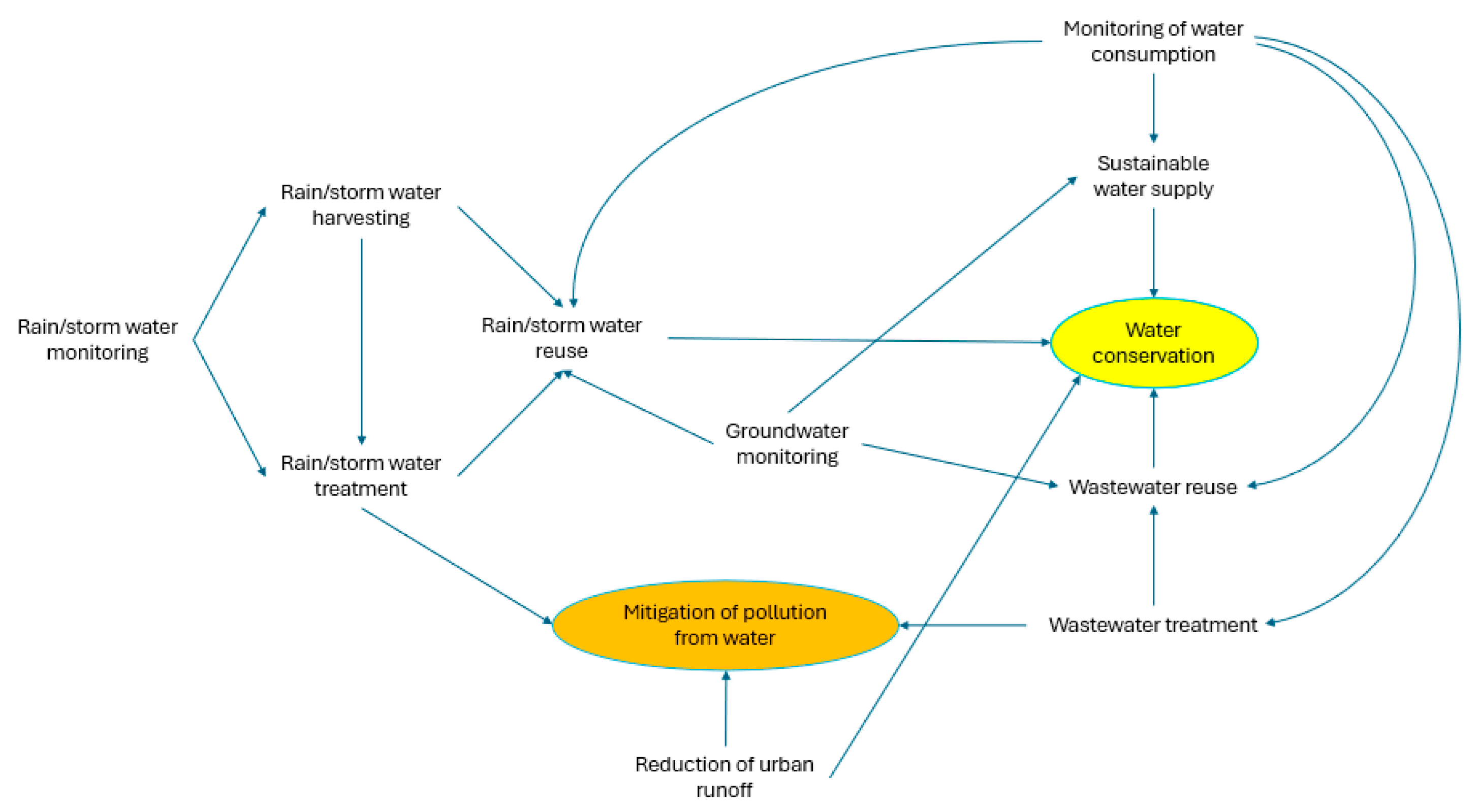
Figure 1. Core actions for sustainable water management taken by HEIs emerged from the literature and their contribution to SWM end goals.
Water 17 03526 g001
Figure 2. Water consumption repartition among various uses in university buildings according to (a) Zang et al. [73] and (b) Torrijos et al. [7].
Water 17 03526 g002
Figure 3. Relative contributions at the Haidian Campus of Beijing Normal University (China) to (a) stormwater NO3 and (b) stormwater particulate organic nitrogen according to Ma et al. [118].
Water 17 03526 g003
Figure 4. Reported reuse destinations for harvested rainwater from university campuses.
Water 17 03526 g004
Figure 5. Reported reuse destinations for harvested stormwater from university campuses.
Water 17 03526 g005
Figure 6. Depuration treatment trains for rainwaters harvested in HEIs described in (a) Khalid and Alodah [242], (b) Gispert et al. [112].
Water 17 03526 g006aWater 17 03526 g006b
Figure 7. (a) Typical treatment flow of university campus wastewaters adopted according to the literature and (b) reuse destinations of treated wastewater from university campuses.
Water 17 03526 g007
Figure 8. Treatment train of domestic wastewater treatment from the College of Engineering of Pune (India) by Masi et al. [359].
Water 17 03526 g008
Figure 9. Scheme of water uses and water fluxes to maximize and minimize to achieve sustainable water management in university campuses.
Water 17 03526 g009
Table 1. First search criteria for the study field.
Searched KeywordsDatabasePublication
Period
Document TypeSource TypeSubject AreaLanguage
“sustainable water management”,
“higher education institution”,
“university”,
“campus”
Scopus2013 to End of October/Start of November 2025Articles, Reviews,
Conference Papers, Books Chapters and Books
Journal, Book, Book Series, Conference ProceedingAllEnglish
Disclaimer/Publisher’s Note: The statements, opinions and data contained in all publications are solely those of the individual author(s) and contributor(s) and not of MDPI and/or the editor(s). MDPI and/or the editor(s) disclaim responsibility for any injury to people or property resulting from any ideas, methods, instructions or products referred to in the content.