1. Introduction
Coastal zones constitute dynamic, critical interfaces between terrestrial and marine ecosystems, encompassing both subaerial features (e.g., beaches and shorelines) and subaqueous components (e.g., the nearshore slope) [
1]. The morphological evolution of these regions is governed by a complex, multi-scale interplay of geomorphological, hydrometeorological, and geological processes. Critically, these natural dynamics are being increasingly amplified by intense anthropogenic pressures, including rapid urbanization, port construction, tourism infrastructure, and widespread coastal development. This convergence of factors drives spatiotemporal variations in coastline configuration at rates that are becoming progressively more pronounced, raising significant global concerns regarding coastal vulnerability and sustainability.
The spatial boundaries of contemporary coastal zones are fundamentally delineated by the extent of dominant exogenous geological processes (EGPs) and associated wind-wave dynamics. Among these forces, wave abrasion stands as the most pervasive destructive mechanism affecting marine and oceanic coastlines globally. Empirical data underscore the severity of this threat; for instance, the marine coasts of the Russian Federation are documented to retreat at mean rates of approximately 1–2 m under persistent wave action [
2]. Within this context, the Sea of Azov coastline exhibits vulnerability, with hazardous EGPs, principally abrasional and mass-wasting processes, impacting an estimated 70–80% of its total length [
3,
4].
The Sea of Azov, located in Eastern Europe connected to the Black Sea by the narrow Strait of Kerch, is a shallow, semi-enclosed basin that forms the terminal segment of the greater Mediterranean-Atlantic system [
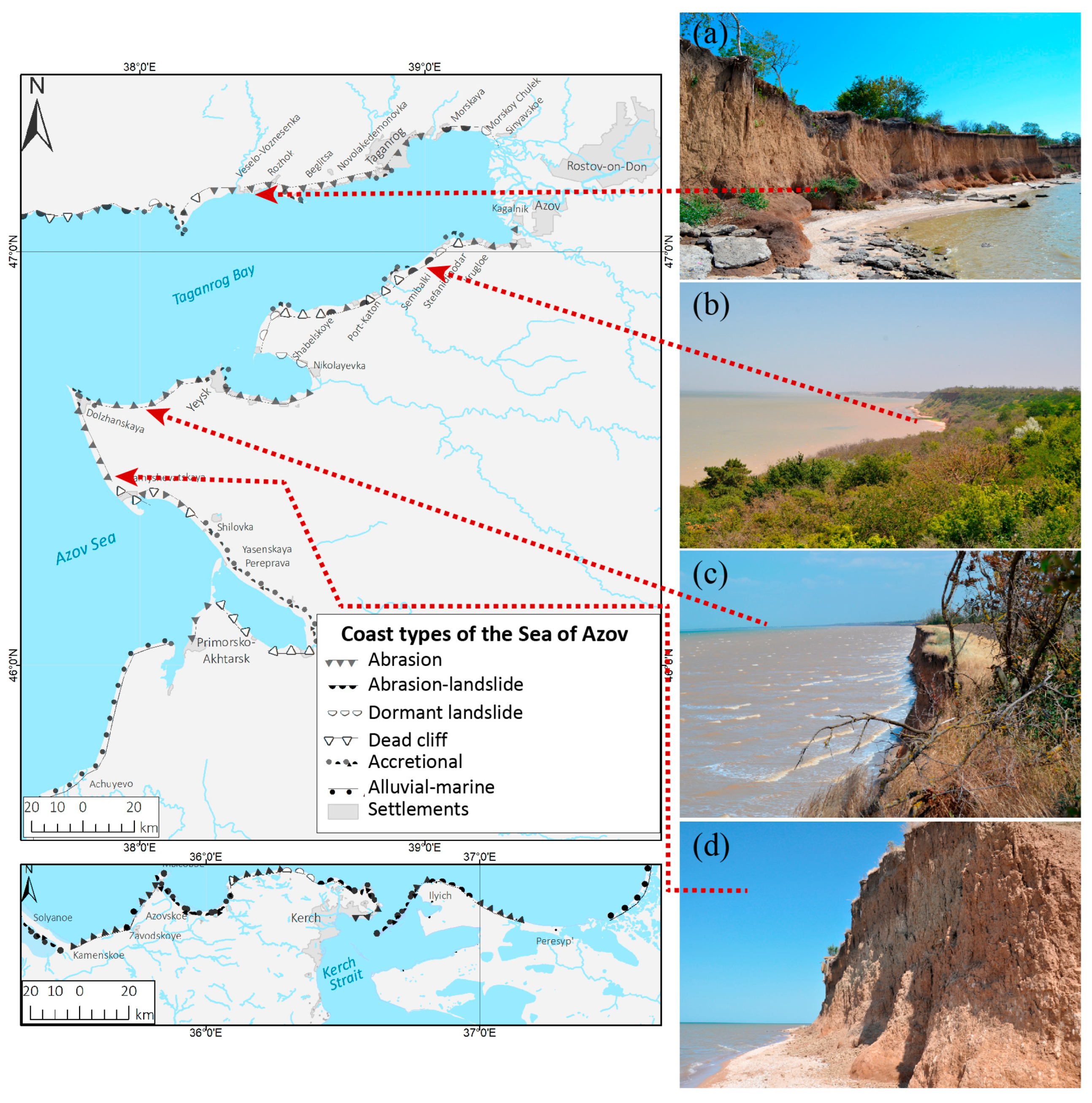
5]. The extreme erosion dynamics observed along its perimeter result from a synergistic interaction between its unique basin hydrodynamics and the geological fragility of the coast. Specifically, the sea’s limited depth and confined configuration efficiently focus wave energy, subjecting the shoreline to high-intensity stress. Crucially, the coast itself is composed of a succession of weakly consolidated and highly erodible sedimentary deposits, including loess-like loams, Scythian clays, and alluvial sands. These friable materials exhibit low geotechnical resistance and naturally form unstable, near-vertical slopes (
Figure 1). Morphometric analyses confirm this, revealing cliffs with elevations ranging from a few meters up to 25–30 m (with localized maxima of 40–50 m) and slope gradients typically be-tween 60° and 90°. This convergence of concentrated hydrodynamic forcing and low material competence creates a landscape inherently prone to both intensive abrasion and frequent mass-wasting events.
The wind-wave regime of the Sea of Azov exhibits pronounced seasonality, a direct consequence of the basin’s shallow bathymetry, limited dimensions, and semi-enclosed configuration. During the cold season (October–April), the dominance of northerly and northeasterly winds associated with the Siberian anticyclone generates the most energetic wave conditions. Maximum wave heights reach up to 3.0 m (mean: 0.8 m) with wavelengths exceeding 14 m in the central basin. While seasonal ice cover (December–March) temporarily attenuates storm-driven abrasion, this protective effect is often counteracted by late winter and spring storms that frequently generate destructive ice push-up events along the shoreline.
Warm-season dynamics are primarily governed by the influence of the Azores anti-cyclone, which shifts prevailing winds toward the southwesterly and westerly directions. This pattern results in markedly calmer hydrodynamic conditions, with mean wave heights reduced to 0.2 m and frequent periods of quiescence. Although maximum warm-season wave heights typically reach 2.0–2.5 m in the central basin, this pattern is subject to interannual variability and occasional extreme events; for example, an exceptional September 2014 storm generated extreme wave heights of 3.5 m, a record not observed in the preceding 40-year period. Spatially, wave energy distribution is predictable: maxima occur in the exposed central basin, while the most attenuated conditions, and consequently reduced storm frequency, are found in northern Taganrog Bay and the central Kerch Strait. Reflecting its sheltered hydrodynamic setting, Taganrog Bay demonstrates negligible seasonal variation in its wave parameters [
6,
7].
The assessment of contemporary coastal dynamics relies on diverse methodological frameworks, with instrumental approaches forming the foundational element of observational programs. These traditional methods, which include direct measurements of coastal retreat, detailed geological surveys, and hydrogeological characterization, provide critical ground-truth data.
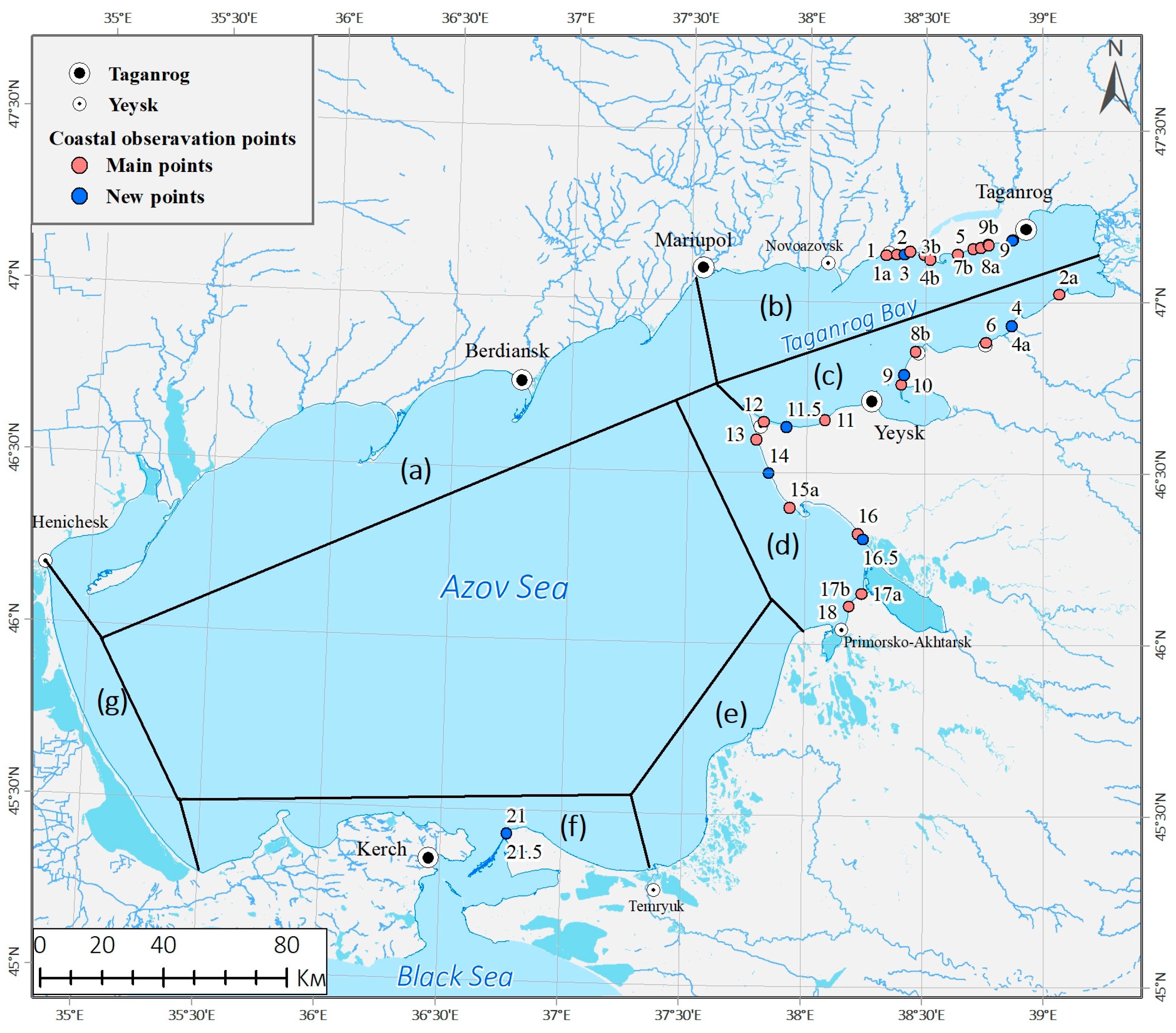
For the Sea of Azov, the continuity of these data is ensured by a long-term systematic monitoring program of cliff-edge retreat. Initiated in the mid-20th century by Rostov State University (now part of Southern Federal University) through an established reference network, this monitoring effort has been consistently sustained. Since 2002, the program has been further strengthened by collaborative efforts with researchers from the Southern Scientific Center of the Russian Academy of Sciences, operating within this same established network (
Figure 2) [
5,
8,
9,
10,
11,
12].
These sustained research programs are vital for providing a comprehensive characterization of coastal zone dynamics and the processes threatening coastline stability. Field observations remain fundamental to quantifying actual coastal change rates. Winter monitoring is particularly critical for this system, as intense storm activity, surge-induced water level fluctuations, and ice dynamics substantially accelerate coastal erosion during the cold season.
A critical evaluation of established coastal monitoring practices reveals that optimal assessment is achieved by integrating classical instrumental methods with Earth Remote Sensing (ERS) and Geographic Information System (GIS) technologies. While instrumental observations provide indispensable ground-truth data, they are constrained by inherent limitations, notably spatial interpolation gaps between discrete monitoring stations that preclude comprehensive coastline characterization, and the substantial logistical and personnel demands that hinder large-scale implementation.
Satellite remote sensing offers a powerful, complementary solution, providing synoptic spatial coverage, consistent long-term temporal monitoring capability, and high revisit frequencies. Recent advances in sensor technology have further enhanced spatial resolution, enabling highly detailed analysis of coastal process dynamics. However, the utility of satellite data for the Sea of Azov is seasonally limited; persistent winter cloud cover often obscures the coastline, establishing field observations as the most reliable, and often the sole, information source during the critical cold season of intense storm activity.
The synergistic integration of field-based and remote sensing approaches provides unprecedented analytical capabilities for coastal research. For a dynamic and vulnerable system like the Sea of Azov, this integrated methodology is not merely beneficial but essential to generate the comprehensive, high-quality spatiotemporal data required to understand past trends and forecast future change. Such robust datasets form the critical foundation for developing effective coastal engineering solutions, accurately assessing risks from sea-level rise and storm surges, and advancing scientifically grounded integrated coastal zone management frameworks.
Furthermore, the digital nature of remote sensing data allows for seamless integration with modern programming environments (e.g., Python, R) and GIS platforms (e.g., QGIS, ArcGIS). This interoperability creates powerful, reproducible analytical workflows capable of transforming raw geospatial data into decision-relevant information, thereby directly supporting evidence-based policy and strategic coastal management planning [
14,
15].
Based on the above, this study aimed to evaluate the rate of retreat of the sea cliff scarp edge based on the analysis of multi-time data from remote sensing of the Earth, to identify the coastal areas most susceptible to retreat, which in the future will allow for more integrated coastal zone management.
2. Materials and Methods
2.1. Data Sources
This study quantifies abrasion dynamics by tracking temporal variations in the sea cliff scarp edge position to calculate coastal retreat rates. The analytical framework integrates three primary data sources: (1) multi-decadal observational data from the research team’s coastal monitoring transects; (2) the “Coasts of the Sea of Azov” GIS database developed at the Southern Scientific Center of the Russian Academy of Sciences [
14]; and (3) a ~50-year time series of Earth remote sensing data acquired from both international and Russian satellite platforms (
Table 1).
Multiple open-access geoportals provide freely distributed Earth remote sensing (ERS) data. The primary historical source utilized in this study is the U.S. Geological Survey (USGS) (USA) Earth Explorer archive, which hosts imagery from the CORONA program’s KeyHole satellites (operational 1960–1980). While this program generated a global archive of approximately 900,000 images, its key value for our work was providing critical coverage for the previously unavailable 1977–1980 period. From this archive, we procured 15 scenes specifically covering this early time interval. It is important to note that while the data is openly accessible, its provision operates on a commercial basis due to the required scanning of original film records. Furthermore, a key limitation of this dataset is the absence of inherent geographic referencing. The spatial resolution of the imagery varies from 2 to 8 m, depending on the specific mission.
The second primary data source was the Spot World Heritage (SWH) Data Center v1.14.8, an archive established by the French Space Agency (CNES) (Paris, French) and accessible since July 2021. This archive contains over 16,000 Spot 1–5 satellite scenes (1986–2015) covering the Sea of Azov region. The data are distributed as both multispectral (25 m) and panchromatic (5–10 m) products. For the specific purpose of quantifying coastal retreat, imagery with a spatial resolution exceeding 10 m was deemed unsuitable, as field observations (2024–2025) and historical data [
16,
17] indicate contemporary retreat rates range from 0.5 to 5.0 m yr
−1. Therefore, only the higher-resolution panchromatic products were considered. A systematic evaluation of the archive, which also accounted for significant cloud contamination, yielded over 100 usable panchromatic scenes (5–10 m resolution) spanning the period from 1986 to 2014.
Contemporary data for the period 2015–2022 were sourced from the Copernicus Data Space Ecosystem (
https://dataspace.copernicus.eu/), operated by the European Space Agency, which provides Sentinel-2 satellite imagery at 10 m spatial resolution. A total of twelve usable scenes from this platform were incorporated into the analysis.
Furthermore, under a collaborative agreement with the Southern Scientific Center of the Russian Academy of Sciences (dated 12 April 2024), we obtained high-resolution (1 m) Resurs-P satellite imagery from 2017 to 2020. Due to its superior spatial precision, this Resurs-P dataset served as the geometric reference base for the co-registration of all other, lower-resolution Earth remote sensing data.
2.2. Methodology
In world practice, the coastline is usually the object for assessing the dynamics of coasts [
18,
19,
20,
21,
22,
23,
24]. Based on the definition, it can be characterized as the average annual position of the water’s edge; the boundary along which is the line where the water surface intersects with the land, or some average position between the sea and land in a given period [
25]. As a result, the assessment is aimed at obtaining values of the rate of erosion or accumulation in the coastal or beach area.
In this study, the assessment of abrasion rates is based on changes in the edge of the sea cliff (scarp), which is composed throughout of loose sedimentary low-stability rock formation: loess-like loams, Scythian and alluvial clays, and sands. This determines the choice of materials for remote sensing and allows us not to be tied to the selection of materials during high tide or low tide.
Shoreline change is quantified through the temporal analysis of georeferenced Earth Remote Sensing (ERS) data within a GIS-based spatiotemporal framework. The methodological workflow consisted of several stages. Following the compilation of a satellite imagery archive, all scenes underwent preprocessing and geometric co-registration to a unified coordinate system. Resurs-P imagery served as the geometric reference base, with co-registration performed using stable ground control points (e.g., buildings, road intersections). Subsequent quantitative analysis was conducted in ArcGIS v10.8 software utilizing the Digital Shoreline Analysis System (DSAS) v.5.0 extension.
DSAS provides an automated, standardized methodology for calculating change rate statistics from multiple historical shoreline positions, making it particularly suitable for processing large-scale spatiotemporal datasets. The system computes robust regression coefficients and provides associated statistical measures to evaluate the reliability of the results. It is noteworthy that the tool’s developers [
26,
27] emphasize that its applicability extends beyond coastal studies to any temporal position-change analysis, such as tracking glacier boundaries, riverbank migration, or vegetation dynamics.
For each date in the satellite imagery archive, the cliff edge was manually interpreted and digitized within a GIS environment. The visual interpretation adhered to standard photogrammetric criteria (shape, size, tone, and shadow) and was conducted at multiple scales (1:500 to 1:5000) to ensure precision. Using a standard 0.35 mm digitizing cursor in ArcGIS, we generated linear feature classes representing the position of abrasional cliffs at discrete temporal snapshots. The resulting shoreline database comprises the following years for each coastal sector:
- –
Northern Sea of Azov coast: 1980, 1990, 2000, 2014, 2021
- –
Kerch Peninsula coast: 1977, 1986, 1990, 2000, 2010, 2017, 2022
- –
Southern Sea of Azov coast (Taman Peninsula): 1980, 1990, 2000, 2010, 2017, 2022
- –
Eastern Sea of Azov coast: 1977, 1995, 2000, 2005, 2014, 2022
This dataset was supplemented with previously published coastal data for Taganrog Bay spanning the period 1971–2020 [
14,
28].
The positional uncertainty for each digitized cliff edge was quantified by incorporating three independent error components:
Er [m]: Spatial resolution of the Earth remote sensing (ERS) data.
Eg [m]: The uncertainty of the geographic reference, which was calculated as the average of the root-mean-square errors of all anchor points (the total RMSE value in ArcGIS);
Ec [m]: GIS digitization accuracy. This was calculated based on the map scale and digitizing cursor width (0.35 mm), resulting in a ground width of 0.7 m at 1:2000 scale and 1.75 m at 1:5000 scale.
The total positional uncertainty (
Ep) for a single cliff-edge delineation was calculated as the root sum of squares of these components:
The uncertainty in the calculated linear retreat rate (
Ea) between two cliff-edge positions with uncertainties
Ep1 and
Ep2, over a time interval (
t2 −
t1), was then derived as:
where
Ep1 and
Ep2 represent the positional uncertainties for the oldest and newest shoreline positions, respectively, and
t1 and
t2 denote the corresponding acquisition dates in decimal years.
For the study period from 1980 to 2020, the calculated uncertainty for linear cliff retreat rates was ±0.5 m/yr.
All subsequent calculations of cliff-edge change were performed within the DSAS algorithmic framework using these uncertainty estimates.
3. Results and Discussion
Due to its shallow waters, small size, and almost complete enclosure, the direction and intensity of waves in the Sea of Azov correspond to the direction of prevailing winds and correlate with speed. Maximum wave heights of up to 3.0 m are typical during the cold season. At this time of year, wave lengths in the central part of the sea can reach 14 m or more, and northerly and northeasterly winds prevail. During the warmer months, the prevailing wind direction shifts to southwesterly and westerly. Wave heights decrease to 0.2 m, and calm seas are common. During this time, the maximum wave height in the central part of the sea can reach 2–2.5 m. The interannual wave dynamics of the Sea of Azov are characterized by alternating three- to five-year periods of increasing and decreasing waves. After 2002, the peak wave development typical of the reservoir’s average long-term cold season shifted to the summer-fall period. During this same season, the duration of waves with a wave height of 2.5 m or more increases, while the duration of storms with waves up to 2.0 m decreases. The years with the greatest average wave heights do not coincide with the years with the greatest maximum wave heights. After a brief decline since 2008, a gradual increase in maximum wave heights has been observed [
6].
Depending on the prevailing wind direction, a storm in the northern part of the sea and Taganrog Bay may experience a surge or downwelling. Extreme surges occur primarily during the ice-free period of the year and accompany storms with wave heights exceeding 2.0 m. Since 1980, we have identified 15 extreme surges combined with storm waves. A small surge often precedes a strong surge. Sea level surges of 2.0 m or more occur in the Sea of Azov, where ice cover is virtually absent and winds are from the west or southwest. The Don River delta and the gently sloping spits of the Sea of Azov are most susceptible to surges. When ice cover is at its maximum, minimal sea level rise and low sea waves are observed in winter.
The integrated methodological framework was applied specifically to abrasional coastline types where the cliff edge could be delineated with high confidence. The primary objectives were to quantify mean multi-year coastal erosion rates and to identify the most vulnerable sectors to prioritize for future reconnaissance and detailed field monitoring.
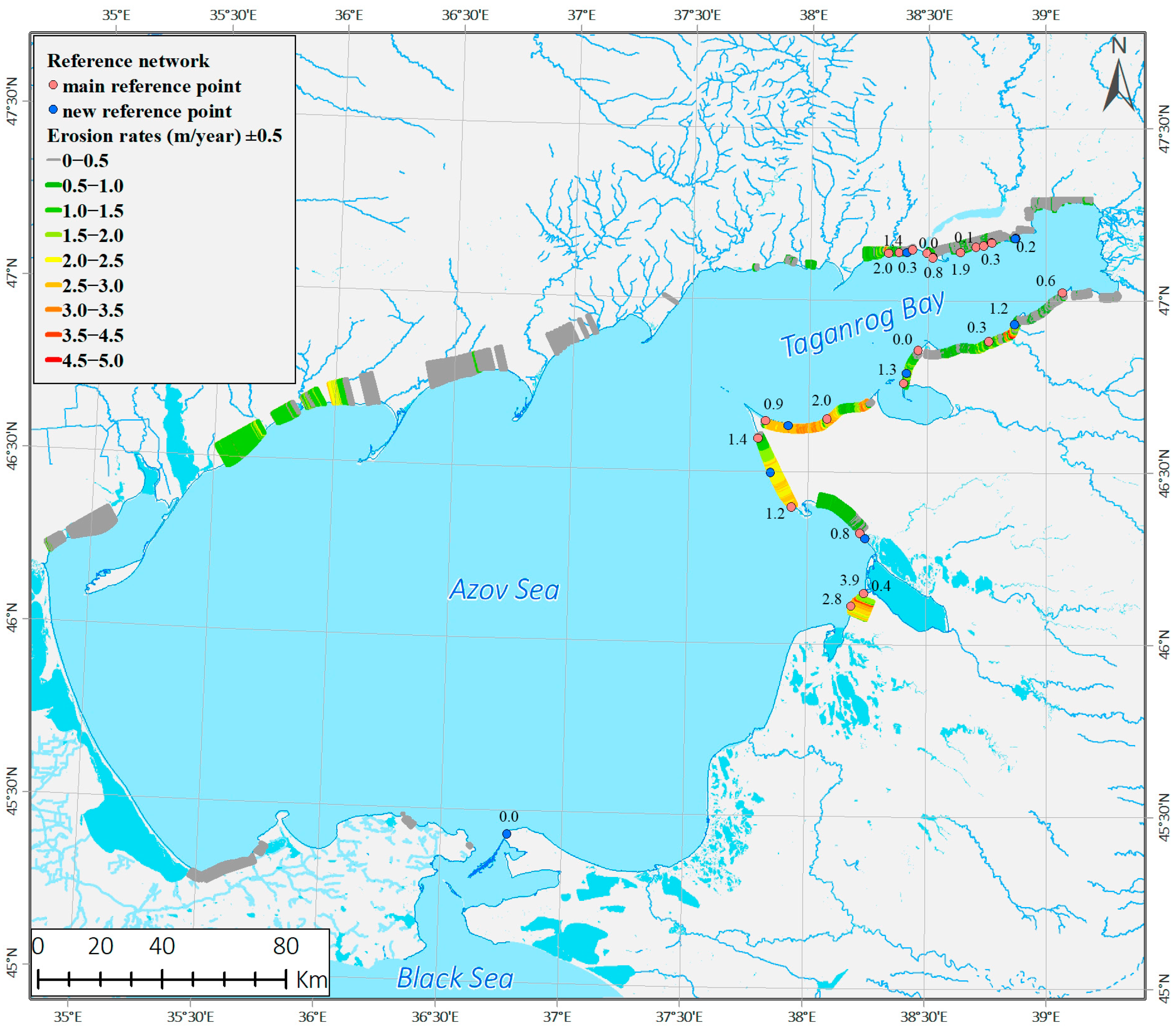
Spatiotemporal analysis revealed that the highest abrasion rates occur along the eastern Sea of Azov coast, the Taganrog Bay coastline, and the sector between Biryuchiy Island (Fedotova) Spit and Obitochnaya Spit, with retreat rates ranging from 0.5 to 2.5 m yr
−1 (
Figure 3). The most intensively retreating segments include:
Within Taganrog Bay: the Veselo-Voznesensky (1.5–2.2 m/yr), Beglitsky (0.5–1.5 m/yr), Glafirovsky (1.0–2.5 m/yr), and Dolzhansky and Vorontsovsky (2.0–3.0 m/yr) sectors.
Along the eastern Sea of Azov coast: the western Dolzhansky (1.5–3.0 m yr−1), Shilovsky (2.0–2.5 m/yr), and Morozovsky (2.0–3.0 m/yr) segments.
The abrasive type of shore prevails within the intensively retreating sections of the Taganrog Bay. Morphometrically, the average height of cliffs varies between 8 and 15 m, gradually decreasing in river valleys to 1–2 m. Within the Vesely Voznesenka section, the coast is composed of loess-like loams for almost the entire height of the cliff, except for a small layer (0.5 m) of buried soil at a height of 3–6 m. At the foot, there is a complete absence of sedimentary sediment cover and the presence of an abrasive terrace with a width of 2–3 m, as well as wave-piercing niches with a height of 1–1.5 m and a depth of 1.5 m.
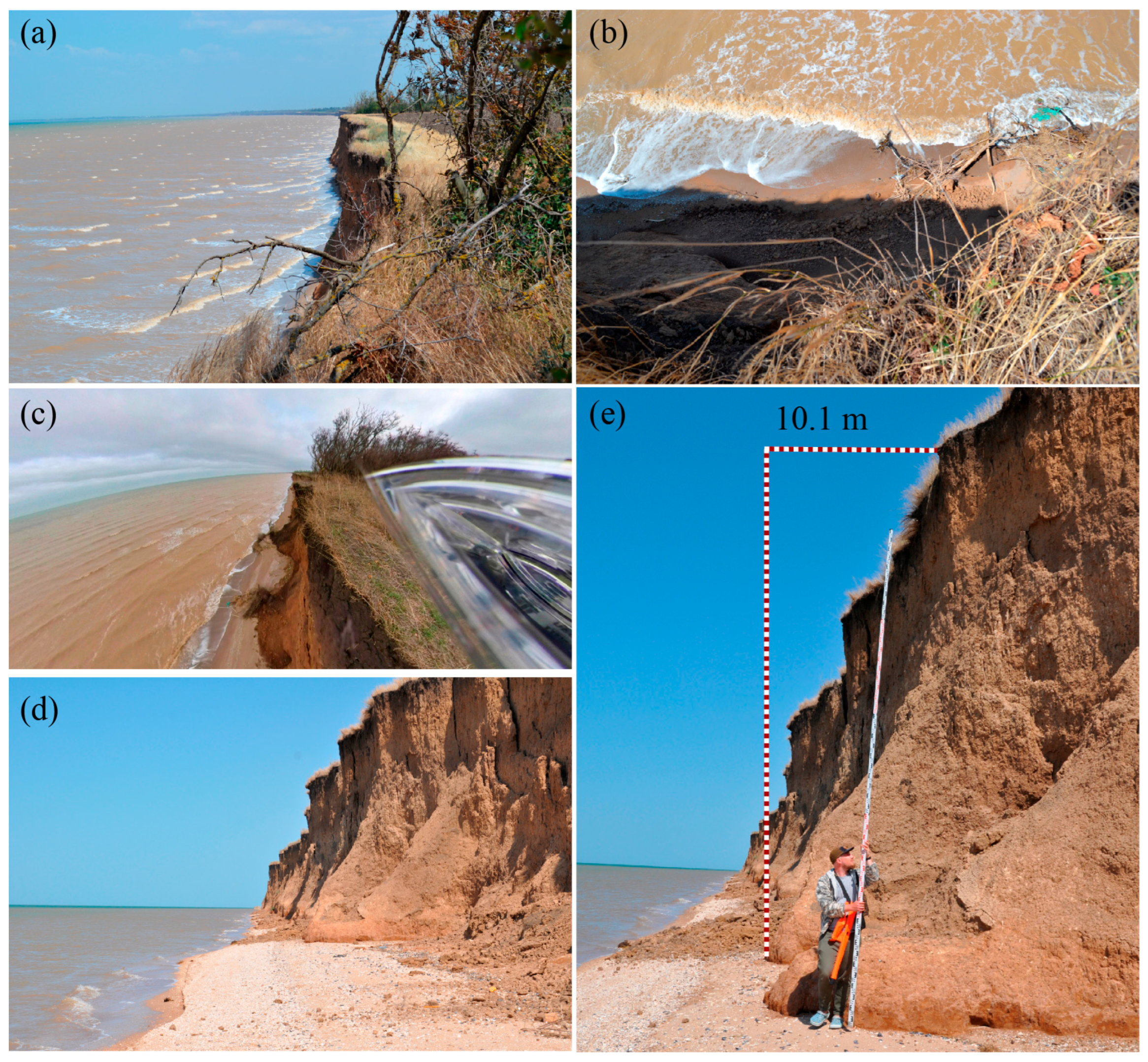
The abrasive type of shore also prevails in the Dolzhansky and Vorontsovsky sections. At Dolzhanskaya village in the direction of Vorontsovka village (in the direction to the east), the cliffs are composed only of loess-like loams, at the foot there is a complete absence of sedimentary cover, and the height of the coast varies from 5 to 15 m (
Figure 4a,b). At the same time, the abrasion rate here is 1.5–3.0 m/year. Further from Vorontsovka village towards the east, a small amount of sandy material appears in the coastal cliffs, the abrasion rate decreases to 0.5–1 m/year.
Western Dolzhansky, Shilovsky and Morozovsky sections are characterized by an abrasive type of shore. The morphology of the coastal ledges here is closely related to the lithology of the rocks and the height of the cliff but does not depend on the exposure. In these places, there is a significant variety of forms of ledge destruction. The high intensity of abrasion leads to the formation of a vertical wall in the upper part of the cliff, which is composed of loess loam. The middle and lower parts of the cliff have different shapes depending on the underlying loam rocks. If the loam extends over the entire height of the cliff, then it takes the form of an abrasive wall from the edge to the base, usually 5–15 m high. As the height of the cliff increases to 10–20 m, dense red-brown Scythian clays come out at its base, which leads to the formation of ledges representing capes at 10–20 m, separated by washout bays. In another case, the base may contain greenish-gray Scythian clays with calcareous and marl inclusions, which gives the surface of the ledges and niches a spike-like character [
17].
As a rule, there are no beaches in these areas; instead, there is an abrasive terrace and accumulations of loam collapses.
The spatial distribution of erosion rates reflects the integrated influence of several interrelated factors:
Geological Structure and Lithology: The coastline is predominantly composed of weakly consolidated Quaternary loams and clays. This homogeneous lithology not only determines the development of uniform abrasional morphologies, such as vertical scarps, wave-cut notches, and benches, but also limits the supply of coarse clastic sediment. Consequently, protective beaches are either absent or underdeveloped (typically 2–10 m wide), leaving cliffs directly exposed to wave energy.
Coastal Morphology and Morphometry: The Sea of Azov coasts are characterized by low sinuosity and dominated by spits that project seaward, forming shallow leeward lagoons. As previously noted, these coasts feature significant elevations (up to 25–30 m, locally 40–50 m) and steep, often near-vertical slope gradients (60–90°).
The eastern Sea of Azov coast exemplifies this synergistic interaction, exhibiting severe and uniformly distributed erosion rates ranging from 1.0 to 3.5 m yr−1 across the entire sector. This pervasive retreat is driven by a convergence of high-risk factors: a geological structure composed of readily erodible Quaternary loams; the prevalence of narrow (2–10 m) or non-existent beaches, which provide no protective buffer; steep, elevated, near-vertical slopes (70–90° with 10–25 m elevation); and a critical slope aspect that directly faces the prevailing direction of storm-wave approach.
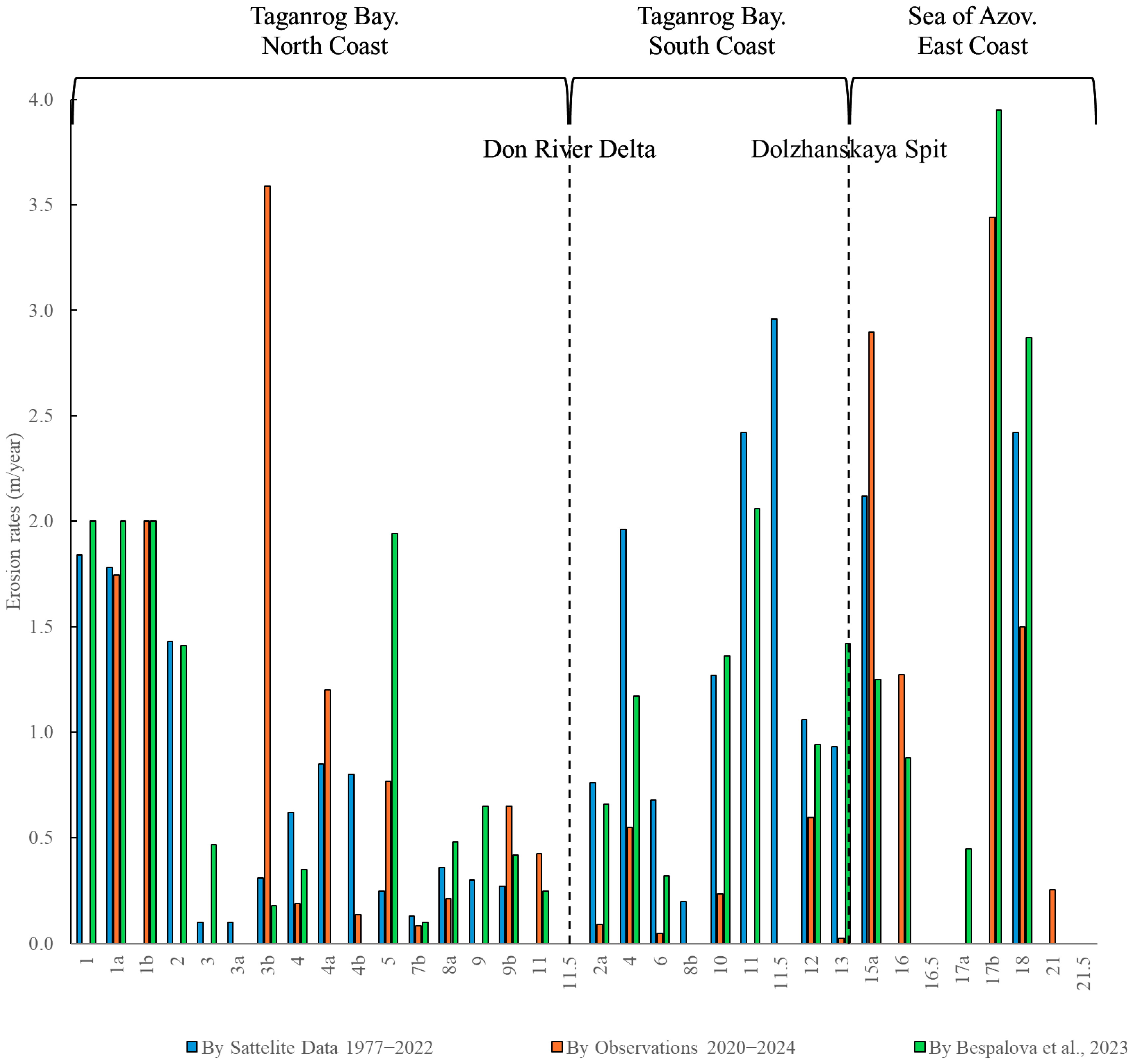
Derived data for the northern coast demonstrate strong correspondence with field observations from the reference network and published literature (
Figure 5).
The ongoing transformation of the Sea of Azov’s hydrometeorological regime [
29] is fundamentally reshaping the dynamic forces acting on its coastal zone. The shrinking ice cover amplifies. Fast ice, which traditionally serves as a protective barrier against storms and surges, has undergone a severe decline in both spatial extent and seasonal duration, with complete absence observed in recent years. The role of onshore ice shoves is dual in nature. While they can inflict damage by scouring and eroding the cliff base during thawor through the direct force of ice surges, they can also provide a temporary buffer, protecting the coast from wave action in late winter and early spring.
Wind speed tends to increase during the winter months, resulting in high storm dynamic loading on the coast [
30]. The traditional storm season spans November to March, a marked increase in extreme surge-producing storms during the warm, ice-free period has been observed since the 2010s [
6]. For example, storms in March 2013, September 2014, and September 2023.
Our analysis of the dataset revealed no direct correlation between the rate of coastal erosion and the hydrometeorological parameters of the Sea of Azov, including the height of maximum storm surges. Except for the individual extreme storms mentioned above, which were accompanied by surges and extreme wind speeds. The interaction between the coastal zone and hydrometeorological factors, such as wave energy, storm surges, and ice dynamics, constitutes a complex, often metachronous process where cause and effect can be separated by a considerable temporal lag. This underscores the critical importance of identifying the key, site-specific geomorphic and hydrodynamic controls that govern the development of hazardous processes at a local scale.
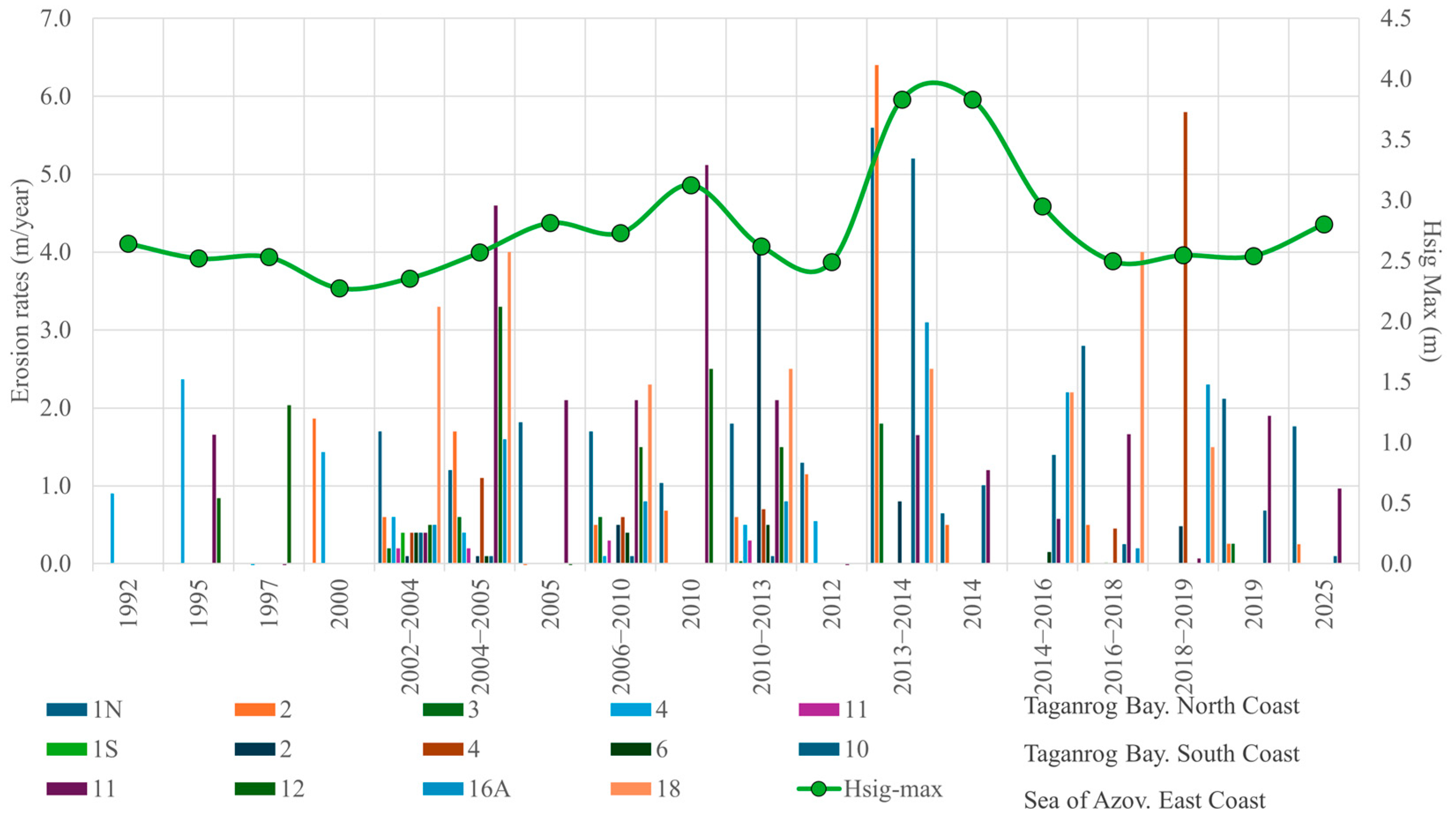
By integrating long-term observational data with satellite imagery interpretation, we reconstructed the longest continuous record of abrasion rates for 14 reference stations (
Figure 6). The analysis reveals that the most severe erosion across all coastal sectors occurred during the 2013–2014 period. This interval was marked by two prolonged and destructive storm events in March 2013 and September 2014. According to [
6], the most intense Sea of Azov storms are basin-wide phenomena, capable of generating wave heights of 3.5–4.0 m and surge-induced water level elevations of up to 2 m, which explains the peak in erosion observed during this time. A more detailed analysis of the hydrometeorological forcing mechanisms behind these abrasional events, particularly the role of winter conditions, is a critical objective for subsequent research.
The scope of this analysis was deliberately focused on abrasional coastline types. Consequently, other significant coastal categories were excluded, specifically accretionary coasts, such as the sector from Primorsko-Akhtarsk to Temryuk, Arabat Spit, and accretionary segments of the Kerch Peninsula, as well as landslide-type coasts, which are widespread from Temryuk to Ilyich and throughout the northern Sea of Azov coast and Kerch Peninsula. This exclusion was necessary because the cliff-edge tracking methodology requires a clearly definable scarp, which is absent or ambiguous in landslide complexes, and precise water level data for accurate positioning, which was unavailable for the specific dates of image acquisition.
4. Conclusions
This study has presented a comprehensive, multi-decadal assessment of coastal abrasion dynamics along the Sea of Azov by synergistically integrating long-term field observations with a multi-temporal analysis of satellite imagery spanning over five decades (1971–2022). The application of a diverse satellite archive, including declassified CORONA, SPOT, Sentinel-2, and high-resolution Resurs-P data, processed within a GIS framework using the DSAS tool, has enabled a robust quantification of shoreline change with an estimated uncertainty of ±0.5 m yr−1.
Our analysis conclusively identifies the eastern Sea of Azov coast and specific sectors of Taganrog Bay as hotspots of extreme coastal retreat, with maximum mean annual abrasion rates ranging from 1.0 to 3.5 m/yr. The spatiotemporal patterns of erosion are not random but are fundamentally controlled by a convergence of high-energy hydrodynamic forcing and low geotechnical resistance. The extreme vulnerability of these sectors is a direct result of the synergistic interaction of three primary factors: (1) the prevalence of weakly consolidated, highly erodible Quaternary sedimentary deposits (loess-like loams, clays) that form steep, near-vertical slopes; (2) the absence or underdevelopment of protective beaches, leaving cliffs directly exposed to wave attack; and (3) a coastal morphometry and aspect that directly faces the prevailing direction of the most energetic storm waves.
A key finding of this research is the identification of the 2013–2014 period as a peak of erosional activity across all coastal sectors. This interval, marked by two major basin-wide storms, underscores the critical role of discrete, high-energy meteorological events in driving significant geomorphic change and accelerating long-term coastal retreat. The successful reconstruction of a continuous, 50-year record of abrasion rates for 14 reference stations demonstrates the unparalleled value of merging historical in situ data with modern geospatial technologies. This integrated approach not only filled critical data gaps, such as for the previously unmonitored northern coast, but also provided the temporal depth necessary to distinguish baseline retreat rates from event-driven extremes.
Estimating the volumes of incoming material is an important task due to the calculated abrasion rates and will be addressed in our subsequent studies. However, it is worth noting that previous researchers have established that the total amount of detrital material entering the coastal zone through abrasion is large. However, due to the ubiquitous distribution of fine-grained rocks—loess-like loams and clays characterized by a high percentage of clay particles—most of this material is deposited in deepwater areas of the sea. Coastal sediment flows receive a small amount of coarse-grained terrigenous material [
17].
Furthermore, the lithodynamic characteristics of the coastal zone of the Sea of Azov include, despite the significant influx of terrigenous material due to abrasion of coastal and seabed rocks, a deficiency of sedimentary substances, high activity and widespread erosion processes, and accumulation within narrow localized areas. The situation is exacerbated by the fine-grained nature of the terrigenous material carried into the reservoir.
The sediment load of rivers and temporary streams has been losing its significance in the sediment balance over the past 40–50 years due to their regulation and the onset of low-water periods. The contribution of sediment load from rivers was significant in the early stages of sediment formation, as evidenced by the submarine fans of the Sambek, Mius, Molochnaya, Eya, and other rivers. Currently, the role of alluvium has been reduced to virtually zero due to river regulation. Sediment load is significant in coastal sedimentation only in the estuarine areas of the two largest rivers, Don and Kuban. After the construction of a cascade of reservoirs in their basins, the magnitude of the removal of terrigenous material is manifested in the restructuring of lithodynamic processes of the marine edge of the delta [
13,
31].
This research underscores that the Sea of Azov coastline is a highly dynamic and vulnerable system where natural predispositions to erosion are potentiated by specific hydrometeorological events. The methodologies and baseline rates established here are critical for forecasting future coastal evolution under changing climate conditions, including potential alterations in storm intensity and frequency. The findings provide an essential scientific foundation for developing targeted coastal zone management strategies, prioritizing areas for engineering interventions, and conducting accurate risk assessments for infrastructure and ecosystems. Future work should focus on a detailed analysis of the hydro-meteorological drivers of extreme events, particularly winter storms and ice push-up events, and expand the assessment to include other hazardous processes such as landslides, thereby enabling a fully integrated vulnerability assessment for the entire Sea of Azov coast.




 ,
,