Article

Climate Change and Groundwater Sustainability in the Berrechid Aquifer (Morocco): Projections to 2050 Under Regulated Abstraction Scenario

1
Laboratoire d’Analyse et de Modélisation de L’Eau et des Ressources Naturelles (LAMERN), Regional Water Center of Maghreb, Mohammed V University in Rabat, Agdal 765, Morocco
2
Bouregreg Hydraulic Basin Agency, Benslimane 262, Morocco
*
Author to whom correspondence should be addressed.
Water 2025, 17(24), 3488; https://doi.org/10.3390/w17243488
Submission received: 26 October 2025 / Revised: 24 November 2025 / Accepted: 5 December 2025 / Published: 10 December 2025
(This article belongs to the Special Issue Advance in Groundwater in Arid Areas)

Abstract

The Berrechid aquifer, located in the Berrechid region of Morocco, represents one of the main groundwater resources used for drinking water supply, irrigation, and industrial activities. It also plays a vital role in supporting domestic and agricultural needs. However, the aquifer faces major challenges, including overexploitation, water quality degradation, and seawater intrusion. This study examines the impacts of climate change on the Berrechid aquifer and evaluates the most appropriate groundwater-withdrawal management strategies to ensure sustainable use of the resource and maintain aquifer stability. To investigate this, we employed the Groundwater Modeling System (GMS) software to conduct both steady-state and transient simulations. Climate change impacts were incorporated through projections of natural recharge derived from climate models. Following calibration, the model provided projections of aquifer behavior up to 2050 under optimistic scenarios. The results offer valuable insights into the evolution of the Berrechid aquifer under climate change. They highlight the potential impacts on recharge rates and groundwater availability. Such information is crucial for guiding decision-making and developing sustainable strategies for managing this essential resource in the face of future climatic uncertainties.

1. Introduction

Groundwater modeling under climate change has been the focus of several recent studies, which consistently find that changes in climate variables, combined with anthropogenic stressors, lead to reduced recharge, lowered water tables, altered surface–groundwater interactions, and increased vulnerability of aquifer systems. For example, Ngo et al. [1] used a coupled SWAT-MODFLOW (Modular Finite-Difference Flow Model) model to assess future groundwater recharge in the Choushui River Alluvial Fan, Taiwan, under different Representative Concentration Pathway (RCP) scenarios, finding that while some scenarios show increases, many project a long-term decrease in recharge particularly under higher-emission pathways. In Brazil, Pedrosa Bhering et al. [2] developed a numerical model for karst and pelitic aquifers in a semi-arid watershed, projecting clear declines in water table levels, largely driven by population growth and pumping, with climate change compounding these pressures. A country-scale study in Hungary modeled shallow groundwater responses, showing that future climate impacts vary by region and dataset resolution, but the methodology provides a framework for assessing climate vulnerability of shallow groundwater resources [3]. Moreover, in North Algeria, Kastali et al. [4] used a 3D MODFLOW-6 regional model with climate projections from CMIP5/6 plus scenarios of groundwater extraction to show that although both climate change and abstraction reduce flows, over-pumping may have larger effects on surface and groundwater interaction than climate changes alone.
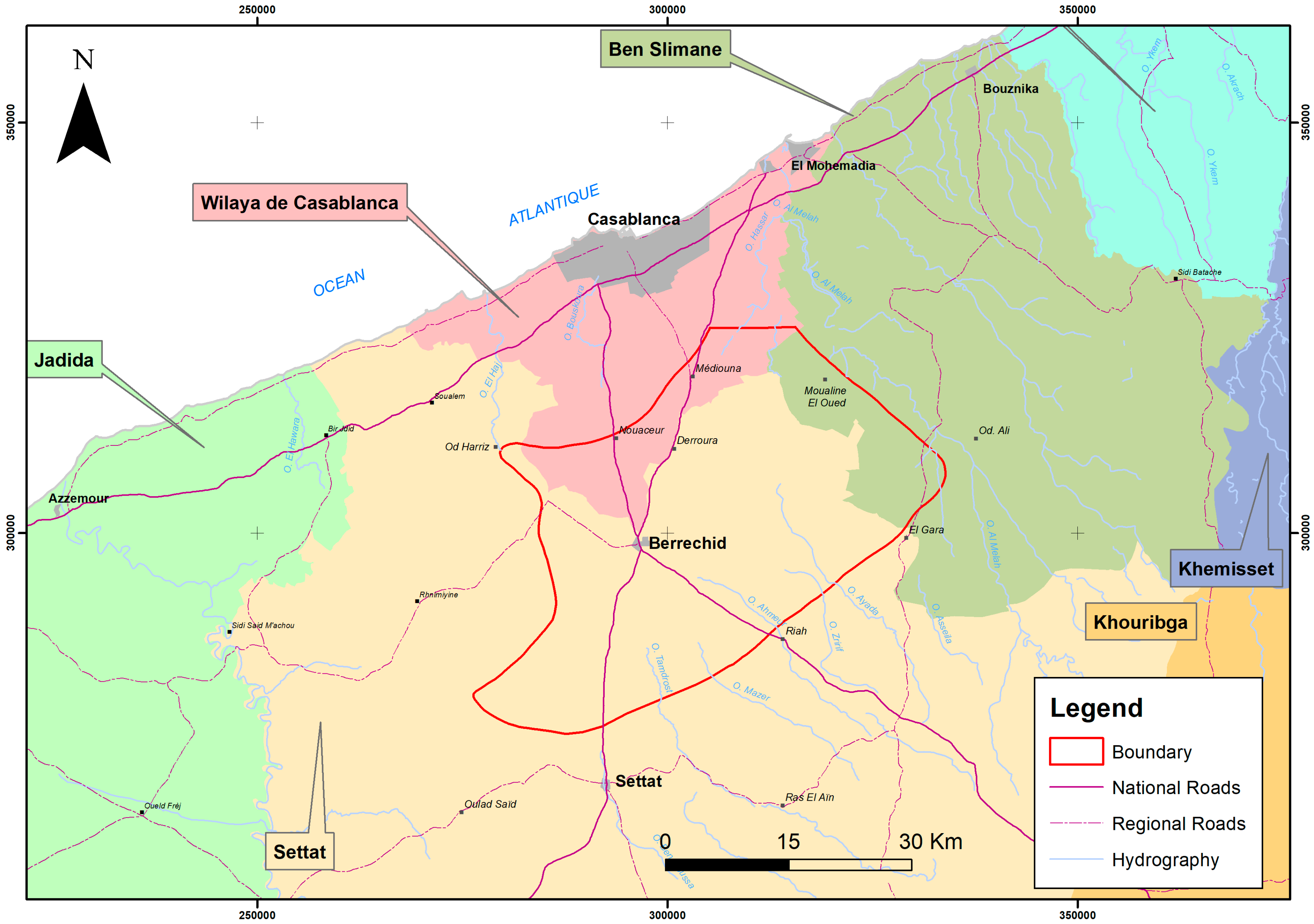
The Berrechid Plain, a major groundwater reservoir in western Morocco covering about 1500 km2 south of Casablanca, is bounded by the Settat Plateau, the Oued Mellah Valley, and the Chaouia aquifer. Despite its strategic role in regional water supply, increasing agricultural and industrial demand, coupled with recurrent droughts since the 1980s, has led to severe overexploitation and continuous water table decline.
While similar studies have investigated the combined impacts of climate change and anthropogenic pressures on aquifers in other regions of the world, limited attention has been given to Moroccan semi-arid basins such as Berrechid, where hydro-climatic variability and uncontrolled groundwater abstraction occur simultaneously. Moreover, the integration of climate-projection datasets with appropriate groundwater-withdrawal management strategies—aimed at ensuring sustainable resource use and maintaining aquifer stability—remains scarce at the regional scale in Morocco.
Building on this foundation, the present study aims to assess how future climate variability, combined with appropriate groundwater-withdrawal management strategies, may affect the hydrodynamic behavior of the Berrechid aquifer. Specifically, it seeks to (a) evaluate the current state of overexploitation, (b) project groundwater levels to 2050 under the RCP 4.5 scenario with authorized pumping rates, and (c) analyze system responses through steady-state, transient, and predictive simulations using GMS/MODFLOW.

2. Materials and Methods

2.1. Study Area

The Berrechid Plain experiences a semi-arid climate, with an average annual rainfall of about 395 mm and temperatures ranging from 10 °C in winter to 45 °C in summer, with a mean of 28 °C, according to data from the Bouregreg and Chaouia Hydraulic Basin Agency (ABHBC) and previous studies [5,6,7,8,9,10]. The morphology of the plain is relatively uniform, dominated by NE–SW-oriented contours. Elevations decrease from 350 m near the Settat Plateau to roughly 140 m toward the Chaouia Plain. Slopes are generally low (less than 0.2% in central and western sectors) but may reach 0.8% in the southeast along the plateau boundary.
The hydrographic network is poorly developed and consists mainly of wadis originating from the Settat Highlands. The drainage system is endorheic and composed of ephemeral wadis such as Asseïla, Aiada, Ahmer, Mazer, and Tamdrost, which contribute episodically to aquifer recharge during flood events. This recharge effect is evidenced by rapid rises in the groundwater table recorded in several piezometers shortly after such events. These ephemeral streams, which lack outlets to the sea, cross the plain for less than 20 km before vanishing, as shown in Figure 1. Their flows are temporary, with part of the water evaporating and part infiltrating into the aquifer system.
Geologically, the basin comprises Primary schists and quartzites, Triassic clays and sandstones, Cenomanian marly limestones, and Plio-Quaternary sandy limestones, sands, and conglomerates. The most important tectonic events occurred during the Hercynian orogeny, leading to the folding of primary rocks. Later vertical movements, including uplifts and subsidence, formed large structural blocks, notably the coastal Meseta area. Boundaries between collapsed blocks are often marked by normal faults or regional extensional flexures. These vertical displacements strongly influenced sedimentation and erosion in the Meseta region during the Secondary and Quaternary periods.
The Berrechid Plain has been the subject of numerous hydrogeological investigations due to its strategic importance for regional water supply [11,12,13,14,15,16,17,18,19,20,21]. Groundwater flow occurs within various lithological units, including: (i) Fractured and weathered schists and quartzites of the Primary, along with some Triassic and Infracenomanian levels; (ii) Cenomanian marly limestone formations; (iii) Pliocene sandstone aquifers; (iv) Alternating conglomeratic Quaternary deposits. The principal aquifer lies beneath Quaternary silts and is mainly composed of Pliocene sandstones. In some peripheral areas, the sandstone bedrock rises, disrupting the continuity of older horizontal strata. The main aquifer has an average thickness of about 20 m, locally exceeding 30 m along the paleochannels of the pre-Pliocene hydrographic network, and is overlain by Quaternary silts.
Before 1980, abstraction and natural recharge were relatively balanced [7]. Analysis of piezometric data shows that the water table was stable between the 1950s and 1980, indicating a near-equilibrium state. However, agricultural intensification, industrial expansion, and recurrent droughts since the 1980s have placed increasing pressure on groundwater resources, leading to severe overexploitation and a persistent decline in water table levels. From 1981 onwards, the aquifer entered a phase of deficit, with groundwater levels declining due to reduced recharge and increased pumping, particularly during droughts. By 2003, the groundwater balance (inflow: 33 Million cubic meters (Mm3); outflow: 90 Mm3) showed a significant deficit of 57 Mm3, caused by excessive pumping and a rainfall deficit of about 140 mm/year.
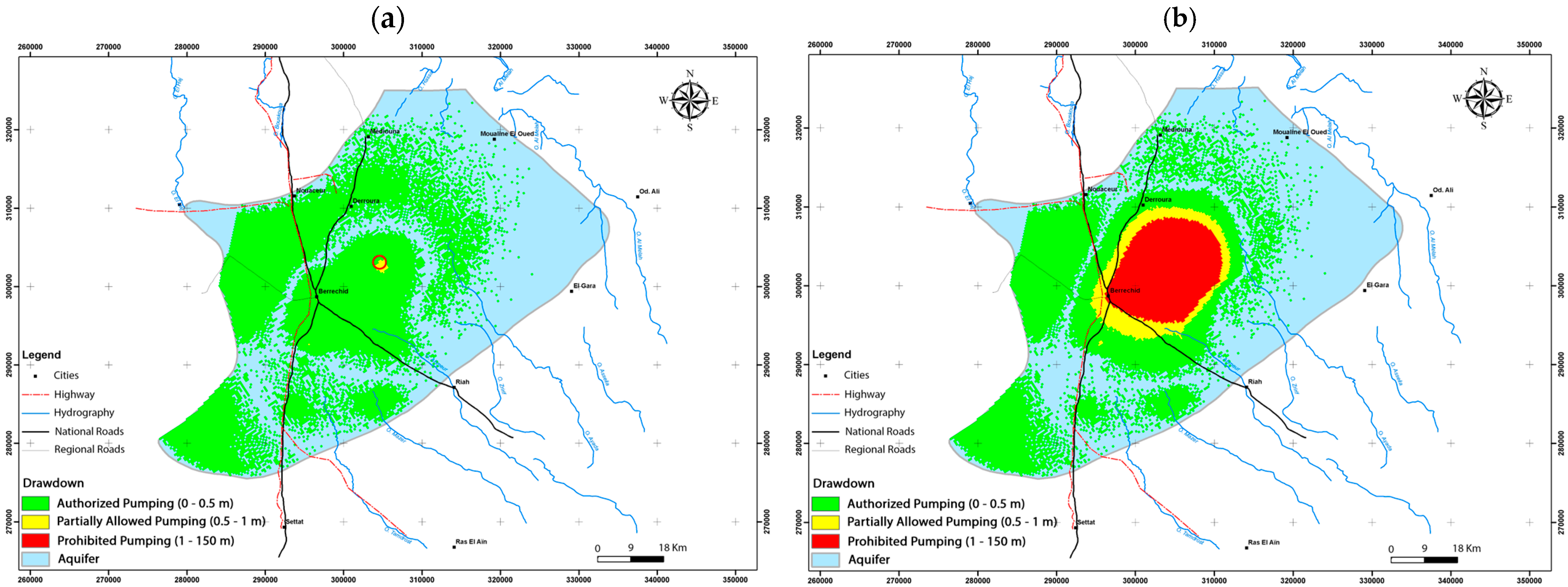
Groundwater withdrawals in the Berrechid aquifer are estimated at approximately 90 million m3/year. However, based on the study by Zerouali-A. et al. [22] on managing groundwater withdrawal using a GIS–MODFLOW decision-support tool, several management scenarios were evaluated up to 2023 to identify sustainable pumping options for the aquifer. The results show that the authorized pumping rate is around 1.5 Mm3/year. Sensitivity analyses indicate that any increase beyond this threshold (i.e., beyond 50 L/s ≈ 1.5 Mm3/year) would cause an additional decline in the groundwater table and threaten the long-term sustainability of water supply for agricultural and industrial uses. For this reason, groundwater withdrawals greater than 1.5 Mm3/year are only partially allowed (Yellow) (Figure 2), while withdrawals exceeding 1 m3/s are strictly prohibited (Red).
The intensive exploitation of groundwater, combined with reduced natural recharge due to recurrent droughts, has led to a significant decline in groundwater levels—reaching up to 18 m in some areas, with an average annual decrease of about 2 m—as well as a general deterioration in groundwater quality.
Groundwater quality in the Berrechid aquifer is generally poor, characterized by high mineralization and elevated nitrate levels, mainly resulting from agricultural activities. However, it maintains relatively good organic and bacteriological quality.

2.2. Data Collection

Hydrogeological and climatological data were sourced from the ABHBC, including piezometric measurements, groundwater abstraction rates (estimated at 90 Mm3/year), recharge estimates, and historical water balance components from 1950 to 2022. Additional data were drawn from prior studies [5,6,7,8,9,10,11,12,13,14,15,16,17,18,19,20,21,22,23], encompassing geological maps, borehole logs, and aquifer parameterization (e.g., hydraulic conductivity, transmissivity, and storage coefficients). Precipitation and temperature records for the baseline period (1950–1979) were obtained from local meteorological stations and validated against ABHBC archives. Groundwater quality data, including mineralization and nitrate levels, were incorporated to contextualize overexploitation impacts but were not directly used in simulations.

2.3. Hydrodynamic Modeling Using MODFLOW

The Groundwater Modeling System (GMS) version 10.5 software was employed to simulate aquifer dynamics, utilizing the MODFLOW finite-difference code [24] for both steady-state and transient flow modeling. The model domain covered the entire Berrechid aquifer (1500 km2), discretized into a grid of 250 m × 250 m cells with one unconfined layer representing the Pliocene sandstone aquifer. Convergence tests were performed with progressively refined time steps and grid sizes until the change in hydraulic head between successive iterations was below 0.001 m, confirming numerical stability. Boundary conditions included no-flow boundaries along the Settat Plateau and primary outcrops, specified head boundaries in the north (Chaouia aquifer transition), and general head boundaries in the west to account for potential lateral inflows. River packages were applied to simulate wadi infiltration during ephemeral flows.
Initial steady-state calibration targeted the pre-1980 equilibrium period, using average piezometric levels from the 1950s–1980s. Transient simulations spanned 1981–2022, incorporating time-varying stresses such as pumping rates (distributed across agricultural and industrial wells) and natural recharge. Recharge was estimated as 15–20% of annual precipitation based on historical water balance analyses [7,10], adjusted for evapotranspiration using the Thornthwaite method. Model parameters (e.g., hydraulic conductivity: 10−4 to 10−3 m/s; specific yield: 0.05–0.15) were calibrated using PEST (Parameter ESTimation) within GMS, minimizing root mean square error (RMSE) between observed and simulated heads at 20 piezometers. Calibration achieved an RMSE of 1.2 m, with normalized RMSE < 5%. Validation was performed using independent data from 2010–2022, confirming model accuracy for drawdown trends (average 2 m/year).

2.3.1. Conceptual Model

The Berrechid aquifer system was delineated based on its main hydrogeological boundaries. To the north, the limit is defined by a hydraulic boundary corresponding to the 130 m equipotential line, which reflects the natural extension of the system toward the Chaouia region. The southern and southeastern boundaries are constrained by the Settat Plateau, while the northeastern limit is marked by the Oued Mellah valley. To the west and northwest, the system is bounded by outcrops of primary schists.
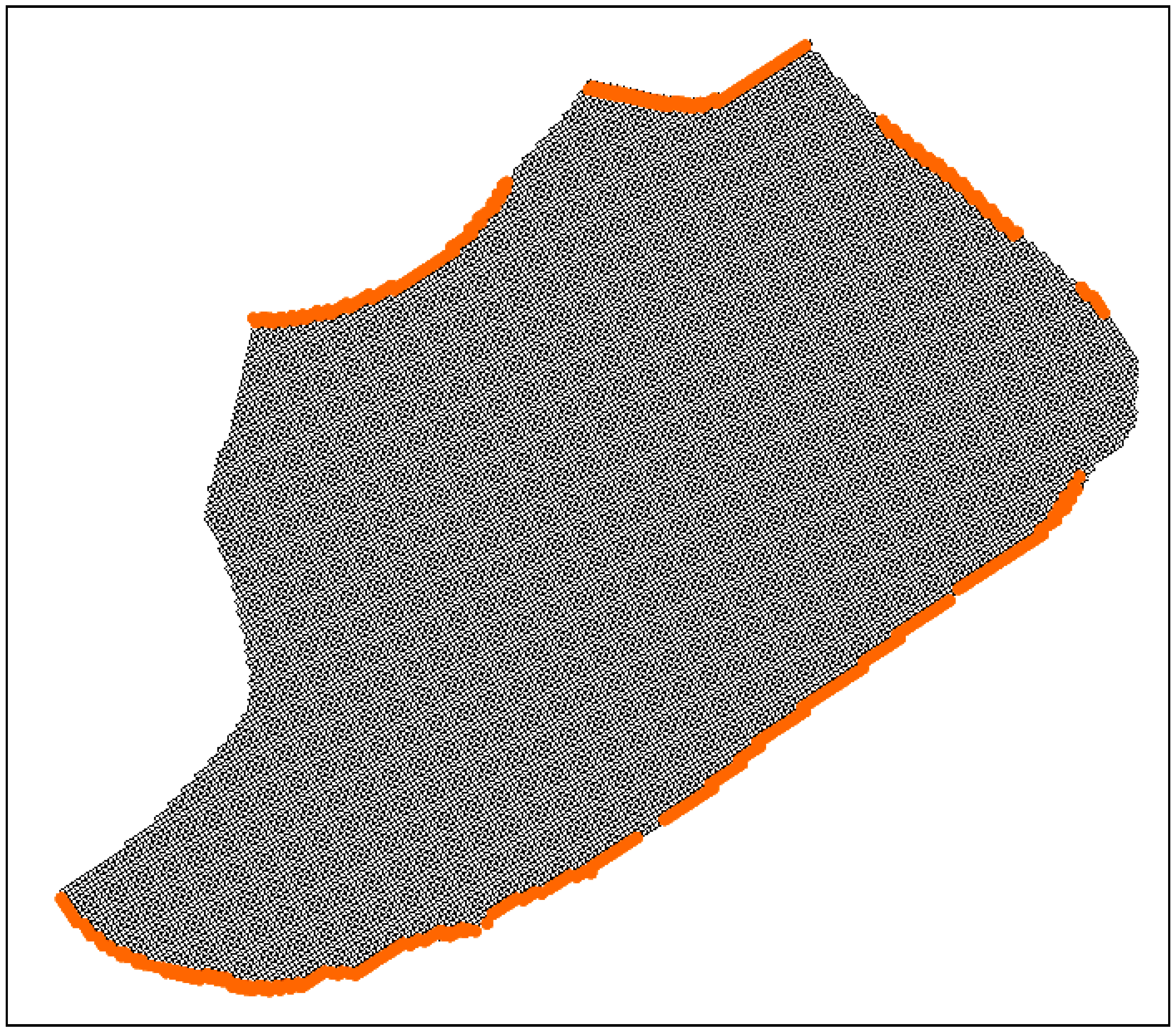
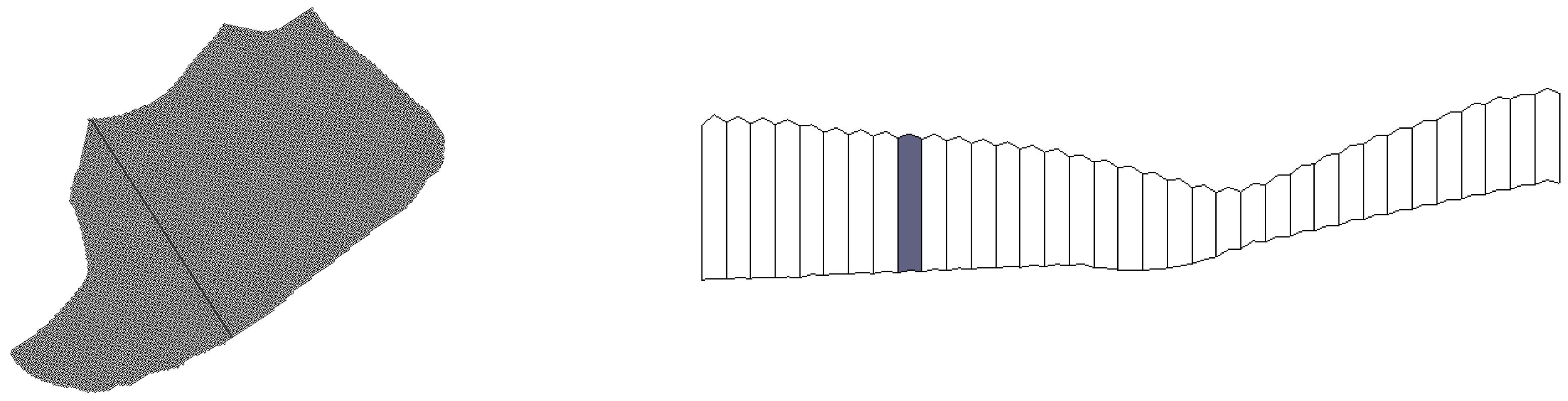
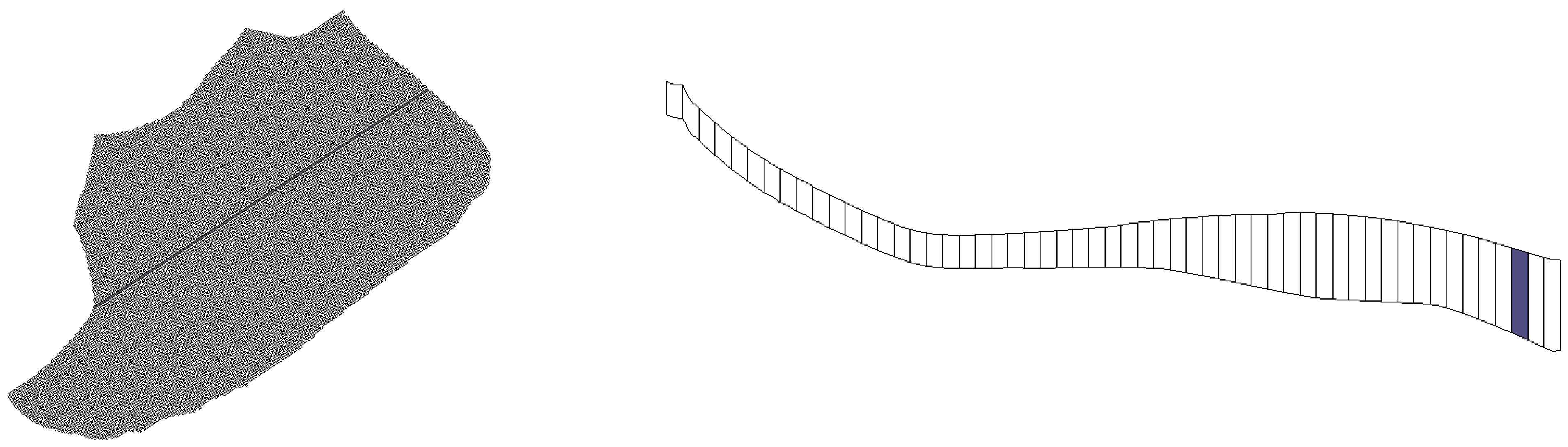
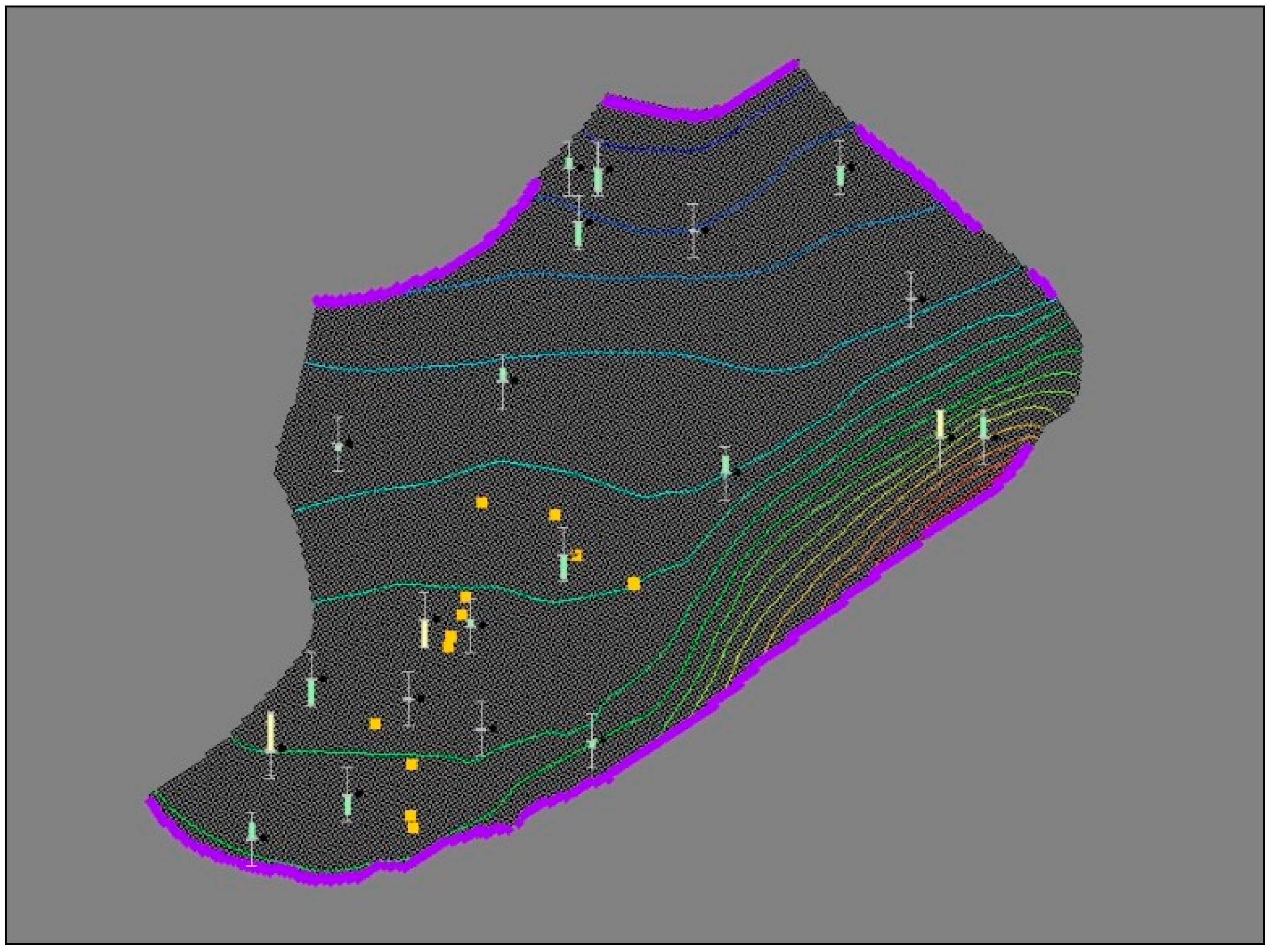
The model domain covers an area of approximately 1500 km2 and was discretized using a uniform grid composed of 266 columns and 166 rows, resulting in a total of 44,156 square cells with a side length of 250 m. Among these, 24,401 cells are active within the modeled aquifer. A coordinate rotation of 33° was applied to reduce the number of inactive cells and optimize grid alignment with the aquifer geometry. Figure 3 illustrates the discretization of the study area within GMS, while Figure 4 and Figure 5 present a transverse and a longitudinal cross-section of the aquifer, respectively.
Figure 3 illustrates the conceptual functioning of the Berrechid aquifer and summarizes the boundary conditions adopted in the groundwater flow model. Imposed-head recharge boundaries were defined along the contact between the aquifer and the Settat Plateau, as well as at the points of interaction with wadis originating from the phosphate plateau, including Tamdrost, El Ahmeur, Mazère, Aïada, and Asseïla. Imposed-head drainage boundaries were assigned along the Berrechid–Chaouia coastal aquifer interface and eastward along the Oued Mellah valley, where slight natural drainage occurs. No-flow boundaries were applied to the primary schist outcrops to the west and to clay-rich terrains along the deeply incised segment of the Oued Mellah valley to the east.
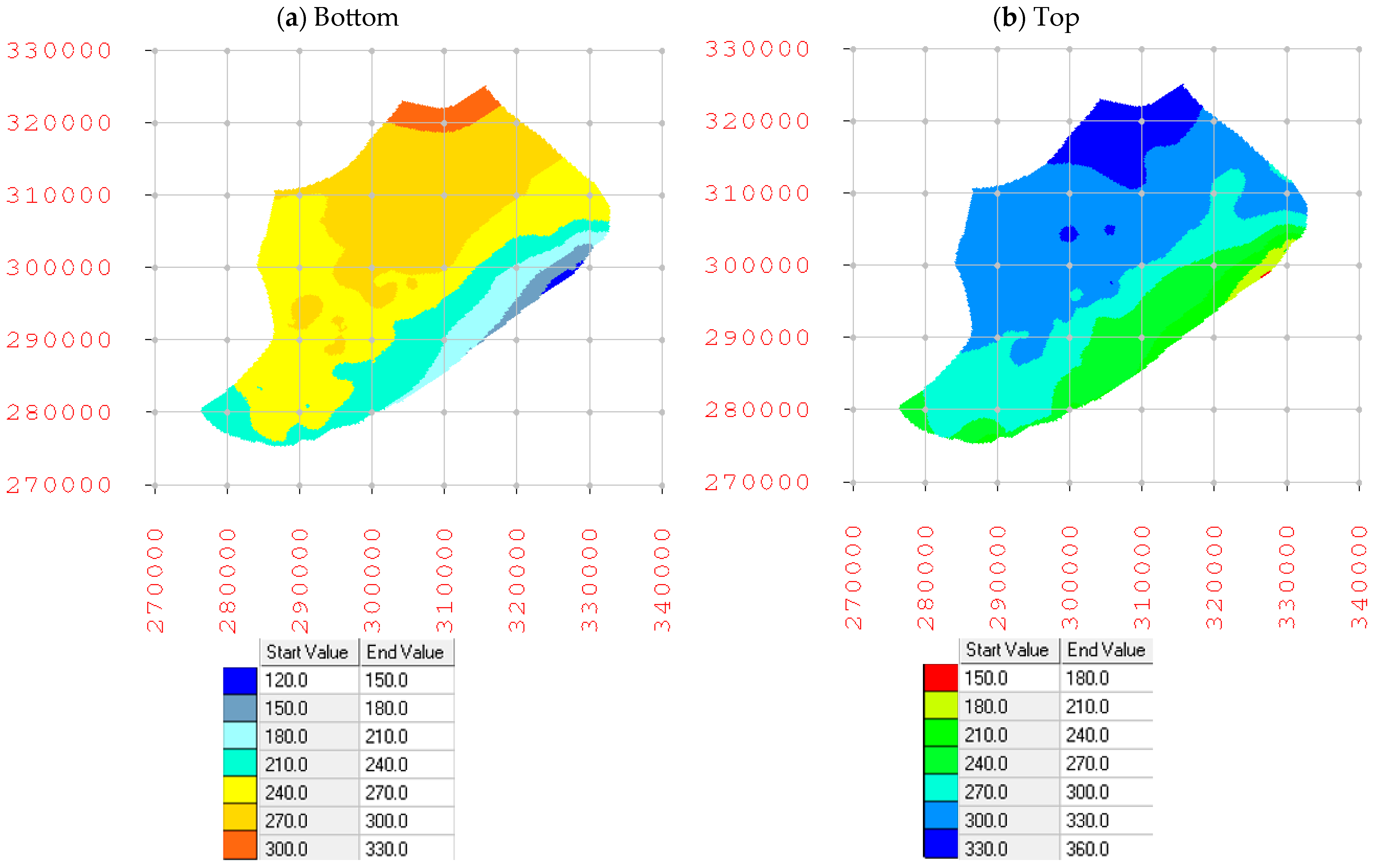
Model data preparation was carried out for the year 1980—selected as the reference period due to its balanced aquifer water budget—and simulations were conducted using a one-year stress period with time expressed in seconds. The required datasets included aquifer geometry, hydrodynamic properties, and inflow–outflow components. Aquifer geometry was represented using bottom elevation contours (Figure 6a) and Plio-Quaternary top-surface contours (Figure 6b). Transmissivity values across the aquifer ranged from 2.8 × 10⁻⁴ to 1.5 × 10⁻¹ m2/s, reflecting significant vertical and horizontal anisotropy. Lower transmissivity zones were observed in the northern area and along the aquifer margins, whereas higher values corresponded to paleo-riverbeds of the Ante-Pliocene hydrographic network.
Inflows and outflows for the year 1980 are summarized in Table 1. Effective rainfall recharge was estimated from available rain gauge data. The modeling assumptions included full infiltration of effective rainfall across the plain, except in thick silty surface areas of the endorheic zone where runoff is negligible; a runoff coefficient of 30% for the Settat Plateau; and infiltration of 80% of runoff generated on the plateau through wadis or flood-spreading systems. Recharge zones covering the entire aquifer except for three silty areas. Groundwater abstractions were spatially distributed according to the influence zones, and the pumping rate associated with the drinking water supply and industry (DWSI) was estimated at 1.69274 × 10⁻⁹ m/s, corresponding to the central area within the model domain.

2.3.2. Steady-State Modeling

The steady-state calibration assumes that the aquifer system is in equilibrium during the selected reference period. Calibration was performed through iterative simulations aimed at achieving agreement between observed piezometric levels and model-computed hydraulic heads, while assigning hydraulic conductivity values consistent with available field and literature data. The quality of the calibration was evaluated based on the reproduction of reference piezometry, the spatial distribution of calibrated permeability, and the water-balance error between simulated inflows and outflows.
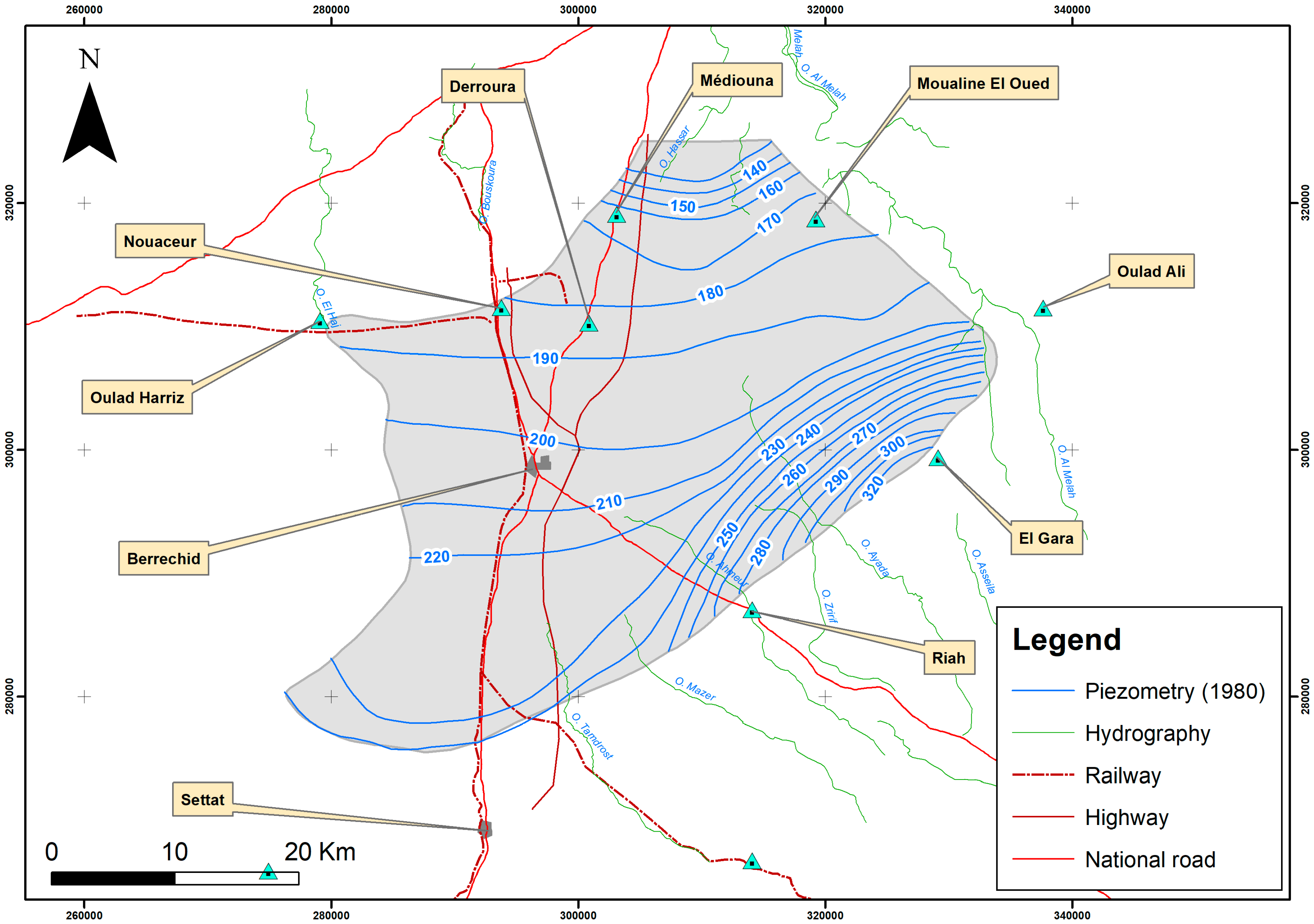
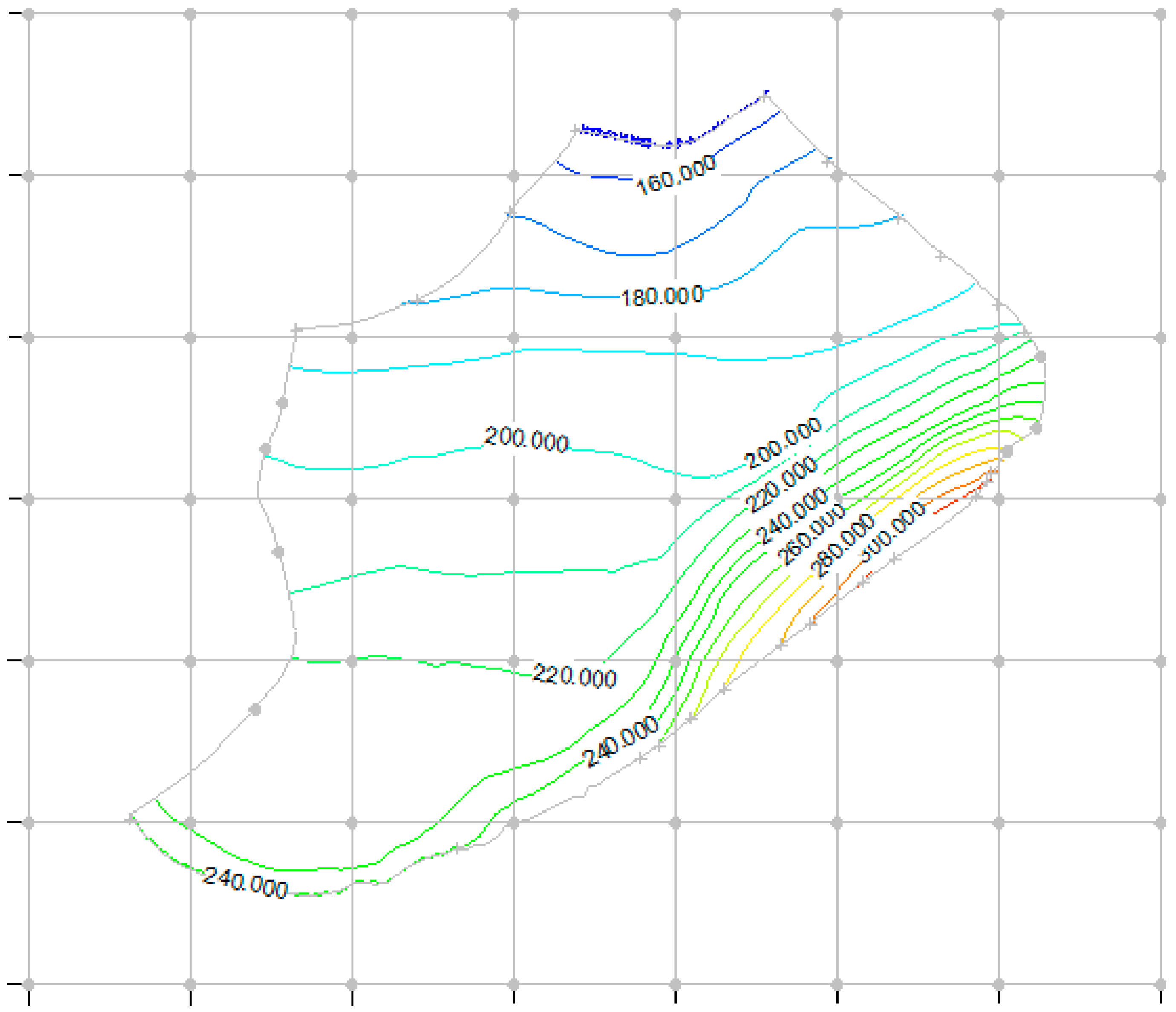
The reference piezometric surface for 1980 (Figure 7), which corresponds to the onset of observed groundwater drawdown, served as the base dataset for calibration.
The groundwater flow equation was solved using the Preconditioned Conjugate Gradient (PCG2) algorithm, suitable for symmetric matrices and both linear and nonlinear problems. The convergence criteria were set to 10−3 m for hydraulic heads and 10−3 m3/s for flow rates, with a relaxation coefficient of 1, a maximum of 20 internal iterations, and 25 external iterations.

2.3.3. Transient-State Modeling (1980–2022)

The transient model configuration was developed based on the previously calibrated steady-state structure, ensuring consistency in the representation of aquifer geometry and hydraulic properties. Effective porosity values used in the simulations ranged between 0.5% and 3.5%. These baseline values were initially derived from field investigation and subsequently refined during calibration to enhance model performance and improve the agreement between measured and simulated groundwater responses.
Recharge to the aquifer system is driven by multiple hydrological inputs, including effective rainfall infiltration, runoff infiltration originating from the Settat Plateau, and groundwater underflow, which was represented through head-dependent boundaries. In contrast, groundwater discharge from the system occurs through natural and anthropogenic processes. Natural discharge is predominantly expressed as underflow toward the Chaouia and Oued Mellah basins, where constant-head boundaries were applied. Anthropogenic extractions include domestic and industrial water supply withdrawals from licensed wells, alongside irrigation pumping, which exhibits a persistent upward trend amplified during prolonged drought periods.
Rainfall recharge was quantified using precipitation datasets from seven meteorological gauges. A mean rainfall time series was generated using correlation-based interpolation techniques, enabling the estimation of annual recharge rates expressed in meters per second. These rates reflect temporal variability in precipitation patterns as well as evapotranspiration fluctuations driven by climatic oscillations. In addition to rainfall, wadi infiltration historically represented a significant recharge source; however, its contribution has declined sharply following the construction of dams after the 2002 flood events (Table 2). The total infiltration rate decreased from 5 Mm3/year to approximately 1 Mm3/year, marking an 80% reduction. Records indicate that the Ahmeur and Afada wadis have contributed no recharge since 1979, while other wadis supply only intermittent infiltration. Long-term observations highlight temporal variations in recharge contributions from the Boumoussa, Tamdrost, and Mazer wadis between 1979 and 2022, with recharge peaks occurring in 1997 and 2010 for Boumoussa and Tamdrost. The Mazer wadi has shown no measurable recharge since 2004. Meanwhile, the Settat Aquifer underflow remains an important source of recharge, estimated at 14.2 Mm3/year.
Irrigation pumping was evaluated through a combined approach using field surveys and remote sensing techniques, enabling spatial characterization of irrigated surfaces. Based on extraction intensity, the aquifer system was delineated into four distinct pumping zones represented as negative recharge cells within the model. Temporal analysis revealed varying extraction trends: Zone 1 stabilized after 2001, Zone 2 continued to increase steadily, and Zone 3 reached its maximum withdrawal rate in 1998, while Zone 4 exhibited irregular fluctuations without a consistent temporal pattern.
DWSI was assessed using well abstraction data supplied by ONEE. Historical analysis indicates that groundwater withdrawals peaked during the mid-1990s before gradually stabilizing and declining after the year 2000. For future simulation horizons extending from 2022 to 2050, a constant abstraction rate of approximately 1.45 Mm3/year was adopted. This value represents the officially authorized pumping threshold and serves as the management reference condition for long-term groundwater exploitation within the Berrechid aquifer system.
The transient model calibration was performed using groundwater level records from 20 long-term observation wells distributed across the aquifer. Model parameters, particularly effective porosity, were adjusted iteratively to minimize discrepancies between simulated and observed piezometric responses. This calibration process produced a high level of agreement between measured and modeled groundwater levels over the study period (Figure 8), confirming the robustness of the model configuration and parameterization.

2.4. Climate Projections

Future climate projections were derived from three Global Climate Models (GCMs). These GCMs were developed by internationally recognized climate research institutions: CNRM-CM5 by the National Center for Meteorological Research, Toulouse, France), EC-EARTH by a consortium led by the European Centre for Medium-Range Weather Forecasts and the Royal Netherlands Meteorological Institute (Europe), and GFDL-ESM2M by the Geophysical Fluid Dynamics Laboratory (Princeton, USA). These models were selected for their robust representation of Mediterranean semi-arid climates and inclusion in IPCC assessments [25,26,27]. Projections were based on the RCP 4.5, an optimistic scenario assuming stabilized radiative forcing at 4.5 W/m2 by 2100 through GHG emission reductions.
Downscaled outputs (precipitation and temperature) were obtained from the Regional Initiative for the Assessment of Climate Change Impacts on Water Resources and Socio-Economic Vulnerability in the Arab Region (RICCAR) Africa domain at 50 Km resolution, covering 2023–2050. Ensemble averages from the three GCMs were used to mitigate model-specific biases, with historical baselines (1950–1979) aligned to local observations. Precipitation forecasts showed a downward trend (100–200 mm reduction by 2100), while temperatures increased by 1–2 °C.

2.5. Recharge Estimation and Scenario Analysis

Natural recharge under future climates was calculated using a modified soil-water balance approach, incorporating projected precipitation minus potential evapotranspiration (estimated via Thornthwaite method, adjusted for temperature changes). Recharge rates were spatially distributed based on land use (predominantly agricultural) and soil permeability, with wadi infiltration enhanced during projected wet years (e.g., 2046). For the RCP4.5 scenario, all other model inputs (e.g., pumping at 1.45 Mm3/year) were held constant to isolate climate impacts.
Transient simulations extended from 2023 to 2050 in annual stress periods, outputting piezometric heads, water balances, and storage changes. Sensitivity analyses tested recharge variability (±10%) to assess uncertainty. Results were visualized as piezometric maps and balance diagrams, with depletion quantified as annual deficits (inflow minus outflow).

3. Results and Discussion

The primary objective of this study is to assess the impact of climate change on the Berrechid aquifer and evaluate the most appropriate groundwater-withdrawal management strategies to ensure sustainable use of the resource and maintain aquifer stability. To achieve this, a comprehensive hydrogeological synthesis of the aquifer was conducted using all available data.
The primary aquifer is located beneath the Quaternary silts, comprising Pliocene sandstone. In certain areas, the sandstone formations rise, and the aquifer extends horizontally into older horizons. The average thickness of the aquifer is approximately 20 m and can exceed 30 m alongside fossil channels of the pre-Pliocene hydrographic network.
The piezometric evolution of the aquifer indicates an equilibrium state from the 1950s until 1980, followed by a deficit period extending from 1981 to the present. This deficit period is characterized by continuous and sustained declines in the aquifer, attributed to a combination of reduced rainfall and increased withdrawals, particularly during drought episodes.
Hydrodynamic modeling of the Berrechid aquifer was conducted using the MODFLOW digital simulation software within the GMS pre-post-processor (Version 10.3). The domain discretization consisted of 266 columns and 166 lines, delineating 44,156 regular square meshes with a side length of 250 m, including 24,401 active meshes. The mesh size was selected based on the density and variability of available data.
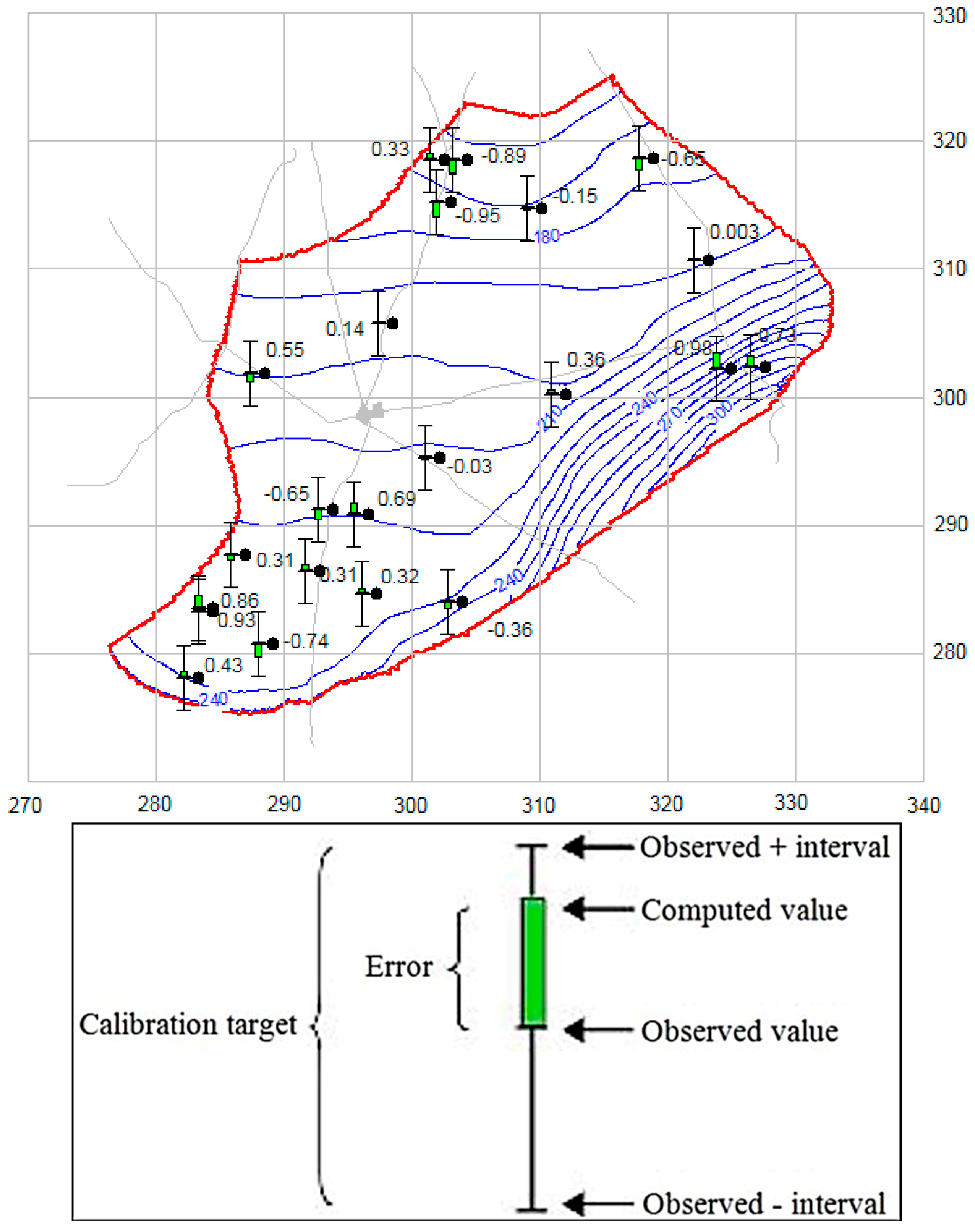
The reference piezometric state used for steady-state model calibration was the 1980 piezometric map, marking the onset of groundwater drawdown. The simulated piezometry for the same year (Figure 9) exhibits excellent agreement with field observations, as confirmed by the comparison presented in Figure 10. Residuals shown in Table 3 further indicate satisfactory calibration. Part of the discrepancy arises from the fact that model-computed heads correspond to the centers of grid cells—each measuring 250 m per side—whereas observation wells are rarely located exactly at these centers. As a result, positive residuals occur when a piezometer is situated upstream of the cell center, and negative residuals appear when it is located downstream.
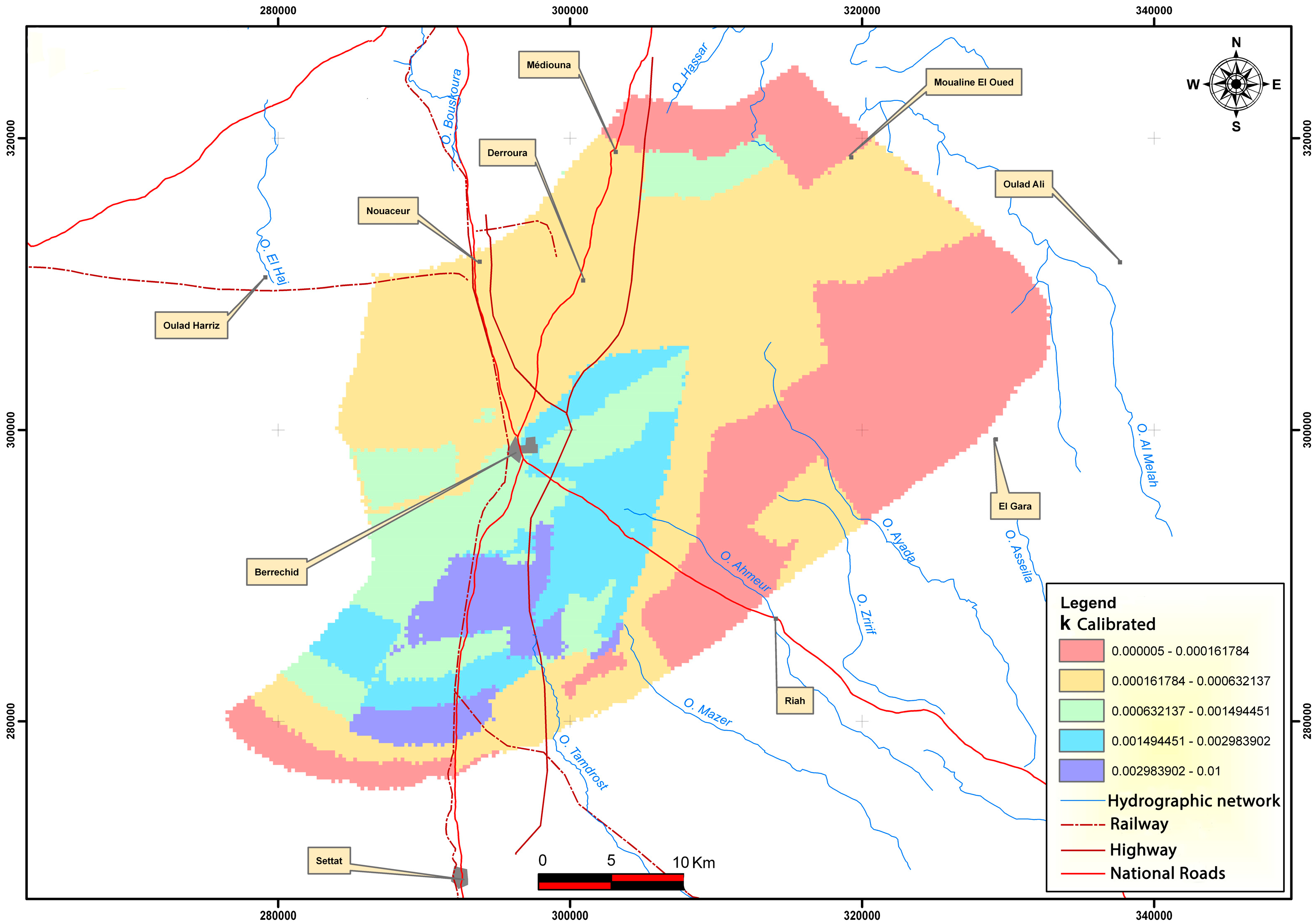
Calibration of hydraulic conductivity produced the permeability distribution shown in Figure 11, revealing four distinct hydrogeological zones: (i) very low permeability (<10−4 m/s) in the southern sector, corresponding to thin sandstone fringes with high hydraulic gradients; (ii) relatively high values (>10−3 m/s) in the west and southwest; (iii) exceptionally high permeability (>10−2 m/s) associated with coarse channel-fill deposits; and (iv) intermediate values ranging from 10−4 to 10−3 m/s across the remaining areas.
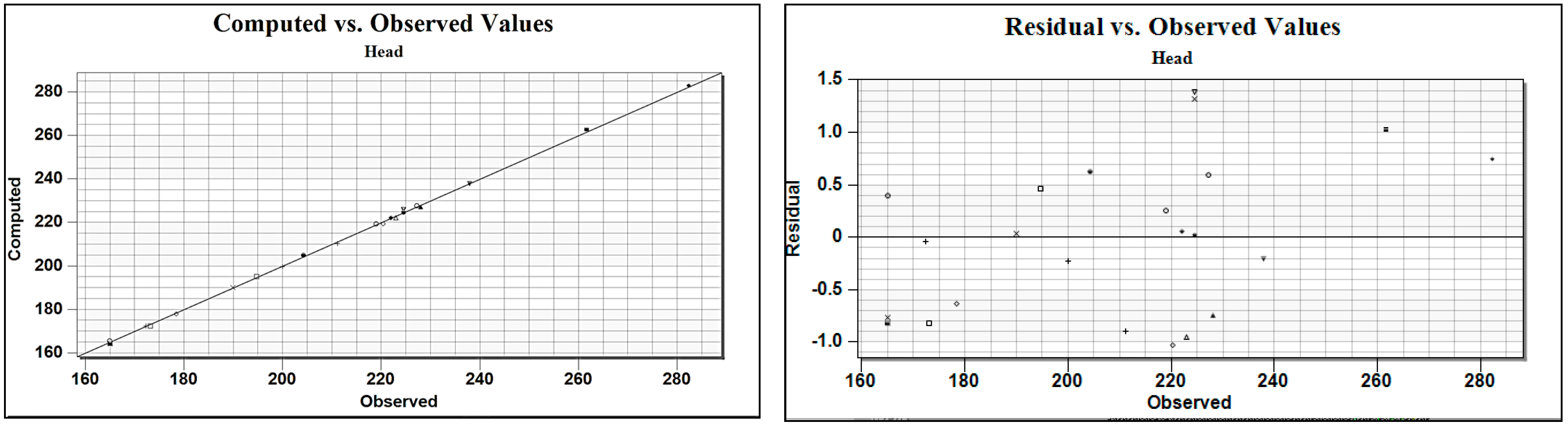
The simulated water balance reproduces the hydrogeological conditions described in the 1980 synthesis, with discrepancies between the conceptual model and numerical results remaining below 1.2 Mm3 (Table 4). Figure 12 presents the observed and simulated heads along with the calculated residuals. With residuals generally below 1.5 m, the steady-state model demonstrates a high degree of reliability for representing baseline conditions.
Transient modeling represents a continuation of the steady-state calibration process. The primary objective of this stage of hydrodynamic modeling is to calibrate the storage coefficient and homogenize aquifer system data under transient conditions. The selected simulation period spans 31 years, subdivided into annual intervals. Inputs and withdrawals in the Berrechid aquifer were incorporated into the model for each period, and calibration relied on piezometric data from long-time series observation points in the existing monitoring network of observation wells.
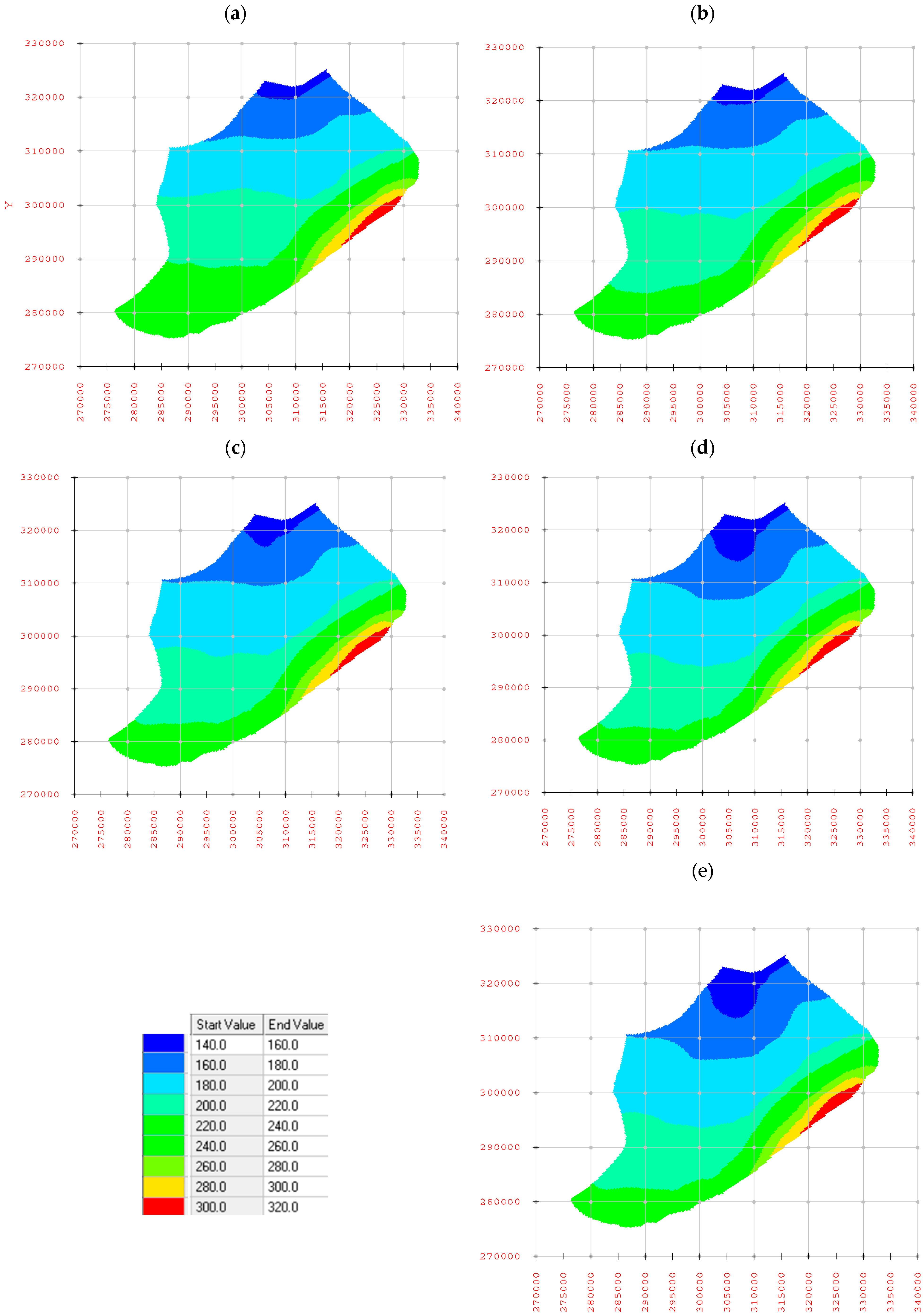
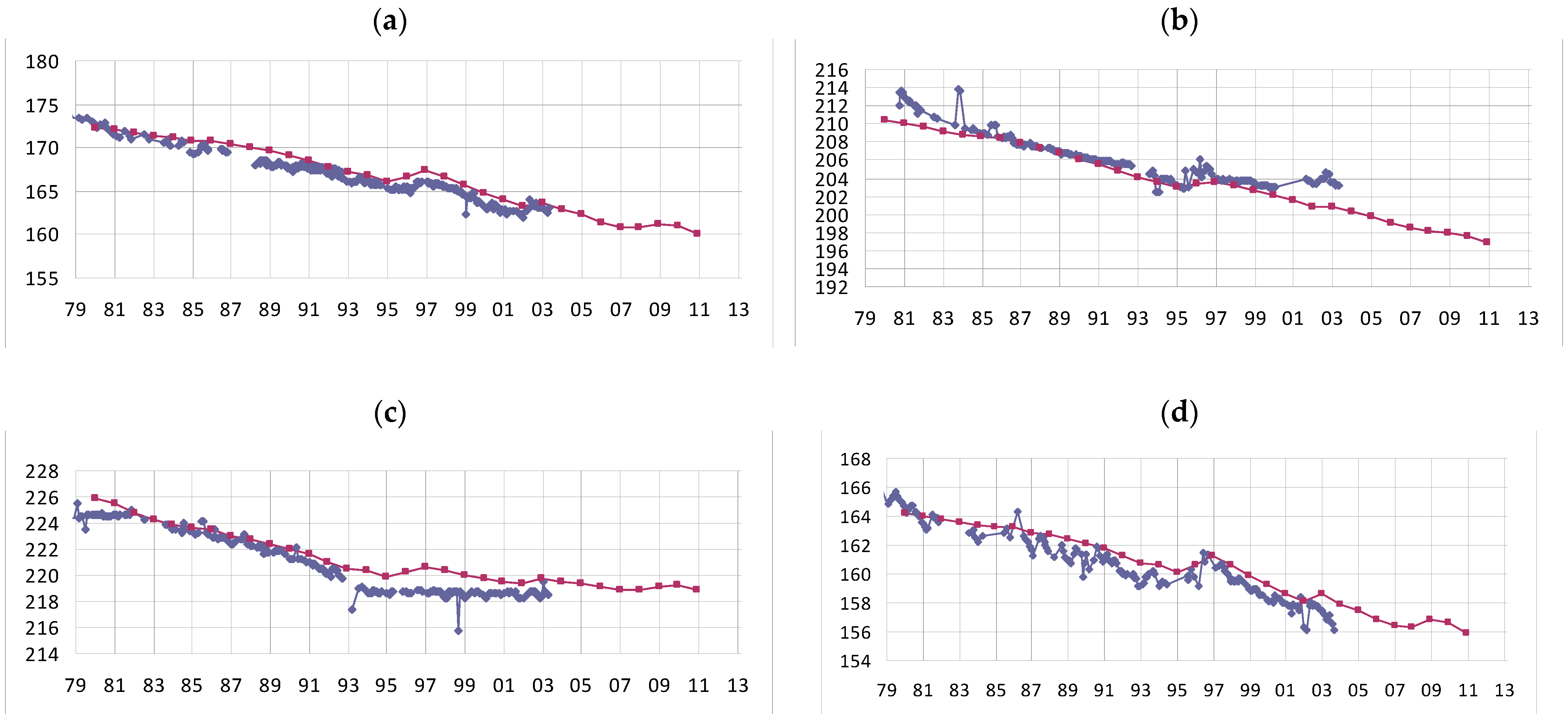
Piezometric surveys conducted every five years between 1980 and 2022 (Figure 13) revealed clear evidence of progressive groundwater decline throughout the aquifer. Over time, the drawdown expanded in spatial extent and magnitude, reflected by the migration and widening of piezometric contours. For example, the 223–212 m elevation interval mapped in 2000 was reduced to 212–201 m by 2016, indicating accelerated depletion. This continuous decline is primarily linked to increased groundwater abstraction driven by population growth, agricultural intensification, and evolving climatic conditions. Piezometric records (Figure 14) comparing simulated and observed groundwater levels further confirm the accuracy of the model, with deviations remaining minor and only slightly increasing after 1990, likely coinciding with elevated anthropogenic pressure on the resource.
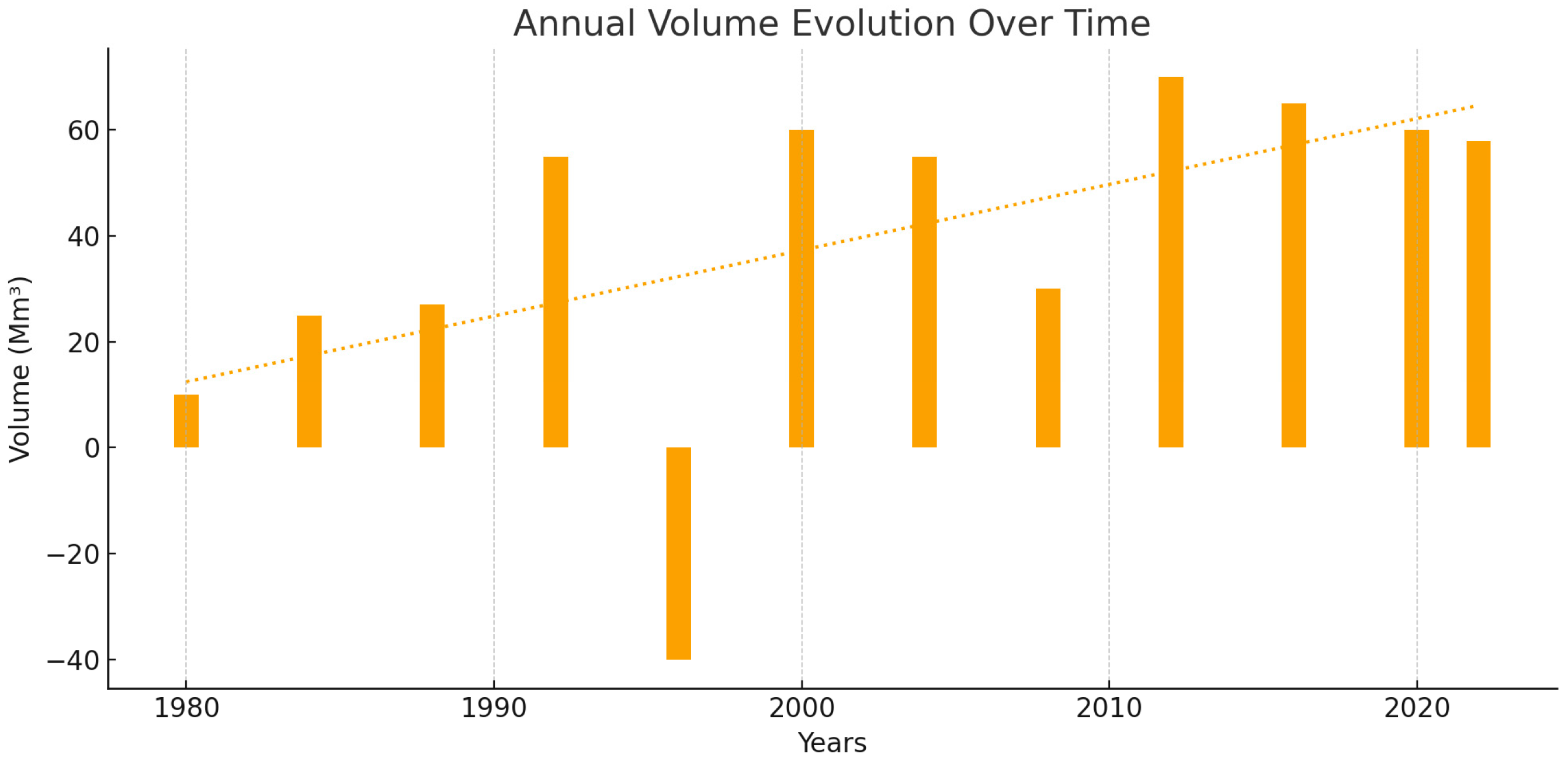
Groundwater balance outputs, combined with the piezometric variation maps at the end of the transient simulation, indicate widespread aquifer depletion, particularly in central zones characterized by intensive extraction. The simulation results estimate an average drawdown rate of approximately 2 m/year, demonstrating a persistent long-term decline in groundwater levels. Water balance analyses show that inflows have remained relatively stable, while outflows have increased significantly, reflecting intensified pumping (Figure 15) and reduced natural recharge. The aquifer maintained a positive storage balance only until 1996; afterward, storage progressively declined, indicating a long-term transition toward unsustainable extraction. If current conditions continue, model projections suggest that groundwater reserves could reach a critical depletion threshold around 2050.
The final calibrated storage coefficient distribution reflects substantial spatial variability linked to aquifer heterogeneity. Specific yield values range from 2.5% to 20% in unconfined areas, while confined zones exhibit values between 0.0025% and 0.5%. These contrasts align with field evidence and lithological interpretations, confirming the structural complexity of the system.
Overall, the calculated piezometric values closely match those measured at control observation wells, indicating satisfactory calibration results. The global piezometric variation map illustrates a general decline in the water table, reflecting reduced reserves attributed to drought and pumping activities. This requires the necessity of developing a withdrawal management tool to act directly at the user level and promote groundwater protection against overexploitation. The groundwater withdrawal management tool developed for the Berrechid aquifer, as demonstrated by Zerouali-A. et al. [22], utilizes ArcGIS 9.3–MODFLOW/GMS 6.5 coupling to assess and optimize extraction scenarios. This integrated framework enables the calculation of drawdown resulting from pumping activities at specific locations or designated zones and ensures its spatial visualization. The tool produces a decision-support cartographic map of groundwater drawdown, clearly identifying areas where withdrawals are authorized, restricted, or prohibited across the study area.
The analysis demonstrates that a withdrawal rate of approximately 1.5 Mm3/year represents the upper limit of sustainable groundwater extraction. Sensitivity tests further show that any increase above this threshold (i.e., beyond 50 L/s, equivalent to 1.5 Mm3/year) would accelerate groundwater level decline and compromise the long-term viability of the resource, particularly for agricultural and industrial demand. Therefore, extraction volumes exceeding 1.5 Mm3/year are classified as conditionally acceptable, whereas withdrawals greater than 1 m3/s are designated as prohibited due to their critical impact on the aquifer system.

3.1. The Impact of Climate Change on the Berrechid Water Table

To assess the potential impacts of climate change on the Berrechid aquifer, three Global Climate Models (GCMs)—CNRM-CM5, EC-EARTH, and GFDL-ESM2M—were used under the RCP4.5 scenario. This Representative Concentration Pathway is considered an optimistic trajectory that assumes a gradual stabilization of greenhouse gas (GHG) emissions and moderate global warming by the end of the 21st century.
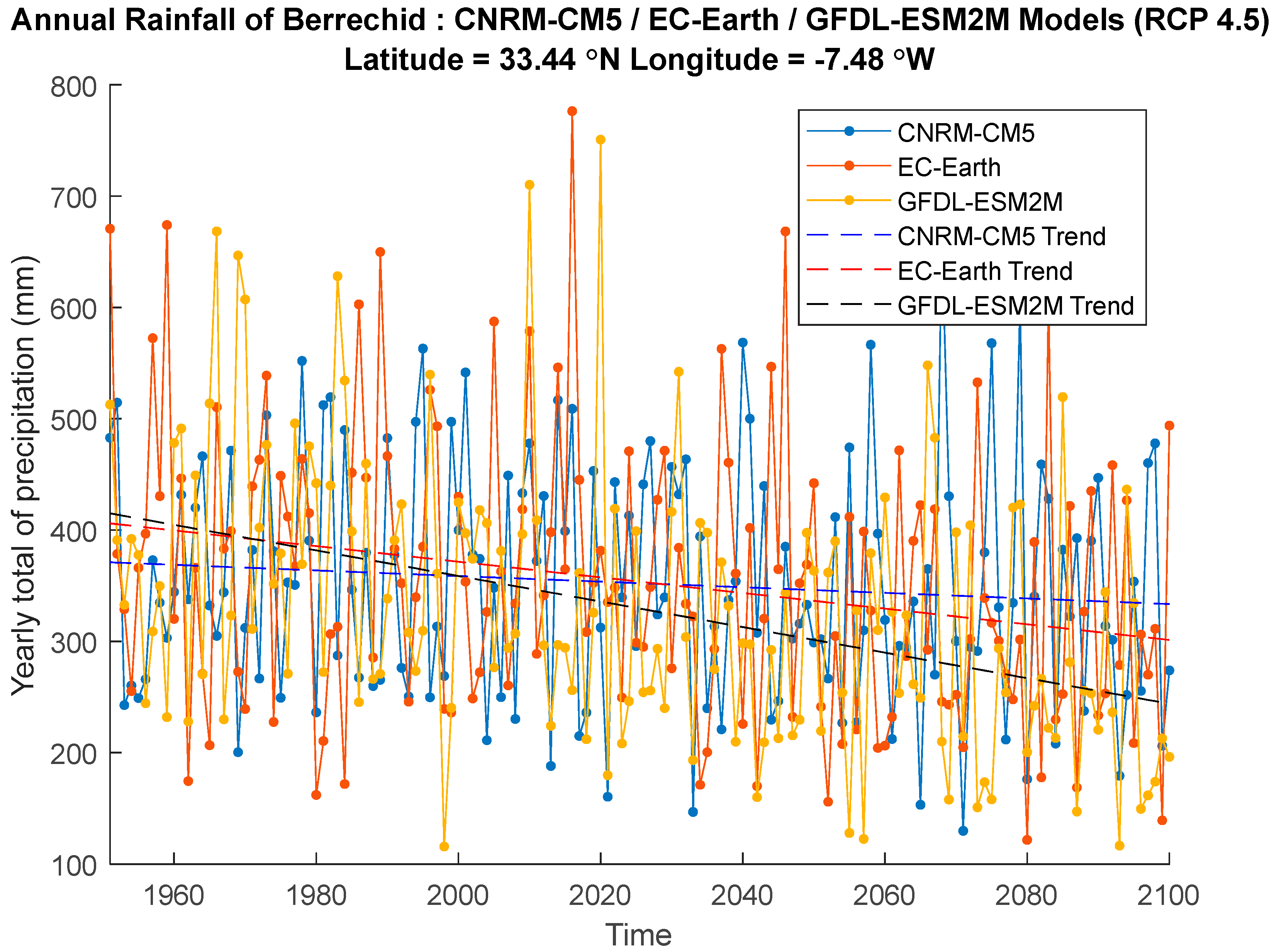
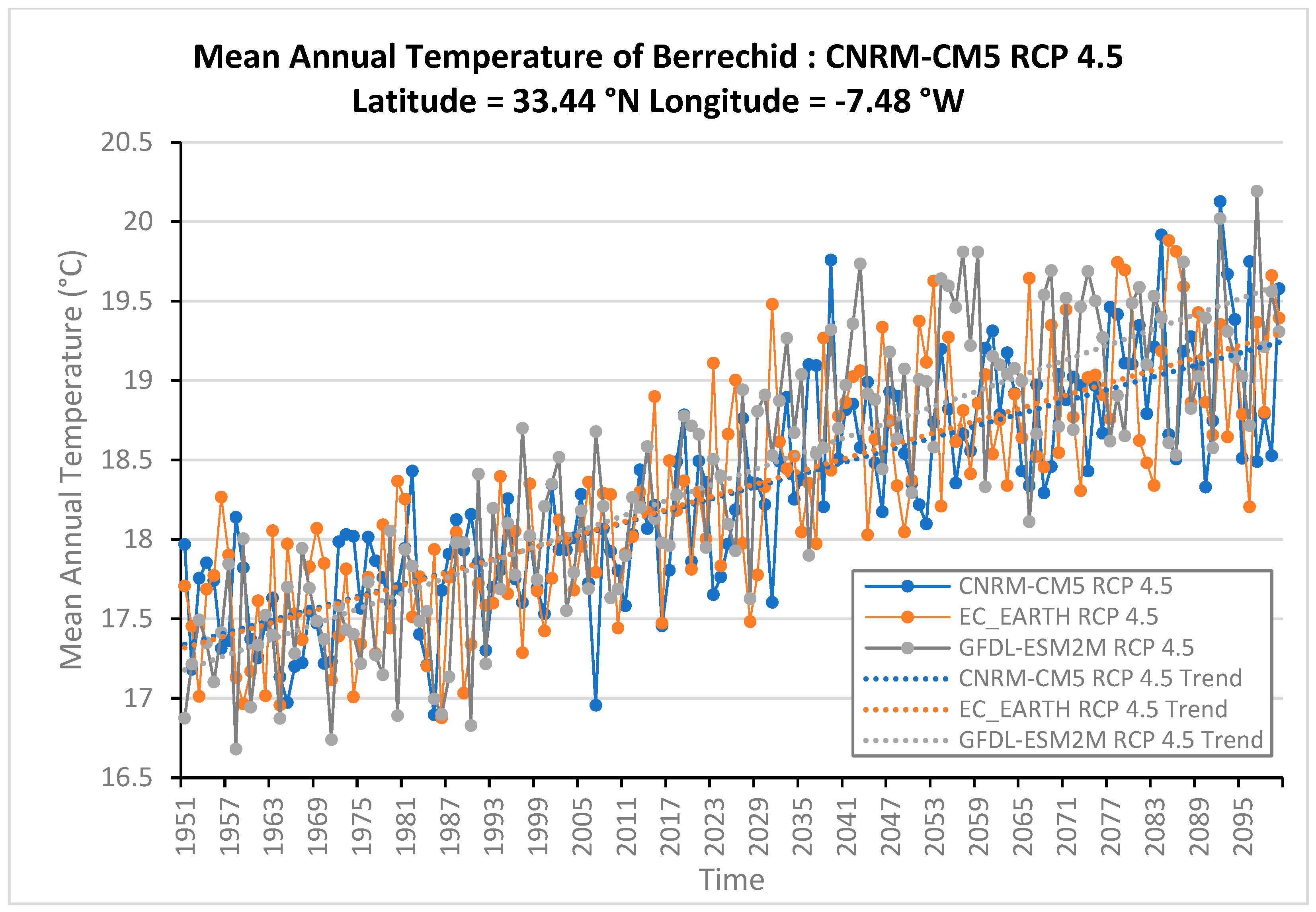
The outputs of these models (Figure 16 and Figure 17) were used to generate long-term projections of precipitation and temperature for the Berrechid region from 1950 to 2100. These climatic variables are key inputs for estimating future recharge variations and for simulating the hydrodynamic response of the aquifer within the GMS/MODFLOW framework.
The CNRM-CM5 model projects an overall decline in precipitation, mostly ranging between 200 mm and 500 mm, with a maximum of 667 mm in 2068. In contrast, temperature shows a clear upward trend, increasing by about 2 °C between 1950 and 2100, from 16 °C in 1985 to nearly 20 °C in 2092. These results indicate a gradual intensification of aridity, potentially leading to a reduction in effective recharge across the Berrechid Plain.
Under the same RCP4.5 scenario, the EC-EARTH model also predicts a sharp downward trend in precipitation, with a total reduction of approximately 100 mm over the 150-year period. The maximum value is 776 mm in 2016, while the minimum reaches 121 mm in 2080. Meanwhile, temperature increases from 17.25 °C to 19.25 °C (maximum 19.8 °C in 2085), confirming a consistent warming pattern similar to that found in CNRM-CM5 projections.
The GFDL-ESM2M model also indicates a progressive decrease in precipitation by roughly 100 mm throughout the study period. Precipitation peaks are observed in 2010 (710 mm) and 2020 (750 mm), followed by a minimum of 115 mm in 1998. Simultaneously, temperature increases from 17.25 °C to 19.5 °C, reaching a maximum of 20 °C in 2097.
Overall, the three climate models converge on two consistent findings: a declining precipitation trend, indicating a potential reduction in groundwater recharge, and a steady temperature increase of about 1.5–2 °C by 2100, which is expected to intensify evapotranspiration and consequently place greater stress on the Berrechid aquifer’s water resources.
These projected climatic changes were incorporated into the transient simulations of the Berrechid aquifer to quantify their influence on future groundwater levels and assess the system’s vulnerability under the RCP4.5 scenario.

3.2. The Impact of Climate Change on Natural Recharge

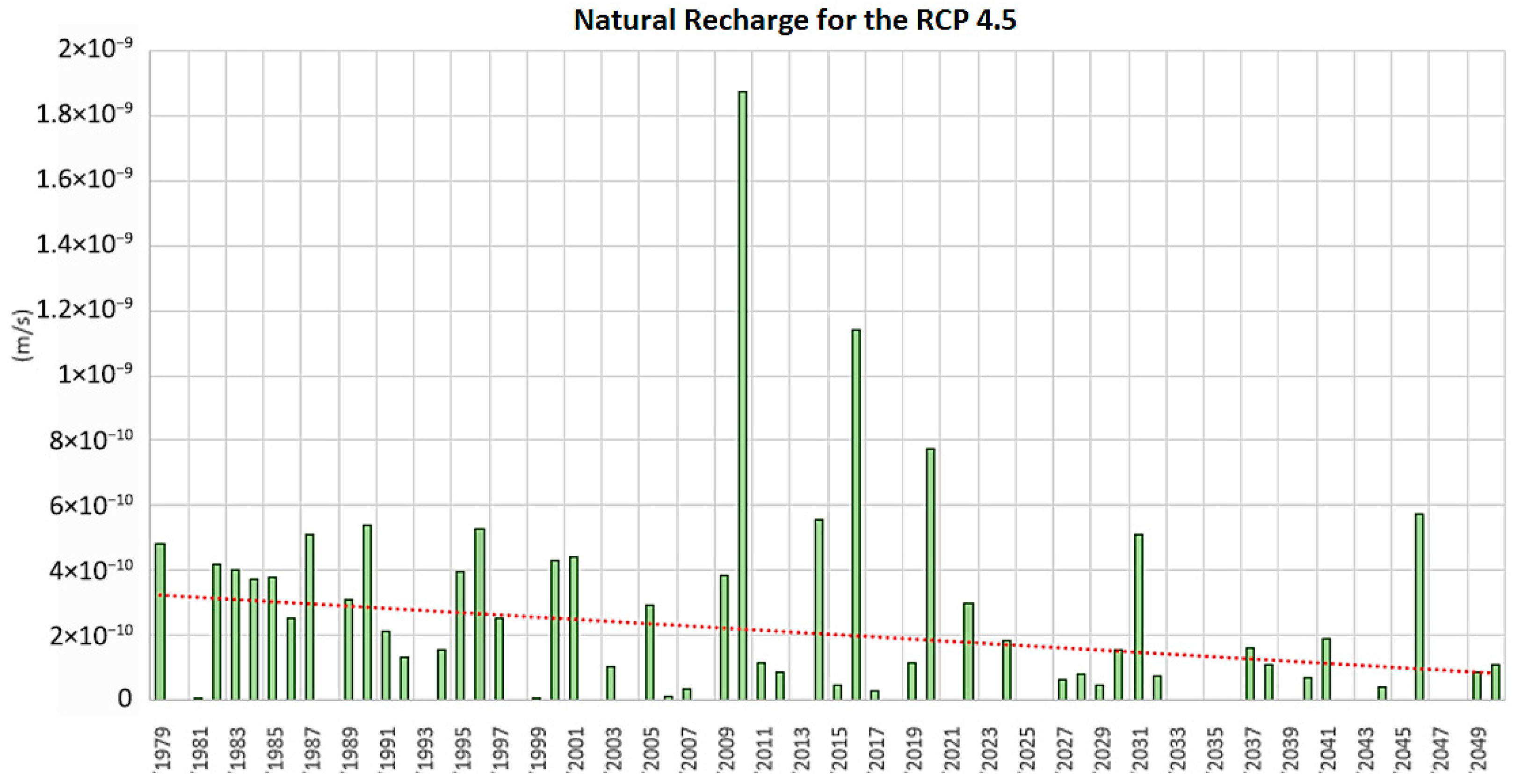
To better assess the impact of climate change on natural recharge, we performed calculations to determine average natural recharge scenarios, considering an optimistic projection (Figure 18).
The figure illustrates the evolution of natural recharge between 1979 and 2050, showing a downward trend. Notably, the year 2010 stands out with the highest recharge value, attributable to particularly humid weather conditions. The diagram also highlights variations in natural recharge between 2022 and 2050, with a wet year projected in 2046, showing the highest recharge value of the period.
The precipitation variation graphs describe forecasts over a 150-year period. The horizontal axis represents time, while the vertical axis represents the amount of precipitation (mm). Interpretation of these graphs shows that, while precipitation remains relatively uniform on average, notable fluctuations occur. The maximum value reaches 800 mm, while the minimum drops to 100 mm, underlining both the magnitude of these variations and the relative stability of long-term averages.
The temperature variation graphs reflect an optimistic scenario of gradual warming, despite significant fluctuations. According to the data, the maximum temperature reaches 20 °C, while the minimum is 16.5 °C. The upward trajectory of temperature is consistent with climate change, which is characterized by a progressive rise in average global temperatures over time.
After a detailed analysis of precipitation and temperature under this scenario, it is clear that the natural recharge of the Berrechid aquifer is strongly influenced by climate variability. The observed downward trend in recharge is largely driven by reduced precipitation.
Having modeled the Berrechid aquifer under both steady-state and transient conditions up to 2022, our focus now shifts to forecasting its future dynamics and evaluating the potential impacts of climate change on groundwater. To achieve this, we integrated precipitation forecast data from three different climate models—CNRM-CM5, EC-EARTH, and GFDL-ESM2M—under the RCP4.5 scenario. This integration enables the simulation of future aquifer behavior and the analysis of its evolution in response to climatic variations.
For the simulation of climate change impacts on the Berrechid aquifer, all variables were held constant except for precipitation, which was adjusted according to forecasts from 2023 to 2050. The average RCP4.5 values from the three models (CNRM-CM5, EC-EARTH, and GFDL-ESM2M) were used to establish the input data for this analysis.

3.3. Model Results for the RCP4.5 Scenario

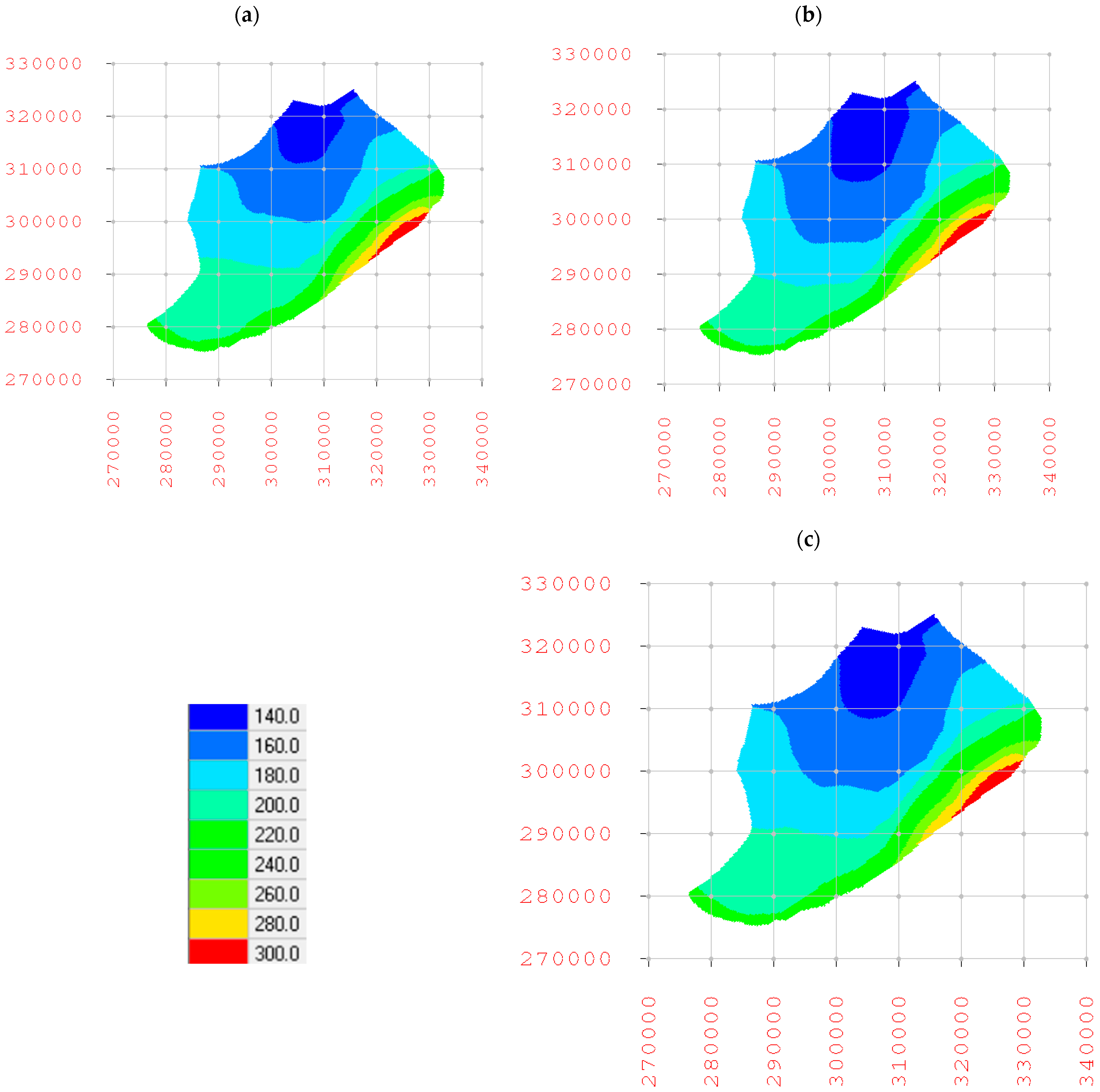
The results obtained under the RCP4.5 scenario highlight a remarkable stability of groundwater levels throughout the projection period from 2023 to 2050 (Figure 19). This key finding emerges as one of the most significant outcomes of the modeling effort. The simulated piezometric levels, derived from three climate models—CNRM-CM5, EC-EARTH, and GFDL-ESM2M—show that groundwater dynamics remain largely unchanged under this optimistic emission scenario.
Based on these results, a constant abstraction rate of approximately 1.45 Mm3/year was selected as the reference management scenario, as it represents the most appropriate and sustainable withdrawal limit for the Berrechid aquifer. This value corresponds to the aquifer’s current average pumping conditions, as confirmed by the water-balance results for well abstractions (0.046 m3/s ≈ 46 L/s), and it remains appropriate under projected climate-change conditions.
This stability of the piezometric surface can be explained by two main factors. First, the assumed constant pumping rate of 1.45 Mm3/year exerts a dominant control over groundwater behavior, likely offsetting the moderate climatic variations projected under RCP4.5. Second, the RCP4.5 scenario itself, which assumes a gradual reduction in greenhouse gas emissions and moderate changes in precipitation and temperature, does not generate sufficiently strong climatic stress to significantly alter groundwater recharge or discharge processes.
Consequently, despite minor fluctuations associated with interannual climate variability and human abstraction, the piezometer measurements indicate that the aquifer maintains overall equilibrium over the 28-year simulation period. This suggests that anthropogenic extraction remains the main driver of the aquifer’s long-term balance, while the moderate effects of climate change under RCP4.5 play a secondary role.
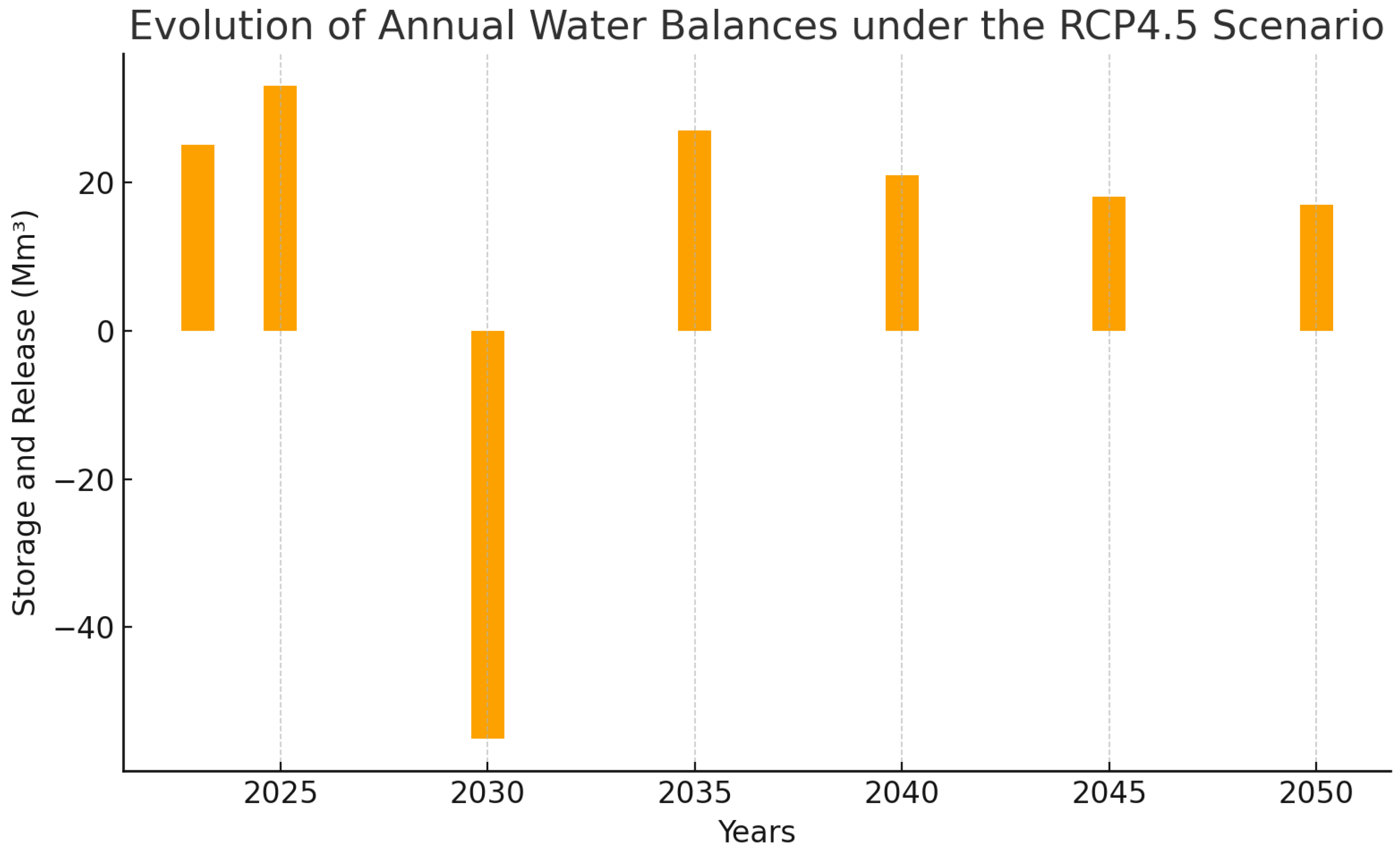
The annual evolution of the groundwater system is summarized in Table 5, with Figure 20 illustrating the changes in storage and depletion balances between 2023 and 2050. The analysis confirms that storage remains relatively stable across the study period, except for the year 2030, which exhibits a significant deficit of 55 Mm3/year—the largest imbalance observed. This temporary reduction may result from a combination of reduced recharge and sustained abstraction during that period; however, it is not expected to affect the subsequent years, as recharge conditions improve and the system gradually returns to equilibrium.
In summary, the RCP 4.5 scenario leads to relatively minor long-term impacts on groundwater levels. This is mainly because maintaining a regulated and constant pumping rate does not strongly influence aquifer behavior under the moderate climatic fluctuations projected for this scenario.
Although the modeling framework provides valuable insights into the future behavior of the Berrechid aquifer under the RCP4.5 scenario, several limitations must be acknowledged to properly frame the interpretation of the results.
Recharge was estimated using the Thornthwaite method for potential evapotranspiration and a simple percentage (15–20%) of annual precipitation, an approach that may underestimate the nonlinear effects of soil moisture deficits, land-use changes, or intensified extreme events.
Data limitations also exist. Boundary conditions, particularly lateral inflows from the Settat Plateau and outflows toward the Chaouia coastal aquifer, rely on simplified general-head or specified-head representations that may not fully capture dynamic interactions during extreme wet or dry years.
Finally, the use of only three GCMs (CNRM-CM5, EC-EARTH, GFDL-ESM2M) under a single intermediate scenario (RCP4.5) limits the range of explored uncertainty; higher-emission pathways (e.g., RCP8.5) or a wider GCM ensemble could reveal greater vulnerability.
Despite these constraints, the projected stability (or only minor, temporary deficits) of groundwater levels when pumping is maintained at sustainable levels aligns with several regional studies. Earlier assessments by ABHBC [5, 6] and DRPE [10] documented severe historical depletion (average ~2 m/year) driven predominantly by overexploitation rather than climatic trends alone, a conclusion supported by our transient calibration for 1980–2022. In the coastal Chaouia aquifer, modeled recharge reductions of 20–40% by 2050 under higher-emission scenarios led to significant water-table decline when pumping was not curtailed [23]. In contrast, our results under the optimistic RCP4.5 pathway and regulated abstraction resemble findings from the Haouz plain (central Morocco), where strict pumping controls were shown to largely offset projected recharge declines of 10–25% [28]. The relatively muted climate signal observed here, compared with stronger depletion projected in North African aquifers under unconstrained abstraction (Kastali et al. [4], in the Mitidja plain, Algeria), reinforces the conclusion that, in the Berrechid system, anthropogenic withdrawal remains the primary driver of long-term aquifer health, at least until mid-century and under moderate warming.
These limitations and comparisons highlight the need for continued model refinement—incorporating higher-resolution downscaled climate data, dynamic pumping scenarios, and coupled surface–groundwater processes—as well as expanded monitoring networks to reduce parameter uncertainty in future assessments.

4. Conclusions

Climate change is a major global concern, and its effects are already evident in recurring droughts, irregular precipitation, and extreme weather events. Groundwater resources are directly affected by these changes.
For the Berrechid aquifer, simulations under the RCP4.5 scenario indicate that, despite moderate climatic variations, groundwater levels remain largely stable between 2023 and 2050. The relative stability of the piezometric surface can be attributed to the adoption of a constant abstraction rate of approximately 1.45 Mm3/year, which represents an appropriate and realistic reference management scenario for the aquifer. This pumping level reflects future average withdrawal conditions and remains below the threshold that would induce significant drawdown. As a result, it helps maintain hydraulic equilibrium and prevents further degradation of groundwater levels, thereby supporting more sustainable long-term aquifer behavior under existing hydroclimatic pressures.
Although the aquifer remains relatively stable under the RCP4.5 scenario, proactive and adaptive management is essential to ensure its long-term sustainability, particularly given potential increases in agricultural, domestic, and industrial demand. Priority actions include improving water-use efficiency and diversifying water supply through treated wastewater reuse, rainwater harvesting, and desalination. Considering projected population growth and the associated rise in regional water demand, part of the future needs is expected to be met by a planned desalination plant, which will help reduce pressure on the aquifer and support a more balanced groundwater-management approach under climate-change conditions.
Reinforcing monitoring systems to track groundwater levels, water quality, and aquifer responses to climatic variability is also crucial. Additional measures involve enhancing community awareness, strengthening institutional coordination, adopting integrated long-term planning, and supporting research and innovation to optimize water-management technologies.
In conclusion, while no major depletion is anticipated in the near future under the RCP4.5 scenario, implementing these strategies is vital to ensure resilience and safeguard groundwater resources for future generations.


Author Contributions

Conceptualization, A.Z., A.L. and M.F.; methodology, A.Z., A.L. and M.F.; software, A.Z., O.C. and M.J.E.H.; validation, A.L. and M.F.; formal analysis, A.Z., A.L., M.J.E.H. and M.F.; investigation, A.Z., A.L. and M.F.; resources, A.L., M.F. and O.C.; data curation, A.Z., A.L., M.J.E.H. and M.F.; writing—original draft preparation, A.Z. and M.J.E.H.; writing—review and editing, A.L. and M.J.E.H.; visualization, A.Z. and A.L.; supervision, A.L., M.J.E.H., O.C. and M.F.; project administration, A.Z. and O.C.; funding acquisition, A.Z. All authors have read and agreed to the published version of the manuscript.
Funding

This research was funded by DRPE Moroccan Ministry of Water.

Data Availability Statement

The original contributions presented in this study are included in the article. Further inquiries can be directed to the corresponding author.

Acknowledgments

This study is a part of the first author’s Ph.D. thesis at the Mohammadia School of Engineers, UM5R, as well as a component of a research collaboration between the Moroccan Ministry of Water and the regional water center of Maghreb at EMI. We also thank DRPE and ABHBC (Bouregreg) for the remarkable cooperation that has occurred between both the university and the administrations and for providing data that have been used in this study.

Conflicts of Interest

The authors declare no conflicts of interest.

Abbreviations

The following abbreviations are used in this manuscript:
GMSGroundwater Modeling System
MODFLOWModular Finite-Difference Flow Model
PESTParameter ESTimation
ABHBCAgence du Bassin Hydraulique du Bouregreg et de la Chaouia
GenAIGenerative Artificial Intelligence
GHGGreenhouse Gas
IPCCIntergovernmental Panel on Climate Change
CNRM-CM5Coupled Model version 5 of the National Center for Meteorological Research
ECMWFEuropean Centre for Medium-Range Weather Forecasts
KNMINetherlands Meteorological Institute
GFDLGeophysical Fluid Dynamics Laboratory
GCMsGlobal Climate Models

References

  1. Ngo, T.-M.-L.; Wang, S.-J.; Chen, P.-Y. Assessment of Future Climate Change Impacts on Groundwater Recharge Using Hydrological Modeling in the Choushui River Alluvial Fan, Taiwan. Water 2024, 16, 419. [Google Scholar] [CrossRef]
  2. Pedrosa Bhering, A.; Antunes, I.M.H.R.; Nascimento Catão, G.; Gomes Marques, E.A.; de Paula, R.S.; Brito Andrade, I.; Rebelo Diório, G. Groundwater Model for Karst and Pelitic Aquifer Systems from a Semi-Arid Region Under Climate Change Scenarios: A Case Study in the Vieira River Watershed, Brazil. Water 2024, 16, 3140. [Google Scholar] [CrossRef]
  3. Kovács, A.; Jakab, A. Modelling the Impacts of Climate Change on Shallow Groundwater Conditions in Hungary. Water 2023, 13, 668. [Google Scholar] [CrossRef]
  4. Kastali, F.; Meddi, M.; Boufekane, A.; Longobardi, A. Integrated Modeling of Surface Water and Groundwater Interactions in the Eastern Mitidja Plain, North Algeria: Investigating the Impact of Human Activities and Climate Change. J. Water Clim. Change 2024, 15, 5570. [Google Scholar] [CrossRef]
  5. ABHBC. Synthèse des Études Antérieures et Actualisation des Données Hydrogéologiques de la Nappe de Berrechid; Agence du Bassin Hydraulique de Bouregreg et de la Chaouia: Rabat, Morocco, 2016. [Google Scholar]
  6. ABHBC. Étude Hydrogéologique de la Nappe de Berrechid; Rapport inédit; Agence du Bassin Hydraulique de Bouregreg et de la Chaouia: Rabat, Morocco, 2004. [Google Scholar]
  7. Ressources en eau du Maroc. Plaines et Bassins du Maroc, Atlantique, Tome 2; Notes et Mémoires du Service Géologique du Maroc: Rabat, Morocco, 1975. [Google Scholar]
  8. MTPC. Ressources en Eaux du Maroc, Tome 3; Ministère des Travaux Publics et des Communications, Direction de l’Hydraulique, Division des Ressources en Eau, Service Géologique du Maroc: Rabat, Morocco, 1977. [Google Scholar]
  9. El Mansouri, B. Structure et Modélisation Quantitative de L’aquifère de Berrechid (Maroc). Validation par L’approche Géostatistique. Ph.D. Thesis, Université des Sciences et Technologies de Lille, Lille, France, 1993. [Google Scholar]
  10. DRPE. Étude de L’aquifère de la Plaine de Berrechid. Mission 1: Description et Analyse; Direction de la Recherche et de la Planification de l’Eau: Rabat, Morocco, 1997. [Google Scholar]
  11. Bolelli, E.; Lesguise, N. Étude Hydrogéologique de la Région de Bouskoura–Mediouna–Berrechid; Centre d’Études Hydrogéologiques: Rabat, Morocco, 1951. [Google Scholar]
  12. Bolelli, E.; Lesguise, N. Chaouia. Hydrogéologie du Maroc, Monographies régionales. In Proceedings of the XIXe Congrès Géologique International, Alger, Algeria, 8–15 September 1952. [Google Scholar]
  13. Moniton, L.; Lesguise, N. Notice Explicative de la Carte Hydrogéologique de la Région de Casablanca; Notes et Mémoires du Service Géologique: Rabat, Morocco, 1960; No. 131. [Google Scholar]
  14. Moullard, L.; Hazan, R. Nappe phréatique de la plaine de Berrechid. Assoc. Int. Hydrol. Sci. 1960, 52, 105–142. [Google Scholar]
  15. Hazan, R.M.; Moullard, L. Notice Hydrogéologique de la Plaine de Berrechid; Office National des Irrigations, Service des Ressources en Eau: Rabat, Morocco, 1962. [Google Scholar]
  16. Hazan, R.M.; Ferre, M. Notice Hydrogéologique de la Plaine de Berrechid; Office National des Irrigations, Service des Ressources en Eau: Rabat, Morocco, 1964. [Google Scholar]
  17. Ruhard, J.P. Chaouia et la Plaine de Berrechid (Tome 1); Ressources en Eau du Maroc; Notes et Mémoires du Service Géologique: Rabat, Morocco, 1975; p. 231. [Google Scholar]
  18. Bonnet, M. Méthodologie des Modèles de Simulation en Hydrogéologie. Ph.D. Thesis, Institut National Polytechnique de Lorraine, Nancy, France, 1978. [Google Scholar]
  19. Direction Générale de l’Hydraulique (DGH). Étude du Plan Directeur Intégré D’aménagement des Eaux des Bassins Sebou, Bouregreg et Oum Er-Rbia; Sous-Mission IB3–IB4: Étude Hydrogéologique de la Nappe de Berrechid; Direction Générale de l’Hydraulique (DGH): Rabat, Morocco, 1985. [Google Scholar]
  20. El Mansouri, B. Modélisation Mathématique des Écoulements Souterrains de la Nappe de Berrechid (Maroc). Ph.D. Thesis, Université des Sciences et Technologies de Lille I, Lille, France, 1990. [Google Scholar]
  21. El Bouqdaoui, K. Étude Géologique et Géotechnique de la Ville de Settat: Cartographie Géotechnique et Substances Utiles de la Province de Settat. Ph.D. Thesis, Université Mohammed V, Faculté des Sciences, Rabat, Morocco, 1995. [Google Scholar]
  22. Zerouali, A.; El Hamidi, M.J.; Larabi, A.; Faouzi, M.; Chafi, O. Managing Groundwater Withdrawal Using a DSS Based on GIS–MODFLOW Coupling Tool: A Case Study of the Berrechid Aquifer, Morocco; Springer International Publishing: Berlin/Heidelberg, Germany, 2024. [Google Scholar]
  23. Zerouali, A.; Lakfifi, L.; Larabi, A.; Ameziane, A. Modélisation de la nappe de Chaouia côtière (Maroc). In Proceedings of the First International Conference on Saltwater Intrusion and Coastal Aquifers: Monitoring, Modeling, and Management, Essaouira, Morocco, 23–25 April 2001. [Google Scholar]
  24. McDonald, M.G.; Harbaugh, A.W. A Modular Three-Dimensional Finite-Difference Groundwater Flow Model; Book 6, Chapter A1; U.S. Geological Survey Techniques of Water-Resources Investigations: Washington, DC, USA, 1988. [Google Scholar]
  25. Dragoni, W.; Sukhija, B.S. Groundwater Climate Change Modeling. Geol. Soc. Lond. Spec. Publ. 2009, 288, 1–186. [Google Scholar] [CrossRef]
  26. Jackson, C.R. Modeling the effects of climate change and its uncertainty on US chalk groundwater resources from an ensemble of global climate models. J. Hydrol. 2011, 399, 12–28. [Google Scholar] [CrossRef]
  27. Taylor, R.G.; Scanlon, B.; Döll, P.; Rodell, M.; van Beek, R.; Wada, Y.; Longuevergne, L.; Leblanc, M.; Famiglietti, J.S.; Edmunds, M. Ground water and climate change. Nat. Clim. Change 2013, 3, 322–329. [Google Scholar] [CrossRef]
  28. Analy, M.; Laftouhi, N.-E. Groundwater Depletion in an Urban Environment under Semiarid Climate and Persistent Drought–City of Marrakesh (Morocco). Water 2021, 13, 3253. [Google Scholar] [CrossRef]
Figure 1. Location of the Berrechid Plain south of Casablanca. The colored polygons on the map represent the administrative provinces.
Water 17 03488 g001
Figure 2. Groundwater withdrawal zoning under pumping rates of 50 L/s and 1 m3/s showing sectors where withdrawals are prohibited (Red), partially allowed (Yellow) or authorized (Green). (a) Q = 50 L/s. (b) Q = 1 m3/s. The circle in map (a) highlights the sensitive zone of interest, which corresponds to the area where the highest drawdown occurs.
Water 17 03488 g002
Figure 3. Discretization model and specified heads (shown in orange) are presented in the GMS for the study area.
Water 17 03488 g003
Figure 4. Transverse cross-section of the study area.
Water 17 03488 g004
Figure 5. Longitudinal cross-section of the study area.
Water 17 03488 g005
Figure 6. Bottom (a) and top (b) of the Berrechid aquifer.
Water 17 03488 g006
Figure 7. Observed piezometry (m) of the Berrechid aquifer in 1980.
Water 17 03488 g007
Figure 8. Observation wells used for transient model calibration (dots), with yellow squares indicating pumping wells.
Water 17 03488 g008
Figure 9. Calculated piezometry (m) of the Berrechid aquifer in 1980, where low values are shown in blue and high values are shown in red.
Water 17 03488 g009
Figure 10. Simulated vs. measured piezometry of the Berrechid aquifer in 1980. The green color indicates that the calibration is good, meaning the simulated values fall within the acceptable observation interval.
Water 17 03488 g010
Figure 11. Calibrated permeability map.
Water 17 03488 g011
Figure 12. Observed vs. computed piezometry, and Residuals vs. observed piezometry. Different symbols represent different observation wells used in the calibration.
Water 17 03488 g012
Figure 13. 1984 piezometry (a), 1992 piezometry (b), 2000 piezometry (c), 2016 piezometry (d), and 2022 piezometry (e).
Water 17 03488 g013
Figure 14. Simulated hydraulic heads (garnet line) and measured heads (blue line) compared for the following piezometers: (a) 2881, (b) 1434, (c) 1771, and (d) 3235.
Water 17 03488 g014
Figure 15. Overexploitation volume of Berrechid Aquifer between 1980 and 2022.
Water 17 03488 g015
Figure 16. Precipitation forecast until 2100 according to the CNRM-CM5, EC-EARTH and GFDL-ESM2M models under the RCP4.5 scenario.
Water 17 03488 g016
Figure 17. Temperature forecast up to 2100 according to the CNRM-CM5, EC-EARTH and GFDL-ESM2M models under the RCP4.5.
Water 17 03488 g017
Figure 18. Variation in natural recharge between 1979 and 2050 under an optimistic scenario. The trend line (shown in red) displays declining recharge over time.
Water 17 03488 g018
Figure 19. Piezometric maps of the aquifer in (a) 2025; (b) 2030; (c) 2050.
Water 17 03488 g019
Figure 20. Evolution of annual balances under the RCP4.5 scenario.
Water 17 03488 g020
Table 1. Recharge and abstraction in the Berrechid aquifer, 1980 (Mm3).
ComponentRainfall InfiltrationRunoff InfiltrationTotal Pumping
O. TamdrostO. MazerO. Ahmer
VOLUME (Mm3)14.53.681.231.2934.8
Table 2. Flood protection dams.
DamYearCapacity (Mm3)
El Himer200614
Tamdrost20110.4
Mazer200514
Koudiat El Garn200436
Boumoussa19860.02
Mzamza19870.1
Table 3. Observed vs. model head comparison.
ID Observed Calculated DifferenceRelative
PiezometerHead (m)Head (m)(m)Difference %
907/27227.2227.6−0.40.18
3235/20165164.20.80.49
2947/20172.3172.10.20.12
2775/20282.3283−0.70.25
2771/20178.4177.70.70.39
2380/20261.7262.7−10.38
725/20194.7194.8−0.10.05
653/20224.5224.8−0.30.13
154/28219219.7−0.70.32
1771/27224.5225.4−0.90.40
1431/28211.2211.200.00
1430/28237.9237.60.30.13
1775/27224.5225.5−10.44
909/27228227.30.70.31
795/27223222.70.30.13
660/27222222.3−0.30.13
102/27220.4219.70.70.32
3234/20165164.20.80.49
2881/20173.2172.210.58
2090/20204.3204.6−0.30.15
1676/20165165.3−0.30.18
937/20189.9189.900.00
565/19200199.40.60.3
Table 4. Synthesis vs. model balance comparison (Mm3).
Balance TermsModel BalanceSynthesisError
InputsRainfall Infiltration14.0114.10.09
Wadi Runoff Infiltration7.196.59−0.6
Settat Plateau Underflow24.83261.17
Total Inflows46.0346.70.67
OutputsPumping Abstractions36.5836.5−0.08
Outflow to Chaouia7.318.51.19
Drainage to Oued Mellah2.171.8−0.37
Total Outflows46.0646.80.74
Table 5. Annual balance of the aquifer in (a) 2023; (b) 2030; (c) 2050.
(a)
Inputs (m3/s)Outputs (m3/s)
Storage2.10200220931440.0011274032295
Specified head1.23834343123780.1428502061019
Wells0.00.0465756954044
Recharge0.00982587564413.159616929508
Total3.35017151619633.3501702342439
Inputs–Outputs1.28195239 × 10−6
Error%0.0000382652838
(b)
Inputs (m3/s)Outputs (m3/s)
Storage0.08367255874330.9310426925222
Specified head1.2673985119070.1480148196069
Wells0.00.0465756954044
Recharge1.80563830017492.031076096755
Total3.15670937082523.1567093042885
Inputs–Outputs6.65366429 × 10−8
Error %2.1077849 × 10⁻⁶
(c)
Inputs (m3/s)Outputs (m3/s)
Storage1.76839641072730.000775758177
Specified head1.30008192986550.128820499664
Wells0.00.0465756954044
Recharge0.15825609924833.0505624196303
Total3.22673443984123.2267343728758
Inputs–Outputs6.69653559 × 10−8
Error %2.07532903 × 10⁻⁶
Disclaimer/Publisher’s Note: The statements, opinions and data contained in all publications are solely those of the individual author(s) and contributor(s) and not of MDPI and/or the editor(s). MDPI and/or the editor(s) disclaim responsibility for any injury to people or property resulting from any ideas, methods, instructions or products referred to in the content.