Saltwater Intrusion Analysis and Control for Complex River Network Using Multi-Source Tracer-Aided Modeling Simulation


Abstract
1. Introduction
2. Study Area and Data Sources
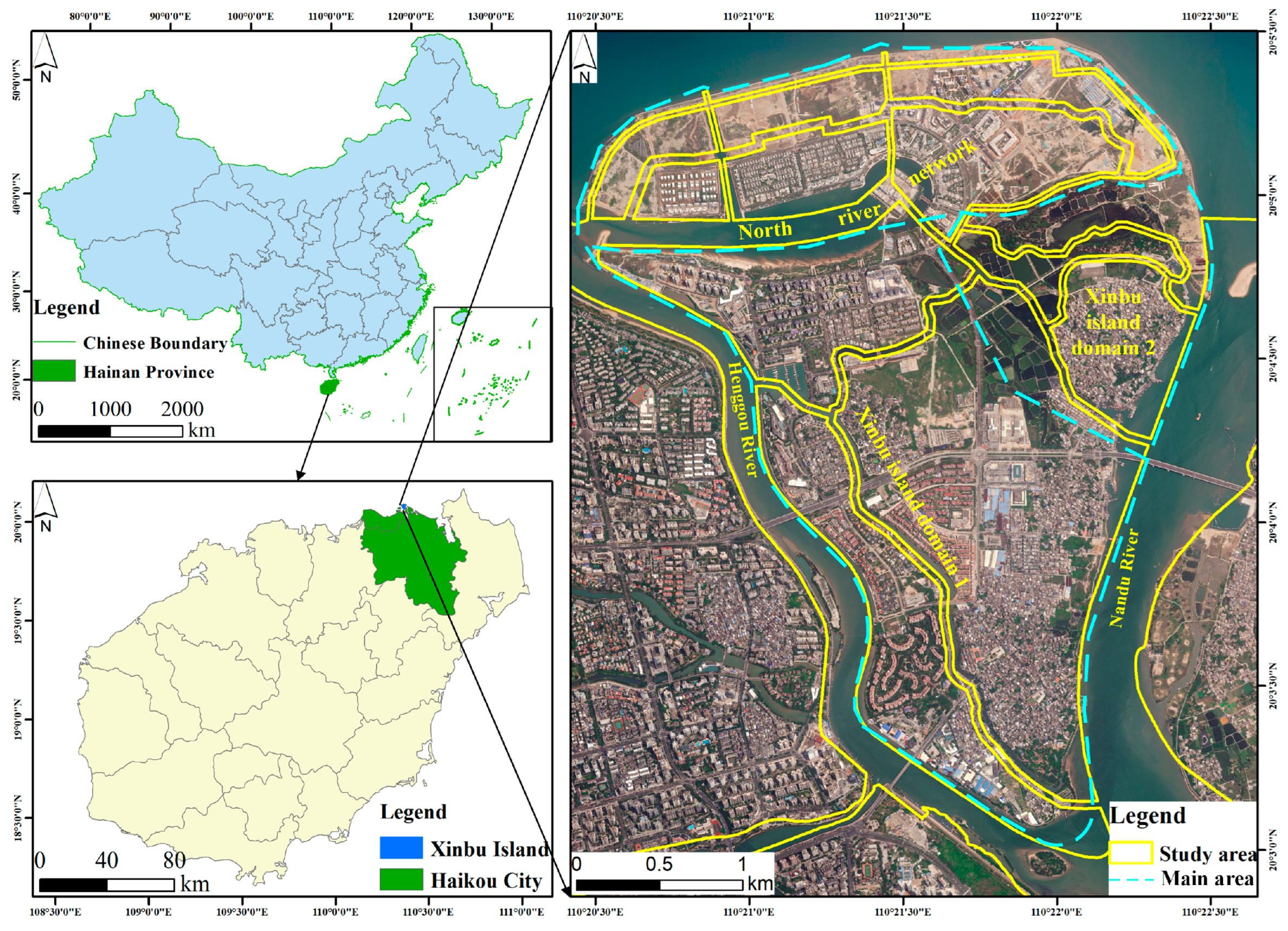
2.1. Study Area
2.2. Data Sources
3. Method
3.1. Tracer-Based Salinity Intrusion Simulation Model
3.2. Salinity Intrusion Process Exploration Using Multi-Source Tracer Analysis
3.3. Salinity Control Measures Arrangement Based on Intrusion Path Recognition
4. Results
4.1. Model Building and Validation
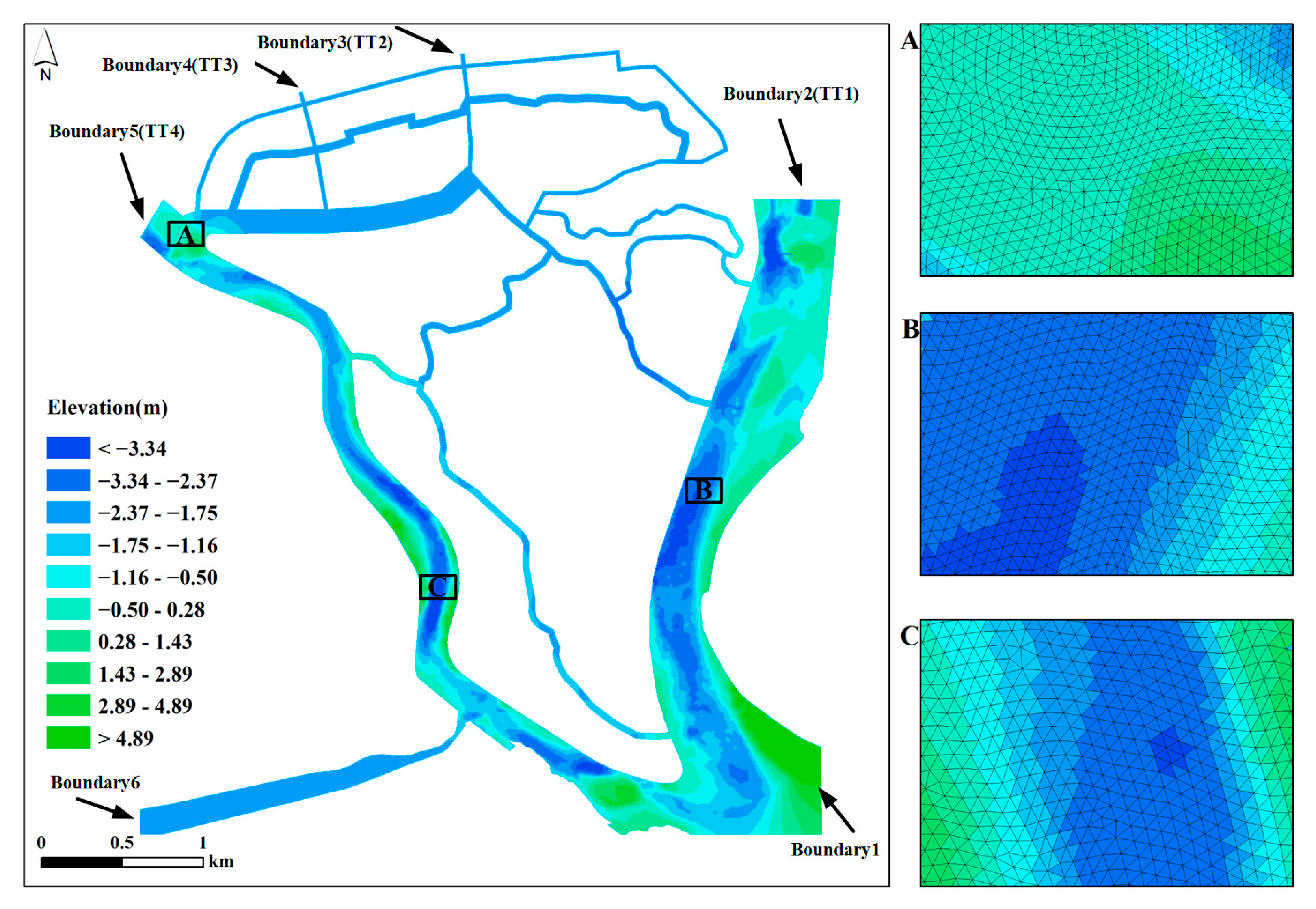
4.1.1. Boundary and Initial Conditions
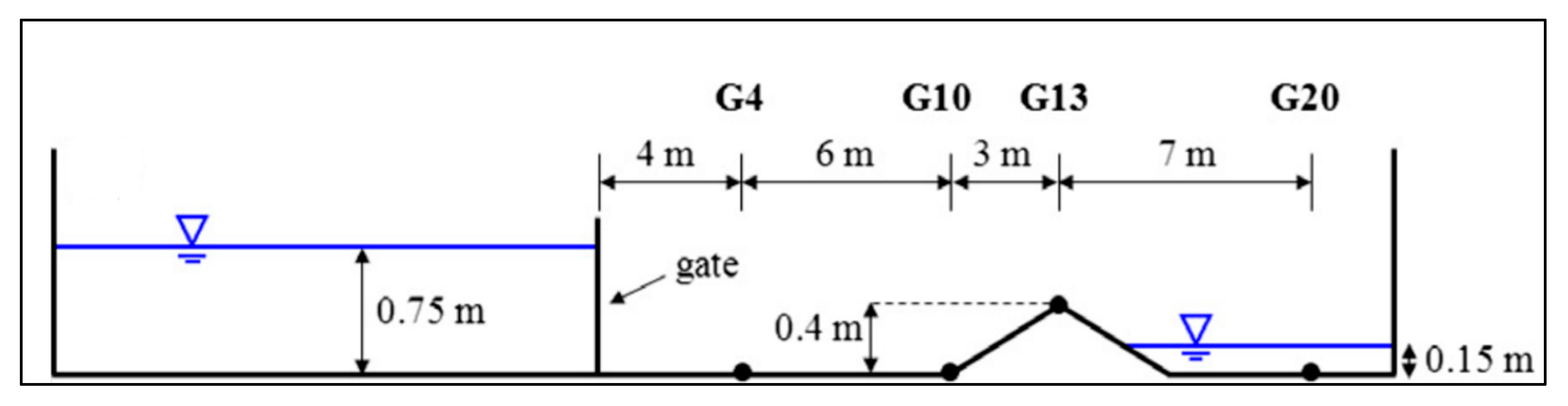
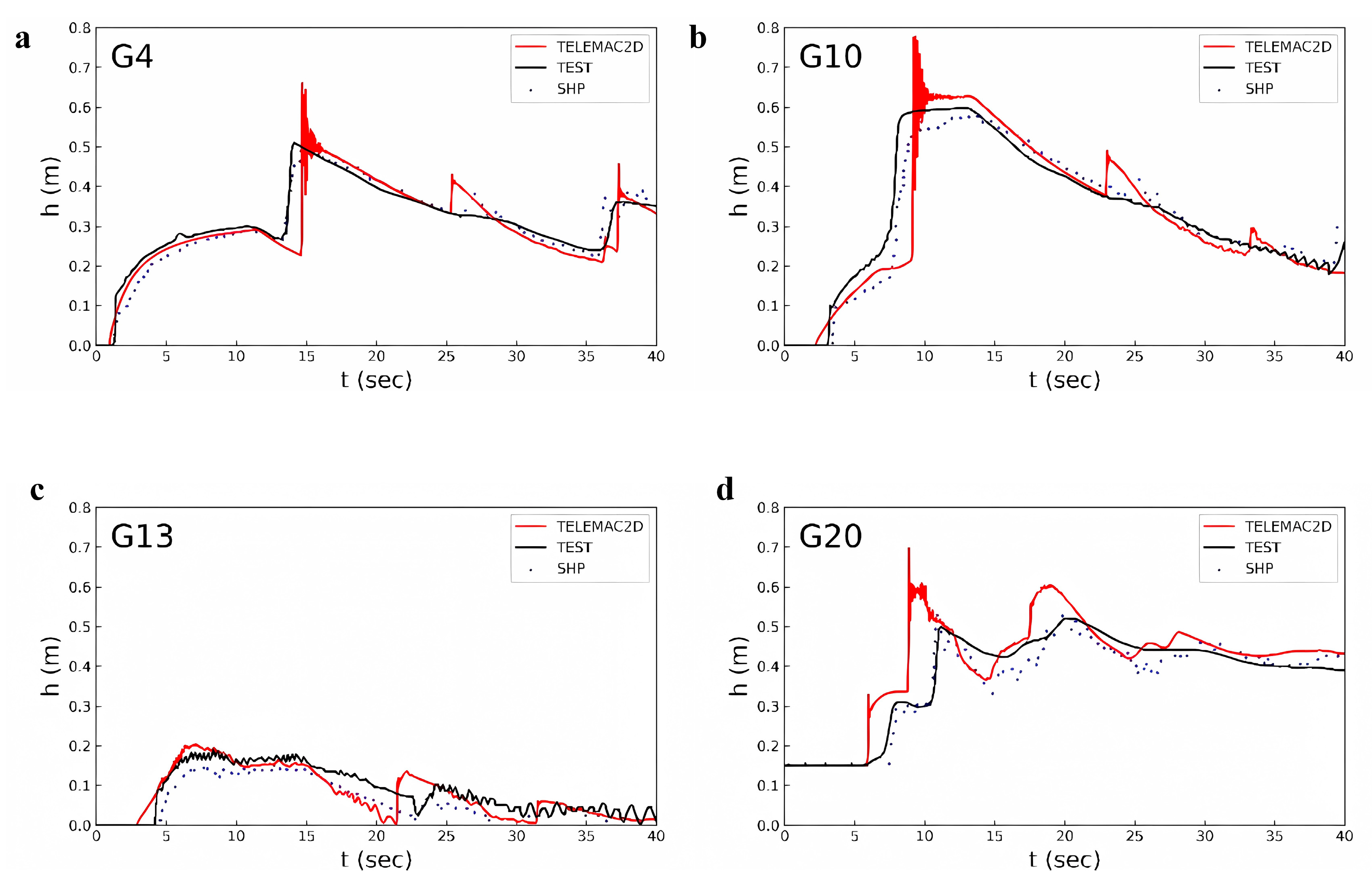
4.1.2. Model Validation
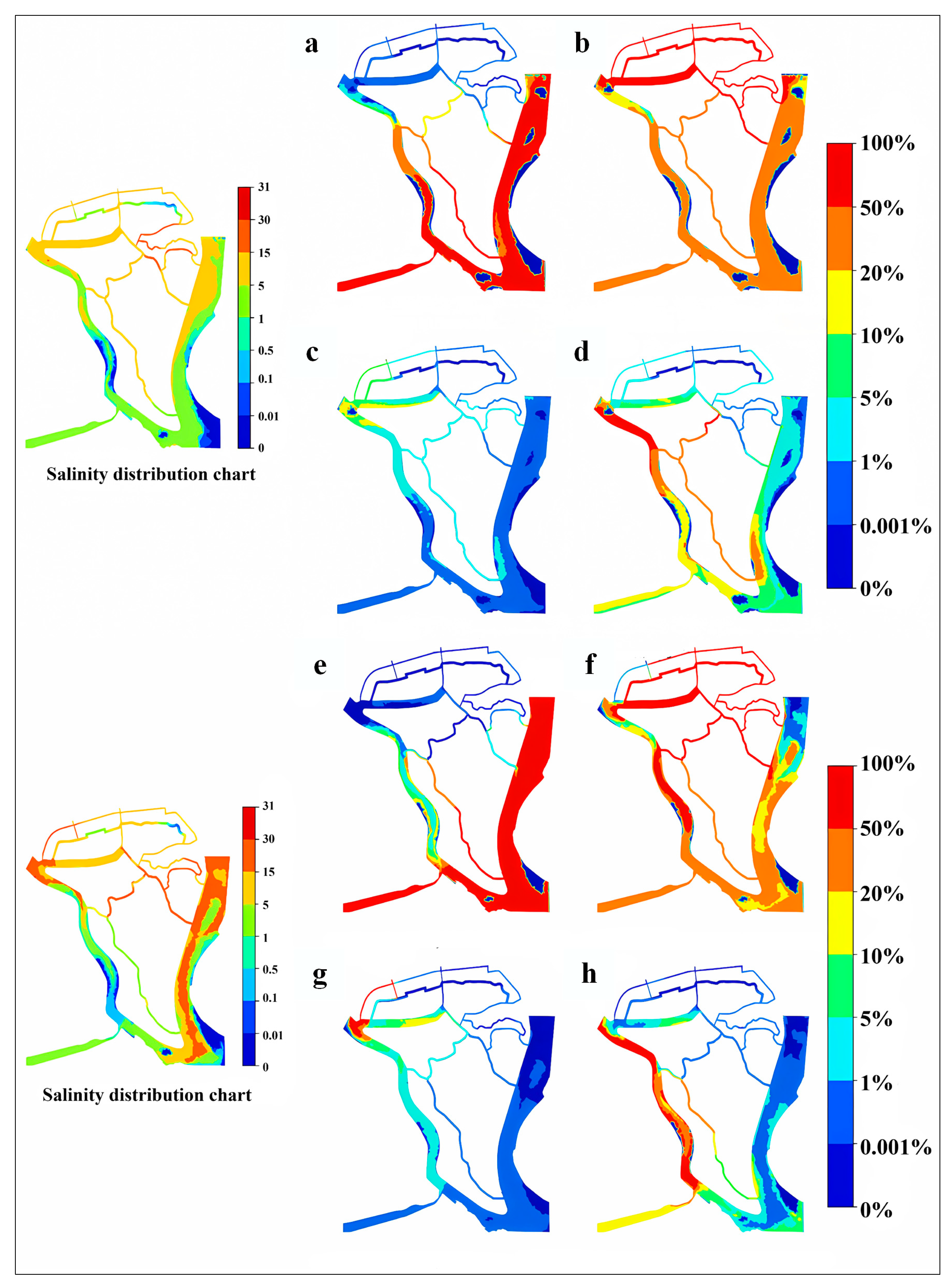
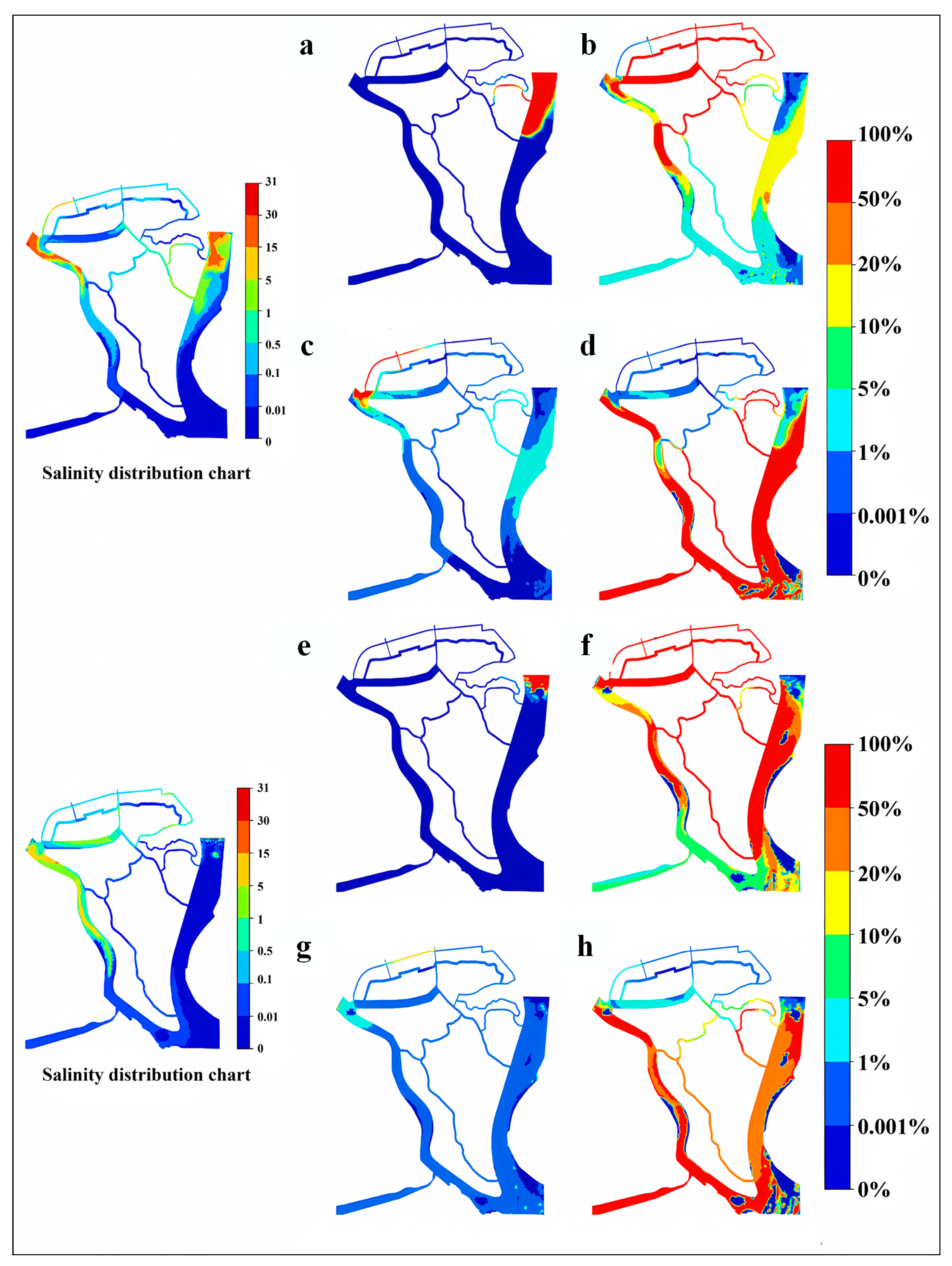
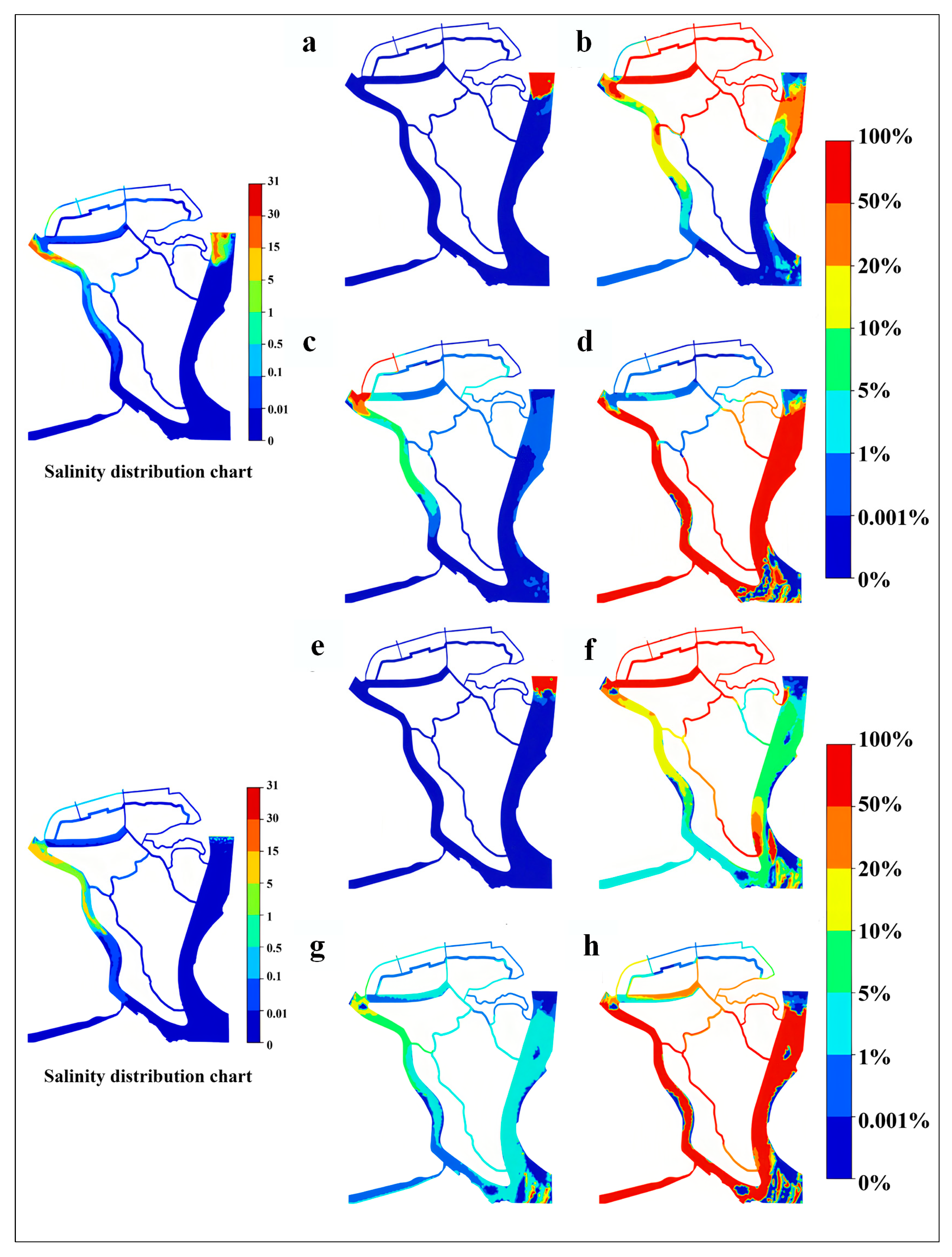
4.2. Multi-Source Salinity Intrusion Results
4.3. Results of Flow Field of Salinity Intrusion Channel
4.4. Analysis of the Results of Measures Taken
5. Discussion
5.1. Location Analysis of Governance Measures
5.2. Innovation
5.2.1. Multi-Source Tracers Are Used to Accurately Distinguish Salinity Sources in Complex River Networks
5.2.2. Precise Control Strategy Positioning Based on Comprehensive Analysis of Salinity Intrusion Flow Field
5.3. Limitations
6. Conclusions
- (1)
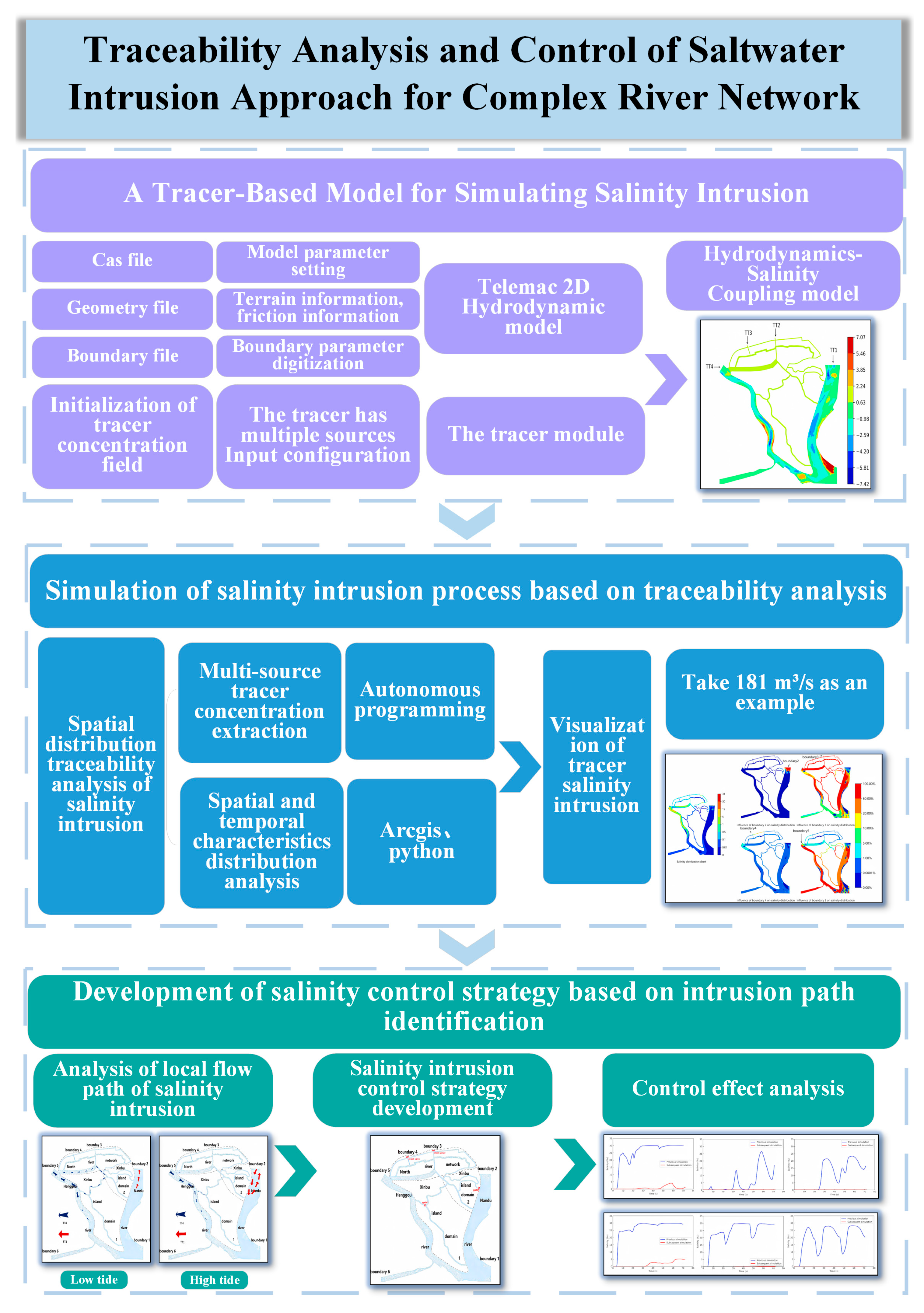
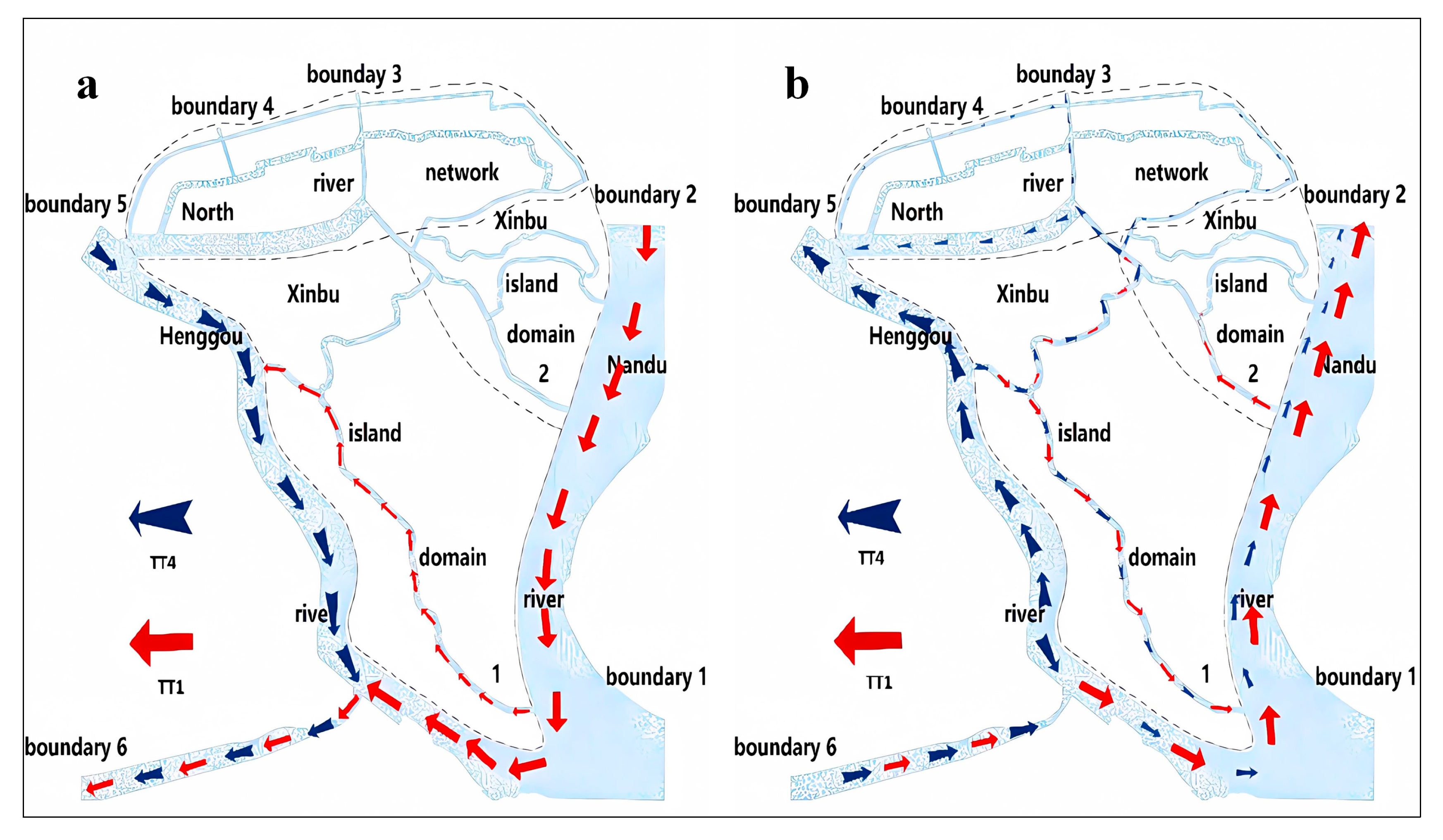
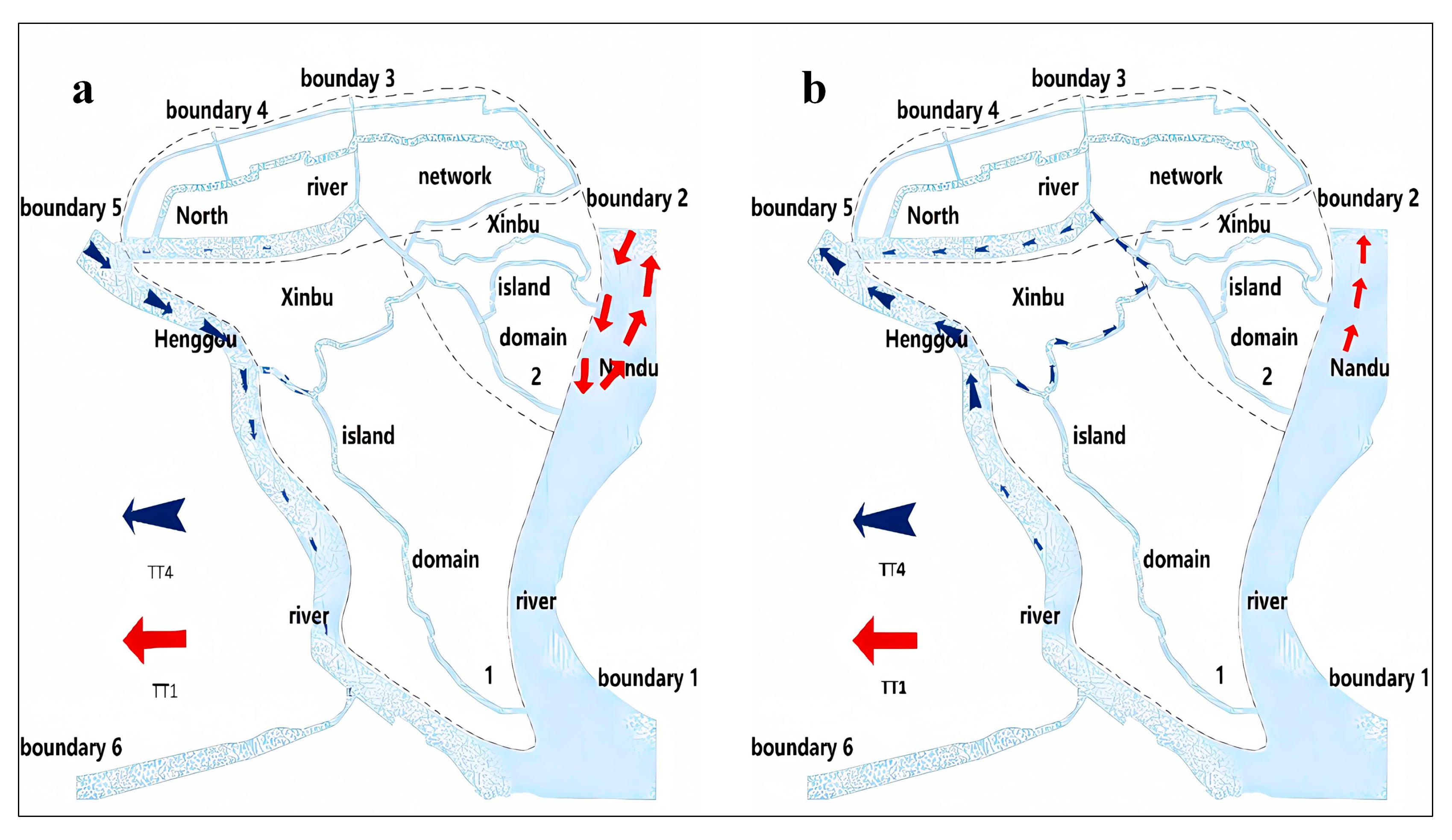
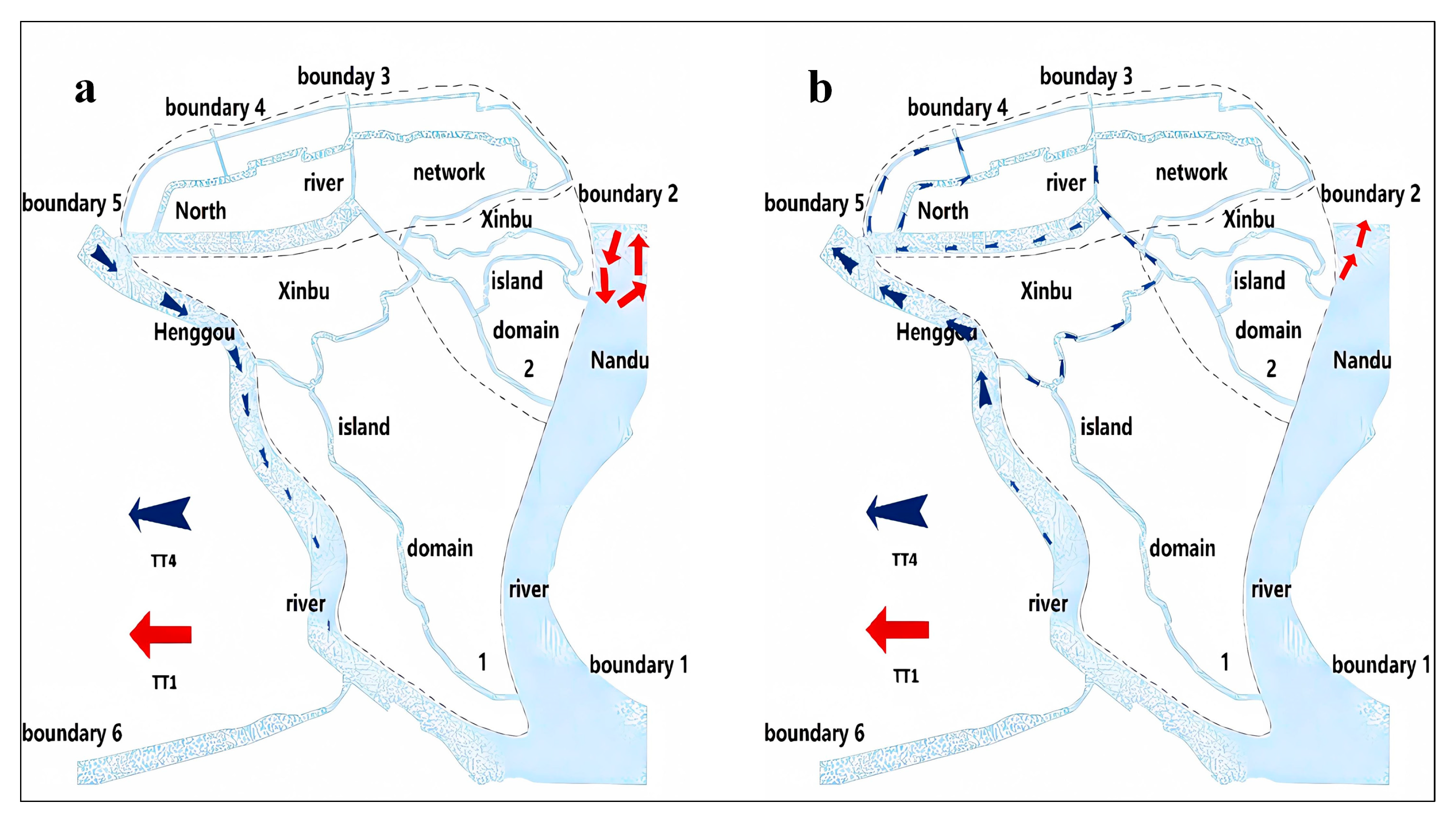
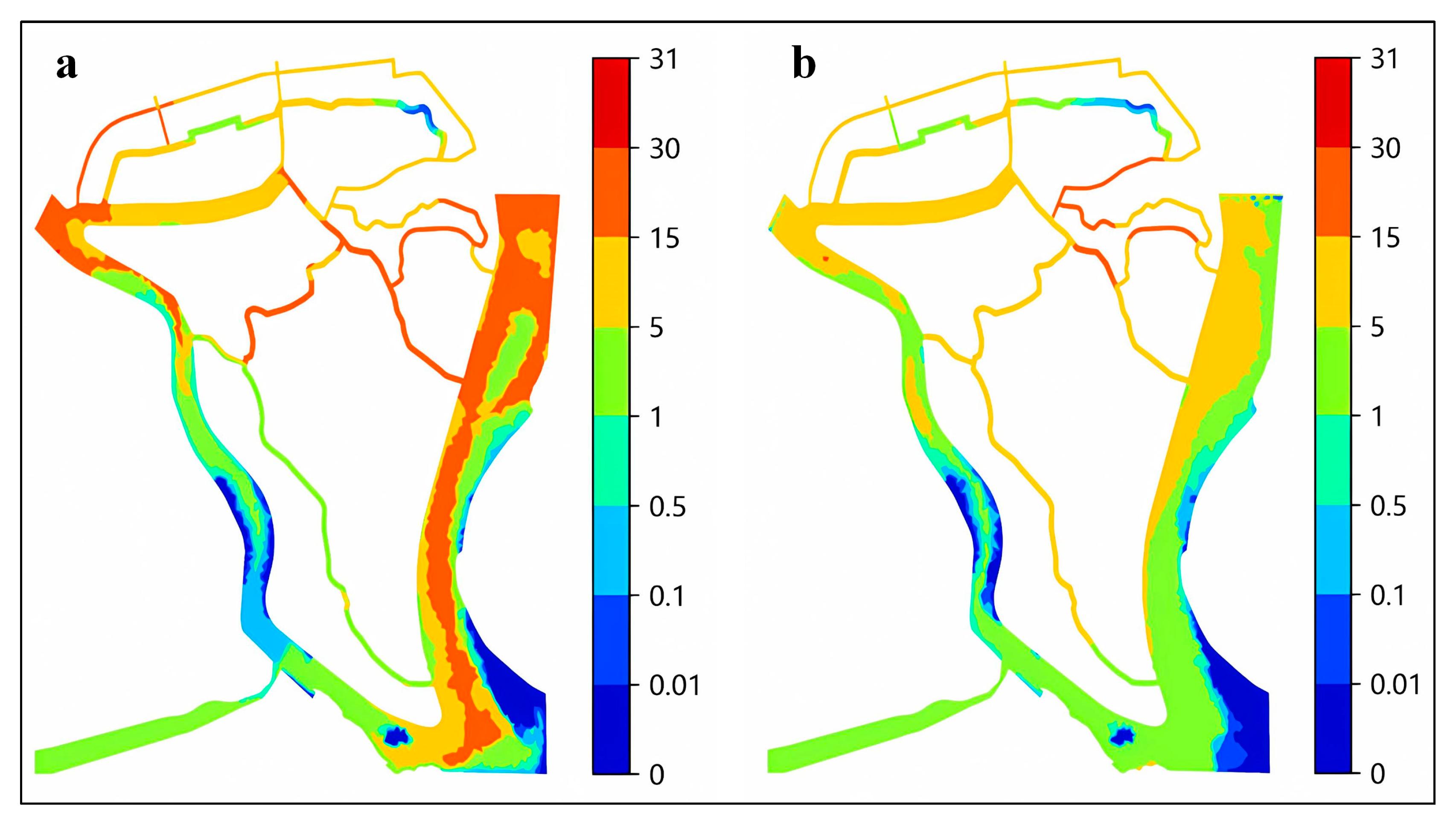
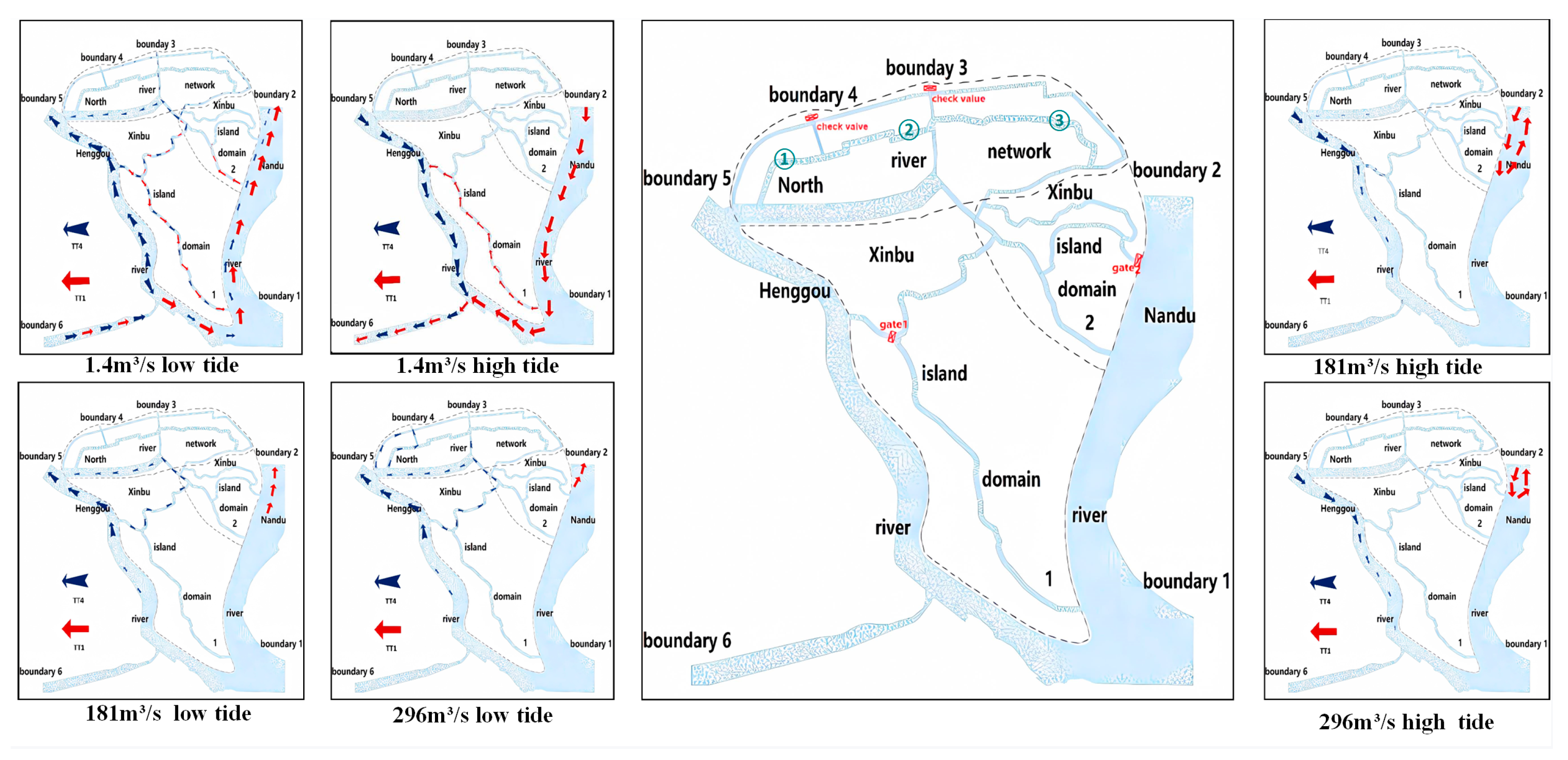
- By assigning unique conservative tracers to each estuary, the model overcame the limitation of conventional salinity models, which only reflect the total salinity distribution, and achieved accurate discrimination of salinity sources. The results demonstrate that this method can quantitatively reveal the salinity contribution ratio from different estuaries to specific areas within the river network under various hydrological conditions.
- (2)
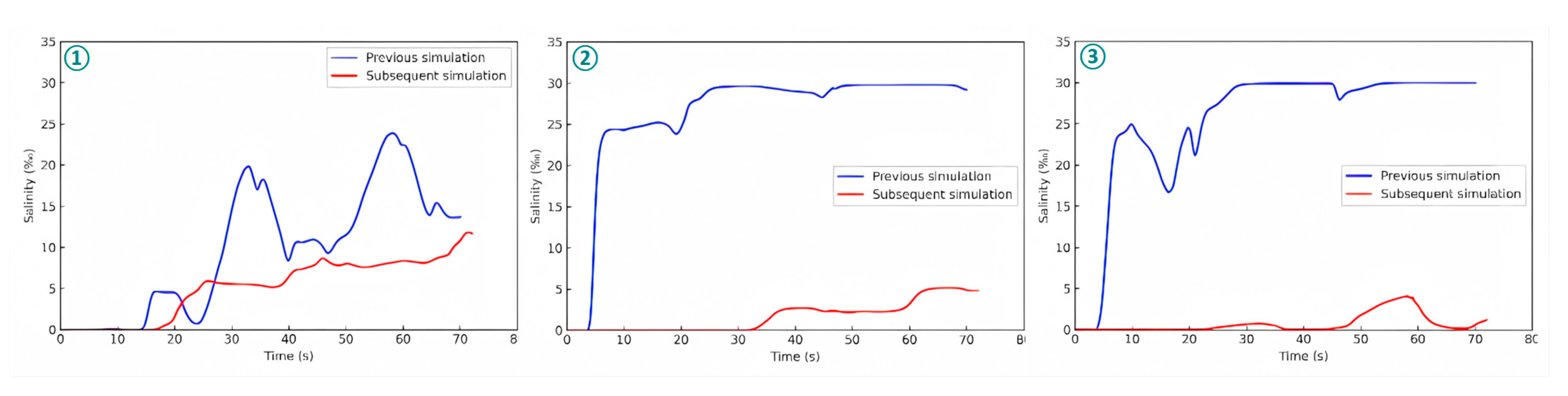
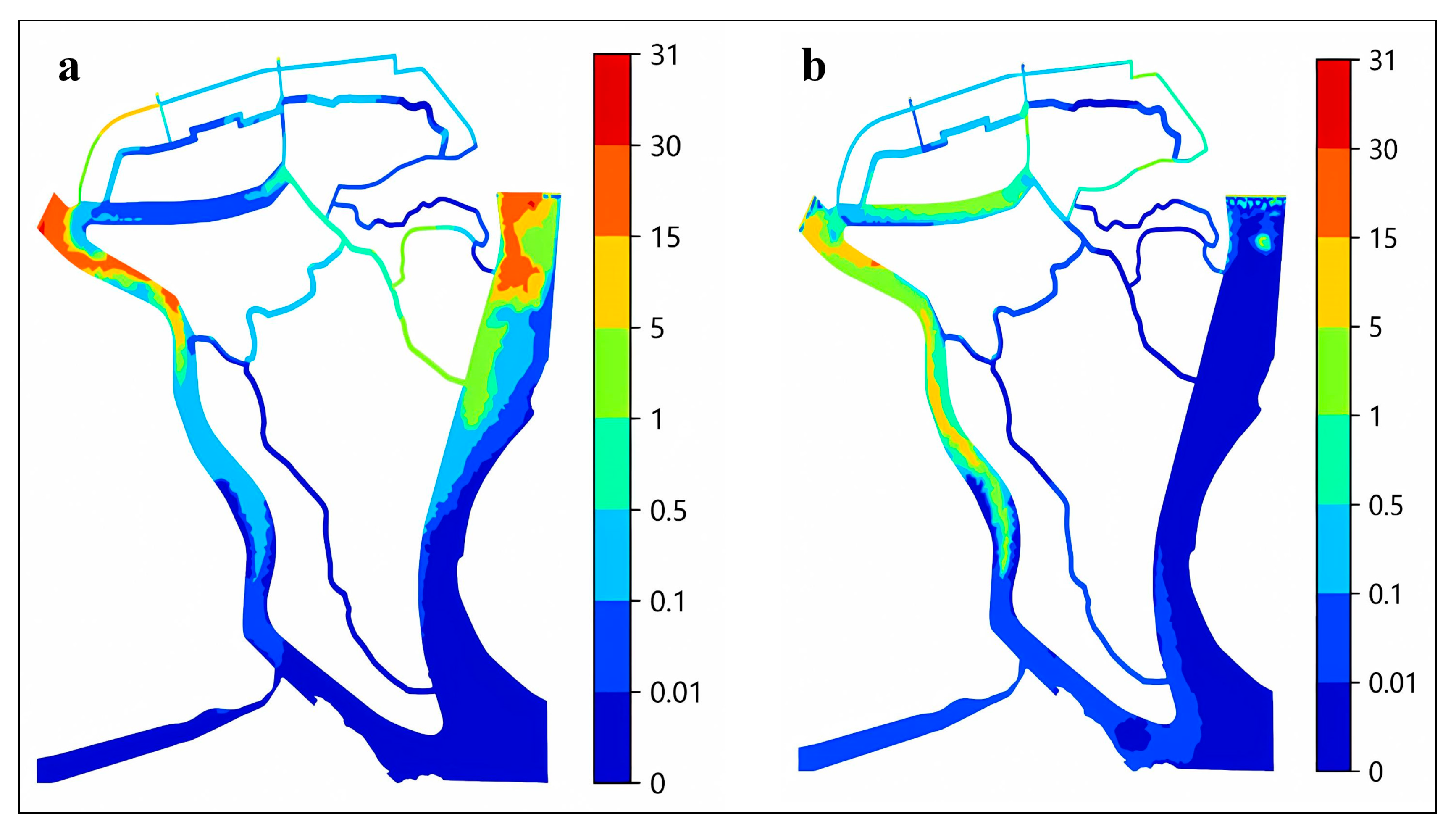
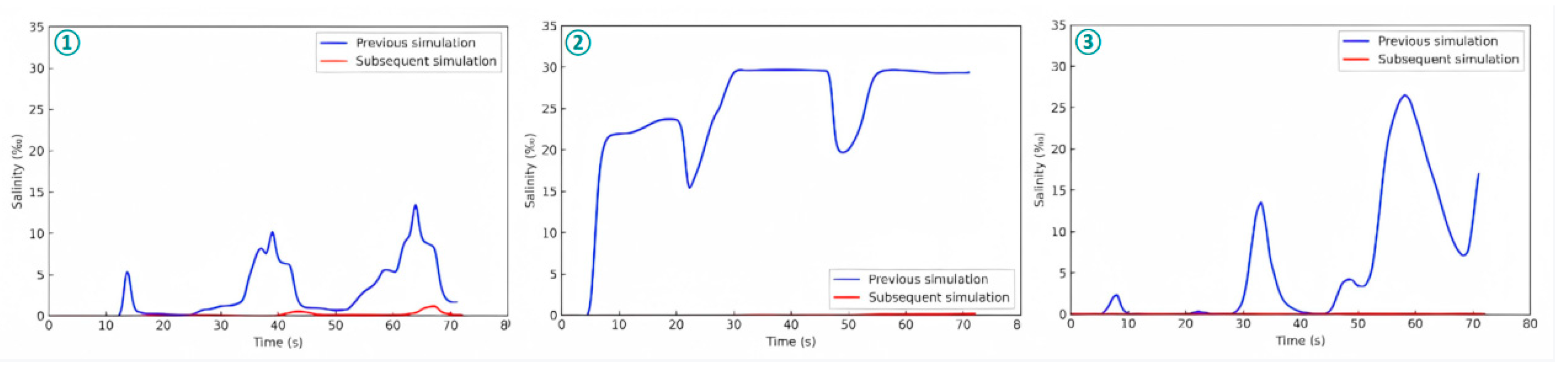
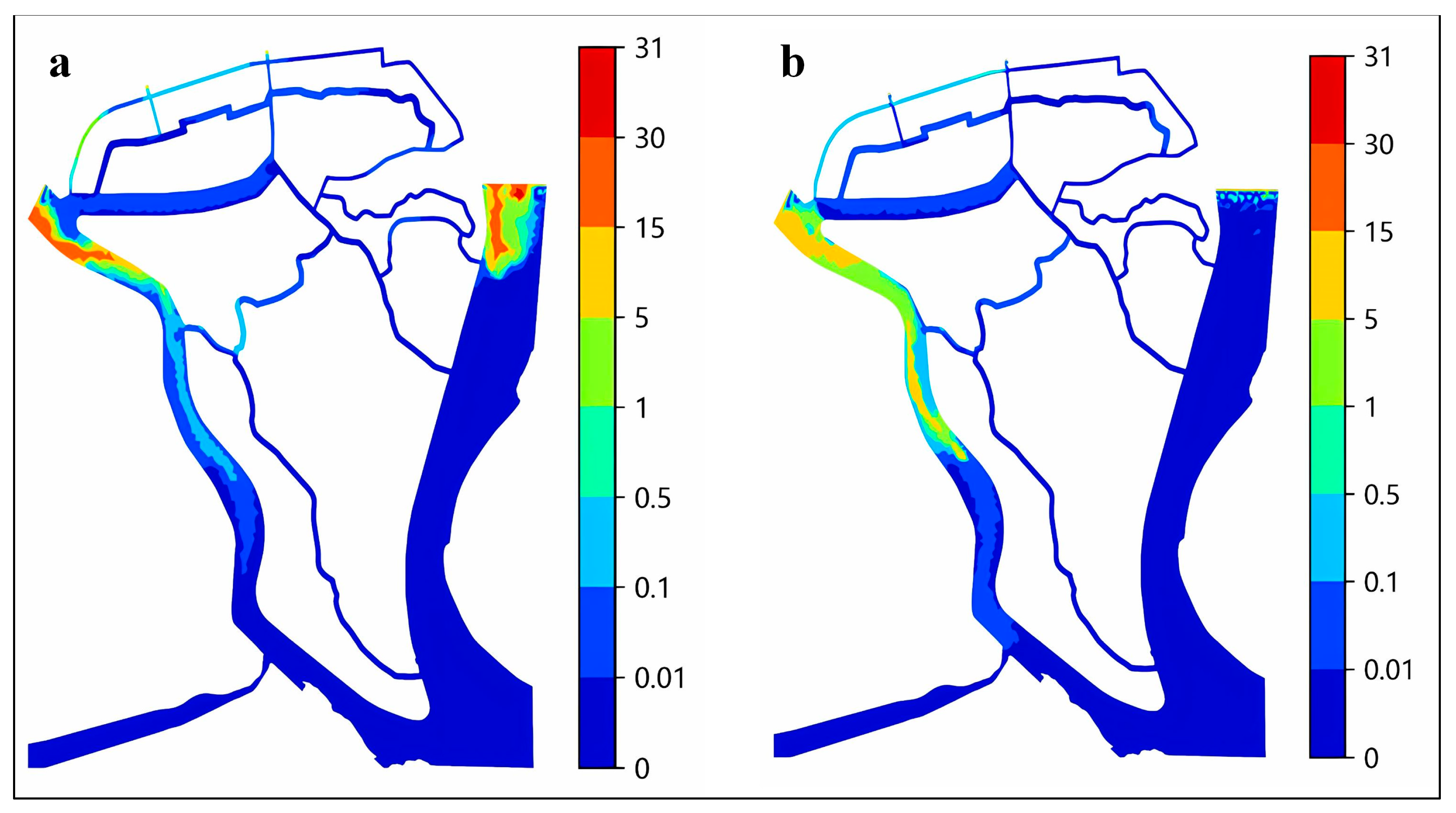
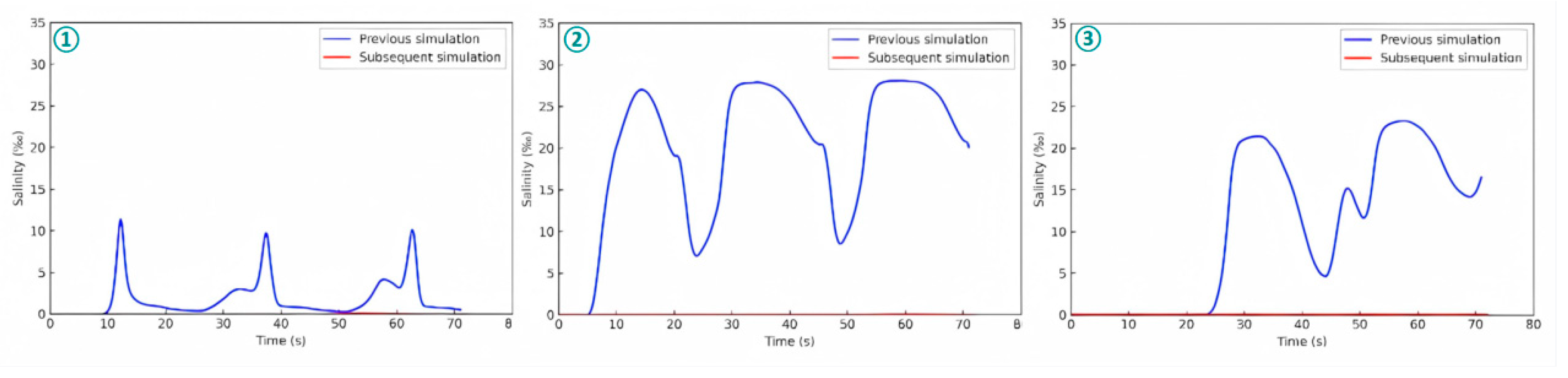
- The quantitative source apportionment (contribution ratios) and intrusion path information obtained from tracer simulations formed the scientific basis for formulating highly effective control strategies. This study found that saltwater intrusion in key areas, such as the northern river network, is primarily dominated by specific estuaries. The targeted engineering measures designed based on these findings showed significant inhibitory effects in the simulations. For instance, under flow conditions of 181 m3/s and 296 m3/s, the salinity concentration at monitoring points in the northern river network decreased significantly after implementation, with a maximum reduction of up to 27%. This proves the high effectiveness of control strategies based on traceability analysis.
- (3)
- The study provides a robust methodological framework and a valuable reference for addressing similar salinity intrusion challenges in ecologically vulnerable and socio-economically critical estuarine regions worldwide. The cost-effectiveness of the strategy is demonstrated by its ability to achieve significant salinity suppression through targeted interventions at identified critical points, optimizing the use of often-limited management funds. Its operational feasibility is underpinned by the application of a standard, widely supported hydrodynamic model. Most importantly, the framework serves as a powerful tool for future-proofing coastal planning against sea-level rise, enabling stakeholders to test and optimize control strategies under various climate scenarios before implementation. This transition from reactive to proactive management is essential for the sustainable development of estuaries in the Anthropocene.
Author Contributions
Funding
Data Availability Statement
Conflicts of Interest
References
- He, W.; Zhang, J.; Yu, X.; Chen, S.; Luo, J. Effect of Runoff Variability and Sea Level on Saltwater Intrusion: A Case Study of Nandu River Estuary, China. Water Resour. Res. 2018, 54, 9919–9934. [Google Scholar] [CrossRef]
- Jung, N.W.; Lee, G.; Dellapenna, T.M.; Jung, Y.; Jo, T.; Chang, J.; Figueroa, S.M. Economic Development Drives Massive Global Estuarine Loss in the Anthropocene. Earths Future 2024, 12, 13. [Google Scholar] [CrossRef]
- de la Reguera, E.; Veatch, J.; Gedan, K.; Tully, K.L. The effects of saltwater intrusion on germination success of standard and alternative crops. Environ. Exp. Bot. 2020, 180, 11. [Google Scholar] [CrossRef]
- Cao, T.; Han, D.; Song, X. Past, present, and future of global seawater intrusion research: A bibliometric analysis. J. Hydrol. 2021, 603, 14. [Google Scholar] [CrossRef]
- Werner, A.D.; Lockington, D.A. Tidal impacts on riparian salinities near estuaries. J. Hydrol. 2006, 328, 511–522. [Google Scholar] [CrossRef]
- Colon-Rivera, R.J.; Feagin, R.A.; West, J.B.; López, N.B.; Benítez-Joubert, R.J. Hydrological modification, saltwater intrusion, and tree water use of a Pterocarpus officinalis swamp in Puerto Rico. Estuar. Coast. Shelf Sci. 2014, 147, 156–167. [Google Scholar] [CrossRef]
- Guerra-Chanis, G.E.; Laurel-Castillo, J.A.; Schettini, C.A.; Kakoulaki, G.; Souza, A.J.; Valle-Levinson, A. Saltwater intrusion in estuaries with different dynamic depths. Reg. Stud. Mar. Sci. 2022, 51, 102186. [Google Scholar] [CrossRef]
- Yuan, Y.; Liang, D.; Rui, H. The numerical simulation and analysis of three-dimensional seawater intrusion and protection projects in porous media. Sci. China Ser. G-Phys. Mech. Astron. 2009, 52, 92–107. [Google Scholar] [CrossRef]
- Arslan, H.; Demir, Y. Impacts of seawater intrusion on soil salinity and alkalinity in Bafra Plain, Turkey. Environ. Monit. Assess. 2013, 185, 1027–1040. [Google Scholar] [CrossRef] [PubMed]
- Becker, M.L.; Luettich, R.A.; Mallin, M.A. Hydrodynamic behavior of the Cape Fear River and estuarine system: A synthesis and observational investigation of discharge–salinity intrusion relationships. Estuar. Coast. Shelf Sci. 2010, 88, 407–418. [Google Scholar] [CrossRef]
- Parsa, J.; Etemad-Shahidi, A. An empirical model for salinity intrusion in alluvial estuaries. Ocean Dyn. 2011, 61, 1619–1628. [Google Scholar] [CrossRef]
- Jeong, S.; Yeon, K.; Hur, Y.; Oh, K. Salinity intrusion characteristics analysis using EFDC model in the downstream of Geum River. J. Environ. Sci. 2010, 22, 934–939. [Google Scholar] [CrossRef] [PubMed]
- Abdalla, F. Ionic ratios as tracers to assess seawater intrusion and to identify salinity sources in Jazan coastal aquifer, Saudi Arabia. Arab. J. Geosci. 2016, 9, 40. [Google Scholar] [CrossRef]
- Tran Anh, D.; Hoang, L.P.; Bui, M.D.; Rutschmann, P. Simulating Future Flows and Salinity Intrusion Using Combined One- and Two-Dimensional Hydrodynamic Modelling—The Case of Hau River, Vietnamese Mekong Delta. Water 2018, 10, 897. [Google Scholar] [CrossRef]
- He, W.; Zhou, H.; Zhang, J.; Xu, H.; Liu, C. Combined effects of runoff increase and sea level rise on the water exchange and saltwater intrusion for an estuary bay in non-flood season. Hydrol. Process. 2022, 36, 16. [Google Scholar] [CrossRef]
- Xu, Y.; Zhang, W.; Zhu, Y.; Zheng, J. Analytical solution for salt intrusion in multiple-freshwater-source estuaries: Application to Humen Estuary. Environ. Earth Sci. 2017, 76, 661. [Google Scholar] [CrossRef]
- Wajid Ijaz, M.; Mahar, R.B.; Ansari, K.; Siyal, A.A. Optimization of salinity intrusion control through freshwater and tidal inlet modifications for the Indus River Estuary. Estuar. Coast. Shelf Sci. 2019, 224, 51–61. [Google Scholar] [CrossRef]
- Javadi, A.; Hussain, M.; Sherif, M.; Farmani, R. Multi-objective Optimization of Different Management Scenarios to Control Seawater Intrusion in Coastal Aquifers. Water Resour. Manag. 2015, 29, 1843–1857. [Google Scholar] [CrossRef]
- Brockway, R.; Bowers, D.; Hoguane, A.; Dove, V.; Vassele, V. A note on salt intrusion in funnel-shaped estuaries: Application to the Incomati estuary, Mozambique. Estuar. Coast. Shelf Sci. 2006, 66, 1–5. [Google Scholar] [CrossRef]
- Fu, C.J. Ecological Effect Analysis and High Efficiency Utilization of Water Resource For Nandujiang River Estuary; Tianjin University: Tianjin, China, 2008. (In Chinese) [Google Scholar]
- Hervouet, J.M. Hydrodynamics of Free Surface Flows: Modelling with the Finite Element Method; John Wiley & Sons Ltd.: Chichester, UK, 2007. [Google Scholar]
- Qi, W.C. Development of a Coupled Urban Hydrological-Hydrodynamic Model and Its Application; Tianjin University: Tianjin, China, 2022. (In Chinese) [Google Scholar]
- Morris, M.W. CADAM: Concerted Action on Dambreak Modelling; HR Wallingford Ltd.: Wallingford, UK, 2000. [Google Scholar]
- Chang, T.; Kao, H.-M.; Chang, K.-H.; Hsu, M.-H. Numerical simulation of shallow-water dam break flows in open channels using smoothed particle hydrodynamics. J. Hydrol. 2011, 408, 78–90. [Google Scholar] [CrossRef]
- Abouelsaad, O.; Matta, E.; Hinkelmann, R. Hydrodynamic response of artificial lagoons considering tide, wind and tracer—Case study El Gouna, Egypt. Reg. Stud. Mar. Sci. 2022, 52, 13. [Google Scholar] [CrossRef]
- Moulinec, C.; Denis, C.; Pham, C.-T.; Rougé, D.; Hervouet, J.-M.; Razafindrakoto, E.; Barber, R.; Emerson, D.; Gu, X.-J. TELEMAC: An efficient hydrodynamics suite for massively parallel architectures. Comput. Fluids 2011, 51, 30–34. [Google Scholar] [CrossRef]



| Data Type | Data Accuracy | Data Sources |
|---|---|---|
| DEM data | 10 m × 10 m | China Communications Water Transportation Planning and Design Institute Hainan Co., Ltd. |
| Roughness data | / | Local Research |
| Tidal data | Hour | Local Statistics Office |
| Flow data | Hour |
| Working Condition | Upstream Boundary | Downstream Boundary | Tracer Settings |
|---|---|---|---|
| 1 | 1.4 m3/s | Tide data for 15–17 December 2020 | Boundaries 2 to 5 TT1–TT4 |
| 2 | 181 m3/s | ||
| 3 | 296 m3/s |
| Item | Northern River Network | Xinbu Island Domain 1 | Xinbu Island Domain 2 | Flow Condition |
|---|---|---|---|---|
| TT1 Range | 20–50% | >50% | / | 1.4 m3/s, High Tide |
| <20% | 20–50% | / | 181 m3/s, High Tide | |
| / | >50% (Estuary) | / | 296 m3/s, High Tide | |
| TT2 Range | >50% | >50% (Henggou R.) | 20–50% | 1.4 m3/s, High Tide |
| 20–50% | 20–50% | >50% | 181 m3/s, Low Tide | |
| >50% | <20% (Henggou R.) | <20% (Nandu R.) | 296 m3/s, High Tide | |
| TT3 Range | <1% | <1% | <1% | 1.4 m3/s, High Tide |
| 1–5% | 1–5% | / | 181 m3/s, Low Tide | |
| ~5% | ~5% | ~5% | 296 m3/s, Low Tide | |
| TT4 Range | 20–50% | <20% | >50% | 1.4 m3/s, Low Tide |
| >50% | >50% | >50% | 181 m3/s, Low Tide | |
| 20–50% | 20–50% | >50% | 296 m3/s, Low Tide |
| Flow Condition | Monitoring Point | Salinity Before Measures | Salinity After Measures | Reduction Amount | Reduction Percentage |
|---|---|---|---|---|---|
| 1.4 m3/s | Point 1 | 24% | 16% | 8% | 33.3% |
| Point 2 | 30% | 5% | 25% | 83.3% | |
| Point 3 | 30% | 4% | 26% | 86.7% | |
| 181 m3/s | Point 1 | 16% | 3% | 13% | 81.3% |
| Point 2 | 15% | 0% | 15% | 100% | |
| Point 3 | 27% | 0% | 27% | 100% | |
| 296 m3/s | Point 1 | 12% | 0% | 12% | 100% |
| Point 2 | 27% | 0% | 27% | 100% | |
| Point 3 | 23% | 0% | 23% | 100% |
Disclaimer/Publisher’s Note: The statements, opinions and data contained in all publications are solely those of the individual author(s) and contributor(s) and not of MDPI and/or the editor(s). MDPI and/or the editor(s) disclaim responsibility for any injury to people or property resulting from any ideas, methods, instructions or products referred to in the content. |
© 2025 by the authors. Licensee MDPI, Basel, Switzerland. This article is an open access article distributed under the terms and conditions of the Creative Commons Attribution (CC BY) license (https://creativecommons.org/licenses/by/4.0/).
Share and Cite
Liu, J.; Liang, H.; Zhang, L.; Hu, D.; Yang, W. Saltwater Intrusion Analysis and Control for Complex River Network Using Multi-Source Tracer-Aided Modeling Simulation. Water 2025, 17, 3483. https://doi.org/10.3390/w17243483
Liu J, Liang H, Zhang L, Hu D, Yang W. Saltwater Intrusion Analysis and Control for Complex River Network Using Multi-Source Tracer-Aided Modeling Simulation. Water. 2025; 17(24):3483. https://doi.org/10.3390/w17243483
Chicago/Turabian StyleLiu, Jiangchuan, Haoyang Liang, Lihong Zhang, De Hu, and Weichao Yang. 2025. "Saltwater Intrusion Analysis and Control for Complex River Network Using Multi-Source Tracer-Aided Modeling Simulation" Water 17, no. 24: 3483. https://doi.org/10.3390/w17243483
APA StyleLiu, J., Liang, H., Zhang, L., Hu, D., & Yang, W. (2025). Saltwater Intrusion Analysis and Control for Complex River Network Using Multi-Source Tracer-Aided Modeling Simulation. Water, 17(24), 3483. https://doi.org/10.3390/w17243483