Article

Unravelling Metabolic Pathways and Evaluating Process Performances in Anaerobic Digestion of Livestock Manures


1
Department of Environmental Engineering, Chungbuk National University, Cheongju 28644, Republic of Korea
2
Department of Advanced Energy Engineering, Chosun University, Gwangju 61452, Republic of Korea
*
Author to whom correspondence should be addressed.
These authors contributed equally to this work.
Water 2025, 17(24), 3464; https://doi.org/10.3390/w17243464 (registering DOI)
Submission received: 31 October 2025 / Revised: 26 November 2025 / Accepted: 4 December 2025 / Published: 6 December 2025

Abstract

Anaerobic digestion (AD) provides significant environmental benefits by converting livestock manures, such as cattle manure (CM) and pig manure (PM), into biogas and nutrient-rich digestate, supporting circular economy principles. However, challenges arise when feedstock overload disrupts microbial balance, leading to reduced methane (CH4) yields and process instability. This study examined the performance of AD using CM and PM with gradually increasing organic loading rates (OLR). At steady state, CH4 yields were 120.32 mL-CH4/g VS for CM and 229 mL-CH4/g VS for PM. The lower yield for CM is attributed to its high cellulose and hemicellulose content, which exceeds 50% and is difficult to degrade. In contrast, PM showed more efficient carbohydrate degradation, resulting in higher CH4 production. Key methanogens, including Methanocorpusculum, Methanosaeta, Methanosarcina, Methanobacterium, and Methanospirillum, were present in both reactors. Metagenomic analysis revealed that pathways for degrading cellulose and hemicellulose were poorly represented in CM, while PM exhibited enhanced total volatile fatty acid metabolism. This study offers valuable insights into the metabolic pathways associated with CM and PM in anaerobic digestion.

1. Introduction

The global production of livestock manure has significantly increased over the years, reaching an annual total of 13 billion tons, and this figure is expected to rise further. Livestock manure is a mixture of feces, urine, and flush water, making it inherently biodegradable. However, improper management of this waste can lead to severe environmental contamination, affecting soil, air, and water quality [1]. Traditionally, livestock manure has been treated through composting and returned to the soil, providing essential nutrients and enhancing soil quality, ultimately benefiting agricultural practices. Nevertheless, this method raises environmental concerns, particularly regarding nutrient accumulation, eutrophication, and greenhouse gas emissions. Livestock manure is responsible for approximately 25% of total CO2 emissions from agriculture, amounting to about 21.2 million tons of CO2 equivalent per year [2]. Additionally, the application of fertilizers derived from cattle manure (CM) and pig manure (PM) contributes to around 53% of total greenhouse gas emissions, equating to approximately 4.9 million tons of CO2 equivalent annually [3]. These statistics underscore the urgent need to rethink our approach to managing livestock manure, especially that of cattle and pigs.
Anaerobic digestion (AD) has emerged as a promising alternative for treating livestock manure. This biological process efficiently decomposes the organic compounds found in livestock manures while simultaneously producing biogas, a valuable renewable energy source. Previous studies have demonstrated the efficacy of AD for various types of livestock manures, particularly CM and PM. Livestock manures, such as CM and PM, are nutrient-rich but differ significantly in their biochemical structure and composition, which can impact AD performance. CM typically contains a higher fiber content, with the non-biodegradable fraction contributing to a lower biogas production rate [4]. In contrast, PM is richer in nitrogen (N), which can lead to ammonia (NH3) inhibition during the digestion process [5]. Most existing research on the AD of livestock manures has primarily focused on biochemical methane potential (BMP) tests and operational parameters such as organic loading rate (OLR). BMP tests assess the potential for methane (CH4) production under optimal conditions, while studies on OLR investigate process stability and biogas yield [2,6,7]. Although these studies provide valuable insights into CH4 yield and process stability, they often treat AD as a “black box,” offering limited exploration of the microbial and metabolic dynamics that drive the process. The lack of detailed insights into metabolic pathways and enzyme activities hampers the development of strategies to mitigate inhibitions associated with different substrates.
To gain a better understanding of the highly diverse microbial communities present in AD, numerous studies have focused on taxonomic characterization. Traditionally, this has been achieved through 16S rRNA gene clone libraries followed by Sanger sequencing. However, these methods have largely been replaced by high-throughput next-generation sequencing of 16S rRNA gene amplicons [8]. While effective for taxonomic identification, these techniques primarily allow for indirect predictions of metabolic pathways and may introduce biases due to the necessary polymerase chain reaction amplification step. In contrast, whole-genome shotgun sequencing offers significant advantages. This method directly sequences extracted DNA, providing more detailed insights into microbial identities, metabolic functions, and other biological information, including the discovery of novel genes. The decreasing costs and high-resolution capabilities of metagenomic sequencing have made it increasingly significant for studying microbial communities in AD. Several studies have explored metagenomes associated with AD, often focusing on taxonomy and genome-centric functional analyses. Some efforts have been directed toward reconstructing metabolic pathways, and the genomes present in AD bioreactors [9]. Nevertheless, the application of shotgun-based metagenomics in AD, particularly concerning livestock manures, remains in its early stages.
Previous studies utilizing shotgun-based metagenomics in the AD of livestock manures have primarily focused on gene abundance and the classification of microorganisms involved in the AD of CM and PM, with limited attention given to the specific metabolic processes at play. For instance, one study evaluated microbial assembly and stability during the startup of a full-scale, two-phase AD system fed with CM. However, it primarily concentrated on reactor operation, bacterial and archaeal classification, and gene abundance, lacking a detailed analysis of metabolic pathways [10]. Similarly, research on PM has emphasized the classification of bacterial and archaeal communities, often focusing on antibiotic resistance genes [11]. This oversight restricts the understanding of how reactor performance is influenced by metabolic processes, particularly in relation to the inhibition of AD caused by factors such as N accumulation and the presence of non-biodegradable materials. In summary, previous studies on the AD of livestock manures have concentrated on indirectly assessing reaction pathways and demonstrating process limitations through biogas production rates and microbial properties.
Based on the considerations outlined above, the objectives of this study are to elucidate the metabolic pathways, evaluate biogas production potential, and investigate inhibition mechanisms in the AD of CM and PM. By focusing on specific enzymes and metabolic pathways related to AD, this research aims to provide valuable insights that could significantly enhance biogas production strategies.

2. Materials and Methods

2.1. Inoculum and Feedstock Collection

An inoculum was collected from a full-scale AD reactor that processes food waste at a wastewater treatment facility in Gwangju City, Republic of Korea. The substrates, including CM and PM, were obtained directly from a local livestock farm (Chogye Agriculture Cooperative Corporation, Gwangju, Republic of Korea). After collection, both CM and PM were sieved for uniformity and stored in a freezer at −20 °C. The physicochemical characteristics of the inoculum, CM, and PM were analyzed prior to the experiment, and the results are summarized in Table S1.

2.2. Reactor Operation

Two semi-continuous stirred tank reactors (sCSTR) (Dooin Biotech, Daejeon, Republic of Korea) were operated for long-term evaluation using CM in reactor R-1 and PM in reactor R-2, with gradually increasing OLR. Each reactor had a total volume of 2 L and a working volume of 1.8 L, maintained in a temperature-controlled environment set at 35 °C with a mixing speed of 150 rpm. The hydraulic retention time (HRT) was maintained at 30 days, with daily feeding and discharge of substrate, prepared according to the specified OLR. All reactors were designed as mesophilic single-stage AD systems, constructed from stainless steel in a cylindrical structure measuring 200 mm in height and 110 mm in diameter. Detailed operational parameters and conditions for each reactor are summarized in Table S2.

2.3. Analytical Methods

The analysis of total solids (TS), volatile solids (VS), total chemical oxygen demand (TCOD), soluble chemical oxygen demand (SCOD), total nitrogen (TN), and total phosphorus (TP) was conducted following established standard procedures [8]. For the SCOD analysis, samples were centrifuged at 3000 rpm for 10 min and subsequently filtered through a 1.2 μm glass microfiber filter (GF/C, Whatman International, Maidstone, KEN UK) prior to measurement. The pH was determined using a pH meter (Orion Star A211, Thermo fisher Scientific, Waltham, MA, USA). Cellulose, hemicellulose, lignin, carbohydrate, protein, and lipid contents were quantified in accordance with the methodologies outlined in previous research [12]. The concentration of ammonium (NH4+) was analyzed using a dual-column ion chromatograph (Shimadzu Corporation LC-20A, Kyoto, Japan), equipped with a Shodex IC SI-90 4E column for anions and an IC YS-50 column for cations (Resonac, Tokyo, Japan). Biogas produced during the experiment was collected in a Tedlar bag and measured in a temperature-controlled environment using the water displacement method. The composition of the biogas from the reactors was analyzed with a 6890 N gas chromatograph (Agilent, Santa Clara, CA, USA), featuring a thermal conductivity detector and connected to a Shin Carbon Micro packed column (Restek, Bellefonte, PA, USA). The equations for calculating theoretical methane yield (TMY) and cumulative methane yield (CMY) are provided in the Supplementary Materials. Total volatile fatty acids (TVFAs) were analyzed using a liquid chromatograph (Shimadzu Corporation LC-2030 Plus, Kyoto, Japan) equipped with a UV-VIS detector and connected to an Aminex HPX-87 H column (Bio-Rad, Hercules, CA, USA). Each substrate was dried at 110 °C for two hours and then analyzed for carbon, hydrogen, oxygen, nitrogen, and sulfur content using an elemental analyzer (TruSpec Micro, LECO Corporation, St. Joseph, MI, USA). Additionally, other dissolved water quality parameters, such as alkalinity, were analyzed following standard methods [12], after filtering through a 1.2 μm glass microfiber filter (GF/C, Whatman International, Maidstone, KEN, UK).

2.4. Whole Genome Shotgun Sequencing

At steady state (OLR = 2 kg-VS/m3/d), bulk samples from each sCSTR were collected for microbial community analysis, which was performed by CJ Bioscience, Seoul, Republic of Korea. Genomic DNA extraction was carried out using the FastDNA Spin Kit (MP Biomedicals, Seoul, Republic of Korea), following the manufacturer’s instructions. The concentration of the extracted DNA was quantified using a Qubit 2.0 fluorometer (Invitrogen, Waltham, MA, USA). Sequencing libraries were prepared with the NEBNext Ultra II FS DNA Library Preparation Kit for Illumina (Illumina Inc., San Diego, CA, USA), in accordance with the manufacturer’s protocol for inputs of less than 100 ng. Metagenomic sequencing was performed on the NextSeq 1000 system, utilizing paired-end reads of 2 × 150 bp with the 300-cycle sequencing kit (NextSeq 1000 Reagent Kit, Illumina Inc., San Diego, CA, USA). Detailed methodologies for taxonomic and functional profiling are included in the Supplementary Materials. The raw sequencing data have been deposited in the NCBI Sequence Read Archive under Bioproject accession number PRJNA1274875.

3. Results and Discussion

3.1. Long-Term Performance

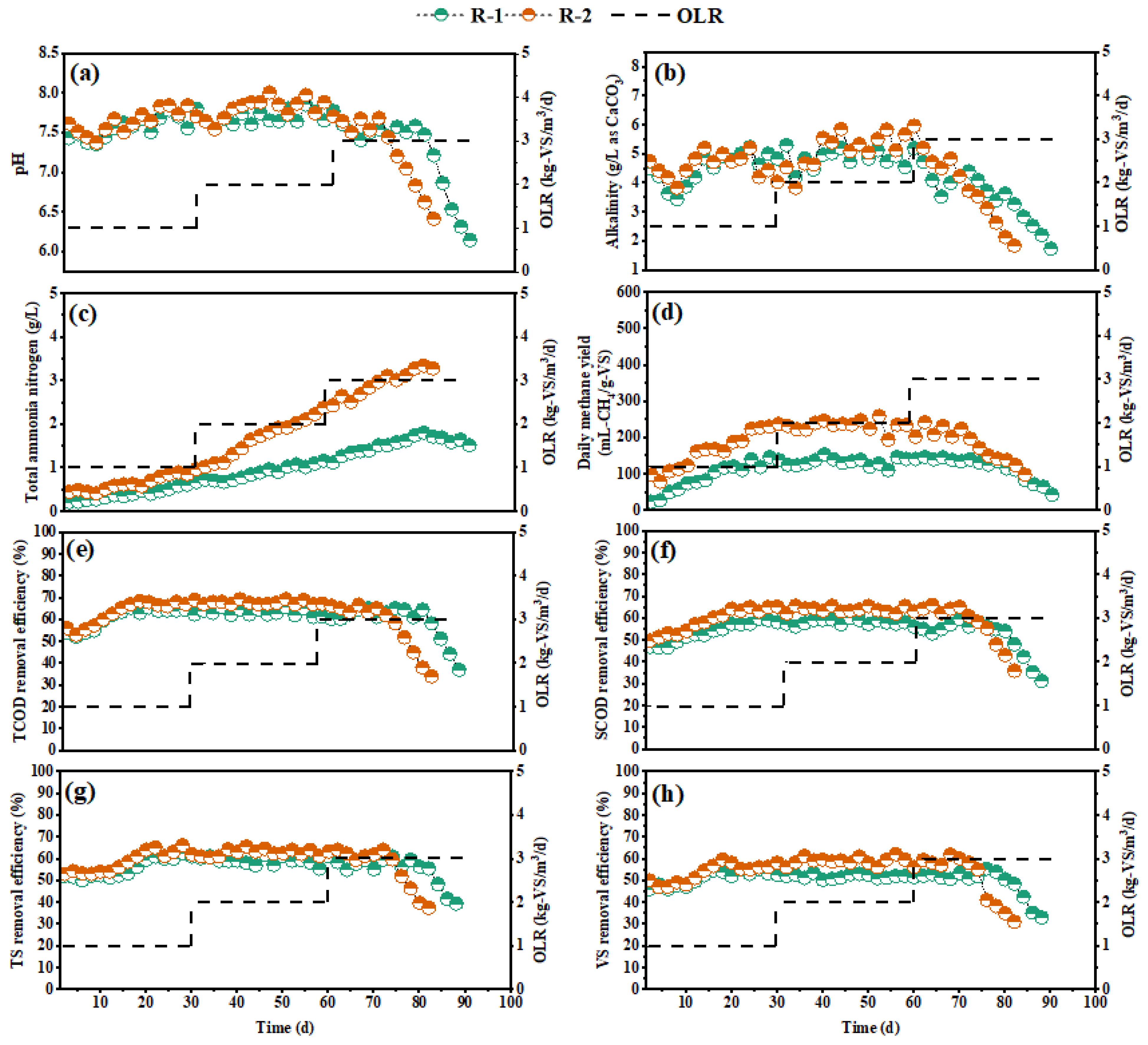
Figure 1 illustrates the variations in pH, alkalinity, total ammonia nitrogen (TAN), and CH4 yield, as well as the removal efficiencies of TCOD, SCOD, TS, and VS from reactors R-1 and R-2 throughout the operational period. As shown in Figure 1a, both reactors maintained a stable pH range of 7.0 to 7.8 under an OLR of 1–2 kg-VS/m3/d. During steady state, average pH values in R-1 and R-2 were 7.61 ± 0.12 and 7.69 ± 0.16, respectively, which are within the acceptable pH range of 6.5 to 8.0 for AD [13]. However, when the OLR increased to 3 kg-VS/m3/d, a decline in pH was observed in both reactors, suggesting acidification due to the accumulation of TVFAs. Notably, R-1 exhibited greater pH stability than R-2, likely due to the buffering capacity provided by macronutrients present in the CM, as reported in previous studies [4]. The alkalinity profile illustrated in Figure 1b supports this observation. During steady-state conditions, alkalinity levels in R-1 and R-2 were 4.64 ± 0.50 and 4.72 ± 0.52 g/L as CaCO3, respectively. R-1 maintained stable alkalinity, while R-2 showed a gradual increase in alkalinity levels, which is attributed to ammonia (NH3) generated during the AD process. This NH3 can combine with bicarbonate to form NH4HCO3, serving as a primary buffer for maintaining pH [14]. However, as the OLR reached 3 kg-VS/m3/d, a rapid decline in alkalinity was observed, resulting from the acidification of the reactors due to low pH and high concentrations of VFAs.
As depicted in Figure 1c, the TAN concentration progressively increased, with more significant increases noted in R-2. R-1 maintained lower TAN levels, averaging 0.56 ± 0.23 g/L during the steady state and remaining below 2 g/L throughout the experiment. In contrast, R-2 exhibited substantial increases in TAN concentration, reaching 3.29 g/L. These increases aligned with the observed drops in pH and alkalinity, indicating potential process instability and inhibition. Figure 1d shows the CH4 yield throughout the operational period for R-1 and R-2. The CH4 yield in R-1 gradually increased from 24.14 to 121.32 mL-CH4/g VS by the 20th day at an OLR of 1 kg-VS/m3/d. During steady state conditions, the CH4 yield in R-1 fluctuated between 110 and 140 mL-CH4/g VS. However, upon reaching an OLR of 3 kg-VS/m3/d, the CH4 yield began to fluctuate and subsequently declined on the 80th day, indicating reactor failure.
The average CH4 yield in R-1 over the operational period was 114.76 ± 34.46 mL-CH4/g VS, corresponding to approximately 30.03% of the TMY of 382.1 mL-CH4/g VS. These findings align with previous studies that reported lower CH4 yield and bioconversion efficiencies for CM due to its high content of non-biodegradable materials, such as (hemi)cellulose and lignin [2]. The average removal efficiencies for TCOD, SCOD, TS, and VS in R-1 were 61.19 ± 5.81%, 54.55 ± 6.22%, 56.67 ± 4.99%, and 50.84 ± 4.49%, respectively, indicating reduced organic removal efficiency. In R-2, the CH4 yield gradually increased from 99.32 to 189.25 mL-CH4/g VS with increasing OLR, peaking at 260.32 mL-CH4/g VS at an OLR of 2 kg-VS/m3/d during the stable phase. However, once the OLR increased to 3 kg-VS/m3/d, the CH4 yield began to decline from day 72 onward, indicating stress and eventual failure. The average CH4 yield in R-2 was 193.42 ± 49.94 mL-CH4/g VS, equating to approximately 38.53% of the TMY of 502 mL-CH4/g VS. The average removal efficiencies of TCOD, SCOD, TS, and VS in R-2 were 63.1 ± 8.23%, 60.34 ± 6.79%, 59.48 ± 6.54%, and 54.87 ± 7.29%, respectively, which were slightly higher than those in R-1. However, the CH4 yield was still limited by the presence of recalcitrant compounds in the manure and TAN inhibition. In summary, the AD of CM and PM demonstrated significant CH4 production potential, with each substrate exhibiting distinct operational strengths and limitations.

3.2. Changes in Total Volatile Fatty Acids

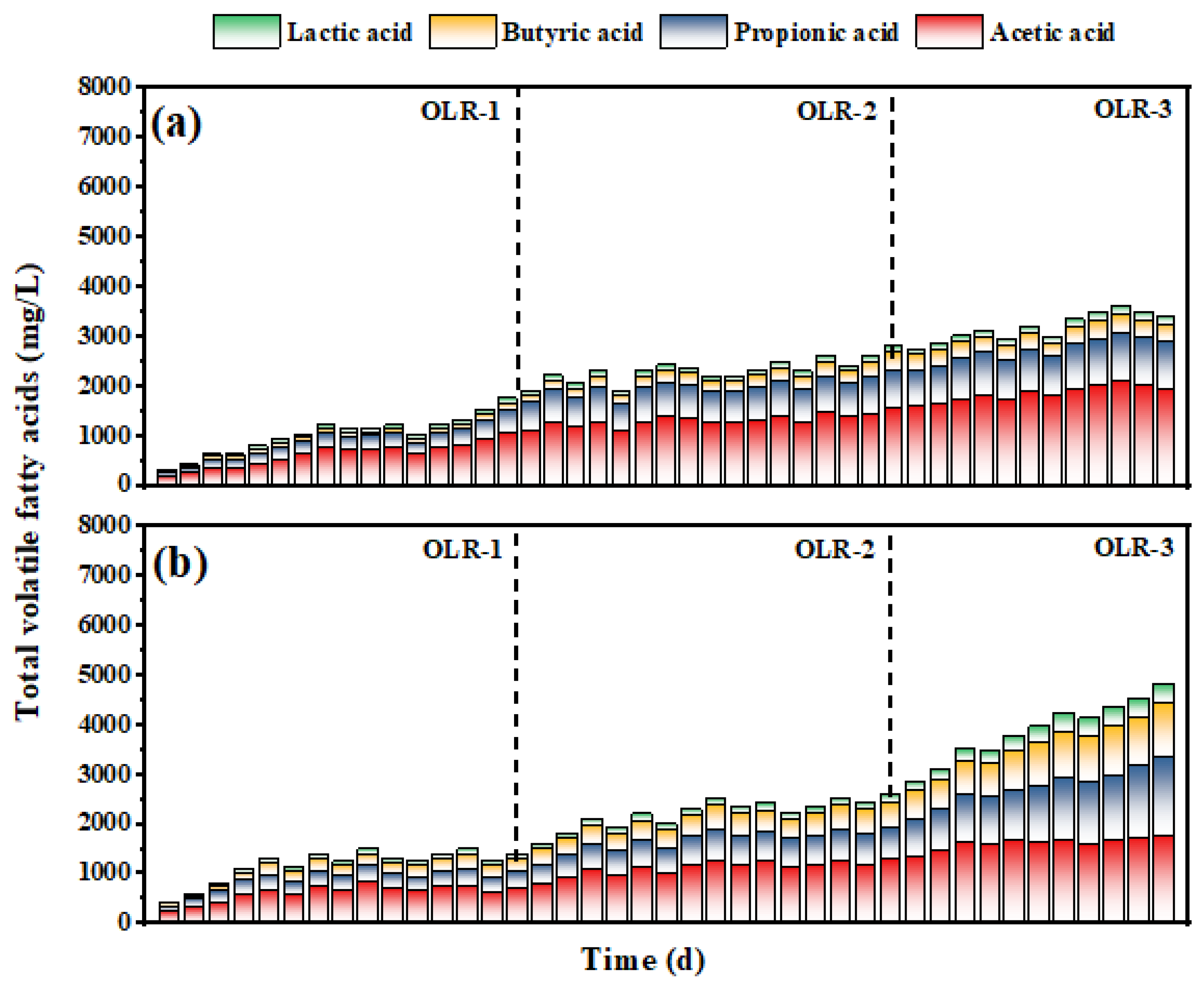
In AD reactors, the concentration of TVFAs serves as a critical indicator of reactor performance, with elevated levels signaling potential process instability. This study monitored TVFAs, specifically acetic acid (AA), propionic acid (PA), butyric acid (BA), and lactic acid (LA), in reactors R-1 and R-2 over their operational periods. Figure 2 illustrates the temporal evolution of TVFAs across these reactors.
R-1 displayed the lowest accumulation of TVFAs throughout the operational period. Initially, R-1 maintained low TVFA levels due to a lag phase, which contributed to its reduced early CH4 production. During steady-state conditions, the TVFAs concentration reached 1167.5 mg/L, comprising 735.4 mg/L of AA, 274.1 mg/L of PA, 78.5 mg/L of BA, and 79.4 mg/L of LA. Notably, AA consistently dominated the TVFA profiles, followed by PA, BA, and LA. As a direct precursor to methanogenesis and one of the less toxic VFAs, AA remained below its toxicity threshold of 3000 mg/L [15]. The lower levels of AA suggest successful utilization by methanogens, contributing to stable CH4 yields. As the OLR increased to 2 kg-VS/m3/d, TVFAs in R-1 rose to 2615.9 mg/L, with AA at 1466.6 mg/L, PA at 735.5 mg/L, BA at 281.5 mg/L, and LA at 132.6 mg/L. Despite this increase, the concentration remained below inhibitory thresholds. However, at an OLR of 3 kg-VS/m3/d, further accumulation of TVFAs, particularly AA and PA, was observed. In R-2, TVFAs also increased steadily during the stable phase. At steady state, the TVFAs concentration reached 1504.2 mg/L, with 854.6 mg/L of AA, 331.5 mg/L of PA, 221.6 mg/L of BA, and 96.5 mg/L of LA. Similar to R-1, the AD of PM primarily produced AA and PA, which have been well documented in previous studies [16]. The dominance of these acids indicates that acetate-type fermentation was the prevailing metabolic pathway during hydrolysis and acidogenesis. When the OLR increased, TVFAs in R-2 rose from 2606.1 mg/L to 4826.1 mg/L, accompanied by rising BA and LA levels, indicating reactor imbalance. This increase correlated with decreased pH and reduced CH4 yields. The TVFA profiles across both reactors suggest that TVFA accumulation played a critical role in inhibiting CH4 yield. However, substrate composition, TAN inhibition, and microbial community dynamics likely exacerbated reactor imbalances.

3.3. Changes in Fiber (Cellulose, Hemicellulose and Lignin), Carbohydrate, Protein and Lipid

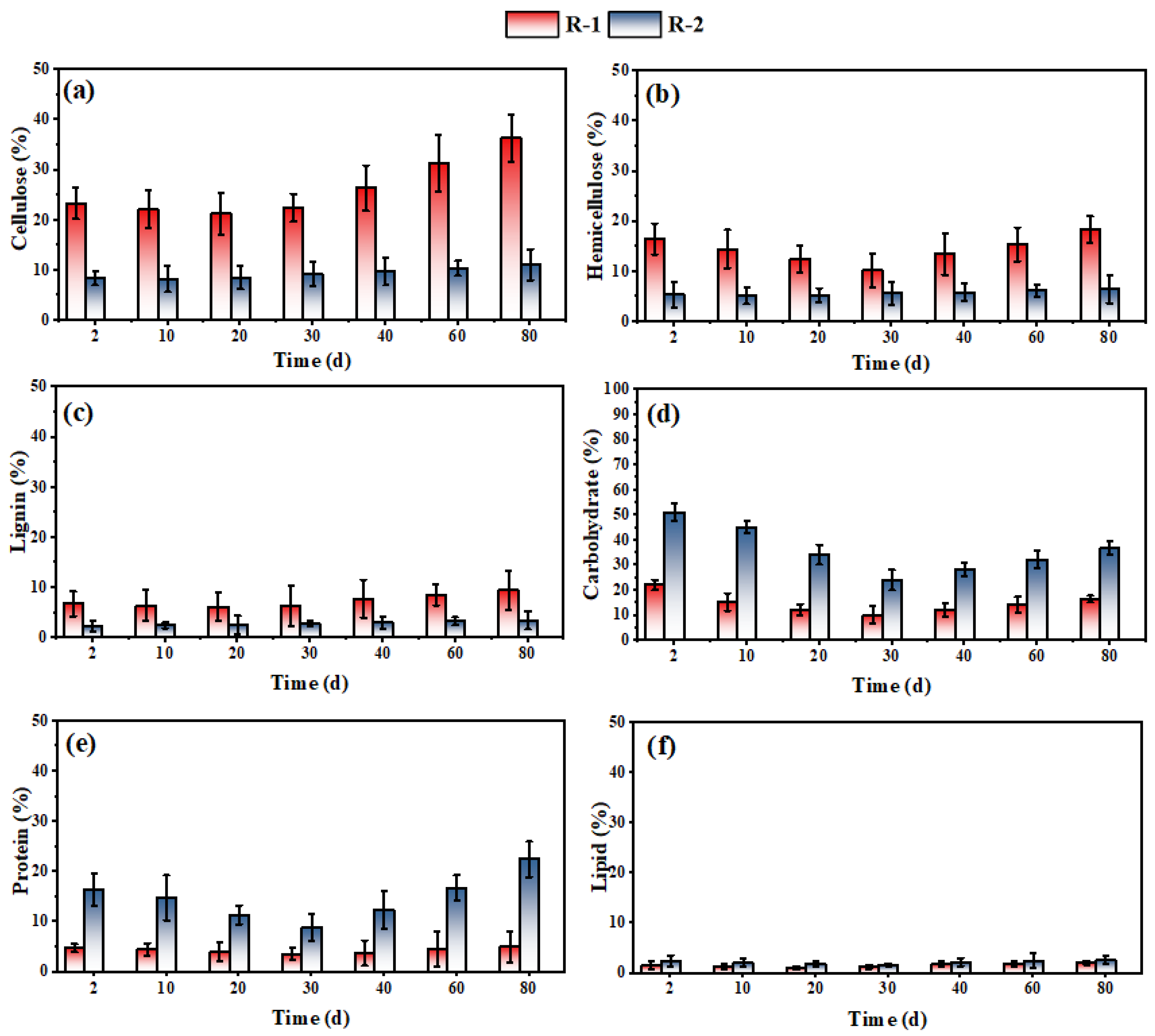
Substrate characteristics play a crucial role in the AD process, ultimately determining the CH4 yield from AD reactors. For example, CM contains substantial lignocellulosic components, including cellulose, hemicellulose, and lignin, which can comprise over 50% of its composition. Additionally, it contains trace amounts of proteins and lipids. PM shares similar components but in lesser amounts, with slightly higher protein and lipid levels than CM. Figure 3 illustrates the profiles of lignocellulosic components, carbohydrates, protein, and lipids from both reactors. The presence of cellulose, hemicellulose, and lignin in R-1 significantly impacted its biodegradability, resulting in lower CH4 yields. The structural complexity of these compounds makes them resistant to microbial degradation. Cows digest easily degradable feed components through rumen microbes, leaving behind fibrous residues in CM [17]. In Korea, the lignocellulosic content in CM often surpasses 50%, largely due to the use of plant-based bedding materials in livestock facilities [2]. In our study, the degradation rates of cellulose, hemicellulose, and lignin in R-1 were significantly low. At an OLR of 1 kg-VS/m3/d, only 9% of cellulose, 38% of hemicellulose, and 6% of lignin were degraded. This correlated with a relatively low VS/TS ratio of 68.56% (Table S1). Hemicellulose degradation was significantly higher than that of cellulose and lignin due to its amorphous structure and lack of crystalline regions, which enhance enzyme accessibility [18]. In contrast, cellulose consists of 30–80% crystalline regions that create barriers to complete degradation [19]. Lignin, a complex, cross-linked polymer of phenolic compounds, forms a three-dimensional network, and its hydrophobic nature further complicates degradation [20]. As the OLR increased, these recalcitrant compounds began to accumulate in R-1, resulting in process instability and reduced CH4 yield. However, the carbohydrates were significantly degraded in R-1. Similar patterns were observed in R-2, where degradation rates for cellulose and lignin were negligible, and only 4% of hemicellulose was degraded. The overall CH4 yield in R-2 was only slightly affected due to the lower lignocellulose content compared to CM and a higher VS/TS ratio of 78.54% (Table S1). PM, being a carbohydrate-rich substrate, underwent significant degradation. Additionally, PM contains trace proteins and lipids, contributing to higher degradability and ultimately more stable CH4 yields. These findings align with previous studies reporting stable CH4 yields even in the presence of recalcitrant compounds in PM [21].
In R-2, the degradation rates for proteins and lipids were significantly higher than those observed in R-1. The initial degradation rates for protein and lipid were 41% and 44%, respectively, with these rates steadily increasing over time. The lipid degradation rate exceeded that of protein due to the simpler hydrolysis of triglycerides by lipases into glycerol and fatty acids, which are readily converted to CH4. Protein degradation, however, requires conversion to amino acids, followed by deamination and fermentation, a more complex process. This observation aligns with previous studies reporting higher degradation rates of 57.4–88.2% for lipids and 52.7–65% for proteins [22]. The faster degradation of lipids in R-2 contributed to a high initial CH4 yield, supported by the higher theoretical CH4 potential of lipids (1.01 m3/kg VS) compared to proteins (0.5 m3/kg VS) [23]. As protein and lipid degradation progressed in R-2, it demonstrated high TS and VS removal efficiencies. However, as OLR increased, degradation rates in R-2 declined sharply, leading to the accumulation of proteins, lipids, and residual lignocellulosic material. This accumulation is linked to TAN inhibition and TVFAs buildup. Protein degradation releases NH4+-N, which exists as NH4+ and NH3. The equilibrium between these compounds is influenced by temperature and pH conditions. NH3 is more toxic than NH4+, posing a significant risk to methanogens [24]. Figure S1 depicts the NH3/NH4+ concentration in R-1 and R-2 during long-term operation. In R-2, the pH was slightly higher than in R-1 due to NH4+ release from proteins. However, it is crucial to note that the TAN levels (NH4+ + NH3) were elevated. Although a higher pH can reduce the toxicity of NH3, the overall TAN still exceeded inhibitory thresholds. Research indicates that elevated TAN levels, particularly when NH4+ concentrations exceed 1 g/L, can negatively impact methanogenic activity [25]. When TAN levels rise, the methanogenic pathway shifts from acetoclastic to hydrogenotrophic; with increasing TAN, methanogenic microbes can be completely inhibited, leading to dysfunction in the AD process. These results highlight the importance of the physicochemical characteristics of CM and PM and their impact on process stability and CH4 yield.

3.4. Microbial Community Structure

3.4.1. Bacterial and Archaeal Community Structure

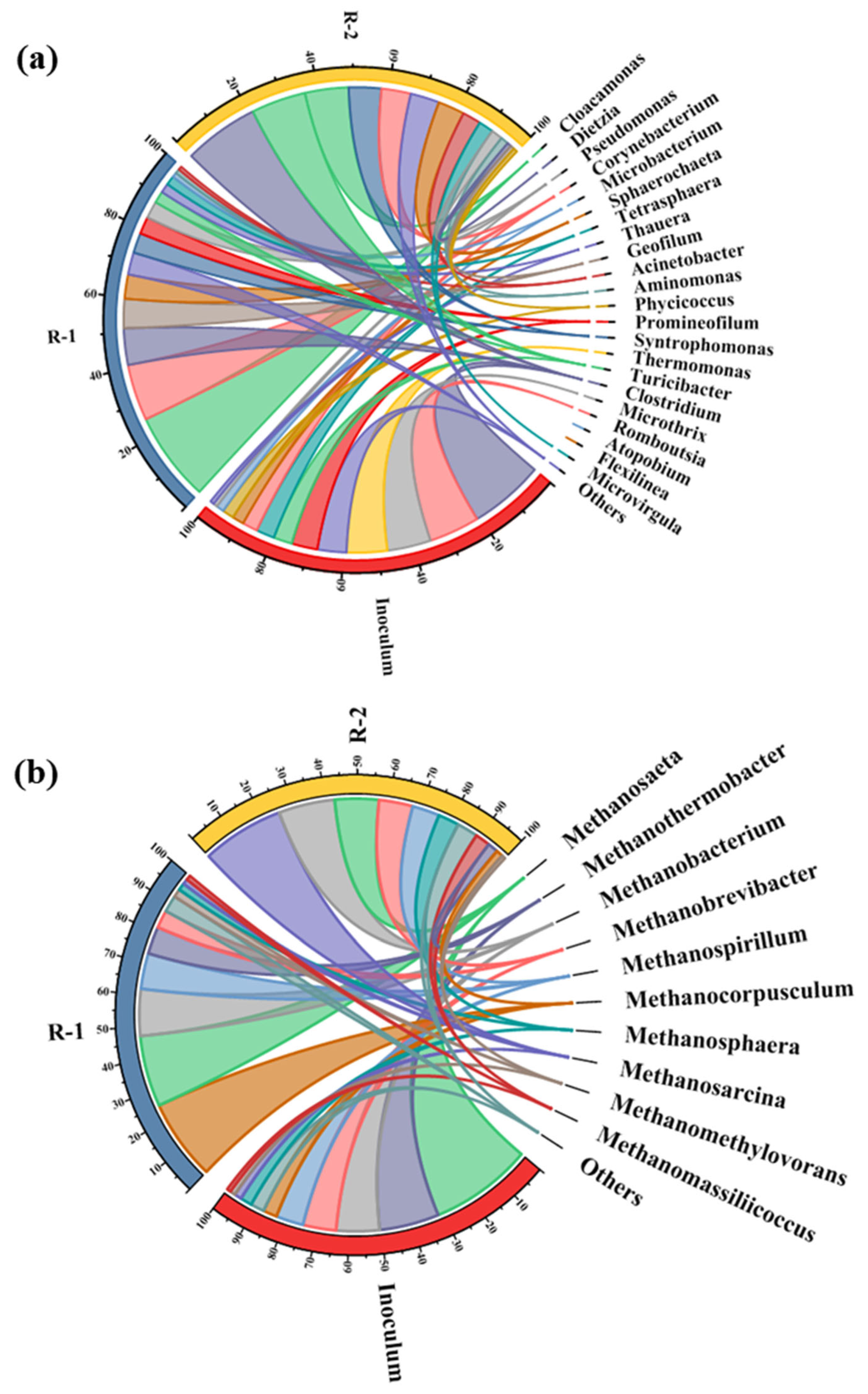
Figure 4a,b illustrates the relative abundance of bacteria and archaea genera across R-1 and R-2. Bacteria play a crucial role in breaking down complex organic polymers and proteins into smaller molecular monomers that can be assimilated by microorganisms. In R-1, the dominant bacterial genera include Cloacamonas, Corynebacterium, Pseudomonas, Geofilum, and Syntrophomonas. The genus Cloacamonas is known for its syntrophic role, particularly as an H2-producing syntroph that participates in the oxidation of propionate into acetate and CO2. This reaction is thermodynamically favorable only when the partial pressure of H2 remains low, which is facilitated by hydrogenotrophic methanogens present in R-1 [26]. This syntrophic interaction explains significantly lower PA concentration compared to AA in R-1. Corynebacterium, the second most abundant genus in R-1, is a facultative anaerobe capable of degrading various organic compounds, including lignocellulose, fats, and organic acids [27]. Pseudomonas, commonly found in dairy manure, was also prevalent in R-1. It includes hydrolytic species capable of degrading various substrates such as cellulose and lipids, ultimately producing fatty acids and glycerol [28]. The significant presence of these key bacterial genera indicates that all organic materials, including cellulose and hemicellulose, underwent initial degradation at steady state. Other genera, such as Sphaerochaeta and Clostridium, were also present and contributed to the breakdown of carbohydrates, proteins, and lipids. In R-2, the bacterial community was dominated by Clostridium, Turicibacter, and Cloacamonas. The Clostridium genus has been previously reported to dominate in PM digesters, effectively converting organic matter such as proteins and carbohydrates into TVFAs and H2, which supports enhanced CH4 production through both acetoclastic and hydrogenotrophic pathways [29]. Turicibacter, another dominant genus in R-2, is an acetogen capable of producing AA from multiple carbon sources, evidenced by the significantly higher AA generation in R-2 compared to R-1. Additional genera in R-2 included Corynebacterium, Syntrophomonas, and Sphaerochaeta. Notably, Syntrophomonas is recognized as a typical syntrophic acetogen, capable of the syntrophic degradation of butyrate in collaboration with methanogens, contributing to the lower levels of BA in R-2. This genus, along with Sphaerochaeta, is capable of direct interspecies electron transfer (DIET) with methanogens such as Methanosarcina, which was abundant in R-2 [30,31]. Overall, the dominance of functional bacteria across R-1 and R-2 enriched the degradation pathways for their respective substrates and enhanced methanogenesis performance.
The composition of the archaeal community differed significantly between the inoculum and the AD reactors. In R-1, the predominant archaea at steady state were Methanocorpusculum (25.14%), Methanosaeta (22.14%), and Methanobacterium (14.54%). Methanocorpusculum is commonly found in the fresh fecal matter of herbivores, such as cows, and is associated with the hydrogenotrophic methanogenesis pathway, utilizing substrates like H2/CO2 or formate [32]. Its dominance suggests an active hydrogenotrophic pathway, likely contributing to the lower TVFA concentrations observed in R-1, as this genus reduces VFA accumulation by consuming H2, a byproduct of VFA degradation. Methanosaeta was the second most dominant archaeal genus, with a relative abundance nearly equivalent to that of Methanocorpusculum. As an acetotrophic genus, Methanosaeta holds a competitive advantage under low TVFA concentrations, particularly in environments with low AA, due to its strong affinity for acetate [33]. Additionally, Methanobacterium, another hydrogenotrophic genus, primarily utilizes H2 and formate as electron acceptors to reduce CO2 for CH4 production [34]. This indicates the coexistence of both hydrogenotrophic and acetotrophic pathways for CH4 generation. In R-2, Methanosarcina emerged as the dominant archaeal genus, accounting for 25.54% of the community. This genus is known for its ability to synthesize CH4 using a variety of intermediates, including acetate, methylamine, methanol, and H2/CO2. It exhibits greater tolerance to NH3 inhibition [35] and utilizes both acetoclastic and hydrogenotrophic pathways, contributing to the higher organic removal rates and stable CH4 yield observed in R-2, even with increased TAN concentrations [29]. Other archaea present included Methanobacterium (17.54%) and Methanosaeta (13.65%), both of which are recognized as electroactive bacteria capable of performing DIET. The enriched dominant archaea in both AD reactors with different substrates enhanced the degradation of intermediates, further improving the efficiency of CH4 production.

3.4.2. Pearson Correlation and Mantel Test Analysis Between Bacteria and Archaea with Physiochemical Parameters

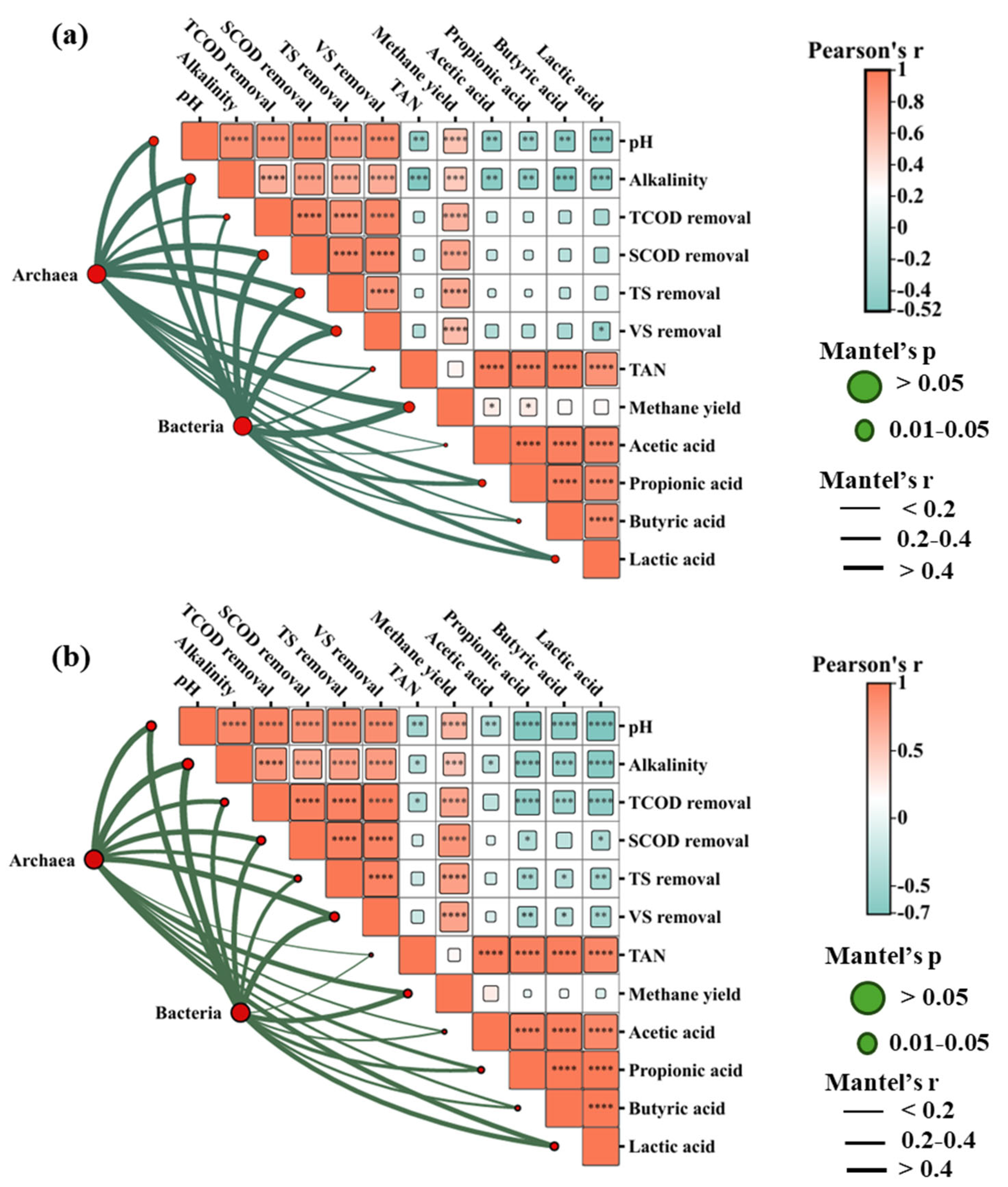
To evaluate the potential influences of physio-biochemical parameters on CH4 yield and microbial communities across all reactors, correlations were analyzed. Figure 5 illustrates the results of the Pearson correlation analysis and Mantel test, which examines the relationships between bacterial and archaeal genera and various operational parameters in the reactors. In R-1, strong correlations were observed between bacterial and archaeal genera and several operational parameters, including pH, TVFAs, and CH4 yield. The Pearson heatmap indicated that CH4 yield was positively correlated with pH and alkalinity, while showing a negative correlation with TVFAs. Additionally, CH4 yield exhibited a strong positive association with TCOD, SCOD, TS, and VS removal efficiencies, indicating effective substrate degradation at steady state. This suggests that a balanced microbial consortium supported effective syntrophic interactions and stable methanogenesis, minimizing acid accumulation and resulting in the lowest TVFA levels in the reactor. The Mantel test revealed strong positive associations between archaeal communities and CH4 yield, highlighting the dominant roles of acetoclastic and hydrogenotrophic methanogens, which are sensitive to low pH and elevated TVFA levels. Furthermore, archaeal communities showed positive associations with pH, alkalinity, and substrate removal efficiencies, confirming their sensitivity to environmental stability. Additionally, the efficient removal of TS and VS in R-1 further indicates the presence of a well-adapted microbial consortium capable of handling complex substrates. In contrast, R-2 exhibited a distinct pattern of interactions between microbial and operational parameters. Pearson correlation analysis revealed significant relationships between bacterial genera and both TCOD and SCOD removal, as well as strong positive correlations with TVFAs indicating the presence of highly active fermentative and hydrolytic communities. Similar to R-1, CH4 yield in R-2 showed a positive correlation with pH and a negative correlation with TVFAs. However, elevated TAN exhibited a negative correlation with CH4 yield, reflecting NH3 inhibition. Moreover, PA and BA exhibited strong negative correlations with pH and alkalinity, suggesting moderate stress in the reactor due to increased TAN concentration. Archaeal communities also exhibited meaningful correlations with CH4 yield, indicating active methanogenesis as confirmed by the Mantel test. Overall, the correlation analysis results indicated that most operational parameters were interrelated at steady state; however, R-2 exhibited early signs of reactor instability. The presence of NH3-tolerant Methanosarcina in R-2 contributed to maintaining CH4 production and stability despite the challenges posed by elevated TAN levels [36].

3.5. Functional Enzymes and Metabolic Pathways

3.5.1. Functional Enzymes

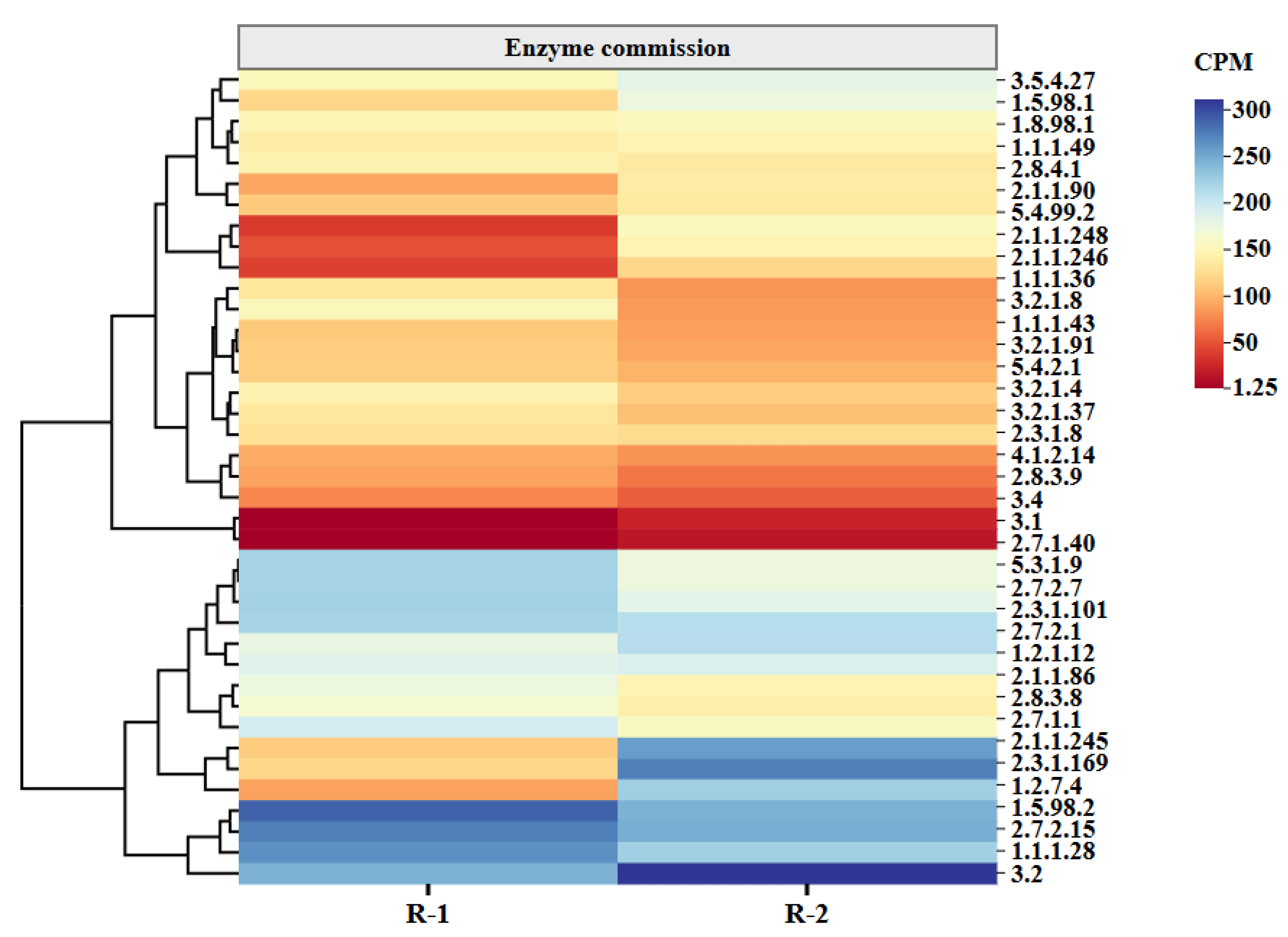
To investigate the AD mechanisms of two types of livestock manures, metagenomic analyses focused on enzyme activity were conducted at steady state. Figure 6 shows a heatmap of functional enzymes in R-1 and R-2. Cellulose- and hemicellulose-hydrolyzing enzymes (EC 3.2.1.91 and EC 3.2.1.4) were detected in both reactors. These enzymes are crucial for the breakdown of lignocellulosic material, particularly when supplemented by debranching enzymes that facilitate the degradation of amorphous lignocellulose regions. In R-2, which utilized a carbohydrate-rich substrate, increased levels of carbohydrate-hydrolyzing enzymes, specifically glycosidases (EC 3.2), were observed. Although protein- and lipid-hydrolyzing enzymes (EC 3.1 and EC 3.4) were present in R-2 due to variability in pig diets, their abundance was lower compared to other enzymes. Both reactors demonstrated high expression levels of glycolytic and fermentative enzymes, including EC 2.7.1.1, EC 5.3.1.9, and EC 1.2.1.12. Acetate kinase (EC 2.7.2.1) and propionate kinase (EC 2.7.2.15), key enzymes in short-chain fatty acid metabolism, were also present in both reactors. However, lactate dehydrogenase (EC 1.1.1.28) and butyrate kinase (EC 2.7.2.7) were more abundant in R-2 compared to R-1. Methanogenesis-related enzymes were prominent in both reactors. In R-1 and R-2, there was a higher abundance of hydrogenotrophic and acetoclastic methanogenesis-related enzymes, including EC 2.8.4.1, EC 1.5.98.1, EC 2.3.1.169, and EC 2.1.1.245. This indicates active methanogenesis driven by the presence of hydrogen and acetate in the reactors. Overall, the analysis highlights the functional diversity of enzymes involved in the breakdown of lignocellulosic materials and the metabolic pathways supporting methanogenesis in R-1 and R-2.

3.5.2. Metabolic Pathway Reconstruction

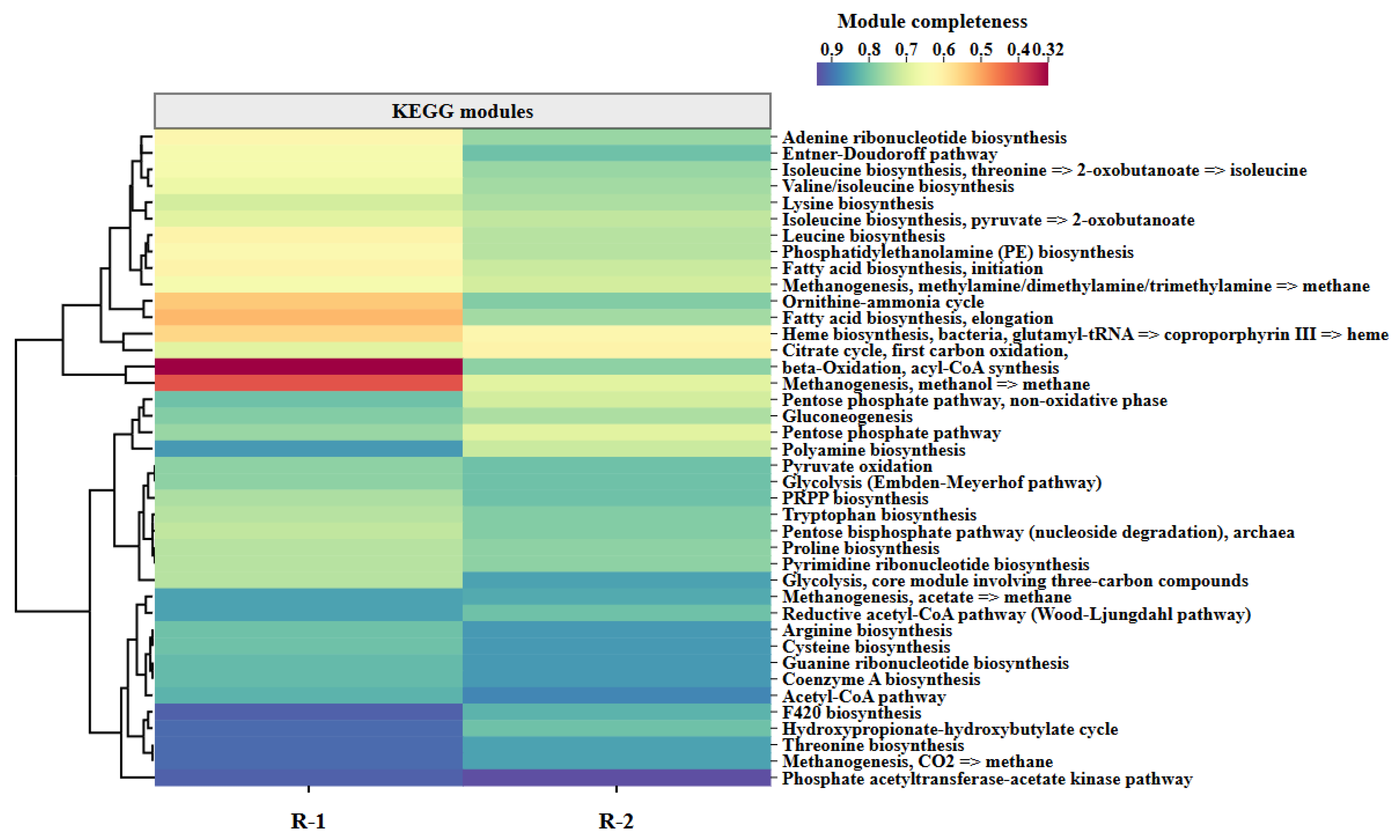
A comparative analysis of KEGG metabolic pathway reconstruction was conducted using KEGG module enrichment analysis via the KEMET tool with KEGG orthology annotations. Figure 7 illustrates the KEGG module enrichment analysis across reactors R-1 and R-2. The distribution of module completeness indicates significant variations in metabolic mechanisms, highlighting differential microbial activity. A score above 0.8 signifies a completed pathway, 0.6–0.8 indicates an incomplete pathway, and below 0.6 denotes a non-functional pathway. Core carbon metabolism, including glycolysis (M00001) and the Entner-Doudoroff pathway (M00008), demonstrated higher abundance in both R-1 and R-2, suggesting more active sugar catabolism. Additionally, methanogenesis-related pathways (M00567, M00357, M00563, and M00356) were consistently high across both reactors, indicating robust methanogenic activity. Overall, the analysis reveals that R-1 and R-2 exhibit enhanced pathways for sugar catabolism and methanogenesis, reflecting their effective metabolic processes.
Figure S2 depicts the reconstructed metabolic pathway for R-1, where active carbohydrate degradation was observed, particularly involving cellulose and hemicellulose. However, the degradation of these components was incomplete, correlating with lower enzyme abundance and resulting in poor overall degradation. This finding aligns with microbial results, showing a lower abundance of cellulose-degrading bacteria, such as Pseudomonas, and hemicellulose-degrading bacteria, including Geofilum and Clostridium. Carbohydrate metabolism was dominated by efficient glucose catabolism, derived in part from partially degraded lignocellulosic substrate. The fully complete Acetyl-CoA pathway (0.83) and pyruvate oxidation pathway (0.78) suggest strong links between glycolysis and downstream CH4 production. Nevertheless, the slightly lower pyruvate oxidation score indicates potential limitations in this metabolic step, which could impact methanogenesis in R-1. The propionate and butyrate metabolism pathway (0.91) was active, indicating efficient degradation and feeding to methanogens, which aligns with the consistently low concentrations of these metabolites in R-1. Furthermore, the acetate kinase pathway (0.92) suggests active acetoclastic methanogenesis, preventing the accumulation of TVFAs. However, the buildup of undegraded lignocellulose at higher OLRs likely contributed to reactor malfunction.
In R-2, depicted in Figure S3, the metabolic reconstruction indicates robust carbohydrate degradation, facilitated by glycolysis via the Embden-Meyerhof pathway. The Entner-Doudoroff pathway was also moderately functional (0.76), offering an alternative route for sugar catabolism. While carbohydrate degradation was effective, protein and lipid metabolic pathways were comparatively less active. Active propionate and butyrate metabolism (0.81) further supports efficient TVFAs degradation and methanogenic feeding. However, the digestion of protein material is known to be sensitive to TAN accumulation [5]. The ornithine ammonia cycle, critical for N regulation and remobilization, was poorly represented, suggesting insufficient N recycling and the potential for NH3 accumulation [37]. This aligns with observations of rising TAN levels under increasing OLR, which led to reactor instability. Despite this, methanogenesis from both CO2 and acetate remained highly active at steady state, resulting in a stable CH4 yield. In summary, the mono-digestion of carbohydrate material is hindered by lignocellulose, while protein material is sensitive to TAN and TVFAs. These metabolic insights highlight the need for tailored strategies, such as substrate pretreatment or co-digestion approaches, to mitigate specific limitations and enhance CH4 yields from each substrate.

4. Conclusions

This study investigated the anaerobic digestion (AD) potential of cattle manure (CM) and pig manure (PM), emphasizing the distinct microbiomes and metabolic pathways associated with each waste type. The high cellulose and hemicellulose content in CM presents challenges for achieving optimal methane (CH4) yields, while PM, characterized by its carbohydrate-rich substrate, faces instability primarily due to ammonia accumulation. Metagenomic analysis identified key microorganisms and metabolic pathways that play essential roles in the digestion process for both substrates. Future research should prioritize optimizing co-digestion strategies to maximize biogas yield and improve the overall efficiency of AD systems.

Supplementary Materials

The following supporting information can be downloaded at: https://www.mdpi.com/article/10.3390/w17243464/s1, Figure S1: NH3/NH4+ concentration in R-1 and R-2 during long-term operation; Figure S2: Reconstructed metabolic pathway based on specific enzymes and KEGG modules in R-1; Figure S3: Reconstructed metabolic pathway based on specific enzymes and KEGG modules in R-2; Table S1: Physiochemical characteristics of the inoculum, CM and PM; Table S2: Operational parameters and conditions for R-1 and R-2 during long-term operation.

Author Contributions

Conceptualization, H.J. and J.P.; methodology, R.K.; software, S.J.; validation, R.K. and S.J.; formal analysis, R.K.; investigation, R.K.; resources, H.J. and J.P.; data curation, R.K. and S.J.; writing—original draft preparation, H.J. and R.K.; writing—review and editing, H.J., R.K., S.J. and J.P.; visualization, R.K. and S.J.; supervision, H.J. and J.P.; project administration, H.J. and J.P.; funding acquisition, H.J. and J.P. All authors have read and agreed to the published version of the manuscript.

Funding

This research was funded by the academic research program of Chungbuk National University in 2024 and was supported by Gwangju Green Environment Center as part of the Research Development Project (25-04-50-54-12) in 2025.

Data Availability Statement

The original contributions presented in this study are included in the article/Supplementary Materials. Further inquiries can be directed to the corresponding author.

Conflicts of Interest

The authors declare that they have no known competing financial interests or personal relationships that could have appeared to influence the work reported in this paper.

Abbreviations

The following abbreviations are used in this manuscript:
CM: Cattle manure; PM: Pig manure; AD: Anaerobic digestion; N: Nitrogen; NH3: Ammonia; BMP: Biochemical methane potential; OLR: Organic loading rate; CH4: Methane; sCSTR: Semi-continuous stirred tank reactor; HRT: Hydraulic retention time; TS: Total solids; VS: Volatile solids; TCOD: Total chemical oxygen demand; SCOD: Soluble chemical oxygen demand; TN: Total nitrogen; TP: Total phosphorus; NH4+: Ammonium; TMY: Theoretical methane yield; CMY: Cumulative methane yield; TVFAs: Total volatile fatty acids; TAN: Total ammonia nitrogen; AA: Acetic acid; PA: Propionic acid; BA: Butyric acid; LA: Lactic acid; DIET: Direct interspecies electron transfer.

References

  1. Kadam, R.; Jo, S.; Lee, J.; Khanthong, K.; Jang, H.; Park, J. A review on the anaerobic co-digestion of livestock manures in the context of sustainable waste management. Energies 2024, 17, 546. [Google Scholar] [CrossRef]
  2. Jo, S.; Bae, J.; Kadam, R.; Lee, J.; Park, J.; Jun, H. Enhanced anaerobic co-digestion of cattle manure with food waste and pig manure: Statistical optimization of pretreatment condition and substrate mixture ratio. Waste Manag. 2024, 183, 32–41. [Google Scholar] [CrossRef]
  3. Won, S.; Yoon, Y.; Hamid, M.M.A.; Reza, A.; Shim, S.; Kim, S.; Ra, C.; Novianty, E.; Park, K.-H. Estimation of greenhouse gas emission from Hanwoo (Korean native cattle) manure management systems. Atmosphere 2020, 11, 845. [Google Scholar] [CrossRef]
  4. Li, Y.; Zhao, J.; Krooneman, J.; Euverink, G.J.W. Strategies to boost anaerobic digestion performance of cow manure: Laboratory achievements and their full-scale application potential. Sci. Total Environ. 2021, 755, 142940. [Google Scholar] [CrossRef] [PubMed]
  5. Ho, L.; Ho, G. Mitigating ammonia inhibition of thermophilic anaerobic treatment of digested piggery wastewater: Use of pH reduction, zeolite, biomass and humic acid. Water Res. 2012, 46, 4339–4350. [Google Scholar] [CrossRef] [PubMed]
  6. Saady, N.M.C.; Massé, D.I. Impact of organic loading rate on the performance of psychrophilic dry anaerobic digestion of dairy manure and wheat straw: Long-term operation. Bioresour. Technol. 2015, 182, 50–57. [Google Scholar] [CrossRef]
  7. Duan, N.; Zhang, D.; Lin, C.; Zhang, Y.; Zhao, L.; Liu, H.; Liu, Z. Effect of organic loading rate on anaerobic digestion of pig manure: Methane production, mass flow, reactor scale and heating scenarios. J. Environ. Manag. 2019, 231, 646–652. [Google Scholar] [CrossRef]
  8. Park, J.; Lee, B.; Tian, D.; Jun, H. Bioelectrochemical enhancement of methane production from highly concentrated food waste in a combined anaerobic digester and microbial electrolysis cell. Bioresour. Technol. 2018, 247, 226–233. [Google Scholar] [CrossRef]
  9. Cai, M.; Wilkins, D.; Chen, J.; Ng, S.-K.; Lu, H.; Jia, Y.; Lee, P.K. Metagenomic reconstruction of key anaerobic digestion pathways in municipal sludge and industrial wastewater biogas-producing systems. Front. Microbiol. 2016, 7, 778. [Google Scholar] [CrossRef]
  10. DeCola, A.C.; Toppen, L.C.; Brown, K.P.; Dadkhah, A.; Rizzo, D.M.; Ziels, R.M.; Scarborough, M.J. Microbiome assembly and stability during start-up of a full-scale, two-phase anaerobic digester fed cow manure and mixed organic feedstocks. Bioresour. Technol. 2024, 394, 130247. [Google Scholar] [CrossRef]
  11. Zhang, M.; Liu, Y.-S.; Zhao, J.-L.; Liu, W.-R.; Chen, J.; Zhang, Q.-Q.; He, L.-Y.; Ying, G.-G. Variations of antibiotic resistome in swine wastewater during full-scale anaerobic digestion treatment. Environ. Int. 2021, 155, 106694. [Google Scholar] [CrossRef]
  12. Kadam, R.; Jo, S.; Park, J. Importance of substrate mixture ratio optimization on efficient anaerobic co-digestion of organic wastes generated in livestock sector: Insights into process performances and metagenomics. Bioresour. Technol. 2025, 441, 133561. [Google Scholar] [CrossRef]
  13. Cioabla, A.E.; Ionel, I.; Dumitrel, G.-A.; Popescu, F. Comparative study on factors affecting anaerobic digestion of agricultural vegetal residues. Biotechnol. Biofuels 2012, 5, 39. [Google Scholar] [CrossRef]
  14. Song, Y.; Qiao, W.; Westerholm, M.; Zhou, Y.; Dong, R. High rate methanogenesis and nitrogenous component transformation in the high-solids anaerobic digestion of chicken manure enhanced by biogas recirculation ammonia stripping. Chem. Eng. J. 2024, 498, 155744. [Google Scholar] [CrossRef]
  15. Cuetos, M.; Gómez, X.; Otero, M.; Morán, A. Anaerobic digestion and co-digestion of slaughterhouse waste (SHW): Influence of heat and pressure pre-treatment in biogas yield. Waste Manag. 2010, 30, 1780–1789. [Google Scholar] [CrossRef]
  16. Huang, W.; Huang, W.; Yuan, T.; Zhao, Z.; Cai, W.; Zhang, Z.; Lei, Z.; Feng, C. Volatile fatty acids (VFAs) production from swine manure through short-term dry anaerobic digestion and its separation from nitrogen and phosphorus resources in the digestate. Water Res. 2016, 90, 344–353. [Google Scholar] [CrossRef]
  17. Tsapekos, P.; Kougias, P.; Vasileiou, S.; Treu, L.; Campanaro, S.; Lyberatos, G.; Angelidaki, I. Bioaugmentation with hydrolytic microbes to improve the anaerobic biodegradability of lignocellulosic agricultural residues. Bioresour. Technol. 2017, 234, 350–359. [Google Scholar] [CrossRef]
  18. Xu, N.; Zhang, W.; Ren, S.; Liu, F.; Zhao, C.; Liao, H.; Xu, Z.; Huang, J.; Li, Q.; Tu, Y.; et al. Hemicelluloses negatively affect lignocellulose crystallinity for high biomass digestibility under NaOH and H2SO4 pretreatments in Miscanthus. Biotechnol. Biofuels 2012, 5, 58. [Google Scholar] [CrossRef]
  19. Xu, N.; Liu, S.; Xin, F.; Zhou, J.; Jia, H.; Xu, J.; Jiang, M.; Dong, W. Biomethane production from lignocellulose: Biomass recalcitrance and its impacts on anaerobic digestion. Front. Bioeng. Biotechnol. 2019, 7, 191. [Google Scholar] [CrossRef] [PubMed]
  20. Kamperidou, V.; Terzopoulou, P. Anaerobic digestion of lignocellulosic waste materials. Sustainability 2021, 13, 12810. [Google Scholar] [CrossRef]
  21. Ma, G.; Ndegwa, P.; Harrison, J.H.; Chen, Y. Methane yields during anaerobic co-digestion of animal manure with other feedstocks: A meta-analysis. Sci. Total Environ. 2020, 728, 138224. [Google Scholar] [CrossRef]
  22. Li, Y.; Jin, Y.; Borrion, A.; Li, H.; Li, J. Effects of organic composition on the anaerobic biodegradability of food waste. Bioresour. Technol. 2017, 243, 836–845. [Google Scholar] [CrossRef]
  23. Rhee, C.; Park, S.-G.; Yu, S.I.; Dalantai, T.; Shin, J.; Chae, K.-J.; Shin, S.G. Mapping microbial dynamics in anaerobic digestion system linked with organic composition of substrates: Protein and lipid. Energy 2023, 275, 127411. [Google Scholar] [CrossRef]
  24. Magdalena, J.A.; Greses, S.; González-Fernández, C. Anaerobic degradation of protein-rich biomass in an UASB reactor: Organic loading rate effect on product output and microbial communities dynamics. J. Environ. Manag. 2020, 274, 111201. [Google Scholar] [CrossRef] [PubMed]
  25. Liu, Z.; Dang, Y.; Li, C.; Sun, D. Inhibitory effect of high NH4+–N concentration on anaerobic biotreatment of fresh leachate from a municipal solid waste incineration plant. Waste Manag. 2015, 43, 188–195. [Google Scholar] [CrossRef]
  26. Razaviarani, V.; Buchanan, I.D. Anaerobic co-digestion of biodiesel waste glycerin with municipal wastewater sludge: Microbial community structure dynamics and reactor performance. Bioresour. Technol. 2015, 182, 8–17. [Google Scholar] [CrossRef] [PubMed]
  27. Breton-Deval, L.; Salinas-Peralta, I.; Alarcón Aguirre, J.S.; Sulbarán-Rangel, B.; Gurubel Tun, K.J. Taxonomic binning approaches and functional characteristics of the microbial community during the anaerobic digestion of hydrolyzed corncob. Energies 2020, 14, 66. [Google Scholar] [CrossRef]
  28. Yin, D.-M.; Westerholm, M.; Qiao, W.; Bi, S.-J.; Wandera, S.M.; Fan, R.; Jiang, M.-M.; Dong, R.-J. An explanation of the methanogenic pathway for methane production in anaerobic digestion of nitrogen-rich materials under mesophilic and thermophilic conditions. Bioresour. Technol. 2018, 264, 42–50. [Google Scholar] [CrossRef]
  29. Di, Y.; Hou, W.; Bian, C.; Zheng, T.; Xiao, B.; Li, L. Enhancing anaerobic digestion of swine manure using microbial electrolysis cell and microaeration. Chem. Eng. J. 2025, 514, 163319. [Google Scholar] [CrossRef]
  30. Zhang, J.; Wang, Z.; Lu, T.; Liu, J.; Wang, Y.; Shen, P.; Wei, Y. Response and mechanisms of the performance and fate of antibiotic resistance genes to nano-magnetite during anaerobic digestion of swine manure. J. Hazard. Mater. 2019, 366, 192–201. [Google Scholar] [CrossRef]
  31. Li, Y.; Liu, M.; Che, X.; Li, C.; Liang, D.; Zhou, H.; Liu, L.; Zhao, Z.; Zhang, Y. Biochar stimulates growth of novel species capable of direct interspecies electron transfer in anaerobic digestion via ethanol-type fermentation. Environ. Res. 2020, 189, 109983. [Google Scholar] [CrossRef]
  32. Liu, C.; Guo, T.; Chen, Y.; Meng, Q.; Zhu, C.; Huang, H. Physicochemical characteristics of stored cattle manure affect methane emissions by inducing divergence of methanogens that have different interactions with bacteria. Agric. Ecosyst. Environ. 2018, 253, 38–47. [Google Scholar] [CrossRef]
  33. Li, Y.; Achinas, S.; Zhao, J.; Geurkink, B.; Krooneman, J.; Euverink, G.J.W. Co-digestion of cow and sheep manure: Performance evaluation and relative microbial activity. Renew. Energy 2020, 153, 553–563. [Google Scholar] [CrossRef]
  34. Shao, Z.; Fan, Q.; Gao, F.; Xia, T.; Wang, Y.; Liang, Y.; Guo, X.; Yang, X.; Yao, Y.; Qiu, L.; et al. Sustained methane production enhancement by magnetic biochar and its recovery in semi-continuous anaerobic digestion with varying substrate C/N ratios. Chem. Eng. J. 2025, 514, 163050. [Google Scholar] [CrossRef]
  35. Zheng, Y.; Wang, J.; Niu, X.; Su, X.; He, X.; Hu, Y.; Zhao, D.; Chen, D.; Lin, Y.; Li, K. Enhancement of methane production from pig manure by ferrate pretreated anaerobic digestion: Performance and mechanism. Chem. Eng. J. 2025, 515, 163862. [Google Scholar] [CrossRef]
  36. Yan, M.; Treu, L.; Campanaro, S.; Tian, H.; Zhu, X.; Khoshnevisan, B.; Tsapekos, P.; Angelidaki, I.; Fotidis, I.A. Effect of ammonia on anaerobic digestion of municipal solid waste: Inhibitory performance, bioaugmentation and microbiome functional reconstruction. Chem. Eng. J. 2020, 401, 126159. [Google Scholar] [CrossRef]
  37. Bolay, P.; Muro-Pastor, M.I.; Rozbeh, R.; Timm, S.; Hagemann, M.; Florencio, F.J.; Forchhammer, K.; Klähn, S. The novel PII-interacting protein PirA regulates flux into the cyanobacterial ornithine-ammonia cycle. bioRxiv 2020. [Google Scholar] [CrossRef]
Figure 1. pH (a), alkalinity (b), total ammonia nitrogen (c), daily methane yield (d), TCOD removal efficiency (e), SCOD removal efficiency (f), TS removal efficiency (g), and VS removal efficiency (h) from R-1 and R-2 during long-term reactor operation.
Water 17 03464 g001
Figure 2. The concentration of total volatile fatty acids during the long-term operation of reactors R-1 (a) and R-2 (b), respectively.
Water 17 03464 g002
Figure 3. Cellulose (a), hemicellulose (b), lignin (c), carbohydrate (d), protein (e), and lipid (f) content from R-1 and R-2 during long-term operation.
Water 17 03464 g003
Figure 4. Bacterial (a) and archaeal (b) relative abundance at the genus level in R-1 and R-2.
Water 17 03464 g004
Figure 5. Pearson correlation and Mantel test analysis between physio-biochemical parameters and the bacteria and archaea in R-1 (a) and R-2 (b). The Mantel test results are denoted by lines with width denoting Mantel’s r statistic and color representing Pearson’s correlation coefficient (**** p < 0.0001; *** p < 0.001; ** p < 0.01; * p < 0.05).
Water 17 03464 g005
Figure 6. Heatmap of functional enzymes in the reactors R-1 and R-2.
Water 17 03464 g006
Figure 7. Heatmap of KEGG module completeness analysis of key anaerobic digestion pathways in R-1 and R-2.
Water 17 03464 g007
Disclaimer/Publisher’s Note: The statements, opinions and data contained in all publications are solely those of the individual author(s) and contributor(s) and not of MDPI and/or the editor(s). MDPI and/or the editor(s) disclaim responsibility for any injury to people or property resulting from any ideas, methods, instructions or products referred to in the content.