Article

Analysis of Spatio-Temporal Characteristics of Water Quality for Ecological Water Replenishment in the Gorge Section of Yongding River

1
Department of Environmental Science and Engineering, Beijing Technology and Business University, Beijing 100048, China
2
State Environmental Protection Key Laboratory of Food Chain Pollution Control, Beijing Technology and Business University, Beijing 100048, China
3
Key Laboratory of Cleaner Production and Integrated Resource Utilization of China National Light Industry, Beijing Technology and Business University, Beijing 100048, China
4
Mentougou District Ecological Environment Bureau, Beijing 102300, China
5
Guangdong Basic Research Center of Excellence for Ecological Security and Green Development, Guangzhou 510006, China
6
Key Laboratory for City Cluster Environmental Safety and Green Development of the Ministry of Education, Guangzhou 510006, China
7
School of Ecology, Environment and Resources, Guangdong University of Technology, Guangzhou 510006, China
*
Authors to whom correspondence should be addressed.
Water 2025, 17(24), 3454; https://doi.org/10.3390/w17243454
Submission received: 13 October 2025 / Revised: 28 November 2025 / Accepted: 2 December 2025 / Published: 5 December 2025

Abstract

As one of the key water bodies in the Beijing region, the water quality of the Yongding River directly impacts the ecological security and residents’ lives in China’s capital. The national government places high importance on the ecological environment of the Yongding River and initiated ecological water replenishment efforts in 2019. This study combines ecological water replenishment with flood season water volume segmentation, employing correlation analysis, principal component analysis, and cluster analysis to conduct an in-depth investigation of water quality monitoring data (2019–2023) from the mountain gorge section of the Yongding River. Results indicate that, temporally, the permanganate index, chemical oxygen demand, ammonia nitrogen, and total phosphorus in 2023 decreased by 7.67%, 11.75%, 38.05%, and 18.23%, respectively, compared to 2019. Spatially, water quality at the outlet of the mountain gorge section showed significant improvement compared to the inlet. Statistical analysis by period revealed that water quality during non-flood seasons without water replenishment was superior to that during non-flood seasons with replenishment, which in turn was better than during flood seasons without replenishment. This indicates relatively good original water quality in the Yongding River. Overall, the river’s water quality meets the Class III surface water environmental quality standards.

1. Introduction

As one of the important water bodies in the Beijing area, the water quality of the Yongding River directly affects the ecological security of the capital and the lives of its residents. The Yongding River shows significant spatial differences due to human factors and is facing severe water pollution problems [1]. Despite the implementation of multiple governance measures, water pollution still exists and there is an urgent need for systematic water quality assessment and continuous monitoring [2,3].
On the one hand, water resources in the Yongding River Basin are scarce, with uneven temporal and spatial distribution and significant interannual variations [4]. On the other hand, the development and utilization intensity of water resources in the Yongding River is high. In the 1980s, the demand for sand and gravel soared. Excessive sand and gravel mining occurred near the Yongding River, causing floods in the basin. By 1996, it had deteriorated into a dry river, with the riverbed drying up all year round, seriously affecting the performance of its ecological service functions. Since the government promulgated and implemented a series of water quality management policies in 2000, such as the “Action Plan for Water Pollution Prevention and Control”, aiming to improve river water quality by increasing sewage treatment rates and reducing emissions from key pollution sources, the country has placed a greater emphasis on water ecological quality. Since the implementation of ecological water replenishment for the Yongding River in 2019, the water ecology has improved. Data shows that the water surface area of the Yongding River in 2022 increased by approximately 84% compared to 2018 [5]. The ecological water replenishment project has largely alleviated the pollution situation of the Yongding River, and the water quality of Sanjiadian basically meets the Class II surface water standard [6]. Replenishing water did not improve fluoride and COD [7], but both groundwater and surface water quality were significantly improved [8,9,10,11].
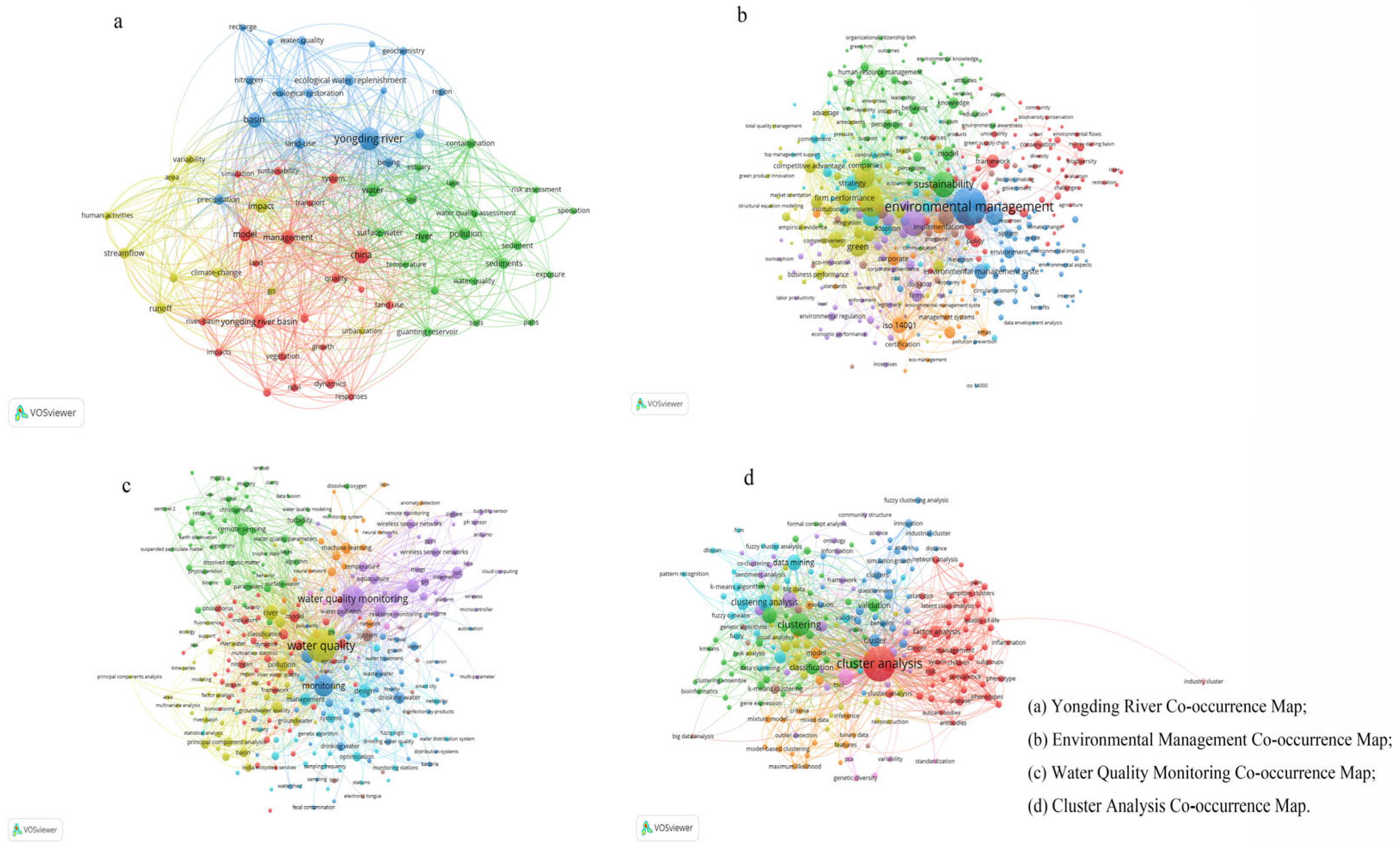
In order to better explore the hydrological and water quality characteristics of the Yongding River and grasp the progress of comprehensive research in the basin, the literature was retrieved from the Web of Science Core Collection. More than 1000 papers were retrieved, respectively, with the themes of Yongding River, water quality monitoring, environmental management, and cluster analysis, and were imported into R (v.4.5.0) and VOS viewer (v.1.6.20)software to sort out research trends and to develop priorities.
Figure 1a centers on “Yongding River,” showing strong co-occurrence with “model,” “quality,” and “ecological water replenishment.” This indicates that modeling techniques are employed to simulate pollutants and assess water quality characteristics in the Yongding River, while ecological water replenishment has also emerged as a prominent research focus in recent years. Figure 1b centers on “environmental management,” showing strong co-occurrence with “model”, “resources”, “quality,” and “water.” This indicates that water resource governance and protection, water quality changes, and the application of models in water resource management are inextricably linked to environmental management. Figure 1c centers on “water quality monitoring,” co-occurring with “cluster analysis,” and “management,” highlighting that cluster analysis and management are key research topics in water quality monitoring studies. Figure 1d centers on “cluster analysis,” co-occurring with “management,” “model-based clustering,” “simulation,” and “inference.” This indicates that cluster analysis methods are frequently employed alongside model simulation and deductive reasoning to derive management system workflows. In summary, the keywords selected for this paper are accurate, highly relevant, and reflect significant research activity, demonstrating substantial research value.
Many studies have focused on the water quality analysis of rivers in an attempt to explore the changing patterns of river water quality and provide a clearer direction for optimizing management and dispatching. Miao Qun et al. [12] used the Comprehensive Water Quality Identification Index (CWQII) to divide the Dagou River into three time periods: the dry season, the normal water season, and the wet season, and conducted water quality analysis and evaluation. The results showed that the CWQII results were basically consistent with the actual situation. Zhu Lei et al. [13] applied principal component analysis to the comprehensive evaluation of the water quality of the Liao River, explored the relationship between water quality and the cross-section, and used two-dimensional and three-dimensional graphics to present the pollution situation of the Liao River. Li Jingxi et al. [14] used cluster analysis to evaluate the spatio-temporal variations in water quality variables in Yongsan River, South Korea. The results indicated that cluster analysis could be effectively applied to assess the spatio-temporal variations in river water quality. Poornasuthra Subramaniam et al. [15] evaluated the spatio-temporal variations in Lake Kenil’s water quality using methods such as cluster analysis, discriminant analysis, and principal component analysis. The results indicated that the temporal variations in Lake Kenil were significant, while the spatial variations were not obvious. Garizi et al. [16] analyzed the river water quality dataset using various statistical techniques such as principal component analysis and factor analysis. The results indicated that the river had significant seasonal variations. Antoni Grzywna et al. [17] used principal component analysis and factor analysis, chromatographic cluster analysis, and discriminant analysis to determine the temporal variation in water quality between seasons. The results showed that the water quality of the river was the best in summer and the worst in autumn, but no obvious spatial characteristics were displayed. Wu Jiang et al. [18] combined the autoregressive comprehensive moving average and clustering model to predict the total phosphorus in water quality. The results showed that compared with the autoregressive comprehensive moving method alone, this method had better accuracy. Pejman et al. [19] employed multivariate statistical techniques such as cluster analysis, principal component analysis, and factor analysis to evaluate the spatio-temporal and seasonal variations in water quality in the Haraz River Basin. The results show that a water quality parameter has a significant impact during a certain season, but it may not have a notable effect during other seasons. Gu Xiaoyun et al. [20] evaluated the river ecosystem of the North Canal using principal component analysis and correlation analysis. The results showed strong spatial heterogeneity, and the water quality in the upper reaches was better than that in the lower reaches. Guo Qizhong [21] discussed management approaches for the Mississippi River, advocating for a systematic, interdisciplinary, and multi-stakeholder participatory model that also provides valuable insights for global major river basin governance. Tamsen Reed et al. [22] analyzed qualitative experiences based on governance challenges faced by the Mississippi River, highlighting that regional collaboration mechanisms offer valuable lessons for basin management. Liu Xiaochen et al. [23] compared nitrogen dynamics in the Rhine, Mississippi, Yangtze, and Pearl rivers, providing scientific grounds for developing forward-looking nitrogen management strategies for river basins.
These studies indicate that to a certain extent, certain temporal and spatial characteristics of rivers can be revealed through means such as correlation analysis, principal component analysis, and cluster analysis. Although numerous studies and technologies have been applied to the water quality management of the river, there are still some research gaps in the current literature. For instance, current research mostly focuses on the study of the water replenishment effect of the Yongding River, without specifically analyzing each time period in combination with water replenishment plans [11,24,25,26,27]. This study segments the annual water replenishment plan into distinct time periods, dividing each year along the Yongding River into three phases: non-replenishment non-flood season, replenishment non-flood season, and non-replenishment flood season. This approach enables a more scientific and refined investigation into how rainfall and water replenishment influence water quality within the study area, specifically examining whether they contribute to water quality optimization. The ultimate goal is to provide scientific guidance for safeguarding the ecological security of the river channel.
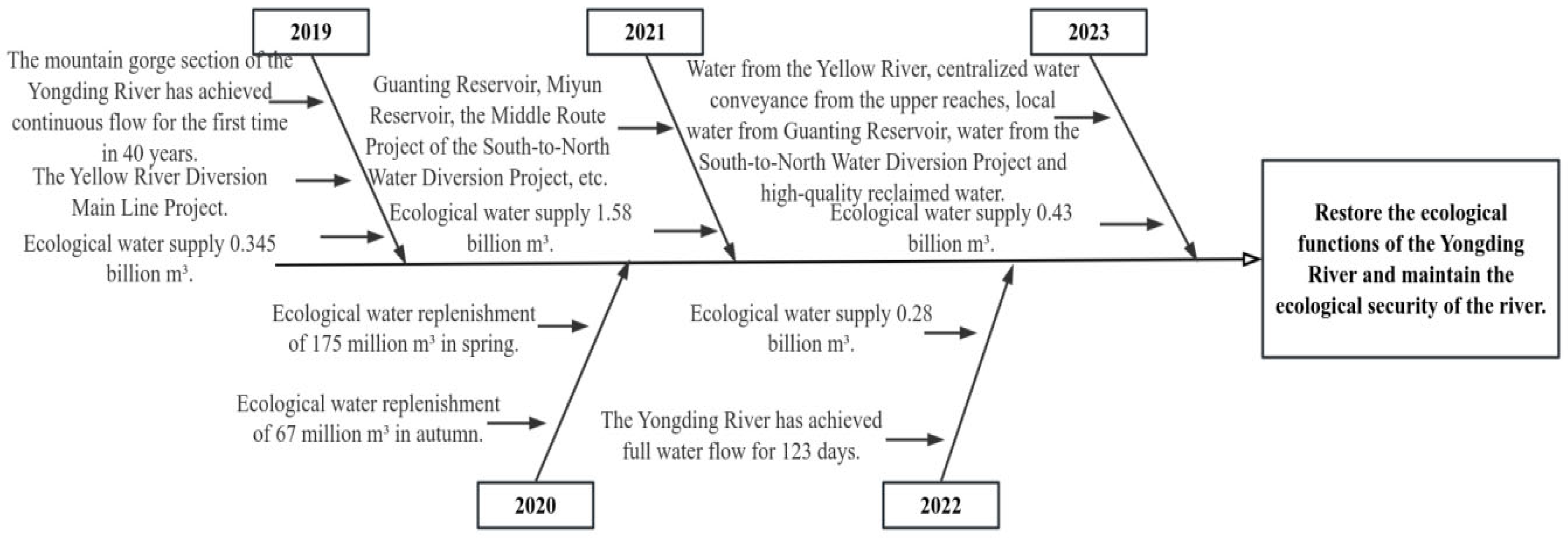
To alleviate ecological problems in rivers, the Ministry of Water Resources began to implement unified water volume dispatching for the Yongding River in 2003. In 2016, the National Development and Reform Commission, the Ministry of Water Resources, and the State Forestry Administration jointly issued the ”Overall Plan for Comprehensive Management and Ecological Restoration of the Yongding River,” which will ensure ecological water supply for the river course. Restoring the ecological functions of the research area and maintaining its ecological health are the key to the ecological restoration of the river. In 2019, the Wanjiacun Yellow River Water Diversion Ecological Water Replenishment Project was initiated. In 2021, the Ministry of Water Resources issued the “Guiding Opinions on Restoring and Improving the Ecological Environment of Lakes,” clearly requiring that by 2025, key rivers including the Yongding River strive to achieve full flow. The annual water replenishment plan is shown in Figure 2.

2. Materials and Methods

2.1. Overview of the Study Area

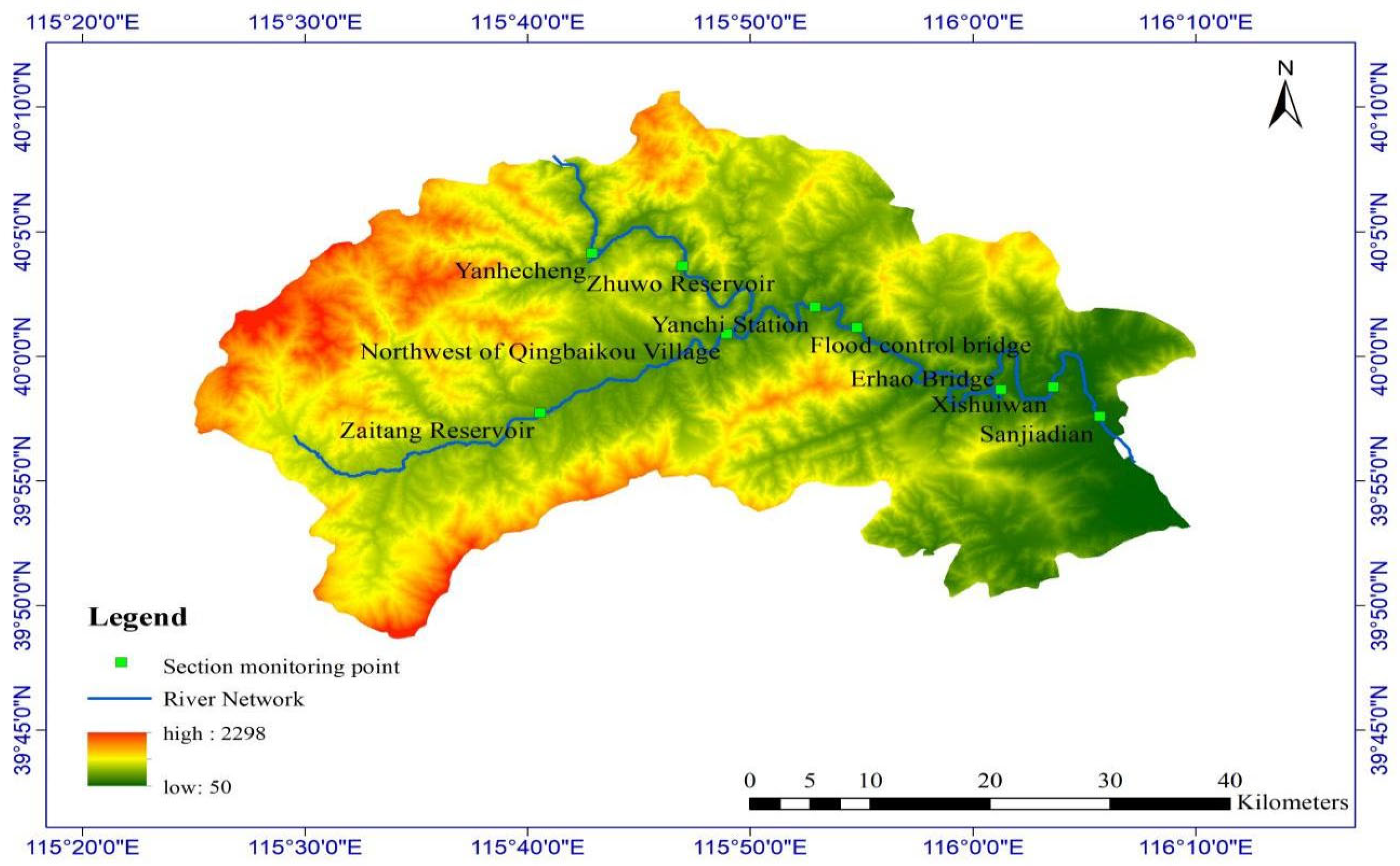
The water quality of the mountainous section of the river is better than that of the urban area and the urban-rural fringe area [28]. The main stream of the Yongding River in the Beijing Gorge section (downstream of Guanting Reservoir—Sanjiadian) study area is approximately 86.99 km long, including both mountainous and urban-rural fringe areas. The terrain of the Yongding River Basin is higher in the northwest and lower in the southeast. After converging with the Sanggan River in the southwest and the Yang River in the northwest, it originates from the Guanting Reservoir, traverses the Badaling Plateau, and forms the Guanting Gorge, and then flows into the North China Plain at Sanjiadian (as shown in Figure 3). The Sanjiadian serves as the boundary between the mountainous and plain areas of the Yongding River Basin. The Yongding River Basin is located in the central part of the Eurasian continent, in a transitional zone between semi-humid and semi-arid climates. It has a warm continental monsoon climate. The average annual temperature in the upper reaches of the basin is 6.9 °C, with the highest being 39 °C, and the lowest at −35 °C, and the temperature difference is relatively large. Due to the influence of the continental monsoon climate, the distribution of precipitation in time and space is extremely unbalanced, with about 80% concentrated during the flood season. In terms of the variation in precipitation in the four seasons, summer precipitation accounts for 64%, followed by autumn at 20%, spring at about 15%, and winter at least less than 1%.

2.2. Research Methods

To ensure the representativeness and scientific validity of data analysis and statistics, this paper conducts literature retrieval based on the Web of Science Core Collection and selected the literature highly relevant to the retrieval topic as the research object. In the Web of Science Core Collection with the title words “Yongding River,” “Environmental management,” “Cluster analysis,” and “Water quality monitoring,” more than 1000 papers were retrieved, respectively. The retrieved literature was imported into R and VOS viewer software to conduct quantitative analysis on the number of published papers, keywords, and research regions. Combined with statistical methods for analysis, the research significance and development in related fields were revealed.
This study employed a combined quantitative and qualitative approach to analyze water quality changes in the Yongding River. First, technical specialists from the Mentougou District Water Affairs Bureau in Beijing collected water quality monitoring data (monthly) from multiple monitoring sections along the Yongding River between 2019 and 2023. This data included indicators such as dissolved oxygen, permanganate index, chemical oxygen demand (COD), biochemical oxygen demand (BOD), ammonia nitrogen, and total phosphorus. Given the frequent agricultural activities and presence of industrial facilities within the study area, we focused on testing for total phosphorus, total nitrogen (GB 3838-2002) (https://english.mee.gov.cn/standards_reports/standards/water_environment/quality_standard/200710/t20071024_111792.htm, accessed on 27 November 2025), and heavy metals (copper, zinc, etc.). Laboratory methods for analyzing each indicator are detailed in Supplementary Table S1. These indicators were analyzed against the surface water Class III quality requirements specified in the Yongding River Functional Zone Plan (see Table 1). After data collection, SPSS statistical software (version 27.0.1, IBM Corporation, Armonk, NY, USA) was used to clean and preprocess the data to ensure analytical accuracy and perform histogram normality tests on selected datasets. Subsequently, descriptive statistics and time series analysis were applied to identify trends and seasonal fluctuations in water quality indicators. To explore interrelationships among different indicators, correlation analysis and principal component analysis (PCA) were employed to determine primary pollutants and pollution sources. Finally, cluster analysis compared water quality conditions across different monitoring sections to identify potential pollution hotspots. Correlation Analysis: To investigate the linear relationship between Variable A and Variable B, the Pearson correlation coefficient was calculated (data conformed to bivariate normal distribution). Principal Component Analysis: PCA was performed on multiple variables to reduce the dataset dimension and identify key features. Prior to analysis, data underwent Z-score normalization to eliminate dimensional effects. Principal components were extracted using the Kaiser criterion (eigenvalue > 1), resulting in 3 principal components. Cluster Analysis: To identify unknown subgroup structures within the data, K-means clustering was performed based on the scores of the top 3 principal components derived from PCA. Sample similarity was measured using Euclidean distance. The elbow rule determined the optimal number of clusters to be 2. The final clustering results were evaluated using the contour coefficient, indicating good consistency of the clustering outcomes. Statistical Testing and Visualization: All statistical analyses were performed using the R programming language. The integrated application of these methods aimed to provide scientific basis and recommendations for environmental management and policy formulation along the research area.
The water quality of Mentougou from June to September is defined as the flood season. According to the water replenishment time of each year from 2019 to 2023, the Yongding River is divided into the water replenishment non-flood season, the non-water replenishment flood season, the water replenishment flood season, and the non-water replenishment non-flood season (as shown in Table 2). Among them, the water replenishment flood season is only from July to September 2021, so it is not compared with other years.
Based on field investigations and a literature review, potential pollution sources in the study area may include gasoline leaks and transportation accidents. Nonpoint source pollution primarily originates from farmland and orchards along both sides of the river. Farmland covers an area ranging from 1493.24 to 1691.24 km2, accounting for an average proportion of 42.15% within the study area. Forest land covers an area ranging from 1452.55 to 1544.68 km2, averaging 40.03% of the study area; the average proportion of constructed land was 10.50%, grassland averaged 5.25%, and water bodies averaged 2.03%, while unutilized land constituted a minor proportion, less than 0.1% [29].

3. Results and Discussion

3.1. Screening of Water Quality Indicators

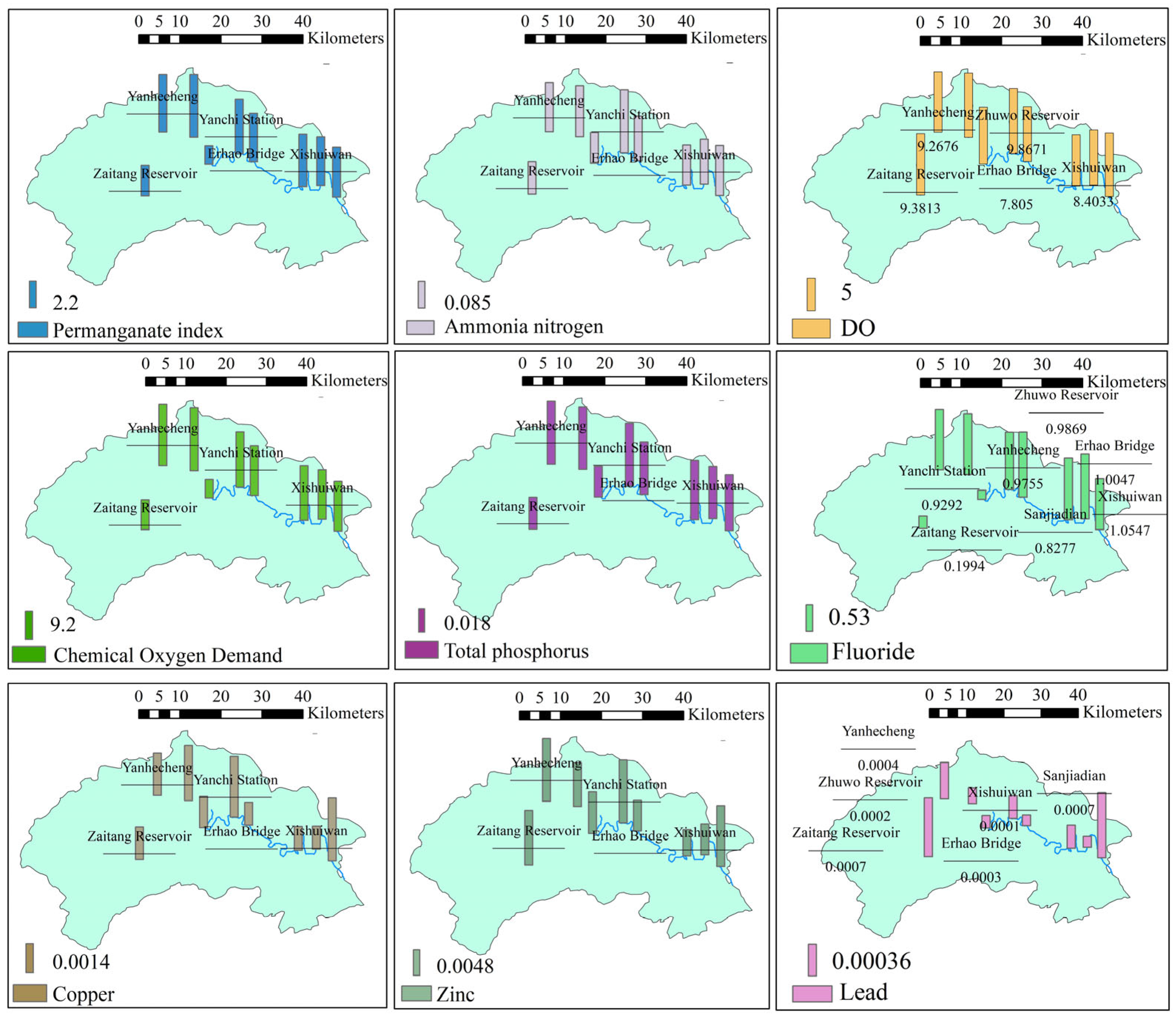
Based on the monitoring indicators of the Yongding River section from 2019 to 2023, and in combination with the functional zone differentiation of the Yongding River, the water quality requirement has to comply with Class III surface water standards. Among them, the dissolved oxygen, permanganate index, total nitrogen, chemical oxygen demand, and fluoride all exceeded the ranges set for Class III surface water. The statistical results are shown in Figure 4 (station values represent five-year averages; legend numbers represent the average of all stations, n ≥ 200). Fluoride levels are significantly above the standard. Due to the influence of factors such as the relatively high background value of fluoride in the primary stratum species, it was not caused by human activities that exceeded the standard, so the fluoride content as a water quality indicator was not further investigated in the future [30]. During the subsequent annual cluster analysis, it was found that the ammonia nitrogen index played a significant role in differentiating the water quality sections of the main river in 2023. Therefore, ammonia nitrogen was also selected as one of the water quality indicators for discussion. The exceedance of total nitrogen was as high as 87.88%. The reason for this is the agricultural non-point source pollution in Zhangjiakou City in the upper reaches of the Yongding River [31,32]. The total nitrogen content at the source of the mountain gorge section is already very high, so it is not included in the analysis index. Total phosphorus shows different patterns from other water quality indicators at different times, so it is also included in the analysis indicators.

3.2. Analysis of Water Quality Index Characteristics

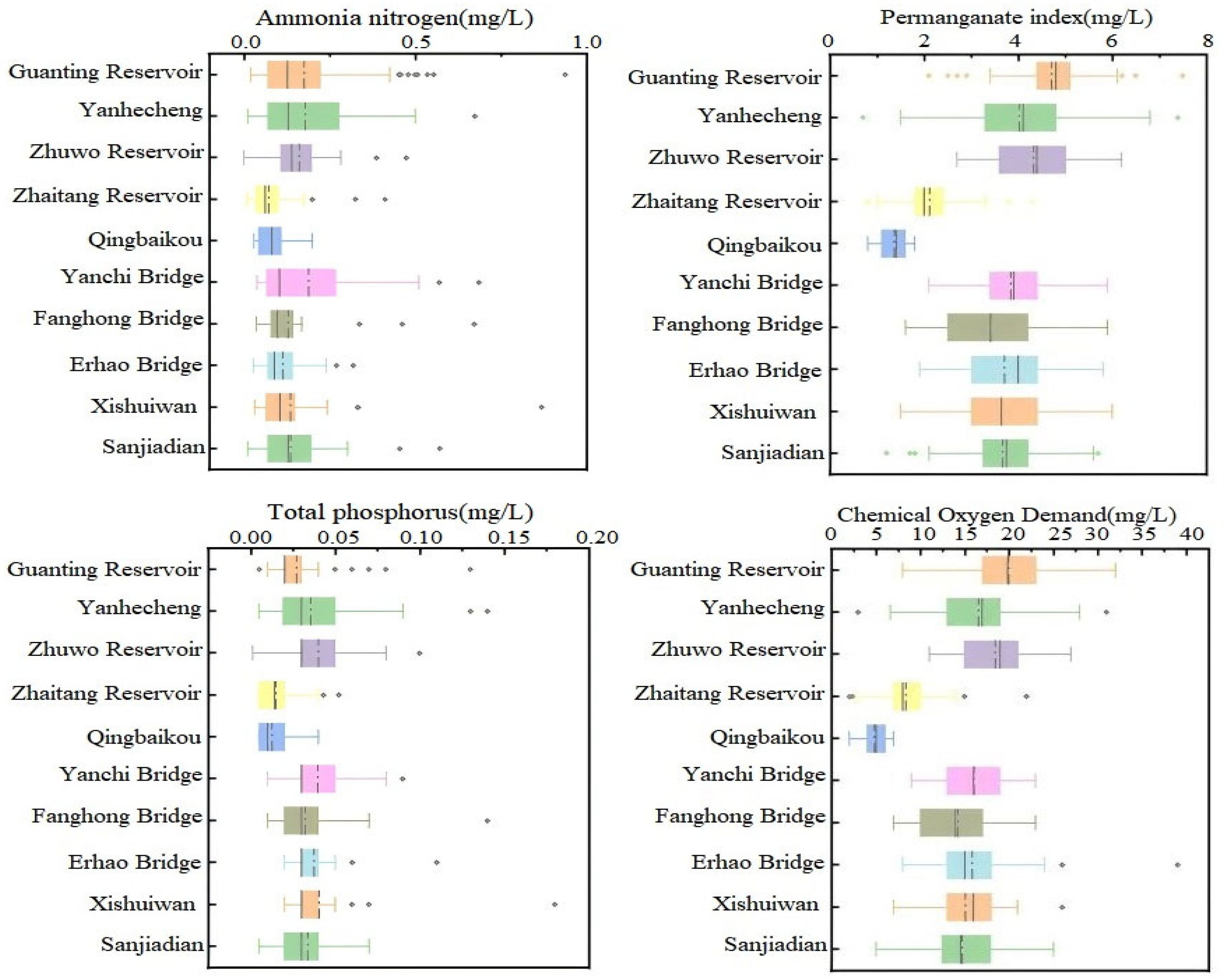
After screening out the water quality indicators and combining the statistical data of water quality indicators at each monitoring section, it can be seen that the water quality in the upstream is slightly better than that in the downstream from a spatial perspective, as shown in Figure 5 (solid lines within the box represent the median, dashed lines indicate the mean, and scattered points denote outliers, n ≥ 200). The average values of permanganate index, chemical oxygen demand, ammonia nitrogen, and total phosphorus in the Guanting Reservoir upstream were 4.55 mg/L, 19.08 mg/L, 0.17 mg/L, and 0.03 mg/L, respectively. The average values of the permanganate index, chemical oxygen demand, ammonia nitrogen, and total phosphorus at the Sanjiaodian section of the downstream effluent were 3.53 mg/L, 14.25 mg/L, 0.12 mg/L, and 0.03 mg/L, respectively. The permanganate index, chemical oxygen demand, and ammonia nitrogen decreased by 22.31%, 25.31%, and 30.06%, respectively, while the total phosphorus content increased by 18.19%. The total phosphorus content from Yanhe City has been significantly higher than that from Guanting Reservoir. Therefore, it is judged that there is non-point source pollution between Guanting Reservoir and Yanhe City. In terms of time, the overall water quality has shown an improving trend. In 2023, the permanganate index, chemical oxygen demand, ammonia nitrogen, and total phosphorus decreased by 7.67%, 11.75%, 38.05%, and 18.23%, respectively, compared to 2019.
Based on the water quality data of the research area from 2019 to 2023, it can be seen that the overall water quality meets the standard of Class III surface water. The northwest of Qingbaikou Village and the Zaitang Reservoir are located on the Xiaoqing River, a tributary of the Yongding River. The water quality there is significantly better than that of the main channel of the Yongding River. According to the cross-sectional water quality of the main river channel, it can be seen that the water quality downstream is slightly better than that upstream.
The lower reaches of the Yongding River basically meet the potassium permanganate index standard of Class II surface water quality. The water quality is the best in the northwest of Qingbaikou Village and at Zaitang Reservoir Station. This is consistent with the findings of Deng et al. (2023) [6]. There was an overall downward trend in 2021, 2022 and 2023. The overall chemical oxygen demand in the downstream is better than that in the upstream. The chemical oxygen demand at Zaitang Reservoir and the northwest of Qingbaikou Village is significantly lower than that at other locations. In recent years, the ammonia nitrogen and total phosphorus in the research area have generally shown a downward trend. The ammonia nitrogen concentration at the flood control bridge and the water Play Bay is highly comparable. The ammonia nitrogen level in the middle reaches of the Yongding River rose in 2021. The ammonia nitrogen in the downstream sector in 2023 was lower than that in the upstream sector. The total phosphorus content of the Yongding River showed an overall upward trend in 2019, but has been on a downward trend since 2020, with the lowest overall level in 2023. The total phosphorus concentrations in the middle reaches are better than that in the upper and lower reaches. Heavy metal indicators such as copper, zinc and lead have all significantly increased at the outlet of the mountain gorge section of the Yongding River, namely the Sanjiadian section. Although they have not exceeded the Class III surface water standard, attention should still be paid during the treatment process.

3.3. Monthly Variation Statistics of Water Quality Indicators

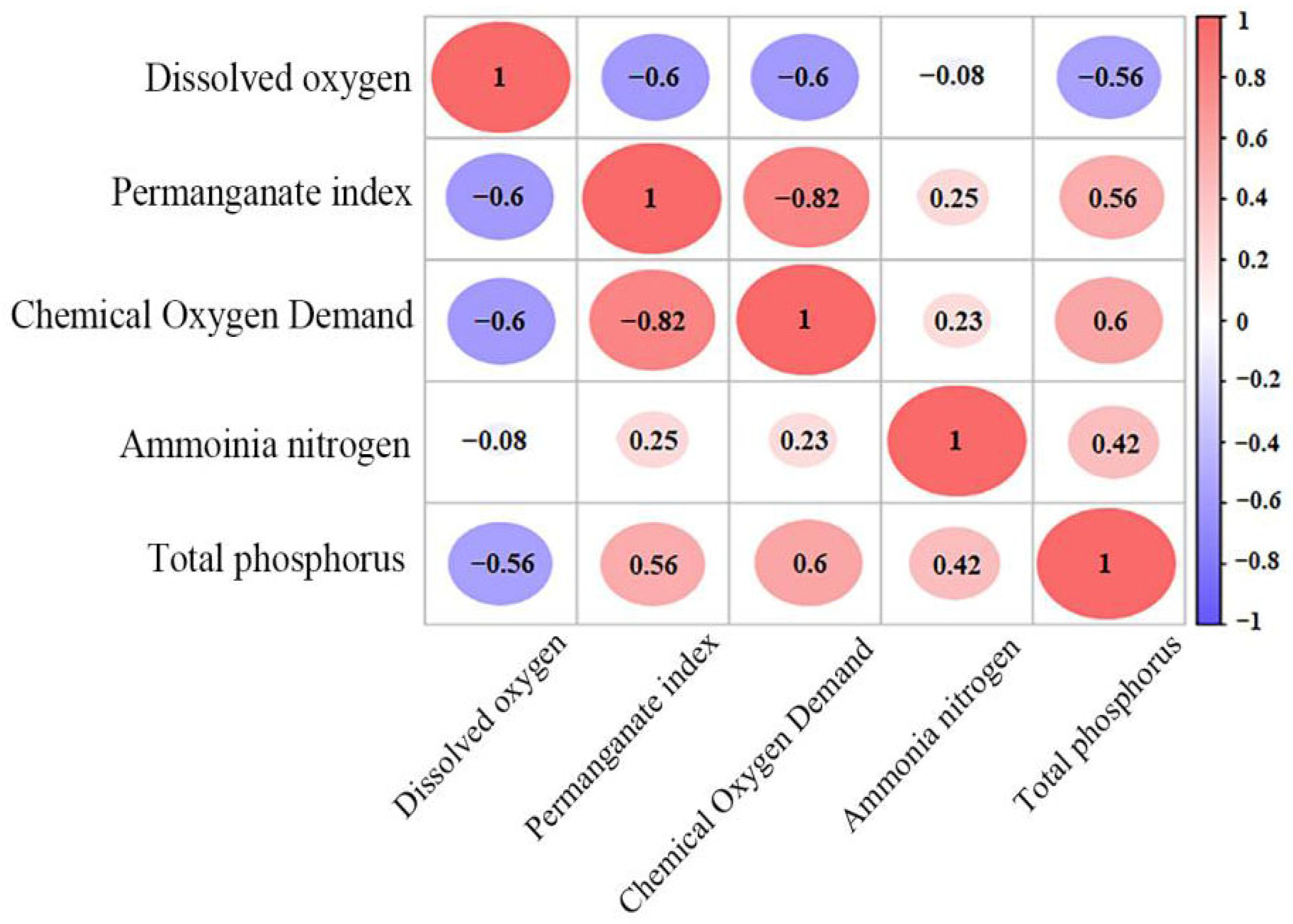
By comparing the monthly changes in five water quality data of Yongding River, we found that the changes in permanganate index and chemical oxygen demand were highly consistent, and at the same time, they showed opposite regular characteristics to dissolved oxygen. Therefore, a correlation analysis was conducted on each index (Figure 6). The results show that the correlation between the permanganate index and the chemical oxygen demand is as high as 0.82, and the permanganate index is also correlated with dissolved oxygen and total phosphorus, which are −0.6 and 0.56, respectively.

3.3.1. Permanganate Index and Chemical Oxygen Demand

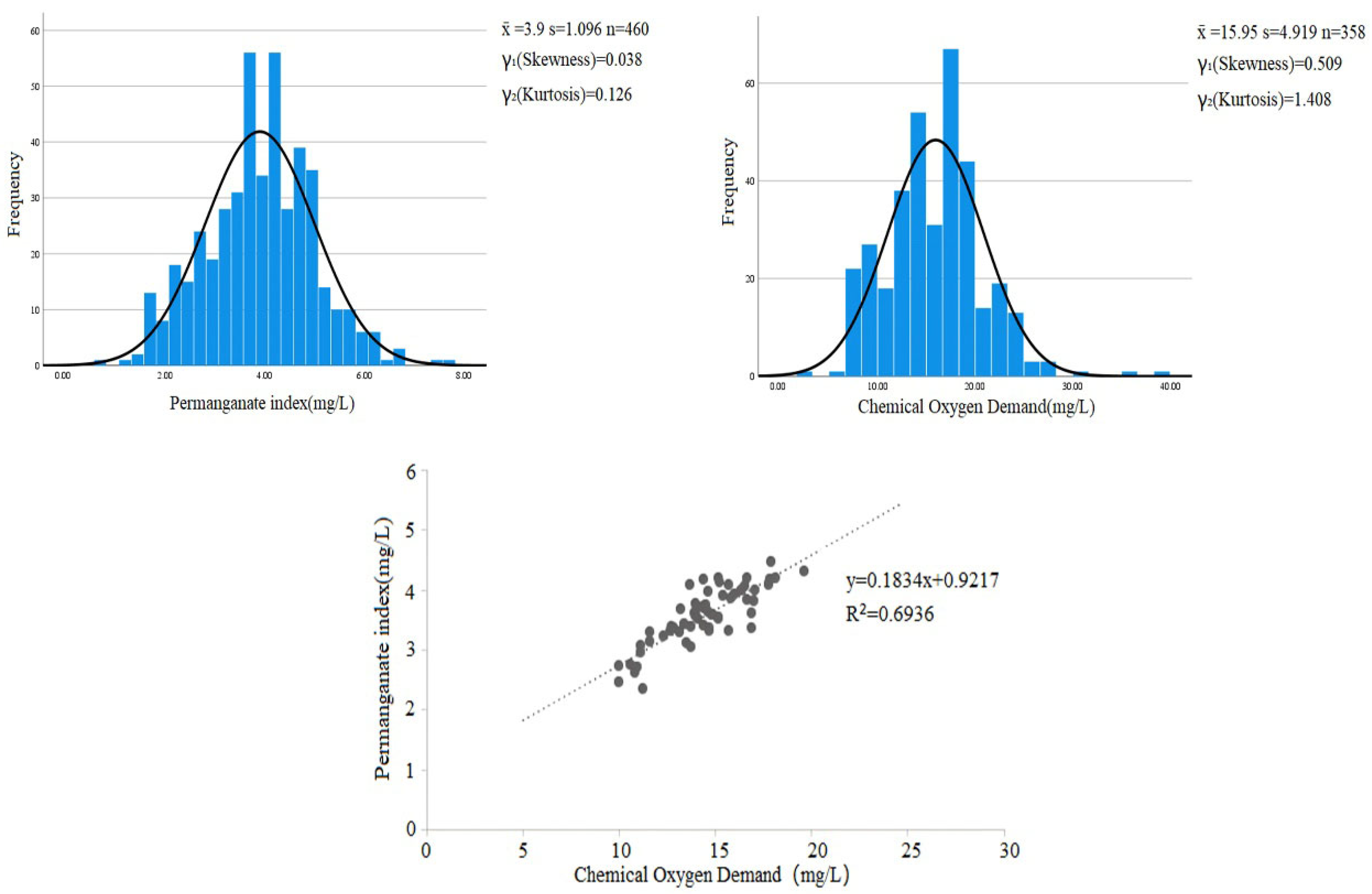
The correlation between these two indicators is very high (r = 0.818), which indicates that they may originate from the same pollution source. Scatter plots of chemical oxygen demand and permanganate index were plotted using 60 sets of data. Normality tests were conducted, and a univariate linear regression equation and correlation coefficient R were established, as shown in Figure 7 (the Q-Q plot for the normality test of the data is shown in Figure S1). The univariate linear regression equation for chemical oxygen demand and permanganate index is y = 0.1834x + 0.9217, with a correlation coefficient R = 0.6936. Since 0 < R < 1, there exists a certain linear relationship between x and y.

3.3.2. Total Phosphorus, Chemical Oxygen Demand and Permanganate Index

The correlation between total phosphorus and chemical oxygen demand (r = 0.597) and permanganate index (r = 0.56) is also relatively high, indicating that the source of phosphorus may be closely related to organic pollution. High concentrations of total phosphorus are usually associated with the use of detergents, the loss of agricultural fertilizers and the discharge of organic waste.

3.3.3. The Relationship Between Ammonia Nitrogen and Other Indicators

Ammonia nitrogen was slightly negatively correlated with dissolved oxygen (r = −0.084) but positively correlated with permanganate index and chemical oxygen demand (r = 0.251 and 0.232). This indicates that the presence of ammonia nitrogen may be related to organic pollution to some extent, but the association is not as strong as that between phosphorus and organic matter. The main sources of ammonia nitrogen may be agricultural loss, insufficient urban sewage treatment and the natural nitrogen cycle process.
The results of these correlation analyses show that the pollutants in the research area are mostly organic pollution sources or easily oxidized organic substances. Based on the correlation coefficients between total phosphorus and permanganate index as well as chemical oxygen demand, the main pollution of phosphorus in rivers may originate from organic phosphorus fertilizers in agricultural pollution. Combined with the subsequent statistics by time periods and the literature on water quality in the upper reaches of the Yongding River, agricultural pollution in the upper reaches is indeed relatively severe, which once again coincides with the correlation analysis results here.

3.4. Data Statistics on Water Quality Indicators and Water Replenishment Periods

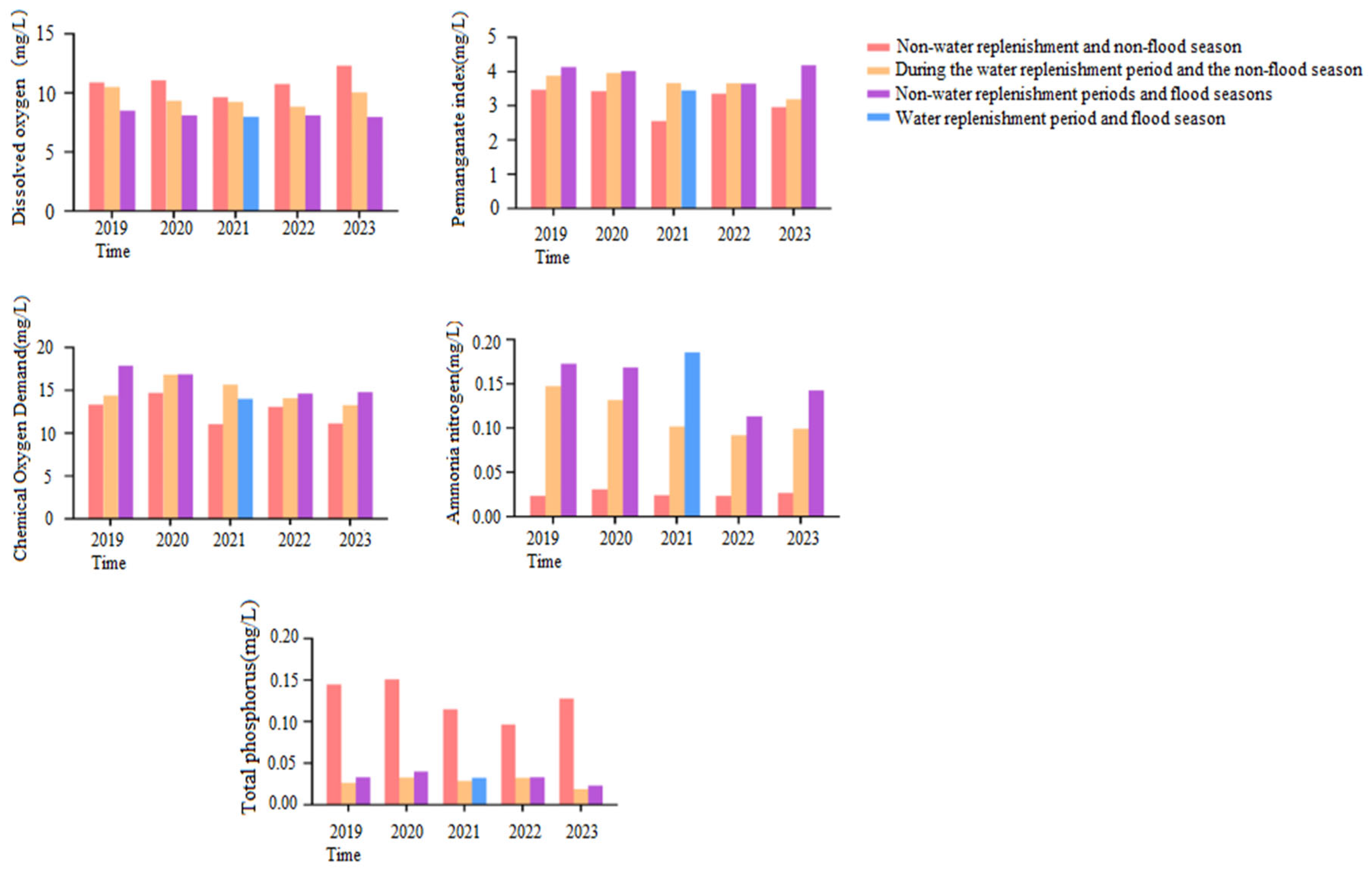
According to the average statistical data of the past five years, it can be known that the average values of the five water quality indicators, namely dissolved oxygen, total phosphorus, chemical oxygen demand, permanganate index and ammonia nitrogen, in each period all meet the surface water quality standards of Class III. By comparing the water quality indicators of different periods in each year (as shown in Figure 8), we found that during the non-water replenishment flood season, the dissolved oxygen was the lowest, the chemical oxygen demand, the permanganate index, and the ammonia nitrogen were the highest, with the average values being 8.16 mg/L, 16.04 mg/L, 3.99 mg/L, and 0.15 mg/L, respectively. The total phosphorus was the highest during the non-water replenishment and non-flood season, with an average value of 0.13 mg/L. Overall, during the non-water replenishment flood season, the permanganate index, chemical oxygen demand, and ammonia nitrogen content are the highest, while the dissolved oxygen content is the lowest, resulting in the poorest overall water quality. The total phosphorus content is the highest during non-water replenishment and non-flood seasons, and special attention should be paid.

3.5. Cluster Analysis of Water Quality Indicators

3.5.1. Cluster Analysis of the Gorge Section of the Yongding River

Based on SPSS, a second-order cluster analysis was conducted on 607 sets of data of 8 water quality indicators from 7 major monitoring sections from 2019 to 2023. The statistical results aggregated the original 7 sections into 2 categories, as shown in Table 3 and Table 4. Among them, the first category contains the original category 2, and the second category contains the original category 5. Based on the above cluster analysis results, the seven monitoring sections of the Yongding River can be classified into two categories: 1: Northwest of Qingbaikou Village and Zaitang Reservoir; 2: Guanting Reservoir, Sanjiadian, Yanhecheng, Yanchi Suspension Bridge, Zhuwo Reservoir. According to the geographical location, we know that the northwest of Qingbaikou Village and Zaitang Reservoir are located on the Xiaoqing River, a tributary of the Yongding River. It can be known that there is a significant difference in water quality indicators between the Xiaoqing River and the main stream of the Yongding River, and the overall water quality of the tributary of the Xiaoqing River is better than that of the main stream of the Yongding River.
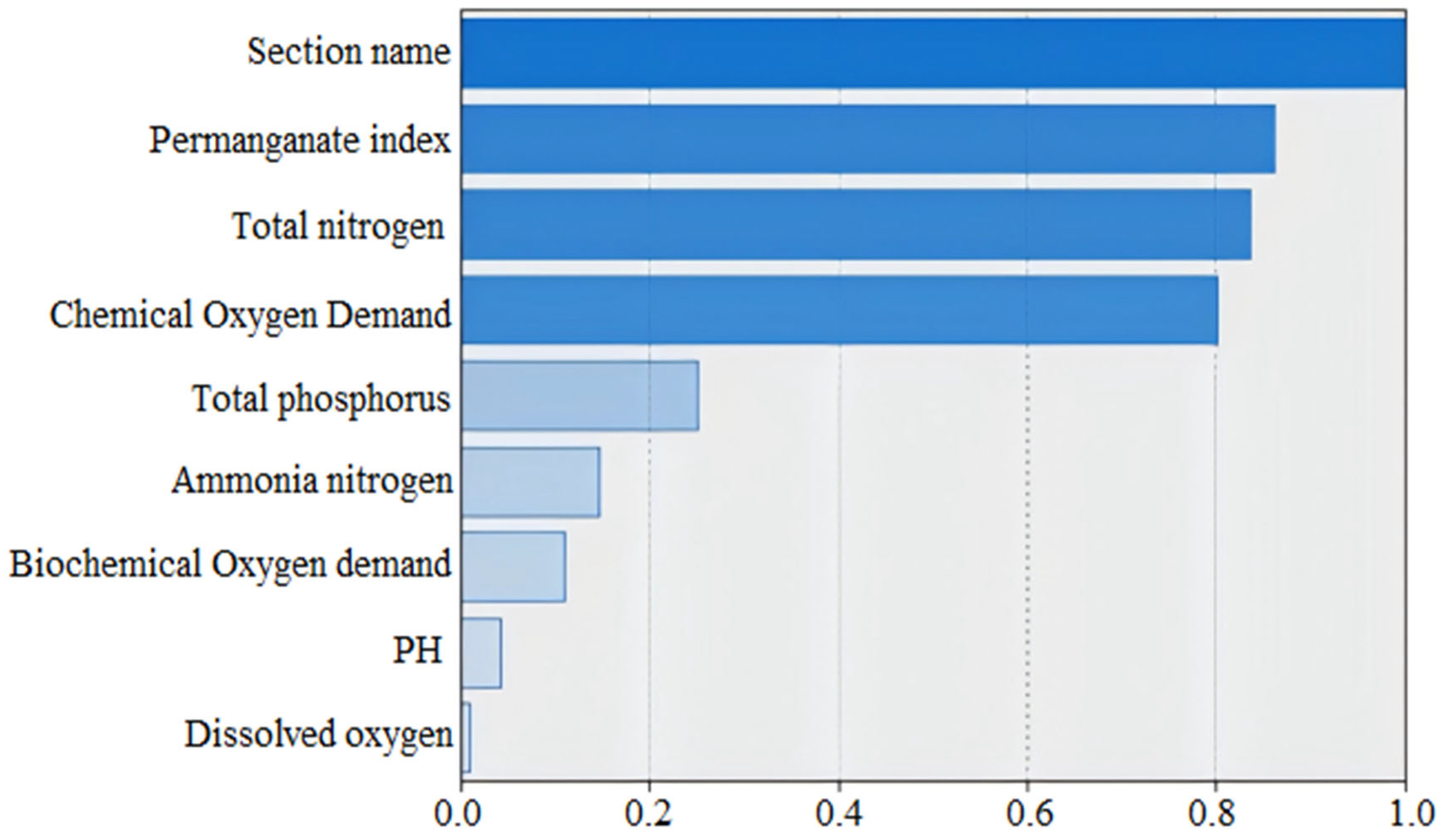
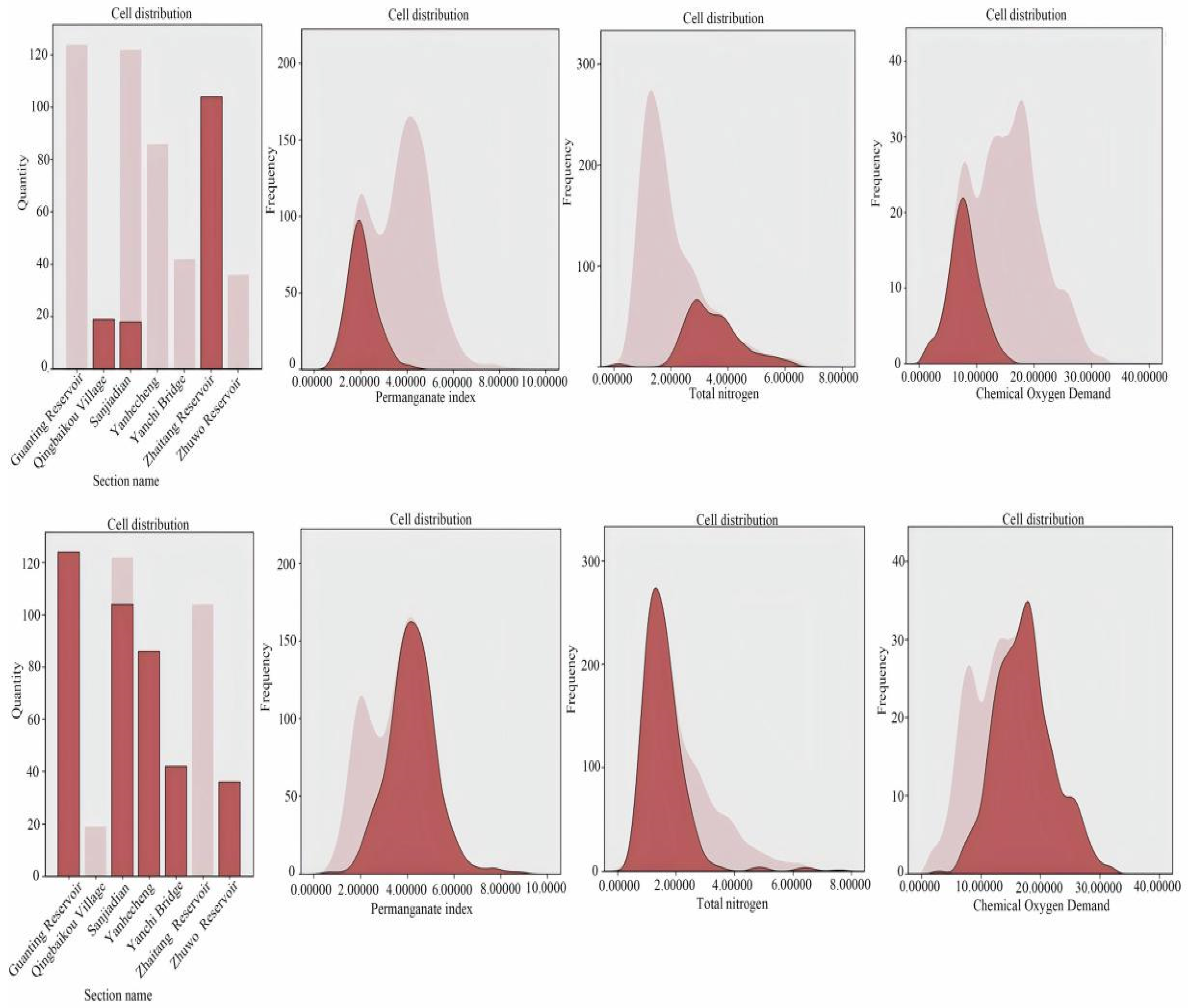
According to the results of the second-order clustering analysis, the main indicators that distinguish the water quality differences between the main channel of Yongding River and Xiaoqing River are three water quality indicators, namely permanganate index, total nitrogen and chemical oxygen demand (as shown in Figure 9), and the classification statistics are shown in Figure 10. Among them, the permanganate index, as the most important water quality indicator to distinguish the main river section from the tributary section, the average value of the permanganate index in the main river section of Yongding River is 4.21 mg/L.
The average permanganate index of the Xiaoqing River is 2.06 mg/L. The average chemical oxygen demand of the main channel of the Yongding River is 17.36 mg/L, and that of the Xiaoqing River is 7.86 mg/L. The average total nitrogen content in the main channel of Yongding River is 1.59 mg/L, and that in Xiaoqing River is 3.49 mg/L

3.5.2. Cluster Analysis of the Main Channel of Yongding River

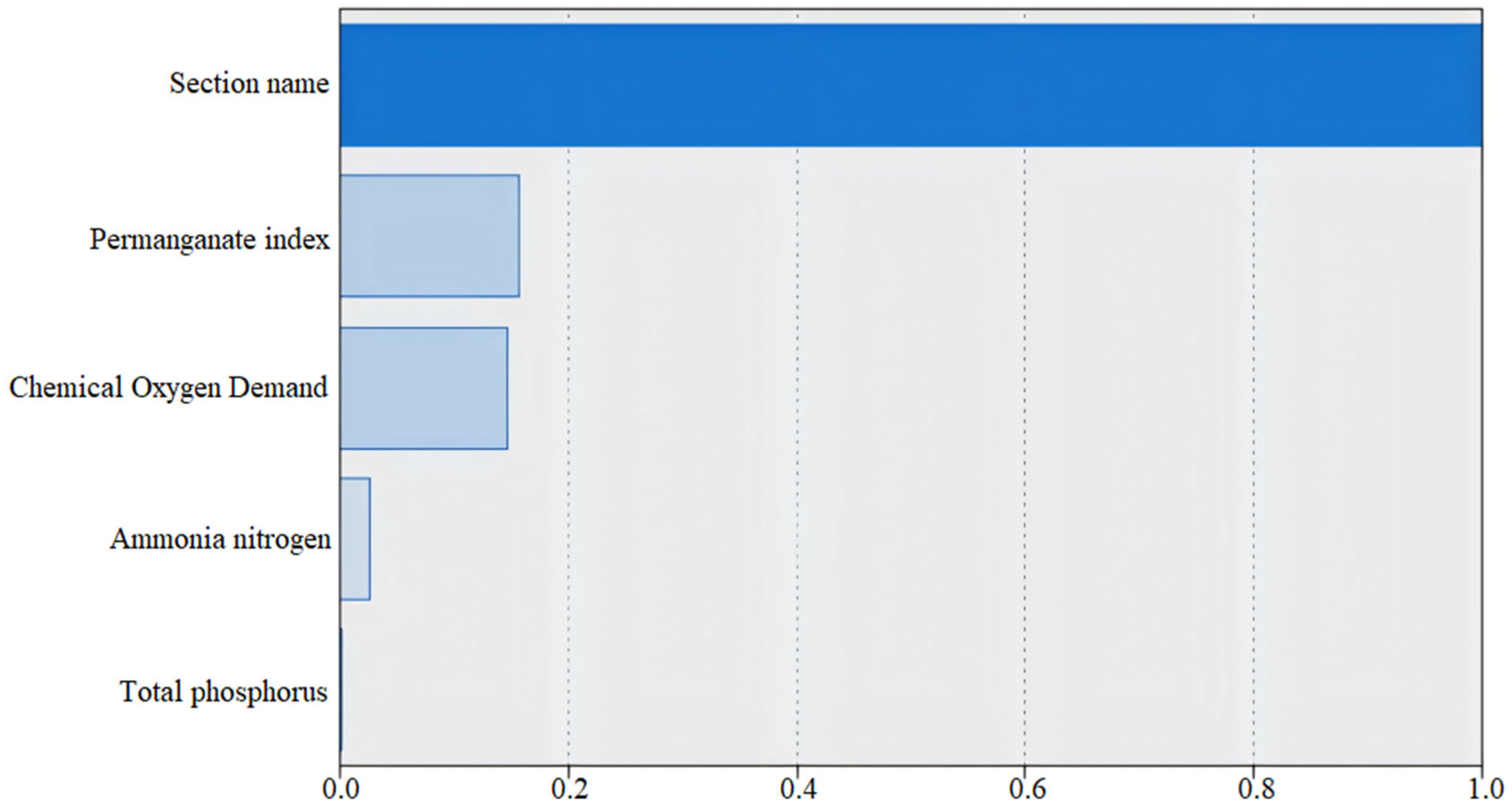
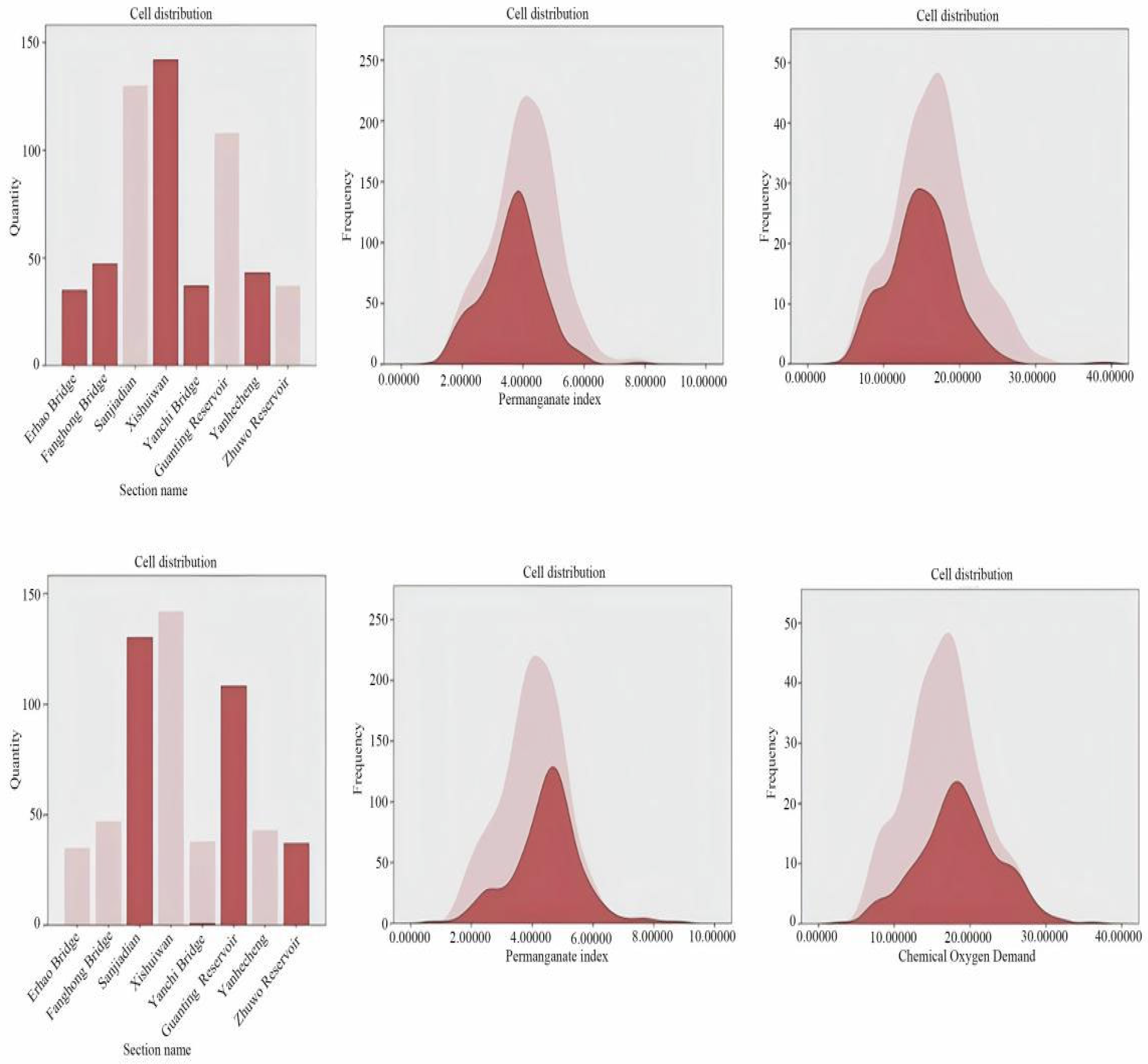
Based on SPSS, a second-order cluster analysis was conducted on 584 sets of data of 4 water quality indicators from 8 main river monitoring sections from 2019 to 2023(Table 5). The statistical results aggregated the original 8 sections into 2 categories (Table 6). The importance of the variables is shown in Figure 11, and the classification statistics are shown in Figure 12. Among them, the first category contains the original category 3, and the second category contains the original category 5. Based on the above cluster analysis results, the eight monitoring sections of the main channel of the Yongding River can be classified into two categories: No. 2 Bridge, Flood Control Bridge, Sanjiadian, Xishuiwan, and Yanchi Suspension Bridge. 2: Guanting Reservoir, Yanhecheng, Zhuwo Reservoir. From the direction of the river flow, they are Guanting Reservoir, Yanhecheng, Zhuwo Reservoir, Yanchi Suspension Bridge, Flood Control Bridge, No. 2 Bridge, Xishuiwan, and Sanjiadian in sequence. As a result, the second-order clustering statistics divide the main channel of the Yongding River into two parts: the upstream and the downstream.
According to the results of the second-order clustering analysis, the main water quality indicators that distinguish the water quality differences between the upper and lower reaches of the main channel of the Yongding River are two, namely the permanganate index and the chemical oxygen demand. Among them, the permanganate index is the water quality indicator with the greatest difference in water quality between the upstream and downstream of the main river. The average value of the permanganate index in the upstream of the main river of the Yongding River is 3.65 mg/L, and that in the downstream is 4.46 mg/L. The average chemical oxygen demand in the upper reaches of the main channel of the Yongding River is 14.93 mg/L, and that in the lower reaches is 18.52 mg/L.

3.5.3. Annual Cluster Analysis

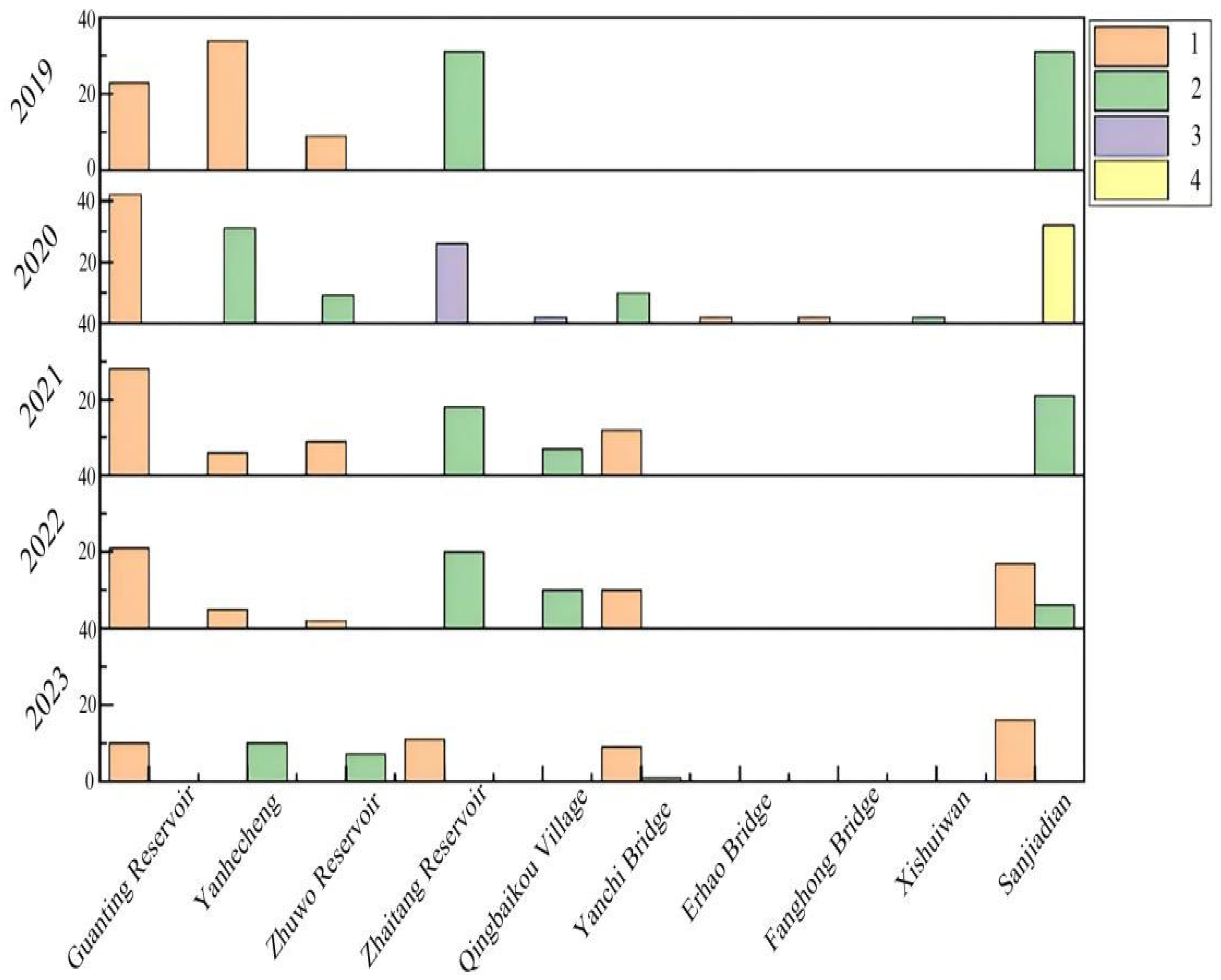
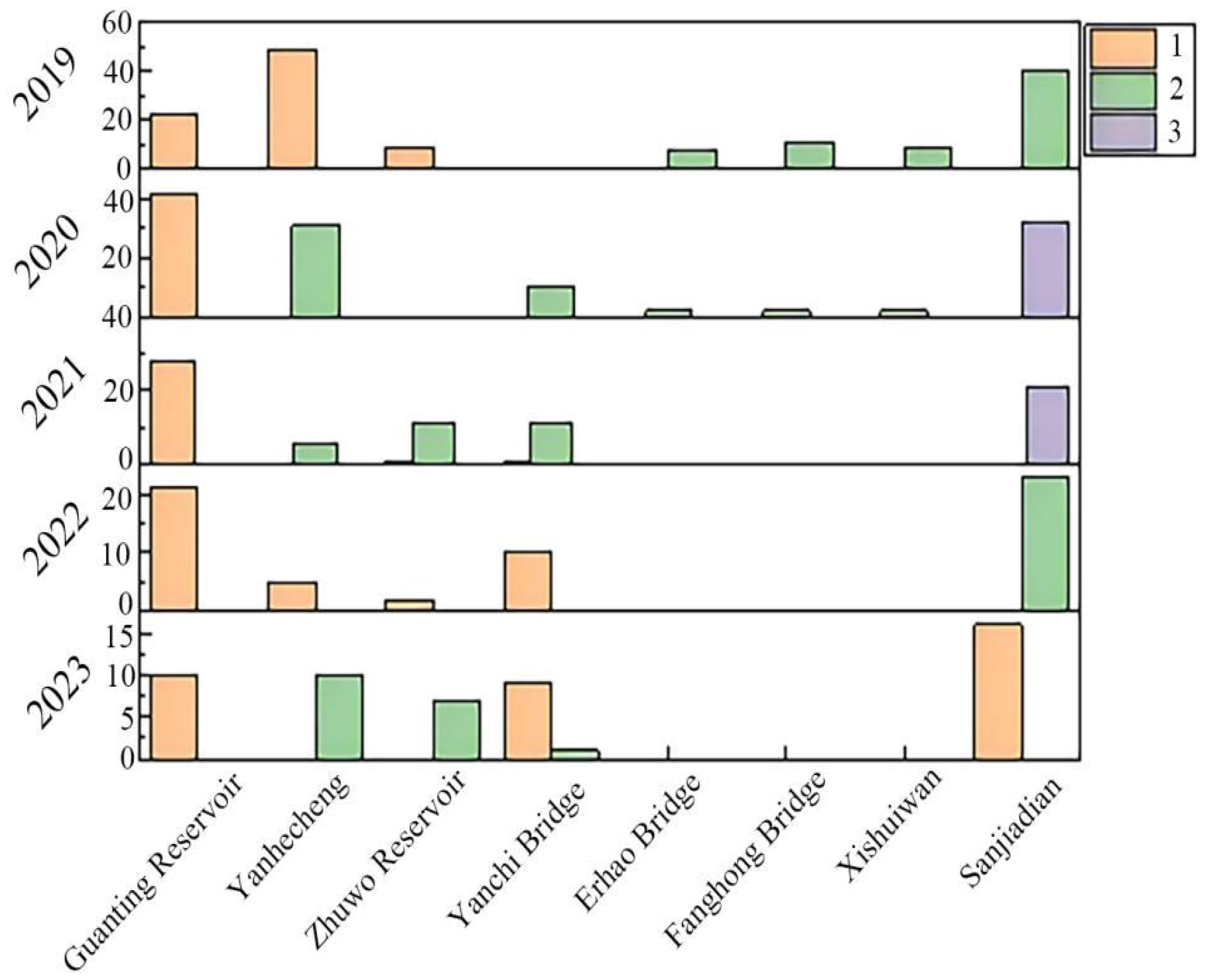
Based on the water quality indicators of each section, including dissolved oxygen, permanganate index, chemical oxygen demand, ammonia nitrogen, biochemical oxygen demand and total phosphorus, a second-order cluster analysis was conducted. The full-section clustering results of each year are shown in Figure 13, and the main river section clustering results of each year are shown in Figure 14 (the legend numbers in Figure 13 and Figure 14 represent different statistical methods). The feature summary is presented in Table 7. The full-section clustering results of each year show that the most significant influencing factor for section classification in 2019, 2021, 2022 and 2023 is the permanganate index, with importance of 0.49, 0.87, 1.0 and 0.56, respectively. The most significant influencing factor for cross-sectional classification in 2020 was chemical oxygen demand, with an importance of 0.33. The clustering results of the main river sections year by year show that the most significant influencing factor for section classification in 2019, 2022, and 2023 was the permanganate index, with an importance of 0.14, 0.22, and 0.48, respectively.
Overall, the results of the annual cluster analysis are largely consistent with those of the overall cluster analysis, but they also exhibit certain characteristics of the water quality of the Yongding River: Firstly, the water quality at the Sanjiadian section at the outlet of the mountain gorge section of the Yongding River is relatively good, and it was clustered together with the Xiaoqing River section, which has good water quality, in 2019, 2021, and 2022. This might be because the river channel in front of Sanjiadian has widened, allowing the river water sufficient time to undergo aeration and self-purification. Secondly, the clustering results usually classify the water quality sections into categories such as upstream, downstream, inlet, and outlet, which reflects the changing trend of water quality at different positions in the river. Meanwhile, in multiple cluster analyses, the permanganate index has always been the most significant influencing factor. This indicates that in the studied water quality, the permanganate index is a key indicator for distinguishing different water quality categories, which is consistent with the overall cluster analysis results.

3.6. Principal Component Analysis

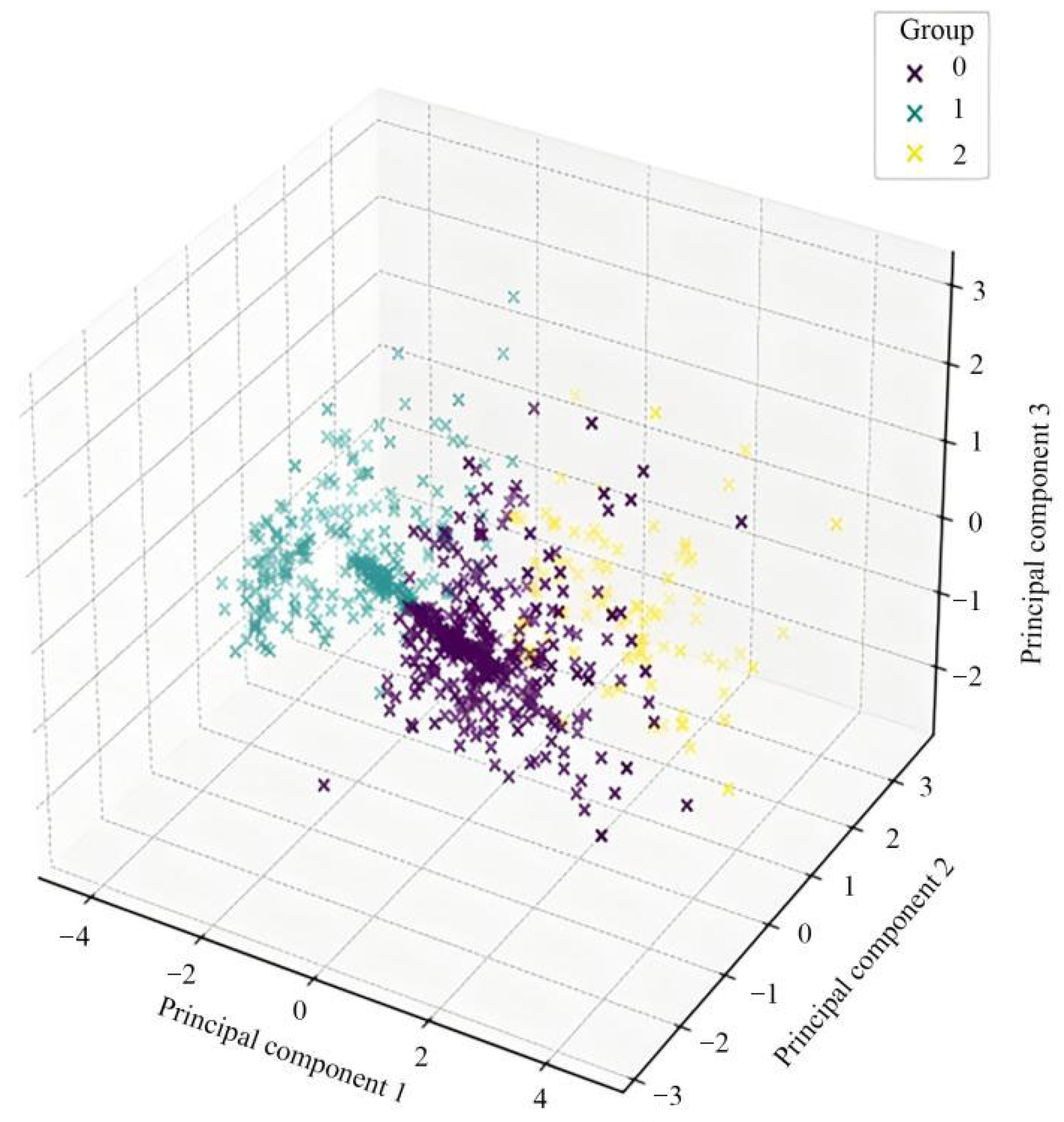
Principal component analysis was conducted on the water quality index data of each section (as shown in Figure 15) to further explore the statistical characteristics of the water quality data and potential associated pollution sources. The results show that the contributions of the first four principal components are the greatest, and their contribution amounts are shown in Table 8.
Explanation of principal component analysis results:
The permanganate index contributes the most in the first principal component, indicating that it plays a key role in the data variation and can be explored as a sensitive factor in subsequent studies. The permanganate index is usually used to assess the oxidation properties of organic and inorganic substances in water bodies, reflecting the degree of water pollution.
Heavy metals such as lead, copper, and zinc have made significant contributions in the subsequent main components, which may indicate that the changes in these heavy metals have unique correlations or independent change patterns with other water quality parameters.
The first three principal components combined account for more than 50% of the data variance, indicating that these components capture the main changing factors in the water quality data.

4. Conclusions and Outlook

4.1. Conslusions

  • The water quality of the Yongding River generally meets Class III surface water environmental quality standards. Over time, the overall water quality shows a positive trend. In 2023, the permanganate index, chemical oxygen demand, ammonia nitrogen, and total phosphorus levels decreased by 7.67%, 11.75%, 38.05%, and 18.23%, respectively, compared to 2019. Water replenishment scheduling has yielded significant management effects in the Yongding River basin.
  • Statistical analysis by period indicates that water quality during non-flood seasons without water replenishment is superior to that during replenished non-flood seasons, which in turn is better than during replenished flood seasons. This demonstrates that the Yongding River’s original water quality is relatively good, and the negative impact of non-point source pollution during flood seasons outweighs the adverse effects caused by upstream water replenishment. However, when compared with the conclusions drawn by Wang Ruiling et al. [33] based on their research in the Yellow River Delta, it is evident that in northern China, water replenishment should not be implemented indiscriminately to alleviate river flow interruptions, as it may adversely affect water quality downstream.
  • Cluster analysis identified distinct water quality patterns across monitoring sites. The mountainous gorge section of the Yongding River can be divided into three zones: the upstream main channel before the Yanchi Suspension Bridge, the downstream main channel after the bridge, and the Xiaoqing River tributary. Future monitoring should prioritize the section from Guanting Reservoir to the Yanchi Suspension Bridge station. Analysis indicated that preventing water flow interruptions in the study area’s watershed and mitigating flood risks caused by water replenishment are essential for maintaining ecological resilience and regulating the natural environment within the study area.
  • Unlike other indicators, total phosphorus exhibits a distinct spatial pattern, showing a marked increase from Guanting Reservoir to Yanhecheng. Analyzing its distribution over different periods reveals higher concentrations during non-supplementation and non-flood seasons compared to other periods. This indicates relatively elevated baseline total phosphorus levels in the river channel, leading to higher concentrations during these periods.
  • Annual clustering results grouped the Sanjiadian site with the Xiaoqinghe sites in 2019 and 2021 into the same category, indicating markedly improved water quality at Sanjiadian during these two years.

4.2. Outlook

  • This study conducted simulation analyses based solely on limited water quality indicators and recharge volume data. Due to the complex and constrained conditions in the study area, the normality tests yielded poor results, and the research data were not analyzed in conjunction with biological parameters. Further research is warranted in the future.
  • Since the analysis integrated rainfall with recharge scheduling, there are few comparable references globally. There is a lack of comparison between the simulated trends and those of other typical watersheds. Further research is needed in the future.

Supplementary Materials

The following supporting information can be downloaded at: https://www.mdpi.com/article/10.3390/w17243454/s1, Figure S1: COD and Permanganate Index Data Q-Q Plot; Table S1: Testing Criteria and Laboratory Methods.

Author Contributions

Conceptualization, G.C. and L.D.; Methodology, G.C. and L.X.; Software, G.C. and Y.M.; Validation, Y.M., X.L. and W.L.; Data Curation, Q.Y. and Z.W.; Writing—Original Draft Preparation, G.C. and Y.M.; Writing—Review and Editing, G.C., Y.M. and X.L.; Visualization, G.C.; Supervision, G.C. and L.D.; Project Administration, G.C. All authors have read and agreed to the published version of the manuscript.

Funding

This research was funded by the National Natural Science Foundation (Youth Science Foundation) of China (grant number [No. 42401356]).

Data Availability Statement

The original contributions presented in this study are included in the article/Supplementary Material. Further inquiries can be directed to the corresponding author(s).

Conflicts of Interest

The authors declare no conflicts of interest.

References

  1. Chen, L.; Ma, L.; Jiji, J.; Kong, Q.; Ni, Z.; Yan, L.; Pan, C. River Ecosystem Health Assessment Using a Combination Weighting Method: A Case Study of Beijing Section of Yongding River in China. Int. J. Environ. Res. Public Health 2022, 19, 14433. [Google Scholar] [CrossRef]
  2. Gong, X.Y.; Zhang, M.M.; Zhang, Y.L. Integrated Management and Ecological Restoration Practices of the Yongding River. Water Resour. Dev. Manag. 2024, 10, 60–63. [Google Scholar] [CrossRef]
  3. Zhang, Y.H.; Qu, X.D.; Peng, W.Q.; Zhang, M.; Zhang, H.P.; Du, L.F.; Zhang, S.-C. Health Assessment of River Ecosystems in Beijing. Environ. Sci. 2023, 44, 5478–5489. [Google Scholar] [CrossRef]
  4. Xu, J.X. Preliminary Study on Seasonal Rivers Caused by Human Activity. Geogr. Res. 2000, 19, 234–242. [Google Scholar]
  5. Ji, Y.K.; Wu, C.X.; Zhu, B.S. Reflections on Ecological Restoration in the Yongding River Basin in the New Era. Res. Water Resour. Dev. 2018, 18, 31–34. [Google Scholar] [CrossRef]
  6. Deng, Z.T.; Zhang, W.Q.; Han, J.; An, L.; Jiang, Z. Analysis of Water Replenishment Effectiveness in the Mountainous Section of the Yongding River. Sichuan Environ. 2023, 42, 55–61. [Google Scholar] [CrossRef]
  7. Chi, Y.Y.; Xu, K.P.; Wang, J.J.; Ge, R.; Zhang, L. Water Ecological Risks and Countermeasure Recommendations in the Beijing-Tianjin-Hebei Region. Environ. Impact Assess. 2019, 41, 32–35. [Google Scholar] [CrossRef]
  8. Gao, Y.Y.; Guo, Y.; Duan, M.Q.; Yuan, F.; Wang, Y.; Liu, Z. Impact of Ecological Water Supplementation from the Yellow River Diversion Project on Surface Water Environment in the Yongding River Basin. Jiangxi Sci. 2022, 40, 1102–1107. [Google Scholar] [CrossRef]
  9. Chen, J.J.; Wu, Y.; Tao, L.; Guo, J.; Xu, S.; Xi, Y.; Jing, H. Effects of Ecological Water Replenishment on Groundwater Level and Water Quality Along the Yongding River. Earth Environ. 2023, 51, 266–273. [Google Scholar] [CrossRef]
  10. Huang, Y.; Chen, P.; Yang, X.X. Research on Variation of Water Quality Before and After Ecological Water Supplementation in the Beijing Section of the Yongding River. Sens. Mater. 2023, 35 Pt 3, 553–561. [Google Scholar] [CrossRef]
  11. Tian, N.; Wen, G.C. Effect of Ecological Water Supplement on Groundwater Restoration in the Yongding River Based on Multi-Model Linkage. Water 2023, 15, 374. [Google Scholar] [CrossRef]
  12. Qun, M.; Ying, G.; Zhiqiang, L.; Xiaohui, T. Application of Comprehensive Water Quality Identification Index in Water Quality Assessment of River. Environ. Sci. Manag. 2011, 1, 333–337. [Google Scholar] [CrossRef]
  13. Zhu, L.; Li, M. The Application of Principal Component Analysis in Comprehensive Evaluation of Liaohe River Water Quality. Adv. Mater. Res. 2013, 779–780, 1596–1599. [Google Scholar] [CrossRef]
  14. Lee, K.H.; Kang, T.W.; Ryu, H.S.; Hwang, S.H.; Kim, K. Analysis of spatiotemporal variation in river water quality using clustering techniques: A case study in the Yeongsan River, Republic of Korea. Environ. Sci. Pollut. Res. 2020, 27, 29327–29340. [Google Scholar] [CrossRef]
  15. Subramaniam, P.; Ahmed, A.N.; Fai, C.M.; Malek, M.A.; Kumar, P.; Huang, Y.F.; Sherif, M.; Elshafie, A. Integrated GIS and multivariate statistical approach for spatial and temporal variability analysis for lake water quality index. Cogent Eng. 2023, 10, 30. [Google Scholar] [CrossRef]
  16. Garizi, A.Z.; Sheikh, V.; Sadoddin, A. Assessment of seasonal variations of chemical characteristics in surface water using multivariate statistical methods. International J. Environ. Sci. Technol. 2011, 8, 581–592. [Google Scholar] [CrossRef]
  17. Grzywna, A.; Bronowicka-Mielniczuk, U. Spatial and Temporal Variability of Water Quality in the Bystrzyca River Basin, Poland. Water 2020, 12, 190. [Google Scholar] [CrossRef]
  18. Wu, J.; Zhang, J.; Tan, W.; Lan, H.; Zhang, S.; Xiao, K.; Wang, L.; Lin, H.; Sun, G.; Guo, P. Application of Time Serial Model in Water Quality Predicting. CMC-Comput. Mater. Contin. 2022, 74, 67–82. [Google Scholar] [CrossRef]
  19. Pejman, A.H.; Bidhendi, G.R.N.; Karbassi, A.R.; Mehrdadi, N.; Bidhendi, M.E. Evaluation of spatial and seasonal variations in surface water quality using multivariate statistical techniques. Int. J. Environ. Sci. Technol. 2009, 6, 467–476. [Google Scholar] [CrossRef]
  20. Gu, X.Y.; Xu, Z.X.; Liu, L.F.; Yin, X.W.; Wang, M. Health Assessment of the Beijing North Canal River Ecosystem. Environ. Sci. 2018, 39, 12. [Google Scholar] [CrossRef]
  21. Guo, Q. Strategies for a resilient, sustainable, and equitable Mississippi River basin. River 2023, 2, 336–349. [Google Scholar] [CrossRef]
  22. Reed, T.; Mason, L.R.; Ekenga, C.C. Adapting to Climate Change in the Upper Mississippi River Basin: Exploring Stakeholder Perspectives on River System Management and Flood Risk Reduction. Environ. Health Insights 2020, 14, 1178630220984153. [Google Scholar] [CrossRef] [PubMed]
  23. Liu, X.; Beusen, A.H.W.; Grinsven, H.J.M.; Wang, J.; van Hoek, W.J.; Ran, X.; Mogollón, J.M.; Bouwman, A.F. Impact of groundwater nitrogen legacy on water quality. Nat. Sustain. 2024, 7, 891–900. [Google Scholar] [CrossRef]
  24. Dong, H.; Liu, C.Z.; Yang, F.; Bai, Y. Review of Ecological Water Replenishment Effects in the Chaobai River and Yongding River. Beijing Water Aff. 2022, 5–8. [Google Scholar] [CrossRef]
  25. Lu, Y.; Wu, B.; Yan, N.; Zeng, H.; Guo, Y.; Zhu, W.; Zhang, H. Method for monitoring environmental flows with high spatial and temporal resolution satellite data. Environ. Monit. Assess. 2021, 194, 13. [Google Scholar] [CrossRef]
  26. Yu, Y.; Ma, M.; Zheng, F.; Liu, L.; Zhao, N.; Li, X.; Yang, Y.; Guo, J. Spatio-Temporal Variation and Controlling Factors of Water Quality in Yongding River Replenished by Reclaimed Water in Beijing, North China. Water 2017, 9, 453. [Google Scholar] [CrossRef]
  27. Zhai, L.; Cheng, S.; Sang, H.; Xie, W.; Gan, L.; Wang, T. Remote sensing evaluation of ecological restoration engineering effect: A case study of the Yongding River Watershed, China. Ecol. Eng. 2022, 182, 106724. [Google Scholar] [CrossRef]
  28. Xiong, H.B.; Chen, X.; Zhang, S.S. Method for Enhancing Polluted River Water Quality Improvement Based on the MIKE11 Model. Environ. Sci. 2017, 38, 5063–5073. [Google Scholar] [CrossRef]
  29. Xue, W.L.; Zhu, S.S.; Zhu, M.X.; Zhu, M.; Liu, Y.; Li, L.; Su, Z.; Li, W. Analysis of Functional Changes in Carbon Storage in the Yongding River Basin Based on the FLUS-InVEST Model. Water Resour. Hydropower Eng. 2023, 54, 13–25. [Google Scholar] [CrossRef]
  30. Wang, H.L.; Liu, Y.F.; Ren, Y.F.; He, Y.; Wang, S.; Zhang, H.; Wang, X.; Li, Z. Analysis of Zooplankton Community Characteristics in Beijing Rivers During Autumn. Environ. Sci. 2019, 40, 3568–3576. [Google Scholar] [CrossRef]
  31. Yun, J.; Hao, G.Z.; Song, F.Z.; Zhen, Y.F.; Xu, L. Characteristics and Evaluation of Water Pollution in the Upper Reaches of the Yongding River. J. Hebei Inst. Archit. Eng. 2018, 36, 80–84. [Google Scholar]
  32. Liang, T.; Zhang, X.M.; Zhang, S. Distribution Patterns of Nitrogen, Phosphorus, and Heavy Metals in the Water Body of Guanting Reservoir and the Yongding River During the Dry Season. Adv. Geogr. Sci. 2001, 20, 341–346. [Google Scholar]
  33. Wang, R.L.; Lian, Y.; Huang, J.H.; Wang, X.J.; Song, S.X. Evaluation of Ecological Benefits from Wetland Water Replenishment in the Yellow River Delta. People’s Yellow River 2011, 33, 78–81+83+147. [Google Scholar]
Figure 1. Keyword co-occurrence analysis diagram.
Water 17 03454 g001
Figure 2. Ecological water replenishment plan for the Yongding River from 2019 to 2023.
Water 17 03454 g002
Figure 3. Monitoring section of the Yongding River Basin in Mentougou District.
Water 17 03454 g003
Figure 4. Schematic diagram of the average water quality indicators of each section of the Yongding River (mg/L).
Water 17 03454 g004
Figure 5. Water quality and discrete values at each section of the Yongding River.
Water 17 03454 g005
Figure 6. Heat map of the correlation of water quality indicators.
Water 17 03454 g006
Figure 7. Linear regression equation of chemical oxygen demand and permanganate index.
Water 17 03454 g007
Figure 8. Interannual variations in water quality indicators in different time periods.
Water 17 03454 g008
Figure 9. Importance of Predictor Variables in the Mountain Gorge Section of the Yongding River.
Water 17 03454 g009
Figure 10. Schematic diagram of the cluster analysis index results of the Yongding River Gorge Section.
Water 17 03454 g010
Figure 11. Importance of Predictive Variables in the Main Channel of Yongding River.
Water 17 03454 g011
Figure 12. Schematic diagram of the cluster analysis index results of the main channel of Yongding River.
Water 17 03454 g012
Figure 13. Results of full-section cluster analysis year by year.
Water 17 03454 g013
Figure 14. The cluster analysis results of the main river section over the years.
Water 17 03454 g014
Figure 15. Three-dimensional clustering visualization of the first three principal components.
Water 17 03454 g015
Table 1. Limit values of surface water environmental quality standards.
IndicatorClassification Limit Value (mg/L)
IIIIIIIVV
Dissolved oxygen≥7.5≥6≥5≥3≥2
Permanganate index≤2≤4≤6≤10≤15
Chemical oxygen demand≤15≤15≤20≤30≤40
Ammonia nitrogen≤0.15≤0.5≤1≤1.5≤2
Total phosphorus≤0.02≤0.1≤0.2≤0.3≤0.4
Total nitrogen≤0.2≤0.5≤1.0≤1.5≤2.0
Copper≤0.01≤1.0≤1.0≤1.0≤1.0
Zinc≤0.05≤1.0≤1.0≤2.0≤2.0
Fluoride≤1.0≤1.0≤1.0≤1.5≤1.5
Table 2. Hydrological periods of the Yongding River each year.
YearNon-Water Replenishment and Non-Flood SeasonThe Water Replenishment Period Is Not the Flood SeasonNon-Water Replenishment Flood SeasonWater Replenishment During the Flood Season
20191.1–3.13;
10.1–12.30
3.14–5.306.1–9.30--
20201.1–3.14;
10.19–12.30
3.15–6.30;
10.14–10.18
7–10.13--
202110.1–12.311.1–6.30--7.1–9.30
20221.1–3.31;
10.1–12.30
4.1–6.156.16–9.30--
20231.1–2.23;
12.15–12.30
2.24–6.15;
10.1–12.15
6.16–9.30--
Table 3. Summary of Section Clustering of the Gorge Section of the Yongding River.
IndicatorName12Combination
pHAverage value8.31567388.45221948.4160976
Standard deviation0.284593210.379295240.36150189
Dissolved oxygen
(mg/L)
Average value9.29794339.60609699.5245779
Standard deviation2.014474242.220163202.17005848
Permanganate index
(mg/L)
Average value2.06312064.20663273.6395872
Standard deviation0.603491191.043409171.33850909
Chemical Oxygen Demand
(mg/L)
Average value7.858865217.355357114.8431520
Standard deviation2.712617904.883687756.08641831
Biochemical Oxygen demand
(mg/L)
Average value1.45638302.20306122.0055347
Standard deviation0.653284311.262498971.18001941
Ammonia nitrogen
(mg/L)
Average value0.07492200.16515820.1412871
Standard deviation0.054859050.131321270.12269390
Total phosphorus
(mg/L)
Average value0.01501420.03288520.0281576
Standard deviation0.009550610.018998840.01874957
Total nitrogen
(mg/L)
Average value3.49425531.59167862.0949869
Standard deviation1.016047130.796011901.20123129
Table 4. Section Clustering Distribution of the Gorge Section of the Yongding River.
NameNumber of CasesThe Percentage in the CombinationA Percentage of the Total
Clustering114126.5%23.2%
239273.5%64.6%
Combination533100.0%87.8%
The number of excluded cases74 12.2%
In total607 100.0%
Table 5. Clustering Distribution of the Main Channel Sections of the Yongding River.
NameNumber of CasesThe Percentage in the CombinationA Percentage of the Total
Clustering127647.6%47.3%
230452.4%52.1%
Combination580100.0%99.3%
The number of excluded cases4 0.7%
In total584 100.0%
Table 6. Summary of Section Clustering of the Main Channel of Yongding River.
IndicatorName12Combination
Permanganate index (mg/L)Average value4.460873.65197374.036897
Standard deviation1.1236910.95995531.115993
Chemical Oxygen Demand (mg/L)Average value18.5246414.93157916.64138
Standard deviation5.3039724.31925495.133231
Ammonia nitrogen (mg/L)Average value0.1671790.13293750.149232
Standard deviation0.1391710.10516070.12361
Total phosphorus (mg/L)Average value0.0335220.03317430.03334
Standard deviation0.0233750.01708470.020305
Table 7. Summary of characteristics of annual cluster analysis.
YearFull Cross-SectionMain River Course
2019The water quality of Xiaoqing River and Sanjiadian is better than that of the main river.The water quality at the outlet is good.
2020The area behind the Yanchi Bridge is better than that in front.The water quality in the official hall is the worst.
2021The water quality of Xiaoqing River and Sanjiadian is better.The water quality at the inlet is poor while that at the outlet is good.
2022The area behind the Yanchi Broken Bridge is better than that before it.The water quality at the outlet is good.
2023The area behind the Yanchi Broken Bridge is better than that before it.The midstream and downstream are superior to the entrance and superior to the midstream and upstream.
Table 8. The variance of the principal components and the variable with the greatest contribution.
The Main Component Serial NumberExplain VarianceThe Main IngredientContribution Degree
130.7%Permanganate index0.475
213.6%Lead0.606
39.6%Copper0.680
47.2%Zinc0.736
Disclaimer/Publisher’s Note: The statements, opinions and data contained in all publications are solely those of the individual author(s) and contributor(s) and not of MDPI and/or the editor(s). MDPI and/or the editor(s) disclaim responsibility for any injury to people or property resulting from any ideas, methods, instructions or products referred to in the content.