Use of Ultrafiltration Membranes as Tertiary/Quaternary Treatment for Wastewater Reclamation in Municipal WWTPs


Abstract
1. Introduction
2. Materials and Methods
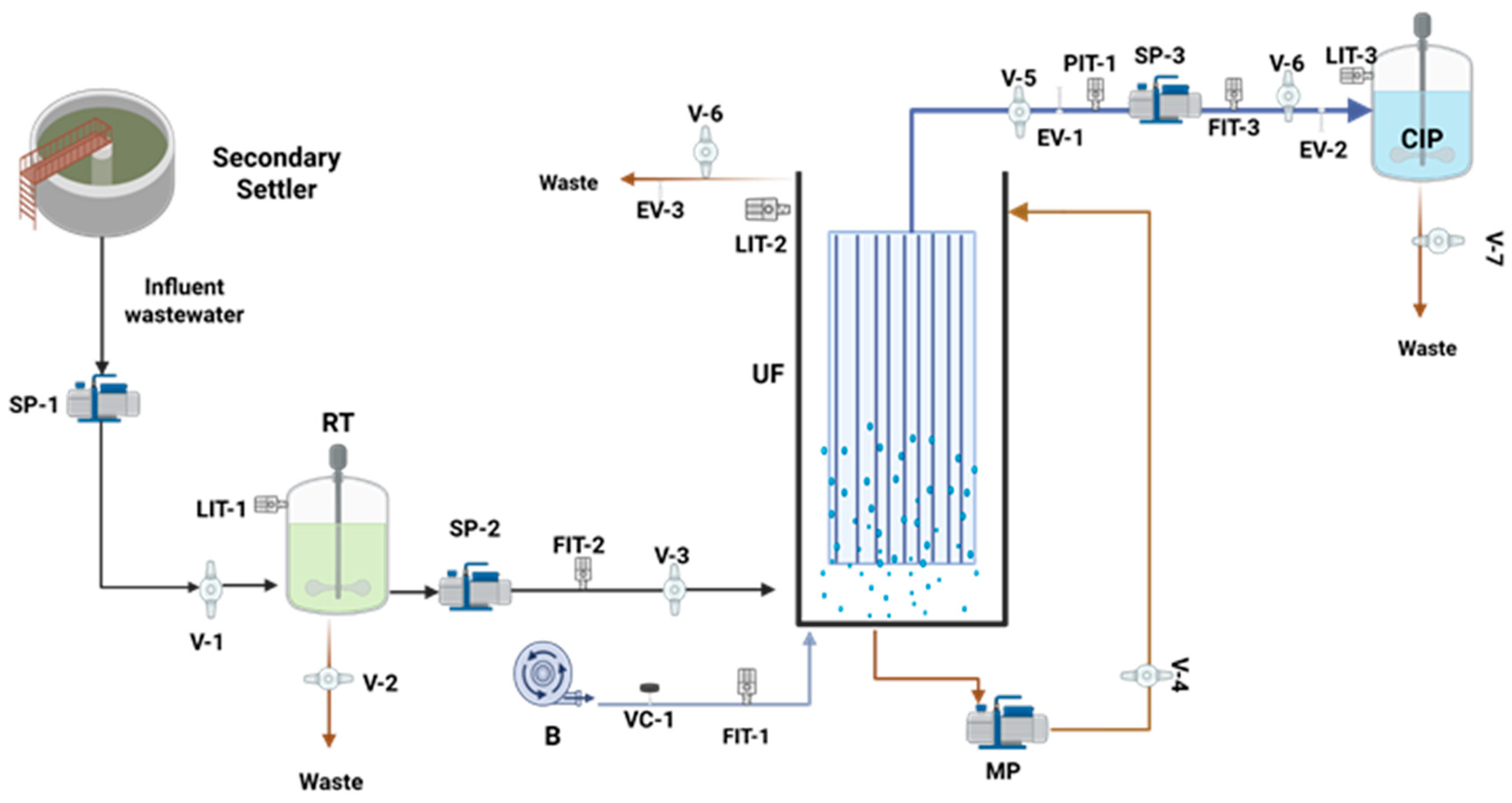
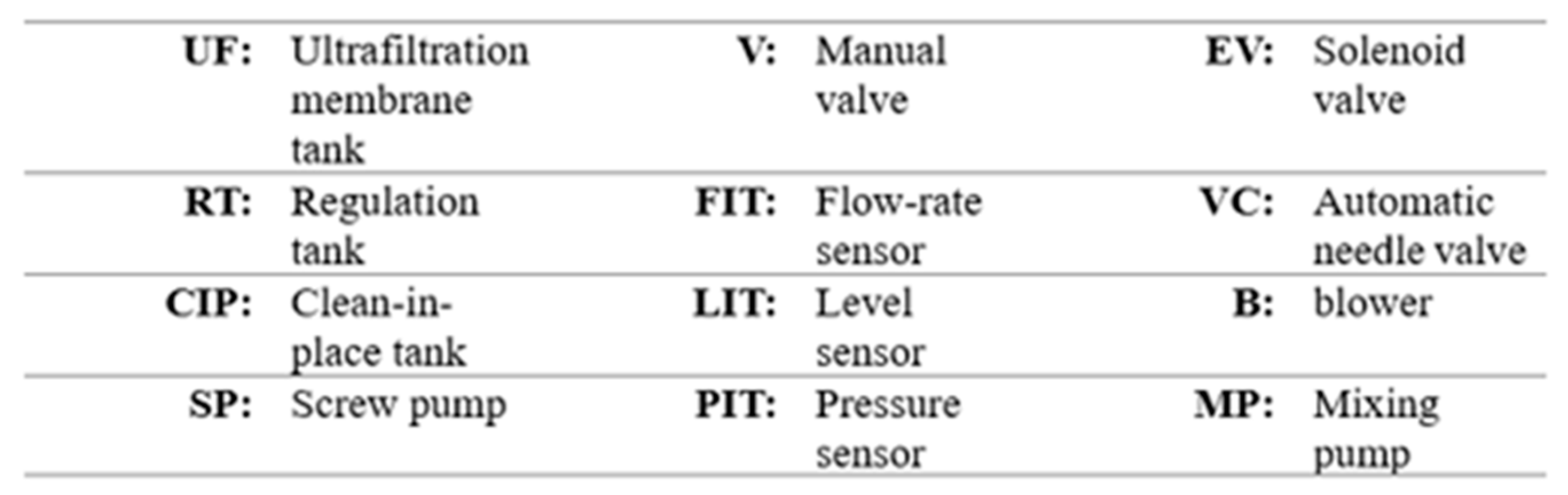
2.1. Semi-Industrial UF Plant
2.2. Instrumentation, Automation and Control
2.3. Operation and Experimental Plan
2.4. Analytical Methods, Calculations and CEB Protocol
3. Results and Discussion
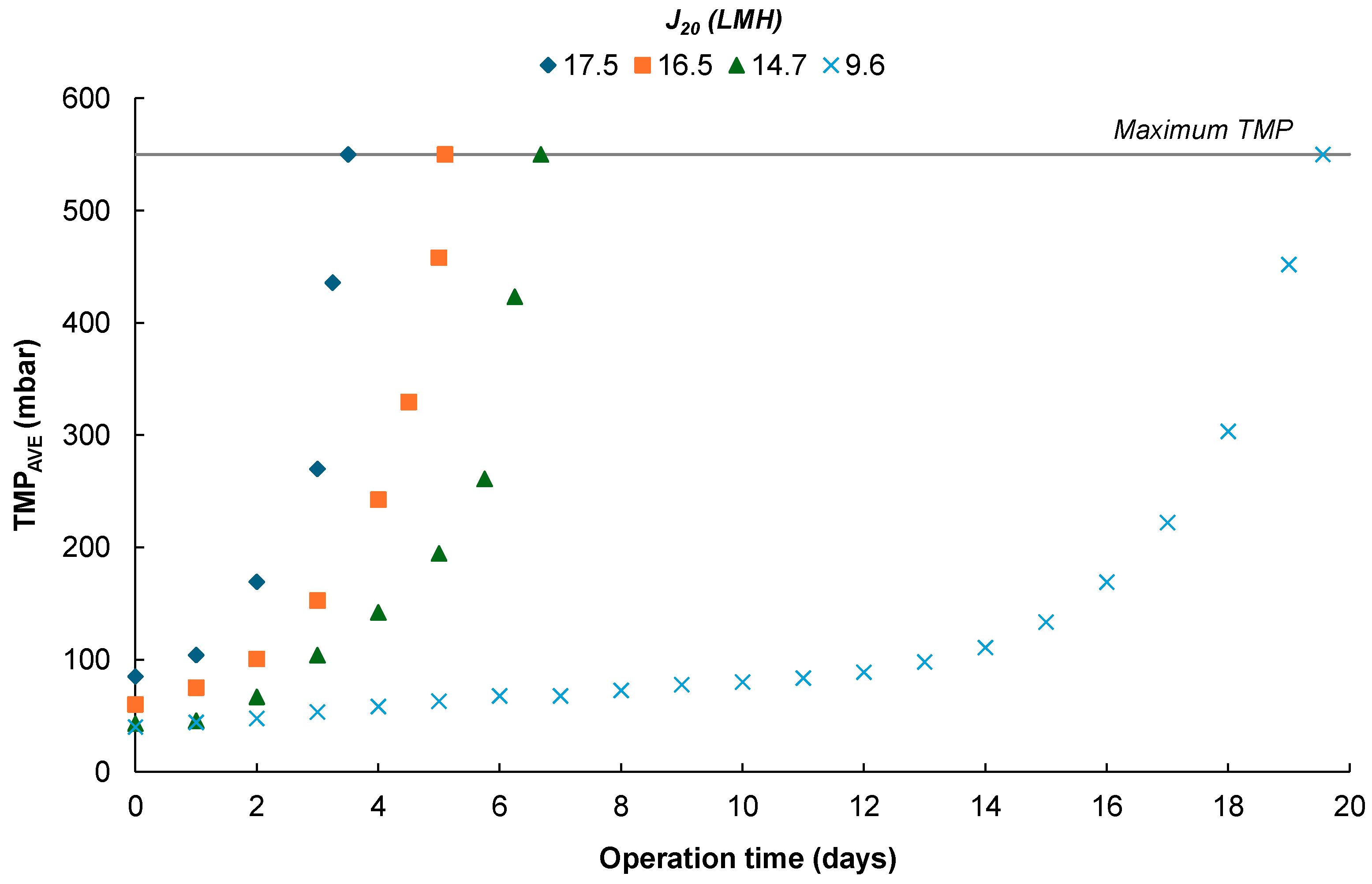
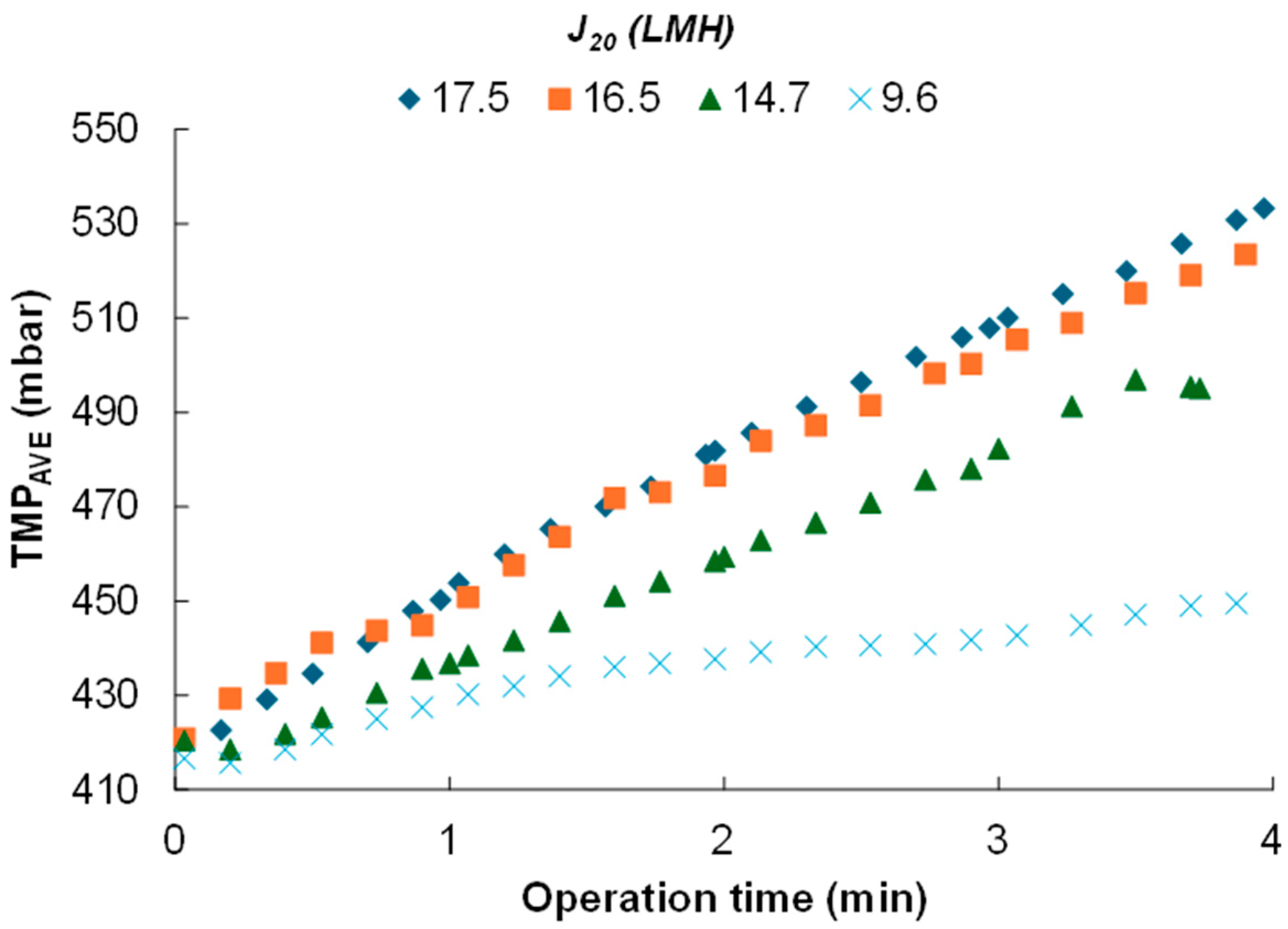
3.1. Effects of Transmembrane Flux on Membrane Fouling
3.2. Fouling Mitigation by Physical Methods
3.3. Fouling Mitigation by CEB
3.4. Medium-Term Filtration
3.5. Reclaimed Water Quality
4. Conclusions
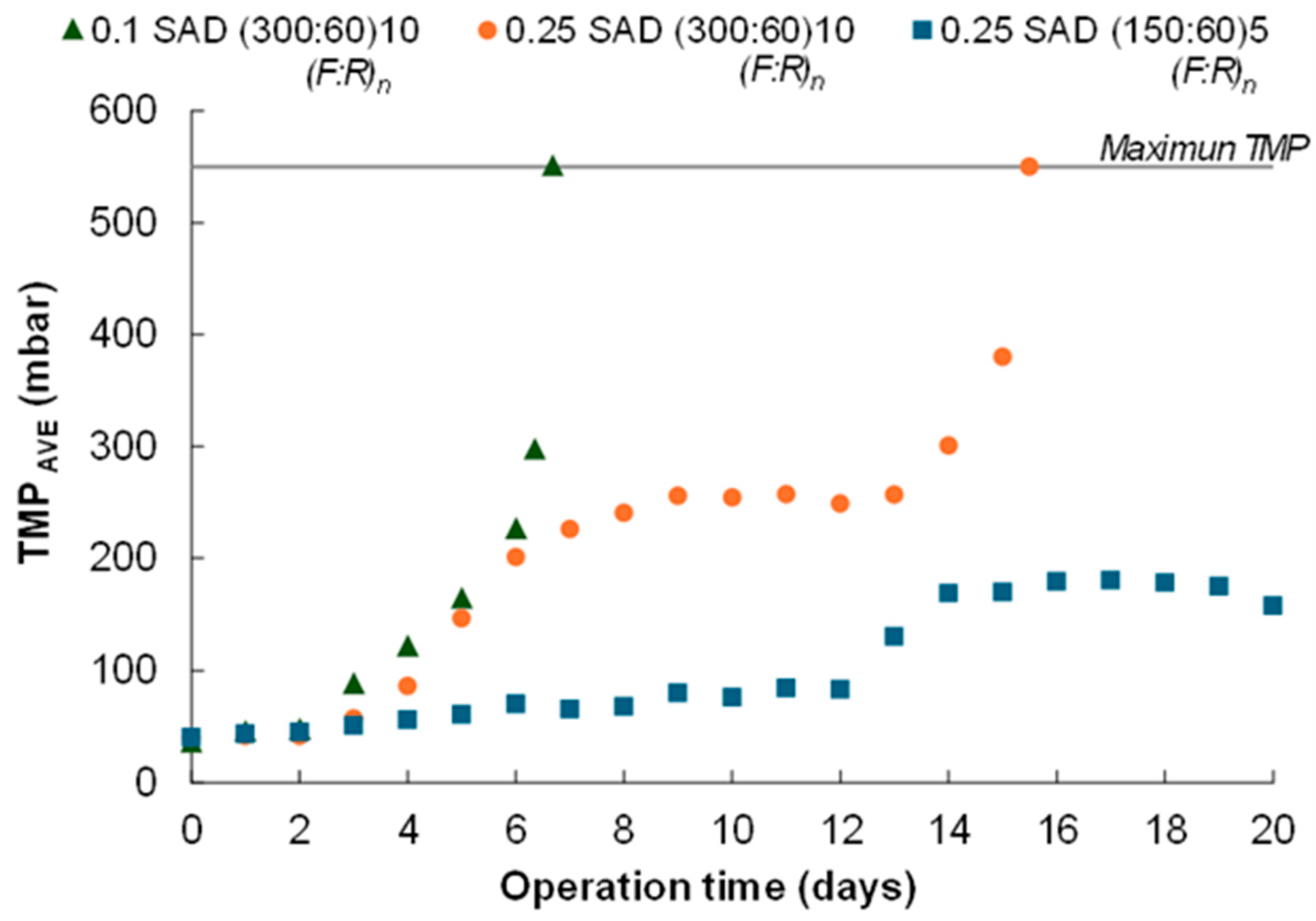
- Fouling when filtering the secondary settler supernatant of a full-scale MWWTP was shown to be more severe than anticipated, importantly hindering the operating flux and requiring its reduction to about 10 LMH in this case in order to prolong filtration for more than one month without chemical cleaning. Fortunately, air sparging and classical backwashing showed great effectivity in mitigating this fouling, which was mainly reversible in the short term. An SAD of 0.2 Nm3 m−2 h−1 with prompt permeate backwashing every 10 F/R cycles was determined as an effective strategy to improve the filtration flux from the original 10 LMH to about 15, without a significant increase in the fouling rate.
- Increasing the TSS concentration in the membrane tank during continuous filtration was also found to meaningfully mitigate fouling, allowing us to increase the operating flux to about 17.5 LMH at low fouling growth rates (around 0.3 mbar d−1).
- The use of CEB also displayed great results in controlling fouling, determining acid solutions as the best option in this case. Specifically, the use of periodic CEB every 15 days at low concentrations of citric acid (about 50 mg L−1 reached in the membrane tank) at a pH of 2.5 with HCl was determined as the most suitable option in this study.
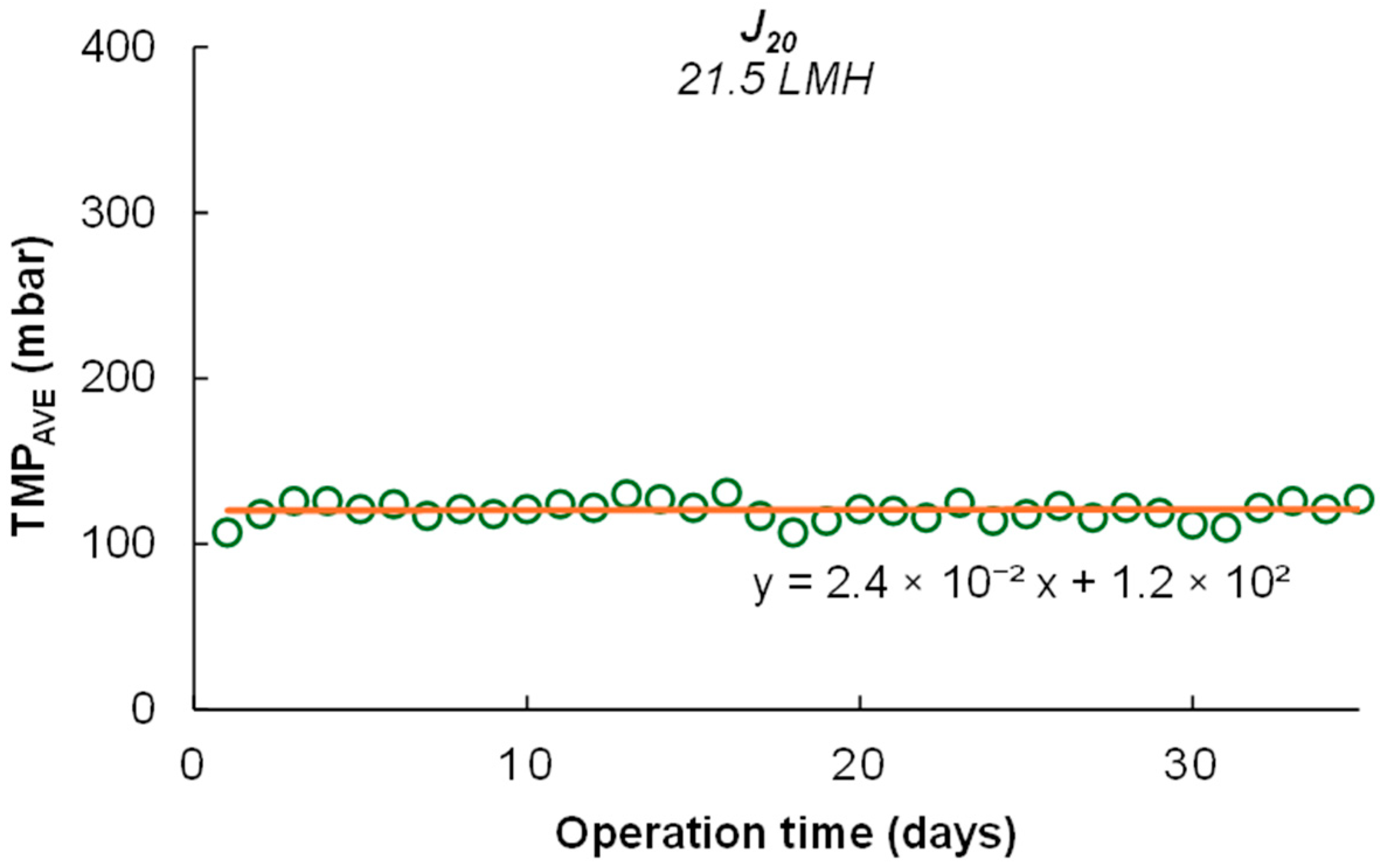
- Filtration was possible for more than 35 days at a J20 value of 21.5 LMH, with a reduced fouling growth rate of about 0.024 mbar day−1, thanks to all the fouling control strategies evaluated in this work. Thus, continuous filtration could be possible for more than 1 year without requiring the process to be halted to conduct conventional chemical cleanings.
- The permeate obtained showed great quality, with complete removal of the TSS, turbidity of 0.49 ± 0.22 NTU, COD and BOD5 of 8.40 ± 3.32 and 2.20 ± 0.95 mg L−1, respectively, and the absence of the pathogens established in the European regulations (i.e., E. coli, Legionella spp. and intestinal nematodes), with no detection of DNA residues. The generated permeate therefore satisfied the indications of Regulation 2020/741 for class A reclaimed waters, being highly attractive for fertigation usage due to the presence of soluble nutrients.
Supplementary Materials
Author Contributions
Funding
Data Availability Statement
Acknowledgments
Conflicts of Interest
References
- Farhadkhani, M.; Nikaeen, M.; Yadegarfar, G.; Hatamzadeh, M.; Pourmohammadbagher, H.; Sahbaei, Z.; Rahmani, H.R. Effects of irrigation with secondary treated wastewater on physicochemical and microbial properties of soil and produce safety in a semi-arid area. Water Res. 2018, 144, 356–364. [Google Scholar] [CrossRef] [PubMed]
- Khalil, H.B.; Zaidi, S.J.H. Energy crisis and potential of solar energy in Pakistan. Renew. Sustain. Energy Rev. 2014, 31, 194–201. [Google Scholar] [CrossRef]
- The Global Risks Report 2022, 17th ed.; World Economic Forum: Geneva, Switzerland, 2022.
- Bermúdez, L.A.; Díaz, J.C.L.; Pascual, J.M.; Martínez, M.d.M.M.; Capilla, J.M.P. Study of the Potential for Agricultural Reuse of Urban Wastewater with Membrane Bioreactor Technology in the Circular Economy Framework. Agronomy 2022, 12, 1877. [Google Scholar] [CrossRef]
- Kumar, R.; Qureshi, M.; Vishwakarma, D.K.; Al-Ansari, N.; Kuriqi, A.; Elbeltagi, A.; Saraswat, A. A review on emerging water contaminants and the application of sustainable removal technologies. Case Stud. Chem. Environ. Eng. 2022, 6, 100219. [Google Scholar] [CrossRef]
- Ayyaru, S.; Ahn, Y.-H. Fabrication and application of novel high strength sulfonated PVDF ultrafiltration membrane for production of reclamation water. Chemosphere 2022, 305, 135416. [Google Scholar] [CrossRef]
- Quist-Jensen, C.A.; Macedonio, F.; Drioli, E. Membrane technology for water production in agriculture: Desalination and wastewater reuse. Desalination 2015, 364, 17–32. [Google Scholar] [CrossRef]
- Hankins, N.P.; Singh, R. Emerging Membrane Technology for Sustainable Water Treatment; Elsevier Science: Amsterdam, The Netherlands, 2016. [Google Scholar]
- Kumar, P.; Sharma, N.; Ranjan, R.; Kumar, S.; Bhat, Z.F.; Jeong, D.K. Perspective of membrane technology in dairy industry: A review. Asian-Australas. J. Anim. Sci. 2013, 26, 1347–1358. [Google Scholar] [CrossRef]
- Bali, M.; Gueddari, M.; Boukchina, R. Removal of contaminants and pathogens from secondary effluents using intermittent sand filters. Water Sci. Technol. 2011, 64, 2038–2043. [Google Scholar] [CrossRef]
- González-Camejo, J.; Morales, A.; Peña-Lamas, J.; Lafita, C.; Enguídanos, S.; Seco, A.; Martí, N. Feasibility of rapid gravity filtration and membrane ultrafiltration for the removal of microplastics and microlitter in sewage and wastewater from plastic industry. J. Water Process. Eng. 2022, 51, 103452. [Google Scholar] [CrossRef]
- Smol, M.; Włodarczyk-Makuła, M. Effectiveness in the removal of polycyclic aromatic hydrocarbons from industrial wastewater by ultrafiltration technique. Arch. Environ. Prot. 2012, 38, 49–58. [Google Scholar] [CrossRef]
- Neoh, C.H.; Noor, Z.Z.; Mutamim, N.S.A.; Lim, C.K. Green technology in wastewater treatment technologies: Integration of membrane bioreactor with various wastewater treatment systems. Chem. Eng. J. 2016, 283, 582–594. [Google Scholar] [CrossRef]
- Yang, J.; Monnot, M.; Eljaddi, T.; Ercolei, L.; Simonian, L.; Moulin, P. Ultrafiltration as tertiary treatment for municipal wastewater reuse. Sep. Purif. Technol. 2021, 272, 118921. [Google Scholar] [CrossRef]
- Tao, C.; Parker, W.; Bérubé, P. Interaction of operating HRT and temperature on fouling of tertiary membranes treating municipal wastewater. Sci. Total. Environ. 2022, 858, 159812. [Google Scholar] [CrossRef] [PubMed]
- Sanchis-Perucho, P.; Aguado, D.; Ferrer, J.; Seco, A.; Robles, Á. Direct Membrane Filtration of Municipal Wastewater: Studying the Most Suitable Conditions for Minimizing Fouling Rate in Commercial Porous Membranes at Demonstration Scale. Membranes 2023, 13, 99. [Google Scholar] [CrossRef] [PubMed]
- Kramer, F.C.; Shang, R.; Heijman, S.G.; Scherrenberg, S.M.; van Lier, J.B.; Rietveld, L.C. Direct water reclamation from sewage using ceramic tight ultra- and nanofiltration. Sep. Purif. Technol. 2015, 147, 329–336. [Google Scholar] [CrossRef]
- American Public Health Association; American Water Works Association; Water Environment Federation. Standard Methods for Examination of Water and Wastewater, 22nd ed.; American Public Health Association: Washington, DC, USA, 2012. [Google Scholar]
- DuBois, M.; Gilles, K.A.; Hamilton, J.K.; Rebers, P.A.; Smith, F. Colorimetric Method for Determination of Sugars and Related Substances. Anal. Chem. 1956, 28, 350–356. [Google Scholar] [CrossRef]
- Vadequimica. 2024. Chemical Store Website. Available online: https://www.vadequimica.com/vadeaqua/desinfectantes-y-oxidantes.html (accessed on 8 July 2024).
- Jiménez-Benítez, A.; Sanchís-Perucho, P.; Godifredo, J.; Serralta, J.; Barat, R.; Robles, A.; Seco, A. Ultrafiltration after primary settler to enhance organic carbon valorization: Energy, economic and environmental assessment. J. Water Process. Eng. 2024, 58, 104892. [Google Scholar] [CrossRef]
- Jin, Z.; Gong, H.; Temmink, H.; Nie, H.; Wu, J.; Zuo, J.; Wang, K. Efficient sewage pre-concentration with combined coagulation microfiltration for organic matter recovery. Chem. Eng. J. 2016, 292, 130–138. [Google Scholar] [CrossRef]
- Ravazzini, A.M. Crossflow Ultrafiltration of Raw Municipal Wastewater. Ph.D. Thesis, Delft University of Technology, Delft, The Netherlands, 2008. [Google Scholar]
- Sanchis-Perucho, P.; Torres, K.M.M.; Ferrer, J.; Robles, Á. Evaluating the potential of off-line methodologies to determine sludge filterability from different municipal wastewater treatment systems. Chem. Eng. J. 2023, 468, 143537. [Google Scholar] [CrossRef]
- Borea, L.; Naddeo, V.; Belgiorno, V. Application of electrochemical processes to membrane bioreactors for improving nutrient removal and fouling control. Environ. Sci. Pollut. Res. 2016, 24, 321–333. [Google Scholar] [CrossRef]
- Gao, Y.; Fang, Z.; Liang, P.; Huang, X. Direct concentration of municipal sewage by forward osmosis and membrane fouling behavior. Bioresour. Technol. 2018, 247, 730–735. [Google Scholar] [CrossRef]
- Seco, A.; Aparicio, S.; González-Camejo, J.; Jiménez-Benítez, A.; Mateo, O.; Mora, J.F.; Noriega-Hevia, G.; Sanchis-Perucho, P.; Serna-García, R.; Zamorano-López, N.; et al. Resource recovery from sulphate-rich sewage through an innovative anaerobic-based water resource recovery facility (WRRF). Water Sci. Technol. 2018, 78, 1925–1936. [Google Scholar] [CrossRef]
- Ravazzini, A.; van Nieuwenhuijzen, A.; van der Graaf, J. Direct ultrafiltration of municipal wastewater: Comparison between filtration of raw sewage and primary clarifier effluent. Desalination 2005, 178, 51–62. [Google Scholar] [CrossRef]
- Sanchis-Perucho, P.; Aguado, D.; Ferrer, J.; Seco, A.; Robles, A. Evaluating resource recovery potential and process feasibility of direct membrane ultrafiltration of municipal wastewater at demonstration scale. Environ. Technol. Innov. 2023, 32, 103252. [Google Scholar] [CrossRef]
- Nascimento, T.A.; Mejía, F.R.; Fdz-Polanco, F.; Miranda, M.P. Improvement of municipal wastewater pretreatment by direct membrane filtration. Environ. Technol. 2017, 38, 2562–2572. [Google Scholar] [CrossRef] [PubMed]
- Koch Separation Solutions. Membrane Supplier Website. 2024. Available online: https://www.kochseparation.com/; (accessed on 8 July 2024).
- Jiménez-Benítez, A.; González-Camejo, J.; Martí, N.; Robles, A.; Seco, A. Effect of Seasonal Dynamics on Water Reclamation from Ultrafiltration Membrane-Based Tertiary Urban Wastewater Treatment: Energy 3 Expenditure, Cost, Environmental and Effluent Quality Assessment. 2023. Available online: https://papers.ssrn.com/sol3/papers.cfm?abstract_id=4631688 (accessed on 15 July 2024).
- Qu, F.; Wang, H.; He, J.; Fan, G.; Pan, Z.; Tian, J.; Rong, H.; Li, G.; Yu, H. Tertiary treatment of secondary effluent using ultrafiltration for wastewater reuse: Correlating membrane fouling with rejection of effluent organic matter and hydrophobic pharmaceuticals. Environ. Sci. Water Res. Technol. 2019, 5, 672–683. [Google Scholar] [CrossRef]
- Sadr, S.M.; Saroj, D.P. Membrane technologies for municipal wastewater treatment. In Advances in Membrane Technologies for Water Treatment: Materials, Processes and Applications; Elsevier Inc.: Amsterdam, The Netherlands, 2015; pp. 443–463. [Google Scholar] [CrossRef]
- Zagklis, D.; Katrivesis, F.K.; Sygouni, V.; Tsarouchi, L.; Tsigkou, K.; Kornaros, M.; Paraskeva, C.A. Recovery of water from secondary effluent through pilot scale ultrafiltration membranes: Implementation at Patras’ wastewater treatment plant. Membranes 2021, 11, 663. [Google Scholar] [CrossRef] [PubMed]
- Hiller, C.X.; Schwaller, C.; Wurzbacher, C.; Drewes, J.E. Removal of antibiotic microbial resistance by micro- and ultrafiltration of secondary wastewater effluents at pilot scale. Sci. Total Environ. 2022, 838, 156052. [Google Scholar] [CrossRef]
- Li, X.; Zhang, Z.; Liu, H.; Wen, H.; Wang, Q. The fate of intracellular and extracellular antibiotic resistance genes during ultrafiltration-ultraviolet-chlorination in a full-scale wastewater treatment plant. J. Hazard. Mater. 2025, 486, 137088. [Google Scholar] [CrossRef]
- Karande, K.R.; Lipnizki, F.; Wu, B. Electrodialysis with sacrificial magnesium anode for nutrient recovery from primary municipal wastewater: Effect on membrane fouling behaviours. Desalination 2024, 592, 118150. [Google Scholar] [CrossRef]
- Koskue, V.; Freguia, S.; Ledezma, P.; Kokko, M. Efficient nitrogen removal and recovery from real digested sewage sludge reject water through electroconcentration. J. Environ. Chem. Eng. 2021, 9, 106286. [Google Scholar] [CrossRef]
- Ruiz-Barriga, P.; Serralta, J.; Bouzas, A.; Carrillo-Abad, J. Boosting nutrient recovery from AnMBR effluent by means of electrodialysis technology: Operating parameters assessing. J. Environ. Manag. 2024, 366, 121712. [Google Scholar] [CrossRef] [PubMed]
- Barros, A.I.; Gonçalves, A.L.; Simões, M.; Pires, J.C.M. Harvesting techniques applied to microalgae: A review. Renew. Sustain. Energy Rev. 2015, 41, 1489–1500. [Google Scholar] [CrossRef]
- Serna-García, R.; Mora-Sánchez, J.; Sanchis-Perucho, P.; Bouzas, A.; Seco, A. Anaerobic membrane bioreactor (AnMBR) scale-up from laboratory to pilot-scale for microalgae and primary sludge co-digestion: Biological and filtration assessment. Bioresour. Technol. 2020, 316, 123930. [Google Scholar] [CrossRef]
- Jafarinejad, S. Forward osmosis membrane technology for nutrient removal/recovery from wastewater: Recent advances, proposed designs, and future directions. Chemosphere 2021, 263, 128116. [Google Scholar] [CrossRef]
- Jain, H.; Kumar, A.; Verma, A.K.; Wadhwa, S.; Rajput, V.D.; Minkina, T.; Garg, M.C. Treatment of textile industry wastewater by using high-performance forward osmosis membrane tailored with alpha-manganese dioxide nanoparticles for fertigation. Environ. Sci. Pollut. Res. 2022, 29, 80032–80043. [Google Scholar] [CrossRef]
- Zahmatkesh, S.; Chen, Z.; Khan, N.A.; Ni, B.-J. Removing polyfluoroalkyl substances (PFAS) from wastewater with mixed matrix membranes. Sci. Total Environ. 2023, 912, 168881. [Google Scholar] [CrossRef]



| Test Block | Experiment | J20 (LMH) | SAD (Nm3 m−2 h−1) | Backwash Flux (LMH) | TSS (g L−1) | (F/R)n:BW (s) | F/R Cycles Before Backwash (n) | Treated Flow (m3 d−1) |
|---|---|---|---|---|---|---|---|---|
| B1 | B1.1 | 17.6 | 0.10 | 6.9 | 0.4 | (300/60)n:60 | 10 | 14.9 |
| B1.2 | 16.6 | 14.1 | ||||||
| B1.3 | 14.6 | 12.4 | ||||||
| B1.4 | 9.6 | 8.1 | ||||||
| B2 | B2.1 | 14.6 | 0.25 | 6.9 | 0.4 | (300/60)n:60 | 10 | 12.4 |
| B2.2 | 14.6 | 0.10 | 12.4 | |||||
| B3 | B3.1 | 14.6 | 0.10 | 6.9 | 0.4 | (300/60)n:60 | 10 | 12.4 |
| B3.2 | 14.6 | (150/30)n:60 | 5 | 11.5 | ||||
| B4 | B4.1 | 14.6 | 0.10 | 6.9 | 3 | (300/60)n:60 | 20 | 12.5 |
| B4.2 | 17.6 | 0.25 | (150/30)n:60 | 5 | 13.9 |
| Test Block | B1 | B4 | |
|---|---|---|---|
| Experiment | B1.1 | B4.1 | B4.2 |
| Operation period (d) | 3 | 7 | 8 |
| J20 (LMH) | 17.6 | 20.0 | 17.6 |
| SAD (Nm3 m−2 h−1) | 0.1 | 0.1 | 0.1 |
| Backwash flux (LMH) | 6.9 | 6.9 | 6.9 |
| TSS (g L−1) | 0.4 | 3.0 | 3.0 |
| TTF (min−1) | 0.31 | 1.14 | 1.12 |
| SMP (mg COD L−1) | 128.3 | 102.2 | 105.1 |
| SMP/TSS ratio (mg COD g TSS−1) | 320.8 | 34.0 | 35.0 |
| (F/R)n:BW (s) | (300/60)n:60 | (300/60)n:60 | (150/30)n:60 |
| F/R cycles before backwash (n) | 10 | 20 | 5 |
| Treated flow (m3 d−1) | 14.9 | 12.5 | 13.5 |
| Δ TMP (mbar d−1) | 100.5 | 6.9 | 0.3 |
| Test Block | Exp. | Reagent Dosed | Reagent Concentration (mg L−1) * | pH of Solution ** | CEB Time (min) | Recovered Permeability (LMH bar−1) |
|---|---|---|---|---|---|---|
| B5 | B5.1 | Citric acid | 50 | 3.0 | 5 | 0.6 |
| B5.2 | 100 | 2.9 | 7.5 | |||
| B5.3 | 200 | 2.7 | 10.3 | |||
| B5.4 | 300 | 2.6 | 15.0 | |||
| B5.5 | 400 | 2.6 | 23.0 | |||
| B6 | B6.1 | NaOCl | 50 | 9.5 | 5 | 0.0 |
| B6.2 | 100 | 9.7 | 2.8 | |||
| B6.3 | 400 | 10.0 | 7.4 | |||
| B7 | B7.1 | Citric acid + HCl *** | 50 | 2.5 | 5 | 3.6 |
| B7.2 | 100 | 9.9 | ||||
| B7.3 | 200 | 11.2 | ||||
| B8 | B8.1 | HCl | 115 | 2.5 | 5 | 4.2 |
| B9 | B9.1 | Citric acid + HCl *** | 50 | 2.5 | 2.5 | 4.0 |
| B9.2 | 10 | 4.8 |
| Parameter | Influent | Effluent | Membrane Retention Capacity (%) |
|---|---|---|---|
| TSS (mg SS L−1) | 23.0 ± 12.0 | 0 | 100.0 |
| TS (mg SS L−1) | 1185 ± 52.0 | 1130 ± 52.0 | 4.65 |
| Turbidity (NTU) | 5.7 ± 3.5 | 0.5 ± 0.2 | 92.4 |
| COD (mg L−1) | 19.3 ± 12.5 | 8.4 ± 3.3 | 56.5 |
| BOD5 (mg L−1) | 5.5 ± 1.2 | 2.2 ± 0.9 | 60.1 |
| NH4+ (mgN L−1) | 11.1 ± 3.6 | 0.3 ± 0.3 | 97.1 |
| PO43− (mgP L−1) | 8.1 ± 2.6 | 6.7 ± 3.3 | 18.0 |
| E. coli (UFC 100 mL−1) | 21.1 ± 17.7 | 0 | 100 |
| Legionella spp. (UFC L−1) | 0 | 0 | - |
| Intestinal nematodes (eggs L−1) | 0 | 0 | - |
| DNA concentration (ng µL−1) | 3.3 ± 1.5 | <l.d. * | 100.0 |
Disclaimer/Publisher’s Note: The statements, opinions and data contained in all publications are solely those of the individual author(s) and contributor(s) and not of MDPI and/or the editor(s). MDPI and/or the editor(s) disclaim responsibility for any injury to people or property resulting from any ideas, methods, instructions or products referred to in the content. |
© 2025 by the authors. Licensee MDPI, Basel, Switzerland. This article is an open access article distributed under the terms and conditions of the Creative Commons Attribution (CC BY) license (https://creativecommons.org/licenses/by/4.0/).
Share and Cite
Acebrón, Á.S.; Revert-Vercher, J.; Sanchis-Perucho, P.; Borrás, L.; Seco, A. Use of Ultrafiltration Membranes as Tertiary/Quaternary Treatment for Wastewater Reclamation in Municipal WWTPs. Water 2025, 17, 3453. https://doi.org/10.3390/w17243453
Acebrón ÁS, Revert-Vercher J, Sanchis-Perucho P, Borrás L, Seco A. Use of Ultrafiltration Membranes as Tertiary/Quaternary Treatment for Wastewater Reclamation in Municipal WWTPs. Water. 2025; 17(24):3453. https://doi.org/10.3390/w17243453
Chicago/Turabian StyleAcebrón, Á. Sabina, Julio Revert-Vercher, Pau Sanchis-Perucho, Luis Borrás, and Aurora Seco. 2025. "Use of Ultrafiltration Membranes as Tertiary/Quaternary Treatment for Wastewater Reclamation in Municipal WWTPs" Water 17, no. 24: 3453. https://doi.org/10.3390/w17243453
APA StyleAcebrón, Á. S., Revert-Vercher, J., Sanchis-Perucho, P., Borrás, L., & Seco, A. (2025). Use of Ultrafiltration Membranes as Tertiary/Quaternary Treatment for Wastewater Reclamation in Municipal WWTPs. Water, 17(24), 3453. https://doi.org/10.3390/w17243453