Article

Contribution of Hydrogeochemical and Isotope (δ2H and δ18O) Studies to Update the Conceptual Model of the Hyposaline Natural Mineral Waters of Ribeirinho and Fazenda Do Arco (Castelo de Vide, Central Portugal)


by
José M. Marques
1,*,
Paula M. Carreira
2 and
Manuel Antunes da Silva
3
1
Centro de Recursos Naturais e Ambiente (CERENA), Departamento de Engenharia de Recursos Minerais e Energéticos (DER), Instituto Superior Técnico, Universidade de Lisboa, Av. Rovisco Pais, 1049-001 Lisboa, Portugal
2
Centro de Ciências e Tecnologias Nucleares (C2TN), Departamento de Engenharia e Tecnologias Nucleares (DECN), Instituto Superior Técnico, Universidade de Lisboa, Estrada Nacional 10, ao km 139.7, 2695-066 Bobadela LRS, Portugal
3
Super Bock Group, Apartado 1044, 4466-955 S. Mamede de Infesta, Portugal
*
Author to whom correspondence should be addressed.
Water 2025, 17(23), 3443; https://doi.org/10.3390/w17233443
Submission received: 30 September 2025 / Revised: 26 November 2025 / Accepted: 2 December 2025 / Published: 4 December 2025
(This article belongs to the Special Issue Research on Isotope Investigations in Groundwater Studies)

Abstract

In this paper, the conceptual hydrogeological circulation model of natural mineral waters from Ribeirinho and Fazenda do Arco hydromineral concession (Castelo de Vide) is updated. These waters are exploited by the Super Bock Group, as bottled waters, and are commercially labeled as Água Vitalis. The physico-chemical data (2004–2024) of these waters were processed regarding their joint interpretation with recent isotopic (δ2H and δ18O) data. The study region is dominated by the Castelo de Vide syncline, which develops along the southern limit of the Central Iberian Zone. These natural mineral waters have low electrical conductivity (EC) mean values (42.80 < ECmean < 54.45 μS/cm) and a slightly acidic pH (5.14 < pHmean < 5.46), making them hyposaline waters. The recharge area of this aquifer system coincides fundamentally with the outcrops of Lower Ordovician quartzites. The updated conceptual circulation model presented in this work is essentially developed on the basis of the chloride–sodium signatures of these waters, explained by the preferential recharge of meteoric waters (δ2H and δ18O) and low water–rock interaction temperature. Such isotopic results seem to indicate the non-existence of a flow continuity between the two blocks (NW and SE) of the quartzite ridges, separated by a fault with a local orientation approximately N-S, as indicated by the most enriched isotopic values of the waters from borehole AC22 (δ18O = −5.90‰ vs. V-SMOW) located in the SE block, compared to the average isotopic value of the waters from the other boreholes (Vitalis I, II, III, IV, V and VI) located in the NW block (δ18Omean = −6.30‰ vs. V-SMOW). This study enhances the understanding of the hydrogeological and geochemical processes controlling low-mineralized (hyposaline) natural mineral waters, widely used for therapeutic and commercial purposes. Despite their global importance, detailed hydrogeological and isotopic studies of such systems are still scarce, making this conceptual model a valuable reference for their sustainable management.

1. Introduction

Across the globe (Portugal included), natural mineral waters originate from precipitation. In some occurrences, the processes of recharge and underground flow paths can be quite complex, needing extensive information gathered to understand the mechanisms involved. The evaluation of a region’s hydromineral resources requires a multidisciplinary approach—encompassing geological, tectonic, geophysical, hydrogeological, hydrogeochemical, and isotopic data—to develop a well-founded conceptual hydrogeological circulation model. A conceptual hydrogeological circulation model associated with a given system of water and minerals must be essentially qualitative and include a physical description of its functioning, comprising the main focus and specific content of the investigation involved [1]. Such models often consist of maps and (or) schematic geological cross-sections showing the location of potential recharge areas, underground flow paths, key water–rock interaction processes at depth, and discharge sites (e.g., refs. [2,3]). This is a topic that should be updated and modified over time in accordance with recent information or new approaches that become available as a result of field work and the use of new laboratory methods. These models will act as a base for both future development strategies and the sustainable management of these important and “hidden” geological resources.
Natural mineral waters are a type of groundwater that are bacteriologically pure and preserves stable physico-chemical properties at their source, within natural variation limits. They are distinct from common groundwaters due to their inherent purity and unique composition, characterized by their dissolved mineral components, including trace elements and other specific constituents, which may offer health benefits. These waters acquire their physical and chemical signatures from the mineralogical composition of the geological formations they flow through and the nature of water–rock interactions. Additionally, the temperature at which they emerge reflects (in most systems) the depth of their circulation; higher temperatures indicate deeper and longer underground flow paths, facilitated by rock diaclases/fractures and faults.
In Portugal, most natural mineral waters are utilized as bottled waters and in thermal spas. Some hydromineral systems have been studied, including those similar to Ribeirinho and Fazenda do Arco. A comparative study of two similar hydromineral systems in Central Portugal—Luso and Penacova—was conducted by [4]. According to [4], these systems are supported by early Ordovician quartzites and consist of three primary fractured aquifer systems: (i) an upper aquifer system with “normal” groundwater discharging at approximately 17 °C; (ii) the Luso natural mineral aquifer system, which has a discharge temperature of around 27 °C; and (iii) the Penacova natural mineral aquifer system, where water emerges at about 20 °C. These are hyposaline waters, with total mineralization levels reaching up to 43 mg/L, belonging to the Cl-Na water type. The ẟ18O values suggested the presence of meteoric waters originating from similar recharge altitudes [4]. The silica concentration correlates with the depth of circulation and residence time, as inferred from discharge temperatures and 3H values. According to the conceptual hydrogeological circulation model presented by [4], the hydraulic behavior of the aquifers involves recharge through direct precipitation. The upper aquifer exhibits a shallow circulation, whereas the deeper natural mineral aquifer systems follow a NW (Luso) and SE (Penacova) underground flow path.
As per [5], the Monfortinho hydromineral system is situated in central Portugal near the Spanish border. It is a confined aquifer, located between the pre-Ordovician schist-greywacke complex below and schist formations of the Llanvirnian-Caradocian above. The water from this system is classified as Na-HCO3 natural mineral water, hyposaline (total mineralization of 44 mg/L), rich in SiO2 (accounting for 53% of the total mineralization), with a pH of 5.8, and emerging at 29.4 °C. The recharge zones for this system include Arenigian quartzite ridges at altitudes between 400 and 600 m above sea level. After recharge, these waters flow within quartzite formations at depths of approximately 300–400 m [5]. In the discharge zone, the ascent of natural mineral waters is facilitated by intense fracturing of quartzite formations, resulting from both local and regional faults [5].
A study by [3] provided an updated interpretation of the conceptual circulation model for the Ladeira de Envendos hyposaline hydromineral system in Central Portugal. According to these authors, the geological structure of this region is heavily influenced by the Amêndoa-Carvoeiro synform, which dates back to the Ordovician–Silurian period and features continuous, aligned quartzite ridges on the NE flank that form a series of inselbergs. Stable isotope data (ẟ2H and ẟ18O) suggest that local meteoric waters infiltrate preferably at approximately 400 m altitude and evolve into Cl-Na facies natural mineral waters as they follow a NW-SE underground flow path through highly fractured and permeable quartzite rocks [3]. During their flow from recharge to discharge, these waters acquire silica (approximately 9 mg/L) through interaction with quartzite rocks. The waters emerge at around 21 °C, with their ascent being controlled by fractures and local faults. The estimated residence time of these waters ranges between 25 and 40 years, as inferred from 3H content, indicating an active recharge process within this hydromineral system.
The primary goal of this study was to update the conceptual hydrogeological circulation model of the Ribeirinho and Fazenda do Arco (Castelo de Vide–Central Portugal) hyposaline hydromineral system, emphasizing the importance of conceptual models in assessing and ensuring the sustainable management and protection of such resources. To achieve this an interdisciplinary approach, integrating geological, hydrogeochemical, hydrogeological, and isotopic data, was applied. The findings and discussions on the basis of these methods will be presented in the following sections.
Previous studies have been conducted in the Castelo de Vide region; however, those works mainly focused on the application of geochemical and isotopic methods to interpret the hydrodynamics of the carbonate aquifer system of the Serra de S. Mamede. In contrast, the present study addresses the natural mineral waters circulating within the quartzite formations, which have not been previously characterized in detail. This distinction highlights both the novelty and the scientific relevance of our research, as it provides new insights into the hydrogeological and geochemical processes governing these low-mineralized natural mineral water systems.
This study, as the results from the collaboration between Instituto Superior Técnico and Super Bock Group (private stakeholder), represents the first comprehensive investigation of its kind in the region, with a particular focus on the contribution of isotope hydrology (δ2H and δ18O) alongside other geoscience disciplines. The research aims to characterize the Ribeirinho and Fazenda do Arco hyposaline hydromineral system (the so-called Vitalis natural mineral waters) both quantitatively and qualitatively, addressing key aspects such as (i) hydrochemical facies, (ii) water–rock interactions processes, (iii) origin and recharge altitude, and (iv) circulation depth and temperature of these natural mineral waters.
The region under study is located in the Serra de São Mamede Natural Park in the northeast of Alentejo, in the district of Portalegre.

2. Geomorphological, Climatological, Geological and Hydrogeological Framework

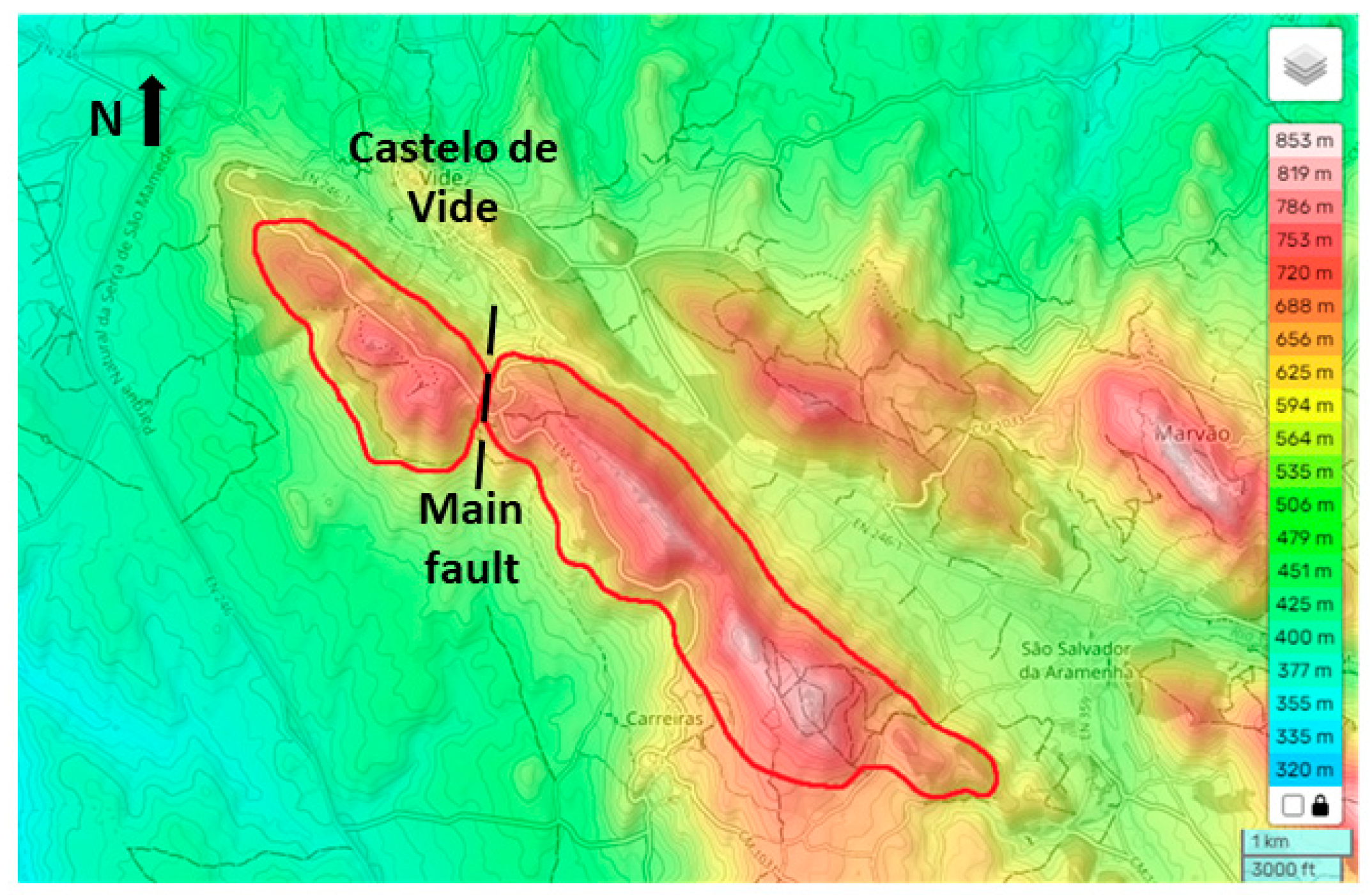
The study region is mostly made up of granite rocks, and is characterized by an extensive plain, where altitudes vary between 300 and 400 m a.s.l. [6]. This landscape is marked, in contrast, by the synclinal structure where two Ordovician quartzite ridges of the Serra de São Mamede stand out, oriented NW-SE along approximately 40 km, reaching altitudes above 820 m a.s.l. [7].
The unique geomorphology of this Alentejo region (Figure 1) influences the local climate, resulting in a decrease in temperatures and an increase in precipitation. In fact, the abundance of water resources in this region is partly related to climatic conditions, with greater precipitation and less evaporation, thus resulting in greater effective infiltration [8]. The hottest months are July and August, and the coldest months are December, January and February. The average local minimum and maximum temperatures are between 2 °C and 32 °C, respectively. As per [7], the average annual precipitation for this region is around 904 mm.
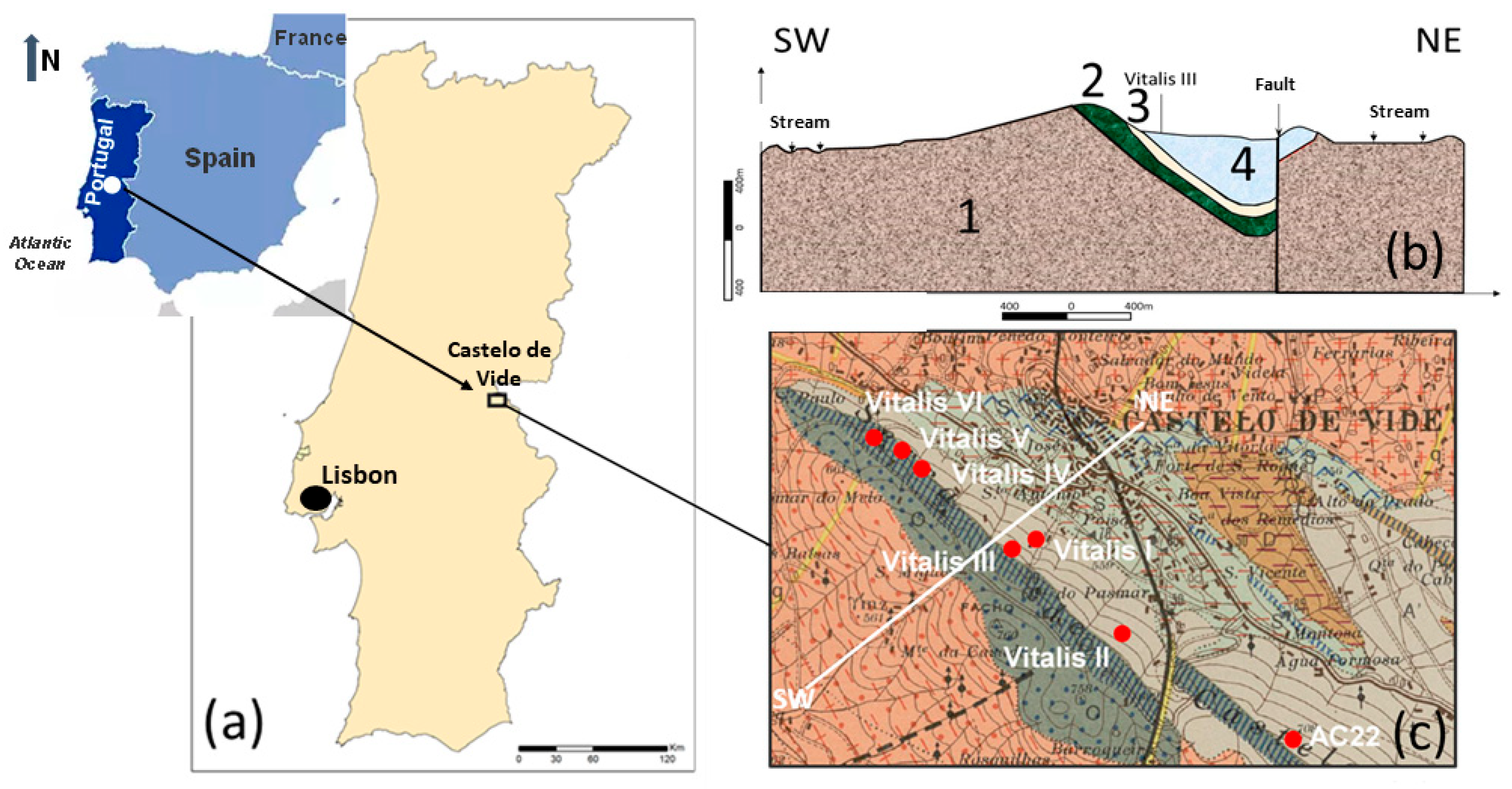
Castelo de Vide syncline structure (Figure 2) develops along the southern limit of the Central Iberian Zone (ZCI) limited to the SW by the Portalegre-Ferreira do Zêzere thrust fault. The core of the Castelo de Vide syncline is formed by current alluvium, slope and valley floor deposits dating from Holocene, surrounded by a layer of Upper Silurian schists, flanked by Lower Ordovician quartzite formations that contact SW with the arkoses (base layer of the syncline) and with the ante-Hercynian tectonized-granites [9].
Quartzites are strongly fractured, facilitating the flow of groundwater [10]. The Vitalis water boreholes are found in quartzite ridges (the result of differential erosion), as they are harder and more resistant than the surrounding rocks.
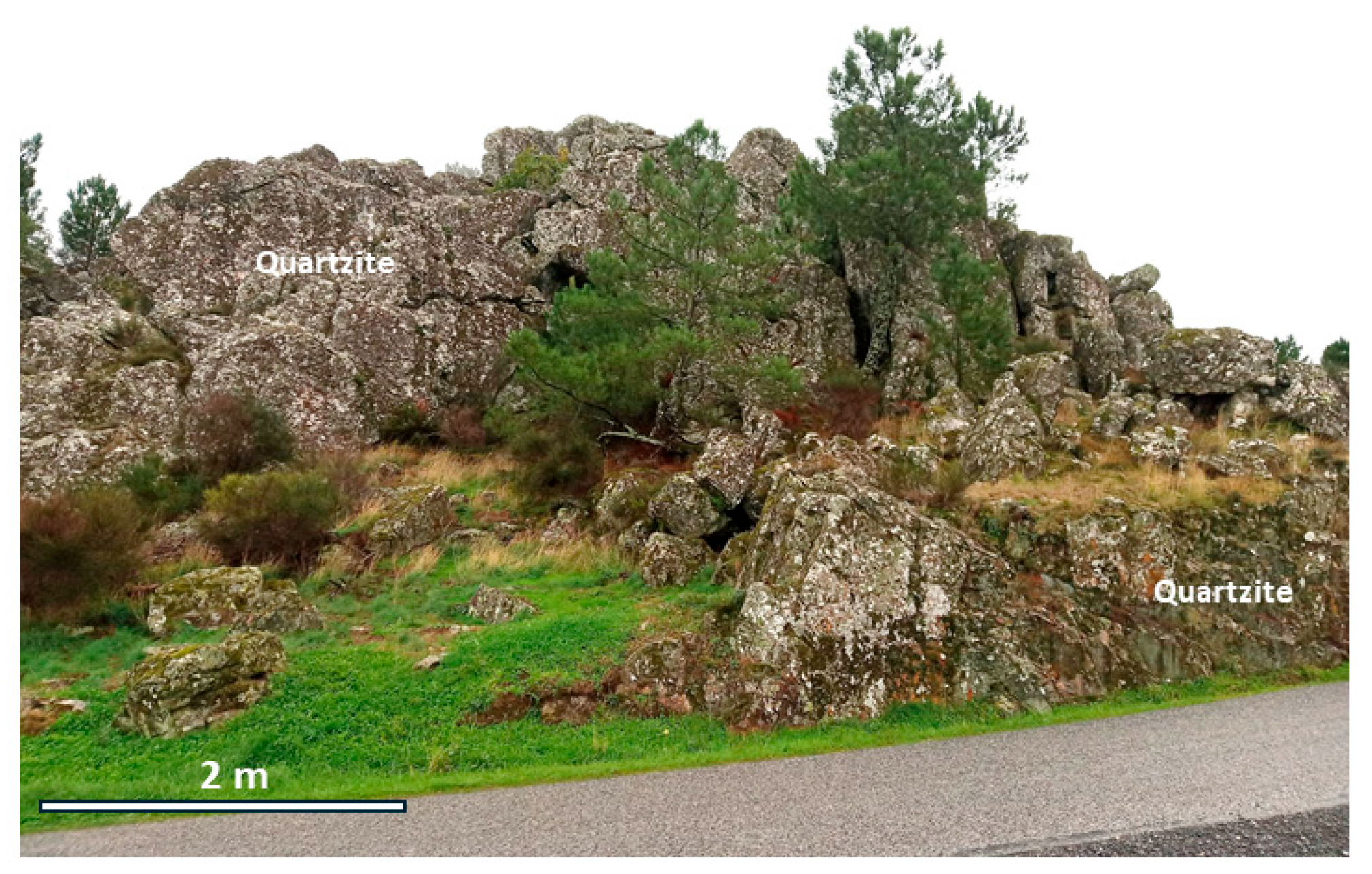
As stated by [11], the recharge area of the aquifer system associated with the Vitalis water must essentially coincide with the outcrop area of the Lower Ordovician quartzites (Figure 3). This formation is strongly fractured, which facilitates the direct infiltration of precipitation, as well as the groundwater flow through the opening of discontinuities, notably existing rock fractures and stratification planes.

3. Materials and Methods

To conduct this study, seven representative sampling sites of the Ribeirinho and Fazenda do Arco hyposaline hydromineral system (Castelo de Vide, Central Portugal) were selected: the Vitalis I to VI and AC22 boreholes. A comprehensive physico-chemical database (2004–2024) exists for the Vitalis I to VI boreholes, kindly provided by the Super Bock Group, the concessionaire of these natural mineral waters.
The boreholes vary significantly in depth: Vitalis I—262.76 m, Vitalis II—172.65 m, Vitalis III—102 m, Vitalis IV—84 m, Vitalis V—108 m, Vitalis VI—129.5 m, and AC22—91 m. These depth variations are determined by their location within the Castelo de Vide syncline, which determines the drilling depth required to reach the quartzite layers. For each borehole (excluding AC22), concerning the hydrostatic initial level (HsIL) and the exploitation hydrodynamic level (EHdL), we have (Table 1):
As a complement to the existing database, a fieldwork campaign was conducted in October 2023 to collect water samples from these boreholes. The fieldwork campaign focused on: (i) in situ measurements of temperature (°C), pH, electrical conductivity (EC, μS/cm), and redox potential (Eh, mV, referenced to H+/H2) using a portable Hach HQ40D digital multi-parameter meter, and (ii) collecting water samples for isotopic analysis (ẟ2H and ẟ18O). No samples were collected for chemical analysis, since all boreholes are regularly monitored by Super Bock Group, with the exception of AC22.
For the Vitalis I to VI and AC22 boreholes, the following analytical standard methods were employed by the Super Bock Group: bicarbonate—SMEWW 2320 B (titration method), silica—M.M. 2.2.7 (speciation calculations), ionic chromatography for: chloride, sulfate, and nitrate—SMEWW 4110 B, sodium, potassium, calcium, and magnesium—M.M. 6.1.1.
For the determination of ẟ2H and ẟ18O values in the natural mineral waters from the study area, 50 mL water samples were collected from each site. The samples were stored in high-density polyethylene bottles with double lids to prevent isotopic fractionation (evaporation). Stable isotope ratios (ẟ2H and ẟ18O) were measured at the Laboratório de Isótopos Ambientais (C2TN/IST, Centro de Ciências e Tecnologias Nucleares from Instituto Superior Técnico) using a Laser Spectroscopic Analyzer (LGR DT-100 24d) (Los Gatos Research, San Jose, CA, USA). The accuracy was ±1‰ for δ2H and ±0.1‰ for ẟ18O. The results are reported in delta (δ) notation and referenced to the international standard V-SMOW [12,13].

4. Results and Discussion

4.1. Physico-Chemical Signatures of the Waters

Groundwater is a key component of the Earth’s hydrological cycle, shaped by complex interactions between meteoric waters and geological formations. Quartzite, a highly resistant metamorphic rock mainly composed of quartz (SiO2), plays an important role in influencing the chemical composition of infiltrating rainwater. Therefore, hydrogeochemical investigations are fundamental for assessing groundwater systems, particularly in the case of natural mineral waters. The physical and chemical properties of these waters provide valuable insights into (i) the origin and type of groundwater recharge, (ii) the delineation of subsurface flow paths, (iii) the evaluation of water–rock interactions within the aquifer matrix, and (iv) the refinement of conceptual hydrogeological models (e.g., refs. [14,15]).
In this study, a comprehensive physico-chemical database (2004–2024) kindly provided by the Super Bock Group was analyzed. Data from 11 parameters were processed, including bicarbonate, chloride, sulfate, sodium, potassium, calcium, magnesium, silica, total mineralization (sum of anions, cations, and silica), and dry residue (mass of solid material remaining after evaporating 1 L of water at 180 °C) (in mg/L), as well as pH and electrical conductivity (EC, in μS/cm). Time-trend diagrams were constructed to evaluate the temporal variation in these parameters and to analyze their evolution across different boreholes. The AC22 borehole was given less significance in the hydrochemical analysis due to the limited number and temporal concentration of available samples compared to the other boreholes (Vitalis I–VI).
Considering all data series provided by the Super Bock Group we can state that these natural mineral waters have average pH values between 5.14 and 5.46. Due to their low solubility, quartzite-dominated aquifers often produce low pH waters (e.g., refs. [3,4,5]. ECmean values vary between 42.80 and 54.45 μS/cm, with an average value of 49.25 ± 5.15 μS/cm.
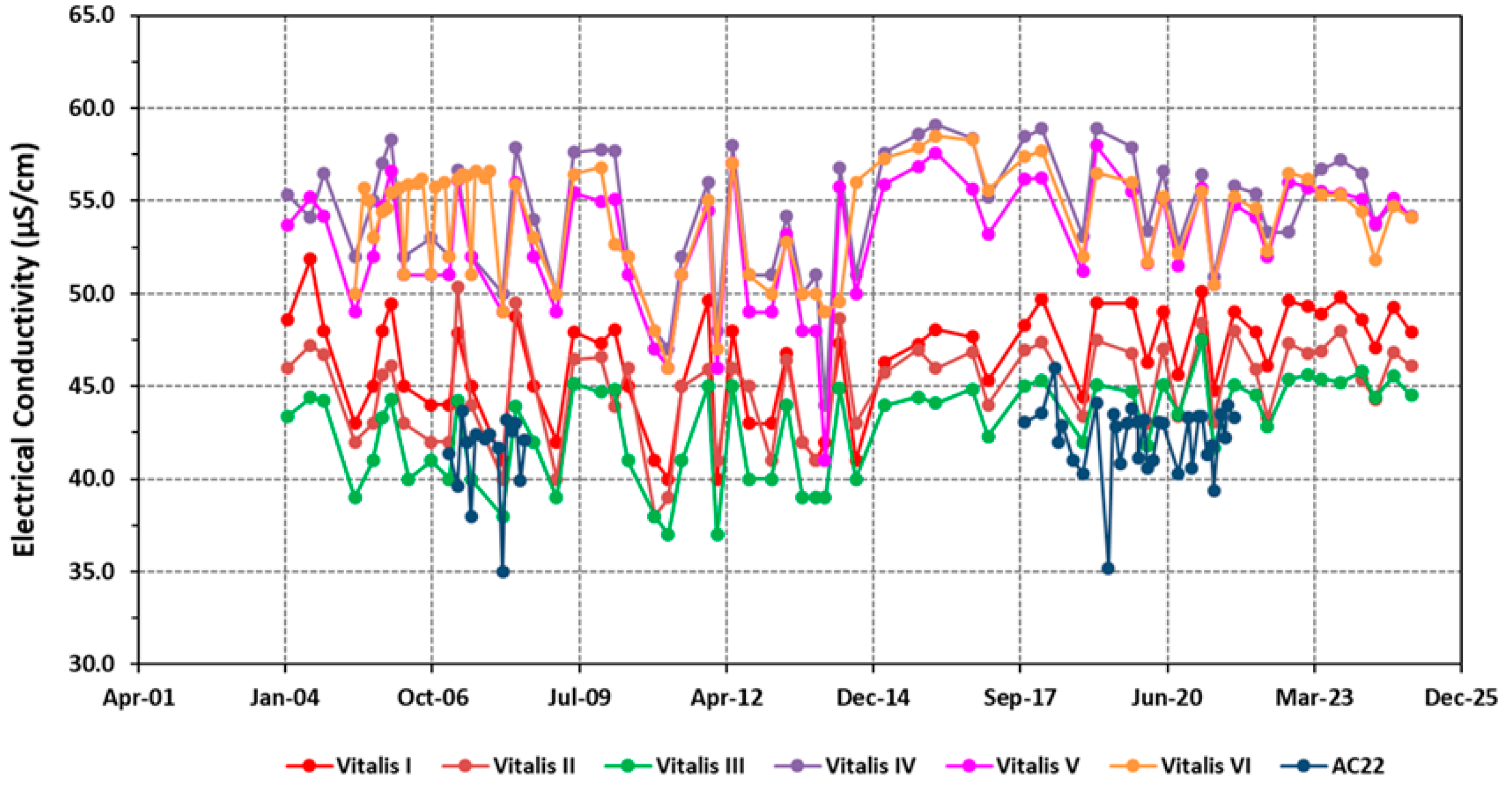
Although the EC values are relatively low, through the graphical interpretation of the temporal evolution of EC (Figure 4), it is possible to distinguish two groups: the natural mineral waters from boreholes Vitalis IV, V and VI record higher EC values than the natural mineral waters from boreholes Vitalis I, II, and III. The difference in average electrical conductivity between these two groups of mineral waters is 9 µS/cm (mean EC of Vitalis I, II, and III = 44.7 µS/cm while the mean EC of Vitalis IV, V, and VI = 53.7 µS/cm) This trend is in line with what was mentioned by [11] regarding the underground flow direction of the studied natural mineral waters along quartzite formations, from SE to NW, given that the increase in EC values can be related to the average residence time of natural mineral waters in this hydromineral system, promoting water–rock interaction.
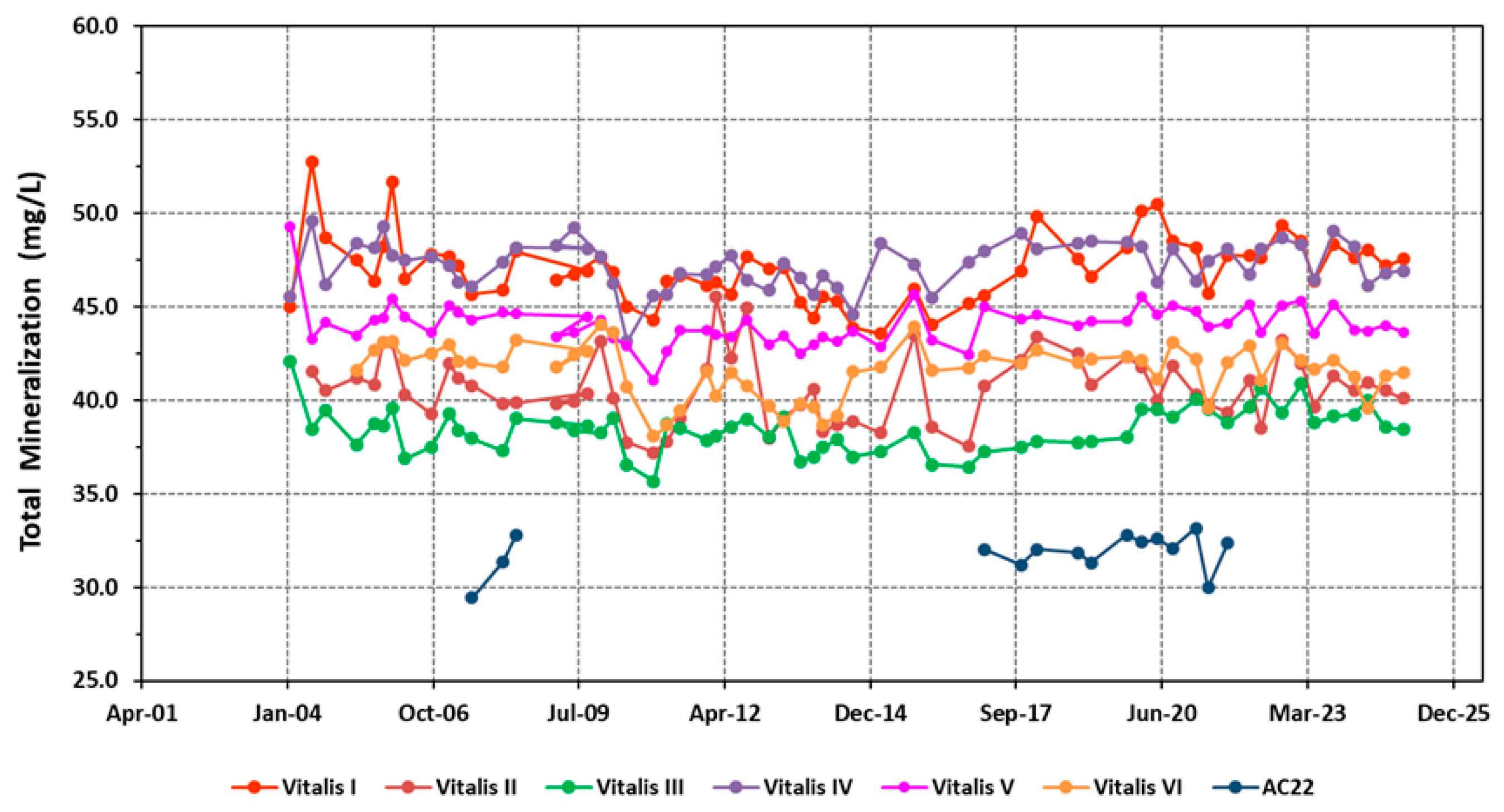
According to [16] these waters are hyposaline natural mineral waters as they present total mineralization values below 100 mg/L (Figure 5), varying in this case between 31.87 mg/L in AC22 and 48.06 mg/L in Vitalis IV. The division of the boreholes into the two main groups described earlier (Figure 4) is no longer evident when Total Mineralization is plotted against time. In Figure 5, it is possible to observe a very homogeneous behavior between the 6 boreholes (Vitalis I to VI), presenting the same trend over time.
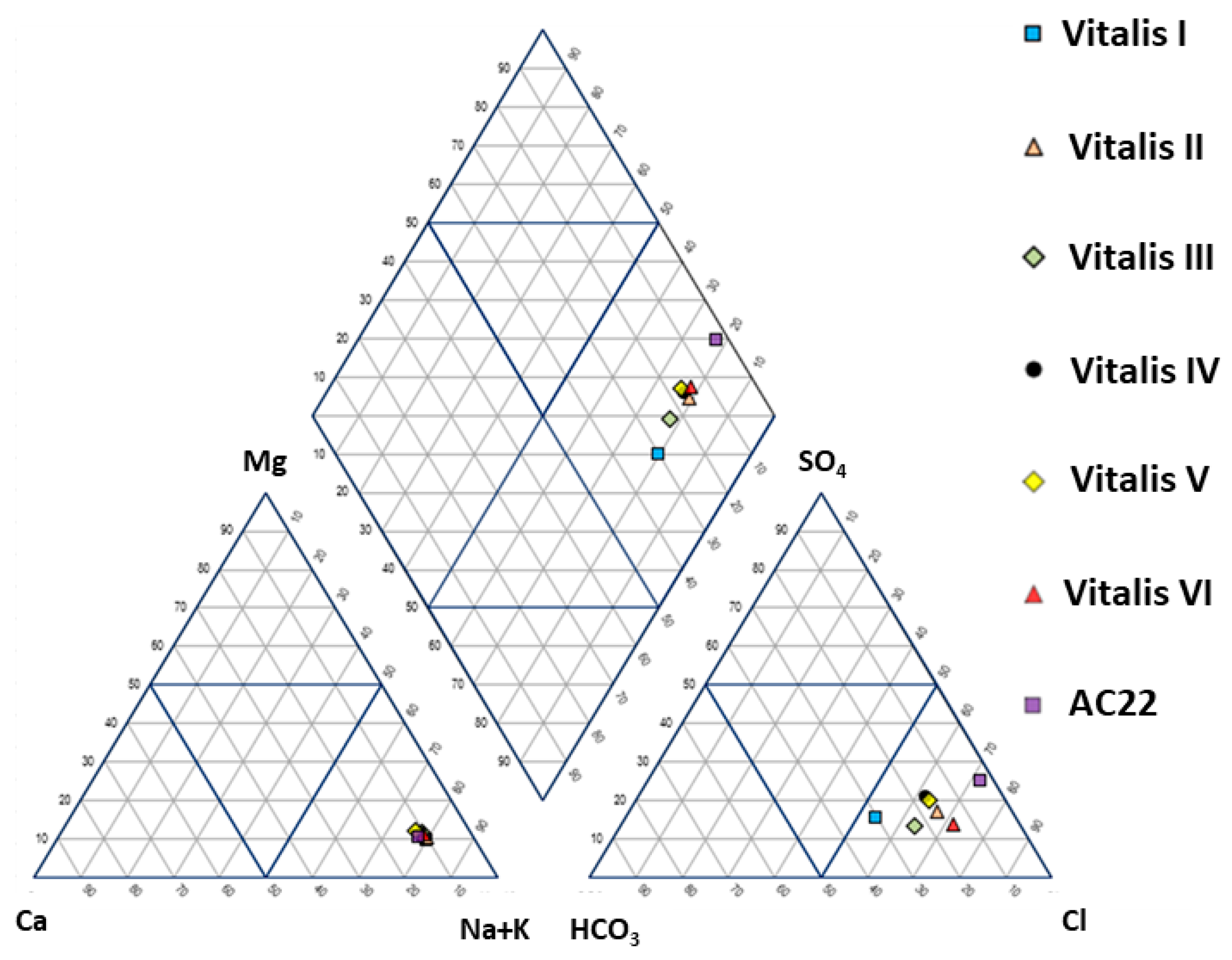
As the chemical composition of the natural mineral waters shows only minor temporal variations at each borehole, we have plotted the mean chemical composition of all boreholes (Table 2) on the Piper diagram (Figure 6).
This graphical method allows us to classify the chemical facies of these natural mineral waters, i.e., all of them belong to the Cl-Na water type, which is typical of waters circulating in quartzite rocks, as referred by [3,4].
Table 2 shows that the natural mineral waters from the hydromineral concessions of Ribeirinho and Fazenda do Arco (Castelo de Vide) are characterized by very low mineralization. Among the dissolved substances, silica (SiO2) is present in the highest concentration, followed by chloride (Cl) and sodium (Na+). The average dry residue values for these waters range from 37.36 ± 2.89 mg/L (n = 60) in Vitalis III to 46.75 ± 3.34 mg/L (n = 61) in Vitalis IV. On the basis of the European classification [17], these natural mineral waters are categorized as hyposaline waters.
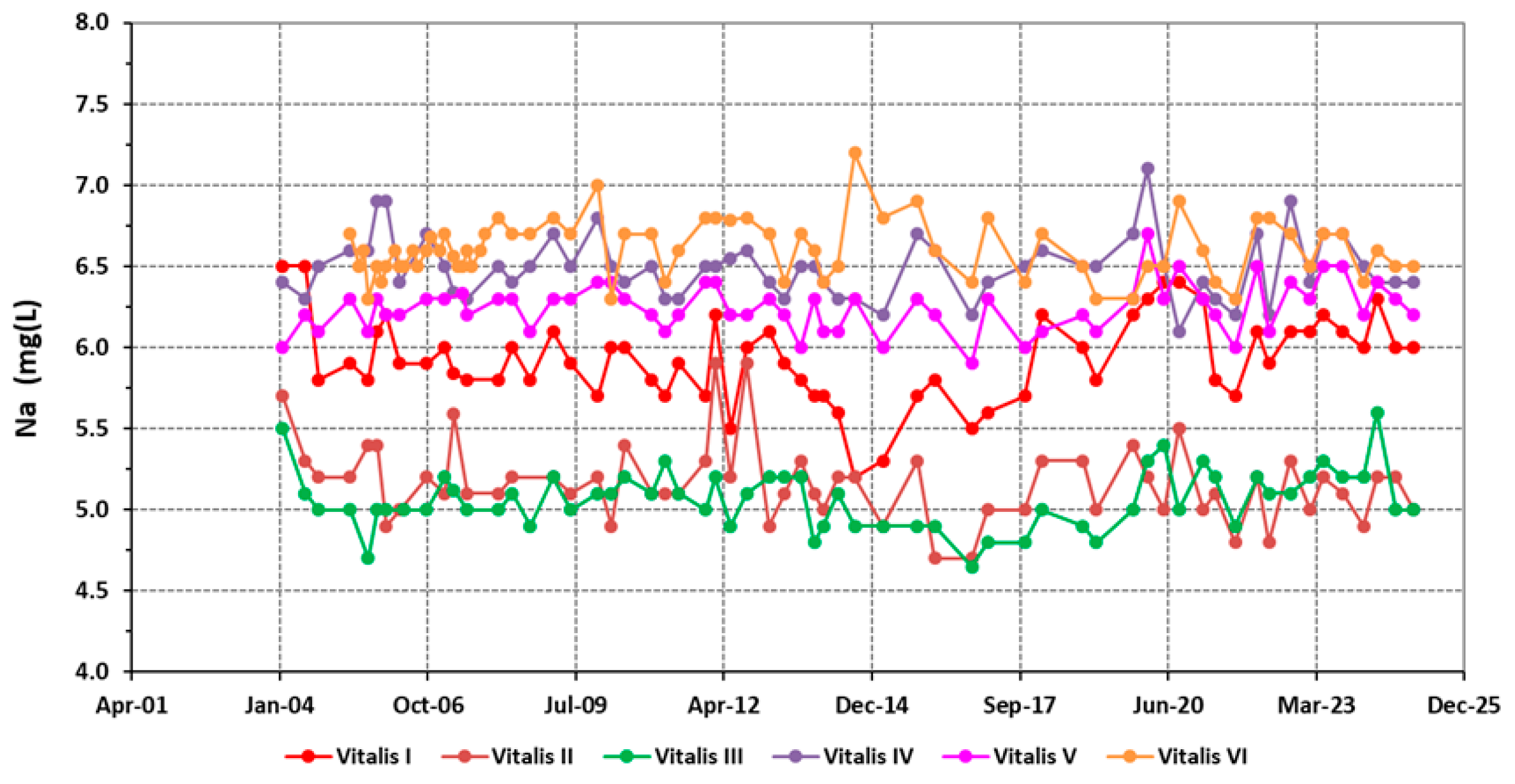
The diagram in Figure 7 indicates that sodium (Na+) concentrations in the natural mineral water samples from the various boreholes remain relatively uniform over time. The Na+ content change aproximatly between 4.7 mg/L (Vitalis III) and 7.2 mg/L (Vitalis VI). Although these variations are rather small, it is possible to identify a gap between Vitalis II and Vitalis III, in comparision with the other boreholes. The division between these two groups is in this case less distinct than in Figure 4, i.e., Vitalis I water is now closer to the more mineralized groups of waters.
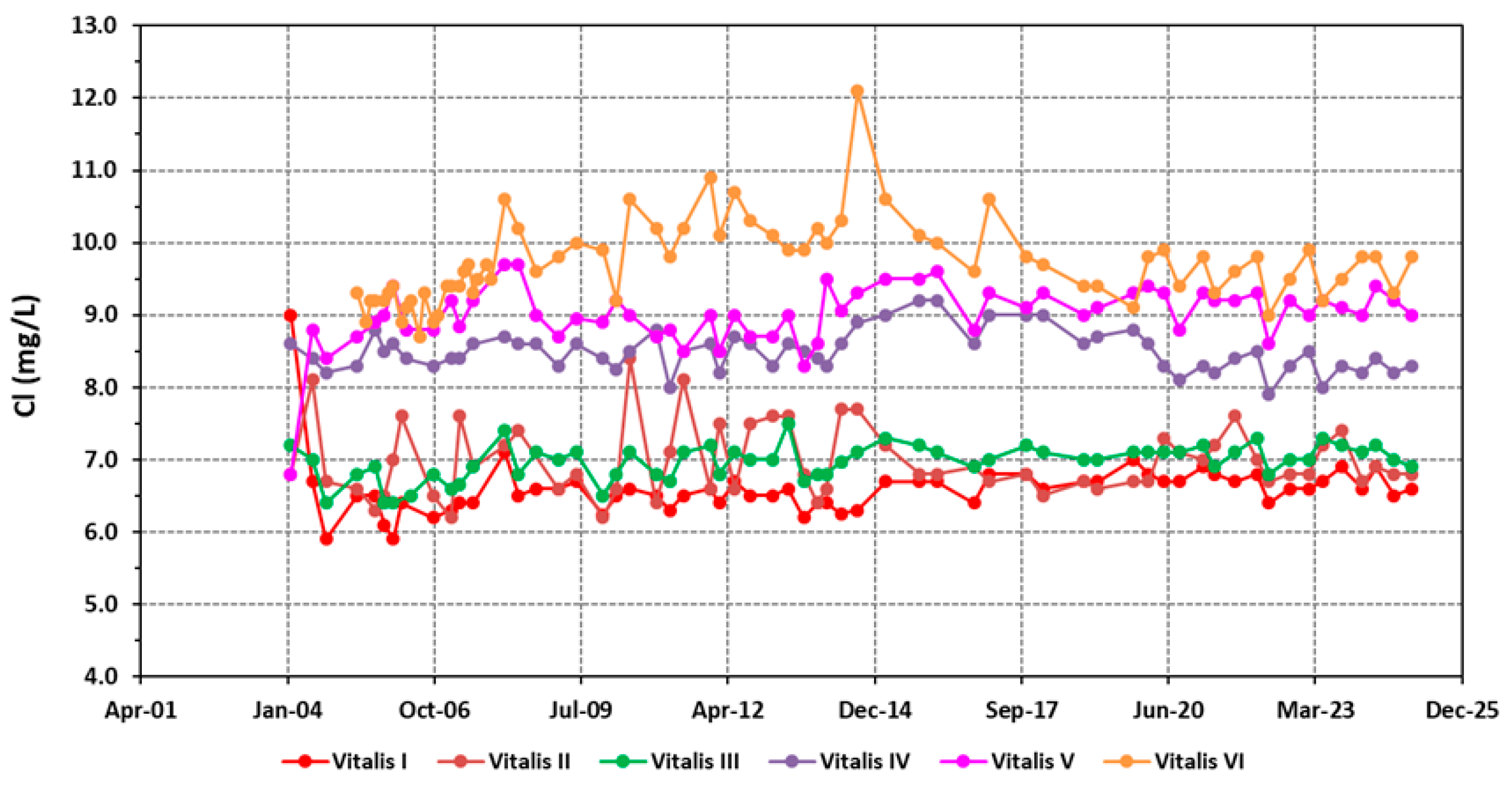
The presence of slightly higher Cl concentrations in the natural mineral waters of the Vitalis IV, V, and VI boreholes (Figure 8), can be explained, as for the case of Na+ concentrations (Figure 7), as the result of the increase in Na+ and Cl concentrations along the subsurface flow direction of the natural mineral waters, from SE to NW.
Given that these are natural mineral waters circulating in quartzite rocks, presenting Cl-Na facies, the slightly increase in Na+ and Cl may be associated with the leaching of NaCl salts deposited (either in the soil or in the discontinuities of the quartzite formations—diaclases, fractures, stratification) after the various episodes of atmospheric precipitation (recharging of the hydromineral system). Thus, the natural mineral waters from boreholes Vitalis IV, V, and VI presenting slightly higher Na+ and Cl concentrations seems to corroborate the existence of an underground flow path from SE to NW, as reported by [11].
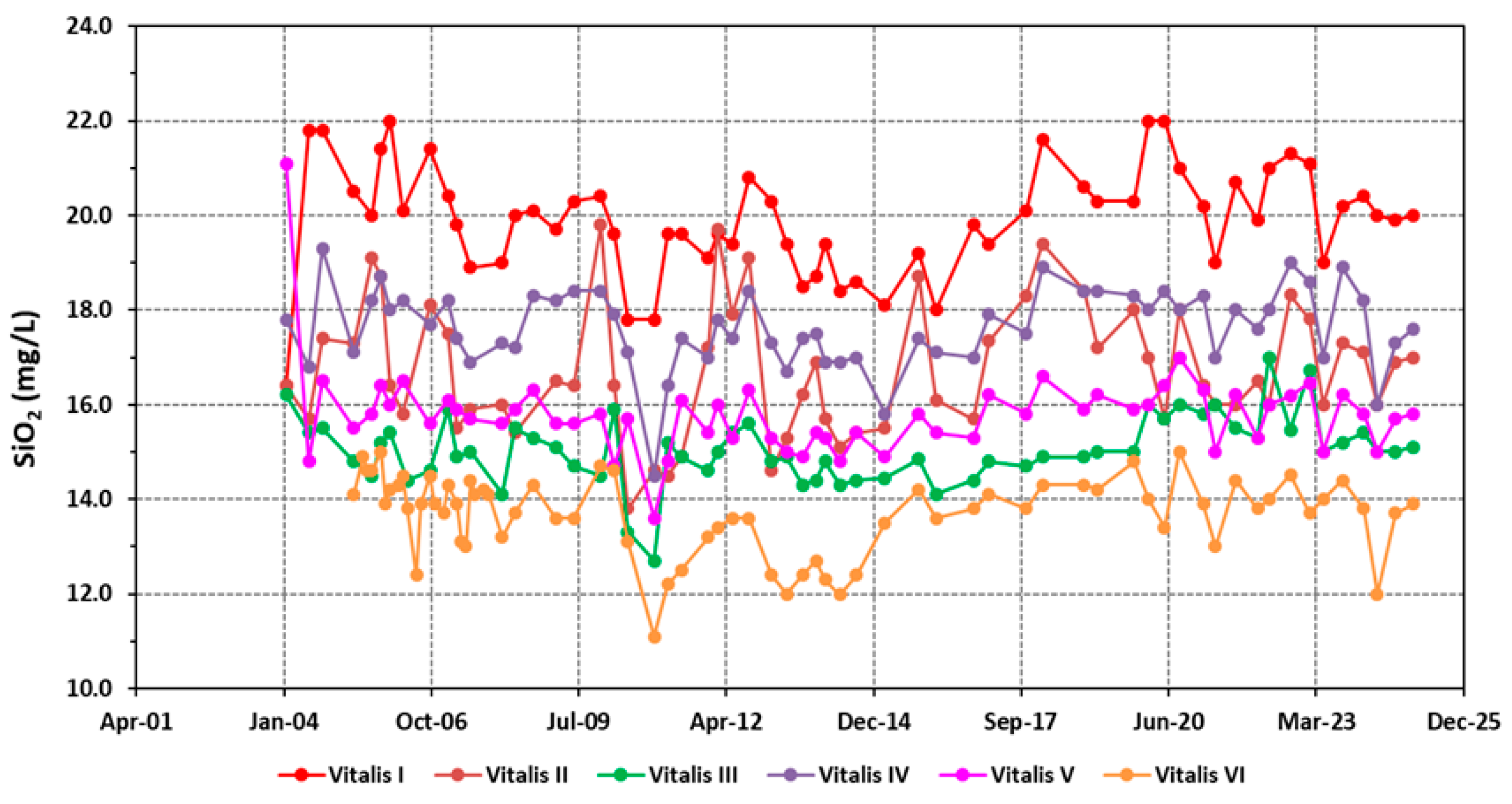
The studied natural mineral waters present higher silica (SiO2) concentrations when compared with the other chemical parameters analyzed (Table 2), given that they are natural mineral waters whose recharge, infiltration and underground circulation paths are associated with the main discontinuities of the quartzite rocks in the region, which, through water–rock interaction, release SiO2 into the aqueous solution (see [14,15]). In the case of natural mineral waters from Vitalis I borehole, the slight increase in SiO2 concentration (Figure 9), associated with the increase in the HCO3 concentration (Table 2), could be explained by the hydrolysis of feldspars from the granites and arkoses present on the SW flank of the syncline [10], evidencing the possible existence of lateral recharge through faults and/or higher fracture zones.
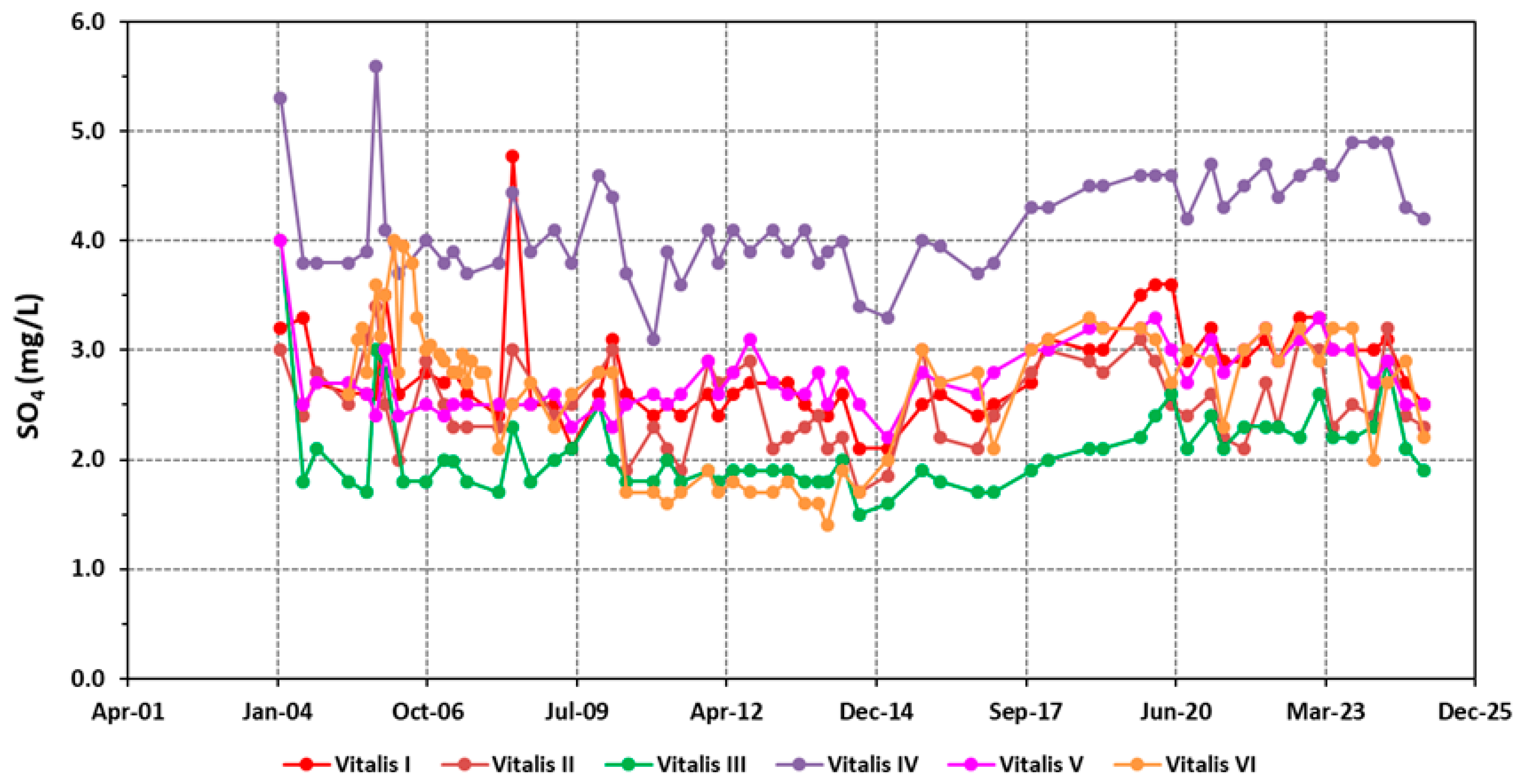
The different SO42 concentrations in each borehole do not reflect an increase in content along the groundwater flow path from SE to NW (Figure 10). The Vitalis IV borehole has the highest content (approximately 1 mg/L), with the lowest SO42 concentrations observed in the Vitalis III and Vitalis VI boreholes.
One possible explanation for the increase in SO42− concentration observed in the natural mineral waters under study could be an anthropogenic source, such as agricultural activities. However, this hypothesis seems to be unlikely, as the difference in SO42− levels is minimal (approximately 2 mg/L) and remains relatively constant over time.
A more plausible explanation is the oxidation of pyrite, which occurs as an accessory mineral in several geological formations in the region. These include quartz veins that fill local discontinuities, and granites located on the southwestern flank of the quartzite ridges and Upper Silurian schists [10]. Given the high degree of fracturing in the SW granitic area surrounding the boreholes, it is reasonable to suggest that pyrite oxidation, potentially combined with lateral recharge, is the main source of the SO42−. When pyrite comes into contact with water, it leads to the formation of sulfate ions (e.g., ref. [18]), supporting this interpretation.
The presence of lateral recharge in the Ribeirinho and Fazenda do Arco hydromineral system, facilitated by E-NE-oriented fractures and faults through granites and arkoses [10] (see Figure 2c), seems to be supported by geochemical evidence. The levels of HCO3, Na+, K+, Ca2+ and SiO2 of the waters from Ribeirinho and Fazenda do Arco likely result from the hydrolysis of feldspars in the granites and arkoses.

4.2. Isotopic (δ2H and δ18O) Signatures of the Waters

Isotope hydrological data, particularly the analysis of stable isotopes such as oxygen-18 and deuterium, is a powerful tool in hydrogeological studies. These isotopes act as natural tracers, enabling the identification of groundwater recharge areas, delineation of underground flow paths, and assessment of mixing processes between water bodies. Their spatial and temporal variations reflect the origin and movement of water through the hydrological cycle, offering critical insights for the development of robust hydrogeological conceptual models [19]. In regions with complex geological structure or limited hydrochemical contrasts, stable isotope content provides essential data that complements traditional hydrogeological methods, improving the accuracy of aquifer characterization and water resource management [20].
In October 2023, a sampling campaign (first and unique campaign) was conducted to determine the isotopic composition (δ2H and δ18O) of the natural mineral waters from the Ribeirinho and Fazenda do Arco hydromineral concessions. This analysis served as a complementary method to the hydrogeochemical characterization, aiming to refine the conceptual hydrogeological model of the study region. The results are presented in Table 3.
In situ parameters including temperature (°C), pH, electrical conductivity (EC, μS/cm), and redox potential (Eh, mV) were measured during the field work campaign using a portable Hach HQ40D dual-channel digital multimeter (Hach Lange GmbH, Düsseldorf, Germany). The corresponding results are summarized in Table 4.
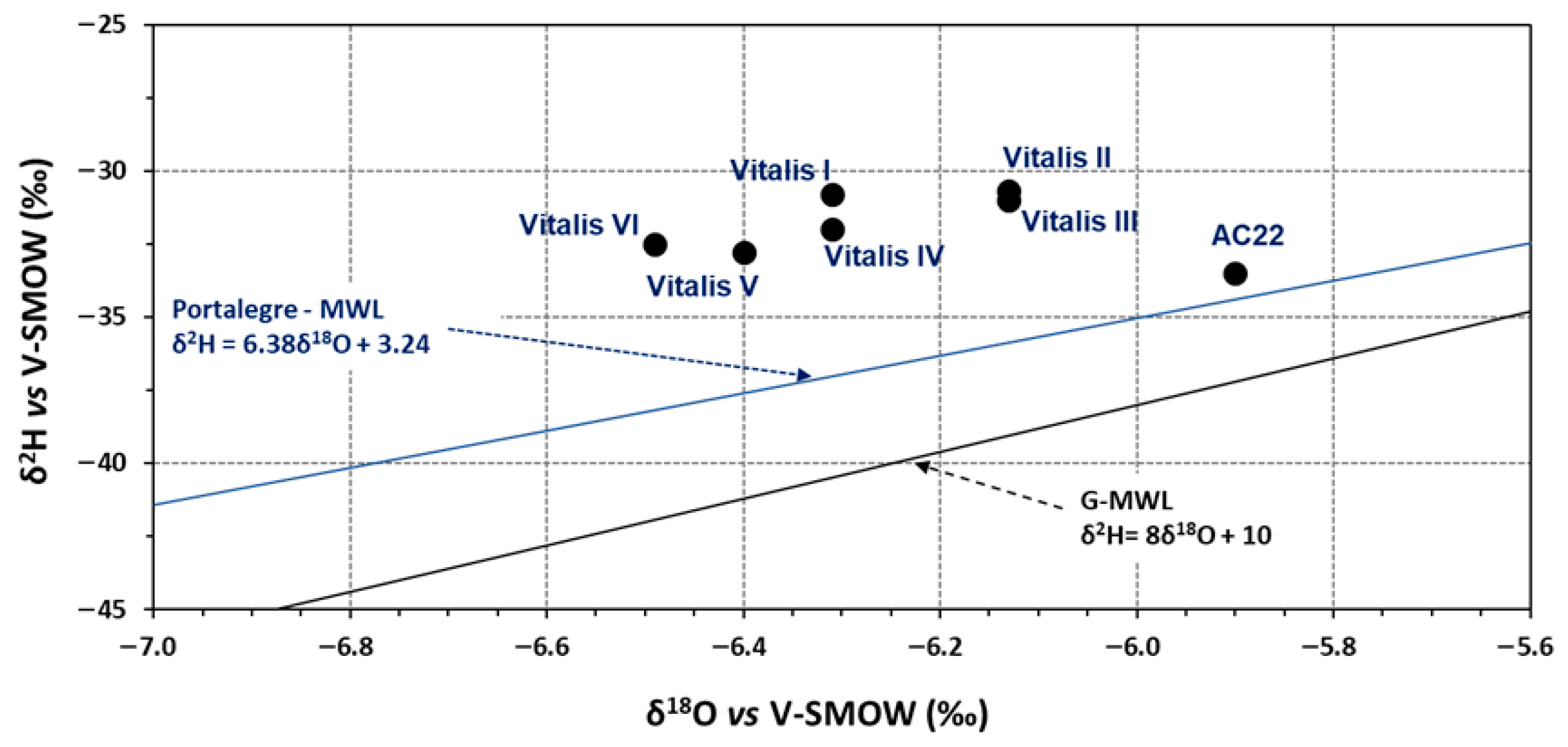
The isotopic composition of the natural mineral waters from the Ribeirinho and Fazenda do Arco hydromineral concessions (Castelo de Vide) is presented in the δ2H–δ18O diagram shown in Figure 11. The plotted data points align rather closely with both the Global Meteoric Water Line (GMWL: δ2H = 8·δ18O + 10; [21]) and the Portalegre Meteoric Water Line (Portalegre MWL: δ2H = 6.38·δ18O + 3.24; [22], indicating that these waters are of meteoric origin. The Portalegre meteorological station, is located approximately 20 km south of the Castelo de Vide study area at an altitude of 780 m a.s.l., reports an annual weighted isotopic composition of δ18O = –5.60‰ and δ2H = –33.2‰ [22]. These values are rather similar to those observed in the natural mineral water samples from Ribeirinho and Fazenda do Arco. However, the samples exhibit a slight shift toward more depleted isotopic values (see Table 3).
The preliminary isotopic results suggest a lack of hydraulic continuity between the two quartzite ridge blocks (NW and SE), which are separated by a fault trending approximately N-S (see Figure 2). This hypothesis is supported by the relatively enriched isotopic signature of water from borehole AC22 (δ18O = −5.90‰), located in the SE block, compared to the average isotopic composition of waters from boreholes Vitalis I to VI in the NW block (δ18Oₘₑₐₙ = −6.30‰). The isotopic composition of the NW block borehole waters indicates recharge from relatively high altitudes (above 780 m a.s.l.), as inferred from their location (see Figure 2) and the annual weighted averages recorded at the Portalegre Meteorological Station [22]. In contrast, the more enriched isotopic values observed in borehole AC22 suggest a preferential recharge from lower altitudes than those supplying the Vitalis I to VI boreholes.
Determining the isotopic altitude gradient in a region is essential for identifying the elevation at which groundwater systems are preferentially recharged. However, this requires isotopic data collected at multiple altitudes in nearby locations, for example, from springs or shallow aquifers, which were not sampled during this field campaign. Based on the available information, it is suggested that the preferential recharge of the mineral waters occurs at elevations higher than that of the Portalegre altitude station, currently the only site in the region with both known elevation and isotopic data.
Analysis of the data presented in Table 3 highlights an important feature: the high d-excess values observed in these natural mineral waters. The isotopic composition of precipitation is influenced by environmental parameters such as temperature, relative humidity, the isotopic signature of atmospheric water vapor, and the degree of atmospheric turbulence. According to several authors [23,24,25], the elevated d-excess values measured in the groundwater samples from the Castelo de Vide mineral waters may be attributed to low relative humidity during evaporation and to the dominant moisture source, or to local climatic conditions that enhance evaporation kinetics, for example, strong temperature gradients between the water surface and the overlying air. One of the possible causes of the “high” d-excess is the evaporation rate; high temperatures or low air pressure, for example, can increase the rate of evaporation from surface water systems, inducing an increase in isotopic kinetic fractionation [24]. As mentioned previously, the origin of the water vapor masses is also a key issue: if the source exhibits high evaporation, the precipitation originating from this “source” will reflect a high isotopic signature.
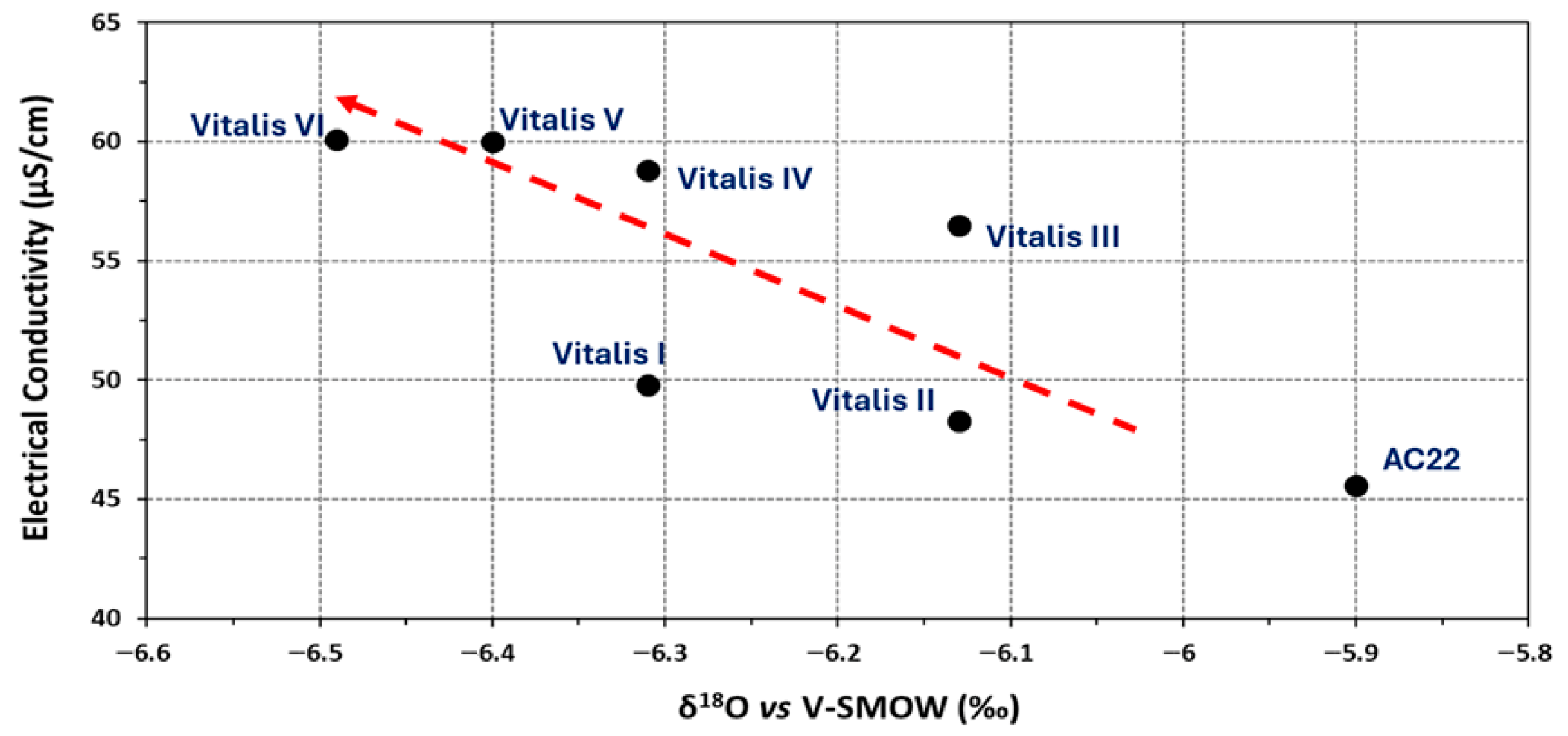
In the study area, the d-excess is expected to be strongly controlled by regional physical conditions, particularly air temperature and relative humidity, assuming the Atlantic Ocean is the dominant moisture source. Moreover, as noted in [23], the d-excess reflects the prevailing conditions experienced by water vapor masses during their trajectory (“in route”). The prevailing wind direction in mainland Portugal is from the northeast. Castelo de Vide, located in central Portugal and approximately 120 km inland from the Atlantic coast, receives a substantial moisture contribution from this oceanic source. However, two large surface-water bodies are also present in the surrounding region: the Alqueva reservoir, located about 100 km southwest of Castelo de Vide, and the Montargil reservoir, located roughly 50 km to the west. Two hypotheses can therefore be proposed to explain the elevated d-excess values: (i) recharge occurring at higher elevations and (ii) a significant contribution of water vapor originating from the Montargil reservoir. The relationship between the EC values and isotopic composition (δ18O) of the natural mineral waters, on the basis of the data collected during the October 2023 field campaign and shown in Figure 12, supports the hypothesis that recharge of the NW block waters occurs along the entire quartzite ridge. The data also suggests an underground flow direction from SE to NW, consistent with the model proposed by [11]. This interpretation is done on the basis of the regular increase in EC values from SE to NW, ranging from 48.3 µS/cm at Vitalis II (SE) to 60.1 µS/cm at Vitalis VI (NW). In contrast, borehole AC22, located in the SE block, shows a lower EC value of 45.6 µS/cm, suggesting a relatively short underground flow path. This points to a possible flow direction from NW to SE, opposite to that inferred for the NW block. It is important to note that these interpretations are done on the basis of a single sampling campaign for both isotopic analysis and in situ measurements. Additional surveys are necessary to confirm these findings.

5. Updating of the Conceptual Hydrogeological Model

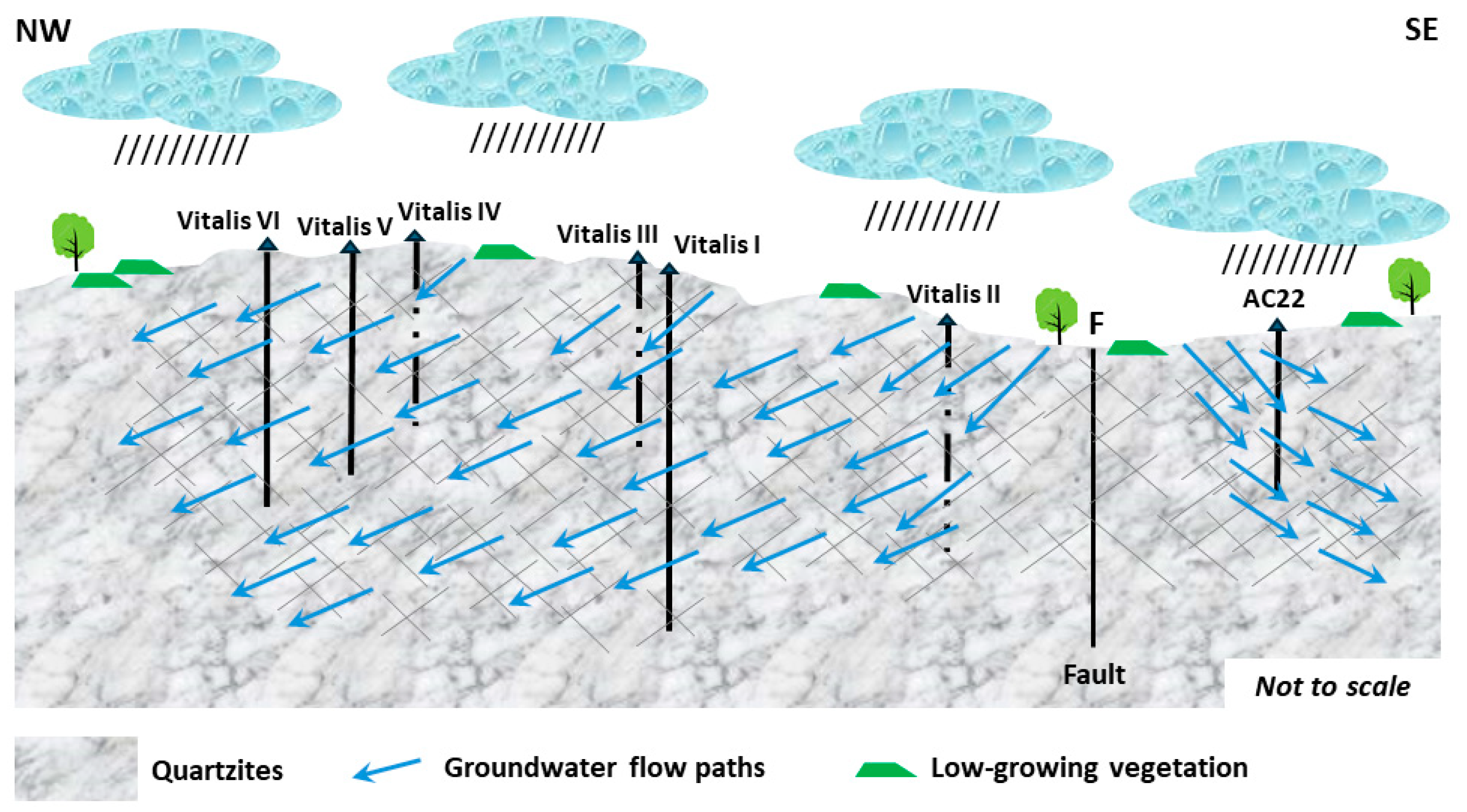
According to [1], a conceptual hydrogeological circulation model for a hydromineral system should be easy to understand, mostly qualitative, and offer a clear explanation of how the system works. As new data becomes available through recent field work campaigns, such models should be regularly updated to reflect improved understanding. The primary aim of this study was to enhance the conceptual hydrogeological circulation model for the hyposaline natural mineral waters of Ribeirinho and Fazenda do Arco, located in Castelo de Vide, Central Portugal. The updated model is illustrated schematically in Figure 13.
The hyposaline natural mineral waters from Ribeirinho and Fazenda do Arco, of the Cl-Na-type, originate from meteoric water that infiltrates the quartzite ridges of the Serra de São Mamede, which trend NW–SE. Recharge occurs at similar altitudes, approximately 780 m above sea level, and is facilitated by the high degree of fracturing in the quartzites, resulting in preferential SiO2 dissolution. Impermeable formations, such as upper Silurian schists, direct the groundwater flow along the more permeable quartzite layers. This flow generally follows a SE–NW direction at relatively shallow depths, as inferred from the relatively low temperatures recorded at the boreholes. This flow direction is also supported by the slight NW tilt of the syncline axis [10].
The quartzite ridges are structurally divided into two blocks—northwestern (NW) and southeastern (SE)—by a fault trending N-S. Isotopic analysis (δ2H and δ18O) indicates limited hydraulic connectivity between these two blocks. The mineral water from AC22 (SE block) displays a more enriched isotopic signature compared to water from boreholes Vitalis I to VI in the NW block. Geological, geochemical, and tectonic evidence further support the hypothesis of lateral recharge within the Ribeirinho and Fazenda do Arco hydromineral system. This lateral input is likely facilitated by E–NE-trending fractures and faults [10]. These structures contribute to localized increases in concentrations of HCO3, Na+, K+, Ca2+, and SiO2 in some boreholes, likely due to feldspar hydrolysis in granitic and arkosic rocks.
As illustrated in Figure 13, the hyposaline natural mineral waters of the Ribeirinho and Fazenda do Arco can be categorized into two distinct subsystems. These differ in recharge altitude and underground flow paths.

6. Concluding Remarks

The updated conceptual hydrogeological model of the hyposaline natural mineral waters of Ribeirinho and Fazenda do Arco (Castelo de Vide, Central Portugal) provides significant insights into the dynamics of this unique hydromineral system. Dominated by the Castelo de Vide syncline and developed along the southern margin of the Central Iberian Zone, this region hosts natural mineral waters that are characterized by low electrical conductivity, slightly acidic pH, and a characteristic Cl-Na+ signature, typical indicators of meteoric origin and limited water–rock interaction. These properties, along with elevated SiO2 concentrations and very low mineralization, confirm the dominance of Lower Ordovician quartzite outcrops as the primary recharge area and flow medium.
The integration of hydrogeochemical and isotopic data (δ2H and δ18O) has proven essential for refining the conceptual model, particularly in identifying recharge altitudes, delineating subsystems, and tracing groundwater flow paths. The model confirms that groundwater circulation occurs mainly through fractured quartzites, with minimal interaction with other lithologies, maintaining the physical and chemical stability typical of natural mineral waters.
It should be enhanced the hydrochemical similarities observed between Ribeirinho and Fazenda do Arco and other well-documented Portuguese natural mineral water systems such as Ladeira de Envendos, Luso and Monfortinho. In all these natural mineral systems, the presence of quartzite formations controls the recharge and underground flow paths, leading to comparable end-member characteristics: Cl-Na+ water facies, “high” silica content, and hyposaline waters.
These findings not only enhance the scientific understanding of the system but also have practical implications. Natural mineral waters, due to their purity and unique composition, are valuable geo-resources with significant social and economic relevance. Thus, improving conceptual models through multidisciplinary approaches is essential to ensure their sustainable exploitation and long-term preservation.

Author Contributions

Conceptualization, J.M.M., P.M.C. and M.A.d.S.; methodology, J.M.M. and P.M.C.; software, P.M.C.; investigation, J.M.M., P.M.C. and M.A.d.S.; writing—original draft preparation, J.M.M., P.M.C. and M.A.d.S.; writing—review and editing, J.M.M., P.M.C. and M.A.d.S.; visualization, J.M.M. and P.M.C. All authors have read and agreed to the published version of the manuscript.

Funding

CERENA/IST author acknowledges the FCT support through FCT-UIDB/04028/2025 project. The author from C2TN/IST acknowledges FCT support through the strategic project FCT-UIDB/04349/2025.

Data Availability Statement

The original contributions presented in this study are included in the article. Further inquiries can be directed to the corresponding author.

Acknowledgments

The authors would like to thank the Super Bock Group Enterprise (Conces-sionaire of the natural mineral waters of Ribeirinho and Fazenda do Arco) for their logistic support during the field work campaigns, and for kindly provided the physico-chemical database (2004–2024). The authors would also like to thank the three anonymous reviewers for their extremely helpful comments and suggestions, which significantly improved the previous version of the manuscript.

Conflicts of Interest

Author Manuel Antunes da Silva was employed by the company Super Bock Group, Apartado 1044, 4466-955 S. Mamede de Infesta, Portugal. The remaining authors declare that the research was conducted in the absence of any commercial or financial relationships that could be construed as a potential conflict of interest.

References

  1. Moore, J.E. Field Hydrogeology: A Guide for Site Investigations and Report Preparation; Lewis Publishers: New York, NY, USA, 2002. [Google Scholar]
  2. Brassington, F.C. A proposed conceptual model for the genesis of the Derbyshire thermal springs. Q. J. Eng. Geol. Hydrogeol. 2007, 40, 35–46. [Google Scholar] [CrossRef]
  3. Marques, J.M.; Carreira, P.M.; Caçador, P.; Antunes da Silva, M. Update of the Interpretive Conceptual Model of Ladeira de Envendos Hyposaline Hydromineral System (Central Portugal): A Contribution to Its Sustainable Use. Sustainability 2024, 16, 5179. [Google Scholar] [CrossRef]
  4. Vieira da Silva, A.M.; Condesso Melo, M.T.; Marques da Silva, M.A. Modelo conceptual e caracterização hidrogeológica preliminar do sistema aquífero da Serra do Buçaco. In Proceedings of the Actas das Jornadas Luso-Espanholas sobre As Águas Subterrâneas no Noroeste da Península Ibérica, La Coruña, Spain, 3–6 July 2000. (In Portuguese). [Google Scholar]
  5. Simões Cortez, A. Águas Minerais Naturais e de Nascente da Região Centro, 1st ed.; Mare Liberum: Aveiro, Portugal, 2012; pp. 483–485. (In Portuguese) [Google Scholar]
  6. Feio, M.; Almeida, G. A Serra de S. Mamede. Finisterra 1980, 15, 30–52. (In Portuguese) [Google Scholar] [CrossRef]
  7. Monteiro, J.P.; Silva, M.L. Aspectos da Hidrogeologia e Qualidade das Águas Associadas à formação Carbonatada de Escusa (Castelo de Vide). In Revista de Geologia Económica Aplicada e do Ambiente (GEOLIS); Carlos Romariz, C., Ed.; Secção de Geologia Económica e Aplicada da Faculdade de Ciências da Universidade de Lisboa: Lisboa, Portugal, 1992; pp. 19–32. (In Portuguese) [Google Scholar]
  8. Monteiro, J.P. Hidrogeologia da Formação Carbonatada de Escusa (Castelo de Vide). Master’s Thesis, Faculdade de Ciências da Universidade de Lisboa, Departamento de Geologia, Lisboa, Portugal, 1993. (In Portuguese). [Google Scholar]
  9. Monteiro, J.P.; Silva, M.L.; Carreira, P.M.; Soares, A.M. Aplicação de Métodos Geoquímicos Isotópicos à Interpretação da Hidrodinâmica do Aquífero Carbonatado da Serra de S. Mamede (Castelo de Vide). In VII Congresso de Espanha de Geoquímica; CEDEX: Madrid, Spain, 1997; pp. 544–551. (In Portuguese) [Google Scholar]
  10. Fernandes, A.P.; Perdigão, J.C.; Carvalho, H.F.; Peres, A.M. Notícia Explicativa da Folha 28 D–Castelo de Vide, Carta Geológica de Portugal na Escala 1/50,000; Direcção-Geral de Minas e Serviços Geológicos: Lisboa, Portugal, 1973. (In Portuguese) [Google Scholar]
  11. Morais Almeida, A.; Dias, D.; Almeida, M.; Marques, J.M.; Antunes da Silva, M. Contribuição para o desenvolvimento do modelo conceptual de circulação da Água Mineral Natural de Castelo de Vide. In Proceedings of the Livro de Actas do 12º Seminário sobre Águas Subterrâneas, Coimbra, Portugal, 7–8 March 2019; pp. 18–21. (In Portuguese). [Google Scholar]
  12. IAEA. Training Course Series 35 Laser Spectroscopic Analysis of Liquid Water Samples for Stable Hydrogen and Oxygen Isotopes. Performance Testing and Procedures for Installing and Operating the LGR DT-100 Liquid Water Stable Analyser, 1st ed.; International Atomic Energy Agency: Vienna, Austria, 2009; pp. 1–27. [Google Scholar]
  13. IAEA. Procedure and Technique Critique for Tritium Enrichment by Electrolysis at IAEA Laboratory, 1st ed.; Technical Procedure nº19; International Atomic Energy Agency: Vienna, Austria, 1976; pp. 1–42. [Google Scholar]
  14. Freeze, A.R.; Cherry, J.A. Groundwater; Englewood Cliffs: Prentice-Hall, NJ, USA, 1979; pp. 82–134. [Google Scholar]
  15. Appelo, C.A.J.; Postma, D. Geochemistry, Groundwater and Pollution, 1st ed.; Balkema: Rotterdam, The Netherlands, 1993; pp. 1–168. [Google Scholar]
  16. Lourenço, C.; Ribeiro, L. Classificação das águas minerais naturais e de nascente de Portugal segundo as suas características físico-químicas. In 7º Congresso da Água; LNEC: Lisboa, Portugal, 2004. (In Portuguese) [Google Scholar]
  17. Directive 2009/54/EC. Available online: http://data.europa.eu/eli/dir/2009/54/oj (accessed on 15 November 2023).
  18. Todd, E.C.T.; Sherman, D.M.S.; Purton, J.A.P. Surface Oxidation of Pyrite under Ambient Atmospheric and Aqueous (pH = 2 to 10) Conditions: Electronic Structure and Mineralogy from X-Ray Absorption Spectroscopy. Geochim. Cosmochim. Acta 2003, 67, 881–893. [Google Scholar] [CrossRef]
  19. Clark, I.D.; Fritz, P. Environmental Isotopes in Hydrogeology; Lewis Publishers: New York, NY, USA, 1997. [Google Scholar]
  20. Geyh, M. Environmental Isotopes in Hydrological Cycle. Principles and Applications; IHP-V, Technical Documents in Hydrology, No. 39; UNESCO: Paris, France, 2000; Volume IV. [Google Scholar]
  21. Craig, H. Isotopic variations in meteoric waters. Science 1961, 133, 1702–1703. [Google Scholar] [CrossRef] [PubMed]
  22. Carreira, P.; Nunes, D.; Valério, P.; Araújo, M.F. A 15-year record of seasonal variation in the isotopic composition. J. Radioanal. Nucl. Chem. 2009, 281, 153–156. [Google Scholar] [CrossRef]
  23. Froehlich, K.; Gibson, J.J.; Aggarwal, P. Deuterium excess in precipitation and its climatological significance. J. Geophys. Res.-Atmos. 2002. Available online: http://www-pub.iaea.org/MTCD/publications/PDF/CSP-13-P_web.pdf/ (accessed on 18 November 2025).
  24. Gonfiantini, R.; Wassenaar, L.I.; Araguás-Araguás, L.J. Stable isotope fractionations in the evaporation of water: The wind effect. Hydrol. Process. 2020, 34, 3596–3607. [Google Scholar] [CrossRef]
  25. Bellagamba, A.W.; Berkelhammer, M.; Weber, R.; Patete, I. Suspended in sound: New constraints on isotopic fractionation of falling hydrometeors using acoustically levitated water droplets. Hydrol. Process. 2023, 37, e14804. [Google Scholar] [CrossRef]
Figure 1. Geomorphological map of the region of Castelo de Vide–Serra de São Mamede (ex. 853 m refers to m a.s.l.). In shades of red, the two important ridge lines are represented, separated by a fault with a local approximately N-S orientation. Adapted from “www.topographic-map.com”, retrieved on 15 May 2023.
Water 17 03443 g001
Figure 2. (a) Geographical location of the region under study. (b) Geological cross section 1—Granites; 2—Arkoses; 3—Quartzite ridge; 4—Schists. (c) Sampling sites (geological map taken from [10]). Adapted from [11]. (c) stands for the location of the studied borehole waters.
Water 17 03443 g002
Figure 3. Example of the quartzite rocks outcropping at the study region. Photo by J. M. Marques (2023).
Water 17 03443 g003
Figure 4. Temporal evolution of EC (μS/cm) in the boreholes of the hydromineral concessions of Ribeirinho and Fazenda do Arco (Castelo de Vide).
Water 17 03443 g004
Figure 5. Temporal evolution of total mineralization (mg/L) in the boreholes of the hydromineral concessions of Ribeirinho and Fazenda do Arco (Castelo de Vide).
Water 17 03443 g005
Figure 6. Piper diagram showing the projection of the mean chemical composition of natural mineral waters from boreholes (Vitalis I–VI and AC22) from the Ribeirinho and Fazenda do Arco hydromineral concessions (Castelo de Vide).
Water 17 03443 g006
Figure 7. Temporal evolution of Na+ (mg/L) in the boreholes of the hydromineral concessions of Ribeirinho and Fazenda do Arco (Castelo de Vide).
Water 17 03443 g007
Figure 8. Temporal evolution of Cl (mg/L) in the boreholes of the hydromineral concessions of Ribeirinho and Fazenda do Arco (Castelo de Vide).
Water 17 03443 g008
Figure 9. Temporal evolution of SiO2 (mg/L) in the boreholes of the hydromineral concessions of Ribeirinho and Fazenda do Arco (Castelo de Vide).
Water 17 03443 g009
Figure 10. Temporal evolution of SO42− (mg/L) in the boreholes of the hydromineral concessions of Ribeirinho and Fazenda do Arco (Castelo de Vide).
Water 17 03443 g010
Figure 11. Plot of the isotopic composition of the natural mineral waters from of the hydromineral concessions of Ribeirinho and Fazenda do Arco (Castelo de Vide) on a δ2H-δ18O diagram. The lines represent the global meteoric water line G-MWL δ2H = 8 × δ18O + 10 [21] and the Portalegre meteoric water line Portalegre-MWL δ2H = 6.38 × δ18O + 3.24 [22].
Water 17 03443 g011
Figure 12. Plot of EC values and the isotopic composition of the natural mineral waters from of the hydromineral concessions of Ribeirinho and Fazenda do Arco (Castelo de Vide) on an EC-δ18O diagram. Data from October 2023 field work campaign.
Water 17 03443 g012
Figure 13. Schematic representation of the updated conceptual hydrogeological circulation model for the hyposaline natural mineral waters of Ribeirinho and Fazenda do Arco (Castelo de Vide, Central Portugal) (not to scale).

Water 17 03443 g013
Table 1. Hydrostatic initial level (HsIL) and exploitation hydrodynamic level (EHdL) for the boreholes from the hydromineral concessions of Ribeirinho and Fazenda do Arco (Castelo de Vide). Data kindly provided by the Super Bock Group.
BoreholeVitalis IVitalis IIVitalis IIIVitalis VIVitalis VVitalis VI
HsIL (m) 01320.432.547.632.2
EHdL (m) 163544546160
Table 2. Average chemical composition of the boreholes (Vitalis I, II, III, IV, V, VI and AC22) from the hydromineral concessions of Ribeirinho and Fazenda do Arco (Castelo de Vide). Concentrations in mg/L.
Vitalis I
(n = 60)
Vitalis II
(n = 59)
Vitalis III
(n = 60)
Vitalis IV
(n = 61)
Vitalis V
(n = 60)
Vitalis VI
(n = 72)
pH 5.46 ± 0.085.17 ± 0.115.26 ± 0.075.22 ± 0.075.18 ± 0.085.14 ± 0.09
EC 46.34 ± 2.9544.90 ± 2.6942.80 ± 2.5954.45 ± 3.3652.97 ± 3.4154.02 ± 3.03
HCO36.40 ± 0.633.05 ± 0.304.35 ± 0.244.07 ± 0.304.08 ± 0.373.40 ± 0.44
Cl6.58 ± 0.406.97 ± 0.496.96 ± 0.258.50 ± 0.289.00 ± 0.439.69 ± 0.58
SO42−2.79 ± 0.442.53 ± 0.392.09 ± 0.414.16 ± 0.492.74 ± 0.332.67 ± 0.63
Na+5.93 ± 0.275.17 ± 0.245.06 ± 0.186.50 ± 0.196.24 ± 0.156.60 ± 0.18
K+2.07 ± 0.082.06 ± 0.121.91 ± 0.082.35 ± 0.102.06 ± 0.101.85 ± 0.13
Ca2+0.81 ± 0.060.72 ± 0.070.71 ± 0.060.97 ± 0.070.99 ± 0.090.89 ± 0.07
Mg2+0.45 ± 0.030.45 ± 0.070.50 ± 0.030.62 ± 0.030.63 ± 0.030.59 ± 0.03
SiO219.92 ± 1.1516.79 ± 1.4115.04 ± 0.7117.66 ± 0.8315.79 ± 0.9113.72 ± 0.84
Table 3. Isotopic composition (ẟ18O and ẟ2H) and deuterium excess (d) of water samples from the boreholes of the hydromineral concessions of Ribeirinho and Fazenda do Arco (Castelo de Vide).
Sampling SiteOctober 2023
Field Work Campaign
δ18Oδ2Hd
Vitalis I−6.31−30.819.68
Vitalis II−6.13−30.718.34
Vitalis III−6.13−31.018.04
Vitalis IV−6.31−32.018.48
Vitalis V−6.4−32.818.40
Vitalis VI−6.49−32.519.42
AC22−5.90−33.513.70
Note: ẟ18O, ẟ2H and d (deuterium excess) values in permillage (‰) relative to the V-SMOW standard.
Table 4. Field parameters determined in situ, obtained during the October 2023 field work campaign, for water samples from the boreholes of the hydromineral concessions of Ribeirinho and Fazenda do Arco (Castelo de Vide).
Sampling SitepHEC
(µS/cm)
T
(oC)
Eh
(mV)
Vitalis I 4.8249.816.196.2
Vitalis II 5.4448.316.261.9
Vitalis III 4.7656.515.899.4
Vitalis IV 4.6958.816.2103.5
Vitalis V 4.4160.016.7119.3
Vitalis VI 4.8460.116.495.0
AC22 4.3745.615.5120.9
Disclaimer/Publisher’s Note: The statements, opinions and data contained in all publications are solely those of the individual author(s) and contributor(s) and not of MDPI and/or the editor(s). MDPI and/or the editor(s) disclaim responsibility for any injury to people or property resulting from any ideas, methods, instructions or products referred to in the content.