Integrating 2D and Pseudo-3D Electrical Resistivity Imaging to Determine the Recharge Potential of Karst Surface Fractures: An Example in the Northern Segment of the Edwards Balcones Fault Zone (BFZ) Aquifer

Abstract
1. Introduction
2. Materials and Methods
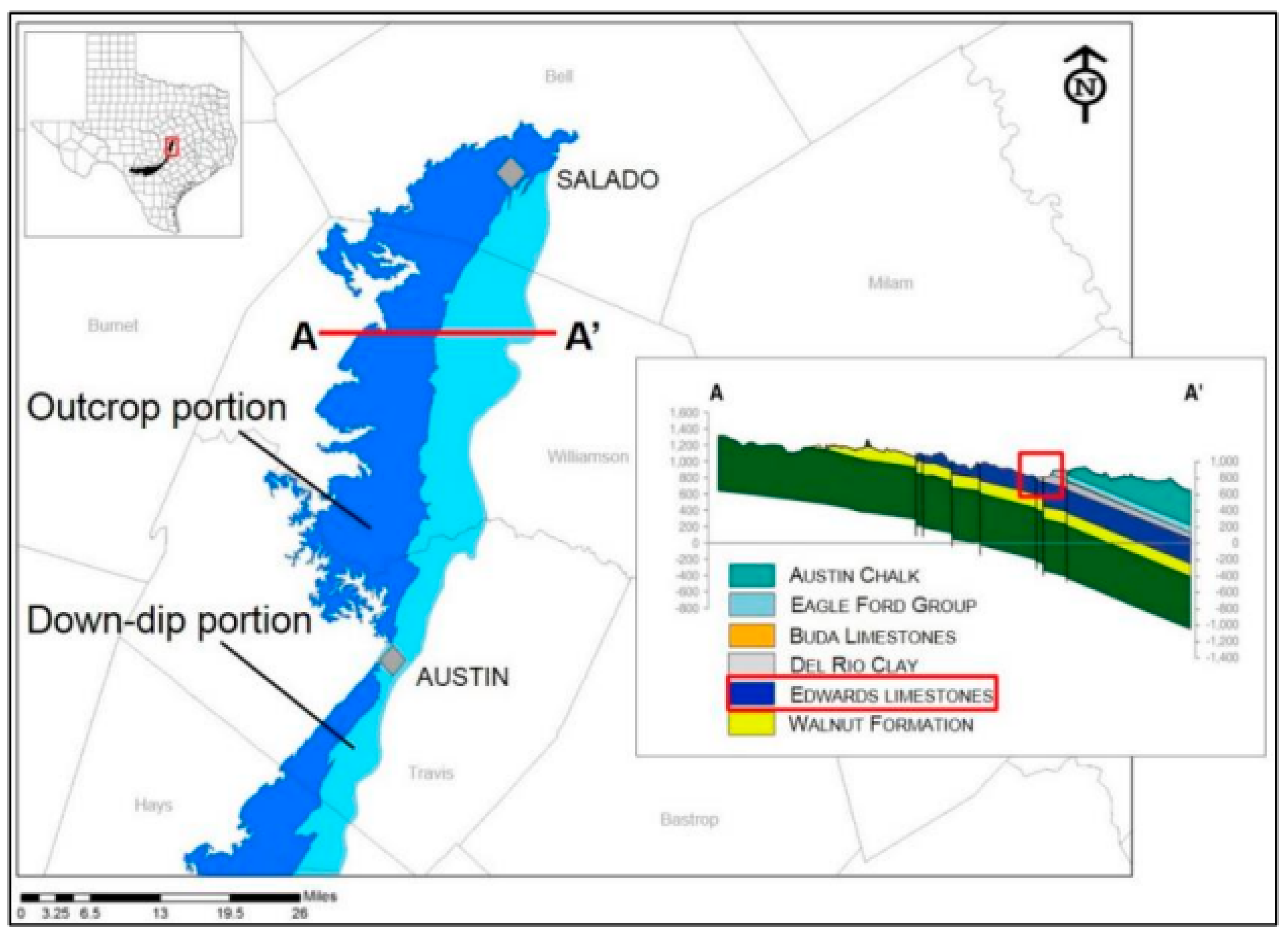
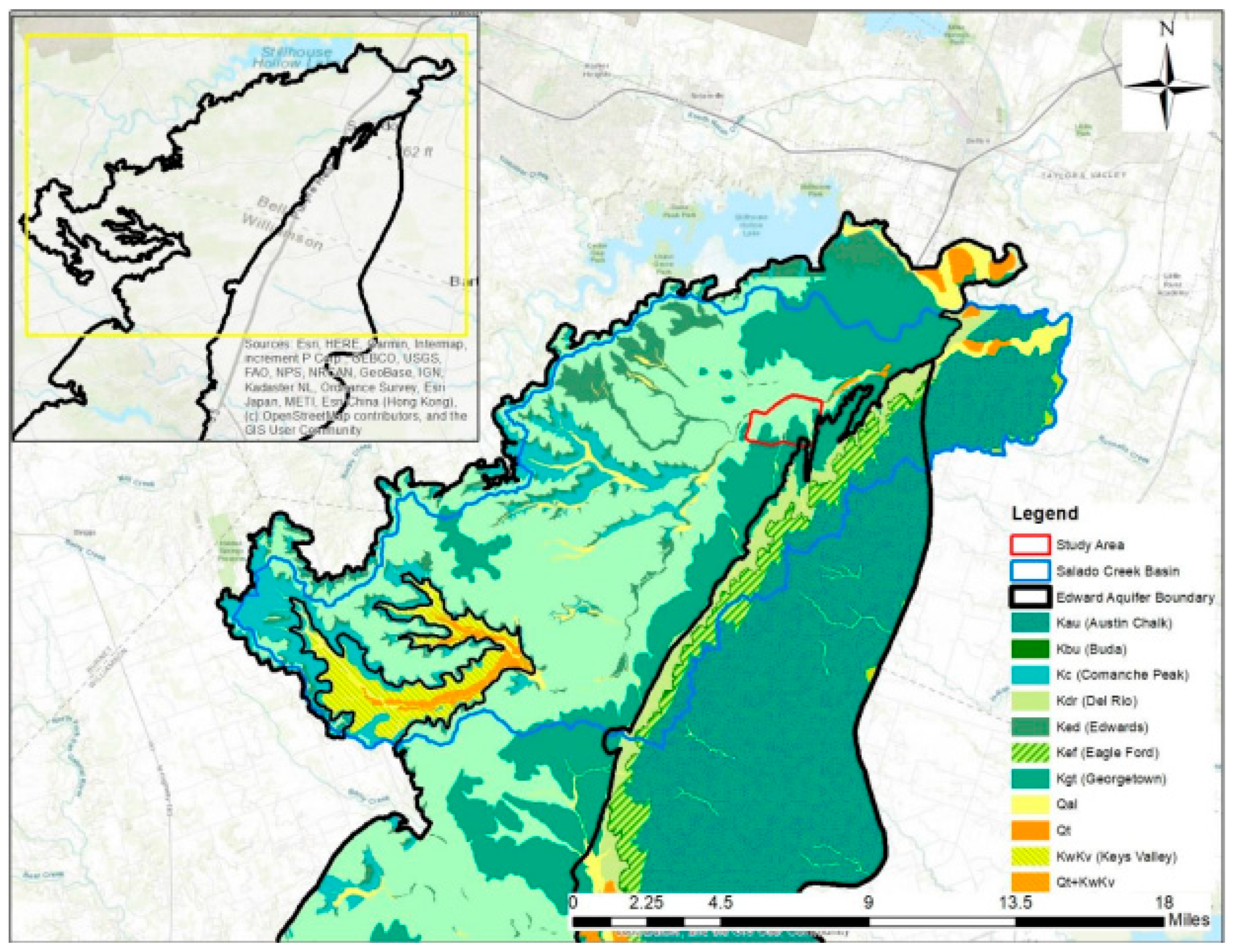
2.1. Geological Setting of the Study Area
2.2. Methodology
2.2.1. Physical Evaluation of Karst Features
2.2.2. Electrical Resistivity Method
2.2.3. Water Percolation Test
3. Results and Discussion
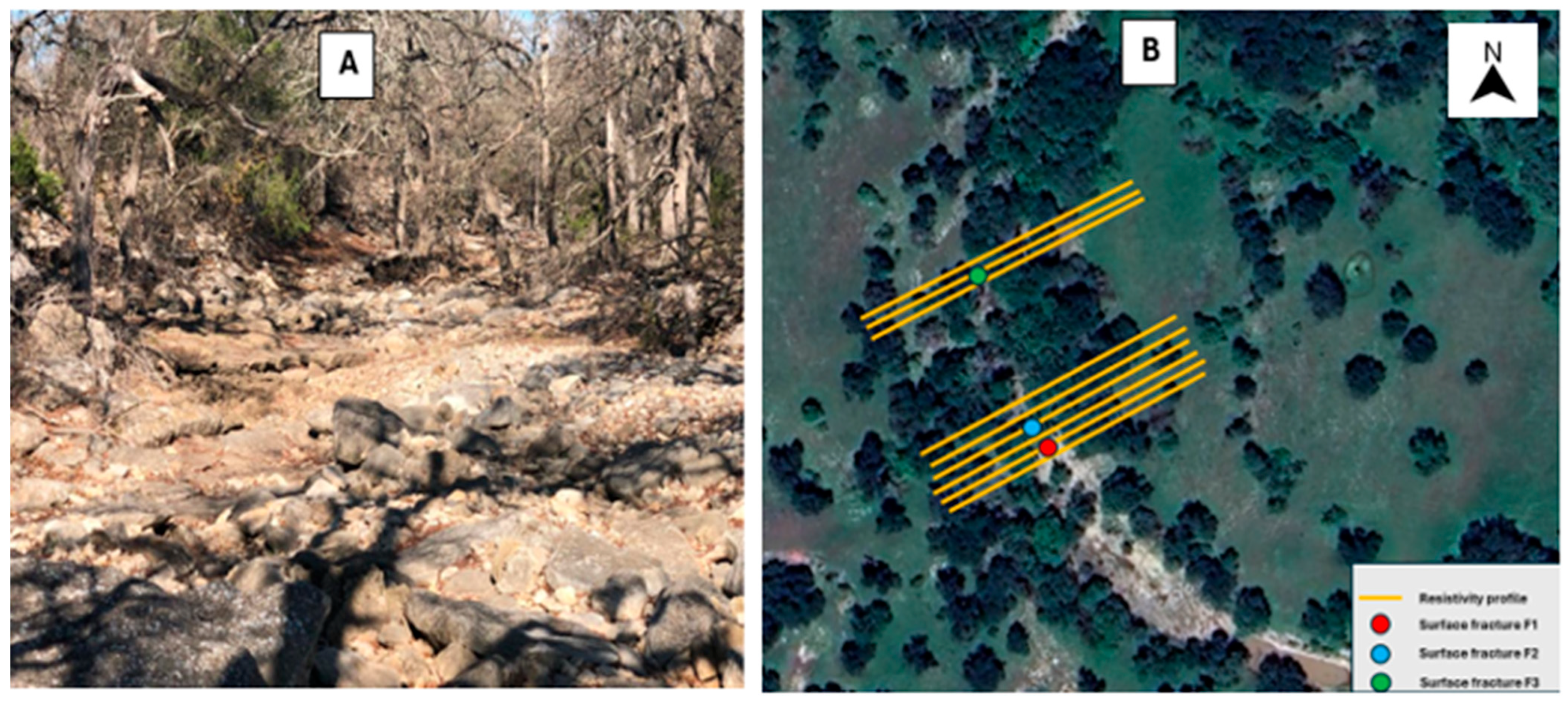
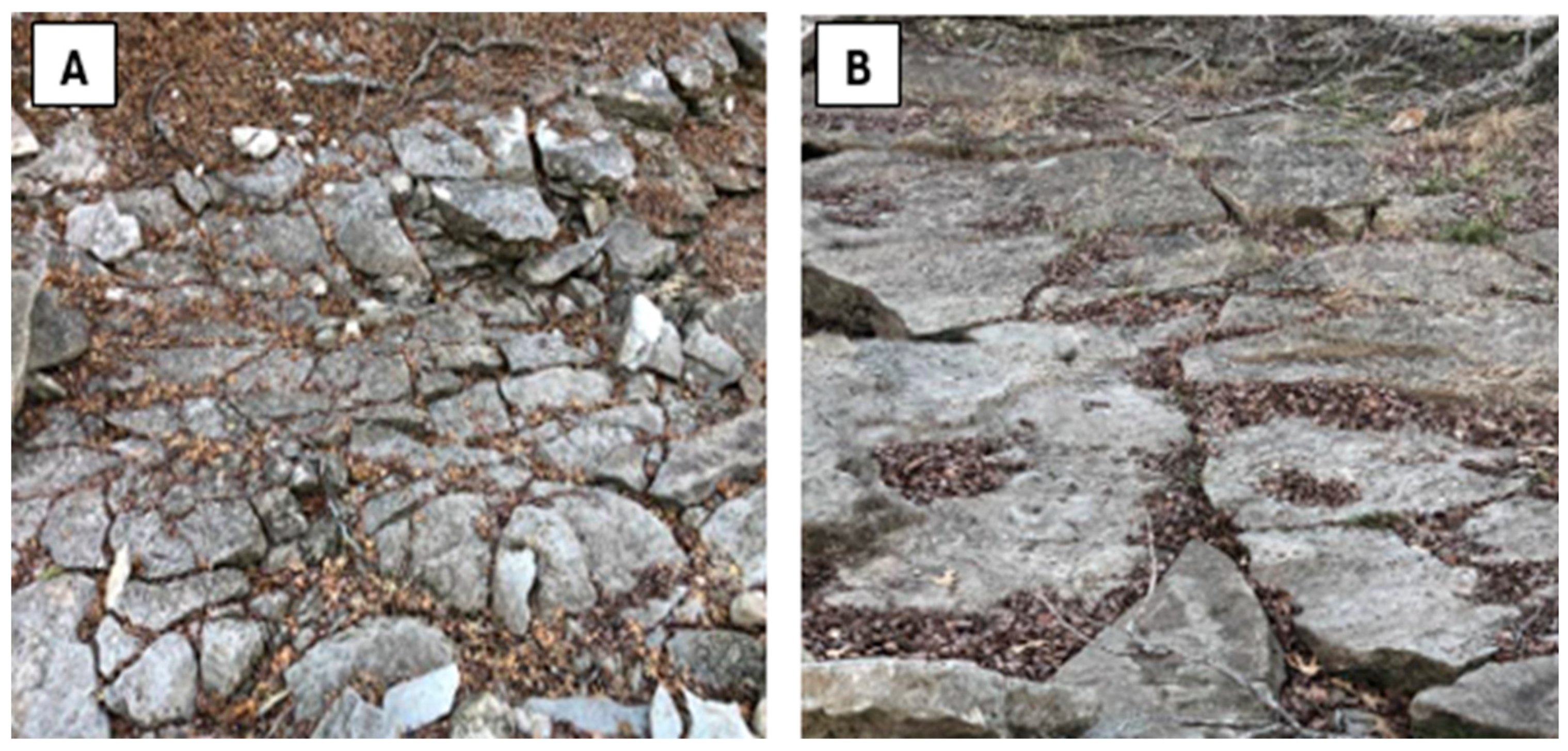
3.1. Physical Evaluation
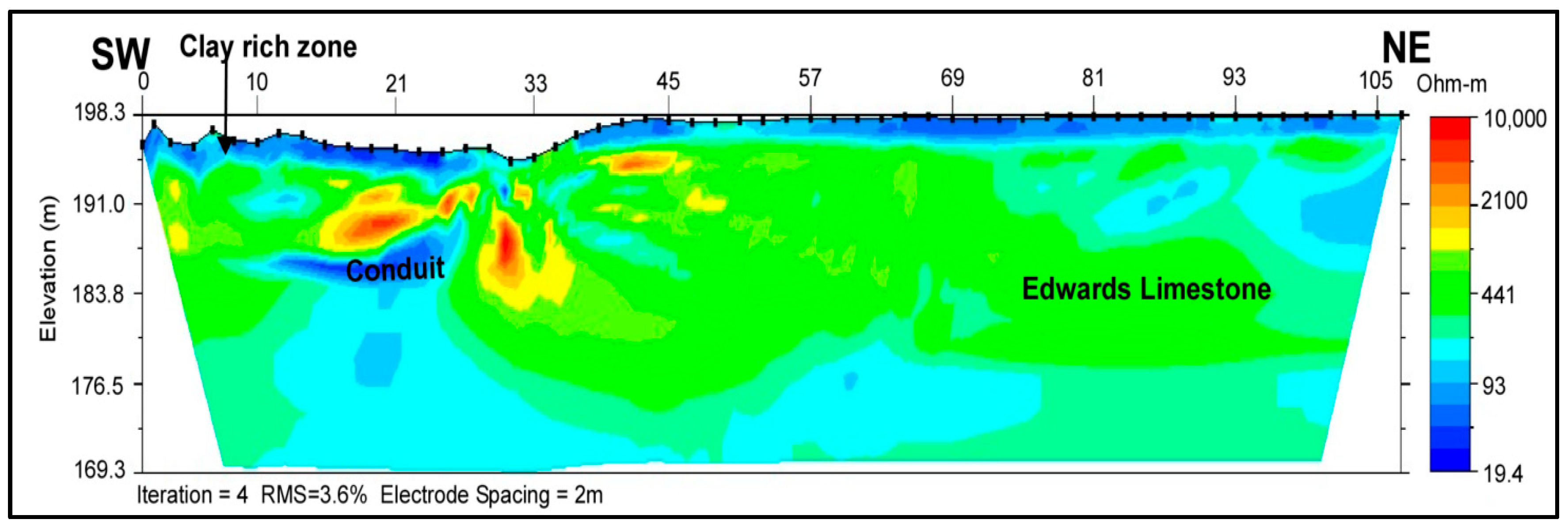
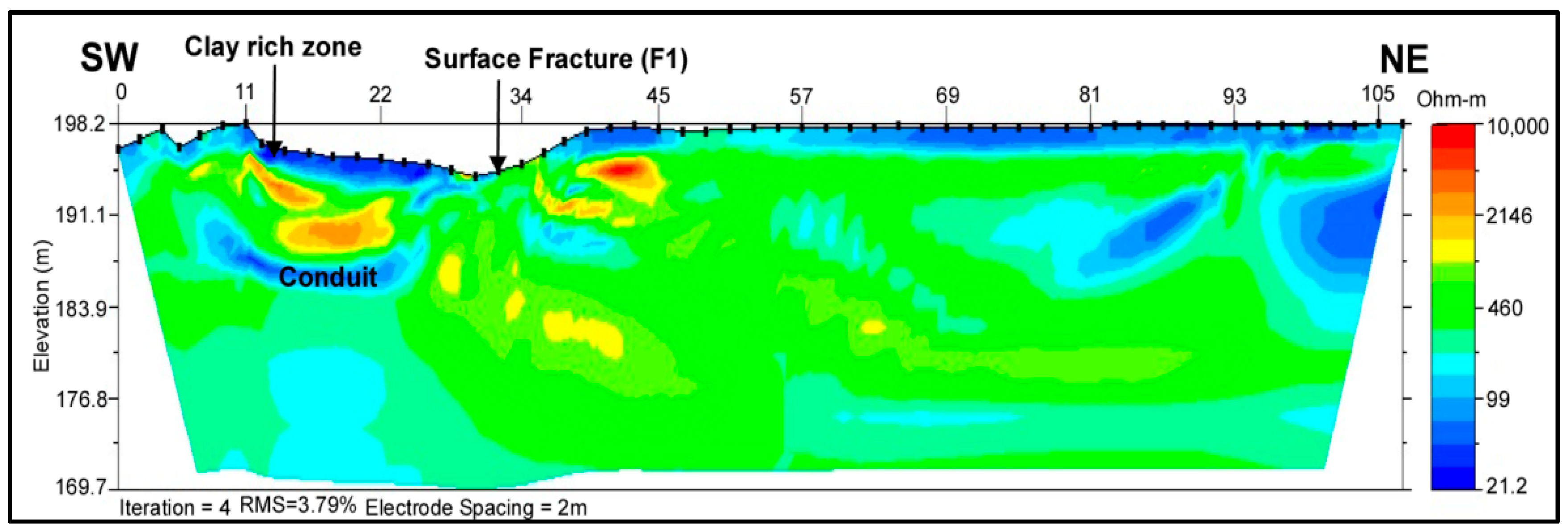
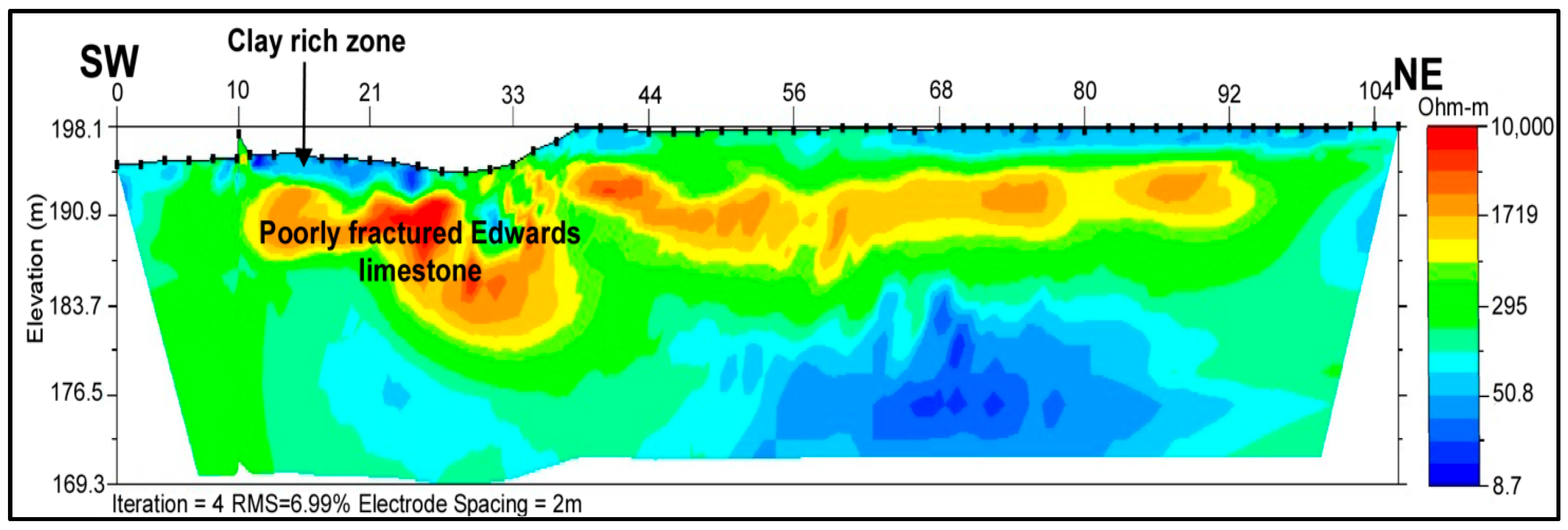
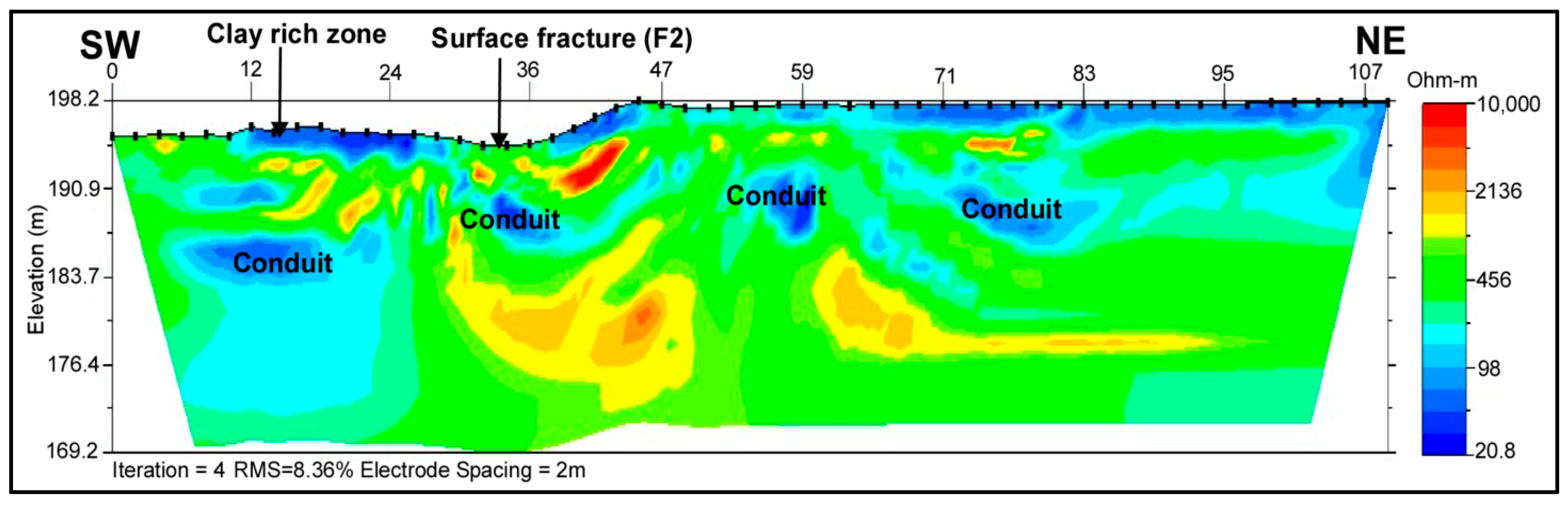
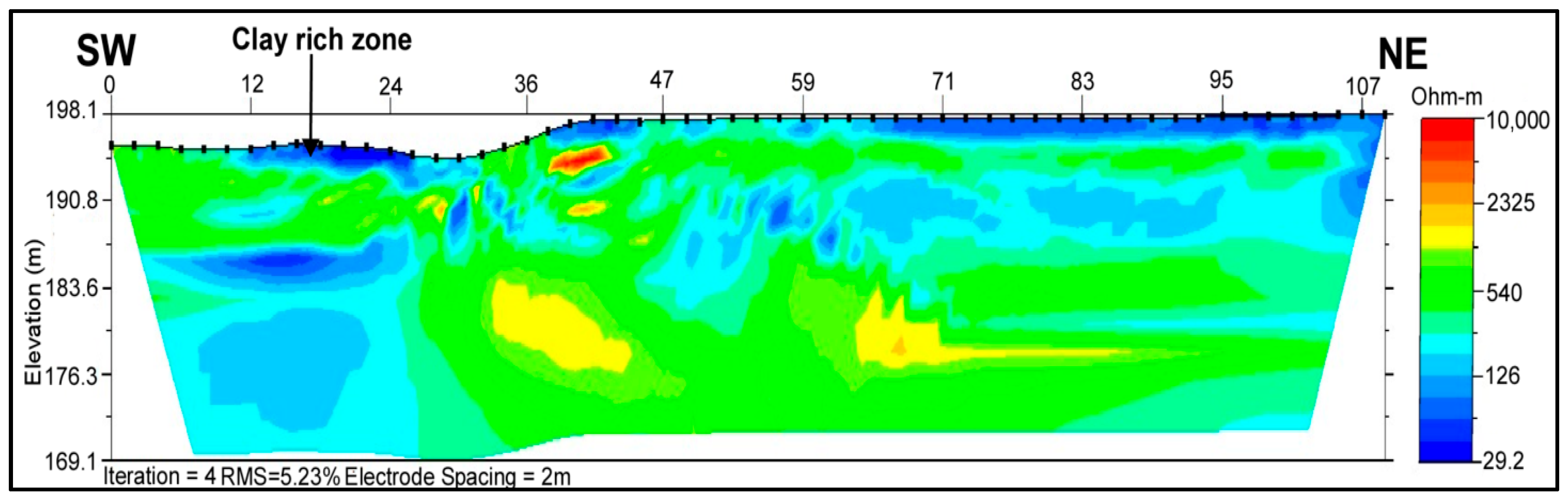
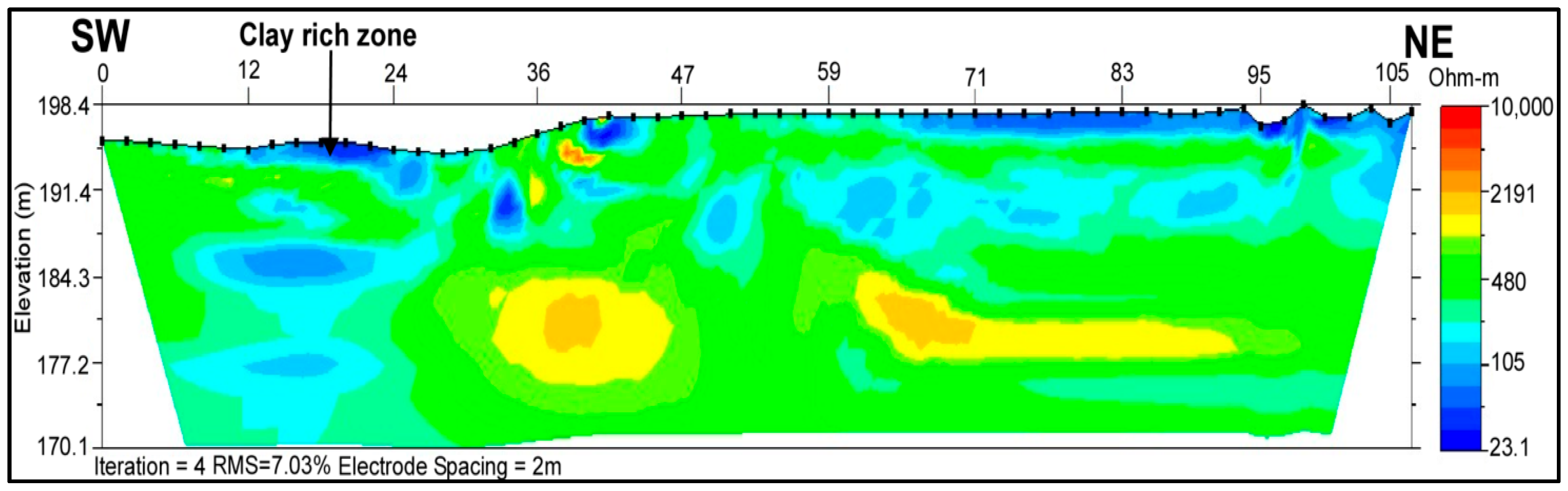
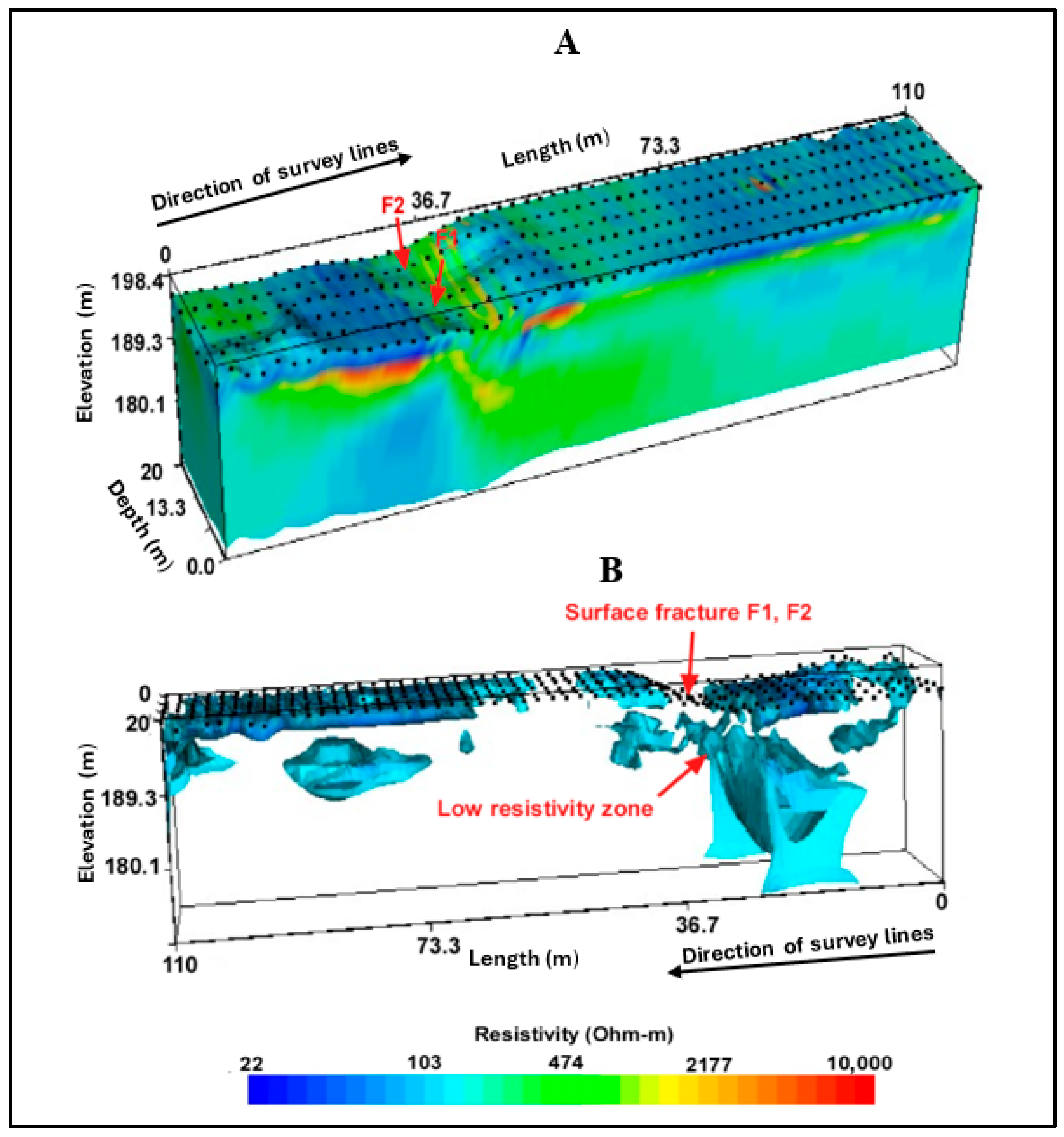
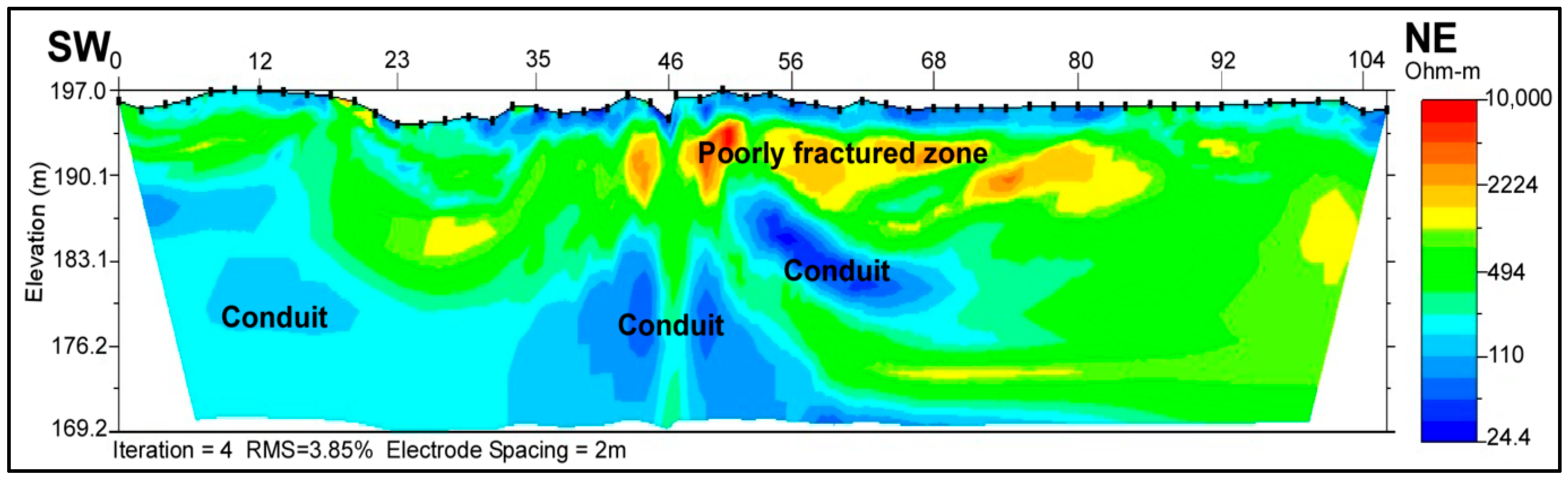
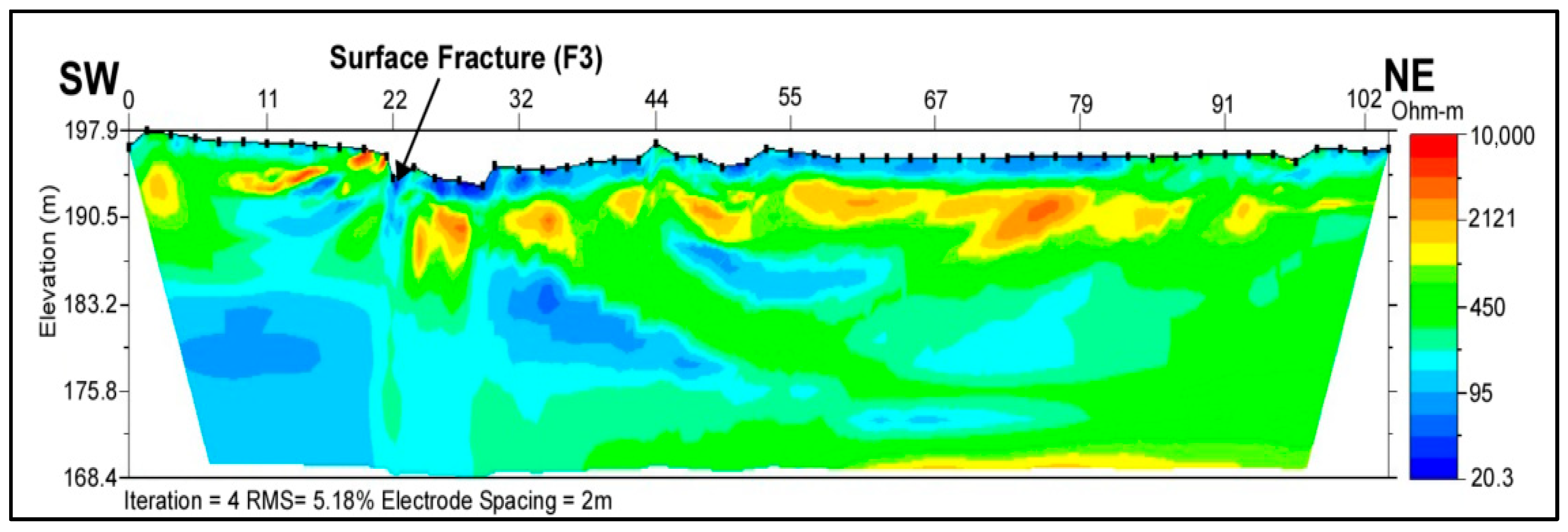
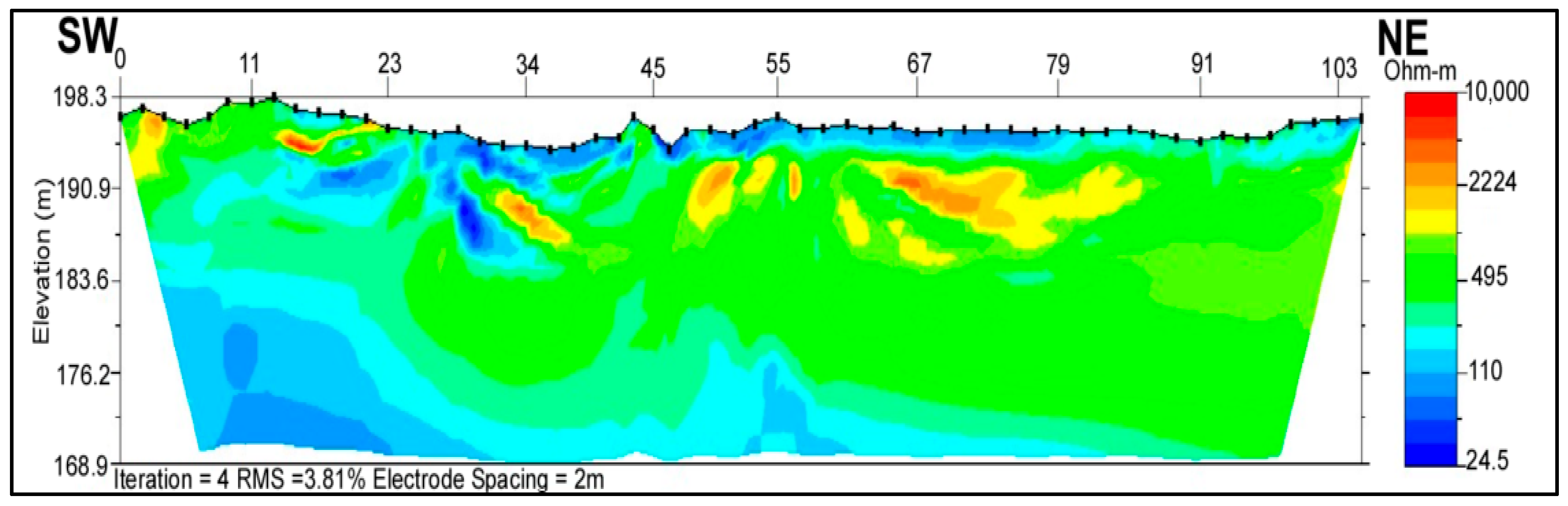
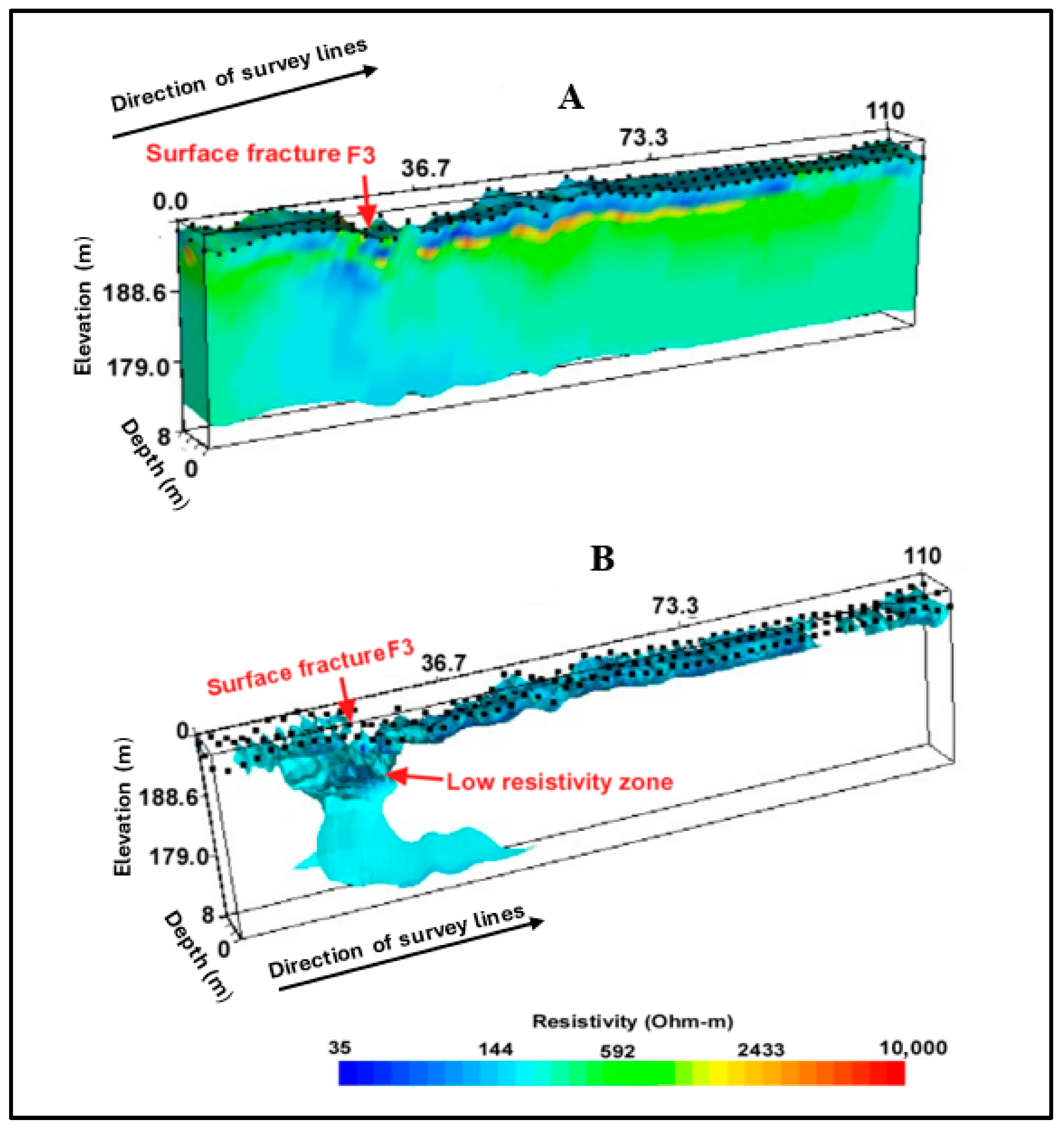
3.2. ERT Results
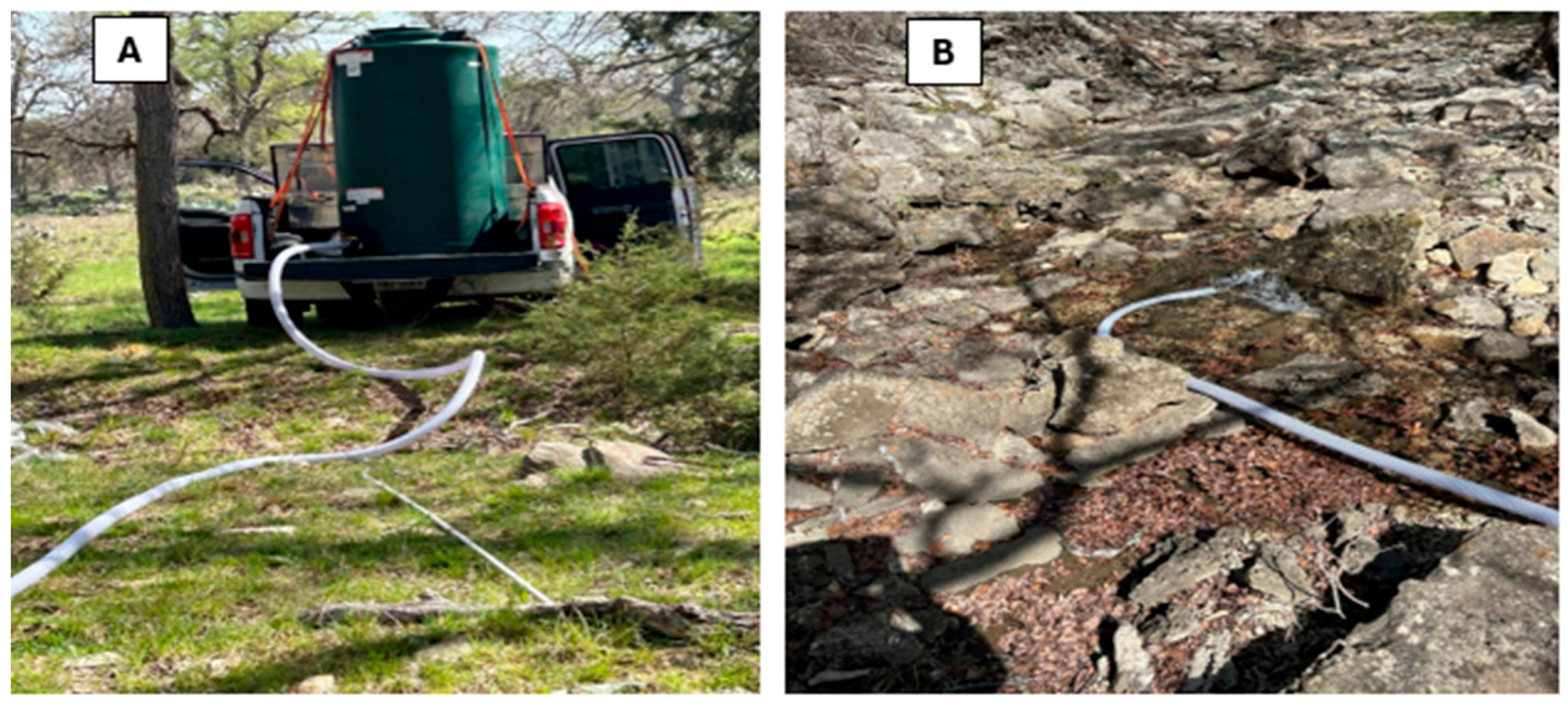
3.3. Water Percolation Test
4. Summary and Conclusions
Author Contributions
Funding
Data Availability Statement
Acknowledgments
Conflicts of Interest
References
- Ford, D.; Williams, P. Karst Hydrogeology and Geomorphology; Wiley: Chichester, UK, 2007. [Google Scholar]
- Morales, T.; Fdez, I.; Valderrama, D.; Uriarte, J.A.; Antiguedad, I.; Olazar, M. Predicting travel times and transport characterization in karst conduits by analyzing tracer-breakthrough curves. J. Hydrol. 2007, 334, 183–198. [Google Scholar] [CrossRef]
- Massei, N.; Wang, H.Q.; Field, M.S.; Dupont, J.P.; Bakalowicz, M.; Rodet, J. Interpreting tracer breakthrough tailing in a conduit-dominated karstic aquifer. Hydrogeol. J. 2006, 14, 849–858. [Google Scholar] [CrossRef]
- Worthington, S.R.H.; Ford, D.C. Self-organized permeability in carbonate aquifers. Groundwater 2009, 47, 326–336. [Google Scholar] [CrossRef] [PubMed]
- Kresic, N. Water in Karst: Management, Vulnerability, and Restoration; McGraw-Hill: New York, NY, USA, 2012; 708p, ISBN 978-0-07-1753333. [Google Scholar]
- Panizza, M.; Fabbri, A.G.; Marchetti, M.; Patrono, A. (Eds.) Geomorphologic Analysis and Evaluation in Environmental Impact Assessment; Publication 32; International Institute for Aerospace Survey and Earth Sciences: Enschede, The Netherlands, 1996. [Google Scholar]
- Veni, G. A geomorphological strategy for conducting environmental impact assessments in karst areas. Geomorphology 1999, 31, 151–180. [Google Scholar] [CrossRef]
- Lindley, A.; Hovorka, S.D. Hydrologic function of karst features in the uplands of the Edwards aquifer recharge zone—A view from the field. Bur. Econ. Geol. 2004, 1. [Google Scholar] [CrossRef]
- Martinez-Pagan, P.; Gόmez-Ortiz, D.; Martin-Crespo, T.; Manteca, J.I.; Rosique, M. The electrical resistivity tomography method in the detection of shallow mining cavities. A case study on the Victoria Cave, Cartagena (SE Spain). Eng. Geol. 2013, 156, 1–10. [Google Scholar] [CrossRef]
- Arjwech, R.; Ruansorn, T.; Schulmeister, M.; Everett, M.E.; Thitimakorn, T.; Pondthai, P.; Somchat, K. Protection of electricity transmission infrastructure from sinkhole hazard based on electrical resistivity tomography. Eng. Geol. 2021, 293, 106318. [Google Scholar] [CrossRef]
- Liu, R.; Sun, H.; Qin, J.; Zheng, Z. A multi-geophysical approach to assess potential sinkholes in an urban area. Eng. Geol. 2023, 318, 107100. [Google Scholar] [CrossRef]
- Diallo, M.C.; Cheng, L.Z.; Chouteau, M.; Rosa, E.; Liu, C.; Abbassi, B.; Dimech, A. Abandoned old mine excavation detection by Electrical Resistivity Tomography. Eng. Geol. 2023, 320, 107123. [Google Scholar] [CrossRef]
- Gambetta, M.; Armadillo, E.; Carmisciano, C.; Stefanelli, P.; Cocchi, L.; Tontini, C. Determining geophysical properties of a near-sur face cave through integrated microgravity vertical gradient and electrical resistivity tomography measurements. J. Cave Karst Stud. 2011, 72, 11–15. [Google Scholar] [CrossRef]
- Kaufmann, G.; Romanov, D.; Nielbock, R. Cave detection using multiple geophysical methods: Unicorn cave, Harz Mountains, Ger many. Geophysics 2011, 76, B71–B77. [Google Scholar] [CrossRef]
- Zhu, J.; Currens, J.C.; Dinger, J.S. Challenges of using electrical resistivity method to locate karst conduits-A field case in the Inner Bluegrass Region, Kentucky. J. Appl. Geophys. 2011, 75, 523–530. [Google Scholar] [CrossRef]
- McCormack, T.; O’Connell, Y.; Daly, E.; Gill, L.W.; Henry, T.; Perriquet, M. Characterization of karst hydrogeology in Western Ire land using geophysical and hydraulic modelling techniques. J. Hydrol. Reg. Stud. 2017, 10, 1–17. [Google Scholar] [CrossRef]
- Prins, C.; Thuro, K.; Krautblatter, M.; Schulz, R. Testing the effectiveness of an inverse Wenner-Schlumberger array for geoelectrical karst void reconnaissance, on the Swabian Alb high plain, new line Wendlingen–Ulm, southwestern Germany. Eng. Geol. 2019, 249, 71–76. [Google Scholar] [CrossRef]
- Land, L.; Veni, G. Electrical resistivity surveys of anthropogenic karst phenomena, southeastern New Mexico. Geology 2012, 34, 117–125. [Google Scholar] [CrossRef]
- Gary, M.O.; Rucker, D.F.; Smith, B.D.; Smith, D.V.; Befus, K. Geophysical Investigations of the Edwards-Trinity Aquifer System at Mul tiple Scales: Interpreting Airborne and Direct-Current Resistivity in Karst. In Proceedings of the 13th Sinkhole Conference NCKRI Symposium 2, Carlsbad, New Mexico, 6–10 May 2013; pp. 195–206. [Google Scholar]
- Redhaounia, B.; Ilondo, B.O.; Gabtni, H.; Sami, K.; Bédir, M. Electrical Resistivity Tomography (ERT) applied to Karst carbonate aquifers: Case study from Amdoun, northwestern Tunisia. Pure Appl. Geophys. 2016, 173, 1289–1303. [Google Scholar] [CrossRef]
- Majzoub, A.F.; Stafford, K.W.; Brown, W.A.; Ehrhart, J.T. Characterization and delineation of gypsum karst geohazards using 2D electrical resistivity tomography in Culberson County, Texas, USA. J. Environ. Eng. Geophys. 2017, 22, 411–420. [Google Scholar] [CrossRef]
- Nazaruddin, D.A.; Amiruzan, Z.S.; Hussin, H.; Jafar, M.T.M. Integrated geological and multi-electrode resistivity surveys for ground water investigation in Kampung Rahmat village and its vicinity, Jeli district, Kelantan, Malaysia. J. Appl. Geophys. 2017, 138, 23–32. [Google Scholar] [CrossRef]
- Yelderman, J.C., Jr. Hydrogeology of the Northern Segment of the Edwards Balcones Fault Zone Aquifer in the Salado Creek Basin and Environs: A Current Understanding; Baylor University, Department of Geology: Waco, TX, USA, 2013. [Google Scholar]
- Ajayi, T.; Yelderman, J.C.; Powers, S.M. Solute Transport in a Multi-Channel Karst System with Immobile Zones: An Example of Downtown Salado Spring Complex, Salado, Texas. Water 2024, 16, 2928. [Google Scholar] [CrossRef]
- Brune, G.; Duffin, G.L. Occurrence, Availability, and Quality of Groundwater in Travis County, Texas; Report 276; Texas Department of Water Resources: Austin, TX, USA, 1983; p. 219.
- Jones, I.C. Conceptual Model: Northern Segment of the Edwards (Balcones Fault Zone) and Associated Trinity Aquifers of Texas; Draft; Texas Water Development Board: Austin, TX, USA, 2020.
- Duffin, G.; Musick, S.P. Evaluation of Water Resources in Bell, Burnet, Travis, Williamson and Parts of Adjacent Counties, Texas; Report 326; Texas Water Development Board: Austin, TX, USA, 1991.
- Wong, S.; Yelderman, J.C., Jr. An Investigation into the Recharge Pathways and Mechanisms in the Northern Segment of the Edwards Aquifer, Bell County, Texas (Phase I, Phase II, Phase III): Waco, Texas; Baylor University, Department of Geology: Waco, TX, USA, 2015. [Google Scholar]
- Lace, M.; Mylroie, M. Coastal Cave and Karst Resource Management. In Coastal Karst Landforms; Lace, M., Mylroie, M., Eds.; Springer: Dordrecht, The Netherlands, 2013; Volume 5, pp. 127–143. [Google Scholar] [CrossRef]
- Kaufmann, O.; Deceuster, J.; Quinif, Y. An electrical resistivity imaging-based strategy to enable site-scale planning over covered paleokarst features in the Tournaisis area (Belgium). Eng. Geol. 2012, 133–134, 49–65. [Google Scholar] [CrossRef]
- Neyamandpour, A.; Wan Absullah, W.A.T.; Taib, S.; Neyamadpour, B. Comparison of Wenner and dipole-dipole arrays in the study of an underground three-dimensional cavity. J. Geophys. Eng. 2010, 7, 30–40. [Google Scholar] [CrossRef]



| Feature Type | Formation | Trends | Aperture (ft) | Infills |
|---|---|---|---|---|
| Fracture (F1) | Edwards | N31E | 0.08–3.67 | Clustered fractures filled with leaves, sticks, loose or soft mud |
| Fracture (F2) | Edwards | N60E | <0.10 | Clustered fractures filled with leaves, sticks, loose or soft mud |
| Fracture (F3) | Edwards | N36E | <0.10 | Clustered fractures filled with leaves, sticks, loose or soft mud |
Disclaimer/Publisher’s Note: The statements, opinions and data contained in all publications are solely those of the individual author(s) and contributor(s) and not of MDPI and/or the editor(s). MDPI and/or the editor(s) disclaim responsibility for any injury to people or property resulting from any ideas, methods, instructions or products referred to in the content. |
© 2025 by the authors. Licensee MDPI, Basel, Switzerland. This article is an open access article distributed under the terms and conditions of the Creative Commons Attribution (CC BY) license (https://creativecommons.org/licenses/by/4.0/).
Share and Cite
Ajayi, T.; Yelderman, J.C., Jr.; Dunbar, J. Integrating 2D and Pseudo-3D Electrical Resistivity Imaging to Determine the Recharge Potential of Karst Surface Fractures: An Example in the Northern Segment of the Edwards Balcones Fault Zone (BFZ) Aquifer. Water 2025, 17, 3439. https://doi.org/10.3390/w17233439
Ajayi T, Yelderman JC Jr., Dunbar J. Integrating 2D and Pseudo-3D Electrical Resistivity Imaging to Determine the Recharge Potential of Karst Surface Fractures: An Example in the Northern Segment of the Edwards Balcones Fault Zone (BFZ) Aquifer. Water. 2025; 17(23):3439. https://doi.org/10.3390/w17233439
Chicago/Turabian StyleAjayi, Toluwaleke, Joe C. Yelderman, Jr., and John Dunbar. 2025. "Integrating 2D and Pseudo-3D Electrical Resistivity Imaging to Determine the Recharge Potential of Karst Surface Fractures: An Example in the Northern Segment of the Edwards Balcones Fault Zone (BFZ) Aquifer" Water 17, no. 23: 3439. https://doi.org/10.3390/w17233439
APA StyleAjayi, T., Yelderman, J. C., Jr., & Dunbar, J. (2025). Integrating 2D and Pseudo-3D Electrical Resistivity Imaging to Determine the Recharge Potential of Karst Surface Fractures: An Example in the Northern Segment of the Edwards Balcones Fault Zone (BFZ) Aquifer. Water, 17(23), 3439. https://doi.org/10.3390/w17233439